1. Introduction
The tea green leafhopper, Empoasca onukii, a member of the Hemiptera order and family Cicadellidae (Qin et al., 2015), was once considered a nuisance due to its harmful effects on tea plants. However, recent research has reevaluated its potential economic benefits to the tea industry, highlighting its ability to enhance the quality and market value of certain tea cultivars, particularly those with unique flavor profiles that are increasingly sought after by consumers. One of the most noteworthy economic advantages of this small green leafhopper is its capacity to improve the flavor profile of tea leaves. By feeding on the sap of tea plants, E. onukii triggers a range of protective biochemical reactions that increase the synthesis of secondary metabolites such as flavonoids, terpenoids, and volatile organic compounds (VOCs). These compounds contribute distinct and highly desirable flavor notes to tea. Research by Wang et al. (2020) identifies that E. onukii stimulates the production of compounds like linalool, geraniol, and hotrienol, which are associated with the fruity and floral aromas characteristic of premium teas. This biological response is particularly significant in the production of "Oriental Beauty" tea, a renowned Taiwanese oolong tea celebrated for its honey-like sweetness and floral fragrance.
As consumer demand for teas with unique, premium flavor profiles increases, the market value of leafhopper-affected teas has risen dramatically (Zhou et al., 2019). These products are successfully marketed as high-end, artisanal goods that command much higher prices due to the complexity and uniqueness imparted by E. onukii's activity. For instance, "Oriental Beauty" tea, often referred to as Bai Hao Oolong, can cost several hundred dollars per kilogram (Wu et al., 2018). This trend is not limited to Taiwanese teas; similar practices are being adopted in other tea-producing regions like China and Japan, where the flavors induced by leafhoppers are gaining popularity.
This development allows tea producers to distinguish their offerings from mass-produced alternatives, creating a niche market that appeals to luxury buyers and connoisseurs willing to pay a premium for uniqueness and quality. Additionally, E. onukii offers economic advantages for sustainable agriculture. As demand for teas influenced by this insect species rises, some farmers have reduced or eliminated pesticide use traditionally aimed at controlling it, aligning with global movements promoting environmentally friendly farming. Research by Chen et al. (2019) indicates that tea plantations adopting pesticide-free practices to support leafhopper activity have seen decreased production costs related to chemical inputs and a reduced environmental footprint.
These sustainable practices enhance the marketability of tea products, particularly among environmentally conscious consumers, providing an additional layer of economic advantage. The renewed interest in leafhopper-affected teas has also revitalized artisanal tea production techniques, preserving traditional methods in regions like Taiwan that associate these products with heritage and craftsmanship (Zhang & Huang, 2020). This cultural and historical significance, alongside distinctive flavor profiles, adds significant economic value and attracts both domestic and international customers. The demand for such premium, leafhopper-influenced teas has positively impacted local economies, particularly in rural tea-growing areas, as it necessitates specialized labor for planting, harvesting, and processing (Lin & Tsai, 2017).
Furthermore, the growing popularity of these teas has further fueled the mass rearing of E. onukii. By enhancing flavor profiles, developing specialized markets, and promoting sustainable farming practices, the mass rearing of E. onukii provides notable economic benefits to the tea industry. For instance, Wang et al. (2020) demonstrate that the premium flavor profiles of these teas primarily arise from the biochemical reactions triggered by the leafhopper's feeding activity. Tea farmers can consistently produce high-quality products that command premium prices by cultivating and managing E. onukii populations.
This approach fosters local economies and tea-related tourism while spurring research and development, making the insect an invaluable asset to the sector. However, while challenging, mass rearing of E. onukii is feasible and, if executed properly, can significantly enhance the economic sustainability of the tea industry. Through strategic host plant selection, meticulously controlled environmental conditions, and effective management of leafhopper populations, tea growers can harness the distinctive benefits of E. onukii to cultivate premium, commercially viable teas that cater to discerning consumers. As this technique evolves, it is poised to significantly contribute to the profitable and sustainable production of tea in the future. Whether managing leafhopper populations in tea gardens or engaging in large-scale breeding for the production of "hopper tea," a systematic and comprehensive understanding of the tea leafhopper is essential.
2. What is Empoasca Onukii?
There are several distinct species of small green leafhoppers in tea gardens, and because of their striking physical similarities, it can be challenging to distinguish between population without looking at the male reproductive organs. As a result, based only on morphological evaluations, numerous regional surveys and investigations have distinguished between distinct species of little green leafhoppers that are predominate. Studies of leafhoppers in various ecoregions have mentioned several names, therefore the dominant species in tea gardens has been controversially identified over the last decade. The main leafhopper species damaging tea gardens in Japan is acknowledged to be the little green leafhopper
Empoasca onukii (Kakoki et al. 2019).
E. flavescens (Fabricius) is the predominant species in Indian tea gardens (Saha et al. 2012). According to Ghauri (Ghauri et al. 1964),
E. paraobliqua (Ghauri) is the predominant species in tea gardens in Argentina. In the meantime, scientists in Taiwan, China, identified
Jacobiasca formosana (Paoli) as the dominant species in tea plantation (Ogura et al. 2005). These results underline the need for additional research into the species classification and phylogenetic links of the little green leafhoppers that are identified by different regions of the world as the primary pests in tea gardens. It had a varied diet and was not very damaging. However, the invasion of tea gardens by this pest became a major problem when tea cultivation spread widely in China's mountainous and semi-mountainous regions. The precise name and taxonomic classification of the dominant species of tea green leafhopper in Chinese tea gardens, however, remain a matter of controversy. The first study by Ge et al. (1988) revealed that the false-eyed leafhopper,
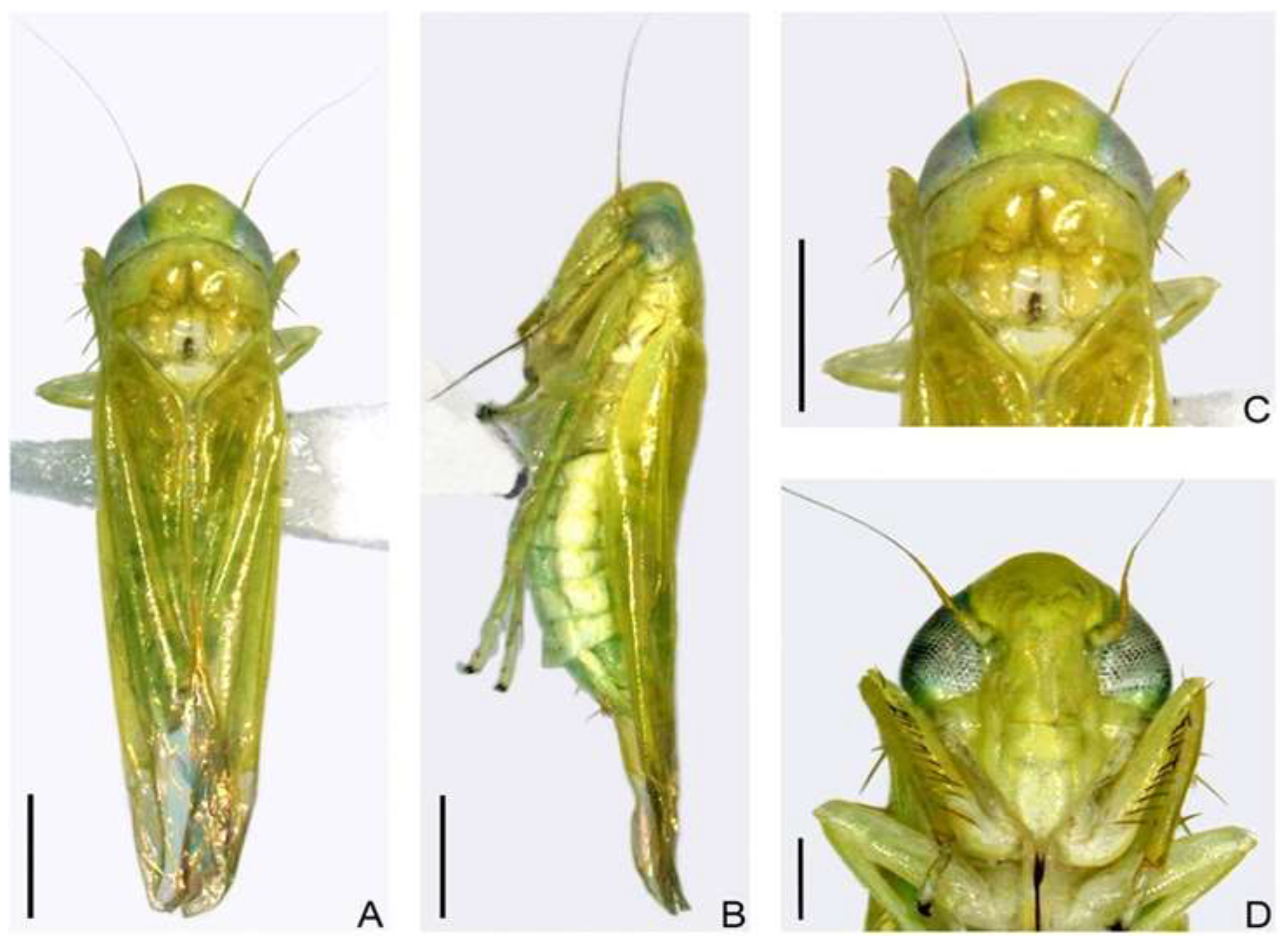
Empoasca vitis Göthe, is probably the prevalent species in China's tea gardens. This study includes the morphological identification of small green leafhopper specimens from tea gardens in 11 provinces. However, the taxonomic classification of the dominating species of tea green leafhopper was not resolved by further investigation. In response, Zhao et al. (2000) confirmed the findings of Ge et al. (1988) by performing a thorough examination of the reproductive organ structure of tiny green leafhoppers from tea estates in several Chinese regions in 2000. Since then, this finding has been widely accepted and is still cited. Furthermore, Fu et al. (2005, 2007) used RAPD molecular techniques to examine small green leafhoppers from different tea-producing regions. They discovered that these leafhoppers' genetic makeup is largely consistent across different regions, supporting the false-eyed leafhopper's identification. Using mitochondrial 16S rRNA and COI gene sequences, Li (2013) further identified tea green leafhoppers as false-eyed leafhoppers by determining that there were no significant differences across 12 geographical populations. Similarly, using mitochondrial COI gene sequences, Fu et al. (2014) examined the evolutionary relationships between tea leafhoppers and their close relatives. They found that the 12 populations of tea leafhoppers had genetic distances ranging from 0.5% to 1.2%, which is significantly less than the 2% threshold commonly used to identify insect species. The genetic distances, on the other hand, varied from 14.8% to 24.5% between tea leafhoppers and their more distant relatives, which include the grape small green leafhopper, grape two-star leafhopper, and peach speckled leafhopper. Then, using different mitochondrial gene sequences, Zhou (2014) and Fu et al. (2014) examined tiny green leafhoppers from tea gardens in Taiwan, Japan, and the Chinese mainland. The leafhoppers from these three regions have been given separate scientific names in the literature, but their research has shown that there are only slight genetic variations between the populations, indicating that they are conspecific. Then, utilizing external reproductive organ inspection, Qin et al. (2015) analyzed male small green leafhoppers from tea gardens in Taiwan, Japan, and the Chinese mainland. It was suggested that the leafhoppers from these areas are members of the same species, which is the little green leafhopper known as
Empoasca onukii, which is found in Japanese tea gardens (
Figure 1).
Qin et al. (2014) and Shi (2016), who dissected the reproductive organs of male small green leafhoppers in the Shaanxi and Fujian tea regions, independently verified this conclusion. It was confirmed by additional extensive surveys and sample analyses conducted by Yu et al. (2015) and Meng et al. (2018) that E. onukii is the predominant species in most tea-growing locations. As a result, researchers have begun to identify the tiny green leafhoppers in tea gardens in Taiwan, Japan, and mainland China as E. onukii. The term "tea green leafhopper" is still used in this study to describe E. onukii.
3. Taxonomic, Phylogenetic Groups and Distribution
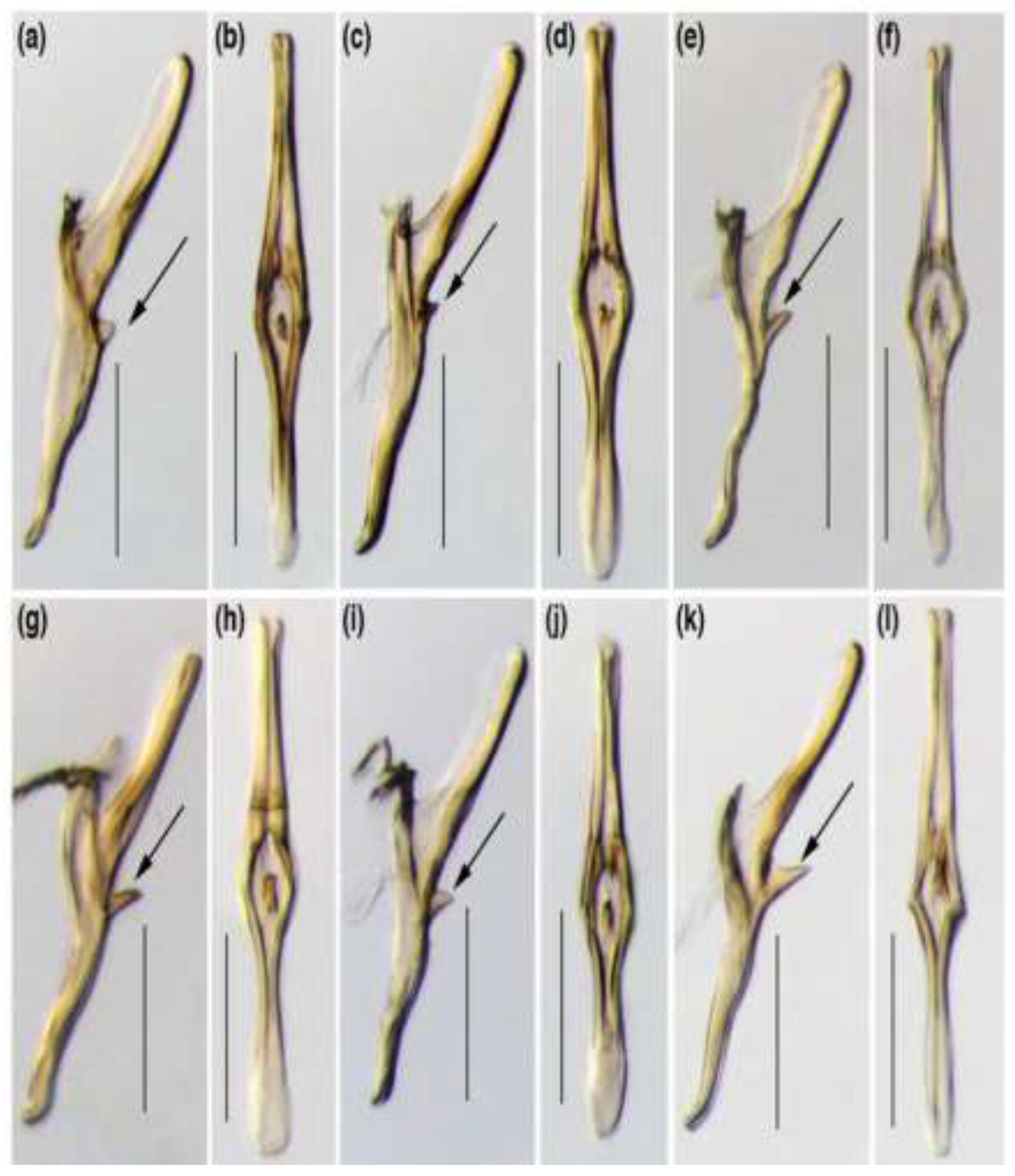
Although previous studies conducted by Qin et al., (2015); Zhang et al., (2016) Yu et al. (2015) and Meng et al. (2018) described both Taiwan, Japan, and mainland China as a single species, however, recent comparative morphological studies indicated significant intraspecific variation among populations, with individuals from various southern Chinese populations differing in the shape of their membranous flanges and the length of spiny protrusions on the shaft of the male aedeagus (Qin et al., 2015; Xu et al., 2021; Figure 2).
Figure 2.
Morphological variations of aedeagus of Empoasca onukii from different tea production regions of Yunnan Province. (a) Chuxiong (CX) population, aedeagus; (b) Chuxiong (CX) population; (c) Pu′er (PE) population; (d) Pu′er (PE) population; (e) Mojiang (MJ) population; (f) Mojiang (MJ) population; (g) Lincang (LX) population; (h) Lincang (LX) population; (i) Jingdong (JD) population; (j) Jingdong (JD) population; (k) Menghai (MH) population; (l) Menghai (MH) population. (a, c, e, g, i, k) aedeagus, left lateral view; (b, d, f, h, i, j) aedeagus, ventral view. Scale bars: (a–l) = 0.1 mm. Arrows display variations in the shape of the dorsal membranous flanges and the length of ventro-basal spiny protuberances of the aedeagal shaft (Zhang et al., 2022).
Figure 2.
Morphological variations of aedeagus of Empoasca onukii from different tea production regions of Yunnan Province. (a) Chuxiong (CX) population, aedeagus; (b) Chuxiong (CX) population; (c) Pu′er (PE) population; (d) Pu′er (PE) population; (e) Mojiang (MJ) population; (f) Mojiang (MJ) population; (g) Lincang (LX) population; (h) Lincang (LX) population; (i) Jingdong (JD) population; (j) Jingdong (JD) population; (k) Menghai (MH) population; (l) Menghai (MH) population. (a, c, e, g, i, k) aedeagus, left lateral view; (b, d, f, h, i, j) aedeagus, ventral view. Scale bars: (a–l) = 0.1 mm. Arrows display variations in the shape of the dorsal membranous flanges and the length of ventro-basal spiny protuberances of the aedeagal shaft (Zhang et al., 2022).
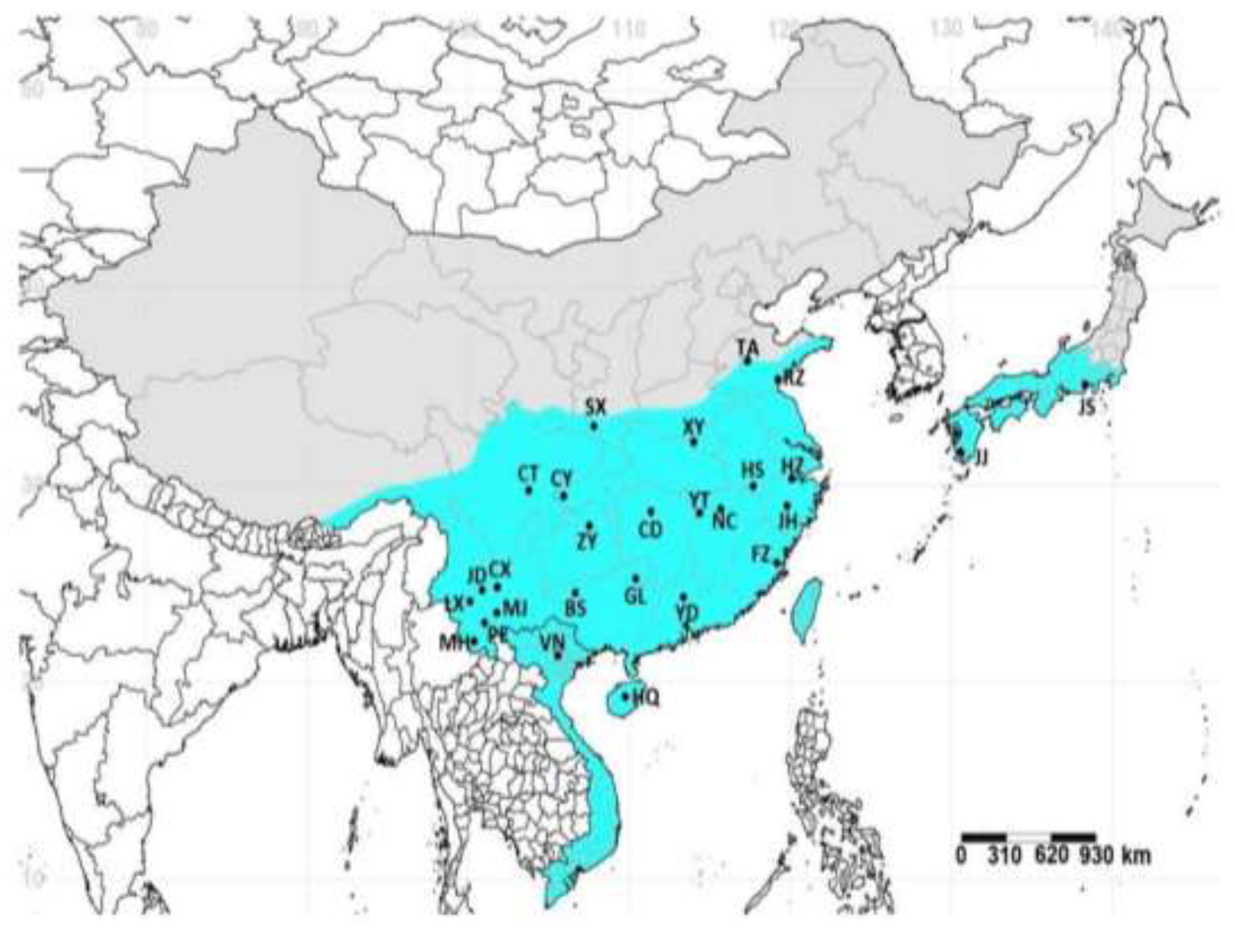
This insect species is currently widespread across Japan, Vietnam, and China, which are grown under different ecological conditions (Dworakowska, 1971, 1982; Qin et al., 2015). Given these previous morphological findings, the extensive distribution of the species, and the varying environmental conditions of tea-growing regions, we proposed that these morphological differences reflect genetic variations among geographic populations (
Figure 3).
Previous research on the population structure and genetic differentiation of the tea green leafhopper has primarily relied on mitochondrial gene sequences or a limited number of microsatellite markers (Chen et al., 2015; Fu, Li, et al., 2014; Li et al., 2013; Zhang et al., 2016, 2019; Zhang et al., 2018; Zhou et al., 2014; Zhu et al., 2019). Results from microsatellite analysis indicated some geographical differentiation between populations, especially between two populations in Yunnan and other Chinese populations, but provided limited evidence of consistent population genetic structure. This inconsistency may be influenced by the inherent properties of the markers (such as fluctuations in allele frequency and recombination rates), as well as the quality of genetic data and sampling methods.
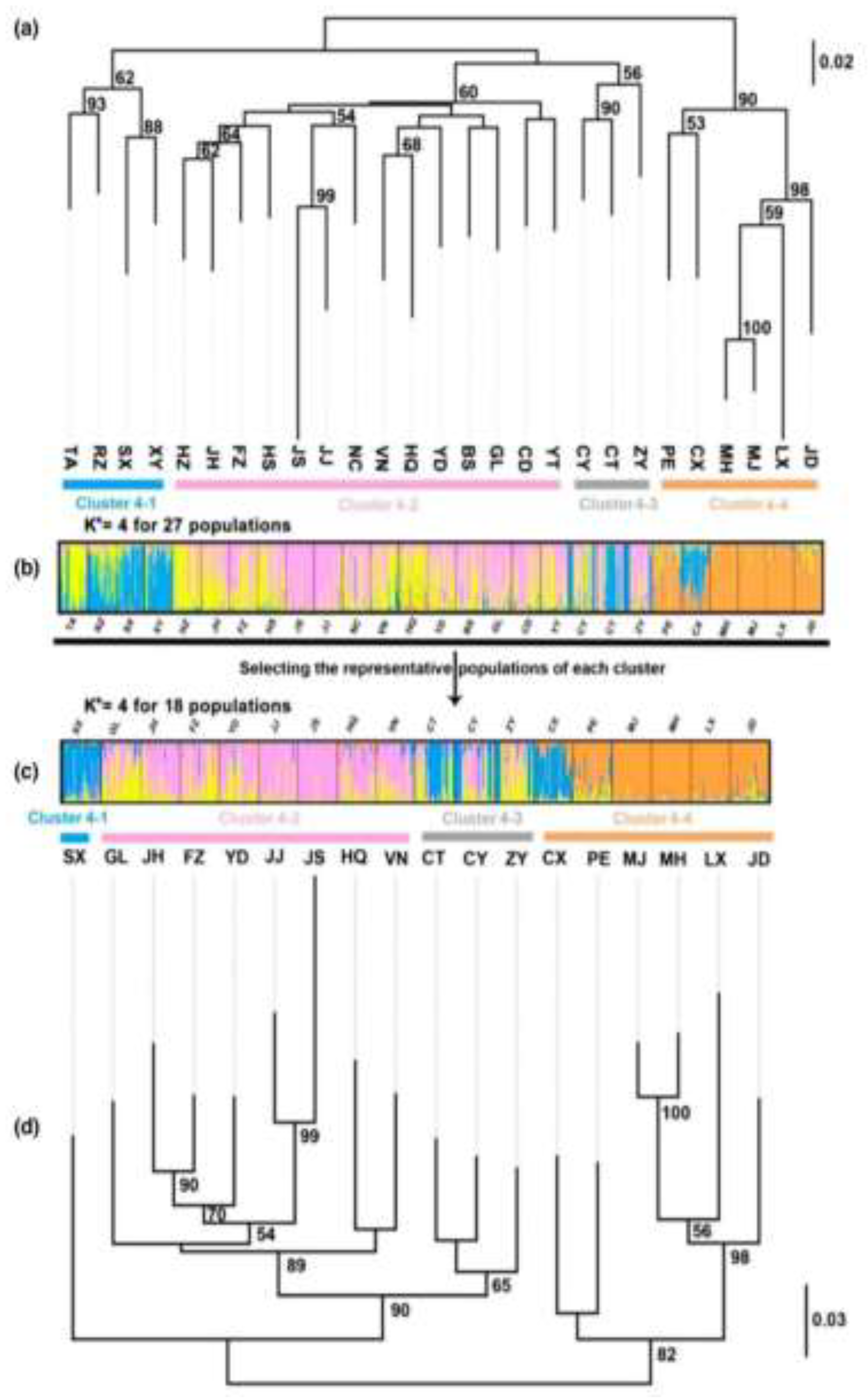
Zhang et al. (2022) genotyped samples from 27 sites that represented 18 geographical populations of
E. onukii throughout East Asia using 1,633 single nucleotide polymorphisms (SNPs) and 18 microsatellite markers (SSRs). Significant genetic differentiation and organization were found, with Yunnan populations showing the highest levels in comparison to other populations. SSR data revealed that the Japanese populations of Kagoshima (JJ) and Shizuoka (JS) clustered with particular Chinese populations, such as Jinhua (JH) and Yingde (YD), as well as a Vietnamese population (Vinh Phuc VN), despite SNP analysis suggesting that these populations were distinct from Chinese populations (
Figure 4).
Conversely, SSRs allowed the CT, CY, ZY, and Shaanxi (SX) populations to be distinguished from one another while still grouping together based on SNPs. The study discovered a number of variables that may have an impact on the insect’s quick spread throughout Asia, including physical obstacles, human transportation of the host plant (Camellia sinensis), and regional climate adaptations. The study shows that high-throughput SNP genotyping can successfully and broadly reveal minute genetic features in r-strategist insects. Zhao et al. (2022) also distinguished four unique genetic groups from several sample sites, including Yunnan, Southern-Central China, and Eastern China. The wide geographic range of E. onukii and the diverse ecological condition of tea cultivation account for the significant genetic diversity seen in populations from these ecoregions. For management techniques to be effective, E. onukii must be accurately identified and classified. Erroneous identification may result in inadequate management strategies and a misapprehension of the biology and ecology of the insect. Understanding the taxonomy and systematics of E. onukii contributes to broader efforts in biodiversity conservation and the study of insect diversity in agricultural systems.
3. Biology of Empoasca Onukii
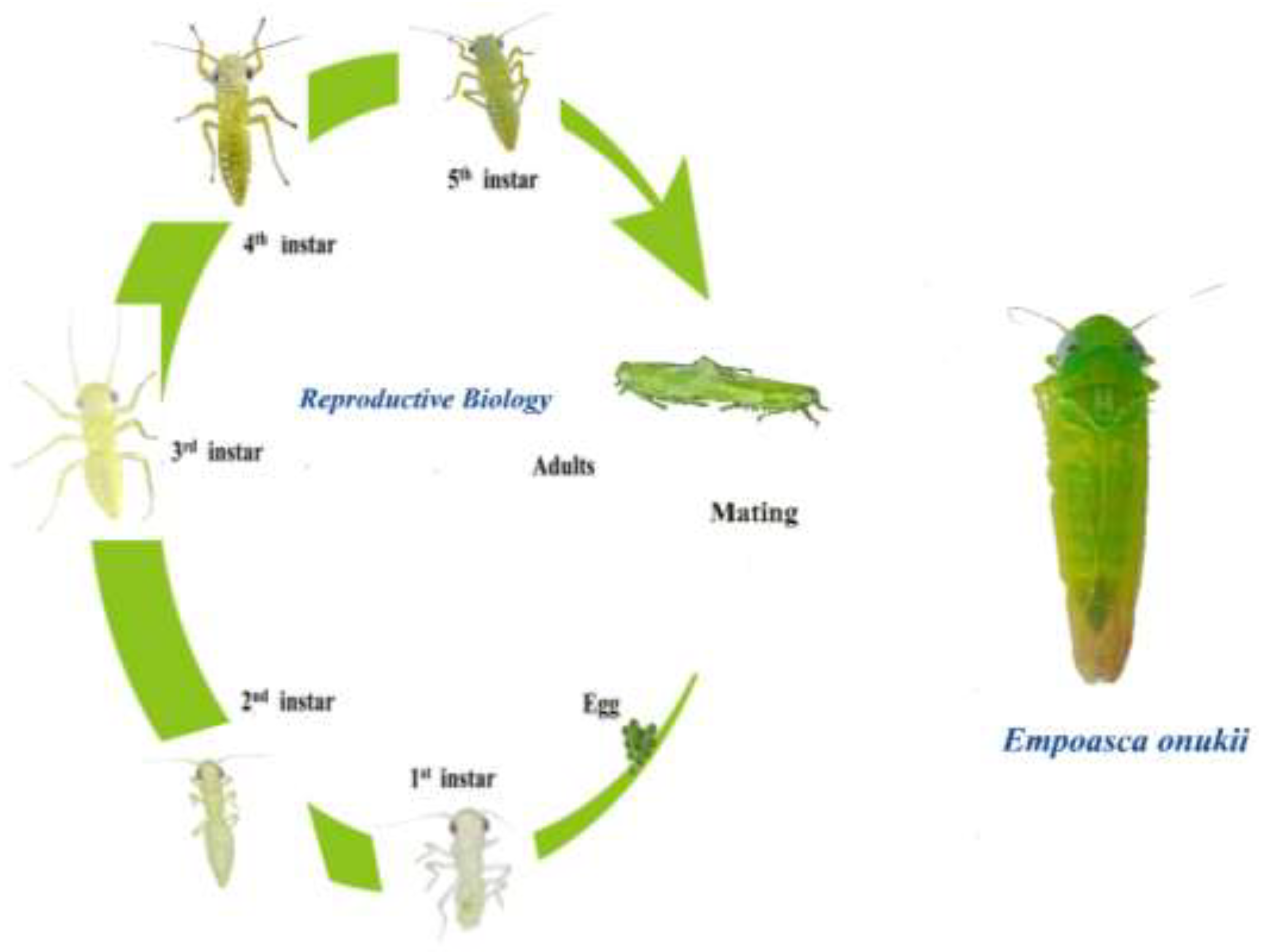
Empoasca onukii undergoes hemimetabolous development, characterized by the absence of a pupal stage typical of holometabolous insects.
E. onukii life cycle includes three main stages: egg, nymph, and adult. Females lay eggs on the undersides of young tea leaves or within plant tissues, which serve as critical sites for nymph survival, offering protection and access to food once the eggs hatch (
Figure 5).
Upon hatching, the eggs develop into nymphs that pass through five instar stages, with development influenced by environmental factors such as temperature and host plant availability (
Table 1). Under optimal conditions, the entire nymphal stage can be completed in approximately 10 to 14 days (Chen et al., 2011; Zhang et al., 1997).
After maturing, nymphs develop into adults, which can reproduce a few days after reaching sexual maturity. Adult E. onukii typically live for one to two months and can produce multiple generations in a single growing season, with studies indicating up to 10 to 12 generations per year in warmer climates (Qin et al., 2015; Zhang et al., 2016).
4. Environmental Influence to Empoasca Onukii
The populations of E. onukii are significantly shaped by climatic conditions, thriving in warm and humid environments. Many tea-growing regions create ideal microclimates for the species, resulting in population peaks during the warmer months (Chen et al., 2011). Factors such as rainfall and temperature, relative humidity, and the availability of young tea leaves play crucial roles in their life cycle and population dynamics (Böll & Herrmann, 2004). Research indicates that optimal temperatures (between 25°C and 31°C) can significantly enhance reproduction rates, underscoring the importance of climate in managing E. onukii populations. According to Zhang et al. (1997) and Tang and Tang (2010), the average development times for eggs and nymphs are 8 and 14.1 days at constant 250C and 5.8 and 8.4 days at 310C. It takes the just emerged adults 4-5 days to reach sexual maturity and begin mating.
4.1. Rainfall and Heatwaves
Rainfall and heatwaves are key environmental factors that significantly affect the population dynamics of Empoasca onukii in tea gardens, impacting their reproduction, survival, and effects on tea quality. Rainfall can have both positive and negative impacts on E. onukii. Heavy rains can decrease populations by physically displacing nymphs and adults from tea plants. Li et al. (2017) noted that intense rainfall events can lower survival rates by disrupting feeding and increasing vulnerability to predation and environmental stress. Rainwater can also dilute the nutrient content on leaf surfaces, making them less attractive for feeding.
While heavy rainfall can reduce populations, moderate rainfall increases humidity, which enhances the reproductive success of E. onukii. Zhou et al. (2018) found that moderate rainfall, which maintains high humidity levels, is positively associated with increased egg-laying and hatching rates. The moisture from rain aids in egg hydration and nymphal development, supporting rapid population growth once conditions stabilize. Additionally, rainfall promotes the growth of lush tea foliage, which provides a more suitable habitat and abundant food source for E. onukii. Wang et al. (2019) observed that rain-induced foliage growth leads to higher leafhopper densities due to the increased availability of tender leaves, preferred by E. onukii for feeding and oviposition.
On the other hand, heatwaves, with their extended periods of extreme temperatures, can put significant stress on E. onukii, leading to higher death rates. Liu et al. (2020) found that when temperatures rise above 35°C, both nymphs and adults struggle to survive due to dehydration and physiological stress. These conditions not only affect their survival but also disrupt the normal development of eggs and nymphs, which ultimately reduces their ability to reproduce successfully. Moreover, extreme heat changes how E. onukii feed; in these hot conditions, leafhoppers tend to eat less to avoid overheating. This shift in behavior can slow their growth and limit their population expansion. Zhang et al. (2021) showed that during heatwaves, E. onukii are less active during the hottest parts of the day, leading to a diminished impact on tea plants compared to when temperatures are more moderate.
Extreme heat can also disrupt the reproductive cycles of E. onukii. Sun et al. (2022) found that heatwaves reduce the fecundity of adult females, resulting in fewer eggs laid during these periods, leading to a temporary reduction in population growth. Additionally, heatwaves affect tea plant physiology, which in turn influences E. onukii populations. High temperatures can cause tea plants to exhibit stress responses such as wilting or reduced sap flow, making them less suitable for feeding. Li et al. (2019) observed that during heatwaves, reduced plant sap availability diminishes leaf nutritional quality, leading to lower feeding efficiency and subsequent population declines.
Rainfall and heatwaves can have mixed impacts on tea quality through their effects on E. onukii populations. Moderate rainfall can boost leafhopper activity and improve tea flavor profiles by increasing secondary metabolite production. In contrast, heatwaves can reduce the benefits of leafhopper activity due to lower populations and reduced feeding.
The variability introduced by rainfall and heatwaves complicates the management of E. onukii in tea gardens. Chen et al. (2021) emphasized the need for adaptive pest management strategies that consider these weather extremes to balance the leafhopper's beneficial and harmful effects on tea production.
4.2. Humid Conditions
Humid conditions significantly impact the population dynamics of Empoasca onukii in tea gardens, as documented in various studies. The tea green leafhopper thrives in warm, moist environments common to tea-growing regions, with high humidity enhancing its reproductive rates. For instance, Qi et al. (2020) observed that relative humidity above 70% boosts egg-laying and hatching rates, accelerating population growth. Sun et al. (2015) reported that the fecundity of E. onukii peaks at 80-90% humidity, underscoring the role of moisture in the survival and expansion of these populations. Additionally, Zhang et al. (2016) found that high humidity, along with optimal temperatures, reduces the developmental period from egg to adult, allowing more generations per year. Li et al. (2018) also noted that humid conditions speed up the nymphal stages, leading to earlier reproductive maturity and increased reproductive cycles within a single growing season. Wang et al. (2017) highlighted that increased feeding activity occurs under moist conditions due to better leaf turgidity, which facilitates sap feeding but also intensifies plant damage, including hopperburn symptoms like leaf curling and yellowing.
Moreover, E. onukii disperses more rapidly in humid environments, broadening infestations and damage across tea gardens (Liu et al., 2019). For farmers treating E. onukii as a pest, managing these populations under humid conditions is challenging due to their rapid growth and spread. For example, humidity diminishes the efficacy of chemical controls, as certain insecticides degrade faster in moist conditions, necessitating more frequent applications (Chen et al., 2020). Integrated Pest Management (IPM) strategies, including biological controls and cultural practices, may need to be adjusted to counteract the rapid population increases driven by humidity (Huang et al., 2021).
On the economic front, the influence of humid conditions on E. onukii populations can be beneficial, particularly for high-value tea production. While traditionally seen as a pest, E. onukii feeding under humid conditions stimulates the production of secondary metabolites, and volatile organic compounds (VOCs), which enhance tea quality and market value. Liu et al. (2018) found that higher humidity levels correlate with increased concentrations of these beneficial compounds, resulting in teas with superior taste and aroma. A prominent example is Taiwan's "Oriental Beauty" tea, where the presence of E. onukii contributes to its distinctive sweetness and high market value (Tsai et al., 2019). This shift towards recognizing the positive impacts of E. onukii under humid conditions has led some tea farmers to adopt sustainable farming practices, such as reducing pesticide use. According to Chen et al. (2020), embracing organic or pesticide-free cultivation reduces input costs and appeals to health-conscious consumers, thereby boosting profitability.
These practices align with the favorable conditions for E. onukii populations, making humid environments ideal for producing high-value teas. This trend supports premium pricing and thus increase revenue for tea farmers, especially those in naturally humid regions. Huang et al. (2021) highlighted the growing consumer demand for specialty teas influenced by E. onukii, driven by their unique flavors and artisanal qualities. This demand creates niche markets, enhancing economic returns and supporting local economies, particularly for small-scale farmers who market their products as premium teas (Lin et al., 2022). Furthermore, cultivating E. onukii-affected teas under humid conditions can bolster broader economic activities, including tea tourism. Zhang et al. (2020) reported that such tea gardens attract tourists interested in the unique production methods and tasting experiences, generating additional revenue streams for local communities.
4.3. Illuminance Conditions
Light intensity, significantly influences the population dynamics of Empoasca onukii, which in turn impacts the economic outcomes for tea cultivation. Research shows that light conditions affect the behavior, reproduction, and overall activity of E. onukii, thereby influencing tea quality and market value. Studies suggest that light intensity directly impacts the reproductive and feeding behaviors of E. onukii. Zhang et al. (2017) found that under optimal light conditions (moderate illuminance), the leafhopper's reproductive rates increase, enhancing population growth. Higher light levels improve visibility and foraging efficiency, allowing E. onukii to more effectively feed on tea plant sap. This feeding stimulates the production of secondary metabolites, which are key to the unique taste and aroma profiles of high-value teas (Wang et al., 2018).
The feeding activity of E. onukii under favorable illuminance conditions has been linked to improved tea quality. Illuminance influences plant physiology, and in combination with E. onukii feeding, can lead to higher concentrations of beneficial compounds in tea leaves. Li et al. (2021) reported that light conditions conducive to leafhopper activity resulted in teas with enhanced flavor profiles, particularly in premium teas such as "Oriental Beauty" from Taiwan. These quality improvements translate into higher market prices, providing economic benefits to tea farmers. This condition supports the production of specialty teas, which can be marketed as premium products. According to Chen et al. (2020), teas affected by E. onukii under optimal light conditions command premium prices due to their distinct sensory attributes. This market differentiation allows producers to tap into niche markets, catering to consumers who seek unique, high-quality tea experiences. The economic impact is particularly beneficial for small-scale farmers who can leverage these niche markets to enhance their income.
Additionally, optimal illuminance conditions that support healthy E. onukii populations also align with sustainable agricultural practices. Liu et al. (2019) found that under certain light conditions, the use of pesticides can be minimized, as farmers focus on maintaining the beneficial impacts of E. onukii on tea quality. Reducing chemical inputs not only lowers production costs but also appeals to environmentally conscious consumers, further boosting profitability.
The economic benefits of illuminance-driven E. onukii populations extend beyond individual farmers to local economies. Zhang et al. (2020) highlighted that tea gardens producing high-value teas under optimal light conditions often become attractions for tea tourism. Tourists are drawn to these gardens to learn about the unique production processes and taste the distinctive teas, generating additional income streams through tea sales, tours, and related activities. This integration of tea tourism provides broader economic benefits, creating jobs and supporting rural communities.
4.4. Cultivation Management
Cultivation management practices have a significant influence on the population dynamics of Empoasca onukii in tea plantations, impacting their abundance, reproductive rates, and overall impact on tea plants. Various studies highlight how different cultivation techniques can either exacerbate or mitigate E. onukii infestations.
Traditional reliance on chemical pesticides to control E. onukii has led to the development of resistance among populations. Li et al. (2016) observed that frequent pesticide applications not only failed to suppress E. onukii effectively but also contributed to resistance, leading to higher population levels over time. Additionally, the overuse of pesticides disrupts natural predator populations, which otherwise help keep E. onukii numbers in check, thereby unintentionally promoting leafhopper outbreaks (Zhou et al., 2017).
A shift towards organic and sustainable cultivation methods has been shown to influence E. onukii populations positively by fostering a balanced ecosystem. Chen et al. (2019) noted that organic farming practices, including the use of natural predators like spiders and predatory insects, reduce E. onukii populations more effectively than conventional pesticide methods. These practices help maintain ecological balance and reduce the overall pest pressure on tea plantations.
Pruning techniques and shade management also play a role in controlling E. onukii populations. Pruning can directly reduce the number of feeding sites and disrupt the life cycle of E. onukii. Sun et al. (2018) found that frequent pruning lowers leafhopper populations by removing their preferred young shoots, thus reducing available food sources and habitats for egg-laying. Similarly, managing shade levels can influence E. onukii populations, as these leafhoppers prefer well-lit environments. Xu et al. (2020) demonstrated that increasing shade cover in tea plantations reduces the incidence of E. onukii, as lower light intensity is less favorable for their development and activity.
Fertilization practices impact the nutritional quality of tea leaves, which in turn affects E. onukii populations. Excessive nitrogen fertilization has been linked to higher populations of leafhoppers due to the increased nutritional content of leaves, making them more attractive for feeding. Zhang et al. (2018) reported that reducing nitrogen input in tea cultivation resulted in decreased E. onukii densities, suggesting that careful management of fertilization can help control pest populations without compromising plant health.
Intercropping and diversification strategies can reduce E. onukii populations by disrupting their habitat and food preferences. Intercropping tea with non-host plants has been shown to create a less favorable environment for leafhoppers, thereby reducing their numbers. According to Wang et al. (2021), intercropping tea with leguminous plants not only improved soil fertility but also lowered E. onukii populations by reducing the attractiveness of the habitat for leafhoppers.
Irrigation practices also influence E. onukii populations. Proper water management can mitigate the effects of drought stress on tea plants, which can otherwise make them more susceptible to E. onukii infestations. Li et al. (2019) found that maintaining optimal soil moisture levels reduced the population growth of E. onukii by improving plant vigor, thereby making the plants less appealing for leafhopper feeding and reproduction.
Implementing Integrated Pest Management (IPM) strategies, which combine cultural, biological, and chemical controls, has been effective in managing E. onukii populations. Huang et al. (2020) highlighted the success of IPM approaches, such as using pheromone traps, biological control agents, and selective pruning, which together create a multi-faceted strategy to keep E. onukii populations under control without relying solely on chemical interventions.
5. Host Plants Preference of Empoasca onukii
The host plant preferences of E. onukii are central to understanding its population dynamics, spread, and the damage it causes. While E. onukii primarily targets tea plants (Camellia sinensis), its preference for specific plant varieties, plant parts, and environmental conditions shapes its feeding behavior, reproductive success, and management strategies. Tea plants (Camellia sinensis) show different levels of susceptibility to Empoasca onukii. This variation is influenced by several factors, including leaf texture, biochemical composition, and overall plant vigor. According to Zhou et al. (2020), tea cultivars with softer, thinner, and more tender leaves tend to be more prone to infestation because these leaves are easier for the leafhoppers to pierce and extract sap from, making them ideal for feeding and laying eggs. In contrast, cultivars with thicker, tougher leaves are less preferred by the pest due to the greater effort required for feeding and the physical barriers they present to the insect's mouthparts.
Wei et al., (2019) reported that cultivars with high concentrations of free amino acids, especially theanine, are more appealing to leafhoppers due to the enhanced nutritional quality of the leaves. On the other hand, cultivars with higher amounts of polyphenols, tannins, and other defensive substances tend to be less susceptible, as these compounds deter feeding and egg-laying. Fast-growing, vigorous cultivars that produce a large number of young shoots and tender leaves are generally more attractive to E. onukii. Zhou et al. (2018) observed that such cultivars provide a steady supply of fresh, succulent leaves, which can sustain larger leafhopper populations. Conversely, slower-growing or less vigorous cultivars, which produce fewer tender leaves, are less likely to support significant leafhopper populations. Several studies have assessed how various tea cultivars respond to E. onukii attacks, revealing a range of vulnerabilities influenced by genetic, morphological, and chemical characteristics (e.g., Zhou 2020).
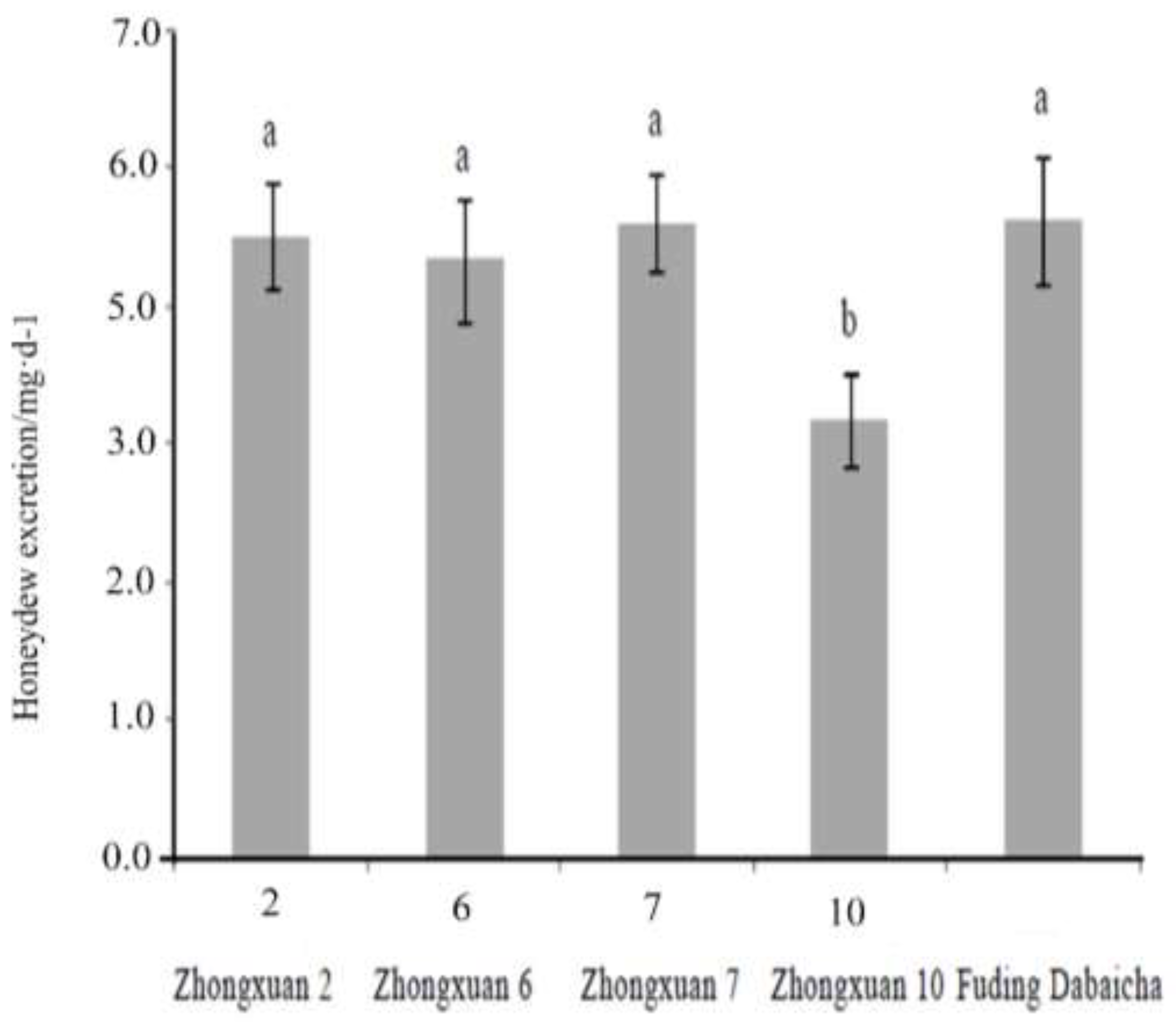
Fengjing et al. (2020) studied honeydew production by female leafhoppers on various tea cultivars and found significant differences in output. Notably, cultivar No. 10 produced less honeydew than the other four, while cultivars 2, 6, 7, and Fuding Da Bai had similar production levels. They also observed structural differences in leaf tissue, with cultivar No. 10 having a comparable leaf area to cultivars 2 and Fuding Da Bai but smaller than 6 and 7. Although its trichomes are shorter, cultivar No. 10 has a higher density of trichomes than the other varieties, potentially affecting leafhopper interactions (
Figure 4).
Figure 6.
Comparison of the amount of honeydew excretion from female adult of Empoasca onukii in different tea cultivars (strains) (Fengjing et al. 2020).
Figure 6.
Comparison of the amount of honeydew excretion from female adult of Empoasca onukii in different tea cultivars (strains) (Fengjing et al. 2020).
Furthermore, Jin Shan et al., (2012), investigated how the population of
Empoasca onukii, varied among twelve different tea plant varieties (
Table 2).
The results shows that four varieties—Zhu Mountain No. 1, Enbiao, Lantian, and Banzhuyuan—consistently supported higher populations of this insects. In contrast, Deqing, Juyuan, Jianfeng, and Changxing Zisun had lower and more variable populations. Also, Qianqian et al., (2020) explored how two tea cultivars, Juyan (JY) and Enbiao (EB), react when leafhoppers start feeding on them. They found that the more vulnerable cultivar, EB, showed a greater number of differentially expressed genes (DEGs) than the more resilient cultivar, JY, after 6 and 24 hours of feeding. Interestingly, the resistant cultivar JY began to activate its defense mechanisms sooner, focusing mainly on processes related to terpenoid metabolism and the production of jasmonic acid, while the susceptible cultivar took longer to respond. Recognizing these differences helps tea growers and researchers develop integrated pest management (IPM) strategies to minimize damage while ensuring high-quality tea production.
Management Considerations and Implications
Gaining insight into the host plant preferences of Empoasca onukii is crucial for understanding its growth and development in tea gardens. Identifying which specific tea cultivars appeal to E. onukii is key to formulating effective pest management strategies and refining cultivation methods. Extensive research has been conducted on the oviposition preferences of E. onukii related to various tea cultivars. Each cultivar possesses unique characteristics—such as leaf toughness, nitrogen levels, and the presence of secondary metabolites—that can significantly influence its vulnerability to this pest (Yao et al., 2022). Collectively, these traits determine how attractive different tea cultivars are to E. onukii for mating and laying eggs, which in turn impacts the insect's growth rates and population dynamics.
Research has shown that some tea cultivars are particularly conducive to the growth and reproduction of Empoasca onukii. For example, investigations by Yao et al. (2022) found that cultivars such as Fuding White Tea, Fuyun No. 6, and Maoxie exhibited the highest egg densities of E. onukii, suggesting a marked preference for these plants when it comes to oviposition. The study indicated that these cultivars possess traits that likely enhance their attractiveness to E. onukii, potentially due to factors like softer leaf texture or greater nutritional content.
Furthermore, additional studies have highlighted the varying levels of resistance and susceptibility among different tea cultivars. For instance, Huang et al. (2020) noted that certain traditional cultivars showed lower infestations of E. onukii attributed to their tougher leaves and lower nitrogen content. Changes in chemical composition, such as elevated levels of polyphenols, have also been associated with reduced pest infestations, underscoring the significance of plant defense mechanisms in combating this pest (Zhou et al., 2011).
For farmers viewing this insect as a threat to their tea plants and aiming to boost yield, understanding which cultivars serve as suitable hosts for E. onukii allows farmers to make informed choices regarding cultivar selection that balances yield and quality with pest resistance. Moreover, cultivating less susceptible tea varieties could mitigate the impact of E. onukii and contribute to sustainable pest management practices.
In conclusion, identifying specific tea cultivars that promote the growth and development of Empoasca onukii is crucial for farmers looking to optimize tea production amid pest challenges. By leveraging insights from recent research—such as that by Yao et al. (2022)—tea producers can devise targeted strategies to boost crop resilience, mitigate pest-related damage, and enhance the sustainability of tea cultivation. Implementing cultural practices like adjusting planting densities and pruning frequencies can effectively manage E. onukii populations by limiting the availability of young, tender leaves. Additionally, biological control methods, such as introducing or conserving natural predators like spiders, lady beetles, and parasitic wasps, can further help regulate E. onukii populations.
The economic implications of cultivating susceptible green tea cultivars for the mass rearing of E. onukii touch on various aspects, including pest management, crop research, market dynamics, and ecosystem sustainability. A comprehensive understanding of these factors offers valuable insights that can lead to more resilient farming practices, increased profitability, and improved product quality. To fully realize the benefits of this approach, ongoing collaboration among entomologists, agronomists, and economists is essential to foster both economic viability and environmental sustainability in the tea industry.
6. Feeding Behavior of E. onukii
The feeding patterns of
Empoasca onukii vary based on plant characteristics and environmental factors. Leafhoppers typically prefer younger, softer leaves because they are easier to penetrate and rich in nutrients. Seasonal fluctuations significantly influence insect feeding behavior. Peak feeding activity is often observed during warmer months when the insects' metabolism and reproduction rates are at their highest. Li et al. (2017) found a strong correlation between temperature and humidity levels and the populations and feeding damage caused by
E. onukii. Higher temperatures, coupled with moderate humidity, promote increased feeding activity and population growth. These actions also cause the tea plant to go through a number of physiological reactions, such as the development of secondary metabolites, which can change the flavor profile of the tea leaves or operate as a defense mechanism. For instance, certain tea cultivars have undergone selective breeding to develop stronger leaf surfaces or higher concentrations of chemicals that repel leafhoppers. Chen et al. (2018) report that in response to
E. onukii feeding, some tea cultivars, namely
Camellia sinensis var. assamica, release higher levels of phenolic chemicals, which can decrease the leafhopper's ability to feed and reproduce. Additionally, Wei et al. (2017) investigated the effects of
E. onukii feeding on the physiology of tea plants and found that the leafhoppers' constant feeding results in obvious harm to the leaves, including necrosis (death of tissue) and chlorosis (yellowing). Hence decline tea production as a result of the mechanical harm caused by
E. onukii feeding, which lowers photosynthetic efficiency and general plant vigor. Zhou et al. (2013) also discovered that
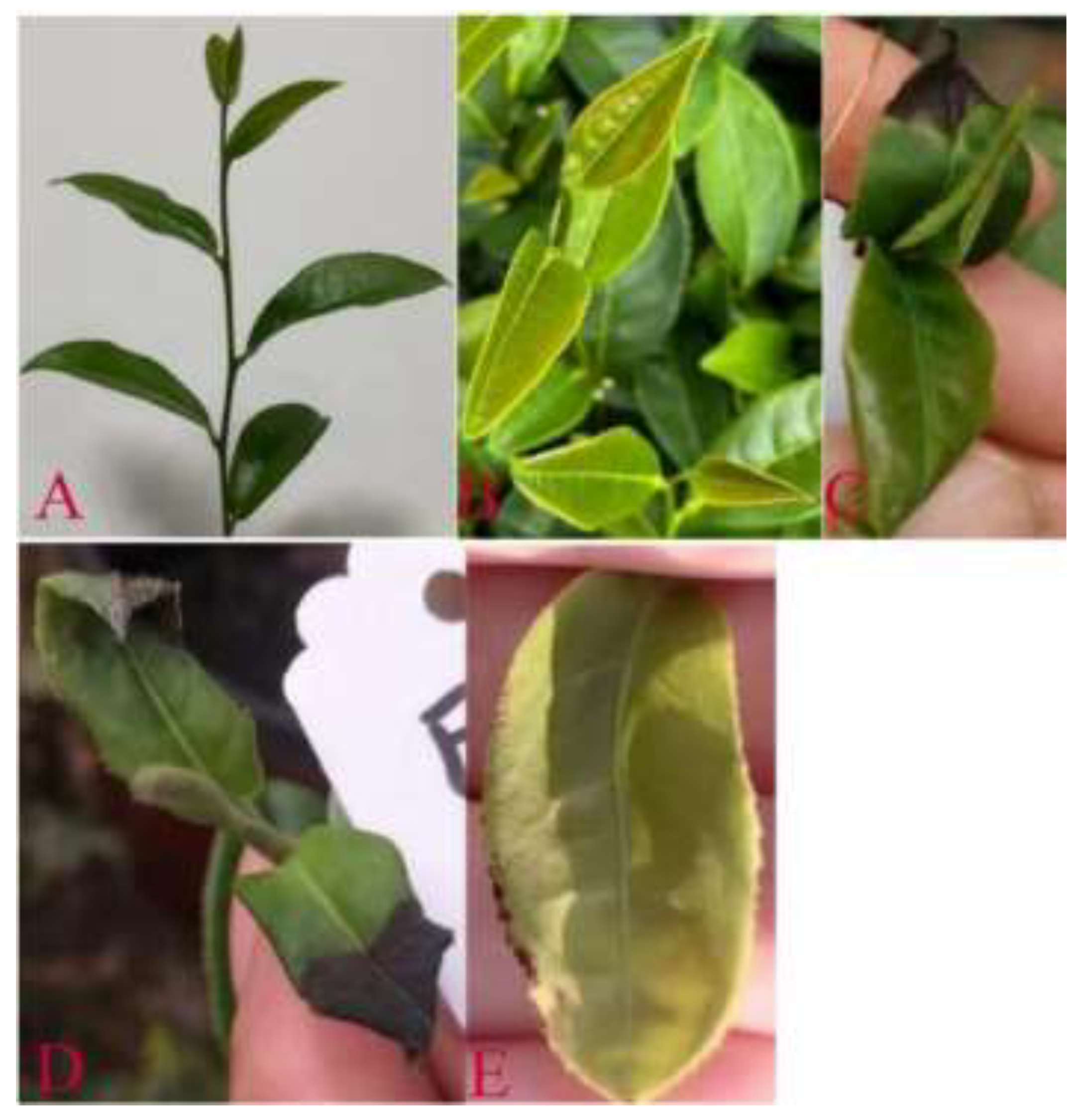
E. onukii's feeding activity greatly affects tea plant growth by upsetting the plant's internal nutrient distribution. The production of high-quality tea requires healthy growth and good formation of new shoots, both of which can result from this disturbance (
Figure 5).
Figure 7.
Relationship between leafhopper density and visible leaf damage. A and B) healthy/fresh young tea shoot, C, D, and E), highlighting the range and types of damage.
Figure 7.
Relationship between leafhopper density and visible leaf damage. A and B) healthy/fresh young tea shoot, C, D, and E), highlighting the range and types of damage.
Furthermore, E. onukii causes the leaves of tea plants to produce secondary metabolites such as flavonoids, terpenoids, and volatile organic compounds (VOCs). For instance, Wang et al. (2014) reported that these substances are essential to the plant's defense systems and also contribute to the distinctive flavor profiles of teas influenced by E. onukii. These metabolites are essential to the production of "Oriental Beauty" tea, which is valued for its honey-like flavor. Xie et al. (2015) went into more detail on how E. onukii feeding might alter the biochemistry of tea leaves, improving some desired sensory qualities in the finished tea product. Complex flavor notes are said to develop as a result of the stress that the leafhopper's feeding activity causes; these notes are especially valuable in some specialty teas.
7. Economic Impact of Empoasca onukii on the Tea Industry and Farmers
Once regarded as a pest on tea plantations, Empoasca onukii has recently been recognized for its potential economic benefits, especially in the production of specialty teas that are highly sought after. This shift in perspective underscores the complex role that E. onukii plays in tea production. When managed appropriately, its presence can contribute to the production of unique tea products that command high prices. Enhancing the flavor profile of some tea varieties is one of Empoasca onukii's most important potential uses. The leafhopper's feeding activity causes the tea plant to go under stress, which causes it to produce secondary metabolites including terpenoids and flavonoids as well as volatile organic compounds (VOCs). Teas with distinct and very desirable flavor characteristics, such flowery, fruity, and honey-like fragrances, can be produced via these biochemical modifications.
A Case Study on the production of "Oriental Beauty" Tea: The production of this high-end, Taiwanese oolong tea is a well-documented example of this phenomena. According to research by Wang et al. (2020), the development of the tea's distinct honeyed sweetness and flowery aroma depends heavily on E. onukii's feeding activity. In the market, this tea is highly valued and sells at a substantial premium over ordinary oolong teas (Wang et al., 2020). Moreover, specialty teas have their own niche markets since Empoasca onukii populations are purposefully managed to improve tea quality. These products are advertised as premium goods and are highly sought after by tea enthusiasts and consumers prepared to pay more for distinctive and premium teas. They are frequently linked to traditional and artisanal manufacturing methods. Due to their unique flavor profiles and artisanal appeal, teas affected by E. onukii are priced premium.
Tea manufacturers target particular consumer niches to this differentiation, which opens up chances for larger profit margins. For instance, leafhopper-affected teas are sold in Taiwan and Japan highlighting their distinctive flavors and age-old manufacturing techniques in an effort to appeal to both local and foreign consumers (Liu et al., 2017). Furthermore, the capacity for tea growers to generate high-value teas by means of the controlled existence of Empoasca onukii may result in amplified financial gains. Farmer income and stability can be increased by concentrating on producing specialty teas that command higher market prices. In comparison to traditional tea farms, research by Chen et al. (2019) shows that tea farms producing leafhopper-affected teas can yield better revenue per unit area. For small-scale growers who would find it difficult to make ends meet given the low margins associated with mass-produced teas, this improvement in profitability is especially crucial (Chen et al., 2019).
This technique is in line with the expanding global trend toward organic and sustainable farming. Some tea producers are cutting back on or stopping the use of chemical pesticides that would normally target the leafhoppers as demand for these specialty teas rises. This change encourages environmental sustainability in addition to the manufacturing of premium teas. Tea farms can reduce their environmental impact by mass growing E. onukii and using less pesticides to maintain controlled populations. This strategy can increase the teas' marketability and appeal especially to environmentally conscious consumers. According to Li et al. (2018), this tactic has helped some areas create more environmentally friendly methods of growing tea.
Furthermore, this integrative method presents an opportunity for the growth of tea-related tourism. Tea farms with a reputation for producing these specialty goods may draw visitors eager to sample and experience the art of making tea. This type of agri-tourism not only helps local communities financially but also fosters the cultural legacy connected to the tea industry. The emergence of tea tourism offers an extra source of income, bolstering regional economies and augmenting the industry's overall economic influence. In order to generate new chances for economic growth, visitors to these places can take part in guided tours, partake in tea tastings, and discover how E. onukii is used to make premium teas (Zhang et al., 2020). Empoasca onukii has the potential to have a significant positive economic influence on the tea sector, especially if its presence is strictly controlled to improve the caliber of tea products. E. onukii can change from a common pest to a useful tool for tea growers by helping to generate distinctive flavor profiles, establishing specialized markets, and encouraging sustainable practices. This creative strategy offers new opportunities for sustainable economic growth and development, while also boosting farmers' profits and fostering the expansion of the tea sector overall.
8. Conclusions
The tea green leafhopper, Empoasca onukii, has shifted from being regarded as a pest to being recognized for its significant economic benefits in the tea industry. Recent research highlights the leafhopper's intricate relationship with tea plants, where its feeding behavior stimulates the production of desirable secondary metabolites, enhancing the quality and market value of premium teas, particularly respected varieties like Taiwan's "Oriental Beauty." This evolution in perspective is largely driven by consumer demand for unique flavor profiles and artisanal products, creating lucrative niche markets for teas influenced by E. onukii.
The economic advantages extend beyond enhancing flavor. Sustainable agricultural practices have emerged, as many farmers reduce or eliminate pesticide use traditionally aimed at controlling E. onukii. This aligns with international movements toward environmentally friendly farming, as organic or pesticide-free teas appeal to health-conscious consumers. Enhanced environmental practices have led to reduced production costs, ultimately benefiting local economies, particularly in rural areas dependent on tea cultivation.
Research has also identified the complexities within E. onukii populations, with varying degrees of susceptibility based on different tea cultivars, environmental factors, and climatic conditions. Understanding these dynamics is key for developing integrated pest management (IPM) strategies that balance the beneficial and harmful effects of the leafhopper.
Moreover, climatic factors like humidity, rainfall, and light availability significantly influence E. onukii populations and, by extension, tea production. While moderate rainfall can enhance leafhopper abundance and tea quality, heatwaves can stress populations and disrupt reproductive cycles. Therefore, effective management practices must adapt to these fluctuating environmental conditions.
The evolving understanding of E. onukii emphasizes the necessity for continued research into its biology, ecology, and the development of sustainable cultivation techniques that foster beneficial interactions while mitigating potential damage. This includes exploring breeding programs for more resistant tea varieties, the promotion of beneficial insects, and innovative farming practices that maximize the economic potential of teas affected by leafhoppers.
In conclusion, while regarded as a pest, Empoasca onukii presents a promising opportunity for economic growth within the tea sector. By leveraging its unique contributions to tea flavor and quality, along with sustainable management practices, farmers can not only enhance their profitability but also foster local economies and support the broader movement toward sustainable agricultural practices. The future of tea production, particularly in regions embracing specialty teas, hinges on the strategic management of E. onukii, illustrating how viewing a pest through a new lens can unveil its potential as a valuable ally in achieving economic sustainability and resilience in the industry.
9. Future Prospects of mass rearing Empoasca onukii
Empoasca onukii is often seen as a major pest in tea farming. However, there’s a growing realization that, if managed properly, this pest could offer some surprising economic advantages for farmers and the tea industry. Here's how this pest might actually create opportunities:
9.1. Development of Premium and Specialty Teas
Enhanced Flavor Profiles: Relatively low infestations of Empoasca onukii can trigger beneficial changes in tea leaves, boosting the production of aromatic compounds and polyphenols. This can enhance the flavor and aroma, making certain specialty teas, like Taiwanese oolong varieties (such as Oriental Beauty), particularly sought after. By carefully managing the presence of this pest, farmers can produce high-quality teas that fetch premium prices, turning what seems like a liability into an asset.
Niche Marketing Opportunities: Tea producers can highlight these unique, flavor-enhanced offerings, appealing to niche markets that appreciate distinctive tea profiles. With effective marketing, growers can stand out in a competitive landscape and increase their revenue.
9.2. Support for Organic and Sustainable Farming Practices
Organic Certification and Premium Pricing: By managing Empoasca onukii without synthetic pesticides, tea plantations may achieve organic certification, which typically leads to higher prices due to growing consumer demand for health-conscious and eco-friendly products.
Reduced Input Costs: Implementing integrated pest management (IPM) strategies can help farmers reduce their chemical pesticide use, cutting costs. Over time, by using natural controls like beneficial insects or pheromone traps to manage E. onukii, growers can develop a more sustainable and cost-effective production system.
9.3. Incentives and Support from Government
Access to Subsidies and Grants: As sustainability becomes increasingly important, farmers who adopt eco-friendly pest management may qualify for government subsidies, grants, or technical assistance, helping to ease the financial transition towards more sustainable practices.
Improved Market Access: Many governments and international organizations champion sustainably produced goods. By managing Empoasca onukii in a sustainable way, farmers can gain better access to markets that prioritize environmentally friendly products, boosting their sales potential.
9.4. Stimulation of Research and Innovation in Pest Management
Development of New Management Techniques: Tackling the challenges associated with Empoasca onukii is encouraging innovation in pest control, including biological agents and natural repellents. Access to these new tools can help farmers reduce crop losses and boost yields.
Collaboration and Knowledge Sharing: Farmers who partner with researchers or pest management experts can receive training, support, and access to new technologies, enabling them to manage pests more effectively and sustainably.
9.5. Improved Ecosystem Services and Long-Term Agricultural Sustainability
Promotion of Beneficial Insects: Sustainable practices for managing Empoasca onukii often involve fostering natural predators, leading to a healthier ecosystem. Increased biodiversity can enhance pollination, improve soil health, and boost overall farm productivity, reducing the need for chemical inputs.
Climate Resilience: Adopting sustainable farming methods in response to pests like E. onukii can also help tea farms become more resilient to climate change. Healthier ecosystems can better withstand extreme weather, ensuring more stable yields and income over time.
9.6. Economic Diversification through Value-Added Products
Creation of New Products: In response to Empoasca onukii, tea producers might explore creating specialty teas, blends, or extracts for cosmetics and health supplements. This diversification can open new revenue streams and lessen the risk associated with relying on a single product.
Increased Tourism Opportunities: Regions that produce specialty teas can promote agro-tourism by showcasing their unique production processes and the role of Empoasca onukii. Tea farms could offer tours and tastings, creating additional income for local communities.
9.7. Cost Savings from Reduced Pest Outbreaks
Improved Pest Resistance: Sustainable management can enhance the natural resilience of tea plants, leading to less damage from E. onukii and more consistent yields over time.
Optimized Resource Usage: Understanding how Empoasca onukii affects tea can help farmers fine-tune their irrigation and fertilizer use, reducing waste and improving the overall efficiency of production. Through these strategies, farmers can turn what might be seen as a burden into a catalyst for economic growth, sustainability, and resilience in the tea industry.
While Empoasca onukii has recently been viewed as a pest harming tea production, there are new opportunities for economic growth, particularly when its management is incorporated into sustainable farming practices. By embracing innovative pest control methods, focusing on high-quality specialty teas, and taking advantage of government incentives, farmers and the tea industry can turn the challenge of E. onukii into a potential source of profit. Over time, these strategies can lead to more resilient, diverse, and sustainable tea production systems that benefit farmers and the wider tea community for the long haul.
Author Contributions
Conceptualization, U. C. K., R. M., and Z. W.; Validation, U. C. K., R. M., and Z. W.; Writing-original draft preparation, U. C. K., and Z. W.; Writing-review and editing, U. C. K., and L. X., Supervision, R. M., Funding acquisition, R. M. All authors have read and agreed to the published version of the manuscript.
Conflicts of Interest
The authors declare no conflict of interest and all the authors contributed equally to this work.
Acknowledgments
This work was financially supported by the Zijin Tea Industry Scale Guidance and Brand Building Project (Development of Artificial Cultivation Technology for Tea Leafhopper: (GIZ-KYB-XM-2023-018), the GDAS Special Project of Science and Technology Development (2024GDASZH-2024010101), 2022GDASZH-2022030501-08) and Guangdong Basic and Applied Basic Research Foundation (2022A1515110225).
References
- Aartsma, Y.; Bianchi, F.J.J.A.; van der Werf, W.; Poelman, E.H.; Dicke, M. Herbivore-induced plant volatiles and tritrophic interactions across spatial scales. New Phytologist 2017, 216, 1054–1063. [Google Scholar] [CrossRef]
- Ahmed, S.; Stepp, J.R.; Orians, C.; Griffin, T.; Matyas, C.; Robbat, A.; Cash, S.; Xue, D.; Long, C.; Unachukwu, U.; Buckley, S.; Small, D.; Kennelly, E. Effects of Extreme Climate Events on Tea ( Camellia sinensis ) Functional Quality Validate Indigenous Farmer Knowledge and Sensory Preferences in Tropical China. 2014, 9. [CrossRef]
- Bian, L.; Cai, X.; Luo, Z.; Li, Z.; Xin, Z.; Chen, Z. Ecology and Behavior Design of an Attractant for Empoasca onukii ( Hemiptera : Cicadellidae ) Based on the Volatile Components of Fresh Tea Leaves. 2018, 111, 629–636. [CrossRef]
- Bian, L.; Qun, Z.; Long, L.; Xiao, M.; Cai, M.; Xiu, Z.; Zong, L.; Chen, M. Identification of the genes in tea leafhopper, Empoasca onukii ( Hemiptera : Cicadellidae ), that encode odorant - binding proteins and chemosensory proteins using transcriptome analyses of insect heads. Appl. Entomol. Zool. 2018, 53, 93–105. [Google Scholar] [CrossRef]
- Böll, S.; Herrmann, J.V. A long-term study on the population dynamics of the grape leafhopper (Empoasca vitis) and antagonistic mymarid species. J. Pest Sci. 2004, 77, 33–42. [Google Scholar] [CrossRef]
- Cai, X.; Luo, Z.; Meng, Z.; Liu, Y.; Chu, B.; Bian, L.; Li, Z.; Xin, Z.; Chen, Z. (2019). Primary screening and application of repellent plant volatiles to control tea leafhopper, Empoasca onukii Matsuda. [CrossRef]
- Cai, X.; Sun, X.; Dong, W.; Wang, G.; Chen, Z. (2017). Variability and stability of tea weevil-induced volatile emissions from tea plants with different weevil densities, photoperiod and infestation duration. December. [CrossRef]
- Chen, L.L.; Pozsgai, G.; Li, X.Y.; Li, L.; Reddy GV, P.; You, M.S. Effects of cover crops on beetle assemblages in tea plantations. Crop Prot. 2021, 149, 105783. [Google Scholar] [CrossRef]
- Chen, Z.; et al. "Integrated pest management strategies for Empoasca onukii in tea plantations. " Agric. Entomol. 2019, 34, 123–136. [Google Scholar]
- Dave Goulson, Elizabeth Nicholls, Cristina Botías, E. L. R. Bee declines driven by combined stress from parasites, pesticides, and lack of flowers. 2015, 347, 1255957. [CrossRef]
- Dong, X.C.; XS, W.; Chen, G.W.Z. (2014). Herbivore species, infestation time, and herbivore density affect induced volatiles in tea plants. 1–14. [CrossRef]
- Fu, J; Han, B.; Xiao, Q. (2014). Mitochondrial COI and 16sRNA Evidence for a Single Species Hypothesis of E. vitis. 1–15. [CrossRef]
- Gong, P.; Li, X.; Gao, H.; Wang, C.; Li, M.; Zhang, Y.; Li, X.; Liu, E.; Zhu, X. (2020). Field evolved resistance to pyrethroids,neonicotinoids, organophosphates and macrolides in Rhopalosiphum padi (Linnaeus) and Sitobion avenae (Fabricius) from China. In ECSN. Elsevier Ltd. [CrossRef]
- Jahan, I.; Shopan, J.; Rahman, M.; Sarkar, A.; Baset, A.; Zhang, Z.; Li, X.; Ahammed, G.J.; Hasan, K. (2022). Long-Term Traditional Fertilization Alters Tea Garden Soil Properties and Tea Leaf Quality in Bangladesh.
- Jiménez-Brenes, F.M.; López-Granados, F.; Castro AI de Torres-Sánchez, J.; Serrano, N. ; Peña; JM. (2017). Quantifying pruning impacts on olive tree architecture and annual canopy growth by using UAV - based 3D modelling. 1–15. [CrossRef]
- Jin, S.; Ren, Q.; Lian, L.; Cai, X.; Bian, L.; Luo, Z.; Li, Z.; Ye, N.; Enbiao, E.B.; Ontology GO, G. Comparative transcriptomic analysis of resistant and susceptible tea cultivars in response to Empoasca onukii ( Matsuda ) damage. Planta 2020, 1–15. [Google Scholar] [CrossRef]
- Li Hui-ling LIUFeng-jing WANGDing-feng ZHANGWen-jin WUGuang-yuan, L. N. Effects of Shading on Population Dynamics of Small Green Leafhopper. Fujian J. Agric. Sci. 2013, 28, 1281–1284. [Google Scholar] [CrossRef]
- Liu, H.; Li, S.; Xiao, G.; Wang, Q. Formation of volatiles in response to tea green leafhopper (Empoasca onukii Matsuda) herbivory in tea plants: a multi-omics study. Plant Cell Rep. 2021, 40, 753–766. [Google Scholar] [CrossRef] [PubMed]
- Liu, J.H.; Sun, C.Y.; Long, J.; Guo, J.J. Complete mitogenome of tea green leafhopper, Empoasca onukii (Hemiptera: Cicadellidae) from Anshun, Guizhou Province in China. Mitochondrial DNA Part B Resour. 2017, 2, 808–809. [Google Scholar] [CrossRef] [PubMed]
- Lun, X.; Xu, X.; Zhang, X. Identification and expression profiles of candidate chemoreceptor genes in the tea leafhopper, Empoasca onukii Matsuda ( Hemiptera : Cicadellidae ). Phytoparasitica 2023, 51, 1077–1089. [Google Scholar] [CrossRef]
- Liu, B.; et al. "Effect of temperature and humidity on the reproduction and development of Empoasca onukii in tea gardens. " Environ. Entomol. 2014, 43, 555–562. [Google Scholar]
- Liu, X.; et al. "Biological control of tea pests: The role of natural enemies in managing Empoasca onukii. " Biol. Control. 2016, 98, 12–20. [Google Scholar]
- Mei, X.; Liu, X.; Zhou, Y.; Wang, X.; Zeng, L.; Fu, X.; Li, J.; Tang, J.; Dong, F.; Yang, Z. (2017). Affiliation : Guangdong Provincial Key Laboratory of Applied Botany & Key Laboratory of South China Key Laboratory of Tea Plant Resources Innovation and Utilization, Dafeng Road 6, Tianhe Guangdong Food and Drug Vocational College, Longdongbei Road 321. Food Chem. [CrossRef]
- Miao, J.; Han, B.; Zhang, Q. (2014). Probing Behavior of Empoasca vitis ( Homoptera : Cicadellidae ) on Resistant and Susceptible Cultivars of Tea Plants 2–7. [CrossRef]
- Mu, D.; Pan, C.; Qi, Z.; Qin, H.; Li, Q.; Liang, K.; Rao, Y.; Sun, T. Multivariate analysis of volatile profiles in tea plant infested by tea green leafhopper Empoasca onukii Matsuda. Plant Growth Regulation 2021, 95, 111–120. [Google Scholar] [CrossRef]
- Pęksa, M. C. & Ł. (2018). Impact of climate on the population dynamics of an alpine ungulate : a long-term study of the Tatra chamois Rupicapra rupicapra tatrica. 2173–2182.
- Qi Yao, H. Z. , Long Jiao, Xiaoming Cai, M. W., & Chen, and Z. (2020). Identifying the Biological Characteristics Associated with Oviposition Behavior of Tea Leafhopper.
- Qiao, L.; Wu, J.X.; Qin, D.Z.; Liu, X.C.; Lu, Z.C.; Lv, L.Z.; Pan, Z.L.; Chen, H.; Li, G.W. (2015). Gene Expression Profiles of Heat Shock Proteins 70 and 90 From Empoasca onukii ( Hemiptera : Cicadellidae ) in Response to Temperature Stress. 1–12. [CrossRef]
- Qin, D.; Zhang, L.; Xiao, Q.; Dietrich, C.; Matsumura, M.; Zhu, C.D. Clarification of the identity of the tea green leafhopper based on morphological comparison between Chinese and Japanese specimens. PLoS ONE 2015, 10, 1–13. [Google Scholar] [CrossRef] [PubMed]
- Qin, W.; Zhang, J.; Li, M. Yield losses in tea plantations due to infestations of Empoasca onukii. Agricultural and Forest Entomology 2015, 17, 290–298. [Google Scholar]
- Qin, D.; et al. "Life cycle and reproductive biology of Empoasca onukii. " J. Econ. Entomol. 2015, 108, 2511–2519. [Google Scholar]
- Ravichandran, M.; Samiappan, S.C.; Pandiyan, R.; Velu, R.K. Journal of Experimental Biology and Agricultural Sciences Improvement of crop and soil management practices through mulching for enhancement of soil fertility and environmental sustainability: A review. 2022, 10, 697–712.
- Redl, M.; Sitavanc, L.; Hanousek, F.; Steinkellner, S. A single out-of-season fungicide application reduces the grape powdery mildew inoculum. Crop Prot. 2021, 149, 105760. [Google Scholar] [CrossRef]
- Ruirui Zhang, Xiaoyue Lun, Yu Zhang, Yunhe Zhao, Xiuxiu Xu, and Z. Z. (2023). Characterization of Ionotropic Receptor Gene EonuIR25a in the.
- Scott, E.R.; Li, X.; Wei, J.; Kfoury, N.; Morimoto, J.; Guo, M.; Agyei, A. , Jr; A. R.; Ahmed, S.; Cash, S.B.; Griffin, T.S.; Stepp, J.R.; Han, W.; Orians, C.M.; Scott, E.R. Changes in Tea Plant Secondary Metabolite Profiles as a Function of Leafhopper Density and Damage. 2020, 11, 1–15. [Google Scholar] [CrossRef]
- Shi, L.; He, H.; Yang, G.; Huang, H.; Vasseur, L.; You, M. Are yellow sticky cards and light traps effective on tea green leafhoppers and their predators in chinese tea plantations? Insects 2021, 12, 1–15. [Google Scholar] [CrossRef]
- Shi, L.; Vasseur, L.; Huang, H.; Zeng, Z.; Hu, G.; Liu, X.; You, M. Adult tea green leafhoppers, Empoasca onukii (Matsuda), change behaviors under varying light conditions. PLoS ONE 2017, 12, 1–17. [Google Scholar] [CrossRef] [PubMed]
- Shi, L.; Zeng, Z.; Huang, H.; Zhou, Y. (2015). Identification of Empoasca onukii ( Hemiptera : Cicadellidae ) and Monitoring of its Populations in the Tea Plantations of South. [CrossRef]
- Stephen Miles. (2003). THE 1999 Benhs Presidential Address — Part 2 A Conservation Agenda For Entomologists For The Next 100 Years — An Amateur Viewpoint ?
- Shen, Z.; et al. "Hopperburn damage caused by Empoasca onukii and its impact on tea production. " Crop Prot. 2010, 29, 882–888. [Google Scholar]
- Wei, Q.I.; Yu, H.; Niu, C.; Yao, R.; Wu, S.; Chen, Z. Comparison of Insecticide Susceptibilities of Empoasca vitis ( Hemiptera : Cicadellidae ) from Three Main Tea-Growing Regions in China Comparison of Insecticide Susceptibilities of Empoasca vitis ( Hemiptera : Cicadellidae ) from Three Main Tea-Growing Re April. [CrossRef]
- Xuegui, Y. (2018). Review of Leafhopper (Empoasca flavescens): A Major Pest in Castor (Ricinus communis). Genet. Genom. Sci. 2015, 3, 1–7. [Google Scholar] [CrossRef]
- Yao, Q.; Wang, M.; Chen, Z. Ecology and Behavior The Relative Preference of Empoasca onukii ( Hemiptera : Cicadellidae ) for Oviposition on Twenty-Four Tea Cultivars. 2022, 115, 1521–1530.
- Zhang, Dongsheng. Hu, P., & Liu, Taigang. Wang, Jian. Jiang, Shouwen. Xu, Qianghua. Chen, L. GC bias lead to increased small amino acids and random coils of proteins in cold-water fishes. BMC Genom. 2018, 19, 1–10. [Google Scholar] [CrossRef]
- Zhang, L.; Dietrich, C.H.; Qin, D. Microsatellite markers from tea green leafhopper Empoasca (Matsumurasca) onukii: A powerful tool for studying genetic structure in tea plantations. BMC Genet. 2016, 17, 1–9. [Google Scholar] [CrossRef]
- Zhang, L.; Wang, F.; Qiao, L.; Dietrich, C.H.; Matsumura, M. Population structure and genetic differentiation of tea green leafhopper, Empoasca ( Matsumurasca ) onukii, in China based on microsatellite markers. June 2018 2019, 1–10. [Google Scholar] [CrossRef] [PubMed]
- Zhang, L.; Zhao, M.; Aikeremu, F. Involvement of three chemosensory proteins in perception of host plant volatiles in the tea green leafhopper, Empoasca onukii. 2023, 1–11. [CrossRef]
- Zhao, Q.; Shi, L.; He, W.; Li, J.; You, S.; Chen, S.; Lin, J.; Wang, Y.; Zhang, L.; Yang, G.; Vasseur, L.; You, M. Genomic Variations in the Tea Leafhopper Reveal the Basis of Its Adaptive Evolution. Genom. Proteom. Bioinform. 2022, 20, 1092–1105. [Google Scholar] [CrossRef]
- Zhao, X.; Chen, S.; Wang, S.; Shan, W.; Wang, X.; Lin, Y.; Su, F.; Yang, Z.; Yu, X. Defensive Responses of Tea Plants ( Camellia sinensis ) Against Tea Green Leafhopper Attack: A Multi-Omics Study. 2020, 10, 1–17. [CrossRef]
- Zhao, Y.; Song, Q.; Song, Y. The role of insect intestinal microbes in controlling of Empoasca onukii Matsuda (Hemiptera: Cicadellidae) pest infestations in the production of tea garden: a review. Arch. Microbiol. 2023, 205, 1–13. [Google Scholar] [CrossRef] [PubMed]
- Zhou, J.; Xiang, J.; Zhang, S.; Duan, C. Structural and Functional Analysis of the Amphioxus IGFBP Gene Uncovers Ancient Origin of IGF-Independent Functions. 2013, 154, 3753–3763. [CrossRef]
- Wang, X.; et al. "The role of Empoasca onukii in flavor development of Oriental Beauty tea. " Food Chem. 2020, 330, 127294. [Google Scholar]
- Wu, Y.; et al. "Impact of Empoasca onukii on the market value of specialty teas. " Tea Res. 2018, 39, 89–98. [Google Scholar]
- Zhang, L.; et al. "Multiple generations and population dynamics of Empoasca onukii* in East Asian tea gardens. " J. Insect Sci. 2016, 16, 55–62. [Google Scholar]
- Zhou, N.; et al. "Floral and honeyed aromas: Biochemical responses of tea plants to Empoasca onukii feeding. " Phytochem. Rev. 2019, 18, 957–972. [Google Scholar]
- Wang, X.; Zhang, W.; Jiang, Y. Impact of Empoasca onukii feeding on chlorophyll content and photosynthesis in tea plants. J. Tea Sci. 2014, 34, 110–117. [Google Scholar]
- Zhang, H.; Chen, R.; Liu, Z. Role of Empoasca onukii in the spread of fungal pathogens in tea gardens. Plant Pathol. J. 2016, 32, 402–410. [Google Scholar]
- Li, Y.; Wu, C.; Deng, J. Seasonal dynamics of Empoasca onukii populations and their impact on tea production. Environ. Entomol. 2017, 46, 947–955. [Google Scholar]
- Chen, Q.; Liu, P.; Wang, Y. Defensive responses of tea cultivars to feeding by Empoasca onukii. J. Plant Interact. 2018, 13, 34–41. [Google Scholar]
- Wang, Y.; Chen, Q.; Liu, P. Exploiting Empoasca onukii in the production of high-value teas: A double-edged sword. J. Econ. Entomol. 2020, 113, 533–540. [Google Scholar]
- Liu, H.; Zhang, W.; Li, J. Market differentiation of leafhopper-affected teas in East Asia. J. Tea Sci. 2017, 39, 210–220. [Google Scholar]
- Chen, R.; Li, Y.; Deng, J. Economic benefits of producing high-value, leafhopper-affected teas. Agric. Econ. 2019, 45, 567–576. [Google Scholar]
- Li, M.; Wang, X.; Zhang, T. Sustainable tea farming: Reducing pesticide use through integrated pest management. Environ. Manag. 2018, 52, 1248–1258. [Google Scholar]
- Zhang, H.; Chen, R.; Liu, Z. Tea tourism as an economic driver in leafhopper-affected tea regions. J. Rural. Studies 2020, 62, 145–156. [Google Scholar]
- Kakoki, S.; Kamimuro, T.; Tsuda, K.; et al. Effect of partial pesticide spraying on the number of major pests and damage to new shoots of tea plants. J. Asia-Pac. Entomol. 2019, 22, 826−837.
- Saha D, Roy S, Mukhopadhyay A Seasonal incidence and enzyme-based susceptibility to synthetic insecticides in two upcoming sucking insect pests of tea. Phytoparasitica, 2012; 40, 105–115.
- Ghauri M S, K. A new species of Empoasca Walsh (Homoptera; Cicadelloidea) attacking tea in Argentina. Ann. Mag. Nat. Hist. 1964; 7, 189–192. [Google Scholar]
- Ogura, M.; Terada, I.; Shirai, F.; et al. (2005). Tracing aroma characteristics changes during processing of the famous Formosa oolong tea “Oriental Beauty” [C]//Proceedings of 2004 International Conference on O-Cha (tea) Culture and Science, Shizuoka, Japan. 240-242.
- Chen, Z.M. The composition and succession of diseases and insect pests in tea plantation. China Tea, 1979; 1, 6–8. [Google Scholar]
- Chun, Y.; Zehong, M.; Shuai, L.; Sihui, L.; Dahe, Q.; Zhengwu, C. Resistance of 12 tea cultivars to Dendrothrips minowai Priesner and Empoasca Onukii Matsuda and a preliminary identification of resistant components Acta Agric. Zhejiangensis 2022, 34, 1713–1724. [Google Scholar] [CrossRef]
- Lin, L.; et al. (2022). Economic Impacts of Specialty Tea Markets in Humid Regions. Agricultural Systems.
- Fengjing, L.; Wei, R.; Xiwang, L.; Suqin, W.; Xiaoling, S. The Comparison of Leaf Structures and Empoasca Onukii Matsuda Honeydew Excretion among Five Tea Cultivars (Strains). J. Tea Sci. 2020; 40, 625–631, http://cykk.cbpt.cnki.net. [Google Scholar]
- Ge, Z.L.; Zhang, H.G. Study on the species of tea leafhopper in China. J. Tea Bus. 1988; 1, 15–18, (in Chinese). [Google Scholar]
- Zhao, D.X.; Chen, Z.M.; Cheng, J.A. Belongingness of tea leafhopper dominant species. J. Tea Sci. 2000; 20, 101–104, (in Chinese). [Google Scholar]
- Fu, J.Y.; Han, B.Y. A molecular analysis on genetic relationships among individuals of tea leafhopper. Bull. Sci. Technol. 2015; 21, 549–552,556. (in Chinese) [Google Scholar]
- Fu, J.Y.; Han, B.Y. Studies on genetic relationships among populations of Empoasca vitis (Göthe) from tea gardens in seven provinces based on RAPD analysis. Acta Agric. Zhejiangensis.
- Li, L.; Fu, J.Y.; Xiao, Q. Sequence analysis of the mtDNA gene and genetic differentiation in geographic populations of Empoasca vitis. Chin. J. Appl. Entomol.
- Fu, J.Y.; Li, L.; Yuan, Z.J.; et al. Molecular phylogenetic analysis of tea green leafhopper (Empoasca vitis) based on mtDNA COI sequences. J. Tea Sci. 2014; 34, 601–608. (in Chinese) [Google Scholar]
- Zhou, N.N. (2014). Study on genetic variation of geographic population of Empoasca vitis (Göthe) in tea plantation based on the mitochondrial COI and COII genes [D]. Hangzhou: China Jiliang University.
- Fu, J.Y.; Han, B.Y.; Xiao, Q. Mitochondrial COI and 16sRNA evidence for a single species hypothesis of E. Vitis, J. Formosana and E. onukii in East Asia. PLoS ONE, 2014; 9, e115259. [Google Scholar]
- Qin D, Zhang L, Xiao Q; et al. Clarification of the identity of the tea green leafhopper based on morphological comparison between Chinese and Japanese specimens. PLoS ONE 2015, 10, e0139202. [Google Scholar]
- Qin D Z, Xiao Q, Wang Y C; et al. Revision of green leafhopper species damaging tea shrub in Shaanxi and reconsideration of the species in China. J. Northwest AF Univ. (Nat. Sci. Ed. ) 2014, 42, 124−134,140 (in Chinese). [Google Scholar]
- Shi L, Q. (2016). Identification of the tea green leafhopper in Fujian, China, and its behavioral responses to varying light contidtions [D]. Fuzhou: Fujian Agriculture and Forestry University, (in Chinese.
- Tsai, C.; et al. (2019). The Role of Empoasca onukii in Enhancing the Flavor of Oriental Beauty Tea. Tea Research International.
- Yu, X.F.; Meng, Z.H.; Yang, M.F.; et al. Investigation and taxonomic revision of green tea leafhopper species of Guizhou and other provinces in South China. Chin. J. Appl. Entomol. 2015, 52, 1277–1287. (in Chinese). [Google Scholar]
- Meng, Z.N.; Bian, L.; Luo, Z.X.; et al. Taxonomic revision and analysis of the green tea leafhopper species in China's main tea production area. Chin. J. Appl. Entomol. 2018, 55, 514–526. (in Chinese). [Google Scholar]
- Xu, J.; Chen, L.; Zhao, H. Influence of shade management on Empoasca onukii populations in tea plantations. Journal of Insect Science 2020, 20, 21. [Google Scholar]
- Sun, Y.; et al. Temperature-Dependent Development and Survival of Empoasca onukii. Bulletin of Entomological Research 2019, 109, 292–301. [Google Scholar]
- Zhou, M.; et al. Varietal Susceptibility of Tea Cultivars to Empoasca onukii. J. Pest Sci. 2020, 93, 725–735. [Google Scholar]
- Zhou, M.; et al. Cultivation Practices and Their Impact on Empoasca onukii Populations. Crop Prot. 2021, 143, 105554. [Google Scholar]
- Zhao, J.; Cheng, L.; Yu, H. Developmental and Reproductive Characteristics of Empoasca onukii at Different Temperatures. Environ. Entomol. 2016, 45, 676–683. [Google Scholar]
- Xiao, C.; Zhang, X.; Lin, F. The Effects of Temperature on the Development and Reproduction of Empoasca onukii. Insect Sci. 2018, 25, 556–563. [Google Scholar]
- Zhang, Y.; Liu, Q.; Zhao, L. Effects of Temperature on the Development of Empoasca onukii and the Impact on Rice Production. Field Crops Res. 2020, 245, 107564. [Google Scholar]
- Li, H.; Zhang, Y.; Yu, Y. Life Table and Developmental Parameters of Empoasca onukii at Different Temperatures. J. Econ. Entomol. 2019, 112, 500–507. [Google Scholar]
|
Disclaimer/Publisher’s Note: The statements, opinions and data contained in all publications are solely those of the individual author(s) and contributor(s) and not of MDPI and/or the editor(s). MDPI and/or the editor(s) disclaim responsibility for any injury to people or property resulting from any ideas, methods, instructions or products referred to in the content. |
© 2024 by the authors. Licensee MDPI, Basel, Switzerland. This article is an open access article distributed under the terms and conditions of the Creative Commons Attribution (CC BY) license (http://creativecommons.org/licenses/by/4.0/).