

Submitted:
03 December 2024
Posted:
04 December 2024
You are already at the latest version
Abstract
This article presents and analyzes the main aspects and desiderates of the educational project "Romania Educata” The article subscribes to the two famous quotes: "The more teachers are the samsars of science" (Nicolae Iorga) and " Education is the path from cocky ignorance to miserable uncertainty" (Mark Twain). Thus, in the article are critically and comparatively analyzed mainly the following aspects: detailed strategies on the following priority themes (teaching career; equity of the education system; professionalization of educational management; a quality vocational and technical education; autonomy, quality and internationalization in higher education; early childhood education accessible to all; evaluation of pupils and students). The project was funded through the European Union Reform Support Programme and implemented between 2018 – 2019 together with the European Commission. This, last one, from subcontracted the Organisation for Economic Cooperation and Development (OECD) to elaboration of the four public policy briefs provided for in the project (teaching career, educational management, equity, early education). The "Romania Educata" project would be had to constitute the largest and longest-lasting public consultation action carried out until now in the field of public policies in education in Romania. Unfortunately, the purpose of this project was not touched. The biggest deficiency of this project was and is the major underfunding of educational system in Romania.
Keywords:
Education
; Managerial project
; Underfunding
; Equity of the education system
1. Introduction
According to a quote by the romanian erudite Nicolae Iorga (Figure 1) [[16] "Most teachers are the samsars of science". In the same context, Mark Twain (Figure 2) left us the following aphorism [22] "Education is the path from cocky ignorance to miserable uncertainty". We subscribe to our approach through this article to these famous quotes!
Education, at whatever level it takes place (primary, secondary, high school, university and post-university) is of great importance and must represent an element of strategy and national security. From this point of view, a critical, comparative analysis and construction of the educational project "Romania Educata" is meant to optimize the quality of the educational system [1,8,20].
"Romania Educata" is the national project initiated by the President of Romania meant to support the repositioning of society on values, the development of a culture of success based on performance, work, talent, honesty and integrity [19].
At the beginning of the second century of existence as a modern and unitary state, it is important that education acquires a solid and predictable foundation, on which to continue the path towards Educated Romania.
The "Romania Educata" project represents the largest and longest-lasting public consultation carried out so far in the field of public policies in education. This approach expresses the desire of the President of Romania that every romanian has the opportunity to contribute to the project. The consultation started from the expectations of the entire society, not just the experts, and today it is returned to the society, before the results are finalized.
From the very beginning, the "Romania Educata" project was projected towards the future, the entire approach trying to respond to the challenges of the coming decades. In this regard, starting with 2016, the Presidential Administration initiated a broad public debate on education in Romania, structured in three stages. Each of these steps is described in detail on the project's website: www.romaniaeducata.eu, where you can consult the results submitted for public debate and learn more about how you can participate in the debate [9,11,15,19,21].
2. Materials and Methods
From the point of view of the management of the "Romania Educata" project, a previous study of the educational aspects specific to countries with a high-performance educational system and their adaptation to the specificity of Romania was advisable.
Thus, according to [5] it is presented: „a positive deviant case: a Swedish hard-to-staff school which has had a low rate of teacher turnover over time. In line with the purpose of studying positive deviance in organisations, our exploratory inquiry was geared towards understanding how and why ‘at-risk’ teachers, i.e., teachers who teach in subjects which are known to have high levels of staffing difficulties in Sweden, stayed at this particular school. Using a modified grounded theory approach, our results suggested that teachers remained at the school due to being embedded in a protective professional community that was enculturated by different expressions of collegiality. Finally, these findings are discussed in relation to the theoretical concepts of teachers’ job embeddedness and social capital”.
Like [23] „Research on how teachers learn to co-teach is scarce. In this systematic review, the PRISMA method was used to examine the relationship between teacher learning and co-teaching in professional development programmes. Inclusion criteria was used to identify 567 articles on K–12 co-teaching, published in 2009–2018. A detailed analysis of nine articles revealed that the linkage between co-teaching and teacher learning remained narrow. Various programmes showed that the existing understanding of co-teaching or teacher learning was not used efficiently. Considerable variation in the programmes regarding the concepts, methods, and practices highlight the importance of conducting future research”.
- ➢
- The first stage (2016-2017) involved a series of eight consultations on the country vision and objectives for education (regional debates), the development and dissemination of an online questionnaire, 35 third-party consultation events, etc.
- ➢
- The second stage (2017-2018) started from the vision elements identified in the previous phase, to continue the consultation on the Education Strategy for 2018-2030.
In this regard, the Presidential Administration has set up seven working groups with the role of developing the conclusions of the first stage into a package of detailed strategies on the following priority topics:
- teaching career;
- equity of the education system;
- professionalization of educational management;
- quality vocational and technical education;
- autonomy, quality and internationalization in higher education;
- early education accessible to all;
- evaluation of pupils and students.
The documents produced by the working groups and the conclusions of the events of the first stage were aggregated into a unitary document.
- ➢
- In the third stage (2018-2020), the integrated result of the previous steps was launched for public debate during the event organized on December 5, 2018, at the Cotroceni Palace, being available on the www.romaniaeducata.eu website, in the section "Project results".
Further, all those interested are invited to send their opinions to romaniaeducata@presidency.ro and to participate in the events planned for the next period.
Also, the Presidential Administration will organize four debates on the following topics: governance in education, financing, curricular architecture and the impact of the digital society on education, and on the other hand, those who wish will be able to continue to register events under the aegis of the "Romania Educata" project.
At the same time, during this period, the Presidential Administration realized a project in order to attract resources for the elaboration of public policy documents that would develop and complement the objectives of the "Romania Educata" project and, thus, to capitalize on the international expertise in the field for to support a national reform in the field [6,12,17].
The project was funded through the European Union Support Programme for Structural Reforms and implemented between 2018 – 2019 together with the European Commission. This, last one, subcontracted the Organization for Economic Cooperation and Development (OECD) for the elaboration of the four public policy briefs provided for in the project. They addressed the themes [2,3,4,7,18,24]:
- teaching career,
- educational management,
- equity,
- early education.
Each of them complete the "Romania Educata" proposals with examples of good practice from the international environment and proposals for actions that contribute to achieving the proposed objectives for 2030.
The documents were publicly launched at an event organized by the Presidential Administration, at the initiative of the President of Romania, at the Cotroceni Palace in January 29, 2020. More details about the event are available here, and the documents can be consulted on the www.romaniaeducata.eu website in the section dedicated to the Results of the third stage.
During the conference, other recent studies of national and international institutions relevant to the education system were presented and an interinstitutional dialogue on the future of education financing in Romania was launched, in the context of the priorities agreed within the "Romania Educata" Project.
The "Romania Educata" project is the largest and longest-lasting public consultation carried out so far in the field of public policies in education:
- Over 10.000 people directly involved in the first two stages;
- Over 8.000 respondents at the online consultation;
- Over 1.200 participants in the regional debates;
- Over 140 members in the seven thematic working groups (information on the composition of the working groups is available here);
- Over 60 events organized under the aegis of the project, by other stakeholders (details are available here and here).
- 8 regional debates organized by the Presidential Administration;
- 4 public policy documents elaborated by the OECD.
Courageous and encouraging approach. Will we also see them transposed into reality, or will they remain only on paper, which, unfortunately, can withstand anything? We think it's a rhetorical question!
3. Results
According to the "Romania Educata" project, our country will confront, in the coming decades, with a series of social and economic changes that can only be partially predicted.
The personalization and quality assurance of the educational process for all pupils / students is envisaged. The system focuses on the needs of the beneficiary and not the other way around, offering authentic learning experiences for each child or young person, starting from their profile and inclinations. Thus, maximizes everyone's potential, transforming education into a process, not only useful, but also enjoyable, in which the educational community is motivated to participate.
In this context, it is appreciated that the development of the education system of Romania must be based, permanently, on the following pillars
- Personalization and quality assurance of the educational process for all pupils/students. The system focuses on the needs of the beneficiary and not the other way around, offering authentic learning experiences for each child or young person, starting from their profile and inclinations. Thus, maximizes everyone's potential, transforming education into a process, not only useful, but also enjoyable, in which the educational community is motivated to participate.
- The flexibility of the education system will allow us to respond correctly to the characteristics of the beneficiaries and the actors involved: pupils, students, teachers, administrative staff, parents and employers, etc. - as well as of the learning communities. Flexible training routes, bridges for changing the training path or the diversity of specializations/profiles are some of the indicators of the degree of flexibility. This pillar automatically implies a high level of adaptability of the system, which simultaneously characterizes structures (institutions, communities, classes, groups) and persons (teachers, pupils, students, parents). The flexibility will allow us to understand new changes and respond to them adequate.
- Adaptability of the system to external changes and future trends. This involves correlation with international recommendations and practices, while firmly respecting the principles of ethics and integrity for all.
The three pillars must be found transversally in the structure, policies and norms that will characterize the education system. Compliance with these depends on the performance of romanian education, the increase of citizens' trust in the educational system and its international recognition. Their internalization and consolidation by teachers, parents, pupils, students and decision-makers depends on the future of Centennial Romania.
3.1. Twelve Desiderates for Educated Romania, at the Horizon 2030
We will enunciate and analyze 7 of these desiderates.
- 1.
- The education system trains actve citizens
The education system trains active citizens, with european values, adapted to economic and social conditions, with a solid civic and democratic culture.
The learner exceeds a minimum level of functional and digital literacy. Is autonomous in learning, has the ability to self-regulate his own learning and can identify and manage his emotions on his own, being able to communicate so as to have harmonious relationships, in family and society.
At the same time, their creativity is still encouraged during early education and, subsequently, their maturation towards innovative and entrepreneurial approaches is supported.
The beneficiary of education acquires a set of diverse skills, which he tries to develop permanently, starting with early education and continuing throughout his life.
- 2.
- The education is individualized, centered on the needs and aspirations of the learner and on the specifics of each learning community
Each person is different, being more prone to performance in one field or another. The education system permanently ensures the conditions for pupils and students to develop their own potential, helping them to excel in the fields they are inclined towards, but also in areas in their area of interest.
Therefore, school counseling, educational support services such as "school after school", the educational portfolio and optional subjects take on a much greater importance in the formation, evaluation and definition of the school/university path.
The educational infrastructure is adequate, giving each pupil/student the chance to maximise their own potential – for example through experiential learning, teamwork, etc. For to achieve this desiderate, the classes/groups are sized and equipped so that teachers can to give the necessary attention to each student, providing them with meaningful and motivating learning contexts.
The entire education process encourages reflection and learning as values practiced throughout life, both by pupils/students and as well as by teachers.
- 3.
- The education begins as early in a child's life and continues throughout his life
In the context of demographic decline, at the same time as the aging population, we must motivate and help each child in the endeavor to maximize their potential.
The investmentin in the early education is essential for the harmonious development of each person's personality, for their educational success, fulfillment and social integration. It becomes all the more important for children who come from disadvantaged environments or poor communities, who lack alternatives for personal development.
Therefore, opportunities for enrolling children in a form of early education, both for the ante-preschool level, as well as preschool , are essential in the long-term sustainable development of communities.
At the same time, the childrens and young peoples need to be supported to be able to complete higher secondary education, either to pursue a tertiary education pathway, either to obtain a qualification for their further integration into the labour market and society.
An inclusive approach, of quality, to the entire educational path is essential and can be facilitated by removing barriers to access and participation for children from disadvantaged categories. For to reduce early school leaving is a need for measures that allow the early identification of risk situations, but also flexible tools for correcting them.
In order to achieve these desiderates, an adequate and sufficient infrastructure is ensured, which complies with at least a minimum set of standards (which include not only the characteristics of the indoor space, but also of the outdoor space, facilities, personnel, etc).
A curriculum designed in logical succession from the ante-preschool to the university level is adopted, coherent and adequate to the diverse profile of the children and the specifics of their development stages, for the entire education system.
It is essential to ensure that the teaching staff is trained so that they can apply this curriculum in the different communities and situations, for to adequately respond to a great diversity of pupils/students, with profiles, needs and aspirations.
- 4.
- The teachers are mentors and facilitators, true professionals in education
The society recognizes the role and importance of teachers for the training of future citizens.
Teachers, regardless of the study cycle they teach, are university graduates. The initial training of all teachers includes mentoring stages, an internship period of at least six months and a rigorous selection process.
In classroom teaching, teachers benefit from the contribution/help of specialists (counselors, psychologists, support teachers, speech therapists, etc.) and have access to quality continuous training programs, appropriate to their needs and those of the educational community. They allow them to be aware of the latest changes in pedagogical practice and to fulfill the multiple roles that fall to them, in the school and in the community.
In the medium term, an integrated teaching career management system is needed. In such a system, teachers with outstanding performance are stimulated, and those with deficiencies in activity are helped and go through an intermediate stage of teaching support so that, subsequently, to identify, if necessary, individual, honorable solutions for professional reorientation or exit from the system.
- 5.
- For education are allocated sufficient resources, in a transparent and efficient mode
Finanțarea este corelată cu obiectivele formulate la nivel național și cu cele asumate de fiecare instituție de învățământ. Sistemul de finanțare cuprinde mecanisme de compensare care, indiferent de algoritmul de finanțare folosit, garantează alocarea de resurse suficiente pentru a acoperi nevoile locale.
The funding of education is made in report with the vision and strategy assumed, as well as with the recorded performances and existing needs, taking into account the decentralization of the educational system and the capacity of local public authorities to support education without affecting its quality.
The funding is provided for learning resources and educational infrastructure, according the national standards, including for the priority extension of infrastructure to those areas where existing infrastructure is insufficient or inadequate.
The funding provides adequate learning resources and infrastructure for pupils/students with various forms of disability or special educational needs.
The funding is correlated with the objectives formulated at national level and with those assumed by each educational institution. The financing system contain compensation mechanisms which, regardless of the financing algorithm used, guarantee the allocation of sufficient resources to cover local needs.
- 6.
- The education system is an equitable and quality for each pupil
Equity in the system is ensured, at the level of access, participation and completion. The aim is to reduce losses in the system (school abandon, early school leaving, absenteeism).
Every pupil/student matters (regardless of age, socio-economic background, special needs or religion, ethnicity, political option, sexual orientation), and everyone's education is essential for Romania's future.
For this, must be a sufficient degree of institutional autonomy in the management of resources, depending on the needs of the beneficiaries and the type of community served, but based on minimum quality standards and the guarantee of personalized and flexible educational paths.
In addition, exist national support programs for pupils and students from disadvantaged environments, and schools that predominantly serve poor communities have access to additional resources, including for hiring support staff and community involvement activities in school life.
- 7.
- Young people can optain for flexible paths in education
Young people benefit from the possibility to choose some subjects, extracurricular activities and other useful complementary forms of education. Following counseling, they have the opportunity to optain for vocational, professional or theoretical paths, depending on the field they are inclined towards, without suffering from non-academic barriers in accessing a higher education cycle or another route.
It will be clearly explained to them what educational path they can follow according to their choice and what are the benefits and costs of each option. Thus, educational routes are flexible and ensure the maximization of individual potential, and counseling provides the necessary framework for making informed decisions about their future.
Active and functional mechanisms are established for the anticipatory understanding of the need for manpower as a structure, competences and skills required by technological and social dynamics and, implicitly, of the need for initial training and continuous training.
In order to maximise the flexibility of the system, pupils and students benefit from the possibility of assessing the knowledge acquired outside the formal education system. The evaluation of actual learning is centred on a logic of development of skills and competences and not on one of the duration of formal participation.
3.2. Description of the Education System of the Year 2030 According to Scenario 1
- Early education
Ante-preschool education is addressed to children aged 0-2/3 years and takes place in nurseries and day centers. Although it is not mandatory, it has an important role in the development of each child and facilitates the compatibility of family life with professional activity.
Outside the network of state nurseries (which must be significantly extended by 2030), the state encourages the development of nurseries/day centers within large employers (state or private), centers that also offer ante-preschool education services with extended program.
The activity in nurseries/day centers is focused on both early education services and child care services, on the development and the motor stimulation, emotional and verbal of the child. It is carried out by care and specialized personnel (educators – childcare, psychologists, doctors and medical assistants), with tertiary studies, in common spaces, with well organized medical and triage services (for example, the mandatory vaccination of children is verified), with psychological services, speech therapy and parental education.
The evaluation consists of observing the child's development and comparing it with age-specific development targets. With the results of these evaluations debuts and the registration of the pupil progress in his educational portfolio.
Preschool education it is addressed at children aged between 3 and 6 years. It takes place in kindergartens, which monitor the motor, emotional, verbal and social development of the child, as well as the creation of the context for game/play with an applied character.
The activity is ensured by educators with tertiary studies, trained within specific bachelor's programs. All kindergartens offer extended program options and have support services, provided by speech therapists, psychologists and doctors, for to guarantee the harmonious development of children, reduce inequities and support parents in parental activity.
An evaluation is made along the way of the child's development and communicates with parents about their results.The children's progress is included in their educational portfolio.
In the Figure 3 we present the scheme of the education system for scenario 1.
- Primary education
Primary education is a form of theoretical education (with reference at to elements of practice), which is carried out under the guidance of a teacher for each class, with teachers for certain subjects.
It has a duration of five years and begins at the age of 5 or 6. The educational approaches have an integrated character, being based on observation, on the detailed exploration of the environment and on activities specific to the educational objectives subsumed to the profile of the primary school graduate.
In the educational process the focus is on the developing the ability to work, alone or in team, for the execution of the simple school tasks, the competence to read and understand simple texts, the competence to function autonomously at home or at school and to understand certain basic concepts important for functioning in society (respect, tolerance, the basic rights, etc.).
The teaching activity in primary education is carried out by staff consisting of primary school teachers, teachers for various disciplines (including in the field of foreign languages, physical education/sport and arts).
Teachers have graduated from higher education and benefit from quality continuous training. They are supported in their work by a sufficient number of school counselors, support teachers, mentors, etc.
There are medical staff in every school. School counselors support important steps for the education system such as: prevention of school abandon, parental education, prevention of violence and bullying, career guidance, etc.
In the evaluation process, tests based on grades are used, with the help of which, every year the pupil development is evaluated, with the parents being informed about the progress made by the pupil.
Exist the continuous and standardised evaluation at classroom, as well as annual evaluation, with national topics, focusing on key competences, standardised and comparable at national level.
The latter have the role of providing essential benchmarks both in the teaching activity of teachers, and for parents or for the educational unit, in the sense of improving educational services.
At the same time, they will be interpreted at national level for to substantiate educational policies in the field. The children's progress is included in their educational portfolio along with other mentions regarding the competences acquired as a result of non-formal or informal education activities.
- Lower secondary education
Lower secondary education or middle education is also a form of theoretical education and includes four years of study (grades V-VIII). The subjects are taught by specialized teachers, with part of the curriculum having an interdisciplinary character.
This form of education is comprehensive and is complemented by a wide range of extra-curricular activities organized or facilitated by schools, for to capitalize on the development of diverse interests among children.
The teaching activity in secondary education is carried out by teachers, graduates of higher education qualified in one or more disciplinary areas and with extensive pedagogical training. They are supported in their work by a sufficient number of school counselors, support teachers, mentors, etc.
Continuous evaluation combines tests, practical activities and pupil observation. Classical notation is introduced. Exist national standardized theses, semesterly, with clear correction scales focused on key competences. The results of the theses will be taken into account in the calculation of the average distribution of pupils to higher secondary education.
Schools with significant differences between the current grading in class and the results of the semester written assignments will be monitored, for to guarantee the correctness of the evaluations and for to support teachers in the process of improving their classroom activity, in report to the needs of each pupil.
The children's progress is included in their educational portfolio along with mentions of the competences acquired as a result of non-formal or informal education activities and of the observations of the school counsellors.
The transition to the next cycle takes place, after the completion of the eighth grade. as follows:
- ▪
- The school counselor will make an additional recommendation, for each pupil, of enrollment in higher secondary education. based on a psychometric examination.
It is communicated in writing, as well as through an individual discussion, to the pupil and parents. This recommendation has an indicative character in establishing the most suitable options for each pupil at the transition to the next cycle and is included in the pupil educational portfolio.
- ▪
- The national evaluation at the end of the eighth grade will include a national standardized test, covering the basic subjects. The results obtained in this evaluation are included in the pupil educational portfolio;
- ▪
-
The distribution in higher secondary education is made, for each pupil, based on the options expressed by the parents and the arithmetic average consisting of:
- -
- 34% average of the final exam tests,
- -
- 33% average of national theses in secondary school and
- -
- 33% general average in grades V-VIII.
In the case of vocational or vocational education, educational establishments may organize aptitude tests, prior to computerized distribution.
- Higher secondary education
Higher secondary education can be carried out in national colleges/theoretical high schools, vocational high schools and vocational high schools for pupils in grades IX-XII.
There are three distinct routes:
- Theoretical
- Vocational (military, theological, sports, artistic and pedagogical) and
- Professional.
Each route has multiple theoretical specializations, the education has a partially interdisciplinary focus at the level of curricular approach and takes place in diverse learning contexts, which stimulate the pupil creativity, critical spirit and desire for exploration/investigation. Emphasis is placed on practical applications, projects and team-based activities.
Both the professional and vocational routes have a practical orientation and can be partially carried out at potential employers or relevant institutions (e.g. for the vocational track: sports clubs, concert halls, etc.).
A large part of the vocational high schools have a dual regime, depending on the possibilities specific to each region. In non-dual vocational education and vocational education, the educational process takes place both in school and at workplaces or in special practice spaces.
Teaching staff from both fields have graduated from tertiary education, having disciplinary training in one or more fields and specialized pedagogical training. In addition, teaching staff of professional education benefit from training internships in the real economy. Exist support services in all higher secondary education institutions, including counselling, career guidance and remedial support services.
For the theoretical track, continuous evaluation is make in class, through tests, activities, theses and applied exercises.
On the professional/vocational route, only part of the continuous evaluation is carried out in the classroom, through tests, activities, theses and applied exercises. A good part of the evaluation is carried out at employers/internships, through supervised applied activities or through vocational tests (for example, for the artistic field).
The transfer between the three streams of higher secondary education can be made annually, based on competitive exams, depending on the number of places existing before reaching the maximum schooling capacity.
The tests are comprehensive, focused on testing the skills needed to carry out the transfer and cannot be limited by additional conditions. The tests will also allow the change of the year of study (for example, losing/winning a year) and will also be open to pupils who want to "skip" a year of study in the same field (regardless of the year), having this ability. Transfers cannot be made in the ninth grade or after the beginning of the twelfth grade.
The completion of three years in the professional education or four years in vocational/theoretical education gives the pupil a level 3 qualification and direct access to the labor market. Professional education pupils have three options at the end of the eleventh grade:
- (a)
- continuing their studies within the same high school (twelfth grade) in order to participate in an applied baccalaureate, which then gives them access at professional qualifications to level 5 (non-university tertiary) and 6 (professional license);
- (b)
- continuing their studies in the same high school (twelfth grade) in order to access post-secondary education (level 4 qualification);
- (c)
- enrollment in an additional training program, lasting 1 year, carried out within a theoretical college/high school for participation in the theoretical baccalaureate.
The transition to the next cycle of studies can take many forms. The final evaluation is centered on two types of baccalaureate:
- ▪
- Theoretical baccalaureate based on subjects and disciplinary content, which can be taken by graduates of the theoretical route or graduates of the vocational route. It can also be taken by graduates of the professional route who have followed the additional training program. The theoretical baccalaureate gives subsequent access to the bachelor's degree cycle on the theoretical field;
- ▪
- Applied Baccalaureate which includes a limited number of subjects and apprenticeship tests specific to the graduated professional pathway. It confers the right of subsequent access to non-university tertiary education (colleges with a duration of 2 years) and then to the bachelor's degree cycle of the professional stream (with an additional duration of 1-2 years).
In both types of baccalaureate, the pupils have the opportunity to choose a large part of the tests, from a predefined list of available options, depending on the specialization of study.
Graduates of the theoretical/vocational route who do not pass the theoretical baccalaureate have the opportunity to enter an additional training program similar to the one offered to pupils in the professional stream who aim to obtain a theoretical baccalaureate.
4. Discussion
An alternative scenario starts from the premise of correlating school levels with the stages of development of the subject of the education process, be it child, pupil, student, master's or doctoral student.
Lower secondary education or middle education has a duration of 3 years and is intended for children between the ages of 12 and 15. The period often corresponds to puberty and with the initial part of adolescence in which children have an increased level of autonomy, complex social and emotional needs.
Structurally, lower secondary education is comprehensive and undifferentiated, it can be organized both in specialized institutions and in general schools (next to primary education) or in colleges and high schools (next to higher secondary education).
Children participate at lower secondary education in schools close to the home of legal guardians, when this thing are possible.
Exceptions are considered to be specialised lower secondary education (e.g. with intensive teaching in a foreign language) or rural communities where there are only primary schools.
Education at this level is complemented by a wide range of extracurricular activities organized or facilitated by schools, in order to capitalize on the development of diverse interests among children along with a wide range of optional modules. There are a number of learning objectives described in terms of competences, and classical grading is introduced.
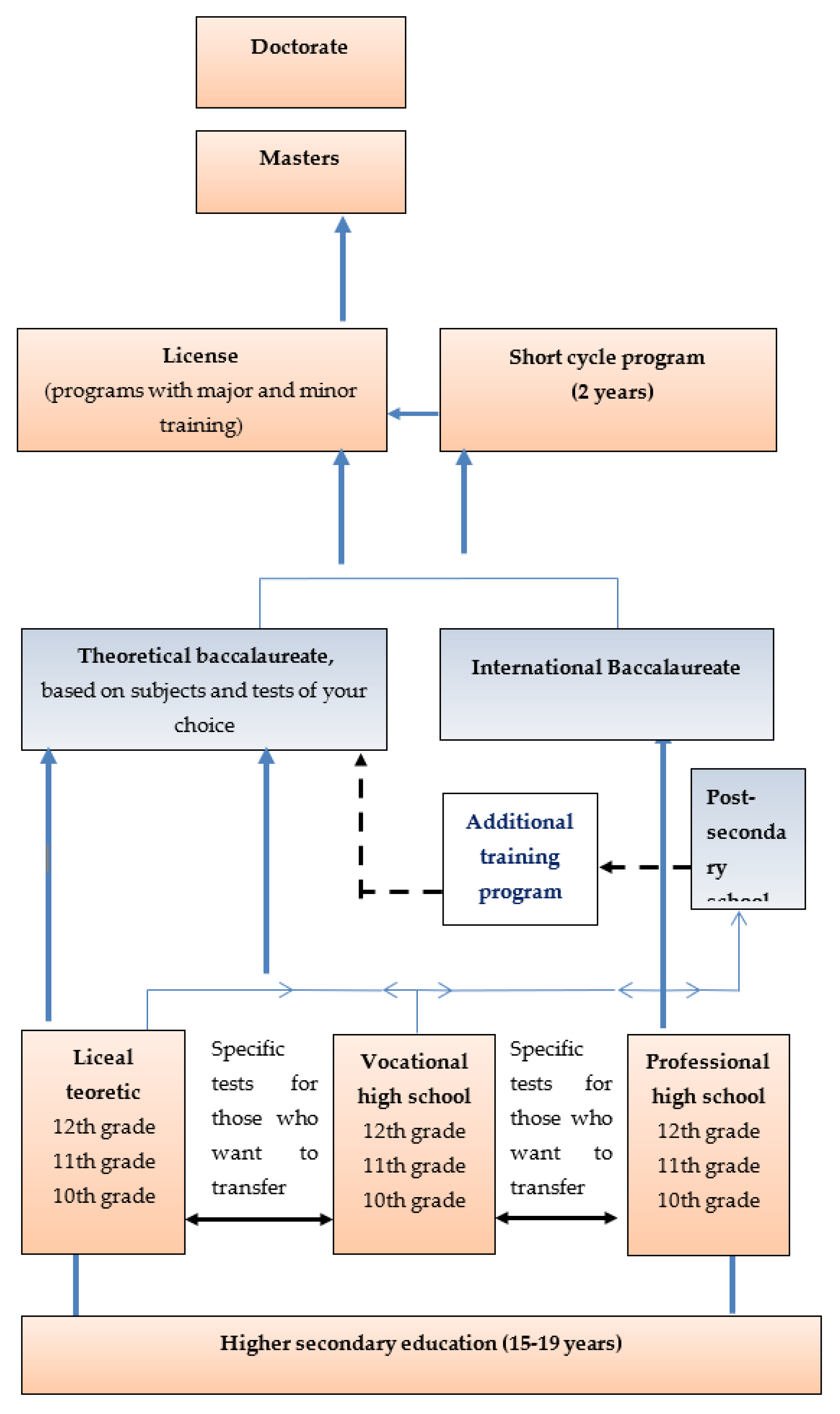
In the Figure 4 we present as an element of constructive analysis and comparison the scheme of the education system for scenario 2.
Career advancement for university teachers also takes into account an evaluation of pedagogical competences, in addition to the evaluation of scientific performance. The university offers continuous training programs in the field of education to help achieve performance in the teaching/learning area. In addition, there are career counseling, psychological counseling and remedial programs in all universities.
5. Conclusions
"Romania Educata" is an educational project that has set itself many major desiderates for the improvement and efficiency of the educational system in Romania. Unfortunately (and this is what the authors of this article say, all active members of the educational system, university professors and doctoral students) too few (euphemistically to say) of these desiderates have been achieved, not fulfilled at all!
The most important desiderate that has not been fulfilled is the adequate, or at least satisfactory, financing of the educational system. On the contrary, the educational system in Romania is still much underfunded, although the "Romania Educata" project has set it self this major desiderate since its launch, over 8 years ago!
The underfunding of the educational system in Romania has generated as an immediate and implicit negative consequence the impossibility of achieving other major proposed goals such as:
- upgrading the infrastructure specific to an educational system (we still have schools with toilets in the courtyard and wood heating in stoves, insufficiently equipped laboratories, etc.);
- the lack of cointerest and motivation of the teachers and the human resource used, the most important resource in any managerial system;
- a predominantly formal and non-motivational education, which did not attract values (including in the field of teachers, but also in the field of education subjects), but on the contrary, of non-values.
In final conclusion, the authors of this article launch and assume the following rhetorical question, "Educated Romania or Failed Romania?"
Author Contributions
Conceptualization, I.L.C(B) and A.I.; methodology, N.C.; software, A.S.; formal analysis, D.A.L(M).
Funding
This research received no external funding.
Conflicts of Interest
The authors declare no conflicts of interest.
References
- Anghelache, V., & Cucoş, C. (2012). Managementul schimbării educaţionale: Principii, politici, strategii. Institutul European.
- Canuta (Bucuroiu), I. L., & Ioana, A. (2024a, October 24). Managerial and Economic aspects in the educational system. 8th International Scientific Conference – ITEMA 2024, Zayed University, Dubai, UAE. [Manuscript submitted for publication].
- Canuta (Bucuroiu), I. L., & Ioana, A. (2024b, October 26). Economic, Managerial and Legislative Aspects of Education in Romania. International Urban Landscape and Art Congress (URBAN-LAND-ART2024), Paris. [Manuscript submitted for publication].
- Canuta (Bucuroiu), I. L., & Ioana, A. (2024c, November 21). Critical analysis of the Managerial Aspects of the Romanian Educational. ICNcT Conference 2024 - The 23rd International Conference of Nonconventional Technologies, Bucharest. [Manuscript submitted for publication].
- Casely-Hayford, J., Lindqvist, P., Björklund, C., Bergström, G., & Kwak, L. (2024). Enculturating a Protective Professional Community—Processes of Teacher Retention in a Swedish Hard-to-Staff School. Education Sciences, 14(1), 114. [CrossRef]
- Ene, B. C., Ioana, A., Tufeanu, D., Juganaru, D., & Luta (Manolescu), D. A. (2020). FINANCIAL MANAGEMENT ELEMENTS SPECIFIC TO THE EVALUATION OF RESEARCH-DEVELOPMENT-INNOVATION (RDI) ACTIVITIES. 343–347. [CrossRef]
- Ene, B. C., Ioana, A., Tufeanu, D., Marcu, D. F., Florea, B., Juganaru, D. I., & Luta (Manolescu), D. A. (2020). Management Aspects Regarding Parameters For Evaluation Of The Performance Of Educational Systems. the 36th IBIMA, Granada, Spain. Available online: https://ibima.org/accepted-paper/management-aspects-regarding-parameters-for-evaluation-of-the-performance-of-educational-systems/.
- Gherguţ, A. (2007). Management general şi strategic în educaţie: Ghid practic. Polirom.
- Ioana, A., Semenescu, A., & Marcu, Dragoş. (2013). Managementul calităţii: Teorie şi aplicaţii. Ed. Matrix Rom.
- Ioana, A., Semenescu, A., & Preda, C. F. (2012). Management strategic: Teorie şi aplicaţii. Ed. Matrix Rom.
- Ioana, A., Tufeanu, D., & Labeş, D. C. (2019). Management financiar: Teorie, aplicaţii, studii de caz. Ed. Printech.
- Ioana, A., Tufeanu, D., Marcu, D. F., Florea, B., & Luta, D. (2021). ELEMENTS OF THE EDUCATIONAL SYSTEM IN THE ECOLOGICAL FIELD PRINCIPLES OF ENVIRONMENTAL LEGISLATION. 75–82. [CrossRef]
- Ioana, A., Tufeanu, D., Marcu, D. F., Florea, B., Ene, B. C., Juganaru, D. I., & Solea, R. M. (2021). HISTORICAL AND EDUCATIONAL ASPECTS OF DISCOVERIES AND INVENTIONS THAT REVOLUTIONIZED MANKIND. European Journal of Materials Science and Engineering, 6(3), 131–135. [CrossRef]
- Ioana, A., Tufeanu, D., Marcu, D. F., Florea, B., Luta, D. A., Ene, B. C., Juganaru, D. I., & Solea, R. M. (2021). EDUCATION THROUGH INNOVATION IN THE FIELD OF METALLIC MATERIALS SCIENCE. European Journal of Materials Science and Engineering, 6(2), 83–88. [CrossRef]
- Ioana, A., Tufeanu, D., Nicolicescu, C., Luta (Manolescu), D. A., & Ene, B. C. (2021). Managementul Omeniei aplicabil si in Sistemul Educational, Ed. Printech.
- Iorga, N. (with Ardeleanu, S.-M., & Ioniţă, A.). (2020). Istoria învăţământului românesc, Ed. Demiurg.
- Luta (Manolescu), D. A., Ioana, A., Tufeanu, D., Juganaru, D. I., & Cezarina Ene, B. (2020). FINANCIAL MANAGEMENT ELEMENTS SPECIFIC TO INVESTMENTS APPLICABLE IN EDUCATIONAL SYSTEMS. 337–341. [CrossRef]
- Luta (Manolescu), D. A., Ioana, A., Tufeanu, D., Marcu, D. F., Florea, B., Juganaru, D. I., & Ene, B. C. (2020). Research Regarding Specific Management Principles Increasing the Quality Of Educational Systems. 36th IBIMA Conference, Granada, Spain. Available online: https://ibima.org/accepted-paper/research-regarding-specific-management-principles-increasing-the-quality-of-educational-systems/.
- Official website of the Ministry of Education of Romania. (n.d.). Retrieved November 08, 2024. Available online: https://edu.ro/.
- Pătraşcu, I. (2009). Management: Strategia şi managementul strategic al organizaţiei : curs universitar. Ed. Sitech.
- Răduţ, R., Bocoş, M., Chiş, O., Anca, M.-I., Andronache, D. C., & Avram, M. (2015). Tratat de management educaţional pentru învăţământul primar şi preşcolar. Ed. Paralela 45.
- Russell, B. (with Drăgan, S. G.). (2019). Despre educaţie. Ed. Humanitas.
- Rytivaara, A., Ahtiainen, R., Palmu, I., Pesonen, H., & Malinen, O.-P. (2024). Learning to Co-Teach: A Systematic Review. Education Sciences, 14(1), 113. [CrossRef]
- Tufeanu, D., Semenescu, A., & Ioana, A. (2019). Management Criteria and Principles, Applicable in Education and Scientific Research. Advanced Engineering Forum, 34, 277–282. [CrossRef]
Figure 1.
Nicolae Iorga – romanian erudite (Born June 5, 1871 – Died November 27, 1940).
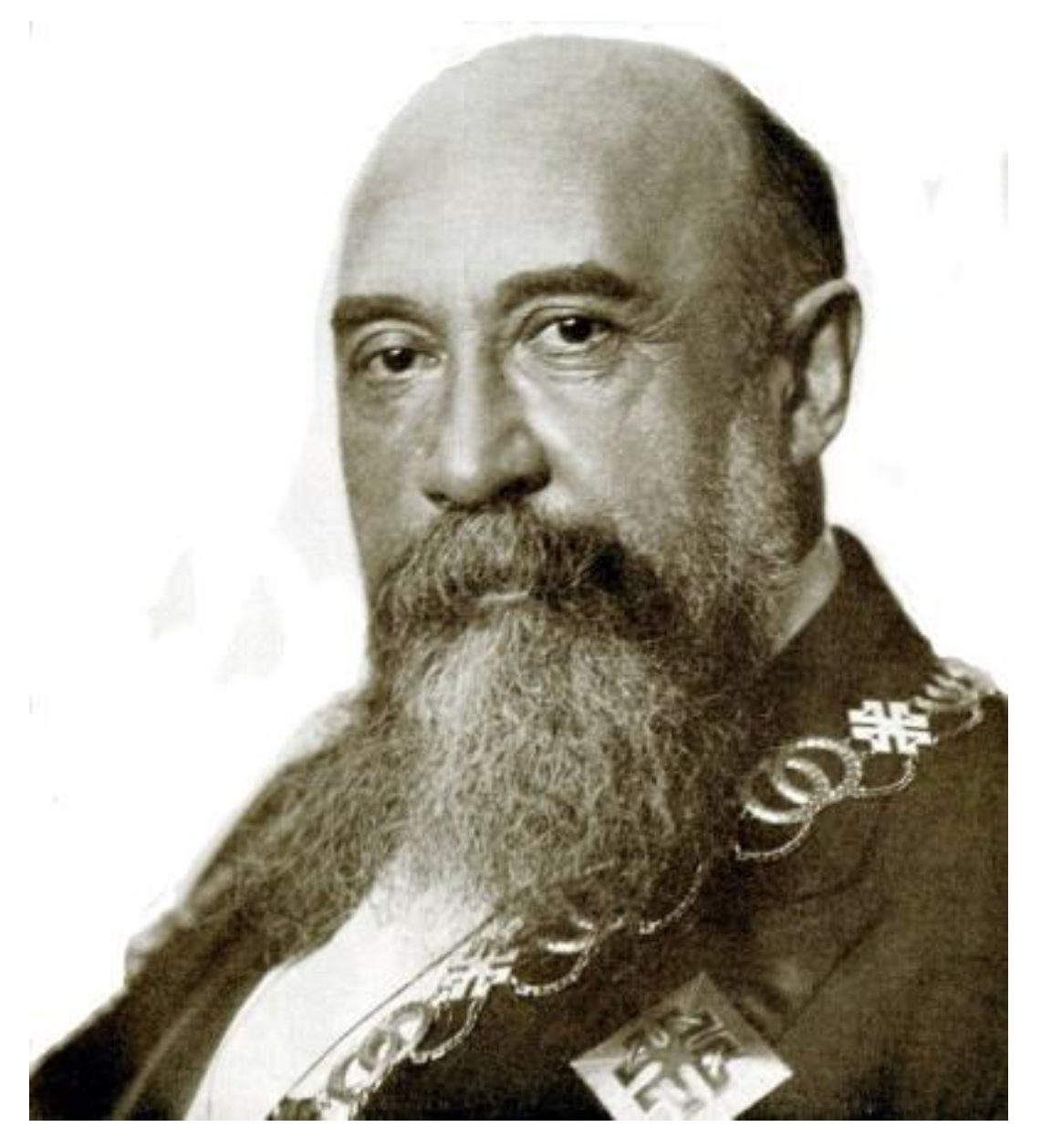
Figure 2.
Mark Twain (Born: November 30, 1835, Died: April 21, 1910).
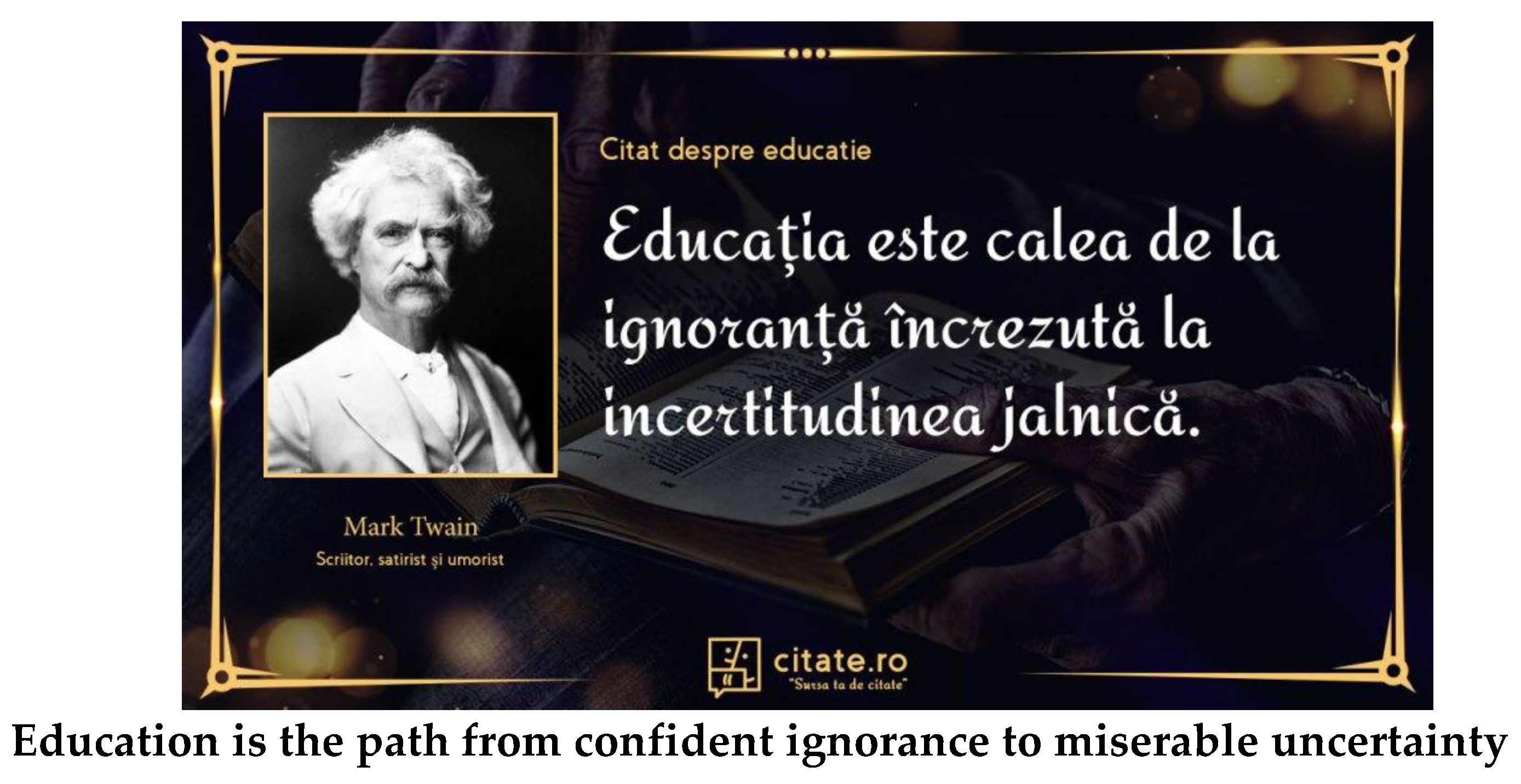
Figure 3.
Scheme of the education system for scenario 1.
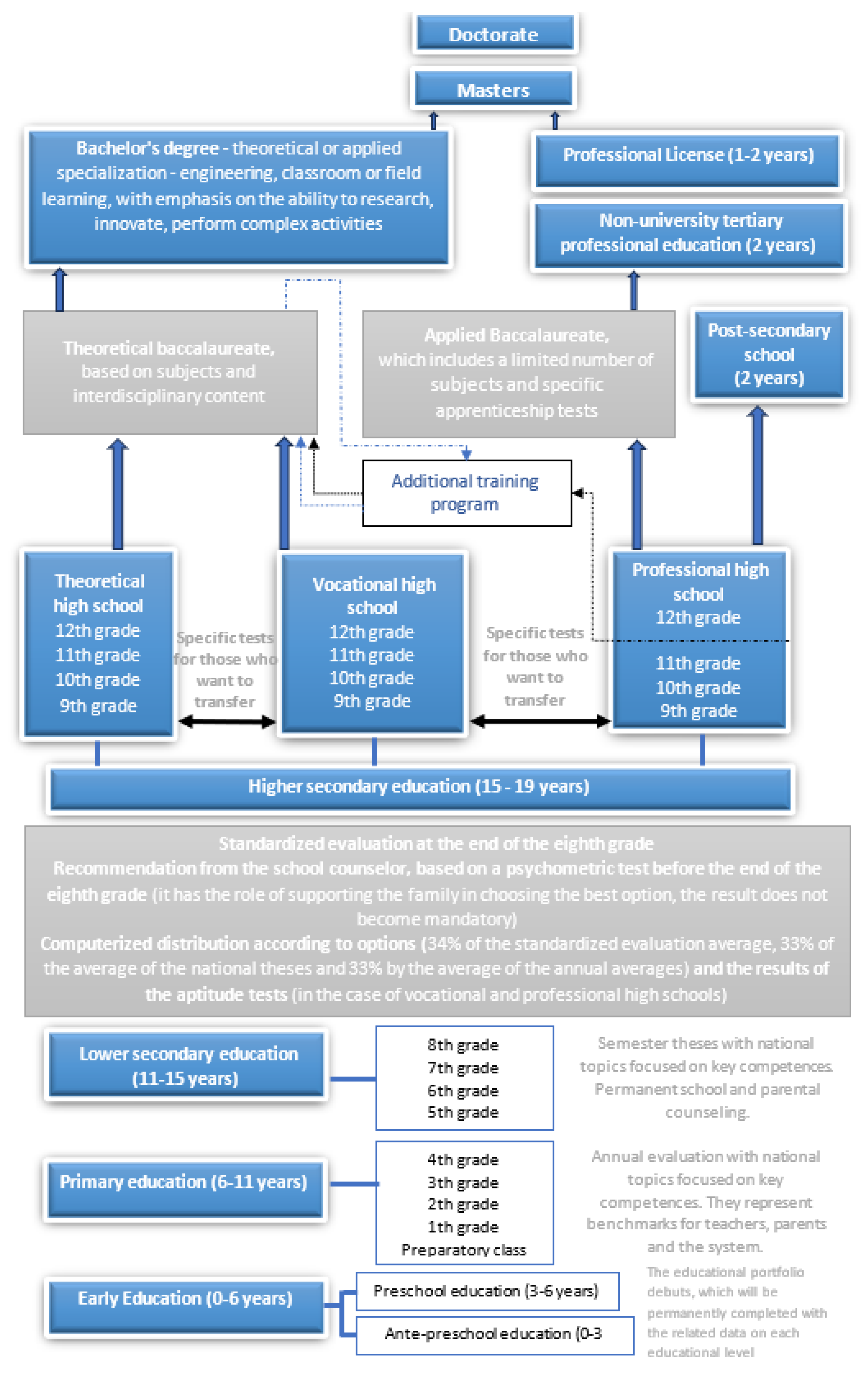
Figure 4.
Scheme of the education system for scenario 2.
Disclaimer/Publisher’s Note: The statements, opinions and data contained in all publications are solely those of the individual author(s) and contributor(s) and not of MDPI and/or the editor(s). MDPI and/or the editor(s) disclaim responsibility for any injury to people or property resulting from any ideas, methods, instructions or products referred to in the content. |
© 2024 by the authors. Licensee MDPI, Basel, Switzerland. This article is an open access article distributed under the terms and conditions of the Creative Commons Attribution (CC BY) license (http://creativecommons.org/licenses/by/4.0/).
Copyright: This open access article is published under a Creative Commons CC BY 4.0 license, which permit the free download, distribution, and reuse, provided that the author and preprint are cited in any reuse.


