

Submitted:
30 November 2024
Posted:
02 December 2024
You are already at the latest version
Abstract
Dietary soft matter components' compatibility and assembly structures are fundamental to advancing food science and industry. This analysis underscores the critical importance of com-patibility and structural stability among these components, particularly emphasizing natural polymers such as polysaccharides and proteins. These polymers can form persistent co-soluble interactions or undergo phase separation, contingent upon their intermolecular assembly con-figurations. The interplay between polysaccharides and proteins is instrumental in shaping the microstructure of food matrices. The intricate balance between attractive and repulsive forces significantly influences the efficacy of self-assembly processes, while weak interactions facilitate necessary structural adaptations. Conversely, excessive forces or insufficient fluctuations can precipitate systemic instability. The article further examines various physical and chemical methodologies that elucidate the principles governing the compatibility and associations of soft matter components. An assessment of soft-material suitability and assembly characteristics is conducted through techniques such as phase modelling, turbidity analysis, microscopy, thermal analysis, rheology, and spectroscopy. Thus, the discourse highlights the imperative of compre-hending soft matter interactions to inform the development of functional food products and their diverse applications, limitations, and future prospective.
Keywords:
soft-material suitability
; polysaccharide-protein interactions
; physicochemical methods
; and macromolecular assembly
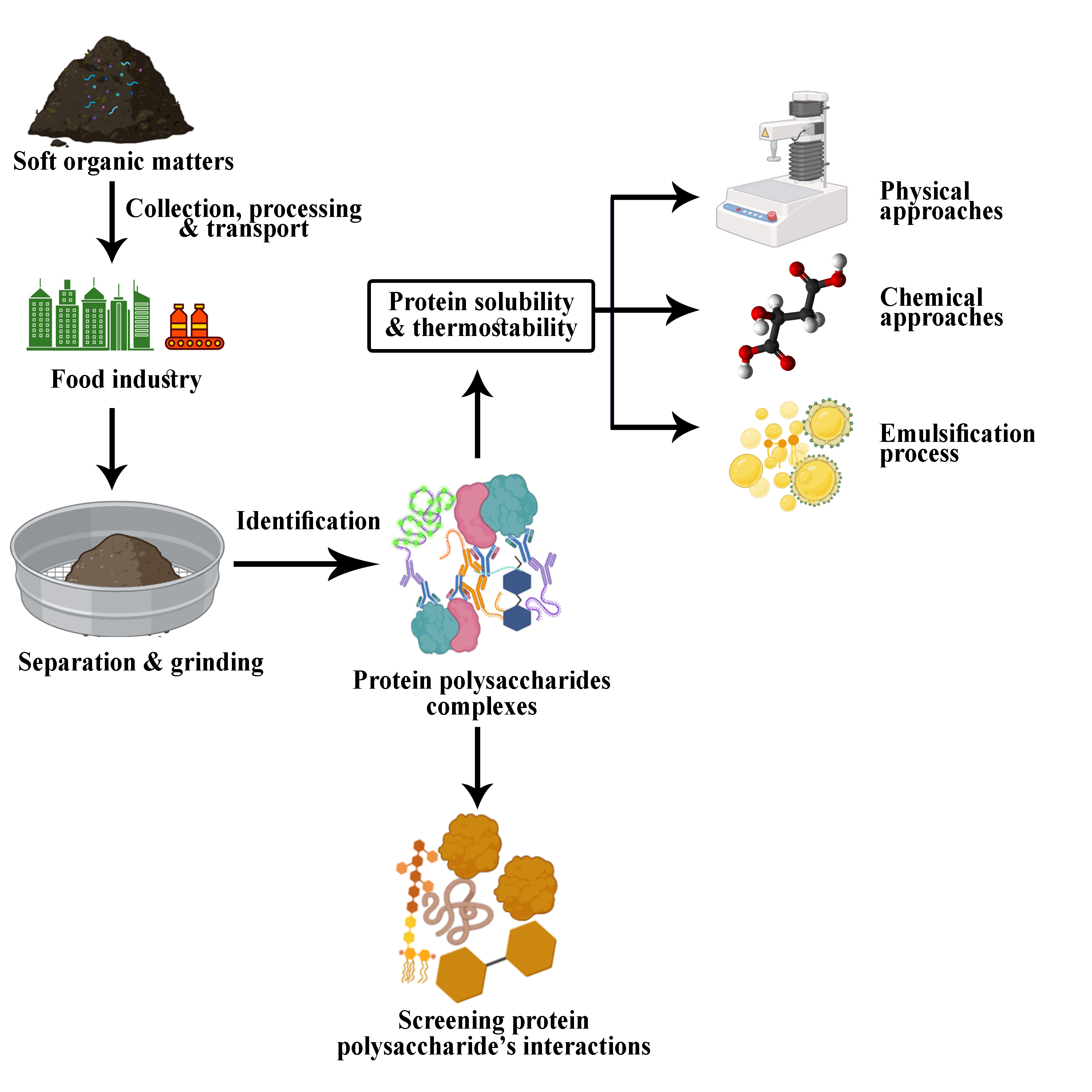
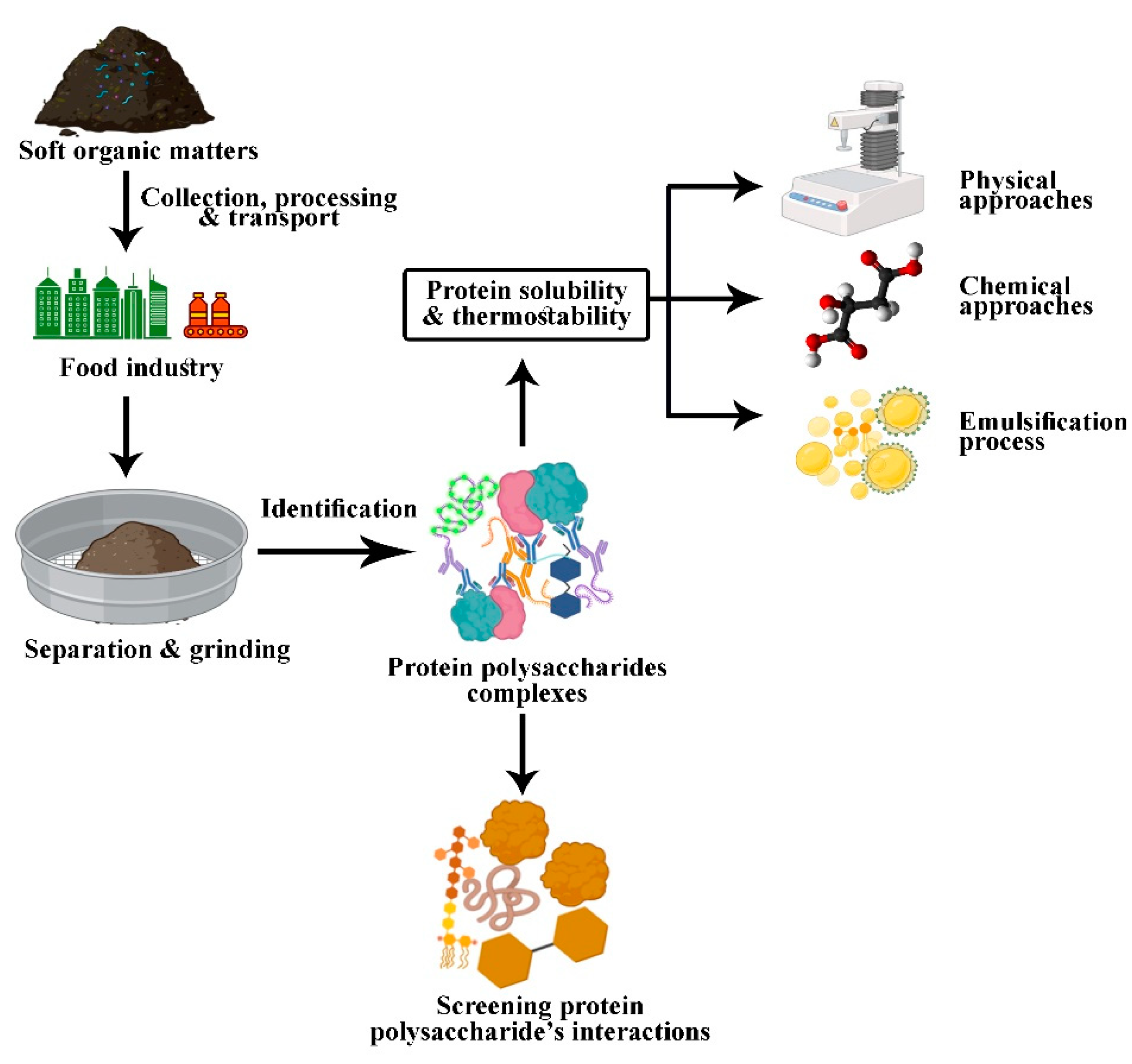
Graphical Abstract
Highlights
- Soft matter, complex fluids, significantly impact the structure and sensory attributes of foods
- Milk and mayonnaise show proteins’ role in stabilizing emulsions, crucial for consistency
- Polysaccharide-protein interactions are key to the texture and rheology of semi-solid foods
- Stable assembly structures are essential for improving food quality and meeting dietary needs
- Investigating soft matter & biopolymer interactions is key to optimizing food stability & texture
1. Introduction
Soft matter, a concept extensively articulated by French physicist Pierre-Gilles de Gennes, has profoundly shaped interdisciplinary domains, including physics, chemistry, and biology [1]. Soft matter encompasses complex fluids and soft condensed materials, with macromolecules that exhibit properties between liquids (e.g., proteins like casein in gels) and solids (e.g., carbohydrates like starch in emulsions). This inherent complexity and susceptibility to external physiological factors raise questions about the stability and predictability of these materials [2]. Soft materials are ubiquitous in applications ranging from liquid crystals in electronic devices to proteins in biological systems and even food foam. In the context of food science, soft matter research posits food as a multifaceted system, incorporating food colloids, proteins, and amphiphilic polymers [3]. Food scientists employ principles of soft condensed matter physics to examine how food structures affect sensory attributes such as flavor, texture, and culinary behavior [4,5]. This critical examination highlights the need for a deeper understanding of soft matter interactions to optimize food design and functionality [6].
Milk, a common dietary staple, serves as an example of a complex colloidal system where proteins stabilize fat globules dispersed in water rather than forming a true oil-water emulsion [7]. Casein micelles in milk demonstrate significant resilience, allowing them to endure processes like homogenization and sterilization. However, their stability raises questions about the balance between maintaining structural integrity and potential nutrient loss during processing [8]. These micelles play a vital role in stabilizing the milk matrix, preventing the re-aggregation of fat globules during homogenization and ensuring uniform fat distribution, which is essential for product quality [9]. In contrast, mayonnaise is included as an example due to its inherent self-stabilizing properties, attributed to emulsifiers like egg yolk that inhibit oil-water separation. The lipoprotein particles in egg yolk act as interfacial stabilizers, adsorbing to the oil-water interface to facilitate the formation and stabilization of emulsified droplets. This comparison underscores the importance of emulsifiers, as they not only enhance the stability of food products but also significantly influence health and sensory properties, such as flavor and texture [10]. Moreover, the choice and effectiveness of emulsifiers can impact productivity and overall product quality, emphasizing their critical role in food formulation [11].
Polysaccharide-protein interactions play a crucial role in determining food texture and structure. Such interactions are especially important in semi-solid foods, where specific textures, like the smoothness in puddings or the spread ability of yogurt, are achieved through the gel-forming properties of polysaccharides and the elasticity provided by proteins [12,13]. Polysaccharide-protein interactions play a key role in shaping the texture, gel properties, and stability of food products. These interactions can strengthen the physical, chemical, and sensory stability of foods, helping to extend shelf life and improve overall quality [14]. By establishing robust networks or emulsions, these interactions prevent phase separation and ensure product consistency, which is vital in maintaining consumer trust. Besides, many semi-solid foods utilize naturally occurring polysaccharides and proteins for thickening and texture enhancement, reflecting a growing consumer preference for minimally processed products [15]. This trend necessitates ongoing research into the functional properties of these ingredients to optimize food design while meeting health and quality standards [16]. The interplay between polysaccharides and proteins is fundamental to the stability and texture of many food products. Understanding these interactions allows for the creation of foods with desired qualities, such as enhanced shelf life, consistency, and sensory appeal, ensuring that products meet consumer expectations while adhering to health-conscious standards.
Recent studies emphasize the essential role of stable assembly structures in food quality control, particularly regarding polysaccharide/protein interactions. Protein-polysaccharide interactions can create complex structures, such as interpenetrating networks and nanocomposite gels, which make it challenging to control these soft matter architectures for better food quality and stability. Understanding how particle interactions and shape changes affect phase behavior is essential for improving food structure, stability, texture, and quality to cater to various dietary needs and consumer preferences.
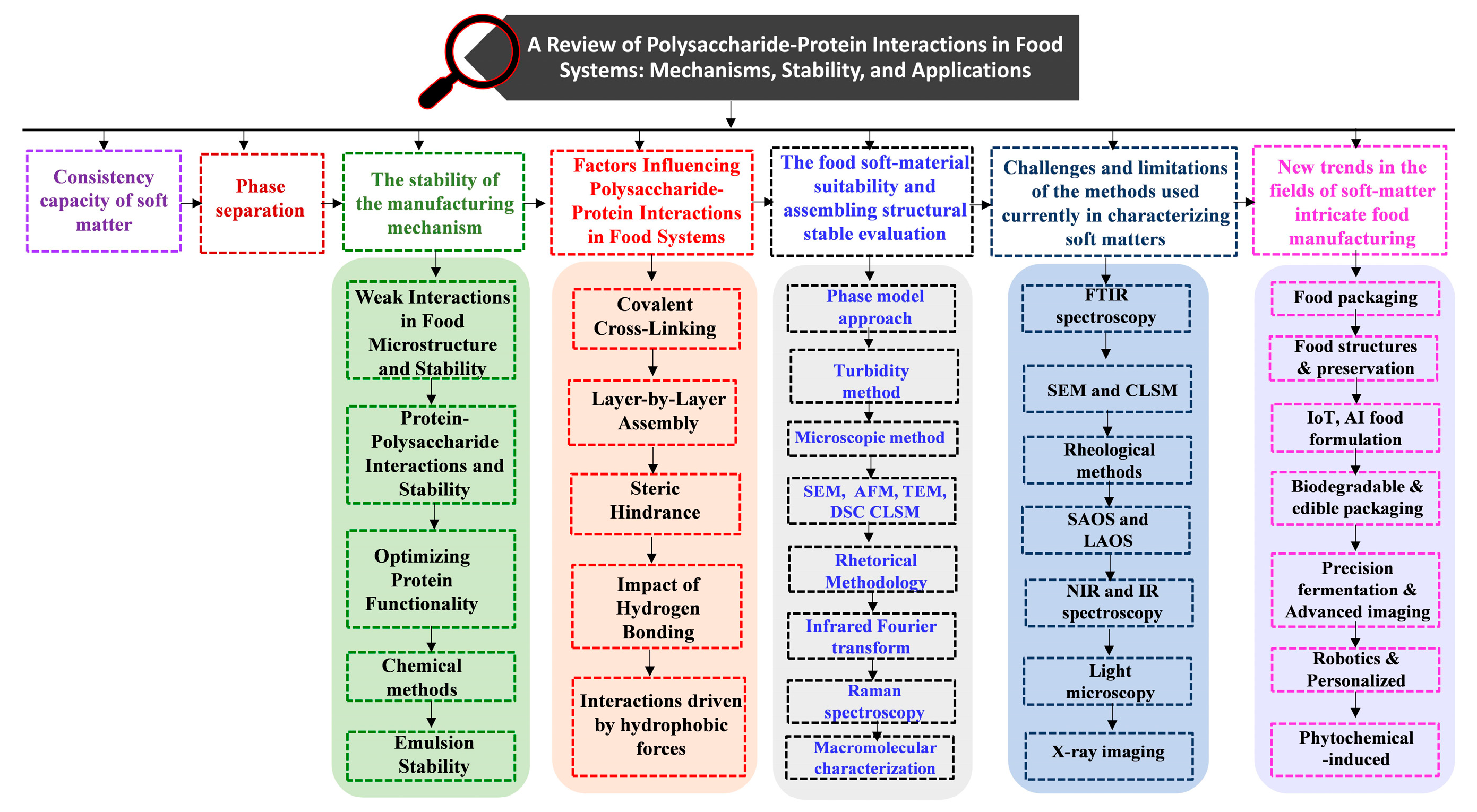
Figure 1.
Systematic Layout of the Review’s Core Focus Areas.
2. Consistency Capacity of Soft Matter
Research papers emphasize that achieving a uniform system relies on the compatibility of soft matter components. To ensure this compatibility, it is essential to understand the interactions between proteins-carbohydrate complexes. Investigating the compatibility of blending systems beforehand can optimize the structural and functional properties [8]. Theoretical thermodynamics states that the negative free energy of molar mixing is a desirable condition for a blended system to be considered compatible, assuming constant temperature and pressure conditions (Figure 2). The calculation method for this criterion is provided in the formula [9].
Here, ΔGM is the molar mixing free energy, ΔHM is the molar enthalpy of mixing, ΔSM is the molar entropy of mixing, T is the total temperature
Formula (1) links compatibility to negative ΔGM (mixing free energy), suggesting four possible categories based on the degree of compatibility:
Complete compatibility: Biomacromolecules blend uniformly at any ratio.
Limited compatibility: Biomacromolecules only form stable, uniform systems within a specific composition range;
Low compatibility: Biomacromolecules exhibit limited ability to form stable, uniform systems across compositions;
Immiscibility: Biomacromolecules cannot inherently form a system at any composition.
3. Phase-Specificity Screening
Phase separation is influenced by a variety of variables [18], such as:
- I.
- Biopolymer concentration;
- II.
- The biopolymers’ molecular weight, figure, charge, and conformation;
- III.
- Environmental factors include the mechanical field, pH, ionic strength, and temperature.
The formation of protein-polysaccharide complexes involves a balance of both attractive and repulsive forces within the polymer system [19]. (Figure 3). The free energy change (ΔG) is crucial in determining biopolymer compatibility within food systems. For biopolymers with similar charges, a positive ΔG can lead to phase separation, which is commonly observed in dairy and plant-based products [20]. This phase separation is strategically used in food design, protein purification, and microencapsulation. Incompatibility-driven phase separation is primarily influenced by entropy rather than volume [21]. In food systems, phase separation typically occurs through two main mechanisms: associative phase separation, where biomolecules attract and form complexes, and segregate phase separation, where repulsive forces drive them to separate within the same solvent, such as dairy products, yogurt and cheese and emulsified foods salad dressings and mayonnaise. At low polymer concentrations, the system remains homogeneous; however, as polymer concentrations or repulsive forces increase, phase separation occurs [22].
Mixed systems favor single-phase separation (associative vs. segregative). However, specific conditions can induce coexistence [24]. For instance, a combination of κ-carrageenan and type-B gelatin has been shown to exhibit both associative and segregative phase separations under specific conditions [20]. These findings underscore the complex interplay of forces and conditions that govern the phase behavior of biopolymers and highlight the need for further research to understand and manipulate these processes effectively [13].
4. The Stability of the Manufacturing Mechanism
4.1. Weak Interactions in Food Microstructure and Stability
Recent studies have underscored the importance of stable assembly structures in food quality control, with key findings highlighting how polysaccharide and protein interactions contribute to texture, stability, and nutrient retention in food systems. These interactions play a crucial role in developing consistent quality across various formulations [25]. However, significant challenges persist in effectively manipulating these interactions due to the complexity of soft matter architectures. Significant challenges remain in effectively manipulating these interactions due to the complexity of soft matter architectures, such as interpenetrating networks and nanocomposite gels [26]. For instance, in food products like yogurt, achieving enhanced order in soft matter systems relies on weak attractive interactions found in hard rods and amphiphilic molecules. The delicate balance between attraction and repulsion is crucial; weak interactions allow for fluctuations that facilitate structural adaptations, while excessive forces can lead to immobilization [27].
Understanding how conformational changes impact phase behavior is critical for optimizing food microstructure. The necessity for reversible interactions constrains the size of structural components, reflecting principles similar to crystallization [28]. Techniques from soft condensed matter physics, including phase diagrams and group theory, are essential for managing self-assembly processes. Phase diagrams help map conditions (like temperature, pH, or concentration) under which different phases occur, which is crucial for predicting stability in food formulations. Group theory provides a mathematical framework to understand symmetry and molecular interactions, which aids in designing consistent structures in complex food matrices [29]. Theoretical models of liquid crystals and surfactant systems emphasize the importance of orientation order parameters. Furthermore, coacervation illustrates the significance of oppositely charged polyelectrolytes, such as protein and pectin [30]. Overall, these insights highlight the intricate dynamics of weak interactions in self-assembly, which are fundamental for enhancing food stability, texture, and quality, ultimately addressing diverse dietary needs.
4.2. Protein-Polysaccharide Interactions and Stability in Food Systems
The stability of food soft matter and the formation of robust composites are fundamentally governed by weak binding interactions, which enable effective aggregation of these structures [31]. This resilience against external disintegration is essential for maintaining the structural integrity of both dairy and plant-based food products, ensuring consistent quality and stability. The role of soft matter physics is pivotal in elucidating the structuring of foods and the interactions between various components, mainly as research increasingly focuses on polysaccharide-protein phase behavior [23]. These interactions dictate critical aspects such as assembly, rheology, stability, and physicochemical properties, directly impacting the quality and functionality of food systems [32]. The application of protein-polysaccharide composites extends beyond food science into tissue culturing, wound healing, and drug delivery, highlighting their versatility due to properties such as biocompatibility, biodegradability, mechanical strength, and the ability to modulate release rates of bioactive compounds. In particular, the design of these complexes emphasizes the controlled release and targeted delivery of bioactive agents. Advancements in polysaccharide-based hydrogels further illustrate the potential of these materials, showing promise for biomedicine and wastewater treatment applications [23]. A comprehensive understanding of the stability and interactions between polysaccharides and proteins is essential for optimizing their utility across diverse sectors.
Moreover, the combination of proteins with hydrophilic non-ionic polysaccharides has demonstrated enhanced solubility and stability of proteins in challenging aqueous environments [31]. Environmental factors, including temperature, pH, and ionic strength, critically influence the physical assembly of these biopolymers, thus shaping their physicochemical properties and functional efficacy. This intricate interplay highlights the necessity for ongoing research to fully exploit the potential of protein-polysaccharide interactions in innovative applications [33].
4.2.1. Optimizing Protein Functionality with Processing Techniques
The methodologies in protein-polysaccharide systems include techniques such as particle size reduction, thermal treatments, homogenization, superfine grinding, and ultrasound application [34]. Research consistently demonstrates that these approaches can significantly mitigate protein denaturation and enhance solubility, highlighting their efficacy in addressing protein instability. Each technique has been rigorously investigated, revealing its potential to improve functional properties across various applications. This area of protein research represents a significant frontier, offering valuable insights for further exploration within biotechnology, food science, and pharmaceuticals [35]. Table 1 elucidates the influence of various processing techniques on the functionality of food protein-polysaccharide interactions, specifically emphasizing their effects on solubility, which is directly connected with their metabolism. Techniques such as thermal pretreatment, homogenization, superfine grinding, and ultrasound are critical to understanding these interactions and optimizing protein functionality in complex systems.
4.2.1.1. Thermal Treatments
High hydrostatic pressure (HHP) is a non-thermal pasteurization method that preserves color, flavor, and nutrients while extending shelf life and ensuring food safety [36]. Applying pressures of 100–1000 MPa for short durations effectively inactivates microorganisms and maintains food quality. Pressure is transmitted uniformly across the product, regardless of size or composition, allowing flexible processing via adjustments in temperature, pressure, and time [37]. It also induces physical changes in protein structure by disrupting hydrogen bonds and hydrophobic interactions, with effects depending on variables like pH, temperature, and protein type [38]. Table 2 summarizes studies on the enhancement of protein solubility through HHP.
4.2.1.2. Homogenization
Homogenization is a physical process that reduces protein particle size, increases surface area, and enhances functional properties such as water-holding capacity, solubility, emulsification, foaming, and stability [41]. High-pressure homogenization (HPH, 150–200 MPa) and ultra-HPH (up to 400 MPa) achieve smaller particle sizes (<1 µm) through shear, mechanical force, and cavitation, offering a scalable, cost-effective, and environmentally friendly method with minimal impact on nutrients. Table 2 highlights studies on improved protein solubility via homogenization.”
4.2.1.3. Superfine Grinding
Superfine grinding is a novel technique for producing superfine powders with enhanced surface properties, such as increased solubility, dispersibility, and fluidity. It uses less energy than traditional methods, creating uniform protein particles with improved functionality [48]. This technique is cost-effective and environmentally friendly but can be noisy and prone to cross-contamination. It is often combined with various milling methods, including jet, colloid, high-energy, nano-impact, disk, ball mills, microfluidizers, and high-pressure Microsizer™ to enhance food protein solubility. Table 2 highlights studies on improved protein solubility via superfine grinding.
4.2.1.4. Ultrasonication
Sonication utilizes ultrasound waves (>16 kHz) to create cavitation in liquids, where bubbles grow and collapse, generating high local heat and pressure. This energy can accelerate reactions, enhance penetration, disperse coagulum, and partially degrade macromolecules [51]. Ultrasound is classified into low power (1–10 MHz, <1 W/cm²) for diagnostic purposes and high power (20–100 kHz, 10–1000 W/cm²). Despite its benefits, high-power ultrasound has limitations such as complex action, penetration depth dependence, free radical damage, scaling issues, and textural changes [54]. Studies on enhancing food protein solubility using ultrasound are summarized. Table 2 highlights studies on improved protein solubility via ultrasonication.
4.2.2. Chemical Methods of Protein-Polysaccharide Interaction for Food Stability
The interactions between food proteins and polysaccharides are fundamental to achieving desired stability and functionality in food formulations. Chemical methods such as forming electrostatic complexes and coacervation are pivotal in this context. Highly charged polysaccharides, like carrageenan, effectively mitigate protein aggregation through electrostatic solid interactions, particularly with positively charged regions on proteins [55]. Furthermore, proteins with an isoelectric point around five tend to form complex coacervates with anionic polysaccharides, significantly enhancing emulsion stability [56]. The role of protein-polysaccharide electrostatic complexes is critical in stabilizing oil-in-water emulsions, where the interplay of various molecular interactions contributes to overall emulsion integrity [57].
Moreover, the purification processes of polysaccharides to encompass both physical separation and chemical precipitation are essential for optimizing their functionality in applications such as fermented foods. The optimization of blends, such as konjac/glucomannan with casein, through methodologies like response surface analysis highlights the potential for creating superior protein-polysaccharide complexes [58]. The interactions between natural proteins and polysaccharides with bioactive compounds like anthocyanins are also gaining attention due to their implications for food stability [59]. Thus, understanding the nature and strength of these interactions is critical for advancing the stability and performance of food systems in Table 2.
4.2.3. Mechanisms and Methods for Enhancing Emulsion Stability
Emulsion stability is a complex phenomenon encompassing creaming and flocculation, driven by density differences and unfavorable interactions leading to aggregation. Discussions surrounding emulsion stability emphasize its significant implications for processing and shelf-life [74]. It is essential to distinguish between processing stability, which reflects the emulsion’s ability to withstand immediate stress and shelf-life stability, indicating its resistance to gradual degradation over time. Assessing emulsion stability is crucial for maintaining product quality and functionality in food applications such as spreads, sauces, and margarines, as it directly informs strategies for optimizing structure, rheology, and storage conditions [75]. Ongoing research into the mechanisms of emulsion stability, particularly concerning the use of diverse additives, seeks to enhance functionality and prolong shelf life [74]. Proteins and polysaccharides play a pivotal role in bolstering emulsion stability by forming interfacial complexes that prevent destabilization. Emulsions can be produced using two principal methods. The first involves creating a mixed membrane emulsion by dissolving proteins and polysaccharides in a solution, employing their complex as an emulsifier (Figure 4). The second method, layer-by-layer assembly, utilizes a protein-based primary emulsion followed by the deposition of polysaccharides (Figure 4). This technique capitalizes on the electrostatic interactions between adsorbed proteins and polysaccharides to establish a surface-bound protein-polysaccharide complex [62]. Unlike monolayers formed under controlled physicochemical conditions, multilayered interfacial films in emulsions offer superior stability against various external stresses, including fluctuations in pH, ionic strength, heat, freezing, and dehydration [76]. Thus, understanding these mechanisms is vital for theoretical insights and practical applications in food science.
5. Factors Influencing Polysaccharide-Protein Interactions in Food Systems
Polysaccharide-protein interactions in food systems are influenced by a multitude of factors, including covalent bonds, electrostatic interactions, steric effects, hydrogen bonding, hydrophobicity, and even the application of ultrasound. These interactions are pivotal in maintaining food products’ structural integrity and functional properties, significantly impacting texture and shelf life [78]. The dominance of specific interactions is contingent upon the composition, structural characteristics, and external processing conditions, which collectively dictate the system’s behavior [79].
Recent studies have highlighted the importance of protein-polysaccharide interactions across diverse food applications. Evidence shows that these components can form strong associations through ionic or covalent bonding, affecting critical properties such as emulsification, gelling, and foaming stability [80]. Developing composite films, such as those integrating Zein with sulfated Cardamine hupingshanensis polysaccharide, underscores plant polysaccharides’ multifaceted roles and biological activities, including their antioxidant and immunomodulatory properties. This not only emphasizes the potential of polysaccharides to enhance the functional attributes of food products but also suggests promising applications in the biomedical arena [81].
However, the efficacy of these interactions remains dependent on the molecular composition, structural features, and processing conditions. Understanding these dynamics is essential for optimizing food formulations and advancing the functional use of polysaccharides in various fields [82].
5.1. Covalent Cross-Linking in Polysaccharide-Protein Interactions
Covalent linkages between polysaccharides and proteins are predominantly established through the Maillard reaction or enzymatic cross-linking, both of which play pivotal roles in enhancing the functional properties of food systems [83]. These processes facilitate the formation of amide bonds between the amino groups of proteins and the carbonyl groups of polysaccharides, resulting in robust covalent conjugation. For example, transglutaminase has been effectively employed to conjugate sodium casein with gum Arabic, while peroxidase has demonstrated utility in linking β-casein to feruloacylated arabinoxylans [84]. Furthermore, applying dry heat treatment significantly augments protein solubility and stability under adverse conditions, such as high ionic strength and low pH, thereby promoting favorable protein-polysaccharide interactions essential for emulsion stability [85].
Recent studies underscore that Maillard-type reactions yield stable protein-polysaccharide conjugates capable of withstanding pH, temperature, and ionic strength fluctuations, exhibiting remarkable resilience [86]. Notably, the dry heat-induced Maillard reaction has been shown to substantially enhance the emulsifying capabilities of egg white protein through the strategic attachment of polysaccharides [87]. This phenomenon illustrates the profound implications of covalent modifications on protein functionality.
5.2. Layer-by-Layer Assembly and Polysaccharide-Protein Interactions
The layer-by-layer (LbL) assembly technique represents a sophisticated strategy to promote polysaccharide adsorption at interfaces by utilizing the electrostatic properties of polysaccharides to attract oppositely charged layers previously deposited [88]. This methodology, grounded in extensive prior research, involves meticulous sequential polymer adsorption interspersed with washing steps to fabricate multilayered constructs on macroscopic surfaces [89]. The core principle of LbL lies in the systematic layering of oppositely charged polymers, which ultimately culminate in a complex arrangement of alternating layers [90].
Guzey and McClements pioneered this approach by initiating LbL assembly with the adsorption of a negatively charged polysaccharide layer onto a protein film under acidic conditions, specifically below the protein’s isoelectric point (pI) [91]. While this strategy effectively facilitates the attraction of anionic polysaccharides to a cationic protein matrix, it simultaneously introduces significant challenges related to emulsion instability, mainly due to bridging and depletion flocculation phenomena [92]. The mechanisms underpinning emulsion flocculation are intricately tied to polysaccharide concentration: at low concentrations, bridging flocculation is favored due to increased collision rates, whereas at elevated concentrations, depletion flocculation dominates due to the accumulation of unbound molecules [93].
Figure 5 elucidates the inherent limitations associated with LbL assembly, emphasizing the dual challenges posed by bridging and depletion flocculation while suggesting a preference for mixed emulsion systems [94]. Wang et al. conducted a comprehensive investigation into the influence of pH on the electrostatic adsorption dynamics of soy protein isolate onto soy hull polysaccharide, thereby providing critical insights into the nuanced interactions between proteins and polysaccharides [95]. Their results demonstrated that elevating the pH from 2 to 4 led to significant increases in particle size, penetration rate, reorganization rate, and dilatational viscoelasticity within protein-polysaccharide conjugates, alongside marked decreases in diffusion rate and interfacial pressure [96]. Remarkably, the adsorption of soy hull polysaccharide at the oil-water interface reached a peak at pH 5, subsequently declining at pH 6. The authors attributed the observed negative zeta potential in the pH range of 6 to 8 to competitive adsorption phenomena occurring between protein and polysaccharides at the oil-water interface, highlighting the complexity of these interfacial interactions [97].
5.3. Electrostatic Interactions in Protein-Polysaccharide Complex Formation
Protein-polysaccharide complexes, particularly when pH exceeds the isoelectric point (pH > pI), are predominantly formed through electrostatic attraction, a mechanism most pronounced at low ionic strength. The interplay of these electrostatic forces where oppositely charged entities attract and, like charges, repel plays a crucial role in complex assembly [98]. Research by Qi et al. compellingly demonstrates that acidic pH promotes and stabilizes interactions between positively charged gelatin and negatively charged gum Arabic, thereby underscoring the fundamental importance of electrostatic interactions in complex formation [97].
Further elucidation comes from Yao et al., who investigated the electrostatic complexation between gum Arabic and whey protein. Their findings reveal that the robust interaction between these two biomolecules leads to a stable complex, with optimal structural integrity achieved within a pH range of 4.0 to 5.4 [99]. This stability emphasizes the critical role of electrostatic contact in developing composite materials, highlighting how even minor variations in pH can significantly influence molecular interactions [100].
Furthermore, the strength of these electrostatic connections is profoundly affected by the degree of system ionization and electrolyte concentration in Figure 5. Low ionic strength environments favor the formation of soluble protein-polysaccharide complexes, especially when charge imbalances are present [100,101]. Conversely, a near-neutral net charge can precipitate the formation of insoluble complexes, illustrating the complex and often counterintuitive relationships between ionic conditions and solubility [101]. Thus, understanding these dynamics is essential for strategically designing food formulations and materials that rely on protein-polysaccharide interactions.
5.4. Steric Hindrance in Protein-Polysaccharide Interactions
Recent investigations underscore the fundamental importance of steric hindrance in shaping polysaccharide-protein interactions. Zhou et al. assert that steric hindrance, dictated by spatial configuration and intramolecular tension, imposes substantial constraints on macromolecular interactions [102]. For instance, incorporating pectin significantly reduces structural perturbations in whey protein isolate during heat treatment, thereby markedly enhancing the stability of beta-globulin nanoparticles. Additionally, the covalent attachment of dextran to proteins creates solutions that demonstrate remarkable insensitivity to fluctuations in pH and ionic strength, a phenomenon directly linked to the effects of steric hindrance [102,103].
Moreover, glycation of whey protein obstructs thermal aggregation through steric effects, leading to a notable decrease in zeta potential upon heating [104]. The implications of steric hindrance extend well beyond food science; for instance, the engineering of porous organic polymers with precisely regulated steric properties has been shown to bolster the stability of solid-electrolyte interfaces in lithium-ion batteries [105]. These findings suggest that steric hindrance is not merely an incidental structural characteristic but a critical determinant that profoundly influences the stability and functionality of protein-polysaccharide interactions across a broad spectrum of applications [102].
5.5. Impact of Hydrogen Bonding on Polysaccharide-Protein Interactions (HBs)
Current scientific inquiry highlights the pivotal and intricate role of hydrogen bonding in modulating the dynamic interactions between polysaccharides and proteins [106]. Hydrogen bonds, characterized by their moderate strength and localized effect, serve as crucial linkages between functional groups such as -SO4, -COOH, and -OH in polysaccharides, and -COOH, -NH2, and -OH in proteins (Figure 7). This bonding framework is notably exemplified in scenarios where pectin stabilizes nanoparticles comprising whey protein isolate and beta-globulin under conditions of thermal stress [107]. Also, the covalent attachment of dextran to proteins imparts robust resistance to fluctuations in pH and ionic strength within aqueous environments, owing to the stable hydrogen bond networks formed [106]. Guzey and McClements propose an advanced strategy involving depositing a negatively charged polysaccharide layer onto protein films under acidic conditions, strategically below the protein’s isoelectric point. This approach introduces effective steric hindrance mechanisms that mitigate thermal-induced protein aggregation, thereby inducing significant alterations in the post-heating zeta potential [108]. Furthermore, current investigations into porous organic polymers aim to refine tailored steric hindrance strategies to bolster the stability of solid-electrolyte interfaces in lithium-ion batteries [109]. These comprehensive findings underscore the critical importance of hydrogen bonding in preserving structural integrity and orchestrating intricate interactions within biopolymers.
5.6. Interactions Driven by Hydrophobic Forces
Hydrophobic interactions arise from the fundamental incompatibility between non-polar substances and water molecules, compelling them to aggregate. Within aqueous environments, biopolymers featuring hydrophobic segments exhibit a pronounced tendency for these segments to coalesce, driven by these interactions [110]. The strength of hydrophobic interactions, characterized as a medium to long-range solid force, increases with temperature. This phenomenon originates primarily from the system’s innate drive to maximize entropy, which drives the clustering of nonpolar entities within the aqueous milieu [111]. Critical to bio-macromolecular structure and function, hydrophobic interactions play a pivotal role in Figure 8. By facilitating the compact folding of proteins, for instance, hydrophobic forces effectively mitigate the unfavorable interactions between water molecules and non-polar residues [112]. The formation of complexes through hydrophobic contacts, exemplified by the Chito-san/-casein complexes, underscores the significant role of these interactions in biomolecular assembly [113]. Furthermore, hydrophobic interactions profoundly influence the thermal stability of bio-macromolecules. Notably, whey protein, despite its high solubility near its isoelectric point (pI), undergoes considerable loss of solubility upon heat-induced denaturation at this pH [104].
6. The Food Soft-Material Suitability and Assembling Structural Stable Evaluation
Understanding the microstructure of food and its connection to the overall sensory and physical traits is essential for crafting edible materials with adjustable properties [114]. However, analyzing the microstructure of food is difficult. It is challenging to discern between the microstructural components of food in their natural condition and during processing, much alone how they interact in the finished product [115]. Due to its complex nature involving multiple components and phases, food presents a challenging analytical task. Utilizing advanced physicochemical techniques is crucial for characterizing the microstructure of food systems at various processing stages. The diverse compatibilities among components contribute to the variable molecular assembly structure and stability of soft matter in food [116]. Different characterization techniques are available, such as phase diagrams, microscopy, turbidity measurements, differential scanning calorimetry, rheological analysis, infrared spectroscopy, and other spectroscopic methods [117].
6.1. Phase Model Approach
Delving into the nuanced similarities and disparities among colloidal suspension liquid diagrams, atomic phase diagrams, and molecular system phase diagrams has enriched our comprehension of dietary ingredients [17]. Traditionally constructed via centrifugal separation and meticulous visual scrutiny, phase diagrams are indispensable tools in delineating the intricate processing pathways within food science [118]. While invaluable for depicting phase transitions and their manipulation in structuring food substances, these diagrams are not immune to interpretative challenges stemming from inherent variability in observational data [119]. Moreover, the subtle nuances of macromolecular phase segregation can evade facile detection, complicating the accurate identification of phase separation in complex blends [120]. For instance, in the KGM/zein mixed system phase diagram, a region of instability emerged beyond the clear distinction of phase-separated and stable domains. This instability, governed by dynamic factors such as biopolymer concentration and viscosity, precipitated unexpected phase separation post-centrifugation despite initial visual coherence [121]. Consequently, the nuanced interpretation of phase diagrams demands a multifaceted approach encompassing diverse evaluation criteria and rigorous sample manipulation and analysis protocols.
6.2. Turbidity Method
The evaluation of changes in particle size within food emulsions often relies on the turbidity technique, which primarily assesses variations in light transmission. This method shares similarities with microscopic observation approaches and integrates turbidity with colorimetric measurements [122]. Assessing food emulsion stability regularly involves monitoring changes in light transmittance using a turbidimeter after storing aliquots in covered containers. However, a challenge of the turbidity method is ensuring sample uniformity [123]. Agitating the sample before measurement can disrupt the structural assembly, potentially leading to inaccurate data. Recent studies employed turbidity techniques to explore molecular aggregation in curdlan water dispersions and the stability of mixtures of κ-carrageenan (KC) and gelatin [124]. These investigations highlighted that factors such as sodium chloride concentration can influence electrostatic interactions between components, thereby impacting the stability of the assembly structure. Various evaluation criteria and sample treatments influence the interpretation of phase diagrams and turbidity measurements.
6.3. Microscopic Method
The analysis of food structures has benefited significantly from a range of microscopy and microstructural analysis methods. Advanced microscopy techniques such as polarized light microscopy, fluorescence microscopy, scanning electron microscopy (SEM), magnetic resonance imaging (MRI), atomic force microscopy (AFM), laser scanning microscopy (LSM), confocal microscopy, and X-ray tomography provide invaluable tools for unravelling the complexities of food structures [125]. Microscopy is vital for observing the diverse particle morphologies and polymerization states as they develop over time [126]. However, challenges arise in soft matter systems due to water and volatile substances, leading to evaporation and supramolecular motion, affecting image clarity [127]. Microscopy analyses often necessitate sample preparation methods that ensure compatibility with high vacuum environments, requiring chemical or physical fixation. Techniques such as SEM, AFM, transmission electron microscopy (TEM and confocal laser scanning microscopy (CLSM) play crucial roles in assessing the compatibility and stability of soft matter assemblies in food systems [128]. Recent applications of microscopy techniques have shed light on molecular aggregation in curdlan dispersions and KC-gelatin mixtures, highlighting their indispensable role in food structure analysis. Therefore, microscopy techniques, including their operational conditions, advantages, disadvantages, and comparative analyses, are briefly discussed in Table 3.
6.3.1. Scanning Electron Microscopy (SEM)
SEM offers high resolution, depth of field, and a pronounced three-dimensional appearance, facilitating detailed visualization of sample morphology and structure. By scanning the sample with a focused electron beam, SEM generates images from backscattered or secondary electrons. It is particularly useful in food research for examining ice crystal morphology in ice cream, droplet structures in emulsions, protein networks in gels, and gas bubbles in aerated fats [153]. SEM also aids in studying polysaccharide-protein complexes, phase separation, and film formation, such as in soy protein or konjac glucomannan systems [154,155,156]. Its advantages include simple specimen preparation and a notable depth of focus.
6.3.2. Microscope Using Atomic Force (AFM)
AFM, developed by Binnig et al. in the 1980s, is a high-resolution imaging technique that uses a sharp probe to map surface features through atomic force interactions, surpassing traditional microscopy in capturing nanoscale structures [157]. It provides detailed surface data, revealing irregularities and residual substances in food matrices [158]. AFM is crucial for analyzing polysaccharide microstructures, measuring object height, and visualizing unstained biomolecular aggregates. Its applications in food science include characterizing zein nanoparticle/methylcellulose films and HPMC soybean protein emulsions [158,159]. AFM also aids in studying emulsion behavior, such as clumping, enhancing our understanding of structural dynamics in food systems.
6.3.3. Utilizing a Transmission Electron Microscope (TEM)
TEM uses a focused electron beam to image ultrathin samples at high resolution, capturing nanoscale structural details through electron deflection and scattering [160]. In food science, it has been used to study emulsion formation in konjac glucomannan/ethyl cellulose films, revealing enhanced stability and homogeneity driven by synergistic interactions [161]. TEM also probes oil-in-water emulsions, providing insights into droplet aggregation and the role of soybean soluble polysaccharides in emulsion stability [162], as well as investigating lipid-soluble drugs in protein-polysaccharide complexes, such as soy protein isolate and fucoidan core-shell nanoparticles [163]. These applications highlight TEM’s role in analyzing material architecture and stability.
6.3.4. Scanning Microscope with Confocal Laser (CLSM)
CLSM is widely used in food research for analyzing emulsions’ structure and localizing labeled components like proteins and lipids without disturbing physiological processes [164]. This non-invasive technique minimizes sample preparation by avoiding harsh dehydration, slicing, or fixation [165], enabling detailed observation of food tissue micro-heterogeneity. CLSM is key in studying emulsion instability, such as coalescence, flocculation, and protein aggregation, by visualizing microstructures and component distribution [166]. It has provided insights into thermally induced changes in emulsion powders, protein aggregation, and oil droplet coalescence [167]. It has been applied to SPI-WPI composite emulsions and KGM/zein films [168], advancing food system analysis and product development.
6.4. Scanning Differential Equations (DSC)
DSC is a key technique in thermal analysis that is used to study material responses to temperature changes by monitoring heat flow. It reveals critical thermal properties, such as heat capacity, crystallization, phase transitions, and glass transition temperatures (Tg), which impact food quality, including color, flavor, and nutritional value [169,170]. In food research, DSC is vital for studying glass transition in food systems and understanding molecular compatibility and thermal stability. For example, DSC analysis of k-carrageenan-poly-l-lysine gels indicates synergistic interactions that enhance thermal stability [172]. DSC also provides insights into the effects of compositional variations on food structure and stability [173].
6.5. Rheological and Textural Analysis
Rheology is essential across various industries, including food, where it provides insights into material behavior under different flow and deformation conditions, contributing to the understanding of food processing and quality control [174]. Rheology is especially valuable in food science as it informs the texture, stability, and mouthfeel of food products, linking closely with consumer preferences. Here, advanced rheological techniques, such as large amplitude oscillatory shear (LAOS) and Fourier transform rheology, offer more comprehensive insights compared to traditional viscosity assessments by capturing nonlinear behaviors and complex microstructural changes [175].
6.5.1. Rheological Measurements in Food
Small amplitude oscillatory shear (SAOS) is a primary technique for assessing the dynamic, time-dependent behavior of food ingredients. It provides quantitative data on elastic modulus (G’), viscous modulus (G”), complex viscosity, and yield stress, which is critical for understanding texture and phase transitions during food processing [176]. For instance, in emulsion systems, SAOS helps monitor the progression of gelation or stability over time, while LAOS gives insights into how food systems respond to large deformations, mimicking real-world processing conditions.
In emulsions stabilized by electrostatic interactions (e.g., lactoferrin/gum Arabic), the observed shear-thinning behavior—a decrease in viscosity with increasing shear rate—indicates improved stability and resilience, often achieved by adjusting pH levels to optimize electrostatic interactions [177]. Similarly, the shear-thinning behavior in pectin-myofibrillar protein complexes reflects the formation of a robust, interconnected network, supporting microstructural stability even under processing stress.
6.5.2. Textural Analysis of Food Properties
Beyond rheological properties, textural attributes are equally important as they define the sensory experience and quality of food. Key textural properties include:
Hardness: Resistance to deformation, often associated with firmness or bite resistance in solid foods.
Chewiness: Indicates how much work is required to chew the food until it’s ready to swallow, often relevant in products like meats or confections.
Cohesion: A measure of the internal bonding strength of the food matrix, reflecting the extent to which food holds together under compression or manipulation.
Springiness: The ability of a food to recover its shape after being compressed, critical in baked goods and gels.
Crispiness: Characterizes the brittle, fracturable quality of foods like crackers or chips, where a clean break under minimal force is desirable.
Each of these textural parameters directly impacts consumer perception and food quality. Instruments such as texture analyzers can quantitatively measure these attributes, providing data that can guide formulation adjustments. For example, enhancing the chewiness or crispiness of a snack can make it more appealing, while optimizing cohesion and springiness in gels can enhance their mouthfeel and consumer acceptance [175,176].
6.5.3. Enhancing the Rheological and Textural Analysis Section
Given the significance of rheology and texture in food products, we will enhance this section by detailing how rheological methods (SAOS, LAOS) are applied in food matrices and describing in depth each textural attribute’s measurement, its role in food quality and how it can be optimized in product development. This addition will provide a holistic view of how rheology and texture contribute to food design and consumer experience, reflecting their essential role in product success [177].
6.6. Physicochemical Characterization
6.6.1. Infrared Fourier Transform (FTIR)
FTIR integrates infrared spectroscopy with advanced computer technology, offering robust analytical capabilities. FTIR provides detailed insights into the chemical composition and functionalities of samples derived from the resulting spectrogram by analyzing specific light absorption patterns (frequencies) across the infrared spectrum. Widely utilized across various fields, FTIR is instrumental in polymer identification, studying chemical reactions, and assessing substance purity [178].
Recent applications of FTIR have extended to investigating quaternization and anion exchange in copolymers, along with analyzing mechanisms of polymer cross-linking. For instance, FTIR has been crucial in examining the mechanical properties of low-molecular-weight polymers cross-linked via hydrogen bonding [178]. Moreover, FTIR is employed to explore the structure of polysaccharide-protein copolymers, providing valuable insights into hydrogen bonding dynamics among bio-macromolecules.
In advanced food sciences, FTIR is pivotal in evaluating structural changes in food systems. Studies have utilized FTIR to investigate the influence of gum Arabic on rapeseed protein isolate and to explore interactions in protein-polysaccharide complexes [179]. These applications underscore FTIR’s versatility in characterizing materials and elucidating molecular interactions essential for advancing various research fields.
6.6.2. Raman Spectroscopy for Non-Destructive Molecular Identification and Analysis
Raman spectroscopy (RS), a sophisticated analytical technique amalgamating infrared spectroscopy with advanced computational capabilities, delves deep into molecular structures by scrutinizing the energy absorption patterns of specific frequencies. Originating from the pioneering research of Raman and Krishnan in 1928, this method hinges on the inelastic scattering of light during interactions between a focused laser beam and sample molecules [180]. Each molecule’s distinctive Raman spectra are unique fingerprints, offering unparalleled insights into intricate molecular compositions and configurations [172].
Setting itself apart from conventional methods, Raman spectroscopy boasts several advantageous attributes, such as cost-effectiveness, non-destructiveness, minimal sample requirements, and resilience against water interference [181]. In food science, Raman spectroscopy excels in identifying complex food components and meticulously monitoring structural transformations during food processing and preparation stages [182]. For instance, recent studies have utilized Raman spectroscopy to meticulously examine an oil-in-water emulsion coated with an ovalbumin (OVA)/gum Arabic (GA) complex. This detailed analysis unveiled profound insights into the interplay between lipid molecules within the emulsion and the surrounding OVA/GA coating, unveiling nuanced changes in intensity ratios as pH levels fluctuated [183]. These observations hint at additional protein or polysaccharide chains interacting with the oil’s acyl chains, thereby fortifying the emulsion’s stability [184]. The study speculates the pivotal role of the OVA/GA combination in modulating lipid chain dynamics and lipoprotein interactions, ultimately enhancing the emulsion’s overall stability and functionality in food applications.
6.7. Macromolecular Characterization of Component Compatibility
A pioneering device designed to measure moisture transport laws is the cornerstone of a project to evaluate the structural stability of constructed environments and the compatibility of mechanisms within food-soft matter interactions [185]. Central to this project is the study of the spreading dynamics of a solution, with careful consideration given to the material’s isotropic or anisotropic nature. In condensed matter physics, isotropy and anisotropy refer to the uniformity or variation in physical and chemical properties across different directions [186]. The aqueous solutions of food soft matter often exhibit non-Newtonian behaviors, prominently in their spreading characteristics on smooth surfaces. This study meticulously analyzes the physical attributes of the spreading solution, focusing on parameters such as the circularity of the contact line, thickness variations, and moisture content across concentric circles [187]. These metrics are pivotal in characterizing the isotropic or anisotropic nature of the solution, which directly correlates with the compatibility and stability of food components.
The project integrates an advanced image capture system with NIR and IR spectroscopy to achieve this, facilitating real-time and non-destructive monitoring of the spreading process [188]. A novel mathematical model and conversion methodology have been developed to translate spectral and optical signals into an index for assessing food soft matter components’ structural compatibility and stability [189]. This innovative approach opens new avenues for scientific exploration in the analysis of food soft matter, providing deeper insights into the intricate interactions between various food components.
7. Challenges and Limitations of the Methods Used Currently in Characterizing Soft Matters
Characterizing soft matter in food stability enhancement presents formidable challenges across multiple analytical methodologies. Advanced techniques such as Raman spectroscopy and FTIR offer detailed molecular insights into food components but are hindered by complexities in sample preparation and data interpretation [181]. Reliant on laser light scattering, RS faces challenges in distinguishing subtle molecular changes amidst food matrices’ complexity, often requiring sophisticated computational tools for accurate analysis. Similarly, FTIR spectroscopy, powerful in identifying molecular vibrations, encounters limitations in resolving overlapping spectra and extracting structural information from heterogeneous food systems [190]. Moreover, DSC, pivotal for probing thermal transitions, struggles with interpreting overlapping heat flow signals, affecting precision in defining critical transition temperatures crucial for food stability assessments [191].
Microscopy techniques, including SEM and CLSM, provide visual insights into food microstructures but grapple with challenges such as sample dehydration artefacts and limited depth of field. SEM, renowned for high-resolution imaging, requires meticulous sample preparation under vacuum conditions, potentially altering soft matter structures [192]. In contrast, CLSM’s ability to visualize fluorescently labeled components offers advantages in studying dynamic processes but is constrained by probe availability and complex image analysis in heterogeneous food matrices [193]
Rheological methods, such as SAOS and LAOS, provide critical data on viscoelastic properties and flow behavior of food emulsions but face challenges in standardizing experimental conditions to reflect real-world processing. Non-Newtonian behaviors further complicate rheological measurements, necessitating sophisticated modelling to extract stability-relevant parameters [194].
NIR and IR spectroscopy in real-time monitoring for assessing moisture transport and structural stability introduces challenges related to calibration accuracy and spectral interference from food components [195]. Integrating these techniques with image analysis systems requires robust mathematical models to translate spectral data into indices for evaluating soft matter interactions and their impact on food stability [196].
Addressing these challenges requires interdisciplinary approaches combining advanced analytical techniques with computational modelling and innovative experimental designs tailored to food soft matter systems’ intricacies. Overcoming these hurdles promises deeper insights into structural dynamics and stability mechanisms essential for resilient food formulations against processing and storage challenges.
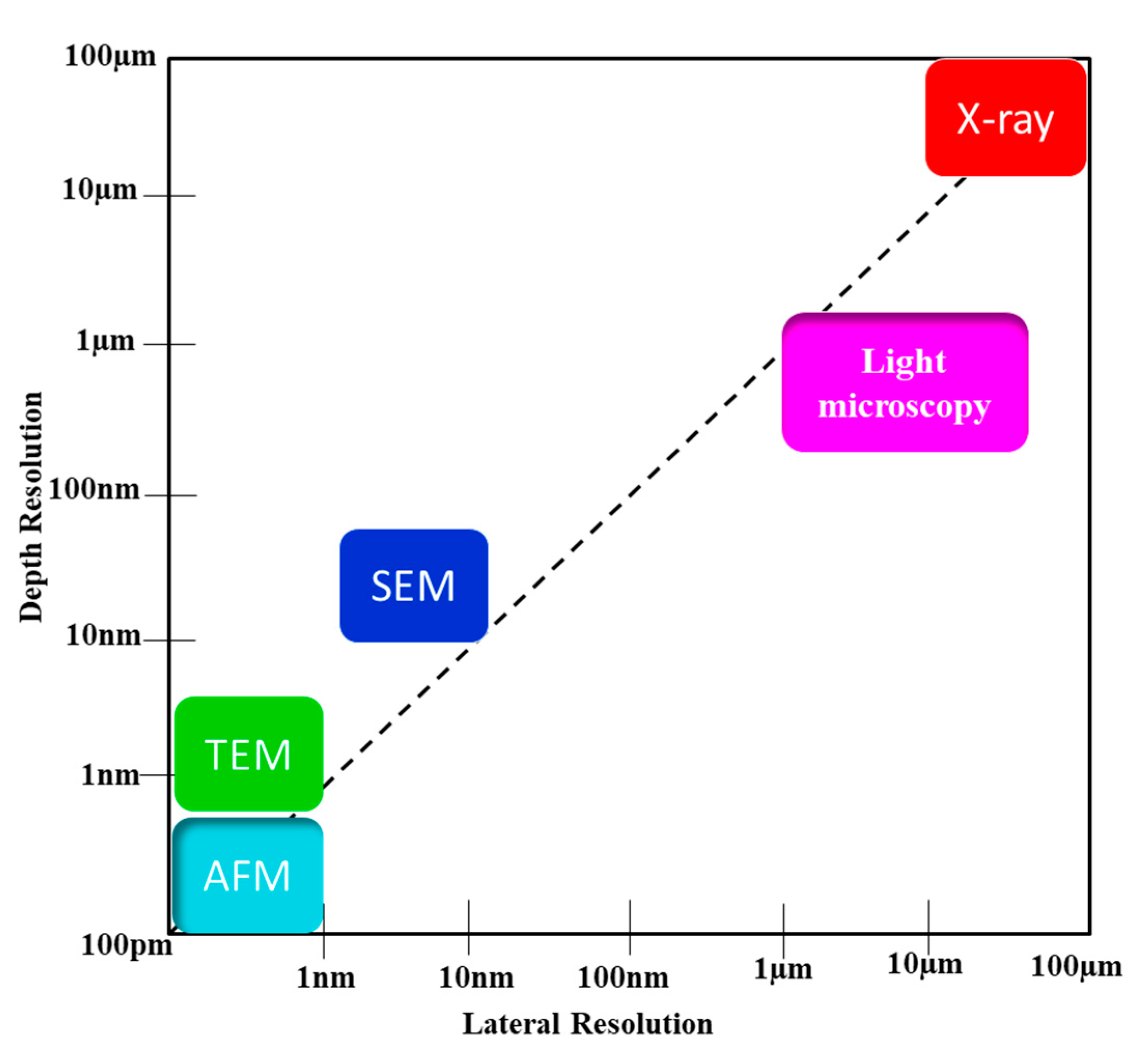
Figure 9.
Comparison of the typical spatial resolution of essential materials characterization imaging methods AFM, TEM, SEM, Light microscopy, and X-ray imaging.
Figure 9.
Comparison of the typical spatial resolution of essential materials characterization imaging methods AFM, TEM, SEM, Light microscopy, and X-ray imaging.
8. New Trends in the Fields of Soft-Matter Intricate Food Manufacturing
8.1. Printing of Soft-Matter-Induced Food Structures
Converting soft matter principles and additive manufacturing techniques opens food customization and stability frontiers. 3D printing allows for fabricating intricate food structures with tailored mechanical properties, mimicking the hierarchical organization found in natural food matrices [197]. Researchers can precisely engineer textures and release profiles that optimise taste perception and nutrient delivery by controlling the viscosity, elasticity, and shear-thinning behavior of food-grade hydrogels and emulsions [198]. These soft matter considerations extend beyond mere structural aesthetics, encompassing dynamic interactions between printed layers and encapsulated bioactive compounds, paving the way for personalized nutrition solutions and novel culinary experiences [199].
8.2. AI and Machine Learning in Food Formulation
The advent of AI and machine learning algorithms is poised to revolutionize food formulation by unravelling the complex interplay of soft matter interactions between ingredients [200]. By harnessing vast datasets on molecular structures, interfacial energies, and rheological behaviors, AI-driven models can predict optimal formulations that balance stability, texture, and nutrient bioavailability [201]. This predictive capability extends beyond conventional empirical approaches, offering a deeper understanding of how soft matter phenomena such as phase transitions, gelation kinetics, and colloidal stability influence product performance under diverse environmental conditions [202]. Moreover, AI-guided formulation strategies enable agile responses to market trends and regulatory requirements, ensuring sustained innovation in functional foods and personalized nutrition tailored to individual preferences and health needs [203].
8.3. Biodegradable and Edible Packaging
The quest for sustainable packaging materials underscores the intricate soft matter challenges in developing biodegradable and edible solutions. Biopolymers derived from renewable sources exhibit complex viscoelastic behaviors and interfacial interactions within food matrices, impacting mechanical strength, barrier properties, and biodegradation kinetics [204]. By leveraging soft matter principles, such as polymer chain entanglements and supramolecular assembly, researchers can design next-generation packaging materials that mimic conventional plastics’ functionalities and interact synergistically with food components to extend shelf life and minimize environmental footprint [197]. Moreover, advances in nanotechnology enable the incorporation of active agents within biodegradable matrices, further enhancing their efficacy in preserving food quality through controlled release mechanisms and targeted antimicrobial activities [205].
8.4. Precision Fermentation for Novel Ingredients
Precision fermentation heralds a new era in soft matter engineering by enabling precise control over the biosynthesis of functional ingredients with tailored physicochemical properties. Engineered microorganisms can produce bioactive peptides, enzymes, and flavors that interact dynamically with food matrices, influencing soft matter phenomena such as emulsification, gelation, and viscoelastic behavior [206]. By elucidating the molecular mechanisms governing these interactions, scientists can optimize fermentation processes to enhance fermented foods’ stability, sensory attributes, and nutritional profiles [207]. Furthermore, integrating computational modeling and systems biology approaches offers unprecedented insights into metabolic pathways and substrate utilization. This drives innovation in personalized nutrition and sustainable food production based on soft matter principles.
8.5. Advanced Imaging and Spectroscopy Techniques
The application of advanced imaging and spectroscopy techniques unveils the intricate soft matter architecture and molecular dynamics within food systems. From high-resolution microscopy to spectroscopic analyses, these non-invasive methodologies provide unparalleled insights into microstructural organization, phase transitions, and molecular interactions at multiple length scales [208]. By mapping spatial distributions of colloidal particles, lipid domains, and protein networks, researchers can correlate structural features with macroscopic properties such as texture, stability, and shelf life [209]. Moreover, spectral imaging modalities offer real-time monitoring of chemical compositions and functional groups, facilitating rapid quality assessment and process optimization based on soft matter science principles.
8.6. Robotics and Automation in Food Processing
Robotics and automated systems are poised to revolutionize food processing by orchestrating precise control over soft matter dynamics during manufacturing and packaging operations. Programmable robots equipped with adaptive grippers and sensor arrays optimize the handling and manipulation of soft materials such as gels, emulsions, and foams, ensuring uniformity in texture, appearance, and structural integrity [210]. Automated workflows minimise processing variability and enhance product consistency across batch production by integrating soft matter insights, such as shear-thinning behavior and particle dispersion kinetics [211]. Furthermore, machine learning algorithms enable adaptive control strategies that respond dynamically to real-time changes in soft matter properties, ensuring optimal process conditions and product quality in a competitive marketplace.
8.7. Personalized Nutrition and Functional Foods
The convergence of personalized nutrition with soft matter principles promises tailored formulations that optimize bioavailability, stability, and sensory appeal based on individual health profiles and dietary preferences. By deciphering the intricate soft matter interactions between bioactive compounds and food matrices, researchers can design functional foods with enhanced nutrient delivery systems, controlled release profiles, and targeted health benefits [212]. Advanced omics technologies, including genomics and metabolomics, offer unprecedented insights into molecular mechanisms underlying dietary responses and metabolic pathways, guiding precision formulations that mitigate health risks and promote well-being. Moreover, bioinformatics-driven approaches enable data-driven decision-making in personalized nutrition, facilitating evidence-based strategies for disease prevention and management through innovative soft matter engineering solutions [213]
To ratify, by embracing the complexities of soft matter physics across these futuristic approaches, the food science community can unlock transformative capabilities to enhance food stability, characterization, and consumer satisfaction in an increasingly dynamic global market landscape. These advancements not only push the boundaries of technological innovation but also underscore the pivotal role of soft matter principles in shaping the future of food sustainability, safety, and personalized nutrition on a global scale.
8.8. Phytochemical-Induced Immune-Stimulating Functional Foods
Phytochemical-induced immune-stimulating functional foods enhance the body’s natural defence mechanisms through the beneficial effects of plant-derived compounds. These foods incorporate phytochemicals like flavonoids, carotenoids, and polyphenols, which are known for their antioxidant, anti-inflammatory, and immune-modulating properties [213]. These functional foods improve gut health and bolster the immune system by promoting the growth of beneficial gut bacteria such as Bifidobacteria, Lactobacilli, and Faecalibacterium prausnitzii. Regularly consuming such foods, including berries, green tea, fermented products, and fibre-rich vegetables, can lead to a more resilient immune response, better overall health, and enhanced protection against diseases [214].
9. Conclusions
The intricate interplay and structural dynamics of dietary soft matter components, particularly natural polymers such as polysaccharides and proteins, stand as pivotal frontiers in advance in food science and industry. These polymers can form robust interconnections based on their assembly structures, wherein the delicate balance between attraction and repulsion dictates successful self-assembly processes while accommodating structural flexibility through weak interactions. However, the integrity of these systems can be compromised by excessive intensity or fluctuations in environmental conditions. A diverse array of physical and chemical methodologies, including phase models, turbidity measurements, microscopy, thermal analysis, rheology, and spectroscopy, serve as indispensable tools for probing the compatibility and association of soft matter components. Leveraging the unique properties of soft matter, encompassing polymers, colloids, and emulsions, holds promise for pioneering solutions to combating challenges such as food spoilage, extending shelf-life, and enhancing sensory attributes. Future research endeavours must develop intelligent food systems that adapt to environmental cues, ensuring sustained quality throughout the supply chain. Ultimately, a profound understanding of intra-soft matter interactions is paramount in driving innovation toward functional food products and fostering diverse applications within the dynamic landscape of the food industry.
Declaration of competing interest
The authors declare that they do not have any conflict of interest.
Acknowledgment
The authors gratefully thank the Wuxi Science and Technology Innovation and Entrepreneurship Fund (N20211009). This work was also supported by the Collaborative Innovation Center of Food Safety and Quality Control in Jiangsu Province.
References
- Grier, D.G. A Revolution in Optical Manipulation. Nature 2003, 424, 810–816. [CrossRef]
- Weitz, D.A. Soft Materials Evolution and Revolution. Nat. Mater. 2022, 21, 986–988. [CrossRef]
- Hanani, N. Characteristics of Soft Matters 1.1. An Autom. Irrig. Syst. Using Arduino Microcontroller 2018, 3, 2–6.
- Schifferstein, H.N.J.; Kudrowitz, B.M.; Breuer, C. Food Perception and Aesthetics - Linking Sensory Science to Culinary Practice. J. Culin. Sci. Technol. 2022, 20, 293–335. [CrossRef]
- Mahato, S.; Zhu, Z.; Sun, D.W. Glass Transitions as Affected by Food Compositions and by Conventional and Novel Freezing Technologies: A Review. Trends Food Sci. Technol. 2019, 94, 1–11. [CrossRef]
- Heerschop, S.N.; Cardinaals, R.P.M.; Biesbroek, S.; Kanellopoulos, A.; Geleijnse, J.M.; van ‘t Veer, P.; van Zanten, H.H.E. Understanding the Complexity of the Food System: Differences and Commonalities between Two Optimization Models. 2023, 17. [CrossRef]
- Assenza, S.; Mezzenga, R. Soft Condensed Matter Physics of Foods and Macronutrients. Nat. Rev. Phys. 2019, 1, 551–566. [CrossRef]
- Runthala, A.; Mbye, M.; Ayyash, M.; Xu, Y.; Kamal-Eldin, A. Caseins: Versatility of Their Micellar Organization in Relation to the Functional and Nutritional Properties of Milk. Molecules 2023, 28, 1–36. [CrossRef]
- Taslikh, M.; Mollakhalili-Meybodi, N.; Alizadeh, A.M.; Mousavi, M.M.; Nayebzadeh, K.; Mortazavian, A.M. Mayonnaise Main Ingredients Influence on Its Structure as an Emulsion. J. Food Sci. Technol. 2022, 59, 2108–2116. [CrossRef]
- Beaumont, M.; Tran, R.; Vera, G.; Niedrist, D.; Rousset, A.; Pierre, R.; Shastri, V.P.; Forget, A. Hydrogel-Forming Algae Polysaccharides: From Seaweed to Biomedical Applications. Biomacromolecules 2021, 22, 1027–1052. [CrossRef]
- Marhamati, M.; Ranjbar, G.; Rezaie, M. Effects of Emulsifiers on the Physicochemical Stability of Oil-in-Water Nanoemulsions: A Critical Review. J. Mol. Liq. 2021, 340, 117218. [CrossRef]
- Cortés-Morales, E.A.; Mendez-Montealvo, G.; Velazquez, G. Interactions of the Molecular Assembly of Polysaccharide-Protein Systems as Encapsulation Materials. A Review. Adv. Colloid Interface Sci. 2021, 295, 102398. [CrossRef]
- Liu, Y.; Wu, H.C.; Bhokisham, N.; Li, J.; Hong, K.L.; Quan, D.N.; Tsao, C.Y.; Bentley, W.E.; Payne, G.F. Biofabricating Functional Soft Matter Using Protein Engineering to Enable Enzymatic Assembly. Bioconjug. Chem. 2018, 29, 1809–1822. [CrossRef]
- Yang, X.; Li, A.; Li, D.; Guo, Y.; Sun, L. Applications of Mixed Polysaccharide-Protein Systems in Fabricating Multi-Structures of Binary Food Gels—A Review. Trends Food Sci. Technol. 2021, 109, 197–210. [CrossRef]
- Toniazzo, T.; Fabi, J.P. Versatile Polysaccharides for Application to Semi-Solid and Fluid Foods: The Pectin Case. Fluids 2023, 8. [CrossRef]
- Jagadeesh, P.; Rangappa, S.M.; Siengchin, S. Advanced Characterization Techniques for Nanostructured Materials in Biomedical Applications. Adv. Ind. Eng. Polym. Res. 2024, 7, 122–143. [CrossRef]
- Van Der Sman, R.G.M. Soft Matter Approaches to Food Structuring. Adv. Colloid Interface Sci. 2012, 176–177, 18–30. [CrossRef]
- Rojas, M.L.; Kubo, M.T.K.; Caetano-Silva, M.E.; Carvalho, G.R.; Augusto, P.E.D. Chapter 5 - How Food Structure Influences the Physical, Sensorial, and Nutritional Quality of Food Products. In; Cerqueira, M.Â.P.R., Pastrana Castro Health and Well-Being, L.M.B.T.-F.S.E. and D. for I.N., Eds.; Academic Press, 2023; pp. 113–138 ISBN 978-0-323-85513-6.
- Kim, H. J., Kim, J. H., Yu, D. H., Je, A. R., Choi, S., Kweon, H. S., ... & Huh, Y. H. (2017). Large-Area Ultrastructural Analysis on Alteration of Synaptic Vesicles in the 835MHz Radiofrequency-exposed Cerebral Cortex of Mice Brain Using Limitless Panorama and 3D Electron Tomography. Microscopy and Microanalysis, 23(S1), 1160-1161.
- Zhang, Q.; Wu, K.; Qian, H.; Ramachandran, B.; Jiang, F. The Advances of Characterization and Evaluation Methods for the Compatibility and Assembly Structure Stability of Food Soft Matter. Trends Food Sci. Technol. 2021, 112, 753–763. [CrossRef]
- Zeeb, B.; Jost, T.; McClements, D.J.; Weiss, J. Segregation Behavior of Polysaccharide–Polysaccharide Mixtures—a Feasibility Study. Gels 2019, 5, 1–11. [CrossRef]
- McClements, D.J. Recent Progress in Hydrogel Delivery Systems for Improving Nutraceutical Bioavailability. Food Hydrocoll. 2017, 68, 238–245. [CrossRef]
- Peak, C.W.; Wilker, J.J.; Schmidt, G. A Review on Tough and Sticky Hydrogels. Colloid Polym. Sci. 2013, 291, 2031–2047. [CrossRef]
- Zhang, M.; Sun, C.; Li, Q. Interaction between the Polysaccharides and Proteins in Semisolid Food Systems; Elsevier, 2018; ISBN 9780128140451.
- Rackers, J.A.; Ponder, J.W. Classical Pauli Repulsion: An Anisotropic, Atomic Multipole Model. J. Chem. Phys. 2019, 150. [CrossRef]
- Yue, K.; Huang, M.; Marson, R.L.; Hec, J.; Huang, J.; Zhou, Z.; Wang, J.; Liu, C.; Yan, X.; Wu, K.; et al. Geometry Induced Sequence of Nanoscale Frank-Kasper and Quasicrystal Mesophases in Giant Surfactants. Proc. Natl. Acad. Sci. U. S. A. 2016, 113, 14195–14200. [CrossRef]
- Liu, Y.; Liu, T.; Yan, X.Y.; Guo, Q.Y.; Lei, H.; Huang, Z.; Zhang, R.; Wang, Y.; Wang, J.; Liu, F.; et al. Expanding Quasiperiodicity in Soft Matter: Supramolecular Decagonal Quasicrystals by Binary Giant Molecule Blends. Proc. Natl. Acad. Sci. U. S. A. 2022, 119, 2–7. [CrossRef]
- Manzoor, M.; Tchameni, Z.F.N.; Bhat, Z.F.; Jaiswal, A.K.; Jaglan, S. Recent Insights on the Conformational Changes, Functionality, and Physiological Properties of Plant-Based Protein–Polyphenol Conjugates. Food Bioprocess Technol. 2023, 2131–2154. [CrossRef]
- Ubbink, J. Soft Matter Approaches to Structured Foods: From ‘“Cook-and-Look”’ to Rational Food Design? 2012, 9–35. [CrossRef]
- Paper, C. Soft Matter Physics Can Set Biological Clock of Industrial Food Science and (Bio) Technology. 2023. [CrossRef]
- Punia, S.; Scott, W.; Omodunbi, A. Recent Advances in Thermoplastic Starches for Food Packaging : A Review. Food Packag. Shelf Life 2021, 30, 100743. [CrossRef]
- Ogborn, J. Soft Matter: Food for Thought. Phys. Educ. 2004, 39, 45–51. [CrossRef]
- Huang, X.; Tu, R.; Song, H.; Dong, K.; Geng, F.; Chen, L.; Huang, Q.; Wu, Y. Fabrication and Characterization of Gelatin–EGCG–Pectin Ternary Complex: Formation Mechanism, Emulsion Stability, and Structure. J. Sci. Food Agric. 2023, 103, 1442–1453. [CrossRef]
- Houghton, J.E.; Behnsen, J.; Duller, R.A.; Nichols, T.E.; Worden, R.H. Particle Size Analysis: A Comparison of Laboratory-Based Techniques and Their Application to Geoscience. Sediment. Geol. 2024, 464, 106607. [CrossRef]
- Listov, D.; Goverde, C.A.; Correia, B.E.; Fleishman, S.J. Opportunities and Challenges in Design and Optimization of Protein Function. Nat. Rev. Mol. Cell Biol. 2024, 25, 639–653. [CrossRef]
- Wu, J.; Chen, S.; Wang, T.; Li, H.; Sedaghat Doost, A.; Van Damme, E.J.M.; De Meulenaer, B.; Van der Meeren, P. Improved Heat Stability of Recombined Evaporated Milk Emulsions by Wet Heat Pretreatment of Skim Milk Powder Dispersions. Food Hydrocoll. 2021, 118, 106757. [CrossRef]
- Ma, W.; Wang, J.; Wu, D.; Chen, H.; Wu, C.; Du, M. The Mechanism of Improved Thermal Stability of Protein-Enriched O/W Emulsions by Soy Protein Particles; 2020; Vol. 11; ISBN 8641186332275.
- Ma, W.; Wang, T.; Wang, J.; Wu, D.; Wu, C.; Du, M. Enhancing the Thermal Stability of Soy Proteins by Preheat Treatment at Lower Protein Concentration. Food Chem. 2020, 306. [CrossRef]
- Wu, C.; Wang, J.; Ma, W.; Cai, Y.; Wang, T. Preheat-Stabilized Pea Proteins with Anti-Aggregation Properties. Int. J. Biol. Macromol. 2020, 155, 1288–1295. [CrossRef]
- Yiasmin, M.N.; Islam, M.S.; He, H.; Liu, Y.; Wang, M.; Yang, R.; Hua, X. Purification, Isolation, and Structure Characterization of Water Soluble and Insoluble Polysaccharides from Maitake Fruiting Body. Int. J. Biol. Macromol. 2020, 164, 1879–1888. [CrossRef]
- Sato, A.; Matsumiya, K.; Kaneko, W.; Okazaki, M.; Matsumura, Y. Ultra-High-Pressure Homogenization Can Modify Colloidal, Interfacial, and Foaming Properties of Whey Protein Isolate and Micellar Casein Dispersions Differently According to the Temperature Condition. Colloids Surfaces A Physicochem. Eng. Asp. 2021, 619, 126470. [CrossRef]
- Saricaoglu, F.T. Application of High-Pressure Homogenization (HPH) to Modify Functional, Structural and Rheological Properties of Lentil (Lens Culinaris) Proteins. Int. J. Biol. Macromol. 2020, 144, 760–769. [CrossRef]
- Cha, Y.; Shi, X.; Wu, F.; Zou, H.; Chang, C.; Guo, Y.; Yuan, M.; Yu, C. Improving the Stability of Oil-in-Water Emulsions by Using Mussel Myo Fi Brillar Proteins and Lecithin as Emulsi Fi Ers and High-Pressure Homogenization. J. Food Eng. 2019, 258, 1–8. [CrossRef]
- Fayaz, G.; Plazzotta, S.; Calligaris, S.; Manzocco, L.; Nicoli, M.C. Impact of High Pressure Homogenization on Physical Properties, Extraction Yield and Biopolymer Structure of Soybean Okara. Lwt 2019, 113, 108324. [CrossRef]
- Hydrolysates, I.; Cha, Y.; Wu, F.; Zou, H.; Shi, X.; Zhao, Y.; Bao, J.; Du, M.; Yu, C. Improved Functional Properties of Oyster Protein. Molecules 2018. [CrossRef]
- Yang, J.; Liu, G.; Zeng, H.; Chen, L. Effects of High Pressure Homogenization on Faba Bean Protein Aggregation in Relation to Solubility and Interfacial Properties. Food Hydrocoll. 2018, 83, 275–286. [CrossRef]
- Yu, C.; Wu, F.; Cha, Y.; Zou, H.; Bao, J.; Xu, R.; Du, M. Effects of High-Pressure Homogenization on Functional Properties and Structure of Mussel (Mytilus Edulis) Myofibrillar Proteins. Int. J. Biol. Macromol. 2018, 118, 741–746. [CrossRef]
- Zhao, X.; Sun, L.; Zhang, X.; Liu, H.; Zhu, Y. Effects of Ultrafine Grinding Time on the Functional and Flavor Properties of Soybean Protein Isolate. Colloids Surfaces B Biointerfaces 2020, 196, 111345. [CrossRef]
- Liu, Q.; Li, Z.; Pan, X.; Dai, Y.; Hou, H.; Wang, W.; Ding, X.; Zhang, H.; Li, X.; Dong, H. Effect of Grinding on the Structure of Pea Protein Isolate and the Rheological Properties of Its Acid-Induced Gels. Int. J. Food Sci. Technol. 2021, 56, 3455–3462. [CrossRef]
- Sun, C.; Liu, R.; Ni, K.; Wu, T.; Luo, X.; Liang, B.; Zhang, M. Reduction of Particle Size Based on Superfine Grinding: Effects on Structure, Rheological and Gelling Properties of Whey Protein Concentrate. J. Food Eng. 2016, 186, 69–76. [CrossRef]
- Nazari, B.; Mohammadifar, M.A.; Shojaee-Aliabadi, S.; Feizollahi, E.; Mirmoghtadaie, L. Effect of Ultrasound Treatments on Functional Properties and Structure of Millet Protein Concentrate. Ultrason. Sonochem. 2018, 41, 382–388. [CrossRef]
- Zheng, T.; Li, X.; Taha, A.; Wei, Y.; Hu, T.; Fatamorgana, P.B.; Zhang, Z.; Liu, F.; Xu, X.; Pan, S.; et al. Effect of High Intensity Ultrasound on the Structure and Physicochemical Properties of Soy Protein Isolates Produced by Different Denaturation Methods. Food Hydrocoll. 2019, 97, 105216. [CrossRef]
- Wu, C.; Wang, J.; Ma, W.; Cai, Y.; Wang, T. Preheat-Stabilized Pea Proteins with Anti-Aggregation Properties. Int. J. Biol. Macromol. 2020, 155, 1288–1295. [CrossRef]
- Zou, H.; Zhao, N.; Sun, S.; Dong, X.; Yu, C. High-Intensity Ultrasonication Treatment Improved Physicochemical and Functional Properties of Mussel Sarcoplasmic Proteins and Enhanced the Stability of Oil-in-Water Emulsion. Colloids Surfaces A Physicochem. Eng. Asp. 2020, 589, 124463. [CrossRef]
- Warnakulasuriya, S.N.; Nickerson, M.T. Review on Plant Protein–Polysaccharide Complex Coacervation, and the Functionality and Applicability of Formed Complexes. J. Sci. Food Agric. 2018, 98, 5559–5571. [CrossRef]
- Pergande, M.R.; Cologna, S.M. Isoelectric Point Separations of Peptides and Proteins. Proteomes 2017, 5. [CrossRef]
- Gentile, L. ScienceDirect Protein – Polysaccharide Interactions and Aggregates in Food Formulations. Curr. Opin. Colloid Interface Sci. 2020, 48, 18–27. [CrossRef]
- Niyigaba, T.; Liu, D.; Habimana, J.D.D. The Extraction , Functionalities and Applications of Plant. Foods A Rev. 2021, 10, 23.
- Zang, Z.; Tang, S.; Li, Z.; Chou, S.; Shu, C.; Chen, Y.; Chen, W.; Yang, S.; Yang, Y.; Tian, J.; et al. An Updated Review on the Stability of Anthocyanins Regarding the Interaction with Food Proteins and Polysaccharides. Compr. Rev. food Sci. food Saf. 2022, 21, 4378–4401. [CrossRef]
- Taha, A.; Casanova, F.; Šimonis, P.; Jonikaitė-Švėgždienė, J.; Jurkūnas, M.; Gomaa, M.A.; Stirkė, A. Pulsed Electric Field-Assisted Glycation of Bovine Serum Albumin/Starch Conjugates Improved Their Emulsifying Properties. Innov. Food Sci. Emerg. Technol. 2022, 82. [CrossRef]
- Khalesi, H.; Emadzadeh, B.; Kadkhodaee, R.; Fang, Y. Effects of Biopolymer Ratio and Heat Treatment on the Complex Formation between Whey Protein Isolate and Soluble Fraction of Persian Gum. J. Dispers. Sci. Technol. 2017, 38, 1234–1241. [CrossRef]
- Yildiz, G.; Ding, J.; Andrade, J.; Engeseth, N.J.; Feng, H. Effect of Plant Protein-Polysaccharide Complexes Produced by Mano-Thermo-Sonication and PH-Shifting on the Structure and Stability of Oil-in-Water Emulsions. Innov. Food Sci. Emerg. Technol. 2018, 47, 317–325. [CrossRef]
- Wang, L. H., Sun, X., Huang, G. Q., & Xiao, J. X. (2018). Conjugation of Soybean Protein Isolate with Xylose/Fructose through Wet-Heating Maillard Reaction. Journal of Food Measurement and Characterization, 12. [CrossRef]
- Liu, P.; Li, Y.; Gao, L.; Zhou, X.; Ma, P.; Wang, Q. Effect of Different Carbohydrates on the Functional Properties of Black Rice Glutelin (BRG) Modified by the Maillard Reaction. J. Cereal Sci. 2020, 93, 102979. [CrossRef]
- Lan, Y.; Chen, B.; Rao, J. Pea Protein Isolate–High Methoxyl Pectin Soluble Complexes for Improving Pea Protein Functionality: Effect of PH, Biopolymer Ratio and Concentrations. Food Hydrocoll. 2018, 80, 245–253. [CrossRef]
- Chen, G.; Wang, S.; Feng, B.; Jiang, B.; Miao, M. Interaction between Soybean Protein and Tea Polyphenols under High Pressure. Food Chem. 2019, 277, 632–638. [CrossRef]
- Chen, K.; Chen, X.; Liang, L.; Xu, X. Gallic Acid-Aided Cross-Linking of Myofibrillar Protein Fabricated Soluble Aggregates for Enhanced Thermal Stability and a Tunable Colloidal State. J. Agric. Food Chem. 2020, 68, 11535–11544. [CrossRef]
- Pham, L.B.; Wang, B.; Zisu, B.; Adhikari, B. Complexation between Flaxseed Protein Isolate and Phenolic Compounds: Effects on Interfacial, Emulsifying and Antioxidant Properties of Emulsions. Food Hydrocoll. 2019, 94, 20–29. [CrossRef]
- Liu, F.; Ma, C.; McClements, D.J.; Gao, Y. A Comparative Study of Covalent and Non-Covalent Interactions between Zein and Polyphenols in Ethanol-Water Solution. Food Hydrocoll. 2017, 63, 625–634. [CrossRef]
- García Arteaga, V.; Apéstegui Guardia, M.; Muranyi, I.; Eisner, P.; Schweiggert-Weisz, U. Effect of Enzymatic Hydrolysis on Molecular Weight Distribution, Techno-Functional Properties and Sensory Perception of Pea Protein Isolates. Innov. Food Sci. Emerg. Technol. 2020, 65, 102449. [CrossRef]
- Noman, A.; Xu, Y.; AL-Bukhaiti, W.Q.; Abed, S.M.; Ali, A.H.; Ramadhan, A.H.; Xia, W. Influence of Enzymatic Hydrolysis Conditions on the Degree of Hydrolysis and Functional Properties of Protein Hydrolysate Obtained from Chinese Sturgeon (Acipenser Sinensis) by Using Papain Enzyme. Process Biochem. 2018, 67, 19–28. [CrossRef]
- Zang, X.; Yue, C.; Wang, Y.; Shao, M.; Yu, G. Effect of Limited Enzymatic Hydrolysis on the Structure and Emulsifying Properties of Rice Bran Protein. J. Cereal Sci. 2019, 85, 168–174. [CrossRef]
- Singh, T.P.; Siddiqi, R.A.; Sogi, D.S. Enzymatic Modification of Rice Bran Protein: Impact on Structural, Antioxidant and Functional Properties. Lwt 2021, 138, 110648. [CrossRef]
- Akbari, S.; Nour, A.H. Emulsion Types, Stability Mechanisms and Rheology: A Review. Int. J. Innov. Res. Sci. Stud. 2018, 1, 11–17. [CrossRef]
- Zhu, Q.; Pan, Y.; Jia, X.; Li, J.; Zhang, M.; Yin, L. Review on the Stability Mechanism and Application of Water-in-Oil Emulsions Encapsulating Various Additives. Compr. Rev. Food Sci. Food Saf. 2019, 18, 1660–1675. [CrossRef]
- Burgos-Díaz, C.; Wandersleben, T.; Marqués, A.M.; Rubilar, M. Multilayer Emulsions Stabilized by Vegetable Proteins and Polysaccharides. Curr. Opin. Colloid Interface Sci. 2016, 25, 51–57. [CrossRef]
- McClements, D.J. Non-Covalent Interactions between Proteins and Polysaccharides. Biotechnol. Adv. 2006, 24, 621–625. [CrossRef]
- Loret, C.; Schumm, S.; Pudney, P.D.A.; Frith, W.J.; Fryer, P.J. Phase Separation and Molecular Weight Fractionation Behaviour of Maltodextrin/Agarose Mixtures. Food Hydrocoll. 2005, 19, 557–565. [CrossRef]
- Crocker, K.; Lee, K.K.; Chakraverti-wuerthwein, M.; Li, Z.; Tikhonov, M.; Mani, M.; Gowda, K.; Kuehn, S. Environmentally Dependent Interactions Shape Patterns in Gene Content across Natural Microbiomes. Nat. Microbiol. 2024. [CrossRef]
- Chen, L.; Pilania, G.; Batra, R.; Huan, T.D.; Kim, C.; Kuenneth, C.; Ramprasad, R. Polymer Informatics: Current Status and Critical next Steps. Mater. Sci. Eng. R Reports 2021, 144, 100595. [CrossRef]
- Yin, B.; Zhang, R.; Yao, P. Influence of Pea Protein Aggregates on the Structure and Stability of Pea Protein/Soybean Polysaccharide Complex Emulsions. Molecules 2015, 20, 5165–5183. [CrossRef]
- Min, H.Y.; Lee, H.Y. Molecular Targeted Therapy for Anticancer Treatment. Exp. Mol. Med. 2022, 54, 1670–1694. [CrossRef]
- Wei, Z.; Huang, Q. Assembly of Protein-Polysaccharide Complexes for Delivery of Bioactive Ingredients: A Perspective Paper. J. Agric. Food Chem. 2019, 67, 1344–1352. [CrossRef]
- Boeriu, C.G.; Oudgenoeg, G.; Spekking, W.T.J.; Berendsen, L.B.J.M.; Vancon, L.; Boumans, H.; Gruppen, H.; Van Berkel, W.J.H.; Laane, C.; Voragen, A.G.J. Horseradish Peroxidase-Catalyzed Cross-Linking of Feruloylated Arabinoxylans with β-Casein. J. Agric. Food Chem. 2004, 52, 6633–6639. [CrossRef]
- Han, M.M.; Yi, Y.; Wang, H.X.; Huang, F. Investigation of the Maillard Reaction between Polysaccharides and Proteins from Longan Pulp and the Improvement in Activities. Molecules 2017, 22, 5–8. [CrossRef]
- Liu, P.; Lu, X.; Li, N.; Zheng, Z.; Zhao, R.; Tang, X.; Qiao, X. Effects and Mechanism of Free Amino Acids on Browning in the Processing of Black Garlic. J. Sci. Food Agric. 2019, 99, 4670–4676. [CrossRef]
- Alfayadh, H.M.; Hamk, M.L.; Ibrahim, K.J.; Al-Saadi, J.M. Effect of Milk Proteins Aggregation Using Transglutaminase and Maillard Reaction on Ca2+ Milk Gel. Kurdistan J. Appl. Res. 2018, 3, 63–67. [CrossRef]
- 88. Wusigale; Liang, L.; Luo, Y. Casein and Pectin: Structures, Interactions, and Applications. Trends Food Sci. Technol. 2020, 97, 391–403. [CrossRef]
- Chun Tie, Y.; Birks, M.; Francis, K. Grounded Theory Research: A Design Framework for Novice Researchers. SAGE Open Med. 2019, 7. [CrossRef]
- Bian, T.; Gardin, A.; Gemen, J.; Houben, L.; Perego, C.; Lee, B.; Elad, N.; Chu, Z.; Pavan, G.M.; Klajn, R. Electrostatic Co-Assembly of Nanoparticles with Oppositely Charged Small Molecules into Static and Dynamic Superstructures. Nat. Chem. 2021, 13, doi.org/10.1038/s41557-021-00752-9.
- Silva, C.E.P.; Loh, W. Chapter 2 - Fundamentals of Emulsion Formation and Stability. In Clay Minerals and Synthetic Analogous as Emulsifiers of Pickering Emulsions; Wypych, F., de Freitas, R.A.B.T.-D. in C.S., Eds.; Elsevier, 2022; Vol. 10, pp. 37–59 ISBN 1572-4352.
- Zang, X.; Wang, J.; Yu, G.; Cheng, J. Addition of Anionic Polysaccharides to Improve the Stability of Rice Bran Protein Hydrolysate-Stabilized Emulsions. Lwt 2019, 111, 573–581. [CrossRef]
- Dickinson, E. Strategies to Control and Inhibit the Flocculation of Protein-Stabilized Oil-in-Water Emulsions. Food Hydrocoll. 2019, 96, 209–223. [CrossRef]
- Wang, S.; Yang, J.; Shao, G.; Qu, D.; Zhao, H.; Zhu, L.; Yang, L.; Li, R.; Li, J.; Liu, H.; et al. Dilatational Rheological and Nuclear Magnetic Resonance Characterization of Oil-Water Interface: Impact of PH on Interaction of Soy Protein Isolated and Soy Hull Polysaccharides. Food Hydrocoll. 2020, 99, 105366. [CrossRef]
- Zhi, L.; Liu, Z.; Wu, C.; Ma, X.; Hu, H.; Liu, H.; Adhikari, B.; Wang, Q.; Shi, A. Advances in Preparation and Application of Food-Grade Emulsion Gels. Food Chem. 2023, 424, 136399. [CrossRef]
- Chen, X.; Song, W.; Zhao, J.; Zhang, Z.; Zhang, Y. Some Physical Properties of Protein Moiety of Alkali-Extracted Tea Polysaccharide Conjugates Were Shielded by Its Polysaccharide. Molecules 2017, 22. [CrossRef]
- Rasmussen, M.K.; Pedersen, J.N.; Marie, R. Size and Surface Charge Characterization of Nanoparticles with a Salt Gradient. Nat. Commun. 2020, 11, 1–8. [CrossRef]
- Meng, Q.; Jiang, H.; Tu, J.; He, Y.; Zhou, Z.; Wang, R.; Jin, W.; Han, J.; Liu, W. Effect of PH, Protein/Polysaccharide Ratio and Preparation Method on the Stability of Lactoferrin-Polysaccharide Complexes. Food Chem. 2024, 456, 140056. [CrossRef]
- Yao, X.; Xiang, S.; Nie, K.; Gao, Z.; Zhang, W.; Fang, Y.; Nishinari, K.; Phillips, G.O.; Jiang, F. Whey Protein Isolate/Gum Arabic Intramolecular Soluble Complexes Improving the Physical and Oxidative Stabilities of Conjugated Linoleic Acid Emulsions. RSC Adv. 2016, 6, 14635–14642. [CrossRef]
- Kala, R.; Samková, E.; Hanuš, O.; Pecová, L.; Sekmokas, K.; Riaukienė, D. Milk Protein Analysis: An Overview of the Methods – Development and Application. Acta Univ. Agric. Silvic. Mendelianae Brun. 2019, 67, 345–359. [CrossRef]
- Zheng, J.; Van der Meeren, P.; Sun, W. New Insights into Protein–Polysaccharide Complex Coacervation: Dynamics, Molecular Parameters, and Applications. Aggregate 2024, 5, 1–19. [CrossRef]
- Du, Q.; Zhou, L.; Lyu, F.; Liu, J.; Ding, Y. The Complex of Whey Protein and Pectin: Interactions, Functional Properties and Applications in Food Colloidal Systems – A Review. Colloids Surfaces B Biointerfaces 2022, 210, 112253. [CrossRef]
- Wu, K.; Sun, W.; Li, D.; Diao, J.; Xiu, P. Inhibition of Amyloid Nucleation by Steric Hindrance. J. Phys. Chem. B 2022, 126, 10045–10054. [CrossRef]
- Liu, G.; Zhong, Q. High Temperature-Short Time Glycation to Improve Heat Stability of Whey Protein and Reduce Color Formation. Food Hydrocoll. 2015, 44, 453–460. [CrossRef]
- Wijayanti, H.B.; Bansal, N.; Deeth, H.C. Stability of Whey Proteins during Thermal Processing: A Review. Compr. Rev. Food Sci. Food Saf. 2014, 13, 1235–1251. [CrossRef]
- Giubertoni, G.; Hilbers, M.; Caporaletti, F.; Laity, P.; Groen, H.; Van der Weide, A.; Bonn, D.; Woutersen, S. Hydrogen Bonds under Stress: Strain-Induced Structural Changes in Polyurethane Revealed by Rheological Two-Dimensional Infrared Spectroscopy. J. Phys. Chem. Lett. 2023, 14, 940–946. [CrossRef]
- Miao, Y.; Chen, Y.; Chen, H.; Wang, X.; Zhao, Y. Using Steric Hindrance to Manipulate and Stabilize Metal Halide Perovskites for Optoelectronics. Chem. Sci. 2021, 12, 7231–7247. [CrossRef]
- Mula, S.; Han, T.; Heiser, T.; Lévêque, P.; Leclerc, N.; Srivastava, A.P.; Ruiz-Carretero, A.; Ulrich, G. Hydrogen Bonding as a Supramolecular Tool for Robust OFET Devices. Chem. - A Eur. J. 2019, 25, 8304–8312. [CrossRef]
- Nurazzi, N.M.; Asyraf, M.R.M.; Khalina, A.; Abdullah, N.; Sabaruddin, F.A.; Kamarudin, S.H.; Ahmad, S.; Mahat, A.M.; Lee, C.L.; Aisyah, H.A.; et al. Fabrication, Functionalization, and Application of Carbon Nanotube-Reinforced Polymer Composite: An Overview. Polymers (Basel). 2021, 13, 1–44. [CrossRef]
- Kida, J.; Aoki, D.; Otsuka, H. Mechanophore Activation Enhanced by Hydrogen Bonding of Diarylurea Motifs: An Efficient Supramolecular Force-Transducing System. Aggregate 2021, 2, 1–5. [CrossRef]
- Xiao, F.; Chen, Z.; Wei, Z.; Tian, L. Hydrophobic Interaction: A Promising Driving Force for the Biomedical Applications of Nucleic Acids. Adv. Sci. 2020, 7, 1–34. [CrossRef]
- Kasimova, M.R.; Velázquez-Campoy, A.; Nielsen, H.M. On the Temperature Dependence of Complex Formation between Chitosan and Proteins. Biomacromolecules 2011, 12, 2534–2543. [CrossRef]
- Esteghlal, S.; Hosseini, S.M.H. Fabrication of Zein/Persian Gum Particles Under the Effect of PH and Protein:Gum Ratio and Investigating Their Physico-Chemical Properties. J. Polym. Environ. 2023, 31, 2204–2215. [CrossRef]
- Metilli, L.; Francis, M.; Povey, M.; Lazidis, A.; Marty-Terrade, S.; Ray, J.; Simone, E. Latest Advances in Imaging Techniques for Characterizing Soft, Multiphasic Food Materials. Adv. Colloid Interface Sci. 2020, 279, 102154. [CrossRef]
- Zhang, Y.; Li, R.; Xu, Z.; Fan, H.; Xu, X.; Pan, S.; Liu, F. Recent Advances in the Effects of Food Microstructure and Matrix Components on the Bioaccessibility of Carotenoids. Trends Food Sci. Technol. 2024, 143, 104301. [CrossRef]
- Qian, J.; Lu, T.; Qu, S. Preface to the “Soft Matter Mechanics” Special Issue of Acta Mechanica Solida Sinica. Acta Mech. Solida Sin. 2019, 32, 533–534. [CrossRef]
- Mourdikoudis, S.; Pallares, R.M.; Thanh, N.T.K. Characterization Techniques for Nanoparticles: Comparison and Complementarity upon Studying Nanoparticle Properties. Nanoscale 2018, 10, 12871–12934. [CrossRef]
- Whitesides, G.M.; Boncheva, M. Beyond Molecules: Self-Assembly of Mesoscopic. Proc. Natl. Acad. Sci. 2002, 99, 4769–4774.
- Gao, Y.; Li, X.; Li, P.; Lin, Y. A Brief Guideline for Studies of Phase-Separated Biomolecular Condensates. Nat. Chem. Biol. 2022, 18, 1307–1318. [CrossRef]
- Ni, X.; Wang, K.; Wu, K.; Corke, H.; Nishinari, K.; Jiang, F. Stability, Microstructure and Rheological Behavior of Konjac Glucomannan-Zein Mixed Systems. Carbohydr. Polym. 2018, 188, 260–267. [CrossRef]
- Abdelquader, M.M.; Li, S.; Andrews, G.P.; Jones, D.S. Therapeutic Deep Eutectic Solvents: A Comprehensive Review of Their Thermodynamics, Microstructure and Drug Delivery Applications. Eur. J. Pharm. Biopharm. 2023, 186, 85–104. [CrossRef]
- Drozłowska, E.; Bartkowiak, A.; Łopusiewicz, Ł. Characterization of Flaxseed Oil Bimodal Emulsions Prepared with Flaxseed Oil Cake Extract Applied as a Natural Emulsifying Agent. Polymers (Basel). 2020, 12, 1–18. [CrossRef]
- Münzberg, M.; Hass, R.; Dinh Duc Khanh, N.; Reich, O. Limitations of Turbidity Process Probes and Formazine as Their Calibration Standard. Anal. Bioanal. Chem. 2017, 409, 719–728. [CrossRef]
- Kitchener, B.G.B.; Wainwright, J.; Parsons, A.J. This Is a Repository Copy of A Review of the Principles of Turbidity Measurement. Prog. Phys. Geogr. 2017, 41, 620–642.
- Peddie, C.J.; Genoud, C.; Kreshuk, A.; Meechan, K.; Micheva, K.D.; Narayan, K.; Pape, C.; Parton, R.G.; Schieber, N.L.; Schwab, Y.; et al. Volume Electron Microscopy. Nat. Rev. Methods Prim. 2022, 2, 51. [CrossRef]
- Balasubramanian, H.; Hobson, C.M.; Chew, T.L.; Aaron, J.S. Imagining the Future of Optical Microscopy: Everything, Everywhere, All at Once. Commun. Biol. 2023, 6, 1–12. [CrossRef]
- Vanossi, A.; Bechinger, C.; Urbakh, M. Structural Lubricity in Soft and Hard Matter Systems. Nat. Commun. 2020, 11, 1–11. [CrossRef]
- Ranjit, S.; Lanzanò, L.; Libby, A.E.; Gratton, E.; Levi, M. Advances in Fluorescence Microscopy Techniques to Study Kidney Function. Nat. Rev. Nephrol. 2021, 17, 128–144. [CrossRef]
- Relucenti, M.; Familiari, G.; Donfrancesco, O.; Taurino, M.; Li, X.; Chen, R.; Artini, M.; Papa, R.; Selan, L. Microscopy Methods for Biofilm Imaging: Focus on Sem and VP-SEM Pros and Cons. Biology (Basel). 2021, 10, 1–17. [CrossRef]
- Parisse, S.; Petit, J.F.; Forzy, A.; Lecardeur, A.; Beaugrand, S.; Palmas, P. Binder and Interphase Microstructure in a Composite Material Characterized by Scanning Electron Microscopy and NMR Spin Diffusion Experiments. Macromol. Chem. Phys. 2020, 221, 1–9. [CrossRef]
- Zahl, P.; Zhang, Y. Guide for Atomic Force Microscopy Image Analysis to Discriminate Heteroatoms in Aromatic Molecules. Energy and Fuels 2019, 33, 4775–4780. [CrossRef]
- Teshima, H.; Takata, Y.; Takahashi, K. Adsorbed Gas Layers Limit the Mobility of Micropancakes. Appl. Phys. Lett. 2019, 115. [CrossRef]
- Berger, C., Premaraj, N., Ravelli, R. B., Knoops, K., López-Iglesias, C., & Peters, P. J. (2023). Cryo-electron tomography on focused ion beam lamellae transforms structural cell biology. Nature Methods, 20(4), 499-511.
- Miranda, K.; Girard-Dias, W.; Attias, M.; de Souza, W.; Ramos, I. Three Dimensional Reconstruction by Electron Microscopy in the Life Sciences: An Introduction for Cell and Tissue Biologists. Mol. Reprod. Dev. 2015, 82, 530–547. [CrossRef]
- Vishwanadh, B.; Jo, J.; Bonifacio, C.S.; Wiezorek, J.M.K. Site-Specific Preparation of Plan-View Samples with Large Field of View for Atomic Resolution STEM and TEM Studies of Rapidly Solidified Multi-Phase AlCu Thin Films. Mater. Charact. 2022, 189, 111943. [CrossRef]
- Lv, X.; Jin, K.; Sun, G.; Ledesma-Amaro, R.; Liu, L. Microscopy Imaging of Living Cells in Metabolic Engineering. Trends Biotechnol. 2022, 40, 752–765. [CrossRef]
- Smisdom, N.; Braeckmans, K.; Deschout, H.; vandeVen, M.; Rigo, J.-M.; De Smedt, S.C.; Ameloot, M. Fluorescence Recovery after Photobleaching on the Confocal Laser-Scanning Microscope: Generalized Model without Restriction on the Size of the Photobleached Disk. J. Biomed. Opt. 2011, 16, 046021. [CrossRef]
- Knothe, G.; Dunn, R.O. A Comprehensive Evaluation of the Melting Points of Fatty Acids and Esters Determined by Differential Scanning Calorimetry. JAOCS, J. Am. Oil Chem. Soc. 2009, 86, 843–856. [CrossRef]
- Zhang, L.; Yang, H.K.; Shi, G. Curing Kinetics Study of Epoxy Resin/Hyperbranched Poly(Amideamine)s System by Non-Isothermal and Isothermal DSC. E-Polymers 2010, 1–11. [CrossRef]
- Tamagawa, R.E.; Martins, W.; Derenzo, S.; Bernardo, A.; Rolemberg, M.P.; Carvan, P.; Giulietti, M. Short-Cut Method to Predict the Solubility of Organic Molecules in Aqueous and Nonaqueous Solutions by Differential Scanning Calorimetry. Cryst. Growth Des. 2006, 6, 313–320. [CrossRef]
- Liu, B.; Mcgrath, J.J.; Wang, B. Determination of the Ice Quantity by Quantitative Microscopic Imaging of Vitrification Solutions. 2008, 268, 261–268. [CrossRef]
- Ma, K.; Wang, H.; Zhao, M.; Xing, J. Purity Determination and Uncertainty Evaluation of Theophylline by Mass Balance Method, High Performance Liquid Chromatography and Differential Scanning Calorimetry. Anal. Chim. Acta 2009, 650, 227–233. [CrossRef]
- Patel, A.R.; Dumlu, P.; Vermeir, L.; Lewille, B.; Lesaffer, A.; Dewettinck, K. Rheological Characterization of Gel-in-Oil-in-Gel Type Structured Emulsions. Food Hydrocoll. 2015, 46, 84–92. [CrossRef]
- Hu, Y.; Zhou, H.; Lu, J.; Sun, Q.; Liu, C.; Zeng, Y.; Zhang, R. Evaluation of the IR Biotyper for Klebsiella Pneumoniae Typing and Its Potentials in Hospital Hygiene Management. Microb. Biotechnol. 2021, 14, 1343–1352. [CrossRef]
- Kowalczuk, D.; Pitucha, M. Application of FTIR Method for the Assessment of Immobilization of Active Substances in the Matrix of Biomedical Materials. Materials (Basel). 2019, 12. [CrossRef]
- Poiana, M.A.; Alexa, E.; Munteanu, M.F.; Gligor, R.; Moigradean, D.; Mateescu, C. Use of ATR-FTIR Spectroscopy to Detect the Changes in Extra Virgin Olive Oil by Adulteration with Soybean Oil and High Temperature Heat Treatment. Open Chem. 2015, 13, 689–698. [CrossRef]
- Amenabar, I.; Poly, S.; Goikoetxea, M.; Nuansing, W.; Lasch, P.; Hillenbrand, R. Hyperspectral Infrared Nanoimaging of Organic Samples Based on Fourier Transform Infrared Nanospectroscopy. Nat. Commun. 2017, 8. [CrossRef]
- Wang, Y.; Fang, L.; Wang, Y.; Xiong, Z. Current Trends of Raman Spectroscopy in Clinic Settings: Opportunities and Challenges. Adv. Sci. 2024, 11, 1–36. [CrossRef]
- Serebrennikova, K. V.; Berlina, A.N.; Sotnikov, D. V.; Dzantiev, B.B.; Zherdev, A. V. Raman Scattering-Based Biosensing: New Prospects and Opportunities. Biosensors 2021, 11. [CrossRef]
- Bhatia, H.; Mehdizadeh, H.; Drapeau, D.; Yoon, S. In-Line Monitoring of Amino Acids in Mammalian Cell Cultures Using Raman Spectroscopy and Multivariate Chemometrics Models. Eng. Life Sci. 2018, 18, 55–61. [CrossRef]
- Iwan W. Schie; Christoph Krafft1; Jürgen Popp. Cell classification with low-resolution Raman spectroscopy (LRRS). J. Biophotonics. 2015, 87, 306–327. [CrossRef]
- Paper, W. Fundamentals of Scanning Electron Microscopy in Life Science Research An Introduction to SEM and the Versatile SEM Techniques Available for Fundamentals of Scanning Electron Microscopy in Life Science Research.
- Inkson, B.J. Scanning Electron Microscopy (SEM) and Transmission Electron Microscopy (TEM) for Materials Characterization; Elsevier Ltd, 2016; ISBN 9780081000571.
- Zhang, Q.; Zhou, Y.; Yue, W.; Qin, W.; Dong, H.; Vasanthan, T. Nanostructures of Protein-Polysaccharide Complexes or Conjugates for Encapsulation of Bioactive Compounds. Trends Food Sci. Technol. 2021, 109, 169–196. [CrossRef]
- Kumar, J. Photoelectron Spectroscopy: Fundamental Principles and Applications; 2018; ISBN 9783319929552.
- Wang, K.; Taylor, K.G.; Ma, L. Advancing the Application of Atomic Force Microscopy (AFM) to the Characterization and Quantification of Geological Material Properties. Int. J. Coal Geol. 2021, 247, 103852. [CrossRef]
- Khan, M.K.; Wang, Q.Y.; Fitzpatrick, M.E. Atomic Force Microscopy (AFM) for Materials Characterization; Elsevier Ltd, 2016; ISBN 9780081000571.
- Li, Y.; Zhong, M.; Xie, F.; Sun, Y.; Zhang, S.; Qi, B. The Effect of PH on the Stabilization and Digestive Characteristics of Soybean Lipophilic Protein Oil-in-Water Emulsions with Hypromellose. Food Chem. 2020, 309, 125579. [CrossRef]
- Lin, Y.; Zhou, M.; Tai, X.; Li, H.; Han, X.; Yu, J. Analytical Transmission Electron Microscopy for Emerging Advanced Materials. Matter 2021, 4, 2309–2339. [CrossRef]
- Xiao, Y.; Xu, H.; Zhou, Q.; Li, W.; Gao, J.; Liao, X.; Yu, Z.; Zheng, M.; Zhou, Y.; Sui, X.; et al. Influence Mechanism of Wheat Bran Cellulose and Cellulose Nanocrystals on the Storage Stability of Soy Protein Isolate Films: Conformation Modification and Molecular Interaction Perspective. Food Hydrocoll. 2023, 139, 108475. [CrossRef]
- Ruiz-Pérez, L.; Madsen, J.; Themistou, E.; Gaitzsch, J.; Messager, L.; Armes, S.P.; Battaglia, G. Nanoscale Detection of Metal-Labeled Copolymers in Patchy Polymersomes. Polym. Chem. 2015, 6, 2065–2068. [CrossRef]
- Wang, X.; Xu, B.; Guo, S.; Zhao, Y.; Chen, Z. Droplet Impacting Dynamics: Recent Progress and Future Aspects. Adv. Colloid Interface Sci. 2023, 317, 102919. [CrossRef]
- Aygun, U.; Urey, H.; Yalcin Ozkumur, A. This Technique Enables Direct Detection and Observation of Samples without Perturbing Their Physiological Processes or Physical Structures, a Feature That Has Driven Its Popularity. Sci. Rep. 2019, 9, 1–8. [CrossRef]
- BACHMANN, M.; FIEDERLING, F.; BASTMEYER, M. Practical Limitations of Superresolution Imaging Due to Conventional Sample Preparation Revealed by a Direct Comparison of CLSM, SIM and DSTORM. J. Microsc. 2016, 262, 306–315. [CrossRef]
- Sun, N.; Jia, Y.; Bai, S.; Li, Q.; Dai, L.; Li, J. The Power of Super-Resolution Microscopy in Modern Biomedical Science. Adv. Colloid Interface Sci. 2023, 314, 102880. [CrossRef]
- Dürrenberger, M.B.; Handschin, S.; Conde-Petit, B.; Escher, F. Visualization of Food Structure by Confocal Laser Scanning Microscopy (CLSM). Lwt 2001, 34, 11–17. [CrossRef]
- Bernewitz, R.; Schmidt, U.S.; Schuchmann, H.P.; Guthausen, G. Structure of and Diffusion in O/W/O Double Emulsions by CLSM and NMR-Comparison with W/O/W. Colloids Surfaces A Physicochem. Eng. Asp. 2014, 458, 10–18. [CrossRef]
- Sriprablom, J.; Luangpituksa, P.; Wongkongkatep, J.; Pongtharangkul, T.; Suphantharika, M. Influence of PH and Ionic Strength on the Physical and Rheological Properties and Stability of Whey Protein Stabilized o/w Emulsions Containing Xanthan Gum. J. Food Eng. 2019, 242, 141–152. [CrossRef]
- Li, T.; Wen, C.; Dong, Y.; Li, D.; Liu, M.; Wang, Z.; Janaswamy, S.; Zhu, B.; Song, S. Effect of ε-Polylysine Addition on κ-Carrageenan Gel Properties: Rheology, Water Mobility, Thermal Stability and Microstructure. Food Hydrocoll. 2019, 95, 212–218. [CrossRef]
- Frolov, I.N.; Okhotnikova, E.S.; Ziganshin, M.A.; Firsin, A.A. Interpretation of Double-Peak Endotherm on DSC Heating Curves of Bitumen. Energy and Fuels 2020, 34, 3960–3968. [CrossRef]
- Kou, Y.; Molitor, P.F.; Schmidt, S.J. Mobility and Stability Characterization of Model Food Systems Using NMR, DSC, and Conidia Germination Techniques. J. Food Sci. 1999, 64, 950–959. [CrossRef]
- Wiechmann, P.; Panwitt, H.; Heyer, H.; Reich, M.; Sander, M.; Kessler, O. Combined Calorimetry, Thermo-Mechanical Analysis and Tensile Test on Welded EN AW-6082 Joints. Materials (Basel). 2018, 11. [CrossRef]
- Liu, Q.; Kong, B.; Han, J.; Sun, C.; Li, P. Structure and Antioxidant Activity of Whey Protein Isolate Conjugated with Glucose via the Maillard Reaction under Dry-Heating Conditions. Food Struct. 2014, 1, 145–154. [CrossRef]
- Ptaszek, P. Chapter 5 - Large Amplitude Oscillatory Shear (LAOS) Measurement and Fourier-Transform Rheology: Application to Food. In Woodhead Publishing Series in Food Science, Technology and Nutrition; Ahmed, J., Ptaszek, P., Basu, S.B.T.-A. in F.R. and I.A., Eds.; Woodhead Publishing, 2017; pp. 87–123 ISBN 978-0-08-100431-9.
- Yuan, Q.; Lu, X.; Khayat, K.H.; Feys, D.; Shi, C. Small Amplitude Oscillatory Shear Technique to Evaluate Structural Build-up of Cement Paste. Mater. Struct. Constr. 2017, 50, 1–12. [CrossRef]
- Kimondo, J.J.; Said, R.R.; Wu, J.; Tian, C.; Wu, Z. Mechanical Rheological Model on the Assessment of Elasticity and Viscosity in Tissue Inflammation: A Systematic Review. PLoS One 2024, 19, 1–24. [CrossRef]
- Lewis, R.N.A.H.; McElhaney, R.N. Membrane Lipid Phase Transitions and Phase Organization Studied by Fourier Transform Infrared Spectroscopy. Biochim. Biophys. Acta - Biomembr. 2013, 1828, 2347–2358. [CrossRef]
- Watanabe, R.; Sugahara, A.; Hagihara, H.; Mizukado, J.; Shinzawa, H. Molecular-Scale Deformation of Polypropylene/Silica Composites Probed by Rheo-Optical Fourier-Transform Infrared (FTIR) Imaging Analysis Combined with Disrelation Mapping. Anal. Chem. 2020, 92, 12160–12167. [CrossRef]
- Osten, J.; Milkereit, B.; Schick, C.; Kessler, O. Dissolution and Precipitation Behaviour during Continuous Heating of Al-Mg-Si Alloys in a Wide Range of Heating Rates. Materials (Basel). 2015, 8, 2830–2848. [CrossRef]
- Chen, J.; Ding, W.; Luo, Z.; Loo, B.H.; Yao, J. Probing Single Molecules and Molecular Aggregates: Raman Spectroscopic Advances. J. Raman Spectrosc. 2016, 47, 623–635. [CrossRef]
- Kumar, S.A.; Prasad, R.V.S. Chapter 2 - Basic Principles of Additive Manufacturing: Different Additive Manufacturing Technologies. In Woodhead Publishing Reviews: Mechanical Engineering Series; Manjaiah, M., Raghavendra, K., Balashanmugam, N., Davim, J.P.B.T.-A.M., Eds.; Woodhead Publishing, 2021; pp. 17–35 ISBN 978-0-12-822056-6.
- Niu, F.; Niu, D.; Zhang, H.; Chang, C.; Gu, L.; Su, Y.; Yang, Y. Ovalbumin/Gum Arabic-Stabilized Emulsion: Rheology, Emulsion Characteristics, and Raman Spectroscopic Study. Food Hydrocoll. 2016, 52, 607–614. [CrossRef]
- Guo, S.; Popp, J.; Bocklitz, T. Chemometric Analysis in Raman Spectroscopy from Experimental Design to Machine Learning–Based Modeling. Nat. Protoc. 2021, 16, 5426–5459. [CrossRef]
- Niu, F.; Kou, M.; Fan, J.; Pan, W.; Feng, Z.J.; Su, Y.; Yang, Y.; Zhou, W. Structural Characteristics and Rheological Properties of Ovalbumin-Gum Arabic Complex Coacervates. Food Chem. 2018, 260, 1–6. [CrossRef]
- Kazemi, M.; Boukhelkhal, I.; Kosinski, P.; Attia, S. Heat and Moisture Transfer Measurement Protocols for Building Envelopes. 2021. [CrossRef]
- Luo, X.; Lai, H.; Cheng, Z.; Liu, P.; Li, Y.; Yu, X.; Liu, Y. Slippery Shape Memory Polymer Arrays with Switchable Isotropy/Anisotropy and Its Application as a Reprogrammable Platform for Controllable Droplet Motion. Chem. Eng. J. 2021, 403, 126356. [CrossRef]
- Cozzolino, D. Sample Presentation, Sources of Error and Future Perspectives on the Application of Vibrational Spectroscopy in the Wine Industry. J. Sci. Food Agric. 2015, 95, 861–868. [CrossRef]
- Vu Trung, N.; Pham Thi, N.; Nguyen, T.H.; Nguyen, M.N.; Tran Anh, D.; Nguyen Trung, T.; Tran Quang, T.; Than Van, H.; Tran Thi, T. Tuning the Thermal and Mechanical Properties of Poly(Vinyl Alcohol) with 2,5-Furandicarboxylic Acid Acting as a Biobased Crosslinking Agent. Polym. J. 2022, 54, 335–343. [CrossRef]
- Andoh, C.N.; Attiogbe, F.; Bonsu Ackerson, N.O.; Antwi, M.; Adu-Boahen, K. Fourier Transform Infrared Spectroscopy: An Analytical Technique for Microplastic Identification and Quantification. Infrared Phys. Technol. 2024, 136, 105070. [CrossRef]
- Ghanbari, E.; Picken, S.J.; van Esch, J.H. Analysis of Differential Scanning Calorimetry (DSC): Determining the Transition Temperatures, and Enthalpy and Heat Capacity Changes in Multicomponent Systems by Analytical Model Fitting. J. Therm. Anal. Calorim. 2023, 148, 12393–12409. [CrossRef]
- Alhede, M.; Qvortrup, K.; Liebrechts, R.; Høiby, N.; Givskov, M.; Bjarnsholt, T. Combination of Microscopic Techniques Reveals a Comprehensive Visual Impression of Biofilm Structure and Composition. FEMS Immunol. Med. Microbiol. 2012, 65, 335–342. [CrossRef]
- Schlafer, S.; Meyer, R.L. Confocal Microscopy Imaging of the Biofilm Matrix. J. Microbiol. Methods 2017, 138, 50–59. [CrossRef]
- Nnyigide, O.S.; Hyun, K. A Comprehensive Review of Food Rheology: Analysis of Experimental, Computational, and Machine Learning Techniques. Korea Aust. Rheol. J. 2023, 35, 279–306. [CrossRef]
- Leblon, B.; Adedipe, O.; Hans, G.; Haddadi, A.; Tsuchikawa, S.; Burger, J.; Stirling, R.; Pirouz, Z.; Groves, K.; Nader, J.; et al. A Review of Near-Infrared Spectroscopy for Monitoring Moisture Content and Density of Solid Wood. For. Chron. 2013, 89, 595–606. [CrossRef]
- Busch, F.; Han, T.; Makowski, M.R.; Truhn, D.; Bressem, K.K.; Adams, L. Integrating Text and Image Analysis: Exploring GPT-4V’s Capabilities in Advanced Radiological Applications Across Subspecialties. J. Med. Internet Res. 2024, 26, 1–4. [CrossRef]
- Chan, C.L.C.; Taylor, J.M.; Davidson, E.C. Design of Soft Matter for Additive Processing. Nat. Synth. 2022, 1, 592–600. [CrossRef]
- Joyner, H.S. Rheology OfSemisolid Foods; 2019; ISBN 9783030271336.
- Robert, A. Revolutionizing the Food Industry with AI and Machine Learning Applications. 2024.
- Ross, J.; Belgodere, B.; Chenthamarakshan, V.; Padhi, I.; Mroueh, Y.; Das, P. Large-Scale Chemical Language Representations Capture Molecular Structure and Properties. Nat. Mach. Intell. 2022, 4, 1256–1264. [CrossRef]
- Mikalef, P.; Gupta, M. Artificial Intelligence Capability: Conceptualization, Measurement Calibration, and Empirical Study on Its Impact on Organizational Creativity and Firm Performance. Inf. Manag. 2021, 58, 103434. [CrossRef]
- 202 Sullivan, Y.; Fosso Wamba, S. Artificial Intelligence and Adaptive Response to Market Changes: A Strategy to Enhance Firm Performance and Innovation. J. Bus. Res. 2024, 174, 114500. [CrossRef]
- Paul, P.K.; Al Azad, S.; Rahman, M.H.; Farjana, M.; Uddin, M.R.; Dey, D.; Mahmud, S.; Ema, T.I.; Biswas, P.; Anjum, M.; et al. Catabolic Profiling of Selective Enzymes in the Saccharification of Non-Food Lignocellulose Parts of Biomass into Functional Edible Sugars and Bioenergy: An in Silico Bioprospecting. J. Adv. Vet. Anim. Res. 2022, 9, 19–32. [CrossRef]
- Westlake, J.R.; Tran, M.W.; Jiang, Y.; Zhang, X.; Burrows, A.D.; Xie, M. Biodegradable Active Packaging with Controlled Release: Principles, Progress, and Prospects. ACS Food Sci. Technol. 2022, 2, 1166–1183. [CrossRef]
- Hilgendorf, K.; Wang, Y.; Miller, M.J.; Jin, Y.-S. Precision Fermentation for Improving the Quality, Flavor, Safety, and Sustainability of Foods. Curr. Opin. Biotechnol. 2024, 86, 103084. [CrossRef]
- Augustin, M.A.; Hartley, C.J.; Maloney, G.; Tyndall, S. Innovation in Precision Fermentation for Food Ingredients. Crit. Rev. Food Sci. Nutr. 2023, 64, 6218–6238. [CrossRef]
- Zahra, A.; Qureshi, R.; Sajjad, M.; Sadak, F.; Nawaz, M.; Khan, H.A.; Uzair, M. Current Advances in Imaging Spectroscopy and Its State-of-the-Art Applications. Expert Syst. Appl. 2024, 238, 122172. [CrossRef]
- Lu, Y.; Pan, D. Spatial Distribution, Compositional Pattern, and Source Apportionment of Colloidal Trace Metals in the Coastal Water of Shandong Peninsula, Northeastern China. Mar. Pollut. Bull. 2024, 203, 116445. [CrossRef]
- Duong, L.N.K.; Al-Fadhli, M.; Jagtap, S.; Bader, F.; Martindale, W.; Swainson, M.; Paoli, A. A Review of Robotics and Autonomous Systems in the Food Industry: From the Supply Chains Perspective. Trends Food Sci. Technol. 2020, 106, 355–364. [CrossRef]
- Terayama, T.; Furukawa, A. Soft Matter Particle Rearrangement in Shear-Thinning. 2024. [CrossRef]
- McClements, D.J. Nano-Enabled Personalized Nutrition: Developing Multicomponent-Bioactive Colloidal Delivery Systems. Adv. Colloid Interface Sci. 2020, 282, 102211. [CrossRef]
- Lim, J.; Park, C.; Kim, M.; Kim, H.; Kim, J.; Lee, D.S. Advances in Single-Cell Omics and Multiomics for High-Resolution Molecular Profiling. Exp. Mol. Med. 2024, 56, 515–526. [CrossRef]
- Jabin, A.; Uddin, M.F.; Al Azad, S.; Rahman, A.; Tabassum, F.; Sarker, P.; Morshed, A.K.M.H.; Rahman, S.; Raisa, F.F.; Sakib, M.R.; et al. Target-Specificity of Different Amyrin Subunits in Impeding HCV Influx Mechanism inside the Human Cells Considering the Quantum Tunnel Profiles and Molecular Strings of the CD81 Receptor: A Combined in Silico and in Vivo Study. Silico Pharmacol. 2023, 11. [CrossRef]
- Victoria Obayomi, O.; Folakemi Olaniran, A.; Olugbemiga Owa, S. Unveiling the Role of Functional Foods with Emphasis on Prebiotics and Probiotics in Human Health: A Review. J. Funct. Foods 2024, 119, 106337. [CrossRef]
Figure 2.
CSLM images of a food system showing cheese, yogurt, and ice cream. Fluorescent dyes were used to color proteins (yellow and red) and lipids (green) in the images [17].
Figure 2.
CSLM images of a food system showing cheese, yogurt, and ice cream. Fluorescent dyes were used to color proteins (yellow and red) and lipids (green) in the images [17].
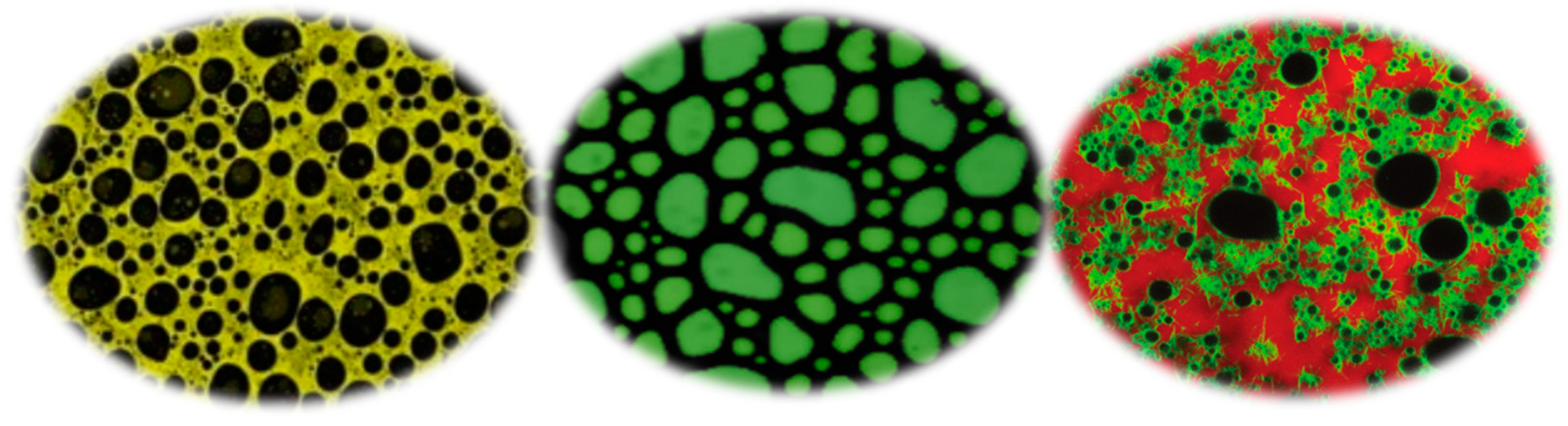
Figure 3.
Diagrammatic illustrations of the hydrogel web assemblage considering their complicated-unique crosslinks [23].
Figure 3.
Diagrammatic illustrations of the hydrogel web assemblage considering their complicated-unique crosslinks [23].
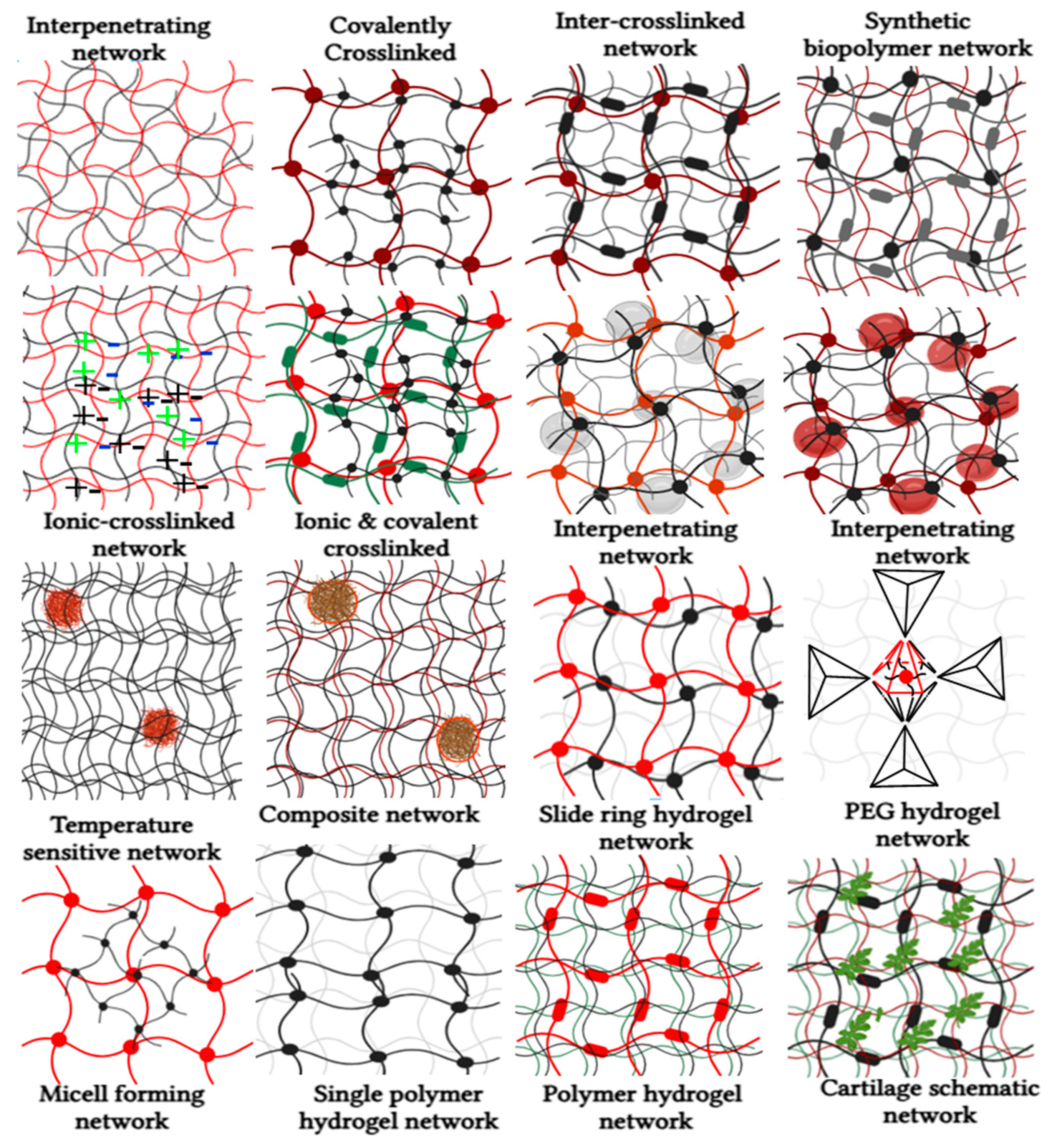
Figure 4.
The polymer conjugates’ Structural and functional phase behaviors [77].
Figure 4.
The polymer conjugates’ Structural and functional phase behaviors [77].
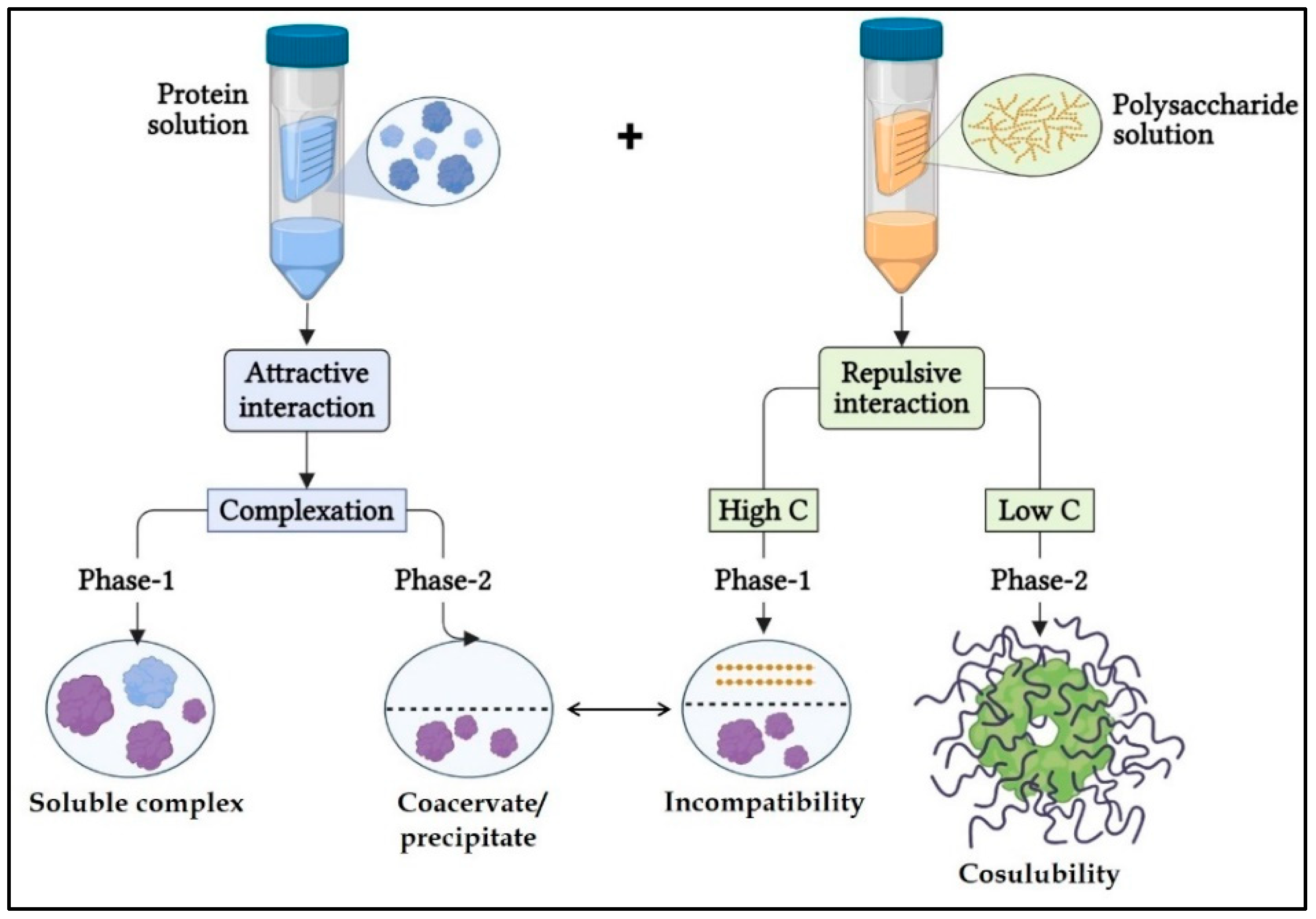
Figure 5.
Formation of protein-polysaccharide composite layer, using layer-by-layer electrostatic deposition technique [57].
Figure 5.
Formation of protein-polysaccharide composite layer, using layer-by-layer electrostatic deposition technique [57].
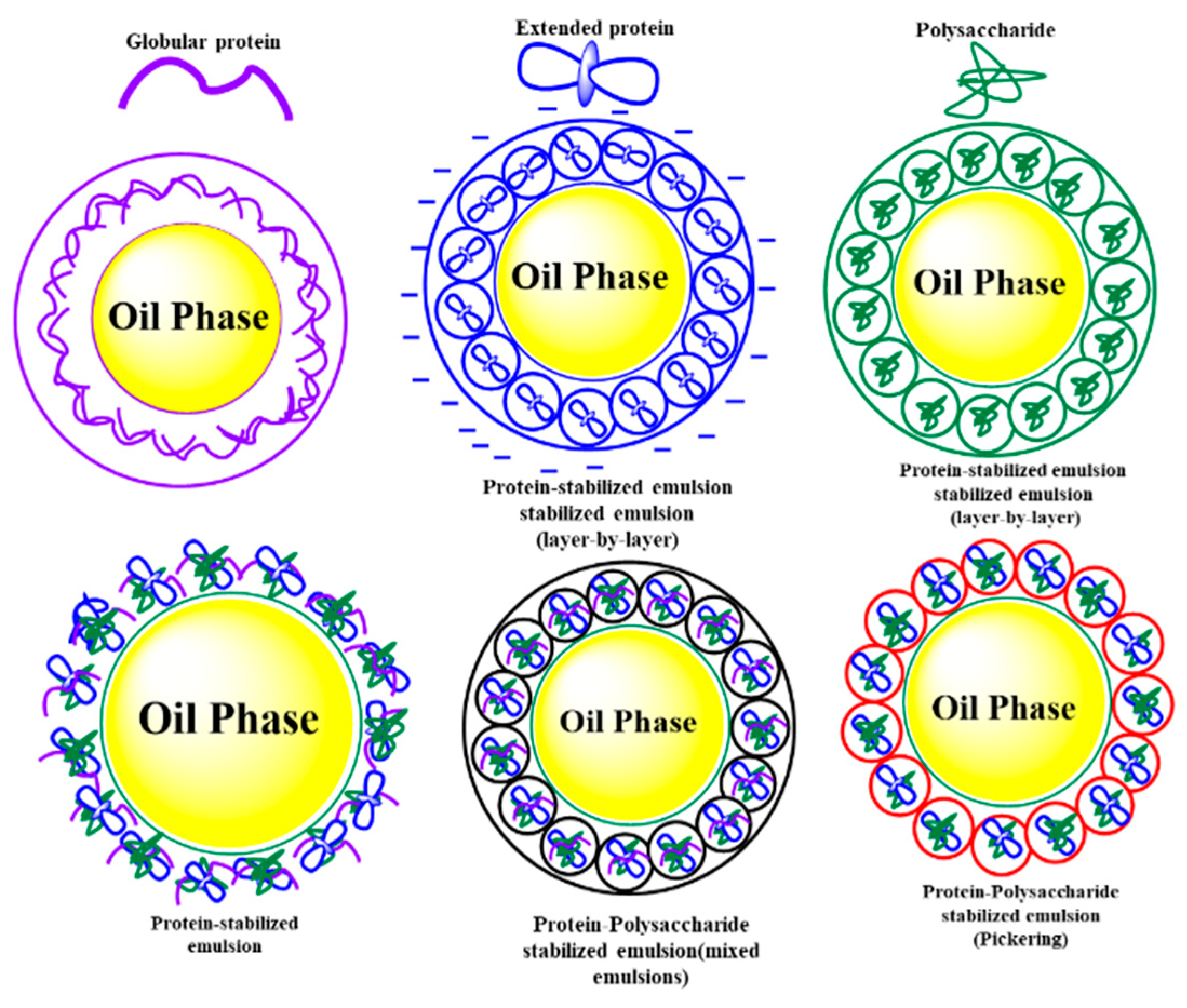
Figure 6.
Mechanism of Electrostatic interactions.
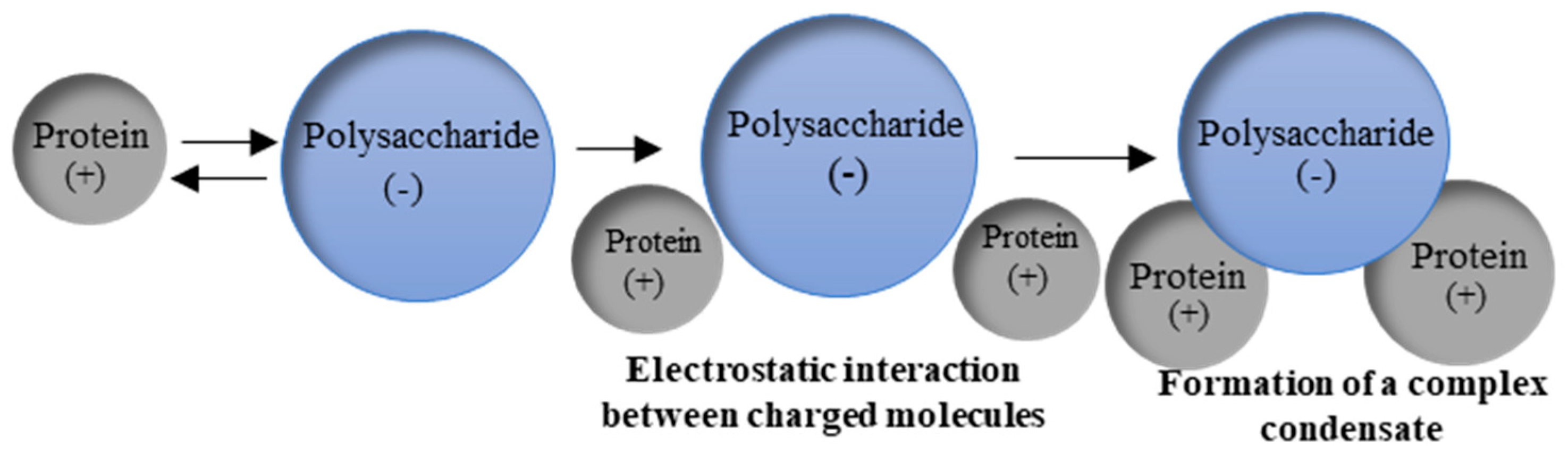
Figure 7.
Hydrogen bonds interplaying with nitrogen (blue), oxygen (red), hydrogen (white), sulfur (yellow) and carbon atoms (dark-gray) simultaneously.
Figure 7.
Hydrogen bonds interplaying with nitrogen (blue), oxygen (red), hydrogen (white), sulfur (yellow) and carbon atoms (dark-gray) simultaneously.
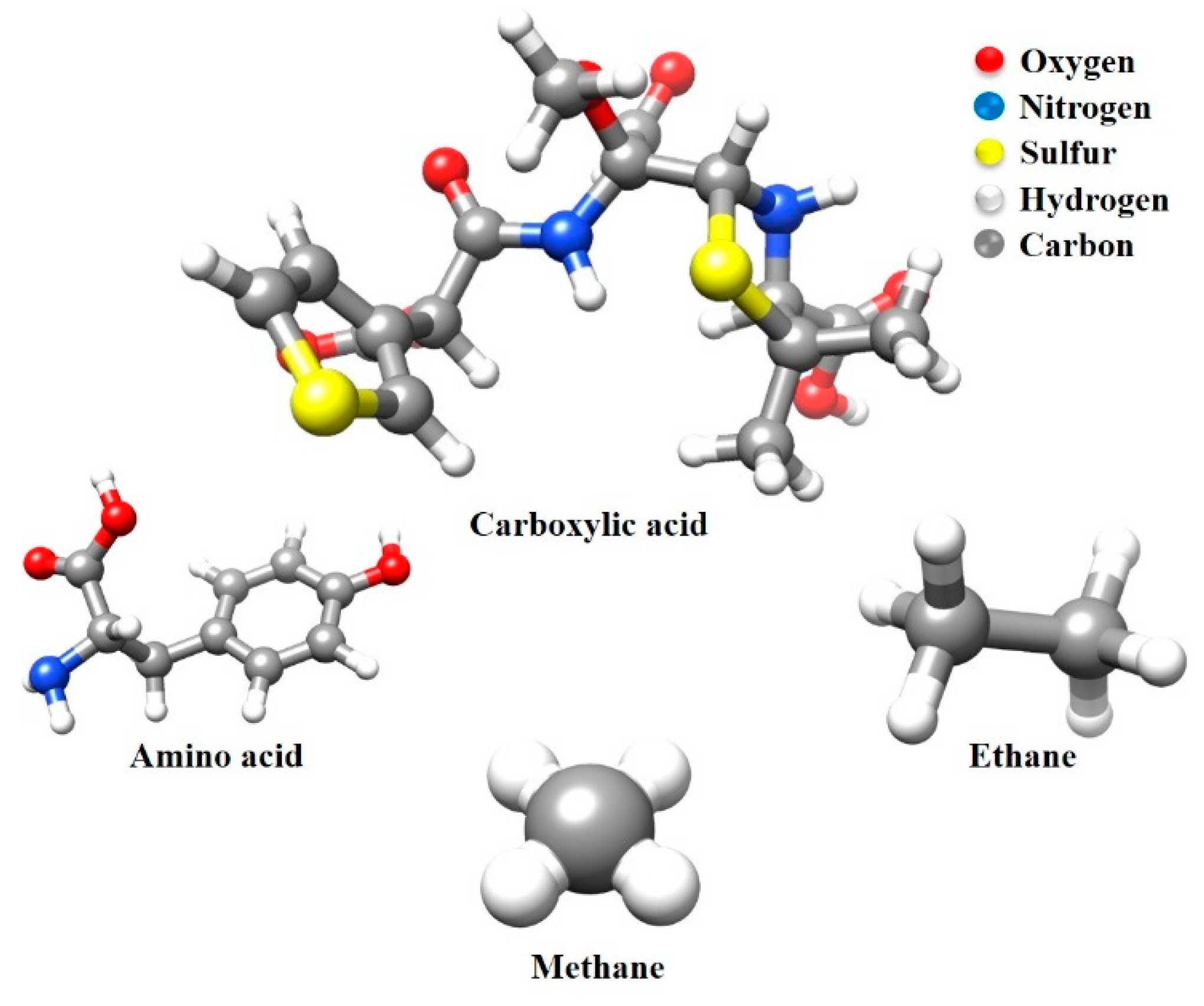
Figure 8.
Interactions of solid and liquid nanoparticles by hydrophobic forces.
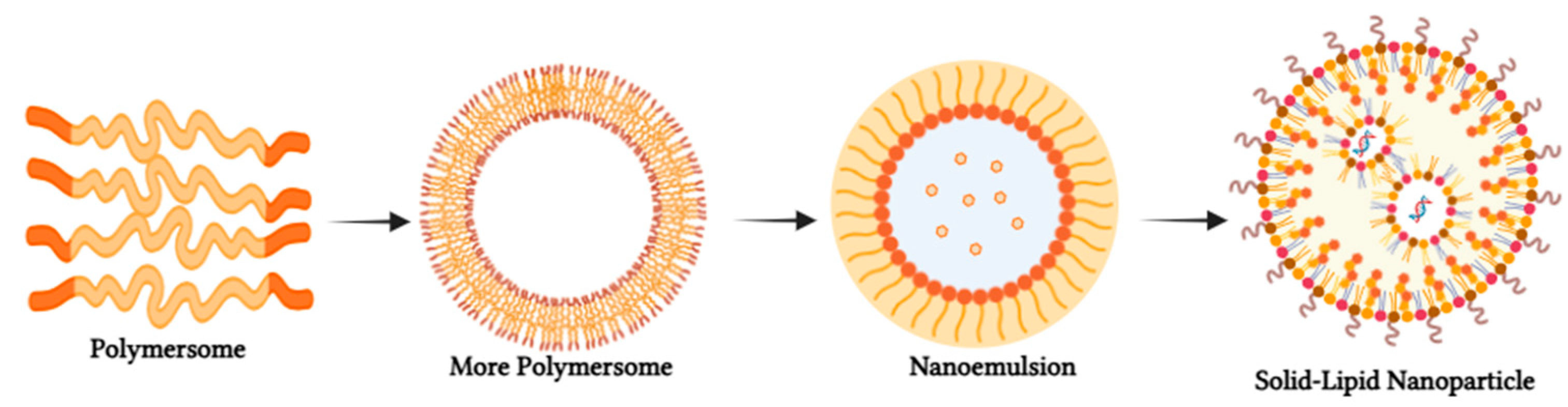

Table 1.
Physical approaches to enhance protein solubility and thermal stability.
| Approaches | Processing Parameters |
Protein | Functional effects | Solubility | Refs. |
|---|---|---|---|---|---|
| Thermal pretreatments | 70–90 °C for 2,4 and 24 h, pH= 6.8 | Skim milk | Lactosylation of whey proteins and caseins improves emulsion thermostability. | Improve its heat stability (containing 17.6% S.M.P., w/w) | [36] |
| 100 °C for 30 min, pH= 6.2 | Soy protein o/w emulsions | Enhanced thermal stability and dispersibility suppress coalescence, flocculation, and creaming. | The emulsions stabilized by 10% (w/v) SPPs | [37] | |
| 100 °C for 30 min, pH=6.0, 6.2 and 6.4 | Soy Proteins | Formulations targeting anti-aggregation, suppressed gelation, reduced viscosity, and enhanced flow behavior | 10% (w/v) suspensions of LCPH-treated SPs | [38] | |
| 80–120 °C for 30 min, pH=7 | Pea protein | Higher pretreatment temperatures reduce protein aggregation via peptide chain rearrangement and diminish intermolecular cross-links | High concentration (15%, w/v) | [39] | |
| 130 °C for 4 h 110 °C for 8 h | Maitake protein | Polysaccharide solubilization enhances extraction and thermal stability | The yield was 3.58% | [40] | |
| Homogenization | High-pressure homogenization (H.P.H) 240 MPa | Whey protein isolate (W.P.I.) and micellar casein dispersions | High homogenization pressure refines particle size, boosts dispersibility and solubility (W.P.I.: 99.5% → 100%, MC: 34% → 99%), and enhances foaming and emulsification | Foaming ability and stability due to the large particle size reduction | [41] |
| H.P.H (25, 50, 75, 100 and 150 MPa) | lentil (Lens culinaris) proteins | Pressure-induced enhancement (75 MPa → 100 MPa) improves solubility (32% → 47%), emulsification, and foaming while reducing viscosity and gelation. | Increasing water solubility with H.P.H., pressure up to 100 MPa | [42] | |
| H.P.H 40, 80, and 120 MPa | Oil-in-water (O/W) emulsion stabilized | Reduced particle size, enhanced zeta potential, and protein restructuring improve solubility (16.5% → 75.1%), emulsification (activity & stability), and apparent viscosity. | Improved solubility (from 16.5% to 75.1%) | [43] | |
| H.P.H 69 MPa combined with hydrogen peroxide | Chicken breast myofibrillar protein | H.P.H. treatment with H₂O₂ enhances thermal stability by blocking free S.H. groups, hindering disulfide formation, and preventing protein denaturation | Exposed hydrophobic groups (from 196.37 to 258.50) of M.M.P. | [43] | |
| H.P.H 50, 100 and150 MPa after 5 passes | Soybean okara | H.P.H. intensity enhancement (11.49% → 90% passes at 150 MPa) refines particle size, boosts solubility, and enhances physical stability, albeit increasing viscosity. | Protein extraction yield (g/100 g) 150 MPa-5 passes 89.69 ± 2.24a | [44] | |
| H.P.H 20–100 MPa for 2 cycles | Oyster ProteinIsolate Hydrolysates | H.P.H. treatment improves protein solubility (22.4% → 39.2%), emulsification, zeta potential, and surface hydrophobicity | High-pressure micro fluidization (120 MPa) | [45] | |
| H.P.H 103 and 207 MPa | Faba bean protein | At pH 7, protein solubility dramatically increases (35% →99%), enhancing interfacial film formation and stability (F.C. & F.S.) due to rapid penetration and adsorption while reducing emulsion creaming index (E.C.I.) | Protein foaming capacity from 91 to 260% after 30 kpsi high-pressure homogenizations,good stability with about 95% | [46] | |
| H.P.H 20, 40, 60, 80 and 100 MPa | Mussel (Mytilus edulis) myofibrillar protein | High-pressure homogenization (100 MPa) alters protein conformation (secondary, tertiary, and quaternary structures) via particle size reduction, leading to enhanced functionality: solubility (35% → 42%), E.C.I., E.S.I., foam formation, and stability. | Protein solubility and oil holding capacity increased by 7.4% and 1300% at 100 MPa | [47] | |
| Superfine grinding | Ultrafine for 0, 2,4, and 8 h grinding under atm. Pressure, ball zirconia: S.P.I. powder ratio 6:1 | Soybean protein isolate | Extended grinding time reduces particle size, increases surface area and water holding capacity, and improves protein solubility (30% → 40%) and dispersibility. | 2, 4, 6, and 8 h (84.51, 89.4, 88.55, and 82.92 %) were higher than that at 0 h (77.42 %). The average particle size of 137.5 ± 10.7 nm at 8 h | [48] |
| Planetary ball grinding machine with a rotation speed of 200 rpm at room | Pea protein isolate | Micronization refines particle size distribution, enhancing fluidity, water holding capacity (W.H.C.), protein solubility (45.89% → 69.84%), viscosity, and product quality. | Pea protein isolate 69.84 1.37a Water holding capacity 94.67% | [49] | |
| Multidimensional swing high-energy nano-ball-milling | Whey protein concentrate | Micronization reduces particle size to 8 μm, alters protein secondary structure, and elevates gel formation temperature (73.5 °C → 85.6 °C) and water holding capacity. | Increased stability gelation temperature from 73.5 °C to 85.6 °C | [50] | |
| Ultrasound | High-power ultrasound (18.4, 29.58, and 73.95 W/cm2) | Millet protein concentrate | Ultrasonication at higher intensities reduces molecular weight and zeta potential (increases negative surface charge), enhancing protein solubility (60% → 90%), E.A.I., emulsion stability, and foam properties. | Increased the solubility of the native M.P.C. (65.8 ± 0.6%) | [51] |
| High-intensity ultrasound (20 kHz, 400 W) | Soy protein isolate | Ultrasonication (25 min) alters protein structure and weakens interactions, improving soy protein dispersion solubility (38% → 46.3%) and fluidity. | Ultrasound 20 kHz, 80Wcm−2 for 0–25 min | [52] | |
| High-power ultrasound (20 kHz, power density of 0.75 W/ml) | Micellar casein powders | Micronization reduces protein particles to ~1 μm, significantly enhancing solubility (>95%) despite unchanged molecular weight. | 100 °C temperature, concentration of 15% (w/v) | [53] | |
| High-intensity ultrasonication (20 kHz) | Mussel sarcoplasmic proteins | 20-minute ultrasonication enhances protein functionality: solubility (60% → 85%), adsorbed protein, foam properties (formation & stability), emulsification (activity & stability), and generates a homogeneous texture due to particle size reduction. | At 20 kHz, 600W for 20 min was the optimum condition for modification. | [54] |
Table 2.
Chemical approaches to enhance protein solubility and thermal stability.
| Approaches | Chemical | Proteins | Functional effects | Solubility | Refs. | |
| Polysaccharides | Gum Arabic | Pea protein concentrate | Maillard reaction significantly improves protein solubility and other functionalities. | BS-PEF 2 →85.56 ± 1.43a 79.86 | [60] | |
| Persian gum | Whey protein isolate | Solubility increases at pH > pHι > pHϕ₁ due to electrostatic interactions promoting complex solubilization. | Persian gum (1:3, 1:1, 3:1, 6:1, and 9:1% w/w WPI/PG) | [61] | ||
| Gum Arabic and modified starch | Pea protein and soy protein isolates | Electrostatic attraction between positively charged pea protein and negatively charged starch (72.5% increase) enhances pea protein-starch complex solubility at pH 4 | Maximum solubility (72.5%) | [62] | ||
| Xylose/fructose | Soybean protein isolate | Maillard reaction enhances solubility (xylose: 43%, fructose: 59%) | Xylose is more sensitive than fructose | [63] | ||
| Arabinose, sodium alginate, maltodextrin, and lactose | Black rice glutelin | Maillard reaction boosts protein-arabinose complex solubility (pI: 15% → pH 7: 79.61%) via increased hydrophilic character and enhanced protein-water interactions. | Maximum solubility 79.61% at pH 7 | [64] | ||
| High methoxyl pectin | Pea protein isolate | Electrostatic complexation enhanced both pea protein solubility and thermal stability. pH 3.5 mixing ratio decreased from 20:1 to 1:1. | The pH of soluble complexes shifted to pH4.8 mixing ratio increased from 1:1 to 20:1 | [65] | ||
| Polyphenols | Phenolic compounds | Cinnamomum camphora seed kernel protein | High-pressure treatment (up to 100 MPa) enhances protein solubility (pH 3: 23.99%, pH 5: 242.89%) and thermal stability (altered secondary structure, higher unfolding energy) while reducing viscosity and gelation. | The solubility maximum increased by 43.5% | [66] | |
| Gallic acid | Myofibrillar protein | Gallic acid cross-linking enhances protein thermal stability, solubility (40% increase), and colloidal stability by promoting soluble aggregate formation and hindering disulfide bond formation. | Solubility reaches around 90% when 50 μmol/g protein | [67] | ||
| Tea polyphenols | Soybean protein | Polyphenol treatment (0.08 w/v) improves protein solubility (0.258 g/ml) by reducing hydrophobicity and enhancing surface hydrophilicity. | Not Applicable | [66] | ||
| Flaxseed phenolic compounds | Flaxseed protein isolate | Polyphenol binding alters protein secondary structure and masks hydrophobic groups, enhancing solubility. | Increase solubility | [68] | ||
| (−)-epigallocatechin gallate (EGCG), quercetagetin (Q) and chlorogenic acid (CA) | Zein | Improving thermal stability by rising temperature due to covalent bond formation | Zein thermogram exhibited peaks at 91.5 and 266.6 °C | [69] | ||
| Hydrolyzing enzyme | Different proteolytic enzymes | Pea protein isolates | Acidic pH (4.5) significantly enhances protein solubility (2% → 71%) via structural alterations, the release of hydrophilic moieties, and modified electrostatic interactions, except with chymotrypsin treatment | at pH 4.5 increase the protein solubility | [70] | |
| Papain | Protein hydrolysate obtained from Chinese sturgeon | Pepsin hydrolysis (pH 2-10) enhances protein solubility (max > 98% at pH 6) by liberating soluble peptides from aggregates and increasing charged groups (carboxyl & amine) via hydrolysis | solubilityranged between 86.57% and 98.74% height | [71] | ||
| Trypsin | Rice bran protein | Proteolysis enhances protein solubility and thermal stability by solubilizing peptides from aggregates and increasing ionizable groups | solubility temperatures (30-90 °C) for 30 min | [72] | ||
| Papain | Rice bran protein | Structural modifications enhance protein solubility (>46%) by exposing more polar sites, promoting stronger water interactions | enzyme-papain to get ~15%, 25% and 32% degree of hydrolysis | [73] | ||
Table 3.
Operating conditions of the microscopic instrument and their advantages, disadvantages, and comparison to each other.
Table 3.
Operating conditions of the microscopic instrument and their advantages, disadvantages, and comparison to each other.
| Equipment | Operating conditions | Advantages | Disadvantages | Comparison | Figure |
| Scanning electron microscopy (SEM) | Electron beam energy, electron beam current, vacuum level, working distance, scan speed, detector configuration, sample preparation | 1. SEM provides detailed surface topography and morphology of samples, allowing for the visualization of fine surface features [129]. 2. SEM can be equipped with energy-dispersive X-ray spectroscopy (EDS) for elemental analysis of samples 3. SEM offers a considerable depth of field, enabling the imaging of samples with uneven surfaces [130]. |
1. SEM typically requires extensive sample preparation. Including coating with a conductive layer, which can be time-consuming and may introduce artefacts 2. SEM operates under high vacuum, which limits the analysis of samples that are sensitive to vacuum conditions or are non-conductive [129]. |
SEM is advantageous for high-resolution imaging of surface morphology and elemental analysis, while AFM offers high-resolution imaging and manipulation capabilities at the nanoscale. |
 SEM |
| Microscope using atomic force (AFM) | Vacuum, air, liquid, Temperature (-196~ 1000 °C), vibrations, acoustic noise, humidity |
1. AFM provides high-resolution surface topography imaging and can measure surface properties such as roughness and adhesion. 2. It allows for the manipulation at the nanoscale, including the positioning of individual atoms and molecules. 3. AFM can operate in air, liquid, and vacuum environments, making it suitable for a wide range [131]. |
1. Conventional AFM has a relatively low imaging rate compared to others such as SEM, TEM 2. AFM images can be complex 3. AFM requires precise calibration, operation, and interpretation [132]. |
Both techniques have unique strengths and limitations, making them complementary tools for nanoscale characterization. |
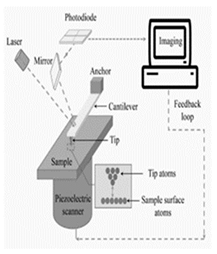 AFM |
| Utilizing a transmission electron microscope (TEM) | Vacuum, acceleration voltage, beam current, thickness, temperature, magnetic field, vibration isolation | 1. TEM provides high-resolution images, revealing ultrastructural details [133]. 2. TEM analyzes atomic structures and defects at the atomic scale. 3. TEM allows real-time observation of material growth, such as graphene fabrication [134]. |
1. TEM sample preparation can be complex and time-consuming, requiring thin sectioning and staining of samples 2. TEM has a limited field of view, making it challenging to observe large high-resolution areas [135]. |
TEM provides atomic-level resolution, while CLSM enables optical sectioning and live-cell imaging; SEM is ideal for direct imaging and measurements |
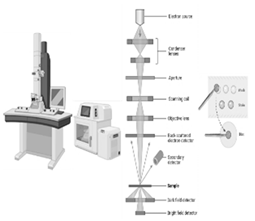 TEM |
| Scanning microscope with confocal laser (CLSM) | Laser wavelength, laser power, scan speed, detector gain, light, mounting medium, thickness, temperature, vibration isolation | 1. CLSM provides optical sectioning, allowing for the visualization of samples in three dimensions and the reconstruction of 3D images 2. CLSM is suitable for live-cell imaging, enabling observing dynamic processes in biological samples [136]. |
1. CLSM can cause photo-bleaching of fluorescent dyes, limiting imaging duration and penetration depth, thus restricting its use in thick samples. However, it can perform multiphoton imaging for deep tissue imaging and reduce phototoxicity [137]. | Both techniques have unique strengths and limitations, making them valuable tools for nanoscale characterization and imaging. |
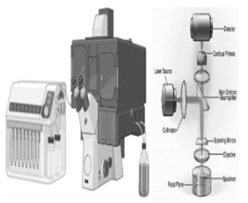 CLSM |
| Scanning differential equations (DSC) | Temperature range, heating/cooling rate, atmosphere, sample mass and preparation, calibration | 1. DSC is utilized to determine melting points and measure solubility in both aqueous and nonaqueous solutions, offering valuable data for materials science research [138]. 2. It is widely employed to study the curing kinetics of materials, offering insights into thermosetting polymers and composite reactions [139]. |
1. DSC’s minimal sample requirement limits specific analyses. 2. Cooling rate limitations in DSC systems impact studying vitrification solutions [140]. 3. Variations in DSC systems affect result interpretation [141]. |
DSC aids in material characterization, solubility measurement, and curing kinetics, while rhetorical methods evaluate parameters for purity assessment and thermodynamic relationships. |
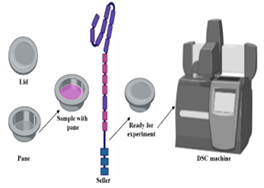 DSC |
| Rhetorical Methodology | Purpose, theoretical framework, type of communication, available evidence | 1. Rhetorical analysis offers a comprehensive view, while solid forms’ temperature reactions reveal transformations and stability [142]. 3. DSC uses the equation for fast and efficient drug purity testing |
1. Not all fields benefit from rhetorical analysis, which may need specialized knowledge for interpretation. 2. Using rhetorical analysis can be tricky due to the complex data |
Both have unique strengths and limitations, making them valuable tools in their fields. |
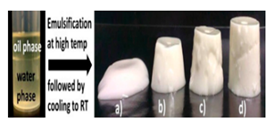 A single-step procedure employed for emulsion [143] |
| Infrared Fourier transform (FTIR) | State, amount, purge gas, resolution, number of scans, temperature | 1. FTIR reveals the molecular composition of various samples 2. Fast and versatile for identifying and classifying samples, even at the subspecies level [144]. 3. Advanced techniques offer high-resolution analysis at the nanoscale [145] |
1. FTIR results can vary based on sample preparation techniques. [146]. 2. Data analysis requires expertise to interpret spectra [147]. |
FTIR excels in molecular analysis and nanoscale resolution, while Raman offers chemical specificity and non-destructive identification. |
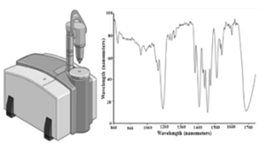 FTIR (Bio Render generated this diagram with some modifications) |
| Raman spectroscopy | Laser wavelength, power, concentration, conditions, resolution, scans, and detection mode | 1. It is noninvasive, requires no sample preparation, and works with aqueous samples, making it versatile [19,20]. 2. Non-destructive, requires minimal prep and works well with liquids like water [150]. |
1. Low signal yield leads to long acquisition times, limiting high-throughput clinical analysis [151]. 2. Fluorescence from some samples can further mask the Raman signal [152] |
Both techniques have unique strengths and limitations, making them valuable molecular analysis and characterization tools. |
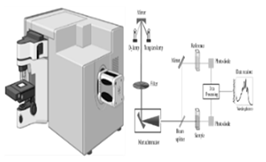 Raman spectroscopy Raman spectroscopy |
Disclaimer/Publisher’s Note: The statements, opinions and data contained in all publications are solely those of the individual author(s) and contributor(s) and not of MDPI and/or the editor(s). MDPI and/or the editor(s) disclaim responsibility for any injury to people or property resulting from any ideas, methods, instructions or products referred to in the content. |
© 2024 by the authors. Licensee MDPI, Basel, Switzerland. This article is an open access article distributed under the terms and conditions of the Creative Commons Attribution (CC BY) license (http://creativecommons.org/licenses/by/4.0/).
Copyright: This open access article is published under a Creative Commons CC BY 4.0 license, which permit the free download, distribution, and reuse, provided that the author and preprint are cited in any reuse.


