Preprint
Article

This version is not peer-reviewed.

Statistical and Block Copolymers of n-Dodecyl and Allyl Isocyanate via Coordination Polymerization. A Route to Polyisocyanates with Improved Thermal Stability

A peer-reviewed article of this preprint also exists.

Submitted:

02 December 2024

Posted:

03 December 2024

You are already at the latest version

Abstract

Well-defined amorphous/semi-crystalline statistical copolymers of n-dodecyl isocyanate, DDIC, and allyl isocyanate, ALIC, were synthesized via coordination polymerization, using the chiral half-titanocene complex CpTiCl2(O-(S)-2-Bu) as initiator. In the frame of the terminal model the monomer reactivity ratios of the statistical copolymers were calculated using both well-known linear graphical methods and the computer program COPOINT. The molecular and structural characteristics of the copolymers were also calculated. The thermal properties of these samples were studied by Differential Scanning Calorimetry, DSC, measurements. The kinetics of the thermal decomposition of the statistical copolymers was studied by Thermogravimetric Analysis, TGA, and Differential Thermogravimetry, DTG, and the activation energy of this process was calculated employing several theoretical models. Moreover, block copolymers with the structure P[DDIC-b-(DDIC-co-ALIC)] were synthesized by sequential addition of monomers and coordination polymerization methodologies. The samples were characterized by nuclear magnetic resonance, NMR, spectroscopy, size exclusion chromatography, SEC, and DSC. The thermal stability of the blocks was also studied by TGA and DTG and compared to the corresponding statistical copolymers, showing that the macromolecular architecture greatly affects the properties of the copolymers. Thiol-ene click post-polymerization reaction was performed to introduce aromatic groups along the polyisocyanate chain in order to improve the thermal stability of the parent polymers.
Keywords: 
;  ;  ;  ;  ;  ;  ;  

1. Introduction

Coordination polymerization techniques have been emerged as a valuable tool through the years for the synthesis of novel polymeric materials [1]. Ziegler and Natta initially employed their two component catalytic systems to promote the stereospecific catalytic polymerization of α-olefins [2,3]. Kaminsky and coworkers efficiently activated metallocene complexes using suitable cocatalysts for the polymerization of α-olefins [4,5]. These catalytic systems were later successfully employed for the polymerization of polar monomers, such as methacrylates and acrylates [6,7]. Since the activated metallocenes are cationically charged they were also employed as cationic initiators for the polymerization of isobutylene, lactones, oxazolines and vinyl ethers [8,9,10], revealing that the same system could be applied both as a catalyst and/or as an initiator [11]. In addition, Ring Opening Metathesis Polymerization reactions were realized using the well-defined alkylidene Grubbs and Schrock catalysts based on Ruthenium and Molybdenum respectively or other more exotic transition metal complexes leading to the polymerization of strained cyclic olefins, such as cyclopentene, cyclooctene, norbornene and its derivative etc [12,13]. Non-metallocene along with late transition metal complexes have been also prepared and tested for the polymerization of non-polar and polar monomers [14,15].
Recent advances in coordination chemistry have allowed the synthesis of a variety of transition metal complexes that may offer control over the molecular characteristics and the stereochemistry of the produced polymers [16,17]. Furthermore, in combination with other controlled/living polymerization techniques the synthesis of well-defined complex macromolecular architectures was realized leading to products with unique properties in solution and in the solid state [18,19].
A special application of coordination polymerization refers to the family of isocyanate, ICs, monomers [20]. Novak was the first to report the employment of half-titanocene complexes bearing an alkoxide ligand as initiators for the controlled polymerization of ICs [21,22,23]. Up to that time anionic polymerization was the only tool to polymerize ICs [24]. Apart from the experimental difficulties associated with the application of this technique there were several drawbacks that have to be overcome with this approach. The major problem was the presence of back-biting reactions leading to the formation of the thermodynamic stable cyclotrimers and therefore to the depolymerization procedure making difficult to synthesize polymers with predetermined molecular weights and narrow molecular weight distributions [25,26]. In addition, the possibility to prepare complex macromolecular architectures was minimized. Even after the development of more efficient anionic initiators and additives that fortify the controlled/living character of the polymerization reaction the situation was not appreciably improved, since there was still need to perform the reaction at very low temperatures (as low as -90 °C) and for the appropriate period of time to avoid termination and other side reactions [27,28,29,30,31,32,33,34,35,36,37].
The coordination polymerization of ICs offered the possibility to avoid the back-biting reactions and to perform the procedure at room temperature. Moreover, the fact that the alkoxy substituent remains covalently connected as end-group to the produced macromolecular chains offered the possibility to synthesize end-functionalized polymers and well-defined complex macromolecular architectures, such as block copolymers, graft copolymers, block-graft copolymers, star homopolymers and miktoarm star copolymers [38,39,40,41,42,43,44,45,46,47,48,49]. The major drawback of this synthetic approach towards the polymerization of ICs is that the propagation step is an equilibrium reaction. Therefore, in order to achieve high yields and lead to high molecular weight products it is imperative to work in highly concentrated solutions. Under these conditions the solution’s viscosity remains very high and therefore, it is difficult to control the polymerization rate leading to products with increased polydispersities. A solution to avoid this complication is to terminate the polymerization at lower yields before the substantial increase of the viscosity in the polymerization medium.
All these efforts to control the polymerization of ICs is due to the high impact the corresponding polymers have for theoretical investigations and practical applications. The polyisocyanates, PICs, adopt a stiff dynamic helical configuration both in solution and in the solid state [50,51,52,53]. This is the result of the restrictions inhibiting the free rotation around the carbon-nitrogen bond of the amide linkage, due to the resonance effect with the carbonyl group of the amide moiety and the steric hindrance introduced from the side group, which is linked to the main macromolecular backbone. Consequently, PICs have interesting liquid crystalline properties and can be used in several applications, such as optical switches, photonic crystals, nanocarriers and more recently in biomimetics, since they resemble the polyamide structure of proteins and in addition, they can be beneficial to understand the biological function of other biomolecules, such as DNA and RNA [54,55,56,57,58,59,60,61,62].
In this work the synthesis of statistical and block copolymers of allyl, ALIC, and n-dodecyl isocyanate, DDIC, is described. The polymerization of ALIC has been reported to take place both via anionic [63,64] and coordination polymerization [65]. Solubility problems have been reported for poly(allyl isocyanate), PALIC, employing anionic polymerization methodologies, probably due to possible crosslinking reactions involving the pendant allyl group of the monomer. Similar problems have not been reported for the synthesis of PALIC through coordination polymerization chemistry, even for molecular weights as high as 106, meaning that the side allyl group remains intact during the reaction. The copolymerization of n-hexyl isocyanate, HIC, and ALIC has been reported in the literature employing 2,2,2-trifluoroethoxy titanium trichloride, TiCl3(OCH2CH3) as initiator in toluene solutions at room temperature [65]. In the present study the complex CpTiCl2(O-(S)-2-Bu), derived from CpTiCl3 and (S)-2-butanol, was used as the initiator. The replacement of one of the chlorine atoms of titanium from its coordination sphere with the cyclopentadienyl, Cp, group reduces the Lewis acidity of the metal, due to the presence of the stereochemically hindered and electron donating Cp moiety. This change usually leads to lower rates of polymerization but in a more controlled manner.
The copolymers were characterized by Size Exclusion Chromatography, SEC, and Nuclear Magnetic Resonance, NMR, spectroscopy. A post-polymerization reaction was employed to increase the thermal stability of the copolymers. The thermal properties of the samples were studied by Differential Scanning Calorimetry, DSC, whereas the thermal stability and the kinetics of the thermal decomposition were studied by Thermogravimetric Analysis, TGA, and Differential Thermogravimetry, DTG.

2. Materials and Methods

2.1. Materials

The complex [CpTiCl2(O-(S)-2-Bu)] was synthesized according to previously reported protocols [43] and used as initiator for all the polymerizations. CpTiCl3 (Aldrich Europe, Buchs, Switzerland, 97%) and (S)-2-butanol (Aldrich, 99%) were used as received for the preparation of the initiator, while triethylamine (Aldrich, 98%) and chloroform-d were dried over CaH2 and molecular sieves (Linde 4Å) for 24 hours respectively, and were both distilled under reduced pressure. Toluene (Fisher, ≥99.8%) was dried over CaH2 overnight and then distilled. Dichloromethane (Fisher, ≥99.8%), used for the thiol-ene click reaction, was dried over molecular sieves for 20-24 hours and distilled. Azobisisobutyronitrile, AIBN (98% ACROS) was purified by recrystallization twice from methanol and then vacuum dried. Methanol (Aldrich, 98%) and 2-Phenylethanethiol (TCI, ˃97%) were used as received. For the purification of allyl isocyanate, ALIC (Sigma-Aldrich, 98%) and dodecyl isocyanate, DDIC (Sigma-Aldrich, 99%), the two monomers were left under stirring for 24 hours with a small amount of drying CaH2 as well as 4,4-methylene-bis-phenyl isocyanate, followed by distillation.
All the purification and synthetic procedures were performed using a combination of Schlenk or glove box techniques [66,67], unless stated differently.

2.2. Synthesis of Homopolymer PDDIC

In a 10 mL vial, the required amount of initiator (0.024 g, 0.09 mmol) was added and dissolved in 0.5 mL toluene, under inert atmosphere at room temperature. DDIC (1.0 mL, 4.12 mmol) was then added to the yellow solution, leading to the formation of an orange solution with increased viscosity after 3 hours. After 4 hours, the vial was removed from the inert atmosphere chamber and placed in an ice bath and the solution was diluted with approximately 3 mL of dichloromethane. The termination of the polymerization was carried out by adding 0.5 mL of methanol under stirring. The solution was transferred dropwise to a beaker containing 100 mL of ice-cold methanol under stirring and a white solid precipitated. Following filtration through a Por.4 sintered glass funnel, the product was dried under vacuum for 72 hours and the yield was determined gravimetrically.

2.3. Synthesis of Homopolymer PALIC & Kinetic Study

A typical procedure for the homopolymerization of ALIC follows the same synthetic route as described for the synthesis of PDDIC. A series of experiments were conducted at various polymerization times and concentrations to determine the optimal conditions for polymerization. In order to study the kinetics, a series of four experiments were caried out in identical conditions. In particular, four vials containing a magnetic stirring bar, a 0.156 M solution of [CpTiCl2(O(S)-2-Bu)] in toluene (0.75 mL) and ALIC (1.0 mL) were stirred at room temperature in inert atmosphere for 15, 30, 45 and 60 minutes respectively. The reaction progress was monitored by 1H NMR and SEC experiments.

2.4. Synthesis of Statistical Copolymers, P(ALIC-co-DDIC)

In order to determine the reactivity ratios of the monomers, five distinct copolymerization experiments were conducted under identical conditions, with a different molar feed ratio of the two monomers (ALIC/DDIC: 20/80, 40/60, 50/50, 60/40, 80/20) in each instance. The methodology employed was consistent for all five experiments. Under inert atmosphere, the necessary quantity of the complex was transferred to a 10 mL dry vial and dissolved in toluene. The appropriate amount of monomers (ALIC and DDIC) was then added simultaneously and left under stirring for several hours at room temperature. In each case, the polymerization was terminated, when the viscosity was increased, by removing the vial from the inert atmosphere chamber, placing it in an ice bath and adding a frozen mixture of MeOH/CH2Cl2 in 1/10 ratio. Subsequently, the solid product was precipitated in methanol and filtered through a Por. 4 sintered glass funnel in a Buchner apparatus under vacuum. Finally, the solid was dried under reduced pressure for 72 hours and the yield was determined gravimetrically.

2.5. Synthesis of Block Copolymers, P[DDIC-b-(DDIC-co-ALIC)]

A series of three block copolymers of DDIC and ALIC were prepared in different feed ratios (monomer molar ratios DDIC/ALIC: 20/80, 50/50, 80/20). In each case, the polymerization of DDIC was initially performed followed by the polymerization of the ALIC monomer. In a typical process, the following compounds were added sequentially to a glass vial: [CpTiCl2(-O-(s)-2-Bu)], toluene, and DDIC. The yellow transparent solution was left under stirring at room temperature, under inert atmosphere. As the polymerization progressed, the solution exhibited a turbid orange color and a notable increase in viscosity. Following a reaction period during which the mixture becomes very viscous, ALIC was added along with toluene to facilitate the stirring process and ensure the homogeneous incorporation of the second monomer. After several hours, when the solution exhibited a dramatic increase in viscosity again, the reaction mixture was diluted with dichloromethane, cooled to 0 °C, and methanol was added to terminate the polymerization process. Subsequently, the solid product was precipitated by the dropwise addition of the solution to a beaker containing 150 mL of cold methanol under stirring, thereby forming a white solid, which was then filtered and dried as described above.

2.6. Synthesis of P3PETPIC & P(3PETPIC-co-DDIC)

Poly(3-(phenylthio)-propyl isocyanate), P3PETPIC, was prepared by the following procedure. In a 50 mL Schlenk flask containing a magnetic stirring bar, PALIC (0.15 g) was dissolved in dichloromethane (3 mL). Afterwards, AIBN (0.015 g, 0.09 mmol) and 2-phenylethanethiol (0.29 mL, 2.17 mmol) were added in the solution under continuous argon flow. The solution was degassed and the flask was immersed in a preheated oil bath at 50 °C. Following a period of 24 hours, the solution remained under stirruing, yet exhibited increased viscosity. The content of the Schlenk flask was then diluted in dichloromethane and transferred to a 250-mL beaker containing methanol (100 mL). The white solid was filtered through a Por.4 sintered glass funnel and was dried under vacuum for 24 h. The final product displayed a viscoelastic texture.
In regard to the synthesis of the [P(3PETPIC-co-DDIC)], the following reagents were sequentially added to a 50 mL Schlenk flask under continuous flow of inert gas: 0.2 g P(ALIC-co-DDIC) 60/40, 3 mL dichloromethane, AIBN (0.012 g, 0.073 mmol) and 2-phenylethanethiol (0.23 mL, 2.25 mmol). The reaction was carried out under identical conditions with the synthesis of P3PETPIC and the solid product was received following the same procedure as previously described.

2.7. Characterization

The molecular weights (Mw and Mn) and molecular weight distribution, Ð, were determined by size exclusion chromatography (SEC) using a modular instrument comprising a Waters (Milford, MA, USA) model 600 pump, Waters 2690 automated sample injector, a Waters 2414 refractive index detector, 4μ-Styragel columns with a continuous porosity range from 500 to 106 Å. Eight polystyrene standards with molecular weights in the range of 2,500–600,000 were used for the calibration, while the carrier solvent was chloroform, with the flow rate set at 1.0 mL/min. The NMR measurements were carried out on a Bruker Avance Neo 400 MHz spectrometer using chloroform-d as a solvent at 25 °C. Thermogravimetric analysis (TGA) and differential thermogravimetry (DTG) were employed to study the thermal stability and the kinetics of thermal decomposition of the copolymers and the respective homopolymers. This was conducted utilising a Q50 TGA model from TA Instruments, with the samples being heated from ambient temperatures to 600 °C in a 40 mL/min flow of nitrogen at heating rates of 3, 5, 7, 10, 15, and 20 °C/min. The glass transition temperatures were determined by differential scanning calorimetry (DSC) using a Q200 DSC model from TA Instruments (New Castle, DE, USA). The samples were heated under a nitrogen atmosphere at a rate of 10 °C/min from -100 °C to 100 °C. Results from the second heating and second cooling cycles were obtained in all cases.

3. Results and Discussion

3.1. Homopolymerization of ALIC & Kinetic Study
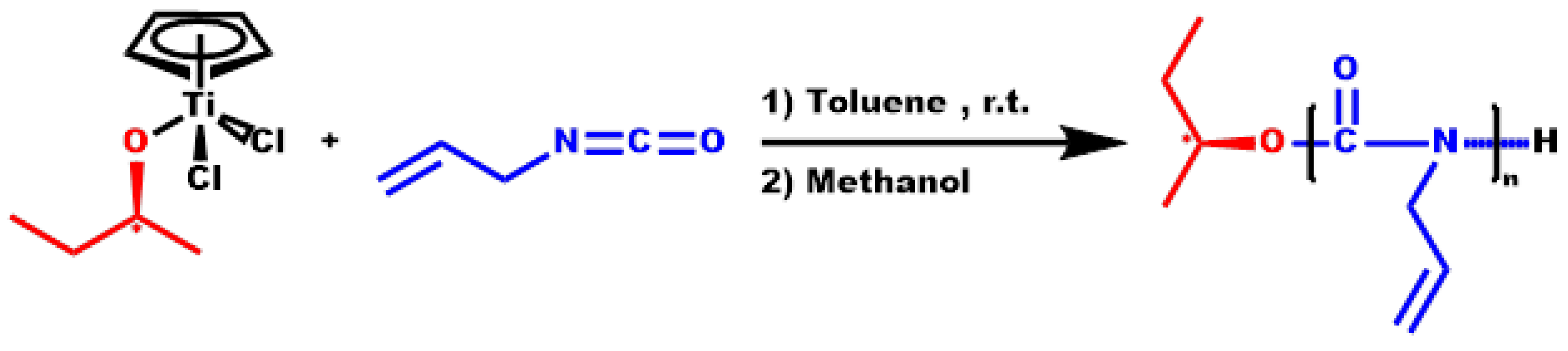
A series of homopolymerizations were conducted in order to optimize the experimental conditions of the reaction and generate the highest possible yield while maintaining a narrow molecular weight distribution (Scheme 1). The best results were obtained keeping the polymerization conversion at relatively low values (less than 50%) and conducting the polymerization reaction at high concentrations. Given that the polymerization of ICs via organotitanium initiation is fully reversible between polymer and monomer, the concentration of the monomer is a significant factor for polymerizing isocyanates, since the rate of depolymerization is favored over the rate of polymerization in dilute solutions [21,22,23]. In these highly concentrated solutions, the viscosity increases rapidly leading progressively to a retardation of the rate of polymerization and to phenomena associated with heterogenous polymerization reactions. The most important effect is the broadening of the molecular weight distribution. Therefore, in order to keep low dispersity values the polymerization yield should be kept at relatively low values.
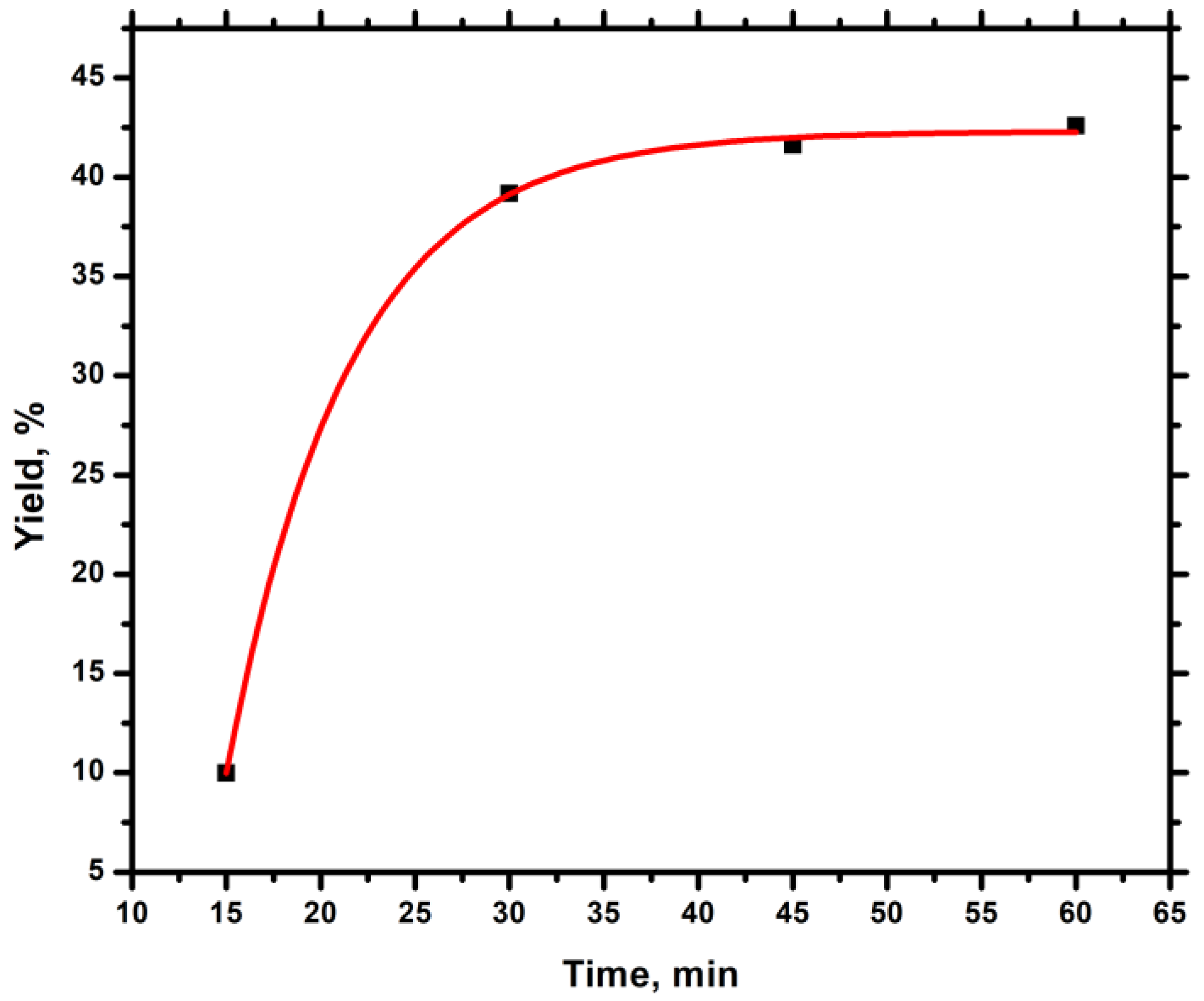
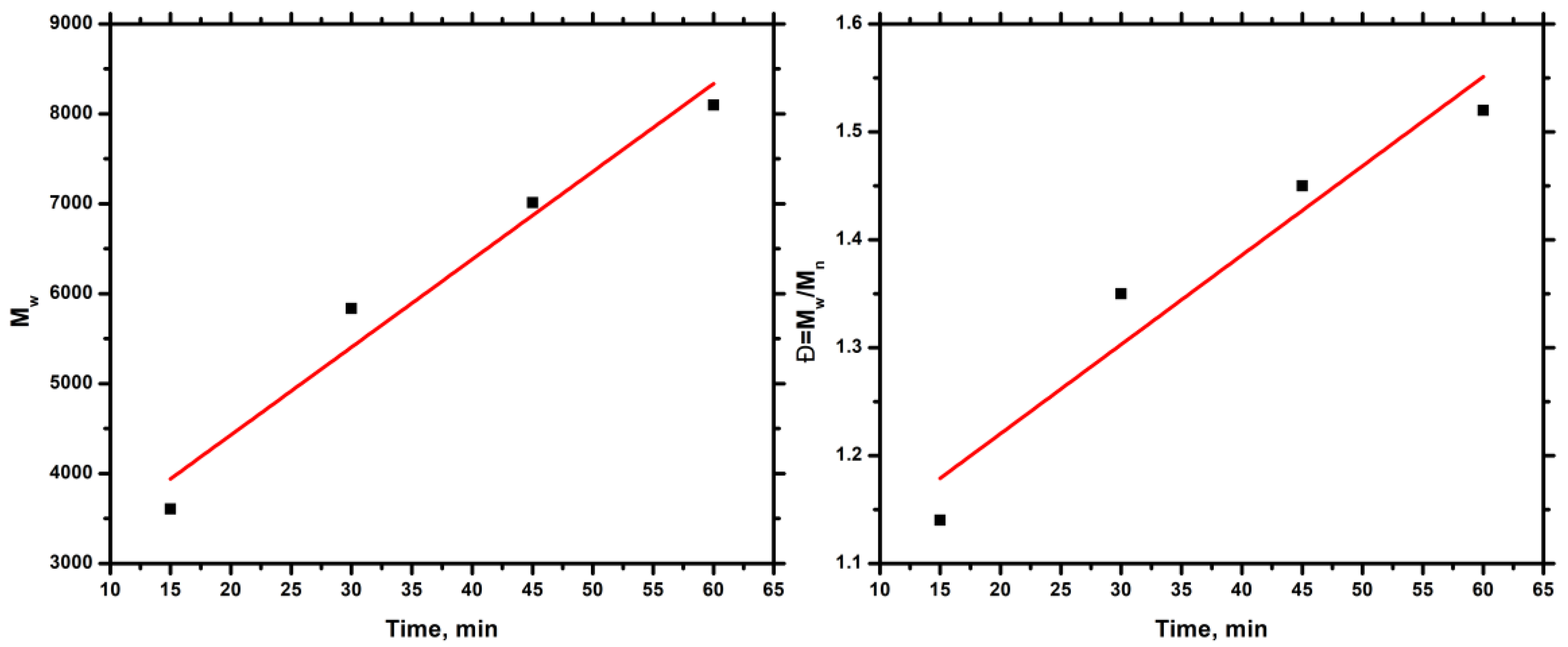
In order to gain more insight into the polymerization process of ALIC in the presence of the complex [CpTiCl2(O-(S)-2-Bu)], a kinetic study was carried out. Table 1 reports the results of this study, whereas Figure 1 and Figure 2 present the time evolution of the polymerization yield, the molecular weight and the molecular weight distribution. From Figure 1 it is obvious that the polymerization yield increases rapidly at the initial stages of the polymerization, followed by a retardation phase, due to the increase of the solution viscosity. On the other hand, a linear correlation between the weight average molecular weight, Mw, and time is evident from Figure 2, showing that there is a considerable control over the polymerization reaction and that termination reactions do not prevail at this stage of the procedure. The molecular weight distribution (Mw/Mn) values demonstrate a small but considerable increase over time, again due to the retardation of the polymerization reaction with time (Figure 2). The SEC traces of the samples prepared from this kinetic analysis are displayed in the Supporting Information Section (SIS) (Figure S1). Samples isolated during the polymerization reaction remain soluble in common organic solvents and the NMR analysis revealed that the pendant double bonds remain intact with time, meaning that crosslinking does not take place. Therefore, it can be concluded that good control of molecular characteristics is only achieved at relatively low yields.
Scheme 1. Synthesis of PALIC.
Preprints 141501 sch001
Table 1. PALIC samples from kinetic analysis.
Time (min) Mn a Mw a Đ a Yield (%)
15 3169 3607 1.14 10.0
30 4328 5836 1.35 39.2
45 4830 7012 1.45 41.6
60 5336 8096 1.52 42.6
a. by SEC in CHCl3.

3.2. Homopolymerization of DDIC

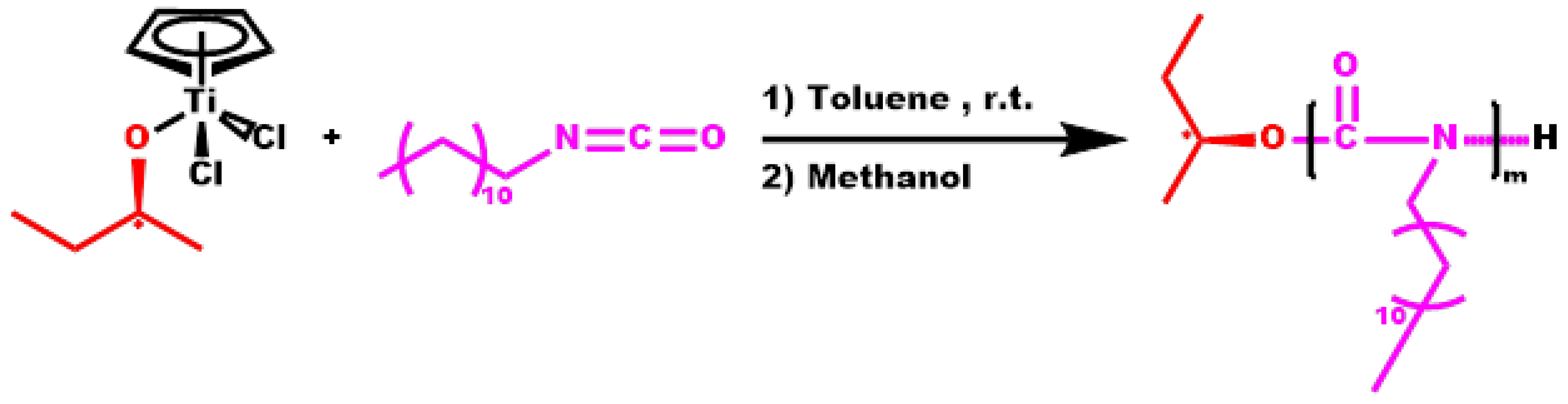
Poly(dodecyl isocyanate), PDDIC, was successfully synthesized at a low molecular weight (Mw = 6 × 10³) and a conversion rate of 40.6% (Scheme 2). The distribution was considerably narrow (Ð = 1.16), taking into account previous data related to half-titanocene polymerization systems. The SEC trace of this sample is given in the SIS (Figure S2).
Figure 1. Yield vs time for the homopolymerization of ALIC.
Preprints 141501 g001
Figure 2. Mw vs time (left) and Đ vs time (right) for the homopolymerization of ALIC.
Preprints 141501 g002
Scheme 2. Synthesis of PDDIC.
Preprints 141501 sch002

3.3. Statistical Copolymers, P(ALIC-co-DDIC)
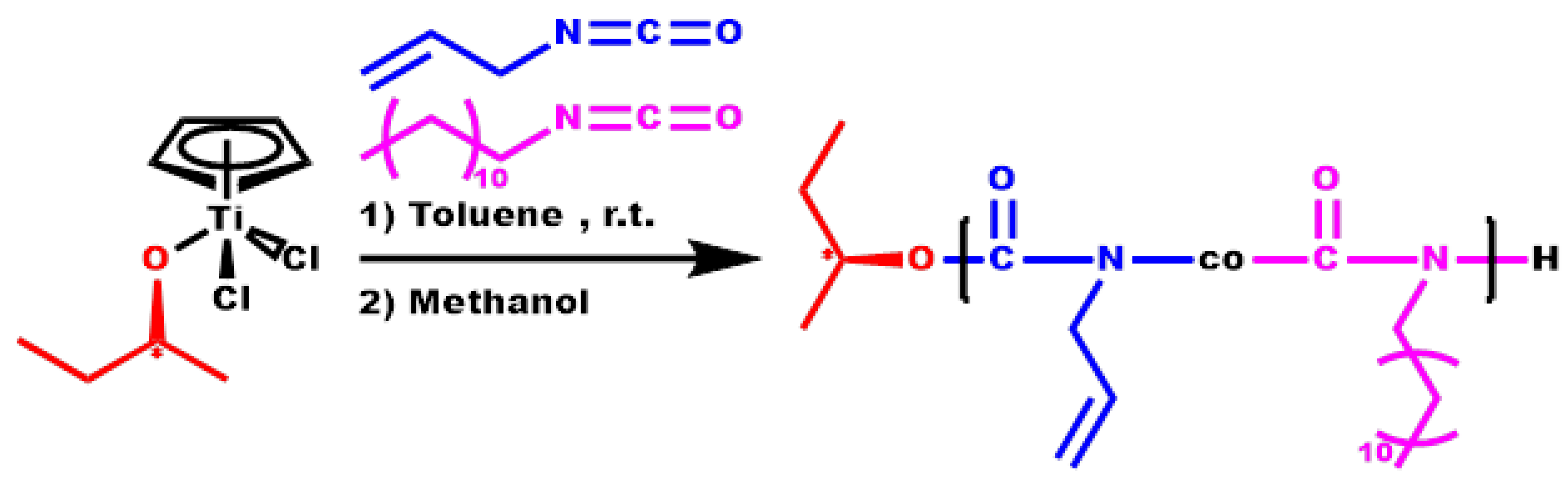
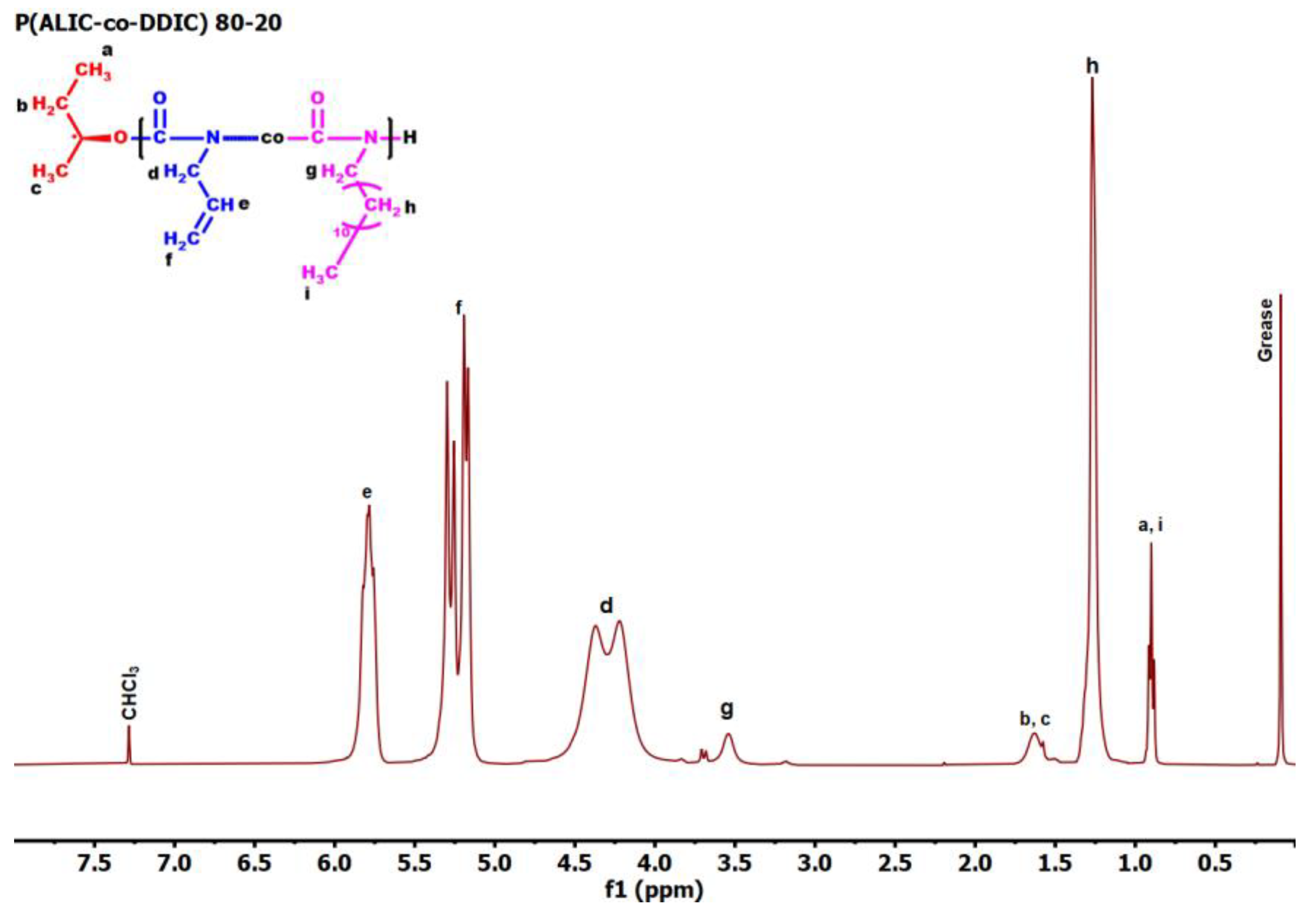
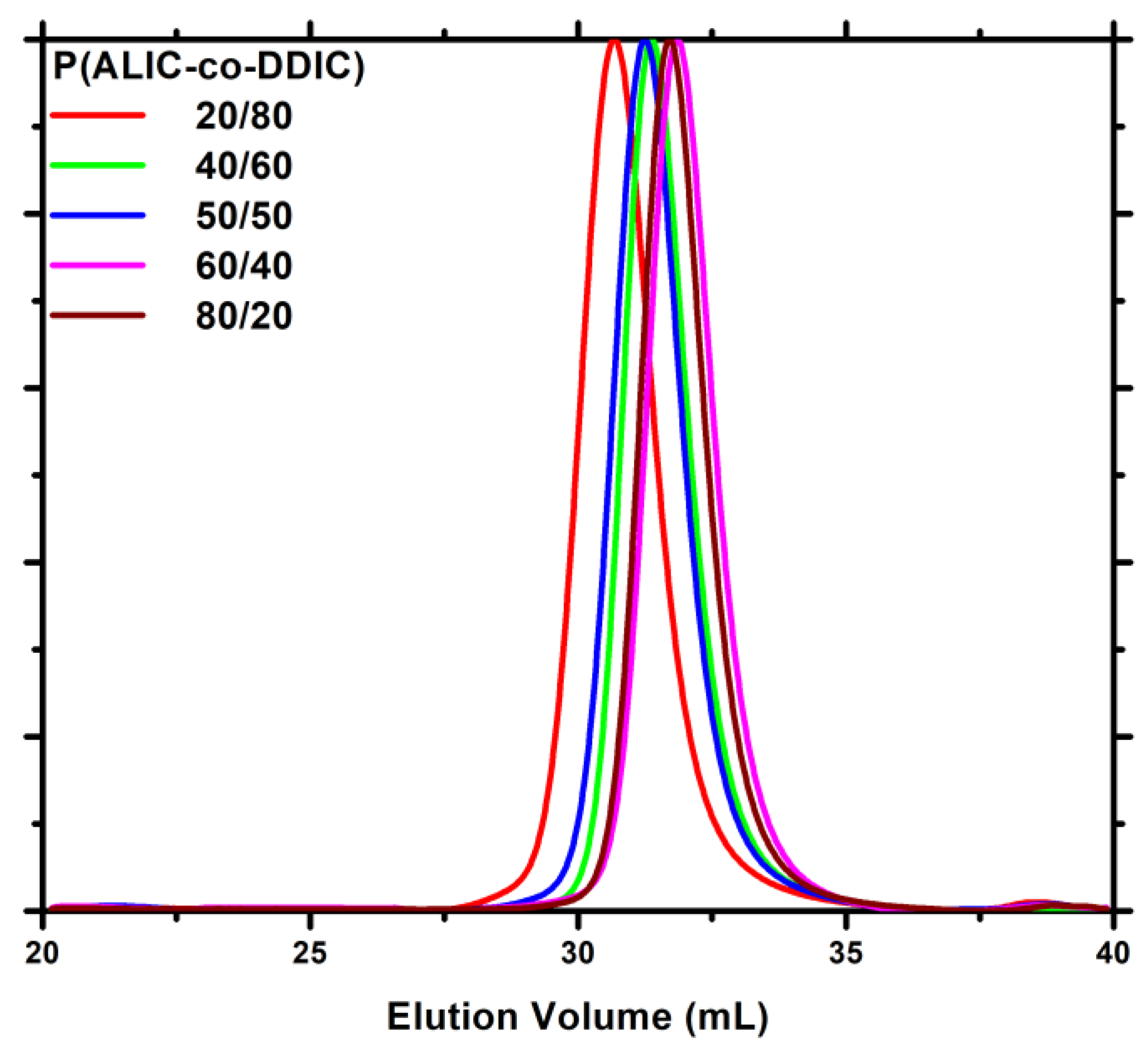
Using the complex [CpTiCl2(O-(S)-2-Bu)] as initiator, the copolymerization of ALIC with DDIC was carried out at room temperature (Scheme 3). Five statistical copolymers were successfully synthesized employing different monomer molar ratios ALIC/DDIC in feed (80/20, 60/40, 50/50, 40/60 and 20/80) in order to calculate the monomer reactivity ratios rALIC and rDDIC. The samples are labelled by the numbers indicating the molar feed ratio of the ALIC and DDIC monomers. The polymeric nature of the products as well as the incorporation of both monomers into the polymer chains were confirmed by 1H-NMR spectroscopy and size exclusion chromatography (SEC). The molecular composition was determined by integrating the sharp peak at 1.32 ppm, which is assigned to the methylene groups of the DDIC monomeric units, as well as the range of peaks at 5.0–5.5 ppm, which are attributed to the vinyl protons in the ALIC monomeric units (Figure 3). Low to moderate conversions were intentionally achieved in order to obey the copolymerization equation and, thus, be able to apply the linear methods for the calculation of the monomer reactivity ratios [68], as will be described in detail below. The SEC traces of the statistical copolymers, illustrated in Figure 4, indicate the presence of symmetrical peaks exhibiting notably low dispersity values. This outcome was achieved due to the relatively low conversions of the copolymerization reactions, thereby confirming that, under the specified experimental conditions, the copolymerization process was effectively controlled. The molecular characteristics of the copolymers are given in Table 2.
Scheme 3. Synthesis of the statistical copolymers P(ALIC-co-PDDIC).
Preprints 141501 sch003
Table 2. Molecular characteristics of the statistical copolymers P(ALIC-co-DDIC).
Feed molar ratio ALIC/DDIC Yield (%) Molar ratio ALIC/DDIC a Mw b Đ b
80/20 34.0 92/8 19800 1.06
60/40 35.3 73/27 17600 1.07
50/50 30.5 63/37 16800 1.06
40/60 38.5 51/49 21600 1.09
20/80 42.7 35/65 26100 1.08
a. by 1H NMR in CDCl3. b.by SEC in CHCl3.
Figure 3. 1H NMR spectrum of the sample P(ALIC-co-DDIC) 80/20 in CDCl3.
Preprints 141501 g003
Figure 4. SEC chromatograms of all the P(ALIC-co-DDIC) samples.
Preprints 141501 g004

3.4. Monomer Reactivity Ratios and Statistical Analysis of the Copolymers

The ALIC and DDIC reactivity ratios were determined using the well documented Fineman–Ross (F–R) [69], inverted Fineman–Ross (inv. F–R) [69], Kelen–Tüdos (K–T) [70] and extended Kelen–Tüdos (ext. K–T) [70] linear methods, along with the computer program COPOINT [71]. Further data concerning the established graphical methods can be found in the SIS.
Among the various linear methodologies, the K-T and ext. K-T methods offer the most accurate reactivity ratio values. Nevertheless, it should be noted that all linear methods are constrained by statistical limitations, since the experimental data are assumed to be linear, which is not always the case. In order to overcome these limitations, it is possible to employ a nonlinear approach, such as the COPOINT computer program. COPOINT is a user-friendly software program that numerically integrates the differential copolymerization equations provided by the user and fits them to the experimental composition data. It specifically assesses the copolymerization parameters based on the monomer feed ratio and the copolymer composition data obtained from copolymerization experiments. Additionally, the program provides the user with an estimated error range for the calculated parameters and can be implemented for full monomer conversion.
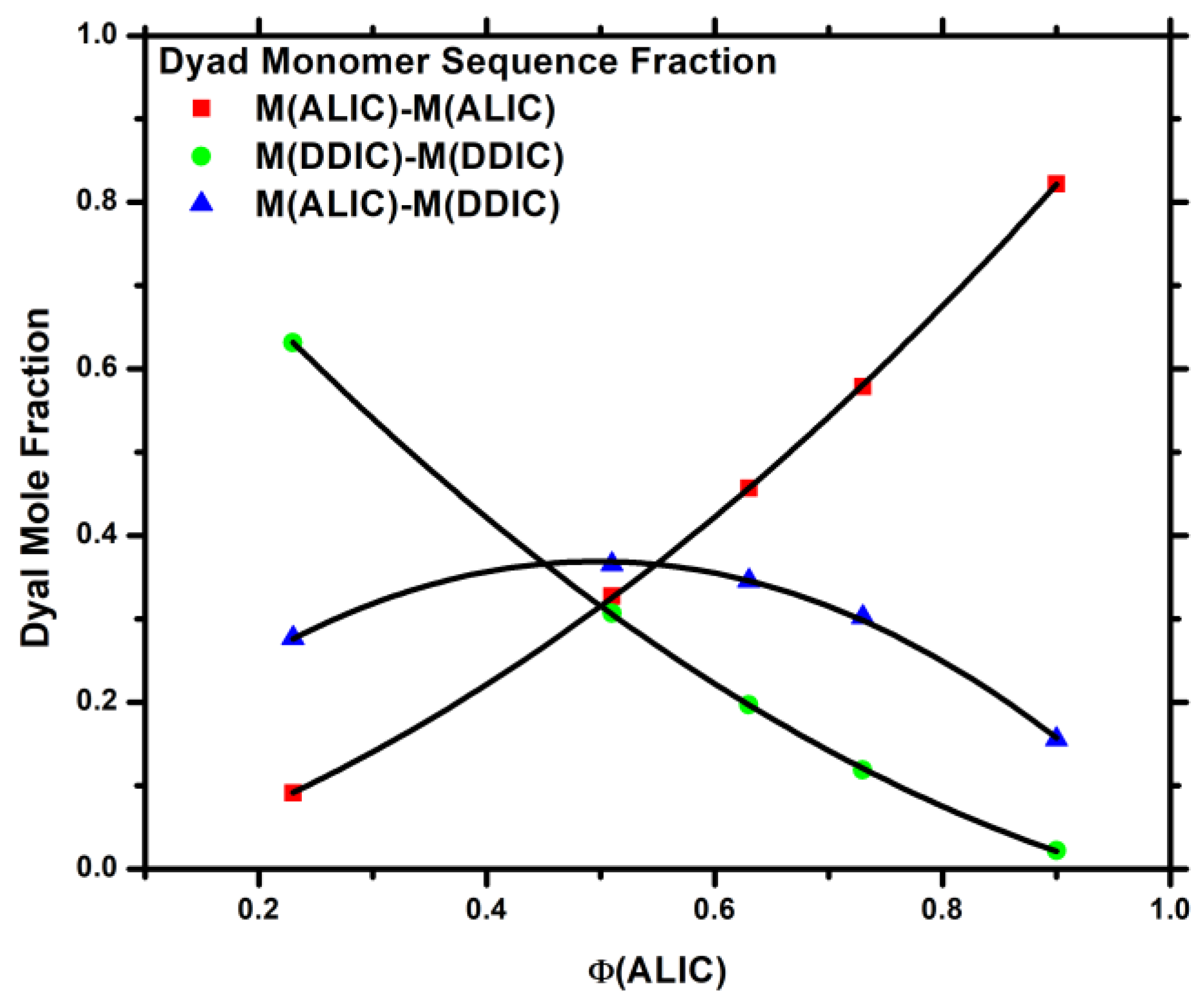
The reactivity ratios were calculated taking into account the terminal model, according to which the propagation reaction is exclusively determined by the chemical nature of the monomer, which is the terminal unit of the developing polymer chain [72]. The different methodologies yielded comparable results, as evidenced in Table 3. The plots of the respective methodologies, shown in Figures S3–S6 and Table S1 of the SIS, demonstrate a high degree of linearity, confirming the validity of the terminal model. In each instance, the reactivity ratios of both ALIC and DDIC exceed unity, with the reactivity ratio of ALIC being notably higher than that of DDIC. The same conclusion was reached by the COPOINT program. This suggests that both monomers in this copolymerization reaction tend to homopolymerize, ultimately forming multiblock copolymers with longer PALIC sequences. This conclusion is also verified by the statistical distribution of the dyad monomer sequences MALIC-MALIC, MALIC-MDDIC, MDDIC-MDDIC, that was determined using the Igarashi equations [73]. More details relating to the calculation method is available in the SIS. Along with the dyad monomer sequences, the mean sequence lengths μALIC and μDDIC were calculated [74] and the results are summarized in Table S2 of the SIS, whereas the variation of the dyad fractions with the ALIC mol fraction in the copolymers is displayed in Figure 5. All the data support the increased tendency of ALIC to homopolymerize compared to DDIC, as well as the formation of multiblock copolymers.
Table 3. Reactivity ratios of the statistical copolymers P(ALIC-co-DDIC).
Method r ALIC rDDIC
F-R 2.63 1.14
IF-R 2.60 1.13
K-T 2.60 1.12
ext K-T 3.04 1.08
COPOINT 2.64 1.14
In a previous work the copolymerization of ALIC with HIC was reported via coordination polymerization using the TiCl3(OCH2CF3) complex [65]. Employing the FR equation the authors found very different results on the reactivity ratios, namely rALIC = 0.79 and rHIC = 2.05 indicating that HIC has a higher tendency of homopolymerization than ALIC and that the sequences of HIC monomer units along the copolymer chain are much more pronounced than those of ALIC. Therefore, despite the similarities in the two systems the copolymer chain obtained is distinctively different by the two procedures adopted. The complex CpTiCl2(O-(S)-2-Bu) that was employed in the current study leads to lower polymerization rates and thus better control over the copolymerization reaction. In addition, DDIC, due to the long side alkyl chain, is expected to polymerize in a much lower rate than HIC. Both events seem to favor the polymerization of ALIC over DDIC leading finally to a multiblock structure with longer sequences of the ALIC monomer units.
Figure 5. Dyad Sequence Distribution of the P(ALIC-co-DDIC) copolymers.
Preprints 141501 g005

3.5. Block Copolymers, P[DDIC-b-(DDIC-co-ALIC)]
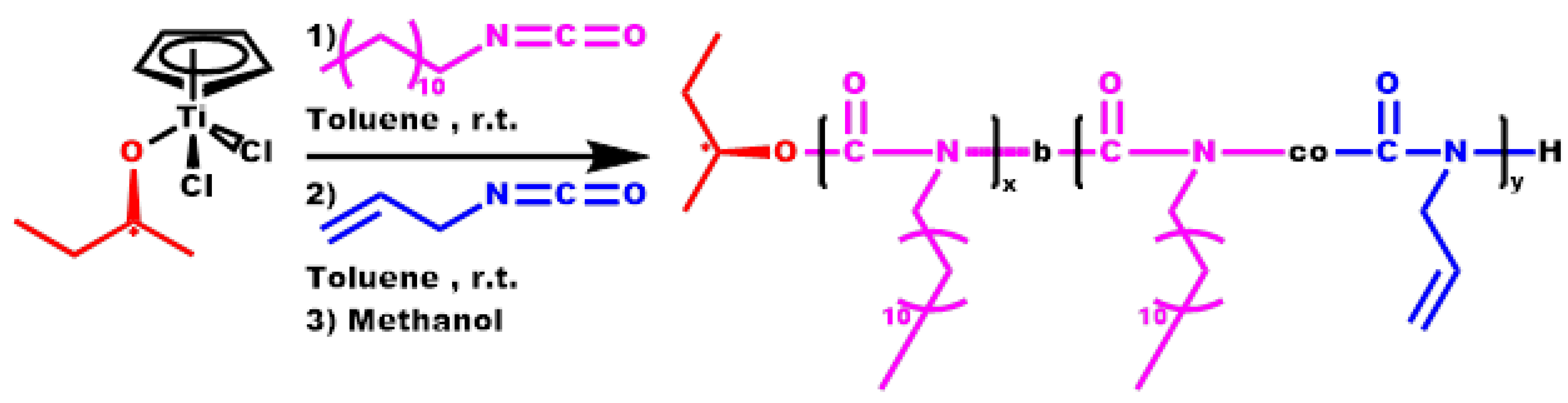
Three block copolymers, each one comprising a distinct composition of DDIC and ALIC, were synthesized through the sequential addition of the two monomers into the initiator solution. The second monomer was introduced when the polymerization mixture exhibited a high viscosity, indicating that the synthesis of the first block had reached a sufficient degree of conversion, typically up to 50%. The order of monomer addition was maintained the same in all cases, initiating with the polymerization of DDIC and subsequently incorporating and polymerizing ALIC (Scheme 4). The specific order of addition of the monomers was preferred to exclude the possibility of any type of side reaction, including cross-linking of the double bond of ALIC, which would otherwise result in the formation of undefined products with a broad molecular weight distribution.
Scheme 4. Synthesis of the block copolymers P[DDIC-b-(DDIC-co-ALIC)].
Preprints 141501 sch004
Using this methodology the product is a copolymer having a pure PDDIC first block, whereas the second one is a statistical copolymer containing both DDIC and ALIC monomer units, since the polymerization of the second monomer, ALIC, takes place in the presence of the excess DDIC monomer that remained unreacted after the formation of the first block. Therefore, the final structure is better described as P[DDIC-b-(DDIC-co-ALIC)] block copolymer. In previous publications [75,76,77], the synthesis of block copolymers of HIC with other ICs was described. In these approaches, the polymerization yield of the first block was allowed to reach higher values (more than 80%) and the excess of the monomer was evaporated in the vacuum line before the addition and the polymerization of the second monomer giving rise to pure block copolymers. In the present work DDIC is not volatile enough to follow this procedure and therefore the excess of the unreacted monomer after the formation of the first block is still in the reacting mixture causing the formation of a statistical copolymer of DDIC and ALIC as the second block. The molecular characteristics of these structures are given in Table 4.
Table 4. Molecular characteristics of the block copolymers P[DDIC-b-(ALIC-co-DDIC)].
Feed molar ratio ALIC/DDIC Molar ratio ALIC/DDIC a Yield (%) Mw b Đ b
80/20 76/24 42.8 9200 1.11
50/50 44/56 38.0 11100 1.17
20/80 8/91 41.7 8300 1.13
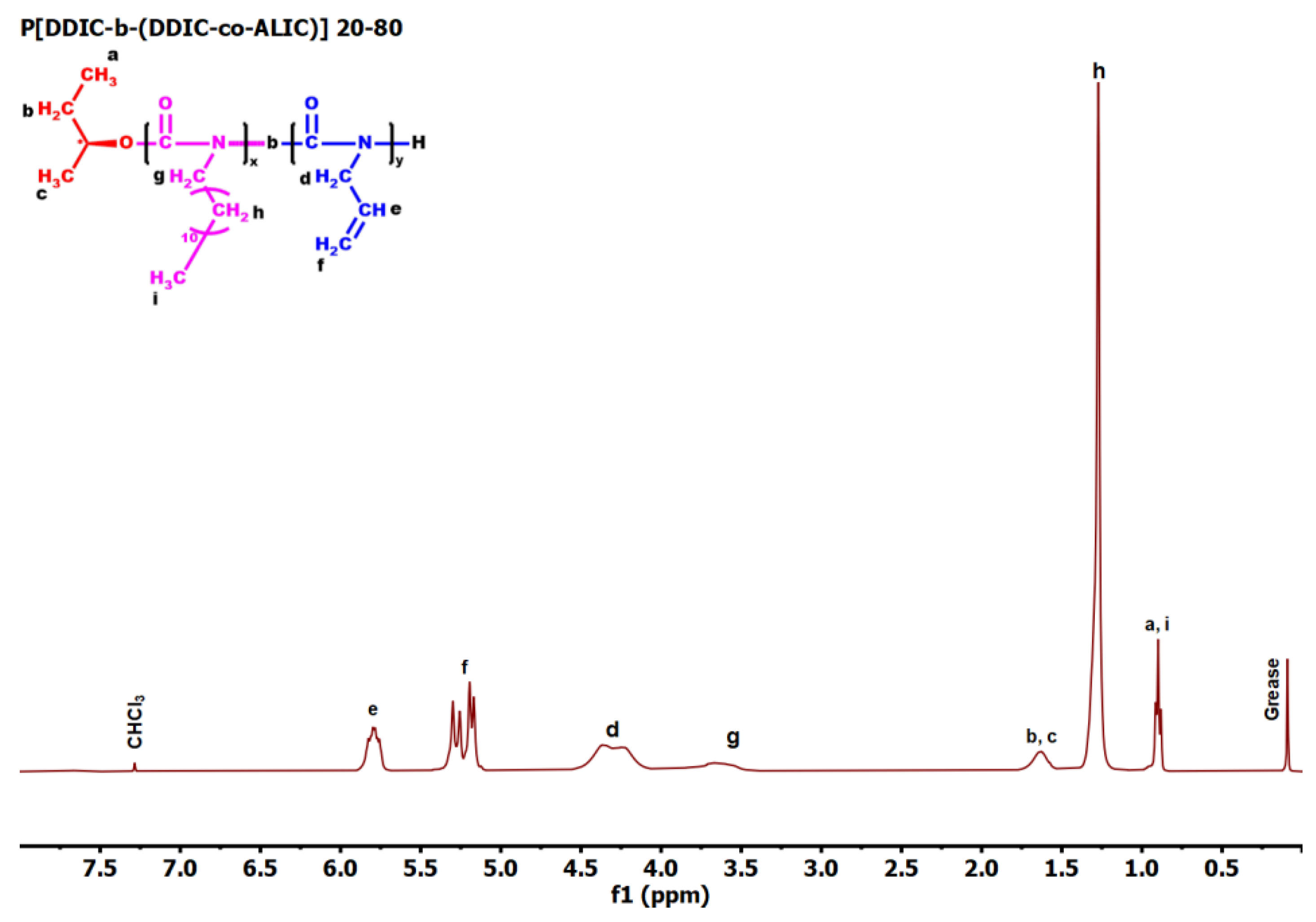
The 1H-NMR spectra were similar to those of the statistical copolymers. A representative example is given in Figure 6. The same peaks were observed, and the copolymer composition was determined by integrating the peaks at 1.32 and 5.0-5.5 ppm. In general, the compositions of the samples appeared to be in close agreement with the stoichiometry employed for the copolymer synthesis, yet a slight inclination towards the incorporation of the DDIC monomeric unit was obvious. This phenomenon can be attributed to the fact that the polymerization of DDIC takes place both as the exclusive component of the first block and as a comonomer with ALIC for the formation of the second block. Therefore, DDIC is almost quantitatively incorporated to the final structure, whereas ALIC has a much lower degrees of insertion.
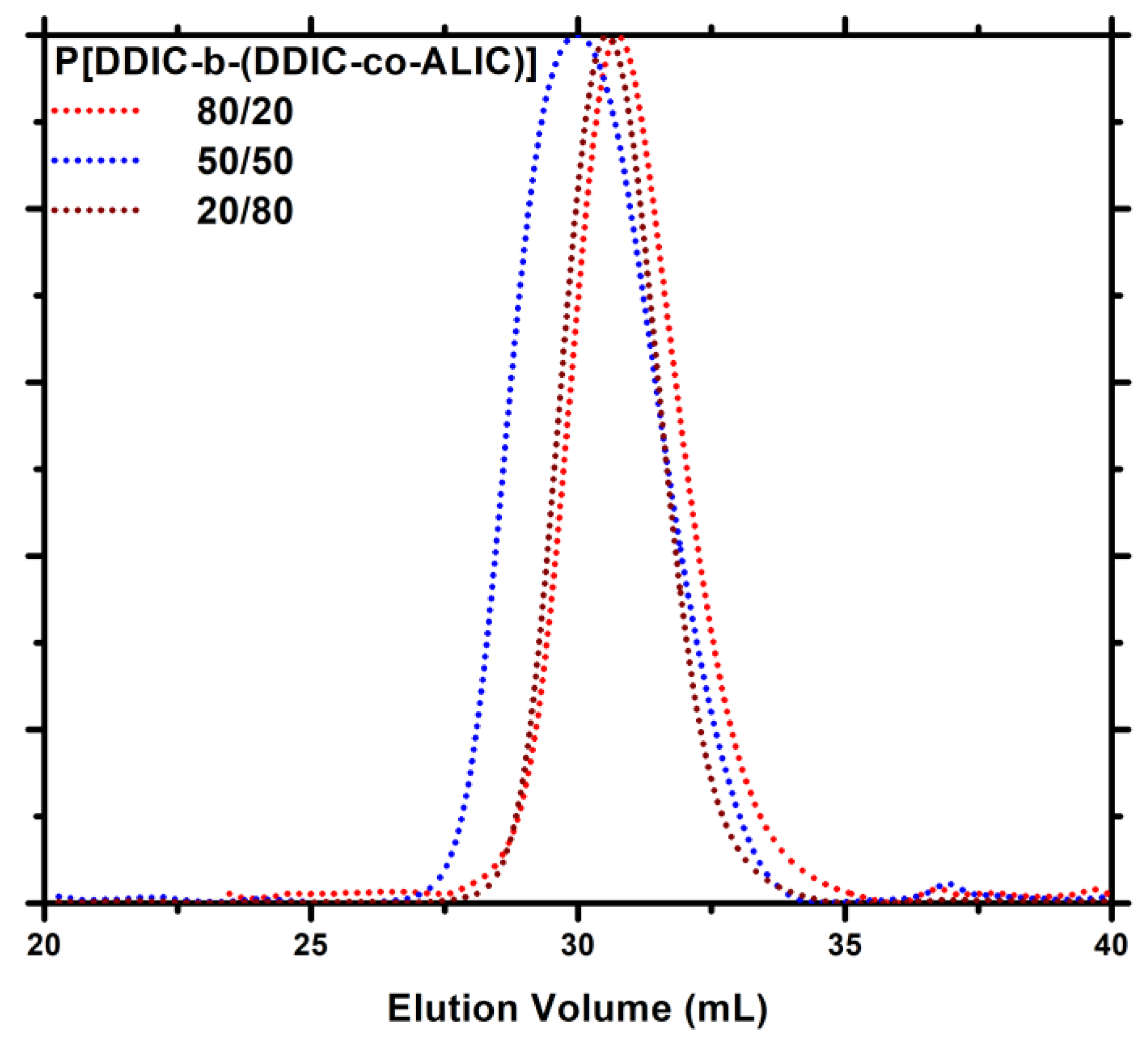
The synthetic procedure was also monitored by SEC. All the samples possessed remarkably narrow and monomodal distributions, as evidenced by the SEC traces depicted in Figure 7, proving the successful incorporation of the second monomer to the developing chain as well as the effective control of the reaction.
Figure 6. 1H NMR spectrum of the sample P[DDIC-b-(DDIC-co-ALIC)] 20/80 in CDCl3.
Preprints 141501 g006
Figure 7. SEC traces of the P[DDIC-b-(DDIC-co-ALIC)] block copolymers.
Preprints 141501 g007

3.6. Synthesis of P3PETPIC & P(3PETPIC-co-DDIC) via Thiol-Ene Click Reaction
PICs are thermally sensitive polymers, since their thermal decomposition takes place at relatively low temperature values [75,76,77]. The thermal stability of PICs could be increased by the introduction of side-groups that may retard the thermal degradation. These side groups could be introduced either using specific ICs monomers that could be homopolymerized or copolymerized with other more conventional monomers or by performing suitable post-polymerization reaction to preformed PICs. The presence of the allyl side group of the ALIC monomer units offers this possibility. The prerequisite for this procedure is that the functionalization reaction should take place under mild conditions to avoid the thermal decomposition of the parent material or any type of unwanted side reaction, such as crosslinking. In this work the radical-mediated thiol-ene click reaction was employed [78]. This methodology has been previously applied to PALIC chains to introduce polar hydroxyl groups along the polyisocyanate backbone, showing that this procedure is efficient and can be adopted without side-effects on the parent chain.
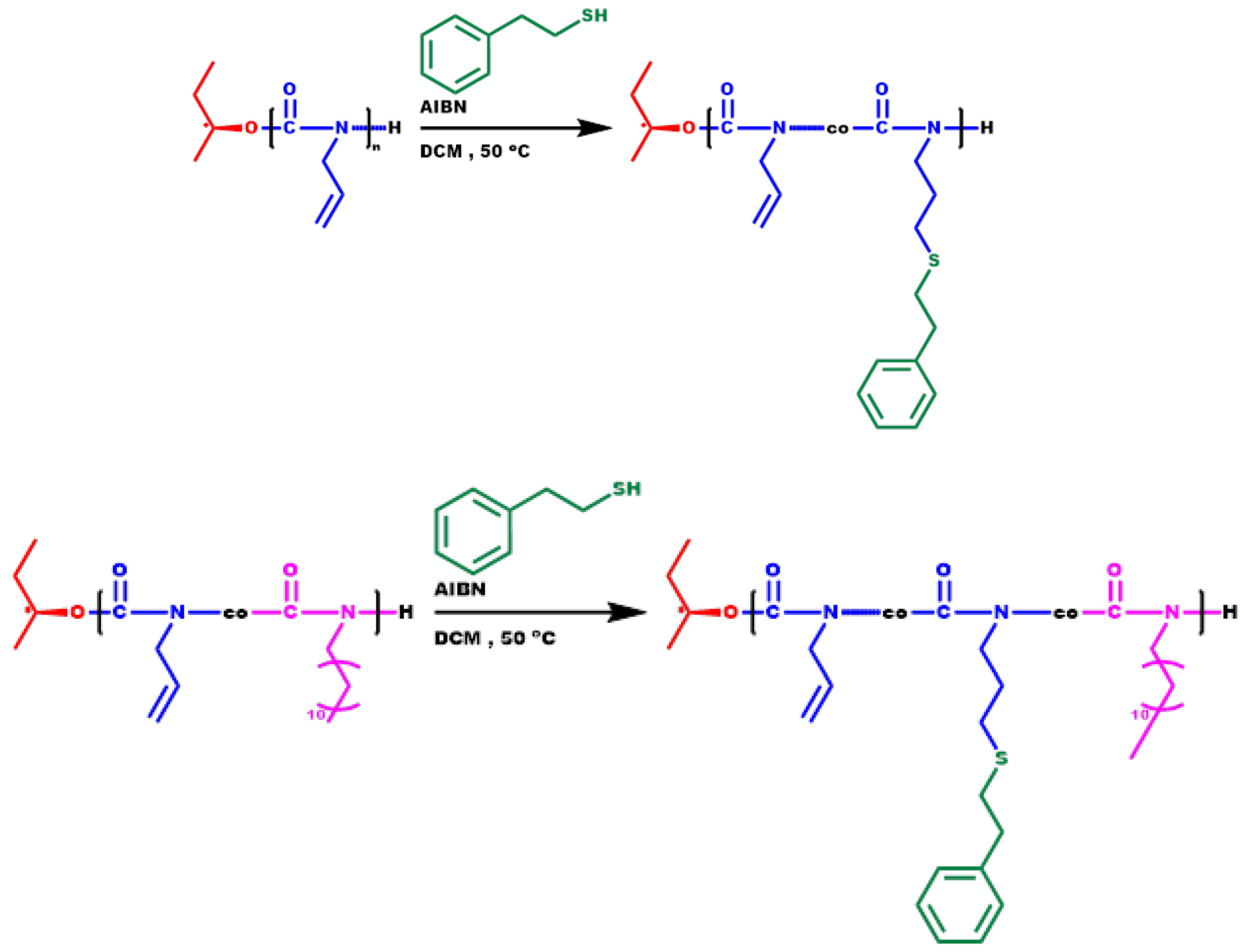
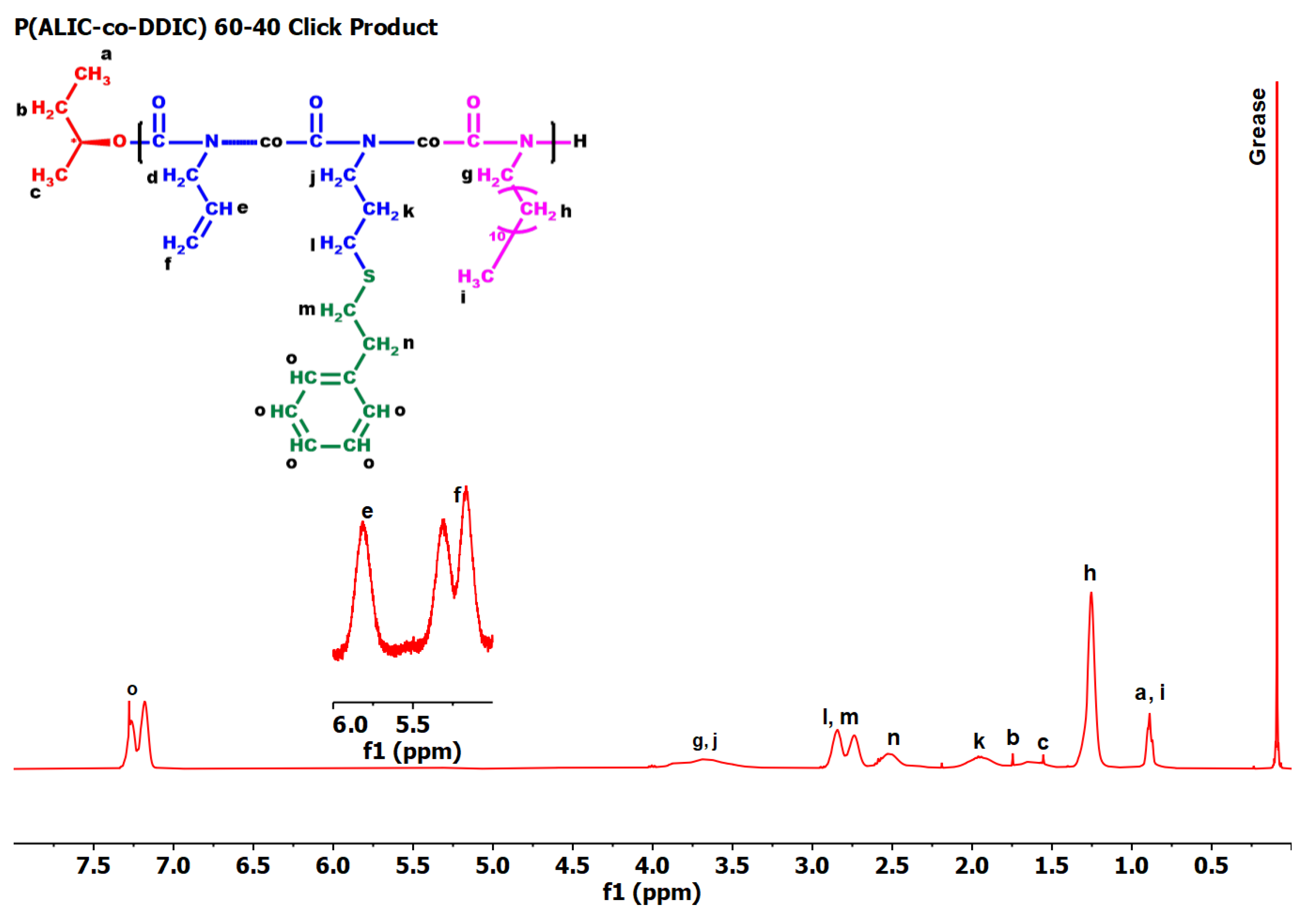
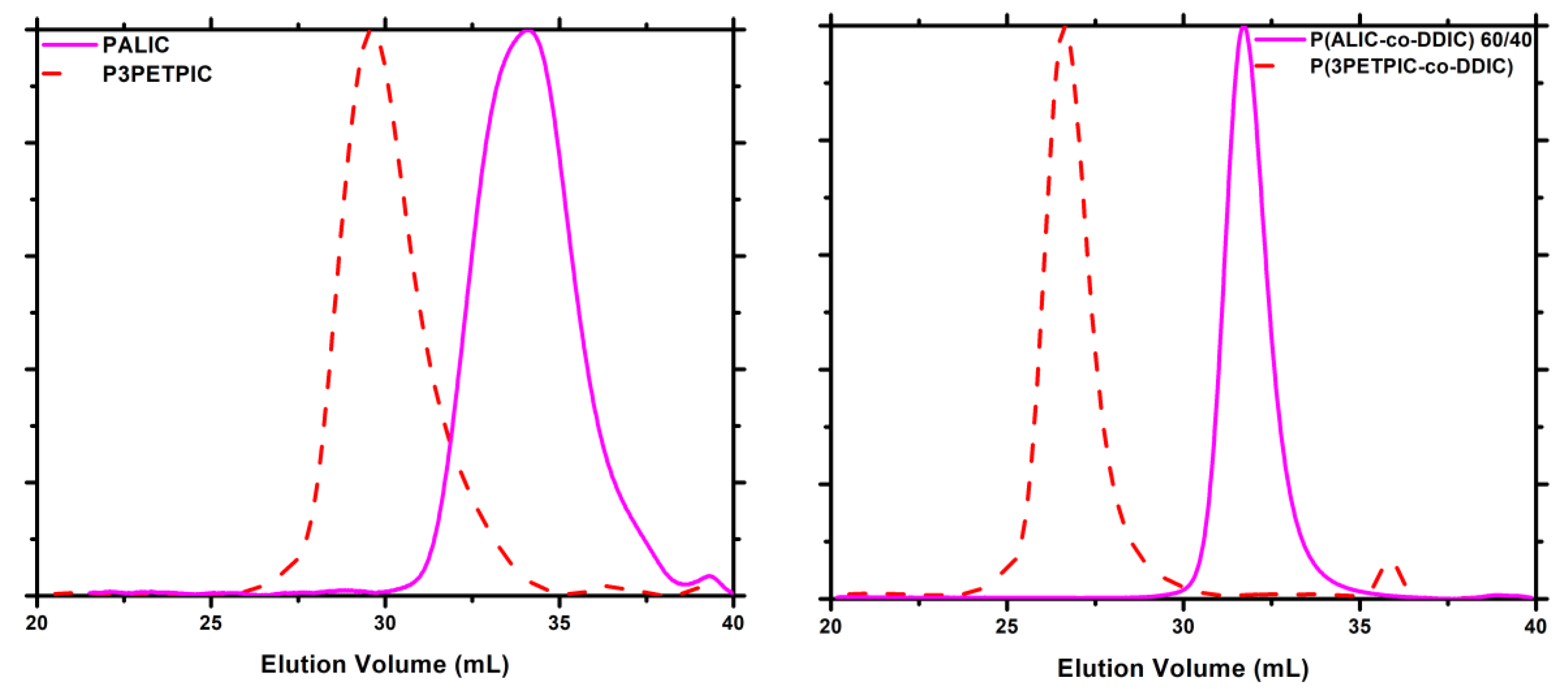
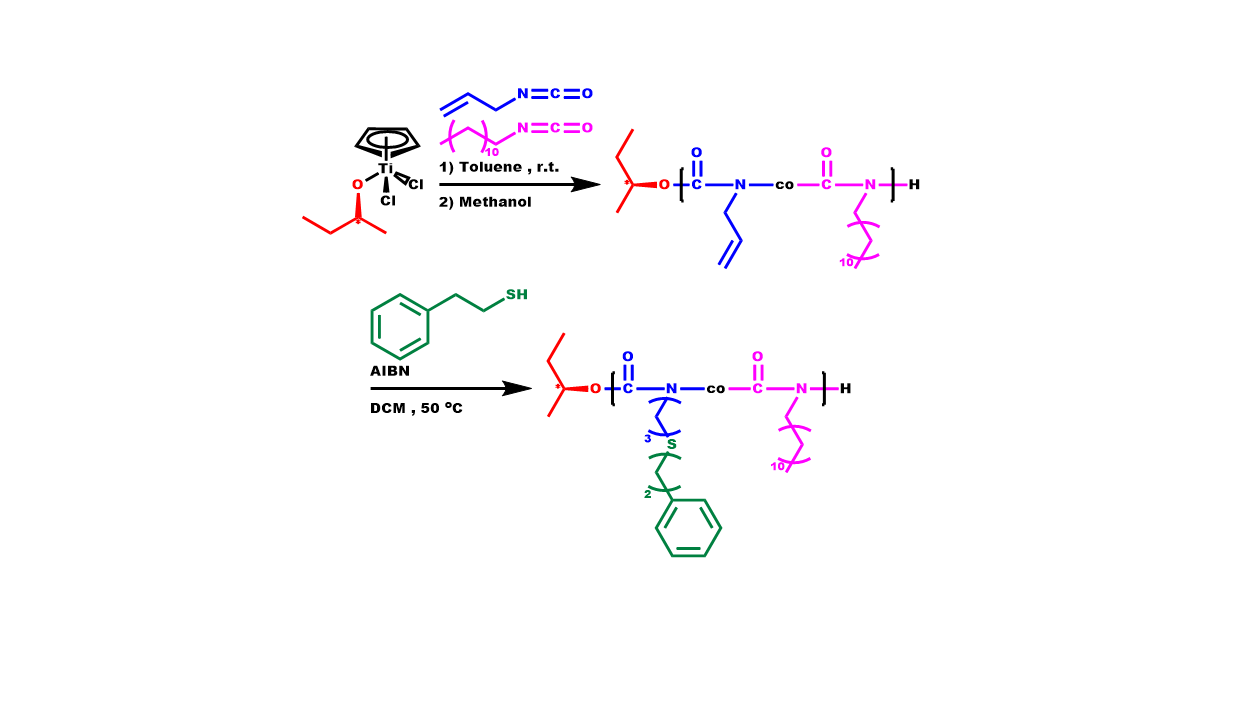
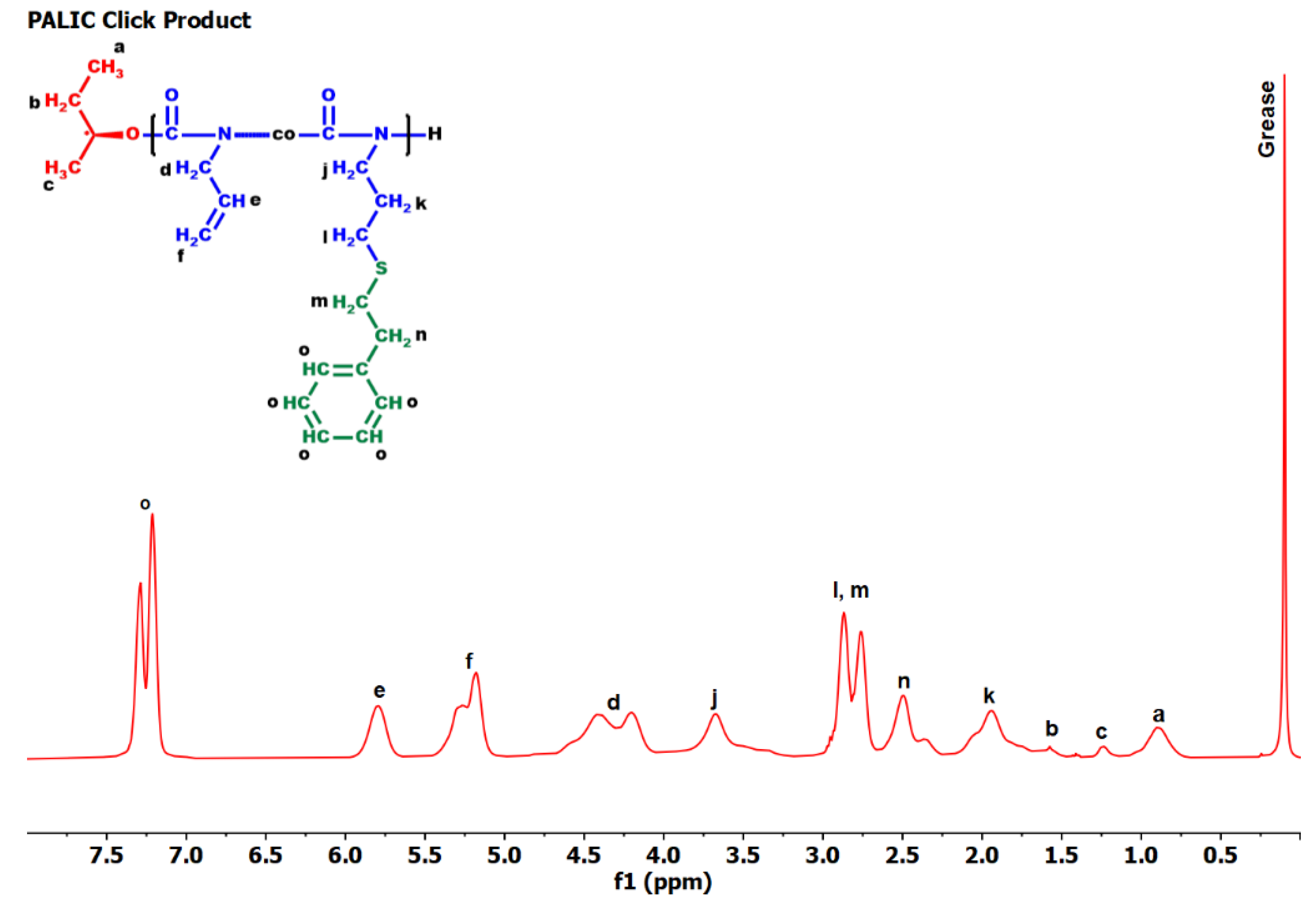
A thiol-ene click reaction was performed with 2-phenylethanethiol to obtain the corresponding functional copolymer bearing side phenyl groups, utilizing the pendant double bond of the monomeric unit of ALIC. The purpose of this modification was to enhance the thermal stability of polyisocyanates, since the phenyl moieties offer thermal stability [77]. The click reaction was tested on both PALIC homopolymer and the copolymer P(ALIC-co-DDIC) 60/40 and was conducted using AIBN at 50 °C in dichloromethane, as reported in literature [63] (Scheme 5). The success of the reaction in both cases was confirmed by 1H NMR spectroscopy. The appearance of signals within the 7.0-7.5 ppm range are indicative of the presence of aromatic protons in the polymer and confirm the success of the functionalization reaction. The integration of the aforementioned peak, along with the peaks observed at 5.10-5.36 ppm and 5.70 ppm, which correspond to the vinyl protons of the unreacted ALIC monomeric units, enables the calculation of the incorporation rate of the novel functional group. The introduction of the phenylethyl group was achieved to a satisfactory degree, since the incorporation rate was calculated at 89% in the copolymer and 61% in the homopolymer respectively (Table S3 of the SIS). The characteristic NMR spectra are given in Figure 8 and Figure 9. The SEC traces of the functionalized polymers, depicted in Figure 10, confirm the increase of the molecular weight of the polymers while maintaining notably low distributions. Furthermore, no obvious degradation or crosslinking side reactions were observed during the thiol-ene post-polymerization reaction. These encouraging results allow for the further chemical transformation of these copolymers, thus facilitating the synthesis of more complex macromolecular architectures with modified properties.
Figure 8. 1H NMR spectrum of the sample PALIC Click product in CDCl3.
Preprints 141501 g008
Scheme 5. Thiol-ene click reactions.
Preprints 141501 sch005
Figure 9. 1H NMR spectrum of the sample P(ALIC-co-DDIC) 60/40 Click product in CDCl3.
Preprints 141501 g009
Figure 10. SEC traces of the thiol-ene click reaction products.
Preprints 141501 g010

3.7. Thermal Analysis

3.7.1. DSC Analysis
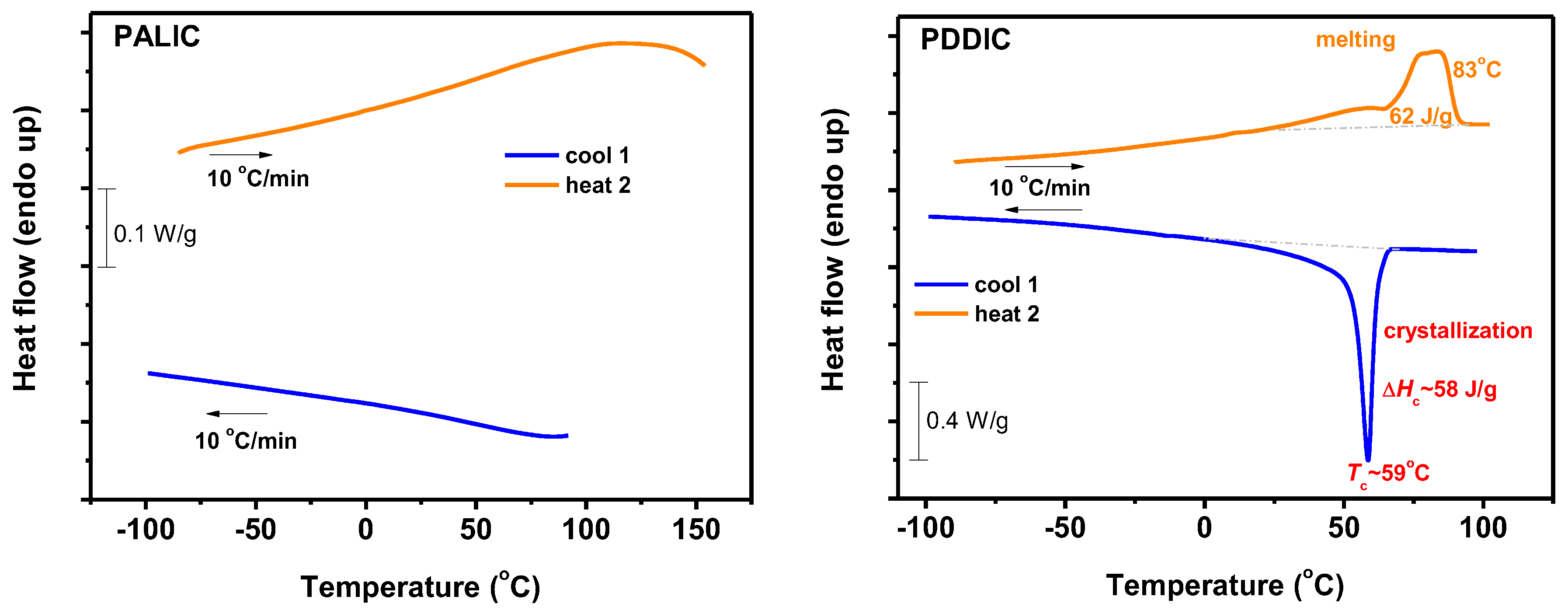
The thermal properties of the samples were studied by Differential Scanning Calorimetry, DSC, measurements. Due to their thermal sensitivity, the homopolymers and the copolymers were heated for the annealing procedure up to 100 °C and the second heating results were obtained. The data for the homopolymers are given in Figure 11. There are no detailed previous results in the literature for the specific homopolymers. For PALIC no obvious transition was observed in the temperature range from -100 up to 100 °C. It is well known that PICs adopt helical structures both in solution and in the solid state. The absence of any signal in the DSC thermogram indicates that local motions are not allowed, so there is no Tg in the homopolymer and the formation of crystalline structures is prohibited, due to the low size of the side allyl groups. These findings reveal that the specific polymer behaves as a “molecular ruler” or in other words that the helical structure does not change direction in space introducing some kind of flexibility in the molecule. The rather low molecular weight of the sample (Mn = 11000 by SEC) facilitates the formation of this “molecular ruler”.
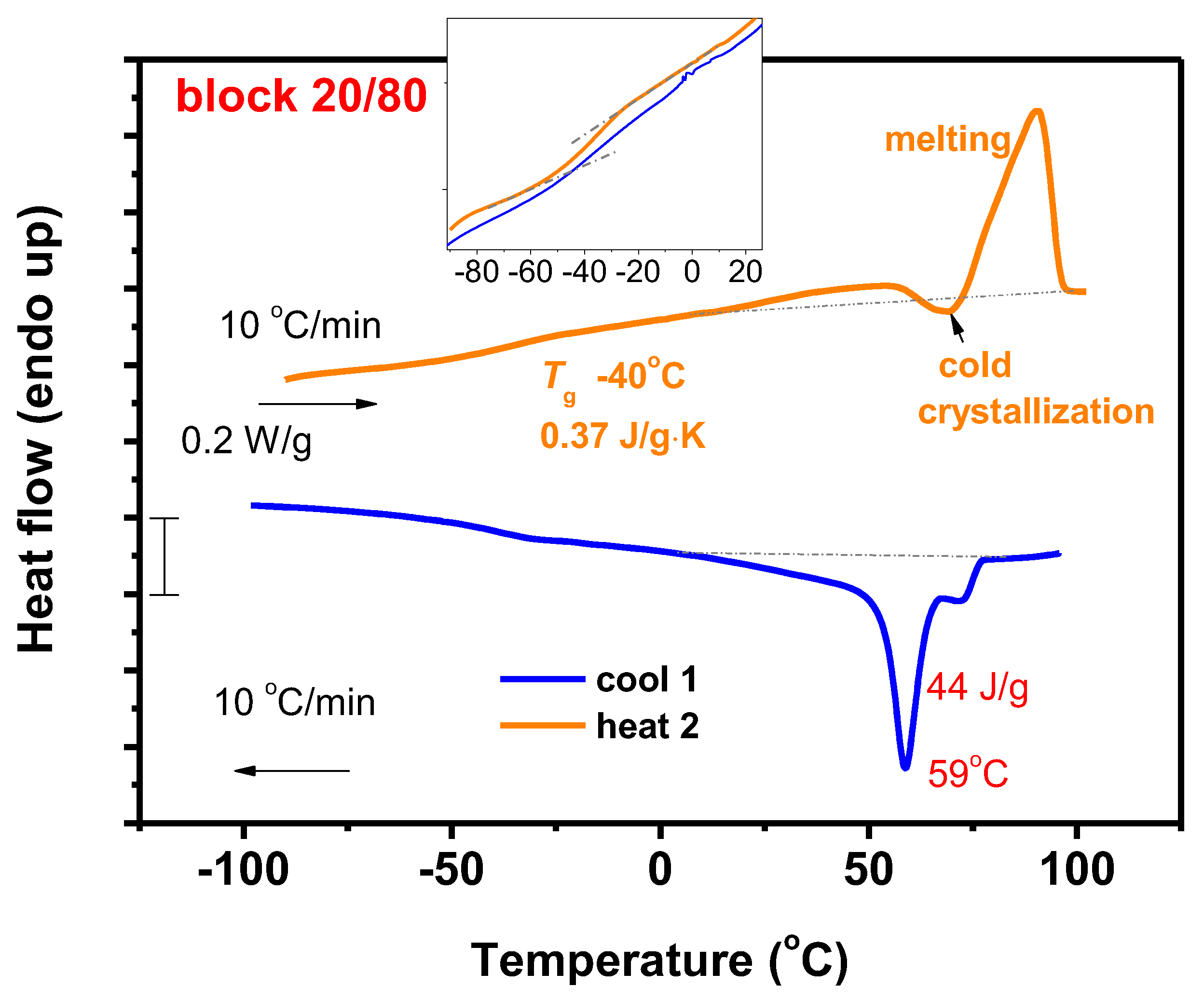
The thermal behavior of PDDIC is different. As was expected, the long side chain of the monomer unit gives rise to side chain crystallization [79,80]. It has been reported in the literature from the homologous series of several polymers having long alkyl side groups, such as, poly(α-olefins), polymethacrylates, polyacrylates, polyacrylamides, etc. that when the side group of the monomer contains 12 carbon atoms or more then side chain crystallization takes place. Therefore, the PDDIC exhibits on cooling crystallization exotherm with Tc = 59 °C and crystallization enthalpy ΔHc = 58 J/g and on heating melting endotherm with Tm = 83 °C and melting enthalpy ΔHm = 62 J/g.
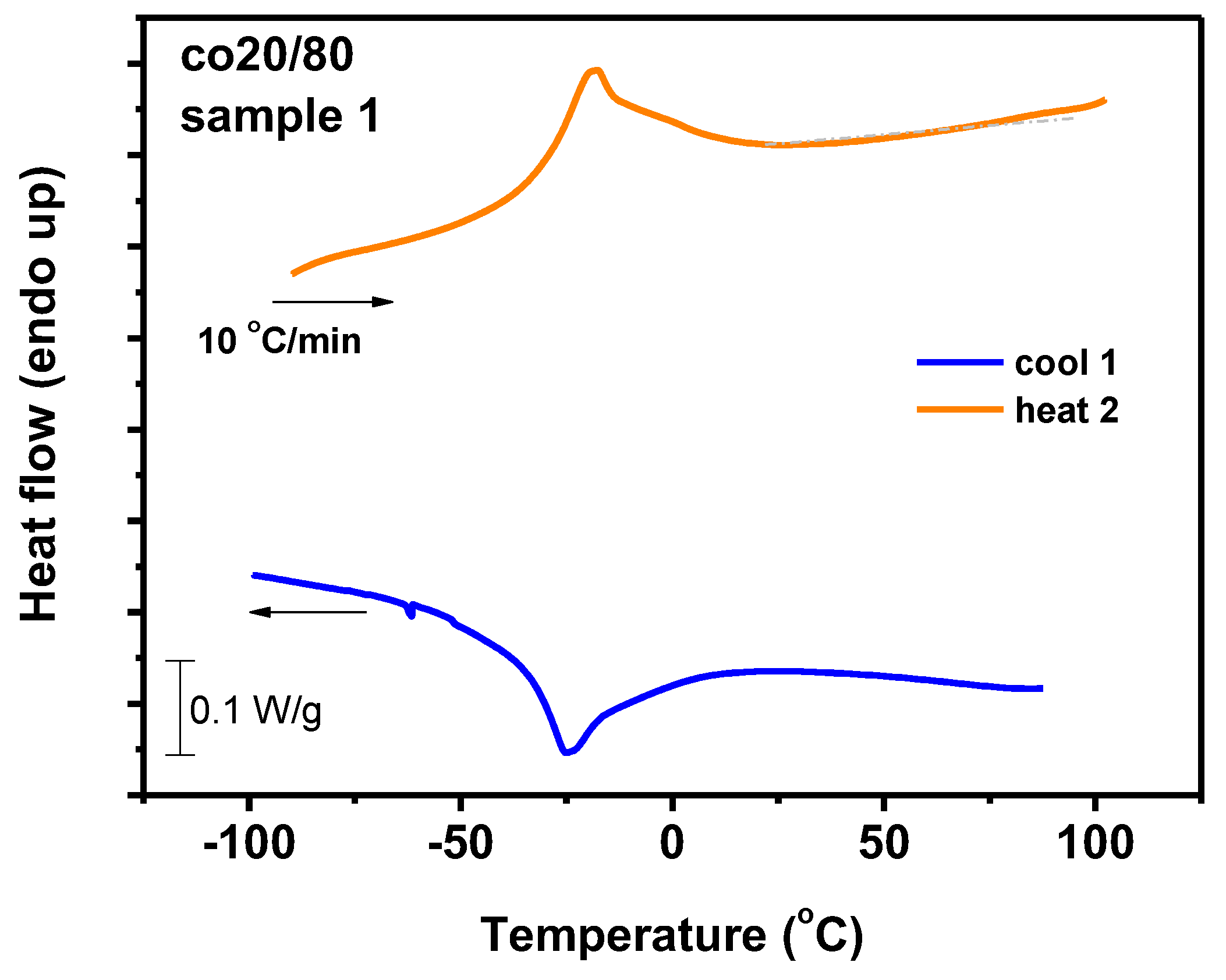
The DSC thermograms for the statistical copolymers are displayed in Figure 12 and Figure S7 of the SIS. As in the cases of the respective homopolymers no glass transition was observed for the statistical copolymers in the temperature range examined. The statistical copolymer with the highest composition in DDIC exhibited a melting endotherm upon heating and a crystallization exotherm upon cooling. However, both the Tm and Tc values were much lower than those obtained for the PDDIC homopolymers. The multiblock structure of the statistical copolymer in combination with the high content in DDIC permits the organization of crystalline domains in the statistical copolymers. However, the interference of the ALIC monomer sequences restricts the organization of the crystalline phases leading to much lower Tm and Tc values (-20 and -25 °C respectively). Upon decreasing the DDIC content in the statistical copolymers the crystallization is drastically inhibited by the helical domains of the ALIC sequences. This is also promoted by the fact that the mean sequence length of ALIC is higher than that of DDIC, due to the higher reactivity ratio of ALIC compared to that of DDIC. Furthermore, these small traces of melting or crystallization move progressively to even lower temperatures so that for sample 80-20 no transition is obvious in the thermogram.
Figure 11. DSC thermograms for PALIC (left) and PDDIC (right) homopolymers.
Preprints 141501 g011
Figure 12. DSC thermograms for the P(ALIC-co-DDIC) statistical copolymer.
Preprints 141501 g012
A different situation was obtained for the P[DDIC-b-(DDIC-co-ALIC)] copolymers. The presence of a pure block of the crystalline block of PDDIC gives rise to the formation crystalline domains, as shown in Figure 13 and Figure S8 of the SIS. The copolymer with the highest content in DDIC showed similar behavior as the PDDIC homopolymer except that both the enthalpies of melting and crystallization were slightly lower than those of the homopolymer due to the minor restrictions derived from the second block for the organization of the crystalline phases. The decrease in the DDIC content leads to a different behavior. The first heating procedure shows, as in the previous sample, the characteristic melting endotherm progressively at lower temperatures with decreasing DDIC content. However, the cooling run and therefore the subsequent second heating run showed almost the absence of crystallization and melting respectively. This is direct evidence of slower kinetics of crystallization of the PDDIC blocks compared to the respective homopolymers, or in other words it reveals that the second statistical block P(DDIC-co-ALIC) impedes the nucleation process and therefore affects the crystallization behavior. Another interesting finding for the block copolymers was the appearance of a weak glass transition at temperatures between -31 and -40 °C. These transitions are attributed to the second block of the structures, which is a statistical copolymer of DDIC and ALIC. The molecular weights of these samples are relatively low and therefore the sequences of the ALIC monomer units are very short. These short sequences do not have the possibility to adopt a clear helical structure and consequently are more flexible giving rise to these weak transitions at low temperatures. In conclusion, the macromolecular structure affects to a great extent the thermal behavior of these polymers.
Figure 13. DSC thermograms for the P[DDIC-b-(DDIC-co-ALIC)] block copolymer.
Preprints 141501 g013

3.7.2. Thermal Decomposition

3.7.2.1. Homopolymers
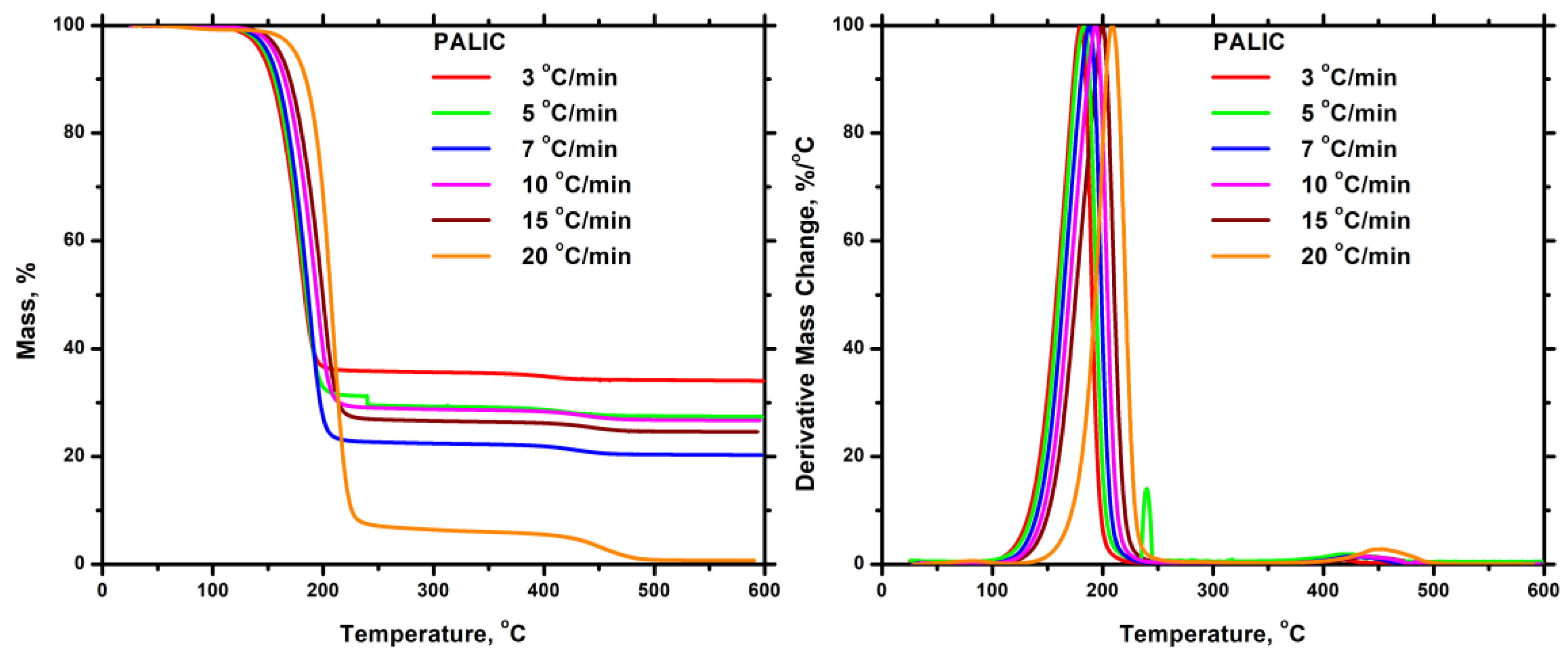
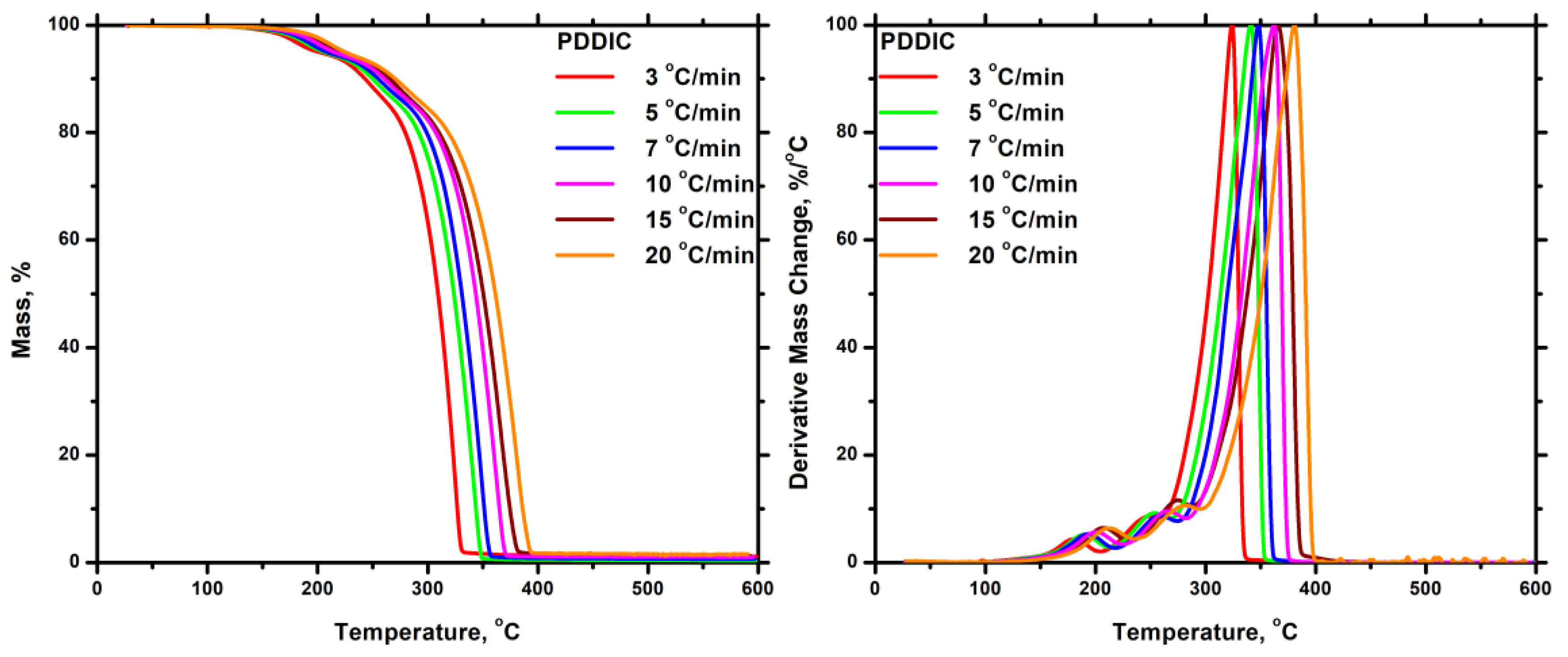
The thermal degradation of each homopolymer was investigated using TGA and DTG techniques. The measurements were performed at various heating rates (3, 5, 7, 10, 15, and 20 °C/min). The thermograms obtained from TGA and DTG for the homopolymers are presented in Figure 14 and Figure 15. A comparison of the DTG diagrams reveals that PDDIC exhibits greater thermal stability than PALIC. The thermal degradation of PALIC starts at a lower temperature than that of PDDIC and the peak corresponding to the maximum degradation rate occurs at significantly lower temperatures as well. The complete thermal degradation of PDDIC takes place at a temperature range of 200 to 250 °C higher than that of PALIC. Moreover, PALIC exhibits a single, relatively symmetric degradation peak in DTG, whereas PDDIC displays two additional but minor peaks. This indicates that the degradation mechanism is relatively simple for PALIC, whereas in the case of PDDIC, it is more complex, involving additional degradation steps. However, the highest proportion of PDDIC is degraded during the third stage at elevated temperatures. The increased thermal stability of PDDIC can be attributed to its semi-crystalline nature and therefore the strong intermolecular interactions developed between the polymer chains. In each case, it is evident that the temperature values corresponding to the initiation and completion of thermal degradation, as well as the temperature at the maximum rate of degradation, increase upon the application of a higher heating rate. The thermal degradation process is a kinetic phenomenon, which explains the slower response of the system to the temperature change as the heating rate increases. A characteristic finding of the thermal decomposition of PALIC is the appearance of a high amount of residue. It seems that the presence of the side allyl moieties of PALIC leads to extended carbonization phenomena.
Figure 14. TGA (left) and DTG (right) plots for the PALIC at all heating rates.
Preprints 141501 g014
Figure 15. TGA (left) and DTG (right) plots for the PDDIC at all heating rates.
Preprints 141501 g015

3.7.2.2. Statistical Copolymers

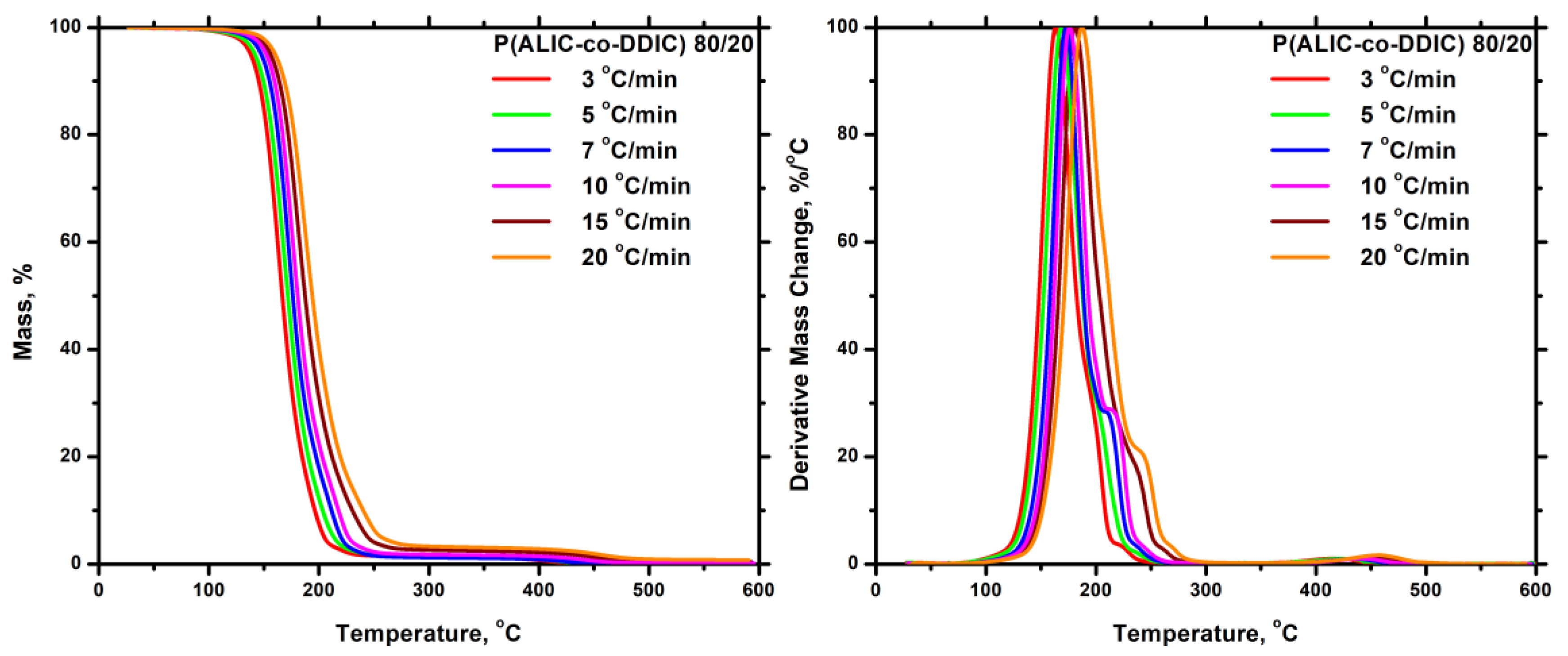
The thermal degradation of each statistical copolymer was also investigated at various heating rates. Characteristic thermograms are displayed in Figure 16, whereas additional data are included in the SIS (Figures S9–S12). In a similar manner to the homopolymers previously discussed, the initiation and completion temperatures of the thermal degradation, along with the temperature at the maximum rate of degradation, increase with increasing heating rates in the copolymers. In fact, an increase in the heating rate results in a greater distinction between the stages of thermal degradation.
Figure 16. TGA (left) & DTG (right) plots for the P(ALIC-co-DDIC) 80/20 at all heating rates.
Preprints 141501 g016
Τhe degradation mechanism of the statistical copolymers is complex and depends on the composition of each sample. The thermal decomposition profiles of the statistical copolymers exhibit a combination of characteristics observed in the degradation behaviour of both the PALIC and PDDIC homopolymers. As suggested above the reactivity ratios were measured as rALIC = 2.64 and rDDIC = 1.14. This means that PALIC sequences are more favored than PDDIC, resulting in the thermal degradation behaviour of the copolymers being more influenced by PALIC.
In the P(ALIC-co-DDIC) 20-80 sample, the primary thermal degradation peak observed in the DTG plot is in close proximity to that of PDDIC, which can be attributed to the higher composition in DDIC monomeric units in this polymer. In the case of P(ALIC-co-DDIC) 40-60, where the content of PALIC is increased, the two peaks of the main thermal decomposition stages are obvious. At low heating rates, a third peak emerges between the two basic stages, which at higher heating rates takes the form of a shoulder. This peak is due to the multiblock structure, which, as mentioned earlier, results from the reactivity ratios of the monomers. Finally, in the P(ALIC-co-DDIC) 80-20 sample the main degradation event takes place at lower temperatures similarly to PALIC homopolymer. This leads to the conclusion that an increase in the proportion of PALIC in the copolymer results in a corresponding increase in the system's thermodynamic instability. A final point to be mentioned is the absence of any appreciable amount of residue during the thermal decomposition of the statistical copolymers, meaning that carbonization is prohibited in the presence of the sequences of DDIC.

3.7.3. Kinetics of Thermal Degradation of Homopolymers and Statistical Copolymers
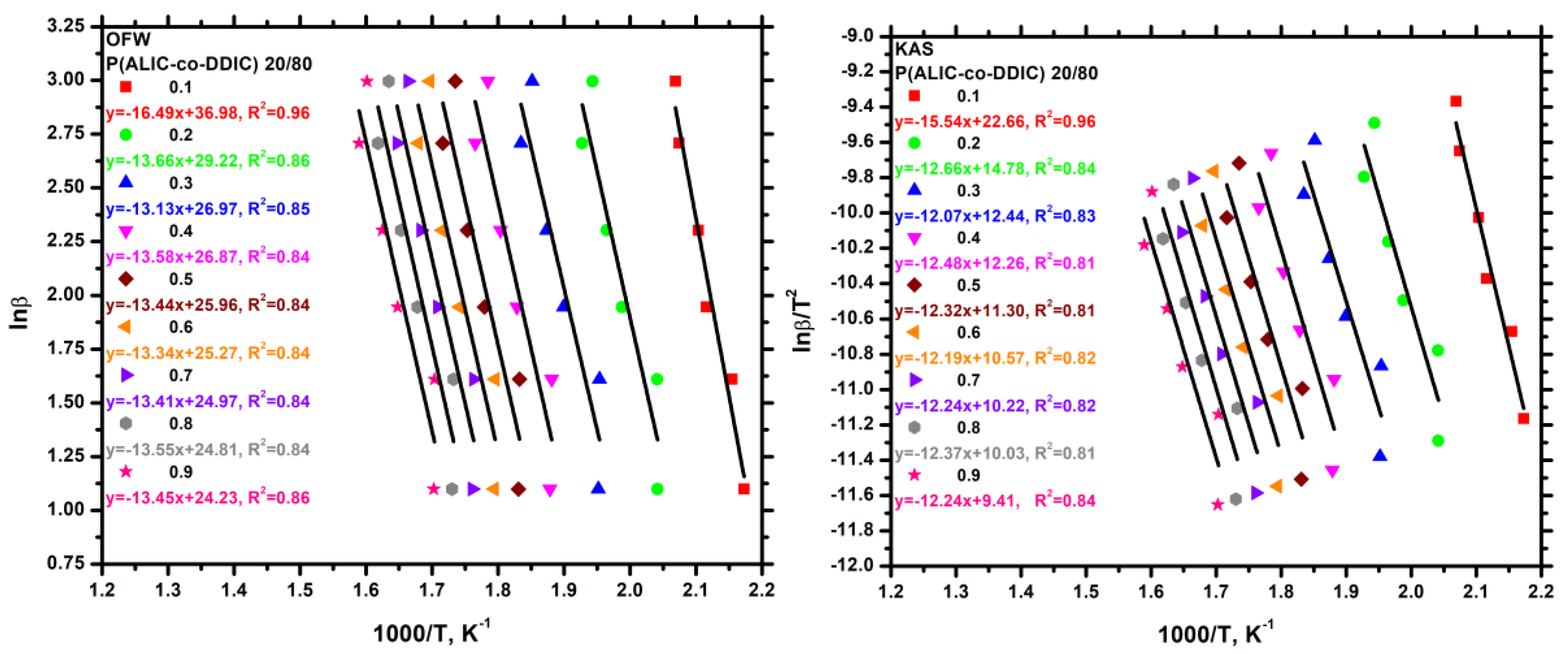
Ozawa–Flynn–Wall (OFW) [81,82,83] and Kissinger–Akahira–Sunose (KAS) [84] methodologies were applied for the measurement of the activation energies, Ea, of the thermal decomposition of the homopolymers and the statistical copolymers as explained in detail in the SIS. These isoconversional methods, which are also considered model-free, do not necessitate any prior knowledge of the degradation mechanism in order to determine the activation energy values [85]. Both approaches are particularly beneficial for analyzing thermogravimetric data from complex chemical processes, and their implementation does not require an understanding of the reaction order governing the decomposition or the underlying degradation mechanism. Also, it is worthy to mention that the OFW method is based on the Doyle approximation [86], whereas the KAS method is founded upon the Coats-Redfern approximation [87], which offers greater precision. Consequently, the latter approach is regarded as a more accurate approach for the determination of the activation energy associated with the thermal decomposition process.
In order to obtain kinetic parameters from thermogravimetric data, both the OFW and KAS methods require the measurement of temperature values corresponding to specific fixed values of conversion, α, which are determined from experiments conducted at varying heating rates, β. Representative plots of the OFW and KAS methods are shown in Figure 17, whereas more data are given in the SIS (Figures S13–S18), and the activation energy values obtained for the homopolymers as well as the copolymers are given in Table 5, respectively.
A comparison of the results obtained by the two methods reveals that the Ea values obtained by the KAS method are slightly lower than those obtained by OFW for both homopolymers. In the PALIC homopolymer, the activation energy values (Ea) demonstrate an increase with increasing degradation rate. In contrast, the PDDIC values exhibit a decrease. This could be explained by the fact that, in the case of PALIC, early stages of degradation require less energy and most probably involve the depolymerization of the macromolecular chain from the chain-end through the formation of cyclotrimers. However, as the process continues, higher Ea values are needed, since carbonization takes place with the implication of the remaining double bonds of the allyl moieties. Contrary to this, in PDDIC, degradation becomes more facile as the process progresses. Furthermore, the Ea values for PALIC are found to be lower for lower conversion rates (a) compared to PDDIC, which is consistent with the observation that PALIC begins to degrade at lower temperatures.
Figure 17. OFW and KAS plots for the P(ALIC-co-DDIC) 20/80 statistical copolymer.
Preprints 141501 g017
Table 5. Activation energies Ea for the homopolymers PALIC and PDDIC and the statistical copolymers P(ALIC-co-DDIC).
Weight Loss (a) PALIC PDDIC 20/80 40/60 50/50 60/40 80/20
OFW KAS OFW KAS OFW KAS OFW KAS OFW KAS OFW KAS OFW KAS
0.1 94.56 87.26 162.04 153.24 136.95 129.14 117.67 110.11 111.94 104.46 143.26 135.95 122.32 115.18
0.2 102.13 94.65 135.12 125.65 113.51 105.12 111.02 103.13 107.78 100.05 128.22 120.66 122.49 115.26
0.3 110.94 103.29 121.49 111.77 109.03 100.30 96.15 87.84 100.63 95.65 124.15 116.42 122.66 115.26
0.4 120.49 112.77 116.42 106.45 112.85 103.71 93.16 84.60 88.34 80.12 119.33 111.44 121.24 113.85
0.5 130.55 122.82 113.76 103.71 111.69 102.30 96.89 88.00 84.76 76.26 104.71 96.64 118.33 110.77
0.6 145.43 137.53 112.27 102.05 110.77 101.22 99.97 90.83 88.50 79.77 96.31 88.09 113.60 106.04
0.7 110.86 100.55 111.44 101.71 99.72 90.41 92.99 83.931 95.07 86.59 107.03 99.30
0.8 109.28 98.89 112.68 102.71 100.14 90.58 92.90 83.60 99.39 90.66 100.14 92.24
0.9 106.20 95.81 111.69 101.63 101.88 92.07 95.81 86.09 105.54 96.40 84.60 76.44
As far as statistical copolymers are concerned, the highest dependence of the Ea values on the degradation rate is found in the P(ALIC-co-DDIC) 60/40 sample. In the P(ALIC-co-DDIC) 40/60 sample, the values of Ea decreased until 40% of degradation has occurred. Concurrently, in the P(ALIC-co-DDIC) 50/50 sample, the activation energy also exhibited reducing values until 50% of the degradation process was completed. This observation is in accordance with the molar ratio of the monomeric units in each sample respectively. In contrast to the behavior observed in PALIC, the Ea values in the P(ALIC-co-DDIC) 80/20 sample decrease as thermal degradation proceeds. This suggests that the random placement of DDIC sequences along the main macromolecular chain exerts a significant influence on the thermal degradation mechanism. Regarding the average values of the activation energies of the statistical copolymers, it can be concluded that more or less similar Ea values were obtained for all copolymers without substantial differentiation. The highest values were obtained for sample 20/80 with the highest content of the most thermally stable DDIC. It has to be mentioned that for all copolymers the Ea values were slightly lower than those measured for the corresponding homopolymers reflecting the absence of any carbonization effect, which caused the incomplete degradation of PALIC and the increased Ea values for this homopolymer at the latter stages of decomposition.
To further investigate this topic, an attempt was made to predict the PALIC and PDDIC decomposition mechanism by comparing the Ea values calculated by the OFW and KAS methods with those derived from 41 different mathematical models, which are reported in the literature. Each mathematical model, which is expressed as an algebraic function, represents a potential mechanism underlying the decomposition reaction. In this context, algebraic expressions of functions representing the most commonly occurring reaction mechanisms in solid-state reactions are presented in the SIS (Tables S4 and S5) [88]. The plots demonstrating the greatest linearity and closest agreement in Ea values calculated from the OFW and KAS methods were selected as the proposed mechanisms for the decomposition of the two homopolymers.
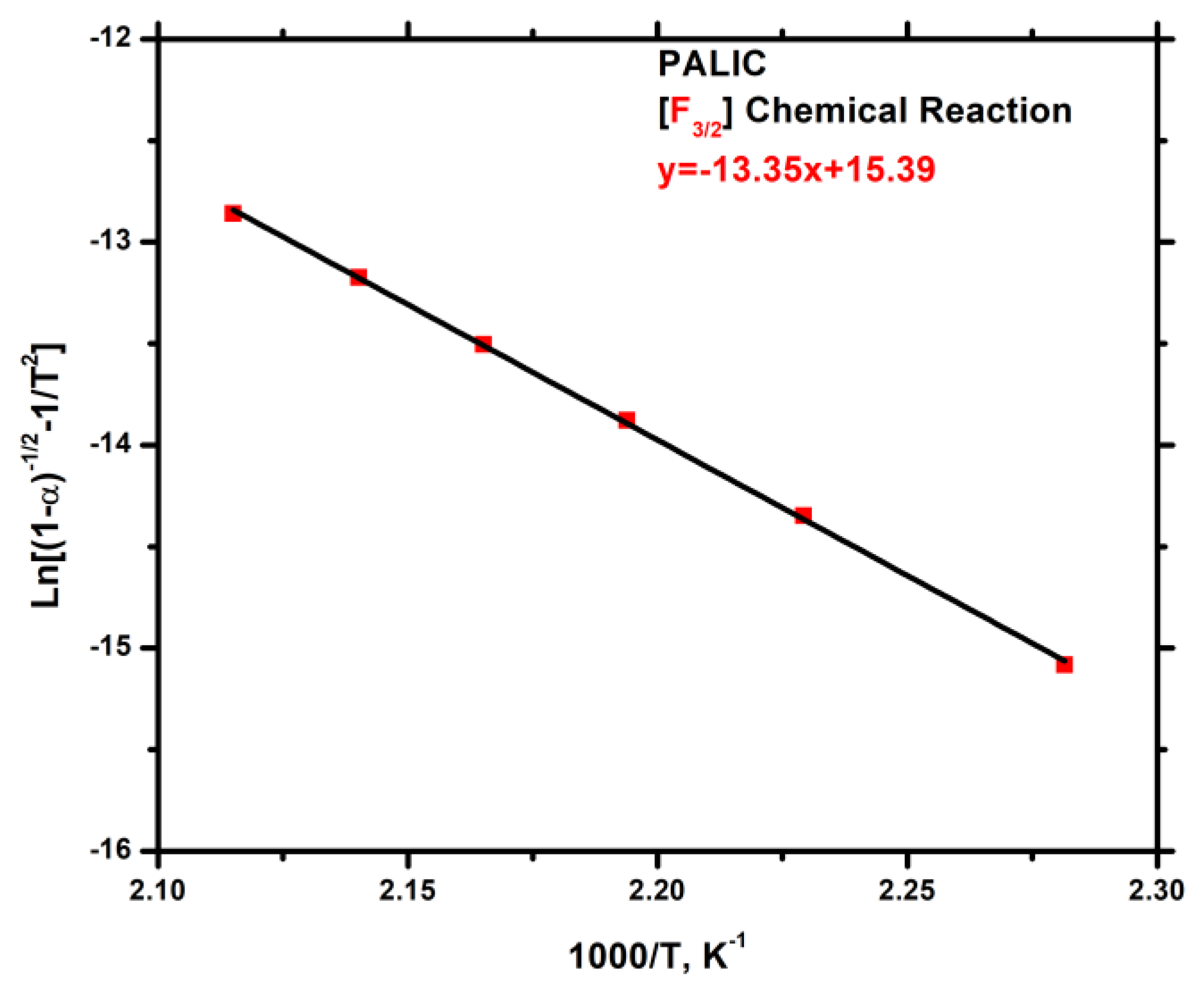
Among the various models for the decomposition of the PALIC homopolymer, equation F3/2 demonstrates excellent linearity, and the calculated Ea value is in close proximity to the Ea value derived from the KAS method, which is more accurate than the OFW method. The suggested mechanism belongs to the category of chemical reactions and according to the mathematical model of the thermal degradation mechanism F3/2, the activation energy is equal to 110.86 KJ/g. The plot is given in Figure 18.
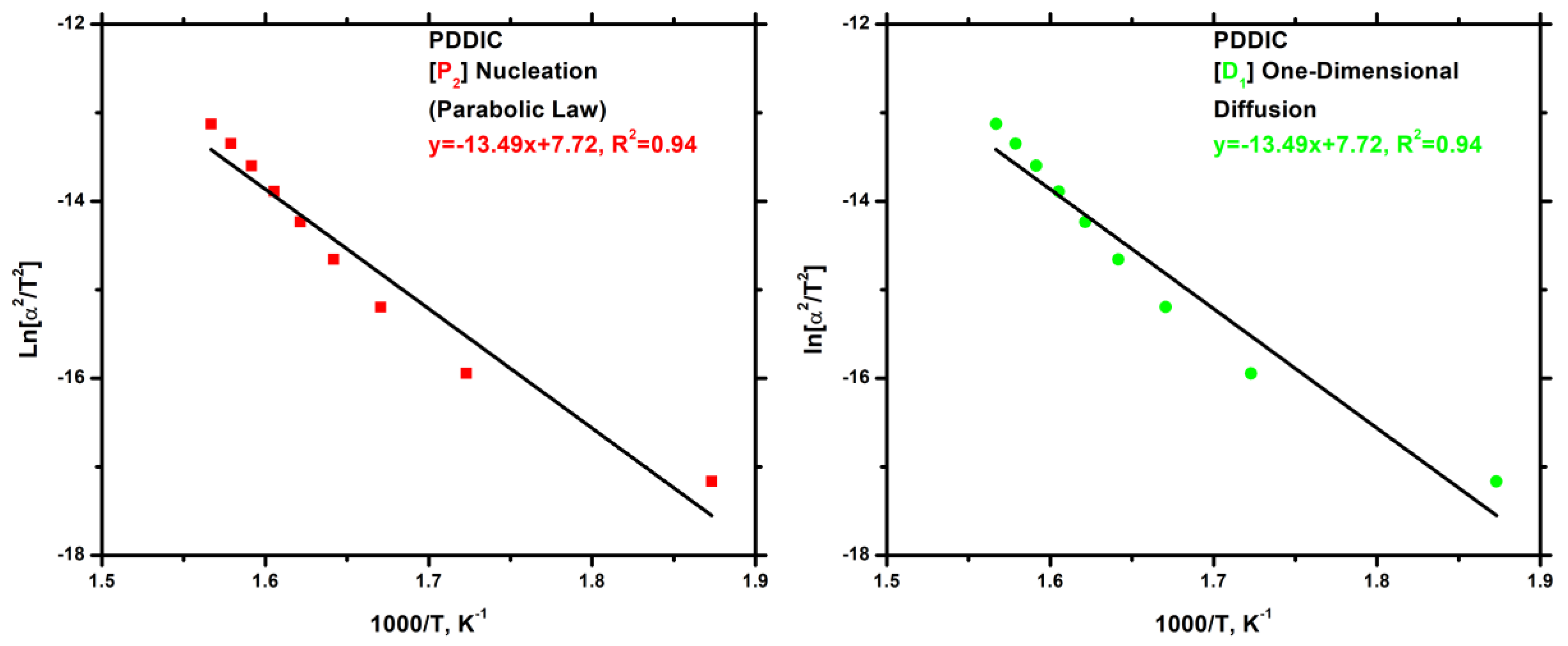
As far as the PDDIC homopolymer is concerned, the P2 and D1 mathematical models are proposed as the underlying mechanisms similarly to the approach previously adopted. The P2 model represents a nucleation process occurring during the thermal degradation of the material, while the D1 model is indicative of one-dimensional diffusion. It is notable that in both cases, the activation energy values are identical, equal to 112.10 KJ/g. The plots are displayed in Figure 19.
In conclusion, the different decomposition patterns of the two homopolymers are reflected to the different degradation mechanisms, as was revealed by the previous discussion.
Figure 18. Chemical reaction degradation mechanism plot for the PALIC.
Preprints 141501 g018
Figure 19. Nucleation (Parabolic Law) (left) and one-Dimensional Diffusion (right) degradation mechanism plot for the PDDIC.
Preprints 141501 g019

3.7.4. Block Copolymers

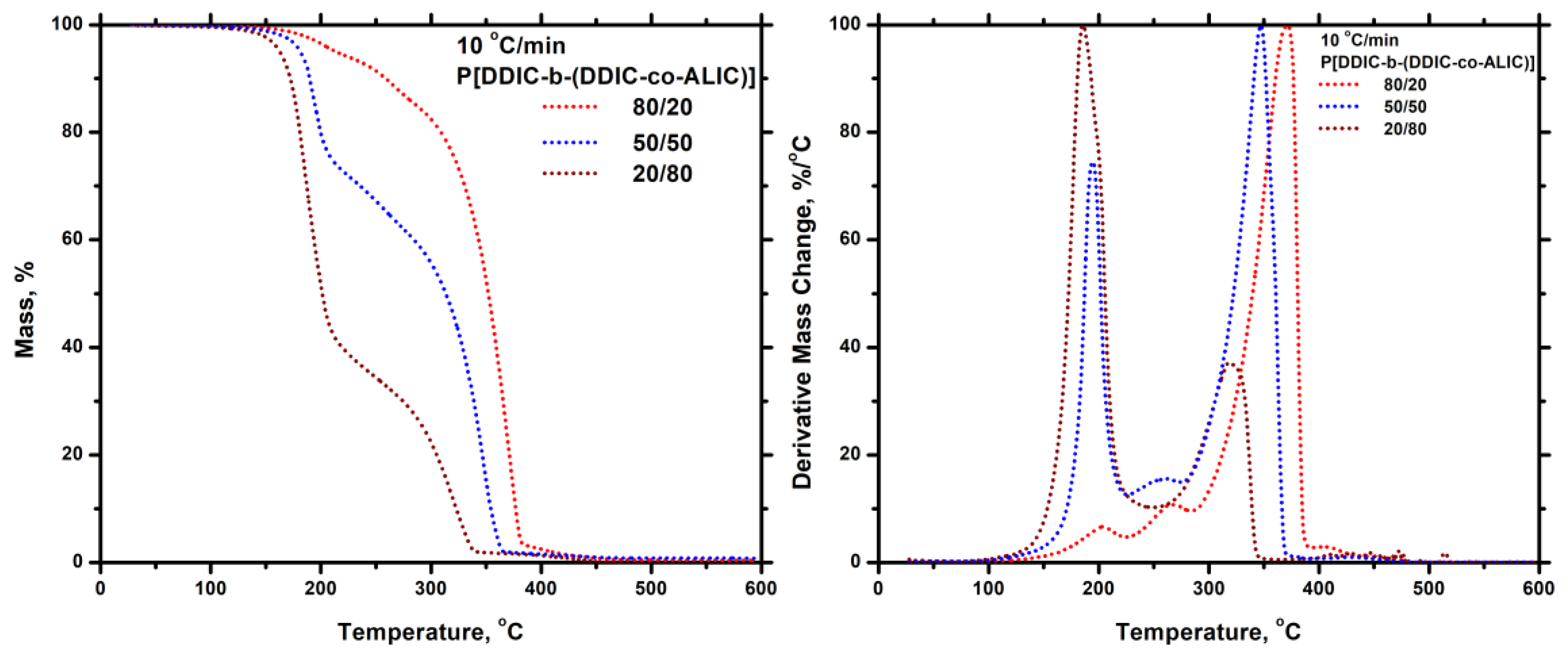
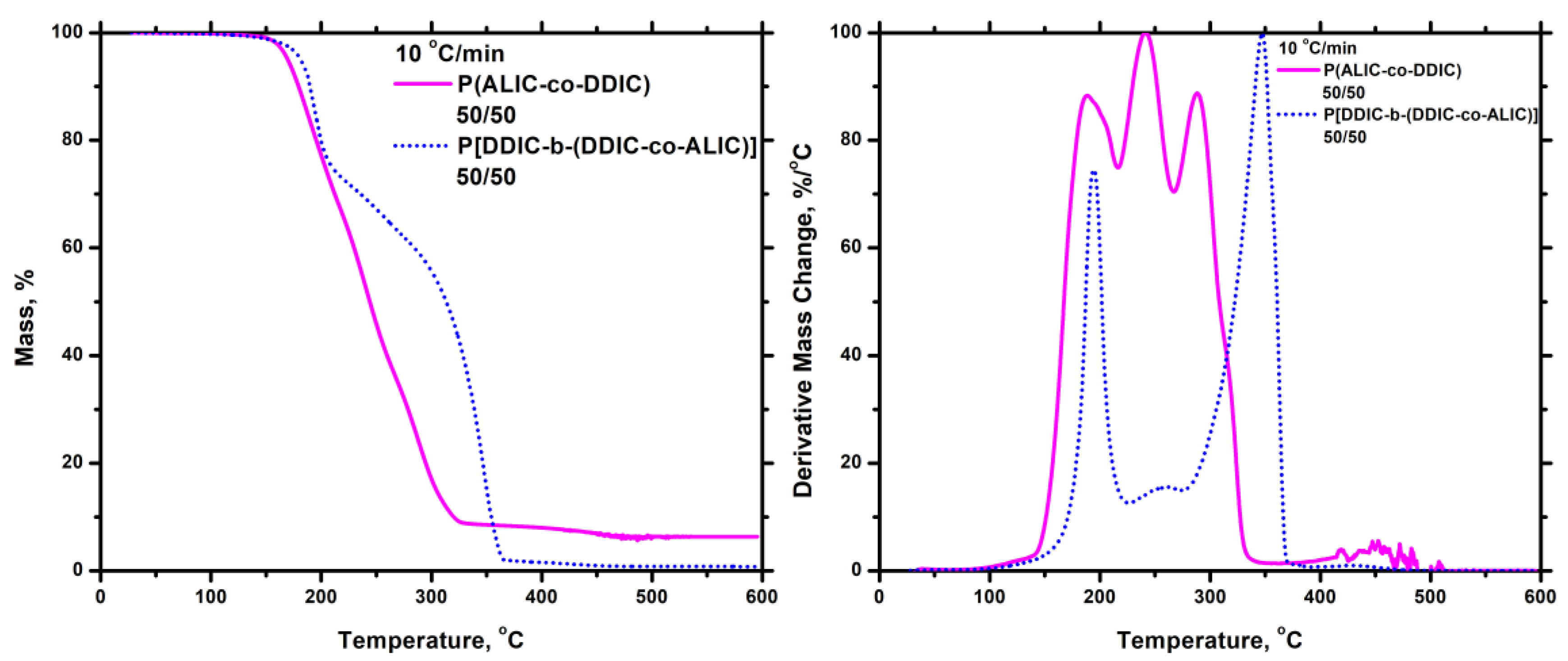
The thermal degradation of the block copolymers was also examined utilising the techniques of thermogravimetric analysis (TGA) and differential thermogravimetry (DTG). The measurements were conducted at a heating rate of 10 °C/min, and the resulting differential thermogravimetric (DTG) diagrams are displayed in Figure 20. For all three samples the same degradation pattern was observed. The decomposition takes place at two distinct steps. The one at lower temperatures corresponds to the degradation of the ALIC sequences, whereas the other at higher temperatures to the pure PDDIC block. This is obvious if the DTG traces of the block copolymers are compared with the respective homopolymers. This is undoubtedly proven comparing the thermograms of block copolymer 50/50 with those of the homopolymers PALIC and PDDIC at the same heating rate of 10 °C/min, shown in the SIS (Figure S19). The mass loss at each degradation step is in perfect aggrement with the composition of the copolymers. This behavior is the result of the different thermal stability of the various components of the blocks (PALIC and PDDIC sequences) and the structure of the copolymers. The thermal decomposition pattern of these block copolymers is completely different compared to the respective statistical copolymers. This is shown in Figure 21, where the DTG traces of the statistical and the block copolymer with the same composition (50/50) are given. Consequently, the macromolecular architecture plays a crucial role affecting dramatically the thermal degradation behavior of the copolymers.
Figure 20. TGA (left) and DTG (right) plots for all the P[(DDIC-b-(DDIC-co-ALIC)] at 10 °C/min.
Preprints 141501 g020
Figure 21. TGA & DTG plots for the ALIC/DDIC 50/50 Statistical and Block Copolymer at 10 °C/min.
Preprints 141501 g021

3.7.5. Thiol-Ene Products

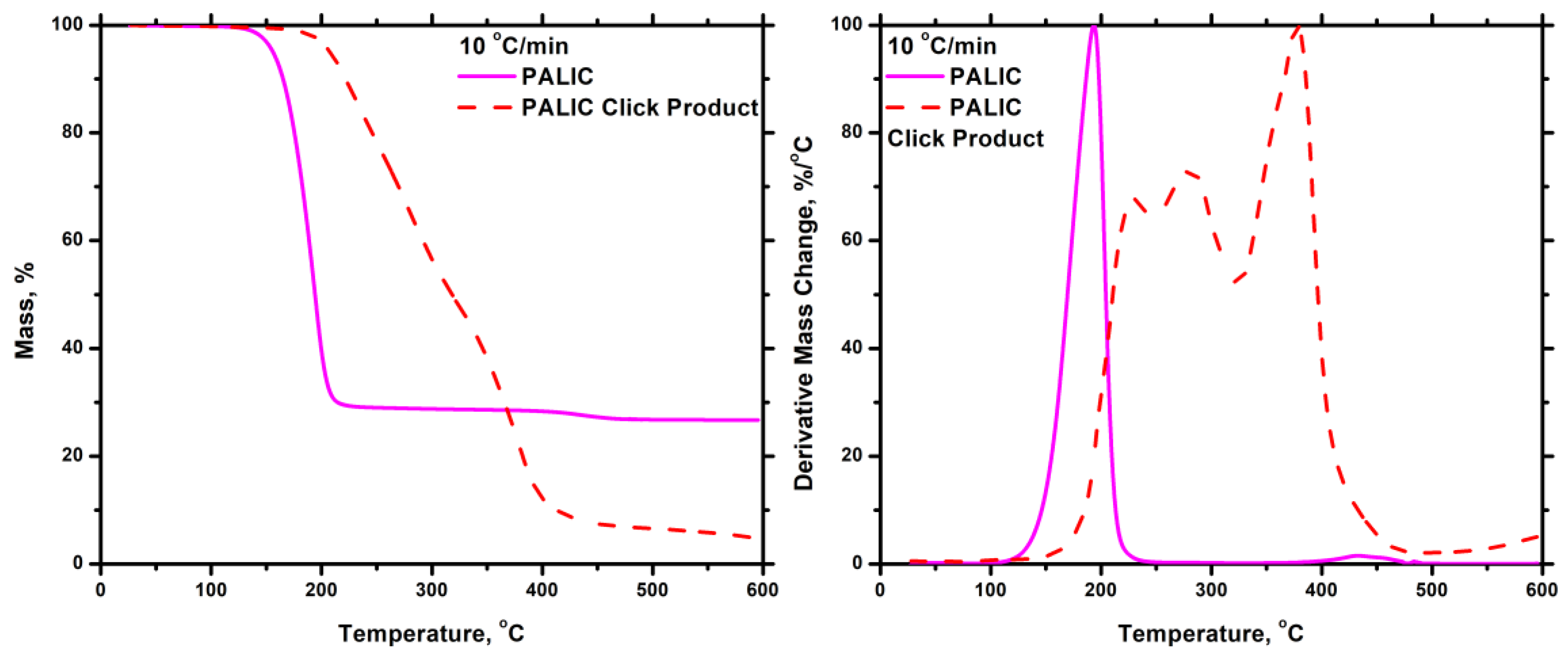
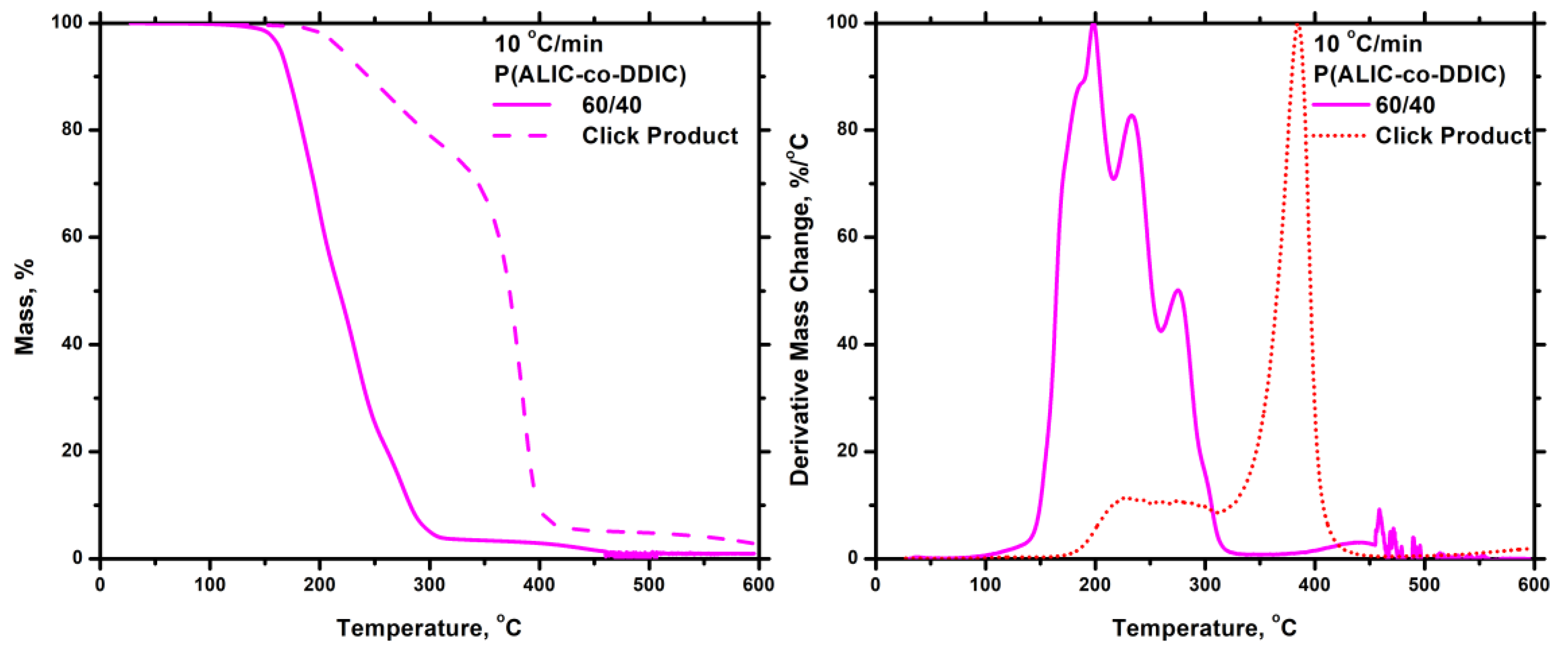
The effect of the click reaction, with the incorporation of the aromatic groups along the polyisocyanates chain, to the thermal stability of the PALIC homopolymer and the P(ALIC-co-DDIC) 60/40 statistical copolymer was studied by TGA measurements carried out at a heating rate of 10 °C/min. The thermograms prior and after the click reaction are shown in Figure 22 and Figure 23 for the homopolymer and the statistical copolymer respectively. As previously stated, the PALIC homopolymer is thermally unstable, exhibiting degradation at relatively low temperatures. However, the product of the click reaction in PALIC displays enhanced thermal stability, with the main degradation peak appearing near 400 °C. Two additional minor peaks are observed at slightly lower temperatures, attributed to the presence of unreacted ALIC monomeric units, since the yield of the click reaction was 60%. A similar observation is made in the case of the click reaction product in sample P(ALIC-co-DDIC) 60-40. The thermal stability is even more pronounced in this case due to the higher yield of the click reaction, which was close to 90% The substantial enhancement of the thermal stability of the products can be attributed to the successful incorporation of the phenyl groups on the polymer structure. Therefore, these post-polymerization reactions may offer the possibility to manipulate the thermal stability of polyisocyanates.
Figure 22. TGA (left) and DTG (right) plots for the PALIC and the click Product at 10 °C/min.
Preprints 141501 g022
Figure 23. TGA & DTG plots for the P(ALIC-co-DDIC) 60/40 & click Product at 10 °C/min.
Preprints 141501 g023

4. Conclusions

Coordination polymerization techniques were employed for the synthesis of statistical copolymers of n-dodecyl isocyanate, DDIC, and allyl isocyanate, ALIC, using the chiral half-titanocene complex CpTiCl2(O-(S)-2-Bu) as initiator. Samples of narrow moleullar weight distribution and relatively high molecular weights were obtained. The monomer reactivity ratios of the statistical copolymers were calculated assuming that the terminal model applies for the copolymerization system. Both linear graphical methods and the computer program COPOINT were used revealing the existence of a mutiblock structure with longer ALIC than DDIC sequences. The distribution of the monomer dyads along with their mean sequence lengths were also calculated confirming the previously reported results. The thermal properties of these samples were studied by Differential Scanning Calorimetry, DSC, measurements, showing that PDDIC is a semicrystalline polymer, whereas PALIC adopts a stable helical structure, without showing any clear thermal transition between -100 and 100 °C. It was also found that the multiblock structure of the statistical copolymers and the relatively small mean sequence length of the DDIC sequences restricts the crystallization. The kinetics of the thermal decomposition of the statistical copolymers was studied by Thermogravimetric Analysis, TGA, and Differential Thermogravimetry, DTG, and the activation energy of this process was calculated employing several theoretical models. It was found that the respective homopolymers follow a different degradation mechanism and have a large difference in thermal stability, PDDIC being much more thermally stable than PALIC. Block copolymers P[DDIC-b-(DDIC-co-ALIC)] were also synthesized by sequential addition of monomers and coordination polymerization methodologies. The samples were characterized by nuclear magnetic resonance, NMR, spectroscopy, size exclusion chromatography, SEC, and DSC. The thermal stability of the blocks was also studied by TGA and DTG and compared to the corresponding statistical copolymers. It was clear that the crystallization is less restricted for these samples, due to the presence of the pure PDDIC block, whereas the thermal degradation takes place in mainly two steps corresponding to the degradation profiles of the respective homopolymers.Thiol-ene click post-polymerization reaction was performed to introduce aromatic groups along the polyisocyanate chain. The reaction was highly efficient and afforded products with considerably improved thermal stability compared to their parent materials.

Supplementary Materials

The following supporting information can be downloaded at the website of this paper posted on Preprints.org. The SIS contains basic theory for the calculation of the reactivity ratios of the monomers and the kinetics of thermal decomposition. The following figures are also included: Figure S1. SEC traces of PALIC homopolymers from the kinetic experiments. Figure S2. SEC traces of PDDIC homopolymer. Figure S3. F–R plot. Figure S4. inv. F–R plot. Figure S5. K–T plot. Figure S6. ext. K–T plot. Figure S7. DSC traces for the statistical copolymers P(ALIC-co-DDIC) 50/50, 60/40 and 80/20. Figure S8. DSC traces of the block copolymers P[DDIC-b-(DDIC-co-ALIC)] 20/80 and 80/20 block copolymers. Figure S9. TGA (left) & DTG (right) plots for the P(ALIC-co-DDIC) 20/80 at all heating rates. Figure S10. TGA (left) & DTG (right) plots for the P(ALIC-co-DDIC) 40/60 at all heating rates. Figure S11. TGA (left) & DTG (right) plots for the P(ALIC-co-DDIC) 50/50 at all heating rates. Figure S12. TGA (left) & DTG (right) plots for the P(ALIC-co-DDIC) 60/40 at all heating rates. Figure S13. TGA (left) & DTG (right) plots for the P(ALIC-co-DDIC) 50-50 at all heating rates. Figure S14. TGA (left) & DTG (right) plots for the P(ALIC-co-DDIC) 40-60 at all heating rates. Figure S15. TGA (left) & DTG (right) plots for the P(ALIC-co-DDIC) 60-40 at all heating rates. Figure S16. TGA (left) & DTG (right) plots for the P(ALIC-co-DDIC) 80-20 at all heating rates. Figure S17. OFW (left) and KAS (right) plots for the PALIC. Figure S18. OFW (left) and KAS (right) plots for the PDDIC. Figure S19. DTG plots for the PALIC and DDIC homopolymers and P[DDIC-b-(DDIC-co-ALIC)] 50/50 block copolymer at 10 °C. The following tables are included in the supporting information section: Table S1. Parameters for the synthesis of the statistical copolymers P(ALIC-co-PDDIC). Table S2. Dyad sequences and mean sequence lengths for the statistical copolymers P(ALIC-co-PDDIC). Table S3. Molecular weights of the products of the click reactions. Table S4. Models for the thermal decomposition of PALIC. Table S5. Models for the thermal decomposition of PDDIC.

Author Contributions

Marinos Pitsikalis was responsible for this work and the design of the experiments. He also conducted TGA measurements. Maria Iatrou and Aikaterini Katara synthesized and characterized the samples. Apostolos Kyritsis and Panagiotis Klonos were responsible for the investigation of the thermal properties of the materials. All authors were involved in reading and approving the final manuscript.

Data Availability Statement

The original contributions presented in the study are included in the article; further inquiries can be directed to the corresponding author.

Conflicts of Interest

The authors declare no conflict of interest.

References

  1. Kuran, W. Principles of coordination polymerization. J. Wiley & Sons LTD: Chichester, England, 2001. [Google Scholar]
  2. Novokshonova, L.A.; Zakharov, V.A. Kinetics of Olefin Polymerization and Active Sites of Heterogeneous Ziegler-Natta Catalysts. Adv. Polym. Sci. 2013, 257, 99–134. [Google Scholar] [CrossRef]
  3. Soga, K.; Shiono, T. Ziegler-Natta catalysts for olefin polymerizations. Progr. Polym. Sci. 1997, 22, 1503–1546. [Google Scholar] [CrossRef]
  4. Baugh, L.S.; Canich, J.A.M. (Eds.) Stereospecific polymerization with single site catalysts. CRC Press, Taylor and Francis Group: Boca Raton, USA, 2008. [Google Scholar]
  5. Brintzinger, H.H.; Fischer, D. Development of ansa-Metallocene Catalysts for Isotactic Olefin Polymerization. Adv. Polym. Sci. 2013, 258, 29–42. [Google Scholar] [CrossRef]
  6. Karanikolopoulos, G.; Batis, C.; Pitsikalis, M.; Hadjichristidis, N. The influence of the nature of the catalytic systems on the zirconocenes catalyzed polymerization of alkyl methacrylates. Macromol. Chem. Phys. 2003, 204, 831–840. [Google Scholar] [CrossRef]
  7. Chen, E.Y.X. Coordination Polymerization of Polar Vinyl Monomers by Single-Site Metal Catalysts. Chem. Rev. 2009, 109, 5157–5214. [Google Scholar] [CrossRef] [PubMed]
  8. Kourti, M.E.; Fotinogiannopoulou, G.; Fega, E.; Pitsikalis, M. Statistical Copolymers of Methyl and Phenyl Oxazoline by Metallocene Mediated Cationic Polymerization. Reactivity Ratios and Kinetics of Thermal Decomposition. J. Macromol. Sci. Part A: Pure Appl. Chem. 2015, 52, 630–641. [Google Scholar] [CrossRef]
  9. Batagianni, E.; Marathianos, A.; Koraki, A.; Maroudas, A.-P.; Pitsikalis, M. Metallocene-mediated cationic polymerization of vinyl ethers: Kinetics of polymerization and synthesis and characterization of statistical copolymers. J. Macromol. Sci. Part A: Pure Appl. Chem. 2016, 53, 140–151. [Google Scholar] [CrossRef]
  10. Zouganelis, S.; Choinopoulos, I.; Goulas, I.; Pitsikalis, M. Statistical copolymers of n-butyl vinyl ether and 2-chloroethyl vinyl ether via metallocene-mediated cationic polymerization. A scaffold for the synthesis of graft copolymers. Polymers 2019, 11, 1510. [Google Scholar] [CrossRef] [PubMed]
  11. Kostakis, K.; Mourmouris, S.; Karanikolopoulos, G.; Pitsikalis, M.; Hadjichristidis, N. Ring-opening polymerization of lactones using zirconocene catalytic systems. Block copolymerization with methyl methacrylate. J. Polym. Sci. Polym. Chem. Ed. 2007, 45, 3524–3537. [Google Scholar] [CrossRef]
  12. Khosravi, E.; Szymanska-Buzar, T. (Eds.) Ring opening metathesis polymerization and realated chemistry NATO Science Series. Springer-Science + Business Media: B.V. Dordrecht, 2002; Volume 56. [Google Scholar]
  13. Grubbs, R.H. (Ed.) Handbook of metathesis. Wiley-VCH: Weinheim, 2003. [Google Scholar]
  14. Giambastiani, G.; Cámpora, J. (Eds.) Olefin Upgrading catalysis by nitrogen-based metal complexes I. State of the art and perspectives. In Catalysis by metal complexes; Springer, 2011; Volume 35. [Google Scholar]
  15. Osakada, K. Olefin Polymerization with Non-metallocene Catalysts (Early Transition Metals). Organometallic Reactions and Polymerization 2014, 85, 89–117. [Google Scholar] [CrossRef]
  16. Takeuchi, D. Recent progress in olefin polymerization catalyzed by transition metal complexes: new catalysts and new reactions. Dalton Trans. 2010, 39, 311–328. [Google Scholar] [CrossRef]
  17. Wu, X.; Tamm, M. Transition metal complexes supported by highly basic imidazolin-2-iminato and imidazolin-2-imine N-donor ligands. Coord. Chem. Rev. 2014, 260, 116–138. [Google Scholar] [CrossRef]
  18. Batis, C.; Karanikolopoulos, G.; Pitsikalis, M.; Hadjichristidis, N. Complex macromolecular architectures utilizing metallocene catalysts. Macromolecules 2003, 36, 9763–9774. [Google Scholar] [CrossRef]
  19. Wang, Y.; Lai, J.; Gou, Q.Q.; Gao, R.; Zheng, G.; Zhang, R.D.; Song, Z.H.; Yue, Q.; Guo, Z.F. Development of well-defined olefin block (co)polymers achieved by late transition metal catalysts: Catalyst, synthesis and characterization. Coord. Chem. Rev. 2024, 522, 216195. [Google Scholar] [CrossRef]
  20. Βur, A.J.; Fetters, L.J. The Chain Structure, Polymerization and Conformation of Polyisocyanates. Chem. Rev. 1976, 76, 727–745. [Google Scholar] [CrossRef]
  21. Patten, T.E.; Novak, B.M. Organotitanium(IV) compounds as catalysts for the polymerization of isocyanates: the polymerization of isocyanates with functionalized side chains. Macromolecules 1993, 26, 436–439. [Google Scholar] [CrossRef]
  22. Patten, T.E.; Novak, B. "Living" titanium(IV) catalyzed coordination polymerizations of isocyanates. J. Am. Chem. Soc. 1991, 113, 5065–5066. [Google Scholar] [CrossRef]
  23. Patten, T.E.; Novak, B.M. Living Organotitanium(IV)-Catalyzed Polymerizations of Isocyanates. J. Am. Chem. Soc. 1996, 118, 1906–1916. [Google Scholar] [CrossRef]
  24. Chae, C.-G.; Seo, H.-B.; Lee, J.-S. Living anionic polymerization of isocyanates in Anionic Polymerization. Priciples, practice, strength, consequences and applications. Hadjichristidis, N., Hirao, A., Eds.; Springer: Japan, 2015; pp. 339–386. [Google Scholar] [CrossRef]
  25. Shashoua, V.E.; Sweeny, W.E.; Tiet, R.F. The Homopolymerization of Monoisocyanates. J. Am. Chem. Soc. 1960, 82, 866–873. [Google Scholar] [CrossRef]
  26. Shashoua, V.E. The Homopolymerization of Monoisocyanates. J. Am. Chem. Soc 1959, 81, 3156. [Google Scholar] [CrossRef]
  27. Shin, Y.D.; Ahn, J.H.; Lee, J. Anionic polymerization of isocyanates with optical functionalities. Polymer 2001, 42, 7979–7985. [Google Scholar] [CrossRef]
  28. Shin, Y.D.; Kim, S.Y.; Ahn, J.H.; Lee, J.S. Synthesis of Poly(n-hexyl isocyanate) by Controlled Anionic Polymerization in the Presence of NaBPh4. Macromolecules 2001, 34, 2408–2410. [Google Scholar] [CrossRef]
  29. Ahn, J.H.; Shin, Y.D.; Kim, S.Y.; Lee, J.S. Synthesis of well-defined block copolymers of n-hexyl isocyanate with isoprene by living anionic polymerization. Polymer 2003, 44, 3847–3854. [Google Scholar] [CrossRef]
  30. Lee, J.-S.; Ryu, S.-W. Anionic living polymerization of 3-(triethoxysilyl)propyl isicyanate. Macromolecules 1999, 32, 2085–2087. [Google Scholar] [CrossRef]
  31. Kang, N.-G.; Kang, B.-G.; Koh, H.-D.; Changez, M.; Lee, J.-S. Block copolymers containing pyridine moieties: Precise synthesis and applications. React. Funct. Polym. 2009, 69, 470–479. [Google Scholar] [CrossRef]
  32. Vazaios, A.; Pitsikalis, M.; Hadjichristidis, N. Triblock copolymers and penatblock terpolymers of n-hexyl isocyanate with styrene and isoprene: synthesis, characterization and thermal properties. J. Polym. Sci. Polym. Chem. Ed. 2003, 41, 3094–3102. [Google Scholar] [CrossRef]
  33. Zorba, G.; Vazaios, A.; Pitsikalis, M.; Hadjichristidis, N. Anionic polymerization of n-hexyl isocyanate with monofunctional initiators. Application in the synthesis of diblock copolymers with styrene and isoprene. J. Polym. Sci. Polym. Chem. Ed. 2005, 43, 3533–3542. [Google Scholar] [CrossRef]
  34. Min, J.; Yoo, H.-S.; Shah, P.N.; Chae, C.-G.; Lee, J.-S. Enolate anionic initiator, sodium deoxybenzoin, for leading living natures by formation of aggregates at the growth chain ends. J. Polym. Sci. Polym. Chem. Ed. 2013, 51, 1742–1748. [Google Scholar] [CrossRef]
  35. Ann, J.-H.; Shin, Y.-D.; Nath, G.Y.; Park, S.-Y.; Rahman, M.S.; Samal, S.; Lee, J.-S. Unprecedented Control over Polymerization of n-Hexyl Isocyanate using an Anionic Initiator Having Synchronized Function of Chain-End Protection. J. Am. Chem. Soc. 2005, 127, 4132–4133. [Google Scholar] [CrossRef]
  36. Rahman, M.S.; Yoo, H.-S.; Changez, M.; Lee, J.-S. Living anionic polymerization of isocyanate containing a reactive carbamate group. Macromolecules 2009, 42, 3927–3932. [Google Scholar] [CrossRef]
  37. Zorba, G.; Pitsikalis, M.; Hadjichristidis, N. Novel well-defined star homopolymers and star-block copolymers of poly(n-hexyl isocyanate) by anionic polymerization. J. Polym. Sci. Polym. Chem. Ed. 2007, 45, 2387–2399. [Google Scholar] [CrossRef]
  38. Wu, J.; Pearce, E.M.; Kwei, T.K. A Novel Rod−Coil Block Copolymer and Its Compatible Blends. Macromolecules 2001, 34, 1828–1836. [Google Scholar] [CrossRef]
  39. Liu, H.; Deng, J.; Wu, Y.; Zhang, L. Amphiphilic triblock terpolymers of poly(n-hexyl isocyanate) and poly(ethylene glycol): Preparation and characterization. Polymer 2012, 53, 5717–5722. [Google Scholar] [CrossRef]
  40. Hoff, S.M.; Novak, B.M. Complex architectures through living polymerizations. The synthesis of "once-broken worms" and triblock copolymers using bimetallic initiators. Macromolecules 1993, 26, 4067–4069. [Google Scholar] [CrossRef]
  41. Touris, A.; Kostakis, K.; Mourmouris, S.; Kotzabasakis, V.; Pitsikalis, M.; Hadjichristidis, N. Complex Macromolecular Architectures Based on n-Hexyl Isocyanate and ϵ-Caprolactone Using Titanium-Mediated Coordination Polymerization. Macromolecules 2008, 41, 2426–2438. [Google Scholar] [CrossRef]
  42. Hoff, S.M.; Novak, B.M. Synthesis and Characterization of Wormlike Three-Arm Poly(n-hexyl isocyanate) Star Polymers. Macromolecules 2001, 34, 3849–3855. [Google Scholar] [CrossRef]
  43. Choinopoulos, I.; Patias, G.; Koinis, S.; Pitsikalis, M. Synthesis and characterization of chiral poly(l-lactide-b-hexyl isocyanate) macromonomers with norbornenyl end groups and their homopolymerization through ring opening metathesis polymerization to afford polymer brushes. J. Polym. Sci. Part A: Polym. Chem. 2017, 55, 1102–1112. [Google Scholar] [CrossRef]
  44. Choinopoulos, I.; Patias, G.; Koinis, S.; Pitsikalis, M. Synthesis and characterization of brush diblock and triblock copolymers bearing polynorbornene backbone and poly(l-lactide) and/or poly(hexyl isocyanate) side chains by a combination of coordination and ring opening metathesis polymerization. J. Polym. Sci. Part A: Polym. Chem. 2017, 55, 3455–3465. [Google Scholar] [CrossRef]
  45. Bhatt, M.P.; Du, J.; Rainbolt, E.A.; Pathiranage, T.M.S.K.; Huang, P.; Reuther, J.F.; Novak, B.M.; Biewer, M.C.; Stefan, M.C. A semiconducting liquid crystalline regioregular poly(3-hexylthiophene) and nematic poly(n-hexyl isocyanate) and its application in bulk heterojunction solar cells. J. Mater. Chem. 2014, 2, 16148–16156. [Google Scholar] [CrossRef]
  46. Miyake, G.M.; Weitekamp, R.A.; Piunova, V.A.; Grubbs, R.H. Synthesis of isocyanate-based brush block copolymers and their rapid self-assembly to infrared-reflecting photonic crystals. J. Am. Chem. Soc. 2012, 134, 14249–14254. [Google Scholar] [CrossRef] [PubMed]
  47. Satoh, T.; Nishikawa, N.; Kawato, D.; Suemasa, D.; Jung, S.; Kim, Y.Y.; Ree, M.; Kakuchi, T. Precise synthesis of a rod-coil miktoarm star copolymer containing poly(n-hexyl isocyanate) and aliphatic ester. Polym. Chem. 2014, 5, 588–599. [Google Scholar] [CrossRef]
  48. Kawaguchi, S.; Mihara, T.; Kikuchi, M.; Lien, L.T.N.; Nagai, K. Synthesis of Methacrylate-Ended Poly(n-hexyl isocyanate) Rodlike Macromonomers and Their Radical Copolymerization Behavior. Macromolecules 2007, 40, 950–958. [Google Scholar] [CrossRef]
  49. Deike, S.; Binder, W.H. Induction of Chirality in β-Turn Mimetic Polymer Conjugates via Postpolymerization “Click” Coupling. Macromolecules 2017, 50, 2637–2644. [Google Scholar] [CrossRef]
  50. Schneider, N.S.; Furusaki, S. Chain stiffness in polyisocyanates. J. Polym. Sci. Part A 1965, 3, 933–948. [Google Scholar] [CrossRef]
  51. Zhao, W.; Kloczkowski, A.; Mark, J.E. Main-Chain Lyotropic Liquid-Crystalline Elastomers. 1. Syntheses of Cross-Linked Polyisocyanate Gels Acquiring Liquid-Crystalline Behavior in the Swollen State. Macromolecules 1996, 26, 2796–2804. [Google Scholar] [CrossRef]
  52. Gu, H.; Sato, T.; Teramoto, A.; Varichon, L.; Green, M.M. Molecular Mechanisms for the Optical Activities of Polyisocyanates Induced by Intramolecular Chiral Perturbations. Polym. J. 1997, 29, 77–84. [Google Scholar] [CrossRef]
  53. Tonelli, A. Conformational Characteristics of the Poly(n-alkyl isocyanates). Macromolecules 1974, 7, 628–631. [Google Scholar] [CrossRef]
  54. Lecomte, L.; Desreux, V. Dielectric properties of poly(4-methylphenylisocyanate) and poly(4-methoxyphenylisocyanate) in solution. Eur. Polym. J. 1976, 12, 741–747. [Google Scholar] [CrossRef]
  55. Chen, J.T.; Thomas, E.L.; Ober, C.K.; Mao, G.P. Self-Assembled Smectic Phases in Rod-Coil Block Copolymers. Science 1996, 273, 343–346. [Google Scholar] [CrossRef]
  56. Chen, J.T.; Thomas, E.L.; Ober, C.K.; Hwang, S.S. Zigzag morphology of a poly(styrene-b-hexyl isocyanate) rod-coil block copolymer. Macromolecules 1995, 28, 1688–1697. [Google Scholar] [CrossRef]
  57. Vazaios, A.; Touris, A.; Echeverria, M.; Zorba, G.; Pitsikalis, M. Micellization behaviour of linear and nonlinear block copolymers based on poly(n-hexyl isocyanate) in selective solvents. Polymers 2020, 12, 1678. [Google Scholar] [CrossRef] [PubMed]
  58. Green, M.M.; Peterson, N.C.; Sato, T.; Teramoto, A.; Cook, R. A Helical Polymer with a Cooperative Response to Chiral Information. Science 1995, 268, 1860–1866. [Google Scholar] [CrossRef] [PubMed]
  59. Okamoto, Y.; Matsuda, M.; Nakano, T.; Yashima, E. Asymmetric Polymerization of Isocyanates with Optically Active Anionic Initiators. Polym. J. 1993, 4, 391–396. [Google Scholar] [CrossRef]
  60. Μayer, S.; Zentel, R. A new chiral polyisocyanate: an optical switch triggered by a small amount of photochromic side groups. Macromol. Chem. Phys. 1998, 199, 1675–1682. [Google Scholar] [CrossRef]
  61. Baudis, S.; Ligon, S.C.; Seidler, K.; Weigel, G.; Grasl, C.; Bergmeister, H.; Schima, H.; Liska, R. Hard-Block Degradable Thermoplastic Urethane-Elastomers for Electrospun Vascular Prostheses. J. Polym. Sci. Part A: Polym. Chem. 2012, 50, 1272–1280. [Google Scholar] [CrossRef]
  62. Godfrey, R.A.; Miller, G.W. Block polymers of isocyanates and vinyl monomers by homogeneous anionic polymerization. J. Polym. Sci. 1969, 7, 2387–2404. [Google Scholar] [CrossRef]
  63. Chae, C.-G.; Shah, P.N.; Min, J.; Seo, H.-B.; Lee, J.-S. Synthesis of novel amphiphilic polyisocyanate block copolymer with hydroxyl side group. Macromolecules 2014, 47, 1561–1569. [Google Scholar] [CrossRef]
  64. Patten, T.E.; Novak, B.M. Well-defined polyisocyanates via organotitanium(IV) catalyzed living polymerization of isocyanates. Makromol. Chem. Macromol. Symp. 1993, 67, 203–211. [Google Scholar] [CrossRef]
  65. Zhao, W.; Kloczkowski, A.; Mark, J.E.; Erman, B.; Bahar, I. Main-chain lyotropic liquid-crystalline elastomers. 1. Syntheses of cross-linked polyisocyanate gels acquiring liquid-crystalline behavior in the swollen state. Macromolecules 1996, 29, 2796–2804. [Google Scholar] [CrossRef]
  66. Ratkanthwar, K.; Zhao, J.; Zhang, H.; Hadjichristidis, N.; Mays, J.W. Schlenk techniques for anioinic polymerization. In Anionic Polymerization: Principles, practice, strength, consequences and applications; Hadjichristidis, N., Hirao, A., Eds.; Springer: Japan, 2015. [Google Scholar] [CrossRef]
  67. Hadjichristidis, N.; Iatrou, H.; Pispas, S.; Pitsikalis, M. Anionic polymerization: High vacuum techniques. J. Polym. Sci. Part A Polym. Chem. 2000, 38, 3211–3234. [Google Scholar] [CrossRef]
  68. Hagiopol, C. Copolymerization: Toward a Systematic Approach. Springer Science & Business Media: Berlin, Germany, 2012. [Google Scholar]
  69. Fineman, M.; Ross, S.D. Linear method for determining monomer reactivity ratios in copolymerization. J. Macromol. Sci. Part: A Chem. 1950, 5, 259–262. [Google Scholar] [CrossRef]
  70. Kelen, T.; Tüdos, F. Analysis of the Linear Methods for Determining Copolymerization Reactivity Ratios. I. A New Improved Linear Graphic Method. J. Macromol. Sci. Part: A Chem. 1975, 9, 1–27. [Google Scholar] [CrossRef]
  71. Beginn, U. COPOINT—A simple computer program to determine copolymerization parameters by numerical integration. E-Polymers 2005, 5, 759–773. [Google Scholar] [CrossRef]
  72. Odian, G. Principles of Polymerization. John Wiley & Sons: Hoboken, NJ, USA, 2004. [Google Scholar]
  73. Igarashi, S. Representation of composition and blockiness of the copolymer by a triangular coordinate system. J. Polym. Sci. Part: B Polym. Lett. 1963, 1, 359–363. [Google Scholar] [CrossRef]
  74. Elias, H.G. Synthesis, Materials, and Technology. Springer: New York, 1984; Volume 2. [Google Scholar]
  75. Mantzara, D.; Katara, A.; Panteli, M.; Choinopoulos, I.; Pitsikalis, M. Synthesis and characterization of statistical and block copolymers of n-hexyl isocyanate and 2-chloroethyl isocyanate via coordination polymerization. J. Polym. Sci. 2024, 62, 2484–2502. [Google Scholar] [CrossRef]
  76. Katara, A.; Mantzara, D.; Panteli, M.; Choinopoulos, I.; Pitsikalis, M. Statistical and Block Copolymers of n-Hexyl Isocyanate and 2-Phenylethyl Isocyanate via Coordination Polymerization. Synthesis, Characterization and Thermal Properties. Eur. Polym. J. 2023, 199, 112441. [Google Scholar] [CrossRef]
  77. Panteli, M.; Mantzara, D.; Katara, A.; Choinopoulos, I.; Pitsikalis, M. Synthesis and characterization of Statistical and Block Copolymers of n-Hexyl Isocyanate and 3-(triethoxysilyl) propyl Isocyanate via Coordination Polymerization. Polymers 2023, 15, 4113. [Google Scholar] [CrossRef]
  78. Lowe, A.B. Thiol-ene “click” reactions and recent applications in polymer and materials synthesis. Polymer Chemistry 2010, 1, 17–36. [Google Scholar] [CrossRef]
  79. Jordan, E.F., Jr. Side-chain crystallinity. III. Influence of side-chain crystallinity on the glass transition temperatures of selected copolymers incorporating n-octadecyl acrylate or vinyl stearate. J. Polym. Sci. Part A-1 1971, 9, 3367–3378. [Google Scholar] [CrossRef]
  80. Alig, I.; Jarek, M.; Hellmann, G.P. Restricted segmental mobility in side-chain crystalline comblike polymers, studied by dielectric relaxation measurements. Macromolecules 1998, 31, 2245–2251. [Google Scholar] [CrossRef]
  81. Ozawa, T. A new method of analyzing thermogravimetric data. Bull. Chem. Soc. Jpn. 1965, 38, 1881–1886. [Google Scholar] [CrossRef]
  82. Flynn, J.H.; Wall, L.A. A quick, direct method for the determination of activation energy from thermogravimetric data. J. Polym. Sci. Polym. Lett. Ed. 1966, 4, 323–328. [Google Scholar] [CrossRef]
  83. Ozawa, T. Kinetic analysis of derivative curves in thermal analysis. J. Therm. Anal. Calorim. 1970, 2, 301–324. [Google Scholar] [CrossRef]
  84. Kissinger, H.E. Reaction Kinetics in Differential Thermal Analysis. Anal. Chem. 1957, 29, 1702–1706. [Google Scholar] [CrossRef]
  85. Vyazovkin, S.; Sbirrazzuoli, N. Isoconversional Kinetic Analysis of Thermally Stimulated Processes in Polymers. Macromol. Rapid Commun. 2006, 27, 1515–1532. [Google Scholar] [CrossRef]
  86. Doyle, C.D. Kinetic analysis of thermogravimetric data. J. Appl. Polym. Sci. 1961, 5, 285–292. [Google Scholar] [CrossRef]
  87. Coats, A.W.; Redfern, J. Kinetic parameters from thermogravimetric data. Nature 1964, 201, 68–69. [Google Scholar] [CrossRef]
  88. Trache, D.; Abdelaziz, A.; Siouani, B. A simple and linear isoconversional method to determine the pre-exponential factors and the mathematical reaction mechanism functions. J. Therm. Anal. Calorim. 2017, 128, 335–348. [Google Scholar] [CrossRef]
Disclaimer/Publisher’s Note: The statements, opinions and data contained in all publications are solely those of the individual author(s) and contributor(s) and not of MDPI and/or the editor(s). MDPI and/or the editor(s) disclaim responsibility for any injury to people or property resulting from any ideas, methods, instructions or products referred to in the content.
Copyright: This open access article is published under a Creative Commons CC BY 4.0 license, which permit the free download, distribution, and reuse, provided that the author and preprint are cited in any reuse.
Prerpints.org logo

Preprints.org is a free preprint server supported by MDPI in Basel, Switzerland.

Subscribe

Disclaimer

Terms of Use

Privacy Policy

Privacy Settings

© 2025 MDPI (Basel, Switzerland) unless otherwise stated