

Submitted:
01 December 2024
Posted:
03 December 2024
You are already at the latest version
Abstract
Existing studies have established reliable methods for estimating carbon emissions from food consumption, yet there remains a lack of quantitative analysis on the decarbonization effects of energy transition and resource recycling. This study integrates life cycle analysis and scenario analysis, based on data from 2006 to 2020, to conduct an empirical investigation of four provincial capital cities (Zhengzhou, Xi'an, Jinan, and Taiyuan) in the lower and middle reaches of the Yellow River. The study explores the potential for carbon reduction in food consumption and examines the driving effects of energy transition and resource recycling. The results indicate that: (1) Per capita carbon emissions from food consumption decreased after 2016.; (2) Incineration power generation has a significantly higher carbon reduction effect than landfilling. The proportion of carbon emissions from food waste disposal decreases from 20% to around 6%, with the decarbonization potential of recycling transformation being 8.8%, 8.3%, 11.5%, and 14.4%, respectively. The findings suggest that promoting the widespread adoption of new energy vehicles, increasing the share of renewable energy in power generation, optimizing food recycling technologies, and reducing food waste are crucial for achieving future carbon reductions in urban food consumption.
Keywords:
Food consumption
; Urban residents
; Carbon emission
; Life cycle assessment
; scenario analysis
1. Introduction
Energy transition and resource recycling are key measures in the United Nations' Sustainable Development Agenda to combat climate change. Two-thirds of greenhouse gases originate from carbon emissions due to energy use [1,2]. By transitioning to cleaner, renewable energy, we can reduce dependence on fossil fuels and lower the risks of climate change [3]. According to the International Energy Agency, thanks to the rapid advancement of technologies such as solar, wind, nuclear energy transitions, and electric vehicles, the increase in global energy-related carbon dioxide emissions in 2023 was lower than in 2022 [4]. Resource recycling is also crucial for reducing greenhouse gas emissions [5]. It is estimated that global waste generation will double by 2050 and triple by 2100 [6,7]. Enhancing recycling capabilities and improving waste management systems can reduce global carbon dioxide emissions by up to 15% [7].
Food consumption is a major contributor to global greenhouse gas emissions. Research indicates that emissions associated with food consumption account for more than 25% of global human-related greenhouse gas emissions [8]. The constant demand for food exacerbates the challenges of climate governance due to the carbon emissions linked to production, transportation, and consumption [9,10]. The rapid pace of urbanization has further intensified this issue, with urban CO2 emissions now representing over 80% of total emissions. Studies across multiple countries have shown that food consumption encompasses a wide range of sectors, offering substantial potential for emission reductions [11,12,13].
A key example of energy transition within the food consumption sector is the electrification of vehicles. The ongoing shift towards new energy sources in vehicle fleets can significantly contribute to low-carbon development in the food transportation sector [14,15]. As the scale of renewable energy generation increases, the average carbon emission factor of the grid gradually decreases, which further reduces carbon emissions from food transportation and storage [16,17,18]. Additionally, improving the recycling and reuse of kitchen waste can enhance the overall recycling rate of food consumption and help lower associated carbon emissions [19]. Current methods for treating kitchen waste include landfilling, incineration for power generation, anaerobic digestion, and composting [20,21]. Compared to traditional landfilling, incineration for power generation and anaerobic digestion not only convert waste materials into usable energy but also offer stronger recycling capabilities, contributing positively to reducing carbon emissions from kitchen waste disposal [22,23].
2. Literature Review
Life cycle assessment (LCA) is a systematic and comprehensive tool widely used for accounting carbon emissions in food production, consumption, and the broader food industry. Research on the life cycle carbon emissions of food consumption typically focuses on three key stages: transportation, storage and reprocessing, and recycling.
The first aspect focuses on carbon emissions during the food transportation stage. Research indicates that emissions from food transportation represent a relatively small portion of total food consumption emissions, around 1% [24]. However, as urbanization increases and living standards rise, this share is expected to grow [25,26,27]. The type of food and consumption patterns have a significant influence on transportation-related carbon emissions [28]. For example, emissions from transporting nut products by truck account for as much as 19% of their total emissions, which is notably higher than for other food categories [28]. Similarly, for frozen retail products like dumplings, the transportation phase contributes the largest share of emissions [29]. The mode of transportation also plays a crucial role in determining the carbon footprint [30,31,32], and optimizing food distribution methods can significantly reduce transport-related emissions [33,34,35]. However, few studies have explored the impact of transportation electrification on carbon emissions. Research on electric vehicles (EVs) indicates that they can significantly reduce carbon emissions, with emissions from EVs amounting to only 37.05% of those from conventional fuel vehicles [36,37,38]. The carbon emissions of EVs depend largely on the energy mix of the power sector. To achieve substantial low-carbon benefits, it is essential to minimize fossil fuel consumption in electricity generation [39,40]. Therefore, calculating the carbon emissions of electrically powered food transport vehicles over time requires accounting for the energy structure of the power sector during each period and selecting appropriate emission factors [41,42].
The second aspect focuses on carbon emissions during the food storage and processing stages. Research consistently shows that these stages account for a significant portion of total carbon emissions, making it crucial to optimize energy consumption and find ways to reduce emissions from storage and processing [43,44,45]. Studies have highlighted that production, processing, and household activities such as refrigeration and cooking contribute the largest share of total energy use within the food system [46,47,48]. Recent research has further examined the specific characteristics of food storage and processing. Carbon emissions from cooking are heavily influenced by the energy mix. For instance, household cooking energy has transitioned from traditional sources like wood and coal to cleaner alternatives such as electricity and natural gas [49,50]. Additionally, dietary patterns impact cooking-related carbon emissions, with vegetarian diets shown to potentially reduce greenhouse gas emissions [51]. Household size also significantly influences indirect carbon emissions from food storage and processing. Economic development and shifting lifestyle trends, such as adult children living independently, have led to increased use of carbon-emitting appliances like refrigerators [52,53].
The third aspect examines carbon emissions in the food recycling and utilization stage. Food waste management—through methods such as incineration and landfill disposal of kitchen waste—functions as both a carbon source and a carbon sink [54,55,56]. Existing research primarily focuses on three key areas. First, studies compare carbon emissions across different disposal methods. Anaerobic digestion offers the highest recycling rate and carbon reduction potential, though it requires high facility stability. In contrast, waste incineration, while less efficient in terms of recycling, can achieve greater carbon reduction when combined with cogeneration [20,57,58]. The second area of focus is the variation in emissions from kitchen waste disposal across different cities. Methods such as incineration, fermentation, and composting have effectively reduced the environmental impact of food-related emissions in cities like Xiamen [59]. In Hefei, incineration has proven more effective than composting, reducing greenhouse gas emissions by 38.93% by avoiding landfills [60]. In Beijing, anaerobic digestion of kitchen waste has delivered significant economic and environmental benefits [52]. Given the differing conditions across countries and regions, it is essential to tailor waste management strategies to specific types of kitchen waste and the development status of each area to effectively reduce greenhouse gas emissions [61,62]. Finally, research has explored the role of waste sorting. Properly sorting kitchen waste and improving the recycling efficiency of recoverable materials can significantly reduce carbon emissions during waste treatment [63,64]. However, few studies have integrated the carbon emissions from kitchen waste disposal into a comprehensive life cycle assessment of food consumption. Most existing research remains isolated in standalone studies.
This study makes three key academic contributions. First, it investigates the impact of energy transition on carbon emissions from food consumption. Existing literature on food transportation emissions predominantly relies on traditional transportation modes, such as those fueled by diesel and gasoline, which may lead to an overestimation of transportation-related emissions. Given the rapid electrification of food transportation, it is necessary to update carbon emission estimates by incorporating the growing use of new energy vehicles. Second, the study examines the role of resource recycling in reducing carbon emissions from food consumption. Effective and environmentally friendly disposal of food waste is a critical development goal for cities. The carbon emissions associated with different recycling methods can vary significantly, and the potential for low-carbon management of food waste remains substantial in reducing overall emissions from food consumption. Third, this study focuses on analyzing food consumption carbon emissions at the urban level. Unlike studies conducted at the provincial or regional level, urban-level research offers higher resolution, enabling a more detailed understanding of how variations in resource endowments and emission reduction policies across cities influence carbon emissions from food consumption. Additionally, the study conducts an empirical analysis of the Yellow River Basin, an area with diverse energy transition characteristics and resource recycling practices. This contributes to the development of a research framework for assessing the impact of energy transition and resource recycling on food consumption carbon emissions and lays the groundwork for comparative studies between the Yellow River Basin and more developed regions in eastern China.
This study first defines the scope of carbon emissions accounting for the life cycle of food consumption and then establishes a carbon emission inventory for residential food consumption in four provincial capital cities located in the middle and lower reaches of the Yellow River from 2006 to 2020. Based on this inventory, scenario simulations are conducted to assess the potential impacts of energy structure transformation and resource recycling on carbon emissions. These simulations analyze the development prospects and carbon reduction potential of food consumption in the four cities. The goal is to examine how energy transition and resource recycling influence various stages of the food consumption life cycle—namely transportation, storage, processing, and waste disposal—and to propose targeted pathways and strategies for emission reduction.
3. Methods and Data
3.1. Definition of the Scope of the Food Consumption Life Cycle
The research focuses on carbon emissions from food consumption by residents in the provincial capitals along the middle and lower reaches of the Yellow River. The spatial scope includes urban residents within the municipal districts of Xi'an, Taiyuan, Zhengzhou, and Jinan.
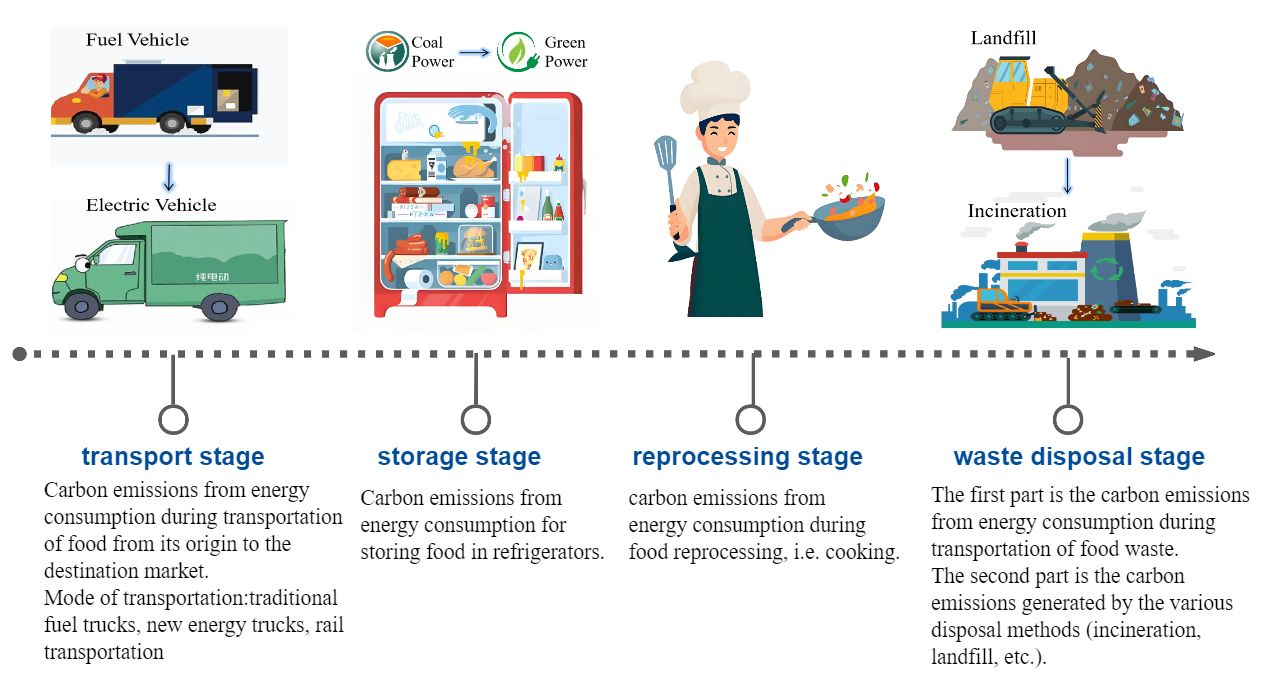
Life cycle assessment (LCA), a bottom-up analytical method that begins with individual processes, is commonly used to evaluate the environmental impacts of products throughout their life cycles and is a key tool for carbon footprint analysis. When calculating carbon emissions, it is crucial to first define the system boundaries, which determine the specific process units to be included in the study. The full life cycle of food should encompass all stages, including primary production, processing, packaging, transportation, storage, cooking, and final waste disposal. However, in the context of food consumption, the life cycle analysis typically excludes the production and packaging of raw materials, focusing instead on transportation and subsequent stages. Ideally, the upstream industrial chain for each phase could be traced indefinitely. In practice, however, it is necessary to limit the scope of the model to avoid excessive complexity and uncertainty in the evaluation results, as including distant upstream and downstream activities can complicate the analysis [65,66]. In this study, residential food consumption is divided into four stages: transportation, storage, reprocessing, and final waste disposal (Figure 1). It is important to note that each stage excludes its upstream activities, such as the manufacturing of trucks, refrigerators, kitchen utensils, and the processing and transportation of fossil fuels.
3.2. Carbon Emission Inventory of Food Consumption
3.2.1. Carbon Emission Estimation of Food Transportation Considering Energy Transition
Carbon emissions from food transportation primarily refer to the emissions generated by energy consumption during the movement of food from its place of origin to the destination market. By consulting relevant statistical data, the main supply sources for various types of food can be identified, with road transportation being the dominant mode within cities. For intercity transportation, rail and road are the primary modes of transport. According to statistical yearbooks for each city, air and waterway transport contribute a relatively small proportion to food transportation and can be disregarded in this study. Thus, food transportation is assumed to exclude shipping and water transport. Rail transport consumes approximately 25L of diesel per 10,000 ton-kilometers (tkm), while road transport trucks consume about 4.72L of diesel per 100 tkm. Fully loaded electric logistics vehicles consume around 40 kWh per 100 km, or approximately 10 kWh per 100 tkm.
With strong national support and promotion of clean energy, electric vehicles, particularly those powered by electricity, have gained significant attention and are increasingly being adopted in the transportation industry. In cities actively promoting new energy, such as Xi'an, Taiyuan, Zhengzhou, and Jinan, the use of new energy freight vehicles has been growing steadily year by year. According to the "New Energy Commercial Vehicle White Paper" and reports from Electric Vehicle Industry Research, urban distribution of new energy logistics vehicles is primarily composed of microvans, micro trucks, and light trucks. The distribution of energy types used in logistics vehicles across different cities can be derived from research data published in the "Southeast, Northwest, and Central Regional Market Registration Observation" by Truck Home. By combining the carbon emission factors of the energy consumed with the food transportation conditions specific to each city, the carbon emissions during the transportation phase can be calculated.
The calculation formula for carbon emissions during the food transportation stage is:
where: Dtj represents the carbon emissions from food transportation in region j; Mji represents the transportation mileage of food by mode i in region j; Nji represents the tonnage of food transported by mode i in region j; Hi represents the fuel/electricity consumption per 10,000 ton-kilometers for transportation mode i; Ci represents the carbon emission factor of the energy consumed by transportation mode i, as shown in Table 1.
3.2.2. Carbon Emission Estimation of Food Storage Stage
The carbon emissions from food storage primarily refer to those generated during the refrigeration process as a result of energy consumption. The calculation formula for carbon emissions during the food storage stage is:
where: Where: Dsj represents the carbon emissions from food storage in region j; according to the relevant regulations in the "Refrigerator Energy Consumption Limits and Energy Efficiency Grades", the annual power consumption of each refrigerator is approximately 507.36 kW·h. Based on a carbon emission factor of 0.80, this corresponds to 405.88 kgCO2. Pj represents the urban population in region j; Nj represents the number of refrigerators per hundred households in region j; and nj represents the average household size in region j.
3.2.3. Carbon Emission Estimation of Food Processing Stage
The carbon emissions from food reprocessing primarily refer to those generated during the cooking process when residents prepare food. According to relevant statistical yearbooks, most households in the four cities consist of three members. Therefore, this study calculates reprocessing emissions based on the standard of a typical three-person household. Data on the carbon emissions per unit of food during cooking can be obtained from relevant online food publications and statistical yearbooks, as summarized in Table 2.
The calculation formula for carbon emissions during the food reprocessing stage is:
where: Dcj represents the carbon emissions from the food reprocessing stage in region j; Sjk represents the consumption of food type k in region j; and Qk represents the carbon emissions produced per unit of food type k during cooking.
3.2.4. Carbon Emission Estimation of Food Waste Disposal Stage
The carbon emissions from food waste management consist of two main components. The first component arises from the transportation of organic waste, which generates emissions due to energy consumption. Based on the proportions of food waste from residential areas, commercial areas, and farmers' markets—60%, 20%, and 20%, respectively [67,68]—the average distance from municipal transfer stations to waste treatment facilities can be calculated using a weighted approach. By correlating this average distance with the fuel consumption per ton per kilometer, the fuel required to transport one ton of organic waste can be determined. This value is then multiplied by the carbon emission coefficients of the relevant energy sources and the weight of the organic waste to calculate the total carbon emissions from the transportation process. The second component involves carbon emissions from various disposal methods, such as incineration and landfilling. These emissions result from the consumption of energy sources and reagents during the treatment process, as well as potential leaks due to differences in equipment or treatment methods. To derive the net carbon emissions from waste disposal, emissions savings from energy generation (e.g., power or heat recovery) or the reuse of raw materials in the process are subtracted from the total emissions [69,70,71].
The calculation formula for carbon emissions during the food waste disposal stage is:
where: Dhj is the carbon emissions generated during the food waste disposal stage in region j; Ej is the fuel consumption for transporting one ton of kitchen waste in region j; r is the carbon emission factor of the energy; Rj is the mass of kitchen waste in region j; Jsj is the carbon emissions generated from the consumption of related energy reagents in disposal method s in region j; Ksj is the carbon emissions generated from leaks due to different equipment or treatment methods in disposal method s in region j; Lsj is the carbon emissions saved by generating electricity or producing raw materials from the final products in disposal method s in region j.
3.2.5. Total Carbon Emissions from Food Consumption
Carbon emissions from food consumption are aggregated over the four stages:
where: Dtj represents the carbon emissions from food transportation in region j; Dsj represents the carbon emissions from food storage in region j; Dcj represents the carbon emissions from food reprocessing in region j; Dhj represents the carbon emissions from food waste disposal in region j.
3.3. Scenario Analysis
The life cycle of food consumption typically includes four key stages: transportation, storage, reprocessing, and waste disposal. This study develops scenarios for each stage, drawing on relevant policies related to energy transformation and resource recycling in various cities.
The transportation stage defines four scenarios: the baseline scenario (BS), energy structure optimization scenario (ESO), energy efficiency improvement scenario (EEI), and integrated scenario (IS), as outlined in Table 3.
The baseline scenario assumes no intervention, with each city progressing according to its current policy framework and technological pathways.
The energy structure optimization scenario takes into account the increased adoption of new energy trucks and the reduction of carbon emission factors for electricity. In 2021, the State Council issued the "14th Five-Year Plan for the Development of a Modern Comprehensive Transportation System," which explicitly promotes the sustainable development of green transportation. The plan sets a target for 2025, aiming for 100% of urban distribution to be powered by clean and new energy, with green travel accounting for 75% of total transportation. By 2030, it is expected that the use of new and clean energy will significantly increase, with new energy in urban freight transport exceeding 80%. Additionally, in 2023, the Ministry of Ecology and Environment's Environmental Planning Institute published the "Research on Carbon Emission Factors of Regional Power Grids in China (2023)," which forecasts that future power generation will increasingly rely on clean energy. The share of non-fossil energy sources, particularly wind and solar power, is expected to grow substantially in the new energy system, leading to a marked reduction in the carbon emission factors of electricity across cities by 2030.
The energy efficiency improvement scenario focuses on enhancing transportation energy efficiency. The International Energy Agency's "2023 Energy Efficiency Report" emphasizes that sustained, widespread improvements in energy efficiency are essential for achieving global emissions reductions, particularly in light of the expected increase in global electricity demand. To meet these goals, the average annual improvement in energy efficiency must accelerate from 2% in 2022 to over 4% per year between now and 2030.
The integrated scenario combines both energy structure optimization and energy efficiency improvements, evaluating their combined potential for reducing emissions.
The waste disposal stage defines four scenarios: the baseline scenario (BS), food waste reduction scenario (FWR), disposal method upgrade scenario (DMU), and integrated scenario (IS), based on resource recycling policies, as outlined in Table 4.
The baseline scenario represents a no-intervention approach, where each city progresses according to its current policy framework and technological pathways.
The food waste reduction scenario takes into account the increased awareness of food conservation among urban residents. The State Council's "Food Conservation Action Plan" emphasizes the need to strengthen efforts to promote savings and combat food waste. By 2030, a comprehensive framework for food conservation and loss reduction, including a standardized system and monitoring mechanisms, is expected to be largely established. A long-term governance structure will be in place, the "Clean Plate Campaign" will be widely implemented, and food waste will be effectively reduced, fostering a social environment that promotes food saving and discourages waste.
The disposal method upgrade scenario considers improvements in incineration power generation efficiency and the promotion of anaerobic digestion. The "14th Five-Year Plan for the Development of Urban Household Waste Classification and Treatment Facilities" emphasizes enhancing the end-of-life treatment system for household waste, accelerating the construction of incineration power plants, and achieving zero landfill for household waste. Additionally, Greenpeace's latest report, "Overview of Low-Carbon Management for Food Waste Throughout its Lifecycle," assesses the environmental impact of food waste (or municipal solid waste) using LCA. The report finds that greenhouse gas emissions from anaerobic digestion are lower than those from incineration and landfill. The treatment hierarchy for food waste should prioritize "anaerobic digestion > aerobic composting > incineration > landfill," highlighting the need to promote the more environmentally friendly anaerobic digestion treatment model.
The integrated scenario combines both food waste reduction and the upgrading of disposal methods, evaluating their combined potential for emissions reduction.
The storage stage includes two scenarios: the baseline scenario (BS) and the energy structure optimization scenario (ESO). The primary energy consumed during this stage is electricity, with the carbon emission factor for electricity remaining unchanged in the baseline scenario. The energy structure optimization scenario takes into account a reduction in the carbon emission coefficient for electricity. This scenario not only reduces carbon emissions from refrigerators during the storage stage but also has a positive impact on emissions reduction from new energy freight transport during the transportation stage.
The reprocessing stage is represented by a single baseline scenario (BS). The consumption of various food types is projected based on current trends. The primary energy used in cooking is natural gas. Since natural gas is considered a clean energy source and further reductions in carbon emissions through process improvements are relatively challenging, no additional scenarios are established for this stage.
In summary, this study defines eight scenarios for food consumption to predict future carbon emission trends, based on the scenario settings for each stage, as outlined in Table 5.
3.4. Data Sources
This study categorizes food consumption by urban residents into 11 main types: grains, vegetables, eggs, fresh fruits, beef and mutton, pork, poultry, dairy products, vegetable oil, aquatic products, and alcohol. The data used to calculate the carbon emissions from food consumption primarily come from the statistical yearbooks of various cities, covering the period from 2006 to 2020. Specific data and indicators are provided in Table 6.
4. Results
4.1. Analysis of Food Consumption Carbon Emissions at Different Stages in Each City
4.1.1. Analysis of Total and Per Capita Food Consumption Carbon Emissions
Based on the calculation of total carbon emissions from food consumption, the total and per capita carbon emissions of food consumption in four cities were determined, as shown in Figure 2. From 2006 to 2020, total carbon emissions in the three cities, excluding Xi'an, generally exhibited an upward trend. In Xi'an, total carbon emissions increased year by year until 2018, after which they began to decline. Overall, the total carbon emissions followed the order: Xi'an > Zhengzhou > Jinan > Taiyuan.
Regarding per capita carbon emissions, from 2006 to 2016, Xi'an experienced rapid growth, with an average annual growth rate of 2.14%. The other three cities showed minor fluctuations, with annual growth rates of 0.67% for Zhengzhou, -0.33% for Jinan, and 0.31% for Taiyuan. In 2016, per capita carbon emissions were highest in Xi'an (389.00 kg), followed by Taiyuan (361.84 kg), Zhengzhou (349.17 kg), and Jinan (341.81 kg). From 2017 to 2020, per capita carbon emissions in all four cities generally declined. Xi'an exhibited the largest fluctuation, with an average annual decline rate of about 5.82%, followed by Zhengzhou (2.24%), Taiyuan (1.97%), and Jinan (1.75%). By 2020, per capita carbon emissions were lowest in Xi'an (310.15 kg), followed by Zhengzhou (319.50 kg), Jinan (318.86 kg), and Taiyuan (334.69 kg).
4.1.2. Analysis of Total and Per Capita Carbon Emissions at Different Stages
Based on the calculation method for carbon emissions at each stage, the total and per capita carbon emissions at each stage in the four cities were calculated, as shown in Figure 3.
Total carbon emissions during the transportation stage initially increased before gradually leveling off. Zhengzhou had the highest total carbon emissions, while Taiyuan had the lowest (Figure 3a). In terms of per capita carbon emissions, Zhengzhou and Jinan had higher values, followed by Xi'an and Taiyuan. This trend was primarily due to differences in transportation mileage. Zhengzhou and Jinan had longer transportation distances for goods, leading to higher emissions, while Xi'an and Taiyuan, with shorter transportation distances, experienced relatively lower emissions for similar food consumption volumes. Per capita carbon emissions in Xi'an began to increase after 2013, primarily due to the reliance on intercity transportation for beef and mutton from Hengshan and Ningxia starting in 2014, which generated additional emissions from railway transportation. Before 2016, although Taiyuan's food consumption was lower than Xi'an's, its per capita carbon emissions were higher due to the transportation of fresh fruits from Datong, resulting in additional emissions. In 2016, Xi'an saw a significant surge in per capita carbon emissions, mainly due to the expansion of urban areas, which increased transportation distances and pushed emissions above those of Taiyuan. Similarly, Zhengzhou experienced a sharp increase in per capita carbon emissions in 2016, following the expansion of its built-up urban area. From 2017 onward, per capita carbon emissions in all four cities began to level off. Despite annual increases in food consumption, transportation distances stabilized, and in some cases, even decreased, due to the impact of the pandemic in 2019-2020. Furthermore, the gradual adoption of new energy trucks helped mitigate some emissions, leading to no significant increase in per capita carbon emissions overall.
Total carbon emissions during the storage stage showed an annual upward trend, generally following the order: Xi'an > Zhengzhou > Jinan > Taiyuan, which closely correlates with the population sizes of the four cities (Figure 3b). Therefore, the primary focus is on per capita storage carbon emissions. From 2006 to 2012, Taiyuan had the highest per capita carbon emissions, primarily due to having the highest number of refrigerators per hundred households during this period. The per capita carbon emissions in the other three cities did not differ significantly and increased at a similar rate. From 2013 to 2020, Jinan experienced the highest per capita carbon emissions, driven by a rapid increase in the number of refrigerators per hundred households, which led to higher energy consumption and, consequently, greater carbon emissions. In contrast, Taiyuan saw fluctuations in the number of refrigerators per hundred households starting in 2013, resulting in a decrease followed by an increase in its per capita carbon emissions. After 2013, the average number of residents and refrigerators per household in Xi'an gradually stabilized, leading to relatively stable per capita carbon emissions. Conversely, per capita carbon emissions in Zhengzhou showed an overall downward trend. This decline is likely attributable to the gradual relaxation of China's family planning policy in 2014-2015 and the eventual end of the policy, which led to a yearly increase in the average number of residents per household. However, the number of refrigerators per hundred households remained stable, which contributed to a reduction in per capita carbon emissions.
Total carbon emissions during the reprocessing stage showed an annual upward trend, with the order of emissions being Xi'an > Zhengzhou > Jinan > Taiyuan from 2006 to 2012 (Figure 3c). However, from 2013 to 2020, Zhengzhou surpassed Xi'an, and the order shifted to Zhengzhou > Xi'an > Jinan > Taiyuan. The main reason for this change is that, although Xi'an has a larger urban population, Zhengzhou has higher per capita food consumption, resulting in greater total carbon emissions. Before 2018, Jinan had the highest per capita carbon emissions, primarily due to the higher consumption of high-cooking carbon-emission foods, such as pork, beef, mutton, and eggs. From 2006 to 2020, per capita carbon emissions in the four cities generally increased, although the rate of increase slowed after 2013. This shift was largely due to the continued improvement in living standards, which led to adjustments toward a more balanced diet. Grain consumption peaked around 2013, while the consumption of lower-emission foods, such as fresh fruits and dairy products, continued to rise. Xi'an's dietary structure transitioned relatively smoothly, so the overall change in per capita carbon emissions was not very significant. Taiyuan, with the lowest per capita carbon emissions in the earlier years due to lower per capita food consumption, has seen an increase in emissions in recent years as food consumption has continued to rise.
Total carbon emissions during the waste disposal stage initially increased before decreasing, with the overall order being Xi'an > Zhengzhou > Taiyuan > Jinan (Figure 3d). The focus here is on per capita waste disposal carbon emissions. From 2006 to 2009, Taiyuan had the highest per capita carbon emissions, primarily due to the high proportion of kitchen waste and the greater distance between its waste treatment stations and the city center, resulting in higher transportation emissions. From 2010 to 2019, the order generally shifted to Xi'an > Taiyuan > Zhengzhou > Jinan. Jinan's per capita carbon emissions peaked in 2009 and then steadily declined each year. This was largely because, from 2010 to 2015, the growth of kitchen waste in Jinan slowed, and the city began implementing waste-to-energy incineration technology in 2011, which helped reduce carbon emissions. After 2016, while kitchen waste in Jinan began to grow rapidly, the city's waste-to-energy incineration technology had already matured, leading to a continued decrease in overall carbon emissions. In contrast, Xi'an's kitchen waste increased rapidly, reaching the highest volume, and its waste-to-energy incineration began later. As a result, per capita carbon emissions increased year by year until 2017. However, after adopting more advanced combined heat and power incineration technology in 2017, Xi'an saw a significant reduction in emissions, with a steeper decline compared to the other cities. Taiyuan, which began experimenting with waste-to-energy incineration in 2008, was one of the first cities to use this technology. However, due to outdated early technology and a high proportion of kitchen waste, per capita carbon emissions continued to rise until 2017. After improvements in power generation technology, emissions began to decline. Zhengzhou, which started waste-to-energy incineration later and lacked robust technical support, saw its per capita carbon emissions surpass those of the other cities by 2020.
4.2. Analysis of the Carbon Emission Structure of Food Consumption in Each City
Based on the ratio of each stage to the total carbon emissions, the structural proportion of carbon emissions from food consumption is obtained for each city, as shown in Figure 4.
In Zhengzhou, transportation carbon emissions accounted for the smallest share of total food consumption emissions, ranging from 1% to 3%. While this share gradually increased over time, the growth rate slowed after 2019 (Figure 4a). The largest contributions to carbon emissions came from the storage and reprocessing stages, with each accounting for approximately 40% from 2006 to 2013. After 2013, the share of emissions from storage initially declined, then stabilized, reaching about 37% by 2020. In contrast, emissions from the reprocessing stage showed a clear upward trend, increasing to 47% by 2020. The proportion of emissions from waste disposal fluctuated between 10% and 20%, following a trapezoidal pattern: first increasing, then gradually leveling off, and finally decreasing.
In Xi'an, transportation carbon emissions accounted for the smallest share of total food consumption emissions, ranging from 1% to 2% (Figure 4b). The largest contributions came from storage and reprocessing. The proportion of carbon emissions from storage was 44% in 2006, then gradually decreased to around 35% by 2016. However, it increased again from 2017, reaching 46% in 2020, exhibiting a U-shaped pattern with a decline followed by an increase. The share of carbon emissions from reprocessing remained relatively stable at about 35% until 2017, after which it began to rise, reaching 45% in 2020, reflecting a trend of stability followed by an increase. The proportion of emissions from waste disposal was 16% in 2006, steadily rising to 28% by 2017. From 2018 onward, however, it sharply declined, dropping to 6% in 2020, forming an inverted U-shaped curve with an initial increase followed by a steep decrease.
In Jinan, transportation carbon emissions accounted for the smallest share of total food consumption emissions, ranging from 1% to 3% (Figure 4c). The majority of carbon emissions originated from the storage and reprocessing stages. The proportion of carbon emissions from storage remained relatively stable at around 37% until 2013, after which it began to rise gradually, reaching 45% by 2020, reflecting a pattern of stability followed by increase. In contrast, emissions from the reprocessing stage increased consistently from 2006, peaking at approximately 44% in 2013, before stabilizing in subsequent years, showing a pattern of rising followed by stabilization. The proportion of carbon emissions from waste disposal remained stable at about 22% between 2006 and 2011, then declined steadily after 2011, dropping to 6% by 2020, following an overall trend of stabilization followed by decline.
In Taiyuan, transportation carbon emissions accounted for the smallest share of total food consumption emissions, ranging from 0.5% to 1.8% (Figure 4d). The most significant contributors to consumption-related carbon emissions were storage and reprocessing. Storage carbon emissions remained relatively stable at around 42% from 2006 to 2012, before dropping sharply in 2013 and subsequently rebounding. This pattern reflects an overall structure of stability, followed by a decline, and then an increase. Carbon emissions from the reprocessing category were also stable until 2012, at approximately 33%, then rose to 38% in 2013 before stabilizing again until 2019, when they began to increase once more. This resulted in a structure of stability followed by growth, then stabilization, and renewed growth. The proportion of carbon emissions from waste disposal remained relatively constant at about 24% from 2006 to 2016, but began to decline steadily after 2017, dropping to 6% by 2020, following an overall trend of stability followed by decline.
Carbon emissions from food consumption in the four cities were primarily driven by the storage and processing stages. In all cities except Zhengzhou, where the proportion of emissions from storage has been decreasing, the share of emissions from both storage and processing has been increasing. The proportion of carbon emissions from the transportation stage also rose in all four cities, but remained relatively low, under 5%. With the gradual adoption of new energy trucks, this growth trend is expected to slow further. The waste disposal stage exhibited the most pronounced fluctuations among the four stages, with carbon emissions from waste disposal in all cities showing an initial increase followed by a decrease. Notably, Xi'an and Taiyuan, which developed larger-scale and more advanced incineration systems, experienced a more significant decline in the carbon emissions from waste disposal, with their share dropping from around 25% to 6%.
4.3. Scenario Analysis of Food Consumption Carbon Emissions
4.3.1. Forecast of Food Consumption Carbon Emissions in Each City
This paper employs scenario analysis to predict urban food consumption carbon emissions for four provincial capital cities in the middle and lower reaches of the Yellow River from 2021 to 2030, as illustrated in Figure 5. Under the baseline scenario, food consumption carbon emissions in the cities remain relatively stable, peaking around 2025-2026 before slightly decreasing. By 2030, it is expected that emissions will largely mirror the current levels. Jinan experiences a prolonged increase in carbon emissions, primarily due to the faster growth in the consumption of reprocessed foods. S3 addresses energy efficiency in the transport sector, which has a relatively small impact on overall food consumption carbon emissions, with limited potential for reduction. S2 focuses on optimizing the energy mix, including the adoption of new energy trucks and improvements in food storage, resulting in significant emissions reductions. In particular, Zhengzhou benefits from relatively clean electricity, and by 2030, food consumption carbon emissions in the city are expected to decrease by 22.6% compared to the current levels, yielding a reduction potential of 22.2% relative to the baseline scenario. Conversely, Taiyuan, with a higher carbon emission factor for electricity, experiences a smaller reduction, with food consumption carbon emissions falling by only 10%, representing an 8.8% reduction potential. S4 combines energy transition measures, with carbon reduction potentials of 22.2%, 17.8%, 20.7%, and 8.9% in Zhengzhou, Xi'an, Jinan, and Taiyuan, respectively. S5 introduces a reduction in food waste through the "Clean Plate" campaign, which is particularly effective in Taiyuan, where carbon emissions from food consumption are reduced by 12% by 2030. S6 addresses the upgrading of food waste disposal methods. Initially, carbon emissions decrease until 2025, then rise after that period. This trend occurs because incineration for power generation has a significant emission reduction effect compared to landfilling, while the transition from incineration to anaerobic digestion offers limited further reductions. In the period from 2021 to 2025, S6 is more effective than S5, whereas S becomes more effective from 2026 to 2030. S7 is a comprehensive recycling transformation scenario, with carbon reduction potentials of 8.8%, 8.3%, 11.5%, and 14.4% for Zhengzhou, Xi'an, Jinan, and Taiyuan, respectively. For Zhengzhou, Xi'an, and Jinan, energy transition has a more significant carbon reduction effect than recycling, whereas the opposite is true for Taiyuan, mainly due to its higher share of food waste and greater potential for emissions reductions from resource recycling. Finally, S8 combines both energy transition and recycling, yielding substantial emissions reductions. Under this scenario, the carbon reduction potentials for Zhengzhou, Xi'an, Jinan, and Taiyuan are 30.8%, 26.8%, 27.8%, and 23.0%, respectively.
4.3.2. Forecast of the Carbon Emission Structure of Food Consumption
Figure 6 illustrates the carbon emission structure of urban food consumption in four provincial capital cities along the middle and lower reaches of the Yellow River, comparing the baseline scenario (S1) with the comprehensive scenario (S8) from 2021 to 2030.
Under the baseline scenario, carbon emissions from the storage and reprocessing stages grow at a faster rate, reaching 5.23 Mt in the storage stage and 5.76 Mt in the reprocessing stage by 2030, which account for 51.1% and 56.2% of the total carbon emissions from food consumption, respectively. Carbon emissions from transportation remain relatively stable, with an estimated 306,000t by 2030, representing 3.0% of total food consumption emissions. The waste disposal stage, influenced by the increased use of incineration, shows a more noticeable decline in carbon emissions, even achieving negative emissions. By 2030, carbon emissions from waste disposal are projected to decrease to -1,05 Mt, accounting for approximately -10.2% of the total.
In the comprehensive scenario, which integrates energy transition and recycling efforts, the adoption of new energy trucks and reductions in electricity emission factors lead to nearly a 50% reduction in carbon emissions from transportation compared to the baseline scenario. By 2030, transportation carbon emissions will be reduced to 161,000t, or 2.2% of the total food consumption emissions. The reduction in the carbon intensity of electricity also significantly impacts the storage stage. Given the substantial carbon emissions from storage, this stage shows a higher potential for emission reductions than transportation. By 2030, carbon emissions from storage will decrease to 3.41 million tonnes (Mt), representing 47.0% of the total. Meanwhile, the reprocessing stage, benefiting from reductions in other areas, will account for 79.5% of total emissions by 2030. In the waste disposal stage, improvements in disposal methods and reductions in food waste contribute to a significant decrease in environmental impact, with carbon emissions dropping to -2.08 Mt, or -28.7% of the total by 2030.
5. Discussion
5.1. The Decarbonization Effect of Energy Transition and Resource Recycling on Food Consumption Carbon Emissions is Confirmed
From the perspective of total lifecycle emissions, per capita food consumption carbon emissions in Jinan have been declining since 2013. In contrast, carbon emissions in the other three cities peaked around 2016 and have shown a downward trend since 2017. This finding contrasts with the majority of previous studies, which suggest that, with economic development, both total carbon emissions from food consumption and per capita carbon emissions in urban areas continue to rise [72,73]. The primary reason for this discrepancy is that this study expands the boundaries of lifecycle analysis to include the recycling stage. As the carbon sink capacity of waste-to-energy incineration has improved over time, carbon emissions from urban waste disposal have been decreasing, contributing to the overall decline in food consumption emissions. Jinan, which began implementing waste-to-energy incineration earlier, experienced a decline in carbon emissions first. Meanwhile, Xi'an, which has the most advanced incineration technology, shows the most pronounced downward trend in its food consumption carbon emissions.
The impact of energy transition on food transportation emissions is evident in the results. Carbon emissions from the food transportation stage account for a relatively small share—less than 5%—and the growth trend in emissions has been effectively controlled. This finding contrasts with previous studies, which have argued that food transportation is a stage in the lifecycle characterized by a rapid increase in carbon emissions, with some cities even witnessing a shift in emissions from storage and processing to transportation [74,75]. The primary reason for this discrepancy is that the current study incorporates the use of new energy vehicles (NEVs) in food transportation. While the volume of freight transport continues to rise, the gradual adoption of NEVs has significantly mitigated the associated increase in carbon emissions. Carbon emissions from the transportation stage are primarily influenced by freight volume, transportation distance, and mode. A shift from fuel-powered vehicles to electric vehicles is expected to be a key factor in emission reductions. For instance, under the same freight volume, new energy trucks can reduce carbon emissions by approximately 36% per 100 tonne-kilometers compared to diesel trucks. Among the four cities analyzed, Xi'an was the first to adopt new energy trucks, effectively controlling the growth of transportation-related carbon emissions. While the other three cities have lagged behind in this regard, they have made significant progress in recent years. Transportation distance is largely influenced by the need for intercity transport and the size of the urban area [76,77]. Cities with higher dependence on external food sources generally experience higher transportation-related carbon emissions. For example, Beijing, which produces relatively little food and relies heavily on imports, faces higher transportation emissions. Additionally, the size of urban areas also affects transportation distances. Taiyuan, with the smallest urban area among the four cities, has the shortest intra-city food transportation distances. In contrast, Xi'an and Zhengzhou experienced significant increases in transportation distances corresponding to urban expansion in certain years.
The impact of resource recycling is most evident during the food waste disposal stage, where carbon emissions fluctuate significantly, primarily due to continuous updates in waste disposal methods. Key factors influencing emissions in this stage include the proportion of food waste, transportation distance to waste treatment facilities, and the waste disposal method employed. In Taiyuan, the proportion of food waste is relatively high at 50%, while the other three cities average around 45%. The transportation distance refers to the intra-city route from the city center to the waste treatment facility, which typically does not exceed 100 km, resulting in a relatively minor impact on carbon emissions. In contrast, changes in waste disposal methods have a substantial effect on reducing carbon emissions. The predominant method has gradually shifted from landfill to waste incineration for power generation [78,79]. Traditional sanitary landfill disposal has a carbon emission factor of 612.64 kg CO2e/t, whereas waste incineration for power generation can result in negative emissions, with factors ranging from -100 to -150 kg CO2e/t. This shift significantly mitigates greenhouse gas emissions. For example, Xi'an's Lantian incineration power generation project and Taiyuan's Kangheng and Huanjin waste-to-energy plants each process over 2,000t of waste daily, generating up to 400 million kWh of electricity annually. Although Jinan and Zhengzhou are lagging in terms of technology, individual projects in these cities still produce around 250 million kWh annually, with a series of additional projects currently under rapid development. As waste disposal methods continue to optimize and improve, carbon emissions in these four cities are steadily decreasing in this stage.
5.2. Future Impacts of Energy Transition and Resource Recycling
This study predicts the carbon emissions from urban food consumption in four provincial capitals along the middle and lower reaches of the Yellow River, considering relevant policies and plans for energy transition and recycling. Scenario analysis is employed to assess the potential future impacts.
In terms of energy transition, optimizing the energy structure is identified as the most effective strategy for carbon reduction. By 2030, the potential for emissions reduction in Zhengzhou, Xi'an, Jinan, and Taiyuan under this scenario is estimated to be 21.9%, 17.4%, 20.3%, and 8.4%, respectively. Reducing the carbon emission factor of electricity proves to be more effective for carbon mitigation than promoting new energy trucks. This is because, while new energy trucks significantly reduce emissions in the transportation stage, they have a limited effect on other stages of food consumption, constraining their overall emission reduction potential. In contrast, electricity is involved in both transportation and food storage, offering greater overall potential for carbon reduction. Zhengzhou and Jinan, with cleaner electricity sources than Taiyuan, demonstrate more pronounced emission reduction effects.
Regarding resource recycling, upgrading food waste disposal methods is expected to yield a reduction potential of 2.6%, 2.6%, 3.9%, and 4.4% by 2030 for the four cities, respectively. The reduction potential from food waste reduction is projected to be 6.8%, 6.3%, 8.5%, and 11.0%, respectively. In the short term, upgrading food waste disposal methods, particularly the transition from landfill to waste incineration for power generation, provides significant carbon reduction. This transition can reduce carbon emissions by 741.2–762.8 kg per ton of waste, representing a substantial mitigation potential. However, in the long term, the shift from incineration to anaerobic digestion offers limited carbon reduction benefits, with reductions of only 46.5–69.7 kg per ton of waste, suggesting diminishing returns. Conversely, reducing food waste offers greater long-term carbon reduction benefits. Less food waste leads to fewer emissions from unnecessary transportation, storage, and reprocessing. Therefore, minimizing food waste should be a long-term strategy for achieving substantial and sustained reductions in carbon emissions from food consumption.
6. Conclusions
This study employs LCA to estimate the carbon emissions associated with food consumption in four provincial capital cities along the middle and lower reaches of the Yellow River (Xi'an, Zhengzhou, Jinan, and Taiyuan) from 2006 to 2020. The research identifies and examines the key factors influencing carbon emissions at different stages of the food consumption process, quantifying their relative impacts. Additionally, scenario simulations are conducted to evaluate the potential effects of energy structure transformation and resource recycling on future food consumption carbon emissions in these cities. The key findings are as follows:
Following the energy transition and recycling initiatives, carbon emissions from food consumption began to decline after 2016, primarily driven by an increased share of resource recovery in waste incineration. Xi'an, with its more advanced waste-to-energy technology, achieved a 77.5% reduction in carbon emissions from waste disposal between 2016 and 2020. Conversely, Zhengzhou, with relatively less developed recycling infrastructure, saw a smaller reduction of only 30.4%.
The growing adoption of new energy vehicles in the food transportation sector has contributed to a reduction in transportation-related carbon emissions. While urban expansion and increased food consumption initially led to higher emissions in all four cities, the gradual transition to electric freight vehicles since 2018 has helped curb the growth in transportation emissions. By 2030, food transportation emissions in Zhengzhou, Xi'an, Jinan, and Taiyuan are projected to decrease by 39.4%, 34.5%, 39.4%, and 24.0%, respectively. Moreover, the shift towards cleaner electricity sources is expected to further reduce carbon emissions in the food storage stage. In regions such as Taiyuan and Xi'an, where coal is the dominant energy source, higher carbon emission factors for electricity contribute to elevated food storage emissions. In contrast, Jinan and Zhengzhou, which are transitioning to renewable energy, are projected to experience lower food storage emissions. By 2030, food storage emissions in these cities are expected to decline by 42.5%, 31.3%, 42.5%, and 15%, respectively.
Waste incineration for power generation offers a significant advantage over traditional landfilling in reducing carbon emissions from food waste disposal. Between 2021 and 2025, it is anticipated that all four cities will achieve zero landfill for municipal solid waste, with 100% of waste processed through waste-to-energy technologies. From 2026 to 2030, some waste will be diverted to cleaner anaerobic digestion methods. By 2030, food waste disposal in Zhengzhou, Xi'an, Jinan, and Taiyuan is expected to reduce carbon emissions by 33.5%, 27.7%, 31.7%, and 31.7%, respectively. Furthermore, reducing food waste will lower carbon emissions across the entire food consumption process, including transportation, storage, and waste disposal. By 2030, the reduction in food waste is expected to lead to a decrease in carbon emissions from food consumption by 6.8%, 6.3%, 8.5%, and 11.0% in Zhengzhou, Xi'an, Jinan, and Taiyuan, respectively.
Author Contributions
Conceptualization, G.L. and H.F.; methodology, H.F.; software, H.F.; validation, S.T. and Y.W.; formal analysis, H.F.; investigation, G.L.; resources, C.Z.; data curation, W.X.; writing—original draft preparation, H.F; writing—review and editing, G.L.; visualization, S.T.; supervision, Y.W.; funding acquisition, W.L. and G.L. All authors have read and agreed to the published version of the manuscript.
Funding
This research was supported by the National Natural Science Foundation of China (Grant Nos. 72104172, 72174137).
Institutional Review Board Statement
Not applicable.
Informed Consent Statement
Not applicable
Data Availability Statement
Data will be made available on request.
Conflicts of Interest
The authors declare no conflict of interest
References
- Kabeyi, M.J.B., Olanrewaju,O.A. Sustainable Energy Transition for Renewable and Low Carbon Grid Electricity Generation and Supply. Front. Energy Res. 2022, 9, 743114. [CrossRef]
- Quitzow, R. Energy Transitions and Societal Change. Berliner Strasse, Germany: Institute of Advanced Sustainability Studies. Available online: https://www.iass-potsdam.de/en/research-area/energy-systems-and-societal-change (accessed, 2021).
- Bashir, M.A., Zhang, D.F., Amin, F., Mentel, G., Raza, S.A., Bashir, M.F. Transition to greener electricity and resource use impact on environmental quality: Policy based study from OECD countries. Utilities Policy. 2023, 81,101518. [CrossRef]
- International Energy Agency (IEA). Major growth of clean energy limited the rise in global emissions in 2023. Available online: https://www.iea.org/news/major-growth-of-clean-energy-limited-the-rise-in-global-emissions-in-2023 (Accessed, 2024).
- He, M.Y., Sun, Y.H., Han, B.X. Green Carbon Science: Efficient Carbon Resource Processing, Utilization, and Recycling towards Carbon Neutrality. Angew. Chem. Int. Ed. 2022, 61, e202112835. [CrossRef]
- Ferdous, W., Manalo, A., Siddique, R., Mendis, P., Yan, ZG., Wong, H.S., Lokuge, W., Aravinthan, T., Schubel, P. Recycling of landfill wastes (tyres, plastics and glass) in construction - A review on global waste generation, performance, application and future opportunities. Resources Conserv. Recycling. 2021, 173, 105745. [CrossRef]
- The World Counts. The amount of household waste. Available online: https://www.theworldcounts.com/challenges/planet-earth/state-of-the-planet/solid-waste (accessed 2021).
- Niles, M.T., Ahuja, R., Barker, T., Esquivel, J., Gutterman, S., Heller, M.C., Mango, N., Portner, D., Raimond, R., Tirado, C., et al. Climate change mitigation beyond agriculture: a review of food system opportunities and implications. Renew. Agric. Food Syst. 2018, 33, 297-308. [CrossRef]
- Qu, J.S., Liu, L.N., Zeng, J.J., Zhang, Z.Q., Wang, J.P., Pei, H.J., Dong, L.P., Liao, Q., Maraseni, T. The impact of income on household CO2 emissions in China based on a large sample survey. Sci. Bull. 2019, 64, 351-353. [CrossRef]
- Song, L., Cai, H., Zhu, T. Large-Scale Microanalysis of US Household Food Carbon Footprints and Reduction Potentials. Environ. Sci. Technol. 2021, 55, 15323-15332. [CrossRef]
- Batlle-Bayer, L., Bala, A., Albertí, J., Xifré, R., Aldaco, R., Fullana-i-Palmer, P. Food affordability and nutritional values within the functional unit of a food LCA. An application on regional diets in Spain. Resources Conserv. Recycling. 2020, 160, 104856. [CrossRef]
- Stylianou, K.S., Fulgoni, V.L., Jolliet, O. Small targeted changes can yield substantial gains for human health and the environment. Nature Food. 2021, 2, 743-743. [CrossRef]
- Sundin, N., Rosell, M., Eriksson, M., Jensen, C., Bianchi, M. The climate impact of excess food intake - An avoidable environmental burden. Resour. Conserv. Recycling. 2021, 174, 105777. [CrossRef]
- Teixeira, A.C.R., Sodré, J,R. Impacts of replacement of engine powered vehicles by electric vehicles on energy consumption and CO2 emissions. Transp. Res. Part D Transp. Environ. 2018, 59, 375-384. [CrossRef]
- Xu, B.J., Sharif, A., Shahbaz, M., Dong, K.Y. Have electric vehicles effectively addressed CO2 emissions? Analysis of eight leading countries using quantile-on-quantile regression approach. Sustain. Prod. Consum. 2021, 27, 1205-1214. [CrossRef]
- Ang, B.W., Su, B. Carbon emission intensity in electricity production: A global analysis. Energy Policy. 2016, 94, 56-63. [CrossRef]
- Chen, A.Q., You, S.B. The Fuel Cycle Carbon Reduction Effects of New Energy Vehicles: Empirical Evidence Based on Regional Data in China. Sustainability. 2022, 14, 16003. [CrossRef]
- Lin, B.Q., Qiao, Q. Exploring the participation willingness and potential carbon emission reduction of Chinese residential green electricity market. Energy Policy. 2023, 174, 113452. [CrossRef]
- Chien, F., Sadiq, M., Li, L., Sharif, A. The role of sustainable energy utility, natural resource utilization and waste management in reducing energy poverty: Evidence from South Asian countries. Utilities Policy. 2023, 82, 101581. [CrossRef]
- Iqbal, A., Zan, F.X., Liu, X.M., Chen, G.H. Net zero greenhouse emissions and energy recovery from food waste: manifestation from modelling a city-wide food waste management plan. Water Res. 2023, 244, 120481. [CrossRef]
- Tian, H.L., Ee, A.W.L., Yan, M., Tiong, Y.W., Tan, W.X., Tan, Q., Lam, H.T., Zhang, J.X., Tong, Y.W. Life cycle assessment and cost-benefit analysis of small-scale anaerobic digestion system treating food waste onsite under different operational conditions. Bioresour. Technol. 2023, 390, 129902. [CrossRef]
- Brunner, P.H., Rechberger, H. Waste to energy - key element for sustainable waste management. Waste Manag. 2015, 37, 3-12. [CrossRef]
- Dutta, S., He, M.J., Xiong, X.N., Tsang, D.C.W. Sustainable management and recycling of food waste anaerobic digestate: A review. Bioresour. Technol. 2021, 341, 125915. [CrossRef]
- Li, X., Ouyang, Z.G., Zhang, Q., Shang, W.L., Huang, L.Q., Wu, Y., Gao, Y.N. Evaluating food supply chain emissions from Japanese household consumption. Appl. Energy. 2022, 306, 118080. [CrossRef]
- Li, M.Y., Jia, N.F., Lenzen, M., Malik, A., Wei, L.Y., Jin, Y.T., Raubenheimer, D. Global food-miles account for nearly 20% of total food-systems emissions. Nature Food. 2022, 3, 445-+. [CrossRef]
- Lin, D.S., Zhang, Z.Y., Wang, J.X., Yang, L., Shi, Y.Q., Soar, E. Optimizing Urban Distribution Routes for Perishable Foods Considering Carbon Emission Reduction. Sustainability. 2019, 11, 4387. [CrossRef]
- Lin, B.Q., Guan, C.X. Assessing consumption-based carbon footprint of China's food industry in global supply chain. Sustain. Prod. Consum. 2023, 35, 365-375. [CrossRef]
- Boehm, R., Wilde, P.E., Ver Ploeg, M., Costello, C., Cash, S.B. A Comprehensive Life Cycle Assessment of Greenhouse Gas Emissions from US Household Food Choices. Food Policy. 2018, 79, 67-76. [CrossRef]
- Jiang, L., Wang, R., Liu B. Differences in carbon footprint of food consumption patterns. China Environ. Sci. 2023, 43(12):6755-6762. [CrossRef]
- Bell, E.M., Horvath, A. Modeling the carbon footprint of fresh produce: effects of transportation, localness, and seasonality on US orange markets. Environ. Res. Lett. 2020, 15, 034040. [CrossRef]
- Liu, B., Li, J.W., Chen, A.Q., Theodorakis, P.E., Zhu, Z.S., Yu, J.Z. Selection of the cold logistics model based on the carbon footprint of fruits and vegetables in China. J. Clean. Prod. 2022, 334, 130251. [CrossRef]
- Zuo, C.C., Wen, C., Clarke, G., Turner, A., Ke, X.L., You, L.Z., Tang, L.P. Cropland displacement contributed 60% of the increase in carbon emissions of grain transport in China over 1990-2015. Nature Food. 2023, 4, 223-+. [CrossRef]
- Bell, E., Qin, Y.W., Horvath, A. Optimal allocation of tomato supply to minimize greenhouse gas emissions in major US metropolitan markets. Resources Conserv. Recycling. 2023, 188, 106660. [CrossRef]
- De, A.R.J., Gorton, M., Hubbard, C., Aditjandra, P. Optimization model for sustainable food supply chains: An application to Norwegian salmon. Transp. Res. Part E Logist. Transp. Rev. 2022, 161, 102723. [CrossRef]
- Górny, K., Idaszewska, N., Sydow, Z., Bienczak, K. Modelling the Carbon Footprint of Various Fruit and Vegetable Products Based on a Company's Internal Transport Data. Sustainability. 2021, 13, 7579. [CrossRef]
- Ercan, T., Onat, NC., Keya, N., Tatari, O., Eluru, N., Kucukvar, M. Autonomous electric vehicles can reduce carbon emissions and air pollution in cities. Transp. Res. Part D Transp. Environ. 2022, 112, 103472. [CrossRef]
- Guo, X., Sun, Y., Ren, D. Life cycle carbon emission and cost-effectiveness analysis of electric vehicles in China. Energy Sustain. Dev. 2023, 72, 1-10. [CrossRef]
- Wang, Y., Shi, Y., Zhou, J.Z., Zhao, J., Maraseni, T., Qian, G.R. Implementation effect of municipal solid waste mandatory sorting policy in Shanghai. J. Environ. Manag. 2021, 298, 113512. [CrossRef]
- Haugen, M.J., Paoli, L., Cullen, J., Cebon, D., Boies, A.M. A fork in the road: Which energy pathway offers the greatest energy efficiency and CO2 reduction potential for low-carbon vehicles?. Appl. Energy. 2021, 283, 116295. [CrossRef]
- Yao, X., Fan, Y., Zhao, F., Ma, S.C. Economic and climate benefits of vehicle-to-grid for low-carbon transitions of power systems: A case study of China's 2030 renewable energy target. J. Clean. Prod. 2022, 330, 129833. [CrossRef]
- Li, J., Yang, B., He, M.K. Capabilities Analysis of Electricity Energy Conservation and Carbon Emissions Reduction in Multi-Level Battery Electric Passenger Vehicle in China. Sustainability. 2023, 15, 5710. [CrossRef]
- Lin, B.Q, Li, Z. Is more use of electricity leading to less carbon emission growth? An analysis with a panel threshold model. Energy Policy. 2020, 137, 111121. [CrossRef]
- Arrieta, E.M., González, A.D. Energy and carbon footprints of food: Investigating the effect of cooking. Sustain. Prod. Consum. 2019, 19, 44-52. [CrossRef]
- Du, S., Liu, G.Y., Li, H., Zhang, W., Santagata, R. System dynamic analysis of urban household food-energy-water nexus in Melbourne (Australia). J. Clean. Prod. 2022, 379, 134675. [CrossRef]
- Zhao, Z., Lv, X.Y., Wang, Y.H., Lv, G.F., Miao, B., Hu, Q., Ouyang, C., Liu, Y.K., Yan, L.H. Research on carbon emissions of urban residents' three types of dining based on the whole life cycle. Int. J. Low-Carbon Technol. 2022, 17, 1036-1045. [CrossRef]
- Esteve-Llorens, X., Darriba, C., Moreira, M.T., Feijoo, G., González-García, S. Towards an environmentally sustainable and healthy Atlantic dietary pattern: Life cycle carbon footprint and nutritional quality. Sci. Total Environ. 2019, 646, 704-715. [CrossRef]
- Frankowska, A., Rivera, X.S., Bridle, S., Kluczkovski, A.M.R.G., da Silva, J.T., Martins, C.A., Rauber, F., Levy, R.B., Cook, J., Reynolds, C. Impacts of home cooking methods and appliances on the GHG emissions of food. Nature Food. 2020, 1, 787-791. [CrossRef]
- Pelletier, N., Audsley, E., Brodt, S., Garnett, T., Henriksson, P., Kendall, A., Kramer, K.J., Murphy, D., Nemecek, T., Troell, M. Energy Intensity of Agriculture and Food Systems. Annu. Rev. Environ. Resour. 2011, 36, 223-246. [CrossRef]
- Chen, Y., Li, S.Z., Zhou, T.T., Lei, X.Y., Liu, X.Y., Wang, Y.H. Household cooking energy transition in rural mountainous areas of China: Characteristics, drivers, and effects. J. Clean. Prod. 2023, 385, 135728. [CrossRef]
- Xing, R., Luo, Z.H., Zhang, W.X., Xiong, R., Jiang, K., Meng, W.J., Meng, J., Dai, H.C., Xue, B., Shen, H.Z., et al. Household fuel and direct carbon emission disparity in rural China. Environ. Int. 2024, 185, 108549. [CrossRef]
- Corrado, S., Luzzani, G., Trevisan, M., Lamastra, L. Contribution of different life cycle stages to the greenhouse gas emissions associated with three balanced dietary patterns. Sci. Total Environ. 2019, 660, 622-630. [CrossRef]
- Guo, X.P., Yang, X.Y. The economic and environmental benefits analysis for food waste anaerobic treatment: a case study in Beijing. Environ. Sci. Pollut. Res. 2019, 26, 10374-10386. [CrossRef]
- Zhang, H., Zhao, F.Q., Hao, H., Liu, Z.W. Comparative analysis of life cycle greenhouse gas emission of passenger cars: A case study in China. Energy. 2023, 265, 126282. [CrossRef]
- Avató, J.L., Mannheim, V. Life Cycle Assessment Model of a Catering Product: Comparing Environmental Impacts for Different End-of-Life Scenarios. Energies. 2022, 15, 5423. [CrossRef]
- Djekic, I., Pojic, M., Tonda, A., Putnik, P., Kovacevic, D.B., Rezek-Jambrak, A., Tomasevic, I. Scientific Challenges in Performing Life-Cycle Assessment in the Food Supply Chain. Foods. 2019, 8, 301. [CrossRef]
- Vidergar, P., Perc, M., Lukman, R.K. A survey of the life cycle assessment of food supply chains. J. Clean. Prod. 2021, 286, 125506. [CrossRef]
- Vázquez-Rowe, I., Ziegler-Rodriguez, K., Margallo, M., Kahhat, R., Aldaco, R. Climate action and food security: Strategies to reduce GHG emissions from food loss and waste in emerging economies. Resour. Conserv. Recycling. 2021, 170, 105562. [CrossRef]
- Zeng, Q., Zhen, S.L., Liu, J.G., Ni, Z., Chen, J., Liu, Z.J., Qi, C.Q. Impact of solid digestate processing on carbon emission of an industrial-scale food waste co-digestion plant. Bioresour. Technol. 2022, 360, 127639. [CrossRef]
- Yan, Z., Cui, S., Li, G., Ren, Y., Xu, L. Dynamics and Environmental Load of Food Carbon Consumption During Urbanization: A Case Study of Xiamen City,China. Environ. Sci. 2013, 34, 1636-1644. [CrossRef]
- Du, J., Zhou, C.C., Zhang, Y.L., Shen, H.X., Wu, W.T., Liu, G.J. Physical-Chemical Properties of Municipal Solid Waste and the Implication for Urban Management on Greenhouse Gas Emissions: A Case Study in Hefei, China. ACS Sustain. Chem. Eng. 2022, 10, 11692-11701. [CrossRef]
- Maalouf, A., El-Fadel, M. Carbon footprint of integrated waste management systems with implications of food waste diversion into the wastewater stream. Resour. Conserv. Recycling. 2018, 133, 263-277. [CrossRef]
- Zhu, J.Y., Liu, Y.R., Luo, Z.Y., Ling, C., Yin, K., Tong, H.H. Methane mitigation strategy for food waste management: Balancing socio-economic acceptance and environmental impacts. Sustain. Prod. Consum. 2023, 37, 389-397. [CrossRef]
- Bian, R.X., Chen, J.H., Zhang, T.X., Gao, C.Q., Niu, Y.T., Sun, Y.J., Zhan, M.L., Zhao, F.B., Zhang, G.D. Influence of the classification of municipal solid wastes on the reduction of greenhouse gas emissions: A case study of Qingdao City, China. J. Clean. Prod. 2022, 376, 134275. [CrossRef]
- Chen, S.S., Huang, J.L., Xiao, T.T., Gao, J., Bai, J.F., Luo, W., Dong, B. Carbon emissions under different domestic waste treatment modes induced by garbage classification: Case study in pilot communities in Shanghai, China. Sci. Total Environ. 2020, 717, 137193. [CrossRef]
- Cucurachi, S., Scherer, L., Guinée, J., Tukker, A. Life Cycle Assessment of Food Systems. One Earth. 2019, 1, 292-297. [CrossRef]
- Notarnicola, B., Sala, S., Anton, A., McLaren, S.J., Saouter, E., Sonesson, U. The role of life cycle assessment in supporting sustainable agri-food systems: A review of the challenges. J. Clean. Prod. 2017, 140, 399-409. [CrossRef]
- He, J., Liu, Y., Li, Z., Qiu, Z. Energy Consumption Analysis of Municipal Solid Waste Classified Transportation. Environ. Eng. 2021, 39, 163-142. [CrossRef]
- Zhang, L., Li, G., Luo, W., Yuan, J. Study on the Composition Characteristics and Classification of MSW in Different Functional Zones in Beijing Urban and Rural. Environ. Sanit. Eng. 2020, 28, 15-21. [CrossRef]
- Chen, L., He, Z.W., Yang, L.X., Wang, L., Li, Y.Y., Chen, T., Li, H. Optimal utilization of solid residue from phase-separation pretreatment before food waste anaerobic digestion. J. Clean. Prod. 2022, 372, 133795. [CrossRef]
- Guo, H.W., Xu, H.Y., Liu, J.G., Nie, X.Q., Li, X., Shu, T.C., Bai, B.J., Ma, X.Y., Yao, Y. Greenhouse Gas Emissions in the Process of Landfill Disposal in China. Energies. 2022, 15, 6711. [CrossRef]
- Wang, Y., Yan, Y.Y., Chen, G.Y., Zuo, J., Du, H.B. Effective approaches to reduce greenhouse gas emissions from waste to energy process: A China study. Resour. Conserv. Recycling. 2015, 104, 103-108. [CrossRef]
- Crippa, M., Solazzo, E., Guizzardi, D., Monforti-Ferrario, F., Tubiello, F.N., Leip, A. Food systems are responsible for a third of global anthropogenic GHG emissions. Nature Food. 2021, 2, 198-209. [CrossRef]
- Mohareb, E.A., Heller, M.C., Guthrie, P.M. Cities' Role in Mitigating United States Food System Greenhouse Gas Emissions. Environ. Sci. Technol. 2018, 52, 5545-5554. [CrossRef]
- Pradhan, P. Food transport emissions matter. Nature Food. 2022, 3, 406-407. [CrossRef]
- Tubiello, F.N., Rosenzweig, C., Conchedda, G., Karl, K., Gütschow, J., Pan, X.Y., Obli-Laryea, G., Wanner, N., Qiu, S.Y., De Barros, J., et al., 2021. Greenhouse gas emissions from food systems: building the evidence base. Environ. Res. Lett. 2021, 16, 065007. [CrossRef]
- Mosammam, H.M., Sarrafi, M., Nia, J.T., Mosammam, A.M. Analyzing the international trade-related food miles in Iran. Outlook Agric. 2018, 47, 36-43. [CrossRef]
- Yu, Q.Y., Wu, W.B., Tang, H.J. Increased food-miles and transport emissions. Nature Food. 2023, 4, 207-208. [CrossRef]
- Kumar, A., Samadder, S.R. Assessment of energy recovery potential and analysis of environmental impacts of waste to energy options using life cycle assessment. J. Clean. Prod. 2022, 365, 132854. [CrossRef]
- Zhao, Y., Chang, H.M., Liu, X., Bisinella, V., Christensen, T.H. Climate Change Impact of the Development in Household Waste Management in China. Environ. Sci. Technol. 2022, 56, 8993-9002. [CrossRef]
Figure 1.
Four stages of food consumption.
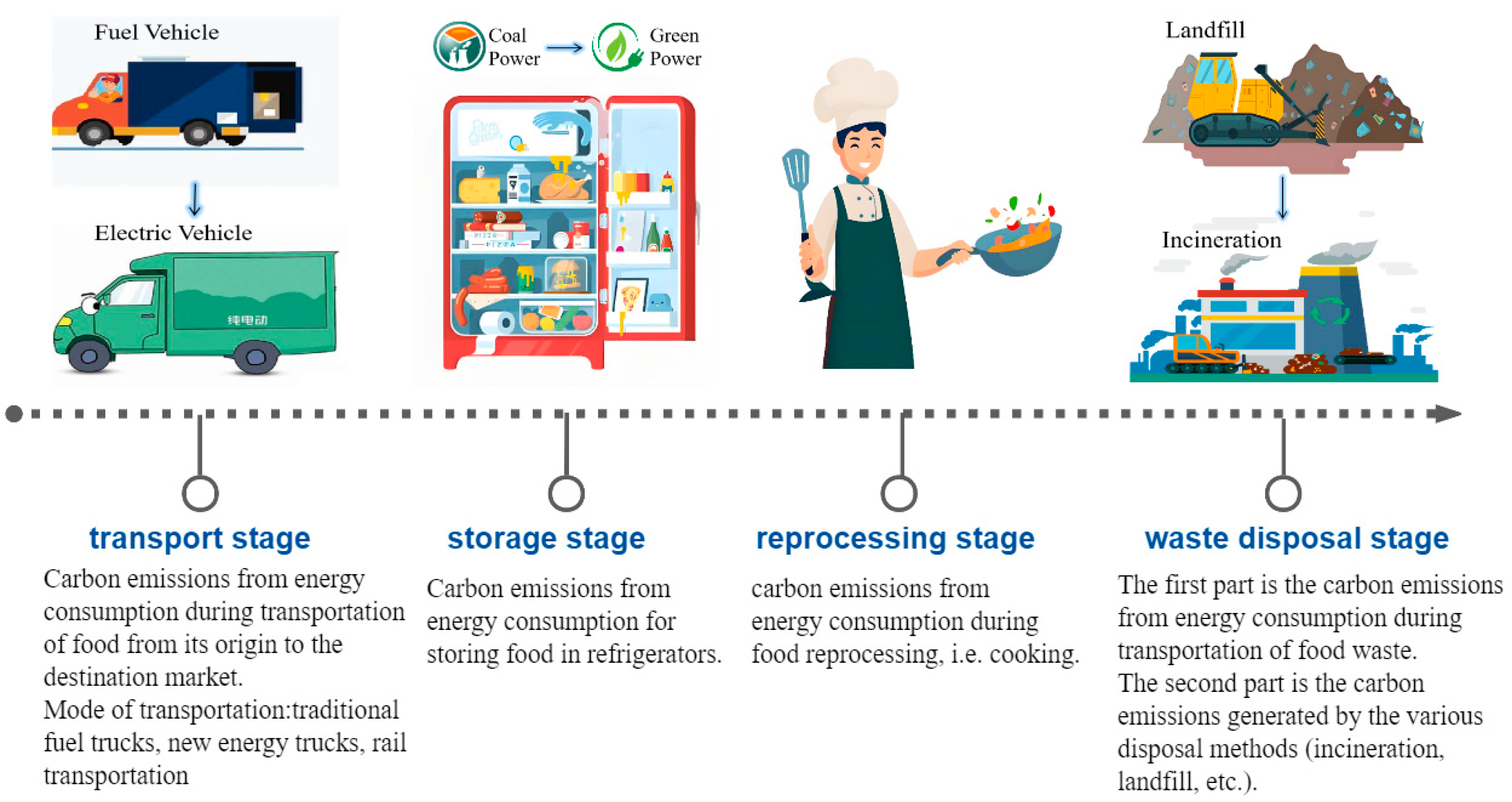
Figure 2.
Trends in total and per capita carbon emissions from food consumption, 2006-2020.
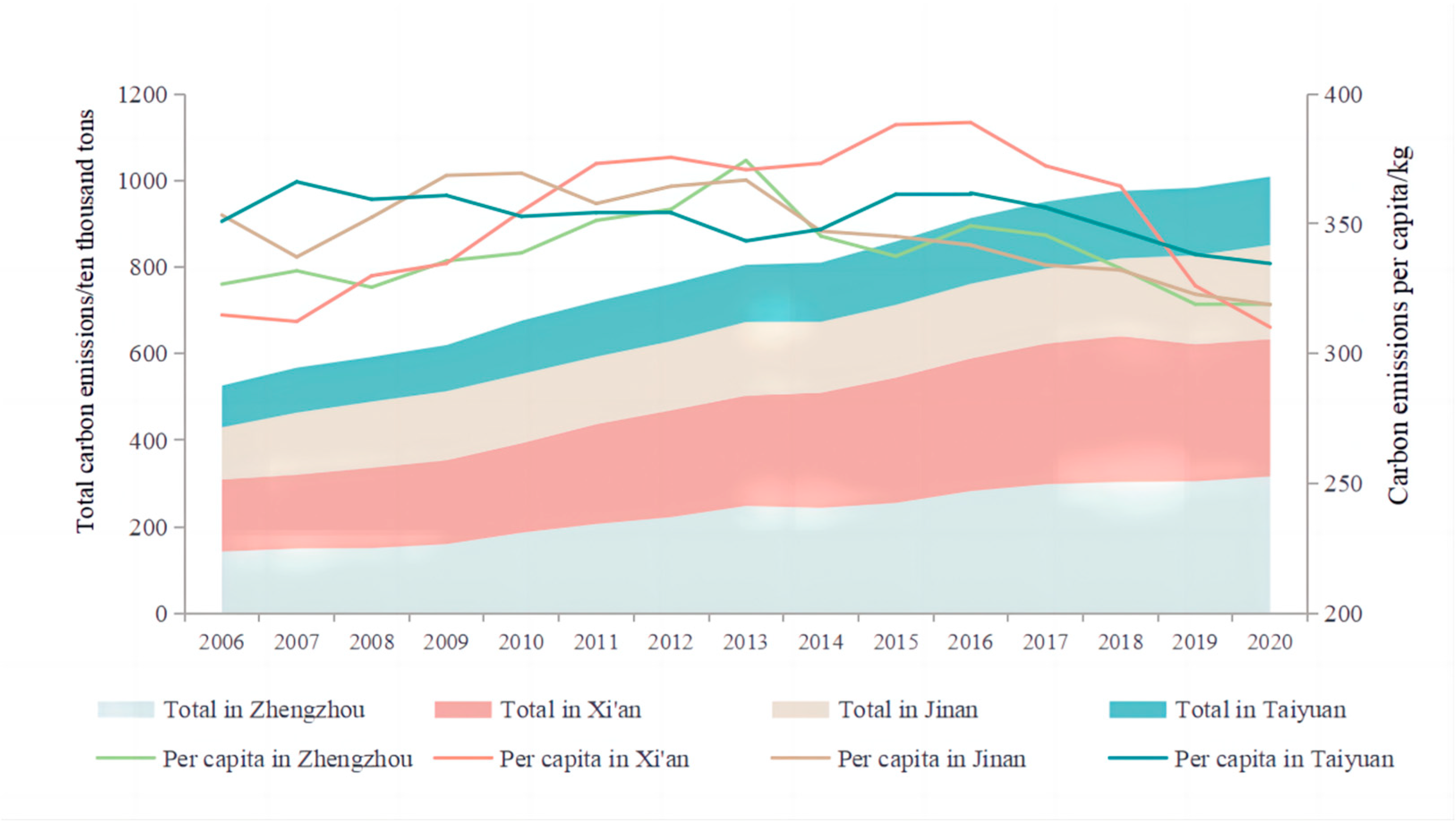
Figure 3.
Trends in total and per capita carbon emissions by stage, 2006-2020.
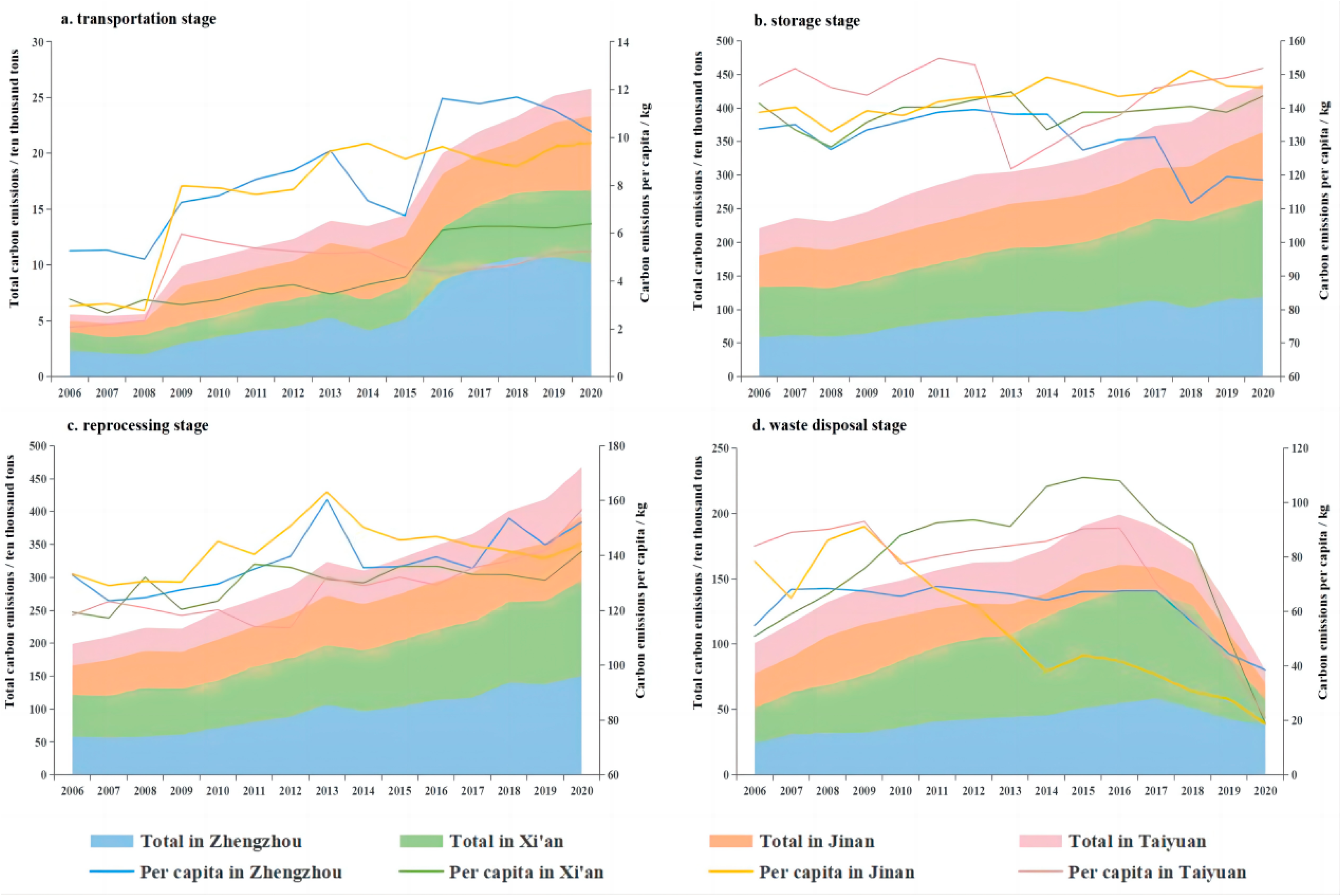
Figure 4.
Structure of Carbon Emissions from Food Consumption by City.
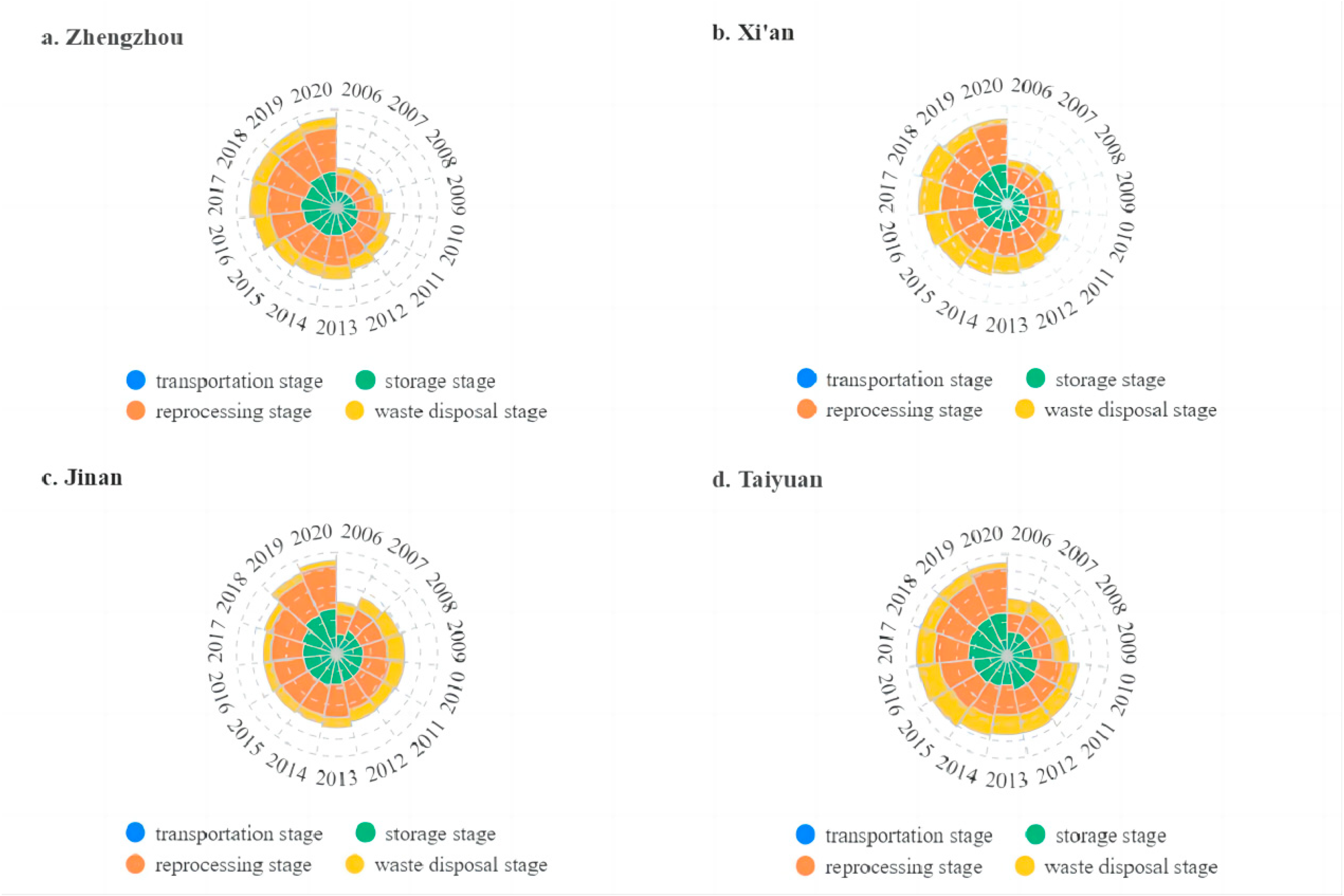
Figure 5.
Prediction of carbon emissions from food consumption by city.
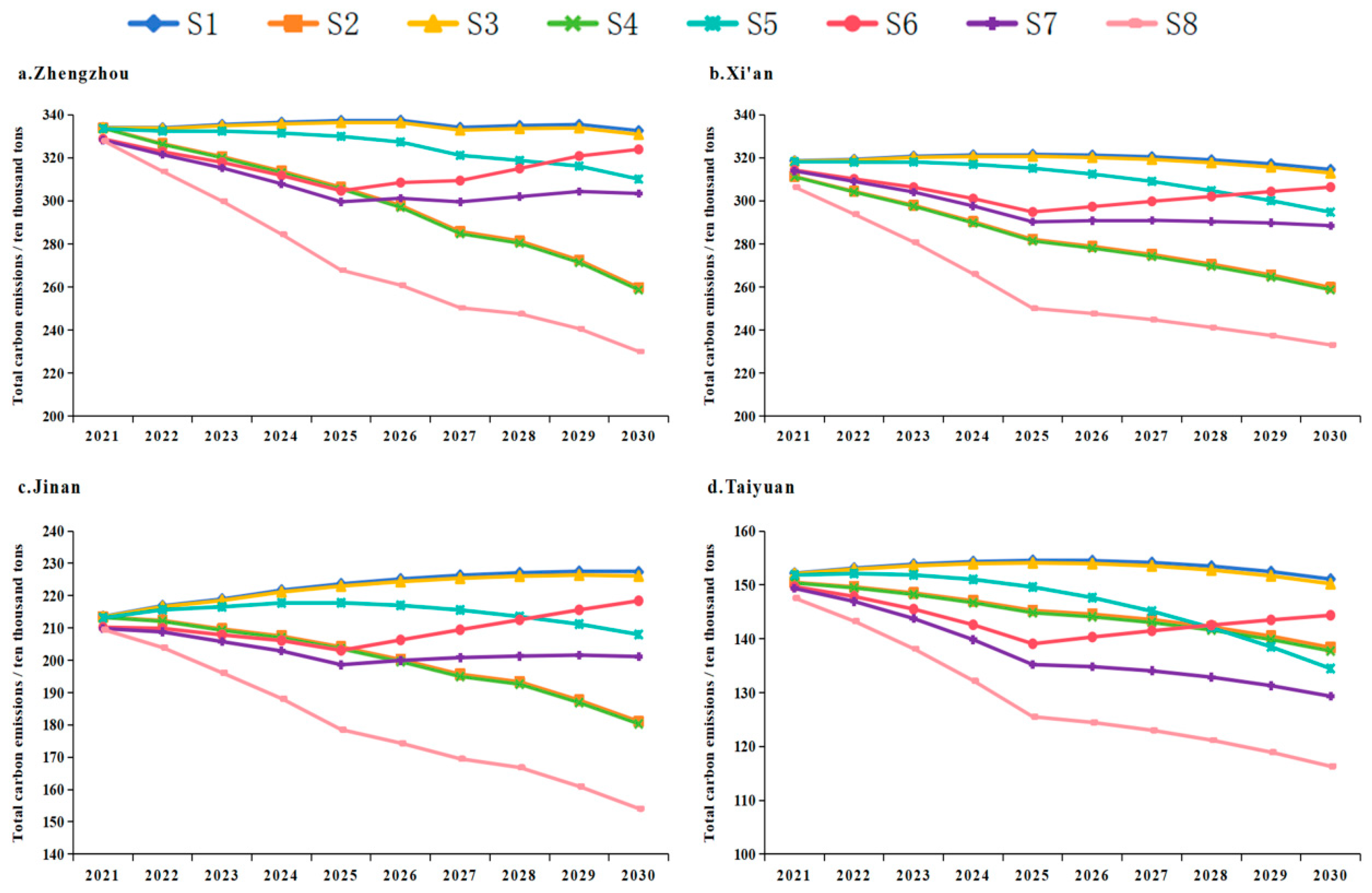
Figure 6.
Prediction of carbon emission structure in four provincial capital cities.
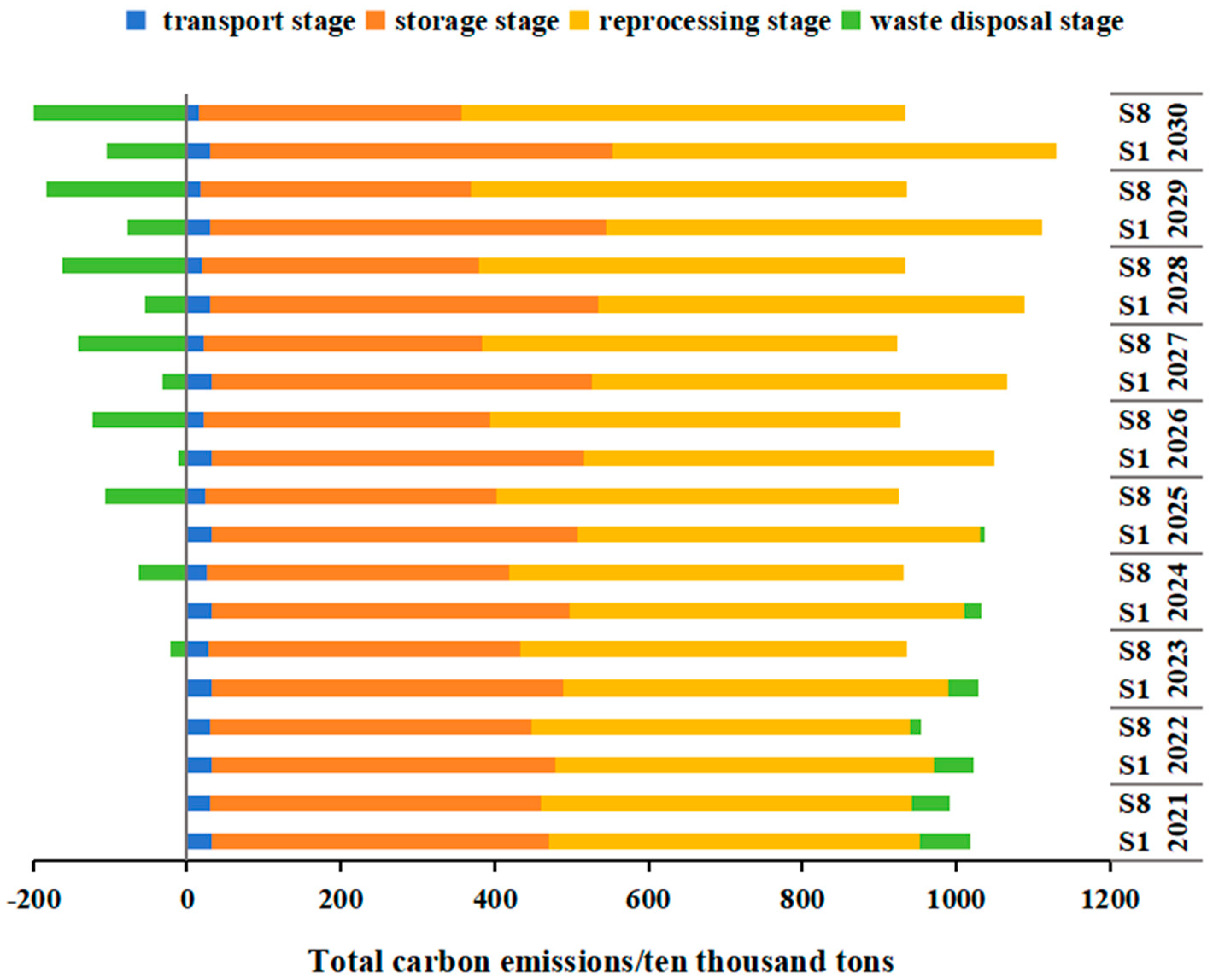

Table 1.
Carbon emission factors for various energy sources.
| Energy | Diesel oil (kgCO2/L) |
Gasoline (kgCO2/L) |
Natural gas (kgCO2/m3) |
Electricity (kgCO2/kWh) |
Coal (kgCO2/kg) |
|---|---|---|---|---|---|
| Emission factor | 2.63 | 2.30 | 2.16 | 0.80 | 3.30 |
Table 2.
Energy consumption and carbon emissions per unit mass of food reprocessed.
| Item | Grains | Vegetables | Eggs | Meat | Poultry | Aquatic products |
|---|---|---|---|---|---|---|
| Energy consumption per unit mass (m3/t or kWh/t) |
1050 | 26.27 | 333.3 | 533.3 | 133.3 | 133.3 |
| Carbon emissions per unit mass (tCO2/t) |
0.8925 | 0.05574 | 0.6966 | 1.114 | 0.2786 | 0.2786 |
Note: Since natural gas is the gas used for cooking in most Chinese households, natural gas is used here for ease of calculation. According to the statistical yearbook and relevant online food books, meat should be cooked in 40 minutes for 500g per serving, vegetables and beans in 2 minutes for 500g per serving, eggs in 10 minutes for 200g per serving, poultry in 20 minutes for 1000g per serving, and aquatic products in 20 minutes for 1000g per serving. For grains, use a 900w rice cooker and cook 500g at a time in 35 minutes.
Table 3.
Scenario setting for the transport stage.
| Scenario | Scenario Description | Parameter Settings |
|---|---|---|
| Baseline Scenario (BS) |
It is assumed that no energy-saving or emissions reduction measures have been implemented by the government or relevant departments to intervene in the development of the food transportation industry. Instead, the scenario relies on trend extrapolation based on existing regional reduction measures and policy frameworks. | By 2030, the share of new energy in highway freight transport in Xi'an is projected to reach 55%, while in the other three cities, it is expected to be 45%. The carbon emission coefficient for electricity and energy efficiency are assumed to remain unchanged. |
| Energy Structure Optimization Scenario (ESO) |
The government actively promotes the adoption of new energy trucks, driving significant advancements in green transportation. The widespread adoption of new energy freight vehicles is expected to reach a high proportion. As the share of coal power decreases, clean energy generation will gradually increase, leading to a significant reduction in the carbon emission coefficient for electricity. | By 2030, the share of new energy in highway freight transport is projected to reach 85% in Xi'an and 80% in the other three cities. The carbon emission coefficients for electricity in 2030 are expected to be 0.55 kg CO2/kWh for Xi'an, 0.68 kg CO2/kWh for Taiyuan, and 0.48 kg CO2/kWh for both Jinan and Zhengzhou. Energy efficiency is assumed to remain constant. |
| Energy Efficiency Improvement Scenario (EEI) |
Continuous technological innovation and advancements in fuel economy will drive ongoing optimization, leading to a substantial reduction in the average energy consumption of vehicle transport. | Energy consumption per unit of turnover for highway freight is projected to decrease by an average of 2% per year, while for railway freight, it is expected to decrease by an average of 1.5% per year. The energy structure remains unchanged. |
| Integrated Scenario (IS) |
This scenario integrates the energy structure optimization and energy efficiency improvement scenarios, evaluating their combined potential for emissions reduction. It represents an idealized policy scenario. | Both the energy structure optimization and energy efficiency improvement scenarios are considered, with the intensity maintained consistently in line with each individual scenario. |
Table 4.
Scenario setting for the waste disposal stage.
| Scenario | Scenario Description | Parameter Settings |
|---|---|---|
| Baseline Scenario (BS) |
Assumes no energy-saving or emissions reduction measures are implemented by the government or relevant departments, relying on trend extrapolation based on existing regional reduction measures and policy frameworks. |
By 2030, the share of mixed incineration power generation for municipal solid waste in each city will reach 100%. The carbon emission coefficient for incineration power generation remains unchanged. The growth rate of food waste remains constant. |
| Food Waste Reduction Scenario (FWR) |
The government enacts laws and policies to regulate the food industry and consumer behavior, encouraging or mandating food waste reduction and actively promoting the "Clean Plate Campaign." | By 2030, the share of mixed incineration power generation for municipal solid waste in each city will reach 100%. The carbon emission coefficient for incineration power generation remains unchanged. The growth rate of food waste will decrease by 0.5% annually. |
| Disposal Method Upgrade Scenario (DMU) |
This scenario accounts for improvements in combustion efficiency and the application of advanced emission control technologies, enhancing the carbon sink capacity of incineration power generation. It also encourages the promotion of more environmentally friendly anaerobic digestion methods. |
By 2025, the share of mixed incineration power generation for municipal solid waste in each city will reach 100%, with the carbon emission coefficient for incineration decreasing by 1.5% annually. From 2026, anaerobic digestion will be promoted, with a carbon emission coefficient of approximately -209 kg CO2/t. By 2030, the share of anaerobic digestion for food waste will exceed 30%. The growth rate of food waste remains constant. |
| Integrated Scenario (IS) |
This scenario combines the food waste reduction scenario and the disposal method upgrade scenario, evaluating their combined potential for emissions reduction. It represents an idealized policy scenario. | Both the food waste reduction scenario and the disposal method upgrade scenario are considered, with the intensity set to be consistent with each individual scenario. |
Table 5.
Scenario setting for food consumption process.
| Scenario | Transportation Stage | Storage Stage | Reprocessing Stage | Food Waste Tisposal Stage | |||||||
| BS | ESO | EEI | IS | BS | ESO | BS | BS | FWR | DMU | IS | |
| S1 | √ | √ | √ | √ | |||||||
| S2 | √ | √ | √ | √ | |||||||
| S3 | √ | √ | √ | √ | |||||||
| S4 | √ | √ | √ | √ | |||||||
| S5 | √ | √ | √ | √ | |||||||
| S6 | √ | √ | √ | √ | |||||||
| S7 | √ | √ | √ | √ | |||||||
| S8 | √ | √ | √ | √ | |||||||
Table 6.
Data sources for indicators.
| Data index | Data source |
| Food production and consumption | Statistical Yearbook of Municipalities 2006-2020 |
| Mode of transportation of goods | Statistical Yearbook of Municipalities 2006-2020 |
| Place and quantity of food available |
Municipal food bureaus, food business networks, etc. |
| Carbon emission factors for various energy sources | Guidelines for the preparation of provincial greenhouse gas inventories |
| Annual electricity consumption per refrigerator | Electricity Consumption Limit Values and Energy Efficiency Classes for Refrigerators |
| Number of resident urban population | Statistical Yearbook of Municipalities 2006-2020 |
| Average household size | Statistical Yearbook of Municipalities 2006-2020 |
| Refrigerators per 100 households | Statistical Yearbook of Municipalities 2006-2020 |
| Quality of food waste | Statistical Yearbook of Municipalities 2006-2020 |
Disclaimer/Publisher’s Note: The statements, opinions and data contained in all publications are solely those of the individual author(s) and contributor(s) and not of MDPI and/or the editor(s). MDPI and/or the editor(s) disclaim responsibility for any injury to people or property resulting from any ideas, methods, instructions or products referred to in the content. |
© 2024 by the authors. Licensee MDPI, Basel, Switzerland. This article is an open access article distributed under the terms and conditions of the Creative Commons Attribution (CC BY) license (http://creativecommons.org/licenses/by/4.0/).
Copyright: This open access article is published under a Creative Commons CC BY 4.0 license, which permit the free download, distribution, and reuse, provided that the author and preprint are cited in any reuse.


