

Submitted:
28 November 2024
Posted:
29 November 2024
You are already at the latest version
Abstract
Auckland’s rapid urban growth into greenfield areas presents significant challenges for sustainable stormwater planning, particularly in terms of disrupting natural hydrological systems. This study investigates the potential of catchment-based solutions within Auckland’s strategic planning framework, focusing on two major greenfield development projects as case studies. Through inductive reasoning and thematic analysis, the research identifies key barriers such as unclear policy provisions, overlapping responsibilities, conflicting stakeholder priorities, and inconsistent policy interpretations. These challenges highlight the complexities of aligning urban development goals with catchment-based stormwater management practices. The findings highlight the need for a more integrated planning approach to effectively address these issues and mitigate risks to natural hydrological systems. Additionally, this research offers theoretical insights into the integration of urban planning and stormwater management, providing practical implications for enhancing the sustainability of greenfield developments worldwide. Addressing these challenges is crucial for achieving cohesive and effective catchment-specific stormwater planning that supports both urban growth and environmental sustainability.
Keywords:
integrated stormwater management
; catchment-based planning
; greenfield development
; urban planning
; urban expansion
; urban land use
1. Introduction
The rapid pace of urbanisation, combined with increased intensification and densification, present a significant challenge to the preservation of urban 'green' spaces. This highlights the urgent need for strategic land-use management and sustainable development practices. Statistics New Zealand (2021) reports that the total urban land area in New Zealand grew by 14.6% between 1996 and 2018 [1]. Auckland, in particular, is experiencing exceptional growth, with projections estimating a population exceeding 2.4 million by 2047. In response to this trend, Auckland Council launched a Future Development Strategy in 2023, set to replace the Auckland Plan 2050’s Development Strategy 2018 and the Future Urban Land Supply Strategy 2017 [2]. This new strategy is essential given the increasing urbanisation and changing land use patterns.
Managing stormwater in greenfield developments, especially within Auckland's extensive urban sprawl, is both complex and urgent. The Auckland Unitary Plan (AUP) 2016 establishes a regulatory framework for urban development and land use in the Auckland Region. However, despite AUP’s stringent environmental provisions, the loss of aquatic habitats and species continuity remains a significant concern, particularly in areas designated for potential urbanisation [3]. The anticipated impacts of climate change in the region further complicate these challenges [4]. Various land use activities, including historical methods of land and urban development, have negatively impacted the quality and health of Auckland's freshwater systems [5].
Auckland has been recognised as a leading city for ‘overall sponginess’ in the Arup Global Sponge Cities ranking, evaluated on three key factors: the availability of blue and green spaces, soil type, and the potential for water runoff [6]. The assessment resulted in an overall sponginess score of 35%, with 50% of the area consisting of green-blue spaces and a moderate to high potential for runoff due to soil types containing less than 60% sand and 10%-20% clay [6]. This notable ranking highlights Auckland’s inherent potential and the pressing need to strategically utilise its natural features for effective stormwater management, particularly considering new developments and changing urban landscape.
The significance of freshwater resources is evident by the many benefits offered by freshwater ecosystems, such as clean water, energy, water purification, flood mitigation, and cultural value. This study emphasises the need for integrated planning processes and frameworks that align with best management practices, advocating for catchment-based approaches in greenfield urban planning. Although catchment-based development is not a novel idea in urban planning; it has been a core strategy in various urbanisation efforts, especially in New Zealand, for many years. The integrated catchment management (ICM) is recognised as essential for enhancing both ecosystem and community resilience, stressing the significance of stakeholder involvement and biophysical knowledge in managing urban environments [7]. Numerous case studies have demonstrated the lasting importance of this approach in urban development strategies [8]. Furthermore, international case studies have examined the integration of best management practices to bolster catchment-based methods in new urban developments [9, 10, 11, 12]. These studies effectively utilise the catchment scale to demonstrate the connection between land use, planning, and water within the surrounding environment.
This research aims to explore the influence of planning and policy on the integration of catchment-based solutions in greenfield developments for stormwater management. It emphasises the critical role that planning and policy can play in either facilitating or hindering the seamless integration of catchment-based approaches in greenfield urbanisation. The findings will enhance the field of stormwater management by offering a thorough understanding of the complexities involved in implementing catchment-based solutions in greenfield settings. This knowledge will inform future planning and policy decisions, ensuring effective integration of stormwater management in greenfield urbanisation. By identifying both barriers and enablers to integration, this research provides valuable insights for sustainable urban planning and advocates for comprehensive, environmentally responsible development strategies in rapidly urbanising areas. The insights generated from this research are particularly relevant for policymakers, planners, and developers, not only in the Auckland region but also in various urban contexts around the world.
2. Challenges and Opportunities in Catchment-Based Stormwater Planning: Global and Local Insights
Catchment planning has historically evolved to address the challenges posed by urbanisation, focussing on holistic basin planning to anticipate geomorphological changes and reduce reactive management approaches [13]. Research has highlighted the ecological impacts of urbanisation on stream ecosystems, emphasising the importance of managing these effects at the catchment level rather than in isolation [14, 15]. For instance, extensive evidence indicates that urban development can degrade stream health, illustrating how catchment characteristics influence ecological outcomes [16, 17]. Furthermore, catchment-based strategies have proven effective in managing urban streams, promoting the integration of natural processes to mitigate flooding and improve ecological integrity [18]. Acknowledging catchment dynamics in urban planning reflects a deeper understanding of the interconnectedness of land use, hydrology, and ecological health, a focus of research for many years [19, 20]. Consequently, the historical use of catchment-based development in urbanisation in New Zealand and beyond highlight its essential role in promoting sustainable urban environments. This section will discuss the key challenges and opportunities in catchment-based stormwater management in planning, drawing on relevant research and practices from both global and New Zealand contexts.
2.1. Global perspectives
A study by Janssen & Ameli highlights the intricate nature of catchment hydrology and the interplay of various climatic and physical factors [21]. While urban areas inherently behave like sponges, the rise in impervious surfaces significantly affects the quality of surface runoff entering adjacent ecosystems [22]. To address the impacts of changing land use on freshwater ecosystems, planning practices should implement adaptive and environmentally sensitive strategies for manging stormwater runoff, thus aiding in the restoration of these ecosystems [23, 24].
Despite these challenges, catchment-based stormwater management offers substantial opportunities for sustainable urban development. Strategies such as Low Impact Development (LID), Nature-Based Solutions (NBS), Water Sensitive Urban Design (WSUD), Low Impact Urban Design and Development (LIUDD), Water Sensitive Design (WSD), and Green Infrastructure (GI) aim to replicate the natural water cycle and mitigate the effects of urbanisation on hydrology. Examples of WSUD practices include green roofs, rain gardens, and permeable pavements [25, 26]. NBS, which encompasses green infrastructure, also play a critical role in adapting to climate change and minimise the risks of water pollution and flooding.
Understanding the integration of sociopolitical factors and governance is crucial for cities aiming to adopt more sustainable and resilient water management practices [27]. Decentralised stormwater management tools such as LID, LIUDD, WSUD, or WSD can provide effective sustainable solutions when implemented at a catchment scale [28, 29, 30, 31]. However, challenges often arise from the absence of integrated strategies for prioritising implementation areas while demonstrating developments at catchment level [30, 32]. Local authorities frequently face difficulties in balancing the various scales and locations needed to achieve stormwater management goals alongside urban redevelopment requirements [33].
Assessment frameworks such as the Water Sensitive Cities Index and the Principles for Water Sensitive Cities are valuable resources for evaluating and advancing cities’ transitions towards WSUD [34]. The concept of water sensitive city is supported by three essential key pillars: access to diverse water sources, provision of ecosystem services, and socio-political capital that foster sustainability and water-sensitive behaviours [27]. Furthermore, progress in the China’s Sponge City programme has provided insights on the challenges and opportunities in urban stormwater management, aligning with WSUD principles [35].
In New Zealand, a study highlights the significance of understanding the cultural and social dimensions of water practises [36]. Water culture significantly influences societal perceptions and behaviours regarding water usage. Societal norms, values, and practices shape individual decisions regarding water consumption, such as the frequency of showering and the adoption of sustainable technologies. Similarly, another New Zealand study notes that urban development in greenfield areas often neglects the impacts on urban streams [37]. This disregard has resulted in streams being diverted, buried, and built over, leading to highly polluted waterways. McLean’s research also emphasises the importance of recognising the cultural significance of waterways, such as the Waimapihi Stream, which is considered sacred by the local communities [37].
A study in Melbourne, Australia, focuses on creating a spatial planning support system for decentralised urban stormwater management [38]. It emphasises the necessity for new WSUD infrastructures in greenfield developments and the urgent need to incorporate blue-green solutions into urban environments to enhance ecosystem services, tackle climate change, and improve stormwater management [39]. A study in Sweden discusses the transition toward the widespread adoption of blue-green planning approaches, highlighting the importance of integrating both top-down and bottom-up strategies to address environmental challenges related to stormwater management in urban areas [9]. A case study from Portland, Oregon, USA, showcases the successful implementation of blue-green infrastructure to manage urban flood risks and support watershed restoration, stressing the need for a holistic approach that considers ecological, cultural, and economic benefits [40]. Shanahan and Phillips examine the effectiveness of mitigation strategies in agricultural contexts in England, identifying policy challenges associated with water pollution and its interconnections with other environmental objectives [41]. Understanding these challenges and the effectiveness of mitigation measures is essential for implementing catchment-based solutions in greenfield developments.
2.2. Aotearoa, New Zealand Experiences
The author reviewed Auckland's planning documents to evaluate their effectiveness in implementing catchment-based solutions for integrating stormwater management in greenfield developments. The Auckland region encounters considerable challenges in effectively applying these solutions, which aim to address various issues related to the management and conservation of freshwater resources. Despite their potential, several factors hinder progress toward achieving the intended environmental outcomes.
The National Policy Statement on Freshwater Management (NPSFM), first established in 2014 and subsequently amended in 2017 and 2020, strengthens the integrated management of freshwater resources in New Zealand. The NPSFM 2020 emphasises the following objectives for national freshwater policy:
(a) prioritise the health and well-being of water bodies and freshwater ecosystems. (b) address the health needs of people, such as drinking water. (c) ensure the ability of people and communities to provide for their social, economic, and cultural well-being, both now and in the future [42] (p. 10).
The NPSFM outlines 15 policies designed to support these objectives [42]. The 2020 version introduces the concept of ‘Te Mana O te Wai,’ a national directive focussed on protecting and enhancing freshwater environments in New Zealand. Te Mana O te Wai emphasise the importance of water and acknowledges that maintaining the health of freshwater is essential for the overall well-being of the environment. Implementing this concept reflects the strong connection that all New Zealanders have with freshwater.
To implement Te Mana O te Wai, each regional council in New Zealand must engage with local communities and tangata whenua (indigenous Māori people of such particular locality) to determine its relevance for specific water bodies and freshwater systems. This national directive translates cultural responsibilities into planning decisions that prioritise water health and well-being. It highlights the importance of effectively implementing ‘Te Mana O te Wai’ through catchment-based solutions, utilising planning and regulatory mechanisms to enhance water health across New Zealand.
Auckland Council's ‘2022-2050 Auckland Water Strategy’ is a comprehensive plan aimed at addressing the challenges posed by urban development and climate change on the freshwater environment [43]. This strategy provides strategic direction to the council and its controlled organisations, guiding planning and actions to respond to the decline of the freshwater environment due to rapid urban growth and climate change. The Auckland Water Strategy outlines eight key strategic shifts, including land use change, climate change mitigation and adaptation, and partnerships with local iwi (tribe)/and hapū (clans or descent groups). These strategic directions align with the NPSFM 2020 and seek to improve the overall health and well-being of Auckland's water resources [42, 43].
The AUP directs land use development and redevelopment activities across Auckland region, including rural and coastal areas [44]. It assesses how land use planning can avoid, remedy, or mitigate the negative adverse effects of land use changes on the environment. The AUP framework is influenced by national legislation, policies, and environmental standards, including the regional policy statement, regional coastal plan, regional plan, and district plan rules [44]. However, the AUP has not yet fully adopted the NPSFM framework established in 2020.
In the AUP, the concept ‘integrated stormwater management’ pertains to addressing the adverse effects of stormwater in both greenfield and comprehensive brownfield developments [44]. Principles of integrated stormwater management are embedded into various chapters of the AUP, such as B7 (natural resources and developments), E1 (water quality), E3 (protection of lakes, rivers, and streams), E8 (stormwater discharge and diversion), E9 (stormwater quality for high-contaminant generating car parking and high-use roads), E10 (land use control for stormwater management areas), and E38 (subdivision controls - urban). This comprehensive approach reflects the AUP's dedication to reducing the adverse effects of stormwater across various development types.
A primary objective of the AUP is to implement WSD for integrated stormwater management in Auckland [44]. WSD promotes for land use planning that harmonises urban development with the conservation of freshwater and ecosystem services in urban catchments. To facilitate this, a guide titled ‘Water Sensitive Design for Stormwater (GD04)’ is incorporated into the AUP framework. Auckland Council mandates that land developers utilise this guide during planning process to develop sustainable stormwater management strategies that prioritise natural processes over traditional end-of-pipe solutions. The WSD principles are applicable to both greenfield and brownfield areas, promoting interdisciplinary planning and design to safeguard and enhance natural ecosystems. These principles focus on managing stormwater effects at their source and utilising natural systems and processes for stormwater management [31].
Moreover, bespoke stormwater management systems and discharge requirements in the Auckland Region must adhere to the Stormwater Code of Practice (CoP) [45] and the Regionwide Stormwater Network Discharge Consent (NDC) [46]. The CoP and NDC are comprehensive regulatory frameworks overseen by Auckland Council, regulating the diversion and discharge of stormwater from the public stormwater network throughout the region [46]. For inclusion in the NDC, a development (whether greenfield or comprehensive brownfield) must submit a stormwater management plan (SMP) that aligns with the CoP and WSD principles outlined in GD04 [46, 31].
Catchment-based solutions for stormwater management in greenfield developments differ from those in established urban areas. In greenfield settings, these solutions can be integrated from the beginning, allowing for a comprehensive approach to stormwater management across the entire catchment area. While the AUP offers a robust framework that encompasses both structural and non-structural approaches for stormwater management, challenges persist that impede the realisation of desired outcomes in strategic planning. Urban expansion complicates these issues, emphasising the necessity for effective interventions that incorporate catchment-based planning to mitigate the negative impacts of stormwater resulting from urban development and land use.
Thus, it is clear that integrating catchment-based solutions into urban planning necessitate a thorough examination of land use zoning, environmental constraints, infrastructure design, regulatory frameworks, funding mechanisms, stakeholder engagement, and governance structures [47]. By considering the broader context of urban planning and governance, researchers can gain a more comprehensive understanding of the complexities involved in implementing catchment-based solutions, ultimately supporting the development of effective and sustainable stormwater planning strategies for the future.
3. Structure Planning and Plan Change Processes: Foundations for Catchment-Based Stormwater Planning in New Zealand
In New Zealand, planning process significantly influence greenfield developments, particularly through structure planning (SP) and plan change (PC) processes that impact stormwater management. These approaches involve comprehensive assessments and stakeholder engagement, facilitating the integration of sustainable stormwater management practices into urban development projects. This integration is crucial, as urbanisation typically increases impervious surfaces, resulting in higher surface runoff and potential flooding risks.
The SP and PC processes are vital for tackling the challenges of stormwater management in greenfield areas and fostering sustainable urban development. They combine planning and policy measures to effectively implement catchment-based solutions for stormwater management. During a PC, which involves modifications to a District Plan, councils evaluate and update their existing plans to accommodate urban growth, land rezoning, adjustments to planning regulations, and the incorporation of national policy directives. A PC request initiated by district or regional councils is termed as a public PC, while one initiated by a private party is classified as a private PC. Regardless of the type, all PC requests must undergo review under the Resource Management Act 1991 (RMA) process [48]. This public procedure examines the environmental, economic, social, and cultural impacts of the proposed land use changes, including potential reverse sensitivity effects.
Greenfield PCs often lead to large-scale development projects. Once approved, the PC becomes part of the operative plan such as AUP. These plans are utilised by various stakeholders, including planners, businesses, developers, consultants, lawyers, and environmental interest groups. While local authorities can prepare plans to fit local circumstances, consistency and commonality are essential to benefit all users. Developing policies and plans within the RMA framework involves complex decision-making processes, considering diverse values and conflicting interests [48].
Through the PC process, this research paper aims to investigate the challenges related to integrating catchment-based solutions in greenfield developments in the Auckland Region. The PC process presents a unique opportunity to embed these solutions into comprehensive stormwater planning for greenfield areas. Engaging with key stakeholders, including stormwater professionals, transport planning bodies, community groups, and tangata whenua (Māori peoples), is essential during this process. By reviewing existing planning and policy data, we can uncover potential implications for stormwater planning and management.
4. Materials and Methods
The research seeks to explore the challenges of implementing catchment-based solutions for stormwater planning in greenfield developments, focussing on planning and policy aspects. The selected methodology aligns with the study's objectives by conducting a thorough analysis of relevant policy and planning documents, along with expert insights. This approach provides a detailed understanding of the challenges involved in adopting catchment-based stormwater planning in the Auckland region.
To thoroughly examine the topic, the research utilises an inductive reasoning approach, concentrating on two representative case studies in Auckland. This choice of methodological enables an in-depth analysis of planning and technical documents related to the PC process [49]. Through this perspective, the research identifies key themes and conclusions, supported by similar studies [50, 51]. Inductive reasoning, a fundamental aspect of qualitative research, aids in synthesising knowledge, solving problems, and drawing general conclusions. Its predictive capabilities in new contexts make it particularly useful for case-study analyses. By following this methodological framework, the research maintains rigor and offers valuable insights into the research questions.
4.1. Selection of PC Studies
The researcher selected two completed PCs that exemplify greenfield urbanisation in the Auckland region from the 107 listed on the Auckland Council’s website in 2024. This choice was intentional and strategic, driven by the research focus and practical constraints. The study aims to explore the challenges of integrating catchment-based stormwater planning in greenfield developments within the Auckland region. To accomplish this, it was essential to concentrate on case studies that would provide valuable in-depth insights into the related issues and opportunities within these planning processes.
Due to the lengthy statutory timelines required to complete a PC and existing resource limitations, a comprehensive analysis of all PCs was not feasible within the study’s scope. Instead, two PCs were chosen based on their relevance to the research objectives. The selected PCs exemplify greenfield urbanisation and are located within subcatchments that significantly impact the Manukau Harbour, a crucial ecological resource facing a considerable pressure from urban development. This context is vital for examining the long-term implications of stormwater management. A recent memorandum from Auckland Council indicates that the Harbour and its catchment have been rated as having 'poor' water quality and 'low,' ecological health due to high nutrient levels and turbid water [52]. These conditions highlight the importance and urgency of implementing effective stormwater management solutions, making the selected PCs particularly pertinent to the study's objectives.
Additionally, practical factors such as the statutory timelines and resource demands associated with completing a PC played a significant role in the selection process. Typically, PCs require over 12 months to process under the current regulatory and planning framework. Given these constraints, an extensive analysis of all PCs was not practical. By narrowing the focus to two completed PCs, the study ensures a rigorous examination of cases that reflect the complexities of greenfield urbanisation in Auckland.
Figure 1 illustrates the locations of PC49 (Drury East Precinct) and PC61 (Waipupuke Precinct) in the Auckland region. PC requests should include an evaluation report (s32 report of the RMA) along with supporting technical documents that address key issues in accordance with Section 32 of the RMA 1991. The technical documents prepared by planning professionals and specialists for these PCs aim to demonstrate that the proposed changes and land developments foster improved environmental outcomes and sustainability. The planning reports also assess anticipated environmental effects and outline how these effects have been mitigated, avoided, or remedied in the proposed PCs.
4.2. PC49 Drury East Precinct
PC 49 is one of three private PCs (PC49, PC48, and PC50) in the Drury East area, submitted concurrently for consideration by three private requestors to Auckland Council in 2021. PC49 encompasses approximately 184 hectares of greenfield land (see Figure 2), primarily used for rural activities and designated as 'future urban' under the AUP. The land is located within a high-use and quality-sensitive aquifer management area known as the Drury Sand Aquifer, along with macroinvertebrate community index overlays for both rural and urban zones. Most of the area is within the Hingaia stream catchment, with a small section falling under the Slippery Creek catchment. The Hingaia stream flows into Drury Creek, which ultimately discharges to the Manukau Harbour.
4.3. PC61 Waipupuke Precinct
PC61 encompasses approximately 56 hectares of greenfield land that was previously used for open greenspace, farming, and horticultural activities. It has been designated as a future urban area in Drury West (refer to Figure 3). The land is located within the catchments of the Ngakoroa and Oira streams, with Oira Creek serving as the immediate receiving environment. Oira Creek flows into Drury Creek and subsequently into the Manukau Harbour. Although PC61 is not located within a high-use aquifer, it is surrounded by several significant aquifers that rely on rainwater infiltration.
4.4. Document Selection
For this study, the researcher reviewed documents obtained from Auckland Council, which included planning and technical reports related to two PCs aimed at developing greenfield land for residential, business, and urban purposes (see Table 1). These documents were prepared by Auckland Council, relevant applicants, and technical experts during the PC process. PC49 and PC61 were submitted to Auckland Council by private parties seeking amendments to the AUP. The analysis of these documents, encompassing technical reports and expert evidence, utilised inductive reasoning to identify challenges in implementing catchment-based solutions for stormwater planning in these greenfield developments.
4.5. Thematic Analysis of PC Documents
This study utilised thematic analysis, supported by documentary data analysis, to investigate the challenges of implementing catchment-based stormwater planning in greenfield developments, using PC49 and PC61 as case studies. The primary data source, outlined in Table 1, comprised planning and technical reports prepared by Auckland Council and associated experts during the PC processes. Thematic analysis was selected for its effectiveness in systematically identifying, analysing, and interpreting patterns within qualitative data, making it particularly well-suited for addressing the complexities of structured planning and plan change processes in urban planning contexts [53].
Through a semi-systematic approach, the planning and technical reports were reviewed to identify recurring themes and generate new insights. Key patterns were coded and compared iteratively, ensuring reliability and validity by aligning emerging themes with the data [53]. This method facilitated for the exploration of stakeholder motivations, challenges, and perceptions, highlighting how planning processes influence the implementation of sustainable stormwater management strategies [47]. By concentrating on the two PCs, thematic analysis revealed specific challenges associated with greenfield developments, while also identifying opportunities for enhanced practices. This approach provided a flexible yet rigorous framework for evaluating the effectiveness of current stormwater management strategies and informing recommendations for improving catchment-based approaches in greenfield development planning.
5. Results
Following the review of the documentary data related to the two PCs listed in Table 1, this results section synthesises and elaborates on themes concerning the challenges of implementing catchment-based solutions for stormwater planning during plan changes in Auckland. Table 2 summarises these key themes, offering an insight overview of the rationale behind each of them as outlined in the two plan change documents. These themes highlight the complexities involved in applying catchment-based stormwater management within Auckland’s greenfield urban development.
Building on the refined themes outlined in Table 2, the following section presents structured narratives (quotes) and relevant text excerpts that highlight the key challenges identified in the PC49 and PC61 planning documents. These excerpts offer an overview of the thematic analysis and structured narratives concerning the challenges faced in implementing effective stormwater management solutions within Auckland’s plan change projects. The narratives provide evidence to support either the applicant's practices or the Auckland Council's differing and overlapping expert perspectives on each theme related to stormwater management challenges.
Thematic Analysis
- Theme 1: Integration of diverse expertise for comprehensive catchment management
In PC49 and 61, a significant gap is evident in the implementation of comprehensive stormwater management strategies, highlighting the underutilisation of integrated knowledge and solutions. This emphasises the need for a unified approach to stormwater planning and management in greenfield developments.
While the SMPs included in the PC documents received approval from Auckland Council’s technical experts, inconsistencies remain in how these proposed frameworks align with broader stormwater planning objectives. The concerns regarding the planning rule framework in PC61 reveal a fundamental misalignment with integrated stormwater management practices. This misalignment highlights the need for coherent planning provisions to ensure effective, catchment-based stormwater solutions that meet desired outcomes and mitigate the risks associated with fragmented planning approaches.
A significant risk associated with uncoordinated stormwater planning arises when flood assessment and risk management are deferred until the resource consent phase. This often leads to the implementation of multiple, small-scale stormwater management devices that lack coordination and integration, resulting in ineffective stormwater management and heightened flood risks. Such an approach not only restricts development opportunities but also fails to consider the broader implications and cumulative impacts of various projects on the catchment’s receiving environment. The following statements from the applicant and Auckland Council reinforce this perspective.
Applicant’s perspective:
“The integrated stormwater management strategies proposed in PC61, while initially deemed sufficient, have been questioned due to their limited scope and lack of comprehensive integration with broader urban planning objectives.” — PC61
“Recognizes the need for an integrated stormwater management approach through the Drury East Stormwater Management Plan (“SMP”), which aligns with the NDC objectives and employs the Best Practical Option (“BPO”) as demonstrated through the SMP and Stormwater toolbox approach.” — PC49
Auckland Council’s perspective:
“Concerns have been raised regarding the adequacy of the stormwater management provisions in the proposed plans, particularly their ability to effectively address cumulative impacts on the catchment area. This highlights the need for a more integrated approach that transcends individual development assessments.” — PC61.
“Key stormwater issues include the lack of analysis on alternative flood management approaches and uncertainty regarding their delivery, indicating a clear need for integrated planning and execution.” — PC49.
“The NDC and relevant SMP are insufficient on their own to ensure that outcomes are achieved in greenfield development. Precinct provisions are essential to guide development design and apply appropriate controls to development and subdivision to achieve NDC outcomes and effectively manage stormwater impacts.” — PC49
This highlights the applicant’s commitment to aligning proposed stormwater practices with existing regulatory frameworks, such as the Network Discharge Consent. However, it is essential to emphasise the need for a multidisciplinary approach that integrates ecological, planning, and engineering knowledge to achieve cohesive outcomes. Auckland Council underscores the importance of addressing cumulative impacts across the catchment, rather than focussing solely on isolated, site-specific solutions. This approach reflects the necessity of combining expertise to understand system-wide interactions and mitigate risks. The lack of coordination among various disciplines and stakeholders often leads to fragmented stormwater strategies, as seen in the inconsistent implementation of small-scale stormwater devices during resource consent phases. By harnessing expertise from different fields, we can gain a more comprehensive understanding of the hydrological, ecological, and urban development contexts.
- Theme 2: Navigating ambiguities in policy language and aligning fragmented frameworks
Ambiguities in policy language and differing interpretations present considerable challenges in implementing effective stormwater management practices. These issues stem from the absence of clear development guidance within the proposed planning objectives and policies, as well as often ambiguous and contradictory directives from regulatory bodies. For instance, vague terminology in policy language, such as “any approved NDC,” complicate policy interpretation. PC49 highlights the dissatisfaction and disagreements among applicants concerning the policy directives from the Healthy Waters Department at Auckland Council, particularly in relation to the Network Discharge Consent requirements for stormwater management.
Applicant’s perspective:
“We have encountered considerable challenges due to ambiguous policy language, especially regarding interpretations of what qualifies as 'any approved NDC', which varies greatly among different council departments.” — Applicant Submission, PC61
This statement highlights the applicant's difficulties with inconsistent policy interpretations across council units. Ambiguities in terms like "any approved NDC" lead to operational delays and confusion.
“The proposed policy does not sufficiently allow for flexibility in achieving water quality outcomes, which is crucial given the variable nature of stormwater contaminant sources across different sites." — Applicant Technical Evidence, PC49
Auckland Council’s perspective:
“There has been ongoing confusion and inconsistency in the application of policy language, particularly concerning stormwater management requirements under the NDC. This inconsistency limits our ability to provide clear guidance to developers.” — PC61.
“The requirement for water quality treatment of all runoffs from impervious surfaces unless an alternative Best Practicable Option (BPO) is demonstrated in a Stormwater Management Plan and approved by Healthy Waters...” — PC49.
“This includes a privately built network seeking to connect. If no SMP is adopted, or Healthy Waters does not accept developer-built stormwater devices for vesting in Council, then a private discharge consent is required...” — PC49.
These excerpts highlight a rigid and prescriptive approach that may not adequately address site-specific needs, or the innovative solutions proposed by developers.
This situation points to a broader issue within the existing policy framework; its rigidity often leads to varying interpretations and conflicting viewpoints among technical experts, planners, and decision-makers. Such discrepancies can impede the effective implementation of catchment-based solutions. To address these complexities, it is crucial to develop essential to create policy frameworks that are both clear and adaptable, ensuring a consistent understanding among all stakeholders while accommodating the diverse needs of development projects and allowing for flexibility in successful catchment-based stormwater management. Policy ambiguities and rigid interpretations can intensify conflicts between developers and regulatory authorities, obstructing the adoption of adaptive stormwater practices. This highlights the importance of establishing clear, flexible policies to foster alignment among stakeholders.
- Theme 3: Regulatory clarity and technical discrepancies in stormwater management
The tension between regulatory compliance and the adoption of innovative stormwater solutions is evident in PCs 49 and 61. Developers are seeking flexibility in using alternative stormwater management devices, while council authorities emphasise the importance of adhering to established guidelines to mitigate environmental risks. Effectively navigating the complex regulatory landscape and addressing the technical specifics of stormwater management is essential for planning sustainable systems. This situation highlights the challenges of implementing precise stormwater management practices, selecting appropriate management devices, and planning necessary infrastructure upgrades. PC61 underscores the need to carefully consider technical constraints and cumulative impacts. Conversely, PC49 reveals ongoing discussions about compliance with existing stormwater guidelines set by regulatory authorities, alongside developers' preferences for what they consider the best practicable alternative devices.
Applicant’s perspective:
“The technical guidelines provided by the council often do not align with the innovative approaches we consider best for practical stormwater management, leading to frequent discrepancies in project execution.” — Applicant, PC61
This statement from the applicant highlights a recurring challenge: the gap between regulatory standards and the evolving technologies in stormwater management.
“The proposed policy does not adequately allow for flexibility in achieving water quality outcomes, which is essential given the variable nature of stormwater contaminant sources across different sites.” — Applicant, PC49
Auckland Council’s perspective:
“It is crucial that all stormwater management devices and practices comply strictly with our established guidelines to prevent potential long-term environmental impacts, which some proposed alternatives by developers may not adequately address.” — PC61.
“This includes a privately built network that wants to connect. If no SMP is adopted, or Healthy Waters does not accept developer-built stormwater devices for vesting in Council, then a private discharge consent is required…” — PC49
Auckland Council reaffirms its commitment to established technical guidelines, highlighting the challenges of integrating innovative or site-specific solutions within existing regulatory frameworks.
The gap between council standards and developer innovations underscores the importance of early collaboration to ensure technical compatibility. Without this alignment, developers may have to seek private consents, which can complicate the planning and implementation process. The review of these plan changes emphasises that clarity and consistency in regulatory guidance from the beginning are vital for achieving sustainable stormwater management outcomes. Any ambiguities or inconsistencies in this guidance or policies could raise concerns about the long-term validity of proposed stormwater management solutions. Therefore, it is crucial to establish clear and consistent directives from regulatory authorities early in the development process to effectively guide the planning and implementation of desired stormwater management outcomes.
- Theme 4: Fostering stakeholder consensus and collaborative engagement
A significant challenge identified in PCs 61 and 49 is the lack of consensus and effective collaboration among stakeholders, which is crucial for driving innovation and achieving integrated stormwater management outcomes. PC61 highlights both the benefits of stakeholder participation and the challenges that can emerge from these collaborations. These obstacles often hinder the implementation of comprehensive, catchment-based stormwater management strategies, despite considerable efforts to include diverse stakeholder perspectives.
In PC49, the differing views among stormwater management and planning experts are apparent. Some experts emphasise the importance of strict compliance with existing planning and stormwater regulations, while others advocate for exploring alternative stormwater management approaches. This division not only creates considerable barriers to innovation but also complicates the pursuit of integrated outcomes. Therefore, promoting consensus and flexibility among stakeholders is essential to support innovative practices in stormwater management.
Applicant party’s perspective:
“We understand the importance of engaging all stakeholders in the planning process to leverage diverse perspectives and expertise, which is crucial for innovative stormwater management. However, aligning these varied interests remains a significant challenge.” — Applicant Submission, PC61.
“We have actively engaged with stakeholders, including local iwi and community groups, to ensure our stormwater management plans are inclusive and reflect broader community interests. Nevertheless, differing stakeholder expectations regarding environmental outcomes and development pressures continue to create challenges in uniting everyone towards a common goal.” — Applicant Rebuttal, PC49.
This reflects the applicant's commitment to incorporating diverse viewpoints, especially those of mana whenua, into stormwater management planning.
Auckland Council’s perspective:
“While we advocate for strict compliance to ensure stormwater management meets environmental standards, we are also open to innovative approaches proposed by developers, as long as they align with our overarching water management objectives.” — PC61.
“The collaboration between various departments within the Council and external stakeholders, including the community, underscores the complexity of achieving consensus in the stormwater management process. Despite ongoing efforts, reaching a unified approach remains challenging due to differing priorities and interpretations of policies.” — PC49.
Auckland Council recognises the challenges in reaching consensus among diverse parties with differing priorities, especially in greenfield developments. While engaging stakeholder engagement is vital for effective stormwater planning, achieving agreement is often difficult due to conflicting priorities and varying interpretations of policy objectives. Developing better collaboration frameworks could help address these gaps and promote shared ownership of stormwater solutions. To tackle these challenges effectively, it is important to encourage a more inclusive dialogue that explores alternative strategies and approaches, thereby increasing the likelihood of comprehensive and integrated stormwater management solutions that receive broad support from all stakeholders.
- Theme 5: Strategies to address fragmented development approaches
This theme highlights the considerable challenges associated with a fragmented approach to stormwater management, which often leads to inconsistent and ineffective results. This approach tends to neglect the interconnectedness of stormwater systems, resulting in insufficient management practices and planning. Often, stormwater management issues are only addressed through individual resource consent applications after the proposed changes have already been implemented. This disconnected method does not account for the cumulative impacts of development on stormwater systems within a wider context, leading to suboptimal management outcomes.
Applicant party’s perspective:
“The current segmented approach to stormwater issues in resource consents does not adequately address the broader environmental impacts, often leading to unexpected challenges after implementation.” — Applicant, PC61.
“The proposed water quality treatment expands the requirements of Chapter E9 of the Auckland Unitary Plan, which targets High Contaminant Generating Areas, to include all roads and public car parks, ensuring they are treated in accordance with GD01, along with treatment of other impervious surfaces using a risk-based approach. While this represents an effort to comprehensively address stormwater effects, certain areas still experience a piecemeal application due to the phased nature of regulatory approvals.” — Applicant, PC49.
While this demonstrates an effort to implement consistent standards, it also reveals the fragmented nature of regulatory applications, which may fail to account for cumulative effects.
Auckland Council’s perspective:
“We must adopt a more integrated approach to stormwater management, transitioning from individual consents to a catchment-wide strategy that recognizes the cumulative impacts of all developments within the area.” — PC61. “Relying solely on assessments during the resource consent stage will lead to a fragmented approach to stormwater management across the plan change area, promoting disconnection rather than the integrated approach required in Chapter E1 of the Auckland Unitary Plan.” — PC49.
Auckland Council expresses concern over the tendency to address stormwater issues solely during the resource consent phase, as this approach hampers comprehensive catchment management.
“Assessing stormwater only at the resource consent stage increases the risk of disrupting the natural hydrology of streams and wetlands to facilitate development.” — PC49.
The current fragmented approach to stormwater management significantly impedes sustainable outcomes. By implementing catchment-wide strategies that emphasise long-term planning and cumulative impact assessments, councils and developers can better manage the interconnected nature of stormwater systems. Experts have been raised concerns about this piecemeal approach, as it can disrupt natural hydrological systems, increase risks to freshwater environments, and adversely affect receiving ecosystems. Furthermore, this method may result in hasty and poorly informed decisions that overlook broader catchment implications, ultimately compromising the long-term effectiveness of stormwater management solutions. To tackle these challenges, it is essential to move towards holistic, integrated, catchment-based strategies, particularly in greenfield developments. Focussing on long-term sustainability and effectiveness will lead to improved outcomes and ensure comprehensive consideration of stormwater management issues.
The findings and insights from this research, while specific to Auckland, New Zealand, are highly relevant on global scale. The challenges identified in implementing catchment-based stormwater management—including ambiguous regulations, fragmented policy frameworks, and the necessity for comprehensive stakeholder engagement—reflect urban planning issues encountered by rapidly urbanising cities around the world. A nuanced understanding of how socio-political, technical, and governance factors intersect to influence sustainable water management in greenfield developments provides a robust framework that can be adapted to various urban contexts. By applying the principles and strategies outlined in this research, urban planners, policymakers, and environmental managers in other cities can enhance their stormwater management practices, ensuring effective integration of catchment-based solutions into urban development. Thus, this study not only contributes to local discussions but also offers valuable insights that can inform the development of resilient, sustainable urban water management systems globally.
6. Discussion
The findings of this study provide valuable insights into the complexities of integrating catchment-based solutions for stormwater management in Auckland’s greenfield developments. These insights are framed within the broader context of sustainable urban development and policy implementation, highlighting both the challenges and opportunities that arise in the shift towards integrated catchment-based stormwater planning systems. A concise and precise description of the experimental results, their interpretation, and the conclusions drawn is essential.
The findings highlight the significance of a multidisciplinary approach that brings together ecological, engineering, and urban planning perspectives. While the Stormwater Management Plans for PC49 and PC61 demonstrates efforts to align with existing regulatory frameworks and guidelines such as the Network Discharge Consent and CoP, discrepancies between the proposed solutions and desired stormwater outcome suggest underlying systemic issues within Auckland.
These findings reinforce previous studies that highlight the necessity for knowledge synthesis across disciplines to achieve sustainable stormwater management [7, 8]. The emphasis on fragmented, small-scale stormwater devices during the resource consent phase, as observed in PC49 and PC61, reflects challenges noted by other researchers, where poorly coordinated interventions at site-specific scales can increase flood risks and negatively impact receiving environments [22]. Future research should explore strategies to institutionalise interdisciplinary collaboration for catchment-specific land use developments early in the planning process, fostering more cohesive and effective stormwater management strategies.
Ambiguities in policy language and fragmented frameworks have emerged as significant barriers, reflecting global challenges in urban water management. For example, unclear policy terms have resulted in delays and confusion among stakeholders, as highlighted in both PC49 and PC61. Similar challenges have been observed internationally, where vague regulatory frameworks impede the implementation of innovative water management solutions [22].
The study reinforces the necessity for clearer, adaptable policies that offer consistent guidance while allowing to address site-specific environmental challenges [47]. Planners and Policymakers should focus on refining regulatory language to eliminate ambiguities, fostering a shared understanding among stakeholders and minimising conflicts that hinder implementation.
The tension between regulatory compliance and technical innovation was evident in discussions regarding stormwater management devices proposed at the catchment scale in PC49 and PC61. Developers preferred the flexibility to explore alternative approaches they believed to be more effective, while regulatory authorities adhered to established guidelines to mitigate environmental risks. This contrast highlights the ongoing challenge in balancing regulatory consistency with the evolving nature of stormwater technologies [18].
These findings align with global studies advocating for early-stage collaboration between developers, planning and regulators authorities to ensure that technical feasibility and solutions meet regulatory standards. Future research could investigate adaptive regulatory frameworks in catchment-based land use planning that support iterative improvements in stormwater management practices, encouraging innovation while preserving ecological integrity.
Achieving consensus among stakeholder is crucial yet challenging objective in integrated stormwater planning. Both PC49 and PC61 highlighted significant difficulties in aligning diverse stakeholder priorities, particularly in incorporating the views of mana whenua and community groups. These insights highlight the complexities of engaging multiple stakeholders in urban stormwater management.
To build trust and achieve common goals, it is essential to develop enhanced engagement frameworks that emphasise transparent communication and collaborative decision-making. Future studies could explore innovative methods, such as participatory planning and design workshops, as well as serious games, to boost stakeholder involvement and facilitate consensus-building processes.
The reliance on fragmented piecemeal approaches to stormwater management, as seen in both PC49 and PC61, reveals a systemic challenge in greenfield urban planning. Tackling stormwater management and planning challenges at the resource consent stage, rather than through comprehensive catchment-wide strategies, results in disjointed and less effective outcomes. This concern aligns with findings from international studies that highlight the importance of holistic planning to address cumulative impacts [23]. Future research should focus on assessing regulatory and policy frameworks that integrate catchment-based spatial planning into the initial phases of greenfield urbanisation, ensuring that cumulative impacts of growth on receiving environments are properly managed. Such strategies could include the use of spatial planning tools to model and predict hydrological changes based on land use development at the catchment scale.
Implications for policy and practice
The findings carry significant implications for urban planning and catchment-based stormwater management policy in Auckland and beyond. They highlight the urgent need for:
- Integrating multidisciplinary expertise to create cohesive frameworks for stormwater planning and management.
- Revising policy language to remove ambiguities, foster innovation, and ensure ecological sustainability.
- Enhancing stakeholder engagement mechanisms to align diverse priorities and achieve common goals.
- Shifting from fragmented regulatory practices to catchment-wide strategies that account for cumulative impacts.
Although focused on Auckland, the challenges identified in this study reflect urban planning issues encountered by rapidly urbanising cities worldwide. The interplay of socio-political, technical, regulatory and governance factors in stormwater planning provides a solid framework for tackling similar challenges globally. By applying the principles and strategies identified in this research, urban planners and policymakers in other regions can improve their approach to integrating catchment-based solutions into urban development practices.
This discussion places the study’s findings within the context of existing literature and policy frameworks, establishing a foundation for advancing sustainable stormwater management in greenfield developments. It highlights the immediate implications for Auckland and the broader relevance of these insights for global urban planning practices.
7. Conclusions
The study explored the challenges related to implementing catchment-based solutions for stormwater planning and management in greenfield developments in Auckland. The findings highlight the importance of adopting a catchment-based approach and integrating technical planning with policy measures to achieve effective freshwater management outcomes. Several challenges were identified, including unclear planning provisions, the need to consider local contextual factors, overlapping policies, inconsistencies in interpretation, and differing views among technical and planning professionals. Addressing these challenges is crucial for successful catchment-based planning and sustainable stormwater management. The insights from this research are relevant to planners globally, offering both theoretical and practical implications for integrating water management with urban planning. By embracing a coordinated and flexible approach to stormwater management, cities can effectively adapt to urbanisation and climate uncertainties while promoting sustainable and resilient environments. This research lays the groundwork for future exploration, innovation, and collaboration in urban development, ultimately contributing to the creation of more liveable and sustainable cities.
Funding
This research received no external funding.
Data Availability Statement
The datasets analysed during the current study are available from the corresponding author on reasonable request.
Conflicts of Interest
The author declares no conflicts of interest.
References
- Statistics New Zealand, “Urban land cover 2020,” 2021. [Online]. Available: https://www.stats.govt.nz/indicators/urban-land-cover/#:~:text=Key%20findings,area%20was%20from%20cropping%2Fhorticulture. [Accessed: Nov. 27, 2024].
- Auckland Council, Draft Future Development Strategy 2023 – 2052, Auckland Council, Auckland, 2023. [Online]. Available: https://ehq-production-australia.s3.ap-southeast-2.amazonaws.com/dafd58eaf5e4667bf407480d8fb56ce08f57dc08/original/1685412531/8d43ab428c3c2ddc7de9bb7b87b70880_FDS_Final_Consultation_Draft.pdf. [Accessed: Nov. 27, 2024].
- M. M. Foley and M. Carbines, Climate change risk assessment for Auckland’s marine and freshwater ecosystems, Auckland Council Technical Report, TR2019/015, 2019.
- P. Pearce, R. P. Pearce, R. Bell, H. Bostock, et al., Auckland Region climate change projections and impacts, Prepared by NIWA for Auckland Council, Auckland Council Technical Report, TR2017/030-2, 2018.
- Auckland Council, Auckland Unitary Plan (Operative in Part), Auckland Council, Auckland, 2016. [Online]. Available: https://unitaryplan.aucklandcouncil.govt.nz/Pages/Plan/Book.aspx?exhibit=AucklandUnitaryPlan_Print. [Accessed: Nov. 27, 2024].
- Arup, "Global sponge cities snapshot," [Online]. Available: https://www.arup.com/perspectives/publications/research/section/global-sponge-cities-snapshot. [Accessed: Nov. 27, 2024].
- A. Fenemor, N. A. Fenemor, N. Deans, T. Davie, et al., "Collaboration and modelling – tools for integration in the Motueka catchment, New Zealand," Water SA, vol. 34, no. 4, pp. 448, 2019. [CrossRef]
- M. Hillman and G. Brierley, "A critical review of catchment-scale stream rehabilitation programmes," Progress in Physical Geography: Earth and Environment, vol. 29, no. 1, pp. 50–76, 2005. [CrossRef]
- R. R. Segaran, M. R. R. Segaran, M. Lewis, and B. Ostendorf, "Stormwater quality improvement potential of an urbanised catchment using water sensitive retrofits into public parks," Urban Forestry & Urban Greening, vol. 13, no. 2, pp. 315–324, 2014. [CrossRef]
- M. Vasilevska and L. Vasilevska, "Benefits of synergy of urban green infrastructure and integrated stormwater management approaches: theoretical perspective and examples from Vienna," Facta Universitatis, Series: Architecture and Civil Engineering, vol. 17, no. 2, pp. 145–157, 2019.
- G. Senes, P. G. Senes, P. Ferrario, G. Cirone, et al., "Nature-based solutions for storm water management—creation of a green infrastructure suitability map as a tool for land-use planning at the municipal level in the province of Monza-Brianza (Italy)," Sustainability, vol. 13, no. 11, pp. 6124, 2021. [CrossRef]
- D. A. Bakri, "Geoscience and sustainable catchment and resource management: the Ben Chifley Catchment case study," Environmental Geology, vol. 42, pp. 588–596, 2002. [CrossRef]
- K. Gregory and A. Chin, "Evaluation of the imprint of urban channel adjustment and management," Geographical Journal, vol. 184, no. 3, pp. 269–282, 2017. [CrossRef]
- M. J. Sammonds and G. J. Vietz, "Setting stream naturalisation goals to achieve ecosystem improvement in urbanising greenfield catchments," Area, vol. 47, no. 4, pp. 386–395, 2015.
- C. Violin, P. C. Violin, P. Cada, E. Sudduth, et al., "Effects of urbanization and urban stream restoration on the physical and biological structure of stream ecosystems," Ecological Applications, vol. 21, no. 6, pp. 1932–1949, 2011. [CrossRef]
- K. Collier and B. Clements, "Influences of catchment and corridor imperviousness on urban stream macroinvertebrate communities at multiple spatial scales," Hydrobiologia, vol. 664, no. 1, pp. 35–50, 2010. [CrossRef]
- C. Walsh, "Protection of in-stream biota from urban impacts: minimise catchment imperviousness or improve drainage design?," Marine and Freshwater Research, vol. 55, no. 3, pp. 317, 2004. [CrossRef]
- J. Sörensen, A. J. Sörensen, A. Persson, C. Sternudd, et al., "Re-thinking urban flood management—time for a regime shift," Water, vol. 8, no. 8, pp. 332, 2016. [CrossRef]
- J. Senior, M. J. Senior, M. Trigg, and T. Willis, "Physical representation of hillslope leaky barriers in 2D hydraulic models: a case study from the Calder Valley," Journal of Flood Risk Management, vol. 15, no. 3, 2022. [CrossRef]
- S. Han, L. S. Han, L. Slater, R. Wilby, and D. Faulkner, "Contribution of urbanisation to non-stationary river flow in the UK," Journal of Hydrology, vol. 613, pp. 128417, 2022. [CrossRef]
- J. Janssen and A. Ameli, "A hydrologic functional approach for improving large-sample hydrology performance in poorly gauged regions," Water Resources Research, vol. 57, no. 9, 2021. [CrossRef]
- N. G. Beck, G. N. G. Beck, G. Conley, L. Kanner, and M. Mathias, "An urban runoff model designed to inform stormwater management decisions," Journal of Environmental Management, vol. 193, pp. 257–269, 2017. [CrossRef]
- M. Khodadad, I. M. Khodadad, I. Aguilar-Barajas, and A. Z. Khan, "Green Infrastructure for Urban Flood Resilience: A Review of Recent Literature on Bibliometrics, Methodologies, and Typologies," Water, vol. 15, no. 3, pp. 523, 2023.
- S. Paul and M. Finlayson, "Treatment of Urban Stormwater Through Constructed Wetlands–Experiences and Practical Guidance for Tropical and Non-tropical Settings," in Wetlands for Remediation in the Tropics: Wet Ecosystems for Nature-based Solutions, Cham: Springer International Publishing, 2023, pp. 93–116.
- L. R. N. P. Rentachintala, M. M. L. R. N. P. Rentachintala, M. M. Reddy, and P. K. Mohapatra, "Urban stormwater management for sustainable and resilient measures and practices: a review," Water Science and Technology, vol. 85, no. 4, pp. 1120–1140, 2022.
- X. Meng, X. X. Meng, X. Li, L. D. Nghiem, et al., "Improved stormwater management through the combination of the conventional water sensitive urban design and stormwater pipeline network," Process Safety and Environmental Protection, vol. 159, pp. 1164–1173, 2022.
- T. Wong and R. Brown, "The water sensitive city: principles for practice," Water Science & Technology, vol. 60, no. 3, pp. 673–682, 2009. [CrossRef]
- R. R. Brown and J. M. Clarke, Transition to water sensitive urban design: The story of Melbourne, Australia, vol. 7, Melbourne: Facility for Advancing Water Biofiltration, Monash University, 2007.
- A. Roy, S. A. Roy, S. Wenger, T. Fletcher, et al., "Impediments and solutions to sustainable, watershed-scale urban stormwater management: lessons from Australia and the United States," Environmental Management, vol. 42, no. 2, pp. 344–359, 2008. [CrossRef]
- M. van Roon, "Low impact urban design and development: Catchment-based structure planning to optimise ecological outcomes," Urban Water Journal, vol. 8, no. 5, pp. 293–308, 2011.
- M. Lewis, J. M. Lewis, J. James, E. Shaver, et al., Water sensitive design for stormwater, Auckland Council Guideline Document GD2015/004, Prepared by Boffa Miskell for Auckland Council, 2015.
- G. Conley, N. G. Conley, N. Beck, C. Riihimaki, et al., "Assessing the feasibility of a cloud-based, spatially distributed modelling approach for tracking green stormwater infrastructure runoff reductions," Water, vol. 13, no. 3, pp. 255, 2021. [CrossRef]
- M. Keeley, A. M. Keeley, A. Koburger, D. Dolowitz, et al., "Perspectives on the use of green infrastructure for stormwater management in Cleveland and Milwaukee," Environmental Management, vol. 51, no. 6, pp. 1093–1108, 2013. [CrossRef]
- R. Brown, N. R. Brown, N. Keath, and T. Wong, "Urban water management in cities: historical, current and future regimes," Water Science & Technology, vol. 59, no. 5, pp. 847–855, 2009. [CrossRef]
- F. Li and J. Zhang, "A review of the progress in Chinese sponge city programme: challenges and opportunities for urban stormwater management," Water Science & Technology: Water Supply, vol. 22, no. 2, pp. 1638–1651, 2021. [CrossRef]
- S. Trowsdale, C. S. Trowsdale, C. Golder, K. Fisher, and G. Brierley, "Water demand management and the quest for sustainability," New Zealand Geographer, vol. 73, no. 3, pp. 192–204, 2017.
- S. McLean, "Stream or discharge? Analysing hydrosocial relations in the Waimapihi Stream to innovate urban water politics," New Zealand Geographer, vol. 78, no. 1, pp. 9–22, 2022.
- P. Bach, M. P. Bach, M. Kuller, D. McCarthy, and A. Deletic, "A Spatial Planning-support System for Generating Decentralised Urban Stormwater Management Schemes," Science of The Total Environment, vol. 726, pp. 138282, 2020. [CrossRef]
- M. Wihlborg, J. M. Wihlborg, J. Sörensen, and J. A. Olsson, "Assessment of barriers and drivers for implementation of blue-green solutions in Swedish municipalities," Journal of Environmental Management, vol. 233, pp. 706–718, 2019. [CrossRef]
- E. C. O’Donnell, C. R. E. C. O’Donnell, C. R. Thorne, and J. Alan Yeakley, "Managing urban flood risk in blue-green cities: The clean water for all initiative," Journal of Flood Risk Management, vol. 12, no. 1, pp. 1–5, 2019. [CrossRef]
- J. Shanahan and J. Phillips, "Linking the field to the river 30 years on: Policy, practice and professional geomorphology," Hydrological Processes, vol. 36, no. 3, pp. e14531, 2022. [CrossRef]
- Ministry for the Environment, National Policy Statement on Freshwater Management (NPSFM) 2021, Wellington: Ministry for the Environment, 2021.
- Auckland Council, Auckland Water Strategy 2022–2050, Auckland Council, Auckland, 2022. [Online]. Available: https://www.aucklandcouncil.govt.nz/environment/looking-after-aucklands-water/aucklandwaterstrategydocuments/auckland-water-strategy.pdf. [Accessed: Nov. 27, 2024].
- Auckland Council, Auckland Unitary Plan (Operative in Part), Auckland Council, 2016. [Online]. Available: https://www.aucklandcouncil.govt.nz/plans-projects-policies-reports-bylaws/our-plans-strategies/unitary-plan/Pages/default.aspx. [Accessed: Nov. 27, 2024].
- Auckland Council, The Auckland Code of Practice for Land Development and Subdivision, Auckland Council, 2022. [Online]. Available: https://content.aucklanddesignmanual.co.nz/regulations/codes-of-practice/Documents/SW-CoP-v3-January-2022.pdf. [Accessed: Nov. 27, 2024].
- Auckland Council, Regionwide Network Discharge Consent, Auckland Council, 2019. [Online]. Available: https://www.aucklanddesignmanual.co.nz/regulations/technical-guidance/ndc. [Accessed: Nov. 27, 2024].
- M. Wilfong and M. Pavao-Zuckerman, "Rethinking stormwater: analysis using the hydro social cycle," Water, vol. 12, no. 5, pp. 1273, 2020. [CrossRef]
- Ministry for the Environment, The Resource Management Act, Wellington: Ministry for the Environment, 2019.
- B. K. Hayes and E. Heit, "Inductive reasoning 2.0," Wiley Interdisciplinary Reviews: Cognitive Science, vol. 9, no. 3, pp. e1459, 2018.
- P. Darke, G. P. Darke, G. Shanks, and M. Broadbent, "Successfully completing case study research: Combining rigour, relevance, and pragmatism," Information Systems Journal, vol. 8, no. 4, pp. 273–289, 1998. [CrossRef]
- R. K. Yin, Case study research: Design and methods, Thousand Oaks, CA: Sage Publications, 2014.
- Auckland Council, Update on Achieving Better Outcomes for the Manukau Harbour, Memorandum, Auckland Council, 2022. [Online]. Available: https://infocouncil.aucklandcouncil.govt.nz/Open/2022/08/MHFJC_20220812_AGN_10438_AT_files/MHFJC_20220812_AGN_10438_AT_Attachment_89896_1.PDF. [Accessed: Nov. 27, 2024].
- M. I. Alhojailan and M. Ibrahim, "Thematic analysis: A critical review of its process and evaluation," West East Journal of Social Sciences, vol. 1, no. 1, pp. 39–47, 2012.
Figure 1.
Locations of PC49 and PC61 in the Auckland region, Source: prepared by author using ArcMap.
Figure 1.
Locations of PC49 and PC61 in the Auckland region, Source: prepared by author using ArcMap.
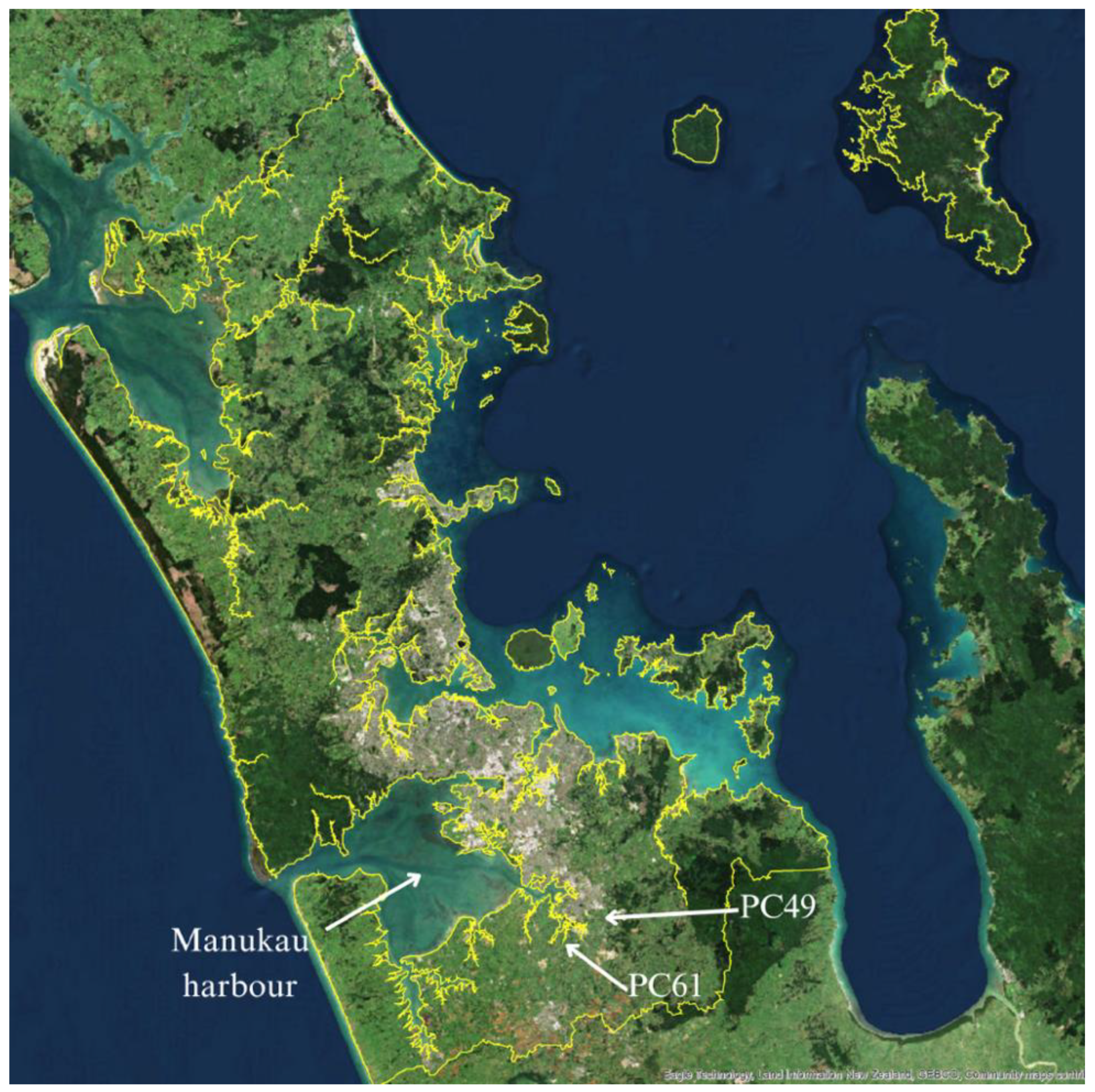
Figure 2.
PC49 Greenfield site (highlight by the red boundary) along with nearby natural drainage. Source: Prepared by the author prepared using Auckland Council’s Geomaps.
Figure 2.
PC49 Greenfield site (highlight by the red boundary) along with nearby natural drainage. Source: Prepared by the author prepared using Auckland Council’s Geomaps.
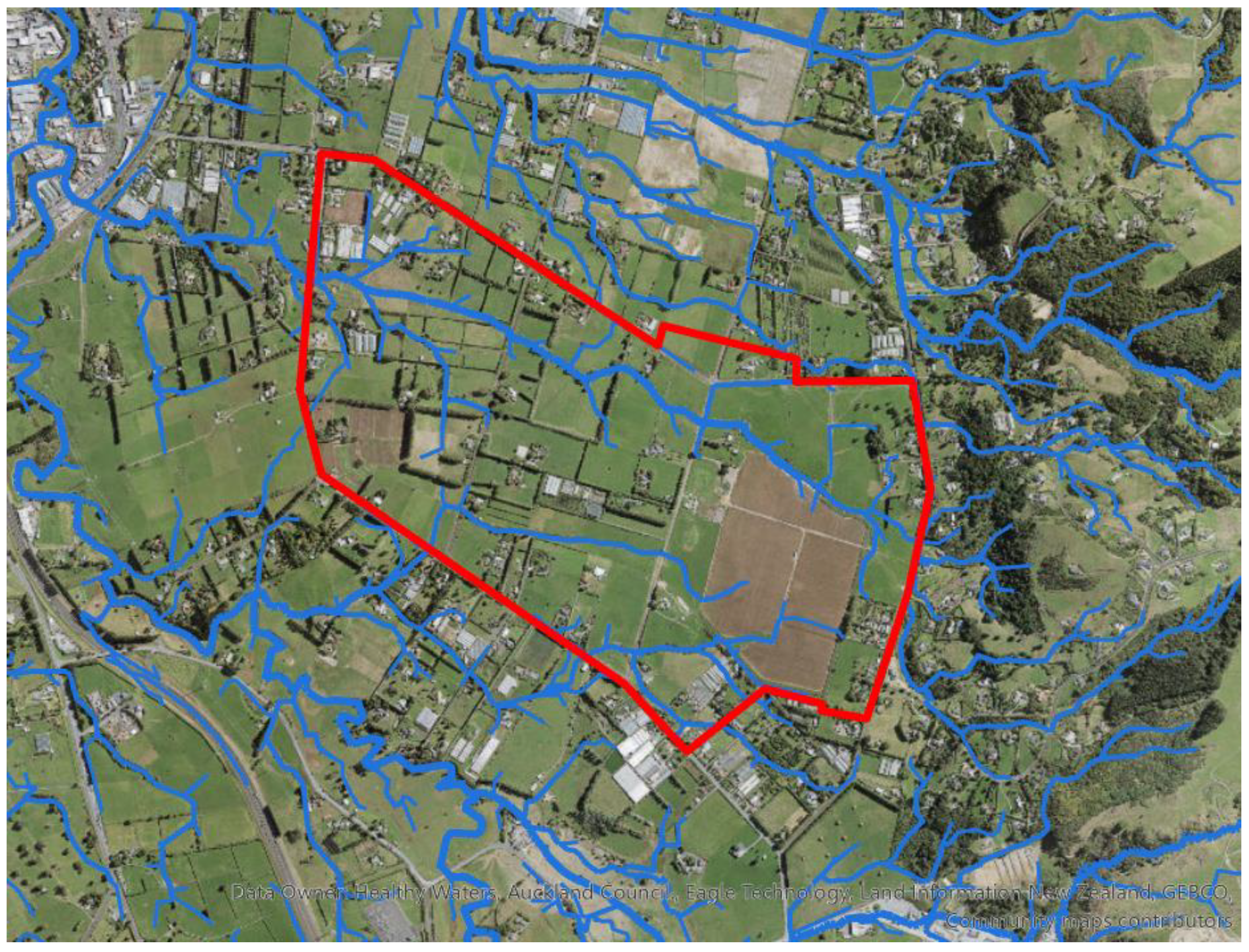
Figure 3.
PC61 Greenfield site (indicated by the red boundary) and the adjacent natural drainage; Source: Author prepared using Auckland Council’s Geomaps.
Figure 3.
PC61 Greenfield site (indicated by the red boundary) and the adjacent natural drainage; Source: Author prepared using Auckland Council’s Geomaps.
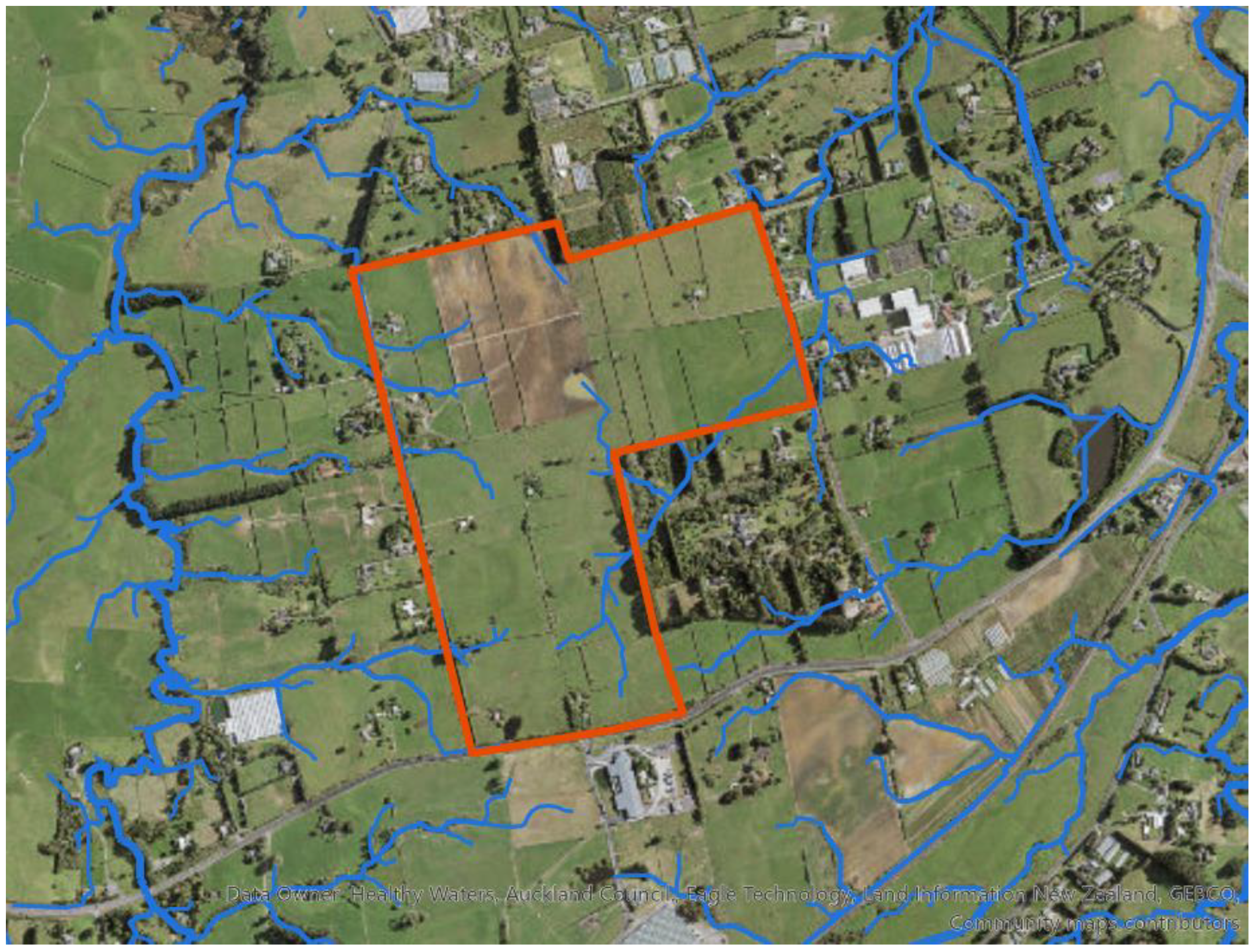

Table 1.
Types of documents selected and analysed in PC49 and PC61 and respective authors.
| PC49 and PC61 Documents | Authors |
|---|---|
| Decision following the hearing of a private PC under the RMA 1991 and the adopted precinct plan of the PC (amendment to AUP) | Auckland Council |
| Stormwater Management Plans | |
| Hearing Reports1 (including the Assessment of Environmental Effects and Section 32 Evaluation reports) | Auckland Council; Applicants |
| Sections of Hearing Report (specific to stormwater management, planning and freshwater ecology) | Auckland Council; Applicants |
| Pre-circulated technical and planning evidence related to stormwater management and planning matters | Auckland Council; Applicants |
| Legal submissions on matters specifying stormwater management and planning | Auckland Council; Applicants |
1 A report prepared by relevant local authority officer’s serves to advise the independent-decision makers or the delegated authority on the matters to be considered.
Table 2.
Key themes identified in the documents and their summaries regarding the challenges of implementing catchment-based solutions for stormwater management.
Table 2.
Key themes identified in the documents and their summaries regarding the challenges of implementing catchment-based solutions for stormwater management.
| Refined themes | Summary of the refined theme(s) |
|---|---|
| Integrating diverse expertise for comprehensive catchment management | The theme emphasises the necessity of a holistic approach that merges various areas of expertise, including ecological, engineering, and urban planning insights, to create effective stormwater planning solutions. |
| Ambiguities in policy language and integrating fragmented frameworks | This theme address the critical issues of clarifying ambiguities in policy language and integrating fragmented regulatory and policy frameworks to ensure consistent application and understanding across different planning stages and among stakeholders. |
| Ensuring regulatory accuracy and addressing technical discrepancies | This theme highlights the importance of clear regulatory guidelines and the need to resolve technical discrepancies that arise from evolving standards and practices in stormwater management. |
| Promoting stakeholder consensus and collaborative engagement | This theme emphasises the significance of enhancing stakeholder engagement and consensus-building, which are vital for achieving integrated project outcomes and gaining acceptance, especially in complex land use settings. |
| Strategies to address fragmented development approaches | This theme bring attention to the need for strategic planning and integrated development methods to mitigate environmental constraints, inefficiencies and risks associated with fragmented and piecemeal urban development. |
Source: Author developed from PC49 and PC61 documentary data.
Disclaimer/Publisher’s Note: The statements, opinions and data contained in all publications are solely those of the individual author(s) and contributor(s) and not of MDPI and/or the editor(s). MDPI and/or the editor(s) disclaim responsibility for any injury to people or property resulting from any ideas, methods, instructions or products referred to in the content. |
© 2024 by the authors. Licensee MDPI, Basel, Switzerland. This article is an open access article distributed under the terms and conditions of the Creative Commons Attribution (CC BY) license (http://creativecommons.org/licenses/by/4.0/).
Copyright: This open access article is published under a Creative Commons CC BY 4.0 license, which permit the free download, distribution, and reuse, provided that the author and preprint are cited in any reuse.


