

Submitted:
27 November 2024
Posted:
28 November 2024
You are already at the latest version
Abstract
This study delves into the gender-specific challenges and opportunities in sweet potato farming in Goromonzi District, Zimbabwe, against the backdrop of escalating droughts. Through a blend of surveys, expert analysis, and high-resolution satellite imagery, the research uncovers critical factors shaping sweet potato production—ranging from land access and cultivation techniques to harvesting and market dynamics. By leveraging the Multi-Criteria Decision Making (MCDM) framework, the study evaluates these factors' importance and presents innovative, gender-inclusive strategies to foster climate resilience. Remote sensing tools map the severity of droughts, while data analysis reveals the interconnected challenges faced by farmers. The findings spotlight the urgent need for equitable resource access and support systems to empower both male and female farmers, paving the way for sustainable agriculture in an era of climate uncertainty.
Keywords:
Sweet potato farming
; Drought impact
; Gender disparities
; Climate-resilient strategies
; MCDM
; Remote sensing
1. Introduction
In the past two decades, the impact of climate change on low-income countries has intensified, leading to increased incidences of climatic extremities such as floods and droughts. Since the year 2000, the African continent has experienced approximately seven hundred floods and more than 120 drought events [1]. In addition to the historical 1992 southern African drought [2,3], Zimbabwe has faced significant national droughts in the 2000s, notably in 2001, 2007, 2010, 2013, and 2017 [4]. Consequently, climate change has emerged as a priority concern for the national government [5,6,7,8,9]. In response, the Zimbabwean government has enacted a series of measures to mitigate the effects of climate change, including the National Climate Change Response Strategy, the National Climate Policy, the National Drought Plan, and the Agricultural Food Systems Transformation Strategy [10]. Collectively, these frameworks address various aspects of climate change, such as mitigation, adaptation, and the role of financing mechanisms in building resilience among vulnerable communities (ibid).
Historically, sweet potato was classified as an orphan crop due to its perceived absence of formal policy support at the national level. However, the National Development Strategy 1 (NDS1) has since recognized the importance of research and development in enhancing the sweet potato value chain, with a focus on seed production and multiplication [11]. Furthermore, the National Agricultural Policy Framework (2019-2030) emphasizes the role of sweet potato bio-fortification as a strategy for increasing access to micronutrients, particularly vitamin A, in children [11]. Sweet potato is now considered a viable climate change adaptation strategy for poor rural farmers due to its lower water and chemical fertilizer requirements compared to conventional crops like maize [8,9,12,13,14]. According to Smith [15], while the average national yield of sweet potatoes is 6 tons per hectare, irrigated sweet potatoes can yield up to 25 tons per hectare. Over the past two decades, Zimbabwe has seen a remarkable increase in sweet potato production. In 2000, national production stood at 6,159.17 tons, which increased fourfold to about 24,938.5 tons in 2010, and further tripled to approximately 62,792 tons in 2022 [16]. This increase is largely attributed to the crop's resilience against climate variability [17].
Despite the rising production volumes, sweet potato farmers in Zimbabwe face significant challenges. Historically, before Zimbabwe's independence in 1980, sweet potatoes were primarily cultivated by women in rural areas as a supplementary crop [18]. Although sweet potatoes are favorably adapted to Zimbabwe's climate, there is limited understanding of the gender roles that have contributed to their rise as a primary food source across the country. Mudombi [12] and Scott et al. [19] highlighted the crop's emergence as a vital component of household food security, particularly as a reliable alternative when maize crops fail. However, rising transportation and agricultural input costs have significantly hindered agricultural development in economically disadvantaged areas [20]. Research in KwaZulu-Natal further underscores the impact of extreme weather events, such as drought, on sweet potato production [21,22,23]. Additionally, challenges such as restricted access to infrastructure, low education and literacy levels, inadequate market information, insecure property rights, poor road networks, long distances to markets, and gender disparities increase transaction costs for farmers [24,25]. The unpredictable nature of data and the rarity of certain events further complicate the creation of accurate mathematical models, rendering conventional statistical data processing techniques largely ineffective [26].
Amidst these adversities, small-scale farmers in Zimbabwe exhibit remarkable resilience and ingenuity, leveraging local knowledge and community networks to navigate challenges and sustain their livelihoods. Given the increasingly extreme climate events of recent decades, this study aims to explore the impact of these conditions on sweet potato production and supply chains in the Goromonzi district of Zimbabwe. First, the study identifies and analyzes the extreme climate challenges within the sweet potato farming sector in Goromonzi District [27]. Then, it leverages Multi-Criteria Decision Making (MCDM) to assess the extent to which these climate conditions are perceived as impactful by farmers in sweet potato production. Finally, the study develops and proposes a climate-resilient strategy aimed at fostering sustainable sweet potato farming practices.
The Multi-Criteria Decision Making (MCDM) process is crucial for complex decision-making, integrating multiple criteria to enhance transparency and outcomes [28]. Defined by Triantaphyllou et al. [29], MCDM offers a structured approach to dissecting problems, particularly in sweet potato production, by considering factors like harvesting, transportation, and marketability [26]. The Analytic Hierarchy Process (AHP) is a key MCDM method, involving criteria selection, weighting, and analysis [30]. Criteria weighting can be subjective or objective, using methods like pairwise comparisons or statistical techniques [31]. Techniques like TOPSIS and PROMETHEE further refine the analysis, underscoring MCDM's versatility across sectors, including agriculture [32].
2. Methods
2.1. Study Area
Goromonzi, in Mashonaland East, Zimbabwe, lies 32 km southeast of Harare and spans 25,407.2 square kilometers (as shown in Figure 1). It includes 25 wards—13 commercial, 11 communal, and 1 small-scale farming area. The region's fertile soils and altitudes support diverse agriculture. Temperatures range from 15 to 20 °C, with 800-1000 mm of annual rainfall. The land tenure includes freehold, communal, and state ownership, with major uses in large-scale commercial farming, communal lands, and urban zones. Despite a rural majority population of 224,987, urbanization is increasing. Challenges include limited road infrastructure and seasonal water reliance, addressed by initiatives like the planned Kunzwi Dam to improve irrigation and support growth.
2.2. Data Sources
To achieve the research objectives, a survey was conducted targeting sweet potato farmers in Wards 1, 2, 3, 4, and 7 of Goromonzi District. The study integrated insights from existing literature, field surveys, and expert opinions from agronomists, economists, and gender specialists within Zimbabwe. These diverse inputs helped identify essential criteria for sweet potato farming, including land access, cultivation techniques, harvesting practices, infrastructure, market access, and climate conditions.
In addition to technical aspects, the study explored socioeconomic factors such as the role of women in agriculture, financial constraints, and the availability of inputs. The goal was to develop a comprehensive understanding of the challenges and opportunities within sweet potato farming in Goromonzi.
Goromonzi District was strategically selected for its favorable climate for sweet potato cultivation. Specific wards were chosen for their accessibility, and a random sampling method at the village level ensured sample diversity. District agricultural extension officers identified 201 sweet potato farmers—116 women and 86 men—for the survey. Kobo Collect was used to gather survey and geolocation data, and a rigorous data cleaning process ensured the accuracy of the findings.
High-resolution Landsat satellite imagery from the U.S. Geological Survey was used to analyze drought events, focusing on a twelve-month period with a spatial resolution of 30 meters. The Vegetation Health Index (VHI) within Google Earth Engine (GEE) was employed to assess vegetation health, with careful selection of cloud-free images for accurate land surface depiction.
Munyaka et al. [33] describe the process of analyzing vegetation health using the Vegetation Health Index (VHI) within Google Earth Engine (GEE). This process began with the importation of Landsat imagery, ensuring that images with significant cloud coverage were excluded to maintain data integrity. This thorough selection process, which utilized datasets from four different Landsat satellites, allowed for an accurate depiction of land surfaces free from cloud obstructions. After applying cloud masking techniques, the Normalized Difference Vegetation Index (NDVI) or the Vegetation Health Index (VHI) calculations were performed.
Furthermore, the research identified key criteria indices impacting sweet potato production in the Goromonzi district. Drawing upon the established framework of multi-criteria decision making (MCDM) and employing the Analytical Hierarchy Process (AHP) as previously utilized by Munyaka and Yadavalli [34], the study followed a structured approach:
- Firstly, it delineated a series of criteria indices relevant to sweet potato production, setting these against alternatives within the context of available resources.
- Subsequently, through a detailed comparison of location-specific criteria using AHP, the study assigned weights (scores) to these criteria.
- Lastly, a comparative analysis was conducted between the sweet potato production criteria indices and their respective scores, utilizing a fuzzy MCDM approach.
MCDM, a methodological approach designed to facilitate decision-making when confronted with numerous, often conflicting criteria, was pivotal in identifying the attributes essential for sweet potato production. To ensure the precision of the model, it was critical that the selected criteria indices comprehensively covered all aspects of sweet potato production, from the identification of suitable soils to considerations of shipment and marketability. Furthermore, the indices were carefully chosen to directly reflect the dynamics of sweet potato production, with each criterion maintaining a degree of independence.
2.3. Data Analysis
The survey targeted 201 participants to analyze sweet potato production, the impact of drought, and community resilience. Data processing and analysis were conducted using Python, with a focus on frequency distributions to identify missing data and cross-tabulations to explore gender-based responses to drought.
A comprehensive data preprocessing phase ensured data integrity, utilizing Python’s Pandas and SciPy libraries for imputation, outlier detection, and validation. Key variables analyzed included vine color, land size, and proximity to water sources.
A Likert scale was employed to quantify the relative importance of criteria such as cultivation techniques, climate conditions, and market access. These criteria were then weighted within the Multi-Criteria Decision Making (MCDM) process for further analysis.
2.3.2. VHI
The VHI, a critical indicator of drought conditions, is computed by combining NDVI and Land Surface Temperature (LST) values. The NDVI calculation utilizes reflectance values from red and near-infrared bands as follows:
Here, NDVI values range from -1 to 1, indicating the density of plant growth where higher values suggest healthier vegetation. NDVI data is derived from the "Landsat Surface Reflectance" of scenes captured by Landsats 4–9, processed into Landsat Level-2 Surface Reflectance products. The infrared data corresponds to band number 4 in Landsats 4, 5, and 7, and band number 5 in Landsat 8.
The VHI incorporates measures of vegetation cover, land surface temperature, and rainfall data. Following the methodologies developed by Ghaleb et al. [35] and Bento et al., [36] and applied by Munyaka et al. [33], the Vegetation Condition Index (VCI) and the Temperature Condition Index (TCI) are calculated and combined to form the VHI using these equations:
where , , and represent the seasonal average of the smoothed weekly , its multiyear absolute minimum, and its maximum, respectively, and , , and represent similar values for the land surface temperature in Celsius.
These calculations provide a VHI value ranging from 0 to 100, where higher scores indicate more robust vegetation health. Annual aggregation of VHI values, starting from 1990, was conducted to identify long-term drought trends within the targeted wards. The gathered data was visualized through charts, maps, and time series plots to examine vegetation health trends over time, with subsequent statistical and spatial analysis to interpret these trends.
Land Surface Temperature (LST) acts as a gauge for the Earth's surface temperature [37]. For Landsats 4, 5, and 7, thermal band six is used, whereas Landsat 8 utilizes bands 10 and 11, with a preference for band 10 due to calibration issues with band 11. These sensors measure top-of-the-atmosphere radiances, allowing for the calculation of brightness temperatures.
The VHI values were then classified into categories representing different levels of drought severity to evaluate agricultural impacts. This classification system, detailed in Table 1, ranges from extreme to no drought, providing a structured framework for assessing drought's effect on agriculture.
2.3.3. Multi Criteria Decision-Making Model
- 1.
- Selection of criteria indices
In the quest to identify relevant attributes for sweet potato cultivation in Goromonzi, Zimbabwe, the study leveraged both literature review and quantitative analysis. This dual approach unveiled those factors such as "Land Use" conditions and "Marketability" play significant roles in the production of sweet potatoes. The criteria for sweet potato production are outlined in Table 2 below, providing a clear framework for understanding each production criterion.
Figure 2 provides a comprehensive overview of the production system, from cultivation to marketability. It illustrates the key factors and processes influencing sweet potato production, highlighting the interconnection between environmental factors, infrastructure and operations, and the purpose of production (home consumption vs. commercial use).
- 2.
- Weighting the criteria indices
In determining the weightage of criteria indices for this study, decision weightage, pivotal in Multi-Criteria Decision Making (MCDM), was followed by constructing a decision matrix. The application of the fuzzy Analytical Hierarchy Process (f-AHP) was instrumental in computing the weightage of each criterion, translating these criteria into linguistic terms using Triangular Fuzzy Numbers (TFNs) for pairwise comparison matrices, as depicted in Table 4.
- 2.a.
- Utilization of Triangular Fuzzy Numbers (TFNs)
TFNs are preferred for their simplicity in calculations, defined by a triplet representing the lower, mean, and upper values, respectively [38,39]. The membership function of TFN “”, , is determined by the equation (7):
where is the mean value of and are real numbers. Two TFNs and are defined by the triplets and [40].
- 2.b.
- Formulating f-AHP Comparison Matrices
The study adopted a modified synthetic extent approach to f-AHP to address the inherent uncertainties in decision-making, as initially proposed by Chang [39] and further developed by Zhu et al. [41]. Table 4 presents the linguistic variables and corresponding TFNs based on a standard 9-unit scale, facilitating the pairwise comparisons essential to f-AHP [42].
This study utilizes modified synthetic extent f-AHP, which was originally introduced by Chang [39] and developed by Zhu et al. [41]. The incompleteness of the synthetic extent f-AHP reflects its suitability in decision problems where uncertainty exists in the decision-making process [40]. Table 3 shows the standard 9-unit scale linguistic variables used to make the pairwise comparisons [42]. The values deriving from a pre-defined set of ratio scale values as presented in Table 3 serves to describe the pairwise comparisons [40].
- 2.c.
- Evaluating Fuzzy Synthetic Extent
The value of the fuzzy synthetic extent, , regarding each criterion is calculated using the fuzzy synthetic extent method in equation (8). This involves summing the TFNs for each criterion across all decision alternatives and then applying fuzzy arithmetic to find the inverse.
where (.) represents fuzzy multiplication and the superscript (-1) represents the fuzzy inverse (Tang and Lin. 2011). Let be a decision criteria set, where represents the number of criteria and be a decision alternative set, where is the number of decision alternatives. Let , , where all the are TFNs.
- 3.
- Calculating f-AHP Weighted Values
To ascertain the weighted values under each criterion, the study applied principles of fuzzy number comparison. This involves determining the degree of possibility that one fuzzy number is greater than another, calculated using the supremum of the minimum membership functions of the two fuzzy numbers. For sets of weight values under each criterion to be determined, a principle of comparison for fuzzy numbers must be considered [39]. As demonstration, for two fuzzy numbers, and , the degree of possibility that is defined equation (9) as:
where represents Supremum, with . Since and is defined by the TFNs and , respectively, it follows in equation (10):
where signifies ‘if and only if’, while is the ordinate of the highest intersection point between the and TFNs, and is the point in the domain of and where the ordinate is found. The term is the height of fuzzy numbers on the intersection of and . For and , the possible ordinate of their intersection is given by Equation (11). This Equation determines the degree of possibility for a fuzzy number:
To obtain the degree of possibility for a convex fuzzy number M to be greater than the number of fuzzy numbers , the use of the operations max and min is needed [43] and is defined in equation (12) by:
Assuming , where and is the number of criteria. A weight vector in equation (13) is given by:
where are the decision alternatives. Each as illustrated in equation (14) represents the perference of each decision candidate and as vector is nomalised as follows:
If two fuzzy numbers, and , in a fuzzy comparison matrix satisfy , then is illustrated by Zhu et al., [41] as shown in equation (15):
In adopting a generic MCDM model for sweet potatoes production criteria, as previously outlined by Thokala [44] and Munyaka and Yadavalli [34], the study compared sweet potatoes production criteria against alternatives. This was informed by comprehensive literature reviews and feedback from surveys conducted with local expert agencies. Through a cross-comparison of sweet potatoes production criteria using the f-AHP method, the study aimed to develop and propose gender-inclusive approaches strategics that fosters sustainable sweet potato farming practices.
3. Results
3.1. Multi-Criteria Decision-Making Model
3.1.1. Definition of Drought Impacts on Sweet Potato Production in Zimbabwe
Drought significantly disrupts sweet potato growth in Zimbabwe, leading to reduced yields and compromised crop quality, impacting food security and household incomes [12,13]. Recurrent droughts degrade arable land, increasing costs for alternative water sources and drought-resistant varieties, further straining smallholder farmers [6,8]. Integrated drought management strategies, including efficient water use and promotion of drought-tolerant varieties, are essential for sustaining agricultural productivity [4].
3.1.2. Weightage of Sweet Potato Production Criteria
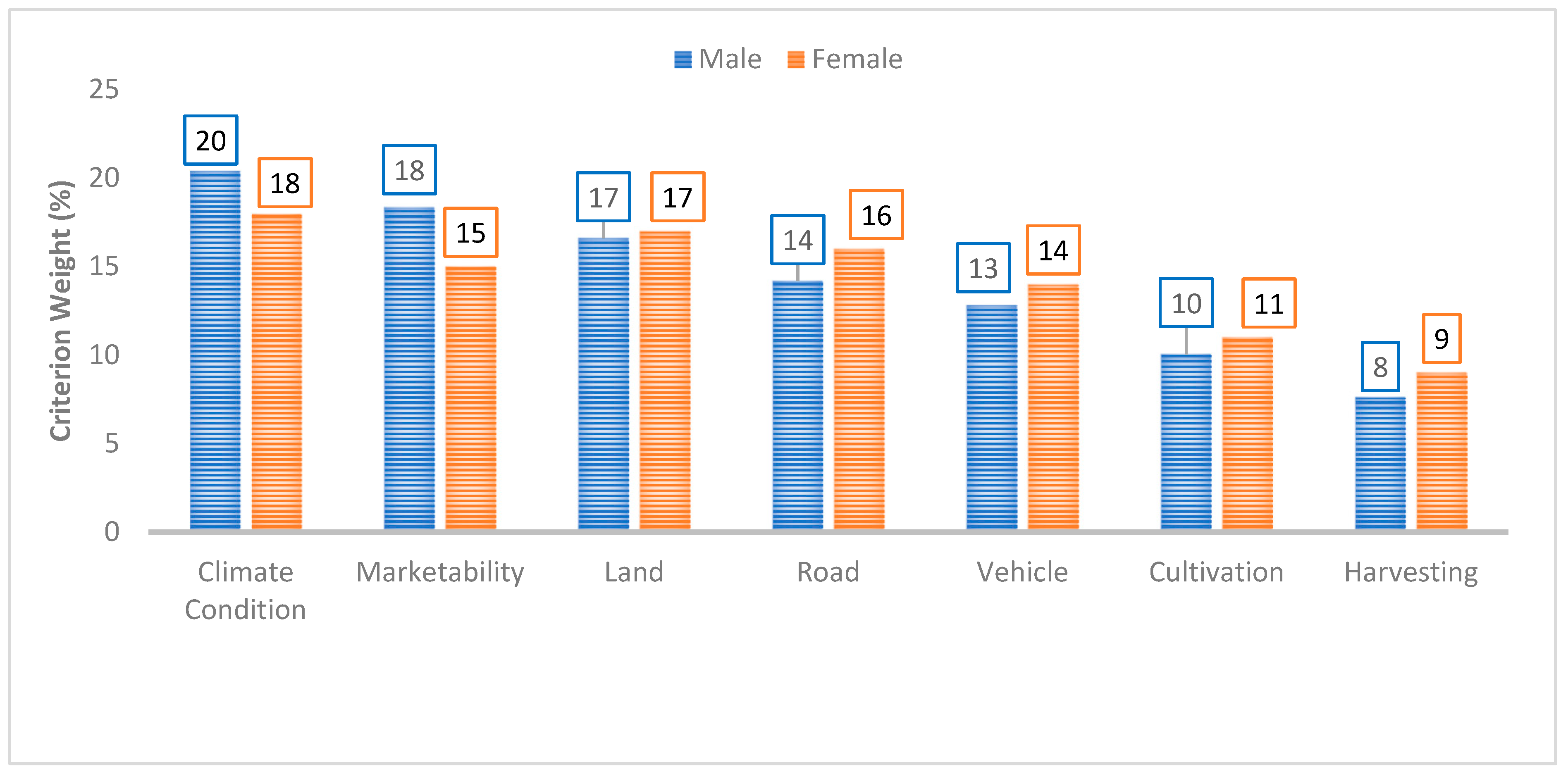
The f-AHP method systematically evaluates criteria impacted by drought in sweet potato production. Key criteria include "Cultivation" (C1), "Land Use" (C2), "Weather and Climate Condition" (C7), among others, with "Weather and Climate Condition" identified as the most critical factor [15,31]. These assessments also reveal that "Cultivation" (C1) and "Weather and Climate Condition" (C7) are significantly impacted by environmental factors, while criteria such as "Land Use" (C2), "Harvesting" (C3), "Road Access" (C5), "Vehicle Availability" (C6), and "Marketability" (C4) are more influenced by infrastructure and operational factors.
The f-AHP technique employs pairwise comparisons to evaluate the relative importance of each criterion. This process is enhanced by survey results, which provide empirical data to support the assignment of weights to each criterion. Specifically, the survey examines how different stakeholders, including farmers, agricultural experts, and policymakers, perceive the importance of each criterion in the context of drought response in sweet potato production.
The integration of literature review, expert insights, and survey outcomes showcases the weighted percentages and rankings derived from the f-AHP calculation [31]. The normalization of the comparison matrix from the f-AHP calculation reveals that "Weather and Climate Condition" (C7) is the most important criterion in the sweet potato production process, underscoring the critical impact of environmental conditions on agricultural productivity [15].
Figure 3.
Sweet Potatoes challenges ranking.
3.1.3. Determination of Scores for Sweet Potato Production Criteria
- Environmental Criteria: Cultivation and Weather/Climate Change
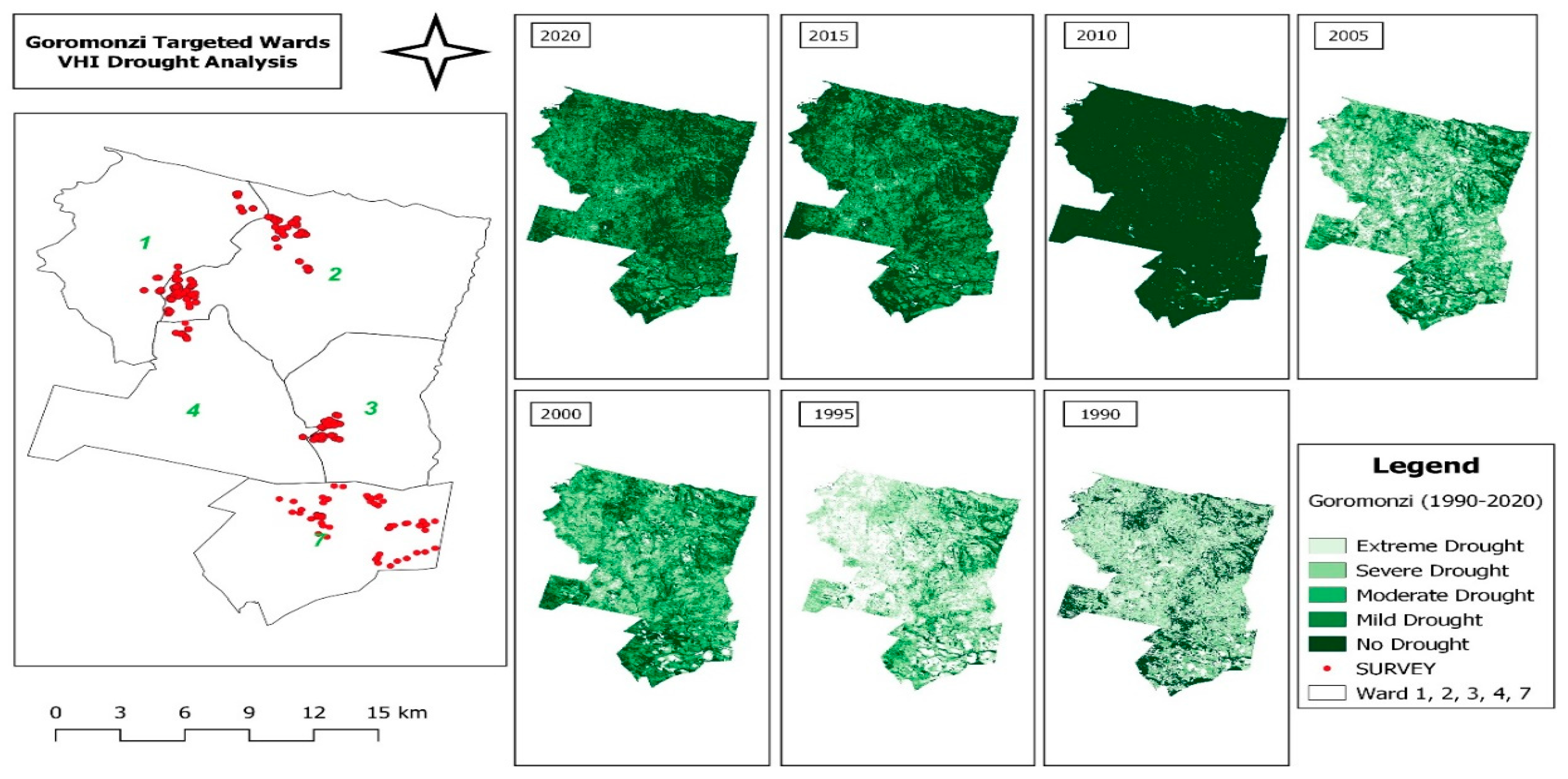
Cultivation ranks as the sixth most significant factor affected by drought. Despite Goromonzi's favorable agro-ecological conditions, climate variability poses risks, necessitating sustainable practices and drought-resistant varieties [6,12]. Weather and climate conditions are the foremost challenge, with historical droughts like the 1992 event severely impacting agriculture [2]. The VHI analysis indicates increased drought severity between 1990-2005, affecting sweet potato yields (see Figure 4).
Variations in the Vegetation Health Index (VHI) across the specified wards from 1990 to 2020 were charted, highlighting drought classifications and the geographic coordinates of the surveyed region. The data indicate an increased severity of drought conditions between 1990 and 2005.
Figure 5.
VHI variations in Goromonzi (Ward 1, 2, 3, 4, 7) between 1990-2020.
Further analysis of sweet potato cultivation from 2021 to 2023 indicated a decrease in instances of extreme (0.03%), severe (1.39%), and moderate (9.29%) drought conditions, alongside an increase in periods without drought (68.3%) (see Figure 6).
Despite the limited extreme climate events in the last three years, the f-AHP calculation showed that "Weather and Climate Conditions" were considered "very important" by most participants. Farmers who prioritized this criterion typically chose to plant sweet potatoes once annually, primarily in the summer months (see Figure 7).
Most farmers prefer summer planting due to ideal conditions like ample sunlight, warmth, and sufficient precipitation, which boost sweet potato growth and yield. This timing also helps mitigate risks from frost or excessive rainfall. Prioritizing "Weather and Climate Conditions" allows farmers to adopt proactive measures, such as optimal planting times, irrigation, and protective strategies, ultimately enhancing sweet potato resilience and yield stability.
- Infrastructural and Operational Criteria: Land Use, Harvesting, Road Access, Vehicle Availability, and Marketability
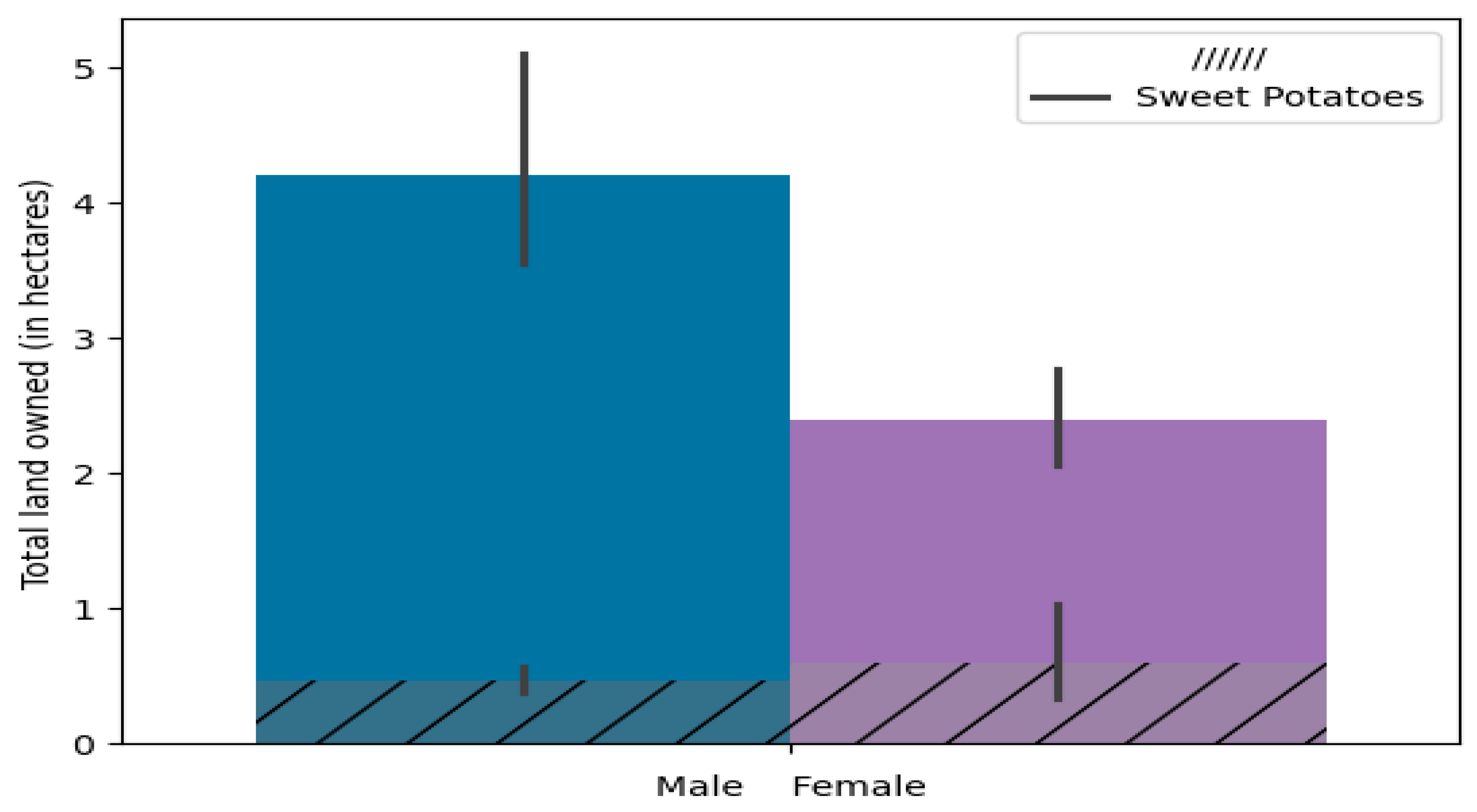
Land access is a critical challenge, especially for female farmers who face disparities in land ownership and access to resources. Land access is a crucial aspect of farming, with its significance in the rankings underscoring the need for fair distribution and usage rights [6]. Survey results show that male farmers have larger land areas, despite males comprising only 42.78% of survey participants, with females constituting 57.21% (See Figure 9).
Figure 8.
Total land owned (in hectares) by male and female.
Additionally, Figure 9 and Figure 10 indicate that farms operated by women are often located further from water sources than those managed by men, highlighting another layer of disparity in agricultural practices.
Figure 9.
Distance between the Farm and the Water source (in meters).
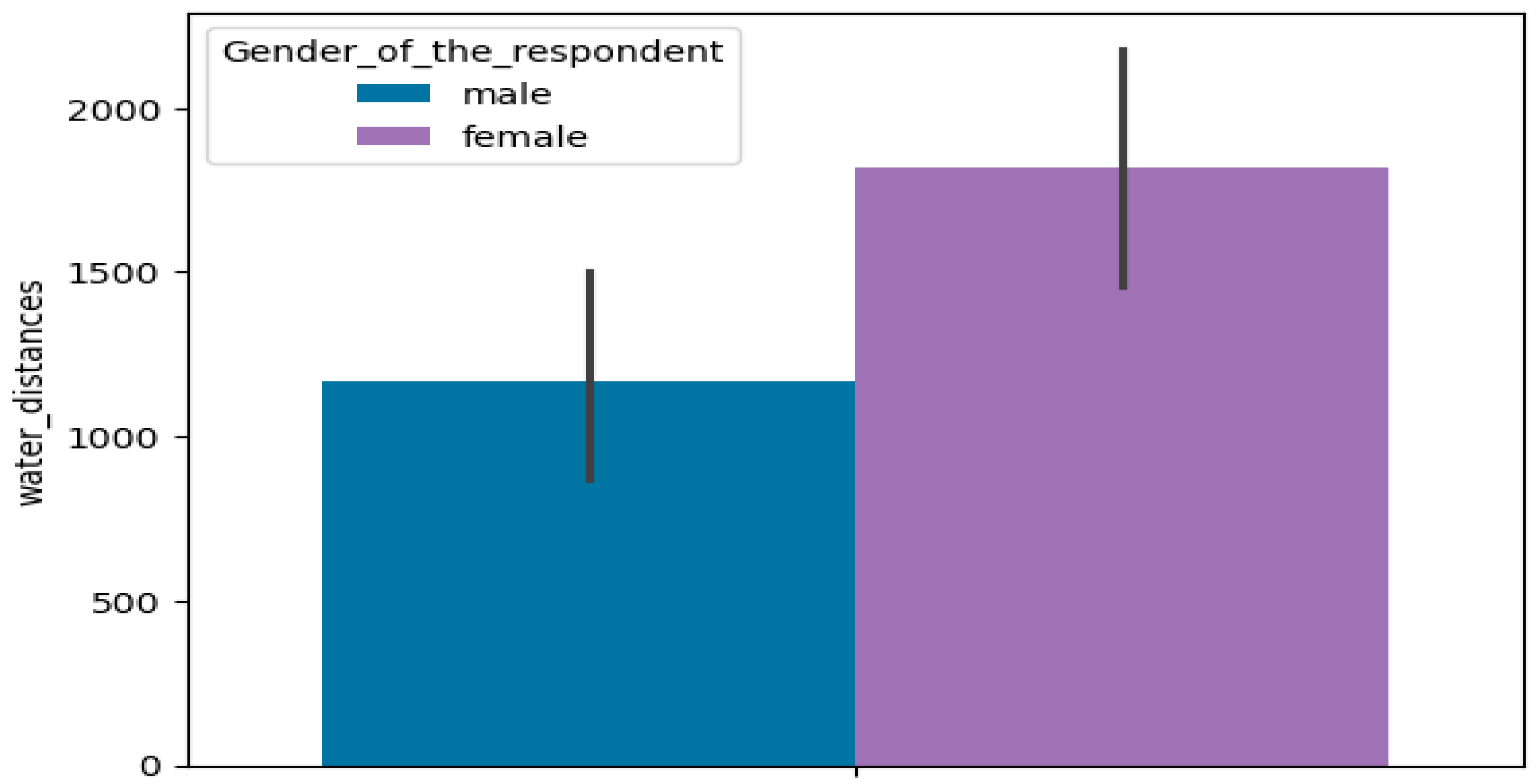
Figure 10.
Mapping of the location of Farm and the water source (in meters).
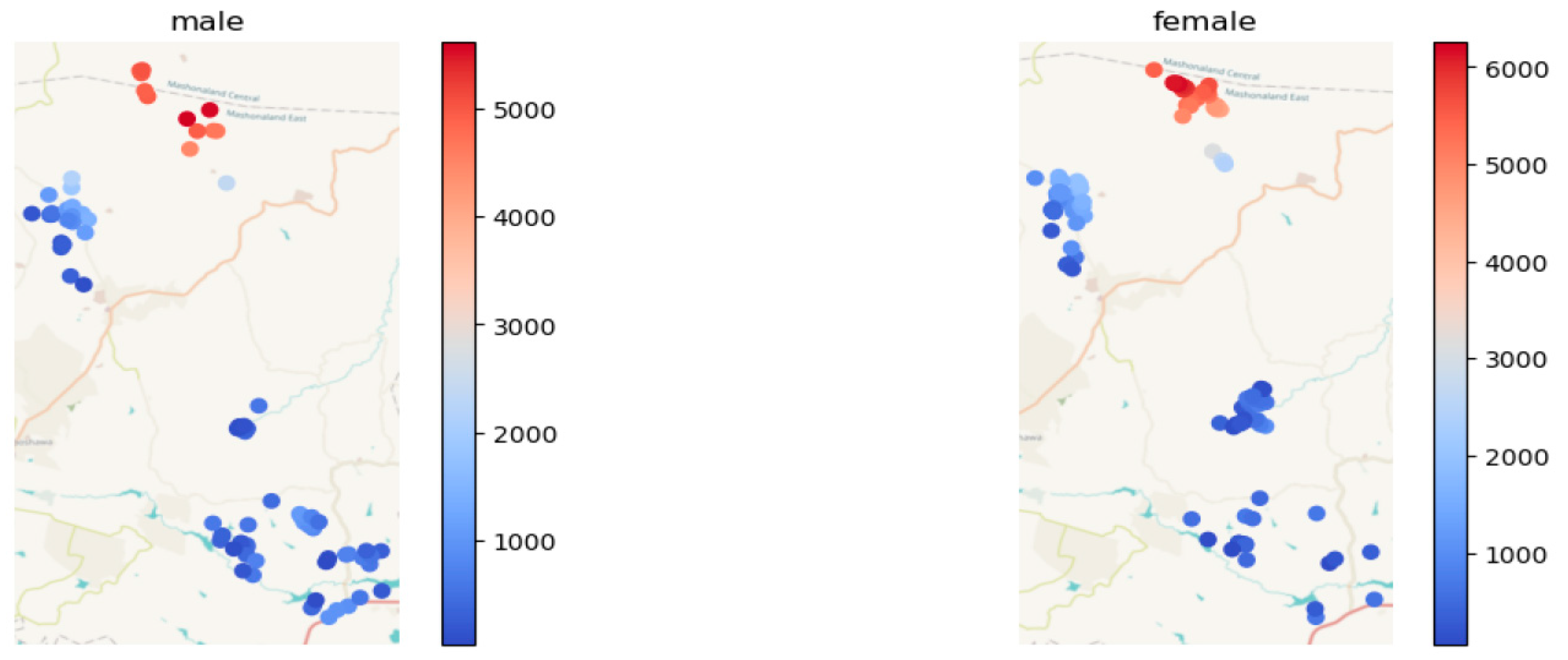
The greater distance from water sources increases the farms' vulnerability to drought, critically limiting irrigation and severely reducing crop yields and productivity. Women, who often rely more on rain-fed agriculture, face heightened challenges during dry periods, threatening food security and intensifying economic strain on households. This situation highlights the urgent need for targeted interventions to ensure equitable access to essential resources in drought-prone regions [7,12].
Another challenge is on the Harvesting challenges. Harvesting challenge differs by gender, with women having less access to labor and mechanized tools, making the process more labor-intensive [14]. The survey results highlighted a notable difference in access to labor between male and female farmers. Specifically, over 34% of the female farmers surveyed reported having fewer than three individuals available to help with harvesting, while an equivalent percentage of male farmers reported having the assistance of more than five people, with some having access to up to 20 helpers during the harvest period (see Figure 11). Furthermore, the survey also revealed differences in the types of equipment utilized by farmers for harvesting. While hoes and mattocks are universally used by all farmers, male farmers demonstrated greater access to mechanized tools such as tractors, moldboard ploughs, and wheelbarrows. Conversely, female farmers in Goromonzi showed a higher usage of Scotch carts, which are considered a more traditional means of harvesting, largely due to financial constraints, lack of ownership, or societal norms that prioritize technological investments for men [14]. These disparities make harvesting more labor-intensive and time-consuming for women.
Storage practices for harvested sweet potatoes also exhibit notable differences between male and female farmers. A significant portion of male farmers (46.51%, compared to 21.73% of female farmers) do not store their sweet potato produce, opting instead to transport it directly to market due to available transportation means. In contrast, female farmers, facing challenges with access to transport services, more frequently adopt traditional storage methods. This includes digging a hole (48.69% of female farmers compared to 30.23% of male farmers) near their homes, treating it with ashes, and then storing sweet potatoes for up to six months.
Road access and vehicle availability also represent a significant barrier, particularly for women, affecting market access and profitability [7]. In Goromonzi, poor infrastructure hinders transportation to markets, disproportionately affecting women who rely on footpaths and tracks. Female farmers face additional barriers, including limited mobility and market access, which widen income disparities. Poor road conditions exacerbate these challenges during droughts, leading to increased spoilage and reduced income, particularly for women [15]. Furthermore, Male farmers have better access to vehicles, giving them an advantage in transporting produce. During droughts, transportation costs rise, further straining small-scale farmers, especially women [13].
Marketability is another key challenge. Gender inequalities in infrastructure and market access favor men [7], forcing women to rely on middlemen, reducing their earnings [6]. Droughts worsen these challenges by lowering yields and increasing transportation costs, particularly for female farmers [15]. Additionally, increased transportation costs during droughts worsen profitability, especially for female farmers who already struggle with access to efficient transport [12].
5.2. Drought Impact Mitigation Approach for Sustainable Sweet Potato Production
Comprehensive strategies addressing gender disparities are crucial for sustainable sweet potato production in Goromonzi District. These include:
3.2.1. Cultivation Practices and Climate Adaptability
To mitigate the impact of drought on sweet potato production, gender-inclusive strategies are essential. These strategies should ensure equitable access to climate-resilient farming techniques, quality seeds, and extension services, thereby empowering women and enhancing overall productivity [45,46]. Sweet potatoes, well-suited for various soils, including marginal ones, thrive under drought conditions, making them a valuable crop [45]. With a relatively short growing season of 3-5 months, sweet potatoes allow for multiple cropping cycles, enabling farmers to cultivate other crops in the same field during different seasons. Additionally, sweet potato vines serve as planting material, offering a convenient and cost-effective means of propagation [47].
While sweet potato production in Zimbabwe has increased due to improved practices and new varieties, women continue to face barriers to effective cultivation. Integrating gender perspectives into climate policies, such as the National Climate Policy and National Adaptation Plan (NAP), ensures that adaptation strategies meet the needs of all farmers. Empowering women with resources and training in climate-smart practices strengthens overall community resilience [48]. This alignment also bolsters institutional support for gender-inclusive agricultural initiatives, enhancing their effectiveness in building resilience to climate change. Fostering synergies between gender equality, climate resilience, and sustainable development advances Zimbabwe’s climate goals while promoting inclusive and sustainable agricultural practices nationwide [49].
The gender-inclusive approach to sustainable sweet potato production significantly contributes to the resilience of farming communities in the face of climate change challenges. By providing equal access to resources, training, and decision-making opportunities, regardless of gender, the potential of sweet potato cultivation as a climate-smart solution is maximized [46]. Empowering women farmers with knowledge and resources for sustainable sweet potato cultivation, including climate-resilient varieties such as orange-fleshed sweet potatoes and water-saving techniques, not only enhances their livelihoods but also strengthens the overall resilience of farming systems [50].
In the Goromonzi district, consistent rainfall over the past three years has been crucial for agricultural activities. However, the area has also experienced drought spells, highlighting the importance of climate-resilient agricultural practices and adaptation strategies to mitigate the impact of such extreme weather events [46]. These practices are vital to ensuring that sweet potato farming can withstand climatic challenges, securing both food supply and livelihoods for the community.
3.2.2. Infrastructure and Market Access
Disparities in land ownership play a critical role in limiting sweet potato production in Zimbabwe. Historically, land management practices transitioned from communal systems, where resources were shared within communities, to colonial-era policies that systematically marginalized women [51]. In regions like Domboshava, this legacy persists, with men typically holding larger plots and women often needing permission to use the land [52]. Such gender bias in land policies perpetuates the inferior rights of women, limiting their economic opportunities and exacerbating their vulnerability to poverty [53]. Although legal reforms have been introduced to address these disparities, deep-rooted cultural norms and patriarchal practices continue to challenge women’s ability to own land and make agricultural decisions, further restricting their engagement in productive farming activities [54].
To address these challenges, gender-inclusive strategies are essential for improving women's market access, ensuring they can compete fairly, receive equitable pricing for their produce, and access better market information. This involves promoting greater participation of women in market associations, connecting them with potential buyers, and offering training in negotiation skills to empower them in market settings [55]. However, the marketing of sweet potatoes in Zimbabwe faces additional hurdles due to the lack of specific regulations concerning pesticides, fertilizers, and quality standards, which complicates market access [56]. The crop’s bulkiness and perishability, combined with limited storage and transport facilities, often compel farmers to sell at lower prices through intermediaries, significantly reducing their earnings [56,57]. Enhancing post-harvest processing, improving storage options, and increasing market knowledge could substantially boost the utilization and profitability of sweet potatoes [58,59].
Additionally, improving road infrastructure and vehicle availability is crucial for all farmers, particularly women, who often have limited transport options. The Zimbabwe National Road Administration (ZINARA) oversees the road network, with ongoing efforts to upgrade roads and enhance market access, especially in areas like Domboshava that are transitioning from rural to peri-urban communities [60]. Despite Zimbabwe's extensive road network, spanning 88,100 km, about 70% of these roads are in poor condition, complicating transport, especially during the rainy season. Gender-inclusive strategies should prioritize upgrading rural transport systems, ensuring equitable access to vehicles, and supporting women’s groups with transport services and financing options to overcome these logistical challenges [61].
3.2.3. Extension Services
Agricultural extension services are crucial for enhancing the productivity of crops like sweet potatoes, especially in the context of drought. These services provide farmers with essential knowledge, skills, and resources to improve farming practices and optimize yields, which is particularly important during periods of drought [62]. In sweet potato farming in Goromonzi, agricultural extension supports farmers by offering training on various aspects of sweet potato cultivation. This includes land preparation, planting techniques, irrigation methods, pest and disease management, and harvesting practices [63]. By imparting such knowledge and skills, extension services enable farmers to adopt best practices, mitigate the impacts of drought, and enhance sweet potato production [64]. During drought events, agricultural extension agents distribute drought-resilient sweet potato varieties, ensuring better productivity and sustainability even in drought-affected regions [65,66].
4. Conclusions
The study underscores the need to address gender disparities in sweet potato farming, particularly during droughts. Women face significant challenges in accessing land, resources, and market opportunities, which are exacerbated by these conditions. To enhance resilience and productivity, gender-inclusive strategies that provide equal access to training, resources, and support systems are essential. Sustainable agriculture in Goromonzi District requires a holistic approach that blends modern agricultural techniques with traditional knowledge.
Improving women's land ownership rights, addressing cultural barriers, and enhancing infrastructure like roads and transportation are critical to increasing women's participation in the sweet potato value chain. Disseminating improved, climate-resilient sweet potato varieties and providing training on best practices through agricultural extension services are also vital. Additionally, improving market access for women through involvement in market associations and training in negotiation skills can help them achieve fair pricing and reduce reliance on middlemen.
In conclusion, empowering female farmers and addressing systemic inequalities will not only enhance their livelihoods but also strengthen the overall resilience and sustainability of Zimbabwe's agricultural sector. By focusing on climate-resilient practices, infrastructure improvements, and better market access, these strategies can mitigate the effects of drought and ensure sustainable sweet potato farming in Goromonzi District.
Author Contributions
Conceptualization, J.-C.B.M.; J.C.; O.G. methodology, J.-C.B.M.; and E.M.; software, X.S.; validation, J.C.; E.M.; formal analysis, J.-C.B.M.; X.S.; investigation, E.M.; resources, J.-C.B.M.; data curation, J.-C.B.M.; X.S.; writing—original draft preparation, J.-C.B.M.; writing—review and editing, J.C.; E.M.; visualization, J.-C.B.M.; O.G.; X.S.; supervision, J.C.; project administration, J.C.; funding acquisition, J.C.; O.G.; J.-C.B.M. All authors have read and agreed to the published version of the manuscript.
Funding
Collaborative Research on Science and Society (CROSS) Programme 2023, EPFL.
Institutional Review Board Statement
EPFL HREC No: 003-2023 / 26.01.2023.
Informed Consent Statement
Not applicable.
Data Availability Statement
The data presented in this study are available on request from the corresponding author.
Conflicts of Interest
The authors declare no conflicts of interest.
References
- CRED. The interplay of drought-flood extreme events in Africa over the last twenty years (2002-2021). Crunch Newsletter, Issue No. 69. 2022. [Google Scholar]
- Aldridge, C. Why was there no famine following the 1992 Southern African Drought? The Contributions and Consequences of Household Responses. IDS Bulletin 2002, 33, 79–87. [Google Scholar] [CrossRef]
- Tobaiwa, C. Zimbabwe Country Assessment Paper; SADC drought management workshop; SADC: Gaborone, 1993. [Google Scholar]
- World Bank. Zimbabwe Risk (Historical Hazards). 2021. Available online: https://climateknowledgeportal.worldbank.org/country/zimbabwe/vulnerability (accessed on 8 June 2024).
- Bhatasara, S. Rethinking climate change research in Zimbabwe. Journal of Environmental Studies and Sciences 2017, 7, 39–52. [Google Scholar] [CrossRef]
- Chanza, N.; Mafongoya, P.L. Indigenous-based climate science from the Zimbabwean experience: From impact identification, mitigation and adaptation. Indigenous knowledge systems and climate change management in Africa 2017, 67. [Google Scholar]
- Nyahunda, L.; Tirivangasi, H.M. Challenges faced by rural people in mitigating the effects of climate change in the Mazungunye communal lands, Zimbabwe. Jàmbá: Journal of Disaster Risk Studies 2019, 11, 1–9. [Google Scholar] [CrossRef] [PubMed]
- Mushore, T.D.; Mhizha, T.; Manjowe, M.; Mashawi, L.; Matandirotya, E.; Mashonjowa, E.; Mushambi, G.T. Climate change adaptation and mitigation strategies for small holder farmers: a case of Nyanga District in Zimbabwe. Frontiers in Climate 2021, 3, 676495. [Google Scholar] [CrossRef]
- Jaison, C.; Reid, M.; Simatele, M.D. Asset portfolios in climate change adaptation and food security: Lessons from Gokwe South District, Zimbabwe. Journal of Asian and African Studies 2023, 00219096231158340. [Google Scholar] [CrossRef]
- Government of Zimbabwe. National Development Strategy 1. 2023. Available online: www.zim.gov.zw.
- NDS1. National Development Strategy1 (January 2021 to December 2025), Republic of Zimbabwe. 2020.
- Mudombi, S. Adoption of agricultural innovations: the case of improved sweet potato in Wedza community of Zimbabwe. African Journal of Science, Technology, Innovation and Development 2013, 5, 459–467. [Google Scholar] [CrossRef]
- Nyamadzawo, G.; Wuta, M.; Nyamangara, J.; Nyamugafata, P.; Chirinda, N. Optimizing dambo (seasonal wetland) cultivation for climate change adaptation and sustainable crop production in the smallholder farming areas of Zimbabwe. International Journal of Agricultural Sustainability 2015, 13, 23–39. [Google Scholar] [CrossRef]
- Makubhu, F.N.; Laurie, S.M.; Rauwane, M.E.; Figlan, S. Trends and gaps in sweet potato (Ipomoea batatas L.) improvement in sub-Saharan Africa: Drought tolerance breeding strategies. Food and Energy Security 2024, 13, e545. [Google Scholar] [CrossRef]
- Smith, M. Born-again crops give hope to Zimbabwean farmers: Ian Robertson and his colleagues have found a way to free staple crops from viruses, with dramatic results for their growers.—Free Online Library, 2004 (thefreelibrary.com).
- FAOSTAT. Crops and Livestock products. 2022. Available online: https://www.fao.org/faostat/en/#data/QCL.
- Mudombi, S.; Mano, R.T. Analyzing incomes outcomes of incorporating improved sweet potato into the smallholder farming system: case study of Wedza community in Zimbabwe. Working Paper AEE. Department of Agricultural Economics and Extension, Faculty of Agriculture, University of Zimbabwe: Harare, 2007. [Google Scholar]
- Mutandwa, E. Performance of Tissue-Cultured Sweet Potatoes among Smallholder Farmers in Zimbabwe. AgBioForum 2008, 11, 48–57. [Google Scholar]
- Scott, G., Ferguson, P.I., Herrera, J.E., Eds.; Product development for root and tuber crops. Volume III—Africa. Proceeding of the workshop on processing and marketing and utilization of Root and Tuber crops in Africa held October 26 to November 2, 1991 at IITA, Ibadan, Nigeria, CIP, Lima, Peru; 1992. [Google Scholar]
- Mpandeli, S.; Maponya, P. Constraints and challenges facing the small-scale farmers in Limpopo Province, South Africa. J. Agric. Sci. 2014, 6, 135. [Google Scholar] [CrossRef]
- Thibane, Z.; Soni, S.; Phali, L.; Mdoda, L. Factors impacting sugarcane production by small-scale farmers in KwaZulu-Natal Province-South Africa. Heliyon 2023, 9, e13061. [Google Scholar] [CrossRef] [PubMed]
- Ncoyini, Z.; Savage, M.J.; Strydom, S. Limited access and use of climate information by small-scale sugarcane farmers in South Africa: A case study. Clim. Serv. 2022, 26, 100285. [Google Scholar] [CrossRef]
- Olayemi, F.F.; Adegbola, A.; Bamishaiye, E.I. Assessment of post-harvest challenges of small-scale farm holders of tomotoes, bell and hot pepper in some local government areas of Kano State, Nigeria. Bayero J. Pure Appl. Sci. 2010, 3, 39–42. [Google Scholar] [CrossRef]
- Makhura, M.N.; Wasike, W.S. Patterns of access to rural service infrastructure: The case of farming households in Limpopo Province. Agrekon 2003, 42, 129–143. [Google Scholar] [CrossRef]
- Ortmann, G.F.; King, R.P. Agricultural cooperatives II: Can they facilitate access of small-scale farmers in South Africa to input and product markets? Agrekon 2007, 46, 219–244. [Google Scholar] [CrossRef]
- Medvediev, I.; Eliseyev, P.; Lebid, I.; Sakno, O. A modelling approach to the transport support for the harvesting and transportation complex under uncertain conditions. IOP Conf. Series: Materials Science and Engineering 2020, 977, 012003. [Google Scholar] [CrossRef]
- Munyaka, J.-C.B.; Gallay, O.; Hlal, M.; Mutandwa, E.; Chenal, J. Optimizing the Sweet Potato Supply Chain in Zimbabwe Using Discrete Event Simulation: A Focus on Production, Distribution, and Market Dynamics. Sustainability 2024, 16, 9166. [Google Scholar] [CrossRef]
- Tramarico, C.L.; Mizuno, D.; Salomon, V.A.P.; Marins, F.A.S. Analytic Hierarchy Process and Supply Chain Management: a bibliometric study. Information Technology and Quantitative Management (ITQM 2015). Procedia Computer Science 2015, 55, 441–450. [Google Scholar] [CrossRef]
- Triantaphyllou, E.; Shu, B.; Sanchez, S.; Ray, T. Multi-criteria decision making: an operations research approach. In Encyclopedia of Electrical and Electronics Engineering; Webster, J.G., Ed.; John Wiley & Sons: New York, 1998; Volume 51(1), pp. 175–186. [Google Scholar]
- Sipahi, S.; Timor, M. The analytic hierarchy process and analytic network process: an overview of applications. Management Decision 2021, 48, 775–808. [Google Scholar] [CrossRef]
- Deepa, N.; Ganesan, K.; Srinivasan, K.; Chang, C.Y. Realizing sustainable development via modified integrated weighting MCDM model for ranking agrarian dataset. Sustainability 2019, 11, 6060. [Google Scholar] [CrossRef]
- Degener, P.; Gösling, H.; Geldermann, J. Decision support for the location planning in disaster areas using multi-criteria methods. In Proceedings of the International ISCRAM Conference, Baden-Baden, Germany; 2013; Volume 10(1), pp. 278–283. [Google Scholar]
- Munyaka, J.-C.B.; Chenal, J.; Mabaso, S.; Tfwala, S.S.; Mandal, A.K. Geospatial Tools and Remote Sensing Strategies for Timely Humanitarian Response: A Case Study on Drought Monitoring in Eswatini. Sustainability 2024, 16, 409. [Google Scholar] [CrossRef]
- Munyaka, J.C.B.; Yadavalli, V.S.S. Decision support framework for facility location and demand planning for humanitarian logistics. Int J Syst Assur Eng Manag 2021, 12, 9–28. [Google Scholar] [CrossRef]
- Ghaleb, F.; Mario, M.; Sandra, A.N. Regional landsat-based drought monitoring from 1982 to 2014. Climate 2015, 3, 563–577. [Google Scholar] [CrossRef]
- Bento, V.A.; Gouveia, C.M.; DaCamara, C.C.; Trigo, I. F A climatological assessment of drought impact on vegetation health index. Agric. For. Meteorol. 2018, 259, 286–295. [Google Scholar] [CrossRef]
- Guillevic, P.; Göttsche, F.; Nickeson, J.; Hulley, G.; Ghent, D.; Yu, Y.; Trigo, I.; Hook, S.; Sobrino, J.A.; Remedios, J.; et al. Land Surface Temperature Product Validation Best Practice Protocol. Version 1.1. In Good Practices for Satellite-Derived Land Product Validation; Guillevic, P., Göttsche, F., Nickeson, J., Román, M., Eds.; Land Product Validation Subgroup (WGCV/CEOS): Baltimore, MD, USA, 2018; p. 58. [Google Scholar]
- Moon, J.H.; Kang, C.S. Application of fuzzy decision-making method to the evaluation of spent fuel storage options. Prog Nucl Energy 2011, 39, 345–351. [Google Scholar] [CrossRef]
- Chang, D.Y. Applications of the extent analysis method on fuzzy AHP. Eur J Oper Res 1996, 95, 649–655. [Google Scholar] [CrossRef]
- Tang, Y.; Lin, T. Application of the fuzzy analytic hierarchy process to the lead-free equipment selection decision. Bus Syst Res 2011, 5, 35–56. [Google Scholar] [CrossRef]
- Zhu, K.J.; Jing, Y.; Chang, D.Y. A discussion on extent analysis method and applications of fuzzy AHP. Eur J Oper Res. 1999, 116, 450–456. [Google Scholar] [CrossRef]
- Saaty, T.L. The analytical hierarchy processes. McGraw Hill: New York, 1980. [Google Scholar]
- Dubois, D.; Prade, H. Fuzzy Sets and Systems: Theory and Applications. Academic Press: Boston, 1980. [Google Scholar]
- Thokala, P. Multiple criteria decision analysis for health technology assessment. University of Sheffield, School of Health and Related Research,: Sheffield, UK, 2011. [Google Scholar]
- Jogo, W.; Kudita, S.; Munda, E.; Chiduwa, M.; Pinkson, S.; Gwaze, T. Agronomic performance and farmer preferences for biofortified orange-fleshed sweetpotato varieties in Zimbabwe. International Potato Center: Lima, Peru, 2021. [Google Scholar]
- Low, J.W.; Ortiz, R.; Vandamme, E.; Andrade, M.; Biazin, B.; Grüneberg, W.J. Nutrient-Dense Orange-Fleshed Sweetpotato: Advances in Drought-Tolerance Breeding and Understanding of Management Practices for Sustainable Next-Generation Cropping Systems in Sub-Saharan Africa. Frontiers in Sustainable Food Systems 2020, 4, 1–22. [Google Scholar] [CrossRef]
- Ncube, N.; Mutetwa, M.; Mtaita, T. Effect of cutting position and vine pruning level on yield of sweet potato (Ipomoea batatas L.). Journal of Aridland Agriculture 2019, 5, 1–5. [Google Scholar]
- Rethabile, K.M.; Jing, Z.; Mofolo, T.C.; Mwandiringana, E. Adaptation to Climate Change: Status, Household Strategies and Challenges in Lesotho. International Journal of Scientific Advances 2021, 2, 365–370. [Google Scholar] [CrossRef]
- Bocher, T.; Low, J.W.; Sindi, K.; Rajendran, S. Gender-Sensitive Value Chain Intervention Improved Profit Efficiency among Orange-Fleshed Sweetpotato Producers in Rwanda. Open Agriculture 2017, 2, 386–393. [Google Scholar] [CrossRef]
- Afzal, N.; Afionis, S.; Stringer, L.C.; Favretto, N.; Sakai, M.; Sakai, P. Benefits and Trade-Offs of Smallholder Sweet Potato Cultivation as a Pathway toward Achieving the Sustainable Development Goals. Sustainability 2021, 13, 552. [Google Scholar] [CrossRef]
- Zvokuomba, K.; Batisai, K. Veracity of women’s land ownership in the aftermath of land redistribution in Zimbabwe: the limits of western feminism. Agenda 2020, 34, 151–158. [Google Scholar] [CrossRef]
- Chipuriro, R.M. Land reform and local economic development: Elderly women farmers’ narratives in Shamva District, Zimbabwe. PhD Thesis, University of Johannesburg, 2021. [Google Scholar]
- Batisai, K. Women’s rights to own land should be prioritized. Available online: https://www.iol.co.za/the-star/opinion-analysis/womens-rights-to-own-land-should-be-prirotised-30108402 (accessed on 31 July 2019).
- Tirivangasi, H.; Dzvimbo, M.; Chitongo, L.; Mawonde, L. Present Environment and Sustainable Development. 2023, 17. [Google Scholar] [CrossRef]
- AGRITEX. Agricultural Marketing in Zimbabwe. AGRITEX: Harare, 2008. [Google Scholar]
- Chivinge, O.T.; Mudhara, M.; Mudzamiri, W. Sweet potato production in Zimbabwe: Constraints and opportunities. Journal of Root Crops 2000, 26, 56–64. [Google Scholar]
- Chivero, N.; Chirara, S. Post-harvest handling of sweet potatoes in Zimbabwe: Village and commercial practices. Zimbabwe Journal of Agricultural Research 2003, 41, 74–85. [Google Scholar]
- Scott, G.J.; Rosegrant, M.W.; Ringler, C. Global projections for root and tuber crops to the year 2020. International Food Policy Research Institute: Washington, D.C., 2000. [Google Scholar]
- Ezin, V. Sweet Potato Production and Market Potential in Sub-Saharan Africa. Journal of Agricultural Research 2018, 12, 210–225. [Google Scholar]
- ZINARA. Annual Report (2021). Enhancing Zimbabwe's Road Network. Zimbabwe National Road Administration, 2021. [Google Scholar]
- MFA Transport Survey. MFA Transport Survey Report: Assessing the Challenges of Agricultural Produce Transportation in Zimbabwe. Ministry of Food and Agriculture, 2022. [Google Scholar]
- Carey, E.E.; Motsa, M.M. Enhancing productivity and resilience of sweet potato farming systems in Southern Africa. Journal of Root Crops 2019, 45, 40–49. [Google Scholar]
- Ewell, P.T.; Mutuura, J. Building the sweet potato subsector in East Africa: Technological innovation, public-private partnerships, and impact assessment. International Potato Center (CIP), 2012. [Google Scholar]
- Kapinga, R.E.; Zhang, D.; Mwanga, R.O.M.; Carey, E.E.; Ojiambo, P.S.; Yang, R.Y. Sweet potato: Breeding, physiology, and agronomy. In Crop Production Science in Horticulture; CAB International, 2013; Volume 18, pp. 421–459. [Google Scholar]
- Low, J.; Mwanga, R. Sweet potato: An untapped food resource. CAB Reviews: Perspectives in Agriculture, Veterinary Science, Nutrition and Natural Resources. 2011, 6(067), 1–16. [Google Scholar]
- Mwanga, R.O.M.; Andrade, M. Sweet potato in Sub-Saharan Africa. In Sweet potato post-harvest assessment: Towards a research agenda; International Potato Center (CIP), 2006; pp. 35–46. [Google Scholar]
Figure 1.
Goromonzi district and selected wards.
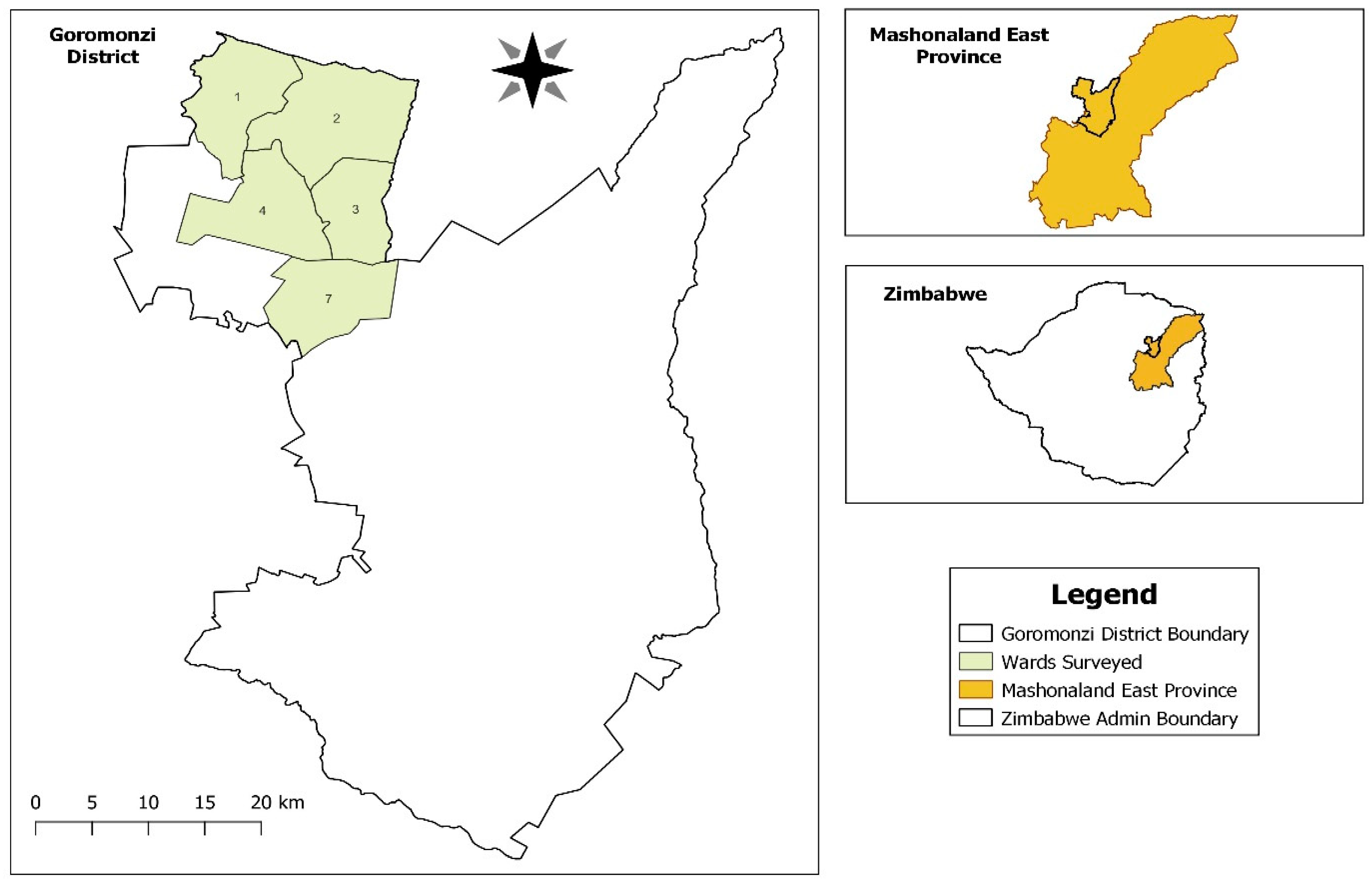
Figure 2.
Sweet Potatoes production Criteria and Alternatives.
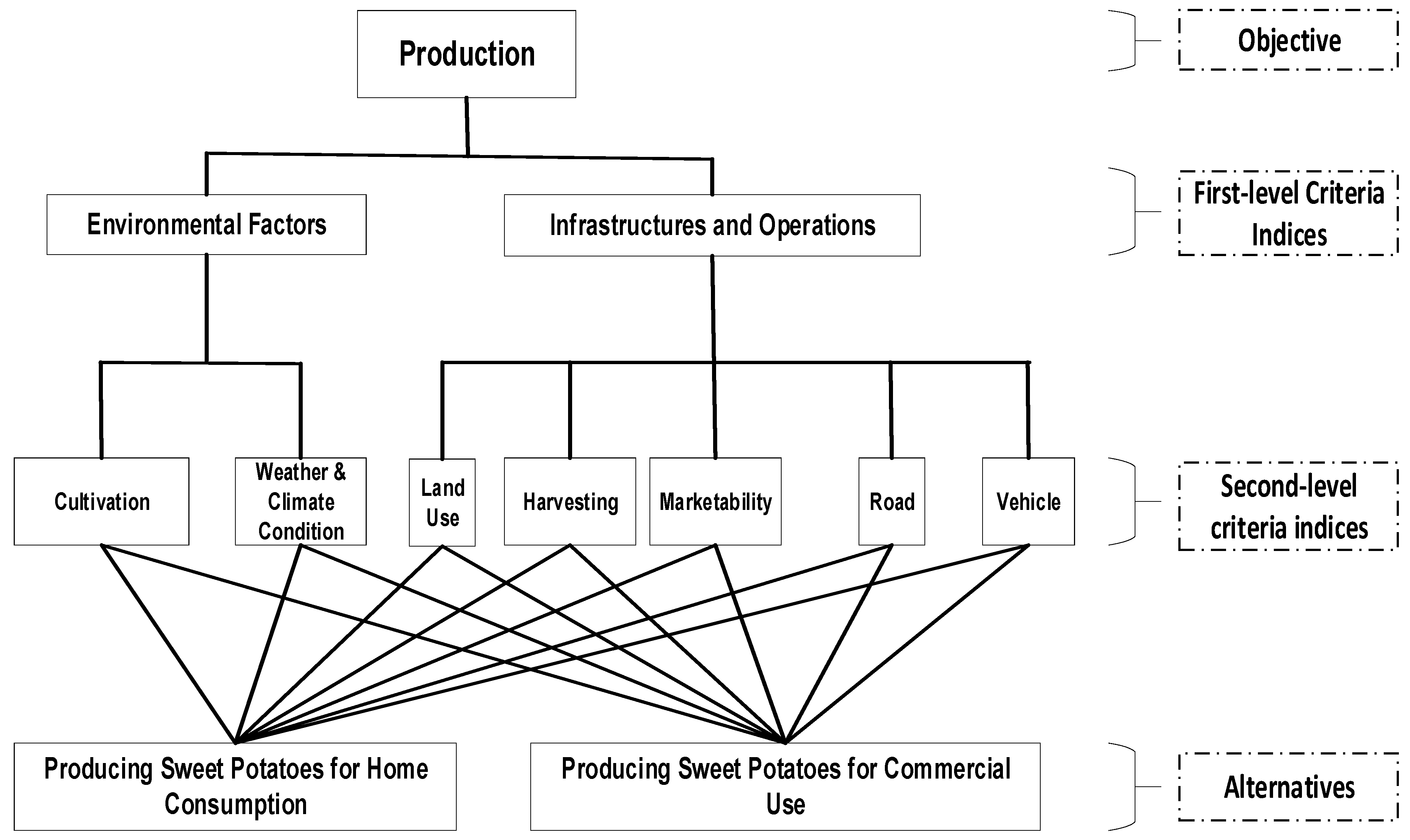
Figure 4.
VHI analysis of Drought dataset between 1990 to 2021.
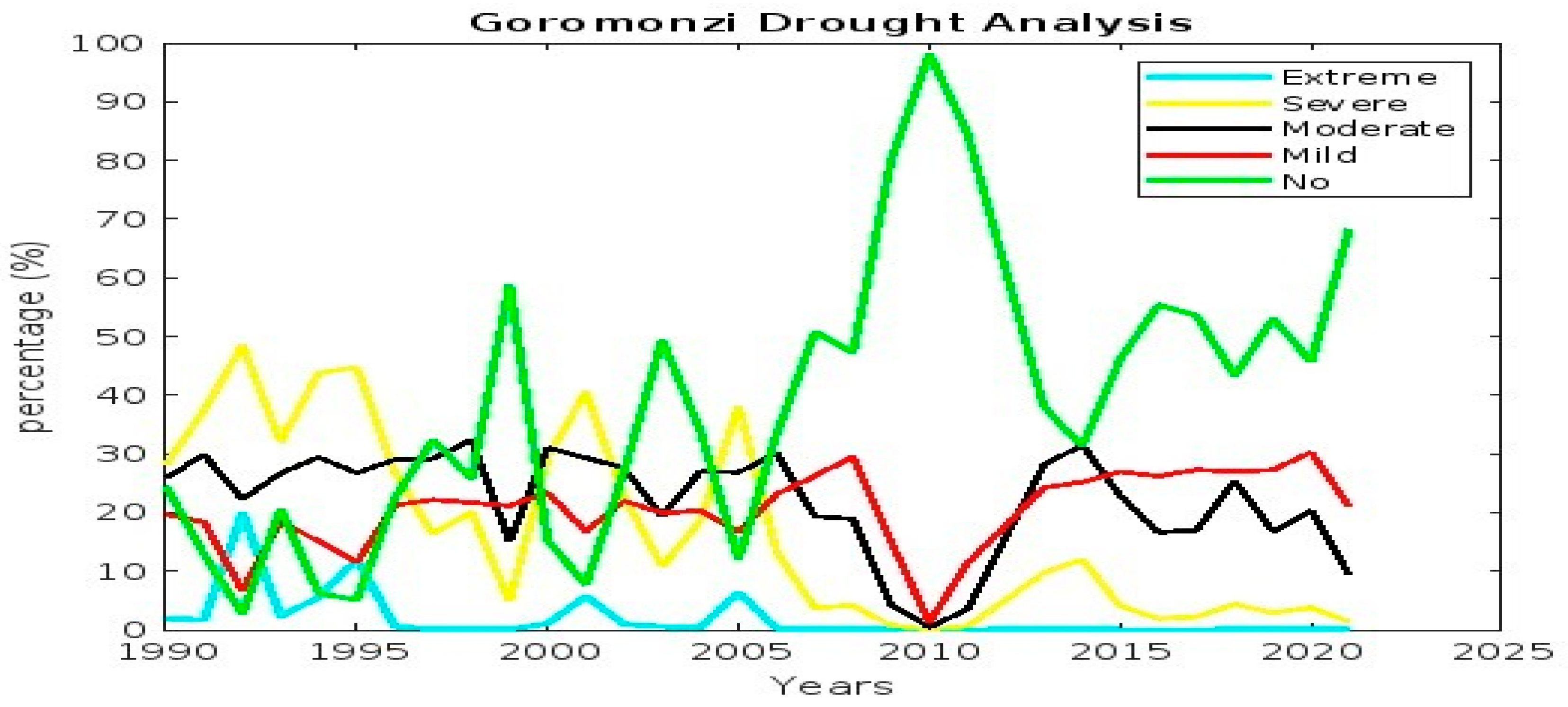
Figure 6.
VHI variations in Goromonzi (Ward 1, 2, 3, 4, 7) between 2021-2023.
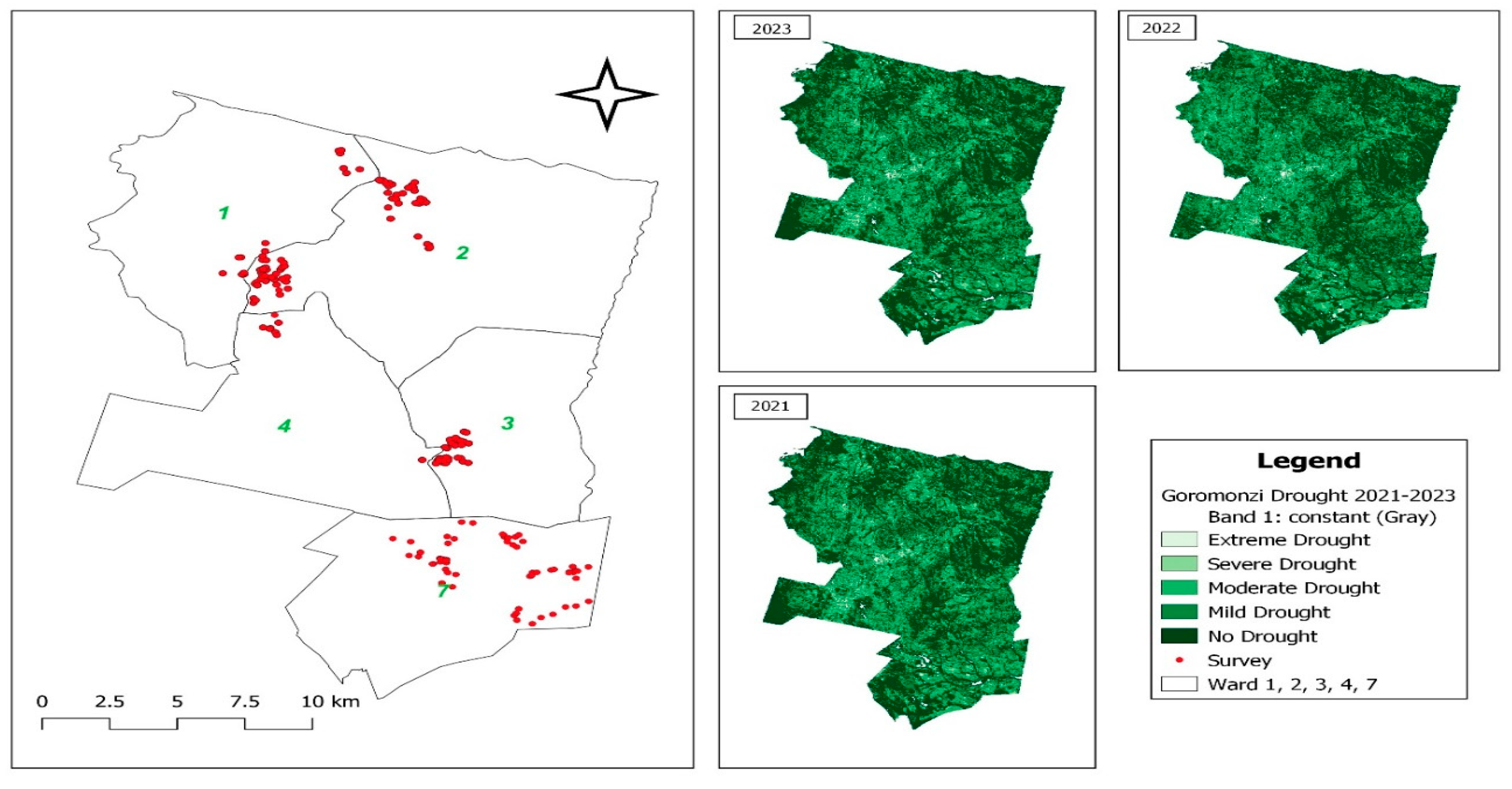
Figure 7.
The number of planting seasons for Sweet Potatoes Among Farmers in the last three years.
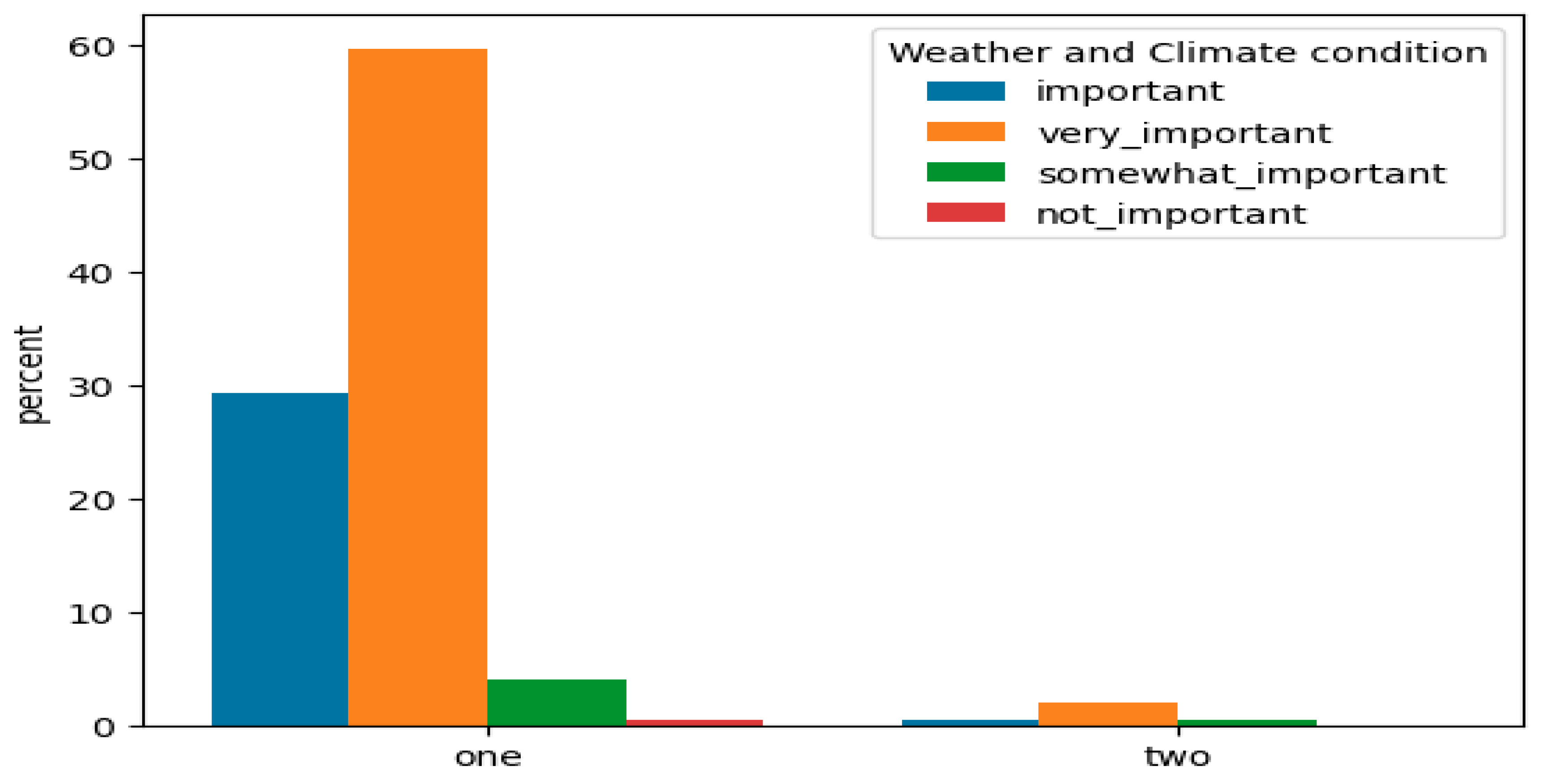
Figure 11.
Labor use during Cultivation and Harvesting in Goromonzi district (%).
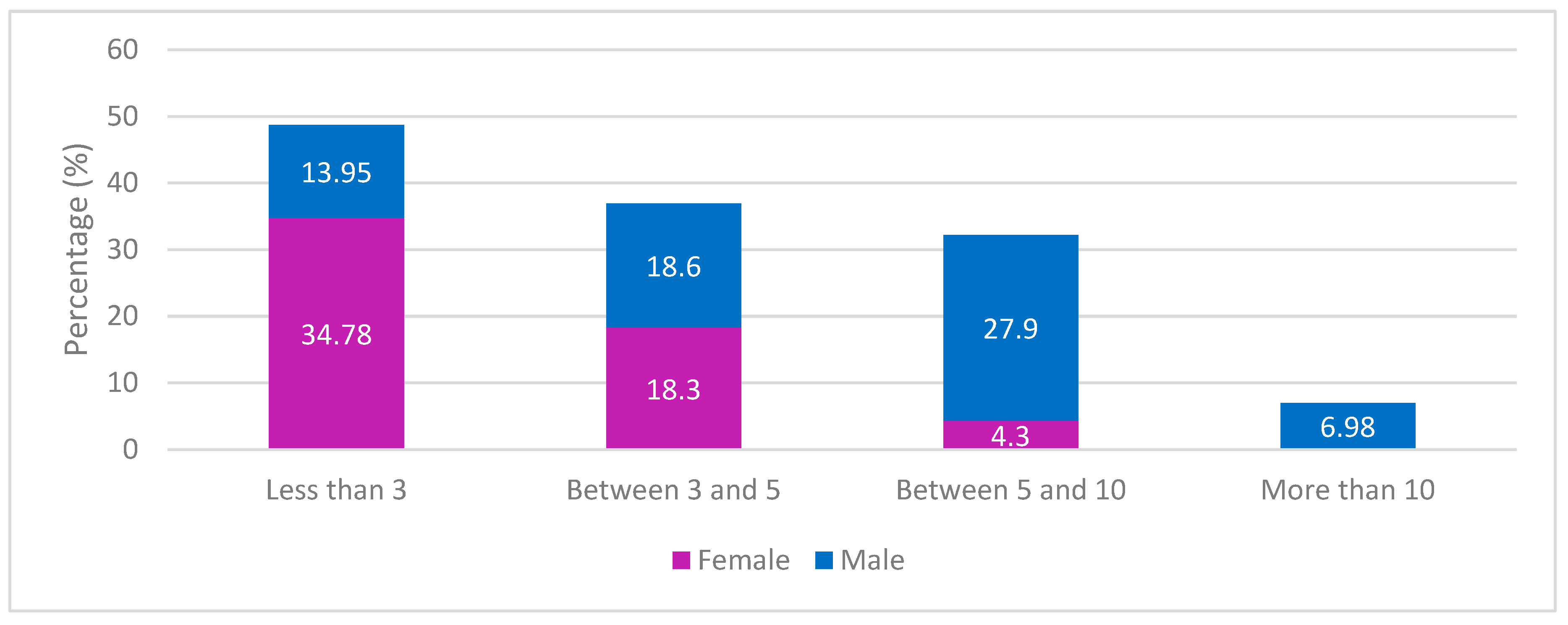

Table 1.
Drought classification for VHI values.
| Drought | Values |
|---|---|
| Extreme | < 10 |
| Severe | ≥ 10, < 20 |
| Moderate | ≥ 20, < 30 |
| Mild | ≥ 30, < 40 |
| No | ≥ 40 |
Table 2.
Criteria Definitions for Sweet Potato Production.
| Series No | Criteria | Accronym | Description |
|---|---|---|---|
| C1 | Cultivation | C | This refers to the practice of propagating new plants from vine cuttings to develop new storage roots. |
| C2 | Land Use | LU | Encompasses the effective use of land for growing sweet potatoes, including preparation and cultivation techniques. |
| C3 | Harvesting | H | Involves the optimal timing and techniques for harvesting sweet potatoes to maximize yield and quality. |
| C4 | Marketability | M | Understanding market demands and standards necessary for the successful sale of sweet potatoes. |
| C5 | Road | R | Accessibility and quality of infrastructure, including roads and paths leading to and from production sites. |
| C6 | Vehicle | V | The availability and efficiency of vehicles for transporting sweet potatoes to markets or storage facilities. |
| C7 | Weather and Climate Condition | WCC | The effect of local weather patterns and climate conditions on the growth and yield of sweet potatoes. |
Table 3.
Linguistic terms and corresponding TFN.
| Numerical values | Definition | Fuzzy triangular Scale |
|---|---|---|
| 1 | Equally Important (Eq. Imp) | (1,1,3) |
| 3 | Weakly Important (W. Imp) | (1,3,5) |
| 5 | Fairly Important (F. Imp) | (3,5,7) |
| 7 | Strongly Important (S. Imp) | (5,7,9) |
| 9 | Absolutely Important (A. Imp) | (7,9,11) |
Disclaimer/Publisher’s Note: The statements, opinions and data contained in all publications are solely those of the individual author(s) and contributor(s) and not of MDPI and/or the editor(s). MDPI and/or the editor(s) disclaim responsibility for any injury to people or property resulting from any ideas, methods, instructions or products referred to in the content. |
© 2024 by the authors. Licensee MDPI, Basel, Switzerland. This article is an open access article distributed under the terms and conditions of the Creative Commons Attribution (CC BY) license (http://creativecommons.org/licenses/by/4.0/).
Copyright: This open access article is published under a Creative Commons CC BY 4.0 license, which permit the free download, distribution, and reuse, provided that the author and preprint are cited in any reuse.


