

Submitted:
23 November 2024
Posted:
26 November 2024
You are already at the latest version
Abstract
AI, or simply Artificial Intelligence, has emerged as a pivotal force in innovation, influencing sectors from healthcare to entertainment. Defined as the simulation of human intelligence by machines to perform tasks such as learning, reasoning, and problem-solving, AI is central to addressing complex challenges and optimizing systems. Education, deeply intertwined with societal progress, has been a key area for AI integration, transforming traditional teaching and learning approaches through personalization, engagement, and accessibility. One of the most dynamic applications of AI in education is language learning, crucial in today's interconnected global landscape. Language acquisition fosters communication and cultural exchange, promoting inclusivity and collaboration. AI tools, including intelligent tutoring systems, real-time translation applications, and adaptive learning platforms, leverage natural language processing and machine learning to offer tailored feedback, simulate immersive environments, and provide cultural context, enriching the learning experience. Beyond linguistic proficiency, AI in language education exposes learners to diverse cultural nuances, fostering empathy and global awareness. Immersive technologies like virtual reality enable users to practice language skills in real-world scenarios, bridging cultural gaps and addressing barriers such as resource limitations and access disparities. This paper, based on in-depth readings of both scholarly online and published articles, explores AI's role in enhancing second language acquisition and cultural competence, contributing to the discourse on AI's transformative potential in fostering inclusive, equitable, and globally connected learning environments.
Keywords:
AI-enhanced language learning
; bridging cultures
; breaking barriers
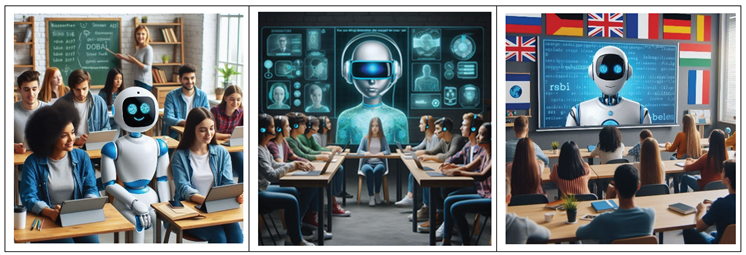
Introduction
Artificial intelligence (AI) has become a cornerstone of innovation, permeating industries from healthcare and finance to transportation and entertainment. Defined as the simulation of human intelligence by machines to perform tasks such as learning, reasoning, and problem-solving, AI is now central to addressing complex challenges and optimizing systems (Laird, Newell, & Rosenbloom, 1987). Education, a sector deeply intertwined with societal progress, has been a focal point for AI integration. Its ability to personalize learning, foster engagement, and enhance accessibility is transforming traditional approaches to teaching and learning (Ertel, 2024).
One of the most dynamic applications of AI in education is in language learning, a field pivotal in today’s interconnected global landscape. Language acquisition not only enables communication but also fosters cultural exchange, making it an essential skill in promoting inclusivity and collaboration. AI tools such as intelligent tutoring systems, real-time translation applications, and adaptive learning platforms are redefining how learners interact with languages. These systems leverage natural language processing and machine learning to offer tailored feedback, simulate immersive environments, and provide cultural context, significantly enriching the learning experience (Luckin, 2020; Holmes, Bialik, & Fadel, 2019).
The implications of AI in language education extend beyond linguistic proficiency. Advanced tools facilitate exposure to diverse cultural nuances, encouraging learners to develop empathy and global awareness. For example, immersive technologies such as virtual reality can simulate real-world scenarios, enabling users to practice language skills while experiencing cultural environments. Such innovations highlight AI’s potential to bridge cultural gaps and address traditional barriers in language learning, such as resource limitations and access disparities (Hopgood, 2021; Schank, 1984).
However, while these advancements are promising, challenges persist. Ethical concerns surrounding bias in AI systems, the digital divide, and the readiness of educators to adopt such technologies present obstacles to widespread implementation. Additionally, questions about how AI balances linguistic accuracy with cultural depth and authenticity remain critical. Recent research underscores the need for a nuanced understanding of how AI shapes language acquisition and cultural competence, particularly in diverse educational settings (Novawan, Walker, & Ikeda, 2024; Chen & Cheng, 2020).
This paper explores the role of AI in enhancing second language acquisition and fostering cultural competence. By drawing on theoretical frameworks and empirical evidence, it examines how AI technologies address barriers in language education while creating opportunities for cross-cultural understanding. Ultimately, this study aims to contribute to the growing discourse on the transformative potential of AI in fostering inclusive, equitable, and globally connected learning environments.
The Evolution of AI in Education
Artificial intelligence (AI) has undergone a remarkable evolution in the field of education, progressing from basic computer-assisted tools to sophisticated systems capable of personalizing learning experiences and fostering intercultural communication (Eslit, 2023). The journey of AI in education reflects broader technological advancements and growing recognition of its potential to revolutionize teaching and learning practices.
The earliest applications of AI in education date back to the 1960s, with the advent of computer-assisted instruction (CAI). Systems like PLATO, which provided interactive modules and immediate feedback, were pioneering efforts that introduced technology into classrooms. While rudimentary by today’s standards, these systems marked the beginning of personalized learning technologies, establishing a foundation for future innovations (Holmes, Bialik, & Fadel, 2020).
During the 1980s and 1990s, the emergence of intelligent tutoring systems (ITS) further advanced the role of AI in education. These systems used rule-based algorithms to analyze learners’ performance and adapt instruction to individual needs. Although limited in scope, ITS demonstrated the potential of AI to replicate some aspects of human tutoring, offering tailored support for specific subjects. By the early 2000s, the integration of machine learning and natural language processing (NLP) enabled the development of AI-driven tools such as Duolingo and Grammarly, which provided real-time, adaptive feedback for language learners (Godwin-Jones, 2018).
The 21st century has seen AI increasingly integrated into virtual learning environments (VLEs) like Blackboard and Moodle, which use data-driven algorithms to track learner progress and recommend resources. At the same time, immersive technologies such as virtual reality (VR) and augmented reality (AR) have enabled students to engage with interactive simulations, making learning experiences more dynamic and culturally immersive. These innovations have significantly impacted fields like language learning, where AI facilitates not only linguistic proficiency but also intercultural communication (Baskara, 2023; Mushthoza et al., 2023).
The COVID-19 pandemic accelerated the adoption of AI in education, highlighting its capacity to address challenges in remote and hybrid learning environments. Tools such as AI chatbots provided 24/7 support for learners, while automated grading systems and adaptive learning platforms ensured continuity in educational delivery. This period also emphasized the need for equitable access to AI technologies to reduce disparities in educational opportunities (Selwyn, 2021).
As AI continues to evolve, it is transforming education into a more personalized, accessible, and culturally responsive domain. Emerging technologies like generative AI and advanced machine learning models promise to further enhance educational practices, fostering global mobility and cross-cultural understanding. By bridging gaps in access and providing innovative solutions, AI is poised to play a central role in shaping the future of education.
Personalized Learning
AI has revolutionized personalized learning by tailoring educational experiences to meet the unique needs of individual students. Unlike traditional teaching methods, which often adopt a one-size-fits-all approach, AI-powered systems analyze data to create customized learning pathways that enhance engagement and optimize outcomes (Eslit, 2023). This adaptability allows students to progress at their own pace while receiving targeted support in areas where they face challenges.
AI-driven platforms such as adaptive learning systems exemplify this personalization. Tools like Carnegie Learning’s MATHia dynamically adjust the difficulty of tasks based on student performance, ensuring learners are neither overwhelmed by complex material nor disengaged by overly simplistic exercises. Similarly, platforms like Duolingo use natural language processing (NLP) to deliver interactive and customized language lessons, providing immediate feedback that fosters self-directed learning (He & Xu, 2021).
The role of real-time feedback is crucial in personalized learning. AI systems continuously assess student responses and provide instant guidance, enabling learners to correct mistakes and reinforce understanding. For example, Grammarly analyzes writing for grammatical accuracy and stylistic improvements, while AI chatbots offer explanations and step-by-step solutions to complex problems. These tools address the limitations of traditional classroom settings, where immediate feedback may not always be possible (Li & Miao, 2022).
AI’s capacity to predict learning trajectories is another significant advancement. By identifying patterns in student behavior, AI systems can forecast potential difficulties and recommend proactive interventions. This predictive capability enhances the efficacy of teaching by allowing educators to address learning gaps before they become barriers to progress (Williamson, 2020).
Furthermore, personalized learning powered by AI supports inclusivity by accommodating diverse learning needs. For instance, AI-driven text-to-speech and speech-to-text applications assist students with visual or auditory impairments, ensuring equitable access to educational content. These innovations bridge gaps for learners in under-resourced environments, democratizing access to high-quality education (Luckin et al., 2021).
In language education, AI plays a pivotal role in bridging cultural divides. Tools like language-learning apps and AI translators not only enhance linguistic proficiency but also foster intercultural understanding by exposing students to culturally relevant contexts and content. This aspect of personalized learning is particularly valuable for international students navigating diverse cultural environments (Beatty, 2013).
As AI technologies continue to evolve, their potential to refine personalized learning experiences is immense. Advanced adaptive systems and generative AI are likely to further individualize content delivery, making education more inclusive, engaging, and effective. This transformative power underscores AI’s critical role in shaping the future of personalized learning.
Intelligent Tutoring Systems
Intelligent Tutoring Systems (ITS) represent a pivotal advancement in the integration of Artificial Intelligence (AI) into education, offering personalized, one-on-one tutoring experiences that replicate the interaction between a student and a human instructor. These systems are designed to assess a learner’s current level of understanding, identify areas of difficulty, and deliver tailored content and feedback to foster mastery. By continuously adjusting the instructional material to match the learner’s individual pace, ITS ensure that students are not only challenged appropriately but also supported throughout their learning journey (Wang, 2021).
A key strength of ITS is their ability to provide customized learning experiences that go beyond traditional classroom instruction. Unlike static educational tools, ITS dynamically adapt to student needs by analyzing performance data in real-time. This process allows the system to provide immediate, contextual feedback, guiding students to correct mistakes and reinforcing correct responses. In doing so, ITS create an engaging, responsive learning environment where students are given the opportunity to work through content at their own pace, with assistance always available when required (Godwin-Jones, 2018). For example, systems like the AI-powered platform Squirrel AI or Carnegie Learning’s MATHia use sophisticated algorithms to adjust difficulty levels, helping students grasp complex concepts step by step (Heil & Vasiliev, 2020).
Beyond personalization, ITS significantly enhance student engagement by promoting active learning. Instead of passively receiving information, students are required to interact with the material, apply critical thinking, and make decisions in a simulated environment. These interactive elements keep learners involved, allowing them to engage with content in ways that foster deeper understanding. Moreover, the consistent feedback loop provided by ITS helps build self-confidence, as students are reassured by their progress and motivated to overcome challenges (Warschauer, 2019).
The educational benefits of ITS are evident in their ability to improve learning outcomes. By offering personalized instruction, ITS allow students to focus on areas where they need the most support, leading to more efficient learning. Studies have shown that students using ITS tend to perform better than those in traditional educational settings, as these systems provide the ability to practice and reinforce concepts until they are fully mastered. The adaptive nature of ITS ensures that students are neither held back by the pace of others nor overwhelmed by material that exceeds their understanding (Eslit, n.d.).
Furthermore, ITS provide a unique advantage in their scalability. While human tutors are constrained by time and availability, ITS can be accessed anytime and anywhere, making them particularly valuable in settings where resources are limited. This accessibility ensures that all learners, including those in underserved regions, can benefit from individualized learning experiences, overcoming barriers to high-quality education (Heil & Vasiliev, 2020).
Indeed, Intelligent Tutoring Systems offer a transformative approach to education by providing personalized, one-on-one instruction that enhances student engagement and improves learning outcomes. Through real-time, adaptive feedback and continuous support, ITS are redefining the learning experience, making education more inclusive, interactive, and effective for a diverse range of learners.
Automated Grading and Assessment
The integration of Artificial Intelligence (AI) in grading and assessment is transforming the educational landscape, bringing efficiency and consistency to an otherwise time-consuming process. AI systems are increasingly capable of automating the grading of various assessments, from multiple-choice tests to essays, thereby streamlining administrative tasks and allowing educators to focus on teaching. AI-driven tools can analyze student responses with precision, applying predetermined criteria to ensure objective evaluation. These tools offer the significant advantage of reducing human error and bias, ensuring a more equitable grading system (Levy & Stockwell, 2013).
A key benefit of AI in grading is its ability to provide consistent assessments across all students. Unlike human graders, AI systems are not influenced by personal biases or external factors such as a student’s history or handwriting quality. This leads to a fairer grading process that applies uniform standards for all learners. Additionally, AI can offer detailed, personalized feedback to students, pinpointing areas for improvement and providing actionable recommendations. This feedback, combined with the speed at which AI tools can grade assignments, greatly enhances the learning experience by allowing students to receive timely support and make necessary adjustments to their study habits (Heil & Vasiliev, 2020).
Enhancing Engagement with AI
AI-driven tools, such as chatbots and virtual assistants, play an increasingly vital role in engaging students and enhancing the learning process. These tools foster dynamic, interactive learning environments by providing students with real-time responses, explanations, and personalized learning experiences. Chatbots, for instance, are integrated into learning management systems (LMS) to help students navigate through content, address common questions, and offer assistance when needed. This interactive communication not only helps students engage more deeply with their coursework but also provides a sense of continuous support (Rosa & Nunes, 2021).
AI-powered virtual assistants further enrich learning by adapting to each student’s pace and needs. These tools can track students’ progress and deliver personalized recommendations based on their interactions and performance. For example, language-learning platforms like Duolingo use AI to create adaptive learning paths that guide students through lessons based on their individual strengths and weaknesses. These personalized learning experiences, which include instant feedback and gamified elements, make the learning process more engaging, fun, and motivating for students (Baker, 2016). By offering real-time engagement and tailored instruction, AI tools enhance student involvement, ensuring that learners stay motivated and on track throughout their educational journey.
Predictive Analytics in Education
AI’s ability to harness predictive analytics is reshaping how educators identify and intervene with at-risk students. By analyzing vast amounts of student data, including performance history, engagement patterns, and behavioral indicators, AI tools can predict which students are at risk of falling behind. These insights allow educators to take proactive measures, such as offering additional support, personalized tutoring, or counseling, before a student’s performance deteriorates (Eslit, 2020).
The impact of predictive analytics extends to improving student retention and success rates. By identifying at-risk students early, educational institutions can implement targeted interventions tailored to individual needs. This proactive approach not only addresses academic challenges but also fosters a more inclusive and supportive learning environment, where every student has the resources and guidance they need to succeed. Predictive analytics also empowers schools to implement data-driven strategies that improve overall academic outcomes and reduce dropout rates (Warschauer, 2019).
Overall, AI’s role in education continues to grow, with significant advancements in automated grading, student engagement, and predictive analytics. Automated grading systems provide efficient, fair, and objective evaluations, while AI-powered tools like chatbots and virtual assistants enhance engagement through interactive and personalized learning experiences. Predictive analytics further improves student outcomes by identifying at-risk learners and enabling timely interventions. These technologies are paving the way for more efficient, accessible, and inclusive educational practices, transforming both the teacher’s role and the student’s learning experience.
Virtual and Augmented Reality
Artificial Intelligence (AI) has significantly enhanced Virtual Reality (VR) and Augmented Reality (AR) experiences, creating immersive learning environments that simulate real-world scenarios for practical learning. When integrated with AI, VR and AR technologies facilitate dynamic and interactive educational opportunities. These tools help learners engage with real-world situations in a controlled, yet realistic, environment. For instance, VR simulations in medical training or engineering can provide students with hands-on experience, allowing them to practice complex tasks safely and effectively (Holmes et al., 2019). In language education, AI-powered AR applications enable real-time translations, contextual interactions, and even cultural immersion, offering learners the opportunity to practice language skills in authentic settings, enhancing both linguistic and cultural proficiency (Godwin-Jones, 2018).
These immersive learning experiences also support skill development by allowing students to practice in simulated environments that closely mirror real-life scenarios. AI adapts these simulations in real time based on the learner’s behavior, ensuring that each student’s experience is tailored to their needs (Chen & Cheng, 2020). This integration of AI into VR and AR not only enhances the learning experience but also makes it more accessible and engaging by enabling students to experience challenging situations that might not be feasible in traditional educational settings (Luckin, 2020).
Lifelong Learning and Skill Development
AI plays a crucial role in supporting lifelong learning and continuous skill development. As technological advancements rapidly transform industries, there is an increasing need for individuals to engage in continuous learning throughout their careers. AI-powered platforms offer personalized learning experiences, allowing individuals to acquire new skills and adapt to evolving job markets. These platforms leverage AI to assess a learner’s progress and suggest targeted learning materials, ensuring that individuals can develop skills that are relevant to their career goals (Laird, Newell, & Rosenbloom, 1987).
Moreover, AI’s ability to deliver tailored learning experiences facilitates just-in-time learning, where individuals can access the resources they need precisely when they need them. This is especially important in fields such as data science, digital marketing, and AI itself, where professionals must constantly update their knowledge to stay competitive (Ertel, 2024). By providing dynamic learning paths that adapt to personal needs, AI encourages individuals to take charge of their own learning journeys, thus supporting lifelong education (Hopgood, 2021). These AI-driven solutions not only empower learners but also ensure that they remain relevant and employable in the face of rapid technological change (Schank, 1984).
Ethical Considerations
The integration of AI in education brings forth important ethical concerns that must be addressed to ensure fair and responsible use. One of the primary issues is data privacy, as AI systems rely on vast amounts of student data to personalize learning experiences. The collection, storage, and use of such sensitive data necessitate robust privacy protections to prevent misuse and breaches (Novawan, Walker, & Ikeda, 2024). Ethical AI use also requires transparency in how data is collected and analyzed, ensuring that learners are informed and have control over their personal information (Luckin, 2020).
Algorithmic bias presents another critical challenge, as AI systems may unintentionally perpetuate existing inequalities present in the data they are trained on. In education, this could lead to unfair learning experiences, where certain groups of students might be disproportionately disadvantaged by biased algorithms. It is essential that AI developers regularly assess their systems for bias and make adjustments to ensure equitable outcomes for all learners (Mushthoza et al., 2023). Furthermore, the digital divide remains a pressing ethical issue, as unequal access to technology can widen educational disparities. Ensuring that AI-powered learning tools are accessible to all students, regardless of socioeconomic background, is crucial to maintaining fairness in educational opportunities (Holmes et al., 2020).
To address these ethical challenges, institutions must adopt policies that promote the responsible use of AI, ensuring that it is used in ways that benefit all learners while protecting their privacy and ensuring equal access (Chen et al., 2023). This includes fostering transparency in AI decision-making processes, mitigating biases, and ensuring equitable access to technology across diverse student populations.
Conclusion and Recomendation
AI in education has immense transformative potential, offering personalized learning experiences, improving engagement, and enhancing teaching methods through innovative tools. By providing customized learning paths and real-time feedback, AI supports diverse student needs, allowing for more effective learning. Intelligent tutoring systems (ITS) exemplify how AI can provide one-on-one, adaptive instruction, which boosts student engagement and improves learning outcomes. Furthermore, AI-driven tools such as virtual assistants, chatbots, and augmented reality applications create immersive, interactive learning environments that simulate real-world scenarios, making learning more practical and engaging. AI also facilitates lifelong learning and continuous skill development, helping individuals remain competitive in an increasingly dynamic job market. However, ethical concerns surrounding AI in education—such as data privacy, algorithmic bias, plagiarism, attribution, and the digital divide—must be addressed to ensure equitable and responsible use. As AI technologies continue to evolve, it is essential for educational institutions to invest in further research and development, ensuring that AI solutions are effectively integrated into curricula and teaching practices. Educators and policymakers must collaborate to establish clear guidelines and ethical frameworks for AI implementation in education, prioritizing accessibility, fairness, and inclusivity. By doing so, AI can be leveraged to create adaptive, inclusive, and future-ready educational environments that cater to the diverse needs of learners, preparing them for the rapidly changing demands of the 21st century and beyond.
Author Contributions
Edgar R. Eslit: Conceived and designed this article; Performed the data gathering; and, Wrote the whole article.
Funding
This research did not receive any specific grant from funding agencies in the public, commercial, or not-for-profit sectors.
Data Availability Statement
Data included in article/supplementary material/referenced in article.
Declaration of interest statement
The author declares no conflict of interest.
Additional information
No additional information is available for this paper.
Acknowledgments
Thanks, must also be expressed to Google and copilot which provided additional information and online references.
References
- Alice Chen, M. R. , Hwang, G. J., Majumdar, R., Toyokawa, Y., & Ogata, H. (2023). Research trends in the use of E-books in English as a foreign language (EFL) education from 2011 to 2020: a bibliometric and content analysis. Interactive Learning Environments, 31(4), 2411-2427. [CrossRef]
- Baker, C. (2016). Foundations of Bilingual Education and Bilingualism. Multilingual Matters.
- Baskara, F. R. (2023, August). ChatGPT-assisted English language learning: theoretical implications for global mobility and cross-cultural communication. In International Conference on Language and Language Teaching (pp. 105-120).
- Beatty, K. (2013). Teaching & researching: Computer-assisted language learning. Routledge.
- Chen, L. , & Cheng, L. (2020). The role of artificial intelligence in second language acquisition: A systematic review. Computer Assisted Language Learning, 33(3), 275-297. [CrossRef]
- Ertel, W. (2024). Introduction to artificial intelligence. Springer Nature.
- Eslit, E. R. (2023). AI in Language Pedagogy. https://www.writing.com/main/view_item/ item_id/2303306-AI-in-Language-Pedagogy.
- Godwin-Jones, R. (2018). Emerging Technologies: Language Learning and Technology for the Twenty-First Century. Language Learning & Technology 2018, 22, 1–5, https://www.lltjournal.org/.
- Godwin-Jones, R. (2018). Using artificial intelligence to facilitate language learning and intercultural communication. Language Learning & Technology 2018, 22, 57–69, http://llt.msu.edu/issues/june2018/godwin-jones.pdf.
- He, D. , & Xu, J. (2021). The impact of AI on language education: Opportunities and challenges for international students. International Journal of Educational Technology in Higher Education, 18(1), 1-15. [CrossRef]
- Heil, C., & Vasiliev, A. (2020). AI in Language Learning: State of the Art and Future Directions. In Proceedings of the First International Conference on Artificial Intelligence and Language Technologies (pp. 42-50).
- Holmes, W. , Bialik, M., & Fadel, C. (2019). Artificial intelligence in education promises and implications for teaching and learning. Center for Curriculum Redesign.
- Holmes, W. , Bialik, M., & Fadel, C. (2020). Artificial intelligence in education: Promises and implications for teaching and learning. Center for Curriculum Redesign.
- Hopgood, A. A. (2021). Intelligent systems for engineers and scientists: a practical guide to artificial intelligence. CRC press.
- Laird, J. E. , Newell, A., & Rosenbloom, P. S. (1987). Soar: An architecture for general intelligence. Artificial intelligence, 33(1), 1-64. [CrossRef]
- Levy, M. , & Stockwell, G. (2013). CALL dimensions: Options and issues in computer-assisted language learning. Routledge.
- Li, M. , & Miao, J. (2022). Bridging cultural divides: The role of AI-driven tools in language learning. Journal of Language and Cultural Education, 10(2), 45-56. [CrossRef]
- Luckin, R. (2020). Machine learning and human intelligence: The future of education for the 21st century. UCL Institute of Education Press.
- Luckin, R. , Holmes, W., Griffiths, M., & Forcier, L. B. (2021). Artificial intelligence and education: A critical perspective. Routledge.
- Mushthoza, D. A., Syariatin, N., Tahalele, O., Telussa, S. I., Rasmita, R., & Mokodenseho, S. (2023). Analyzing the impact of artificial intelligence (AI) on the future of English language teaching and learning. Journal on Education, 6(1), 1549-1557. [CrossRef]
- Novawan, A., Walker, S. A., & Ikeda, O. (2024). The new face of technology-enhanced language learning (TELL) with artificial intelligence (AI): Teacher perspectives, practices, and challenges. Journal of English in Academic and Professional Communication 2024, 10, 1–18.
- Rosa, S., & Nunes, J. P. (2021). Artificial Intelligence, Language Learning, and Cultural Awareness: A Bridge Between Contexts. Journal of Language, Identity & Education 2021, 20, 392–406.
- Schank, R. C. (1984). The cognitive computer: On language, learning, and artificial intelligence. Addison-Wesley Longman Publishing Co., Inc.
- Selwyn, N. (2021). Should robots replace teachers? AI and the future of education. Polity Press.
- Wang, Y. (2021). Artificial Intelligence in Language Learning: Advances and Applications. In D. K. K. & M. P. (Eds.), Explorations in Language Acquisition and Use: Advances in Semiotics (pp. 45-60). Cambridge Scholars Publishing.
- Warschauer, M. (2019). Technology and social inclusion: Towards a framework for understanding the role of AI in language learning. Language Policy, 18(3), 323-339. [CrossRef]
- Williamson, B. (2020). Big data in education: The digital future of learning, policy, and practice. SAGE Publications.
Disclaimer/Publisher’s Note: The statements, opinions and data contained in all publications are solely those of the individual author(s) and contributor(s) and not of MDPI and/or the editor(s). MDPI and/or the editor(s) disclaim responsibility for any injury to people or property resulting from any ideas, methods, instructions or products referred to in the content. |
© 2024 by the authors. Licensee MDPI, Basel, Switzerland. This article is an open access article distributed under the terms and conditions of the Creative Commons Attribution (CC BY) license (http://creativecommons.org/licenses/by/4.0/).
Copyright: This open access article is published under a Creative Commons CC BY 4.0 license, which permit the free download, distribution, and reuse, provided that the author and preprint are cited in any reuse.


