Preprint
Article

This version is not peer-reviewed.

Wheat Germ as Partial or Total Substitutive of Meat in Low‐Fat Pork Cooked Sausages

A peer-reviewed article of this preprint also exists.

Submitted:

21 November 2024

Posted:

22 November 2024

You are already at the latest version

Abstract

Wheat germ is a by-product of the cereal industry with interesting nutritional properties, including its high protein content. However, so far few applications have been found in the meat industry despite the growing interest in the use of vegetable proteins to reduce meat consumption. Therefore, the use of whet germ for the production of low-fat frankfurters was considered. A control sausage and four formulations with progressive substitution of lean pork (25%, 50%, 75% and 100%) were elaborated. Proximal composition, color, texture, emulsion characterization, fatty acid profile, fat oxidation and consumer acceptance were then analyzed. The results showed that the incorporation of wheat germ improved emulsion stability although the batters were more cohesive. In terms of the final product, the progressive substitution of meat by germ resulted in significant increases in fiber as well as significant decreases in moisture, fat, protein and ash. Sausages made with germ were darker and yellower and less reddish, as well as harder, chewier and gummier, but less cohesive and elastic. Similarly, wheat germ substitution improved the quality of the lipid profile, but decreased acceptability. Substitution of meat was only feasible up to 25%, a formulation for which there was hardly any significant difference with the control.

Keywords: 
;  ;  ;  ;  ;  

1. Introduction

Meat has a high content of macronutrients, mainly proteins, and micronutrients, among which vitamin B12, zinc and iron stand out [1], however a probable correlation has also been postulated between the occurrence of colorectal cancer and red meat consumption [2], as well as with the development of diseases, especially cardiovascular diseases and type 2 diabetes [3]. On the other hand, it has been shown that its production is associated with a high environmental cost [4]. Thus, it is estimated that the livestock sector accounts for 15% per year of the anthropogenic greenhouse gases emitted globally [5]. To this must be added the agricultural work that provides feed for livestock. These require the use of pesticides, which generate environmental impacts such as the loss and destruction of biodiversity [6], and the highest water consumption in the world [7], which points to a complex situation in the not too distant future.
In recent years, new possibilities for the substitution of conventional animal proteins are emerging. Among them are insects due to their excellent nutritional properties and low environmental impact [8]. Another newer possibility is known as cultured meat, consisting of the synthesis of meat through stem cells with the capacity to differentiate into muscle tissue cells [9], which would reduce the environmental impact, increase animal welfare and reduce risks in terms of food safety [10]. However, the option that offers the widest range of possibilities is plant-based proteins. On the one hand, vegetable protein texturized (VPT) stand out, which are obtained mainly from flours or generally from soybean concentrates [11], by means of a hot extrusion process, with which meat analogues with textures very similar to those of meat can be obtained [12]. Another source of protein is mushrooms, which contain around 30 % protein on a dry basis [13], which makes them an interesting alternative. Of no less importance are the cereals that have experienced an increase in protein content as a consequence of productive improvement and optimization, reaching values of 13-16 % in durum wheat for baking or 15 % in certain rice varieties [14].
On the other hand, since plant-based agri-food industries generate large amounts of by-products [15], whic contain bioactive compounds of interest as well as carbohydrates and proteins, their use to create value-added products and increase sustainability is attracting increasing interest [16]. A clear example is the case of wheat germ, a by-product resulting from wheat milling and constituting approximately 2-3 % of the whole grain [17]. The germ presents a very interesting nutritional composition, with approximately 25% protein, 18% sugars, 20% starch and 10-15 % oil [17]. It is also characterized by considerable amounts of magnesium, zinc, phosphorus and vitamin E [18,19,20]. As regards its lipid fraction, it is characterized by being composed mainly of monounsaturated and polyunsaturated fatty acids. However, due to the presence of lipases, lipid oxidation occurs [21], producing rancidity in short periods of time, which means that the germ has a low conservation capacity and, therefore, its main use has been for animal feed [22]. However, recently, different uses of wheat germ in food have been reported, such as a fortifier in cookie production [23], in mineral-rich cakes [24], in fermented functional beverages [25] or as a coffee substitute due to its similar sensory characteristics [26]. However, the use of wheat germ in the meat industry is quite limited, finding that its oil has been used to replace animal fats in hamburgers, [27], as a binder in sausages up to contents of 4 % [28] or as a meat substitute up to proportions of 10 % and 15 % [29]. Nevertheless, there is no evidence that it has been used as the main source of protein until the replacement of meat in frankfurter-type sausages.
Frankfurters are a type of cooked and cured sausage [30] with a high consumption, due to easy preparation, its versatility and organoleptic properties [31]. They are characterized by containing between 20-30 % fat [32], which is why it makes them a food prone to lipid oxidation [33]. As current food trends are increasingly focused on less caloric and low-fat foods [34] and proteins of vegetable origin have lower fat and cholesterol content and involve lower cost, this has favored the emergence of meat protein analogues [35,36,37] with the possibility of use in sausage production. In recent years, the possibility of making frankfurters with flaxseed and oat flours to replace meat has been studied [38], of making low-fat sausages with textured pea protein [39] and even macroalgae have been used to fortify frankfurters [40].
Therefore, the objective of this work was to evaluate the effect of the progressive and complete substitution of lean pork by wheat germ, as well as its viability from the point of view of emulsion stability, physicochemical quality and sensory acceptability.

2. Materials and Methods

2.1. Food Materials and Adittives

Wheat germ was supplied by “Harina Tradicional Zamorana” Quality Label (Zamora, Spain) while pork shoulder meat, sodium chloride and olive oil (0.4° Carbonell, Cordoba, Spain), were purchased from a local market (Zamora, Spain).
Phosphates (E 451i, E 450i), potato flour and soy protein were obtained from Proanda S. A. (Seville, Spain); sodium nitrite (E-250) and dextrose (D (+) Glucose) from Merck Eurolab (Briare Le Canal, France) and sodium lactate (E 325) and sodium ascorbate (E 301) from Panreac (Barcelona, Spain). The commercial mix of locust bean and xanthan gum (E-415, E-410, E-1400, Premigum XME-54) was supplied by Premium Ingredients S. L., Murcia, Spain) and the vegetable sausage flavoring was supplied by Kasteel Iberoalimentaria (Toledo, Spain). Cellulose casings of 22 mm (Viscofan, Pamplona, Spain) were used for stuffing the batter.

2.2. Sausage Manufacture

The low-fat olive oil control cooked sausage was prepared according to the formulation proposed by Revilla et al. [39] using olive oil as the fat source. The experimental sausages were elaborated by progressively substituting the pork lean meat by wheat germen in percentages of 25% (WG25%), 50% (WB50%), 75% (WG75%) and 100% (WG100%). Therefore, five different formulations (Table 1) were manufactured in duplicate two different days with different meat and wheat germ.
Wheat germ was previously ground (Phillips, Daily Collection, Netherlands) to facilitate homogenization. The lean meat and the olive oil were stored at 2ºC until used.
Two products trials were elaborated according to the procedure described by Revilla et al. [39] in the pilot plant of the Area of Food Technology. A bowl cutter (Talsa T-2473, Valencia, Spain) was used and the ingredients were added as follows. First, the soy protein and one third of the ice were mixed at low speed. Next, lean meat or wheat germ and one third of the ice were added at high speed, along with phosphate and nitrite salt. When it was completely mixed the remaining one-third of ice and olive oil were added to obtain a homogeneous mass. Finally, sodium lactate, sodium ascorbate, dextrose, potato flour, locust bean/xanthan gum spices, and flavorings were added at low speed.
Immediately after chopping, the batter was stuffed by means of a piston stuffer (Talsa H262A, Valencia, Spain) into cellulose casings and linked at 15 cm intervals. They were then coocked in an Eller oven (Unimatic Micro model, Eller, Merano, Italy) starting with drying (15 min at 55°C and 60% relative humidity RH), followed by heating (15 min at 60°C and 75% RH) and finally steam cooking (75°C until the internal temperature reached 72°C). The cooling process included a shower until the internal temperature reached 20°C (monitored throughout by thermocouples inserted in the thermal center) and then chilling to 4°C overnight. Then, the frankfurters were weighed, peeled and vacuum packed (Tecnotrip V220) in polyethylene bags. The sausages were pasteurized (water bath at 75°C for 45 min) and afterwards cooled in cold running water for 15 min before being stored at 4°C.

2.3. Jelly and Fat Separation

The determination of these parameters was carried out as described by Bloukas and Honikel [41]. Three pre-weighed cans (58 × 73 mm) were filled with an exactly weighed amount of raw batter, closed and heated in a boiling water bath for 35 min (core temperature about 90°C) and then cooled with cold tap water. After 24 hours at 4°C they were reheated to 45°C for 1 h in a water bath. The supernatant liquid (liquid fat and gelatin) from each can was collected in a volumetric measuring cylinder and measured in ml. The separation of fat and gelatin was then calculated as a percentage of the weight of the original mass.

2.4. Emulsion Stability

Emulsion stability was determined as previously described by Lurueña et al. [42]. Exactly 25 g of the emulsion was weighed into centrifuge tubes (five replicates per formulation) and centrifuged for 1 min at 2958 g (Sigma 4K15, Osterode am Harz, Germany). The tubes were heated in a water bath (30 min at 70°C) and centrifuged again (3 min at 2958 g). The pelleted part of the samples was removed and weighed, while the supernatants were dropped into crucibles previously weighed and dried at 100°C until constant weight. The volume of the total expressible fluid (TEF) the TEF percentage (%TEF) and the fat percentage were calculated as follows:
TEF= (Weight of centrifuge tube and sample)-(Weight of centrifuge tube and pellet),
% TEF= TEF/sample weight x 100
%Fat =[(Weight of crucible + dried supernatant)-(Weight of empty crucible) / TEF] x 100

2.5. Proximate Composition

Chemical analysis of the wheat germ and frankfurters was performed according to the AOAC methods [40]. Moisture was determined by oven-drying (AOAC 950.46), ash by incineration at 550°C (AOAC 920.153), total fat by the Soxhlet method using ethylic ether (AOAC 985.15), and total protein by the Kjeldahl method using 6.25 as a conversion factor (AOAC 992.15). Starch content was determined using the enzymatic method (AOAC official method 996.11), and fiber was determined using an ANKOM analyzer (ANKOM technology, New York, USA) (AOAC official method 991.43). Total carbohydrates were found by difference, using the following formula.
%Carbohydrates = (100-Moisture-Protein-Fat-Fiber-Ash)
All the analyses were performed in triplicate.

2.6. Texture and Color

The back extrusion method described by Hughes et al. [43] was used to determine the texture of the emulsion. Three cylindrical back extrusion vessels (50 mm of internal diameter) were carefully filled to avoid air bubbles with 100 g of emulsion immediately after chopping and tempered to 20°C. One compression cycle was applied up to 20% of sample height at constant speed of 1 mm/s using the 40 mm compression disc and maximum compression force was recorded.
To determine the texture of the final product, the sausages were heated in a water bath at 70°C for 15 minutes and then divided into 1-cm slices. These samples were subjected to Texture Profile Analysis (TPA) using a cylindrical probe of 50 mm diameter, a speed of 1 mm/s and a compression of 0.5 cm (50% of the sample height) [39]. Ten replicates of each sausage elaboration were analyzed.
Color was measured, ten replicates per formulation, on the internal surface of the longitudinally cut sausages using a HunterLab MiniScan EZ45/0 LAV colorimeter (Hunterlab, Virginia, USA) equipped with a 25 mm measuring head. The CIELab parameters L* (lightness), a* (redness), and b* (yellowness) were determined using a 10° observer and D65 illuminant.

2.7. Fatty Acid Profile and Fat Oxidation Stability

Intramuscular lipids were extracted using the procedure of Folch et al. [44]. The extracted fatty acids (0.1 g) were methylated with methanol: sulfuric acid (15:1) by heating in water bath at 100°C for 1 hour. After cooling, 2 ml of water and 1 ml of hexane were added and the mixture was centrifuged (3750 g, 5ºC, 10 min). The organic layer was taken and filtered through cotton and anhydrous NaSO4.
The methylated fatty acids were analyzed by gas chromatography using a GC 6890 N (Agilent Technologies, USA) equipped with a FID detector and using a fused silica capillary column (100 m × 0.25 mm × 0.20 µm SP-2560, Supelco, Inc, Bellefonte, PA, USA). One microliter was injected into the chromatograph in split mode (75:1) and helium 1.3 mL/min was used as carrier gas. The temperature of the injector and detector was 250ºC. The oven temperature program started at 100ºC which was maintained for 6 minutes, followed by 25°C/min increases up to 200ºC, at which point it was held for 6 min. The temperature was then increased to 220°C at 5°C/min, followed by increases of 0.5°C/min up to 230°C and 4°C/min up to 250°C. The different fatty acids were identified by the retention time using a mixture of fatty acid standards (FAME Mix 37 components C4-C24, Supelco Inc., Bellefonte, USA) to which methyl cis-7,10,13, 16-docosatetraenoate (C22 :4) and methyl-all-cis-7,10,13, 16, 19-docosapentaenoate (C22:5) (Supelco Inc., Bellefonte, United States) were added. The fatty acid contents were calculated using chromatogram peak areas and were expressed as g per 100 g of total fatty acid methyl esters. All analyses were performed in triplicate.
Fat oxidation was measured according to the method of Buege and Aust [45] to determine the thiobarbituric acid reactive substance (TBARS) content of the samples and expressed as mg of malonaldehyde (MDA) per kg of sample.

2.8. Sensory Analysis

A 37-member untrained panel evaluated the frankfurters during the first week of storage using a hedonic test. The judges were provided with samples of each formulation coded with a three-digit number, which were cooked to the taste of each consumer. They were also provided with a sensory card containing a 9-point hedonic scale arranged from most (I like it very much) to least acceptable (I dislike it very much). Consumers could freely and optionally express any comments related to the texture, taste and smell of the products.

2.9. Statistical Analysis

The significance of the replacement of meat by wheat was stablished by one-way analysis of variance (ANOVA) at an α=0.05 level by using the F-test. The existence of statistically significant differences between samples was tested by the Tukey test, using in all the cases the SPSS Package 25 (IBM, Chicago, Illinois USA).

3. Results and Discussion

3.1. Emulsion Characteristics

Results shown in the Table 2 reveal that there was a progressive increase in both force and area obtained during the back extrusion of the cold emulsion due to the incorporation of wheat germ. In the case of force these differences were significant from 75% substitution onwards, while in the case of area only for 100%. This result correlates with those previously observed by Thushan Sanjeewa et al. [46] who found that the use of pulse flour as a binder increases viscosity in raw batters.
Regarding the emulsion stability parameters, although a significant decrease in the %TEF and a significant increase in the fat released in expressible fluid were observed, in both cases this phenomenon occurred after 50% substitution. Thus, there were no differences between the control and WG25% formulation, nor between the formulations with more than 50% germ. The improvement in emulsion stability with the incorporation of wheat germ is probably due to its excellent water-holding capacity as a result of the ability of the polar groups of its polypeptides to form hydrogen bonds with water [47]. Finally, the replacement of lean pork with wheat germ also resulted in a significant reduction in fat/gelatin separation, which became less as the percentage of germ increased. However, there was no difference between the formulations incorporating germ, as the values in all formulations were very small.
Previous work [48] has described that this parameter decreases when soy protein isolates are used as an emulsifier in pork and, on the other hand, Ahmedna et al. [49] stated that solubilized wheat protein isolates have similar emulsifying properties to soy protein isolates. Proteins and starch absorb water forming gel matrices which, when heated and in the presence of meat proteins, can form a complex three-dimensional gel network involving various forces, such as van der Waals, electrostatic and hydrogen bonding forces, which traps the fine emulsified meat particles and thus improves all parameters related to emulsion stability [46].
The results of this work were in agreement with those observed by other authors who incorporated gluten in the formulations, such as Serdaroğlu and Özsümer [28] and Kamani et al. [50], who found that the %TEF decreased significantly compared to the control. In addition to this, Kamani et al. [50] reported a significant reduction in jelly/fat separation. However, for other vegetable proteins the opposite trend has been observed, such that the back-extrusion force tended to decrease, while %TEF and %fat tended to increase [39], attributing this result to the fact that the pea texturized used contained neither starch nor fiber. This result highlights the relevance of these components for emulsion stability.

3.2. Proximate Composition

Table 3 shows that the substitution of lean pork with wheat germ resulted in a progressive decrease in moisture, which was significant from 25 to 50% substitution and from 50% to 100%. This increasing trend is also seen for total fat content, whereby there were significant differences between the control and the formulations with germ, but not between them. Both results are due to the low water and fat content of wheat germ in relation to pork (Table 3).
Regarding protein content, increasing the wheat germ percentage did not cause significant differences between the formulations, although the values tended to increase slightly. Similarly, the analysis of ash content revealed that the incorporation of up to 75% wheat germ did not lead to significant differences compared to lower substitution levels and to the control. Fiber, total carbohydrate and starch showed a progressive and significant increase of their values as the percentage of substitution increased. The differences were significant for fiber content from 50% substitution, so that the sausages prepared only with wheat germ had 4 times more fiber than the control. In the case of carbohydrates, significant differences were observed between the control and WG25% and between this preparation and WG100% but not between the other batches, while all formulations were significantly different for starch content. These results were clearly due to the composition of the germ, which was characterized by a slightly higher protein and ash content, and by a noticeably higher fiber, carbohydrate and starch content compared to pork.
The few previous works that have incorporated wheat germ, have done so up to 20% in sausage formulation, and these have also reported a significant decrease in moisture [29,51,52]. In relation to fat, the latter two works, found a significant decrease in fat which they attributed to the increased dilution of the formulations, while Elbakheet et al. [29] indicated a significant increase as a consequence of the higher fat content of the germ with respect to beef. On the other hand, El Sayed et al. [52] and Elbakheet et al. [29], found that the incorporation of wheat germ led to a significant increase in protein, ash and fiber content, which they attributed to the high amount present in wheat germ, and a decrease in carbohydrates, as these authors calculated them by difference with respect to moisture, ash, fat and protein. Gnanasambandam and Zayas [51], on the other hand, found that the incorporation of up to 7% germ hardly modified the amount of protein.

3.3. Color and Texture

The substitution of lean pork meat by wheat germ significantly affected the color and texture of the cooked sausages as shown in the Table 4.
Therefore, a significant and progressive decrease in lightness (L*) was observed, which means that the sausages became significantly darker as the % of germ in the formulation increased. Along with this decrease in L* there was also a significant decrease in a* as germ was incorporated, regardless of the percentage of substitution. As for the b* value there was a slight increase for higher % substitution but the trend was less clear. These results may be related to the color changes that germ undergoes during cooking due to the formation of brown pigments due to non-enzymatic browning and caramelization reactions, characterized by an increase in L* values, a decrease in a* values and the lack of a clear trend in the yellow b* color as the heating time and temperature increase [53]. To this phenomenon should be added the decrease in the formation of nitrosomyochromogen, the compound responsible for the desirable pink color of sausages [54], as the amount of meat in the formulation decreased.
The results obtained are in agreement with previous literature. Kamani et al. [50], found that lightness significantly decreased when gluten was used and although other authors [51,55], found no significant differences, L* values also tended to be lower in germen-containing sausages. All these previous works revealed an increasing trend in b* value when comparing control vs. germ substitution, but while the works of Gnanasambandam and Zayas [51] and Serdaroğlu and Özsümer [55] also showed a decrease in a* value, although without significant differences overall, the study of Kamani et al., [50] found an increasing trend although also without significant differences between control vs. gluten substitution.
Regarding instrumental texture, no significant differences were observed between the control sausage and WT25% for almost all the parameters studied, except for chewiness which was significantly lower for this percentage of substitution. The rest of the formulations showed increasing values as the percentage of substitution was higher for hardness and gumminess being the differences statistically significant for all the formulations, while for chewiness only WT25% showed significant lower values. As far as springiness and cohesiveness is concerned, the trend was the opposite and the values were significantly lower the higher the % of germ in the formulation. The high fiber content of wheat germ could be the cause of these results, as pointed out by Garcia et al. [56] and Viuda-Martos et al. [57]. Their results highlighted that the addition of fiber to cooked sausages and mortadella significantly increased the hardness of these products due to a strengthening of the bonds between the fiber particles and the emulsified proteins generated during cooking [57]. On the other hand, the observed decrease in springiness and cohesiveness could be related to the progressive decrease in moisture observed when replacing meat with wheat germ (Table 3), which could be responsible for the greater crumbliness observed in the sausages with germ (Table 4).
In general, there is no agreement between previous works using wheat germ or gluten nor with the results observed in this study for instrumental texture. Thus, some works found an increasing trend for hardness, gumminess and chewiness as observed in this study, but also an increase for elasticity and cohesiveness [58], while other authors reported the opposite for all parameters [50] or a decrease in hardness with non-significant differences for cohesiveness [51]. This decrease in hardness and related parameters is generally observed when meat is replaced by other vegetable proteins such as pea or soy protein [11,39] which reveals the role of fiber in the formation of a stable gel network in meat emulsions.

3.4. Fatty Acid Profile

The analysis of the fatty acid profile allowed the quantification of 38 individual fatty acids and the summation of fatty acids according to their degree of unsaturation, saturated fatty acids (SFA), monounsaturated fatty acids (MUFA), polyunsaturated fatty acids (PUFA), along with some interesting nutritional ratios (P/S and n6/n3) are shown in Table 5.
Minor saturated fatty acids (those found in amounts less than 1%) showed a tendency to decrease with the incorporation of wheat germ to the sausage formulation, which in the case of C6:0, C8:0, C11:0, C13:0, C15:0, C20:0, C21:0, C22:0 and C24:0 fatty acids was not significant. However, for C10:0, C12:0, C14:0 and C23:0 the decrease was progressive and statistically significant with respect to the control for the higher substitution percentages. With respect to the major saturated fatty acids, C16:0 did not show significant differences between preparations, so the fact that wheat germ is rich in this fatty acid (Table 5) did not significantly affect the preparations with meat substitution, probably due to the strong influence of the fatty acid composition of the olive oil. As regards C17:0, a significant decrease was observed as from 50% substitution, and in C18:0, its levels decreased significantly with respect to the control, although the most important differences are those observed between the control and WG25%, results that would be correlated with the low content of these fatty acids in the wheat germ.
Hardly any of the minor unsaturated fatty acids showed statistically significant differences between formulations. However, it was observed that while C15:1, C16:1 and C22:1n9 fatty acids tended to increase with the percentage of substitution, C24:1n9 values were lower in the sausages with germ than in the control one. Only for C18:1n9t acid, significant differences were observed, so that its levels were higher in the sausages with wheat germ, although there were no differences between the different percentages of substitution. Finally, the incorporation of wheat germ caused a significant decrease in the major saturated fatty acid, C18:1n9c because, although germ contains a high amount (Table 5), it is lower than that of pork [59] together with the great weight that the use of olive oil in processing has on the fatty acid profile [39].
The substitution of lean meat with wheat germ did not cause significant changes in the minority polyunsaturated fatty acids C18:2 n6t, C18:3 n6, C20:2 n6, C20:3 n6, C22:1 n9, C20:3 n3, C20:5n3, C20:4 n6 and C22:2 n6 and only C22:4 n3 showed a significant decrease between the control and the higher substitution percentages. In the case of the polyunsaturated fatty acids C18:2 n6 and C18:3 n3, a significant and progressive increase was observed with the percentage of substitution due to the high contents, especially of C18:2 n6, which characterized the wheat germ used.
The analysis of the different sums of fatty acids showed that both SFA and MUFA levels were significantly reduced due to the incorporation of wheat germ. While for the former, the differences were significant only between the control and all the batches prepared with wheat germ, and for the sum of MUFA, the differences with the control were significant from 75% substitution. In addition, PUFA showed a clear tendency to increase and the differences with the control were significant from WG50% onwards.
The n3 fatty acids, although they tended to increase slightly, did not show significant differences but the n6 fatty acids increased significantly. These results are attributable to the higher PUFA content especially n6 and lower SFA and MUFA content of wheat germ (Table 5) compared to pork [59]. As regards the polyunsaturated/saturated fatty acid ratio, a significant and progressive increase was observed as the % of germ increased. On the other hand, the n6/n3 fatty acid ratio showed no significant differences, although it decreased slightly. Since both ratios are used to measure the nutritional quality of the lipid fraction, and taking into account that WHO (2003) recommends a P/S ratio greater than 0.4 and an n-6/n-3 ratio of 4:1, the substitution of lean pork for wheat germ was nutritionally beneficial.
Other authors [26,59] also reported that the use of wheat germ, either in its natural form or in oil, in the preparation of hamburgers decreased the content of both saturated and monounsaturated fatty acids, and caused an increase in polyunsaturated fatty acids, so that in the studies of Barros et al. [27] the differences were significant. These authors [27] also noted that n3 and n6 fatty acids tended to increase significantly, which was attributed to the high contents of linoleic acid C18:2 n6 and linolenic acid C18:3 n3, and as a result, in their work it was found that the n6/n3 ratio decreased and the P/S ratio increased, both significantly.

3.5. Fat Oxidation

In order to study the fat oxidation stability after two days of cold storage at 4°C the vacuum packed sausages were frozen (-18°C) and stored for three months. TBARS were determined each month and expressed as mg of MDA/kg of product (Figure 1).
At the initial point of storage, the control sausages, which did not contain wheat germ, showed the lowest MDA values, which rose significantly as the concentration of wheat germ incorporated into the sausages increased, the concentrations being statistically higher from 75% substitution onwards. At this point the values obtained were above the 0.22 mg MDA/kg reported for dry pork sausages in all cases. However, the values for the control and the sausages containing up to 25% germ are close to the 1.6 mg MDA/kg reported by Coutinho de Oliveira et al. [60] for mortadella-type sausages and to the 1.06 mg MDA/kg reported by Kaczmarek et al. [61] for emulsified pork sausages. The high MDA content in wheat germ sausages is due to the fact that the germ has a high amount of unsaturated fatty acids and high lipase (LA) and lipoxygenase (LOX) activity. In addition, the mechanical treatment used to separate the germ from the wheat kernel exposes the lipid fraction to air causing the activation of lipolytic enzymes and triggering lipid oxidation processes [62], with MDA being the main compound formed as a result of lipid oxidation in food products [63]. Unsaturated fats are hydrolyzed by the action of lipases to generate free polyunsaturated fatty acids which are in turn substrates for lipoxygenases. The hydroperoxides resulting from the oxidative reaction are degraded into volatile and non-volatile compounds, such as alcohols, ketones and aldehydes, which are responsible for rancid flavors and loss of nutritional properties [64,65].
During storage, a progressive increase in TBARS values was observed in all samples, although only the final values were significantly higher than the initial ones (p<0.05) in all cases. It should be noted that the evolution of all batches was more or less parallel, with an increase in MDA values due to storage ranging from 1.4 mg for the control to 5.92 mg for the WG50% batch (si milar to those initially observed due to the incorporation of the germ itself). Thus, the final values were between 1.7 times (WG100%) and 2.5 times (WG50%) higher than the original values.
The absolute increase in MDA observed in the control is lower than in the rest of the sausages due to the absence of LA and LOX enzymes, which are inherent to wheat germ and which caused a lower initial oxidation. Therefore, the final values for this batch (2.48 mg/kg sample) were lower than those reported by Coutinho de Oliveira et al., [60], 5.6 mg/kg product for pork sausages stored for 30 days at 25ºC, and similar to those reported by Kaczmarek et al. [61] after 20 days of storage at 3ºC and Wenjiao et al. [66] after 64 days of storage at 5ºC. Sausages with germ in their composition showed higher final values, since it is a highly oxidizable matrix. In spite of this, the WG25% batch presented final values close to those described by Coutinho de Oliveria et al. [60]. Different authors have suggested that TBARS values between 0.5 and 0.6 mg MDA/kg correspond to the detection limit for rancid odors in pork [63,67]. However, consumers carrying out the sensory analysis of these samples did not indicate in any case the existence of rancid notes, which shows that the detection limits are highly dependent on the food matrix as previously pointed out [68].

3.6. Sensory Analysis

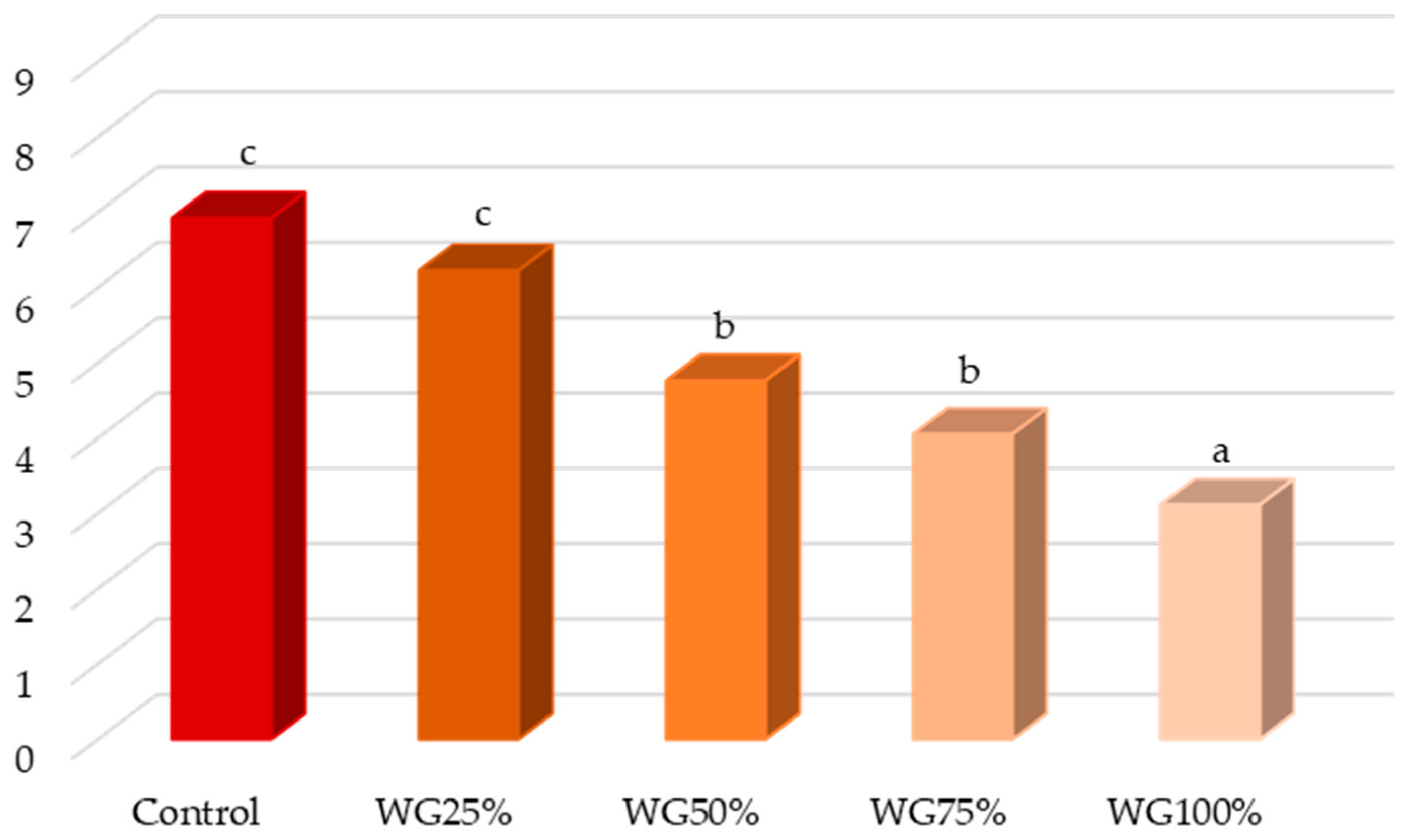
The results of the hedonic test carried out with consumers are shown in the Figure 2. It can be observed that the substitution of up to 25% of lean pork with wheat germ did not cause significant differences with respect to the control production and these batches received a rating between “I like” and “I like slightly”. The use of higher substitution percentages caused a significant decrease in the appreciation given by consumers, so that the WG50% and WG75% batches did not show significant differences between them and received a score between 5 (I neither like nor dislike) and 4 (I slightly dislike). The WT100% lot received a significantly lower score than the previous lots and its rating was equivalent to “dislike”. For this batch of sausages consumers commented that it was too tough and had a distinctly vegetal flavor and aroma reminiscent of straw.
The incorporation of wheat germ in substitution of fat [58] or gluten in substitution of meat [50] in proportions lower than 20% did not cause significant differences with respect to the control in the overall acceptability of consumers agreeing, therefore with the present work, pointing out that substitution in small proportions does not vary the acceptability with respect to the control. In fact, Elbakheet et al. [29], observed that substitution up to 15% of beef with wheat germ improved the overall sensory acceptability assessed by flavor, aroma, meat flavor variation, juiciness and tenderness.

4. Conclusions

The substitution of meat with 25% wheat germ in the frankfurters formulation did not produce significant changes with respect to the control in color, texture or initial MDA content, resulting in equal consumer acceptance of this batch. In addition, the inclusion of germ increased the emulsion stability and lowered the total fat content, producing a significant decrease in SFA. However, as the degree of substitution increased, and although nutritional and emulsion stability characteristics improved, fat oxidation during storage was higher and textural properties were excessively altered, significantly decreasing consumer acceptance. For this reason, future work could consider the preparation of vegetable cooked sausages combining wheat germ with other proteins of vegetable origin, in order to achieve textures as similar as possible to those of conventional cooked meat products.

Author Contributions

M. R-F: investigation, validation, supervision; I.R.: conceptualization, resources, supervision, writing-review and editing; P.R.: investigation, formal analysis, writing-original draft; R. L-C.: visualization, writing-original draft; A.M.V-Q: project administration, funding acquisition, writing-review and editing. All authors have read and agreed to the published version of the manuscript.

Funding

This research has been conducted within the framework of the TRANSCOLAB PLUS research project (0112_TRANSCOLAB_PLUS_2_P), entitled “Cross-border Collaborative Laboratory for the green transition of the Agri-Food and Agro-industrial sector”, co-financed by the European Regional Development Fund - ERDF - through the INTERREG VI - A Spain-Portugal Cooperation Program (POCTEP) 2021-2027.

Data Availability Statement

The data will be available upon request.

Acknowledgments

The authors would like to thank Harina Tradicional Zamora for supplying the wheat germ used and Kasteel Iberoalimentaria for providing the flavorings used.

Conflicts of Interest

The authors declare no conflicts of interest.

References

  1. Godfray, H.C.J.; Aveyard, P.; Garnett, T.; Hall, J.W.; Key, T.J.; Lorimer, J.; Pierrehumbert, R.T.; Scarborough, P.; Springmann, M.; Jebb, S.A. Meat Consumption, Health, and the Environment. Science 2018, 361, eaam5324. [Google Scholar] [CrossRef] [PubMed]
  2. Geiker, N.R.W.; Bertram, H.C.; Mejborn, H.; Dragsted, L.O.; Kristensen, L.; Carrascal, J.R.; Bügel, S.; Astrup, A. Meat and Human Health—Current Knowledge and Research Gaps. Foods 2021, 10, 1556. [Google Scholar] [CrossRef] [PubMed]
  3. Ekmekcioglu, C.; Wallner, P.; Kundi, M.; Weisz, U.; Haas, W.; Hutter, H.-P. Red Meat, Diseases, and Healthy Alternatives: A Critical Review. Crit. Rev. Food Sci. Nutr. 2018, 58, 247–261. [Google Scholar] [CrossRef] [PubMed]
  4. Hedenus, F.; Wirsenius, S.; Johansson, D.J.A. The Importance of Reduced Meat and Dairy Consumption for Meeting Stringent Climate Change Targets. Clim. Change 2014, 124, 79–91. [Google Scholar] [CrossRef]
  5. Graham, T.; Abrahamse, W. Communicating the Climate Impacts of Meat Consumption: The Effect of Values and Message Framing. Glob. Environ. Change 2017, 44, 98–108. [Google Scholar] [CrossRef]
  6. Khan, B.A.; Nadeem, M.A.; Nawaz, H.; Amin, M.M.; Abbasi, G.H.; Nadeem, M.; Ali, M.; Ameen, M.; Javaid, M.M.; Maqbool, R.; et al. Pesticides: Impacts on Agriculture Productivity, Environment, and Management Strategies. In Emerging Contaminants and Plants: Interactions, Adaptations and Remediation Technologies; Aftab, T., Ed.; Springer International Publishing: Cham, 2023; pp. 109–134. ISBN 978-3-031-22269-6. [Google Scholar]
  7. Mekonnen, M.M.; Gerbens-Leenes, W. The Water Footprint of Global Food Production. Water 2020, 12, 2696. [Google Scholar] [CrossRef]
  8. Huis, A.V.; Van Itterbeeck, J.; Klunder, H.; Mertens, E.; Halloran, A.; Muir, G.; Vantomme, P. Edible Insect, Future Prospect for Food and Feed Security.
  9. Bhat, Z.F.; Kumar, S.; Fayaz, H. In Vitro Meat Production: Challenges and Benefits over Conventional Meat Production. J. Integr. Agric. 2015, 14, 241–248. [Google Scholar] [CrossRef]
  10. Reis, G.G.; Heidemann, M.S.; Borini, F.M.; Molento, C.F.M. Livestock Value Chain in Transition: Cultivated (Cell-Based) Meat and the Need for Breakthrough Capabilities. Technol. Soc. 2020, 62, 101286. [Google Scholar] [CrossRef]
  11. Hidayat, B.T.; Wea, A.; Andriati, N. Physicochemical, Sensory Attributes and Protein Profile by SDS-PAGE of Beef Sausage Substituted with Texturized Vegetable Protein. Food Res. 2017, 2, 20–31. [Google Scholar] [CrossRef]
  12. Choton, S.; Gupta, N.; Bandral, J.D.; Anjum, N.; Choudary, A. Extrusion Technology and Its Application in Food Processing: A Review. Pharma Innov. 2020, 9, 162–168. [Google Scholar] [CrossRef]
  13. García, P. A., Rodríguez, W., Gómez, E. K. C., & Zambrano, A. A. Estudio Microbiológico y Fisicoquímico de Hongos Comestibles (Pleurotus ostreatus y Pleurotus pulmonarius) Frescos y Deshidratados. [Microbiological and physicochemical study of fresh and dried edible mushrooms (Pleurotus ostreatus and Pleurotus pulmonarius)] Ingenierías & Amazonia, 2024, 7(1).
  14. Petrusán, J.-I.; Rawel, H.; Huschek, G. Protein-Rich Vegetal Sources and Trends in Human Nutrition: A Review. Curr. Top. Pept. Protein Res, 2016, 17, 1–19. [Google Scholar]
  15. Difonzo, G.; Antonino, C.; Squeo, G.; Caponio, F.; Faccia, M. Application of Agri-Food By-Products in Cheesemaking. Antioxidants 2023, 12, 660. [Google Scholar] [CrossRef] [PubMed]
  16. Rațu, R.N.; Veleșcu, I.D.; Stoica, F.; Usturoi, A.; Arsenoaia, V.N.; Crivei, I.C.; Postolache, A.N.; Lipșa, F.D.; Filipov, F.; Florea, A.M.; et al. Application of Agri-Food By-Products in the Food Industry. Agriculture 2023, 13, 1559. [Google Scholar] [CrossRef]
  17. Ghafoor, K.; Özcan, M.M.; AL-Juhaımı, F.; Babıker, E.E.; Sarker, Z.I.; Ahmed, I.A.M.; Ahmed, M.A. Nutritional Composition, Extraction, and Utilization of Wheat Germ Oil: A Review. Eur. J. Lipid Sci. Technol. 2017, 119, 1600160. [Google Scholar] [CrossRef]
  18. Shewry, P.R.; Powers, S.; Field, J.M.; Fido, R.J.; Jones, H.D.; Arnold, G.M.; West, J.; Lazzeri, P.A.; Barcelo, P.; Barro, F.; et al. Comparative Field Performance over 3 Years and Two Sites of Transgenic Wheat Lines Expressing HMW Subunit Transgenes. Theor. Appl. Genet. 2006, 113, 128–136. [Google Scholar] [CrossRef] [PubMed]
  19. Shewry Jones, H. d., P. r. Transgenic Wheat: Where Do We Stand after the First 12 Years? Ann. Appl. Biol. 2005, 147, 1–14. [Google Scholar] [CrossRef]
  20. Shewry, P.R. The HEALTHGRAIN Programme Opens New Opportunities for Improving Wheat for Nutrition and Health. Nutr. Bull. 2009, 34, 225–231. [Google Scholar] [CrossRef]
  21. Gili, R.D.; Palavecino, P.M.; Cecilia Penci, M.; Martinez, M.L.; Ribotta, P.D. Wheat Germ Stabilization by Infrared Radiation. J. Food Sci. Technol. 2017, 54, 71–81. [Google Scholar] [CrossRef]
  22. Ge, Y.; Sun, A.; Ni, Y.; Cai, T. Some Nutritional and Functional Properties of Defatted Wheat Germ Protein. J. Agric. Food Chem. 2000, 48, 6215–6218. [Google Scholar] [CrossRef]
  23. Youssef, H.M.K.E. Assessment of Gross Chemical Composition, Mineral Composition, Vitamin Composition and Amino Acids Composition of Wheat Biscuits and Wheat Germ Fortified Biscuits. Food Nutr. Sci. 2015, 6, 845–853. [Google Scholar] [CrossRef]
  24. Petrović, J.; Rakić, D.; Fišteš, A.; Pajin, B.; Lončarević, I.; Tomović, V.; Zarić, D. Defatted Wheat Germ Application: Influence on Cookies’ Properties with Regard to Its Particle Size and Dough Moisture Content. Food Sci. Technol. Int. 2017, 23, 597–607. [Google Scholar] [CrossRef] [PubMed]
  25. Mueller, T.; Voigt, W. Fermented Wheat Germ Extract - Nutritional Supplement or Anticancer Drug? Nutr. J. 2011, 10, 89. [Google Scholar] [CrossRef]
  26. Fadel, H.H.M.; Abdel Mageed, M.A.; Lotfy, S.N. Quality and Flavour Stability of Coffee Substitute Prepared by Extrusion of Wheat Germ and Chicory Roots. Amino Acids 2008, 34, 307–314. [Google Scholar] [CrossRef]
  27. Barros, J.C.; Munekata, P.E.S.; de Carvalho, F.A.L.; Domínguez, R.; Trindade, M.A.; Pateiro, M.; Lorenzo, J.M. Healthy Beef Burgers: Effect of Animal Fat Replacement by Algal and Wheat Germ Oil Emulsions. Meat Sci. 2021, 173, 108396. [Google Scholar] [CrossRef]
  28. Serdaroğlu, M.; Özsümer, M.S. Effects of Soy Protein, Whey Powder And Wheat Gluten On Quality Characteristics of Cooked Beef Sausages Formulated With 5, 10 And 20% Fat. Electronic Journal of Polish Agricultural Universities, 2003, 6(2), 3.
  29. Elbakheet, S.I.; Elgasim, E.A.; Algadi, M.Z.; Si, E.; Ea, E.; Mz, A. Utilization of Wheat Germ Flour in the Processing of Beef Sausage. 2018, Adv Food Process Technol: AFPT-101 100001.
  30. Güngör, E.; Gökoğlu, N. Determination of Microbial Contamination Sources at a Frankfurter Sausage Processing Line. Turk. J. Vet. Anim. Sci. 2010, 34, 53–59. [Google Scholar] [CrossRef]
  31. Polizer Rocha, Y.J.; Lapa-Guimarães, J.; de Noronha, R.L.F.; Trindade, M.A. Evaluation of Consumers’ Perception Regarding Frankfurter Sausages with Different Healthiness Attributes. J. Sens. Stud. 2018, 33, e12468. [Google Scholar] [CrossRef]
  32. Bis-Souza, C.V.; Barba, F.J.; Lorenzo, J.M.; Penna, A.L.B.; Barretto, A.C.S. New Strategies for the Development of Innovative Fermented Meat Products: A Review Regarding the Incorporation of Probiotics and Dietary Fibers. Food Rev. Int. 2019, 35, 467–484. [Google Scholar] [CrossRef]
  33. Isaza M, Y.L.; Restrepo M, D.A.; López V, J.H.; Ochoa G, O.A.; Cabrera T, K.R. Evolution of The Antioxidant Capacity of Frankfurter Sausage Model Systems with Added Cherry Extract (Prunus Avium L.) During Refrigerated Storage. Vitae 2011, 18, 251–260. [Google Scholar] [CrossRef]
  34. Lee, H.-J.; Jung, E.-H.; Lee, S.-H.; Kim, J.-H.; Lee, J.-J.; Choi, Y.-I. Effect of Replacing Pork Fat with Vegetable Oils on Quality Properties of Emulsion-Type Pork Sausages. Food Sci. Anim. Resour. 2015, 35, 130–136. [Google Scholar] [CrossRef]
  35. Carvalho, F.A.L.; Pateiro, M.; Domínguez, R.; Barba-Orellana, S.; Mattar, J.; Rimac Brnčić, S.; Barba, F.J.; Lorenzo, J.M. Replacement of Meat by Spinach on Physicochemical and Nutritional Properties of Chicken Burgers. J. Food Process. Preserv. 2019, 43, e13935. [Google Scholar] [CrossRef]
  36. Marti-Quijal, F.J.; Zamuz, S.; Tomašević, I.; Rocchetti, G.; Lucini, L.; Marszałek, K.; Barba, F.J.; Lorenzo, J.M. A Chemometric Approach to Evaluate the Impact of Pulses, Chlorella and Spirulina on Proximate Composition, Amino Acid, and Physicochemical Properties of Turkey Burgers. J. Sci. Food Agric. 2019, 99, 3672–3680. [Google Scholar] [CrossRef] [PubMed]
  37. Zamuz, S.; Purriños, L.; Galvez, F.; Zdolec, N.; Muchenje, V.; Barba, F.J.; Lorenzo, J.M. Influence of the Addition of Different Origin Sources of Protein on Meat Products Sensory Acceptance. J. Food Process. Preserv. 2019, 43, e13940. [Google Scholar] [CrossRef]
  38. Corrêa, P.F.; Silva, C.F. da; Ferreira, J.P.; Guerra, J.M.C. Vegetable-Based Frankfurter Sausage Production by Different Emulsion Gels and Assessment of Physical-Chemical, Microbiological and Nutritional Properties. Food Chem. Adv. 2023, 3, 100354. [Google Scholar] [CrossRef]
  39. Revilla, I.; Santos, S.; Hernández-Jiménez, M.; Vivar-Quintana, A.M. The Effects of the Progressive Replacement of Meat with Texturized Pea Protein in Low-Fat Frankfurters Made with Olive Oil. Foods 2022, 11, 923. [Google Scholar] [CrossRef]
  40. Marçal, C.; Pinto, C.A.; Silva, A.M.S.; Monteiro, C.; Saraiva, J.A.; Cardoso, S.M. Macroalgae-Fortified Sausages: Nutritional and Quality Aspects Influenced by Non-Thermal High-Pressure Processing. Foods 2021, 10, 209. [Google Scholar] [CrossRef]
  41. Bloukas, I.; Honikel, K.O. The Influence of Mincing and Temperature of Storage on the Oxidation of Pork Back Fat and Its Effect on Water- and Fat-Binding in Finely Comminuted Batters. Meat Sci. 1992, 32, 215–227. [Google Scholar] [CrossRef] [PubMed]
  42. Lurueña-Martínez, M.; Revilla, I.; M Vivar-Quintana, A. New Formulations for Low-Fat Frankfurters and Its Effect on Product Quality. Czech J. Food Sci. 2004, 22, S333–S337. [Google Scholar] [CrossRef]
  43. Hughes, E.; Cofrades, S.; Troy, D.J. Effects of Fat Level, Oat Fibre and Carrageenan on Frankfurters Formulated with 5, 12 and 30% Fat. Meat Sci. 1997, 45, 273–281. [Google Scholar] [CrossRef]
  44. Folch, J.; Lees, M.; Stanley, G.H.S. A Simple Method for the Isolation and Purification of Total Lipides from Animal Tissues. J. Biol. Chem. 1957, 226, 497–509. [Google Scholar] [CrossRef]
  45. Buege, J.A.; Aust, S.D. [30] Microsomal Lipid Peroxidation. In Methods in Enzymology; Fleischer, S., Packer, L., Eds.; Biomembranes - Part C: Biological Oxidations; Academic Press, 1978; Vol. 52, pp. 302–310.
  46. Thushan Sanjeewa, W.G.; Wanasundara, J.P.D.; Pietrasik, Z.; Shand, P.J. Characterization of Chickpea (Cicer Arietinum L.) Flours and Application in Low-Fat Pork Bologna as a Model System. Food Res. Int. 2010, 43, 617–626. [Google Scholar] [CrossRef]
  47. Jones, L.J.; Tung, M.A. Functional Properties of Modified Oilseed Protein Concentrates and Isolates. Can. Inst. Food Sci. Technol. J. 1983, 16, 57–62. [Google Scholar] [CrossRef]
  48. Flores Llovera, M.; Giner, E.; Fiszman, S.; Salvador, A.; Flores, J. Effect of a New Emulsifier Containing Sodium Stearoyl-2-Lactylate and Carrageenan on the Functionality of Meat Emulsion Systems. 2007. [CrossRef]
  49. Ahmedna, M.; Prinyawiwatkul, W.; Rao, R.M. Solubilized Wheat Protein Isolate: Functional Properties and Potential Food Applications. J. Agric. Food Chem. 1999, 47, 1340–1345. [Google Scholar] [CrossRef] [PubMed]
  50. Kamani, M.H.; Meera, M.S.; Bhaskar, N.; Modi, V.K. Partial and Total Replacement of Meat by Plant-Based Proteins in Chicken Sausage: Evaluation of Mechanical, Physico-Chemical and Sensory Characteristics. J. Food Sci. Technol. 2019, 56, 2660–2669. [Google Scholar] [CrossRef] [PubMed]
  51. Gnanasambandam, R.; Zayas, J.F. Quality Characteristics of Meat Batters and Frankfurters Containing Wheat Germ Protein Flour. J. Food Qual. 1994, 17, 129–142. [Google Scholar] [CrossRef]
  52. El- Sayed, S.M.; Farag, S.E.; El-Sayed, S.A.M. Utilization of Some Chicken Edible Internal Organs and Wheat Germ in Production of Sausage. J. Food Dairy Sci. 2018, 9, 353–358. [Google Scholar] [CrossRef]
  53. İbanoǧlu, E. Kinetic Study on Colour Changes in Wheat Germ Due to Heat. J. Food Eng. 2002, 51, 209–213. [Google Scholar] [CrossRef]
  54. Govari, M.; Pexara, A. Nitrates and Nitrites in Meat Products. J. Hell. Vet. Med. Soc. 2015, 66, 127–140. [Google Scholar] [CrossRef]
  55. Serdaroğlu, M.; Özsümer, M.S. Effects of soy protein, whey powder and wheat gluten on quality characteristics of cooked beef sausages formulated with 5, 10 and 20% fat. Elect. J. Polish Agric. Univ. 2003, 6, 1. [Google Scholar]
  56. Garcı́a, M.L.; Dominguez, R.; Galvez, M.D.; Casas, C.; Selgas, M.D. Utilization of Cereal and Fruit Fibres in Low Fat Dry Fermented Sausages. Meat Sci. 2002, 60, 227–236. [Google Scholar] [CrossRef]
  57. Viuda-Martos, M.; Ruiz-Navajas, Y.; Fernández-López, J.; Pérez-Álvarez, J.A. Effect of Orange Dietary Fibre, Oregano Essential Oil and Packaging Conditions on Shelf-Life of Bologna Sausages. Food Control 2010, 21, 436–443. [Google Scholar] [CrossRef]
  58. Abd EL-Rahman, A.M.M. 2015.
  59. Wood, J.D.; Enser, M.; Fisher, A.V.; Nute, G.R.; Sheard, P.R.; Richardson, R.I.; Hughes, S.I.; Whittington, F.M. Fat Deposition, Fatty Acid Composition and Meat Quality: A Review. Meat Sci. 2008, 78, 343–358. [Google Scholar] [CrossRef] [PubMed]
  60. Coutinho de Oliveira, T.L.; Malfitano de Carvalho, S.; de Araújo Soares, R.; Andrade, M.A.; Cardoso, M. das G.; Ramos, E.M.; Piccoli, R.H. Antioxidant Effects of Satureja montana L. Essential Oil on TBARS and Color of Mortadella-Type Sausages Formulated with Different Levels of Sodium Nitrite. LWT - Food Sci. Technol. 2012, 45, 204–212. [Google Scholar] [CrossRef]
  61. Kaczmarek, A.; Cegielska-Radziejewska, R.; Szablewski, T.; Zabielski, J. TBARS and Microbial Growth Predicative Models of Pork Sausage Stored at Different Temperatures. Czech J. Food Sci. 2015, 33, 320–325. [Google Scholar] [CrossRef]
  62. Marzocchi, S.; Caboni, M.F.; Greco Miani, M.; Pasini, F. Wheat Germ and Lipid Oxidation: An Open Issue. Foods 2022, 11, 1032. [Google Scholar] [CrossRef]
  63. Lee, J.; Sung, J.-M.; Cho, H.J.; Woo, S.-H.; Kang, M.-C.; Yong, H.I.; Kim, T.-K.; Lee, H.; Choi, Y.-S. Natural Extracts as Inhibitors of Microorganisms and Lipid Oxidation in Emulsion Sausage during Storage. Food Sci. Anim. Resour. 2021, 41, 1060. [Google Scholar] [CrossRef]
  64. Li, B.; Zhao, L.; Chen, H.; Sun, D.; Deng, B.; Li, J.; Liu, Y.; Wang, F. Inactivation of Lipase and Lipoxygenase of Wheat Germ with Temperature-Controlled Short Wave Infrared Radiation and Its Effect on Storage Stability and Quality of Wheat Germ Oil. PLOS ONE 2016, 11, e0167330. [Google Scholar] [CrossRef] [PubMed]
  65. Liu, X.; Chi, C.; Zhou, S.; Jiang, Y. Comparison of Wheat Germ and Oil Characteristics and Stability by Different Stabilization Techniques. LWT 2024, 191, 115664. [Google Scholar] [CrossRef]
  66. Wenjiao, F.; Yongkui, Z.; Yunchuan, C.; Junxiu, S.; Yuwen, Y. TBARS Predictive Models of Pork Sausages Stored at Different Temperatures. Meat Sci. 2014, 96, 1–4. [Google Scholar] [CrossRef] [PubMed]
  67. Ferrari, C.K.B.; Torres, E.A.F.S. Lipid Oxidation and Quality Parameters of Sausages Marketed Locally in the Town of Săo Paulo (Brazil). Czech J. Food Sci. 2002, 20, 144–150. [Google Scholar] [CrossRef]
  68. Fernández, J.; Pérez-Álvarez, J.A.; Fernández-López, J.A. Thiobarbituric Acid Test for Monitoring Lipid Oxidation in Meat. Food Chem. 1997, 59, 345–353. [Google Scholar] [CrossRef]
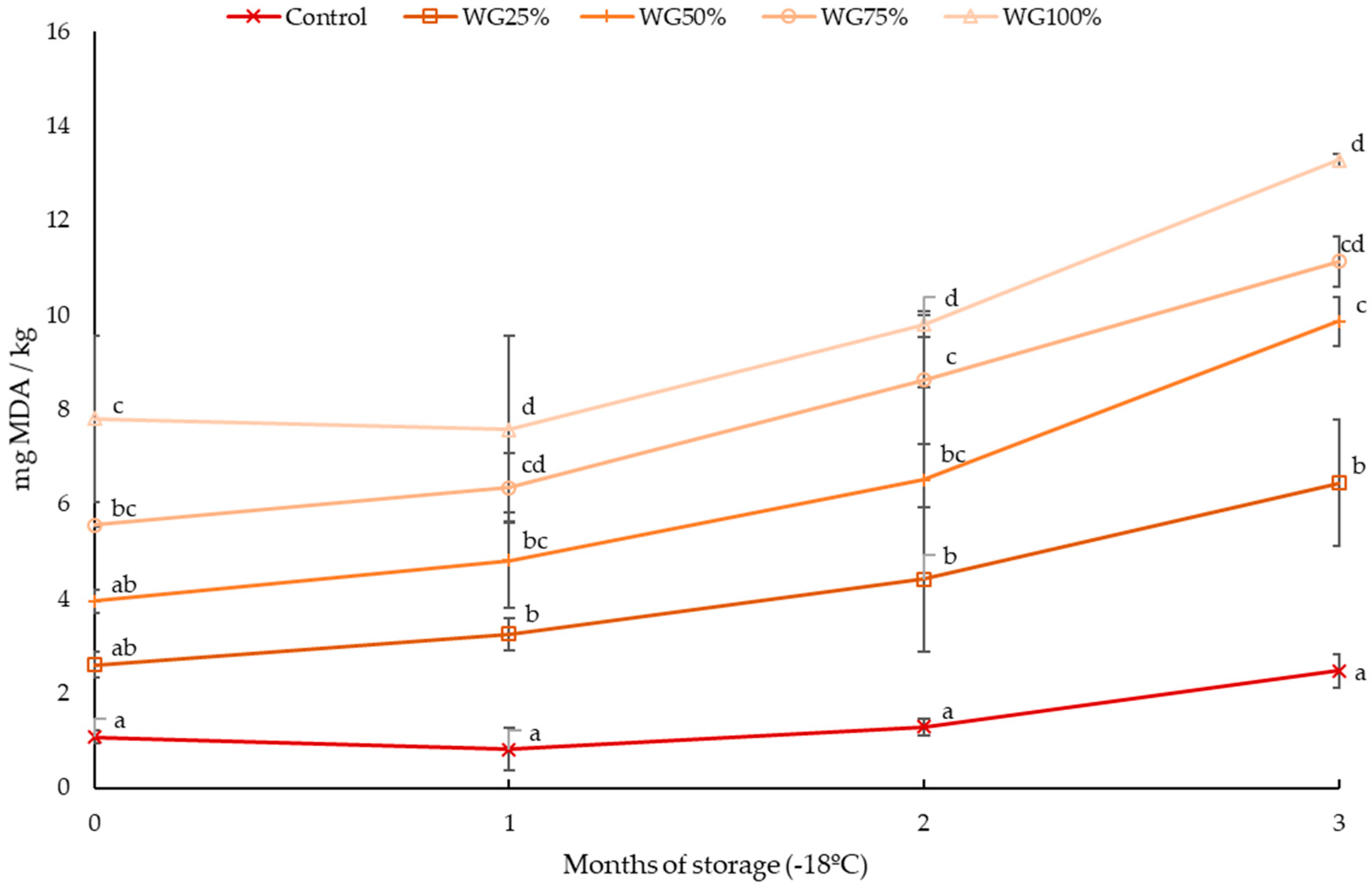
Figure 1. Mean values of TBARS through the storage period of the different low-fat frankfurter formulations. a,b,c,d. Different letters mean statistically significant differences at p<0.05 for the same month of the storage.
Preprints 140439 g001
Figure 2. Mean values of the hedonic test of the different low-fat frankfurter formulations.
Preprints 140439 g002
Table 1. Low-fat frankfurter formulations made with olive oil and different levels of meat replacement by wheat germ as a percentage of total weight.
Ingredients Control WG25% WG50% WG75% WG100%
Lean pork 40 30 20 10 0
Wheat germ 0 10 20 30 40
Olive oil 12.5 12.5 12.5 12.5 12.5
Locust bean/xantham gum 0.8 0.8 0.8 0.8 0.8
Ice 36 36 36 36 36
Polyphosphate 0.3 0.3 0.3 0.3 0.3
Nitrite salt1 1.6 1.6 1.6 1.6 1.6
Potato starch 2.5 2.5 2.5 2.5 2.5
Soy protein 2 2 2 2 2
Sodium ascorbate 0.05 0.05 0.05 0.05 0.05
Dextrose 0.25 0.25 0.25 0.25 0.25
Sodium lactate 1 1 1 1 1
Flavorings 2 2 2 2 2
Onion 0.55 0.55 0.55 0.55 0.55
Garlic 0.4 0.4 0.4 0.4 0.4
Pepper 0.05 0.05 0.05 0.05 0.05
1 NaCl+0.6% sodium nitrite.
Table 2. Mean values (+SD) of emulsion texture and emulsion stability of the different low-fat frankfurter formulations.
Control WG25% WG50% WG75% WG100%
Back-extrusion force (N) 3.80±0.78a 5.56±0.59a 9.61±2.24ab 17.48±7.20b 32.18±15.25c
Back-extrusion area (N·s) 28.70±5.67a 20.82±12.13a 21.55±12.76a 67.79±43.74a 134.97±89.16b
%TEF 4.14±0.75b 3.92±1.53b 2.55±0.81a 1.24±1.27a 1.41±0.54a
%Fat 2.92±1.68a 3.27±0.99a 6.32±2.14b 6.51±0.62b 6.56±0.67b
Jelly/fat separation (%) 0.193±0.13b 0.074±0.07a 0.013±0.01a 0.005±0.01a 0.003±0.01a
a,b,c Different letters mean statistically significant differences at p<0.05.
Table 3. Mean values (+SD) of the chemical composition parameters of the wheat germen and of the different low-fat frankfurter formulations.
Wheat Germ Control WG25% WG50% WG75% WG100%
Moisture (%) 8.37±0.18 61.88±3.20c 56.86±4.20c 48.67±2.59b 45.47±3.94ab 39.87±5.98a
Total fat (%) 7.64±0.13 12.26±1.53b 9.21±1.43a 8.96±1.12a 8.09±0.85a 7.92±1.00a
Protein (%) 25.75±0.21 11.51±0.84a 10.90±1.15a 12.20±0.95a 12.11±3.26a 13.27±1.34a
Ash (%) 4.30±0.03 3.29±0.35a 3.39±0.35a 3.60±0.16a 3.93±0.18a 4.70±0.68b
Fiber (%) 24.90±0.85 2.23±0.95a 3.70±0.29a 6.25±1.67b 7.45±1.65bc 9.63±1.64c
Carbohydrate (%) 29.05±0.92 8.53±0.27a 15.94±1.66b 20.07±1.11bc 21.96±2.78bc 24.61±3.56c
Starch (%) 17.45±0.35 3.29±0.37a 5.04±0.24b 6.68±0.02c 7.75±0.63d 9.89±0.15e
a,b,c Different letters mean statistically significant differences at p<0.05 among the different sausages.
Table 4. Mean values (+SD) of instrumental color and texture parameters of the different low-fat frankfurter formulations.
Control WG25% WG50% WG75% WG100%
L* 64.24±1.65e 59.04±1.39d 56.82±1.37c 51.10±0.71b 45.50±1.50a
a* 19.50±0.38b 15.92±0.69a 15.94±0.80a 16.03±1.93a 15.20±1.39a
b* 30.90±1.25ab 22.88±2.68a 31.07±1.88ab 33.51±5.85b 31.39±5.69ab
Hardness (g) 1964.63±509.48a 1901.98±264.14a 2947.78±556.36b 3698.22±370.19c 4947.98±334.02d
Adhesiveness (g·mm) -1.32±1.83a -0.43±0.79a -0.88±1.42a -0.11±0.08a -0.30±0.57a
Springiness (mm) 0.95±0.15d 0.86±0.05c 0.80±0.05c 0.70±0.07b 0.62±0.40a
Cohesiveness 0.76±0.04d 0.68±0.05c 0.64±0.09b 0.62±0.06b 0.53±0.05a
Gumminess (g) 1478.49±315.29a 1297.29±186.77a 1887.94±508.74b 2277.53±181.36c 2624.37±210.53d
Chewiness (g·mm) 1426.65±535.57b 1121.46±203.04a 1532.16±487.62b 1611.54±269.10b 1622.40±135.70b
a,b,c,d,e Different letters mean statistically significant differences at p<0.05.
Table 5. Mean values (+SD) of individual fatty acids of the wheat germ and of the different low-fat frankfurter formulations.
Wheat Germ Control WG25% WG50% WG75% WG100%
C6:0 0.35±0.14 0.04±0.05a 0.01±0.01a 0.04±0.03a 0.02±0.02a 0.02±0.00a
C8:0 0.65±0.11 0.03±0.02a n.d. n.d. 0.02±0.01a n.d.
C10:0 0.08±0.10 0.03±0.00b 0.03±0.01b 0.03±0.01b 0.02±0.00ab 0.01±0.00a
C11:0 0.03±0.00 n.d. n.d. 0.09±0.10a n.d. 0.01±0.02a
C12:0 0.04±0.02 0.03±0.00b 0.03±0.01b 0.03±0.01b 0.02±0.00a 0.02±0.00a
C13:0 0.06±0.00 0.08±0.11a 0.02±0.00a 0.09±0.10a 0.02±0.01a 0.02±0.00a
C14:0 0.27±0.03 0.31±0.04c 0.28±0.07c 0.22±0.02b 0.14±0.01a 0.10±0.00a
C14:1n5 0.06±0.04 0.03±0.01a 0.02±0.00a 0.03±0.01a 0.02±0.00a 0.03±0.01a
C15:0 0.17±0.03 0.04±0.02a 0.01±0.02a 0.02±0.01a 0.02±0.00a 0.03±0.01a
C15:1 0.03±0.04 0.05±0.06a 0.14±0.01a 0.13±0.03a 0.12±0.06a 0.14±0.03a
C16:0 37.69±1.84 15.39±0.33a 15.87±0.49a 15.55±0.46a 15.08±0.23a 15.40±0.29a
C16:1 0.41±0.10 0.19±0.01a 0.19±0.03a 0.16±0.01a 0.60±0.61a 0.84±0.48a
C17:0 0.47±0.01 1.48±0.04c 1.47±0.03c 1.28±0.03b 0.08±0.08a 0.03±0.00a
C17:1 0.21±0.27 0.19±0.01ab 0.23±0.03b 0.19±0.02ab 0.20±0.04ab 0.16±0.01a
C18:0 0.64±1.00 4.84±0.34c 0.02±0.00a 1.23±2.07ab 3.30±0.12bc 2.10±1.39ab
C18:1n9t 0.31±0.02 0.37±0.11a 0.64±0.15b 0.59±0.07b 0.58±0.11b 0.55±0.05b
C18:1 n9c 24.08±0.39 62.22±0.35bc 63.57±0.88c 60.51±0.77b 57.36±1.58a 55.66±1.45a
C18:2n6t 0.10±0.01 0.04±0.01a 0.08±0.09a 0.03±0.01a 0.02±0.01a 0.03±0.02a
C18:2 n6 26.23±0.47 11.67±0.40a 13.79±0.37b 15.60±0.79b 18.40±1.35c 20.35±1.16c
C20:0 0.39±0.31 0.43±0.01a 0.43±0.01a 0.43±0.01a 0.42±0.03a 0.41±0.01a
C18:3 n6 0.36±0.05 0.05±0.01a 0.08±0.09a 0.03±0.01a 0.02±0.01a 0.03±0.02a
C20:1 n9 1.24±0.94 0.04±0.01a 0.05±0.01a 0.07±0.04a 0.05±0.01a 0.05±0.01a
C18:3 n3 2.27±0.07 0.71±0.01a 1.08±0.03b 1.46±0.09c 1.96±0.19d 2.30±0.15e
C21:0 0.30±0.02 0.03±0.00a 0.04±0.02a 0.03±0.02a 0.02±0.01a 0.03±0.02a
C20:2 n6 0.31±0.01 0.30±0.10a 0.44±0.01a 0.25±0.09a 0.25±0.04a 0.30±0.10a
C22:0 0.27±0.04 0.13±0.00a 0.15±0.00a 0.03±0.01a 0.09±0.08a 0.10±0.08a
C20:3 n6 0.09±0.03 0.05±0.00a 0.07±0.03a 0.04±0.01a 0.03±0.02a 0.17±0.19a
C22:1 n9 0.68±0.04 0.19±0.05a 0.30±0.00a 0.17±0.05a 0.22±0.10a 0.27±0.08a
C20:3 n3 0.15±0.03 0.03±0.00a 0.03±0.01a 0.02±0.00a 0.11±0.13a 0.03±0.00a
C23:0 0.15±0.14 0.27±0.04c 0.21±0.01c 0.11±0.03b 0.10±0.02b 0.01±0.01a
C20:4 n6 0.23±0.01 0.15±0.11a 0.08±0.01a 0.08±0.02a 0.06±0.05a 0.11±0.03a
C22:2 n6 0.17±0.02 0.06±0.06a 0.01±0.01a 0.02±0.00a 0.02±0.00a 0.02±0.00a
C24:0 0.33±0.18 n.d. n.d. 0.06±0.09a 0.05±0.02a 0.03±0.05a
C20:5 n3 0.26±0.10 0.05±0.00a 0.07±0.00a 0.04±0.03a 0.06±0.02a 0.06±0.02a
C24:1 n9 0.42±0.27 0.15±0.22a 0.04±0.01a 0.03±0.00a 0.04±0.01a 0.05±0.01a
C22:4 n3 0.17±0.06 0.06±0.01b 0.05±0.00b 0.03±0.00a 0.02±0.01a 0.02±0.00a
C22:5 n3 0.28±0.19 0.14±0.18a 0.05±0.02a 0.86±1.45a 0.02±0.03a 0.02±0.00a
C22:6 n3 0.31±0.20 n.d. n.d. n.d. n.d. 0.04±0.08a
SFA 41.85±0.83 23.06±0.42b 18.59±0.54a 19.16±1.46a 19.35±0.54a 18.27±1.51a
MUFA 28.35±0.59 63.78±0.61bc 65.61±1.03c 62.34±0.84b 59.66±1.76a 58.25±1.29a
PUFA 29.80±1.43 13.17±0.27a 15.80±0.49ab 18.50±1.57bc 21.00±1.61cd 23.48±1.47e
n3 2.42±1.00 0.98±0.18a 1.28±0.03a 2.41±1.44a 2.17±0.27a 2.46±0.22a
n6 27.38±0.42 12.19±0.36a 14.52±0.47b 16.09±0.80b 18.82±1.36c 21.03±1.26d
P/S 0.68±1.71 0.57±0.01a 0.85±0.00b 0.97±0.14b 1.09±0.08bc 1.30±0.19c
n6/n3 7.65±0.42 12.79±2.28a 11.37±0.14a 8.15±3.67a 8.70±0.54a 8.57±0.28a
a,b,c,d,e Different letters mean statistically significant differences at p<0.05 among the different sausages. n.d. Not detected.
Disclaimer/Publisher’s Note: The statements, opinions and data contained in all publications are solely those of the individual author(s) and contributor(s) and not of MDPI and/or the editor(s). MDPI and/or the editor(s) disclaim responsibility for any injury to people or property resulting from any ideas, methods, instructions or products referred to in the content.
Copyright: This open access article is published under a Creative Commons CC BY 4.0 license, which permit the free download, distribution, and reuse, provided that the author and preprint are cited in any reuse.
Prerpints.org logo

Preprints.org is a free preprint server supported by MDPI in Basel, Switzerland.

Subscribe

Disclaimer

Terms of Use

Privacy Policy

Privacy Settings

© 2025 MDPI (Basel, Switzerland) unless otherwise stated