Preprint
Article

This version is not peer-reviewed.

Porous Polymers Based on PSU and PSU-TMA with Grafted Zirconium-Organic Moieties: Synthesis and Application for Removal of Arsenite and Arsenate Water Pollutants

Submitted:

19 November 2024

Posted:

20 November 2024

You are already at the latest version

Abstract

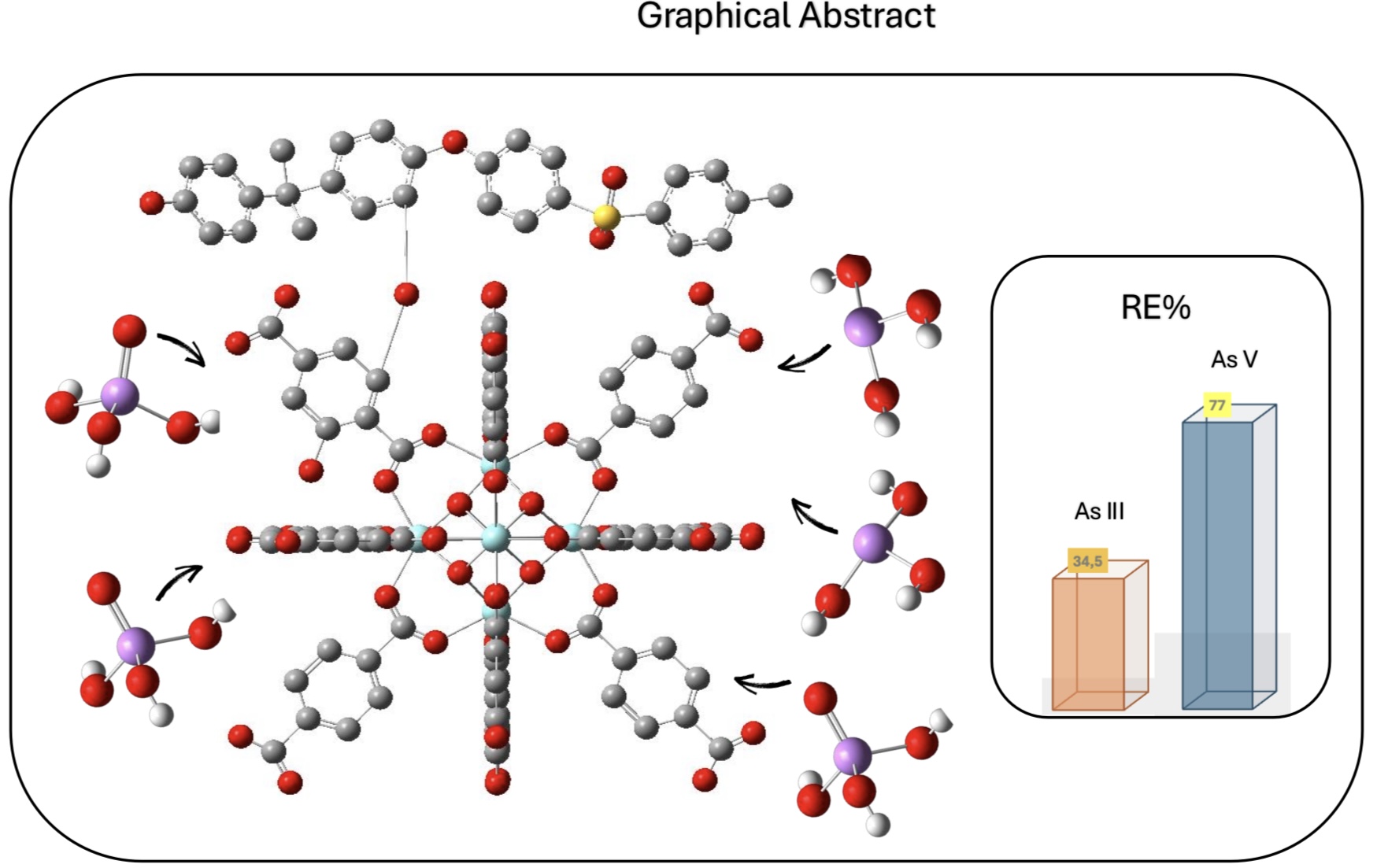
Porous organic polymers (POPs), based on polysulfone (PSU) and covalently linked zirconium-organic moieties have been applied for the first time to Arsenic removal in wastewater. The synthesis involved anchoring a synthon molecule onto PSU, followed by MOF assembly and subsequent quaternization (QA) with trimethylamine (TMA). Two samples Zr-POP and Zr-POP-QA are characterized by NMR, FTIR, and titration. The efficiency of As uptake is revealed by ICP. The study is carried out at different pH (3, 7, and 12) to vary the charge of Zr-organic moieties and the charge of arsenite and arsenate species. Two concentrations (0.5 and 1 mM) of As (III) and As (V) are used. The results show that Zr-POP at pH 3 has a removal efficiency (RE%) of 77% for As (V), in agreement with the positive charge present in the Zr-framework at this pH. At neutral pH the As (III) sorption is also relevant. Zr-POP-QA at pH 12 shows, thanks to the positive charge on the ammonium moieties, a RE% of As (III) equal to 35%. The kinetic of processes, performed on the most promising system, i.e. Zr-POP at pH 3 for As(V), shows a plateau already after 8 hours with a second-order law. The regeneration of the material is also evaluated. According to the results, these materials are serious candidates in the removal of heavy metals in wastewater.
Keywords: 
;  ;  ;  ;  

1. Introduction

Population growth requires an increasing quantity of drinking water, the consequent development of industries also leads to an increase in heavy metal in wastewater [1]. The presence of different toxic, carcinogenic heavy metals in the effluents makes their recycling very difficult and their removal became a crucial process [2,3,4,5]. Among them, arsenic is a potent cocarcinogen for some types of human organs, especially lung, liver, kidney, and bladder [6]. WHO 2004 provisional guideline value for arsenic in drinking water is 10 μg L−1; it is generally found in higher concentrations in water. In Viterbo area (Italy) at Fabrica di Roma, for example, arsenic is 75 mg L−1 and in Bagnoregio (UNESCO site) 52 mg L−1 [7]. As is presents in water at different oxidation states, most commonly as As (III) (arsenite) and As (V) (arsenate) form. Under oxidizing conditions, inorganic arsenic is predominantly present as As (V) and can be reduced to As (III) under moderately reducing environment [8].
Several treatment methods have been developed for the As removal as, ion exchange, sorption, membrane separation and precipitation, but most of these approaches are generally expensive, especially the membrane separation [9]. Metal−organic frameworks (MOFs), a higly porous materials formed by inorganic metal nodes connected by organic ligands are characterized by excellent tunability and well-ordered structure. These characteristics make MOFs promising candidates for several applications: 1) catalysis [10,11,12,13], 2) as fillers of mixed-matrix membranes (MMMs) [14] [15,16,17,18] and 3) in water pollution [19], using defective MOF, hierarchical-pore MOF and MOF based composites (ref [20] and ref. therein). However, only MOFs displaying thermal and chemical stability under harsh conditions are considered suitable for industrial scale-up. In 2020, Feng et al. provided an overview of the factors affecting MOF stability under external stimuli, such as chemical, thermal, photolytic, radiolytic, electronic, and mechanical, offered guidelines to avoid unwanted framework degradation [21]. New emerging approaches to overcome these stability problems are the creation of hybrid composite materials combining “hard” metal-organic frameworks and “soft” polymers. The porous nature of MOFs and the flexibility and processability of polymers are synergistically integrated into MOF-polymer composite materials. The strong covalent bonds, create a robust molecular connections and facilitate the dispersion of the inorganic part in polymers. Different strategies of covalent connection are explored and summarized in ref [22]. One of them is the “polymerization of the framework” where organic ligands simultaneously constitute both MOF and the polymer chain, this method also doesn’t reduce the porosity [23,24,25]. Some examples of covalently linked MOF and commercial polymers are reported in different applications like: fuel cell [14,25], CO2 separation [26,27], and heterogenic catalysts for organic trasformation with stimuly response [28,29]. Among them, the Zr-MOF (UiO-66) have extraordinary thermal and chemical stability [30]. The effectiveness of UiO-66-based adsorbents, is due to a probable chemical bond with metals. In addition to the effect of electrostatic attraction, the effect of complexation and chelation between adsorbent and pollutants must be considered [31]. Wang at al. [32] reported for the UiO-66 an arsenate uptake capacity of 303 mg g−1 at pH=2, much higher than that of currently available adsorbents (5–280 mg g−1, generally less than 100 mg g−1, see Table 2). This capacity was attributed to a high porosity, a large contact area and a plenty of active sites in the unit space. Two binding sites within the adsorbent framework are proposed for arsenic species, i.e., hydroxyl group and benzenedicarboxylate ligand. At equilibrium, approximately seven equivalent arsenic species can be captured by one Zr6 cluster through the formation of Zr-O-As coordination bonds [32]. More efficient and faster absorption can be achieved by increasing pore sizes, increasing defect densities, and decreasing particle sizes [33].
In this study the covalently bonded MOFs make the polymer porous, therefore falling into the category of Porous Organic Polymers (POPs) that are characterized by their extensive porosity and surface area [34,35,36,37,38]. The high porosity of POPs combined with the metal center of the MOF and the ability of these polymers to be further functionalized with ionic groups, make it a versatile material that can be used in water treatment. In this work, we synthesized POPs covalently linked to metal organic moieties with ion conducting groups involved in the removal of arsenite and arsenate at various concentrations and at different pH.

2. Materials and Methods

2.1. Materials

Polysulfone UDEL P-1800 NT11 (PSU), terephthalic acid 98% (1,4-BDC), diethyl 2,5-dihydroxyterephthalate 97%, trimethylamine (TMA, 4.2 M in ethanol), 1-methyl-2-pyrrolidone (NMP), dimethyl sulfoxide (DMSO), N,N-dimethylformamide (DMF), ZrCl4 99.5%, As2O3 ACS reagent, Na2HAsO4*7H2O ≥98%, NaOH 98%, and other chemicals were used as received from Sigma-Aldrich without further purification.

2.2. Synthesis

2.2.1. POP-Precursor

PSU-CH2Cl was obtained by the procedure described in ref. [39,40,41]. Two separated solutions were prepared. A) 2 g (3.8 mmol) of PSU-CH2Cl (1.7 degree of chloromethylation, DCM) was dissolved in 50 mL of anhydrous DMF under N2 flux at 50°C, then 0.10 g of KI (0.64 mmol) were added under stirring. B) in 20 mL of anhydrous DMF were dissolved 0.82 g (3.2 mmol) of diethyl 2,5-dihydroxyterephthalate (in molar ratio 0.5 with respect to the chloromethyl groups) and 0.45 g, 3.2 mmol of K2CO3. The mixture was heated overnight at 80°C under nitrogen flux. The A and B solutions were combined and reacted at 70°C for 72 h. The solution was then trated with 10 wt% of NaOH in 50:50 H2O/MeOH at 60°C for 2 hours to hydrolyse of the residual esters. To obtain the H-form, the solution was precipitated with 30 mL of 2M HCl and 30 mL of ethanol and digested overnight. The PSU-precursor was filterd and washed several times with water/ethanol and stored on P2O5 at RT. Yield = 75 %.

2.2.2. Zr-POP

A) In 40 mL of anhydrous DMF, 1 g (1.74 mmol) of POP-precursor was dissolved under N2 flux and 0.250 g (1.5 mmol) of terephthalic acid were added and mixed for 30 min. B) In 10 mL of anhydrous DMF, were added 0.1 mL of double distilled water and 0.4 g of ZrCl4 (1.5 mmol) and stirred for 30 min. The two solutions were mixed for 30 min, placed in a Teflon bottle and put in the oven for 16 h at 120°C. The product was washed with HCl 0.1 N and acetone 3 times and stored on P2O5. Yield = 100 %.

2.2.3. Zr-POP-QA

0.8 g (1.2 mmol) of Zr-POP were dissolved overnight under N2 flux in NMP, then 0.48 mL of TMA (2 mmol) were added and left to react at 80°C for 3 days under stirring. The product was dried under high vacuum and washed with H2O and dried again [25]. The degree of amination, stimated by NMR, was 1.15.

2.3. Batch Adsorption Studies

A weighted amount of As2O3 and Na2HAsO4⋅7H2O salts were dissolved in double distilled water (dd) to obtain concentrations of 0.5 and 1 mM. Several samples with 10 ± 0.3 mg in weight of Zr-POP and Zr-POP-QA powders, were prepared. pH was adjusted as reported in Table 1, varying the amount of 37% w/w HCl and 1M NaOH solution. The As (III) solutions at pH 12, was prepared under N2 flux to avoid the carbonatation of OH-. The solutions at different concentrations and pH were used for the measurements adding Zr-POP and Zr-POP-QA powders. The resulting systems were left under stirring for 24 hours in closed vessels at room temperature. After that, each solution was filtered using a polyamide membrane filter (porosity: 0.2 μm, Whatman).
The removal efficiency (RE) of each system is evaluated using the formula:
R E % = c 0 c c 0 · 100
where c0 and c are the concentration, before and after sorption, respectively.

2.3.1. Kinetic measurements

The kinetic measurements were performed for the sample Zr-POP at pH 3 (0.5 mM, As V), at 30 min, 1 , 2 , 4 , 8 , 16 and 24 h of immersion.

2.3.2. Regeneration

The Zr-POP sample was chosen for the regeneration tests. The system was placed at pH 3 in 0.5 mM As (V); after 24 h the powder was filtered and regenerated with 1 M NaCl solution overnight. The material was then filtered and washed with dd water several times, dried over P2O5 and weighted. The renewed sample was inserted again into the same volume of fresh As (V) solution. The procedure was repeated 2 times.

2.4. Characterization Techniques

2.4.1. Ion Exchange Capacity

The IEC (milliequivalents per gram of dry polymer) was determined by potentiometric acid–base titration. For OH- form, the finely ground powder of Zr-POP-QA was treated in NaOH 0.1 M solution for 24 h and washed with bidistilled water to remove the excess of NaOH for 48 h. After drying for 3 days over P2O5, the powder was weighed and immersed in 0.02 M HCl for 2 days. The acid solution was then back-titrated with 0.02 M NaOH. The IEC was 1.93 meq/g.
2.4.2. 1H-NMR Spectroscopy
1H-NMR spectra were recorded with a Bruker Avance 700 spectrometer operating at 700.18 MHz using deuterating solvents (DMSO-d6, CDCl3). A small portion of synthesized materials were treated under vacuum before NMR analysis.

2.4.3. FTIR Spectroscopy

FTIR spectra were recorded in transmission mode in the range of 4000–500 cm-1 using a Perkin Elmer Spectrum 2 IR spectrometer equipped with an ATR Zinc Selenide (ZnSe) crystals.

2.4.4. Inductively Coupled Plasma–Optical Emission Spectroscopy (ICP-OES)

The heavy metal ion concentrations were determined by ICP-OES Perkin Elmer, Avio 200. The solutions were analyzed after a proper dilution.

2.4.5. Brunauer-Emmett-Teller (BET) Aanalysis

The BET surface area was determined via nitrogen gas sorption at 77 K. The samples were vacuum-degassed at 250°C before the analysis. The BET surface area of Zr-POP was 269 m2/g and for Zr-POP-QA 192.5 m2/g.

3. Results and Discussion

The covalent linkage of Metal-Organic Frameworks to polymers introduces a significant advantage in terms of stability and durability. When MOFs are covalently bound to polymers, the resulting composite material exhibits enhanced structural integrity, making it more robust in harsh environmental conditions. This increased stability ensures a prolonged lifespan of the material, crucial for sustained and effective heavy metal removal from water sources [22].
The synthesis of Zr-POP-QA is represented in Scheme 1 and reported in reference [25]. The POP-precursor synthesis (Scheme 1a) started with the deprotonation of phenolic groups of terephthalic ester by CO32-, the resulting phenolate reacted with chloromethyl groups of polysulfone by a SN2 reaction. As described in the Experimental section, the stoichiometry is chosen so that only a fraction of the -CH2Cl groups can react with the phenolate, leaving the remaining ones available for the successive quaternization reaction.
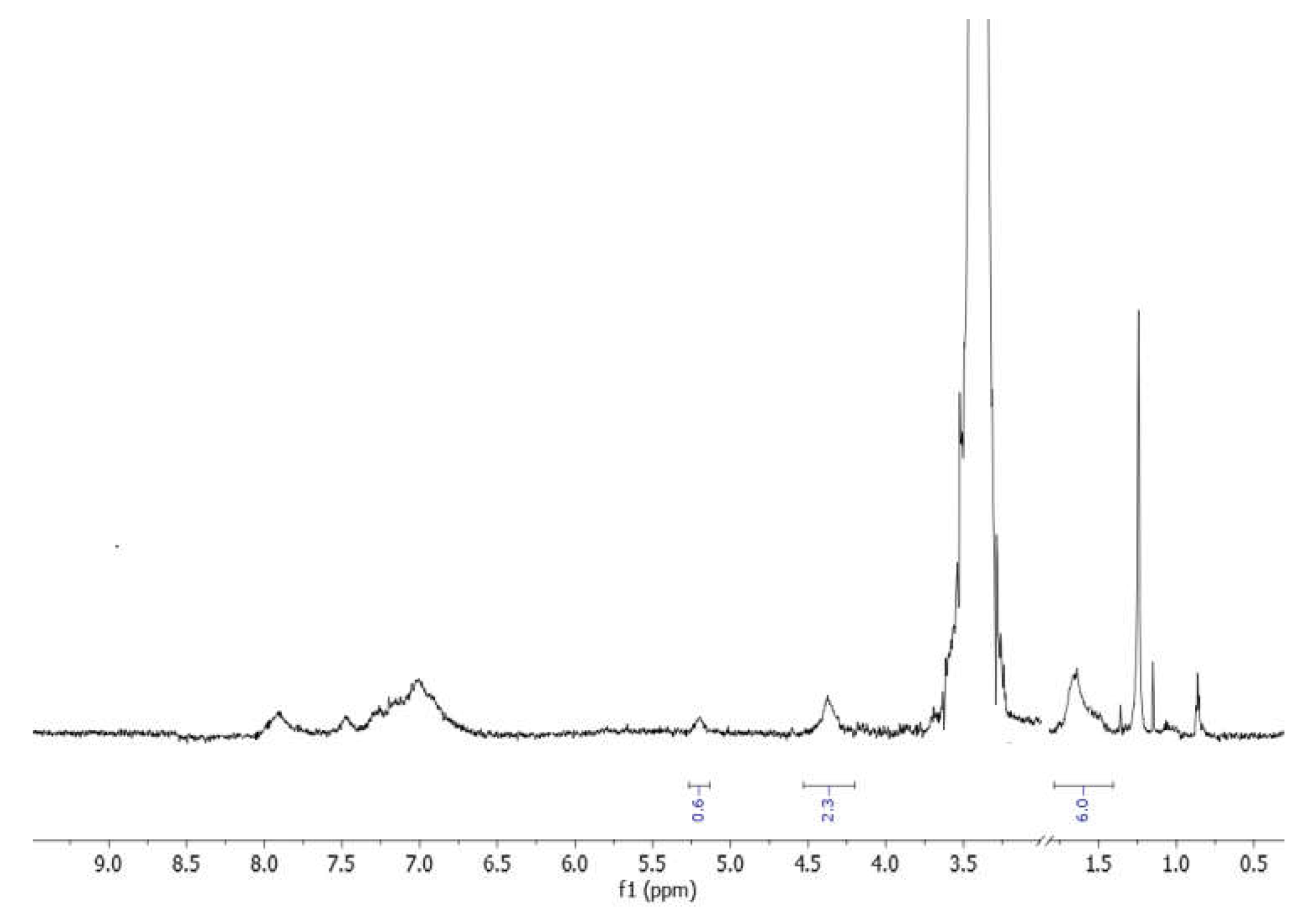
The PSU linked with the synthon molecule is used to assemble the MOF by reaction with further terephthalic acid via solvothermal method (Scheme 1b), adapting the procedure used in the synthesis of UiO-66 [17]. Scheme 1c reports the formation of Zr-POP-QA. The quaternization of unreacted -CH2Cl groups is carried out following the procedure in ref. [33]. The 1H-NMR spectrum of Zr-POP is shown in Figure 1 despite its low solubility. The signal ascribed to the ether bond between the phenolic group of terephthalic ester and the chloromethyl groups of PSU appears at 5.2 ppm evidencing the formation of the covalent link. The residual chloromethyl moieties are at 4.4 ppm. The other signals belong to PSU, in particular the methyl groups linked to quaternary carbon (1.6 ppm), and the aromatic region between 6.7-8.1 ppm. Considering 6 H for the methyl groups of PSU, the ether bond amounts to 0.6 H, i.e. a degree of functionalization equal to 0.3.
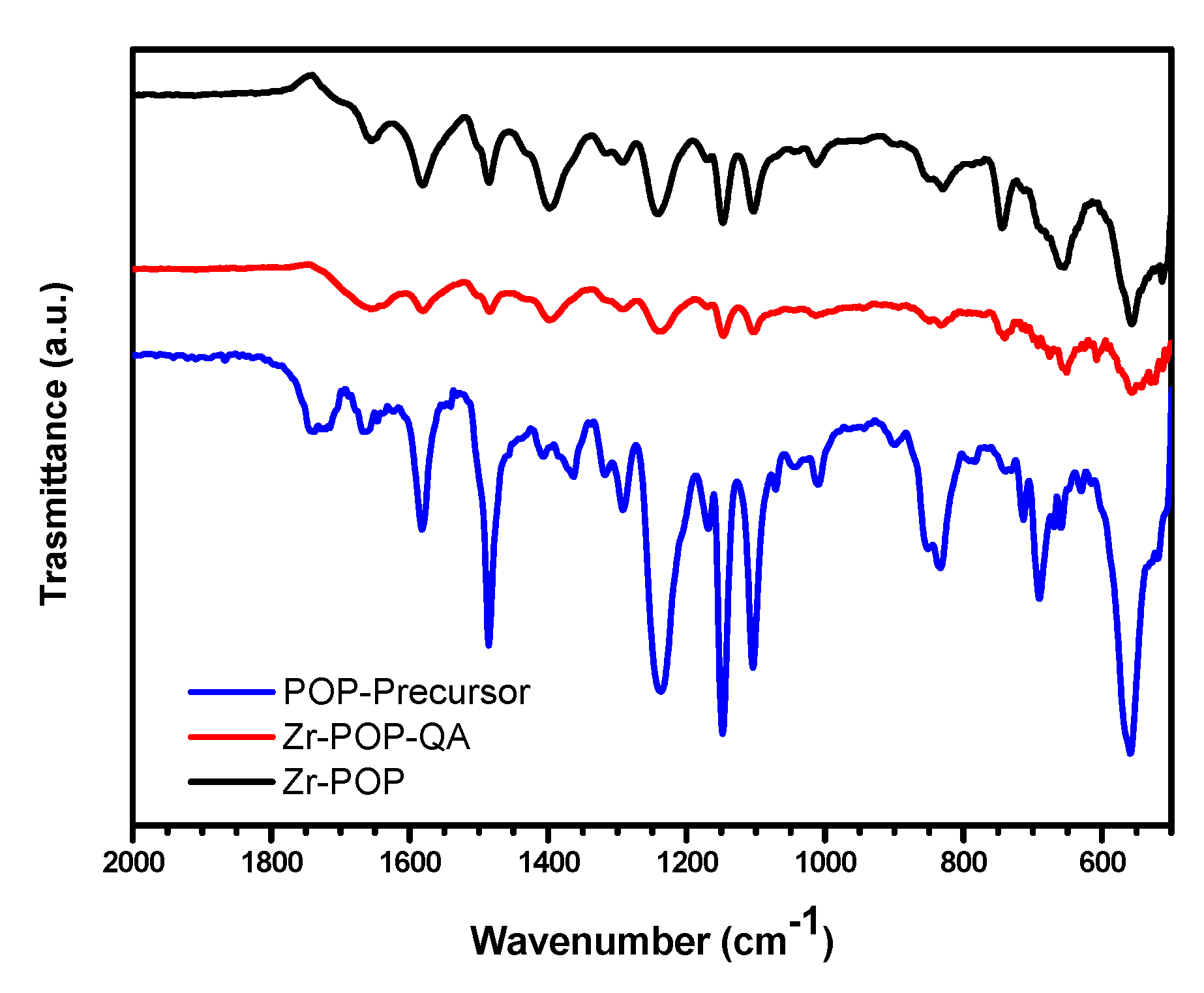
The Figure 2 compares the FTIR spectra of POP-precursor, Zr-POP and Zr-POP-QA. In the POP-precursor the presence of the peak at 1730 cm-1 is due to the C=O stretch of terephthalic acid linked by ether bond to PSU. Other signals are due to the typical absorptions of PSU [34] and terephthalic acid. For the Zr-POP compound, the peak at 1730 cm-1 disappears, and the shift of the signal from 1670 cm-1 (carboxylate) to 1650 cm-1 is observed. In fact, as a result of the Zr coordination, carboxylates present two peaks, asym and sym stretches at 1650 and 1400 cm-1, respectively [35]. The peaks at 750 and 650 cm-1 belong to Zr─O bonds [36]. The methyl groups link to nitrogen ion (-N+Me3) overlap with the methyl groups of PSU [37].
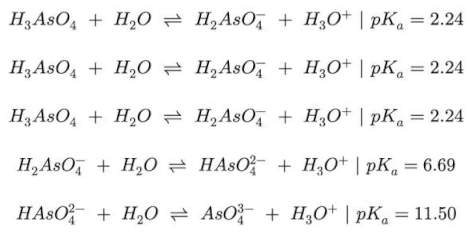
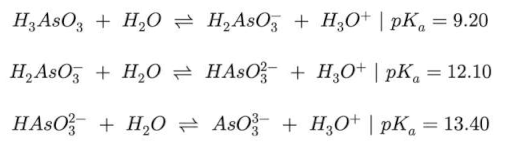
Arsenate exists in several forms, such as H3AsO4, H2AsO4, HAsO42−, and AsO43−. H2AsO4 is the predominant species at pH from 2 to 6, while HAsO42−, AsO43− are the main ions at pH increasing from 7 to 10 [38]. As (III) exists in neutral form (H3AsO3) at pH < 8.0 and negatively charged (H2AsO3-) at pH > 8.0 [38,39]. The dissociation reactions and the corresponding equilibrium constants (pKa) of H3AsO4 and H3AsO3 are shown below [40]:
As (V)
Preprints 140157 i001
As (III)
Preprints 140157 i002
Different factors can affect the sorption capacity of Zr-POP and Zr-POP-QA systems:
1) The charge present on MOF can affect the interaction and then the sorpition of As. In the literature a pKa value of 3.52 for UiO-66 is found [30]. The isoelectric point (pHiep) and the point of zero charge (pHPZC) are 5.5 and ≈ 5 [41] respectively, which indicates a positively charged outer surface of UiO-66 when pH is below 5, where anions could get sorbed. When pH is above 5 a negatively charged outer surface is expected [42,43]. The maximum intake of 300 mg g-1 for As (V) with UiO-66 at pH = 2 is found in ref. [32] as reported before.
2) The anion exchange mechanism. In Zr-POP-QA, nitrogen is quaternized and presents a positive charge. The Donnan effect is then always favorable (except for the neutral As species). The ion to exchange is a function of pH: in HCl environment is the chloride ion, similarly at neutral pH, while in basic conditions the exchanged ion is the hydroxide ion, as reported below:
HCl: PSU-CH2N(CH3)3+Cl- + HMO- → PSU-CH2N(CH3)3+ HMO- + Cl-
NaOH: PSU-CH2N(CH3)3+OH- + HMO-/MO- → PSU-CH2N(CH3)3+HMO-/MO- + OH-
3) The porosity of the systems. As reported in the literature, the PSU polymer presents a low surface area of 6.1 m2/g, and volume of pores of 0.025 cm3/g [44]. In ref. [17] the UiO-66, shows a BET specific area of 665 m2/g and micropore volume of 0.16 cm3/g. Zr-POP exhibits a 269 m2/g of specific area and total pore volume of 0.39 cm3/g; for Zr-POP-QA, a 192 m2/g specific area and total pore volume of 0.30 cm3/g are found. The presence of MOF generated a consistent porosity in the pristine polymer. The average diameter of the pores goes from 5.8 (Zr-POP) to 6.2 nm for Zr-POP-QA, probably due to the steric effect of the ammonium group [25].
Previous studies, carried out in our laboratory with PSU-TMA (IEC=1.6 meq/g) show a RE for As (V) at pH = 7 less than 3% using similar As concentrations, indicating a low removal efficiency of the polymer in the absence of MOF.
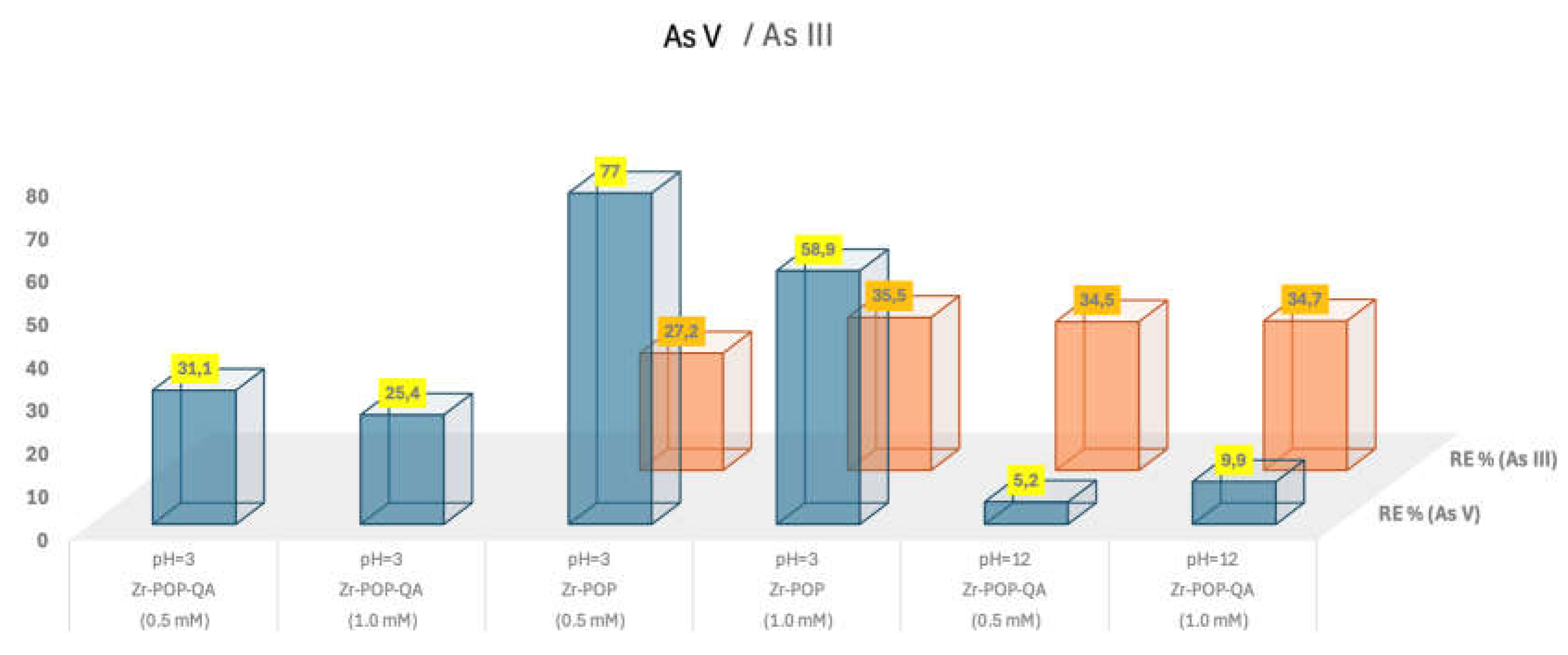
Figure 3 shows a comparison between the uptake of of As (III) and As (V). According to the results showed in Table 1 and Figure 3, the most efficient system for arsenic uptake was Zr-POP (sample c) at pH = 3 with an initial concentration of 0.5 mM As (V). The positively charged MOF, the predominant H2AsO4- specie at this pH, and the high porosity of the system increases the arsenic capture, due to interaction with hydroxyl and carboxyl groups. Zr-POP-QA gave low adsorption, although the ion exchange mechanism is possible, probably due to the less porosity of the system. Increasing the pH, the MOF became negative and the uptake of As (V) decrease, as we can see in the Table 1 for the system “e/f” (Zr-POP-QA) at pH=12 (Figure 3 blue). In this case the MOF moiety does not participate in the capture due to the negatively charged –COO and only the ammonium part should absorb. At pH 12, As (V) exists as arsenate ions (AsO₄3−); the high negative charge density of these species leads to a strong electrostatic repulsion between the arsenate ions and the negatively charged functional groups on the MOF surface.
For neutral As (III) species at pH 7, the adsorption by the Zr-POP could be due to surface π-π interactions according also to the large porosity of the material. The As (III) uptake (i sample, Table 1 and Figure 3 red) is a favorite process at high pH, differently from As (V) (e, f). For As (III) at pH 12 the equilibrium between the species H2AsO3- and HAsO32- are established, the species are less charged and less hydrated, consequently the electrostatic repulsion is lower [44]. The reduced repulsion facilitates a more effective interaction and subsequent adsorption of As (III) onto the QA-MOF's active sites, compared to As (V) under this condition, as showed in Figure 3. Additionally, the smaller size and reduced hydration of As (III) facilitate a better diffusion and access to adsorption sites within the polymer matrix, while the larger and more hydrated As (V) species encounter steric hindrance. In all cases is evident that the increase in porosity of the system makes the capture of arsenic more effective.
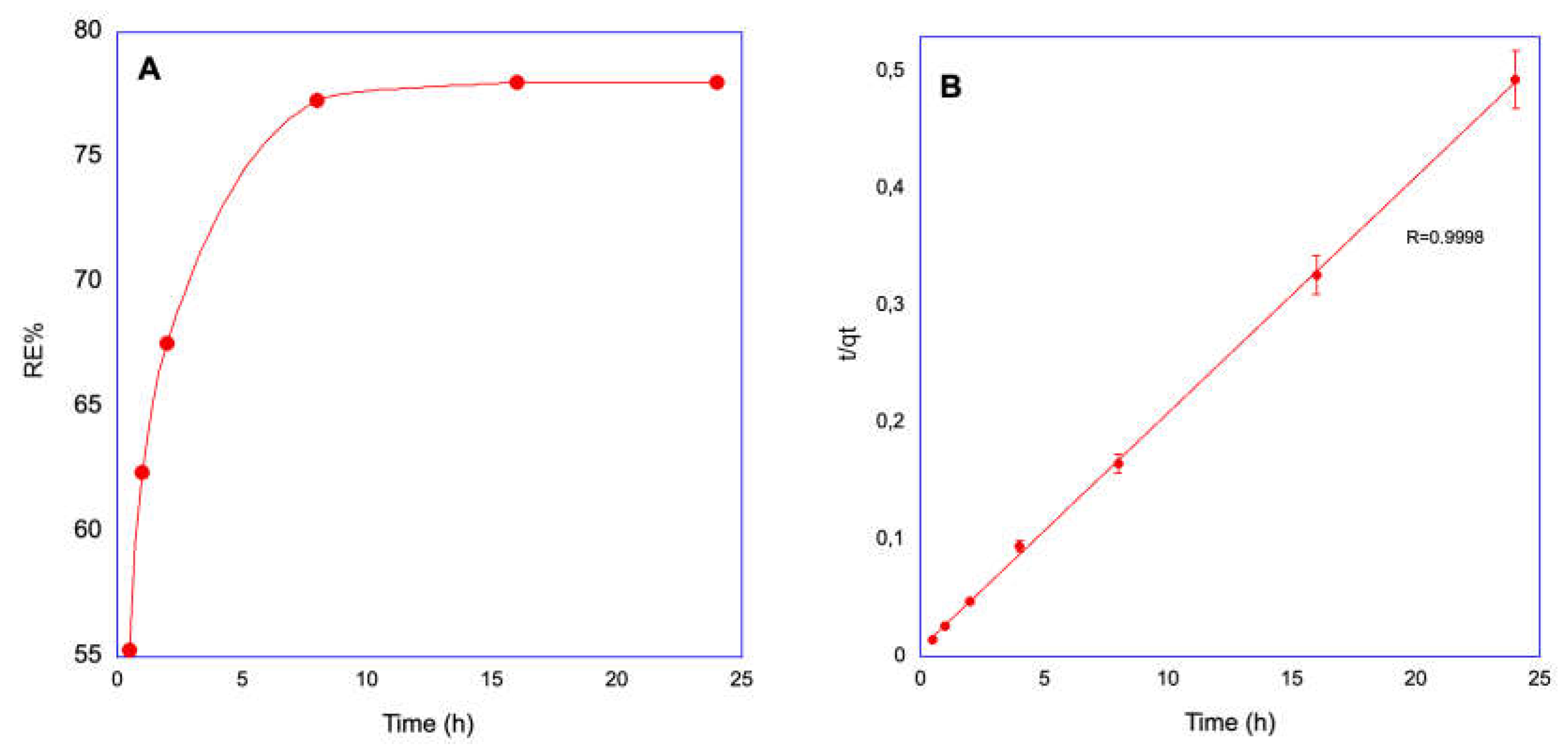
To investigate the behavor of arsenic sorption process, kinetic studies are carried out on the best performing system: Zr-POP at pH=3 for As (V) adsorption. From Figure 4a, it can be observed that increasing the contact time, increases the RE%, as aspected, and already after 30 minutes, Zr-POP reaches 55% As (V) removal. Furthermore, already after 8 hours the Zr-POP reaches its maximum sorption towards As (V). To study the uptake mechanism in more depth, the following calculations are performed, assuming a Pseudo Second Order (P-S-O) kinetic model [45].
d q t d t = k q e q t 2
t q t = 1 q e 2 k + t q e
where qe is the concentration (mg/g) of arsenic adsorbed onto the MOFs at the equilibrium and qe the concentration at time t. By plotting the values ​​ t/qt versus t, qe can be extrapolated from the value of the slope. From the intercept, the rate constant for the P-S-O kinetic model, k, can be obtained.
From uptake data is possible to approximately calculate the theoretical uptake of the POP systems. The value obtained from the kinetic at pH 3 for As (V) is about 50 mg/g. A Zr-POP cluster should theoretically absorb 7.5 As atoms by one Zr6 cluster, as reported in the work of Wang et al. [32]. The molecular weight of the system is 955 g/mol (with 1 cluster of Zr6) and 1.0 g of Zr-POP corresponds to 1.0 mmol and 0.35 meq. The theoretical mg of As absorbed by the system, can be calculated as follows:
m e q M O F = g Z r P O P P M Z r P O P = 1.0   g 955.0   g / m o l = 1.0   m m o l 0.35   m e q   A c t i v e   Z r P O P
m e q t h e o r e t i c a l ( A s ) = m e q M O F × 7.5 A s = 0.35   m e q × 7.5 = 2.62   m e q   ( A s   f o r   1 g   Z r P O P )
m g t h e o r e t i c a l ( A s ) = m e q t h e o r e t i c a l ( A s ) × P M A s = 2.62   m e q × 75 g m o l = 196.5   m g   ( A s )
Giving us the maximum theoretical amount that can be absorbed for 1 gram of system at pH 3. This high theoretical value gives us the possibility to improve the total absorption value in the future.
Preliminary studies have also been done for the regeneration of Zr-POP. The system showed an 77±5% RE as reported in Table 1, while at the first cycle of regeneration the system continues to show activity in the uptake process with 79±5% RE.
Table 2 compares various arsenic adsorption systems based on MOFs, highlighting parameters such as removal efficiency (RE%), adsorption capacity (mg/g), initial arsenic concentration, and pH. Among them, the UiO-66 system achieves very high adsorption capacity compared to other materials. The system presented in this article showed a capacity of 50 mg/g in line with other UiO-66 polymer composites despite different experimental conditions. In other cases in Table 2 such as Magnetite, MIL-53, etc. the values are lower.
Table 2. Different systems used for arsenic removal and their capacity.
System RE% mg/g Initial Concentration As species pH Ref.
PSU 20% - - As(V) 2.6 [46]
PPO/UiO-66 85% 68.2 - As(V) 7-10 [47]
PAN/UiO-66 92% - - As (III)
As(V)
4-9 [48]
PMMA/UiO-66 89% 110 - As(V) 7-11 [49]
Magnetite - 17.2
18.7
1.0 mM As (V)
As (III)
5-9 [50]
Organic Biochar - 16.2 50 ppm As (V) 2-19 [51]
MIO-CNTs - 24.1 - As (V) 2-10 [52]
MIL-53(Fe) - 21.3 - As (V) 5 [53]
Fe3O4@UiO-66 - 73.2 150 ppm As (V) 7 [54]
Fe–BTC - 12.3 unknown As (V) 4 [55]
Fe3O4@TA@UiO-66 80% 97.8 - As (III) 3-11 [56]
Zr-POP 77±5% 50 60 ppm As (V) 3 Our work

4. Conclusions

For the first time, covalently linked Zr-POP and Zr-POP-QA systems are used for the removal of As (III and V) at different pH and different concentrations. The covalent bond between MOF and polymer enhances the properties of these materials for the application in water purification. The best results in terms of removal efficiency are obtained with the Zr-POP system at pH 3 with As (V), while at neutral pH the same material shows a moderate As (III) uptake. At alkaline pH the Zr-POP-QA has a consistent As (III) uptake due to the quaternized ammonium moieties on the matrix that play a crucial role for the uptake at these pH. The stable integration of MOFs within the polymer matrix minimizes the risk of leaching or detachment of MOF particles over time, ensuring sustained and reliable heavy metal adsorption capacities throughout the lifespan of the material.

Author Contributions

Alessio Vincenzo Montella: Investigation, Validation, Visualization, Writing - Review & Editing. Maria Bastianini: Methodology, Visualization, Investigation. Michele Sisani: Methodology, Resources. Emanuela Sgreccia: Investigation. Maria Luisa Di Vona: Methodology, Resources, Writing - Review & Editing. Riccardo Narducci: Conceptualization, Methodology, Writing- Original draft preparation, Writing - Review & Editing.

Funding

This research received no external funding.

Institutional Review Board Statement

Not applicable.

Informed Consent Statement

Not applicable.

Acknowledgments

A.V. Montella thanks the PhD scholarship in Industrial Engineering for the XXXIX Cycle “Removal of pollutants in wastewater with innovative systems of composite membranes with different geometries and low environmental impact”. Art. 8 D.M. n.118/2023 (Ricerca PNRR).

Conflicts of Interest

The authors declare no conflict of interest.

References

  1. Bolan, N., et al., Remediation of heavy metal(loid)s contaminated soils – To mobilize or to immobilize? Journal of Hazardous Materials, 2014. 266: p. 141-166.
  2. Fu, F. and Q. Wang, Removal of heavy metal ions from wastewaters: A review. Journal of Environmental Management, 2011. 92(3): p. 407-418.
  3. Ibrahim, Y., et al., Numerical modeling of an integrated OMBR-NF hybrid system for simultaneous wastewater reclamation and brine management. Euro-Mediterranean Journal for Environmental Integration, 2019. 4(1): p. 23.
  4. Bastianini, M., et al., Composite membranes based on polyvinyl alcohol and lamellar solids for water decontamination. New Journal of Chemistry, 2024. 48(5): p. 2128-2139.
  5. Bastianini, M., et al., Polyvinyl Alcohol Coatings Containing Lamellar Solids with Antimicrobial Activity, in Preprints. 2024, Preprints.
  6. Maqbool, Z., et al., Perspectives of using fungi as bioresource for bioremediation of pesticides in the environment: a critical review. Environ Sci Pollut Res Int, 2016. 23(17): p. 16904-25.
  7. Pelati, M., Acqua all’arsenico in 51 comuni del viterbese: il caso in Parlamento, Corriere, Editor. 2021.
  8. Siddique, T.A., N.K. Dutta, and N. Roy Choudhury, Nanofiltration for Arsenic Removal: Challenges, Recent Developments, and Perspectives. Nanomaterials (Basel), 2020. 10(7).
  9. Wang, X., Y. Liu, and J. Zheng, Removal of As(III) and As(V) from water by chitosan and chitosan derivatives: a review. Environmental Science and Pollution Research, 2016. 23(14): p. 13789-13801.
  10. Yang, L., et al., A metal-organic framework as an electrocatalyst for ethanol oxidation. Angew Chem Int Ed Engl, 2010. 49(31): p. 5348-51.
  11. Song, G., et al., Preparation of MOF(Fe) and its catalytic activity for oxygen reduction reaction in an alkaline electrolyte. Chinese Journal of Catalysis, 2014. 35(2): p. 185-195.
  12. Mao, J., et al., Electrocatalytic four-electron reduction of oxygen with Copper (II)-based metal-organic frameworks. Electrochemistry Communications, 2012. 19: p. 29-31.
  13. Konnerth, H., et al., Metal-organic framework (MOF)-derived catalysts for fine chemical production. Coordination Chemistry Reviews, 2020. 416: p. 213319.
  14. Escorihuela, J., et al., Proton Conductivity of Composite Polyelectrolyte Membranes with Metal-Organic Frameworks for Fuel Cell Applications. Adv. Mater. Interfaces, 2019. 6(2): p. 1801146.
  15. Kim, H.J., K. Talukdar, and S.-J. Choi, Tuning of Nafion® by HKUST-1 as coordination network to enhance proton conductivity for fuel cell applications. Journal of Nanoparticle Research, 2016. 18(2): p. 47.
  16. Patel, H.A., et al., Superacidity in Nafion/MOF Hybrid Membranes Retains Water at Low Humidity to Enhance Proton Conduction for Fuel Cells. ACS Appl Mater Interfaces, 2016. 8(45): p. 30687-30691.
  17. Donnadio, A., et al., Mixed Membrane Matrices Based on Nafion/UiO-66/SO3H-UiO-66 Nano-MOFs: Revealing the Effect of Crystal Size, Sulfonation, and Filler Loading on the Mechanical and Conductivity Properties. ACS Applied Materials & Interfaces, 2017. 9(48): p. 42239-42246.
  18. Narducci, R., et al., Anion Exchange Membranes with 1D, 2D and 3D Fillers: A Review. polymers, 2021. 13(22): p. 3887.
  19. Kaur, H., et al., Metal–Organic Framework-Based Materials for Wastewater Treatment: Superior Adsorbent Materials for the Removal of Hazardous Pollutants. ACS Omega, 2023. 8(10): p. 9004-9030.
  20. Liu, X., et al., Application of metal organic framework in wastewater treatment. Green Energy & Environment, 2023. 8(3): p. 698-721.
  21. Feng, L., et al., Destruction of Metal–Organic Frameworks: Positive and Negative Aspects of Stability and Lability. Chemical Reviews, 2020. 120(23): p. 13087-13133.
  22. Lee, J., et al., Covalent connections between metal–organic frameworks and polymers including covalent organic frameworks. Chemical Society Reviews, 2023. 52(18): p. 6379-6416.
  23. Zhang, Z., et al., polyMOFs: A Class of Interconvertible Polymer-Metal-Organic-Framework Hybrid Materials. Angew Chem Int Ed Engl, 2015. 54(21): p. 6152-7.
  24. Ayala, S., Z. Zhang, and S.M. Cohen, Hierarchical structure and porosity in UiO-66 polyMOFs. Chemical Communications, 2017. 53(21): p. 3058-3061.
  25. R. Narducci, et al., Ion-conducting porous organic polymers for single-component catalytic electrodes. 2024.
  26. Lin, R., et al., Mixed Matrix Membranes with Strengthened MOFs/Polymer Interfacial Interaction and Improved Membrane Performance. ACS Applied Materials & Interfaces, 2014. 6(8): p. 5609-5618.
  27. Tien-Binh, N., D. Rodrigue, and S. Kaliaguine, In-situ cross interface linking of PIM-1 polymer and UiO-66-NH2 for outstanding gas separation and physical aging control. Journal of Membrane Science, 2018. 548: p. 429-438.
  28. Xie, K., et al., Synthesis of well dispersed polymer grafted metal–organic framework nanoparticles. Chemical Communications, 2015. 51(85): p. 15566-15569.
  29. Zhou, W., et al., Construction of a Sandwiched MOF@COF Composite as a Size-Selective Catalyst. Cell Reports Physical Science, 2020. 1(12): p. 100272.
  30. Ahmad, K., et al., Engineering of Zirconium based metal-organic frameworks (Zr-MOFs) as efficient adsorbents. Materials Science and Engineering: B, 2020. 262: p. 114766.
  31. Li, Y.-H., et al., UiO-66(Zr)-based functional materials for water purification: An updated review. Environmental Functional Materials, 2023. 2(2): p. 93-132.
  32. Wang, C., et al., Superior removal of arsenic from water with zirconium metal-organic framework UiO-66. Scientific Reports, 2015. 5(1): p. 16613.
  33. Di Vona, M.L., et al., Anion-conducting ionomers: Study of type of functionalizing amine and macromolecular cross-linking. International Journal of Hydrogen Energy, 2014. 39(26): p. 14039-14049.
  34. Di Vona, M.L., et al., Anionic conducting composite membranes based on aromatic polymer and layered double hydroxides. International Journal of Hydrogen Energy, 2017. 42(5): p. 3197-3205.
  35. Smith, B.C., The Carbonyl Group, Part V: Carboxylates—Coming Clean. Spectroscopy, 2018. 33(5): p. 20–23.
  36. Pascual-Colino, J., et al., The Chemistry of Zirconium/Carboxylate Clustering Process: Acidic Conditions to Promote Carboxylate-Unsaturated Octahedral Hexamers and Pentanuclear Species. Inorganic Chemistry, 2022. 61(12): p. 4842-4851.
  37. Zhou, J., et al., Anionic polysulfone ionomers and membranes containing fluorenyl groups for anionic fuel cells. Journal of Power Sources, 2009. 190(2): p. 285-292.
  38. Yu, Y., et al., Yttrium-doped iron oxide magnetic adsorbent for enhancement in arsenic removal and ease in separation after applications. Journal of Colloid and Interface Science, 2018. 521: p. 252-260.
  39. Pham, T.T., et al., Removal of As (V) from the aqueous solution by a modified granular ferric hydroxide adsorbent. Science of The Total Environment, 2020. 706: p. 135947.
  40. Chiban, M., et al. Application of low-cost adsorbents for arsenic removal: A review. 2012.
  41. Azhar, M.R., et al., Adsorptive removal of antibiotic sulfonamide by UiO-66 and ZIF-67 for wastewater treatment. Journal of Colloid and Interface Science, 2017. 500: p. 88-95.
  42. Kebede Gurmessa, B., A.M. Taddesse, and E. Teju, UiO-66 (Zr-MOF): Synthesis, Characterization, and Application for the Removal of Malathion and 2, 4-D from Aqueous Solution. Environmental Pollutants and Bioavailability, 2023. 35(1): p. 2222910.
  43. Rodriguez-Narvaez, O.M., et al., Treatment technologies for emerging contaminants in water: A review. Chemical Engineering Journal, 2017. 323: p. 361-380.
  44. Zhang, X., et al., Water-stable metal–organic framework (UiO-66) supported on zirconia nanofibers membrane for the dynamic removal of tetracycline and arsenic from water. Applied Surface Science, 2022. 596: p. 153559.
  45. Samimi, M., et al., A Brief Review of Recent Results in Arsenic Adsorption Process from Aquatic Environments by Metal-Organic Frameworks: Classification Based on Kinetics, Isotherms and Thermodynamics Behaviors. Nanomaterials, 2023. 13(1): p. 60.
  46. Gupta, S., D. Bhatiya, and C.N. Murthy, Metal Removal Studies by Composite Membrane of Polysulfone and Functionalized Single-Walled Carbon Nanotubes. Separation Science and Technology, 2015. 50(3): p. 421-429.
  47. He, X., et al., Exceptional adsorption of arsenic by zirconium metal-organic frameworks: Engineering exploration and mechanism insight. Journal of Colloid and Interface Science, 2019. 539: p. 223-234.
  48. Xie, Z., et al., Enhanced removal of As(iii) by manganese-doped defective UiO-66 coupled peroxymonosulfate: multiple reactive oxygen species and system stability. Environmental Science: Nano, 2024. 11(8): p. 3585-3598.
  49. Mahanta, N. and J.P. Chen, A novel route to the engineering of zirconium immobilized nano-scale carbon for arsenate removal from water. Journal of Materials Chemistry A, 2013. 1(30): p. 8636-8644.
  50. Liu, C.-H., et al., Mechanism of Arsenic Adsorption on Magnetite Nanoparticles from Water: Thermodynamic and Spectroscopic Studies. Environmental Science & Technology, 2015. 49(13): p. 7726-7734.
  51. . Zhu, N., et al., Adsorption of arsenic, phosphorus and chromium by bismuth impregnated biochar: Adsorption mechanism and depleted adsorbent utilization. Chemosphere, 2016. 164: p. 32-40.
  52. Chen, B., et al., One-pot, solid-phase synthesis of magnetic multiwalled carbon nanotube/iron oxide composites and their application in arsenic removal. Journal of Colloid and Interface Science, 2014. 434: p. 9-17.
  53. Vu, T.A., et al., Arsenic removal from aqueous solutions by adsorption using novel MIL-53(Fe) as a highly efficient adsorbent. RSC Advances, 2015. 5(7): p. 5261-5268.
  54. Huo, J.-B., et al., Direct epitaxial synthesis of magnetic Fe3O4@UiO-66 composite for efficient removal of arsenate from water. Microporous and Mesoporous Materials, 2019. 276: p. 68-75.
  55. Zhu, B.-J., et al., Iron and 1,3,5-Benzenetricarboxylic Metal–Organic Coordination Polymers Prepared by Solvothermal Method and Their Application in Efficient As(V) Removal from Aqueous Solutions. The Journal of Physical Chemistry C, 2012. 116(15): p. 8601-8607.
  56. Qi, P., et al., Development of a magnetic core-shell Fe3O4@TA@UiO-66 microsphere for removal of arsenic(III) and antimony(III) from aqueous solution. Journal of Hazardous Materials, 2019. 378: p. 120721.
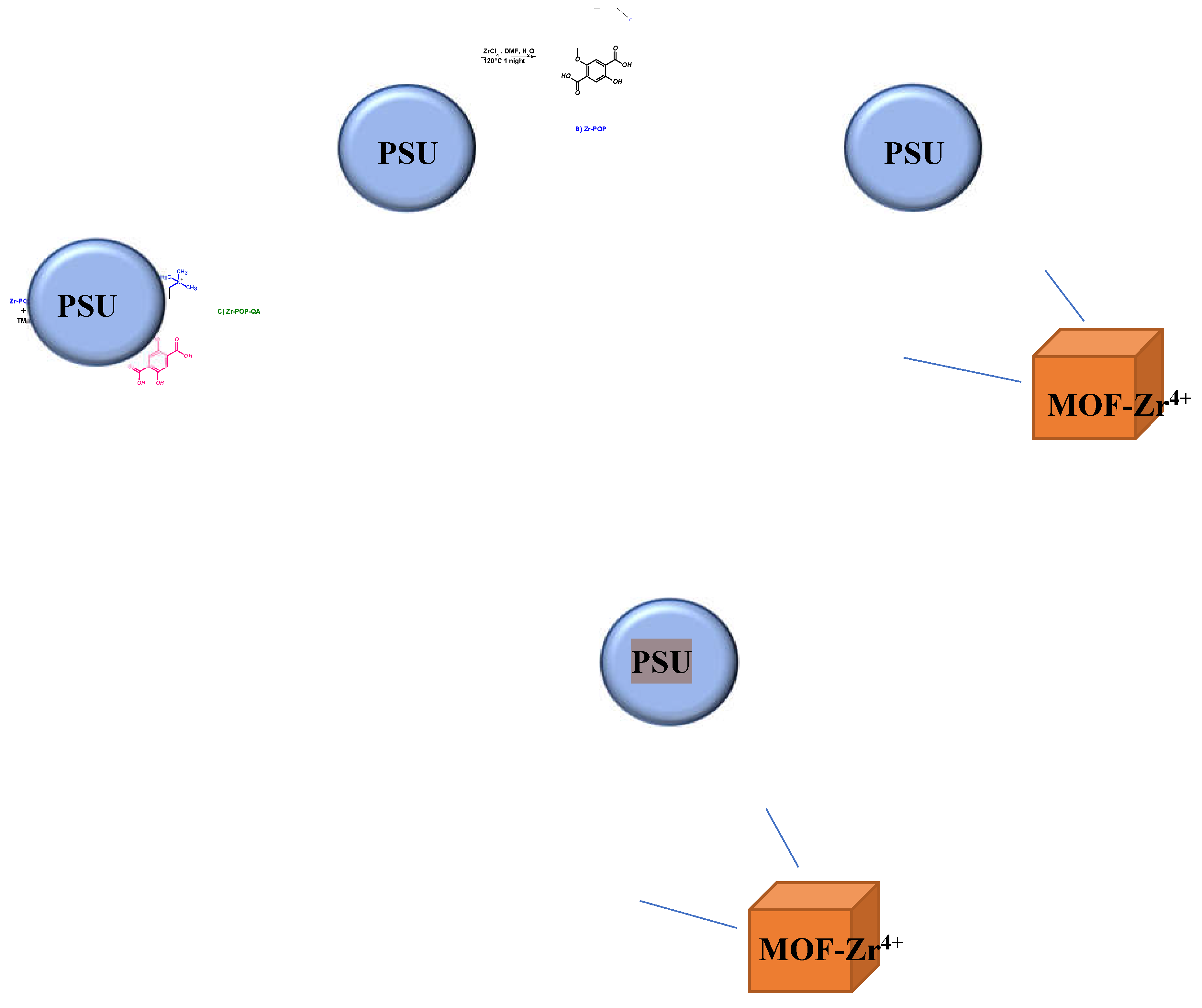
Scheme 1. Reaction sequence of the synthesis of: A) POP-precursor, B) Zr-POP, C) Zr-POP-QA.
Preprints 140157 sch001
Figure 1. 1H-NMR of Zr-POP in DMSO-d6.
Preprints 140157 g001
Figure 2. FTIR spectra of POP-Precursor, Zr-POP, Zr-POP-QA.
Preprints 140157 g002
Figure 3. Comparison of the uptake of As (III) (red) and As (V) (blue) by Zr-POP and Zr-POP-QA (acid and basic pH).
Preprints 140157 g003
Figure 4. Kinetic Uptake of: A) As (V) by Zr-POP (acid pH) and B) P-S-O kinetic model.
Preprints 140157 g004
Table 1. Results of As (V) and (III) uptake by Zr-POP and Zr-POP-QA. The quantity added for each bach (15 mL) was 10 ± 0.3 mg. .
System Metal Sample pH/Initial concentrations As [mM] RE % (±5%)
a As V Zr-POP-QA pH=3/[0.5] 31.1
b As V Zr-POP-QA pH=3/[1.0] 25.4
c As V Zr-POP pH=3/[0.5] 77.0
d As V Zr-POP pH=3/[1.0] 58.9
e As V Zr-POP-QA pH=12/[0.5] 5.2
f As V Zr-POP-QA pH=12/[1.0] 9.9
g As III Zr-POP pH=7/[0.5] 27.2
h As III Zr-POP pH=7/[1.0] 35.5
i As III Zr-POP-QA pH=12/[0.5] 34.5
Disclaimer/Publisher’s Note: The statements, opinions and data contained in all publications are solely those of the individual author(s) and contributor(s) and not of MDPI and/or the editor(s). MDPI and/or the editor(s) disclaim responsibility for any injury to people or property resulting from any ideas, methods, instructions or products referred to in the content.
Copyright: This open access article is published under a Creative Commons CC BY 4.0 license, which permit the free download, distribution, and reuse, provided that the author and preprint are cited in any reuse.
Prerpints.org logo

Preprints.org is a free preprint server supported by MDPI in Basel, Switzerland.

Subscribe

Disclaimer

Terms of Use

Privacy Policy

Privacy Settings

© 2025 MDPI (Basel, Switzerland) unless otherwise stated