Preprint
Article

This version is not peer-reviewed.

Using Elemental Fingerprint Analysis (EFA) to Reveal the Elemental Composition Correlation between Different Ecological Habit Fish and Their Habitats

Submitted:

18 November 2024

Posted:

19 November 2024

You are already at the latest version

Abstract

Muscle element fingerprint is a comprehensive reflection of the accumulated transformation of elements from different sources in muscles, and has habitat indicator functions such as stability and representativeness. Leiocassis longirostris (Ll), Coilia mystus (Cm) and Collichthys lucidus (Cl) are important fishery species in the Yangtze River Estuary with different ecological habits. In this study, the element fingerprint of three fish species (Ll, Cm, Cl) and two environmental media of water (W) and sediment (S) were analyzed. According to the PERMANOVA, significant differences (p<0.05) were observed in the elemental composition between sediment and the fish species. Through principal component analysis (PCA), it was found that the major elements ratios of Ti, V, Al, Fe, Ba, Ni, Mn, Co, Zn, and Cr to Ca in the sediment were significantly higher than those of the other groups (p<0.05). Stepwise linear discriminant analysis (LDA) explored that the differential discriminant elements ratios between the water and the fish species were Mo/Ca, Ba/Ca, and K/Ca. LDA of the muscle elemental contents among different fish species showed that Mo, Mn, and Ba were the characteristic discriminant elements of L. longirostris, C. mystus and C. lucidus, respectively, which were closely related to their different ecological habitats. In summary, the elemental compositions in the muscle of the fish species differed significantly with that of the major elements in the sediments, and that with a few discriminant elements in the water, and there are differences in characteristic discriminative elements among fish with different ecological habits. Therefore, when tracing the origin of fish with habitat changes, the same fish species should be selected as the reference for tracing according to the stability of the characteristic elements enriched in each of the fish with different ecological habits. This study has important theoretical guidance and technical support in analyzing the source of elemental composition of fishes and in the traceability discrimination of fishes based on elemental fingerprints, and it has important application value in the selection of reference media for fish species traceability.

Keywords: 
;  ;  ;  ;  

1. Introduction

The Yangtze River Estuary is rich in fishery resources, in which different ecological types of fish are widely distributed [1]. Leiocassis longirostris is widely distributed in the Rivers of Liao, Huai, Yangtze, Min and Pearl in China, as well as in the western part of the Korean Peninsula. It mainly feeds on aquatic insects and their larvae, crustaceans, small mollusks and small fishes [1]. As one of the four most famous freshwater fishes in the Yangtze River, L. longirostris is very popular with its unique flavor and high nutritional value, and has become an important part of China’s freshwater aquaculture industry, and by 2022, its annual production has reached 23,907 tons [2,3,4]. Coilia mystus is a semi-saline water fish, which is widely distributed in the western Pacific Ocean, including China, the Korean Peninsula, and Japan. It feeds on zooplanktons such as branchiopods, copepods, and telopods at the juvenile stage, and small fish, shrimps, and decapods at the adult stage. C. mystus, as a famous short-distance migratory fish, usually inhabits shallow sea area, and migrates to the Yangtze River Estuary to spawn during the breeding season [5,6]. C. mystus is an important fishery species in the Yangtze River Estuary, with its catch accounting for about 48.6% of the total fish and shrimp catch in the estuary before the fishing ban [7]. Collichthys lucidus, a small, near-bottom benthic fish, feeds on benthic organisms and small fish, shrimp, and opossum shrimp. Although the production of C. lucidus along the coast of China exceeded 200,000 tons in 2018, the biomass of C. lucidus has been rapidly decreasing in recent years with the increase in fishing intensity, and the species is currently overfished in the fisheries of the Yangtze and Minjiang estuaries [8]. Due to the different ecological habits of these the fish species, their habitat water layer, food organism composition and growth characteristics are different, and the results of enrichment and transformation of substances in various environmental media by fish with different ecological habits are also unique.
Elemental fingerprint analysis (EFA) is the use of differences in the elemental composition of organisms or species to distinguish different organisms or different sources of the same species. Compared to the methods of individual morphology [9,10,11,12], otolithic morphology [13,14,15], gene sequences [16], fatty acid composition [17,18], and isotope analysis [19,20], EFA used in origin certification showed unique characteristics of low cost, fast detection, stable detection indexes [21], and low sample consumption [22]. EFA has been widely used in biological species identification and geographical traceability [23,24,25,26]. In the above geographic traceability research, the traceability is mainly carried out through the elemental composition correlation between species and their environments, and this traceability method has been widely applied to plants, livestock, poultry and other species with relatively fixed sources [25,26]. Due to the species with relatively fixed growth environments, the elemental compositions of their organisms can directly reflect the elemental composition of the place where they originate from, and there is a large correlation of the elemental compositions of the organisms and their environments.
At present, with the requirement of tracing the origin of wild fish and other aquatic products in market supervision, it is necessary to trace the origin of aquatic products appearing in the market. For fish of different ecological types, their living environment and food organism composition have changed during their life history. Given the sustained accumulation of elemental composition within living organisms, fish with different ecological habits have varying degrees of accumulation of elements from their living environment. The elemental composition characteristics of muscles can to some extent reflect the elemental composition of their living environment [21]. However, due to the different distribution of fish species in their life processes, their ecological environment in the Yangtze River Estuary is also constantly changing, the elemental composition correlation between fish and their environment is unknown. Therefore, this study uses muscle element fingerprint analysis to reflect the element composition correlation between different ecological types of fish living in the same water area, and between different fish and their ecological environment, to analyze the reasons for the differences in elemental composition of fish, and identify the relationship between elemental composition of fish and different environmental media, in order to provide guidance for the selection of reference media in the origin tracing research of organisms with variable habitats such as fish.

2. Materials and Methods

2.1. Sampling Sites, Sample Collection and Processing

In April 2024, samples of three fish species of L. longirostris (Ll), C. mystus (Cm) and C. lucidus (Cl), with different ecological habits, were collected in the waters of the Yangtze River Estuary (Figure 1), with the water (W) and sediment (S) from the corresponding area were collected as a control of environmental media. Fish samples were sampled using gillnets with different mesh sizes (from 3 cm to 21 cm) and the samples were collected after placing for 12 h. After collection, samples were placed in plastic bags and labeled with the coordinates of the sampling sits of E121.823, N31.427. Water and sediment samples were collected using water and sediment collectors, respectively, and water samples were placed in 500 mL plastic sampling bottles and sediments were placed in 50mL centrifuge tube. All samples were frozen at -20°C, and brought back to the laboratory for further processing.
In the laboratory, all fish samples were thawed and measured for basic biological characteristics. The fish samples were measured in centimeters for total length, body length and weighed in grams (±0.01 g) for body weight. The total length, body length and weight of L. longirostris, C. mystus and C. lucidus are 36.74±8.62 cm, 31.76±7.59 cm, 402.22±245.67 g; 17.26±2.51 cm, 15.53±2.25 cm, 16.09±9.58 g; 18.77±1.49 cm, 15.07±1.24 cm, 57.28±14.35 g, respectively. To eliminate interference of handling utensils to experimental samples, ceramic-coated scalpels, plastic scissors, and plastic forceps were used for dissection, and the dissection tools and sample-handling utensils were rinsed six times with Milli-Q water (Millipore Corp., Burlington, MA, USA) prior to sample processing. All fish samples were taken from the dorsal muscles for analysis [22].
After drying, each fish sample was taken (0.5 ± 0.005 g) and placed in a digestion tube, 10 mL of purified HNO3 (MOS Reagent, Sinopharm Chemical Reagent Co., Ltd., Shanghai, China) was added and left to stand for 3 h, followed by the addition of 2 mL of purified HClO4 to each tube. Finally, all samples were digested using an electric hot plate at 150 °C, and the fully digested samples were quantitatively transferred to a calibration bottle containing Milli-Q water in a 100 mL calibration bottle [27].
The water samples were pumped through a filtration device to remove their suspended particulate matter before digestion. First, 50 mL of water sample was measured in a calibration flask, 5 mL of purified HNO3 was added and digestion was carried out using an electric hot plate maintained at 95±5°C. On the way, purified HNO3 was continued to be added until no brown fumes were produced and evaporation was done to 5 mL. After the above solution cooled down, 3 mL of 30% hydrogen peroxide solution was slowly added and digestion was carried out using an electric hot plate maintained at 95±5°C, and 30% hydrogen peroxide solution was added until no more bubbles were produced and evaporated to 5mL, the conical flask was rinsed 3 times with Milli-Q water and fixed in a 50mL calibration bottle [28,29].
The dried and sieved sediment (0.5±0.005 g) was weighed and placed in a digestion tube, moistened with a small amount of Milli-Q water, and 2 mL of purified HNO3 and 6 mL of concentrated hydrochloric acid were added sequentially to mix the sample and the digestion solution well. Finally, all samples were digested using an electric hot plate at 150 °C, and the solution in the digestion tube was transferred to a 100 mL calibration bottle containing Milli-Q water [28].

2.2. Elemental Analysis

The concentration of potassium (K), sodium (Na) and calcium (Ca) in the pre-digested samples were determined by ICP-OES (Agilent, 720ES). ICP-MS (Agilent, 7700) was used to determine the concentration of mercury (Hg), lead (Pb), chromium (Cr), cadmium (Cd), copper (Cu), zinc (Zn), nickel (Ni), arsenic (As), magnesium (Mg), iron (Fe), aluminum (Al), manganese (Mn), molybdenum (Mo), istrontium (Sr), barium (Ba), titanium (Ti), vanadium (V), and cobalt (Co) [22,30,31,32]. The calibration standard solutions consist of different certified reference materials, including mixed element material of Cd, Pb, Cr, Cu, Zn, Ni, As, Mg, Fe, Al, Mn, Sr, Ba, Ti and V (GSB 04-1767-2004), and the single element materials of Hg (GSB 04-1729-2004), Na (GSB 04-1738-2004), K (GSB 04-1733-2004), Ca (GSB 04-1720-2004) and Mo (GSB 04-1737-2004) from the National Nonferrous Metals and Electronic Materials Analysis and Testing Center, National Standard (Beijing) Inspection and Certification Co., Ltd., China [22]. All these analyses were repeated three times.

2.3. Data Analysis

In order to compare the elemental composition between biological samples and environmental media, the raw data on the content of the 20 elements were divided by the content of Ca to obtain the data on the ratios of the 20 elements to Ca, which were expressed on this basis. The elemental ratios of the different groups of samples were analyzed by one-way analysis of variance (ANOVA) to test the differences between the groups at a significance level of α = 0.05. PERMANOVA analysis was then used to compare the correspondence between the three fish groups and the two environmental media. Then, using multivariate analysis, a total of five groups were analyzed sequentially by hierarchical cluster analysis (HCA), principal component analysis (PCA), and stepwise linear discriminant analysis (LDA), to progressively determine the differences in the components between different groups and to screen for the characteristic elements that caused the differences. Statistical analysis was performed using the software IBM SPSS Statistics 25.0.

3. Results

3.1. Elemental Composition of Fish and Environmental Media

A one-way analysis of variance (ANOVA) was performed on 20 elemental ratios in five groups of samples, including three fish species, L. longirostris, C. mystus and C. lucidus, as well as two environmental media, water and sediment, to compare the differences in the elemental compositions of these five groups (Table 1). It was found that, except for Na/Ca, Mg/Ca, and Sr/Ca, the remaining 17 elemental ratios were significantly different among these five groups (p<0.05). There were significant differences for the ratios of Co/Ca, V/Ca, Ni/Ca, Ti/Ca, Ba/Ca, Cr/Ca, Mn/Ca, Al/Ca, Fe/Ca and Zn/Ca between sediment and any of the three fish groups (p<0.05). Significant differences were found for the ratios of Mo/Ca, Cd/Ca, Hg/Ca, Cu/Ca, As/Ca, and K/Ca between water and L. longirostris, that of Ba/Ca and As/Ca between water and C. mystus, and that of Pb/Ca and K/Ca between water and C. lucidus (p<0.05). Among these three fish groups, Mo/Ca, Cd/Ca, Hg/Ca, Cu/Ca and K/Ca were significantly higher in L. longirostris than in the other two species, K/Ca was significantly lower in C. mystus than in the other two species, and As/Ca was significantly lower in C. lucidus than in the other two fish species (p<0.05). It can be seen that the elemental composition of sediment showed the greatest difference with the three fish groups, and the elemental composition of water showed a smaller difference with the three fish groups, and there was also some difference among the three fish groups.

3.2. Association Analysis Between Fish and Environmental Media

In order to further explore the difference between the three fish groups (L. longirostris, C. mystus and C. lucidus) and the two environmental media (water and sediment), their elemental compositions were subjected to PERMANOVA analysis, which showed that there was a significant difference between sediment and the three fish groups (p<0.05), whereas the difference between the water and the three fish groups was not significant (p>0.05) (Table 2).
The first two axes of the PCO analysis explained 86.2% of elemental fingerprints variation in the data set (PCO axis 1: 52.9%, PCO axis 2: 33.3%) (Figure S1). The results show that sediment and water groups can be clearly distinguished from fish, Al/Ca has the longest radius and is biased towards the sediment group, Ba/Ca has a longer radius and its pointing is distributed between sediment and water groups and is biased towards the water group, and Cr/Ca has a longer radius and its pointing is distributed between sediment and fish groups and is biased towards fish groups, which can be tentatively concluded that Al/Ca, Ba/Ca and Cr/Ca are the characteristic elements of sediment, water and fish, respectively. It is due to the fact that Al/Ca has the largest ratio in sediment, which is significantly higher than the other groups; Ba/Ca was higher in sediment and water, and that is higher in water than in fish groups; and Cr/Ca is higher in sediment and fish, and that is higher in the fish groups than in water (Table 1). In order to present a more intuitive relationship among these five groups, HCA was used, and the results showed that the sediment was divided into one group alone, while the water and fish were clustered into another group, in which the distribution of the water samples was relatively centralized, and there was a cross-over in the distribution among the different fish individuals (Figure S2). Combining the PCO and clustering diagrams (Figure S1, Figure S2), it can be seen that the overall elemental composition and specific elemental ratios of the sediment group differed significantly from those of the other groups, while the overall elemental composition of the water group was similar to that of the fish groups, but there was a difference in specific elemental ratios therein from that of the fish group, whereas there was a smaller difference in the overall elemental composition among these three fish groups.

3.3. Major Element Composition in Fish and Environmental Media

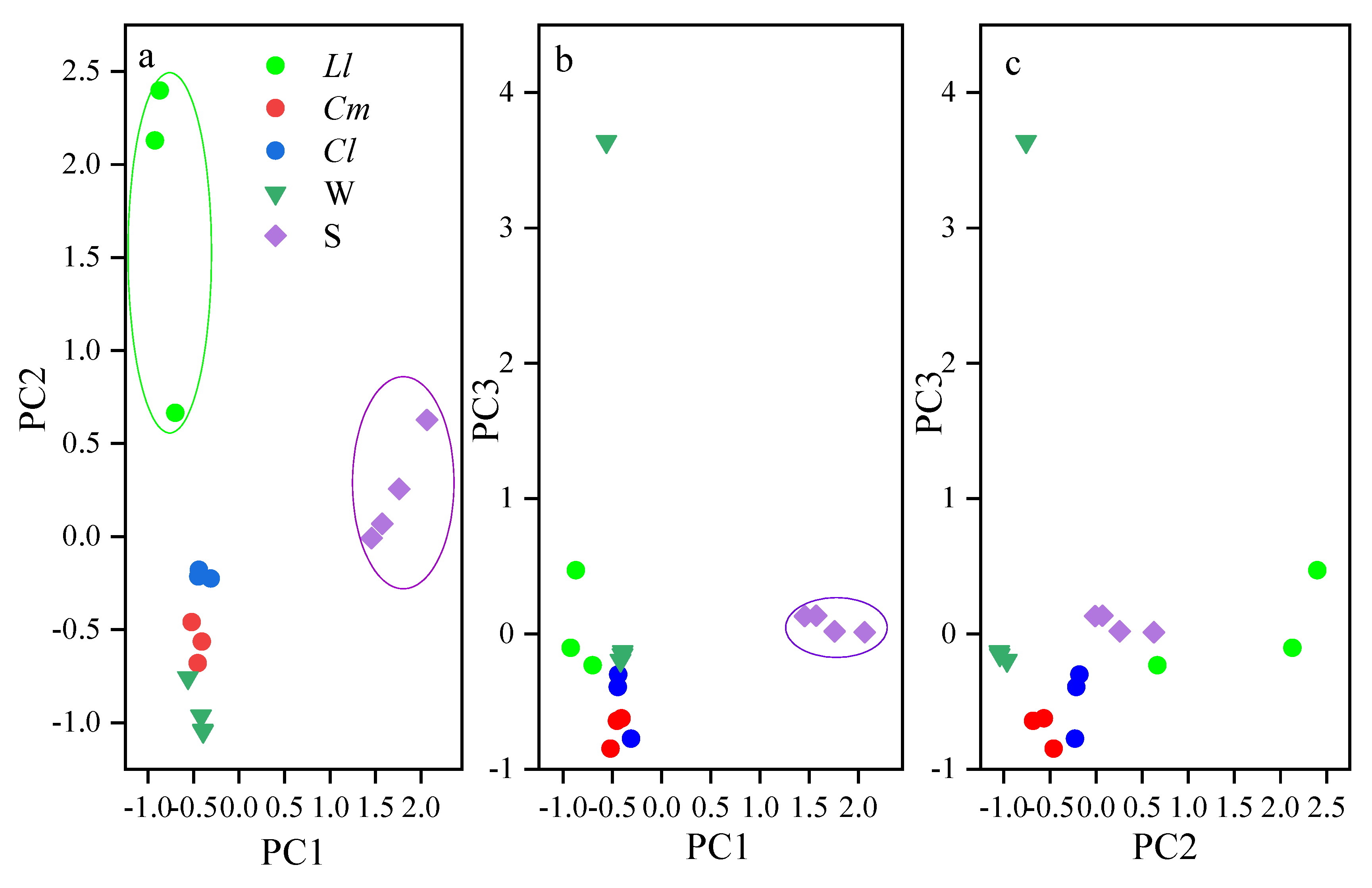
In order to quantitatively screen the major elemental compositions that caused the differences among these five groups. PCA was used to analyze the 20 element ratios and three principal components (1 to 3) were obtained with a cumulative contribution of 91.212%, of which 53.387% was contributed by PC1 and 26.653% and 11.172% by PC 2 and PC3, respectively (Table 3).
As shown in Table 3, the most contributing element ratios in PC1 were Ti/Ca, V/Ca, Al/Ca, Fe/Ca, Ba/Ca, Ni/Ca, Mn/Ca, Co/Ca, Zn/Ca, and Cr/Ca; the most contributing element ratios in PC2 were Cu/Ca, Hg/Ca, K/Ca, Mo/Ca, and Cd/Ca; the most contributing element ratios in PC3 were Na/Ca and Sr/Ca. Combined with the results of ANOVA (Table 1), it can be seen that the 10 major contributing element ratios in PC1 were all significantly higher in the sediment than in the other groups, the ratios of the five major contributing element ratios in PC2 were significantly higher in the L. longirostris than in the sediment, and the two major contributing element ratios in PC3 were not significantly different among these five groups.
In the scatter diagram composed of PC1 and PC2 (Figure 2a), because the major element ratios in PC1 can distinguish the sediment from the other groups, and the major element ratios in PC2 can distinguish the L. longirostris from the sediment, the distance between the sediment and the L. longirostris is furthest in the scatter diagram composed of PC1 and PC2, and a clear distinction can be made between these two groups and the other three groups. In the scatter diagram composed of PC1 and PC3 (Figure 2b), the main elements in PC3 show no difference among the different groups, the scatter plot of PC1 and PC3 clearly shows that the sediment group is situated far from the other groups, allowing for a clear distinction. In the scatter diagram composed of PC2 and PC3 (Figure 2c), which shows that the distance between different groups is close, it is impossible to distinguish different groups effectively. Through PCA, the characteristic elements between different fish groups and different environmental media groups were analyzed, and it was found that only the characteristic elements in the sediment group could be clearly distinguished from the other groups, while the distinction between the water group and the fish groups was not obvious, which indicated that the composition of the major elements between the water group and the fish groups was similar.

3.4. Discrimination Between Fish Groups and Water Group

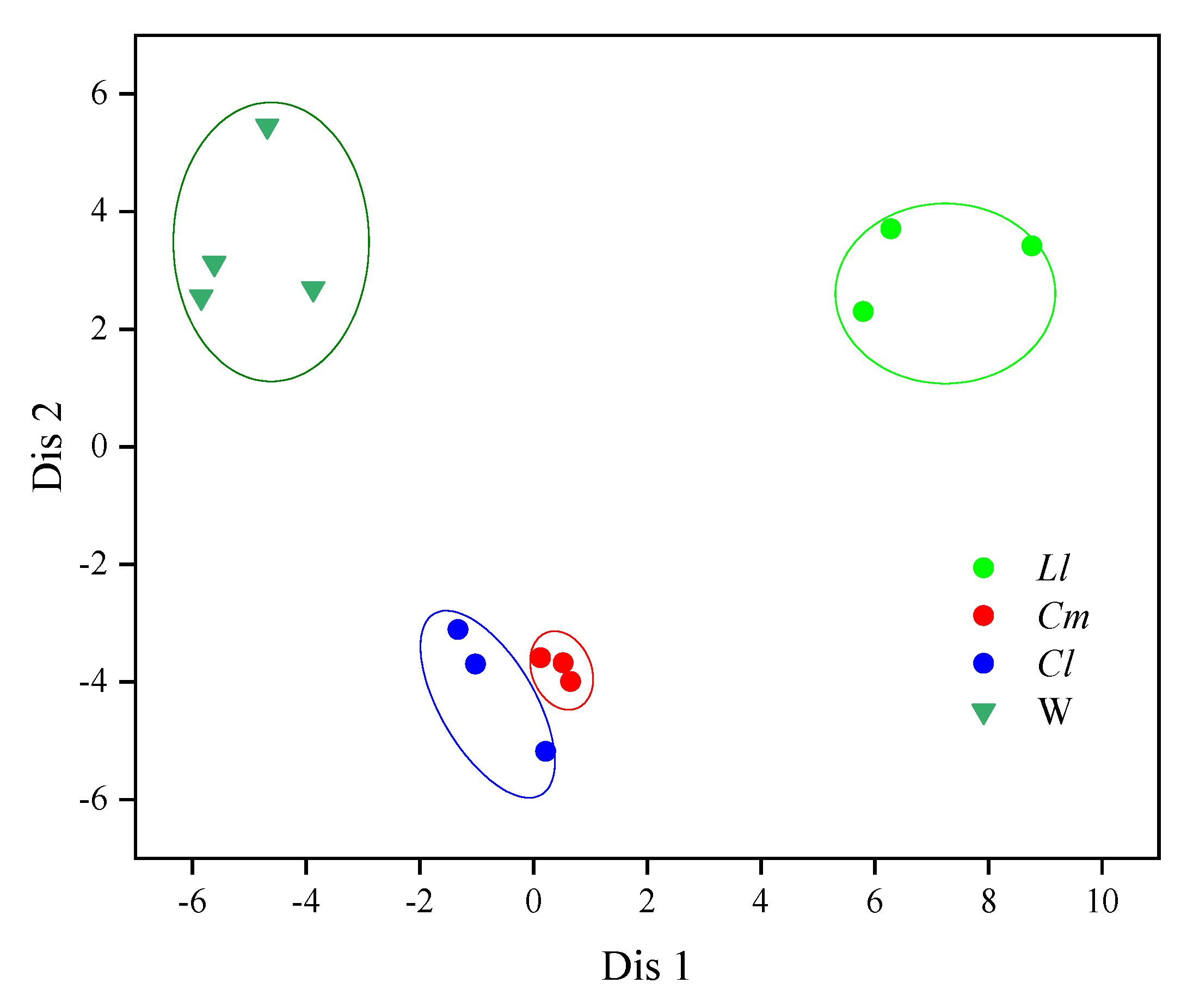
In order to better screen the differential elemental compositions between water and three fish groups, 20 elemental ratios of these four groups were analyzed by LDA, and three differential elemental ratios, Mo/Ca, Ba/C and K/Ca, were screened out (Table 4). Combined with the results of ANOVA (Table 1) for the three screened element ratios among these four groups, it was found that the Mo/Ca differed significantly between the water and L. longirostris, the Ba/Ca differed significantly between the water and C. mystus, and the K/Ca differed significantly between the water and the two fish groups of L. longirostris and C. lucidus, which showed that the three differential discriminant elements were specific differential elements between the water group and the different fish groups, respectively.
In order to verify the effect of the screened three discriminative element ratios on the traceability discrimination between the water and the three fish groups, through LDA, the results showed that the overall discrimination success rate between the water and the three fish groups was 100.00%, and the results of the interactive validation were consistent with the results of the stepwise discrimination (Table 5).
Fitting the scatter plot (Figure 3) of the discrimination results of the three discriminatory element ratios of the water and three fish groups, the results showed that the water group can be clearly distinguished from the fish groups. It showed that although the overall element composition of environmental medium of water is similar to that of fish, there are still a few specific difference elements between these two groups, which can completely distinguish water group from fish groups, indicating that different elements in the environment have different enrichment effects in water and fish, so it is not appropriate to choose water samples as a reference when tracing the origin of fish. In addition, it can be seen that although the water group can be distinguished from fish groups by using the screened specific discriminant element ratios, the distinction between C. mystus and C. lucidus is not obvious, and the distance between them is relatively close (Figure 3), which may be related to the fact that these two species have similar ecological habits and sizes [1].

3.5. Traceability Discrimination among Three Different Fish Species

The differences in elemental composition among different fish are related to their ecological habits and the enrichment and transformation of different elements in the fish. In order to further explore the reasons for the differences in elemental composition among different fish species, the elemental contents of these three fish species were utilized to more directly respond to the results of the accumulation of different elements in the fish. Through LDA of the elemental contents in the muscles of these three fish species (Table S1), five discriminant elements of Mo, Ba, Mn, Sr and Mg, were screened out (Table 6). According to the discriminant element coefficients (Table 6), combined with the ANOVA results of the elements among the three fish groups (Table S1), it can be seen that the main elements that caused the differences among the three fish groups were Mo, Ba, and Mn (Table 6), among which the content of Mo in L. longirostris was significantly higher than that in the other two groups, Ba in C. lucidus was significantly higher than that of the other groups, and Mn in C. mystus was significantly higher than that of the other groups, so it can be seen that Mo, Ba and Mn were the characteristic discriminatory elements in L. longirostris, C. lucidus and C. mystus, respectively.
In order to verify the effect of the three characteristic discriminative elements on the traceability discrimination of different fish groups, through LDA, the results showed that the overall discrimination success rate among the three fish groups was 100.00%, and the results of the cross-validation were consistent with the results of the stepwise discrimination (Table S2). The results of the discriminant analysis of the three fish groups were plotted to obtain the discriminant scatter plot (Figure S3), which showed that the three fish species could be effectively distinguished by using the three screened characteristic discriminant elements. It shows that although the overall element composition of the three fish species is similar, a few selected characteristic discriminant elements can still be used to identify and trace different fish species. It can be seen that discriminant analysis can be used to identify fish species by screening characteristic difference discriminant elements from the muscle of fish with different ecological habits, and even can effectively distinguish small fish with similar ecological types and sizes such as C. mystus and C. lucidus. Therefore, it is feasible and effective to distinguish and trace the origin of fish according to the characteristic elements accumulated by different fish themselves (Table S2, Figure S3).

4. Discussion

Elemental fingerprint refers to the use of the flame of a specific color emitted by inorganic elements during combustion. When analyzing the sample to be tested, because of the different contents of inorganic elements, the results similar to fingerprints with their own unique characteristics can be presented by the instrument [33,34]. Due to the stability and traceability of EFA, it has been widely used in the source tracking of samples, identification of biological species and their association with environmental media. In previous studies, the narrow-geographic origins of Keemun black tea were successfully distinguished from three places using comprehensive elemental fingerprinting and chemometrics [35], and the geographical origin of meat and animal rearing system were assigned using isotopic and elemental fingerprints [36]. As for shellfish products traceability, a common method is to collect their shells for geographic traceability, because their shells are metabolically inert, retain a record of chemical elements adulterated during growth and are not degraded after harvesting [37]. For example, the new evidence of fraudulent mislabeling and illegal harvesting of Ruditapes Philippinarum were found through elemental fingerprints of their shells and chemometric analyses, according to the high content of Mn and P elements in traceable groundwater [38]. In conclusion, EFA has been widely used to trace the origin of species, but in the past, it was mainly used to trace the origin of species with relatively stable origin, and the elemental fingerprints of species could be directly compared with those in their environmental media, but there were few studies on the origin of organisms with variable distribution.
The fish samples in this study were collected from the same waters of the Yangtze River Estuary, but their ecological habits were different, among which L. longirostris is a freshwater fish, mainly distributed in the main stream of the Yangtze River and its tributaries, and is found in both freshwater and brackish water of the Yangtze River Estuary; C. mystus is an estuarine close-migratory fish living in shallow coastal waters or offshore; and C. lucidus is a benthic small-sized fish living offshore [1]. In this study, PERMANOVA and HCA of the three fish species and two environmental media initially revealed that the greatest differences in elemental composition between sediment and fish samples were found. PCA further revealed that the major elemental compositions of the sediments were all significantly different from the other groups, while the major elemental compositions of the water were similar to those of the fish samples. This is due to the fact that the location of the sediments is relatively fixed, and their element accumulation has certain regional limitations, while the distribution areas of the water and fish are variable, and their element enrichment has regional differences. Through LDA, it can be seen that although the main elements of the water and fish are similar, they can be completely distinguished through the discrimination, which indicates that the water and fish have different accumulating effects on different elements, and each has different characteristic discriminatory elements. The above analysis showed that the elemental fingerprint of fishes differed most from those of sediments, and there were specific elemental differences between water, and there was no direct correspondence between the elemental fingerprint of fishes and those of environmental media such as sediments and water. Therefore, when tracing the origin of swimming fish, the sediment and water in the corresponding waters should not be selected as reference media for geographical tracing.
For fish with different ecological habits, L. longirostris lives in the bottom layer of rivers, is a carnivorous fish, and mainly feeds on crustaceans in the Yangtze River Estuary [1], and the characteristic discriminating element in its muscle is Mo. This is due to the fact that the main source of input of Mo from estuaries and seawater is the river, and L. longirostris is mainly distributed in the estuarine biased freshwater areas [39,40]. Another reason is due to the high content of suspended particulate matter in the Yangtze River Estuary, which absorbs heavy metal elements such as Mo and deposits them to the estuarine substrate, thus affecting the accumulation of Mo in the benthic fish of L. longirostris [39,40,41]. C. mystus mostly lives in shallow coastal waters or offshore and the characteristic discriminant element in its muscle is Mn, as Mn ions dissolve in the surface layer of the Yangtze River Estuary and are more likely to be accumulated by C. mystus, which is distributed in the middle and upper layers of the water [42,43]. C. lucidus is an offshore benthic small fish that feeds mainly on benthic organisms and the characteristic discriminant element in its muscle is Ba, as Ba ions combine with sulfate ions in the offshore and are deposited to the bottom of the river, and thus are more likely to be accumulated by the benthic fishes of C. lucidus [44,45]. The above analysis shows that due to the specificity of the ecological habits of different fish, the accumulation of different elements by muscles has their own characteristics and stability, and different fish can be effectively differentiated through discriminant analysis and effectively traced back to the same fish species (Table S2, Figure S2), so the same fish species in the corresponding waters should be selected as the reference for the traceability of the origin of the fish.
EFA is often used to determine the correlation between the elemental composition of the species and its habitat for origin tracing [46]. It is mainly applied to plants such as tea, medicinal herbs, crops, fruits, etc. [25,35], and farmed livestock and poultry such as cows, goats, pigs, chickens, etc. [26,34,36], and benthic shrimps, crabs, mussels and other aquatic species with relatively fixed habitat [37,38]. In this study, we analyzed the correlation between the elemental composition of three fish species and two environmental media, and explored the correlation between the elemental composition of fish and their environmental media. The present study shows that the elemental composition of fishes has the greatest difference with the sediments, and has specific elemental differences with the water. Therefore, we should not choose the sediments and the water as the references for identifying and tracing the origin of the fish species whose distribution areas change in the course of their life histories, and we should choose the fishes themselves as the references for traceability, based on the specificity and stability of the enrichment of the different elements in fishes with different ecological habitats.

5. Conclusion

In this study, we analyzed the elemental compositions of three fish species with different ecological habits in relation to two environmental media, and investigated the differences in elemental fingerprints between fish species and their correlation with that of the sediment and the water of the sampling area. The results showed that there were differences in the major elemental compositions of the fish species in relation to sediment and differences in specific discriminant elements in relation to the water, while there were characteristic elemental differences among different fish species due to their different ecological habits. When tracing the origin of fish with changing habitats, environmental media with poor correlation should not be selected as reference, but the same fish species should be selected as reference according to the specificity and stability of element composition among fish with different ecological habits. The present study provides important theoretical guidance and technical support in distinguishing the differences of elemental composition, and origin tracing of different ecological types of fish, and has important application value in the selection of reference media for species traceability.

Supplementary Materials

The following supporting information can be downloaded at the website of this paper posted on Preprints.org. Table S1: The 20 element contents of L. longirostris (Ll), C. mystus (Cm), C. lucidus (Cl), from the Yangtze River Estuary (mg/kg, mean±SD); Table S2: Results of the discriminant verification analysis for three fish groups of L. longirostris (Ll), C. mystus (Cm) and C. lucidus (Cl) using three characteristic discriminative elements contents in their muscles. Figure S1: PCO analysis of elemental fingerprints between three fish groups (L. longirostris, C. mystus and C. lucidus) and two environmental media (sediment and water). Radius longer and pointing to a group indicates that the element is closer to and contributes more to the group; Figure S2: Clustering dendrogram for 20 elements ratios of L. longirostris (Ll1, Ll2, Ll3), C. mystus (Cm1, Cm2, Cm3), C. lucidus (Cl1, Cl2, Cl3), water (W1, W2, W3, W4) and sediment (S1, S2, S3, S4); Figure S3: Scatter plot of scores based on the first two canonical discriminant functions for three fish groups of L. longirostris (Ll), C. mystus (Cm) and C. lucidus (Cl) using three characteristic discriminative elements contents in their muscles.

Author Contributions

Conceptualization and writing—original draft, C.S. and C.Y.; writing—review and editing, C.S., C.Y., F.L. and H.T.; investigation and methodology, W.Y. and J.X.; resources and funding acquisition, C.S., F.Z. and P.Z.; validation and supervision, H.T. and F. L. All authors have read and agreed to the published version of the manuscript.

Funding

This research was supported by the National Key R&D Program Key Special Project (2022YFF0608203) and Central Public-interest Scientific Institution Basal Research Fund, CAFS (2023TD14).

Institutional Review Board Statement

The experiments comply with current laws of China. All the samples in this study were obtained from legal commercial fisheries, and the samples were dead when they were obtained.

Data Availability Statement

The data presented in this study are available in the article. Further information is available upon request from the corresponding author.

Conflicts of Interest

The authors declare no conflict of interest.

References

  1. Zhuang, P.; Wang, Y.H.; Li, S.F.; Deng, S.M.; Li, C.S.; Ni, Y.; Zhang, L.Z.; Zhang, T.; Feng, G.P.; Ling, J.Z.; et al. Fishes of the Yangtze Estuary; Shanghai Scientific and Technical Publishers: Shanghai, China, 2006; pp. 29-57.
  2. Zhao, Z.M.; Zhao, H.; Wang, X.Y.; Zhang, L.; Mou, C.Y.; Huang, Z.P.; Ke, H.Y.; Duan, Y.L.; Zhou, J.; Li, Q. Effects of different temperatures on Leiocassis longirostris gill structure and intestinal microbial composition. Sci. Rep. 2024,14,7150. [CrossRef]
  3. Li, Y.; Zou, X.X.; Jin, H.H.; Zhou, B.; Zhou, J.; Zhang, L.; Li, Z.; Ling, L.; Liu, F.; Gao, Y.; et al. Identification of genes related to growth from transcriptome profiles of the muscle and liver of Chinese longsnout catfish (Leiocassis longirostris). Comp. Biochem. Phys. D 2024, 49, 101180. [CrossRef]
  4. Yang, M.; Xie, Y.D.; Shi, Y.H.; Sui, C.; Xu J.B. Study on artificial breeding of Chinese longsnout catfish Leiocassis longirostris in Shanghai. Fish. Sci. Technol. Inf. 2024, 2, 77-82.
  5. Yang, J.; Arai, T.; Liu, H.; Miyazaki, N.; Tsukamoto, K. Reconstructing habitat use of Coilia mystus and Coilia ectenes of the Yangtze River Estuary, and of Coilia ectenes of Taihu Lake, based on otolith strontium and calcium. J. Fish Biol. 2006, 69, 1120-1135. [CrossRef]
  6. Zhuang, P.; Zhang, T.; Li, S.F.; Ni, Y.; Wang, Y.H.; Deng, S.M.; Zhang, L.Z.; Ling, J.Z.; Hu, F.; Yang, G.; et al. Fishes of the Yangtze Estuary. China Agriculture Press: Beijing, China, 2018; pp.124-127.
  7. Song, C.; Zhao, F.; Feng, G.P.; Wang, S.K.; Zhuang, P. Comparative study of nutritional composition of adults and juveniles of Coilia mystus collected from the Yangtze Estuary. Indian J. Anim. Res. 2020, 54,1103-1108. [CrossRef]
  8. Zhang, S. Jiang, Y.; Li, M.; Zhu, J.F.; Xu, S.N.; Chen, Z.Z. Life history of spinyhead croaker Collichthys lucidus (Sciaenidae) differentiated among populations from Chinese coastal waters. Aquat. Biol. 2022, 31, 65-76.
  9. Kumar, R.; Jaiswar, A.K.; Sharma, R.; Prasad, L. Quantification of morphological variations among populations of Channa gachua (Hamilton, 1822) from different geographical locations in India. Indian J. Fish. 2020, 67, 114-119. [CrossRef]
  10. Klobucar, S.L.; Rick, J.A.; Mandeville, E.G.; Wagner, C.E.; Budy, P. Investigating the morphological and genetic divergence of arctic char (Salvelinus alpinus) populations in lakes of arctic Alaska. Ecol. Evol. 2021, 11, 3040-3057. [CrossRef]
  11. Guo, H.; Zhang, X.F.; Naslund, J.; Peng, L.Y.; Liu, C.H.; Tian, M.J.; Chai, X.J.; Zhang, D.Y.; Zhang, X.M. Differences in external morphology, body composition and swimming performance between hatchery- and wild-origin marbled rockfish (Sebastiscus marmoratus). Front. Mar. Sci. 2022, 9, 912129. [CrossRef]
  12. Zhu, K.; Wang, H.Z.; Lu, K.X.; Zhu, W.B. Morphological variation and distinction in cultured and wild populations of Pseudosciaena crocea in the East China Sea. Appl. Ecol. Environ. Res. 2024, 22, 2065-2077. [CrossRef]
  13. Purrafee Dizaj, L.; Esmaeili, H.R.; Teimori, A. Comparative otolith morphology of clupeids from the Iranian brackish and marine resources (Teleostei: Clupeiformes). ACTA Zool. 2022, 103, 29-47. [CrossRef]
  14. Qiao, J.L.; Zhu, R.; Chen, K.; Zhang, D.; Yan, Y.Z.; He, D.K. Comparative otolith morphology of two morphs of Schizopygopsis Thermalis Herzenstein 1891 (Pisces, Cyprinidae) in a Headwater Lake on the Qinghai-Tibet Plateau. Fishes 2022, 7, 99.
  15. Zhou, Y.; Xu, L.; He, Z.T.; Cui, W.J.; Lu, Q.; Qin, J.G.; Su, S.Q.; He, T. Discrimination of Schizothorax Grahami (Regan, 1904) stocks based on otolith morphology. Fishes 2023, 8, 504.
  16. Astorga, M.P.; Valenzuela, A.; Segovia, N.I.; Poulin, E.; Vargas-Chacoff, L.; Gonzalez-Wevar, C.A. Contrasting patterns of genetic diversity and divergence between landlocked and migratory populations of fish, evaluated through mitochondrial DNA sequencing and nuclear DNA microsatellites. Front. Genet. 2022, 13, 854362. [CrossRef]
  17. Biton-Porsmoguer, S.; Bou, R.; Lloret, E.; Alcaide, M.; Lloret, J. Fatty acid composition and parasitism of European sardine (Sardina pilchardus) and anchovy (Engraulis encrasicolus) populations in the northern Catalan Sea in the context of changing environmental conditions. Conserv. Physiol. 2020, 8, coaa121. [CrossRef]
  18. Amoussou, N.; Marengo, M.; Afe, O.H.I.; Lejeune, P.; Durieux, E.D.H.; Douny, C.; Scippo, M.-L.; Gobert, S. Comparison of fatty acid profiles of two cultivated and wild marine fish from Mediterranean Sea. Aquac. Int. 2022, 30, 1435-1452. [CrossRef]
  19. Kang, X.M.; Zhao, Y.F.; Tan, Z.J.; Ning, J.S.; Zhai, Y.X.; Zheng, G.C. Evaluation of multivariate data analysis for marine mussels Mytilus edulis authentication in China: Based on stable isotope ratio and compositions of C, N, O and H. J. Food Compos. Anal. 2022, 111, 104627. [CrossRef]
  20. Xuan, Z.Y.; Wang, W.X. Trace elemental and stable isotopic signatures to reconstruct the large-scale environmental connectivity of fish populations. Mar. Ecol. Prog. Ser. 2024, 730, 95-111. [CrossRef]
  21. Leal, M.C.; Pimentel, T.; Ricardo, F.; Rosa, R.; Calado, R. Seafood traceability: current needs, available tools, and biotechnological challenges for origin certification. Trends Biotechnol. 2015, 33, 331-336. [CrossRef]
  22. Song, C.; Yang, C.Y.; Zhao, F.; Xie, J.L.; Tao, H.; Huang, X.R.; Zhuang, P. Using muscle element fingerprint analysis (EFA) to trace and determine the source of Hypophthalmichthys nobilis in the Yangtze River Basin. 2024, 9, 316. [CrossRef]
  23. Cabral, A.E.; Ricardo, F.; Patinha, C.; Silva, E.F.D.; Correia, M.; Palma, J.; Planas, M.; Calado, R. Successful use of geochemical tools to trace the geographic origin of long-snouted seahorse Hippocampus guttulatus raised in captivity. Animals 2021, 11, 1534. [CrossRef]
  24. Fu, X.S.; Hong, X.Z.; Liao, J.Y.; Ji, Q.G.; Li, C.F.; Zhang, M.Z.; Ye, Z.H.; Yu, X.P. Fingerprint approaches coupled with chemometrics to discriminate geographic origin of imported salmon in China’s consumer market. Foods 2021, 10, 2986. [CrossRef]
  25. Zhang, J.; Yang, R.D.; Li, Y.C.; Wen, X.F.; Peng, Y.S.; Ni, X.R. Use of mineral multi-elemental analysis to authenticate geographical origin of different cultivars of tea in Guizhou, China. J. Sci. Food Agric. 2020, 100, 3046-3055. [CrossRef]
  26. Qi, J.; Li, Y.Y.; Zhang, C.; Wang, C.; Wang, J.Q.; Guo, W.P.; Wang, S.W. Geographic origin discrimination of pork from different Chinese regions using mineral elements analysis assisted by machine learning techniques. Food Chem. 2021, 337, 127779. [CrossRef]
  27. Lai, J.; Zhao, L.J.; Fan, Y.C.; Qu, X.C.; Liu, D.Y.; Guo, Z.L.; Wang, Y.H.; Liu, Q.G.; Chen, Y.S. Using whole body elemental fingerprint analysis to distinguish different populations of Coilia nasus in a large river basin. Biochem. Syst. Ecol. 2015, 60, 249-257. [CrossRef]
  28. Zhang, J.H.; Li, X.C.; Guo, L.Q.; Deng, Z.M.; Wang, D.W.; Liu, L.S. Assessment of heavy metal pollution and water quality characteristics of the reservoir control reaches in the middle Han River, China. Sci. Total Environ. 2021, 799, 149472. [CrossRef]
  29. Pecyna-Utylska, P.; Muntean, E.; Kernert, J.; Michalski, R. Indexing methods and chemometric analysis of selected metals and metalloids for drinking water quality assessment in Upper Silesia region, Poland. Int. J. Environ. Anal. Chem. 2023, 103, 5503-5521. [CrossRef]
  30. Orłowski, G.; Niedzielski, P.; Karg, J.; Proch, J. Colour-assisted variation in elytral ICP-OES-based ionomics in an aposematic beetle. Sci. Rep. 2020, 10, 22262. [CrossRef]
  31. Di Donato, F.; Gornati, G.; Biancolillo, A.; D’Archivio, A.A. ICP-OES analysis coupled with chemometrics for the characterization and the discrimination of high added value Italian Emmer samples. J. Food Compos. Anal. 2021, 98, 103842. [CrossRef]
  32. Lossow, K.; Schlörmann, W.; Tuchtenhagen, M.; Schwarz, M.; Schwerdtle, T.; Kipp, A.P. Measurement of trace elements in murine liver tissue samples: Comparison between ICP-MS/MS and TXRF. J. Trace Elem. Med. Biol. 2023, 78, 127167. [CrossRef]
  33. Li, Y.L.; Fan, J.; Jin, H.Y.; Wei, F.; Ma, S.C. New vision for TCM quality control: Elemental fingerprints and key ingredient combination strategy for identification and evaluation of TCMs. Eur. J. Med. Chem. 2024, 281, 117006. [CrossRef]
  34. Danezis, G.P.; Pappas, A.C.; Zoidis, E.; Papadomichelakis, G.; Hadjigeorgiou, I.; Zhang, P.; Brusic, V.; Georgiou, C.A. Game meat authentication through rare earth elements fingerprinting. Anal. Chim. Acta 2017, 991, 46-57. [CrossRef]
  35. Ren, Y.F.; Feng, C.; Ye, Z.H.; Zhu, H.Y.; Hou, R.Y.; Granato, D.; Cai, H.M.; Peng, C.Y. Keemun black tea: Tracing its narrow-geographic origins using comprehensive elemental fingerprinting and chemometrics. Food Control 2022, 133, 108614. [CrossRef]
  36. Dehelean, A.; Cristea, G.; Puscas, R.; Hategan, A.R.; Magdas, D.A. Assigning the geographical origin of meat and animal rearing system using isotopic and elemental fingerprints. Appl. Sci. 2022, 12, 12391. [CrossRef]
  37. Mamede, R.; Patinha, C.; Martins, P.; Ferreira da Silva, E.; Calado, R.; Ricardo, F. Effects of H2O2 pretreatment on the elemental fingerprints of bivalve shells and their implications for the traceability of geographic origin. Heliyon 2024, 10, e25872. [CrossRef]
  38. Mamede, R.; Santos, A.; da Silva, E.F.; Patinha, C.; Calado, R.; Ricardo, F. New evidence of fraudulent mislabeling and illegal harvesting of Manila clams (Ruditapes philippinarum) through elemental fingerprints of their shells and chemometric analyses. Food Control 2024, 163, 110501. [CrossRef]
  39. Jin, Y.J.; He, K.; Xiang, P.; Wang, X.D.; Tong, L.T.; Wei, Z.; Zhang, X.Y.; Song, Z.B. Temporal genetic variation of the Chinese longsnout catfish (Leiocassis longirostris) in the upper Yangtze River with resource decline. Environ. Biol. Fish. 2022, 105, 1139-1151. [CrossRef]
  40. Wang, Q.; Zhou, L.; Algeo, T.J.; Soltanian, M.R.; Liu, J.; Feng, L.P.; Liu, J.C.; Peng, S.H. The geochemical behavior of molybdenum in the modern Yangtze Estuary and East China Sea Shelf. J. Hydrol. 2021, 595, 125997. [CrossRef]
  41. Fan, J.; Fan, D.D.; Wu, Y.J. Spatiotemporal variations of heavy metal historical accumulation records and their influencing mechanisms in the Yangtze River Estuary. Sci. Total Environ. 2023, 854, 158733. [CrossRef]
  42. Zhai, L.; Li, Z.G.; Hu, Y.B.; Huang, C.W.; Tian, S.Q.; Wan, R.; Pauly, D. Assessment of Coilia mystus and C. nasus in the Yangtze River Estuary, China, using a length-based approach. Fishes 2022, 7, 95.
  43. Zhou, D.X.; Ge Y.C.; Jiang Z.Y.; Ruan Y.Q.; Cao F.; Yang S.Y.; Zhang R.F. Seasonal variations of dissolved Mn concentration in the surface water of the Changjiang River Estuary and its adjacent area. Haiyang Xuebao, 2024, 46, 111-120.
  44. Xuan, W.D.; Zhang, H.L.; Zhang, H.B.; Wu, T.; Zhou, Y.D.; Zhu, W.B. Distribution characteristics and driving factors of Collichthys lucidus species in offshore waters of Zhejiang Province, China. Fishes 2024, 9, 83. [CrossRef]
  45. Wang, A.; Wang, Z.H.; Liu, J.K.; Xu, N.C.; Li, H.L. The Sr/Ba ratio response to salinity in clastic sediments of the Yangtze River Delta. Chem. Geol. 2021, 559, 119923. [CrossRef]
  46. Kong, X.B.; Chen, Q.S.; Xu, M.; Liu, Y.H.; Li, X.M.; Han, L.X.; Zhang, Q.; Wan, H.L.; Liu, L.; Zhao, X.; et al. Geographical origin identification of winter jujube (Ziziphus jujuba ‘Dongzao’) by using multi-element fingerprinting with chemometrics. J. Integr. Agric. 2024, 23, 1749-1762. [CrossRef]
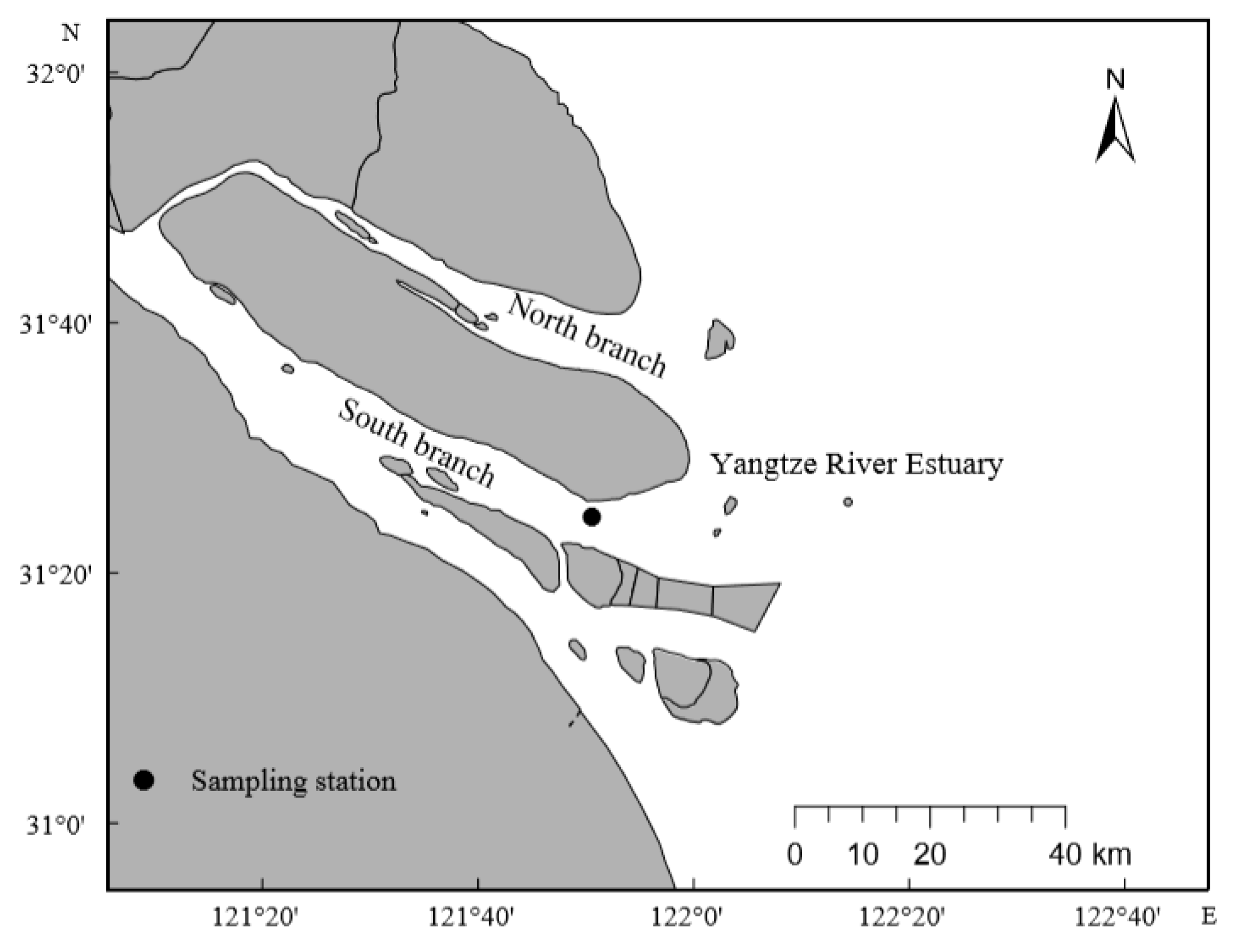
Figure 1. Sampling station.
Preprints 139990 g001
Figure 2. Scatter diagram of PC1 and PC2 (a), and PC1 and PC3 (b), and PC2 and PC3 (c) of 20 element ratios in the muscles of three fish groups and two environmental media.
Preprints 139990 g002
Figure 3. Scatter plot of scores based on the first two canonical discriminant functions for water and three fish groups.
Preprints 139990 g003
Table 1. The 20 element ratios of L. longirostris (Ll), C. mystus (Cm), C. lucidus (Cl), water (W) and sediment (S) from the Yangtze River Estuary (mean±SD).
Index Ll Cm Cl W S p
Co/Ca 39.87± 17.77 a 19.20± 17.88a 15.42± 5.04 a 2.58± 0.27 a 450.56± 55.74 b 0.000
Mo/Ca 154.72± 26.25 a 15.32± 3.37b 21.42± 4.09 b 36.08± 13.07b 20.26± 11.09 b 0.000
Cd/Ca 82.69± 62.16 a 13.51± 2.06b 30.63± 18.88b 0.40± 0.34b 8.71± 3.31 b 0.014
V/Ca 102.78± 43.51 a 28.19± 16.87 a 32.51± 11.31a 53.35± 4.81 a 2919.24± 469.70 b 0.000
Hg/Ca 427.73± 126.48 a 36.69± 9.28b 85.38± 60.37 b 2.38± 0.53 b 4.56± 1.88 b 0.000
Ni/Ca 91.85± 65.88 a 62.52± 45.59 a 81.31± 34.02 a 15.24± 5.08 a 1062.14± 172.80 b 0.000
Ti/Ca 258.89± 73.39 a 68.93± 32.77 a 182.06± 111.84 a 12.16± 3.44 a 98680.53± 13444.56 b 0.000
Ba/Ca 595.17± 345.59 ab 173.90± 42.51 a 815.70± 109.12 ab 1142.99± 133.72 b 16224.68± 679.57 c 0.000
Cr/Ca 1139.59± 444.29 a 259.24± 86.63 a 519.21± 93.59 a 67.62± 35.26 a 2574.02± 1020.62b 0.000
Pb/Ca 397.72± 146.71 ab 203.10± 79.26 a 837.16± 643.09 b 3.26± 1.32 a 841.98± 119.68 b 0.005
Cu/Ca 2199.02± 1382.98a 340.53± 44.45b 638.50± 218.53b 41.73± 10.55 b 607.43± 315.00b 0.006
Mn/Ca 1364.04± 533.93 a 595.63± 137.72 a 574.15± 140.28 a 12.84± 2.58 a 24745.02± 6239.79 b 0.000
Al/Ca 3501.45± 1007.42 a 1753.43± 931.91 a 3685.53± 3102.81 a 27.49± 26.67 a 1909440.87±137470.41 b 0.000
As/Ca 5.47± 2.16 a 3.83± 1.83 a 1.06± 0.32 b 0.04± 0.01 b 0.37± 0.06 b 0.000
Sr/Ca 2.54± 0.37 a 3.61± 1.18 a 3.59± 0.29 a 9.32± 5.83 a 6.75± 0.55 a 0.053
Fe/Ca 45.62± 31.47 a 7.65± 2.92 a 16.75± 10.29 a 0.14± 0.14 a 989.69± 125.44 b 0.000
Zn/Ca 36.67± 13.27 a 8.37± 2.51 a 10.36± 2.86 a 0.04± 0.03 a 137.09± 34.86 b 0.000
K/Ca 23.07± 5.98 a 3.18± 1.16 b 9.41± 2.39 c 0.36± 0.40 b 0.52± 0.01b 0.000
Na/Ca 3.84± 1.98 a 0.54± 0.23 a 1.30± 0.40 a 4.32± 7.67 a 0.41± 0.05 a 0.546
Mg/Ca 1.55± 0.39a 0.26± 0.09 b 0.65± 0.15 ab 0.69± 0.90 ab 0.46± 0.03 ab 0.052
Note: The unit for K, Na, and Mg to Ca is mg/mg, the unit for As, Sr, Fe, and Zn to Ca is µg/mg, and the unit for the remaining elements to Ca is ng/mg. In the same line, different letters (a, b, c) after standard deviation denote significant differences between groups (p<0.05).
Table 2. PERMANOVA comparison for elemental fingerprints between three fish groups and two environmental media.
Groups t p
L. longirostris vs sediment 5.110 0.042
C. mystus vs sediment 4.216 0.035
C. lucidus vs sediment 3.933 0.023
L. longirostris vs water 3.061 0.058
C. mystus vs water 2.333 0.156
C. lucidus vs water 2.831 0.063
Table 3. Principal component matrix and contribution of 20 element rates in the muscles of three fish species and two environmental media.
Variable Principal Component
1 2 3
Co/Ca 0.967 0.208 0.030
Mo/Ca -0.421 0.826 0.115
Cd/Ca -0.352 0.810 -0.099
V/Ca 0.981 0.172 0.046
Hg/Ca -0.454 0.863 -0.010
Ni/Ca 0.972 0.209 0.016
Ti/Ca 0.985 0.151 0.038
Ba/Ca 0.974 0.121 0.059
Cr/Ca 0.803 0.499 0.016
Pb/Ca 0.532 0.324 -0.226
Cu/Ca -0.180 0.911 -0.002
Mn/Ca 0.968 0.199 0.026
Al/Ca 0.980 0.139 0.040
As/Ca -0.483 0.639 -0.237
Sr/Ca 0.210 -0.376 0.887
Fe/Ca 0.978 0.188 0.038
Zn/Ca 0.915 0.378 0.018
K/Ca -0.506 0.839 -0.073
Na/Ca -0.310 0.138 0.924
Mg/Ca -0.359 0.633 0.668
Characteristic Value 10.677 5.331 2.234
Contribution Rate/% 53.387 26.653 11.172
Cumulative Contribution/% 53.387 80.040 91.212
Table 4. Classification function coefficient of 20 element ratios in the water and three fish groups.
Discriminative Elements Ll Cm Cl W
Mo/Ca 0.871 0.056 -0.104 0.716
Ba/Ca 0.001 0.003 0.019 0.061
K/Ca -0.951 -0.004 0.661 -4.981
Constant -58.110 -2.096 -11.265 -48.633
Table 5. Results of the discriminant verification analysis for water and the three fish groups using the three discriminant element ratios.
Method Groups Prediction Category Discriminant Accuracy Comprehensive Discrimination rate (%)
Ll Cm Cl W
Stepwise Discrimination Ll 0 3 0 0 100.0 100.0
Cm 0 0 3 0 100.0
Cl 3 0 0 0 100.0
W 0 0 0 4 100.0
Cross
Verification
Ll 0 3 0 0 100.0 100.0
Cm 0 0 3 0 100.0
Cl 3 0 0 0 100.0
W 0 0 0 4 100.0
Table 6. Classification function coefficient of 20 element contents in the muscle of three fish species.
Discriminative Elements Ll Cm Cl
Mo -19792.114 -32523.073 -28981.547
Ba -1110.222 -1754.700 -1511.046
Mn 687.021 1084.610 931.647
Sr 57.663 92.876 83.095
Mg 5.240 8.344 7.370
Constant -1973.485 -4875.909 -3803.379
Disclaimer/Publisher’s Note: The statements, opinions and data contained in all publications are solely those of the individual author(s) and contributor(s) and not of MDPI and/or the editor(s). MDPI and/or the editor(s) disclaim responsibility for any injury to people or property resulting from any ideas, methods, instructions or products referred to in the content.
Copyright: This open access article is published under a Creative Commons CC BY 4.0 license, which permit the free download, distribution, and reuse, provided that the author and preprint are cited in any reuse.
Prerpints.org logo

Preprints.org is a free preprint server supported by MDPI in Basel, Switzerland.

Subscribe

Disclaimer

Terms of Use

Privacy Policy

Privacy Settings

© 2025 MDPI (Basel, Switzerland) unless otherwise stated