Preprint
Review

This version is not peer-reviewed.

Does the Incorporation of Biochar in Biodegradable Mulch Films Affect Soil Carbon Stock?

A peer-reviewed article of this preprint also exists.

Submitted:

14 November 2024

Posted:

14 November 2024

You are already at the latest version

Abstract

The pollution caused by plastic mulch film in agriculture has garnered significant attention. To safeguard the ecosystem from the detrimental effects of plastic pollution, it is imperative to investigate the use of biodegradable materials for manufacturing agricultural plastic film. Biochar has emerged as a feasible substance for the production of biodegradable mulch film (BDM), significantly improving providing agricultural soil benefits. Although biochar has been widely applied in the BDM manufacturing, the effect of biochar-filled plastic mulch film on soil carbon stock has not been well documented. This study provides an overview of the current stage of biochar incorporated with BDM and summarizes the possible pathway of biochar incorporated BDM on soil carbon stock contribution. The application of biochar incorporated BDM can lead to substantial changes in soil microbial diversity, thereby influencing the emissions of greenhouse gas. These alterations may ultimately yield unforeseen repercussions on the carbon cycles. In light of the current knowledge vacuum and potential challenges, additional study is necessary to ascertain if biochar incorporated BDM can effectively mitigate the issues of residual mulch film and microplastic contamination in agricultural land. However, significant progress remains necessary before BDM may fully supplant traditional agricultural mulch film in agricultural production.

Keywords: 
;  ;  ;  

1. Introduction

Agricultural plastic film is an effective cultivation material to maintain soil temperature and soil water, reduce pesticide usage, prevents soil erosion, and suppresses weed proliferation [1]. Non-biodegradable petroleum-based films such as polyethylene (PE), followed by polypropylene (PP), polyvinyl chloride (PVC), ethylene vinyl acetate (EVA), polymethyl methacrylate (PMMA), and polycarbonate (PC) have been widely utilized in agriculture leading to a significant environmental problem [2]. The main cause of this issue is the exhaustion of fossil fuels used in the production of polymers, which leads to a higher amount of plastic trash being generated and subsequently contaminating the natural environment with microplastics. Microplastics can lead to a decrease in soil aggregation and soil bulk density, while also increasing the rate at which soil water evaporates [3]. The accumulation of agricultural plastic residues has become a concealed threat to the quality and safety of agricultural soil, obstructing gas exchange between soil and water, distributing of water-stable aggregates, bulk density, water retention capacity, and pH value and modifying the soil microbial population [4,5]. In China, the utilization of agricultural film escalated from 600,000 tons in 1981 to 137.9 million tons in 2019, representing a 230-fold growth. The prediction of plastic film usage would reach 228 million tons by 2025 [2]. Hence, it is crucial to conduct additional investigations into biodegradable materials used for agricultural films in order to reduce plastic mulch pollution.
The residual plastic mulch adversely impacts soil structure, characteristics, and moisture absorption, leading to the unsustainable use of agricultural land. Biodegradable plastic films have been engineered for facile degradation by microorganisms into carbon dioxide, methane, water, and microbial biomass [7]. BDM are produced from commonly used Bio-based polymer and fossil-sourced polymer, including polylactic acid (PLA), poly (butylene succinate-co-adipate) (PBSA) poly (butylene adipate-co-terephthalate) (PBAT), poly(butylene succinate) (PBS), poly(caprolactone) (PCL), and poly(vinyl alcohol) (PVOH) [7,8,9]. Employing BDM can improve soil physicochemical and microbiological properties and crop productivity, with certain biodegradable films exhibiting performance comparable to PE plastic films [10,11,12,13]. However, it is premature to advocate for the widespread use of BDM without definitive proof about their potential ecotoxicity to soil ecosystems [14]. Particularly, the effect on soil processes, including carbon sequestration, remains predominantly unexamined [7]. Additionally, the drawback of BDMs remains a topic of discussion concerning the expense of biopolymers which constitute the primary component in BDMs production. Widely utilized biopolymers, such as PLA, necessitate a production cost over 4000 USD per metric ton, whereas traditional polymers are priced at roughly 1000 to 1500 USD per meter ton. Thus, BDMs are approximately 1.5 to 1.8 times more costly than plastic mulches [15].
One alternative approach for reducing the cost of biopolymer manufacture is to incorporate organic materials as a natural filler in the BDM. Natural fillers in biodegradable composite films not only alleviates the detrimental effects of synthetic materials on the environment, such as incomplete decomposition, but also possesses advantageous characteristics, including renewability, and high specific strength, rendering them suitable for the production of composites for diverse applications [9,16]. The creation of materials yielding films with unique properties, such as biodegradability and non-toxicity, is appealing due to their extensive applicability and significantly reduced environmental impact [17]. The novel materials for product the deterioration via the enzymatic activity of bacteria, yeasts, and/or fungi allowing for usage as fertilizers and soil conditioners is required [18]. Several studied has been reported the filling of natural material in BDMs for improving their properties such as empty fruit bunches [19], cotton fibers [20], chitosan [21], alginate [22], starch [23], and cellulose [24]. Previous studies have reported the BDM can improve function of soil conditioner and productivity. Biodegradable mulching sheet containing the highest concentration of urea significantly enhances seedling growth [16]. A separate study indicated that the decomposition of carbon waste ash-reinforced starch films can release the nutrients contained in the ashes into the soil [25].
As previously explained, biochar is able to serve as an alternative natural material for manufacturing the BDM. It is posited that the breakdown of biochar composites with biocomposite-based mulching films can enrich the soil with nutrients following decomposition. The biochar-derived biocomposite presents a viable option for producing BDM due to its elevated biodegradability rate and substantial nutrient content, while addressing the issue of plastic waste contamination. Biochar is a highly aromatic porous carbonaceous material produced through the thermochemical conversion of organic material (such as agricultural waste) in oxygen-limited conditions. Initially, the utilization of biochar as a soil remediation agent has been firmly established in the field of agriculture. These uses encompass enhancing the composition and productivity of depleted soils, retaining soil moisture, and sequestering carbon [26,27]. Biochar possesses distinctive chemical, physical, and biological properties, making it a versatile material with a wide range of applications. Over the past few decades, interest in converting biomass into biochar has grown significantly, driven by its multiple benefits and diverse application potential [28]. As biochar matures, it becomes part of soil aggregates, safeguarding the carbon in biochar and facilitating the stabilization of rhizodeposits and microbial products. Biochar carbon remains in soil for extended periods ranging from hundreds to thousands of years [29]. The physio-chemical properties of biochar, including its three-dimensional reticulated and porous structure, make it an effective long-term carbon storage solution that can also absorb and degrade contaminants. The main benefits of biochar-based materials lie in their highly porous, large surface area, better ion exchange capacity, and plentiful functional groups [30]. The numerous features of biochar can enhance the functionality of BDM. Biochar’s non-graphitic structure is rich in surface functional groups such as C-O, C=O, COOH, OH, etc. These groups have the potential to create additional chemical interactions with a polymer matrix [26]. Considering these properties, the application of biochar as a filler can improve the properties of composites and broaden their usability. For example, it has been reported that biochar improves the composite’s tensile modulus of elasticity, and strength of Hemp-PLA composites [31] and enhances mechanical properties, thermal transitions, and biodegradability poly(butylenesuccinate) (PBSu) [32]. Biochar composite with BDMs for various functions has now increasingly studied including as a fertilizer carrier [33].
The emission reduction commitments outlined in the Paris Agreement have been enhanced on a worldwide scale since 2020. Reducing greenhouse gas (GHG) emissions and storing carbon are two essential methods to address global warming [27]. Soil, which is the greatest reservoir of organic carbon (OC) on land, contains a greater amount of OC than the total amount found in global plants and the atmosphere [34]. Nevertheless, the majority of soil organic carbon (SOC) pools, including forests, permafrost, and wetlands, are not actively controlled or manipulated. Only agricultural soil has the potential to be actively managed in order to enhance carbon sequestration [35]. Therefore, the sequestering OC in agricultural soil has gained significant societal and scientific interest because of its significant impact on soil health and the mitigation of climate change [36] Increased soil carbon sequestration in agriculture can be accomplished by many management techniques, such as implementing cover cropping, practicing no-tillage, rotating crops, and incorporating organic matter. These strategies promote plant development and enhance soil microbial activity. These mechanisms result in the breakdown of stable carbon, hence preventing its emission into the atmosphere [37].
As the abovementioned, filling natural material is necessary for enhance the practical application of BDM. While numerous studies have examined the role of biochar enhance the mechanical properties of BDMs, limited research has demonstrated the practical application of biochar composite on BDMs for the soil carbon stock contribution after its degradation. The debate issue for soil carbon sequestration under treated with BDM remains largely unstudied. To date, a few studies has reported the application of biochar integrated with agricultural mulch film on enhance soil carbon [38]. Thus, the objective of this review is to investigate the efficacy of biochar incorporated in BDMs in enhancing soil carbon sequestration in agricultural soils. Two key inquiries were addressed: 1) The application of biochar integrated with various bioplastic mulch films, and 2) the potential contribution of biochar incorporated in BDM to soil carbon sequestration. This study provides insights into BDMs incorporated with biochar as an alternative material in the agricultural production for reducing the greenhouse gas emission. This review emphasizes the theoretical and empirical findings regarding the physical and chemical impacts of biochar-derived BDM on soil carbon sequestration. This evaluation would facilitate the progression of sustainable materials and the enhancement of environmental consciousness.

2. Quantitative Assessment of the Publications

The annual publication count was aggregated to analyze the trend of BDM research, as illustrated in Figure 1. In the beginning of the investigation, only 13 articles related of BDM were published in 2001. The research initially concentrated on the characterizations of as-produced BDM [39]. The increased of publications from ten years later accounted for 50% in compared to those from beginning. While, the development of BDM by incorporating of natural materials into BDM has been happening after 2005. Two decades later, the study viewpoints were varied, encompassing natural material filler [25,40], biodegradation validation on the soil environment [8]. The significant rise of publications was noted in 2024, reaching up to 56 times that of 2001. Interestingly, the quantity of BDM publications rose from 502 to 738 within a single year (2023 to 2024). Even the environmental impact such as carbon footprint analysis under BDM was highly investigated [12,41,42]. Therefore, the figure indicates a substantial rise in the number of publications post-2015, particularly from 2020 onwards concerning the practical application of BDM on soil functions. This probably directs an increasing interest in advancing technology pertinent to soil management and environmental sustainability. The evaluation of environmental impact, particularly on the soil environment of BDM, which directly affects sustainable agricultural development, has garnered significant attention from researchers. Also, the advancement of research methodologies facilitated the evolution of BDM [14].
The literature study indicates that the potential benefits of utilizing biochar as an additive in BDM have been reported since 2015 [43,44]. The documentation outlines the possible benefits of incorporating biochar as an ingredient in BDM products, highlighting its advantageous properties such as elevated surface area and enduring chemical and physical stability. Documented enhancements in the performance of polymer–biochar composites encompass increased water adsorption, heat resistance, and rigidity [45]. Despite the documented use of biochar as an addition in BDM since 2015, current investigations into the impact of biochar-enriched BDM on soil carbon have garnered less focus.

3. Comparative Assessment of BDM Degradation in Soil

BDM is not pure polymers; rather, they require degradation in an agricultural setting through the activity of indigenous microbes, some of which may or may not degrade under specific environmental conditions [46]. Thus, to examine the practical application of BDM concerning degradation in the soil environment, a synopsis of the bioplastic type is essentially investigation. The literature analysis indicates the summary of polymers-based agricultural mulches production and their corresponding rates of biodegradation in soil as shown in Table 1. Biodegradability under typical environmental conditions is not contingent upon the polymer’s source; rather, its chemical structure and physical qualities are critical determinants [8]. Plastic mulch films have been replaced with BDM. These mulches should be tilled into the soil after usage so that natural microbes can break down the plastic. BDM can be made from either biobased polymer generated by plants or microbes or fossil-derived materials [46]. The category of biodegradable polymers comprises bio-based material including cellulose, starch, PLA, and poly (hydroxyalkanoates) (PHAs). Biodegradable polymers originating from fossil-based sources encompasses PBAT, poly (butylene succinate) (PBS), PBSA, PCL, and PVOH. When evaluating the biodegradable polymer derived from renewable resources, its primary advantage is in its ability to replenish the carbon cycle, as the duration required for production and conversion to biomass is comparable. Biodegradable polymers derived from bio-based resources convert to biomass significantly more rapidly than fossil-based polymers, which require millions of years for the same process [8]. However, mulch film properties cannot be predicted based on the properties of pure polymers. The study of Arias et al. [47] and Gattin et al. [48] reported that the degradation behavior of PLA was modified upon blending with PHB and other additives, leading to alterations in the miscibility of the polymer components. To combat plastic pollution, cradle-to-cradle strategies focused on the creation of highly recyclable and biodegradable polymers with minimal environmental impact are gaining traction [13,49]. One approach to mitigate the greenhouse gas emissions generated by plastics is to substitute fossil-based plastics with bio-based alternatives [50].

4. Biochar-Bioplastic Composite in Biodegradable Mulch Film

The utilization of biochar as a versatile filler in BDM has garnered significant interest from the scientific community in recent years, owing to its remarkable potential for creating sustainable and high-performance materials. The primary advantages of utilizing biochar as a filler in the fabrication of BDM pertain to the enhancement of mechanical properties, electrical conductivity, and thermal stability, facilitated by the incorporation of a sustainable and renewable material [51]. Most polymer composites consist of a thermoset or thermoplastic matrix combined with organic fillers such as PHA, PLA, and PHB [9].
Table 2 presents a summary of prior articles about the development of biochar bioplastic composites for agricultural mulch films. Biochar has been utilized as an ingredient in BDM items owing to its advantageous properties, such as elevated surface area and enduring chemical and physical durability. Documented enhancements in the efficacy of polymer–biochar composites encompass increased water adsorption, heat resistance, and stiffness. The advantages of preventing organic waste disposal in landfills (which may produce methane emissions) and sequestering carbon inside the biochar material enhance its appropriateness for incorporation into circular manufacturing systems [45].
Biodegradable plastic has emerged as a favored substitute for traditional plastic in response to the plastic pollution challenge. The superior mechanical qualities of bioplastics enable their application in various potential areas, including agriculture. Nonetheless, bioplastics are infrequently selected as the primary material due to their significantly elevated cost. Consequently, a cost-effective natural filler, readily obtainable from agricultural waste, is suggested for incorporation into the polymer to create a biocomposite [16]. The potential of food-waste derived biochar as a filler material and its associated problems, including inadequate dispersion and heightened thermal degradation in PLA. A significant discovery of this study is that biochar produced from food waste enhanced the degradation rate of PLA under composting conditions, exhibiting nearly double the mass loss after 40 days in samples with high biochar content compared to pure PLA [52]. The use of biochar resulted in an enhancement of the elastic modulus while preserving elevated deformation values. Measurements of the water contact angle indicated an enhancement in the hydrophobic properties of the biocomposite films relative to PBAT. Furthermore, accelerated deterioration testing, monitored through tensile tests and spectroscopic analysis, demonstrated that the filler conferred photo-oxidative resistance to PBAT by postponing degradation processes [53]. Assess the potential of biochar generated from various biomass residues, including cassava rhizome, durian peel, pineapple peel, and corncob, as a filler or reinforcement to enhance the mechanical characteristics of polylactic acid (PLA). Among these biomass residues, carbon-rich biochar obtained from durian peel shown significant improvement in the mechanical properties of PLA-biochar composites. The tensile strength and elongation at break of the PLA composite diminished upon incorporation of durian biochar, decreasing from 14.9% to 10.4%. This may be attributed to the inefficiencies in stress transfer and the uneven distribution of biochar particles inside the matrix [54].
Table 2. Summary of the biochar-bioplastic composite in fabrication of mulch film.
Biochar feedstock Biochar loading (wt %) Base Polymer Key finding Citation
Dairy manure
Wood chip
10 PCL
PLA
Biochar’s moisture content contributed to the hydrolytic degradation of the synthesized polymer. [55]
Cassava rhizome
Durian peel
Pineapple peel
Corncob
0.25 PLA Carbon content in biochar improved mechanical properties (tensile elastic modulus and impact energy) of PLA/biochar composites. [54]
Beechwood 5 PLA Incorporating 5 wt% of biochar improved the composite’s tensile modulus of elasticity and strength. [31]
Spent ground coffee 1, 2.5, 5, and 7.5 PLA The content of BC highly influenced the ultimate properties of the PLA/BC biocomposites [56]
Switchgrass 12 PLA Biochar significantly enhanced the hydrophobicity and mechanical characteristics relative to the control film. [57]
Wood chips 10, 15, 20, and 30 PBAT/PLA The degradation time of the composites was prolonged by a biochar content exceeding 15 wt%, which was attributed to the entrapment of PLA and/or PBAT within the matrix. [58]
Post-consumer food waste 2.5, 5, 10, and 20 PBAT/PLA The degradation rate of PLA was significantly increased by biochar under composting conditions, resulting in a nearly doubled mass loss in samples with a high biochar content after 40 days compared to neat PLA. [52]
Wood
Sewage sludge
10, 20 PLA The use of biochars in biocomposites resulted in a reduction of the mechanical characteristics and impact strength as compared to PLA. [59]
Pelleted miscanthus straw 1, 2.5, 5 PBS The disintegration rate of biocomposites through enzymatic hydrolysis increased as the biochar content increased. [32]
Birch and beech wood 5, 10, 20 PBAT The elastic modulus was improved by biochar, while the deformation values were maintained at a high level. [53]
Carob waste 10 and 20 PBAT The dispersion grade and compatibility of biochar particles within the PBAT matrix were outstanding. [60]
Waste coffee grounds 10, 20, and 30 PCL The modulus of elasticity and tensile strength were not significantly impacted by the addition of biochar, despite the fact that the elongation at break decreased. [45]
Wood 50 PBAT A comprehensive techno-economic analysis and life cycle assessment indicated that biochar is currently not a viable choice in film production. [60]
PLA: Poly (lactic acid); PHA: Polyhydroxyalkanoate; PHB: Poly (3-hydroxybutyrate); PBAT: Poly butylene-adipate-co-terephthalate; PCL: Poly (ɛ-caprolactone); PBS: Polybutylene succinate.
However, the ambiguous present circumstances regarding incorporated of biochar in AFM are currently being addressed. The cost of production BDMs has been costly. Additionally, elevated manufacturing costs have consistently been a significant constraint for biopolymers. Widely utilized biopolymers, such as PLA, necessitate a production cost over 4000 USD per metric ton, whereas traditional polymers are priced at roughly 1000 to 1500 USD per meter ton. Consequently, BDMs are roughly 1.5 to 1.8 times more expensive than plastic mulches [15]. A comprehensive techno-economic analysis and life cycle assessment indicated that biochar is currently not a viable choice in film production. Biochar formulas necessitated increased thickness, adversely affecting both cost and environmental impact of the film [38]. The promotion of biodegradable films encounters several challenges, namely high costs, farmers’ reluctance to use them, and difficulties in their promotion. The government ought to cultivate and leverage ample and cost-effective biological resources tailored to local conditions, while establishing film production enterprises to minimize transportation expenses, thereby decreasing unit prices and increasing farmer’s propensity to purchase and utilize biodegradable films effectively [42].

5. Effects Biodegradable Mulch Film on Soil Carbon Dynamic

Although BDM may exhibit properties similar to traditional mulches when employed as a surface barrier, their ultimate outcomes are markedly different. Traditional films must be extracted from the soil surface, whereas BDM are intended to be incorporated into the soil and decomposed by microorganisms. BDM has an ability to decompose in the soil system, thus, they may directly affect soil carbon dynamics [61].
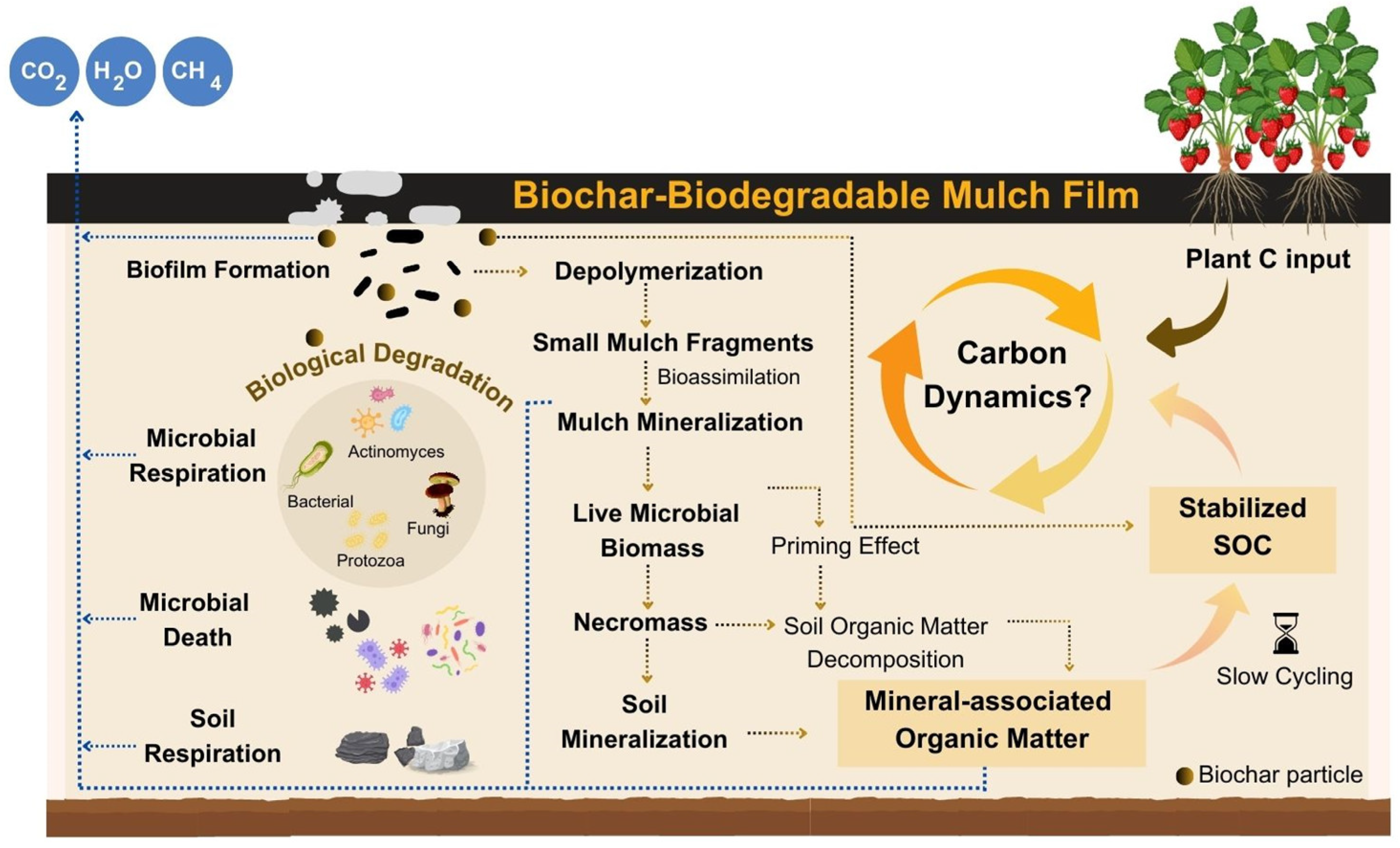
Figure 2 shows the possible pathway of soil carbon stock contributing from the biochar incorporated with BDM after its deterioration. Biofilm formation is the initial step involving the development of microbial community on BDMs surface via the release of extracellular polymeric molecules [55]. The enzymatic activity following biofilm development is the primary contributor to the next stage which is depolymerization [62,63]. Depolymerization facilitates the disintegration of polymer chains into smaller molecules, including oligomers, trimers, dimers, and monomers, through the activity of extracellular enzymes. Subsequently, low molecular weight compounds, including dimers and monomers, are metabolized via transportation across the cell membrane which called bioassimilation [8]. Finally, mineralization, or complete biodegradation, denotes the breakdown of polymer fragments into mineralized constituents and biomass with production of CO2 and H2O under aerobic circumstances [8,64]. The mulch fragments in the soil are subsequently converted by microbial activity into CO2 and microbial biomass. A fraction of the carbon from BDMs that is assimilated into living microbial biomass converting into necromass upon the death of microorganisms [65]. This material can additionally generate mineral-associated organic matter or be contained inside soil aggregates, thereby becoming persistent SOC [66]. Consequently, carbon obtained from BDMs can convert into stable SOC, potentially sequestering that carbon for an extended duration [65] as presented in Figure 2. Effective management of soil carbon on agricultural land is essential for sustainable crop production and the maintenance of soil ecosystem processes. Two crucial components of SOC, labile organic carbon and refractory organic carbon, are vital for the cycling and sequestration of organic carbon in soil [67]. According to reports, BDMs can have a direct impact on SOC pools by releasing carbon into the soil [68]. BDM regulations stipulate that 90% of the organic carbon in the plastics, either in relation to the absolute amount of organic carbon or a control substance, must be converted to CO2 in standardized laboratory tests [68]. It is anticipated that as much as 10% of the carbon from BDMs may be converted into stable SOC annually. This indicates a possible enhancement in soil carbon stock of roughly 7.3 g C m² after 5 years, 14.6 g C m² after 10 years, and 29.2 g C m² after 20 years of sustained application, presuming a standard mulch weight and carbon concentration [69]. While, microbial necromass carbon constitutes 40%–55% of total soil carbon, predominantly derived from fungal necromass carbon, which accounts for 75% of this fraction. The microbial necromass carbon increased with the application of biodegradable materials, as the degradation of the film offered a more accessible substrate for microbes, resulting in enhanced microbial proliferation and, subsequently, an increase in microbial necromass carbon [7]. The addition of readily available C substrate with BDM might have caused the positive priming in soils. While, traditional polyethylene plastic films exhibited a negative correlation between the priming effect and mineralization in Vertisol soil during the incubation period at both 20°C and 30°C, as well as in Ferralsol soil at 20°C [12,64].
Previous study has proven the features of biochar that contribute to soil carbon. Biochar possesses the potential to serve as a crucial and readily available resource for sustainable agriculture, since it may effectively trap substantial amounts of carbon in soil over time, enhancing soil fertility, increasing crop output, and alleviating global warming [70]. Microorganisms can readily inhabit the biochar surface, providing an excellent environment and a supply of labile carbon and mineral nutrients [71]. The accumulation of bacterial and fungal necromass carbon is also affected by soil characteristics. Increased soil moisture and nutrient availability facilitate the accumulation of both fungal and bacterial necromass [7]. The incorporation of carbon-rich materials into the soil, including biochar may facilitate the release of carbon, so augmenting SOC pools [72,73]. The incorporation of biochar into in a rice paddy soil can enhance SOC by an average of 39%. This rise is markedly greater than that observed in conventional techniques such as conservation tillage and cover cropping, which typically provide SOC increases of 6-8% [74]. Long-term effects of biochar revealed that its application might increase native soil organic carbon storage by 44 - 242% in macro-aggregates after three years, demonstrating significant enduring advantages [75]. Biochar generally consists of 62.2% to 92.4% carbon varied on the feedstock types and synthesis parameters [76]. If we conservatively estimate that a carbon in biochar is released into the soil following the degradation of BDMs, the carbon buildup in the soil could reach up compared to BDMs alone. Thus, with the carbon containing in biochar incorporated BDMs, the carbon from biochar would also be released into the soil as a carbon reservoir. However, the amount of the biochar dosage in the BDMs (Table 2) is extremely influenced the carbon stock in the soil.
Biochar is becoming recognized as a viable approach for addressing climate change and improving soil carbon storage [77]. The degradation of biochar produced from ryegrass via compound-specific 14C analysis. The results indicated an extraordinarily sluggish disintegration rate, with the biochar depleting merely 7 × 10⁻⁴% of its carbon content daily under optimum conditions [78]. This indicates that it would require about 400 years for the biochar to undergo a simple 1% decrease in its carbon content [77]. These findings present compelling data that substantiates the persistent efficacy of biochar as a carbon sink, affirming its potential as a sustainable and durable solution for soil carbon sequestration. A fraction of the carbon from BDM that is assimilated into living microbial biomass would convert into necromass following the death of microorganisms. BDM material can additionally generate mineral-associated organic matter or be contained inside soil aggregates, thereby becoming persistent soil organic carbon. Consequently, carbon obtained from plastic can convert into stable soil organic carbon, potentially sequestering that carbon for an extended duration. Consequently, prolonged utilization of biodegradable plastic mulch may enhance soil carbon reserves, thereby improving soil health [65].
Biochar is recognized for its durability in soils, efficiently sequestering carbon for extended durations. Utilization of biochar in mulch films not only enhances soil carbon reservoirs but also decreases greenhouse gas emissions linked to conventional plastic mulches [79]. The integration of biochar with biodegradable mulch has demonstrated a substantial reduction in the carbon footprint of industrial systems. The incorporation of BDMs with carbon sequestration technologies has substantial environmental advantages, especially in improving soil health and alleviating climate change effects. This is a comprehensive summary derived from recent research. BDMs contain organic carbon, typically containing 60-80% carbon. When BDMs decompose, they contribute to soil organic matter, influencing biogeochemical cycling and potentially increasing soil carbon stocks. The studies of Zhou et al. [80] suggest that BMF can contribute approximately 0.30 tons of carbon per hectare per year to the soil, which complements other organic inputs like crop residues and root systems. Menossi et al. [81] also reported that BDMs contribute to soil organic matter, helping to sequester carbon and mitigate climate change impacts. After the fragmentation phase, microflora transforms the residual breakdown products of BDMs into carbon dioxide, methane, water, or biomass through the mineralization process, without harm. BDMs composed of biochar can efficiently breakdown in situ, reintegrating organic matter into the soil without producing detrimental leftovers. The decomposition process is enhanced by microbial activity, which transforms leftover components into innocuous byproducts such as carbon dioxide and water [81]. BDMs are incorporated into the soil at the conclusion of the growing season, adding physical fragments and a carbon source, as well as other constituents of the plastic films (additives, plasticizers, minerals, etc.) that may further affect soil communities and their processes [82]. Research indicates that biodegradable mulches possess a high organic carbon content. Their incorporation into the soil enhances carbon storage and elevates organic carbon levels [83]. Soil microbes utilize the carbon from PBAT to derive energy, hence augmenting the soil’s carbon store [11]. Furthermore, the increase in warmth and humidity due to mulching may facilitate the mineralization of organic carbon in the soil, and studies suggest that mulching expedites the decomposition of soil organic carbon during the latter phases of crop development [10]. Although numerous reports state that mulching can increase the soil’s organic carbon contents, whereas some claim that there is a decrease [7]. While biochar is considered a carbon-negative material, its use as a filler can led to an increase in certain environmental impacts. For example, formulations using biochar were found to have a slightly higher global warming potential (3% increase) and a substantial impact on land use (+339%) compared to traditional fillers [38]. The disparity in carbon footprints between plastic films and BDM settings illustrates variations in the production processes of plastic films. The overall greenhouse gas emissions from the manufacturing of standard polyethylene amount to 2,590 kg CO2-equivalent per hectare. The manufacture of polyethylene utilizes more fossil energy than biodegradable mulch, which decomposes entirely into water and carbon dioxide through the activity of environmental microorganisms and can be tilled directly without hand removal post-harvest [42].

5. Conclusions

Biochar has a direct effect the characteristics of synthesized BDM. The enhancement of mechanical properties and increasing the breakdown rate has been mentioned in the literature. Frequent incorporation of biochar-BDM composite pieces into soil may modify the soil’s physical environment and serve as a novel carbon source for microorganisms. While the overall carbon contribution from BDMs is minimal, their stimulatory effect on microbial activity may increase soil microbial biomass and, subsequently, soil organic matter. Nevertheless, substantial gaps remain in the current understanding of the effects of continuous BDM consumption on soil carbon stock. To address these knowledge gaps, long-term research is necessary to assess soil health and sustainability consequences, particularly regarding soil carbon impacts. Prolonged field trials are necessary to measure the greenhouse gas emissions (the CO2 equivalent of methane, nitrous oxide, and alterations in soil organic carbon).

Author Contributions

Conceptualization, K.I., P.K., C.S., R.R., C.U., and N.K.; formal analysis, K.I., N.K.; writing—original draft preparation, K.I.,; writing—review and editing, K.I. and N.K., ; visualization, K.I.; supervision, C.S., P.K., R.R., and C.U., All authors have read and agreed to the published version of the manuscript.

Funding

The APC was funded by Chiang Mai University.

Data Availability Statement

Data available on request.

Acknowledgments

Authors would like to thank Naresuan University and Chiang Mai University.

Conflicts of Interest

The authors declare no conflicts of interest.

References

  1. Y. Fei et al., “Response of soil enzyme activities and bacterial communities to the accumulation of microplastics in an acid cropped soil,” Sci. Total Environ., vol. 707, p. 135634, 2020. [CrossRef]
  2. T. Jin, J. Tang, H. Lyu, L. Wang, A. B. Gillmore, and S. M. Schaeffer, “Activities of Microplastics (MPs) in Agricultural Soil: A Review of MPs Pollution from the Perspective of Agricultural Ecosystems,” Apr. 13, 2022, American Chemical Society. [CrossRef]
  3. K. Malińska, A. Pudełko, P. Postawa, T. Stachowiak, and D. Dróżdż, “Performance of Biodegradable Biochar-Added and Bio-Based Plastic Clips for Growing Tomatoes,” Materials, vol. 15, no. 20, Oct. 2022. [CrossRef]
  4. M. Rosseto, D. D. C. Krein, N. P. Balbé, and A. Dettmer, “Starch–gelatin film as an alternative to the use of plastics in agriculture: a review,” Dec. 01, 2019, John Wiley and Sons Ltd. [CrossRef]
  5. A. A. de Souza Machado, W. Kloas, C. Zarfl, S. Hempel, and M. C. Rillig, “Microplastics as an emerging threat to terrestrial ecosystems,” Apr. 01, 2018, Blackwell Publishing Ltd. [CrossRef]
  6. Y. Zhang et al., “The effect of C:N ratio on heterotrophic nitrification in acidic soils,” Soil Biol Biochem, vol. 137, p. 107562, 2019. [CrossRef]
  7. Y. Xue et al., “Long-term mulching of biodegradable plastic film decreased fungal necromass C with potential consequences for soil C storage,” Chemosphere, vol. 337, Oct. 2023. [CrossRef]
  8. A. Bher, P. C. Mayekar, R. A. Auras, and C. E. Schvezov, “Biodegradation of Biodegradable Polymers in Mesophilic Aerobic Environments,” Oct. 01, 2022, MDPI. [CrossRef]
  9. Gul-E-Nayyab et al., “A Review on Biodegradable Composite Films Containing Organic Material as a Natural Filler,” J Inorg Organomet Polym Mater, Sep. 2024. [CrossRef]
  10. M. Yin, Y. Li, H. Fang, and P. Chen, “Biodegradable mulching film with an optimum degradation rate improves soil environment and enhances maize growth,” Agric Water Manag, vol. 216, pp. 127–137, May 2019. [CrossRef]
  11. M. T. Zumstein et al., “Biodegradation of synthetic polymers in soils: Tracking carbon into CO2 and microbial biomass,” Sci Adv, vol. 4, no. 7, p. eaas9024, 2018. [CrossRef]
  12. V. Guliyev et al., “Degradation of Bio-Based and Biodegradable Plastic and Its Contribution to Soil Organic Carbon Stock,” Polymers (Basel), vol. 15, no. 3, Feb. 2023. [CrossRef]
  13. S. RameshKumar, P. Shaiju, K. E. O’Connor, and R. B. P, “Bio-based and biodegradable polymers - State-of-the-art, challenges and emerging trends,” Curr Opin Green Sustain Chem, vol. 21, pp. 75–81, 2020. [CrossRef]
  14. L. Liu et al., “It is still too early to promote biodegradable mulch film on a large scale: A bibliometric analysis,” Aug. 01, 2022, Elsevier B.V. [CrossRef]
  15. M. Velandia, A. Smith, A. Wszelaki, and T. Marsh, “The Economics of Adopting Biodegradable Plastic Mulch Films,” 2018. [Online]. Available: https://ag.tennessee.edu/biodegradablemulch/Pages/biomulchprojects.aspx.
  16. J. Y. Chua, K. M. Pen, J. V. Poi, K. M. Ooi, and K. F. Yee, “Upcycling of biomass waste from durian industry for green and sustainable applications: An analysis review in the Malaysia context,” Jun. 01, 2023, Elsevier Ltd. [CrossRef]
  17. J. H. R. Llanos and C. C. Tadini, “Preparation and characterization of bio-nanocomposite films based on cassava starch or chitosan, reinforced with montmorillonite or bamboo nanofibers,” Int J Biol Macromol, vol. 107, pp. 371–382, 2018. [CrossRef]
  18. V. Trinetta, “Biodegradable Packaging,” in Reference Module in Food Science, Elsevier, 2016. [CrossRef]
  19. K. Sirivechphongkul et al., “Agri-Biodegradable Mulch Films Derived from Lignin in Empty Fruit Bunches,” Catalysts, vol. 12, no. 10, 2022. [CrossRef]
  20. Z. Tan, Y. Yi, H. Wang, W. Zhou, Y. Yang, and C. Wang, “Physical and degradable properties of mulching films prepared from natural fibers and biodegradable polymers,” Applied Sciences, vol. 6, no. 5, 2016. [CrossRef]
  21. D. Merino, A. Y. Mansilla, T. J. Gutiérrez, C. A. Casalongué, and V. A. Alvarez, “Chitosan coated-phosphorylated starch films: Water interaction, transparency and antibacterial properties,” React Funct Polym, vol. 131, pp. 445–453, 2018. [CrossRef]
  22. G. Liling, Z. Di, X. Jiachao, G. Xin, F. Xiaoting, and Z. Qing, “Effects of ionic crosslinking on physical and mechanical properties of alginate mulching films,” Carbohydr Polym, vol. 136, pp. 259–265, Jan. 2016. [CrossRef]
  23. H. Gao, C. Yan, Q. Liu, W. Ding, B. Chen, and Z. Li, “Effects of plastic mulching and plastic residue on agricultural production: A meta-analysis,” Science of The Total Environment, vol. 651, pp. 484–492, 2019. [CrossRef]
  24. N. Pinpru, T. Charoonsuk, S. Khaisaat, O. Sawanakarn, N. Vittayakorn, and S. Woramongkolchai, “Synthesis and preparation of bacterial cellulose/calcium hydrogen phosphate composite film for mulching film application,” Mater Today Proc, vol. 47, pp. 3529–3536, 2021. [CrossRef]
  25. E. Stasi et al., “Biodegradable carbon-based ashes/maize starch composite films for agricultural applications,” Polymers (Basel), vol. 12, no. 3, Mar. 2020. [CrossRef]
  26. D. She et al., “Development of black and biodegradable biochar/gutta percha composite films with high stretchability and barrier properties,” Compos Sci Technol, vol. 175, pp. 1–5, May 2019. [CrossRef]
  27. L. Luo et al., “Carbon Sequestration Strategies in Soil Using Biochar: Advances, Challenges, and Opportunities,” Aug. 08, 2023, American Chemical Society. [CrossRef]
  28. Y. Xie et al., “A critical review on production, modification and utilization of biochar,” J Anal Appl Pyrolysis, vol. 161, p. 105405, 2022. [CrossRef]
  29. S. Joseph et al., “How biochar works, and when it doesn’t: A review of mechanisms controlling soil and plant responses to biochar,” Nov. 01, 2021, John Wiley and Sons Inc. [CrossRef]
  30. M. Qiu et al., “Biochar for the removal of contaminants from soil and water: a review,” Dec. 01, 2022, Springer. [CrossRef]
  31. M. Zouari, D. B. Devallance, and L. Marrot, “Effect of Biochar Addition on Mechanical Properties, Thermal Stability, and Water Resistance of Hemp-Polylactic Acid (PLA) Composites,” Materials, vol. 15, no. 6, Mar. 2022. [CrossRef]
  32. K. Papadopoulou et al., “Synthesis and Study of Fully Biodegradable Composites Based on Poly(butylene succinate) and Biochar,” Polymers (Basel), vol. 15, no. 4, Feb. 2023. [CrossRef]
  33. J. Li et al., “Liquid mulch films based on polysaccharide /furfural Schiff base adducts with pH-controlled degradability,” Ind Crops Prod, vol. 216, Sep. 2024. [CrossRef]
  34. K. Paustian, J. Lehmann, S. Ogle, D. Reay, G. P. Robertson, and P. Smith, “Climate-smart soils,” Nature, vol. 532, no. 7597, pp. 49–57, 2016. [CrossRef]
  35. B. Guenet et al., “Can N2O emissions offset the benefits from soil organic carbon storage?,” Jan. 01, 2021, Blackwell Publishing Ltd. [CrossRef]
  36. M. J. Nazir et al., “Harnessing soil carbon sequestration to address climate change challenges in agriculture,” Mar. 01, 2024, Elsevier B.V. [CrossRef]
  37. M. F. Dignac et al., “Increasing soil carbon storage: mechanisms, effects of agricultural practices and proxies. A review,” Apr. 01, 2017, Springer-Verlag France. [CrossRef]
  38. Y. D. Hernandez-Charpak, A. M. Mozrall, N. J. Williams, T. A. Trabold, and C. A. Diaz, “Biochar as a sustainable alternative to carbon black in agricultural mulch films,” Environ Res, vol. 246, Apr. 2024. [CrossRef]
  39. N. De Prisco, B. Immirzi, M. Malinconico, P. Mormile, L. Petti, and G. Gatta, “Preparation, physico-chemical characterization, and optical analysis of polyvinyl alcohol-based films suitable for protected cultivation,” J Appl Polym Sci, vol. 86, no. 3, pp. 622–632, Oct. 2002. [CrossRef]
  40. S. M. K. T, R. N, A. A, S. Siengchin, V. R. A, and N. Ayrilmis, “Development and Analysis of Completely Biodegradable Cellulose/Banana Peel Powder Composite Films,” Journal of Natural Fibers, vol. 18, no. 1, pp. 151–160, Jan. 2021. [CrossRef]
  41. B. Chen, J. Cui, W. Dong, and C. Yan, “Effects of Biodegradable Plastic Film on Carbon Footprint of Crop Production,” Agriculture (Switzerland), vol. 13, no. 4, Apr. 2023. [CrossRef]
  42. Q. Chen, N. Hu, Q. Zhang, H. Sun, and L. Zhu, “Effects of Biodegradable Plastic Film Mulching on the Global Warming Potential, Carbon Footprint, and Economic Benefits of Garlic Production,” Agronomy, vol. 14, no. 3, Mar. 2024. [CrossRef]
  43. O. Das, A. K. Sarmah, and D. Bhattacharyya, “A novel approach in organic waste utilization through biochar addition in wood/polypropylene composites,” Waste Management, vol. 38, pp. 132–140, 2015. [CrossRef]
  44. O. Das, A. K. Sarmah, and D. Bhattacharyya, “Biocomposites from waste derived biochars: Mechanical, thermal, chemical, and morphological properties,” Waste Management, vol. 49, pp. 560–570, 2016. [CrossRef]
  45. C. A. Diaz, R. K. Shah, T. Evans, T. A. Trabold, and K. Draper, “Thermoformed containers based on starch and starch/coffee waste biochar composites,” Energies (Basel), vol. 13, no. 22, Nov. 2020. [CrossRef]
  46. M. Brodhagen, M. Peyron, C. Miles, and D. A. Inglis, “Biodegradable plastic agricultural mulches and key features of microbial degradation,” Appl Microbiol Biotechnol, vol. 99, pp. 1039–1056, 2015. [CrossRef]
  47. D. Arias, C. Piattoni, S. Guerrero, and A. Iglesias, “Biochemical Mechanisms for the Maintenance of Oxidative Stress Under Control in Plants,” in Handbook of Plant and Crop Stress, Third Edition, 2011, pp. 157–190.
  48. R. Gattin, A. Copinet, C. Bertrand, and Y. Couturier, “Comparative Biodegradation Study of Starch-and Polylactic Acid-Based Materials,” 2001. [CrossRef]
  49. R. Hatti-Kaul, L. J. Nilsson, B. Zhang, N. Rehnberg, and S. Lundmark, “Designing Biobased Recyclable Polymers for Plastics,” Trends Biotechnol, vol. 38, no. 1, pp. 50–67, Jan. 2020. [CrossRef]
  50. J. Zheng and S. Suh, “Strategies to reduce the global carbon footprint of plastics,” Nat Clim Chang, vol. 9, no. 5, pp. 374–378, 2019. [CrossRef]
  51. M. Bartoli, R. Arrigo, G. Malucelli, A. Tagliaferro, and D. Duraccio, “Recent Advances in Biochar Polymer Composites,” Jun. 01, 2022, MDPI. [CrossRef]
  52. S. Kane and C. Ryan, “Biochar from food waste as a sustainable replacement for carbon black in upcycled or compostable composites,” Composites Part C: Open Access, vol. 8, Aug. 2022. [CrossRef]
  53. L. Botta, R. Teresi, V. Titone, G. Salvaggio, F. P. La Mantia, and F. Lopresti, “Use of biochar as filler for biocomposite blown films: Structure-processing-properties relationships,” Polymers (Basel), vol. 13, no. 22, Nov. 2021. [CrossRef]
  54. K. Aup-Ngoen and M. Noipitak, “Effect of carbon-rich biochar on mechanical properties of PLA-biochar composites,” Sustain Chem Pharm, vol. 15, p. 100204, 2020. [CrossRef]
  55. Y. D. Hernandez-Charpak, T. A. Trabold, C. L. Lewis, and C. A. Diaz, “Biochar-filled plastics: Effect of feedstock on thermal and mechanical properties,” Biomass Convers Biorefin, vol. 12, no. 10, pp. 4349–4360, Oct. 2022. [CrossRef]
  56. R. Arrigo, M. Bartoli, and G. Malucelli, “Poly(lactic Acid)-biochar biocomposites: Effect of processing and filler content on rheological, thermal, and mechanical properties,” Polymers (Basel), vol. 12, no. 4, Apr. 2020. [CrossRef]
  57. D. S. Bajwa, S. Adhikari, J. Shojaeiarani, S. G. Bajwa, P. Pandey, and S. R. Shanmugam, “Characterization of bio-carbon and ligno-cellulosic fiber reinforced bio-composites with compatibilizer,” Constr Build Mater, vol. 204, pp. 193–202, Apr. 2019. [CrossRef]
  58. M. Musioł et al., “(Bio)degradable biochar composites – Studies on degradation and electrostatic properties,” Materials Science and Engineering: B, vol. 275, Jan. 2022. [CrossRef]
  59. A. Pudełko, P. Postawa, T. Stachowiak, K. Malińska, and D. Dróżdż, “Waste derived biochar as an alternative filler in biocomposites - Mechanical, thermal and morphological properties of biochar added biocomposites,” J Clean Prod, vol. 278, Jan. 2021. [CrossRef]
  60. G. Infurna et al., “Biochar Particles Obtained from Agricultural Carob Waste as a Suitable Filler for Sustainable Biocomposite Formulations,” Polymers (Basel), vol. 14, no. 15, Aug. 2022. [CrossRef]
  61. S. Bandopadhyay, L. Martin-Closas, A. M. Pelacho, and J. M. DeBruyn, “Biodegradable plastic mulch films: Impacts on soil microbial communities and ecosystem functions,” Apr. 26, 2018, Frontiers Media S.A. [CrossRef]
  62. B. Singh and N. Sharma, “Mechanistic implications of plastic degradation,” Polym Degrad Stab, vol. 93, no. 3, pp. 561–584, 2008. [CrossRef]
  63. K. A. Devi, P. Pandey, and G. D. Sharma, “Plant growth-promoting endophyte Serratia marcescens AL2-16 enhances the growth of Achyranthes aspera L., a medicinal plant,” Hayati, vol. 23, no. 4, pp. 173–180, 2016. [CrossRef]
  64. Y. Huo, F. A. Dijkstra, M. Possell, and B. Singh, “Mineralisation and priming effects of a biodegradable plastic mulch film in soils: Influence of soil type, temperature and plastic particle size,” Soil Biol Biochem, vol. 189, Feb. 2024. [CrossRef]
  65. F. Ding, M. Flury, S. M. Schaeffer, Y. Xu, and J. Wang, “Does long-term use of biodegradable plastic mulch affect soil carbon stock?,” Dec. 01, 2021, Elsevier B.V. [CrossRef]
  66. C. E. Gabriel, L. Kellman, and D. Prest, “Examining mineral-associated soil organic matter pools through depth in harvested forest soil profiles,” PLoS One, vol. 13, no. 11, Nov. 2018. [CrossRef]
  67. Y. Cao et al., “Labile and refractory fractions of sedimentary organic carbon off the Changjiang Estuary and its implications for sedimentary oxygen consumption,” Front Mar Sci, vol. 9, Jan. 2023. [CrossRef]
  68. F. Ding, M. Flury, S. M. Schaeffer, Y. Xu, and J. Wang, “Does long-term use of biodegradable plastic mulch affect soil carbon stock,” Resour. Conserv. Recycl, vol. 175, no. 105895.10, p. 1016, 2021. [CrossRef]
  69. D. G. Hayes et al., “Effect of diverse weathering conditions on the physicochemical properties of biodegradable plastic mulches,” Polym Test, vol. 62, pp. 454–467, 2017. [CrossRef]
  70. W. M. Semida et al., “Biochar implications for sustainable agriculture and environment: A review,” Dec. 01, 2019, Elsevier B.V. [CrossRef]
  71. I. Saleem et al., “Chapter 13 - Biochar and microbes for sustainable soil quality management,” in Microbiome Under Changing Climate, A. Kumar, J. Singh, and L. F. R. Ferreira, Eds., Woodhead Publishing, 2022, pp. 289–311. [CrossRef]
  72. B. Li et al., “Global integrative meta-analysis of the responses in soil organic carbon stock to biochar amendment,” J Environ Manage, vol. 351, Feb. 2024. [CrossRef]
  73. X. Jia et al., “Effects of LDPE and PBAT plastics on soil organic carbon and carbon-enzymes: A mesocosm experiment under field conditions,” Environmental Pollution, vol. 362, Dec. 2024. [CrossRef]
  74. Z. Liu et al., “Biochar-plant interactions enhance nonbiochar carbon sequestration in a rice paddy soil,” Commun Earth Environ, vol. 4, no. 1, Dec. 2023. [CrossRef]
  75. X. Ding, G. Li, X. Zhao, Q. Lin, and X. Wang, “Biochar application significantly increases soil organic carbon under conservation tillage: an 11-year field experiment,” Biochar, vol. 5, no. 1, Dec. 2023. [CrossRef]
  76. A. Tomczyk, Z. Sokołowska, and P. Boguta, “Biochar physicochemical properties: pyrolysis temperature and feedstock kind effects,” Mar. 01, 2020, Springer. [CrossRef]
  77. S. Li and D. Tasnady, “Biochar for Soil Carbon Sequestration: Current Knowledge, Mechanisms, and Future Perspectives,” Sep. 01, 2023, Multidisciplinary Digital Publishing Institute (MDPI). [CrossRef]
  78. Y. Kuzyakov, I. Bogomolova, and B. Glaser, “Biochar stability in soil: Decomposition during eight years and transformation as assessed by compound-specific 14C analysis,” Soil Biol Biochem, vol. 70, pp. 229–236, 2014. [CrossRef]
  79. Y. Tang, F. Zuo, C. Li, Q. Zhang, W. Gao, and J. Cheng, “Combined effects of biochar and biodegradable mulch film on chromium bioavailability and the agronomic characteristics of tobacco,” Sci Rep, vol. 14, no. 1, Dec. 2024. [CrossRef]
  80. J. Zhou et al., “The long-term uncertainty of biodegradable mulch film residues and associated microplastics pollution on plant-soil health,” Jan. 15, 2023, Elsevier B.V. [CrossRef]
  81. M. Menossi, M. Cisneros, V. A. Alvarez, and C. Casalongué, “Current and emerging biodegradable mulch films based on polysaccharide bio-composites. A review,” Agron Sustain Dev, no. 41, p. 53, 2021. [CrossRef]
  82. S. Bandopadhyay, L. Martin-Closas, A. M. Pelacho, and J. M. DeBruyn, “Biodegradable plastic mulch films: impacts on soil microbial communities and ecosystem functions,” Front Microbiol, vol. 9, p. 819, 2018. [CrossRef]
  83. Zhang et al., “Effect of Long-Term Biodegradable Film Mulch on Soil Physicochemical and Microbial Properties,” Toxics, vol. 3, no. 10, p. 129, 2022. [CrossRef]
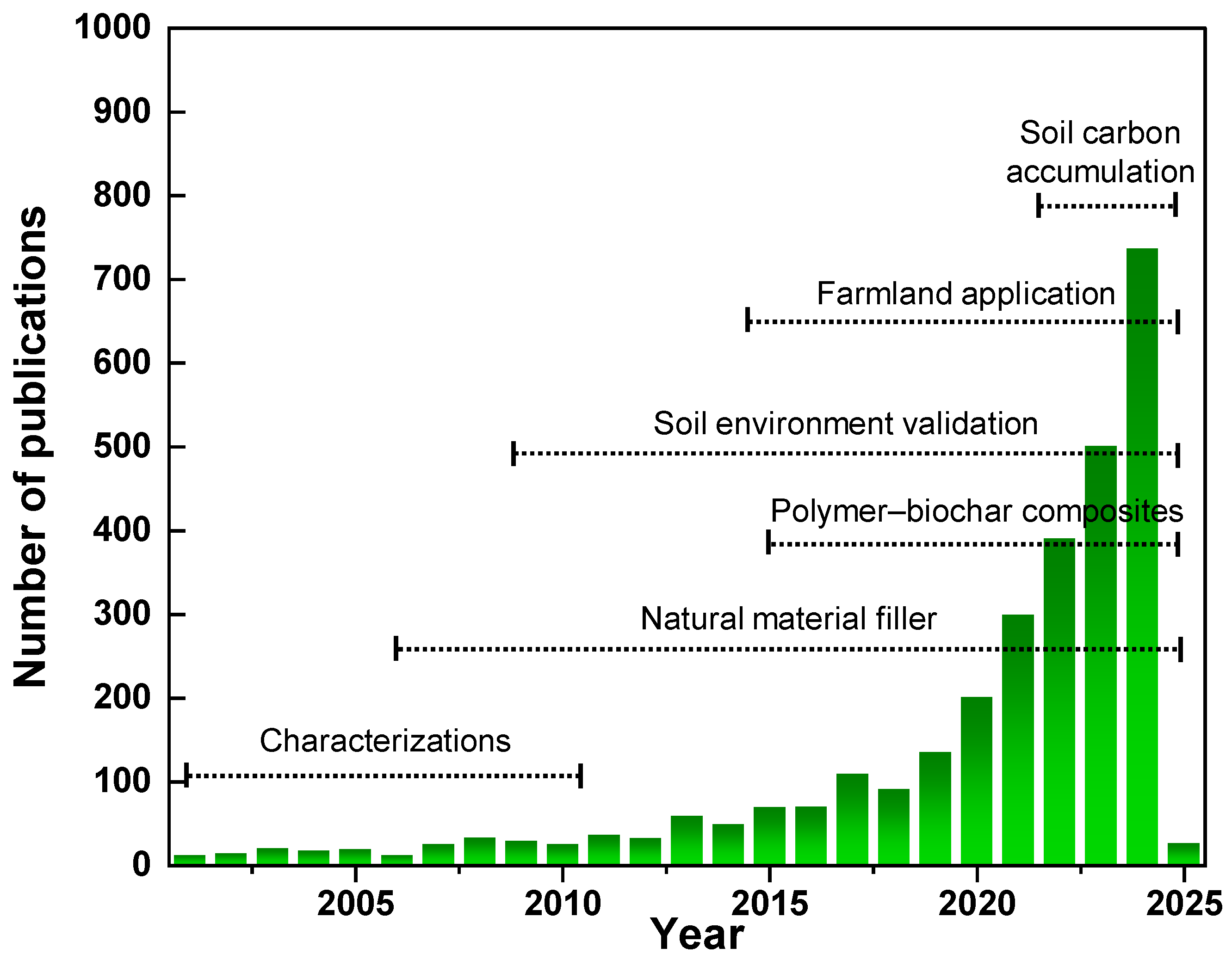
Figure 1. The quantity of publications from ScienceDirect pertaining to the keyword “biodegradable mulch film” from 2001 to 2025.
Preprints 139583 g001
Figure 2. Effect of biochar biodegradable mulch film on soil carbon stock contribution. Adapted from [65].
Preprints 139583 g002
Table 1. Summary of biodegradable polymer classification.
Classification of polymer Polymer-based agricultural mulches Comparative assessment of biodegradation in soil1
Bio-based Thermoplastic starch High
Chemically modified starch High
Cellulose Moderately high
PLA Low
Fossil-based PHB Moderate
PHV Moderate
PBAT Low moderate
PBSA Low moderate
PCL Low moderate
PBS Low moderate
PTT Low
1 PLA: Poly (lactic acid); PHA: Polyhydroxyalkanoate; PHB:Poly (3-hydroxybutyrate); PHV: poly (3-hydroxyvalerate); PVOH: Poly(vinyl alcohol); PBAT: Poly butylene-adipate-co-terephthalate; PBSA: poly(butylene succinate-co-adipate; PCL: Poly (ɛ-caprolactone); PBS: Polybutylene succinate; PTT: Polytrimethylene terephthalate. aEstimated comparative rate of biodegradation in soil is based on the literature [46].
Disclaimer/Publisher’s Note: The statements, opinions and data contained in all publications are solely those of the individual author(s) and contributor(s) and not of MDPI and/or the editor(s). MDPI and/or the editor(s) disclaim responsibility for any injury to people or property resulting from any ideas, methods, instructions or products referred to in the content.
Copyright: This open access article is published under a Creative Commons CC BY 4.0 license, which permit the free download, distribution, and reuse, provided that the author and preprint are cited in any reuse.
Prerpints.org logo

Preprints.org is a free preprint server supported by MDPI in Basel, Switzerland.

Subscribe

Disclaimer

Terms of Use

Privacy Policy

Privacy Settings

© 2025 MDPI (Basel, Switzerland) unless otherwise stated