Preprint
Article

This version is not peer-reviewed.

Diversity of Rhizosphere Microbial Communities in Different Rice Varieties and Diverse Adaptive Responses to Saline and Alkaline Stress Conditions

Submitted:

13 November 2024

Posted:

14 November 2024

You are already at the latest version

Abstract

Rice rhizosphere microbiota plays a crucial role in crop yield and abiotic stress tolerance. However, little is known about how the composition and function of rhizosphere soil microbial communities respond to soil salinity, alkalinity, and rice variety in rice paddy ecosystems. In this study, we analyzed the composition and function of rhizosphere soil microbial communities associated with two rice varieties (Jida177 and Tongxi933) cultivated in soils with different levels of salinity-alkalinity in Northeast China using a metagenomics approach. Our results indicate that the rhizospheres of Jida177 and Tongxi933 rice varieties harbor distinct microbial communities, and these microbial communities are differentiated based on both soil salinity-alkalinity and rice varieties. Furthermore, the observed differences in rice yield and grain quality between the Jida177 and Tongxi933 rice varieties suggest that these changes may be attributed to alterations in the rhizosphere microbiome under varying salinity conditions. These findings may pave the way for more efficient soil management and deeper understanding of the potential effects of soil salinization on the rice rhizosphere system.

Keywords: 
;  ;  ;  

1. Introduction

According to the latest data from the Food and Agriculture Organization of the United Nations in 2015, there were approximately 331 million hectare of land in the world with varied degrees of salinization, accounting for 6.5% of the total land area. In China, there are 99 million hectare of saline soil, and 80% of these saline soil resources are still untapped [1,2].
Rice (Oryza sativa), the world’s most important food crop, is cultivated in over 100 countries in Asia and feeds on more than half of the world’s population [3]. China is the largest rice producer, accounting for more than 37% of global rice production in 2020. Recently, rice-based agricultural crops have been used for saline land amelioration and exploitation. Saline field improvement efficiency, rice yield, and grain quality are the primary evaluation indexes [4,5,6,7,8]. Despite numerous reports of saline soil improvement by rice cultivation, the underlying mechanisms remain unclear.
Highly diverse microorganisms occupy the environment, forming complex communities that drive biogeochemical cycles and play a major role in soil health, quality and fertility [9,10]. Currently, research on plant-associated microbiomes is mainly focused on the rhizosphere. The rhizosphere is a zone of interaction between soil and plants that is rich in microbial diversity. The decomposition of organic matter, nutrient cycling and other ecologically important microbe-driven processes are highly intensive. Plant roots secret some metabolites in form of root exudates, such as carbohydrates, amino acids or other secondary root-secreted metabolites, which attract numerous bacterial species to colonize. Many functional classes of microorganisms include phosphate solubilizers, iron reducers, nitrogen fixers, methane cyclers, and fermenters [11,12]. It is assumed that plants could modulate rhizosphere microbiota by selectively stimulating microbiome members that benefit their health and growth. The plant genotype is also responsible for shaping the root microbiome. Plant genotypes have been shown to influence root-associated microbiomes in some annual crops. This is mainly related to the different physiologies of plant genotypes. A comprehensive study of how rice cultivation affects ecosystem functions of saline soil is required to elucidate the effect of rice cultivation on nutrient cycles, in order to secure improved food supply and global agricultural sustainability [13]. Understanding the overall taxonomic and functional composition of the rhizosphere microbiome is essential for identifying strategies to manage or reshape it in terms of plant performance and anthropogenic disturbances, for sustainable ecosystem function [14]. Although there have been selective studies of the rice rhizosphere [15,16], the overall pattern of the genomic and functional composition, especially for nutrient cycles, of the rice rhizosphere microbial community across soil salinity and rice varieties remains largely unexplored. Metagenomics-based taxonomic and functional gene assemblages may reveal both taxonomic abundances of all taxa within the community and functional genes present in the rice root biota [17,18].
Here, we used metagenomics to examine how the composition and functional of rhizosphere soil microbial communities respond to soil saline-alkali and rice varieties in rice paddy ecosystems in northeast China. In our study, we aimed to address two questions: (1) How do soil saline-alkali and rice varieties affect the taxonomic composition of rice rhizosphere microbial? (2) How is the microbial functional structure affected by soil saline-alkali and rice varieties?

2. Results

2.1. Effect of Soil Saline-Alkali Stress on Rice Yield and Grain Quality

As shown in Table 1, soil saline-alkali had influence on panicle number, grains per panicle, seed setting rate, and 1000-grain weight, with notable differences among rice varieties. In high saline-alkali soil, the panicle number of Jida177 and Tongxi933 increased by 15% and 4%, respectively, while grains per panicle increased by 7% for Jida177 and 9% for Tongxi933 compared to low saline-alkali soil.
High saline-alkali soil had no effect on Jida177 and Tongxi933’s seed setting rate. Conversely, it lowered Jida177’s 1000-grain weight but had no effect on Tongxi933. Jida177 tolerated high saline-alkali better than Tongxi933, as evidenced by its larger total grain number. Considering the effect of soil saline-alkali on the 1000-grain weight of rice seeds, the difference between rice varieties was greater than that caused by soil saline-alkali. Despite the fact that high saline-alkali soil decreased Jida177’s 1000-grain weight, its yield was still higher. Soil saline-alkali and rice variety differences influenced the rice seed length and width. High saline-alkali soil shortened Jida177’s length and width by 9% and 6%, respectively, but didn’t affect Tongxi933 (Figure 1).
The protein, fat and amylose contents primarily determined the nutritional quality of rice. This study also revealed that differences in soil saline-alkali impacted the protein and amylose contents of rice seeds, with significant variations among varieties, except for fat. In high saline-alkali soil, the protein content of Jida177 and Tongxi933 increased by 21.3% and 19.4%, respectively, whereas that of Jida177’s amylose content dipped by 1%, and Tongxi933 remained unaltered.

2.2. Effect of Rice Cultivation on Soil Physicochemical Properties

Rice cultivation has significant effects on soil pH, salinity, soil organic carbon (SOC), soil total nitrogen (TN), soil alkaline hydrolysis nitrogen (AN), soil available phosphorus (AP) and soil available potassium (AK) content (Table 2). The soil pH and salinity decreased in all samples after rice cultivation. However, SOC, TN, AN, AP and AK were diametrically opposed.
At low soil saline-alkali, the values of Jida177 and Tongxi933 decreased by 13% (pH), 59% (soil salinity) and 8% (pH), 56% (soil salinity) respectively. At high soil saline-alkali, the values of Jida177 and Tongxi933 decreased by 15% (pH), 73% (soil salinity) and 13% (pH), 61% (soil salinity), respectively. Rice cultivation also alters soil nutrient conditions. The SOC content was significantly enhanced. Nonetheless, the effect of rice cultivation on the AN, AP and AK content of the soil was low. At low soil saline-alkali, the SOC values were increased by 61% (Jida177), 69% (Tongxi933) respectively, while at high soil saline-alkali, the values of SOC were increased by 100% (Jida177), 56% (Tongxi933) respectively.

2.3. Effect of Rice Cultivation on Soil Physicochemical Properties

The DNA gene-based amplicon metagenome sequencing yielded 160198139, 149011666, 158970041, and 160318839, raw paired reads for LJ177 (low soil saline-alkali, Jida177), LT933 (low soil saline-alkali, Tongxi933), HJ177 (high soil saline-alkali, Jida177), and HT933 (high soil saline-alkali, Tongxi933) samples respectively (Supplementary Table S1). These were trimmed, processed, and assembled to obtain 140680663, 133407364, 137615444, and 142689104 paired reads for LJ177, LT933, HJ177, and HT933 respectively (Supplementary Table S1). These reads were less abundant in low saline-alkali soil (LJ177 and LT933) than in high saline-alkali soil (HJ177 and HT933).
For alpha diversity analysis, a reference database (with similarity threshold of 97 %) was used to assign the taxonomic identification to high quality sequences. More than 98 % sequence coverage was found in all samples. To gain insights into the richness and diversity of microbial communities, the alpha diversity within the samples was evaluated using three non-parametric indices (Chao1, Shannon, and Simpson indexes). There were no significant differences in the Chao1 index among the four samples (Table 3). This suggests that low saline-alkaline soils have similar species richness to high saline-alkaline soils. Shannon’s diversity index and Simpson’s index showed that high saline-alkaline soils had higher diversity than low saline-alkaline soils, with HJ177 exhibiting the most diversity (Table 3).
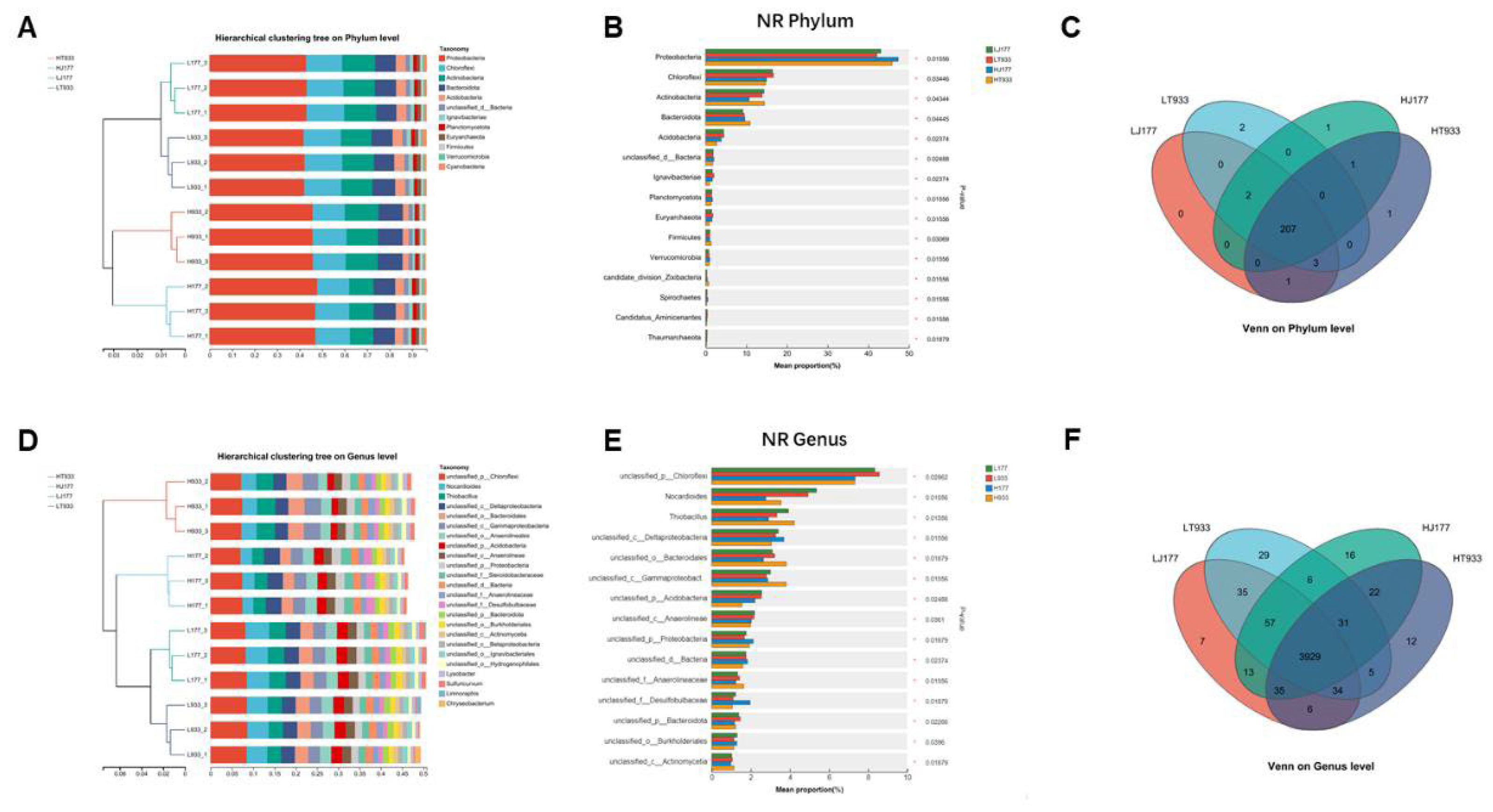
The taxonomic profiling of the metagenome was carried out at phylum and genus levels. For cluster analysis, the Jida177 rice variety can be distinguished from Tongxi933 rice variety (Figure 2). This indicated that the rhizosphere microbiota was variable not only across different saline-alkaline soil types, but also between the Jida177 and Tongxi933 categories.
The percentage abundance of the top 15 phyla in each sample was compared. The phylum Proteobacteria was found to be most abundant in LJ177 (43.04 %), LT933 (42.06 %), HJ177 (47.31 %), and HT933 (45.84 %), with a higher abundance in high saline-alkaline soils than in low saline-alkaline soils. Followed by Chloroflexi LJ177 (16.44 %), LT933 (16.65 %), HJ177 (14.94 %), and HT933 (14.74 %), with higher abundance in low saline-alkaline soils than in high saline-alkaline soils. The third most abundant phylum was Actinobacteria LJ177 (14.32 %), followed by LT933 (13.84 %), HJ177 (10.70 %) and HT933 (14.40 %) (Figure 2B). In terms of taxonomic composition, the relative abundance of the bacterial phyla Chloroflexi and Acidobacteria decreased significantly as soil pH and salinity increased, while the relative abundance of Proteobacteria and Actinobacteria increased significantly with increasing soil pH and salinity (Figure 3B). However, the relative abundance of Actinobacteria decreased significantly at Jida177 with soil pH and salinity increased, while Tongxi933 had no significant changes. The relative abundance of the bacterial genera unclassified_p__Chloroflexi, Nocardioides, and unclassified_p__Acidobacteria decreased significantly with soil pH and salinity increased, while the relative abundance of Thiobacillus and unclassified_p__Bacteroidales increased significantly with soil pH and salinity at Jida 933, in contract, decreased significantly at Jida 177 (Figure 2B). Locality wise, out of the total 215 phyla detected in the samples from the low saline-alkaline soils, one phylum, namely p__Candidatus_Harrisonbacteria, was exclusively associated with Jida177, two phyla namely p__Foraminifera and p__Preplasmiviricota with Tongxi933, and 212 phyla were shared between Jida177 and Tongxi933 (Figure 2C). From the high saline-alkaline soils, a total of 216 phyla were detected, among which 3 phyla, namely p__Phixviricota, p__Euglenozoa and p__Cressdnaviricota, were exclusively associated with the rice variety Jida177, and 5 phyla namely p__Candidatus_Terrybacteria, p__Candidatus_Tagabacteria, p__Evosea, p__Candidatus_Hydrothermarchaeota and p__Candidatus_Spechtbacteria were associated with rice variety Tongxi933, and 208 phyla were shared between Jida177 and Tongxi933 (Figure 2C). For genera, the percentage abundance of the top 15 genera in each sample was compared. The genus unclassified_p__Chloroflexi was found to be most abundant in LJ177 (8.34 %), LT933 (8.57 %), HJ177 (7.33 %) and HT933 (7.31 %), with higher abundance in low saline-alkaline soils than in high saline-alkaline soils. Nocardioides LJ177 (5.35 %), LT933 (4.92 %), HJ177 (2.76 %) and HT933 (3.54 %) were found to be more abundant in low saline-alkaline soils than in high saline-alkaline soils. Thiobacillus LJ177 (3.92 %), LH933 (3.33 %), HJ177 (2.90 %) and HT933 (4.22 %) were the third most abundant phylum (Figure 2D). Locality wise, out of total 4187 genera detected in the samples from the low saline-alkaline soils, 61 genera were exclusively associated with Jida177, 71 genera with Tongxi933, and 4055 genera were shared between Jida177 and Tongxi933 (Figure 2F). From the high saline-alkaline soils, a total of 4166 genera were detected, of which 92 genera were exclusively associated with the rice variety Jida177, and 57 genera were with rice variety Tongxi933, and 4017 genera were shared between Jida177 and Tongxi933 (Figure 2F).

2.4. The Response of Microbial Community Composition and Functional Structure in Relation to Soil Saline-Alkali

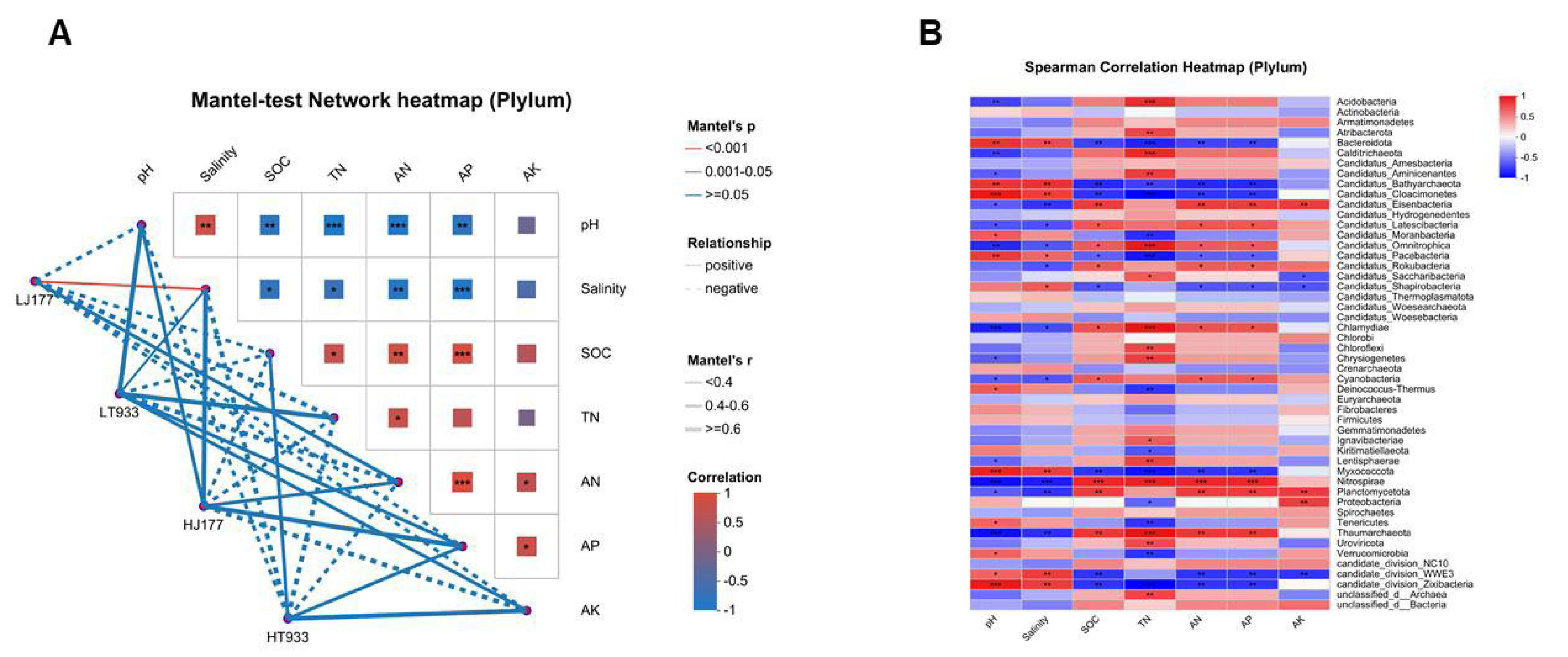
We found that soil environmental parameters SOC, TN, AN and AP were negatively correlated with soil pH and salinity. AK showed no significant variation with soil pH and salinity (Figure 3). Soil pH and salinity markedly affected the taxonomic and functional gene composition of rice rhizosphere microbes (Figure 3 and Figure 4). In terms of taxonomic composition (Figure 3B), the relative abundance of Bacteroidota, Candidatus_Bathyarchaeota, Candidatus_Cloacimonetes, Candidatus_Omnitrophica, Candidatus_Pacebacteria, Chlamydiae, Myxococcota, Nitrospirae, Thaumarchaeota,candidate_division_Zixibacteria significantly with soil pH, salinity SOC, TN, AN and AP.
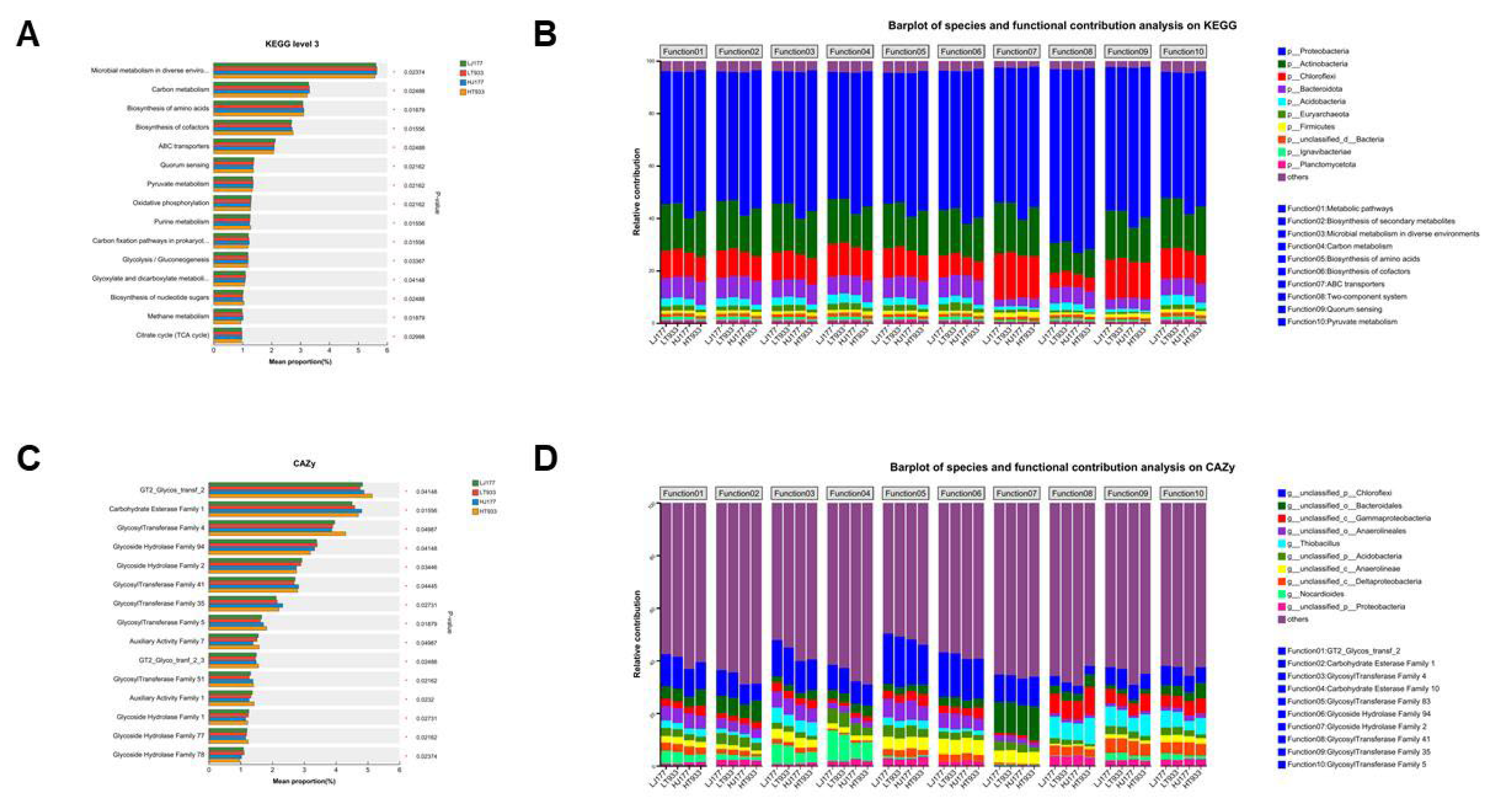
The relative abundances of functional genes at KEGG pathway hierarchy level 3 were compared between the low and high soil saline-alkali conditions (Figure 4). After elimination of some irrelevant categories, such as the categories related to human diseases, we obtained the top15 functional pathways with significant differences at level 3. At level 3 for dominantly and significantly different KEGG pathways, including microbial metabolism in diverse environments, carbon metabolism, biosynthesis of amino acids, biosynthesis of cofactors and ABC transporters. Microorganisms in the soil drive different soil functions, as shown in Figure 4, and the main species participating in the functions listed above are p__Proteobacteria, p__Actinobacteria, p__Chloroflexi and p__Bacteroidota. The relative abundances of functional genes for carbohydrate-active enzymes (CAZy) were compared between low soil saline-alkali and high soil saline-alkali (Figure 4). The dominantly and significantly different CAZy included GT2_Glycos_transf_2, Carbohydrate Esterase family 1, GlycosylTransferase Family 4, Glycoside Hydrolase Family 94. The main species participating in the functions listed above were g__unclassified_p__Chloroflexi, g__unclassified_o__Bacteroidales, g__unclassified_c__Gammaproteobacteria, g__unclassified_o__Anaerolineales and g__Thiobacillus. Together, these results indicated that both rhizosphere community composition and functional gene structure at lower pH are significantly different from those at higher pH.

3. Discussions

3.1. Effect of Soil Saline-Alkali Stress on Rice Yield and Grain Quality

Rice yield is intricately linked to photosynthesis capability, assimilate function, and distribution throughout the plant. The presence of soil salinity poses a significant challenge to rice growth, affecting both yield and quality. Soil salinity significantly influences key yield parameters such as seed setting rate, tiller number, panicle number, and panicle length [19,20]. In this study, although the seed setting rate remained relatively consistent under saline conditions, other yield components exhibited significant variations.Two rice varieties, Jida177 and Tongxi933, were subjected to high soil saline-alkali levels. Interestingly, Jida177 demonstrated a 15% increase in panicle number and a 6.3% increase in grains per panicle, while Tongxi933 showed a consistent 4% increase in panicle number and an 8.9% increase in grains per panicle. However, it’s worth noting that Jida177’s 1000-grain weight decreased under these conditions, which might be attributed to inadequate carbohydrate transformation [21]. Tongxi933, however, remained unaffected. When considering rice appearance quality, grain length plays a crucial role, as longer grains are more prone to breaking during the milling process, and the grain aspect ratio is significantly declined in the salinity soil [22]. Our findings indicate that high soil saline-alkali levels significantly reduce grain aspect ratios, leading to shorter grains. Specifically, Jida177 experienced a decrease in the grain length and width under these conditions. It was also reported that salt stress did not cause any change in seed length, width and aspect ratio [23], similar to Tongxi933 in this study.
Amylose and protein contents are essential indicators of rice quality. Good-tasting rice varieties with low amylose contents are moist and sticky when cooked [24]. Protein is the second most important ingredient after starch, and the higher protein content indicates a better rice quality [25]. The amylose content decreased significantly under salt stress compared to that under no salinity, while the opposite was true for protein content [26]. It has also been reported that there is no significant change in the amylose and protein contents of rice seeds under salt stress. It has further been suggested that high salt stress increases the seed protein content, while low salt stress decreases the seed protein content [23]. Under salt stress, the amylose content tended to decrease, while the protein content increased. In our study, both Jida177 and Tongxi933 exhibited elevated protein and fat content under high saline-alkali conditions. Interestingly, the Jida177’s amylose content decreased, whereas that of Tongxi933 increased. These variations highlight the different salt tolerances among rice varieties. Higher yields in salt-tolerant cultivars can be attributed to differences in agronomic and physiological traits. Traits such as increased photosynthetic rates and enhanced salt tolerance mechanisms contribute to better performance under saline conditions. These insights provide valuable information for breeding salt-tolerant rice varieties, enabling more effective utilization of saline-alkali soils.

3.2. Effect of Rice Cultivation on Soil Physicochemical Properties

The current results suggest that rice cultivation could improve the soil properties. Soil pH and salinity decreased gradually throughout rice cultivation, which is consistent with the results of Zhu et al. [27]. Soil environment changes from an oxidative to a reducting state during the flooding period, leading to the consumption of alkaline ions, which would cause the reduction in soil pH. However, in cases of flooded fields, the concentration of salts in the soil can be diluted by water. In this study, the soil salinity for Jida177 and Tongxi933 decreased by 59% and 56%, respectively, at low soil saline-alkali cultivation. The decline in soil salinity was much higher for Jida177 (73%) at high soil saline-alkali cultivation (Table 2), indicating the differential salt tolerance of the rice varieties.
Rice cultivation improved SOC in saline soil, which was consistent with Tan et al. and Huang et al. [28,29]. The proportion of water-stable aggregates in paddy field soil was higher than that in saline-sodic wasteland, however, unstable soil aggregates caused by high sodium levels or erosion may heighten SOC exposure to microbial decomposition, leading to decreased SOC amounts [30,31]. Moreover, the osmotic stress and poor soil structure in high-salt soils limit microbial activity, leading to reduce C turnover [32]. Rice cultivation mitigates soil salinity and alkalinity [33], which is beneficial for enhancing C levels in saline-alkaline soils. For instance, Xu et al. [33] found that rice cultivation on coastal saline-alkaline soils elevated the organic matter content by 44%. Similarly, Zhang et al. [34] observed that 20 years of rice cultivation in saline-alkaline soil boosted the SOC content by 90.6%. This increase in SOC content may be attributed to long-term flooding of the paddy soil, in which the decomposition rate of SOC was slower than that of the CK soil.

3.3. Effect of Rice Cultivation on Soil Microbial Diversity

Previous studies reported on rice crops identified changes in the microbial community richness and diversity in the rhizosphere [35]. Imchen et al. also found variation in the richness and diversity of microbial communities in rice rhizosphere during various growth stages [36]. Factors varying from soil-flood environment, temperature, pH, seasonal variations in different geo-climatic locations of rice fields, genotypes of host varieties, and their root exudates account for variations in the community structure [37,38]. In our study, the analysis of the composition of the overall rhizosphere microbial community revealed that the microbial associated with soil saline-alkali changed considerably in terms of richness and diversity. These differences may be caused by differences in soil saline-alkali at the sampling sites as well as differences in the genetic composition of rice varieties, both of which result in differences in root exudates that may be responsible for differences in species richness, diversity, and evenness. These factors have been identified as key influence shaping soil microbial communities. The phylum-level taxonomic distribution indicated that the microbial community associated with the rhizosphere was composed of a number of taxa, among which the dominant taxon was Proteobacteria. Proteobacteria are the largest and most metabolically diverse group of soil bacteria [39]. Arjun and Harikrishnan have identified Proteobacteria as the dominant phylum in rice. Apart from Proteobacteria, the most abundant taxa included Chloroflexi, Actinobacteria, Acidobacteria and Firmicutes [40,41]. Our findings are in agreement with these of previous reports.
Previous studies have also revealed that environmental factors are the primary drivers shaping the organization of soil microbial communities [42,43]. In addition to environmental factors, host genotype serves a key role in microbial associations [44,45]. In our study, the proportion and abundance of unique microbial communities were lower than those of shared microbial communities at sampling sites with different soil salinity levels and rice varieties. Hence, our investigation may reveal that the soil saline-alkali content of different samples and rice varieties (Jida177 and Tongxi933) contribute critically to the formation of rhizobial communities. The above results also suggest that, while genotype-induced differences in root exudates may also be responsible for the associated differences in the rhizospheric microbiota, the effect of the soil environment is much greater than genotypic differences in the same species. Plants activate their stress defense systems in response to abiotic and biotic stress. Metabolites like salicylic acid, jasmonic acid, abscisic acid, and γ-aminobutyric acid (GABA) regulate these responses and alter the rhizospheric microbiota [46,47,48]. Accordingly, the defence mechanisms of Jida177 and Tongxi933 may differ, making Tongxi933 more susceptible to abiotic and biotic stresses. This may also explain the differences in the richness, diversity and composition of the microbiota associated with Jida177 and Tongxi933 varieties in the study.

3.4. The Response of Microbial Community Composition and Functional Structure in Relation to Soil Saline-Alkali

Our results, which are consistent with a range of previous studies [49], revealed that soil pH was the major driver of the rice rhizosphere microbial community composition and structure (Figure 3A). In our study, the bacterial phyla Chloroflexi and Acidobacteria were more abundant in low pH rhizosphere soils, whereas Proteobacteria were abundant in high pH rhizosphere soils (Figure 3B). Chloroflexi are well recognized for degrading polysaccharides in anoxic zones of rice field soils [50]. Acidobacteria thrive on low pH soils in well-drained cropland soils [51,52,53]. Actinobacteria are involved in organic matter decomposition in oxic zones of rice paddies and are prevalent at higher pH, and in well-drained farmland soil [50,54]. These were enriched in low pH rhizosphere soils in our work, possibly indicating greater nitrogen fixation activity in lower pH conditions. In terms of overall functional genes, functional gene analyses of KEGG level 3 pathways showed clear differences in rice soil microbial functions at different soil pH and salinity (Figure 3C) as well as carbohydrate-active enzymes (Figure 3D). Such results imply that the range of soil microbial functions is presumably influenced by soil pH and salinity.
The functional composition of microbial communities in natural environments such as soil depends strongly on environmental factors [55,56,57]. Microorganisms that live in similar habitats perform similar ecological functions, but the composition of the microbial species that perform those functions may be quite different [56]. Therefore, revealing the functional profile of microbial communities is particularly important, as is revealing which microorganisms reside in the environment [55,56,57]. Microorganisms with diverse functional groups maintain soil functions, and functional complementarity exists within specific functional groups of species. A decline in any one group of species has little effect on soil ecosystem function since other bacteria can assume their functions [58]. Our results demonstrated that the functional structure of soil microorganisms was maintained by microorganisms of different functional groups (Figure 3E and Figure 3F).

4. Conclusions

This study describes the characteristics of rhizosphere communities in different rice varieties cultivated under different saline alkali soil conditions in the rice paddy ecosystem of Northeast China. Through comparative metagenome analysis, it is evident that the rhizospheres of Jida177 and Tongxi933 rice varieties harbor distinct microbial communities and distinguishes the microbial communities based on the soil saline-alkali as well as rice varieties. Furthermore, the differential rice yield and grain quality observed between Jida177 and Tongxi933 rice varieties suggests that these changes may be driven by the modulation of the rhizosphere microbiome under varying salinity conditions. This research holds significant promise for the selection of specific rhizosphere bacteria tailored to rice varieties, which could potentially be reinoculated to enrich the rhizosphere and enhance the saline-alkali tolerance of rice. To further exploit this potential, a deeper understanding of the microbial community structure within the rice rhizosphere, as well as its role and mechanism in enhancing saline-alkali tolerance, is required. This can be achieved through additional metagenomic and metaproteomic studies, ultimately facilitating the use of specific microbes as bio-fertilizers in agricultural practices for sustainable rice cultivation.

5. Materials and Methods

5.1. Analysis of Rice Yield and Grain Quality

Plants were photographed using a Nikon digital camera and scanner. At least 20 mature seeds were measured for seed length and width using vernier calipers. A grain analyzer was used to determine the rice quality [59].

5.2. Soil Sampling Regime

A total of 4 composited rhizosphere samples were collected from paddy fields located in Jilin Province in October 2023. The sampling period was specifically chosen to coincide with maturity of the rice, thereby maximizing the duration of the cropping season for the rhizosphere community to develop under the influence of the host plant. The selected sites encompassed two paddy fields with distinct pH gradients. Each site sample consisted of five subsamples obtained from designated plots within a 10 × 10 m area. These subsamples were collected from the corners and center of the designated plot within a single paddy field, adhering to the sampling protocol established by Guo et al. [60]. Within each plot, five intact rice plants were carefully extracted using a gardening fork and shovel to ensure minimal disturbance to the rhizosphere. The loosely bound soil surrounding the rhizosphere was gently shaken off, and the rice plants, with their root systems attached, were stored in sterile plastic bags in the field. Subsequently, these samples were transported to the laboratory in an icebox to maintain optimal conditions. In the laboratory, the soil tightly adhering to the roots was carefully brushed off using the methods described by Guo et al. [60]. The collected rhizosphere soil was then composited and mixed properly to ensure homogeneity. One portion of this rhizosphere soil was immediately stored at -80°C for DNA extraction and sequencing. The remaining sample was utilized for the measurement of various soil parameters, including pH, salinity, soil organic carbon (SOC), total nitrogen (TN), soil alkaline hydrolysis nitrogen (AN), available phosphorus (AP), and available potassium (AK).

5.3. Soil Physiochemical Analysis

Soil pH was determined using a pH metre with a soil water ratio of 1: 2.5. Salinity was measured using a salinity metre with a soil water ratio of 1:5. Soil organic carbon (SOC) content was determined using potassium dichromate oxidation. Total nitrogen (TN) content was estimated with a TOC analyzer (Multi N/C 3100 TOC, Analytik, Jena, Germany). Soil alkaline hydrolysis nitrogen (AN), available phosphorus (AP) and available potassium (AK) were measured according to Soil Agrochemical Analysis Method.

5.4. DNA Extraction, Library Construction, and Metagenomic Sequencing

Total genomic DNA was extracted from soil samples using the Mag-Bind® Soil DNA Kit (Omega Bio-tek, Norcross, GA, U.S.) according to manufacturer’s instructions. The concentration and purity of extracted DNA was determined with TBS-380 and NanoDrop2000, respectively. The quality of the DNA extract was checked on a 1% agarose gel. The DNA extract was fragmented to an average size of about 400 bp using the Covaris M220 (Gene Company Limited, China) for paired-end library construction. A paired-end library was constructed using NEXTFLEX Rapid DNA-Seq (Bioo Scientific, Austin, TX, USA). Adapters containing the full complement of sequencing primer hybridization sites were ligated to the blunt-end of fragments. Paired-end sequencing was performed on an Illumina NovaSeq (Illumina Inc., San Diego, CA, USA) using NovaSeq 6000 S4 Reagent Kit v1.5 following the manufacturer’s instructions (www.illumina.com). Sequence data associated with this project have been deposited in the NCBI Short Read Archive database.

5.5. Sequence Quality Control and Genome Assembly

The paired-end Illumina reads were trimmed of adaptors, and low-quality reads (length<50 bp or with a quality value <20 or having N bases) were removed by fastp (Chen et al. 2018) (https://github.com/OpenGene/fastp, version 0.20.0). Metagenomics data were assembled using MEGAHIT (https://github.com/voutcn/megahit, version 1.1.2), which makes use of succinct de Bruijn graphs. Contigs with with a length ≥ 300 bp were chosen as the final assembling result, and then the contigs were used for further gene prediction and annotation [61].

5.6. Gene Prediction, Taxonomy, and Functional Annotation

Open reading frames (ORFs) of each assembled contig were predicted using Prodigal/MetaGene (http://metagene.cb.k.u-tokyo.ac.jp/). The predicted ORFs with a length ≥ 100 bp were retrieved and translated into amino acid sequences using the NCBI translation table (http://www.ncbi.nlm.nih.gov/Taxonomy/taxonomyhome.html/index.cgi?chapter=tgencodes#SG1.A non-redundant gene catalog was constructed using CD-HIT (http://www.bioinformatics.org/cd-hit/, version 4.6.1) with 90% sequence identity and 90% coverage. High-quality reads were aligned to the non-redundant gene catalogs to calculate gene abundance with 95% identity using SOAPaligner (http://soap.genomics.org.cn/, version 2.21).

Supplementary Materials

The following supporting information can be downloaded at the website of this paper posted on Preprints.org.

Author Contributions

All the authors contributed to the present form of the manuscript. YZ, HC, XD and ZM designed the experiments. YZ, HC, TW, WF, HS, RL and WJ performed the experiments. YZ, HC, and ZM analyzed the data. YZ, HC, XD and ZM participated in the manuscript writing and amending. All authors have read and agreed to the published version of the manuscript.

Funding

This work was supported by National Key R&D Program of China (2023YFD2401002).

Institutional Review Board Statement

Not applicable.

Informed Consent Statement

Not applicable.

Data Availability Statement

Not applicable.

Conflicts of Interest

The authors declare no competing interests.

References

  1. Wang, W. J.; He, H. S.; Zu, Y. G.; Guan, Y.; Liu, Z. G.; Zhang, Z.H.; Xu, H.N.; Yu, X.Y. Addition of HPMA affects seed germination, plant growth and properties of heavy saline-alkali soil in northeastern China: comparison with other agents and determination of the mechanism. Plant and soil 2011, 339, 177–191. [Google Scholar] [CrossRef]
  2. Nan, L.; Guo, Q.; Cao, S.; Zhan, Z. Diversity of bacterium communities in saline-alkali soil in arid regions of Northwest China. BMC Microbiol. 2022, 22, 11. [Google Scholar] [CrossRef] [PubMed]
  3. Depar, N.; Rajpar, I.; Memon, M.Y.; Imtiaz, M.; Zia-ul-hassan. Mineral nutrient densities in some domestic and exotic ricegenotypes. Pak. J. Agric. Agril. Eng. Vet. Sci. 2011, 27, 134–142. [Google Scholar]
  4. Huang, S.; Ma, Z.; Hu, L.; Huang, K.; Zhang, M.; Zhang, S.; Jiang, W.; Wu, T.; Du, X. Involvement of rice transcription factor OsERF19 in response to ABA and salt stress responses. Plant Physiol. Biochem. 2021, 167, 22–30. [Google Scholar] [CrossRef] [PubMed]
  5. Murtaza, G.; Ghafoor, A.; Owens, G.; Qadir, M.; Kahlon, U. Z. Environmental and economic benefits of saline-sodic soil reclamation using low-quality water and soil amendments in conjunction with a rice–wheat cropping system. Journal of Agronomy and Crop Science. 2009, 195, 124–136. [Google Scholar] [CrossRef]
  6. Ma, Z.; Hu, L. MicroRNA: A Dynamic Player from Signalling to Abiotic Tolerance in Plants. Int J Mol Sci. 2023, 24, 11364. [Google Scholar] [CrossRef]
  7. Ma, Z.; Hu, L.; Jiang, W. Understanding AP2/ERF Transcription Factor Responses and Tolerance to Various Abiotic Stresses in Plants: A Comprehensive Review. Int J Mol Sci. 2024, 25, 893. [Google Scholar] [CrossRef]
  8. Ma, Z.; Hu, L. WRKY Transcription Factor Responses and Tolerance to Abiotic Stresses in Plants. Int. J. Mol. Sci. 2024, 25, 6845. [Google Scholar] [CrossRef]
  9. Xue, P.P.; Carrillo, Y.; Pino, V.; Minasny, B.; McBratney, A.B. Soil Properties Drive Microbial Community Structure in a Large Scale Transect in South Eastern Australia. Sci Rep. 2018, 8, 11725. [Google Scholar] [CrossRef]
  10. Hou, J.; Wu, L.; Liu, W.; Ge, Y.; Mu, T.; Zhou, T.; Li, Z.; Zhou, J.; Sun, X.; Luo, Y.; Christie, P. Biogeography and diversity patterns of abundant and rare bacterial communities in rice paddy soils across China. Sci Total Environ. 2020, 730, 139116. [Google Scholar] [CrossRef]
  11. Breidenbach, B.; Pump, J.; Dumont, M.G. Microbial Community Structure in the Rhizosphere of Rice Plants. Front Microbiol. 2016, 6, 1537. [Google Scholar] [CrossRef] [PubMed]
  12. Ding, L.J.; Cui, H.L.; Nie, S.A.; Long, X.E.; Duan, G.L.; Zhu, Y.G. Microbiomes inhabiting rice roots and rhizosphere. FEMS Microbiol Ecol. 2019, 95, fiz040. [Google Scholar] [CrossRef] [PubMed]
  13. Toju, H.; Peay, K.G.; Yamamichi, M.; Narisawa, K.; Hiruma, K.; Naito, K.; Fukuda, S.; Ushio, M.; Nakaoka, S.; Onoda, Y.; Yoshida, K.; Schlaeppi, K.; Bai, Y.; Sugiura, R.; Ichihashi, Y.; Minamisawa, K.; Kiers, E.T. Core microbiomes for sustainable agroecosystems. Nat Plants. 2018, 4, 247–257. [Google Scholar] [CrossRef]
  14. Ling, N.; Wang, T.; Kuzyakov, Y. Rhizosphere bacteriome structure and functions. Nat Commun. 2022, 13, 836. [Google Scholar] [CrossRef]
  15. Bhattacharyya, P.; Roy, K.S.; Das, M.; Ray, S.; Balachandar, D.; Karthikeyan, S.; Nayak, A.K.; Mohapatra, T. Elucidation of rice rhizosphere metagenome in relation to methane and nitrogen metabolism under elevated carbon dioxide and temperature using whole genome metagenomic approach. Sci Total Environ. 2016, 542, 886–98. [Google Scholar] [CrossRef]
  16. Sessitsch, A.; Hardoim, P.; Döring, J.; Weilharter, A.; Krause, A.; Woyke, T.; Mitter, B.; Hauberg-Lotte, L.; Friedrich, F.; Rahalkar, M.; Hurek, T.; Sarkar, A.; Bodrossy, L.; van Overbeek, L.; Brar, D.; van Elsas, J.D.; Reinhold-Hurek, B. Functional characteristics of an endophyte community colonizing rice roots as revealed by metagenomic analysis. Mol Plant Microbe Interact. 2012, 25, 28–36. [Google Scholar] [CrossRef] [PubMed]
  17. Quince, C.; Walker, A.W.; Simpson, J.T.; Loman, N.J.; Segata, N. Shotgun metagenomics, from sampling to analysis. Nat Biotechnol. 2017, 35, 833–844. [Google Scholar] [CrossRef]
  18. Bhattacharyya, P.; Roy, K.S.; Nayak, A.K.; Shahid, M.; Lal, B.; Gautam, P.; Mohapatra, T. Metagenomic assessment of methane production-oxidation and nitrogen metabolism of long term manured systems in lowland rice paddy. Sci Total Environ. 2017, 586, 1245–1253. [Google Scholar] [CrossRef]
  19. Shereen, A.; Mumtaz, S.; Raza, S.; Khan, M. A.; Solangi, S. Salinity effects on seedling growth and yield components of different inbred rice lines. Pak J Bot. 2005, 37, 131–139. [Google Scholar]
  20. Turan, M. A.; Türkmen, N.; and Nilgun, T. Effect of NaCl on Stomatal Resistance and Proline, Chlorophyll, NaCl and K Concentrations of Lentil Plants. J. Agron. 2007, 6, 378–381. [Google Scholar] [CrossRef]
  21. Zeng, L.; Shannon, M. C. Effects of salinity on grain yield and yield components of rice at different seeding densities. Agronomy Journal. 2000, 92, 418–423. [Google Scholar] [CrossRef]
  22. Rao, P. S.; Mishra, B.; Gupta, S. R. Effects of soil salinity and alkalinity on grain quality of tolerant, semi-tolerant and sensitive rice genotypes. Rice Science. 2013, 20, 284–291. [Google Scholar] [CrossRef]
  23. Sangwongchai, W.; Krusong, K.; Thitisaksakul, M. Salt tolerance at vegetative stage is partially associated with changes in grain quality and starch physicochemical properties of rice exposed to salinity stress at reproductive stage. J Sci Food Agric. 2022, 102, 370–382. [Google Scholar] [CrossRef] [PubMed]
  24. Juliano, B. O. A simplified assay for milled-rice amylose. Cereal Sci. 1971, 16, 334–340. [Google Scholar]
  25. Chen, H.; Chen, D.; He, L.; Wang, T.; Lu, H.; Yang, F.; Deng, F.; Chen, Y.; Tao, Y.; Li, M.; Li, G.; Ren, W. Correlation of taste values with chemical compositions and Rapid Visco Analyser profiles of 36 indica rice (Oryza sativa L.) varieties. Food Chem 2021, 349–129176. [Google Scholar] [CrossRef]
  26. Zhou, G.Y.; Zhai, C.J.; Deng, A.L.; Zhang, Z. Z.; Dai, Q.J.; Cui, S.Y. Performance of Yield, Photosynthesis and Grain Quality of japonicaRice Cultivars UnderSalinity Stress in Micro-plots. Chinese Journal of Rice Science. 2018, 1, 146. [Google Scholar]
  27. Zhu, Y.; Guo, B.; Liu, C.; Lin, Y.; Fu, Q.; Li, N.; Li, H. Soil fertility, enzyme activity, and microbial community structure diversity among different soil textures under different land use types in coastal saline soil. Journal of Soils and Sediments. 2021, 21, 2240–2252. [Google Scholar] [CrossRef]
  28. Tan, J. L.; Kang, Y. H. Changes in soil properties under the influences of crop and drip irrigation during the reclamation of severe salt-affected soils. Agricultural Sciences in China. 2009, 8, 1228–1237. [Google Scholar] [CrossRef]
  29. Huang, L.; Bai, J.; Chen, B.; Zhang, K.; Huang, C.; Liu, P. Two-decade wetland cultivation and its effects on soil properties in salt marshes in the Yellow River Delta, China. Ecological Informatics. 2012, 10, 49–55. [Google Scholar] [CrossRef]
  30. Feng, H.; Wang, S.; Gao, Z.; Wang, Z.; Ren, X.; Hu, S.; Pan, H. Effect of land use on the composition of bacterial and fungal communities in saline–sodic soils. Land Degradation & Development 2019, 30, 1851–1860. [Google Scholar]
  31. Wong, V. N.; Greene, R. S. B.; Dalal, R. C.; Murphy, B. W. Soil carbon dynamics in saline and sodic soils: a review. Soil use and management. 2010, 26, 2–11. [Google Scholar] [CrossRef]
  32. Franklin, R. B.; Morrissey, E. M.; Morina, J. C. Changes in abundance and community structure of nitrate-reducing bacteria along a salinity gradient in tidal wetlands. Pedobiologia. 2017, 60, 21–26. [Google Scholar] [CrossRef]
  33. Xu, Z.; Shao, T.; Lv, Z.; Yue, Y.; Liu, A.; Long, X.; Zhou, Z.; Gao, X.; Rengel, Z. The mechanisms of improving coastal saline soils by planting rice. Sci Total Environ. 2020, 703, 135529. [Google Scholar] [CrossRef]
  34. Zhang, J.; Luo, S.; Ma, L.; Lin, X.; Zhang, J.; Zhang, J.; Li, X.; Wang, H.; Tian, C. Fungal community composition in sodic soils subjected to long-term rice cultivation. Archives of Agronomy and Soil Science. 2020, 66, 1410–1423. [Google Scholar] [CrossRef]
  35. Hussain, Q.; Pan, G. X.; Liu, Y. Z.; Zhang, A.; Li, L. Q.; Zhang, X. H.; Jin, Z. J. Microbial community dynamics and function associated with rhizosphere over periods of rice growth. Plant Soil Environ. 2012, 58, 55–61. [Google Scholar] [CrossRef]
  36. Imchen, M.; Kumavath, R.; Vaz, A.B.M.; Góes-Neto, A.; Barh, D.; Ghosh, P.; Kozyrovska, N.; Podolich, O.; Azevedo, V. 16S rRNA Gene Amplicon Based Metagenomic Signatures of Rhizobiome Community in Rice Field During Various Growth Stages. Front Microbiol. 2019, 10, 2103. [Google Scholar] [CrossRef]
  37. Okabe, A.; Toyota, K.; Kimura, M. Seasonal variations of phospholipid fatty acid composition in the floodwater of a Japanese paddy field under a long-term fertilizer trial. Soil science and plant nutrition. 2000, 46, 177–188. [Google Scholar] [CrossRef]
  38. Barreiros, L.; Manaia, C.M.; Nunes, O.C. Bacterial diversity and bioaugmentation in floodwater of a paddy field in the presence of the herbicide molinate. Biodegradation. 2011, 22, 445–61. [Google Scholar] [CrossRef]
  39. Janssen, P.H. Identifying the dominant soil bacterial taxa in libraries of 16S rRNA and 16S rRNA genes. Appl Environ Microbiol. 2006, 72, 1719–28. [Google Scholar] [CrossRef]
  40. Arjun, J. K.; Harikrishnan, K. Metagenomic analysis of bacterial diversity in the rice rhizosphere soil microbiome. Biotechnol Bioinf Bioeng. 2011, 1, 361–367. [Google Scholar]
  41. Chowdhury, S. P.; Schmid, M.; Hartmann, A.; Tripathi, A. K. Diversity of 16S-rRNA and nifH genes derived from rhizosphere soil and roots of an endemic drought tolerant grass, Lasiurus sindicus. European journal of soil biolog. 2009, 45, 114–122. [Google Scholar] [CrossRef]
  42. Philippot, L.; Raaijmakers, J.M.; Lemanceau, P.; van der Putten, W.H. Going back to the roots: the microbial ecology of the rhizosphere. Nat Rev Microbiol. 2013, 11, 789–99. [Google Scholar] [CrossRef] [PubMed]
  43. Edwards, J.; Johnson, C.; Santos-Medellín, C.; Lurie, E.; Podishetty, N.K.; Bhatnagar, S.; Eisen, J.A.; Sundaresan, V. Structure, variation, and assembly of the root-associated microbiomes of rice. Proc Natl Acad Sci U S A. 2015, 112, E911–20. [Google Scholar] [CrossRef] [PubMed]
  44. Wagner, M.R.; Lundberg, D.S.; Del Rio, T.G.; Tringe, S.G.; Dangl, J.L.; Mitchell-Olds, T. Host genotype and age shape the leaf and root microbiomes of a wild perennial plant. Nat Commun. 2016, 7, 12151. [Google Scholar] [CrossRef]
  45. Emmett, B.D.; Youngblut, N.D.; Buckley, D.H.; Drinkwater, L.E. Plant Phylogeny and Life History Shape Rhizosphere Bacterial Microbiome of Summer Annuals in an Agricultural Field. Front Microbiol. 2017, 8, 2414. [Google Scholar] [CrossRef]
  46. Li, Z.; Yu, J.; Peng, Y.; Huang, B. Metabolic pathways regulated by abscisic acid, salicylic acid and γ-aminobutyric acid in association with improved drought tolerance in creeping bentgrass (Agrostis stolonifera). Physiol Plant. 2017, 159, 42–58. [Google Scholar] [CrossRef]
  47. Carvalhais, L.C.; Dennis, P.G.; Badri, D.V.; Tyson, G.W.; Vivanco, J.M.; Schenk, P.M. Activation of the jasmonic acid plant defence pathway alters the composition of rhizosphere bacterial communities. PLoS One. 2013, 8, e56457. [Google Scholar] [CrossRef]
  48. Kniskern, J.M.; Traw, M.B.; Bergelson, J. Salicylic acid and jasmonic acid signaling defense pathways reduce natural bacterial diversity on Arabidopsis thaliana. Mol Plant Microbe Interact. 2007, 20, 1512–22. [Google Scholar] [CrossRef]
  49. Kuang, J.L.; Huang, L.N.; Chen, L.X.; Hua, Z.S.; Li, S.J.; Hu, M.; Li, J.T.; Shu, W.S. Contemporary environmental variation determines microbial diversity patterns in acid mine drainage. ISME J. 2013, 7, 1038–50. [Google Scholar] [CrossRef]
  50. Ahn, J.H.; Song, J.; Kim, B.Y.; Kim, M.S.; Joa, J.H.; Weon, H.Y. Characterization of the bacterial and archaeal communities in rice field soils subjected to long-term fertilization practices. J Microbiol. 2012, 50, 754–65. [Google Scholar] [CrossRef]
  51. Aguirre-von-Wobeser, E.; Rocha-Estrada, J.; Shapiro, L.R.; de la Torre, M. Enrichment of Verrucomicrobia, Actinobacteria and Burkholderiales drives selection of bacterial community from soil by maize roots in a traditional milpa agroecosystem. PLoS One. 2018, 13, e0208852. [Google Scholar] [CrossRef] [PubMed]
  52. Eichorst, S.A.; Trojan, D.; Roux, S.; Herbold, C.; Rattei, T.; Woebken, D. Genomic insights into the Acidobacteria reveal strategies for their success in terrestrial environments. Environ Microbiol. 2018, 20, 1041–1063. [Google Scholar] [CrossRef]
  53. Xu, R.; Sun, X.; Häggblom, M.M.; Dong, Y.; Zhang, M.; Yang, Z.; Xiao, E.; Xiao, T.; Gao, P.; Li, B.; Sun, W. Metabolic potentials of members of the class Acidobacteriia in metal-contaminated soils revealed by metagenomic analysis. Environ Microbiol. 2022, 24, 803–818. [Google Scholar] [CrossRef]
  54. Wang, C. Y.; Zhou, X.; Guo, D.; Zhao, J. H.; Yan, L.; Feng, G. Z.; Gao, Q.; Yu,H. ; Zhao, L. P. Soil pH is the primary factor driving the distribution and function of microorganisms in farmland soils in northeastern China. P. Soil pH is the primary factor driving the distribution and function of microorganisms in farmland soils in northeastern China. Annals of Microbiology. 2019, 69, 1461–1473. [Google Scholar]
  55. Nelson, M.B.; Martiny, A.C.; Martiny, J.B. Global biogeography of microbial nitrogen-cycling traits in soil. Proc Natl Acad Sci U S A. 2016, 113, 8033–40. [Google Scholar] [CrossRef] [PubMed]
  56. Gibbons, S.M. Microbial community ecology: Function over phylogeny. Nat Ecol Evol. 2017, 1, 32. [Google Scholar] [CrossRef]
  57. Louca, S.; Jacques, S.M.S.; Pires, A.P.F.; Leal, J.S.; González, A.L.; Doebeli, M.; Farjalla, V.F. Functional structure of the bromeliad tank microbiome is strongly shaped by local geochemical conditions. Environ Microbiol. 2017, 19, 3132–3151. [Google Scholar] [CrossRef]
  58. Delgado-Baquerizo, M.; Eldridge, D.J.; Ochoa, V.; Gozalo, B.; Singh, B.K.; Maestre, F.T. Soil microbial communities drive the resistance of ecosystem multifunctionality to global change in drylands across the globe. Ecol Lett. 2017, 20, 1295–1305. [Google Scholar] [CrossRef]
  59. Wu, T.; Shen, Y.; Zheng, M.; Yang, C.; Chen, Y.; Feng, Z.; Liu, X.; Liu, S.; Chen, Z.; Lei, C.; Wang, J.; Jiang, L.; Wan, J. Gene SGL, encoding a kinesin-like protein with transactivation activity, is involved in grain length and plant height in rice. Plant Cell Rep. 2014, 33, 235–44. [Google Scholar] [CrossRef]
  60. Guo, Y.; Song, B.; Li, A.; Wu, Q.; Huang, H.; Li, N.; Yang, Y.; Adams, J.M.; Yang, L. Higher pH is associated with enhanced co-occurrence network complexity, stability and nutrient cycling functions in the rice rhizosphere microbiome. Environ Microbiol. 2022, 24, 6200–6219. [Google Scholar] [CrossRef]
  61. Li, D.; Liu, C.M.; Luo, R.; Sadakane, K.; Lam, T.W. MEGAHIT: an ultra-fast single-node solution for large and complex metagenomics assembly via succinct de Bruijn graph. Bioinformatics. 2015, 31, 1674–6. [Google Scholar] [CrossRef] [PubMed]
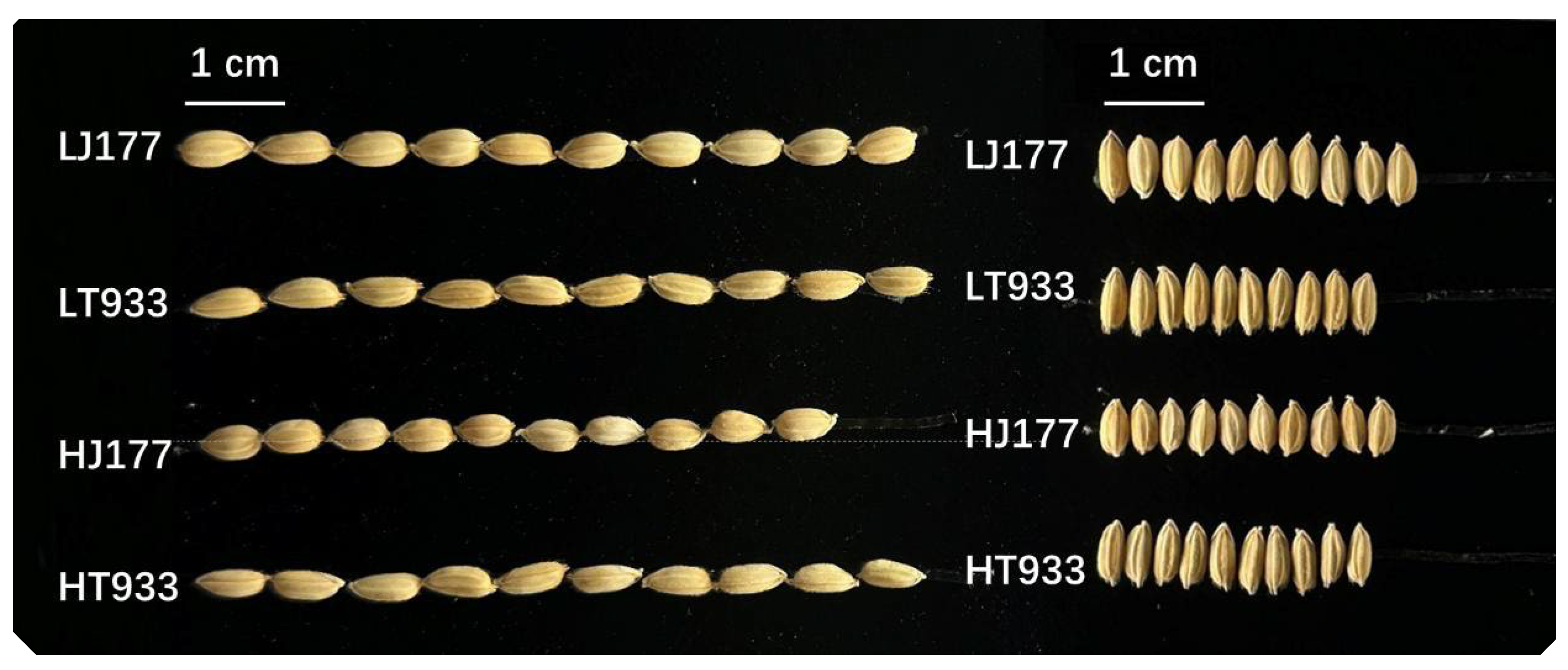
Figure 1. Grain morphology. LJ177: low soil saline-alkali Jida177; LT933: low soil saline-alkali Tongxi933; HJ177: high soil saline-alkali Jida177; HT9333: high soil saline-alkali Tongxi933.
Preprints 139529 g001
Figure 2. (A) The microbial community composition (phylum level) in saline-alkali rice fields. (B) The relative abundance of the top 15 phylum in saline-alkali rice fields. (C) Venn diagram of phylum distribution in saline-alkali rice fields. (D) The microbial community composition (genus level) in saline-alkali rice fields. (E) The relative abundance of the top 15 phylum in saline-alkali rice fields; (F) Venn diagram of genus distribution in saline-alkali rice fields. LJ177: low soil saline-alkali Jida177; LT933: low soil saline-alkali Tongxi933; HJ177: high soil saline-alkali Jida177; HT9333: high soil saline-alkali Tongxi933.
Preprints 139529 g002
Figure 3. (A) Pairwise correlation analysis between soil characteristics and composition of microbial community in saline-alkali rice fields based on the mantel tests. Colour gradient and block size denote Pearson’s correlation coefficients. The colour of the line represents the significance of the differences (p values) based on 999 permutations. The size of the line represents correlation coefficients (Mantel’s r). Asterisks in the block denote for different significance levels at *p < 0.05, **p < 0.01 and ***p < 0.001. (B) Correlation of species with environmental factors. Asterisks denote for different significance levels at *p < 0.05, **p < 0.01 and ***p < 0.001. .
Preprints 139529 g003
Figure 4. (A) The relative abundance of the top KEGG level 3 in saline-alkali rice fields. (B) The species and functional contribution analysis on KEGG in saline-alkali rice fields. (C) The relative abundance of the top 15 CAZy in saline-alkali rice fields. (D) The species and functional contribution analysis on CAZy in saline-alkali rice fields. LJ177: low soil saline-alkali Jida177; LT933: low soil saline-alkali Tongxi933; HJ177: high soil saline-alkali Jida177; HT9333: high soil saline-alkali Tongxi933.
Preprints 139529 g004
Table 1. Effect of soil saline-alkali stress on rice yield and grain quality.
  LJ177 LT933 HJ177 HT933
Panicle number 13.50±1.29b 17.25±2.75a 15.50±1.00ab 18±1.41a
Grains per panicle 180.42±1.49a 136.58±7.07b 192.03±20.59a 148.75±14.56b
Seed setting rate 0.92±0.01a 0.94±0.04a 0.93±0.02a 0.93±0.02a
1000-grain weight (g) 25.05±1.70a 20.18±0.37c 22.59±0.56b 21.39±0.39bc
Seed length (mm) 7.21±0.05c 7.37±0.06b 6.55±0.03d 7.56±0.03a
Seed width (mm) 3.71±0.04a 3.02±0.02c 3.48±0.05b 3.07±0.01c
Protein (%) 6.81±0.65bc 6.43±0.39c 8.26±0.73a 7.68±0.84ab
Fat (%) 2.01±0.21a 2.41±0.40a 2.16±0.59a 2.54±0.43a
Amylose (% total starch) 18.04±0.05a 17.99±0.18a 17.79±0.13b 18.11±0.16a
LJ177: low soil saline-alkali Jida177; LT933: low soil saline-alkali Tongxi933; HJ177: high soil saline-alkali Jida177; HT9333: high soil saline-alkali Tongxi933. Different letters in the same line represent significant differences at p < 0.05 according to Duncan test.
Table 2. Physical and chemical characteristics of rhizosphere soils of rice cultivated in saline-alkali rice fields.
Properties LCK LJ177 LT933 HCK HJ177 HT933
pH 7.56±0.05b 6.58±0.08e 6.96±0.06d 8.2±0.02a 6.96±0.05d 7.17±0.1c
Salinity (g kg-1) 1.92±0.04b 0.78±0.01d 0.84±0.04d 2.99±0.08a 0.79±0.05d 1.16±0.07c
SOC (g kg-1) 17.58±0.75d 29.63±0.97a 28.23±1.31b 14.2±0.57e 28.34±1.04b 22.14±0.77c
TN (g kg-1) 0.75±0.02c 0.92±0.01a 0.89±0.01b 0.56±0.02f 0.63±0.01d 0.6±0.01e
AN (mg kg-1) 70.94±0.97d 95.91±2.7a 84.6±3.16c 67.42±1.04e 90.17±3.08b 72.17±3.02d
AP (mg kg-1) 41.33±0.49d 54.92±1.84a 48.76±0.96c 37.25±0.94e 51.63±1.38b 43.55±1.71d
AK (mg kg-1) 172.24±2.33d 203.41±2.65b 188.07±1.89c 171.14±1.95d 208.86±2.34a 189.92±1.12c
LCK: low soil saline-alkali control; LJ177: low soil saline-alkali Jida177; LT933: low soil saline-alkali Tongxi933; HCK: high soil saline-alkali control; HJ177: high soil saline-alkali Jida177; HT9333: high soil saline-alkali Tongxi933; SOC: soil organic carbon; TN: soil total nitrogen; AN: soil alkaline hydrolysis nitrogen; AP: soil available phosphorus; AK: soil available potassium. Different letters in the same line represent significant differences at p < 0.05 according to Duncan test.
Table 3. Alpha diversity analysis within the rhizosphere community of rice varieties under study.
  LJ177 LT933 HJ177 HT933
chao 22800±99a 22662±75a 22673±102a 22860±170a
shannon 5.98±0.02b 5.98±0.02b 6.06±0.01a 6.04±0.01a
simpon 0.012±0.00a 0.012±0.00a 0.010±0.00b 0.011±0.01b
coverage 1 1 1 1
LJ177: low soil saline-alkali Jida177; LT933: low soil saline-alkali Tongxi933; HJ177: high soil saline-alkali Jida177; HT9333: high soil saline-alkali Tongxi933. Different letters in the same line represent significant differences at p < 0.05 according to Duncan test.
Disclaimer/Publisher’s Note: The statements, opinions and data contained in all publications are solely those of the individual author(s) and contributor(s) and not of MDPI and/or the editor(s). MDPI and/or the editor(s) disclaim responsibility for any injury to people or property resulting from any ideas, methods, instructions or products referred to in the content.
Copyright: This open access article is published under a Creative Commons CC BY 4.0 license, which permit the free download, distribution, and reuse, provided that the author and preprint are cited in any reuse.
Prerpints.org logo

Preprints.org is a free preprint server supported by MDPI in Basel, Switzerland.

Subscribe

Disclaimer

Terms of Use

Privacy Policy

Privacy Settings

© 2025 MDPI (Basel, Switzerland) unless otherwise stated