

Submitted:
11 November 2024
Posted:
12 November 2024
You are already at the latest version
Abstract
Recycling plant waste as nutrients source for crops represents a circular approach to enhancing the sustainability of intensive horticultural production systems. Lemna minor L. is an invasive aquatic species which can proliferate on the nutrient solution in hydroponic systems requiring removal operations from the cultivation tanks. This study evaluated the possibility of using the biomass of this weed as an organic fertilizer for lettuce. The following fertilization treatments were applied: Control (0 kg N ha-1), Lemna (60, 120, and 180 kg N ha-1), Urea (60 kg N ha-1), commercial organic fertilizer (60 kg N ha-1). Fertilization with Lemna showed similar or better results than control and both inorganic and organic fertilization treatments. No differences in yield and quality were observed between the three doses of Lemna but L60 resulted to be the treatment with the best performance in terms of N productivity. These results suggest that Lemna biomass may be a proper source of nutrients for lettuce with advantage for yield and no effect on quality. Therefore, its use as an organic fertilizer can allow farmers to profitability exploit a waste product and, at the same time, reduce the costs of purchasing commercial fertilizers, thus achieving environmental and economic benefits.
Keywords:
Duckweed
; weeds
; organic fertilization
; vegetables
; circular economy
; waste recycling
1. Introduction
Duckweeds, of Lemnaceae family, are aquatic angiosperms characterized by small size, simple morphology, rapid growth, and great capacity to absorb solutes from the medium in which they grow [1]. They include 36 species belonging to five genera, namely Spirodela Schleid., Landoltia Les & Crawford, Lemna L., Wolffiella Hegelm., and Wolffia Horkel ex Schleid [2]. Able to adapt in almost of the world’s climate zones, duckweeds grow on or just below the water surface in ponds, ditches, slowly flowing streams, and other small water bodies, which these plants are able to colonize rapidly due to their extraordinary growth rate by clonal propagation [3]. The vegetative body of a duckweed plant is composed simply of a leaf-like structure called a frond, and only the genera Spirodela, Landoltia, and Lemna show roots [1]. In Lemna minor L., for example, the frond is oval to elliptical, about 6-8 mm in size, and there is a single root up to 2 cm long [4]. Daughter fronds, up to 18 per single mother plant depending on the species, originate from the meristematic region present in the proximal part of the mature frond, to which they remain connected for a time, forming colonies of 2 to 50 individuals é [3,5]. Under optimal conditions, colonies can double in biomass even in just two days [6]. This behavior makes duckweeds very invasive, with ecological repercussions and economic impact [7]. Agriculture can also be involved, e.g. L. minor is a major aquatic weed of rice fields [8,9]. A growing incidence of duckweed invasion in ditches and drainage channels linked to eutrophication and climate change may hinder their agricultural function and increase management burdens [10,11]. In static hydroponic systems, such as the floating system, duckweeds find optimal conditions to proliferate on the surface of the nutrient solution not covered by the crop (Figure 1), reducing the fertilizer use efficiency due to nutrients uptake, and necessitating cleaning operations of the cultivating tanks.
On the other hand, the anatomical and physiological traits of these aquatic macrophytes and their great adaptability make them suitable plants for both basic research and numerous commercial applications [1,12]. Duckweeds can be used for the phytoremediation of diverse chemical pollutants from waters [13], the production of biofuels [14], as pharmaceutical resource [15], a feed ingredient in sustainable livestock production and aquaculture [16], and even for human food [17]. Furthermore, several studies have demonstrated the potentiality of duckweeds as an organic unconventional fertilizer for different crops, included vegetables [18-24]. Fertilizers, which are essential for agricultural production and consequently for ensuring food security, are mostly produced from non-renewable raw materials, with high costs and energy consumption [25]. In addition, the use of fertilizers containing nutrients, especially nitrogen, in highly soluble forms raises environmental pollution concerns [26] On the contrary, the use of bio-based fertilizers reduces the leakage of nutrients into the environment and the depletion of non-renewable resources [27].
The aim of this work was to evaluate L. minor biomass as a fertilizer for lettuce (Lactuca sativa L.) cultivation. Lemna was collected from the tanks of a floating system in a farm producing vegetables both in hydroponics and in the soil and was used in the farm itself to grow lettuce in the soil. Distributing Lemna in the soil could be a strategy to recover the carbon and nutrients accumulated in it, and reintroduce them within the same farming system. In this way, duckweed would be transformed from waste into a resource, in a bio-based circular economy perspective.
2. Materials and Methods
2.1. Experimental Site and Trials Description
The study was carried out at the farm “Azienda Agricola Cammelli” (Florence, Italy; 43.781660°N 11.158053°E), which produces vegetables both in the soil and soilless (floating system). The study included one summer (transplanting on 14th June 2022 and harvest on 15nd July 2022) and one autumn (transplanting on 10th October 2022 and harvest on 15th November 2022) growing cycle of lettuce (Lactuca sativa L.). The trials were conducted in a polyethylene-covered high tunnel, 6 m wide and 3 m high, equipped with a central suspended irrigation pipe with sprinklers spaced 1 m from each other. The temperature and relative humidity inside the tunnel during the trials were monitored using a HOBO data logger (Onset, Bourne, MA, US).
Lettuce cv. Pereion (‘Gentilina verde’ type), recommended for the summer season, and cv. Kiela (‘Lollo’ type), suitable for the autumn season, were used in the two trials, respectively. Plants were transplanted at the stage of the third-fourth true leaf in pots 20 cm in diameter (5 L in volume) filled with field soil collected in the tunnel and approximately 3 cm of expanded clay (at the bottom of the pot) to ensure water drainage. The soil had a sandy-loam texture and the chemical characteristics reported in Table 1.
Plants were irrigated following crop needs and considering the environmental conditions in order to avoid the risk that water represented a limitation factor. Three different doses of Lemna minor L. were distributed (60, 120, and 180 kg ha-1 N, respectively: L60, L120, and L180), where 60 kg ha-1 inorganic N is the N fertilization usually adopted by the farm for lettuce. Lemna was collected from the tanks of the floating cultivation system present in the farm and placed for 10 days on a non-woven fabric sheet inside a greenhouse for drying. After the drying stage, Lemna was analysed for elemental composition (Table 2). Lemna was incorporated into the soil (3 cm depth) 28 days before lettuce transplanting in order to ensure mineralization [19]. During this period, the pots were maintained at a constant temperature of 25 °C and at field capacity, which was restored by weighing twice a week.
Fertilization treatments included also a control with no fertilization (Control), urea as a mineral fertilizer (Urea; 60 kg ha-1 N), and, only in the autumn trial, Fertorganico (11% organic N, of which 5% organic soluble N, ILSA S.p.A. Vicenza, Italy) as a commercial organic fertilizer (COF; 60 kg ha-1 N). Urea and COF were incorporated into the soil at lettuce transplanting, according to the farm's normal practice. Table 3 shows the amount of the fertilizers supplied per pot and the corresponding N doses per hectare for each fertilization treatment. The experiment was arranged in a completely randomized block design with three blocks and three replicates (one replicate = one pot) per block per treatment.
2.2. Crop Measurements
During the growing cycle, lettuce diameter was monitored weekly. At harvest, head fresh and dry (after oven drying at 80 °C for 48 hours) weight, dry weight % (as dry weight/fresh weight*100), and the number of leaves were determined. The content in total N, nitrate, ammonium, total phosphorus, total potassium and, only during the autumnal trial, chlorophyll and carotenoids was analyzed.
2.3. Nutrient Use Efficiency
For the different fertilization treatments, the nitrogen use efficiency (NUE) index was evaluated by calculating its components according to Elia and Conversa [28]: (a) partial factor productivity of the applied N (PFP), which is the amount of product harvested per unit of N applied; (b) agronomical NUE (NUEa), which measures the increase in yield obtained per unit of N applied; (c) physiological NUE (NUEp), which represents the increase in yield per unit increase in N uptake ascribable to the fertilizer (it expresses the efficiency with which the plant utilizes the N absorbed by the fertilizer for production); apparent N recovery efficiency (REC), which represents the increase in N uptake ascribable to the fertilizer per unit of applied N (it expresses the proportion of the N applied taken up by the plants). In our study, the NUE indices were calculated on one plant bases, and considering yield both as fresh and dry weight [29].
The used formulas were the following:
- (a)
- PFP = Yf/NA (g g-1)
- (b)
- NUEa = (Yf-Yc)/NA (g g−1)
- (c)
- NUEp = (Yf-Yc)/(TNf-TNc) (g g−1)
- (d)
- REC = TNf-TNc/NA (g g−1)
Where: Yf is the lettuce fresh/dry weight (g plant-1) obtained with the N applied (NA, g plant-1) with a given fertilization treatment; Yc is the lettuce fresh/dry weight (g plant-1) obtained without fertilization (control); TNf and TNc are the N contents in lettuce heads (g plant-1) obtained with or without fertilization, respectively.
2.4. Statistical Analysis
Data were analyzed separately for the two trials. The statistical analysis was carried out using the CoStat 6.400 software (Co Hort, 188 Monterey, CA, USA; CoStat 2008). A one-way analysis of variance (ANOVA) was conducted and the averages were compared using the Tukey test (p ≤ 0,05).
3. Results
3.1. Summer Growing Cycle
During the summer growing cycle the climate was characterized by hot and dry conditions. As reported by the Copernicus Report [30], Europe experienced one of its hottest summer on record in 2022. In June temperatures were above average across most of Europe with southern countries most affected. In Tuscany, an average temperature of 3 °C and 2.6 °C above the mean of the thirty years 1991-2020 was recorded in June and July 2022, respectively. Under the high tunnel used for the trials, the maximum temperatures recorded during the day were constantly above 30 °C, while during the night never fell below 15 °C (Figure 2a). The average daily temperature was between 25 °C and 30 °C. The relative humidity has never exceeded 80% and was often below 50% for several hours during the day (Figure 2a).
Despite the choice of a variety (Pereion) suitable to summer cultivation, and maintaining the field capacity of the soil, extreme environmental temperatures significantly reduced the lettuce growth. The Urea-treated plants were the most affected, appearing stressed and with signs of burning on the leaf margins within seven days after transplant. Since many of these plants died before harvesting and the surviving ones reached an insignificant diameter (8 cm on average) and weight (16.6 g fresh weight on average), we decided to exclude the Urea treatment and to compare the Lemna treatments only with the unfertilized Control. It is conceivable that what was observed with the Urea treatment can be attributed to an intense urease enzyme activity, which increases with increasing soil temperature up to 45 °C [31]. The high temperature recorded from the first week of cultivation could have led to a rapid hydrolysis of urea and the release of ammonium ions (NH4+). As reported by Taylor et al. [32], high temperatures affect the kinetics of ammonium oxidation and the nitrification process may not be fast enough in transforming NH4+ into nitrite (NO2-) and nitrate (NO3-), resulting in the accumulation of NH4+ ions and release of ammonia (NH3) in the gaseous state. This process, favored also by the high humidity and alkaline pH of the soil, probably led to a toxic effect for the Urea-treated plants at both root and leaf level.
For what concerns the lettuce head diameter, increasing values were recorded from the first to the third week after transplanting of the seedlings, but significant differences between treatments were observed only in the first two weeks (Figure 3a). The L180-treated plants resulted significantly smaller than L120-treated plants in the first week and both L60 and L120-treated plants in the second week. At harvest, the head diameter of lettuce was on average 13.3 cm, 15.9 cm, 19.5 cm, and 22.0 cm in L180, Control, L120, and L60-treated plants, respectively.
As shown in Figure 4, no differences in fresh and dry weight, dry weight percentage, and number of leaves were observed between treatments at harvest. This result can be attributable to the large variability found among plants within the same treatment. As an average of all the treatments the lettuce heads had a fresh weight of approximately 48.0 g per plant, a dry weight slightly above of 5.0 g per plant, and 26 leaves.
The effect of fertilization with duckweed species on crops fresh and dry weight have been studied by other authors with conflicting results. In a greenhouse experiment, Fernandez-Pulido et al. [33] observed an increase in fresh and dry weight of kale and sorghum treated with duckweed but not, as we also found in lettuce, in beet and tomato. Mahofa et al. [18] obtained an increase in tomato yield using a mixture of duckweed, soil, chicken dropping, and sawdust. Chikuvire et al. [19] and Jilimane [20] observed an increase in spinach and swiss chard dry weight using L. minor and Wolffia arrhiza as fertilizers, respectively.
In accordance with our results in the summer-grown lettuce, Pratiwi et al. [34] did not find any effect of administration of Lemna on the number of leaves of red spinach.
The dry weight percentage ranged between 11% and 12% for all treatments (Figure 4). These values, much higher than that normally reported for lettuce (about 7%) [35], can be ascribed to the stress conditions, such as high temperatures and low relative humidity of the air, to which the plants were subjected to during cultivation. It is in fact well known that stress conditions alter water absorption capacities and promote cell wall thickening and secondary metabolites production (e.g. lignin) as a defense mechanism [36,37].
Leafy vegetables tend to accumulate high levels of nitrate in the leaves. Nitrate by itself is not toxic for human health but, after ingestion, it is endogenously transformed in nitrite and N-nitroso compounds, which can lead to severe pathologies [38,39]. For this reason, the European Union has set a maximum level of nitrate content allowed for the marketing of some leafy vegetables, included lettuce (EU Regulation 1258/2011). In our experiment, no differences in nitrate content of lettuce were detected between treatments, and, on average, nitrate concentration levels were below the limit set by EU for lettuce grown in the greenhouses in the spring-summer period (4000 mgkg-1 f.w.) (Figure 5). However, it must be noted that for Control, L120, and L180 one of the three analyzed samples exceeded this limit (4087.1 mgkg-1 f.w., 4113.5 mgkg-1f.w., and 4945.1 mgkg-1 f.w., respectively).
Treatments did not influence the total N, P, and K concentration in lettuce (Figure 5). This result is in contrast with those obtained in other species. Fernandez-Pulido et al. [24] reported that leaves of kale supplied with duckweed contained more N and P than those of the control plants. A positive effect of Lemna in increasing plant tissue nutrient content were observed also by Kreider [40], Fernandez-Pulido [41], and Fernandez-Pulido et al. [23] in sorghum and by Ahmad et al. [42] in rice.
The tested fertilization treatments were also evaluated in terms of NUE by means of NUE indices calculation (Table 4). The NUE indices are a well-established and widely used metrics to assess plant response to N availability [43,44]. Nitrogen is the most limiting factor for crop growth and production. Farmers usually applied large amounts of N to maximize yield and quality and to hedge against possible crop losses, often exceeding the actual crop demand with serious consequences for the environment [45]. This behavior is especially common among vegetable growers as vegetables are high-value crops where the cost of fertilization represents a smaller percentage of the total production cost [46]. The over-applied fertilizer rates, combined with both a shallow root system and a short cultivation cycle, explain the low use efficiency of N commonly observed in vegetables compared to arable crops [47,48]. In our experiment, the NUE analysis revealed a PFP index, calculated in both fresh and dry weight, higher in L60 than in L180 (Table 4), confirming that this index decreases with the increase in N supply [49]. The NUEa, NUEp, and RECN were not significantly influenced by N rate.
3.2. Autumn Growing Cycle
During the autumn growing cycle the environmental conditions under the high tunnel used for cultivation were mild. The average minimum and maximum temperatures were 11.2 °C and 25.6 °C, respectively. The absolute maximum and minimum temperatures were 31.0 °C and 4.7 °C. The average humidity was 84.3% (Figure 2b).
The diameter of the lettuce heads progressively increased from transplanting to harvesting in each treatment, reaching at harvest 23.0 cm, 22.7 cm, 22.5 cm, 27.1 cm, 27.6 cm, and 27.7 cm for Control, Urea, COF, L60, L120, and L180, respectively. Differences between treatments were observed as early as the first week after transplanting, when L120 was higher than Control. Over the following weeks, no differences were observed between plants fertilized with different Lemna amounts, but Lemna-treated lettuce showed a significantly higher head diameter than the Control, Urea, and COF-treated plants (Figure 3b).
Fernandez-Pulido et al. [33] compared the effect of fertilization with duckweed, inorganic fertilizer, a mix of both, on yield of beet, tomato, kale and sorghum. No significant differences in fresh and dry weight were observed between treatments for beet, tomato and sorghum, while in the case of kale higher yield was obtained with inorganic fertilization. In our experiment, fertilization with Lemna resulted in a significant increase in yield of lettuce compared to both the Control and the other fertilization treatments, regardless of the dose of Lemna used (Figure 6). As an average of the three doses, the fresh weight of heads fertilized with Lemna was 137.7 g vs. 91.7 g, 83.4 g, and 80.7 g of Control, Urea, and COF, respectively. Compared with Control, fertilization with Lemna increased lettuce yield by 32% (L60), 39% (L120), and 42% (L180). The Lemna-treated plants showed also a statistically higher dry weight than other fertilized plants; no difference was observed between L60 and Control, and between Control, Urea, and COF. In terms of number of leaves, the best performing treatment was L180 (42 leaves per plant), which significantly differed from the Control and both mineral and organic N fertilization. Compared with COF, also L60 and L120-treated plants showed a significantly higher number of leaves (Figure 6). For all treatments, the head dry weight percentage values were consistent with those reported in the literature [35]. The L120 and L180-treated plants showed a slightly but significantly lower dry weight percentage than the Control, Urea, and COF plants, indicating greater tenderness of the leaf tissues (Figure 6).
No differences between treatments were detected in nitrate content (Figure 7). According to EU Regulation 1258/2011, the maximum allowed nitrate content for lettuce grown in the greenhouse in the autumn-winter period is 5000 mg kg-1 f.w. This limit was not exceeded in any of the lettuce samples analyzed. The minimum concentration was found in Control plants (1291 mgkg-1 f.w.) while the maximum in L180-treated lettuce (3002 mgkg-1 f.w.). As observed also during the summer growing cycle, treatments did not influence the total N, P, and K content of lettuce (Figure 7).
The results of chlorophyll and carotenoids analysis in lettuce heads (Table 5) showed significant differences in chlorophyll b content, with higher values in treatment L180 (0.299 μgmg-1 s.f.) than both in L60 (0.255 μgmg-1) and Urea (0.246 μgmg-1). No significant differences were found for chlorophyll a, a+b and carotenoids. Pratiwi et al. [34] did not observed any effect on chlorophyll and carotenoids by treating red spinach plants with a Lemna-based liquid fertilizer, while an increase in leaf chlorophyll content in olive plants treated with aqueous Lemna extract was found by Regni et al. [50].
The statistical analysis of N recovery data highlighted differences between treatments for the NUE components considered in this research except for NUEp (Table 6). The L60 treatment showed no difference in PFP FW compared with the same dose of N given as Urea or COF. As Lemna was increased to an N dose of 120 kg ha-1 and 180 kg ha-1, PFP FW decreased significantly. The values of PFP DW revealed a greater N recovery from L60 than from all the other treatments, that is, in both case of the same dose of N provided as mineral fertilizer (Urea) or commercial organic fertilizer (COF), and in the case of higher Lemna amounts (L120 and L180). As stated by Dobermann [51], PFP is the most important components of NUE from the farmers’ point of view because it shows the effectiveness of converting the N supplied to the crop into yield. Therefore, in our experiment the L60 resulted to be the treatment with the best performance in terms of N productivity. Higher NUEa values (both on FW and DW basis) were observed with L60 than with Urea and COF while no differences were found between Lemna treatments. The REC expresses the ability of crop to absorb from the soil the N provided by fertilizer [28]. The value of REC observed in this experiment were consistent with those reported for lettuce in previous studies [29,52-54], and confirmed a low efficiency of this species in the recovery of N supplied with fertilization. Anyway, a higher share of the N contained in the administrated fertilizer was found in plants fertilized with L60 and L120 compared to Urea and COF. Thus, Lemna seems to have made the N available in a way more suited to the rate of uptake of the plants. Urea may have released the N too quickly, with consequent probable loss through leaching, while, on the contrary, COF may have released N too slowly compared to the needs of lettuce.
4. Conclusions
This study was based on the hypothesis that L. minor, an invasive species that the farm would otherwise have to manage as waste, could be used as organic fertilizer. Specifically, we evaluated the suitability of Lemna for lettuce fertilization in two different growing seasons. In the summer growing cycle the extremely hot environmental conditions severely affected plant growth, and probably invalidated the effect of the fertilizer treatments. However, the fertilization with Lemna did not shown any negative effects on lettuce. In the autumn cultivation cycle, fertilization with Lemna showed better results than inorganic and organic fertilizers, and increased yield compared to no fertilization. No differences in yield and quality were observed between the different levels of Lemna (corresponding to 60, 120, and 180 kg h-1 N, respectively). However, the lowest level showed a better NUE suggesting this as the most suitable for the fertilization of lettuce. On the other hand, a greater soil amending effect and additional quantities of N possibly made available for subsequent crops, aspects not evaluated in this study, could be achieved by higher Lemna levels.
In conclusion, our findings suggest that Lemna biomass may be a suitable substitute for inorganic fertilizer with advantage for yield and no effect on quality. The use of Lemna as organic fertilizer can allow the farmer to use profitability waste products and, at the same time, to reduce the cost of purchasing commercial fertilizer, with environmental and economic advantage.
Author Contributions
Conceptualization, A.B. and A.L.; methodology, A.B., A.L., L.P., and L.V.; formal analysis, A.B., A.A., and L.P.; investigation, A.B., A.L., L.P., and L.V.; data curation, A.B., A.L., and L.P.; writing—original draft preparation, A.B., L.V. and A.A.; writing—review and editing, A.B. and A.L.; supervision, A.L.; project administration, A.L.; funding acquisition, A.B., A.L., and L.V. All authors have read and agreed to the published version of the manuscript.
Funding
This research was founded by Fondazione Cassa di Risparmio di Firenze, Bando Agri-Culture 2020.
Data Availability Statement
Dataset available on request from the authors.
Acknowledgments
The authors wish to thank the “Azienda Agricola Cammelli” for its collaboration.
Conflicts of Interest
The authors declare no conflicts of interest.
References
- Acosta, K.; Appenroth, K.J.; Borisjuk, L.; Edelman, M.; Heinig, U.; Jansen, M.A.; Oyama, T.; Pasaribu, B.; Schubert, I.; Sorrels, S.; Sree, K.S.; Xu, S.; Michael, T.P.; Lam, E. Return of the Lemnaceae: duckweed as a model plant system in the genomics and postgenomics era. Plant Cell 2021, 33(10), 3207-3234. [CrossRef]
- Les, D.H.; Crawford, D.J.; Landolt, E.; Gabel, J.D.; Kimball, R.T. Phylogeny and systematics of Lemnaceae, the duckweed family. Syst. Bot. 2002, 27(2), 221-240.
- Ziegler, P.; Appenroth, K.J.; Sree, K.S. Survival strategies of duckweeds, the world’s smallest Angiosperms. Plants 2023, 12(11), 2215. [CrossRef]
- Sil, S.K.; Gupta, S.; Neela, F.A. Anatomical features and antimicrobial activity of duckweed. Bang. J. Bot. 2023, 52(1), 105-110. [CrossRef]
- Mateo-Elizalde, C.; Lynn, J.; Ernst, E.; Martienssen, R. Duckweeds. Curr. Biol. 2023, 33(3), R89-R91.
- Landesman, L.; Parker, N.C.; Fedler, C.B.; Konikoff, M. Modeling duckweed growth in wastewater treatment systems. Livest. Res. Rural Dev. 2005, 17, 1-8.
- Andrade-Pereira, D.; Cuddington, K. Range expansion risk for a newly established invasive duckweed species in Europe and Canada. Plant Ecol. 2024, 1-12. [CrossRef]
- Gul, B.; Rabial, S.; Khan, H. Efficacy of herbicides for control of duckweed (Lemna minor L.). Sarhad J. Agric. 2021, 37(4), 1194-1200. [CrossRef]
- Luo, J.; Hu, S.; Li, T.; He, F.; Tian, C.; Han, Y.; Mao, Y.; Jing, L.; Yang, L.; Wang, Y. A preliminary study of the impacts of duckweed coverage during rice growth on grain yield and quality. Plants 2023, 13(1), 57. [CrossRef]
- Janse, J.H.; Van Puijenbroek, P.J.T.M. Effects of eutrophication in drainage ditches. Environ. Pollut. 1998, 102 (Suppl. S1), 547–552. [CrossRef]
- Feller, J.; Taylor, M.; Lunt, P.H. Predicting Lemna growth based on climate change and eutrophication in temperate freshwater drainage ditches. Hydrobiologia 2024, 851(10), 2529-2541. [CrossRef]
- Vu, G.T.H.; Fourounjian, P.; Wang, W.; Cao, X.H. Future Prospects of Duckweed Research and Applications. In The Duckweed Genomes; Cao, X.H., Fourounjian, P., Wang, W., Eds.; Springer International Publishing: Cham, Switzerland, 2020; pp. 179–185.
- Ekperusi, A.O.; Sikoki, F.D.; Nwachukwu, E.O. Application of common duckweed (Lemna minor) in phytoremediation of chemicals in the environment: State and future perspective. Chemosphere 2019, 223, 285-309. [CrossRef]
- Cui, W.; Cheng, J.J. Growing duckweed for biofuel production: a review. Plant Biol. 2015, 17, 16-23. [CrossRef]
- Baek, G.; Saeed, M.; Choi, H.K. Duckweeds: their utilization, metabolites and cultivation. Appl. Biol. Chem. 2021, 64, 1-15. [CrossRef]
- Sońta, M.; Rekiel, A.; Batorska, M. Use of duckweed (Lemna L.) in sustainable livestock production and aquaculture – A review. Ann. Anim. Sci. 2019, 19(2), 257-271. [CrossRef]
- Xu, J.: Shen, Y.; Zheng, Y.; Smith, G.; Sun, X.S.; Wang, D.; Zhao, Y.; Zhang, W.; Li, Y. Duckweed (Lemnaceae) for potentially nutritious human food: A review. Food Rev. Int. 2023, 39(7), 3620–3634. [CrossRef]
- Mahofa, R.; Kapenzi, R.; Masaka, J. The effects of different types of duckweed manure on height and yield of floridade tomatoes. Midlands States Univ. J. Sci. Agric. Technol. 2014, 5 (1): 135-152.
- Chikuvire, T.J.; Muchaonyerwa, P.; Zengeni, R. Improvement of nitrogen uptake and dry matter content of Swiss chard by pre-incubation of duckweeds in soil. Int. J. Recycl. Org. Waste Agricul. 2019, 8 (1), 235–244. [CrossRef]
- Jilimane K. Nitrogen and phosphorus release in soil and fertiliser value of Lemna minor biomass relative to chicken litter compost. Doctoral dissertation, School of agricultural, earth and environmental sciences, University of KwaZulu-Natal Pietermaritzburg, 2019.
- Kreider, A.N.; Fernandez Pulido, C.R.; Bruns, M.A.; Brennan, R.A. Duckweed as an agricultural amendment: nitrogen mineralization, leaching, and sorghum uptake. J. Environm. Quality 2019, 48(2), 469-475. [CrossRef]
- Li, J.; Lens, P.N.L.; Otero-Gonzales, L.; Du Laing, G. Production of selenium and zinc-enriched Lemna and Azolla as potential micronutrient-enriched bioproducts. Water Res. 2020, 172 (115522): 1-12. [CrossRef]
- Fernandez Pulido, C.R.; Caballero, J.; Bruns, M.A.; Brennan, R.A. Recovery of waste nutrients by duckweed for reuse in sustainable agriculture: second-year results of a field pilot study with sorghum. Ecol. Eng. 2021, 168: 1-8. [CrossRef]
- Li, J.; Otero-Gonzales, L.; Parao, A.; Tack, P.; Folens, K.; Ferrer, I.; Lens, P.N.L.; Du Laing. G. Valorization of selenium-enriched sludge and duckweed generated from wastewater as micronutrient biofertilizer. Chemosphere 2021, 281 (130767): 1-11. [CrossRef]
- Chojnacka, K.; Mikula, K.; Skrzypczak, D.; Izydorczyk, G.; Gorazda, K.; Kulczycka, J.; Kominko, H.; Moustakas, K.; Witek-Krowiak, A. Practical aspects of biowastes conversion to fertilizers. Biomass Convers. Biorefin. 2022. [CrossRef]
- Ahmed, M.; Rauf, M.; Saeed, N.A. Excessive use of nitrogenous fertilizers: an unawareness causing serious threats to environment and human health. Environ. Sci. Pollut. Res. 2017, 24, 26983–26987. [CrossRef]
- Chojnacka, K.; Moustakas, K.; Witek-Krowiak, A. Bio-Based Fertilizers: A Practical Approach towards Circular Economy. Bioresour. Technol. 2020, 295, 122223. [CrossRef]
- Elia, A.; Conversa, G. Agronomic and physiological responses of a tomato crop to nitrogen input. Eur. J. Agron. 2012, 40, 64-74. [CrossRef]
- Di Gioia, F.; Gonnella, M.; Buono, V.; Ayala, O.; Santamaria, P. Agronomic, physiological and quality response of romaine and red oak-leaf lettuce to nitrogen input. Ital. J. Agron. 2017, 12(1). [CrossRef]
- Copernicus Report (2022). Available on line: https://climate.copernicus.eu/esotc/2022/temperature (Accessed on October 2024).
- Moyo, C.C.; Kissel, D.E.; Cabrera, M.L. Temperature effects on soil urease activity. Soil Biol. Biochem. 1989, 21(7), 935-938. [CrossRef]
- Taylor, A.E.; Myrold, D.D.; Bottomley, P.J. Temperature affects the kinetics of nitrite oxidation and nitrification coupling in four agricultural soils. Soil Biol. Biochem. 019, 136, 107523. [CrossRef]
- Fernandez Pulido, C.R.; Femeena, P.V.; Brennan, R.A. Nutrient cycling with duckweed for the fertilization of root, fruit, leaf, and grain crops: Impacts on plant–soil–leachate systems. Agriculture 2024, 14, 188. [CrossRef]
- Pratiwi, A.; Aji, O.R.; Sumbudi, M. Growth response and biochemistry of red spinach (Amaranthus tricolor L.) with the application of liquid organic fertilizer Lemna sp. J. Biotechnol. Nat. Sci. 2022, 2(2), 61-69. [CrossRef]
- Tesi, R. Orticoltura Mediterranea Sostenibile; Pàtron Editore: Bologna, Italy, 2010.
- Nicolas-Espinosa, J.; Garcia-Ibañez, P.; Lopez-Zaplana, A.; Yepes-Molina, L.; Albaladejo-Marico, L.; Carvajal, M. Confronting secondary metabolites with water uptake and transport in plants under abiotic stress. Int. J. Molec. Sci 2023, 24(3), 2826. [CrossRef]
- Hounsome, N.; Hounsome, B.; Tomos, D.; Edwards-Jones, G. Plant Metabolites and Nutritional Quality of Vegetables. J. Food. Sci. 2008, 73, R48–R65. [CrossRef]
- Colla, G.; Kim, H.J.; Kyriacou, M.C.; Rouphael, Y. Nitrate in fruits and vegetables. Sci. Hortic. 2018, 237, 221-238. [CrossRef]
- Santamaria, P. Nitrate in vegetables: toxicity, content, intake and EC regulation. J. Sci. Food Agr. 2006, 86(1), 10-17. [CrossRef]
- Kreider, A.N. Behavior of duckweed as an agricultural amendment: Nitrogen mineralization, leaching, and sorghum uptake. Thesis in Environmental Engineering, Master of Science, Pennsylvania State University, 2015.
- Fernandez Pulido, C.R. Duckweed as a sustainable soil amendment to supportcrop growth, enhance soil quality, and reduce agricultural runoff. Thesis in Environmental Engineering, Master of Science, Pennsylvania State University, 2016.
- Ahmad, Z.; Hossain, N.S.; Hussain, S.G.; Khan, A.H. Effect of Duckweed (Lemna minor) as complement to fertilizer nitrogen on the growth and yield of rice. Int. J. Trop. Agric. 1990, 8, 72-79.
- Anas, M.; Liao, F.; Verma, K.K.; Sarwar, M.A.; Mahmood, A.; Chen, Z.-L.; Li, Q.; Zeng, X.-P.; Liu, Y.; Li, Y.-R. Fate of Nitrogen in Agriculture and Environment: Agronomic, Eco-Physiological and Molecular Approaches to Improve Nitrogen Use Efficiency. Biol. Res. 2020, 53, 47. [CrossRef]
- Congreves, K.A.; Otchere, O.; Ferland, D.; Farzadfar, S.; Williams, S.; Arcand, M.M. Nitrogen use efficiency definitions of today and tomorrow. Front. Plant Sci. 2021, 12. [CrossRef]
- Folina, A.; Tataridas, A.; Mavroeidis, A.; Kousta, A.; Katsenios, N.; Efthimiadou, A.; Travlos, I.S.; Roussis, I.; Darawsheh, M.K.; Papastylianou, P.; et al. Evaluation of various nitrogen indices in N-Fertilizers with inhibitors in field crops: A review. Agron. 2021, 11, 418. [CrossRef]
- Valenzuela, H. Optimizing the Nitrogen Use Efficiency in Vegetable Crops. Nitrogen 2024, 5, 106–143. [CrossRef]
- Thompson, R.B.; Incrocci, L.; van Ruijven, J.; Massa, D. Reducing Contamination of Water Bodies from European Vegetable Production Systems; Elsevier: Amsterdam, The Netherlands, 2020. [CrossRef]
- Xin, Z.; Davidson, E.; Mauzerall, D.; Searchinger, T.; Dumas, P.; Shen, Y. Managing Nitrogen for Sustainable Development. Nature 2015, 528, 51–59. [CrossRef]
- Hirel, B.; Lemaire, G. From agronomy and ecophysiology to molecular genetics for improving nitrogen use efficiency in crops. J. Crop. Improv. 2005, 15, 213–257. [CrossRef]
- Regni, L.; Del Buono, D.; Miras-Moreno, B.; Senizza, B.; Lucini, L.; Trevisan, M.; Morelli Venturi, D.; Costantino, F.; Proietti, P. Biostimulant Effects of an Aqueous Extract of Duckweed (Lemna minor L.) on Physiological and Biochemical Traits in the Olive Tree. Agriculture 2021, 11, 1299. [CrossRef]
- Dobermann, A. Nitrogen use efficiency—State of the art. In Proceedings of the IFA International Workshop on Enhanced Efficiency Fertilizers, Frankfurt, Germany, 28–30 June 2005; pp. 1–16.
- Greenwood, D.J.; Kubo, K.; Burn, S.I.G.; Draycott, A. Apparent recovery of fertilizer N by vegetable crops. Soil Sci. Plant Nutr. 1989, 35, 367–381. [CrossRef]
- Tei, F.; Benincasa, P.; Guiducci, M. Nitrogen fertilisation on lettuce, processing tomato and sweet pepper: Yield, nitrogen uptake and the risk of nitrate leaching. Acta Hortic. 1999, 506, 61–67. [CrossRef]
- Tei, F.; Benincasa, P.; Guiducci, M. Effect of nitrogen availability on growth and nitrogen uptake in lettuce. Acta Hortic. 2000, 533, 385–392. [CrossRef]
Figure 1.
Lemna minor L. proliferation in hydroponic cultivation tanks of basil (left); removal of Lemna from the tanks (right).
Figure 1.
Lemna minor L. proliferation in hydroponic cultivation tanks of basil (left); removal of Lemna from the tanks (right).
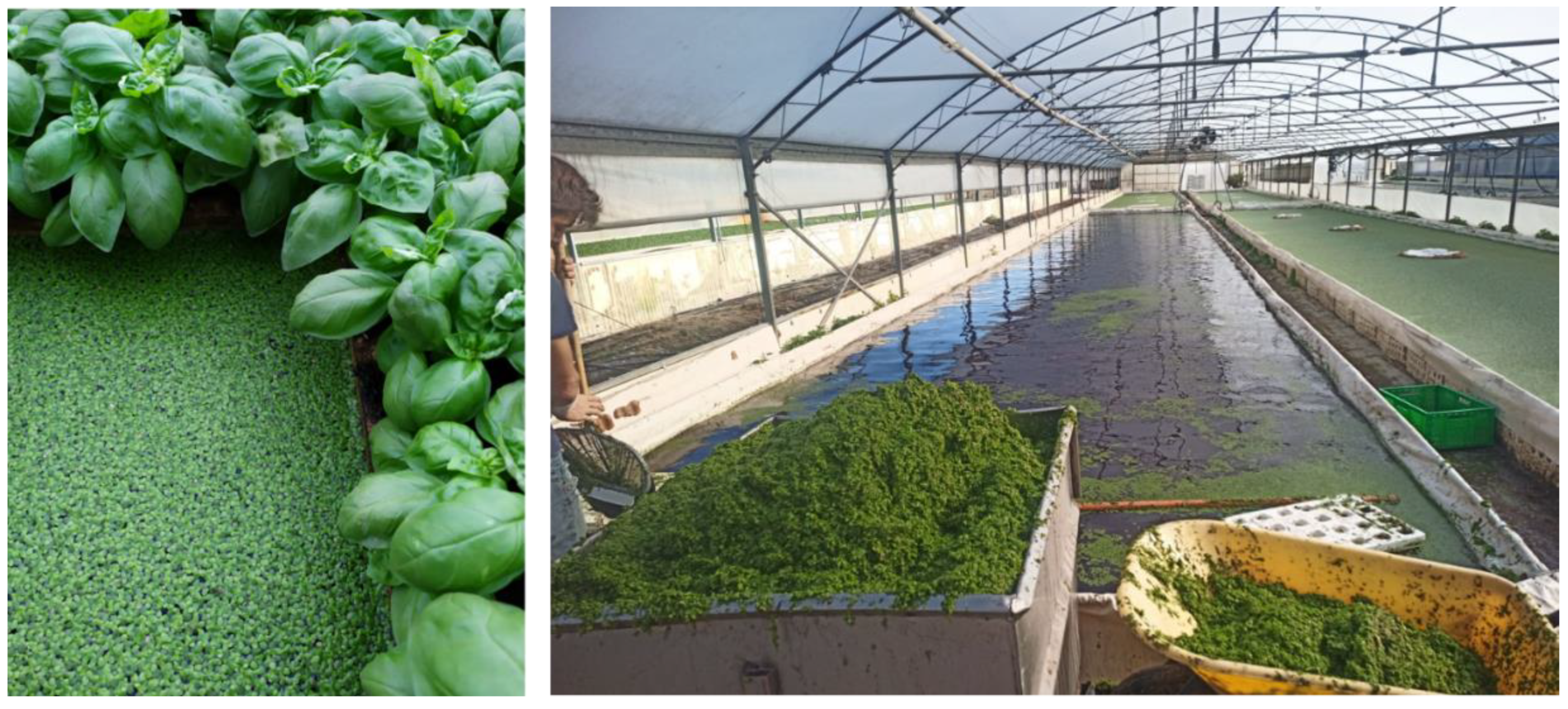
Figure 2.
Climate trend (average, minimum and maximum daily temperature and relative humidity) under the high tunnel used for the trials during the summer (A) and autumn (B) growing cycle.
Figure 2.
Climate trend (average, minimum and maximum daily temperature and relative humidity) under the high tunnel used for the trials during the summer (A) and autumn (B) growing cycle.
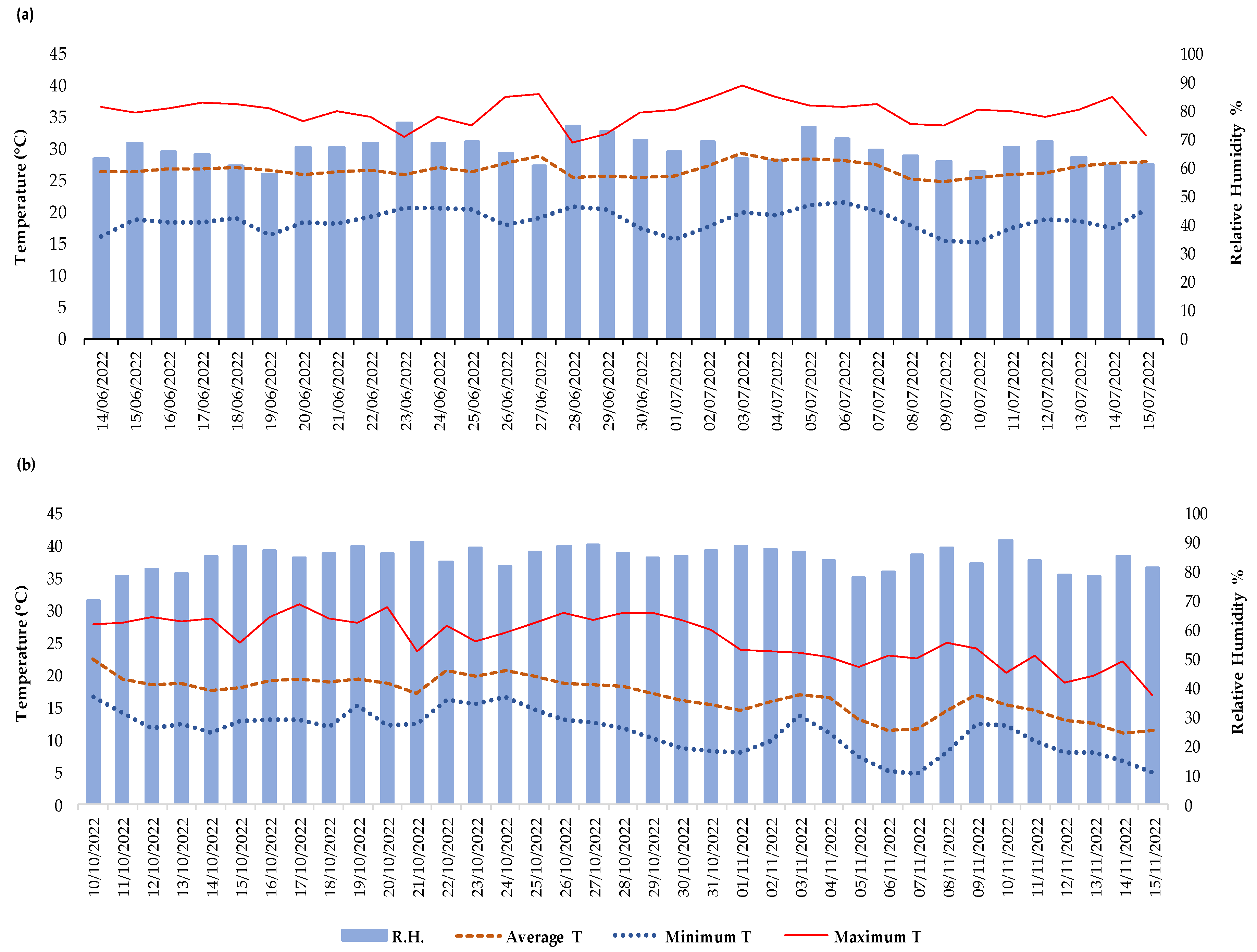
Figure 3.
Head diameter of lettuce subjected to different fertilization treatments (cfr. Table 3) during the summer (A) and autumn (B) growing cycle. The last date corresponds to the harvest. Vertical bars represent ± standard deviation (n = 9).
Figure 3.
Head diameter of lettuce subjected to different fertilization treatments (cfr. Table 3) during the summer (A) and autumn (B) growing cycle. The last date corresponds to the harvest. Vertical bars represent ± standard deviation (n = 9).
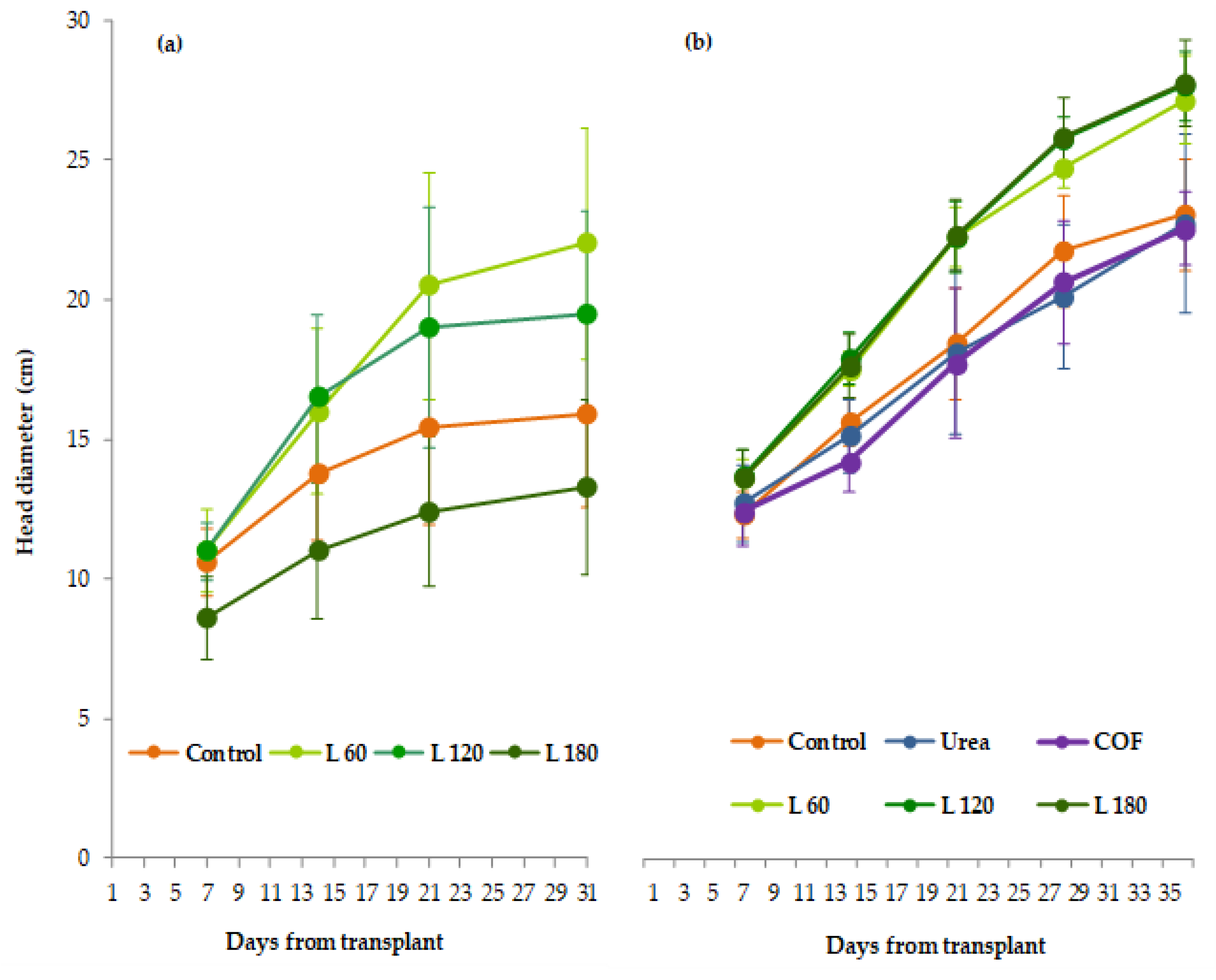
Figure 4.
Fresh weight per plant, number of leaves, dry weight per plant and dry weight percent in lettuce subjected to different fertilization treatments (cfr. Table 3) in the summer growing cycle. Vertical bars represent ± standard deviation; n.s.: not significant differences between data (Tukey Test, P≤0.05; n = 9).
Figure 4.
Fresh weight per plant, number of leaves, dry weight per plant and dry weight percent in lettuce subjected to different fertilization treatments (cfr. Table 3) in the summer growing cycle. Vertical bars represent ± standard deviation; n.s.: not significant differences between data (Tukey Test, P≤0.05; n = 9).
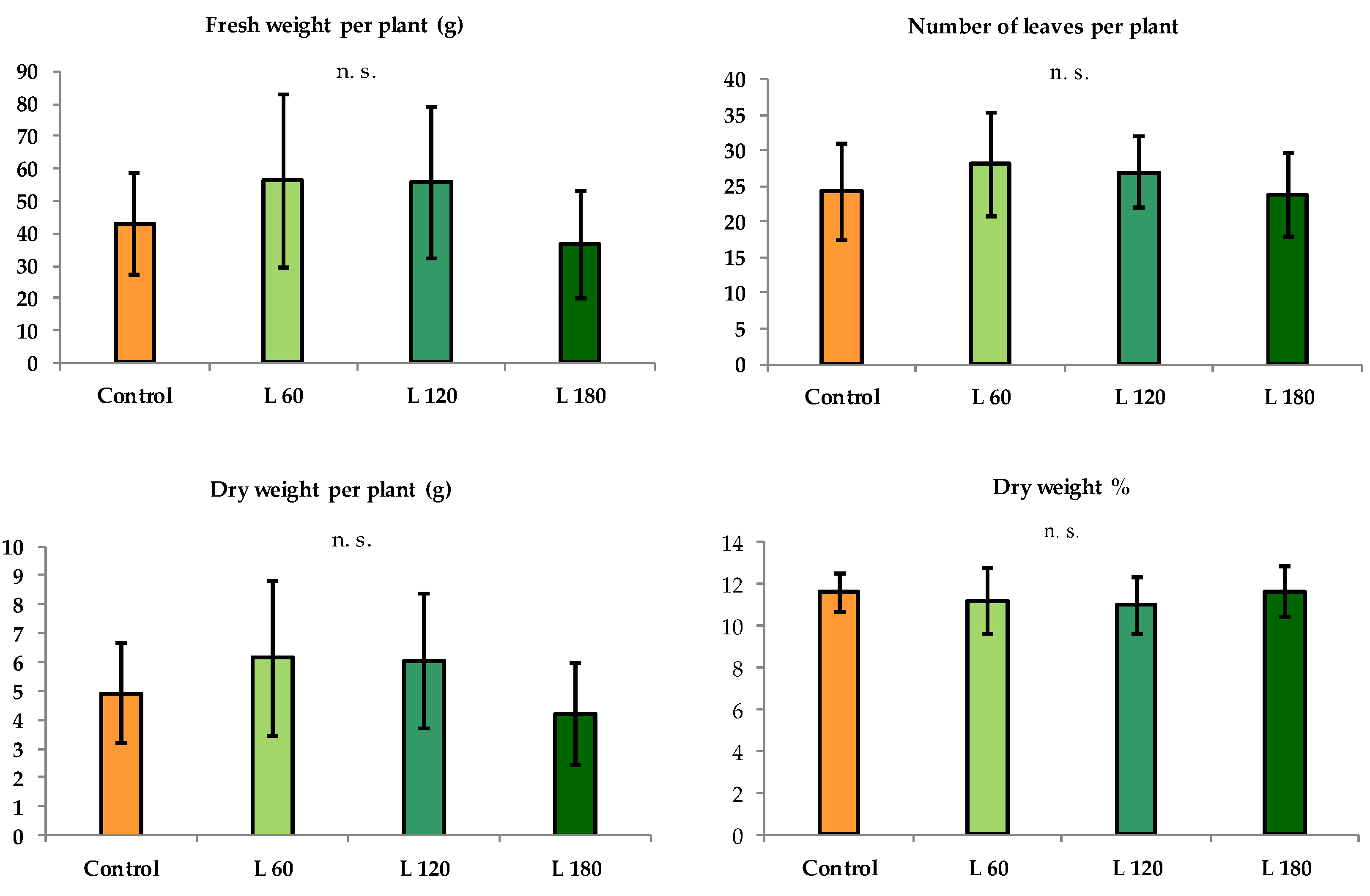
Figure 5.
Nitrate, total N, P, and K content in lettuce subjected to different fertilization treatments (cfr. Table 3) in the summer growing cycle. Vertical bars represent ± standard deviation; n.s.: not significant differences between data (Tukey Test, P≤0.05, n = 3).
Figure 5.
Nitrate, total N, P, and K content in lettuce subjected to different fertilization treatments (cfr. Table 3) in the summer growing cycle. Vertical bars represent ± standard deviation; n.s.: not significant differences between data (Tukey Test, P≤0.05, n = 3).
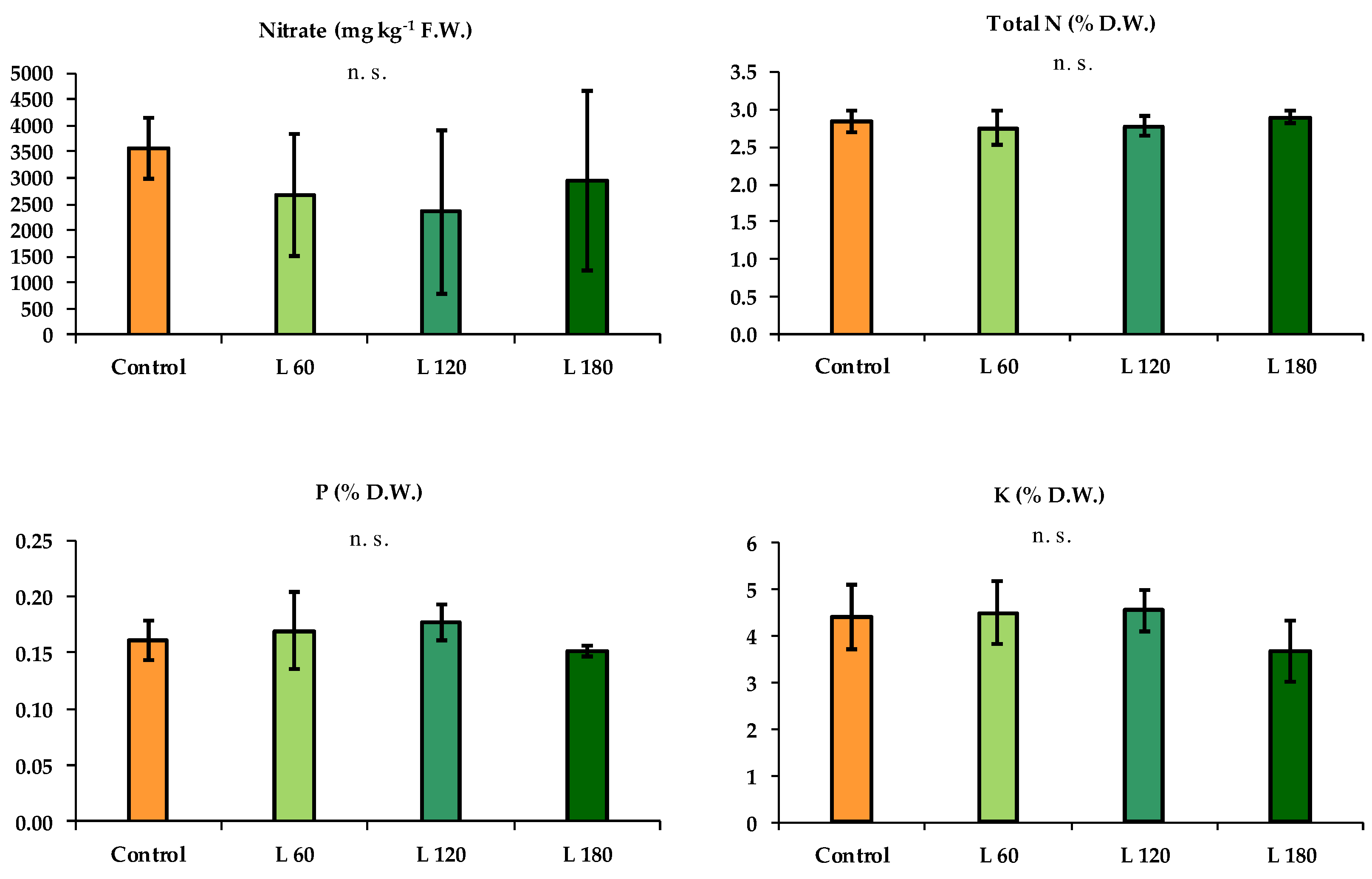
Figure 6.
Fresh weight per plant, number of leaves, dry weight per plant and dry weight percent in lettuce subjected to different fertilization treatments (cfr. Table 3) during the autumn growing cycle. Vertical bars represent ± standard deviation; different letters correspond to significant differences between data (Tukey Test, P≤0.05; n = 9).
Figure 6.
Fresh weight per plant, number of leaves, dry weight per plant and dry weight percent in lettuce subjected to different fertilization treatments (cfr. Table 3) during the autumn growing cycle. Vertical bars represent ± standard deviation; different letters correspond to significant differences between data (Tukey Test, P≤0.05; n = 9).
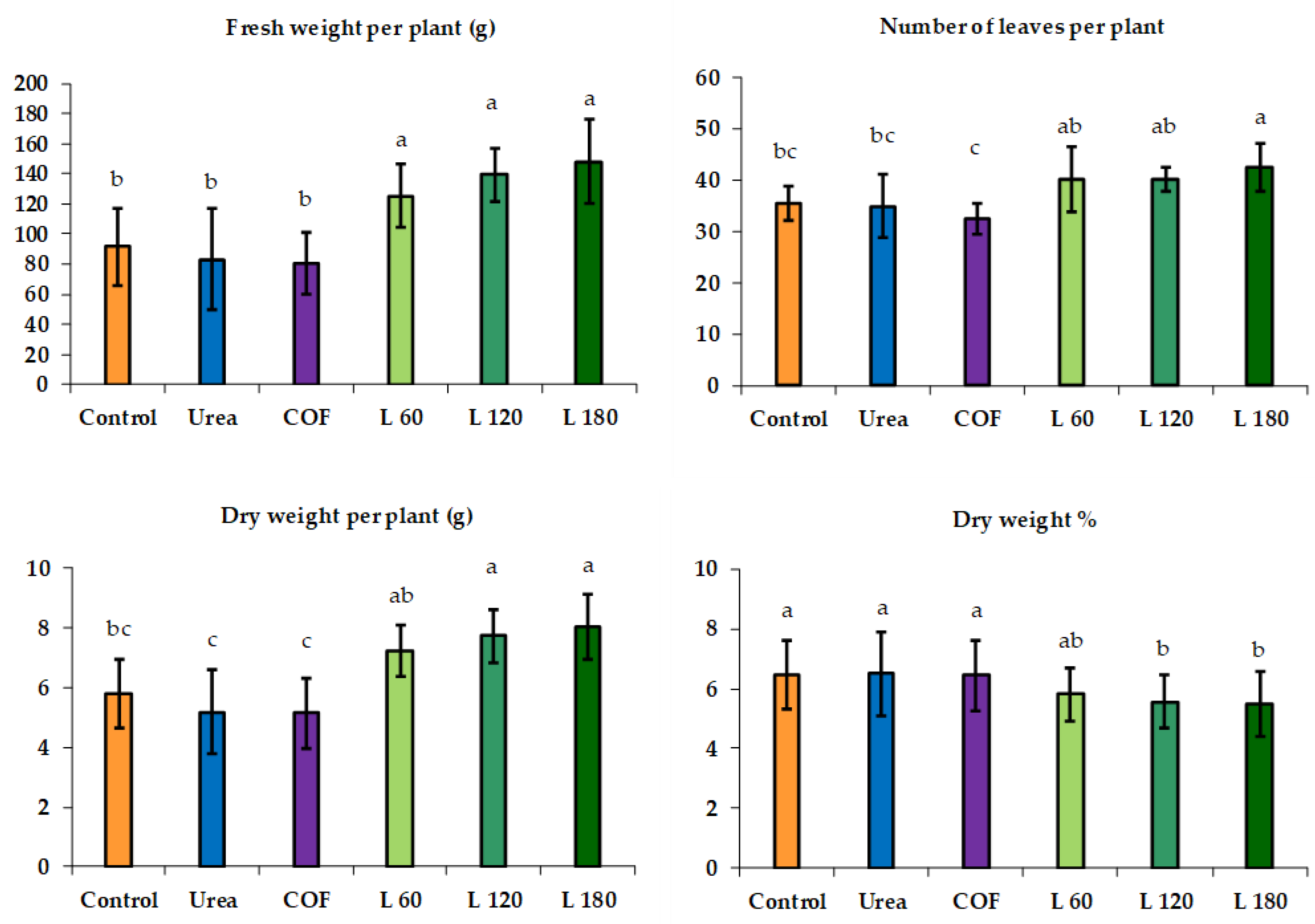
Figure 7.
Nitrate, total N, P, and K content in lettuce subjected to different fertilization treatments (cfr. Table 3) in the autumn growing cycle. Vertical bars represent ± standard deviation; n.s.: not significant differences between data (Tukey Test, P≤0.05; n = 3).
Figure 7.
Nitrate, total N, P, and K content in lettuce subjected to different fertilization treatments (cfr. Table 3) in the autumn growing cycle. Vertical bars represent ± standard deviation; n.s.: not significant differences between data (Tukey Test, P≤0.05; n = 3).
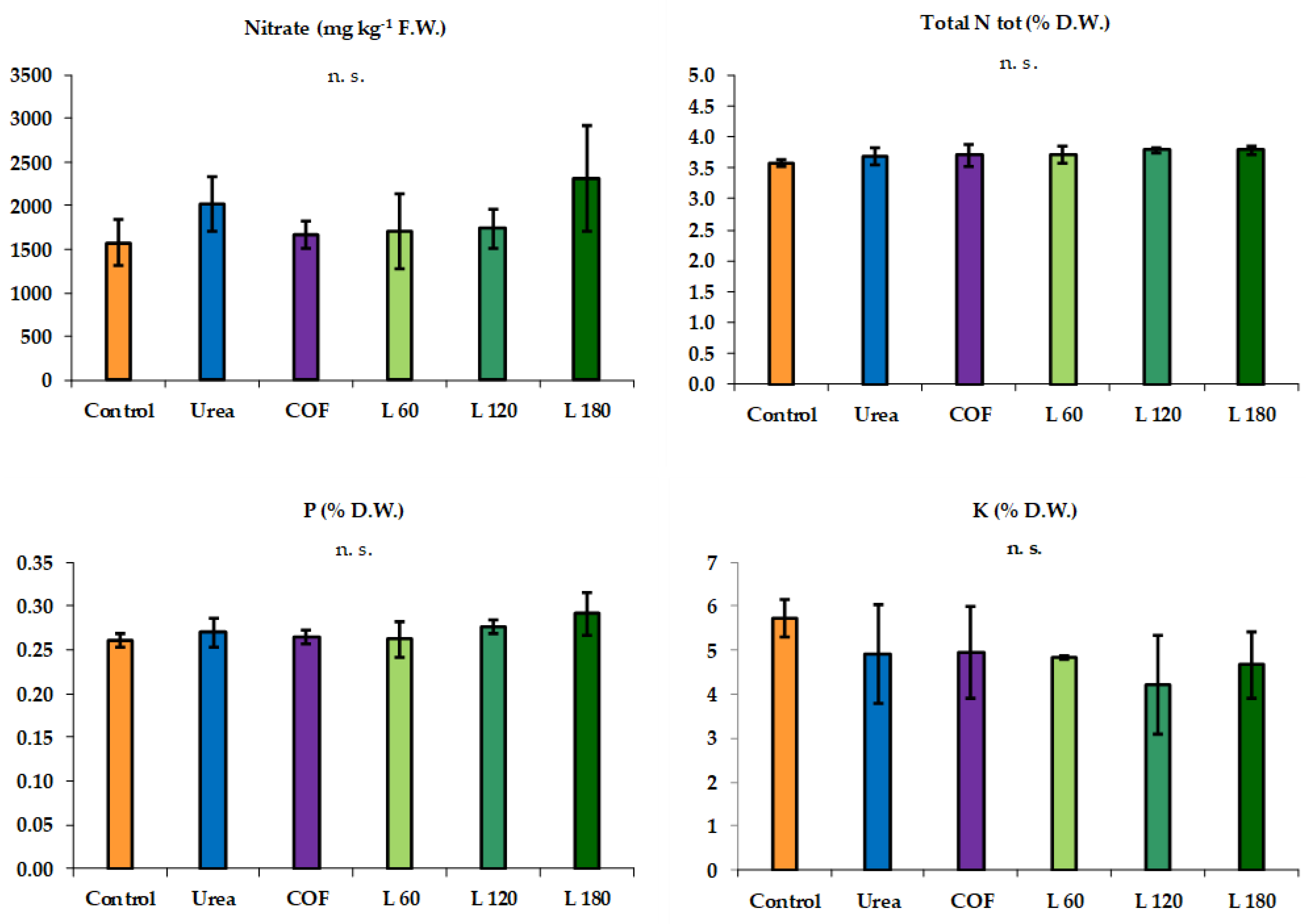

Table 1.
Chemical characterization of the soil used in the trials.
| Parameter | Units | Value |
|---|---|---|
| pH | 7,9 | |
| Electrical Conductivity (EC) | dS m-1 | 2,1 |
| Salinity | ‰ | 2,7 |
| Total Nitrogen | N g kg-1 | 1,8 |
| Available Phosphorus | P2O5 mg kg-1 | 84 |
| Exchangable Potassium | K2O mg kg-1 | 345 |
| Organic Matter | % | 2,9 |
| C/N ratio | 9,6 | |
| Total Limestone | % | 3,4 |
| C.E.C. | meq 100 g-1 | 15,8 |
Table 2.
Elemental characterization of Lemna used in the trials.
| Parameter | Units | Value |
|---|---|---|
| Organic C | % | 39.6 |
| Total N | % | 4.3 |
| NO3-N | % | < 0.1 |
| NH4-N | % | < 0.1 |
| P | % | 2.4 |
| K | % | 5.3 |
| Ca | % | 4.0 |
| Mg | % | 0.7 |
| Na | % | 0.3 |
| Cl | % | 1.3 |
| S | % | 1.0 |
| Fe | ppm | 13500 |
| Mn | ppm | 350 |
| Cu | ppm | 78 |
| Zn | ppm | 97 |
| B | ppm | 573 |
| Mo | ppm | 4.0 |
| C:N ratio | 9.2 |
Table 3.
Fertilizer treatments and respective N supply (kg ha-1). COF = commercial organic fertilizer; L = Lemna.
Table 3.
Fertilizer treatments and respective N supply (kg ha-1). COF = commercial organic fertilizer; L = Lemna.
| Trial | Treatment | Dose of fertilizer (g pot-1) |
N dose (kg ha-1) |
|---|---|---|---|
| Summer | Control | - | 0 |
| Urea | 0.5 | 60 | |
| L60 | 4.7 | 60 | |
| L120 | 9.4 | 120 | |
| L180 | 14.1 | 180 | |
| Autumn | Control | - | 0 |
| Urea | 0.5 | 60 | |
| COF | 1.8 | 60 | |
| L60 | 4.7 | 60 | |
| L120 | 9.4 | 120 | |
| L180 | 14.1 | 180 |
Table 4.
Recovery by lettuce heads of the N supplied by the different fertilization treatments (cfr. Table 3) in the summer growing cycle. Data are means ± standard deviation (n = 3). Different letters in the same column show significant differences between means (Tukey Test); n.s.: not significant, * = different at P≤0.05.
Table 4.
Recovery by lettuce heads of the N supplied by the different fertilization treatments (cfr. Table 3) in the summer growing cycle. Data are means ± standard deviation (n = 3). Different letters in the same column show significant differences between means (Tukey Test); n.s.: not significant, * = different at P≤0.05.
| Treatment | PFPFW | NUEa FW |
NUEp FW |
PFPDW | NUEa DW |
NUEp DW |
REC |
|---|---|---|---|---|---|---|---|
| L 60 | 279.94 a | 67.23 | 786.95 | 30.42 a | 6.01 | 79.29 | 0.14 |
| L 120 | 138.32 ab | 31.96 | 654.22 | 14.99 ab | 2.78 | 41.49 | 0.07 |
| L 180 | 60.62 b | -10.29 | -1976.62 | 6.94 b | -1.19 | -139.75 | -0.03 |
| * | n.s. | n.s. | * | n.s. | n.s. | n.s. |
Table 5.
Chlorophylls and carotenoids content in lettuce subjected to different fertilization treatments (cfr. Table 3) during the autumn growing cycle. Data are means ± standard deviation (n = 3). Different letters in the same column show significant differences between means (Tukey Test); n.s.: not significant, * = different at P≤0.05.
Table 5.
Chlorophylls and carotenoids content in lettuce subjected to different fertilization treatments (cfr. Table 3) during the autumn growing cycle. Data are means ± standard deviation (n = 3). Different letters in the same column show significant differences between means (Tukey Test); n.s.: not significant, * = different at P≤0.05.
| Treatment | Chlorophyll a | Chlorophyll b | Chlorophyll a+b | Carotenoids |
|---|---|---|---|---|
| Controllo | 0.847±0.013 | 0.286±0.021 ab | 1.133±0.034 | 0.244±0.015 |
| Urea | 0.730±0.022 | 0.246±0.022 b | 0.976±0.024 | 0.209±0.008 |
| COF | 0.769±0.071 | 0.272±0.025 ab | 1.041±0.095 | 0.223±0.013 |
| L 60 | 0.766±0.032 | 0.255±0.022 b | 1.021±0.053 | 0.215±0.009 |
| L 120 | 0.770±0.052 | 0.270±0.014 ab | 1.040±0.062 | 0.219±0.021 |
| L 180 | 0.835±0.072 | 0.299±0.022 a | 1.133±0.094 | 0.224±0.021 |
| n.s. | * | n.s. | n.s. |
Table 6.
Recovery by lettuce heads of the N supplied by the different fertilization treatments (cfr. Table 3) in the autumn growing cycle. Data are means ± standard deviation (n = 3). Different letters in the same column show significant differences between means (Tukey Test); n.s.: not significant, * = different at P≤0.05.
Table 6.
Recovery by lettuce heads of the N supplied by the different fertilization treatments (cfr. Table 3) in the autumn growing cycle. Data are means ± standard deviation (n = 3). Different letters in the same column show significant differences between means (Tukey Test); n.s.: not significant, * = different at P≤0.05.
| Treatment | PFPFW | NUEa FW |
NUEp FW |
PFP DW |
NUEa DW |
NUEp DW |
REC |
|---|---|---|---|---|---|---|---|
| Urea | 413.79 ab | -40.89 bc | 600.08 | 25.68 b | -3.03 b | 29.46 | -0.08 b |
| COF | 400.46 ab | -54.22 c | -432.58 | 25.57 b | -3.14 b | -20.22 | -0.08 b |
| L60 | 622.48 a | 167.80 a | 543.28 | 35.87 a | 7.16 a | 23.14 | 0.30 a |
| L120 | 345.88 b | 118.53 ab | 576.04 | 19.15 bc | 4.79 ab | 22.14 | 0.21 a |
| L180 | 245.13 b | 93.57 abc | 581.01 | 13.28 c | 3.71 ab | 22.97 | 0.16 ab |
| ** | * | n.s. | *** | * | n.s. | * |
Disclaimer/Publisher’s Note: The statements, opinions and data contained in all publications are solely those of the individual author(s) and contributor(s) and not of MDPI and/or the editor(s). MDPI and/or the editor(s) disclaim responsibility for any injury to people or property resulting from any ideas, methods, instructions or products referred to in the content. |
© 2024 by the authors. Licensee MDPI, Basel, Switzerland. This article is an open access article distributed under the terms and conditions of the Creative Commons Attribution (CC BY) license (http://creativecommons.org/licenses/by/4.0/).
Copyright: This open access article is published under a Creative Commons CC BY 4.0 license, which permit the free download, distribution, and reuse, provided that the author and preprint are cited in any reuse.


