

Submitted:
08 November 2024
Posted:
12 November 2024
You are already at the latest version
Abstract
The goal of the work is to study the effect of the Natural Plant Complex (NPC) "White Pearl" on the yield and marketability of apples after long-term storage. Experiment options: 1 – control (without treatment); 2 – foliar sprays (1% solution " White Pearl Universal (WPU) Antifreeze" + 1% solution " White Pearl (WP) Drip Ca + Mg"); 3 – foliar sprays (3% solution "WPU Antifreeze" + 3% solution "WP Drip Ca + Mg"). Foliar sprays with organomineral fertilizers (1% solution "WPU Antifreeze" + 1% solution "WP Drip Ca + Mg") significantly by 1.8 times increased the yield of the experimental apple cultivar compared to the control. Foliar sprays with 1% solution and 3% solution of NPC "White Pearl" preparations significantly reduced the damage of ‘Sinap Orlovsky’ apple fruits by scald compared with the control during the prolonged storage. The number of marketable fruits of ‘Sinap Orlovsky’ during the long-term storage was increased by 1.4 and 1.2 times, but it should be noted that the 1% concentration of the solution of organomineral fertilizers was more effective. The conducted tests of organomineral fertilizers in apple plantations show the prospects of their use as additional techniques in traditional apple cultivation technologies.
Keywords:
foliar sprays
; organomineral fertilizers
; crop yield
; fruit size
; storage
; scald
; bitter pit
; yield of commercial fruits
1. Introduction
Fruits, in particular apples, occupy an important place in the human diet, being a source of dietary nutrition with a therapeutic and preventive effect [1]. Apples contain in their composition more than ten vitamins (for example, C, E, B6) necessary for humans, minerals (for example, potassium, calcium, nitrogen, magnesium) and trace elements (for example, zinc, iron, copper, manganese), antioxidants (for example, vitamins C and P) [2,3,4,5].
About 64.6 million tons of apples are consumed worldwide every year [6,7], this is the most commonly consumed fruit [8,9]. Global apple production in 2017 amounted to 83.1 million tons, of which China accounted for the largest share – 41.4 million tons. The European Union provided 9.6 million tons, and the United States provided 5.2 million tons of apples (https://en.wikipedia.org/wiki/List_of_countries_by_apple_production). According to Rosstat, currently the volume of apple production in Russia is more than 1 million tons per year. It is important to note the low yield of marketable products in the total production of apples. In this regard, it is important not only to get high yields, but also to produce high-quality apple fruits, preserving them for a long time [8].
To solve the problem of supplying the population with fresh and high-quality apple fruits all year round is possible if the apples are stored for a long time. Thus, in conditions of low positive temperature, the metabolism of apple fruits slows down and the shelf life increases (up to 2-4 months), however, the development of physiological diseases such as superficial scald, bitter pit, internal browning, etc. may increase [10]. Scald and bitter pit are physiological diseases of many apple cultivars, losses from which reach 50% or more, which causes huge economic damage to enterprises in all regions of industrial horticulture [11,12,13,14,15,16,17].
By now, technology elements have already been developed based on the use of biological products of different nature, ensuring an increase in productivity and quality of agricultural plant products [18,19,20,21]. Nevertheless, new complex preparations have appeared, containing, along with mineral components, various biologically active substances (vitamins, amino acids, humic acids, sugars, proteins, etc.), which optimize metabolic processes and stress resistance of plants [22]. Thus, foliar sprays of apple trees with new complex preparations "Calcium 44 LG", "Alga Ca" and "Algical" have reduced the loss of apples of ‘Renet Kubansky’ from bitter pitting during storage. The composition of the preparation "Calcium 44 LG" includes humic acids and calcium in chelated form. "Alga Ca" and "Algical" are organomineral fertilizers based on seaweed extract of the Laminaria digitate genus and high calcium content [22]. Three–fold foliar top dressing with organic mineral fertilizer "EvricorForte +7" (consumption – 1.5 l/ha) contributed to an increase in the content of ascorbic acid in strawberries: ‘Anastasia’ - 61.8 mg/100 g (an increase by 3.5% compared with the control) and ‘Orletz’ - 60.2 mg/100 g (an increase by 6.1%) [23]. The composition of this drug, in addition to humic acids, includes: N – 8,4 %, Р – 3,6 %, К – 10,4 %, В – 0,7 %, S – 0,04 %, Fe – 0,06 %, Сu – 0,01 %, Zn – 0,01 %, Мg – 0,01 %, Сo – 0,0005 %, Мo – 0,0012 %. Мn, Zn, Li, Cr, and Ni are in chelated form. Complex organomineral fertilizer "Naliv" based on biohumate from horse manure and vegetable raw materials (humic and fulvic acids, amino acids, including proline) increases the content of monosaccharides in ripening apple fruits by 1.8 times and sucrose by 10 % [24]. Foliar sprays of apple trees with the Natural Plant Complex "White Pearl" increased the yield of ‘Sinap Orlovsky’ by 1.7 times [25,26] and the quality of fruits against the background of regulation of protein-carbohydrate metabolism, water regime and donor-acceptor leaf-fruit relations [27]. In addition, foliar sprays with NPC "White Pearl" preparations increased the yield of commercial fruits by 1.6 times after prolonged storage, reducing their scald damage by 1.9 times and bitter pitting by 2.6 times [28]. The analysis of the literature data on the use of biological products in horticulture confirms their effectiveness. They accelerate the growth and maturation of fruits, improve their quality, which leads to an increase in the adaptability and yield of garden crops [18,19,20,21,22,23,24,25,26,27,28,29]. In this regard, research is relevant aimed at increasing the yield of apple trees and improving the commercial qualities of fruits through non-root treatments with new biological products on an organomineral basis.
The goal of the work is to study the effect of the Natural Plant Complex "White Pearl" on the yield and marketability of apple fruits after long-term storage.
2. Materials and Methods
2.1. Study Area
In 2021-2023, new organomineral-based biologics were tested in the soil and climatic conditions of the Orel region at the experimental plot and on the basis of the Laboratory of Physiology of Resistance of Fruit Plants of the Russian Research Institute of Fruit Crop Breeding (VNIISPK).
2.2. Analysis of Weather Conditions 30 and 14 days Before the Harvest of the Apple Cultivar ‘Sinap Orlovsky’
Environmental conditions significantly affect the yield and quality of fruits [30], affecting their size, weight, chemical composition and their potential shelf life. Over the study years, the analysis of weather conditions showed that the distribution of temperature and precipitation was uneven (Table 1). So, in 2023, 30 days and 14 days before the apple harvest, the sum of the average daily temperatures (≥ 10 °C) was higher by 48.1 °C and 33.5 °C and by 86.4 °C and 84.7 °C compared to 2021 and 2022, respectively. It is important to note that during the study period in 2022, the lowest conditions of plant moisture were observed. So, in 2022, 30 days before the harvest of the experimental apple cultivar, there was less precipitation by 14.4 mm and 8.8 mm compared to 2021 and 2023, respectively. Also, that year, 14 days before the apple harvest, there was less precipitation by 5.5 mm and 7.3 mm compared to 2021 and 2023, respectively. (Table 1).
The maximum air temperature of 34.5 °C was recorded in 2023. In 2021, the air temperature rose to 34.0 °C and in 2022 to 33.0 °C. At night, air temperature drops were observed, which decreased to 0.2 °C in 2021, to -2.5 °C in 2022 and in 2023 to 7.0 °C (Figure 1).
HTC, an indicator of territorial drought proposed by climatologist G.T. Selyaninov, was calculated to assess moisture. HTC is calculated as the ratio of the amount of precipitation to the sum of average daily temperatures of 10 °C and above with a coefficient of 0.1. HTC value in the range of 1.0–1.4 determines optimal moisture, more than 1.4 – excessive moisture, less than 1.0 – drought.
2.3. Research Objects
Complex organomineral fertilizer is a Natural Plant Complex (NPC) "White Pearl", which is recommended by the manufacturer to improve the quality of fruit products based on the optimization of organomineral nutrition of plants. The drug has no hazard class.
NPC "White Pearl Universal (WPU) Antifreeze" is a suspension of a group of minerals of natural origin containing a concentrate of extracts of spruce, pine and Siberian fir needles. The composition includes mineral elements: SiO2 – 5,6%; N (total) – 2 – 6%; CaO – 5000 ppm, MgO – 7000 ppm, K2O – 0,2%, B – 130 ppm, Zn – 150 ppm, Mo – 200 ppm; Al2O3 – 1600 ppm and other trace elements; vitamins – А (carotene, lutein), D (phytosterols), Е, К, B1, B2, B6, PP, H; essential volatile oils, chlorophyll, flavonoids, sugars, proteins, amino acids [25,26,27,28].
NPC "White Pearl (WP) Drip Ca + Mg" is an extract of vegetative mass of oceanic bioflora on an organomineral basis. The composition includes bioelements: Ca – 3490,0 ppm, Mg – 2829,0 ppm, P – 42,9 ppm, K – 38,8 ppm, S – 0,3 ppm, Fe – 68,7 ppm, Mn – 3,65 ppm, B – 3,37 ppm, Cu – 0,85 ppm, Zn – 0,05 ppm, Si – 0,1 ppm, Se – 0,003 ppm, J – 2,1 ppm, Mo – 0,01 ppm; mineral elements – SiO2 – 5,6%, CaO – 0,4%, MgO – 0,4%, K2O – 0,2%, Fe2O3 – 0,4%, Al2O3 – 0,16%; vitamins – А (carotene, lutein), D (phytosterols), Е, К, B1, B2, B6, PP, H; chlorophyll, sulfonic acids, humic acids, sugars, proteins, amino acids [25,26,27,28].
Organomineral fertilizers NPC "White Pearl" were tested on the apple cultivar ‘Sinap Orlovsky’, which is characterized by high susceptibility to bitter pitting both in the orchard and during long-term storage [11,31], as well as to scald. ‘Sinap Orlovsky’ is a triploid cultivar of late winter maturation. It was obtained from the crossing of ‘Severny Sinap’ and ‘Pamyat Michurina’. It is zoned in the Central and Central Chernozem regions of Russia.
‘Sinap Orlovsky’ was grafted on a medium-sized rootstock 54-118. The year of planting was 2013 on a site with agro-gray forest soils, with a humus content of 3-4%, and a humus horizon of 30-35 cm. The layout of the trees in the garden is 6 m × 3 m. Natural tinning is used in the aisles, herbicides are used in the trunk strips. Agrotechnics are generally accepted for apple trees in the central part of Russia. There are 3 repetitions in each variant. There are 5 accounting trees in each repetition [25,26,27,28].
2.4. Regulations for the Use of Organomineral Fertilizers in the Experiment
The regulations for the use of drugs at the experimental site were carried out according to the manufacturer's recommendations. In summer, four-fold foliar sprays of ‘Sinap Orlovsky’ apple trees with preparations of different concentrations (1% and 3% solutions of NPC "WPU Antifreeze" and NPC "WP Drip Ca + Mg") was carried out in order to protect the fruits from shedding and improve the quality of the fruits: 14 days after flowering; fenophase "fruit-hazel" (Figure 2 a); phenophase "fruit-walnut" (Figure 2 b); 25 days before harvest [25,26,27,28]. To prepare a 1% and 3% solution, 100 ml and 300 ml of each drug per 10 liters of water were taken, respectively.
The experiment was laid out in three versions:
1 – control (without treatment);
2 – foliar sprays with an organomineral fertilizers of NPC 1% solution "WPU Antifreeze" + 1% solution "WP Drip Ca + Mg»;
3 – foliar sprays with an organomineral fertilizers of NPC 3% solution "WPU Antifreeze" + 3% solution "WP Drip Ca + Mg».
2.5. Yield and Average Weight of Apple Fruits
The weight accounting of the yield was carried out per tree in kg by weighing during the period of removable fruit maturity in accordance with the methodology [32]. The average yield from 1 accounting tree for each repetition of the experiment was calculated by dividing the total weight of the crop (harvested fruit crop + economically usable wind fallen fruits) by the number of accounting plants in the repetition.
The yield as a whole for the cultivar in center from 1 ha was calculated by the formula:
where Y—yield, c/ha;
Y = A / B × 100,
А—average yield per 1 tree, kg;
B—nutrition area of 1 tree, m2;
100—the coefficient of conversion of weight in kilograms to weight in hundredweight and m2 area to hectares.
The commercial qualities, biochemical composition and keeping quality of apple fruits were studied according to the methodology [32]. The fruits of ‘Sinap Orlovsky’, typical in shape, color and degree of maturity, were selected.
To characterize the weight of the fruits, 100 apples were selected from each repetition of the experiment. The average weight of the fruits was determined by weighing 100 fruits and dividing the resulting weight by their number.
2.6. Conditions for Long-Term Storage of Apple Fruits
For experimental storage, the fruits of ‘Sinap Orlovsky’ were laid on the day of removal from the trees. The fruits were stored in a traditional way (normal atmosphere) in the CV114-S refrigerator at a temperature of +2 °C and a relative humidity of 85-90 %. For the storage of apples, polymer multi–turn boxes of type I - GOST R 51289-99 were used. For each option, 3 standard boxes were placed for long-term storage. One box is a repeat. In each repetition there were 40 fruits of the experimental apple cultivar ‘Sinap Orlovsky’.
2.7. Assessment of Damage by Physiological and Microbiological Diseases During Long-Term Storage
Physiological and microbiological diseases of fruits at the end of storage were determined by visual observation using the plant disease identifier and the album "Diseases of fruits, vegetables and potatoes during storage" [33]. Defective fruits were accounted for by quantity, calculated as a percentage. In the case of damage to one fruit by several diseases, accounting was carried out according to the prevailing one.
2.8. Statistical Analysis
The obtained data were evaluated using mathematical statistics using single and two-factor analysis of variance ANOVA (Version 22, SPSS) and correlation analysis. The critical significance level was as-sumed to be 5%.
3. Results
3.1. The Effect of Foliar Sprays with NPC "White Pearl" on the Yield of ‘Sinap Orlovsky’
As a result of the conducted research, an efficacious effect of foliar sprays with an organomineral fertilizers of 1 % NPC "WPU Antifreeze" + 1% "WP Drip Ca + Mg" on the yield of ‘Sinap Orlovsky’ was revealed. In particular, we noted a significant increase in the yield of the experimental apple cultivar by 1.8 times compared to the control and by 1.6 times compared to another variant of the experiment (NPC 3 % "WPU Antifreeze"+ 3 % "WP Drip Ca + Mg"). The foliar sprays with NPC 3% "WPU Antifreeze"+ 3%"WP Drip Ca + Mg" at the same time slightly increased the yield of ‘Sinap Orlovsky’ by 9.3% against the control (Table 2, Figure 3).
3.2. The Effect of Foliar Sprays with NPC "White Pearl" Preparations on the Size of Fruits of the 'Sinap Orlovsky' Cultivar
Foliar sprays with fertilizers NPC «White Pearl» significantly increased the size of ‘Sinap Orlovsky’ fruits. Based on the use of various concentrations of the tested drugs, the average weight of the fruit increased by 20.8 g when treated with NPC 1% "WPU Antifreeze" + 1% "WP Drip Ca + Mg" and by 15.1 g when treated with NPC 3% "WPU Antifreeze" + 3% "WP Drip Ca + Mg" compared to the control (Table 3).
3.3. The Effect of Foliar Sprays with NPC "White Pearl" Preparations on Scald Damage to Fruits of ‘Sinap Orlovsky’ During Prolonged Storage
Physiological disorders of fruits that occur during storage can seriously affect the quality of apples and, consequently, lead to significant economic losses [11,16,17]. Thus, the treatment of NPC 3% "WPU Antifreeze" + 3% "WP Drip Ca + Mg" carried out in 2021 significantly reduced the degree of fruit damage by scald (surface browning of the skin) during storage by 5.9 times compared to the control. At the same time, treatment with an organomineral fertilizers of NPC 1% NPC "WPU Antifreeze" + 1% "WP Drip Ca + Mg" in 2021 reduced the scald damage to fruits by 2.5 times, although statistically differences between these variants were not confirmed. In the drier year 2022 (Table 1), the damage to ‘Sinap Orlovsky’ apple fruits by scald during long-term storage increased by 6.2 and 4.1 times compared with 2021 and 2023, respectively. At the same time, in 2022, significant differences in scald damage to apples were noted between the variants of the experiment and the control at the end of storage. There were 1.8 and 1.9 times less fruits affected by scald after foliar sprays with 1% and 3% solutions of organomineral fertilizers NPC "White Pearl", respectively, compared with the control. In 2023, 2.8 and 28.7 times more fruits affected by scald were detected in the control than in the experimental versions treated with NPC 1% "WPU Antifreeze" + 1% "WP Drip Ca + Mg" and NPC 3% "WPU Antifreeze" + 3% "WP Drip Ca + Mg", respectively (Table 4, Figure 4 b).
3.4. The Effect of Foliar Sprays with Preparations of NPC "White Pearl" on the Bitter pit Damage of ‘Sinap Orlovsky’ Fruits During Prolonged Storage
In 2021, in the control variant there were identified 2 times more fruits with bitter pit (Figure 4 a) than in the variant with foliar sprays with an organomineral fertilizers of NPC 1% "WPU Antifreeze" + 1% "WP Drip Ca + Mg", though statistically differences between these variants were not confirmed. In 2022, compared with the control, 4.0 and 2.3 times fewer fruits affected by bitter pit were recorded in the variants treated with 1% and 3% solutions of NPC "White Pearl", respectively. In 2023, after prolonged storage, significantly 2.0 and 1.9 times fewer fruits affected by bitter pit were detected in the variants with foliar sprays with an organomineral fertilizers of NPC 1% "WPU Antifreeze" + 1% "WP Drip Ca + Mg" and NPC 3% "WPU Antifreeze" + 3% "WP Drip Ca + Mg", respectively, in comparison with the control. However, no significant differences were found between the experimental variants in the bitter pit damage to fruits, although the development of this disease was influenced by the growing season conditions during the years of research (Table 5).
3.5. Assessment of Damage to ‘Sinap Orlovsky’ Fruits by other Physiological and Microbiological Diseases During Long-Term Storage
In addition to the above-mentioned physiological diseases, 0.4 % of overripe fruits were detected in the control variant. 'Sinap Orlovsky' fruits treated with NPC "White Pearl", had no similar damage. At the same time, after prolonged storage, 3.5 and 10.6 times more browned fruits were found in the experimental version with foliar sprays with NPC 3% "WPU Antifreeze" + 3% "WP Drip Ca + Mg" compared to the control and another experimental option, respectively. Minor damage to fruits mainly by fruit rot (Monilia fructigena Pers.) was recorded on fruits in the control variant and in the variant with foliar sprays with NPC 1% "WPU Antifreeze" + 1% "WP Drip Ca + Mg". At the same time, in the variant with foliar sprays with NPC 3% "WPU Antifreeze" + 3% "WP Drip Ca + Mg", there were 7.8 and 15.5 times more fruits affected by Monilia fructigena Pers. compared to the control and the variant treated with NPC 1% "WPU Antifreeze" + 1% "WP Drip Ca + Mg", respectively (Table 6). Monilia fructigena Pers. manifested itself on infected fruits in the form of small rounded brownish spots, which rapidly increased in size with the formation of concentric circles in the focus of infection.
3.6. The Effect of Foliar Sprays with NPC "White Pearl" on the Yield of Commercial Fruits of ‘Sinap Orlovsky’ After Prolonged Storage
According to the output of commercial fruits (Table 7), significant differences were revealed by the years of the study and between the variants of the experiment. Thus, in 2023, the number of commercial fruits in the control increased 1.6 times compared to 2022, while it was 1.2 times less than in 2021. In the variant with foliar sprays with an organomineral mixture of NPC 1% "WPU Antifreeze" + 1% "WP Drip Ca + Mg", the output of commercial fruits in 2023 after long-term storage was 1.3 times higher compared to 2022, but 10.9% less compared to 2021. In 2023, in another variant with foliar sprays with NPC 3% "WPU Antifreeze" + 3% "WP Drip Ca + Mg", the output of commercial fruits after prolonged storage was 1.4 times higher compared to 2022, but less by 1.3% compared to 2021 (Table 7).
In the drier 2022 compared to 2021 and 2023, the output of marketable products after prolonged storage decreased in all variants of the experiment. Thus, in the control, the output of commercial fruits decreased by 2.0 and 1.6 times compared to the experiment variants with NPC 1% NPC "WPU Antifreeze" + 1% "WP Drip Ca + Mg" and NPC 3% "WPU Antifreeze" + 3% "WP Drip Ca + Mg" treatments, respectively. Hence, the tested preparations are able to increase the number of commercial ‘Sinap Orlovsky’ fruits during long-term storage, but it should be noted that the 1% concentration of the solution of the organomineral fertilizers showed greater effectiveness (Table 7).
3.7. Correlation Analysis
It should be noted that the weather conditions 30 days and 2 weeks before the harvest affected the yield and the average weight of the fruit. According to the correlation analysis (Figure 5), the yield and weight of the fruit of the experimental variety depended on the sum of the average daily temperatures (≥ 10 ° C), the amount of precipitation and HTC. The yield and fruit weight of ‘Sinap Orlovsky’ were affected by weather conditions 30 days before the harvest to a greater extent, than 2 weeks before.
During the years of studies, the prevailing weather conditions 30 days and 2 weeks before the harvest of winter cultivars also significantly affected the shelf life of the fruits of the experimental cultivar (Figure 6). According to the study results, the storage duration of ‘Sinap Orlovsky’ apples was 211 days in 2021; 208 days in 2022 and 207 days in 2023. A strong dependence of the duration of apple storage on the average daily air temperature ≥ 10 °C, the amount of precipitation and the hydrothermal coefficient was noted. In the drier and hotter years 2022 and 2023 (Table 1), the storage duration decreased by 3 and 4 days compared to 2021, respectively.
The development of physiological diseases (scald, bitter pit) and the output of commercial fruits after long-term storage were influenced by the weather conditions during the vegetation (Figure 7). Thus, the development of surface scald on the ‘Sinap Orlovsky’ fruits during the prolonged storage, strongly depended on the amount of precipitation during the growing season. At the same time, the dependence of the manifestation of this disease on the sum of the average daily temperatures was not determined. The development of bitter pit, when storing ‘Sinap Orlovsky’ fruits, was more dependent on the sum of the average daily temperatures. The output of marketable apples after storage strongly depended on the moisture conditions during the years of studies and on the development of physiological diseases of apples (scald r = -0,98 and bitter pit r = -0,99).
4. Discussion
In the soil and climatic conditions of the Orel region, the effect of organomineral fertilizers of the NPC “White Pearl Universal Antifreeze’’ and “White Pearl Drip Ca + Mg” on resistance, yield and quality of apple fruits was studied.
As a result of the study, the efficient effect of foliar sprays with an organomineral fertilizer of 1% NPC "WPU Antifreeze" + 1 % NPC "WP Drip Ca + Mg" on the yield of ‘Sinap Orlovsky’ apples was revealed. A significant increase in the yield of the experimental apple variety was observed compared to the control by 1.8 times and to the option with NPC 3% "WPU Antifreeze" + 3% "WP Drip Ca + Mg" by 1.6 times. At the same time, the 3% concentration of NPC "WPU Antifreeze" and NPC "WP Drip Ca + Mg" did not significantly increase the yield of ‘Sinap Orlovsky’ compared with the control.
The size of the fruit of the experimental cultivar was significantly affected by both concentrations of NPC "White Pearl" solutions. The average fruit weight of the studied cultivar increased by 20.8 g compared with the control when treated with NPC 1% "WPU Antifreeze" + 1% "WP Drip Ca + Mg" and by 15.1 g when treated with NPC 3% "WPU Antifreeze" + 3% "WP Drip Ca + Mg".
According to other researchers, foliar top dressing with moringa leaf extract, seaweed extract and fulvic acid, individually or in combination with each other, improved vegetative growth, yield, fruit quality and leaves mineral composition of apple cultivar ‘Anna’ compared with untreated trees [34].
The use of liquid polycomponent fertilizer "Aminovit", containing amino acids, nitrogen, trace elements (B – 130 g/l; Mo, Cu, Mn, Fe, Zn – 0.02 g/l) and humic acids, ensured a decrease in the shedding of ovaries and fruits due to the optimization of nutrition conditions. The analysis of the economic efficiency of using non–root top dressing in the technological scheme of apple cultivation to increase productivity and resistance to adverse environmental factors showed that in the foothill zone of the Krasnodar Territory, the profitability of fruit production of the ‘Idared’ cultivar increased by an average of 1.4 times, ‘Renet Simirenko’ – by 1.6 times, and ‘Golden Delicious’ - by 1.9 times [35].
Stressful weather conditions (the effect of high or low temperatures, a shortage or excess of precipitation) significantly affect the degree of maturity of fruits and their damage by physiological diseases during long-term storage [36,37,38]. Recently, the main losses during apple storage have been caused by physiological diseases in the form of scald and bitter pit [11], to a lesser extent in the form of microbiological rot. The damage of apples by browning the pulp during the prolonged storage is especially strongly affected by heavy precipitation a month before harvest [39].
Unfavorable weather conditions during the growing season (dry, hot weather) contribute to the development of scald during storage [40]. If the air temperature is high during this period, apple fruits are more susceptible to scald. Thus, according to the research results, the authors [40] noted that low temperatures during the pre-harvest period can reduce susceptibility to surface scald during the apple storage period. In addition, weather conditions a month and two weeks before harvesting have a particularly strong effect on the development of physiological diseases of apples during long-term storage [39], which is consistent with our research results. In the cooler year 2021 (Table 1) we noted fewer fruits of ‘Sinap Orlovsky’ affected by scald than in subsequent years, both in the control and in the variants with foliar sprays with NPC "White Pearl". Nevertheless, according to our data, the development of this disease was more influenced by the conditions of humidification of plants of the experimental cultivar during the growing season. Thus, in the drier year 2022 (Table 1), when storing fruits affected by scald, there were 6.2 and 4.1 times more damaged fruits, respectively, than in 2021 and 2023. At the same time, the development of surface scald during long-term storage was significantly influenced by foliar sprays. Thus, in the variants of the experiment with treatments with 1% solution and 3% solution of NPC "White Pearl" preparations, a decrease in the damage to ‘Sinap Orlovsky’ apple fruits by scald was noted by 2.0 and 2.7 times, respectively, compared with the control.
Bitter pit can manifest itself in the orchard, but it develops more during storage and is caused not only by an unbalanced mineral composition and hormonal disorders, but also by the influence of the environmental factors [41]. According to the results of our studies, bitter pit in the fruits of ‘Sinap Orlovsky’ was developed to a greater extent under long-term storage conditions than in the orchard. At the same time, we noted a high level of dependence of the development of this apple disease on hot weather. So in the hotter year 2023, the number of fruits affected by bitter pit during storage was 2.3 and 3.5 times more than in 2021 and 2022, respectively. However, foliar sprays with NPC "WPU Antifreeze" did not significantly affect the development of this physiological disease during long-term storage.
At the same time, there was a high efficiency of foliar sprays with 1% solution of NPC "White Pearl Universal Antifreeze" and 1% solution of NPC "White Pearl Drip Ca + Mg", which increased the number of marketable fruits of ‘Sinap Orlovsky’ by 1.4 times after long-term storage.
Our tests of organomineral fertilizers of the NPC “White Pearl” line in apple plantations show the prospects of their use as additional techniques in traditional technologies of cultivation of this crop to improve fruit quality and yield, as well as to preserve consumer and commodity qualities of apples during storage.
5. Conclusions
Hereby, the regulation of plant growth and development with the help of physiologically active substances has significantly improved the quality of fruit products against the background of balanced organomineral nutrition of apple trees. The conducted tests of new organomineral fertilizers NPC "White Pearl" show the effectiveness of their use as additional techniques in traditional apple cultivation technologies and are recommended to improve the quality and reduce the damage of fruits with physiological diseases (scald and bitter pit) during prolonged storage.
Based on the conducted research, we recommend a more effective concentration of new organomineral fertilizers – 1% solution "White Pearl Universal Antifreeze" + 1% solution "White Pearl Drip Ca + Mg", which greatly increased the yield and quality of fruits of the apple cultivar ‘Sinap Orlovsky’ during prolonged storage. The following regulations for the use of tested drugs on an organomineral basis are presented:
- 14 days after flowering;
- Phenophase "fruit-hazel";
- Phenophase "fruit-walnut";
- 25-30 days before the apple harvest.
Author Contributions
Z. E. Ozherelieva – formal analysis, investigation, resources, project administration, writing – original draft, writing – review & editing; A. L. Nikitin – resources, data curation and visualization; P. S. Prudnikov – resources.
Funding
This work was supported by the Ministry of Science and Higher Education of the Russian Federation under agreement № 075-15-2021-1050 at 28.09.2021.
Data Availability Statement
In this study, the apple variety ‘Synap Orlovsky’ was used, bred by the Russian Research Institute of Fruit Crop Breeding (VNIISPK) from the genetic collection of VNIISPK. Information about this variety is available on the website of the Russian Research In-stitute of Fruit Crop Breeding (VNIISPK).
Acknowledgments
The authors thank AgroPlus Group of Companies LLC for the gratuitous provision of adaptogenic preparations for testing.
Conflicts of Interest
The authors declare that there is no conflict of interest regarding the publication of this article.
References
- Boyer, J., Liu, R.H. Apple phytochemicals and their health benefits. Nutrition Journal 2004, 3, 5. [CrossRef]
- Oyenihi, A.B., Belay, Z.A., Mditshwa, A., Caleb, O.J. "An apple a day keeps the doctor away": The potentials of apple bioactive constituents for chronic disease prevention. Journal Food Science 2022, 87(6), 2291-2309. [CrossRef]
- Skinner, R.C., Gigliotti, J.C., Ku, K.M., Tou, J.C. A comprehensive analysis of the composition, health benefits, and safety of apple pomace. Nutrition Reviews 2018, 76(12), 893–909. [CrossRef]
- Pal, R.S., Pal, Y., Wal, A., Wal, P. Herbal detoxifiers: An eminent need of today. Current Nutrition & Food Science 2020, 16(4), 424–432. [CrossRef]
- Ma, B., Chen, J., Zheng, H., Fang, T., Ogutu, C., Li, S., Han, Y., & Wu, B. Comparative assessment of sugar and malic acid composition in cultivated and wild apples. Food Chemistry 2015, 172, 86–91. [CrossRef]
- FaoStat. Food and Agricultural Organization of the United Nations. http://fao.org/faostat.
- Kalinowska, M., Bielawska, A., Lewandowska-Siwkiewicz, H., Priebe, W., Lewandowski, W. Apples: Content of phenolic compounds vs. variety, part of apple and cultivation model, extraction of phenolic compounds, biological properties. Plant Physiology and Biochemistry 2014, 84, 169–188. [CrossRef]
- Karakasova, L., Stefanoski, A., Rafajlovska, V., Klopceska, J. Technological characteristics of some apple cultivars. ISHS Acta Hort. (2009) 825 559–564. [CrossRef]
- Musacchi, S., Serra, S. Review: apple fruit quality: overview on pre-harvest factors. Journal of Horticultural Sciences 2018, 234, 409–430. [CrossRef]
- Mahajan, P.V., Caleb, O.J., Singh, Z., Watkins, C.B., Geyer, M. Postharvest treatments of fresh produce. Philosophical Transactions of the Royal Society A 2014, 372, 20130309. [CrossRef]
- Gudkovskii, V.A., Kozhina, L.V., Balakirev, A.E., Nazarov, Y.B., Kuzin, A.I. Promising technology to control bitter pit and other postharvest pathologic diseases. Acta Horticulturae. 2021, 1325, 151–158. [CrossRef]
- Mattheis J.P., Felicetti D.A., Rudell D.R. ‘d’Anjou’ pear metabolism during ultra-low O2, low CO2 controlled atmosphere storage reflects disorder outcome. Postharvest Biology and Technology 2022, 185, 111781. [CrossRef]
- de Freitas, S.T., Mitcham, E.I. 3 Factors Involved in Fruit Calcium Deficiency Disorders. Horticultural reviews 2012. 40. 107–146. [CrossRef]
- Moggia, C., Moya-León, M.A., Pereira, M., Yuri, J.A., Lobos, G.A. Effect of DPA [Diphenylamine] and 1-MCP [1-methylcyclopropene] on chemical compounds related to superficial scald of Granny Smith apples. Spanish Journal of Agricultural Research 2010, 8(1), 178–187. [CrossRef]
- Zanella, A. Control of apple superficial scald and ripeningsa comparison between 1-methylcyclopropene and diphenylamine postharvest treatments, initial low oxygen stress and ultra-low oxygen storage. Postharvest Biology and Technology 2003, 27, 69–78. [CrossRef]
- Gudkovsky, V.A., Kozhina, L.V. The influence of storage conditions on the incidence of sunburn and the quality of apple fruits in the middle zone of Russia. Fruits and vegetables - the basis of the structure of healthy human nutrition. Michurinsk, 2012. 105–136.
- Gudkovsky, V.A., Kozhina, L.V., Nazarov, Yu.B. Existing and gutting-edge technologies of storage gas injury fruit protection. Vestnik of the Russian agricultural science 2017, 2, 28–31.
- Lurie S., Watkins C. B. Superficial scald, its etiology and control. Postharvest Biology and Technology 2012. 65. 44–60. [CrossRef]
- Ju, Z., Bramlage, W. J. Cuticular Phenolics and Scald Development in Delicious’ Apples. Journal of the American Society for Horticultural Science 2000. 125(40), 498–504. [CrossRef]
- Frioni, T., Sabbatini, P., Tombesi, S., Norrie, J., Poni, S., Gatti, M., Palliotti, A. Effects of a biostimulant derived from the brown seaweed Ascophyllum nodosum on ripening dynamics and fruit quality of grapevines. Scientia Horticulturae 2018; 232, 97–106. [CrossRef]
- Doroshenko, TN, Petrik, GF, Chumakov, SS, Krivorotov, SB, Maksimenko, AP. Specific aspects of creating a sustainably functioning ecosystem of an organic apple garden in the South of Russia. Journal of Pharmaceutical Sciences and Research 2018, 10(7), 1652–1655.
- Prichko, T.G., Smelik, T.L. Assessment of efficiency of new preparations contained calcium in the fight against of apple bitter pits. Scientific works of the North Caucasus Federal Scientific Center for Horticulture, Viticulture, and Winemaking 2015. 7. 143–146.
- Mushinsky, A.A., Aminova, E.V., Avdeeva, Z.A., Borisova, A.A., Tumaeva, T.A. The effect of organic fertilizer on the productivity and quality of strawberries. Pomiculture and small fruits culture in Russia 2019, 59, 335–342. [CrossRef]
- Doroshenko, T, Ryazanova, L, Petrik, G, Gorbunov, I, Chumakov, S. Features of the economical yield formation of apple plants under non-root nutrition in the Southern Russia organic plantings. BIO Web of Conferences BIOLOGIZATION. 2021; 34, 05004. [CrossRef]
- Ozherelieva, Z., Prudnikov, P., Nikitin, A., Androsova, A., Bolgova A., Stupina A., Vetrova O. Adaptogenic Preparations Enhance the Tolerance to Spring Frosts, Yield and Quality of Apple Fruits. Horticulturae 2023, 9, 591. [CrossRef]
- Ozherelieva, ZE, Prudnikov, PS, Nikitin, AL, Vetrova, OA. Leonicheva, Е.V. Yield and quality of Malus domestica Borkh. As influenced by novel organomineral fertilizers. Agricultural Biology. 2023, 58(5), 902–914. [CrossRef]
- Ozherelieva, Z.E., Prudnikov, P.S.. Impact of the B-Plus White Pearl (Belyi Zhemchug) reparation on the spring frost tolerance, yield and quality of apple cross. Horticulture and Viticulture 2022; 6, 24–32. [CrossRef]
- Ozherelieva, ZE, Nikitin, AL, Prudnikov, PS. Vetrova, OA. Beliy Zhemchug Activated Complex: Effect on Quality and Yield of Commercial Apples after Long-Term Storage. Food Processing: Techniques and Technology 2024, 54(2), 358–368. [CrossRef]
- Ruzzi, M., Aroca, R. Plant growth-promoting rhizobacteria act as biostimulants in horticulture. Scientia Horticulturae 2015, 196, 124–134. [CrossRef]
- Hodges, D.M. Postharvest Oxidative Stress in Horticultural Crops. York, USA. 2023. [CrossRef]
- Sedov, E.N., Sedysheva, G.А., Krasova, N.G., Serova, Z.М., Gorbacheva, N.G., Galasheva, А.М., Yanchuk, Т.V., Pikunova, А.V., Van de Veg, E. Origin, economical and cytoembryological characteristics of triploid apple cultivar ‘Sinap Orlovsky’. Russian Agricultural Science 2017, 1, 14–18. [CrossRef]
- Program and methodology of fruit, berry and nut variety study: Eds.: Sedov Е. N. & Ogoltsova T.P. Orel: VNIISPK, 1999.
- Dement’eva, M.I., Vygonskiy, M.I. Diseases of fruit, vegetables, and potatoes during storage. Moscow: Agropromizdat; 1988.
- Mosa, W.F.A., Sas-Paszt, L., Głuszek, S., Górnik, K., Anjum, M.A., Saleh, A.A., Abada, H.S., Awad, R.M. Effect of some biostimulants on the vegetative growth, yield, fruit quality attributes and nutritional status of apple. Horticulturae 2023, 9, 32. [CrossRef]
- Yaroshenko, O.V., Sergeyeva, N.N., Gaponenko, A.V. Organo-mineral foliar feeding in the technology of growing apple trees in the south of Russia. Subtropical and ornamental horticulture 2019, 70, 133–142. [CrossRef]
- Toivonen, P.M.A. Effects of Storage Conditions and Postharvest Procedures on Oxidative Stress in Fruits and Vegetables. In: Postharvest Oxidative Stress in Horticultural Crops, D.M. Hodges (Ed.). York: Food Products Press, 2003a. 69–90.
- Toivonen, P.M.A. Postharvest Treatments to Control Oxidative Stress in Fruits and Vegetables. In: Postharvest Oxidative Stress in Horticultural Crops, D.M. Hodges (Ed.). York: Food Products Press, 2003b. 225–246.
- Toivonen, P.M.A., Hodges, D.M. Abiotic Stress in Harvested Fruits and Vegetables. InTech. 2011. [CrossRef]
- Saure, M. C. Why calcium deficiency is not the cause of blossom-end rot in tomato and pepper fruit – a reappraisal. Scientia Horticulturae 2014, 174, 151–154. [CrossRef]
- Bramlage W. J. Weis S. A. Effects of Temperature, Light and Rainfall on Superficial Scald Susceptibility in Apples. Scientia Horticulturae 1997, 32, 5, 808–811. [CrossRef]
- Torres, E, Kalcsits, L. Nieto, L.G. Is calcium deficiency the real cause of bitter pit? A review. Front. Plant Scince 2024, 15, 1383645. [CrossRef]
Figure 1.
Maximum and minimum air temperature 30 days before the harvest of ‘Sinap Orlovsky’ apples.
Figure 1.
Maximum and minimum air temperature 30 days before the harvest of ‘Sinap Orlovsky’ apples.
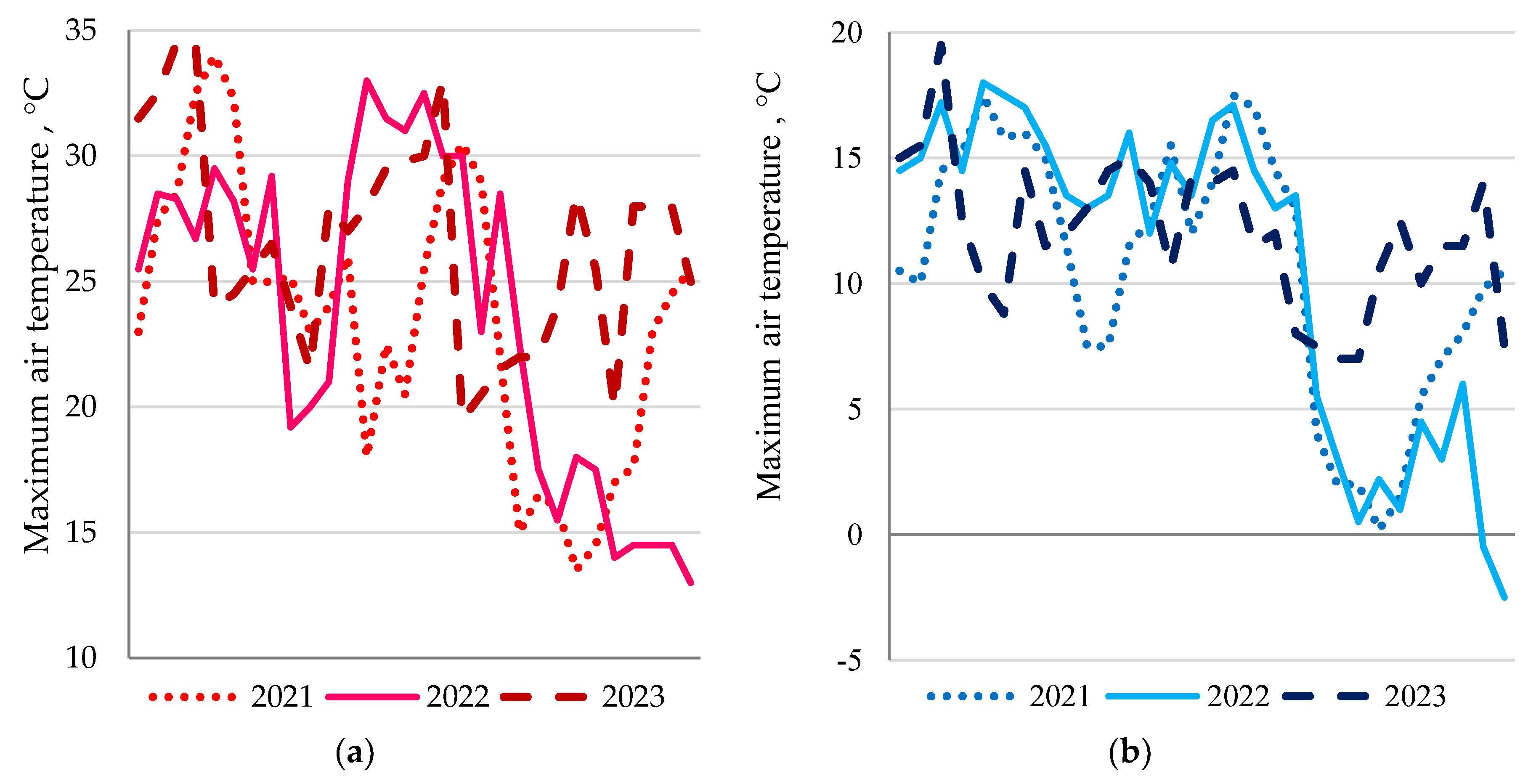
Figure 2.
Phenophases of development of ‘Sinap Orlovsky’ apples.
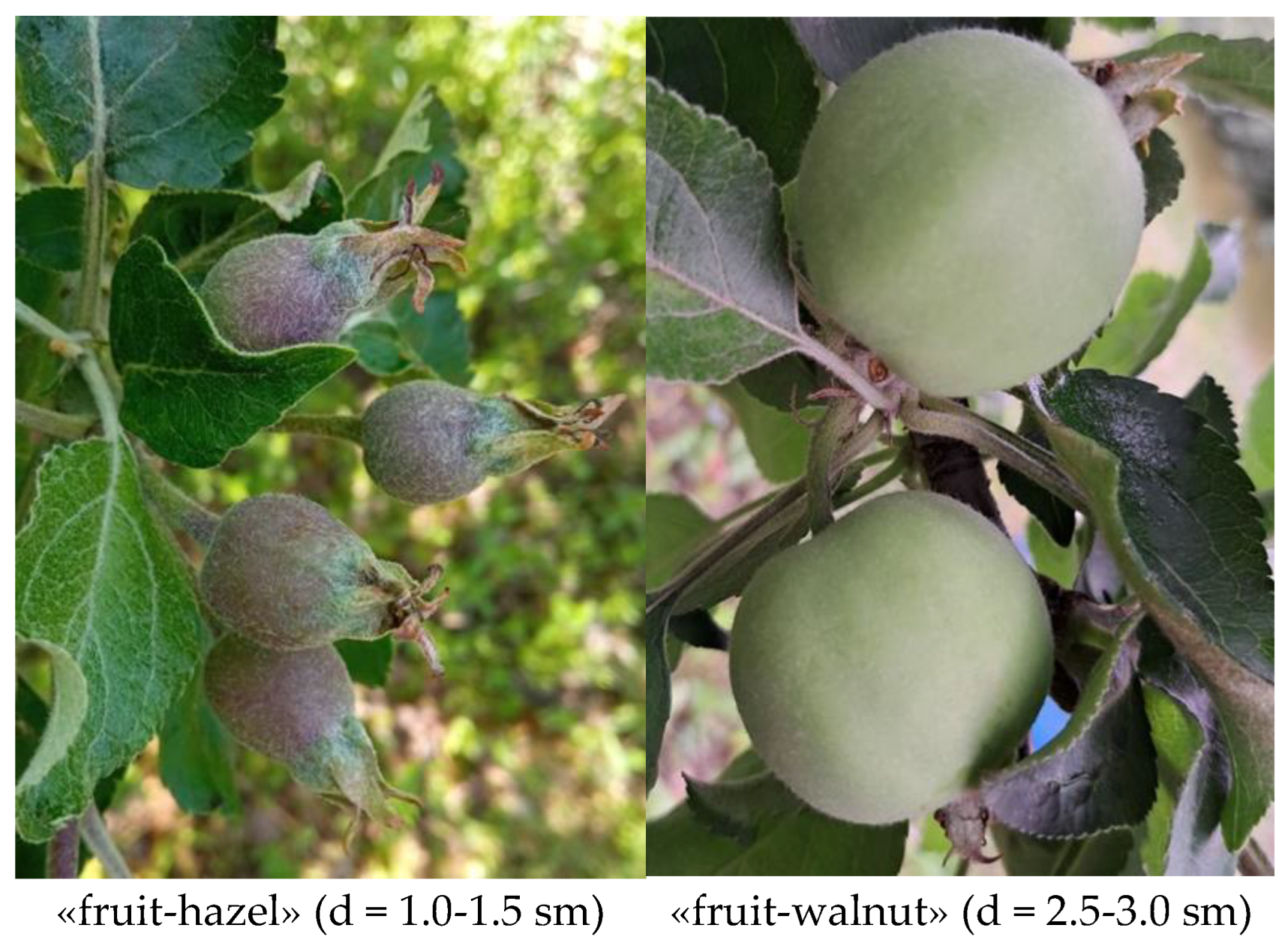
Figure 3.
Fruits and harvest of the experimental cultivar ’Sinap Orlovsky’.
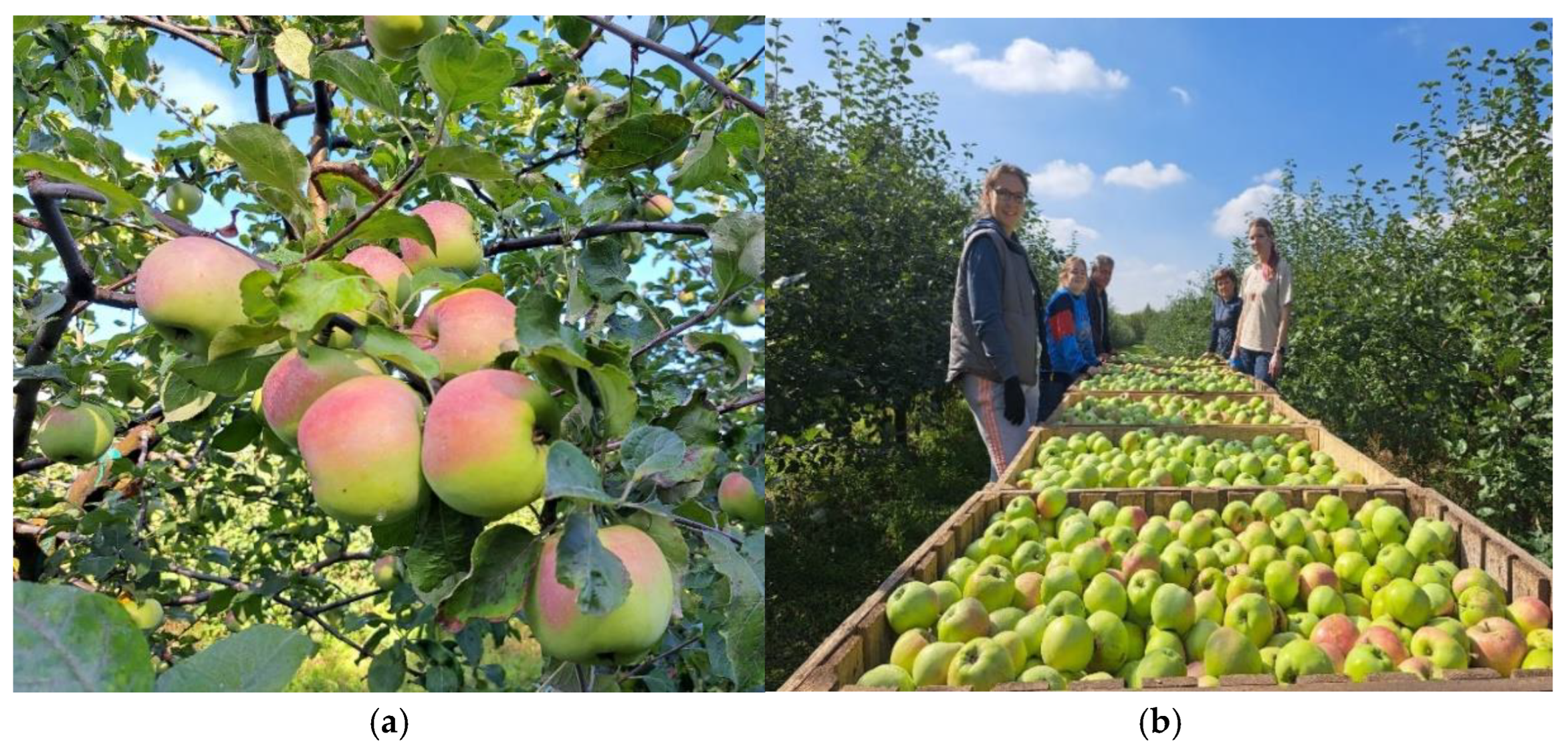
Figure 4.
‘Sinap Orlovsky’ fruits affected by bitter pit (a) and scald (b) during long–term storage at +2 °C (control - without treatment).
Figure 4.
‘Sinap Orlovsky’ fruits affected by bitter pit (a) and scald (b) during long–term storage at +2 °C (control - without treatment).
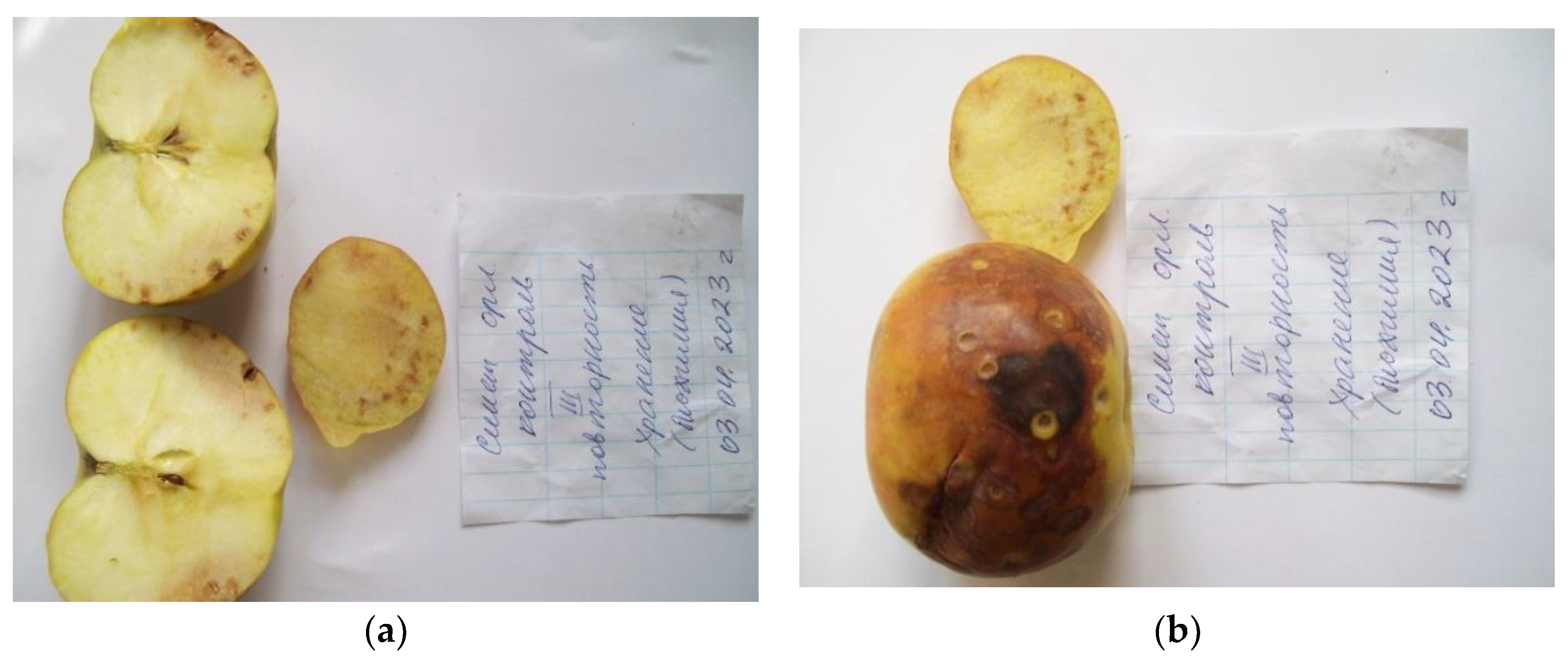
Figure 5.
The correlation coefficient between yield (a), average fruit weight (b), and weather conditions of the periods before the harvest of ‘Sinap Orlovsky’.
Figure 5.
The correlation coefficient between yield (a), average fruit weight (b), and weather conditions of the periods before the harvest of ‘Sinap Orlovsky’.
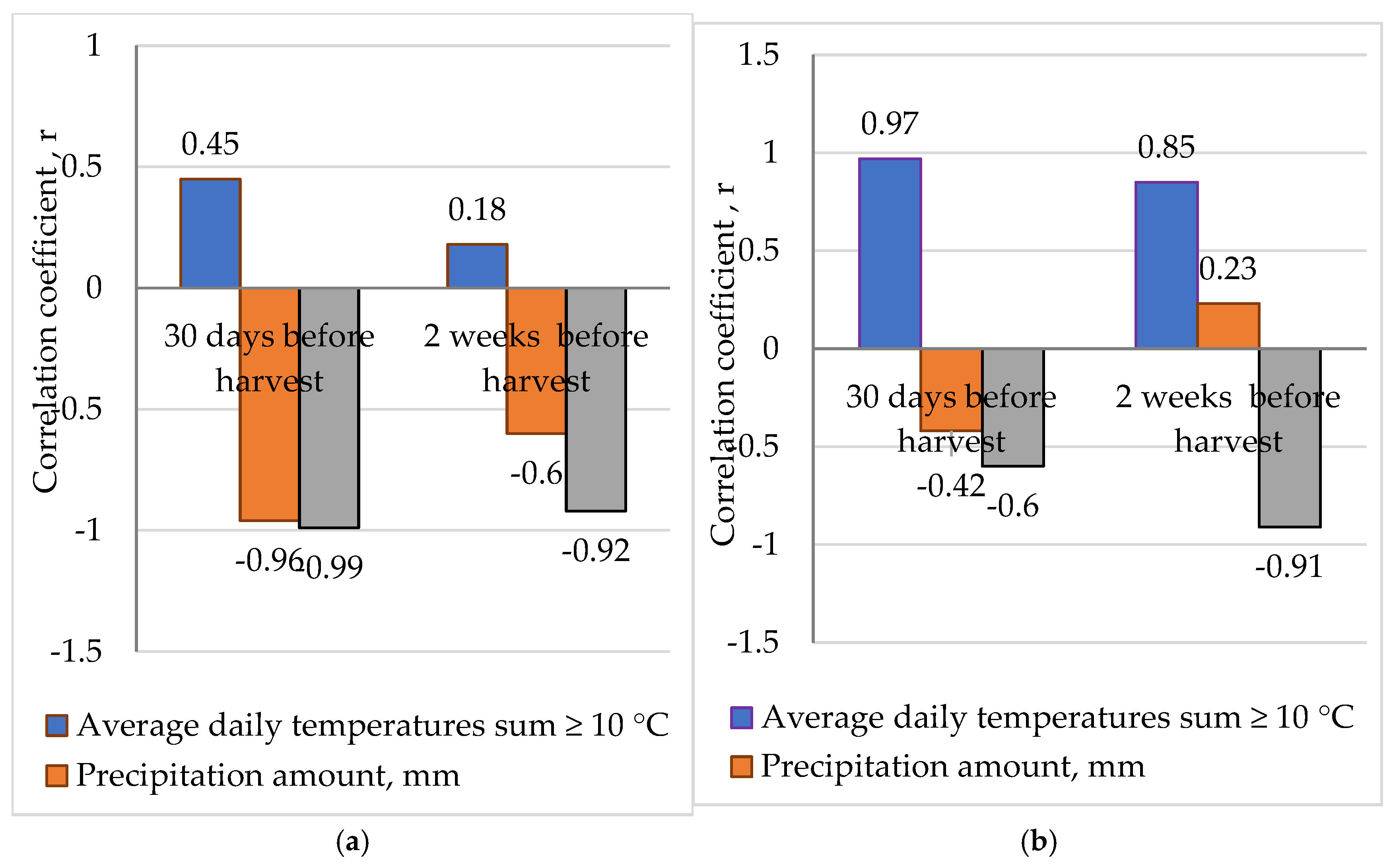
Figure 6.
The correlation coefficient between the shelf life and weather conditions of the periods before the harvest of ‘Sinap Orlovsky’.
Figure 6.
The correlation coefficient between the shelf life and weather conditions of the periods before the harvest of ‘Sinap Orlovsky’.
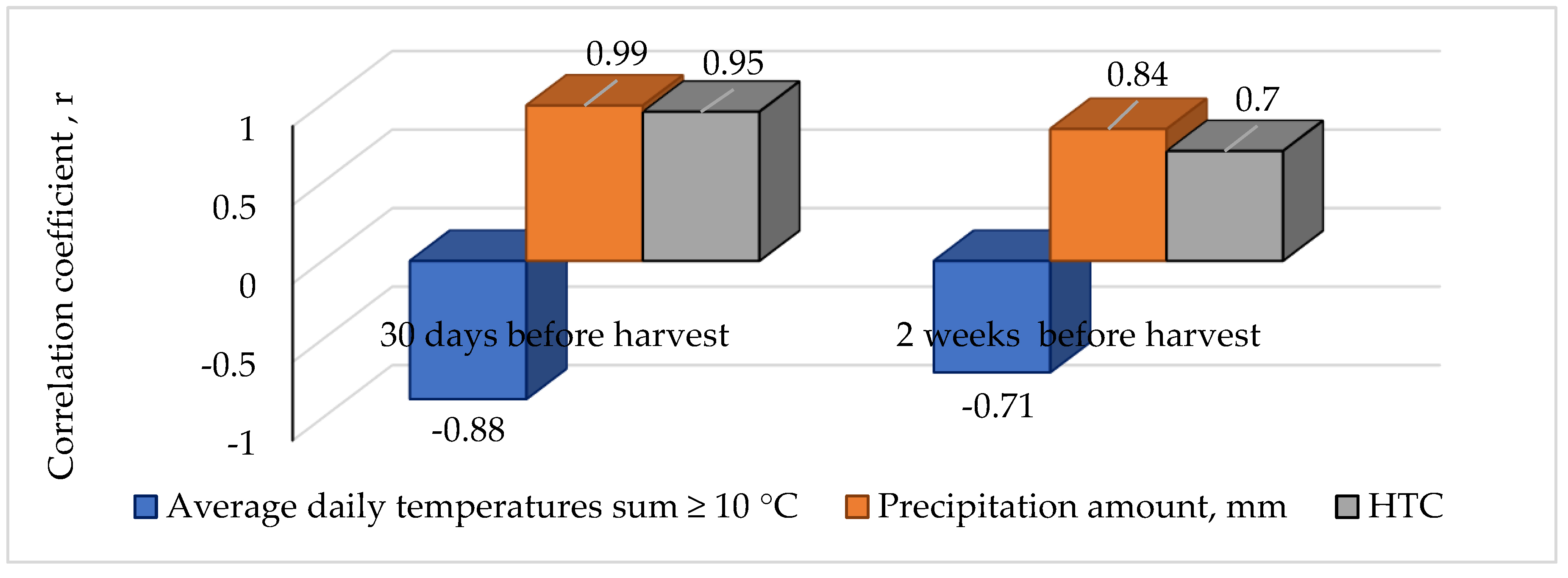
Figure 7.
The correlation coefficient between the weather conditions during vegetation, physiological diseases and the yield of commercial fruits after long-term storage.
Figure 7.
The correlation coefficient between the weather conditions during vegetation, physiological diseases and the yield of commercial fruits after long-term storage.
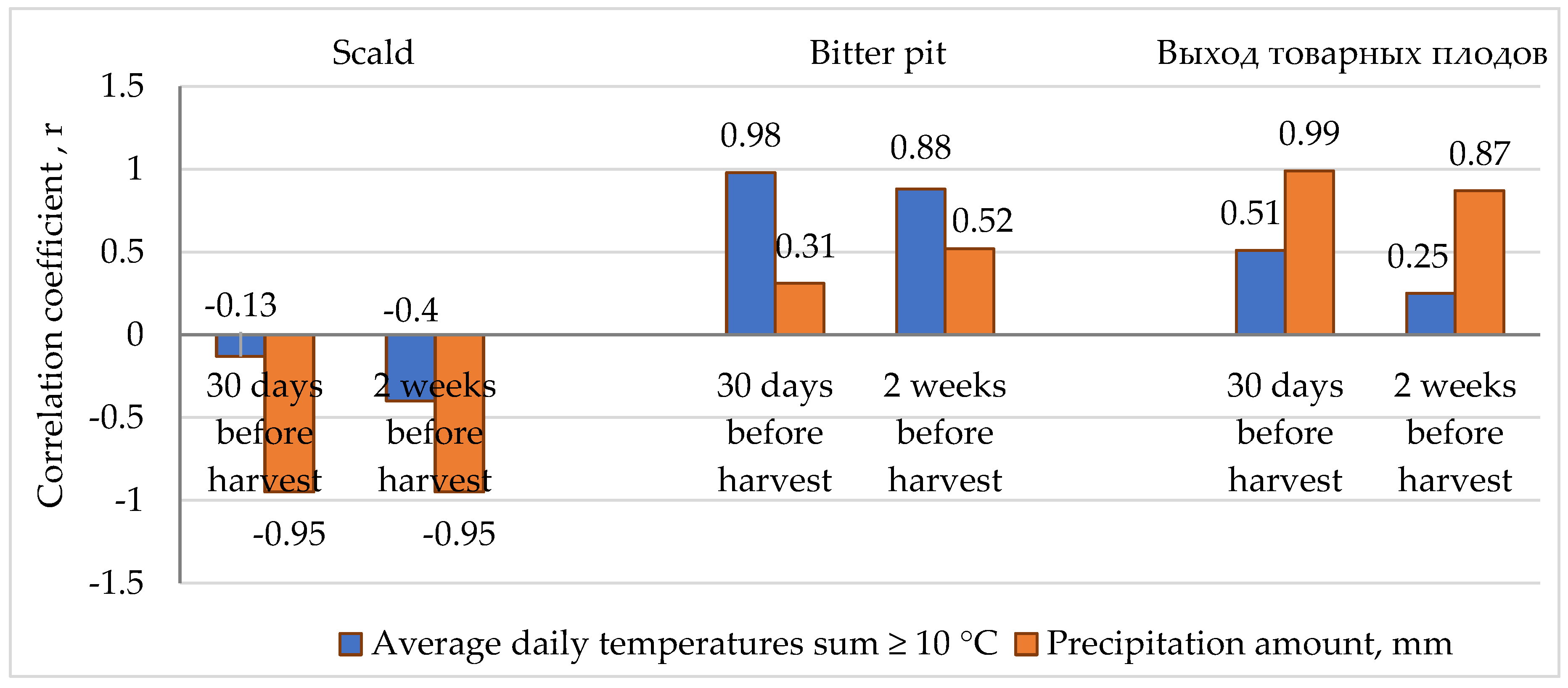

Table 1.
Meteorological data for 30 and 14 days before the harvest of ‘Sinap Orlovsky’ apples (data from the VNIISPK meteorological post for 2021-2023).
Table 1.
Meteorological data for 30 and 14 days before the harvest of ‘Sinap Orlovsky’ apples (data from the VNIISPK meteorological post for 2021-2023).
| Harvest date | Average daily temperatures sum ≥ 10 °С | Precipitation amount, mm | HTC | Average daily temperatures sum ≥ 10 °С | Precipitation amount, mm | HTC |
|---|---|---|---|---|---|---|
| 30 days before harvest | 14 days before harvest | |||||
| 13.09.2021 | 458,5 | 33,7 | 0,74 | 146,0 | 16,2 | 1,11 |
| 08.09.2022 | 473,1 | 19,3 | 0,41 | 147,7 | 10,7 | 0,72 |
| 11.09.2023 | 506,6 | 28,1 | 0,55 | 232,4 | 18,0 | 0,77 |
Table 2.
Yield of ‘Sinap Orlovsky’ apples, kg per tree.
| Factor А, year | Factor В, experiment options | Average by Factor A LSD А05 = 5,1 |
||
|---|---|---|---|---|
| Control (without treatment) | Foliar sprays | |||
| 1% «WPU Antifreeze» + 1% «WP Drip Са + Mg» | 3% «WPU Antifreeze» + 3% «WP Drip Са + Mg» | |||
| 2021 | 7,3 | 13,4* | 8,6 | 9,8 |
| 2022 | 35,0 | 52,5* | 39,4 | 42,3* |
| 2023 | 22,1 | 47,7* | 22,7 | 30,8* |
| Average by Factor В LSD В05 = 5,1 |
21,5 | 37,9* | 23,5 | |
| LSD АВ05 = 8,7 | ||||
* Significant differences with the control at the 5% significance level.
Table 3.
Average weight of the fruit of ‘Sinap Orlovsky’, g.
| Factor А, year | Factor В, experiment options | Average by Factor A LSD А05 = 1,5 |
||
|---|---|---|---|---|
| Control (without treatment) | Foliar sprays | |||
| 1% «WPU Antifreeze» + 1% «WP Drip Са + Mg» | 3% «WPU Antifreeze» + 3% «WP Drip Са + Mg» | |||
| 2021 | 182,3 | 210,0* | 209,1* | 200,5 |
| 2022 | 205,7 | 215,6* | 211,7* | 210,9* |
| 2023 | 207,0 | 232,0* | 219,5* | 219,5* |
| Average by Factor В LSD В05 = 1,5 |
198,3 | 219,1* | 213,4* | |
| АВ Ff < Ft | ||||
* Significant differences with the control at the 5% significance level.
Table 4.
Damage to the ‘Sinap Orlovsky’ fruits by scald during long-term storage, %.
| Factor А, year | Factor В, experiment options | Average by Factor A LSD В05 = 7,4 |
||
|---|---|---|---|---|
| Control without treatment) | Foliar sprays | |||
| 1% «WPU Antifreeze» + 1% «WP Drip Са + Mg» | 3% «WPU Antifreeze» + 3% «WP Drip Са + Mg» | |||
| 2021 | 11,8 | 4,7 | 2,0* | 6,2 |
| 2022 | 55,2 | 31,4* | 29,1* | 38,5* |
| 2023 | 20,1 | 7,3* | 0,7* | 9,4 |
| Average by Factor B LSD В05 = 7,4 |
29,0 | 14,5* | 10,6* | |
| АВ Ff < Ft | ||||
* Significant differences with the control at the 5% significance level.
Table 5.
Bitter pit damage to ‘Sinap Orlovsky’ fruits during long-term storage, %.
| Factor А, year | Factor В, experiment options | Average by Factor А LSD В05 = 3,8 |
||
|---|---|---|---|---|
| Control (without treatment) | Foliar sprays | |||
| 1% «WPU Antifreeze» + 1% «WP Drip Са + Mg» | 3% «WPU Antifreeze» + 3% «WP Drip Са + Mg» | |||
| 2021 | 5,0 | 2,5 | 4,9 | 4,1 |
| 2022 | 4,9 | 1,2 | 2,1 | 2,7 |
| 2023 | 14,1* | 7,0* | 7,4* | 9,5* |
| Average by Factor В Ff < Ft |
8,0 | 3,6 | 4,8 | |
| АВ Ff < Ft | ||||
* Significant differences with the control at the 5% significance level.
Table 6.
Damage by physiological and microbiological diseases to ‘Sinap Orlovsky’ fruits during long-term storage, %.
Table 6.
Damage by physiological and microbiological diseases to ‘Sinap Orlovsky’ fruits during long-term storage, %.
| Experiment option | Overripe | Browning | Partial rotting | Absolute rotting |
|---|---|---|---|---|
| Control (without treatment) | 0,4 | 1,5 | 0,7 | 0,4 |
| 1% "WPU Antifreeze" + 1% "WP Drip Ca + Mg" | 0,0 | 0,5 | 0,2 | 0,2 |
| 3% "WPU Antifreeze" + 3% "WP Drip Ca + Mg" | 0,0 | 5,3* | 0,9 | 3,1* |
| LSD05 | Ff < Ft | 1,7 | Ff < Ft | 0,4 |
* Significant differences with the control at the 5% significance level.
Table 7.
The output of marketable fruits of the apple cultivar ‘Sinap Orlovsky’ after long-term storage, %.
Table 7.
The output of marketable fruits of the apple cultivar ‘Sinap Orlovsky’ after long-term storage, %.
| Factor А, year | Factor В, experiment options | Average by Factor А LSD В05 = 7,7 |
||
|---|---|---|---|---|
| Control (without treatment) | Foliar sprays | |||
| 1% «WPU Antifreeze» + 1% «WP Drip Са + Mg» | 3% «WPU Antifreeze» + 3% «WP Drip Са + Mg» | |||
| 2021 | 78,0 | 92,8 | 83,0 | 84,6 |
| 2022 | 38,7* | 66,8* | 60,0* | 55,2* |
| 2023 | 63,5* | 83,7* | 81,9 | 76,4* |
| Average by Factor В LSD В05 = 7,7 |
60,1 | 81,1* | 75,0* | |
| АВ Ff < Ft | ||||
* Significant differences with the control at the 5% significance level.
Disclaimer/Publisher’s Note: The statements, opinions and data contained in all publications are solely those of the individual author(s) and contributor(s) and not of MDPI and/or the editor(s). MDPI and/or the editor(s) disclaim responsibility for any injury to people or property resulting from any ideas, methods, instructions or products referred to in the content. |
© 2024 by the authors. Licensee MDPI, Basel, Switzerland. This article is an open access article distributed under the terms and conditions of the Creative Commons Attribution (CC BY) license (http://creativecommons.org/licenses/by/4.0/).
Copyright: This open access article is published under a Creative Commons CC BY 4.0 license, which permit the free download, distribution, and reuse, provided that the author and preprint are cited in any reuse.


