

Submitted:
07 November 2024
Posted:
08 November 2024
You are already at the latest version
Abstract
Recent advancements in technology, particularly in artificial intelligence and privacy-preserving tools, have facilitated the development of more sophisticated and secure approaches to addressing this challenge. This paper introduces FedWell, a novel privacy-preserving Federated occupant Stress monitoring approach for smart building environments. Our system integrates physiological data from smart yoga pillows (SaYoPillow) and wearable environmental sensors to train a lightweight, edge-deployable Artificial Neural Network (ANN) model. The FedWell framework ensures data privacy while enabling collaborative learning across distributed clients using Federated Averaging (FedAvg) aggregation. We conducted experiments using a comprehensive dataset of physiological parameters for stress level detection. The results demonstrate the global model’s exceptional performance, achieving 99.95% accuracy in stress level recognition, with precision of 99.95%, recall of 99.93%, and an F1-score of 99.94%. The global model exhibits a minimal loss of 0.0019% and a low communication cost of 0.08 Mb, highlighting its efficiency for real-time applications.
Keywords:
Federated Learning
; Deep Learning
; CNN1D
; FedAvg
; Aggregation
; Privacy-Preserving
; Stress Monitoring
1. Introduction
The advent of smart building technologies has opened new avenues for monitoring and enhancing occupant health, particularly focus on mental stress. Chronic stress poses significant risks to individual well-being and societal productivity, potentially leading to severe health issues like cardiovascular disorders, gastrointestinal problems, diabetes, and mental health disturbances [1]. Research indicates that prolonged stress exposure can escalate to severe psychological distress, manifesting symptoms ranging from aggression to suicidal ideation [1]. Economically, stress-related disorders incur an annual cost of approximately 300 billion USD in the United States for treatment and lost productivity [2], highlighting the critical need for effective stress detection and management strategies.
Smart buildings, equipped with advanced wearable devices and environmental sensors, offer a promising solution for continuous, non-invasive monitoring of occupant well-being. However, traditional stress detection methods often involve invasive procedures or sharing sensitive data, raising significant privacy concerns [3]. The field of stress detection is crucial in healthcare, workplace wellness, and personal well-being, facilitating the understanding and predicting human physiological and psychological states. This has significant implications for personalized healthcare, occupational health, and behavioral analysis [4,5,6]. Despite its potential, stress detection research faces challenges such as variability in sensor data, inter-subject and intra-subject differences, and the need for privacy-preserving methodologies [7,8,9]. Overcoming these challenges is essential for developing robust, effective, and ethical stress detection systems in smart building environments, ultimately enhancing individual quality of life and promoting overall well-being.
Machine Learning (ML), Deep Learning (DL), and the Internet of Things (IoT) significantly enhance stress detection in smart buildings by classifying stress levels through physiological monitoring. Utilizing SaYoPillow devices and smart wearables, these technologies track parameters like snoring rate, heart rate, respiration rate, and body temperature [10]. The extensive data generated is analyzed using ML and DL tools to create healthier living environments [11,12,13]. ML algorithms, trained on labeled data, identify stress levels, while DL employs neural networks for complex feature extraction from raw data [14,15,16].
Artificial Neural Networks (ANNs) are highly effective for stress level classification due to their capability to handle one-dimensional data and identify complex features and temporal dependencies indicative of stress levels [17,18]. For instance, ANNs can recognize specific changes in body temperature, heart rate, and respiration rate as indicators of medium stress [12,19]. These technologies enable real-time stress detection and interventions, such as adjusting the building environment to mitigate stress or providing real-time feedback and mitigation strategies to occupants [5,20]. Advances in AI and privacy-preserving technologies, like FL, enhance stress detection by allowing collaborative model training while keeping sensitive health data localized, ensuring privacy in health monitoring systems [21].
FL revolutionizes ML/DL for health monitoring in smart buildings by enabling decentralized model training across multiple edge devices or servers holding local data samples without exchanging them [22]. This is particularly crucial for stress detection, and ensuring privacy. Each client, like a smart building or user device, trains a local model on its data, sharing only model updates with a central server that aggregates them to enhance a global model [23]. Techniques like Federated Averaging (FedAvg) support this collaborative learning while preserving data locality and privacy [24]. While FL offers privacy and scalability [25], FedWell uniquely addresses the challenge of real-time stress monitoring in smart buildings by integrating wearable sensors and a lightweight edge-deployable ANN. Unlike traditional FL applications, FedWell optimizes communication efficiency and achieves high accuracy with minimal data exchange, ensuring both privacy and practicality in resource-constrained environments.
This paper presents FedWell, a Federated Occupant Stress Monitoring approach using ANNs for classifying stress levels. By leveraging ANNs’ hierarchical structure, our model captures unique features and temporal dependencies from wearable multi-sensor data. We develop a novel FL model for stress classification using data from SaYoPillow devices and wearable sensors in smart buildings. Experiments on a specific SaYoPillow dataset validate our approach. Our contributions include:
- Development of an intelligent system dedicated to monitoring occupant stress and identifying stress levels in smart building environments using an FL approach.
- Introduction of a lightweight, edge-deployable ANN-based stress level recognition system, suitable for real-time applications, integrating wearable sensors to gather diverse health parameters.
- Evaluation of the proposed method on the SaYoPillow dataset, specifically developed for stress level classification tasks.
- Demonstration of high effectiveness, achieving an impressive accuracy rate of 99.95%, precision rate of 99.95%, recall of 99.93%, F1-score of 99.94%, a minimal loss value of 0.0019%, and low communication cost of 0.08Mb.
2. Federated Learning
FL enables distributed model training across multiple decentralized clients, while maintaining data privacy. Clients exchange model parameters with a centralized server, which aggregates them to update the global model. This iterative optimization process ensures continuous learning while preserving data privacy and localization. FL presents a promising framework for distributed ML in privacy-sensitive domains, offering a balance between model performance and data protection requirements [22].
2.1. Horizontal FL
Horizontal FL (HFL) is implemented when datasets across clients share more common features than users HFL collaboratively trains on data with shared characteristics across different user bases, enlarging the training sample space and enhancing model generalization [22]. The primary objective is to develop a global model G by minimizing the aggregate of local loss functions:
Where represents the local loss function of the participant, is their sample count, N is the total number of samples, and K represents the number of participants. This approach optimizes the global model by aggregating weighted local losses, enabling collaborative learning while preserving data privacy and accommodating heterogeneous data distributions [26].
3. Proposed Methodology
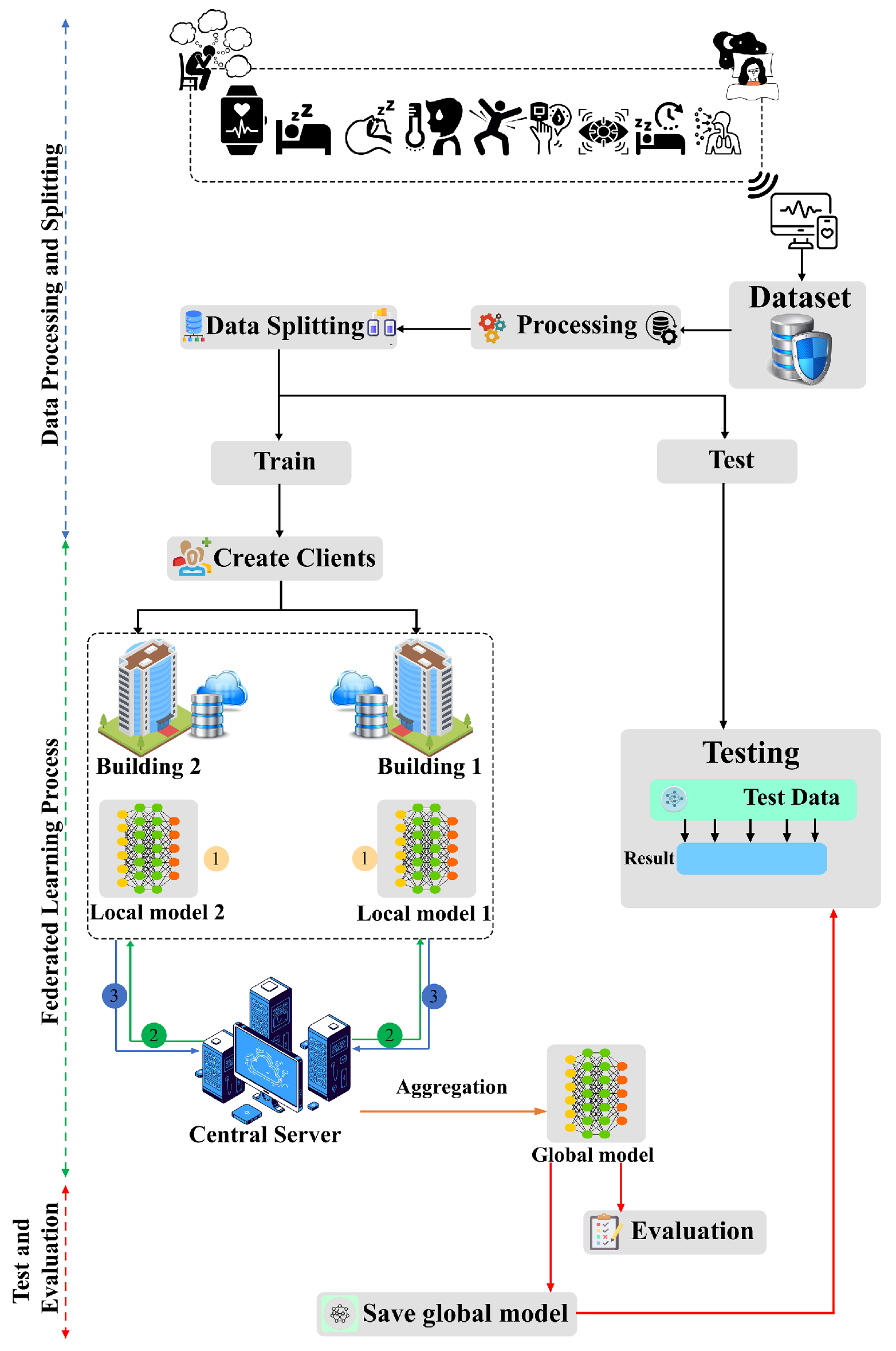
This section provides an in-depth overview of the proposed FedWell approach. Figure 1 illustrates the FedWell classification framework employs FL principles to detects various stress levels during sleep by analyzing healthcare-related features acquired via the SaYoPillow device [10] or wearable smartwatch technology in smart buildings. The system utilizes eight distinct healthcare-related parameters for five stress levels: snoring intensity, respiration rate, body temperature, limb movement frequency, blood oxygen saturation, ocular movement, sleep duration, and heart rate. These parameters are measured using standardized metrics and systematically organized into a structured dataset, typically in tabular or CSV format. Each row represents a discrete measurement instance, with columns corresponding to the healthcare parameters, enabling efficient data processing and stress level classification.
3.1. Data Processing
Data preprocessing, particularly normalization, is crucial for ensuring high-quality input to AI models, enabling effective learning and accurate detection. Normalization adjusts feature values to a common scale, preventing attributes with larger ranges from dominating the learning process. This process enhances model performance through faster convergence and mitigates vanishing/exploding gradients. Common techniques include min-max scaling and z-score normalization [27,28]. By employing normalization as a preprocessing step, improves model performance and convergence, effectively mitigating biases in the learning process and ensuring all features contribute proportionally regardless of their original scales [19,20,29].
The preprocessed dataset undergoes random shuffling and is subsequently partitioned into two distinct subsets: a training set and a testing set purposes [19,30,31]. This division is structured as follows. Initially encompasses 80% of the data, allocated for the training and fine-tuning of local models during the (decentralized local training) FL process. The remaining 20% of the data is reserved as an independent test set, utilized to evaluate the final performance of the globally aggregated model [19]. This stratified sampling approach ensures a robust evaluation of the model’s generalization capabilities while maintaining the integrity of the FL paradigm.
3.2. Create Clients
In real-world FL deployment, each client maintains its own decentralized dataset, thereby ensuring data privacy through localization. As illustrated in Figure 1, the system framework incorporates distinct datasets for each client. This architecture aligns with the core principles of FL, where data remains private and distributed across multiple nodes, enhancing both security and computational efficiency in the learning process. In FedWell, the dataset is strategically divided among clients, each with a distinct subset. Local models are trained on these localized datasets, enhancing the global FL model’s robustness. FedWell not only preserves data confidentiality but also leverages diverse data landscapes across participating entities, improving model generalizability while reducing communication overhead in large-scale deployments.
Figure 1.
Proposed system
3.3. Central Server
The server acts as the central coordinating entity in the FL system, facilitating collaboration among clients to address ML/DL challenges while maintaining data privacy. It optimizes and create the global model by aggregating model parameters from all participating local clients, enabling collaborative model development without the exchange of raw data. The server’s primary functions include model initialization, coordination of client interactions, and the aggregation of local models into a unified global model. This architecture ensures efficient knowledge sharing while preserving the confidentiality of distributed datasets.
3.4. Local Model
The local DL-ANN model is initialized and distributed by the server to clients for local training to detect human stress levels during sleep. This model processes eight healthcare-related features and comprises 11,653 parameters, requiring 45 Kb of storage. The training process involves 100 communication rounds with a batch size of 32, employing the Adam optimizer and categorical cross-entropy loss function, which is suitable for multi-class classification. This loss function quantifies the divergence between predicted and actual label probabilities, guiding the model’s learning process. The proposed model architecture includes three Dense layers with 128, 64, and 32 nodes respectively, using the ReLU activation function to preserve positive values while setting negative values to zero, and a 5-node output layer with softmax activation for multi-class classification. Figure 2 illustrates the local model architecture.
3.5. Aggregation
Aggregation is a crucial aspect of FL, involving the synthesis of local models from several clients to construct a unified global model. This proposed process employs various aggregation methodologies, with Federated Averaging (FedAvg) being commonly utilized technique for updating model weights [22]. In the proposed system, the central server awaits the submission of locally trained models from all participating clients before initiating the aggregation process based on the model parameters, ensuring a comprehensive integration of distributed learning outcomes while maintaining data privacy. We chose FedAvg for its computational efficiency and scalability in handling large, heterogeneous client networks. The FedAvg algorithm effectively balances the contributions of individual clients, resulting in a robust global model that captures the collective knowledge of the federated network, where the global model is updated as:
where is the number of data on client k, N is the total number of data across all clients, is the global aggregated model, and represent the local models on client k.
4. Experimentation and Result Discussion
4.1. Dataset
This study leverages the SaYoPillow dataset, developed from the Smart-Yoga Pillow (SaYoPillow) system proposed by Rachakonda et al. [10]. The SaYoPillow, an edge device, examines the relationship between stress and sleep patterns. The dataset, available in SayoPillow.csv, includes physiological parameters measured during sleep, such as snoring range, respiration rate, body temperature, limb movement rate, blood oxygen levels, eye movement, sleep duration, and heart rate. Data collection involved obtaining written informed consent and ethics approval. The primary goal was to understand stress-sleep relationships, predicting next-day stress levels based on sleep-induced changes. The dataset’s 32,000 samples are categorized into five stress levels, illustrating the concept of "Smart-Sleeping." These parameters are correlated with stress levels, categorized on 5 classes distributed in Figure 3
This comprehensive dataset enables the analysis of sleep patterns and their relationship to stress, with the original SaYoPillow system achieving an accuracy of up to 96% in stress prediction. The dataset’s rich feature set provides a robust foundation for developing and evaluating stress detection models in the context of sleep analysis.
4.2. Accuracy and Loss Graph
Figure 4 illustrates the accuracy and loss metrics for the global model over communication rounds. Accuracy increases proportionally with communication rounds, starting at 33.33% and reaching 99.95%, indicating improved model performance. Conversely, loss decreases significantly from approximately 1.46 to 0.000019, showcasing the model’s enhanced fit to the data distribution. These results highlight the effectiveness of the FL process in optimizing model accuracy and reducing loss while maintaining data privacy and minimizing communication costs. This approach ensures high performance without compromising individual privacy.
4.3. Roc curve
We employ Receiver Operating Characteristic (ROC) curves and Area Under the Curve (AUC) to evaluate the global model’s performance. ROC curves plot the True Positive Rate (TPR) against the False Positive Rate (FPR) across various thresholds, visualizing performance. Figure 5 shows our global model’s ROC curves, demonstrating excellent performance across all stress level categories, with curves approaching the upper right corner. The AUC for each class is a perfect 1.00, indicating high accuracy, superior discrimination ability, and validating the effectiveness of our FL approach in stress level detection.
4.4. Confusion Matrix
The confusion matrix effectively evaluates the FL global model’s performance by summarizing predictions against actual class labels and computing metrics like accuracy, precision, recall, and F1-Score. Correct classifications, shown on the main diagonal, indicate accurate identification rates of 99%, 100%, 100%, 99%, and 99% for low/normal, medium-low, medium, medium-high, and high-stress classes, respectively. Minor misclassifications include 1% of low/normal instances as medium-low and 1% each from medium-high and high classes as high and medium-high. The FL model achieved 99.95% accuracy, 0.0019% loss, 99.95% precision, 99.93% recall, and 99.94% F1-score, with a low communication cost of 0.08 Mb. These metrics underscore the model’s robustness, efficiency, and privacy-preserving capabilities in smart building environments. Figure 6 presents the global confusion matrix.
4.5. Model Performance Across Clients
Table 1 presents the performance metrics obtained from evaluating our FL global model with varying numbers of clients. We systematically adjusted the client count to identify the most effective FL global model. Our experiments show that configurations with 2 and 3 clients achieved nearly identical optimal performance. The FL global model attained an accuracy of 99.95% with 2 clients, while the 3-client configuration achieved 99.94% accuracy. This marginal difference indicates that both configurations are highly effective for our specific use case.
These results suggest that our FedWell approach is robust and scalable, maintaining high performance levels even as the number of clients increases. This scalability is crucial for real-world applications where the number of participating clients may vary.
4.6. Comparison with New Related Works
This section compares our proposed FedHSD approach with various recent related works using AI methods for classifying and identifying stress levels in building occupants based on the SaYoPillow dataset. Table 10 summarizes the performance of various techniques, including ML, DL, and FL. Our FedWell (Fed-ANN) approach, using FedAvg aggregation, achieves 99.95% accuracy with a loss of 0.000019. This performance compares favorably with other methods: Naïve Bayes (91.27%), FFNN (99.90%), various ML algorithms (99.50%), KNN and Random Forest (99.00%), Decision Tree (93.27%), Random Forest (97.63%), and ANN (99.97%). While the ANN achieves marginally higher accuracy (0.02% difference), our decentralized FL method offers significant advantages in efficiency and privacy preservation through data localization. Overall, FedWell represents a promising balance between accuracy, computational efficiency, and privacy protection for real-world stress detection applications in smart building environments.

Table 2.
Comparison with the state of the art
| Work | Year | Model | Aggregation | Loss (%) | Accuracy (%) | Dataset |
|---|---|---|---|---|---|---|
| [32] | 2024 | Naive Bayes | ✗ | ✗ | 91.27 | SaYoPillow |
| [33] | 2023 | FFNN | ✗ | ✗ | 99.90 | SaYoPillow |
| [34] | 2024 | ML | ✗ | ✗ | 99.50 | SaYoPillow |
| [35] | 2023 | KNN RF | ✗ | ✗ | 99.00 | SaYoPillow |
| [36] | 2024 | Decision Tree | ✗ | ✗ | 93.27 | SaYoPillow |
| [10] | 2020 | ✗ | ✗ | ✗ | 96.00 | SaYoPillow |
| [37] | 2023 | RF | ✗ | ✗ | 97.63 | SaYoPillow |
| Our | 2024 | ANN | ✗ | 0.13 | 99.97 | SaYoPillow |
| Our | 2024 | FedWell | FedAvg | 0.0019 | 99.95 | SaYoPillow |
5. Conclusion
This paper explores FedWell, a privacy-preserving Federated Occupant Stress Monitoring approach for smart buildings using the SaYoPillow dataset. We aimed to develop a robust system to accurately detect stress levels based on healthcare features from SaYoPillow devices and wearable sensors. By leveraging ANN for local model training and FedAvg for global aggregation, we ensured data privacy. The global model achieved a high performance with 99.95% of accuracy, a loss of 0.0019%, 99.95% precision, 99.93% recall, and a 99.94% F1-score, while maintaining a low communication cost of only 0.08 Mb. This study’s approach can significantly enhance smart building environments by providing real-time, privacy-preserving stress detection, allowing robots to respond empathetically and improve human-robot interaction.
References
- Medikonda, J.; others. A clinical and technical methodological review on stress detection and sleep quality prediction in an academic environment. Computer methods and programs in biomedicine 2023, 235, 107521. [Google Scholar]
- He, J.; Li, K.; Liao, X.; Zhang, P.; Jiang, N. Real-time detection of acute cognitive stress using a convolutional neural network from electrocardiographic signal. IEEE Access 2019, 7, 42710–42717. [Google Scholar] [CrossRef]
- Himeur, Y.; Elnour, M.; Fadli, F.; Meskin, N.; Petri, I.; Rezgui, Y.; Bensaali, F.; Amira, A. AI-big data analytics for building automation and management systems: a survey, actual challenges and future perspectives. Artificial Intelligence Review 2023, 56, 4929–5021. [Google Scholar] [CrossRef] [PubMed]
- Cahoon, J.L.; Garcia, L.A. Continuous Stress Monitoring for Healthcare Workers: Evaluating Generalizability Across Real-World Datasets. Proceedings of the 14th ACM International Conference on Bioinformatics, Computational Biology, and Health Informatics, 2023, pp. 1–5.
- Chouchane, A.; Bessaoudi, M.; Boutellaa, E.; Ouamane, A. A new multidimensional discriminant representation for robust person re-identification. Pattern Analysis and Applications 2023, 26, 1191–1204. [Google Scholar] [CrossRef]
- Khammari, M.; Chouchane, A.; Ouamane, A.; Bessaoudi, M. ; others. Kinship Verification Using Multiscale Retinex Preprocessing and Integrated 2DSWT-CNN Features. 2024 8th International Conference on Image and Signal Processing and their Applications (ISPA). IEEE, 2024, pp. 1–8.
- Sadruddin, S.; Khairnar, V.D.; Vora, D.R. Issues and Challenges in Detecting Mental Stress from Multimodal Data Using Machine Intelligence. SN Computer Science 2024, 5, 358. [Google Scholar] [CrossRef]
- Chouchane, A. Analyse d’images d’expressions faciales et orientation de la tête basée sur la profondeur. PhD thesis, Université Mohamed Khider-Biskra, 2016.
- Chouchane, A.; Belahcene, M.; Ouamane, A.; Bourennane, S. 3D face recognition based on histograms of local descriptors. 2014 4th International Conference on Image Processing Theory, Tools and Applications (IPTA). IEEE, 2014, pp. 1–5.
- Rachakonda, L.; Bapatla, A.K.; Mohanty, S.P.; Kougianos, E. SaYoPillow: Blockchain-integrated privacy-assured IoMT framework for stress management considering sleeping habits. IEEE Transactions on Consumer Electronics 2020, 67, 20–29. [Google Scholar] [CrossRef]
- Geetha, R.; Gunanandhini, S.; Srikanth, G.U.; Sujatha, V. Human Stress Detection in and Through Sleep Patterns Using Machine Learning Algorithms. Journal of The Institution of Engineers (India): Series B 2024, pp. 1–23.
- Chouchane, A.; Ouamane, A.; Himeur, Y.; Mansoor, W.; Atalla, S.; Benzaibak, A.; Boudellal, C. Improving CNN-based Person Re-identification using score Normalization. 2023 IEEE International Conference on Image Processing (ICIP). IEEE, 2023, pp. 2890–2894.
- Khammari, M.; Chouchane, A.; Bessaoudi, M.; Ouamane, A.; Himeur, Y.; Alallal, S.; Mansoor, W. ; others. Enhancing kinship verification through multiscale retinex and combined deep-shallow features. 2023 6th International Conference on Signal Processing and Information Security (ICSPIS). IEEE, 2023, pp. 178–183.
- Harshini, V.; Kuresan, H.; Kancharlawar, O.; Madhan, V.; Balamithra, S. Human Stress Detection in and through Sleep using Machine Learning. 2024 International Conference on Recent Advances in Electrical, Electronics, Ubiquitous Communication, and Computational Intelligence (RAEEUCCI). IEEE, 2024, pp. 1–7.
- Bessaoudi, M.; Belahcene, M.; Ouamane, A.; Chouchane, A.; Bourennane, S. A novel hybrid approach for 3d face recognition based on higher order tensor. Advances in Computing Systems and Applications: Proceedings of the 3rd Conference on Computing Systems and Applications 3. Springer, 2019, pp. 215–224.
- Chouchane, A.; Bessaoudi, M.; Ouamane, A.; Laouadi, O. Face kinship verification based vgg16 and new gabor wavelet features. 2022 5th International Symposium on Informatics and its Applications (ISIA). IEEE, 2022, pp. 1–6.
- Bessaoudi, M.; Chouchane, A.; Ouamane, A.; Boutellaa, E. Multilinear subspace learning using handcrafted and deep features for face kinship verification in the wild. Applied Intelligence 2021, 51, 3534–3547. [Google Scholar] [CrossRef]
- Khammari, M.; Chouchane, A.; Ouamane, A.; Bessaoudi, M.; Himeur, Y.; Hassaballah, M.; others. High-order knowledge-based discriminant features for kinship verification. Pattern Recognition Letters 2023, 175, 30–37. [Google Scholar]
- Berkani, M.R.A.; Chouchane, A.; Himeur, Y.; Ouamane, A.; Amira, A. An Intelligent Edge-Deployable Indoor Air Quality Monitoring and Activity Recognition Approach. 2023 6th International Conference on Signal Processing and Information Security (ICSPIS). IEEE, 2023, pp. 184–189. [CrossRef]
- Rebiai, M.; Berkani, M.R.A.; Bentegri, M.Y.; Seghir, M.T. Mathematical Morphology-Based Envelope Detection for Cardiac Disease Classification from Phonocardiogram Signals. 2024 8th International Conference on Image and Signal Processing and their Applications (ISPA). IEEE, 2024, pp. 1–5. [CrossRef]
- Varlamis, I.; Sardianos, C.; Chronis, C.; Dimitrakopoulos, G.; Himeur, Y.; Alsalemi, A.; Bensaali, F.; Amira, A. Using big data and federated learning for generating energy efficiency recommendations. International Journal of Data Science and Analytics 2023, 16, 353–369. [Google Scholar] [CrossRef]
- Himeur, Y.; Varlamis, I.; Kheddar, H.; Amira, A.; Atalla, S.; Singh, Y.; Bensaali, F.; Mansoor, W. Federated learning for computer vision. arXiv preprint arXiv:2308.13558 2023.
- Li, L.; Fan, Y.; Tse, M.; Lin, K.Y. A review of applications in federated learning. Computers & Industrial Engineering 2020, 149, 106854. [Google Scholar]
- Qi, P.; Chiaro, D.; Guzzo, A.; Ianni, M.; Fortino, G.; Piccialli, F. Model aggregation techniques in federated learning: A comprehensive survey. Future Generation Computer Systems 2023. [Google Scholar] [CrossRef]
- Wen, J.; Zhang, Z.; Lan, Y.; Cui, Z.; Cai, J.; Zhang, W. A survey on federated learning: challenges and applications. International Journal of Machine Learning and Cybernetics 2023, 14, 513–535. [Google Scholar] [CrossRef] [PubMed]
- Chronis, C.; Varlamis, I.; Himeur, Y.; Sayed, A.N.; Al-Hasan, T.M.; Nhlabatsi, A.; Bensaali, F.; Dimitrakopoulos, G. A survey on the use of Federated Learning in Privacy-Preserving Recommender Systems. IEEE Open Journal of the Computer Society 2024.
- Ammar, C.; Mebarka, B.; Abdelmalik, O.; Salah, B. Evaluation of histograms local features and dimensionality reduction for 3D face verification. Journal of information processing systems 2016, 12, 468–488. [Google Scholar]
- Chouchane, A.; Ouamanea, A.; Himeur, Y.; Amira, A. ; others. Deep Learning-Based Leaf Image Analysis for Tomato Plant Disease Detection and Classification. 2024 IEEE International Conference on Image Processing (ICIP). IEEE, 2024, pp. 2923–2929.
- Belahcene, M.; Chouchane, A.; Mokhtari, N. 2D and 3D face recognition based on IPC detection and patch of interest regions. 2014 International Conference on Connected Vehicles and Expo (ICCVE). IEEE, 2014, pp. 627–628.
- Bengherbia, B.; Berkani, M.R.A.; Achir, Z.; Tobbal, A.; Rebiai, M.; Maazouz, M. Real-Time Smart System for ECG Monitoring Using a One-Dimensional Convolutional Neural Network. 2022 International Conference on Theoretical and Applied Computer Science and Engineering (ICTASCE). IEEE, 2022, pp. 32–37.
- Belahcene, M.; Chouchane, A.; Benatia, M.A.; Halitim, M. 3D and 2D face recognition based on image segmentation. 2014 International Workshop on Computational Intelligence for Multimedia Understanding (IWCIM). IEEE, 2014, pp. 1–5.
- Papishetti, S.; Kain, B.; Narayana, G. Stress Detection Based on Human Sleep Cycle. MATEC Web of Conferences. EDP Sciences, 2024, Vol. 392, p. 01073.
- Altaf, H.; Yadav, P.K. Human Stress Detection in and through Sleep–A Deep Learning Approach. 2023 International Conference on Next Generation Electronics (NEleX). IEEE, 2023, pp. 1–6.
- Singh, K.K.; Mahapatra, M.; Dixit, G.K. Stress prediction through sleep parameters using a feature engineering approach. 2024 4th International Conference on Innovative Practices in Technology and Management (ICIPTM). IEEE, 2024, pp. 1–6.
- Jeelani, E. Detection Of Stress And Its Levels Through Sleep Using AI. Tuijin Jishu/Journal of Propulsion Technology 2023, 44, 1549–1563. [Google Scholar] [CrossRef]
- P, S. HUMAN STRESS LEVEL IDENTIFICATION USING MACHINE LEARNING ALGORITHMS BASED ON SLEEPING PATTERNS. INTERANTIONAL JOURNAL OF SCIENTIFIC RESEARCH IN ENGINEERING AND MANAGEMENT 2024, 08, 1–5. [Google Scholar] [CrossRef]
- Rahman, M.M.; Islam, A.M.; Miah, J.; Ahmad, S.; Mamun, M. sleepWell: Stress Level Prediction Through Sleep Data. Are You Stressed? 2023 IEEE World AI IoT Congress (AIIoT). IEEE, 2023, pp. 0229–0235.
Figure 2.
Local model architecture
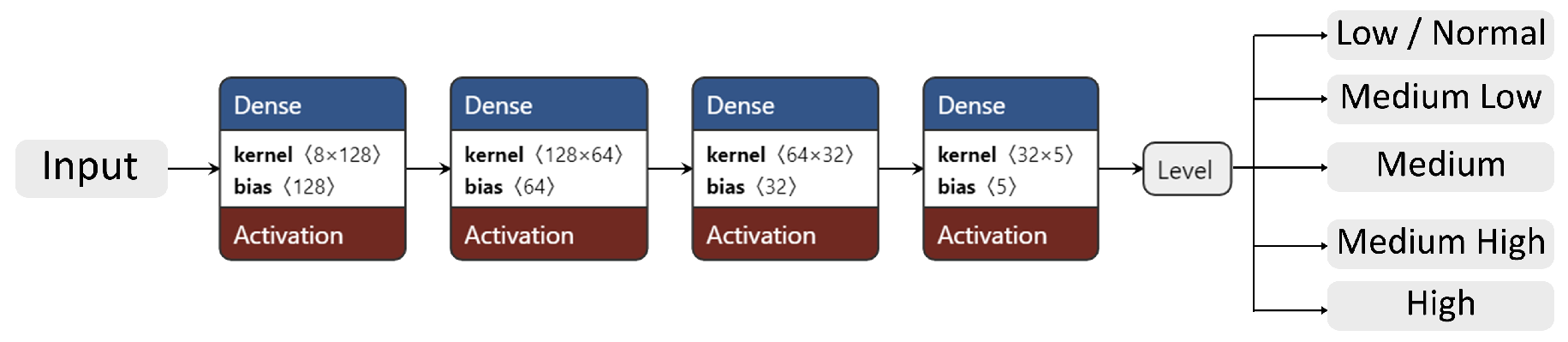
Figure 3.
Dataset distribution
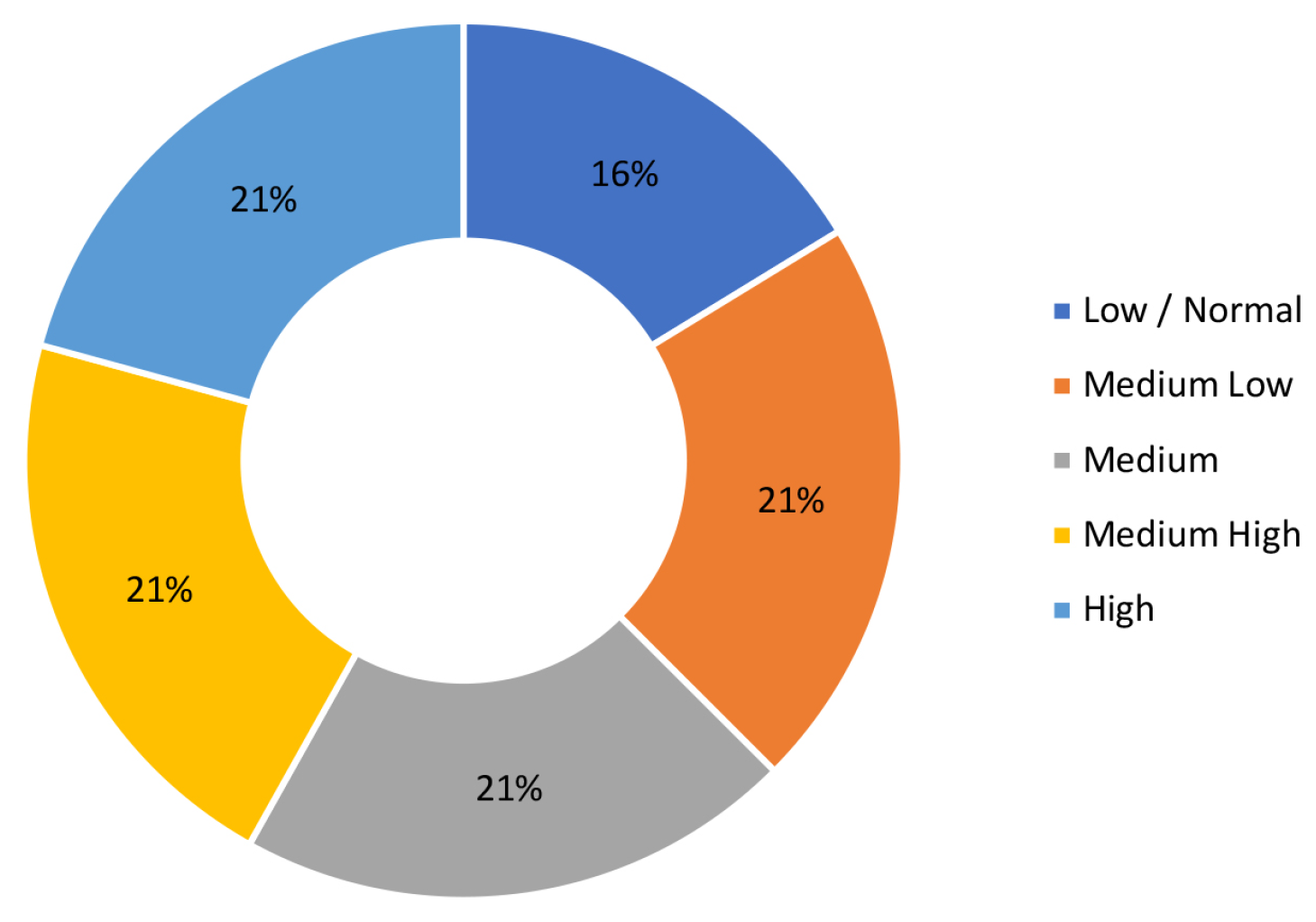
Figure 4.
Global accuracy and loss graph
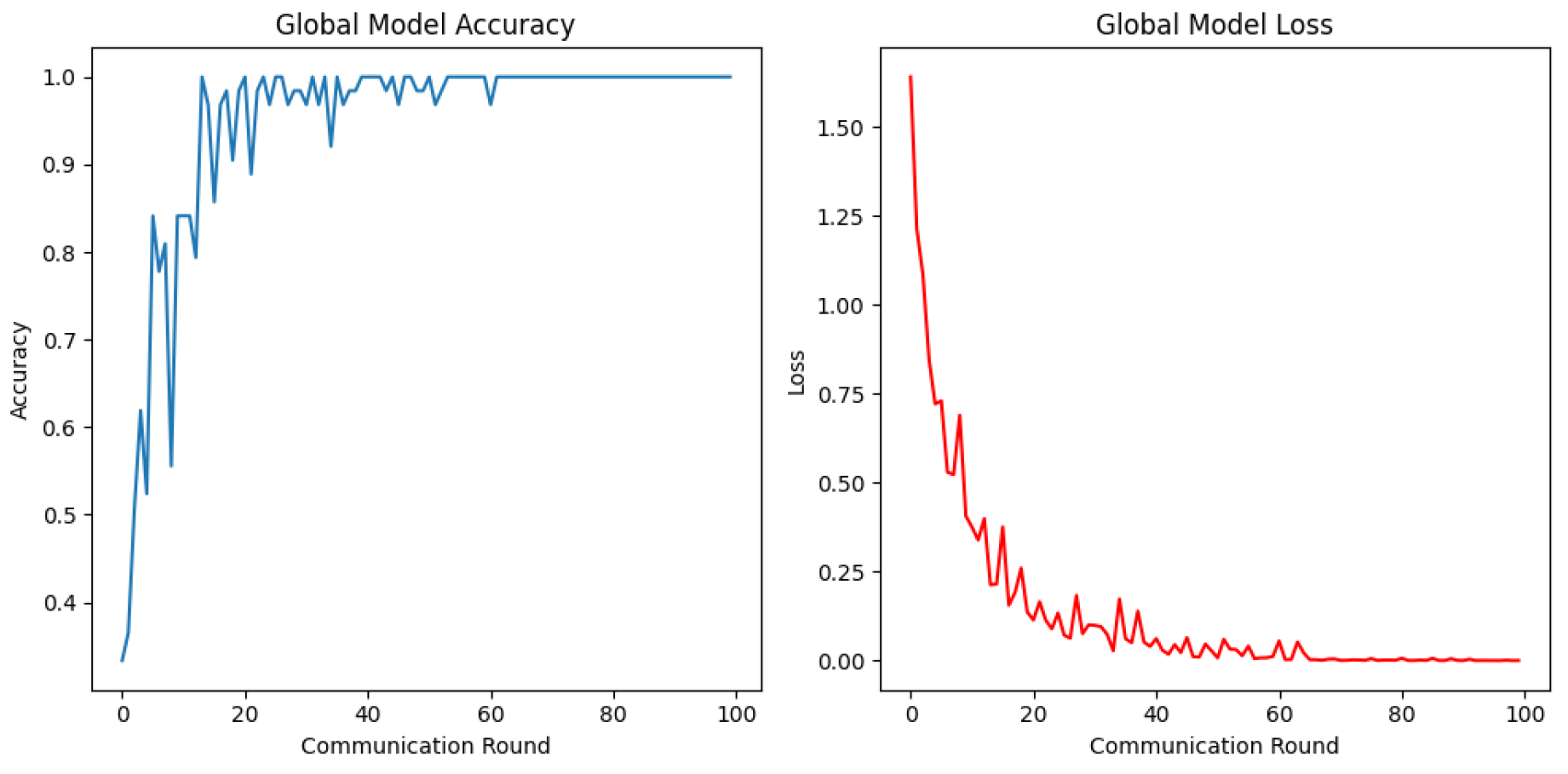
Figure 5.
Global ROC
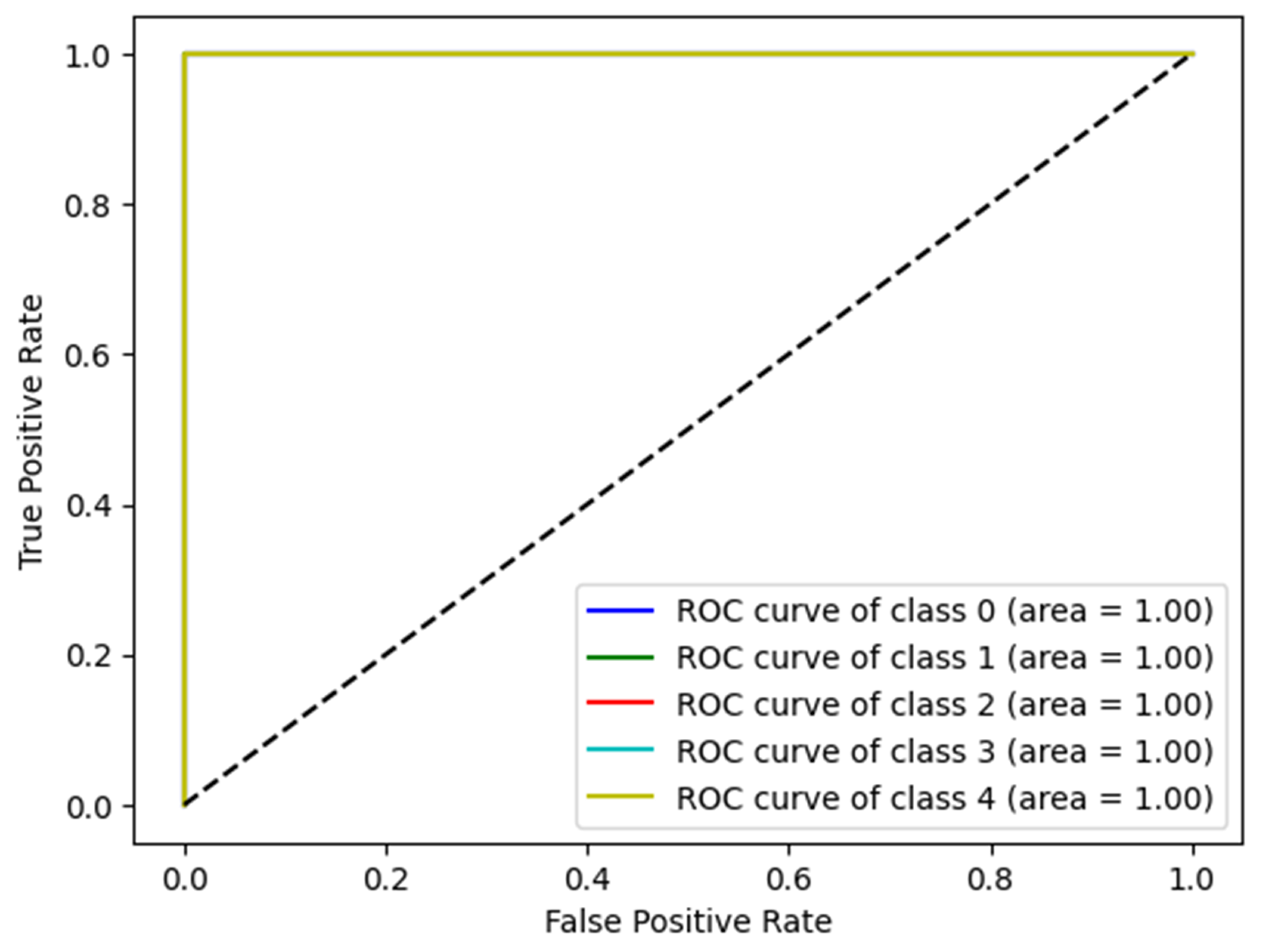
Figure 6.
Global Confusion matrix
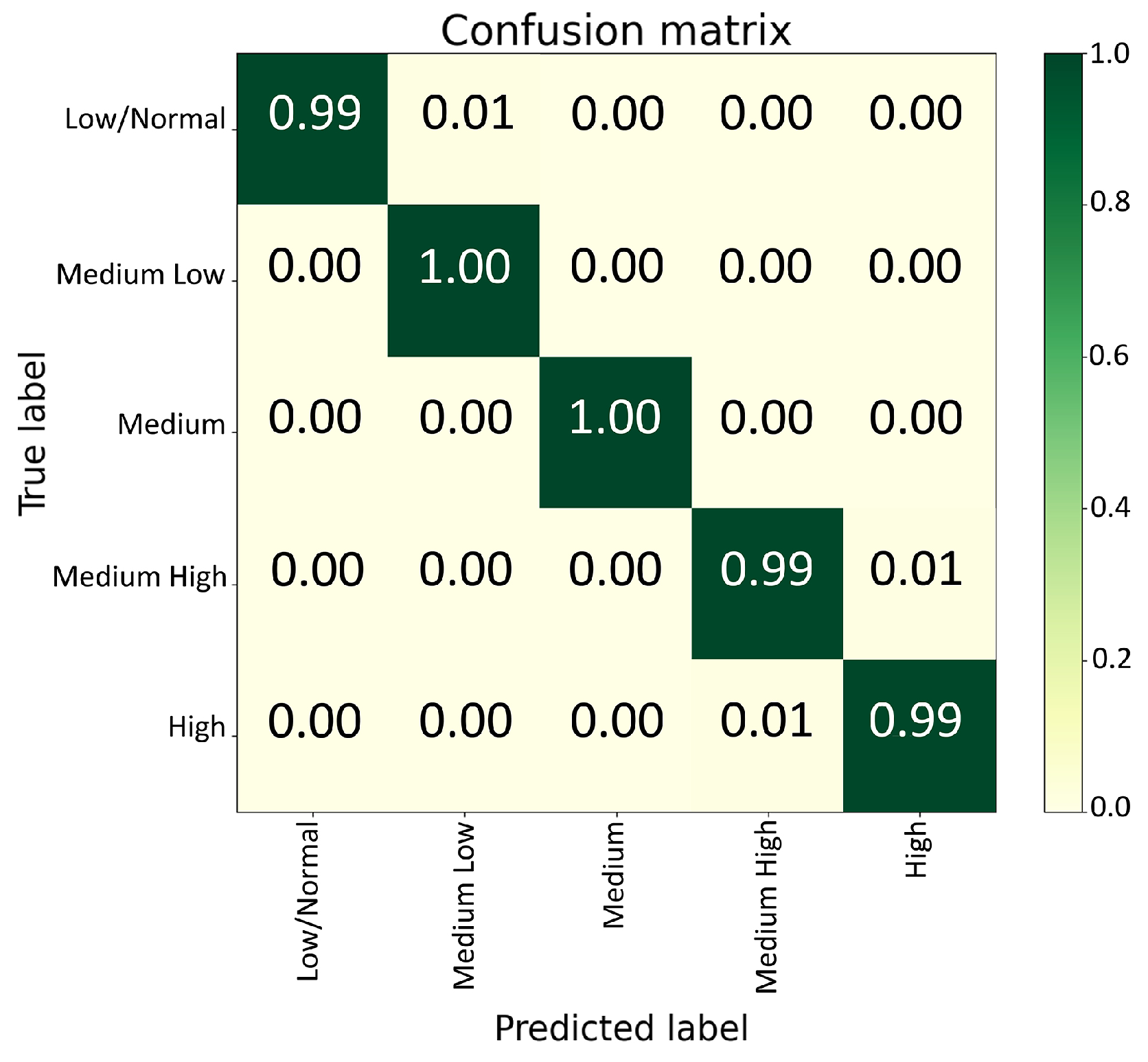
Table 1.
Global model’s performance across clients
| No of Client | Accuracy | Recall | F1-Score | Loss |
|---|---|---|---|---|
| 2 | 99.95% | 99.93% | 99.94% | 0.0019% |
| 3 | 99.94% | 99.93% | 99.93% | 0.0021% |
Disclaimer/Publisher’s Note: The statements, opinions and data contained in all publications are solely those of the individual author(s) and contributor(s) and not of MDPI and/or the editor(s). MDPI and/or the editor(s) disclaim responsibility for any injury to people or property resulting from any ideas, methods, instructions or products referred to in the content. |
© 2024 by the authors. Licensee MDPI, Basel, Switzerland. This article is an open access article distributed under the terms and conditions of the Creative Commons Attribution (CC BY) license (http://creativecommons.org/licenses/by/4.0/).
Copyright: This open access article is published under a Creative Commons CC BY 4.0 license, which permit the free download, distribution, and reuse, provided that the author and preprint are cited in any reuse.


