

Submitted:
01 November 2024
Posted:
05 November 2024
You are already at the latest version
Abstract
Plastic polymers derived from petroleum exhibit diverse physical properties, ranging from flexible to rigid, permeable to impermeable, and hydrophilic to hydrophobic. However, when discarded improperly, they become a significant problem. Plastic pollution poses a threat to the planet, affecting various ecosystems, including terrestrial environments, rivers, lakes, oceans, and underground freshwater sources. These ecosystems are polluted with ropes, fishing nets, syringes, plastic bottles, and garbage bags. This issue is closely linked to the incredible versatility of these materials, whose continuous growth in production is driven by their market value. The current linear production and consumption of plastics are unsustainable and result in excessive waste. This waste is poorly managed, leading to pollution and carbon dioxide emissions that undermine global climate goals and the Sustainable Development Goals (SDGs). While some macroplastics are mechanically recycled, others are incinerated, and a significant portion ends up in the environment. Strategies for transforming and depolymerizing plastics offer potential pathways for future reuse. In this article, we explore the latest alternatives for the transformation and depolymerization of macroplastics through processes such as pyrolysis and hydrogenolysis.
Keywords:
Polymer
; pyrolisis
; sustainability
; macroplastic
; microplastic
1. Introduction
Plastics have been the great solution humanity found for more efficient materials. In nature, there is no solution that creates a problem, as they do not survive natural selection.
Macroplastic waste continues to accumulate in the environment and scientists are focused on finding ways to reuse it as a raw material for producing valuable chemical compounds for the materials and fuels industry. It’s hard to disagree about the benefits provided by plastics when used and disposed of properly, yet citizens are dissatisfied with collection and recycling rates below 9% for macroplastics, short of the stipulated 30% target needed to achieve a circular economy. Industrial technologies for the mechanical and chemical recycling of plastics are cost-effective, sustainable, use abundant raw materials, have high economic yields and minimal waste. Whatever the method of reusing the huge amount of macroplastics scattered around the world, there is growing interest in recycling plastics or transforming them into chemical products that can be used in other reactions, as they are high added value waste [1]. From discarded waste, mechanically recycled and remanufactured plastics become new polymers for reuse, but mechanical recycling results in lower quality materials.
In 2019, IUPAC began to envision the future of chemistry and launched the series entitled “Top Ten Emerging Technologies in Chemistry”, as part of an effort to widely promote the essential value of the chemical sciences and related fields, seeking to identify discoveries with the potential to transform our world [2]. The series continued and from 2020 to 2023 [3,4], there were suggestions and opinions, presenting several challenging ideas for the development of new technologies capable of significantly impacting our society. In 2023, for the first time, IUPAC selected two topics related to plastic recycling: “Biological recycling of PET” and “Depolymerization plastic waste” to produce reusable building blocks, which include monomers, oligomers or other value-added chemicals.
Many polymers are used in the manufacture of plastics, with the most common being used mainly in the production of parts and utensils (Figure 1). Monomers, the basic building blocks of polymers, after being grouped together and processed, usually using heat, are transformed into their final commercial form (e.g., packaging, furniture, parts, toys, household utensils, disposables, etc.). The most used polymers are polyethylene (PE) (1), polypropylene (PP) (2), polystyrene (PS) (3) and polyethylene terephthalate (PET) (4).
Discarded macroplastics should not be considered waste, but valuable resources for new uses, such as the production of fuels, alcohols, aldehydes, surfactants, and detergents, among other possible materials [6]. This cycle of reuse is called the circular economy of plastics, and it generates high added value for these materials, reducing the consumption of oil derivatives and the environmental impacts of this industry through reuse, recycling, and chemical transformation into other products. It’s important to note that not all plastics can be recycled and therefore end up losing economic value, awaiting the development of technologies for their recovery [7]. The recovery process and use of macroplastics includes the initial stages of collection, separation, processing, and marketing to prevent them from ending up in landfills, rivers, lakes, and oceans. These steps are essential parts of a city’s waste management by both the public sector and civil society and are crucial for the success of any project aimed at recycling these materials that infest the environment. Figure 2 schematically shows the rates of recycling, dumping, and incineration of plastic waste consumed globally. [8].
An alternative to reducing the amount of macroplastics is to transform them into other valuable goods and services. For example, combustion can be used to produce thermal or electrical energy (‘waste to energy’). [9]. Macroplastics are derived from oil and are therefore a valuable energy source compared to coal or other fossil fuels. In reality, much of the plastic discarded after use is incinerated in many countries to produce thermal or electrical energy using cement kilns or fluidized bed furnaces [10]. However, these processes contribute to an increase in atmospheric CO2 and particulate matter in the air, as the plastic waste stream is mixed and heavily contaminated with other materials, including metals [11]. In addition, the combustion of plastics overlooks the fact that polymers could serve as raw materials for the production of other chemical materials with properties different from the originals [12].
Considering the future of the planet, we need to shift from a linear economy to a circular economy for plastics with zero waste, in other words, a carbon-neutral economy. The circular economy involves continuously reusing plastics, with various strategies for recovering macroplastics. (Figure 3).
Recycling, re-extrusion or mechanical recycling is a type of primary recycling that uses discarded macroplastics (mainly poly-α-olefins) [14]. This process stimulates the circular economy by keeping the polymers within their original carbon chain, allowing them to be reused in the manufacture of other products and reducing the pressure on oil production [15,16].
Chemical recycling, on the other hand, is appealing because it generates higher value-added products through various types of chemical conversions. Currently, chemical recycling is mostly limited to condensation polymers and requires large volumes of plastics to be profitable. Among the applicable methods, depolymerization, a process that began a few years ago, is gaining increasing prominence in the utilization of macroplastics [17], with the search for new procedures and new catalysts being expanded due to the crisis of environmental pollution by macro- and microplastics.
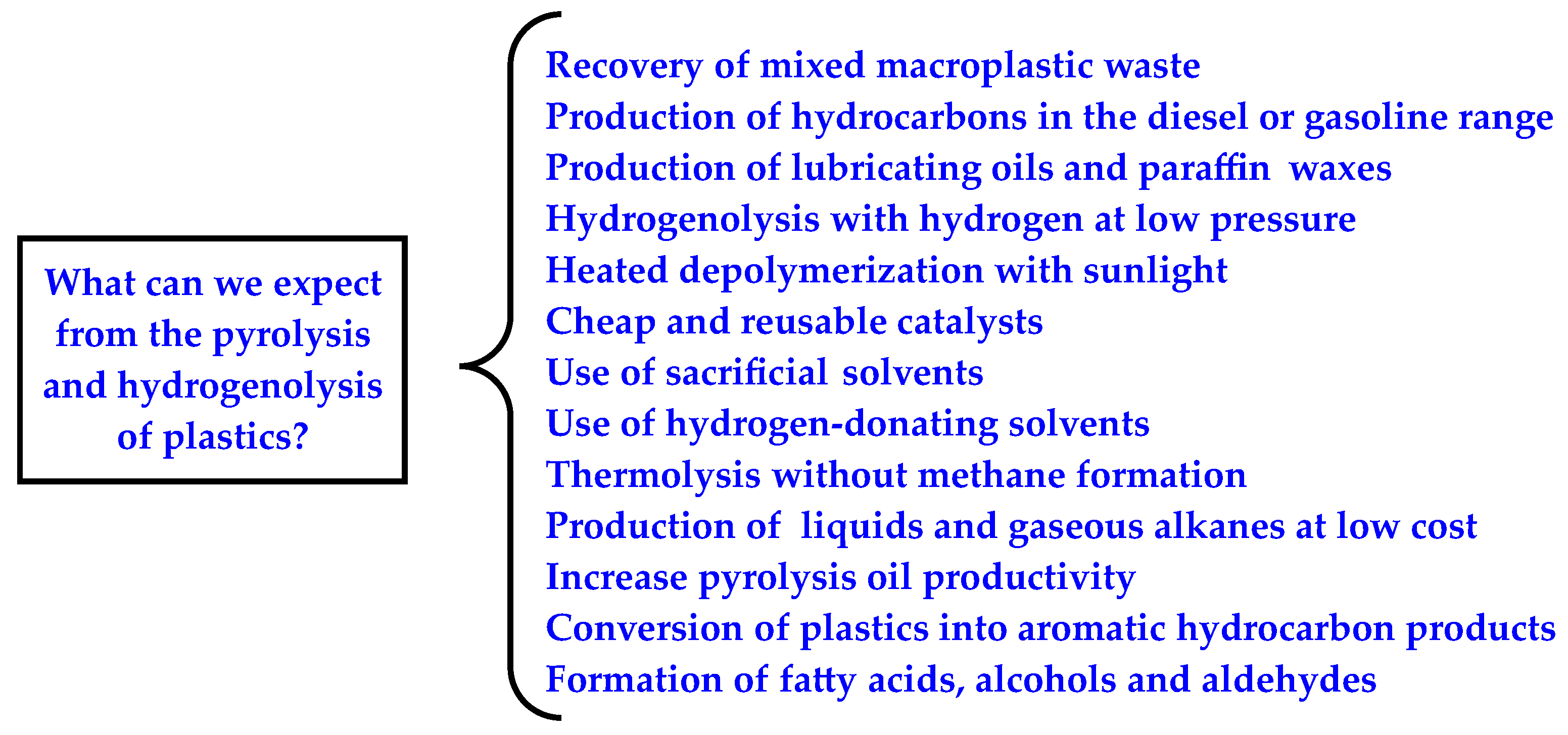
There are two alternatives for the chemical transformation or cracking of polyolefins: pyrolysis and hydrogenolysis. Both approaches promote the cleavage of polymeric chains and generate heterogeneous mixtures of polyolefins, and are carried out in reactors under pressure, heating, an inert atmosphere and using metal catalysts. It is important to note that the catalytic processes used in oil cracking and lignin breakdown can be extended to polyolefin depolymerization, including alkane dehydrogenation/aromatization, transfer hydrogenation, and hydrogen cogeneration, as well as opportunities to use the polymer itself as a hydrogen source [18]. Figure 4 summarizes what is expected from the pyrolysis and hydrogenolysis processes. These aspects will be discussed below.
This article will only deal with chemical upgrading processes (“chemolysis”) by pyrolysis and hydrogenolysis. It will not discuss the biochemical degradation of plastics or the production of biodegradable polymers.
2. Pyrolysis cracking
Pyrolysis is a thermochemical decomposition process that involves breaking down organic material at high temperatures (300-900 °C) in the absence of oxygen, with or without a catalyst, making it suitable for many waste products, including highly complex plastics. The removal of oxygen is crucial because its presence can lead to combustion rather than decomposition. Thermal pyrolysis involves simply heating plastics to induce the cleavage of their bonds and produce shorter-chain hydrocarbons, while catalytic pyrolysis is carried out with a catalyst to lower the temperature and reaction time. In general, pyrolysis offers the advantage of high degradation efficiency but has the disadvantages of high energy consumption, low product selectivity, and difficulty in studying the degradation mechanism. Both thermal and catalytic pyrolysis have been studied in various reactors (batch, semi-batch, fixed bed, fluidized bed, batch with fixed bed, rotary, etc.), using different materials that are important for the efficiency of plastic depolymerization processes [19].
Pyrolysis represents a promising technology for converting waste into renewable energy, aligning with sustainability objectives and the circular economy. It is being studied more extensively than hydrogenolysis due to its cost-effectiveness and practicality. The pyrolysis process is already used to convert organic biomass and various waste materials considered useless (such as agricultural waste, wood, plastics, and municipal solid waste) into biochar, bio-oil, and synthesis gas (‘syngas’), thereby reducing the use of landfills and environmental pollution. Bio-oil can be refined to produce chemicals and other materials traditionally obtained from oil. However, it should be noted that pyrolysis has low efficiency for PVC [20]. The products obtained from the depolymerization of polyolefins, for example, vary according to the cracking conditions and the catalysts used (e.g., metal oxides, sulphated metal oxides, nanostructured zeolites, molecular sieves, metal carbonates, mesoporous materials, heterogeneous acids, zeolites, alumina, silica, etc.) [21]. The random splitting of C-C bonds into radicals generates complex mixtures of olefinic and cross-linked compounds.
In general, the pyrolysis depolymerization process produces three different phases, the proportion of which depends on the catalyst: a solid phase (coal or coke, 5-25% by weight), a liquid phase (tar, cycloparaffins, oligomers, aromatics, 10-45% by weight) and a gas phase (volatile alkanes and alkenes), all of which are used for various purposes. A problem in the recycling or chemical transformation of polymers is the contaminants (organic, inorganic, paper, halogens and metals) and various types of additives added to the plastics [22].
Polypropylene is very similar to polyethylene in that its structure only has C-H and C-C bonds. It is the second most used and discarded polymer and, therefore, the valorization of this material is extremely important to mitigate plastics in the environment.
The concept of recycling and upgrading polyethylene, polypropylene, and other polymers into oils with low molecular masses and functional carbon chains has been studied by various research groups worldwide, yielding promising results for a future where plastics are valuable starting materials [23,24,25,26,27]. This idea has become increasingly urgent, as polyethylene waste accounts for approximately 30% of plastic waste. It is crucial to transform this waste into fuel oil, rich in alkanes, through catalytic hydrogenolysis of the C-C bond.
Thermocatalytic depolymerization of polyolefins is one of the most economically promising strategies for creating higher value-added products from plastic waste. As the chemical structures of polymers are very stable and have strong C-C bonds, it takes a lot of thermal energy, which is usually provided by pyrolysis above 300 oC under the influence of a catalyst and in the absence of air, to depolymerize them. Under these conditions, the polymers are fragmented into simpler units and this process can be applied to industrial and household plastic waste, transforming the polyolefins into gases, liquids and carbonized solid waste. The quality of the oil depends on the mixture of plastics, catalyst and the conditions used in the pyrolysis [28]. The oily liquids resulting from pyrolysis consist mainly of hydrocarbons in the diesel boiling point range (180-380 °C), amounting to approximately 50-55% by volume. However, these crude liquids are not suitable for use as diesel fuel, but if distilled in the diesel boiling point range they can be used in blends with conventional automotive diesel. In this way, the plastics can be reused in another form and no longer accumulate in the environment [29].
Ahmad et al. [30] obtained high selectivity for pyrolysis of high-density polyethylene (HDPE) in the liquid fraction using nanostructured BaTiO3 doped with Pb at 350 °C, to provide alkanes (73.4%), olefins (22.5%) and naphthalene (4.1%). There are many other catalysts for hydrocracking polystyrene with high yields of oils, liquids and alkanes that can be used as lubricants, paraffin waxes or further processed into detergents and cosmetics [31]. Abbas-Abadi et al. [32] studied the continuous pyrolysis on a pilot scale of different raw materials at temperatures between 430-490 °C and pressures between 0.1 and 2.0 bar. At the lowest pressure, the yield of low-density polyethylene pyrolysis oil reached 95% conversion by weight and its composition was α-olefins (37-42%) and n-paraffins (32-35%). With polypropylene it was possible to form 84-91% iso-olefins (C9 and C15) and diolefins from oil. As for macroplastic waste, the pyrolysis oil yields were much lower and there was more char formation with metallic contamination. Whajah et al. [33] depolymerized polyethylene in high yields, induced by heating in the absence of hydrogen, at atmospheric pressure and with bifunctional catalysts based on zeolite containing dispersed Pt or Pt-Sn, obtaining hydrocarbons of up to 95% by weight after 2 h. The temperature of this process was 375 °C and the distribution of products ranged from light gas to hydrocarbons in the range of gasoline and diesel. Hafeez et al. [34] carried out the pyrolysis of plastics at a temperature range of 600-700 °C in a fluidized bed reactor on a Pt/Al2O3 catalyst, obtaining oils and waxes after 6-8 h. Conversion during hydrotreatment reduced the reactivity of the pyrolysis oil and promoted the production of diesel and kerosene.
Wang et al. [35] studied catalytic thermolysis associated with sunlight to transform a mixture of plastic waste using an abundant Ni-based catalyst. Solar energy can be an important source of radiation to produce sustainable and efficient plastic pyrolysis. The process used a mixture of plastic waste, containing five types of polyolefins, polyester, and polyvinyl chloride, converting them into methane with a carbon yield of 98% and HCl with a chlorine yield of 91%.
The catalytic pyrolysis process has thermodynamic limitations that hinder the adsorption of polymers to the catalysts to promote the cracking of the chains. Kang et al. tested catalytic reactions taking place inside mesoporous channels impregnated with Ru nanoparticles, allowing them to achieve an entropically more favorable stable transition state. This approach involves the synthesis of ruthenium catalysts distributed within mesoporous silica channels (SBA-15 <150 μm particle size, pore size 10 nm, hexagonal pore morphology). The design of the p-Ru/SBA-15 catalyst gave improved catalyst performance in the conversion of polyethylene into high-value liquid fuels, especially diesel. When the Ru/SiO2 and Ru/C catalysts were evaluated, the mesoporous silica catalyst proved to be far superior in terms of solid conversion rate, providing a great opportunity for the chemical recycling of plastic waste [36].
A very interesting strategy is the use of sacrificial solvents and co-fired hydrocarbons to cleave C-C bonds without the need to use hydrogen. In this field, Hancock and Rorrer carried out a very comprehensive review on the low-temperature depolymerization of polyolefins in the absence of hydrogen and the Tandem dehydrogenation and cross-metathesis of olefins for the depolymerization of polyethylene [37].
Cracking polyolefins in the presence of solvents provides benefits such as easier feeding of the reactants into the reactor and better heat and mass transfer. The presence of a hydrogen-donating solvent can improve the useful life of the catalyst and reduce the formation of coke residues. The catalytic cracking of polymers dissolved in solvents also allows higher value-added products to be obtained (e.g., tetralin, decalin, and methylcyclohexane) [38].
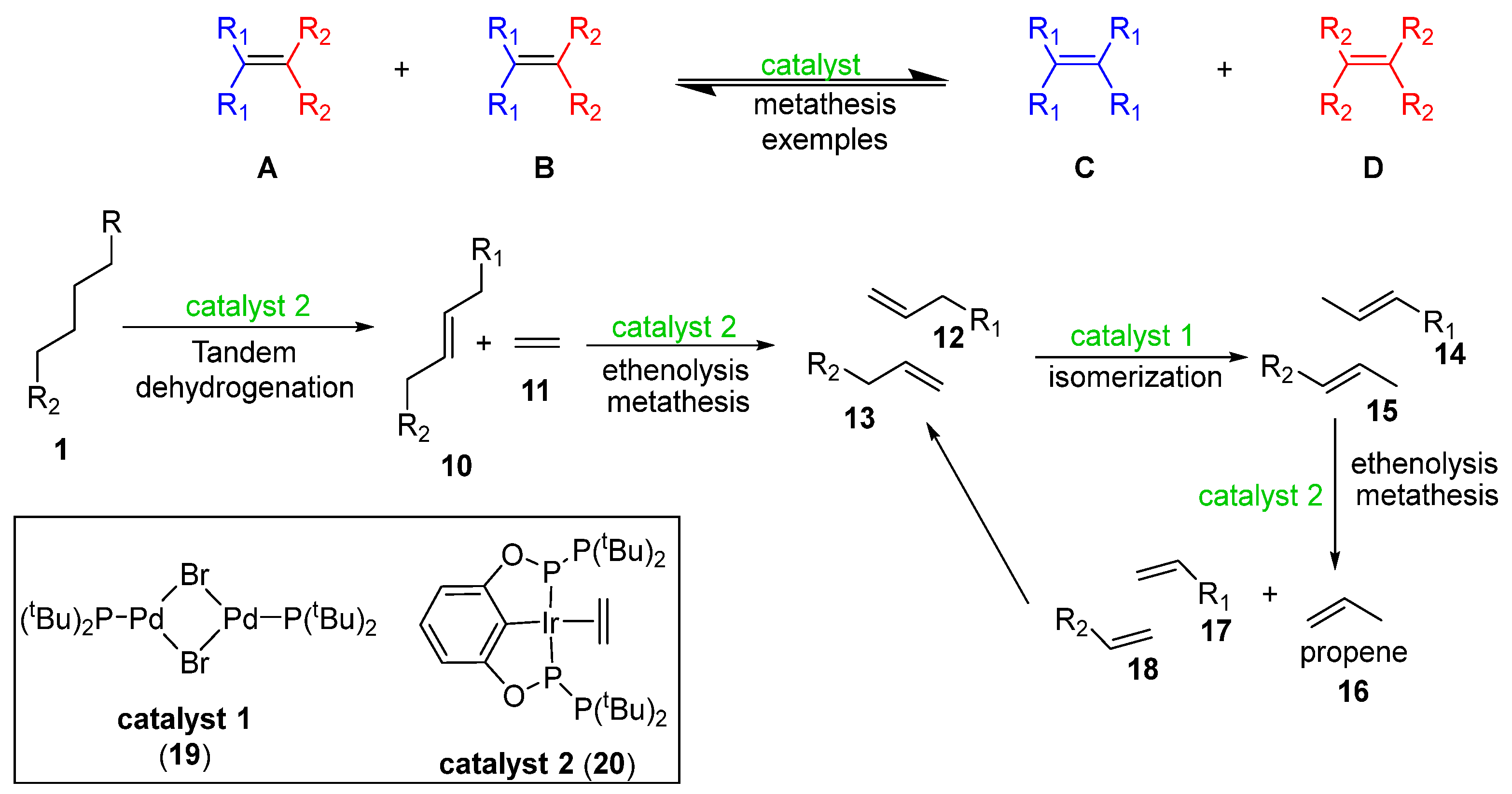
Wang et al. [39] developed an innovative strategy for the chemical conversion of polyethylene (1) via four catalytic reactions: dehydrogenation by Tandem reaction to introduce an unsaturation into the saturated polyethylene chain), ethenolysis (metathesis reaction [40] with ethene forming two terminal olefins), isomerization of the terminal olefin and new ethenolysis (new metathesis reaction with ethene forming propylene). In this method, which is detailed in Scheme 1, a large excess of ethylene is needed to achieve the ethenolysis events per polymer chain and shift the reaction equilibrium towards propylene. This recent experiment demonstrates that carrying out dehydrogenation, isomerization and ethenolysis simultaneously is a promising strategy for converting polyethylene plastic waste into propylene, a commodity with the second highest demand used as a raw material for the manufacture of polypropylene.
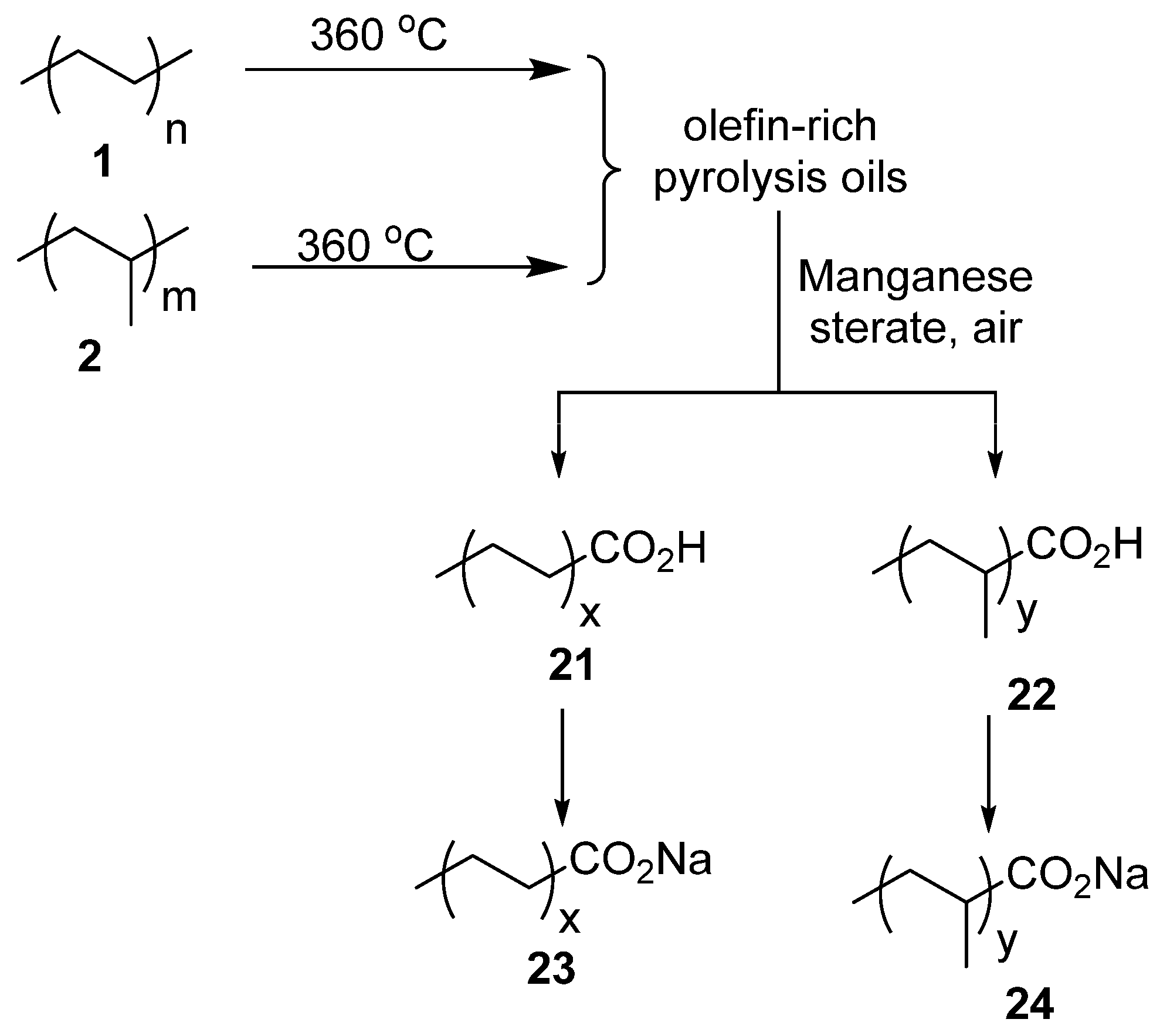
Xu et al. [41] reported a very relevant strategy for transforming polyethylene (1) and polypropylene (2) into fatty acids with an approximate conversion of 80% and average molar masses between 700 and 670 Daltons, respectively. The first stage is a temperature gradient pyrolysis that leads to the formation of waxes. The waxes are oxidized at the end of the chain with air and heating in the presence of manganese stearate, forming fatty acids (21 and 22) which can then be saponified to form soaps or surfactants (23 and 24) (Scheme 2). The authors point out that this process can be converted to an industrial scale with economic viability.
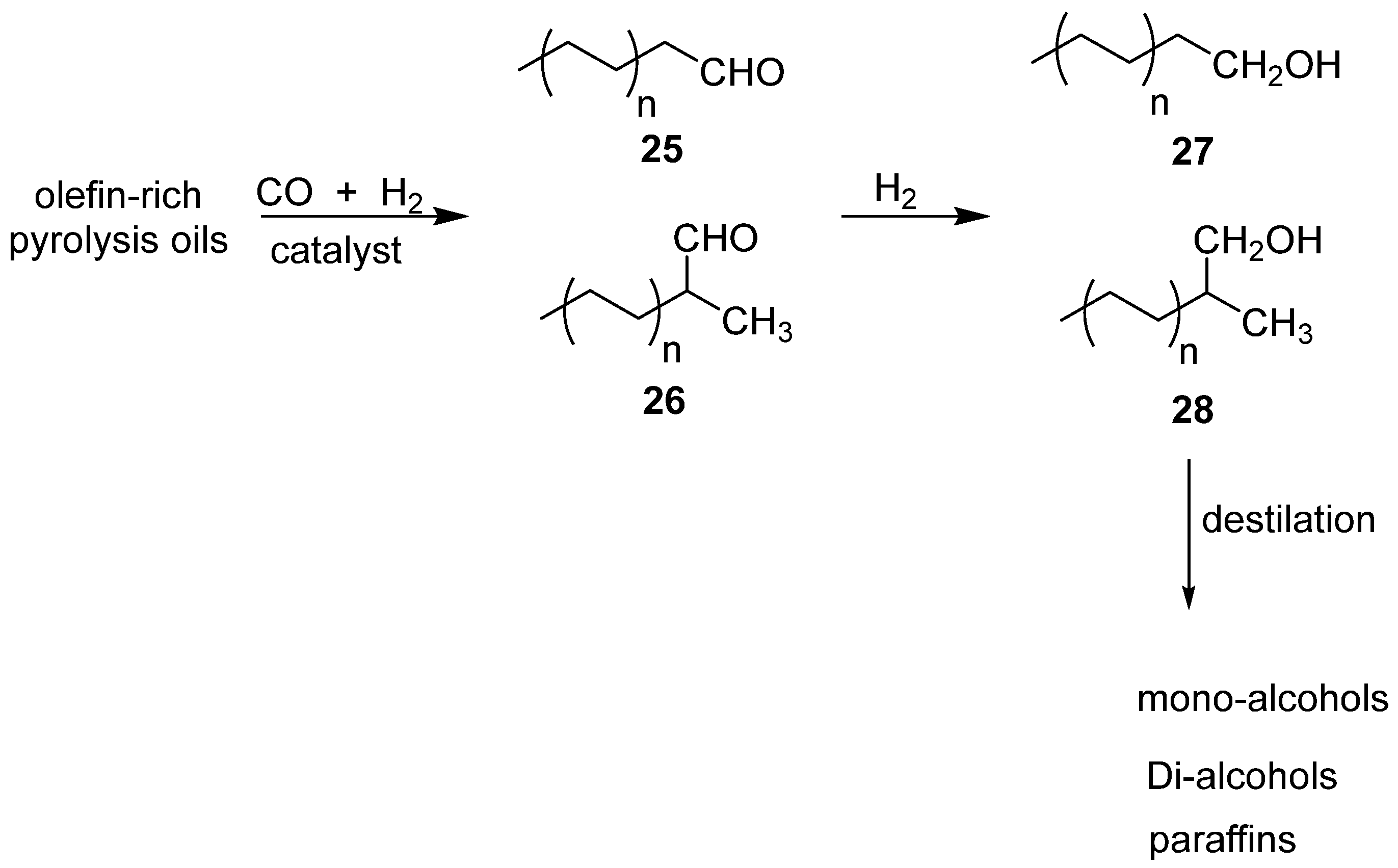
As mentioned earlier, the pyrolysis of polyolefin waste used in plastic materials, in the absence of oxygen, can partially transform it into oils with high olefin concentrations. This oil can be a viable raw material for many new reactions. Considering that crude oil, natural gas, and naphtha have low olefin concentrations (3% by weight) these oils are relevant for fine chemicals. Within this context, Huber and collaborators prepared these pyrolysis oils with approximately 60% olefin by weight. This mixture was used to produce aldehydes through the hydroformylation reaction (Scheme 3) [42]. Briefly, the hydroformylation reaction involves the addition of synthesis gas (“syngas”), a mixture of CO and H2, to olefins in the presence of a catalyst leading to the formation of aldehydes at carbon 1 or carbon 2 [43]. This reaction is very advantageous in terms of atomic economy, forming aldehydes on the terminal olefins selectively, valuable end products and intermediates in the synthesis of other chemical products such as alcohols, esters and amines. Regioselectivity can be controlled through the choice of catalyst and reaction conditions, making hydroformylation a versatile tool in synthetic organic chemistry. This route produces high value-added chemicals from post-consumer recycled polyethylene that can reduce greenhouse gas emissions. The aldehydes obtained from pyrolysis oils are abundant and are synthetic platforms to produce mono/dial alcohols by reduction or mono/dicarboxylic acids or mono/diamines by oxidative processes.
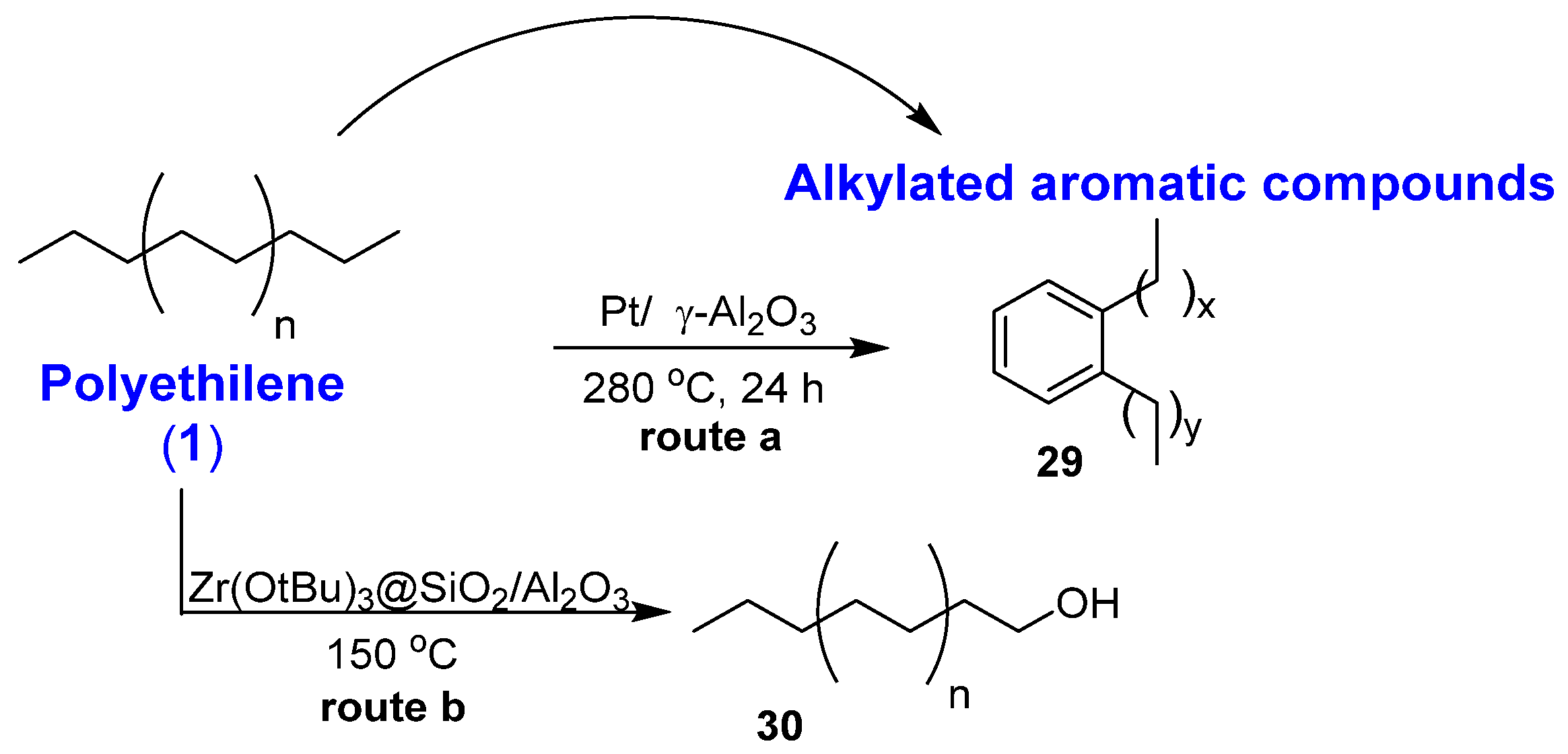
Zhang et al. [44] reported an innovative method in polyethylene cracking reactions: a one-pot low-temperature endothermic aromatization catalytic method. This method can convert polyethylene of different average molecular masses directly into liquid mixtures of valuable alkylated aromatic compounds (29) (Scheme 4, rote a). The heterogeneous catalyst used was Pt/ϒ-Al2O3 (0.200 g, containing 1.5% by weight of Pt dispersed as ~1 nm nanoparticles) at 280 °C (±5 °C). This method uses no solvent or H2 and the liquid/waxy products reached 80% by mass and volatile hydrocarbons (15% by weight, approximately) demonstrating how waste polyolefins can be a viable raw material for generating aromatic hydrocarbons. Another innovative approach is the selective modification of the terminal methyl with hydrophilic groups on the carbon chains. This transformation can lead to many products for industrial applications. Zirconium-catalyzed reactions of saturated hydrocarbons with Zr(OtBu)3 lead to the formation of organoaluminium compounds that form alcohols when exposed to air. Kanbur et al. [45] showed that the Zr(OtBu)3@SiO2/Al2O3 catalyst is capable of catalytically illuminating the terminal C-H bond of polyethylene at 150 °C followed by exposure to air to provide n-dodecanol (30) as the main product, revealing selectivity for activation of the methyl group without significant chain breakage, allowing C-H illumination of the methyl group of polyethylenes, polypropylene, polystyrene and poly-α-olefin oils. This reaction was tested with various polyolefins and yielded an oil with 68% of chains containing alcohol functionality after treatment of the reaction medium (Scheme 4, rote b).
3. Cracking with Hydrogenolysis
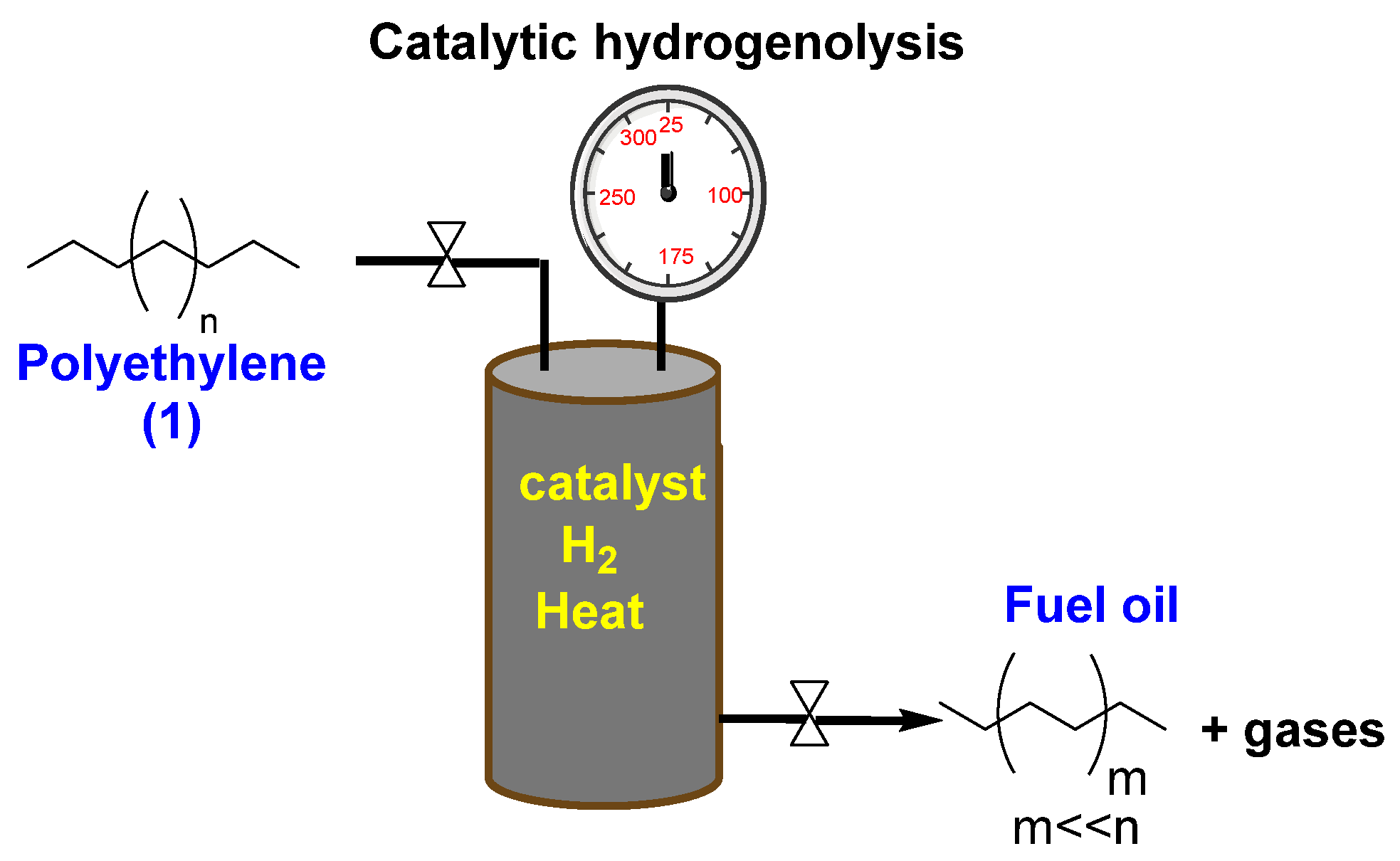
In recent years there have been many publications exploring catalytic hydrogenolysis (pyrolysis under a hydrogen atmosphere) using various catalysts and which are the focus of large companies because it is a profitable investment and a solution to the serious plastics crisis [46,47]. Hydrogenolysis or hydrocracking is a reductive catalytic method for deconstructing polyolefin waste from plastics. It is a viable technology for recycling, especially for polyethylene and polypropylene. The issue lies in the yield of transforming these macroplastics into fuel oil with a high oil yield and preferably similar to diesel fuel (Scheme 5). Zheng et al. listed various types of catalysts used by 2022 in catalytic hydrogenolysis for various types of plastics. Most of the catalysts used zeolites as solid support (Ni/Co in montmorillonites, BaO, zeolite HZSM-5, Fe-modified with zeolite ZSM-5, zeolite Fe(3)-HY, zeolite, Fe/Al2O3 zeolite, ZnO zeolite, NiO/HY zeolite, SiC foam on ZSM-5, modified Mordenite, laboratory-synthesized ZSM-5 zeolite, ZAP USY zeolite, activated carbon) [48].
More recently, other types of catalysts have been studied. The most recent catalysts and their performance in hydrogenolysis to recover plastic waste are presented below.
Celik et al. [49] studied the hydrogenolysis of polyethylene with H2 at 170 psi and 300 oC catalyzed by Pt nanoparticles dispersed in (Pt/SrTiO3) without solvent. Under these conditions, polyethylene (Mn = 8,000-158,000 Da) is converted into high-quality oil (Mn = 31,000 Da) that can be used as lubricants and waxes. Ruthenium is the metal used in the most active hydrogenolysis catalysts, but it is an expensive metal and produces a lot of methane. Wang et al. [50] explored the activity and economics of ruthenium-modulated tungsten zirconia (Ru-WZr) in the hydrogenolysis of low-density polyethylene and found that the deconstruction rate is fast and produces oil in the diesel range and under mild conditions (523 K and 50 bar H2 for 2 h). The Ru-WZr catalyst significantly suppresses methane and produces a distribution of heavier carbon products that are valuable for fuel and wax/lubricant base oil. Catalytic hydrogenolysis has the potential to convert HDPE, which comprises around 30% of plastic waste, into valuable alkanes. Most research has focused on increasing the activity of laboratory-grade HDPEs that have a low molecular weight, with limited understanding of product distribution. No efficient catalysts are available for consumer products due to their lower reactivity. This study targets HDPE used in bottle caps; a waste product generated globally at a rate of approximately one million units per hour.
Ultrafine ruthenium particles (1 nm) supported on titania (anatase) achieved up to 80% conversion to light alkanes (C1-C45) under mild conditions (498 K, 20 bar H2, 4 h) and were reused for three cycles. Small ruthenium nanoparticles were critical to achieving relevant conversions, as activity decreased dramatically with particle size.
Jaydev et al. [51] also studied the catalytic hydrogenolysis of high-density polyethylene with ruthenium nanoparticles supported on titanium oxide and achieved 80% conversion to light alkanes (C1-C45) under mild conditions (498 K, 20 bar H2, 4 h) and with reuse of the catalyst for three cycles. In another study, Rorrer et al. [52] studied ruthenium nanoparticles supported on carbon (Ru/C) as a heterogeneous hydrogenolysis catalyst which proved to be highly active in converting polyethylene macroplastic waste into liquid and gaseous alkanes. The hydrogenolysis of polypropylene in the absence of solvent under mild conditions (200-250 °C, 20-50 bar of H2).
Zhao et al. [53] carried out catalytic hydrogenolysis of polyethylene with heterogeneous nickel-based catalysts at 280°C and a cold hydrogen pressure of 3 MPa. The Ni/SiO2 supported catalyst showed the highest activity with up to 81.18% of hydrocarbons (C4-C22). The result is comparable to catalysts using noble metals producing iso-alkane in the C5-C32 range with conversion above 68%. Du et al. [54] carried out one-step solvent-free hydrogenolysis with skeletal rearrangements promoted by a catalyst of polyolefin plastic waste in high-value gasoline, diesel and light lubricants with highly branched chains. The use of the bifunctional Rh/Nb2O5 catalyst takes place under mild conditions. The metallic Rh disperses in the Nb2O5 (strong Brønsted acid) which breaks the long carbon chains. The β-scission of the alkylcarbenium ions increases the catalytic hydrogenolysis and isomerization of the polyolefins. This technology is economically viable and could accelerate the circular economy of plastics.
Xu et al. [55] have also shown that it is possible to obtain synthesis gas with solar irradiation with the help of water. For example, commercial plastic bags could be efficiently photoconverted into renewable synthesis gas using Co-Ga2O3 catalyst nanosheets, with hydrogen and carbon monoxide formation rates of 647.8 and 158.3 μmol.g−1.h−1, respectively. Water is photoreduced into hydrogen while plastics are photodegraded into carbon dioxide, which is further selectively photoreduced into carbon monoxide.
Ni2Al3-catalyzed pyrolysis of mixed polyolefin plastics for 5 to 120 min at 250–310 °C transforms these polymers into natural gas with carbon gas yields reaching 89.6% [56]. The gradual catalytic cleavage of the C-C bonds in polypropylene occurs preferentially at the terminal C-C bond in the side chain, with a low energy barrier. The gas generated was composed of 99.9% CH4 and 0.1% C2-C4 hydrocarbons and the catalyst have good recyclability. This process of catalytic production of natural gas with polyolefin plastic waste is a more economically competitive process based on the current price of natural gas.
One of the challenges of fragmentation in polyolefin chains is the formation of methane (usually > 20%) during hydrogenolysis. Overcoming this limitation brings economic benefits when it comes to producing liquid fuels. Chu et al. [57] solved this problem by using a Ru single-atom catalyst supported on CeO2 and demonstrated its efficiency in producing only 2.2% methane and a liquid fuel yield of over 94.5% at 250 °C for 6 h. This remarkable catalytic activity and selectivity of the catalyst in the hydrogenolysis of polyolefins offers immense opportunities for plastic recycling. Tomer et al. [58] also studied the hydrogenolysis of polypropylene waste to form lighter liquid hydrocarbons with the Ru/CeO2 catalyst. The catalyst was used in the proportion of 2% by weight of Ru/CeO2, in the crystalline nanocube form, forming the liquid phase between 34-58% (220 °C, 16 h, 30 bar H2). Brandon et al. [59] succeeded in hydrogenolysis of polyethylene using Ni supported on SiO2. This reusable catalyst is very active at moderate temperatures and under H2 pressure (300 °C, 30 bar H2). Its performance is comparable to catalysts based on Ru and Pt, but with the advantage of having a much lower cost. The maximum yields of liquid products were 65% by weight (n-alkanes, iso-alkanes, cyclics, aromatics, etc.). The cleavage mechanism is sensitive to the size of the chain and the breaking point of the C-C bond of the polyolefin (polyethylene, polypropylene, and polystyrene). The advantage of this procedure is its ability to hydrolyze polyolefin mixtures. Cobalt was also immobilized on SiO2 to produce liquid range hydrocarbons (C5-C30) at 200-300 °C, 20-40 bar H2 for 2-36 h with high selectivity from polyethylene. The liquid product yield was 55%, comprising 75% non-solid products, with gas yields limited to 19% approximately [60].
The platinum complex nanoparticle catalyst (Pt(II) acetylacetonate or trimethyl(methylcyclopentadienyl)platinum) supported by chemical insertion of organometallics on the surface of SrTiO3 nanocuboids was able to promote the hydrogenolysis of polypropylene to provide liquid products with a narrow range of molecular dispersion [61]. These catalysts were obtained by calcination and had Pt nanoparticles of 1.0-1.5 nm deposited on the SrTiO3 nanocuboids. These catalysts hydrogenolyzed polypropylene into liquid products in >95% yield with average molecular weights of 200-300 Da at 300 °C and 180 psi H2.
Many inorganic materials or waste can be used as catalysts. Red mud is a by-product generated during the Bayer process of extracting alumina (aluminum oxide) from bauxite. Rahman et al. used this material, after drying, as a catalyst to increase the productivity of hydrogenolysis conversion of various plastic materials. The results indicated that the conversion to oil ranged from 14-80% (w/w) depending on the type of polymer [62].
4. Conclusions
Some end-of-life macroplastic waste can be recycled through mechanical processes, but this accounts for only about 25%. This is a current reality. The recovery of plastics through chemical recycling into chemicals, fuels, lubricants, and paraffin waxes is still under investigation. Two technologies have emerged as the most studied: catalytic thermal pyrolysis and catalytic hydrogenolysis. Both have been extensively researched in recent years to determine the best reaction conditions, applicability to various types of polymers, and the most economical and efficient catalysts. These technologies also offer prospects for producing fine chemical compounds, such as acids, alcohols, and aldehydes. These are crucial steps, but without a reduction in production and improvements in the selective collection of macroplastics, no progress will be made in addressing the global plastics crisis.
Author Contributions
Acácio de Souza: Writing—original draft, conceptualization, visualization, formal analysis review and editing. Patricia Ferreira: Writing—review and editing. Iva de Jesus: Writing—review and editing. Rafael de Oliveira: Writing—review and editing. Alcione de Carvalho: Writing—review and editing. Debora Futuro: Writing—review and editing.Vitor Ferreira: Writing—original draft, conceptualization, visualization, formal analysis review and editing, editing, supervision, funding acquisition, conceptualization. All authors have read and agreed to the published version of the manuscript.
Funding
This work was partially supported by FAPERJ grant numbers FAPERJ CNE E- 6/200.911/2021; CNPq 1A 301873/2019-4; SEI-260003/001178/2020 (thematic FAPERJ).
Data Availability Statement
Data are contained within the article.
Acknowledgments
Fellowships granted by CNPq, CAPES and FAPERJ are gratefully acknowledged.
Conflicts of Interest
The authors declare no conflict of interest. The authors declare that they have no known co peting financial interests or personal relationships that could have appeared to influence the work reported in this paper. The authors claim that they have no conflicts of interest in respect to the authorship and publishing of this work.
References
- Ambaye, T.G.; Djellabi, R.; Vaccari, M.; Prasad, S.; Aminabhavi, T.M.; Rtimi, S. Emerging technologies and sustainable strategies for municipal solid waste valorization: Challenges of circular economy implementtion. J. Clean. Prod. 2023, 423, 138708. [Google Scholar] [CrossRef]
- Gomollón-Bel, F. Ten Chemical Innovations That Will Change Our World: IUPAC identifies emerging technologies in Chemistry with potential to make our planet more sustainable. Chem. Int. 2019, 41, 12–17. [Google Scholar] [CrossRef]
- Gomollón-Bel, F. IUPAC Top Ten Emerging Technologies in Chemistry 2021. Chem. Int. 2021, 43, 13–20. [Google Scholar] [CrossRef]
- Gomollón-Bel, F.; García-Martínez, J. Emerging chemistry technologies for a better world. Nat. Chem. 2022, 14, 113–114. [Google Scholar] [CrossRef]
- IUPAC Announces the 2023 top ten emerging technologies in chemistry. Available online: https://iupac.org/iupac-2023-top-ten/ (accessed on 12 September 2024).
- Van Geem, K.M. Plastic waste recycling is gaining momentum. Science 2023, 381, 607–608. [Google Scholar] [CrossRef]
- Rumjit, N.P.; Thomas, P.; Lai, C.W.; Johan, M.R.B.; Saravanakumar, M.P. Polymer-Recycling of Bulk Plastics. In Encyclopedia of Renewable and Sustainable Materials; Choudhury, I.A.; Hashmi, M.S.J., Eds.; Elsevier, 2020; pp 432-454.
- Here’s Where the World’s Plastic Wast Will End Up, by 2050. Available online: https://www.visualcapitalist.com/the-future-of-the-worlds-plastic/ (accessed on 19 September 2024).
- Tang, G.; Qiao, W.; Wang, Z.; Liu, F.; He, L.; Liu, M.; Huang, W.; Wu, H.; Liu, C. Waste plastic to energy storage materials: a state-of-the-art review. Green Chem. 2023, 25, 3738–3766. [Google Scholar] [CrossRef]
- Vlasopoulos, A.; Malinauskatie, J.; Zabnienska-Góra, A.; Jouhara, H. Life cycle assessment of plastic waste and energy recovery. Energy 2023, 277, 127576. [Google Scholar] [CrossRef]
- Kwon, S.; Kang, J.; Lee, B.; Hong, S.; Jeon, Y.; Bak, M.; Im, S.-K. Nonviable carbon neutrality with plastic waste-to-energy. Energy Environ. Sci. 2023, 16, 3074–3087. [Google Scholar] [CrossRef]
- Al-Salem, S.M.; Lettieri, P.; Baeyens, J. The valorization of plastic solid waste (PSW) by primary to quaternary routes: from re-use to energy and Chemicals. Prog. Energy Combust. Sci. 2010, 36, 103–129. [Google Scholar] [CrossRef]
- Zou, L.; Xu, R.; Wang, H.; Wang, Z.; Sun, Y.; Li, M. Chemical recycling of polyolefins: a closed-loop cycle of waste to olefins. Natl. Sci. Rev. 2023, 10, nwad207. [Google Scholar] [CrossRef]
- Schyns, Z.O.G.; Shaver, M.P. Mechanical Recycling of Packaging Plastics: A Review. Macromol. Rapid Commun. 2020, e2000415. [Google Scholar] [CrossRef] [PubMed]
- Bucknall, D.G. Plastics as a materials system in a circular economy. Phil. Trans. R. Soc. A 2020, 378, 20190268. [Google Scholar] [CrossRef]
- Vollmer, I.; Jenks, M.J.F.; Roelands, M.C.P.; White, R.J.; van Harmelen, T.; de Wild, P.; van der Laan, G.P.; Meirer, F.; Keurentjes, J.T.F.; Weckhuysen, B.M. Beyond Mechanical Recycling: Giving New Life to Plastic Waste. Angew. Chem. Int. Ed. 2020, 59, 15402–15423. [Google Scholar] [CrossRef] [PubMed]
- Kaminsky, W.; Schlesselmann, B.; Simon, C. Olefins from polyolefins and mixed plastics by pyrolysis. J. Anal. Appl. Pyrol. 1995, 32, 19–27. [Google Scholar] [CrossRef]
- Hernandez, B.; Kots, P.; Selvam, E.; Vlachos, D.G.; Ierapetritou, M.G. Techno-Economic and Life Cycle Analyses of Thermochemical Upcycling Technologies of Low-Density Polyethylene Waste. ACS Sustainable Chem. Eng. 2023, 11, 7170–7181. [Google Scholar] [CrossRef]
- Lopez, G.; Artetxe, M.; Amutio, M.; Bilbao, J.; Olazar, M. Thermochemical routes for the valorization of waste polyolefinic plastics to produce fuels and chemicals. A review. Renew. Sustain. Energy Rev. 2017, 73, 346–368. [Google Scholar] [CrossRef]
- Ragaert, K.; Delva, L.; Van Geem, K. Mechanical and chemical recycling of solid plastic waste. Waste Manag. 2017, 69, 24–58. [Google Scholar] [CrossRef]
- Burange, A.S.; Gawande, M.B.; Lam, F.L.Y.; Jayaram, R.V.; Luque, R. Heterogeneously catalyzed strategies for the deconstruction of high density polyethylene: plastic waste valorisation to fuels. Green Chem. 2015, 17, 146–156. [Google Scholar] [CrossRef]
- Roosen, M.; Mys, N.; Kusenberg, M.; Billen, P.; Dumoulin, A.; Dewulf, J.; Van Geem, K.M.; Ragaert, K.; De Meester, S. Detailed Analysis of the Composition of Selected Plastic Packaging Waste Products and Its Implications for Mechanical and Thermochemical Recycling. Environ. Sci. Technol. 2020, 54, 13282–13293. [Google Scholar] [CrossRef]
- Palza, H.; Aravena, C.; Colet, M. Role of the catalyst in the pyrolysis of polyolefin mixtures and used tires. Energy Fuels 2017, 31, 3111–3120. [Google Scholar] [CrossRef]
- Kumari, A.; Debbarma, S.; Maurya, P.; Anand, V. Depolymerization of waste plastics and chemicals. In Green Chemistry Approaches to Environmental Sustainability. Elsevier: 2024, pp 337-356.
- Faust, K.; Denifl, P.; Hapke, M. Recent Advances in Catalytic Chemical Recycling of Polyolefins. Chem. Cat. Chem. 2023, 15, e202300310. [Google Scholar] [CrossRef]
- Kumar, M.; Bolan, S.; Padhye, L.P.; Konarova, M.; Foong, S.Y.; Lam, S.S.; Wagland, S.; Cao, R.; Li, Y.; Batalha, N.; et al. Retrieving back plastic wastes for conversion to value added petrochemicals: opportunities, challenges and outlooks. Appl. Energy 2023, 345, 121307. [Google Scholar] [CrossRef]
- Zhang, S.; Li, M.; Zuo, Z.; Niu, Z. Recent advances in plastic recycling and upgrading under mild conditions. Green Chem. 2023, 25, 6949–6970. [Google Scholar] [CrossRef]
- Kusenberg, M.; Zayoud, A.; Roosen, M.; Thi, H.D.; Abbas-Abadi, M.S.; Eschenbacher, A.; Kresovic, U.; De Meester, S.; Van Geem, K.M. A comprehensive experimental investigation of plastic waste pyrolysis oil quality and its dependence on the plastic waste composition. Fuel Process. Technol. 2022, 227, 107090. [Google Scholar] [CrossRef]
- Gala, A.; Guerrero, M.; Guirao, B.; Domine, M.E.; Serra, J.M. Characterization and Distillation of Pyrolysis Liquids Coming from Polyolefins Segregated of MSW for Their Use as Automotive Diesel Fuel. Energy & Fuels 2020, 34, 5969–5982. [Google Scholar]
- Ahmad, I.; Khan, M.I.; Ishaq, M.; Khan, H.; Gul, K.; Ahmad, W. Catalytic efficiency of some novel nanostructured heterogeneous solid catalysts in pyrolysis of HDPE. Polym. Degrad. Stab. 2013, 98, 2512–2519. [Google Scholar] [CrossRef]
- Christensen, S.T.; Elam, J.W.; Rabuffetti, F.A.; Ma, Q.; Weigand, S.J.; Lee, B.; Seifert, S.; Stair, P.C.; Poeppelmeier, K.R.; Hersam, M.C.; Bedzyk, M.J. Controlled Growth of Platinum Nanoparticles on Strontium Titanate Nanocubes by Atomic Layer Deposition. Small 2009, 5, 750–757. [Google Scholar] [CrossRef]
- Abbas-Abadi, M.S.; Kusenberg, M.; Zayoud, A.; Roosen, M.; Vermeire, F.; Madanikashani, S.; Kuzmanović, M.; Parvizi, B.; Kresovic, U.; De Meester, S.; Van Geem, K.M. Thermal pyrolysis of waste versus virgin polyolefin feedstocks: The role of pressure, temperature and waste composition. Waste Manag. 2023, 165, 108–118. [Google Scholar] [CrossRef]
- Whajah, B.; Heil, J.N.; Roman, C.L.; Dorman, J.A.; Dooley, K.M. Zeolite Supported Pt for Depolymerization of Polyethylene by Induction Heating. Ind. Eng. Chem. Res. 2023, 62, 8635–8643. [Google Scholar] [CrossRef]
- Hafeez, S.; Van Haute, M.; Manos, G.; Karam, H.J.; Constantinou, A.; Al-Salem, S.M. Hydrotreatment over the Pt/Al2O3 Catalyst of Polyethylene-Derived Pyrolysis Oil and Wax. Energy & Fuels 2023, 37, 16181–16185. [Google Scholar]
- Wang, M.; Gao, Y.; Yuan, S.; Deng, J.; Yang, J.; Yu, S.; Xu, B.; Ma, D. Complete hydrogenolysis of mixed plastic wastes. Nat. Chem. Eng. 2024, 1, 376–384. [Google Scholar] [CrossRef]
- Kang, Q.; Chu, M.; Xu, P.; Wang, X.; Wang, S.; Cao, M.; Ivasenko, O.; Sham, T.-K.; Zhang, Q.; Sun, Q.; Chen, J. Entropy Confinement Promotes Hydrogenolysis Activity for Polyethylene Upcycling. Angew. Chem. 2023, 135, e202313174. [Google Scholar] [CrossRef]
- Hancock, J.N.; Rorrer, J.E. Hydrogen-free catalytic depolymerization of waste polyolefins at mild temperatures. Appl. Catal. B: Environ. 2023, 338, 123071. [Google Scholar] [CrossRef]
- Machhi, D.J.; Modhera, B.; Parikh, P.A. Catalytic cracking of low-density polyethylene dissolved in various solvents: product distribution and coking behavior. J. Mater. Cycles Waste Manag. 2023, 25, 3005–3020. [Google Scholar] [CrossRef]
- Wang, N.M.; Strong, G.; DaSilva, V.; Gao, L.; Huacuja, R.; Konstantinov, I.A.; Rosen, M.S.; Nett, A.J.; Ewart, S.; Geyer, R.; Scott, S.L.; Guironnet, D. Chemical recycling of polyethylene by tandem catalytic conversion to propylene. J. Am. Chem. Soc. 2022, 144, 18526–18531. [Google Scholar] [PubMed]
- Ferreira, V.F.; da Silva, F.C. Metátese em Síntese Orgânica e o Prêmio Nobel de Química de 2005 – Dos Plásticos à Indústria Farmacêutica. QNesc 2005, 22, 3–9. Available online: http://qnesc.sbq.org.br/online/qnesc22/a01.pdf (accessed on 20 September 2024).
- 41 Xu, Z.; Munyaneza, N.E.; Zhang, Q.; Sun, M.; Posada, C.; Venturo, P.; Rorrer, N.A.; Miscall, J.; Sumpter, B.G.; Liu, G. Chemical upcycling of polyethylene, polypropylene, and mixtures to high-value surfactants. Science 2023, 381, 666–671. [Google Scholar] [CrossRef]
- Li, H.; Wu, J.; Jiang, Z.; Ma, J.; Zavala, V.M.; Landis, C.R.; Mavrikakis, M.; Huber, G.W. Hydroformylation of pyrolysis oils to aldehydes and alcohols from polyolefin waste. Science 2023, 381, 660–666. [Google Scholar] [CrossRef]
- Franke, R.; Selent, D.; Börner, A. Applied Hydroformylation. Chem. Rev. 2012, 112, 5675–5732. [Google Scholar] [CrossRef]
- Zhang, F.; Zeng, M.; Yappert, R.D.; Sun, J.; Lee, Y.-H.; LaPointe, A.M.; Peters, B.; Abu-Omar, M.M.; Scott, S.L. Polyethylene upcycling to long-chain alkylaromatics by tandem hydrogenolysis/aromatization. Science 2020, 370, 437–441. [Google Scholar] [CrossRef]
- Kanbur, U.; Paterson, A.L.; Rodriguez, J.; Kocen, A.L.; Yappert, R.; Hackler, R.A.; Wang, Y.-Y.; Peters, B.; Delferro, M.; LaPointe, A.M.; et al. Zirconium-Catalyzed C-H Alumination of Polyolefins, Paraffins, and Methane. J. Am. Chem. Soc. 2023, 145, 2901–2910. [Google Scholar] [CrossRef] [PubMed]
- Musa, A.; Jaseer, E.A.; Barman, S.; Garcia, N. Review on Catalytic Depolymerization of Polyolefin Waste by Hydrogenolysis: State-of-the-Art and Outlook. Energy & Fuels 2024, 38, 1676–1691. [Google Scholar]
- Chen, X.; Cheng, L.; Gu, J.; Yuan, H.; Chen, Y. Chemical recycling of plastic wastes via homogeneous catalysis: A review. Chem. Eng. J. 2024, 479, 147853. [Google Scholar] [CrossRef]
- Zheng, K.; Wu, Y.; Hu, Z.; Wang, S.; Jiao, X.; Zhu, J.; Sun, Y.; Xie, Y. Progress and perspective for conversion of plastic wastes into valuable chemicals. Chem. Soc. Rev. 2023, 52, 8–29. [Google Scholar] [CrossRef] [PubMed]
- Celik, G.; Kennedy, R.M.; Hackler, R.A.; Ferrandon, M.; Tennakoon, A.; Patnaik, S.; LaPointe, A.M.; Ammal, S.C.; Heyden, A.; Perras, F.A.; et al. Upcycling Single-Use Polyethylene into High-Quality Liquid Products. ACS Cent. Sci. 2019, 5, 1795–1803. [Google Scholar] [CrossRef]
- Wang, C.; Xie, T.; Kots, P.A.; Vance, B.C.; Yu, K.; Kumar, P.; Fu, J.; Liu, S.; Tsilomelekis, G.; Stach, E.A.; et al. Polyethylene Hydrogenolysis at Mild Conditions over Ruthenium on Tungstated Zirconia. J. Am. Chem. Soc. 2021, 1, 1422–1434. [Google Scholar] [CrossRef]
- Jaydev, S.D.; Martín, A.J.; Usteri, M.-E.; Chikri, K.; Eliasson, H.; Erni, R.; Pérez-Ramírez, J. Consumer Grade Polyethylene Recycling via Hydrogenolysis on Ultrafine Supported Ruthenium Nanoparticles. Angew. Chem. Int. Ed. 2024, 63, e202317526. [Google Scholar] [CrossRef]
- Rorrer, J.E.; Troyano-Valls, C.; Beckham, G.T.; Román-Leshkov, Y. Hydrogenolysis of Polypropylene and Mixed Polyolefin Plastic Waste over Ru/C to Produce Liquid Alkanes. ACS Sustainable Chem. Eng. 2021, 9, 11661–11666. [Google Scholar] [CrossRef]
- Zhao, Z.; Li, Z.; Zhang, X.; Li, T.; Li, Y.; Chen, X.; Wang. K. Catalytic hydrogenolysis of plastic to liquid hydrocarbons over a nickel-based catalyst. Environ. Pollut. 2022, 313, 120154. [Google Scholar] [CrossRef]
- Du, B.; Chen, X.; Ling, Y.; Niu, T.; Guan, W.; Meng, J.; Hu, H.; Tsang, C.-W.; Liang, C. Hydrogenolysis-Isomerization of Waste Polyolefin Plastics to Multibranched Liquid Alkanes. ChemSusChem 2023, 16, e202202035. [Google Scholar] [CrossRef]
- Xu, J.; Jiao, X.; Zheng, K.; Shao, W.; Zhu, S.; Li, X.; Zhu, J.; Pan, Y.; Sun, Y.; Xie, Y. Plastics-to-syngas photocatalysed by Co-Ga2O3 nanosheets. Natl. Sci. Rev. 2022, 9, nwac011. [Google Scholar] [CrossRef] [PubMed]
- Si, X.; Chen, J.; Wang, Z.; Hu, Y.; Ren, Z.; Lu, R.; Liu, L.; Zhang, J.; Pan, L.; Cai, R.; Lu, F. Ni-catalyzed carbon-carbon bonds cleavage of mixed polyolefin plastics waste. J. Energy Chem. 2023, 85, 562–569. [Google Scholar] [CrossRef]
- Chu, M.; Wang, X.; Wang, X.; Lou, X.; Zhang, C.; Cao, M.; Wang, L.; Li, Y.; Liu, S.; Sham, T.-K.; et al. Site-Selective Polyolefin Hydrogenolysis on Atomic Ru for Methanation Suppression and Liquid Fuel Production. Research 2023, 6, 0032. [Google Scholar] [CrossRef] [PubMed]
- Tomer, A.; Islam, M.M.; Bahri, M.; Inns, D.R.; Manning, T.D.; Claridge, J.B.; Browning, N.D.; Catlow, C.R.A.; Roldan, A.; Katsoulidis, A.P.; Rosseinsky, M.J. Enhanced production and control of liquid alkanes in the hydrogenolysis of polypropylene over shaped Ru/CeO2 catalysts. Appl. Catal. A 2023, 666, 119431. [Google Scholar] [CrossRef]
- Vance, B.C.; Kots, P.A.; Wang, C.; Granite, J.E.; Vlachos, D.G. Ni/SiO2 catalysts for polyolefin deconstruction via the divergent hydrogenolysis mechanism. Appl. Catal. B: Environ. 2023, 322, 122138. [Google Scholar] [CrossRef]
- Borkar, S.S.; Helmer, R.; Panicker, S.; Shetty, M. Investigation into the Reaction Pathways and Catalyst Deactivation for Polyethylene Hydrogenolysis over Silica-Supported Cobalt Catalysts. ACS Sustain. Chem. Eng. 2023, 11, 10142–10157. [Google Scholar] [CrossRef]
- McCullough, K.E.; Peczak, I.L.; Kennedy, R.M.; Wang, Y.-Y.; Lin, J.; Wu, X.; Paterson, A.L.; Perras, F.A.; Hall, J.; Kropf, A.J.; et al. Synthesis of platinum nanoparticles on strontium titanate nanocuboids via surface organometallic grafting for the catalytic hydrogenolysis of plastic waste. J. Mater. Chem. A 2023, 11, 1216–1231. [Google Scholar] [CrossRef]
- Rahman, T.; Jahromi, H.; Roy, P.; Bhattarai, A.; Ammar, M.; Baltrusaitis, J.; Adhikari, S. Depolymerization of Household Plastic Waste via Catalytic Hydrothermal Liquefaction. Energy & Fuels 2023, 37, 13202–13217. [Google Scholar]
Figure 1.
Main polymers used in plastics manufacturing.
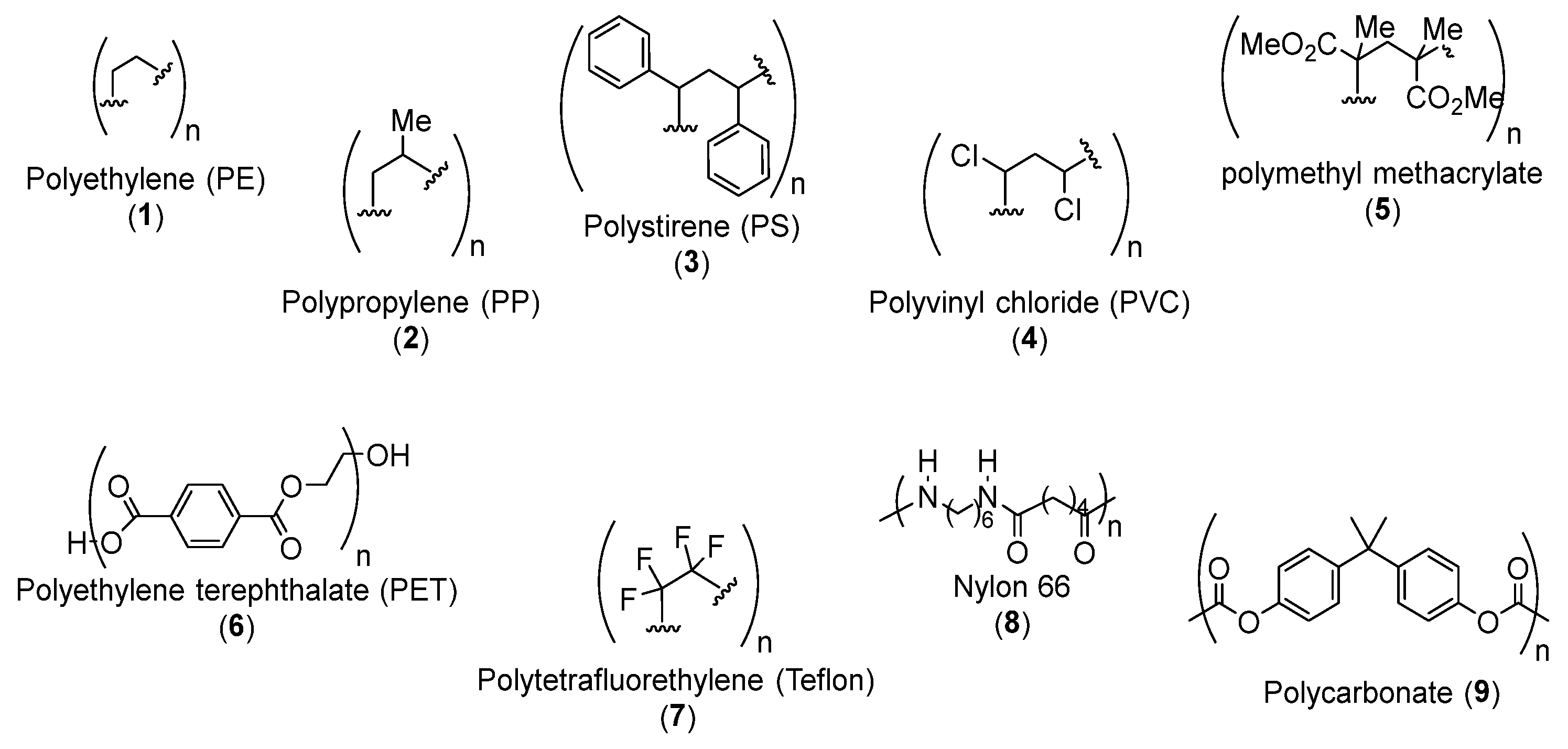
Figure 2.
Options and rates for recycling, dumping, and incinerating plastic waste.
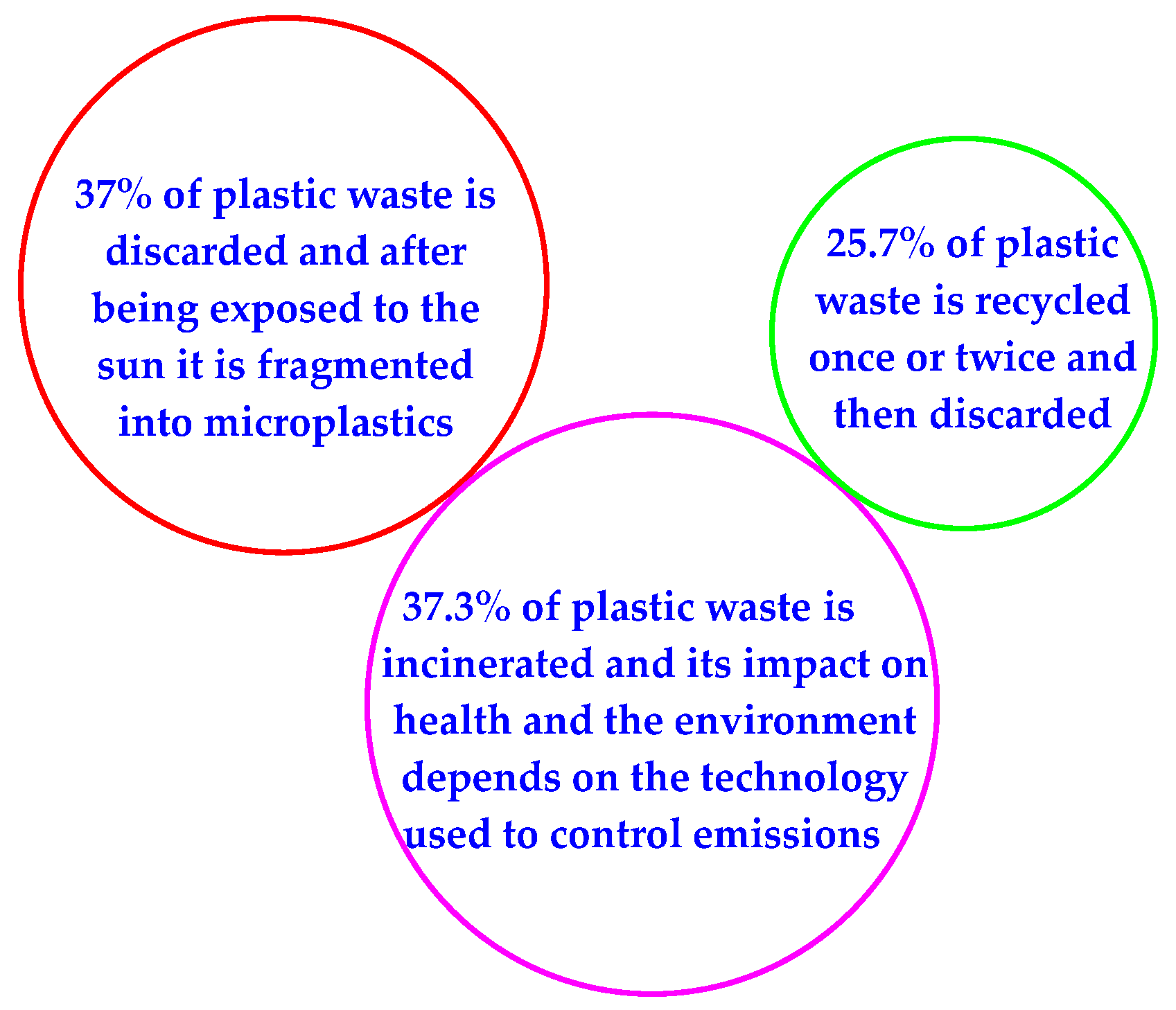
Figure 3.
Strategies for the recovery of macroplastics.
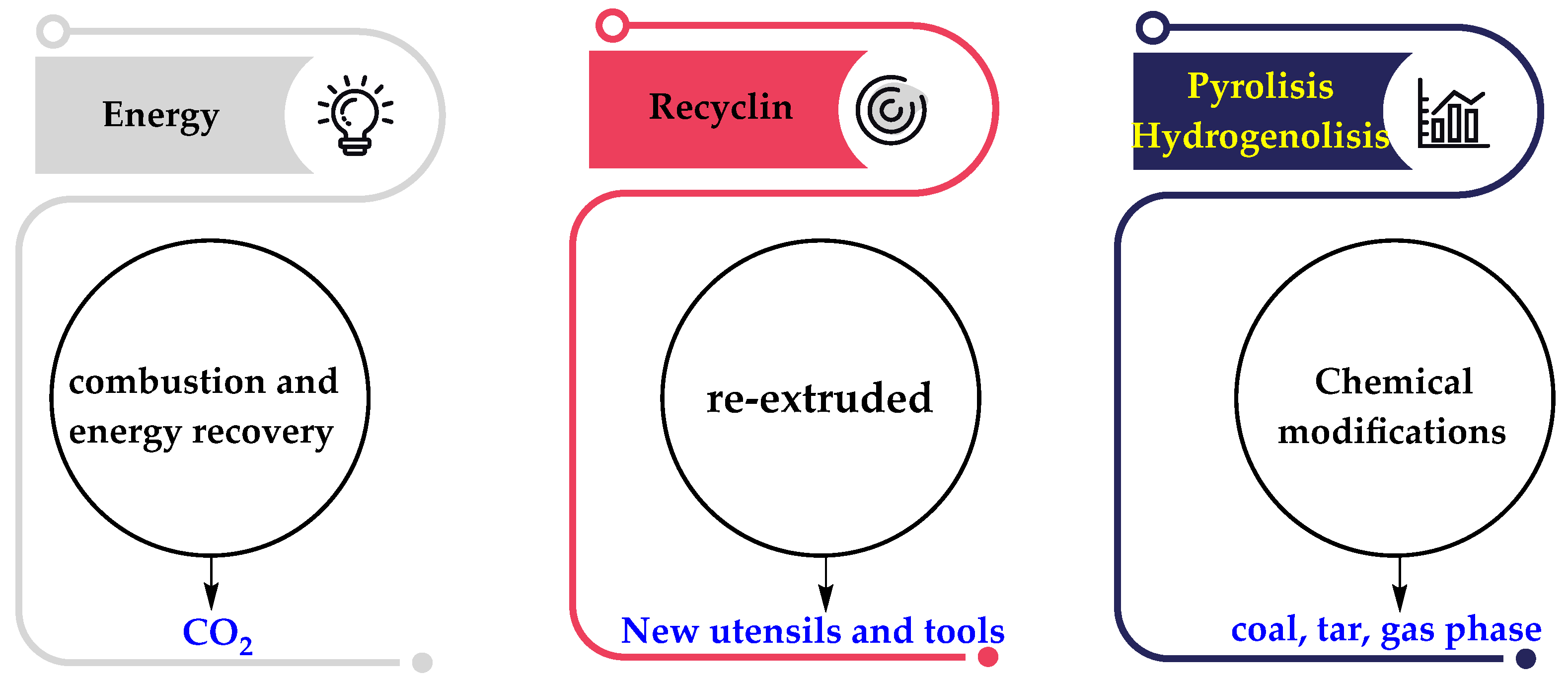
Figure 4.
Objectives for depolymerization processes.
Scheme 1.
Dehydrogenation/cross-metathesis/isomerization strategy to PE-PP conversion.
Scheme 2.
Olefin-rich oil transformations from plastic pyrolysis.
Scheme 3.
Synthesis of alcohols from olefin-rich pyrolysis oils.
Scheme 4.
Transformation of polyethylene into polyalkylated aromatic compounds.
Scheme 5.
General diagram of a polyethylene hydrogenolysis reactor.
Disclaimer/Publisher’s Note: The statements, opinions and data contained in all publications are solely those of the individual author(s) and contributor(s) and not of MDPI and/or the editor(s). MDPI and/or the editor(s) disclaim responsibility for any injury to people or property resulting from any ideas, methods, instructions or products referred to in the content. |
© 2024 by the authors. Licensee MDPI, Basel, Switzerland. This article is an open access article distributed under the terms and conditions of the Creative Commons Attribution (CC BY) license (http://creativecommons.org/licenses/by/4.0/).
Copyright: This open access article is published under a Creative Commons CC BY 4.0 license, which permit the free download, distribution, and reuse, provided that the author and preprint are cited in any reuse.


