

Submitted:
01 November 2024
Posted:
05 November 2024
You are already at the latest version
Abstract
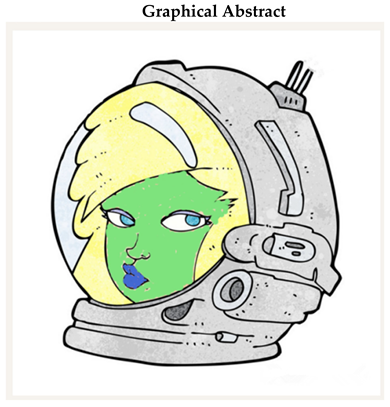
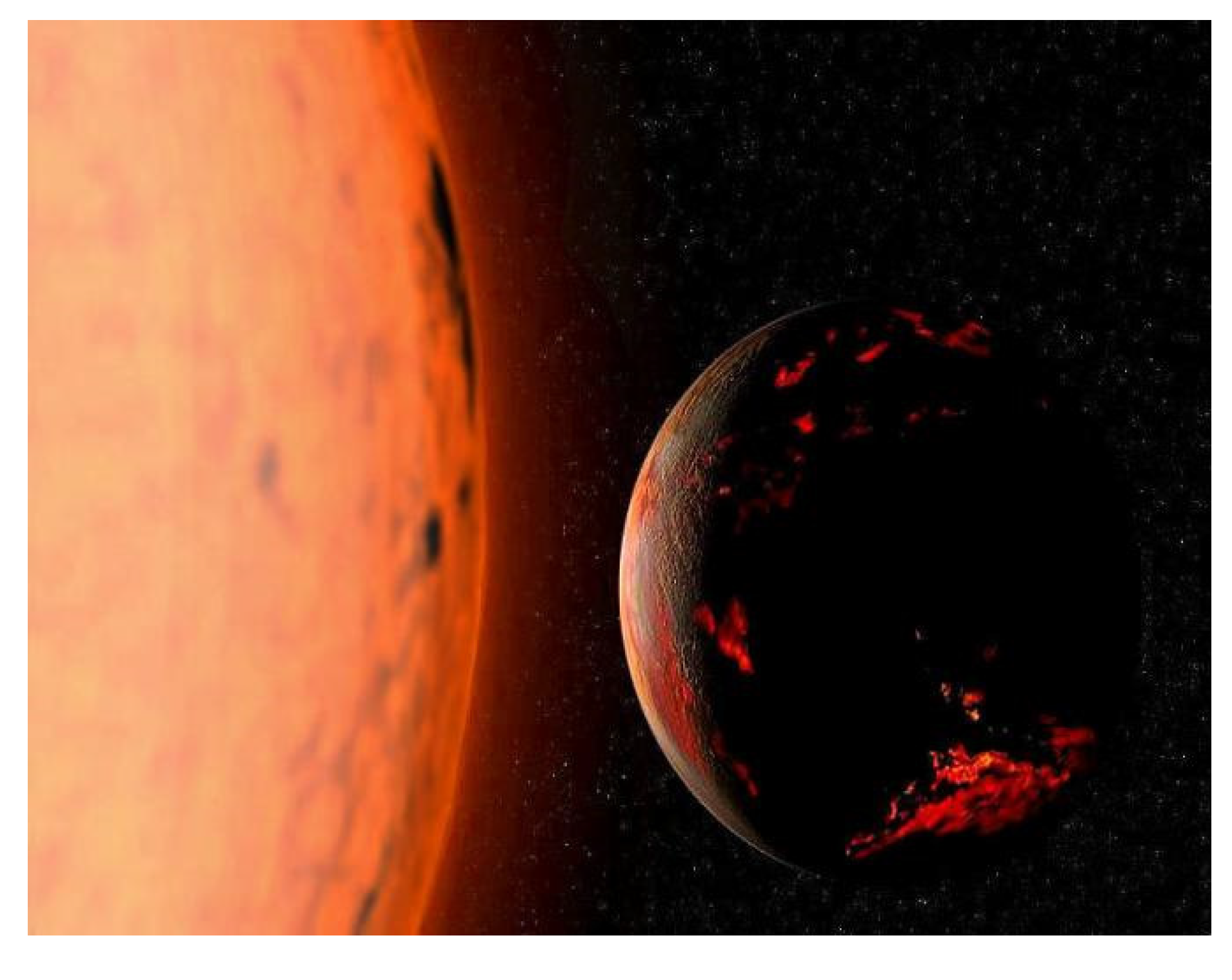
Based on the fact that the solar system will eventually be destroyed and that humans cannot travel to the nearest habitable exoplanet within a lifetime, this article suggests sending synthetic biology- and AI- created astronauts with some plant characteristics to the closest habitable exoplanet. The paper assesses the potential impact of this future technology on various aspects of human society, including scientific, ethical, and cultural dimensions. As long as these astronauts with some plant characteristics possess human consciousness, it is irrelevant whether they are hybrids of carbon- and silicon- based life forms. They will carry on the human heritage on exoplanets. Humanity has two survival options. The first option is the Martian migration program led by Elon Reeve Musk, which is both visible and realistic. It could provide an immediate option for human continuation and expansion, although it may not help us escape the future burning of the Sun during its red giant phase. The second option involves directly sending astronauts with some plant characteristics beyond the solar system. Escaping to Mars still does not free humans from the risk of extinction. We must strive with all our might; otherwise, humanity will be forever trapped within the solar system, awaiting the inevitable helium flash to come.
Keywords:
1. Introduction
2. The Concept of Plant - Like Astronauts
2.1. Biological Characteristics
2.2. Resistance to Space Conditions
2.3. Consciousness and Humanity
3. Methods
4. Results
4.1. A Hypotheses Proposed
4.2. Finding Evidence
4.2.1. Humanity Cannot Travel to the Nearest Habitable Exoplanet Within Its Lifetime
4.2.2. Plants Are Better Adapted to the Environment Than Animals
4.2.3. The Distinction Between Animals and Plants Is Not Clear
4.2.4. Green Skin
4.2.5. Blue Blood
4.2.6. Synthetic Biology
4.2.7. AI
5. Discussion
5.1. This Study Involves Ethical and Law
5.2. Sending Astronauts Created by Synthetic Biology and AI with Plant Characteristics to Exoplanets Faces Numerous Technological Challenges
5.2.1. Synthetic Biology
5.2.2. Artificial Intelligence
5.2.3. Aerospace Engineering
5.3. Several Potential Ethical Challenges
5.3.1. Definition of Life and Humanity
5.3.2. Ethical Considerations in Creation
5.3.3. Ethical Implications for Society
5.4. Impacts on Biodiversity on Earth
5.4.1. Direct Impacts
5.4.2. Indirect Impacts
5.5. The potential Long-Term Effects
5.5.1. Technological and Knowledge Spillover Effects
5.5.2. Resource Allocation and Environmental Pressures
5.6. Public and Social Reactions
5.6.1. Shift in Public Attention
5.6.2. Ethical Debates and Policy Discussions
5.7. The Anthropological Classification of Plant - Like Astronauts
5.8. The Feasibility Study of Ultra-Long-Distance Interstellar Space Expeditions
- 1
- The scale of a spacecraft designed for exploring Teegarden’s Star b. The spacecraft should be a large, advanced vessel capable of housing 1,000 people and equipped with state-of-the-art facilities.
- 2
- Artificial sunlight is installed inside the spaceship and runs for a few hours every day to enable plant - like astronauts to get the necessary light for certain biological processes.
- 3
- Properly handling the disposal of bodies within a large spacecraft. Is it feasible to implement space burials similar to sea burials or to legally and rationally manage the remains in a proper way?
- 4
- How to ensure the sustainable provision of necessary drinking water for the residents of the large spacecraft.
- 5
- How to implement the training and development of these plant - like astronauts.
6. Conclusions
Author Contributions
Funding
Ethics approval and consent to participate
Consent for publication
Availability of data and material
Acknowledgements
Competing interests
References
- Ahamed, S. et al. (2024). Carbon collusion: Cooperation, competition, and climate obstruction in the global oil and gas extraction network. Energy Policy, Volume 190, July 2024, 114103. [CrossRef]
- Allakhverdiev, S.I. (2024). Artificial photosynthesis: Powering a green new deal for sustainable energy. International Journal of Hydrogen Energy, Volume 90, 11 November 2024, Pages 199-209. [CrossRef]
- Anonymous. (1986). For the discovery of photosynthetic animal, Nature Exploration, No.4 (in Chinese).
- Anonymous. (2022). Ocean wonders of 2021, NEWSDAY. https://newsday.co.tt/2022/01/06/ocean-wonders-of-2021/.
- Anonymous. (2023). Spacecraft Overview. https://spaceflight101.com/newhorizons/spacecraft-overview/.
- Bellome, A., Sánchez, J.P., García Mateas, J.C., Felicetti, L. & Kemble, S. (2024). Modified dynamic programming for asteroids belt exploration. Acta Astronautica, 215, 142-155. [CrossRef]
- Bizzarri, M., Gaudenzi, P., & Angeloni, A. (2023). The biomedical challenge associated with the artemis space program. Acta Astronautica, 212, 14-28. [CrossRef]
- Boudjada, M.Y., Macher, W., Rucker, H.O. & Fischer, G. (2005). Solar Orbiter: Physical aspects towards a better knowledge of the solar corona. Advances in Space Research, 36, (8): 1439-1443. [CrossRef]
- Chiavaroli, C. (2024). The reproductive geography of miscarriages. Social identities, places, and reproductive inequalities. Social Science & Medicine, Volume 360, November 2024, 117351. [CrossRef]
- Christian P., Marco S., Thorsten B. (2010). Ontogeny of hemocyanin in the ovoviviparous cockroach Blaptica dubia suggests an embryo-specific role in oxygen supply. Journal of Insect Physiology, 56(5), 455-460. [CrossRef]
- Crane, L. (2023). Passing star could fling Earth past Pluto into the Oort cloud. New Scientst, 260,(3468): 12. [CrossRef]
- Dakkumadugula, A. et al., (2023). Space nutrition and the biochemical changes caused in Astronauts Health due to space flight: A review. Food Chemistry: X, Volume 20, 30 December 2023, 100875. [CrossRef]
- David, J. W. et al.(2023). A history of the NASA operational spaceflight Surgeon:1958 – Present. Acta Astronautica, 203, 252-262. [CrossRef]
- Demir, E. (2023). The protection of human biodata: Is there any role for data ownership? Computer Law & Security Review, Volume 51, November 2023, 105905. [CrossRef]
- Diers, N.M., Seale, M. & Radja, A. (2024). Modeling the trapping mechanism of a carnivorous species, Drosera capensis. Biophysical Journal, 123, (3), Supplement 1, 543a. [CrossRef]
- Dutta, Sh. & Misra, A. K. (2023).Comparison between convex and non-convex optimization methods for collision avoidance maneuvers by a spacecraft. Acta Astronautica, 202, 900-908. Get rights and content. [CrossRef]
- Elitzur, S. Rosenband, V. & Gany, A. (2016). Combined energy production and waste management in manned spacecraft utilizing on-demand hydrogen production and fuel cells. Acta Astronautica, Volume 128, November–December 2016, Pages 580-583. [CrossRef]
- Fadeyev, Yu. A. (2019). Radial Pulsations of Stars at the Stage of the Final Helium Flash. Astronomy Letters, 45(10), 655–663. DOI: 10.1134/S1063773719100037.
- Fais, G. et al. (2022). A novel process to grow edible microalgae on Mars by exploiting in situ-available resources: Experimental investigation. Acta Astronautica, 201, 454-463. [CrossRef]
- Feldman, L.J. (2009). Chapter 136 - Insectivorous Plants. Encyclopedia of Insects (Second Edition), 511-514.
- Gao, M.G. (1987). Green hydra was first discovered in China. Biological Notification, 4, 49. CNKI:SUN: SWXT.0.1987-04-036, https://xueshu.baidu.com/usercenter/paper/show?paperid=07d42b3f49bf7bb0deed958c4fd230bd&site=xueshu_se.
- Godwin, A. et al. (2024). Comparing vegetative growth patterns of cultivated (Daucus carota L. subsp. sativus) and wild carrots (Daucus carota L. subsp. carota) to eliminate genetic contamination from weed to crop. Journal of Agriculture and Food Research, Volume 16, June 2024, 101213. [CrossRef]
- Grey, W. (2012). Playing God. Encyclopedia of Applied Ethics (Second Edition), 2012, Pages 468-473. [CrossRef]
- Hartmann, F. et al., (2022). Digital models in biotechnology: Towards multi-scale integration and implementation.Biotechnology Advances, Volume 60, November 2022, 108015. [CrossRef]
- Hawking, S. (2018). Brief Answers to the Big Questions. John Murray Publisher.
- Heinen et al., (2024). SWAP 50 years: Advances in modelling soil-water-atmosphere-plant interactions. Agricultural Water Management, Volume 298, 1 June 2024, 108883. [CrossRef]
- Hirani, A. K. et al. (2024). Determination of critical crop-weed competition period: Impact on growth, nutrient dynamics and productivity of green gram (Vigna radiata). Heliyon, Volume 10, Issue 17, 15 September 2024, e36855. [CrossRef]
- Holt, Sh (2023). Virtual reality, augmented reality and mixed reality: For astronaut mental health; and space tourism, education and outreach. Acta Astronautica, 203, 436-446. Get rights and content. [CrossRef]
- Horst, F., Boscolo, D., Durante, M., Luoni, F., Schuy, C., Weber, U., (2022). Thick shielding against galactic cosmic radiation: a Monte Carlo study with focus on the role of secondary neutrons. Life Sci. Space Res. 33, 58–68. [CrossRef]
- Howard, D.A. (2019). Einstein’s Philosophy of Science. Stanford Encyclopedia of Philosophy, https://plato.stanford.edu/entries/einstein-philscience/.
- Hu, J. et al. (2023). Reliability and lifetime estimation of bioregenerative life support system based on 370-day closed human experiment of lunar palace 1 and Monte Carlo simulation. Acta Astronautica, 202, 609-616. Get rights and content. [CrossRef]
- Itaya, Y., Fujita, K. & Hanada, T. (2018). Precise time estimation of on-orbit satellite fragmentations. Acta Astronautica, 152, 415-425. Get rights and content. [CrossRef]
- Lee, J. Y. & Choi, Y. J. (2017). Shifting from an audience to an active public in social viewing: Focusing on the discussion network. Computers in Human Behavior, Volume 75, October 2017, Pages 301-310. [CrossRef]
- Li, D. T. et al., (2022). A proposed artificial intelligence workflow to address application challenges leveraged on algorithm uncertainty. iScience, Volume 25, Issue 3, 18 March 2022, 103961. [CrossRef]
- Jiangsu Provincial Institute of Botany. (1991). The Compendium of Materia Medica. Shanghai Science and Technology Press.
- Kaib, N. A., Parsells, A., Grimm, S., Quarles, B. & Clement, M.S. (2024). More realistic planetesimal masses alter Kuiper belt formation models and add stochasticity. Icarus, 415, 116057. [CrossRef]
- Kaiser, E. et al. (2019). Efficient photosynthesis in dynamic light environments: a chloroplast’s perspective. Biochemical Journal, Volume 476, Issue 19, 11 October 2019, Pages 2725-2741. [CrossRef]
- Kawasaki, Y. (1999). Direct detection of Martian microorganisms based on fluorescence microscopy. Advances in Space Research, Volume 23, Issue 2, 1999, Pages 309-317. [CrossRef]
- Kumar, A.U. and Ling, A.P.K. (2021). Gene introduction approaches in chloroplast transformation and its applications. Journal of Genetic Engineering and Biotechnology, Volume 19, Issue 1, December 2021, 148. [CrossRef]
- Kunitskaya, A. et al. (2022). Meta-analysis of health research data from greater than three months International Space Station missions. Acta Astronautica, 201, 420-430. [CrossRef]
- Liu, M.Y., Ma, W., Su, X.J., Zhang, X.M., Lu, Y., Zhang, S.W., Yan, J.H., Feng, D.L., Ma, L.S., Taylor, Ge, Y.J., Cheng, Q., Xu, K.D., Wang, Y.H. & Li, N. et al. (2022). Mutation in a chlorophyll-binding the motif of Brassica ferrochelatase enhances both heme and chlorophyll biosynthesis. Cell Reports, 41(10), 111758. [CrossRef]
- Liu, X., Yang, C., Qin, J.X., Li, J.M., Li, J.H. & Chen, J. (2023). Challenges, process technologies, and potential synthetic biology opportunities for plant-based meat production. LWT, 184, 115109. [CrossRef]
- Lorenz, R.D. (2019). Calculating risk and payoff in planetary exploration and life detection missions. Advances in Space Research, Volume 64, Issue 4, 15 August 2019, Pages 944-956. [CrossRef]
- Malle, B. F. et al. (2025). People’s judgments of humans and robots in a classic moral dilemma. Cognition, Volume 254, January 2025, 105958. [CrossRef]
- Mayr, E. (1982). The Growth of Biological Thought: Diversity, Evolution, and Inheritance. The Belknap Press of Harvard University Press CamBridge, Massachusetts Londen, England.
- Melikhov, A.S., Bolodyan, I.A. & Tanklevskiy, L.T(2020). Fire safety provision in inhabited pressurized compartments of spacecraft during a flight in simulated gravity. Acta Astronautica, 176, 725-732. [CrossRef]
- Mesa-Arango, R. et al. (2023). Missions and factors determining the demand for affordable mass space tourism in the United States: A machine learning approach. Acta Astronautica, 204, 307-320. [CrossRef]
- Metelli G. et al. (2023). Design of a modular controlled unit for the study of bioprocesses: Towards solutions for Bioregenerative Life Support Systems in space. Life Sciences in Space Research, Volume 36, February 2023, Pages 8-17. [CrossRef]
- Minges A. and Groth G. (2020). Chapter Two - Structure and supramolecular architecture of chloroplast ATP synthase. Advances in Botanical Research, Volume 96, 2020, Pages 27-74. [CrossRef]
- Mizraji, (2024). Homeostasis and information processing: The key frames for the thermodynamics of biological systems. Biosystems, Volume 236, February 2024, 105115. [CrossRef]
- Mohseni, P. and Ghorbani,A. (2024). Exploring the synergy of artificial intelligence in microbiology: Advancements, challenges, and future prospects. Computational and Structural Biotechnology Reports, Volume 1, December 2024, 100005. [CrossRef]
- Musk, E. (2022). https://open.163.com/newview/movie/free?mid=ZHO1QGQ2F&pid=RHO1QGQ15.
- Padaki, A., Police Reddy, A. & Lehnhardt, K. (2019). The utility of hyperbaric oxygen therapy for human.
- spaceflight – Past, present, and future. Acta Astronautica, 164, 192-196. Get rights and content. [CrossRef]
- Paglioni, V.P. and Groth, K.M. (2022). Dependency definitions for quantitative human reliability analysis. Reliability Engineering & System Safety, Volume 220, April 2022, 108274. [CrossRef]
- Pagnini, F. et al. (2019). Mindfulness and relaxation training for long duration spaceflight: Evidences from analog environments and military settings. Acta Astronautica, 165, 1-8. [CrossRef]
- Pickett, M. T. et al. (2020). Regenerative water purification for space applications: Needs, challenges,and technologies towards ‘closing the loop’. Life Sciences in Space Research, 24, 64-82.
- Platt, C. A. et al. (2020). Public Perceptions of Private Space Initiatives: How Young Adults View the SpaceX Plan to Colonize Mars. Space Policy, Volume 51, February 2020, 101358. [CrossRef]
- Porfírio, Camila T.M.N., Souza, P.F.N., Ramos, M.V., Campos, F.A.P., Freitas, S.F., Oliveira, J.P.B., Furtado, G.P., Barbosa, J.S.S., Frota, T.L., Nagano, C.S., Silva, R.G.G., Hussain, G. & Freitas, C.D.T. (2022). Serine carboxypeptidases from the carnivorous plant Nepenthes mirabilis: Partial characterization and heterologous expression. International Journal of Biological Macromolecules, 198, 77-86. [CrossRef]
- Romer, A.S. (1972). Skin breathing — Primary or secondary? Respiration Physiology, 14(1-2), 183-192. [CrossRef]
- Schwoerer, T. et al. (2024). Human-connected wild lands: How network analysis can inform invasive species management. Biological Conservation, Volume 299, November 2024, 110797. [CrossRef]
- Singla, M. & Sengupta, S. (2023). New models of reflection spectra for terrestrial exoplanets: Present and prebiotic Earth orbiting around stars of different spectral types. New Astronomy, 102, 102024.
- Steven A.B., Yang, Z.Y. & Chen, F. (2011). Synthetic biology, tinkering biology, and artificial biology. What are we learning? Comptes Rendus Chimie. 14(4): 372-387. [CrossRef]
- Tagliabue, G. (2016). The Precautionary principle: its misunderstandings and misuses in relation to “GMOs”. New Biotechnology, Volume 33, Issue 4, 25 June 2016, Pages 437-439. [CrossRef]
- Takao, Y. et al., (2021). Solar electric propulsion by a solar power sail for small spacecraft missions to the outer solar system. Acta Astronautica, Volume 181, April 2021, Pages 362-376. [CrossRef]
- Takeichi, N. & Tachibana, N. (2021). A tethered plate satellite as a sweeper of small space debris. Acta Astronautica, 189, 429-436. [CrossRef]
- Tiwari, S. et al., (2024). A review of liquid hydrogen aircraft and propulsion technologies. International Journal of Hydrogen Energy, Volume 57, 29 February 2024, Pages 1174-1196. [CrossRef]
- Valencia, D. et al., (2025). Diversity of exoplanets. Treatise on Geochemistry (Third Edition), Volume 7, 2025, Pages 19-49. [CrossRef]
- Vance, A. (2015). Tesla, SpaceX, and the Quest for a Fantastic Future. Harper Collins.
- Walters, R. J. et al. (2024). Consequences of intraspecific competition for floral resources in heterogeneous landscapes for eusocial bees. Ecological Modelling, Volume 496, October 2024, 110844. [CrossRef]
- Wehmann, N. et al., (2023). Calcium sulfates in planetary surface environments. Global and Planetary Change, Volume 230, November 2023, 104257. [CrossRef]
- Western, A., Haghshenas-Jaryani, M., & Hassanalian, M. (2023). Golden wheel spider-inspired rolling robots for planetary exploration. Acta Astronautica, 204, 34-48. [CrossRef]
- Yue, S.J. et al., (2024).Development of the Static and Dynamic Gene Expression Regulation Toolkit in Pseudomonas chlororaphis. ACS Synthetic Biology, Volume 13, Issue 3, 15 March 2024, Pages 913-920. [CrossRef]
- Zhang, J.L., Li, Y.Z. & Zhang, Y. (2024). A concise review of resource requirements for future space exploration. Advances in Space Research,73, 5363–5382. [CrossRef]
- Zhou, S.C. (1986). (in Chinese). Chemical model of hemocyanin. Science news, 10.
- Zhu, T. et al. (2020). Normal Structure and Function of Endothecium Chloroplasts Maintained by ZmMs33-Mediated Lipid Biosynthesis in Tapetal Cells Are Critical for Anther Development in Maize. Molecular Plant, Volume 13, Issue 11, 2 November 2020, Pages 1624-1643. [CrossRef]
Biographical Endnote
Disclaimer/Publisher’s Note: The statements, opinions and data contained in all publications are solely those of the individual author(s) and contributor(s) and not of MDPI and/or the editor(s). MDPI and/or the editor(s) disclaim responsibility for any injury to people or property resulting from any ideas, methods, instructions or products referred to in the content. |
© 2024 by the authors. Licensee MDPI, Basel, Switzerland. This article is an open access article distributed under the terms and conditions of the Creative Commons Attribution (CC BY) license (http://creativecommons.org/licenses/by/4.0/).