

Submitted:
25 June 2025
Posted:
26 June 2025
Read the latest preprint version here
Abstract
Objective: Chronic low back pain (CLBP) is a significant global concern. Its prevalence is increasing, and current management strategies demonstrate, at best, moderate effectiveness. The purpose of this study was to explore the concept of uncertainty tolerance and how it affects an individual’s ability to hope, as well as how both of these factors influence emotion regulation. These concepts are extremely prevalent for patients and clinicians during CLBP consultations. Methods: A social constructivist meta-ethnographic study is a highly interpretative type of qualitative review that generates new theory, enabling valuable insights into this unique area of pain management. A framework was followed; its iterative analytical process involves multiple search strategies in accordance with PRISMA checklists, exploring how studies relate, generating ideas and ultimately developing a substantive theory. Results: This review represents the first worked example of a theory generating review process. One model was created (see Figure 4) that focuses on how an individual with CLBP regulates their emotions, which also considers factors that influence and result from the process. The outcome of the model produced either adaptive or maladaptive emotional regulation strategies (ERS). Conclusions: Tolerance of uncertainty and ability to hope are key concepts that influence emotion regulation and play a vital role in the physical and psychological well-being of people with CLBP. Research is required to explore how the model can be operationalised in clinical practice.
Keywords:
Chronic low back pain
; hope
; uncertainty
; emotion regulation
; social constructivist meta-ethnography
1. Introduction
Chronic low back pain (CLBP) is one of the most globally prevalent musculoskeletal conditions, defined as low back pain that persists for more than three months and beyond a recovery time that is typically expected [1,2]. The prevalence of CLBP has risen steadily since the 1990s and is predicted to continue its upward trajectory over the coming decades, having a significant impact not only on the physical and psychological well-being of individuals, but also on society as a whole [3]. Current management strategies for CLBP recommend a combination of physical and psychological approaches; however, these strategies so far have been associated with, at best, moderate effectiveness, and the supporting evidence is largely of low quality [4,5,6,7,8,9]. Pain is a complex phenomenon involving both neurophysiological and psychological components [10]. The definition of pain was revised in 2021 by the International Association for the Study of Pain and is currently referred to as “an unpleasant sensory and emotional experience associated with, or resembling that associated with, actual or potential tissue damage.” [11]. Chronic pain consists of four key components, which include: 1) nociception (the detection of tissue damage from the activation of the nociceptors), 2) the individual’s perception of pain (understanding of pain triggered by a noxious stimulus or lesions, but can occur without nociception), 3) suffering (negative psycho-emotional responses that result from the experience of pain) and 4) pain behaviours (actions or activities that result from pain and suffering) [10]. The complexity of pain requires an understanding of several psycho-emotional constructs which are inter-related and help explain an individual’s response to experiencing chronic pain, these main constructs include uncertainty, emotion regulation, and hope. This article now considers these constructs and then identifies how the further study of them within the context of CLBP could reveal important considerations for both theory and practice in this unique patient group.
Uncertainty, which is based on the principle of not knowing, is strongly associated with CLBP due to the complexity of the condition [12]. Uncertainty in illness was first defined by Mishel [24] (p. 225) as: “the inability to determine the meaning of illness-related events”. It is a cognitive state which occurs when an individual encounters ‘an unknown’, referred to as ‘a perceived absence of information’ [13] (p. 71). This means that an individual is unable to process information to predict outcomes, which in turn reduces their sense of control, often due to inconsistent symptoms, unfamiliar events, or a mismatch between what is expected and what is experienced [14]. This broad theory on uncertainty coincides with the findings of qualitative literature exploring uncertainty in people with CLBP, which concludes that this subgroup of patients commonly feel uncertain about their diagnosis and the cause of their symptoms, their ability to manage fluctuating symptoms that are prone to recurrence, and the overall impact that the condition will have on their ability to maintain their self-identity, challenging their perception and understanding of the future [3,15,16,17].
Uncertainty can subsequently influence an individual’s emotions and also their ability to regulate them, which can, in turn, affect both mental and physical well-being [18]. A lot of controversy still exists about what exactly defines an emotion, but common agreements are that it is a time-limited physiological state, which includes the individual's personal experience and how the emotion is appraised and subsequently expressed through their behaviour and peripheral physiological responses [13,18]. Several neural systems are responsible for the generation and activation of emotions, which will vary depending on the nature of the stimulus and the individual’s response [19]. Emotional responses play a crucial role during interactions between patients and healthcare professionals (HCPs). The inability to manage uncertainty can mean that individuals with chronic pain have a compromised ability to problem solve and experience high levels of emotional distress [20]. The inability to tolerate uncertainty is also associated with worry and attachment anxiety (the ability to be intimate or depend on others) [21].
Since the early 1990s, there has been a growing body of research on the concept of ‘intolerance of uncertainty’ (IU) and why some individuals manage uncertainty better than others [12]. The definition of IU has evolved over the years, and it is currently defined as: “an individual’s dispositional incapacity to endure the aversive response triggered by the perceived absence of salient, key, or sufficient information and sustained by the association of uncertainty” [13] (p. 3). IU can be expressed in different ways: cognitively (e.g., negative interpretation), emotionally (e.g., worry- often due to the unpredictable symptoms and nature), and through behavioural changes (e.g., avoidance of activities that provoke symptoms) [20]. IU was initially developed for generalised anxiety disorder because it is based on a tendency to worry [22]. However, IU has recently been recognised as a transdiagnostic construct, meaning its mechanism has been extended to cover a range of psychological disorders [23]. The intolerance of uncertainty model (IUM) illustrates how IU is related to worry through the following three factors: 1) ‘positive beliefs about worry’ (believing worrying is helpful for preparation), 2) ‘negative problem orientation’ (tending to think negatively about a scenario and one’s ability to navigate it, which links with hope) and 3) cognitive avoidance (dismissing negative thoughts about an unknown situation) [24]. Although the IUM acknowledges attitudes towards uncertainty, one of the main limitations is that it does not demonstrate how individuals will respond in various uncertain situations, nor does it outline what aspects of uncertainty people will have difficulty managing. Ultimately, how we respond to uncertainty and our automatic emotion regulatory processes are predominantly based on our previous experiences, primarily stemming from childhood development, attachment security, and sociocultural influences [12,23,25].
Our ability to manage challenges that we face throughout our lives is based on our capability to regulate our emotions, having a significant impact on the mental and physical well-being of individuals [19]. Emotion regulation has also been a key focus within behavioural and neuroscience research over the last two decades, but remains a relatively new focus within chronic pain [2,19,26]. It refers to an individual’s deliberate or automatic attempt to compare and adapt their current emotional state with one that is desired, which includes how it is expressed through the utilisation of emotion regulation strategies (ERS) [15]. Literature categorises emotion regulation within two broad categories, explicit and implicit emotional regulation [19]. The former refers to an individual’s deliberate or conscious effort to manage emotions. The nature of these may be more automatic, such as responses to a placebo, or more controlled, such as efforts to reappraise a situation, valuing the present, or choosing to continue to hope [27]. The latter refers to processing which is unconscious or automatic and manages emotions without deliberate effort. The nature of these responses may also be more automatic or more controlled. Automatic responses could include a reinforcer re-evaluation process, which is when your brain readjusts the value of a stimulus based on new experiences, for instance, a specific sound that was associated with a negative event can change its meaning over time when the sound does not occur with that event. Controlled responses could include unconscious processes that drive individuals to achieve their goals without conscious effort or awareness, this could be automatically making healthier food choices at the supermarket or parking further away from work to gain a walk. Nonconscious goals appear important for facilitating emotional control in situations of high stress [25]. Ultimately, different emotion regulation strategies will be generated by the activation of different neural systems in the brain, triggering different behavioural responses [19].
Uncertainty falls within a spectrum of hope1, next to possibility for outcomes, and where ends of the spectrum are represented by concrete hope and no hope. At this pivotal point on the spectrum, uncertainty acts as a lever to create more negative emotions, where hope, if established, creates access to more positive emotions [28,29]. However, this model is challenged through the assumption that people are ready to make a goal, or feel able to achieve a goal, and are not overcome by suffering. Soundy (2025) [28] highlights that interactions must be considerate of major concerns or challenges and understood by the impact they have on an individual’s emotions, adaptation, and hope, but responses to these domains are problematic, and if suffering is disclosed or identified, it is important that specific support through further understanding of the different levels of hope is established in order to create meaningful goals.
Emotions play a critical role in our ability to hope. Therefore, people with CLBP are severely influenced by what is deemed as possible or uncertain, and interactions between HCPs and patients with CLBP needs close attention to understand how concepts like uncertainty and hope are managed [28]. During clinical interactions, clinicians need to be mindful that establishing hope is associated with increasing optimism and positive emotions such as joy and anticipation, acting as a protective factor for mental health [29]. However, with hopelessness, negative emotions prevail and result in poor psychological consequences such as severe depression, and often distantly wishing for- and fantasizing about- death as an end to their persistent pain, although suicide is rare [30,31]. Previous research on hope has predominantly been undertaken within non-chronic pain populations, such as cancer, but also in aging and other chronic illnesses such as heart disease and multiple sclerosis, widely establishing that higher levels of hope correlate with greater pain tolerance, better physical health, and psychological well-being [32,33]. Only in recent years has the concept of hope started to be explored within chronic pain populations, or more specifically, chronic musculoskeletal conditions, and the same literature gaps apply for uncertainty [3,33]. Ultimately, hope is deemed to play an essential therapeutic role within healthcare because it can improve prognostic and behaviour-related factors [35], as well as providing a focus which forms a vital part of patients’ coping mechanisms [30]. Therefore, if HCPs can successfully navigate uncertainty, access possibility, and foster patient hope during CLBP consultations, they could provide a tailored management approach, and the outcome could potentially be therapeutic. It is clear from the above that there is a complex relationship between, hope, uncertainty and emotional regulation within interactions between HCPs and patients with CLBP.
To date, research on emotion regulation and chronic pain is limited, but it has revealed the importance of implicit and explicit emotion regulation and its association with chronic pain, which requires further development [26,36]. Additionally, to the best of the author’s knowledge, no studies to date have explored how our interactions that aim to manage uncertainty, may affect the individual’s level of hope. In order to address this literature gap within CLBP populations, we require a theory-generating review. Social constructivist meta-ethnography is a new methodology with the purpose of developing a substantive theory [37]. Therefore, the aim of this study was to explore the concepts of uncertainty tolerance, its impact on hope, and how they both affect emotion regulation in people with CLBP, and to generate a substantive theory to demonstrate how these concepts are linked using the social constructivist meta-ethnography framework.
2. Methods
The methodology used in this study was social constructivist meta-ethnography. It is a modified version of the meta-ethnography framework that also comprises traditional phases from social constructivist grounded theory to ensure analytic generalisability and honor critical enquiry [37]. Therefore, the researcher’s philosophical position is social constructivism; this paradigm is situated as having a pragmatic ontological stance and a relativist epistemology [37].
Meta-ethnography is a highly interpretative type of qualitative review that was originally derived to generate new theory by consolidating knowledge, exploring how existing literature opposes or converges, and developing meaning that stretches beyond the findings of individual studies within it, in order to guide future research [38]. However, research suggests that the latter stages of the synthesis process, which involves interpretation and an output of a model or theory, are often poorly considered [38].
Grounded theory also focuses on creating a substantive theory through gathering data that can be used to explain problems in other areas through well-established methods of theory construction that achieve analytical generalisability [37]. There are different versions of grounded theory which support different philosophical world views, one of which is social constructivist grounded theory [37]. This methodology generates a theory that is co-created from the literature and inevitably the authors interpretations, biases, and experiences [39].
Social constructivist meta-ethnography is the first modified version of the meta-ethnography framework. In contrast to the linear analytical process used in a meta-ethnography study, the social constructivist meta-ethnography framework is adaptive because it encompasses an iterative analytical process, which is an essential component of social constructivist grounded theory, whereby new ideas are generated and tested through further literature searching. Moreover, in the later stages of the analytical process, the theory or model also undergoes rigorous testing and modifications until theoretical saturation is reached, bringing rigour [37]. Due to the nature of the methodology and the evolving theory, the eligibility criteria and research questions will inevitably be refined during the analytical process as the final product is inevitably ‘unknown’ [37,38]. It is acknowledged that the analytic process is unique and difficult to replicate, but conversley, has the potential to broaden the generalisability of qualitative findings which often have small sample sizes from specific populations [40].
2.1. Protocol and Registration
The protocol for this study was registered with the International Prospective Register of Systematic Reviews (PROSPERO) on 05/01/2024 (registration number CRD42024493925), and was updated throughout the process to reflect the inevitable changes to the research questions and eligibility criteria due to the nature of this methodology, as previously discussed.
2.2. Initial Eligibility Criteria
Studies were considered for inclusion by two blind reviewers using Covidence© (JM/AS). Studies were included if they used a sample of adults (aged over 18 years) with CLBP (low back pain persisting for more than three months). For studies that used a small sub-group of participants with acute LBP as a comparison, (n=3), a discussion was undertaken between reviewers to consider the study, the sample, its contribution to the model and whether it should be included. All studies three studies were included. Additionally, for any study in which all participants were not over the age of 18 years (n=1), a similar process and discussion was undertaken. This study was included as only one particiapant was under 18 years. Only studies that were written in English were included, and no date restriction was applied. Lastly, studies must have used either used an outcome when considered the phenomena of hope, or discussed the concept of hope from the perspective of the individual with CLBP in the results section. Studies that explored the experience of an intervention to improve hope were not included.
Due to the nature of the methodology, additional searching was required. This was due to the iterative processes involved in the methodology and the need to challenge the development of a substantive theory and help ensure theoretical saturation. Please see Step 2 in Section 2.7 Synthesis) for details on the process. In brief, two additional complete systematic searches were undertaken by the same two blind reviewers (JM/AS) on the concepts of uncertainty, and then later on the emotion regulation (Step 5, Figure 2). In addition, further searches were completed for all three concepts (uncertainty, hope and emotion regulation) for LBP of any duration. This was to ensure literature already included in the review (containing some individuals with acute low back pain) could be examined with implications provided for the model. Total search numbers for all additional searching described here is included in each PRISMA flow diagram.
2.3. Search Strategy
A total of three systematic literature searches were undertaken blind by both authors and supported by the Covidence© software on 20 May 2025. The primary search associated with the initial eligibility criteria is as follows: Databases searched were: MEDLINE, CINAHL Plus, AMED, ERIC, SPORTDiscus and the Hope-Lit database. In addition, the first 10 pages or 100 articles on electronic search engines such as Google Scholar and ScienceDirect were screened. Grey literature was searched using the GreyMatters search engine. Standard Boolean operators were used. Keywords included: hope, hopelessness, hope scale, chronic low back pain, non-specific low back pain, persistent low back pain, pain management, pain reduction, quality of life, but excluded optimism - as this is a more general belief that things will work out for the best and is considered a different construct [29]. The same databases and search engines were used for the subsequent two searches. Keywords for the second systematic search included: uncertainty, uncertain, intolerance of uncertainty, possibility and chronic low back pain, non-specific low back pain, persistent low back pain. Lastly, keywords for the third systematic search included: emotion regulation, emotion dysregulation, regulation of emotion, chronic low back pain, non-specific low back pain, persistent low back pain. Further details of all systematic searches are outlined in the audit trail (see Supplementary File A).
2.4. Study Selection and Data Extraction Approach
Duplicates were identified via the Covidence software©. Articles were screened and selected independently by both authors by reading the title and abstract, followed by the full text. Conflicting decisions were resolved and justifications for study exclusions are provided in the audit trail (see Supplementary File A). Table 1, Table 2 and Table 3, in section 3.1 ‘Search Outputs’, summarise the demographic details of the originally included empirical studies.
2.5. Quality of Included Articles
Soundy (2024) [37] identifies that four principal questions should be considered regarding the included studies in order to meet the aims of critical enquiry. The questions are: (a) Are considerations and information given by the selected articles made sufficiently well so that concepts can be translated? (b) Do findings provide a context for the culture, environment, and setting? (c) Are the findings relevant and useful given the focus or aims of the analysis now? (d) Do the questions asked or aims from the paper selected align with those sought by the meta-ethnographer? (e) To what extent do the findings give theoretical insight and context of interpretation made? The quality scores of included articles can be found in Table 4 in section 3.2 ‘Quality Considerations’.
2.6. Generalisability of Results
The topic of generalisation within qualitative research is greatly debated, and this debate is largely influenced by the researcher’s philosophical worldview [41]. The focus of this study was to generate a substantive theory and achieve analytical generalisability by using a framework that draws on iterative phases of theory development [37]. This type of generalisation draws conclusions from singular studies which are then used to develop a broader theory that is co-created with the main researcher’s interpretation, experiences, and biases [41]. As part of illustrating a worked example, the entire analytical process is clearly outlined- with justifications- in the audit trail (see Supplementary File A) to enhance transparency for the reader.
As outlined in Step 2 of the synthesis process (see Figure 1), the initial articles exploring hope were reviewed and coded which gave light to a possible link with uncertainty. This theme was sub-categorised into: diagnostic uncertainty, prognostic uncertainty and the individual’s beliefs or perceptions about the unknown. These findings support Mishel’s theory on uncertainty in healthcare, which states that, regardless of the underlying health condition, uncertainty arises when individuals cannot cognitively appraise information about the state of their illness – particularly if the course of the disease is unpredictable, or when there is a lack of information about the diagnosis and/or prognosis [42]. Moreover, Soundy et al (2014) [30] who developed a framework for hope, also recognised that hope is particularly challenged at the time of onset, during periods of change, or in the presence of uncertainty. Therefore, this represented a critical turning point in the analytical process, and the concept of uncertainty became a new line of enquiry and represented a phenomena which was critical to the development of an substantive theory.
The eligability criteria was expanded to include the discussion of uncertainty in the results section, and a second systematic search was undertaken for the same population. After immersive reading and coding of these articles, four key psychosocial themes emerged based on uncertainty which were: 1) Their beliefs about the unknown, 2) The clinical encounter and diagnosis, 3) The impact on their self-identity, social relationships, and future, and 4) Treatment failure. Subsequently, how the patient-clinician interaction can influence these areas of uncertainty, either positively or negatively, was explored. Following this, it was important to establish intrinsic factors such as personality traits, and pre-existing conditions, such as emotional disorders or neurodevelopmental conditions, that can predispose an individual to be less tolerant of uncertainty and to explore how their ERS differs from those without such conditions. As a result, a third systematic search exploring the concept of emotion regulation within people with CLBP was undertaken.
3. Results
3.1. Search Outputs
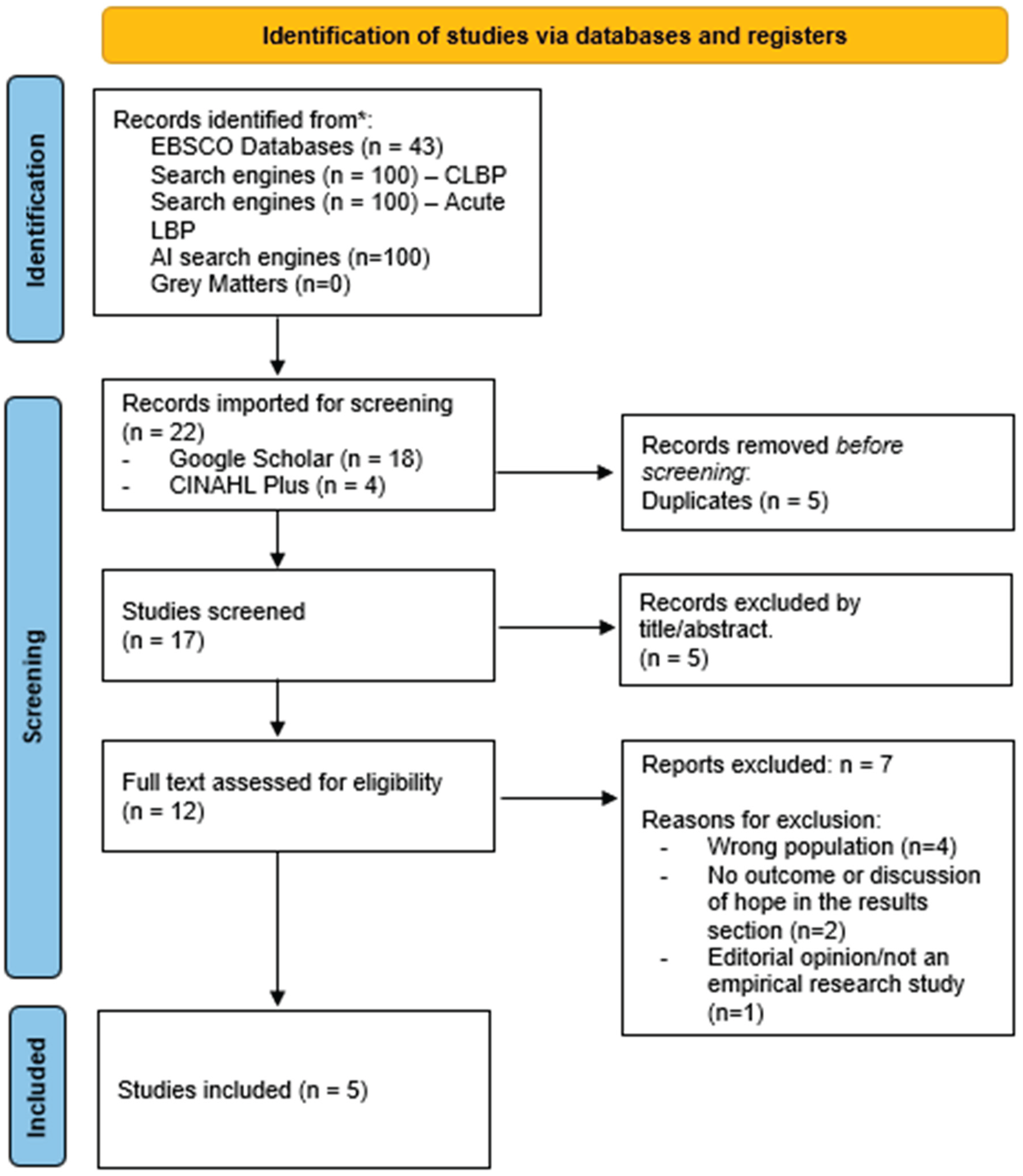
Due to the inductive nature of this methodology, multiple searches are outlined in the methods section to demonstrate the evolution of the search strategy and how it was rigorously tested. A summary of the articles from the systematic searches undertaken is given here. Across all three searches, the total number of articles was 23; this included5 articles related to hope, 12 articles related to uncertainty and 6 articles related to emotion regulation. These articles used 1,991 individuals (796 male, 1,195 female, 0 unknown) with an average age of 46.1 years (n=18/23 studies and 1866 participants) were considered. This broke down to include a total of 246 individuals (116 male, 130 female, 0 unknown) were included in the first search exploring the concept of hope (See Table 1). A total of 1,070 individuals (379 male, 691 female, 0 unknown) were included in the second search on uncertainty (See Table 2). A total of 675 individuals (301 male, 374 female, 0 unknown) were included in the final search exploring the concept of emotion regulation (see Table 3). Only 8 of the 22 studies specified the ethnicity of participants. Data was obtained from a range of countries with USA being the most common (n=7) and the UK (n=4). Lastly, the most common qualitative methodology used was semi-structured interviews. Figure 2, Figure 3 and Figure 4 presents the PRISMA flow diagrams that outlines the approach for each systematic search (further details of the search process can be found in Supplementary File A).
Figure 2.
Presents the PRIMSA flow diagram that outlines the results of the first systematic search for articles exploring the concept of hope in people with CLBP [60].
Figure 2.
Presents the PRIMSA flow diagram that outlines the results of the first systematic search for articles exploring the concept of hope in people with CLBP [60].
3.2. Quality Considerations
Quality scores for the included articles are considered in Table 4 below. This provides an assessment as required by this type of review which identified that no study should be excluded and all articles will be useful to help the idea generating process.
3.3. Proposed Substantive Theory
The findings from articles across various fields areas were used to generate a substantive theory, presented as a model (see Figure 5). This model demonstrates how emotion regulation is closely linked to—and influenced by— tolerance of uncertainty and hope. HCPs can use it to guide the management of people with CLBP and potentially improve their health outcomes.
The core of this theoretical model focuses on how an individual with CLBP regulates their emotions, and how their experience of the unknown is influenced by three central and interrelated factors: (a) Intolerance of uncertainty, (b) Hopelessness, and (c) Cognitive flexibility. The ‘+ve’ symbol represents a statistically significant positive correlation between the two components on either side of it, whereas the ‘-ve’ symbol represents a statistically significant negative correlation. The outer rim of the model highlights four key themes that people with CLBP commonly report feeling uncertain about:
1) Their beliefs about the unknown
2) The clinical encounter and diagnosis.
3) The impact on their self-identity, social relationships, and future.
4) Treatment failure.
The red box on the left-hand side identifies predisposing factors for maladaptive ERS. In contrast, the green box on the left-hand side highlights aspects that could contribute to adaptive ERS, though further research is needed in this area.The model’s output focuses on ERS, which are divided into two types. The first is adaptive ERS, whereby individuals effectively regulate their emotions using strategies such as acceptance, reappraisal, and problem solving, although there is generally less research exploring this approach. In contrast, more extensive research has examined maladaptive ERS, which involve behavioural strategies such as suppression, rumination, avoidance or reassurance seeking, which are typically ineffective and often contribute to the development of psychopathology [61].
- Predisposing Factors:
There are several factors within the patient’s past medical history that clinicians should be aware of, that may predispose them to utilise maladaptive ERS. It is widely established that individuals with a history of emotional disorders such as anxiety, depression, post-traumatic stress disorder, obsessive-compulsive disorder, agoraphobia and perceived stress, as well as personality disorders and some neurodevelopmental conditions such as autism, often have difficulty with emotion regulation [13,23,24,61,62]. However, compared to the general population, individuals living with chronic pain are three times more likely to be diagnosed with anxiety and depression [26]. Interestingly, a recent study by Montano et al, 2025 [57] explored patterns of negative emotions (including anxiety, depression and anger) in people with acute and chronic LBP and compared them against asymptomatic individuals, finding firstly, that there was no statistically significant difference in pain intensity scores within the pain group, but that anxiety appears to play a stronger role in individuals with acute LBP, whereas in people with CLBP, there is a stronger association with depression, but all three negative emotions demonstrated a significant positive correlation within the chronic pain group. Therefore, we need to be mindful that emotional disorders may not only predispose individuals to developing chronic pain, but may also arise as a consequence of living with chronic pain, rather than stemming from a pre-existing psychological condition that makes them more susceptible to using inadequate ERS. Lastly, alexithymia is a neuropsychological phenomenon characterised by a deficit in emotional awareness [55]. In particular, individuals who have difficulty identifying their feelings, are twice as likely to develop CLBP, asthe ability to acknowledge and evaluate emotionstheir feelings appears to play a key role in how we adapt to stressful situations and ultimately affects our everyday decision-making processes [63].
Individuals with chronic pain exhibit high levels of IU, which has a significant impact on their perception of worry and can lead to excessive and persistent worry [64]. A similar construct is pain catastrophising, which is a cognitive process defined as: “negative responses to actual or anticipated pain in the form of magnification, rumination, or helplessness” [65]. Although both constructs are associated with ineffective problem solving, leading to the use of maladaptive ERS and increased distress, they differ in the nature of the stimuli involved as IU refers to the perceived threat posed by a wide range of everyday situations, whereas pain catastrophising specifically relates to the threat of the pain stimuli [66]. The relationship between IU, pain catastrophising and symptoms of depression in adults with and without chronic pain was recently explored by Trudel and Cormier (2024) [20]. They found a statistically significant positive correlation between all three variables in the chronic pain group, whereas in the pain-free group, a statistically significant positive correlation was found only between IU and symptoms of depression. This highlights that IU is a general psychological vulnerability factor for depression. However, in individuals with chronic pain, high levels of IU are also associated with an increased tendency to catastrophise about pain, making IU a specific vulnerability factor in chronic pain. This finding has important clinical implications because if HCPs can effectively reduce worry or help improve tolerance of uncertainty, it may decrease the incidence of pain catastrophising, reduce anxiety and depression, and enable individuals with chronic pain to better adapt and self-manage their condition. Similar findings were reported by Moldovan et al (2009) [56] who found pain catastrophising is a critical factor which directly effects the individuals pain experience, emotional distress and causes lower levels of hope in people with LBP.
Extensive literature has shown that there is a strong association between adverse childhood experiences (which include emotional, physical, sexual and substance abuse, early parental loss or parental psychopathology) and chronic pain, but only recently has emotion dysregulation been proven to be a psychological process at the centre of this relationship among people with CLBP, caused by the disruption of the development of emotional processes during childhood [58]. Moreover, during childhood, having a secure, healthy attachment with a caregiver is another fundamental component in the development of adequate emotion regulation skills in adulthood. Attachment theory represents how everyone needs to build and maintain interpersonal relationships and feel that others will be available in times of need [21]. Attachment insecurity has two dimensions:
1) Anxious attachment - having a strong need for closeness and reassurance, which is often a result of previous rejection or abandonment, and presents with support-seeking behaviours such as clinginess and reassurance seeking
2) Avoidant attachment - having an excessive need for independence and a tendency to avoid closeness or intimacy, by expressing less emotion and minimising their pain experiences as a coping mechanism, which results in less support-seeking behaviours and increased psychological consequences [59]. Adults with secure attachment will score low for both the avoidant and anxious dimensions. However, adults who have attachment insecurity have been proven to have increased levels of disability, high pain intensities, a tendency to pain catastrophise and have higher levels of psychological distress such as anxiety and depression when living with chronic pain, compared to securely attached individuals with chronic pain [59]. Attachment insecurity is therefore a risk factor for psychopathology and the utilisation of maladaptive behaviours, which are positively associated with worry and IU [21].
Another predisposing factor that can complicate the experience of IU is anxiety sensitivity. Individuals who do not effectively manage IU may develop a fear of anxiety itself, which can exacerbate avoidant behaviours, alter pain perceptions, and create self-perpetuating cycles of fear [67]. After reviewing psychosocial risk factors for LBP, it is well established that people with chronic pain have difficulty with emotional regulation due to the association with negative emotions, causing a biased perception that the outcome of an uncertain situation will be negative [2]. However, negative emotions are not solely a consequence of chronic pain; they are also influenced by the frequency and persistence these negative emotions which in turn impacts variability in pain and function. Therefore fully understanding their daily experiences of pain is important for informing treatment goals and enabling them to tolerate distress during pain flares [54]. Four key variables contribute to the Emotion Dysregulation Model (ERM): heightened emotional intensity, poor understanding of emotions, negative response to emotions and the use of maladaptive ERS [24]. A meta-analysis of 91 articles examined the strength of the association between IU and explicit-controlled ERS, demonstrating a moderate positive correlation between maladaptive ERS and IU and a moderate negative correlation between adaptive ERS and IU2 [61]. Thus, individuals with high IU tend to rely on maladaptive ERS, increasing psychological distress, whereas those who utilise adaptive ERS tend to experience reduced distress. These dynamics must be considered alongside other psychological and neurobiological models that influence ERS. For instance, a sensitive neurobiological mechanism known as the Behavioural Inhibition System (BIS; a system that responds to non-reward, novel stimuli or punishment by inhibiting behaviour and emotion) is significantly and positively associated with emotion regulation difficulties in individuals with chronic musculoskeletal pain, utilising strategies such as suppression or avoidance which are also associated with hopelessness [2]. Higher BIS scores are also associated with higher levels of depression and pain catatrophising [2,68]. Conversely, there is a strong negative association between BIS and cognitive reappraisal—an adaptive ERS—which mediates the BIS negative affect association [2]. The Behavioural Approach System (BAS), which is activated by reward and is thought to facilitate positive emotions and adaptive ERS in individuals with chronic pain, has also been examined. However, the evidence for this is weak and inconsistant, indicating that further research is needed to clarify the role of BAS amoung people with chronic pain. Additional considerations include interoceptive processes—how the brain interprets and integrates internal sensory signals and physiological states—which may mean individuals prone to anxiety interpret interactions with HCPs differently [69].
- The Inner Core: Three Central Factors.
- a) Intolerance of Uncertainty:
It is well established that individuals with psychological disorders are more risk-averse, and their perception tends to be skewed towards the probability of a negative outcome [23]. The ambiguity of first-order uncertainty leads to second-order uncertainty, also known as ‘unexpected uncertainty’, but this is subject to change depending on the situation or the environment, creating a volatile world in which people typically learn at a quicker rate [70]. However, with every alteration, it reduces the validity of previous predictions, giving rise to ‘higher-order uncertainty’. Lastly, structural uncertainty relates to the number of different contexts that could influence the initial probabilistic relationship [23]. Therefore, human beings can adapt to changes in expected and unexpected uncertainty, but misestimation of uncertainty prevents the individual from accurately implementing an appropriate plan of action to obtain a positive outcome or avoid negative outcomes. Furthermore, individuals who have chronic pain and struggle with the ability to tolerate uncertainty often express concerns around the validity of medical tests and can engage in continuous activities that help pinpoint a specific diagnosis [70]. The inability to tolerate uncertainty is also associated with attachment anxiety (concerns about being rejected, the need for reassurance, or the perception of being secure) and worry [21]. It has been recognised that people with emotional disorders such as anxiety and depression experience difficulties with learning and tend to favour negative over positive outcomes of an unknown event [38]. However, more research is required within this field. The relationship between the HCP and patient interaction is clearly associated with emotional regulation and is linked to attachment anxiety and attachment orientation [71] It will also enable consideration of the cognitive (interpretation of ambigous or uncertain situations) and behavioural (e.g., avoidance or reassurance seeking behaviours) views of IU [72]. This initial finding highlighted the need to consider what common factors influence people with CLBP before an interaction, how they manage uncertainty during interactions, and how HCPs can positively, or potentially negatively, influence these factors during consultations. This appears to be an essential step in developing treatment interventions to support positive changes to the HCPs’ management approaches and enhance long-term outcomes for individuals with CLBP.
- b) Hopelessness
Prior research has established that hopelessness is a common psychological state for individuals with CLBP and is a predisposing factor for depression, anxiety, and loneliness [31,73]. Hopelessness comprises three components:
1) ‘Dismal expectations’ — the belief that future outcomes will be negative
2) ‘Blocked goal-directed processing’ — the perception that one’s ability to achieve goals is consistently thwarted
3) ‘Helplessness’ — a feeling of being unable to change one’s situation or influence outcomes [74].
Together, these components are crucial for understanding the dynamics of hopelessness and its impact on mental health and well-being [28].
- c) Cognitive Flexibility
Individuals with emotional disorders often rely on cognitive skills, such as cognitive flexibility, which involves the ability to shift attention and thoughts between different stimuli, allowing them to view situations and possible outcomes from multiple perspectives, and enabling them to cope with both internal and external stressors [75]. In chronic pain populations, higher levels of cognitive flexibility are associated with an increased ability to differentiate between self and content of the mind, to accept painful feelings, and more positive thoughts and beliefs about their current situation, as opposed to focusing on the past, or catastrophising about the future [31,76]. A study by Gentili et al [77] highlighted the importance of cognitive flexibility as a resilience factor in people with chronic pain, finding the concept had a significant indirect relationship with symptoms and function. It may therefore be a critical factor enabling people with CLBP to reappraise and shift from maladaptive to adaptive ERS [73]. However, further research is required to explore effective interventions for improving cognitive flexibility, such as Acceptance and Commitment Therapy (ACT), although meta-analytic data has started to come through in the literature, showing it to be effective—and possibly superior—to other current treatments in improving quality of life, pain acceptance, pain intensity, and reducing psychological distress in individuals with chronic pain [76].
- The Relationship of These Three Central and Related Factors:
A study by Demirtas and Yildiz [75] was the first to demonstrate a negative association between hopelessness and cognitive flexibility in individuals with CLBP, consistent with previous findings in other clinical populations. Their research suggests that people with CLBP are less resistant to stress and struggle to generate alternative solutions or pathways to achieve their goals—also known as cognitive rigidity. Additionally, hopelessness was positively correlated with IU and perceived stress, suggesting that individuals with CLBP perceive uncertain situations as particularly stressful and threatening. Conversley, cognitive flexibility was negatively correlated with both IU and perceived stress, indicating that individuals with lower cognitive flexibility tend to experience more negative mood states due to their limited ability to manage or reduce uncertainty and stress. All correlations were statistically significant and are represented within the inner core of the model, providing evidence for the relationships among these concepts. However, due to the cross-sectional nature of the study, causality cannot be determined.
Expanding on this line of research, Ouellet et al [24] were the first to explore the possibility of merging the individually well-established IUM and the ERM, by examining the relationship between the IUM and tendency to worry, using limited access to ERS as the mediator. The study involved 204 non-clinical participants who completed a series of self-report questionnaires and concluded that IU contributes to worry through strong associations with two components of the ERM: negative emotional orientation and negative problem orientation. Therefore, in the face of uncertainty, individuals with high IU experience negative emotions and simultaneously doubt their ability to change their emotional state. This leads to overwhelm and reliance on maladaptive ERS, such as avoidance, which negatively impacts their problem-solving ability and their perception of goal attainment. These findings challenge the ‘positive beliefs about worry’ component of the IUM, which posits that people view worry as helpful in preparing for negative outcomes. Instead, this study proposes it should be referred to as ‘mistaken beliefs about worry’ and highlights an important area for future research. This perspective also aligns with one of the three psychosocial factors commonly reported by people with CLBP—their beliefs about the unknown—which appears in the outer rim of the model and is discussed in greater detail below.
- The Outer Rim: The Unknown: The Individual’s Beliefs about the Unknown.
Research has suggested that uncertainty can be mapped as an emotion—one that has signal value and is based upon the continual cognitive appraisal between what is known and unknown, resulting in either a positive or negative affective response [12]. Other emotions such as fear, defined as “a protective response to a current and identifiable threat”—are thought to influence uncertainty [22]. The term fear of the unknown broadly encompasses a range of physiological changes and intensities of emotional responses to ambiguity, which similarly to the concept of hope, is influenced by several factors including previous experiences, perceived importance, time and context, offering important distinctions [13]. Specifically, trait-fear of the unknown is predominantly shaped by past experiences, whereas state-fear of the unknown is influenced by both trait-fear and situational factors.
Carleton [13] explored how fear of the unknown relates to other constructs including IU, emotions, attachment and neuroticism. He found growing evidence that individuals with emotional disorders tend to exhibit higher levels of ‘fear of the unknown’. This finding is supported by Hong and Cheung [72], who conducted a meta-analytic review of 73 articles examining six commonly reported cognitive vulnerabilities (pessimistic inferential style, dysfunctional attitudes, ruminative style, anxiety sensitivity, intolerance of uncertainty, and fear of negative evaluation) and their association with anxiety and depression. All six variables showed a moderate to strong correlation with these disorders, but IU emerged as the most significant, suggesting that fear of the unknown may be a central component in psychological disorders. Carleton [13] also highlighted how fear of the unknown and IU relate to the ability to predict and control events to avoid negative outcomes, which aligns with Bandura’s [79] self-efficacy theory. This ability is considered essential for coping with uncertainty, recurring episodes of LBP and promoting effective self-management [80].
The continuous appraisal of what is known versus unknown also affects the emotional experience and shapes the response [13]. When faced with potential threats in uncertain situations, it causes increased autonomic arousal and activates the BIS, which helps to appraise information, but it is typically biased towards negative outcomes and if this outlook is reinforced, it can exacerbate fear [2]. Only when the appraisal between what is known and unknown becomes balanced does the individual become less avoidant of the potential threat [13]. Conversely, others conceptualise IU as a form of distress intolerance, suggesting it can be improved or potentially tolerated. Freeston and Komes [12] proposed the somatic error theory of IU, which interprets uncertainty as an internal feeling that is cognitively appraised through a process within the nervous system called interoception – a dynamic process by which the nervous system interprets and integrates sensory and physiological states, many of which are subconscious. Although a small discrepancy between expected and actual outcomes is normal and helps guide probabilistic reasoning (known as first-order uncertainty), individuals with psychological disorders often have dysregulated interoceptive processes. Consequently, when they attempt to resolve uncertainty, their negative emotions are amplified, and the sense of not knowing is appraised even more negatively. This theory provides a promising framework for understanding how we respond to uncertainty and suggests that uncertainty can potentially be tolerated, though further research is needed to substantiate this.
To address dysregulated beliefs about the unknown and improve expectations for the future, it is important to identify and understand the nature of the perceived uncertainty or threat [12,53]. Hope exists on different levels and can be affected by chronic illness; more significant hope-related needs (e.g. the need for suffering to end), are followed by hopes to restore social identities and meaningful relationships, with more superficial hopes related to activities and experiences appearing last in the hierarchy, must all be acknowledged as essential components in understanding perceived threats [30]. These concerns are also identified in qualitative literature exploring hope-related fears among people with CLBP [16]. After all, it is well established that fear-avoidance is a central mechanism underlying persistent pain and remains the most prevalent maladaptive ERS [60]. Therefore, initial treatment interventions should focus on deconstructing fears by identifying the unknown elements driving these fears or by directly addressing specific concerns. This approach is supported by research suggesting HCP-patient interactions that address patients’ worries can alleviate uncertainty [20]. More broadly, effective clinical communication should consider the greatest challenge or difficulty perceived by the patient in order to support their sense of hope [28]. Soundy’s [28] work considers a named relative difficulty or concern, which can then be mapped against a person’s emotions, level of hope and acceptance. Follow-up discussions can then explore how the identified difficulty affects the individual's overall sense of hope. Carroll et al [81] found that across a range of musculoskeletal conditions, addressing fears and setting realistic goals was essential in cases where a definitive diagnosis or structural cause could not be provided. Several interventions could support the management of uncertainty in clinical interactions, including the use of social comparisons [26], self-management techniques [82], and psychotherapeutic interventions [76,83,84]. However, it remains unclear whether these strategies reduce dysregulated beliefs about the unknown or whether they improve tolerance of uncertainty [13].
- 2.
- The Clinical Encounter and Diagnosis.
Scarry (1985) famously reported that “pain is simultaneously the most privately certain and publicly doubted phenomenon” [85] (p. 34). Given that pain is not a visible disability, individuals strive “to be heard” and not “fobbed off” [3]. In fact, upon analysing written narratives of people with CLBP, the most important factor was to have their experiences and symptoms taken seriously [49]. This issue is highly prevalent in CLBP because their symptoms do not fit with the biomedical model, meaning individuals with CLBP often feel that they are not believed [15,85]. As a result, consultations can become conflicting and people who feel uncertain about their condition typically attempt to legitimise their symptoms by seeking further input, such as expert opinions, or diagnostic investigations [49,86]. However, regardless of the professional background of the clinician, patients place the greatest importance on a thorough examination [35]. Furthermore, in terms of information sources, above all, it is the opinions and information provided by HCPs that people value the most, and there is strong evidence that patients’ beliefs correlate with those of their clinicians [87]. However, unfortunately, not all CLBP consultations result in positive outcomes because the clinical encounter can pose either a threat or an opportunity [81]. Madsen et al (2024) [35] were the first to explore patients’ hopes and expectations before a primary care CLBP consultation (with GPs, physiotherapists and chiropractors), and then compare how their hopes and expectations differed post-consultation in order to gain an insight into shaping consultations and therefore patient experiences. Two main themes emerged:
1) ‘Something needs to be done’ – This was the main hope before the consultation, driven by the impact of pain on their lives, which also gave rise to questions such as ‘What is the cause?’ and ‘What can be done?’.
2) ‘Experiences and emotional responses to the interaction with the clinician’ – After the consultation, patients’ perceptions shifted towards this theme. Trust appeared to arise through examination thoroughness, and the clinician’s emotional and personal engagement also played a crucial role [35].
The concept of trust is paramount within all relationships, including therapeutic relationships, which are based on openness and honesty [85]. Trust is also an integral component for secure attachment. Adults with attachment insecurity show a deterioration in trust over time, tend to recall more negative relationship incidents, and are generally less able to cope with the violation of trust than secure adults [88]. Attachment theory identifies the need for supportive relationships that aid emotional regulation during times of distress [21]. The individual’s attachment orientation—particularly whether they score high in avoidant and/or anxious attachment—is likely to play a role in the clinical interaction and in their ability to manage worries or concerns about the future, which is associated with intolerance of uncertainty [58]. The individual’s perception of the clinician’s willingness or ability to help has been identified as a theme that can affect their ability to manage uncertainty [17]. Fundamentally, it is important to recognise that how and what we communicate, can have a significant and lasting influence on the individual’s future. For example, when people with CLBP have been advised to rest or avoid aggravating activities, it can trigger fear-avoidant behaviour. In contrast, those who reported receiving adequate reassurance, support, and explanations from their clinician feel empowered and are more prepared to make appropriate lifestyle adaptations to self-manage their condition [87]. Diagnostic uncertainty causes increased emotional distress, disability and pain [52]. Several qualitative studies have found that people with CLBP strive for diagnosis or at the very least, an explanation for their symptoms [15,16,45,46,47,51]. Typically, across musculoskeletal care, clinical practice focuses on ruling out serious pathology, as opposed to ruling in a definitive diagnosis [81]. However, within society, there is a strong perception and expectation that a thorough examination, sometimes involving accompanying diagnostic investigations such as blood tests or imaging, will lead to a legitimate diagnosis, which in turn enables effective treatment interventions and hope for the resolution of their symptoms [3,15,47,89,90]. Despite our understanding of patient expectations, national guidelines do not recommend imaging for low back pain with or without radicular symptoms in the absence of red flags or a neurological deficit [7]. This is because in most cases (90-95%), there is not an identifiable structural cause in people with CLBP, meaning that pathological findings from imaging frequently do not correlate with the individual’s symptoms [3]. It is well established that in cases where there is no clear diagnosis or explanation for their symptoms, this can have a negative impact on pain, disability, and both cognitive and emotional functioning [52,86]. Additionally, when a structural cause is not identified through imaging, it can result in a contradictory outcome because it still fails to provide a clear diagnosis and, at times incidental findings can occur, which fosters further anxiety, fear, or may even cause the individual to question their pain experience, ultimately failing to improve outcomes [15,17]]. Therefore, this mismatch between patient expectation and evidence-based practice guidelines can cause further detrimental psychological effects on individuals with CLBP, as well as having a negative impact on the therapeutic relationship if it is not appropriately or effectively communicated [3]. Clinicians who provide clear, consistent and empathetic explainations during CLBP consultations help to reduce uncertainty, improve patient satisfaction and prognostic outlook [35,91].
Uncertainty within clinical encounters has two interlinked dimensions: the first is medical uncertainty, which refers to limitations in biomedical knowledge that affect how HCPs explain the diagnosis and prognostic outlook; the second is existential uncertainty, which relates to the individual’s awareness of how their future is undetermined [92]. All medical encounters involve uncertainty, as we recognise that scientific research is never complete and there will always be limited knowledge and unexpected outcomes [91]. Ironically, uncertainty is only expected to become a greater challenge for HCPs over time, as we witness an ageing population presenting with increasingly complex needs, alongside rapidly advancing clinical research that introduces new technologies and procedures to navigate [93]. Despite this, astonishingly, there remains no clinical guidance on how to manage patients in the face of uncertainty [91]. Uncertainty is equally becoming a more prevalent issue from the patient’s perspective, due to increased public awareness of the limitations of medical knowledge, disseminated through various media channels, which contributes to heightened anxiety around health and illness risk in society [93,94]. Costa et al [93] interviewed 22 clinicians from a range of professions who treat individuals with CLBP, including Allied Health Professionals, Chiropractors and Consultants. They concluded that uncertainty resonated with all participants, commonly relating to: navigating the individual’s emotions and mental health; making therapeutic decisions in relation to the individual’s lifestyle; and challenges in communicating uncertainty, often influenced by clinicians’ own biases and past experiences. Other studies have found that Physiotherapists, in particular, struggle to manage diagnostic uncertainty when treating people with CLBP because they feel that they lack sufficient knowledge and skills, as well as time and resources, to manage the condition’s complexity effectively [92]. As a compensatory strategy, HCPs may avoid or minimise discussions around uncertainty in order to maintain the perception of expertise or avoid compromising their authority [92]. However, a lack of acknowledgement or openness can undermine trust and may result in epistemic injustice [3]. Epistemic injustice occurs when HCPs use their authority to influence a patient’s decision to align with their own, or when a patient’s personal account is discredited [85]. Instead, clinical encounters should promote the principle of epistemic humility— recognising the limitations of clinical expertise and scientific knowledge, embracing uncertainty, valuing diverse sources of information and upholding credibility of patients’ testimonies in conjunction with professional judgement [93]. Instilling epistemic humility in clinical practice could also help to reduce the power asymmetry within therapeutic relationships [85].
One of the key challenges in addressing uncertainty is its complexity. Despite several attempts, there is still no universally accepted framework; consequently, different professional groups continue to manage uncertainty in diverse ways [93,95]. Mol [96] outlined two contrasting approaches to managing uncertainty: the logic of care and the logic of choice. In Western clinical contexts, HCPs often prioritise offering the individual a choice by outlining factual information. However, this approach assumes that the individual possesses high self-efficacy—that is, they feel competent, confident and capable of contributing to decisions and managing their own condition. In contrast, people with CLBP often exhibit low self-efficacy and may not always respond positively to choice, particularly when faced with navigating multiple uncertain options. In such cases, Mol [96] advocates the logic of care, which promotes a patient-centred approach by focusing on relevant, achievable goals and supporting individuals to make lifestyle adaptations that enable them to self-manage their condition effectively [80]. Finally, Mackintosh and Armstrong [94] highlight another issue: that offering choice—particularly regarding tests, treatments, or procedures—can sometimes lead to overdiagnosis or overtreatment. However, emerging research is starting to provide theoretical and practical guidance for navigating uncertainty in healthcare. Costa et al 2025 [91], are the first to begin to provide guidance for navigating uncertainty in LBP, suggesting that the clinicians practice within different paradigms, for example (post)-positivist paradigm whereby they adhere to certainty and standardisation, whereas they propose that training clincians in an ethic of openness which involves reflexive theorising, questioning assumptions and considering diverse perspectives can lead to more responsive care and can equip HCPs to handle complexity and ambiguity.
- 3.
- The Impact on their Self-Identity, Social Relationships and Future.
When living with chronic pain, people tend to focus on their symptoms, leading to negative emotions and psychological stress [33]. A common theme across several qualitative studies is that people with CLBP frequently experience self-doubt in their ability to manage pain and navigate daily challenges, especially given the variable and recurrent nature of their symptoms, which makes it feel threatening [3,16,47,80]. Symptom variability undermines self-efficacy; however, when individuals feel in control of their symptoms, they tend to report higher levels of hope [33]. Hope not only influences how an individual copes with pain, but it is also influenced by their perception of the pain experience. A cross-sectional study by Wojtyna, Palt and Popiolek [43] found that individuals with CLBP report lower levels of state hope compared to those without pain, particularly among individuals who had previously experienced severe pain. Interestingly, those with prior experiences of low-intensity pain demonstrated an increase in state hope when pain reoccurred, suggesting a complex relationship between hope, pain perception, and the influence of past and current pain experiences.
Patients’ perceptions of their fluctuating symptoms and the recurring nature of their low back pain were explored by Benjamisson et al, 2007 [45.] who found four different categories. The first was ‘an unsolved mystery, a source of uncertainty and self-accusation’–these individuals are constantly looking for a cause and medical solution and tend to adhere to the biomedical model, as previously discussed. One factor that has been shown to improve hope among individuals with CLBP is developing an acceptable explanation for their pain [15]. The biopsychosocial model, which integrates biological, psychological and social factors, supports this by offering a comprehensive understanding of pain [83]. In contrast, individuals who adhere strictly to the biomedical model often disregard psychological components and persist in seeking a structural cause—something typically absent in cases of CLBP [15]. The second category was ‘an obvious part of life that has to be ignored’ - These individuals are not focused on the cause, but instead tend to continue with life despite pain and focus on what is important to them (e.g., work or family), although participants in this category tend to have higher levels of hopelessness and depression. The third group was ‘a reminder to keep within limits, both physically and psychologically’–They are aware of preventative measures but have difficulty knowing the degree of change that is required in order to effectively self-manage their symptoms. This is again supported by other studies that found the concept of self-management is a key part of the biopsychosocial model. It involves individuals learning to manage both the physical and psychological aspects of their condition, although the process is often a case of trial and error and can take time to develop [80,82]. Lastly, the final group was patients who perceived relapses as ‘an indicator to change behaviour to prevent further relapse’ – these individuals have high self-efficacy and are more proactive. Therefore, understanding the patient’s perception of their symptoms and the recurring nature of LBP could assist with our management approach to improve long-term outcomes. This study is supported by Bourke et al [80] who interviewed nine participants on their experiences of self-managing CLBP and found that pain perception and self-efficacy were central to successful self-management. The most prevalent theme across all participants was self-doubt, which was affected by fluctuating symptoms. During periods of self-doubt, it is essential to identify and address underlying concerns or uncertainties, as failing to do so often leads individuals to rely on maladaptive ERS, such as avoidance. Conversely, when participants were supported to engage in meaningful activities and fulfil roles despite their pain, they felt empowered, challenged their pain-related beliefs, and were more likely to achieve their goals—findings that support Bandura’s self-efficacy theory. Lastly, the least consistent theme was ‘living with pain differently’, a perspective only positively endorsed by those who no longer viewed pain as a threat and had accepted a biopsychosocial explanation for their condition. This underscores that lifestyle adaptations can threaten one’s self-identity.
Their ability to manage fluctuating symptoms subsequently threatens their ability to maintain their self-identity, creating a sense of fear for the future [51]. The beliefs of the individual’s social network, such as their family, friends or colleagues, can also have positive or negative influences on the individual’s expectations, attitudes, and overall prognosis, albeit to a lesser extent than the opinions and beliefs of their clinician [47,81]. Chronic pain can have profound social consequences [51]. Living with chronic pain is often associated with increased social isolation, which can also lead to increased depression and feelings of loss of purpose and value [44]. Social isolation has been identified as a more significant conserquence for older adults living with CLBP, compared to younger adults, but it is not commonly assessed within clinical practice [50]. Qualitative literature has revealed that people with CLBP tend to withdraw from social contact for a number of reasons: 1) They would rather withdraw from social activities than experience a flare in their symptoms, 2) They perceive themselves to be unacceptable company, 3) They prefer the safety of their own company, and 4) Due to the stigma and shame that is associated with chronic pain [51]. Furthermore, diagnostic uncertainty has been found to be positively correlated with guilt, because when people cannot find a cause, they blame themselves and experience social guilt—fear of letting others down—which is strongly associated with anxiety and depression [52].
It is therefore essential that people with CLBP accept the biopsychosocial model before they can fully engage with, and benefit from, self-management strategies [80]. Without this foundation, self-doubt will continue to prevail, reducing self-efficacy and their ability to uphold their personal identity, diminishing hope for the future [82]. Toye and Barker [15] found that maintaining a positive self-identity was a key factor in the success of individuals enrolled in a pain management programme for CLBP. It also plays an important role in helping them overcome fears related to movements or activities that might trigger or worsen their symptoms, as previously discussed [15]. Therefore, it is essential that clinicians explore what is personally meaningful to each individual in order to set relevant and motivating goals [30]. Clinicians should use active listening and risk stratification tools to determine where individuals with CLBP fall on the spectrum from entrenched self-doubt to effective self-management, and then tailor an appropriate action plan [7,80]. Additionally, it is also important that HCPs understand how pain-related behaviour patterns, such as fear-avoidance or avoidance-endurance, can influence the individuals cognitive rigidity and acknowledge how they require different treatment approaches [97]. Fear-avoidant behaviours are addressed through Interdisciplinary Multimodel Pain Therapy (IMPT), which includes addressing misconceptions and exposure-based interventions, whereas avoidance-endurance behaviours requires a different theoretical focus: encouraging individuals to recognise warning signs of episodes of deterioration in mental and physical health, and to instil principles of pacing [97].
- 4.
- Treatment Failure.
Lastly, failed treatment(s) and the inability to self-manage their pain can be another source of uncertainty, particularly when individuals have not achieved treatment goals despite adherence [47]. This often triggers negative emotions and is reported to lead people to feel “powerless” and “helpless” [31]. People with CLBP have often had extensive input from healthcare services, but treatment efficacy is variable, often leading to frustrations with healthcare systems [48,91].
There is an increasing understanding that the success of adopting a self-management approach appears to be hinge on readiness to change and acceptance of pain [48]. Acceptance appears to be a key adaptive ERS, enabling individuals to find ways to continue living a fulfilled life despite pain [31]. Acceptance and Commitment therapy (ACT) is effective in improving social and physical functioning, enhancing mood, and lowering pain [76]. However, as previously mentioned, future research is required within this field.
4. Discussion
To the best of our knowledge, this is the first example of a social constructivist meta-ethnography study that has been conducted with a view to generate a substantive theory, which has been achieved. The resulting multifaceted model places emotion regulation as a central concept in people with CLBP, which is influenced by three inter-related concepts. The findings demonstrate that maladaptive ERS, are driven by heightened intolerance of uncertainty and hopelessness, which contribute to cognitive rigidity, all of which cause significant psychological distress and poor health outcomes [18,75]. Importantly, improving cognitive flexibility appears to be a potential resilience factor, enabling individuals to reframe distressing experiences or uncertainty and shift from maladaptive to adaptive ERS [77]. These central concepts are further influenced intrinsic factors such as having a history of an emotional disorders (especially anxiety and depression), personality disorders or personality traits that fosters worry and a tendency to catastrophise pain, in addition to having a history of adverse childhood experiences, or later-in-life adult attachment insecurity issues. Extrinsically, the clinical encounter plays an equally pivotal role in the ability to identify contributing factors in order to create an individualised management plan to improve an individual’s ability to regulate their emotions effectively and ultimately self-manage CLBP.
All CLBP consultations involve an element of uncertainty for both the patient and clinician, but these encounters play a vital role in either reinforcing or alleviating uncertainty. Establishing an effective therapeutic relationship built on trust, promoting epistemic humility, and showing compassion and willingness to help will shape patients’ beliefs, self-efficacy, and ability to engage in a biopsychosocial management plan, which is key to addressing the complex emotional landscape of CLBP. Yet, clinicians still struggle with uncertainty [3]. Recognising the limits of healthcare and science, and communicating them effectively, should be a fundamental skill for all HCPs [93]. Clinical examinations and interventions often emphasise technical factors, leaving little space for the social and political dimensions that also matter [85]. Therefore, Costa et al [91,93] call for more research and training on medical uncertainty, urging a need to develop a training intervention that changes our learning approach and fosters an epistemic cultural shift towards a system that instead integrates human uncertainties into evidence-based practice. Importantly, these principles and changes must extend beyond individual clinical practice and and permeate policies, procedures, and the values of our healthcare systems. After all, providing too much certainty—or neglecting the issue—can be unsafe, but attending to uncertainty is always optimal because “risks always involve uncertainty, but uncertainty does not always involve risks” [92].
5. Clinical Recommendations
This model is intended to be used as a quick-reference tool for clinicians navigating these central concepts of CLBP care. Our consultations give us vitial opportunities to uncover the key factors that are driving maladaptive ERS and to offer a personalised approach. During each consultation we should focus on: 1) Building an effective theurapeutic relationship, founded on trust, openness and honesty, 2) Conducting a throrough exploration, not only their past medical history, but also sensitively exploring whether they may have been affected by adverse childhood experiences and determining their attachment orientation, 3) Exploring the patient’s beliefs about the unknown, including their perceptions of pain, worries or concerns about living with this chronic condition, and gaining a deeper understanding of their self-idenities, but also being open minded to other possible psychosocial factors that were not captured in this study. Together, these components will help us tailor our treatment approach which are centred on meaningful goals.
6. Future Research
Firstly, the utilisation of this model is required to be tested within clinical practice, before potentially using this resource as a navigation tool for clinicians to help improve their skills and strategies for managing patients with CLBP via a talored approach. Other clinical areas for future research include a need for more research into interventions to address cognitive flexibility and cogntiive reappraisal via the BIS and BAS systems in addition to ways we can enhance secure attachment traits. Last but by no means least, there is a need for a review of clinical guidelines on managing uncertainty, promoting epistemic humility from undergraduate level to evolving our healthcare policies to embrace uncertainty.
7. Limitations
Despite searching for studies using participants with low back pain of any duration, the majority of the exisitng literature has explored these key concepts using participants with CLBP (>3months duration). Therefore we cannot confidently say that this model and findings are applicable to people with acute LBP, although further testing in this group and other related groups would be warrented. Additionally, the low number of studies may have restricted the process of idea generation, and this study may have also not captured all literature on hope, uncertainty and emotion regulation, nor included every factor which could influence them. For instance, this could include aspects like interoceptive active inference [98] or impaired reward related learning signals [99]. Additionally, as reflected by the quality scores (See 3.2 Quality Considerations, Table 2), the initial studies and subsequently the model may not account for multiple cultures or sociodemographic factors [100], which arguably could be the case for every theory. Therefore, further research is required to test this theory within clinical practice and across different cultures in order to develop it further. It is possible that further consideration to counselling based literature and therapies such as acceptance and commitment therapy could be referred to regarding the model and its application, or other psychological constructs could play an important role within the model for instance self-efficacy theory and sources of self efficacy. However, it is beyong the scope of this review to address these consideration and such considerations require further investigation. Lastly, the application of this theory beyond people with CLBP may be limited and require further research.
8. Conculsions
To conclude, tolerance of uncertainty and hope are complex phenomenons that have a significant impact on emotion regulation and the health outcomes of people living with CLBP, but also a significant impact on society, warranting extensive research. The rising prevalence of CLBP demonstrates that our current approach during consultations and treatment interventions are not sufficient and a new approach to how we manage this population is required.
Supplementary Materials
The following supporting information can be downloaded at the website of this paper posted on Preprints.org.
Author Contributions
The conceptualization and methodology was undertaken by both authors. The investigation was undertaken by the primary author. Searching was undertaken by both authors. The formal analysis was undertaken by the primary author. Review and editing was undertaken by both authors. Supervision was undertaken by the second author.
Funding
This research did not receive any external funding.
Institutional Review Board Statement
N/A.
Data Availability Statement
The data that support the findings of this study are available from the corresponding author upon reasonable request.
Conflicts of Interest
The authors declare no conflicts of interest.
References
- Ge L, Pereira MJ, Yap CW, Heng BH. Chronic low back pain and its impact on physical function, mental health, and health-related quality of life: a cross-sectional study in Singapore. Sci Rep. 2004. [CrossRef]
- Serrano-Ibáñez E, Ramírez-Maestre C, López-Martínez AE, Esteve R, Ruiz-Párraga GT, Jensen MP. Behavioral inhibition and activation systems and emotional regulation in individuals with chronic musculoskeletal pain. Front Psychiatry. 2018;9:394. [CrossRef]
- Costa N, Olson R, Mescouto K, Hodges PW, Dillon M, Evans K, Walsh K, Jensen N, Setchell J. Uncertainty in low back pain care – insights from an ethnographic study. Disabil Rehabil. 2023;45:784–795.
- Hayden JA, Cartwright JL, Riley RD, van Tulder MW. Exercise therapy for chronic low back pain: protocol for an individual participant data meta-analysis. Syst Rev. 2012;1:64. [CrossRef]
- Keller A, Hayden J, Bombardier C, van Tulder M. Effect sizes of non-surgical treatments of non-specific low-back pain. Eur Spine J. 2007;16:1776–1788. [CrossRef]
- Moseley GL, Flor H. Targeting cortical representations in the treatment of chronic pain: a review. Neurorehabil Neural Repair. 2012;26:646–652. [CrossRef]
- National Institute for Health and Care Excellence (NICE). Low back pain and sciatica in over 16s: assessment and management [NG59]. London: NICE; 2016. Available from: https://www.nice.org.uk/guidance/ng59/resources/endorsed-resource-national-pathway-of-care-for-low-back-and-radicular-pain-4486348909. Accessed 2024 Mar 22.
- National Institute for Health and Care Excellence (NICE). Chronic pain (primary and secondary) in over 16s: assessment of all chronic pain and management of chronic primary pain [NG193]. London: NICE; 2021. Available from: https://www.nice.org.uk/guidance/ng193. Accessed 2024 Jun 20.
- Steffens D, Maher C, Pereira L, Stevens M, Oliveira V, Chapple M, Teixeira-Salmela L, Hancock M. Prevention of low back pain: a systematic review and meta-analysis. JAMA Intern Med. 2016;176:199–208. [CrossRef]
- Soundy A, Lim JY. Pain perceptions, suffering and pain behaviours of professional and pre-professional dancers towards pain and injury: a qualitative review. Behav Sci. 2023;13(3):268. [CrossRef]
- Raja SN, Carr DB, Cohen M, Finnerup NB, Flor H, Gibson S, Keefe FJ, Mogil JS, Ringkamp M, Sluka KA, Song XJ, Stevens B, Sullivan MD, Tutelman PR, Ushida T, Vader K; IASP Presidential Task Force. The revised International Association for the Study of Pain definition of pain: concepts, challenges, and compromises. Pain. 2020 Sep 1;161(9):1976–1982. [CrossRef] [PubMed] [PubMed Central]
- Freeston M, Komes J. Revisiting uncertainty as a felt sense of unsafety: The somatic error theory of intolerance of uncertainty. J Behav Ther Exp Psychiatry. 2023;79:101827. [CrossRef]
- Carleton, RN. Into the unknown: a review and synthesis of contemporary models involving uncertainty. J Anxiety Disord. 2016;39:30–43. [CrossRef]
- Choi JW, So WY, Kim K. The mediating effects of social support on the relationship between uncertainty and quality of life among patients with chronic low back pain: a cross-sectional survey. Healthcare (Basel). 2022;10:1805. [CrossRef]
- Toye F, Barker K. “I can’t see any reason for stopping doing anything, but I might have to do it differently” – restoring hope to patients with persistent non-specific low back pain: a qualitative study. Disabil Rehabil. 2012;34:894–903.
- Corbett M, Foster N, Ong B. Living with low back pain: stories of hope and despair. Soc Sci Med. 2007;65:1584–1594. [CrossRef]
- Costa N, Butler P, Dillon M, Mescouto K, Olson R, Forbes R, Setchell J. “I felt uncertain about my whole future” – a qualitative investigation of people’s experiences of navigating uncertainty when seeking care for their low back pain. Pain. 2022;164:2749–2758.
- Gross JJ, Feldman-Barrett L. Emotion generation and emotion regulation: one or two depends on your point of view. Emot Rev. 2011;3:8–16. [CrossRef]
- Braunstein LM, Gross JJ, Ochsner KN. Explicit and implicit emotion regulation: a multi-level framework. Soc Cogn Affect Neurosci. 2017;12(10):1545–1557. [CrossRef]
- Trudel,. P., Cormier, S. 5: (2024) Intolerance of uncertainty, pain catastrophizing, and symptoms of depression: a comparison between adults with and without chronic pain, Psychology, Health & Medicine, 29, 2024; :5. [CrossRef]
- Clark GI, Rock AJ, Clark LH, Murray-Lyon K. Adult attachment, worry and reassurance seeking: investigating the role of intolerance of uncertainty. Clin Psychol. 2020;24(3):294–305. [CrossRef]
- Carleton, RN. The intolerance of uncertainty construct in the context of anxiety disorders: theoretical and practical perspectives. Expert Rev Neurother. 2012;12:937–947. [CrossRef]
- Sandhu T, Xiao B, Lawson R. Transdiagnostic computations of uncertainty: towards a new lens on intolerance of uncertainty. Neurosci Biobehav Rev. 2023;148:105123. [CrossRef]
- Ouellet C, Langlois F, Provencher MD, Gosselin P. Intolerance of uncertainty and difficulties in emotion regulation: proposal for an integrative model of generalized anxiety disorder. Eur Rev Appl Psychol. 2019;69:9–18. [CrossRef]
- Mauss IB, Bunge SA, Gross JJ. Automatic emotion regulation. Soc Personal Psychol Compass. 2007;1(1):146–167. [CrossRef]
- Koechlin H, Coakley R, Schechter N, Werner C, Kossowsky J. The role of emotion regulation in chronic pain: a systematic literature review. J Psychosom Res. 2018;107:38–45. [CrossRef]
- Soundy A, Stubbs B, Freeman P, Roskell C. Factors influencing patients' hope in stroke and spinal cord injury: a narrative review. Int J Ther Rehabil. 2014;21(5):210–218. [CrossRef]
- Soundy, A. Harnessing hope in managing chronic illness: a guide to therapeutic rehabilitation. 1st ed. London (UK): Routledge; 2025.
- TenHouten, W. The emotions of hope: from optimism to sanguinity, from pessimism to despair. Am Sociol. 2023;54:76–100. [CrossRef]
- Soundy A, Liles C, Stubbs B, Roskell C. Identifying a framework for hope in order to establish the importance of generalised hopes for individuals who have suffered a stroke. Adv Exp Med Biol. 2014;2014:1–8. [CrossRef]
- Stensland, M. “If you don’t keep going, you're gonna die”: helplessness and perseverance among older adults living with chronic low back pain. Gerontologist. 2021;61(6):907–916. [CrossRef]
- Katsimigos AM, O’Beirne S, Harmon D. Hope and chronic pain: a systematic review. Ir J Med Sci. 2020;190:307–312. [CrossRef]
- Or DYL, Lam CS, Chen PP, Wong HSS, Lam CWF, Fok YY, Chan SFI, Ho SMY. Hope in the context of chronic musculoskeletal pain: relationships of hope to pain and psychological distress. Pain Rep. 2021;6:e965. [CrossRef]
- Snyder CR, Irving LM, Anderson JR. Hope and health. In: Snyder CR, Forsyth DR, editors. Handbook of social and clinical psychology: the health perspective, P: (NY), 1991.
- Madsen SD, Stochkendahl MJ, Morsø L, Andersen MK, Hvidt EA. Patient perspectives on low back pain treatment in primary care: a qualitative study of hopes, expectations, and experiences. BMC Musculoskelet Disord. [CrossRef]
- Pinto AM, Geenen R, Wager TD, Lumley MA, Häuser W, Kosek E, Ablin JN, Amris K, Branco J, Buskila D, Castelhano J, Castelo-Branco M, Crofford LJ, Fitzcharles MA, López-Solà M, Luís M, Marques TR, Mease PJ, Palavra F, Rhudy JL, Uddin LQ, Castilho P, Jacobs JWG, da Silva JAP. Emotion regulation and the salience network: a hypothetical integrative model of fibromyalgia. Nat Rev Rheumatol. 2023;19(1):44–60. [CrossRef]
- Soundy, A. Social constructivist meta-ethnography: a framework construction. Int J Qual Methods. 2024;23:1–10. [CrossRef]
- Soundy A, Heneghan NR. Meta-ethnography. Int Rev Sport Exerc Psychol. 2022;15(2):266–286. [CrossRef]
- Charmaz K, Thornberg R. The pursuit of quality in grounded theory. Qual Res Psychol. 2021;18(3):258–269. [CrossRef]
- Campbell R, Pound P, Morgan M, Daker-White G, Britten N, Pill R, Yardley L, Pope C, Donovan J. Evaluating meta-ethnography: systematic analysis and synthesis of qualitative research. Health Technol Assess. 2011;15(43). [CrossRef]
- Lewis J, Ritchie J, Ormston R, Morrell G. Generalising from qualitative research. In: Ritchie J, Lewis J, McNaughton Nicholls C, Ormston R, editors. Qualitative research practice: a guide for social science students and researchers, S: London (UK), 2013.
- Mishel, MH. Uncertainty in illness. J Nurs Scholarsh. 1988;20(4):225–232. [CrossRef]
- Wojtyna E, Palt L, Popiolek K. From Polyanna syndrome to Eeyore’s Corner? Hope and pain in patients with chronic low back pain. Pol Psychol Bull. 2015;46(1):96–103. [CrossRef]
- Amja K, Vigouroux M, Pagé MG, Hovey RB. The experiences of people living with chronic pain during a pandemic: “Crumbling dreams with uncertain futures”. Qual Health Res. 2019. [CrossRef]
- Benjaminsson O, Biguet G, Arvidsson I, Nilsson-Wikmar L. Recurrent low back pain: relapse from a patient perspective. J Rehabil Med. [CrossRef]
- Bowman JM. Experiencing the chronic pain phenomenon: a study. Rehabil Nurs. [CrossRef]
- Bunzli S, Smith A, Schütze R, O’ Sullivan P. Beliefs underlying pain-related fear and how they evolve: a qualitative investigation in people with chronic back pain and high pain-related fear. BMJ Open, 0088. [CrossRef]
- Fishbain DA, Bruns D, Disorbio JM, Lewis JE, Gao J. Exploration of the illness uncertainty concept in acute and chronic pain patients vs community patients. Pain Med. [CrossRef]
- Lillrank, A. Back pain and the resolution of diagnostic uncertainty in illness narratives. Soc Sci Med, 1045. [Google Scholar] [CrossRef]
- Makris UE, Higashi RT, Marks EG, Fraenkel L, Gill TM, Friedly JL, Reid MC. Physical, emotional, and social impacts of restricting back pain in older adults: A qualitative study. Pain Med, 1225. [CrossRef]
- Osborn M, Smith JA. The personal experience of chronic benign lower back pain: an interpretative phenomenological analysis. Br J Health Psychol. [CrossRef]
- Serbic D, Pincus T, Fife-Schaw C, Dawson H. Diagnostic uncertainty, guilt, mood, and disability in back pain. Health Psychol. [CrossRef]
- Stewart AM, Polak E, Young R, Schultz IZ. Injured workers’ construction of expectations of return to work with sub-acute back pain: the role of perceived uncertainty. J Occup Rehabil. [CrossRef]
- Gerhart J, Burns JW, Post KM, Smith DA, Porter LS, Burgess HJ, et al. Relationships of negative emotions and chronic low back pain to functioning, social support, and received validation. Clin J Pain. [CrossRef]
- Le Borgne M, Boudoukha AH, Petit A, Roquelaure Y. Chronic low back pain and the transdiagnostic process: How do cognitive and emotional dysregulations contribute to the intensity of risk factors and pain? Scand J Pain. [CrossRef]
- Moldovan AR, Onac IA, Vantu M, Szentagotai A, Onac I. Emotional distress, pain catastrophizing and expectancies in patients with low back pain. J Cogn Behav Psychother.
- Montaño JJ, Gervilla E, Jiménez R, Sesé A. From acute to chronic low back pain: the role of negative emotions. Psychol Health Med. [CrossRef]
- Thomas JS, Goodin BR. Adverse childhood experiences and chronic low back pain: Recent insights and implications. Neurosci Biobehav Rev. 1054. [CrossRef]
- Yang Q, Mischkowski D. Understanding pain communication: Current evidence and future directions. Neurosci Biobehav Rev. 1054. [CrossRef]
- Page MJ, McKenzie JE, Bossuyt PM, Boutron I, Hoffmann TC, Mulrow CD, Shamseer L, Tetzlaff JM, Akl EA, Brennan SE, Chou R, Glanville J, Grimshaw JM, Hróbjartsson A, Lalu MM, Li T, Loder EW, Mayo-Wilson E, McDonald S, McGuinness LA. The PRISMA 2020 statement: an updated guideline for reporting systematic reviews. BMJ. 2021;372:n71. [CrossRef]
- Sahib A, Chen J, Cardenas D, Calear AL. Intolerance of uncertainty and emotion regulation: a meta-analytic and systematic review. Clin Psychol Rev. 2023;101:102270. [CrossRef]
- Fitzpatrick S, Dixon-Gordon KL, Turner CJ, Chen SX, Chapman A. Emotion dysregulation in personality disorders. Curr Psychiatry Rep. 2023;25(5):223–231. [CrossRef]
- Mehling WE, Krause N. Are difficulties perceiving and expressing emotions associated with low-back pain? The relationship between lack of emotional awareness (alexithymia) and 12-month prevalence of low-back pain in 1180 urban public transit operators. J Psychosom Res. [CrossRef]
- Einstein, DA. Extension of the transdiagnostic model to focus on intolerance of uncertainty: a review of the literature and implications for treatment. Clin Psychol Sci Pract. 2014;21(3):280–300. [CrossRef]
- Yuan Y, Schreiber K, Flowers KM, Edwards R, Azizoddin D, Ashcraft LE, Newhill CE, Hruschak V. The relationship between emotion regulation and pain catastrophizing in patients with chronic pain. Pain Med. 2024;25(7):468–476. [CrossRef]
- Sullivan MJL, Tripp DA. Pain catastrophizing: Controversies, misconceptions and future directions. J Pain. [CrossRef]
- Rosen NO, Ivanova E, Knäuper B. Differentiating intolerance of uncertainty from three related but distinct constructs. Anxiety Stress Coping. 2014;27(1):55–73. [CrossRef]
- Jensen MP, Solé E, Castarlenas E, Racine M, Roy R, Miró J, et al. Behavioral inhibition, maladaptive pain cognitions, and function in patients with chronic pain. Scand J Pain. [CrossRef]
- Pang J, Tang X, Li H, Hu Q, Cui H, Zhang L, Li W, Zhu Z, Wang J, Li C. Altered interoceptive processing in generalized anxiety disorder—a heartbeat-evoked potential research. Front Psychiatry. 2019;10:616. [CrossRef]
- Pulcu E, Browning M. The misestimation of uncertainty in affective disorders. Trends Cogn Sci. 2019;23(10):865–875. [CrossRef]
- Neville A, Kopala-Sibley DC, Soltani S, Asmundson GJG, Jordan A, Carleton RN, Yeates KO, Schulte F, Noel M. A longitudinal examination of the interpersonal fear avoidance model of pain: the role of intolerance of uncertainty. Pain. 2021;162(1):152–160. [CrossRef]
- Brennan KA, Clark CL, Shaver PR. Self-report measurement of adult romantic attachment: an integrative overview. In: Simpson JA, Rholes WS, editors. Attachment theory and close relationships. New York: Guilford Press; 1998. p. 46–76.
- Wu Q, Xu L, Wan J, Yu Z, Lei Y. Intolerance of uncertainty affects the behavioral and neural mechanisms of higher generalization. Cereb Cortex. [CrossRef]
- Leite A, Araujo G, Rolim C, Castelo S, Beilfuss M, Leao M, Castro T, Hartmann S. Hope theory and its relation to depression: a systematic review. Psychol Cogn Neurosci, 1014.
- Lynch, W. Images of hope: imagination as healer of the hopeless. 1st ed. Baltimore: Helicon Press; 1965.
- Demirtas AS, Yildiz B. Hopelessness and perceived stress: the mediating role of cognitive flexibility and intolerance of uncertainty. Dusunen Adam J Psychiatr Neurol Sci. [CrossRef]
- Ma TW, Yuen ASK, Yang Z. The efficacy of Acceptance and Commitment Therapy for chronic pain: a systematic review and meta-analysis. Clin J Pain.
- Gentili C, Rickardsson J, Zetterqvist V, Simons L, Lekander M, Wicksell R. Psychological flexibility as a resilience factor in individuals with chronic pain. Front Psychol, 2016. [CrossRef]
- Hong RY, Cheung MWL. The structure of cognitive vulnerabilities to depression and anxiety: evidence for a common core etiologic process based on a meta-analytic review. Clin Psychol Sci. [CrossRef]
- Bandura, A. Self-efficacy. In: Ramachaudran VS, editor. Encyclopedia of human behavior, A: New York, 1994. [Google Scholar]
- Bourke MJ, Ferguson D, Cooke M. Patient experiences of self-management for chronic low back pain: a qualitative study. Phys Ther. [CrossRef]
- Carroll LJ, Lis A, Weiser S, Torti J. How well do you expect to recover, and what does recovery mean, anyway? Qualitative study of expectations after a musculoskeletal injury. Phys Ther. [CrossRef]
- Spink A, Wagner I, Orrock P. Common reported barriers and facilitators for self-management in adults with chronic musculoskeletal pain: a systematic review of qualitative studies. Musculoskelet Sci Pract, 1024. [CrossRef]
- Abdolghaderi M, Kafi S, Saberi A, Ariaporan S. Effectiveness of mindfulness-based cognitive therapy on hope and pain beliefs of patients with chronic low back pain. Caspian J Neurol Sci. [CrossRef]
- Razavi, S.B. , Aboalghasimi, S., Akbari, B. and Nadirinabi, B. The Effectiveness of Cognitive Therapy on Hope and Pain Management in Women with Chronic Pain. PCNM Journal.
- Buchman DZ, Ho A, Goldberg DS. Investigating trust, expertise, and epistemic injustice in chronic pain. J Bioeth Inq. [CrossRef]
- Serbic D, Pincus T. Diagnostic uncertainty and recall bias in chronic low back pain. Pain, 1540. [CrossRef]
- Darlow B, Dowell A, Baxter GD, Mathieson F, Perry M, Dean S. The enduring impact of what clinicians say to people with low back pain. Ann Fam Med.
- Mikulincer, M. Attachment working models and the sense of trust: an exploration of interaction goals and affect regulation. J Pers Soc Psychol, 1209. [Google Scholar] [CrossRef]
- Lim YZ, Chou L, Au RT, Seneviwickrama KMD, Cicuttini FM, Briggs AM, Sullivan K, Urquhart DM, Wluka AE. People with low back pain want clear, consistent and personalised information on prognosis, treatment options and self-management strategies: a systematic review. J Physiother. [CrossRef]
- Mishel MH, Mu B. Reconceptualization of the uncertainty in illness. J Nurs Scholarsh. [CrossRef]
- Costa N, Olson R, Dillon M, Mescouto K, Butler P, Forbes R, Setchell J. Navigating uncertainty in low back pain care through an ethic of openness: learning from a post-critical analysis. Health.
- Lian OS, Nettleton S, Wifstad Å, Dowrick C. Negotiating uncertainty in clinical encounters: a narrative exploration of naturally occurring primary care consultations. Soc Sci Med. 1144. [CrossRef]
- Costa N, Mescouto K, Dillon M, Olson R, Butler P, Forbes R, Setchell J. The ubiquity of uncertainty in low back pain care. Soc Sci Med. 1154. [CrossRef]
- Mackintosh N, Armstrong N. Understanding and managing uncertainty in healthcare: revisiting and advancing sociological contributions. Sociol Health Illn. [CrossRef]
- Slade S, Molloy E, Keating JL. The dilemma of diagnostic uncertainty when treating people with chronic low back pain: a qualitative study. Clin Rehabil. [CrossRef]
- Mol, A. The logic of care: Health and the problem of patient choice. London (UK): Taylor & Francis Group; 2008.
- Kästner A, Petzke F. Personality systems interactions theory: an integrative framework complementing the study of the motivational and volitional dynamics underlying adjustment to chronic pain. Front Pain Res. 1288. [CrossRef]
- Gerrans P, Murray RJ. Interoceptive active inference and self-representation in social anxiety disorder (SAD): exploring the neurocognitive traits of the SAD self. Neurosci Conscious, n: 30;2020(1), 2020. [CrossRef]
- Stern ER. Neural circuitry of interoception: new insights into anxiety and obsessive-compulsive disorders. Curr Treat Options Psychiatry. [CrossRef]
- Tanner JJ, Cardoso J, Terry EL, Booker SQ, Glover TL, Garvan C, Deshpande H, Deutsch G, Lai S, Staud R, Addison A, Redden D, Goodin BR, Price CC, Fillingim RB, Sibille KT. Chronic pain severity and sociodemographics: an evaluation of the neurobiological interface. J Pain. [CrossRef]
Disclaimer/Publisher’s Note: The statements, opinions and data contained in all publications are solely those of the individual authors and not of MDPI. MDPI and the editors disclaim responsibility for any injury to people or property resulting from any ideas, methods, instructions or products referred to in the content. |
Figure 1.
The synthesis process (search and concept output).
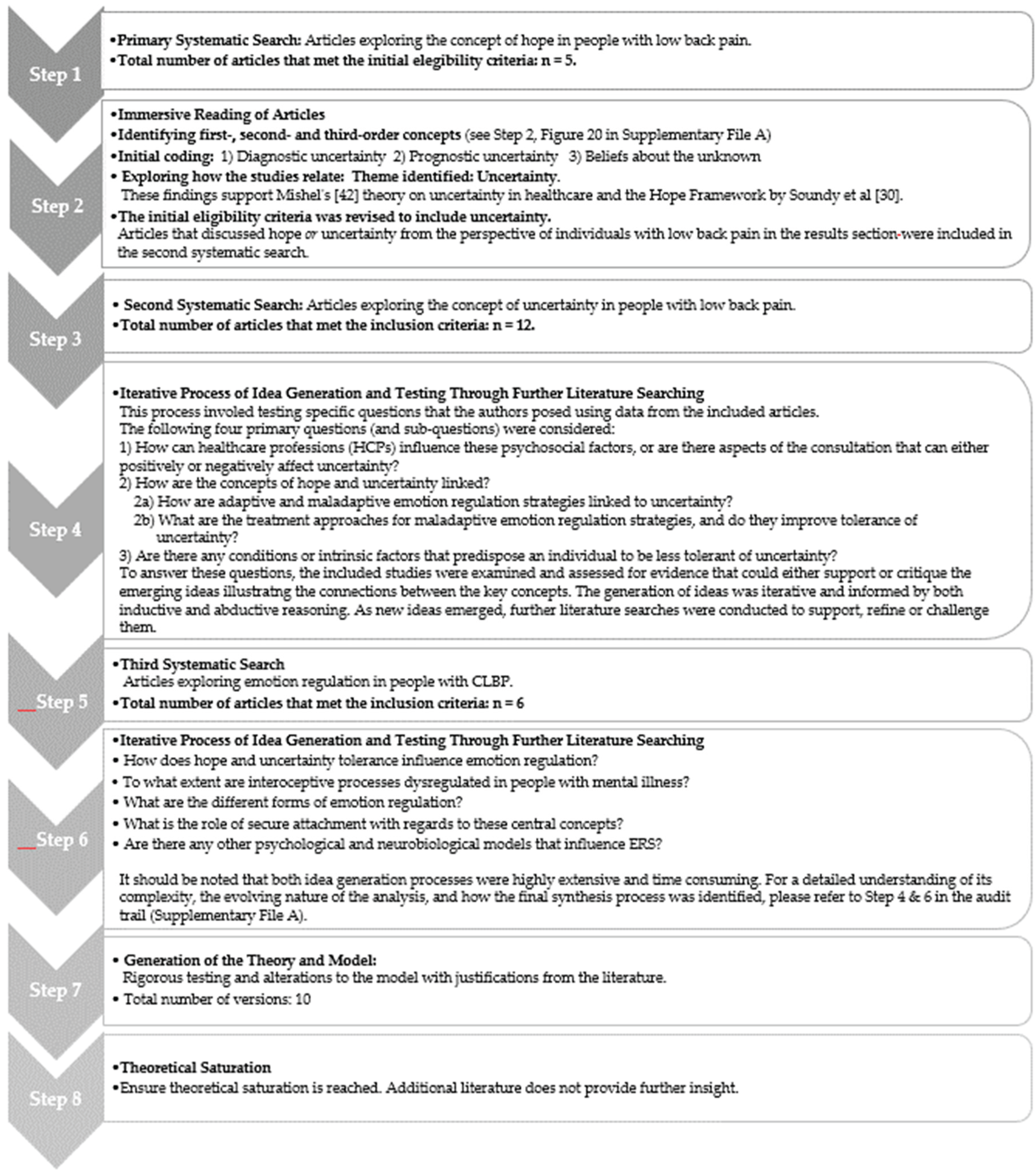
Figure 3.
Presents the PRIMSA flow diagram that outlines the results of the first. systematic search for articles exploring the concept of uncertainty in people with CLBP [60].
Figure 3.
Presents the PRIMSA flow diagram that outlines the results of the first. systematic search for articles exploring the concept of uncertainty in people with CLBP [60].
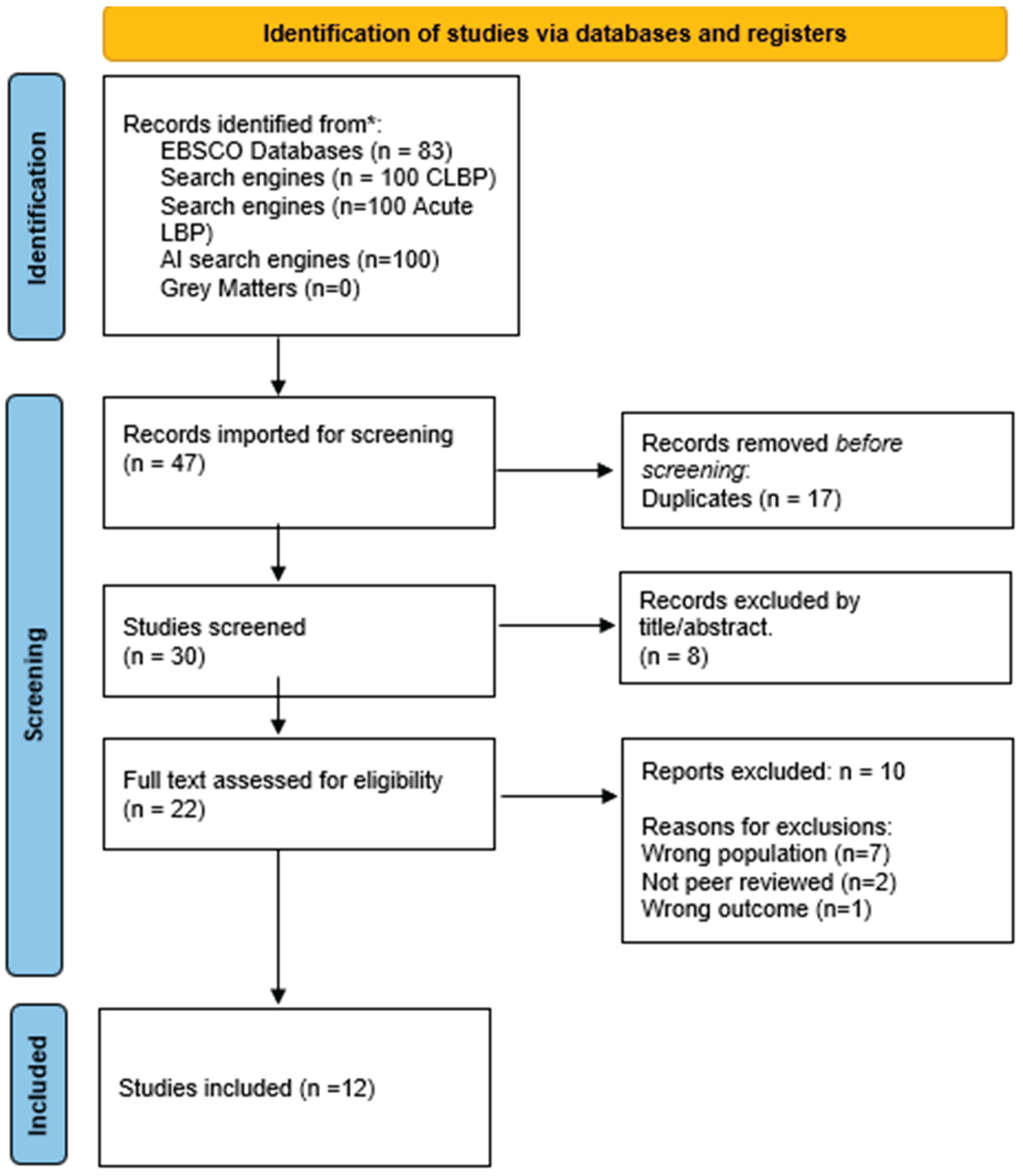
Figure 4.
Presents the PRIMSA flow diagram that outlines the results of the first systematic search for articles exploring the concept of uncertainty in people with CLBP [60].
Figure 4.
Presents the PRIMSA flow diagram that outlines the results of the first systematic search for articles exploring the concept of uncertainty in people with CLBP [60].
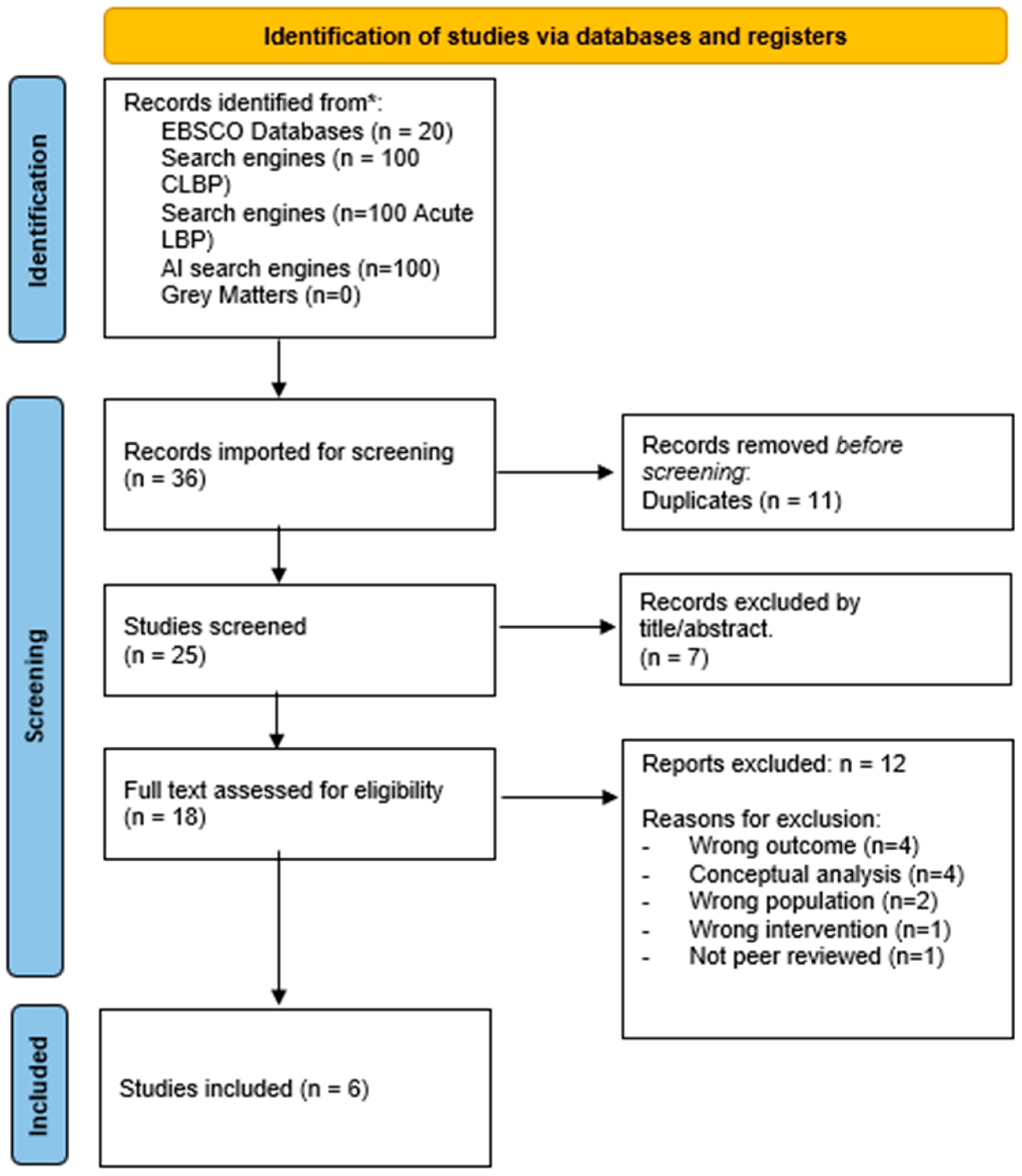
Figure 5.
The final proposed model demonstrating how hope, tolerance of uncertainty, and emotion regulation are interconnected and influenced in individuals with CLBP.
Figure 5.
The final proposed model demonstrating how hope, tolerance of uncertainty, and emotion regulation are interconnected and influenced in individuals with CLBP.
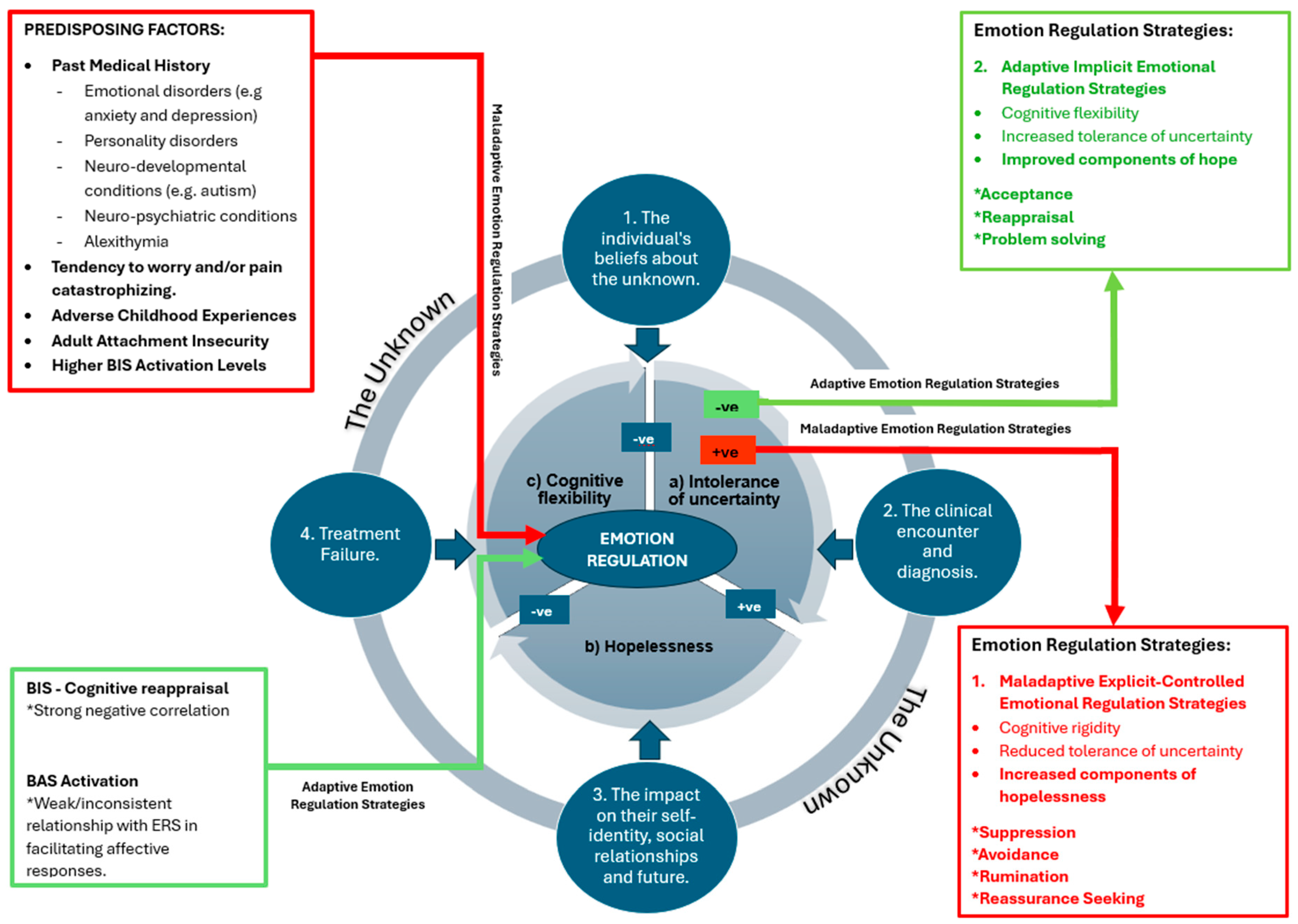

Table 1.
Social demographics for the articles from the first search on hope:.
| Article | Country | Gender | Age | Ethnicity of sample | Time with condition (LBP) | Methodology | |
|---|---|---|---|---|---|---|---|
| Corbett, M., Foster, N. and Ong, B. (2007) [16] | UK (Keele University) |
Male | 15 | Range: 19-59 years Mean: Not stated. |
Unknown/not reported | 12+ weeks | Semi-Structured Interviews |
| Female | 22 | ||||||
| Unknown | 0 | ||||||
| Madsen et al (2024) [35] | Denmark | Male | 8 | Range: 28-79 years Mean: Not stated. |
Unknown/not reported | Any duration of non-specific LBP – the study did not restrict inclusion based on pain duration, nor specify exact duration for each participant. | Semi-structured Interviews pre- and post-consultation. Setting: Primary Care |
| Female | 10 | ||||||
| Unknown | 0 | ||||||
| Stensland, M. (2021) [31] | USA | Male | 8 | Range: 66-83 years Mean: 56 years |
Non-Hispanic Caucasian |
12+ weeks | Semi structured 1:1 interviews |
| Female | 13 | ||||||
| Unknown | 0 | ||||||
| Toye and Barker (2012) [15] | UK (Oxford) | Male | 7 | Range: 29-67 years Mean: 52 years |
Unknown/not reported | 3-23 years | Semi-structured interviews (before, after, and 1-year follow-up). |
| Female | 13 | ||||||
| Unknown | 0 | ||||||
| Wojtnya, E., Palt, L. & Popiolek, K. (2015) [43] | Poland | Male | 78 | Range: Not stated. Mean: 50.45 years |
Unknown/not reported | 1+ year | Cross sectional study |
| Female | 72 | ||||||
| Unknown | 0 | ||||||
Table 2.
Social demographics for the articles from the second search on uncertainty:.
| Article | Country | Gender | Age | Ethnicity of sample | Time with condition (CLBP) | Methodology | |
|---|---|---|---|---|---|---|---|
| Amja et al (2021) [44] | Canada | Male | 10 | Range: 26-67 years Mean: 49.3 years. |
Unknown/not reported | 5+ years (n=16) 1-5 years (n=6) |
Semi-structured interviews (via phone or video call). |
| Female | 12 | ||||||
| Unknown | 0 | ||||||
| Benjaminsson et al (2007) [45] | Sweden | Male | 7 | Range: 15-64 years Mean: 36 years. |
15 participants were born in Sweden 1 participant was born in Morocco 1 participant was born in Ethiopia |
Range: 6 months – 30 years. Median duration: 8years. |
Semi-structured interviews |
| Female | 10 | ||||||
| Unknown | 0 | ||||||
| Bowman, J (1994) [46] | USA | Male | 9 | Range: 27-70 years Mean: Not stated. |
Unknown/not reported | All participants had CLBP (>3months), but the exact duration for each participant was not specified. | Semi-structured interviews |
| Female | 6 | ||||||
| Unknown | 0 | ||||||
| Bunzli et al (2015) [47] | Australia | Male | 11 | Range: 19-64 years Mean: 42 years |
Unknown/not reported | Range: 6 months – 29 years. Median duration: 7years. |
Semi-structured interviews |
| Female | 25 | ||||||
| Unknown | 0 | ||||||
| Costa et al (2023) [17] | Australia | Male | 5 | Range: 21-75 years Mean: 42 years |
Caucasian: 9 Latino: 2 Asian: 1 Mixed: 3 |
2-5 years (n=5) >5 years (n=10) |
Semi-structured interviews |
| Female | 10 | ||||||
| Unknown | 0 | ||||||
| Costa et al (2023) [3] | Australia | Male | 16 | Range: 19-85 years Mean: Not stated. |
Unknown/not reported | <3 months: 4.6% 3 months to 1 year: 6.1% 13 months to 5 years: 10.8% 6–10 years: 13.9% 11–20 years: 29.2% Over 20 years: 30.8% |
Ethnographic observations. |
| Female | 49 | ||||||
| Unknown | 0 | ||||||
| Fishbain et al (2010) [48] | USA | Male | 149 | Range: 19-65 years Mean: 39.8 years |
White: 81.8% Black: 7.4% Asian: 0.3% Native American: 3.9% Hispanic: 6.3% Other/Unknown: = 1.8% |
>3months | Quantitative research design involving a retrospective chart review. |
| Female | 192 | ||||||
| Unknown | 0 | ||||||
| Lillrank, A. (2003) [49] | Finland | Male | 0 | Range: 20-66 years Mean: Not stated. |
Unknown/not reported | >3months | Qualitative: Narrative analysis |
| Female | 30 | ||||||
| Unknown | 0 | ||||||
| Makris et al (2017) [50] | USA | Male | 30 | All >65 Years Mean: 83 years |
Caucasian: 51% African American: 37% Hispanic: 11% Other/multiracial: 10% |
5-10 years 26% >10years 55% |
Semi-structured interviews |
| Female | 63 | ||||||
| Unknown | 0 | ||||||
| Osborn & Smith (1998)[51] | UK | Male | 3 | Range: 32-53 years Mean: 45 years |
White | 6-18 years | Semi-structured interviews |
| Female | 2 | ||||||
| Unknown | 0 | ||||||
| Serbic et al (2016) [52] | UK | Male | 129 | All were >18 years. Range not stated. Mean: 49.03 years |
Unknown/not reported | >3months | Cross sectional study |
| Female | 284 | ||||||
| Unknown | 0 | ||||||
| Stewart et al (2012) [53] | Canada | Male | 10 | Range: 22-63 years Mean: 47.7 years |
Unknown/not reported | 3-6months | Semi-structured interviews. |
| Female | 8 | ||||||
| Unknown | 0 | ||||||
Table 3.
Social demographics for the articles from the third search on emotion regulation:.
| Article | Country | Gender | Age | Ethnicity of sample | Time with condition (LBP) | Methodology | |
|---|---|---|---|---|---|---|---|
| Gerhart et al (2020) [54] | USA | Male | 53 | Range: 18-70 years Mean: 46.3 years |
Caucasian: 80% (n = 84) African American: 15.2% (n = 16) Hispanic: 4.8% (n = 5) |
All participants had LBP for a minimum 6 months. Average duration: 9.04 years |
Cross sectional study |
| Female | 51 | ||||||
| Unknown | 0 | ||||||
| Le Borgne et al (2017) [55] | France | Male | 120 | Range: 21-61 years. Mean: 41.74 years |
Unknown/not reported | <1year (n=25) 1-5 years (n=107) >5years (n=124) |
Semi-structured interviews |
| Female | 136 | ||||||
| Unknown | 0 | ||||||
| Moldovan et al (2009) [56] | Romania | Male | 17 | Range: 27-84 years Mean: 50 years |
Unknown/not reported | Acute LBP (n=15) Chronic LBP (n=31) *Chronicity duration was not explicitly stated. |
Cross sectional study |
| Female | 29 | ||||||
| Unknown | 0 | ||||||
| Montano et al (2025) [57] | Spain | Male | 15 | Range: 21-64 years Mean: 49.2 years. |
Unknown/not reported | 12-80 weeks Mean duration: 46.5 weeks |
Semi-structured interviews |
| Female | 39 | ||||||
| Unknown | 0 | ||||||
| Thomas et al (2024) [58] | USA | Male | 86 | Range: 18-80 years Mean: 44.05 years |
Non-Hispanic Black: n=115 (62.5%) Non-Hispanic White: n=69 (37.5%) |
3 to 6 months: 4.4% 6 months to 1 year: 6.6% 1 to 3 years: 16.9% 3 to 5 years: 18.6% 5 to 10 years: 23.5% 10 to 20 years: 13.0% Over 20 years: 7.1% |
Cross sectional study |
| Female | 97 | ||||||
| Unknown | 0 | ||||||
| Yang & Mischkowski (2024) [59] | USA | Male | 10 | All 18+ years. Range not detailed. Mean: 36.9 years |
Caucasian American: 74.0% African American: 14.0% Asian/Asian American: 2.9% American Indian/Alaskan Native: 0.8% Native Hawaiian/Other Pacific Islander: 0.4% Other race: 7.4% Hispanic/Latino (across all races): 6.6% Non-Hispanic: 93.0% |
>3 months | Cross sectional study |
| Female | 22 | ||||||
| Unknown | 0 | ||||||
Table 4.
Quality Scores For Originally Included Empirical Studies.
| Quality scores for originally included empirical studies exploring the concept of hope: | |||||
|---|---|---|---|---|---|
| Article | (a) Are considerations and information given by the selected articles made sufficiently well so that concepts can be translated? | (b) Do findings provide a context for the culture, environment, and setting? | c) Are the findings relevant and useful given the focus or aims of the analysis now? | d) Do the questions asked or aims from the paper selected align to those sought by the meta-ethnographer? | (e) To what extent do the findings give theoretical insight and context of interpretation made? |
| Corbett, M., Foster, N. and Ong, B. (2007) [16] | Yes | Yes | Yes | Yes | To a large extent |
| Madsen et al, (2024) [35] | Yes | Yes | Yes | Yes | To a large extent |
| Stensland, M. (2021) [31] | Yes | Partially – Limited ethnic diversity. Focus was on a specific geographical location/population. | Yes | Yes | To a large extent |
| Toye and Barker (2012) [15] | Yes | Yes | Yes | Yes | To a large extent |
| Wojtnya, E., Palt, L. & Popiolek, K. (2015) [43] | Yes | Partially – Cultural context is not deeply explored. | Yes | Yes | Moderate - large extent |
| Quality scores for originally included empirical studies exploring the concept of uncertainty: | |||||
| Amja et al (2021) [44] | Yes | Yes | Yes | Yes | To some extent – Focused on living with pain during COVID-19 pandemic. |
| Benjaminsson et al (2007) [45] | Yes | Partially – Cultural context is not deeply explored. | Yes | Yes | To a large extent |
| Bowman, J (1994) [46] | Yes | Yes | Yes | Yes | To a large extent |
| Bunzli et al (2015) [47] | Yes | Yes | Yes | Yes | Moderate - large extent |
| Costa et al (2023) [17] | Yes | Yes | Yes | Yes | To a large extent |
| Costa et al (2023)[3] | Yes | Yes | Yes | Yes | To a large extent |
| Fishbain et al (2010) [48] | Yes | Yes | Yes | Yes | Moderate extent |
| Lillrank, A. (2003) [49] | Yes | Yes | Yes | Yes | To a large extent |
| Makris et al (2017) [50] | Yes | Yes | Yes | Yes | To a large extent |
| Osborn & Smith (1998) [51] | Yes | Yes | Yes | Yes | To a large extent |
| Serbic et al (2016) [52] | Yes | Yes | Yes | Yes | To a large extent |
| Stewart et al (2012) [53] | Yes | Yes | Yes | Yes | Moderate extent – The focus was on returning to work, but the categories of percieved uncertainty are highly relavent and in keeping with our broader findings. |
| Quality scores for originally included empirical studies exploring the concept of emotion regulation: | |||||
| Gerhart et al (2020) [54] | Yes | Partially – moderate detail. Does not deeply explore broader sociocultural influences. | Yes | Yes | To some extent |
| Le Borgne et al (2017) [55] | Yes | Partially – Adequate environmental context provided but ethnic or cultural background not discussed. | Yes | Yes | To a large extent |
| Moldovan et al (2009) [56] | Yes | Partially – cultural norms and environmental context is not discussed | Yes | Yes | To a large extent |
| Montano et al (2025) [57] | Yes | Partially – Cultural references not deeply analysed. | Yes | Yes | Moderate – large extent |
| Thomas et al (2024) [58] | Yes | Yes | Yes | Yes | To a large extent |
| Yang & Mischkowski (2024) [59] | Yes | Partially - Sociocultural influences not deeply explored. | Yes | Yes | To a large extent |
| 1 | The concept of hope is not considered to be an emotion by contemporary theorists, but rather a cognitive phenomenon [29]. It is based on a positive outlook with respect to meaningful goals, events or social circumstances [18]. The initial definition of hope by Snyder et al [34] (p. 287) is widely accepted, which states that hope is firstly based on the degree of motivation an individual has to achieve a goal (also known as ‘goal-directed energy’) and secondly, it is also influenced by the individual’s ability to plan how they will achieve their goal. Although, this model is challenged by our everyday understanding of hope, as hoping to attain a goal is not always followed by personal agency and action [29]. |
| 2 | These relationships are represented on the modal (see Figure 4) as an output via the ‘+ve’ and ‘-ve’ arrows going from IU to the explicit-controlled ERS box. |
Disclaimer/Publisher’s Note: The statements, opinions and data contained in all publications are solely those of the individual author(s) and contributor(s) and not of MDPI and/or the editor(s). MDPI and/or the editor(s) disclaim responsibility for any injury to people or property resulting from any ideas, methods, instructions or products referred to in the content. |
© 2025 by the authors. Licensee MDPI, Basel, Switzerland. This article is an open access article distributed under the terms and conditions of the Creative Commons Attribution (CC BY) license (http://creativecommons.org/licenses/by/4.0/).
Copyright: This open access article is published under a Creative Commons CC BY 4.0 license, which permit the free download, distribution, and reuse, provided that the author and preprint are cited in any reuse.


