

Submitted:
31 October 2024
Posted:
01 November 2024
You are already at the latest version
Abstract
Elms (Ulmus spp.) are widely spread in the forest, shelter belts, and urban landscaping. This re-search aimed to reveal the trends of Ulmus sp. health in Ukraine under biotic damage. The tasks included: i) analyzing the presence of Ulmus sp. in the forests; ii) studying the dynamics of Ulmus sp. health in the ICP Monitoring plots for 2001–2015; iii) assessing the prevalence of the dominant biotic factors of Ulmus sp. deterioration and the probability of tree death or recovery. As a result of re-search, elms were found in 3.58% of the area in the stands with other main forest-forming species in the forests subordinated to the State Specialized Forest Enterprise «Forests of Ukraine». Four elm species are present in the forests of all regions of Ukraine. In the Forest zone, U. minor predominates, U. glabra is more common in the western part of the country, and U. pumila in the southern and eastern regions. In the ICP-Forests monitoring plots for 2001–2015, a trend of elm deterioration in 2007–2012 was found. The highest incidence of trees with disease symptoms was recorded for U. pumila. In the sample plots for 2023–2024, the health of three elm species tended to deteriorate. In 2024, mortality occurred among all elm species infected with DED and among U. pumila trees with symptoms of wetwood. DED was more acute than wetwood.
Keywords:
Ulmus sp.
; Dutch elm disease (DED)
; wetwood
; health class
; mortality
; recovery
1. Introduction
Elms (Ulmus spp.) have high economic, ecological, and cultural value [1,2]. They are widely spread in the forest, protective stands, field and road protective shelter belts, and landscaping settlements [3,4]. More than 30 species of the genus Ulmus are known. However, elm species interbreed, create new geographic and ecological forms, and have many synonyms [1,2]. Three of the most common elm species in Europe are wych elm (Ulmus glabra Huds.), European white elm (fluttering elm) (U. laevis Pall.) and field elm (U. minor Mill.) [1]. These species prefer moist and damp fertile forest sites [5], while U. glabra is confined to more humid conditions [4], and U. minor also to ravines and watersheds in the coppices in the Forest-Steppe [6]. Native to Central Asia dwarf elm or Siberian elm U. pumila is widely spread in arid and semi-arid regions of China as a soil-preserving, sand-fixing, and resistant plant [7]. Due to winter hardiness, tolerance of drought, soil salinity, air pollution [8], U. pumila has been widely cultivated in other continents, including North and South America, Argentina, and southern Europe [9], particularly in the forest-steppe and steppe zones of Ukraine [2,10].
Two pandemics of Dutch elm disease (DED) in the previous century killed billions of elms. The first wave of DED (at the beginning of the 20th century) was caused by Ophiostoma ulmi (Buisman) Nannf., and the second one since the second half of the 20th century by O. novo-ulmi Brasier, particularly its subspecies – O. novo-ulmi subsp. novo-ulmi and O. novo-ulmi subsp. americana [11,12].
After the mass decline of elm trees in the 1960s and 70s caused by Dutch elm disease (DED) the foresters were frightened and stopped planting elms for some time [13,14] . Numerous research studies were devoted to recognizing the biological characteristics of the pathogen, etiology, and pathogenesis of the disease, assessing the possibilities of tree recovery, and searching for resistant species and elm forms [15,16].
DED can develop acutely or chronically. In the case of acute disease, trees die within a few weeks, and in the case of chronic disease, within a few years [17,18]. Leaves wither, and curl into a tube along the central vein, sometimes without changing color. The fungus develops in the cambium and clogs the main vessels which look like solid dark-brown rings on cross-sections of trunks and branches of damaged trees. Leaves of diseased trees bloom earlier than healthy ones and fall prematurely [13]. Leaves become smaller, and shoots dry out, starting from the upper ones, acquiring the appearance of hooks. The leading role of bark beetles in the DED spread is confirmed [13,14,15]. The larvae of these species develop under the bark of weakened trees. Fungus coremia and perithecia from larval galleries and lay eggs. In the galleries, the fungus produces spores, which stick the bodies of young beetles. Before mating, the young beetles have maturation feeding on the twigs of living elms. The spores that stick to the beetles' bodies are transferred to the wounds that appear during this feeding, and the tree becomes infected [19].
In recent years, there have been increasing reports of the spread of another dangerous disease caused by bacteria, the so-called wetwood [20]. Unlike Dutch disease, wetwood is not specific to elms and is common in many tree species in many regions [21]. Several bacteria species have been isolated from wetwood symptomatic trees, of which Lelliottia nimipressuralis (Carter 1945) Brady et al. 2013 appears to be the most important in the wetwood development [22,23,24].
Symptoms of pathological wetwood in elm include yellowing and/or browning of the central tree core and the oozing of foul-smelling slime flux, which flows out under gas pressure produced by bacterial fermentation in the xylem. The ooze is toxic to epicormic shoots which die. The crust of dried slime on the bark and radial cracks are also the major diagnostic symptoms for the presence of pathological wetwood [15,25].
In the forests of Ukraine, the plots with elms as the dominant tree species occupy less than 0.1 % of the area [26,27]. At the same time, elms are present more often as a low part of the forest stand composition and in the protective and urban stands. In the forest with rare elm presence, DED does not spread severely. However, the bacterial infection has the advantage of being not specific to elms damaging other trees in the neighborhood [28,29].
Studies in different regions show that some elm specimens can recover from chronic disease [30]. Artificial inoculation is carried out to reveal the susceptible elm species or hybrid cultivars [1,31], to assess the aggressiveness of the pathogen [32] or tree reaction to infection [30].
The occurrence of elm species in Ukraine and their resistance to various natural and anthropogenic factors have been little studied [4,33,34].
Phytophagous insects, mites, other invertebrates, and some vertebrates were found feeding on various elm organs, leading to defoliation, and seldom to partial dieback. In the forest park, shelter belts, and urban stands of Kharkiv, 27 phyllophagous insect species were registered but defoliation did not exceed 10% [35,36].
23 species of xylophagous insects were associated with Ulmus sp. in the Forest Steppe of Ukraine, including 13 bark beetles (Coleoptera: Curculionidae: Scolytinae), three species of jewel beetles (Buprestidae) and 7 species of longhorn beetles (Cerambycidae) [37]. The bark beetles of Scolytus sp. were the most common and harmful due to their role in DED vectoring.
Research in the Kyiv Polissya found that the average elm defoliation increased from 13.8% in 2014 to 26.7% in 2017. Bacteriosis and DED were the main causes of the tree weakening. Tree damage in some forest plots ranged from 5 to 45%. Bark beetles Scolytus sp. were associated with both infectious diseases [4].
Few studies on elms and their susceptibility to pests and pathogens in Ukraine can be explained by the underestimation of Ulmus sp. ecological role in forest and the absence of an owner or responsible institution for the preservation and health of shelterbelts until 2020 [38].
This research aimed to reveal the trends of Ulmus sp. health in Ukraine under biotic damage. The tasks included: i) to analyze the presence of Ulmus sp. in the forests subordinated to the State Specialized Forest Enterprise «Forests of Ukraine»; ii) to study the dynamics of Ulmus sp. health in the ICP Monitoring plots for 2001–2015; iii) to assess the prevalence of the dominant biotic factors of Ulmus sp. deterioration and the probability of tree death or recovery.
2. Materials and Methods
2.1. Study Region and Data Sources
The territory of Ukraine is located in the southwestern part of the East European Plain, the Ukrainian Carpathians, and the Crimean Peninsula. By physical and geographical factors, the following natural zones are distinguished in the territory of Ukraine: Ukrainian Polissya, Forest-Steppe, Steppe, Crimean Mountains, and Ukrainian Carpathians [39]. The area of Ukrainian Polissya (Forest zone) is 21.7% of the territory of Ukraine, Forest-Steppe – 31.1%, and Steppe – 37%. The Ukrainian Carpathians and Crimea account for 5.7 and 4.5% of the territory. The forest-covered area is 26.1% in the Forest zone, 12.2% in the Forest-Steppe zone, 3.8% in the Steppe, 40.5% in the Ukrainian Carpathians, and 9.8% in Crimea.
The climate is moderately continental in most of Ukraine, and close to the subtropical Mediterranean type on the southern coast of the Crimean Peninsula. Within the plain territory of Ukraine, the continentality of the climate increases from the northwest to the southeast: in this direction, the average temperatures of the summer months increase, and those of the winter months decrease. The average air temperature in July is 18°C in the northwest part of the country and 24°C in the south. Precipitation decreases from the northwest to the southeast and south. The greatest precipitation falls in the Carpathians (over 1500 mm/year), the least - in the steppe zone (300-350 mm/year), 550-650 mm in Polissya, and 500-600 mm in the Forest-Steppe. In the mountains, temperature decreases, and precipitation increases with altitude above sea level [40,41].
The database of the Ukrainian State Forest Management Planning Association (n.d.) [27] was analyzed to assess the presence of Ulmus sp. in the forests subordinated to the State Specialized Forest Enterprise «Forests of Ukraine». SQL queries were used to select forest subcompartments containing Ulmus species. The total area was then calculated for each elm species within each region, and the corresponding percentages were derived.
The forest layer for the map (ESA WorldCover 10m v200) was taken from the dataset Google Earth Engine [42]. QGIS 3.3.2 was used for map building [43] (Figure 1).
The database of 52 sample plots with Ulmus sp. from the frame of ICP-Forests monitoring plots for 2001–2015, was analyzed to study the dynamics of Ulmus sp. health (Figure 2).
To assess the prevalence of the dominant biotic factors of Ulmus sp. deterioration and the probability of tree death or recovery, in 2023–2024, the health of Ulmus sp. was examined in the fragment of forest shelterbelt with the dominance of one or several Ulmus species along the M 03 highway, passing through the territory of Kyiv region (Figure 3).
2.2. ICP-Forests Monitoring Data
In Ukraine, extensive forest monitoring (I Level) harmonized with the European ICP Forest monitoring program [44] was carried out at the national level in 2001–2015. However, after the expiration of the State Program “Forests of Ukraine 2010-2015” [45], national-scaled monitoring observations were suspended.
The sample plots were laid out on a 5 x 5 km grid. On each plot, a fixed number of trees for the crown condition were selected around coordinates of grid intersections and following a standardized scheme.
Every year, defoliation (separately the upper third of the crown and the two lower ones) and discoloration were assessed on each plot, and symptoms of the damage, its type, and intensity were recorded. With this approach, it was possible to obtain long-term data on the trend of forest condition changes over a large area.
Crown defoliation was estimated visually as a percentage and then converted to classes: 0 class = defoliation up to 10% (healthy, undamaged tree); 1 class = 11–25% (slightly damaged); 2 class = 26–60 % (moderately damaged); 3 class = 60–99% (severely damaged); 4 class – over 99% (dying) [44].
The proportion of damaged trees was calculated as a percentage of trees with the respective symptoms.
2.3. Assessing Biotic Factors of Ulmus sp. Damage, Tree Death or Recovery, in 2023–2024
The assessment of three Ulmus species’ (U. laevis, U. glabra, and U. pumila) health in the shelterbelts along the Kyiv-Kharkiv highway in 2023 showed tree damage by bacterial disease (wetwood), Dutch elm disease (DED), collar rots, and bark beetles [33]. On average for three elm species, bacterial disease was most widespread in a fragment of the shelterbelt within Kyiv region.
Therefore, elm health changes depending on tree species and disease type were assessed in the sample plots in the Kyiv region (Figure 3). The surveyed territory is located in the forest-steppe part of the region. The climate is moderately continental, and mild, with sufficient precipitation. For 2014–2024 the average temperature was −3 °C in January, and +21.1 °C in July [41].
For each elm tree, DBH was measured, and several crown and stem parameters were assessed [37].
Each tree was referred to one of six classes of health condition (1st – healthy; 2nd – weakened; 3rd – severely weakened; 4th – drying-out; 5th – recently died; 6th – dead over a year ago). A health condition index (HCI) was calculated as a mean of the health condition classes of inspected trees for each sample plot [46].
Dutch elm disease (DED) was identified by specific symptoms – wilting and curling of leaves that remain on the tree for a while even without changing color, the gradual dying-off of thin and then thick branches, the presence of dark brown stripes on the longitudinal section of the branch – capped vessels, and rings of points on the transverse section (Figure 4). The pathogen identified was confirmed by specific laboratory techniques [14,33].
Bacterial wetwood was identified by fresh or dried exudate on the bark, resulting from its fermentation. Release of gases and liquid under pressure, necroses in the places of cutting off a thick branch, and in the place of exudate leakage due to breaks in the cortex were the external symptoms of bacterial wetwood (Figure 5). An analysis made at the Institute of Microbiology and Virology of the National Academy of Sciences of Ukraine has identified the pathogen as Lelliottia nimipressuralis (Carter 1945) [47].
Because of the inability to cut down trees, their infestation by bark beetles was assessed only by the exit holes in the lower part of the trunks and by galleries on the dying and dead trees (see Figure 4c).
In total, 172 U. laevis, 126 U. glabra, and 112 U. pumila trees were inspected in 2023 and 2024.
2.4. Data Processing
All data were organized using the software Excel 2019. PAST: Paleontological Statistics Software Package for Education and Data Analysis [48] was used for data analysis and visualization.
The infestations of elm species were compared using a z-test in the two proportions comparisons [49,50]. Inputs were the proportions of infested trees, and outputs were z (observed value), |z| (critical value at significance level alpha = 0.05), and p-value (two-tailed). The difference between the proportions was considered significant for p<0.05 at z>1.96.
3. Results
3.1. Ulmus sp. in the Forests Subordinated to the State Specialized Forest Enterprise «Forests of Ukraine»
The database analysis shows that in the forests subordinated to the State Specialized Forest Enterprise «Forests of Ukraine» elms as the main forest-forming tree are presented in less than 0.1% of the area covered by the forest. At the same time, elm species are often found in subcompartments, where the main species are Quercus sp., Alnus sp., Betula sp., Populus sp., Acer sp., Tilia sp., Fraxinus sp., Pinus sp. The presence of elm in the composition of these stands is from single trees to 70%. The area of all the subcompartments in which elms are present is 340 thousand hectares, i.e. 3.58% of the forested area (Table S.1).
Elms are present in forests of all natural zones of Ukraine, mostly in the Forest-Steppe and Steppe zones (Figure 1, Figure 6). In some regions of the Forest-Steppe, elms are present from 4.5% in the Khmelnytsky region to 13.4% in the Poltava region, and in the Steppe zone from 4.3% in the Kherson region to 14.3% in the Luhansk region (see Table S.1).
In the forests of all regions of Ukraine, four elm species are presented: U. laevis, U. minor, U. pumila, and U. glabra (Figure 7).
U. minor predominates in Ukraine – the area of forests with this species in the stand composition exceeds 80% in the Forest and Forest-Steppe zones (Figure 7). In the Ukrainian Carpathians, the share of U. glabra and U. minor is very close (52.6 and 45.2%, respectively). In the Steppe Zone, U. minor and U. pumila are most represented (54 and 35.7%, respectively). Within each natural zone, the occurrence of individual elm species varies. Thus, in the Chernihiv region (Forest zone), the share of the area with U. minor is 59.1%, and U. laevis – 30.1%, and in the Zhytomyr region of the same natural zone, the share of the area with U. minor is 83.0%, and U. glabra – 12.63%. In the Steppe zone, the proportion of U. pumila is about 90% in the Kherson and Mykolaiv regions and only 22.5 and 26% in the Luhansk and Donetsk regions (see Table S.1).
3.2. Ulmus sp. Health in the ICP Monitoring Plots for 2001–2015
The ICP Monitoring plots present data on the health of 883 trees of four elm species in 2001–2015. The Forest-Steppe and Steppe represent most trees (53.7 and 40.5%, respectively). In the Forest zone (Polissya), surveys were conducted only at four sample plots for 2 years. Elm trees assessed at monitoring plots in the Ukrainian Carpathians account for 4.9%.
Based on the dynamics of the average defoliation and discoloration scores, elms were slightly damaged with some deterioration in health in 2007–2012 (Figure 8a). However, the number of trees with disease symptoms increased in different periods in individual natural zones (Figure 8b). For example, the increase in diseased elms was registered in 2002, 2005, 2007, and 2011 in the Forest-Steppe zone, and in 2003, 2005, 2010, and 2014 in the Steppe zone.
Analysis shows that almost half of the symptomatic elms were damaged by pathogens (46 %), and 23 % by insects. Pathogen damage included collar rots, Dutch elm disease, and bacterial disease (wetwood). However, according to ICP monitoring methods of that period, all diseases were recorded as “rots and other diseases”. Insect damage included browsing, mining, and galling of the foliage, and stem colonization by xylophagous beetles (recognized by entrance and exit holes, sawdust, and galleries). Tree deterioration under the influence of abiotic factors occupied an intermediate place (Figure 9).
Comparison of different elm species with disease symptoms among all trees recorded in the database of ICP monitoring for 2001–2015 shows that their mean proportion was from 27.1 % in U. laevis to 37.1 % in U. pumila (Figure 10). The difference is significant for pairs U. pumila – U. minor (z=1.98) and U. pumila – U. laevis (z=2.03).
3.3. Biotic factors of Ulmus sp. damage and the probability of tree death or recovery for 2023–2024
Asymptomatic trees were predominant among all three elm species, their occurrence was significantly higher among U. laevis (z 2.5 and 2.97 compared to U. glabra and U. pumila, respectively) (Figure 11). Bacteriosis symptoms were observed in trees of all elm species almost twice as often as DED, which was statistically confirmed (z>2.2). The lowest occurrence of bacteriosis was observed in U. laevis, but the differences were significant only compared to U. pumila (z=2.22). The proportion of U. laevis affected by DED was lower than in other elm species, but the differences were statistically insignificant (z<1.96).
Analysis of the changes in the health classes of labeled U. laevis in 2024 depending on their health class in 2003 shows that most trees in classes 2, 3, and 4 did not change their health (Table 1). However, 20.3% of class 2 trees worsened their health to class 3 over the year, and 5.1% worsened their health to class 4. Among class 3, 10.8% worsened their health to class 4. At the same time, among class 4, 5.1% improved their health to class 3, and 12.8% worsened their health to class 4.
Among U. laevis with DED symptoms, after one year there was not a single tree of health class 2 left – 40% worsened their health to class 3, and 60% to class 4. Most of the trees of class 4 died, i.e. belong to class 5. Among U. laevis sample with wetwood symptoms, most of the trees of class 2 worsened their health to class 3. Among the trees of class 3, only 25% worsened their condition to class 4, and among the trees of class 4, 28.6% improved their health to class 3 (see Table 1).
Among all U. glabra, in 2024 most trees in class 2 worsened their health to class 3 over the year (Table 2). Among class 3, 14.3% improved their health to class 2, and 27.3% worsened their health to class 4. Most of class 4 (53.3 %) improved their health to class 3, and only 10% died.
Among U. glabra with DED symptoms, in 2023 the trees of the 2nd health class were absent. In 2024, 70% of class 3 worsened their health to class 4. Among class 4, 27.8% improved their health to class 3, and 16.7% died.
Among U. glabra with wetwood symptoms, all trees in class 2 worsened health to class 3, and 30% of class 3 worsened health to class 4. At the same time, 57.1% of trees of class 4 recovered to class 3 (Table 2).
Among all U. pumila, in 2024 half of the trees in class 2 worsened their health to classes 3 and 4 (Table 3). Part of the trees in class 3 improved the health to class 2 (14.7 %), and another part worsened it to class 4 (13.2 %). Among class 4, 44.1 % improved the health, and 11.8 % worsened it.
Among U. pumila with DED symptoms, all trees of class 2 worsened health to class 4. A smaller part of classes 3 and 4 improved health, and a bigger part worsened it.
Among U. pumila with wetwood symptoms, all trees of class 2 worsened the health (by 50% to 3 and 4 class). A smaller part of class 3 improved health and a bigger part worsened it. Identical parts of class 4 improved and worsened health (Table 3).
In 2023–2024, the health condition index increased in all groups of infested elm trees. It also increased in asymptomatic U. laevis trees, was almost the same in U. glabra, and decreased in U. pumila. The health condition index in DED-infested trees increased the most in U. laevis (from 2.4 to 4.1). The health condition index in trees with the symptoms of bacteriosis also increased for all elm species, the most for U. laevis and the least for U. pumila. Such was influenced by deterioration in the infected trees noted above (see Table 1, Table 2 and Table 3), particularly the appearance of dead trees (Figure 12).
Dead trees of all elm species were found in 2024 among those infected with DED and among U. pumila trees with symptoms of wetwood (Table 4). The differences in the mortality of trees of different elm species infected with DED and wetwood are insignificant (z<1.96). There was no mortality of U. laevis and U. glabra trees with symptoms of bacteriosis. The mortality of U. pumila trees with symptoms of wetwood was less than with DED symptoms, but the differences are statistically insignificant (z<1.96).
Regression analysis showed that the relationship between the health class in 2023 and 2024 is satisfactory (R2>0.5) only for DED-infected and all trees of U. laevis (Table 4). Both regression coefficients of this species are higher for DED-infected than for wetwood-infected trees.
4. Discussion
Elm decline was noted on different continents in the early and second half of the 20th century. The main cause of the pathology was Dutch elm disease, caused by Ophiostoma ulmi (Buisman) Nannf. during the first pandemic and O. novo-ulmi Brasier during the second pandemic (). Recently, increased attention is paid to the widespread bacterial diseases in forest woody plants [23,31].
Unlike DED, which mainly affects Ulmus sp., the pathogen of the wetwood – Lelliottia nimipressuralis affects tree species of many common genera [51]. Therefore, despite the relatively low distribution of species of Ulmus sp. in the forests of Ukraine, assessing their health and susceptibility to infection by pathogens is very important.
When analyzing the forest fund of Ukraine, the representation of the main forest-forming species is usually considered. The analysis of the database showed that elms as the main forest-forming species are represented in less than 0.1% of the area covered by the forest. However, in the stand composition with other main forest-forming species, elms are found in 3.58% of the area (Figure 1, Figure 6, Table S1.).
In the forest fund of Ukraine, the presence of elms is greatest in the Forest-Steppe and Steppe zones (Figure 1, Figure 6). Four elm species are presented in the forests of all regions of Ukraine (Figure 7), but the occurrence of individual elm species varies by natural zone. In the forest zone, U. minor predominates, U. glabra is more common in the western part of the country, and U. pumila in the southern and eastern regions (Table S.1).
Across Europe, the susceptibility of Ulmus species to DED, the type of disease progression (acute or chronic), and tree mortality rates have been shown to vary across regions and stands. Differences have been attributed to the anatomy and physiology of trees [8], and attractivity to beetles, including host plant volatiles [30].
The data analysis on tree health in 2001–2015 on ICP Monitoring plots showed the greatest presence of Ulmus species in the Forest-Steppe and Steppe zones. However, this could be due to organizational problems when laying out monitoring points. Analysis of the main health indicators provided by the ICP monitoring methodology, level 1, allowed us to identify a trend of deterioration in elm health in 2007–2012 (Figure 8a). Still, the periods of these processes differed in individual natural zones (Figure 8b).
The database lists pathogens, insects, and abiotic factors as the main causes of elm tree deterioration (Figure 9). The highest incidence of trees with disease symptoms was recorded for U. pumila (Figure 10).
Since level 1 monitoring was intended to identify mainly the effects of air pollution on forests, the crown condition was assessed in late July – early August, when the species composition of defoliating insects could only be identified by damage types (browsing, mining, and galling). Fresh exudate flows were not detected on trees infected with bacteriosis, and the spread of xylophagous insects and stem, collar, and root rots was difficult to assess using non-destructive testing (without removing bark fragments). In this regard, the data obtained from level 1 ICP Monitoring plots helped to determine only some trends in the spread of biotic factors weakening elms.
Researchers have noted the presence in the forests of Ukraine of elm trees with signs of Dutch disease, bacteriosis, xylophagous beetles - vectors of pathogens, etiology, and pathogenesis [4,23], but comparisons of these indicators in different elm species under the same conditions were not carried out.
In 2023, sample plots were established in forest belts along the M 03 highway, passing through the territory of Kyiv, Poltava, and Kharkiv regions. The presence of Ophiostoma novo-ulmi subsp. americana and its aggressive hybrid Ophiostoma novo-ulmi subsp. americana × novo-ulmi (pathogens of DED) was confirmed by molecular methods [33]. The presence of Lelliottia nimipressuralis (Carter 1945) in wetwood trees was confirmed by analysis at the Institute of Microbiology and Virology of the National Academy of Sciences of Ukraine [47].
In the frame of a surveyed shelterbelt, the presence of U. glabra decreased from Kyiv to Kharkiv regions. U. laevis was more represented in the Poltava region and U. pumila – in the Kharkiv region. Symptoms of wetwood were found on average on 10.6–13.4% of trees, DED on 4–10.2% of trees, butt rot on 2.5–4.5% of trees, and bark beetle exit holes and galleries on 4.5–9.9% of trees. DED and wetwood were most widespread in a fragment of shelterbelt within the Kyiv region, and least widespread within the Kharkiv region.
Data analysis regarding U. pumila showed that DED-infected trees had the highest defoliation and the lowest prevalence of epicormic shoots [34]. The bark beetle infestation significantly increased with health condition class and defoliation of wetwood-infected trees. The highest association of bark beetle infestation with DED, epicormic shoots with wetwood disease, and dry branches prevalence with other symptomatic trees were confirmed by Principal Component Analysis.
In 2024, a re-assessment of the health of three elm species on labeled elm trees in this forest shelterbelt within the Kyiv region was conducted, the results of which, compared with the 2023 data, are presented in this article.
The predominance of asymptomatic trees was found among all three elm species, and their occurrence was significantly higher among U. laevis (Figure 11). U. laevis was also less affected by DED and wetwood.
U. laevis was less affected by DED under natural conditions in Estonia [13], Poland [52], and in the results of inoculation tests in France [53]. Some studies demonstrate that U. laevis is less attractive to the Scolytus beetles [19]. At the same time, the studies of these authors included pheromone trapping and a complete inspection of the model trees.
However, this conclusion was not confirmed by the data from the shelterbelt survey, where in 2023 the bark beetle infestation of U. laevis was higher than that of U. glabra [33]. This may be because the bark beetle survey was registered only visually in the accessible lower part of the trunks.
According to the research in this article, for 2023–2024, the health condition of elms tended to deteriorate. At the same time, an improvement was noted in the health of 28.6% of U. laevis with wetwood symptoms from class 4 to class 3 (Table 1), 27.8% of U. glabra with DED symptoms from class 4 to class 3, 57.1% of U. glabra with wetwood symptoms from class 4 to class 3 (Table 2). Among U. pumila with DED and wetwood symptoms, some trees of classes 3 and 4 improved their health (Table 3).
In 2023–2024, the health index increased in all groups of infested elm trees, mostly in DED-infested and wetwood-infested U. laevis (Figure 12). In 2024, mortality occurred among all elm species infected with DED and among U. pumila trees with symptoms of wetwood (Table 4).
Regression analysis supports the trend of elm health deterioration for 2023–2024, but the determination index is satisfactory (R2>0.5) only for DED-infected trees of U. laevis (Table 4). Data on the change in the health of elms in the sample plots for 2023–2024 suggest that DED had a more acute course than wetwood.
In the pathogenesis of both elm diseases, acute and chronic forms are known, the manifestation of which depends on the virulence and aggressiveness of the pathogen, the plant's resistance, and environmental conditions [15]. Thus, chronic development of DED is recorded more often, and the first signs are detected several years after infection, starting with the twig drying. It is assumed that when a tree is infected through mechanical damage, the disease develops faster than when the infection is brought in by insects [17].
Research into the spread of wetwood in elm stands in the Kyiv Polissya [4] showed that phytopathogenic bacteria are also present in the tissues of healthy trees. Still, the pathological process develops only under favorable conditions. At the same time, such trees can be a source of infection for other trees, particularly due to the maturation feeding of bark beetles.
5. Conclusions
1. In the forests subordinated to the State Specialized Forest Enterprise «Forests of Ukraine» the elms as the main forest-forming species are represented in less than 0.1% of the area covered by the forest. However, elms are found in 3.58% of the area in the stands with other main forest-forming species. Four elm species are present in the forests of all regions of Ukraine. In the Forest zone, U. minor predominates, U. glabra is more common in the western part of the country, and U. pumila in the southern and eastern regions.
2. In the ICP-Forests monitoring plots for 2001–2015, the greatest presence of Ulmus species in the Forest-Steppe and Steppe zones was recorded. A trend of deterioration in elm health in 2007–2012 was found. Pathogens, insects, and abiotic factors were the main causes of elm deterioration. The highest incidence of trees with disease symptoms was recorded for U. pumila (Figure 10).
3. In the fragment of forest shelterbelt with the dominance of one or several Ulmus species along the M 03 highway, passing through the territory of Kyiv region, a re-assessment of the health of three elm species was conducted in 2004 and compared with the 2023 data. For 2023–2024, the health of elms tended to deteriorate. At the same time, an improvement was noted in the health of several trees in each elm species. In 2024, mortality occurred among all elm species infected with DED and among U. pumila trees with symptoms of wetwood. Data on the change in the health of elms in the sample plots for 2023–2024 suggest that DED had a more acute course than wetwood.
Supplementary Materials
The following supporting information can be downloaded at the website of this paper posted on Preprints.org, Table S1: Ulmus sp. spread and health.
Author Contributions
Author Contributions: Conceptualization, V.M.; methodology, V.M., ; software, O.B., V.K.; validation, O.B. and V.K.; formal analysis, V.M., T.P.; investigation, V.M., T.P., O.K.,; data curation, T.P., O.B; writing—original draft preparation, V.M., T.P.; writing—review and editing, V.M., T.P.; visualization, O.B., V.K.; supervision, V.M.. All authors have read and agreed to the published version of the manuscript.
Funding
The paper was prepared by the authors in the framework of a research plan of URIFFM (grants 0120U101891, 0120U101894), which was supported by the State Forest Resources Agency of Ukraine
Data Availability Statement
Data are available upon email request to the corresponding author.
Conflicts of Interest
The authors declare no conflicts of interest.
References
- 1Collin, E.; Bozzano, M. Implementing the dynamic conservation of elm genetic resources in Europe: case studies and perspectives. iForest-Biogeosciences and Forestry. 2015, 8(2), 143–148. [CrossRef]
- Zhigalova, S. L. Families Ulmaceae Mirb. and Celtidaceae Endl. in the flora of Ukraine. Introduction of plants. 2016, 4, 52–58. (in Ukrainian). [CrossRef]
- Christopher, A.; Copeland, R.W.; Harper, N. J.; Brazee Forrest; Bowlick, J. A review of Dutch elm disease and new prospects for Ulmus americana in the urban environmentю Arboricultural Journal. 2023, 45(1), 3–29. [CrossRef]
- Puzrina, N. V., Yavny, M. I. Elm stands of the Kyiv Polissia of Ukraine: silvicultural and health condition. Kyiv: National University of Life and Environmental Sciences of Ukraine, 2020.
- Diekmann, M. Relationship between flowering phenology of perennial herbs and meteorological data in deciduous forests of Sweden. Canadian Journal of Botany, 1996, 74(4), 528-537. [CrossRef]
- Napierala-Filipiak, A.; Filipiak, M.; Lakomy, P.; Kuzminski, R.; & Gubanski, J. Changes in elm (Ulmus) populations of mid-western Poland during the past 35 years. Dendrobiology, 2016, 76, 145–156. [CrossRef]
- Jiang, P.; Yang, C.; Zhang, X.; Tong, B.; Xie, X.; Li, X.; Fan, S. The Growth and Non-Structural Carbohydrate Response Patterns of Siberian Elm (Ulmus pumila) under Salt Stress with Different Intensities and Durations. Forests, 2024, 15(6), 1004. [CrossRef]
- Solla, A.; Martín, J. A.; Corral, P., Gil, L. Seasonal changes in wood formation of Ulmus pumila and U. minor and its relation with Dutch elm disease. New Phytologist, 2005, 166(3), 1025–1034. [CrossRef]
- Hirsch, H.; Brunet, J.; Zalapa, J.; Von Wehrden, H.; Hartmann, M.; Kleindienst, C.; … Hensen, I. Intra- and interspecific hybridization in invasive Siberian elm. Biol Invasions, 2017, 19(6), 1889–1904. hdl:10019.1/122672. S2CID 42755808. [CrossRef]
- Shlapak, V. P.; Maslovata, S. A. The use of plants of the genus Ulmus L. in landscaping and landscape arrangements. Scientific Bulletin of Ukrainian National Forestry University, 2017, 27(1), 11–14. [CrossRef]
- Brasier, C. M. The biosecurity threat to the UK and global environment from international trade in plants. Plant Pathology, 2008, 57, 792–808. [CrossRef]
- Brasier, C. M.; Kirk, S. A. Rapid emergence of hybrids between the two subspecies of Ophiostoma novo-ulmi with a high level of pathogenic fitness. Plant Pathology, 2010, 59, 186– 199. [CrossRef]
- Jürisoo, L.; Adamson, K.; Padari, A.; Drenkhan, R. Health of elms and Dutch elm disease in Estonia. European Journal of Plant Pathology, 2019, 154(7), 1–19. [CrossRef]
- Menkis, A.; Östbrant, I. L.; Wågström, K.; Vasaitis, R. Dutch elm disease on the island of Gotland: monitoring disease vector and combat measures. Scandinavian Journal of Forest Research, 2016, 31, 237–241. [CrossRef]
- Gonthier, P.; Nicolotti, G. (Eds.). Infectious forest diseases. 2013. Cabi. https://www.cabidigitallibrary.org/doi/abs/10.1079/9781780640402.0000.
- Gougherty, A. V. Emerging tree diseases are accumulating rapidly in the native and non-native ranges of Holarctic trees. NeoBiota, 2023, 87, 143–160. [CrossRef]
- Stipes, R. J. The Management of Dutch elm disease. The elms – Breeding, Conservation and Disease Management. Boston, USA: Kluwer Academic Publishers. 2000. Р. 157–172.
- Zalapa, J. E.; Brunet, J. G.; Raymond, P. Genetic diversity and relationships among Dutch elm disease tolerant Ulmus pumila L. Accessions from China. Genome,2008, 51(7), 492–500. [CrossRef]
- Santini, A.; Faccoli, M. Dutch elm disease and elm bark beetles: a century of association. iForest – Biogeosciences and Forestry, 2015, 8, 126–134. [CrossRef]
- Carter, J. C. Wetwood of elms. III. Nat. Hist. Survey, 1945. 23($): 407–448.
- Murdoch, C.W.; Campana, R.J. Bacterial species associated with wetwood of Elm. Phytopathology. 1983, 73. 1270–1273.
- Goychuk, A.; Kulbanska, I.; Shvets, M.; Pasichnyk, L.; Patyka, V.; Kalinichenko, A.; Degtyareva, L. Bacterial diseases of bioenergy woody plants in Ukraine. Sustainability, 2023, 15(5), article number 4189. [CrossRef]
- Goychuk, A.; Kulbanska, I.; Vyshnevskyi, A.; Shvets, M.; Andreieva, O. Spread and harmfulness of infectious diseases of the main forest-forming species in Zhytomyr Polissia of Ukraine. Scientific Horizons, 2022, 25(9), 64-74. [CrossRef]
- Goychuk, A.F.; Drozda, V.F.; Shvets, M.V.; Kulbanska, I. Bacterial wetwood of silver birch (Betula pendula Roth): Symptomology, etiology and pathogenesis. Folia For. Pol. 2020, 62, 145–159.
- La Porta, N.; Hietala, A.M.; Baldi, P. Bacterial diseases in forest trees. In Forest microbiology (Vol. 3, No. 2, pp. 139-166). Cambridge: Academic Press. 2022. Elsevier, ISBN 0443186952, 9780443186950. [CrossRef]
- General characteristics of Ukrainian forests. 2016. Available at: http://dklg.kmu.gov.ua/forest/control/uk/publish/article?art_id=62921&cat_id=32867 (in Ukrainian).
- Ukrainian State Forest Management Planning Association. (n.d.). Retrieved from https://lisproekt.gov.ua/.
- Kulbanska, I.; Shvets, M.; Markov, F. Etiology and Symptomatology of Bacterioses of Wood Plants in the Stands of the Green Zone of the City of Kiev. Sci. Horiz. 2019, 12, 84–95. Available online: https://sciencehorizon.com.ua/web/uploads/pdf/SH_20 19_12_84-95.pdf (accessed on 19 June 2022). [CrossRef].
- Kulbanska, I.M.; Shvets, M.V.; Goychuk, A.F.; Biliavska, L.H.; Patyka, V. Lelliottia nimipressuralis (Carter 1945) Brady et al. 2013—The Causative Agent of Bacterial Dropsy of Common Oak (Quercus robur L.) in Ukraine. Mikrobiolohichnyi Zhurnal, 2021, 83, 30–41. [CrossRef].
- Martín, J. A.; Sobrino-Plata, J.; Rodríguez-Calcerrada, J.; Collada, C.; Gil, L. Breeding and scientific advances in the fight against Dutch elm disease: Will they allow the use of elms in forest restoration? New Forests. 2018. [CrossRef]
- Griffiths, H.M. Forest Diseases Caused by Prokaryotes: Phytoplasmal and Bacterial Diseases. In Infectious Forest Diseases; CABI: Wallingfor, UK, 2013; pp. 76–96. Available online: https://books.google.com.ua/books?hl=uk&lr=&id=_YtcBAAAQBAJ&oi= fnd&pg=PA76&dq=Bacterial+diseases+of+forest+species+&ots=9IZCCHavOZ&sig=t_lpvU3ab45RBYBEC-dEZ-oJeOA&redir_ esc=y#v=onepage&q=Bacterial%20diseases%20of%20forest%20species&f=false (accessed on 19 June 2022).
- Sherif, S. M.; Erland, L. A.; Shukla, M. R.; Saxena, P. K. Bark and wood tissues of American elm exhibit distinct responses to Dutch elm disease. Scientific reports, 2017, 7(1), 7114. [CrossRef]
- Kuznetsova, O.A.; Turenko, V.P.; Tovstukha, O.V.; Davydenko, K.V. Pest and disease incidence of Ulmus sp. in forest shelter belts along the Kyiv-Kharkiv highway. Forestry & Forest Melioration, 2023. 143, 102-111. [CrossRef]
- Meshkova V.L.; Kuznetsova O.A.; Turenko V.P. Symptoms of dwarf elm (Ulmus pumila L.) health condition in the Left-bank Ukraine. Proceedings of the Forestry Academy of Sciences of Ukraine. 2024. Х. ХХ.
- Kardash, E. S. Features of trophic activity of phyllophages in green stands of Kharkiv. The Kharkiv Entomological Society Gazette. 2021. 29 (1),.77–84.
- Sokolova, I.N.; Shvydenko, I. N.; Kardash, E. S. The prevalence of gnawing phyllophagous insects in the deciduous stands of Kharkiv city. Ukrainian Entomological Journal, 2020, 18(1-2), 67-79. [CrossRef]
- Methodical Guidelines for a Survey, Assessment and Forecasting of the Spread of Forest Pests and Diseases for the Lowland Part of Ukraine. Kharkiv: Planeta-Print. ISBN 978-617-7897-00-1] (in Ukrainian).
- Vysotska, N.; Kalashnikov, A.; Sydorenko, S.; Sydorenko, S.; Yurchenko, V. Ecosystem services of shelterbelts as the basis of compensatory mechanisms of their creation and maintenance. Proceedings of the Forestry Academy of Sciences of Ukraine, 2021, 22, 199-208. [CrossRef]
- Gensiruk, S.A. Forests of Ukraine. Lviv: Shevchenko Scientific Society Publishing House, 2002.
- The climate of Ukraine. 2003. Kyiv. 343 p.
- Zepner, L.; Karrasch, P.; Wiemann, F.; Bernard, L. ClimateCharts. Net—An interactive climate analysis web platform. Int. J. Digit. Earth 2021, 14, 338–356.
- Zanaga, D.; Van De Kerchove, R.; Daems, D.; De Keersmaecker, W.; Brockmann, C.; Kirches, G.; Wevers, J.; Cartus, O.; Santoro, M.; Fritz, S.; Lesiv, M.; Herold, M.; Tsendbazar, N.E.; Xu, P.; Ramoino, F.; Arino, O. 2022. ESA WorldCover 10 m 2021 v200. (. [CrossRef]
- QGIS 3.28.1. Available online: https://qgis.org/en/site/ (accessed on 23 September 2024).
- Manual on methods and criteria for harmonized sampling, assessment, monitoring and analysis of the effects of air pollution on forests. UNECE, UNECE ICP Forests, Hamburg, 2010. ISBN: 978-3-926301-03-1. Available at: http://icp-forests.net/page/icp-forests-manual (22.10.2024).
- On approval of the State target program "Forests of Ukraine" for 2010-2015. RESOLUTION of the Cabinet of Ministers of Ukraine of September 16, 2009 No 977, Kyiv]. Retrieved from https://zakon.rada.gov.ua/laws/show/977-2009-%D0%BF#Text (Accessed 12.04.24) (in Ukrainian).
- Sanitary Forests Regulations in Ukraine (2016). [Electronic resource]. Resolution of the Cabinet of Ministers of Ukraine No 756 dated 26 October 2016. Available at: https://zakon.rada.gov.ua/laws/show/756-2016-%D0%BF#n11 (accessed 02.02.2024) (in Ukrainian).
- Meshkova, V. L.; Moroz, S. M.; Kuznetsova, O. A. Bacterial wetwood of Siberian elm (Ulmus рumila L.) in the south of Ukraine. Current state, problems and prospects of forest education, science, and management: Proc. of the IV International Scientific and Practical Internet Conference (Bila Tserkva, April 19, 2024). Bila Tserkva: 2024, BNAU].
- Hammer, O.; Harper, D. A. T.; Ryan, P. D. PAST: paleontological statistics software package for education and data analysis. Palaeontologia Electronica, 2001, 4, 1–9. http://doi.org/palaeo-electronica.org/2001_1/past/issue 1_01.htm.
- Peck, R.; Short, T.; Olsen, C. Introduction to Statistics and Data Analysis; Cengage Learning: Boston, MA, USA. 2020. Retrieved from http://www.statisticslectures.com/topics/ztestproportions/(accessed on 2 March 2024).
- StatisticsLectures.com. Z-Test for Proportions, Two Samples. 2017. Available online: http://www.statisticslectures.com/topics/ztestproportions/ (accessed on 2 March 2024).
- Kulbanska I. M.; Plikhtyak P. P.; Shvets M. V.; Soroka M. I.; Goychuk A. F. Lelliottia nimipressuralis (Carter 1945) Brady et al. 2013 as the causative agent of bacterial wetwood disease of common silver fir (Abies alba Mill.). Folia Forestalia Polonica. 2022. 64(3), 173–183. [CrossRef]
- Lakomy, P.; Kwasna, H.; Kuzminski, R.; Napierala-Filipiak, A.; Filipiak, M.; Behnke, K.; Behnke-Borowczyk, J. Investigation of Ophiostoma population infected elms in Poland. Dendrobiology, 2016, 76.137–144. [CrossRef]
- Pinon, J.; Husson, C.; Collin, E. Susceptibility of native French elm clones to Ophiostoma novo-ulmi. Annals of Forest Science, 2005, 62(7), 689-696. [CrossRef]
Figure 1.
Forest subcompartments (black pixels) containing Ulmus sp. within the territory of Ukraine (Natural zones are: Polissya, or Forest zone – dark green; Forest Steppe zone – light green; Steppe zone – yellow; Ukrainian Carpathians – brown; Crimean Mountains – light brown). The regional centers have been signed.
Figure 1.
Forest subcompartments (black pixels) containing Ulmus sp. within the territory of Ukraine (Natural zones are: Polissya, or Forest zone – dark green; Forest Steppe zone – light green; Steppe zone – yellow; Ukrainian Carpathians – brown; Crimean Mountains – light brown). The regional centers have been signed.
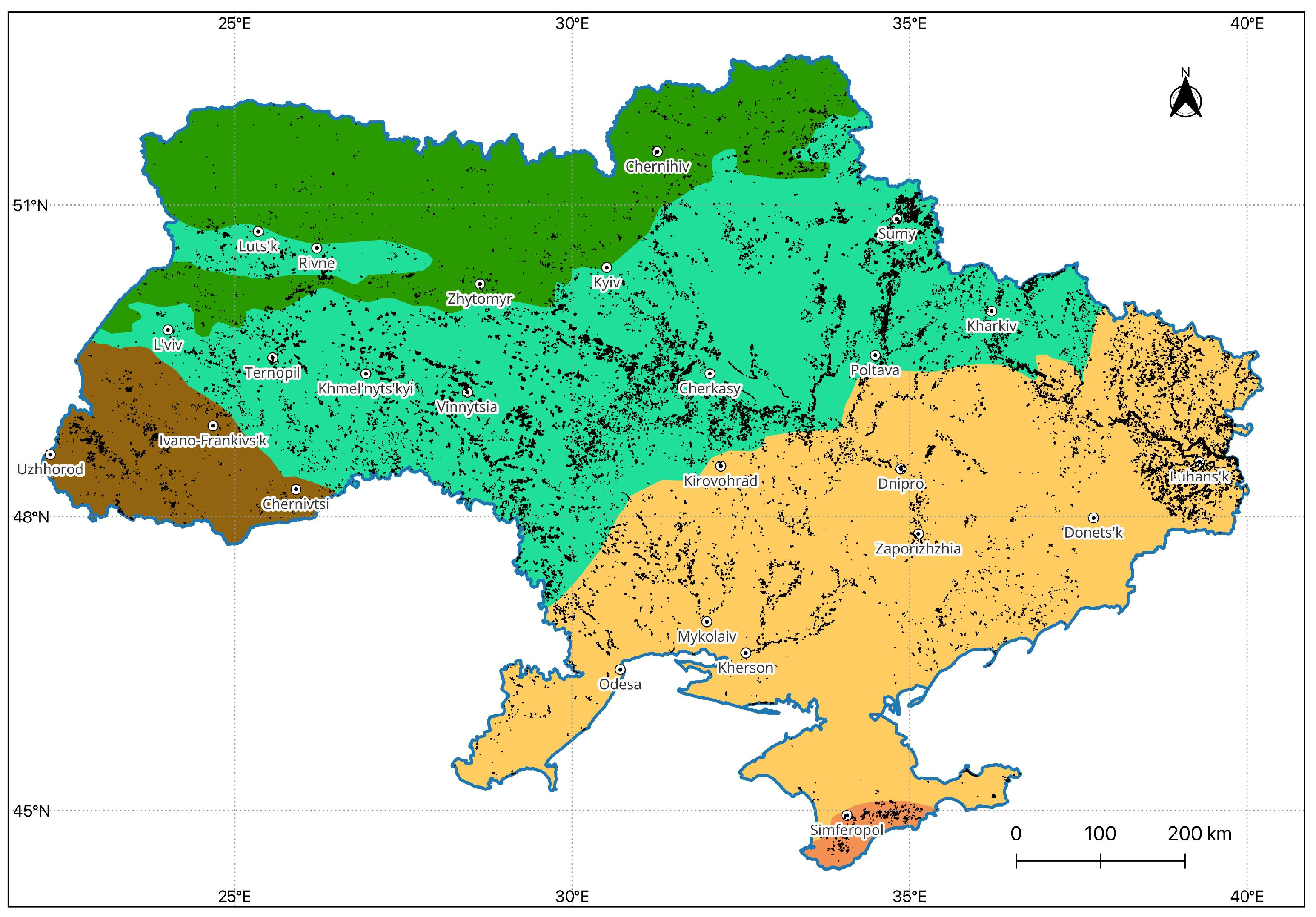
Figure 2.
Location of ICP Forests monitoring plots (green circles) containing Ulmus sp. within the territory of Ukraine. Regional boundaries and centers are shown.
Figure 2.
Location of ICP Forests monitoring plots (green circles) containing Ulmus sp. within the territory of Ukraine. Regional boundaries and centers are shown.
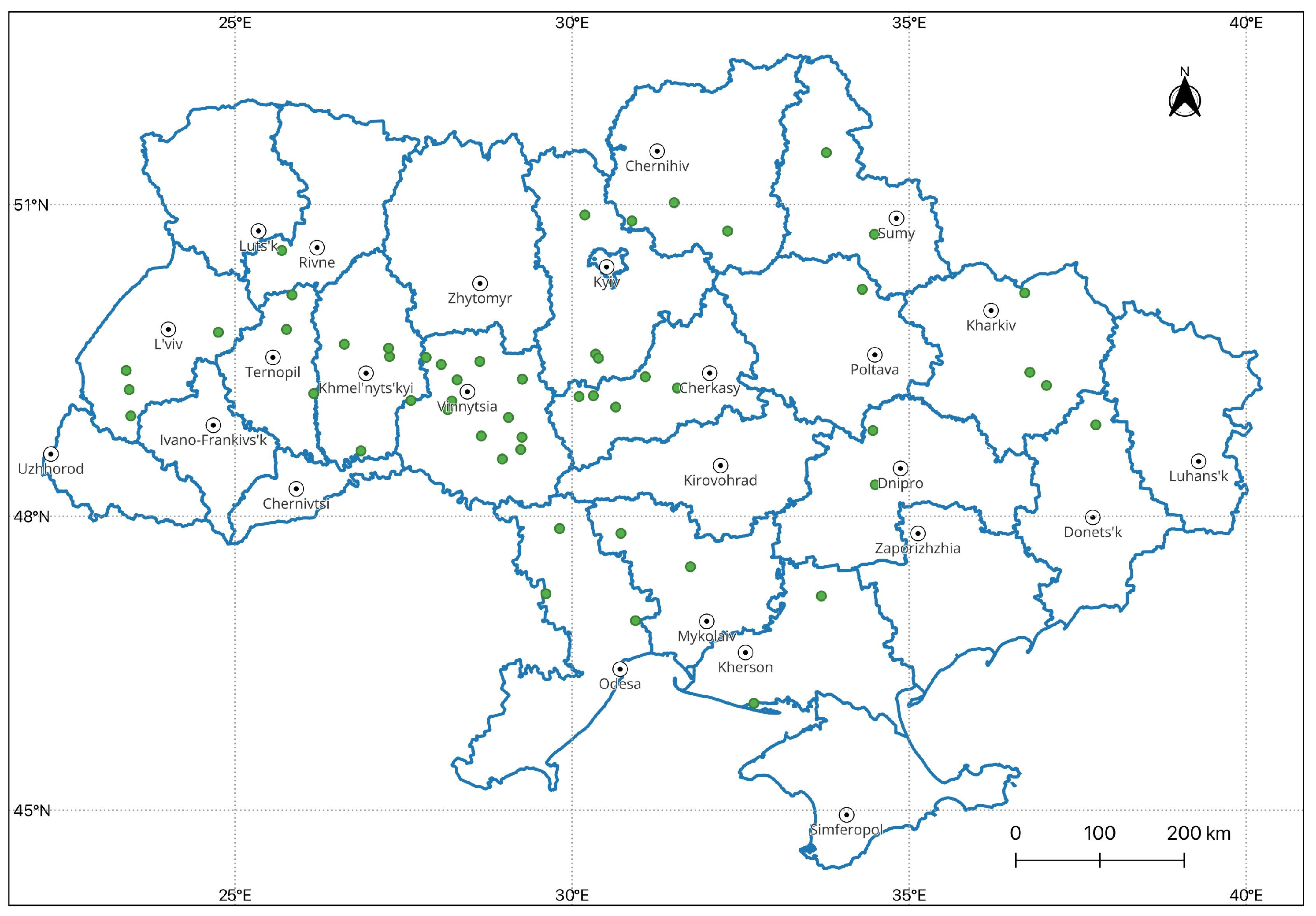
Figure 3.
Location of sample plots (black circles) in protective forest belts on the Kyiv-Kharkiv highway surveyed in 2023 and 2024 (the western point – Berezan: 50.2965°N; 31.3825°E, the eastern – Bogdanivka: 50.2292°N; 32.0853°E).
Figure 3.
Location of sample plots (black circles) in protective forest belts on the Kyiv-Kharkiv highway surveyed in 2023 and 2024 (the western point – Berezan: 50.2965°N; 31.3825°E, the eastern – Bogdanivka: 50.2292°N; 32.0853°E).
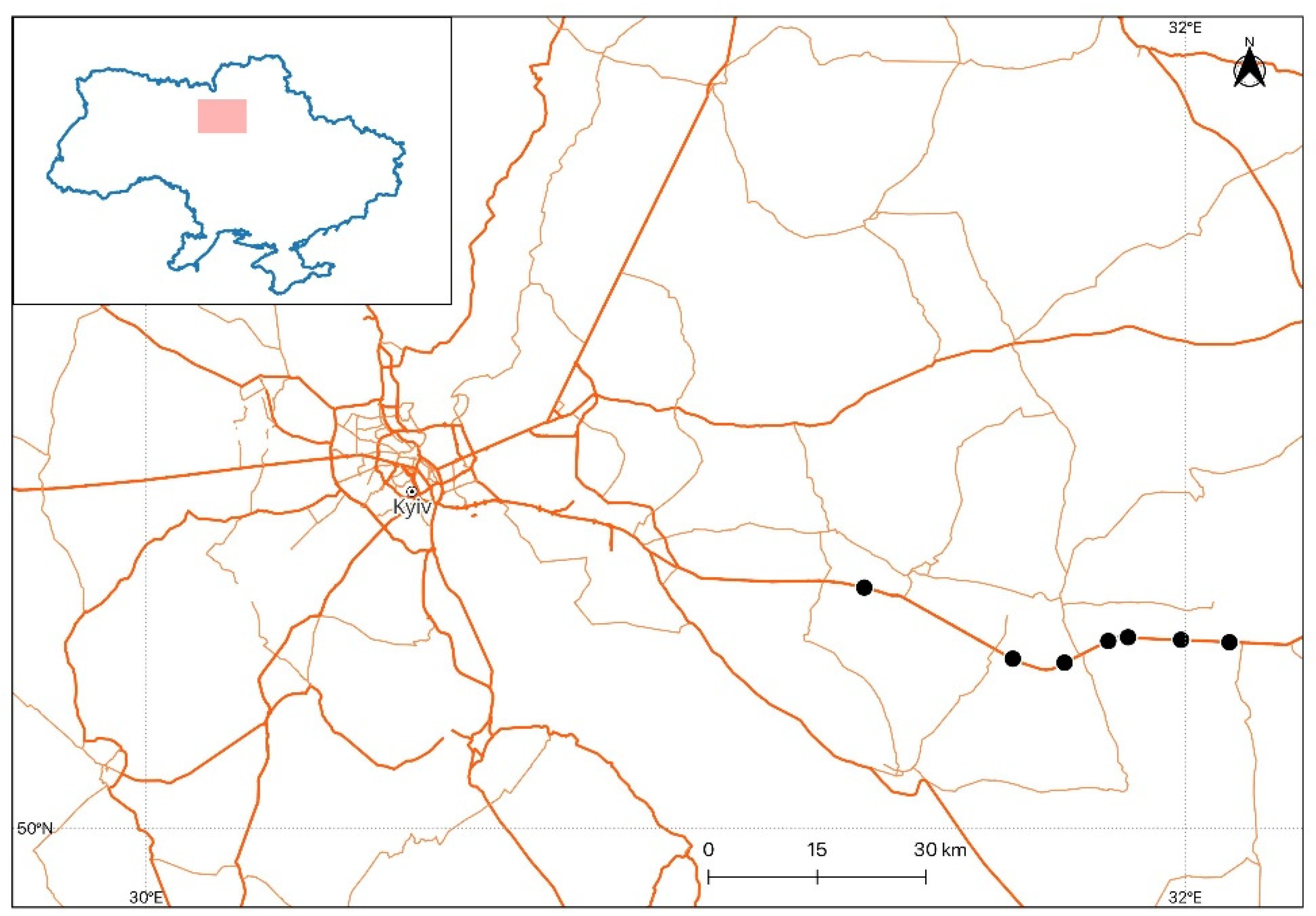
Figure 4.
Symptoms of Dutch elm disease in acute form (a – beginning of disease development – June; b –total damage – July; galleries of Scolytus multistriatus (Marsham, 1802) on the tree that died from Dutch elm disease)
Figure 4.
Symptoms of Dutch elm disease in acute form (a – beginning of disease development – June; b –total damage – July; galleries of Scolytus multistriatus (Marsham, 1802) on the tree that died from Dutch elm disease)
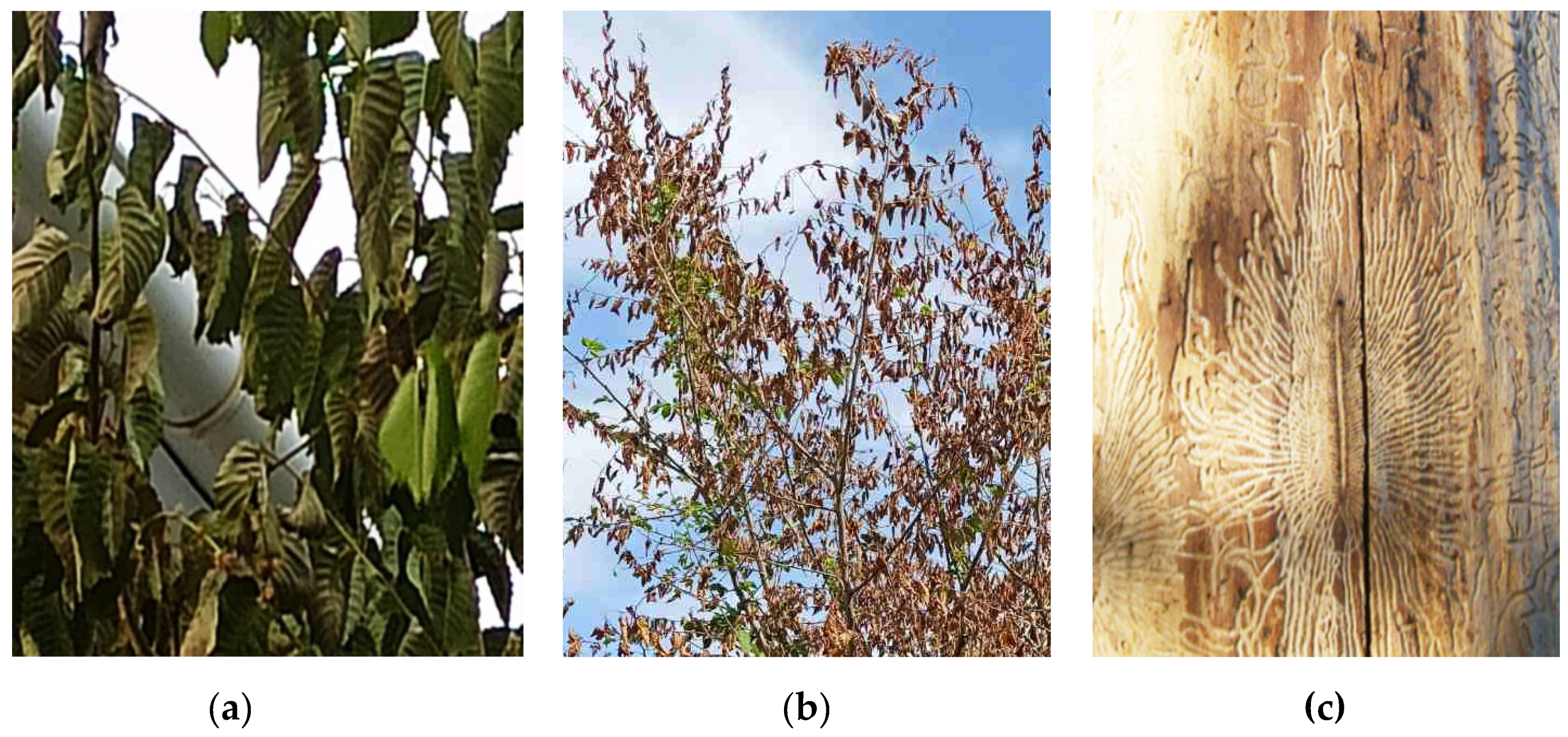
Figure 5.
External symptoms of bacterial wetwood: a – release of gases and liquid under pressure; b – necrosis in the place of cutting off a thick branch; c – the beginning of the formation of necrosis; d – necrosis in the place of exudate leakage due to breaks in the cortex.
Figure 5.
External symptoms of bacterial wetwood: a – release of gases and liquid under pressure; b – necrosis in the place of cutting off a thick branch; c – the beginning of the formation of necrosis; d – necrosis in the place of exudate leakage due to breaks in the cortex.
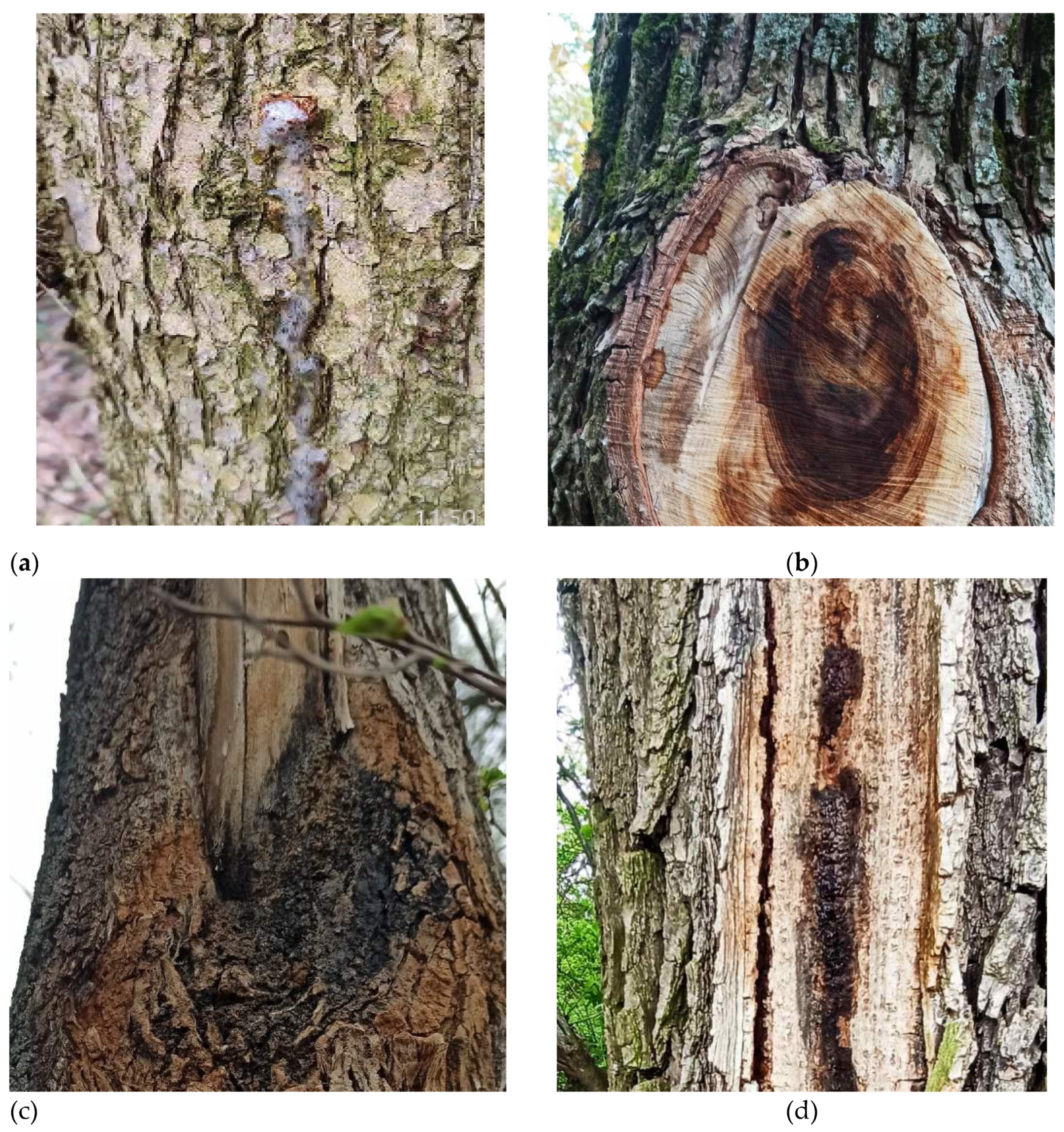
Figure 6.
Distribution of forest area with the presence of elms in the stands of natural zones of Ukraine.
Figure 6.
Distribution of forest area with the presence of elms in the stands of natural zones of Ukraine.
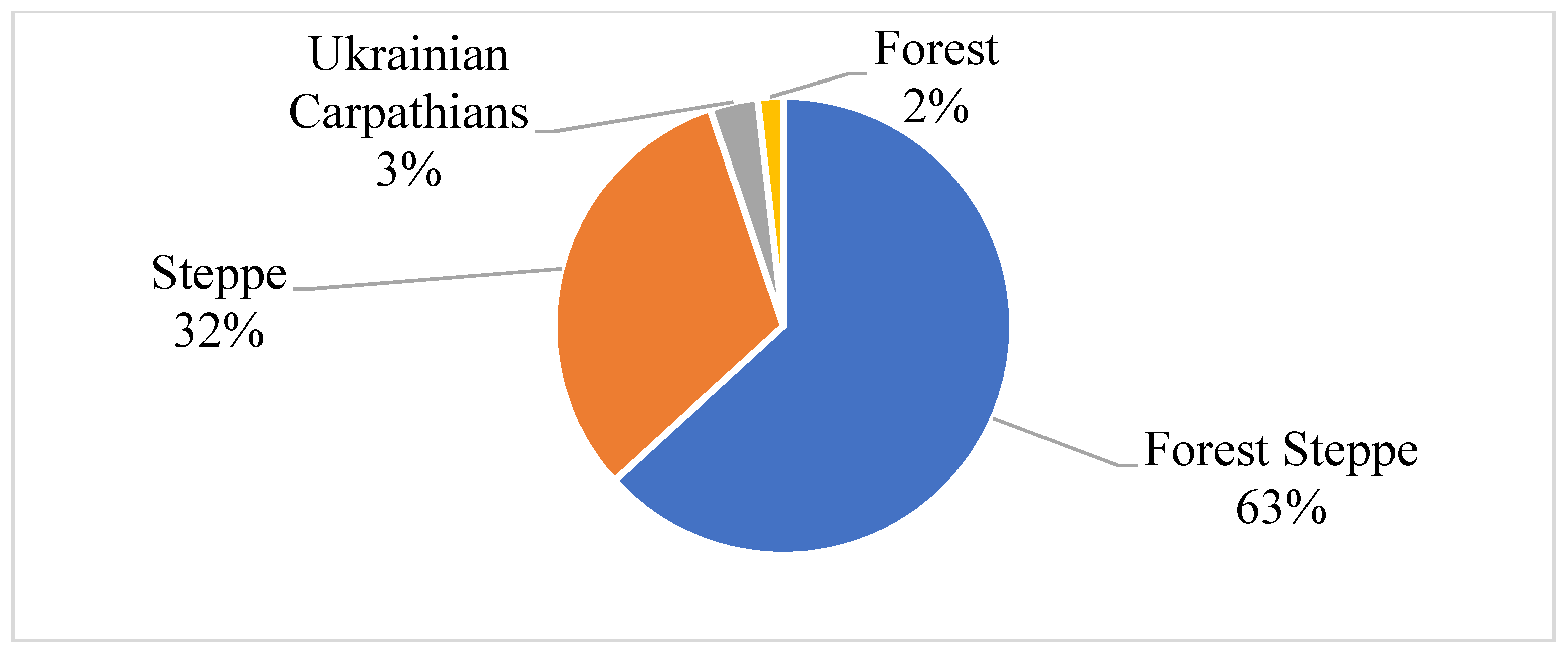
Figure 7.
Distribution of forest area with different elm species in the stand composition in Ukraine and its natural zones.
Figure 7.
Distribution of forest area with different elm species in the stand composition in Ukraine and its natural zones.
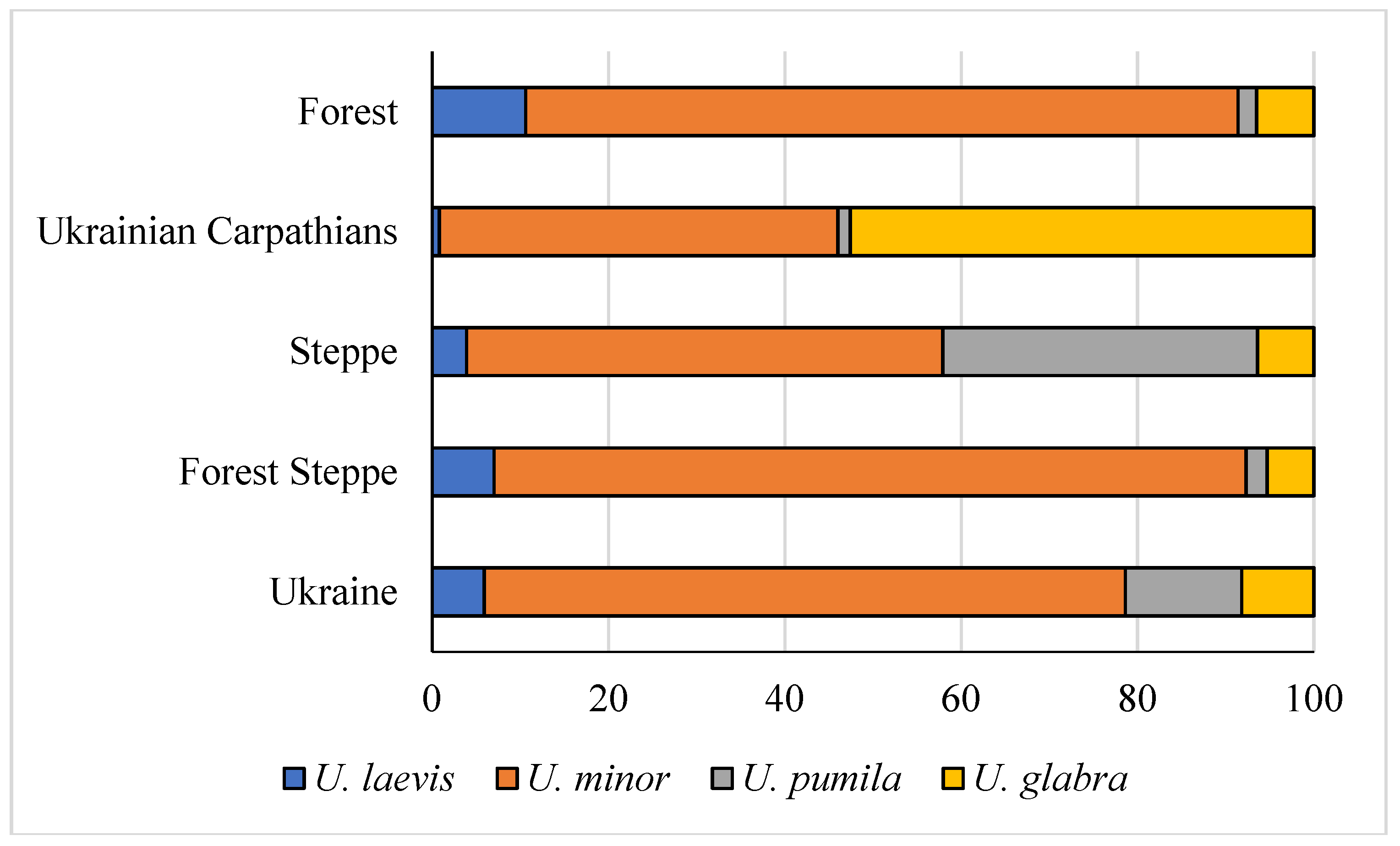
Figure 8.
Dynamics of the average defoliation and discoloration score of elms in 2001-2015 (a) and the elm trees with disease symptoms (b) in ICP monitoring plots.
Figure 8.
Dynamics of the average defoliation and discoloration score of elms in 2001-2015 (a) and the elm trees with disease symptoms (b) in ICP monitoring plots.
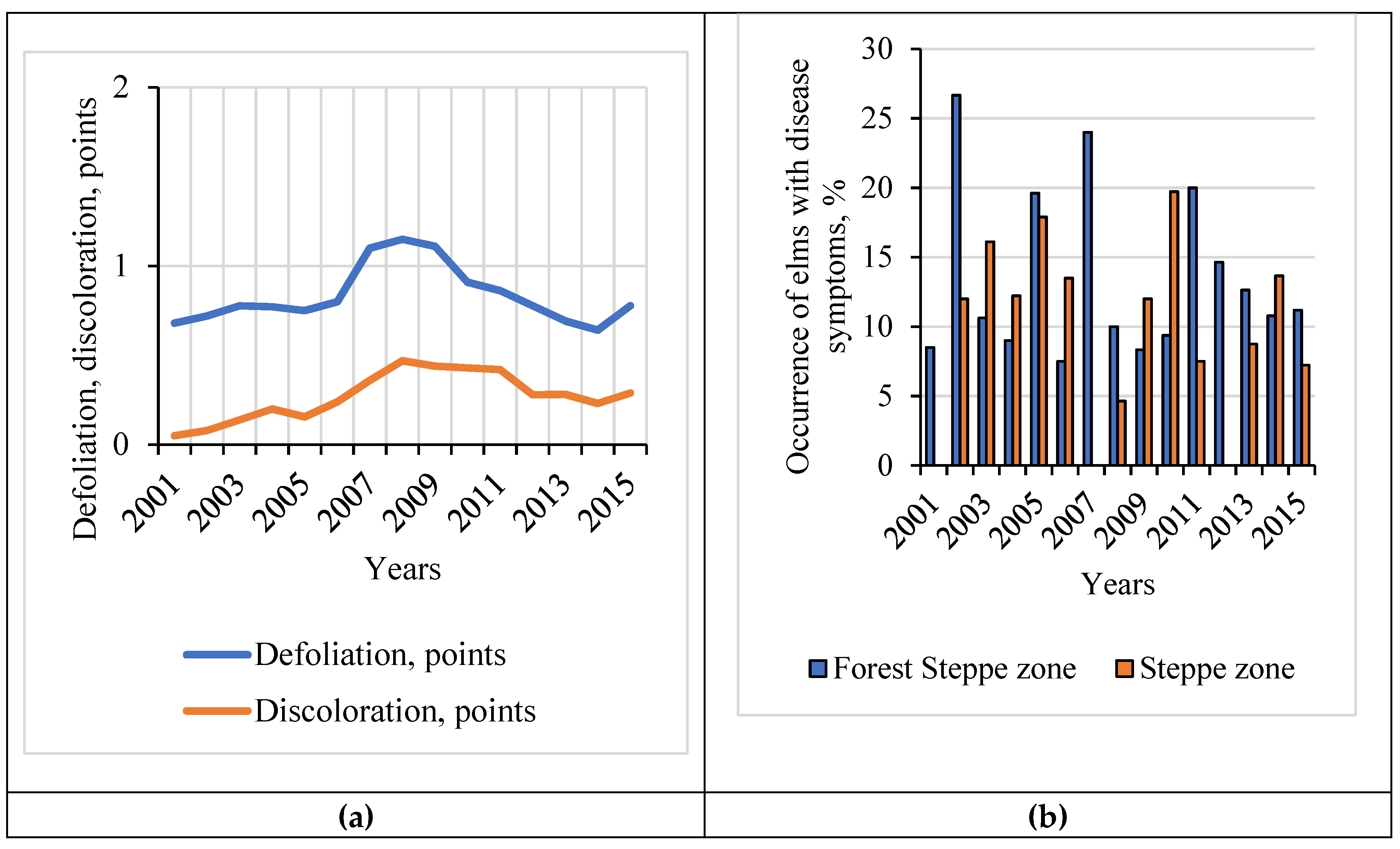
Figure 9.
Distribution of elm trees’ deterioration causes in ICP monitoring plots (for 2001–2015, average for all natural zones).
Figure 9.
Distribution of elm trees’ deterioration causes in ICP monitoring plots (for 2001–2015, average for all natural zones).
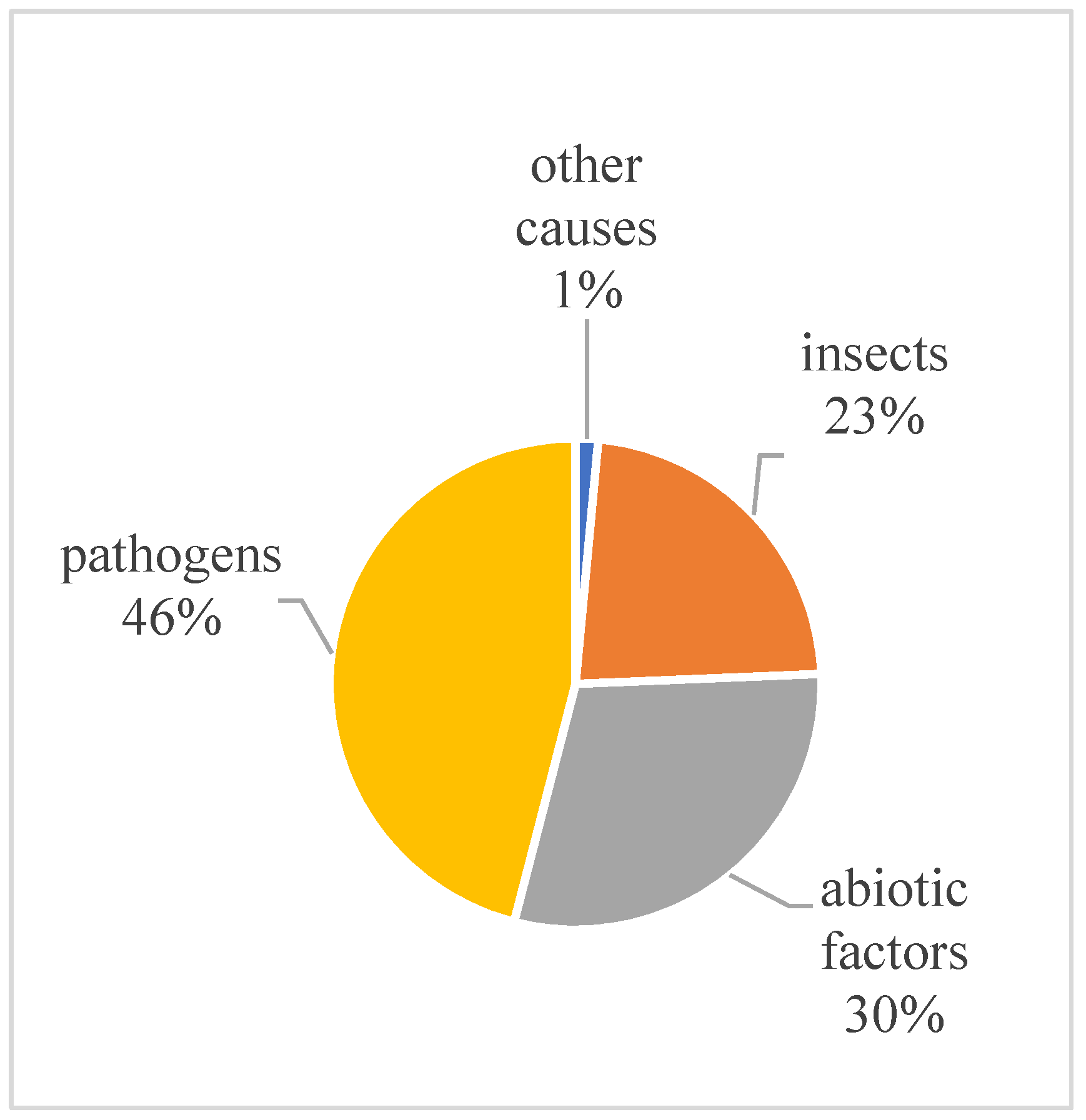
Figure 10.
The occurrence of elm species with disease symptoms (the species with the same letters in parentheses have no significant differences at p<0.05).
Figure 10.
The occurrence of elm species with disease symptoms (the species with the same letters in parentheses have no significant differences at p<0.05).
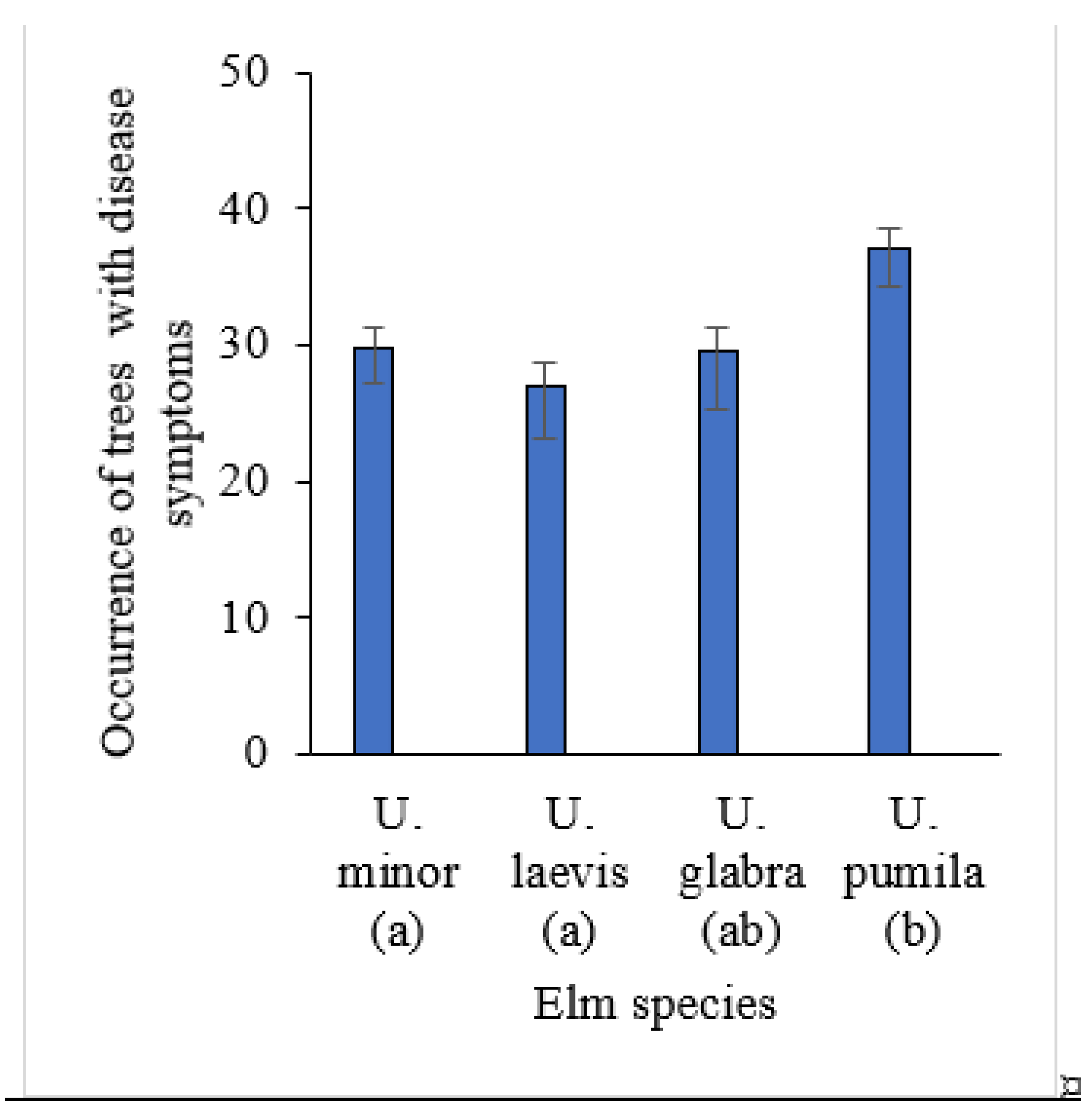
Figure 11.
Occurrence of elms with DED, bacteriosis, and without symptoms in sample plots in the shelter belt of Kyiv region (the number of trees was the same in 2023 and 2024; bars – stand. errors; occurrence in groups of trees with the same letters has no significant difference at p = 0.05).
Figure 11.
Occurrence of elms with DED, bacteriosis, and without symptoms in sample plots in the shelter belt of Kyiv region (the number of trees was the same in 2023 and 2024; bars – stand. errors; occurrence in groups of trees with the same letters has no significant difference at p = 0.05).
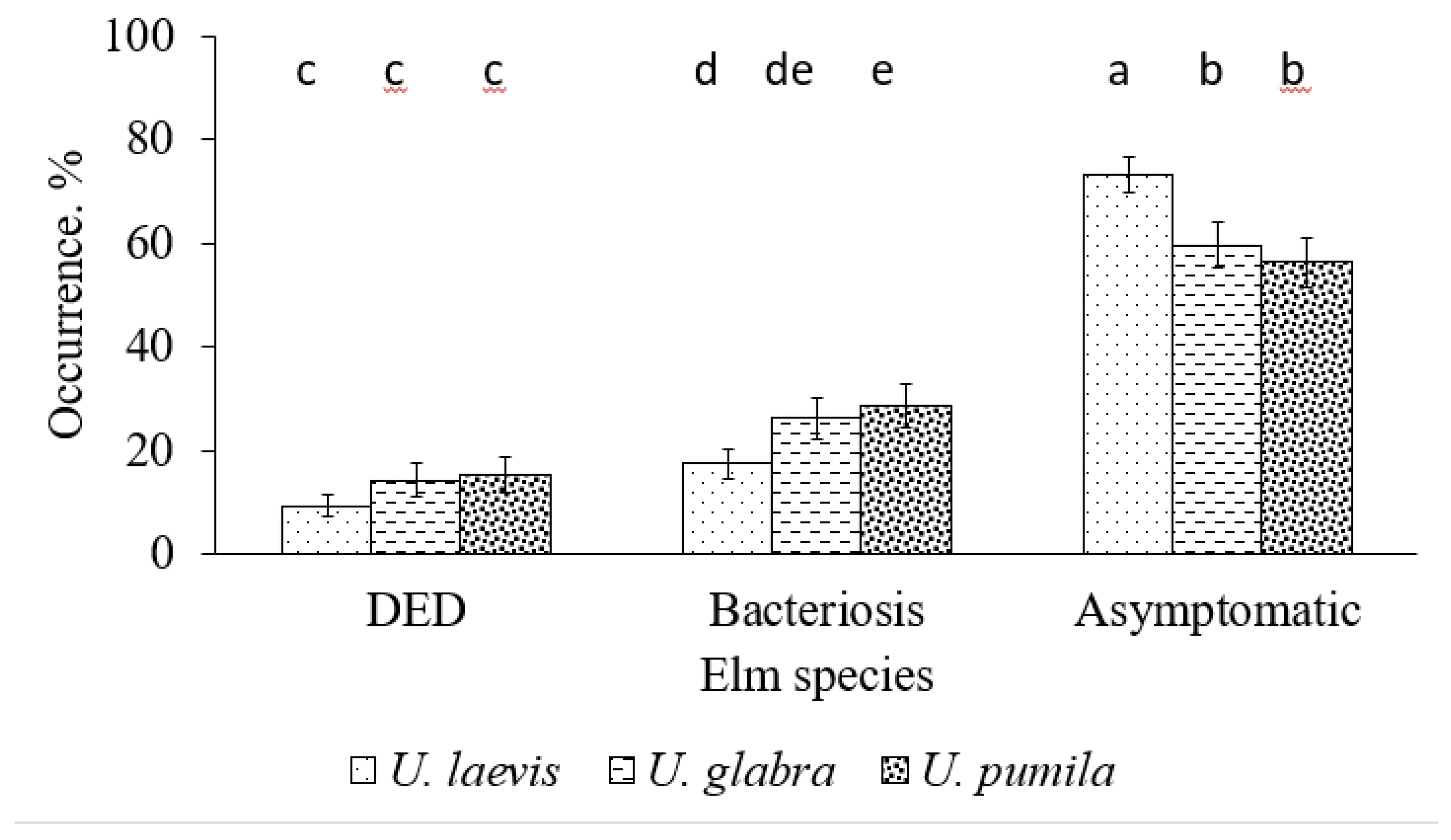
Figure 12.
Health condition index of asymptomatic trees and trees with symptoms of DED and wetwood among various elm species in the sample plots in 2023 and 2024
Figure 12.
Health condition index of asymptomatic trees and trees with symptoms of DED and wetwood among various elm species in the sample plots in 2023 and 2024
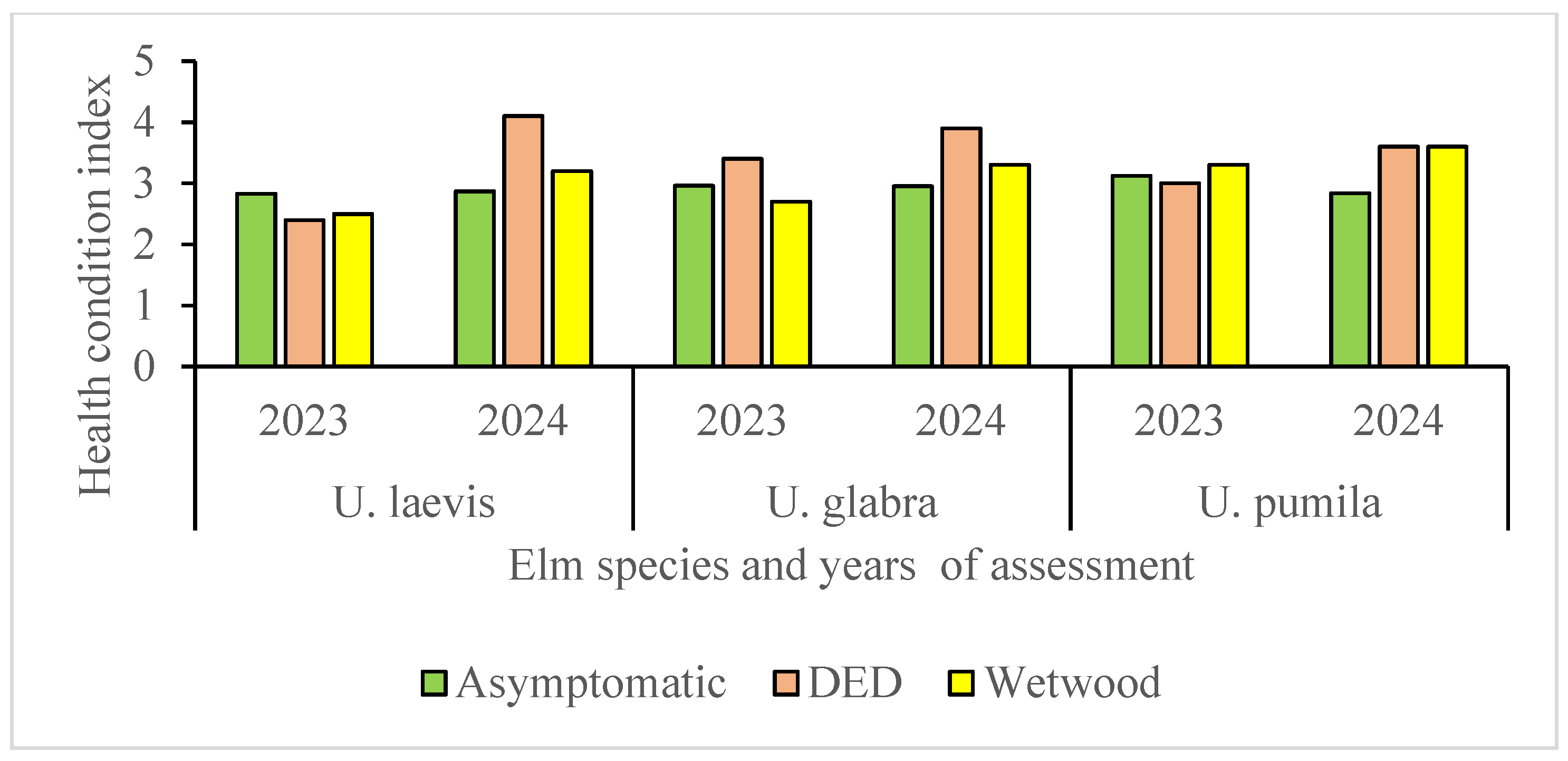

Table 1.
Distribution of U. laevis trees by health classes in 2024 depending on their health in 2023.
Table 1.
Distribution of U. laevis trees by health classes in 2024 depending on their health in 2023.
| Health classes | Distribution of elm trees by health classes (2–5), % | Total in 2024 |
||||
| in 2023* | in 2024** | |||||
| 2 | 3 | 4 | 5 | |||
| All trees | ||||||
| 2 | 34.3 | 74.6 | 20.3 | 5.1 | 0.0 | 100.0 |
| 3 | 43.0 | 0.0 | 89.2 | 10.8 | 0.0 | 100.0 |
| 4 | 22.7 | 0.0 | 5.1 | 82.1 | 12.8 | 100.0 |
| Total in 2023 | 100.0 | 25.6 | 46.5 | 25.0 | 2.9 | 100.0 |
| Trees with DED symptoms | ||||||
| 2 | 31.3 | 0.0 | 40.0 | 60.0 | 0.0 | 100.0 |
| 3 | 31.3 | 0.0 | 20.0 | 80.0 | 0.0 | 100.0 |
| 4 | 37.5 | 0.0 | 0.0 | 16.7 | 83.3 | 100.0 |
| Total in 2023 | 100.0 | 0.0 | 18.8 | 50.0 | 31.3 | 100.0 |
| Trees with bacteriosis symptoms | ||||||
| 2 | 23.3 | 28.6 | 71.4 | 0.0 | 0.0 | 100.0 |
| 3 | 53.3 | 0.0 | 75.0 | 25.0 | 0.0 | 100.0 |
| 4 | 23.3 | 0.0 | 28.6 | 71.4 | 0.0 | 100.0 |
| Total in 2023 | 100.0 | 6.7 | 63.3 | 30.0 | 0.0 | 100.0 |
Note: * – the proportion of trees from the total amount for the group in 2023, %; ** – the proportion of trees from the total amount for the group in 2024.
Table 2.
Distribution of U. glabra trees by health classes in 2024 depending on their health in 2023.
Table 2.
Distribution of U. glabra trees by health classes in 2024 depending on their health in 2023.
| Health classes | Distribution of elm trees by health classes (2–5), % | Total in 2024 |
||||
|---|---|---|---|---|---|---|
| in 2023* | in 2024** | |||||
| 2 | 3 | 4 | 5 | |||
| All trees | ||||||
| 2 | 15.1 | 31.6 | 68.4 | 0.0 | 0.0 | 100.0 |
| 3 | 61.1 | 14.3 | 58.4 | 27.3 | 0.0 | 100.0 |
| 4 | 23.8 | 0.0 | 53.3 | 36.7 | 10.0 | 100.0 |
| Total in 2023 | 100.0 | 13.5 | 58.7 | 25.4 | 2.4 | 100.0 |
| Trees with DED symptoms | ||||||
| 3 | 55.6 | 0.0 | 30.0 | 70.0 | 0.0 | 100.0 |
| 4 | 44.4 | 0.0 | 25.0 | 37.5 | 37.5 | 100.0 |
| Total in 2023 | 100.0 | 0.0 | 27.8 | 55.6 | 16.7 | 100.0 |
| Trees with bacteriosis symptoms | ||||||
| 2 | 18.2 | 0.0 | 100.0 | 0.0 | 0.0 | 100.0 |
| 3 | 60.6 | 0.0 | 70.0 | 30.0 | 0.0 | 100.0 |
| 4 | 21.2 | 0.0 | 57.1 | 42.9 | 0.0 | 100.0 |
| Total in 2023 | 100.0 | 0.0 | 72.7 | 27.3 | 0.0 | 100.0 |
Note: * – the proportion of trees from the total amount for the group in 2023, %; ** – the proportion of trees from the total amount for the group in 2024.
Table 3.
Distribution of U. pumila trees by health classes in 2024 depending on their health in 2023.
Table 3.
Distribution of U. pumila trees by health classes in 2024 depending on their health in 2023.
| Health classes | Distribution of elm trees by health classes (2–5), % | Total in 2024 |
||||
| in 2023* | in 2024** | |||||
| 2 | 3 | 4 | 5 | |||
| All trees | ||||||
| 2 | 8.9 | 50.0 | 20.0 | 30.0 | 0.0 | 100.0 |
| 3 | 60.7 | 14.7 | 72.1 | 13.2 | 0.0 | 100.0 |
| 4 | 30.4 | 0.0 | 44.1 | 44.1 | 11.8 | 100.0 |
| Total in 2023 | 100.0 | 13.4 | 58.9 | 24.1 | 3.6 | 100.0 |
| Trees with DED symptoms | ||||||
| 2 | 11.8 | 0.0 | 0.0 | 100.0 | 0.0 | 100.0 |
| 3 | 52.9 | 11.1 | 55.6 | 33.3 | 0.0 | 100.0 |
| 4 | 35.3 | 0.0 | 16.7 | 50.0 | 33.3 | 100.0 |
| Total in 2023 | 100.0 | 5.9 | 35.3 | 47.1 | 11.8 | 100.0 |
| Trees with bacteriosis symptoms | ||||||
| 2 | 6.3 | 0.0 | 50.0 | 50.0 | 0.0 | 100.0 |
| 3 | 50.0 | 12.5 | 50.0 | 37.5 | 0.0 | 100.0 |
| 4 | 43.8 | 0.0 | 14.3 | 71.4 | 14.3 | 100.0 |
| Total in 2023 | 100.0 | 6.3 | 34.4 | 53.1 | 6.3 | 100.0 |
Note: * – the proportion of trees from the total amount for the group in 2023, %; ** – the proportion of trees from the total amount for the group in 2024.
Table 4.
Mortality of asymptomatic trees and trees with symptoms of DED and wetwood among various elm species in the sample plots.
Table 4.
Mortality of asymptomatic trees and trees with symptoms of DED and wetwood among various elm species in the sample plots.
| Elm species | Mortality, %±SE | |
| DED | Bacteriosis | |
| U. laevis | 31.3±3.53 | 0.0 |
| U. glabra | 16.7±3.32 | 0.0 |
| U. pumila | 11.8±3.04 | 6.3±2.29 |
Table 5.
Results of regression analysis of elm health change in 2023– 2024 (Y=a+bX).
| Group of trees | Number of trees in the group | Intercept a±SE | Slope b±SE |
R2 | p |
| U. laevis | |||||
| Wetwood | 30 | 1.73±0.38 | 0.50±0.12 | 0.37 | <0.001 |
| DED | 16 | 2.20±0.47 | 0.63±0.15 | 0.56 | <0.001 |
| All inspected | 172 | 0.51±0.13 | 0.88±0.04 | 0.69 | <0.001 |
| U. glabra | |||||
| Wetwood | 33 | 2.63±0.37 | 0.21±0.12 | 0.09 | 0.09 |
| DED | 18 | 2.43±1.09 | 0.43±0.31 | 0.10 | 0.19 |
| All inspected | 126 | 1.81±0.28 | 0.44±0.09 | 0.16 | <0.001 |
| U. pumila | |||||
| Wetwood | 32 | 1.87±0.66 | 0.51±0.19 | 0.19 | 0.01 |
| DED | 17 | 2.54±0.96 | 0.34±0.29 | 0.08 | 0.26 |
| All inspected | 112 | 1.46±0.32 | 0.53±0.1 | 0.20 | <0.001 |
| all elm species | |||||
| Wetwood | 95 | 1.98±0.26 | 0.44±0.08 | 0.24 | <0.001 |
| DED | 51 | 2.44±0.46 | 0.44±0.14 | 0.17 | 0.002 |
| All inspected | 410 | 1.06±0.13 | 0.68±0.04 | 0.39 | <0.001 |
Disclaimer/Publisher’s Note: The statements, opinions and data contained in all publications are solely those of the individual author(s) and contributor(s) and not of MDPI and/or the editor(s). MDPI and/or the editor(s) disclaim responsibility for any injury to people or property resulting from any ideas, methods, instructions or products referred to in the content. |
© 2024 by the authors. Licensee MDPI, Basel, Switzerland. This article is an open access article distributed under the terms and conditions of the Creative Commons Attribution (CC BY) license (http://creativecommons.org/licenses/by/4.0/).
Copyright: This open access article is published under a Creative Commons CC BY 4.0 license, which permit the free download, distribution, and reuse, provided that the author and preprint are cited in any reuse.


