
Submitted:
23 October 2024
Posted:
30 October 2024
You are already at the latest version
Abstract
F1 in SchoolsTM is a STEM-focused educational program engaging students through the design and construction of a miniature F1 car. Developed with engineering expertise and endorsed by F1, it enhances STEM learning through immersive experiences. This study aims to optimize race car performance on a straight track by focusing on the aerodynamic efficiency of the front wing, car body, and sidepods. Key objectives include: minimizing drag coefficient and drag force; managing weight distribution; optimizing airflow. Using AutoCAD, each component was precisely designed, and Computational Fluid Dynamics tools were used to simulate and evaluate the car's aerodynamic performance. The final iteration of our F1 in SchoolsTM car focuses on optimizing overall airflow rather than relying on sharp aerodynamic components. This reduces turbulence, drag, and improves performance. Key features include a front wing redirecting airflow around the tires and a low-drag, backward-swept rear wing, which enhances aerodynamic efficiency.
Keywords:
1. Introduction
2. Methodology
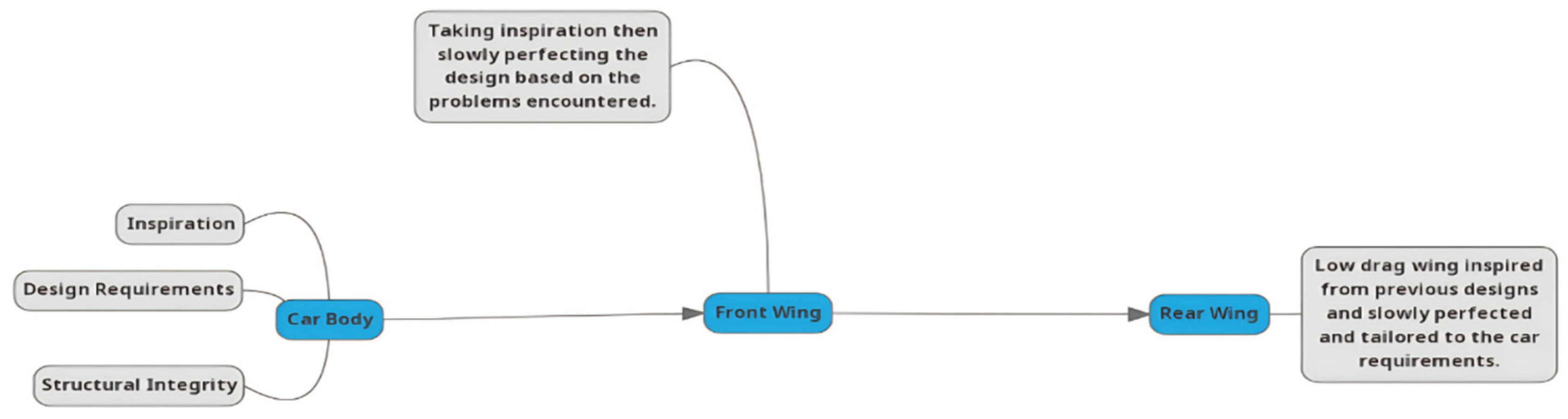
2.1. Car Body
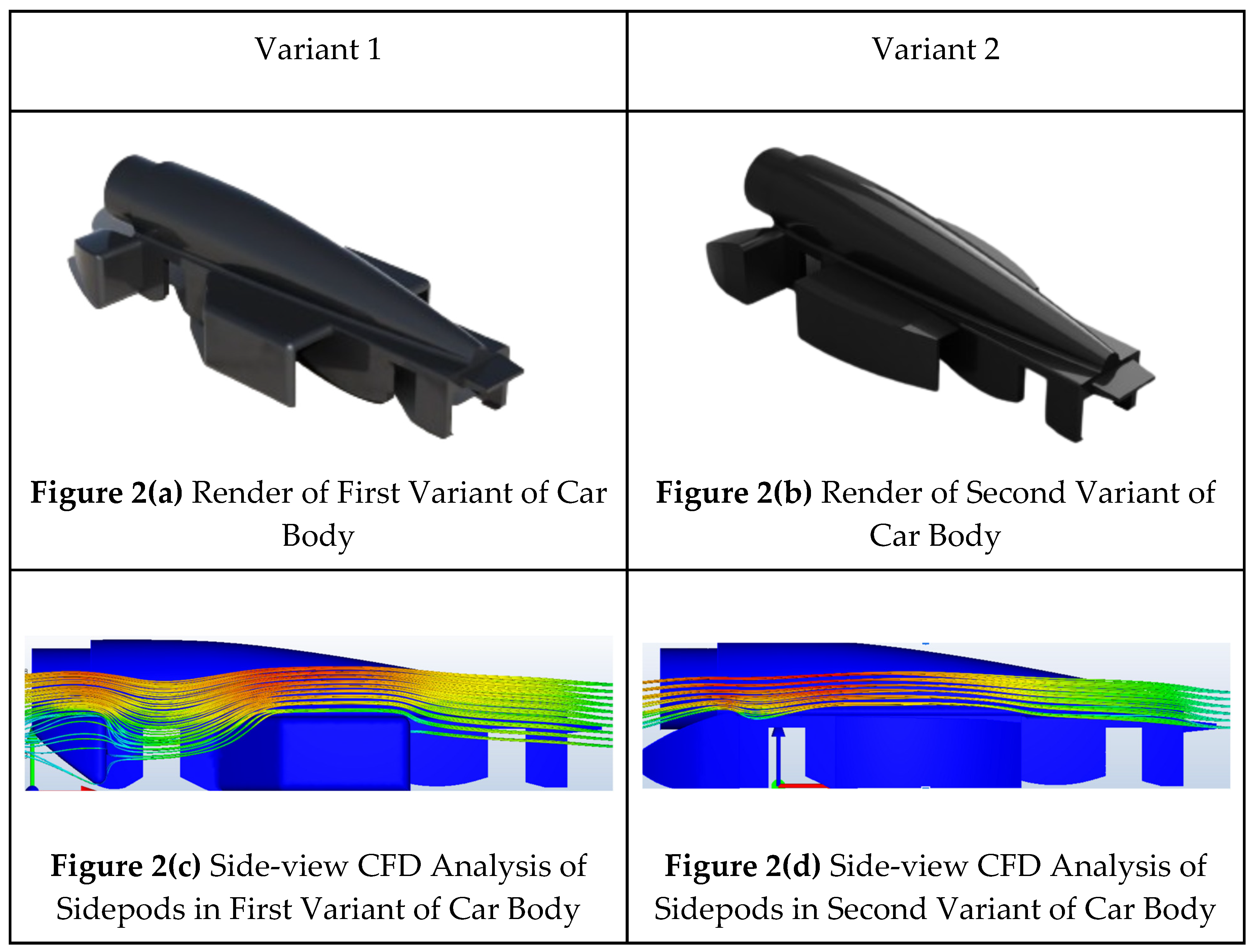
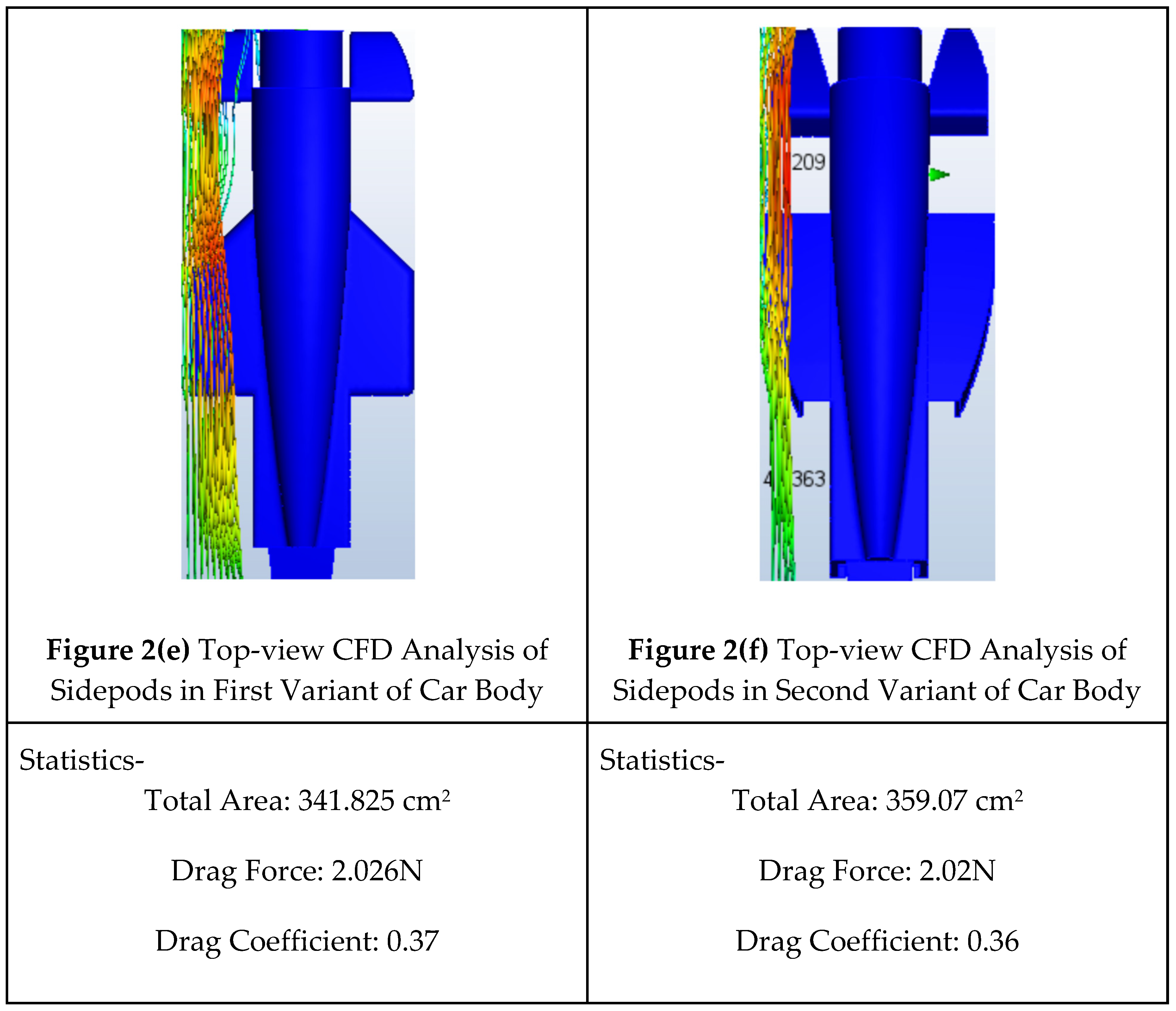
2.2. Front Wing
2.2.1. First Variant
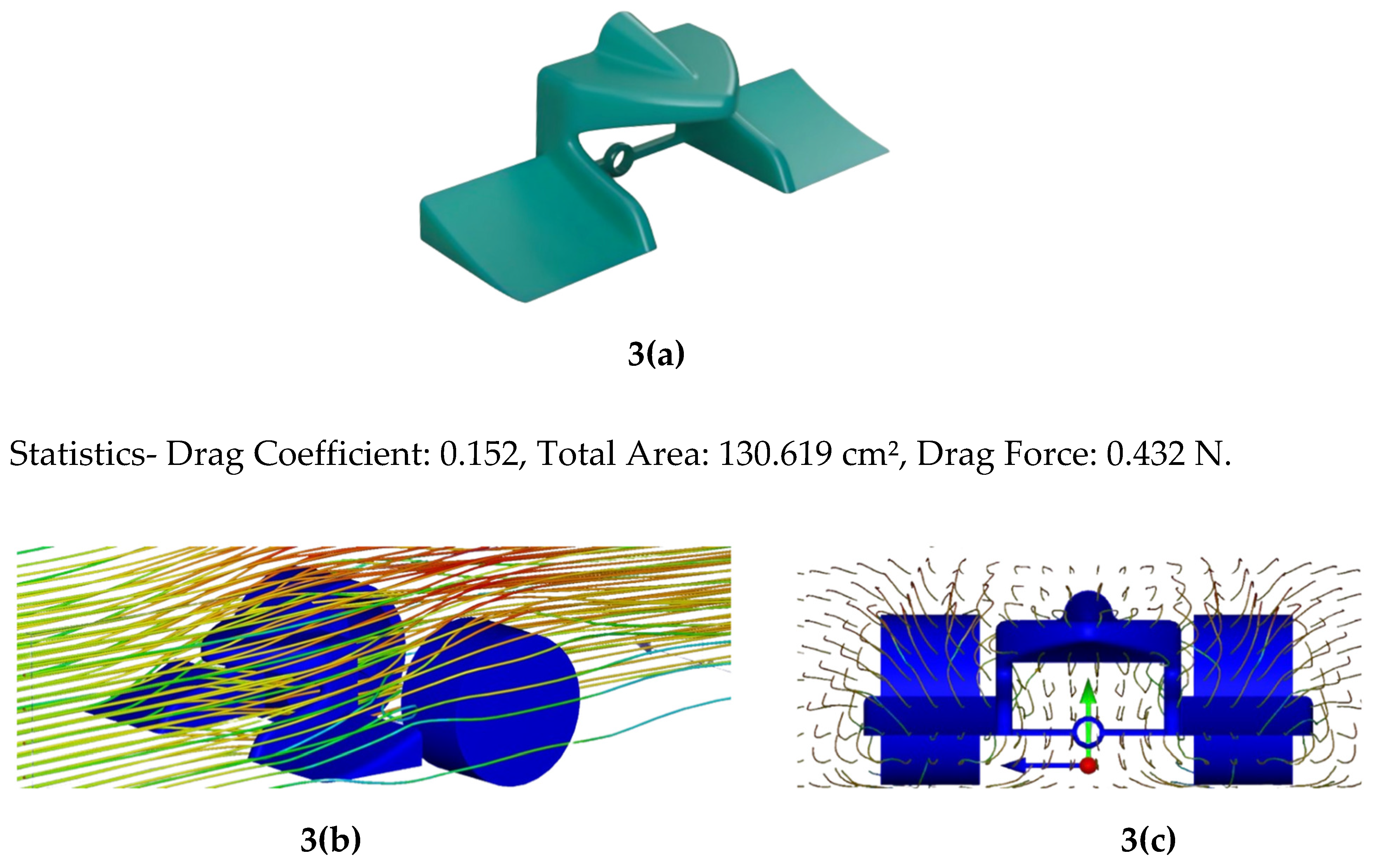
2.2.2. Second Variant
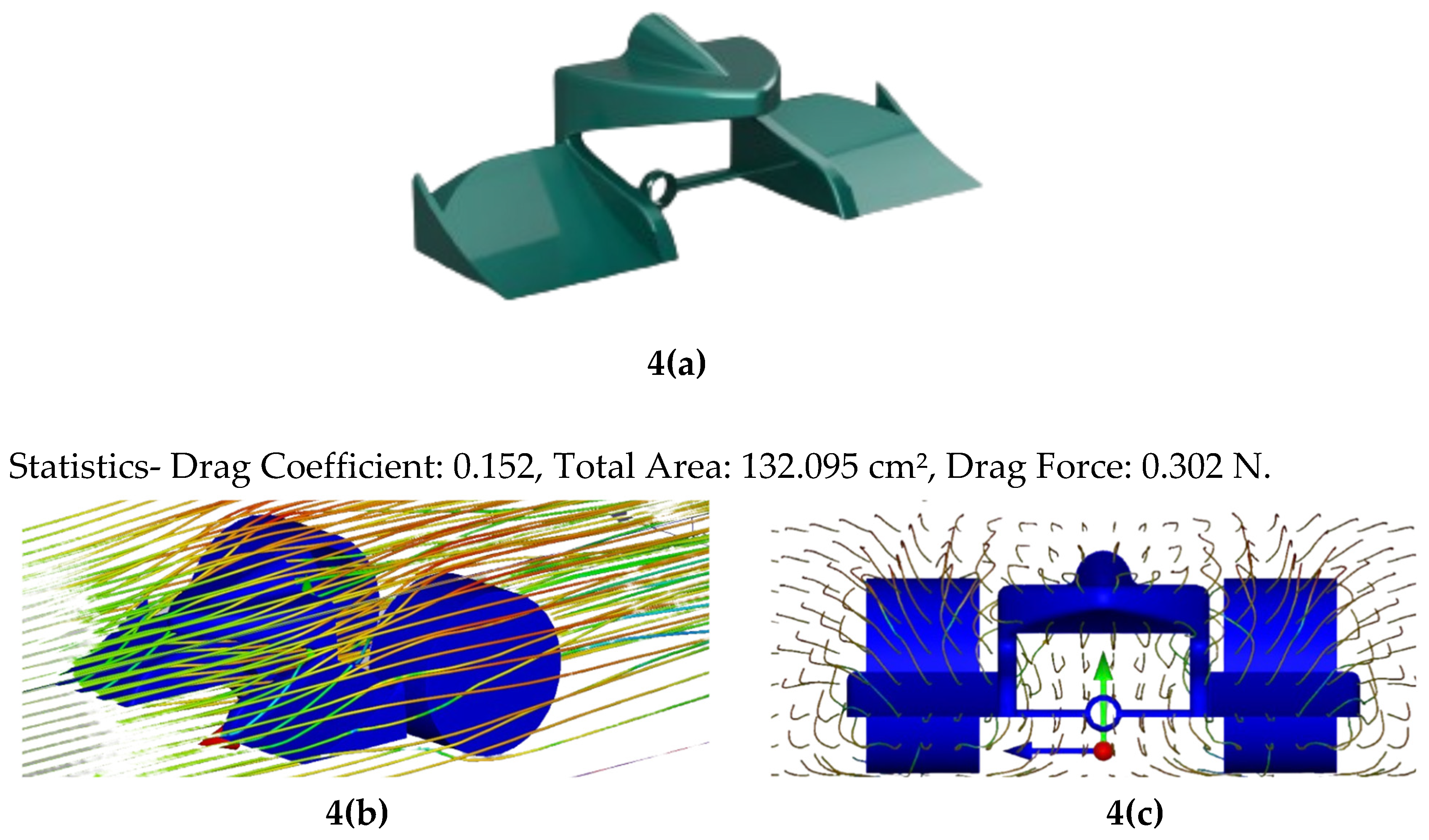
2.2.3. Third Variant
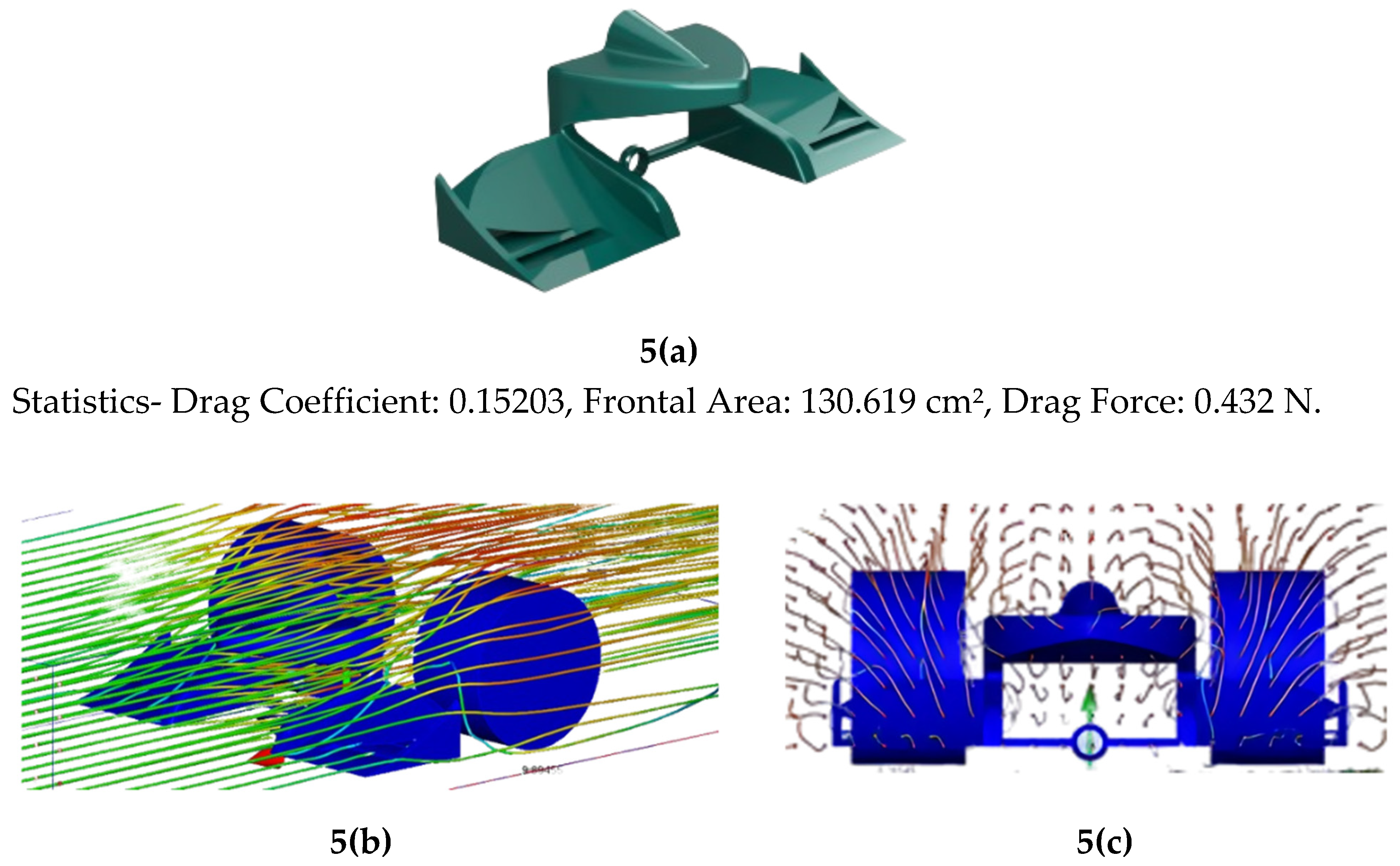
2.2.4. Fourth Variant

2.3. Rear Wing
2.3.1. Front-Swept Wings
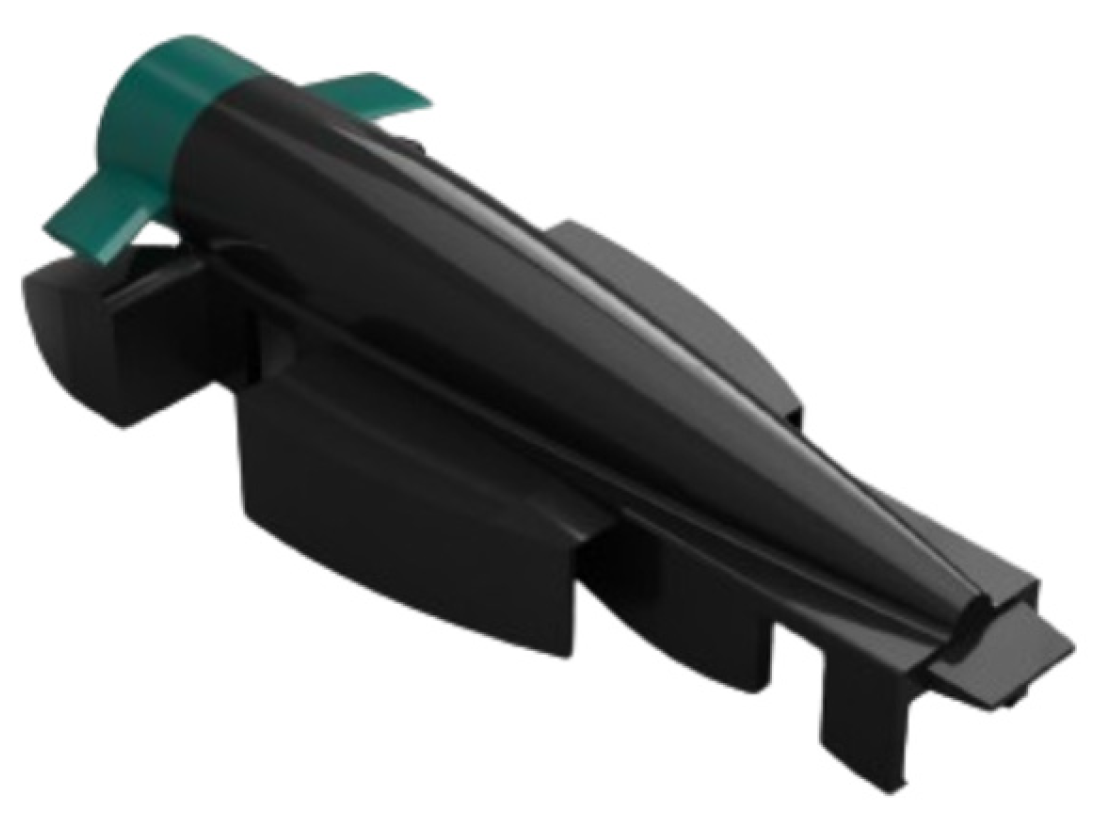
2.3.2. Back-Swept Wings
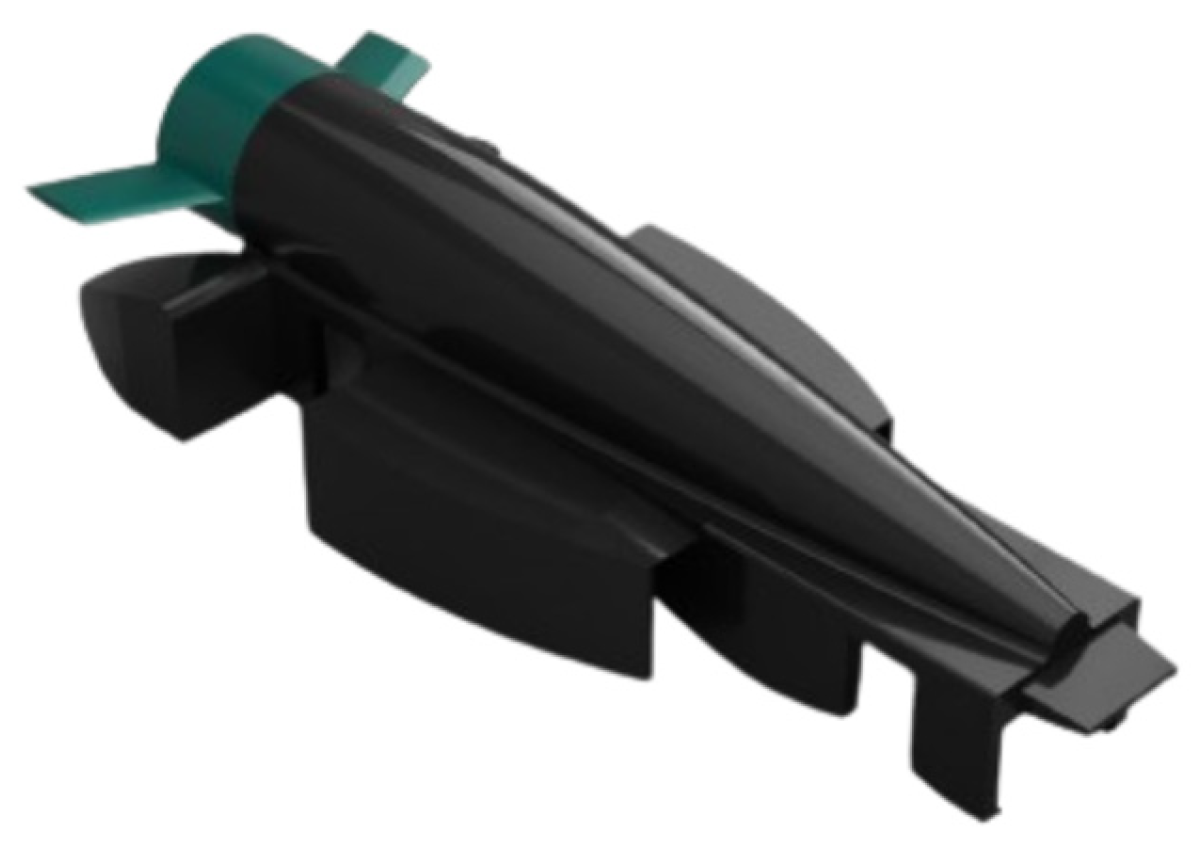
2.4. Car Variants
2.4.1. May
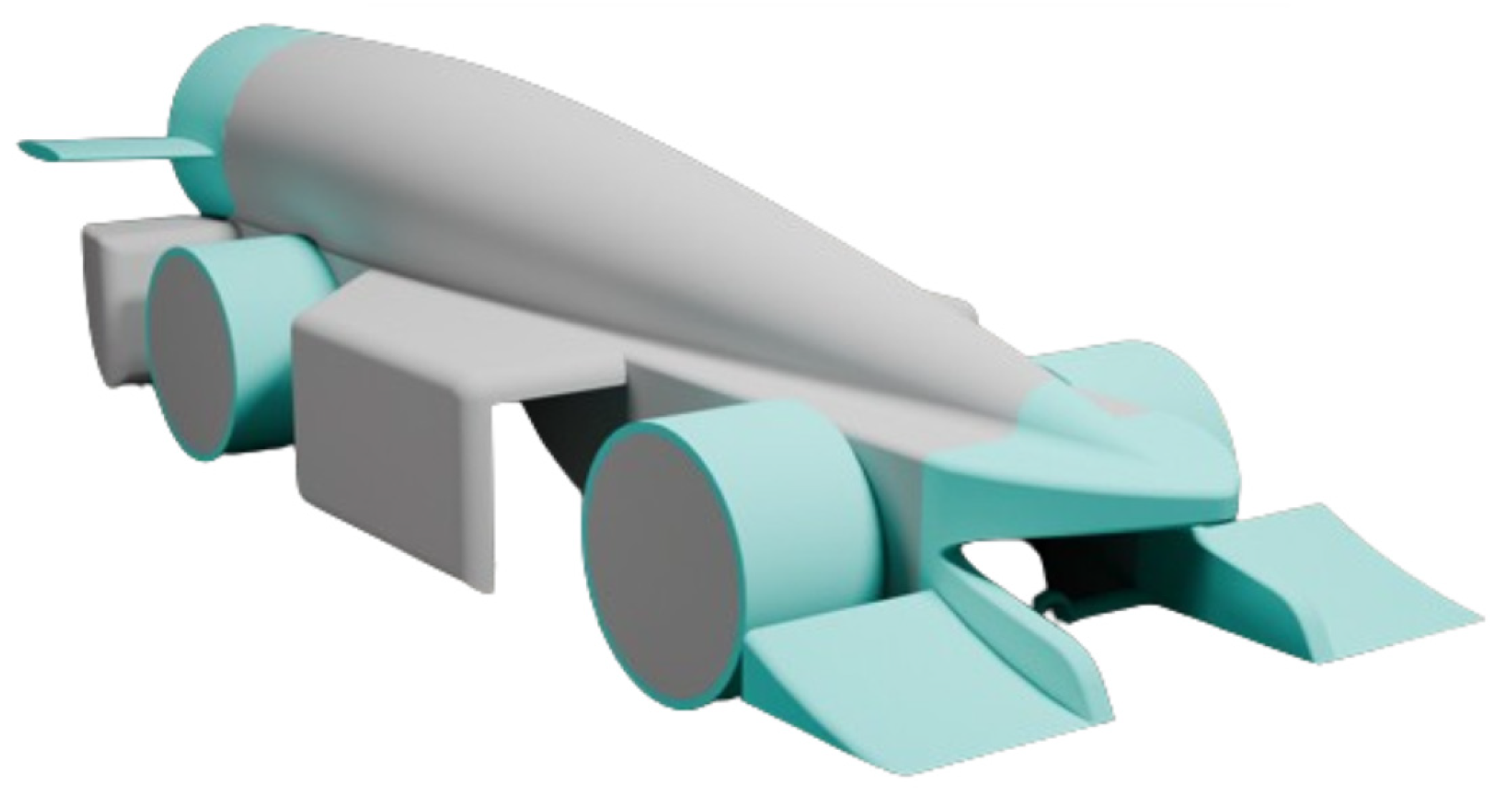
2.4.2. Jeremy

2.4.3. Hammond
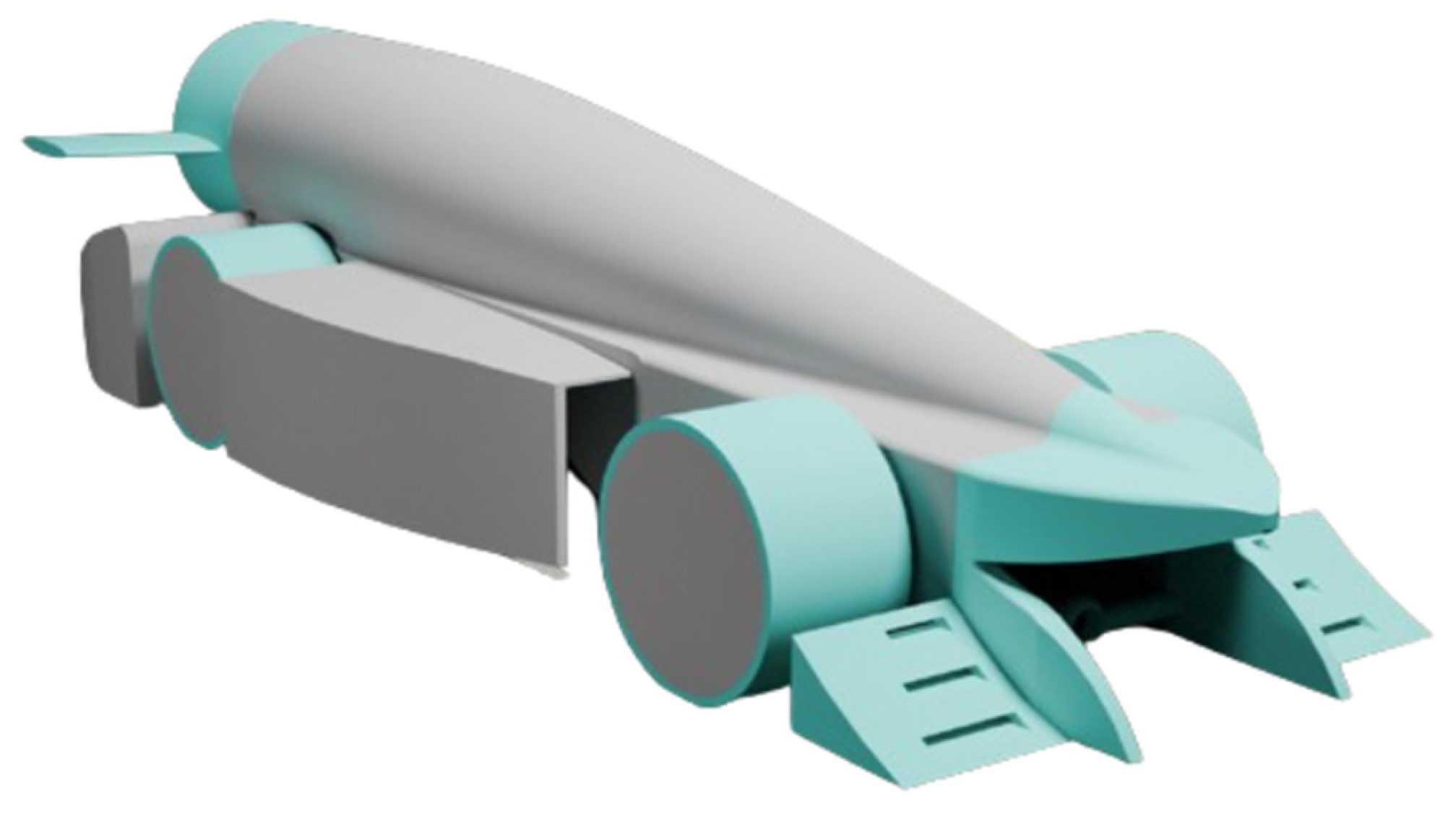
2.4.4. Stig
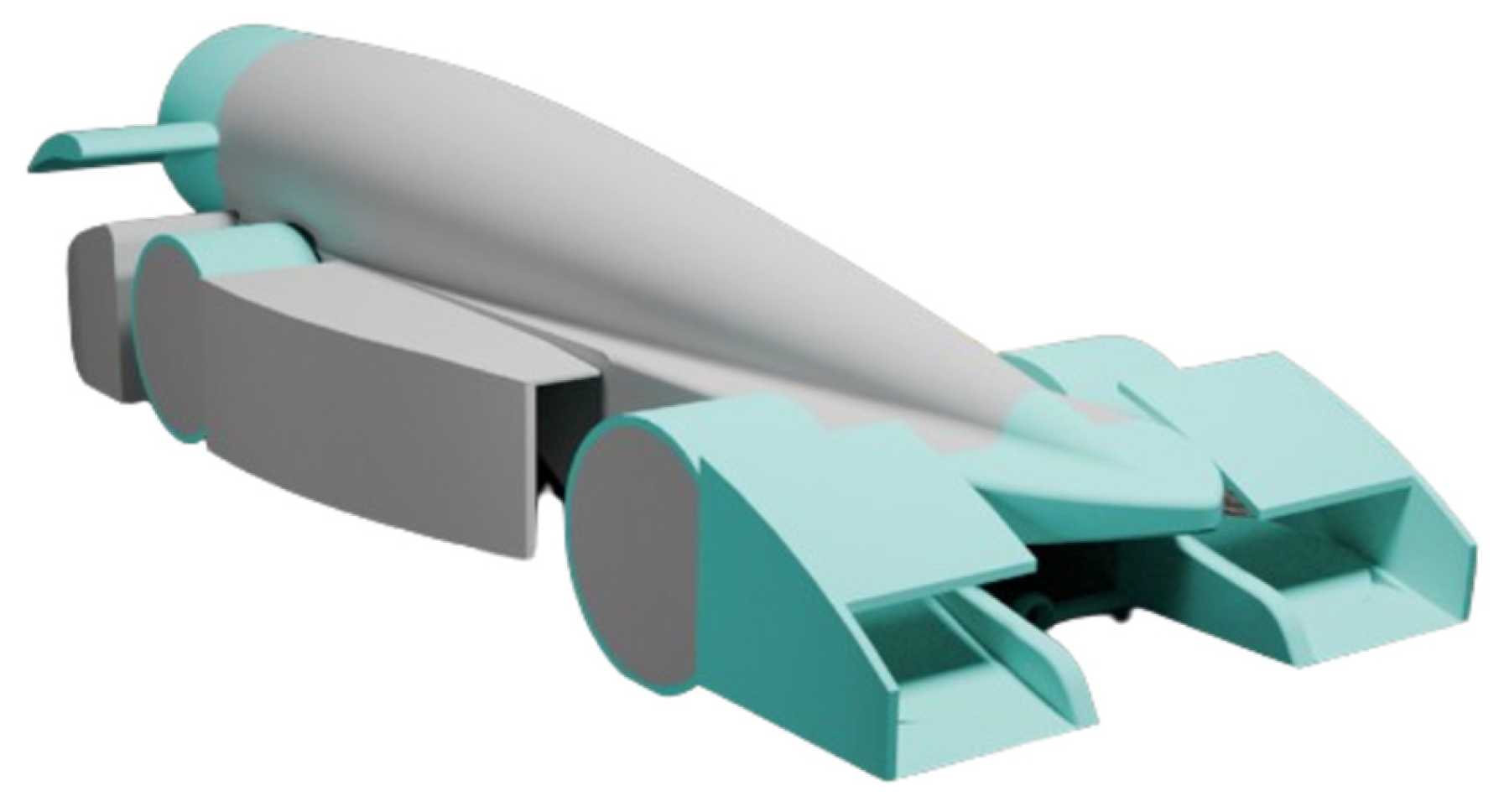
2.4.5. Brian
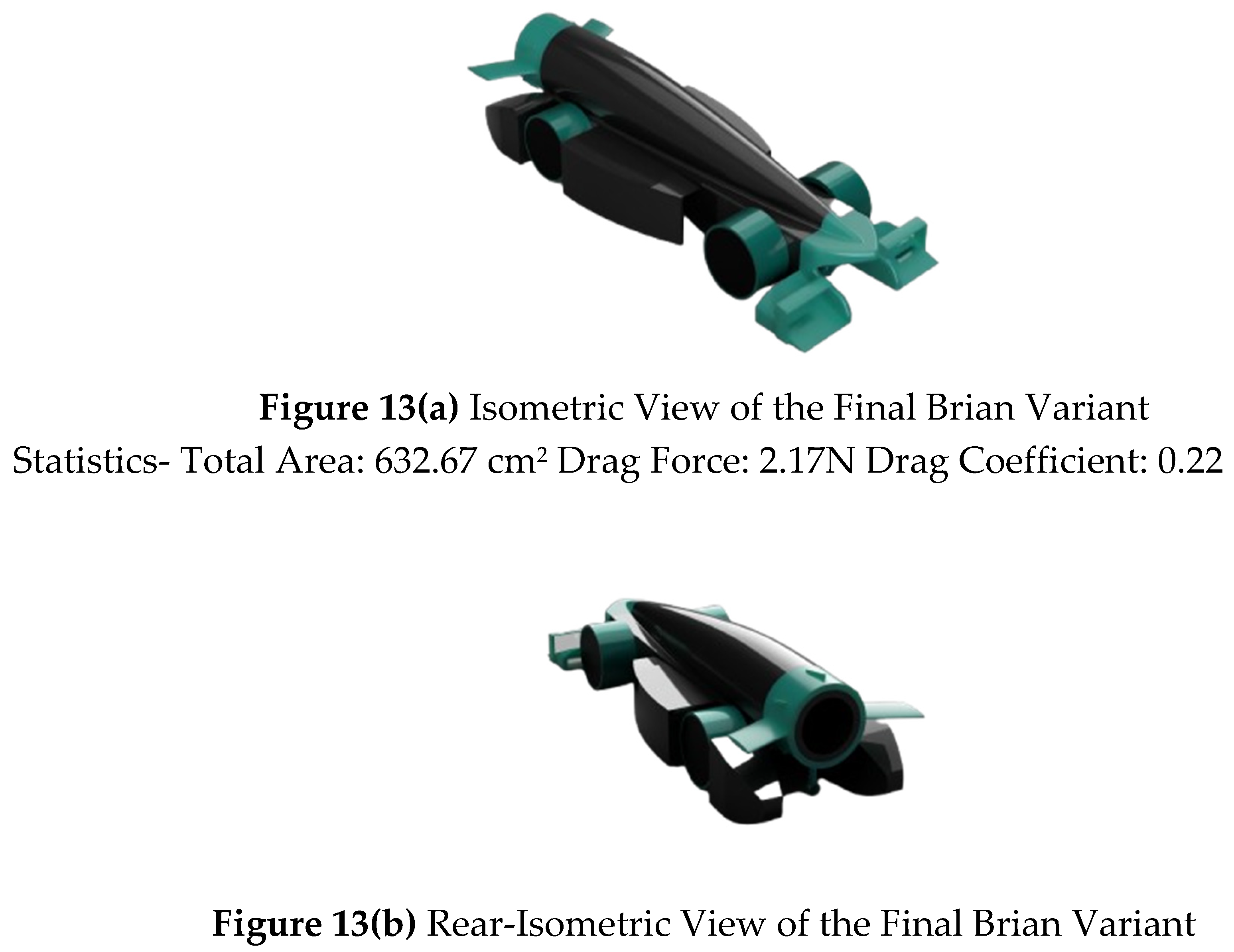
3. Result & Discussion
3.1. Car Body
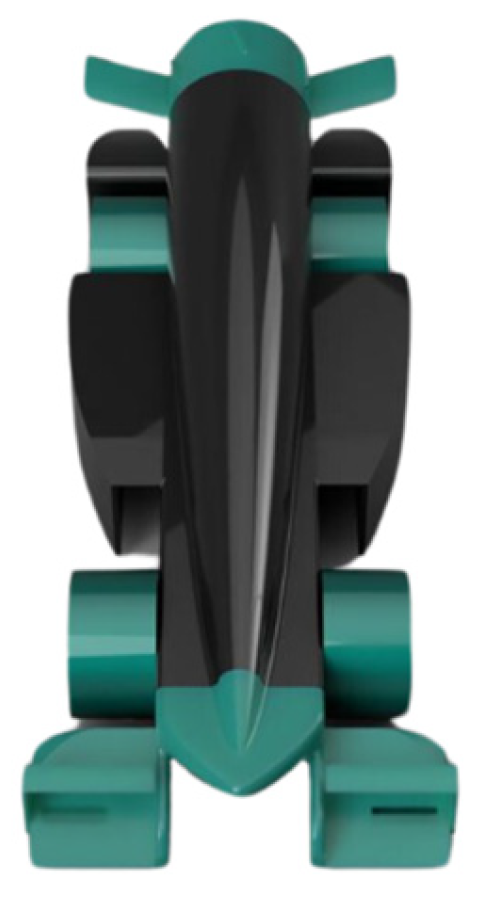
3.2. Front Wing

3.3. Rear Wing

4. Conclusion
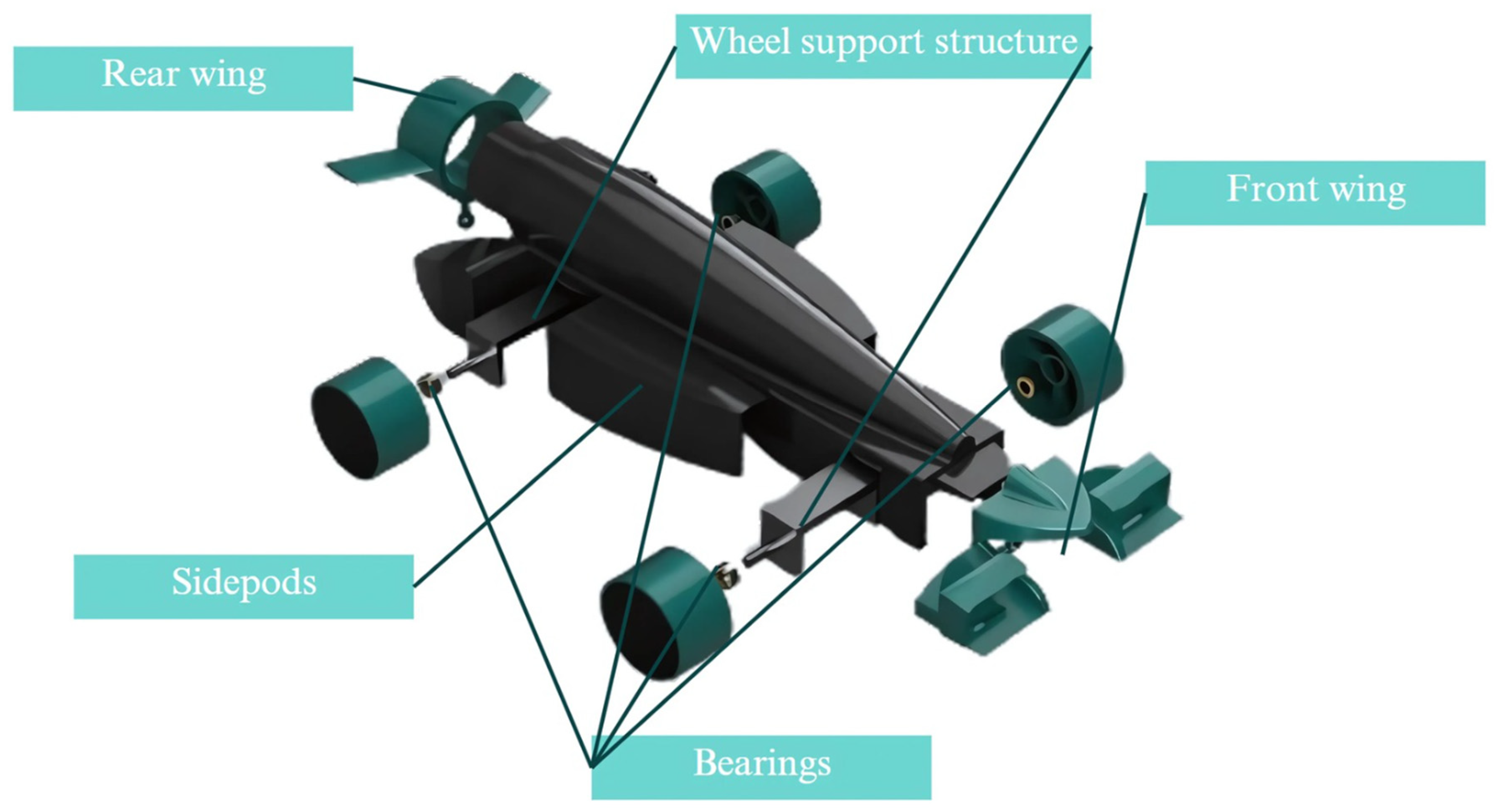


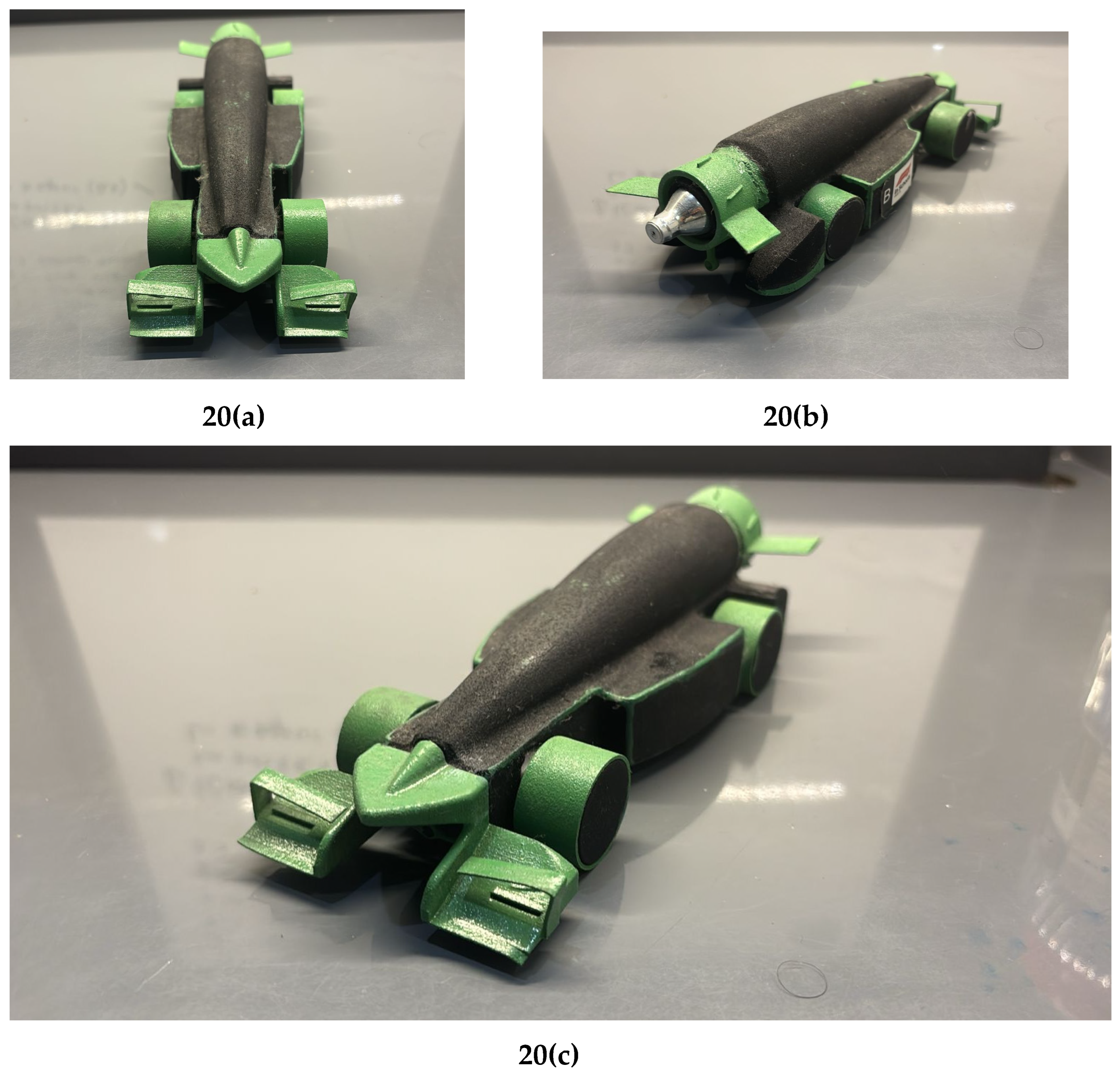
Acknowledgements
References
- Warren FS, Myers M, & Dansie B (2012), F1 IN SCHOOLS – AN AUSTRALIAN PERSPECTIVE, Proceedings of the ASME 2012 International Mechanical Engineering Congress & Exposition. [CrossRef]
- Nyemba, W.R. (2022). Computer Aided Design: Engineering Design and Modeling using AutoCAD (1st ed.). CRC Press. [CrossRef]
- Lim, S. J., & Mansor, M. R. A. (2017). Aerodynamic Analysis of F1 IN SCHOOLS™ Car. Journal of the Society of Automotive Engineers Malaysia, 1(1), 41-54. [CrossRef]
- Dharmawan, M.A. et al., 2020. Design and aerodynamics analysis of rear wing formula student car using 3 dimension CFD (computational fluid dynamics). AIP Conference Proceedings, 2217, p.030166. [CrossRef]
- Prabhu, L. et al., 2020. Aerodynamics analysis of the car using Solidworks flow simulation with rear spoiler using CFD. IOP Conference Series: Materials Science and Engineering, 993(1), p.012002. [CrossRef]
- Slotnick, J. P., Khodadoust, A., Alonso, J., Darmofal, D., Gropp, W., Lurie, E., & Mavriplis, D. J. (2014). CFD vision 2030 study: a path to revolutionary computational aerosciences (No. NF1676L-18332).
- Milanovic, I, Eppes, T, & Wright, K. "Simulation-Based Approach to Science, Technology, Engineering, and Math Challenges." Proceedings of the ASME-JSME-KSME 2019 8th Joint Fluids Engineering Conference. Volume 1: Fluid Mechanics. San Francisco, California, USA. July 28–August 1, 2019. V001T01A045. ASME. [CrossRef]
- Issakhanian, E., Elkins, C. J., Lo, K. P., & Eaton, J. K. (2010). An experimental study of the flow around a formula one racing car tire. [CrossRef]
Disclaimer/Publisher’s Note: The statements, opinions and data contained in all publications are solely those of the individual author(s) and contributor(s) and not of MDPI and/or the editor(s). MDPI and/or the editor(s) disclaim responsibility for any injury to people or property resulting from any ideas, methods, instructions or products referred to in the content. |
© 2024 by the authors. Licensee MDPI, Basel, Switzerland. This article is an open access article distributed under the terms and conditions of the Creative Commons Attribution (CC BY) license (http://creativecommons.org/licenses/by/4.0/).