

Submitted:
25 October 2024
Posted:
28 October 2024
You are already at the latest version
Abstract
Bioavailability, release and stability of pharmaceuticals under physicochemical conditions is the major cause of drug candidates failing during their clinical trials. Therefore, extensive efforts have been invested in the development of novel drug delivery systems able to transport drugs to a desired site and to improve the bioavailability. Hydrogels, and peptide hydrogels in particular, have been extensively investigated due to their excellent biocompatibility and biodegradability properties. However, peptide hydrogels often have weak mechanical strength, which limits their therapeutic efficacy. Therefore, a number of methods in improving their rheological properties have been established. This review will cover the broad area of drug delivery focusing on the recent developments in this research field. We will discuss the variety of different types of nanocarrier drug delivery systems, and then, more specifically, the significance and perspectives of peptide-based hydrogels. In particular, the interplay of intermolecular forces that govern the self-assembly of peptide hydrogels, progress made in understanding the distinct morphologies of hydrogels, and applications of non-canonical amino acids in hydrogel design will be discussed in more detail.
Keywords:
drug delivery
; nanocarriers
; hydrogels
; peptides
; peptide folding
1. Introduction
Drug discovery is an area that is heavily investing in the pursuit of discovering new API to combat various diseases. Thousands of drugs known and used are evidence of this achievement. However, the therapeutic efficiency of many is still low due to a number of limitations, such as poor solubility, proteolytic degradation, and short half-lives in circulation due to instability. This is reflected by the fact that 90 % of drugs that undergo clinical trials never reach the market [1]. The development of new API is a time consuming and an expensive process which may take 10–17 years to reach the market [2]. Therefore, despite significant advances and investments in drug discovery, there are still barriers which limit the full potential of API’s and restrict their implementation in the market.
The therapeutic efficiency of new or old drugs may be significantly improved by the introduction of novel drug delivery systems. Drug delivery is defined as approaches or processes of administering pharmaceutical compounds to achieve a therapeutic effect [3,4,5]. The enteral and parenteral routes are conventional modes of administering drugs [6]. The enteral route of administration entails oral, rectal, buccal or sublingual, while parenteral route of drug administration is through intravenous, intramuscular, transdermal and subcutaneous [3,6,7,8]. Once a drug is administered it undergoes absorption, distribution, metabolism and excretion (ADME) [9]. The enteral route of administration is preferred due to its noninvasive nature, however, the bioavailability of the drug is reduced as the drug undergoes hepatic first pass metabolism in the liver [6].
Advanced drug delivery systems may include special drug delivery vehicles that improve the efficacy of drugs in various ways, such as protection against degradation, improving permeation to various membranes, and slow sustained release over longer durations, thus, limiting the continuous intake of drugs to stimulate a therapeutic effect, which may potentially result in drug resistance. Drug delivery research has been in the spotlight as many delivery vehicles have been developed. One of the promising ways is to use nanocarriers, in particular peptide hydrogels, as a delivery vehicles to improve the efficacy of new or already existing therapeutics without altering the structure and desired effects of the API.
Peptide hydrogels represent a class of nanocarriers with high potential because of the diversity of readily available amino acids which may be used to synthesize various peptide sequence with varying properties. Moreover, such hydrogels are biocompatible as well as biodegradable; therefore, they will not evoke an immune response once administered. However, there are limitations towards the applicability of peptide based hydrogels, such as the stability/strength of the hydrogel, the capacity of drug loading and the release pattern of the hydrogel.
The distinct morphology of peptide hydrogels is still being investigated to improve their properties and drug-delivery capabilities. Moreover, in-depth understanding of the self-assembly process will also shed light into other important natural processes, such as the formation and role of amyloids (markers for neurodegenerative diseases), since there is a similarity in the structure of amyloids and peptide hydrogels.
This review will give an overview of different drug delivery systems and then will focus on hydrogels, in particular peptide-based hydrogelators, used in this capacity.
2. Conventional Modes of Drug Delivery
2.1. Oral drug Delivery
Oral drug delivery is the most common and convenient mode of administering drugs [10,11,12,13,14]. The drug passes through the gastrointestinal tract and absorption takes place in the small intestine where systemic circulation begins [11]. (Figure 1). The low pH (pH 1-2) in the gastrointestinal tract and the first-pass metabolism, which takes place in the intestine and liver, result in low bioavailability and short circulation times (<12 h) of the administered drug [10,11,14,15]. Majority of therapeutic peptides and proteins are not orally administered due to the rapid degradation in the stomach [16]. Drug absorption via the oral route is slow as such, it is not preferred during an emergency [17].
2.2. Sublingual and Buccal Drug Delivery
Sublingual and buccal routes are considered alternatives to the oral route as they bypass both the first pass metabolism and gastrointestinal tract and absorption is via the venous drainage to the superior vena cava by placing the drug under the tongue or between the gums and cheeks, respectively, for absorption into the systemic circulation [17,18,19]. This route of drug delivery is especially attractive for highly soluble drugs that undergo hepatic clearance and degradation in the gastrointestinal tract [17,18]. However not all drugs can be delivered through buccal and sublingual drug delivery [17,18]. The drug may also be prone to swallowing of saliva which leads to loss of dissolved or suspended drugs [17].
2.3. Transdermal Drug Delivery
Transdermal drug administration refers to drug absorption through the skin, providing a slow and steady absorption directly into the circulation system [9,20]. The transdermal application of fentanyl, or other pain medications (opioids), can provide effective pain management over several hours; a scopolamine patch can relieve motion sickness during the duration of a cruise ship [9]. The drug passes through the epidermis and dermis into the dermal layer where systemic absorption takes place [16]. as shown in Figure 2. Transdermal route of administration is non-invasive and it bypasses the gastrointestinal tract and first-pass metabolism [8,16]. Despite the advantages of transdermal administration, there are limitations as the skin absorbs only lipophilic drugs with low MW (less than 1 kDa), high MW drugs require penetration enhancers for their absorption [8,21].
2.4. Intramuscular, Intravenous and Subcutaneous Drug Delivery
Intramuscular administration is injecting a drug into the depth of selected muscles rich in blood supply, while intravenous (IV) is injection of the drug directly into the veins. Both modes of administration allow for the rapid absorption of the drug with intravenous administration being the fastest [20,21,22]. Subcutaneous drug delivery is administration of drugs into the interstitial area underlying the dermis of the skin, where there is slow absorption over an extended period of time as opposed to drugs administered intravenously and intramuscularly [22,23,24,25]. Intramuscular, intravenous and subcutaneous administration circumvent the gastrointestinal tract and bypassing the hepatic first-pass metabolism [21,22]. The primary mode of administering macromolecules, such as proteins, is through intravenous, intramuscular or subcutaneous administration [16,26]. Subcutaneous injection is the preferred parenteral route of drug administration due to the slow release of drugs keeping the plasma drug concentration within the therapeutic window over an extended period of time [22,24,27].
2.5. Limitations of Conventional Modes of Drug Delivery
Conventional modes of drug delivery suffer from a number of limitations (Figure 3), such as poor bioavailability, resulting in a need for high doses and repeated administration of drugs to stimulate a therapeutic effect as was observed with opioids, which are mainly orally administered [2,27]. This, however, results in low overall efficacy, poor patient compliance and side effects because of the fluctuating drug concentration [10]. Transdermal and parenteral pathways are alternatives for delivery. Opioid patches relief pain up to 72 h depending on the physicochemical properties of the drug [27].
An illustrative example is represented by coumarin (1a) and its derivatives (Figure 4), which demonstrate various types of biological activities, being able to serve as antimicrobial agents, antioxidants, anti-inflammatories, anticancer agents, anticoagulants, antiviral agents [28]. Coumarin, however suffers from poor bioavailability; once absorbed only 2–6% reaches systemic circulation as it is rapidly metabolized into 7-hydroxycoumarin (phase I metabolite) and 7-hydroxycoumarin glucuronide (phase II metabolite, suggesting an extensive first-pass effect) [29,30]. Coumarin and its metabolites are excreted via the kidneys with 7-hydroxycoumarin glucuronide (approximately 60% of the ingested dose of coumarin) being the major metabolite [30]. Although coumarin has been applied as treatment for lymphedema due to its anti-edematous effect, due to having a short half-life of 1 hour several cases of drug related hepatitis have been reported because of the overdoses of coumarin. Thus, it has been withdrawn from the market except for the brands with low concentrations of coumarin [31].
There are several key physicochemical properties contributing towards the low bioavailabilty of drugs, as described by Lipinski’s “rule of 5” [3,23,33,34]. The empirical Lipinski’s rule of 5 states that poor absorption of an orally administered drug is likely when one or more of the following rules are violated: the drug molecule has more than 5 H-bond donors (the total number of O-H and N-H bonds) or 10 H-bond acceptors (the total number of O- and N-atoms), the molecular weight is greater than 500, and the partition coefficient between n-octanol and water is greater than 5 [34]. Thus, drugs with higher molecular weight with poor solubility in water have poor bioavailability when orally administered due to inefficient absorption into the systemic circulation [33]. Too hydrophobic drugs are prone to precipitation and must be modified to improve their dissolution in aqueous fluids [29,30]. On the other hand, excessively hydrophilic drugs are susceptible to rapid elimination and are unable to cross the lipid barriers, such as the blood-brain barrier, thus, leading to a reduction in drug bioavailability and life span [29].
Various strategies have and are currently being investigated to improve the bioavailability of poorly absorbed drugs, as it is estimated that between 40% and 70% of new compounds identified in drug discovery are poorly soluble in aqueous media [33]. Numerous promising drug candidates also have a short half-life, like peptides and proteins with a half-life of minutes to hours. Therefore, such drug candidates are regularly abandoned [35,36]. Poorly absorbed drugs restrain the therapeutic efficacy therefore without an efficient delivery formulation, the whole therapeutic process can be rendered useless [4,33]. Consequently, there are studies being carried out to enhance drug absorption by different types of formulation techniques to improve the bioavailability, such as colloidal dispersions and prodrug approaches [33,37].
3. Carrier and Bioprecursor Prodrugs as an Alternative to Overcome Limitations of Drug Delivery
To overcome poor chemical stability, solubility, lack of site-specificity, extensive drug metabolism, permeability of barriers in order to increase the bioavailability of drugs, prodrug approach was invented [32,33]. There are carrier and bioprecursor prodrugs that can be administered through the conventional routes of delivery [33,34].
Carrier prodrugs are drug molecules conjugated to a promoiety, as shown in Figure 5. The promoiety groups are mostly linked by groups such as esters, anhydrides, carbonates, carbamates, imines, and amides that undergo enzymatic and or chemical transformations in vivo to obtain the active drug and releasing the promoiety group as a by-product [32,33,34,35,36]. The prodrug approach is made use of to optimize the bioavailability of new compounds as well as of already marketed drugs [35].
Bioprecursor prodrugs undergo transformation in vivo to generate the active drug [34]. For example, Acyclovir (1b) is a bioprecursor prodrug. It is a nucleoside analogue inhibiting the human herpes virus, including Herpes simplex (VHs) virus, types 1 and 2. Acyclovir undergoes three phosphorylation stages only in infected cells, thus generating an active triphosphate compound[37]. (Scheme 1).
Levodopa (1c) is also an example of a bioprecursor prodrug for dopamine (Scheme 2). Levodopa has been used to treat Parkinson’s disease, a condition caused by deficiency in dopamine, which cannot cross the blood-brain barrier due to insufficient lipophilicity [37]. Levodopa is more polar than dopamine; and has an amino acid character which enables transporters of neutral amino acids (LAT1) present in the body to transport it across the cellular membrane avoiding the blood-brain barrier [37]. Levodopa subsequently undergoes decarboxylation through the action of the aromatic L-amino acid decarboxylase, thus releasing dopamine [37].
It is estimated that approximately 10% of all commercialized drugs worldwide are prodrugs [35,36,37]. However, prodrug activation occurs through uncontrollable enzymatic and chemical transformations, which sometimes fails to release the active drug, while the nature of enzymatic transformations are not fully understood [38]. Prodrugs can also pose challenges for bioactivation in the case were the promoiety group is shielded by steric hindrance, thus making it difficult for the activating enzymes to access and cleave the promoiety group from the active drug [34]. For example, the phosphate ester prodrugs of atazanavir (1d) failed to show significant systemic exposure of their respective parent compounds following oral administration to rats[34]. (Scheme 3).
Prodrugs, which require two successive bioactivation steps to release the active drug, often present challenges. As an example, in the case of 1e, the first activation was fast whereas the second activation with the release of 2e was slow, which resulted in the systemic circulation of two different drug species (Scheme 4). Such a scenario will complicate the pharmacokinetic (PK) profile of the prodrug [34].
Codeine (1f) is an example of a carrier prodrug that is metabolized to three primary metabolites [39]. as shown in Scheme 5. The major metabolic pathway is a glucuronidation while the two oxidative pathways are meditated by cytochrome P450 enzyme system, namely O-demethylation to morphine by CYP2D6 and N-demethylation to norcodeine by CYP3A4 [39]. Codeine has a very low affinity for the µ-opioid receptors, therefore, the analgesic effect is from its morphine metabolite [39,40,41]. Aproximately 5–10% of codeine undergoes O-demethylation to morphine with 5 to 15% of codeine being excreted unchanged in the urine [40,42]. However, the full account of codeine metabolism still remains elusive [43].
4. Nanotechnology in Smart Drug Delivery
Smart drug delivery systems are capable of overcoming the limitations of conventional drug delivery systems and enhance the effectiveness and safety of therapeutic drugs [3,4,44]. Smart drug delivery, also known as targeted or intelligent drug delivery, offer control over drug release and reduces the dosage frequency while maintaining drug concentration in targeted organs and tissues for longer periods of time, therefore, enhancing the therapeutic efficacy [3,12,45,46,47]. Smart drug delivery allows drugs to be delivered at a controlled rate at a site as precisely as possible to achieve maximum efficacy and safety [4,44,45,48]. Thus, smart drug delivery offers a reduction in drug toxicities and improves the overall therapeutic efficacy [49].
Smart drug delivery was revolutionized by the application of nanotechnology in the pharmaceutical and medical field, entailing the use of novel nanosized materials in the medical field currently referred to as nanomedicine [47,50,51,52,53,54]. Nanosized structures have huge potential in a number of applications ranging from nanotechnology to biotechnology [55]. Nanotechnology refers to advanced manufacturing science and engineering of materials at the nanometer scale (1–100 nm) [13,47,52]. Nanosized materials offer more surface area to volume ratio over bulk materials and have a high potential for interaction with systems [13,47]. These materials can also take on various shapes such as globular particles, tubes and rods (Figure 6) and can function as a nanocarrier and be applied in areas such as drug delivery, tissue engineering and as diagnostic agents [6,10,13,47,56].[57]. Nanomedicine has provided an opportunity to make use of drugs that until now would not be administered and, in general, for the creation of new therapeutics [57]. It is now accepted that nanotechnology will contribute towards a growing number of therapeutic arsenals with some nanosized drug delivery carriers having been approved for human use already [58,59]. To date, approximately over 100 nanomedicine-based formulation have been approved by the FDA and EMA with reports suggesting fast annual increase in the number of nanomedicine based formulations [59].
5. Colloidal Nanocarriers in Drug Delivery
Nanocarriers are commonly colloidal nanoparticles of great versatility that function as drug delivery vehicles for the transport of drugs or other substances to a target site [6,62]. Nanocarriers should have the ability to improve the solubility of hydrophobic compounds and render them suitable for parenteral administration. Furthermore, they should in-crease the stability of therapeutics, such as peptides and oligonucleotides [63]. Colloidal nanocarriers exist in various forms and provide endless opportunities in the area of drug delivery. Therefore, they belong to the area of active research and are being increasingly investigated to harness their potential [63].
Colloid is the term coined by Thomas Graham to describe ”pseudosolutions”, the dispersion of one phase into another with a size range of 1 nm to 1 μm. Colloidal systems have often been applied in drug delivery to improve the therapeutic efficacy of drugs [64]. Colloidal drug nanocarriers may be classified as self-assembled lipid systems (emulsions, liposomes, solid lipid nanoparticles, etc.), polymer systems (nanoparticles, micelles, dendrimers, conjugates etc.), drug nanoparticle systems, and procolloidal systems (self-emulsifying oral delivery systems and liquid crystalline sys-tems) [64,65,66].
5.1. Nanocarriers as Organic, Inorganic or Hybrid
Nanocarriers can further be described as either organic, inorganic or hydrid in nature [13]. as shown in Figure 7. Organic nanocarriers may be polymeric structures, micelles, vesicles, liposomes, dendrimers, solid lipid nanoparticles (SLNs), and nanogels [6]. Inorganic nanocarriers are quantum dots, gold nanoparticles, mesoporous silica nanoparticles (MSNs), calcium phosphate, carbon nanotubes, and similar nanostructures [6,47,60,61].
5.2. Organic Nanocarriers
Organic nanocarriers are versatile systems with an ability to conjugate a variety of drugs as well as ligands for drug delivery [6]. Polymeric nanocarriers and liposome mediated drug delivery systems represent the first generation of nanocarriers. They are simple molecular systems with liposomes being developed for drug delivery purposes as early as 1970s [6,62]. Liposomes (also called vesicles) are hollow spherical particles comprised of one or more bilayers, usually made of phospholipids, surrounding an aqueous core (Figure 8) [57,62]. Owing to the presence of hydrophilic and lipophillic domains, they can be used as carriers for both lipophilic and hydrophilic molecules [62]. Liposomes have been investigated for the delivery of vaccine, toxoids, gene, anticancer, and anti-HIV drugs [63]. However, liposomes are not extensively applied due to drawbacks, such as low drug loading efficiency and poor stability [63].
Dendrimers are highly branched polymeric macromolecules with controlled three-dimensional architecture [57]. Most dendrimers possess a hydrophobic core and hydrophilic surface; therefore, drug molecules can be loaded both in the interior and on surface groups, depending on their solubility profiles [63]. Due to their binding characteristics, dendrimers are excellent for drug and gene therapy delivery and are reportedly good carriers for chemotherapeutic agents. However, they are rarely applied because most of them are non-degradable under physiological conditions [13,63]. Therefore, toxicity issues warrants extensive research to be carried out on a potential dendrimer nanocarrier to ensure the highest safety before implementation in the medical field [47].
Micelles are defined as colloidal amphiphilic molecules which assemble into nanosized spherical, ellipsoid, cylindrical or unilamellar structures [62,65,66]. They are composed of amphiphilic monomers in solution, which aggregate and self-assemble at high concentrations (above the “critical micelle concentration”, or CMC), thus forming micelles [65,67]. Micelles have proven to deliver poorly soluble anticancer drugs due to their hydrophobic core–shell and have the ability to deliver the drug at a desired site by enhanced permeability and retention effect [65,67,68]. However, the stability of micelles in the blood stream is concerning, because critical micelle concentration may change after injection due to the change of the solution ionic strength and intermolecular interactions with other molecular species, and the encapsulated drugs may leak out of the supramolecular assembly [65,67]. Micelles also have a relatively low drug loading capacity [67].
Nanoparticles (NPs) are attractive in drug delivery as they can increase the solubility, enhance drug stability, extend circulation time, and aid transport across biological barriers [69]. Polymeric NPs are biocompatible and biodegradable, which allows their application in drug delivery systems [12]. The main characteristic of the polymeric NP is the controlled release of therapeutic agents [13]. Polymeric NPs are not only used as nanocarriers for pharmaceutical drugs but also to deliver proteins and DNA [13]. Polymeric NPs are especially useful as carriers for hydrophobic small molecules, which may be encapsulated directly within the hydrophobic core of the NPs [69].
5.3. Inorganic Nanocarriers
Recently, inorganic nanocarriers, such as mesoporous silica nanoparticles, gold nanoparticles, graphene oxide and black phosphorus, have shown promising results in drug delivery due to their drug loading capacity and stability [70]. In contrast to the inorganic NPs, organic NPs are widely studied, and have outstanding advantages in biocompatibility, but possess major drawbacks, such as instability and a low-drug loading capacity [71]. Inorganic nanocarriers are also traceable, therefore, can be applied in bio-sensing, cell labelling and imaging as well as in diagnostic [6]. The use of metal NPs in inorganic nanocarrier may result in long-term health issues. As shown by several studies, inorganic nanoparticles, such as ZnO NPs, may lead to oxidative stress and DNA damage [6,71].
5.4. Application of Nanocarriers
The application of nanocarriers in drug delivery involves conjugation of particularly low soluble drugs with poor absorption profiles to allow their permeability through the biological barriers as well as to offer protection against degradation by proteolytic enzymes, thus, improving drug bioavailability [8,11,47,72]. This asset is of great interest, especially for biopharmaceuticals, such as peptide and protein therapeutics, which are commonly short-lived because of protein unfolding and fast enzymatic degradation [73]. Nanocarriers also ensure extended residence time of drug in the blood, as observed when solid lipid nanoparticles (SLNs) was conjugated to coumarin, which demonstrates activity against methicillin-resistant S. aureus (MRSA) [8,11,47,54,74]. MRSA causes endocarditis, chronic osteomyelitis and pneumonia [74]. SLNs enhances the therapeutic benefits of coumarin against MRSA infections by enhancing the water solubility of coumarin and offering a controlled release pattern with high coumarin concentrations over an extended period of time [74].
Solid lipid nanoparticles (SLNs) are comparatively stable colloidal carrier systems and exhibit the least toxicity due to the biodegradable nature [63]. They have higher drug loading efficiency, and render the drug more stable in their lipid matrix, as well as provide a controlled release lasting up to several weeks [63].
Anthracycline antibiotic doxorubicin (DOX, Figure 9) is a well-established anticancer drug applied in various chemotherapeutic regimens [75,76,77]. Unfortunately, free DOX has shortcomings of rapid clearance time resulting in low bioavailability, thus requiring high doses, which limit its clinical use due to its accumulation in the heart causing cardiomyopathy, which may lead to congestive heart failure and even death [76,77,78]. An approach to reduce the toxicity associated with DOX and enhance the therapeutic efficacy is to use drug nanocarriers [78,79].
Extensive research has been done on conjugation of DOX with various colloidal systems, such as PEGylated liposomes, polymeric micelles, solid lipid nanoparticles, polymeric NPs, dendrimer complexes attached to liposomes, doxorubicin–PEG–folate conjugates, and, finally, to tumor-specific antibody-tagged liposomes, for the targeted delivery [75]. Liposomal formulations of DOX, namely Doxil®1 and MyocetTM, which are PEGylated and non-PEGylated liposomal DOX formulations, respectively, have been approved for clinical use and are currently on the market [77,81,82]. Several of polymeric NPs loading DOX molecules are currently being evaluated in clinical trials [77]. The major aims of these studies was to enhance the drug solubility and to prolong the residence time in the body, provide controlled and stimuli responsive release, and, preferentially, tumor-specific targeting of the drug [75]. Targeted liposomes are more effective at delivering DOX to the tumor with Lyso-thermosensitive liposomal DOX (LTLD), MM-302, and C225-immunoliposomal(IL)-DOX having reached clinical trials [81].
5.5. Delivery of Drugs Through Nanocarriers
The delivery of drugs by nanocarriers can be achieved either through passive targeting or targeted delivery [56]. as shown in Figure 10. Targeted delivery relies on the attachment of ligands on the nanocarrier surface that bind to specific cell surface biomarkers or receptors [54,56]. They are capable of providing a specific delivery of chemotherapeutic drugs to cancer cells sparing the normal cells from their cytotoxic effects [71]. Passive targeting occurs when the nanocarrier passively reaches the target organ due to physicochemical, pathophysiological and anatomical attributes [83]. This occurs more especially in cancerous cells were the tissues have leaky vasculature and poor lymphatic drainage, i.e., enhanced permeability and retention (EPR) effect, resulting in the accumulation of nanoparticles at the tumor site [57,73,83,84]. The large gaps between adjacent endothelial cells in tumor neovasculature allows for passive targeting to the tumor site, while poor lymphatic drainage leads to enhanced retention of macromolecular therapeutics within the tumor mass [83].
5.6. Release of Conjugated Drugs from Nanocarriers
The release of conjugated drugs from nanocarriers is influenced by the physical and chemical interaction between the drug, nanocarriers and additives [85]. Release of the drug can be through diffusion, solvent (water) dissolution, chemical reaction and through a stimuli response, as shown in Figure 11 [85]. Release through diffusion is driven by differences in concentration across the membrane causing dispersion of the drug through the polymer matrix [85]. The release by solvent happens more specifically when hydrophilic polymers are placed in an aqueous environment resulting in an uptake of water, which causes swelling of the polymeric particles and drug release [85]. Chemical reactions resulting in the release of the drug, such as enzymatic or hydrolytic cleavages of ester or amide bonds, are more common for natural biodegradable polymers, for example, poly(amino acids) and polysaccharides [8,85]. Specially designed stimuli-responsive nanocarriers may respond to endogenous stimuli, such as pH, enzyme, glucose or redox gradient, and to exogenous stimuli, such as temperature and electric field, thus triggering or enhancing release of the loaded drug [3,51,85]. Often more than one mechanism contributes towards drug release from nanocarriers, although one is designed to be more influential than the others [85].
Doxorubicin (DOX) conjugated to N-(1,3-dihydroxypropan-2-yl) methacrylamide (DHPMA) polymer represents a self-aggregation-induced nanoprodrug[76]. (Figure 12). The same corresponds to PEGylated DOX prodrug, which self-assembles into a biodegradable micelles [80]. Both DOX prodrugs are pH responsive due to the hydrazone bond holding together these molecular conjugates. They are split by endocytosis releasing the active component, DOX, intracellularly, which then induces apoptosis of cancer cells mainly through the mitochondrial pathway [76,77]. Thus, the tumor microenvironmental pH variations induce the targeted release of DOX from the nanoprodrug conjugates [76].
5.7. The Effectiveness of Nanocarriers
The primary rationale of using a suitable drug delivery system is its ability to ensure a higher and longer duration of drug bioavailability [47]. The efficacy of smart drug delivery systems depends on the size, shape, hydrophobicity, surface parameters, and several other chemical and physical features of the drugs to be loaded [47]. Ideally, nano scale materials with high biocompatibility and biodegradability are considered excellent drug delivery systems for biomedical applications [47]. The ideal smart drug delivery system should be inert, biocompatible, mechanically strong, comfortable for the patient, capable of achieving high drug loading, safe from accidental release, simple to administer and remove, and easy to fabricate and sterilize, and, last but not least, it should remain stable in the blood [48,85]. The drug delivery system must ensure an efficient delivery of the drug to the targeted cells while preserving the drug’s molecular bioactivity, as well as allow for the control of the kinetics of the drug loading and drug release [71].
6. Hydrogel-Based Nanocarriers
Gels are semi rigid colloidal or polymer network that expands its volume by a fluid. Organogels are gels prepared in organic solvents, such as hexane, isopropanol and sunflower oil, while hydrogels are gels prepared in water [86,87]. Interest has been shown towards hydrogels as opposed to organogels as indicated by the number of related publications with ca. 2250 publications related to organogels during the period 2012-2021 and ca. 71000 for hydrogels during the same period (data from Scopus) [86]. Such a difference is not surprising, since hydrogels can potentially be found in a number of applications within different branches of industry than organogels.
There are over 30 injectable hydrogel products approved by the European Medicines Agency and the US Food and Drug Administration [88]. Due to their appealing properties, they have been applied in many branches of medicine, including cardiology, oncology, immunology, wound healing, and pain management [89,90]. Hydrogels have also been extensively studied in areas such as catalysis, pollutant removal, and energy storage [91].
6.1. Composition of Hydrogels
Hydrogels are a class of soft materials consisting of a 3D network of hydrophilic polymers crosslinked by covalent bonds (chemical gels) or weak intermolecular interactions (physical gels) [92,93]. as shown in Figure 13. The 3D network forms mesh-like structures that afford hydrogels their rich porosity character, with pores commonly being filled by water molecules, but which can also serve as a depot for loading of guest molecules, such as drugs [11,73,94,95,96]. These features dictate their application in drug delivery [90]. Hydrogels differ in mesh sizes, architecture of the molecular framework [90]. The hydrophilic nature of hydrogels is due to the presence of polar groups, such as OH, SO3H, COOH, NH2 and CONH2, which enable hydrogels to absorb large quantities of water resulting in swelling via diffusion [91,97,98,99]. They retain up to 99.5 (wt/vol)% of water forming a viscoelastic structure that resists dissolution due to the cross links between the network, thus making hydrogels solid-like, but still insoluble [11,32,90,93,100,101,102,103,104]. The crosslinks limit swelling of the hydrogel in an aqueous environment [105].
The viscoelastic character of hydrogels makes them deformable and being able to conform to the shape of the surface to which they are applied [95]. These materials are flexible and soft due to their water-rich character [106]. The hydrophilic groups of the hydrogel not only allow for water absorption but also enable interaction with tissues within the body, such as epithelial tissues and mucous membrane [101]. The water holding capacity of hydrogels promotes excellent biocompatibility, serves as a great platform for encapsulating drug molecules, and provides physical similarities to tissues and physiochemical similarity to the extracellular matrix [11,86,95,103,106]. The gel network usually restricts penetration of different enzymes, thus protecting the encapsulated drug from enzymatic degradation and rapid clearance. It leads to the improvement of the general effectiveness of drugs and leads to the reduction of their dosages [11,88].
6.2. Chemical and Physical Hydrogels
Hydrogels are classified into two major classes: chemical or physical hydrogels [11,12,23,47,73,93,104]. as shown in Figure 14. Chemical hydrogels consist of molecular networks held together by permanent covalent bonds, while physical hydrogels consist of reversible networks held together by non-covalent interactions such as H-bonding, electrostatic, π-π stackings and hydrophobic interactions [12,73,93,104]. Such molecular networks are interwoven with each other and stabilized by the cross-links (either covalent in chemical gels or based on weak interactions in physical gels) between molecular chains. Physical hydrogels are responsive to stimuli’s in the local environment, such as temperature, pH, stress and the presence of specific solutes [12]. Initially research focused on chemically cross linked hydrogels from synthetic polymers such as poly(2-hydroxyethyl methacrylate) (PHEMA), poly(3-hydroxypropyl methacrylate) (PHPMA), and poly(hydroxyalkyl methacrylate) [107,108]. In the 1960s Wichterle and Lim applied poly 2-hydroxethyl methacrylate (PHEMA) biomaterial for contact lenses, and it was the first reported polymeric hydrogel to be used for medical applications [109,110]. In the 1970s focus shifted to physical hydrogels, such as PEG-polyester copolymers and poly(N-isopropylacrylamide) (pNIPAAm), which are cross-linked via hydrophobic interactions [107].
6.3. High and Low Molecular Weight Hydrogels
Hydrogels are further classified as either low or high molecular weight [103,104]. Low molecular weight (LMW) gelators have a molecular weight below 1000 Da [112,113]. For example, for a peptide-based hydrogel it means a range of 1 to 20 amino acids [114]. LMW gelators are said to be metastable and often crystallize during prolonged storage, while high molecular weight (HMW) gelators forms stable gels that do not crystallize even after several years [115]. In general, HMW hydrogels (usually polymeric hydrogels) tend to release encapsulated drugs faster than LMW hydrogels [114]. However, HMW hydrogels also have good mechanical properties (strength) compared to LMW hydrogels due to the long polymer chain comprising their structures, thus resulting in HMW hydrogels exhibiting high stiffness [116,117,118]. LMW hydrogels also suffer from low drug loading capacity and insufficient drug release, which influences their therapeutic efficacy [119,120].
6.4. Low Molecular Weight Hydrogels
Irrespective of the limitations associated with LMW hydrogels, interest has been shown towards them due to their versatile nature, their ability to assemble and form various entangled aggregates via non-covalent interactions [120,121]. LMW hydrogels demonstrate different morphologies like fibers, rods, ribbons and nanotubes, and are used to construct attractive tools for biomedical applications [121,122,123,124]. Many LMW hydrogels mimic biological systems, therefore, have been employed in drug delivery, tissue engineering, cell culture, wound healing and biofabrication due to their diversity, ease of preparation, biocompatibility and low toxicity [120,125].
Mechanical properties of hydrogels are critical for their practical applications [126]. Therefore, attempts have been made to stabilize and improve the mechanical strength of LMW hydrogels through a number of methods, such as preparing nanocomposite hydrogel materials, double-network hydrogel, and dual-cross-linking hydrogel [127]. Co-assembly was utilized, as it was observed when acylhydrazone-based hydrogels incorporated bipyridinium units and it was found to form highly stable hydrogels through donor-acceptor charge transfer interactions with electron-rich naphthyl moieties [120]. Co-assembly was also observed when sodium alginate (SA) was incorporated into fluorenyl-methoxy-carbonyl-diphenylalanine (Fmoc-FF) gels, forming a double-crosslinked hydrogel, which lead to better mechanical properties, high stability and good biocompatibility [128]. A series of pyrene–amino acid conjugate hydrogelators were developed and it was reported that a combination of oppositely charged derivatives of pyrene-capped amino acids produced mechanically strong hydrogels [118]. Pyrene and fluorenylmethoxycarbonyl functionalized l-lysine (acting as donor) exhibits charge transfer (CT) behavior when mixed with an electron acceptor such as 2,4,7-trinitro-9-fluorenone (TNF) [118]. Incorporation of metal cations has also been found to improve the gelation properties [118].
6.5. Polymer-Based Hydrogels
There is a great diversity of polymeric materials capable of forming hydrogels from natural, semisynthetic, or fully synthetic sources [92,93]. Their molecular weight is always higher than 1000 DA, therefore, all of them belong to the class of HMW gelators. Synthetic polymers used in the preparation of hydrogels include polyvinyl alcohol (PVA), polyethylene glycol (PEG), poly(ethylene oxide) (PEO), poly(2-hydroxyethyl methacrylate) (PHEMA), polyacrylic acid (PAA), polylactic acid (PLA) and polyacrylamide (PAAm) [101]. as shown in Figure 15. Synthetic polymers form hydrogels that are mechanically robust, resistant to biodegradation, but, however, not biocompatible. Therefore, they require modification such as PEGylation to enhance their biocompatibility except for a few, such as polyacrylic acid, which is naturally biocompatible [32,106,129]. Since then, biocompatible and biodegradable polymers have been extensively studied for biomedical applications, in particular, for the fabrication of drug delivery systems [130]. In particular, immense progress has been achieved in the development of polymeric nanocariers in the form of hydrogels and liposomes [13,131].
Natural polymers are derived from natural sources and exhibit a large diversity in structures and offer a variety of potential applications [133]. Natural polymers used for hydrogel fabrication include polysaccharides, polynucleotides, proteins and polypeptides [32,101,103,125]. They are biocompatible, biodegradable and non-toxic, and, thus, attractive for biomedical applications [32,103,125,127,134]. Peptide based hydrogels have received much attention due to mimicking natural proteins, particularly extracellular matrix proteins [134]. Although hydrogels based on natural polymers possess attractive features, these materials suffer from several limitations, such as poor mechanical strength [127]. Hence, various strategies have been designed to improve the mechanical strength of the hydrogels [127].
6.6. Loading of Drugs into a Hydrogel
Approaches for loading drugs within a hydrogel include non-covalent immobilization and covalent bonding [95,135]. as shown in Figure 16. Diffusion involves adsorption of drugs onto the pores by soaking the pre-formed hydrogel into a drug-containing solution [135]. The drug diffuses into the pores, the effectiveness of the process is dependent on the structure of the pore, the size of the drug, and its chemical nature [135]. The mesh size of the gel network has to be comparable to the size of the drugs being loaded [11]. This approach is most suitable for small molecules that can easily migrate through the relatively small pores of the hydrogel [135]. The mixing method also referred to as molecular imprinting represents the process of mixing the drug, polymer solution, an initiator with or without a cross-linker to allow polymerization, in which the drug will be encapsulated into the mesh of the hydrogel, usually through non-covalent interactions physically trapping the drug within the hydrogel pores [114,135,136]., This method is ideal for loading larger and hydrophobic drugs [114]. Rarely, drugs may also be covalently linked to hydrogels in the presence of cross linking agents to form covalent bonds [90,95,137].
6.7. Interaction Between Loaded Drug and Polymer Chain
Chemical recognition exists through interactions between the polymer chain and the loaded drug with weak intermolecular interactions, such as hydrogen bonding or dispersion forces, creating a balance between strength and responsivity, while much stronger covalent bonds have a poor balance between strength and responsivity often resulting in poor drug delivery due to the non-responsivity to stimuli’s [90,114]. The weak intermolecular interactions are the most common interactions and are more suitable for preserving and for the sustained release of loaded drugs [90,105,114,138]. However, hydrogels need to be stable and inert to maintain the drug’s activity through storage and transport of both the hydrogel and drug [90]. The polymer chains can possess numerous sites for interactions with the loaded drugs and can be pre-designed using diverse physical and chemical strategies [90]. Interactions to bind drugs to the polymer chains can, for example, include electrostatic attraction and π-stacking through hydrophobic domains [90]. The effect of hydrophobic associations were observed when CIP-HCl (Ciprofloxacin) formed stronger interactions with the MBG-1(H-Phe-GIu-Phe-Gln-Phe-Lys-OH) peptide hydrogel due to the presence of hydrophobic domains (phenyl group) on the polymer chain that serve as binding sites (Figure 17) [90,139]. These interactions resulted in the slow release of CIP-HCI compared to the more polar and hydrophilic fluorescein (2g) [139]. The presence of hydrophobic domains on a polymer chain further enables encapsulation of hydrophobic drugs to hydrogels because the release of water bound to the hydrophobic domains is energetically favorable [90].
Electrostatic interactions were made use of on example of an anionic hydrogel, such as alginate hydrogels, were used to deliver cationic, heparin-binding growth factors, such as Vascular endothelial growth factor used to promote tissue regeneration [90]. Sulfonate functional groups are used to increase electrostatic interactions between alginate and protein drugs to extend the release duration [90]. Macromolecules with charges can form multiple ionic bonds with charged hydrogelators through polyion complexation. In this case the release of the charged macromolecules takes place through hydrogel degradation [105]. Obviously, drug binding sites within the polymer chains can influence the rate of drug release [105,133].
6.8. Delivery of Drug-Loaded Hydrogels
Hydrogels loaded with drugs can be delivered via surgical implantation, local needle injection, systemic delivery or intravenous infusion [90]. The choice of hydrogel delivery is based on maximizing the overall efficacy and patient compliance [90]. Hydrogels may also be surgically implanted in the body, in this case resulting in pain and discomfort for the patient, thus limiting their clinical application [89]. Injectable hydrogels have the benefits to overcome such drawbacks [89]. Drugs loaded in an injectable hydrogel can be delivered at a site and remain within the hydrogel network until there is a stimuli or specific activator molecules present in the body or at the site to trigger the drug release [137].
Physical hydrogels are reversible owing to the dynamic competition between pro-assembly weak intermolecular forces (hydrophobic interactions, electrostatic interactions and hydrogen bonding) and anti-assembly forces (solvation and external mechanical stress) [90]. Physical hydrogels pre-formed outside the body can be injected into a body through the needle using a syringe [90,95]. It is possible because the weak non-covalent interactions are reversible, making physical gels deformable under mechanical force, such as shear stress, and enabling their injectability [90,111,140]. The application of mechanical force on physical hydrogels through the needle of a syringe results in disassembly of the non-covalent interactions causing the hydrogel to shear-thin and exhibit a gel to solution transition [73,90,141]. as shown in Scheme 6. After removal of the shear stress a restructuring phase begins, which occurs rapidly as non-covalent interactions reestablish themselves, and the injected mass undergo a solution-to-gel transition, restoring the initial stiffness of the hydrogel [32,73,90,101].
Pre-formed chemical hydrogels are not injectable as they are highly stable with a higher mechanical strength due to the permanent linking covalent bonds, which prevent dissolution of the polymer chains [116,142]. They require either surgical implantation or an in situ gelling method for delivery [73,92,111]. However, chemical hydrogels containing dynamic covalent bonds are reversible, resulting in self-healing and stimuli-responsiveness, therefore, enabling injectability due to the self-healing capability [143,144,145]. Dynamic covalent bonds are capable of associating or dissociating in response to various stimuli. For example the RS-SR bond can be cleaved by reduction, thiol-disulfide exchange or light [144,145]. Hydrazones are stable under neutral and basic conditions but readily hydrolyze under acidic conditions and exchange in the presence of hydrazides, aldehydes or ketones. Several instances of dynamic covalent bonds are shown in Figure 18 [144]. As an example, dextran polymer cross-linked using a dynamic covalent (double Michael addition of thiols to alkynones) impart the dextran hydrogel with shear-thinning and self-healing capabilities, thus enabling hydrogel injection [143].
However, majority of self-healing hydrogels possess poor mechanical properties. Therefore, efforts to strengthen the mechanical properties of self-healing hydrogels have been reported, e.g., by preparing composite hydrogels or through the increase of hydrophobic interactions [144]. Composite hydrogels involve combining a hydrogel matrix with other materials, such as inorganic fillers, organic compounds, or other polymers to improve the mechanical properties [146]. Graphene-based composite hydrogels are comprised of graphene nanosheets within a hydrogel matrix, in which graphene improves the mechanical strength, stiffness, and toughness of hydrogels, enabling their utilization in load-bearing applications. Graphene oxide (GO) is the most widely studied inorganic filler [147]. Unfortunately, the use of such inorganic fillers strongly diminish the biocompatibility of such materials.
Injectable chemical hydrogels that undergo gelation in situ have been reported (Figure 19), whereby a mixture of the polymer and therapeutic drug is mixed with an initiator and a cross linker [148]. The mixture in the syringe is then immediately administrated at a desired site in the body [89,111]. These injectable hydrogels may be prepared in situ using reactions such as the Diels Alder reaction, alkyne-azide click reaction, Michael reaction, Schiff base reaction, photo mediated reactions, or enzyme mediated reactions [89,149]. The in situ gelation enables hydrogels to polymerize with the drug inside the matrix [148]. It is essential for hydrogels to undergo solution-to-gel transition at the site of injection in a precisely time dependent manner when applied in the body to avoid washing out of the drug or individual hydrogel fibers by the body fluids [137]. Injectable chemical hydrogels without dynamic covalent bonds possess higher mechanical strength and longer stability in comparison to physical hydrogels [89,150]. The use of crosslinking agents in injectable chemical hydrogels may limit their application due to the negative effect on biocompatibility, however, recent studies gave access to injectable chemical hydrogels without any toxic cross linker, although their responses to external stimuli was usually limited [89,150].
6.9. Release of Loaded Drugs Through Surface or Bulk Erosion of Hydrogels
Drugs loaded within a hydrogel can be liberated to the surroundings by two different release mechanisms: diffusion or hydrogel swelling. In the first one, the mesh size increases, thus releasing drugs, in the second one degradation of the labile drug-polymer interaction takes place [73,99,149,151]. as shown in Figure 20. Release through diffusion is described by Fick’s law as the most common model of drug release [114,148]. The release of loaded drugs is dependent on the mesh size of the matrix, which is also controlled by factors such as the degree of cross linking, chemical structure of the monomers and intensity of an external stimuli, size of the loaded drug, and mechanical properties of the hydrogel [11,12,148]. Hydrogels applied in the biomedical field usually have a mesh size range of 5 to 100 nm, which is on average much larger than molecular sizes of most of the small molecule drugs [148]. When the mesh size is larger than the drug, the most dominant mode of drug release is diffusion, as the small drugs move freely within the network. However, this often results in the fast release rate of the loaded drug [12,90,148]. When the mesh size is smaller than the loaded drug, as is observed for macromolecules like oligonucleotides, peptides and proteins, the loaded drug remains entrapped within the hydrogel network [148]. Diffusion is suppressed, and release of the drug is dependent on degradation of the hydrogel network [90,91,99,148]. The mesh size increases as the network degrades allowing drugs to sustainably diffuse out of the hydrogel [90]. Degradation is usually meditated by hydrolysis. It can also be triggered by local stimuli, such as acidic conditions, or mediated by enzyme activity. Hydrolysis usually occurs in the polymer backbone or at the cross links [89,90,91,148]. If drugs are covalently bound to the polymer backbone, the bond is usually labile and can be easily broken by hydrolysis or enzymatic degradation (e.g., of an ester bond) [89].
The rate of hydrogel degradation influences the rate of cargo release and may occur through the bulk or on the surface of the hydrogel and is accompanied by loss of hydrogel mass (Figure 20) [90,91]. In bulk erosion, degradation occurs throughout the hydrogel that entails mass loss, whereas in surface erosion, degradation is limited to the surface and proceeds via an erosion front [91,152]. Hydrophilic gels are usually completely permeable to water and undergo bulk erosion, while hydrophobic gels may undergo bulk or surface erosion [89].
Majority of hydrogels undergo bulk erosion due to permeability of the network to water or enzymes, which facilitate degradation. When the rate of water and enzyme diffusion is faster than the rate of bond degradation, degradation occurs simultaneously throughout the bulk of the hydrogel [90,153]. Bulk erosion is homogenous and occurs instantaneously leading to a loss of mass [154]. Polymers with low molecular weight tend to degrade faster; when a large area of the polymer is in contact with water, resulting in an accelerated drug release [153]. Bulk erosion occurs in three phases during drug release: initial drug burst, diffusive phase and final drug burst [153]. The initial burst is due to drugs distributed on and near the surface of the polymer matrix and depends on the surface area of the hydrogel, quantity of drug loaded and the solubility of the drug [153]. High drug loading and hydrophilic drugs are most likely to result in an intense initial burst, which may be adverse especially if high concentrations of the loaded drug is cytotoxic [153].
Surface erosion occurs when the rate of bond breakage is more rapid than the rate of enzyme or water diffusion from the exterior into the bulk of the hydrogel network [90,151,153,154]. Cross linking polymers with hydrophobic groups can inhibit water entry leading to surface erosion of hydrogels being the mode of drug release [90]. Surface erosion is thought to provide more control over drug release than bulk erosion because drug release is regulated mainly by surface degradation of polymers [153]. Degradable hydrogels are particularly advantageous because drug release can be controlled via degradation and there is no need for hydrogel removal once the payload is depleted [155].
7. Peptide-Based Hydrogels
Peptide based hydrogels are a sub group of natural hydrogels that are particularly attractive due to their diversity in the peptide sequence, biocompatibility, ease of biodegradability, low cytotoxicity, ease of synthesis and excellent injectability with thixotropic behaviors [23,55,73,93,100,104,134,139,140,156]. Due to their impressive features peptide hydrogels have attracted much attention for biomedical applications [104]. (Figure 21).
Several peptide hydrogels are commercially available, such as PuraMatrix (Corning), HydroMatrix (Sigma), Biogelx, and PGD-HydroGels (PeptiGelDesign) [142,157]. PuraMatrix, consisting of 16-amino acid sequence (AcN-RADARADARADAR-CNH2) has fiber and pore sizes that are < 10 nm and 5-200 nm, respectively, similar to those of the extracellular matrix [158]. PuraMatrix has been applied in cell cultures, such as the nerve, cartilage, liver, cardiomyocyte and vascular endothelial cells [158].
7.1. Natural Amino Acids
Peptides are versatile building blocks that form highly structured assemblies that may result in the formation of hydrogels and nanoparticles, due to the chemical diversity of amino acids [93,159]. There are 20 canonical α-amino acids that are encoded by the ribosomal machinery for the synthesis of proteins and peptides [160,161]. They represent universal building blocks with different residues appended to the chiral center, as shown in Figure 22 [55,162,163,164]. Protein synthesis relies on the genetic encoding of 20 canonical amino acids, with two non-standard amino acid which are proteinogenic, Selenocysteine (Sec) and Pyrrolysine (Pyl) [33,163,164]. Pyl appear only in proteins of Archaea organisms and a few bacterial genera, while Sec is found in all kingdoms of life as the building block of selenoproteins [164,165].
In nature amino acids exist in two forms of levorotatory (L) and dextrorotatory (D) enantiomers (Figure 23), with different spatial orientation of the four substituents attached to the stereogenic α-carbon [55,166,167]. During evolution, L-AAs became preferred for protein synthesis and main metabolism, hence they are proteinogenic, while D-AAs in most cases are not used for the synthesis of proteins as they are not encoded by the RNA; they are occasionally found in bacterial cell walls, some marine invertabrates and higher organisms [165,167,168,169,170]. Thus, all canonical amino acids exist as L-forms except for glycine which is achiral [55,165,171]. All the L-amino acids have the ’’S’’ configuration except for cysteine and selenocysteine. L-AAs act as substrates for D-AAs synthesis in the presence of the enzyme racemase, which converts L-AAs to D-AAs [168,170]. The change of L-AAs to D-AAs in a protein leads to a change in its structure and, ultimately, its function and biological activity [167].
7.2. Peptide Synthesis
Incorporation of amino acids to form peptides and proteins occurs naturally in living cells. However, they may also be synthesized in laboratories, using precise control over a peptide sequence [125,172,173]. Solid phase peptide synthesis (SPPS) and solution phase synthesis (SPS) are two major chemical techniques used for peptide synthesis [174]. During SPPS (Scheme 7), the resin is used to anchor the growing peptide. Firstly the amino acid is attached to the resin via its C-terminus with the alpha amino group being protected to avoid polymerization [174]. After the addition, the protecting group is removed to allow bond formation with the newly added amino acid which is accompanied by the release of a single water molecule [172,174]. After addition the process is repeated until the desired peptide is formed, then the peptide will be cleaved from the resin [174]. Boc and Fmoc are the most common protecting groups used and are removed under acidic and basic conditions respectively [174]. Various resins have been used in SPPS, for example: polystyrene, Merrifield, hydroxymethyl, phenylacetamidomethyl, Wang, Sieber, Rink amide and 4-methylbenzhydrylamine resins [174,175].
SPPS based on Fmoc chemistry is the most popular choice of synthesizing peptides nowadays [174]. Since the invention of solid phase synthetic methods by Merrifield in 1963, the number of research focusing on peptide synthesis and their applicability has grown exponentially, finally enabling the routine production of peptides on industrial scale [174,175].
7.3. Folding of Peptides
In aqueous solution, peptides fold and adopt specific secondary structures through interactions within the peptide backbone and between the side chains, thus self-assembles into well-ordered structures, from nanosheets and nanotubes on the nanoscale to fiber bundles on the macroscale [143,156]. The ability of peptides to fold differently depends on the amino acid sequence and provides an opportunity to design nanoscale materials that are not easily available with traditional organic molecules and polymers [103].
The most common secondary peptide structures (first stage of peptide folding) are α-helix and β-sheets (Figure 24), both of which are held together and stabilized by hydrogen bonding within the peptide backbone [142,176,177,178]. α-Helices have constant displacement distances between nitrogen (N) and alpha carbon (Cα) of N-Cα = 1.47Å, between Cα and carbonyl carbon (C) of Cα-C= 1.53Å, and C-N= 1.32Å [179]. There are 3.6 amino acid (AA) residues per turn, in which the carbonyl group(C=O) of one amino acids forms hydrogen bonds with the 4th amino acids amide group (N-H), resulting in a helical structure [179,180]. The challenge with α-helices is the need for longer peptide sequences to stabilize the helical structure [180]. β-Sheets are formed when adjacent peptide strands line up next to each other, forming a sheet-like structure held together by hydrogen bonds while the side chains extend above and below the plane of sheet [177,181]. The strands of a β-pleated sheet may be parallel, pointing in the same direction or antiparallel, pointing in opposite directions [178].
7.4. Self-Assembly of Peptides
Self-assembly is very common throughout nature, as observed, for example, in DNA double helix formation and protein folding through secondary, tertiary and quaternary structures, and in the formation of cell membranes upon self-assembly of phospholipids and other amphiphilic molecules [55,182]. Peptide self-assembly is determined by the interplay of thermodynamic and kinetic factors, and the whole process is controlled by the balance of attractive and repulsive forces within and between the peptide molecules [55,103,137,143,156,159,180]. In solution, peptides adopt thermodynamically favorable conformations (e.g., α-helix and β -sheet) in a low-stable energy state, due to inter- and intramolecular non-covalent interactions forming ordered nanostructures [183,184]. Thus, self-assembly of nanostructures is also controlled by thermodynamic parameters, such as pH, temperature, ion concentration and solvents nature [182]. Self-assembly can be defined as a bottom-up construction where the molecular building blocks interact via weak non-covalent interactions (much less frequently via formation of labile covalent bonds, such as imine bonds) and results in the construction of nanostructures with desired function [156,185]. The study and use of such non-covalent interactions belong to the realm of “supramolecular chemistry”, the name that was coined by Jean-Marie Lehn [185,186].
A plethora of peptide-based hydrogels and proteins adopt β-pleated sheet architecture while the α-helix architecture is rarely observed in peptide hydrogels [103,137,187,188,189]. β-Sheet peptides are of particular interest as these peptides allow the fabrication of various stable materials in general and hydrogels in particular [190]. Boden and co-workers proposed principles to design peptides of minimal complexities that self-assemble into β-sheet type aggregates in solution: (i) there must be interaction between the side chains (cross-strand attractive forces) through noncovalent interactions; (ii) lateral recognition between the adjacent β-strands to constrain their self-assembly to one dimension and avoid heterogeneous aggregated β-sheet structures; (iii) strong adhesion of water to the surface of the sheets [191]. Boden’s design principle has been applied to create β-sheet forming peptides through the incorporation of repeats of alternating polar and nonpolar amino acids forming hydrophilic and hydrophobic faces, therefore, creating an amphiphilic character within the peptide structure that allows higher order assemblies [137]. This family of amphiphilic peptides is known to be capable to self-assemble into antiparallel β-sheet-rich fibers and form stable hydrogels [141,192]. The self-assembly process of amphiphilic peptides depends on the balance between the hydrophobic and hydrophilic interactions as well as hydrogen bonding [12].
Boden’s design principles have been applied to synthesize anionic and cationic peptides, such as RAD16 and EAK16 ionic self-complementary oligopeptides shown in Figure 25. They comprise alternating ionic hydrophilic and hydrophobic amino acids that form stable β-sheet structures in an aqueous media [96]. RADA16 is the first commercially available self-assembling peptide hydrogel designed by Zhang et al [96]. Multiple amphiphilic peptides that adopt β-sheet secondary structures in aqueous media, such as KFE8(Ac-FKFEFKFE-NH2), MAX1, MAX8 and P11, are classical examples of designated amphiphilic peptide hydrogelators [23,93,176]. The beta hairpin folding peptide MAX1 was developed by Schneider et al [193].
7.5. Hydrogelation of Peptides
The order of amino acids in a peptide sequence determines the interaction between the side chains and, thus, influence the secondary structure which the peptides assemble into [53]. This refers to the self-assembly of peptides: the ubiquitous spontaneous organization of peptides into more complex ordered aggregates following a hierarchical path with peptide hydrogel being top of the hierarchy [103,137,156,159,180,183,194]. as shown in Figure 26. Therefore, physical peptide hydrogels are dependent on the peptide sequence to lead to secondary structures capable of triggering hydrogelation under favorable environmental conditions, such as pH, ionic strength and temperature [104,137,155,176,195]. The mechanical strength of peptide hydrogels is influenced by the peptide sequence, supramolecular interactions, pH, temperature, and ionic strength of the gelation medium [134,137]. The strength of hydrogels increases due to the degree of cross-linking: the more cross-links are present, the stiffer the hydrogels and more brittle they may be [142]. The strength of peptide hydrogels is determined using the methods of rheology, and rheological properties dictates hydrogel applicability for a particular purpose [137]. Rheology determines the deformation of matter under the influence of imposed stress [196]. Modifications of the peptide sequence or additives in the peptide hydrogel can alter the mechanical strength of peptide hydrogels [137].
Minimalistic dipeptide-based hydrogels are popular, however, they typically require the presence of additional aromatic groups attached to the dipeptide to enhance gel formation as well as gel mechanical strength [197]. This was observed with L-Phe-L-Phe (FF) peptide, which is a popular building block for hydrogel synthesis. However, FF cannot gelate into a hydrogel in the absence of aromatic groups, such as Fmoc attached to it, otherwise it forms crystalline nanotubes [94,104]. Fluorenylmethyloxycarbonyl-protected diphenylalanine (Fmoc-FF) developed by Ulijn and colleagues forms a hydrogel. As it was confirmed by Smith and coworkers, Fmoc-Phe-Phe self-assembles into nanocylindrical fibrils based on π-π interlocked antiparallel β-sheets [123,137,188]. The Fmoc group provides the driving force for peptide self-assembly by enhancing intermolecular interactions through an establishment of hydrogen bonding from the carbonyl group and hydrophobic interactions (π–π stacking) through the fluorenyl group [180,197]. The influence of Fmoc was also observed in Fmoc-Phe-DAP hydrogel, which exhibit stable mechanical property and robust shear-thinning behavior [197].
Amphiphilic peptides, such as KFE8 (Ac-FKFEFKFE-NH2), self-assemble in an aqueous solutions adopting a β-sheet conformation as observed with H-FQFQFK-NH2 and the doubled hexamer H-FQFQFKFQFQFKNH2 (dodecamer) (Figure 27) [23,140,176]. The π–π stacking of the aromatic residues (phenyl groups) trigger the start of aggregation of the extended β-strands forming a β-sheet bi-layer thus shielding the hydrophobic residues from the aqueous environment [23,134,176,188]. The β-sheet bilayer self-assembles into nanostructures in this case nanofibers (1D aggregates) as shown in Scheme 8 [100,140]. The β-pleated sheets are recognized as the main contributor for nanofibers and nanotube formation [53]. The hydrophilic residues is exposed to the aqueous environment and participates in electrostatic interactions because of the presence of charged amino acids allowing for the interaction between fibers and ions [134,140,176,180].
The charges on the hydrophilic residues influence self-assembly, as they can induce an electrostatic repulsion or attraction, depending on the pH of the media. Therefore, when this interactions are balanced, peptides self-assemble into nanofibers and further into hydrogels [140]. This phenomena was observed in the K2 amphiphilic peptide of K2(SL)6K2 (Figure 28), which undergoes hydrophobic packing of the leucine residue giving rise to a β-sheet reinforced by backbone-centered hydrogen bonding, whereas charge−charge repulsion at each termini opposes assembly [198]. Ionic strength of the media acts as a self-assembling trigger to balance the two competing interactions [198]. At low ionic strength the K2 peptide does not undergo hydrogelation, and the solution remains in a liquid state [198]. At high ionic strength conditions, the K2 peptide undergoes hydrogelation and transitions from a solution to a hydrogel [198].
It was observed by Stupp et al. that changes in pH and concentration can transform the nanobelts into twisted ribbon due to an imbalance of the electrostatic repulsions and hydrogen bond interactions [182]. In addition, changes in pH can result in protonation of histadine residues resulting in the disassembly of nanofibers under acidic enviroments (Figure 29a) [182]. The influence of pH on the peptide folding and self-assembly was also observed by Xing et al. in which under alkaline conditions the β-sheets within the self-assembled Fmoc-FF nanofibers transformed into an α-helix [134].
The presence of ions can also induce a salting out effect, leading to hydrophobic association, which kick starts the formation of peptide nanofibers and triggers the solution to gel [137]. The presence of ions may also trigger or enhance hydrogelation, because the individual peptide nanofibers self-assemble through bundling and establishing physical cross links amongst each other by hydrogen bonds and electrostatic interactions among the nanofibers, forming a 3D network of peptide hydrogels stabilized by non-covalent forces [100,180,187,188,199,200]. Ionic strength increases the mechanical robustness of hydrogels by increasing the cross links of polymer chain entanglements [201].
The π−π interactions between the phenyl groups within the hydrophobic core of KFE8 (Ac-FKFEFKFE-NH2) and H-FQFQFK-NH2 have been found to strengthen the β-sheet-rich fibers (Figure 35), thus stabilizing and enhancing the mechanical strength of peptide hydrogels [134,142,176,189,202]. Non-aromatic peptides formed weaker hydrogels than those containing aromatic moieties [137]. Halogenated aromatic groups, such as halogenated phenylalanines, within a hydrogel-forming peptides (Figure 30), were found to further increase the strength of peptide hydrogels, in comparison with those shown in Figure 27, by enhancing the affinity between the aromatic groups [203]. Halogenated phenylalanines lead to stronger stacking interactions with heavier halides (F < Cl < Br < I) thus increasing the mechanical strength of the peptide hydrogel in comparison with the aromatics substituted with lighter halides (F) [203].
The mechanical properties of hydrogels are important for structural support and functional purposes [204]. However, Stupp and Meijer have shown that increasing the hydrophobic strength and reducing the hydrogen bonding ability leads to structural transformations of the aggregates from an open β-sheet network and nanofibers to elongated micelles (Figure 29b) [182].
7.6. Lego Game: Understanding the Influence of Functional Groups on the Gelation of Hydrogels
In 1921, Gortner and Hoffman discovered that dibenzoyl-L-cystine (1h) forms a strong aqueous gel. Several decades later, 14 derivatives (Figure 31) were synthesized as potential gelators in an attempt to understand the influence of various functional groups on gelation. This study serves a good example of a systematic approach to investigate the influence of the substituents on an amino acid based gelator. The carboxyl protons in 1h were found to have no significance on gelation efficiency, as 14h was able to gelate in the presence of an ester. Gelator (4-7h, 10h, and 11h) are amides of the carboxyl group (R) and were found to gelate at a faster rate. It was also observed that amides tend to be less water-soluble than the parent gelator 1h. Gelator 10h, with primary amides and naphthoyls, was found to be the best gelator in the series, this could be due to the π/π stackings of the large naphthalene groups stabilizing the gel fibers [197].
Gelator 13h formed crystals, which showed a linear stacking with each unit connected to the one above and below it by two hydrogen bonds each. The amide-NH’s serve as hydrogen-bond donors, whereas carboxyl carbonyls serve as the hydrogen-bond acceptor. The aromatic rings are situated one above another through π/π stacking which further contribute towards the fiber’s stability. It was assumed that if a similar packing pattern existed in a gel, then a stronger gel could be produced by accentuating the hydrogen-bonding acceptor capabilities of the carbonyl. However, neither the highly electron-rich 8h nor the electron-poor 9h were found to be good gelators. Such behavior was not expected, and it could be due to the delicate balance between gelation and crystallization [205]. As Brandon stated in 1920 that gelation is an incomplete crystallization, and LMW gels are a solid-like network having a degree of crystalline order with a highly mobile liquid-like phase [197,206].
7.7. Self-Assembly of Peptide Hydrogels at the Molecular Level
The mechanism that leads to distinct network morphologies during the self-assembly of peptide based hydrogels is still being investigated in order to better understand how the intricate balance of different weak intermolecular interactions influence the process of gel formation [176]. Computational methods have been used to reveal the relationship between molecular chemical structure and self-assembly processes as well as assembled morphologies, while high resolution AFM has been used in visualizing and unraveling the molecular organization of self-assembling peptide based hydrogels on a molecular level [176,207].
Thermodynamic and kinetic studies are important in understanding the peptide gelation process [201]. The kinetic of self-assembly for fibril formation proceeds from lag phase to growth phase and finally plateau regime (Figure 32) and is dependent on the ability to overcome energy barriers to transition between different phases [201,208]. At time zero during the self-assembly process peptide monomers and small amounts of oligomers are only present, and they undergo a structural rearrangement process to form a molecular aggregate (nucleaus) leading to ordered protofilament (seed), which co-exist with monomers; this process is termed primary nucleation [93,176,209,210,211,212].
In classical nucleation theory the small aggregates of monomers have high interfacial energy towards water; the individual monomers which assembled to form an aggregate have a high probability to dissociate back to their component monomers [209]. However, some aggregates, such as a critical nuclei, can persist and eventually mature to act as a seed for fibril growth [214]. Critical nuclei is the smallest aggregate with the highest Gibbs free energy, and grows faster by monomer addition than it dissociates back to smaller aggregates and monomers [209,215].
The self-assembled aggregates emerge through the spontaneous association of monomers [209]. This process of seed formation (fibril nucleation) is typically slow, characteristic of a lag phase with a high free energy barrier [209,211,216,217]. The concentration of free monomers is approximately constant due to not being depleted by growing aggregates during primary nucleation [209,218]. Primary prefibrillar aggregate starts fibril formation independent of previously formed fibrils [176]. This process involves only monomers. It may be a homogenous reaction that is monomer-dependent for new fibril formation, or may be heterogeneous, in which formation of a nucleus is catalyzed by a surface, such as the vessel wall or any surface present in the system: a phospholipid membrane, nanoparticles or the air−water interface [93,214,215,219].
Once a protofilament or protofibril has reached a critical size, it can serve as a template for the addition of more peptide monomers towards the end of preformed fibrils, supporting fibril growth via elongation. This process is referred to as secondary nucleation. It results in the formation of mature fibrils followed by a fast growth phase, when the fibril mass concentration increases rapidly [93,210,211,216]. Secondary nucleation exists in the presence of a seed aggregate of monomers. Therefore, secondary nucleation is not the same as heterogenous primary nucleation; however, they both speed up the aggregation process [215]. Formation of new fibrils can also be catalyzed by existing fibrils, whereby monomers add to the end of existing fibrils or through fibril fragmentation that forms multiple small fibrils, which have growth sites that serve as nucleation points, thus exponentially increasing fibril mass during fibril elongation [176,210,214]. Fibril fragmentation may be due to a number of factors, such as thermal fluctuations or mechanical stress [214]. During the growth phase, the free monomers become depleted as the aggregate mass approaches saturation [218]. The rate of secondary nucleation is dependent on the concentration of both monomers and fibrils in solution, while fragmentation is a monomer-independent process, which depends only on the concentration of fibrils [93].
The morphology of KFE8 (Ac-FKFEFKFE-NH2) peptide studied on the solid–liquid interface using AFM on a mica surface revealed that fibril formation was catalyzed by existing fibrils [176,220]. Furthermore, fibril formation for the peptide hydrogelator SgI37-49 was also observed to be governed by the secondary nucleation of monomers on the surface of existing fibrils [93]. This observation was supported by a simulation study, which found that the number of β-sheets per fibril increases over time, indicating that already formed β-sheets are being added to the fibril’s side [216]. The kinetics of fibril formation (secondary nucleation) depends on a range of physicochemical parameters, such as peptide concentration, solvent, ionic strength, pH, temperature and the presence of a surface [93,211]. The increase in fibril mass concentration is typically driven by the growth of existing aggregates, which occurs through the elongation of protofibrils and fibrils by the addition of monomers to their termini [93]. The rate of secondary nucleation quickly becomes much greater than that of primary nucleation [93]. As the total mass of aggregated peptide increases throughout the lag phase, the rate of fibril-catalyzed secondary nucleation process increases exponentially [93]. The growth phase consists of the rapid consumption of the available monomer and a concurrent increase in total aggregate mass [93]. Monomeric peptides are quickly consumed during the growth phase, causing the rate of primary nucleation to fall and secondary nucleation dominates [216]. The rate of secondary nucleation, which is heavily dependent on monomer concentration, reaches its maximum shortly after the start of the growth phase [93].
Primary nucleation involves monomers only and may occur in bulk or on a foreign surface [215]. The influence of surfaces on self-assembly is another factor that must be considered in the kinetic studies of hydrogel fibril formation, as evidenced by the heterogeneous nature of SgI37-49 primary nucleation [93]. Surfaces have been shown to be capable of accelerating and retarding the self-assembly of peptides, as was observed by the AFM on the self-assembly of KFE8 (Ac-FKFEFKFE-NH2) on a mica surface versus in bulk solution [93,176]. Fibril formation of KFE8 (Ac-FKFEFKFE-NH2) on the mica surface started rapidly after the injection of the peptide solution due to the presence of a nucleation seed, adsorbed to the mica before injection of new material, showed to initiate fibril formation, and a network was formed rapidly without intermediate morphologies [176]. While in bulk solution, a globular peptide aggregate of different sizes was the first observed structure possibly comprised of peptides aggregates in an unorganized manner leading to the formation of higher ordered aggregates and intermediate morphologies in a slower rate as observed when helical ribbons transitioned into nanotubes [176]. This was also confirmed by MD simulation calculations of free energy by Sayar and Hess et al. upon the absorption of amphiphilic peptides from bulk to the air/water interface. It was found that there is competition between the dehydration of hydrophobic side (driving force) and loss of orientational degrees of freedom of amphipathic peptides at the air/water interface (opposing force) [182]. The presence of air/water interface could assist to distinguish the hydrophobic and hydrophilic domains, resulting in stable peptide structures, thus facilitate peptide self-assembly [93,182].
Still, there are a number of factors that present challenges for the development of mechanistic descriptions of hydrogel self-assembly, such as the molecular mechanism of the two nucleation processes [93,215]. Understanding the mechanism of secondary nucleation at a molecular level is still elusive [217]. The development of kinetic models of filamentous self-assembly that account for changes in viscosity and diffusion rate during the course of aggregation would greatly facilitate mechanistic investigations of hydrogel fibril formation [93]. The molecular events underpinning the early stages of transition from peptides into fibrillar structures and subsequent growth have remained challenging to elucidate [208]. Focus has also been on fibril formation, without considering the effects of gelation on the self-assembly, and It has been shown that the two processes can function concurrent [93].
An understanding of the distinct morphology of peptides hydrogels has broad application as they spontaneously self-assemble into amyloid-like fibrils which are found in neurodegenerative diseases, such as Alzheimer’s disease and Parkinson’s disease [221,222,223]. Therefore, peptide hydrogels are often used as in vitro models for amyloids [224]. This is possible because at the atomistic length-scale, amyloid fibrils are similar to peptide-based hydrogels due to the β-sheet-rich fibrillar structure [176,189,212,223]. The mechanisms through which amyloid-β causes neurotoxic effects are still under a heated debate. It is considered that self-assembling peptide hydrogels can be used to elucidate the mechanism through which amyloid aggregates disrupt normal neuronal phenotype and function [212,222,223]. Therefore, understanding the self-assembly of peptide hydrogels can also help with the elucidation of the role of amyloids in neurodegenerative diseases.
8. Non-Canonical Amino Acids and Their Applications in Peptide Hydrogels Results
The best gelators are compounds which, although poorly water-soluble, are not so insoluble that they precipitate or crystallize rapidly [197]. Fine tuning of molecular structures may be needed to achieve the best gelating properties. Non-canonical amino acids have been exploited to increase the number of available peptide building blocks and this way to improve and fine-tune hydrogel formation by enhancing secondary structures, which should ultimately result in higher gel stability [164,187,225]. The incorporation of non-canonical amino acids into a peptide sequence with their broad diversity of side chains leads to peptides that self-assemble into various nanostructures with a great diversity of architecture, chemical function and a high degree of tunability [103,159,173].This section may be divided by subheadings. It should provide a concise and precise description of the experimental results, their interpretation, as well as the experimental conclusions that can be drawn.
8.1. Natural and Synthetic Non-Canonical Amino Acids
There are over 120 non-canonical amino acids (ncAAs) found in natural proteins, however, they are not directly encoded by the genetic code and, hence, are non-proteogenic [163,226]. (cannot be directly included into protein molecules during the translation process). Non-canonical amino acids are often secondary metabolites of canonical amino acids (Figure 33). Non-canonical amino acids may also be synthesized in the laboratory using the asymmetric Strecker reaction or through direct chemical modification of canonical amino acids, in which reactive cysteine and lysine are mostly used due to their strong nucleophilicity [162,164,195,226,227]. Non-canonical amino acids impart distinct chemical and biological properties, such as greater stability in vivo, because the enzyme-based chemical machinery in living organisms is tailored to work with the common canonical amino acids [228]. As such, this motivated extensive research into the development and refinement of efficient methods for their preparation [229].
8.2. Synthesis of Non-Canonical Amino Acids
Currently there is a multitude of chemical pathways to prepare non-canonical amino acids. The classic Strecker reaction was developed in 1850 and it was the first synthetic approach to (racemic) amino acids [229]. It was carried out by the condensation of aldehydes, ammonia and hydrocyanic acid producing aminonitriles, which were converted to amino acids by acidic hydrolysis [229]. The classical Strecker reaction yields racemic products, while Bucherer-Bergs synthesis with enantioselective enzymatic kinetic resolution by hydantoinases yielding enantiopure non-canonical amino acids[231]. (Scheme 9). The use of enzymes has emerged as a versatile approach for the synthesis of ncAAs and several other approaches are presented [228]. (Figure 34).
Among the myriad of methods for the synthesis of nCAAs, the asymmetric Mannich-type reaction of α-imino carboxylic acid derivatives is a common strategy because a wide variety of non-canonical amino acids can be accessed by changing only the nucleophile (Scheme 9), in which α-imino carboxylic acids is generated by oxidizing N-PMP glycine ethyl ester 1l with MnO2, giving rise to the desired imino ester 2l, which is coupled with an asymmetric Mannich-type reaction by adding the nucleophile (1,3- dicarbonyl compound 2m) and bifunctional amino thiourea catalyst in a one-pot reaction [195].
In particular, Negishi cross-coupling reactions of halo-serine derivatives allows access to a wide variety of chiral non-canonical amino acids [232]. using affordable serine as the starting material. Negishi cross-coupling reactions allow two, often readily available, halogen containing building blocks to be coupled together through a halo-zinc intermediate in the presence of a palladium catalyst (Scheme 10) [232].
Last but not least, non-canonical amino acids can be prepared by the attachment of substituents to the canonical amino acids with reactive functional groups, such as lysine (-NH2), serine (-OH), aspartic and glutamic acids (-COOH) using standard methods of amide / ester synthesis and appropriate functional group protection/deprotection strategy.
8.3. Application of Non-Canonical Amino Acids in Hydrogelators
Interest towards non-canonical amino acids has emerged due to their applicability within the attractive scaffold of natural peptides, which is widely applied in the field of synthetic biology, pharma, bio-imaging, biosensors, medicinal applications and organocatalysts design [228,231]. NcAAs are widely used to increase the number of chemical functional groups in canonical amino acids which constrains the bioactivity of peptides [233]. The significance of ncAAs was demonstrated above (Figure 30), when the incorporation of halogenated phenylalanine into the hexapeptide hydrogelator improved the mechanical strength of the peptide hydrogel.
Fmoc-Phe does not readily self-assemble in water however, monohalogenated (F, Cl, Br) derivatives of Fmoc-Phe (Figure 35) were found to enhance the efficiency of self-assembly of these amino acid derivatives (relative to Fmoc-Phe) to promote hydrogelation in aqueous solvents [224]. The position of halogen substituents (ortho, meta, para) and the nature of halogen itself (F, Cl, Br) influenced the rate of self-assembly and the mechanical strength of the hydrogel [224].
The group of Bradley L. Nilsson studied the impact of substitution in the para position of Fmoc-Phe by a nitro (NO2), a cyano (CN), a methoxy (OMe), and a trifluoromethyl (CF3) on hydrogelation (Figure 36) [187,224]. All these para substitution modifications improved the mechanical strength of the resulting gels, especially for Fmoc-(pNO2-Phe) (1p). Fmoc-pentafluorophenylalanine (5p) was found to also undergo hydrogelation in an aqueous solutions at accelerated rates relative to that of Fmoc-Phe. In this way, the use of a pentafluorinated phenylalanine (Fmoc-F5-Phe) (5p) was considered in oligopeptide hydrogelator (6p) [187].
Non-canonical amino acids were also incorporated in antimicrobial peptides (AMPs) and were found to increase the bioavailability, organism selectivity, metabolic stability, overall toxicity, and control of charge distribution over natural AMPs [173]. The incorporation of non-canonical fluorinated amino acids into peptides and proteins has been shown to increase their enzymatic stability [232]. The enhanced peptides resistance against chemical and enzymatic degradation is due to the pronounced helix which is responsible for membrane destabilization, promoted by the presence of non-canonical amino acids [229].
Non-canonical amino acids were found to be capable of acting as enzyme inhibitors, for example, α-methyl-4-carboxyphenylglycine (M4CPG) was the first compound to express antagonist action at group II and group III metabotropic glutamate receptors [229]. Therefore, ncAAs should be leveraged to access the seemingly endless source of peptide chemical diversity [160]. However, the use of ncAAs can sometimes results in proteins with improper functions. For example, L-azetidine-2-carboxilic acid (Figure 37) found in sugar beets is a toxic homologue of proline that, if consumed during pregnancy either in pure form or incorporated in a peptide, is believed to cause sclerosis in newborns [164,230].
9. Conclusions
Smart drug delivery using nanocarriers has offered an approach to improve the effectiveness of therapeutic drugs. Among the other prolonged drug delivery systems, physical peptide hydrogels represent the class of rapidly developing nanocarries with high application potential due to their biocompatibility, ease of preparation and drug release profiles. Most hydrogels have a self-healing character which is desirable as it enables hydrogels to be deformable. However, this character is often associated with low mechanical strength. Therefore, a number of new approaches are currently being investigated to improve the mechanical strength and drug loadings, such as the incorporation of non-canonical amino acids, which in most cases is aimed at improving the hydrophobic interactions between peptide chains in hydrogels. The mechanical strength should not be increased at the expense of the self-healing character of hydrogels, as such will result in brittle hydrogels that crystalize or precipitate out of solution.
The morphology of peptide hydrogel network determines the mechanical properties, however, the mechanism behind the hierarchical self-assembly and cross-linking leading to the formation of the hydrogel network is still not yet well understood in fine detail and is currently under investigation by various research groups. Our understanding of how the morphology of peptide hydrogels emerges during the self-assembly process will lead to an ability to design and create peptide hydrogels with specific qualities of interest. In particular, this knowledge should result in the development of a computational model which will allow the predesign of desired hydrogels, to predict the hydrogels characteristics, and to obtain hydrogels that fit the required criteria.
A lot has been learned, developed and improved about hydrogels since their discovery. Their practical application in several research areas, such as drug delivery and tissue engineering, is constantly increasing, and active research is aimed to further improve and functionalize hydrogels as well as widen their practical application.
Author Contributions
Conceptualization, A.R.M. and V.A.A.; resources, V.A.A.; data curation, X.X.; writing—original draft preparation, A.R.M. and V.A.A.; writing—review and editing, A.R.M. and V.A.A.; funding acquisition, V.A.A All authors have read and agreed to the published version of the manuscript.
Funding
This research was funded by NRF, grant UID 120464 and Avacare (ARM PhD bursary).
Acknowledgments
We are very grateful to NRF and Avacare for their financial support.
Conflicts of Interest
The authors declare no conflict of interest.
References
- Sun, D.; Gao, W.; Hu, H.; Zhou, S. Why 90% of Clinical Drug Development Fails and How to Improve It? Acta Pharm. Sin. B 2022, 12, 3049–3062. [Google Scholar] [CrossRef] [PubMed]
- Murteira, S.; Ghezaiel, Z.; Karray, S.; Lamure, M. Drug Reformulations and Repositioning in Pharmaceutical Industry and Its Impact on Market Access: Reassessment of Nomenclature. J. Mark. Access Heal. Policy 2013, 1, 1–20. [Google Scholar] [CrossRef] [PubMed]
- Sultana, A.; Zare, M.; Thomas, V.; Kumar, T.S.S.; Ramakrishna, S. Nano-Based Drug Delivery Systems: Conventional Drug Delivery Routes, Recent Developments and Future Prospects. Med. Drug Discov. 2022, 15, 1–21. [Google Scholar] [CrossRef]
- Shivakalyani Adepu, S.R. Controlled Drug Delivery Systems : Current Status and Future Directions. Molecules 2021, 26, 1–45. [Google Scholar] [CrossRef] [PubMed]
- Tiwari, G.; Tiwari, R.; Bannerjee, S.; Bhati, L.; Pandey, S.; Pandey, P.; Sriwastawa, B. Drug Delivery Systems: An Updated Review. Int. J. Pharm. Investig. 2012, 2, 2–11. [Google Scholar] [CrossRef]
- Chamundeeswari, M.; Jeslin, J.; Verma, M.L. Nanocarriers for Drug Delivery Applications. Environ. Chem. Lett. 2019, 17, 849–865. [Google Scholar] [CrossRef]
- Ezike, T.C.; Okpala, U.S.; Onoja, U.L.; Nwike, C.P.; Ezeako, E.C.; Okpara, O.J.; Okoroafor, C.C.; Eze, S.C.; Kalu, O.L.; Odoh, E.C.; et al. Advances in Drug Delivery Systems, Challenges and Future Directions. Heliyon 2023, 9, 1–17. [Google Scholar] [CrossRef]
- Jeong, W.Y.; Kwon, M.; Choi, H.E.; Kim, K.S. Recent Advances in Transdermal Drug Delivery Systems: A Review. Biomater. Res. 2021, 25, 1–15. [Google Scholar] [CrossRef]
- Ernstmeyer, K. Chapter 1 Pharmacokinetics & Pharmacodynamics. Available online: https://www.ncbi.nlm.nih.gov/books/NBK595006/ (accessed on 1 February 2024).
- Dinh, L.; Yan, B. Oral Drug Delivery via Intestinal Lymphatic Transport Utilizing Lipid-Based Lyotropic Liquid Crystals. Liquids 2023, 3, 456–468. [Google Scholar] [CrossRef]
- Bhutani, U.; Basu, T.; Majumdar, S. Oral Drug Delivery: Conventional to Long Acting New-Age Designs. Eur. J. Pharm. Biopharm. 2021, 162, 23–42. [Google Scholar] [CrossRef]
- Oliveira, C.B.P.; Gomes, V.; Ferreira, P.M.T.; Martins, J.A.; Jervis, P.J. Peptide-Based Supramolecular Hydrogels as Drug Delivery Agents: Recent Advances. Gels 2022, 8, 1–29. [Google Scholar] [CrossRef] [PubMed]
- Chenthamara, D.; Subramaniam, S.; Ramakrishnan, S.G.; Krishnaswamy, S.; Essa, M.M.; Lin, F.H.; Qoronfleh, M.W. Therapeutic Efficacy of Nanoparticles and Routes of Administration. Biomater. Res. 2019, 23, 1–29. [Google Scholar] [CrossRef]
- Hua, S. Physiological and Pharmaceutical Considerations for Rectal Drug Formulations. Front. Pharmacol. 2019, 10, 1–16. [Google Scholar] [CrossRef] [PubMed]
- Hua, S. Advances in Oral Drug Delivery for Regional Targeting in the Gastrointestinal Tract - Influence of Physiological, Pathophysiological and Pharmaceutical Factors. Front. Pharmacol. 2020, 11, 1–22. [Google Scholar] [CrossRef]
- Alkilani, A.Z.; McCrudden, M.T.C.; Donnelly, R.F. Transdermal Drug Delivery: Innovative Pharmaceutical Developments Based on Disruption of the Barrier Properties of the Stratum Corneum. Pharmaceutics 2015, 7, 438–470. [Google Scholar] [CrossRef] [PubMed]
- Hua, S. Advances in Nanoparticulate Drug Delivery Approaches for Sublingual and Buccal Administration. Front. Pharmacol. 2019, 10, 1–9. [Google Scholar] [CrossRef]
- Chinna Reddy, P.; Chaitanya, K.S.C.; Madhusudan Rao, Y. A Review on Bioadhesive Buccal Drug Delivery Systems: Current Status of Formulation and Evaluation Methods. DARU, J. Pharm. Sci. 2011, 19, 385–403. [Google Scholar]
- Khalid M. El-Say, T.A.A. Buccal Route of Drug Delivery. In The ADME Encyclopedia. Springer, Cham; 2022; pp. 222–231 ISBN 978-3-030-84859-0.
- Javier, J. Polania Gutierrez; Sunil Munakomi. Intramuscular Injection. Available online: https://www.ncbi.nlm.nih.gov/books/NBK556121 (accessed on 20 March 2024).
- Medication Administration: Intramuscular Injection - CE/NCPD. Available online: https://elsevier.health/en-US/preview/intramuscular-injections-acute-care (accessed on 25 August 2024).
- Heremans, J.; Chevillard, L.; Mannes, M.; Mangialetto, J.; Leroy, K.; White, J.F.; Lamouroux, A.; Vinken, M.; Gardiner, J.; Van Mele, B.; et al. Impact of Doubling Peptide Length on in Vivo Hydrogel Stability and Sustained Drug Release. J. Control. Release 2022, 350, 514–524. [Google Scholar] [CrossRef]
- McLennan, D.N.; Porter, C.J.H.; Charman, S.A. Subcutaneous Drug Delivery and the Role of the Lymphatics. Drug Discov. Today Technol. 2005, 2, 89–96. [Google Scholar] [CrossRef]
- Christine Case-Lo What Is a Subcutaneous Injection? Available online: https://www.healthline.com/health/subcutaneous-injection (accessed on 20 January 2024).
- Labiris, N.R.; Dolovich, M.B. Pulmonary Drug Delivery. Part I: Physiological Factors Affecting Therapeutic Effectiveness of Aerosolized Medications. Br. J. Clin. Pharmacol. 2003, 56, 588–599. [Google Scholar] [CrossRef]
- Drugs That Are Administered Transdermally. Available online: https://deserthopetreatment.com/addiction-guide/administration-methods/transdermal/ (accessed on 24 May 2024).
- Lončar, M.; Jakovljević, M.; Šubarić, D.; Pavlić, M.; Služek, V.B.; Cindrić, I.; Molnar, M. Coumarins in Food and Methods of Their Determination. Foods 2020, 9, 1–34. [Google Scholar] [CrossRef] [PubMed]
- Ritschel, W.A.; Brady, M.E.; Tan, H.S.I.; Hoffmann, K.A.; Yiu, I.M.; Grummich, K.W. Pharmacokinetics of Coumarin and Its 7-Hydroxy-Metabolites upon Intravenous and Peroral Administration of Coumarin in Man. Eur. J. Clin. Pharmacol. 1977, 12, 457–461. [Google Scholar] [CrossRef] [PubMed]
- Leonart, L.P.; Gasparetto, J.C.; Pontes, F.L.D.; Cerqueira, L.B.; De Francisco, T.M.G.; Pontarolo, R. New Metabolites of Coumarin Detected in Human Urine Using Ultra Performance Liquid Chromatography/Quadrupole-Time-of-Flight Tandem Mass Spectrometry. Molecules 2017, 22, 1–12. [Google Scholar] [CrossRef] [PubMed]
- Ramelet, A.-A. Venoactive Drugs. In Sclerotherapy; Elsevier, 2011; pp. 369–377.
- Hawthorne, D.; Pannala, A.; Sandeman, S.; Lloyd, A. Sustained and Targeted Delivery of Hydrophilic Drug Compounds: A Review of Existing and Novel Technologies from Bench to Bedside. J. Drug Deliv. Sci. Technol. 2022, 78, 1–27. [Google Scholar] [CrossRef]
- Pal, S.; Mehta, D.; Dasgupta, U.; Bajaj, A. Advances in Engineering of Low Molecular Weight Hydrogels for Chemotherapeutic Applications. Biomed. Mater. 2021, 16, 1–21. [Google Scholar] [CrossRef]
- Subbaiah, M.A.M.; Rautio, J.; Meanwell, N.A. Prodrugs as Empowering Tools in Drug Discovery and Development: Recent Strategic Applications of Drug Delivery Solutions to Mitigate Challenges Associated with Lead Compounds and Drug Candidates. Chem. Soc. Rev. 2024, 53, 2099–2210. [Google Scholar] [CrossRef] [PubMed]
- Markovic, M.; Ben-Shabat, S.; Dahan, A. Prodrugs for Improved Drug Delivery: Lessons Learned from Recently Developed and Marketed Products. Pharmaceutics 2020, 12, 1–12. [Google Scholar] [CrossRef]
- Jarkko Rautio, Hanna Kumpulainen, Tycho Heimbach, Reza Oliyai, Dooman Oh, T.J.& J.S. Prodrugs: Design and Clinical Applications. Nat. Rev. Drug Discov. 2008, 7, 255–270. [CrossRef]
- Zawilska, J.B.; Wojcieszak, J.; Olejniczak, A.B. Prodrugs: A Challenge for the Drug Development. Pharmacol. Reports 2013, 65, 1–14. [Google Scholar] [CrossRef]
- Xiao, Q.; Li, Z.; Miao, Y.; Xia, J.; Wu, M. Editorial: Prodrug Design and Therapeutic Applications. Front. Pharmacol. 2023, 14, 1–2. [Google Scholar] [CrossRef]
- Gerd Mikus and Johanna Weiss Influence of CYP2D6 Genetics on Opioid Kinetics, Metabolism and Response. Curr. Pharmacogenomics 2005, 3, 43–52. [CrossRef]
- Brian J. Anderson, C.J.C. Pharmacokinetics and Pharmacology of Drugs Used in Children. Available online: https://www.sciencedirect.com/topics/nursing-and-health-professions/codeine (accessed on 25 March 2024).
- Pharmacological Profiles and Opioid Conversion Tables. Available online: https://www.ncbi.nlm.nih.gov/books/NBK537482/ (accessed on 25 April 2024).
- Basil V. Peechakara; Jack G. Tharp; Ike I. Eriator; Mohit Gupta Codeine. Available online: https://www.ncbi.nlm.nih.gov/books/NBK526029/ (accessed on 20 May 2024).
- Pratiwi, R.; Noviana, E.; Fauziati, R.; Carrão, D.B.; Gandhi, F.A.; Majid, M.A.; Saputri, F.A. A Review of Analytical Methods for Codeine Determination. Molecules 2021, 26, 1–25. [Google Scholar] [CrossRef] [PubMed]
- Thang, N.H.; Chien, T.B.; Cuong, D.X. Polymer-Based Hydrogels Applied in Drug Delivery: An Overview. Gels 2023, 9, 1–38. [Google Scholar] [CrossRef] [PubMed]
- Patra, J.K.; Das, G.; Fraceto, L.F.; Campos, E.V.R.; Rodriguez-Torres, M.D.P.; Acosta-Torres, L.S.; Diaz-Torres, L.A.; Grillo, R.; Swamy, M.K.; Sharma, S.; et al. Nano Based Drug Delivery Systems: Recent Developments and Future Prospects. J. Nanobiotechnology 2018, 16, 1–33. [Google Scholar] [CrossRef]
- Hosseini, S. Smart Drug Delivery Systems : Concepts and Clinical Applications. In Proceedings of the The Second International Conference on Applications of Advanced Technologies (ICAAT); 2021; Vol. 29, pp. 1–26.
- Singh, A.P.; Biswas, A.; Shukla, A.; Maiti, P. Targeted Therapy in Chronic Diseases Using Nanomaterial-Based Drug Delivery Vehicles. Signal Transduct. Target. Ther. 2019, 4, 1–21. [Google Scholar] [CrossRef]
- Debjit Bhowmik, Harish Gopinath, B. Pragati Kumar, S. Duraivel, K.P.S.K. Controlled Release Drug Delivery Systems. Pharma Innov. J. 2012, 1, 24–32.
- Shweta Gupta, Rajesh Kesarla, and A.O. Formulation Strategies to Improve the Bioavailability of Poorly Absorbed Drugs with Special Emphasis on Self-Emulsifying Systems. ISRN Pharm. 2013, 4, 1–16. [CrossRef]
- Darvin, P.; Chandrasekharan, A.; Kumar, T.R.S. Introduction to Smart Drug Delivery Systems. In Biomimetic Nanoengineered Materials for Advanced Drug Delivery; 2019; pp. 1–9 ISBN 978-0-12-814944-7. [CrossRef]
- Liu, D.; Yang, F.; Xiong, F.; Gu, N. The Smart Drug Delivery System and Its Clinical Potential. Theranostics 2016, 6, 1306–1323. [Google Scholar] [CrossRef]
- Natarajan, J. V.; Darwitan, A.; Barathi, V.A.; Ang, M.; Htoon, H.M.; Boey, F.; Tam, K.C.; Wong, T.T.; Venkatraman, S.S. Sustained Drug Release in Nanomedicine: A Long-Acting Nanocarrier-Based Formulation for Glaucoma. ACS Nano 2014, 8, 419–429. [Google Scholar] [CrossRef]
- Tarvirdipour, S.; Huang, X.; Mihali, V.; Schoenenberger, C.A.; Palivan, C.G. Peptide-Based Nanoassemblies in Gene Therapy and Diagnosis: Paving the Way for Clinical Application. Molecules 2020, 25, 1–37. [Google Scholar] [CrossRef] [PubMed]
- Attia, M.F.; Anton, N.; Wallyn, J.; Omran, Z.; Vandamme, T.F. An Overview of Active and Passive Targeting Strategies to Improve the Nanocarriers Efficiency to Tumour Sites. J. Pharm. Pharmacol. 2019, 71, 1185–1198. [Google Scholar] [CrossRef]
- Mandal, D.; Nasrolahi Shirazi, A.; Parang, K. Self-Assembly of Peptides to Nanostructures. Org. Biomol. Chem. 2014, 12, 3544–3561. [Google Scholar] [CrossRef]
- Wong, P.T.; Choi, S.K. Mechanisms of Drug Release in Nanotherapeutic Delivery Systems. Chem. Rev. 2015, 115, 3388–3432. [Google Scholar] [CrossRef]
- Ventola, C.L. The Nanomedicine Revolution Part 1 : Emerging Concepts. A Peer-Reviewed J. Formul. Manag. 2012, 37, 512–518. [Google Scholar]
- Bertrand, N.; Wu, J.; Xu, X.; Kamaly, N.; Farokhzad, O.C. The Impact of Passive and Active Targeting in the Era of Modern Cancer Biology. Cancer Nanotechnol. 2014, 66, 2–25. [Google Scholar] [CrossRef]
- Thapa, R.K.; Kim, J.O. Nanomedicine-Based Commercial Formulations: Current Developments and Future Prospects. J. Pharm. Investig. 2023, 53, 19–33. [Google Scholar] [CrossRef]
- B. Varalakshmi, T. Karpagam, A.V.A.& B.B. Nanoscale Smart Drug Delivery Systems and Techniques of Drug Loading to Nanoarchitectures. Available online: https://link.springer.com/chapter/10.1007/978-3-030-80371-1_2.
- Milewska, S.; Niemirowicz-Laskowska, K.; Siemiaszko, G.; Nowicki, P.; Wilczewska, A.Z.; Car, H. Current Trends and Challenges in Pharmacoeconomic Aspects of Nanocarriers as Drug Delivery Systems for Cancer Treatment. Int. J. Nanomedicine 2021, 16, 6593–6644. [Google Scholar] [CrossRef]
- Patel, A.R.; Velikov, K.P. Colloidal Delivery Systems in Foods: A General Comparison with Oral Drug Delivery. Food Sci. Technol. 2011, 44, 1958–1964. [Google Scholar] [CrossRef]
- Mishra, B.; Patel, B.B.; Tiwari, S. Colloidal Nanocarriers: A Review on Formulation Technology, Types and Applications toward Targeted Drug Delivery. Nanomedicine Nanotechnology, Biol. Med. 2010, 6, 9–24. [Google Scholar] [CrossRef]
- Ijaz, I.; Gilani, E.; Nazir, A.; Bukhari, A. Detail Review on Chemical, Physical and Green Synthesis, Classification, Characterizations and Applications of Nanoparticles. Green Chem. Lett. Rev. 2020, 13, 233–245. [Google Scholar] [CrossRef]
- Hanafy, N.A.N.; El-Kemary, M.; Leporatti, S. Micelles Structure Development as a Strategy to Improve Smart Cancer Therapy. Cancers (Basel). 2018, 10, 1–14. [Google Scholar] [CrossRef] [PubMed]
- Fujii, S.; Yamada, S.; Matsumoto, S.; Kubo, G.; Yoshida, K.; Tabata, E.; Miyake, R.; Sanada, Y.; Akiba, I.; Okobira, T.; et al. Platonic Micelles: Monodisperse Micelles with Discrete Aggregation Numbers Corresponding to Regular Polyhedra. Sci. Rep. 2017, 7, 1–8. [Google Scholar] [CrossRef]
- Perumal, S.; Atchudan, R.; Lee, W. A Review of Polymeric Micelles and Their Applications. Polymers (Basel). 2022, 14, 1–19. [Google Scholar] [CrossRef]
- Ashley, G.W.; Henise, J.; Reid, R.; Santi, D. V. Hydrogel Drug Delivery System with Predictable and Tunable Drug Release and Degradation Rates. Proc. Natl. Acad. Sci. U. S. A. 2013, 110, 2318–2323. [Google Scholar] [CrossRef] [PubMed]
- Bovone, G.; Steiner, F.; Guzzi, E.A.; Tibbitt, M.W. Automated and Continuous Production of Polymeric Nanoparticles. Front. Bioeng. Biotechnol. 2019, 7, 1–11. [Google Scholar] [CrossRef]
- Shi, Z.; Zhou, Y.; Fan, T.; Lin, Y.; Zhang, H.; Mei, L. Inorganic Nano-Carriers Based Smart Drug Delivery Systems for Tumor Therapy. Smart Mater. Med. 2020, 1, 32–47. [Google Scholar] [CrossRef]
- Ghosn, Y.; Kamareddine, M.H.; Tawk, A.; Elia, C.; El Mahmoud, A.; Terro, K.; El Harake, N.; El-Baba, B.; Makdessi, J.; Farhat, S. Inorganic Nanoparticles as Drug Delivery Systems and Their Potential Role in the Treatment of Chronic Myelogenous Leukaemia. Technol. Cancer Res. Treat. 2019, 18, 1–12. [Google Scholar] [CrossRef]
- Crintea, A.; Dutu, A.G.; Sovrea, A.; Constantin, A.M.; Samasca, G.; Masalar, A.L.; Ifju, B.; Linga, E.; Neamti, L.; Tranca, R.A.; et al. Nanocarriers for Drug Delivery: An Overview with Emphasis on Vitamin D and K Transportation. Nanomaterials 2022, 12, 1–26. [Google Scholar] [CrossRef] [PubMed]
- Oyen, E.; Martin, C.; Caveliers, V.; Madder, A.; Van Mele, B.; Hoogenboom, R.; Hernot, S.; Ballet, S. In Vivo Imaging of the Stability and Sustained Cargo Release of an Injectable Amphipathic Peptide-Based Hydrogel. Biomacromolecules 2017, 18, 994–1001. [Google Scholar] [CrossRef]
- Alqarni, M.H.; Foudah, A.I.; Alam, A.; Salkini, M.A.; Muharram, M.M.; Labrou, N.E.; Rawat, P. Coumarin-Encapsulated Solid Lipid Nanoparticles as an Effective Therapy against Methicillin-Resistant Staphylococcus Aureus. Bioengineering 2022, 9, 1–9. [Google Scholar] [CrossRef]
- Rivki, M.; Bachtiar, A.M.; Informatika, T.; Teknik, F.; Indonesia, U.K. Colloids in Drug Delivery; Monzer Fanun, Ed.; CRC Press, 2016; ISBN 9781138199156.
- Chen, K.; Cai, H.; Zhang, H.; Zhu, H.; Gu, Z.; Gong, Q.; Luo, K. Stimuli-Responsive Polymer-Doxorubicin Conjugate: Antitumor Mechanism and Potential as Nano-Prodrug. Acta Biomater. 2019, 84, 339–355. [Google Scholar] [CrossRef] [PubMed]
- Song, J.; Xu, B.; Yao, H.; Lu, X.; Tan, Y.; Wang, B.; Wang, X.; Yang, Z. Schiff-Linked PEGylated Doxorubicin Prodrug Forming PH-Responsive Nanoparticles With High Drug Loading and Effective Anticancer Therapy. Front. Oncol. 2021, 11, 1–10. [Google Scholar] [CrossRef]
- Abraham, S.A.; Waterhouse, D.N.; Mayer, L.D.; Cullis, P.R.; Madden, T.D.; Bally, M.B. The Liposomal Formulation of Doxorubicin. Methods Enzymol. 2005, 391, 71–97. [Google Scholar] [CrossRef]
- Kim, H.R.; Taslakjian, B.; Kim, S.; Tirrell, M. V.; Guler, M.O. Therapeutic Peptides, Proteins and Their Nanostructures for Drug Delivery and Precision Medicine. ChemBioChem 2024, 25, 1–21. [Google Scholar] [CrossRef] [PubMed]
- Nebigil, C.G.; Désaubry, L. Updates in Anthracycline-Mediated Cardiotoxicity. Front. Pharmacol. 2018, 9, 1–13. [Google Scholar] [CrossRef] [PubMed]
- Aloss, K.; Hamar, P. Recent Preclinical and Clinical Progress in Liposomal Doxorubicin. Pharmaceutics 2023, 15, 1–25. [Google Scholar] [CrossRef] [PubMed]
- Waterhouse, D.N.; Tardi, P.G.; Mayer, L.D.; Bally, M.B. A Comparison of Liposomal Formulations of Doxorubicin with Drug Administered in Free Form. Drug-Safety 2001, 24, 903–920. [Google Scholar] [CrossRef]
- Dhankhar, R.; Vyas, S.P.; Jain, A.K.; Arora, S.; Rath, G.; Goyal, A.K. Advances in Novel Drug Delivery Strategies for Breast Cancer Therapy. Artif. Cells, Blood Substitutes, Biotechnol. 2010, 38, 230–249. [Google Scholar] [CrossRef]
- Zelepukin, I. V.; Griaznova, O.Y.; Shevchenko, K.G.; Ivanov, A. V.; Baidyuk, E. V.; Serejnikova, N.B.; Volovetskiy, A.B.; Deyev, S.M.; Zvyagin, A. V. Flash Drug Release from Nanoparticles Accumulated in the Targeted Blood Vessels Facilitates the Tumour Treatment. Nat. Commun. 2022, 13, 1–15. [Google Scholar] [CrossRef]
- Lee, J.H.; Yeo, Y. Controlled Drug Release from Pharmaceutical Nanocarriers. Chem. Eng. Sci. 2015, 125, 75–84. [Google Scholar] [CrossRef]
- Kuzina, M.A.; Kartsev, D.D.; Stratonovich, A. V.; Levkin, P.A. Organogels versus Hydrogels: Advantages, Challenges, and Applications. Adv. Funct. Mater. 2023, 33, 1–19. [Google Scholar] [CrossRef]
- Sevinç-Özakar, R.; Seyret, E.; Özakar, E.; Adıgüzel, M.C. Nanoemulsion-Based Hydrogels and Organogels Containing Propolis and Dexpanthenol: Preparation, Characterization, and Comparative Evaluation of Stability, Antimicrobial, and Cytotoxic Properties. Gels 2022, 8, 1–24. [Google Scholar] [CrossRef]
- Minehan, R.L.; Del Borgo, M.P. Controlled Release of Therapeutics From Enzyme-Responsive Biomaterials. Front. Biomater. Sci. 2022, 1, 1–10. [Google Scholar] [CrossRef]
- Lee, J.H. Injectable Hydrogels Delivering Therapeutic Agents for Disease Treatment and Tissue Engineering. Biomater. Res. 2018, 22, 1–14. [Google Scholar] [CrossRef] [PubMed]
- Jianyu Li and David J. Mooney Designing Hydrogels for Controlled Drug Delivery. Nat Rev Mater 2016, 1. [CrossRef]
- Madduma-Bandarage, U.S.K.; Madihally, S. V. Synthetic Hydrogels: Synthesis, Novel Trends, and Applications. J. Appl. Polym. Sci. 2021, 138, 1–23. [Google Scholar] [CrossRef]
- Raza, M.A.; Jeong, J.O.; Park, S.H. State-of-the-Art Irradiation Technology for Polymeric Hydrogel Fabrication and Application in Drug Release System. Front. Mater. 2021, 8, 1–6. [Google Scholar] [CrossRef]
- Braun, G.A.; Ary, B.E.; Dear, A.J.; Rohn, M.C.H.; Payson, A.M.; Lee, D.S.M.; Parry, R.C.; Friedman, C.; Knowles, T.P.J.; Linse, S.; et al. On the Mechanism of Self-Assembly by a Hydrogel-Forming Peptide. Biomacromolecules 2020, 21, 4781–4794. [Google Scholar] [CrossRef]
- Martin, A.D.; Thordarson, P. Beyond Fmoc: A Review of Aromatic Peptide Capping Groups. J. Mater. Chem. B 2020, 8, 863–877. [Google Scholar] [CrossRef]
- Hoare, T.R.; Kohane, D.S. Hydrogels in Drug Delivery: Progress and Challenges. Polymer (Guildf). 2008, 49, 1993–2007. [Google Scholar] [CrossRef]
- Zhang, S.; Holmes, T.C.; DiPersio, C.M.; Hynes, R.O.; Su, X.; Rich, A. Self-Complementary Oligopeptide Matrices Support Mammalian Cell Attachment. Biomaterials 1995, 16, 1385–1393. [Google Scholar] [CrossRef]
- Almawash, S.; Osman, S.K.; Mustafa, G.; El Hamd, M.A. Current and Future Prospective of Injectable Hydrogels—Design Challenges and Limitations. Pharmaceuticals 2022, 15, 1–44. [Google Scholar] [CrossRef]
- Liu, C.; Zhang, Q.; Zhu, S.; Liu, H.; Chen, J. Preparation and Applications of Peptide-Based Injectable Hydrogels. RSC Adv. 2019, 9, 28299–28311. [Google Scholar] [CrossRef]
- J. Penn, M.; Hennessy, M.G. Optimal Loading of Hydrogel-Based Drug-Delivery Systems. Appl. Math. Model. 2022, 112, 649–668. [Google Scholar] [CrossRef]
- Martin, C.; Oyen, E.; Van Wanseele, Y.; Haddou, T. Ben; Schmidhammer, H.; Andrade, J.; Waddington, L.; Van Eeckhaut, A.; Van Mele, B.; Gardiner, J.; et al. Injectable Peptide-Based Hydrogel Formulations for the Extended in Vivo Release of Opioids. Mater. Today Chem. 2017, 3, 49–59. [Google Scholar] [CrossRef]
- Bashir, S.; Hina, M.; Iqbal, J.; Rajpar, A.H.; Mujtaba, M.A.; Alghamdi, N.A.; Wageh, S.; Ramesh, K.; Ramesh, S. Fundamental Concepts of Hydrogels: Synthesis, Properties, and Their Applications. Polymers (Basel). 2020, 12, 1–60. [Google Scholar] [CrossRef] [PubMed]
- Bustamante-Torres, M.; Romero-Fierro, D.; Arcentales-Vera, B.; Palomino, K.; Magaña, H.; Bucio, E. Hydrogels Classification According to the Physical or Chemical Interactions and as Stimuli-Sensitive Materials. Gels 2021, 7, 1–25. [Google Scholar] [CrossRef]
- Dasgupta, A.; Mondal, J.H.; Das, D. Peptide Hydrogels. RSC Adv. 2013, 3, 9117–9149. [Google Scholar] [CrossRef]
- Binaymotlagh, R.; Chronopoulou, L.; Haghighi, F.H.; Fratoddi, I.; Palocci, C. Peptide-Based Hydrogels: New Materials for Biosensing and Biomedical Applications. Materials (Basel). 2022, 15, 1–30. [Google Scholar] [CrossRef]
- Yasukawa, T.; Ogura, Y.; Sakurai, E.; Tabata, Y.; Kimura, H. Intraocular Sustained Drug Delivery Using Implantable Polymeric Devices. Adv. Drug Deliv. Rev. 2005, 57, 2033–2046. [Google Scholar] [CrossRef]
- Ho, T.C.; Chang, C.C.; Chan, H.P.; Chung, T.W.; Shu, C.W.; Chuang, K.P.; Duh, T.H.; Yang, M.H.; Tyan, Y.C. Hydrogels: Properties and Applications in Biomedicine. Molecules 2022, 27, 1–29. [Google Scholar] [CrossRef] [PubMed]
- Buwalda, S.J.; Vermonden, T.; Hennink, W.E. Hydrogels for Therapeutic Delivery: Current Developments and Future Directions. Biomacromolecules 2017, 18, 316–330. [Google Scholar] [CrossRef] [PubMed]
- Ahmad, Z.; Salman, S.; Khan, S.A.; Amin, A.; Rahman, Z.U.; Al-Ghamdi, Y.O.; Akhtar, K.; Bakhsh, E.M.; Khan, S.B. Versatility of Hydrogels: From Synthetic Strategies, Classification, and Properties to Biomedical Applications. Gels 2022, 8, 1–25. [Google Scholar] [CrossRef] [PubMed]
- O. Wichterle & D. Lim Hydrophilic Gels for Biological Use. Nature 1960, 185, 117–118. [CrossRef]
- Morteza Bahram, N.M. and; Moghtader, M. An Introduction to Hydrogels and Some Recent Applications. In Emerging Concepts in Analysis and Applications of Hydrogels; 2016; pp. 1–266 ISBN 978-953-51-2510-5.
- Alonso, J.M.; Del Olmo, J.A.; Gonzalez, R.P.; Saez-martinez, V. Injectable Hydrogels: From Laboratory to Industrialization. Polymers (Basel). 2021, 13, 1–22. [Google Scholar] [CrossRef]
- Martin, C.; Oyen, E.; Mangelschots, J.; Bibian, M.; Ben Haddou, T.; Andrade, J.; Gardiner, J.; Van Mele, B.; Madder, A.; Hoogenboom, R.; et al. Injectable Peptide Hydrogels for Controlled-Release of Opioids. Medchemcomm 2016, 7, 542–549. [Google Scholar] [CrossRef]
- Giuri, D.; Zanna, N.; Tomasini, C. Low Molecular Weight Gelators Based on Functionalized L-Dopa Promote Organogels Formation. Gels 2019, 5, 1–11. [Google Scholar] [CrossRef] [PubMed]
- Toews, P.; Bates, J. Influence of Drug and Polymer Molecular Weight on Release Kinetics from HEMA and HPMA Hydrogels. Sci. Rep. 2023, 13, 1–9. [Google Scholar] [CrossRef]
- Hanabusa, K.; Suzuki, M. Development of Low-Molecular-Weight Gelators and Polymer-Based Gelators. Polym. J. 2014, 46, 776–782. [Google Scholar] [CrossRef]
- Lou, J.; Mooney, D.J. Chemical Strategies to Engineer Hydrogels for Cell Culture. Nat. Rev. Chem. 2022, 6, 726–744. [Google Scholar] [CrossRef]
- Loos, J.N.; Chaudhry, M.T.; Li, Z.; MacLachlan, M.J. Mouldable Multicomponent Low Molecular Weight Supergelators. Supramol. Chem. 2024, 1–10. [Google Scholar] [CrossRef]
- Mondal, S.; Das, S.; Nandi, A.K. A Review on Recent Advances in Polymer and Peptide Hydrogels. Soft Matter 2020, 16, 1404–1454. [Google Scholar] [CrossRef] [PubMed]
- Raymond, D.M.; Abraham, B.L.; Fujita, T.; Watrous, M.J.; Toriki, E.S.; Takano, T.; Nilsson, B.L. Low-Molecular-Weight Supramolecular Hydrogels for Sustained and Localized in Vivo Drug Delivery. ACS Appl. Bio Mater. 2019, 2, 2116–2124. [Google Scholar] [CrossRef] [PubMed]
- Hany F. Nour, Ahmed M. Salama, B.H.A.A.-D. and A.F.S. Low-Molecular-Weight Hydrogels: Synthetic Methodologies, Gelation Mechanisms, and Biomedical Applications. In Hydrogels and Nanogels - Applications in Medicine; 2023; pp. 1–25 ISBN 9788578110796. [CrossRef]
- Draper, E.R.; Adams, D.J. Low-Molecular-Weight Gels: The State of the Art. Chem 2017, 3, 390–410. [Google Scholar] [CrossRef]
- Gomes, V.; Veloso, S.R.S.; Correa-Duarte, M.A.; Ferreira, P.M.T.; Castanheira, E.M.S. Tuning Peptide-Based Hydrogels: Co-Assembly with Composites Driving the Highway to Technological Applications. Int. J. Mol. Sci. 2023, 24, 1–21. [Google Scholar] [CrossRef]
- Li, L.; Xie, L.; Zheng, R.; Sun, R. Self-Assembly Dipeptide Hydrogel: The Structures and Properties. Front. Chem. 2021, 9, 1–15. [Google Scholar] [CrossRef] [PubMed]
- Cross, E.R.; Adams, D.J. Probing the Self-Assembled Structures and p K a of Hydrogels Using Electrochemical Methods. Soft Matter 2019, 15, 1522–1528. [Google Scholar] [CrossRef]
- Hiew, S.H.; Wang, J.K.; Koh, K.; Yang, H.; Bacha, A.; Lin, J.; Yip, Y.S.; Vos, M.I.G.; Chen, L.; Sobota, R.M.; et al. Bioinspired Short Peptide Hydrogel for Versatile Encapsulation and Controlled Release of Growth Factor Therapeutics. Acta Biomater. 2021, 136, 111–123. [Google Scholar] [CrossRef]
- Yang, D. Recent Advances in Hydrogels. Chem. Mater. 2022, 34, 1987–1989. [Google Scholar] [CrossRef]
- Zhao, L.; Zhou, Y.; Zhang, J.; Liang, H.; Chen, X.; Tan, H. Natural Polymer-Based Hydrogels: From Polymer to Biomedical Applications. Pharmaceutics 2023, 15, 1–31. [Google Scholar] [CrossRef]
- Du, H.; Liu, J.; Pan, B.; Yang, H.Y.; Liu, G. Bin; Lu, K. Fabrication of the Low Molecular Weight Peptide-Based Hydrogels and Analysis of Gelation Behaviors. Food Hydrocoll. 2022, 131, 1–13. [Google Scholar] [CrossRef]
- Eslami, H., Ansari, M., Darvishi, A. et al. Polyacrylic Acid: A Biocompatible and Biodegradable Polymer for Controlled Drug Delivery. Polym. Sci. Ser. A 2023, 65, 702–713. [CrossRef]
- Rajesh, S.; Jr., J.W.L. Nanoparticle-Based Targeted Drug Delivery. Exp. Mol. Pathol. 2009, 86, 215–223. [CrossRef]
- Liechty, W.B.; Kryscio, D.R.; Slaughter, B. V.; Peppas, N.A. Polymers for Drug Delivery Systems. Annu. Rev. Chem. Biomol. Eng. 2010, 1, 149–173. [Google Scholar] [CrossRef] [PubMed]
- Marga C Lensen, Vera Schulte, M.D. Cell Adhesion and Spreading on an Intrinsically Anti-Adhesive PEG Biomaterial. In Biomaterials - Physics and Chemistry; 2011; pp. 1–504 ISBN 978-953-307-418-4.
- Simões, S. Modular Hydrogels for Drug Delivery. J. Biomater. Nanobiotechnol. 2012, 3, 185–199. [Google Scholar] [CrossRef]
- Bakhtiary, N.; Ghalandari, B.; Ghorbani, F.; Varma, S.N.; Liu, C. Advances in Peptide-Based Hydrogel for Tissue Engineering. Polymers (Basel). 2023, 15, 1–22. [Google Scholar] [CrossRef]
- Araújo, D.; Martins, M.; Freitas, F. Exploring the Drug-Loading and Release Ability of FucoPol Hydrogel Membranes. Int. J. Mol. Sci. 2023, 24, 1–14. [Google Scholar] [CrossRef]
- Kim SW, Bae YH, O.T. Hydrogels: Swelling, Drug Loading, and Release. Pharm Res 1992, 9, 283–290. [CrossRef]
- Das, S.; Das, D. Rational Design of Peptide-Based Smart Hydrogels for Therapeutic Applications. Front. Chem. 2021, 9, 1–30. [Google Scholar] [CrossRef]
- Lim, P.T.; Irwan, R.M.; Li, Z.; Goh, K.B. Quantifying How Drug-Polymer Interaction and Volume Phase Transition Modulate the Drug Release Kinetics from Core-Shell Microgels. Int. J. Pharm. 2022, 622, 1–10. [Google Scholar] [CrossRef]
- Bibian, M.; Mangelschots, J.; Gardiner, J.; Waddington, L.; Diaz Acevedo, M.M.; De Geest, B.G.; Van Mele, B.; Madder, A.; Hoogenboom, R.; Ballet, S. Rational Design of a Hexapeptide Hydrogelator for Controlled-Release Drug Delivery. J. Mater. Chem. B 2015, 3, 759–765. [Google Scholar] [CrossRef]
- Jonker, A.M.; Lo, D.W.P.M.; Hest, J.C.M. Van Peptide- and Protein-Based Hydrogels. Chem. Mater. 2012, 24, 759–773. [Google Scholar] [CrossRef]
- Yu, A.C.; Smith, A.A.A.; Appel, E.A. Structural Considerations for Physical Hydrogels Based on Polymer-Nanoparticle Interactions. Mol. Syst. Des. Eng. 2020, 5, 401–407. [Google Scholar] [CrossRef]
- Kulkarni, N.; Rao, P.; Jadhav, G.S.; Kulkarni, B.; Kanakavalli, N.; Kirad, S.; Salunke, S.; Tanpure, V.; Sahu, B. Emerging Role of Injectable Dipeptide Hydrogels in Biomedical Applications. ACS Omega 2023, 8, 3551–3570. [Google Scholar] [CrossRef] [PubMed]
- Fan, B.; Torres García, D.; Salehi, M.; Webber, M.J.; van Kasteren, S.I.; Eelkema, R. Dynamic Covalent Dextran Hydrogels as Injectable, Self-Adjuvating Peptide Vaccine Depots. ACS Chem. Biol. 2023, 18, 652–659. [Google Scholar] [CrossRef] [PubMed]
- Perera, M.M.; Ayres, N. Dynamic Covalent Bonds in Self-Healing, Shape Memory, and Controllable Stiffness Hydrogels. Polym. Chem. 2020, 11, 1410–1423. [Google Scholar] [CrossRef]
- Richtering, W.; Saunders, B.R. Gel Architectures and Their Complexity. Soft Matter 2014, 10, 3695–3702. [Google Scholar] [CrossRef] [PubMed]
- Li, X.; Li, M.; Tang, L.; Shi, D.; Lam, E.; Bae, J. 3D Shape Morphing of Stimuli-Responsive Composite Hydrogels. Mater. Chem. Front. 2023, 7, 5989–6034. [Google Scholar] [CrossRef]
- Hussain, S.; Maktedar, S.S. Structural, Functional and Mechanical Performance of Advanced Graphene-Based Composite Hydrogels. Results Chem. 2023, 6, 1–45. [Google Scholar] [CrossRef]
- Raza, F.; Zafar, H.; Zhu, Y.; Ren, Y.; Ullah, A.; Khan, A.U.; He, X.; Han, H.; Aquib, M.; Boakye-Yiadom, K.O.; et al. A Review on Recent Advances in Stabilizing Peptides/Proteins upon Fabrication in Hydrogels from Biodegradable Polymers. Pharmaceutics 2018, 10, 1–21. [Google Scholar] [CrossRef] [PubMed]
- Allen, M.E.; Hindley, J.W.; Baxani, D.K.; Ces, O.; Elani, Y. Hydrogels as Functional Components in Artificial Cell Systems. Nat. Rev. Chem. 2022, 6, 562–578. [Google Scholar] [CrossRef]
- Chamkouri, H.; Chamkouri, M. A Review of Hydrogels, Their Properties and Applications in Medicine. Am. J. Biomed. Sci. Res. 2021, 11, 485–493. [Google Scholar] [CrossRef]
- Boimvaser, S.; Mariano, R.N.; Turino, L.N.; Vega, J.R. In Vitro Bulk/Surface Erosion Pattern of PLGA Implant in Physiological Conditions: A Study Based on Auxiliary Microsphere Systems. Polym. Bull. 2016, 73, 209–227. [Google Scholar] [CrossRef]
- Woodard, L.N.; Grunlan, M.A. Hydrolytic Degradation and Erosion of Polyester Biomaterials. ACS Macro Lett. 2018, 7, 976–982. [Google Scholar] [CrossRef] [PubMed]
- Friederike, von B.; Luise, S.; Achim, G. Why Degradable Polymers Undergo Surface Erosion or Bulk Erosion. Biomaterials 2002, 23, 4221–4231. [CrossRef]
- Vieira, A.C.; Guedes, R.M.; Tita, V. Considerations for the Design of Polymeric Biodegradable Products. J. Polym. Eng. 2013, 33, 293–302. [Google Scholar] [CrossRef]
- Sheth, S.; Barnard, E.; Hyatt, B.; Rathinam, M.; Zustiak, S.P. Predicting Drug Release From Degradable Hydrogels Using Fluorescence Correlation Spectroscopy and Mathematical Modeling. Front. Bioeng. Biotechnol. 2019, 7, 1–12. [Google Scholar] [CrossRef]
- Guan, T.; Li, J.; Chen, C.; Liu, Y. Self-Assembling Peptide-Based Hydrogels for Wound Tissue Repair. Adv. Sci. 2022, 9, 1–26. [Google Scholar] [CrossRef] [PubMed]
- Kumar, D.; Workman, V.L.; O’Brien, M.; McLaren, J.; White, L.; Ragunath, K.; Rose, F.; Saiani, A.; Gough, J.E. Peptide Hydrogels—A Tissue Engineering Strategy for the Prevention of Oesophageal Strictures. Adv. Funct. Mater. 2017, 27, 1–12. [Google Scholar] [CrossRef]
- Misawa, H.; Kobayashi, N.; Soto-Gutierrez, A.; Chen, Y.; Yoshida, A.; Rivas-Carrillo, J.D.; Navarro-Alvarez, N.; Tanaka, K.; Miki, A.; Takei, J.; et al. PuraMatrixTM Facilitates Bone Regeneration in Bone Defects of Calvaria in Mice. Cell Transplant. 2006, 15, 903–910. [Google Scholar] [CrossRef]
- Mitrovic, J.; Richey, G.; Kim, S.; Guler, M.O. Peptide Hydrogels and Nanostructures Controlling Biological Machinery. Langmuir 2023, 39, 11935–11945. [Google Scholar] [CrossRef]
- Zhang, S.; Holmes, T.C.; DiPersio, C.M.; Hynes, R.O.; Su, X.; Rich, A.; J. Penn, M.; Hennessy, M.G.; Lee, J.H.H.; Yeo, Y.; et al. Beyond 20 in the 21st Century: Prospects and Challenges of Non-Canonical Amino Acids in Peptide Drug Discovery. Molecules 2023, 7, 1–14. [Google Scholar] [CrossRef]
- Kirschning, A. On the Evolutionary History of the Twenty Encoded Amino Acids. Chemistry 2022, 28, 1–22. [Google Scholar] [CrossRef]
- Idrees, M.; Mohammad, A.R.; Karodia, N.; Rahman, A. Multimodal Role of Amino Acids in Microbial Control and Drug Development. Antibiotics 2020, 9, 1–23. [Google Scholar] [CrossRef]
- Ibba, M.; Stathopoulos, C.; Söll, D. Protein Synthesis: Twenty Three Amino Acids and Counting. Curr. Biol. 2001, 11, 563–565. [Google Scholar] [CrossRef] [PubMed]
- Castro, T.G.; Melle-Franco, M.; Sousa, C.E.A.; Cavaco-Paulo, A.; Marcos, J.C. Non-Canonical Amino Acids as Building Blocks for Peptidomimetics: Structure, Function, and Applications. Biomolecules 2023, 13, 1–25. [Google Scholar] [CrossRef] [PubMed]
- J. Ayon, N. Features, Roles and Chiral Analyses of Proteinogenic Amino Acids. AIMS Mol. Sci. 2020, 7, 229–268. [CrossRef]
- Rahmani, F.; Nouranian, S.; Mahdavi, M.; Al-Ostaz, A. Molecular Simulation Insights on the in Vacuo Adsorption of Amino Acids on Graphene Oxide Surfaces with Varying Surface Oxygen Densities. J. Nanoparticle Res. 2016, 18, 1–17. [Google Scholar] [CrossRef]
- Abdulbagi, M.; Wang, L.; Siddig, O.; Di, B.; Li, B. D-Amino Acids and D-Amino Acid-Containing Peptides: Potential Disease Biomarkers and Therapeutic Targets? Biomolecules 2021, 11, 1–14. [Google Scholar] [CrossRef]
- Marcone, G.L.; Rosini, E.; Crespi, E.; Pollegioni, L. D-Amino Acids in Foods. Appl. Microbiol. Biotechnol. 2020, 104, 555–574. [Google Scholar] [CrossRef]
- Grishin, D. V.; Zhdanov, D.D.; Pokrovskaya, M. V.; Sokolov, N.N. D-Amino Acids in Nature, Agriculture and Biomedicine. All Life 2020, 13, 11–22. [Google Scholar] [CrossRef]
- Gu, S.-X.; Wang, H.-F.; Zhu, Y.-Y.; Chen, F.-E. Natural Occurrence, Biological Functions, and Analysis of D-Amino Acids. Pharm. Front. 2020, 02, 79–87. [Google Scholar] [CrossRef]
- Aubrey, A.D.; Chalmers, J.H.; Bada, J.L.; Grunthaner, F.J.; Amashukeli, X.; Willis, P.; Skelley, A.M.; Mathies, R.A.; Quinn, R.C.; Zent, A.P.; et al. The Urey Instrument: An Advanced in Situ Organic and Oxidant Detector for Mars Exploration. Astrobiology 2008, 8, 583–595. [Google Scholar] [CrossRef]
- Rousseau, P.; Piekarski, D.G.; Capron, M.; Domaracka, A.; Adoui, L.; Martín, F.; Alcamí, M.; Díaz-Tendero, S.; Huber, B.A. Polypeptide Formation in Clusters of β-Alanine Amino Acids by Single Ion Impact. Nat. Commun. 2020, 11, 1–8. [Google Scholar] [CrossRef]
- Du, Y.; Li, L.; Zheng, Y.; Liu, J.; Gong, J.; Qiu, Z.; Li, Y.; Qiao, J.; Huo, Y.-X. Incorporation of Non-Canonical Amino Acids into Antimicrobial Peptides: Advances, Challenges, and Perspectives. Appl. Environ. Microbiol. 2022, 88, 1–15. [Google Scholar] [CrossRef]
- Chandrudu, S.; Simerska, P.; Toth, I. Chemical Methods for Peptide and Protein Production. Molecules 2013, 18, 4373–4388. [Google Scholar] [CrossRef] [PubMed]
- Loffler, F.; Cheng, Y.-C.; Fortsch, T.; Dorsam, E.; Bischoff, R.; Breitling, F.; Nesterov-Muller, A. Biofunctional Xerography. In Biotechnology of Biopolymers; InTech, 2011; pp. 275–298.
- Bertouille, J.; Kasas, S.; Martin, C.; Hennecke, U.; Ballet, S.; Willaert, R.G. Fast Self-Assembly Dynamics of a β-Sheet Peptide Soft Material. Small 2023, 19, 1–9. [Google Scholar] [CrossRef] [PubMed]
- DeBenedictis, E.P.; Keten, S. Mechanical Unfolding of Alpha- and Beta-Helical Protein Motifs. Soft Matter 2019, 15, 1243–1252. [Google Scholar] [CrossRef]
- Orders of Protein Structure. Available online: https://www.khanacademy.org/science/biology/macromolecules/proteins-and-amino-acids/a/orders-of-protein-structure.
- Haimov, B.; Srebnik, S. A Closer Look into the α-Helix Basin. Sci. Rep. 2016, 6, 1–12. [Google Scholar] [CrossRef]
- Rivas, M.; Del Valle, L.J.; Alemán, C.; Puiggalí, J. Peptide Self-Assembly into Hydrogels for Biomedical Applications Related to Hydroxyapatite. Gels 2019, 5, 1–29. [Google Scholar] [CrossRef]
- Eisenberg, D. The Discovery of the α-Helix and β-Sheet, the Principal Structural Features of Proteins. Proc. Natl. Acad. Sci. U. S. A. 2003, 100, 11207–11210. [Google Scholar] [CrossRef] [PubMed]
- Wang, J.; Liu, K.; Xing, R.; Yan, X. Peptide Self-Assembly: Thermodynamics and Kinetics. Chem. Soc. Rev. 2016, 45, 5589–5604. [Google Scholar] [CrossRef]
- Lee, S.; Trinh, T.H.T.; Yoo, M.; Shin, J.; Lee, H.; Kim, J.; Hwang, E.; Lim, Y.B.; Ryou, C. Self-Assembling Peptides and Their Application in the Treatment of Diseases. Int. J. Mol. Sci. 2019, 20, 1–22. [Google Scholar] [CrossRef]
- Williams-Noonan, B.J.; Kamboukos, A.; Todorova, N.; Yarovsky, I. Self-Assembling Peptide Biomaterials: Insights from Spontaneous and Enhanced Sampling Molecular Dynamics Simulations. Chem. Phys. Rev. 2023, 4, 1–32. [Google Scholar] [CrossRef]
- Sinha, N.J.; Langenstein, M.G.; Pochan, D.J.; Kloxin, C.J.; Saven, J.G. Peptide Design and Self-Assembly into Targeted Nanostructure and Functional Materials. Chem. Rev. 2021, 121, 13915–13935. [Google Scholar] [CrossRef]
- Jean-Marie Lehn Supramolecular Chemistry—Scope and Perspectives Molecules, Supermolecules, and Molecular Devices (Nobel Lecture). Angew. Chemie - Int. Ed. 1988, 27, 89–112. [CrossRef]
- Stefan Loic Amino Acids Modification to Improve and Fine-Tune Peptide-Based Hydrogels. In Amino Acid - New Insights and Roles in Plant and Animal; 2017; pp. 1–294 ISBN 978-953-51-3242-4.
- Nagai, Y.; Yokoi, H.; Kaihara, K.; Naruse, K. The Mechanical Stimulation of Cells in 3D Culture within a Self-Assembling Peptide Hydrogel. Biomaterials 2012, 33, 1044–1051. [Google Scholar] [CrossRef] [PubMed]
- Datta, D.; Kumar, V.; Kumar, S.; Nagaraj, R.; Chaudhary, N. Hydrogel Formation by an Aromatic Analogue of a β-Amyloid Fragment, Aβ16-22: A Scaffold for 3D Cell Culture. ACS Omega 2019, 4, 620–627. [Google Scholar] [CrossRef]
- Elsawy, M.A.; Smith, A.M.; Hodson, N.; Squires, A.; Miller, A.F.; Saiani, A. Modification of β-Sheet Forming Peptide Hydrophobic Face: Effect on Self-Assembly and Gelation. Langmuir 2016, 32, 4917–4923. [Google Scholar] [CrossRef] [PubMed]
- Aggeli, A. Engineering of Peptide β-Sheet Nanotapes. J. Mater. Chem. 1997, 7, 1135–1145. [Google Scholar] [CrossRef]
- Wychowaniec, J.K.; Smith, A.M.; Ligorio, C.; Mykhaylyk, O.O.; Miller, A.F.; Saiani, A. Role of Sheet-Edge Interactions in β-Sheet Self-Assembling Peptide Hydrogels. Biomacromolecules 2020, 21, 2285–2297. [Google Scholar] [CrossRef]
- Schneider, J.P.; Pochan, D.J.; Ozbas, B.; Rajagopal, K.; Pakstis, L.; Kretsinger, J. Responsive Hydrogels from the Intramolecular Folding and Self-Assembly of a Designed Peptide. J. Am. Chem. Soc. 2002, 124, 15030–15037. [Google Scholar] [CrossRef]
- Du, X.; Zhou, J.; Shi, J.; Xu, B. Supramolecular Hydrogelators and Hydrogels: From Soft Matter to Molecular Biomaterials. Chem. Rev. 2015, 115, 13165–13307. [Google Scholar] [CrossRef]
- Inokuma, T. Synthesis of Non-Canonical Amino Acids and Peptide Containing Them for Establishment of the Template for Drug Discovery. Chem. Pharm. Bull. 2021, 69, 303–313. [Google Scholar] [CrossRef]
- Rheology Testing. Available online: https://www.instron.com/en/resources/test-types/rheology-testing (accessed on 10 September 2024).
- Menger, F.M.; Caran, K.L. Anatomy of a Gel. Amino Acid Derivatives That Rigidify Water at Submillimolar Concentrations. J. Am. Chem. Soc. 2000, 122, 11679–11691. [Google Scholar] [CrossRef]
- Farsheed, A.C.; Zevallos-Delgado, C.; Yu, L.T.; Saeidifard, S.; Swain, J.W.R.; Makhoul, J.T.; Thomas, A.J.; Cole, C.C.; Garcia Huitron, E.; Grande-Allen, K.J.; et al. Tunable Macroscopic Alignment of Self-Assembling Peptide Nanofibers. ACS Nano 2024, 18, 12477–12488. [Google Scholar] [CrossRef] [PubMed]
- Tang, C.; Miller, A.F.; Saiani, A. Peptide Hydrogels as Mucoadhesives for Local Drug Delivery. Int. J. Pharm. 2014, 465, 427–435. [Google Scholar] [CrossRef] [PubMed]
- Wang, Y.; Zhao, L.; Hantash, B.M. Support of Human Adipose-Derived Mesenchymal Stem Cell Multipotency by a Poloxamer-Octapeptide Hybrid Hydrogel. Biomaterials 2010, 31, 5122–5130. [Google Scholar] [CrossRef]
- Zhang, L.; Wang, K.; Weng, S.; Jiang, X. Super Strong and Tough Anisotropic Hydrogels through Synergy of Directional Freeze-Casting, Metal Complexation and Salting Out. Chem. Eng. J. 2023, 463, 1–8. [Google Scholar] [CrossRef]
- Tan, T.; Hou, Y.; Shi, J.; Wang, B.; Zhang, Y. Biostable Hydrogels Consisting of Hybrid β-Sheet Fibrils Assembled by a Pair of Enantiomeric Peptides. Mater. Today Bio 2024, 25, 1–8. [Google Scholar] [CrossRef]
- Bettens, T.; Lacanau, V.; Van Lommel, R.; De Maeseneer, T.; Vandeplassche, W.; Bertouille, J.; Brancart, J.; Barlow, T.M.A.; Woller, T.; Van Den Brande, N.; et al. Towards the Understanding of Halogenation in Peptide Hydrogels: A Quantum Chemical Approach. Mater. Adv. 2021, 2, 4792–4803. [Google Scholar] [CrossRef]
- Yue Fenga, Marc Tarabanb, and Y.B.Y. The Effect of Ionic Strength on the Mechanical, Structural and Transport Properties of Peptide Hydrogels. Soft Matter 2012, 8, 11723–11731. [CrossRef]
- Li, P.; Zhang, M.; Maris, T.; Zhu, X.X.; Wuest, J.D. Probing the Relationship between Gelation and Crystallization by Using Salts of Lithocholic Acid. Cryst. Growth Des. 2022, 22, 643–652. [Google Scholar] [CrossRef]
- David, K. Smith Supramolecular Gels – a Panorama of Low-Molecular-Weight Gelators from Ancient Origins to next-Generation Technologies. Soft Matter 2024, 20, 10–70. [Google Scholar] [CrossRef]
- Zhou, P.; Yuan, C.; Yan, X. Computational Approaches for Understanding and Predicting the Self-Assembled Peptide Hydrogels. Curr. Opin. Colloid Interface Sci. 2022, 62, 1–12. [Google Scholar] [CrossRef]
- Yuan, C.; Levin, A.; Chen, W.; Xing, R.; Zou, Q.; Herling, T.W.; Challa, P.K.; Knowles, T.P.J.; Yan, X. Nucleation and Growth of Amino Acid and Peptide Supramolecular Polymers through Liquid–Liquid Phase Separation. Angew. Chemie - Int. Ed. 2019, 58, 18116–18123. [Google Scholar] [CrossRef]
- Törnquist, M.; Michaels, T.C.T.; Sanagavarapu, K.; Yang, X.; Meisl, G.; Cohen, S.I.A.; Knowles, T.P.J.; Linse, S. Secondary Nucleation in Amyloid Formation. Chem. Commun. 2018, 54, 8667–8684. [Google Scholar] [CrossRef] [PubMed]
- Bunce, S.J.; Wang, Y.; Stewart, K.L.; Ashcroft, A.E.; Radford, S.E.; Hall, C.K.; Wilson, A.J. Molecular Insights into the Surface-Catalyzed Secondary Nucleation of Amyloid-40 (A40) by the Peptide Fragment A16–22. Sci. Adv. 2019, 5, 1–11. [Google Scholar] [CrossRef] [PubMed]
- John, T.; Rampioni, A.; Poger, D.; Mark, A.E. Molecular Insights into the Dynamics of Amyloid Fibril Growth: Elongation and Lateral Assembly of GNNQQNY Protofibrils. ACS Chem. Neurosci. 2023, 15, 716–723. [Google Scholar] [CrossRef] [PubMed]
- Wei, G.; Su, Z.; Reynolds, N.P.; Arosio, P.; Hamley, I.W.; Gazit, E.; Mezzenga, R. Self-Assembling Peptide and Protein Amyloids: From Structure to Tailored Function in Nanotechnology. Chem. Soc. Rev. 2017, 46, 4661–4708. [Google Scholar] [CrossRef] [PubMed]
- Rinauro, D.J.; Chiti, F.; Vendruscolo, M.; Limbocker, R. Misfolded Protein Oligomers: Mechanisms of Formation, Cytotoxic Effects, and Pharmacological Approaches against Protein Misfolding Diseases. Mol. Neurodegener. 2024, 19, 1–32. [Google Scholar] [CrossRef]
- Hanspal, M.A.; Dobson, C.M.; Yerbury, J.J.; Kumita, J.R. The Relevance of Contact-Independent Cell-to-Cell Transfer of TDP-43 and SOD1 in Amyotrophic Lateral Sclerosis. Biochim. Biophys. Acta - Mol. Basis Dis. 2017, 1863, 2762–2771. [Google Scholar] [CrossRef]
- Linse, S. Mechanism of Amyloid Protein Aggregation and the Role of Inhibitors. Pure Appl. Chem. 2019, 91, 211–229. [Google Scholar] [CrossRef]
- Nguyen, H.D.; Hall, C.K. Molecular Dynamics Simulations of Spontaneous Fibril Formation by Random-Coil Peptides. Proc. Natl. Acad. Sci. U. S. A. 2004, 101, 16180–16185. [Google Scholar] [CrossRef]
- Thacker, D.; Barghouth, M.; Bless, M.; Zhang, E.; Linse, S. Direct Observation of Secondary Nucleation along the Fibril Surface of the Amyloid β 42 Peptide. Proc. Natl. Acad. Sci. U. S. A. 2023, 120, 1–9. [Google Scholar] [CrossRef]
- Cohen, S.I.A.; Vendruscolo, M.; Dobson, C.M.; Knowles, T.P.J. From Macroscopic Measurements to Microscopic Mechanisms of Protein Aggregation. J. Mol. Biol. 2012, 421, 160–171. [Google Scholar] [CrossRef]
- Linse, S. Monomer-Dependent Secondary Nucleation in Amyloid Formation. Biophys. Rev. 2017, 9, 329–338. [Google Scholar] [CrossRef] [PubMed]
- Gillam, J.E.; Macphee, C.E. Modelling Amyloid Fibril Formation Kinetics: Mechanisms of Nucleation and Growth. J. Phys. Condens. Matter 2013, 25, 1–20. [Google Scholar] [CrossRef]
- Castelletto, V.; Hamley, I.W. Amyloid and Hydrogel Formation of a Peptide Sequence from a Coronavirus Spike Protein. ACS Nano 2022, 16, 1857–1867. [Google Scholar] [CrossRef]
- Li, Jingyao, and F.Z. Amyloids as Building Blocks for Macroscopic Functional Materials: Designs, Applications and Challenges. Int. J. Mol. Sci. 2021, 22, 1–18. [CrossRef]
- Mathes, T.G.; Monirizad, M.; Ermis, M.; de Barros, N.R.; Rodriguez, M.; Kraatz, H.B.; Jucaud, V.; Khademhosseini, A.; Falcone, N. Effects of Amyloid-β-Mimicking Peptide Hydrogel Matrix on Neuronal Progenitor Cell Phenotype. Acta Biomater. 2024, 183, 89–100. [Google Scholar] [CrossRef]
- Ryan, D.M.; Anderson, S.B.; Nilsson, B.L. The Influence of Side-Chain Halogenation on the Self-Assembly and Hydrogelation of Fmoc-Phenylalanine Derivatives. Soft Matter 2010, 6, 3220–3231. [Google Scholar] [CrossRef]
- Goettig, P.; Koch, N.G.; Budisa, N. Non-Canonical Amino Acids in Analyses of Protease Structure and Function. Int. J. Mol. Sci. 2023, 24, 1–52. [Google Scholar] [CrossRef] [PubMed]
- Unnatural Amino Acids / Non Canonical Amino Acids. Available online: https://www.tocris.com/product-type/unnatural-amino-acids (accessed on 25 August 2024).
- Chen, L.; Xin, X.; Zhang, Y.; Li, S.; Zhao, X.; Li, S.; Xu, Z. Advances in Biosynthesis of Non-Canonical Amino Acids (NcAAs) and the Methods of NcAAs Incorporation into Proteins. Molecules 2023, 28, 1–17. [Google Scholar] [CrossRef]
- Almhjell, P.J.; Boville, C.E.; Arnold, F.H. Engineering Enzymes for Noncanonical Amino Acid Synthesis. Chem. Soc. Rev. 2018, 47, 8980–8997. [Google Scholar] [CrossRef]
- Henning Vogt, S.B. Recent Approaches towards the Asymmetric Synthesis of Alpha,Alpha-Disubstituted Alpha-Amino Acids. Org. Biomol. Chem. 2007, 5, 406–430. [Google Scholar] [CrossRef]
- Rubenstein, E.; Zhou, H.; Krasinska, K.M.; Chien, A.; Becker, C.H. Azetidine-2-Carboxylic Acid in Garden Beets (Beta Vulgaris). Phytochemistry 2006, 67, 898–903. [Google Scholar] [CrossRef]
- Dennig, A.; Blaschke, F.; Gandomkar, S.; Tassano, E.; Nidetzky, B. Preparative Asymmetric Synthesis of Canonical and Non-Canonical a-Amino Acids through Formal Enantioselective Biocatalytic Amination of Carboxylic Acids. Adv. Synth. Catal. 2019, 361, 1348–1358. [Google Scholar] [CrossRef]
- Brittain, W.D.G.; Lloyd, C.M.; Cobb, S.L. Synthesis of Complex Unnatural Fluorine-Containing Amino Acids. J. Fluor. Chem. 2020, 239, 1–19. [Google Scholar] [CrossRef] [PubMed]
- Lugtenburg, T.; Gran-Scheuch, A.; Drienovská, I. Non-Canonical Amino Acids as a Tool for the Thermal Stabilization of Enzymes. Protein Eng. Des. Sel. 2023, 36, 1–10. [Google Scholar] [CrossRef] [PubMed]
Figure 1.
Drug absorption through oral admission. Reprinted with permission from [10].
Figure 1.
Drug absorption through oral admission. Reprinted with permission from [10].
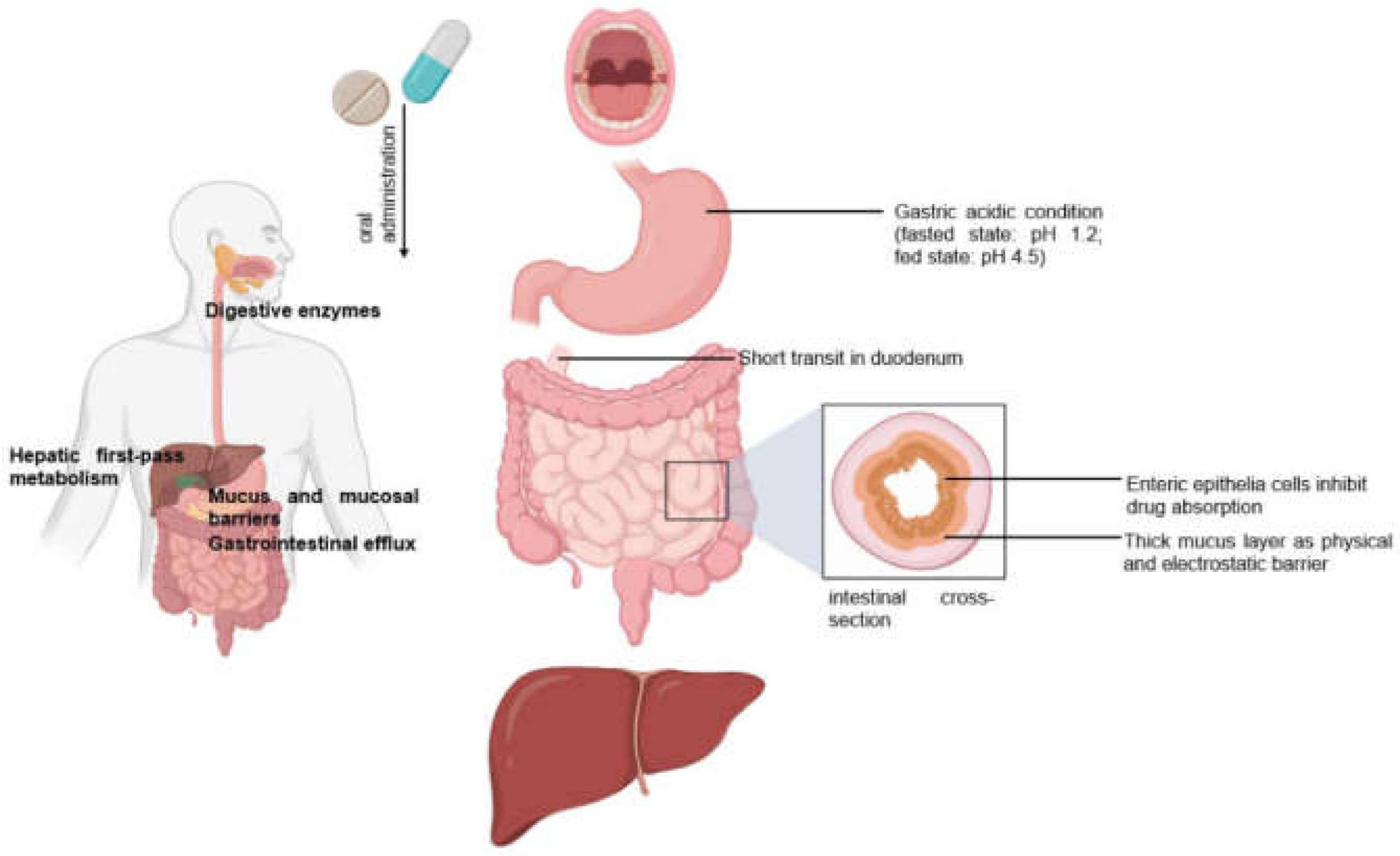
Figure 2.
Skin structure depicting different skin layers. Reprinted with permission from [16].
Figure 2.
Skin structure depicting different skin layers. Reprinted with permission from [16].
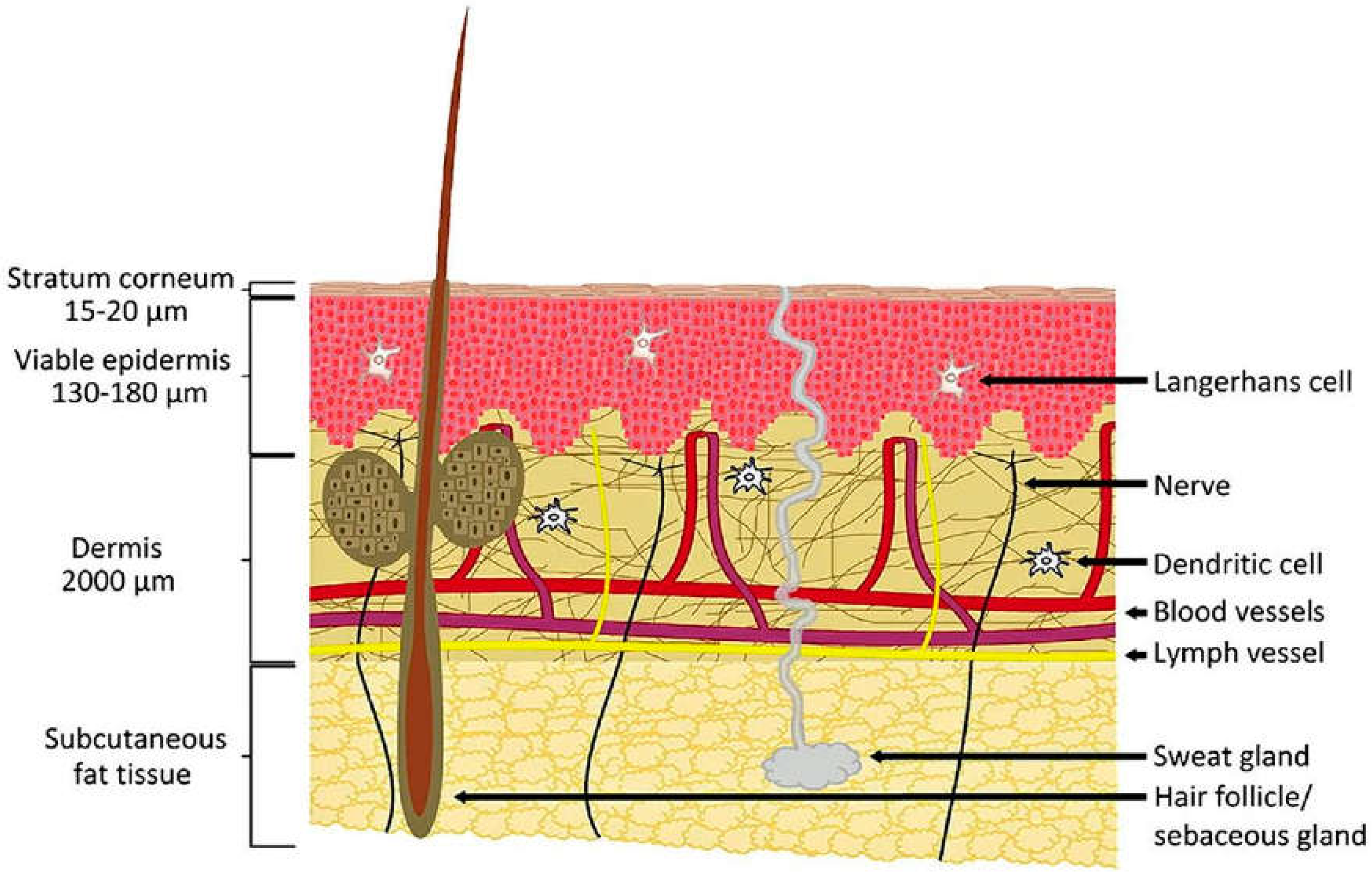
Figure 3.
Limitations of conventional drug delivery systems.

Figure 4.
Examples of coumarin derivatives 1a-8a [28].
Figure 4.
Examples of coumarin derivatives 1a-8a [28].

Figure 5.
Activation of prodrugs by a cleavage reaction. Reprinted with permission from [35].
Figure 5.
Activation of prodrugs by a cleavage reaction. Reprinted with permission from [35].

Scheme 1.
Generation of the Acyclovir active drug in vivo [37].
Scheme 1.
Generation of the Acyclovir active drug in vivo [37].
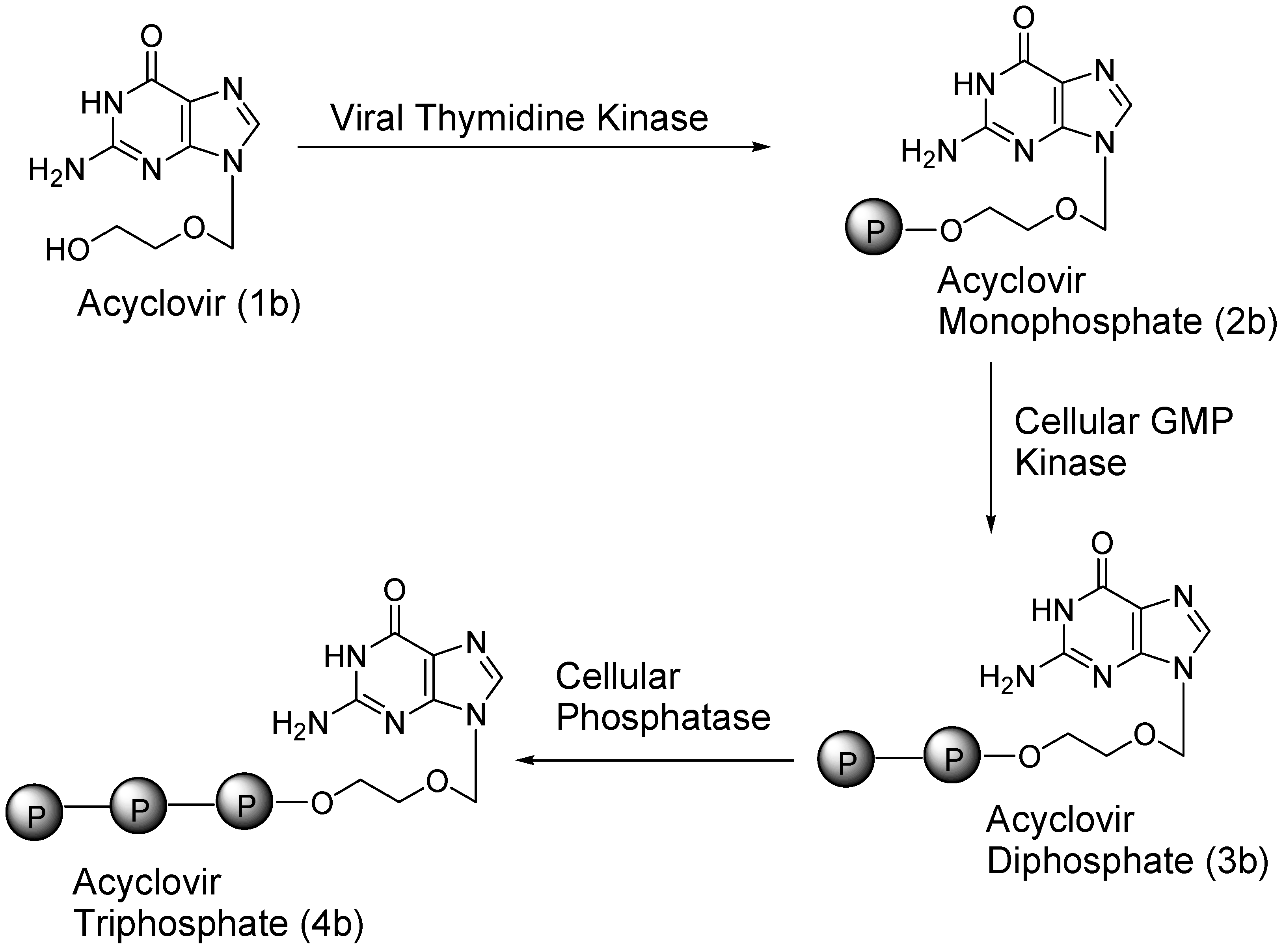
Scheme 2.
Levodopa as a bioprecursor prodrug for dopamine [37].
Scheme 2.
Levodopa as a bioprecursor prodrug for dopamine [37].
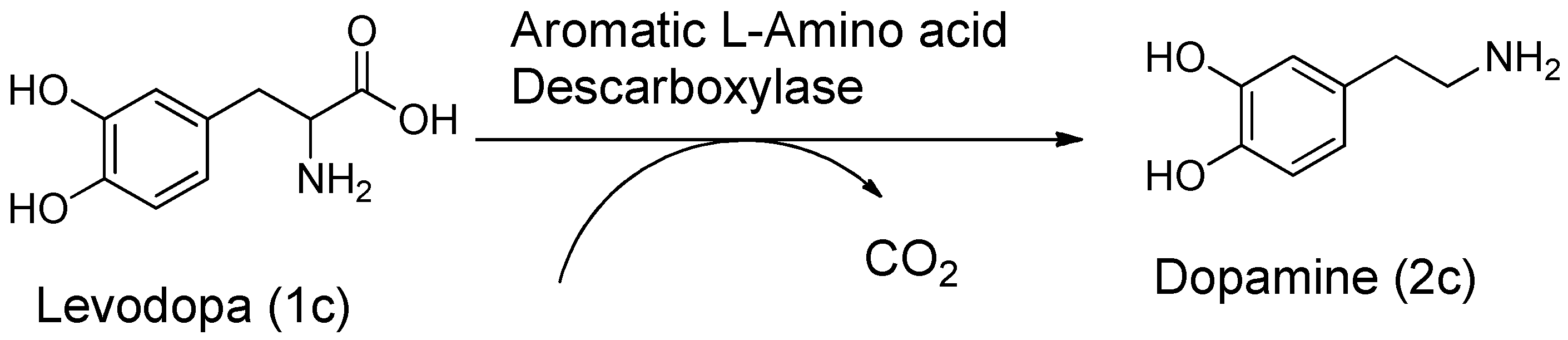
Scheme 3.
Carrier phosphate prodrugs for atazanavir [34].
Scheme 3.
Carrier phosphate prodrugs for atazanavir [34].
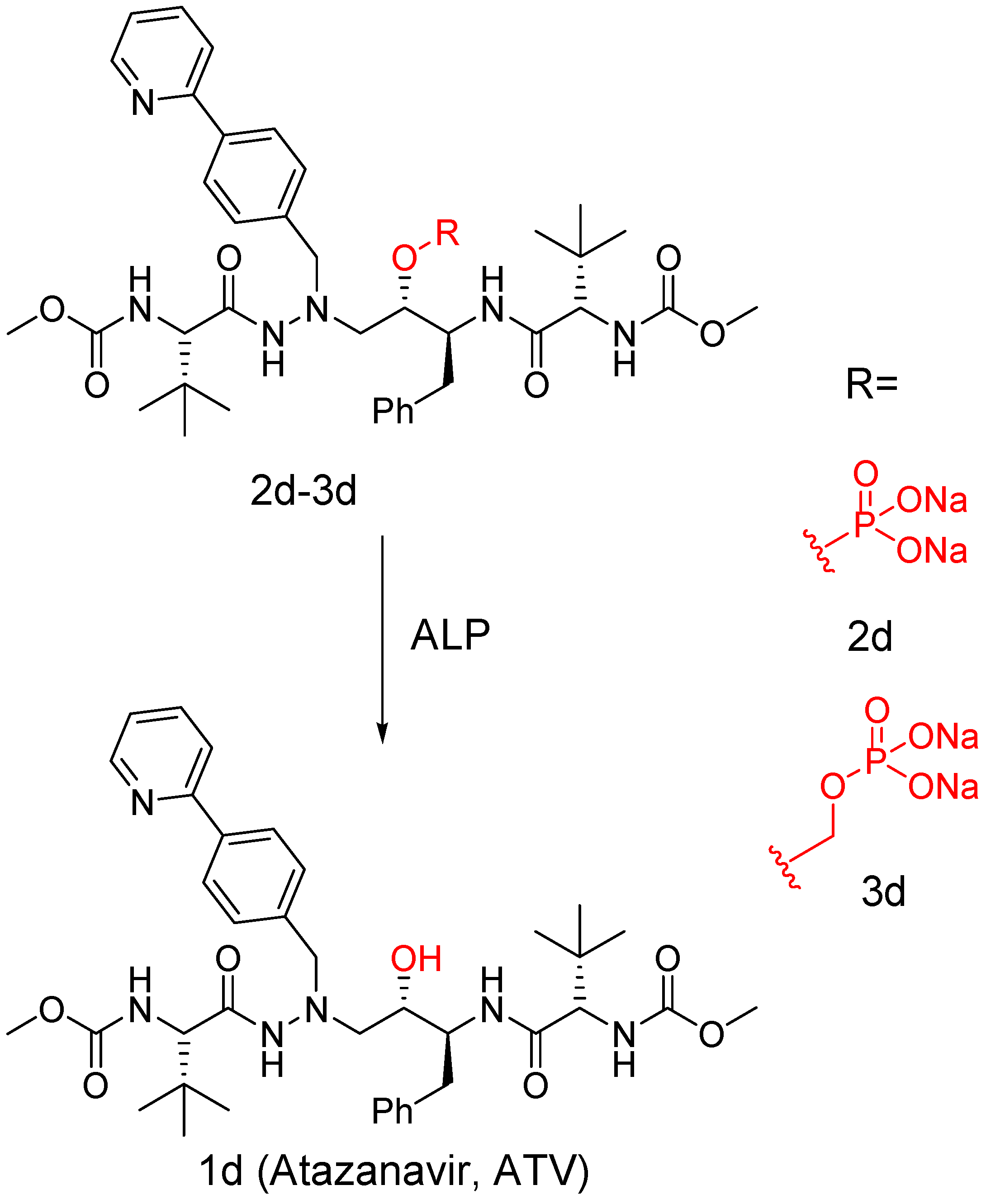
Scheme 4.
Two activation steps for the release of 2e [34].
Scheme 4.
Two activation steps for the release of 2e [34].

Scheme 5.
Metabolic pathways of codeine [39].
Scheme 5.
Metabolic pathways of codeine [39].

Figure 6.
Various structures of nano sized materials. Reprinted with permission from [56].
Figure 6.
Various structures of nano sized materials. Reprinted with permission from [56].
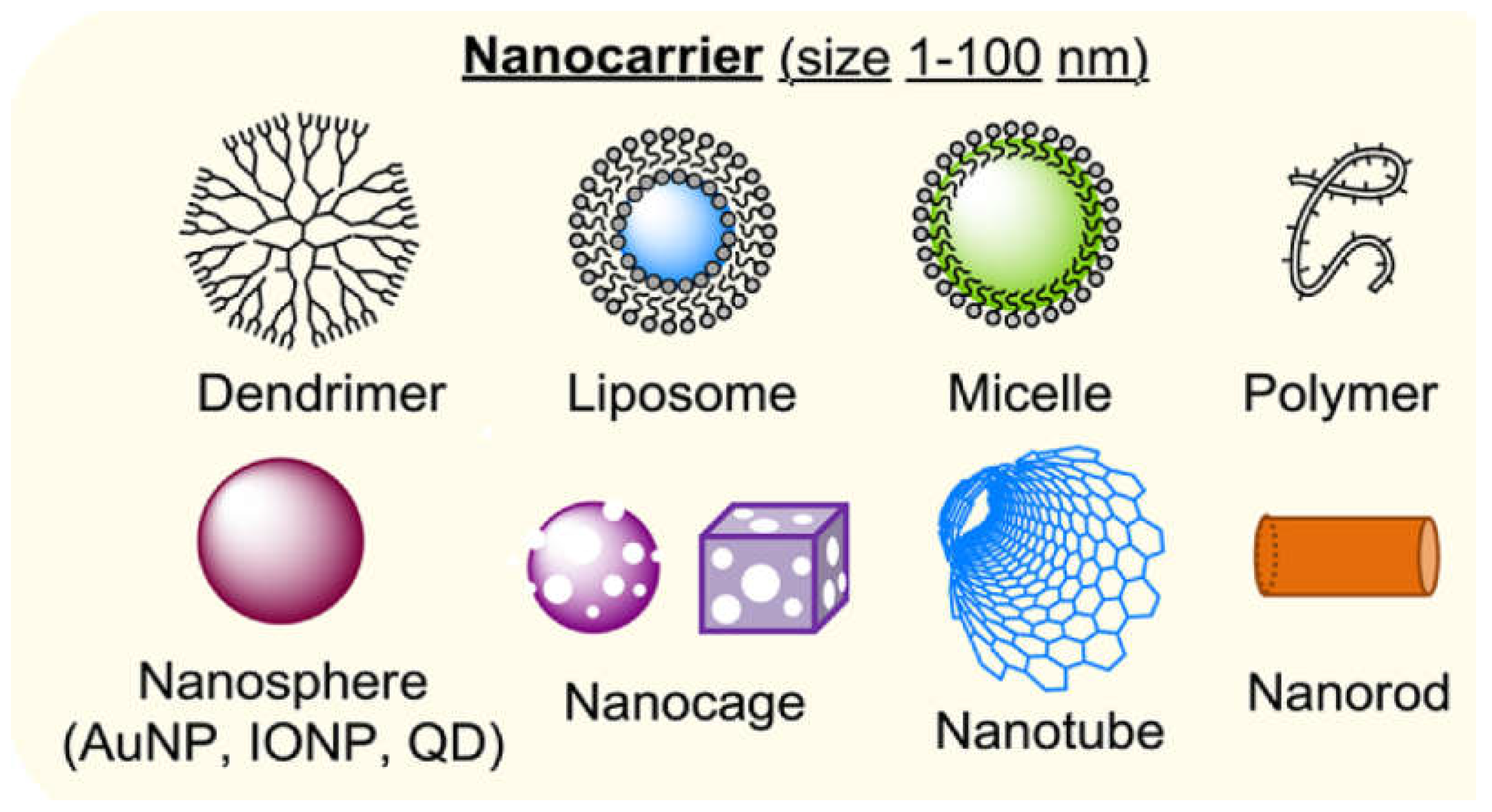
Figure 7.
Different categories of nanocarriers.
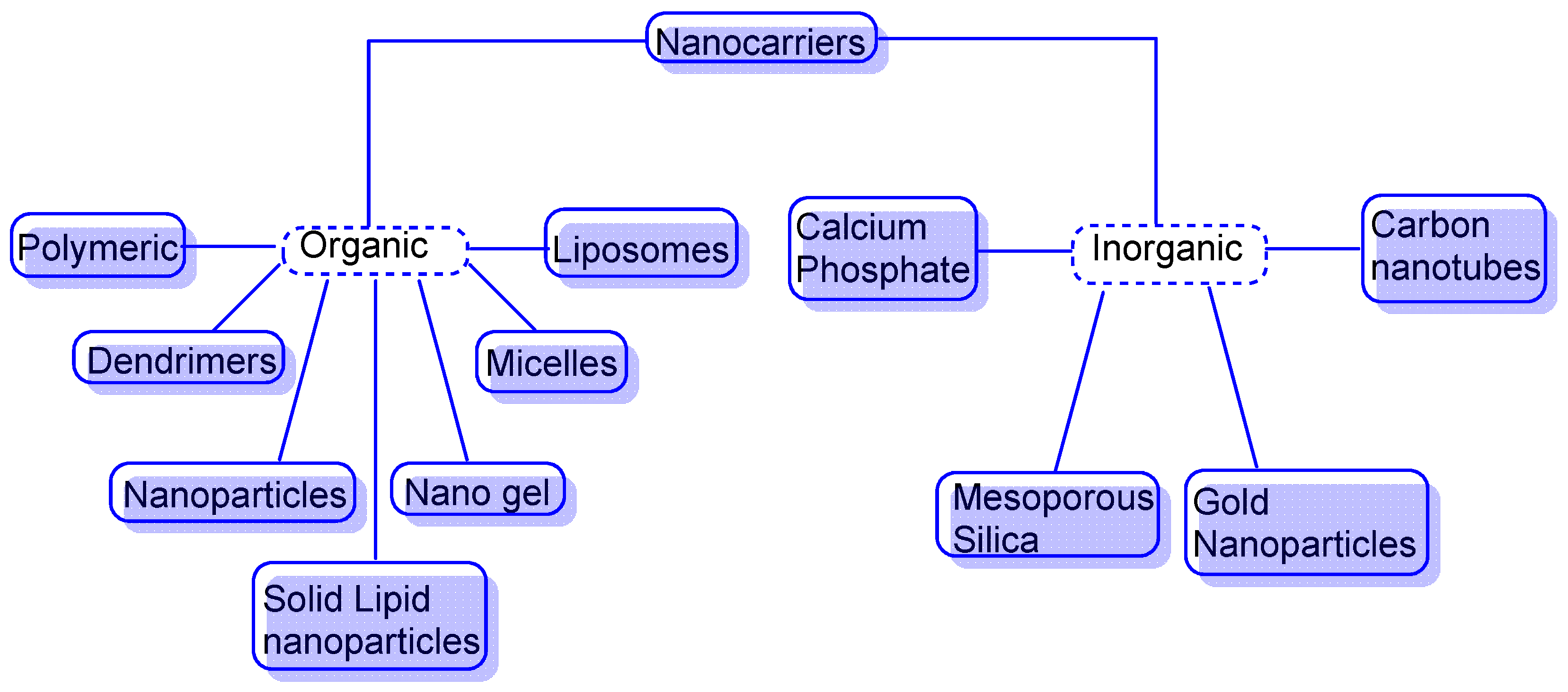
Figure 8.
Organic nanocarriers [64].
Figure 8.
Organic nanocarriers [64].
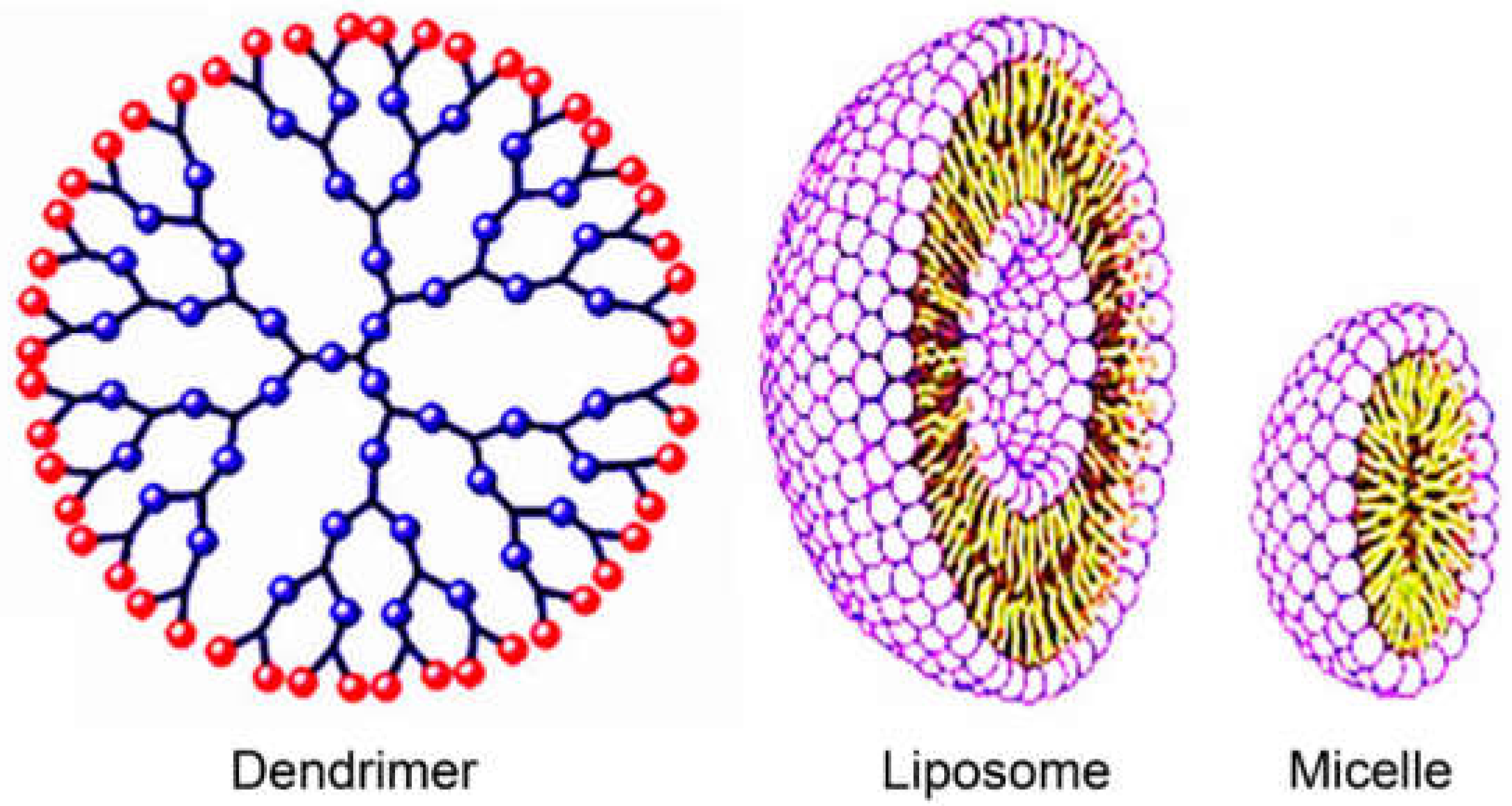
Figure 9.
Doxorubicin (DOX), commonly used anti-cancer drug.
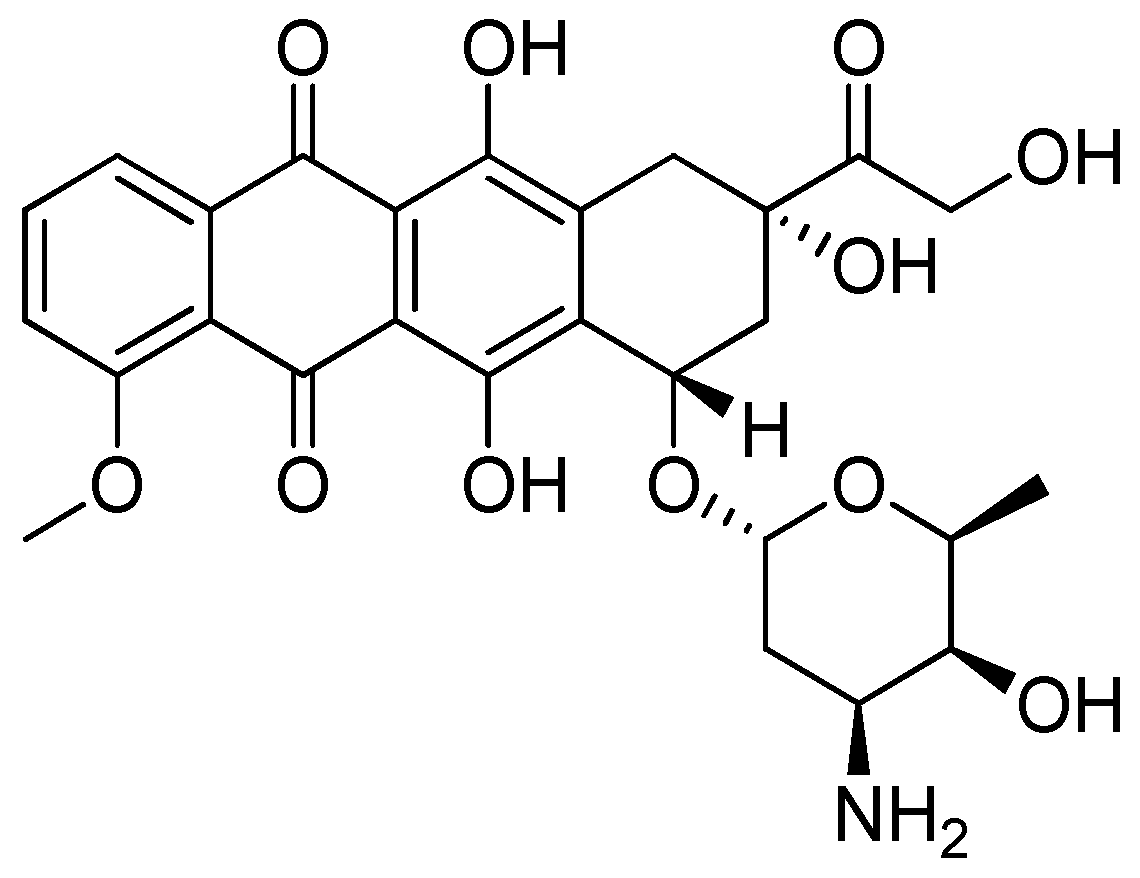
Figure 10.
Passive and targeted drug delivery of nanocarriers. Reprinted with permission from [71].
Figure 10.
Passive and targeted drug delivery of nanocarriers. Reprinted with permission from [71].

Figure 11.
Factors contributing to the release of drugs from nanocarriers. Reprinted with permission from [85].
Figure 11.
Factors contributing to the release of drugs from nanocarriers. Reprinted with permission from [85].
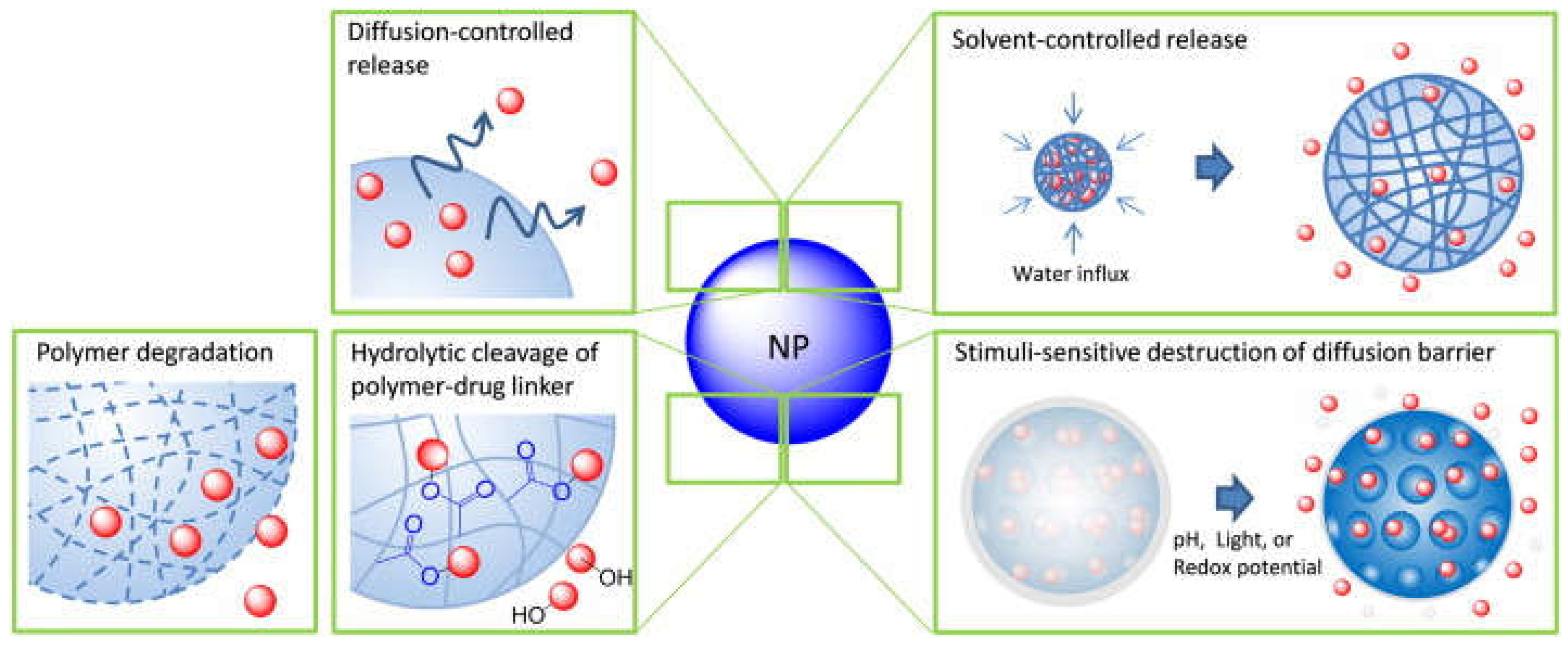
Figure 12.
N-(1,3-dihydroxypropan-2-yl) methacrylamide (DHPMA) conjugated with DOX. (a) Molecular structure; (b) Nanocarrier self-assembly; (c) Cellular dunction. Reprinted with permission from [76].
Figure 12.
N-(1,3-dihydroxypropan-2-yl) methacrylamide (DHPMA) conjugated with DOX. (a) Molecular structure; (b) Nanocarrier self-assembly; (c) Cellular dunction. Reprinted with permission from [76].

Figure 13.
3D network in hydrogels and their applications in medicine. Reprinted with permission from [92].
Figure 13.
3D network in hydrogels and their applications in medicine. Reprinted with permission from [92].
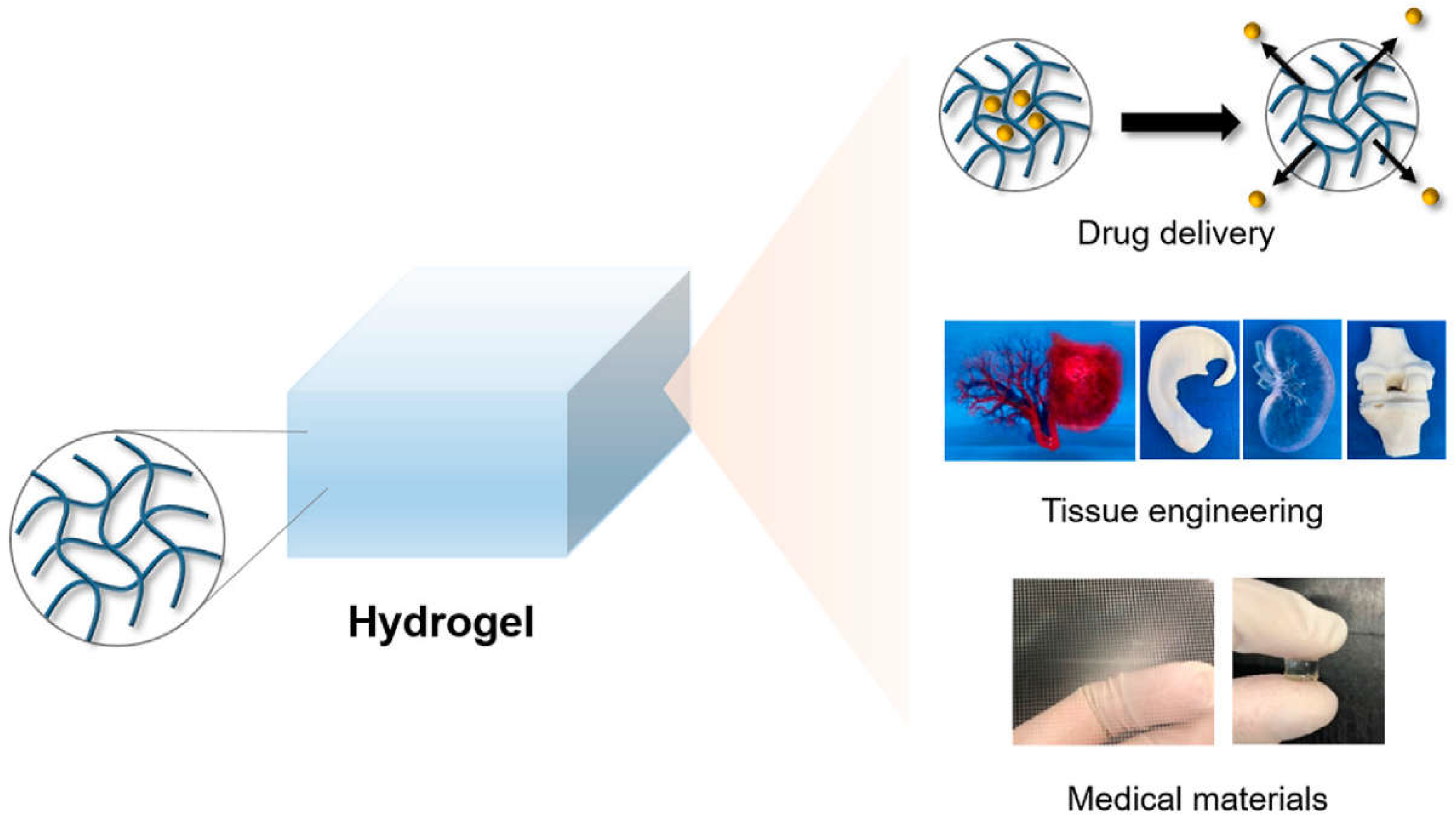
Figure 14.
Cross-linking of polymers in gels. Reprinted with permission from [111].
Figure 14.
Cross-linking of polymers in gels. Reprinted with permission from [111].
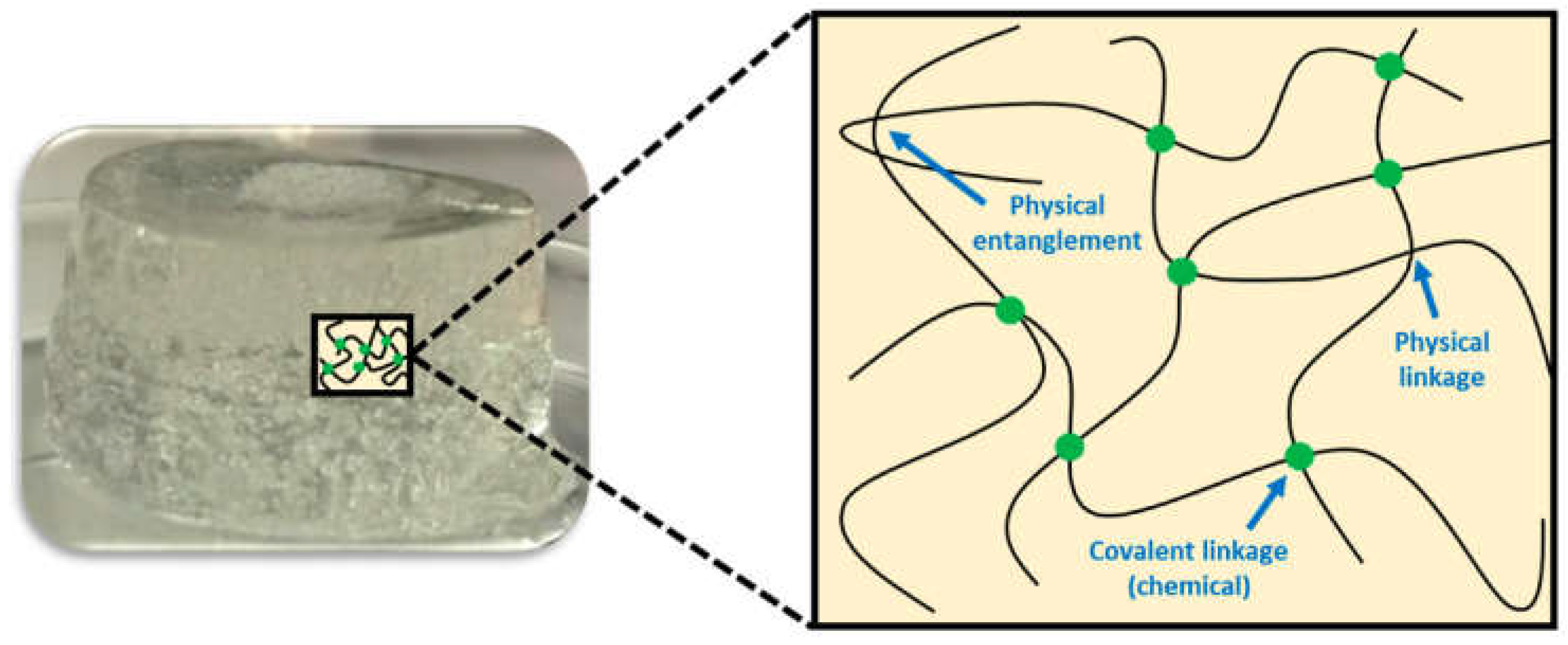
Figure 15.
Synthetic polymers used in preparation of polymeric hydrogels [132].
Figure 15.
Synthetic polymers used in preparation of polymeric hydrogels [132].

Figure 16.
Drugs physically and chemically loaded within a hydrogel. Reprinted with permission from [13].
Figure 16.
Drugs physically and chemically loaded within a hydrogel. Reprinted with permission from [13].

Figure 17.
High affinity of MG-1 towards CIP·HCl [139].
Figure 17.
High affinity of MG-1 towards CIP·HCl [139].
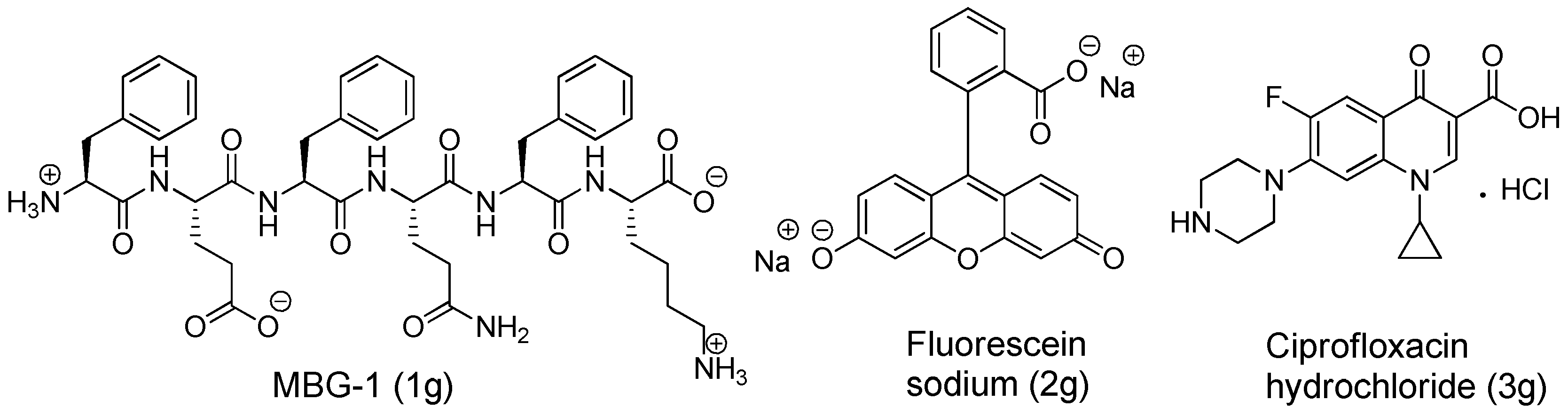
Scheme 6.
Disassembly and assembly of H-bonding interactions in physical hydrogels shown on example of binding between methylcellulose and hyaluronic acid [95].
Scheme 6.
Disassembly and assembly of H-bonding interactions in physical hydrogels shown on example of binding between methylcellulose and hyaluronic acid [95].
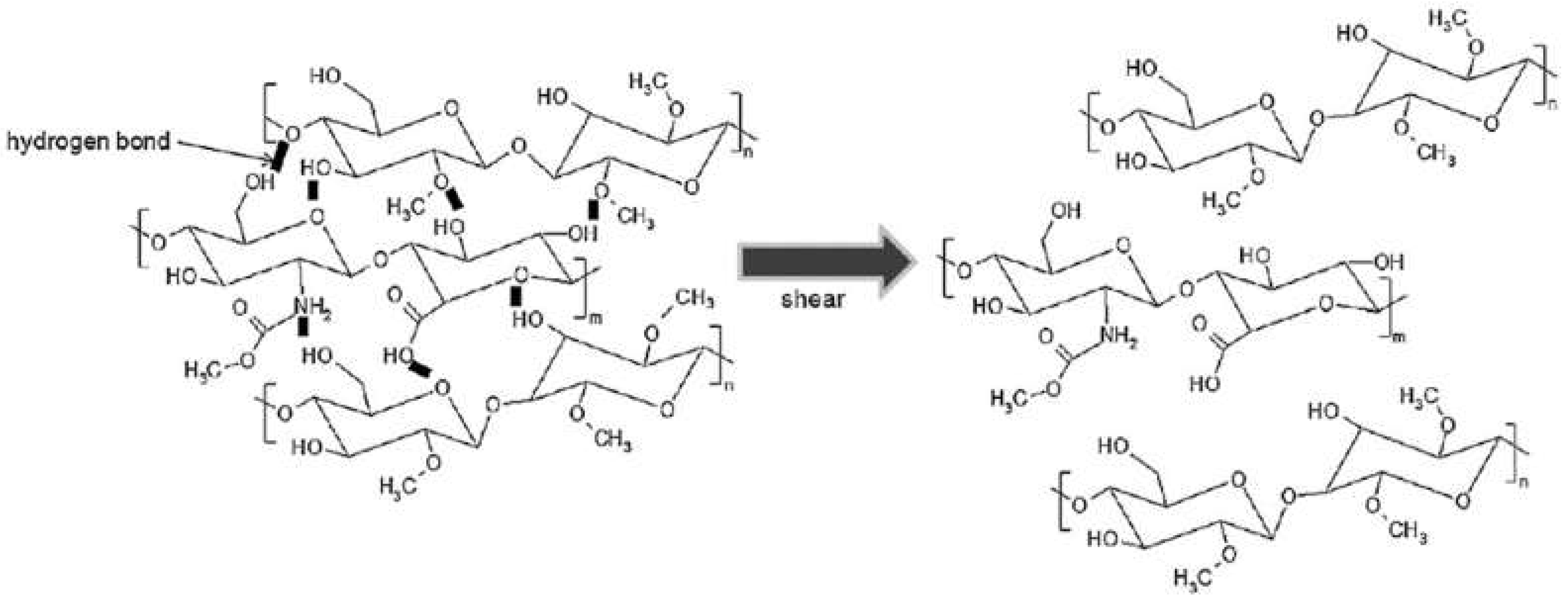
Figure 18.
Cross-linking of chemical hydrogels via dynamic covalent bonds. Reprinted with permission from [97,144].

Figure 19.
In situ gelation of physical and chemical hydrogels. Reprinted with permission from [89].
Figure 19.
In situ gelation of physical and chemical hydrogels. Reprinted with permission from [89].

Figure 20.
Different release modes of loaded drug from hydrogel. Reprinted with permission from [91,95].

Figure 21.
Application of peptide hydrogels. Reprinted with permission from [137].
Figure 21.
Application of peptide hydrogels. Reprinted with permission from [137].

Figure 22.
Structures of 20 canonical amino acids.
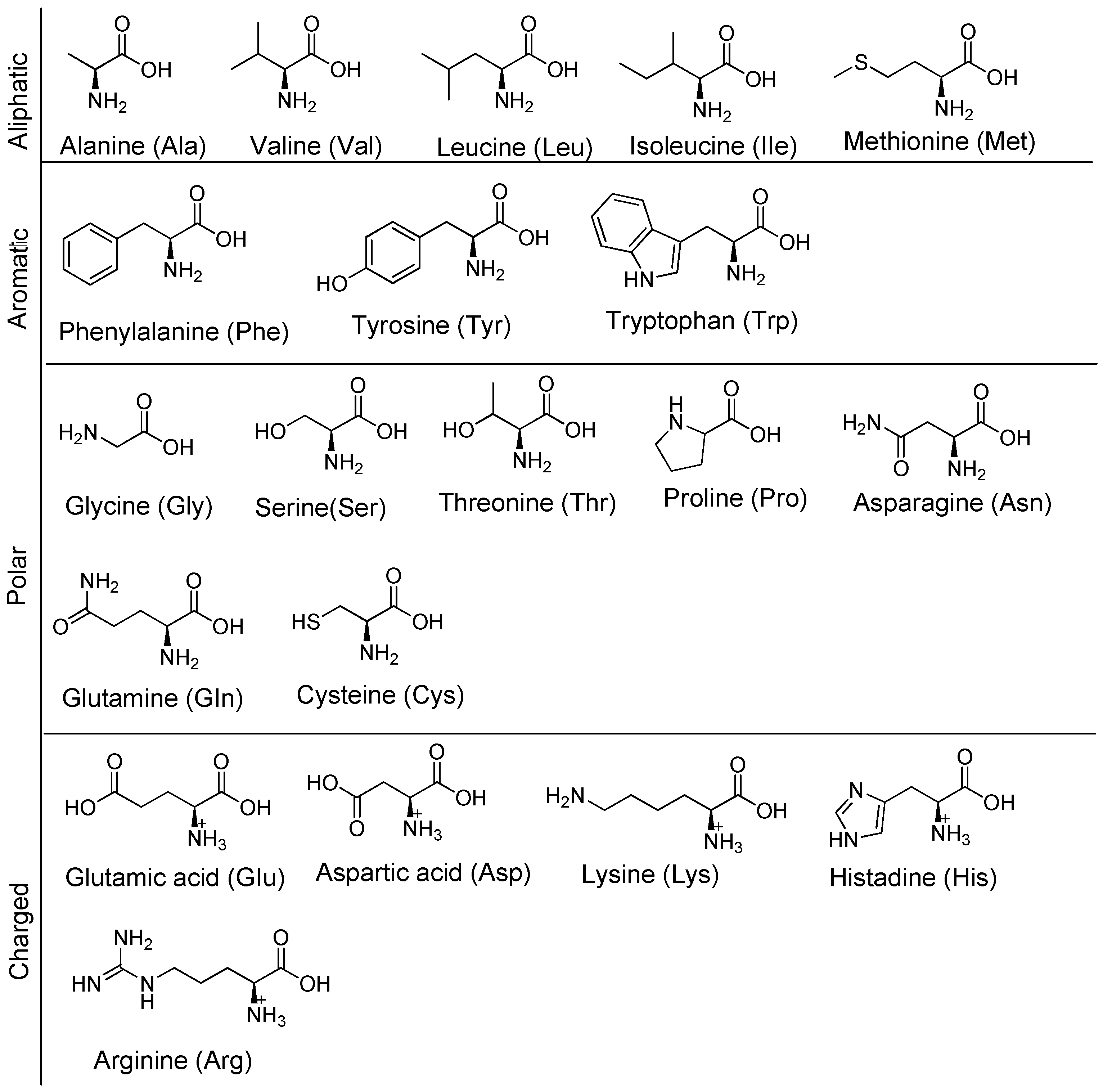
Figure 23.
L and D enantiomers of amino acids.

Scheme 7.
SPPS based on Boc and Fmoc chemistry.

Figure 24.
α-helix and β-sheet secondary structures of peptides. Reprinted with permission from [103,178].


Figure 26.
The self-assembly of peptides leading to hydrogelation. Reprinted with permission from [103].
Figure 26.
The self-assembly of peptides leading to hydrogelation. Reprinted with permission from [103].

Figure 27.
Structure of H-FQFQFK-NH2 and its dimer [23].
Figure 27.
Structure of H-FQFQFK-NH2 and its dimer [23].


Figure 28.
Influence of ionic strength on self-assembly of K2 peptide. Reprinted with permission from [198].
Figure 28.
Influence of ionic strength on self-assembly of K2 peptide. Reprinted with permission from [198].
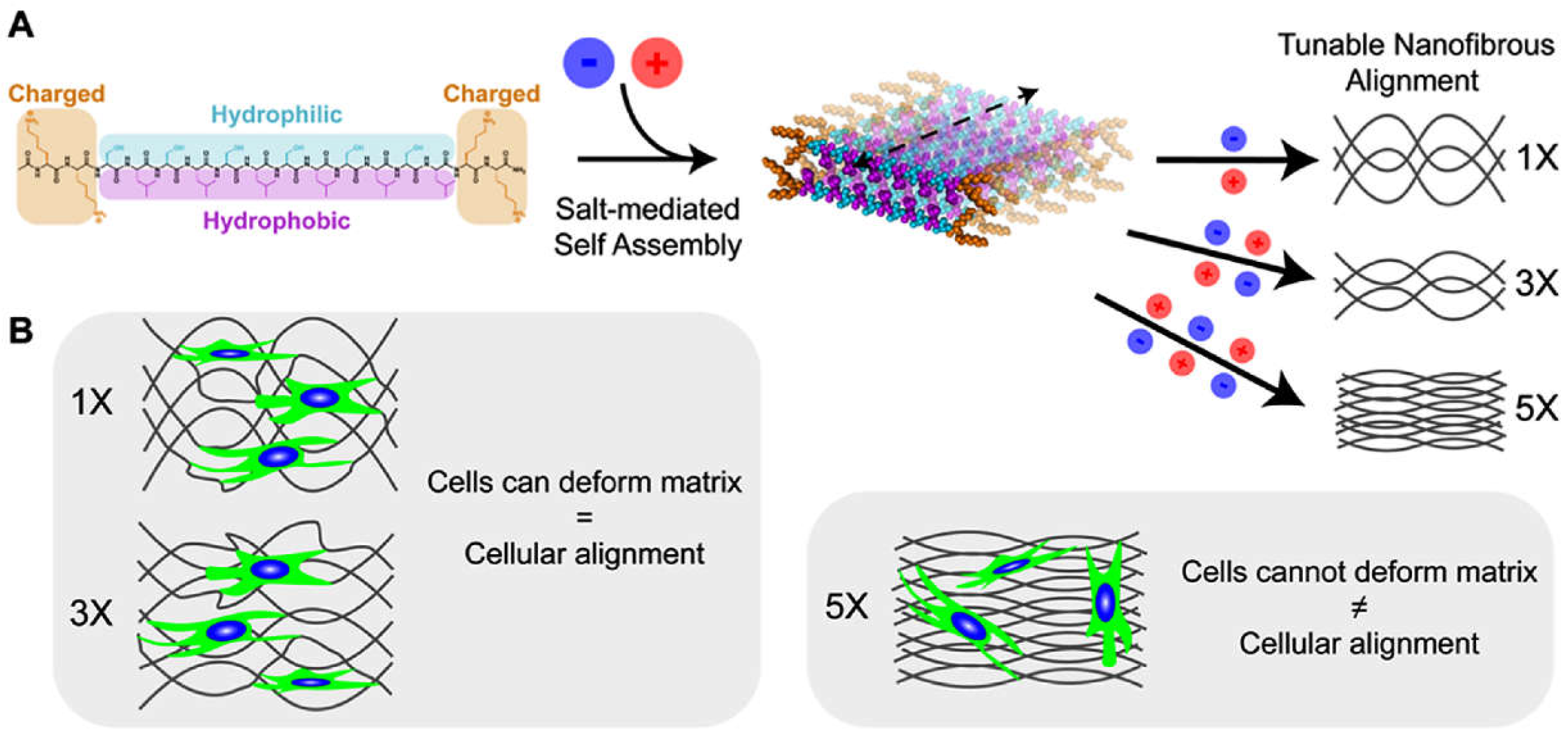
Figure 29.
(a) Protonation of histadine and (b) Structural transformation from open β-sheet networks to elongated micelles.
Figure 29.
(a) Protonation of histadine and (b) Structural transformation from open β-sheet networks to elongated micelles.

Figure 30.
Influence of halogenated phenyl groups (X = halogen) on the strength of peptide hydrogels [203].
Figure 30.
Influence of halogenated phenyl groups (X = halogen) on the strength of peptide hydrogels [203].

Figure 31.
A family of dibenzoyl-L-cystine (1h) derivatives demonstrating hydrogelation properties [197].
Figure 31.
A family of dibenzoyl-L-cystine (1h) derivatives demonstrating hydrogelation properties [197].


Figure 32.
Different phases during fibril formation [213].
Figure 32.
Different phases during fibril formation [213].
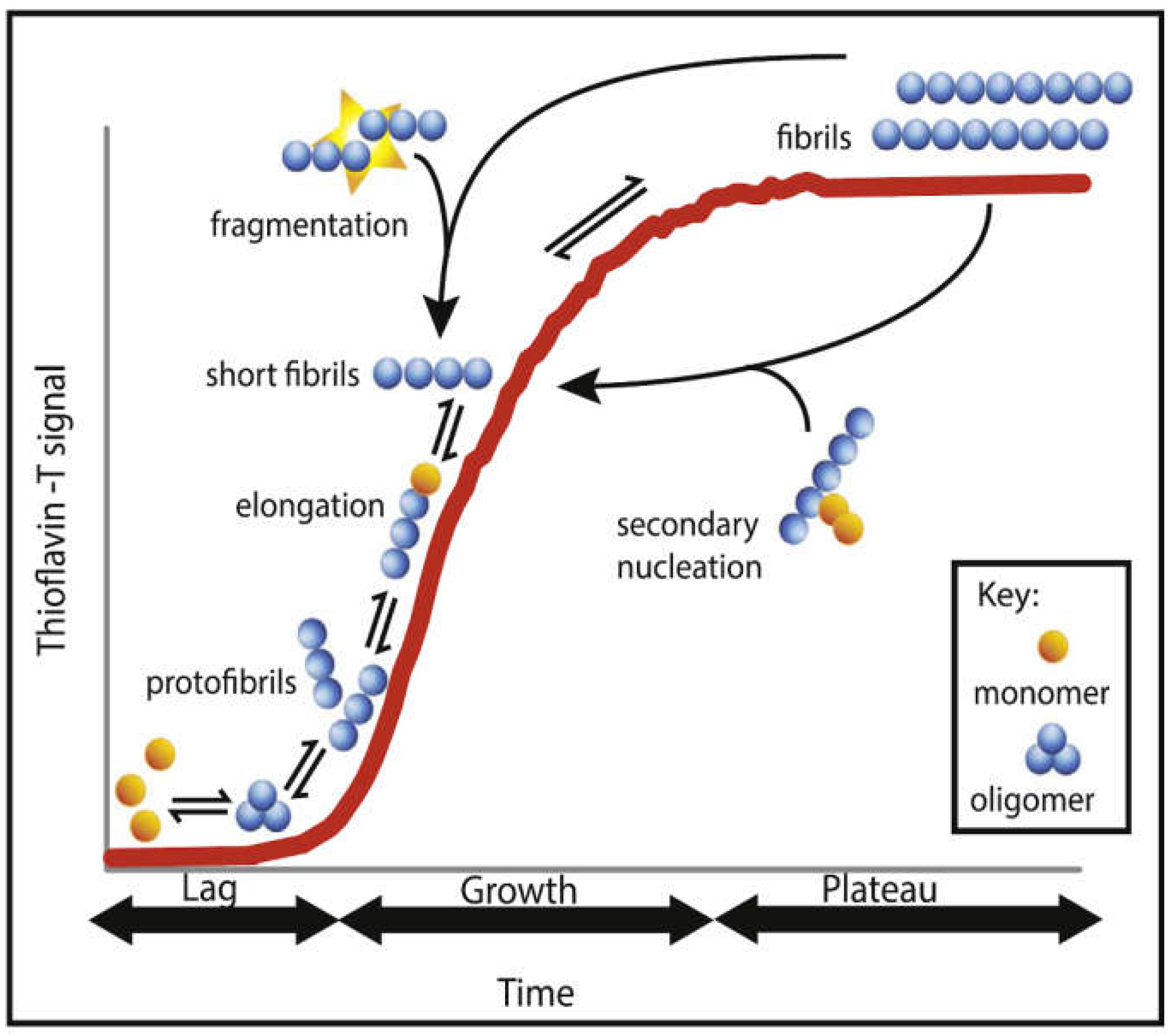


Figure 34.
Possible approaches for ncAAs synthesis [228].
Figure 34.
Possible approaches for ncAAs synthesis [228].

Scheme 10.
Negishi cross coupling reaction with protected iodoserine derivative [232].
Scheme 10.
Negishi cross coupling reaction with protected iodoserine derivative [232].

Figure 35.
Halogenated Fmoc-Phe hydrogelators [224].
Figure 35.
Halogenated Fmoc-Phe hydrogelators [224].

Figure 36.
Fmoc-Phe derivatives [187].
Figure 36.
Fmoc-Phe derivatives [187].

Figure 37.
L-azetidine-2-carboxilic acid found in sugar beets [230].
Figure 37.
L-azetidine-2-carboxilic acid found in sugar beets [230].

Disclaimer/Publisher’s Note: The statements, opinions and data contained in all publications are solely those of the individual author(s) and contributor(s) and not of MDPI and/or the editor(s). MDPI and/or the editor(s) disclaim responsibility for any injury to people or property resulting from any ideas, methods, instructions or products referred to in the content. |
© 2024 by the authors. Licensee MDPI, Basel, Switzerland. This article is an open access article distributed under the terms and conditions of the Creative Commons Attribution (CC BY) license (http://creativecommons.org/licenses/by/4.0/).
Copyright: This open access article is published under a Creative Commons CC BY 4.0 license, which permit the free download, distribution, and reuse, provided that the author and preprint are cited in any reuse.


