
Submitted:
24 October 2024
Posted:
28 October 2024
You are already at the latest version
Abstract
Flaxseed has been suggested as a viable solution to improve sex hormones. However, conflicting and uncertain evidence regarding its impact on sex hormone profiles exists. This meta-analysis assesses the effects of flaxseed on sex hormone profiles. PubMed, Scopus, Embase, and the Web of Science were searched for relevant articles in August 2021. The Cochrane Collaboration tool was used for the quality assessment, and the evidence's trustworthiness was assessed using the Grading of Assessment, Development, and Evaluation of Recommendations (GRADE). A total of ten articles revealed that flaxseed might not have a significant effect on follicle-stimulating hormone (FSH) ((WMD: 0.84; 95% CI: -5.53, 7.00, p =0.791; I2= 88.6%, p<0.001, level of confidence: low), sex hormone-binding globulin (SHBG) ((WMD: 2.17; 95% CI: -1.19, 5.54, p =0.206; I2= 66.3%, p=0.011, level of confidence: low), total testosterone (TT) (WMD: -0.00; 95% CI: -0.07, 0.07, p=0.968; I2= 41.3%, p =0.146, level of confidence: low), free androgen index (FAI) (WMD: -0.13; 95% CI: -0.68, 0.42; p=0.645; I2= 85.4%, p<0.001, level of confidence: low) and dehydroepiandrosterone sulfate (DHEAS) (WMD: 0.62; 95% CI: -3.35, 4.59, p=0.761; I2=63.6%, p =0.064, level of confidence: very low). It is demonstrated that flaxseed might not affect sex hormones in adults. Flaxseed supplementation had no significant effect on sex hormones in adults. Nevertheless, due to the limited included trials, this topic is still open and needs further studies in future RCTs.
Keywords:
Flaxseed
; Sex hormones
; Profile
; Meta‐analysis
Introduction
Sex hormones, such as estrogens, androgens, and progestogens, are pivotal in regulating growth, metabolism, and reproduction [1]. Produced by the endocrine glands, these hormones are crucial for overall health [2]. Estrogen and progesterone are the primary female sex hormones, whose production and secretion are stimulated by pituitary hormones such as follicle-stimulating hormone (FSH) and luteinizing hormone (LH). In men, LH is the key hormone regulating testosterone. Beyond their roles in reproductive system regulation and maturation, these sex hormones significantly impact overall health. Estrogen, for instance, plays a protective role in maintaining bone density, supporting the immune system, and promoting cardiovascular health. Additionally, androgens contribute to muscle mass enhancement. However, imbalances can lead to various hormone-related diseases affecting both men and women, including polycystic ovary syndrome (PCOS), hypogonadism, and hormone-sensitive cancers like breast and prostate cancer [3,4]. These conditions often arise from either an excess or deficiency of specific hormones, significantly impacting quality of life [5]. For instance, reduced testosterone in men can lead to loss of muscle mass and strength, while estrogen imbalances in women can cause menstrual irregularities and increase cancer risk [6].
Diet can significantly impact circulating sex hormone levels, which is crucial for preventing hormone-related diseases [7]. Evidence suggests that flaxseed, rich in phytoestrogens like lignans, may influence these hormone levels [8,9]. Lignans, a significant group of phytoestrogens, are known for their cancer-preventive properties [10]. Although they are present in low amounts across various plant foods, flaxseed stands out as the richest source, primarily containing secoisolariciresinol diglucoside (SDG) [11]. Upon ingestion, SDG is converted by intestinal bacteria into active mammalian lignans, enterodiol and enterolactone [12]. The levels of these enterolignans in the body are closely linked to dietary lignan intake [13]. Structurally similar to natural sex hormones, enterolignans exhibit mild hormonal effects and have been shown to inhibit cancer development in animal studies [14]. Lignans and flaxseed have been studied for their potential in preventing hormone-related cancers, especially breast cancer [15]. Epidemiologic research increasingly suggests that higher lignan intake is linked to a lower risk of breast cancer, particularly in postmenopausal women [16].Because lignans have a structure similar to sex hormones, they can inhibit aromatase activity and increase the synthesis of sex hormone-binding globulin (SHBG) in adipose tissue and the liver [17]. Lignans can also bind to testosterone, promoting its excretion in bile [18]. Flaxseed consumption may alter estrogen metabolism in postmenopausal women, affecting serum levels of certain sex hormones and estrogen metabolites [19]. One study found that consuming five or 10 grams of ground flaxseed daily for seven weeks reduced estradiol levels [9]. Another clinical trial showed positive effects on sex hormones in overweight and obese women [20]. However, another study reported no significant changes in serum testosterone or SHBG levels with three grams of flaxseed daily for 12 weeks in patients with PCOS [21]. To provide an inclusive conclusion, the current study aimed to investigate whether flaxseed consumption can favorably alter sex hormones in adults
Materials and Methods
'We followed the PRISMA guideline to conduct and report this review and meta-analysis [22]. '''We registered our study protocol in PROSPERO, an international database of systematic reviews. (http://www.crd.york.ac.uk/PROSPERO, registration no: CRD42021331248).
Search Strategy
A systematic literature search conducted in online databases including PubMed, Scopus, Embase, and Web of science until August 2021 without language or any other limitations. The Medical Subject headings (MeSH) and non-MeSH keywords used to search the online databases briefly include 1) Sex hormone profile; 2) Flaxseed; 3) intervention, trial, randomized, randomized, random, randomly, placebo, assignment, clinical trial, RCT, clinical trials as Topic, cross-over, parallel. Two researchers independently screened the titles and abstracts to remove irrelevant studies, and any disagreements were resolved by other researchers. Additionally, any related studies published after the initial search were reviewed using alert services. Finally, potential related studies were checked using a search and by referencing the list of connected articles.
Eligibility Criteria
We included studies with these characteristics in our review and meta-analysis: a) RCT designs; b) participants must be adults over 18 years old; c) evaluated the effect of flaxseed supplementation; d) reported sex (hormones total testosterone, SHBG, FSH, free androgen index (FAI) and dehydroepiandrosterone Sulfate (DHEAS))) as primary or secondary outcomes. Moreover, studies excluded if: a) participants were in the age group of children and adolescents; b) did not have the interest outcomes of our study; c) they had no control group.
Data Extraction
Two investigators independently extracted data on the first author and the publication year, study location, number of subjects, study design, participant's baseline characteristics, study duration, type and dose of flaxseed supplement in the intervention and control groups, as well as the mean and standard deviation (SD) of outcome data. We consulted other authors to resolve any disagreements between reviewers.
Risk of Bias Assessment and Meta-Evidence
We evaluated the quality of eligible trials based on the Cochrane Collaboration's tool for systematic reviews of interventions, which contains the following domains: randomization process, deviations from the intended interventions, deviations from the planned interventions, missing outcome data, measurement of the outcome, and selection of the reported result [23]. We employed the GRADE approach to evaluate the included RCTs' credibility rigorously. As a result, the evidence is systematically classified into four distinct categories: high, moderate, low, or very low [24].
Statistical Analysis
We used the weighted mean difference (WMD) and 95% confidence intervals to measure the effect size statistic of sex hormones for meta-analysis. The random effect model was used to conduct all meta-analyses. The heterogeneity between studies was examined by the Cochrane Q test and I2 statistic [25]. In addition, we conducted subgroup analysis based on mean age, duration, dosage of flaxseed and quality of studies to investigate possible sources of heterogeneity. Sensitivity analyses were carried out to explore the robustness of meta-analysis and comparison the overall effect [26]. No small-study effect analysis was conducted for any of the outcomes since none of them included at least 10 studies [27]. All statistical analyses were performed using STATA version 11.2 (Stata Corp, College Station, TX) and P-values less than 0.05 were considered as statistically significant.
Results
Literature Search and Study Characteristics
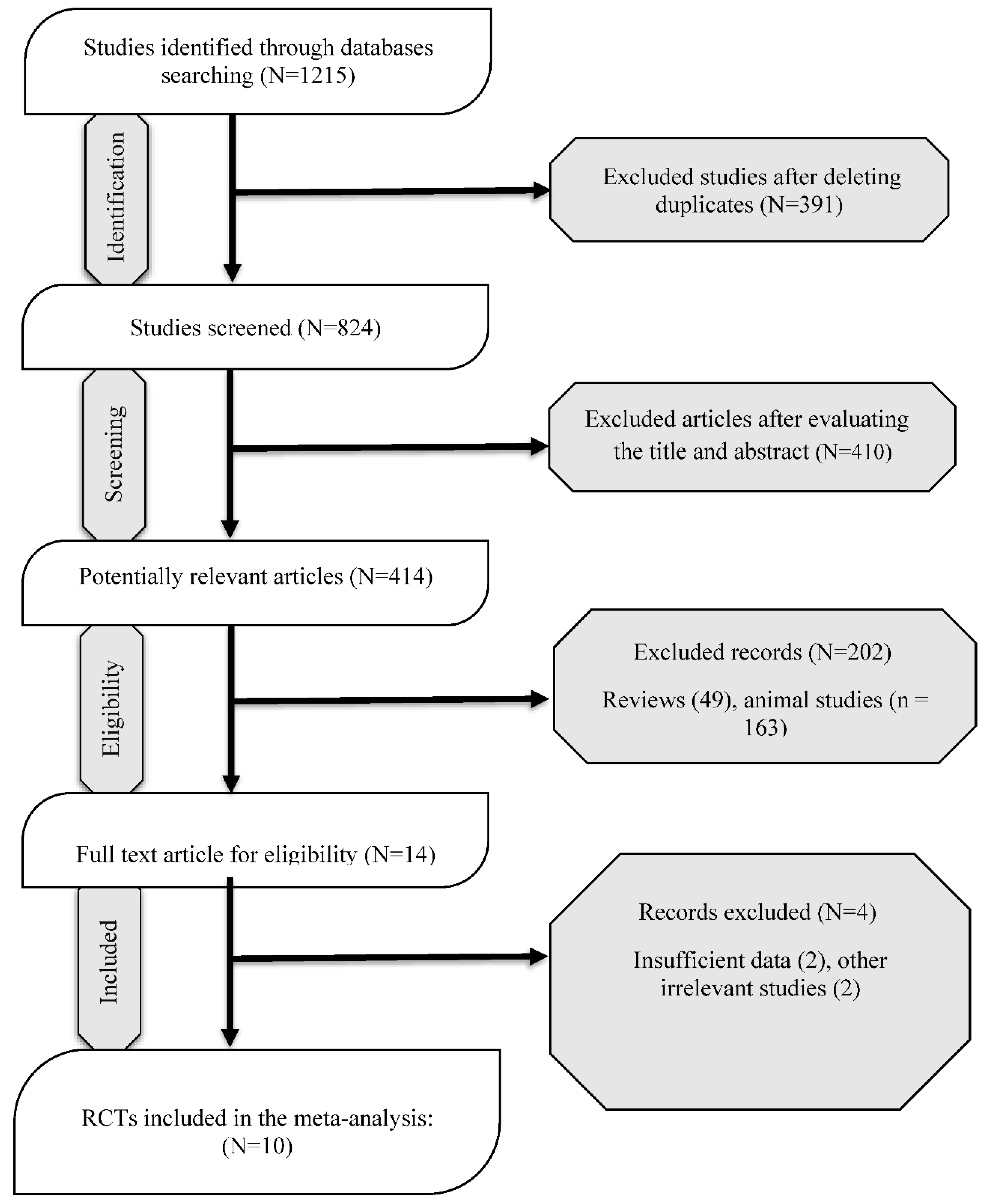
We found a total of 1215 records from databases and hand searches during our search for relevant clinical trials. After removing duplicates and non-article documents, we were left with 824 studies to screen the titles and abstracts. Out of these, 810 studies were found to be irrelevant and were excluded. Subsequently, we reviewed 14 full texts of articles for further assessment (Figure 1). Finally, we included 10 randomized controlled trials (RCTs) in our systematic review and meta-analysis [19,21,28,29,30,31,32,33,34,35]. All the RCTs included in the analysis were conducted from 1998 [28] to 2020 [21]. Five of the ten included studies were carried out in the USA [28,29,30,31,33], two in Iran [21,35], two in Brazil [32,34], and one in Canada [19]. The duration in the trials varied from 5 to 24 weeks. The average age of the participants was 50 years, and the sample sizes for both the patient and control groups ranged from 34 to 81.
Figure 1.
Flow diagram of study selection.
Quality Assessment and Grade Approach
The quality of included studies is presented in Table 2. Only sex of the ten included studies showed a low risk of bias [19,21,28,32,33,35]. The overall quality assessment for five studies was high risk, mainly since outcome assessors were not blinded [19,21,31,32,34]. Most studies had some concern risk of bias based on other sources of bias about their method [19,21,30,31,33,34]. All outcomes have low-quality evidence according to the GRADE approach.
| Included study | Arjmandi,1998. | Lucas, , 2002 | Demark-Wahnefried, USA, 2008 | Patade, USA, 2008 | Simbalista, Brazil, 2009 | Vargas, USA, 2011 | Colli, Brazil, 2012 | Mirmasoumi, Iran, 2017 | Chang, Canada, 2018 | Haidari, Iran, 2020 |
| Year | 2020 | 2020 | 2013 | 2008 | 2019 | 2021 | 2021 | 2017 | 2019 | 2018 |
| Location**Duration (week) | USA 6 | USA 12 | USA5 | USA12 | Brazil 12 | USA6 | Brazil 24 | Iran12 | Canada7 | Iran12 |
| Mean dosage of flaxseed /Intervention | 38g/day Whole Flaxseed | 40 g/day Ground Whole Flaxseed | 30 g/day Flaxseed-Supplemented Die | 30 g/day Flaxseed | 25 g/day Ground Flaxseed | 3.5 g/day Flaxseed Oil | 1g/d Flaxseed Extract | 1 g/day Flaxseed Oil | 15 g/day Ground Flaxseed | 30 g/day Brown Milled Flaxseed Powder + Lifestyle Modification |
| Target population | Postmenopausal Women | Postmenopausal Women | Prostate Cancer | Postmenopausal Women | Postmenopausal Women | PCOS | Menopausal | PCOS | Postmenopausal Women | PCOS |
| Participants’ age (year) | 56 | 54 | 60 | 47-63 | 52 | 29 | 54 | 28 | 60 | 27 |
| Participants’ sex | Women | Women | Men | Women | Women | Women | Women | Women | Women | Women |
| Control group | Sunflower Seed | Wheat | Usual Diet | Control | Wheat Bran | Soybean Oil | Collagen | Liquid Paraffin | Usual Diet | Lifestyle Modification |

Table 2.
Results of risk of bias assessment.
| Study | Random Sequence Generation | Allocation concealment | Reporting bias | Other sources of bias | Performance bias | Detection bias | Attrition bias |
| Arjmandi, US, 1998 | L | U | L | L | L | L | H |
| Lucas, USA, 2002 | L | U | L | H | L | L | L |
| Wahnefried, USA, 2008 | L | U | L | H | L | H | L |
| Patade, USA, 2008 | L | U | L | H | L | H | L |
| Simbalista, Brazil, 2009 | L | L | L | H | L | L | L |
| Vargas, USA, 2011 | L | L | L | H | L | L | L |
| Colli, Brazil, 2012 | L | U | H | H | U | U | L |
| Mirmasoumi, Iran, 2017 | L | L | L | L | L | L | L |
| Chang, Canada, 2018 | L | L | L | L | L | H | L |
| Haidari, Iran, 2020 | L | L | L | L | U | U | L |
Meta-Analysis Results
Flaxseed on Sex Hormones Profile
Regarding the effects of flaxseed on sex hormone-related indicators in adults, we found no significant change in DHEA (WMD: 0.62; 95% CI: -3.35, 4.59, p=0.761; I2=63.6%, p =0.064) (Figure 2), FSH (WMD: 0.84; 95% CI: -5.53, 7.00, p =0.791; I2= 88.6%, p<0.001) (Figure 3), SHBG (WMD: 2.17; 95% CI: -1.19, 5.54, p =0.206; I2= 66.3%, p=0.011) (Figure 4), TT (WMD: -0.00; 95% CI: -0.07, 0.07, p=0.968; I2= 41.3%, p =0.146) (Figure 5), and FAI (WMD: -0.13; 95% CI: -0.68, 0.42; p=0.645; I2= 85.4%, p<0.001) (Figure 6). Flaxseed supplementation improved FSH, and SHBG, in in high-quality studies, and long intervention durations (≥8 weeks), respectively (Table 3). Sensitivity analyses showed that removing any specific trial related to outcomes did not influence the results
Figure 2.
Forest plot detailing mean difference and 95% confidence intervals (CIs) the effects of flaxseed supplementation on DHEAS.
Figure 2.
Forest plot detailing mean difference and 95% confidence intervals (CIs) the effects of flaxseed supplementation on DHEAS.
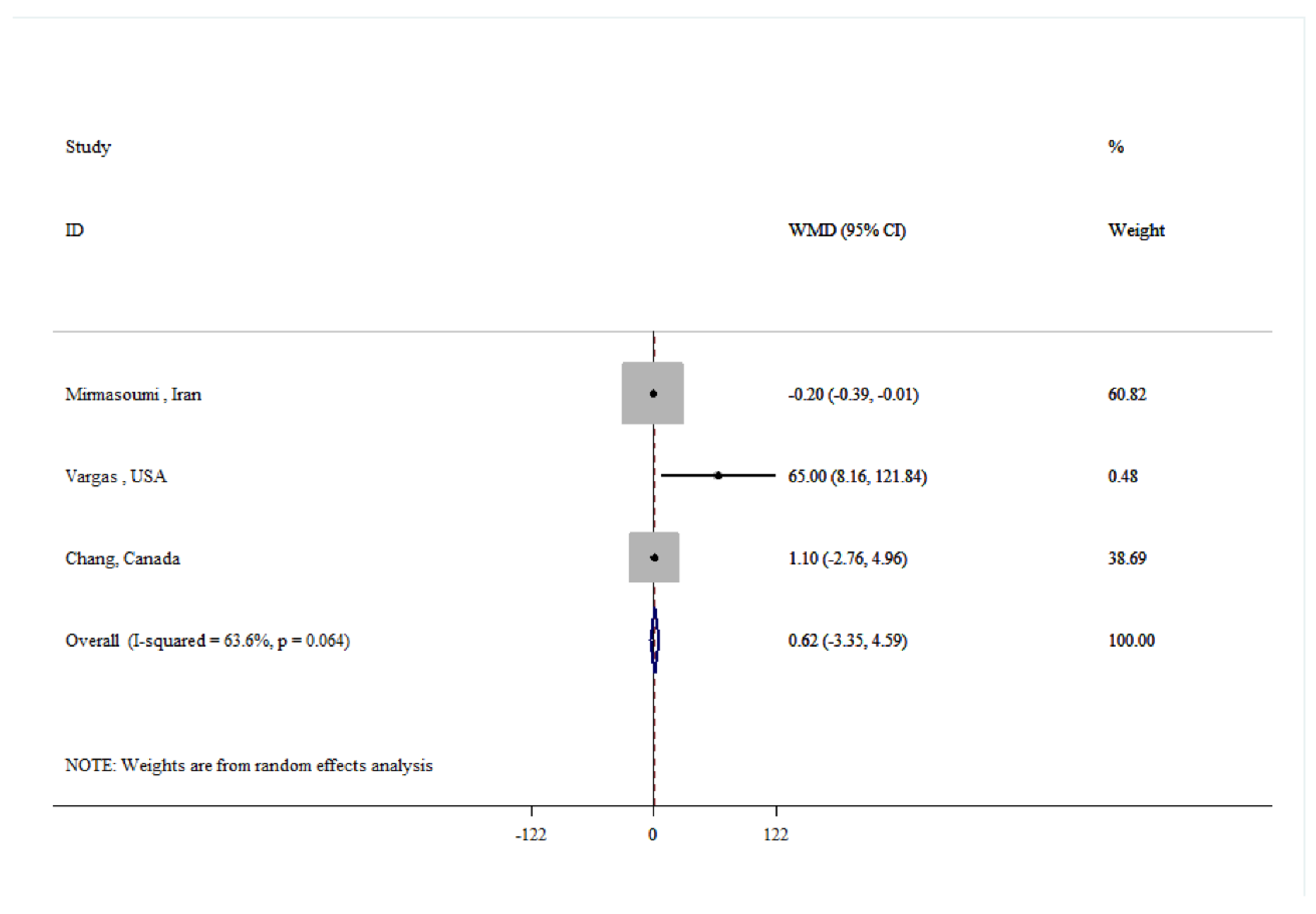
Figure 3.
Forest plot detailing mean difference and 95% confidence intervals (CIs) the effects of flaxseed supplementation on FSH.
Figure 3.
Forest plot detailing mean difference and 95% confidence intervals (CIs) the effects of flaxseed supplementation on FSH.
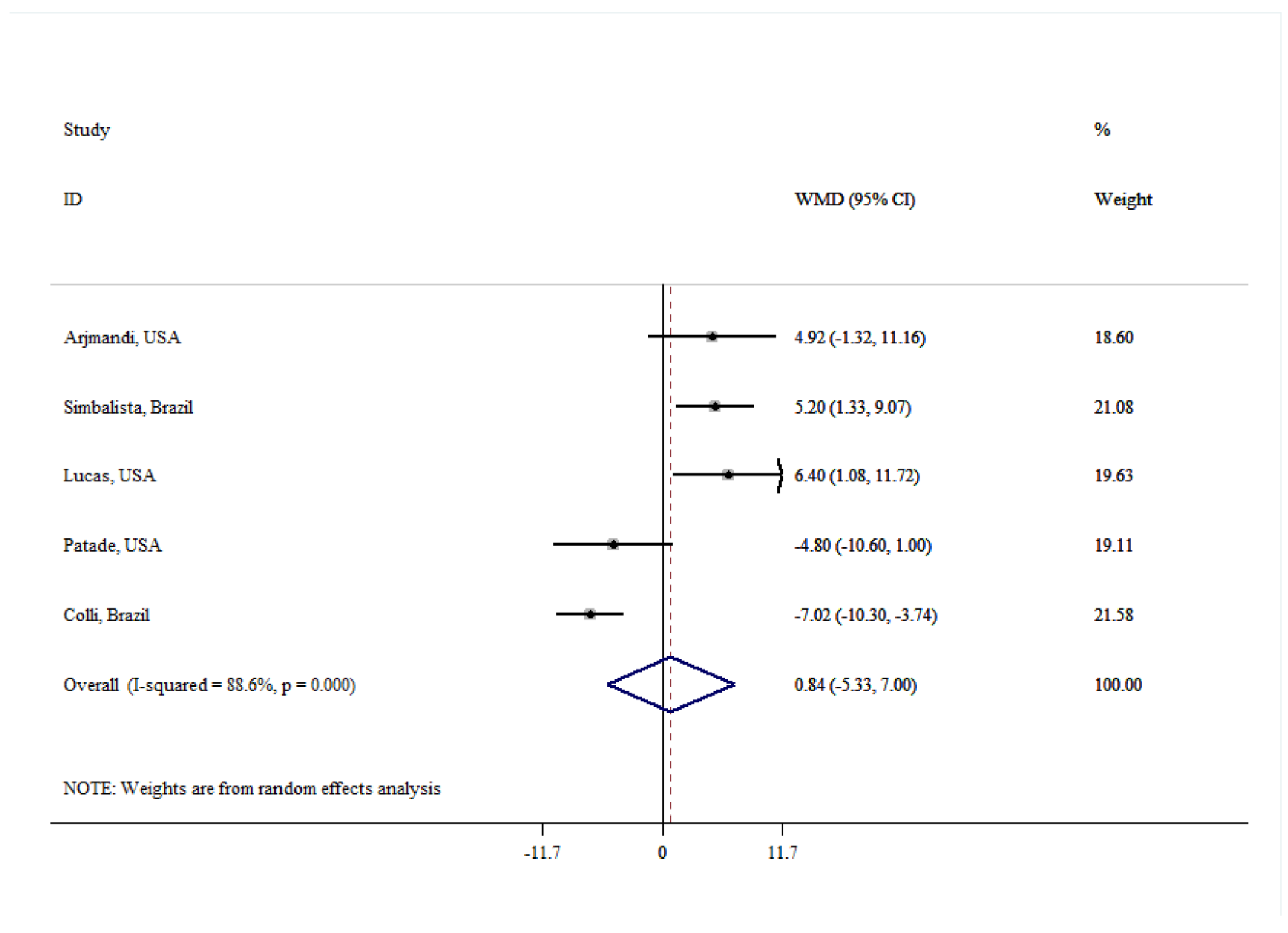
Figure 4.
Forest plot detailing mean difference and 95% confidence intervals (CIs) the effects of flaxseed supplementation on SHBG.
Figure 4.
Forest plot detailing mean difference and 95% confidence intervals (CIs) the effects of flaxseed supplementation on SHBG.
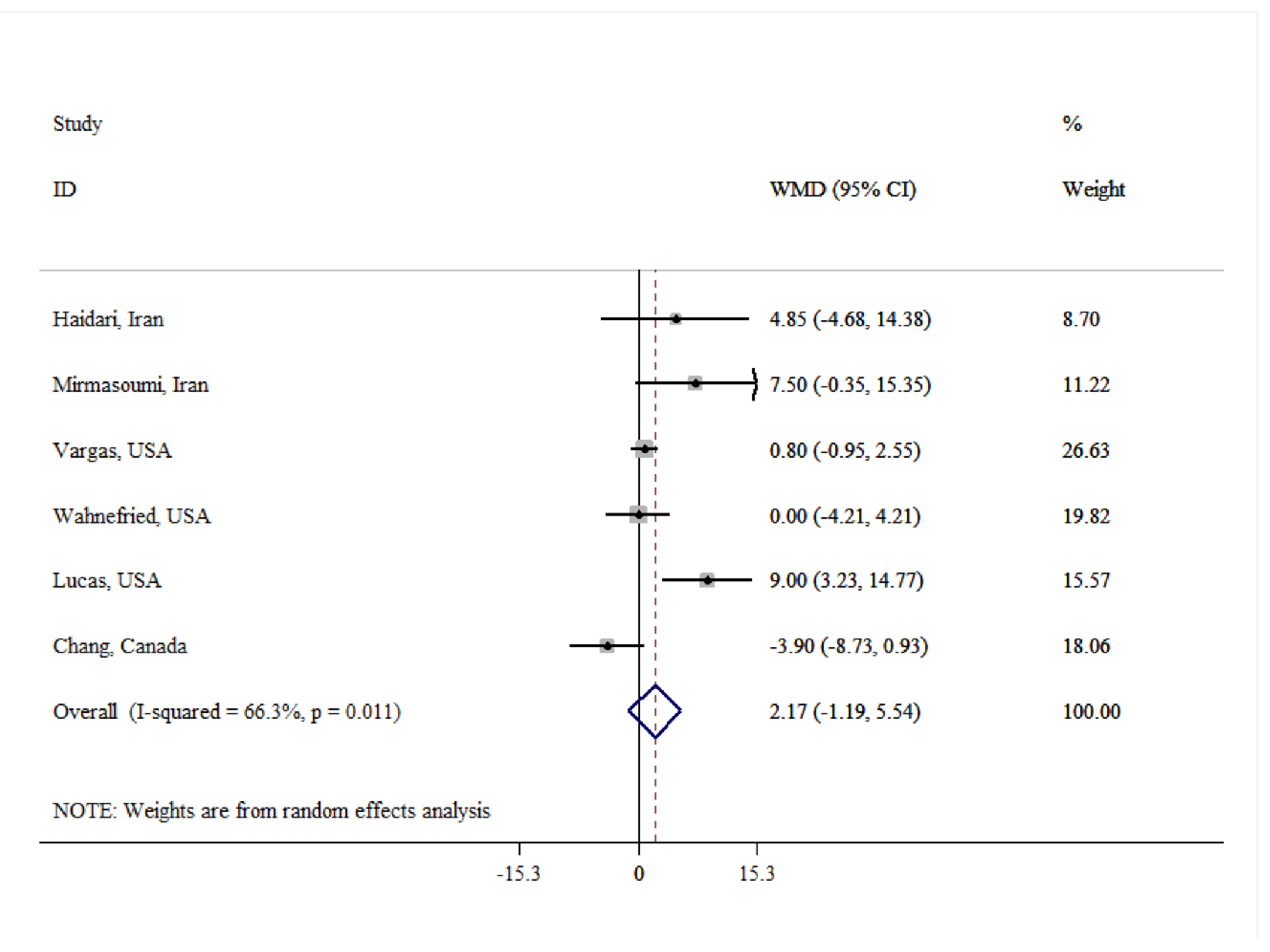
Figure 5.
Forest plot detailing mean difference and 95% confidence intervals (CIs) the effects of flaxseed supplementation on TT.
Figure 5.
Forest plot detailing mean difference and 95% confidence intervals (CIs) the effects of flaxseed supplementation on TT.
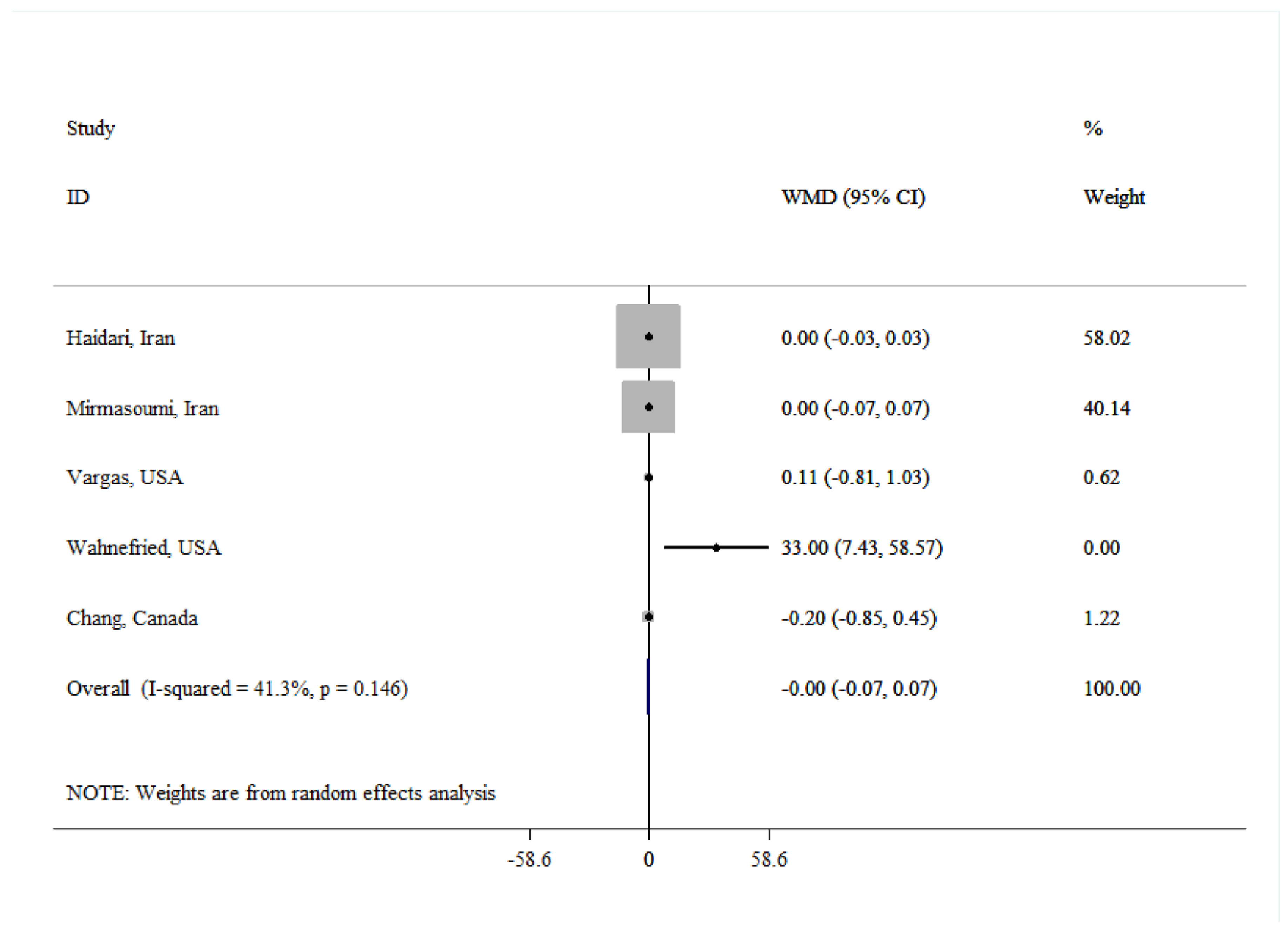
Figure 6.
Forest plot detailing mean difference and 95% confidence intervals (CIs) the effects of flaxseed supplementation on FAI.
Figure 6.
Forest plot detailing mean difference and 95% confidence intervals (CIs) the effects of flaxseed supplementation on FAI.
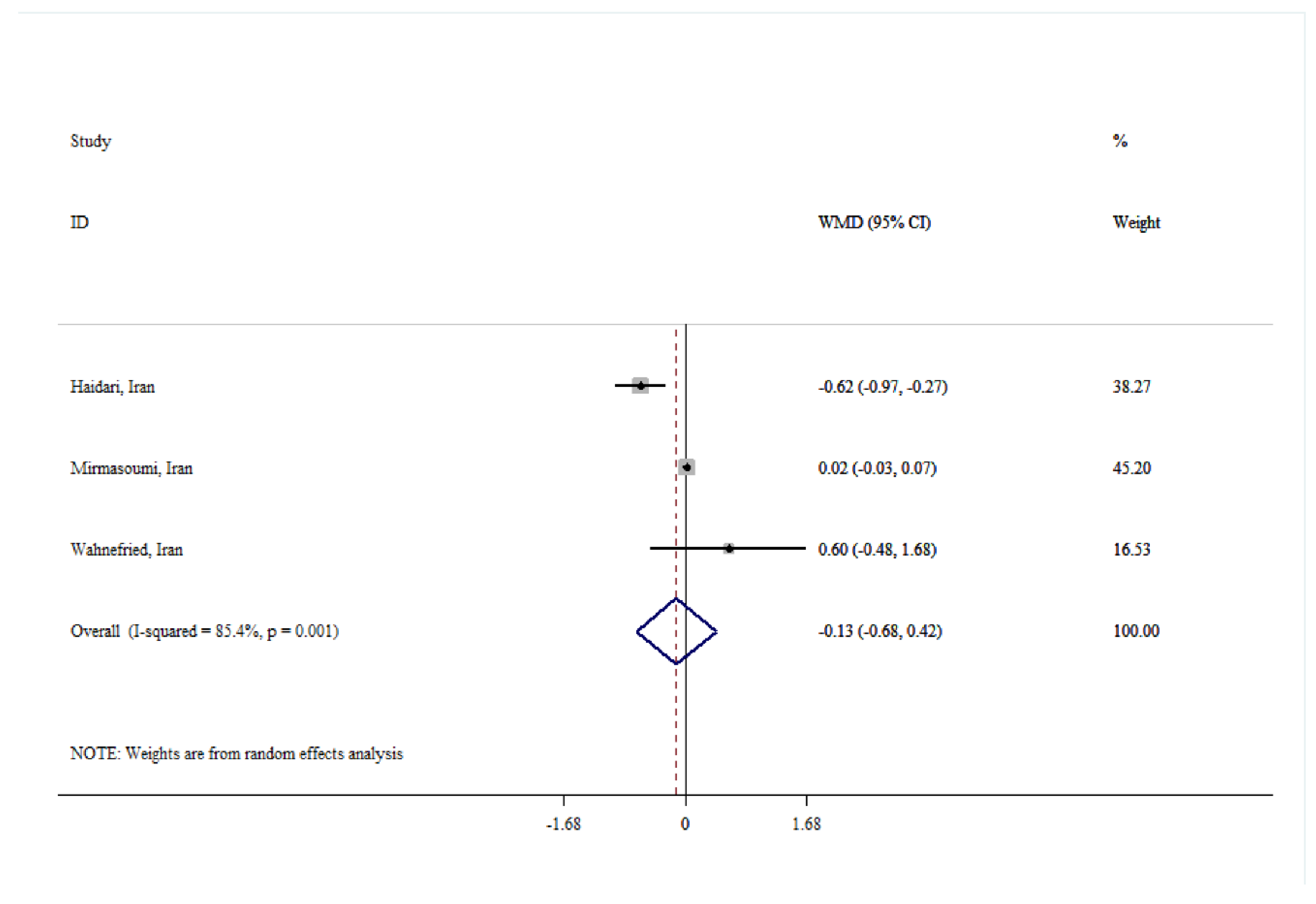
Table 3.
Subgroup analyses for the effects of Flaxseed supplementation on sexual hormone.
| Number | WMD (95% CI) | P-within | I2 (%) | P-heterogeneity | |
| FSH | |||||
| Overall | 5 | 0.84 (-5.53, 7.00) | 0.791 | 88.6 | <0.001 |
| Age(year) | |||||
| ≤50 | 3 | 1.39 (-7.70, 10.48) | 0.764 | 93.3 | <0.001 |
| >50 | 2 | -0.01 (-9.54, 9.51) | 0.998 | 80.0 | <0.001 |
| Dose (g/day) | |||||
| <30 | 2 | -0.96 (-12.93, 11.02) | 0.876 | 95.0 | <0.001 |
| ≥30 | 3 | 2.19 (-4.77, 9.16) | 0.537 | 77.0 | 0.013 |
| Quality | |||||
| Low | 2 | -6.48 (-9.34, -3.63) | <0.001 | 0.0 | 0.513 |
| High | 3 | 5.48 (2.68, 8.27) | <0.001 | 0.0 | 0.920 |
| Duration (week) | |||||
| <8 | 1 | 4.92 (-1.32, 11.16) | 0.123 | - | - |
| ≥8 | 4 | -0.09 (-7.26, 7.07) | 0.981 | 90.6 | <0.001 |
| SHBG | |||||
| Overall | 6 | 2.17 (-1.19, 5.54) | 0.206 | 66.3 | 0.011 |
| Age(year) | |||||
| ≤50 | 4 | 4.94 (-0.10, 9.99) | 0.055 | 68.9 | 0.022 |
| >50 | 2 | -1.76 (-5.57, 2.04) | 0.634 | 29.8 | 0.233 |
| Dose (g/day) | |||||
| <30 | 3 | 0.43 (-4.96, 5.81) | 0.887 | 66.4 | 0.051 |
| ≥30 | 3 | 4.36 (-1.59, 10.31) | 0.114 | 73.5 | 0.023 |
| Quality | |||||
| Low | 2 | 0.79 (-3.06, 4.64) | 0.687 | 0.0 | 0.361 |
| High | 4 | 2.73 (-2.23, 7.69) | 0.280 | 78.5 | 0.003 |
| Duration (week) | |||||
| <8 | 3 | -0.31 (-2.76, 2.14) | 0.806 | 38.1 | 0.199 |
| ≥8 | 3 | 7.78 (3.60, 11.95) | <0.001 | 0.0 | 0.763 |
| Total testosterone | |||||
| Overall | 5 | -0.00 (-0.07, 0.07) | 0.968 | 41.3 | 0.146 |
| Age(year) | |||||
| ≤50 | 3 | 0.00 (-0.03, 0.03) | 0.994 | 0.0 | 0.980 |
| >50 | 2 | 13.84 (-18.31, 45.98) | 0.399 | 84.5 | 0.012 |
| Dose (g/day) | |||||
| <30 | 2 | -0.00 (-0.07, 0.07) | 0.949 | 0.0 | 0.554 |
| ≥30 | 3 | 0.10 (-0.95, 1.15) | 0.851 | 69.0 | 0.040 |
| Quality | |||||
| Low | 2 | 13.90 (-17.91, 45.72) | 0.957 | 84.4 | 0.011 |
| High | 3 | -0.00 (-0.07, 0.07) | 0.999 | 0.0 | 0.845 |
| Duration (week) | |||||
| <8 | 3 | 0.04 (-1.31, 1.38) | 0.392 | 70.2 | 0.035 |
| ≥8 | 2 | 0.00 (-0.03, 0.03) | 0.963 | 0.0 | 0.999 |
Discussion
This is the first meta-analysis of the effect of flaxseed supplementation on sex hormones status in adults. We found no significant alterations in FSH, FAI, DHEAS, TT, and SHBG. In addition, subgroup analyses revealed that flaxseed supplementation significantly increased SHBG in individuals aged 50 or younger, those with PCOS, and those who underwent the intervention for at least 12 weeks. Additionally, an increase in TT was observed in men and individuals with prostate cancer following flaxseed supplementation.
Dietary components can significantly impact circulating sex hormone levels, which is crucial for preventing hormone-related issues. The endocrine system, a complex network of hormones and glands, declines with age, leading to a yearly reduction in testosterone levels by 0.5–1% in men and a decrease in estrogen levels in women starting around age 30. In men, this TT decline is associated with loss of muscle mass and strength, and supplementation with testosterone or dihydrotestosterone can enhance muscle strength. Flaxseed, rich in biologically active compounds like secoisolariciresinol diglucoside, is metabolized by intestinal bacteria into mammalian lignans, enterolactone, and enterodiol. These compounds are structurally similar to natural sex hormones and have demonstrated weak hormonal effects and cancer-preventive properties in animal studies. For over two decades, flaxseed and lignans have been studied for their potential to prevent hormone-related cancers, including breast cancer. Additionally, lignans have been shown to reduce testosterone levels by binding to enterohepatic circulation and inhibiting 5α-reductase, the enzyme that converts testosterone to dihydrotestosterone.
Research indicates that diets high in lignans may help protect against prostate cancer, which is linked to high androgen levels. Lignans have also been shown to stimulate SHBG synthesis in the liver and interact with SHBG, altering the biological activity of circulating androgens and estrogens. However, our study did not find significant effects of flaxseed consumption on FSH, FAI, and DHEAS levels in adults. This could be due to inconsistencies in the trials, such as varying durations, forms, and doses of flaxseed supplements. The heterogeneity in these trials, particularly regarding intervention duration, might mean that shorter periods are insufficient to produce significant changes in sex hormone levels. Additionally, the small sample sizes in the included trials may have resulted in low statistical power, making it difficult to detect significant effects. This highlights the need for further research with larger sample sizes and consistent methodologies. In line with two other studies on postmenopausal women, our research found that flaxseed intake did not affect serum levels of TT, androstenedione, or DHEAS [9,36]. Cross-sectional studies have shown mixed results, with some reporting positive, negative, or no correlation between enterolignans and androgens [37]-[40]. Lignans might influence androgen metabolism by inhibiting 5α-reductase, which converts testosterone to the more potent dihydrotestosterone, and by inhibiting aromatase, which converts androgens to estrogens [41]. Additionally, lignans can stimulate SHBG synthesis in the liver and interact with SHBG to modify the biological activity and availability of circulating estrogens and androgens [42,43]. Observational studies have found positive correlations between lignans and SHBG [17], but our findings, like other intervention studies, do not support flaxseed’s role in altering SHBG levels [9,29,36]. Regarding the estrogenic effects of flaxseed, our study found no changes in FSH or FAI levels, which contradicts earlier findings suggesting that flaxseed has estrogenic properties. It’s important to note that only a few RCTs have investigated the impact of flaxseed supplementation on sex hormones. Therefore, more RCTs are needed to draw definitive conclusions about the effects of flaxseed on sex hormones across various durations and doses. Haggans et al. [44] observed that consuming 10 g of flaxseed daily for 7 weeks significantly raised the urinary levels of 2-hydroxyestrone and the 2:16α-hydroxyestrone ratio. Similarly, McCann et al.'s [45] pre-post study found significant increases in these urinary markers in women who took 10 g of flaxseed daily for 7 days. In a randomized controlled trial by Brooks et al. [46], daily intake of a flaxseed muffin (containing 25 g of flaxseed) for 16 weeks also significantly boosted the urinary 2-hydroxyestrone and 2:16α-hydroxyestrone ratio. While the exact mechanisms remain unclear, it is suggested that flaxseed and lignans might influence estrogen metabolite profiles by altering the expression or activity of cytochrome P450 enzymes, which are responsible for estrogen hydroxylation [45,47]. For instance, flaxseed supplementation in hens increased CYP1A1 expression, leading to higher production of 2-hydroxyestrone and lower production of 16α-hydroxyestrone. Although the 2:16α-hydroxyestrone ratio has been inversely linked to breast cancer risk and proposed as a dietary intervention target [47], recent studies suggest that the overall and relative levels of metabolites from the 2-, 4-, and 16-hydroxylation pathways might be more relevant for breast cancer risk and prevention [48,49]. In our study, flaxseed intake did not significantly affect the levels of FSH, FAI, DHEAS, TT, and SHBG in the bloodstream. This aligns with other studies on serum, plasma, or urinary estrogen levels in postmenopausal women [29,36,46], except for one crossover trial that found significant reductions in serum estradiol and estrone sulfate with 10 g of flaxseed per day for seven weeks [32]. Since estradiol and estrone are linked to higher postmenopausal breast cancer risk, reducing their levels could be protective. In vitro studies suggest that lignans might lower estrogen synthesis by inhibiting the aromatase enzyme, which converts testosterone and androstenedione into estradiol and estrone [50,51].
Limitations
The current meta-analysis has some limitations. Firstly, the number of RCTs evaluating the effect of flaxseed consumption on sex hormones status in adults is limited at present.
This may limit the power of our analyses and therefore, the results should be interpreted in the context of constrains in available data. Secondly, high heterogeneity among studies could not be fairly expounded after performing the subgroup analysis. Therefore, the reliability of the results may be adversely influenced.
Conclusions
Our findings indicate that flaxseed does not significantly impact sex hormones in adults. However, given the limitations of the trials reviewed, further research through future RCTs is necessary to explore this topic more thoroughly.
Author Contributions
Conceptualization and Methodology: A.A, A.K., M.H.H., Data curation, Formal analysis, Software: A.K., N.D., S.S., Writing – original draft: A.K., M.H.H., S.S., All authors have read and approved the manuscript.
Data Availability
Data described in the manuscript are available from the Corresponding author, upon reasonable request.
Acknowledgments
We thank all authors contributing for this meta-analysis.
Conflicts of Interest
The authors declare no competing interests.
References
- Aubead, N. M. in Reproductive Hormones (IntechOpen, 2021).
- Tan, I. J., Peeva, E. & Zandman-Goddard, G. Hormonal modulation of the immune system—a spotlight on the role of progestogens. Autoimmunity reviews 14, 536-542 (2015). [CrossRef]
- Khmil, M., Khmil, S. & Marushchak, M. Hormone imbalance in women with infertility caused by polycystic ovary syndrome: is there a connection with body mass index? Open Access Macedonian Journal of Medical Sciences 8, 731-737 (2020).
- Chandel, S., Das, S., Ojha, S. & Pandey, M. in Women's Health: A Comprehensive Guide to Common Health Issues in Women 101-128 (Bentham Science Publishers, 2024).
- Peixoto, C. et al. Relationship between sexual hormones, quality of life and postmenopausal sexual function. Trends in psychiatry and psychotherapy 41, 136-143 (2019). [CrossRef]
- Rohr, U. D. The impact of testosterone imbalance on depression and women's health. Maturitas 41, 25-46 (2002).
- Allen, N. E. & Key, T. J. The effects of diet on circulating sex hormone levels in men. Nutrition research reviews 13, 159-184 (2000). [CrossRef]
- Frische, E. J., Hutchins, A. M., Martini, M. C., Thomas, W. & Slavin, J. L. Effect of flaxseed and wheat bran on serum hormones and lignan excretion in premenopausal women. Journal of the American College of Nutrition 22, 550-554 (2003). [CrossRef]
- Hutchins, A. M., Martini, M. C., Olson, B. A., Thomas, W. & Slavin, J. L. Flaxseed consumption influences endogenous hormone concentrations in postmenopausal women. Nutrition and cancer 39, 58-65 (2001). [CrossRef]
- Webb, A. L. & McCullough, M. L. Dietary lignans: potential role in cancer prevention. Nutrition and cancer 51, 117-131 (2005). [CrossRef]
- Dobrowolska, K. & Regulska-Ilow, B. The legitimacy of using dietary supplement diglycoside secoisolariciresinol (SDG) from flaxseed in cancer. Roczniki Państwowego Zakładu Higieny 72 (2021). [CrossRef]
- Zhang, J. et al. Secoisolariciresinol diglycoside (SDG) lignan content of oil flax: genotypic and environmental variations and association with other traits. Oil Crop Science 7, 1-8 (2022). [CrossRef]
- Raole, V. M. & Raole, V. V. Flaxseed and seed oil: Functional food and dietary support for health. EAS Journal of Nutrition and Food Sciences 4, 68-77 (2022).
- Landete, J. M. Plant and mammalian lignans: A review of source, intake, metabolism, intestinal bacteria and health. Food Research International 46, 410-424 (2012). [CrossRef]
- Mason, J. K. & Thompson, L. U. Flaxseed and its lignan and oil components: can they play a role in reducing the risk of and improving the treatment of breast cancer? Applied Physiology, Nutrition, and Metabolism 39, 663-678 (2014).
- McCann, S. E. et al. Dietary lignan intakes in relation to survival among women with breast cancer: the Western New York Exposures and Breast Cancer (WEB) Study. Breast cancer research and treatment 122, 229-235 (2010). [CrossRef]
- Adlercreutz, H. et al. Effect of dietary components, including lignans and phytoestrogens, on enterohepatic circulation and liver metabolism of estrogens and on sex hormone binding globulin (SHBG). Journal of steroid biochemistry 27, 1135-1144 (1987). [CrossRef]
- Adlercreutz, H. Lignans and human health. Critical reviews in clinical laboratory sciences 44, 483-525 (2007).
- Chang, V. C. et al. Effect of dietary flaxseed intake on circulating sex hormone levels among postmenopausal women: a randomized controlled intervention trial. Nutrition and cancer 71, 385-398 (2019). [CrossRef]
- Markakis, J. The horn of conflict. Review of African political economy 30, 359-362 (2003).
- Haidari, F., Banaei-Jahromi, N., Zakerkish, M. & Ahmadi, K. The effects of flaxseed supplementation on metabolic status in women with polycystic ovary syndrome: a randomized open-labeled controlled clinical trial. Nutrition journal 19, 1-11 (2020). [CrossRef]
- Shamseer, L. et al. Preferred reporting items for systematic review and meta-analysis protocols (PRISMA-P) 2015: elaboration and explanation. BMJ (Clinical research ed.) 350, g7647, doi:10.1136/bmj.g7647 (2015). [CrossRef]
- Sterne, J. A. et al. RoB 2. BMJ: British Medical Journal 366, 1-8 (2019).
- Guyatt, G. H. et al. GRADE: an emerging consensus on rating quality of evidence and strength of recommendations. Bmj 336, 924-926 (2008). [CrossRef]
- Higgins, J. P., Thompson, S. G., Deeks, J. J. & Altman, D. G. Measuring inconsistency in meta-analyses. Bmj 327, 557-560 (2003). [CrossRef]
- Egger, M., Higgins, J. P. & Smith, G. D. Systematic Reviews in Health Research: Meta-Analysis in Context. (John Wiley & Sons, 2022).
- Higgins, J. et al. Cochrane Handbook for Systematic Reviews of Interventions version 6.2. Cochrane; 2021. Updated February 2021. Reference Source (2021).
- Arjmandi, B. H. et al. Whole flaxseed consumption lowers serum LDL-cholesterol and lipoprotein (a) concentrations in postmenopausal women. Nutrition Research 18, 1203-1214 (1998). [CrossRef]
- Lucas, E. A. et al. Flaxseed improves lipid profile without altering biomarkers of bone metabolism in postmenopausal women. The journal of clinical endocrinology & metabolism 87, 1527-1532 (2002).
- Demark-Wahnefried, W. et al. Flaxseed supplementation (not dietary fat restriction) reduces prostate cancer proliferation rates in men presurgery. Cancer Epidemiology Biomarkers & Prevention 17, 3577-3587 (2008). [CrossRef]
- Patade, A. et al. Flaxseed reduces total and LDL cholesterol concentrations in Native American postmenopausal women. Journal of women's health 17, 355-366 (2008). [CrossRef]
- Simbalista, R. L., Sauerbronn, A. V., Aldrighi, J. M. & Arêas, J. A. Consumption of a flaxseed-rich food is not more effective than a placebo in alleviating the climacteric symptoms of postmenopausal women. The Journal of nutrition 140, 293-297 (2010). [CrossRef]
- Vargas, M. L., Almario, R. U., Buchan, W., Kim, K. & Karakas, S. E. Metabolic and endocrine effects of long-chain versus essential omega-3 polyunsaturated fatty acids in polycystic ovary syndrome. Metabolism 60, 1711-1718 (2011). [CrossRef]
- Colli, M. C. et al. Evaluation of the efficacy of flaxseed meal and flaxseed extract in reducing menopausal symptoms. Journal of medicinal food 15, 840-845 (2012). [CrossRef]
- Mirmasoumi, G. et al. The effects of flaxseed oil omega-3 fatty acids supplementation on metabolic status of patients with polycystic ovary syndrome: a randomized, double-blind, placebo-controlled trial. Experimental and Clinical Endocrinology & Diabetes 126, 222-228 (2018).
- Sturgeon, S. R. et al. Effect of dietary flaxseed on serum levels of estrogens and androgens in postmenopausal women. Nutrition and cancer 60, 612-618 (2008). [CrossRef]
- Granata, O. M. et al. Dietary enterolactone affects androgen and estrogen levels in healthy postmenopausal women. Annals of the New York Academy of Sciences 1155, 232-236 (2009). [CrossRef]
- Low, Y.-L. et al. Phytoestrogen exposure is associated with circulating sex hormone levels in postmenopausal women and interact with ESR1 and NR1I2 gene variants. Cancer Epidemiology Biomarkers & Prevention 16, 1009-1016 (2007). [CrossRef]
- Zeleniuch-Jacquotte, A. et al. Circulating enterolactone and risk of breast cancer: a prospective study in New York. British journal of cancer 91, 99-105 (2004). [CrossRef]
- Zeleniuch-Jacquotte, A. et al. Circulating enterolactone and risk of endometrial cancer. International journal of cancer 119, 2376-2381 (2006). [CrossRef]
- Evans, B. A. J., Griffiths, K. & Morton, M. Inhibition of 5α-reductase in genital skin fibroblasts and prostate tissue by dietary lignans and isoflavonoids. Journal of Endocrinology 147, 295-302 (1995). [CrossRef]
- Adlercreutz, H. et al. Dietary phytoestrogens and cancer: in vitro and in vivo studies. The Journal of steroid biochemistry and molecular biology 41, 331-337 (1992). [CrossRef]
- Martin, M. E., Haourigui, M., Pelissero, C., Benassayag, C. & Nunez, E. A. Interactions between phytoestrogens and human sex steroid binding protein. Life sciences 58, 429-436 (1995). [CrossRef]
- Haggans, C. J. et al. Effect of flaxseed consumption on urinary estrogen metabolites in postmenopausal women. Nutrition and cancer 33, 188-195 (1999). [CrossRef]
- McCann, S. E. et al. Changes in 2-hydroxyestrone and 16α-hydroxyestrone metabolism with flaxseed consumption: modification by COMT and CYP1B1 genotype. Cancer Epidemiology Biomarkers & Prevention 16, 256-262 (2007). [CrossRef]
- Brooks, J. D. et al. Supplementation with flaxseed alters estrogen metabolism in postmenopausal women to a greater extent than does supplementation with an equal amount of soy. The American journal of clinical nutrition 79, 318-325 (2004). [CrossRef]
- Lord, R. S., Bongiovanni, B. & Bralley, J. A. Estrogen metabolism and the diet-cancer connection: rationale for assessing the ratio of urinary hydroxylated estrogen metabolites. Alternative Medicine Review 7, 112-129 (2002).
- Fuhrman, B. J. et al. Estrogen metabolism and risk of breast cancer in postmenopausal women. Journal of the National Cancer Institute 104, 326-339 (2012). [CrossRef]
- Ziegler, R. G., Fuhrman, B. J., Moore, S. C. & Matthews, C. E. Epidemiologic studies of estrogen metabolism and breast cancer. Steroids 99, 67-75 (2015). [CrossRef]
- JD, B. Mammalian lignans and genistein decrease the activities of aromatase and 17beta-hydroxysteroid dehydrogenase in MCF-7 cells. J Steroid Biochem Mol Biol 94, 461-467 (2005).
- Adlercreutz, H. et al. Inhibition of human aromatase by mammalian lignans and isoflavonoid phytoestrogens. The Journal of steroid biochemistry and molecular biology 44, 147-153 (1993). [CrossRef]
Disclaimer/Publisher’s Note: The statements, opinions and data contained in all publications are solely those of the individual author(s) and contributor(s) and not of MDPI and/or the editor(s). MDPI and/or the editor(s) disclaim responsibility for any injury to people or property resulting from any ideas, methods, instructions or products referred to in the content. |
© 2024 by the authors. Licensee MDPI, Basel, Switzerland. This article is an open access article distributed under the terms and conditions of the Creative Commons Attribution (CC BY) license (http://creativecommons.org/licenses/by/4.0/).
Copyright: This open access article is published under a Creative Commons CC BY 4.0 license, which permit the free download, distribution, and reuse, provided that the author and preprint are cited in any reuse.


