

Submitted:
23 October 2024
Posted:
24 October 2024
You are already at the latest version
Abstract
Wearable smart devices have become ubiquitous in modern society, extensively researched for their health monitoring capabilities and convenience features. However, the "wearability" of these devices remains a relatively understudied area, particularly in terms of design informed by clinical trials. While wearable devices hold significant potential to enhance daily life, it is crucial to understand and validate design factors influencing their comfort, usability, and integration into everyday routines. This review aimed to evaluate the “wearability” of smart devices through a mixed-methods scoping review of the literature. By analyzing studies on comfort, usability, and daily integration, it sought to identify design improvements and research gaps to enhance user experience and system design. From 130 publications (1998-2024), 19 were included. The review revealed that most findings were qualitative, lacking the quantitative studies needed for validated design criteria. While qualitative data provides rich insights, the absence of quantitative research limits a comprehensive understanding of design issues in the field. This underscores the need for future studies to use quantitative methodologies to better assess and validate design guidance, improving wearability.
Keywords:
wearable devices
; wearable comfort
; comfort assessment
; wearability design
1. Introduction
Wearable devices, including smartwatches, fitness trackers, smart clothing, smart eyewear, wearable cameras, physiological and biochemical monitors, are becoming increasingly integrated into daily life. There is a growing interest in utilizing these devices for clinical monitoring, recording, and decision-making. However, this interest is accompanied by several operational, legal, and reimbursement challenges that must be addressed to facilitate their use in clinical care [1,2,3,4,5]. Significant research efforts are focused on improving the performance and user acceptance of wearable devices. This includes advancements in wireless communications, optimization of operating systems, reduction of size, and enhancements in sensing capabilities. Improvements in sensing and transducer technologies will enable wearable devices to accurately monitor vital signs and other health metrics, providing valuable insights for healthcare and wellness applications. Wearable sensing technologies are poised to transform medical practice by offering continuous real-time monitoring of biomarkers associated with various health conditions, including diabetes, stress, inflammation, heart disease, gout, and fertility [6]. Numerous research initiatives highlight the latest advancements in wearable biosensing technology development, healthcare applications, and manufacturing concerns [7,8,9].
Despite technological advancements, the comfort of wearable devices remains a crucial design consideration. For long-term monitoring applications, the devices must be comfortable enough for continuous wear: they must be “wearable to be worn.” Therefore, a balanced approach that combines technological innovation with user-centric design principles is imperative for the successful development and adoption of wearable health devices [10].
Wearable comfort is directly related to user acceptance of wearable devices and can potentially affect the performance of the products in a variety of aspects such as safety, sensing accuracy, reliability, user dependency, adherence and compliance. The terms “adherence” and “compliance” are often used interchangeably, but they have distinct meanings. Compliance refers to the extent to which a patient follows the prescriber’s advice [2], implying obedience to the physician’s authority [3,4,5]. In contrast, adherence signifies a collaborative effort between the patient and physician to improve the patient’s health, integrating the physician’s medical opinion with the patient’s lifestyle, values, and preferences for care [6,7,8]. Moreover, the comfort level of wearable devices can be subject to numerous factors: wearing methods and regions, supportive device materials, mechanical configurations, and products appearance. Therefore, appropriate categorizations and definitions of wearable comfort are important for research on investigating comfort assessment. An extensive description has been given by Slater defining comfort as a pleasant state of physiological, psychological, and physical harmony between a human being and the environment [11]. Although there is no comprehensive and widely accepted definition of wearable comfort, attempts have been made to define it in either a holistic perspective or based on specific devices. Among various classifications of wearable comfort, physical comfort and psychological comfort are typically referred to as two major categories. As the names indicate, physical comfort mostly comes from physical contact between the human body and wearable devices, whereas psychological comfort is more about inner sensory perception such as emotional concerns about the safety and reliability of the devices. To assess the comfort levels of wearable devices, researchers have proposed various approaches in different application scenarios, which could be roughly categorized into subjective and objective assessment methods. Most of the subjective assessment methods are based on self-report scales including Visual Analogue Scales (VAS), Numeric Rating Scales (NRS), Verbal Rating Scales (VRS), and Likert Scales, by which comfort levels of subjects are evaluated in a straightforward way based on cognitive recognition of one’s feeling and comprehension. By contrast, objective assessments focus on measurement methodologies using quantifiable physiological signals and only indirectly suggest wearability.
This study focuses on reviewing the literature to explore the relationship between wearability and the design of wearable devices. It aims to identify how wearability is conceptualized and to examine studies that provide insights into how devices can be designed to enhance wearability. The objective is to understand the factors influencing wearability and to identify design principles validated by clinical trials that optimize user experience, comfort, and usability. This review seeks to contribute to a deeper understanding of the interplay between wearability and design, offering valuable guidance for the development of future wearable technologies for clinical use.
1.1. Wearable Devices
The terms “wearable devices”, “wearable technologies”, or simply “wearables” refer to the smart electronic devices worn on the human body that can sense, record, transmit, and analyze physiological or biochemical signals in a real-time manner and/or assist users to perform desired tasks and/or actuate certain physical activities. Ideally, these functions should be executed effortlessly to the person who wears the devices. Because of the portability, intelligence and convenience, wearable devices such as smart-watches, fitness trackers, smart clothing, smart eyewear, wearable cameras, and wearable medical devices are currently used in a variety of areas. They include medical health monitoring, human motion detection, interactive gaming, physical therapy and rehabilitation, sports performance monitoring, and so forth.
Wearability of biosensors remains unexplored and represents real-world usability. To align with emerging definitions of terminology used for digital health and wearable products, we define “utility” as whether a product has the features that users need, and “usability” as how easy and pleasant those features are to use. Fundamentally, the more wearable a device is, the more people will wear and adhere to using it [12]. Conversely, poor adherence to using a wearable biosensor will limit the ability to predict adverse events [13]. Wearability is the concept describing the characteristics of an effective wearable biosensor, spanning sensor accuracy, comfort, battery life, aesthetics, form factor, method of attachment to the patient, and more [14,15,16]. User-centered design acknowledges the intimate relation between the human body and wearable technology [17,18], and while critical to patient compliance, but many devices are simply not designed for comfortable or long-term use, even for users who may be more tolerant to design flaws [19,20,21].
1.2. Design Perspective
The adoption of new technology is often driven by its ability to address unmet patient or clinical need [22]. Two key checkpoints in the design process are verification and validation [23]. Figure 1 illustrates the distinction between design validation and clinical validation within the overall design of a wearable system. A critical first step is the translation of clinical needs (T1) into design input specifications, which guide the device design process. Subsequently, the design output is translated (T2) into the presentation of the new wearable system. Verification testing ensures that the technology is designed correctly. However, if the design outcomes are not validated to meet clinical needs, they will have little impact on clinical decision-making. The design process can be executed proficiently and verified, but biosensor technology can still be refined without being validated against clinical needs. Efforts to optimize performance and quality improvement of emerging technology are necessary, but the translation into clinical practice is hindered if, at the outset, T1 fails to convert user functionality specifications into a comprehensive set of design input specifications.
This study focuses on contemporary commercial wearable devices, akin to those commonly used for health monitoring, which have gained popularity through the “quantified self” movement. By examining the literature on these devices, the current work to explore device design elements in which validation efforts link design and wearability, thus providing design guidance that can inform standards [17,24,25] leading to devices designed to meet the needs of users. Through an analysis of existing literature, the study aims to uncover published research efforts that can inform the design and development of future wearable devices for health monitoring and beyond.
1.3. Research Questions
In this scoping review, the objective is to identify key concepts and determine the scope or coverage of the literature. While specific research questions are not required, having a set of general research questions helps guide the review process. Here are three general research questions for exploring the “wearability” of wearable devices in our scoping review:
- What are the key factors influencing the wearability of wearable devices?
- What methodologies and measures are used to assess the wearability of wearable devices?
- What are the reported user experiences and satisfaction levels regarding the wearability of different types of wearable devices?
1.4. Design Considerations
Translating functional specifications into design specifications is a well-known challenge in design [26,27] and for the present work, Table 1 highlights 12 key parameters that assist in understanding the landscape of potential user needs and related design criteria. Our scoping survey aligns with the Stanford Biodesign process by defining the problem space broadly to capture a wide range of user needs, not constrained by well-defined pre-existing functional specifications [23]. The parameters in Table 1 collectively ensure that the wearable device is practical, comfortable, and effective for use in a clinical trial setting. These design considerations are central to the critical appraisal of research studies.
Table 2 offers a rubric for evaluating papers based on their relevance to user needs outlined in Table 1. Scores range from 1 to 10, where 10 indicates the paper provides extensive data, examples, and critical analysis, making it highly relevant. Conversely, a score of 1 signifies that the paper either does not mention or only briefly touches on the topic without detail. This scoring system helps in assessing how well a paper meets the specified user requirements
2. Materials and Methods
A scoping approach was taken when collecting all relevant papers for the literature review. Pilot testing of literature searches across multiple databases revealed a limited number of studies examining design guidance derived from wearable validation studies. Given the lack of specific questions and concepts for critical appraisal, a mixed-methods (qualitative and quantitative data) scoping review was deemed more appropriate than a systematic review. While a systematic review allows for the examination of practice based on the quality of evidence, specific deficiencies, and gaps in evidence to inform future research, the scoping review approach was chosen to better map the breadth and scope of the existing literature. A scoping review aligns with the current work in which we seek to identify evolving or emerging topics prior to undertaking a systematic review, the latter of which could meet the criteria for registration with Cochrane [28,29].
2.1. Search Strategy
Our mixed-methods scoping literature review search strategy employed PubMed, Scopus, Google Scholar, ScienceDirect, Cochrane, and ClinicalTrial.gov to identify scholarly works linking the concept of wearability with specific device design features and guidance. Preliminary work focused on articles, papers, reviews and studies that explored the relationship between wearability and the design characteristics of wearable devices. By utilizing these comprehensive databases, we aimed to gather a diverse range of academic perspectives and findings on how design features influence the wearability of such devices.
The complexity of this topic became apparent in the need to identify slightly different sets of key words when searching a specific domain. In a way, this slightly decomposes the original topic question into more focused searches to enable capturing relevant literature from each domain. This is especially relevant in interdisciplinary topics where different fields may approach the topic from distinct perspectives. This approach allowed us to access a breadth of relevant literature and insights, facilitating a thorough analysis of the interplay between wearability and device design. However, it’s important to maintain coherence and relevance across the different search outcomes to ensure that the overall objectives of the review are met.
In this scoping review, we included references that were systematic reviews or mini-reviews, as these sources typically encompass citations that could be informative of experimental data or clinical trials. These references were explored with the belief they may provide valuable insights into the scope of design criteria used in wearable device design. Additionally, we included references that described experiments with the potential to include or lead to clinical trial work, further enriching our understanding of the design and application of wearable devices.
Figure 2 illustrates word search results from six databases, yielding 130 manuscripts as the foundation for further scrutiny in the current work. Figure 3 illustrates the manuscript review process in a PRISMA flow diagram, identifying the final number of manuscripts from the database search and other sources that were subject to detailed review.
2.2. Eligibility Criteria and Screening
Inclusion criteria for our scoping review required a focus on the qualitative aspects of wearability concerning wearable devices. This was to ensure inclusion of studies examining user experiences, perceptions, and subjective evaluations of device comfort, usability, and overall satisfaction. Papers meeting this criterion provide valuable insights into the qualitative dimensions of wearability, highlighting factors influencing user acceptance and adoption.
Additionally, our review targeted papers reporting on quantitative pilot studies or clinical trials that specifically examined device wearability-related outcomes described in Table 1. Such studies employ quantitative methodologies to assess objective measures of wearability, such as ergonomic design features, physiological impacts, and usability metrics.
By incorporating quantitative data, these papers contribute to a more comprehensive understanding of the effectiveness and efficacy of wearable device designs in enhancing user experience and usability. Furthermore, manuscripts intended for inclusion had to report a link between wearability and device design. These papers elucidated how specific design features or interventions influence the wearability of wearable devices, providing empirical evidence of the relationship between design and user experience. By examining this link, these manuscripts offer valuable insights for designers, engineers, and researchers seeking to optimize wearable device design to maximize user comfort, usability, and overall wearability.
Manuscripts that did not meet these eligibility criteria were excluded from the pool of candidate studies for detailed review.
3. Results
Table 3 lists the 19 literature search outcomes. Although this is a fairly small subset of papers for further study, it nonetheless represents the current state of the art in research related to wearable device design for comfort and wearability. Despite the extensive body of literature on wearable technology, our specific criteria—focusing on qualitative wearability assessments, quantitative evaluations, and the relationship between design features and user experience—resulted in a significantly narrowed pool.
Many of the papers identified during our review did not meet our inclusion criteria due to their primary focus on sensing materials, new sensor designs, or data analytics. While these papers contribute valuable insights to the broader field of wearable technology, they did not directly address wearability aspects or the impact of design features on user experience—the central themes of our study.
Despite the limited quantity of qualified papers, the selected subset exhibits diversity in methodologies, perspectives, and findings. These papers frequently represent cutting-edge research efforts aimed at enhancing wearable device comfort and wearability, showcasing innovative approaches, emerging trends, and relevant challenges. Although the literature search outcomes featured specific design data, our focused analysis in the next section aims to uncover key insights and implications that can inform future research and contribute to the ongoing evolution of wearable technology, ultimately optimizing user experience and satisfaction.
Each of the 19 papers were reviewed to determine whether it included one or more of the user-need design criteria. The scores presented in Table 4 are based on the scoring rubric outlined in Table 2. After evaluating each paper’s ability to address the user-need design criteria, an average score was calculated based on an unweighted average of the 12 design criteria; this is shown in Table 4 as “average score.”
Table 5 was then used to make an approximate assessment of the Cross-reference for the evaluation of the potential impact a reviewed manuscript may have as a data source for the ‘design for wearability’ process. This created three categories of papers as a way to summarize the abundance or absence of design data that would have an impact on an effort to design for wearability.
4. Discussion
It seems logical that the greater the wearability of a device, the more likely people are to consistently use it or comply with long-term usage recommendations. The current work finds that while numerous wearable technologies have been proposed and some have entered the commercial market, very little scholarship prevails on how to design for wearability. While the dominant use of wearables is for fitness applications, comprehensive studies on wearability and its impact on usage and accuracy in clinical contexts remain scarce. Validated design standards and recommendations for designing for wearability are virtually absent.
In our review of 19 research papers related to wearable devices, Table 3, Table 4 and Table 6, succinctly present a summary description for each of these papers, capturing their key findings, methodologies, and contributions. However, mere summaries do not suffice; we sought to distill their relevance further.
To achieve this, we devised a ranking system that led to a cross-reference for the potential impact a reviewed manuscript may have as a data source for the ‘design for wearability’ process. This assessment considered factors such as alignment with our research focus, methodological rigor, and impact on the field. Approximately 90% of the papers were ranked as providing low or medium impact in terms of the ability to inform the design for wearability process.
Although some studies emphasize user-centered design, objective metrics are often missing, and the concept of long-term wearability does not always align with patient needs. Notably, compliance with wearables tends to decline over time during research studies. For instance, in an adult study involving wristwatch-style wearable biosensors, mean daily data collection hours decreased from 13.3 to 6.3 hours over a 6-month period.[44]. In another study workers were asked how comfortable they found a temperature measurement sensor worn for an 8-hour work shift, though data on the impact of design on wearability was not collected [45]. Wearable devices that study self-powered systems [18,46] center on the technology to power a device but not on specific design elements for long-term wear. Recent research studying continuous monitoring of fall detection utilizing machine learning has the potential to tease out wearability classification, but the study design did not explore wearability [47].
With the Stanford BioDesign process in mind, user need is a critical starting point in design, and demographics matter [23]. For instance, consider the unique case of wearables for children. For applications in children, sensing modalities are limited due to size and sensitivity requirements. Currently, studies are limited to recordings of ECG, audio, and accelerometer signals. There have been no studies of pO2, blood pressure, respiration or other important biological signals. Assessments examine (a) increased compliance due to good comfort and interesting features [48] and (b) decreased compliance related to devices being uncomfortable, [48,49], embarrassing, noisy, or falling off a lot [50].
Ensuring wearability is crucial for real-world adoption of wearable devices. However, despite the growing interest in wearable biosensors, many studies fail to address wearability [15,51]. Unfortunately, our understanding of wearability has seen limited progress over the past several years [52]. Enhancing wearability assessment is essential for advancing translational research and promoting wider adoption of well-designed wearable biosensors.
4.1. Limitations
Our review has two main limitations.
- Despite providing insight into the limited data available to support design for wearability, the sample size for the scoping review was small and the search terms may not have been adequate to tease out design data. The field of digital medicine continues to evolve rapidly, and investigators may use terms in their studies that we did not use in our search.
- Our search was limited to peer-reviewed literature. It seems reasonable that we are unaware of many usability studies are undertaken by technology manufacturers - clinical trials we reviewed that were sponsored by industry appeared to be more for the goal of collecting marketing data, not providing design insight.
5. Conclusions
In our comprehensive literature search, we have identified three critical limitations in prior research within the wearable technology domain:
- Lack of Standardized Assessment Methods: The absence of an accepted and standardized method for assessing wearability has resulted in inconsistent evaluations across studies. Researchers often rely on subjective criteria, leading to variability in how wearability is measured and reported.
- Qualitative Nature of Assessments: Most existing assessments of wearability remain qualitative, lacking objective metrics for rigorous analysis. While self-report scales provide valuable insights, they fall short of quantifying wearability in a consistent and comparable manner.
- Limited Utility for Design: Despite the wealth of existing studies, their qualitative nature and lack of quantifiable data hinder their practical utility in designing wearable devices. Insights gleaned from these studies do not directly inform design decisions or address the specific needs of users.
To advance the field, it is imperative to address these limitations. Researchers must collaborate to establish robust methodologies for assessing wearability objectively. By doing so, we can enhance the design, usability, and overall impact of wearable technologies, ultimately benefiting users and advancing the field.
Author Contributions
Conceptualization, A.T., J.C.C., C.D and Y.W.S.; methodology, A.T., C.D and Y.W.S.; formal analysis, Y.W.S, V.L.M., and C.D.; investigation, Y.W.S, V.L.M., and C.D.; data curation, Y.W.S, V.L.M., and C.D.; writing—original draft preparation, Y.W.S, V.L.M., and C.D.; writing—review and editing, A.T., J.C.C., Y.W.S, V.L.M., and C.D. All authors have read and agreed to the published version of the manuscript.
Funding
This research received no external funding.
Data Availability Statement
No new data was created.
Acknowledgments
Research reported in this publication was internally funded by Case Western Reserve University Department of Biomedical Engineering, the Department of Pediatric Cardiology and Cleveland Clinic Children’s Center for Artificial Intelligence (C4AI), Pediatric Institute, Cleveland Clinic Children’s and the Lyle School of Engineering, Southern Methodist University.
Conflicts of Interest
The authors declare no conflicts of interest.
References
- Siegel, C. Wearable and Medical Device Litigation Is on the Rise. Available online: https://www.witlegal.com/insights/blog/wearable-and-medical-device-litigation-is-on-the-rise/ (accessed on 20 March 2024).
- Spatz, E.S.; Ginsburg, G.S.; Rumsfeld, J.S.; Turakhia, M.P. Wearable Digital Health Technologies for Monitoring in Cardiovascular Medicine. New England Journal of Medicine 2024, 390, 346–356. [Google Scholar] [CrossRef] [PubMed]
- Friend, S.H.; Ginsburg, G.S.; Picard, R.W. Wearable Digital Health Technology. New England Journal of Medicine 2023, 389, 2100–2101. [Google Scholar] [CrossRef] [PubMed]
- Ginsburg, G.S.; Picard, R.W.; Friend, S.H. Key Issues as Wearable Digital Health Technologies Enter Clinical Care. N Engl J Med 2024, 390, 1118–1127. [Google Scholar] [CrossRef] [PubMed]
- Varma, N.; Han, J.K.; Passman, R.; Rosman, L.A.; Ghanbari, H.; Noseworthy, P.; Avari Silva, J.N.; Deshmukh, A.; Sanders, P.; Hindricks, G.; et al. Promises and Perils of Consumer Mobile Technologies in Cardiovascular Care: JACC Scientific Statement. J Am Coll Cardiol 2024, 83, 611–631. [Google Scholar] [CrossRef]
- Velasco, E. How Wearable Sensors Will Transform the Practice of Medicine. Available online: https://magazine.caltech.edu/post/how-wearable-sensors-will-transform-the-practice-of-medicine (accessed on 30 June 2024).
- Xian, X. Frontiers of Wearable Biosensors for Human Health Monitoring. Biosensors 2023, 13, 964. [Google Scholar] [CrossRef]
- Smith, A.A.; Li, R.; Tse, Z.T.H. Reshaping Healthcare with Wearable Biosensors. Sci Rep 2023, 13, 4998. [Google Scholar] [CrossRef]
- Lopez, X.; Afrin, K.; Nepal, B. Examining the Design, Manufacturing and Analytics of Smart Wearables. MEDICAL DEVICES & SENSORS 2020, 3, e10087. [Google Scholar] [CrossRef]
- Ferguson, C.; Hickman, L.D.; Turkmani, S.; Breen, P.; Gargiulo, G.; Inglis, S.C. “Wearables Only Work on Patients That Wear Them”: Barriers and Facilitators to the Adoption of Wearable Cardiac Monitoring Technologies. Cardiovasc Digit Health J 2021, 2, 137–147. [Google Scholar] [CrossRef]
- Slater, K. Human Comfort. Available online: https://www.abebooks.com/9780398051280/Human-Comfort-Slater-Keith-0398051283/plp (accessed on 21 February 2024).
- Coravos, A.; Doerr, M.; Goldsack, J.; Manta, C.; Shervey, M.; Woods, B.; Wood, W.A. Modernizing and Designing Evaluation Frameworks for Connected Sensor Technologies in Medicine. NPJ Digit Med 2020, 3, 37. [Google Scholar] [CrossRef]
- Olaye, I.M.; Belovsky, M.P.; Bataille, L.; Cheng, R.; Ciger, A.; Fortuna, K.L.; Izmailova, E.S.; McCall, D.; Miller, C.J.; Muehlhausen, W.; et al. Recommendations for Defining and Reporting Adherence Measured by Biometric Monitoring Technologies: Systematic Review. Journal of Medical Internet Research 2022, 24, e33537. [Google Scholar] [CrossRef]
- Tandon, A.; de Ferranti, S.D. Wearable Biosensors in Pediatric Cardiovascular Disease. Circulation 2019, 140, 350–352. [Google Scholar] [CrossRef] [PubMed]
- Lin, W.-Y.; Ke, H.-L.; Chou, W.-C.; Chang, P.-C.; Tsai, T.-H.; Lee, M.-Y. Realization and Technology Acceptance Test of a Wearable Cardiac Health Monitoring and Early Warning System with Multi-Channel MCGs and ECG. Sensors (Basel) 2018, 18, E3538. [Google Scholar] [CrossRef] [PubMed]
- Knight, J.F.; Baber, C.; Schwirtz, A.; Bristow, H. The Comfort Assessment of Wearable Computers. Proceedings. Sixth International Symposium on Wearable Computers, 2002. [CrossRef]
- Francés-Morcillo, L.; Morer-Camo, P.; Rodríguez-Ferradas, M.I.; Cazón-Martín, A. Wearable Design Requirements Identification and Evaluation. Sensors 2020, 20, 2599. [Google Scholar] [CrossRef]
- Ferraro, V.; Ugur, S. Designing Wearable Technologies through a User Centered Approach. In Proceedings of the Proceedings of the 2011 Conference on Designing Pleasurable Products and Interfaces; Association for Computing Machinery: New York, NY, USA, June 22 2011; pp. 1–8.
- Nuske, H.J.; Goodwin, M.S.; Kushleyeva, Y.; Forsyth, D.; Pennington, J.W.; Masino, A.J.; Finkel, E.; Bhattacharya, A.; Tan, J.; Tai, H.; et al. Evaluating Commercially Available Wireless Cardiovascular Monitors for Measuring and Transmitting Real-Time Physiological Responses in Children with Autism. Autism Res 2022, 15, 117–130. [Google Scholar] [CrossRef]
- Sana, F.; Isselbacher, E.M.; Singh, J.P.; Heist, E.K.; Pathik, B.; Armoundas, A.A. Wearable Devices for Ambulatory Cardiac Monitoring. J Am Coll Cardiol 2020, 75, 1582–1592. [Google Scholar] [CrossRef]
- Hochstadt, A.; Chorin, E.; Viskin, S.; Schwartz, A.L.; Lubman, N.; Rosso, R. Continuous Heart Rate Monitoring for Automatic Detection of Atrial Fibrillation with Novel Bio-Sensing Technology. J Electrocardiol 2019, 52, 23–27. [Google Scholar] [CrossRef]
- Yock, P. Needs-Based Innovation: The Biodesign Process. BMJ Innovations 2015, 1. [Google Scholar] [CrossRef]
- Yock, P.; Zenios, S.; Makower, J.; Brinton, T.J.; Kumar, U.N.; Watkins, F.T.J.; Denend, L.; Krummel, T.; Kurihara, C.Q. BioDesign: The Process of Innovating New Medical Technologies; Cambridge University Press, 2015.
- Mouyal, N. New Standards for Wearable Technologies. Available online: https://etech.iec.ch/issue/2021-04/new-standards-for-wearable-technologies (accessed on 19 March 2024).
- Underwriters Laboratory Keeping Wearable Technology Safe at Any Speed. Available online: https://www.ul.com/insights/keeping-wearable-technology-safe-any-speed (accessed on 21 March 2024).
- de Vries, M.J. Translating Customer Requirements into Technical Specifications. In Philosophy of Technology and Engineering Sciences; Meijers, A., Ed.; Handbook of the Philosophy of Science; North-Holland: Amsterdam, 2009; pp. 489–512. [Google Scholar]
- Göhler, S.; Husung, S.; Howard, T. The Translation between Functional Requirements and Design Parameters for Robust Design. Procedia CIRP 2016, 43, 106–111. [Google Scholar] [CrossRef]
- Mak, S.; Thomas, A. Steps for Conducting a Scoping Review. J Grad Med Educ 2022, 14, 565–567. [Google Scholar] [CrossRef]
- Cochrane Cochrane Database of Systematic Reviews. Available online: https://www.cochranelibrary.com/cdsr/about-cdsr (accessed on 30 June 2024).
- Canali, S.; Schiaffonati, V.; Aliverti, A. Challenges and Recommendations for Wearable Devices in Digital Health: Data Quality, Interoperability, Health Equity, Fairness. PLOS Digit Health 2022, 1, e0000104. [Google Scholar] [CrossRef]
- Cho, S.; Chang, T.; Yu, T.; Lee, C.H. Smart Electronic Textiles for Wearable Sensing and Display. Biosensors 2022, 12, 222. [Google Scholar] [CrossRef] [PubMed]
- Gemperle, F.; Kasabach, C.; Stivoric, J.; Bauer, M.; Martin, R. Design for Wearability. In Proceedings of the Digest of Papers. Second International Symposium on Wearable Computers (Cat. No.98EX215); IEEE Comput. Soc: Pittsburgh, PA, USA, 1998; pp. 116–122.
- Haghi, M.; Danyali, S.; Ayasseh, S.; Wang, J.; Aazami, R.; Deserno, T.M. Wearable Devices in Health Monitoring from the Environmental towards Multiple Domains: A Survey. Sensors 2021, 21, 2130. [Google Scholar] [CrossRef]
- Jamshidi, M.; Park, C.B.; Azhari, F. The Design and Fabrication of a Wearable Lattice-Patterned 3D Sensing Skin. Sensors and Actuators A: Physical 2024, 369, 115143. [Google Scholar] [CrossRef]
- Kim, J.; Campbell, A.S.; de Ávila, B.E.-F.; Wang, J. Wearable Biosensors for Healthcare Monitoring. Nat Biotechnol 2019, 37, 389–406. [Google Scholar] [CrossRef]
- Lee, R.; James, C.; Edwards, S.; Skinner, G.; Young, J.L.; Snodgrass, S.J. Evidence for the Effectiveness of Feedback from Wearable Inertial Sensors during Work-Related Activities: A Scoping Review. Sensors (Basel) 2021, 21, 6377. [Google Scholar] [CrossRef]
- Lind, C.M.; Abtahi, F.; Forsman, M. Wearable Motion Capture Devices for the Prevention of Work-Related Musculoskeletal Disorders in Ergonomics-An Overview of Current Applications, Challenges, and Future Opportunities. Sensors (Basel) 2023, 23, 4259. [Google Scholar] [CrossRef]
- Liu, T.; Liu, L.; Gou, G.; Fang, Z.; Sun, J.; Chen, J.; Cheng, J.; Han, M.; Ma, T.; Liu, C.; et al. Recent Advancements in Physiological, Biochemical, and Multimodal Sensors Based on Flexible Substrates: Strategies, Technologies, and Integrations. ACS Appl. Mater. Interfaces 2023, 15, 21721–21745. [Google Scholar] [CrossRef]
- Shah, M.A.; Pirzada, B.M.; Price, G.; Shibiru, A.L.; Qurashi, A. Applications of Nanotechnology in Smart Textile Industry: A Critical Review. Journal of Advanced Research 2022, 38, 55–75. [Google Scholar] [CrossRef]
- Tandon, A.; Cobb, B.R.; Centra, J.; Izmailova, E.; Manyakov, N.V.; McClenahan, S.; Patel, S.; Sezgin, E.; Vairavan, S.; Vrijens, B.; et al. A Systematic Scoping Review of Studies Describing Human Factors, Human-Centered Design, and Usability of Sensor-Based Digital Health Technologies 2024, 2024.02.23.24303220.
- Uchitel, J.; Vidal-Rosas, E.E.; Cooper, R.J.; Zhao, H. Wearable, Integrated EEG-fNIRS Technologies: A Review. Sensors (Basel) 2021, 21, 6106. [Google Scholar] [CrossRef]
- Zhao, H.; Su, R.; Teng, L.; Tian, Q.; Han, F.; Li, H.; Cao, Z.; Xie, R.; Li, G.; Liu, X.; et al. Recent Advances in Flexible and Wearable Sensors for Monitoring Chemical Molecules. Nanoscale 2022, 14, 1653–1669. [Google Scholar] [CrossRef]
- Zhao, L.; Liang, C.; Huang, Y.; Zhou, G.; Xiao, Y.; Ji, N.; Zhang, Y.-T.; Zhao, N. Emerging Sensing and Modeling Technologies for Wearable and Cuffless Blood Pressure Monitoring. npj Digit. Med. 2023, 6, 1–15. [Google Scholar] [CrossRef] [PubMed]
- Cohen, S.; Waks, Z.; Elm, J.J.; Gordon, M.F.; Grachev, I.D.; Navon-Perry, L.; Fine, S.; Grossman, I.; Papapetropoulos, S.; Savola, J.-M. Characterizing Patient Compliance over Six Months in Remote Digital Trials of Parkinson’s and Huntington Disease. BMC Med Inform Decis Mak 2018, 18, 138. [Google Scholar] [CrossRef] [PubMed]
- Nasirzadeh, F.; Karmakar, C.; Habib, A.; Benny Neelangal, K.; Mir, M.; Lee, S.; Arnel, T. Continuous Monitoring of Body Temperature for Objective Detection of Health and Safety Risks in Construction Sites: An Analysis of the Accuracy and Comfort of off-the-Shelf Wearable Sensors. Heliyon 2024, 10, e26947. [Google Scholar] [CrossRef]
- Su, M.; Hua, J.; Sun, X.; Liu, Z.; Shi, Y.; Pan, L. Wireless Wearable Devices and Recent Applications in Health Monitoring and Clinical Diagnosis. Biomedical Materials & Devices 2024, 2, 669–694. [Google Scholar] [CrossRef]
- Teng, S.; Kim, J.-Y.; Jeon, S.; Gil, H.-W.; Lyu, J.; Chung, E.H.; Kim, K.S.; Nam, Y. Analyzing Optimal Wearable Motion Sensor Placement for Accurate Classification of Fall Directions. Sensors 2024, 24, 6432. [Google Scholar] [CrossRef]
- Schaefer, S.E.; Van Loan, M.; German, J.B. A Feasibility Study of Wearable Activity Monitors for Pre-Adolescent School-Age Children. Prev Chronic Dis 2014, 11, E85. [Google Scholar] [CrossRef]
- Bouwstra, S.; Chen, W.; Feijs, L.M.G.; Bambang Oetomo, S. Smart Jacket Design for Neonatal Monitoring with Wearable Sensors: 6th International Workshop on Wearable and Implantable Body Sensor Networks (BSN 2009). Proceedings of the sixth International Workshop on Wearable and Implantable Body Sensor Networks 2009 2009, 162–167.
- Evans, E.W.; Abrantes, A.M.; Chen, E.; Jelalian, E. Using Novel Technology within a School-Based Setting to Increase Physical Activity: A Pilot Study in School-Age Children from a Low-Income, Urban Community. Biomed Res Int 2017, 2017, 4271483. [Google Scholar] [CrossRef]
- Martinez-Tabares, F.J.; Gaviria-Gomez, N.; Castellanos-Dominguez, G. Very Long-Term ECG Monitoring Patch with Improved Functionality and Wearability. Annu Int Conf IEEE Eng Med Biol Soc 2014, 2014, 5964–5967. [Google Scholar] [CrossRef]
- Chandrasekaran, R.; Katthula, V.; Moustakas, E. Patterns of Use and Key Predictors for the Use of Wearable Health Care Devices by US Adults: Insights from a National Survey. J Med Internet Res 2020, 22, e22443. [Google Scholar] [CrossRef]
Figure 1.
Distinction between design validation and clinical validation within the overall design of a wearable system. T1 represents the translation of clinical needs into design input specifications, which guide the device design process.
Figure 1.
Distinction between design validation and clinical validation within the overall design of a wearable system. T1 represents the translation of clinical needs into design input specifications, which guide the device design process.
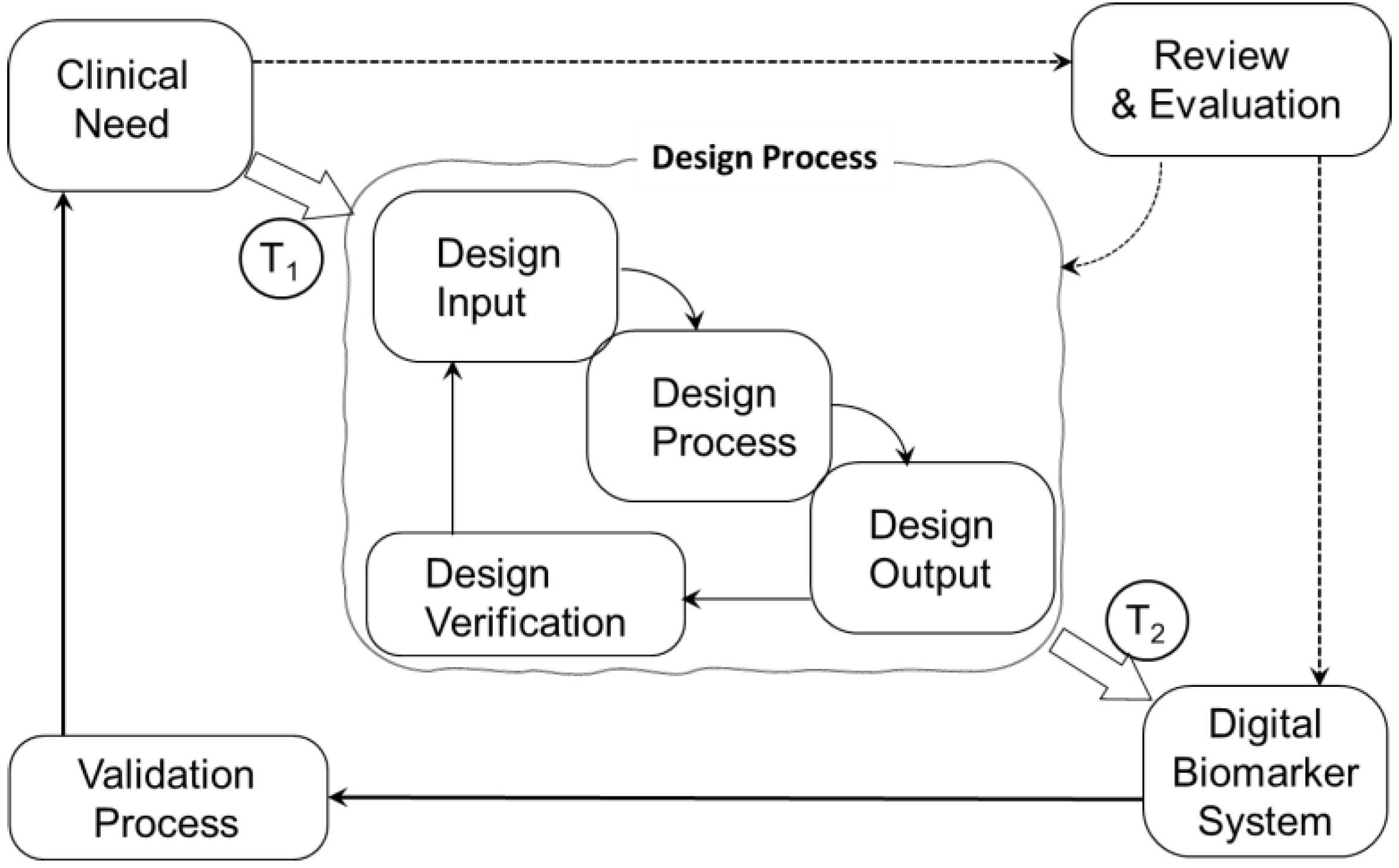
Figure 2.
Key word search results from a mixed-methods scoping review conducted across six databases, yielding 130 manuscripts as the foundation for further scrutiny in the current work.
Figure 2.
Key word search results from a mixed-methods scoping review conducted across six databases, yielding 130 manuscripts as the foundation for further scrutiny in the current work.
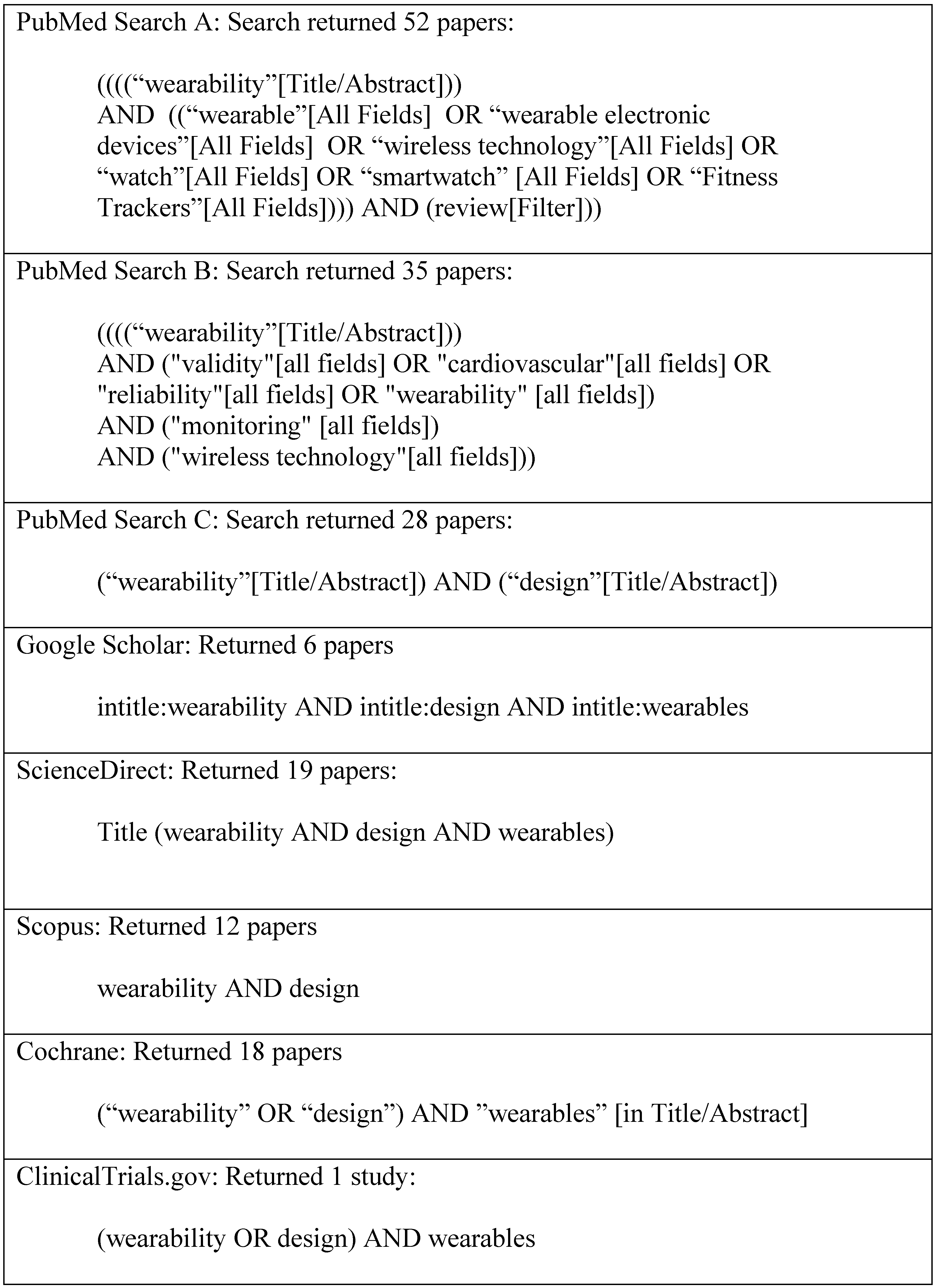
Figure 3.
PRISMA flow diagram of the wearability literature review process for studies on the wearability of wearables.
Figure 3.
PRISMA flow diagram of the wearability literature review process for studies on the wearability of wearables.
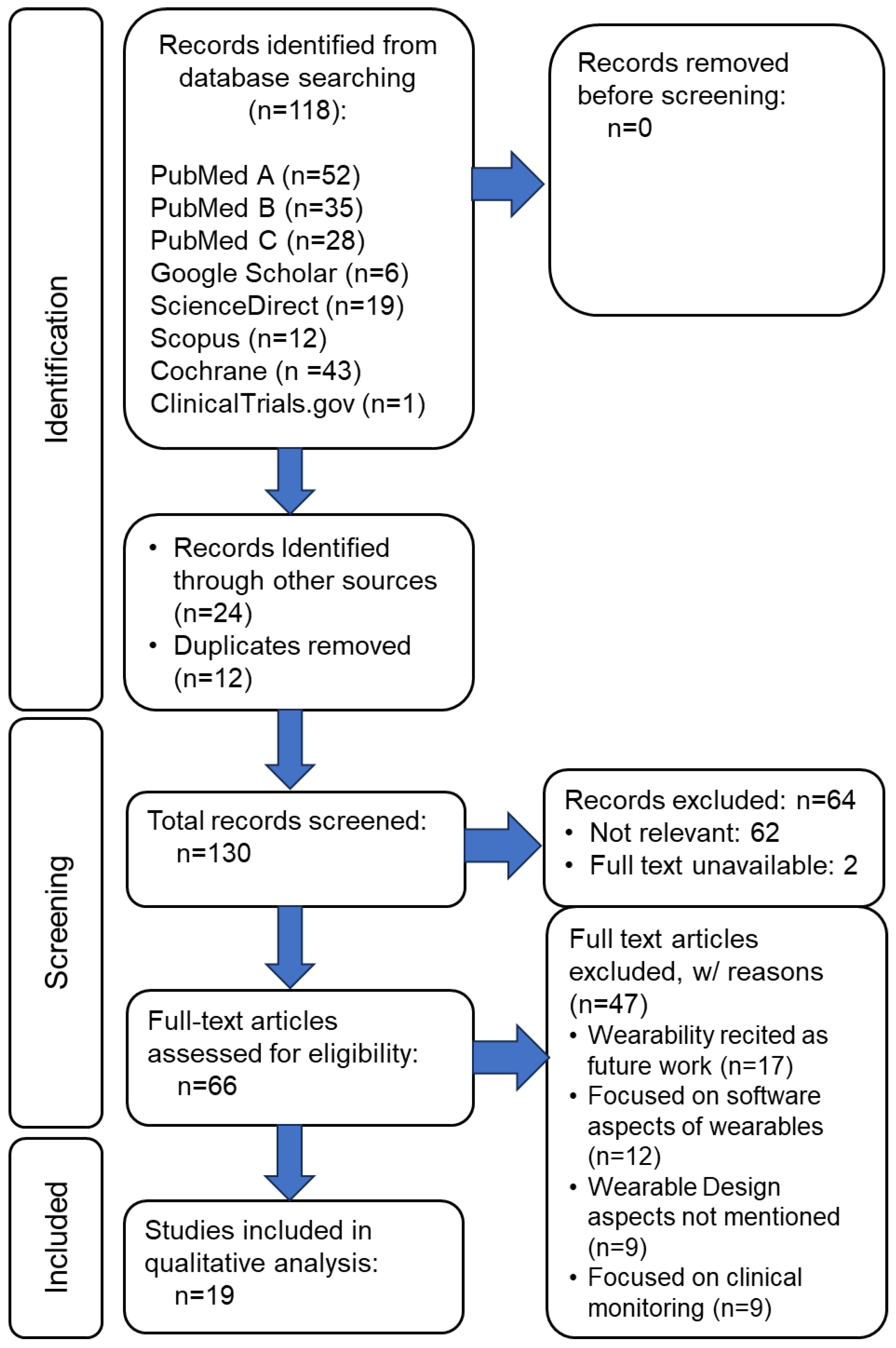

Table 1.
User need and potential design specifications to consider in design of a wearable device.
| User Need | Design Considerations | |
| A. | Comfort | Evaluate the comfort of the device when worn for extended periods. This includes assessing the materials used, fit, weight, and overall ergonomic design. |
| B. | Fit and Adjustability | Ensure the device can fit various body types and sizes. This includes the design of adjustable straps, bands, or other mechanisms to secure the device properly. |
| C. | Battery Life: | Assess the duration the device can operate before needing a recharge. Longer battery life is preferable to reduce the frequency of recharging, which can affect wearability and user compliance. |
| D. | Durability and Robustness: | The device should withstand daily wear and tear, including exposure to different environmental conditions like moisture, dust, and physical impact. |
| E. | Ease of Use: | Evaluate how easy it is for users to operate the device. This includes the simplicity of putting it on and taking it off, as well as the user interface for any necessary interactions. |
| F. | Data Accuracy and Reliability: | Assess the precision and consistency of the data collected by the device. Reliable sensors and accurate data collection are crucial for clinical trial validity. |
| G. | Mobility and Range of Motion | Determine how the device affects natural movement and range of motion. Assess whether it restricts movement during various activities. |
| H. | Integration with Clothing and Accessories: | Determine how well the device integrates with different types of clothing and accessories. Assess whether it can be worn discreetly or if it interferes with other wearable items. |
| I. | Aesthetic Appeal: | Consider the visual design of the device. It should be appealing or at least unobtrusive to encourage regular wear. |
| J. | Skin Compatibility | Ensure the materials used do not cause skin irritation or allergies. This includes testing for hypoallergenic properties and breathability of materials in contact with the skin. |
| K. | Connectivity and Data Transfer: | Evaluate how the device connects to other systems or devices for data transfer (includes reliability and security of connections). |
| L. | Regulatory Compliance: | Ensure the device meets all necessary regulatory standards and guidelines for medical devices. This includes certifications and compliance with relevant health and safety standards. |
Table 2.
Assessment rubric for evaluating references.
| Assessment of user need | Score |
|---|---|
| Reference does not mention or only briefly mentions, without detail | 1-2 |
| Reference mentions with some detail. | 3-4 |
| Reference discusses with moderate detail and some context | 5-6 |
| Reference provides detailed discussion w/ relevant data/examples. | 7-8 |
| Reference extensively comprehensive data, examples, and critical analysis. | 9-10 |
Table 3.
Publications selected for a detailed content review as potential sources of relevant user need and human factors data.
Table 3.
Publications selected for a detailed content review as potential sources of relevant user need and human factors data.
| Author | Year | Type | Title | |
|---|---|---|---|---|
| 1. | Canali et. al.[30] | 2022 | R | Challenges and recommendations for wearable devices in digital health: Data quality, interoperability, health equity, fairness |
| 2. | Cho et. al.[31] | 2022 | R | Smart electronic textiles for wearable sensing and display |
| 3. | Ferguson et. al.[10] | 2021 | R | Wearables only work on patients that wear them: Barriers and facilitators to the adoption of wearable cardiac monitoring technologies |
| 4. | Ferraro and Yavuz [18] | 2011 | D | Designing wearable technologies through a user centered approach |
| 5. | Frances-Morcillo et al.[17] | 2020 | D | Wearable design requirements identification and evaluation. |
| 6. | Friend et al.[3] | 2023 | R | Wearable digital health technology. |
| 7. | Ginsburg et al. [4] | 2024 | D | Key Issues as Wearable Digital Health Technologies Enter Clinical Care |
| 8. | Gemperle et al.[32] | 1998 | D | Design for wearability |
| 9. | Haghi et. al.[33] | 2021 | R | Wearable Devices in Health Monitoring from the Environmental towards Multiple Domains: A Survey |
| 10. | Jamshidi et. al.[34] | 2024 | E | The design and fabrication of a wearable lattice-patterned 3D sensing skin |
| 11. | Kim et. al.[35] | 2019 | R | Wearable biosensors for healthcare monitoring |
| 12. | Lee et. al.[36] | 2021 | R | Evidence for the Effectiveness of Feedback from Wearable Inertial Sensors during Work-Related Activities: A Scoping Review |
| 13. | Lind et. al.[37] | 2023 | D | Wearable Motion Capture Devices for the Prevention of Work-Related Musculoskeletal Disorders in Ergonomics |
| 14. | Liu et. al.[38] | 2023 | R | Recent Advancements in Physiological, Biochemical, and Multimodal Sensors Based on Flexible Substances: Strategies, Technologies, and Integrations. |
| 15. | Shah et. al.[39] | 2022 | R | Applications of nanotechnology in smart textile industry: A critical review. |
| 16. | Tandon et. al.[40] | 2024 | R | A systematic scoping review of studies describing human factors, human-centered design, and usability of sensor-based digital health technologies |
| 17. | Uchitel et. al.[41] | 2021 | R | Wearable, integrated EEG-fNIRS technologies: A review |
| 18. | Zhao et. al.[42] | 2022 | R | Recent advances in flexible and wearable sensors for monitoring chemical molecules |
| 19. | Zhao et. al.[43] | 2023 | D | Emerging sensing and modeling technologies for wearable and cuffless blood pressure monitoring |
Legend: R – Systematic, umbrella, scoping, or short review paper; D – Paper describing the design of a systems or subsystems; E – Report on the outcome of an experimental or non-clinical test.
Table 4.
User need design criteria scores for the publications selected for detailed review. The assessment criteria for each user need is provided in Table 2. The average score is computed as an unweighted average of the twelve criterion A-L.
Table 4.
User need design criteria scores for the publications selected for detailed review. The assessment criteria for each user need is provided in Table 2. The average score is computed as an unweighted average of the twelve criterion A-L.
| User Need Design Criteria | Average | |||||||||||||
| Reference | A | B | C | D | E | F | G | H | I | J | K | L | Score | |
| 1. | Canali et. al. (2022) | 2 | 2 | 1 | 3 | 2 | 4 | 2 | 1 | 2 | 2 | 2 | 1 | 2.0 |
| 2. | Cho et. al. (2022) | 2 | 2 | 1 | 1 | 5 | 7 | 3 | 1 | 1 | 1 | 3 | 1 | 2.3 |
| 3. | Ferguson et. al. (2021) | 4 | 4 | 4 | 4 | 8 | 5 | 1 | 3 | 7 | 1 | 3 | 1 | 3.8 |
| 4. | Ferraro and Yavuz (2011) | 6 | 6 | 2 | 2 | 6 | 3 | 6 | 5 | 4 | 3 | 2 | 2 | 3.9 |
| 5. | Frances-Morcillo et al. (2020) | 7 | 7 | 5 | 8 | 8 | 5 | 5 | 5 | 5 | 3 | 3 | 1 | 5.2 |
| 6. | Friend et al. (2023) | 3 | 5 | 5 | 6 | 5 | 7 | 2 | 2 | 2 | 6 | 8 | 7 | 4.8 |
| 7. | Ginsburg et al. (2024) | 1 | 1 | 5 | 3 | 7 | 9 | 5 | 3 | 3 | 6 | 9 | 9 | 5.1 |
| 8. | Gemperle et al. (1998) | 3 | 8 | 1 | 7 | 1 | 1 | 9 | 2 | 2 | 6 | 1 | 1 | 3.5 |
| 9. | Haghi et. al. (2021) | 2 | 2 | 8 | 6 | 4 | 9 | 2 | 2 | 2 | 4 | 9 | 4 | 4.5 |
| 10. | Jamshidi et. al. (2024) | 1 | 1 | 1 | 4 | 4 | 6 | 1 | 1 | 5 | 10 | 5 | 1 | 3.3 |
| 11. | Kim et. al. (2019) | 2 | 2 | 5 | 4 | 4 | 7 | 4 | 4 | 4 | 10 | 10 | 1 | 4.8 |
| 12. | Lee et. al. (2021) | 3 | 5 | 5 | 6 | 5 | 6 | 10 | 7 | 2 | 4 | 7 | 1 | 5.1 |
| 13. | Lind et. al. (2023) | 1 | 3 | 1 | 3 | 1 | 6 | 9 | 9 | 2 | 2 | 3 | 2 | 3.5 |
| 14. | Liu et. al. (2023) | 2 | 2 | 6 | 6 | 1 | 3 | 1 | 1 | 2 | 6 | 5 | 1 | 3.0 |
| 15. | Shah et. al. (2022) | 1 | 1 | 4 | 4 | 4 | 4 | 1 | 9 | 6 | 4 | 5 | 1 | 3.7 |
| 16. | Tandon et. al. (2024) | 5 | 5 | 1 | 1 | 5 | 6 | 5 | 1 | 2 | 2 | 2 | 2 | 3.1 |
| 17. | Uchitel et. al. (2021) | 2 | 2 | 3 | 5 | 1 | 5 | 1 | 1 | 1 | 6 | 5 | 1 | 2.8 |
| 18. | Zhao et. al. (2022) | 1 | 2 | 2 | 2 | 1 | 7 | 1 | 1 | 2 | 5 | 5 | 1 | 2.5 |
| 19. | Zhao et. al. (2023) | 2 | 2 | 2 | 3 | 2 | 4 | 1 | 1 | 1 | 3 | 3 | 1 | 2.1 |
Legend: A. Comfort B. Fit and Adjustability C. Battery Life: D. Durability and Robustness: E. Ease of Use: F. Data Accuracy and Reliability: G. Mobility and Range of Motion H. Integration with Clothing and Accessories: I. Aesthetic Appeal: J. Skin Compatibility K. Connectivity and Data Transfer: L. Regulatory Compliance:.
Table 5.
Cross-reference for the evaluation of the potential impact a reviewed manuscript may have as a data source for the ‘design for wearability’ process.
Table 5.
Cross-reference for the evaluation of the potential impact a reviewed manuscript may have as a data source for the ‘design for wearability’ process.
| Assessment | Average score | Impact |
|---|---|---|
| Minimal value as a data source for design. | Under 3 | Low |
| Provides indirect linkage to studies or reviews with data | 3 – 5 | Medium |
| Recites data that has potential support for device design. | Over 5 | High |
Table 6.
Summary description for each of the publications selected for detailed review. The scale of impact as a potential data source for the ‘design for wearability’ process is provided in Table 5.
Table 6.
Summary description for each of the publications selected for detailed review. The scale of impact as a potential data source for the ‘design for wearability’ process is provided in Table 5.
| Paper | Author | Scale | Summary Description |
| 1 | Canali et. al. | L | The paper maps out the principles for which wearable devices can be measured and the ethical problems they present. The paper recognized the gap in equity and medical literacy when it comes to wearable devices. Though the paper recognizes and comments on ethical topics/issues, it does not touch on the design and engineering process of them. |
| 2 | Cho et. al. | L | The paper focuses on the aspects of design and use of e-textiles. Though the paper mentions many issues related to the use of textiles for wearable technology, specific links to device design are absent. |
| 3 | Ferguson et. al. | M | This paper focuses not only on the developmental and design aspects of wearable technology; it also addresses the ethical and social barriers that are presented that may hinder the use of them. Cardiac devices are used as an example and design for specific end-users is discussed, such as the elderly. |
| 4 | Ferraro and Yavuz | M | The paper is directed towards designers who are responsible for upcoming wearable technology to consider the human aspects in design. The paper has a portion focused on the wearability of products and suggests a user adjustable approach to this issue. The paper also mentions how devices affect human life and what the body “senses” from these new technologies. The paper informs on psychological aspects of rejection reactions that might occur by patients of older age. |
| 5 | Frances-Morcillo et al. | H | The paper is directed towards identifying the design features of wearability of wearables. The paper included surveys from experts who are developing wearable technology and presents the results of questionnaires. |
| 6 | Friend et al. | M | The paper focuses on clinical insight that could result from clinical trials of wearable devices. Although the paper identified challenges in the field of wearables, no specific data is provided. |
| 7 | Ginsburg et al. | H | The paper successfully mentions the challenges encountered while pursuing the application of wearable technologies to healthcare. It is ranked high due to the inclusion of regulatory issues and the need for design standards. |
| 8 | Gemperle et al. | M | The paper is directed towards identifying specific design considerations that prevail when wearables are used in high-activity scenarios. The paper does not include design data but addresses device detachment during motion. |
| 9 | Haghi et. al. | M | The paper highlights the psychological aspect of utilizing wearability and the patient’s responses towards implanting or using or wearing wearables. Although the design specifications were not discussed, the specifications to be considered when applying wearable sensors to clinical settings are presented. |
| 10 | Jamshidi et. al. | M | With a focus on the interaction between wearable devices and body location, the paper provides ideas to consider when studying the interaction itself. The paper focuses on the joints and appropriate location of wearables. |
| 11 | Kim et. al. | M | The paper provides a comprehensive study on the different types of wearables sensor technology and the nature of the data that can be collected. This is an ideal manuscript to identify wearability relative to sensor data. |
| 12 | Lee et. al. | H | The paper highlights the influences of wearability towards the biosensor field. Although the paper did not discuss about the “design aspects” of wearability directly, it did discuss the guidelines of wearability. They introduce a “Technological and Design Checklist” of wearable inertial sensor and also underlines the importance of personalized designs to enhance wearability experience for patients |
| 13 | Lind et. al. | M | The paper highlights human movements in the context of typical work-related musculoskeletal activities. The paper recites issues in current use-case applications, challenges and detailed future opportunities. The paper is focused on muscular data collection. |
| 14 | Liu et. al. | M | The paper is directed towards the materials that can enhance the wearability experience of the patient. The paper then focuses highly on the improvements that should be made to utilize the fiber contained devices to become practical in the field. |
| 15 | Shah et. al. | M | The paper focuses on the different smart textiles that can be utilized to enhance the wearability of sensor clothes. Additionally, it categorized different textiles for different usage of clothing sensors such as electrically conductive textiles and energy storing textiles. |
| 16 | Tandon et. al. | M | The paper offers a comprehensive review of digital health technologies relative to approaches to evaluating sensor wearability, with a special focus on human factors, human-centered design and usability. Suggestions are included on how to improve the digital health technologies field, but no data is provided. |
| 17 | Uchitel et. al. | L | The paper emphasizes the integration of EEG and fNIRS for portable, affordable, and appropriate long-term monitoring. The paper highlights evaluation of the types of EEG electrode and amplifiers though only peripherally mentions device design aspects of the technologies. |
| 18 | Zhao et. al. | L | The paper emphasizes flexible wearable devices for real-time health monitoring based on small, soft and low-cost materials. The paper focuses on the wearability of chemical sensors for various biomarkers, commenting on the advantages and disadvantages. |
| 19 | Zhao et. al. | L | The emphasizes the challenges of monitoring blood pressure and focuses on topics such as flexible sensing, signal collecting and processing, noise reducing and estimation models for blood pressure extraction. Accuracy of continuous data collection is discussed. |
Disclaimer/Publisher’s Note: The statements, opinions and data contained in all publications are solely those of the individual author(s) and contributor(s) and not of MDPI and/or the editor(s). MDPI and/or the editor(s) disclaim responsibility for any injury to people or property resulting from any ideas, methods, instructions or products referred to in the content. |
© 2024 by the authors. Licensee MDPI, Basel, Switzerland. This article is an open access article distributed under the terms and conditions of the Creative Commons Attribution (CC BY) license (http://creativecommons.org/licenses/by/4.0/).
Copyright: This open access article is published under a Creative Commons CC BY 4.0 license, which permit the free download, distribution, and reuse, provided that the author and preprint are cited in any reuse.


