
Submitted:
21 October 2024
Posted:
22 October 2024
You are already at the latest version
Abstract
The black soldier fly larvae meal has attracted attention as a sustainable alternative protein ingredient in poultry feed. In the present study, we sought to determine the effect of black soldier fly larvae on the growth performance of broilers as replacement to fishmeal. Forty (40) one day old broiler chicks were randomly selected and distributed in 4 replicates. The Black soldier fly larvae were formulated and added to broiler’s marsh as replacement to fishmeal. Birds were fed on four experimental diets formulated as follows 15% black soldier fly (BSF15), 20% (BSF20) and 25% (BSF25) corresponding to dietary BSF inclusion levels of 150 g/kg, 200 g/kg and 250 g/ kg, respectively and the control diet (BSF0) contained 20% of fishmeal (FM) as protein sources (250 g/kg). Feed and water were provided ad libitum. Proximate analysis showed that BSFLM contained comparable nutrient values to fishmeal. The highest average weight gain was achieved when birds were provided diet with 25% BSFLM. Based on this study, it can be concluded that black soldier fly larvae meal represents an alternative source of animal protein to replace fishmeal in broiler chicken diet in their diet without adverse effect on growth performance and consumer preferance.
Keywords:
Black soldier fly larvae
; broiler feed
; animal protein source
; fishmeal
1. Introduction
Availability of quality animal feed is one of the factors which determines the success of the livestock industry [1]. Feed constitutes the majority of production costs, representing about 50-75% of the total cost [2,3,4]. Globally, it is estimated that over 1000 tons of animal feeds are produced annually of which the poultry feed constitutes the largest tonnage, followed by pig and then cattle [5]. However, one of the challenges facing the animal husbandry is the high cost of protein source compared to other nutrient sources [1]. This has led to adulteration of feeds by feed manufacturers thus resulting into stunted growth of birds and quality of its products [6]. Generally, fish and soybean are widely used as protein sources in the livestock feed industry due to high concentrations of digestible amino acids [7]. The development of a modern poultry industry is strictly connected to a continuous search for sustainable feed ingredients able to promote optimal bird’s growth and welfare. Meeting the energy and protein requirements for livestock and poultry in particular, requires a lot of innovation of other sources, which can provide proteins to livestock cheaply and sustainably to benefit the farmers [6,8]. Efforts to reduce feed costs are directed towards ingredients that do not compete with humans, are of good quality, high nutritional value, affordable, sustainably available, palatable and harmless to livestock which eats them [4,5,6,7,8,9,10]. In this regard, insects are gaining attention since they efficiently recycle nutrient -deplete substrates into nutrient-rich biomass [11,12] and their production is considered to have a smaller environmental footprint as compared to conventional feeds [13,14]. The use of insect-based feeds is progressively discussed among poultry producers and scientists [15]. In particular, the black soldier fly, (Hermetia illucens) larvae (BSFL) meal is considered an alternative source of feed ingredient due to high crude protein (CP) concentrations [16]. Its larvae can be reared on a wide range of organic waste material [17,18]. Therefore, this study aimed at evaluating the effects of different levels of BSFL meal inclusion in poultry feed on the performance of broiler birds in terms of growth, weight gain and consumer acceptability.
2. Materials and Methods
2.1. Experiment Site
The experiment was conducted at Uganda Martyrs University farm in Nkozi sub county Mpigi district in central Uganda during (March - April, 2020). The farm lies at 0o along the equator on latitude 000 36 N and longitude 000 32 E. The average annual temperature is 23oC. The area is found along the Kampala-Masaka Highway, approximately 88km, southwest of Kampala and approximately 8 Kilometers, North of Lake Victoria, the largest fresh water lake on the Continent of Africa [19].
2.2. Research Design
The experiment was laid out in a Completely Randomized Design with four replications to compare the performance of different BSFL inclusion levels with Fishmeal based diet as control.
2.3. Source of Experimental Materials
The insect meal used in this study was produced from BSF larvae from the BSFL project at the faculty of agriculture farm. The larvae were grown on media containing organic plant-derived food waste. At the end of an eight-day growth period, the larvae were removed from the feeding media, washed, dried and milled using a recommended sieve to the recommended size for proper feed formulation. Fishmeal was purchased from an accredited agro input supply shop at Kayabwe town council. One hundred sixty (n=160) day-old broiler chicks were sourced from UGA chick poultry breeder limited (Kampala) and reared for 61 days (7 days as brooder and adaptation phase and 54 days as feeding phase). During the first 3 days of acclimatization (brooder phase), chicks were reared together in a round deep litter floor brooder with 3-inch coffee husks as bedding covered with white paper and surrounded by ply wood both sides as brooder walls. Three electric charged torches were always put in the brooder room 24 hours day and night with two charcoal stoves in the brooder as a source of heat to the chicks for seven days.
2.4. Experimental Treatments
After three days on a standard (commercial) diet, forty (40) broiler chicks were randomly selected and distributed among 16 cages (1×1×2 m) with 10 chicks per cage per replicate. The chicks were fed on four experimental diets in equal amounts. The experimental diets were formulated as follow in which 15% (BSF15), 20% (BSF20) and 25% (BSF25) of the feed was with BSF meal, corresponding to dietary BSF inclusion levels of 150 g/kg, 200 g/kg and 250 g/ kg, respectively and the control diet (BSF0) contained 20% of fishmeal as protein sources (250 g/kg) (Table 1). Additional maize bran, broken maize bran, shells, cotton, premix and salt were included in the diets to ensure sufficient requirements of essential nutritional elements. Each treatment group was replicated four times. Each cage had two feeders to accommodate 20 birds and 3 drinkers to provide water. Feed and water to complete the remaining weeks of acclimatization period was ad libitum. After the seven days of acclimatization period, chicks were allowed to continue with starter feed as assigned diets of each treatment group for five days. Thereafter, each sampled chick was weighed on a digital scale and their weights recorded.
2.5. Nutrient Proximate Analysis
Samples of 400 g each of BSFL meal and fishmeal (FM) were analyzed for dry matter, crude protein, ether extract, crude fiber, ash and essential amino acids methionine cysteine, lysine, threonine and arginine at the, National Agricultural Research Organisation (NARO) laboratory Kajjansi in accordance with the standard procedures [20]. Dry matter was determined by drying 20g of each substrate at 1020C and 100mmHg for 5hrs and then weighed to obtain the dry matter. Crude protein was determined by the Kjeldahl method where the feed was digested in sulphuric acid and ammonia was liberated off by adding sodium hydroxide to the digest and is distilled off in standard acid and its quantity determined by titration [20]. Crude ash was determined by burning 20g of the feed in a closed oven at 5500C until only white ash remained [20]. Crude fiber was determined by digesting the feed in 1.25%sulphuric acid and1.25% sodium hydroxide and the dried residue ignited [20]. Ether extract was determined by subjecting the feed to continuous extraction with sulphuric acid for a defined period and measuring the residue after evaporation of the solvent which is the ether extract [20].
The content of the essential amino acids was determined by acid and alkaline hydrolysis of the fat-free sample and subsequent separation and quantification of the amino acids by a Waters Acquity UPLC H-class with modifications according to AOAC SMPR® 2017.011 methods [21]. About 0.05 g of each sample was weighed to the nearest 0.0001 g into a test tube and hydrolysed with 10 ml of 6M HCl (Puris. P.a, ACS Reagent grade, Sigma Aldrich, Germany) for acid hydrolysis and 4 ml of 4M LiOH (Biosolve SARL, France) for alkaline hydrolysis for 24 h at 112°C. Detection was done using the Waters QDA mass detector operated in Selected Ion Recording (SIR) mode. The Waters Empower™ 3 software was used to obtain calibration curves and subsequent quantification of the amino acids. For each sample, extraction, detection, identification and quantification were performed in triplicate.
The amino acid score was determined as a ratio of mg/g of the essential amino acid in the test proteins to mg/g of the same amino acid in the reference protein
Data on performance of the feed was collected by observation, measurement and recording weight gain/ growth of birds, meat quality attributes were obtained by weighing of the different parts of the birds after slaughter and consumer preference was determined by organoleptic tests using volunteers to see, smell and test the different birds when cooked and roasted. This was then subjected to a scale of 1 to 5 where 1 was very bad and 5 very good.
2.6.Statistical Analyses
All statistical analyses were performed using GenStat software version 14. Data was evaluated by Analysis of variance (ANOVA) using Tukey test to find differences due to dietary treatments. During analysis, means of the treatments were separated using least significant difference best (LSD) at 95% confidence interval. The result from the analysis was then presented in tables for easy interpretation.
3. Results
3.1. Proximate Analysis of BSFL and FM
Table 2 shows the nutritional composition of BSFL and FM samples as analyzed in the laboratory. The BSFL meal sample was high in dry matter (89.3%), and crude protein (50.9%) but low in Ash (11.5%) as compared to the FM (50.1%).
BSFL meal had a higher percentage of Arginine, cysteine, histidine, and methionine, threonine and low levels of isoleucine, lysine, leucine and valine as compared to FM (Table 3)
3.2. The effect of Substitution with BSFL Meal on Weight Gain
There was a significant difference on the effects of BSFL meal substitution levels on weight gain/growth performance of broiler chickens (P<. 001 & P=0.006). From Table 4, data collected exhibited that FM 20kg presented maximum average value of weight gain in all weeks followed by birds of BSFL 25, then BSF20 and the least weight was observed in birds subjected to BSF15 (Table 4). However, by the 8th week, BSFL birds had caught up with fishmeal.
3.3. Effect of BSFL on Carcass Characteristics
It was observed that different ratios of BSFL meal and fish meal showed a significant influence among the treatments and different parameters (breast, thigh, back and liver) BSFL20 produced significantly smaller breast, thigh and back and liver, whereas BSFL25 has a significantly smaller heart and Fishmeal had a significantly smaller gizzard. There was no significant difference in the wing weight. BSFL meal at 25kg recorded the greatest mean of breast, thigh, gizzard and liver. Fish meal presented higher means of (back, heart and wing) (Table 5).
3.4. Organoleptic Taste Of Both Cooked and Roasted Meat of Broiler Birds
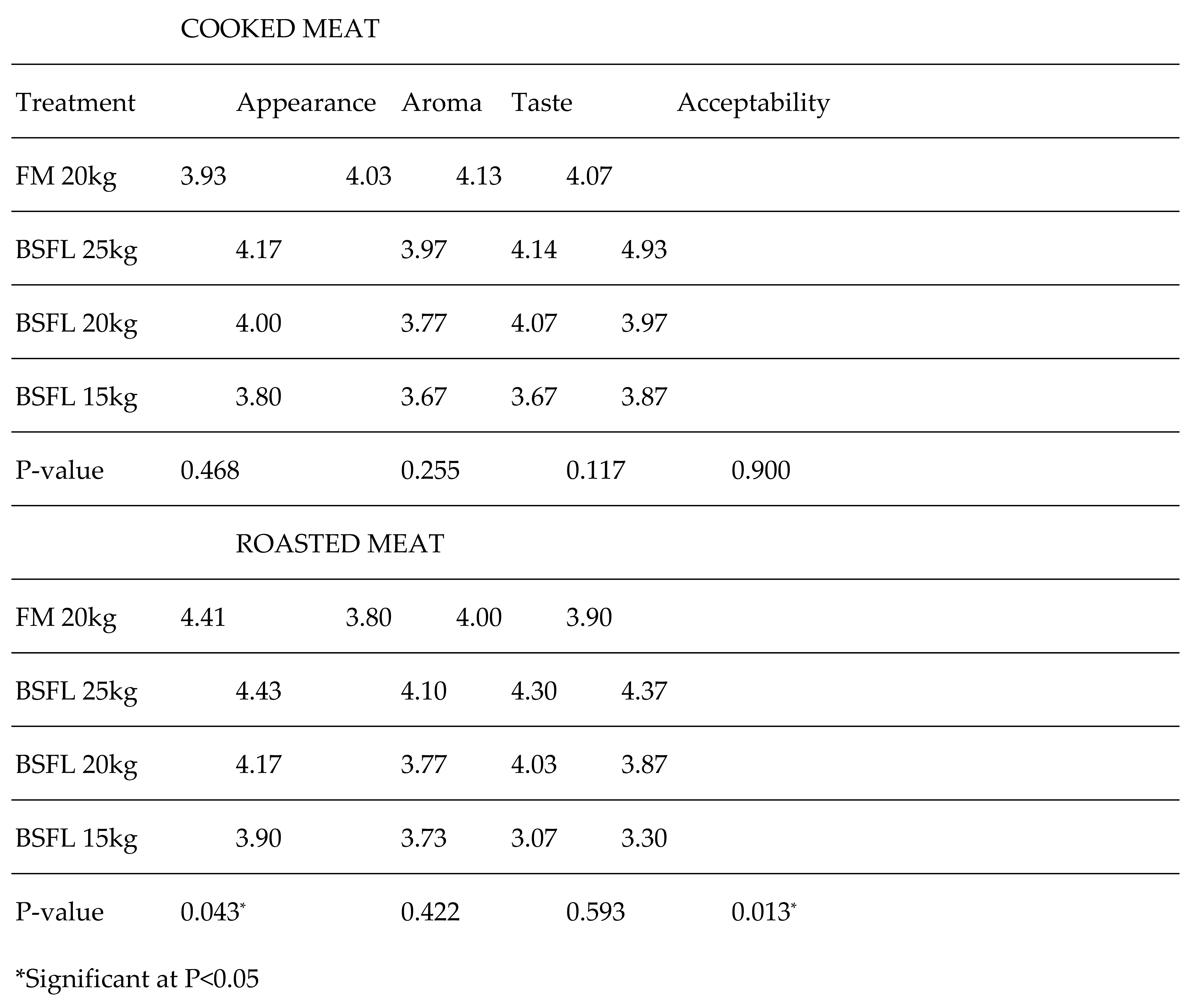
Sensory tastes on cooked and roasted meat from broilers fed on the experimental diets are shown in (Table 6). The BSFL meal inclusion had no significant effect on the appearance, aroma, taste and overall acceptability of cooked meat. However, for the roasted meat the aroma and acceptability of BSFL15 was rated significantly lower than the rest.
4. Discussion
The BSFL meal had an average dry matter (DM) content of 89.13% of which crude protein content was 50.0%, crude fibre 20.80% ether extract 29.19% and Ash 11.43%. These values except ash (50.61%) were all higher than fish meal which is the standard animal protein source for the broiler feed (Table 2). The BSFL contained a comparable quantity of essential amino acids such as arginine, lysine, methionine, threonine, leucine, isoleucine, valine, tryptophan and histidine to fish meal (Table 3) which makes it a good protein source in poultry diets. In the current study, the average DM content is 89.13% which is higher than the 30.47% reported [10]. This discrepancy may probably be due to the duration of rearing which is associated with increased crude fibre and crude fat content in the black soldier fly larvae as each level has its nutritional needs [10]. The DM content of BSF larvae tends to be positively correlated with increasing age, for instance at five days it was 26.61% while at 25 days it was 39.97% [22]. The CP value of 50.01% obtained in the present study was higher than that found in fish meal (44.7) which makes it a richer protein source. This is because insects have a higher feed conversion ratio than other animals [23] and therefore can bulk up more protein. This result is consistent with those of previous research on BSF Larvae fed on chicken feed, which reported that CP ranged from 37.2 – 52.3 % [24] but higher than 36.2% previously reported [25]. The CP in BSF ultimately depends on the feed types and feeding rate [26,27,28]. It is therefore certain that the CP content in BSFL varies with diverse sources of feed on which they are fed. In this case, BSF was fed on various substrate mixtures which must have increased the crude protein levels of the larvae. Findings indicated that BSFL obtained a higher percentage of Ether Extract than Fish meal (29.19% and 6.11%) respectively. Lipids are the second-largest nutrient component in edible insects after proteins [29]. This is because insects are usually rich in unsaturated fatty acids compared to most animals because of their higher feed conversion rates [30]. These results are comparable to those obtained by other researchers like; 26.0% [31] and 34.3% [32]. This therefore indicates that BSFL is a better source of essential fatty acids for animal feed than fish meal. BSFL meal analysis for crude fibre content was 20.80% which was higher than the 1.9% in the fish meal. The high crude fibre content observed in the current study is probably due to the presence of chitin which is a component of the exoskeleton of the larvae. The crude fibre in this study was higher than 7.0% [33] but comparable to 23.96% [34] reported previously. The Ash content was 11.43 % which was much lower than 50.61% of the fish meal. It is possible that the fishmeal had a high inorganic and mineral content than the BSFL feed meal. Although the present study did not analyze the mineral content in both feeds. This observation is consistent with previous results that reported an Ash content range of 11-28% [31]. The amino acid composition in BSFL meal is comparable to that of fish meal though BSFL had higher percentages of most essential amino acids with relevance to animal feed like arginine, cysteine, histidine, threonine and methionine. These findings are also similar to those reported by various authors for most amino acids, including those with relevance for animal feed [35,36]. The possible deficiency of threonine and methionine in BSFL previously reported [31] was not reflected in the amino acid profile of the larvae meal in our study. The amino acid composition of proteins determines the quality of animal feed. Optimal amino acid composition may vary between species due to different feed requirements and others may be supplemented [36]. This also indicates that BSFL meal had comparable (or even better) protein quality to fish meal.
Generally, at week eight the highest weight gain was achieved when birds were provided diet with 25% BSFLM. This clearly indicates that replacing 20% of fish meal with 25% BSFLM contributes significantly to the protein needs of the birds. These findings are in agreement with previous findings which reported that the supplementation of larvae meal significantly increased broiler bird weight gain, feed intake and average daily gain as compared to commercial feeds [37,38]. However, these results differ from other findings which reported that there was no significant effect of supplementing with BSFLM on weight gain [39,40,41]. Our study therefore revealed that at 25%, BSFLM can effectively replace the current standard fishmeal in broiler feeds used in Uganda.
The study findings showed that broiler chicken fed on BSFL meal at 25kg had comparable carcass characteristics to those fed on the standard broiler feed with fishmeal. Looking at the different carcass parts, the breast, thigh, gizzard and liver were bigger in the BSFL fed birds (Table 8). These findings can be attributed to the presence of different amino acids in BSFL meal that helps in body performance. These findings are in line with the findings on effect of BSFL meal on carcass characteristics of broiler chicken previously reported which observed that broilers fed on maggot meal diets had similar carcass quality to those fed on standard meals and the liver and gizzard increased in size but no signs of toxicity were observed. [41,42]. Indeed none of the numerous studies on maggot meal as animal feed has revealed any health problems [43].
The comparison of the broilers fed on BSFL included feed and those fed on standard broiler feed in terms of meat appearance, aroma, taste and overall acceptability of cooked and roasted meat showed no significant difference (Table 9). All the treatments recorded a point 5 on a 5 point scale which represented “very good”. There are several factors that influence consumer preferences on broiler meat consumption, top being meat flavor. Chicken meat flavor results from volatile compounds generated from lipid degradation, reaction or the interaction between these after heating [44]. These findings are supported previous reports which showed that 30 trained panelists couldn’t tell any significant difference between birds fed diets enriched with up to 25% Black Soldier Fly larvae inclusion [45]. Taste and smell (aroma) are the two sensory attributes that are collectively termed as flavor. Chicken diet, fatty acid composition, lipid class and glutamic acid content of the meat, are among other factors that influence cooked chicken meat flavor [46]. In the current study, the cooked breast meat (pectoral muscle) of broiler chicken fed on all the experimental diets recorded similarities (point 5) on aroma, taste and overall acceptability. The sensory test results suggest that inclusion of BSFL meal in broiler diets will not affect consumer preference. Smallholder chicken farming dominates the poultry sector in Uganda; however, these farmers often face challenges due to a limited supply of quality protein feed stuffs, which can adversely affect the quality of the chicken meat produced [47]. Insect-based feeds (IBF) have emerged as a potential alternative to reduce production costs. Despite their potential benefits, some producers remain hesitant to adopt them due to insufficient information regarding the impact of insect meals like those from cockroaches on the quality of chicken meat and consumer preferences. Studies show that increasing the inclusion of Black Soldier Fly larvae (BSFL) in chicken diets results in a proportional increase in abdominal fat mass, although this does not affect the protein content of breast muscle [47].
5. Conclusions
The study revealed that BSFLM has a rich source of protein and its inclusion in broiler feeds improved the weight of broilers. Therefore, based on this study, it can be concluded that black soldier fly larvae meal represents a promising alternative source of sustainable protein to replace fish meal in broiler chicken diet and could replace fish meal up to 25% in their diet without adverse effect on growth performance, carcass characteristics and organoleptic taste of broiler chicken meat .
6. Patents
No patents have been filed so far
Author Contributions
SPM and DK conceptualized, carried out the research and wrote the study. AR contributed in writing, discussing and proofreading the study.
Funding
This research received no external funding.
Data Availability Statement
No new data outside what is presented here was generated.
Acknowledgments
Authors acknowledge the support of African Center of Excellence in Agroecology and Livelihoods Systems (ACALISE) of Uganda Martyrs University and The Faculty of Agriculture Uganda Martyrs University.
Conflicts of Interest
The authors declare no conflicts of interest.
References
- Nayohan S, Susanto I, Permata D et al. (2022) Effect of dietary inclusion of black soldier fly larvae (Hermetia illucens) on broiler performance: A meta-analysis. E3S Web of Conferences 335: 00013. [CrossRef]
- Abd El-Hack, M, Alagawany, M, FaragM, and Dhama K. 2015. Use of maize distiller’s dried grains with soluble (DDGS) in laying hen diets: Trends and advances. Asian J. Animal. Veterinary. Advance.10, 690-707 https://scialert.net/fulltext/?doi=ajava.2015.690.
- Thirumalaisamy G, Purushothaman MR, Kumar PV, Selvaraj P, Natarajan A, Senthilkumar S, Visha P, Kumar DR, Thulasiraman P (2016). Nutritive and feeding value of cottonseed meal in broilers – A review. Adv. Anim. Vet. Sci. 4(8): 398-404. [CrossRef]
- Mallick, P., Muduli, K., Biswal, J. N., & Pumwa, J. (2020). Broiler Poultry Feed Cost Optimization Using Linear Programming Technique. Journal of Operations and Strategic Planning, 3(1), 31-57. [CrossRef]
- Verbeke W., Spranghers T., Patrick De Clercq P., De Smet S., Sas B., Eeckhout M., (2015) Insects in animal feed: Acceptance and its determinants among farmers, agriculture sector stakeholders and citizens, Animal Feed Science and Technology, 204, 72-87. [CrossRef]
- Wu, G., Bazer, F. W., Dai, Z., Li, D., Wang, J., & Wu, Z. (2014). Amino acid nutrition in animals: Protein synthesis and beyond. Annual Review of Animal Biosciences, 2, 387–417. [CrossRef]
- Son, J.; Park, S.H.; Jung, H.J.; You, S.J.; Kim, B.G. Effects of Drying Methods and Blanching on Nutrient Utilization in Black Soldier Fly Larva Meals Based on In Vitro Assays for Pigs. Animals 2023, 13, 858. [Google Scholar] [CrossRef] [PubMed]
- Haasbroek, P.C. (2016). The use of Hermetia illucens and Chrysomya chloropyga larvae and pre-pupae meal in ruminant nutrition. Thesis (MSc), Stellenbosch University https://api.semanticscholar.org/CorpusID:87876144.
- Ravindran, V. (2017). Poultry feed availability and nutrition in developing countries. Poultry Development Review. FAO of the United Nations. https://www.fao.org/4/al705e/al705e00.
- Mahmud, A T B A., Santi, Rahardja, DP., Bugiwati, RRSRA., Sari, DK. (2020). The nutritional value of black soldier flies (Hermetia illucen) as poultry feed. IOP Conf. Ser.: Earth Environ. Sci. 492/1 012129. [CrossRef]
- Belluco S, Losasso C, Maggioletti M, Alonzi CC, Paoletti MG, Ricci A (2013). Edible insects in a food safety and nutritional perspective: A critical review. Comprehensive Reviews in Food Science and Food Safety.12 (3): 296-313. [CrossRef]
- Wang Y-S, Shelomi M. (2017). Review of Black Soldier Fly (Hermetia illucens) as Animal Feed and Human Food. Foods. 6(10):91. [CrossRef]
- Smetana, S., Palanisamy, M., Mathys, A., (2016). Sustainability of insect use for feed and food: Life Cycle Assessment perspective. Journal of Cleaner Production 137; 741-751. [CrossRef]
- Allegretti, G., Talamini, E., Schmidt, V., and. Bogorni, P. C. (2018). Insects as feed: an energy assessment of insect meal as a sustainable protein source for the Brazilian poultry industry. J. Clean Prod. 171:403– 412. [CrossRef]
- Sogari, G. Bellezza Oddon, S. Gasco, L. van Huis, A. Spranghers, T. Mancini, S. (2023). Review: Recent advances in insect-based feeds: from animal farming to the acceptance of consumers and stakeholders. J. Animal 17; 100904. [CrossRef]
- Dabbou, S., Gai, F., Biasato, I., Capucchio, M T., Biasibetti, E., Dezzutto, D., Meneguz, M., Plachà, I., Gasco, L., Schiavone, A., (2018). Black soldier fly defatted meal as a dietary protein source for broiler chickens: Effects on growth performance, blood traits, gut morphology and histological features. J Animal Sci Biotechnol 9, 49. [CrossRef]
- Bava, L.; Jucker, C.; Gislon, G.; Lupi, D.; Savoldelli, S.; Zucali, M.; Colombini, S. Rearing of Hermetia Illucens on Different Organic By-Products: Influence on Growth, Waste Reduction, and Environmental Impact. Animals 2019, 9, 289. [Google Scholar] [CrossRef] [PubMed]
- da Silva, G.D.P., Hesselberg, T. A Review of the Use of Black Soldier Fly Larvae, Hermetia illucens (Diptera: Stratiomyidae), to Compost Organic Waste in Tropical Regions. Neotrop Entomol 49, 151–162 (2020). [CrossRef]
- Johnson, T. C., Kelts, K., & Eric Odada. (2000). The Holocene History of Lake Victoria. Ambio, 29(1), 2–11. http://www.jstor.org/stable/4314987.
- AOAC. (2017). Standard Method Performance Requirements (SMPRs) for Identification and Quantitation of Free Alpha Amino Acids in Dietary Ingredients and Supplements. AOAC International. https://www.aoac.org/wp-content/uploads/2020/11/SMPR202017_011.
- Jayasena D, Ahn D, Nam K, Jo C. Flavour Chemistry of Chicken Meat: A Review Anim Biosci 2013; 26(5):732-742. [CrossRef]
- Manurung R, Supriatna A and Esyanthi R R. Bioconversion of rice straw waste by black soldier fly larvae (Hermetia illucens L.): Optimal feed rate for biomass production. J Entomol Zool Stud 2016; 4(4):1036-1041. https://www.entomoljournal.com/archives/2016/vol4issue4/PartK/4-3-163-796.
- Govorushko, S., Global status of insects as food and feed source: A review. Trends in Food Science & Technology 2019 91; 436-445. [CrossRef]
- Tschirner, M. and Simon, A. (2015) Influence of Different Growing Substrates and Processing on the Nutrient Composition of Black Soldier Fly Larvae Destined for Animal Feed. Journal of Insects as Food and Feed, 1, 249-259. [CrossRef]
- Barroso, F.G.; de Haro, C.; Sánchez-Muros, M.-J.; Venegas, E.; Martínez-Sánchez, A.; Pérez-Bañón, C. The potential of various insect species for use as food for fish. Aquaculture 2014, 422-423; 193–201. [CrossRef]
- Oonincx DGAB, van Broekhoven S, van Huis A, van Loon JJA (2019) Correction: Feed Conversion, Survival and Development, and Composition of Four Insect Species on Diets Composed of Food By-Products. PLOS ONE 14(10): e0222043. [CrossRef]
- Spranghers T, Ottoboni M, Klootwijk C, Ovyn A, Deboosere S, De Meulenaer B, Michiels J, Eeckhout M, De Clercq P, De Smet S. Nutritional composition of black soldier fly (Hermetia illucens) prepupae reared on different organic waste substrates. J Sci Food Agric. 2017. 97(8): 2594-2600. [CrossRef]
- Diener S, Zurbrügg C, Tockner K. Conversion of organic material by black soldier fly larvae: establishing optimal feeding rates. Waste Management & Research. 2009;27(6):603-610. [CrossRef]
- XiaoMing, C., XiaoMing, C., Feng Ying, Feng Ying, Zhang Hong, Zhang Hong, ZhiYong, C., ZhiYong, C., Durst, P. B., Johnson, D. V., Leslie, R. N., Shonoeditors, K., 20103207745, English, Book chapter Conference paper, Italy, 9789251064887, Rome, Forest insects as food: humans bite back. Proceedings of a workshop on Asia-Pacific resources and their potential for development, Chiang Mai, Thailand, 19-21 February, 2008, (85–92), Food and Agriculture Organization of the United Nations (FAO), Review of the nutritive value of edible insects., (2010). https://www.cabidigitallibrary.org/doi/full/10.5555/20103207745.
- Bukkens, S. G. F. (1997). The nutritional value of edible insects. Ecology of Food and Nutrition, 36(2–4), 287–319. [CrossRef]
- Makkar, H.P.S.; Tran, G.; Heuzé, V.; Ankers, P. State-of-the-art on use of insects as animal feed. Anim. FeedSci. Technol. 2014, 197, 1–33. [Google Scholar] [CrossRef]
- De Marco, M.,Martà nez, S.,Hernandez, F.,Madrid, J.,Gai, F., Rotolo, L., Belforti, M., Bergero, D., Katz, H., Dabbou, S., Kovitvadhi, A., Zoccarato, I., Gasco, L., Schiavone, A. Nutritional value of two insect larval meals (Tenebrio molitor and Hermetia illucens) for broiler chickens: Apparent nutrient digestibility, apparent ileal amino acid digestibility and apparent metabolizable energy. Animal Feed Science and Technology. 2015, 209; 211-218. [CrossRef]
- Gutiérrez, G., Ruiz, R., & Vélez, H. (2004). Compositional, Microbiological and Protein Digestibility Analysis of the Larva Meal of Hermetia illuscens L. (Diptera: Stratiomyiidae) at Angelópolis—Antioquia, Colombia. Revista Facultad Nacional de Agronomía Medellín, 57, 2491-2500. http://www.scielo.unal.edu.co/scielo.php?script=sci_arttext&pid=S0304-2847200400.
- Mulyono, M. Bioconversion of fermented tofu waste into high protein alternative feed using black soldier fly (Hermetia illucens). Journal of Animal Science and Veterinary Medicine. 2022:7(6): 185-188. [CrossRef]
- Miron, L.,Montevecchi, G., Bruggeman, G., Macavei, L I.,Maistrello, L.,Antonelli, A., Thomas, M. Functional properties and essential amino acid composition of proteins extracted from black soldier fly larvae reared on canteen leftovers. Innovative Food Science & Emerging Technologies. 2023. 87; 103407. [CrossRef]
- Müller A, Wolf D, Gutzeit HO. The black soldier fly, Hermetia illucens - a promising source for sustainable production of proteins, lipids and bioactive substances. Z Naturforsch C J Biosci. 2017 ;72(9-10):351-363. https://www.degruyter.com/document/doi/10.1515/znc-2017-0030/html.
- Pretorius, Q. (2011) The Evaluation of Larvae of Musca domestica (Common House Fly) as Protein Source for Broiler Production. Ph.D. Dissertation, University of Stellenbosch, South Africa. http://scholar.sun.ac.za/handle/10019.1/6667.
- Okah, U.; Onwujiariri, E. B., 2012. Performance of finisher broiler chickens fed maggot meal as a replacement for fish meal. J. Agric. Technol., 8 (2): 471-477. http://www.ijat-aatsea.com/Past_v8_n2.
- Awoniyi T. A. M., V. A. Aletor and J. M. Aina, 2003. Performance of Broiler - Chickens Fed on Maggot Meal in Place of Fishmeal. International Journal of Poultry Science, 2: 271-274. https://scialert.net/abstract/?doi=ijps.2003.271.274.
- Adeniji, A. A., 2007. Effect of Replacing Groundnut Cake with Maggot Meal in the Diet of Broilers. International Journal of Poultry Science, 6: 822-825. https://scialert.net/abstract/?doi=ijps.2007.822.825.
- Téguia,A. and Mpoame,M. and Okourou Mba,J. A., 20033005775, English, Journal article, Belgium, 2295-8010 0771-3312, 20, (4), Brussels, Tropicultura, (187–192), AGRI-Overseas, The production performance of broiler birds as affected by the replacement of fish meal by maggot meal in the starter and finisher diets., (2002) https://api.semanticscholar.org/CorpusID:89537148.
- Sheppard D. C. Newton G. L. . 2000. Valuable by-products of a manure management system using the black soldier fly - a literature review with some current results. Proceedings, 8th International Symposium - Animal, Agricultural and Food Processing Wastes, 9–11 Octoer 2000. Des Moines, IA. American Society of Agricultural Engineering, St. Joseph, MI.
- Hwangbo, J. ; Hong, E. C. ; Jang, A. ; Kang, H. K. ; Oh, J. S. ; Kim, B. W. ; Park, B. S., 2009. Utilization of house fly-maggots, a feed supplement in the production of broiler chickens. J. Environ Biol., 30 (4): 609–614 http://www.jeb.co.in/index.php?page=issue_toc&issue=200907_jul09.
- Shi H, Ho CT. 1994. The flavour of poultry meat. Flavour of Meat and Meat Products. Shahidi F, editorBlackie Academic and Professional; Glasgow: p. 52–69.
- Sealey, W. M. ; Gaylord, T. G. ; Barrows, F. T. ; Tomberlin, J. K. ; McGuire, M. A. ; Ross, C. ; St-Hilaire, S., 2011. Sensory analysis of rainbow trout, Oncorhynchus mykiss, fed enriched black soldier fly prepupae, Hermetia illucens. J. World Aquacult. Soc., 42 (1): 34-45. [CrossRef]
- Atela J. A. , Ouma P. O., Tuitoek J., Onjoro P. A. and Nyangweso S. E. A comparative performance of indigenous chicken in Baringo and Kisumu Counties of Kenya for sustainable agriculture. Int. J. Agric. Pol. Res. 2016. 4(6) 97-104. [CrossRef]
- Mlaga, K.G., Agboka, K., Attivi, K., Tona, K., Osseyi, E. Assessment of the chemical characteristics and nutritional quality of meat from broiler chicken fed black soldier fly (Hermetia illucens) larvae meal. Heliyon (2022). [CrossRef]
Tables

Table 1.
Formulations of the experimental diest.
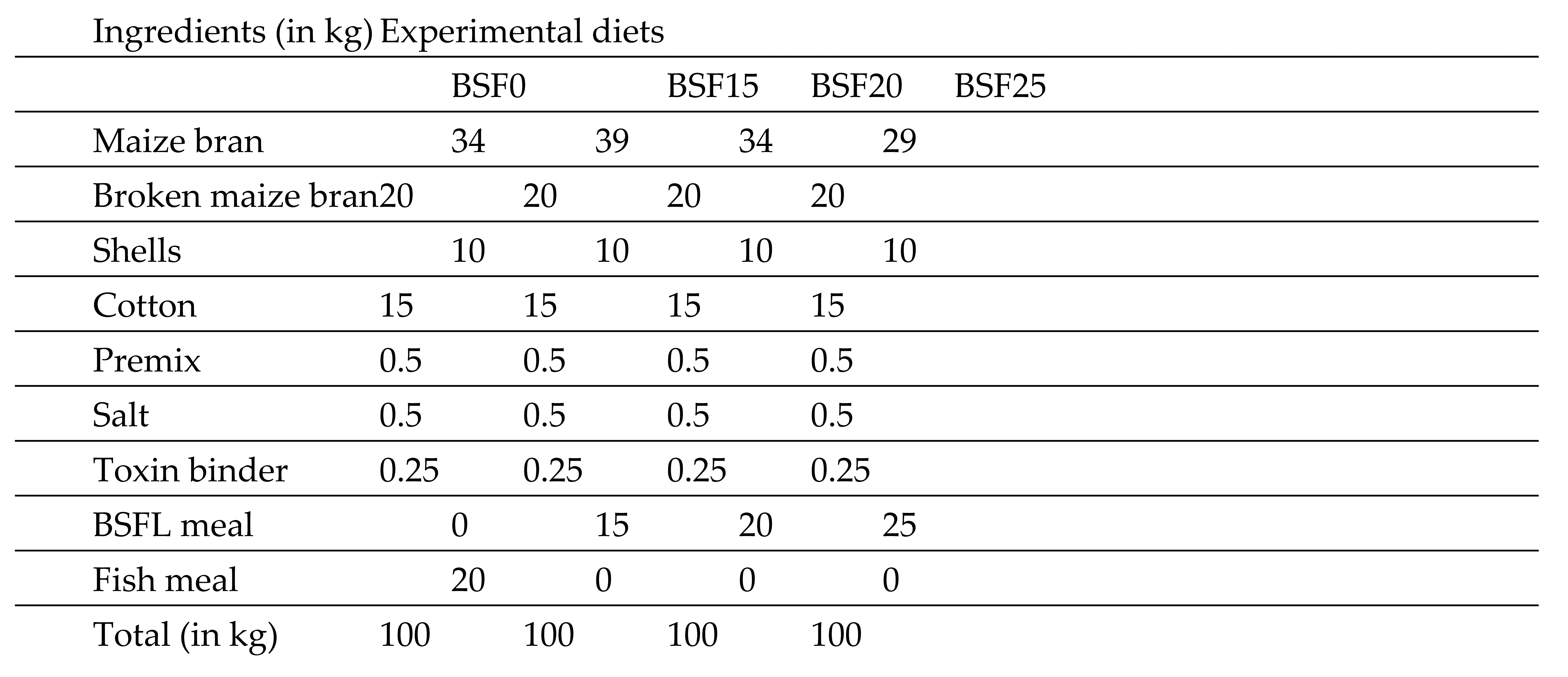 |
Table 2 .
Nutrient composition of BSFL meal and FM.
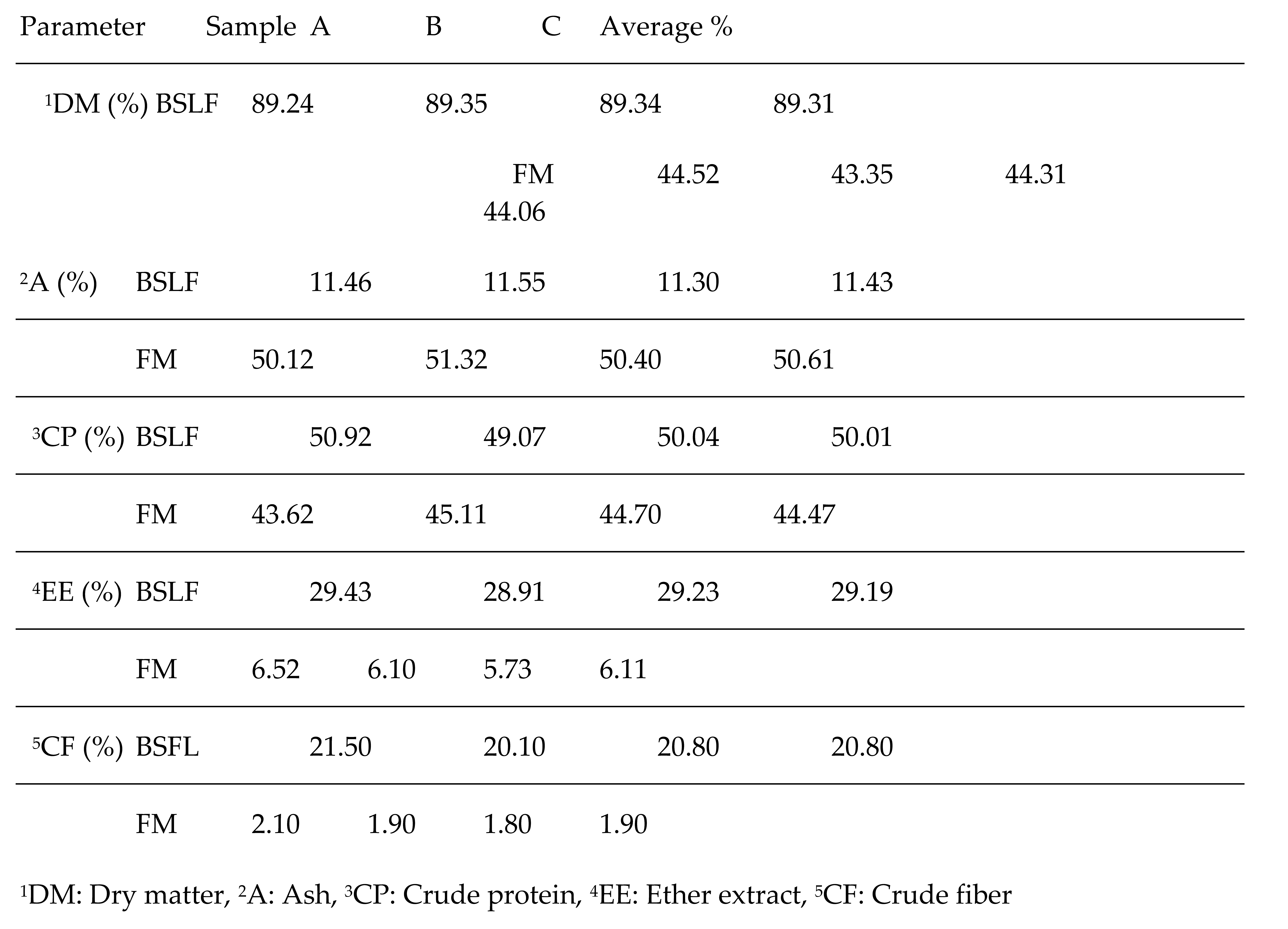 |
Table 3.
Amino acids composition of Black Soldier Fly Larvae meal and Fish meal.
 |
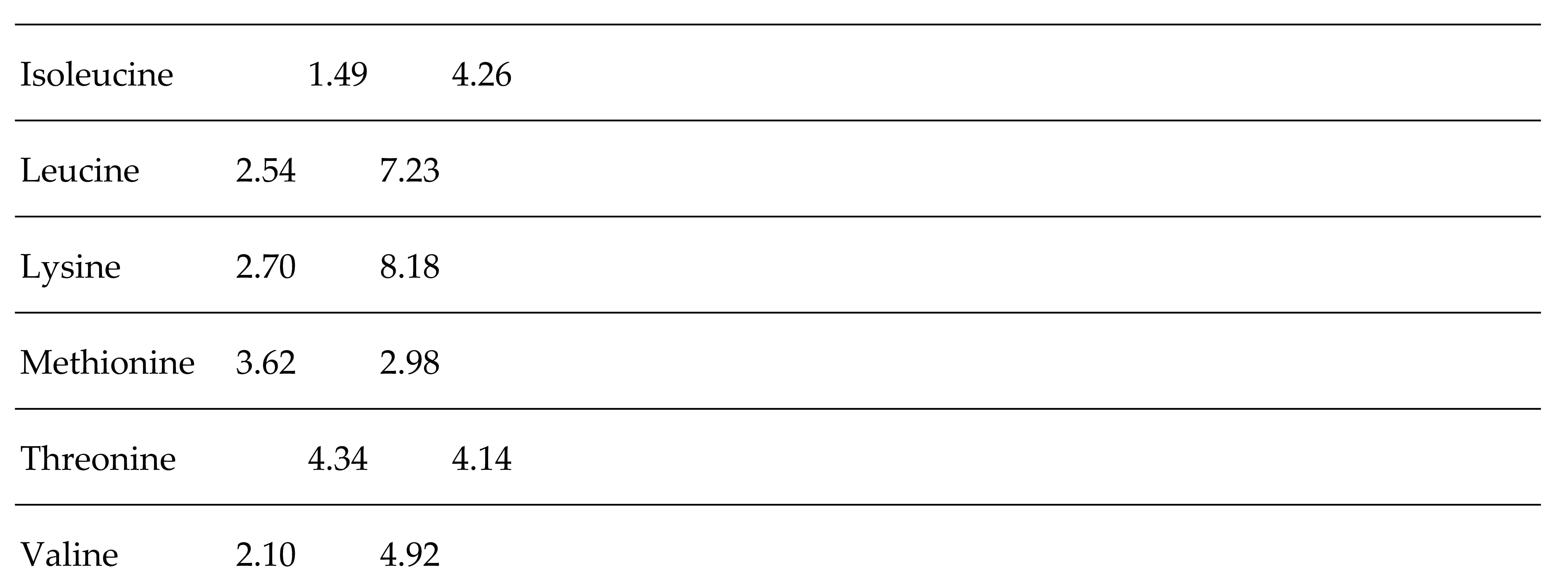 |
Table 4.
Effect of experimental diets on the weight of broiler birds.
 |
Table 5.
Effect of BSFL on carcass characteristics of broiler birds.
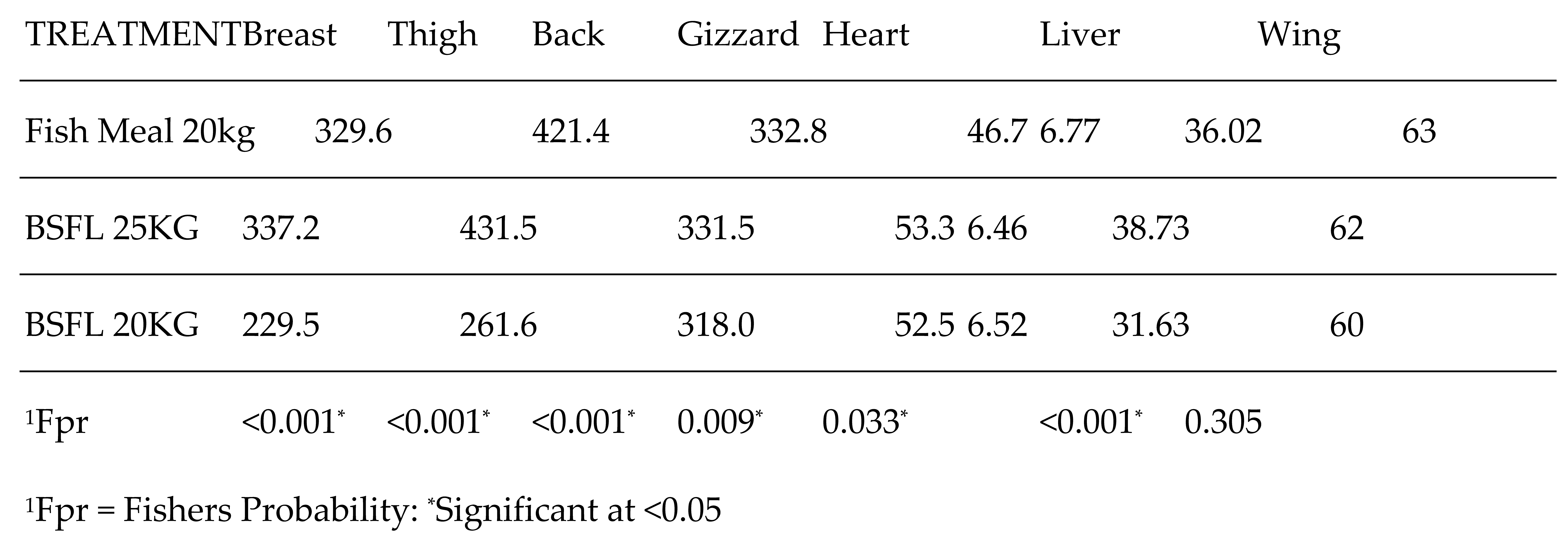 |
Table 6.
The effect of BSFL meal on organoleptic taste of cooked and roasted meat.
 |
Disclaimer/Publisher’s Note: The statements, opinions and data contained in all publications are solely those of the individual author(s) and contributor(s) and not of MDPI and/or the editor(s). MDPI and/or the editor(s) disclaim responsibility for any injury to people or property resulting from any ideas, methods, instructions or products referred to in the content. |
© 2024 by the authors. Licensee MDPI, Basel, Switzerland. This article is an open access article distributed under the terms and conditions of the Creative Commons Attribution (CC BY) license (http://creativecommons.org/licenses/by/4.0/).
Copyright: This open access article is published under a Creative Commons CC BY 4.0 license, which permit the free download, distribution, and reuse, provided that the author and preprint are cited in any reuse.


