

Submitted:
21 October 2024
Posted:
22 October 2024
You are already at the latest version
Abstract
Overtourism in national parks and protected areas can cause irreversible damage to the environment, compromising the quality of soil, water, wildlife, and vegetation. Thus, it is critical for park managers to have detailed information on visitor activities and spatial dynamics in order to prioritize actions capable of mitigating undesirable impacts in the most frequently visited areas. In this article, we use georeferenced trails and photographs from Wikiloc and Flickr web platforms to determine the spatial visitation patterns in the Atlantic Islands of Galicia National Park (AINP) from 2008 to 2023. Maps showing trail usage intensity and the distribution of photographs according to land use allowed us to identify the most frequented land uses by visitors and the areas of highest tourist pressure within the AINP. The results show that distribution patterns vary between platforms. Shrubland (37%) and marine cliffs (27%) were the most photographed land uses by visitors, while artificial areas (14%) were the most frequented by Wikiloc users. Cíes island emerges as the most popular tourist destination, as evidenced by the greater number of trails and photographs compared to Ons, Sálvora, and Cortegada. This study shows how social media data, specifically trails and geotagged photographs from Wikiloc and Flickr, can support and complement the monitoring of visitor use and impact in protected areas.
Keywords:
Wikiloc
; Flickr
; Geotagged photos
; Trails intensity
; land use
; spatial patterns
; Protected areas
1. Introduction
Natural parks and protected areas are essential for promoting biodiversity, ecosystem services, and human well-being [1]. In addition, they play a fundamental role in providing spaces for recreation and human connection with nature [2]. However, as tourism activities intensify, reaching ever more remote and sensitive locations, the pressure on the environment and landscape becomes more evident [3], and any changes in visitation patterns, whether spatially or temporally, have the potential to degrade the natural environment [4]. Visitor overcrowding can have significant repercussions on landscape alteration and ecosystem degradation [5], including organic contamination, damage to vegetation from trampling [6,7], soil compaction and erosion [8], loss of biodiversity [9], and excessive use of natural resources [10]. The accumulation of waste [11] or pollution from recreational boats contaminates surface and groundwater, having negative impacts on fauna and vegetation [12,13].
The extent and severity of damage are influenced by the resistance and resilience of vegetation [14], abiotic site characteristics such as soil type, topography, and hydrology [15], and additional factors including infrastructure quality, usage intensity, activity type, tourist behaviour, and seasonality [16,17]. Many impacts are highly localised due to variations in local resource availability, sociocultural structures, and the concentration of land uses and tourist activities near prime coastal and port areas [18].
In island territories, the impact of visitors is even greater [19]. In addition to the heavy dependence on the tourism industry for economic gains [20], isolation, small spatial extent, limited resources, and fragile ecosystems are some of the main constraints that amplify the effects of tourism on islands and complicate the formulation of sustainable management and tourism development plans [21]. Therefore, it is essential to monitor and control the flows and processes resulting from tourist activities, ensuring that visitors are not excessively invasive and that the socio-cultural and environmental impacts remain bearable [22].
Understanding visitor experiences [12,23], and assessing the spatiotemporal patterns of their activities are fundamental strategies to avoid and minimise the negative impacts of tourism and ensure sustainable management of natural environments [24,25]. Visitor data can assist park managers in decision-making and policy formulation by identifying trends in tourist demand [26], generating forecasts, determining facility locations [27,28], as well as identifying negative impacts [29,30], and vulnerable areas.
In the past decade, several researchers have used georeferenced data sourced from social networks to analyse the spatiotemporal behaviour of visitors in natural environments [31,32]. This data, voluntarily shared by tourists on online platforms (e.g., Wikiloc and Flickr), can be collected remotely, in a relatively simple way, and at a low cost [5,33], proving effective in the spatial and temporal analysis of visitors [32]. Furthermore, it provides precise, real-time information on activities occurring in nature [34] and enables assessments of how people observe and value the environment [35]. Specifically, social media data has been used to determine visitation rates in parks and protected areas [36,37], usage patterns, and visitor characteristics [5,24,28,38,39,40], as well as visitor preferences [33,41,42,43,44,45]. Other authors have chosen to use these new data sources for landscape characterization [46] or to explore cultural ecosystem services [47]. Georeferenced trails and photographs not only allow the identification of the most traversed and photographed areas by visitors, but also make it possible to determine the most relevant landscape attributes [48], identify critical points with high visitation [24,45,49], and assess the impact of public use both on and off official trails [50].
However, there are few studies that analyse the spatial distribution of visitors using trails and photographs with land use in protected areas [51]. This data integration allows for the identification of the most frequented and affected land uses by tourist demand, as well as providing a more detailed insight into how visitation can impact different habitats and sensitive areas. This information can assist park managers in prioritising actions that ensure long-term conservation of affected natural resources and land uses under greater pressure and potential degradation.
To fill this knowledge gap, georeferenced data of trails and photographs shared by users of Wikiloc (https://pt.wikiloc.com/) and Flickr (https://www.flickr.com/) are used to analyse the spatial patterns of visitors according to land use in the Atlantic Islands of Galicia National Park (AINP) between the years 2008 and 2023. The analysis aims to address the following objectives:
- Evaluate the distribution of the trails taken by visitors according to land use, and quantify the intensity of visitors along the trails;
- Identify and analyse the most photographed areas and relate them to the park's land uses;
- Determine the types of land use that are under the most tourist pressure using georeferenced data of trails and photographs.
Study Area
The Atlantic Islands of Galicia National Park (AINP), established in 2002 by Law 15/2002 [52], is located on the southwest coast of Galicia, Spain. It comprises the archipelagos of the Cíes, Ons, Sálvora, and Cortegada Islands, extending from the Ria de Arousa to the Ria de Vigo (Figure 1). The AINP is a protected natural heritage of extreme importance and an excellent example of the conservation status of Atlantic marine and coastal ecosystems, the associated fauna and flora species, and the cultural heritage of these areas [10]. The oceanic waters have an enormous biological variety that is endemic and unique [6]. The park's coastlines are notable for their fine sand dunes, beaches, and rugged terrain. The cliffs cut out the ocean's horizon, while shrubby vegetation such as gorse, heather, and eucalyptus groves mark the slopes [53]. The park has a total area of 8,480 hectares, 87% of which is maritime space [54].
In the Cíes Islands, the highest altitude is found in the northernmost sector, in Alto das Cíes (197 m). Similar to Ons island, the morphology presents a contrast, featuring a high cliff coast to the west and beaches to the east [55]. The steep western cliffs feature small patches of acidic, nutrient-poor [56], stony, and shallow soils [57], reflecting the oceanic influence and the scarcity of vegetation. In contrast, the lower coast dominates the eastern part, which has lower slopes and prominent sandbanks. However, these sandbanks are non-existent on the slopes most exposed to the ocean [58]. Sálvora and Cortegada are characterised by lower and more regular reliefs, with flatter contours and rounded shapes [59]. The island of Cortegada is sheltered within the Ria de Arousa, opposite the village of Carril [56], and avoids ocean waves. It has the lowest relief among the archipelagos, consisting mainly of flat areas occupied by forest cover.
Granites covered by acidic soils make up the majority of the park's geological substrate [60]. In Cíes and Ons, the rocks are mostly highly fractured granitic alkaline feldspathic rocks that formed during the Hercynian orogeny [6]. However, we can also have some metamorphic rocks [61], such as mica schists, quartzites, and paragneisses. The flora is predominantly of the Mediterranean type, and native species dominate the archipelago's coverage, being seen both in cliff areas and on rocky slopes and vegetated cliffs [6]. The vegetation is subject to extreme weather conditions and is therefore basically shrubby [62]. Strong winds, high salinity, and shallow and sandy soils with low nutrient availability subject the plant species found on cliffs and dune systems to specific adaptations, arranging them in bands according to their tolerance to marine influence [63,64]. Due to human activity, species such as eucalyptus, acacia, and pine coexist with native species, which persist in dune and cliff environment’s [65,66].
Scrubland occupies a large part of the park's land surface, particularly on the islands of Ons and Sálvora (Figure 1). On the Cíes Islands, they are especially visible on the Monteagudo and Faro Islands, interspersed with conifers. Evergreen trees, namely eucalyptus, acacias, cork oaks, and sloes (Table S1), occupy the entire Alto do Príncipe sector on the Cíes islands and are found in a scattered manner and to a lesser extent on the islands of Ons and Sálvora. Ons is currently the only populated island in the national park. On its eastern side, which is more sheltered from the winds and adverse weather conditions, there are a few houses, accompanied by their characteristic granaries, as well as the corn and potato crops linked to them [64]. Cortegada, the island with the highest tree density, closely links its vegetation establishment and dynamics patterns to the history and activities of human presence, with species such as oaks, pines, and laurels predominating [67].
According to the official statistics from the Autonomous Agency of Spanish National Parks (OAPN), except for the years 2019 and 2020, the latter marked by isolation restrictions imposed by the COVID-19 pandemic, the number of visits to AINP has progressively increased since 2017 [66]. The upward trend in the number of entries recorded between 2017 (440,661) and 2018 (489,953) was interrupted between 2019 (472,274) and 2020 (318,570). In 2021, corresponding to the post-pandemic period and the resumption of tourist activities, the national park received a total of 428,970 visitors [66]. The increase in tourism on these islands has generated new concerns related to the likelihood of their carrying capacity being exceeded, as well as the negative repercussions resulting from the overuse of resources and consequent degradation of natural ecosystems [10].
2. Materials and Methods
This research explores georeferenced data, specifically trails and photographs, shared by Wikiloc and Flickr users to analyse the spatial patterns of visitation according to land use in AINP. Figure 2 shows the methodological procedures adopted to collect, process, and analyse the georeferenced data downloaded from both platforms. Additionally, we illustrate the processes applied to the geographic data collected on the land use and geology of AINP, enabling a detailed analysis of the islands that comprise it.
Wikiloc, founded in 2006, is a content-sharing social network with over 7.6 million users that allows free downloading of trails (including photographs) and coordinate points related to outdoor activities, which are voluntarily shared by users [5]. More than 53.8 million outdoor trails and 98.3 million photographs shared on the platform demonstrate Wikiloc's popularity. Flickr, on the other hand, is a social network for sharing photos and videos available to the public since its launch in 2004. Their repository has over 60 million monthly active users, as well as more than 100 million photographers who upload and share photos of all types and places [68].
Considering the period from 2008 to 2023, tracking points (GPS points along trails) and waypoints (points with photos and annotations) have been collected from Wikiloc for the islands using a Python script. Several authors [5,69,70] have used this method to reduce processing time and manual labour required to obtain large amounts of data.
In total, 2936 trails and 13249 photographs were collected from Wikiloc by 964 users in GPX format. We chose this format because it enables the retrieval of all user-recorded points [40]. We analysed the collected list of files, eliminating those with spatial or temporal errors, then imported the validated data into ArcGIS Pro and converted it into a shapefile. From Flickr, also using a Python script, 2206 photographs were collected from 731 users. The data was exported in .xls format, containing information such as the owner's identifier, coordinates, date and time, title, text labels associated with the photographs, as well as the address link.
Each set of data extracted from Wikiloc and Flickr was combined into a single file containing all the associated metadata. Subsequently, the waypoints collected on both platforms were analysed. The presence of some repeated photographs, as well as others with non-existent dates or dates before 2008, led to the exclusion of 97 waypoints from Wikiloc and 46 from Flickr. In total, 13152 photographs from Wikiloc and 2160 from Flickr were considered valid for analysis.
In terms of the trails, it was necessary to transform the data points captured by GPS (tracking points) into a linear format to enable spatial analyses of the trails. The tracking points contain information such as latitude/longitude, altitude, date and time of the trails, location, type of activity, etc. Since one of the objectives of spatial analysis is to identify the trails undertaken within the park, 100 meters buffers were created for the islands, and selections were made based on location, assuming only the trails that were included within the buffer areas. The new outputs were carefully examined, and some GPS errors were excluded to avoid influencing the interpretation of the results.
Subsequently, using high-quality orthophotos from Spain's National Aerial Orthophotography Plan (PNOA), available at [https://centrodedescargas.cnig.es], the main paths on each of the islands were vectorized, resulting in the general trail network of AINP. Furthermore, the number of trails undertaken per month in each of the segments comprising the overall trail network of the park was counted. The sum of the data counted each month resulted in the maps depicting the intensity of trails undertaken by Wikiloc users. After completing this process, we also mapped the itineraries of AINP to facilitate the interpretation of the results (figure 1).
The land use data (SIOSE AR_2017) for the provinces of A Coruña and Pontevedra were also collected from CNIG in GeoPackage format [https://centrodedescargas.cnig.es]. The land use classes (table S1) were reclassified into 14 new classes to individualise the main natural ecosystems within the park (figure 1). To assess differences in visitor influx within each of the identified ecosystems, selections were made by location, and the trail segments and photographs captured in each of the established land use classes in the previous process were individualised.
Subsequently, we used the geological map (MAGNA_50/2nd Series) at a scale of 1/50000 available on the Geological and Mining Institute of Spain's website. The original data are openly available in [IGME] at [https://info.igme.es/cartografiadigital/geologica].
The Terrestrial Reserve Zone (TRZ) of the Cíes Islands was further vectorized according to the cartography of conservation units from the AINP, established in the Management and Use Master Plan of the national park [71] Wikiloc and Flickr photographs were overlaid onto the TRZ shapefile based on their respective land uses, enabling a more rigorous analysis of the impact of visitor activity on the ecosystems of the Cíes Islands that require the highest level of protection. Finally, based on results from maps detailing photograph distribution and trail intensity according to land use, we developed biogeographical profiles and geological cross-sections for the most popular tourist points.
3. Results
3.1. Global Statistics
Regarding the trails travelled by visitors to the park (figure 2), most of them were on the Cíes (62 percent) and Ons Islands (33 percent). Of all the islands that make up the national park, Sálvora and Cortegada are the least visited and have the fewest trails, accounting for only 5 percent of the total identified on Wikiloc. As with the trails, the Cíes and Ons islands were also the most photographed by visitors (Wikiloc and Flickr). The Cies Islands accounted for 56 percent of the 13,152 photographs shared on Wikiloc, while the island of Ons accounted for 40 percent. On Flickr, only 2259 photographs were identified, a significantly lower figure compared to Wikiloc, of which 63 percent were taken on the Cíes and 26 percent on the Ons. Visitors rarely photographed Sálvora and Cortegada, which together account for no more than 4 percent of all shares on Wikiloc and 11 percent on Flickr. Considering the representativeness of the data and the popularity of the Cies and Ons islands in terms of tourism [10,66], which boast the most intriguing natural and landscape elements in the national park, we will prioritise analysing visitor dynamics on these islands over Sálvora and Cortegada, where visitor influx has less importance.
Figure 3 shows the statistics of the photographs and trails travelled by land use in the AINP. Scrubland and sea cliffs, which make up 77 percent of the park's total area (table S2), were, not surprisingly, the most frequently photographed areas by both Wikiloc and Flickr users (figure 3-A). On Wikiloc, water bodies were the type of use with the fewest photographs identified (5), and on Flickr, pasture areas (6).
Considering the combined data from both platforms, visitors took 5631 photographs along the scrubland and 4206 on the sea cliffs, accounting for 64 percent of the photos in the national park. Water bodies and areas occupied by rocks or sparse vegetation were the least photographed by visitors, with only 66 photographs. Wikiloc users took the majority of the photographs by land use (80 percent). Only in the least photographed areas (water bodies and areas with little or no vegetation), Flickr exceeded the number of shares made on Wikiloc (75 percent) (Figure 3-B).
In terms of trails, it was found that built-up areas, which include building areas, paved or sealed land, and dumping areas, were the land use class with the most trail segments identified on Wikiloc (14 percent) (Figure 3-C). These sites correspond to landing areas, lighthouses, and hotel services (restaurants and cafés) on the Cíes and Ons islands, located near campsites and the main beaches. On Sálvora, they are related to the cultural elements of the island (e.g., the palace and ruins of the ancient village). Scrubland (13 percent) and coniferous forests (12 percent) were the most frequented natural areas, corresponding to 11.8 kilometers of the total trail length in AINP (table S2). The sea cliffs, which are the most demanding areas in terms of access for visitors, were also very popular (11 percent). The analysis of the photographs revealed that visitors rarely frequented rocky areas with little or no vegetation and water bodies along the trails.
3.2. Spatial Analysis of Wikiloc and Flickr Photographs by Land Use
The maps in Figure 4 demonstrate that the locations chosen by visitors to take photographs coincide with the national park's touristic itineraries. However, the distribution patterns differ between the platforms. Wikiloc users concentrate their photographs along the main marked trails, while Flickr users exhibit a dispersed distribution throughout the territory. Scrubland was the land use class with the highest number of records (37 percent) among the total number of photographs taken in the AINP (15312), with the majority of these images captured on the Cies Islands (2970) and Ons Island (2378).
The photographs are scattered throughout the scrubland in Ons, which occupies practically the entire area. In contrast, in Cíes, they are essentially restricted to the scrubland located on Monteagudo and Faro Islands. Scrubland, the land use with the most photos shared on Wikiloc (3,356) and Flickr (850), followed the sea cliffs, which occupy 36 percent of the park's total area (table S2). Of the total number of records, 91 percent are located on the Cíes islands, 6 percent on the island of Ons, and 3 percent on the island of Sálvora (table S3).
Ons island accounted for 92 percent of the 1,701 photographs taken along the national park's uncatalogued land transport network. Regarding the artificialized areas, the campsite on the Cíes Islands and the village of Curro on the island of Ons were some of the elements most photographed by visitors. Along the beaches and dune systems, 269 photographs were identified, 77 percent taken on the Cíes islands (208), with a greater incidence on Rodas beach, which is the most famous and attractive beach on the islands [65], and 16 percent on the island of Ons, most of them taken on the beaches of Canexol and Área dos Cans.
In forest areas, 2065 photographs were taken (Wikiloc and Flickr), 54 percent in areas occupied by conifers and 38 percent in areas made up of evergreen tree species. In both cases, the Cies Islands account for more than 95 percent of the results. The Lake of Nenos, which corresponds to the only constituent polygon of the wetlands class, was one of the most photographed elements on this island, with 150 shared on Wikiloc and 38 on Flickr. Deciduous forest was the land use class with the fewest records (160) because it is almost entirely located on the island of Cortegada, which is the least visited in the national park.
The natural ecosystems on the Cíes and Ons islands, most frequently photographed by visitors, are located along the southern tourist itineraries. Cíes visitors take more photos of Rodas, Nossa Senhora, and Figueiras beaches, Lake Nenos, and the marine cliffs near the Cíes lighthouse (Figure 5). On Ons, the most photographed locations include Pereiro, Canexol, and Área dos Cans beaches, as well as the area with the island's most extensive and vertical cliffs, where granite walls rise about 40 meters above the ocean [72]. From this location, visitors can access the mystical cave known as the "Buraco do Inferno." On Sálvora, visitors most frequently photograph the scrublands near the ancient village, Castelo Beach, and the cliffs located to the southwest, where the lighthouse is located. Naturally, on Cortegada, the majority of photographs were taken in the deciduous forests, particularly along the existing circuit in the western part.
3.3. Spatial Analysis of Wikiloc Trails by Land Use
Figure 6 illustrates the intensity of trails based on land use in the AINP. At the park level, artificialised areas accounted for 29 percent of the identified trail segments, followed by scrubland at 13 percent and coniferous forests at 12 percent, all essentially restricted to the Cíes archipelago (table S2). Visitors also frequented areas occupied by pastures, crops, and meadows, accounting for 11 percent of the park's trails, particularly in Ons. In the coastal areas, more trails were identified along the sea cliffs than along the entire length of the beaches and dune systems. This may be related to the fact that Wikiloc users are generally sportsmen who prefer only to walk the AINP itineraries.
Visitors clearly preferred the Monte Faro and Faro da Porta itineraries in the Cíes Islands (Figure 1-B), which identified more than 1,270 trails. These trails were mostly in scrubland, followed by coniferous forests and sea cliffs. These itineraries are the most attractive because they provide access to the main beaches and the most important tourist services in the archipelago. We should emphasise the intensity of the trails on Lake of Nenos, a distinctive icon of the islands and of particular ecological importance due to its diverse environments, namely sandbanks, rocks, and seagrass meadows [64].
On the Alto do Príncipe itinerary, most of the trails were in forests made up of evergreen tree species, namely eucalyptus, acacia, cork oak, and blackthorn (table S1), and on the Monteagudo itinerary, mainly in scrubland, which is the dominant type of land cover in this sector of the archipelago. In both cases, no more than 900 trails were identified. For reasons of visitor safety, environmental fragility, or the high ecological value they represent, certain areas in the western part of these itineraries do not permit access [64]. It should be noted that in these sectors, some informal trails are visible along the forest areas that have been diverted to the west. Sports visitors usually choose trails that offer shade under the cover of trees, especially on hot days [51], which may explain the visitors' preference for these areas.
On the islands of Ons and Sálvora, most of the trails occur on the roads and paths that make up the AINP uncatalogued land transport network. In Ons, the southern itinerary accounted for the majority of trails, with a total of 676 trails in the most frequently visited areas. The eastern part of the northern itinerary was also very popular with Wikiloc users, with between 301 and 600 trails identified. The Faro and Castle itineraries, located in the centre of the island (Figure 1-C), were the least frequented, with no more than 300 trails along their entire length, with the exception of a small section where it's possible access to the Camping and Lighthouse Viewpoint. As in the Cíes, informal trails have also been identified on the island of Ons, scattered throughout the territory. These trails are shortcuts between routes and allow access to specific sectors of the west coast. On the island of Sálvora, no more than 87 trails per segment were identified along the existing itineraries. In Cortegada, only 45 trails were identified along the deciduous forests, which represent 90 percent of the archipelago's coverage (Figure 1-F).
4. Discussion
4.1. Justifying Factors for the Inequalities in Visitor Attendance to the Islands
Using georeferenced data from Wikiloc and Flickr, the analysis of visitation to the AINP revealed an uneven influx of visitors to the archipelagos, corroborating previous studies based on official statistics [10,66,73]. Cíes and Ons islands emerge as the most popular tourist destinations, as evidenced by the greater number of trails and photographs compared to Sálvora and Cortegada. Between 2008 and 2023, 62 percent of the trails taken in the park by Wikiloc users were on the Cíes islands and 33 percent on the island of Ons. The same trend was observed in the total number of photographs shared on both platforms, with the Cíes showing the highest number of records (56 percent on Wikiloc and 63 percent on Flickr), followed by the island of Ons (40 percent and 26 percent, respectively). Sálvora and Cortegada together accounted for only 5 percent of the park's trails, 4 percent of the total number of photographs identified on Wikiloc, and 11 percent on Flickr.
Several factors influence this overall trend in AINP visitation. For instance, there is a higher frequency and greater availability of trips to the Cies Islands [10,74], and these islands also have a more developed tourist infrastructure compared to others [59]. These factors, combined with the diversity of landscapes of the Cies Islands, a common factor in attractiveness [51], result in the island having the highest density of trails and photos shared on Wikiloc and Flickr. Consequently, they also increase the environmental vulnerability of cities due to the intensification of tourism. This issue is more relevant if we consider that the number of visits to the park is constantly growing, only decreasing in 2003 due to the Prestige oil tanker accident, which affected the park's waters and lasted until 2007 [73], and between 2019 and 2020 due to travel restrictions imposed by the COVID-19 pandemic [10,75].
4.2. Spatial Patterns of Use
The combined analysis of trail and photograph distribution by land use in PNIAG demonstrated that both user groups exhibit similar land cover patterns, as verified by Chai-allah et al. (2023) in rural areas of the Auvergne region in France, where trails from crowdsourcing platforms were used to assess recreational visitors' landscape preferences. Scrubland (37 percent) and sea cliffs (27 percent) were the land use classes with the most photographs identified in the AINP. In addition to the fact that scrubland occupies more than half of the park's land area (51 percent), the vegetation itself allows for open views from a slope or mountain [76], which favours taking photographs. Although scrubland occupies practically the entire length of Ons Island, 53 percent of the photographs were taken on the Cíes Islands. The cliffs, with large granite walls, especially on the Cíes, are home to some of the most important seabird colonies on the Iberian Peninsula, some of which are of global importance [10], which may explain the high number of records in these areas.
The spatial analysis of photographs according to land use revealed that the most photographed locations coincide with the park's main points of interest [5] and are located along PNIAG tourist itineraries, where trail intensity is higher [40,77]. It was also found that the distribution patterns differ between the platforms. Wikiloc users, who typically travel to the most remote locations [78], take photographs along the recommended routes, whereas Flickr users follow a limited number of trails and travel through areas that deviate from the main routes to photograph other elements scattered throughout the territory. Sports users, whose preferences and behaviours differ from those of other platform users, are the target audience for Wikiloc [46]. While Flickr primarily detects visitor flow on sightseeing tours, Wikiloc identifies trails used for hiking or climbing [79].
The higher frequency of trails in built-up areas, especially along the southern tourist itineraries on the Cíes and Ons islands, demonstrates visitors' preference for areas in the park with more developed tourist infrastructure. This aspect suggests that the presence of tourist services is a significant factor in trail selection and in meeting visitors' needs for convenience.
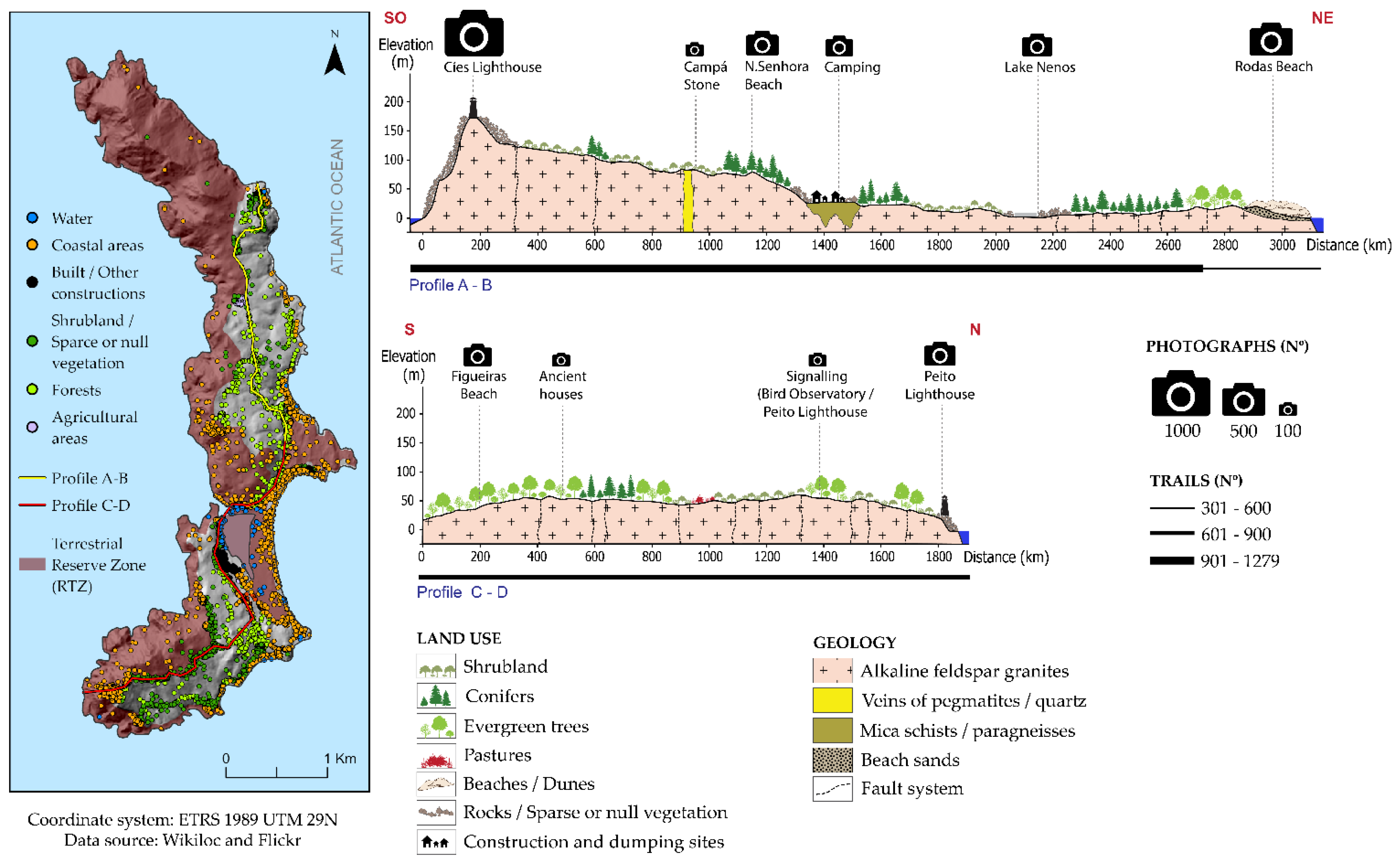
It is along the southern tourist itineraries on the Cies Islands that the sites of greatest tourist pressure in the AINP are located (Figure 7). These sectors were the most photographed (map on the left) and had the highest levels of trail intensity (profiles on the right). Profile A-B covers the entire length of the Montefaro itinerary, as well as the northern part of the Faro da Porta itinerary. Over more than 2.7 kilometres, between 901 and 1279 trails were made. Profile C-D runs along the northern edge of the Alto do Príncipe itinerary, followed by the Monteagudo itinerary to the Peito lighthouse. The terrain configuration makes this itinerary the most demanding, with between 601 and 900 trails traversed. The majority of the sites identified as most affected by tourist demand are part of the AINP Terrestrial Reserve Zone (ZTR) and require the maximum degree of protection, either temporarily or permanently. The existing roads in this unit are exclusively for conservation and park management activities, and visitor access is generally not permitted [71].
4.3. Environmental Issues
The informal trails identified allow visitors to access areas that are particularly vulnerable environmentally, especially on the Cies Islands, which reinforces the need to re-evaluate the management of the AINP official trail network. These trails, created by visitors to access inaccessible locations via official trails, such as summits and scenic viewpoints [80], are primarily unpaved, poorly designed and not managed by the park agency [81], promoting vegetation loss, changes in species composition, soil exposure and loss [82,83], hydrological cycle alteration, and landscape fragmentation [84].
Considering that the wettest habitats [81,85] and dune systems [86] are the most sensitive to trampling and are currently the most pressured by visitation in the PNIAG, specific measures should be put in place to limit the possible overload of visitors to Lake of Nenos, as well as the dune cordon of Rodas and Nossa Senhora beaches. In this type of ecosystem, the mechanical stress caused by trampling causes plants to mobilise assimilated compounds in the storage organs and increases underground biomass, which affects plant survival and reproduction, as well as germination and growth [87]. Although plant species tend to regenerate outside of the bathing season, when they come under significant pressure, habitats generally do not have the capacity to fully recover from impacts, and damage can accumulate over several years [88].
It is vital to monitor beaches regularly and over a long period of time, using aerial photographs and/or field surveys, to obtain real-time information on the state of the vegetation cover on the dunes, as well as to identify the existence of unorganised paths in adequate time [86]. Locating trails and recreational sites in resistant and resilient areas can also be an effective method for minimising visitors' future impacts [89].
The intensive use of ecosystems and the occurrence of environmental damage can generate a reduction in the provision of benefits that ecosystems provide (ecosystem services), lead to a reduction in visitation, and eventually jeopardise the viability of local businesses that depend on them [90,91]. For tourism in protected areas to be sustainable, it must first contribute to nature conservation over the long term, not just temporarily or sporadically, and ensure that inappropriate or poorly managed public use does not jeopardise conservation [12]. Environmental awareness and public accountability are also key tools to ensure that any protection project is successful [92].
4.4. Limitations of the Research
The Wikiloc and Flickr data enabled the precise identification of visitors' spatial patterns and the land use most impacted by users demand in AINP. Thus, the use of georeferenced data offers managers an opportunity to act early and prevent damage that could otherwise occur [93]. However, there are limitations that must be considered, as they influence the rigour and representativeness of the results. Like other social media platforms, Wikiloc and Flickr do not reflect the patterns of all tourists [42,79], as they are represented by younger, wealthier, and more educated individuals [94]. Additionally, many tourists do not share their experiences on social media [43].
Other relevant constraints include the lack of detailed information about the visitors socioeconomic and demographic profile or their previous travel experiences [95], the differences in popularity among platforms [79], and the fact that the availability and use of devices for taking and sharing photos online can vary between and within countries [96]. The study’s reliance on only two types of users may also have influenced the representativeness of the results. Including data from a wider range of platforms could provide a more comprehensive view of tourism's impacts on AINP.
The data quality presents additional limitations. Although there are a large number of trails available on some platforms, spatial and temporal biases in the types of data available may limit their usefulness for monitoring [39]. Due to the presence of obvious spatial errors in certain Wikiloc trails, it was necessary to exclude them in order to maintain the results' reliability. Additionally, we had to disregard a total of 97 photos, some due to users sharing them in duplicate, and others due to their non-existent or pre-study dates. The loss of data is particularly relevant in park areas, where precise delineation of high-impact sites is critical for management and conservation. The presented limitations underscore the need for a meticulous approach when using social media data to study the impacts of tourism in protected areas [5].
4.5. Future Directions
Although the study provides new insights about tourism dynamics in the AINP, further in-depth research is needed to first determine the extent to which visitors' spatial behaviour is influenced by the presence or absence of specific environmental features, and second, to assess in more detail the extent and severity of damage caused by visitor overuse in the most frequented areas.
Future research should concentrate on analysing user-shared photo content and comparing it with land use at the photo locations. This approach would allow for the evaluation and quantification of potential correlations between variables. Studies in the past have shown that content analysis of georeferenced images can help with monitoring by showing what features and aspects of the landscape are interesting to visitors [46,69,97], checking the health of ecosystems for conservation purposes [98], and maybe even finding specific issues related to visitor impact, like how wildlife and users interact [96]. Additionally, other forms of user-generated content, such as full-text hiking blogs that include narratives of visitors' experiences actively exploring the landscape, could also be explored [99].
In more remote areas without staff or where it's hard to measure, changes in photo density over time could be looked at along with regular empirical visitation surveys [33], considering the state of the soils and plants in the most used trailbeds. It would also be valuable to integrate biodiversity indicators, such as plant and animal species richness [100] or landscape characteristics, including naturalness and openness, as these are important aspects for visitors during recreational activities [98,101]. Another research direction should focus on exploring the potential of data from photo-sharing platforms to detect different spatial behaviors based on tourists' origins, considering the information provided in user profiles and historical records (if available) as well as the type of visit conducted [95].
5. Conclusions
This study shows how social media data, specifically georeferenced trails and photographs from Wikiloc and Flickr, can support and complement the monitoring of visitor use and impact in protected areas. Access to social media data on visitor access, use, and value of various areas and infrastructures within protected areas will become increasingly important for those responsible for their management [42,43]. The results obtained provide relevant information on the influence of tourism in the PNIAG and can help park managers devise more effective measures in the areas identified as most vulnerable to some kind of environmental degradation. Cross-referencing georeferenced data with land uses showed that the most visited areas of the park are generally associated with specific types of land use. It is in the Cíes Islands, whose tourist tradition predates the designation of the national park [66], that the ecosystems most pressured by visitation are located. Particularly in Lago de Nenos and the dune systems of Rodas and Nuestra Señora beaches, management and monitoring mechanisms need to be reassessed. Park managers should promote targeted measures that consider the different land uses and their carrying capacity in order to guarantee the effective protection of the most fragile ecosystems while maintaining the tourist attractiveness of the PNIAG. Given the limited understanding of the relationship between land uses and visitor spatial behaviour [95], this study's proposed approach can serve as a model for future research examining the effects of tourism in other national parks and protected areas.
Supplementary Materials
The following supporting information can be downloaded at the website of this paper posted on Preprints.org.
Author Contributions
conceptualization, methodology, E.C., J.C. A.G. and A.P.-A; software and data curation, E.C., and J.C.; validation, A.G. and A.P.-A; formal analysis, E.C., J.C. A.G. and A.P.-A; investigation, E.C., J.C. A.G. and A.P.-A; writing—review and editing, E.C., J.C., A.G. and A.P.-A; funding acquisition, A.G. All authors have read and agreed to the published version of the manuscript.
Funding
This research was supported by the Foundation for Science and Technology (FCT), grant number 2021.05304.BD. This research received support from the Centre of Studies in Geography and Spatial Planning (CEGOT), funded by national funds through the Foundation for Science and Technology (FCT) under the reference UIDB/04084/2020.
Data Availability Statement
All data used to prepare this manuscript are included; additional explanations will be made available upon request.
Conflicts of Interest
The authors declare no conflicts of interest.
References
- Bertzky, B., Corrigan, C., Kemsey, J., Kenney, S., Ravilious, C., Besancon, C., & Burgess, N. (2012). Protected Planet Report 2012: Tracking progress towards global targets for protected areas. In IUCN, Gland, Switzerland.
- Romagosa, F., Eagles, P. F. J., & Lemieux, C. J. (2015). From the inside out to the outside in: Exploring the role of parks and protected areas as providers of human health and well-being. Journal of Outdoor Recreation and Tourism, 10, 70–77. [CrossRef]
- Cooper, C. (2016). Essentials of Tourism (2nd ed). Pearson Education Limited, Harlow, England.
- Hammitt, W. E., Cole, D, N., & Monz, C. (2015). Wildland recreation: ecology and management. (3d Edition). John Wiley & Sons, Chichester, UK. [CrossRef]
- Barros, C., Moya-Gómez, B., & García-Palomares, J. C. (2019). Identifying temporal patterns of visitors to national parks through geotagged photographs. Sustainability (Switzerland), 11(24). [CrossRef]
- Fernández, E. (Emilio), Barañano, C., Alejo, I., Barreiro, R., Bellas, J. (Juan), Besada, V. (Victoria), Calviño-Cancela, M., Cordero-Rivera, A., González, A., Méndez, G. (Gonzalo), Navarro, L., Piñeiro-Corbeira, C., Planas, M., Prego, R. (Ricardo), Ramil, F. (Francisco), Saborido-Rey, F. (Francisco), Sánchez, J. M., Troncoso, J. S. (Jesús), Velando, A., & Villasante, S. (Sebastián). (2020). Islas Cíes: Un Ecosistema en la frontera. Un legado para la humanidad (Ayuntamiento de Vigo (ed.)).
- Tolvanen, A. ., & Kangas, K. (2016). Tourism, biodiversity and protected areas - Review from northern Fennoscandia. Journal of Environmental Management, 169, 58–66. [CrossRef]
- Figueiredo, M. D. A., & Martins, J. V. D. A. (2021). Erosão em trilhas e sua relação com o turismo em áreas protegidas: Uma breve discussão. In Turismo em Àreas Protegidas (pp. 174–195). Criciúma UNESC.
- Rodella, I., Corbau, C., Simeoni, U., & Utizi, K. (2017). Assessment of the relationship between geomorphological evolution, carrying capacity and users’ perception: Case studies in Emilia-Romagna (Italy). Tourism Management, 59, 7–22. [CrossRef]
- Bouzas, F. (2017). Gestión ambiental y desarrollo turístico en el Parque Nacional de las Islas Atlánticas de galicia. Nuevos Retos. Gestión Ambiental y Desarrollo Turístico En El Parque Nacional de Las Islas Atlánticas de Galicia. Nuevos Retos, 1133–3669.
- Calò, A., Pereñiguez, J. M., Hernandez-Andreu, R., & García-Charton, J. A. (2022). Quotas regulation is necessary but not sufficient to mitigate the impact of SCUBA diving in a highly visited marine protected area. Journal of Environmental Management, 302(March 2021). [CrossRef]
- Leung, Y., Spenceley, A., Hvenegaard, G., Buckley, R., & Groves, C. (2018). Tourism and visitor management in protected areas : guidelines for sustainability. In Tourism and visitor management in protected areas : guidelines for sustainability (Issue 27).
- Navarro, N. (2019). Community perceptions of tourism impacts on coastal protected areas. Journal of Marine Science and Engineering, 7(8). [CrossRef]
- Newsome, D., Cole, D. N., & Marion, J. L. (2004). Environmental impacts associated with recreational horse-riding. Environmental Impacts of Ecotourism, February 2019, 61–82. [CrossRef]
- Pickering, C. M., & Hill, W. (2007). Impacts of recreation and tourism on plant biodiversity and vegetation in protected areas in Australia. Journal of Environmental Management, 85(4), 791–800. [CrossRef]
- Cole, D. N. (2004). Impacts of hiking and camping on soils and vegetation: a review. Environmental Impacts of Ecotourism, 0, 41–60. [CrossRef]
- Wolf, I. D., Croft, D. B., & Green, R. J. (2019). Nature conservation and nature-based tourism: A paradox? Environments - MDPI, 6(9), 1–22. [CrossRef]
- Feick, R. D., & Hall, G. B. (2000). The application of a spatial decision support system to tourism-based land management in small island states. Journal of Travel Research, 39(2), 163–171. [CrossRef]
- Sheldon, P. J. (2005). The Challenges to Sustainability in Island Tourism. Occasional Paper, 2005(January 2005), 1.
- Graci, S., & Van Vliet, L. (2020). Examining Stakeholder Perceptions Towards Sustainable Tourism in an Island Destination. The Case of Savusavu, Fiji. Tourism Planning and Development, 17(1), 62–81. [CrossRef]
- Andolina, C., Signa, G., Tomasello, A., Mazzola, A., & Vizzini, S. (2021). Environmental effects of tourism and its seasonality on Mediterranean islands: the contribution of the Interreg MED BLUEISLANDS project to build up an approach towards sustainable tourism. Environment, Development and Sustainability, 23(6), 8601–8612. [CrossRef]
- Silva, F., & Simões, J. (2014). Desenvolvimento turístico em territórios insulares de pequena dimensão de transição: O caso dos Açores. Revista Turismo & Desenvolvimento No21/22, 21, 339–350.
- Muñoz, L., Hausner, V. H., & Monz, C. A. (2019). Advantages and Limitations of Using Mobile Apps for Protected Area Monitoring and Management. Society and Natural Resources, 32(4), 473–488. [CrossRef]
- Kim, J., Thapa, B., & Jang, S. (2019). GPS-Based Mobile Exercise Application: An Alternative Tool to Assess Spatio-Temporal Patterns of Visitors’ Activities in a National Park. Journal of Park and Recreation Administration, 37(1), 124–134. [CrossRef]
- Wolf, I. D., Wohlfart, T., Brown, G., & Bartolomé Lasa, A. (2015). The use of public participation GIS (PPGIS) for park visitor management: A case study of mountain biking. Tourism Management, 51, 112–130. [CrossRef]
- Manning, R. E. (2002). Monitoring and Management of Visitor Flows in Recreational How Much is Too Much? Carrying Capacity of National Parks and Protected Areas. 306–313.
- Eagles, P., McCool, S., & Haynes, D. (2002). Sustainable Tourism in Protected Areas Guidelines for Planning and Management. IUCN, Gland, Switzerland, and Cambridge, UK, the United Nations Environment Programme and the World Tourism Organization.
- Huang, R. (2023). Analyzing national parks visitor activities using geotagged social media photos. Journal of Environmental Management, 330(December 2022), 117191. [CrossRef]
- Caldeira, A. M., & Kastenholz, E. (2018). Tourists’ spatial behaviour in urban destinations: The effect of prior destination experience. Journal of Vacation Marketing, 24(3), 247–260. [CrossRef]
- Pachrová, S., Chalupa, P., Janoušková, E., Neckářová, A., & Štefka, L. (2020). Monitoring of Visitors as a Tool of Protected Areas Management. Tourism and Innovation Journal, 1, 67–79. [CrossRef]
- Barros, C., Gutiérrez, J., & García-Palomares, J. (2022). Geotagged data from social media in visitor monitoring of protected areas; a scoping review. Current Issues in Tourism, 25(9), 1399–1415. [CrossRef]
- Teles da Mota, V., & Pickering, C. (2020). Using social media to assess nature-based tourism: Current research and future trends. Journal of Outdoor Recreation and Tourism, 30(June 2019), 100295. [CrossRef]
- Sessions, C., Wood, S. A., Rabotyagov, S., & Fisher, D. M. (2016). Measuring recreational visitation at U.S. National Parks with crowd-sourced photographs. Journal of Environmental Management, 183, 703–711. [CrossRef]
- Shoval, N., Isaacson, M., & Chhetri, P. (2014). GPS, Smartphones, and the Future of Tourism Research. In A. M. W. Alan A. Lew, C. Michael Hall (Ed.), The Wiley Blackwell Companion to Tourism (1st ed., pp. 251–261).
- Rossi, Barros, A., Walden-Schreiner, C., & Pickering, C. (2020). Using social media images to assess ecosystem services in a remote protected area in the Argentinean Andes. Ambio, 49(6), 1146–1160. [CrossRef]
- Wood, S. A., Guerry, A. D., Silver, J. M., & Lacayo, M. (2013). Using social media to quantify nature-based tourism and recreation. Scientific Reports, 3. [CrossRef]
- Tenkanen, H., Di Minin, E., Heikinheimo, V., Hausmann, A., Herbst, M., Kajala, L., & Toivonen, T. (2017). Instagram, Flickr, or Twitter: Assessing the usability of social media data for visitor monitoring in protected areas. Scientific Reports, 7(1). [CrossRef]
- Campelo, M. B., & Nogueira, R. M. (2016). Journal of Outdoor Recreation and Tourism Comparing webshare services to assess mountain bike use in protected areas. Journal of Outdoor Recreation and Tourism, 15, 82–88. [CrossRef]
- Norman, P., & Pickering, C. M. (2017). Using volunteered geographic information to assess park visitation: Comparing three on-line platforms. Applied Geography, 89, 163–172. [CrossRef]
- Costa, J., Gomes, A., Stokes, M., & Saraiva, M. (2024). Recreational use of protected areas: spatiotemporal insights from the Wikiloc mobile app. Current Issues in Tourism, 1–21. [CrossRef]
- Beeco, J. A., Hallo, J. C., & Brownlee, M. T. J. (2014). GPS Visitor Tracking and Recreation Suitability Mapping: Tools for understanding and managing visitor use. Landscape and Urban Planning, 127, 136–145. [CrossRef]
- Heikinheimo, V., Minin, E. Di, Tenkanen, H., Hausmann, A., Erkkonen, J., & Toivonen, T. (2017). User-generated geographic information for visitor monitoring in a national park: A comparison of social media data and visitor survey. ISPRS International Journal of Geo-Information, 6(3). [CrossRef]
- Hausmann, A., Toivonen, T., Slotow, R., Tenkanen, H., Moilanen, A., Heikinheimo, V., & Di Minin, E. (2018). Social Media Data Can Be Used to Understand Tourists’ Preferences for Nature-Based Experiences in Protected Areas. In Conservation Letters (Vol. 11, Issue 1). Wiley-Blackwell. [CrossRef]
- Väisänen, T., Heikinheimo, V., Hiippala, T., & Toivonen, T. (2021). Exploring human–nature interactions in national parks with social media photographs and computer vision. Conservation Biology, 35(2), 424–436. [CrossRef]
- Bhatt, P., & Pickering, C. M. (2022). Destination image of Chitwan National Park, Nepal: Insights from a content analysis of online photographs. Journal of Outdoor Recreation and Tourism, 37(February), 100488. [CrossRef]
- Callau, A. À., Albert, M. Y. P., Rota, J. J., & Giné, D. S. (2019). Landscape characterization using photographs from crowdsourced platforms: Content analysis of social media photographs. Open Geosciences, 11(1), 558–571. [CrossRef]
- Clemente, P., Calvache, M., Antunes, P., Santos, R., Cerdeira, J. O., & Martins, M. J. (2019). Combining social media photographs and species distribution models to map cultural ecosystem services: The case of a Natural Park in Portugal. Ecological Indicators, 96(August 2018), 59–68. [CrossRef]
- Hausmann, A., Toivonen, T., Heikinheimo, V., Tenkanen, H., Slotow, R., & Minin, E. DI. (2017). Social media reveal that charismatic species are not the main attractor of ecotourists to sub-Saharan protected areas. Scientific Reports, 7(1), 1–9. [CrossRef]
- Sinclair, M., Ghermandi, A., & Sheela, A. M. (2018). A crowdsourced valuation of recreational ecosystem services using social media data: An application to a tropical wetland in India. Science of the Total Environment, 642, 356–365. [CrossRef]
- Campelo, M. B., & Nogueira, R. M. (2016). Journal of Outdoor Recreation and Tourism Comparing webshare services to assess mountain bike use in protected areas. Journal of Outdoor Recreation and Tourism, 15, 82–88. [CrossRef]
- Chai-allah, A., Fox, N., Brunschwig, G., Bimonte, S., & Joly, F. (2023). A trail-based approach using crowdsourced data to assess recreationists’ preferences for landscape. Landscape and Urban Planning, 233(February). [CrossRef]
- Ley 15/2002, de 1 de julio, por la que se declara el Parque Nacional marítimo-terrestre de las Islas Atlánticas de Galicia. BOE 157:23906-23910, 23906 (2002).
- Pérez, I., & Pérez, M. (2020). Bases medioambientales para la didáctica de la Geografía: Los espacios naturales, estudio de caso. Observatorio Medioambiental, 23, 187–228. [CrossRef]
- Redondo, V., Bárbara, I., & Díaz-Tapia, P. (2017). Las praderas de Zostera marina del Parque Nacional Marítimo Terrestre de las Islas Atlánticas de Galicia y territorios adyacentes: distribución, abundancia y flora asociada. NACC: Nova Acta Científica Compostelana. Bioloxía, 12(24), 1.
- Araújo, A., & Alberti, A. P. (1999). Os Meios Geográficos No Noroeste Peninsular. In Geografía do Eixo Alântico (Issue January 1999, pp. 137–200).
- Alfonso, C. (2002). Parque Nacional de las Islas Atlânticas de Galicia: la fuerza del mar. ambienta: La revista del Ministerio de Medio Ambiente, (14), 6-14.
- Otero, X., Tejada, O., Martín-pastor, M., Peña, S. D. La, Ferreira, T. O., & Pérez-alberti, A. (2015). Science of the Total Environment Phosphorus in seagull colonies and the effect on the habitats . The case of yellow-legged gulls (Larus michahellis) in the Atlantic Islands National Park (Galicia-NW Spain). Science of the Total Environment, The, 532, 383–397. [CrossRef]
- Gómez-Pazo, A., & Perez-Alberti, A. (2016). Application of GIS in the morphological classification of types of coast: the example of Cies Islands (Galicia, NW Iberian Peninsula). GOT – Geography and Spatial Planning Journal, 9, 161–185.
- Paz, A., Liste, B., Barreiro, J., Bouzas, J., Ochoa, K., Silva, M., Porto, M., & González, V. (2005). Guía de visita · Parque Nacional Marítimo-Terrestre de las Islas Atlánticas de Galicia (O. A. P. Nacionales (ed.)). Catálogo de publicaciones de la Administración General del Estado.
- De la Peña-Lastra, S., Affre, L., & Otero, X. L. (2020). Soil nutrient dynamics in colonies of the yellow-legged seagull (Larus michahellis) in different biogeographical zones. Geoderma, 361(November 2019), 114109. [CrossRef]
- Martínez-Carreño, N., García-gil, S., & Cartelle, V. (2017). An unusual Holocene fan-shaped subaqueous prograding body at the back of the Cíes Islands ridge (Ría de Vigo, NW Spain): Geomorphology , facies and stratigraphic architecture. Marine Geology, 385, 13–26. [CrossRef]
- Bañares, Á., Blanca, G., Güemes, J., Moreno, J., & Ortiz, S. (2004). Atlas y libro rojo de la flora vascular amenazada de España: taxones prioritarios. Dirección General de Conservación de la Naturaleza, Madrid.
- Pérez, X. L. O., Alberti, A. P., & Lobato, X. (2009). Parque Nacional de Marítimo Terrestre de las Islas Atlánticas de Galicia (Lunwerg (ed.)).
- Bouzas, F., López, J., & Gordillo, E. (2005). Parque Nacional das Illas Atlánticas de Galicia. In Recursos rurais (pp. 91–102).
- Barrio, M., Loureiro, M., & Miranda, D. (2007). Percepciones de los residentes y turistas hacia el Parque Nacional Marítimo-Terrestre de las Islas Atlánticas de Galicia: Preferencias hacia varias alternativas de gestión. In Proyectos de investigación en parques nacionales: 2007-2010.
- da Costa, Ramil-Rego, J., Guitián, P., Castro, M., Rey, H., Gómez-Orellana, C., & Antonio Fernández Bouzas, J. (2022). Galician Atlantic Islands National Park: Challenges for the Conservation and Management of a Maritime-Terrestrial Protected Area. In M. N. Suratman (Ed.), Protected Area Management - Recent Advances (Issue tourism, p. 13). IntechOpen.
- Lamas, S., & Rozas, V. (2007). Crecimiento radial de las principales especies arbóreas de la isla de Cortegada (Parque Nacional de las Islas Atlánticas) en relación con la historia y el clima. Investigación Agraria: Sistemas y Recursos Forestales, 16(1), 3–14.
- Pereira, D. (2023). Using Flickr to Identify and Connect Tourism Points of Interest: The case of Lisbon, Porto and Faro. (Doctoral Thesis). Universidade Nova de Lisboa.
- Gosal, A. S., Geijzendorffer, I. R., Václavík, T., Poulin, B., & Ziv, G. (2019). Using social media, machine learning and natural language processing to map multiple recreational beneficiaries. Ecosystem Services, 38. [CrossRef]
- Schirck-Matthews, A., Hochmair, H., & Paulus, G. (2023). Comparison of reported outdoor activities in Florida State Parks among three fitness tracker apps. Journal of Leisure Research. [CrossRef]
- Gobierno de Galicia. (2019). DECRETO 177/2018, de 27 de diciembre, por el que se aprueba el Plan rector de uso y gestión del Parque Nacional Marítimo-Terrestre de las Islas Atlánticas de Galicia.
- Diz, H. J. (2015). Catálogo de Furnas Marinas. Parque Nacional Marítimo-Terrestre de las Islas Atlánticas de Galicia (Xunta de G).
- Alló, M., Barrio, M., & Loureiro, M. (2010). Impactos socioeconómicos de la Red de Parques Nacionales : Una aproximación al Parque Nacional de Islas Atlánticas. 19(2), 112–124.
- Quesada Cobo, F. B., & Aparicio, M. del S. (2014). Los parques nacionales españoles, catalizadores del turismo sostenible. Anuario Jurídico y …, XLVII, 511–534.
- Frías, M. C. (2023). Nature-based tourism in Spain: from post-pandemic recovery policies to the proposal of alternatives. Boletin de La Asociacion de Geografos Espanoles, 99, 1–32.
- Schirpke, U., Meisch, C., Marsoner, T., & Tappeiner, U. (2018). Revealing spatial and temporal patterns of outdoor recreation in the European Alps and their surroundings. Ecosystem Services, 31, 336–350. [CrossRef]
- Jurado Rota, J., Pérez Albert, M. Y., & Serrano Giné, D. (2019). Visitor monitoring in protected areas: an approach to Natura 2000 sites using Volunteered Geographic Information (VGI). Geografisk Tidsskrift - Danish Journal of Geography , 119(1), 69–83. [CrossRef]
- Norman, P., & Pickering, C. M. (2019). Factors influencing park popularity for mountain bikers, walkers and runners as indicated by social media route data. Journal of Environmental Management, 249(February), 109413. [CrossRef]
- Barros, C., Moya-Gómez, B., & Gutiérrez, J. (2020). Using geotagged photographs and GPS tracks from social networks to analyse visitor behaviour in national parks. Current Issues in Tourism, 23(10), 1291–1310. [CrossRef]
- Monz, C. A., Marion, J. L., Goonan, K. A., Manning, R. E., Wimpey, J., & Carr, C. (2010). Assessment and monitoring of recreation impacts and resource conditions on mountain summits: Examples from the Northern Forest, USA. Mountain Research and Development, 30(4), 332–343. [CrossRef]
- Barros, A., Gonnet, J., & Pickering, C. (2013). Impacts of informal trails on vegetation and soils in the highest protected area in the Southern Hemisphere. Journal of Environmental Management, 127, 50–60. [CrossRef]
- Farrell, T. A., & Marion, J. L. (2001). Identifying and assessing ecotourism visitor impacts at eight protected areas in Costa Rica and Belize. Environmental Conservation, 28(3), 215–225. [CrossRef]
- Barros, A., & Pickering, C. (2017). How Networks of Informal Trails Cause Landscape Level Damage to Vegetation. Environmental Management, 60(1), 57–68. [CrossRef]
- Monteiro, L., & Cabral, P. (2022). Assessing Informal Trails Impacts and Fragmentation Effects on Protected Areas using Volunteered Geographic Information. International Conference on Geographical Information Systems Theory, Applications and Management, GISTAM - Proceedings, Gistam, 48–55. [CrossRef]
- Arnesen, T. (1999). Vegetation dynamics following trampling in rich fen at Solendet, Central Norway; a 15 year study of recovery. Nordic Journal of Botany, 19(3), 313–327. [CrossRef]
- Mota, A. (2020). Pressão antrópica sobre o sistema dunar da Reserva da Biosfera das Berlengas. (Master’s thesis), Instituto Politécnico de Leiria, Portugal.
- Puijalon, S., Piola, F., & Bornette, G. (2008). Abiotic stresses increase plant regeneration ability. Evolutionary Ecology, 22(4), 493–506. [CrossRef]
- Coombes, E. G., Jones, A. P., & Sutherland, W. J. (2008). The biodiversity implications of changes in coastal tourism due to climate change. Environmental Conservation, 35(4), 319–330. [CrossRef]
- Leung, Y. F., & Marion, J. L. (1996). Trail degradation as influenced by environmental factors: A state-of-the-knowledge review. Journal of Soil and Water Conservation, 51(2), 130–136.
- Cooper, C., Volo, S., Gartner, W. C., & Scott, N. (2018). The SAGE handbook of tourism management. London: SAGE Publications.
- Canteiro, M., Córdova-Tapia, F., & Brazeiro, A. (2018). Tourism impact assessment: A tool to evaluate the environmental impacts of touristic activities in Natural Protected Areas. Tourism Management Perspectives, 28(November 2017), 220–227. [CrossRef]
- Pye, K., Saye, S., & Blott, S. (2007). Sand dune processes and management for flood and coastal defence, Part 2: Sand dune processes and morphology. R&D Technical Report FD1392/TR.
- Hale, B. W. (2018). Mapping Potential Environmental Impacts from Tourists Using Data from Social Media : A Case Study in the Westfjords of Iceland. Environmental Management, 2016, 446–457. [CrossRef]
- Smith, A., & Anderson, M. (2018). A majority of Americans use Facebook and YouTube, but young adults are especially heavy users of Snapchat and Instagram. Pew Research Center, March, 1–17.
- Domènech, A., Mohino, I., & Moya-Gómez, B. (2020). Using flickr geotagged photos to estimate visitor trajectories in world heritage cities. ISPRS International Journal of Geo-Information, 9(11). [CrossRef]
- Walden-Schreiner, C., Rossi, S. D., Barros, A., Pickering, C., & Leung, Y. F. (2018). Using crowd-sourced photos to assess seasonal patterns of visitor use in mountain-protected areas. Ambio, 47(7), 781–793. [CrossRef]
- Van Berkel, D. B., Tabrizian, P., Dorning, M. A., Smart, L., Newcomb, D., Mehaffey, M., Neale, A., & Meentemeyer, R. K. (2018). Quantifying the visual-sensory landscape qualities that contribute to cultural ecosystem services using social media and LiDAR. Ecosystem Services, 31, 326–335. [CrossRef]
- Alieva, D., Ruiz, S. D. J. A., Villasante, F. S., & Jariego, I. M. (2021). Assessing landscape features and ecosystem services of marine protected areas through photographs on social media : comparison of two archipelagos in Spain. Environment, Development and Sustainability, 24(7), 9623–9641. [CrossRef]
- Wartmann, F. M., & Purves, R. S. (2018). Investigating sense of place as a cultural ecosystem service in different landscapes through the lens of language. Landscape and Urban Planning, 175(March 2017), 169–183. [CrossRef]
- Lee, H., Seo, B., Cord, A. F., Volk, M., & Lautenbach, S. (2022). Using crowdsourced images to study selected cultural ecosystem services and their relationships with species richness and carbon sequestration. Ecosystem Services, 54(February), 101411. [CrossRef]
- De Valck, J., Landuyt, D., Broekx, S., Liekens, I., & Nocker, L. De. (2017). Land Use Policy Outdoor recreation in various landscapes : Which site characteristics really. Land Use Policy, 65(April), 186–197. [CrossRef]
Figure 1.
Location, land use, and itineraries of the Atlantic Islands of Galicia National Park: A) location of the archipelagos; B) Cies Islands; C) Ons Island; D) Sálvora Island; E) Cortegada Island; F) Land use (%) by island.
Figure 1.
Location, land use, and itineraries of the Atlantic Islands of Galicia National Park: A) location of the archipelagos; B) Cies Islands; C) Ons Island; D) Sálvora Island; E) Cortegada Island; F) Land use (%) by island.
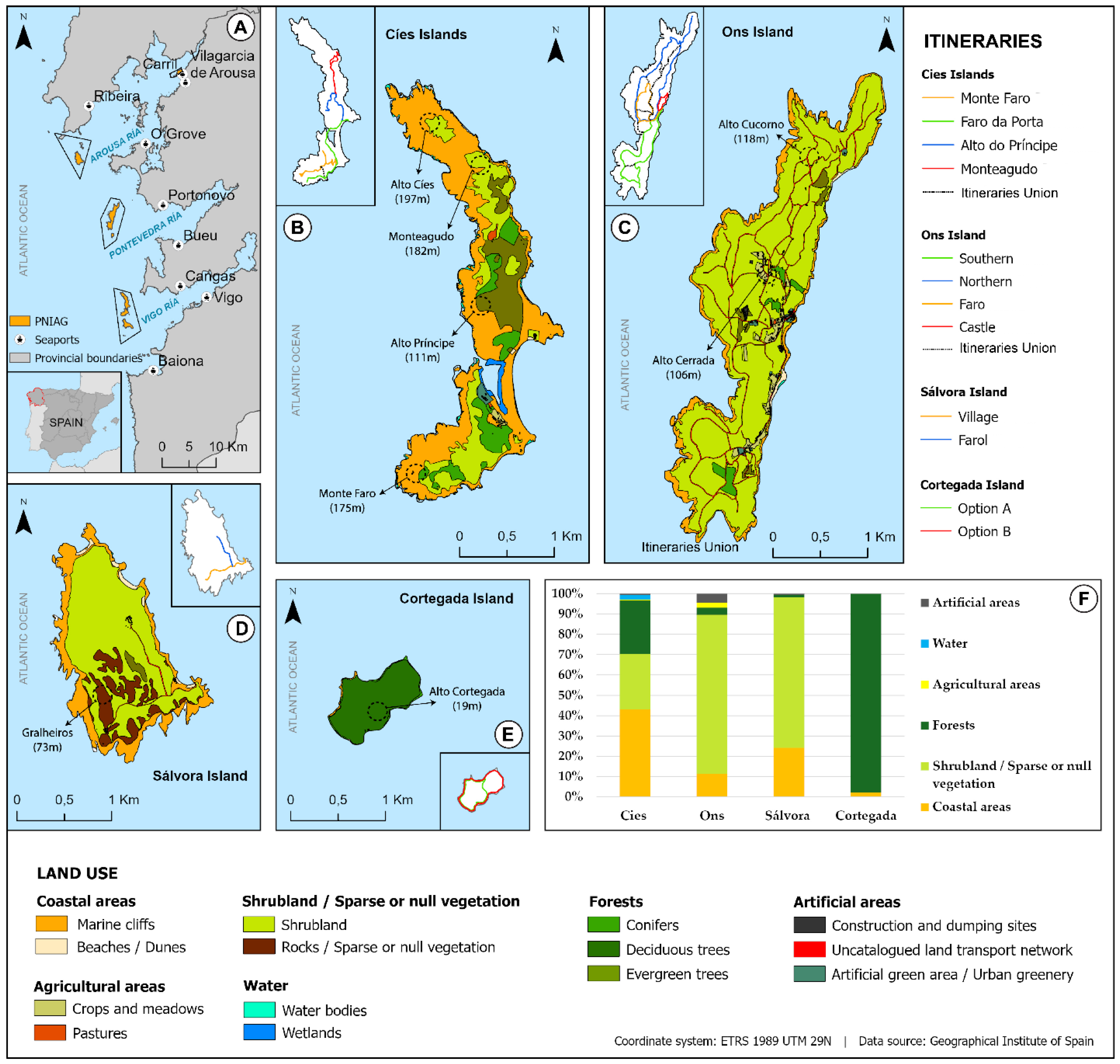
Figure 2.
Methodological processes adopted in the study.
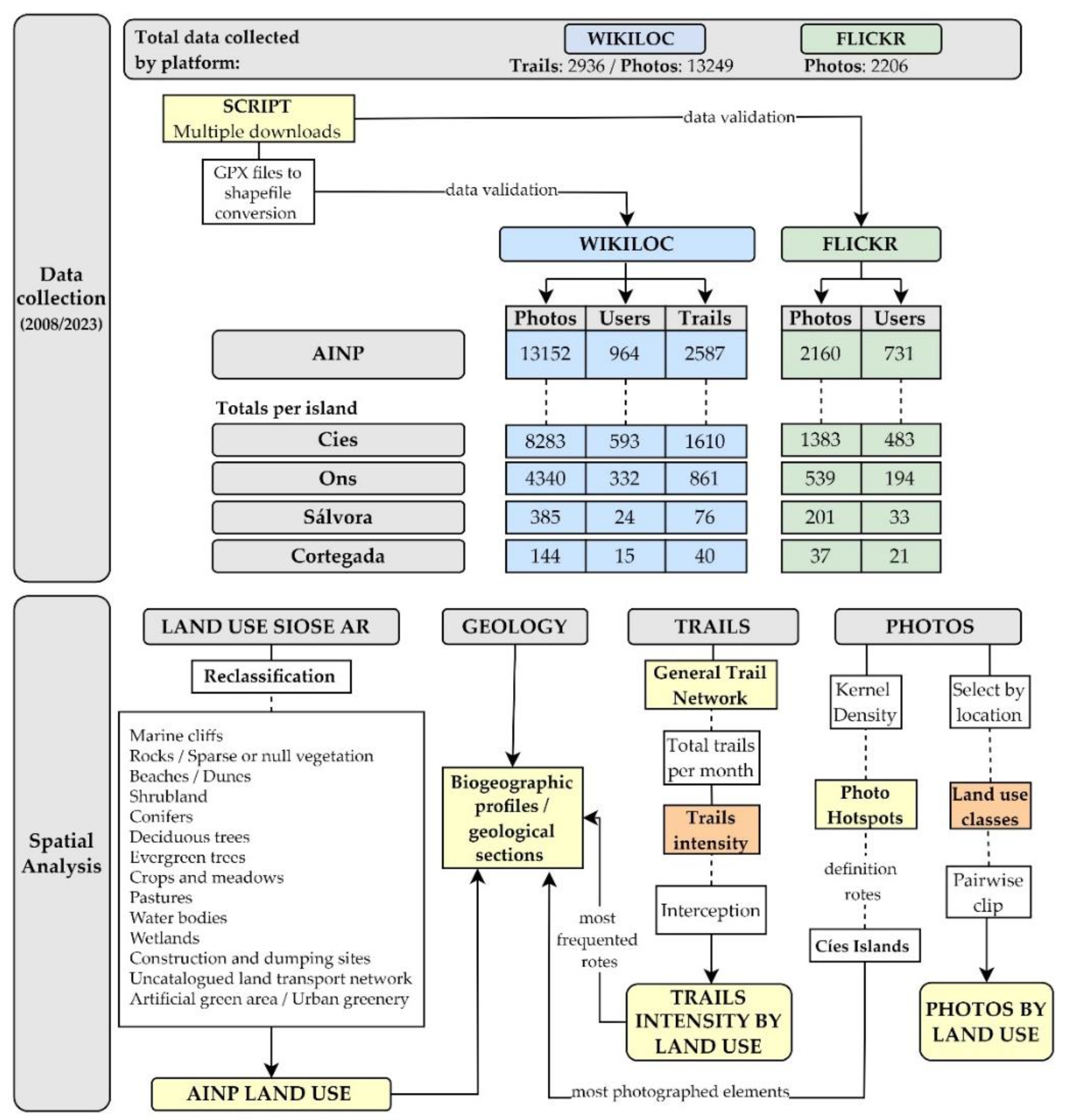
Figure 3.
Global statistics of photos and trails by land use class on the AINP: (A) number of photos; (B) relative frequency of photos; (C) number of Wikiloc trails segments. Land use classes: shrubland (SH); marine cliffs (MC); uncatalogued land transport network (ULTN); conifers (CO); evergreen trees (ET); artificial green area and urban greenery (AGA/UG); construction and dumping sites (CDS); crops and meadows (CM); Beaches and Dunes (BD); wetlands and lagoons (WT); deciduous trees (DT); pastures (PA); rocks and sparse or null vegetation (RSNV); water bodies (WB).
Figure 3.
Global statistics of photos and trails by land use class on the AINP: (A) number of photos; (B) relative frequency of photos; (C) number of Wikiloc trails segments. Land use classes: shrubland (SH); marine cliffs (MC); uncatalogued land transport network (ULTN); conifers (CO); evergreen trees (ET); artificial green area and urban greenery (AGA/UG); construction and dumping sites (CDS); crops and meadows (CM); Beaches and Dunes (BD); wetlands and lagoons (WT); deciduous trees (DT); pastures (PA); rocks and sparse or null vegetation (RSNV); water bodies (WB).
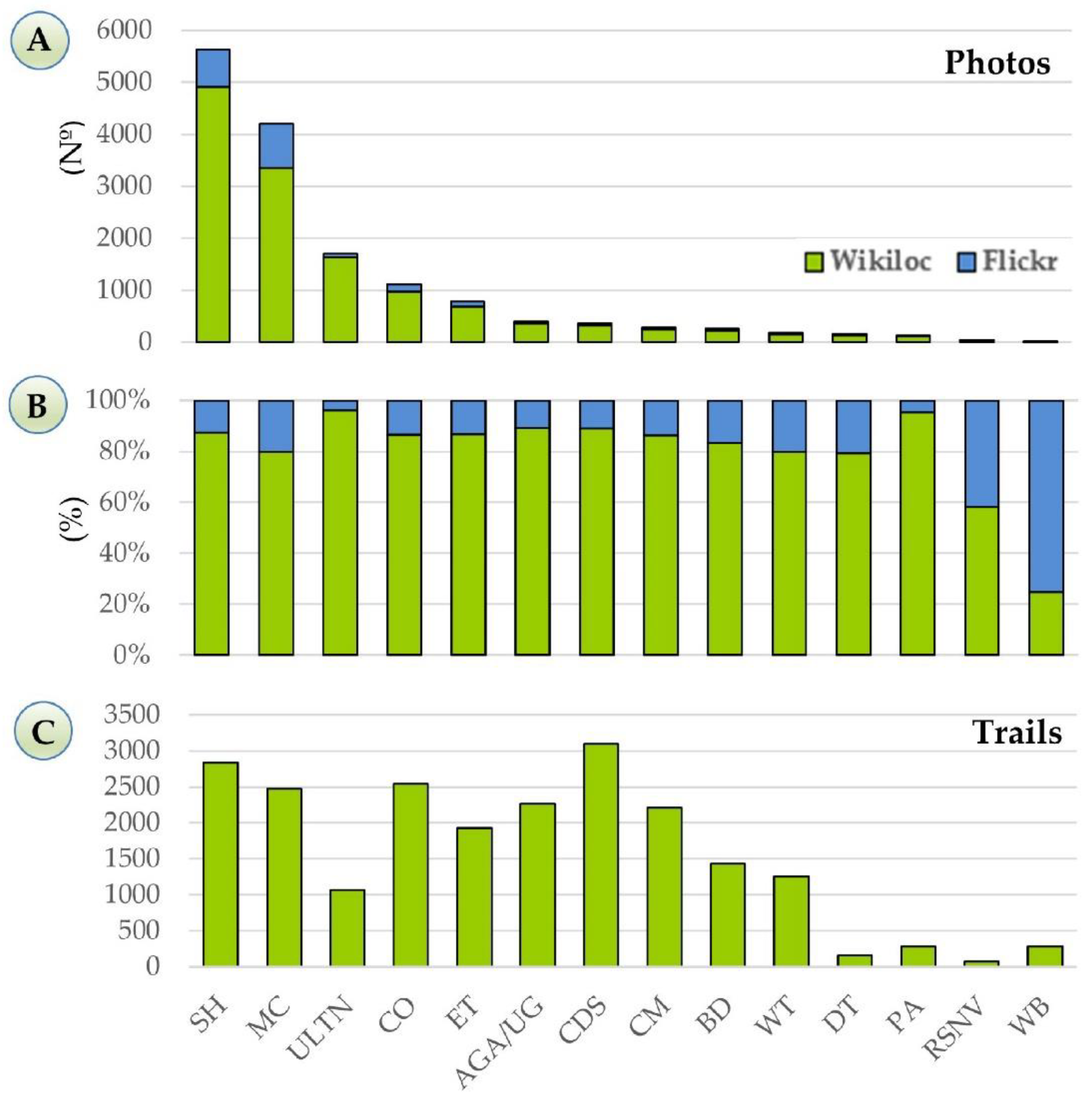
Figure 4.
Photographed areas by land use in AINP.
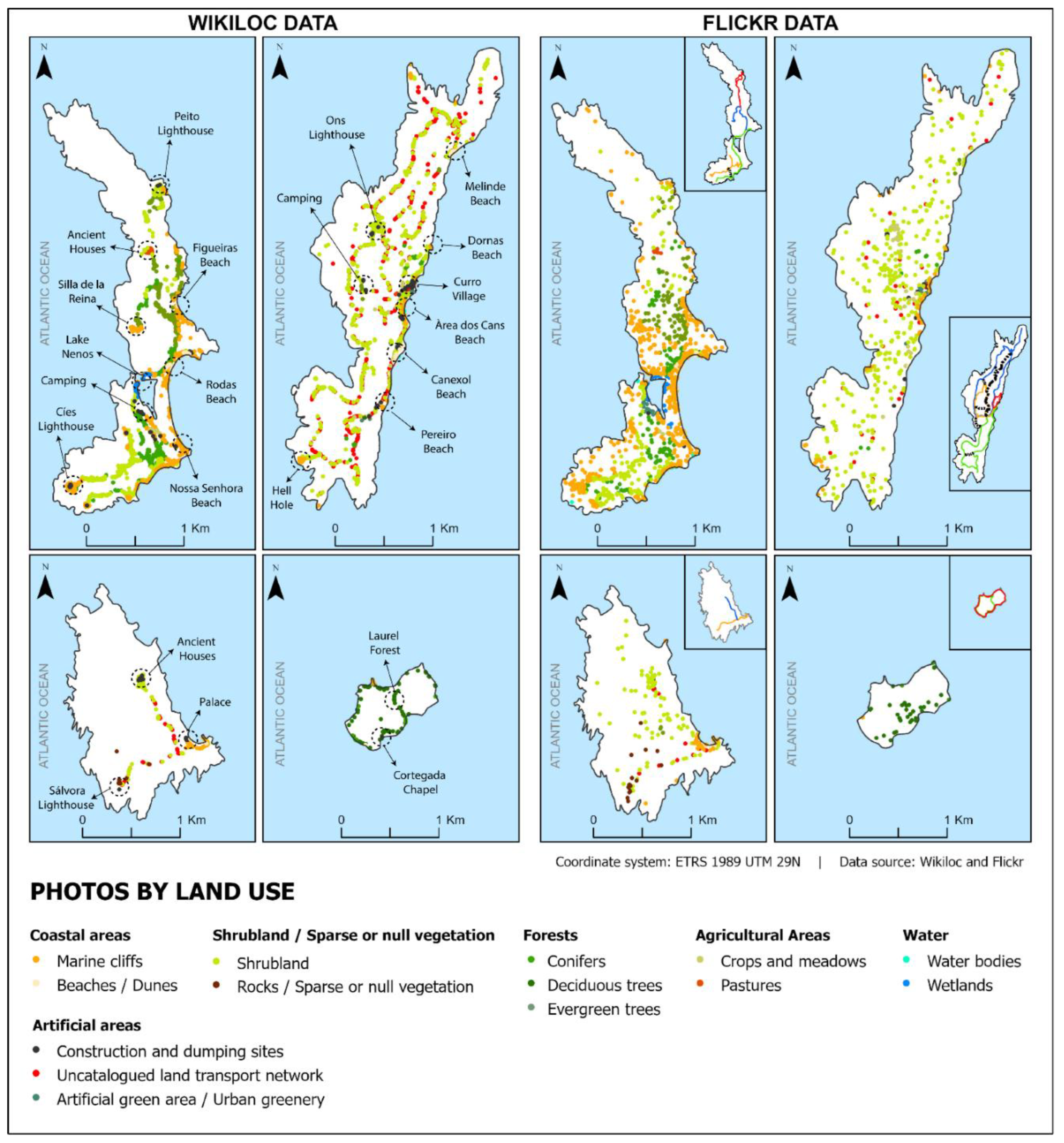
Figure 5.
– Most photographed places on Cíes Island - (1) Marine cliffs of Monte Faro; (2) Lake Nenos; (3) Rodas Beach; (4) Figueiras Beach; (5) Nossa Senhora Beach; (6) Panoramic view to the south from Monteagudo (images source: Wikiloc).
Figure 5.
– Most photographed places on Cíes Island - (1) Marine cliffs of Monte Faro; (2) Lake Nenos; (3) Rodas Beach; (4) Figueiras Beach; (5) Nossa Senhora Beach; (6) Panoramic view to the south from Monteagudo (images source: Wikiloc).
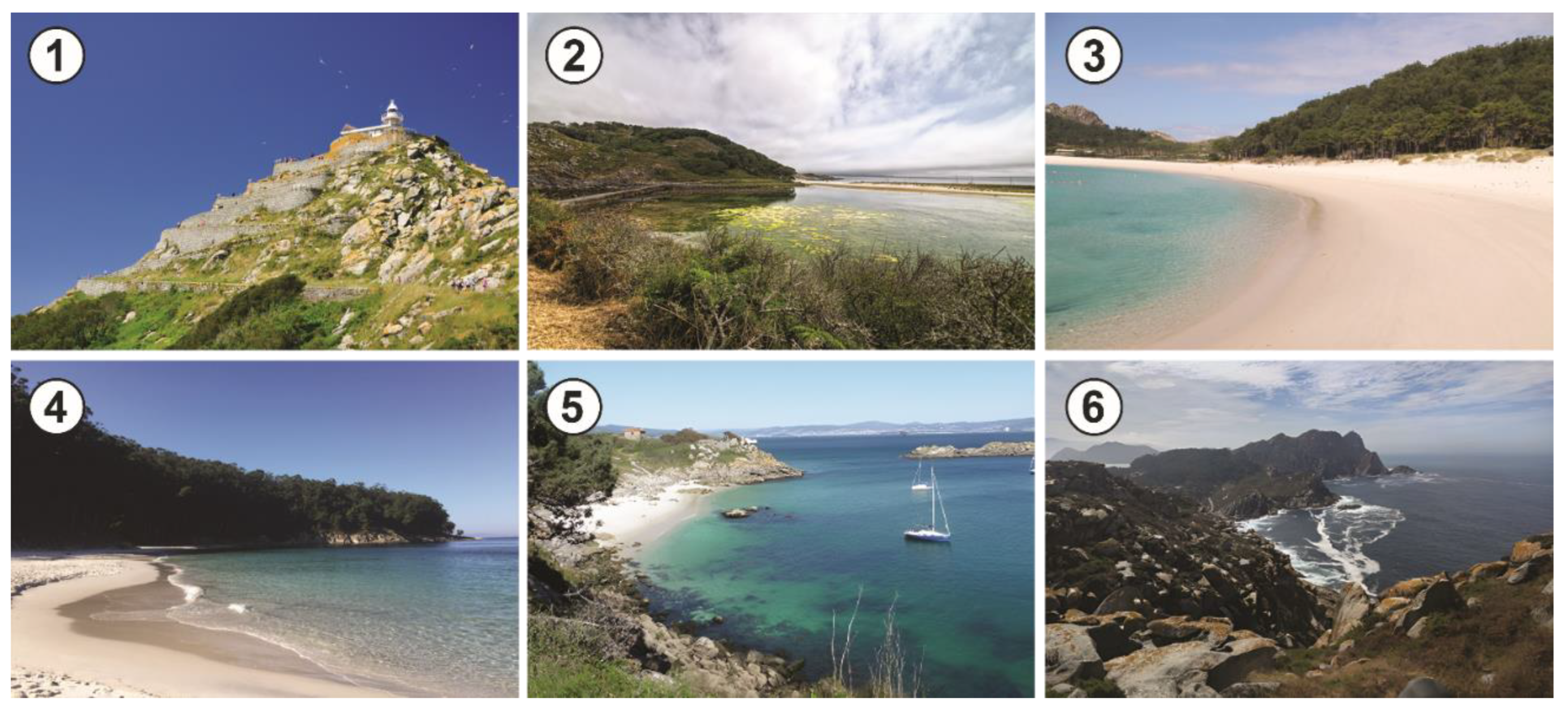
Figure 6.
Trails intensity by land use in the AINP.
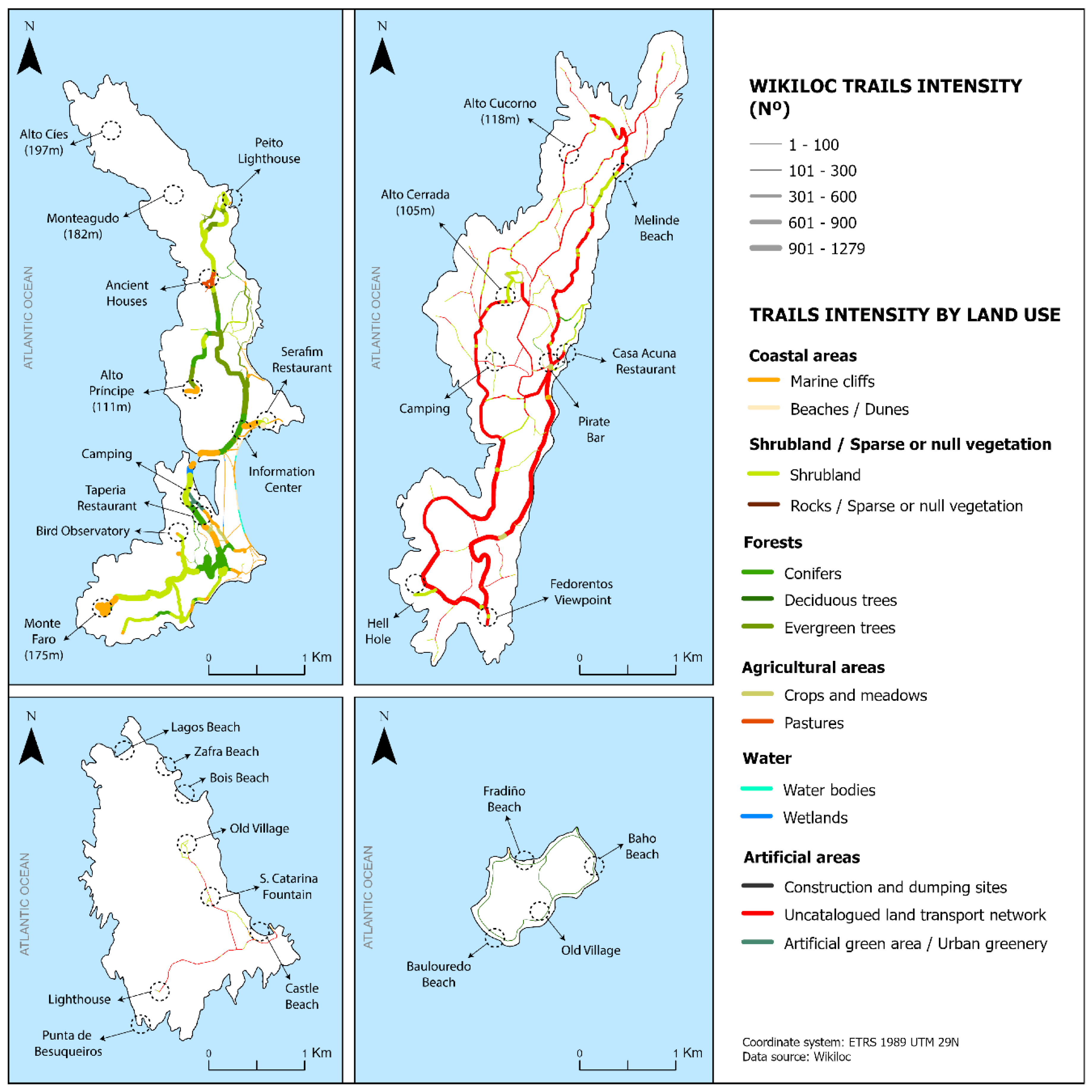
Figure 7.
Graphical representation of the two main trails that Wikiloc and Flickr users perform on Cíes Island, including land use, intensity of trails, and hotspot photos.
Figure 7.
Graphical representation of the two main trails that Wikiloc and Flickr users perform on Cíes Island, including land use, intensity of trails, and hotspot photos.
Disclaimer/Publisher’s Note: The statements, opinions and data contained in all publications are solely those of the individual author(s) and contributor(s) and not of MDPI and/or the editor(s). MDPI and/or the editor(s) disclaim responsibility for any injury to people or property resulting from any ideas, methods, instructions or products referred to in the content. |
© 2024 by the authors. Licensee MDPI, Basel, Switzerland. This article is an open access article distributed under the terms and conditions of the Creative Commons Attribution (CC BY) license (http://creativecommons.org/licenses/by/4.0/).
Copyright: This open access article is published under a Creative Commons CC BY 4.0 license, which permit the free download, distribution, and reuse, provided that the author and preprint are cited in any reuse.


