
Submitted:
16 October 2024
Posted:
18 October 2024
You are already at the latest version
Abstract
Objective: To explore the application effect of a bimodal collaborative nursing model in patients undergoing gastric cancer surgery with concurrent inguinal hernia repair. Methods: Sixty patients with gastric cancer and concurrent inguinal hernia who were admitted to our hospital between August 2019 and August 2021 were selected as the study subjects. Based on the different nursing approaches, all patients were divided into a control group and an observation group, with 30 patients in each group. The control group received conventional nursing care, while the observation group received the bimodal collaborative nursing model in addition to conventional care. The postoperative recovery, psychological status, and quality of life of the two groups of patients were compared. Results: The postoperative recovery of the observation group was superior to that of the control group, and the difference was statistically significant (P < 0.05). The anxiety and depression scores of the observation group were lower than those of the control group, with statistically significant differences (P < 0.05). The quality of life score of the observation group was higher than that of the control group, with statistically significant differences (P < 0.05). Conclusion: The application of a bimodal collaborative nursing model in gastric cancer surgery with concurrent inguinal hernia repair is effective. It not only promotes postoperative physical recovery and improves the psychological well-being of patients but also enhances their quality of life. It is worthy of clinical promotion and application.
Keywords:
Bimodal collaborative nursing
; gastric cancer surgery
; concurrent inguinal hernia repair
; application effect
Introduction
Inguinal hernia is a common surgical condition in clinical practice, characterized by the protrusion of the abdominal contents through the inguinal canal, descending obliquely anteriorly from the lateral inguinal ring, and often entering the scrotum. It is more prevalent in males than females and is commonly found on the right side[1,2]. Clinical symptoms primarily include abdominal swelling, nausea, vomiting, local swelling, and abdominal colic. When left untreated, it can affect the digestive, urinary, and reproductive functions of patients, leading to electrolyte imbalances, intestinal obstruction, and even incarceration, resulting in bowel necrosis, perforation, and posing a significant threat to the patient's overall health and quality of life[3,4]. Currently, tension-free hernia repair is a reliable treatment option for this condition, effectively alleviating symptoms, reducing pain, and promoting patient recovery.
Gastric cancer is the most common malignant tumor in the digestive system and has the highest mortality rate. Every year, there are approximately over 400,000 new cases in China. Patients with gastric cancer often experience symptoms such as nausea, vomiting, abdominal pain, bloody stools, and a feeling of fullness. When patients simultaneously have inguinal hernia, it can lead to breathing difficulties and varying degrees of hypoalbuminemia, coagulation disorders, anemia, and ascites, further exacerbating their condition and negatively impacting their prognosis[5,6]. While tension-free hernia repair can be performed in patients with gastric cancer and concurrent inguinal hernia, the surgery carries significant risks related to the procedure and anesthesia. Due to the complexity of the condition, patients experience considerable physical and psychological stress, sometimes even resisting surgical treatment, which severely affects treatment compliance, hinders the recovery process, and complicates the prognosis. Complications such as electrolyte imbalances, gastrointestinal bleeding, gastric cancer metastasis, and infections during and after surgery also impact the prognosis. As a result, patients with gastric cancer are often discouraged from undergoing scheduled abdominal surgery, leading to the deterioration of their condition. Therefore, providing scientifically and effectively nursing services for patients with gastric cancer and concurrent inguinal hernia is crucial to ensure the success of the surgery[7,8].
Conventional nursing care, in the past, has been criticized for its lack of comprehensiveness, scientific foundation, and continuity. It fails to slow disease progression, improve the overall condition of patients, and prevent or reduce complications. Consequently, the nursing outcomes have not been satisfactory. Bimodal collaborative nursing is a novel nursing model that emphasizes a patient-centered approach, encourages active communication between healthcare professionals, patients, and their families, and involves jointly developing and implementing nursing interventions. This approach leverages the expertise of nursing staff, mobilizes patient initiative, and enhances patient self-care capabilities, thereby providing higher quality and more efficient services. It contributes to improving the prognosis and postoperative recovery of patients[9,10].
Given these considerations, this study aims to explore the application effect of a bimodal collaborative nursing model in gastric cancer surgery with concurrent inguinal hernia repair. The results are as follows:
1. Materials and Methods
Ethical statement
All patients and their families received a comprehensive explanation of the study's objectives and voluntarily signed informed consent forms. The study was conducted in accordance with the Declaration of Helsinki, and received ethical approval from ethics committee of Harbin Medical University Cancer Hospital, No.11573.
1.1. Study Population
Sixty patients diagnosed with gastric cancer and concurrent inguinal hernia who were admitted to our institution between August 2019 and August 2021 were selected as the study cohort. Based on the different nursing approaches, all patients were divided into a control group and an observation group, with each group consisting of 30 patients. The control group received standard nursing care, while the observation group received the bimodal collaborative nursing model in addition to standard care.
1.2. Inclusion and Exclusion Criteria
1.2.1. Inclusion Criteria
(1) All patients met the clinical diagnosis criteria for gastric cancer with concurrent inguinal hernia and had confirmed diagnoses.
(2) Patients exhibited good compliance and were able to cooperate with the research investigations.
(3) Patients did not have psychiatric disorders or consciousness impairments.
(4) Patients met the surgical and anesthesia indications.
1.2.2. Exclusion Criteria
(1) Patients with concomitant significant organ diseases such as heart, liver, lung, kidney, etc.
(2) Patients with psychiatric disorders who were unable to cooperate with the study.
(3) Patients with coagulation function disorders.
(4) Patients with a history of abdominal surgery.
1.3. Methods
1.3.1. Control Group: Conventional Nursing Care
The specific content included:
Introduction to the medical environment;
Preoperative routine examinations;
Monitoring of vital signs;
Recording of patient's medical condition;
Daily disinfection management;
Health education on relevant medical knowledge;
Guidance on a balanced diet;
Psychological care;
Medication management;
Additionally, patients were informed about surgical precautions and relevant contraindications to prevent the occurrence of complications. The recovery status of the surgical incision was monitored, and any abnormalities were promptly reported to the attending physician for appropriate intervention.
1.3.2. Observation Group: Bimodal Collaborative Nursing Model
The specific measures were as follows:
(1) Collaborative Planning:
Development of a Comprehensive Plan: Nursing staff actively engaged in communication with patients and their families, documented detailed patient information, personality traits, medical history, and allergy history, established comprehensive health records, conducted a comprehensive assessment, analyzed and summarized patient disease characteristics, risk factors, psychological status, and the incidence of complications, and jointly negotiated and developed individualized nursing plans; Patients and their families were trained in the concept and implementation methods of the bimodal collaborative nursing model, as well as how to care for themselves and cooperate with treatment within this model. The aim was to make patients recognize the importance of collaborative care, facilitating the successful implementation of clinical treatments and nursing measures.
(2) Collaborative Implementation:
A. Health Education:
Distribution of Health Education Materials: Providing patients and their families with health education handbooks and explaining disease-related knowledge, disease progression, preoperative preparations, surgical and anesthesia methods, postoperative precautions, and measures to prevent complications. Timely addressing any difficulties and doubts expressed by patients and their families and offering effective assistance. This enables patients and their families to trust healthcare professionals and gain a comprehensive and accurate understanding of surgical treatment and clinical nursing, thereby enhancing their willingness to cooperate with care.
B. Psychological Care:
Guidance on Psychological Communication Skills: Nursing staff provided guidance to patients' families on psychological communication skills to better encourage patients to express their psychological needs. Simultaneously, they monitored patients' emotional changes during the surgical and nursing process and employed targeted psychological guidance and positive psychological suggestions to promptly alleviate their tension, anxiety, and other adverse emotions. Nursing staff also shared successful treatment cases to boost patients' confidence in overcoming the disease, thereby enhancing their treatment compliance.
C. Medical and Nursing Guidance:
(a) Breathing and Coughing Exercises: Nursing staff guided patients in deep breathing, effective coughing exercises, and assisted them in changing positions as per their disease condition and comfort, maintaining clear airways.
(b) Distraction Techniques: Patients were encouraged to listen to soothing music, read relaxing articles, or engage in activities that diverted their attention, reducing their perception of pain.
(c) Improving Sleep Quality: Actively and effectively addressing factors affecting patients' sleep quality.
(d) Medication Adherence: Guiding patients and their families on adhering to medication regimens and arranging dietary structure reasonably.
(e) Encouraging Postoperative Rehabilitation Exercises: Encouraging patients to engage in appropriate postoperative rehabilitation exercises. Exercise duration and intensity should be tolerated by the patient, following the principle of gradual progression. Emphasizing that maintaining healthy behaviors and adhering to medical advice can lead to a good prognosis.
(3) Collaborative Evaluation:
Nursing staff and patients' family members jointly evaluated the patient's condition and continuously adjusted and optimized the nursing plan based on the evaluation results.
(4) Post-Discharge Follow-up:
Upon discharge, patients received guidance on relevant health knowledge, and they and their families were instructed to adhere to scheduled follow-up appointments. After discharge, nursing staff conducted follow-up with patients approximately every two weeks via phone or WeChat for about 10-15 minutes per session, lasting at least three months. During follow-up, nursing staff patiently addressed patient inquiries and inquired about their recovery and any discomfort or symptoms.
1.4. Observational Metrics
1.4.1. Postoperative Recovery
Record and analyze the postoperative recovery of patients in both groups, including the following parameters: time to first flatus, time to first bowel movement, time to first mobilization out of bed, time to first oral intake, and length of hospital stay.
1.4.2. Psychological Status
Evaluate the psychological status of both groups using the Self-Rating Anxiety Scale and the Self-Rating Depression Scale. The standard cutoff value for the Self-Rating Anxiety Scale is 50 points, with scores ranging from 50 to 59 indicating mild anxiety, 60 to 69 indicating moderate anxiety, and scores above 69 indicating severe anxiety. The standard cutoff value for the Self-Rating Depression Scale is 53 points, with scores ranging from 53 to 62 indicating mild depression, 63 to 72 indicating moderate depression, and scores above 72 indicating severe depression. Higher scores indicate more pronounced feelings of anxiety and depression.
1.4.3. Quality of Life
Assess the quality of life of patients using a health measurement scale. Evaluation criteria include social functioning, physical status, cognitive ability, emotional function, and physiological function, with each item scored out of 100 points. Higher scores indicate a higher quality of life.
1.5. Data Analysis
Statistical analysis of the data was performed using SPSS 23.0 software. Continuous data are presented as mean ± standard deviation (±s), and statistical differences were compared using the t-test. Categorical data are presented as percentages (%), and statistical differences were compared using the chi-square test (χ^2). A significance level of P < 0.05 was considered to indicate statistical significance.
2. Results
2.1. Basic Information
In the control group, there were 30 patients, including 28 males and 2 females, with an age range of 19 to 53 years and an average age of (40.38±3.74) years. The body mass index (BMI) ranged from 17.9 to 28.6 kg/m^2, with an average BMI of (23.7±1.4) kg/m^2. Among these patients, 10 had left-sided inguinal hernias, and 20 had right-sided inguinal hernias. The duration of gastric cancer ranged from 2 to 8 years, with an average duration of (6.02±0.73) years.
In the observation group, there were 30 patients, including 29 males and 1 female, with an age range of 20 to 54 years and an average age of (39.42±4.02) years. The BMI ranged from 18.3 to 29.2 kg/m^2, with an average BMI of (24.2±1.6) kg/m^2. Among these patients, 9 had left-sided inguinal hernias, and 21 had right-sided inguinal hernias. The duration of gastric cancer ranged from 1 to 7 years, with an average duration of (5.87±0.62) years. There were no statistically significant differences in the basic information between the two groups (P > 0.05), indicating comparability. See Table 1.
2.2. Comparison of Postoperative Recovery between the Two Groups
The observation group had significantly shorter times for the first flatus, first bowel movement, first mobilization out of bed, first oral intake, and length of hospital stay compared to the control group (P < 0.05). See Table 2.
2.3. Comparison of Psychological Status between the Two Groups
After intervention, both groups showed significantly lower anxiety and depression scores compared to before the intervention (P < 0.05), and the observation group had lower scores than the control group, with statistical significance (P < 0.05). See Table 3
2.4. Comparison of Quality of Life between the Two Groups
3. Discuss
Groin hernia is one of the most common types of hernias in clinical practice in China, accounting for over 80% of all groin hernias. It primarily affects adolescents and adult males, with a significantly higher incidence in males, with a male-to-female ratio of approximately 12-15:1. Depending on the severity of the condition, groin hernia can be classified as reducible hernia, irreducible hernia, incarcerated hernia, and strangulated hernia. Hernia repair surgery is currently the mainstay of clinical treatment for this condition, effectively improving the patient's condition and promoting early recovery[11,12].
Gastric cancer, originating from the epithelial cells of the gastric mucosa, is also one of the most common malignant tumors worldwide. In recent years, due to factors such as environmental pollution and unhealthy dietary habits, the incidence and mortality rates of gastric cancer have remained high[13]. Once gastric cancer occurs clinically, the patient's organ and immune functions are significantly compromised. It is prone to metastasis and recurrence, and has a major impact on the patient's physical and mental well-being, resulting in a continuous decrease in the patient's quality of life. If a patient also has concurrent inguinal hernia, it can further exacerbate the condition and reduce the patient's survival rate. Although hernia repair surgery can be performed in patients with gastric cancer and concurrent inguinal hernia, it can lead to stress responses and significant physiological trauma due to the complexity of the disease, intraoperative interference with the abdominal cavity and gastrointestinal tract, and may result in metabolic disorders, gastrointestinal dysfunction, and even shock. In severe cases, it can lead to anesthesia-related complications, postoperative complications, recurrence, infections, and other risks, affecting the patient's physical, psychological, and emotional states, as well as their quality of life, and consequently, their postoperative recovery process[14,15]. Due to the unique nature of these conditions, effective nursing intervention is required to manage such patients. High-quality nursing care can promote the patient's recovery, prevent complications caused by other factors, enhance safety, improve the quality of prognosis, and ultimately improve the patient's overall well-being[16].
Conventional nursing primarily focuses on basic care such as monitoring the patient's condition and ensuring timely medication administration. This nursing model is relatively simple and lacks a personalized approach, often resulting in suboptimal outcomes. In contrast, the Double-Link Collaborative Nursing Model is an emerging nursing approach in which nursing staff, guided by a principle of responsibility and a philosophy of human-centered care, strengthen collaboration among healthcare professionals, patients, and their families. It involves comprehensive analysis of nursing needs and the joint development of nursing intervention plans. This model is characterized by its comprehensiveness, scientific basis, purposefulness, and professionalism and is currently widely used in clinical practice[17].
The Double-Link Collaborative Nursing Model not only enhances clinical effectiveness and delays disease progression but also actively engages patients and their families in nursing care, ensuring that clinical work is carried out continuously, effectively, and at a high quality, ultimately achieving desirable prognostic outcomes.
The findings of this study indicate that the observation group had significantly shorter times for first flatus, first defecation, first ambulation, first oral intake, and length of hospital stay compared to the control group (P < 0.05). This suggests that the Double-Link Collaborative Nursing Model contributes to the promotion of postoperative physical recovery in patients. The reason behind this is that the model involves the development of individualized nursing plans by nursing staff and patients and their families, based on the patient's specific disease condition. These plans can effectively address the patient's gastrointestinal function and other physiological aspects through focused nursing interventions, protecting the gastric mucosa, speeding up gastrointestinal motility, facilitating gas and stool passage, and reducing hospital stays.
Furthermore, providing health education to patients and their families through this model enhances their understanding of the disease, improving their treatment compliance, which in turn accelerates the recovery process.
After the intervention, both groups showed significantly lower anxiety and depression scores compared to before the intervention (P < 0.05). Furthermore, the observation group had lower scores than the control group, with statistically significant differences (P < 0.05). This indicates that the Double-Link Collaborative Nursing Model effectively alleviates adverse psychological conditions in patients.
The reason behind this is that the Double-Link Collaborative Nursing Model is based on humanistic care, requiring active participation from patients and their families in the nursing process. It involves comprehensive nursing plans that address various aspects of patients' physical, psychological, emotional, and social needs. Nursing staff analyze and summarize the patient's disease condition, understand the patient's treatment expectations, and encourage and support both patients and their families to actively cope with the disease[18]. Regular health education not only serves as psychological counseling and emotional release but also helps shift the patient's focus and attention. Through communication, interaction, and learning, patients receive more scientific, positive information, enhancing their understanding of the disease and fostering correct beliefs about recovery. This leads to the development of healthy behavior habits, strengthens their ability to cope with the disease effectively, and alleviates negative emotions such as anxiety and depression[19,20].
The observation group had higher scores in social function, physical status, cognitive ability, emotional function, and physiological function compared to the control group, with statistically significant differences (P < 0.05). This demonstrates that the Double-Link Collaborative Nursing Model effectively improves the quality of life in patients.
The reason behind this improvement is that the collaborative nursing model emphasizes the social aspect of human beings and advocates for active monitoring and participation by patients' families. It fully leverages the patient's subjective initiative and encourages their active involvement in self-care and the recovery process. During the implementation of the Double-Link Collaborative Nursing Model, nursing staff guide patients in deep breathing, effective coughing, and other exercises to ensure smooth breathing[21,22]. They also advise patients to listen to soothing music, read relaxing articles, and engage in activities that divert their attention from pain. Patients are encouraged to engage in appropriate rehabilitation exercises, improve their sleep quality, and actively participate in the development of dietary plans and medication adherence alongside their families. These multifaceted approaches help cultivate a strong sense of self-care awareness among patients and correct any negative thought patterns or behaviors. Patients consciously adopt healthier lifestyles and beliefs, ensuring the success of their recovery and further enhancing their quality of life. These nursing interventions are highly safe and feasible, and they significantly improve patient outcomes, consistent with the findings of Liu Wenyun and colleagues[23,24].
In summary, the application of the Double-Link Collaborative Nursing Model in patients undergoing surgery for gastric cancer complicated by inguinal hernia has demonstrated clear effectiveness. It not only promotes postoperative physical recovery but also improves patients' psychological well-being and enhances their overall quality of life. However, this study had a relatively small sample size, which may introduce some bias. In future research, it is essential to increase the sample size and expand the range of follow-up indicators. Additionally, further analysis and exploration of the advantages and mechanisms of the Double-Link Collaborative Nursing Model from various perspectives are needed. This will provide valuable reference data for clinical practice.
References
- Wang, S.-Y.; Hsu, C.-H.; Liao, C.-H.; Fu, C.-Y.; Ouyang, C.-H.; Cheng, C.-T.; Hsu, J.-T.; Yeh, T.-S.; Yeh, C.-N. Surgical outcome evaluation of perforated gastric cancer: from the aspects of both acute care surgery and surgical oncology. Scand. J. Gastroenterol. 2017, 52, 1371–1376. [Google Scholar] [CrossRef] [PubMed]
- Yaguchi, Y.; Inaba, T.; Kumata, Y.; Horikawa, M.; Kiyokawa, T.; Fukushima, R. Two cases of early recurrence after transabdominal preperitoneal inguinal hernia repair. Asian J. Endosc. Surg. 2018, 11, 71–74. [Google Scholar] [CrossRef] [PubMed]
- Shakil, A.; Aparicio, K.; Barta, E.; Munez, K. Inguinal Hernias: Diagnosis and Management. Am. Fam. Physician 2020, 102, 487–492. [Google Scholar] [PubMed]
- Stahlman, S.; Fan, M. Incidence of inguinal hernia and repair procedures and rate of subsequent pain diagnoses, active component service members, U.S. Armed Forces, 2010-2019. Msmr 2020, 27, 11–16. [Google Scholar]
- Perez, A.J.; Campbell, S. Inguinal Hernia Repair in Older Persons. J. Am. Med Dir. Assoc. 2022, 23, 563–567. [Google Scholar] [CrossRef]
- Piga, E.; Zetner, D.; Andresen, K.; Rosenberg, J. Imaging modalities for inguinal hernia diagnosis: a systematic review. Hernia 2020, 24, 917–926. [Google Scholar] [CrossRef]
- Ong, C.T.; Schwarz, J.L.; Roggin, K.K. Surgical considerations and outcomes of minimally invasive approaches for gastric cancer resection. Cancer 2022, 128, 3910–3918. [Google Scholar] [CrossRef]
- Patel, V.H.; Wright, A.S. Controversies in Inguinal Hernia. Surg. Clin. North Am. 2021, 101, 1067–1079. [Google Scholar] [CrossRef]
- Mrena, J.; Mattila, A.; Böhm, J.; Jantunen, I.; Kellokumpu, I. Surgical care quality and oncologic outcome after D2 gastrectomy for gastric cancer. World J. Gastroenterol. 2015, 21, 13294–301. [Google Scholar] [CrossRef]
- Narayanan, S.; Kumar, A.; Reljic, T.; Blonski, W. Is inguinal hernia associated with an increased risk of colon cancer? A systematic review and meta-analysis. Int. J. Color. Dis. 2022, 37, 1209–1214. [Google Scholar] [CrossRef]
- Li, J.; Qin, C.; Lai, D.; Hu, Y.; Wang, L. Safety and effectiveness of inguinal hernia repair in patients with liver cirrhosis: a retrospective study and literature review. Hernia 2019, 24, 489–494. [Google Scholar] [CrossRef] [PubMed]
- McCall, M.D.; Graham, P.J.; Bathe, O.F. Quality of life: A critical outcome for all surgical treatments of gastric cancer. World J. Gastroenterol. 2016, 22, 1101–1113. [Google Scholar] [CrossRef] [PubMed]
- Akelma, F.K.; Altınsoy, S.; Arslan, M.T.; Ergil, J. Effect of favorite music on postoperative anxiety and pain. Der Anaesthesist 2020, 69, 198–204. [Google Scholar] [CrossRef] [PubMed]
- Goksoy, B.; Yilmaz, G.; Azamat, I.; Ozata, I.; Duman, K. Laparoscopic Inguinal Hernia Repair—TAPP versus TEP: Results of 301 Consecutive Patients. Surg. Technol. Online 2021, 39, 191–195. [Google Scholar] [CrossRef] [PubMed]
- Jørgensen, S.G.; Öberg, S.; Rosenberg, J. Treatment of longstanding groin pain: a systematic review. Hernia 2019, 23, 1035–1044. [Google Scholar] [CrossRef]
- Deo, K.K.; Shrestha, R.; Gc, S.; Maharjan, S.; Shrestha, A.; Neupane, A. Hernia among Patients Admitted to the Department of Surgery of a Tertiary Care Centre: A Descriptive Cross-sectional Study. J. Nepal Med Assoc. 2023, 61, 200–203. [Google Scholar] [CrossRef]
- Choi, A.H.; Kim, J.; Chao, J. Perioperative chemotherapy for resectable gastric cancer: MAGIC and beyond. World J. Gastroenterol. 2015, 21, 7343–8. [Google Scholar] [CrossRef]
- Liu, N.; Greenberg, J.A.; Xu, Y.; Shada, A.L.; Funk, L.M.; Lidor, A.O. Phone follow-up after inguinal hernia repair. Surg. Endosc. 2020, 35, 5159–5166. [Google Scholar] [CrossRef]
- Berndsen, M.R. Gudbjartsson, and F.H. Berndsen, [Inguinal hernia - review]. Laeknabladid 2019, 105, 385–391. [Google Scholar]
- Cao, Y.; Ding, Z.; Qiang, H. Analysis on Influencing Factors of Recurrence after Indirect Inguinal Hernia Laparoscopic Surgery. J. Heal. Eng. 2022, 2022, 2978745. [Google Scholar] [CrossRef]
- Iftikhar, N.; Kerawala, A. QUALITY OF LIFE AFTER INGUINAL HERNIA REPAIR. Pol. J. Surg. 2021, 93, 1–5. [Google Scholar] [CrossRef] [PubMed]
- Köckerling, F.; Maneck, M.; Günster, C.; Adolf, D.; Hukauf, M. Comparing routine administrative data with registry data for assessing quality of hospital care in patients with inguinal hernia. Hernia 2020, 24, 143–151. [Google Scholar] [CrossRef] [PubMed]
- Bencivenga, M.; Palla, I.; Scorsone, L.; Bortolami, A.; Mengardo, V.; Pavarana, M.; Turchetti, G.; de Manzoni, G. Clinical pathways in gastric cancer care. Updat. Surg. 2018, 70, 279–291. [Google Scholar] [CrossRef] [PubMed]
- Enodien, B.; Moser, D.; Kessler, F.; Taha-Mehlitz, S.; Frey, D.M.; Taha, A. Cost and Quality Comparison of Hernia Surgery in Stationary, Day-Patient and Outpatient Care. Int. J. Environ. Res. Public Health 2022, 19, 12410. [Google Scholar] [CrossRef]
Figure 1.
Comparison of Quality of Life between the Two Groups.
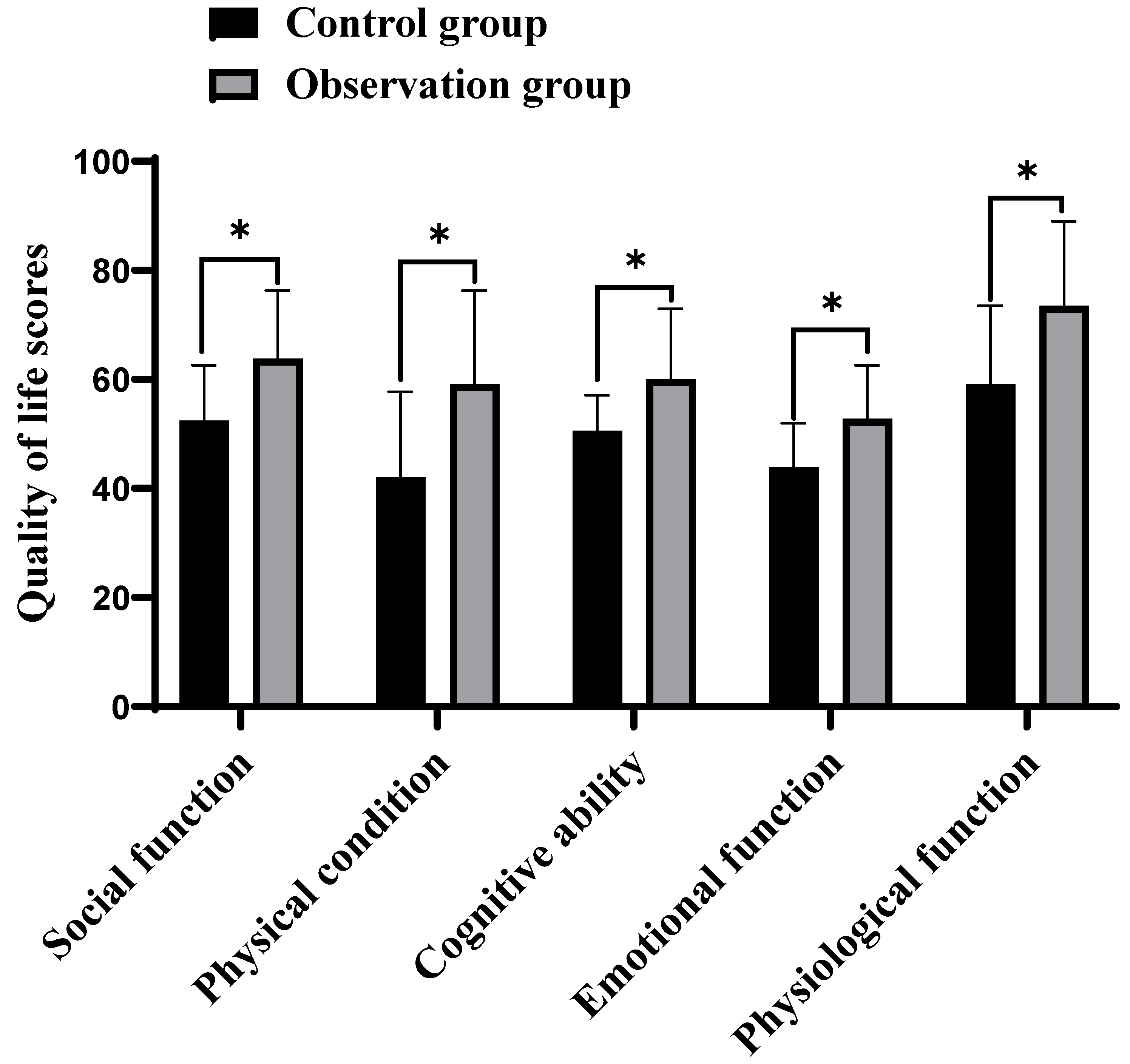

Table 1.
Comparison of Basic Information between the Control Group and the Observation Group.
| Control group(n=30) | Observation group(n=30) | t/x2 | P | ||
| Gender | Male | 28 | 29 | 0.351 | 0.554 |
| Female | 2 | 1 | |||
| Age(year) | - | 19-53 | 20-54 | - | - |
| Average | 40.38±3.74 | 39.42±4.02 | 0.958 | 0.342 | |
| BMI(kg/m2) | - | 17.9-28.6 | 18.3-29.2 | - | - |
| Average | 23.7±1.4 | 24.2±1.6 | 1.288 | 0.203 | |
| Indirect inguinal hernia(case) | Left side | 10 | 9 | 0.077 | 0.781 |
| Right side |
20 | 21 | |||
| Gastric cancer course(year) | - | 2-8 | 1-7 | - | - |
| Average | 6.02±0.73 | 5.87±0.62 | 0.858 | 0.394 | |
Table 2.
Comparison of Postoperative Recovery between the Two Groups(±s).
| Group | Case | Time to First Flatus(h) | Time to First Bowel Movement(h) | Time to First Ambulation(h) | Time to First Oral Intake(h) | Length of Hospital Stay(d) |
| Observation group | 30 | 16.54±1.62 | 19.87±0.61 | 12.66±0.54 | 21.05±0.34 | 8.54±0.23 |
| Control group | 30 | 20.97±1.74 | 22.55±0.57 | 16.97±0.63 | 24.04±0.51 | 10.63±0.72 |
| t | 10.206 | 17.582 | 28.450 | 26.718 | 15.145 | |
| P | P<0.001 | P<0.001 | P<0.001 | P<0.001 | P<0.001 |
Table 3.
Comparison of Psychological Status between the Two Groups(±s).
| Group | Case | Anxiety | Depression | ||
| Before intervention | After intervention | Before intervention | After intervention | ||
| Observation group | 30 | 52.34±6.32 | 34.23±4.12 | 54.65±4.28 | 31.64±3.24 |
| Control group | 30 | 53.36±5.29 | 41.67±3.28 | 53.93±5.76 | 46.68±3.87 |
| t | 0.678 | 7.738 | 0.550 | 16.321 | |
| P | 0.500 | <0.001 | 0.584 | <0.001 | |
Table 4.
Comparison of Quality of Life between the Two Groups(±s).
| Observation group(n=30) | Control group(n=30) | t | P | |
| Social function | 63.84±12.47 | 52.48±10.11 | 3.876 | <0.001 |
| Physical condition | 59.15±17.14 | 42.05±15.69 | 4.031 | <0.001 |
| Cognitive ability | 60.13±12.85 | 50.58±6.57 | 3.624 | <0.001 |
| Emotional function | 52.84±9.74 | 43.85±8.14 | 3.879 | <0.001 |
| Physiological function | 73.48±15.48 | 59.19±14.34 | 3.709 | <0.001 |
Disclaimer/Publisher’s Note: The statements, opinions and data contained in all publications are solely those of the individual author(s) and contributor(s) and not of MDPI and/or the editor(s). MDPI and/or the editor(s) disclaim responsibility for any injury to people or property resulting from any ideas, methods, instructions or products referred to in the content. |
© 2024 by the authors. Licensee MDPI, Basel, Switzerland. This article is an open access article distributed under the terms and conditions of the Creative Commons Attribution (CC BY) license (http://creativecommons.org/licenses/by/4.0/).
Copyright: This open access article is published under a Creative Commons CC BY 4.0 license, which permit the free download, distribution, and reuse, provided that the author and preprint are cited in any reuse.


