

Submitted:
16 October 2024
Posted:
21 October 2024
You are already at the latest version
Abstract
The increasing demand for fresh and convenient foods has led to the production of Minimally Processed Products (MPP), making them more suitable for culinary and industrial uses. However, cutting potatoes can trigger browning, negatively impacting their sensory and nutritional quality. This study aimed to evaluate different anti-browning methods on Colombian potato varieties (Diacol Capiro, Pastusa, Nevada, and Sabanera) as raw materials for the development of MPP. The physicochemical properties evaluated included moisture, pH, acidity, enzymatic activity, total phenolic content, vitamin C, and browning index. The anti-browning treatments involved immersing the potatoes in citric acid (1%), ascorbic acid (1%), and garlic extract (0.5%). Evaluations were carried out over a 15-day storage period at refrigerated conditions. The results indicated that the Sabanera variety had the highest browning index, followed by Nevada, while Diacol Capiro and Pastusa showed lower browning indices even without the use of technological coadjuvants. Among the treatments, citric acid proved to be the most effective across all varieties, with Diacol Capiro exhibiting the least browning after 15 days. Garlic extract was the least effective against browning. Sensory analysis indicated that the acidic descriptor was noted for both treated (with citric acid) and untreated (control) Diacol Capiro potatoes at similar intensities, suggesting that citric acid did not negatively affect sensory quality and/or was masked during cooking, enhancing overall quality. In conclusion, the Diacol Capiro variety treated with 1% citric acid is the most appropriate choice for use as raw material for MPP without compromising sensory quality.
Keywords:
coadjuvants
; fourth range products
; polyphenol oxidase
; enzymatic browning
; antibrowning
1. Introduction
The change in the lifestyles of the population and the way people eat have generated greater demand for specific types of products. This has led to a trend toward a more practical and healthy diet, in which Minimally Processed Products (MPP) are viewed as a viable alternative. This transformation represents a significant challenge for the food industry. Minimally Processed Products (MPP), also known as Fourth Range products, are those that have undergone minimal processing for their preparation, such as washing, disinfection, peeling, cutting, and packaging. In recent years, the demand for fresh-cut fruits and vegetables has surged rapidly because of their convenience and practicality, making them an appealing choice for busy consumers. [1]. Based on the information provided by the market intelligence firm Mordor Intelligence, the global Minimally Processed Products market is projected to register an annual growth rate of 5.65% during the period from 2023 to 2029. In addition, according to the new research report from Global Market Insights, the market for processed fruits and vegetables, including ready-to-eat salads, is expected to exceed $392 billion by 2025 [2].
Currently, it is possible to find a wide variety of Minimally Processed Products on the market, such as peas, carrots, green beans, beets, and other cut and grated fruits and vegetables. A promising product for the production of Minimally Processed Products (MPP) is the potato, as it is the most consumed non-cereal food worldwide, representing a significant portion of the family basket in many countries due to its high energy contribution to the human diet. Additionally, the potato plant contains up to 85% edible parts, whereas only about 50% of cereal plants are edible [3]. The potatoes of the Solanaceae family, genus Solanum, and species tuberosum are the most cultivated species [4] Traditionally, potato cultivation has been very important for population growth, highlighting its high nutritional value with the presence of key compounds such as antioxidants, minerals, and vitamins. Notable among these are vitamin C, potassium, folate, magnesium, and zinc, which make potatoes a highly nutritious food [5].
Due to its versatility and with nearly 5,000 varieties worldwide, the potato is a highly adaptable crop, proving to be a food of vital importance for global food security. It is the third most produced crop after rice and wheat, and the leading non-cereal crop. According to the Food and Agriculture Organization, approximately 374 million tons are produced annually. In South America, Colombia ranks third in potato production with 2,526,330 tons, after Peru and Brazil, with production concentrated in the departments of Cundinamarca, Boyacá, Nariño, Antioquia, Santander, Tolima, and Cauca. Although there are over 300 varieties of potatoes in Colombia, only about 13 of them have commercial importance, including Parda Pastusa, ICA-Puracé, ICA-Única, Betina, Diacol Capiro, Tuquerreña o Sabanera, Pastusa Suprema, Pastusa Superior, ICA-Nevada, and criolla Colombia (Solanum phureja) potatoes. There are also numerous native materials that represent a smaller percentage of production. Some of the mentioned varieties are only marketed in certain regions of the country, limiting access for the entire population.
Fresh-cut vegetables (peeled, sliced, or diced and packaged) are viewed as a commercially viable option in the fresh-cut market, serving as an alternative to pre-cooked or frozen varieties. Consequently, potatoes represent a promising raw material for the development of Minimally Processed Products. However, visual appeal, a determinant quality index for consumer acceptance, is one of the main concerns due to potatoes once cut are exposed to enzymatic browning. Thus, the commercial quality of MPP is influenced by this process [6]. Enzymatic browning is due to oxidation reaction and occurs by exposure to the air after cutting and slicing, because of the interaction of phenolic compounds, oxygen, and enzymes such as Polyphenol oxidase (PPO) and peroxidase (POD) [7]. Therefore, the PPO activity is related to the degree of browning [8]. Chemically, browning involves the conversion of phenolic compounds into o-quinones through oxidation. This process can catalyze two distinct types of reactions (Figure 1): First, the hydroxylation of monophenols, resulting in the formation of diphenols, and, second, the oxidation of diphenols, leading to the production of quinones [6].
The oxidation of phenolic compounds into quinones, along with the formation of melanin, results in a dark coloration in foods. These browning reactions not only diminish their visual appeal but also cause nutrient loss and affect flavor, resulting in lower consumer acceptance [7]. To inhibit this occurrence, several chemical treatments, including reducing agents and chelating compounds, have been used as food additives [9]. Therefore, several studies have been conducted to control or mitigate the enzymatic browning. In general, PPO can be inhibited in several ways, either acting as chelators by binding Cu2+, or acting as acidulants, by lowering the pH. In addition, anti-browning agents can be acted as a competitive inhibitor by competing with the substrate for the binding site of PPO) and indirectly by inhibiting the expression levels of PPO-related genes, thus, changing the secondary structure [3,10].
The majority of approaches to controlling the browning process involve either inhibiting PPO activity or transforming quinones into colorless substances. Sulfites are widely recognized as effective reducing agents and have historically been among the most commonly used anti-browning agents; however, their application has been limited because of the sulfite and its decomposition product SO2 on the health of the human body is harmful, leading to potential negative impacts on human health [11,12]. Ascorbic acid and citric acid are widely used because they are GRAS (Generally Recognized as Safe) [10]. Polycarboxylic acids, such as citric, tartaric, malic, and succinic acids, influence PPO activity by either reducing the pH or chelating the copper at the enzyme’s active site [11].
Natural extracts as alternative resources from common food items can be also used to address the browning of fruits and vegetables. An important advantage of these natural anti-browning agents is their designation as GRAS additives [13]. In this regard, fruit sources that have been reported are: green apple, grapes, pineapple, guava, pomegranate peel, mulberry root bark and twigs, quince seeds, strawberry leaves and branches, coconut liquid endosperm, tomato skin, mango peel. Vegetable sources: ginger, marjoram, onion, chilli pepper. Plants and herbs sources: mangrove plant leaves, oregano herb aerial parts, citronella hydrosols, cinnamon, purslane, mate, green tea leaves, clove extract, aloe, stevia plant leaves [3,14,15,16]. Other compounds, such as 4-hexylresorcinol (4HR), manuka honey, egg White, cod fish skin, buffalo whey, Blue mussel have also shown to be effective inhibitors of polyphenol oxidase (PPO) [17,18]. Extracts from potato peels have been also demonstrate an inhibitory effect on enzymatic browning [9]. Combined inhibitors are often used to prevent browning of fresh-cut fruits and vegetables [8] and some studies have confirmed that the combined treatment has presented more efficient in mantaining the quality of fresh-cut products than individual treatments [1]. While their primary goal is to maintain color and prolong shelf life, they should not adversely affect other properties, components, or sensory attributes, nor should they pose any health risks [3]. Finally, PPO can also be inactivated by the use of heat, but inactivation with heat is very ineffective as it modifies the sensory characteristics of the product [19], falling outside the definition of Minimally Processed Products.
Althought several investigations have been conducted to determine the suitability of certain varieties for the production of Minimally Processed Products, by monitoring their resistance to browning [3,19,20,21,22], there is no information regarding the evaluation of the anti-browning methods, and their impact on the sensory quality of developed product using Colombian varieties. Therefore, in this study the objective was to evaluate different anti-browning methods on the quality of potatoes from Colombian varieties as raw material for the development of Minimally Processed Product, considering the sensory impact.
2. Materials and Methods
2.1. Materials
This research used four potato varieties from Colombia of broad commercial participation, namely: ICA-Nevada, Parda Pastusa, Diacol Capiro and Sabanera or Tuquerreña. For practical reasons, they will subsequently be referred to as: Nevada, Pastusa, D. Capiro and Sabanera (Figure 2). The potatoes used in this study had no mechanical affectations and were free of damage caused by pathogens and insects. They were purchased in the Central Mayorista de Antioquia (Medellín, Colombia). In addition, the potatoes were medium and big caliber, corresponding to diameter sizes between 45–90 mm based on Colombian Technical Standard NTC 341. Food Industry. Potato for consumption. Classification. The raw material was stored under refrigerated conditions (4 ± 2 °C) until further analysis. Before analysis, potatoes were subjected to washing with tap water and disinfection processes using a sodium hypochlorite solution at a concentration of 50 ppm. On the other hand, all the reagents used in the experiments were analytical grade.
2.2. Variety Characterization
2.2.1. Hysicochemical Characterization
The following analyses were performed for the fresh potatoes: Moisture content (%) was determined by the gravimetric method in an air oven with drying at 105 °C to constant weight according to AOAC method of analysis. pH was determined using a pH meter (Hanna Instruments pH meter, HI3220, Washington, USA). Total acidity was assessed through titration with NaOH (0.1 N) using phenolphthalein as an indicator until all the organic acids were neutralized. It was expressed as a percentage of ascorbic acid. The total soluble solids (TSS) were determined through refractometer readings (Brixco Instruments). Vitamin C was calculated by titration of the potato samples with a 2,6-dichlorophenolindophenol standard solution in an acid environment, and the results are expressed as mg/100 g [23,24]. All analyses were performed in triplicate.
2.2.2. Color Assessment and Browning Index (BI)
The color assessment of the potato flesh (pulp) was determined according to the CIEL*a*b* methodology [25], using a colorimeter Color Reader CR-20 Konica Minolta (Osaka, Japón), with an illumination angle of 8º. For the analysis, a longitudinal cut was first made to the potato, and measurements were immediately taken at the four opposite points of the transverse and longitudinal axes, together with the center of the potato. Additionally, three samples were taken for each variety. The overall average of the samples analyzed was taken. On the other hand, the browning index (BI) was calculated for 70 min by performing color measurements every 10 min. For this purpose, Equation (1) was used, which depends on variable X, represented in Equation (2), obtained using color parameters (a*, b*, L*). Similarly, the color difference (ΔE) was determined using Equation (3), employing the same parameters [11].
2.2.3. Polyphenol Oxidase (PPO) Activity, and Total Phenolic Content (TPC)
PPO activity was assessed by spectrophotometrically monitoring the formation of quinones, with absorbance measured at a wavelength of 410 nm during 120 s [26]. Regarding the Total Phenolic Content, it was determined using the Folin-Ciocalteu reagent, followed by incubation in the dark and measurement of absorbance at 725 nm (CARY 50 BIO, UVvis) with distilled water as the blank [23]. The result was calculated using a calibration curve based on gallic acid. The results were expressed as mg equivalents of gallic acid per 100 g of fresh sample (mg GAE/100 g).
2.2.4. Microstructural Characterization
The microstructure analysis was performed using Scanning Electron Microscopy. Samples from each variety were cut and air-dried (25 ± 2°C, 2 h). Subsequently they were placed on aluminum disks previously prepared with double-sided graphite tape. Then, gold was deposited on the surface of the samples using low vacuum plasma or sputter coating. The gold-coated samples were then placed in the JEOL JSM64990LV microscope chamber for micrographic visualization of the potato microstructure [27].
2.3. Anti-Browning Treatments
The washed and disinfected potatoes were peeled and cut into pieces of 1 x 1 cm² approximately. Then, they were subjected to different anti-browning treatments, that is, three immersion processes in technological coadjutants and one control process. The potato pieces were placed in a desiccator containing the anti-browning solution and maintained the ratio potato: solution at 1:1 (without agitation) to ensure adequate submersion. All immersions were conducted for 3 minutes, after which the potatoes were removed from the container, drained, and excess moisture was eliminated using a manual vegetable spinner. The treatments used were based on previous studies and slightly modified, as follows:
- -
- CC: Immersion in water as a control. Distilled water was used to submerge the potato pieces as a control treatment, keeping the same ratio, immersion time, and subsequent activities.
- -
- AE: Immersion in Garlic Extract criollo variety at 0.5%. The methodology was based on [28]. Firstly, a preliminary test was made using a national variety and a foreign variety, this is, criollo and chino garlic varieties. Since criollo variety showed better anti-browning capacity, it was used for the study (data not shown). 100 g cloves of garlic was homogenized with distilled water to obtain a solution mixture containing 0.5% (m/m), and the homogenate was filtered. The supernatant was collected to use as a fresh garlic extract [26].
- -
- AA: Immersion in Ascorbic Acid at 1.0%. The methodology was based on [19]. Firstly, a 1% ascorbic acid solution was prepared with distilled water. The solution was assisted in preparation through homogenization using a glass bar.
- -
The treatments were applied immediately after the solutions were prepared, and treated samples were packed in polyethylene bags. Fresh-cut potato pieces from each selected variety were randomly split into four groups, each containing approximately 100 g. Therefore, for each variety, there were four bags: AC, AA, AE, and CC. The samples were stored under refrigerated conditions at 4 ± 2 ºC. Analyses of TPC, CIEL*a*b* color, and browning index (BI) were conducted at 0, 5, 10, and 15 days of storage. The analyses were performed in triplicate, and the results were expressed as the mean ± standard deviation.
2.4. Anti-Browning Treatment Selection
Firstly, considering the results obtained for the four potato varieties (Nevada, Pastusa, Capiro, and Sabanera) in terms of physicochemical characterization, color assessment, browning index, polyphenol oxidase activity, and total phenolic content, one variety was selected to continue the development of the research. Secondly, taking into account the results for the three anti-browning treatments (AA, AC, and AE), concerning color assessment, browning index, and total phenolic content, one treatment was selected to continue with the sensory analysis.
2.5. Sensory Analysis
Sensory analysis of fresh and treated potatoes was performed by the Sensory Analysis Laboratory of the Universidad de Antioquia (Medellín, Colombia). One treatment (AA, AC, or AE) was selected in terms of the better anti-browning effect, considering the less color change during storage. Sensory evaluation was performed using a multidimensional profile approach NTC 3932 (1996): ISO 11035 (1994), with an expert panel. The relevant descriptors were identified in terms of flavor (F), odor (O), and texture (T) to provide the maximum amount of information about the sensorial attributes of the potato samples, to define their sensory profile. The samples were subjected to a previous cooking process, in which the water was brought to boiling, after which the potatoes were added at 1:10 ratio, allowing them to cook for 16 minutes approx. at an average temperature of 88°C. The scale employed to categorize the intensities of the descriptors ranged from 0 to 5, where 0 (absence), 1 (very weak), 2 (weak), 3 (moderate), 4 (strong) and 5 (intense). The overall quality was also evaluated on a scale of 1 to 3, where 1 (low), 2 (medium), and 3 (high) quality. The samples were allowed to cool to room temperature and the analyses were performed in duplicate.
2.6. Statistical Analysis
The results of each analysis were presented as means ± standard deviation based on at least three measurements. An analysis of variance (ANOVA) along with Fisher’s Least Significant Difference (LSD) test was employed to identify significant differences among the means at a significance level of p < 0.05, using Statgraphics Centurion XVI software (Statistical Graphics Corporation, Ver. 16.0.07, Rockville, USA). Considering the results obtained from the initial characterization of each variety, and the subsequent results obtained from the three anti-browning treatments applied to the varieties (CC, AE, AA, AC), in terms of the color assessment and browning index, one variety was selected to continue with the development of the research. Once one potato variety and one anti-browning treatment was selected, the sensory impact of the selected immersion treatment was evaluated.
3. Results and Discussion
3.1. Physicochemical Characterization of Varieties
Table 1 shows the results for the physicochemical characterization of the varieties. This information is consistent with previous reports for the same varieties, which indicate moisture percentages ranging from 63.2 to 86.9% [30]. The values obtained for the moisture content varied, with D. Capiro and Pastusa being the varieties that exhibited the highest moisture content, while Sabanera had the lowest. The differences in moisture content may be attributed to the maturity stage of the tubers, climate, soil, type of cultivation, and storage conditions. The pH, soluble solids, and titratable acidity matched those reported in the literature by various authors [5]. In this study, it was found that the Nevada and Pastusa varieties exhibited the highest levels of vitamin C, significantly different from the other two varieties evaluated. Ascorbic acid is the main acid present in potatoes [31]. Fresh potatoes have a variable concentration of ascorbic acid that has been reported to reach up to 50 mg/100g in fresh weight when freshly harvested [10]. A significant VitC variation due to genotype, environment and its interaction has been found and reported previosly by Burgos (2009) [32], when analyzing the ascorbi acid concentration in 25 Andean potato varieties. Total Phenolic Contet (TPC) will be subsequently discussed.
3.2. Color Assessment and Browning Index (BI)
Table 2 shows the results for the color parameters of potato flesh from different varieties, determined according to the CIEL*a*b* scale. The L* parameter (lightness or darkness) varies between 0 (black) and 100 (white); therefore, the data obtained for all varieties exceed the value of the middle of the scale, indicating a higher luminosity in the samples, particularly in the Diacol Capiro and Nevada varieties. The a* parameter represents positive values (+a*) for red and negative values (-a*) for green, suggesting that the flesh of the samples has a reddish hue, more pronounced in the D.Capiro and Sabanera varieties. Finally, the b* parameter can have positive (+b*) and negative (-b*) values, corresponding to the yellow and blue components, respectively. Since the samples showed values in the positive range of b*, a notable yellow hue characteristic of potatoes was observed, being more pronounced in the D. Capiro and Sabanera varieties [10]. White and yellow fleshed potatoes such as those explored in this study, have a composition similar to carotenoids; and the yellow color is mainly attributed to higher levels of xanthophylls [5].
Figure 3 presents the mean values of the color parameters in terms of L*, a* and b* during 70 min of air exposure, after making a cross-section. Figure 3A. shows that L*parameter decreases, resulting in a loss of lightness, while simultaneously the a* chromatic space increases (Figure 3B), becoming more reddish. The appearance of red hues on the surface of the flesh is associated with oxidation and, in turn, related to the activity of the enzyme PPO in potatoes [8]. It is observed that the Sabanera variety showed statistically significant differences compared to the other varieties, achieving the lowest value of L* and the highest value of a* parameters. Regarding the b* parameter, it tends to shift toward blue coloration as time progresses. This behavior in the change of color parameters has been widely associated with the oxidation of phenolic compounds of many other potato varieties [5]. In that sense, Figure 4 shows the change in color of potato flesh at 0, 10, 20, 40, 80 and 110 min, after making a cross-section. The darkening of the flesh is observed as time goes by and this browning is associated with changes in the L*, a*, and b* parameters, as previously exposed. However, during the first few minutes, the color changes are not easily perceived by the human eye, opposite as evidenced in the colorimetric analysis. ΔE represents the color difference in the measurements between two colors and it is considered perceptible to human eyes when ranging from 4 to 6. The appearance of potatoes, its color and surface, influences the quality perception of fresh horticultural products and the consumer purchase decisions [3].
Figure 5 shows the browning index of the studied varieties over time. The potato varieties examined in this experiment showed variations in their chemical characteristics, noticeable when cut, as well as differing changes in color and appearance during storage after minutes of air exposure. When a cut is made in the potato, a cellular rupture occurs, which causes the phenolic compounds of the tuber (contained in cell vacuoles, mainly in the epidermis) to come into contact with the PPO and causes darkening of the flesh. Thus, browning index gave strong correlation with PPO activity [5,11]. According to the figure, the highest browning index was for the Sabanera variety, which maintained a statistically significant higher values than the rest of the varieties during the entire analysis time. From Table 1, Sabanera has the highest TPC content presenting statistically significant differences with the other potato varieties. In addition, it presents the greatest loss of brightness (L*). This was followed by the D. Capiro potato, which showed a medium browning index compared to the others. Finally, the Pastusa and Nevada varieties showed a lower degree of browning index than the rest. From Table 1, Pastusa is the variety with the lowest concentration of TPC, and therefore the least capacity to react with PPO. However, the behavior of the Nevada variety is somewhat surprising, considering that it contains higher levels of TPC, second only to the Sabanera variety; therefore, higher levels of browning index were expected. However, the substrate content for the PPO enzyme is important but also other aspects are relevant when evaluating enzymatic browning in different varieties. This means, some authors have evaluated the suitability of certain cultivars regarding enzymatic browning. Hasbún et al. (2008) evaluated some physical-chemical properties and quality parameters for industrial use of four potato varieties from Costa Rica, finding that the quality characteristics are determined by the variety and the growing conditions of the tuber [21]. On the other hand, considering that in Argentina the fresh market is dominated by the Spunta variety and it is the one generally used as minimally processed, Garcia-Procaccini & Capezio (2019) evaluated the suitability of other potato varieties for the fresh market. [19]. The results confirm the existing differences between potato varieties in terms of postharvest, and the need to extend the work to other varieties, in order to have more genotypes available for processing. [19]. Innovator showed less color changes during the first days of storage although it was characterized by a low phenol content compared to the other two varieties [19]. Ingallina et al. (2020), carried out the characterization of Italian potato cultivars for their industrial use, promoting their preservation and utilization as high-quality raw materials in the food industry. Authors found that Roseval and Rubra varieties contained elevated content of citric acid, which was involved in the inhibition of the enzymatic browning in fresh-cut potato [33].
In another research, Suárez el al (2009) carried out the phenotypic, biochemical and molecular characterization in potato varieties native to Argentina, analyzing their enzymatic browning. Authors reported that native varieties show low browning compared to commercial varieties. PPO activity showed significant differences between varieties [20], evidencing that the enzymatic browning is variable-dependent. In this regard, González et al. (2020) evaluated the reduction in enzymatic browning in potato tubers by specific editing of a polyphenol oxidase gene via Ribonucleoprotein Complexes. Results indicated that mutations induced in the alleles resulted in a reduction of up to 69% in tuber PPO activity and a 73% decrease in enzymatic browning compared to the control. Therefore, authors demonstrate that the method used can be applied to create potato varieties with lower enzymatic browning in tubers through the targeted editing of a specific member of the PPO gene family [22].
3.3. Polyphenol Oxidase (PPO) Activity, and Total Phenolic Content (TPC)
Figure 6 shows the PPO activity for the four potato varieties. PPO is an oxidoreductase with copper as a prosthetic group. This enzyme catalyzes the o-hydroxylation of monophenols and the oxidation of o-diphenols into o-quinones with oxygen as the primary oxidant [34]. The change in absorbance is directly related to the enzymatic activity present in the analyzed potato varieties. It is observed that the Sabanera variety shows the highest enzymatic activity at the end of the study, followed by the Nevada variety, while the D. Capiro and Pastusa varieties exhibit lower activities. This is closely related to what has been described in previous studies, which explain that PPO activity varies depending on the variety [6]. The pH is crucial for the activity of the PPO enzyme, where the relationship between pH and enzyme activity depends on the acid-base behavior of both the enzyme and the substrate. It has frequently been reported that the optimal pH for the activity of the enzyme ranges between 5.0 and 7.0 [25]. Polyphenol oxidases in potatoes constitute a large gene family, with some appearing to be much more central to browning than others [5]. Specifically in potato, researchers have established optimal pH values between 6.0 and 7.5 for the maximum activity of PPO [25]. In addition to the activity of the PPO enzyme, the availability of phenolic compounds present in the food matrix that act as substrates, as well as the amount of enzyme, are factors considered in processing. This is because having a greater quantity of these components generally tends to increase the rate of browning [35]. Therefore, a concern regarding the development of potatoes with high polyphenol content is the possibility of unacceptable levels of browning or darkening after cooking, as suggested by earlier studies [5]. The activity of PPO also affects the flavor and aroma of horticultural products, as phenolic compounds contribute to bitter, sweet, pungent, or astringent tastes in fruits, vegetables, and spices [34].
Regarding polyphenolic compounds, these are secondary metabolites in potatoes that serve as substrates for enzymatic browning. The most prevalent phenolic compounds in potato tubers are caffeoyl esters, with chlorogenic acid (CGA) being the most predominant. (2–6 × 10⁻⁴ mol) [5]. Table 1 shows the Total Phenolic Content (mg GAE / 100 g) for each variety. The Nevada variety showed a significantly higher value than the other varieties, followed by the Sabanera variety. In contrast, the Pastusa variety showed the lowest content, followed by the Diacol Capiro variety. Statistically significant differences in TPC were observed among all varieties. It has been reported that the total phenolic content in potatoes is composed of chlorogenic acids, such as caffeic and cinnamic acids, p-coumaric, ferulic, and synaptic acids [36]. These, along with vitamin C content, are responsible for the antioxidant capacity of the tuber. Considering the high global consumption of potatoes, they are an important source of antioxidants, with polyphenols being recognized as the most abundant antioxidants in the diet [37]. Other studies have reported TPC values in the range of 94 to 844 mg GAE / 100 g db [38,39] for different varieties. In our study, the higher CFT value for the Nevada and Sabanera varieties can be explained by their composition, which is also reflected in the color of their flesh and skin, as they contain specific phenolic compounds. It has been reported that the pigmented potato genotypes contains considerably higher levels of TPC, specially CGA isomers, than nonpigmented genotypes [5]. Yellowish- cream-fleshed potatoes such as Nevada has been associated with the content of carotenoids. These colors are characteristic in horticultural products with a high content of carotenoids, which are substances responsable for this coloration [23]. Perla, Holm, & Jayanty (2012), found ranges of 94 - 155 mg GAE /100 g for other yellow-fleshed potatoes [39]. Lutein, violaxanthin, and β-carotene are the main carotenoids, while the concentration of zeaxanthin in yellow-fleshed potato tubers reaches 1290 μg per 100 g of fresh potato [31]. This particular characteristic of yellow-fleshed potatoes is very important, as dietary sources of zeaxanthin are scarce [31]. The darker the fresh-pulp, the greater the amount of antioxidants it provides. However, The total carotenoid content is largely influenced by the variety and is significantly impacted by the year of cultivation, with semi-early varieties being more affected than early varieties [5].
The second highest value for TPC corresponded to the Sabanera potato variety. It is characterized by a purple to dark blackish skin with cream color around the eyes (Figure 2C). Purple and red-fleshed potatoes are rich in phenolic acids and anthocyanins, which are linked to their color. These compounds serve as antioxidants and offer various health benefits [5]. Among the most abundant phenolic compounds present in these potato varieties are chlorogenic acid, caffeic acid, quinic acid, and L-tyrosine. In smaller proportions, notable compounds include synaptic acid, vanillic acid, ferulic acid, and protocatechuic acid, among others. Some studies conducted with purple and red-fleshed potatoes have reported that the concentration of total phenolic compounds and anthocyanins varies from 76 to 180 mg and from 11 to 174 mg per 100 g of fresh potato, respectively, depending on the location and genotype [31]. It is worth noting that the content found in this study is a bit lower than the previously reported levels because the Sabanera potato, while having purple skin, has a cream-colored flesh. It is reported that almost 50% of phenolics are located in the peel and adjoining tissues and their concentration decreases towards the centre of the tuber [5].
When comparing TPC (Table 1) and PPO activity (Figure 6), it is noticed that Sabanera variety has the highest enzymatic activity and the second highest polyphenol content -just after Nevada variety- leading a higher degree of browning, which was evident in the browning index (Figure 5) as well as in the change in color of potato flesh over time, perceived by the human eye (Figure 4). However, when it comes to Nevada variety, which has the highest TPC and the second highest PPO activity, the browning index was the lowest, along with Pastusa variety. It was expected that Nevada variety would show a higher degree of browning. However, PPO has multiple substrates, being the chlorogenic acid (a phenolic compound) and the tyrosine (an amino acid), the primary two in potatoes [5]. A study by Cantos et al. (2002) indicated that the levels of total phenolics, CGA, and polyphenol oxidase did not correlate with the degree of browning observed in fresh-cut potatoes, suggesting that these factors were not limiting in the browning process [5].
3.4. Microstructural Characterization
Figure 7 shows the micrographs obtained for fresh potatoes of Nevada (A), Pastusa (B), Diacol Capiro (C) and Sabanera (D) varieties subjected to magnifications of 300X and 700X. In all the micrographs, the parenchyma of the potato tuber is observed with a preserved cell wall arrangement. These structures are generally composed of the middle lamella—primarily made up of pectic substances—and the primary cell wall—composed of cellulose, hemicellulose, glycans, and pectins [40]. The cells of the potato tissue containing starch granules are observed, showing variable sizes, ranging from 4 to 60 µm for the Nevada variety, 6 to 49 µm for the Pastusa variety, 6 to 60 µm for the Diacol Capiro variety, and 3 to 57 µm for the Sabanera variety. Overall, a wide variability in granule sizes was observed, which, according to Simkova et al. (2013), is characteristic of starch derived from potatoes [41]. Other granule sizes reported previously by other authors range between 1 and 110 µm [5]. Additionally, it is noted that for the different potato varieties, the larger granules are ellipsoidal, while the smaller granules have more rounded shapes, which coincides with previous reports [27]. Finally, the small filamentous structures, especially visible at 300X magnification in the Nevada potato variety, could denote small particles such as cellular debris, glycoproteins, or polysaccharides [40].
3.5. Evaluation of Anti-Browning Treatments
Table 3, Table 4 and Table 5 show the color change (ΔE) for Nevada, Pastusa and D. Capiro potato varieties. Results show that the immersion in water as a control treatment, in which the oxygen level in the environment is reduced [42], was not enough to maintain the color parameters of the potato from the day 0. Results showed statistically significant differences in color change for all varieties, compared to immersion treatments in anti-browning compounds. Thus, dipping potato pieces in water allowed severe browning to develop during 15 days of storage at 4 ºC. As expected, AC, AA, and AE showed the lower values from day 0.
At the end of the storage, AC showed the least color change for all varieties, followed by ascorbic acid and finally garlic extract. In this context, garlic extract has been shown different behaviors according to both substrates and heat treatment temperatures [26]. The highest inhibition activity of the garlic extract was observed for the heat-treated sample at 100 ºC. [26]. On the other hand, the fresh garlic extract did not exhibit any inhibitory effect on PPO [26]. The observation that garlic extracts treated at high temperatures exhibit a stronger inhibitory effect may be attributed to the increased kinetic energy of the reacting substances as the temperature rises, along with the denaturation of certain compounds that inhibit activity in garlic extracts at higher temperatures [26]. Many health properties of garlic and other Allium species, including the inhibitory action of the extracts are attributed to their organosulfur compounds, particularly thiosulfates (R-S-S(O)-R’). Diallyl thiosulfate (allicin) as one of the most active compounds in garlic, which accounts for 60 - 80% of the overall thiosulfates present or formed upon crushing garlic cloves.
Regarding ascorbic acid, it is he most commonly used anti-browning agent used today [11]. However, literature presents contradictory results. According to Lim et al. (2019), ascorbic acid showed a percentage of inhibition between 41.7% to 64.1% with substrates concentration ranged from 0.02 to 0.09% using methylcatechol and pyrocatechol [18]. On the other hand, some authors have stated that ascorbic acid can reduce the formed quinone to the original substrate (catechol) at high concentration, it is, higher than 1.5 %, while at lower concentrations it acts as competitive inhibitor [11]. Supporting this, Zhao et al. (2021) found that samples immersed in an isotonic solution of 5% ascorbic acid showed improved quality retention [42]. Regarding the mechanism, ascorbic acid prevents enzymatic browning by converting intermediate o-quinones back into their original phenolic compounds before they can react further to produce pigments [42]. Ascorbic acid may also reduce Cu2+ to Cu+ in the PPO thus retarding enzymatic browning. In addition, Lim et al. (2019) using chemical and natural anti-browning agents for the inhibition of enzymatic browning reported that a mixed type of inhibition was observed for ascorbic acid. This type of inhibition can bind to both the free enzyme (E) and also the enzyme-substrate complex (ES) [18]. A mixed inhibitor influences the substrate’s affinity for the enzyme’s active site by attaching to a site distinct from the active site, which then induces a conformational change in the enzyme’s structure [18]. The results obtained were in contradiction with the classic theory of using redox substances as antioxidant agents. In that context, Bradshaw et al. (2001) evaluated the ability of ascorbic acid to induce browning of (+)-catechin using wine as a model food matrix [44]. They reported a significant increase in absorbance, indicating that a byproduct of ascorbic acid oxidation is responsible for the initiation of browning [44]. However, it was not specified whether the browning products are due to the oxidation of catechin or its polymerization. In addition, when ascorbic acid is fully oxidized, it can no longer reduce quinones back to phenols and cannot effectively control enzymatic browning in fresh-cut fruits and vegetables over extended periods. Therefore, AA’s ability to reduce browning in fresh-cut potatoes is limited [8]. Therefore, the inhibiting browning effect of AA in combination with other inhibitors would have better results. The inhibition of polyphenol oxidase activity by reducing agents alone or in combination have been also reported in browning control of other fruits and vegetables [7,45,46]. Concerning citric acid, tables 3, 4 and 5 show the least color change (ΔE) for Nevada, Pastusa and D. Capiro potato varieties using this treatment. Citric acid is an inexpensive and fairly effective anti-browning agent that has been used alone or in combination with other substances in the fresh-cut processing of potatoes [47]. It acts as an acidulant or as a chelating agent [47]. It is a PPO non-competitive inhibitor [11]. However, it is unclear, which of these roles has the predominant effect [47]. As has stated Tsouvaltzis & Brecht (2017) in their research, the inhibition of enzymatic browning by immersion in citric acid is not solely due to pH reduction of the solution [47]. The effectiveness of an anti-browning agent is influenced by various factors, including its concentration and the pH of the solution. Authors noted that citric acid concentrations greater than 0.5% inhibited browning on the cut surfaces of fresh-cut potatoes while not impacting the antioxidant content or PPO activity [47]. Studies have found that concentrations of 1 to 2% CA are effective in reducing browning in fresh-cut potato without affecting the nutritional quality, in terms of antioxidant content or PPO enzyme activity [10,47]. It remains unclear whether this effect is due to the lower pH of the solution, which would indicate an acidulant effect, or the higher concentration, suggesting that more citrate molecules are involved in chemical reactions with potato cellular components [47]. On the other hand, citric acid may potentially bind with phenolics, creating stable compounds that disrupt the phenylpropanoid pathway, which normally facilitates the oxidation of phenolics to o-quinones, leading to their polymerization into brown melanin pigments [47]. Furthermore, the formation of quinones, which are the main products of enzymatic oxidation, relies on both the phenolics from which they derive and the pH of the tissue. It has been suggested that citric acid either interacts with phenolic substrates or the PPO enzyme to form complexes, or that it generates other compounds, indicating a role in inhibiting enzymatic browning beyond simply acting as an acidulant [47].
In addition, Figure 8 shows peeled and cut potato samples subjected to immersion in a 1% citric acid solution, which was the best anti-browning treatment for all varieties, in terms of minimum change of color. Figure 9 shows the browning index during storage for all varieties, subjected to all treatments. It can be seen that for all treatments including the control (CC), the level of darkening is dependent on the variety, resulting in less browning for the Diacol Capiro, followed by the Pastusa, and finally the Nevada variety, which showed the highest browning index. The level of browning being cultivar-dependent has also been demonstrated for other horticultural products such as pears, apples, mushrooms and litchi fruit [48,49].
During refrigerated storage, the change in TPC was also evaluated. Figure 10 shows the TPC content over 15 days for each treatment and the control. The variations in phenolic content among different varieties observed in the study may be attributed to the harvest date and the environmental conditions at the harvesting sites, which have been shown to impact the accumulation of phenolic compounds in potatoes [38]. In general, at the end of the storage period, the TPC was lower than the initial content, particularly noticeable in the control samples (CC), while AC-treated samples remained relatively stable over time. On the other hand, potatoes treated with AA showed a significant increase on certain days of the analysis. Meng LI et al. (2015) when determining the polyphenols content during storage in garlic clove, found that the level of total polyphenols reached a maximum value, and then decreased significantly. However, the Folin-Ciocalteu method for TPC is based on the ability of phenols to react with oxidizing agents. Thus, the reagent contains molybdenum and tungsten salts that react with any type of phenol to form phosphomolybdic-phosphotungstic complexes. Therefore, although this method provides a good estimate of the total phenolic content for most plant matrices, it experiences interferences due to the presence of substances such as ascorbic acid. The increase in TPC over time after AA treatment in all experimental groups was reported by Kita et al. (2013) as well [38], following the same Folin-Ciocalteu method.
3.6. Sensory Analysis
Based on all the above results, the Capiro Diacol potato variety and the citric acid immersion treatment were selected for sensory analysis with a trained panel. Figure 11A shows the descriptors for the D. Capiro CC (control) and AC (treated with citric acid 1%). The descriptors found for the appearance attributes (A): opaque (AOP), homogeneous color (AHG) and presence of browning (ABP); for odor (O): sweet (OSW), cooked (OCC), fresh (OFR), acid (OAC), saline (OSL), starch (OST); for flavor (F): sweet (FSW), acid (FAC), bitter (FBT), saline (FSL), vegetable (FVG), earthy (FET), alcaline (FAL), starch (FST), fresh (FFR), green (FGN), cooked (FCC) and metallic (FMT), spicy (FSC) and astringent (FAT); for texture (T): hard (THD), chewable (TCW), moist (TMT), sticky (TAD), crunchy (TCR), squeaking (TSQ), lumpy (TLM), coating (TCO). The figure also shows the general quality (QG) for control (CC) and treated potatoes (AC).
The panelists highlighted some aspects in each of the samples: the sensory characteristics for the control (CC) presented different notes associated with starchy, fresh and cooked flavors, attributed to the cooking process to which the potato was subjected. The potato presented a typical yellow color with slight brownish tones and the presence of opacity. The sensory characterization is due to a number of small volatile substances, such as methional and some types of pyrazines, where they used an effective sensory method that determined sensory profiles associated with sweet, earthy, burnt flesh, atypical, moldy, fruity and “typical”. In addition, the cooking method dictates the type and extent of volatile compounds that are released and perceived through odor attributes [50]. The fresh potato sample presented characteristics of moist, sticky and lumpy texture. The texture of cooked potatoes is associated with various compounds such as dry solids content, sugars, starch, pectic matter, proteins, among others. As starch is the predominant substance, texture variations during cooking depend on its behavior and that of the pectic matter. Potatoes subjected to citric acid immersion treatment (AC) showed a homogeneous color appearance and less presence of browning (Figure 11B), as well as no change in odor in relation to cooked notes and starch compared to the control (CC). Similarly, AC presented notes associated with cooked, starchy and fresh flavors. Since both flavor and odor are processed and interpreted in the same region of the brain, is not surprising that presented similar attributes [50] like: acid, starch, saline, and cooked. The sample subjected to AC also reported texture attributes linked to humidity, adhesive and lumpy. In the AC sample, earthy notes were identified, probably associated with starch granules, since these are agglomerations of hard and tight starch molecules, which produce an earthy sensation when chewed and removed from the cells. Regarding flavor, the astringent descriptor can be associated with the presence of polyphenolic compounds in the potato [50]. Finally, acid attribute is related firstly to the content of organic acids found in potato tubers such as ascorbic acid, citric acid, malic acid and pyrrolidone carboxylic acids [5]. The descriptor acid for flavor attribute was perceived as equal intensity for the AC and CC samples. Since it was expected to have a higher perception for AC samples, the cooking process to which the potato was subjected masked the acid flavor, or, the amount added was not sufficient to generate a statistically significant difference compared to the control sample. Therefore, it did not alter the potato flavor, odor or texture characteristics. This is very beneficial, because it provides information that the selected treatment was the most appropriate to control browning, without affecting the potato, being a promising treatment to be used as a pretreatment for the development of Minimally Processed potato Products.
4. Conclusions
This study emphasize the potential of variety selection in preventing unacceptable levels of enzymatic browning in potato and the very noticeable variety-dependent effect of long-term storage under refrigerated conditions. Thus, the degree of browning is variable-dependent. The findings of this study enhance the understanding of which potato varieties from Colombia are suitable for processing as fresh-cut products. Therefore, this study showed that Diacol Capiro potato is the most suitable variety for producing Minimally Processed Products. Assessing the suitability of a potato cultivar for processing as a fresh-cut product is the initial step toward achieving a high-quality final product, whether for domestic or industrial use. Although this study used the most widely distributed commercial varieties in the country, future research could focus on expanding the screening to include other varieties and exploring additional technological coadjutants to help postpone the browning process. It is noteworthy that the compound used did not have any sensory impact on the final product, which is essential when it comes to food.
Author Contributions
Omar Salazar-Montoya: Conceptualization; formal analysis; investigation; methodology; data curation; validation; writing - original draft. Verónica Idárraga-Arcila: Formal analysis; investigation; methodology; writing - original draft. Paula Torres-Martínez: Formal analysis; investigation; methodology; writing - original draft. Yudy Duarte-Correa: Supervision; validation; project administration; resources; writing - original draft; writing-review & editing. All authors have read and agreed to the published version of the manuscript.
Funding
This work was funded by the Ideación call (2023) from Vice Rectorate for Research, with the support of the Universidad de Antioquia Foundation, for undergraduate students belonging to Research Seedbeds. The role of the funding source was limited to providing resources to develop the research.
Data Availability Statement
The data that support the findings of this study are available from the corresponding author upon reasonable request.
Acknowledgments
The authors gratefully acknowledge the BIOALI research group and the Sensory Analysis Laboratory of the Universidad de Antioquia (Medellín, Colombia).
Declaration of Interest
None.
References
- Liu, Y.; Zhang, J.; Zhao, Y.; Bao, Y.; Wu, Z.; Zheng, Y.; Jin, P. Effects of the Combined Treatment of Trans-2-Hexenal, Ascorbic Acid, and Dimethyl Dicarbonate on the Quality in Fresh-Cut Potatoes (Solanum Tuberosum L.) during Storage. Foods 2024, 13, 1526. [Google Scholar] [CrossRef] [PubMed]
- Gomes, B.A.F.; Alexandre, A.C.S.; de Andrade, G.A.V.; Zanzini, A.P.; de Barros, H.E.A.; Ferraz e Silva, L.M. dos S.; Costa, P.A.; Boas, E.V. de B.V. Recent Advances in Processing and Preservation of Minimally Processed Fruits and Vegetables: A Review – Part 2: Physical Methods and Global Market Outlook. Food Chemistry Advances 2023, 2. [Google Scholar] [CrossRef]
- Levaj, B.; Pelaić, Z.; Galić, K.; Kurek, M.; Ščetar, M.; Poljak, M.; Dite Hunjek, D.; Pedisić, S.; Balbino, S.; Čošić, Z.; et al. Maintaining the Quality and Safety of Fresh-Cut Potatoes (Solanum Tuberosum): Overview of Recent Findings and Approaches. Agronomy 2023, 13, 2002. [Google Scholar] [CrossRef]
- Duarte-Correa, Y.; Vargas-Carmona, M.I.; Vásquez-Restrepo, A.; Ruiz Rosas, I.D.; Pérez Martínez, N. Native Potato (Solanum Phureja) Powder by Refractance Window Drying: A Promising Way for Potato Processing. Journal of Food Process Engineering 2021, 44. [Google Scholar] [CrossRef]
- Singh, J.; Kaur, L. Advances in Potato Chemistry and Technology, 2nd ed.; Elsevier: Palmerston North, New Zealand, 2016. [Google Scholar]
- Bobo-García, G.; Arroqui, C.; Merino, G.; Vírseda, P. Antibrowning Compounds for Minimally Processed Potatoes: A Review. Food Reviews International 2020, 36, 529–546. [Google Scholar] [CrossRef]
- Singh, B.; Suri, K.; Shevkani, K.; Kaur, A.; Kaur, A.; Singh, N. Enzymatic Browning of Fruit and Vegetables: A Review. In Enzymes in Food Technology; Kuddus, M., Ed.; Springer Singapore: Singapore, 2018; pp. 63–78. ISBN 9789811319327. [Google Scholar]
- Li, L.; Bai, J.; Wu, M.; Zhao, M.; Wang, R.; Guo, M.; Liu, H.; Liu, T. Studies on Browning Inhibition Technology and Mechanisms of Fresh-Cut Potato. J Food Process Preserv 2017, 41, e13263. [Google Scholar] [CrossRef]
- Venturi, F.; Bartolini, S.; Sanmartin, C.; Orlando, M.; Taglieri, I.; Macaluso, M.; Lucchesini, M.; Trivellini, A.; Zinnai, A.; Mensuali, A. Potato Peels as a Source of Novel Green Extracts Suitable as Antioxidant Additives for Fresh-Cut Fruits. Applied Sciences 2019, 9, 2431. [Google Scholar] [CrossRef]
- Limbo, S.; Piergiovanni, L. Shelf Life of Minimally Processed Potatoes: Part 1. Effects of High Oxygen Partial Pressures in Combination with Ascorbic and Citric Acids on Enzymatic Browning. Postharvest Biology and Technology 2006, 39, 254–264. [Google Scholar] [CrossRef]
- Ali, H.M.; El-Gizawy, A.M.; El-Bassiouny, R.E.I.; Saleh, M.A. Browning Inhibition Mechanisms by Cysteine, Ascorbic Acid and Citric Acid, and Identifying PPO-Catechol-Cysteine Reaction Products. J Food Sci Technol 2014. [Google Scholar] [CrossRef]
- Li, L.; Wu, M.; Zhao, M.; Guo, M.; Liu, H. Enzymatic Properties on Browning of Fresh-Cut Potato. IOP Conf. Ser.: Mater. Sci. Eng. 2018, 397, 012116. [Google Scholar] [CrossRef]
- Mangiapelo, L.; Blasi, F.; Ianni, F.; Barola, C.; Galarini, R.; Abualzulof, G.W.; Sardella, R.; Volpi, C.; Cossignani, L. Optimization of Ultrasound-Assisted Extraction of Chlorogenic Acid from Potato Sprout Waste and Enhancement of the In Vitro Total Antioxidant Capacity. Antioxidants 2023, 12, 348. [Google Scholar] [CrossRef] [PubMed]
- Guan, Y.; Lu, S.; Sun, Y.; Zheng, X.; Wang, R.; Lu, X.; Pang, L.; Cheng, J.; Wang, L. Tea Polyphenols Inhibit the Occurrence of Enzymatic Browning in Fresh-Cut Potatoes by Regulating Phenylpropanoid and ROS Metabolism. Plants 2024, 13, 125. [Google Scholar] [CrossRef] [PubMed]
- Kuijpers, T.F.M.; Van Herk, T.; Vincken, J.P.; Janssen, R.H.; Narh, D.L.; Van Berkel, W.J.H.; Gruppen, H. Potato and Mushroom Polyphenol Oxidase Activities Are Differently Modulated by Natural Plant Extracts. Journal of Agricultural and Food Chemistry 2014, 62, 214–221. [Google Scholar] [CrossRef] [PubMed]
- Prisacaru, A.E.; Ghinea, C.; Albu, E.; Ursachi, F. Effects of Ginger and Garlic Powders on the Physicochemical and Microbiological Characteristics of Fruit Juices during Storage. Foods 2023, 12, 1311. [Google Scholar] [CrossRef]
- Hamdan, N.; Lee, C.H.; Wong, S.L.; Fauzi, C.E.N.C.A.; Zamri, N.M.A.; Lee, T.H. Prevention of Enzymatic Browning by Natural Extracts and Genome-Editing: A Review on Recent Progress. Molecules 2022, 27, 1101. [Google Scholar] [CrossRef] [PubMed]
- Lim, W.Y.; Cheun, C.F.; Wong, C.W. Inhibition of Enzymatic Browning in Sweet Potato ( Ipomoea Batatas (L.)) with Chemical and Natural Anti-browning Agents. J Food Process Preserv 2019, 43. [Google Scholar] [CrossRef]
- Garcia-Procaccini, L.M.; Capezio, S.B. Utilización de Antioxidantes En Papa (Solanum Tuberosum L) Mínimamente Procesada. Revista latinoamericana de la Papa 2019. [Google Scholar]
- Suárez, P.A.; Andreu, A.B.; Colman, S.L.; Clausen, A.M.; Feingold, S.E. Pardeamiento Enzimático: Caracterización Fenotípica, Bioquímica y Molecular En Variedades de Papa Nativas de La Argentina. Revista Latinoamericana de la Papa, ISSN 1019-6609, ISSN-e 1853-4961, Vol. 15, No. 1, 2009, págs. 66-72 2016, 15, 66–72. [Google Scholar] [CrossRef]
- Hasbún, J.; Esquivel, P.; Brenes, A.; Alfaro, I. Propiedades físico-químicas y parámetros de calidad para uso industrial de cuatro variedades de papa. RAC 2008. [Google Scholar] [CrossRef]
- González, M.N.; Massa, G.A.; Andersson, M.; Turesson, H.; Olsson, N.; Fält, A.-S.; Storani, L.; Décima Oneto, C.A.; Hofvander, P.; Feingold, S.E. Reduced Enzymatic Browning in Potato Tubers by Specific Editing of a Polyphenol Oxidase Gene via Ribonucleoprotein Complexes Delivery of the CRISPR/Cas9 System. Front. Plant Sci. 2020, 10, 1649. [Google Scholar] [CrossRef]
- Agudelo-Sánchez, S.; Mosquera-Palacios, Y.; David-Úsuga, D.; Cartagena-Montoya, S.; Duarte-Correa, Y. Effect of Processing Methods on the Postharvest Quality of Cape Gooseberry (Physalis Peruviana L.). Horticulturae 2023, 9, 1158. [Google Scholar] [CrossRef]
- Contreras-Calderón, J.; Calderón-Jaimes, L.; Guerra-Hernández, E.; García-Villanova, B. Antioxidant Capacity, Phenolic Content and Vitamin C in Pulp, Peel and Seed from 24 Exotic Fruits from Colombia. Food Research International 2011, 44, 2047–2053. [Google Scholar] [CrossRef]
- Yanine, T.N.; Nidia, V.C.; Daniel, D.O. Characterization of the Polyphenoloxidase in Three Varieties of Potato (Solanum Tuberosum L.) Minimally Processed and Its Color Effect @LIMENTECH CIENCIA Y TECNOLOGÍA ALIMENTARIA CORE View Metadata, Citation and Similar Papers at Core.Ac.Uk. LIMENTECH CIENCIA Y TECNOLOGÍA ALIMENTARIA 2013, 11, 5–12. [Google Scholar]
- Di̇Ken, M.E. Inhibitiory Effect of Garlic Extracts on Polyphenoloxidase. Balıkesir Üniversitesi Fen Bilimleri Enstitüsü Dergisi 2020, 22, 240–247. [Google Scholar] [CrossRef]
- Duarte-Correa, Y.; Granda-Restrepo, D.; Cortés, M.; Vega-Castro, O. Potato Snacks Added with Active Components: Effects of the Vacuum Impregnation and Drying Processes. J Food Sci Technol 2020, 57, 1523–1534. [Google Scholar] [CrossRef] [PubMed]
- Tsikrika, K.; Tzima, K.; Rai, D.K. Recent Advances in Anti-Browning Methods in Minimally Processed Potatoes—A Review. Journal of Food Processing and Preservation 2022, 46, e16298–e16298. [Google Scholar] [CrossRef]
- Pérez-Martínez, B.S.R.-D. J. Evaluación de Dos Combinaciones de Conservantes y Su Efecto Sobre Un Producto Hortícola de IV Gama. 2021.
- Guzmán Valverde, B.; Castañeda, D.; Marino, J.; Chris, D. Efecto de Gelatinización y Retrogradación En Las Características Funcionales y Reológicas de Almidones de Papa (Solanum Tuberosum) Precocidas. Repositorio Institucional - UNS, 2024. [Google Scholar]
- Burgos, G. Stef De Hann, / Potencial Nutricional de La Papa Composición Nutricional de La Papa. 2019.
- Burgos, G.; Auqui, S.; Amoros, W.; Salas, E.; Bonierbale, M. Ascorbic Acid Concentration of Native Andean Potato Varieties as Affected by Environment, Cooking and Storage. Journal of Food Composition and Analysis 2009, 22, 533–538. [Google Scholar] [CrossRef]
- Ingallina, C.; Spano, M.; Sobolev, A.P.; Esposito, C.; Santarcangelo, C.; Baldi, A.; Daglia, M.; Mannina, L. Characterization of Local Products for Their Industrial Use: The Case of Italian Potato Cultivars Analyzed by Untargeted and Targeted Methodologies. Foods 2020, 9, 1216. [Google Scholar] [CrossRef]
- Daas Amiour, S.; Hambaba, L. Effect of pH, Temperature and Some Chemicals on Polyphenoloxidase and Peroxidase Activities in Harvested Deglet Nour and Ghars Dates. Postharvest Biology and Technology 2016, 111, 77–82. [Google Scholar] [CrossRef]
- Morante Carriel, J.; Agnieszka Obrebska, A.; Bru-Martínez, R.; Carranza Patiño, M.; Pico-Saltos, R.; Nieto Rodriguez, E. Distribution, Location anD Inhibitors of Polyphenol oxiDases in Fruits anD Vegetables useD as fooD. Ciencia y Tecnología 7.
- Nemś, A.; Pęksa, A. Polyphenols of Coloured-Flesh Potatoes as Native Antioxidants in Stored Fried Snacks. LWT 2018, 97, 597–602. [Google Scholar] [CrossRef]
- Ezekiel, R.; Singh, N.; Sharma, S.; Kaur, A. Beneficial Phytochemicals in Potato — a Review. Food Research International 2013, 50, 487–496. [Google Scholar] [CrossRef]
- Kita, A.; Bakowska-Barczak, A.; Hamouz, K.; Kułakowska, K.; Lisińska, G. The Effect of Frying on Anthocyanin Stability and Antioxidant Activity of Crisps from Red- and Purple-Fleshed Potatoes (Solanum Tuberosum L.). Journal of Food Composition and Analysis 2013, 32, 169–175. [Google Scholar] [CrossRef]
- Perla, V.; Holm, D.G.; Jayanty, S.S. Effects of Cooking Methods on Polyphenols, Pigments and Antioxidant Activity in Potato Tubers. LWT - Food Science and Technology 2012, 45, 161–171. [Google Scholar] [CrossRef]
- Duarte-Correa, Y.; Vega-Castro, O.; López-Barón, N.; Singh, J. Fortifying Compounds Reduce Starch Hydrolysis of Potato Chips during Gastro-small Intestinal Digestion in Vitro. Starch Stärke 2021, 73, 2000196. [Google Scholar] [CrossRef]
- Simkova, D.; Lachman, J.; Hamouz, K.; Vokal, B. Effect of Cultivar, Location and Year on Total Starch, Amylose, Phosphorus Content and Starch Grain Size of High Starch Potato Cultivars for Food and Industrial Processing. Food Chemistry 2013, 141, 3872–3880. [Google Scholar] [CrossRef]
- Zhao, Y.; Bilbao-Sainz, C.; Wood, D.; Chiou, B.-S.; Powell-Palm, M.J.; Chen, L.; McHugh, T.; Rubinsky, B. Effects of Isochoric Freezing Conditions on Cut Potato Quality. Foods 2021, 10, 974. [Google Scholar] [CrossRef]
- Yapi, J.C.; Gnangui, S.N.; Dabonné, S.; Kouamé, L.P. Inhibitory Effect of Onions and Garlic Extract on the Enzymatic Browning of an Edible Yam (Dioscorea Cayenensis-Rotundata Cv. Kponan) Cultivated in Côte d Ivoire. International Journal of Current Research and Academic Review 2015, 3. [Google Scholar]
- Bradshaw, M.P.; Prenzler, P.D.; Scollary, G.R. Ascorbic Acid-Induced Browning of (+)-Catechin In a Model Wine System. J. Agric. Food Chem. 2001, 49, 934–939. [Google Scholar] [CrossRef]
- Dong, T.; Cao, Y.; Jiang, C.-Z.; Li, G.; Liu, P.; Liu, S.; Wang, Q. Cysteine Protease Inhibitors Reduce Enzymatic Browning of Potato by Lowering the Accumulation of Free Amino Acids. J. Agric. Food Chem. 2020, 68, 2467–2476. [Google Scholar] [CrossRef]
- Moon, K.M.; Kwon, E.-B.; Lee, B.; Kim, C.Y. Recent Trends in Controlling the Enzymatic Browning of Fruit and Vegetable Products. Molecules 2020, 25, 2754. [Google Scholar] [CrossRef]
- Tsouvaltzis, P.; Brecht, J.K. Inhibition of Enzymatic Browning of Fresh-Cut Potato by Immersion in Citric Acid Is Not Solely Due to pH Reduction of the Solution: Immersion of Fresh-Cut Potato in Citric Acid. Journal of Food Processing and Preservation 2017, 41, e12829. [Google Scholar] [CrossRef]
- Sidhu, R.S.; Hunt, I.; Bound, S.A.; Swarts, N.D. Crop Load, Fruit Quality and Mineral Nutrition as Predictors of Fruit Softening and Internal Flesh Browning in Modern Firm Fleshed Apple Cultivars. Scientia Horticulturae 2024, 330, 113035. [Google Scholar] [CrossRef]
- Tang, R.; Zhou, Y.; Chen, Z.; Wang, L.; Lai, Y.; Chang, S.K.; Wang, Y.; Qu, H.; Jiang, Y.; Huang, H. Regulation of Browning and Senescence of Litchi Fruit Mediated by Phenolics and Energy Status: A Postharvest Comparison on Three Different Cultivars. Postharvest Biology and Technology 2020, 168, 111280. [Google Scholar] [CrossRef]
- Duarte-Correa, Y.; Díaz-Osorio, A.; Osorio-Arias, J.; Sobral, P.J.A.; Vega-Castro, O. Development of Fortified Low-Fat Potato Chips through Vacuum Impregnation and Microwave Vacuum Drying. Innovative Food Science and Emerging Technologies 2020, 102437–102437. [Google Scholar] [CrossRef]
Figure 1.
Schema of polyphenol oxidase reaction of enzymatic browning.
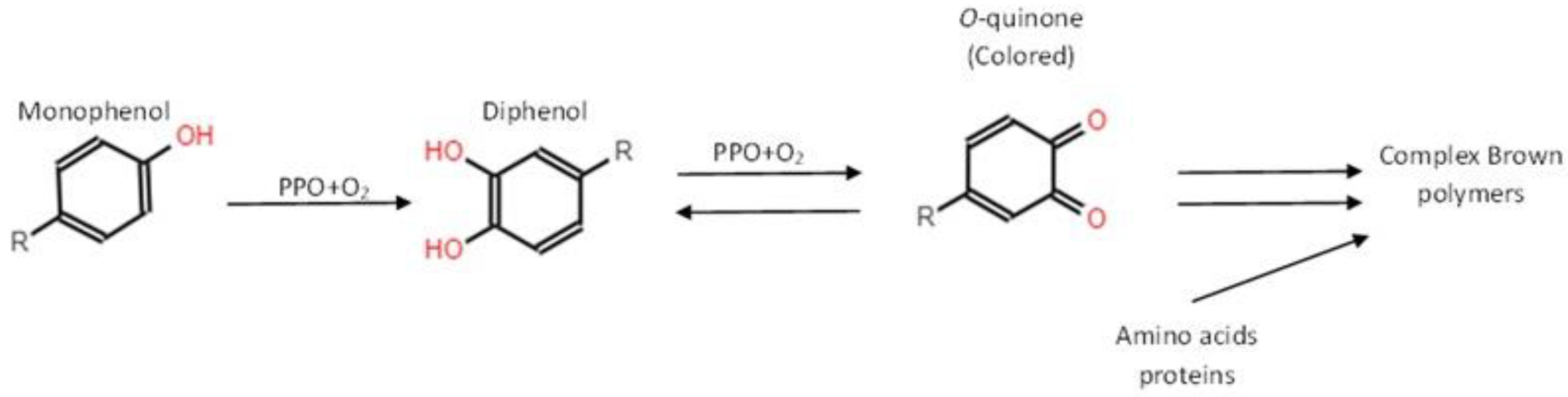
Figure 2.
A. Diacol Capiro, B. Nevada, C. Sabanera, D. Pastusa, potato varieties. Source: Authors.
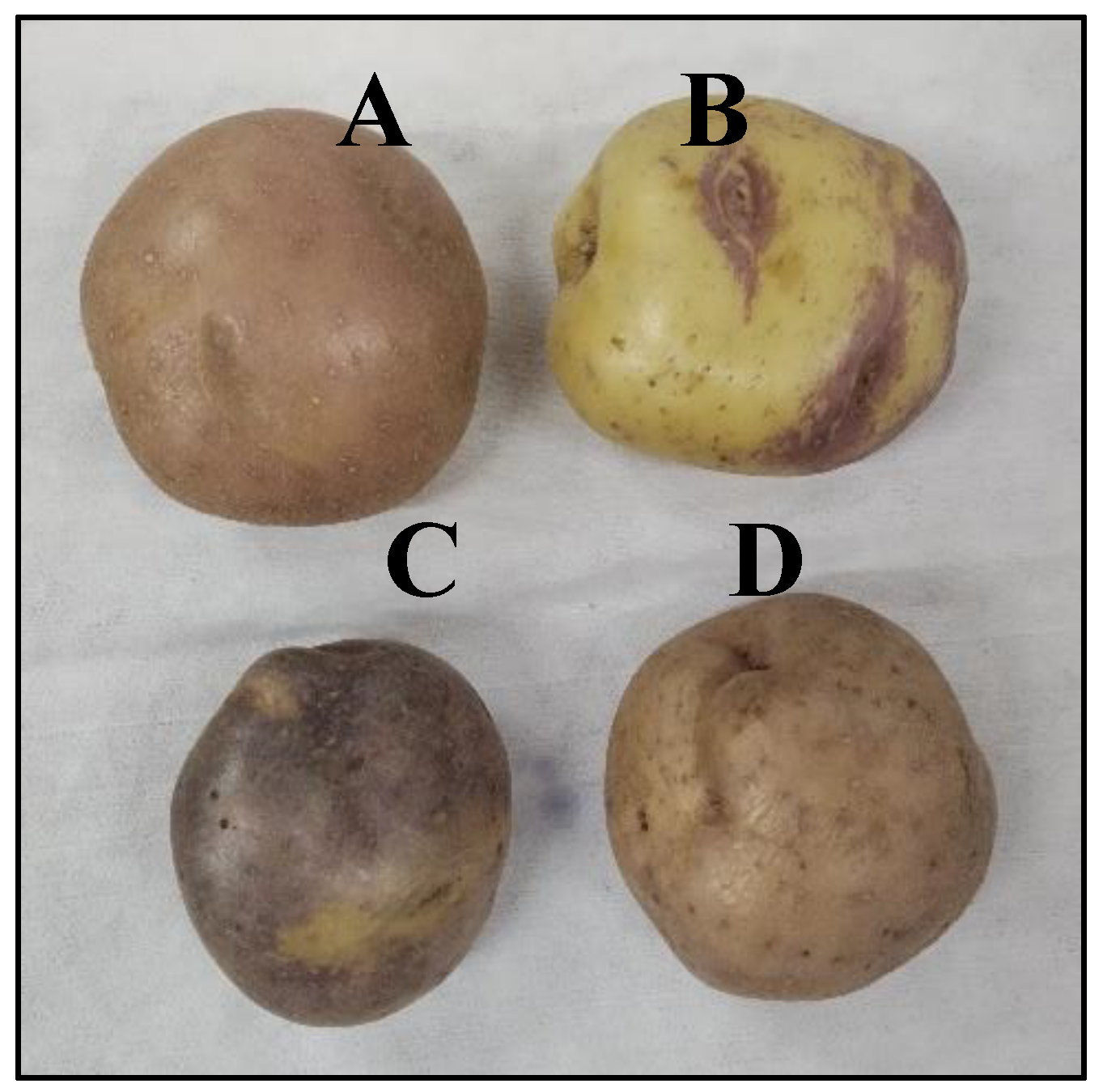
Figure 3.
Change in color parameters: L*(3A), a*(3B), and b* (3C) of potato flesh over time.
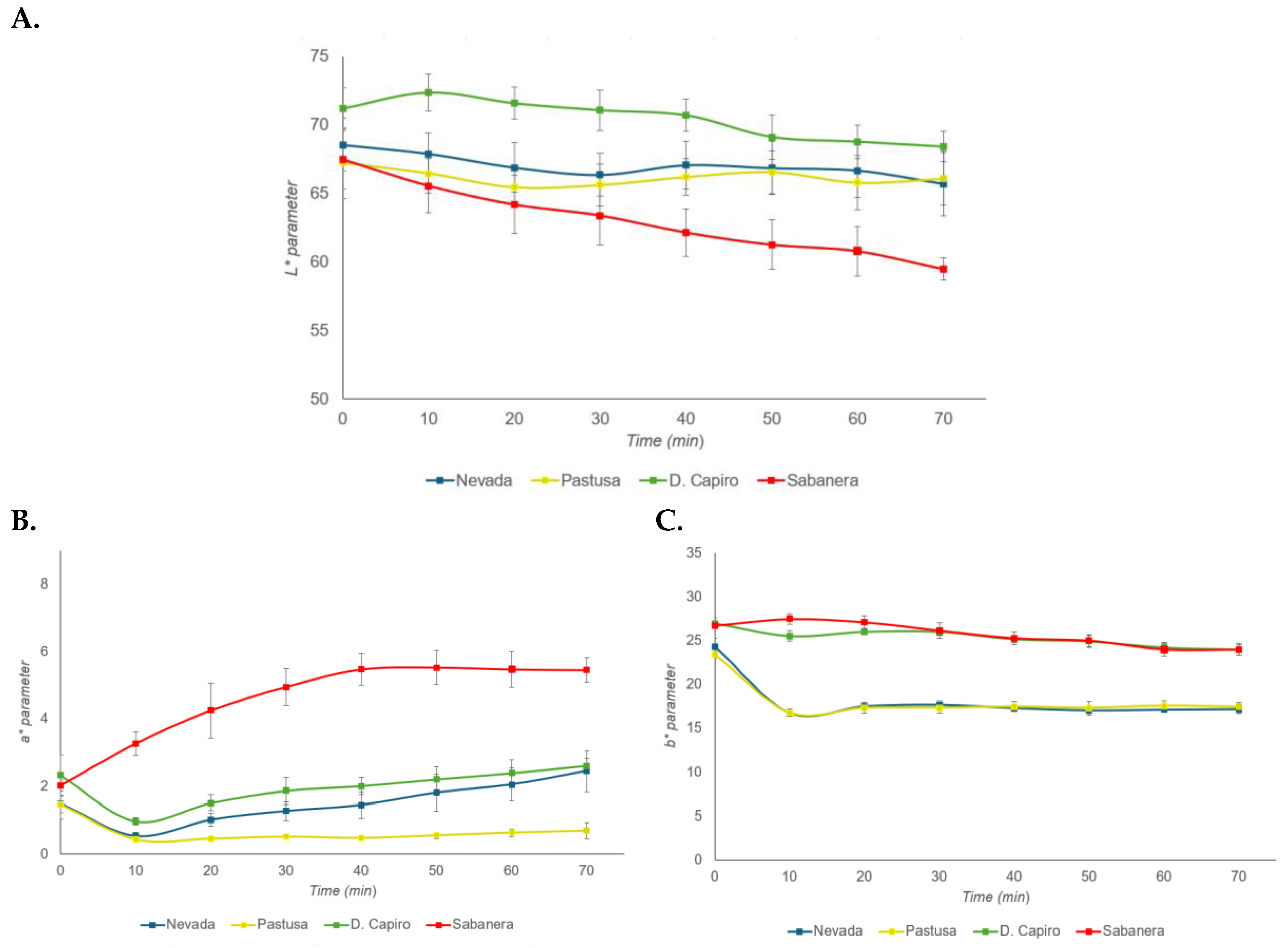
Figure 4.
Change in color of potato flesh over time. Source: Authors.
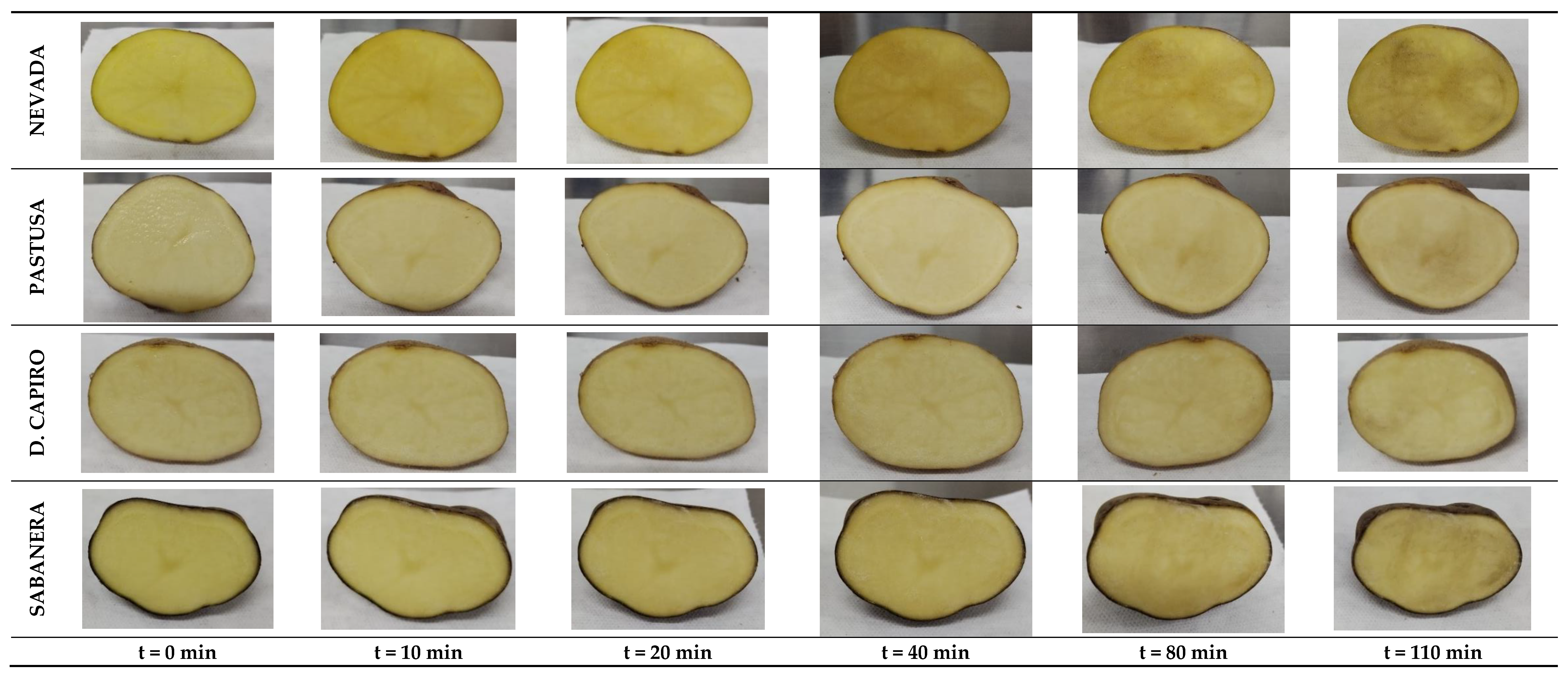
Figure 5.
Browning Index of potato varieties over time.
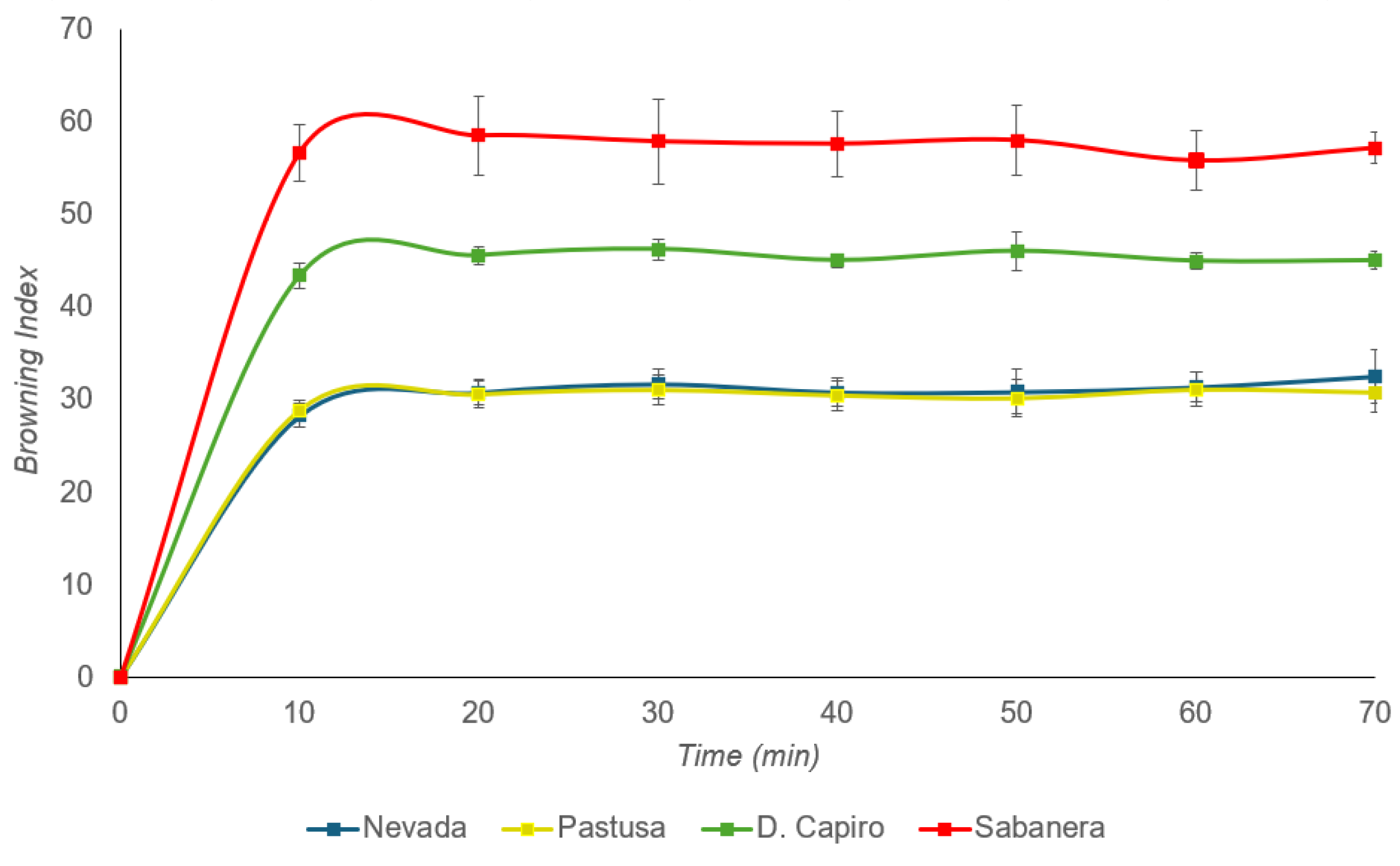
Figure 6.
Activity of the enzyme polyphenol oxidase in potato varieties.
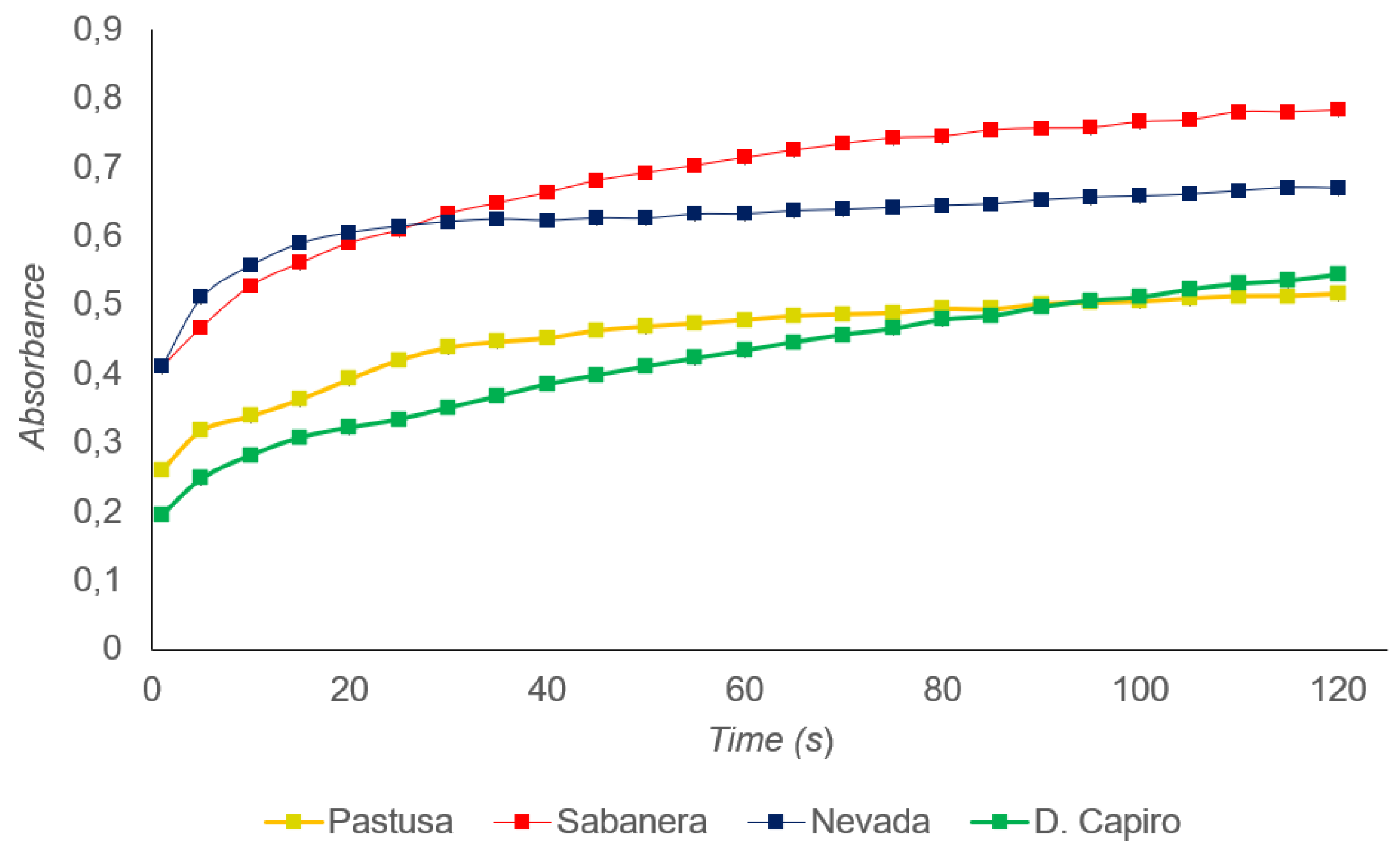
Figure 7.
Scanning electron micrographs of the potato varieties at 300x (left) and 700x (right).
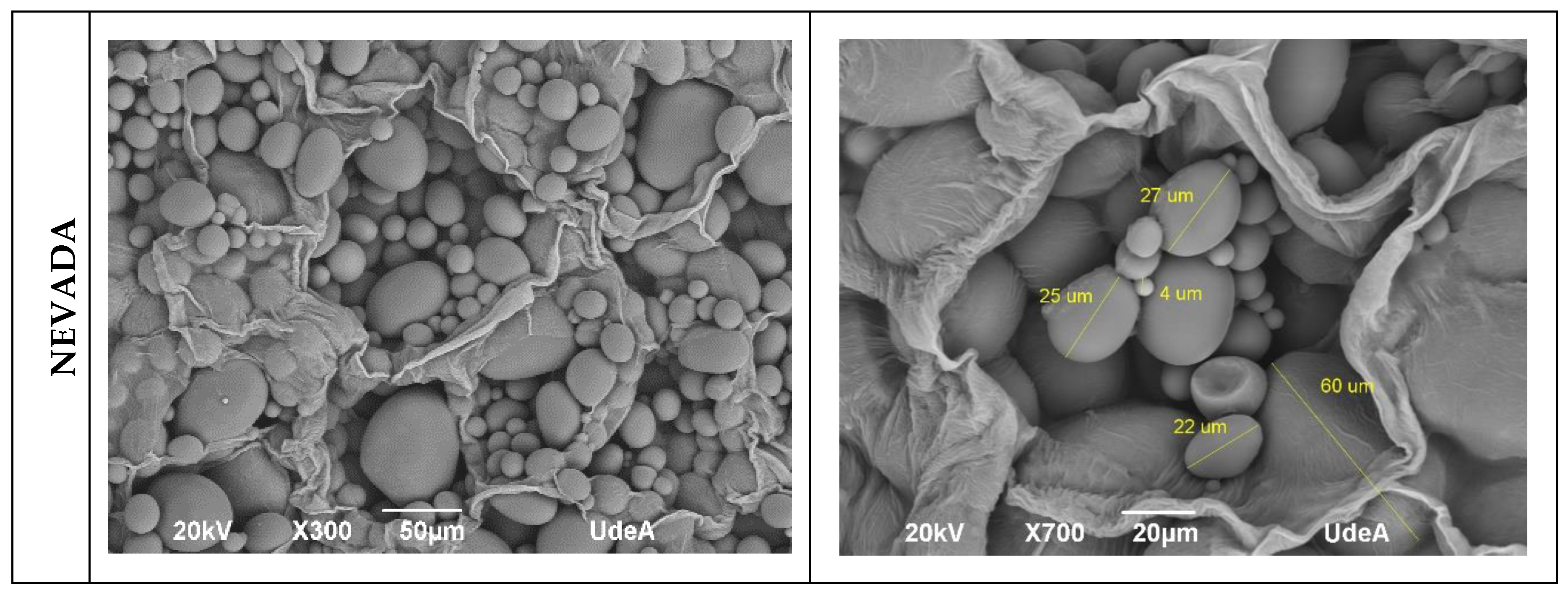
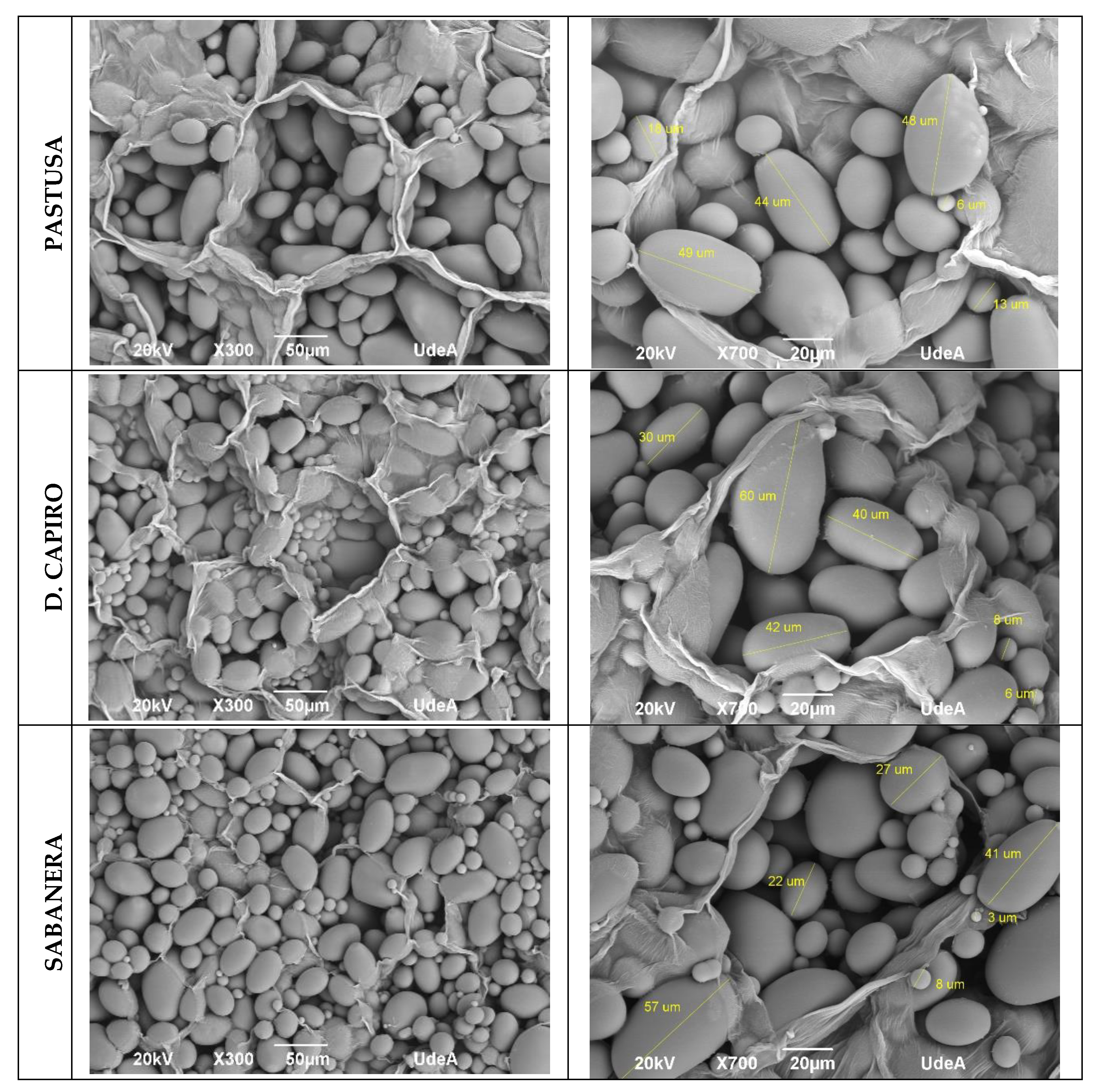
Figure 8.
Peeled and cut potato pieces of A. Nevada, B. Pastusa, and C. D. Capiro varieties, subjected to immersion in a 1% citric acid solution (AC). Source: Authors.
Figure 8.
Peeled and cut potato pieces of A. Nevada, B. Pastusa, and C. D. Capiro varieties, subjected to immersion in a 1% citric acid solution (AC). Source: Authors.
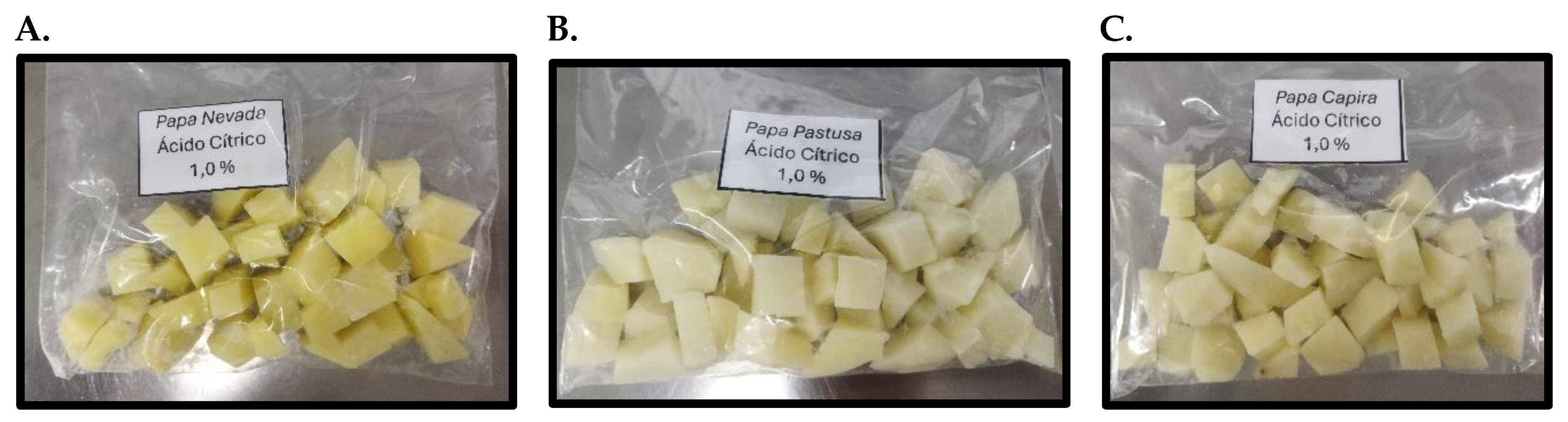
Figure 9.
Browning Index during storage for Nevada, Pastusa and D. Capiro varieties, subjected to all treatments (CC, AC, AA, and AE).
Figure 9.
Browning Index during storage for Nevada, Pastusa and D. Capiro varieties, subjected to all treatments (CC, AC, AA, and AE).
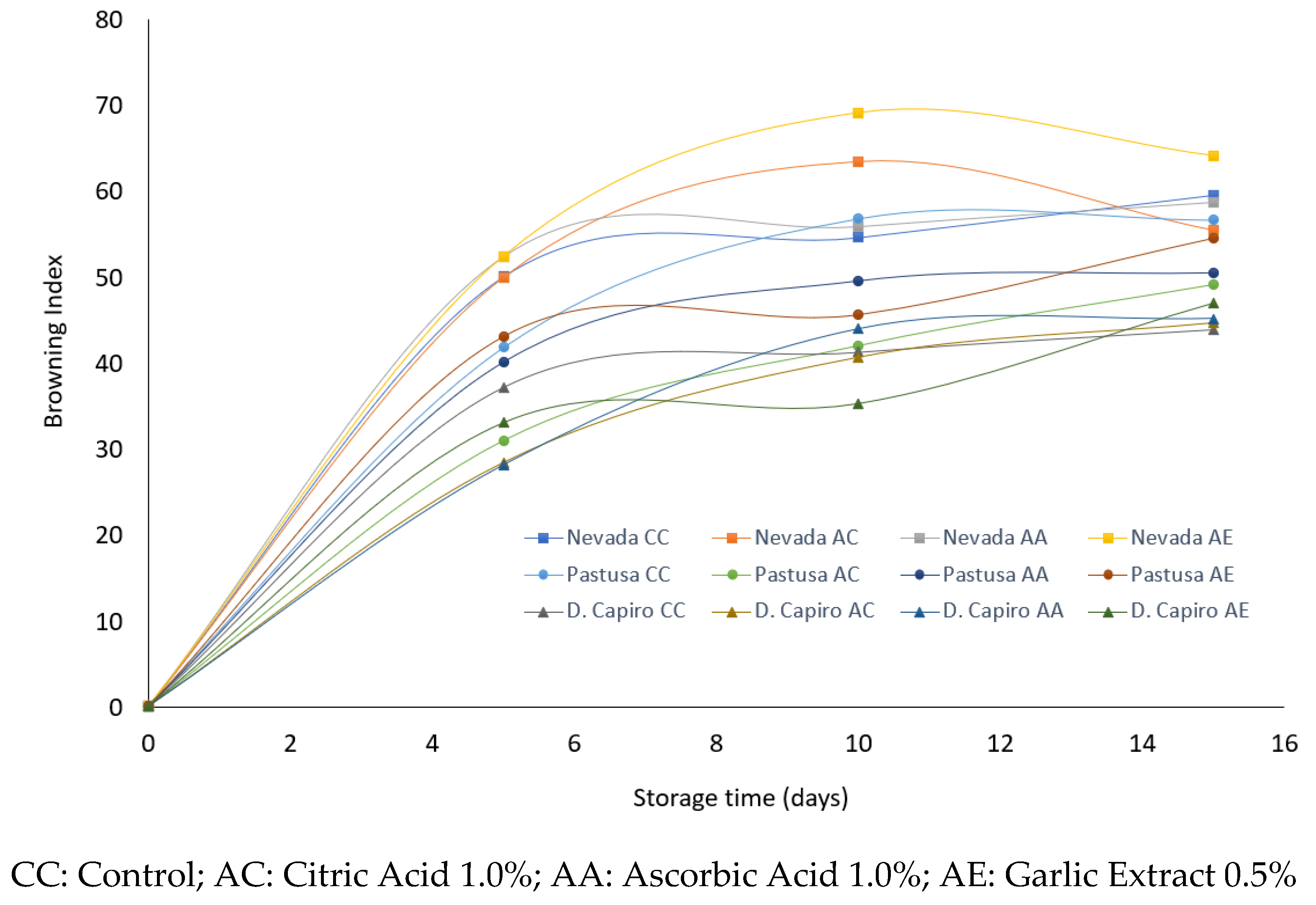
Figure 10.
Changes of TPC during 15 days of storage at 4 ± 2 ºC for A. Nevada variety B. Pastusa Variety and C. Diacol Capiro variety.
Figure 10.
Changes of TPC during 15 days of storage at 4 ± 2 ºC for A. Nevada variety B. Pastusa Variety and C. Diacol Capiro variety.
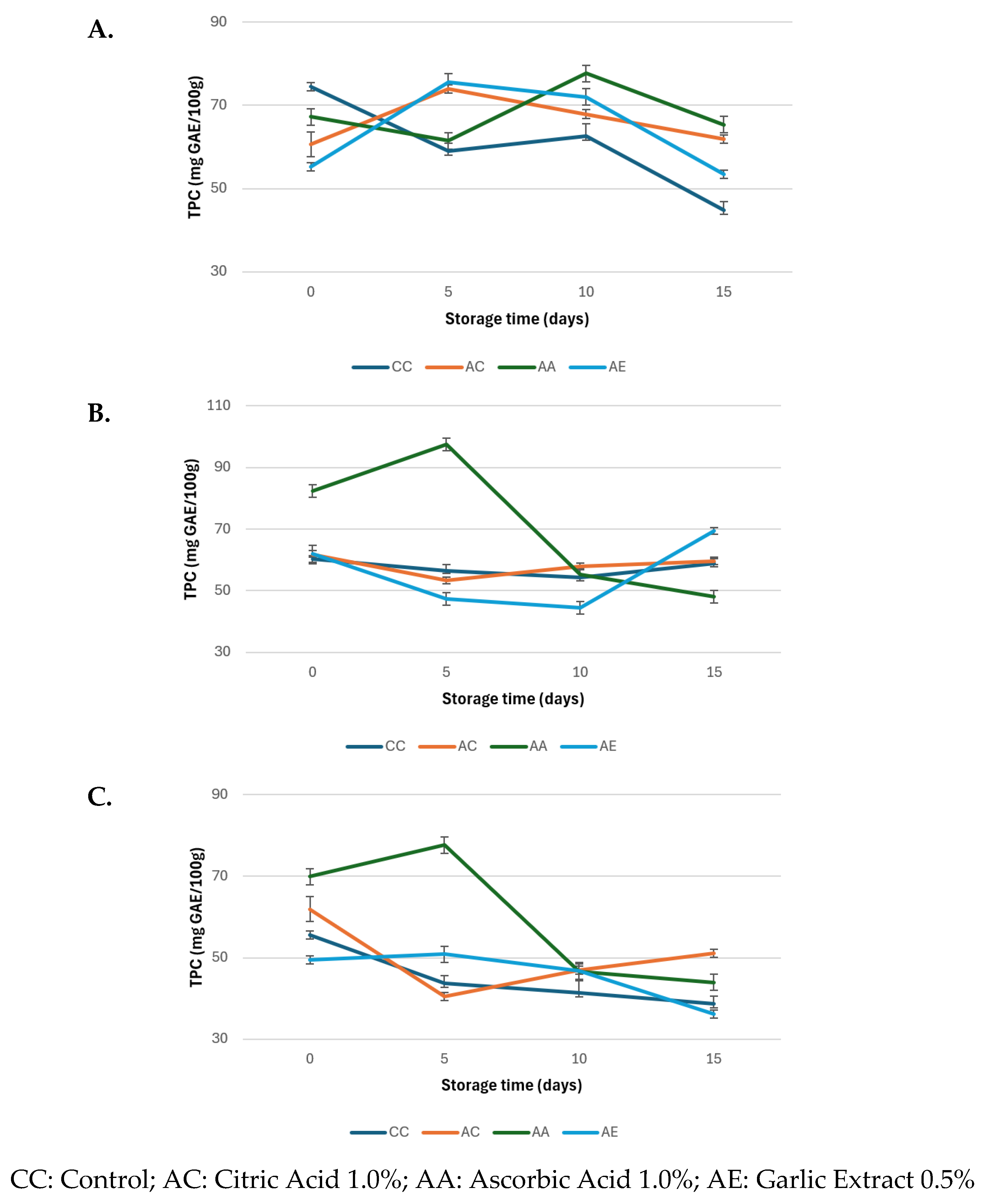
Figure 11.
A. Sensory analysis of Diacol Capiro variety for control treatment (CC) and potatoes subjected to immersion treatment with Citric Acid 1.0% (AC). B. Diacol Capiro potato immersed in a 1% citric acid solution (left) and D. Capiro potato immersed in water as a control (right). Source: Authors.
Figure 11.
A. Sensory analysis of Diacol Capiro variety for control treatment (CC) and potatoes subjected to immersion treatment with Citric Acid 1.0% (AC). B. Diacol Capiro potato immersed in a 1% citric acid solution (left) and D. Capiro potato immersed in water as a control (right). Source: Authors.
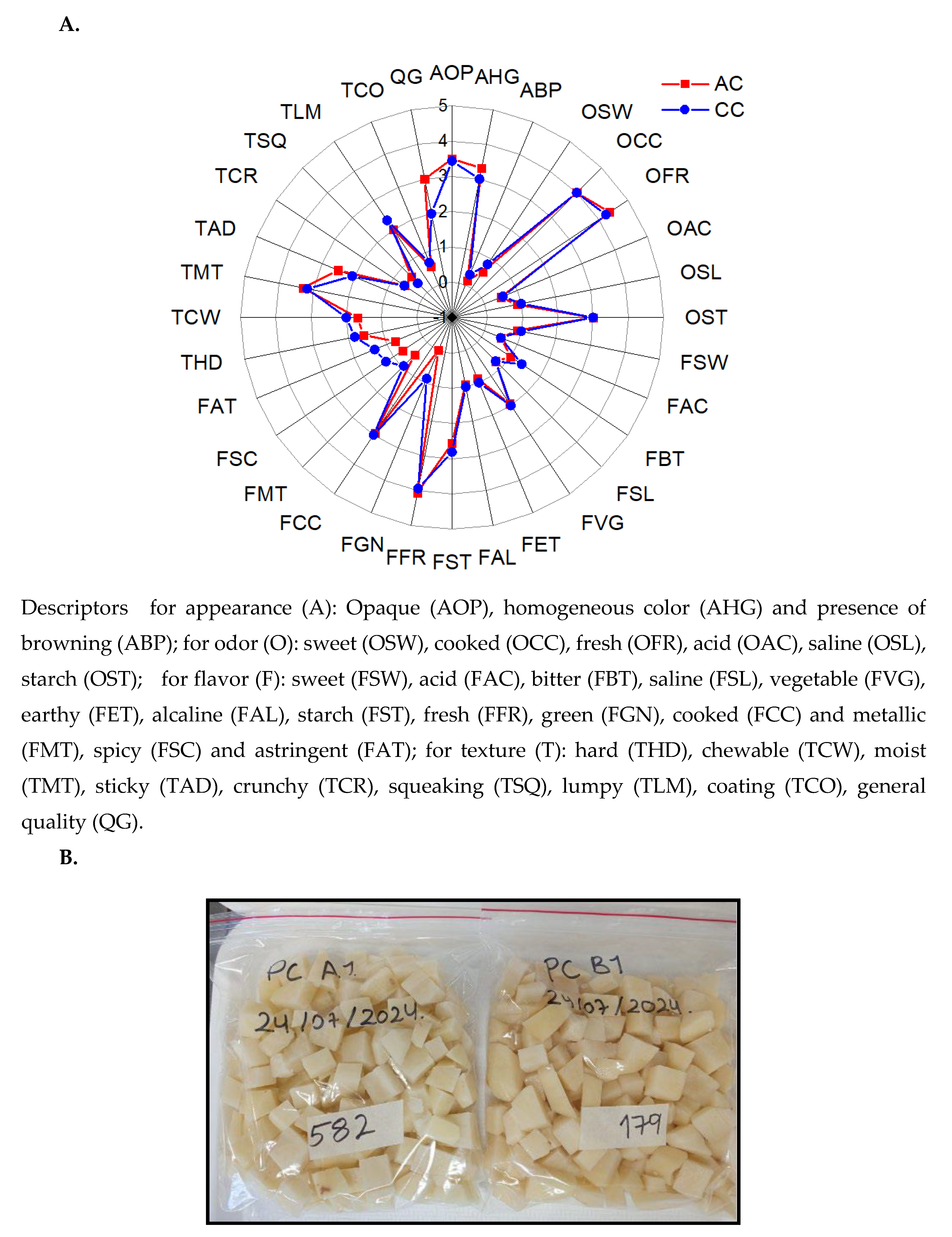

Table 1.
Physicochemical characterization of four Colombian potato varieties.
| Variety | Moisture (%) |
pH |
TPC (mg GAE/100g) |
Total acidity (%) |
TSS (°Brix) |
Vitamin C (mg/100g) |
|---|---|---|---|---|---|---|
| Nevada | 77.99 ± 1.20b | 6.76 ± 0.05c | 117.27 ± 3.66d | 0.12 ± 0.02a | 4.23 ± 0.12a | 41.83 ± 0.14c |
| Pastusa | 82.43 ± 0.86c | 6.57 ± 0.02a | 43.38 ± 1.89a | 0.10 ± 0.01a | 4.03 ± 0.12a | 37.70 ± 5.66b,c |
| D. Capiro | 80.92 ± 0.98c | 6.66 ± 0.07b | 51.04 ± 1.67b | 0.16 ± 0.01b | 4.10 ± 0.12a | 30.83 ± 0.68b |
| Sabanera | 73.79 ± 1.41a | 6.77 ± 0.03c | 63.79 ± 2.85c | 0.16 ± 0.01b | 4.16 ± 0.12a | 22.92 ± 4.79a |
TPC= Total Phenolic Content; EAG= Gallic Acid Equivalents; TSS: Total Soluble Solids; * Different letters in the same column indicate significant differences (p < 0.05).
Table 2.
Color parameters of potato flesh from different varieties.
| Variety | Color parameters CIE L*a*b* |
||
|---|---|---|---|
| L* | a* | b* | |
| Nevada | 68.54 ± 1.93a,b | 1.50 ± 0.46 a,b | 23.34 ± 0.89a |
| Pastusa | 67.20 ± 2.57a | 1.48 ± 0.26 a | 24.36 ± 0.43b |
| D. Capiro | 71.20 ± 1.51b | 2.34 ± 0.61c | 26.74 ± 0.60 c |
| Sabanera | 67.46 ± 2.15a | 2.04 ± 0.17b,c | 27.00 ± 0.32c |
* Different letters in the same column indicate significant differences (p < 0.05).
Table 3.
Color change (ΔE) for the Nevada potato variety.
| ΔE Nevada |
Storage time (days) | |||
|---|---|---|---|---|
| 0 | 5 | 10 | 15 | |
| CC | 13.53 ± 0.95c | 11.87 ± 1.38c | 11.12 ± 0.93a | 15.79 ± 0.67c |
| AC | 8.57 ± 1.13b | 7.08 ± 1.30a | 11.09 ± 1.33a | 10.21 ± 0.13a |
| AA | 6.17 ± 0.78a | 9.78 ± 1.48b | 11.46 ± 1.25a | 14.45 ± 0.33b |
| AE | 9.22 ± 1.40b | 8.25 ± 1.88a | 10.03 ± 1.84a | 14.24 ± 0.61b |
CC: Control; AC: Citric Acid 1.0%; AA: Ascorbic Acid 1.0%; AE: Garlic Extract 0.5%; * Different letters in the same column indicate significant differences (p < 0.05).
Table 4.
Color change (ΔE) for the Pastusa potato variety.
| ΔE Pastusa |
Storage time (days) | |||
|---|---|---|---|---|
| 0 | 5 | 10 | 15 | |
| CC | 9.96 ± 0.87b | 6.13 ± 1.87a,b | 11.32 ± 0.95b | 14.14 ± 2.54b |
| AC | 3.67 ± 1.74a | 4.03 ± 1.08a | 7.83 ± 2.90a | 12.83 ± 1.22a |
| AA | 2.81 ± 1.05a | 7.56 ± 2.80c | 11.26 ± 1.90b | 14.95 ± 0.94b |
| AE | 3.96 ± 1.30a | 8.23 ± 1.64c | 9.25 ± 1.28a,b | 15.73 ± 0.08c |
CC: Control; AC: Citric Acid 1.0%; AA: Ascorbic Acid 1.0%; AE: Garlic Extract 0.5%; * Different letters in the same column indicate significant differences (p < 0.05).
Table 5.
Color change (ΔE) for the D. Capiro potato variety.
| ΔE D. Capiro |
Storage time (days) | |||
|---|---|---|---|---|
| 0 | 5 | 10 | 15 | |
| CC | 12.19 ± 2.36c | 7.88 ± 1.16c | 10.32 ± 1.60b | 11.34 ± 1.10b |
| AC | 4.60 ± 0.59a,b | 4.82 ± 1.95a | 8.92 ± 1.30a | 8.58 ± 1.37a |
| AA | 3.17 ± 1.87a | 5.09 ± 0.97a,b | 13.98 ± 1.75b | 12.26 ± 0.56b |
| AE | 4.85 ± 0.82a,b | 6.41 ± 2.94a,b | 7.08 ± 1.72a | 11.53 ± 0.23b |
CC: Control; AC: Citric Acid 1.0%; AA: Ascorbic Acid 1.0%; AE: Garlic Extract 0.5%; * Different letters in the same column indicate significant differences (p < 0.05).
Disclaimer/Publisher’s Note: The statements, opinions and data contained in all publications are solely those of the individual author(s) and contributor(s) and not of MDPI and/or the editor(s). MDPI and/or the editor(s) disclaim responsibility for any injury to people or property resulting from any ideas, methods, instructions or products referred to in the content. |
© 2024 by the authors. Licensee MDPI, Basel, Switzerland. This article is an open access article distributed under the terms and conditions of the Creative Commons Attribution (CC BY) license (http://creativecommons.org/licenses/by/4.0/).
Copyright: This open access article is published under a Creative Commons CC BY 4.0 license, which permit the free download, distribution, and reuse, provided that the author and preprint are cited in any reuse.


