

Submitted:
16 October 2024
Posted:
21 October 2024
You are already at the latest version
Abstract
This scoping review seeks to map the landscape of how Artificial Intelligence (AI) is leveraged within educational environments to support students with disabilities and inclusive strategies and experiences. The research question concerns the role and impact of AI across diverse educational settings and in particular: “How is Artificial Intelligence (AI) being utilized within educational settings to support individuals with disabilities and promote inclusive education?”. The review explores this question under four pivotal dimensions: Educational Context, Disabilities and Special Needs, Artificial Intelligence Technologies, and Inclusivity and Inclusive Practice. Each contributes to a comprehensive understanding of the interdisciplinary nature of this inquiry. To ensure a comprehensive analysis, four major research databases have been used: Scopus, EBSCO, ERIC, and Web of Science (WoS). This robust search strategy enabled us to capture a wide array of relevant literature. The review also addresses ethical considerations essential for the responsible integration of AI in education, such as privacy, accessibility, and bias. By mapping existing research and identifying gaps, this scoping review lays the groundwork for future advancements in AI-driven inclusive educational practices.
Keywords:
Inclusive Education
; Artificial Intelligence
; Disabilities
; Assistive Technology
; Accessibility
1. Introduction
The integration of individuals with special needs and disabilities into mainstream education represents a pivotal objective in global educational reform, with the aim of guaranteeing equitable access and fostering inclusive societies. The advent of new technologies has led to the emergence of artificial intelligence (AI) as a potentially transformative tool with significant promise in supporting the delivery of inclusive education. The objective of this scoping review is to map the landscape of AI utilisation in educational environments with a view to enhancing the learning experiences of students with disabilities and promoting inclusive practices. The central research question addressed is: How is artificial intelligence (AI) being utilised within educational settings to support individuals with disabilities and promote inclusive education?
By examining this question, the review explores four key dimensions: the educational context, disabilities and special needs, AI technologies, inclusivity and inclusive practice. Each dimension contributes to a comprehensive understanding of the interdisciplinary nature of this inquiry. The purpose for this review is to synthesise existing literature on AI applications in special education, an area that has seen less focus compared to general educational settings. The scoping review approach is particularly well-suited to this nascent and heterogeneous field, enabling a comprehensive examination of the available evidence and the eventual identification of research gaps.
In order to achieve a comprehensive analysis, the review draws upon literature from four major research databases: Scopus, EBSCO, ERIC, and Web of Science. By mapping existing research and identifying gaps, this scoping review establishes a foundation for future advancements in AI-driven inclusive educational practices according to the Italian Special Pedagogy perspective. The objective of this review is to inform educators, policymakers, and researchers about the innovative ways in which AI can be leveraged to support diverse learners, with the ultimate goal of contributing to more effective and equitable educational strategies.
2. Background
2.1. Conceptual foundations of Inclusive Education and disability
In order to comprehend the theoretical standpoint that informs this review, it is imperative to delineate the notion of disability that is being addressed and, albeit concisely, to outline the associated inclusive pedagogical paradigm.
The most recent sources indicate that the definition of disability has developed to encompass a broader range of evolving conditions{Citation} that are not solely rooted in diseases or impairments. The International Classification of Functioning, Disability and Health (ICF) offers a more nuanced understanding of these conditions with an holistic and biopsychosocial approach: “Disability is characterized as the outcome or result of a complex relationship between an individual’s health condition and personal factors, and of the external factors that represent the circumstances in which the individual lives” [1] (p. 17). This means that anyone can experience a situation of disability that is not necessarily static but is the result of multiple factors that can change. These factors are not only related to the individual's physical or mental condition but are also significantly influenced by the environment. According to ICF framework, the context can be either enabling or inhibiting.
In this light, in line with the Italian heritage [2-6], Special Pedagogy is described as a "theoretical and practical discipline dedicated to the development and construction of a theory of individual and social education aimed at reducing or eliminating disability. It is committed to researching, proposing and promoting increasingly humane and humanising forms of relationships and anthropological, cultural and social emancipation" [7] (p. 19). Inclusive education therefore represents an educational and anthropological paradigm that aims to ensure accessibility, participation, identity empowerment, and academic success for all learners, regardless of their individual differences, including those related to disability. To achieve such goals, it is essential and useful to use tools, strategies and methodologies that can facilitate educational processes and inclusive practices.
2.2. Role of Technologies and AI in Inclusive Education
The introduction and progressive development of technologies has had a significant impact in all social contexts, influencing all areas of life and work. In particular, Information and Communication Technologies (ICTs) have not only transformed society into the digital age but have also reshaped education and training environments. For this reason, the interface between education and technology is a much-debated topic today. The dialogue between technology and disability, or inclusive education, is also becoming more relevant. In fact, digital devices are often used in inclusive practices as facilitators of teaching and learning processes, although in other respects it can complicate the internal dynamics.
In recent years, Artificial Intelligence (AI) has become increasingly integrated into mainstream education, incorporated into administration, instruction or teaching, and learning [8]. Presently, the definition of artificial intelligence remains a contentious issue, with no common consensus yet established [9-11]. This is partly attributable to the continuous evolution and advancement of the technology in question. However, the European Commission [12-13] is actively addressing this issue and has proposed some definitions: an AI system is a machine-based system that is designed to operate with varying degrees of autonomy and may exhibit adaptive behaviour after deployment. Developed using one or more of the techniques and approaches, it can infer from the input it receives how to generate outputs – such as content, predictions, recommendations or decisions – to achieve explicit or implicit human-defined goals. These outputs may affect the physical or virtual environments with which they interact [14].
Modern AI applications have been instrumental in supporting inclusive education, particularly for students with disabilities, by providing tailored learning supports and accessible educational materials. Actually, the intersection of artificial intelligence and the field of education has its origins in the past century [15]. Nevertheless, it is essential to examine and comprehend the present applications and consequences of this technology in educational and training settings. Other literature reviews have sought to address the question through alternative approaches or by focusing on particular and more specific aspects. For instance, Barua et al. [16] investigated and recorded a positive effect of the use of AI-based tools for mental disorders (e.g. ADHD, dyslexia, autism spectrum disorder) in supporting student learning. On the other hand, Hopcan and colleagues [17] have identified a number of roles and functions for artificial intelligence in schools, including those related to administration and teaching. This highlights the necessity for further research in the field of special education to inform the implementation of such technologies. Other researchers [18], more interested in secondary schools, have denounced the lack of reflection, especially pedagogical reflection, on ethical issues and the risks posed by this type of technology. This challenging scenario gives rise the research objectives: identify the range of AI technologies used in educational setting to implement inclusive process and explore the role and impact of AI in these kinds of contexts.
3. Materials and Methods
3.1. Protocol and screening report
This paper presents a scoping review (ScR) following the PRISMA-ScR checklist [19-21]. The aim of the review is to reconstruct the state of the art regarding the integration of artificial intelligence tools in learning environments that include individuals with disabilities. The studies were managed with Zotero.
3.2. Eligibility criteria and search process
The initial step involved establishing specific search criteria to effectively query the databases (Table 1). The selection of those to be queried for the review was limited to the most closely related to the field of education and teaching, namely EBSCO, Eric, Scopus, and Web of Science. Other characteristics of the evidence sources used as eligibility criteria are employed in the construction of the search string. To conduct a more accurate search to interrogate each database, the research group employed four slightly different search strings based on four main topics: Education, Disability, Inclusion, and Artificial Intelligence. (Table 2). This was necessary to accommodate the different interpretations of string syntax that vary for each database.
The research group proceeded with extracting the results from the four selected databases, applying each search string in turn. However, the export systems of the various databases are heterogeneous and not very functional for data analysis. For example, while Scopus allows exporting in various formats, other databases offer fewer export options.
3.3. Screening and selection of relevant literature
As illustrated in the PRISMA flow diagram in Figure 1 [22], the total number of results derived from the four databases following the application of the search queries was 1,406. Subsequently, a two-phase procedure was carried out to identify and remove duplicates and articles that did not meet the inclusion criteria for the type of publication (Table 1). This resulted in a total of 304 results (duplicates removed: 943). Thereafter, the research team was divided into two smaller groups, each of which identified the articles to be read by selecting the titles and abstracts that met the pre-established criteria. These could be identified by the presence of the four key dimensions: educational context, inclusion, disability or specific needs, and artificial intelligence. Any discrepancies were discussed at a later stage. Consequently, the optimal results for eligibility following this phase were 34, but only 27 were available for reading.
4. Results
4.1. Overview of included studies
After applying the inclusion and exclusion criteria, a total of 24 studies were deemed eligible for inclusion in this review (Table 3). A comparison between the 304 identified studies and the 24 studies included in the review by the year (Figure 2) reveals a gradual increase in the identified studies, with a significant increase from 2018 onwards. Nevertheless, there is a stark contrast between the number of identified studies and included studies. Indeed, very few are included in this scoping review.
The geographical predominance of research contributions is from Europe, Asia, and North America, suggesting that these regions are central hubs for academic and scientific activities in the searched field (Figure 3). In particular, seven come from Europe [26,28,29,30, 35,42,44]; seven from Asia [24,25,31,34,38,40,41]; six from North America [27,33,36,37,39,45]; two from South America [32,46] and two from Africa [23,43].
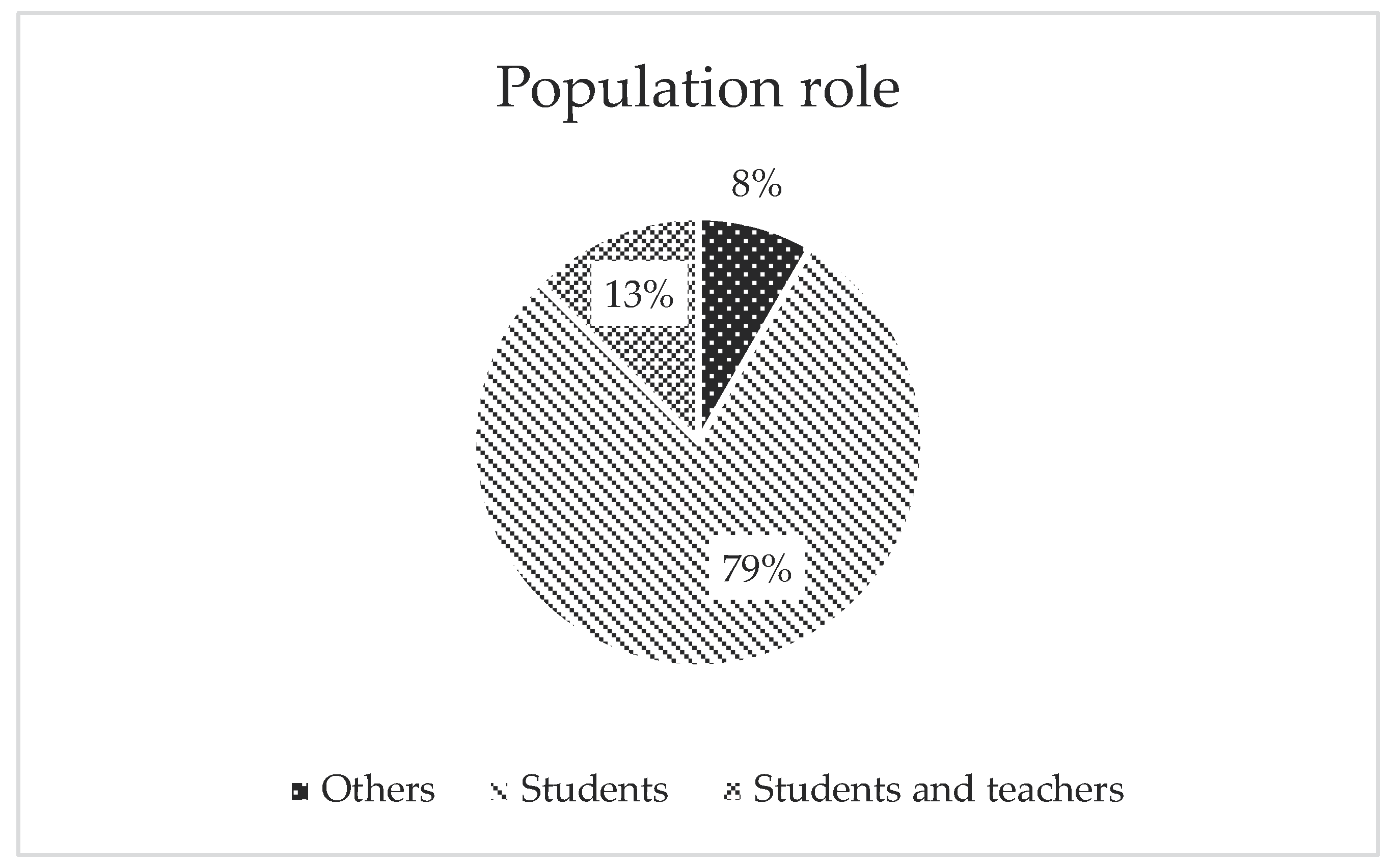
Regarding the demographic composition of the populations in the studies reviewed, a predominant number of the samples comprised students (n = 19) [23-29,31,32,34,36,37,38,39,40,42,43,45,46] as depicted in Figure 6. Notably, the age of the sample size was not specified or available in four instances (n = 4) [33,36,44,45]. Among the included studies, children aged 3 to 10 years were the focus of 12.5% (n = 3) [23,39,40], while 21% involved youth between the ages of 11 and 18 (n = 5) [26,27,31,38,41], and 37.5% pertained to adults aged over 18 (n = 9) [24,25,26,28,29,32,35,37,42,43,46]. Additionally, 12.5% of the studies encompassed both children and youth (n = 3) [28,38,45], and 4% included both adolescents and adults (n = 1) [27].
Figure 5.
Distribution of the role of the reference population.
As regards the methodology 79% of the included studies (n = 19) [23-29, 31-35, 37-43, 46] are empirical research. Consequently, the remaining 21% (n = 5) [30, 33, 36, 44, 45] are theoretical studies. The 37% of the empirical studies are classified as Explorative research (n = 7) [27, 29, 32, 27, 28, 41, 42], and the 32% as Case-study (n = 6) [24, 31, 34, 35, 40, 46]. Additionally, as illustrated in Figure 4, of the 24 studies reviewed, nine employed a qualitative approach [23, 24, 27, 29, 35, 37, 38, 41, 43], seven employed a mixed-methods approach [26, 28, 31, 32, 34, 40, 42], and three employed a quantitative approach [25, 39, 46].
The sample sizes in these studies exhibit significant variability. For certain cases, data are not available (n = 6) [30, 33, 36, 40, 44, 45], while for others, they are (n = 18). These samples encompass a range of sizes from a minimum of two to a maximum exceeding 12,000. As depicted in Figure 5, the samples are categorized into four classes: fewer than 10 (n = 3) [34, 37, 43], between 10 and 50 (n = 10) [23, 24, 26, 27, 31, 32, 35, 38, 41, 42], between 51 and 200 (n = 2) [28, 29], and greater than 200 (n = 3) [25, 39, 46].
4.2. Research key dimensions
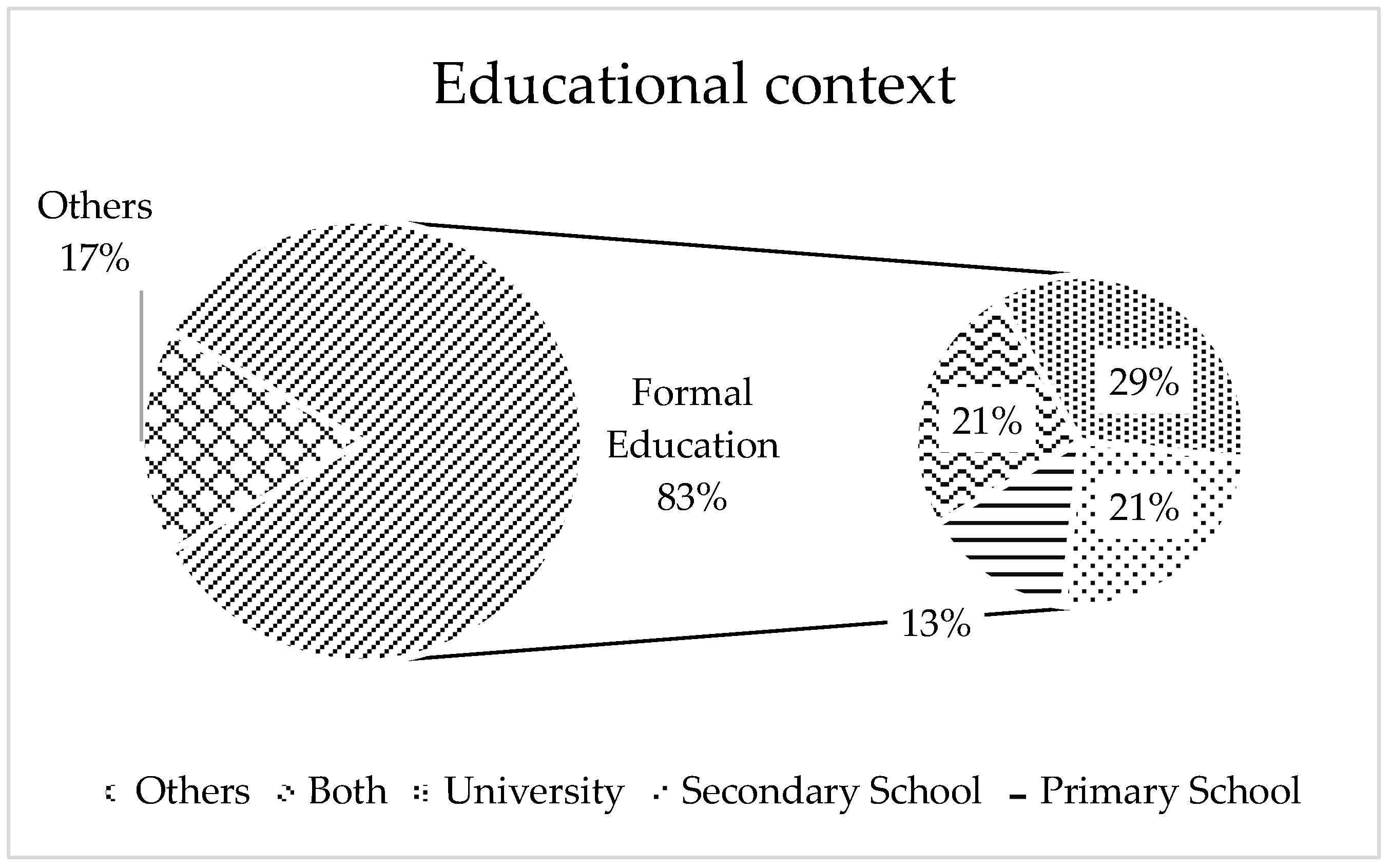
Examining the four key dimensions – educational context, disability or special educational needs (SEN), Artificial Intelligence (AI), and Inclusion – acknowledged in the reviewed literature reveal a clear prevalence of interest in the formal educational context, including compulsory education and university settings (Figure 6). Half of the included studies (n = 12) focus each on a specific condition of disability, particularly referencing multiple disabilities [36], sensory impairments [24, 27, 43], movement disorders [31, 37], intellectual disabilities [28, 35], autism spectrum [34], giftedness [38], and learning disorders [39, 42]. Further five studies do not specify a particular condition and refer to disability and special needs in general [23, 25, 26, 30, 33]. Last seven paper [29, 32, 40, 41, 44-46] address various conditions (Figure 7).
Figure 6.
Distribution by educational context.
In accordance with the search strings and research question, all studies indicate that various AI applications, frequently situated within the realms of deep learning or machine learning, are designed to enhance inclusion processes. Nevertheless, four specific objectives can be discerned. In the majority of the included studies (Figure 8), the integration of AI is observed to support the processes of personalised learning (n = 9) [26, 28, 31, 36, 38, 40, 42, 44, 45] and accessibility (n = 8) [23, 24, 27, 32, 33, 35, 37, 43]; in fewer cases, AI is designed to directly support the teaching process (n = 4) [30, 34, 41, 46] and the identification or categorisation of special needs (n = 3) [25, 29, 39].
5. Discussion
The analysis of the selected articles reveals several key aspects and research gaps concerning the integration of artificial intelligence (AI) in inclusive education, particularly within the context of Italian Special Pedagogy. The Italian legacy of fifty years of scientific studies and pedagogical reflections [47-50] significantly influences the current discourse on AI and inclusive education. Acknowledging the scientific and cultural background that shapes these discussions is crucial, as is recognizing the inherent limitations of the research methodology.
The visual representation of the temporal distribution of identified and included studies, in Figure 2, illustrates two distinct trends. While there has been a significant increase in studies on AI in education since 2018, a focused interest in inclusive education has only emerged prominently since 2020. This disparity may be attributed to the multidimensional and multifactorial nature of inclusive education, as well as the bio-psycho-social framework and the UN Agenda about the Sustainable Development Goals [51] that influence research approaches. The predominance of quantitative and mixed methods approaches, combined with over 50% employing small sample sizes, raises concerns about the generalizability of the findings. In details the use of quantitative and mixed methods approaches and sample sizes of no more than 50 participants is found in 13 studies [23, 24, 26, 27, 31, 32, 34, 35, 37, 38, 41-43]. Future research should aim to ensure statistically representative samples to enhance the validity of conclusions drawn in this domain.
In addressing the research question, four primary purposes for the utilization of AI in inclusive education have been identified: support for teaching and institution, support for personalized learning processes, support for accessibility, and identification or categorization of needs. It is important to emphasize that these categories are employed primarily for representational reasons, recognizing that many articles address multiple objectives simultaneously. This complexity highlights the need for a nuanced understanding of AI’s multifaceted role in inclusive education.
The literature reveals a discernible pattern of potential applications for AI in the context of inclusive education. The personalization of teaching and learning processes, enhanced by AI, reinforces fundamental principles in the discourse on inclusivity. The use of AI-based tools, such as text-to-speech and speech-to-text applications, has the potential to enhance teaching effectiveness [41]. Conversely, the implementation of technologies like computer vision demonstrates promising results in improving accessibility and autonomy for students with disabilities [23]. These examples illustrate the transformative potential of AI when thoughtfully integrated into educational practices.
The varied perspectives on the role of AI in education prompt further inquiry. AI is seen as an integrated tool in the educational process, a mediator, or even a fundamental component of the learning environment. From this perspective, three main functions of AI in inclusive education can be identified:
- AI as a Tool: This denotes the utilization of AI-based technologies to facilitate the delivery of specific functionalities and targeted assistance to students with learning disabilities. The primary characteristics of this approach include the provision of tailored and precise support, the enhancement of particular aspects of learning, and the embedding of specific functionalities within educational devices.
- AI as a Moderator: This encompasses the use of AI technologies for the facilitation and enhancement of interactions among stakeholders in an educational context, including students, teachers, and administrators. In this capacity, AI plays a supportive and direct role in mediating educational processes. Its key features include the facilitation of communication and interaction, the promotion of collaboration and social inclusion, and the mediation of access to educational content and resources.
- AI as an Environment: This entails the establishment of an educational eco-system wherein AI is integrated into the entirety of the learning experience, rendering the environment itself more intelligent and responsive to students’ needs. The defining characteristics of this approach are the creation of a fully integrated and inclusive educational environment, the continuous adaptation of the learning experience to meet students’ needs, and the provision of support for all educational aspects, including teaching, assessment, and intervention.
Notwithstanding the advantages derived from the use of AI, considerable obstacles and reservations persist regarding its extensive deployment in education. Economic and infrastructural factors frequently impede the acquisition and implementation of advanced devices and appropriate software [24, 44]. Furthermore, ethical concerns—particularly regarding algorithmic transparency and the potential to reinforce existing inequalities—impact the integration of AI in education. Bulathawela et al. [30] emphasize that AI alone cannot democratize education and that a synergistic combination with inclusive and participatory approaches is essential. The important role of educators and instruction is highlighted in this context. There is a necessity for ongoing professional development for teachers regarding the effective utilization of AI technologies [26, 37]. Additionally, educational policies need to be developed to facilitate the implementation of these technologies within schools and educational settings [43, 46]. It is evident that AI has the potential to personalise and individualise teaching and learning processes. However, this requires a critical and reflective approach, which is why professional development for educators is essential. Educators do not merely accept AI-driven solutions passively; rather, they actively engage in the analysis and interpretation of these technologies. This provides an opportunity to enhance their skills, drive innovation in educational practices and promote greater inclusion [52].
5.1. Limitations
This scoping review on the integration of artificial intelligence (AI) in inclusive education, particularly within the framework of Italian special pedagogy, presents several limitations that warrant consideration. A primary limitation is the heterogeneity and lack of consistency in the findings collected. This variability arises from the diverse methodological approaches and differing definitions of disability and inclusion employed across the studies. Such disparities complicate the synthesis of results and hinder the formation of a cohesive understanding of AI’s role in inclusive education.
Given the considerable breadth of studies identified, the decision was made to exclude grey literature to maintain focus and manageability. While this approach ensures a concentration on peer-reviewed and academically rigorous sources, it may inadvertently omit valuable insights from non-traditional or emergent research avenues. Some studies yielded promising results but necessitated more comprehensive examination, which extended the overall time frame for this review’s completion.
Furthermore, the studies included in the review are largely non-representative and non-generalizable due to small sample sizes and specific contextual factors. This limitation indicates a deficiency in robust, large-scale research within this domain, thereby affecting the ability to extrapolate findings to broader populations or different educational settings. The unique characteristics of Italian special pedagogy, with its emphasis on individualized and holistic approaches [47-50], underscore the need for research that is both contextually relevant and methodologically rigorous.
The review’s reliance on sources available in English and accessible full-text publications introduces a language and accessibility bias. This reliance excludes potentially significant contributions published in other languages, including Italian, which may offer perspectives more closely aligned with the Italian pedagogical context. The exclusion of non-English literature may limit the comprehensiveness of the review and overlook culturally specific methodologies and practices pertinent to inclusive education and AI integration. The choice of databases—Scopus, EBSCO, ERIC, and Web of Science—and the inclusion criteria focusing on journal articles and book chapters may have excluded important studies published in less prominent journals, conference proceedings, or alternative formats such as dissertations and policy reports. Such sources often contain innovative ideas and preliminary findings that could enrich the understanding of AI applications in inclusive education. The same applies to the exclusion of grey literature, which may contain practical insights and real-world applications not yet captured in academic publications. Another limitation is the lack of in-depth consideration of specific ethical issues, such as algorithmic transparency, data privacy, and the potential exacerbation of existing inequalities. These ethical dimensions are critical, especially within the context of Italian special pedagogy, which places a strong emphasis on equity, human dignity, and social justice [6, 7]. The omission of thorough ethical analysis may affect the interpretation of results and limit the practical applicability of the findings in educational settings that prioritize ethical considerations as foundational principles.
Finally, the rapid evolution of AI technologies and their applications in education means that the field is continuously advancing. The time frame of the literature search may have excluded the most recent studies or emerging technologies that have not yet been extensively documented in academic literature. This temporal limitation may result in a review that does not fully capture the latest innovations, trends, or shifts in pedagogical approaches influenced by AI advancements.
In summary, while this review provides valuable insights into the integration of AI in inclusive education, particularly through the lens of Italian special pedagogy, these limitations highlight the need for cautious interpretation of the findings. Future research should aim to address these gaps by incorporating a wider range of sources, including non-English literature, and by engaging more deeply with ethical considerations. Additionally, expanding methodological approaches to include larger and more diverse samples could enhance the generalizability of future studies, thereby contributing to a more comprehensive understanding of AI’s role in fostering inclusive educational environments.
6. Conclusions
The exploration of artificial intelligence (AI) integration in education reveals significant potential for supporting inclusive education, particularly within the framework of Italian Special Pedagogy. AI applications can assume multiple functions within educational settings, extending beyond mere functional tools to act as facilitators of stakeholder interactions and integrating into pedagogical ecosystems to foster inclusivity. By supporting a more adaptive educational framework, AI can respond intelligently to the diverse needs of students, thereby advancing personalization and accessibility within educational environments.
Despite the acknowledged promise of AI, challenges persist in its integration within the educational sphere. Economic and infrastructural barriers question the feasibility of broadly implementing advanced AI technologies, especially in resource-constrained settings. Moreover, significant ethical concerns require scrutiny, including algorithmic transparency, data privacy, and the risk of perpetuating existing educational inequalities. These issues necessitate a thorough examination of how AI impacts the equitable distribution of educational resources and supports ethical practice within educational institutions. The professional development of educators emerges as a critical factor in effectively integrating AI into inclusive education. Enhancing such development systematically can equip educators with the necessary AI competencies, contributing to a revised digital literacy that aligns with contemporary technological advancements. Assessing the educators’ role as mediators in AI’s integration into curricula is essential, as is the development of comprehensive educational policies that facilitate the deployment and utilization of AI in educational contexts.
Future research and practice are called upon to refine understanding and implementation. Identifying best practices is imperative to foster global inclusivity and effectively incorporate AI into diverse educational paradigms. Continued studies are encouraged to deepen understanding of AI’s impact and efficacy, particularly within contexts related to wider accessibility or universal design. Such inquiries and explorations form a robust framework for advancing an equitable and informed application of AI in the educational sector, aligning with the principles of Italian special pedagogy and its emphasis on inclusivity and personalized education.
In conclusion, while AI holds significant potential to transform inclusive education, realizing this potential requires addressing economic, infrastructural, and ethical challenges. It also necessitates a commitment to ongoing professional development for educators and the formulation of policies that support the equitable and ethical integration of AI technologies. By embracing these considerations, the educational community can harness AI to create more responsive, accessible, and inclusive learning environments that meet the diverse needs of all students.
Author Contributions
Conceptualization, methodology, validation, G.B.. and S.M.P.; formal analysis, G.B.,S.M.P., S.F.; resources, G.B.. and S.M.P.; data curation, S.F., M.P., A.L.Z.; writing—original draft preparation, G.B.,S.M.P., S.F., M.P.; writing—review and editing, G.B., S.M.P. and A.M.; visualization, S.F., M.P.; supervision, A.M.; project administration and funding acquisition, G.F. In detail: A.M. wrote paragraph 1; M.P. wrote paragraph 2; S.M.P. wrote paragraph 3; S.F. wrote paragraph 4; G.B. wrote paragraph 5; G.B. and S.M.P. wrote paragraph 6. All authors have read and agreed to the published version of the manuscript.
Funding
This research received funding for APC under the National Recovery and Resilience Plan (NRRP), Mission 4 Component 2 Investment 1.5 - Call for tender No.3277 published on December 30, 2021 by the Italian Ministry of University and Research (MUR) funded by the European Union – NextGenerationEU. Project Code ECS0000038 – Project Title eINS Ecosystem of Innovation for Next Generation Sardinia – CUP F53C22000430001- Grant Assignment Decree No. 1056 adopted on June 23, 2022 by the Italian Ministry of Ministry of University and Research (MUR).
Contributi degli autori
Concettualizzazione, metodologia, validazione, G.B. e S.M.P.; analisi formale, G.B., S.M.P., S.F.; risorse, G.B. e S.M.P.; cura dei dati, S.F., M.P., A.L.Z.; scrittura: preparazione della bozza originale, G.B., S.M.P., S.F., M.P.; scrittura: revisione e editing, G.B., S.M.P. e A.M.; visualizzazione, S.F., M.P.; supervisione, A.M.; amministrazione del progetto e acquisizione di finanziamenti, G.F. In dettaglio: A.M. ha scritto il paragrafo 1; M.P. ha scritto il paragrafo 2; S.M.P. ha scritto il paragrafo 3; S.F. ha scritto il paragrafo 4; G.B. ha scritto il paragrafo 5; G.B. e S.M.P. hanno scritto il paragrafo 6. Tutti gli autori hanno letto e accettato la versione pubblicata del manoscritto.
Institutional Review Board Statement
Not applicable.
Informed Consent Statement
Not applicable.
Data Availability Statement
No new data were created in this study. Data sharing is not applicable to this article.
Acknowledgments
As concerns dr. Silvio Marcello Pagliara, it should be noted that this work was produced during his research activity under financial support of the National Recovery and Resilience Plan (NRRP), Mission 4 Component 2 Investment 1.5 – Call n.3277 published on 30 December 2021 by the Ministry of University and Research (MUR) funded by the European Union – NextGenerationEU. Project Code ECS0000038 – Title of the eINS Innovation Ecosystem for Sardinia Next Generation Project – CUP F53C22000430001- Grant Assignment Decree no. 1056 adopted on 23 June 2022 by the Ministry of the Ministry of University and Research (MUR). We acknowledge financial support under the National Recovery and Resilience Plan (NRRP), Mission 4 Component 2 Investment 1.5 - Call for tender No.3277 published on December 30, 2021 by the Italian Ministry of University and Research (MUR) funded by the European Union – NextGenerationEU. Project Code ECS0000038 – Project Title eINS Ecosystem of Innovation for Next Generation Sardinia – CUP F53C22000430001- Grant Assignment Decree No. 1056 adopted on June 23, 2022 by the Italian Ministry of Ministry of University and Research (MUR). Regarding Stefania Falchi, it should be noted that her PhD at the University of Cagliari is funded by the National Operational Program on Research and Innovation 2014-2020 (NOP R&I 2014-2020) of the Ministry of Education, University and Research, targeting the goals of Axis IV "Education and research for recovery" and Action IV.5, which focuses on green transition, ecosystem conservation, biodiversity, and the reduction of climate change impacts. The project title is "Green Learning Environments: The Ecological Transition as an Opportunity to Innovate Spaces and Methods of Teaching and to Promote a Widespread Culture of Eco-sustainability in Primary Schools" - Ministerial Decree for the grant assignment No. 1062 of August 10, 2021.
Conflicts of Interest
The authors declare no conflicts of interest.
References
- WHO, ICF: International Classification of Functioning, Disability and Health. 2001.
- A. Mura, Pedagogia Speciale. Riferimenti storici, temi e idee. Milano: FrancoAngeli, 2012.
- L. d’Alonzo, Pedagogia speciale per l’inclusione. Brescia: Scholé, 2018.
- L. de Anna, Pedagogia speciale. Integrazione e inclusione. Roma: Carocci, 2014.
- P. Gaspari, La Pedagogia speciale, oggi. Milano: FrancoAngeli, 2023.
- A. Canevaro, Pedagogia speciale. La riduzione dell’handicap. Milano: Bruno Mondadori, 1999.
- A. Mura, Diversità e inclusione. Prospettive di cittadinanza tra processi storico-culturali e questioni aperte. Milano: FrancoAngeli, 2016.
- L. Chen, P. Chen, e Z. Lin, «Artificial Intelligence in Education: A Review», IEEE Access, vol. 8, pp. 75264–75278, 2020. [CrossRef]
- P. Wang, «On Defining Artificial Intelligence», J. Artif. Gen. Intell., vol. 10, fasc. 2, pp. 1–37, gen. 2019. [CrossRef]
- European Commission. Joint Research Centre., AI watch: defining Artificial Intelligence : towards an operational definition and taxonomy of artificial intelligence. LU: Publications Office, 2020. Consultato: 16 settembre 2024. [Online]. Available online: https://data.europa.eu/doi/10.2760/382730.
- D. Gajjar, «Artificial intelligence: An explainer», Parliamentary Office of Science and Technology, dic. 2023. [CrossRef]
- European Commission, «EU AI Act». 2021. Consultato: 26 luglio 2024. [Online]. Available online: https://eur-lex.europa.eu/legal-content/EN/TXT/?uri=celex%3A52021PC0206.
- F. European Commission, «A definition of AI: main capabilities and scientific disciplines». 2018.
- OECD, «Explanatory memorandum on the updated OECD definition of an AI system», OECD Artificial Intelligence Papers 8, dic. 2023. [CrossRef]
- G. Bonavolontà e S. M. Pagliara, «Tra Timor e Vereor: Il Complesso Dibattito sul Rapporto Uomo-Macchina e la valenza dei Chatbot IA nei contesti educativi», Nuova Second., vol. XLI, fasc. 8, pp. 293–303, 2024.
- P. D. Barua et al., «Artificial Intelligence Enabled Personalised Assistive Tools to Enhance Education of Children with Neurodevelopmental Disorders—A Review», Int. J. Environ. Res. Public. Health, vol. 19, fasc. 3, Art. fasc. 3, gen. 2022. [CrossRef]
- S. Hopcan, E. Polat, M. E. Ozturk, e L. Ozturk, «Artificial intelligence in special education: a systematic review», Interact. Learn. Environ., vol. 31, fasc. 10, pp. 7335–7353, dic. 2023. [CrossRef]
- O. Pierrès, M. Christen, F. M. Schmitt-Koopmann, e A. Darvishy, «Could the Use of AI in Higher Education Hinder Students With Disabilities? A Scoping Review», IEEE Access, vol. 12, pp. 27810–27828, 2024. [CrossRef]
- M. D. J. Peters, C. M. Godfrey, H. Khalil, P. McInerney, D. Parker, e C. B. Soares, «Guidance for conducting systematic scoping reviews», Int. J. Evid. Based Healthc., vol. 13, fasc. 3, pp. 141–146, set. 2015. [CrossRef]
- A. C. Tricco et al., «PRISMA Extension for Scoping Reviews (PRISMA-ScR): Checklist and Explanation», Ann. Intern. Med., vol. 169, fasc. 7, pp. 467–473, ott. 2018. [CrossRef]
- M. D. J. Peters et al., «Updated methodological guidance for the conduct of scoping reviews», JBI Evid. Synth., vol. 18, fasc. 10, pp. 2119–2126, ott. 2020. [CrossRef]
- M. J. Page et al., «The PRISMA 2020 statement: an updated guideline for reporting systematic reviews», BMJ, p. n71, mar. 2021. [CrossRef]
- (*), S. Gouraguine, M. Qbadou, M. Rafik, M. Riad, e K. Mansouri, «A NEW KNOWLEDGE PRIMITIVE OF DIGITS RECOGNITION FOR NAO ROBOT USING MNIST DATASET AND CNN ALGORITHM FOR CHILDREN’S VISUAL LEARNING ENHANCEMENT.», J. Inf. Technol. Educ. Res., vol. 22, pp. 389–408, gen. 2023.
- (*), S. Srivastava, A. Varshney, S. Katyal, R. Kaur, e V. Gaur, «A smart learning assistance tool for inclusive education», J. Intell. Fuzzy Syst., vol. 40, fasc. 6, pp. 11981–11994, 2021. [CrossRef]
- (*), A. Namoun, A. Sen, A. Tufail, A. Alshanqiti, W. Nawaz, e O. BenRhouma, «A Two-Phase Machine Learning Framework for Context-Aware Service Selection to Empower People with Disabilities», SENSORS, vol. 22, fasc. 14, lug. 2022. [CrossRef]
- (*), T. Marino e P. Pecchio, «AI and Teaching Approach in High School», in Economic and Policy Implications of Artificial Intelligence, vol. 288, in Studies in Systems, Decision and Control, vol. 288., Springer, 2020, pp. 149–154. [CrossRef]
- (*), J. Watters, A. Hill, M. Weinrich, C. Supalo, e F. Jiang, «An Artificial Intelligence Tool for Accessible Science Education», J. Sci. Educ. Stud. Disabil., vol. 24, fasc. 1, 2021.
- (*), P. Standen et al., «An evaluation of an adaptive learning system based on multimodal affect recognition for learners with intellectual disabilities», Br. J. Educ. Technol., vol. 51, fasc. 5, pp. 1748–1765, set. 2020. [CrossRef]
- (*), T. Coughlan, F. Iniesto, e J. E. Carr, «Analysing Disability Descriptions and Student Suggestions as a Foundation to Overcome Barriers to Learning», J. Interact. Media Educ., vol. 2024, fasc. 1, 2024. [CrossRef]
- (*), S. Bulathwela, M. Pérez-Ortiz, C. Holloway, M. Cukurova, e J. Shawe-Taylor, «Artificial Intelligence Alone Will Not Democratise Education: On Educational Inequality, Techno-Solutionism and Inclusive Tools», Sustain. Switz., vol. 16, fasc. 2, 2024. [CrossRef]
- (*), M. Hu e J. Wang, «Artificial intelligence in dance education: Dance for students with special educational needs», Technol. Soc., vol. 67, 2021. [CrossRef]
- (*), P. Ingavelez-Guerra, V. E. Robles-Bykbaev, A. Perez-Munoz, J. Hilera-Gonzalez, e S. Oton-Tortosa, «Automatic Adaptation of Open Educational Resources: An Approach From a Multilevel Methodology Based on Students’ Preferences, Educational Special Needs, Artificial Intelligence and Accessibility Metadata», IEEE Access, vol. 10, pp. 9703–9716, 2022. [CrossRef]
- (*), A. Dziatkovskii, «BLOCKCHAIN AND ARTIFICIAL INTELLIGENCE FOR INCLUSION», Ger. Int. J. Mod. Sci. Dtsch. Int. Z. Für Zeitgenössische Wiss., fasc. 47, pp. 33–34, 2022.
- (*), Y. Toyokawa, I. Horikoshi, R. Majumdar, e H. Ogata, «Challenges and opportunities of AI in inclusive education: a case study of data-enhanced active reading in Japan», Smart Learn. Environ., vol. 10, fasc. 1, 2023. [CrossRef]
- (*), M. Mateos-Sanchez, A. C. Melo, L. S. Blanco, e A. M. F. García, «Chatbot, as Educational and Inclusive Tool for People with Intellectual Disabilities», Sustain. Switz., vol. 14, fasc. 3, 2022. [CrossRef]
- (*) J., T. Nganji e M. Brayshaw, «Disability-aware adaptive and personalised learning for students with multiple disabilities», Int. J. Inf. Learn. Technol., vol. 34, fasc. 4, pp. 307–321, 2017. [CrossRef]
- (*), N. McDonald, A. Massey, e F. Hamidi, «Elicitation and Empathy with AI-enhanced Adaptive Assistive Technologies (AATs): Towards Sustainable Inclusive Design Method Education», J. Probl. Based Learn. High. Educ., vol. 11, fasc. 2, pp. 78–99, 2023. [CrossRef]
- (*), A. El Naggar, E. Gaad, e S. A. M. Inocencio, «Enhancing inclusive education in the UAE: Integrating AI for diverse learning needs», Res. Dev. Disabil., vol. 147, 2024. [CrossRef]
- (*), F. Erbeli, K. He, C. Cheek, M. Rice, e X. Qian, «Exploring the Machine Learning Paradigm in Determining Risk for Reading Disability», Sci. Stud. Read., vol. 27, fasc. 1, pp. 5–20, gen. 2023. [CrossRef]
- (*), S. Sharma, V. Tomar, N. Yadav, e M. Aggarwal, «Impact of AI-based special education on educators and students», in AI-Assisted Special Education for Students With Exceptional Needs, IGI Global, 2023, pp. 47–66. [CrossRef]
- (*), S. Garg e S. Sharma, «Impact of artificial intelligence in special need education to promote inclusive pedagogy», Int. J. Inf. Educ. Technol., vol. 10, fasc. 7, pp. 523–527, 2020. [CrossRef]
- (*), A. Zingoni et al., «Investigating Issues and Needs of Dyslexic Students at University: Proof of Concept of an Artificial Intelligence and Virtual Reality-Based Supporting Platform and Preliminary Results», Appl. Sci. 2076-3417, vol. 11, fasc. 10, p. 4624, mag. 2021.
- (*), S. Pitikoe e P. Biswalo, «Logged in or locked out of the twenty-first century? Implications for adult learners with special needs», in Digital Literacy and Socio-Cultural Acceptance of ICT in Developing Countries, Springer International Publishing, 2021, pp. 199–210. [CrossRef]
- (*), K. Zdravkova, «The Potential of Artificial Intelligence for Assistive Technology in Education», in Learning and Analytics in Intelligent Systems, vol. 29, Springer Nature, 2022, pp. 61–85. [CrossRef]
- (*) C., A. Confer, «The Use of Artificial Intelligence to Create Inclusivity in Special Education Classrooms», J. Appl. Prof. Stud., vol. 4, fasc. 9, pp. 1–24, 2023.
- (*), A. Bressane et al., «Understanding the role of study strategies and learning disabilities on student academic performance to enhance educational approaches: A proposal using artificial intelligence», Comput. Educ. Artif. Intell., vol. 6, 2024. [CrossRef]
- M. Giraldo, «Sulle tracce della pedagogia speciale in Italia. 1967-1976: la breve, ma significativa, parabola della rivista Didattica Integrativa», CQIIA Riv., vol. 20, pp. 158–174, 2019.
- S. Pinnelli, «La pedagogia speciale per la scuola inclusiva: le coordinate per promuovere il cambiamento», Integrazione Scolastica E Soc., vol. 14, fasc. 2, pp. 183–194, 2015.
- M. A. Galanti, C. Giaconi, e T. Zappaterra, «Didactics and planning: stories and evolutive traces towards inclusion», Ital. J. Spec. Educ. Incl., vol. IX, fasc. 1, pp. 7–14, 2021. [CrossRef]
- M. Sibilio, «Simplex didactics: a non-linear trajectory for research in education», Rev. Synthèse, vol. 136, fasc. 3–4, pp. 477–493, giu. 2015. [CrossRef]
- UN, Transforming our world: the 2030 Agenda for Sustainable Development. 2015.
- A. L. Zurru, «Reverting to the Oracle. Anthropological, Ethical, and Pedagogical Questions about Artificial Intelligence», J. Incl. Methodol. Technol. Learn. Teach., vol. 4, fasc. 1, Art. fasc. 1, giu. 2024. Available online: https://www.inclusiveteaching.it/index.php/inclusiveteaching/article/view/158.
Figure 1.
PRISMA 2020 flow diagram.
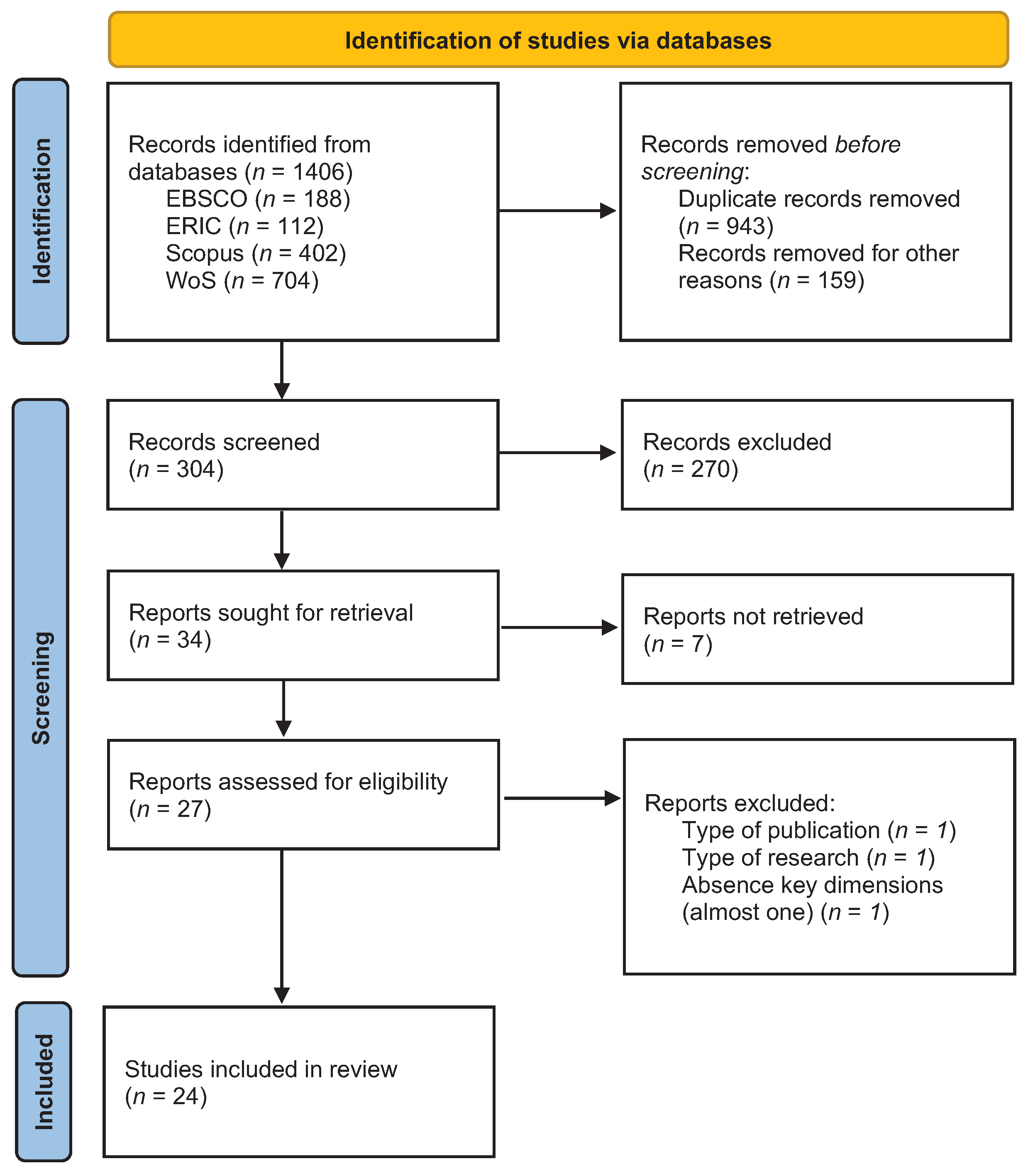
Figure 2.
Distributions of the identified studies and the included studies by year.
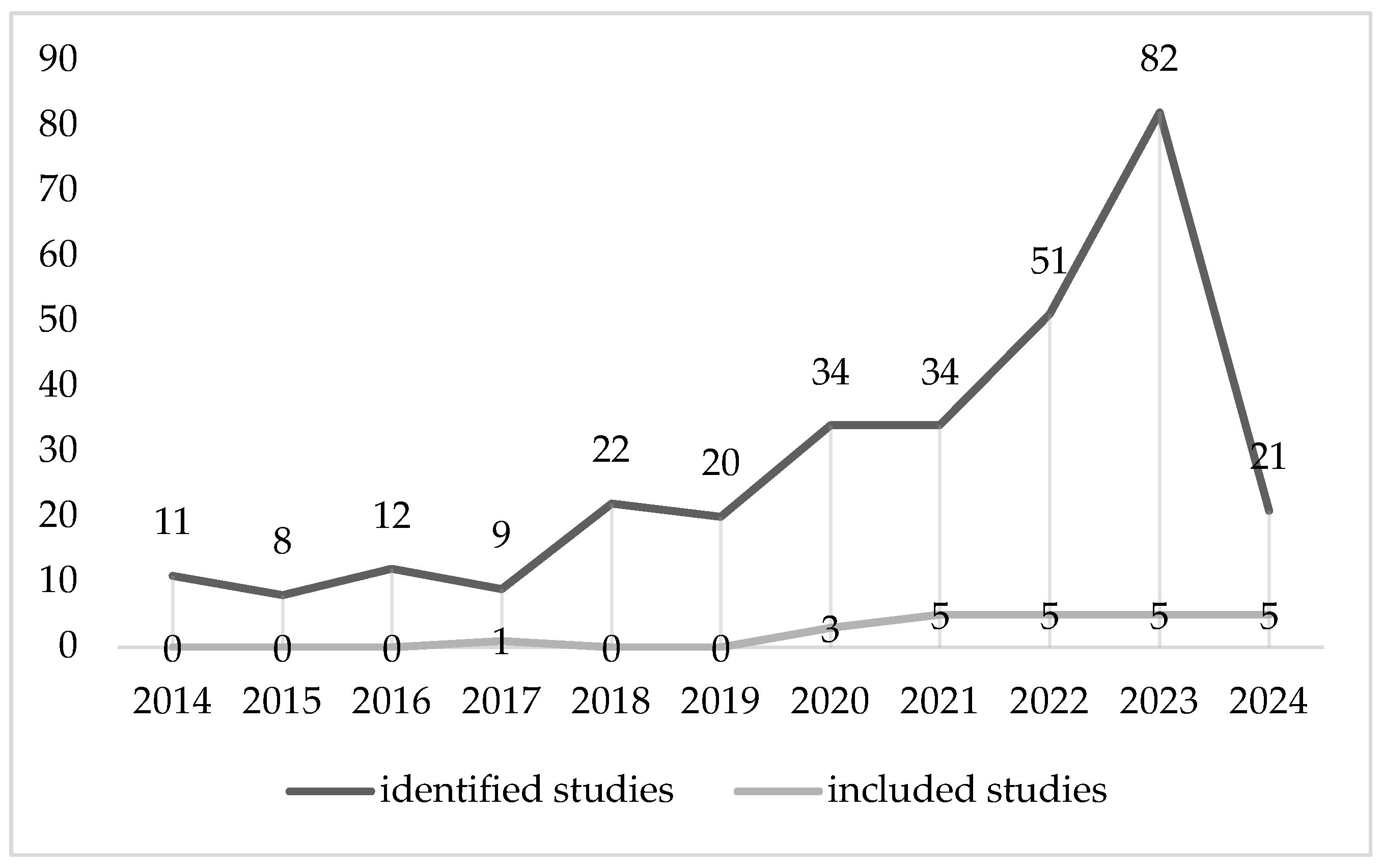
Figure 3.
Distribution by continents.
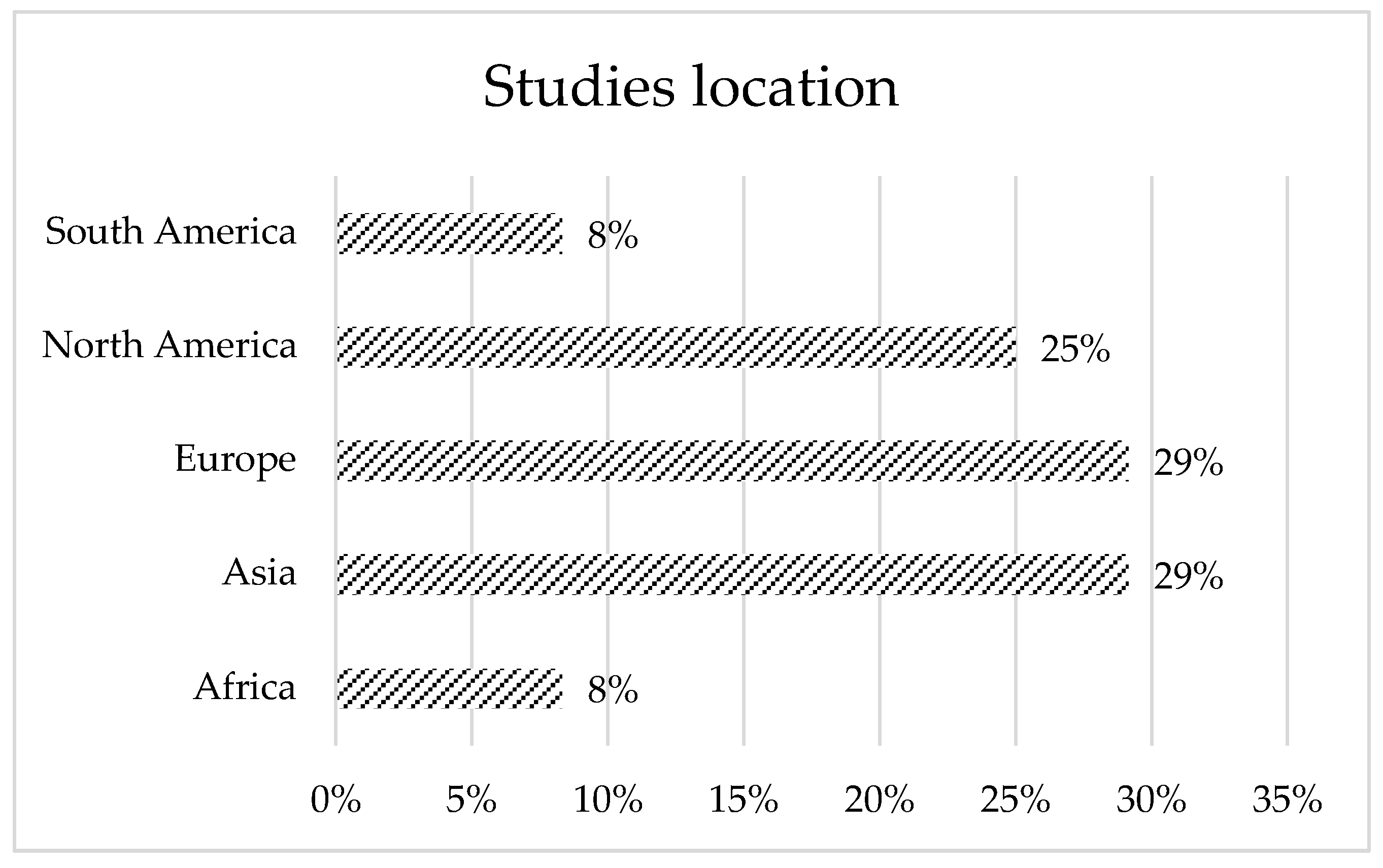
Figure 4.
Distribution by data collection approach.
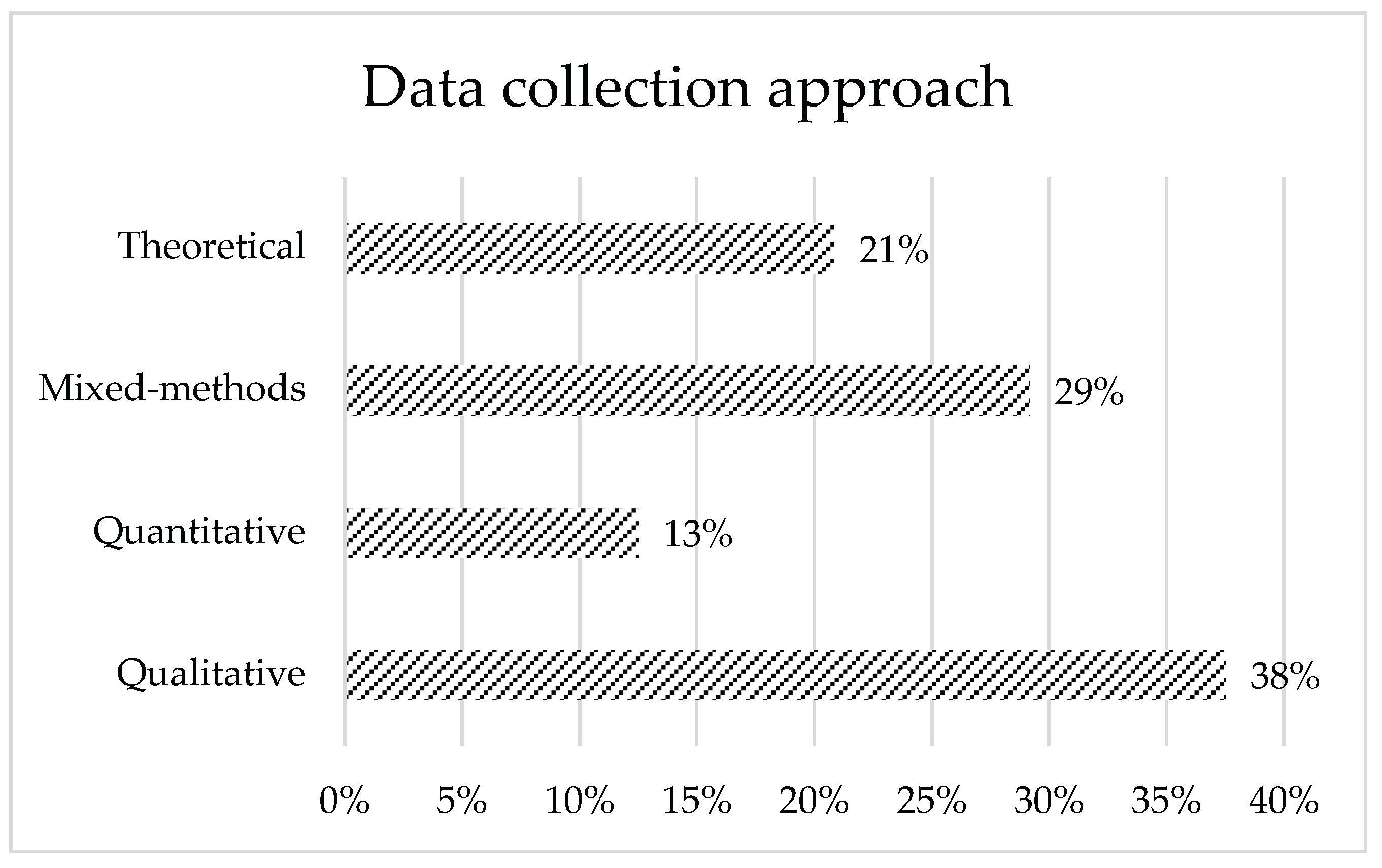
Figure 5.
Distribution by sample size.
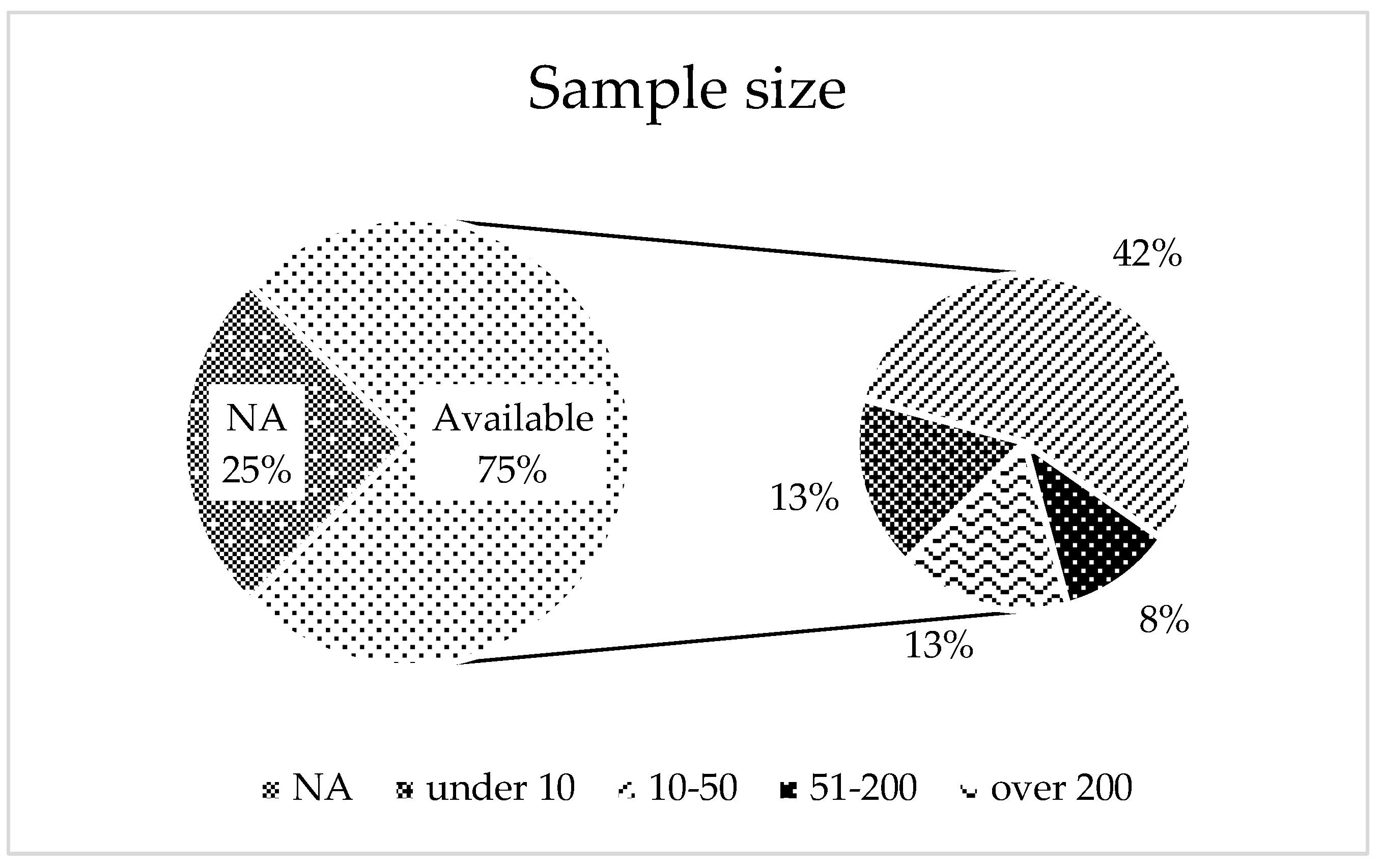
Figure 7.
Distribution by focus on disability or SEN conditions.
Figure 8.
Distribution of AI utilisation in inclusive education.
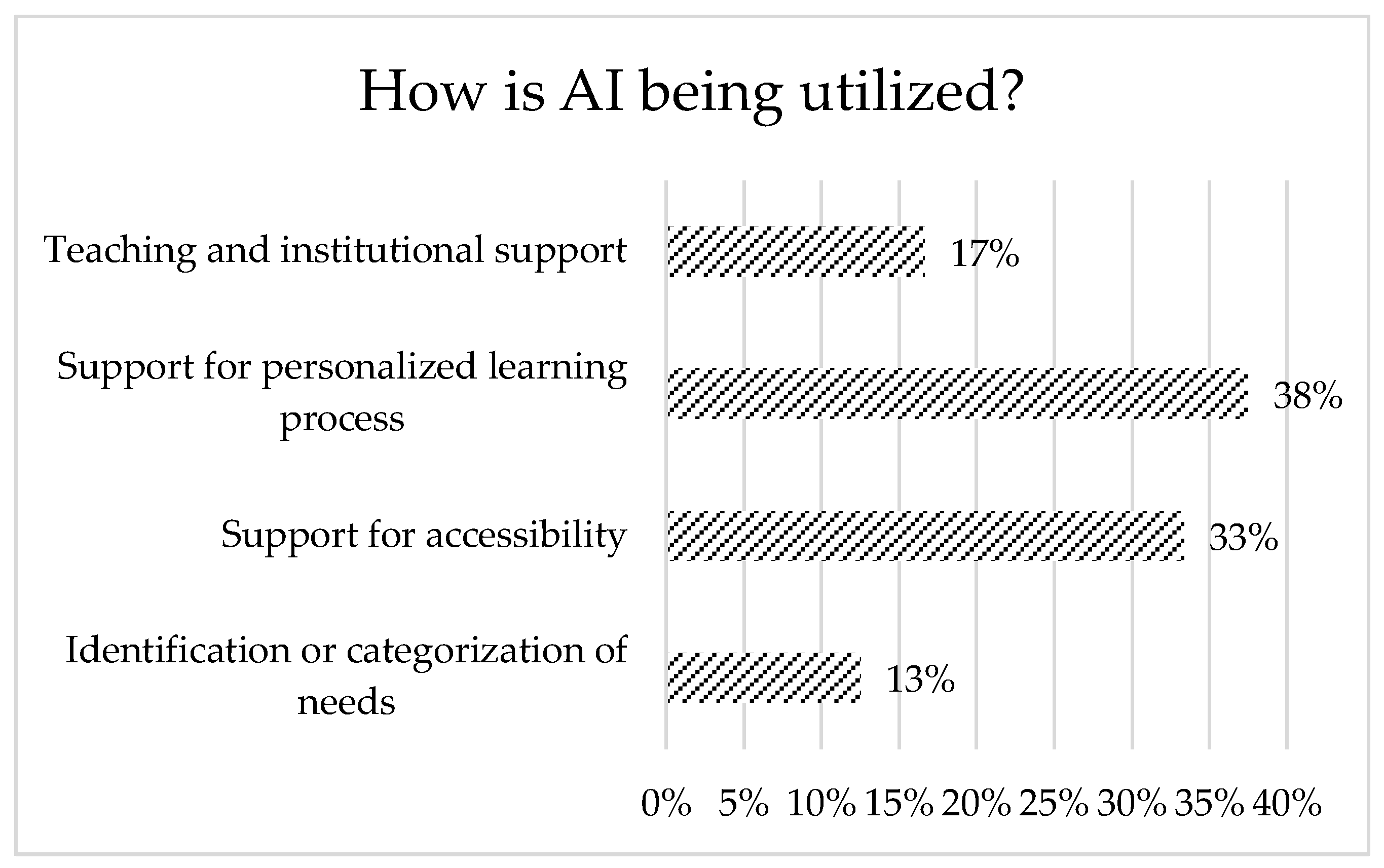

Table 1.
Inclusion and exclusion criteria.
| Inclusion Criteria | Exclusion Criteria |
|---|---|
| Published between 2014 and April 2024 | Published before 2014 |
| English language | Not in English |
| Primary research | Secondary research (e.g. review) |
| Document type: journal articles and book chapter | Other documents (e.g. conference paper) |
| Studies focused on the main topics: educational context, AI, Inclusion, SEN or Disabilities Full-text availability |
Absence of at least one of the main topics Full-text not availability |
Table 2.
Database and research queries.
| Database | Research query |
|---|---|
| EBSCO | ("education" OR "educational setting" OR "learning environment" OR "educational environment" OR "special education") AND (disabilit* OR "people with disabilities" OR "special needs") AND ("artificial intelligence" OR "AI" OR "Machine learning" OR "Deep learning") AND (inclus* OR "inclusive education" OR "inclusive practices") |
| ERIC | ("education" OR "educational setting" OR "learning environment" OR "educational environment" OR "educational context") AND (disabilit* OR "people with disabilities" OR "special needs" OR "special education") AND ("artificial intelligence" OR "AI" OR "Machine learning" OR "Deep learning") AND (inclus* OR "inclusive education" OR "inclusive practices") |
| Scopus | ((disabilit*) OR (people with disabilities) OR (special needs)) AND ((artificial intelligence) OR (AI) OR (Machine learning) OR (Deep learning)) AND ((inclusion*) OR (inclusive education) OR (inclusive practices)) AND ((education) OR (educational setting) OR (learning environment) OR (educational environment) OR (special education)) |
| Web of Science | ((disabilit*) OR (people with disabilities) OR (special needs) OR (special education)) AND ((artificial intelligence) OR (AI) OR (Machine learning) OR (Deep learning)) AND ((inclusion*) OR (inclusive education) OR (inclusive practices)) AND ((education) OR (educational setting) OR (learning environment) OR (educational environment) OR (educational context)) |
Table 3.
Summary of the studies included.
| ID | Author(s) and year | Title | Journal/Book | Country | Keywords |
|---|---|---|---|---|---|
| [23] | Gouraguine, S. et al. (2023) | A New Knowledge Primitive of Digits Recognition for Nao Robot Using Mist Dataset and CNN Algorithm for Children’s Visual Learning Enhancement | Journal of Information Technology Education: Research | Morocco | convolutional neural network; educational robotics; human-robot interaction; NAO robot; recognition of handwritten digits; students with special needs; visual learning |
| [24] | Srivastavaa, S. et al. (2021) | A smart learning assistance tool for inclusive education | Journal of Intelligent & Fuzzy Systems | India | Braille; Artificial intelligence; Computer vision; Inclusive education; Visually impaired students; Children with disabilities; Special education |
| [25] | Namoun, A. et al (2022) | A Two-Phase Machine Learning Framework for Context-Aware Service Selection to Empower People with Disabilities | Sensors | Saudi Arabia | service selection; disabled people; web services; quality of service; QoS; accessibility; assistive technologies; universal design; machine learning; ontologies |
| [26] | Marino, T. & Pecchio, P. (2020) | AI and Teaching Approach in High School | Studies in Systems, Decision and Control | Italy | Artificial Intelligence; Education; Special educational needs |
| [27] | Watters, J. et al. (2021) | An Artificial Intelligence Tool for Accessible Science Education | Journal of Science Education for Students with Disabilities | USA | Artificial Intelligence, Virtual Assistant, Accessible Science Education |
| [28] | Standen, P. J. et al. (2020) | An evaluation of an adaptive learning system based on multimodal affect recognition for learners with intellectual disabilities | British Journal of Educational Technology | UK; Italy; Spain; | NA |
| [29] | Coughlan, T., Iniesto, F.& Carr, J. E. (2024) | Analysing Disability Descriptions and Student Suggestions as a Foundation to Overcome Barriers to Learning | Journal of Interactive Media in Education | UK | accessibility; artificial intelligence; chatbots; crowdsourcing; disability; inclusion |
| [30] | Bulathwela, S. et al. (2024) | Artificial Intelligence Alone Will Not Democratise Education: On Educational Inequality, Techno-Solutionism and Inclusive Tools | Sustainability (Switzerland) | UK (affiliation) | lifelong e-learning; open education; recommendation systems; state-based learner modelling; Sustainable Development Goal 4; Wikipedia |
| [31] | Hu, M. & Wang, J. (2021) | Artificial intelligence in dance education: Dance for students with special educational needs | Technology in Society | China | Dance education; Dance students; Artificial intelligence; Musculoskeletal system diseases; Musculoskeletal system |
| [32] | Ingavelez-Guerra, P. et al. (2022) | Automatic Adaptation of Open Educational Resources: An Approach From a Multilevel Methodology Based on Students’ Preferences, Educational Special Needs, Artificial Intelligence and Accessibility Metadata | IEEE Access | Ecuador | Artificial intelligence; Electronic learning; ISO Standards; Metadata; Proposals; Standards; Training |
| [33] | Dziatkovskii, A. (2022) | Blockchain and artificial intelligence for inclusion | German International Journal of Modern Science | USA (affiliation) | Artificial intelligence; Blockchains; Children's rights; Inclusive education; Special education; Educational technology |
| [34] | Toyokawa, Y. et al. (2023) | Challenges and opportunities of AI in inclusive education: a case study of data-enhanced active reading in Japan | Smart Learning Environments | Japan | Active reading; AI; Learning analytics; Log data |
| [35] | Mateos-Sanchez, M. et al. (2022) | Chatbot, as Educational and Inclusive Tool for People with Intellectual Disabilities | Sustainability (Switzerland) | Spain | Chatbot; COVID-19; Educational innovation; Inclusive education; Intellectual disabilities; Mobile application; Social abilities |
| [36] | Nganji, J. T. & Brayshaw, M. (2017) | Disability-aware adaptive and personalised learning for students with multiple disabilities | International Journal of Information and Learning Technology | Canada; UK (affiliation) | Disability-aware systems; E-learning; Machine learning; Multiple disabilities; Personalization; Virtual learning environments |
| [37] | McDonald, N., Massey, A. & Hamidi, F. (2023) | Elicitation and Empathy with AI-enhanced Adaptive Assistive Technologies (AATs): Towards Sustainable Inclusive Design Method Education | Journal of Problem Based Learning in Higher Education | USA | Adaptive Assistive Technology; Computing higher education; Design Justice; Elicitation Toolkit; Intersectionality; Participatory Toolkit; Privacy; Problem-based Learning |
| [38] | El Naggar, A., Gaad, E. & Inocencio, S. A. M. (2024) [38] | Enhancing inclusive education in the UAE: Integrating AI for diverse learning needs | Research in Developmental Disabilities | United Arab Emirates | Artificial intelligence; Exceptional learners; Inclusive education; Pedagogy; Special needs |
| [39] | Erbeli, F. et al. (2024) | Exploring the Machine Learning Paradigm in Determining Risk for Reading Disability | Scientific Studies of Reading | USA | NA |
| [40] | Sharma, S. et al. (2023) | Impact of AI-based special education on educators and students | AI-Assisted Special Education for Students With Exceptional Needs | India | NA |
| [41] | Garg, S. & Sharma, S. (2020) | Impact of artificial intelligence in special need education to promote inclusive pedagogy | International Journal of Information and Education Technology | India | AI; Disabilities; Special need education |
| [42] | Zingoni, A. et al. (2021) | Investigating Issues and Needs of Dyslexic Students at University: Proof of Concept of an Artificial Intelligence and Virtual Reality-Based Supporting Platform and Preliminary Results | Applied Sciences (2076-3417) | Italy | adaptive learning; artificial intelligence; dyslexia; inclusive teaching; specific learning disorders; virtual reality |
| [43] | Pitikoe, S. & Biswalo, P. (2021) | Logged In or Locked Out of the Twenty-First Century? Implications for Adult Learners with Special Needs | Digital Literacy and Socio-Cultural Acceptance of ICT in Developing Countries | Kingdom of Eswatini (formerly Swaziland), South Africa | Adult learners; Assistive technology; ICT; Inclusive education; Learners with special needs |
| [44] | Zdravkova, K. (2022) | The Potential of Artificial Intelligence for Assistive Technology in Education | Learning and Analytics in Intelligent Systems | North Macedonia (affiliation) | Assistive technologies; Cognitive impairment; Communication impairment; Futuristic assistive technologies; Hearing impairment; Intellectual impairment; Motor impairment; Social inclusion; Visual impairment |
| [45] | Confer, C. A. (2023) | The Use of Artificial Intelligence to Create Inclusivity in Special Education Classrooms | Journal of Applied Professional Studies | USA | advocacy; artificial intelligence; disability; education; inclusivity; Individuals with Disabilities Education Act; special needs; stigmas |
| [46] | Bressane, A. et al. (2024) | Understanding the role of study strategies and learning disabilities on student academic performance to enhance educational approaches: A proposal using artificial intelligence | Computers and Education: Artificial Intelligence | Brazil | Educational approach; Learning limitation and potential; Study strategies |
Disclaimer/Publisher’s Note: The statements, opinions and data contained in all publications are solely those of the individual author(s) and contributor(s) and not of MDPI and/or the editor(s). MDPI and/or the editor(s) disclaim responsibility for any injury to people or property resulting from any ideas, methods, instructions or products referred to in the content. |
© 2024 by the authors. Licensee MDPI, Basel, Switzerland. This article is an open access article distributed under the terms and conditions of the Creative Commons Attribution (CC BY) license (http://creativecommons.org/licenses/by/4.0/).
Copyright: This open access article is published under a Creative Commons CC BY 4.0 license, which permit the free download, distribution, and reuse, provided that the author and preprint are cited in any reuse.


