

Submitted:
12 October 2024
Posted:
15 October 2024
You are already at the latest version
Abstract
This study investigates the impact of decentralized organizational party structures on the membership stability of Nigeria's two leading political parties, the People's Democratic Party (PDP) and the All Progressives Congress (APC), between 2015 and 2023. Conducted from April to August 2024, the study focuses on how decentralized party frameworks influence membership retention, particularly in Nigeria's fragmented political landscape, where ethnic and regional divisions challenge political cohesion. A multi-stage sampling technique to select 400 respondents, including national and local party leaders, assembly members, and grassroots members from the six geopolitical zones in Nigeria. A total of 384 valid responses were retrieved, yielding a 96% response rate. Data collection was facilitated through questionnaires administered via Google Forms, which were distributed through email and social media platforms, with a particular focus on WhatsApp for ease of access and engagement. Regression and correlation analyses were used to assess the relationship between decentralization and membership stability. The findings reveal a strong positive correlation (r = 0.961) between decentralized structures and membership stability, with decentralization accounting for 92.4% of the variance in membership stability (R² = 0.924). This indicates that decentralization plays a crucial role in promoting party institutionalization, fostering greater engagement, loyalty, and retention among members. However, regional disparities in the effectiveness of decentralization present challenges to uniform implementation. These results underscore the importance of standardizing decentralization policies across various regions to ensure coherence and reduce membership volatility. The study recommends a harmonized framework that supports decentralized governance within political parties, enhancing internal democracy and reinforcing party unity. The research concludes by emphasizing the need for ongoing exploration into the nuances of decentralization to further support Nigeria’s democratic consolidation. This study offers valuable insights for party leaders, policymakers, and researchers interested in the institutionalization of political organizations in emerging democracies.
Keywords:
decentralization
; party institutionalization
; membership stability
; Nigeria
; political parties
1. Introduction
Nigeria’s political landscape is deeply influenced by its diverse ethnic and cultural backgrounds, as the most populous country in Africa. Political parties are the most crucial yet the least developed institutions of democracy in Nigeria (Alli, 2015). As a multiparty state with about 18 registered political parties, Nigeria’s political environment is characterized by assemblages of individuals with the determination to use party platforms as vehicles for gaining power and controlling the state. Among these, the People’s Democratic Party (PDP) and the All Progressives Congress (APC) are the two dominant forces.
These parties have traditionally operated through highly centralized organizational structures. Despite reforms aimed at decentralizing power, decision-making within these parties remains largely concentrated at the national level, often sidelining regional and local party stakeholders.
Despite the constitutional provisions for decentralization within Nigerian political parties, there is a persistent centralization of power at the national level. This centralization limits the effectiveness of state and local party structures, leading to weak internal democracy, factionalism, and inefficiency (Zainawa, 2021). As a result, both the PDP and APC struggle with member retention and engagement, as this top-down control diminishes the participation and inclusiveness of grassroots members, ultimately weakening their institutional capacity.
The persistence of centralized control in the PDP and APC poses significant challenges to the institutionalization of internal democracy, inclusiveness, and membership stability. Party leaders at the national level continue to exert significant influence over political, administrative, and fiscal decisions, leaving limited room for regional branches and grassroots participation. This top-down approach results in a lack of engagement at the local level, diminishing member satisfaction and loyalty, which are crucial for maintaining party stability and electoral success (Somma, 2016; Cowburn & Kerr, 2023).
Decentralization—intended to devolve authority from the national to sub-national levels—has been unevenly implemented across Nigeria’s geopolitical zones, further complicating the internal dynamics of the parties (Dick-Sagoe, 2020). While some regions, such as the South West, have witnessed relatively stronger local party structures, others, including the South-South and North East, still grapple with centralized control and weak local governance mechanisms. This inconsistency in decentralization has profound implications for membership stability, as regions with weaker decentralization tend to experience higher rates of member dissatisfaction, factionalism, and party defection (Amah, 2018).
Decentralization is critical for fostering internal democracy and ensuring that political parties reflect the diverse interests of their members across Nigeria’s geopolitical zones. Effective decentralization can enhance party membership retention by increasing member participation in decision-making processes, aligning party values with regional interests, and fostering a sense of ownership among members (Amah, 2018; Matete, 2022; Ogunnobi, 2022). However, empirical studies examining the relationship between decentralization and political party institutionalization in Nigeria remain limited.
Against this backdrop, this study seeks to assess the impact of decentralized organizational structures on membership stability in the PDP and APC from 2015 to 2023. By analyzing the interplay between decentralization and party membership dynamics, the study aims to uncover how decentralized structures influence loyalty, retention, and membership stability across Nigeria’s diverse regions. The findings of this research are expected to inform policy interventions aimed at strengthening party institutionalization and promoting democratic governance in Nigeria.
2. Theoretical Framework
This study draws on Party System Institutionalization Theory and Organizational Decentralization Theory to explain the mechanisms through which decentralized organizational structures impact membership stability (Figure 1). According to Democratic Consolidation Theory (Linz and Stepan, 1996), political institutions become more resilient as they internalize democratic norms, leading to more stable and institutionalized party systems. Applying this framework to Nigeria’s political parties, decentralized structures should enhance internal democracy, leading to greater member loyalty and reduced factionalism. Additionally, Institutional Design Theory posits that intentional institutional design, such as decentralization, can be used to craft more stable and resilient political parties. By distributing decision-making authority to local branches, decentralized structures create pathways for grassroots participation and enhanced party engagement (Figure 1).
3. Methodology
This study adopted a mixed methods research design to combine both qualitative and quantitative research approaches, providing a comprehensive understanding of the impact of decentralized organizational structures on party membership stability. The mixed methods approach enabled the collection, analysis, and integration of both numerical data (quantitative) and non-numerical data (qualitative), leveraging the strengths of both methodologies. The exploratory sequential and convergent parallel approaches were used, allowing qualitative data to inform the development of hypotheses, which were later tested quantitatively. The study was conducted over a period of April to August 2024.
Study Design
The exploratory sequential approach helped identify recurring themes from qualitative data obtained from documentary sources, while the convergent parallel approach allowed for the independent analysis of quantitative and qualitative data. The findings from both methods were compared to identify areas of convergence and divergence, offering a robust framework for addressing the research problem.
Area of Study
The study focused on Nigeria’s two major political parties, the Peoples Democratic Party (PDP) and the All Progressives Congress (APC), which have contested and controlled the federal government since the start of Nigeria’s Fourth Republic. The research was conducted in six states, one from each geopolitical zone:
- Adamawa (North East): A battleground state with ethnic and religious diversity.
- Kaduna (North West): A politically significant state known for its ethno-religious diversity.
- Nasarawa (North Central): An emerging political hub with growing national significance.
- Lagos (South West): Nigeria’s economic center, presenting a complex political landscape.
- Imo (South East): A politically vibrant state with frequent power shifts between PDP and APC.
- Delta (South-South): A key oil-rich state, offering insights into resource distribution and decentralization.
These states provided diverse political, social, and economic contexts essential for understanding the effects of decentralization across Nigeria’s regions.
Population of the Study
The population of the study consisted of the 52,760,277 registered members of the PDP and APC across the 36 states of Nigeria and the Federal Capital Territory (FCT), including:
- PDP: 14,002,546 members
- APC: 38,757,731 members
This data was obtained from the 2024 records of the PDP and APC Directorates of Organization.
Sample and Sampling Technique
The sample size for this study was 400 PDP and APC party leaders and active members selected from the 6 geopolitical zones of Nigeria. The sample size was adopted because it is representative and not possible to study the total population. The sample size was also considered adequate in consideration of resources, finance and timeframe available to the researcher. The sample size was statistically generated from the total population of the study using the Yamane (1967) formula. The Yamane formula was used because it provided logical approach to determining sample size from a finite population especially when the total population of the study is above 10,000. The formula is calculated thus:
Where:
n = is the sample size
N = is the Population Size
e = is the margin of error
1 = Unity (Constant)
Population Size (N) = PDP: 14,002,546 + APC: 38,757,731 = 52,760,277
Margin of Error (e) = 5% (0.05) @ 95% Confidence level with a 5% margin of error
Therefore:
n = 399.99
n ≈ 400
The study used a multi-stage sampling technique to select 400 respondents from this population, including national and local party leaders, assembly members, and grassroots members. Figure 2:
Sampling Technique
The study employed a combination of probability and non-probability sampling techniques. Probability sampling ensured that every element of the study population had an equal chance of being selected, while non-probability sampling allowed for discretion in including key participants to gain deeper insights into the study variables.
- Probability Sampling: Multi-Stage Approach
A multi-stage sampling approach was used to provide broad coverage across Nigeria’s six geopolitical zones, ensuring a comprehensive representation of various levels of party structures, from national to local levels. This approach spanned party hierarchies, regions, states, local governments, and electoral wards (Table 1). The process is outlined in four stages:
- Stage 1: Geopolitical Zoning
The six geopolitical zones (North Central, North East, North West, South West, South East, South-South) served as clusters. Two Zonal Leaders each from the PDP and APC were selected randomly from each zone, providing 4 leaders per zone, for a total of 24 Zonal Leaders.
- Stage 2: State Selection
Within each zone, one state was selected based on criteria such as representativeness, diversity, accessibility, and political significance. The selected states were Nasarawa, Adamawa, Kaduna, Lagos, Imo, and Delta. Within each state, 4 state party leaders and 3 state assembly members from both PDP and APC were selected, totaling 48 respondents across the six states.
- Stage 3: Local Government Areas (LGAs)
Four Local Government party leaders from both PDP and APC were selected in each state, yielding 48 respondents from 12 LGAs across the six states. The LGAs were chosen based on the presence of both PDP and APC party structures and the level of political engagement.
- Stage 4: Ward Respondent Selection
Respondents were selected from party executives, public office holders, and active party members at the ward level in both PDP and APC. 192 respondents were chosen using simple random sampling within each category.
In addition to probability sampling, non-probability sampling was employed to select 2 national leaders each from the PDP and APC, specifically targeting 2 National Deputy Chairmen from both Northern and Southern regions, resulting in 4 national leaders.
Sampling Distribution
The total sample of 400 respondents was drawn as follows:
- 2 National Deputy Chairmen from both Northern and Southern regions.
- 48 National Assembly members from the six states.
- 24 Zonal Party Leadership officials.
- 48 State Party Leadership members.
- 36 State Assembly members.
- 48 Local Government Party officials.
- 192 Ward-level respondents.
This multi-stage sampling technique ensured a representative and comprehensive sample of PDP and APC leaders and members, capturing the regional diversity and political dynamics across Nigeria.
Instruments/Method of Data Collection
Data were collected using both quantitative and qualitative methods. The primary instrument was a structured questionnaire designed to gather data on the relationship between decentralized organizational structures and party membership stability. The questionnaire was divided into two sections:
- Section A: Socio-demographic characteristics (age, gender, education, ward, state, geopolitical zone, party affiliation).
- Section B: Questions addressing the study’s key variables, such as the impact of decentralized structures on membership stability, local participation in decision-making, and party ideology development.
A full copy of the questionnaire used in the study is provided as Supplementary File S1.
Administration of Instruments
The questionnaire was administered through Google Forms via a unique link (https://forms.gle/Tn7EakAnRE8rSiun8), distributed via email and social media platforms, particularly WhatsApp. A team of 5 research assistants aided in monitoring and following up with respondents to ensure a high response rate. A total of 400 questionnaires were administered, with 384 valid responses retrieved, yielding a 96% response rate.
Ethical Considerations
This study did not require formal ethical approval, as it adhered to established guidelines for social research involving voluntary participation. However, informed consent was obtained from all participants prior to their involvement in the study. Participants were fully informed about the purpose of the research, how their data would be used, and their right to withdraw at any time. All participants voluntarily agreed to participate, and appropriate consent was obtained for the publication of the findings based on their responses. Confidentiality was assured, and data were handled in a manner that maintained participant privacy and complied with ethical standards for research.
Data Collection and Analysis
Data collection involved the use of a structured questionnaire to assess the relationship between decentralized organizational structures and membership stability. Data were analyzed using the Statistical Package for Social Sciences (SPSS) Version 22, with regression and correlation analysis used to test the study’s hypotheses.
In addition to quantitative data, qualitative insights were gathered from interviews and case studies with party officials at different levels, offering a deeper understanding of how decentralization affects party institutionalization and membership stability.
4. Results
Socio-Demographic Characteristics of Respondents
The socio-demographic characteristics of the respondents highlighted gender representation, with 56% being male and 44% female. The age distribution ranged from 16 to over 66 years, with the largest group (28.4%) falling within the 36-45 age bracket, followed by 25% in the 46-55 range, and 19.3% in the 26-35 category. In terms of educational attainment, the largest group of respondents held HND/B.Sc. degrees (45.1%), followed by WAEC/NECO holders (20.3%) and NCE/ND/TCII holders (14.6%). Only 2.8% of respondents reported having FSLC, while 17.2% possessed postgraduate qualifications (M.Sc. /Ph.D.).Respondents were distributed across six states and geopolitical zones. Nasarawa had the highest representation (18.5%), while Delta and Lagos each contributed 15.9% of respondents. Geopolitically, North Central (18.5%) had the highest respondent representation, while the South-South (15.6%) had the lowest (Table 2).
The party affiliation of the respondents is almost evenly distributed between the two major political parties in Nigeria. Out of the total 384 respondents, 50.26% (193 respondents) identified with the PDP (People’s Democratic Party), while 49.74% (191 respondents) were affiliated with the APC (All Progressives Congress). This balanced representation ensures that the perspectives of both parties are adequately captured in the analysis, providing a comprehensive overview of party dynamics and decentralization within Nigeria’s political landscape. (Figure 3)
Research Findings
Decentralized Organizational Structures and Membership Stability
The study explored how decentralized organizational structures influence membership stability in Nigeria’s two leading political parties, the People’s Democratic Party (PDP) and the All Progressives Congress (APC). The analysis of the data collected from 384 respondents offers insights into the relationship between decentralization and party membership dynamics, complemented by relevant literature.
Key Findings from Literature and Field Data
Existing literature highlights that robust and well-defined organizational structures are critical for maintaining membership stability in political parties. Effective structures establish clear lines of communication, authority, and responsibility, promoting party cohesion and member loyalty (Lazarus, 2019). However, centralized leadership, while providing direction, can exacerbate internal conflicts if not managed properly (Smith, 2021). This balance between centralization and decentralization is crucial for ensuring long-term stability.
In the case of the PDP, the party has historically operated with a centralized leadership model, where decision-making power is concentrated at the national level. While this can stabilize the party through strong leadership control, it also leads to factionalism and defections if internal conflicts are left unresolved (Okon, 2020). Similarly, the APC operates with a relatively decentralized structure that allows for a broader membership base. However, maintaining internal cohesion remains a challenge, particularly during periods of electoral loss (Johnson, 2023).
These insights from the literature align with the results from our field survey. Survey data analysis measured decentralized organizational structures using multiple parameters, including party hierarchy, decision-making processes, and grassroots engagement. The data demonstrated a strong correlation between decentralized party structures and increased membership stability. The Pearson correlation coefficient between “Decentralized Organizational Structure” and “Membership Stability” is r = 0.961, indicating a strong positive relationship (p ≤ 0.05). This implies that as party structures become more decentralized, membership stability increases. The higher the level of decentralization, the greater the engagement and loyalty among members, which contributes to overall membership retention.
Survey Results and Analysis
The data analysis demonstrated a strong positive relationship between decentralized structures and membership stability. The Pearson correlation coefficient of 0.961 and an R Square value of 0.924 indicate that decentralized structures account for approximately 92.4% of the variance in membership stability, underscoring the importance of decentralization in maintaining a stable party membership base. This finding aligns with previous studies by Musa, (2022), Nwachukwu (2021) and Oni (2019), which similarly highlight the significant role decentralized organizational frameworks play in promoting stability within political organizations.
The regression analysis further confirms the significant impact of decentralization on membership stability, with R² = 0.924, meaning that 92.4% of the variance in membership stability is attributable to decentralization. This indicates a very strong model fit, reinforced by the F-statistic of 4660.548 (p ≤ 0.05), validating the robustness of the model. These findings not only confirm the hypothesis that decentralized structures foster greater engagement, loyalty, and membership retention but also emphasize the need for party leaders to prioritize decentralization as a strategic approach for enhancing long-term party stability and institutionalization.
Figure 4a illustrates how decentralized structures promote inclusivity and decision-making at lower levels of the party, contributing to enhanced membership stability. Similarly, Figure 4b depicts the alignment between decentralization and key indicators of membership stability, such as retention rates, participation in party activities, and loyalty.
Linking Field Data and Literature Insights
The findings from this study mirror the conclusions drawn from the existing literature. While the PDP’s centralized structure offers strong leadership, it risks alienating members when internal conflicts arise. On the other hand, the APC’s decentralized structure encourages broader member participation, though it struggles to maintain unity, particularly during electoral defeats. Both parties face structural challenges that affect their ability to institutionalize processes and sustain member loyalty, supporting the arguments made by Lazarus (2019) and Fadekemi (2023).
The statistical analysis further revealed that the correlation coefficient of 0.961 indicates a strong positive relationship between decentralized structures and membership stability. This confirms the importance of decentralization in fostering long-term membership retention and internal party democracy. Moreover, the high R-squared value of 92.4% demonstrates that decentralization accounts for a significant portion of the variance in membership stability, further substantiating the claim that organizational frameworks play a critical role in party institutionalization.
In conclusion, while both the PDP and APC exhibit unique strengths and weaknesses, it is evident that decentralized structures are essential for enhancing membership stability. Both parties must refine and standardize their approaches to decentralization to maintain internal cohesion, reduce factionalism, and ensure long-term sustainability in Nigeria’s political landscape.
5. Discussion
This study provides valuable insights into the impact of decentralized organizational structures on the membership stability of Nigeria’s two dominant political parties, the Peoples Democratic Party (PDP) and the All Progressives Congress (APC). The findings highlight a strong positive correlation between decentralization and party institutionalization, as evidenced by a Pearson correlation coefficient of 0.943. This suggests that decentralization plays a critical role in maintaining stable party memberships and enhancing inclusiveness in decision-making, while also fostering the development of party ideologies.
Approximately 92.4% of the variation in membership stability can be explained by the degree of decentralization in party structures. This highlights the importance of decentralized frameworks in ensuring that party structures are responsive to regional and local needs, which is crucial for party cohesion. Both the PDP and APC exhibit varying degrees of decentralization, yet centralization of decision-making and resource control at the national level continues to undermine the autonomy and effectiveness of local party branches. These findings point to the need for structural reforms aimed at devolving authority to subnational levels to promote inclusiveness and reduce factionalism.
The Pearson correlation coefficient of 0.961 and an R Square value of 0.924 indicate that decentralized structures explain approximately 92.4% of the variance in membership stability, underscoring decentralization as a crucial factor in maintaining a stable party membership base. This result aligns with recent studies by Musa, (2022), Nwachukwu (2021) and Oni (2019), which similarly found that decentralized organizational frameworks play a significant role in promoting stability, particularly within political organizations.
The study also found that limited decentralization and elite control within the PDP and APC contribute to factionalism and the marginalization of grassroots members. The highly centralized control of resources and decision-making processes often alienates local stakeholders, weakening party institutionalization. (OECD 2019; Nwanegbo 2014). This reinforces the need for political parties in Nigeria to move beyond symbolic decentralization and adopt more concrete measures that empower state and local party structures to take ownership of regional issues.
Decentralization was shown to enhance membership stability by fostering greater engagement, loyalty, and participation among party members. The APC, with its decentralized structure, tends to accommodate a more diverse membership base, but also faces challenges in maintaining internal cohesion, particularly during electoral losses. The PDP, on the other hand, relies on a more centralized leadership structure, which provides stability but often leads to internal power struggles and defections. These findings suggest that while decentralization can promote stability, it must be implemented consistently across all levels of the party to be effective.
The regression analysis further supports the critical role of decentralization in party institutionalization. The R² value of 0.924 indicates that decentralization explains a substantial portion of the variance in membership stability. This underscores the importance of decentralized structures in promoting internal democracy and party cohesion. The study also found that the strength of this relationship is statistically significant, with the F-statistic of 4660.548 (p ≤ 0.05) confirming the robustness of the model. The significant positive impact of decentralization on membership stability should encourage party leaders to prioritize decentralized governance as a strategic imperative for long-term party stability and success.
Despite these positive findings, the study also identified key challenges associated with decentralization, particularly its uneven implementation across different geopolitical zones. In both parties, certain regions benefit more from decentralized structures than others, leading to disparities in governance and membership retention. This suggests that a more uniform application of decentralization policies could help mitigate regional imbalances and strengthen party institutionalization at all levels.
Recommendations based on these findings include promoting greater decentralization within party structures to empower local branches and reduce the concentration of power at the national level. This can be achieved by amending party constitutions, allocating resources directly to state and local branches, and creating zonal councils with decision-making authority. Additionally, fostering accountability and transparency within party operations is essential to reduce the influence of money politics and corruption, both of which undermine decentralization efforts. Finally, encouraging grassroots participation through local initiatives and digital platforms will enhance membership engagement and contribute to stronger party structures.
In conclusion, the study provides strong empirical evidence supporting the role of decentralized organizational structures in enhancing membership stability and promoting internal democracy within political parties. Both the PDP and APC must standardize and deepen their decentralization efforts to maintain party cohesion, reduce factionalism, and ensure long-term sustainability in Nigeria’s political landscape.
Supplementary Materials
The following supporting information can be downloaded at the website of this paper posted on Preprints.org.
Funding
No funding was received for this study.
Data Availability Statement
The dataset generated and analyzed during this study, including the questionnaire used for data collection, is available as Supplementary File S1. Further data supporting the findings of this study are available from the corresponding author upon reasonable request.
Acknowledgments
The authors wish to express their sincere gratitude to the leadership of the Peoples Democratic Party (PDP) and All Progressives Congress (APC) for granting access to relevant data. Special thanks to the five research assistants who supported the data collection process and to the respondents across the six geopolitical zones for their participation. The authors also appreciate the Directorates of Organization of the PDP and APC for providing the necessary documents and information that made this study possible.
Conflicts of Interest
The authors declare no conflict of interest.
References
- Alli, W. O. (2015). INEC and the challenges of managing political parties for the success of 2015 general elections. A paper presented at a two Day conference on INEC and the 2015 Elections: Expectations, Prospects and Challenges held on 19-20 January, BUK.
- Almond, Gabriel A., and Powell Bingham G. Jr (1966). Comparative Politics: A Developmental Approach. Boston: Little, Brown and Co.
- Amah, E.I. Devolution of Power to Local Government: Appraising Local Government Autonomy under Nigerian Federation. Beijing Law Rev. 2018, 09, 275–293. [Google Scholar] [CrossRef]
- Child, J. , and McGrath, R. G. (2001) “ Organizations Unfettered: Organizational Form in an information- intensive Economy”. The Academy of Management Journal, 44(6), 1135-1148.
- Cowburn, M.; Kerr, R. Inclusivity and Decentralisation of Candidate Selectorates: Factional Consequences for Centre-Left Parties in England, Germany, and the United States. Politi- Res. Q. 2022, 76, 292–307. [Google Scholar] [CrossRef]
- Diamond, L. (1989). Introduction: Persistence, erosion, breakdown and renewal. In L. Diamond, J. Linz and S. M. Lipset (Eds.), Democracy in Developing Countries. Vol 3. Asia, (pp. 1–52).
- Dick-Sagoe, C. Decentralization for improving the provision of public services in developing countries: A critical review. Cogent Econ. Finance 2020, 8. [Google Scholar] [CrossRef]
- Fadekemi, O. (2023). Patronage and internal democracy: Effects on membership stability in Nigerian political parties. Journal of African Politics, 48(4), 67-82.
- Johnson, M. (2023). Decentralization and membership stability: Insights from the APC. Politics and Governance Journal, 50(2), 22-35.
- Lazarus, T. (2019). Organizational structures and party stability in developing democracies. International Journal of Political Science, 42(1), 55-71.
- Fukuyama, F.; Linz, J.J.; Stepan, A. Problems of Democratic Transition and Consolidation: Southern Europe, South America, and Post-Communist Europe. Foreign Aff. 1997, 76, 173. [Google Scholar] [CrossRef]
- Mainwaring, S. , & Torcal, M. (2006). Party system institutionalization and party system theory after the third wave of democratization. In R. S. Katz and W. J. Crotty (Eds.), Handbook of Party Politics, (pp. 204–227).
- March, J. M. , & Simon, H. A. (1958). Organizations. Wiley.
- Matete, R.E. Forms of decentralization and their implications for educational accountability in Tanzania. Heliyon 2022, 8, e09436. [Google Scholar] [CrossRef] [PubMed]
- Musa, B. (2022). Institutionalization and its effects on political party membership: Comparative analysis of PDP and APC. Nigerian Journal of Political Studies, 40(2), 90-104.
- Nwachukwu, C. (2021). Internal Democracy and membership stability in Nigerian political parties. African Studies Review, 46(3), 130-145.
- Nwanegbo, C. J. (2014), Organizations and structures of political parties. In M. N. Biereenu– Nnabugwu and C. J. Nwanegbo (Eds.), Political Parties, Pressure Groups and Public Opinions in Democratic Politics, Pp. 34 – 46. Rhyce Kerex Publishers.
- OECD (2019). Making decentralization work: A handbook for policy-makers. OECD Multi-level Governance Studies. Paris: OECD Publishing.
- Ogunnubi, O. Decentralisation and local governance in Nigeria: issues, challenges and prospects. Commonw. J. Local Gov. 2022, 5–16. [Google Scholar] [CrossRef]
- Okon, E. (2020). Centralized leadership and its impacts on party cohesion: The case of the PDP. Journal of Nigerian Politics, 35(1), 23-37.
- Omotola, J. (2021). Decentralization and party cohesion in the APC: A critical examination. The Nigerian Political Science Review, 14(2), 76-89.
- Oni, J. (2019). The role of organizational adaptability in party stability: A study of PDP and APC. Journal of Comparative Politics, 31(2), 78-91.
- Ouchi, W.G. A Conceptual Framework for the Design of Organizational Control Mechanisms. In readings in accounting for management control (Pp 63-82), Springer, Boston, MA. [CrossRef]
- Smith, R. (2021). The role of formal structures in political party stability. Global Political Analysis, 55(4), 102-115.
- Somma, N.M. How Do Party Systems Shape Insurgency Levels? A Comparison of Four Nineteenth-Century Latin American Republics. Soc. Sci. Hist. 2016, 40, 219–245. [Google Scholar] [CrossRef]
- Williamson, Oliver E. (1985). The Economic Institutions of Capitalism: Firms, Markets, Relational Contracting. Free Press, New York.
- Yamane, Taro (1967) Statistics an Introductory Analysis. 2nd Edition, New York, Harper and Row.
- Zainawa, A. Y. (2021). Political parties, electoral process and democracy in Nigeria. Zamfara Journal of Politics and Development, 2(1), 1-10.
Figure 1.
The Theoretical Framework.
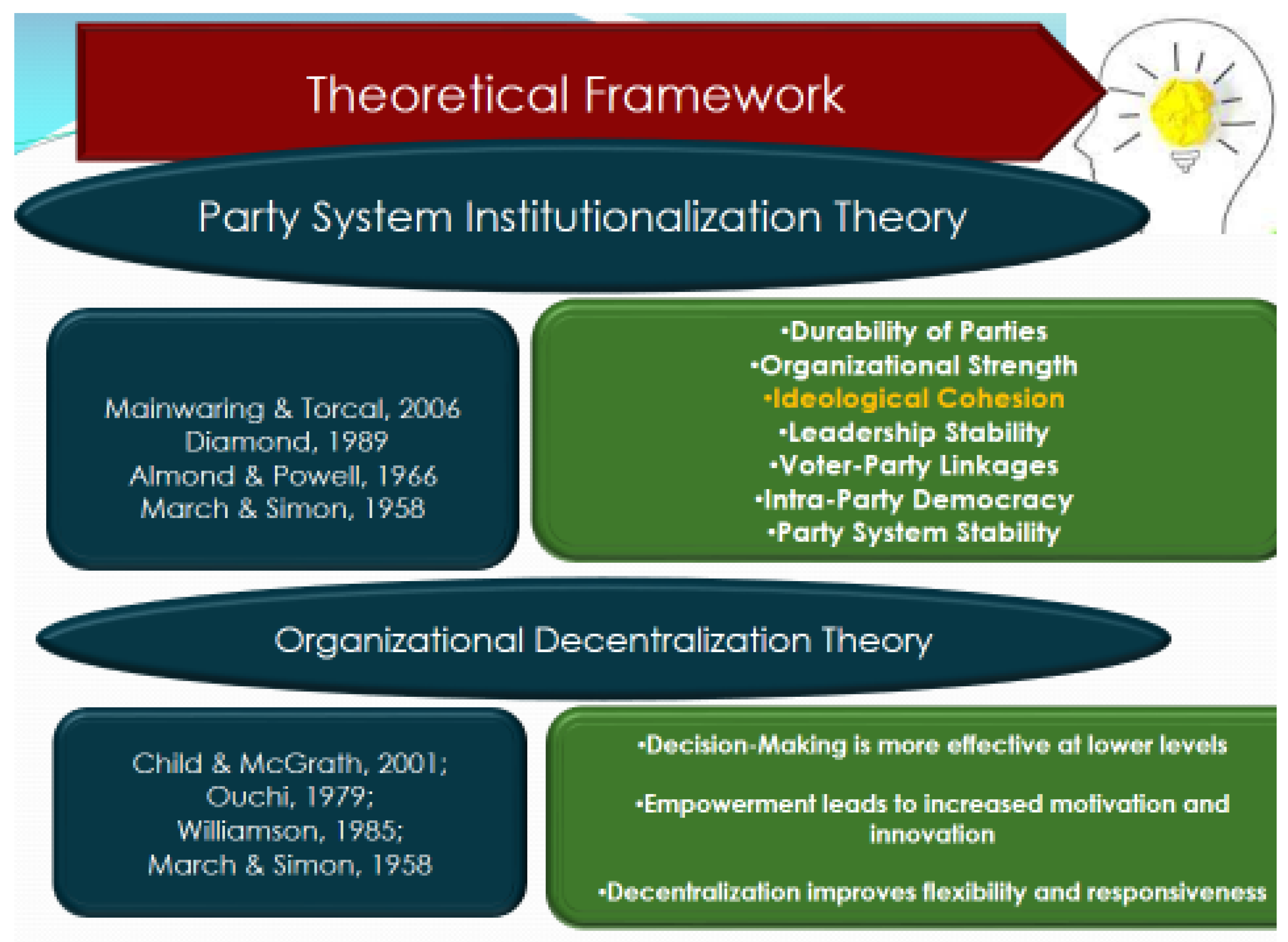
Figure 2.
Presentation and Analysis of Survey Data.
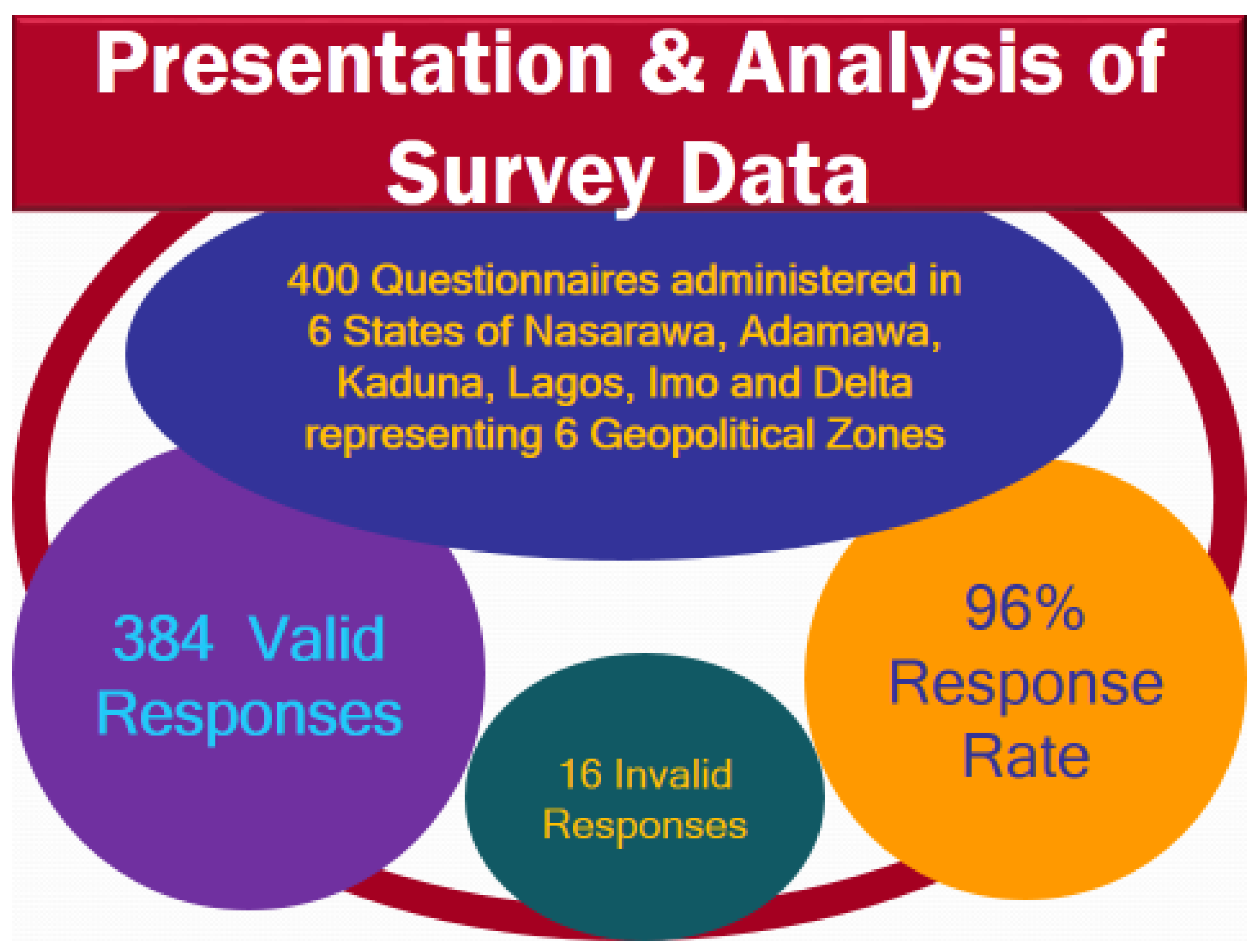
Figure 3.
Party Affiliation of the Respondents.
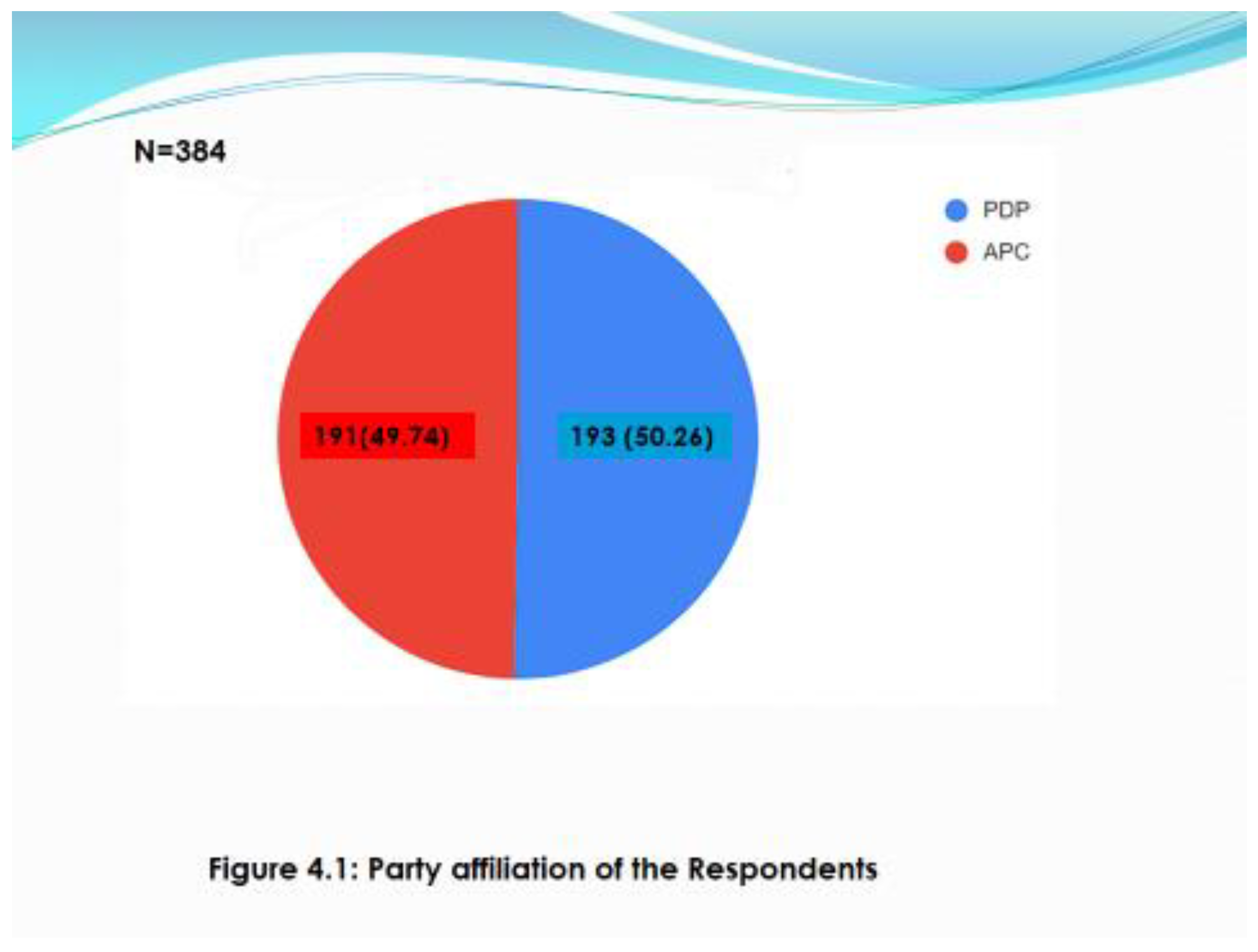
Figure 4.
(a): Respondents’ views on Level of Decentralized Organizational Structure of the PDP and APC in Nigeria. (b): Respondents’ views on the impacts of decentralized organizational structures on party membership stability in Nigeria.
Figure 4.
(a): Respondents’ views on Level of Decentralized Organizational Structure of the PDP and APC in Nigeria. (b): Respondents’ views on the impacts of decentralized organizational structures on party membership stability in Nigeria.
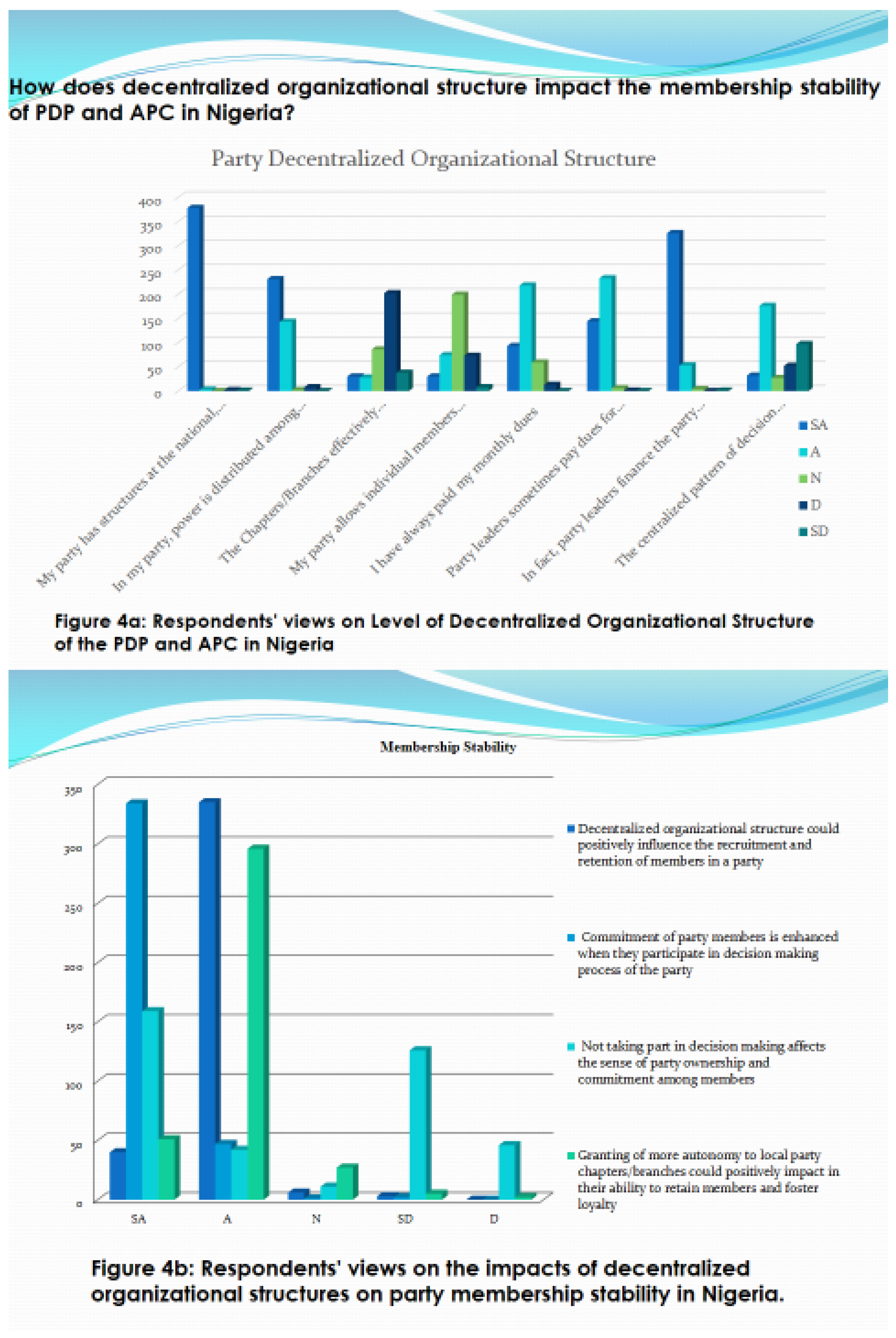

Table 1.
Sampling Distribution for Party Organizational Structures.
| Geopolitical Zone | Selected State | NASS Members | Zonal Party Leadership | State Party Leadership | State Assembly | Local Govt. Party Leadership | Ward Party Leadership/Members | Total | ||||||
| APC | PDP | APC | PDP | APC | PDP | APC | PDP | APC | PDP | APC | PDP | |||
| North Central | Nasarawa | 4 | 4 | 2 | 2 | 4 | 4 | 3 | 3 | 4 | 4 | 16 | 16 | 66 |
| North East | Adamawa | 4 | 4 | 2 | 2 | 4 | 4 | 3 | 3 | 4 | 4 | 16 | 16 | 66 |
| North West | Kaduna | 4 | 4 | 2 | 2 | 4 | 4 | 3 | 3 | 4 | 4 | 16 | 16 | 66 |
| South West | Lagos | 4 | 4 | 2 | 2 | 4 | 4 | 3 | 3 | 4 | 4 | 16 | 16 | 66 |
| South East | Imo | 4 | 4 | 2 | 2 | 4 | 4 | 3 | 3 | 4 | 4 | 16 | 16 | 66 |
| South-South | Delta | 4 | 4 | 2 | 2 | 4 | 4 | 3 | 3 | 4 | 4 | 16 | 16 | 66 |
| Total | 396 | |||||||||||||
Table 2.
Socio-Demographic Characteristics of the Respondents (n=400).
| Variables | Frequency (f) | Percentage (%) |
|---|---|---|
| Gender | ||
| Male | 215 | 56 |
| Female | 169 | 44 |
| Total | 384 | 100.0 |
| Age Brackets | ||
| 16-25 | 22 | 5.7 |
| 26-35 | 74 | 19.3 |
| 36 – 45 | 109 | 28.4 |
| 46 – 55 | 96 | 25 |
| 56 – 65 | 57 | 14.8 |
| 66 and Above | 26 | 6.8 |
| Total | 384 | 100.0 |
| Educational Attainment | ||
| FSLC | 11 | 2.8 |
| WAEC/NECO | 78 | 20.3 |
| NCE/ND/TCII | 56 | 14.6 |
| HND/B.SC | 173 | 45.1 |
| M.SC/Ph.D | 66 | 17.2 |
| Total | 384 | 100.0 |
| State of Origin | ||
| Nasarawa | 71 | 18.5 |
| Adamawa | 62 | 16.1 |
| Kaduna | 66 | 17.2 |
| Lagos | 61 | 15.9 |
| Imo | 63 | 16.4 |
| Delta | 61 | 15.9 |
| Total | 384 | 100.0 |
| Geopolitical Zones | ||
| North Central (NC) | 71 | 18.5 |
| North East (NE) | 61 | 15.9 |
| North West (NW) | 67 | 17.4 |
| South West (SW) | 61 | 15.9 |
| South East (SE) | 64 | 16.7 |
| South-South (SS) | 60 | 15.6 |
| Total | 384 | 100.0 |
Disclaimer/Publisher’s Note: The statements, opinions and data contained in all publications are solely those of the individual author(s) and contributor(s) and not of MDPI and/or the editor(s). MDPI and/or the editor(s) disclaim responsibility for any injury to people or property resulting from any ideas, methods, instructions or products referred to in the content. |
© 2024 by the authors. Licensee MDPI, Basel, Switzerland. This article is an open access article distributed under the terms and conditions of the Creative Commons Attribution (CC BY) license (https://creativecommons.org/licenses/by/4.0/).
Copyright: This open access article is published under a Creative Commons CC BY 4.0 license, which permit the free download, distribution, and reuse, provided that the author and preprint are cited in any reuse.