

Submitted:
13 October 2024
Posted:
15 October 2024
You are already at the latest version
Abstract
Expanded Polystyrene (EPS) beads lightweight soil is a new type of artificial geotechnical material with low density and high strength, to promote the wide application of EPS beads lightweight soil in the project, replacing some cement with fly ash as a curing agent, which can consume the waste fly ash and reduce the cost of the project. EPS beads were used as a lightweight material, and cement and fly ash were used as curing agents into the raw soil to make fly ash EPS lightweight soil. The EPS beads contents are 0.5%, 1%, 1.5%, and 2%, the total curing agent contents are 10%, 15%, 20%, and 25%, and the proportions of cement replaced by fly ash are 0%, 15%, 30%, 45%, and 60%, respectively. Unconfined compressive strength (UCS) test and scanning electron microscopy (SEM) test were conducted. The results show that the EPS content, the total curing agent content, and the proportion of cement replaced by fly ash have a significant impact on the UCS of lightweight soil. It decreases with an increase in the EPS content, increases with an increase in the total curing agent content, and decreases with an increase in the proportion of cement replaced by fly ash. When the proportion of cement replaced by fly ash is not too high, the strength of lightweight soil decreases less, and its performance can still meet the engineering needs. At the same time, it can also consume fly ash and reduce environmental pollution. EPS lightweight soil mixed with fly ash still has advantages, and it is recommended that the proportion of cement replaced by fly ash is controlled to less than 30%. The failure patterns of lightweight soil mainly include splitting failure, oblique shear failure and bulging failure, which are related to the material mix ratio.
Keywords:
fly ash
; EPS beads
; lightweight soil
; mechanical properties
; micro
1. Introduction
With the construction of various high-rise buildings, express highways, and cross-river and cross-sea bridges, there are more and more problems in geotechnical engineering, such as slope instability, bridge head jumping, cracking of underground pipes, etc. The main reason is due to the high self-weight of the upper fill soil. Expanded Polystyrene (EPS) is a kind of polymer material, with stable chemical properties. It is difficult to degrade after use, which can easily cause white pollution[1,2,3,4,5]. It is crucial for the recycling of expanded polystyrene[6,7,8,9,10]. The lightweight soil made by mixing EPS beads into the raw soil and then mixing the appropriate amount of curing agent and water has the advantages of low weight and high strength, which can effectively reduce the weight of the fill soil, consume the waste EPS and reduce the pollution to the environment, so the research of EPS lightweight soil is of great significance.
Lightweight soil has been widely used in geotechnical engineering[11,12,13,14,15,16,17,18,19]. At present, many scholars have conducted research on lightweight soil. Mei[20] investigated the physical and mechanical properties of lightweight soil under freeze-thaw cycles, and the results showed that EPS beads and cement could effectively reduce the frost heave rate, mass loss rate and compressive strength loss rate of lightweight soil, but the performance of lightweight soil decreased when the EPS bead content was more than 2%. Liang et al[21] investigated the effect of particle size of EPS beads on the properties of EPS-clay blends and found that for a given EPS content, among samples with the EPS bead sizes of 0.3-1mm, 1-2mm and 2-3mm, EPS-clay blending with EPS bead size of 1-2 mm had the highest maximum dry density, unconfined compressive strength, and lowest optimum water content, ductility, coefficient of permeability, compression index. Yaghoobzadeh et al[22]investigated the effect of particle size of EPS beads on the mechanical behavior and strength parameters of lightweight soil, using a triaxial static device, and the results showed that an increase in the mixing percentage of EPS beads decreased the specific weight, the internal friction angle, the shear strength and the initial elasticity modulus of lightweight soil and for the same amount of EPS beads content, the samples containing small-sized EPS beads exhibited higher internal friction angle, cohesion, shear strength and initial elasticity modulus compared to samples containing large-sized EPS beads. Tiwari et al[23] added EPS beads into expansive soil and it was found that when the EPS beads content was not more than 1%, with the addition of EPS beads, the swelling pressure and expansion percentage decreased, and the stability and the factor of safety of the expansive soil road base increased. Silveira et al[24] added EPS beads into clayey soil, bentonite and sandy soil, and the results showed that for clayey soil, the addition of EPS beads decreased the maximum dry density and optimum moisture content of the material, for bentonite, increasing the EPS beads content decreased the stiffness and increased the residual resistance of the bentonite, and for sandy soil, the addition of EPS beads affected its stress versus deformation pattern behavior at greater initial effective confining stresses, while at lower effective confining stresses the EPS beads addition did not affect its shearing resistance. Mei[25] carried out the dynamic triaxial test on lightweight soil mixed with polypropylene fiber EPS, and the results showed that under the same dynamic stress, the dynamic strain and damping ratio increased with an increase in the EPS content, decreased with an increase in the cement content and confining pressure, and the opposite was true for the dynamic shear modulus.
There is little research on mixing fly ash in EPS lightweight soil. The most commonly used curing agent is cement, but the production of cement causes serious environmental problems and consumes a large amount of energy. At present, the amount of coal combustion is increasing, and a large amount of fly ash is produced. Improper treatment of fly ash will not only pollute the environment but also jeopardize human health[26,27,28,29,30]. Fly ash has been used as a curing agent in concrete[31,32,33,34,35], which can reduce the construction cost of the material, and improve the mechanical properties and durability of concrete. Fly ash is also widely used in geotechnical engineering[36,37], which can not only ensure the strength of soil but also protect the environment and reduce pollution. Turan et al[38] found that the plastic limit, unconfined compressive strength, optimum moisture content, angle of internal friction and cohesion of the soil increased with the addition of fly ash, and the liquid limit and maximum dry density decreased with the addition of fly ash, and the fly ash of class C was more effective in comparison with the fly ash of class F. Hu et al[39] improved the Granite residual soil by adding fly ash, and the results showed that the permeability coefficient of residual granite soil reduced after adding fly ash, the improvement of triaxial strength index of the improved soil was most obvious when the content of fly ash was 15%, and the stability of the slope formed by the 15% fly ash-improved soil fill was improved significantly relative to that of the original slope. Li et al[40] added fly ash to cement soil, and the results showed that the addition of the appropriate amount of fly ash could reduce the vertical compressive deformation and compression coefficient of cement soil, and improve the deformation resistance and compression resistance of cement soil. Cheng et al[41] added fly ash to salinized soil, and the results showed that freezing and thawing cycles would reduce the unconfined compressive strength, triaxial shear strength, cohesion and internal friction angle of salinized soil, the addition of an appropriate amount of fly ash could improve the unconfined compressive strength, shear strength, cohesion, internal friction angle and resistance to freezing and thawing cycles of salinized soil, and 15% fly ash was the optimal content.
Previous research on lightweight soil mainly focused on lightweight soil mixed with EPS beads and cement. Fly ash is a commonly used construction material in construction engineering and a high-value-added filler material. Replacing cement with an appropriate amount of fly ash as a curing agent can reduce the amount of cement used, lower filling costs, and achieve the purpose of economic and environmental protection. At the same time, it can consume waste fly ash, achieve the large-scale utilization of fly ash, and accelerate the transformation and upgrading of waste utilization. Mixing fly ash and cement as curing agents, and EPS beads as lightweight material, form the fly ash EPS lightweight soil. There are few research report on this type of lightweight soil, which is the new direction of research at present. Through the unconfined compressive strength test and scanning electron microscopy test, the paper carries out study on the physical properties, mechanical properties and microstructure of fly ash EPS lightweight soil, to provide the theoretical basis and reference for future related engineering and research.
2. Materials and Methods
2.1. Test materials
The raw soil used in this test is silty clay, selected from the foundation pit of a construction site in Wuhan, and the depth of the soil is 5 meters underground. The raw soil is shown in Figure 1, and the basic physical parameters are shown in Table 1. The lightweight material is spherical EPS beads with a diameter of 1-2 mm, a pure particle density of 0.034g/cm³, and a bulk density of 0.023g/cm³. The EPS beads are shown in Figure 2. The curing agents are ordinary 42.5-grade Portland cement and high-quality first-grade fly ash and the physical parameters of the materials are shown in Table 2. Before the experiment, the raw soil was dried in an oven at 105°C. The dried soil was crushed and sieved to 1 mm, and stored the screened dry soil in a sealed bag for future use in the experiment.
2.2. Specimen preparation and test scheme
The content is the proportion of the mass of each raw material to the mass of dry soil (based on the mass ratio standard). The EPS beads contents are 0.5%, 1%, 1.5%, and 2%, the total curing agent contents are 10%, 15%, 20%, and 25%, and the proportions of cement replaced by fly ash are 0%, 15%, 30%, 45%, and 60%, respectively. The test scheme is shown in Table 3.
The specimens for the unconfined compressive strength test are cylindrical specimens with a diameter of 39.1 mm and a height of 80 mm. According to the set ratio, dry soil, cement and fly ash were mixed evenly, fully mixed according to the optimal water content, stirred into a homogeneous mixed slurry and then EPS beads were added and stirred for 10 minutes to form a homogeneous fly ash EPS beads lightweight soil. Subsequently, a layer of filter paper was padded on the bottom of the three petal molds, and the inner wall was evenly coated with petroleum jelly. The lightweight soil was divided into three layers, each layer of 27 blows, loaded into the three petal molds (diameter of 39.1 mm, height of 80 mm), and turned with a soil scraper between each layer to a depth of not less than 1 cm until the formation of a dense specimen. Finally, the prepared specimen, together with the specimen maker, was placed into a standard curing box, the curing temperature of 20 ± 2˚C and relative humidity greater than 95%. After 24 h of curing, the mold was removed and the specimen was continued curing to the design age of 28 d. Three parallel specimens were prepared for each group of tests, and the average value was taken as the final experimental result.
The unconfined compressive strength instrument is shown in Figure 3. The strain rate was set to 1mm/min during the test. The specimens used for the scanning electron microscopy test are the same as those used for the unconfined compression test. During the scanning electron microscope test, the test specimens were cut into thin slices for drying after reaching the curing period. After that, the specimens were broken into small squares. Three small squares were taken from each specimen and coated for the scanning electron microscopy test. The scanning electron microscope is shown in Figure 4.
3. Results and Discussion
3.1. Effect of EPS content on density of lightweight soil
EPS bead is a lightweight material with low density, good seismicity, stable chemical properties, low cost, etc. EPS beads mixed into the raw soil can significantly reduce the self-weight of the soil and the soil pressure. To study the effect of EPS beads and curing agent on the density of lightweight soil, 16 groups of specimens were selected for the test, with 30% proportion of cement replaced by fly ash, 10%, 15%, 20%, and 25% total curing agent content, and 0.5%, 1%, 1.5%, and 2% EPS beads content, and the density of the specimens after 28 days for curing is shown in Figure 5.
When the total curing agent content is unchanged, the density of lightweight soil decreases significantly with an increase in the EPS beads content. As EPS beads content increases by 1%, the density decreases by at least 10%. When the total curing agent content is 10% and the EPS beads content is 0.5%, the density of the lightweight soil is 1.45g/cm³. When the EPS beads content increases to 1%, 1.5%, and 2%, the density of the lightweight soil decreases to 1.34g/cm³, 1.25g/cm³, 1.12g/cm³, Which decreases by 7.6%, 13.8%, 22.8%, respectively. When the EPS beads content is unchanged, with an increase in the total curing agent content, the density increases slightly, and in the lightweight soil with a difference of 5% in the total curing agent content, the difference in the density is only 0.01g/cm³-0.03g/cm³. The effect of the curing agent on the density of the lightweight soil is small. From this, it can be seen that the EPS beads content is the main factor affecting the density of lightweight soil, and with an increase in the EPS beads content, the density of lightweight soil gradually decreases. Adding EPS beads to achieve the lightweight of the soil is feasible.
3.2. Stress-Strain Characteristics of raw soil
To facilitate the comparison with the lightweight soil, the unconfined compressive strength test of the raw soil was also done in this test. The unconfined compressive strength in the raw soil is lower due to the lack of adding curing agent. The unconfined stress-strain curve is shown in Figure 6 and the maximum stress is 198 kPa. After the peak stress, the stress rapidly decays, showing strain softening.
3.3. Effect of EPS content on stress-strain curves
4 groups of specimens were selected with 10% total curing agent content, 0% proportion of cement replaced by fly ash, 0.5%, 1%, 1.5%, and 2% EPS beads content, and the unconfined stress-strain curves are shown in Figure 7. With an increase in the EPS beads content, the peak stress of the specimen decreases, the destructive strain increases, and the unconfined compressive strength of the lightweight soil decreases. When the EPS beads content increases from 0.5% to 2%, the unconfined compressive strength of lightweight soil decreases from 1410kPa to 730kPa, and the strength decreases by 48.2%. The stress-strain curve is a straight line in the initial stage and undergoes elastic deformation. After the yield stress, the specimen undergoes elastic-plastic deformation, and the stress-strain curve shows nonlinear characteristics. After the peak stress, the stress-strain curve exhibits nonlinear characteristics. The stress-strain curve shows a hump curve, indicating a strain-softening type. EPS beads will replace the same volume of solidified soil, so that the volume of solidified soil per unit volume is reduced, and weaken the bonding between soil particles. Therefore, with an increase in the EPS beads content, the unconfined compressive strength of lightweight soil decreases.
3.4. Effect of total curing agent content on stress-strain curves
4 groups of specimens were selected with 0.5% EPS beads content, 15% proportion of cement replaced by fly ash, 10%, 15%, 20% and 25% total curing agent content, and the unconfined stress-strain curves are shown in Figure 8. As the total curing agent content increases, the peak stress of the specimen increases, the destructive strain decreases, and the unconfined compressive strength of the lightweight soil increases. When the total curing agent content increases from 10% to 25%, the unconfined compressive strength of lightweight soil increases from 1324 kPa to 2715 kPa, and the strength increases by 105%. The hydration products of the curing agent closely connect the EPS beads with the soil body, and transform the microstructure of the soil body into an extremely strong reticular cementation structure. Therefore, the strength of the lightweight soil increases with an increase in the total curing agent content.
3.5. Effect of fly ash on stress-strain curves
5 groups of specimens were selected with 1% EPS beads content, 15% total curing agent content, 0%, 15%, 30%, 45% and 60% proportion of cement replaced by fly ash, and the unconfined stress-strain curves are shown in Figure 9. With an increase in the proportion of cement replaced by fly ash, the peak stress of the specimen decreases, the destructive strain increases, and the unconfined compressive strength of lightweight soil decreases. When the proportion of cement replaced by fly ash is 0%, the unconfined compressive strength of lightweight soil is 1615 kPa, when the proportion of cement replaced by fly ash is 15%, 30%, 45%, and 60%, the unconfined compressive strength of lightweight soil is 1518 kPa, 1412 kPa, 1265 kPa, and 1112 kPa, respectively, decreasing 6.0%, 12.6%, 21.7%, and 31.1%. Compared to fly ash, the hydration rate of cement is faster, and the number of hydration products is greater. Therefore, the strength of the lightweight soil is reduced by replacing the same mass of cement with fly ash.
3.6. Effect of EPS content on unconfined compressive strength
The addition of lightweight materials and curing agents makes the properties of lightweight soil different from raw soil, but similar to porous cement soil. The truly innovative aspect of this geotechnical material is the inclusion of lightweight material that creates a large number of cavity structures in the soil, reducing its weight significantly while still providing a certain level of strength. 16 groups of specimens were selected with a 0% proportion of cement replaced by fly ash, 10%, 15%, 20%, and 25% total curing agent content, 0.5%, 1%, 1.5%, and 2% EPS beads content, and the unconfined compressive strength is shown in Figure 10.
The unconfined compressive strength of the lightweight soil decreases nonlinearly with an increase in the EPS beads content. When the total curing agent content is 25%, with increasing the EPS beads content from 0.5% to 1%, the unconfined compressive strength decreases from 2935kPa to 2478kPa, a decrease of 15.6%, and after the EPS beads content increases to 2%, the strength decreases to 1546kPa, a decrease of 47.3%.
Therefore, the EPS beads content cannot be increased indefinitely. Although the EPS beads can reduce the density of the lightweight soil, excessive EPS beads will lead to a reduction in strength, while the solidified soil is relatively decreased, the solidification effect is weakened, and sample-making is difficult. After fitting the data in Figure 10, it is found that when the total curing agent content and the proportion of cement replaced by fly ash are the same, the unconfined compressive strength of lightweight soil and the EPS beads content shows an exponential function relationship, and the correlation coefficient is greater than 0.95, which satisfies the relational equation between the unconfined compressive strength and the EPS content:
In formula (1), is the unconfined compressive strength, is the EPS content, and is the fitting parameter between the strength and the EPS content, which is related to the total curing agent content. The fitting parameters of the four curves are shown in Table 4.
3.7. Effect of total curing agent content on unconfined compressive strength
16 groups of specimens were selected with a 15% proportion of cement replaced by fly ash, 0.5%, 1%, 1.5%, and 2% EPS beads content, and 10%, 15%, 20%, and 25% total curing agent content, and the unconfined compressive strength is shown in Figure 11. The unconfined compressive strength of the lightweight soil increases approximately linearly with an increase in the total curing agent content. When the EPS beads content is 1% and the total curing agent content increases from 10% to 25%, the unconfined compressive strength increases from 1121 kPa to 2317 kPa, and the strength increases by 107%. When the EPS beads content is 2% and the total curing agent content increases from 10% to 25%, the unconfined compressive strength increases by 112%.
The curing agent has an important role in lightweight soil. Although EPS beads can reduce the density of the soil, they can also decrease the strength and the integrity of lightweight. Mixing fly ash and cement as a curing agent can significantly improve the strength of lightweight soil, effectively compensating for the adverse effects of EPS beads on the strength of lightweight soil, increasing the strength of lightweight soil, so that the lightweight soil has the characteristics of lightweight and high strength.
After fitting the data in Figure 11, it is found that when the EPS beads content and the proportion of cement replaced by fly ash are the same, the unconfined compressive strength of lightweight soil and the total curing agent content is approximately in a linear relationship, and the correlation coefficient is greater than 0.97. The EPS beads content only affects the slope and intercept of the linear relationship, and the relationship between the unconfined compressive strength and the total curing agent content satisfies the relational equation:
In formula (2), is the unconfined compressive strength, is the total curing agent content, and is the fitting parameter of strength and total curing agent content, which is related to the EPS beads content. The fitting parameters of the four curves are shown in Table 5.
3.8. Effect of fly ash on unconfined compressive strength
16 groups of specimens were selected with 15% total curing agent content, 0.5%, 1%, 1.5%, 1.5%, and 2% EPS beads content and 0%, 15%, 30%, 45%, and 60% proportion of cement replaced by fly ash, and the unconfined compressive strength is shown in Figure 12. The unconfined compressive strength of the lightweight soil decreases linearly with an increase in the proportion of cement replaced by fly ash. When the EPS beads content is 1.5% and the proportion of cement replaced by fly ash is 0%, the unconfined compressive strength of lightweight soil is 1395kPa, and when the proportion of cement replaced by fly ash increases to 15%, 30%, 45%, and 60%, the unconfined compressive strength decreases to 1310kPa, 1216kPa, 1104kPa, and 977kPa, respectively, decrease by 6.1%, 12.8%, 20.9%, and 30.0%. Although fly ash replacing cement as a curing agent will reduce the strength of lightweight soil, but as long as the proportion of cement replaced by fly ash is not too large, the strength of lightweight soil decreases less, and the performance still meets the needs of the project. At the same time, it can also consume fly ash and reduce environmental pollution. Fly ash EPS lightweight soil still has advantages, and it is recommended that the proportion of cement replaced by fly ash be controlled to less than 30%.
After fitting the data in Figure 12, it is found that when the EPS beads content and the total curing agent content are the same, the unconfined compressive strength of lightweight soil and the proportion of cement replaced by fly ash is approximately in a linear relationship, and the correlation coefficient is greater than 0.97. The EPS beads content only affects the intercept and slope of the linear relationship, and the relationship between the unconfined compressive strength and the proportion of cement replaced by fly ash satisfies the relational equation:
In formula (3), is the unconfined compressive strength, is the proportion of cement replaced by fly ash, and is the fitting parameter of strength and proportion of cement replaced by fly ash, which is related to the EPS beads content. The fitting parameters of the four curves are shown in Table 6.
3.9. Unconfined compression failure patterns
The failure pattern of the lightweight soil reflects the structural characteristics of the soil to a certain extent. After the unconfined compressive strength test is completed, the crushed specimens will be photographed and recorded, and a part of the representative specimens will be selected for analysis. Figure 13(a) shows the failure pattern of the specimen with 0.5% EPS beads content, 15% total curing agent content, and 30% proportion of cement replaced by fly ash. At this time, due to the low EPS beads content in the specimen, the specimen has fewer internal pores, and vertical cracks from top to bottom are generated after compression failure. The failure pattern is splitting failure, with no obvious signs before the failure, the characteristics of brittle failure are significant.
Figure 13(b) shows the failure pattern of the specimen with 1.5% EPS beads content, 20% total curing agent content, and 30% proportion of cement replaced by fly ash. The EPS beads content in the specimen is higher, but due to the larger amount of curing agent content, the hydration products of the curing agent fill part of the pores, so that the specimen's integrality is still good, and the strength is higher. After compression failure, a main crack runs through the inclined surface, with a fracture surface at an angle of about 45°. There are small irregular cracks in other places, and the failure pattern of the specimen is oblique shear failure.
Figure 13(c) shows the failure pattern of the specimen with 2% EPS beads content, 10% total curing agent content, and 30% proportion of cement replaced by fly ash. Due to the higher EPS beads content in the specimen and the lower curing agent content, there are more internal pores in the specimen, the specimen produces multiple wider cracks after the compression failure and finally bulges near the rupture surface. The failure pattern is bulging failure, with obvious signs before the failure and the characteristic of plastic failure is remarkable. Through observation and analysis, under the action of external load, the stress concentration first occurs on the holes inside the specimen and the interface of EPS beads, and the cracks go through these parts. The EPS beads themselves do not undergo shear failure, but the EPS beads undergo a certain degree of deformation.
In summary, the failure patterns of lightweight soil are mainly include splitting failure, oblique shear failure and bulging failure, which are related to the material mix ratio. When the EPS beads content is lower, the failure pattern of the specimen is generally splitting failure, and the specimen shows obvious brittle failure. When the EPS beads content is higher and the curing agent content is higher, the failure pattern of the specimen is generally oblique shear failure. When the EPS beads content is higher and the curing agent content is lower, the failure pattern of the specimen is generally bulging failure, and the specimen shows obvious plastic failure.
3.10. Micro mechanism
The physical and mechanical properties of soil are essentially related to its internal structure, and its complex physical and mechanical properties are the comprehensive manifestations of micro and their changes. The macroscopic mechanical mechanism of lightweight soil can be understood through the study of the micro of lightweight soil.
The lightweight soil with different material ratios was selected for the electron microscopy scanning test. Figure 14(a) shows the micro picture of the combination of EPS beads and cured soil after magnification by 100 times for the specimen with 1.5% EPS beads content, 10% total curing agent content, and 15% proportion of cement replaced by fly ash. EPS beads are wrapped in the cured soil. The surface of the cured soil has obvious pores and cracks, and the pores and cracks are mainly concentrated in the EPS beads and cured soil interface. EPS beads have a hollow honeycomb structure, and Due to the larger volume of EPS beads, EPS beads will replace the same volume of cured soil, making the pore increase in the lightweight soil, so EPS beads will reduce the strength of the lightweight soil. EPS bead stiffness is small, and the destructive strain is large. The cured soil stiffness is large, and the destructive strain is small. It is difficult for both the deformation coordination. Deformation to a certain degree, the EPS beads and the cured soil are easy to separate along the interface.
Figure 14(b) shows the micro picture of the surface of cured soil after magnification by 5000 times for the specimen with 0.5% EPS beads content, 15% total curing agent content, and 0% proportion of cement replaced by fly ash. The curing agent hydrated and generated needle hydrates, which fill in the pores between the EPS beads and the soil, and tightly connect the EPS beads and the soil, forming a reticular cementation structure in the space. The structural units have a more agglomerate structure, forming a certain skeleton-filling effect so that the denseness of the soil structure increases. The curing agent plays the role of colloid in the soil, so that the bonding between soil particles goes from contact bonding to cementation bonding, which enhances the bonding strength of the soil particles. Therefore, the curing agent increases the strength of the lightweight soil. It effectively compensates for the adverse effects of EPS beads on soil strength.
Figure 15(a)(b)(c) show the micro pictures of the cured soil surface after magnification by 500 times for three groups of specimens with 1% EPS beads content, 20% total curing agent content, and 0%, 30%, and 60% proportion of cement replaced by fly ash, respectively. The hydration products of the curing agent adhere to the surface of the soil and wrap it up. When the proportion of cement replaced by fly ash is 0%, the surface of the cured soil is relatively flat, with few cracks and pores. When the proportion of cement replaced by fly ash is 30%, fine pores and cracks can be seen on the surface of cured soil. When the proportion of cement replaced by fly ash is 60%, there are obvious pores and cracks on the surface of cured soil. After replacing the cement with fly ash, the pores and cracks on the surface of cured soil increase. Therefore, replacing the cement with fly ash, the strength of the lightweight soil decreases.
4. Conclusions
- The density of fly ash EPS lightweight soil is mainly affected by EPS beads content. With an increase in the EPS beads content, the density of lightweight soil decreases, and the curing agent on the density of lightweight soil is not significant.
- When other conditions are the same, the unconfined compressive strength of fly ash EPS lightweight soil decreases with an increase in the EPS beads content, increases with an increase in the total curing agent content, and decreases with an increase in the proportion of cement replaced by fly ash. The unconfined stress-strain curve pattern of lightweight soil is related to the EPS beads content, the total curing agent content, and the proportion of cement replaced by fly ash.
- The failure patterns of lightweight soil mainly include splitting failure, oblique shear failure and bulging failure, which are related to the material mix ratio.
- The reticular cementation structure formed by the hydration reaction of the curing agent is the main source of strength of lightweight soil, which directly affects the mechanical properties of lightweight soil. EPS beads are filled between the pores of the cured soil, which reduces the strength of the lightweight soil. After replacing cement with fly ash, the pores and cracks on the surface of the cured soil increase, so the strength of the lightweight soil decreases. When the proportion of cement replaced by fly ash is not too high, the strength of lightweight soil decreases less, and its performance can still meet the engineering needs. At the same time, it can also consume fly ash and reduce environmental pollution. EPS lightweight soil mixed with fly ash still has advantages, and it is recommended that the proportion of cement replaced by fly ash is controlled to less than 30%.
Author Contributions
Conceptualization, L.F.; methodology, L.F.; formal analysis, D.L.; writing-original draft preparation, Y.W.; data curation, Y.W.; writing-review and editing, L.F. visualization, D.L.; investigation, Y.W.; resources, L.F.; supervision, L.F. All authors have read and agreed to the published version of the manuscript.
Funding
This research received no external funding.
Data Availability Statement
The raw data supporting the conclusions of this article will be made available by the authors on request.
Conflicts of Interest
The authors declare no conflicts of interest.
References
- Wang, Z.; Praetorius, A. Integrating a Chemicals Perspective into the Global Plastic Treaty. Environmental Science & Technology Letters 2022, 9, 1000–1006. [Google Scholar] [CrossRef]
- Nguyen, T.T.A.; Ta, Y.T.; Dey, P.K. Developing a plastic cycle toward circular economy practice. Green Processing and Synthesis 2022, 11, 526–535. [Google Scholar] [CrossRef]
- Law, K.L. Plastics in the Marine Environment. Annual Review of Marine Science 2017, 9, 205–229. [Google Scholar] [CrossRef] [PubMed]
- Amadei, A.M.; Rigamonti, L.; Sala, S. Exploring the EU plastic value chain: A material flow analysis. Resources, Conservation and Recycling 2023, 197. [Google Scholar] [CrossRef]
- Napper, I.E.; Thompson, R.C. Plastic Debris in the Marine Environment: History and Future Challenges. Global Challenges 2020, 4. [Google Scholar] [CrossRef]
- Apriadi, B.F.; Setiawan, R.P.; Firmansyah, I. Policy scenario of plastic waste mitigation in Indonesia using system dynamics. Waste Management & Research: The Journal for a Sustainable Circular Economy 2024. [Google Scholar] [CrossRef]
- Ono, S.; Hewage, H.T.S.A.; Visvanathan, C. Towards Plastic Circularity: Current Practices in Plastic Waste Management in Japan and Sri Lanka. Sustainability 2023, 15, 7550. [Google Scholar] [CrossRef]
- Ding, Q.; Zhu, H. The Key to Solving Plastic Packaging Wastes: Design for Recycling and Recycling Technology. Polymers 2023, 15, 1485. [Google Scholar] [CrossRef]
- Miao, Y.; von Jouanne, A.; Yokochi, A. Current Technologies in Depolymerization Process and the Road Ahead. Polymers 2021, 13, 449. [Google Scholar] [CrossRef]
- Prata, J.C.; Silva, A.L.P.; da Costa, J.P.; Mouneyrac, C.; Walker, T.R.; Duarte, A.C.; Rocha-Santos, T. Solutions and Integrated Strategies for the Control and Mitigation of Plastic and Microplastic Pollution. International Journal of Environmental Research and Public Health 2019, 16, 2411. [Google Scholar] [CrossRef]
- Ali, S.; Yong, F.; Jamil, F.; Mehmood, M. Evaluation of Deformation and Settlement Properties of Cement-Stabilized Silt Mixed with EPS Beads of Various Sizes. Buildings 2024, 14, 334. [Google Scholar] [CrossRef]
- Zhuang, X.; Zhao, J. Experimental Study of the Dynamic Characteristics and Microscopic Mechanism of Lightweight Soil Modified with Expanded Polystyrene and Sisal Fibre. Applied Sciences 2023, 13, 11502. [Google Scholar] [CrossRef]
- Tao, H.; Zheng, W.; Zhou, X.; Zhou, L.; Li, C.; Yu, Y.; Jiang, P. Study on Dynamic Modulus and Damping Characteristics of Modified Expanded Polystyrene Lightweight Soil under Cyclic Load. Polymers 2023, 15, 1865. [Google Scholar] [CrossRef] [PubMed]
- Zhu, L.; Wen, K.; Tong, R.; Li, M. Dynamic Shear Strength Characteristics of Lightweight Sand-EPS Soil. Sustainability 2022, 14, 7397. [Google Scholar] [CrossRef]
- Jiang, P.; Chen, Y.W.; Li, N.; Zhou, L.; Pu, S.Y.; Wang, W. Strength properties and microscopic mechanism of lime and fly ash modified expandable poly styrene lightweight soil reinforced by polypropylene fiber. Case Studies in Construction Materials 2022, 17. [Google Scholar] [CrossRef]
- Jili, Q.; Huan, T.; Weiqing, Q.; Guoqi, H.; Hongmei, L.; Abulimiti, P.; Maimaitiyusupu, S.; Batugin, A. Modification of mechanical properties of Shanghai clayey soil with expanded polystyrene. Science and Engineering of Composite Materials 2022, 29, 37–49. [Google Scholar] [CrossRef]
- Michalowski, R.L.; Wojtasik, A.; Duda, A.; Florkiewicz, A.; Park, D. Failure and Remedy of Column-Supported Embankment: Case Study. Journal of Geotechnical and Geoenvironmental Engineering 2018, 144. [Google Scholar] [CrossRef]
- Puppala, A.J.; Ruttanaporamakul, P.; Congress, S.S.C. Design and construction of lightweight EPS geofoam embedded geomaterial embankment system for control of settlements. Geotextiles and Geomembranes 2019, 47, 295–305. [Google Scholar] [CrossRef]
- Mohajerani, A.; Ashdown, M.; Abdihashi, L.; Nazem, M. Expanded polystyrene geofoam in pavement construction. Construction and Building Materials 2017, 157, 438–448. [Google Scholar] [CrossRef]
- Mei, L.; Gu, H.; He, J.; Cheng, T. Physical and Mechanical Properties of Expanded Polystyrene (EPS) Particle Lightweight Soil under Freeze-Thaw Cycles. ACS Omega 2023, 8, 31365–31372. [Google Scholar] [CrossRef]
- Liang, C.; Wu, Y.; Liu, J.; Wu, H.; Chen, D.; Liu, H.; Song, Y.; Zhang, Y. Effect of Expanded Polystyrene Particle Size on Engineering Properties of Clayey Soil. Advances in Civil Engineering 2021, 2021, 1–10. [Google Scholar] [CrossRef]
- Yaghoobzadeh, S.; Azizkandi, A.S.; Salehzadeh, H.; Hasanaklou, S.H. Effect of EPS Beads on the Behavior of Sand–EPS and Slope Stability Using Triaxial and Centrifuge Tests. International Journal of Civil Engineering 2021, 19, 1269–1282. [Google Scholar] [CrossRef]
- Tiwari, N.; Satyam, N.; Kumar Shukla, S. An experimental study on micro-structural and geotechnical characteristics of expansive clay mixed with EPS granules. Soils and Foundations 2020, 60, 705–713. [Google Scholar] [CrossRef]
- Silveira, M.V.; Calheiros, A.V.; Casagrande, M.D.T. Applicability of the Expanded Polystyrene as a Soil Improvement Tool. Journal of Materials in Civil Engineering 2018, 30. [Google Scholar] [CrossRef]
- Mei, L.; Cheng, T.; He, J.; Zhuang, X.; Gu, H. Dynamic properties of EPS beads lightweight soil mixed with polypropylene fiber. Case Studies in Construction Materials 2023, 19. [Google Scholar] [CrossRef]
- Hagemeyer, A.N.; Sears, C.G.; Zierold, K.M. Respiratory Health in Adults Residing Near a Coal-Burning Power Plant with Coal Ash Storage Facilities: A Cross-Sectional Epidemiological Study. International Journal of Environmental Research and Public Health 2019, 16. [Google Scholar] [CrossRef]
- Chen, Y.; Fan, Y.; Huang, Y.; Liao, X.; Xu, W.; Zhang, T. A comprehensive review of toxicity of coal fly ash and its leachate in the ecosystem. Ecotoxicology and Environmental Safety 2024, 269. [Google Scholar] [CrossRef]
- Fidanchevski, E.; Angjusheva, B.; Jovanov, V.; Murtanovski, P.; Vladiceska, L.; Aluloska, N.S.; Nikolic, J.K.; Ipavec, A.; Šter, K.; Mrak, M.; et al. Technical and radiological characterisation of fly ash and bottom ash from thermal power plant. Journal of Radioanalytical and Nuclear Chemistry 2021, 330, 685–694. [Google Scholar] [CrossRef]
- Buha Marković, J.Z.; Marinković, A.D.; Savić, J.Z.; Mladenović, M.R.; Erić, M.D.; Marković, Z.J.; Ristić, M.Đ. Risk Evaluation of Pollutants Emission from Coal and Coal Waste Combustion Plants and Environmental Impact of Fly Ash Landfilling. Toxics 2023, 11. [Google Scholar] [CrossRef]
- Yadav, V.K.; Gacem, A.; Choudhary, N.; Rai, A.; Kumar, P.; Yadav, K.K.; Abbas, M.; Khedher, N.B.; Awwad, N.S.; Barik, D.; et al. Status of Coal-Based Thermal Power Plants, Coal Fly Ash Production, Utilization in India and Their Emerging Applications. Minerals 2022, 12. [Google Scholar] [CrossRef]
- Chen, H.-J.; Shih, N.-H.; Wu, C.-H.; Lin, S.-K. Effects of the Loss on Ignition of Fly Ash on the Properties of High-Volume Fly Ash Concrete. Sustainability 2019, 11. [Google Scholar] [CrossRef]
- Liu, H.; Luo, G.; Wang, L.; Gong, Y. Strength Time–Varying and Freeze–Thaw Durability of Sustainable Pervious Concrete Pavement Material Containing Waste Fly Ash. Sustainability 2018, 11. [Google Scholar] [CrossRef]
- Huang, C.-H.; Lin, S.-K.; Chang, C.-S.; Chen, H.-J. Mix proportions and mechanical properties of concrete containing very high-volume of Class F fly ash. Construction and Building Materials 2013, 46, 71–78. [Google Scholar] [CrossRef]
- McCarthy, M.J.; Yakub, H.I.; Csetenyi, L.J. Impact of fly ash production and sourcing changes on chemical and physical aspects of concrete durability. Construction and Building Materials 2022, 342. [Google Scholar] [CrossRef]
- Wu, C.-H.; Huang, C.-H.; Kan, Y.-C.; Yen, T. Effects of Fineness and Dosage of Fly Ash on the Fracture Properties and Strength of Concrete. Applied Sciences 2019, 9. [Google Scholar] [CrossRef]
- Jha, A.K.; Sivapullaiah, P.V. Potential of fly ash to suppress the susceptible behavior of lime-treated gypseous soil. Soils and Foundations 2018, 58, 654–665. [Google Scholar] [CrossRef]
- Turan, C.; Javadi, A.A.; Vinai, R.; Russo, G. Effects of Fly Ash Inclusion and Alkali Activation on Physical, Mechanical, and Chemical Properties of Clay. Materials 2022, 15. [Google Scholar] [CrossRef] [PubMed]
- Turan, C.; Javadi, A.A.; Vinai, R.; Beig Zali, R. Geotechnical Characteristics of Fine-Grained Soils Stabilized with Fly Ash, a Review. Sustainability 2022, 14. [Google Scholar] [CrossRef]
- Hu, B.; Hu, Q.; Liu, Y.; Tao, G. Research on the Improvement of Granite Residual Soil Caused by Fly Ash and Its Slope Stability under Rainfall Conditions. Applied Sciences 2024, 14. [Google Scholar] [CrossRef]
- Li, N.; Zhu, Q.; Wang, W.; Song, F.; An, D.; Yan, H. Compression Characteristics and Microscopic Mechanism of Coastal Soil Modified with Cement and Fly Ash. Materials 2019, 12. [Google Scholar] [CrossRef]
- Cheng, Z.; Cui, G.; Yang, Z.; Gang, H.; Gao, Z.; Zhang, D.; Xi, C. Improvement of the Salinized Soil Properties of Fly Ash by Freeze-Thaw Cycles: An Impact Test Study. Sustainability 2021, 13. [Google Scholar] [CrossRef]
Figure 1.
Raw soil.
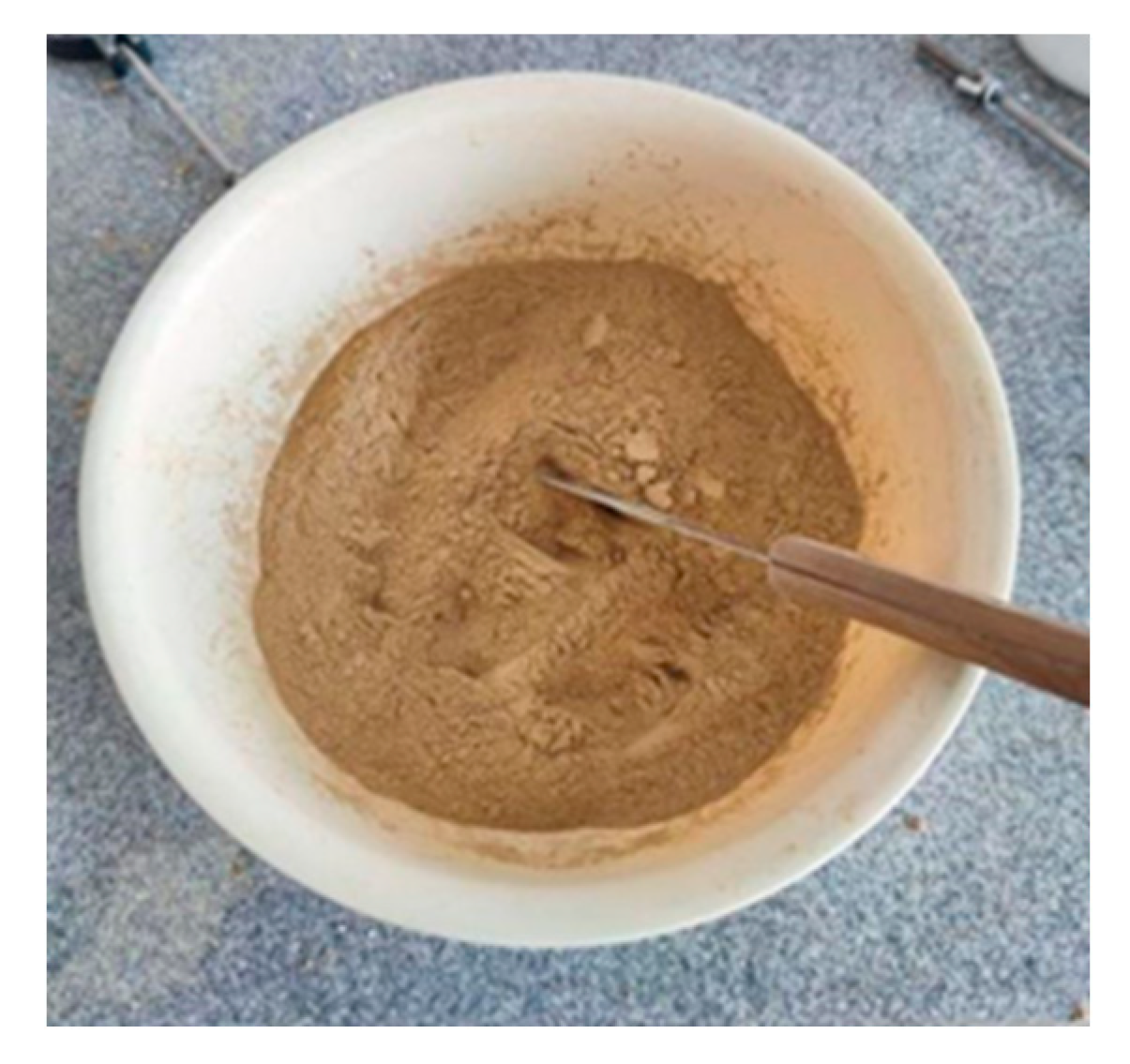
Figure 2.
EPS beads.

Figure 3.
UCS instrument.
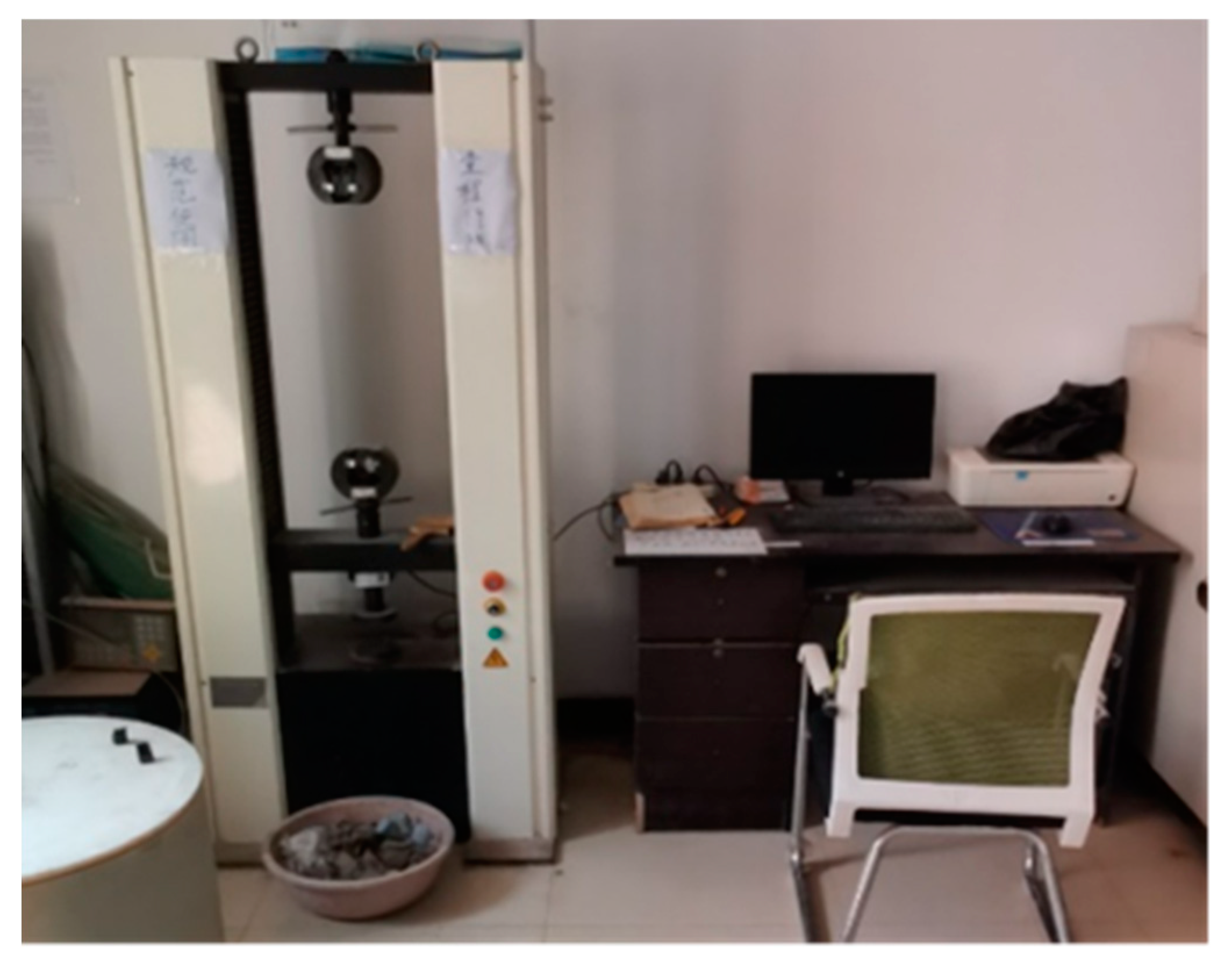
Figure 4.
Scanning electron microscope.
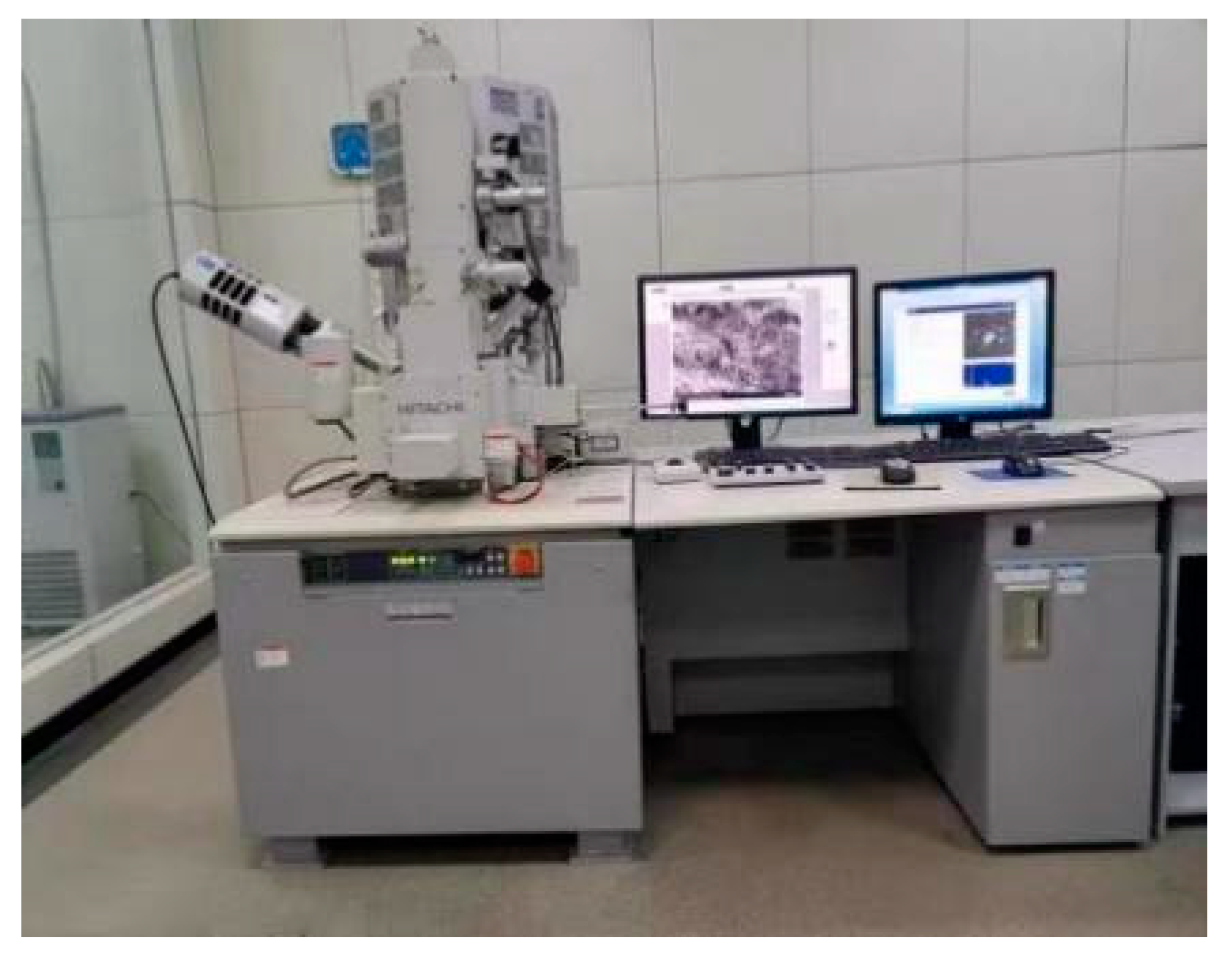
Figure 5.
Effect of EPS content on the density of lightweight soil.
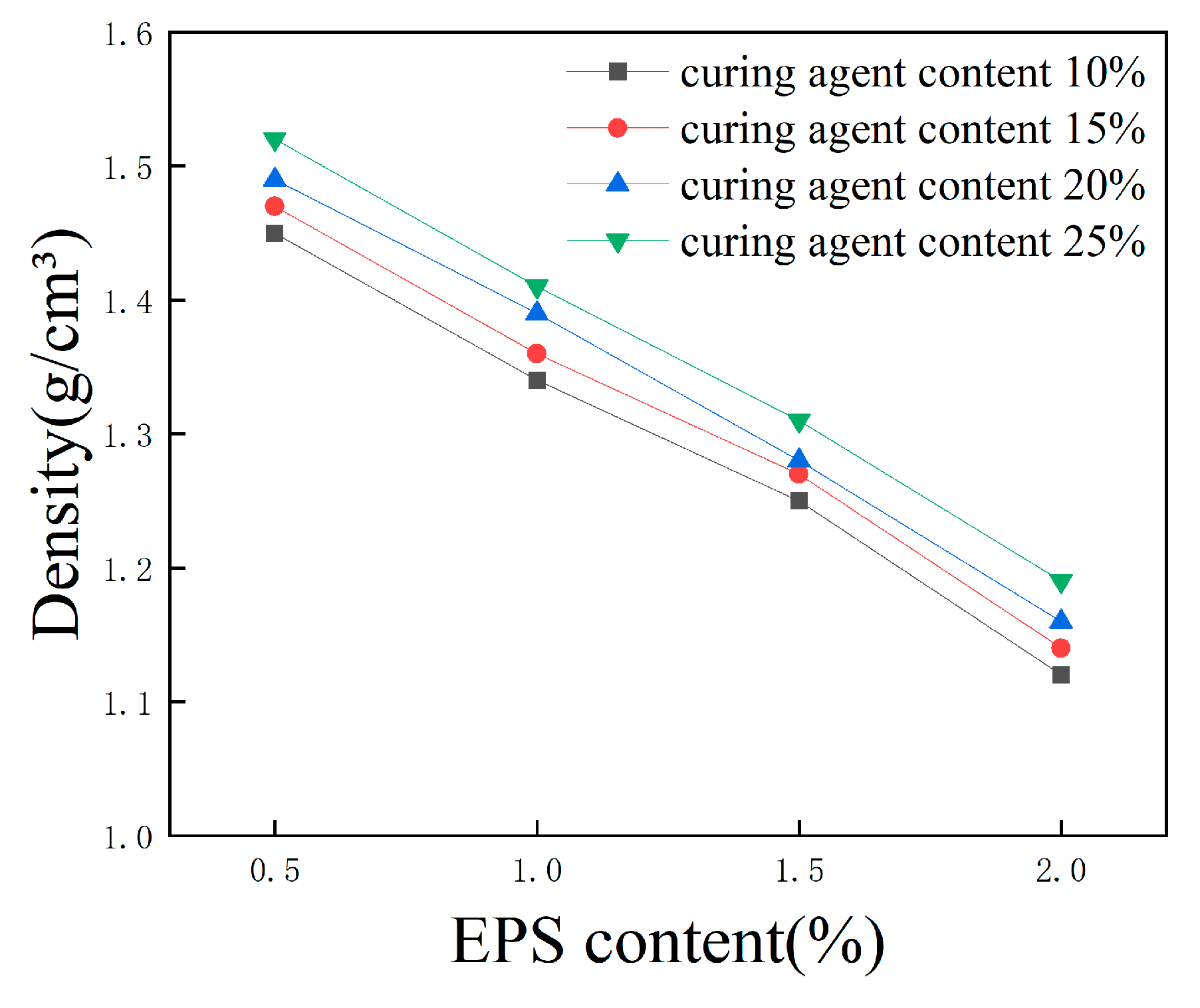
Figure 6.
Unconfined stress-strain curve of raw soil.
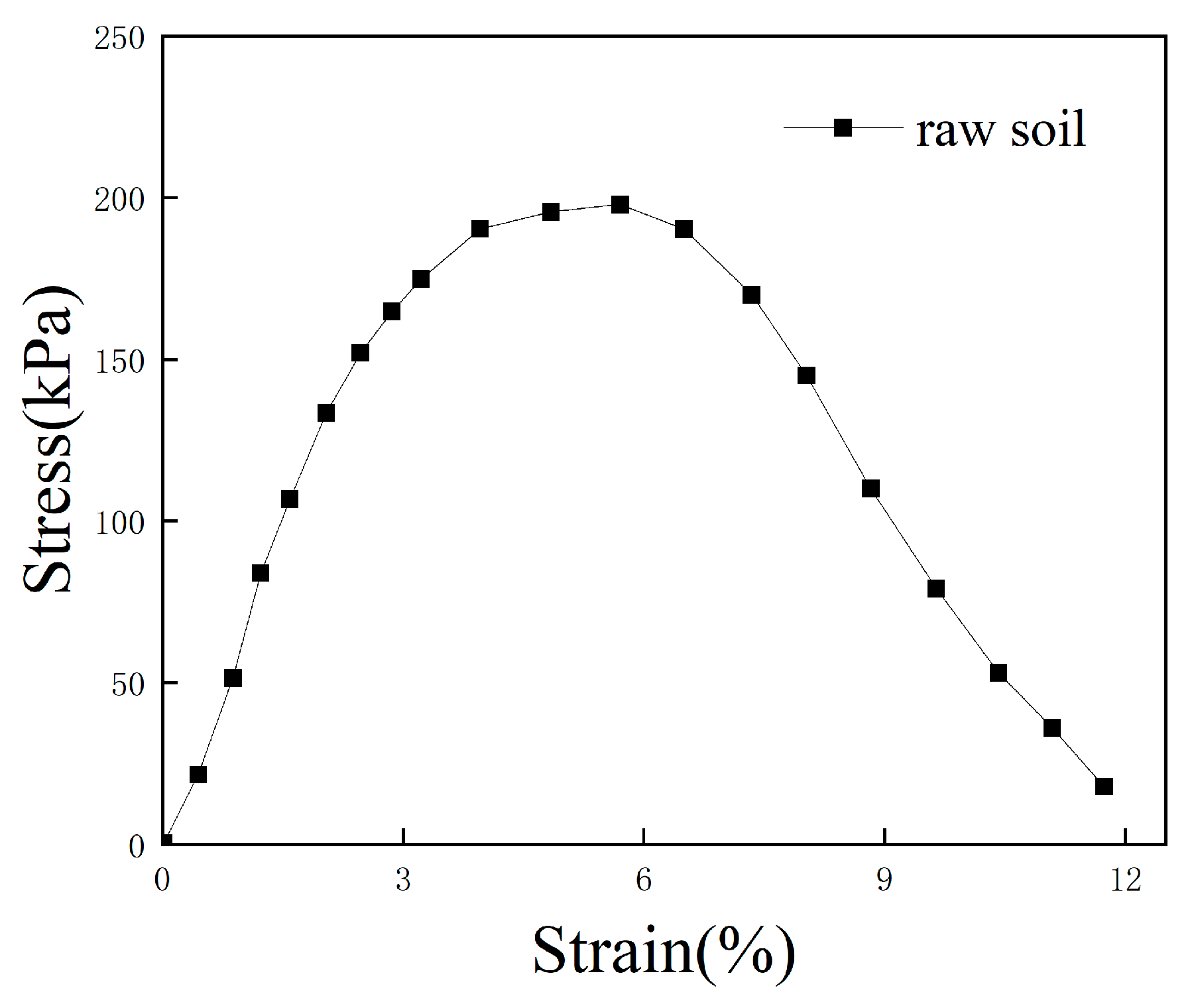
Figure 7.
Effect of EPS content on stress-strain curve.
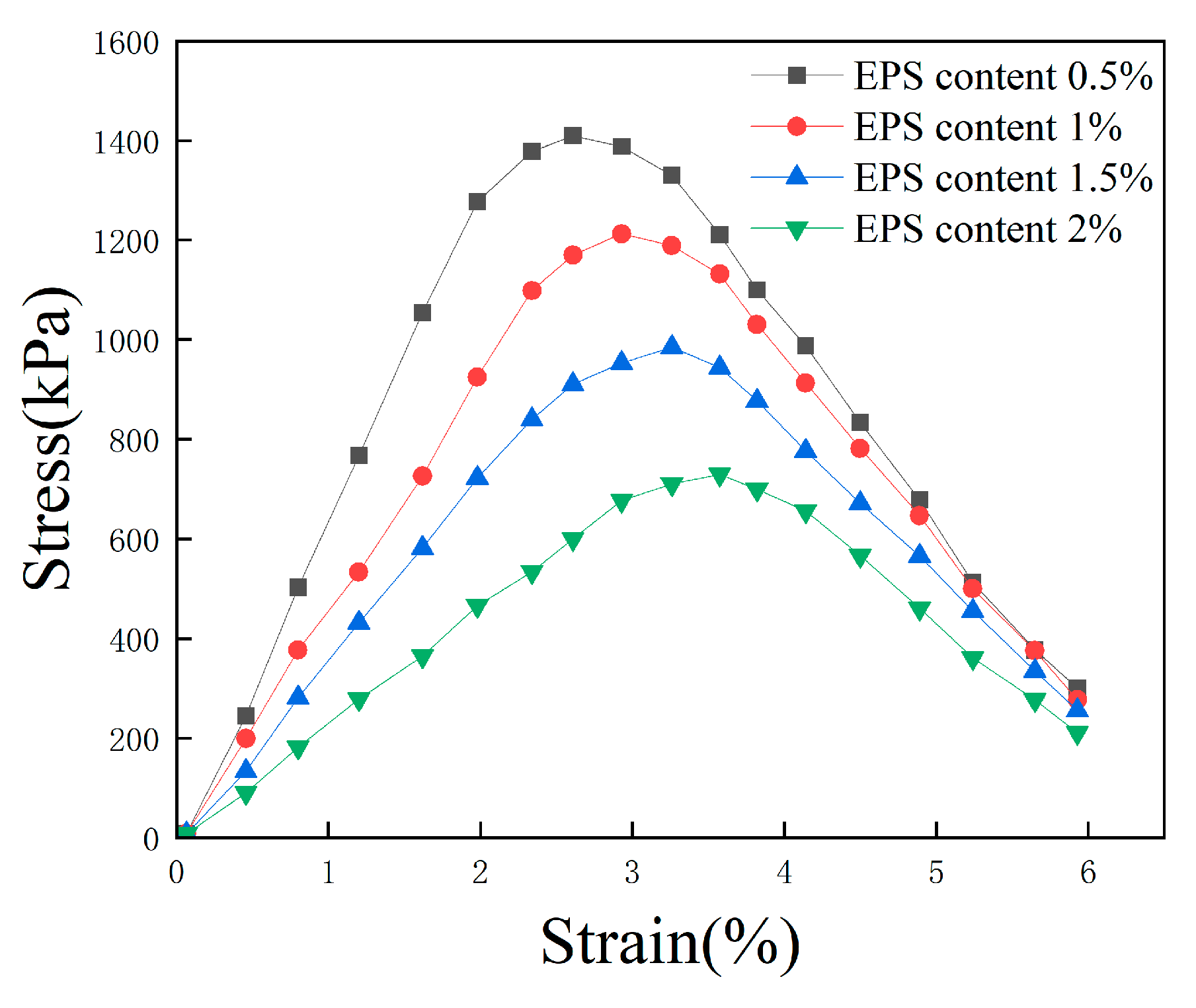
Figure 8.
Effect of total curing agent content on stress-strain curves.
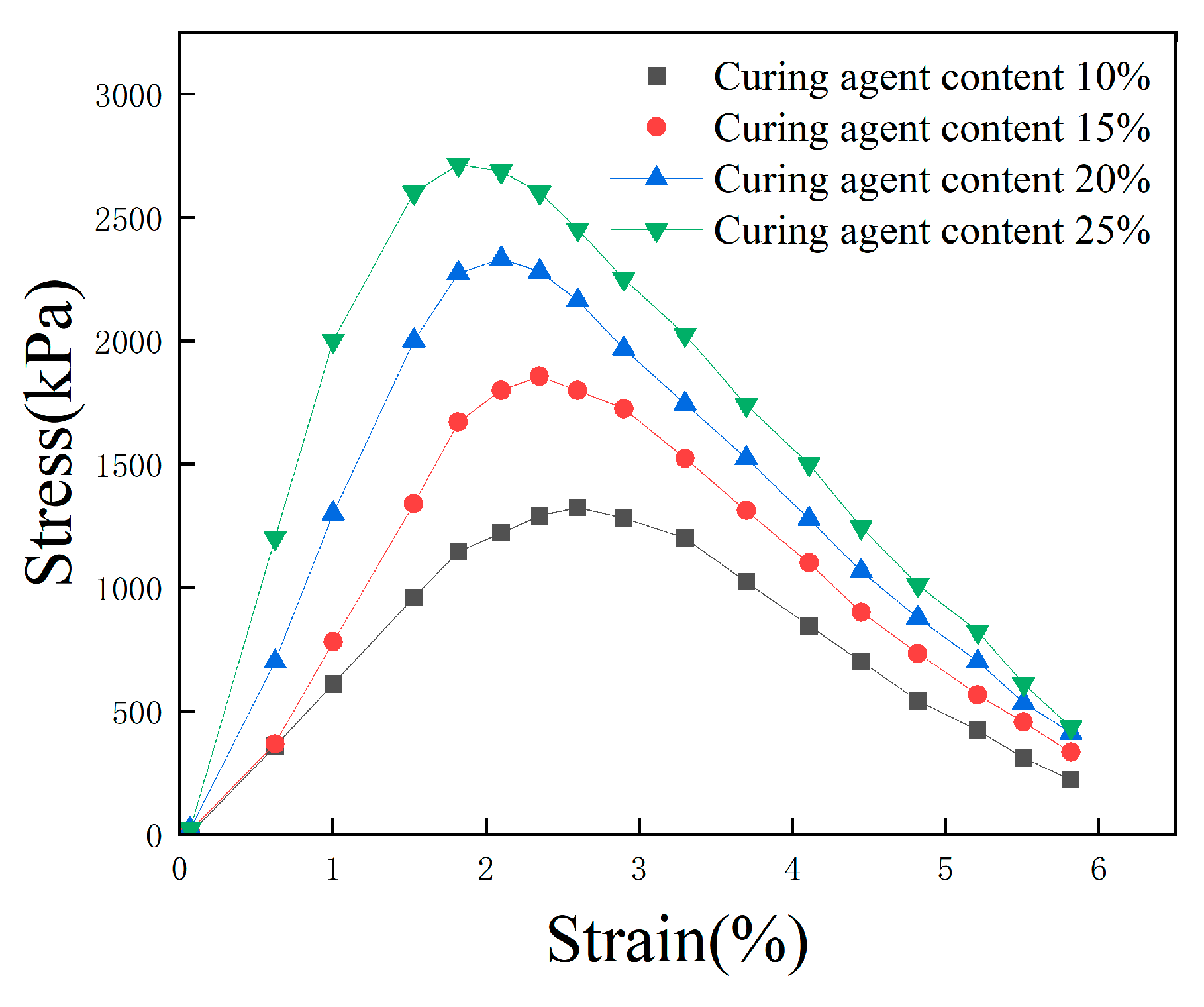
Figure 9.
Effect of fly ash on stress-strain curves.
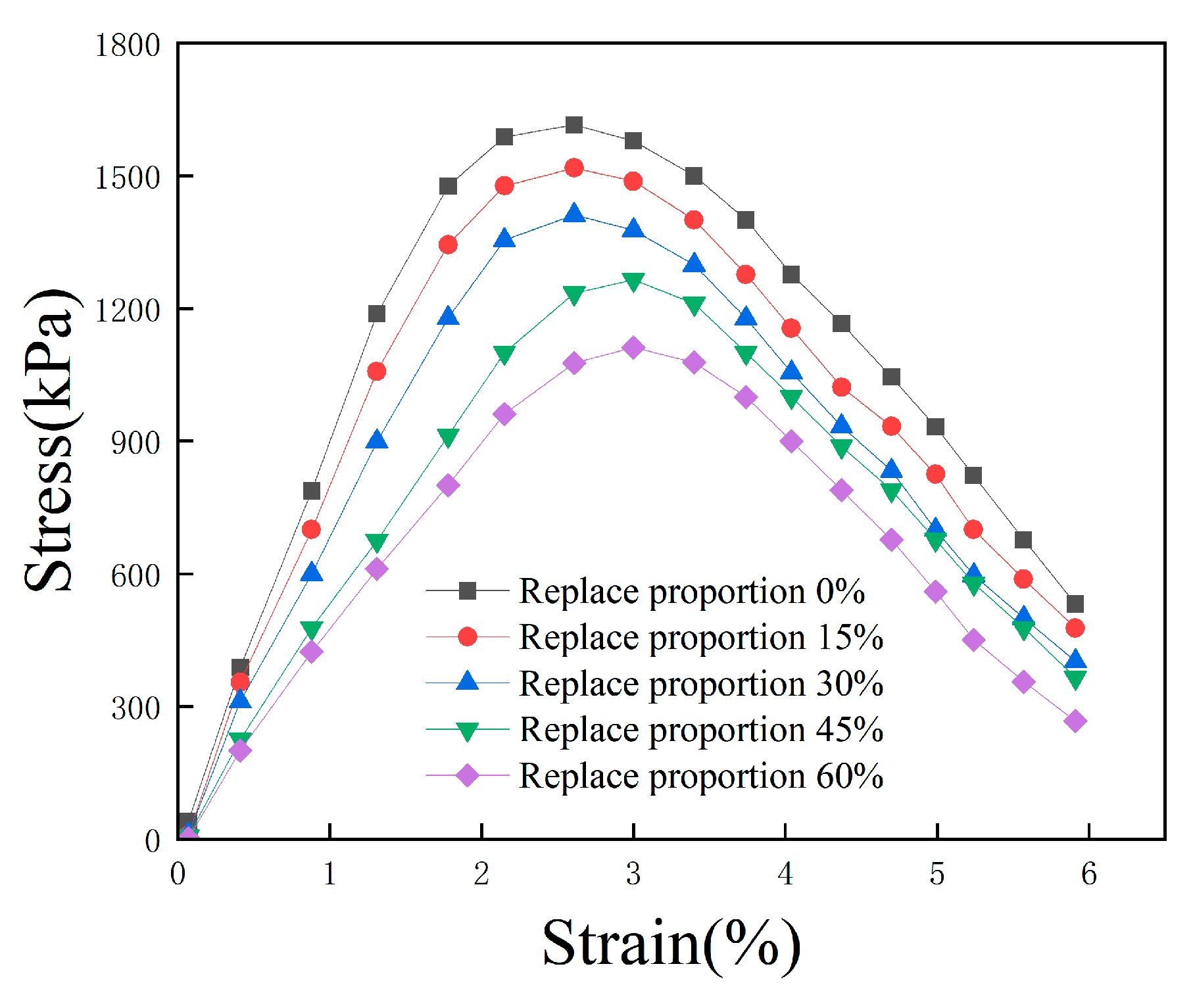
Figure 10.
Effect of EPS content on unconfined compressive strength.
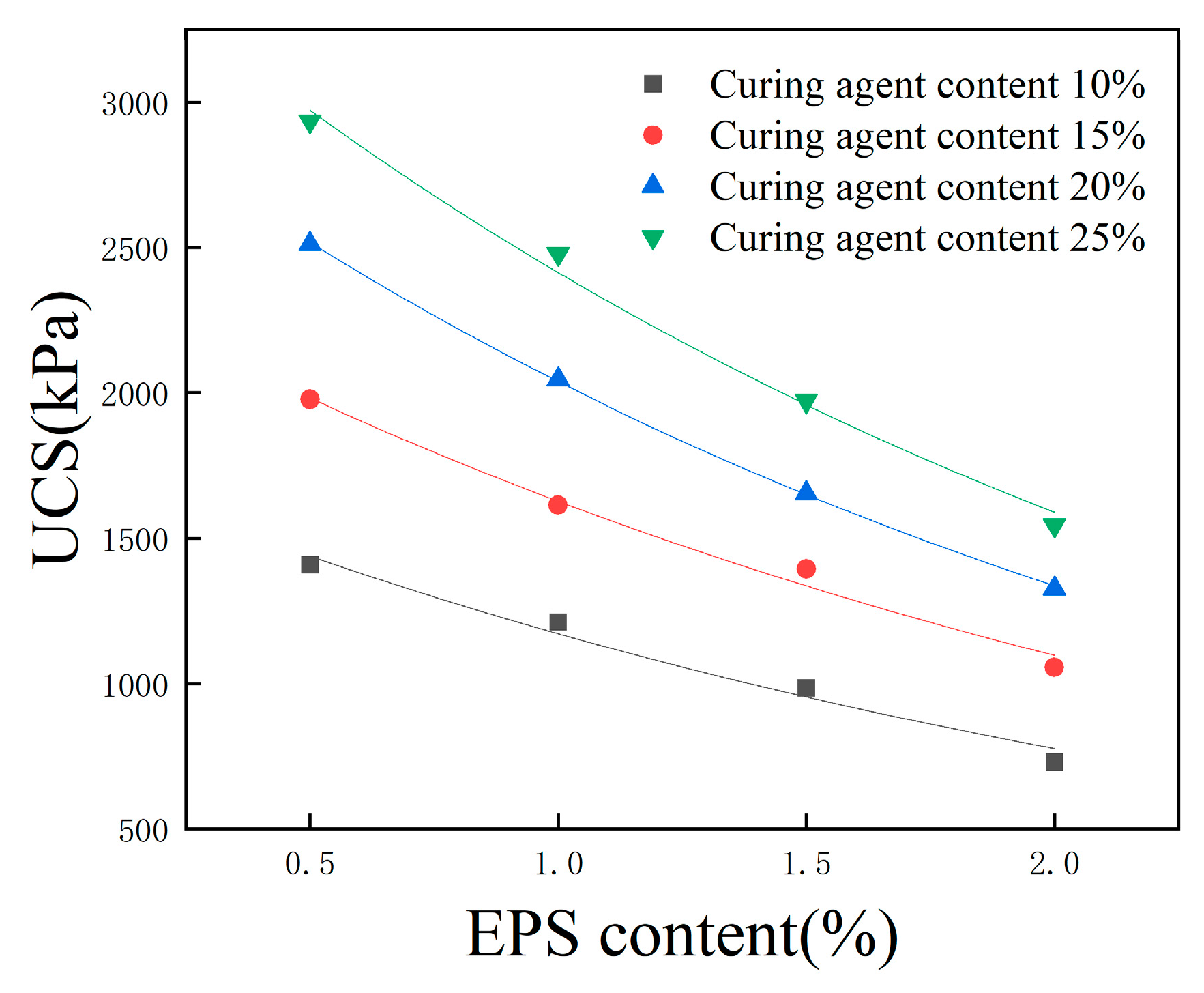
Figure 11.
Effect of total curing agent content on unconfined compressive strength.
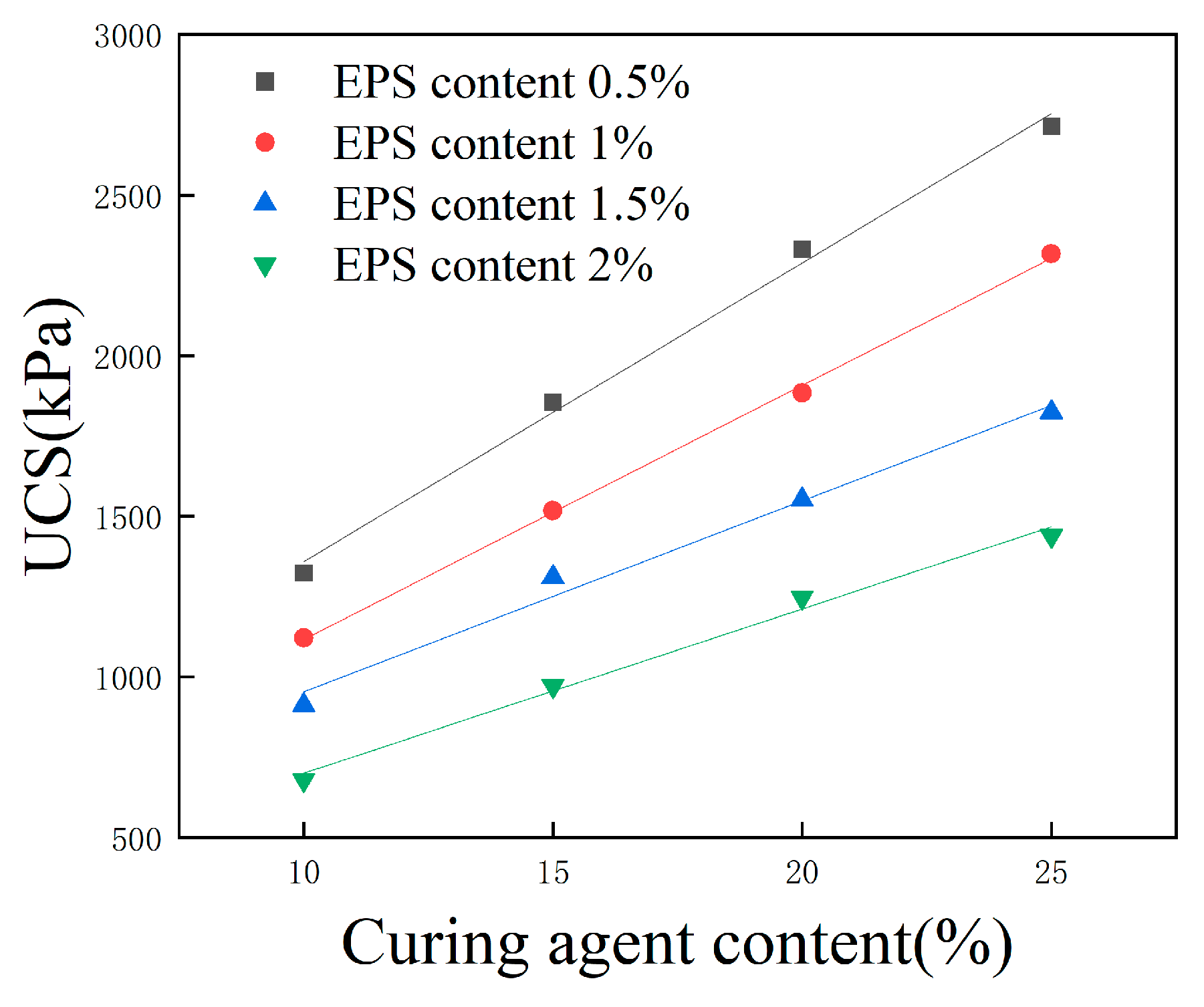
Figure 12.
Effect of fly ash on unconfined compressive strength.
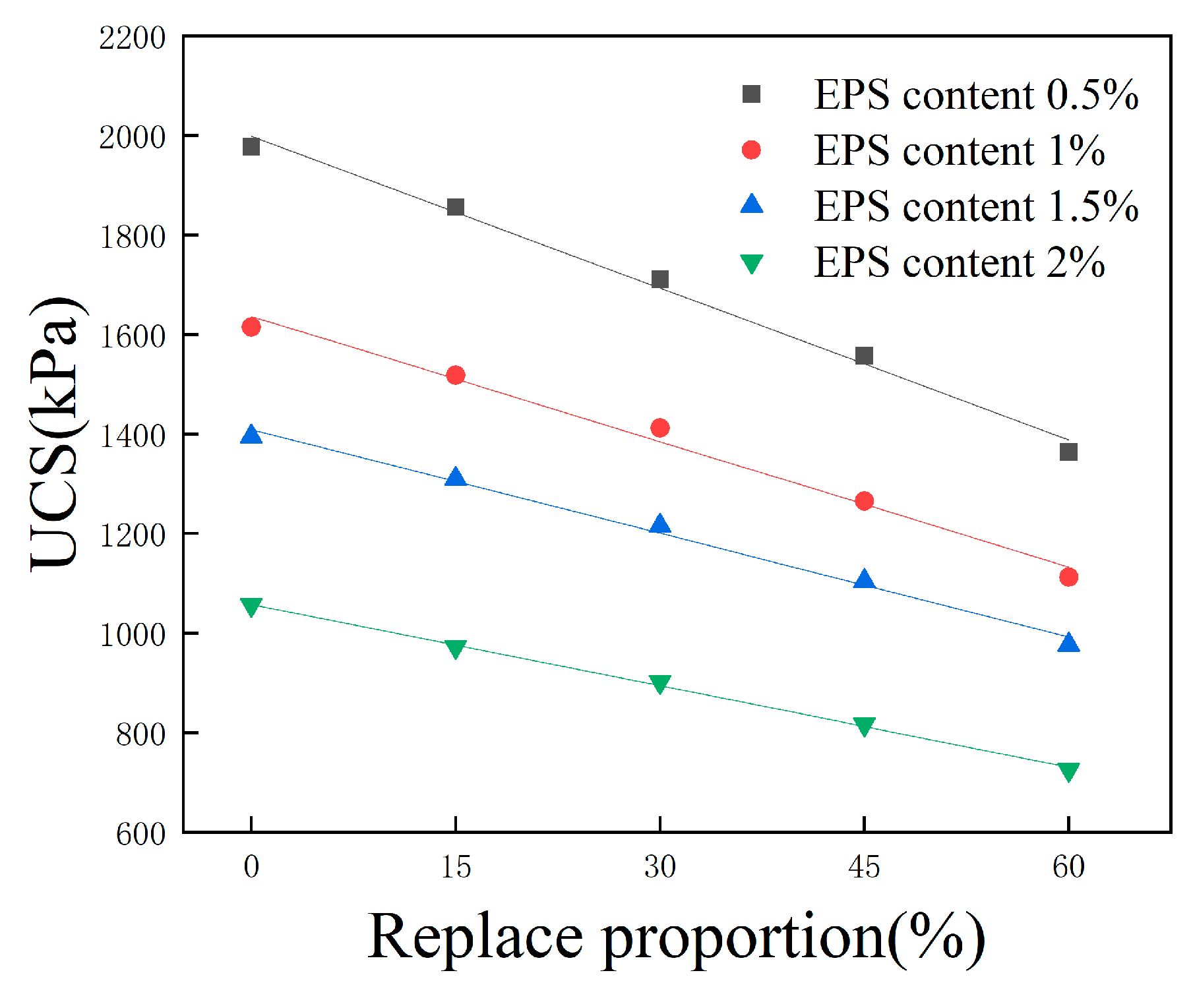
Figure 13.
Failure patterns of lightweight soil with different material ratios.
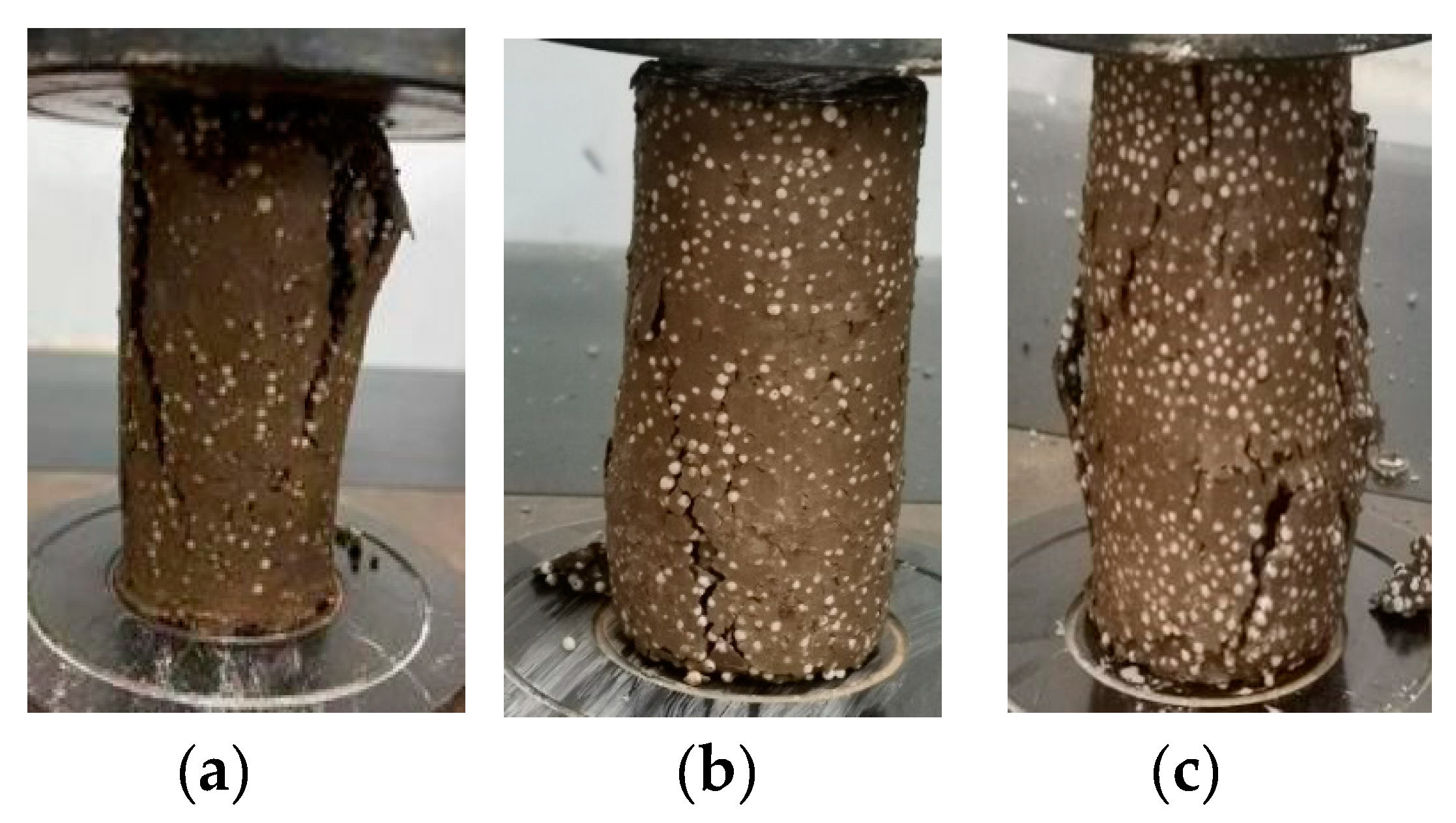
Figure 14.
Micro pictures of lightweight soil at different magnifications.
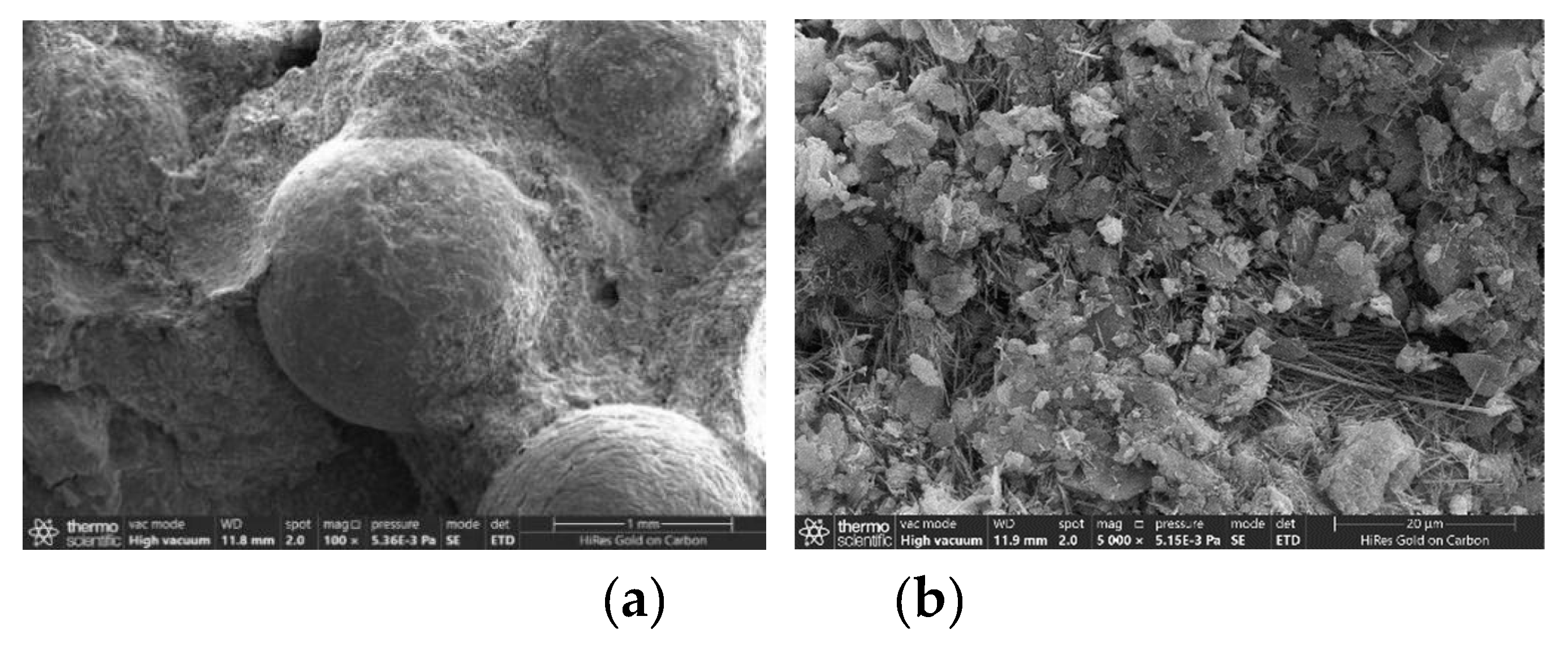
Figure 15.
Micro pictures of lightweight soil with different proportions of cement replaced by fly ash.
Figure 15.
Micro pictures of lightweight soil with different proportions of cement replaced by fly ash.
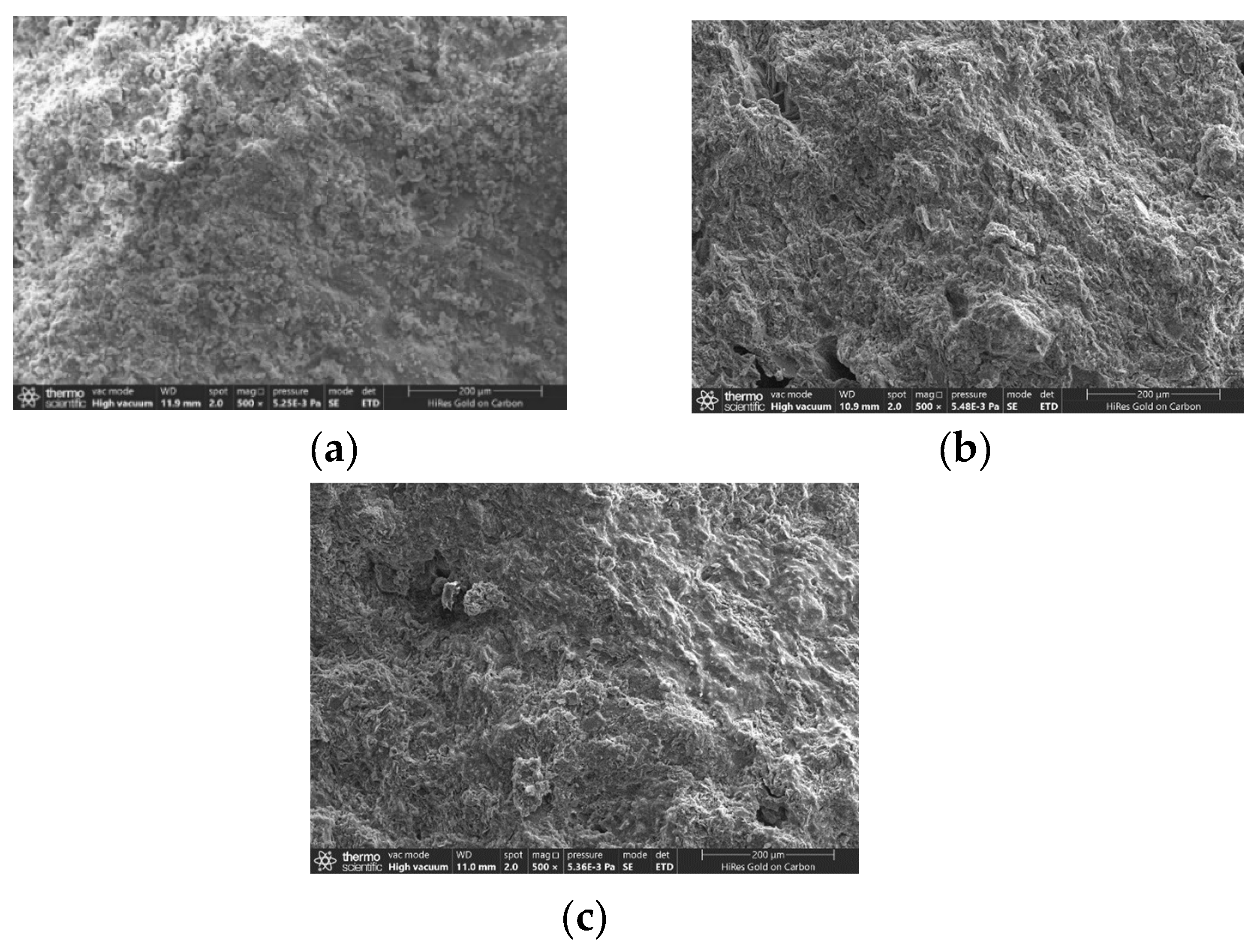

Table 1.
Physical parameters of raw soil.
| Natural water content (%) | Optimum water content (%) | Natural density (g/cm³) | Maximum dry density (g/cm³) | plastic limit (%) |
liquid limit (%) |
|---|---|---|---|---|---|
| 24.8 | 16.2 | 1.99 | 1.804 | 17.2 | 31.1 |
Table 2.
Chemical composition of cement and fly ash.
| Composition | CaO | Fe2O3 | SiO2 | Al2O3 | MgO | SO3 | Loss |
|---|---|---|---|---|---|---|---|
| cement | 60.2% | 3.3% | 22.6% | 6.3% | 2.3% | 1.7% | 1.0% |
| fly ash | 5.6% | 2.5% | 43% | 23% | 0.95% | 0.8% | 3.1% |
Table 3.
The test scheme of Lightweight soil.
| scheme | EPS content (%) | Total curing agent content (%) | Replace proportion (%) |
|---|---|---|---|
| 1 | 0.5, 1, 1.5, 2 | 10, 15, 20, 25 | 0 |
| 2 | 0.5, 1, 1.5, 2 | 10, 15, 20, 25 | 15 |
| 3 | 0.5, 1, 1.5, 2 | 15 | 0, 15, 30, 45, 60 |
Table 4.
Fitting parameters of UCS and EPS content.
| Total curing agent content | ||
| 10% | 1768.17 | 0.41 |
| 15% | 2415.61 | 0.39 |
| 20% | 3108.61 | 0.42 |
| 25% | 3662.59 | 0.42 |
Table 5.
Fitting parameters of UCS and total curing agent content.
| EPS content | ||
| 0.5% | 92.96 | 429.7 |
| 1% | 79.1 | 326 |
| 1.5% | 59.5 | 358.5 |
| 2% | 51.1 | 190 |
Table 6.
Fitting parameters of UCS and the proportion of cement replaced by fly ash.
| EPS content | ||
| 0.5% | -10.2 | 1998 |
| 1% | -8.4 | 1636.2 |
| 1.5% | -6.9 | 1408.8 |
| 2% | -5.5 | 1057.6 |
Disclaimer/Publisher’s Note: The statements, opinions and data contained in all publications are solely those of the individual author(s) and contributor(s) and not of MDPI and/or the editor(s). MDPI and/or the editor(s) disclaim responsibility for any injury to people or property resulting from any ideas, methods, instructions or products referred to in the content. |
© 2024 by the authors. Licensee MDPI, Basel, Switzerland. This article is an open access article distributed under the terms and conditions of the Creative Commons Attribution (CC BY) license (http://creativecommons.org/licenses/by/4.0/).
Copyright: This open access article is published under a Creative Commons CC BY 4.0 license, which permit the free download, distribution, and reuse, provided that the author and preprint are cited in any reuse.


