

Submitted:
13 October 2024
Posted:
15 October 2024
You are already at the latest version
Abstract
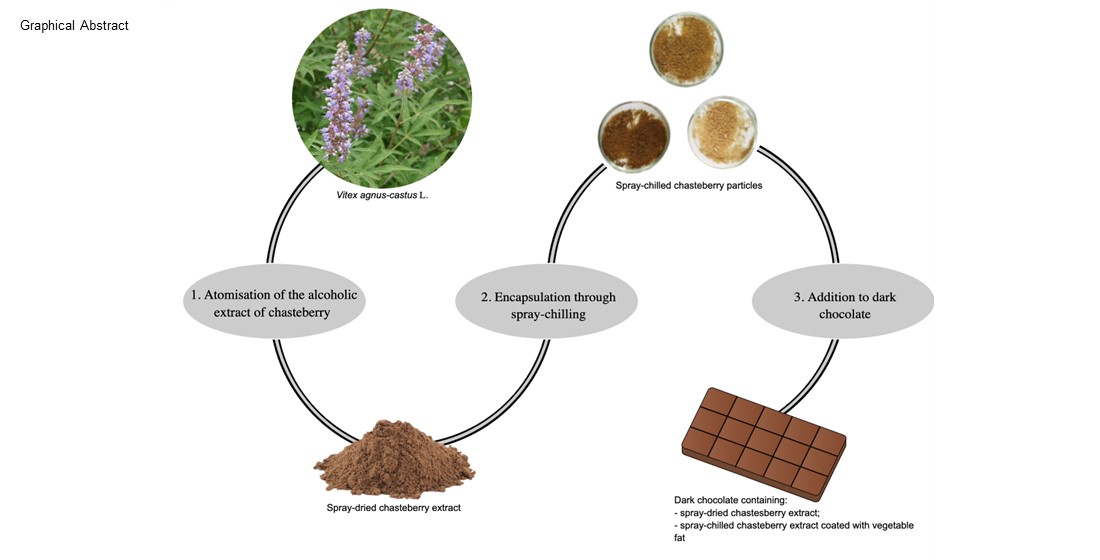
The extract of the fruit chasteberry has phytotherapeutic effects, making it an important ally in women's well-being during premenstrual syndrome (PMS); however, it contains alcohol in the composition, has a bitter taste and spicy flavor, and can also cause a burning sensation. Encapsulation techniques can minimize these problems. In this context, the present study aimed to encapsulate the concentrated extract of chasteberry and develop dark chocolate with the potential for minimizing PMS symptoms by adding 2.5% free or microencapsulated chasteberry extract in the chocolate bar formulation. Microparticles loaded with chasteberry extract were produced by spray drying and covered by spray-chilling using Arabic gum and vegetable fat as the carriers, respectively. The particles were characterized by morphology, size, X-ray diffraction, TGA, and stability of total phenolics and casticin – the molecule responsible for phytotherapeutic effects-. The best particle was added to a dark chocolate mixture. The chocolate samples produced with free and encapsulated extracts were submitted to sensory trials. The two paired comparison tests proved that particles efficiently for masking the chasteberry extract burning sensation and bitterness in the chocolates. Besides, particles were also efficient in protecting casticin. In this context, the encapsulation using the combination of both techniques was efficient in promoting casticin and total phenolics stability and producing chocolate with good sensory aspects. Therefore, it was possible to develop a product that can be used in clinical trials to evaluate its potential to minimize PMS symptoms.
Keywords:
encapsulation
; casticin
; antioxidant
; menopause
; monk’s pepper
; VAC fruits
; functional food product
1. Introduction
Vitex agnus-castus L., commonly known as chaste, is a small tree from the Verbenaceae family, native to the Mediterranean and Western Asia. Nowadays, it is cultivated worldwide. Its fruit, called chasteberry, vitex, monk's pepper, or VAC, extract is a popular herbal treatment, predominantly used for female reproductive conditions in Anglo-American and European practice [1].
According to Van Die et al. [1] and Verkaik et al. [2], who systematically reviewed the treatment of premenstrual syndrome with preparations of chasteberry, studies have revealed that the consumption of this fruit extract might contribute to the well-being of women during premenstrual syndromes by alleviating some symptoms and improving life quality.
Some authors attribute these health benefits to phenolic compounds present in the chasteberry extract [2,3]. Others ascribe it mainly to casticin [4]. In fact, casticin is a chemotaxonomic index for the genus Vitex, and it is also the major phytochemical in chasteberry fruit extract [5]. However, at the moment, it is not explicit what compounds are presented in chasteberry extract that are responsible for its supposed women's health effect.
Regarding chasteberry consumption is generally restricted to pharmaceutical and health benefits, especially for disorders linked with the female reproductive system [6]. The lack of functional products containing this chasteberry fruit or its extract, could instigate new searches and the development of other alternatives to consume this product. In fact, El-Nawasany, [6] developed and evaluate stirred yoghurts containing (0.5, 1.0, 1.5 and 2.0% w/v) of Vitex agnus-castus (mainly the fruiting tops and leaves) dried and milled.
Although the production of this kind of product has a few limitations due to intense sensory characteristics, such as bitterness and spicy flavour, a manner to overcome those sensory aspects, which might be a problem, is the microencapsulation of chasteberry fruit extract. Therefore, the microencapsulation would minimise the fruit's and extract’s unpleasant sensory attributes and protect the antioxidant capacity of phenolic compounds from oxidation caused by unfavourable food processing and storage conditions such as high temperature, oxygen or/and light exposure, high pH, and high moisture content, among others.
Microencapsulation techniques produce small "packaging" called microcapsules, microspheres, or microparticles. The microstructure consists of one or more bioactive materials that are involved or immobilised by one polymer or more or a lipid [7]. These structures have many functionalities, such as offering protection from adverse environmental conditions, masking, or minimising undesirable flavours.
In this way, the use of some encapsulation technologies for minimising undesirable sensory characteristics of food ingredients, such as the bitter taste of protein hydrolysate [8,9], astringent sensation, and intense cinnamon aroma of proanthocyanidin-rich cinnamon extract [10,11] have been studied already. Nonetheless, to the best of our knowledge, it is the first time that a combination of spray-drying and spray-chilling technologies has been used for this purpose.
Several microencapsulation techniques are available for exploration: spraydrying, spray-chilling, ionic gelation, and complex coacervation. The spray-drying technology is based on the nebulisation of an emulsion, suspension, or solution in contact with hot air, which promotes rapid drying, transforming the droplets into particles. The spray-chilling technique, in its turn, is similar to the spray-drying process, but molten fat is used as an encapsulant. Then, it is atomised inside a cold chamber, promoting the mixture solidification and formation of particles. Both methods produce microparticles instead of microcapsules. The active material is dispersed throughout all the particle volumes rather than surrounded by an encapsulating material. However, with the combination of both techniques, it is expected that all the chasteberry compounds will keep inside the double-shell particles as a microcapsule, where they would be protected and their unwanted sensory effect masked. In addition, the microparticles release of the chasteberry extract occurs mainly in the intestine due to fat digestion, as demonstrated by Silva et al. [12] performing a simulated digestion assay of phenolic compounds present in guarana seed extract encapsulated by the combination of spray-drying and spray chilling techniques. The authors observed that the release of phenolic compounds increased over time, but achieved the maximum release in the intestinal phase of the assay.
Some studies reported chocolate cravings during peri and premenstrual days [13,14,15,16,17,18]. According to Michener et al. [19], the chocolate craving during peri and premenstrual periods is probably justified because of its physiological basis. Chocolate is a dense source of calories and contains some known activating/arousing substances, such as caffeine and theobromine, and sympathomimetic amines, tyramine and phenylethylamine [20]. In addition, it has anandamide and two analogues, N-oleoylethanolamine and N-linoleoylethanolamine, resulting in a calming and anxiolytic effect [21]. Then, combining the desire to consume chocolate during this period and the benefits of chasteberry extract, free and microencapsulated chasteberry extract were added to dark chocolate.
Therefore, aiming to develop a functional, luxury and comfort food with the potential to minimise PMS symptoms, this study developed dark chocolate bars containing free and encapsulated chasteberry extract. Hence, chasteberry extract was spray-dried, and the particles were coated by spray-chilling. The particles were characterised by many parameters, including the stability of total phenolics and casticin during storage. Chocolates were also evaluated regarding the perception of extract bitterness and sensory acceptance.
2. Material and Methods
2.1. Materials
Ripe and dried fruits were obtained from Chá & Cia - Ervas Medicinais (São Paulo, Brazil). Arabic gum (Dinâmica Química Contemporânea Ltda., Brazil) and vegetable fat (Triangulo Alimentos, Itapolis, Brazil) with a melting point of around 45 °C, were used as carrier agents at the spray-drying and spray-chilling processes, respectively. For dark chocolate preparation, sugar (União, Brazil), cocoa liquor (Barry Callebaut, Brazil), cocoa butter (Barry Callebaut, Brazil), soy lecithin (Bunge, Brazil) and polyglycerol polyricinoleate (PGPR, Danisco, Brazil) were used.
2.2. Production of Particles
The alcoholic extract of chasteberry was prepared according to Barrientos et al. [22] and concentrated until 20 g of solids per 100 g of extract using a rotatory evaporator at 45 °C. Then, the concentrated extract was added to Arabic gum in 5 g/100 g extract concentrations. Finally, this feed material was atomised using spray-dryer equipment (Model MSD 1.0, Labmaq, Ribeirão Preto, Brazil) at operational conditions described by Barrientos et al. [22]. Subsequently, the spray-dried powder (5, 10 and 15 g) was blended with 50 g of a vegetable fat (previously melted at 60 °C). These blends were atomised using the same operational conditions as spray-drying, except for the inlet air temperature, set at 14 °C. For producing a control, the concentrated extract without any carrier (as Arabic gum) was spray-dried in the same conditions. This material was used for dark-chocolate production and were call free extract (FC).
2.3. Characterisation of Powders and Their Particles
The powders obtained by combining spray-drying and spray-chilling techniques were stored at 25 °C with 38% relative humidity (RH). Analyses of water content, water activity, particle size, X-ray diffraction, the morphology of the particles by scanning electron microscopy (SEM), and thermogravimetric were performed, aiming to characterise the powders. In addition, the study of the stability of phenolic compounds and casticin were evaluated during 120 days of storage. All analyses were executed in triplicate.
2.3.1. Moisture and Water Activity (Aw)
The moisture of the powders was determined using a moisture analyser (Ohaus, model MB 35, Ohio, USA). The water activity of the powders was obtained using the AQUALAB equipment (Decagon Devices, Pullman, USA). Both data were collected at day zero, in other words, on the same day as the extract was encapsulated and after 120 days of storage at 25 ºC and 38% RH, with the presence of oxygen but no light.
2.3.2. Particle Sizes
The particle sizes were analysed according to Salvim et al. [23] by laser diffraction (Sald-201V, Shimadzu, Kyoto, Japan). The samples were dispersed in absolute ethanol, and the particle sizes were expressed as the De Brouckere mean diameter (D4,3). The sample analyses were performed on the same day of encapsulation and after 120 days of storage at 25 ºC and 38% RH, with presence of oxygen but no light.
2.3.3. X-ray Diffraction (XRD)
Polymorphic forms of the powders were evaluated by X-ray diffraction (XRD) analysis using a AXS Analytical X-Ray Systems Siemens D5005 (Germany). The powders were scanned from 5° to 55° of 2θ, at 3°/min, as described by Xiao et al. [24].
Analyses were performed at day zero and after 120 days of storage at 25 ºC and 38% RH, with the presence of oxygen but no light.
2.3.4. Scanning Electronic Microscopy (SEM)
The morphology of particles was evaluated by scanning electronic microscopy. It was executed by using a TM3000 Tabletop Microscope (Hitachi, Japan) at 500x or 100x magnification, without covering the microparticles with gold.
2.3.5. Thermogravimetric Analysis of the Powders
Thermogravimetric analysis was performed in the Schimadzu TGA-50 equipment (Japan), calibrated at a heating ratio of 10 °C/min, with high purity calcium oxalate monohydrate.
2.3.6. Total Phenolic Compounds of the Powders
Folin-Ciocalteu reagent was used to quantify the phenolic compounds in the powders. They were expressed as milligrams of gallic acid equivalents per gram of dry matter of powder, according to Singleton et al. [25], with modifications. Thus, the reaction mixture was prepared with 0.25 mL of sample, 2 mL of distilled water, and 0.25 mL of Folin-Ciocalteu reagent. After 3 min at room temperature, 0.25 mL of saturated Na2CO3 aqueous solution were added to the reaction mixture, followed by incubation at 37 °C in a water bath for 30 min for colour development. The absorbance was measured at 750 nm (Ultrospec 2000, Pharmacia Biotech), and a standard curve of gallic acid was used to determine the total phenolic concentration.
The results were expressed as mg GAE/ g (mg of gallic acid/g of sample) in dry basis.
2.3.7. Casticin Quantification in the Powders by HPLC
The quantification of casticin was performed according to Hoberg et al. [5] using a Shimadzu high-performance liquid chromatography (HPLC) system, model Prominence, with a diode array detector. The column oven was kept at 30 °C, and 10 µL of the sample diluted in methanol was injected into the equipment. Separations were conducted at a flow rate of 1 mL/min, and the mobile phase was composed of methanol
(A) and 0.5% phosphoric acid solution (B), applied in a gradient as follows (A:B): from 0-13 min (50:50), 13 min (65:35), 13.1-18 min (100:0), 18-23 min (50:50).
Chromatograms were acquired at 256 nm.
The results were expressed as µg casticin/g of sample (in dry basis).
2.3.8. Evaluation of the Stability Of Total Phenolic Compounds And Casticin
Encapsulated extract of chasteberry was portioned in glass vials with plastic lids. They were stored in a controlled environment (25°C and 38% RH), with the presence of oxygen, but protected from light for 120 days. The total phenolic content and casticin were evaluated according to items 2.3.6 and 2.3.7, respectively, at day zero and after 15, 30, 60, 90, and 120 days of storage.
2.4. Production of Dark Chocolate Added of Chasteberry Extract Free and Encapsulated
The production of dark chocolate bars containing free and encapsulated chasteberry extract was performed using the conventional manufacturing system. The samples were prepared at the Ceral Chocotec pilot plant - Instituto de Tecnologia de Alimentos (Campinas, Brazil) using the following composition: 47% sugar (w/w), 40% cocoa liquor (w/w), 10% cocoa butter (w/w), 0.3% soy lecithin (w/w), 0.2% PGPR (w/w) and 2.5% (w/w) of free chasteberry extract (plus Arabic gum and vegetable fat in the same proportion that they were in the encapsulated extract) or encapsulated chasteberry extract.
Before refining, the ingredients were mixed in an agitated jacketed tank (Inco, Germany) with water circulation maintained at 45 °C. After total melting of the lipid phase and complete homogenisation, the mixture was processed in the five vertical roll refiner (JAF Inox, Duyvis Wiener, Brazil), cooled by a chiller (MeCalor, São Paulo, Brazil), and maintained at a temperature of 7 °C ± 1 °C. First, the pressure between the cylinders was adjusted to obtain maximum particle sizes smaller than 28 µm, and measurements were performed using a digital micrometre. Then, the blend was conched at 65 °C in a homogenising conching machine (JAF Inox, Duyvis Wiener, Brazil), set up to carry out the stages of dry conching (4 hours, 60 Hz), plastic conching (19.5 hours, 60 Hz) and liquid conching, with the addition of emulsifiers (30 minutes, 30 Hz). Next, the chocolate was tempered or pre-crystallised in a bench top tempering machine (ACMC, New York, United States), starting at a temperature of 40°C and cooled down to the temperature of 28 °C, at a cooling rate of 2 °C/minute, ideal for obtaining the crystal in the Beta V polymorph. The free and microencapsulated chasteberry extracts were added to the product during the tempering stage when the chocolate temperature reached 35°C aiming to preserve the microparticle integrity. After that, the pre-crystallised chocolate was poured into polycarbonate moulds, and air bubbles were removed by vibration. Finally, chocolate bars were crystallised in a cooling tunnel (SIAHT) operating with a temperature range for the inlet and outlet of 15-17°C and 11-13°C in the middle of the tunnel. These temperature conditions allowed the lipid matrix consolidation in the Beta Form, giving the chocolate the desired physical properties (hardness and melting).
After the cooling process, the samples were unmoulded, wrapped in aluminium foil and stored in a BOD oven (ELETROlab®, São Paulo, Brazil) at a controlled temperature (19 °C ± 1 °C) and protected from light and humidity to allow the complete formation of crystal lattice desirable in chocolates.
It is essential to mention that three treatments were prepared: one containing the encapsulated powder produced according to item 2.2 (15 g of spray-dried extract per 50 g of vegetable fat); the control, in which there was no addition of extract or vegetable fat; and the last treatment was composed by the free extract and carriers agents used to produce the encapsulated extract (Arabic gum and vegetable fat, in the same proportion as particles, but mechanically mixed into a powder).
Note that a previous study obtained the free extract through a spray-drying process without any carrier addition [22].
The chocolate with encapsulated and free chasteberry extract was named “EC” and “FC”, respectively.
2.4.1. Stability of Casticin and Total Phenolic in Chocolates
The stability of phenolic compounds and casticin in chocolates wrapped with aluminium foil and stored at 22 °C were monitored over 0, 7, 15, 30, 45, and 60 days of storage, using the methods of quantification previously described on items 2.3.6 and 2.3.7, respectively. Nonetheless, for the extraction of phenolic compounds and casticin, the sample was first degreased and then extracted with an 80% (v/v) ethanol solution, as described by Adamson et al. [26] and Alanón et al. [27]. Thus, 3 g of ground chocolate sample was mixed with 10 ml of n-hexane, homogenised using a vortex, placed in an ultrasonic bath for 5 min, and centrifuged (2935 x g for 5 min). The procedure was repeated, but adding only 5 mL of n-hexane. Following, the samples were dried to remove residual n-hexane. The extraction was performed twice to maximise the release of total phenolic compounds and casticin. This way, 2.5 mL of alcoholic solution (80% v/v) was added to the chocolate that was previously defatted. The mixture was homogenised by vortexing, and then using an ultrasonic bath for 10 min. Finally, the mixture was centrifuged (2935 x g for 5 min), totalling 5 mL of the final extract. For the quantification of casticin, the extract was filtered, while for phenolic compounds measurements, the chasteberry extract was diluted in a ratio of 0.8:10 in an 80% (v/v) ethanol solution.
2.4.2. Chocolate Sensorial Analyses
Two paired comparison tests (two-tailed) were performed, according to Meilgaard et. al [28], to evaluate the efficiency of the microencapsulation process in masking or attenuating the bitterness and burning sensation caused by the chasteberry extract. The research ethics committee approved the sensory evaluation study of the institution, the protocol number (CAAE 56690216.2.0000.5422) and all panellists signed the consent form.
In the first test, the panellists were previously selected according to their acuity in the perception of the sensation of spicy (15 participants) and bitterness (17 panellists). They were asked to compare the following samples: i) sample containing the encapsulated extract; ii) sample containing free freeze-dried extract and the encapsulating agents in the same proportion as they appear in the particles, but mechanically mixed into a powder.
The second test was performed with the same group of panellists but using the chocolates obtained according to item 2.4. The selected participants tasted the samples EC and FC. The chocolates were served on trays, inside coded 50 mL plastic cups, along with a glass of water and a biscuit. Then, the panellists could clean their palates between each trial.
The sensory acceptance of the chocolates was also carried out, according to Meilgaard et al. [28], with a group of 122 untrained women aged between 18 and 60 years. The samples (control, EC, and FC) were presented in the same conditions as the previous test, and the product acceptance was assessed using a 9-point hedonic scale (1 - "Dislike extremely" and 9 - "Like extremely") for the attributes of flavour, texture, colour, aroma, and overall acceptability. In addition, to evaluate the product's purchase intention, a 5-point scale, where 1 represented "Definitely do not buy" and 5 meant "Definitely buy", was used.
The acceptance index (AI) was calculated using the average score obtained considering all the averages of the analysed attributes divided by the maximum score of the hedonic scale (9) multiplied by 100 [29].
2.5. Statistical Analyses
Statistical analyses were performed using one-way ANOVA followed by Tukey’s test, considering significant differences when p<0.05 (SAS software, version 9.2).
3. Results and Discussion
3.1. Characterisation of Powders and Their Particles
The particles produced in this study resulted in darker powders as much as the higher concentration of chasteberry extract used to prepare the formulation (Figure 1). This result is because the chasteberry extract has many flavonoids, which are pigments that originate light brown colour, so the higher the content of flavonoids in the formulation results in powders with intense colours. Similar results were reported by Mazzocato et al. [30] for particles produced by spray-chilling loaded with vitamin-B12. Through colour analysis, they evaluated those formulations with a higher concentration of vitamin-B12 presented “L”, “a”, and “b” parameters, which confirmed more intense staining and reddish for samples containing more vitamin content.
Moisture and water activity are essential parameters to evaluate during the storage of powders. Comparing the powder’s moisture values at the beginning (day 0) and after 120 days of storage, a significant increase was observed for all formulations, an expected result since the samples were stored for 120 days at 38% RH. On the other hand, the Aw only kept stable in the formulation with 15% of chasteberry extract. In comparison, the formulations with 5 and 10% of chasteberry extract presented a decrease and an increase in Aw after 120 days, respectively. However, from a technological point of view, variations in moisture and water activity value can be considered negligible since moisture values lower than 20% can be regarded as very low, and Aw below 0.6 guarantees microbiological stability for the powders. The tiny variation in this parameter can be attributed to the composition of the particles, such as part of the hydrophobic vegetable fat that cannot bind water.
Considering that particle size may negatively affect the sensory characteristics of food products, especially regarding the food texture, it is crucial to evaluate this parameter in the powders applied in this product. Furthermore, the average size of particles may change according to temperature, air velocity, lipid composition, filling composition and storage conditions. Figure 2 presents the size distribution of particles on the first day of storage. Most particles for all formulations presented a diameter value of 109.822 µm at the beginning of storage, but after 120 days of storage, powders produced with 5% chasteberry extract presented particle diameter values of around 261.95 µm, while the other formulations presented diameters values of approximately 302.79 µm. Regarding the volume-weighted mean diameter (D4,3) on the first day of storage (named day 0), particles produced with 5%, 10% and 15% of chasteberry extract presented D4,3 values 86.6 µm, 78.4 µm and 88.1 µm, respectively. After 120 days of storage, particles produced with 5%, 10% and 15% of chasteberry extract presented D4,3 values of 254.5 µm, 268.9 µm and 289.2 µm, respectively. These results proved that the particles agglomerated during storage. The fusion of particles can justify the aggregation of particles due to fat melting and recrystallisation.
Similar results were also reported by Tulini et al. [31] for particles loaded with spray-dried cinnamon extracts, where the particles presented a unimodal size distribution between 60 and 130 µm, and an increase in D4,3 values after 90 days of storage. Microencapsulation by spray-chilling produces particles with an average diameter between 20 and 200 µm. This result may be related to the viscosity of the solutions before atomisation. According to Albertini et al., [32] and Zuidam & Shimoni [33], high viscous solutions produce particles between 150 and 250 µm, and low viscous solutions result in particles between 75 and 150 µm.
Another critical point to be evaluated in the characterisation of lipid particles is the occurrence of different polymorphic forms, solid phases with similar chemical compositions differing in their crystal structure due to their high level of molecular complexity [34]. Lipids have three polymorphic crystallisation forms: alpha (less stable), beta-prime, and beta (more stable). Thus, the sensory properties of foods can be affected depending on the polymorphic phase of the lipid matrix [35]. In this study, all particles presented the same pattern of peaks. Furthermore, they remained the same after 120 days, indicating that the particles had the same crystalline forms and no changes throughout the time (Figure 3), preventing particles from expulsion of the active compound through the production of a more crystalline material during the transition phase of polymorphic lipids [30]. In addition, according to the diffractograms presented in Figure 3, the particles are formed by β′ type crystals, typical of vegetable fats or “shortenings” [36]. This result corroborates Tulini et al. [37] study, which used the same vegetable fat to coencapsulate spray-dried cinnamon extract and tocopherol by spray-chilling.
Similarly, Gamboa et al. [34] produced particles with tocopherol by spraychilling. They observed that the prominent peaks corresponded to angles between 22º and 23º of 2θ, related to the most stable form of fat crystals (β type). It is also important to mention that the stability of fat crystals results in a low possibility of fat bloom in the chocolate produced, considering that the samples are stored in favourable and controlled temperature conditions.
The scanning electron microscopy (SEM) provides the morphology and macrostructure of the particles. Figure 4 shows the microparticles with a spherical shape and a smooth and continuous surface, which was also reported in similar studies [12,31,35,38]. In addition, the continuous surfaces can be attributed to the spray-chilling atomisation process that does not involve solvent evaporation, which is very common in other techniques, such as spray-drying [39], so the integrity and continuous surface of the microspheres are maintained.
Thermogravimetric analysis is essential to assess the mass variation of the material as a function of time or temperature. As presented in Figure 5, all formulations had the same thermal behaviour. In the beginning, there was 100% of mass composition. At around 400 °C, fat and chasteberry extract degradation was observed, indicating a correlation between high temperatures and thermal decomposition. Sillick and Gregson [40] studied the encapsulation by spray-chilling of aromas with erythrol anhydrides, and the degradation of the samples occurred at an average temperature of 125 °C. Bianchi et al. [41] reported that decays below 100 °C are more related to water loss, in the range between 200 and 350 °C are related to volatile components volatilisation, while declines between 300 and 500 °C are related to degradation and decomposition of compounds.
3.2. Stability of Total Phenolics and Casticin in the Powders
According to the data presented in Table 1, formulations produced with 5 and 10% of chasteberry extract showed a decrease in the content of phenolics after 15 days of storage, especially the formulation with 5% of chasteberry extract, despite both presenting no changes in phenolics levels between 15 and 120 days of storage. On the other hand, the formulations produced with 15% of chasteberry extract showed high stability of phenolic compounds through 120 days of storage. Similarly, as presented in Table 2, the casticin content in the formulation produced with 15% of chasteberry extract presented constant levels of casticin for up to 120 days, and formulations made with 5 and 10% of chasteberry extract showed some fluctuation throughout the 120 days of storage. Barrientos et al. [22] reported that phenolic compounds were kept highly stable in microparticles loaded with chasteberry extracts powders produced by spray-drying at 130 and 160 °C using Arabic gum as the carrier corroborating the results of the present study. However, spray-drying microparticles are highly water soluble. Therefore, they could not mask unpleasant flavours, which instigated the use of different technologies, such as the combination with spray-chilling, to produce double-shell microparticles.
In fact, Fadini et al. [42] investigated combined spray-drying and spray-chilling microencapsulation technologies for fish oil and sacha inchi oil protection and food application. According to the authors, using these combined microencapsulation technologies was considered promising for encapsulating functional oils and increasing their use in processed foods.
3.2.2. Stability of Total Phenolics and Casticin in the Chocolates
During the storage of chocolates at 22 °C, the phenolic compounds were degraded over the 60 days in all formulations, especially after 30 days, reducing the phenolic content to less than half of the initial content (Table 3). It was also verified that there was no significant difference in the phenolic content among the chocolate formulations, indicating that the addition of free and encapsulated chasteberry did not increase the original content of phenolics in chocolate. This result can be attributed to the low level of extract addition. Briefly, the levels of phenolic compounds of all dark chocolate formulations presented low stability for 60 days, and they were not affected by the addition of free or encapsulated chasteberry extract.
Related to the stability of casticin (Table 4), a significant decrease in casticin levels was observed after 15 days in EC chocolate, while the FC chocolate presented no changes in this compound levels for up to 60 days. However, the initial levels of casticin in FC chocolates were lower when compared to EC, which can be explained by the loss of casticin in the free extract during the incorporation into the chocolate. In addition, casticin presented better stability during the storage period when compared with total phenolic content. At the 60 days of storage, the phenolic compounds were reduced to less than a half in all formulations, while the casticin content presented a 25% reduction in EC chocolates.
3.3. Sensorial Analyses
The formulation of particles with 15% of chasteberry extract was chosen to evaluate the encapsulation potential for masking or attenuating the burning sensation and bitterness of chasteberry extract since it presented better storage stability and good retention of total phenolic compounds, including casticin. The results showed a significant difference between the microencapsulated extract and the mechanically mixed powder for bitterness and spiciness (Table 5), indicating that the particles loaded with chasteberry extract produced were sufficient to mask or reduce the burning sensation and bitterness. However, when chocolates with free form (FC) and encapsulated chasteberry extract (EC) were sensorial evaluated, they did not significantly differ for both parameters. Nevertheless, the EC chocolate was less bitter and spicy than the FC chocolate, indicating that the encapsulation effectively masks the chasteberry taste.
The evaluation of the sensory acceptance of the chocolates was also performed and carried out by 122 women. 88% of the participants were between 18 to 60 years old, 44% preferred milk chocolate, 42% chose dark chocolate, 60% consumed chocolate weekly, and 63% were very fond of dark chocolate. They were asked if they performed any activity to alleviate PMS symptoms and if they would consume any functional food product to help or combat these symptoms. 49% of participants responded that they do not do anything specific, 33% answered that they exercise regularly, and 16% take some medication. In addition, 97% answered that they would consume a functional product that combats or alleviates PMS symptoms, showing the feasibility of launching a functional product with such characteristics.
According to the results presented in Table 6, all grades were greater than or equal to 6 (“I liked it a little”), indicating that the participants accepted well the chocolates. Furthermore, all attributes showed a significant difference between the FC and EC chocolates and the control chocolate, which received the highest score, indicating that they would buy the chocolate. There were no significant differences between FC and EC chocolates regarding the flavour, aroma, and colour parameters. Although they differed statistically in texture, the general acceptance did not significantly differ, allowing us to infer that those chocolates added with chasteberry (free or encapsulated) would have a slightly lower acceptance than the traditional one but still have high approval. Thus, the chasteberry extract’s encapsulation by combining spray-drying and spray-chilling would not be necessary since chocolates containing the material in free form had the same acceptance as those containing the encapsulated extract for flavour, aroma, and general acceptance.
On the other hand, FC chocolates were better accepted regarding the texture, indicating that the particles negatively influenced this parameter. The purchase intention also differed between samples with chasteberry (free or encapsulated) and the control chocolate. The control had the highest score, followed by the FC chocolate and the chocolate containing encapsulated chasteberry. Probably, the general acceptability was impacted by the texture effect.
The acceptance index (AI) varied from 78 to 88%. According to Dutcosky [29], products are considered well accepted when they have an AI (%) greater than 70%. Thus, despite the worst performance of samples added of chasteberry extract, when observing AI, we can conclude that all the samples of chocolate produced were well accepted. Therefore, products developed in this study would be promising alternatives to launch in the market with the appeal of minimising premenstrual symptoms and would probably pass by clinical assays.
4. Conclusions
The microencapsulation techniques applied to chasteberry extract proved to be efficient for protecting casticin, one of the compounds related to relieving PMS symptoms; however, it was inefficient to protect the total phenolic content. In addition, the microencapsulation proved to be effective in attenuating the extract burning sensation and bitterness even though the chocolates with the encapsulated material had lower acceptance in texture parameters than the chocolate containing the free-form extract. Therefore, a solution to improve the texture parameter could be the addition of solid aggregates, such as nuts and crispy rice, or other compounds like dried fruits, after the tempering process to give a different texture to the product and minimise this problem. Furthermore, as the general acceptance and purchase intention of chocolates produced with chasteberry in free form were close to the chocolate containing microparticles loaded with chasteberry extract, it would be recommended to produce this functional chocolate without the further step of encapsulation through spray-chilling. Although, this encapsulation process is useful for preserving the extract bioactive compounds and could be convenient for applying this material in a product less naturally bitter than dark chocolate, such as yoghurt, fermented milk, and cereal bars. In short, prioritising the addition of the chasteberry extract obtained only by spray-drying would result in a cheaper and faster process. In addition, the product would still offer phytotherapeutic benefits from casticin to women during their premenstrual syndrome or menopause period.
Conflict of Interest and Authorship Conformation Form
Mariana Alejandra Echalar Barrientos: Conceptualisation; Investigation. Juliana Peralta: Investigation. Samuel Gomes de Sá: Investigation; Writing - Original draft preparation. Fabricio Tulini: Writing - Original draft preparation. Marcella Chalella Mazzocato: Writing - Review and Editing. Marco Antonio Trindade: Supervision, Methodology.Valdecir Luccas: Resource; Carmen Silvia Favaro-Trindade:; Conceptualisation; Project administration; Funding acquisition.
Acknowledgements
Authors thank Coordenação de Aperfeiçoamento de Pessoal de Nível Superior – Brazil (CAPES) – Finance Code 001, Fundação de Amparo à Pesquisa do Estado de São Paulo (FAPESP) for the scholarships granted (Processes #14/14540-0, #15/19376-6, and #22/14001-8) and also Conselho Nacional de Desenvolvimento Científico e Tecnológico (CNPq) for the productivity scholarchip granted (Process # 310686/2022-9).
Compliance with ethical standards
Conflict of interest: the authors declare that they have no conflict of interest. Compliance with ethics requirements: this article does not contain any studies with human or animal subjects.
Data Availability Statement
Data available on request from the authors.
References
- Van Die, M.D.; Burger, H.; Teede, H.; Bone, K. Vitex Agnus-Castus Extracts for Female Reproductive Disorders: A Systematic Review of Clinical Trials. Planta Med 2013, 79, 562–575, doi:10.1055/S-0032-1327831. [CrossRef]
- Verkaik, S.; Kamperman, A.M.; van Westrhenen, R.; Schulte, P.F.J. The Treatment of Premenstrual Syndrome with Preparations of Vitex Agnus Castus: A Systematic Review and Meta-Analysis. Am J Obstet Gynecol 2017, 217, 150–166, doi:10.1016/J.AJOG.2017.02.028. [CrossRef]
- Li, S.; Qiu, S.; Yao, P.; Sun, H.; Fong, H.H.S.; Zhang, H. Compounds from the Fruits of the Popular European Medicinal Plant Vitex Agnus-Castus in Chemoprevention via NADP(H):Quinone Oxidoreductase Type 1 Induction. Evidence-Based Complementary and Alternative Medicine 2013, 2013, 432829, doi:10.1155/2013/432829. [CrossRef]
- Toplan, G.G.; Ozkan, E.E.; Taskin, T.; Abudayyak, M.; Mat, A.; Sariyar, G. Identification, Antioxidant and Cytotoxic Potentials of Casticin in Vitex Agnus-Castus Fruit from Different Geographical Regions of Turkey. Tropical Journal of Pharmaceutical Research 2020, 19, 1277–1284, doi:10.4314/TJPR.V19I6.24. [CrossRef]
- Hoberg, E.; Meier, B.; Sticher, O. Quantitative High Performance Liquid Chromatographic Analysis of Casticin in the Fruits of Vitex Agnus-Castus. Pharm Biol 2001, 39, 57–61, doi:10.1076/PHBI.39.1.57.5950. [CrossRef]
- El-Nawasany, L.I. The Use of Vitex Agnus-Castus to Produce Functional Stirred Yoghurt. Journal of Food and Dairy Sciences 2019, 10, 297–301.
- Comunian, T.A.; Favaro-Trindade, C.S. Microencapsulation Using Biopolymers as an Alternative to Produce Food Enhanced with Phytosterols and Omega-3 Fatty Acids: A Review. Food Hydrocoll 2016, 61, 442–457, doi:10.1016/J.FOODHYD.2016.06.003. [CrossRef]
- Rocha, G.A.; Trindade, M.A.; Netto, F.M.; Favaro-Trindade, C.S. Microcapsules of a Casein Hydrolysate: Production, Characterization, and Application in Protein Bars. http://dx.doi.org/10.1177/1082013209346042 2009, 15, 407–413, doi:10.1177/1082013209346042. [CrossRef]
- Favaro-Trindade, C.S.; Santana, A.S.; Monterrey-Quintero, E.S.; Trindade, M.A.; Netto, F.M. The Use of Spray Drying Technology to Reduce Bitter Taste of Casein Hydrolysate. Food Hydrocoll 2010, 24, 336–340, doi:10.1016/J.FOODHYD.2009.10.012. [CrossRef]
- Ostroschi, L.C.; Brito de Souza, V.; Echalar-Barrientos, M.A.; Tulini, F.L.; Comunian, T.A.; Thomazini, M.; Baliero, J.C.C.; Roudaut, G.; Genovese, M.I.; Favaro-Trindade, C.S. Production of Spray-Dried Proanthocyanidin-Rich Cinnamon (Cinnamomum Zeylanicum) Extract as a Potential Functional Ingredient: Improvement of Stability, Sensory Aspects and Technological Properties. Food Hydrocoll 2018, 79, 343–351, doi:10.1016/J.FOODHYD.2018.01.007. [CrossRef]
- Brito de Souza, V.; Thomazini, M.; Chaves, I.E.; Ferro-Furtado, R.; Favaro-Trindade, C.S. Microencapsulation by Complex Coacervation as a Tool to Protect Bioactive Compounds and to Reduce Astringency and Strong Flavor of Vegetable Extracts. Food Hydrocoll 2020, 98, 105244, doi:10.1016/J.FOODHYD.2019.105244. [CrossRef]
- Silva, M.P.; Thomazini, M.; Holkem, A.T.; Pinho, L.S.; Genovese, M.I.; Fávaro-Trindade, C.S. Production and Characterization of Solid Lipid Microparticles Loaded with Guaraná (Paullinia Cupana) Seed Extract. Food Research International 2019, 123, 144–152, doi:10.1016/J.FOODRES.2019.04.055. [CrossRef]
- Ryan, S.; Ussher, J.M.; Hawkey, A. Managing the Premenstrual Body: A Body Mapping Study of Women’s Negotiation of Premenstrual Food Cravings and Exercise. J Eat Disord 2021, 9, 1–14, doi:10.1186/S40337-021-00478-6/FIGURES/5. [CrossRef]
- Gorczyca, A.M.; Sjaarda, L.A.; Mitchell, E.M.; Perkins, N.J.; Schliep, K.C.; Wactawski-Wende, J.; Mumford, S.L. Changes in Macronutrient, Micronutrient, and Food Group Intakes throughout the Menstrual Cycle in Healthy, Premenopausal Women. Eur J Nutr 2016, 55, 1181–1188, doi:10.1007/S00394-015-0931-0/TABLES/4. [CrossRef]
- Zellner, D.A.; Garriga-Trillo, A.; Centeno, S.; Wadsworth, E. Chocolate Craving and the Menstrual Cycle. Appetite 2004, 42, 119–121, doi:10.1016/J.APPET.2003.11.004. [CrossRef]
- Rozin, P.; Levine, E.; Stoess, C. Chocolate Craving and Liking. Appetite 1991, 17, 199–212, doi:10.1016/0195-6663(91)90022-K. [CrossRef]
- Tomelleri, R.; Grunewald, K.K. Menstrual Cycle and Food Cravings in Young College Women. J Am Diet Assoc 1987, 87, 311–315.
- Cohen, I.T.; Sherwin, B.B.; Fleming, A.S. Food Cravings, Mood, and the Menstrual Cycle. Horm Behav 1987, 21, 457–470, doi:10.1016/0018-506X(87)90004-3. [CrossRef]
- Michener, W.; Rozin, P.; Freeman, E.; Gale, L. The Role of Low Progesterone and Tension as Triggers of Perimenstrual Chocolate and Sweets Craving: Some Negative Experimental Evidence. Physiol Behav 1999, 67, 417–420, doi:10.1016/S0031-9384(99)00094-3. [CrossRef]
- Osman, J.L.; Sobal, J. Chocolate Cravings in American and Spanish Individuals: Biological and Cultural Influences. Appetite 2006, 47, 290–301, doi:10.1016/J.APPET.2006.04.008. [CrossRef]
- Di Tomaso, E.; Beltramo, M.; Piomelli, D. Brain Cannabinoids in Chocolate. Nature 1996 382:6593 1996, 382, 677–678, doi:10.1038/382677a0. [CrossRef]
- Barrientos, M.A.E.; Maeda, J.M.K.; Chaves, I.E.; Tulini, F.L.; de Souza, V.B.; Thomazini, M.; da Costa Rodrigues, C.E.; Favaro-Trindade, C.S. Production of Vitex (Vitex Agnus-Castus L.) Extract in Powder Form Using Spray-Drying: Potential for the Production of Functional Foods. J Food Process Preserv 2021, 45, e15333, doi:10.1111/JFPP.15333. [CrossRef]
- Salvim, M.O.; Thomazini, M.; Pelaquim, F.P.; Urbano, A.; Moraes, I.C.F.; Favaro-Trindade, C.S. Production and Structural Characterization of Solid Lipid Microparticles Loaded with Soybean Protein Hydrolysate. Food Research International 2015, 76, 689–696, doi:10.1016/J.FOODRES.2015.08.003. [CrossRef]
- Xiao, Z.; Li, W.; Zhu, G. Effect of Wall Materials and Core Oil on the Formation and Properties of Styralyl Acetate Microcapsules Prepared by Complex Coacervation. Colloid Polym Sci 2015, 293, 1339–1348, doi:10.1007/S00396-015-3515-X/FIGURES/6. [CrossRef]
- Singleton, V.L.; Orthofer, R.; Lamuela-Raventós, R.M. Methods in Enzymology - Oxidants and Antioxidants Part A. Methods Enzymol 1999, 299, 152–178, doi:10.1016/S0076-6879(99)99017-1. [CrossRef]
- Adamson, G.E.; Lazarus, S.A.; Mitchell, A.E.; Prior, R.L.; Cao, G.; Jacobs, P.H.; Kremers, B.G.; Hammerstone, J.F.; Rucker, R.B.; Ritter, K.A.; et al. HPLC Method for the Quantification of Procyanidins in Cocoa and Chocolate Samples and Correlation to Total Antioxidant Capacity. J Agric Food Chem 1999, 47, 4184–4188, doi:10.1021/JF990317M. [CrossRef]
- Alañón, M.E.; Castle, S.M.; Siswanto, P.J.; Cifuentes-Gómez, T.; Spencer, J.P.E. Assessment of Flavanol Stereoisomers and Caffeine and Theobromine Content in Commercial Chocolates. Food Chem 2016, 208, 177–184, doi:10.1016/J.FOODCHEM.2016.03.116. [CrossRef]
- Meilgaard, M.C.; Carr, B.T.; Civille, G.V. Sensory Evaluation Techniques; CRC press, 1999;
- Dutcosky, S.D. Análise Sensorial de Alimentos. In Análise sensorial de alimentos; 2011; p. 426.
- Chalella Mazzocato, M.; Thomazini, M.; Favaro-Trindade, C.S. Improving Stability of Vitamin B12 (Cyanocobalamin) Using Microencapsulation by Spray Chilling Technique. Food Research International 2019, 126, 108663, doi:10.1016/J.FOODRES.2019.108663. [CrossRef]
- Tulini, F.L.; Souza, V.B.; Echalar-Barrientos, M.A.; Thomazini, M.; Pallone, E.M.J.A.; Favaro-Trindade, C.S. Development of Solid Lipid Microparticles Loaded with a Proanthocyanidin-Rich Cinnamon Extract (Cinnamomum Zeylanicum): Potential for Increasing Antioxidant Content in Functional Foods for Diabetic Population. Food Research International 2016, 85, 10–18, doi:10.1016/J.FOODRES.2016.04.006. [CrossRef]
- Albertini, B.; Passerini, N.; Pattarino, F.; Rodriguez, L. New Spray Congealing Atomizer for the Microencapsulation of Highly Concentrated Solid and Liquid Substances. European Journal of Pharmaceutics and Biopharmaceutics 2008, 69, 348–357, doi:10.1016/J.EJPB.2007.09.011. [CrossRef]
- Zuidam, N.J.; Shimoni, E. Overview of Microencapsulates for Use in Food Products or Processes and Methods to Make Them. Encapsulation Technologies for Active Food Ingredients and Food Processing 2010, 3–29, doi:10.1007/978-1-4419-1008-0_2. [CrossRef]
- Gamboa, O.D.; Gonçalves, L.G.; Grosso, C.F. Microencapsulation of Tocopherols in Lipid Matrix by Spray Chilling Method. Procedia Food Sci 2011, 1, 1732–1739, doi:10.1016/J.PROFOO.2011.09.255. [CrossRef]
- Paucar, O.C.; Tulini, F.L.; Thomazini, M.; Balieiro, J.C.C.; Pallone, E.M.J.A.; Favaro-Trindade, C.S. Production by Spray Chilling and Characterization of Solid Lipid Microparticles Loaded with Vitamin D3. Food and Bioproducts Processing 2016, 100, 344–350, doi:10.1016/J.FBP.2016.08.006. [CrossRef]
- deMan, J.M. X-Ray Diffraction Spectroscopy in the Study of Fat Polymorphism. Food Research International 1992, 25, 471–476, doi:10.1016/0963-9969(92)90172-2. [CrossRef]
- Tulini, F.L.; Souza, V.B.; Thomazini, M.; Silva, M.P.; Massarioli, A.P.; Alencar, S.M.; Pallone, E.M.J.A.; Genovese, M.I.; Favaro-Trindade, C.S. Evaluation of the Release Profile, Stability and Antioxidant Activity of a Proanthocyanidin-Rich Cinnamon (Cinnamomum Zeylanicum) Extract Co-Encapsulated with α-Tocopherol by Spray Chilling. Food Research International 2017, 95, 117–124, doi:10.1016/J.FOODRES.2017.03.010. [CrossRef]
- Chambi, H.N.M.; Alvim, I.D.; Barrera-Arellano, D.; Grosso, C.R.F. Solid Lipid Microparticles Containing Water-Soluble Compounds of Different Molecular Mass: Production, Characterisation and Release Profiles. Food Research International 2008, 41, 229–236, doi:10.1016/J.FOODRES.2007.11.012. [CrossRef]
- Okuro, P.K.; de Matos Junior, F.E.; Favaro-Trindade, C.S. Technological Challenges for Spray Chilling Encapsulation of Functional Food Ingredients. Food Technol Biotechnol 2013, 51, 171.
- Sillick, M.; Gregson, C.M. Spray Chill Encapsulation of Flavors within Anhydrous Erythritol Crystals. LWT - Food Science and Technology 2012, 48, 107–113, doi:10.1016/J.LWT.2012.02.022. [CrossRef]
- Bianchi, O.; Castel, C.D.; De Oliveira, R.V.B.; Bertuoli, P.T.; Hillig, E. Avaliação Da Degradação Não-Isotérmica de Madeira Através de Termogravimetria-TGA. Polímeros 2010, 20, 395–400, doi:10.1590/S0104-14282010005000060. [CrossRef]
- Fadini, A.L.; Alvim, I.D.; Ribeiro, I.P.; Ruzene, L.G.; Silva, L.B. da; Queiroz, M.B.; Miguel, A.M.R. de O.; Chaves, F.C.M.; Rodrigues, R.A.F. Innovative Strategy Based on Combined Microencapsulation Technologies for Food Application and the Influence of Wall Material Composition. LWT 2018, 91, 345–352, doi:10.1016/J.LWT.2018.01.071. [CrossRef]
Figure 1.
The appearance of powders produced by spray-drying and coated by spraychilling, using 5, 10 and 15 g of spray-dried chasteberry extract per 50 g of vegetable fat.
Figure 1.
The appearance of powders produced by spray-drying and coated by spraychilling, using 5, 10 and 15 g of spray-dried chasteberry extract per 50 g of vegetable fat.
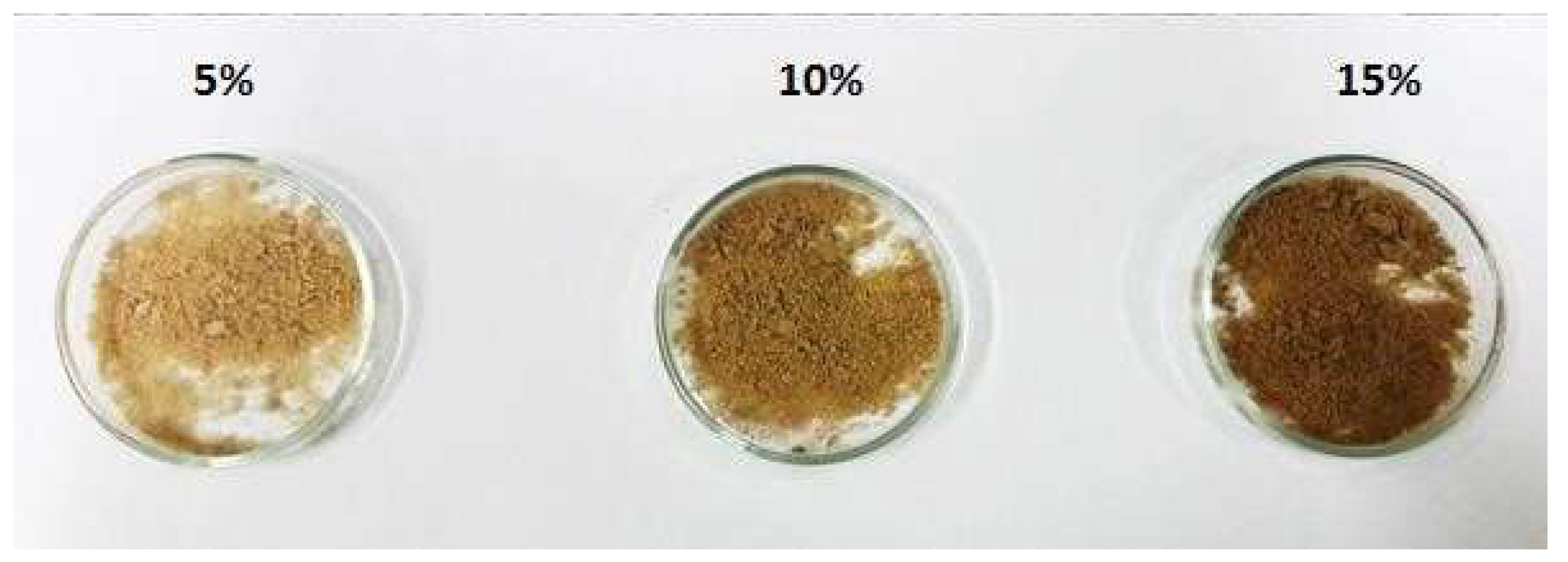
Figure 2.
Size distribution of microparticles produced by spray-drying and coated by spray-chilling, using 5, 10 and 15 g of spray-dried chasteberry extract per 50 g of vegetable fat.
Figure 2.
Size distribution of microparticles produced by spray-drying and coated by spray-chilling, using 5, 10 and 15 g of spray-dried chasteberry extract per 50 g of vegetable fat.
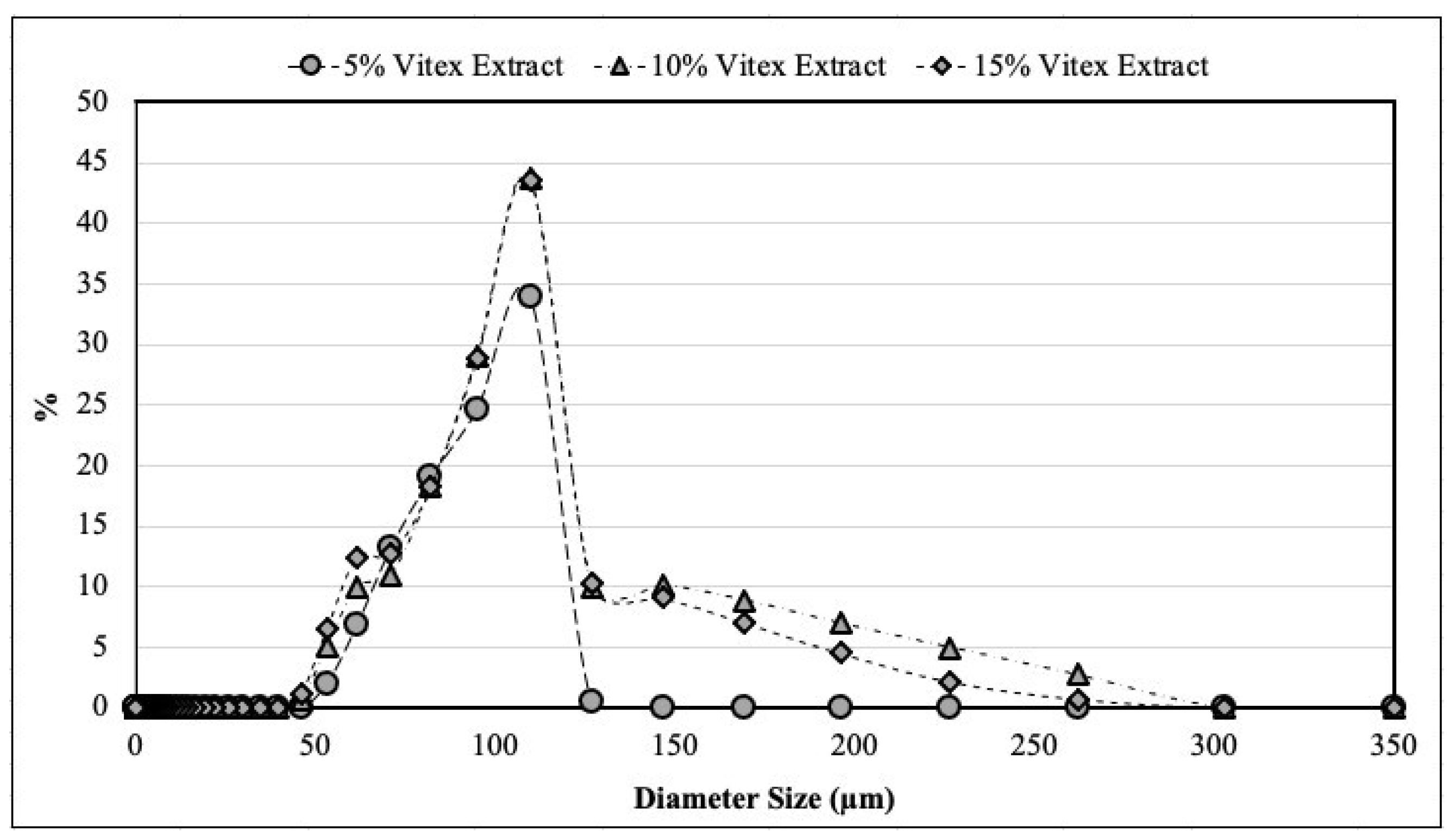
Figure 3.
X-ray diffractograms of powders produced by spray-drying and coated by spray-chilling with 5, 10, and 15 g of spray-dried chasteberry extract per 50 g of vegetable fat.
Figure 3.
X-ray diffractograms of powders produced by spray-drying and coated by spray-chilling with 5, 10, and 15 g of spray-dried chasteberry extract per 50 g of vegetable fat.
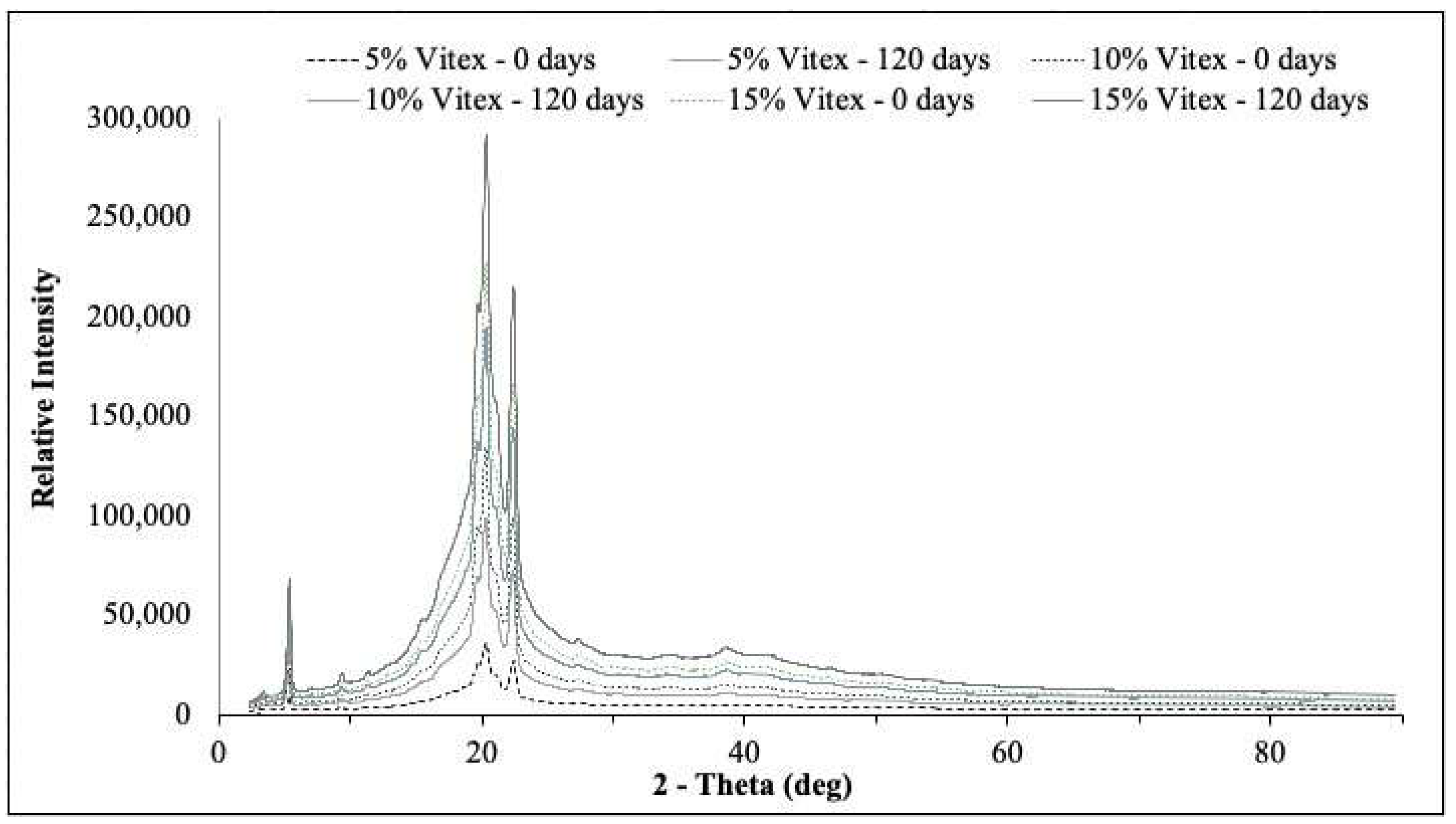
Figure 4.
Scanning electronic micrographs (500x and 100x magnification) of particles produced by spray-drying and coated by spray-chilling; A) Particles produced with 5 g of spray-dried chasteberry extract per 50 g of vegetable fat and 500x magnification; B) Particles produced with 10 g of spray-dried chasteberry extract per 50 g of vegetable fat and 500x magnification; C) Particles produced with 15 g of spray-dried chasteberry extract per 50 g of vegetable fat and 500x magnification; D) Particles produced with 5 g of spray-dried chasteberry extract per 50 g of vegetable fat 100x magnification; E) Particles produced with 10 g of spray-dried chasteberry extract per 50 g of vegetable fat 100x magnification; F) Particles produced with 15 g of spray-dried chasteberry extract per 50 g of vegetable fat – 100x magnification.
Figure 4.
Scanning electronic micrographs (500x and 100x magnification) of particles produced by spray-drying and coated by spray-chilling; A) Particles produced with 5 g of spray-dried chasteberry extract per 50 g of vegetable fat and 500x magnification; B) Particles produced with 10 g of spray-dried chasteberry extract per 50 g of vegetable fat and 500x magnification; C) Particles produced with 15 g of spray-dried chasteberry extract per 50 g of vegetable fat and 500x magnification; D) Particles produced with 5 g of spray-dried chasteberry extract per 50 g of vegetable fat 100x magnification; E) Particles produced with 10 g of spray-dried chasteberry extract per 50 g of vegetable fat 100x magnification; F) Particles produced with 15 g of spray-dried chasteberry extract per 50 g of vegetable fat – 100x magnification.
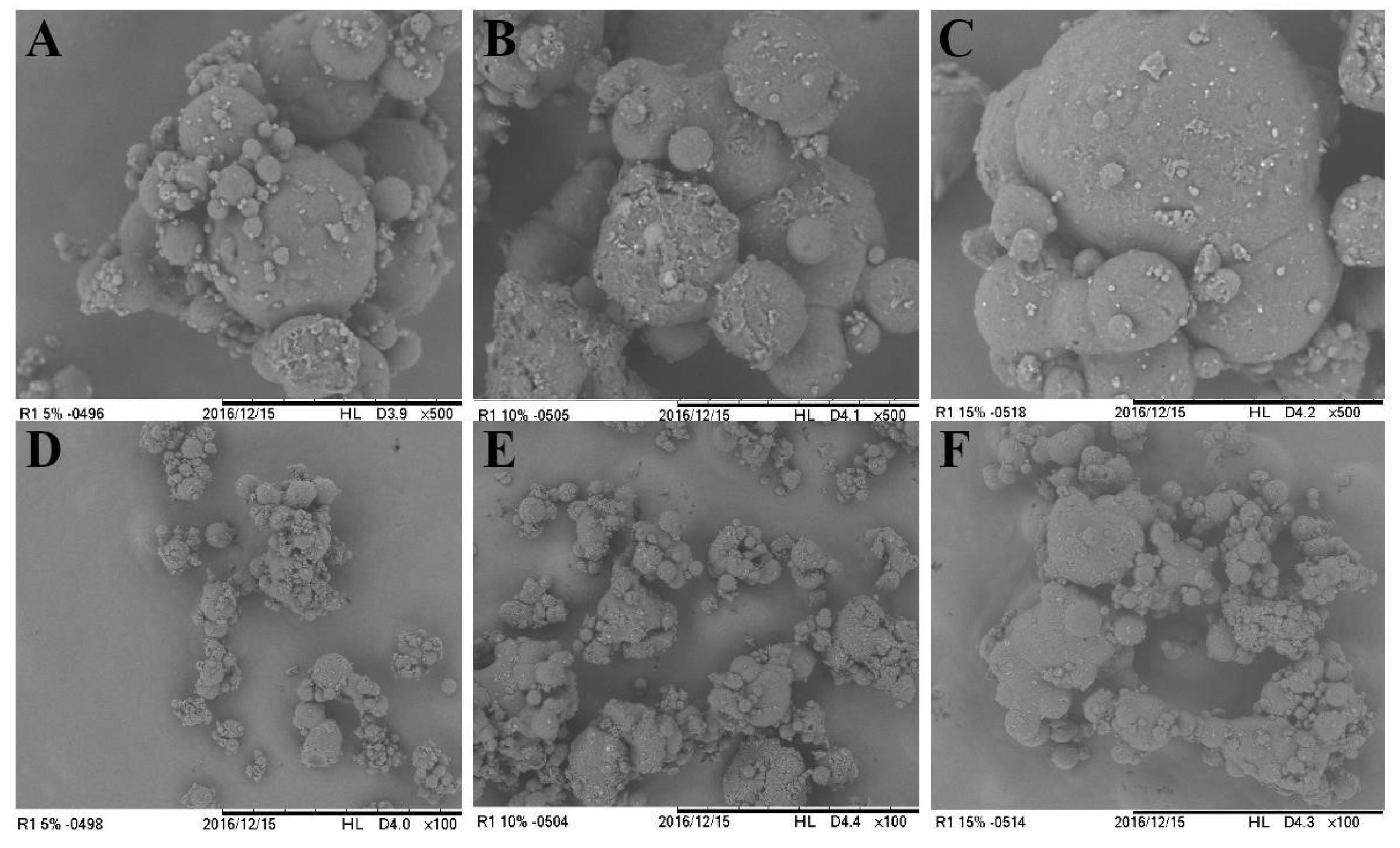
Figure 5.
Mass variation according to the temperature applied in samples produced with 5, 10, and 15 g of spray-dried chasteberry extract per 50 g of vegetable fat.
Figure 5.
Mass variation according to the temperature applied in samples produced with 5, 10, and 15 g of spray-dried chasteberry extract per 50 g of vegetable fat.
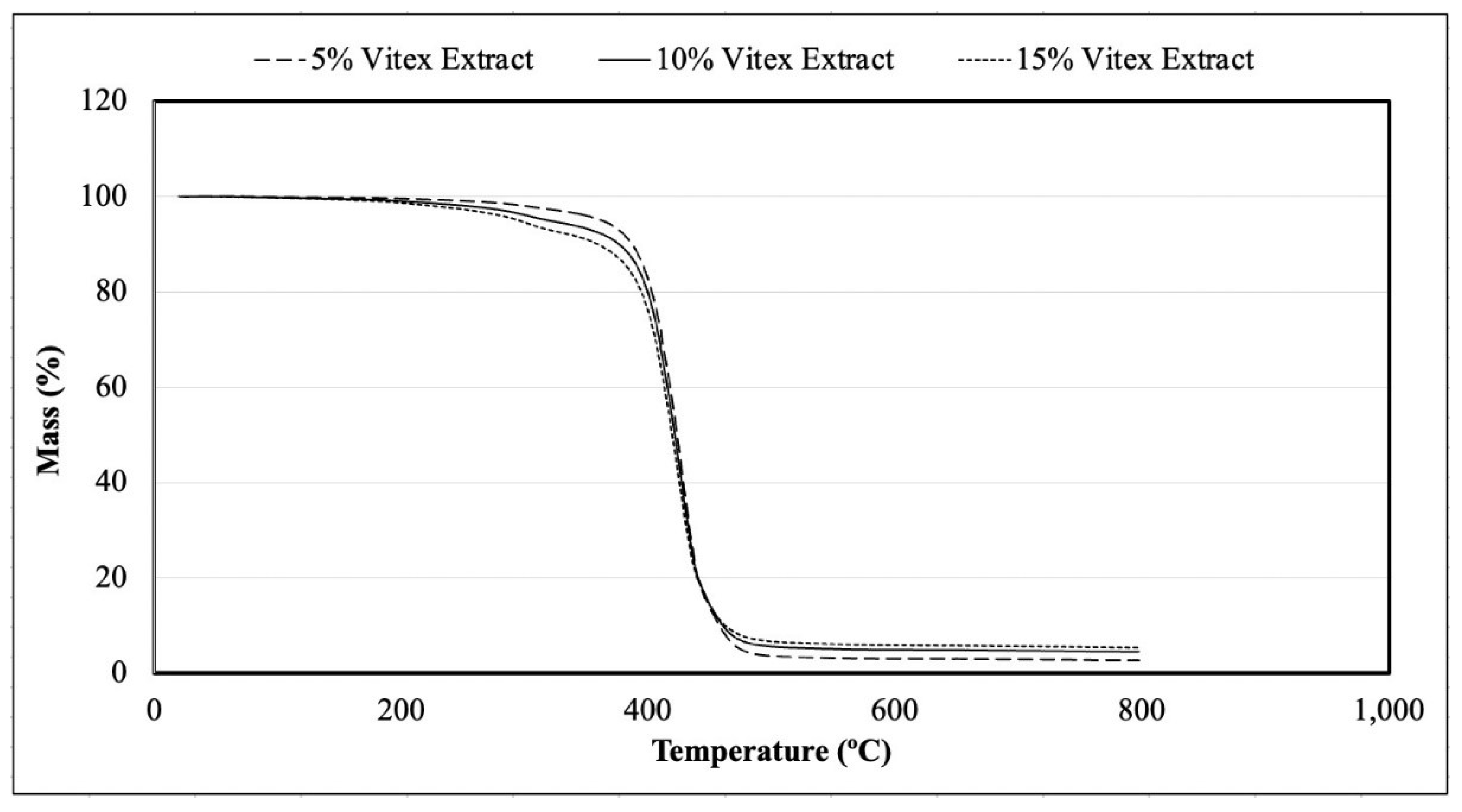

Table 1.
Content of total phenolics (mg GAE/g) in solid lipid microparticles produced by spray chilling and loaded with spray dried chasteberry extract at concentrations of 5, 10 and 15%, for up to 120 days of storage.
Table 1.
Content of total phenolics (mg GAE/g) in solid lipid microparticles produced by spray chilling and loaded with spray dried chasteberry extract at concentrations of 5, 10 and 15%, for up to 120 days of storage.
| Days | 5% | 10% | 15% |
| 0 | 5.7 ± 0.7 Ba | 5.6 ± 1.1 Aa | 6.5 ± 0.4 Aa |
| 15 | 2.6 ± 0.1 Cbc | 4.5 ± 0.4 Bb | 6.0 ± 0.3 Aab |
| 30 | 2.6 ± 0.2 Cbc | 4.6 ± 0.1 Bb | 5.7 ± 0.7 Aab |
| 60 | 2.5 ± 0.4 Cbc | 3.4 ± 0.5 Bc | 5.2 ± 0.4 Ab |
| 90 | 2.1 ± 0.5 Cc | 4.2 ± 0.4 Bbc | 5.3 ± 1.0 Ab |
| 120 | 2.7 ± 0.6 Cbc | 4.4 ± 0.6 Bbc | 6.0 ± 0.2 Aab |
ᶧMean ± standard deviation (n = 6 replicates). Different uppercase letters in the same row and lowercase letters in the same column indicate a significant difference between the samples (p<0.05).
Table 2.
Content of casticin (µg casticin/g of sample) in solid lipid microparticles produced by spray chilling and loaded with spray dried chasteberry extract at concentrations of 5, 10 and 15%, for up to 120 days of storage.
Table 2.
Content of casticin (µg casticin/g of sample) in solid lipid microparticles produced by spray chilling and loaded with spray dried chasteberry extract at concentrations of 5, 10 and 15%, for up to 120 days of storage.
| Days | 5% | 10% | 15% |
| 0 | 21.0 ± 6.0 Ba | 32.5 ± 14.5 Ba | 47.0 ± 5.1 Aa |
| 15 | 19.5 ± 2.5 Bab | 34.7 ± 9.4 Ba | 45.6 ± 11.7 Aa |
| 30 | 14.9 ± 2.4 Cab | 30.4 ± 3.7 Ba | 51.9 ± 3.0 Aa |
| 60 | 13.4 ±3.1 Bbc | 33.0 ± 5.1 Aa | 41.1 ± 12.5 Aa |
| 90 | 11.9 ± 2.9 Cc | 29.6 ± 2.8 Ba | 44.7 ± 5.9 Aa |
| 120 | 14.9 ± 3.3 Bbc | 32.5 ± 3.6 Aa | 39.1 ± 15.6 Aa |
ᶧMean ± standard deviation (n = 3 replicates). Different uppercase letters in the same row and lowercase letters in the same column indicate a significant difference between the samples (p<0.05).
Table 3.
Content of total phenolics (mg GAE/ g) in chocolates with free (FC) and encapsulated chasteberry extract (EC) for up to 60 days of storage, compared to the control chocolate. Solid lipid microparticles produced by spray chilling and loaded with spray dried chasteberry extract at concentrations of 15% were applied to the chocolate (EC).
Table 3.
Content of total phenolics (mg GAE/ g) in chocolates with free (FC) and encapsulated chasteberry extract (EC) for up to 60 days of storage, compared to the control chocolate. Solid lipid microparticles produced by spray chilling and loaded with spray dried chasteberry extract at concentrations of 15% were applied to the chocolate (EC).
| Days | Control | EC | FC |
| 0 | 7.8 ± 0.1 Aa | 7.8 ± 1.2 Aab | 7.4 ± 0.5 Ab |
| 7 | 7.0 ± 0.6 Aa | 6.5 ± 1.0 Ab | 6.0 ± 0.8 Ac |
| 15 | 8.0 ± 0.4 Aa | 8.3 ± 0.6 Aa | 8.5 ± 1.0 Aa |
| 30 | 4.3 ± 0.1 Ab | 3.0 ± 1.0 Bcd | 4.6 ± 0.3 Ad |
| 45 | 3.5 ± 1.8 Abc | 4.4 ± 0.4 Ac | 4.6 ± 0.07 Ad |
| 60 | 2.6 ± 1.1 Ac | 2.2 ± 0.7 Ad | 2.2 ± 0.3 Ae |
ᶧMean ± standard deviation (n = 6 replicates). Different uppercase letters in the same row and lowercase letters in the same column indicate a significant difference between the samples (p<0.05).
Table 4.
Content of casticin (µg casticin/ g) in chocolates with free (FC) and encapsulated chasteberry extract (EC) for up to 60 days of storage. Solid lipid microparticles produced by spray chilling and loaded with spray dried chasteberry extract at concentrations of 15% were applied to the chocolate (EC).
Table 4.
Content of casticin (µg casticin/ g) in chocolates with free (FC) and encapsulated chasteberry extract (EC) for up to 60 days of storage. Solid lipid microparticles produced by spray chilling and loaded with spray dried chasteberry extract at concentrations of 15% were applied to the chocolate (EC).
| Days | EC | FC |
| 0 | 7.6 ±0.6 Aa | 5.6 ± 0.2 Ba |
| 7 | 6.9 ± 0.3 Aab | 5.0 ± 0.2 Ba |
| 15 | 5.5 ± 0.4 Ac | 4.9 ± 0.2 Aa |
| 30 | 6.1 ± 0.6 Abc | 4.6 ± 0.5 Ba |
| 45 | 5.4 ± 0.4 Ac | 5.3 ± 0.8 Aa |
| 60 | 5.7 ± 0.5 Abc | 5.1 ± 0.4 Aa |
ᶧMean ± standard deviation (n = 3 replicates). Different uppercase letters in the same row and lowercase letters in the same column indicate a significant difference between the samples (p<0.05).
Table 5.
Results for sensorial analyses of chocolates with free (FC) and encapsulated chasteberry extract (EC), as well as powders produced the encapsulated extract (EC) and with the spray-dried extract, vegetable fat and Arabic gum (exactly in the same proportion as these appear in the formulation, but mechanically mixed - FC). The panelists were previously selected according to their acuity in the perception of the sensation of spicy (15 panelists) and bitterness (17 panelists).
Table 5.
Results for sensorial analyses of chocolates with free (FC) and encapsulated chasteberry extract (EC), as well as powders produced the encapsulated extract (EC) and with the spray-dried extract, vegetable fat and Arabic gum (exactly in the same proportion as these appear in the formulation, but mechanically mixed - FC). The panelists were previously selected according to their acuity in the perception of the sensation of spicy (15 panelists) and bitterness (17 panelists).
| Powder | Chocolate | |
| Bitterness Spicy | Bitterness Spicy | |
| FC | 17 13 | 10 11 |
| EC | 0 2 | 7 4 |
Table 6.
Average grades assigned by panellists to the attributes of flavour, aroma, texture, colour, overall acceptability, overall average, and purchase intentional for the different formulations of chocolate.
Table 6.
Average grades assigned by panellists to the attributes of flavour, aroma, texture, colour, overall acceptability, overall average, and purchase intentional for the different formulations of chocolate.
| Chocolate Overall Acceptance Purchase Flavour Aroma Texture Colour Overall Sample acceptability index (%) intention average |
|
Control 8 ± 1A 8 ± 1A 8 ± 1A 8 ± 1A 8 ± 1A 8 88,9% 5 ± 1A EC 7 ± 2B 7 ± 1B 6 ± 1C 8 ± 1B 7 ± 2B 7 78% 3 ± 1C FC 7 ± 2B 7 ± 1B 7 ± 2B 8 ± 1B 7 ± 2B 7.2 80% 4 ± 1B |
ᶧMean ± standard deviation (n = 122 replicates). Different letters in the column indicate a significant difference between the samples (p<0.05).
Disclaimer/Publisher’s Note: The statements, opinions and data contained in all publications are solely those of the individual author(s) and contributor(s) and not of MDPI and/or the editor(s). MDPI and/or the editor(s) disclaim responsibility for any injury to people or property resulting from any ideas, methods, instructions or products referred to in the content. |
© 2024 by the authors. Licensee MDPI, Basel, Switzerland. This article is an open access article distributed under the terms and conditions of the Creative Commons Attribution (CC BY) license (http://creativecommons.org/licenses/by/4.0/).
Copyright: This open access article is published under a Creative Commons CC BY 4.0 license, which permit the free download, distribution, and reuse, provided that the author and preprint are cited in any reuse.


