

Submitted:
10 October 2024
Posted:
11 October 2024
You are already at the latest version
Abstract
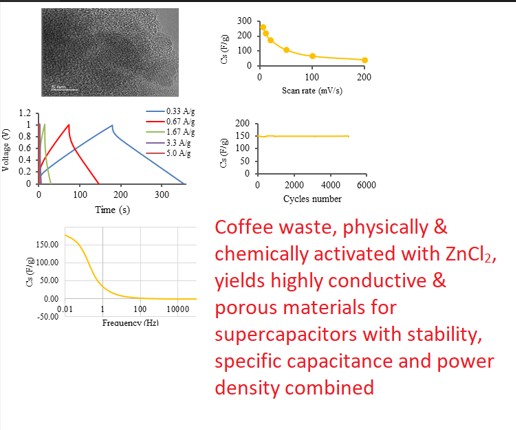
Biowaste sources, like coffee wastes (CWs), are considered for advanced materials. CW was assessed to prepare activated carbon for supercapacitor electrodes, but showed low performance compared to other counterparts. Enhanced CW activation process may help address this limitation. In this study, CW was subjected to two activation methods: physical (pyrolysis) activation and physical-chemical activation using ZnCl2, to determine the more effective approach. Both resulting materials were analyzed using SEM, TEM, BET, Raman spectroscopy and XRD. The physical-chemical activation yielded activated carbon with better characteristics, including a higher specific-surface area (SSA) of ~830 m²/g, compared to 458 m²/g from the physical activation. With its promising potential for supercapacitor electrodes, the former activated carbon was singled out for supercapacitor study. Cyclic voltammetry revealed a specific capacitance of 261 F g-1, and energy density of 18.3 Wh/kg, with power density of 360 W/kg at a current density 0.33 A/g. Charge-discharge studies showed a specific capacitance of 150 F g-1 at the same current density. Electrochemical impedance spectroscopy indicated a specific capacitance of 180 F g-1, with an equivalent series resistance of 0.56 Ω at a low frequency of 0.01 Hz. The electrode exhibited exceptional characteristics, maintaining high stability over 5,000 charge-discharge cycles.
Keywords:
Waste coffee
; Activated carbon
; Physical activation
; Physical-chemical activation
; Supercapacitor electrode
1. Introduction
Many reasons stand behind considering bio wastes as sources for carbon materials in modern devices. Firstly, recycling bio wastes prevents the widespread environmental contamination from random dumping. Secondly, the produced carbon is useful as a low cost and safe material in electronic devices. Thirdly, the strategy minimizes dependence on the hazardous fossil sources [1-3]. A promising application area is supercapacitor (SC) technology for energy storage. The SC is a device with two high specific surface area (SSA) electrodes, a separator and an electrolyte solution. Compared to conventional capacitors, SCs have much higher capacitance [4-7]. With potentially high power yields, SCs are considered in various electronic devices, and specifically electric cars, competitively with batteries [5, 8].
The Ragone plots, describe how SCs are at intermediary position between batteries and conventional capacitors[9]. The plots combine energy density and power density output values for various energy storage devices, including fuel cells, batteries, SCs together with conventional capacitors. For a given device, lowering the equivalent series resistance increases the energy density, while raising the voltage window increases the power density [10-12].
The need for higher-energy density storage devices continuously increases to meet expanding demands for modern electronic devices. As in batteries, electrochemical capacitors (ECs) attract special attention by virtue of their high storage density, low-temperature performance and multiple charge-discharge cycles. Unlike batteries and fuel cells, SCs involve no real chemical reactions, and function for prolonged life cycles [13], which is one virtue. SCs with both high energy density (like batteries) and high-power density (like capacitors) at the same time, are highly needed. SC research is thus active to achieve this feature.
In SCs, very high specific surface area (SSA) electrodes, with high conductivity, are used. The need for carbon materials in SCs is thus justified. Activated carbons (ACs) are conducting materials, thermally and chemically stable, and can have large SSAs with high micropore volumes. With high adsorption capacity and tunable pore structures [14], ACs are being considered in various energy-storage devices such supercapacitors [15, 16].
AC characteristics (surface, pore structure and adsorption capacity) are affected by preparation and activation methods. Two types of activation are widely known, physical activation and chemical activation. In chemical activation, impregnation with a suitable material is used. Examples of widely used chemical activating agents are: KOH, NaOH, K2CO3, ZnCl2 or H3PO4. The activating agents, which are used in combination with mild physical processing, ensure pyrolytic decomposition of the precursor material at lower processing temperature, with less tar formation [17, 18]. In physical activation, the precursor material is partially gasified under inert atmosphere at a high temperature, and then activated with oxidizing gasses such as steam, air, carbon dioxide or mixed gases [18].
Chemical activation is a simple process, and is advantageous in terms of processing time, low temperature and high yield with high porosity. However, physical activation is still preferable at commercial scale, due to higher control on characteristics and simplicity [19].
High temperature pyrolysis can be coupled with poro-genic processes, using NaOH or KOH activation. Hazelnut shell hydrothermal carbonization (HTC) was studied by three various poro-genic methods namely simple-heat treatment, KOH activation and MgO templating. Better electrochemical characteristics (with higher SSA and effective micro-porosity) were reported in anode materials for energy storage [19, 20]. Chestnut shell based ACs, activated by KOH, were reported by Jiang et al. [21]. Effect of pre-carbonized stuff and KOH ratio was studied. SSA values of 1829.7 m2 g−1 were observed for samples activated with biochar to KOH at 1 to 3 ratios. The AC showed highest capacitance of 238.2 Fg−1. KOH was also used as activating agent at 600–900 ºC for 2 h, and yielded N-doped AC with a large SSA 3401 m2 g−1 and a high specific capacitance 346 F g−1. The energy density was 22.4 W h kg−1 at 0.5 A g−1 with high capacity stability (97.6% after 5000 cycles at 1 A g−1) [22]
Chesnut shell-based AC, activated with ZnCl2, exhibited SSA of up to 1987 m2 g−1 with a specific capacitance105.4 F g−1 [23]. Hong et al. used K2SO4 to activate chestnut shell-based AC and reported an SSA 1412 m2 g−1 with a specific capacitance 265 F g−1, but with only a low current density of 0.1 A g−1[22].
KHCO3 was described to activate AC, from chestnut shells, for supercapacitor electrodes [22]. Biochar activation with KHCO3 yielded porous carbons with high SSA 2298 m2 g−1 and specific capacitance 387 F g−1 (at 2 A g−1) with high stability 98.68% after 10,000 charge-discharge cycles at 30 A g−1 [22, 24]. N-doped porous carbon from edible Chinese water chestnut corms, was also reported [23].
Melamine also activated chestnut shell-based carbons [24]. The AC exhibited a current density 0.5 A g−1, specific capacitance 402.8 F g−1 and SSA 691.8 m2 g−1.
Depending on their regional agricultural resources and biowastes, researchers tend to focus their study attention. For this reason, in many regions people make their studies on chestnut, hazelnuts and others.
Other sources are globally spread, such as coffee wastes (CWs), since coffee is widely used in many places. It is reported that in early 2020s, more than 5 million tons of coffee was globally consumed [25]. More recently, the amounts of CW were reported to exceed 8 million tons [26]. ACs, with high surface areas and pore volumes from CW, were widely prepared and used for adsorption of various materials [25, 27-29].
CWs thus deserve to be studied. Few reports were published on CWs in supercapacitors. A flexible supercapacitor with a specific capacitance value of 139 F g-1 at 0.5 A g-1, a specific energy 12.5 W h kg−1 and a specific power of 202 W kg−1, was prepared from nitrogen 8%-doped AC. The supercapacitor functioned for more than 5,000 cycles with ~90% retained capacitance [30]. Chiu et al prepared AC in one combined process (physical and chemical activations) with various activating agents and found KOH as best choice to reach a specific capacitance 105.3 F g-1 [31]. M Biegun, et.al, used the hydrothermal acidic hydrolysis, then the KOH activation, at 800 ºC, to activate coffee waste, and obtained a high specific surface area of ~2900 m2 g-1. Using a liquid ionic electrolyte, the observed specific capacitance was 178 F g-1 at 20 ºC and 50 A g-1 [32]. Omkar Khadka et al. recently prepared supercapacitor electrodes from coffee wastes, first by chemical activation with ZnCl2 1:1 ratio, then by physical activation at 700 ºC, and observed a specific capacitance of 113.8 F g-1 at 1 A g-1 [33]. In a recent review, Davidraj et al reported the possibility of food waste materials to produce electrodes for energy storage devices [34]. The report listed a number of papers using CWs in supercapacitor electrodes. In another more recent review, Pagett et al reported on CWs in supercapacitor electrodes [26]. With the exception of one 2008 report that showed high specific capacitance [35], more recent papers showed specific capacitance values of only less than 160 F g-1 [26].
From literature, it can be noted that the AC prepared from coffee wastes showed lower performance than other ACs prepared from other sources such as chestnuts and hazelnuts. Moreover, the study on the coffee based ACs was not comprehensive, as it did not include important characteristics such as surface area or pore size that critically affects the electrode performance.
As CW is a promising source of AC, more study is needed to increase the CW based supercapacitor performance. The present study will assess the added value of using a chemical activating agent to the physical activation of CWs. Instead of using the highly corrosive KOH activating agent, reported earlier, the environmentally friendly and low cost ZnCl2 is used here. The choice for ZnCl2 is based on its acidic nature and efficiency as described in earlier reports where it yielded ACs with high surface areas [36]. ZnCl2 was described in activating coffee waste for supercapacitor electrodes where specific capacitance was 134 F g-1 at 1 A g-1 using organic solvents, with equivalent series resistance more than 20 Ω [37]. Effect of activation method on various AC characteristics, such as specific surface areas, pore sizes and morphology, will be studied. The activating agent should chemically drill pores through the carbon matrix and increase its porosity. Various methods, such as XRD, SEM, BET and Raman spectra, will be used to test this effect. The AC suitability for supercapacitor electrodes, will be assessed, taking into consideration specific capacitance, power density and stability. The goal is to produce supercapacitor, with stable, porous and high surface area electrodes, from coffee-waste based AC, with and higher performance (in terms of specific capacitance and power output) than those described in literature. The basic assumption is that these features are achievable by adding a suitable chemical activating agent during CW pyrolysis. With a targeted specific capacitance value above 250 F g-1, the results observed here were not precedented to our knowledge.
2. Materials and Methods
2.2. Starting Materials
Organic solvents, such as acetone, acids and bases, were purchased Sigma-Aldrich in pure forms. Coffee wastes was taken from freshly used Turkish coffee drinks (Arabica type). The coffee was processed according to Turkish coffee drink protocols, with fine grinding, and boiled. The CW was isolated and stored in a refrigerator for processing. The glass fiber separator (-M 5V5) has been purchased from Alter-Lab.
2.2. Equipment
A hydraulic press (Shimadzu), equipped with pressure gauge, was used to make AC disks. The sample was pressed at 7 tons. The value was based on earlier recommendation [36].
A standard Teflon Swagelok cell, with 10 mm in diameter with stainless steel electrodes, was used for supercapacitor testing. The cell was connected to the potentiostat/Galvanostat (VoltaLabPGZ402). The working electrode was connected to one side, while the counter and the reference electrodes were connected together. The internal reference cell was used as reference. The VoltaMaster 4 software, was used for electrochemical measurements. AC morphology and surface structure were examined by scanning electron microscopy (SEM) (Hitachi- S-4800) on a Field-Emission machine. Transmission Electron Microscopy (TEM) was measured on a JEM-ARM200F system. Brunauer-Emmett-Teller (BET) was measured on a Micromeritics-3Flex 3500 equipment. X-Ray diffraction was measured on A PAN-alytical X’Pert-PRO X-Ray diffraction equipment, using a Cu Kα as a source. X-ray photoelectron spectroscopy was measured on a Thermo Scientific machine model K-alpha+. Raman spectra were measured on an OlympusBX41M equipment. SEM, XRD, TEM, BET, XPS and Raman spectra were all measured in the labs of the KIER, Daejeon, Korea.
2.3. AC Preparation
The CW material was activated by two methods, namely the physical and the chemical activation.
- -
- Physical activation (ACPhys)
Pre-dried Arabic coffee waste (100 g) was rinsed with hot distilled water (400 mL), then with cold distilled water (400 mL), and finally rinsed with ethanol. This was to remove soluble coffee ingredients. The remaining solid waste was left to dry at room temperature for 24 h, then heated in an oven at 70 ºC for 12 h. The waste was then heated at 800 ºC for 2 h under nitrogen atmosphere. The resulting ACPhys was stored in a desiccator for further use. The net mass for the ACPhys was 75.3 g.
- -
- Chemical-physical activation (ACPhys-Chem)
Pre-dried Arabica coffee waste (100 g) was washed with hot distilled water (400 mL) and then with cold distilled water (400 mL), and finally rinsed with ethanol. The coffee waste was left to dry at room temperature for 24 h, then heated in an oven at 70 ºC for 12 h. The waste was then magnetically stirred with ZnCl2(s) (in a 1:1 mass ratio) at 60 ºC for 24 h. The solid was dried at room temperature for 24 h and then in an oven at 70 ºC for 7 h. The solid was heated at 800 ºC for 2 h. The resulting ACPhys-Chem was cooled and stored in a desiccator for further use. The net mass for ACPhys-Chem was 47.6 g.
2.4. AC Disc Electrode Preparation
A sample of activated carbon was ball milled to fine powder with Agat mortar for 10 min. The AC was mixed with PVDF polymer in a 93:7% ratio, and was magnetically stirred with acetone (15 mL). The mixture container was then sonicated in a bath at 35 ºC for 20 min. The solid was separated and dried in an oven at 70 ºC for 2 h. The AC powder (0.03 g) was then used to make electrode discs, which were pressed in a mold under hydraulic pressure of 7 tons. The AC disc diameter was 10 mm and the disc thickness was ~0.19 mm.
2.5. Electrochemical Methods
Electrochemical characteristics of activated carbon were analyzed by using various methods, namely cyclic voltammetry (CV), galvanostatic charge-discharge (GCD) and electrochemical impedance spectroscopy (EIS). A Swagelok cell was used in electrochemical studies. One disc was loaded as a coating layer on one stainless steel electrode. A fiberglass disk separator (with diameter of 10 mm) was immersed in KOH electrolytic solution (6 M) for 5 min. The immersed fiberglass separator was then carefully taken by tongs and firmly stacked on the AC electrode, as a coating. The other AC disc was stacked onto the separator. Then the cell was then firmly assembled to prevent gaps and bubbles between electrodes, and to disallow any cell component movements. The assembled Sawgelok cell was connected to the PGZ 402 Potentiostat/Galvanostat, using the 2-terminal mode. The voltaMaster 4 software was utilized in data collections. The CV measurements were performed for each electrode by scanning the potential from 0.0 to 1.0 V at different scan rates
The GCD study was performed at various current densities. The current density was switched between positive and negative values, for charging and discharging, respectively. The results were acquired and analyzed using Origin software.
3. Results
- -
- AC disc characterization AC Morphology
Figure 1 shows SEM micrographs for both AC material in pressed disc forms. The ACPhys and ACPhys-Chem materials exhibited different surface morphologies. The ACPhys-Chem is more porous than the ACPhys. This is due to the chemical activation which further affects the AC surface, in addition to physical activation, as reported earlier [38, 39]. As stated above, the acidic ZnCl2 activating agent interacts with the carbon matrix and makes it more porous.
In Figure 2, TEM micrographs for both AC materials are shown. In each case, white dots can be observed indicating pores. The ACPhys-Chem was more porous, with higher homogeneity, than ACPhys.
- -
- AC porosity
Porosity for the two AC materials was measured using the BET method. Porosity involves specific surface area (SSA), por size distribution (PSD) and total specific pore volume. Adsorption/desorption isotherms were measured for both AC materials in pressed disc forms. Figure 3 summarizes the results. The Figure shows that at higher relative pressure, the amount of gas that entered the pores increased until all pores were occupied at equilibrium. Naturally, the equilibrium was pushed to higher adsorption with higher relative pressure.
To understand the effect of pore size distribution, in electrodes on the specific capacitance, BET analyses were performed, Figure 3. The isotherms involved small hysteresis loops from high to low pressure ranges. This indicated that the electrodes had meso and macro porous structures. According to IUPAC classification, the sample isotherm can be classified as type I, II and IV [40]. Higher nitrogen adsorption, even at very low relative pressures (P/Pº<0.01), for ACPhys-Chem, compared to ACPhys indicated the existence of micropores more in the former than in the latter. The ACPhys-Chem exhibited higher specific surface area and more micropores than the ACPhys, as described in Table 1. As the minimal pore sizes for ACPhys-Chem (0.8 nm) and ACPhys (1.8 nm) are larger than the ionic sizes for both electrolyte ions (K+(hydrated) 0.4 nm, OH-(hydrated) 0.38 nm), both activated carbons readily adsorb the ions and may behave as supercapacitors. Since the ACPhys-Chem had more total and micropores than ACPhys, with higher specific surface area, vide infra, the former carbon should have higher specific capacitance and lower equivalent series resistance (ERS) than the latter.
The specific surface area was determined by multiple point Brunauer-Emmett-Teller (BET) method in the regions of the isotherms, which are limited by the range of relative pressure P/Pº = 0.0–0.3 as seen in Figure 4. The adsorption volume showed that BET surface areas for ACPhys, and ACPhys-Chem were 458, 830 m2/g respectively. The total volume of pores (Vtotal, cm3/g) was calculated by the number of adsorbed nitrogen at P/Pº ≈ 0.9932. All results are summarized in Table 1.
All above results indicated that ACPhys-Chem high porosity and suitability for super capacitor applications. The increased porosity is due to using the activating agent.
- -
- Pore size distribution by the BJH method
The Brunauer-Joyner-Halenda (BJH) method is very useful to analyze mesopores and macropores in a diameter wide range (17-3000 Ả). The pore size distributions in ACPhys and ACPhys-Chem are summarized in Figure 5. The pore size distributions for the present electrodes were in the micro- , meso- and macropore scales. The Figure shows that for the present electrodes, the domain of pore sizes were centered in the ranges of 1.8-3.3 nm for ACPhys, and 0.8-2.7 nm for ACPhys-Chem. Correlation between BET surface area and pore sizes, with specific capacitance can be understood using Equation (1):
where C denotes specific capacitance, ε electrolyte-dielectric constant, A specific surface area that is accessible to the ions, and d is spacing between the ions and the electrode pore surface (nm). Based on this Equation, two methods can be followed to improve charge storage for supercapacitors:
C = εA/d
- -
- Increasing specific-surface area
- -
- Reducing spacing between ions and electrode surfaces.
The large surface area and high amounts of meso and micro pores together yield high transport of charges leading to high specific capacitance.
The results showed that, for both present ACs, higher adsorbed gas occurred in the smaller pore size. Small pore sizes were more dominant in the ACPhys-Chem, as observed from pore-size distribution (differential pore volume), Figure 5. The observed ACPhys-Chem material peaks were distributed within the pore size range 1.8 – 3.3 nm, with the maximum adsorption at 3.3 nm. Thus, mesopores were dominant in the ACPhys-Chem, with higher adsorption at smaller diameter mesopores. The results justified the high specific capacitance for ACPhys-Chem, as summarized in Table 1.
- -
- Pore size distribution by the (HJ) t-plot
The volume of micropores and the values of micropore surface areas of (Smicro, m2/g) were investigated by the t-Plot Harkins and Jura. The Harkins-Jura t-plot method can analyze micropores with surface areas. The amount of adsorbed N2, for a given P/P0 range, is plotted against pore thickness (t). The micropore volumes and surface areas (Smicro, m2/g) were investigated by the t-Plot Harkins and Jura method. The results are summarized in Figure 6 and Table 1. From Figure 6, the present electrodes involved high micro-surface areas of 557 and 385 m2/g for ACPhys-Chem and ACPhys electrodes, respectively. This justified the high specific capacitance for ACPhys-Chem as described below.
- -
- X-Ray patterns
The XRD pattern is presented in Figure 7. Both ACPhys and ACPhys-Chem exhibited a reflection at 2ɵ=~24º. The refection is consistent with earlier literature [41]. However, as both materials are amorphous, only broad and low reflections for the (002) signals were observed. The reflection for ACPhys-Chem was sharper than for ACPhys, which indicates that the former is more crystalline. This means that the former has more carbon content than the latter. Another broad reflection in the range 2ɵ=40-50º can be observed more obviously for ACPhys-Chem than for ACPhys. The ACPhys-Chem thus showed more resemblance to earlier chemically activated carbons [42]. The XRD patterns were consistent with the ACPhys-Chem having higher porosity.
- -
- Elemental analysis
For both ACPhys and ACPhys-Chem, elemental analyses were performed by the EDS, as described in supplementary Figures S1(a) and (b). The results are summarized in Table 2.
For ACPhys-Chem, the atom percentage for carbon was 93%, while for ACphys it was only 63.20%. So, more carbon appears in ACPhys-Phem, which is a virtue for this material. The EDS results were consistent with the XRD results, in the sense that ACPhys-Chem material had higher graphitization.
- -
- Raman spectra
Figure 8 below summarizes the Raman spectra for ACphys and ACphys-chem. The ACPhys-Chem exhibited higher homogeneity (Figure 8b) than ACPhys (Figure 8a). Both ACs showed two sharp peaks at 1360 cm-1 (D peak) and 1590 (G peak). Comparison between the two spectra indicated that D peak intensity (ID) to the G peak intensity (IG) is 0.7 for ACPhys-Chem compared to 0.8 for ACPhys. A lower ID/IG ratio means higher graphitization in the AC, as reported in literature [43,44]. Therefore, the ACPhys-Chem here had more graphitization than the ACPhys. This result corroborates the XRD and EDS results discussed above, in the sense that the former has more C content than the latter.
All in all, the ACPhys-Chem showed superior characteristics compared to ACPhys. Based on that, the present electrochemical study here was restricted to only ACPhys-Chem electrode only, in comparison with earlier literature.
3.2. Supercapacitor Testing
As described above, the ACPhys-Chem electrode was singled out for further electrochemical study, unless otherwise stated. Cyclic voltammetry (CV), Galvanostatic charge/discharge behaviors (GCD) and electrochemical impedance (EIS) behaviors were investigated for the ACPhys-Chem, using KOH (6.0 M).
- -
- Cyclic voltammetry (CV)
CV is the most fitted method to recognize the capacitive characterization. Cyclic voltammograms were measured in the range of 0.0 to 1.0 V at different scan rates (5, 10, 20, 50 and 100 mV/s) for the ACPhys-Chem electrode, as shown in Figure 9. Figure 9(a) shows the CVs measured at various scan rates and Figure 9(b) shows CV at low scan rate (5 mV/s) only. At all scan rates, the electrode exhibited symmetrical CV curves. At all scan rate, also, the CV curves exhibited semi-rectangular shapes without any peaks and with high reversible charge-discharge process. The electrode thus behaved as an electronic double layer capacitor (EDLC) [45-49]. The specific capacitance was calculated from the CVs using Equation (2).
where Cs is the specific capacitance in F g-1, m is the mass of the active material in g, ∆V is the voltage window in V, qa and qc are the anodic and cathodic charges in C, respectively.
The high reversibility for ACPhys-Chem electrode at various scan rates, and the response (in charging/discharging) were due to high conductivity, as described earlier [50-52]. Based on Figure 9(a) and (b), the specific capacitance values for ACPhys-Chem were plotted vs. scan rates. Figure 9(c) indicates that specific capacitance decreased at higher scan rate. Table 3 summarizes the results. The Table shows that the present ACPhys-Chem electrode was superior to earlier coffee waste-based electrodes in terms of specific capacitance value.
Typically, high specific capacitance is associated with low scan rate. In ACPhys-Chem the same behaviour was observed. This is due to ions having enough time to penetrate the micropores (with less than 2 nm). At higher scan rates, only larger pores mesopores (2-50 nm) may contribute to capacitance. This is a result of the electrolyte diffusion rate difference in the pores with different sizes. It may also be due to network connections between larger and smaller pores [52-54].
The high specific capacitance of ACPhys-Chem, was partly due to its higher surface area and microporous structure. This increases accessible areas for electrolyte ions storage within the relatively smaller pores. Other factors, such as conductivity, may have influence, as described below.
The increased current density peak with higher scan rate was due to higher ion mobility. This is associated with high concentrations that diffuse in close proximity to electrode surfaces [55, 56].
- -
- Galvanostatic charge/discharge (GCD)
The supercapacitor performance can be further tested and verified by GCD method, Figure 10. The ACPhys-Chem electrode was charged and discharged, galvostatically here, in the potential range (0.0-1.0 V) at various constant discharge current densities of (0.33, 0.67, 1.67, 3.3, 5.0 A g-1). Figure 10(a) summarizes the potential (V) vs. time (s) plots, showing the charge and discharge processes. A potential drop (VIR) was observed in the discharge after the maximum potential value was reached. From Figure 10(a), the potential drops occurred in the discharge processes. The potential drop values were: 0.064, 0.134, 0.297, 0.66 and 0.76 V at the above current density values, respectively. The specific capacitance (Cs) values from the charge discharge curves were estimated using Equation 3 [58], as summarized in Table 4.
where Cs is the specific capacitance, dv/dt is the slope of the linear discharge curve, I is the discharge current in A, and M is the total electrode mass (in g).
The values for equivalent series resistance (ESR), from GCD method, described in Table 4, can be evaluated by Equation (4). The ESR values were within a narrow domain, which confirms the electrode stability at different densities. This is another superior feature for the electrode.
ESR = VIR/2I
It can be seen that each charge and discharge processes is nearly symmetric, which illustrates excellent electrochemical reversibility of the electrode. The small VIR drop in the discharging curves of ACPhys-Chem implies a small equivalent series resistance, which is essential to power characteristics of supercapacitors. The low VIR drop of ACPhys-Chem is due to its high conductivity, as achieved by ZnCl2 activation. The specific capacitance of ACPhys-Chem decreases from 150 F g-1 (at current density 0.33 Ag-1) to 39 Fg-1 (at 5 Ag-1). The specific capacitance for ACPhys-Chem decreased with increased current density as shown in Figure 10(b), which common in supercapacitors. This mainly caused by electrolyte ion diffusion limitations.
As the current increases the time needed for charging and discharging processes decreases due to higher ion mobility. This leads to lower Cs, as expected, in congruence with literature [45, 46, 59]. Figure 10(a) shows that as the current density increases, shorter time for charging and discharging is needed. Thus, the voltage drop increases at higher current density, corresponding to the resistance exhibited by the supercapacitor [58, 60].
The specific power and specific energy have been calculated using Equations (5) and (6) [61, 62].
where Cs is specific capacitance (Fg−1) extracted from the discharge curve, ΔVop is operating voltage range (V) defined asΔVop = ΔVappl−VIR, ΔVappl (= 1 V) is applied voltage used during charge/discharge process. Δt is discharge time (s) andVIRis voltage drop observed in the discharge plot caused by immediate impact of charge-to-discharge process transition.
Figure 10(c) shows the Ragone plot for electrode. The maximum specific energy is 18.3 Wh/kg at the specific power 360 W/kg at current density 0.33 A/g, while the maximum specific power is 1444 W/kg at specific energy 6.4 Wh/kg at current density 1.66 A/g. These values are higher than most recent literature [33] results for coffee waste electrodes, which showed specific energy 4.78 Wh/kg and specific power 137 W/kg at 1-5 A/g current density. The results confirm the potential value for the present electrode in future application, as it combines high specific energy and specific power together.
The electrode stability on recycling is depicted in Figure 10(d). The plot has been constructed at current density 0.33 A/g for 5,000 cycles, and shows a slight decrease in specific capacitance from 149 to 148 F g-1. The results depict the high electrode stability upon charge-discharge cycling, which is an important feature in supercapacitor technology.
- -
- Electrochemical impedance spectra (EIS)
To further confirm the above results, EIS was studied, Figure 11. Nyquist plots were constructed for the electrode within the frequency range 0.01 Hz - 10 kHz, Figure 11(a). The ESR values indicate looseness inside the supercapacitor. The x-axis intercept, at the higher frequency, represented the combined resistance (Rs= 0.48 Ω) involving electrode material inherent resistance, ionic resistance in electrolyte solution and the contact resistance between the current collector and the electrode. The semi-circle loop described the electrode conductivity together with its charge-transfer resistance (Rct) [63]. The measured Rct here was 0.2 Ω). Higher electrode conductivity normally indicates smaller semicircle loop. The calculated ESR (Rs + RCT) here was 0.6 Ω. At low frequencies, the vertical line describes the electrode capacitive behaviors. In the present electrode, the Nyquist plot showed almost a straight line parallel with the imaginary axis, indicating exactly polarized systems. Deviation from the vertical line, at lower frequencies, to smaller slopes corresponds to higher ionic-diffusion resistance contribution.
The time constant divides between the supercapacitor capacitive and resistive regions. This can be determined by taking the reciprocal of the maximum frequency f0 as (t0 = 1/f0). Generally, a low time constant value is a higher-performance indicator, meaning a supercapacitor delivering higher powers in short times. The knee frequency is 0.08 Hz and the time constant is 12.5 s for electrode. Time constant is affected by various factors, including the material conductivity, the electrolyte and the electrode thickness [64]. When the electrode thickness and the electrolyte are kept the same in the supercapacitors, then time constant is influenced only the electrode materials conductivity.
Specific capacitance values, for the supercapacitor, were calculated from impedance analysis using the impedance imaginary component by Equation (7) [60, 65].
where f is frequency (in Hz), z’’ is impedance imaginary component (in Ω), and M is the mass of electrode mass (in g)
Figure 11(b) shows how specific capacitance varies with frequency. The obtained specific capacitance for electrode 179 F g-1 at frequency of 0.01 Hz.
As described above, the specific capacitance for the ACPhys-Chem was calculated by three methods. The CV study yielded a specific capacitance value 261 F g-1, at scan rate 5 mV/s, that higher than literature values for coffee waste electrodes. The GCD study yielded specific capacitance 150 F g-1 at discharge current 0.01 A, and ESR values in the range 2.53-3.2 Ω at discharge currents ranging 0.15 – 0.01 A. The EIS study showed specific capacitance of 179 F g-1 at frequency 0.01 Hz with low resistance. All values are superior to earlier reported values, as described above.
All in all, the results indicate that the ACPhys-Chem electrode exhibited favorable physical characteristics leading to super capacitor performance. As described above, the chemical activating agent improved all characteristics of the activated carbon in many ways. Graphitization and C content were improved. The solid porosity was improved and yielded higher ion uptake. The relative crystallinity was improved, which increased the electrical conductivity within the activated carbon. All these characteristics, enabled the present ACPhys-Chem electrode to exhibit high specific capacity and output power at the same time. The present electrode here exceeds earlier coffee waste-based electrodes, physically and chemically activated with various materials, both in specific capacitance and in power output density. By combining high supercapacitance and power output together, the present electrode is superior to many electrodes prepared from other biowastes and commercial carbon. This feature makes the electrode a potential candidate for future commercial supercapacitors. Therefore, it is necessary to examine new chemical activating agents, such as ZnCl2, in producing activated carbons from coffee and other biowastes. Research is active in these laboratories to further improve coffee waste-based ACs by other additional methods.
4. Conclusions
Two activated carbons were prepared from coffee wastes, one by physical method (ACPhys) with no added activators, and the other with ZnCl2 addition (ACPhys-Chem). The latter exhibited super characteristics in terms of specific surface area, porosity, carbon content, graphitization and surface morphology. For these reasons, the ACPhys-Chem electrode was singled in assessment as a supercapacitor electrode. The new electrode exhibited high specific capacitance values that exceeded literature coffee waste-electrodes. The electrode also exhibited stability with power output values higher than earlier electrodes. With these combined features, the new electrode competes with other reported electrodes produced from other biowastes that showed high performance in literature. Using new types of chemical activators for coffee waste-based electrodes, and using other preparation methods, is recommended in future research.
Supplementary Materials
The following supporting information can be downloaded at the website of this paper posted on Preprints.org.
Author Contributions
S.M.: Investigation (lab experiments and measurements), writing draft manuscript. A.D.: Conceptualization, supervision, validation, writing-review and editing, training, validation. H.N.: Supervision and training, validation, writing-review and editing. S.H.: Validation, writing-review editing. H.L.: Investigation characterization. H.H.: Investigation and characterization. T.W.K.: Investigation and characterization, supervision, validation. H.S.H.: Supervision, writing-review editing, validation. All authors have read and agreed to the published version of the manuscript.
Funding
S.M. acknowledges support from An-Najah National University in the form of “thesis funding policy”. T.W.K. acknowledges support from “the National Research Council of Science & Technology (NST) grant by the Korean government (MSIT) (No. CAP20034-200)”. No special fund was available for this project.
Data Availability Statement
Data will be available upon request.
Acknowledgments
The results are mainly from S.M. PhD thesis. Help from the technical staff at the University laboratories is acknowledged.
Conflicts of Interest
The authors declare no conflicts of interest.
References
- H. Huang, X. Wang, Graphene nanoplate-MnO2 composites for supercapacitors: a controllable oxidation approach. Nanoscale 2011, 3, 3185–3191. [Google Scholar] [CrossRef] [PubMed]
- Q. Cheng, J. Tang, J. Ma, H. Zhang, N. Shinya, L.-C. Qin, Graphene and nanostructured MnO2 composite electrodes for supercapacitors. Carbon 2011, 49, 2917–2925. [Google Scholar] [CrossRef]
- H. Yang, Graphene-based supercapacitor for energy storage applications, in, Thesis, Ohio State University, 2013.
- Arvinder Singh, Alexander J. Roberts, Robert C. T. Slade and Amreesh Chandra, High electrochemical performance in asymmetric supercapasitor using MWCNT/nickel sulfide composite and graphene nanoplates as electrodes. Journal of materials chemistry A 2014, 2, 16723–16730. [Google Scholar] [CrossRef]
- J. Libich, J. Máca, J. Vondrák, O. Čech, M. Sedlaříková, Supercapacitors: Properties and applications. Journal of energy storage 2018, 17, 224–227. [Google Scholar]
- M. Vangari, T. Pryor, L. Jiang, Supercapacitors: review of materials and fabrication methods. Journal of energy engineering 2013, 139, 72–79. [Google Scholar] [CrossRef]
- F. Lufrano, and P. Staiti. Mesoporous carbon materials as electrodes for electrochemical supercapacitors. international journal of electrochemical science 2010, 5, 903–916. [Google Scholar] [CrossRef]
- Mao Lu, Graphene-Based Material for supercapacitor electrode, in, Thesis, National University of Singapore. 2013. https://core.ac.uk/download/pdf/48678913.
- R. Kötz, M. Carlen, Principles and applications of electrochemical capacitors. Electrochimica Acta 2000, 45, 2483–2498. [Google Scholar] [CrossRef]
- Q. Guo, X Zhou, X. Li, S. Chen, A. Seema, A. Greiner and H. Hou Supercapacitors based on hybrid carbon nanofibers containing multiwalled carbon nanotubes. J. Materials Chemistry 2009, 19, 2810–2816. [Google Scholar] [CrossRef]
- Meryl, D. Stoller and R.S. Ruoff, Best practice methods for determining an electrode material's performance for Ultracapacitors. J. Energy & Environmental Science 2010, 3, 1294–1301. [Google Scholar] [CrossRef]
- R. Kotz, M. Carlen, Principles and applications of electrochemical capacitors. J. ElectrochimicaActa 2000, 45, 2483–249. [Google Scholar] [CrossRef]
- R. Farma, M. Deraman, Awitdrus I.A. Talib, R. Omar, J.G. Manjunatha, M.M. Ishak, N.H. Basri and B.N.M. Dolah, Physical and electrochemical properties of supercapacitor electrodes derived from carbon nanotube and biomass carbon, M.M. Int. J. Electrochem. Sci. 2013, 8, 257–273. [Google Scholar] [CrossRef]
- W. Li, J. Peng, L. Zhang, K. Yang, H. Xia, S. Zhang, S.-h. Guo, Preparation of activated carbon from coconut shell chars in pilot-scale microwave heating equipment at 60 kW. Waste management 2009, 29, 756–760. [Google Scholar] [CrossRef] [PubMed]
- J. Arrebola, A. Caballero, L. Hernán, J. Morales, M. Olivares-Marín, V. Gómez-Serrano, Improving the performance of biomass-derived carbons in Li-ion batteries by controlling the lithium insertion process. Journal of The Electrochemical Society 2010, 157, A791. [Google Scholar] [CrossRef]
- A. A. Palanichamy Kalyani, Andre Darchen. Obtaining Activated Carbon from Papaya Seeds for Energy Storage Devices. International Journal of Engineering Sciences & Research Technology. 2015, 4, 110–122. [Google Scholar]
- L. -b.Z. Wei Li, Jin-hui Peng, Ning Li, Xue-yun Zhu, Preparation Of High Surface Area Activated Carbons From Tobacco Stems With K2CO3 Activation Using Microwave Radiation. Industrial Crops and Products 2008, 27, 341–347. [Google Scholar] [CrossRef]
- W. M.A.W. Doud. R. H. Hesas, J.N. Sahu, A. Arami-Niya, The Effects Of A Microwave Heating Method On The Production Of Activated Carbon From Agricultural Waste: A Review. Journal of Analytical and Applied Pyrolysis. 2013, 100, 1–11. [Google Scholar] [CrossRef]
- J. P. Kunbin Yang, C Srinivasakannan, Libo Zhang, Hongying Xia, Xinhui Duan, Preparation Of High Surface Area Activated Carbon From Coconut Shells Using Microwave Heating. Bioresour Technol 2010, 101, 6163–6169. [Google Scholar] [CrossRef]
- J. Y. Hwang, M. Li, M.F. El-Kady, R.B. Kaner, Next-generation activated carbon supercapacitors: a simple step in electrode processing leads to remarkable gains in energy density. Advanced Functional Materials 2017, 27, 1605745. [Google Scholar] [CrossRef]
- L. Jiang, J. Yan, L. Hao, R. Xue, G. Sun, B. Yi, High rate performance activated carbons prepared from ginkgo shells for electrochemical supercapacitors. Carbon 2013, 56, 146–154. [Google Scholar] [CrossRef]
- P. Hong, X. Liu, X. Zhang, S. Peng, T. Zou, Z. Wang, Y. Yang, R. Zhao, Y. Chen, Y. Wang, Potassium sulphate (K2SO4) activation of chestnut shell to oxygen-enriched porous carbons with enhanced capacitive properties. International Journal of Energy Research 2020, 44, 5385–5396. [Google Scholar] [CrossRef]
- L. Cheng, P. Guo, R. Wang, L. Ming, F. Leng, H. Li, X. Zhao, Electrocapacitive properties of supercapacitors based on hierarchical porous carbons from chestnut shell. Colloids and Surfaces A: Physicochemical and Engineering Aspects 2014, 446, 127–133. [Google Scholar] [CrossRef]
- L. Wan, X. Li, N. Li, M. Xie, C. Du, Y. Zhang, J. Chen, Multi-heteroatom-doped hierarchical porous carbon derived from chestnut shell with superior performance in supercapacitors. Journal of Alloys and Compounds 2019, 790, 760–771. [Google Scholar] [CrossRef]
- N. Czerwinska, C. Giosuè, I. Matos, S. Sabbatini, M.L. Ruello, M. Bernardo, Development of activated carbons derived from wastes: coffee grounds and olive stones as potential porous materials for air depollution. Science of The Total Environment 2024, 914, 169898. [Google Scholar] [CrossRef] [PubMed]
- M. Pagett, K.S. Teng, G. Sullivan, W. Zhang, Reusing waste coffee grounds as electrode materials: recent advances and future opportunities. Global Challenges 2023, 7, 2200093. [Google Scholar] [CrossRef] [PubMed]
- F. Aouay, A. Attia, L. Dammak, R. Ben Amar, A. Deratani, Activated carbon prepared from waste coffee grounds: Characterization and adsorption properties of dyes. Materials 2024, 17, 3078. [Google Scholar] [CrossRef]
- AlMarzooqi, H. Almazrouei, H. Alhammadi, Drugs Removal from Wastewater with Activated Carbon from Coffee Waste. Int J Biomed Res Prac 2024, 4, 1–5. [Google Scholar]
- C. -H. Kim, S.-Y. Lee, S.-J. Park, Valorization of waste coffee grounds into microporous carbon materials for CO 2 adsorption. Green Chemistry 2024, 26, 1901–1909. [Google Scholar] [CrossRef]
- K. Pandey, H.K. Jeong, Coffee waste-derived porous carbon based flexible supercapacitors. Chemical Physics Letters 2022, 809, 140173. [Google Scholar] [CrossRef]
- Y. -H. Chiu, L.-Y. Lin, Effect of activating agents for producing activated carbon using a facile one-step synthesis with waste coffee grounds for symmetric supercapacitors. Journal of the taiwan institute of chemical engineers 2019, 101, 177–185. [Google Scholar] [CrossRef]
- M. Biegun, A. Dymerska, X. Chen, E. Mijowska, Study of the active carbon from used coffee grounds as the active material for a high-temperature stable supercapacitor with ionic-liquid electrolyte. Materials 2020, 13, 3919. [Google Scholar] [CrossRef]
- A. Khadka, U. Lawaju, S. Koju, R.C. Rai, M.L. Nakarmi, P. Joshi, Activated carbon derived from coffee waste as supercapacitor electrode material. Scientific World 2024, 17, 19–26. [Google Scholar] [CrossRef]
- J.M. Davidraj, C.I. J.M. Davidraj, C.I. Sathish, M.R. Benzigar, Z. Li, X. Zhang, R. Bahadur, K. Ramadass, G. Singh, J. Yi, P. Kumar, Recent advances in food waste-derived nanoporous carbon for energy storage. Science and Technology of Advanced Materials, (2024) 2357062.
- T. E. Rufford, D. Hulicova-Jurcakova, Z. Zhu, G.Q. Lu, Nanoporous carbon electrode from waste coffee beans for high performance supercapacitors. Electrochemistry Communications 2008, 10, 1594–1597. [Google Scholar] [CrossRef]
- Zyoud, H.N. Nassar, A. El-Hamouz, H.S. Hilal, Solid olive waste in environmental cleanup: enhanced nitrite ion removal by ZnCl2-activated carbon. Journal of environmental management 2015, 152, 27–35. [Google Scholar] [CrossRef] [PubMed]
- T. E. Rufford, D. Hulicova-Jurcakova, E. Fiset, Z. Zhu, G.Q. Lu, Double-layer capacitance of waste coffee ground activated carbons in an organic electrolyte. Electrochemistry Communications 2009, 11, 974–977. [Google Scholar] [CrossRef]
- P. T. Williams, A.R. Reed, Development of activated carbon pore structure via physical and chemical activation of biomass fibre waste. Biomass and bioenergy 2006, 30, 144–152. [Google Scholar] [CrossRef]
- K. Le Van, T. Luong Thi Thu, Preparation of Pore-Size Controllable Activated Carbon from Rice Husk Using Dual Activating Agent and Its Application in Supercapacitor. Journal of Chemistry 2019, 2019, 4329609. [Google Scholar]
- S. Lowell, J.E. S. Lowell, J.E. Shields, M.A. Thomas, M. Thommes, Characterization of porous solids and powders: surface area, pore size and density, book, Springer Science & Business Media, 2012. pp. 1–4. [CrossRef]
- R. Rajbhandari, L.K. Shrestha, R.R. Pradhananga, Nanoporous activated carbon derived from Lapsi (Choerospondias Axillaris) seed stone for the removal of arsenic from water. Journal of nanoscience and nanotechnology 2012, 12, 7002–7009. [Google Scholar] [CrossRef]
- X. -Y. Liu, M. Huang, H.-L. Ma, Z.-Q. Zhang, J.-M. Gao, Y.-L. Zhu, X.-J. Han, X.-Y. Guo, Preparation of a carbon-based solid acid catalyst by sulfonating activated carbon in a chemical reduction process. Molecules 2010, 15, 7188–7196. [Google Scholar] [CrossRef]
- Y. Liu, X. Liu, W. Dong, L. Zhang, Q. Kong, W. Wang, Efficient adsorption of sulfamethazine onto modified activated carbon: a plausible adsorption mechanism. Scientific reports 2017, 7, 12437. [Google Scholar]
- G. K. Gupta, P. Sagar, S.K. Pandey, M. Srivastava, A. Singh, J. Singh, A. Srivastava, S. Srivastava, A. Srivastava, In situ fabrication of activated carbon from a bio-waste desmostachya bipinnata for the improved supercapacitor performance. Nanoscale research letters 2021, 16, 85. [Google Scholar] [CrossRef]
- Daraghmeh, S. Hussain, L. Servera, E. Xuriguera, M. Blanes, F. Ramos, A. Cornet, A. Cirera, Flexible supercapacitors based on low-cost tape casting of high dense carbon nanofibers. Materials Research Express 2017, 4, 025007. [Google Scholar] [CrossRef]
- Q. Ke, J. Wang, Graphene-Based Materials For Supercapacitor Electrodes. J. Mathematics 2016, 2, 37–54. [Google Scholar] [CrossRef]
- Singh, A.J. Roberts, R.C. Slade, A. Chandra, High electrochemical performance in asymmetric supercapacitors using MWCNT/nickel sulfide composite and graphene nanoplatelets as electrodes. Journal of Materials Chemistry A 2014, 2, 16723–16730. [Google Scholar] [CrossRef]
- S. Y. Kim, Y.J. Noh, J. Yu, Thermal conductivity of graphene nanoplatelets filled composites fabricated by solvent-free processing for the excellent filler dispersion and a theoretical approach for the composites containing the geometrized fillers. Composites Part A: Applied Science and Manufacturing 2015, 69, 219–225. [Google Scholar] [CrossRef]
- S. Jarrar, S. Hussain, A.U. Haq, G. Bhattacharya, I. Saadeddin, L. Servera, J. Ruiz, A. Janem, A. Daraghmeh, Binder-free all-carbon composite supercapacitors. Nanotechnology 2024, 35, 305708. [Google Scholar]
- S. Prabaharan, R. Vimala, Z. Zainal, Nanostructured mesoporous carbon as electrodes for supercapacitors. Journal of Power Sources 2006, 161, 730–736. [Google Scholar] [CrossRef]
- D. Saha, Y. Li, Z. Bi, J. Chen, J.K. Keum, D.K. Hensley, H.A. Grappe, H.M. Meyer III, S. Dai, M.P. Paranthaman, Studies on supercapacitor electrode material from activated lignin-derived mesoporous carbon. Langmuir 2014, 30, 900–910. [Google Scholar] [CrossRef]
- E. Frackowiak, F. Beguin, Carbon materials for the electrochemical storage of energy in capacitors. Carbon 2001, 39, 937–950. [Google Scholar] [CrossRef]
- C. -S. Lim, K. Teoh, C.-W. Liew, S. Ramesh, Electric double layer capacitor based on activated carbon electrode and biodegradable composite polymer electrolyte. Ionics 2014, 20, 251–258. [Google Scholar] [CrossRef]
- S. K. Meher, P. Justin, G. Ranga Rao, Microwave-mediated synthesis for improved morphology and pseudocapacitance performance of nickel oxide. ACS applied materials & interfaces 2011, 3, 2063–2073. [Google Scholar]
- J. W. Graydon, M. Panjehshahi, D.W. Kirk, Charge redistribution and ionic mobility in the micropores of supercapacitors. Journal of Power Sources 2014, 245, 822–829. [Google Scholar] [CrossRef]
- R. A.P. Jayawickramage, J.P. Ferraris, High performance supercapacitors using lignin based electrospun carbon nanofiber electrodes in ionic liquid electrolytes. Nanotechnology 2019, 30, 155402. [Google Scholar] [CrossRef] [PubMed]
- J. Choi, C. Zequine, S. Bhoyate, W. Lin, X. Li, P. Kahol, R. Gupta, Waste coffee management: deriving high-performance supercapacitors using nitrogen-doped coffee-derived carbon, C 2019, 5, 44.
- R. Farma, M. Deraman, I. Talib, R. Omar, J. Manjunatha, M. Ishak, N. Basri, B. Dolah, Physical and electrochemical properties of supercapacitor electrodes derived from carbon nanotube and biomass carbon. International Journal of Electrochemical Science 2013, 8, 257–273. [Google Scholar] [CrossRef]
- Sabreen Jarrar, Carbon Nanofibers/Graphene Nanoplateletes Composite as Supercapacitor Electrode Using KOH Aqueous Electrolyte, in, Thesis, An-Najah National University, 2020.
- Daraghmeh, S. Hussain, L. Servera, E. Xuriguera, A. Cornet, A. Cirera, Impact of binder concentration and pressure on performance of symmetric CNFs based supercapacitors. Electrochimica Acta 2017, 245, 531–538. [Google Scholar] [CrossRef]
- Y. Zhou, P. Jin, Y. Zhou, Y. Zhu, High-performance symmetric supercapacitors based on carbon nanotube/graphite nanofiber nanocomposites. Scientific reports 2018, 8, 9005. [Google Scholar]
- V. Ganesh, S. Pitchumani, V. Lakshminarayanan, New symmetric and asymmetric supercapacitors based on high surface area porous nickel and activated carbon, Journal of Power Sources 2006, 158, 1523–1532.
- Y. Gong, D. Li, Q. Fu, C. Pan, Influence of graphene microstructures on electrochemical performance for supercapacitors. Progress in Natural Science: Materials International 2015, 25, 379–385. [Google Scholar] [CrossRef]
- C. Schütter, C. Ramirez-Castro, M. Oljaca, S. Passerini, M. Winter, A. Balducci, Activated carbon, carbon blacks and graphene based nanoplatelets as active materials for electrochemical double layer capacitors: a comparative study. Journal of the Electrochemical Society 2014, 162, A44. [CrossRef]
- E. Calvo, F. Lufrano, P. Staiti, A. Brigandì, A. Arenillas, J. Menéndez, Optimizing the electrochemical performance of aqueous symmetric supercapacitors based on an activated carbon xerogel. Journal of Power Sources 2013, 241, 776–782. [Google Scholar] [CrossRef]
Figure 1.
SEM micrographs measured for coffee waste based ACs in as pressed discs. (a) and (b) for ACPhys; (c) and (d) for ACPhys-Chem.
Figure 1.
SEM micrographs measured for coffee waste based ACs in as pressed discs. (a) and (b) for ACPhys; (c) and (d) for ACPhys-Chem.
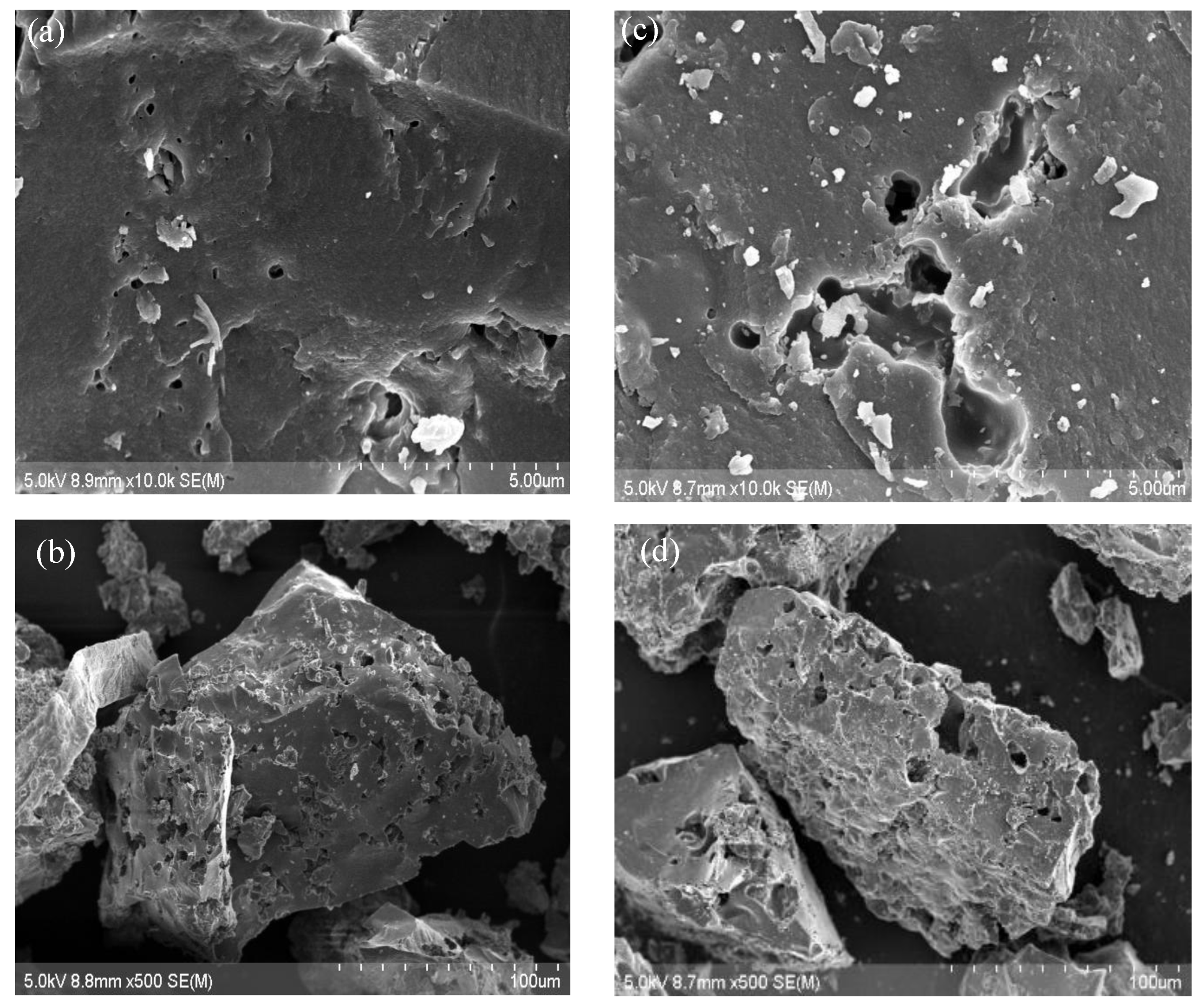
Figure 2.
TEM micrographs measured coffee waste based ACs as pressed discs. (a) and (b) for ACPhys; (c) and (d) for ACPhys-Chem.
Figure 2.
TEM micrographs measured coffee waste based ACs as pressed discs. (a) and (b) for ACPhys; (c) and (d) for ACPhys-Chem.
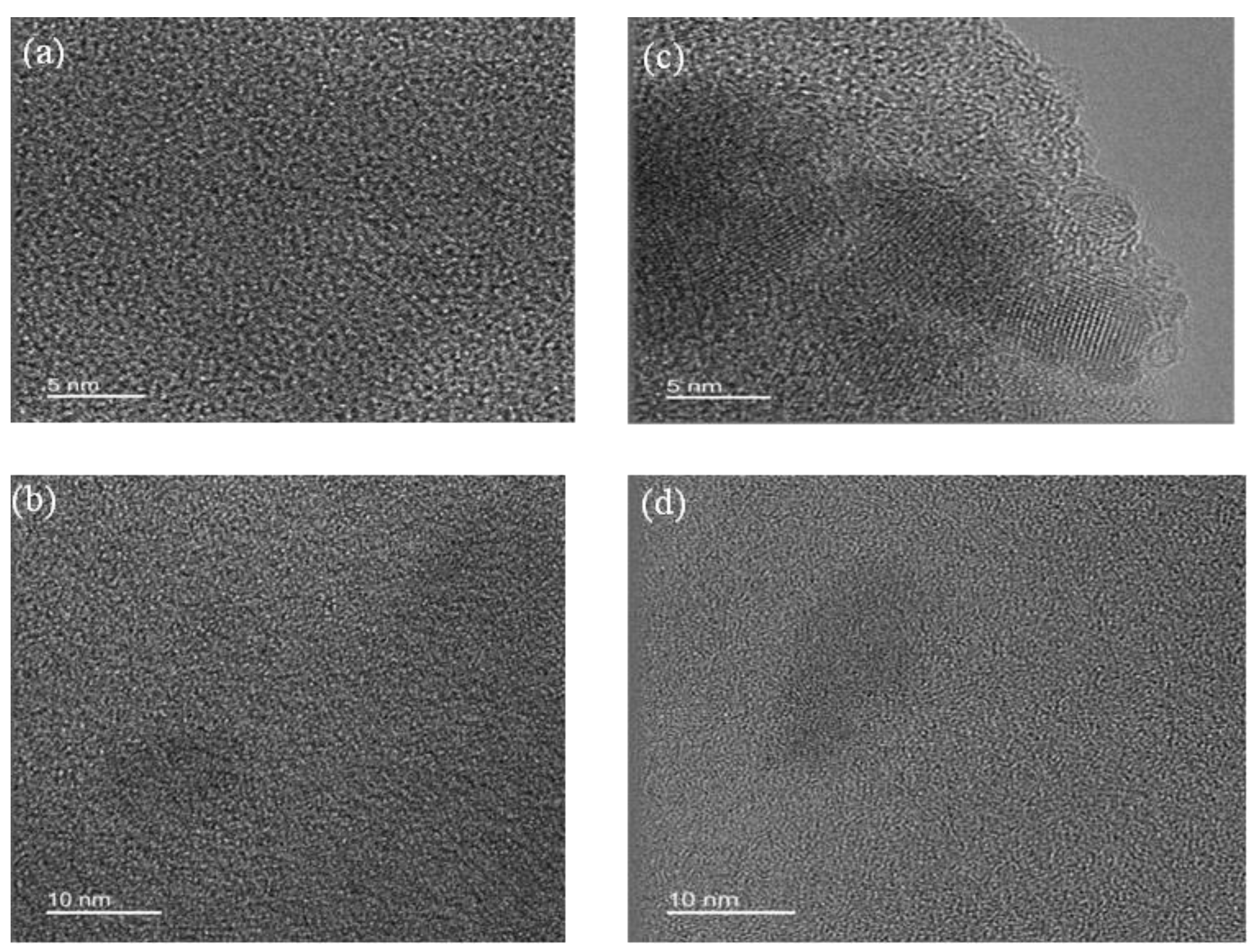
Figure 3.
Adsorption isotherms measured for the coffee based ACs. --ACPhys and --ACPhys-Chem.
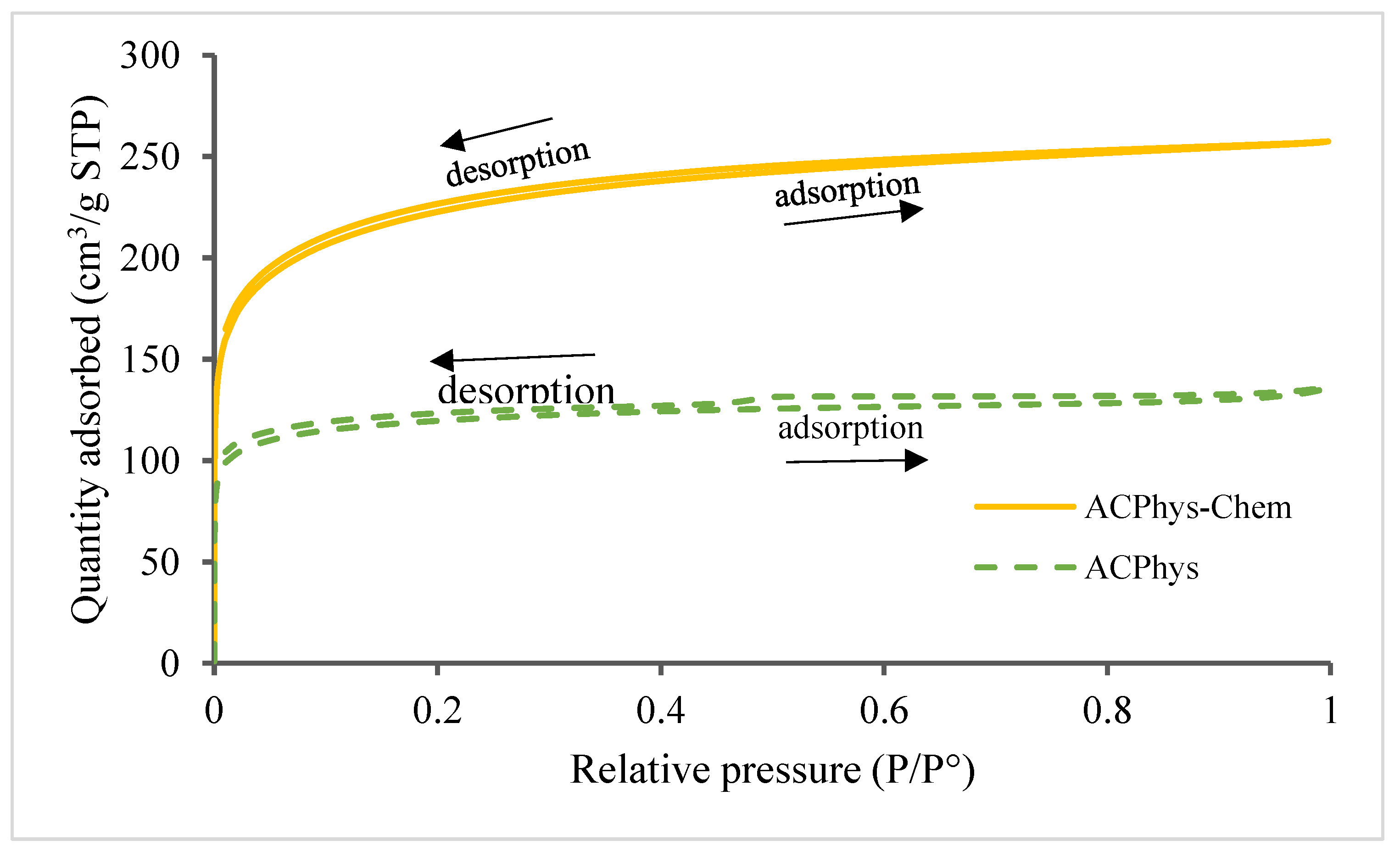
Figure 4.
BET plots 1/[Q(Pº/P -1)] vs. P/P0 measured for ACPhys and ACPhys-Chem.
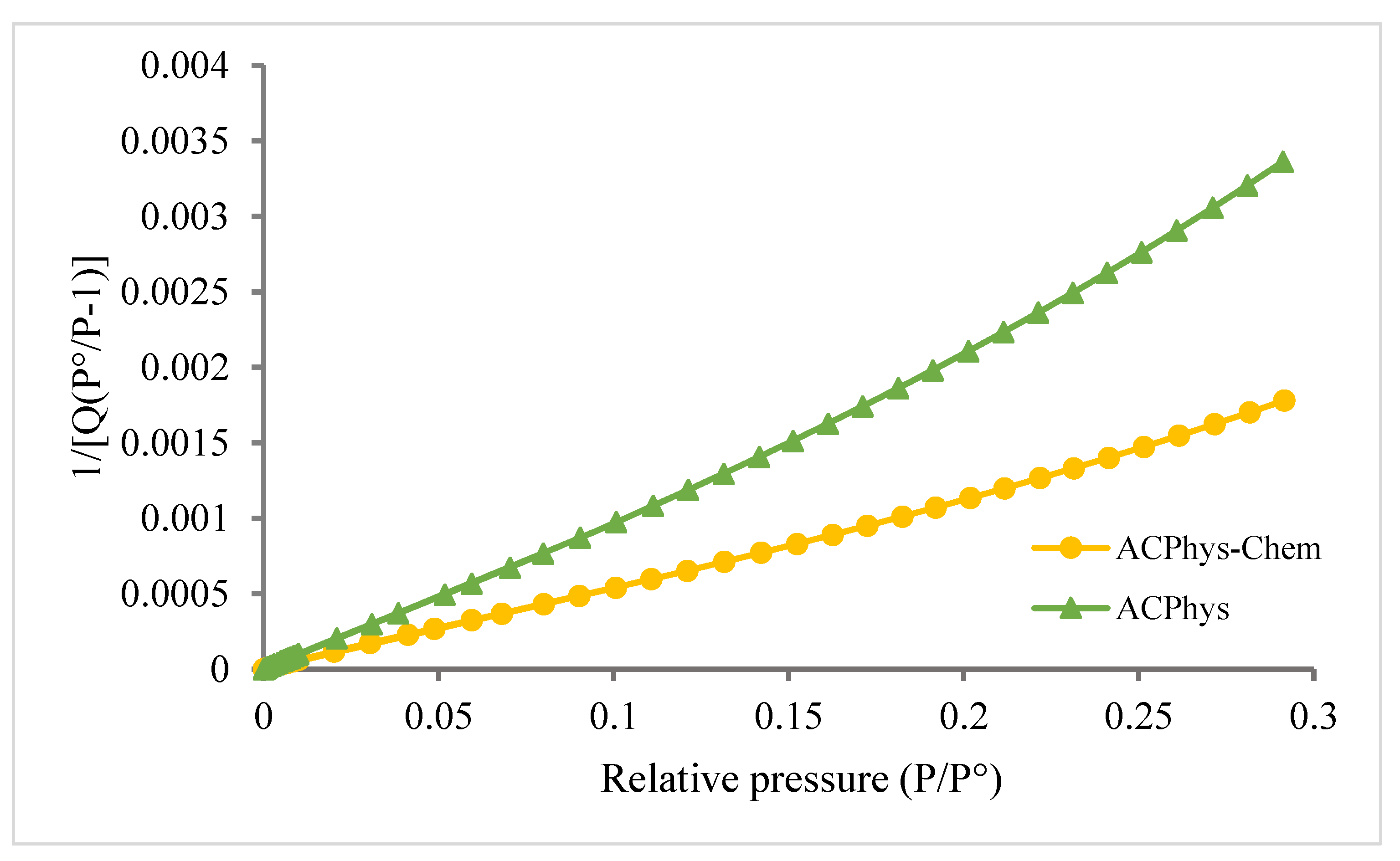
Figure 5.
BJH pore size analysis for activated carbons based on BJH method. (a) –ACPhys and (b) –ACPhys-Chem.
Figure 5.
BJH pore size analysis for activated carbons based on BJH method. (a) –ACPhys and (b) –ACPhys-Chem.
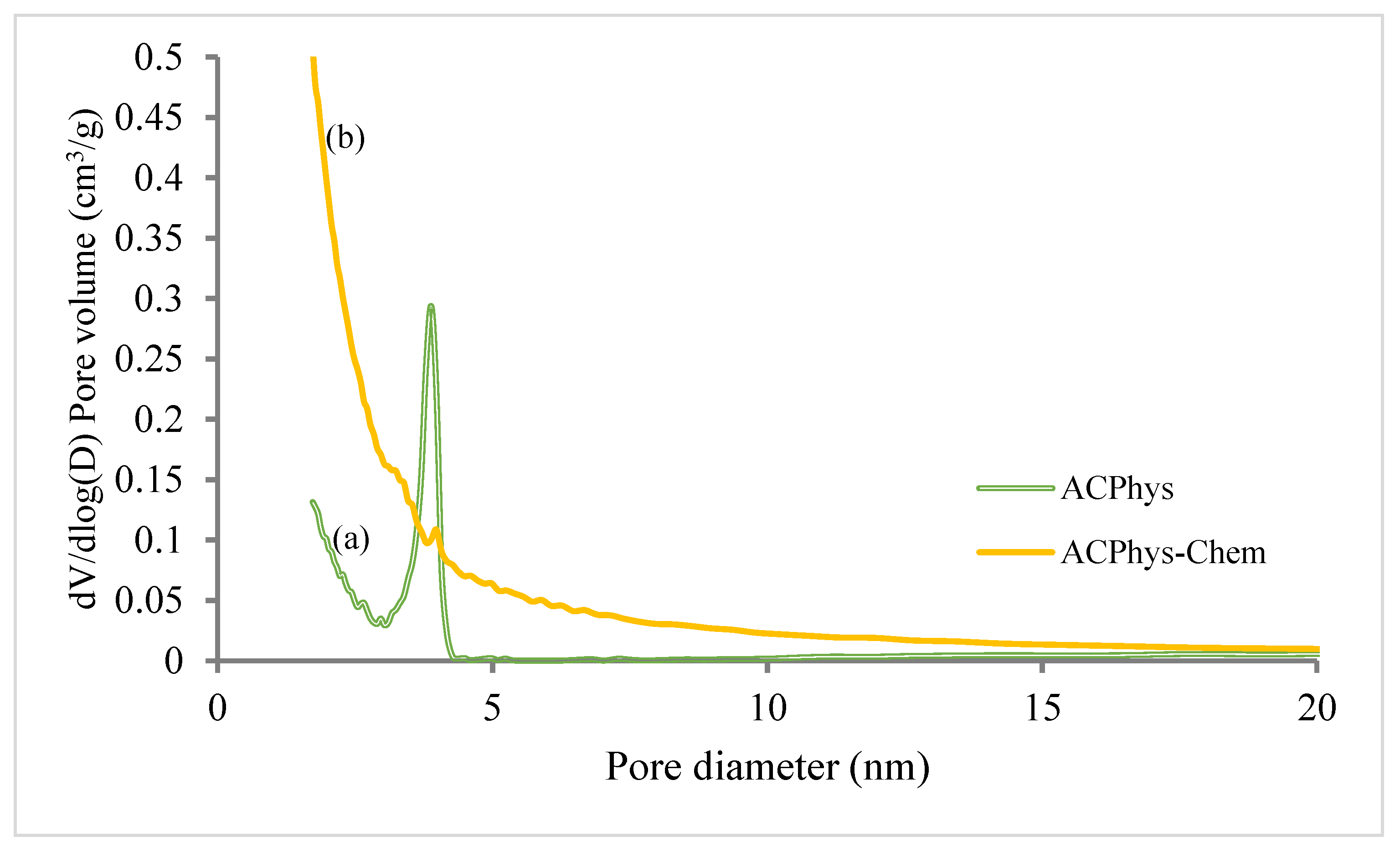
Figure 6.
HJ t-plot for N2 adsorption on (a) --ACPhys and (b) --ACPhys-Chem.
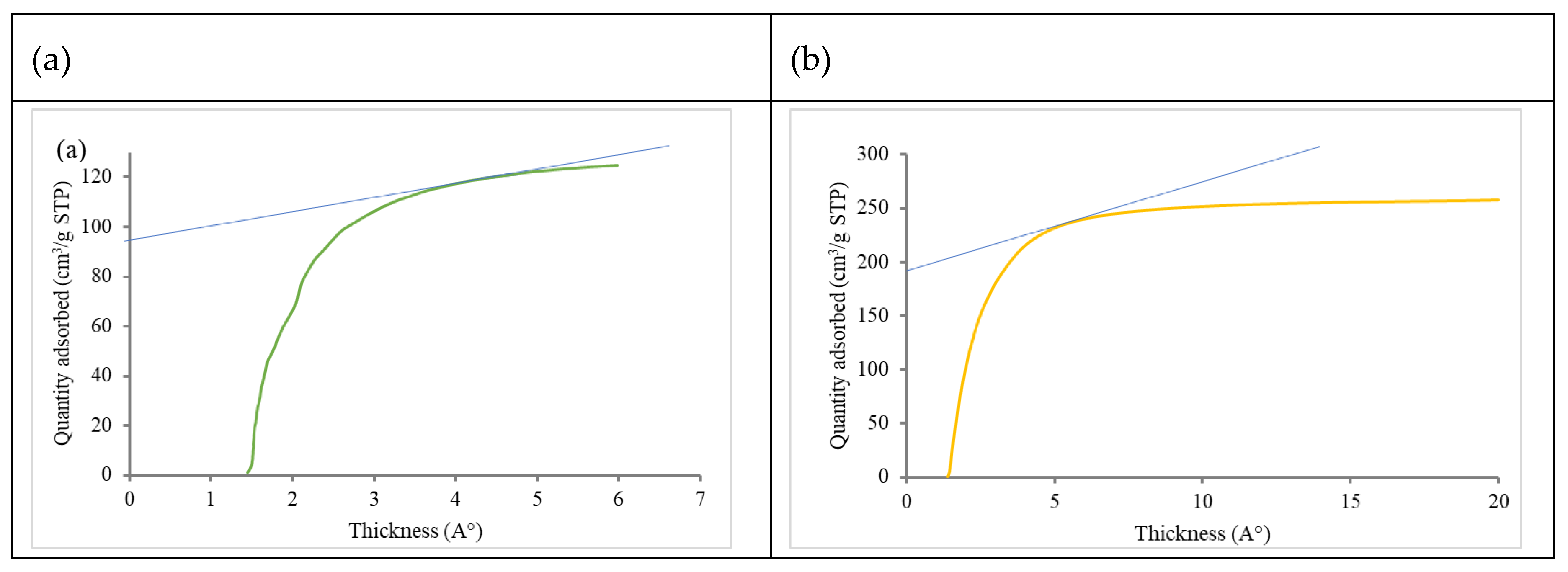
Figure 7.
XRD patterns measured for – ACPhys and -- ACPhys-Chem.
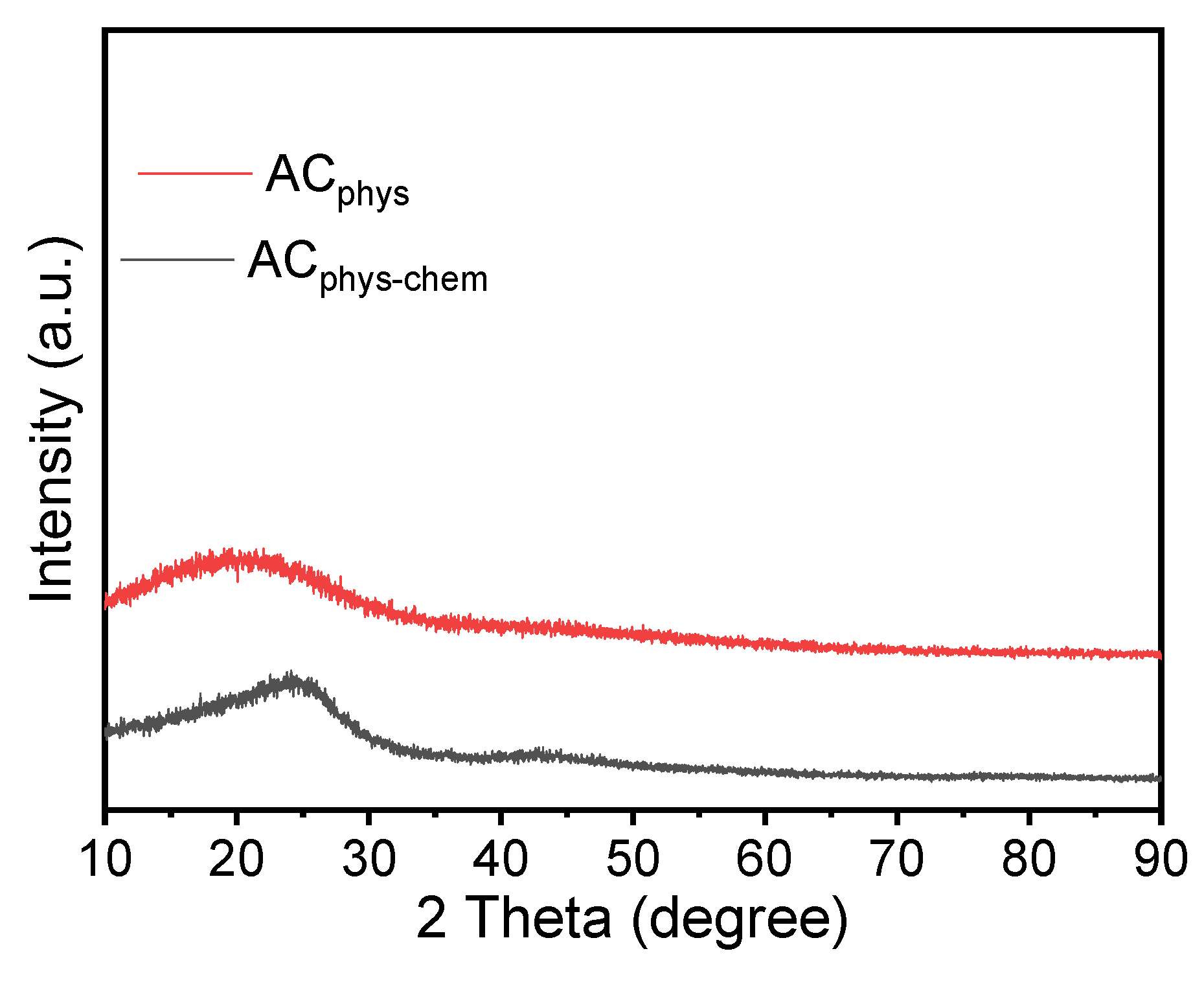
Figure 8.
Raman spectra measured for a) ACPhys and b) ACPhys-Chem.
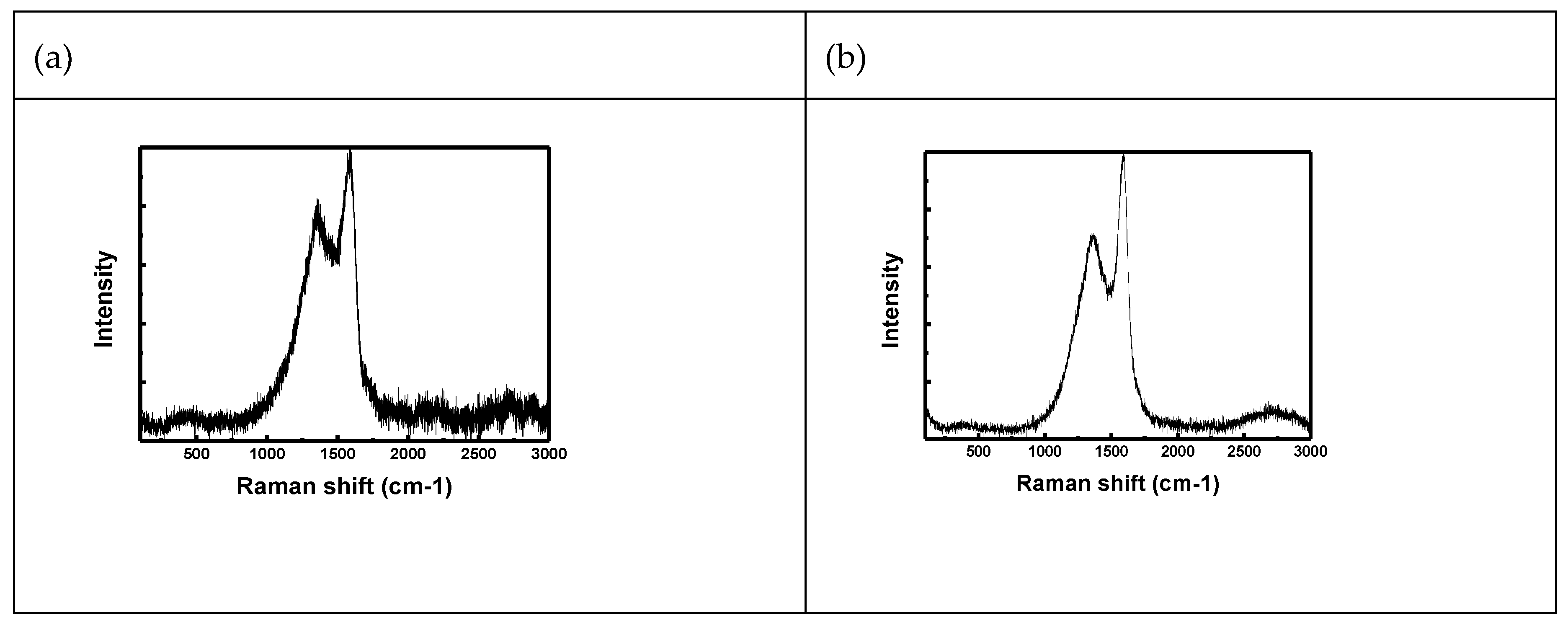
Figure 9.
CV studies on ACPhys-Chem electrode. (a) at various scan rates (b) at scan rate 5 mV/s, (c) scan rate effect on specific capacitance calculated at various.
Figure 9.
CV studies on ACPhys-Chem electrode. (a) at various scan rates (b) at scan rate 5 mV/s, (c) scan rate effect on specific capacitance calculated at various.
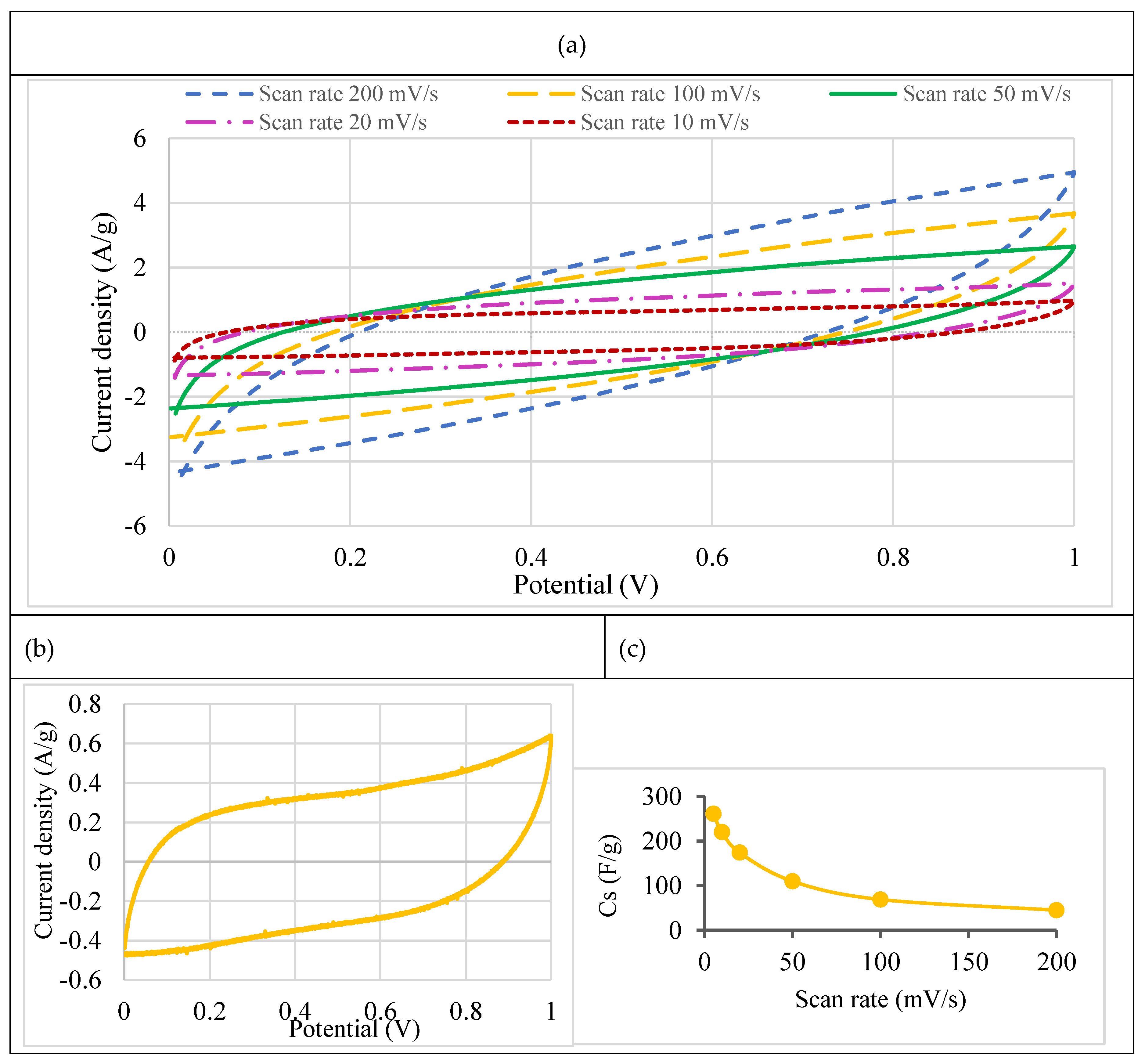
Figure 10.
GCD data for ACPhys-Chem electrode. (a) Charge/discharge at various current densities (b) Values of specific capacitance vs current density, (c) Ragone plot for specific power vs specific energy, (d) Electrode stability with cycling at current density 0.33 A g-1.
Figure 10.
GCD data for ACPhys-Chem electrode. (a) Charge/discharge at various current densities (b) Values of specific capacitance vs current density, (c) Ragone plot for specific power vs specific energy, (d) Electrode stability with cycling at current density 0.33 A g-1.
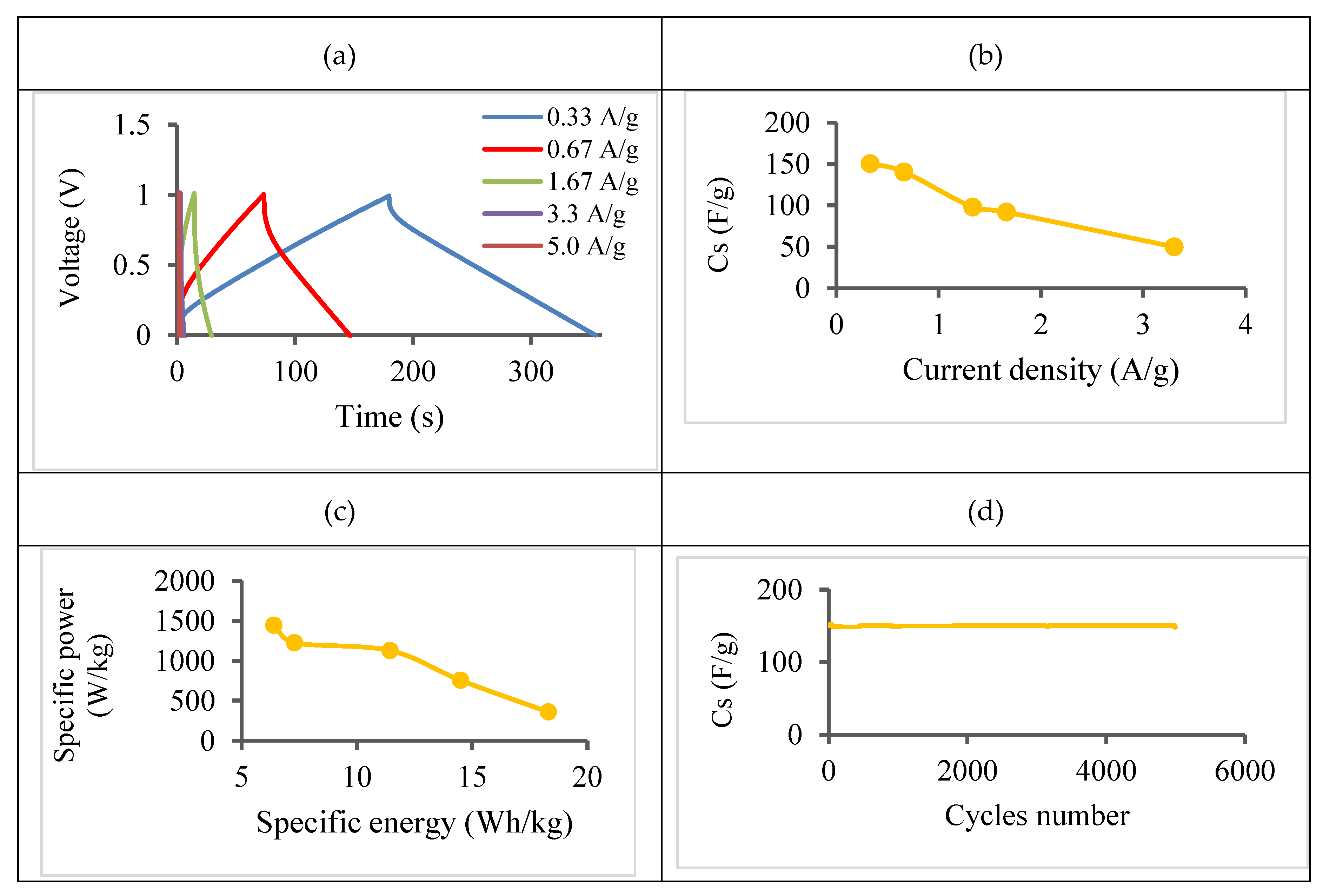
Figure 11.
EIS data measured for ACPhys-Chem electrode. (a) Nyquist plot constructed (b) Plot of specific capacitance vs. frequency.
Figure 11.
EIS data measured for ACPhys-Chem electrode. (a) Nyquist plot constructed (b) Plot of specific capacitance vs. frequency.
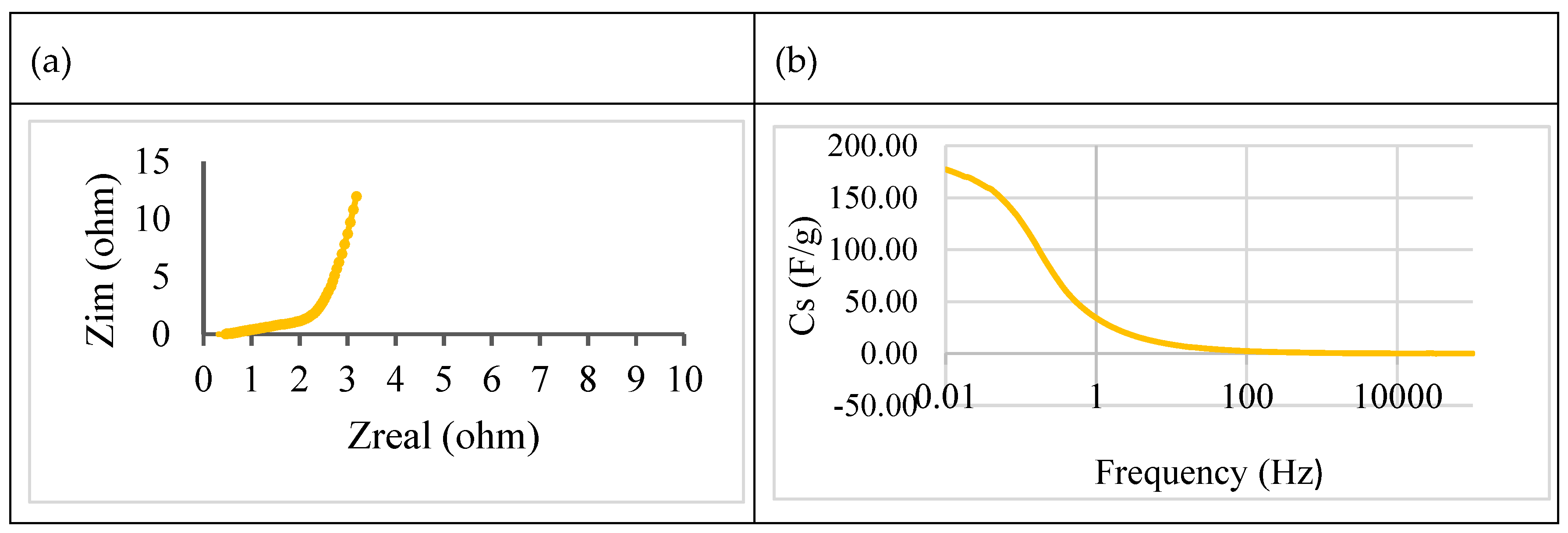

Table 1.
BET data measured for ACPhys and ACPhys-Chem.
| BET based data | ||||||||
|---|---|---|---|---|---|---|---|---|
| Material | SBET m2/g |
Vtb cm3/g |
V0.5-2c mic cm3/g t-plot |
V2-5e cm3/g BJH meso |
V>50 | S mic m2/g |
S Meso m2/g |
APS nm |
| ACPhys | 458 | 0.2114 | 0.153 | 0.23 | 0.0084 | 385 | 73 | 1.8-3.3 |
| ACPhy-Chem | 830 | 0.41 | 0.19 | 0.072 | 0.148 | 755 | 75 | 0.8-2.7 |
SBET= BET specific surface area, Smic=Micropore surface area, Smeso=Mesopore surface area, Smacra=Macropore surface area, Vt= Total pore volumes, Vmic=Micropore volume, Vmeso=Mesopore volume,.
Table 2.
Summary of elemental analysis results for (a) ACPhys-Chem and (b) for ACPhys.
| a | Element | C | N | O | S | Cl | Fe |
| Atom% | 93.3 | 2.3 | 3.9 | 0.1 | 0.2 | 1x10⁻² | |
| Mass% | 96.6 | 0.3 | 0.1 | 0.2 | 2x10⁻² | ||
| b | Element | C | N | O | S | Cl | Fe |
| Atom% | 63.2 | 1.9 | 23.7 | 0.04 | 1.1 | 0.04 | |
| Mass% | 83.3 | 4.0 | 0.1 | 1.5 | 0.1 |
Table 3.
Summary of specific capacitance (Cs) values obtained at various scan rates for ACPhys-Chem electrode compared to literature.
Table 3.
Summary of specific capacitance (Cs) values obtained at various scan rates for ACPhys-Chem electrode compared to literature.
| Scan rate (mV/s) |
Cs this work (F g-1) |
Literature Cs (F g-1) for coffee waste-based electrodes |
|---|---|---|
| 1 | -- | 150 [57] |
| 5 | 261 | 109 [33] |
| 10 | 220 | 101 [33] |
| 20 | 174 | 130 [57] 90 [33] |
| 50 | 110 | 100 [57] |
| 100 | 69 | 47 [33] |
| 200 | 45 | -- |
Table 4.
Equivalent series resistance values measured at various discharge current values for ACPhys-Chem.
Table 4.
Equivalent series resistance values measured at various discharge current values for ACPhys-Chem.
| Discharge Current (A) | 0.01 | 0.02 | 0.05 | 0.10 | 0.15 |
| VIR (V) | 0.064 | 0.134 | 0.297 | 0.660 | 0.760 |
| ESR (Ω) | 3.20 | 3.35 | 3.00 | 3.30 | 2.53 |
| Specific Capacitance (F g-1) | 150 | 141 | 92 | 50 | 39 |
Disclaimer/Publisher’s Note: The statements, opinions and data contained in all publications are solely those of the individual author(s) and contributor(s) and not of MDPI and/or the editor(s). MDPI and/or the editor(s) disclaim responsibility for any injury to people or property resulting from any ideas, methods, instructions or products referred to in the content. |
© 2024 by the authors. Licensee MDPI, Basel, Switzerland. This article is an open access article distributed under the terms and conditions of the Creative Commons Attribution (CC BY) license (http://creativecommons.org/licenses/by/4.0/).
Copyright: This open access article is published under a Creative Commons CC BY 4.0 license, which permit the free download, distribution, and reuse, provided that the author and preprint are cited in any reuse.


