

Submitted:
09 October 2024
Posted:
14 October 2024
You are already at the latest version
Abstract
This article centers on the experiences and voices of eight Kenyan youth climate change activists by highlighting how they navigate local and global challenges while engaging in climate change action. Specifically, the article examines how the activists are combating food insecurity and promoting biodiversity restoration by discussing findings from two projects. The first project is the Ondiri Wetland Botanical Gardens, where youth activists have planted over 270 indigenous trees, of which about 58 are different species of trees native to the Kenyan Highland of Kikuyu, to counter the biodiversity loss and alleviate the impact of climate change on flora and fauna. The second project is the One Million Trees for Kilifi project, where activists are planting orchards in various schools in Kilifi County in Kenya to mitigate the impact of climate change and end malnutrition among K-12 learners. Guided by the Youth Participatory Action Research (YPAR) methodology, this study counters the deficit and exclusionary narrative that has often left out young people from climate change education and governance policy decision-making and advocates for a more equitable and inclusive approach that centers their voices and perspectives in solving existential problems like climate change.
Keywords:
Youth
; YPAR
; Climate Change Activism
; Kenya
; Food Security
; Biodiversity Restoration
1. Introduction
Research on climate change action has received considerable attention recently since most scholars have agreed that “climate change is a real, human-caused, dangerous but solvable” crisis [1] (p. 173). While the impacts of the climate change crisis have impacted all and sundry globally, global south countries continue to bear the disproportionate impact of the climate change crisis despite their marginal contribution to the worldwide greenhouse gas emission menace, a significant cause of climate change [2]. Scientists have observed that the disproportionate impact, especially on African countries, is due to high vulnerability indexes. Climate change has led to “ecosystem disruption, loss of food production, reduced economic output, increased poverty, increased water and energy insecurity, increased diseases and loss of human life, loss of natural and cultural heritage,” among other things [3] (p. 1299). Climate change has also led to “climate-induced migrations. These impacts have exacerbated inequalities and worsened poverty levels among people living in rural, arid, and semi-arid areas in the global south [2,3,4,5]. In Kenya, climate change has led to the destruction of schools and the scaling down of schooling hours due to flooding and high heat levels in arid and semi-arid areas in the northern part of the country. It has also led to school dropouts due to hunger, destruction of homes due to flooding, and rise in sea levels leading to displacement and climate migrations, water shortage, reduction in the education budget, and, in some cases, devoting less attention to the education sector, among others [39]. Despite the impacts of the climate change crisis, political leaders and those in decision-making positions have continued to adopt a business-as-usual approach towards the climate change crisis. Therefore, calls for urgent, aggressive, and radical actions have dominated the global discourse on the climate change crisis [6,7].
The underrepresentation of global south climate change activists goes beyond research. It is also evident that funding for climate change-related research and projects has been predominantly awarded to institutions and researchers in the global north. Analysis of more than 4 million research grants between 1990 and 2020 indicates that 78% of the $1.26 billion climate change-related research funds went to institutions and scholars in the global north, with only 14.5% being channeled to researchers and institutions in Africa [2]. This demonstrates that funding and research underrepresentation by and from African scholars and institutions exist.
The number of people participating in climate activism, especially young people, to influence socio-political, economic, and overall systemic change has also increased. [8] document that over 7.9 million activists participated in the 2019 Global Climate Strike. In global north countries like the United States, [9,10,11] affirm that over half a million people in the US and 7.6 million worldwide participated in the Spring 2019 global climate change strikes that Greta Thunberg and other youth climate activists spearheaded. Despite the high number of young people mobilizing and participating in climate change activism, there needs to be more literature on how youth climate movements and activists in the global south emerge and evolve. Global North scholars dominate the current literature on youth climate change activism and focus on activists in Europe and North America, even though millions of youths in other parts of the world are involved in climate change activism. For instance, [12] conducted a narrative synthesis to establish how children and adolescents aged between 8 and 19 perceive climate change’s causes and impacts and its solutions by analyzing 51 peer-reviewed articles. Of the 51 peer-reviewed articles the authors examined, 39 were from high-income countries in the global north, and 12 were from upper-middle and lower-middle-income countries, with no articles originating or focusing on youth climate activists from African countries. While the authors of this study determined that perceptions about climate change among youth differed across individual participants and countries, perceptions of youth activists from global south countries like Kenya were not captured.
Youth climate change activists utilize various forms of activism/activism tactics. Depending on the political structures in certain countries, some tactics are more effective in influencing policy and attracting the attention of the media and other interested parties than others [13]. Forms of climate change activism like picketing, boycotting schools like Fridays for Future, marching, filing lawsuits against corporations and governments, signing petitions, and engaging in other violent forms of activism or civil disobedience have proved successful in the global north because of mainstream media coverage and conducive political opportunity structures [13,14]. While disruptive forms of activism are instrumental in attaining meaningful policy outcomes and creating global awareness compared to non-violent and indirect tactics [15], it is essential to note that some violent and direct tactics attract counteractions from authorities, like arrests and use of force on protesters especially in countries with unfavorable political opportunity structures. [17] found out that some community members failed to join the aggressive actions in Copenhagen due to a lack of clarity on what the video on the War on Capitalism called for. Some thought protesters were to engage in vandalism, which would likely attract counter-movements and police arrests in Copenhagen. Global mainstream media have also been selective in covering the work of youth climate change activists, with youths from the worldwide north benefiting from widespread media coverage compared to their counterparts in the global south. This article looks at how youth climate change activists in Kenya use non-violent means to fight food insecurity and promote biodiversity restoration. The article bridges the blatant underrepresentation of Global South youth climate change activists in extant literature by centering the experiences and voices of Kenyan youth activists and how they use non-violent means to create meaningful social transformation. The section below briefly describes the two projects youth climate change activists worked on pre-during and post-this study.
2. Context
I collaborated with Kenyan youth climate change activists from two organizations to conduct this study. The activists were proactively immersed in their respective communities. I followed up on each of the projects remotely through WhatsApp and Zoom. Before the start of the study, we created a WhatsApp group to allow daily check-ins and follow-ups on projects with each participant. The study took place between January 2024 and July 2024. Below is a brief description of the two projects I will discuss in this study.
3. The Ondiri Wetland Botanic Gardens
Within the Kenyan context, wetlands refer to land surfaces permanently or temporarily soaked with fresh, saline, salty, or brisky stagnant or moving water [39]. Globally, wetlands are vital in storing about 15 percent of terrestrial carbon [40]. Wetlands face extinction due to anthropogenic activities like pollution, poor drainage, encroachment, misuse, and overexploitation [39].
Ondiri Wetland is located in Central Kenya, Kiambu County, about 20 miles from Kenya’s capital city, Nairobi. Youth activists focus on restoring the Ondiri wetland by planting a Botanical Garden. Their main goal of planting and sustaining the garden is to alleviate climate change and counter biodiversity loss of flora and fauna by planting indigenous tree species and vegetables. This will increase vegetation cover, which aligns with the Kenyan government’s goal of achieving 15 billion trees by 2032. The Botanic Garden has collections of different species of shrubs, vegetables, and trees planted for educational purposes. The botanic garden has become a learning center for botanists and the general public.
4. The One Million Fruit Trees for Kilifi
The One Million Trees for Kilifi is a youth-led community-based organization in Kilifi County, Kenya. Kilifi County is located along the coastal region of Kenya. The organization is focused on ending food insecurity and climate change by planting one million fruit trees in 400 hundred K-12 schools in Kilifi County, Kenya, by 2032. The organization has about 150 youth climate change activists and is guided by the following objectives:
- We are establishing fruit orchards within the school compound to improve learners’ access to nutritious fruits.
- Training learners on the importance of taking care of the environments
- Promoting environmental sustainability by enhancing local tree cover is essential for improving rainfall patterns.
- Creating awareness about the importance of fruit trees in improving nutrition and climate resilience.
5. Materials and Methods
The study utilizes Youth Participatory Action Research (YPAR), qualitative research where adult researchers and youths explore and address societal issues by engaging in collaborative socio-political actions within school, community, or global settings [18,26]. Apart from contributing to a research process in collaboration with adult researchers, YPAR was ideal for this study since it allowed youth participants to gain vital civic, academic, and social skills that positioned them strategically as agents of change in their communities [19,20,25]. YPAR involves working with youths in designing and conducting all or some stages of research that affect them, their immediate family members, their community, and other systemic and existential issues [18,21,22]. Youth participants can be involved in “forming research questions, collecting and analyzing data, reporting results, as well as helping to shape possible interventions aimed at improving the conditions studied” [20] (p. 29). Through reflection and action, youth participants can question and challenge the mainstream positivist paradigm, which scientists have termed as the only legitimate and valid way of knowing and learning [23]. Activists can collaborate with the principal investigator(s) to design research, propose methods, and facilitate research activities, including presenting results and stimulating discussions [20,24]. This interactive and iterative process must take into account a “reflection of historical, political, economic, and geographic contexts to make sense of issues and experiences requiring action for changing or improving a situation” [18] (p.38). While there are growing debates regarding when youths can join the research process, and the extent to which they are involved in the research process, [20,25] observe that participants can enter research that has been initiated by an adult researcher with developed research questions, or on rare occasions, youths may initiate a research process and invite outside researchers to join.
Regarding involvement and leadership, [23,26,27] affirm that the focus should be more on youths’ impact in the process rather than the person leading the research process. Like other forms of action research, YPAR allows researchers to honor, center, and reflect on the experiences, expertise, knowledge, and skills of people most directly affected by issues under research to bring about transformational change socially, economically, culturally, and politically [18,21,28]. Through inquiry, YPAR participants should gain a robust understanding of societal inequities and work collaboratively to devise solutions [25,27]. Therefore, researchers utilizing YPAR must commit to amplifying the roles and values of youths often excluded and underrepresented in mainstream knowledge creation.
6. Participant Recruitment
To follow through with the planning, acting, observing, and reflecting process, I used purposeful, criterion, theoretical, and snowballing sampling to recruit participants for this study [28,29,30]. The sampling criteria, which will be as an initial eligibility survey, included being a Kenyan citizen or permanent resident, currently residing in Kenya, actively involved in climate change activism either individually or in partnership with non-governmental organizations, at least 18 years old but not older than 35 years of age, and having a high school diploma or enrolled in a post-secondary institution. This sampling criteria had several justifications. First, it allowed me to recruit participants who are involved in climate change activism in Kenya, are not minors, and have a better understanding of the impacts of the climate change crisis in Kenya and globally. It also helped me recruit activists with a good knowledge of the K-12 Kenyan education system. The contact person, a renowned youth climate change activist in Kenya, was instrumental in sharing the eligibility survey with his circle of influence using various social media platforms. I created a good rapport and credibility with the participants during a pilot study I conducted in Fall 2022. I recruited ten participants who worked on different climate change projects. The rationale behind such numbers stems from my purpose of building meaningful connections with participants to gather authentic data, ease of building consensus with a minor team, flexibility in setting up meeting schedules for focus groups, and ease of addressing power dynamics [23]. The numbers enabled me to generalize the research to other settings and provide a thick/detailed description of climate change as a global systemic problem [28].
7. Data Collection
Before collecting data, I collected each participant’s demographic information via an eligibility survey. For those eligible for the study, I ensured that informed consent was obtained from each participant by signing consent forms. I reminded participants about their freedom to withdraw from the study at any time during the first focus group. The data collection process involved four focus groups, two surveys, and one 30---40-minute semi-structured interview with each participant. The focus groups and the individual interviews were audio-recorded using the Zoom platform. To guide the semi-structured interviews, I used a pre-designed interview protocol that had been harmonized during the first focus group. To better understand the impact of climate change in Kenya and the actions being taken, photovoice or documented photography, a methodology specific to PAR where participants tell stories about the effects of certain societal phenomena in their communities through photographs, was used [20,32]. Participants took photos of the climate change problem and the actions that they were taking, described the context of the photos, shared their views or experiences about the climate change crisis, and brainstormed solutions. Photographs were shared during focus groups and one-on-one interviews using the Zoom share screen option. I stored the collected photos in a secured Google folder that was accessible only to me.

Table 1.
Summary of data sources.
| Y-PAR Methodology | Description | Timeline |
| Photovoice | Participants took pictures or newspaper articles in two rounds and shared them during focus groups using the Zoom screen share feature. In the first round, the photos or newspaper articles focused on how climate change has impacted their local communities. In the second round, they shared photos of themselves/their organizations during activism/conducting mitigating projects. |
First and second focus groups. January-February 2024 |
| Workshop (s) | We invited an expert to conduct a workshop on grant/proposal writing. Participants identified finance as one of the biggest challenges in their activism, and we agreed that applying to foundations and organizations for grants would require writing winning proposals. One participant moderated the workshop. | Third focus group. May 2024 |
| Surveys | Participants completed the eligibility survey and a climate change activism survey, which focused on the actions they were taking in their respective communities. | Jan- March 2024 |
| Individual semi-Structured Interviews | I conducted a 30–40-minute interview with each of the participants after the third focus group. | June-July 2024 |
| Social Media | With the participants’ consent, we formed a WhatsApp group. The group acted as a communication medium and helped foster community and networking among participants. Participants used the group daily to consult each other on their projects and share their successes and challenges. | Daily from Jan to August 2024 |
| Journaling | Each participant reflected on the impact of the April 2024 heavy floods, which negatively affected most people, including education institutions in Kenya. The journal was 50-100 words long. | April 2024 |
8. Data Analysis
Data analysis followed an iterative process of observation, feedback, inquiry, reflection, and action between and among participants [20]. Given the cost of the Otter.ai software, participants were not involved in transcribing. However, they verified transcripts, including redacting self-identifying information and removing irrelevant information during member checking. To ensure that collected data was transcribed accurately, I utilized the Otter.ai software. I utilized line-by-line coding, followed by inductive and deductive coding [29,33].
9. Positionality
How data is collected, analyzed, and interpreted and how participants are represented highly depends on a researcher’s social identities- class, status, hierarchy, gender, race, education level, value systems, experiences, et cetera [20,30]. The understanding of a researcher’s social identities concerning participants helps to avoid what [30] termed “hearing, seeing, reading and presenting results that conform to the researcher’s experiences and assumptions about self and others, rather than honoring the participants’ voices in the study” (p. 41). I consider myself a millennial insider conducting research with and by other insiders —youth climate change activists. I was born in western Kenya, where my family and other community members rely on farming as a source of livelihood. As a young boy, I enjoyed supporting my family on the farm by weeding, tending, and watering our animals and crops. This was because the climate was favorable, and rainfall was reliable. I attended a local primary and high school before attending the University of Nairobi for my undergraduate studies. I worked as a high school teacher before immigrating to the US as an F-1 student. I also embody the social identities of a cis-gendered, able-bodied, and heterosexual male pursuing a doctoral degree. These identities come with privilege and power and may impact how I conduct my research and represent my participants. However, I focused on working with participants, often giving guidance and remaining objective by journaling my feelings, decisions, actions, roles, and reflections about myself, participants, and data as it evolves. This insider privilege and my previous experiences, understanding, and knowledge of the Kenyan context may have influenced my assumptions and approach toward the topic, my interaction with participants, and how I collected and interpreted data.
I am also an outsider to the topic and the Kenyan context. I have lived away for nearly half a decade and gained my graduate education at a Predominantly White Institution (PWI) in the United States (US) and in a highly individualistic society where environmental racism and racial-capitalism are deeply embedded within the socio-economic and political culture. This outsider educational and life experience might be reflected in how I frame, understand, and approach my participants, the methodology I adopt, and my epistemological standpoint toward climate change activism. I also recognize my privilege as an able, cis-gendered Black man with native-like proficiency/professional skills in English and Swahili. Inevitably, my insider-outsider identity and privileges may shape my assumptions about the topic and how the participants perceive me. However, while discussing my findings, I strove to focus on what I agreed upon with participants and in line with the philosophical underpinnings of YPAR.
Epistemologically, I identify as a constructivist. Constructivists assume that all knowledge is socially constructed, and researchers should understand the dynamic world of experiences from the point of view of their participants [34]. Knowledge development occurs “within a preexisting social milieu, ever interpreting and reinterpreting itself” [34] (p.16). The constructivist lens also underscores research as an interactive and iterative process in which the researcher and co-researchers are mutual knowledge co-creators. This is in line with the assumptions underlying all forms of action research, which view “knowledge creation as an active process, knowledge being uncertain and the object of the inquiry is the “I” [18] (p.36).
Therefore, my agency and experiences in Kenya and the US motivated me to research climate change activism, a topic I deeply care about. While I agree that youth activism is not the one-fix-it-all solution to climate change, I am confident that it shows that as a young person, I care about my generation, generations to come, and generations of other non-human species that are adversely affected by anthropogenic activities that exacerbate the climate crisis. Thus, I want to be part of the solution by raising awareness and influencing policy change through collective action.
10. Findings
This article examined how Kenyan youth climate change activists are engaged in climate change activism. After analyzing data from two youth-led climate change community-based organizations, two themes were identified from the two activism projects: food insecurity/malnutrition prevention and biodiversity restoration.
11. Food Insecurity/Malnutrition
Many Kenyan communities are experiencing food insecurity because of climate change, which has led to low agricultural output [4,39,42]. Human activities like cutting down trees to make room for human settlement, domestic use, exportation, and urbanization have exacerbated the climate change crisis. While the crisis is a global issue, interventions in local communities are still needed (see Figure 1).
However, Kenyan youth climate activists are collaborating with community members to address the food security and malnutrition crisis by planting fruit trees in schools and developing botanical gardens where indigenous trees and vegetables are grown. Youth climate change activists are prioritizing tree species that can withstand more prolonged periods of drought. In Kilifi, youth-led community-based organizations like the One Million Trees for Kilifi are leading projects prioritizing planting mango trees in schools. Mtu wa Miti, the founder of the community-based organization, shared:
I shared an image of food insecurity in Kilifiy County, and the reason for that is that food security is caused by climate change. In recent years, Kilifi used to be a food basket for a lot of other places, but due to human-based activities like cutting down trees for charcoal and uncontrolled mining they caused the climate pattern to shift that farmers were unable to do farming and Have good produce. We are solving the problem of malnutrition. Because when you check on the first photo we sent, it was food security. Food security goes hand in hand with the health of the people of Kilifi. Why am I saying so? These people cannot have different crop varieties, specifically when you talk about vegetables, which are the best type of food that gives vitamin A; because of the drought and climate change, they cannot plant and harvest vegetables. Now, we can plant vegetables in a region with minimal rainfall, so we must have a substitute, something like a mango tree you’re going to plant. If it matures, it will be resilient even to more months of not receiving rainfall. From statistics which come from the health department of the county. It’s just that out of five children who are born, three of them suffer from malnutrition, and out of those three who are taken to the hospital to get supplements of vitamins and other things, two have what you’re calling recurrent cases, which means they can go back home. Still, they come back to the hospital because they don’t have the food that is required to sustain them. Mtu wa Miti
Another activist working with the Ondiri Wetland restoration project also shared how they are championing nature-based solutions to combat food insecurity by growing organic vegetables native to the Kikuyu community of Kenya. The activists also plan to establish botanical gardens that grow indigenous vegetables in schools adjacent to Ondiri Wetland. Bob noted that:
We introduced vegetables in the botanic garden as one of the sources of livelihood for the people in the locality. We’re growing purely indigenous organic vegetables for human consumption. We’re also not using chemical fertilizers and pesticides or such. The team involved in this project is purely youth. Since our model Botanic Garden is up and running, scalability is critical according to our IUCN Standard. We have mapped out about 44 schools within the 3 km buffer zone of Ondiri Wetland and are planning our scale-up projects there. Currently, we have started a second Botanic Garden at Kamangu High School. We desire to have planted at least 20 Botanic Gardens by December 2026. Bob
In Figure 2, Bob shared a photograph of the Ondiri Wetland Botanical Garden. He chose this picture because it speaks directly to their work in the fight against food insecurity. The Botanical Garden has more than 270 indigenous trees, a total of about 58 different species of trees native to the Kenyan Highlands of Kikuyu. Some of the species are rare, some endangered, and some missing.
The youth climate change activists have also stressed the importance of having context-specific approaches to climate change. This will ensure that solutions specific to certain areas will be adopted. Mtu wa Miti shared that:
So we are doing the forest to call back the rain to address the food security issue in Kilifi County. However, the short-term thing you are doing to address food security is to plant 1 million fruit trees in schools, if you count them so that those trees can produce fruits for the kids in three years. So, fruits are a form of food that helps students get something to eat. When you come to society and the policymakers recently, we have to have a lot of tree planting going on worldwide, and at the same time, they are trying to solve the problem of climate action. Still, now it should ring in their mind that climate action affects different regions differently because we’ll talk about global warming in some spaces affected by floods. Still, in our area, the effects of climate change are food insecurity and malnutrition. So, as we share the photos that we have with students, society, and activists like me planting fruit trees in schools, the policymakers should come up with policies that hold the people or institutions, those who have funds and are doing these climate action projects to be able to have specific solutions to specific regions, for example, in our area, instead of them just planting any tree, they must be held as possible. Mtu wa Miti
As Bob and Mtu wa Miti shared, youth activists-led organizations are engaged in impactful projects to promote food security in their respective communities. In the next section, I will examine the theme of biodiversity restoration.
12. Biodiversity Restoration
Climate change-related effects like floods, droughts, unbearable heat, and cold seasons have disrupted and imbalanced the lives of various species on Earth. Many species have lost their habitats, leading to either extinction or climate-induced migrations. The record-high indigenous species extinction will worsen if we continue with the current anthropocentrism. Participants in this study are prioritizing biodiversity restoration. Mtu wa Miti shared that:
We have three activities. One, we are calling it biodiversity restoration, whereby we are doing a pilot project in a place that is called Magarini in Kilifi County. Magarini used to support 75% of forest cover in the entire Kilifi, but now, that forest cover is nearly 15% due to the burning of charcoal and other human interactions and destruction. So we’ll have a pilot project of 100 acres where we are doing a fruit forest. A fruit forest means different types of trees. We are doing fruit trees and mangos. We are doing indigenous trees, the likes of neem tree. We are doing fruit trees the likes of museums and many more trees so that the insects that used to exist, the small animals, the rodents, all the animals that used to exist in that region can be increased in number, because when pollination stops, then we don’t have more new seedlings being formed. So we have to create a forest where we have these insects that can help to pollinate other forms of plants around and enable a new ecosystem to be built on, so if we do this, we can restore the forest cover in Kilifi County. And if you restore forest cover in Kilifi County, you are saying we are calling back the rains. Our group’s tagline is calling back the rain. So, if you call back the rains, it will not take one year or two, but it is a project that takes more than ten years to see the long-term effects.
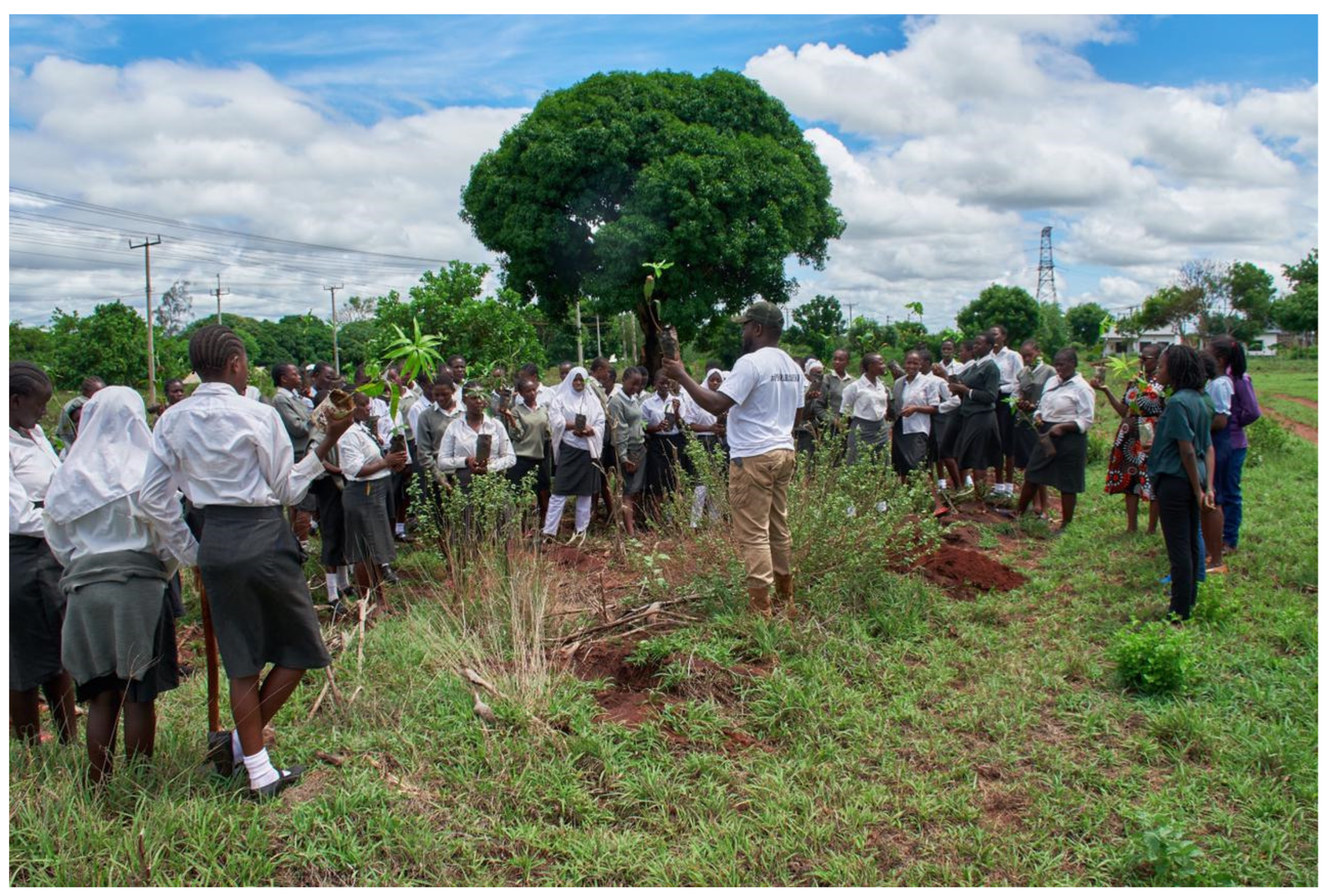
In Figure 3 below, Mtu wa Miti and other activists from One Million Trees for Kilifi are collaborating with students from Shomani Girls’ High School in Kilifi to plant mango trees on the school farm. This aligns with the organization’s mission of advocating for biodiversity restoration.
Bob also shared how they collaborate with community members to restore the Ondiri wetland. While the Ondiri wetland is a source of the Nyongare River, which feeds into the Nairobi River and then the Athi River and ends up in the Indian Ocean, it has started drying up. The activists have planted Osiris Lanceolate and other indigenous trees in the wetland to provide a thriving ecosystem for all species. Through advocacy and education of the community members, the youth activists have prevented human encroachment on the wetland.
The project I’m working on with my community is doing wetland restoration because we have realized that wetlands are as crucial as forests. So, as many people have put a lot of effort into tree planting, we have noted that wetlands can do precisely that. However, they have been diminishing at a higher rate. They have been diminishing twice as much as forest cover has been happening. So, we are working on the restoration of wetlands. Those are freshwater wetlands; by doing that, we have also been planting trees around, not just trees. As someone highlighted, some tree species are dangerous to wetlands, hazardous to riverine ecosystems, and even some terrestrial landscapes. So, we are working with indigenous tree forests. I mean the tree species that initially inhabited the area, but they have become extinct out of encroachment, climate change, and the challenges we face today. We have a botanic garden for education, so the community is empowered to learn how to work with nature. Bob
Figure 4.
Picture of Bob creating awareness about the Ondiri Wetland.
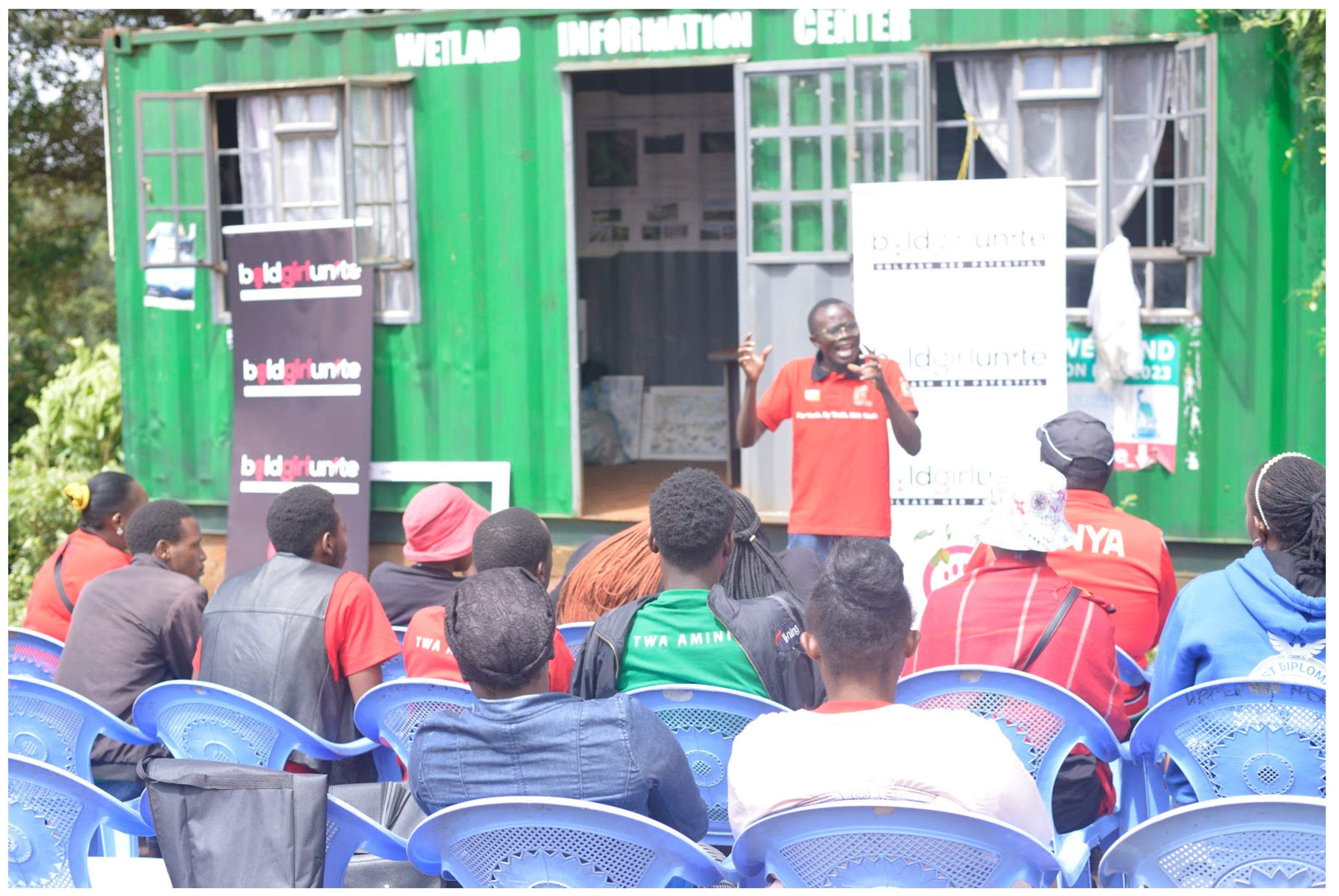
Educating communities around the Ondiri wetland has enabled the activists to gain enormous support from community members and enhanced collaboration. Partnering with the community and creating awareness has enabled the youth activist group to scale up and conserve the land that is around the wetland. There is, however, a lot of intentionality and financial resources that go into these efforts. Bob shared that:
In the past two weeks, we have intensified our conservation efforts to restore biodiversity in our Wetlands while combating climate change. Today, we hosted one of our partner organizations, which planted trees on the site they adopted. Adopting a site is a strategy to bring the community together to help us conserve the entire 33-acre wetland, with the community taking the lead. Understanding that we may not readily have financial support, we’re working with partners who can support us in kind, and it’s working. The botanic garden we have established near the swamp is for educational purposes, and we’re contacting institutions to conduct their ecological, biological, and geographical studies there. We are intensifying our education programs as we’re in talks with primary and secondary schools, not excluding tertiary institutions. We’re working on a program to revamp environmental clubs and establish similar botanic gardens in the schools. Our challenges are the financial implications our efforts exert on us when we need more funding. Bob
To further restore biodiversity, the One Million for Kilifi organization runs an initiative that focuses on planting trees on the streets of Kilifi town. This will not only improve the air quality in the town but also improve the city’s aesthetics and restore the habitat of birds and insects destroyed while building skyscrapers for human settlement. As one of the CEOs of One Million Trees for Kilifi described, this will shift locals’ mindset and perception about deforestation. Kilifi has lost a lot of forest cover due to deforestation.
Today, we launched another activity called the Green City Initiative, which now focuses on changing people’s perceptions from having a city full of skyscrapers, buildings, and malls to a city with green spaces, butterflies, and bees. So, most cities are the most populated areas. So if someone can walk in a town or a city in a green corridor, seeing plants, trees, and flowers, then the next time, the next thing he’s going to do when he reaches his home place is replicate the same where he’s staying. So, the Green City initiative is focused on changing the mindset of people to see that for a developed nation or a developed community; we have to have enormous malls. If they have that perception, they will continue cutting down trees. But if we change the perception that green spaces are the best places for human beings to stay, then they will reduce the deforestation that is taking place. Mtu wa Miti
Findings from both the Ondiri Wetland Botanical Garden and the One Million Trees for Kilifi showcase the impactful work that Kenyan youth activists are engaged in, especially concerning fighting food insecurity and restoring biodiversity. The youths have forged meaningful collaboration with community members and even expanded their work to K-12 schools within their area of operation. Financial constraints remain to be a challenge that youths have to contend with. Most of the support comes from community members and activists who donate trees and volunteer labor, sometimes using their own money to offset the cost of their activism. During the study, we collaborated with the One Million Trees for Kilifi activists to create a GoFundMe to raise funds needed to purchase fruit tree seedlings and cover logistical costs. Our goal was to raise at least 500 USD, but we only managed to raise 100 US dollars, an equivalent of about 12,600 Kenyan Shilings. These funds were used to purchase over 250 seedlings.
13. Discussion and Conclusion
This study examined how Kenyan youth climate change activists engage in climate change activism. The main participants were working with the Ondiri Wetland Botanical Gardens and the One Million Trees for Kilifi, youth-led community organizations focusing on tackling the climate change crisis in multiple but related ways. Using YPAR methods like focus groups, photovoice, semi-structured interviews, surveys, and workshops, two themes were identified from the study: food insecurity/malnutrition and biodiversity restoration. Through collaboration with community members and K-12 educational institutions, the activists are planting fruit trees, indigenous vegetables, drought-resistant trees like the Mangroove, and other native trees in schools and Botanical Gardens. The youths have also created awareness among community members about the need to forge meaningful relationships and coexistence between humans and nature.
These findings suggest that while the climate change crisis has affected both human and non-human species, youth activists are not being left out but are taking a more proactive approach to safeguarding the environment [32,35]. They are tackling the crisis head-on by advancing nature-based solutions to fight climate change, the financial constraints notwithstanding. Ultimately, these efforts yield fruits, as demonstrated by this study’s findings. This study’s findings reinforce [35,36] the argument that youth activists are robust, innovative, and collaborative social transformative agents that should be at the center of research [32].
Youth climate change activism in Kenya and the Global South must be studied more. Global North scholars on global North youths have conducted most of the research. Given the contextual differences, especially the political structure, societal expectations, and finances, activism and tactics employed during activism in the global north may be different from those used by global south youths. The conceptualization of climate change activism may also vary depending on geographical location. Therefore, future research on youth climate change activism should continue to illuminate the impactful work done by youth activists in the Global South. The research should always endeavor to center youth’s voices, actions, and experiences. While this study focused on youth climate change activism from Kenya, future comparative case studies should examine how youth from other Global South countries, especially those with different political structures, engage in climate change activism. Such elongated studies will create a more nuanced understanding of why and how youth in other geopolitical regions are involved in climate change activism.
While YPAR has been hailed as a methodology that empowers participants to be agents of change in their community and equips them with data collection analysis and presentation skills, it has some underlying setbacks for researchers and co-researchers. Specific to this study was the inclusion of participants throughout all the phases of a research project and the democratic aspect of the methodology [25,26,27]. This requires a lot of time commitment and robust knowledge about the community issues under investigation and can present a lot of burnout and logistical challenges to both participants and researchers. Depending on the number of participants and the power imbalance between the researcher and co-researchers, it can be challenging to build consensus about timelines, the social actions to be undertaken, and how data is analyzed, interpreted, and presented [23]. These challenges notwithstanding, my goal was to negotiate, empower, raise consciousness, and collaborate with participants while centering the voices and experiences of the participants. Secondly, while most phases of YPAR are usually conducted in person, with virtual platforms reserved for collecting data and sharing materials or ideas among researchers [38], this study was conducted in a virtual setting through Zoom and WhatsApp. This poses some methodological issues, including interaction with participants to build meaningful connections, technological inclusivity, cost, and internet reliability, among other topics. To address the challenges mentioned above, I formed a WhatsApp group, with participants’ permission, to provide an informal but safe space where we could check in with each other, share our actions, and evaluate the progress of the research process daily. The group was complementary to the scheduled Zoom meetings. This enhanced camaraderie among participants and acted as a forum where they shared current affairs/events on climate change activism and their actions. To offset the cost of the internet, I compensated participants using funds from a research grant. All eight participants attended all scheduled focus groups and semi-structured interviews, interacted with their peers in the WhatsApp group, and completed all agreed-upon tasks virtually. This speaks to the practicality of conducting virtual YPAR, especially with proper planning, access to the internet, and mutual understanding among co-researchers. Therefore, this study adds to extant literature that has conducted YPAR remotely.
This study demonstrates that more resources should be channeled into youth-led organizations and institutions that nurture them. The financial power will enable them to go above and beyond to attain meaningful change. Even though this study focused on project-based and nonviolent forms of climate change activism, more studies are needed to provide more insight into the use of violent tactics [16,37], if any, and their resulting social change. While violent activism tactics have yielded meaningful social change in the Global North [15,16], it will be insightful to establish if some youths in the Global South are using them and their resultant impact.
Funding
This research received no external funding.
Institutional Review Board Statement
This study was approved by the Institutional Review Board of the University of Maryland College Park (study# 2100206-1 on JANUARY 26, 2024).
Informed Consent Statement
Informed consent was obtained from all subjects involved in the study.
Data Availability Statement
The data for this study is only accessible by the principal investigator, given that it is part of ongoing dissertation research.
Conflicts of Interest
This study has no potential conflict of interest.
References
- Roser-Renouf, C.; Maibach, E.W.; Leiserowitz, A.; Zhao, X. The genesis of climate change activism: from key beliefs to political action. Climatic Change: An Interdisciplinary. International Journal Devoted to the Description, Causes and Implications of Climatic Change 2014, 125, 163–178. [Google Scholar] [CrossRef]
- Islam and Winkel 2017 Climate change exacerbates inequality and makes poverty reduction goals.
- IPCC. (2021). Climate Change is Widespread, rapid, and intensifying. Retrieved December 11, 2021, from https://www.ipcc.ch/2021/08/09/ar6-wg1-20210809-pr/.
- Von Storch, L.; Ley, L.; Sun, J. New climate change activism: before and after the Covid-19 pandemic. Social anthropology: The Journal of the European Association of Social Anthropologists = Anthropologie Sociale 2021, 29, 205–209. [Google Scholar] [CrossRef]
- Slevin, A.; Elliott, R.; Graves, R.; Petticrew, C.; Popoff, A. Lessons from Freire: Towards a Pedagogy for Socio-Ecological Transformation. Adult Learner: The Irish Journal of Adult and Community Education 2020, 73, 95. [Google Scholar]
- Berglund, Oscar, and Daniel Schmidt. 2020. Extinction Rebellion and Climate Change Activism: Breaking the Law to Change the World. Cham: Springer International Publishing.
- Capstick, S.; Thierry, A.; Cox, E.; Berglund, O.; Westlake, S.; Steinberger, J.K. Civil disobedience by scientists helps press for urgent climate action. Nature Climate Change 2022, 12, 773–774. [Google Scholar] [CrossRef]
- Vu, H.T.; Blomberg, M.; Seo, H.; Liu, Y.; Shayesteh, F.; Do, H.V. Social media and environmental activism: Framing climate change on Facebook by global NGOs. Science communication 2021, 43, 91–115. [Google Scholar] [CrossRef]
- Fisher, D.R.; Nasrin, S. Climate activism and its effects. Wiley Interdisciplinary Reviews: Climate Change 2021, 12, e683. [Google Scholar] [CrossRef]
- Fisher, D.R.; Nasrin, S. Shifting coalitions within the youth climate movement in the US. Politics and Governance 2021, 9, 112–123. [Google Scholar] [CrossRef]
- Fisher, S.R. Life trajectories of youth committing to climate activism. Environmental Education Research 2016, 22, 229–247. [Google Scholar] [CrossRef]
- Lee, K.; Gjersoe, N.; O’Neill, S.; Barnett, J. Youth perceptions of climate change: A narrative synthesis. Wiley Interdisciplinary Reviews: Climate Change 2020, 11, e641. [Google Scholar] [CrossRef]
- McAdam, D. Tactical Innovation and the Pace of Insurgency. American Sociological Review 1983, 48, 735–754. [Google Scholar] [CrossRef]
- Morris, A.D. A Retrospective on the Civil Rights Movement: Political and Intellectual Landmarks. Annual Review of Sociology 1999, 25, 517–539. [Google Scholar] [CrossRef]
- Wang, D.J.; Soule, S.A. Tactical innovation in social movements: The effects of peripheral and multi-issue protest. American Sociological Review 2016, 81, 517–548. [Google Scholar] [CrossRef]
- Anfinson, K. (2023). Climate change and the new politics of violence. In Violence (pp. 111-125). Routledge.
- Uldam, J.; Askanius, T. Online civic cultures? Debating climate change activism on YouTube. International Journal of Communication 2013, 7, 20. [Google Scholar]
- Shamrova, D.P.; Cummings, C.E. Participatory action research (PAR) with children and youth: An integrative review of methodology and PAR outcomes for participants, organizations, and communities. Children and Youth Services Review 2017, 81, 400–412. [Google Scholar] [CrossRef]
- Rubin, B.C.; Jones, M. Student action research: Reaping the benefits for students and school leaders. NASSP Bulletin 2007, 91, 363–378. [Google Scholar] [CrossRef]
- Herr, K.; Anderson, G.L. (2014). The action research dissertation: A guide for students and faculty. Sage publications.
- Brydon-Miller, M. Participatory action research: Psychology and social change. Journal of Social Issues 1997, 53, 657–666. [Google Scholar] [CrossRef]
- Chandler, D.; Torbert, B. Transforming inquiry and action: Interweaving 27 flavors of action research. Action research 2003, 1, 133–152. [Google Scholar] [CrossRef]
- Maguire, P. (1987). Doing participatory research: A feminist approach.
- Baum, F.; MacDougall, C.; Smith, D. Participatory action research. Journal of epidemiology and community health 2006, 60, 854. [Google Scholar] [CrossRef]
- Smith, L.; Davis, K.; Bhowmik, M. Youth participatory action research groups as school counseling interventions. Professional School Counseling 2010, 14, 2156759X1001400206. [Google Scholar] [CrossRef]
- Cammarota, J.; Fine, M. (2008). Revolutionizing education. Youth participatory.
- Checkoway, B. (2012). Youth participation and community change. Routledge.
- Mertens, D.M. (2023). Research and evaluation in education and psychology: Integrating diversity with quantitative, qualitative, and mixed methods. Sage publications.
- Creswell, J.W.; Poth, C.N. (2018). Qualitative Inquiry & Research Design: Choosing Among Five Approaches (4th ed.). Thousand Oaks, CA: Sage.
- Jones, S.R.; Torres, V.; Arminio, J. (2021). Negotiating the complexities of qualitative research in higher education: Essential elements and issues. Routledge.
- Wang, C.; Burris, M.A. Photovoice: Concept, methodology, and use for participatory needs assessment. Health education & behavior 1997, 24, 369–387. [Google Scholar]
- Cahill, C. Including excluded perspectives in participatory action research. Design Studies 2007, 28, 325–340. [Google Scholar] [CrossRef]
- Deterding, N.M.; Waters, M.C. Flexible coding of in-depth interviews: A twenty-first-century approach. Sociological methods & research 2018, 0049124118799377. [Google Scholar]
- Schwandt, T.A. (2000). Three epistemological stances for qualitative inquiry: Interpretivism, hermeneutics, and social constructionism. In the Handbook of qualitative research (pp. 189-213). Sage Publications Inc.
- Han, H.; Ahn, S.W. Youth mobilization to stop global climate change: Narratives and impact. Sustainability 2020, 12, 4127. [Google Scholar] [CrossRef]
- Costanza-Chock, S. (2012). Youth and social movements: Key lessons for allies. Berkman Center Research Publication, (2013-13).
- O’Brien, K.; Selboe, E.; Hayward, B.M. Exploring youth activism on climate change. Ecology and Society, 2018; 23. [Google Scholar] [CrossRef]
- Rivera, A.; Okubo, Y.; Harden, R.; Wang, H.; Schlehofer, M. Conducting Virtual Youth-Led Participatory Action Research (YPAR) During the COVID-19 Pandemic. Journal of Participatory Research Methods 2022, 3. [Google Scholar] [CrossRef]
- Omambia, A.N.; Shemsanga, C.; Li, Y. Combating climate change in Kenya: efforts, challenges and opportunities. Report and Opinion 2009, 1, 12–23. [Google Scholar]
- Zhou, N.Q.; Wang, Y.; Li, C.X. Carbon cycle in wetlands and its relationship with global change. Water–Rock Interaction 2007, 1517–1590. [Google Scholar]
- Kabubo-Mariara, J.; Kabara, M. (2018). Climate change and food security in Kenya. In Agricultural Adaptation to Climate Change in Africa (pp. 55-80). Routledge.
- Ochieng, J.; Kirimi, L.; Mathenge, M. Effects of climate variability and change on agricultural production: The case of small-scale farmers in Kenya. NJAS-Wageningen journal of life sciences 2016, 77, 71–78. [Google Scholar] [CrossRef]
Figure 1.
Newspaper article about food insecurity in Kilifi, Kenya.

Figure 2.
A photo of Bob and His friend at the Ondiri Botanical Garden.
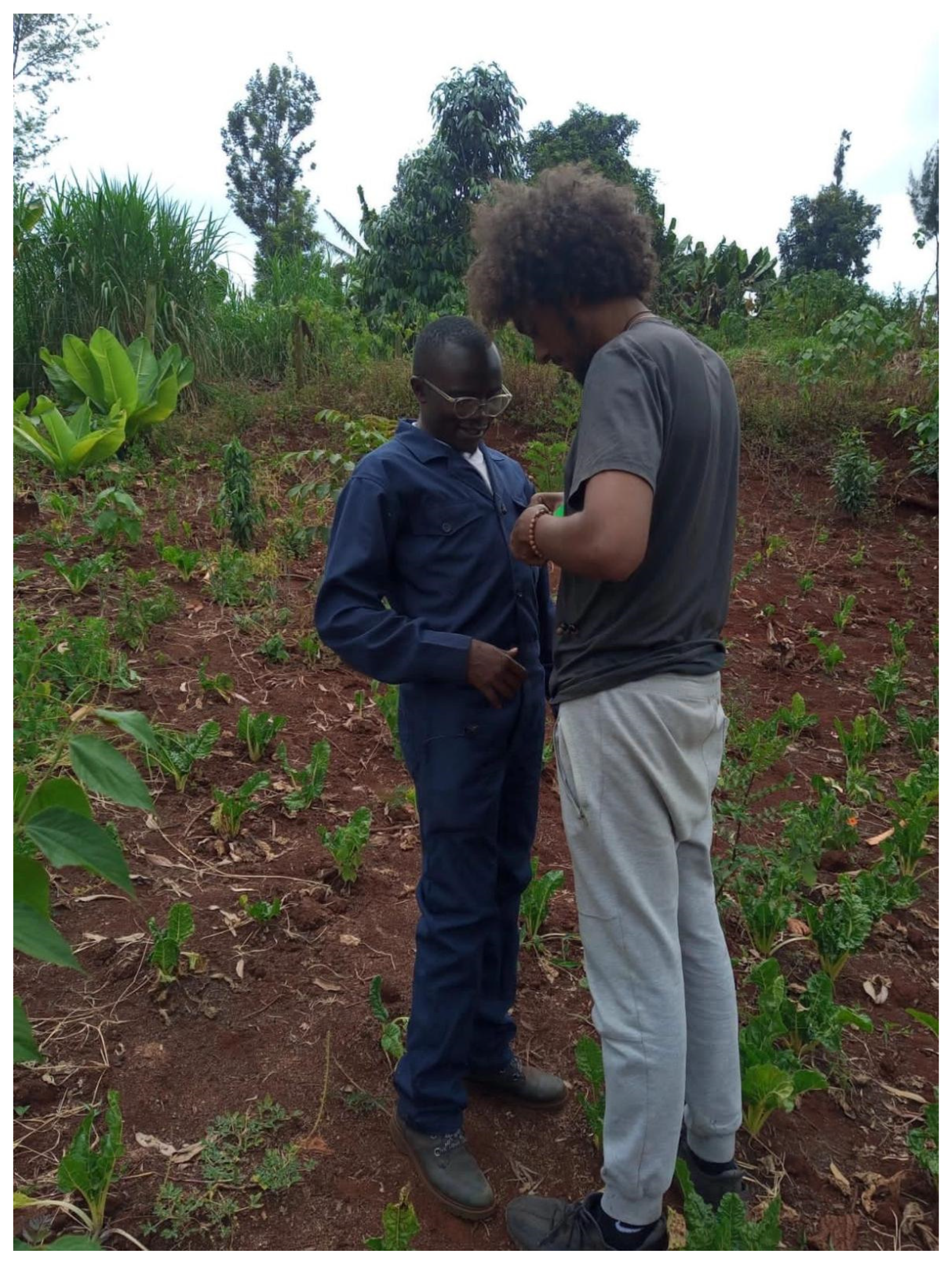
Figure 3.
Students at Shomoni Girls in Kilifi County Planting Mango Trees at the School Orchard.
Disclaimer/Publisher’s Note: The statements, opinions and data contained in all publications are solely those of the individual author(s) and contributor(s) and not of MDPI and/or the editor(s). MDPI and/or the editor(s) disclaim responsibility for any injury to people or property resulting from any ideas, methods, instructions or products referred to in the content. |
© 2024 by the author. Licensee MDPI, Basel, Switzerland. This article is an open access article distributed under the terms and conditions of the Creative Commons Attribution (CC BY) license (http://creativecommons.org/licenses/by/4.0/).
Copyright: This open access article is published under a Creative Commons CC BY 4.0 license, which permit the free download, distribution, and reuse, provided that the author and preprint are cited in any reuse.


