

Submitted:
09 October 2024
Posted:
11 October 2024
You are already at the latest version
Abstract
The maritime environment is the setting for a variety of economic activities, such as offshore wind energy, aquaculture, salt extraction, and oil and gas platforms. While some of these activities have a long-term presence, others require decarbonisation as they head towards their demise. In this context, the aim of this study is to develop a methodology to replace the electrical energy from high-emission industrial processes offshore with clean electricity generated by offshore wind energy. The proposal is structured in three phases: Initiation, which involves the collection of quantitative, technical and geospatial information of the study area; Indicators, where the main indicators are calculated and the best alternative is selected using multi-criteria evaluation methods; and finally, short, medium and long-term scenarios are proposed. The methodology is evaluated in Spain, the best alternative with a nominal power of 225 MW, is capable of avoiding up to 1.44 MtCO2 by 2050.
Keywords:
Offshore wind energy
; Optimal selection
; Maritime Sector
; Multi-criteria evaluation methods
1. Introduction
In the current context of the climate emergency, transitioning the energy system towards a fossil fuel-free model emerges as a crucial and urgent response to the global challenges posed by climate change [1]. This energy transformation is not only necessary but imperative to meet international commitments, such as the Paris Agreement, which aims to limit the global temperature increase to 1.5°C above pre-industrial levels [2]. This target is considered essential by the scientific community because exceeding this threshold could trigger irreversible and catastrophic climate impacts, affecting both ecosystems and human societies worldwide [3]. The shift towards clean, sustainable, and fossil fuel-free energy is a complex challenge that requires a comprehensive rethinking of the current energy system. Renewable energy sources such as solar, wind, geothermal, and hydroelectric power play a central role in this transition, providing clean, accessible energy that, unlike fossil fuels, does not emit greenhouse gases [4].
However, the widespread adoption of these technologies requires significant investment in infrastructure and technology, as well as a structural transformation in how countries produce, distribute, and consume energy. A key component of this transformation is clean electrification. The acceleration of electrification through renewable energy sources not only reduces carbon emissions in sectors traditionally dependent on fossil fuels, such as transportation and industry, but also fosters the development of more efficient and resilient power grids. These grids, supported by emerging technologies such as energy storage and smart systems, are essential for ensuring the stability of electricity supply, especially as renewable sources like solar and wind can be intermittent [5]. Despite technological advances, the energy transition cannot rely solely on technology. A coordinated and collaborative global effort is necessary. Governments, industries, and other key stakeholders must work together to drive ambitious public policies that encourage investment in renewable energy, promote technological innovation, and facilitate the shift to a low-carbon economy. This kind of global cooperation is crucial for overcoming the economic, political, and social barriers that currently hinder the widespread adoption of clean technologies [6].
In this regard, it is vital that energy policies are aligned with climate goals, promoting the decarbonization of key sectors such as energy, industry, and transportation. Implementing regulatory frameworks that incentivize investment in clean technologies, creating subsidies for renewable energy, and gradually phasing out subsidies for fossil fuels are some of the necessary steps to advance this process [7]. Moreover, the maritime environment emerges as a space of opportunities and challenges in the global energy transition. This environment supports a wide range of economic activities, from offshore wind energy to aquaculture and the extraction of resources like oil, gas, and salt [8]. Offshore wind energy, in particular, is one of the most promising alternatives for generating renewable energy at scale. However, these activities must be managed sustainably to ensure that marine ecosystems, which are crucial for climate balance and global biodiversity, are not compromised.
Offshore wind energy has emerged as one of the key solutions to address the challenges of climate change and the transition to a cleaner and more sustainable energy mix. This type of energy, which harnesses the power of wind in areas far from the coast, has not only gained momentum in recent years but has also begun to deeply transform the global energy landscape [9]. Technological advancements in wind turbine design, offshore wind farm installations, and improvements in electricity transmission infrastructure have made offshore wind energy more efficient and economically competitive. At the same time, growing awareness of the need to reduce greenhouse gas emissions has driven governments and companies to heavily invest in this renewable energy source [10].
Over the period from 2010 to 2023, the industry experienced astonishing exponential growth exceeding 2400% in terms of total installed capacity globally. China stands out as the undisputed leader in this ranking, with an installed capacity of 37.8 GW, accounting for more than half of the global total at an impressive 55%. Following closely behind China are other wind powerhouses, led by the UK, which has 14.8 GW (22%), followed by Germany with 8.3 GW (12%), the Netherlands with 4.8 GW (7%) and Denmark with 2.6 GW (3.8%). The rest of the world has also contributed significantly to this growth, adding 6.9 GW to the total installed capacity, see Figure 1. This phenomenal increase in wind infrastructure reflects unprecedented growth in the sector, marking a significant milestone in the transition towards renewable energy sources worldwide [11].
The potential of offshore wind energy to generate large amounts of clean and renewable electricity has caught the attention of not only governments and investors but also coastal communities that see these projects as an opportunity for economic development and job creation. Countries like Denmark, the United Kingdom, and Germany have led the deployment of offshore wind farms, setting precedents for how this technology can be integrated into their energy grids. As more regions explore the development of offshore wind energy, the environmental and economic benefits associated with its implementation are becoming increasingly clear. However, the marine activity landscape is diverse and encompasses a wide range of sectors that also face their own challenges. For example, aquaculture, which includes the farming of fish, shellfish, and algae, is a key sector for food production but must grapple with issues such as sustainable marine resource management, water quality, and environmental impacts. Aquaculture practices must evolve to ensure that the use of marine resources does not compromise biodiversity or ecosystem health. Innovation in farming technologies and the adoption of more ecological approaches are essential to ensure that aquaculture can grow sustainably [13]. On the other hand, salt extraction, an activity that has been part of many civilizations’ histories, is also undergoing transformations. Although traditionally a less visible sector, salt extraction is being influenced by changing market demands and growing environmental concerns. The need to improve production techniques and reduce ecological impacts has become a priority, especially in regions where salt extraction can affect coastal habitats and water quality [14]. Similarly, offshore oil and gas platforms, which have played a crucial role in the global economy for decades, now face increasing pressure to adapt to a context where sustainability is highly valued. The extraction of fossil fuels has been a pillar of modern industrialization, but concerns about its environmental impact, including the emission of carbon dioxide and other greenhouse gases, have led to a reevaluation of its role in the future economy [15]. Today, companies in the sector are being forced to consider measures to reduce their carbon footprint, invest in clean technologies, and, in some cases, diversify their operations towards more sustainable energy sources, such as wind and solar power. The growing recognition of the negative effects of prolonged fossil fuel use on the environment and climate has driven society to demand change. Public pressure, along with stricter regulations, has led major oil and gas companies to seriously consider transitioning to cleaner energy sources. This transition is not only essential to reduce global emissions but also to ensure the long-term economic and environmental viability of these industries [16].
In this context, offshore wind energy is not just a necessary alternative but also a crucial opportunity to transform the use of oceans towards more sustainable and responsible activities. The challenge for maritime activities today lies in finding the right balance between the economic exploitation of marine resources and the preservation of the fragile marine ecosystem. In the face of increasing pressure from the climate crisis, the transition towards a greener and more sustainable economy is not only inevitable but also urgent. Many of the economic activities linked to the ocean, particularly those with high carbon emissions, are facing the need to either adapt or completely transform. This transformation aims not only to minimize environmental impact but also to contribute actively to climate change mitigation and the advancement of clean energy solutions.
In this scope, the objective of the present research is to propose a methodology to replace the electricity used in highly polluting offshore industrial processes with clean electricity generated from offshore wind energy. This would be a significant contribution as it would lead to a substantial reduction in greenhouse gas emissions, thus supporting global efforts to decarbonize maritime operations. To achieve this objective, the proposal includes the implementation of an optimized geospatial analysis. This analysis would take into account a variety of factors, including protected areas in the maritime space, the coexistence of other activities such as fishing, maritime traffic, and national defense operations. The goal of this methodology is to identify optimal locations for offshore wind farms without negatively impacting other activities or compromising marine biodiversity.
The objective function of this approach is the reduction of carbon emissions, prioritizing both environmental sustainability and energy efficiency in offshore industrial operations. This, in turn, would contribute to the achievement of the Sustainable Development Goals (SDGs), particularly SDG 7, 9, and 13, which focus on affordable and clean energy, industrial innovation, and climate action, respectively. Ultimately, this methodological contribution would help reconcile economic demands with environmental needs, allowing offshore industrial activities to align with international commitments on emission reductions and marine ecosystem protection.
2. Materials and Methods
2.1. Stages
Figure 2 shows an overview of the proposed methods, consisting of three stages: Start, Indicators and Exit.
2.1.1. Phase 1. Start
This phase involves a comprehensive review of the data required to calculate the indicators corresponding to phase 2, whether they are spatial, qualitative, or quantitative in nature. It is divided into three fundamental stages:
-
Identifying areas with potential for offshore wind energy generation: Identifying areas with potential for offshore wind energy involves a highly complex spatial process that encompasses a wide variety of factors. These factors include climatic aspects such as wind speed, bathymetry (sea depth), wave height, and turbulence, as these directly influence the efficiency and safety of offshore wind installations. Environmental considerations must also be taken into account, such as proximity to protected areas and habitat conservation, to minimize ecological impact. Social factors such as the visual impact of wind turbines on communities, noise levels, existing maritime routes, and fishing zones that may be affected by the installation of infrastructure are also assessed [17]. These elements are categorized into exclusion criteria, which serve to eliminate unsuitable areas, and selection criteria, which help identify the most promising areas within the study region [18,19].Depending on the study area, these regions may already be regulated. In Spain, for example, the Maritime Spatial Planning Plans (POEM) are a key tool within the European Union’s Integrated Maritime Policy. These plans are implemented to comply with Directive 2014/89/EU of the European Parliament and of the Council, which establishes a framework for maritime spatial planning [20]. In Spain, this directive has been incorporated through the Marine Environment Protection Law 41/2010 [21] and Royal Decree 363/2017, which establishes a framework for maritime spatial planning [22]. This spatial planning process has required significant coordination among various ministries with maritime competences, coastal Autonomous Communities, and various sectors related to the use of the sea.
-
Evaluating which maritime activities could be partially or fully decarbonized through the use of electricity generated from offshore winds: In this stage, a comprehensive analysis is conducted to identify maritime activities that could benefit from the electricity generated by offshore wind turbines, aiming to reduce their reliance on conventional energy sources and promote sustainability. For instance, in aquaculture, wind energy can be used to power water pumping systems, heating and cooling systems, as well as logistics and transportation operations, significantly reducing greenhouse gas emissions associated with these activities [23].In salt extraction, energy used for the extraction, pumping, and treatment of seawater, as well as for heating and evaporation systems, could also be replaced with wind energy, contributing to a lower carbon footprint in salt production processes [24]. Additionally, port activities, which require substantial energy for the operation of cranes, machinery, warehouse refrigeration, lighting, and loading and unloading of ships, could be decarbonized with the use of wind energy [25]. Integrating renewable energy into these sectors would not only enhance their sustainability but also reduce operational costs in the long term.
- Selecting the most appropriate wind turbine technology for the project implementation. Once potential areas have been identified and decarbonization opportunities have been assessed, the next step is to select the most suitable wind turbine technology. This process includes considering technical factors such as turbulence, which must be evaluated to comply with standards set by the IEC 61400-1 norm [26], and the bathymetry of the study area, which determines whether a fixed or floating foundation is required for the wind turbines [27]. Fixed foundations are appropriate for shallow waters, while floating foundations allow turbines to be installed in deeper waters where winds tend to be stronger and more consistent. Other aspects, such as the generation capacity of each type of wind turbine, their resistance to adverse weather conditions, and their long-term maintenance requirements, must also be considered. The correct selection of technology not only ensures the technical and economic viability of the project but also minimizes environmental and social impacts, thus guaranteeing the project’s long-term success.
2.1.2. Phase 2. Indicators
During this stage of the process, the relevant indicators for each of the alternatives are calculated in order to establish a ranking that allows them to be compared. The steps to follow are detailed below:
- The establishment of the design of an offshore wind farm is a multifaceted process that requires careful consideration of several factors. Initially, the nominal capacity of the plant is determined, followed by a thorough analysis of the wind direction to ensure that the alignments of the wind turbines are optimal in relation to the predominant energy rose [28]. The distances between the wind turbines are determined based on the rotor diameter (D) selected during the initial phase of the project. It is established that between the alignments of wind turbines the distance should be in the range of 7 to 10 times D, while between the wind turbines in the same row it is recommended to maintain a distance of 3 to 5 times D [28]. This specific arrangement helps to minimize the wake effect, thus optimizing the overall performance of the park. It is essential to use specialized tools, such as technical design programs, to accurately perform this distribution. Using spatial layers in these programs, the three-dimensional arrangement of the wind turbines can be visualized and analyzed, facilitating decision-making and optimization of the offshore wind farm design. A polygon mesh is created that comprehensively covers the potential area, ensuring complete and detailed coverage for subsequent analysis. This approach allows all possible locations within the study area to be explored and facilitates comparative evaluation of the different alternatives.
-
During the generation of the decision matrix, the selection criteria that characterize each alternative are defined, covering technical, economic and environmental aspects. Among the recommended criteria are:
- Annual electric energy generated: This criterion evaluates the amount of electric energy expected to be produced each year with each alternative. It is a key indicator of the project’s energy generation capacity [29].
- Wake effect losses: This criterion considers the efficiency losses caused by the wake effect between the wind turbines. A lower wake effect indicates a more efficient arrangement of wind turbines and, therefore, less energy loss [30].
- Capex: This refers to the costs associated with the initial investment in the wind farm infrastructure, including the purchase and installation of equipment and the construction of the necessary infrastructure [31].
- Opex: This criterion evaluates the expected operating and maintenance costs over the life of the wind farm, including repairs, regular inspections, and operating costs. The calculation of the electrical energy fed into the grid is a complex process that can be carried out using general equations, although the use of specialized programs in the wind sector is recommended, for example: WasP©[32], FLORIS©[33]. These programs can provide detailed and accurate analyses taking into account a variety of factors, such as wind speed, air density, and specific characteristics of the wind farm desig [34].
- The development of a ranking of alternatives based on the indicators from the previous step is a complex procedure that is usually addressed using multi-criteria evaluation methods (MCDM) [35]. These methods are widely used and have numerous variants for their application. In general terms, the process begins with the definition of the relative weights of the different factors or criteria used in the evaluation [36]. Subsequently, a ranking of the alternatives is established based on these weights and the values obtained for each criterion [37]. For example, the Entropy method is used to determine the relative weights of criteria, allowing decision makers to assign importance to each of them in relation to the others. Once these weights have been established, the TOPSIS technique is used to rank the alternatives based on their proximity to the ideal solution and their distance from the anti-ideal solution, thus considering both the positive and negative aspects of each alternative [38].
2.1.3. Phase 3. Exit
Considering the ranking of alternatives and the objectives set regarding the installation capacity of offshore wind energy, various short-, medium- and long-term scenarios have been outlined. These scenarios propose a varied allocation of electrical energy, according to the consumption needs of different maritime sectors. It is crucial to highlight that these sectors must commit to updating their technologies, with a unified approach towards a fundamental objective: the decarbonisation of maritime-related economic activities. This approach is crucial to reduce carbon dioxide (CO2) emissions and align actions with the Sustainable Development Goals, especially numbers 7, 9 and 13.
In the short term, it is important to prioritise the transition towards cleaner energy sources in high-emission maritime sectors, such as shipping and the fishing industry. These sectors can greatly benefit from the adoption of electrically powered technologies, thus reducing their carbon footprint. In addition, the electrification of ports and port facilities can help significantly reduce local emissions.
In the medium term, efforts must focus on expanding and optimizing the infrastructure needed for the generation and distribution of offshore wind energy. This involves developing more efficient offshore wind farms and improving the capacity for storing and transmitting electrical energy. At the same time, it is crucial to promote research and development of innovative technologies that increase the profitability and sustainability of offshore wind energy.
In the long term, the ultimate goal is to achieve complete decarbonization of maritime sectors, ensuring that all maritime-related economic activities are powered by renewable and sustainable energy sources. This will require close collaboration between governments, businesses and civil society, as well as significant investments in infrastructure and training. In addition, policies and regulations that encourage the adoption of sustainable practices and discourage the use of fossil fuels will need to be implemented.
2.2. WAsP Wind Energy Calculation
1. Wind Distribution (Weibull)
WAsP uses the Weibull distribution to represent how wind speeds vary at the measurement site. The Weibull distribution describes the probability of wind having a particular speed at a given location, see equation 1.
where:
- k is the shape parameter (indicates the dispersion of wind speeds).
- c is the scale parameter (a measure of the "characteristic wind speed").
- is the probability of wind speed v.
2. Available Wind Power
This step calculates the amount of kinetic energy in the wind flowing through the area swept by the turbine blades. The available power depends on the cube of the wind speed, indicating the high sensitivity of wind energy to changes in wind speed, see equation 2.
where:
- P is the wind power (W).
- is the air density (typically 1.225 kg/m³ at sea level and 15°C).
- A is the swept area of the blades, (m²), where R is the rotor radius.
- v is the wind speed (m/s).
3. Turbine Power Curve
Not all the wind’s kinetic energy is converted into electricity. The power curve of a turbine describes how its generated power varies with wind speed. Each turbine has a specific curve that relates wind speed to produced power, see equation 3.
where:
- is the power produced by the turbine at wind speed v.
- is the probability of that wind speed given by the Weibull distribution.
This integral calculates the total energy generated by integrating power over all possible wind speeds.
4. Wind Speed Adjustment at the Site (Logarithmic Law)
WAsP adjusts the measured wind speed at the meteorological station to the height of the turbine and accounts for terrain roughness. This is done to better reflect how the terrain and obstacles affect wind speed at the rotor height, see equation 4.
where:
- is the wind speed at height z (turbine height).
- is the wind speed at reference height .
- is the roughness length of the terrain.
This equation adjusts the measured wind speed to the operational height of the turbine.
5. Annual Energy Production (AEP) Calculation
The AEP is calculated by summing the energy generated for each wind speed interval over the year. This provides an estimate of the total energy production for a typical year based on historical wind data, see equation 5.
where:
- is the power generated at wind speed .
- is the time (in hours) that the wind blows at that speed .
The summation is carried out over all possible wind speeds (i) throughout a year.
6. Adjustment for Losses and Availability
Not all calculated energy is converted into usable electricity due to aerodynamic, mechanical, and electrical losses, as well as turbine downtime. Therefore, the AEP is multiplied by an efficiency factor, see equation 6.
where:
- is an overall efficiency factor accounting for losses and the operational availability of the turbine.
Each step in the WAsP process for estimating wind energy production is based on specific equations, from modeling the wind distribution and converting wind speed to power, to calculating the annual energy production adjusted for efficiency.
2.3. Entropy Method for Determining Criteria Weights
The **Entropy Method** is a technique used in multi-criteria decision-making (MCDM) to assign **objective weights** to criteria based on the **information content** provided by each criterion. The more **dispersed** or **varied** the information from a criterion, the more relevant it is, and thus it is assigned a higher weight. This method is used when subjective preferences from decision-makers are unavailable, and an objective approach is needed [39]. The entropy method assigns more weight to criteria whose information is more varied, i.e., those that offer greater differentiation between alternatives. A criterion with similar values across alternatives will receive a lower weight, as it provides less valuable information, the steps are as follows[40]:
1. Normalization of the Decision Matrix
Given a decision matrix , where represents the value of criterion j for alternative i, the data is normalized to eliminate the unit scale, see equation 7.
Where:
- is the normalized value of criterion j for alternative i.
- m is the number of alternatives.
2. Entropy Calculation for Each Criterion
The **entropy** measures the uncertainty or the amount of information contained in the normalized values of a criterion. It is computed for each criterion j, see equation 8.
Where:
- is the entropy of criterion j.
- is a normalization constant to ensure that is between 0 and 1.
- If , it is assumed that .
3. Calculation of the Degree of Diversification (Information)
The degree of **diversification** indicates how much information a criterion provides, i.e., how different the values of this criterion are. It is calculated as 9:
Where:
- measures the dispersion of the values of criterion j. If all values are the same, , and if the values are highly varied, will be higher.
4. Calculation of the Criteria Weights
The **weights** of the criteria are obtained by normalizing the degree of diversification for each criterion, see equation 10.
Where:
- is the weight of criterion j.
- n is the number of criteria.
Advantages of the Entropy Method:
- It is an **objective** approach that does not require decision-makers to provide subjective weightings.
- It uses the **dispersion of data** to determine the importance of each criterion, providing a quantitative approach.
2.4. VIKOR Method for Ranking Alternatives
The VIKOR method (VIseKriterijumska Optimizacija I Kompromisno Resenje) is a multi-criteria decision-making (MCDM) technique used to rank and select alternatives in the presence of conflicting criteria. This method focuses on finding a compromise solution that is acceptable to the decision-maker, considering both the ideal and anti-ideal solutions [41].
The steps of the method are summarized below [42]:
1. Determine the Best and Worst Values for Each Criterion
For each criterion, identify the ideal () and anti-ideal () values as follows:
where is the value of the j-th criterion for the i-th alternative.
2. Calculate the Utility and Regret Measures for Each Alternative
The utility measure () and the regret measure () are computed as:
where is the weight of the j-th criterion, and n is the number of criteria.
3. Compute the VIKOR Index for Each Alternative
The VIKOR index () is calculated using the following equation:
where:
- ,
- ,
- v is a weight that represents the importance of the majority rule (usually ).
4. Rank the alternatives based on
The alternatives are ranked according to the values of , with the lowest value being the best option. Additionally, a compromise solution can be selected if the following two conditions are met:
- Acceptable advantage:, where and are the top two ranked alternatives, and is a predefined threshold.
- Acceptable stability: The alternative ranked first based on should also be the best-ranked by at least one of or .
3. Results
The case study focuses on Spain, specifically on the Maritime Spatial Planning Plans (POEM) framework, which is part of the Offshore Wind Energy Roadmap and other marine energy sources. The Canary Islands marine area is used to assess the proposal.
3.1. Phase 1. Start
The restrictive criteria excluded from the study area are categorized into environmental, social, technical, and economic factors. Key layers include: Biodiversity protection, Aggregate deposits, Protection of cultural heritage, Research and development zones, National defense, Navigation safety, etc. Spatial layers in red indicate areas where offshore wind energy is prohibited, while yellow layers represent zones with restrictions. The blue polygon outlines the potential area for offshore wind energy development, covering an area of 164 km2, see Figure 3.
Several activities with decarbonization potential are identified: aquaculture, salt mines and port activities, see Figure 4.
The selected turbine offshore has a power of 15 MW, a rotor diameter of 240 metres and a height of 150 metres, designed by IEA(International Energy Agency) Wind [44].
3.2. Phase 2. Indicators
In accordance with the methodology outlined in Section 2.1.2, this phase involves constructing a decision matrix to select the most suitable alternative. A prototype of an offshore wind farm was designed based on the wind turbine chosen in the previous stage (15 MW capacity), along with the data from the wind measurement campaign, which included wind speed and direction. The energy rose indicates that the highest contribution comes from the north, see Figure 5, so the turbine configurations will be aligned perpendicularly, with distances ranging between 1600 m and 2400 m. Two scenarios are proposed, see Figure 5:
- A wind farm with a nominal capacity of 525 MW, covering nearly the entire potential area and resulting in a single alternative () with 35 turbines.
- A wind farm with a nominal capacity of 225 MW, generating three distinct alternatives (-), each with 15 turbines.
For each alternative, the following criteria are calculated to form the decision matrix, see Table 1:
- Wind speed (m/s) []: Average wind speed from the data campaign at 150 m height. Source: Vortex [45].
- Bathymetry (m) []: Source:[46].
- Wave height []: Source: [47].
- Distance to port (km) []
- CAPEX and OPEX [] [] (Mdd): Based on the floating wind farm described by the National Renewable Energy Laboratory (NREL) [49].
The selection of the best alternative was carried out using a combination of the Entropy and VIKOR methods. The weights obtained for the criteria were as follows: (30.20%), (27.87%), (16.12%), (13.69%), (10.26%), (1.70%), (0.12%), and (0.05%). The criteria with the highest weights were the economic factors, the amount of electricity generated, and the losses due to wake effect. As a result, the best alternative was , with an LCOE of 93.54 $/MWh.
4. Discussion
4.1. Scenarios
Based on the optimal alternative, three scenarios are proposed, see Figure 6.
In the short term, if the offshore wind farm begins operation with current technology, all the electricity generated (1,205 GWh annually) would be allocated to the port sector and maritime navigation. This scenario presents an LCOE of 93.54 $/MWh, with the resulting emission reductions equivalent to 1.2 MtCO2 avoided, compared to coal.
In the medium term, offshore wind technology is expected to improve, increasing efficiency and reducing costs [50]. If a 10% increase in electricity generation and a 10% reduction in costs are projected, the LCOE could decrease to 76.5 $/MWh, while avoided emissions would increase to 1.23 MtCO2. In this case, the energy generated could supply not only the port and navigation sectors but also the fishing industry.
In the long term, with a projected increase in electricity generation of between 15% and 20% and a similar reduction in costs, the LCOE would drop to between 73.2 and 70.15 $/MWh, avoiding between 1.38 and 1.44 MtCO2. This energy could be used in other sectors such as aquaculture and salt production, in addition to continuing to supply the port and maritime sectors. It is noteworthy that if the offshore wind farm is initiated in the short-term scenario, in the long term, marine repowering could be performed, further reducing investment costs.
4.2. SDG and Offshore Wind Energy
offshore wind energy makes a significant contribution to SDG 7 (Affordable and Clean Energy) by providing clean and affordable energy, to SDG 9 (Industry, Innovation, and Infrastructure) through the development of infrastructure and promotion of innovation, and to SDG 13 (Climate Action) as an effective solution for climate change mitigation. These goals are interconnected in the transition towards a more sustainable and resilient future, where offshore wind plays a key role [51].
SDG 7 aims to ensure access to affordable, reliable, sustainable, and modern energy for all. Offshore wind energy plays a crucial role in this goal as it is a clean and renewable energy source. It helps reduce reliance on fossil fuels and decreases greenhouse gas emissions, promoting a more sustainable energy system. Additionally, as offshore wind technology matures, the costs of producing energy are expected to decrease, making offshore wind power more affordable over time [52].
SDG 9 focuses on building resilient infrastructure, promoting inclusive industrialization, and fostering innovation. Offshore wind energy requires advanced technological infrastructure, such as floating platforms, submarine cables, and transmission systems to bring electricity to shore. It also drives technological innovation, with developments like larger, more efficient turbines and advancements in energy storage. This fosters sustainable industrialization in sectors like component manufacturing, wind farm construction, and grid operation, contributing to inclusive and sustainable economic growth in local economies [53].
SDG 13 calls for urgent action to combat climate change and its impacts. Offshore wind energy is one of the key solutions for mitigating the effects of climate change by reducing the carbon footprint of the energy sector. Wind power generation does not produce greenhouse gas emissions, playing a vital role in the decarbonization of the global energy mix. Furthermore, by increasing renewable energy capacity, offshore wind contributes to climate resilience and adaptation by reducing dependence on carbon-intensive energy sources that are vulnerable to climate impacts [54].
5. Conclusions
The maritime environment is a point of convergence of diverse economic activities, including both traditional practices and new initiatives with great potential for transformation. Offshore wind energy is a prominent example of how innovation and environmental awareness are redefining the future of economic activities at sea. However, moving towards sustainability in this area requires a comprehensive approach that considers the particular challenges of each activity, while promoting fair and environmentally friendly economic development. This study presents a practical solution to reduce the carbon footprint of marine activities, aligned with Sustainable Development Goals (SDG) 7, 9 and 13. The proposed methodology is developed in three stages: first, the identification of optimal areas to generate and distribute clean energy; second, the calculation of key indicators to select the best alternative; and finally, the planning of short, medium and long-term scenarios. The assessment is carried out in the Canary Islands marine area, Spain, where the best technically, economically and environmentally viable alternative could generate up to 1447 GWh per year in the long-term scenario, with a levelized cost of energy (LCOE) of 70.15$/MWh, avoiding the emission of 1.2 million tons of CO2 equivalent. This energy would be destined for other maritime activities, such as aquaculture, salt mines and port and navigation operations. The proposal has the potential to be applied in any marine area, provided that the appropriate technical and spatial data are available. For future research, it is suggested to integrate the generation of hydrogen for use in the navigation sector.
References
- Nikologianni, A.; Betta, A.; Pianegonda, A.; Favargiotti, S.; Moore, K.; Grayson, N.; Morganti, E.; Berg, M.; Ternell, A.; Ciolli, M.; Angeli, M.; Nilsson, A.M.; Gretter, A. New Integrated Approaches to Climate Emergency Landscape Strategies: The Case of Pan-European SATURN Project. Sustainability 2020, 12. [CrossRef]
- Horowitz, C.A. Paris Agreement. International Legal Materials 2016, 55, 740–755. [CrossRef]
- Exceeding 1.5°C global warming could trigger multiple climate tipping points. Science 2022, 377. [CrossRef]
- The role of renewable energy and urbanization towards greenhouse gas emission in top Asian countries: Evidence from advance panel estimations. Renewable Energy 2022, 186, 207–216. [CrossRef]
- Salkuti, S.R. Emerging and Advanced Green Energy Technologies for Sustainable and Resilient Future Grid. Energies 2022, Vol. 15, Page 6667 2022, 15, 6667. [CrossRef]
- Xie, F.; Liu, Y.; Guan, F.; Wang, N. How to coordinate the relationship between renewable energy consumption and green economic development: from the perspective of technological advancement. Environmental Sciences Europe 2020, 32, 1–15. [CrossRef]
- The Evolution of Energy Efficiency Policy to Support Clean Energy Transitions – Analysis - IEA, 2023.
- Kronfeld-Goharani, U. Maritime economy: Insights on corporate visions and strategies towards sustainability. Ocean & Coastal Management 2018, 165, 126–140. [CrossRef]
- Weiss, C.V.; Guanche, R.; Ondiviela, B.; Castellanos, O.F.; Juanes, J. Marine renewable energy potential: A global perspective for offshore wind and wave exploitation. Energy Conversion and Management 2018, 177, 43–54. [CrossRef]
- Esteban, M.D.; Diez, J.J.; López, J.S.; Negro, V. Why offshore wind energy? Renewable Energy 2011, 36, 444–450. [CrossRef]
- Global Wind Report 2023 - Global Wind Energy Council, 2023.
- wind energy council (GWEC), G. Global wind report 2023. https://www.gwec.net, 2023.
- Boyd, C.E.; D’Abramo, L.R.; Glencross, B.D.; Huyben, D.C.; Juarez, L.M.; Lockwood, G.S.; McNevin, A.A.; Tacon, A.G.; Teletchea, F.; Tomasso, J.R.; Tucker, C.S.; Valenti, W.C. Achieving sustainable aquaculture: Historical and current perspectives and future needs and challenges. Journal of the World Aquaculture Society 2020, 51, 578–633. [CrossRef]
- Rghif, Y.; Colarossi, D.; Principi, P. Salt gradient solar pond as a thermal energy storage system: A review from current gaps to future prospects. Journal of Energy Storage 2023, 61, 106776. doi:. [CrossRef]
- Okeke, A. Towards sustainability in the global oil and gas industry: Identifying where the emphasis lies. Environmental and Sustainability Indicators 2021, 12, 100145. [CrossRef]
- Better poison is the cure? Critically examining fossil fuel companies, climate change framing, and corporate sustainability reports. Energy Research & Social Science 2022, 85, 102388. [CrossRef]
- Gil-García, I.C.; García-Cascales, M.S.; Fernández-Guillamón, A.; Molina-García, A. Categorization and Analysis of Relevant Factors for Optimal Locations in Onshore and Offshore Wind Power Plants: A Taxonomic Review. Journal of Marine Science and Engineering 2019, 7. [CrossRef]
- Gil-García, I.C.; Ramos-Escudero, A.; García-Cascales, M.; Dagher, H.; Molina-García, A. Fuzzy GIS-based MCDM solution for the optimal offshore wind site selection: The Gulf of Maine case. Renewable Energy 2022, 183, 130–147. doi:. [CrossRef]
- Xu, Y.; Li, Y.; Zheng, L.; Cui, L.; Li, S.; Li, W.; Cai, Y. Site selection of wind farms using GIS and multi-criteria decision making method in Wafangdian, China. Energy 2020, 207, 118222. doi:. [CrossRef]
- BOE-A-2017-3950 Real Decreto 363/2017, de 8 de abril, por el que se establece un marco para la ordenación del espacio marítimo.
- BOE-A-2010-20050 Ley 41/2010, de 29 de diciembre, de protección del medio marino.
- BOE.es - DOUE-L-2014-81825 Directiva 2014/89/UE del Parlamento Europeo y del Consejo, de 23 de julio de 2014, por la que se establece un marco para la ordenación del espacio marítimo.
- Scroggins, R.E.; Fry, J.P.; Brown, M.T.; Neff, R.A.; Asche, F.; Anderson, J.L.; Love, D.C. Renewable energy in fisheries and aquaculture: Case studies from the United States. Journal of Cleaner Production 2022, 376, 134153. [CrossRef]
- Mahmoudi, A.; Bostani, M.; Rashidi, S.; Valipour, M.S. Challenges and opportunities of desalination with renewable energy resources in Middle East countries. Renewable and Sustainable Energy Reviews 2023, 184, 113543. [CrossRef]
- Parhamfar, M.; Sadeghkhani, I.; Adeli, A.M. Towards the application of renewable energy technologies in green ports: Technical and economic perspectives. IET Renewable Power Generation 2023, 17, 3120–3132. [CrossRef]
- UNE-EN IEC 61400-1:2020 Sistemas de generación de energía eóli..
- Manzano-Agugliaro, F.; Sánchez-Calero, M.; Alcayde, A.; San-Antonio-gómez, C.; Perea-Moreno, A.J.; Salmeron-Manzano, E. Wind Turbines Offshore Foundations and Connections to Grid. Inventions 2020, Vol. 5, Page 8 2020, 5, 8. [CrossRef]
- García, I.C.G. Energía eólica 2023.
- Gil-García, I.C.; Fernández-Guillamón, A.; García-Cascales, M.S.; Molina-García, A.; Dagher, H. A green electrical matrix-based model for the energy transition: Maine, USA case example. Energy 2024, 290, 130246. [CrossRef]
- Baptista, J.; Jesus, B.; Cerveira, A.; Pires, E.J.S. Offshore Wind Farm Layout Optimisation Considering Wake Effect and Power Losses. Sustainability 2023, 15. [CrossRef]
- Huang, Q.; Wang, X.; Fan, J.; Zhang, X.; Wang, Y. Reliability and economy assessment of offshore wind farms. The Journal of Engineering 2019, 2019, 1554–1559. [CrossRef]
- WAsP.
- FLORIS: FLOw Redirection and Induction in Steady State | Wind Research | NREL.
- Argin, M.; Yerci, V. Offshore wind power potential of the Black Sea region in Turkey. International Journal of Green Energy 2017, 14, 811–818. [CrossRef]
- Sánchez-Lozano, J.M.; Ramos-Escudero, A.; Gil-García, I.C.; García-Cascales, M.S.; Molina-García, A. A GIS-based offshore wind site selection model using fuzzy multi-criteria decision-making with application to the case of the Gulf of Maine. Expert Systems with Applications 2022, 210, 118371. [CrossRef]
- Caceoğlu, E.; Yildiz, H.K.; Oğuz, E.; Huvaj, N.; Guerrero, J.M. Offshore wind power plant site selection using Analytical Hierarchy Process for Northwest Turkey. Ocean Engineering 2022, 252, 111178. [CrossRef]
- Tian, S.; Zhou, Y.; Fu, Y.; Ji, L.; Li, Z. Comprehensive Cost-Benefit Assessment of Offshore Wind Power Based on Improved VIKOR Method. 2023 IEEE IAS Industrial and Commercial Power System Asia, I and CPS Asia 2023 2023, pp. 1268–1273. [CrossRef]
- Vagiona, D.G.; Tzekakis, G.; Loukogeorgaki, E.; Karanikolas, N. Site Selection of Offshore Solar Farm Deployment in the Aegean Sea, Greece. Journal of Marine Science and Engineering 2022, Vol. 10, Page 224 2022, 10, 224. [CrossRef]
- Li, H.; Wang, W.; Fan, L.; Li, Q.; Chen, X. A novel hybrid MCDM model for machine tool selection using fuzzy DEMATEL, entropy weighting and later defuzzification VIKOR. Applied Soft Computing 2020, 91, 106207. doi:. [CrossRef]
- Rogulj, K.; Kilić Pamuković, J.; Ivić, M. Hybrid MCDM Based on VIKOR and Cross Entropy under Rough Neutrosophic Set Theory. Mathematics 2021, 9. [CrossRef]
- Mardani, A.; Zavadskas, E.K.; Govindan, K.; Amat Senin, A.; Jusoh, A. VIKOR Technique: A Systematic Review of the State of the Art Literature on Methodologies and Applications. Sustainability 2016, 8. [CrossRef]
- Liu, R.; Sun, H.; Zhang, L.; Zhuang, Q.; Zhang, L.; Zhang, X.; Chen, Y. Low-Carbon Energy Planning: A Hybrid MCDM Method Combining DANP and VIKOR Approach. Energies 2018, 11. [CrossRef]
- Visor INFOMAR - MITECO, CEDEX, 2023. Accessed on 15 Sept 2024.
- Gaertner, E.; Rinker, J.; Sethuraman, L.; Zahle, F.; Anderson, B.; et. al. Definition of the IEA 15-Megawatt Offshore Reference Wind. Technical Report NREL/TP-5000-75698, https://www.nrel.gov/docs/fy20osti/75698.pdf, Golden, CO: National Renewable Energy Laboratory, 2020.
- FDC, V. Wind Resource Data for wind Farm Developments, 2023.
- EMODnet web service documentation | European Marine Observation and Data Network (EMODnet), 2024.
- Puertos de España. Spectral significant wave height grid. Mapa, 2020.
- Autodesk AutoCAD 2025.
- Musial, W.; Spitsen, P.; andPhilipp Beiter, P.D.; Marquis, M.; Hammond, R.; Shields, M. Offshore Wind Market Report: 2022 Edition. Technical report, National Renewable Energy Laboratory (NREL), 2022.
- Strong 2023 offshore wind growth as industry sets course for record-breaking decade - Global Wind Energy Council.
- Frades, J.L.; Barba, J.G.; Negro, V.; Martín-Antón, M.; Soriano, J. Blue Economy: Compatibility between the Increasing Offshore Wind Technology and the Achievement of the SDG. Journal of Coastal Research 2020, 95, 1490 – 1494. [CrossRef]
- Olabi, A.G.; Obaideen, K.; Abdelkareem, M.A.; AlMallahi, M.N.; Shehata, N.; Alami, A.H.; Mdallal, A.; Hassan, A.A.M.; Sayed, E.T. Wind Energy Contribution to the Sustainable Development Goals: Case Study on London Array. Sustainability 2023, 15. [CrossRef]
- Abrahamsen, A.; Natarajan, A.; Kitzing, L.; Madsen, B.; Martí, I., Towards sustainable wind energy. In DTU International Energy Report 2021: Perspectives on Wind Energy; Holst Jørgensen, B.; Hauge Madsen, P.; Giebel, G.; Martí, I.; Thomsen, K., Eds.; DTU Wind Energy: Denmark, 2021; pp. 144–150. [CrossRef]
- Velenturf, A.P.M.; Emery, A.R.; Hodgson, D.M.; Barlow, N.L.M.; Mohtaj Khorasani, A.M.; Van Alstine, J.; Peterson, E.L.; Piazolo, S.; Thorp, M. Geoscience Solutions for Sustainable Offshore Wind Development. Earth Science, Systems and Society 2021, 1. [CrossRef]
Figure 1.
Evolution of offshore wind capacity in the period 2010-2023. Top five by country. Data source [12]. Own elaboration.
Figure 1.
Evolution of offshore wind capacity in the period 2010-2023. Top five by country. Data source [12]. Own elaboration.
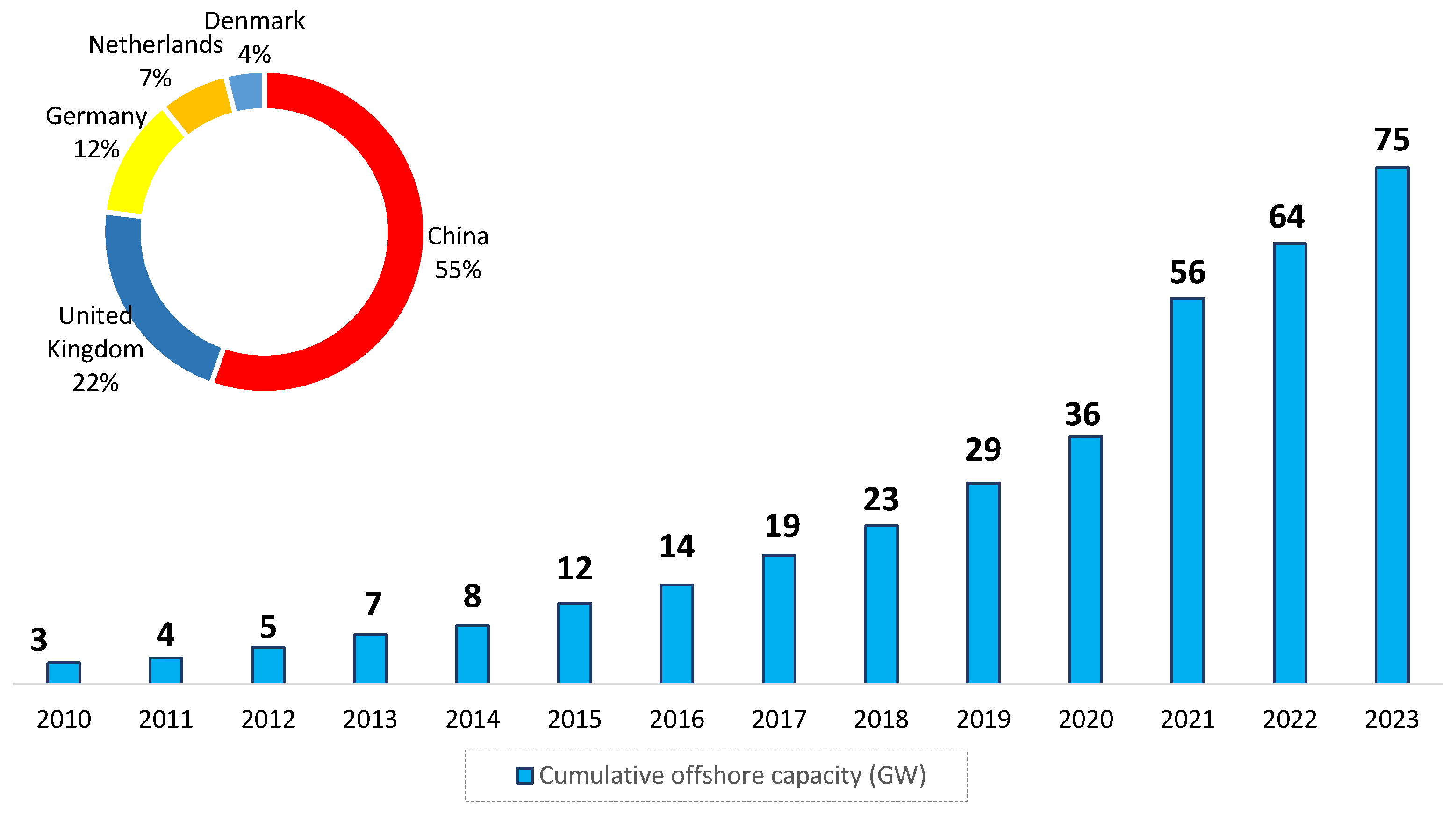
Figure 2.
Proposed methods. Overview. Own elaboration.
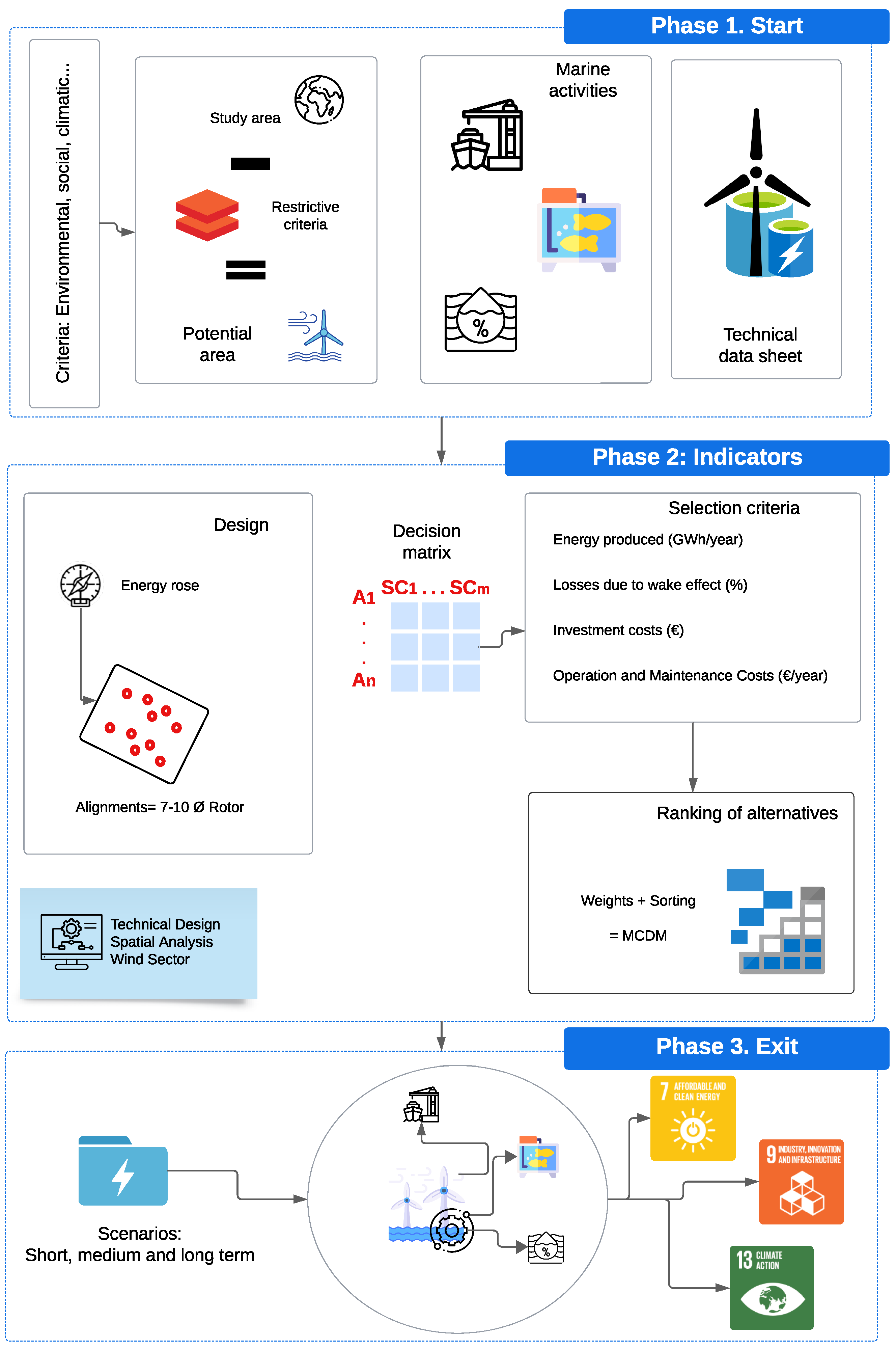
Figure 3.
Study area. Prohibited and restricted areas for offshore wind activities. Potential area for offshore wind. Own elaboration based on [43].
Figure 3.
Study area. Prohibited and restricted areas for offshore wind activities. Potential area for offshore wind. Own elaboration based on [43].

Figure 4.
Marine activities with the possibility of decarbonization. Own elaboration.
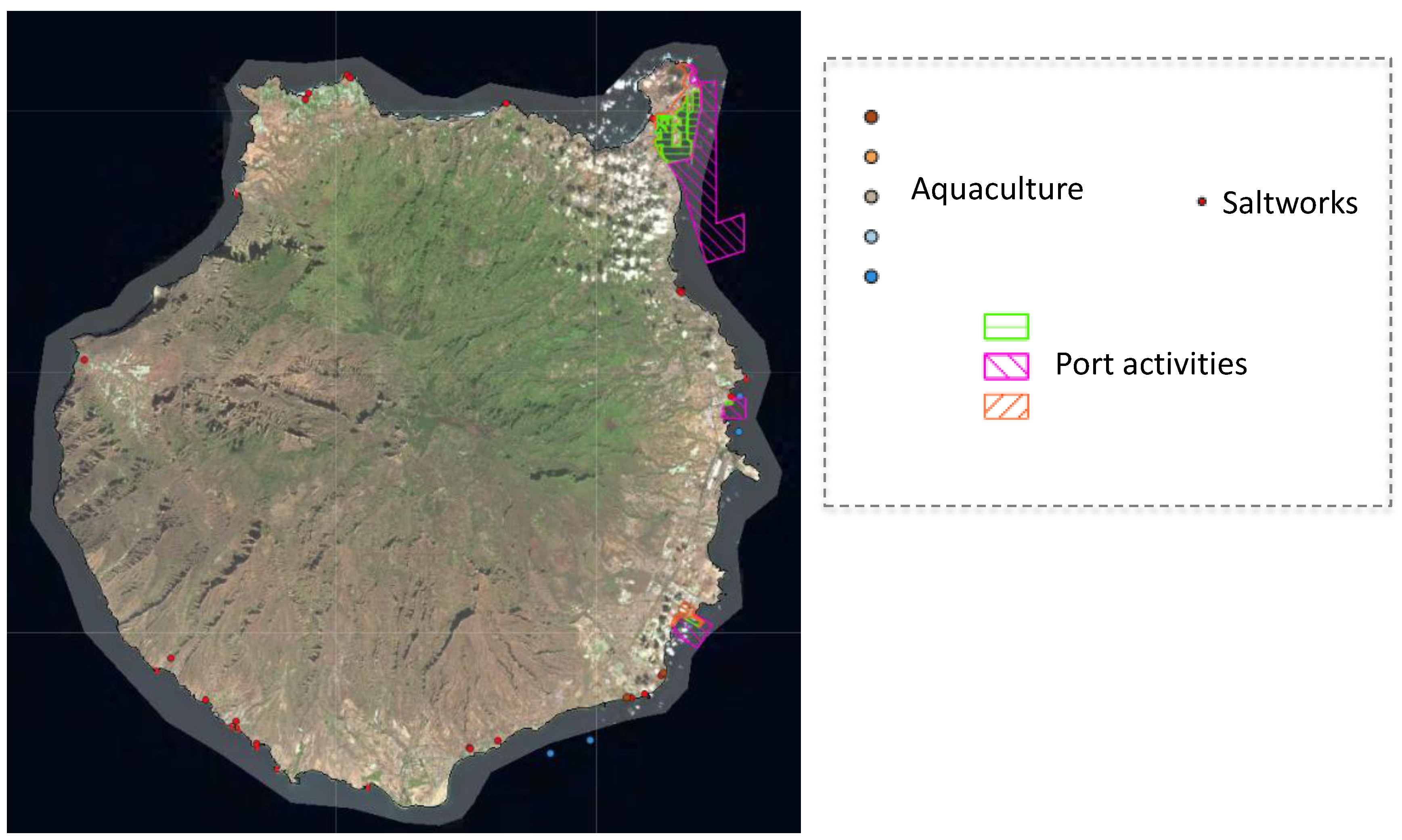
Figure 5.
Energy Rose. Alternatives - . Own elaboration.
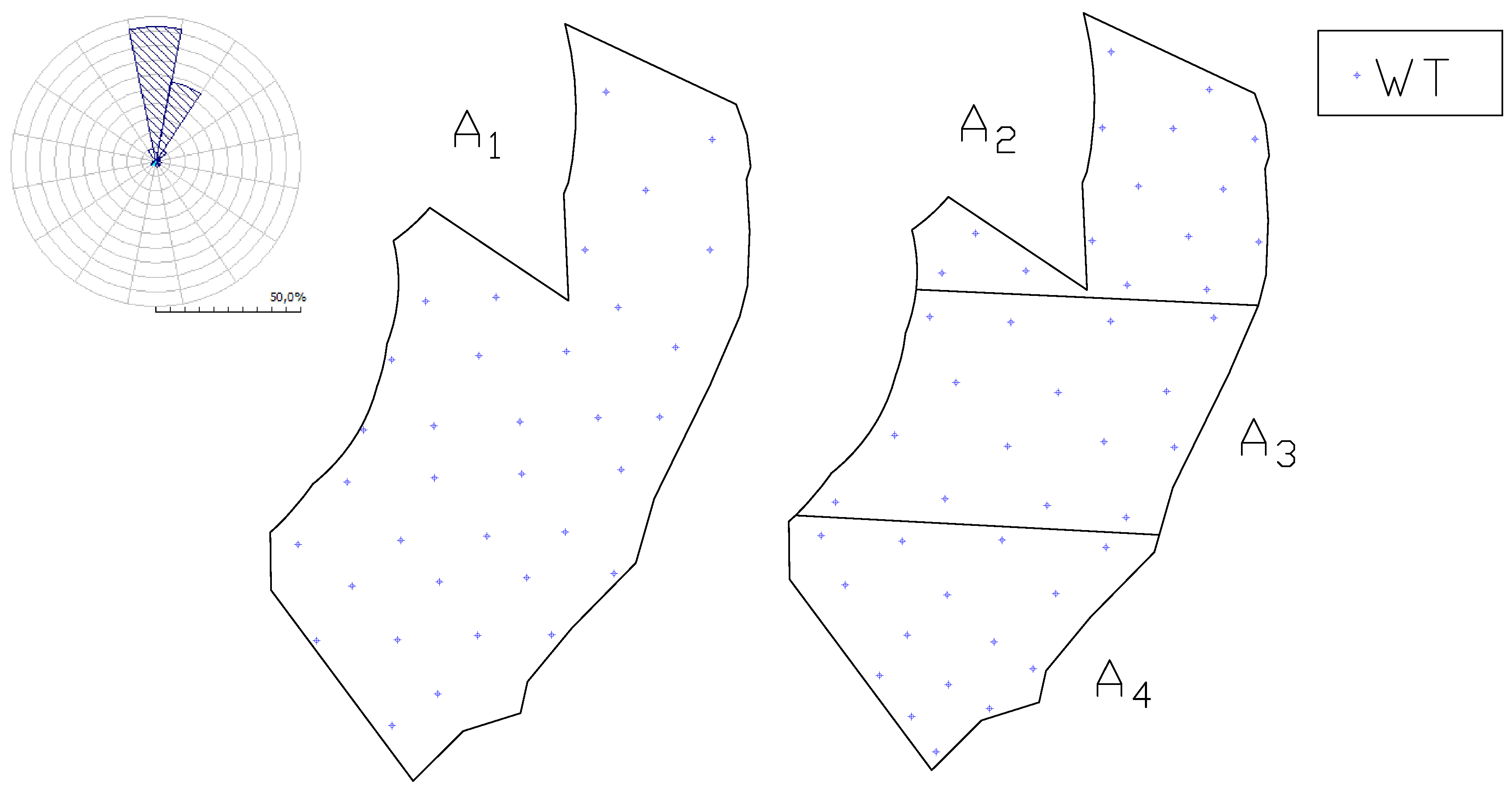
Figure 6.
scenarios short, medium and long term. Own elaboration.
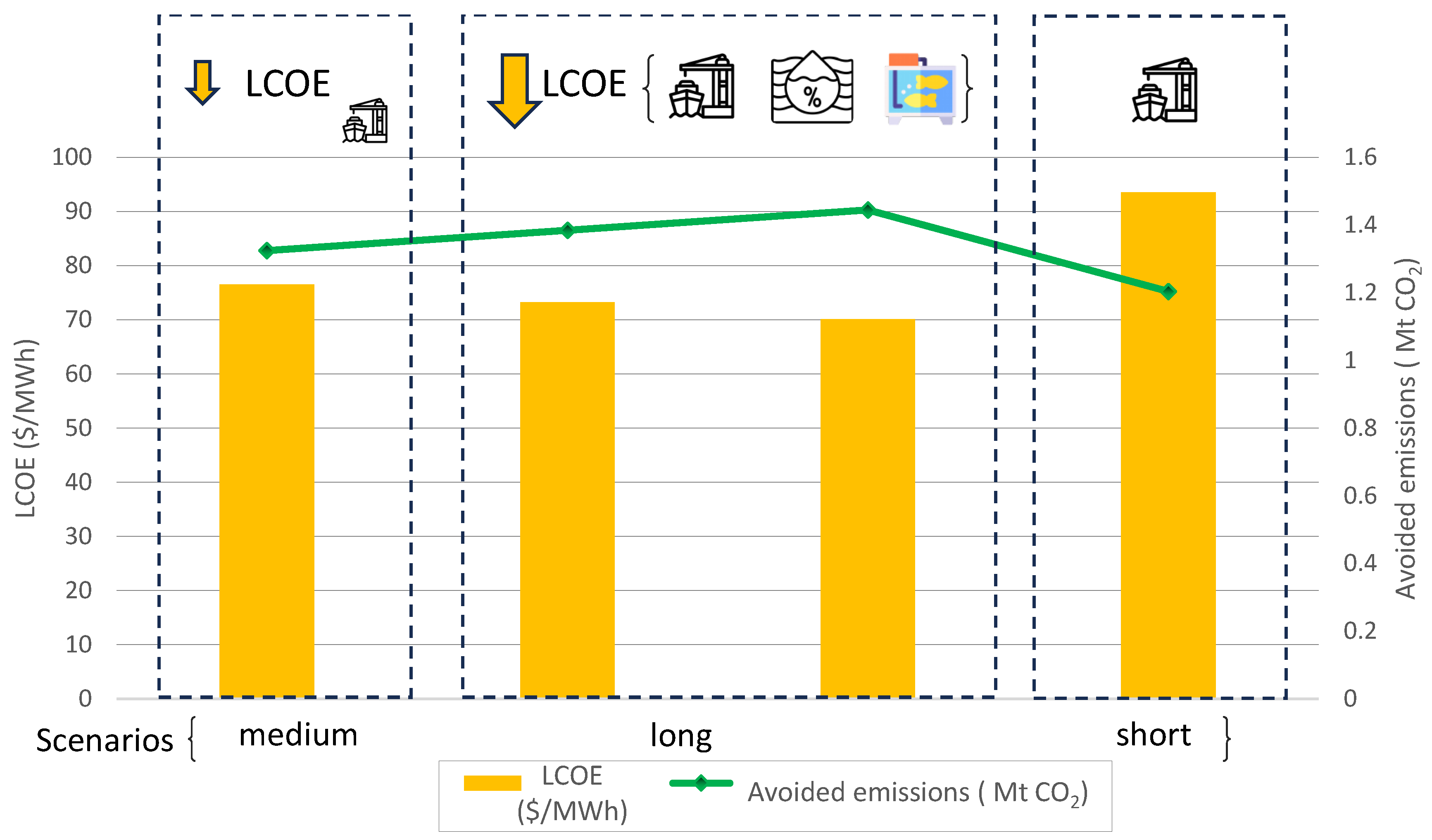

Table 1.
Decision Matrix.
| (m/s) | 9,78 | 9,78 | 9,83 | 9,20 |
| (m) | -549,98 | -389,48 | -359,60 | -732,43 |
| (m) | 2,50 | 2,60 | 2,60 | 2,60 |
| (km) | 11,63 | 10,53 | 11,14 | 13,75 |
| (GWh) | 2738,20 | 1.194,50 | 1.205,40 | 1.100,80 |
| (Mdd) | 2.927,93 | 1.716,08 | 1.715,15 | 1.714,96 |
| (Mdd) | 65,63 | 27,00 | 27,00 | 27,00 |
| (%) | 3,81 | 1,99 | 1,96 | 1,95 |
Disclaimer/Publisher’s Note: The statements, opinions and data contained in all publications are solely those of the individual author(s) and contributor(s) and not of MDPI and/or the editor(s). MDPI and/or the editor(s) disclaim responsibility for any injury to people or property resulting from any ideas, methods, instructions or products referred to in the content. |
© 2024 by the authors. Licensee MDPI, Basel, Switzerland. This article is an open access article distributed under the terms and conditions of the Creative Commons Attribution (CC BY) license (http://creativecommons.org/licenses/by/4.0/).
Copyright: This open access article is published under a Creative Commons CC BY 4.0 license, which permit the free download, distribution, and reuse, provided that the author and preprint are cited in any reuse.


