

Submitted:
07 October 2024
Posted:
09 October 2024
You are already at the latest version
Abstract
The intrinsic quality of meat is directly related to muscle and fat tissues. Factors such as the rate and extent of anaerobic glycolysis affect muscle pH, influencing the meat's color, water retention, and texture. Postmortem anomalies can result in deviations from this intrinsic quality. The ani-mals' diet plays a crucial role in meat quality. Specific nutrients, such as proteins, vitamins, and minerals, affect meat's texture, flavor, and juiciness. Feeding rich in omega-3 fatty acids can im-prove the sensorial quality of meat. Meat processing and methods such as aging, marinating, and cooking affect texture, flavor, and juiciness, which can be evaluated by specific equipment or trained or untrained consumers. This comprehensive review investigates the relationship be-tween animal feeding practices and meat processing techniques and their combined impact on meat quality and sensory perception. By synthesizing recent research, we explore how various feeding protocols (including diet composition and feed additives) and processing methods shape meat products' nutritional value, texture, flavor profile, and overall consumer appeal. Under-standing this nexus is crucial for optimizing meat quality while ensuring sustainability and safety in the food supply chain.
Keywords:
feeding
; processing
; meat quality
; sensory perception
; consumers
; sustainability
1. Introduction
Meat and meat products provide essential high-quality proteins and easily absorbable micronutrients, including vital vitamins and minerals, which are crucial for a balanced human diet [1]. Quality is a subjective and dynamic concept but usually accepted as “the products characteristics that correspond to the consumers expectations”. The quality and sensory perception of meat and meat products are critical factors that influence consumer preferences and market success [2,3]. As the global demand for high-quality meat products continues to rise [4,5], understanding the intricate relationship between feeding practices and processing technologies, that can influence meat and meat products quality, becomes increasingly important. This revision paper delves into the multifaceted interactions that shape meat quality from farm to fork.
The paper is structured around four key themes. First, it examines the impact of diet composition and feed additives or supplements on meat quality parameters. This section explores how various diet compositions, and the inclusion of feed additives can influence meat quality attributes such as physicochemical characteristics, sensory attributes (tenderness, juiciness, flavor), and nutritional value by analyzing the results obtained by various authors [6,7,8]. By exploring recent research and advancements, the paper highlights the pivotal role of feeding strategies in enhancing meat quality.
Next, the paper investigates advances in processing technologies and their effects on meat preservation and sensory characteristics. This part focuses on the latest innovations in meat processing technologies, including methods for preservation, and enhancement of sensory characteristics, including thermal [9,10,11] and non-thermal processes [12,13,14], as well as the use of chemical or bio-preservatives [15]. The discussion centers on how these technologies can extend shelf life, maintain freshness, and improve the overall eating experience.
The third theme explores the interplay between feeding strategies [16] and processing [11] for enhanced meat safety and sustainability. It discusses the synergistic effects of feeding strategies and processing techniques on meat safety and sustainability, emphasizing how integrated approaches can mitigate risks, reduce environmental impact, and promote sustainable meat production practices.
Finally, the paper addresses consumer perception related to meat and meat products. This section examines how different feeding and processing practices influence consumer attitudes and preferences [17,18,19]. By analyzing market trends and consumer feedback, the paper provides insights into how quality perceptions are shaped and how they can be aligned with industry practices.
By synthesizing current research and industry practices, this paper aims to provide a comprehensive overview of the nexus between feeding and processing in the context of meat quality and sensory perception. The goal is to offer valuable insights for researchers, industry professionals, and policymakers to enhance meat quality, safety, and sustainability, ultimately meeting consumer expectations and demands.
Figure 1 represents a graphical abstract of the present paper.
2. Impact of Diet Composition and Feed Additives on Meat Quality Parameters
Many factors can influence growth, carcass yield, and meat quality. Breed, sex, genetics, feed, age, and slaughter weight, among others, are critical factors that must be considered in management practices. For this reason, meat producers must identify these factors to know the quality standards. In this way, the producer will have the tools to apply the appropriate management practices to define the type of animal needed to meet the end consumer’s demands. Feeding practices can significantly impact several meat quality traits, from carcass composition and, therefore, commercial value to organoleptic quality and nutritional value of the meat and derived products. The introduction of a nutritional strategy in any breed of animal has the main objective of modifying performance in terms of growth and being a source of overall improvement. On the other hand, there is the economic factor. The meat sector also needs to study raw materials to make them more economical, more sustainable, and able to provide physic-chemical, nutritional, and organoleptic qualities in meat and its derivatives. Partial replacement of feed with by-products can help reduce costs and increase the food chain’s sustainability. The introduction of fats from other food sources increases the energy value (improving animal growth) and provides essential fatty acids and fat-soluble vitamins [6,7]. Changing the fatty acid profile by reducing the saturated fatty acid content and increasing the unsaturated fatty acid content is desirable because it increases the nutritional value and meets the needs of consumers looking for leaner, healthier meats [20]. However, animal feeding practices must consider other important factors when altering the lipid profile. Meat with higher levels of unsaturation is more likely to be oxidized, making it more susceptible to microbial oxidation and defects in color, texture, and flavor. The composition of the nutrients in the animals’ diet, such as the protein/energy ratio, affects the carcass composition [21]. Table 1 shows the influence of the different types of food that are introduced into the animal’s diet.
3. Advances in Processing Technologies and Their Effects on Meat Preservation and Sensory Characteristics
Since ancient times, humans have tried to preserve their food using techniques that allow them to extend its shelf life. Without these preservation methods, degradation, microbiological activity, chemical and enzymatic reactions, and physical changes are inevitable. Even using various methods, including refrigeration, freezing, curing, smoking, thermal processing, canning, dehydration, chemicals, and applying pressure, there can be difficulties in eliminating certain harmful microorganisms.
In this sense, some of the more traditional methods of food preservation, such as dehydration, smoking, brining, canning, fermentation, and refrigeration, have been replaced or complemented by other more innovative preservation techniques (chemical or bio preservation and non-thermal). Below are just a few of the technologies that have been applied among the most “in vogue” with the aim of balancing sensory quality, nutritional value, and microbial safety.
3.1. Thermal Processing
3.1.1. Dry-Aging
In the global food processing sector, drying remains an essential technique used. Wet-aging (with vacuum packing) and dry-aging (without vacuum packing) are the two most popular methods of postmortem aging.
Dry-aging is a traditional method used to remove moisture from food materials to improve cut meats’ palatability, especially regarding taste perception, softness, and marbling [39]. Various techniques are used to dry meat, including vacuum drying, ultrasonic drying, freeze-drying, microwave drying, heat pump drying, pulsed electric field drying, and refractance window drying [40]. Frequently used on premium meat, dry-aging needs to be in extremely regulated ambient temperature, relative humidity, and airflow conditions [41].
Some changes in the functional and sensory attributes of food materials are recognized as negative regarding the quality of the final product [42,43,44] since the type of dryer, the drying conditions, and the composition and physical properties of the raw food material influence the type of final product that will be obtained.
Due to the concentration of important nutrients brought about by dry-aging, such as protein, fat, and minerals, chewing on dry-aged meat releases juicy, fat-like substances that enhance flavor, nutty, umami, and other sensory qualities [45,46]. Therefore, dry-aging meat is well known to improve meat tenderness and flavor. Recently, a study by Hwang et al. [47] applied to pork belly and shoulder blade cuts verified the effects of dry-aging on meat quality attributes such as meat color, water retention capacity, tenderness, lipid oxidation, and protein degradation.
However, from a microbiological point of view, although dry-aging generally reduces levels of Salmonella and E. coli O157:H7, it is not effective in combating Listeria monocytogenes and Yersinia enterocolitica, which can multiply in uncontrolled conditions [48].
So, the dry-aging process continues to be part of a range of meat processing and preservation technologies that have a major impact on sensory and nutritional qualities [11].
3.1.2. Sous-Vide Cooking
Sous-vide cooking is a method of sealing food in a plastic bag that maintains its freshness and submerging it in a water bath kept at a carefully regulated low temperature (53–81 ◦C) for a long period of time (LTLT) (10-48 h) [49]. This technology has been widely used in catering, food retail, and the health food market [50,51]. With vacuum sealing, this method allows heat to be transferred efficiently from water (or steam) to food; increases shelf life by eliminating the risk of recontamination during storage; inhibits unpleasant flavors from oxidation and prevents evaporation losses of flavor volatiles and moisture during cooking [52]. This method seeks to maximize the consistency and palatability of meat and meat products [53,54].
Although sous-vide cooking offers advantages for preservation, it differs from conventional techniques such as canning or drying. Proper food handling, storage, and pasteurization are essential to ensure food safety. Moreover, other techniques, such as marinating, can be used to improve the result of the cooking of meat products, for example, beef’s tenderness, flavor, and juiciness [55]. Another study by Gomez et al. [56] emphasizes the feasibility of using the combination of marinating and sous-vide cooking techniques to yield new ready-to-eat products with high protein content from meat without negatively affecting quality characteristics.
However, microbial contamination remains a concern with low-temperature cooking [57], which requires another complementary technique.
3.1.3. Freezing
A thermal method increasingly being used to preserve fresh meat quality and prolong shelf life is the freezing method [9]. The most used are ultrarapid freezing, vacuum immersion cooling, hydro fluidization freezing, impact freezing, impingement freezing, miscellaneous advanced freezing, electrostatic assisted freezing, pressure displacement freezing, magnetic resonance-assisted freezing, and acid electrolyzed water associated with high hydrostatic pressure, etc. [58]. There is considerable evidence that those methods inhibit microbial growth and reduce enzyme activity [15]. There are key factors for successful Freezing methods, such as correct packaging to avoid freezer burn, temperature stability, and, in some cases, blanching before freezing, as this is essential to maintain the color, taste, and texture of foods. However, the organisms will be deactivated rather than killed and, most of the time, may be activated when the frozen product is thawed. In that case, natural convection thawing (NCT) generally yielded better results than running water thawing [59].
Also, there are two other techniques not mentioned above, such as Vacuum packing with freezing and Individual Quick Freezing (IQF), which are well-established in the meat industry and known for their practicality, scalability, and effectiveness. These methods are crucial for their cost-effectiveness, reliability, and compatibility with industrial processes. Studies on beef and pork have demonstrated that IQF minimizes quality deterioration, reduces drip loss, and maintains better cell integrity [59]. Authors like Beltran and Belles [60] revealed that consumers could not see contrasts between fresh and frozen meat regarding texture and flavor. However, freezing has also been found to cause a series of physical and biochemical changes in muscle foods, including the formation of ice crystals, concentrating of solutes, alteration of ionic strength and pH, freezer burn, discoloration, lipid oxidation, and protein denaturation [61]. Additionally, freezing can increase drip/thaw and cook losses [58]. It is, therefore, essential to relate and intercalate this method with other types of processing to make the most of its application in the food industry.
3.2. Non-Thermal Processing
3.2.1. High Pressure Processing
High hydrostatic pressure (HHP) technology is used to preserve high-quality products known for maintaining nutritional value [62].
Meat preservation technology using high-pressure processing is an alternative to traditional thermal methods of inactivating microorganisms [63] as it allows microbiological safety without significantly increasing the temperature [58,64]. In addition, HHP makes it possible to extend the shelf life while maintaining the organoleptic characteristics (i.e., taste, smell, color, texture) and natural nutritional values of the raw material without chemical additives [63,65]. To preserve meat products, pressure should be applied in the 400-600 MPa range, and the duration of action should be around 3 to 7 minutes. However, bacterial resistance to high pressure depends on the type and strains of bacteria [58]. For the action on Gram-negative bacteria to be effective, the applied pressure must be greater than 100 MPa [66].
The preservation of meat and meat products with high hydrostatic pressure also enables the use of the method to preserve packaged products. This allows for a significant extension of microbiological safety in raw meat products.
3.2.2. Irradiation
The application of gamma radiation to meat products is a non-thermal technology used to destroy pathogenic and spoilage microbes in food products [67] and increase their shelf life [68]. Food can be irradiated with ionizing radiation, such as gamma rays, X-rays, or high-energy electrons [69]. Gamma radiation allows the microbial destruction of food without substantially increasing the temperature of the food, generating the desired action only during food irradiation. Red meat products can be colored to taste better, have lower sodium nitrite content, and limit microbial growth by using this method. However, because radiation can accelerate lipid oxidation, produce free radicals and hydrogen peroxide in the presence of oxygen, and destroy compounds like antioxidants and carboxylic acids, this treatment is not advised for foods high in fat [70,71,72]. In a study by Silva et al. [67], the gamma radiation treatment ensured microbiological safety and improved the organoleptic characteristics of cooked hams. However, in another study carried out by Feng et al. [73] the authors found that uncured and irradiated cooked turkey meat remained more sensitive to lipid oxidation than cooked turkey products. Smaller amounts of volatile compounds with an unpleasant odor were observed in the cured meat samples than in the uncured samples [73]. Some strategies have been applied to counteract this oxidation using irradiation. An example of this is the addition of bioactive compounds such as essential oils or their encapsulated actives and the use of combined treatment (mild heat treatment and modified atmospheric packaging) since the relative bacterial sensitivity increases, allowing for a reduction in the dose of irradiation required to maintain food preservation [74,75].
3.2.3. Plasma Technology
Plasma technology is a non-thermal technology that essentially uses cold plasma (CP) to reduce the counts of pathogenic and spoilage microorganisms from foodstuffs [76,77,78]. This technique is perfect because it can be applied to the disinfection of air, water, and food surfaces and processes the materials without causing any damage to living tissue [79]. It also allows decontamination at low temperatures, at low pressures, or even in a vacuum with little energy expenditure, which implies a low cost of use for industries [80]. This method is suitable for fresh food products such as milk, fruits, vegetables, and meat products, as it has no negative impact on nutritional and sensory characteristics. A study by Yong et al. [81] observed that plasma treatment reduced the number of bacteria and molds in packaged dried meat without major differences in some sensory parameters, including unpleasant odor. In another study by Moutik [82], the technique had a minimal effect on poultry meat’s color, pH, and water retention capacity, making it an attractive alternative to traditional processing methods. Additionally, Jayasena et al. [83] believe it has potential applications in meat curing, as it can generate nitrite, an essential component of the curing process.
However, there are the disadvantages of requiring qualified personnel, high-cost investment in process-specific equipment [84], and challenges such as lipid oxidation and modification of the packaging material [78,83]. For industrial purposes, cold plasma treatment is not certified as an antimicrobial technology, so future studies are needed in relation to oxygen-reduced atmospheres and biopolymeric materials [85].
3.3. Other Forms of Food Preservation
3.3.1. Chemical and Bio Preservatives
More and more natural antimicrobial agents, antioxidants, essential oils and some colorants are being used to replace other active compounds to extend the shelf life of food products, including meat. Lettuce, spinach, carrot and ginger extracts, rosemary and oregano oils, spices such as garlic and pepper, chitosan, sodium lactate, synthetic antioxidants, etc., are promising sources in food preservation. Some of them naturally contain nitrates capable of replacing existing nitrites and nitrates; others can inhibit the growth of bacteria, yeasts, and molds [86,87,88,89,90]. A proposal was made [91] to use Bougainvillea spectabilis as an innovative additive in cooked ham, aiming to replace conventional nitrite salts. This study evaluates the impact of different drying methods (air-drying, foam-mat drying, and oven drying) on the preparation of bougainvillea powder and their effect on the physicochemical and sensory properties of the ham, including antioxidant characteristics. Incorporating bougainvillea powders in the ham formulation improved the sensorial attributes and consumer overall acceptance, even after 8 weeks of cold storage at 4 °C.
According to Das et al. [92], mustard oil, as opposed to soybean and flax seed oils, can be utilized for meat marinating and preservation to increase the shelf life of chilled meat. However, it is necessary to know how to apply and use essential oils as natural antimicrobial agents for meat and meat products since they produce intense aromas and flavors that can affect the sensory quality of these products [93]. Another interesting study conducted by Ali et al. [94] demonstrated that bee honey contains some antioxidants that can reduce the microbial load and increase the shelf life of meat and meat products. Also, synthetic antioxidants, such as Butylated hydroxyl anisole (BHA) and butylated hydroxyl toluene (BHT), are applied in meat to stop lipid oxidation and prevent the appearance of unpleasant odors and flavors [95].
Montaño-Sánchez et al. [96] reported the effect of increased physicochemical and microbiological qualities of born-in pork samples during storage by using chitosan in combination with green tea water extract. Some argue that introducing binding additives into meat, such as phosphates, thickeners, starches, sodium alginate, etc., helps to stabilize the emulsion and increase the water retention capacity of these products [11].
The main findings in various studies on processing techniques and their effect on meat quality are presented in Table 2.
4. Interplay between Feeding Strategies and Processing for Enhanced Meat Safety and Sustainability
The growing global demand for meat necessitates the development of efficient strategies to ensure product safety, sustainability, and quality. Enhancing meat quality through innovative feeding practices and processing technologies is critical to addressing these challenges. In particular, the interaction between feeding strategies and processing techniques is crucial in improving meat safety, sustainability, and overall quality, requiring a balanced approach that considers both aspects simultaneously.
Feeding strategies, including animal diet composition, growth conditions, and the use of feed additives, have significant effects on animal health, growth rates, and the safety of the final product. Today, innovative feeding approaches focusing on improving meat quality are essential. These strategies often involve using plant by-products, which can positively impact global food security and reduce environmental impact [97]. Furthermore, feed or nutritional management can enhance sustainability by improving animal productivity and mitigating environmental impacts [98]. However, the benefits of feeding strategies are closely tied to environmental and physiological conditions under which livestock are raised, highlighting the complex relationship between the two [99]. Elements such as housing, stocking density, and climate control can affect stress levels, impacting meat quality [100,101,102]. In this context, optimal growth conditions prioritizing animal health and welfare become crucial for the animals’ well-being and for producing higher-quality meat.
The diet provided to animals significantly influences the quality of the meat, including its texture, flavor, and safety, while contributing to sustainability [16,103,104,105]. This highlights how feeding practices can serve as a foundation for improving meat quality. However, these efforts must be complemented by effective processing techniques to ensure the desired outcomes. At the same time, processing techniques—such as slaughtering, packaging, and preservation—are equally important in ensuring meat safety, extending shelf life, and improving overall quality [11,15]. It is clear that feeding and processing practices must work together to achieve the best results.
Moreover, specific feed additives can also enhance the nutritional value of meat, making it healthier and more sustainable. This includes additives that reduce harmful substances and boost the nutritional profile of the final product [106,107]. In this way, feeding strategies affect animal growth and health and contribute to the long-term sustainability of meat production by improving the final product’s quality and safety.
On the other hand, achieving sustainability in meat production requires a holistic approach that integrates feeding and processing practices. Feeding strategies, such as sourcing feed locally and reducing reliance on non-renewable feedstocks, can lower the environmental footprint of meat production. However, focusing on energy-efficient processing methods that reduce waste and improve the industry’s overall sustainability is equally important. The study from Parlasca and Qaim [108] emphasizes the need for sustainable practices throughout the food system, from farm to fork, due to the significant economic, social, and environmental impacts of meat and livestock production. To develop sustainable meat consumption patterns, it advocates for a holistic approach that considers all sustainability dimensions—economic, social, environmental, health, and animal welfare. The authors call for policies and incentives to promote sustainable practices, engaging producers and consumers in the transition towards sustainability, and stress the importance of understanding sustainability across the entire lifecycle of meat products.
Incorporating certain agro-food coproducts into animal diets promotes a circular economy by reducing waste and environmental impact. This practice not only supports normal animal growth [103] but also enhances meat quality [105,109], illustrating the close relationship between resource management and product quality. Additionally, sustainable practices in meat processing—such as reducing waste and energy consumption—further enhance the sustainability of the meat supply chain [110]. However, for these practices to be effective, they must be communicated effectively among stakeholders, including producers, retailers, consumers, and industry personnel. Collaboration is essential for adopting sustainable practices that optimize meat safety and quality [111].
The use of essential sustainability indicators and impact assessments in both feeding strategies and processing techniques helps in developing informed strategies that contribute to sustainable food systems. Given the complex nature and variability of global food systems, significant challenges exist for ensuring sustainability across food chains. According to Knorr et al. [112], a key requirement is the establishment of harmonized sustainability indicators that objectively provide relevant measures for sustainable systems. The design of sustainable processes and engineering systems should embrace the use of emerging processes, which reduces water and energy use
The use of sustainability indicators and impact assessments in both feeding strategies and processing methods can guide the development of informed approaches that contribute to sustainable food systems. These indicators provide measurable benchmarks that can help the industry address sustainability challenges more effectively. However, significant challenges remain in ensuring sustainability across food chains, given the complexity and variability of global food systems. As Knorr et al. [112] emphasize, establishing harmonized sustainability indicators is a key requirement for objectively measuring sustainable systems. Additionally, the design of sustainable processes and engineering systems should incorporate emerging technologies that reduce water and energy consumption. Such integration ensures that all aspects of meat production—from feeding to processing—are aligned with sustainability goals.
In conclusion, by integrating these elements—feeding strategies, processing techniques, and sustainability metrics—the meat industry can achieve significant improvements in safety, sustainability, and overall quality. This will not only benefit consumers through healthier diets but also contribute to the development of a more sustainable global food system.
5. Consumer perception Related to Meat and Meat Products, from Different Feeding and Processing Practices, Quality
When selecting a meat product, how consumers perceive the characteristics of these products significantly shapes their attitude [113]. The main factors influencing consumer perception of meat and meat product quality can be categorized into intrinsic and extrinsic attributes [2,17,18]. Intrinsic attributes include the sensory characteristics of meat, which are among the key factors that shape consumer attitudes [114]. Taste is the characteristic most frequently associated with food preference, and the flavor profile plays a crucial role in determining consumer choice [115]; texture, mainly softness, and tenderness, are positively associated with consumer evaluation [116]; and visual appeal of meat, particularly its color, significantly influences consumer choices, just a small color variation can be detected by consumers [117]. Additionally, the nutritional value is very important, as consumers consider the health benefits of food’s nutritional composition, meat included [118].
Extrinsic attributes, external cues that consumers use to assess quality, include price and credence attributes (sustainability, animal welfare and origin, and label information). Consumers’ willingness to pay often correlates with their perception of quality; higher prices are typically associated with better quality [114,119]. Consumers increasingly worry about how meat is produced, considering environmental impact, social responsibility, ethical practices, and animal welfare [120,121]. Therefore, information on product labels [122], including certifications related to animal welfare [123] and health benefits [124], can shape consumer expectations [125].
Individual lifestyle choices and preferences play a significant role in consuming meat and meat products. For instance, urban consumers may prioritize convenience, while rural consumers might prefer traditional products. Social influences, media representation, and marketing strategies also affect consumer perceptions and can significantly impact consumer attitudes [2].
Overall, consumer perception of meat quality is multifaceted, involving a combination of sensory attributes, external cues, personal preferences, and broader societal influences. Consumer preferences and perceptions regarding meat products can vary significantly based on feeding and processing approaches, given that both can affect the mentioned factors.
5.1. Feeding Approaches
Several research studies have investigated how different feeding systems influence consumer perceptions about meat quality in recent years. These studies reveal a nuanced understanding of how feeding practices impact the characteristics of meat and, subsequently, consumer preferences.
Consumers often perceive grass-fed meat as healthier and more natural than grain-fed meat. Grass-fed meat is associated with better animal welfare and environmental benefits, which can influence purchasing decisions [126]. One notable focus has been on lamb production, where extensive feeding systems, such as pasture-based feeding, enhanced certain meat quality traits that align with consumer preferences for healthier and environmentally sustainable products. Lambs raised on high-quality pastures tend to have higher omega-3 fatty acid content, which is desirable for health-conscious consumers [127]. Additionally, research on restricted grazing and indoor supplementary feeding in lambs demonstrated that feeding systems significantly affect meat quality, with different grazing times producing variations in meat flavor and fat content, catering to diverse consumer tastes [128]. The use of cheaper feeding alternatives [129] showed the same (or not significantly different) effects on meat quality, mainly ruminants, where it was observed that feeding sericea lespedeza (SL, Lespedeza cuneata) hay, a highly condensed tannin forage hay to meat goats, did not significantly influence the flavor volatiles in cooked chevon chops compared with more expensive forages. On the other hand, the lipid profile of lamb meat was less favorable to consumer health when the animals were subjected to 60% feed restriction [130].
Organic meat is perceived to be superior in quality and safety, with higher health consciousness and environmental concerns driving consumer preferences [131]. Additionally, there is a growing preference for organic meat, which is perceived as free from antibiotics and hormones. Consumers paying a premium for organic products often cite health and environmental concerns [19]. As stated by Lee et al. (2024) 132], pasture-only lambs had healthier fatty acid profiles than those from supplemented lambs. Similarly, rabbit meat is recognized for its lean and healthy attributes. However, its higher price and lower consumption rates than other meats suggest a need for targeted marketing strategies to shift consumer behavior towards such functional foods [133].
In pork, nursery feeding programs were examined to understand their impact on subsequent growth performance and meat quality. It was found that while simpler diets during the nursery phase could reduce costs, they did not adversely affect carcass or meat quality by market weight. This suggests that cost-effective feeding strategies can be developed without compromising meat quality, an important consideration for producers and consumers [134]. Still, in pigs, no significant differences were found in the consumer’s evaluation of dry-cured loins from animals fed with peas or soy [135]. However, the differences could have been masked by processing.
Studies on poultry have highlighted the importance of appearance and texture as primary quality attributes influencing consumer selection. Feeding practices, such as the introduction of distillers dried grains with solubles (DDGS), showed minimal impact on poultry meat quality, indicating that such dietary changes might be adopted without affecting consumer perception of meat quality [136]. Furthermore, feeding strategies that alter the timing and proportion of feed intake, especially under stress conditions, were found to improve growth and meat quality in turkeys, suggesting potential for optimization in feeding schedules to enhance product quality under varying environmental conditions [137].
These studies underscore the interconnectedness of feeding practices, meat quality, and consumer perceptions. They highlight the importance of aligning production methods with consumer demands for quality, health benefits, and sustainability to ensure market success.
5.2. Processing Approaches:
In the past years, several research studies have explored consumer perceptions regarding the effects of meat processing on quality. These studies span various aspects of meat processing, from traditional methods to innovative technologies and their impact on sensory and nutritional quality.
One significant area of research has been examining sensory and nutritional aspects of meat processing and preservation technologies. This includes methods such as dry aging, dry curing, high hydrostatic pressure (HHP), conventional cooking, sous-vide cooking, and even 3D printing, as well as chemical methods like fermentation, smoking, curing, and marination. These studies emphasize the balance between retaining nutritional value and enhancing sensory quality, an area of great interest to consumers who prioritize both taste and health benefits in their meat products. The integration of diverse processing methods often yields better sensory outcomes, suggesting that multi-faceted approaches could meet consumer expectations more effectively [11].
Freezing extends the shelf-life of meat but causes physical and biochemical changes that reduce quality. Despite efforts over the past two decades, no single technique can fully address these issues, and consumer perception of frozen meat remains negative. A review [138] explored novel freezing and thawing technologies, such as deep freezing and high pressure, and processing strategies to improve thawed meat quality and bridge the gap with fresh meat. While some approaches show promise in enhancing various meat quality traits, no single technology or strategy can be easily adopted by the meat industry to maintain all quality aspects of meat comparable to fresh equivalents, suggesting that further research needs to be done to enhance thawed meat quality.
Processing serves not only the objective of preserving meat but also to enhance the acceptability and increase the variety of products offered to consumers. Processing can increase consumers’ acceptability of meat, which is usually less accepted, such as older or heavier animals, as well as non-traditionally eaten meats. While processed meat products are convenient, there is increasing awareness of the potential health risks associated with high consumption [139,140]. This has led to a demand for cleaner labels and healthier processing methods. Consumers associate minimally processed meat with higher quality and fewer additives. So, meat products that undergo minimal processing are generally preferred, unless natural additives are used.
Many studies have been conducted to evaluate the effect of modifying ingredients on quality characteristics, specifically sensory characteristics, of meat products to make them healthier and still accepted by consumers [141,142,143,144,145,146]. The mentioned modifications include reducing fat content, replacing healthier fats, using natural ingredients, and applying processing as ultrasounds to reduce or eliminate the effects of the modifications in the formulations.
The main findings of studies on consumers’ expectations, perceptions, and evaluation of diverse processed meat products are summarized in Table 3.
Consumers’ perceptions do not always align with the product’s real characteristics. A good marketing strategy from the meat and meat products industry, informing consumers about the products, is important to increase consumption.
6. Conclusions
The quality of meat and meat products is a subjective and dynamic concept aiming to please consumers. Every factor influencing consumer perception of quality is crucial. Achieving the desired quality sustainably requires considering all actors in the production chain, from production to consumption, including carcass and meat quality and their processing. Each step is vital to meet consumer demands for nutritious, healthy, and tasty meat products produced under sustainable and welfare conditions. This review highlights the impact of feeding and processing on meat and meat product quality, which can affect consumers’ perceptions and buying intentions. Information is fundamental to providing consumers with all the data to help them make intelligent purchases and consumption.
Author Contributions
Conceptualization, S.S.Q.R.; writing—original draft preparation, S.S.Q.R., A.L., L.V., and A.T.; writing—review and editing, S.S.Q.R., A.L., L.V., and A.T. All authors have read and agreed to the published version of the manuscript.
Funding
This research received no external funding.
Data Availability Statement
The data used to support the findings of this study can be made available by the corresponding author upon request.
Acknowledgments
Authors are grateful to the Foundation for Science and Technology (FCT, Portugal) for financial support by national funds FCT/MCTES to CIMO (UIDB/00690/2020); Laboratory of Carcass and Meat Quality, Agriculture School of Polytechnic Institute of Bragança “Cantinho do Alfredo”. The authors A. Teixeira and S.S.Q. Rodrigues are members of the Healthy Meat network, funded by CYTED (ref. 119RT0568).
Conflicts of Interest
The authors declare no conflicts of interest.
References
- Grasso, G.; Rondoni, A.; Bari, R.; Smith, R.; Mansilla, N. Effect of information on consumers’ sensory evaluation of beef, plant-based and hybrid beef burgers. Food Quality and Preference 2022, 96, 104417. [Google Scholar] [CrossRef]
- de Araújo, P.D.; Araújo, W.M.C.; Patarata, L.; Fraqueza, M.J. Understanding the main factors that influence consumer quality perception and attitude towards meat and processed meat products. Meat Science 2022, 108952. [Google Scholar] [CrossRef] [PubMed]
- Cardona, M.; Izquierdo, D.; Barat, J.M.; Fernandez-Segovia, I. Intrinsic and extrinsic attributes that influence choice of meat and meat products: techniques used in their identification. Eur Food Res Technol 2023, 249, 2485–2514. [Google Scholar] [CrossRef]
- Teixeira, A., Rodrigues, S. Meat Quality, Brands and Consumer Trends. In: Lorenzo, J., Munekata, P., Barba, F., Toldrá, F. (eds) More than Beef, Pork and Chicken – The Production, Processing, and Quality Traits of Other Sources of Meat for Human Diet 2019, Springer, Cham. [CrossRef]
- Parlasca, M.C.; Qaim, M. Meat Consumption and Sustainability. Annu. Rev. Resour. Econ. 2022, 14, 17–41. [Google Scholar] [CrossRef]
- Albendea, P.; Tres, A.; Rafecas, M.; Vichi, S.; Solà-Oriol, D.; Verdú, M.; Guardiola, F. Effect of feeding olive pomace acid oil on pork lipid composition, oxidative stability, colour, and sensory acceptance. Animal 2023, 17, 100879. [Google Scholar] [CrossRef]
- Baelen, C.V.; Montagne, L.; Ferchaud, S.; Prunier, A.; Lebret, B. Feeding strategy in organic pig farming as a lever to improve various quality dimensions of pork. Animal 2024, 18, 101190. [Google Scholar] [CrossRef]
- Hashem, M.A.; Maruf, M.M.S.; Haque, M.; Akhter, S.; Arafath, M.S.; Rahman, M.M. Influence of different level of concentrate feeding on the productive performances and meat quality attributes of indigenous lam. Meat Research 2023, 3, 2790–1971. [Google Scholar] [CrossRef]
- Lu, N.; Ma, J.; Sun, D.-W. Enhancing physical and chemical quality attributes of frozen meat and meat products: Mechanisms, techniques and applications. Trends in Food Science & Technology 2022, 124, 63–85. [Google Scholar]
- Singh, P.; Sultan, Z.; Pandey, V.K.; Singh, R. Sous vide processing for food quality enhancement: A review. Food and Humanity 2023, 1, 543–552. [Google Scholar] [CrossRef]
- Gómez, I.; Janardhanan, R.; Ibañez, F.C.; Beriain, M.J. The effects of processing and preservation technologies on meat quality: sensory and nutritional aspects. Foods 2020, 9, 1416. [Google Scholar] [CrossRef]
- Bolumar, T.; Orlien, V.; Sikes, A.; Aganovic, K.; Bak, K.H.; Guyon, C.; Stübler, A.S.; de Lamballerie, M.; Hertel, C.; Brüggemann, D.A. High-pressure processing of meat: molecular impacts and industrial applications. Comprehensive Reviews in Food Science and Food Safety 2021, 20, 332–368. [Google Scholar] [CrossRef] [PubMed]
- Indiarto, R.; Irawan, A.N.; Subroto, E. Meat Irradiation: A Comprehensive Review of Its Impact on Food Quality and Safety. Foods 2023, 12, 1845. [Google Scholar] [CrossRef] [PubMed]
- Akhtar, J.; Abrha, M.G.; Teklehaimanot, K.; Gebrekirstos, G. Cold plasma technology: fundamentals and effect on quality of meat and its products. Food and Agricultural Immunology 2022, 33, 451–478. [Google Scholar] [CrossRef]
- Arokiyaraj, S.; Dinakarkumar, Y.; Shin, H. A comprehensive overview on the preservation techniques and packaging of processed meat products: Emphasis on natural derivatives. Journal of King Saud University – Science 2024, 36, 103032. [Google Scholar] [CrossRef]
- Shurson, G.C.; Urriola, P.E. Sustainable swine feeding programs require the convergence of multiple dimensions of circular agriculture and food systems with One Health. Animal Frontiers 2022, 12, 30–40. [Google Scholar] [CrossRef]
- Liu, J.; Ellies-Oury, M.-P.; Stoyanchev, T.; Hocquette, J.-F. Consumer Perception of Beef Quality and How to Control, Improve and Predict It? Focus on Eating Quality. Foods 2022, 11, 1732. [Google Scholar] [CrossRef]
- Török, Á.; Yeh, CH.; Menozzi, D.; Balogh, P.; Czine, P. Consumers’ preferences for processed meat: a best–worst scaling approach in three European countries. Agric Econ 2023, 11, 33. [Google Scholar] [CrossRef]
- Hu, T.; Al Mamun, A.; Reza, M.N.H.; Wu, M.; Yang, Q. Examining consumers’ willingness to pay premium price for organic food. Humanit Soc Sci Commun 2024, 11, 1249. [Google Scholar] [CrossRef]
- Cardenia, V.; Rodriguez-Estrada, M.T.; Cumella, F.; Sardi, L.; Casa, G.D.; Lercker, G. Oxidative stability of pork meat lipids as related to high-oleic sunflower oil and vitamin E diet supplementation and storage conditions. Meat Sci. 2011, 88, 271–279. [Google Scholar] [CrossRef]
- Lebret, B.; čandek-Potokar, M. Review: Pork quality attributes from farm to fork. Part I. Carcass and fresh meat. Animal 2022, 16, 100402. [Google Scholar] [CrossRef]
- Belkova, J.; Rozkot, M.; Weisbauerova, E.; Truneckova, J. Influence of feed substitution with acorns on fattening performance, carcass characteristics, and meat composition of prestice black-pied pigs finished in a conventional indoor system. Cogent Food. Agric. 2023, 9, 2220182. [Google Scholar] [CrossRef]
- Mazur-Ku´snirek, M.; Antoszkiewicz, Z.; Lipi ´nski, K.; Kaliniewicz, J.; Kotlarczyk, S. The effect of polyphenols and vitamin E on the antioxidant status and meat quality of broiler chickens fed low-quality oil. Arch. Anim. Breed. 2019, 62, 287–296. [Google Scholar] [CrossRef] [PubMed]
- Lebedev, S.V.; Frolov, A.N.; Grechkina, V.V. Different classes of nutrients added to the diet influence meat quality in arbor acres meat cross broiker chicken (Gallus gallus L.). Agric. Biol. 2024, 59, 289–300. [Google Scholar]
- Zorn, V.E.; Brandebourg, T.D.; Mullenix, M.K.; Belk, A.D.; Ale, K.B.; Abrahamsen, F.W.; Gurung, N.K.; Sawyer, J.T. Influence of Hempseed Meal on Fresh Goat Meat Characteristics Stored in Vacuum Packaging. Animals 2023, 13, 2628. [Google Scholar] [CrossRef] [PubMed]
- Rahman, M.M.; Idris, N.; Umani, N. Effect of complete pellet containing Asystgasia gangetica leaf on intake, digestibility, growth, carcass composition and meat quality of Muscovy duck. Int. J. Fauna Biol. Stud. 2024, 11, 1–6. [Google Scholar]
- Syahrir, S.; Sugiarto, S.; Marfuah, N.; Teguh, M. Development and improvement of the quality of natural feed broiler chicken with the addition of garlic leaves meal to produce production performance, carcass quality, and healthy meat quality. Agroland: The Agric. Sci. J. 2024, 11, 24–35. [Google Scholar] [CrossRef]
- Flores, D.R.M.; Fonseca, A.F.P.; Schmitt, J.; Tonetto, C.J.; Junior, A.G.R.; Hammerschmitt, R.K.; Facco, D.B.; Brunetto, G.; Nornberg, J.L. Lambs fed with increasing levels of grape pom-ace silage: effects on meat quality. Small Rumin Res 106234, 195, 106234. [Google Scholar] [CrossRef]
- Luciano, G.; Pauselli, M.; Servili, M.; Mourvaki, E.; Serra, A.; Monahan, F.J.; Lanza, M.; Priolo, A.; Zinnai, A.; Mele, M. Dietary olive cake reduces the oxidation of lipids, including cholesterol, in lamb meat enriched in polyunsaturated fatty acids. Meat Sci. 2013, 93, 703–714. [Google Scholar] [CrossRef]
- Lee, J.H.; Kim, T.K.; Cha, J.Y.; Jang, H.W.; Yong, H.I.; Choi, Y.S. How to develop strategies to use insects as animal feed: digestibility, functionality, safety, and regulation. J Anim Sci Technol. 2022, 64, 409–431. [Google Scholar] [CrossRef]
- Biondi, L.; Luciano, G.; Cutello, D.; Natalello, A.; Mattioli, S.; Priolo, A.; Lanza, M.; Morbidini, L.; Gallo, A.; Valenti, B. Meat quality from pigs fed tomato processing waste. Meat Sci. 2020, 159, 107940. [Google Scholar] [CrossRef]
- Leite, A.; Domínguez, R.; Vasconcelos, L.; Ferreira, I.; Pereira, E.; Pinheiro, V.; Outor-Monteiro, D.; Rodrigues, S.; Lorenzo, J.M.; Santos, E.M.; et al. Can the Introduction of Different Olive Cakes Affect the Carcass, Meat and Fat Quality of Bísaro Pork? Foods 2022, 11, 1650. [Google Scholar] [CrossRef] [PubMed]
- Ciurescu, G.; Vasilachi, A.; Idriceanu, L.; Dumitru, M. Effects of corn replacement by sorghum in broiler chickens diets on performance, blood chemistry, and meat quality. Italian J. Anim. Sci. 2023, 22, 537–547. [Google Scholar] [CrossRef]
- Al-Soufi, S.; García, J.; Nicodemus, N.; Lorenzo, J.M.; Cegarra, E.; Muíños, A.; Losada, A.P.; Miranda, M.; López-Alonso, M. Marine macroalgae in rabbit feed – Effects on meat quality. Meat Sci. 2024, 216, 109584. [Google Scholar] [CrossRef] [PubMed]
- Conway, E.; Sweeney, T.; Dowley, A.; Rajauria, G.; Vigors, S.; Yadav, S.; Wilson, J.; Gabrielli, W.; O´Doherty, J.V. The influence of duration of feeding dietary vitamin D2 enriched mushroom powder to finisher pigs on growth performance and meat quality parameters. Anim. Feed Sci.Tech. 2022, 288, 115315. [Google Scholar] [CrossRef]
- Scerra, M.; Foti, F.; Caparra, P.; Cilione, C.; Bognanno, M.; Paolo, F.; Paolo, C.; Natalello, A.; Musati, M.; Chies, L. Effects of feeding bergamot pulp and olive leaves on performance and meat quality in Apulo-Calabrase pigs. Vet. Anim. Sci. 2024, 23, 100336. [Google Scholar] [CrossRef]
- Bhatt, R.S.; Sarkar, S.; Sharma, S.R.; Soni, A. Use of Moringa oleifera leaves (sole or combined with concentrate) in rabbit feedings: Effects on performance, carcass characteristics and meat quality attributes. Meat Sci. 2023, 198, 109108. [Google Scholar] [CrossRef]
- Zaremba, I.; Grabowicz, M.; Biesek, J. Effect of beet pulp silage and various feeding methods on the performance and meat quality of broiler ducks. Anim. Fee.d Sci. Tech. 2024, 308, 115879. [Google Scholar] [CrossRef]
- Kim, Y.H.B.; Meyers, B.; Kim, H.W.; Liceaga, A.M.; Lemenager, R. Effects of stepwise dry/wet-aging and freezing on meat quality of beef loins. Meat Sci. 2017, 123, 57–63. [Google Scholar] [CrossRef]
- Dinçer, E.A. Dried meat products obtained by different methods from past to present. Food Rev Int. 2021, 1–20. [Google Scholar] [CrossRef]
- Kim, Y.H.B.; Kemp, R.; Samuelsson, L.M. Effects of dry-aging on meat quality attributes and metabolite profiles of beef loins. Meat Sci. 2016, 111, 168–176. [Google Scholar] [CrossRef]
- Musielak, G.; Mierzwa, D.; Kroehnke, J. Food drying enhancement by ultrasound—a review. Trends Food Sci Technol. 2016, 56, 126–141. [Google Scholar] [CrossRef]
- An, K.; Zhao, D.; Wang, Z.; Wu, J.; Xu, Y.; Xiao, G. Comparison of different drying methods on Chinese ginger (Zingiber officinale Roscoe): changes in volatiles, chemical profile, antioxidant properties, and microstructure. Food Chem. 2016, 197, 1292–1300. [Google Scholar] [CrossRef] [PubMed]
- Huang, L.L.; Zhang, M.; Wang, L.P.; Mujumdar, A.S.; Sun, D.F. Influence of combination drying methods on composition, texture, aroma and microstructure of apple slices. LWT Food Sci Technol. 2012, 47, 183–188. [Google Scholar] [CrossRef]
- Campbell, R.E.; Hunt, M.C.; Levis, P.; Chambers, E. Dry-aging effects on palatability of beef longissimus muscle. J Food Sci. 2001, 66, 196–199. [Google Scholar] [CrossRef]
- Hwang, Y.H.; Sabikun, N.; Ismail, I.; Joo, S.T. Changes in sensory compounds during dry aging of pork cuts. Food Sci. Anim. Resour. 2019, 39, 379–387. [Google Scholar] [CrossRef]
- Hwang, Y.H.; Sabikun, N.; Ismail, I.; Joo, S.T. Comparison of meat quality characteristics of wet- and dry-aging pork belly and shoulder blade. Korean J Food Sci Anim Resour. 2018, 2018. 38, 950–958. [Google Scholar] [CrossRef]
- Savini, F.; Indio, V.; Giacometti, F.; Mekkonnen, Y.T.; De Cesare, A.; Prandini, L.; Marrone, R.; Seguino, A.; Di Paolo, M.G.; Vuoso, V.; et al. Microbiological safety of dry-aged meat: a critical review of data gaps and research needs to define process hygiene and safety criteria. Italian Journal of Food Safety 2024. [Google Scholar] [CrossRef]
- Schellekens, M. New research issues in sous-vide cooking. Trends Food Sci. Technol. 1996, 7, 256–262. [Google Scholar] [CrossRef]
- Ayub, H.; Ahmad, A. Physicochemical changes in sous-vide and conventionally cooked meat. Int. J. Gastron. Food Sci. 2019, 17, 100145. [Google Scholar] [CrossRef]
- Ruiz-Carrascal, J.; Roldan, M.; Refolio, F.; Perez-Palacios, T.; Antequera, T. Sous-vide cooking of meat: a Maillarized approach. Int. J. Gastron. Food Sci. 2019, 16, 100138. [Google Scholar] [CrossRef]
- Baldwin, D.E. Sous Vide Cooking: A Review. Int. J. Gastronomy Food Sci. 2012, 1, 15–30. [Google Scholar] [CrossRef]
- Baldwin, D. 2021. Chapter, Sous Vide Cooking. Book, Handbook of Molecular Gastronomy, 1st Edition, CRC Press, Pages5, eBook ISBN9780429168703. [CrossRef]
- Park, C.H.; Lee, B.; Oh, E.; Kim, Y.S.; Choi, Y.M. Combined effects of sous-vide cooking conditions on meat and sensory quality characteristics of chicken breast meat. Poult. Sci. 2020, 99, 3286–3291. [Google Scholar] [CrossRef]
- Pérez-Juan, M.; Kondjoyan, A.; Picouet, P.; Realini, C.E. Effect of Marination and Microwave Heating on the Quality of Semimembranosus and Semitendinosus Muscles from Friesian Mature Cows. Meat Sci. 2012, 92, 107–114. [Google Scholar] [CrossRef] [PubMed]
- Gómez, I.; Ibañez, F.C.; Beriain, M.J. Physicochemical and sensory properties of sous vide meat and meat analog products marinated and cooked at different temperature-time combinations. International Journal of Food Properties 2019, 22, 1693–1708. [Google Scholar] [CrossRef]
- Pandita, G.; Bhosale, Y.; Choudhary, P. Sous Vide: A Proposition to Nutritious and Superior Quality Cooked Food. ACS Food Science & Technology 2023, 3, 592–599. [Google Scholar] [CrossRef]
- Rahman, U.; Sahar, A.; Ishaq, A.; Aadil, R.M.; Zahoor, T.; Ahmad, M.H. Advanced meat preservation methods: A mini review. J Food Saf. 2018, 12467. [Google Scholar] [CrossRef]
- Jo, Y.-J.; Min-Young, J.; You-Kyoung, J.; Jae-hyeong, K.; Jun-Bo, S.; Ji-Yeon, C.; Seon-Mi, Y.; Gui-Jung, H.; Sang-Gi, M. Effect of Novel Quick Freezing Techniques Combined with Different Thawing Processes on Beef Quality. Korean Journal for Food Science of Animal Resources 2014, 34, 777–783. [Google Scholar] [CrossRef]
- Beltran, A. , Belles, M. Effect of freezing on the quality of meat. Encyclopedia Food Secur. Sustain. 2019, 2, 493–497. [Google Scholar] [CrossRef]
- Leygonie, C.; Britz, T.J.; Hoffman, L.C. Impact of freezing and thawing on the quality of meat: Review. Meat Science 2012, 91, 93–98. [Google Scholar] [CrossRef]
- Chen, X.; Tume, R.K.; Xiong, Y.; Xu, X.; Zhou, G.; Chen, C.; Nishiumi, T. Structural modification of myofibrillar proteins by high-pressure processing for functionally improved, value-added, and healthy muscle gelled foods. Crit. Rev. Food Sci. Nutr. 2018, 58, 2981–3003. [Google Scholar] [CrossRef]
- Tobin, A.; McDonnell, C.; Olivier, S.; & Knoerzer, K.; & Sikes, A. 2020. Review of emerging (food industry) clean technologies for potential high-value red meat opportunities. Report by CSIRO NORTH SYDNEY NSW. Available online: https://www.mla.com.au/globalassets/mla-corporate/research-and-development/final-reports/2020/v.rmh.0110-final-report.pdf (accessed on 15 September 2024).
- Zhou, G.H.; Xu, X.L.; Liu, Y. Preservation technologies for fresh meat – A review. Meat Sci 2010, 86, 119–128. [Google Scholar] [CrossRef] [PubMed]
- Sazonova, S.; Galoburda, R.; Gamatina, I. (2017) Application of high-pressure processing for safety and shelf-life quality of meat—a review. In: 11th Baltic Conference on Food Science and Technology “FOODBALT 2017”. Latvia. [CrossRef]
- Margosch, D.; Ganzle, M.; Ehrmann, M.A.; Vogel, R.F. Pressure Inactivation of Bacillus Endospores. Appl. Environ. Microbiol. 2004, 70, 7321–7328. [Google Scholar] [CrossRef] [PubMed]
- Silva, D.R.G.; Haddad, G.B.S.; de Moura, A.P.; de Souza, P.M.; Ramos, A.L.S.; Hopkins, D.L.; Ramos, E.M. Safe cured meat using gamma radiation: Effects on spores of Clostridium sporogenes and technological and sensorial characteristics of low nitrite cooked ham. LWT – Food Science and Technology 2021, 137, 110392. [Google Scholar] [CrossRef]
- Islam, M.A.; Hossain, M.A.; Sadakuzzaman, M.; Khan, M.; Rahman, M.M.; Hashem, M.A. Effect of gamma irradiation on the shelf life and quality of mutton. Turkish Journal of Agriculture-Food Science and Technology 2022, 10, 117–124. [Google Scholar] [CrossRef]
- Ehlermann, D.A.E. 2014. Safety of Food and Beverages: Safety of Irradiated Foods. In Encyclopedia of Food Safety; Motarjemi, YBT., Ed.; Academic Press: Waltham, MA, USA, Volume 3, pp. 447–452, ISBN 9780123786128.
- Harder, M.N.C.; Arthur, V.; Arthur, P.B. Irradiation of foods: Processing technology and effects on nutrients: Effect of ionizing radiation on food components. Encyclopedia of Food and Health 2016, 476–481. [Google Scholar] [CrossRef]
- Lima, F.; Vieira, K.; Santos, M.; de Souza, P.M. Effects of radiation technologies on food nutritional quality. Descriptive Food Science 2018, 1, 17. [Google Scholar] [CrossRef]
- Woodside, J.V. Nutritional aspects of irradiated food. Stewart Postharvest Review. 2015, 11, 1–6. [Google Scholar] [CrossRef]
- Feng, X.; Moon, S.; Lee, H.; Ahn, D.U. Effect of irradiation on the parameters that influence quality characteristics of uncured and cured cooked turkey meat products. Poultry Science 2016, 95, 2986–2992. [Google Scholar] [CrossRef]
- Maherani, B.; Hossain, F.; Criado, P.; Ben-Fadhel, Y.; Salmieri, S.; Lacroix, M. World market development and consumer acceptance of irradiation technology. Foods 2016, 5, 79. [Google Scholar] [CrossRef]
- Turgis, M.; Borsa, J.; Millette, M.; Salmieri, S.; Lacroix, M. Effect of selected plant essential oils or their constituents and modified atmosphere packaging on the radiosensitivity of Escherichia coli O157: H7 and Salmonella Typhi in ground beef. Journal of Food Protection 2008, 71, 516–521. [Google Scholar] [CrossRef]
- Umair, M.; Jabbar, S.; Ayub, Z.; Muhammad Aadil, R.; Abid, M.; Zhang, J. Recent advances in plasma technology: Influence of atmospheric cold plasma on spore inactivation. Food Reviews International 2021. [Google Scholar] [CrossRef]
- Han, L.; Boehm, D.; Amias, E.; Milosavljević, V.; Cullen, P.J.; Bourke, P. Atmospheric cold plasma interactions with modified atmosphere packaging inducer gases for safe food preservation. Innovative Food Science & Emerging Technologies 2016, 38, 384–392. [Google Scholar] [CrossRef]
- Zhou, R.; Rezaeimotlagh, A.; Zhou, R.; Zhang, T.; Wang, P.; Hong, J.; Soltani, B.; Mai-Prochnow, A.; Liao, X.; Ding, T.; et al. In-package plasma: From reactive chemistry to innovative food preservation technologies. Trends in Food Science & Technology 2022, 120, 59–74. [Google Scholar] [CrossRef]
- Raviteja, T.; Dayam, S.K.; Yashwanth, J. A Study on Cold Plasma for Food Preservation. Journal of Scientific Research & Reports 2019, 23, 1–14. [Google Scholar] [CrossRef]
- Ucar, Y.; Ceylan, Z.; Durmus, M.; Tomar, O.; Cetinkaya, T. Application of cold plasma technology in the food industry and its combination with other emerging technologies. Trends Food Sci. Technol. 2021, 114, 355–371. [Google Scholar] [CrossRef]
- Yong, H.I.; Lee, H.; Park, S.; Park, J.; Choe, W.; Jung, S.; Jo, C. Flexible thin-layer plasma inactivation of bacteria and mold survival in beef jerky packaging and its effects on the meat’s physicochemical properties. Meat Sci. 2017, 123, 151–156. [Google Scholar] [CrossRef]
- Moutiq, R.; Misra, N.N.; Mendonça, A.; Keener, K. In-package decontamination of chicken breast using cold plasma technology: Microbial, quality and storage studies. Meat Sci. 2020, 159, 107942. [Google Scholar] [CrossRef]
- Jayasena, D.D.; Kang, T.; Wijayasekara, K.N.; Jo, C. Innovative Application of Cold Plasma Technology in Meat and Its Products. Food Sci. Anim. Resour. 2023, 43, 1087–1110. [Google Scholar] [CrossRef]
- Kruk, Z.A.; Yun, H.; Rutley, D.L.; Lee, E.J.; Kim, Y.J.; Jo, C. The effect of high pressure on microbial population, meat quality and sensory characteristics of chicken breast fillet. Food Control 2011, 22, 6–12. [Google Scholar] [CrossRef]
- Roobab, U.; Chacha, J.S.; Abida, A.; Rashid, S.; Muhammad Madni, G.; Lorenzo, J.M.; Zeng, X.A.; Aadil, R.M. Emerging trends for nonthermal decontamination of raw and processed meat: Ozonation, high-hydrostatic pressure and cold plasma. Foods 2022, 11, 2173. [Google Scholar] [CrossRef]
- Jo, K.; Lee, S.; Jo, C.; Jeon, H.J.; Choe, J.H.; Choi, Y.S.; Jung, S. Utility of winter mushroom treated by atmospheric non-thermal plasma as an alternative for synthetic nitrite and phosphate in ground ham. Meat Sci. 2020, 166, 108151. [Google Scholar] [CrossRef] [PubMed]
- Chorianopoulos, N.G.; Giaouris, E.D.; Skandamis, P.N.; Haroutounian, S.A.; Nychas, G.J.E. Disinfectant test against monoculture and mixed-culture biofilms composed of technological, spoilage and pathogenic bacteria: bactericidal effect of essential oil and hydrosol of Satureja thymbra and comparison with standard acid-base sanitizers. J Appl Microbiol 2008, 104, 1586–1596. [Google Scholar] [CrossRef] [PubMed]
- Khatun, M.M.; Hossain, M.A.; Ali, M.S.; Rahman, M.M.; Azad, M.A.K.; Hashem, M.A. Formulation of value-added chicken nuggets using carrot and ginger as a source of dietary fiber and natural antioxidant. SAARC J. Agric. 2022, 20, 185–196. [Google Scholar] [CrossRef]
- Azad, M.A.K.; Kikusato, M.; Zulkifli, I.; Rahman, M.M.; Ali, M.S.; Hashem, M.A.; Toyomizu, M. Comparative study of certain antioxidants - electrolyzed reduced water, tocotrienol and vitamin E on heat-induced oxidative damage and performance in broilers. Meat Research 2021, 1, 7. [Google Scholar] [CrossRef]
- Scotter, M.J.; Castle, L. Chemical interactions between additives in foodstuffs: A review. Food Addit. Contam. 2004, 21, 93–124. [Google Scholar] [CrossRef]
- Ferreira, T.A.; Rodriguez, J.A.; Sánchez-Ortega, I.; Lorenzo, J.M.; Santos, E.M. Antioxidant Activity of Bougainvillea spectabilis Bracts as an Alternative to Nitrites in Cooked Pork Ham. Foods 2024, 13, 3070. [Google Scholar] [CrossRef]
- Das, A.; Hashem, M.A.; Azad, M.A.K.; Rahman, M.M. Edible oil marination in broiler meat for short term preservation. Meat Research. 2022, 2, 22. [Google Scholar] [CrossRef]
- Nowak, A.; Danuta, K.; Krala, L.; Piotrowska, M.; Czyzowska, A. The effects of thyme (Thymus vulgaris) and rosemary (Rosmarinus officinalis) essential oils on Brochothrix thermosphacta and on the shelf life of beef packaged in high-oxygen modified atmosphere. Food Microbiol. 2012, 32, 212–216. [Google Scholar] [CrossRef]
- Ali, M.S.; Rahman, M.M.; Habib, M.; Kabir, M.H.; Hashem, M.A.; Azad, M.A.K.; Rahman, M.M. Quality of spent hen sausages incorporated with bee honey. Meat Research 2022, 2, 9. [Google Scholar] [CrossRef]
- Nair, M.S.; Nair, D.V.T.; Johny, A.K.; Venkitanarayanan, k. Use of food preservatives and additives in meat and their detection techniques. Meat Quality Anal 2020, 187–213. [Google Scholar]
- Montaño-Sánchez, E.; Torres-Martínez, B.D.M.; Vargas-Sánchez, R.D.; Huerta-Leidenz, N.; Sánchez-Escalante, A.; Beriain, M.J.; Torrescano-Urrutia, G.R. Effects of chitosan coating with green tea aqueous extract on lipid oxidation and microbial growth in pork chops during chilled storage. Foods 2020, 9, 766. [Google Scholar] [CrossRef] [PubMed]
- Salami, S.A.; Luciano, G.; O’Grady, M.N.; Biondi, L.; Newbold, C.J.; Kerry, J.P.; Priolo, A. Sustainability of feeding plant by-products: a review of the implications for ruminant meat production. Animal Feed Science and Technology 2019, 251, 37–55. [Google Scholar] [CrossRef]
- Ponnampalam, E.; Holman, B. (2023). Sustainability II: Sustainable animal production and meat processing. Editor(s): Fidel Toldrá, In Woodhead Publishing Series in Food Science, Technology and Nutrition, Lawrie’s Meat Science (Ninth Edition), Woodhead Publishing, Pages 727-798. [CrossRef]
- Rojas-Downing, M.M.; Nejadhashemi, A.P.; Harrigan, T.M.; Woznicki, S.A. Climate change and livestock: Impacts, adaptation, and mitigation. Climate Risk Management 2017, 16, 145–163. [Google Scholar] [CrossRef]
- Bernabucci, U. Climate change: impact on livestock and how can we adapt. Anim Front. 2019, 9, 3–5. [Google Scholar] [CrossRef] [PubMed] [PubMed Central]
- Gholami, M.; Chamani, M.; Seidavi, A.; Sadeghi, A.A.; Aminafschar, M. Effects of stocking density and environmental conditions on performance, immunity, carcase characteristics, blood constitutes, and economical parameters of cobb 500 strain broiler chickens. Italian Journal of Animal Science 2020, 19, 524–535. [Google Scholar] [CrossRef]
- Anderson, M.G.; Campbell, A.M.; Crump, A.; Arnott, G.; Newberry, R.C.; Jacobs, L. Effect of Environmental Complexity and Stocking Density on Fear and Anxiety in Broiler Chickens. Animals 2021, 11, 2383. [Google Scholar] [CrossRef]
- Paié-Ribeiro, J.; Baptista, F.; Teixeira, J.; Guedes, C.; Gomes, M.J.; Teixeira, A.; Barros, A.N.; Pinheiro, V.; Outor-Monteiro, D. From Waste to Resource: Compositional Analysis of Olive Cake’s Fatty Acids, Nutrients and Antinutrients. Appl. Sci. 2024, 14, 5586. [Google Scholar] [CrossRef]
- Leite, A.; Domínguez, R.; Vasconcelos, L.; Ferreira, I.; Pereira, E.; Pinheiro, V.; Outor-Monteiro, D.; Rodrigues, S.; Lorenzo, J.M.; Santos, E.M.; et al. Can the Introduction of Different Olive Cakes Affect the Carcass, Meat and Fat Quality of Bísaro Pork? Foods 2022, 11, 1650. [Google Scholar] [CrossRef] [PubMed] [PubMed Central]
- Leite, A.; Vasconcelos, L.; Lopez, S.; Outor-Monteiro, D.; Pinheiro, V.; Rodrigues, S.; Teixeira, A. Incorporating Olive By-Products in Bísaro Pig Diets: Effect on Dry-Cured Product Quality. Foods 2024, 13, 2579. [Google Scholar] [CrossRef]
- Mantovani, A.; Aquilina, G.; Cubadda, F.; Marcon, F. Risk-Benefit Assessment of Feed Additives in the One Health Perspective. Front Nutr. 2022, 9, 843124. [Google Scholar] [CrossRef] [PubMed]
- Pandey, A.K.; Kumar, P.; Saxena, M.J. (2019). Feed Additives in Animal Health. In: Gupta, R., Srivastava, A., Lall, R. (eds) Nutraceuticals in Veterinary Medicine. Springer, Cham. [CrossRef]
- Parlasca, M.C.; Qaim, M. Meat Consumption and Sustainability. Annual Review of Resource Economics 2022, 14, 17–41. [Google Scholar] [CrossRef]
- Leite, A.; Vasconcelos, L.; Ferreira, I.; Domínguez, R.; Pereira, E.; Rodrigues, S.; Lorenzo, J.M.; Teixeira, A. Effect of the Inclusion of Olive Cake in the Diet on the Physicochemical Characteristics of Dry-Cured Loin and Dry-Cured “Cachaço” of Bísaro Pig. Appl. Sci. 2023, 13, 1439. [Google Scholar] [CrossRef]
- Ponnampalam, E.N., Bekhit, A.E.D., Bruce, H., Scollan, N.D., Muchenje, V., Silva, P., Jacobs, J.L. Chapter 2 - Production Strategies and Processing Systems of Meat: Current Status and Future Outlook for Innovation – A Global Perspective, Editor(s): Charis M. Galanakis, Sustainable Meat Production and Processing, Academic Press, 2019, Pages 17-44, ISBN 9780128148747. [CrossRef]
- Ponnampalam, E.N., Holman, B.W.B. Chapter 22 - Sustainability II: Sustainable animal production and meat processing, Editor(s): Fidel Toldrá, In Woodhead Publishing Series in Food Science, Technology and Nutrition, Lawrie’s Meat Science (Ninth Edition), Woodhead Publishing, 2023, Pages 727-798. [CrossRef]
- Knorr, D.; Augustin, M.A.; Tiwari, B. Advancing the Role of Food Processing for Improved Integration in Sustainable Food Chains. Front Nutr. 2020, 7, 34. [Google Scholar] [CrossRef] [PubMed] [PubMed Central]
- Font-i-Furnols, M.; Guerrero, L. Consumer preference, behavior and perception about meat and meat products: An overview. Meat Sci. 2014, 98, 361–371. [Google Scholar] [CrossRef] [PubMed]
- Magalhães, D.R.; Maza, M.T.; Prado, I.N.D.; Fiorentini, G.; Kirinus, J.K.; Campo, M.D.M. An exploratory study of the purchase and consumption of beef: Geographical and cultural differences between Spain and Brazil. Foods 2022, 11, 129. [Google Scholar] [CrossRef]
- Tomasevic, I.; Novakovic, S.; Solowiej, B.; Zdolec, N.; Skunca, D.; Krocko, M.; …Djekic, I. Consumer’s perceptions, attitudes and perceived quality of game meat in ten European countries. Meat Sci. 2018, 142, 5–13. [CrossRef]
- Kessler, F.; Nielsen, M.B.R.; Tøstesen, M.; Duelund, L.; Clausen, M.P.; Giacalone, D. Consumer perception of snack sausages enriched with umami-tasting meat protein hydrolysates. Meat Sci. 2019, 150, 65–76. [Google Scholar] [CrossRef]
- Altmann, B.A.; Gertheiss, J.; Tomasevic, I.; Engelkes, C.; Glaesener, T.; Meyer, J.; …M¨orlein, D. Human perception of color differences using computer vision system measurements of raw pork loin. Meat Sci. 2022, 188, 108766. [CrossRef]
- Petrescu, D.C.; Vermeir, I.; Petrescu-Mag, R.M. Consumer Understanding of Food Quality, Healthiness, and Environmental Impact: A Cross-National Perspective. Int J Environ Res Public Health 2019, 17, 169. [Google Scholar] [CrossRef] [PubMed] [PubMed Central]
- Greenheck, J.; Johnson, B.; Graves, A.; Oak, A. Giving meat meaning: Creating value-based connections with consumers. Animal Frontiers 2018, 8, 11–15. [Google Scholar] [CrossRef]
- Alonso, M.E.; González-Montaña, J.R.; Lomillos, J.M. Consumers’ concerns and perceptions of farm animal welfare. Animals 2020, 10, 385. [Google Scholar] [CrossRef] [PubMed]
- Teixeira, A.; Rodrigues, S. Consumer perceptions towards healthier meat products. Current Opinion in Food Science 2021, 38, 147–154. [Google Scholar] [CrossRef]
- Williams, V.; Flannery, O.; Patel, A. Eco-score labels on meat products: Consumer perceptions and attitudes towards sustainable choices, Food Quality and Preference 2023, 111, 104973, ISSN 0950-3293. [CrossRef]
- Thorslund, C.A.H.; Sandøe, P.; Aaslyng, M.D.; Lassen, J. A good taste in the meat, a good taste in the mouth – Animal welfare as an aspect of pork quality in three European countries. Livestock Science 2016, 193, 58–65. [Google Scholar] [CrossRef]
- Munekata, P.E.S.; Rocchetti, G.; Pateiro, M.; Lucini, L.; Domínguez, R.; Lorenzo, J.M. Addition of plant extracts to meat and meat products to extend shelf-life and health-promoting attributes: an overview. Curr. Opin. Food Sci. 2020, 31, 81–87. [Google Scholar] [CrossRef]
- Argemí-Armengol, I.; Villalba, D.; Ripoll, G.; Teixeira, A.; Alvarez-Rodríguez, J. Credences cues of pork are more important than consumers’ culinary skills to boost their purchasing intention. Meat Sci. 2019, 154, 11–21. [Google Scholar] [CrossRef]
- Stampa, E.; Schipmann-Schwarze, C.; Hamm, U. Consumer perceptions, preferences, and behavior regarding pasture-raised livestock products: A review. Food Quality and Preference 2020, 82103872. [Google Scholar] [CrossRef]
- Brito, G.F.D.; Ponnampalam, E.; Hopkins, D. The Effect of Extensive Feeding Systems on Growth Rate, Carcass Traits, and Meat Quality of Finishing Lambs. Comprehensive reviews in food science and food safety 2017, 16, 23–38. [Google Scholar] [CrossRef]
- Wang, B.; Wang, Z.; Chen, Y.; Liu, X.; Liu, K.; Zhang, Y.; Luo, H. Carcass Traits, Meat Quality, and Volatile Compounds of Lamb Meat from Different Restricted Grazing Time and Indoor Supplementary Feeding Systems. Foods 2021, 10. [Google Scholar] [CrossRef]
- Lee, J.H.; Vanguru, M.; Moore, D.A.; Kannan, G.; Terrill, T.H.; Kouakou, B. Flavor compounds and quality parameters of chevon as influenced by sericea lespedeza hay. Journal of Agricultural and Food Chemistry 2012, 60, 3934–3939. [Google Scholar] [CrossRef]
- de Araújo, T.L.A.C.; Pereira, E.S.; Mizubuti, I.Y.; Campos, A.C.N.; Pereira, M.W.F.; Heinzen, E.L.; Magalhães, H.C.R.; Bezerra, L.R.; da Silva, L.P.; Oliveira, R.L. Effects of quantitative feed restriction and sex on carcass traits, meat quality and meat lipid profile of Morada Nova lambs. J Anim Sci Biotechnol. 2017, 8, 46. [Google Scholar] [CrossRef] [PubMed] [PubMed Central]
- O’Donovan, P.; McCarthy, M. Irish consumer preference for organic meat. British Food Journal 2002, 104, 353–370. [Google Scholar] [CrossRef]
- Lee, J.H.; Wildeus, S.; Lemma, B.B.; Kouakou, B. Carcass and meat quality characteristics of purebred (hair) and crossbred (wool × hair) sheep lambs grazing fescue pasture as influenced by breed type, sex, and supplementation. Journal of Applied Animal Research 2024, 52, 142024. [Google Scholar] [CrossRef]
- Petrescu, D.; Petrescu-Mag, R. Consumer behaviour related to rabbit meat as functional food. World Rabbit Science 2018, 26, 321–333. [Google Scholar] [CrossRef]
- Skinner, L.; Levesque, C.L.; Wey, D.; Rudar, M.; Zhu, J.; Hooda, S.; Lange, C.F.M.D. Impact of nursery feeding program on subsequent growth performance, carcass quality, meat quality, and physical and chemical body composition of growing-finishing pigs. Journal of animal science 2014, 92 3, 1044–1054. [Google Scholar] [CrossRef]
- Argemí-Armengol, I.; Álvarez-Rodríguez, J.; Tor, M.; Salada, L.; Leite, A.; Vasconcelos, L.; Teixeira, A.; Rodrigues, S.S.Q. A Preliminary Evaluation of Sex and Dietary Field Pea Effects on Sensory Characteristics of Dry-Cured Loins. Animals 2024, 14, 739. [Google Scholar] [CrossRef] [PubMed]
- Corzo, A.; Schilling, M.; Loar, R.E.; Jackson, V.; Kin, S.; Radhakrishnan, V. The effects of feeding distillers dried grains with solubles on broiler meat quality. Poultry Science 2009, 88, 432–439. [Google Scholar] [CrossRef] [PubMed]
- Farghly, M.; Alagawany, M.; El-Hack, M.A.A. Feeding time can alleviate negative effects of heat stress on performance, meat quality and health status of turkey. British Poultry Science 2018, 59, 205–210. [Google Scholar] [CrossRef]
- Zhang, R.; Realini, C.E.; Kim, Y.H.B.; Farouk, M.M. Challenges and processing strategies to produce high quality frozen meat. Meat Sci. 2023, 205, 109311. [Google Scholar] [CrossRef]
- Hung, Y.; de Kok, T.M.; Verbeke, W. Consumer attitude and purchase intention towards processed meat products with natural compounds and a reduced level of nitrite. Meat Sci. 2016, 21, 119–126. [Google Scholar] [CrossRef]
- Barone, A.M.; Banovic, M.; Asioli, D.; Wallace, E.; Ruiz-Capillas, C.; Grasso, S. The usual suspect: How to co-create healthier meat products. Food Research International 2021, 143, 110304. [Google Scholar] [CrossRef]
- Shan, L.C.; De Brún, A.; Henchion, M.; Li, C.; Murrin, C.; Wall, P.G.; Monahan, F.J. Consumer evaluations of processed meat products reformulated to be healthier – a conjoint analysis study. Meat Sci. 2017, 131, 82–89. [Google Scholar] [CrossRef] [PubMed]
- do Prado, M.E.A.; Queiroz, V.A.V.; Correia, V.T.V.; Neves, E.O.; Ronchetia, E.F.S.; Gonçalves, A.C.A.; de Menezes, C.B.; de Oliveira, F.C.E. Physicochemical and sensorial characteristics of beef burgers with added tannin and tannin-free whole sorghum flours as isolated soy protein replacer. Meat Sci. 2019, 150, 93–100. [Google Scholar] [CrossRef] [PubMed]
- Paglarini, C.S.; Vidal, V.A.S.; Ribeiro, W.; Ribeiro, A.P.B.; Bernardinelli, O.D.; Herrero, A.M.; Ruiz-Capillas, C.; Sabadini, E.; Pollonio, M.A.R. Using inulin-based emulsion gels as fat substitute in salt reduced Bologna sausage. J Sci Food Agric 2020, 1–13. [Google Scholar]
- Rodrigues, S.; Almeida, S.; Pereira, E.; Teixeira, A. How does the added fat source affect sensory quality of sheep and goat pâtés? Ciência Rural 2019, 49, e20190029. [Google Scholar] [CrossRef]
- Barretto, T.L.; Pollonio, M.A.R.; Telis-Romero, J.; Barretto, A.C.S. Improving sensory acceptance and physicochemical properties by ultrasound application to restructured cooked ham with salt (NaCl) reduction. Meat Sci. 2018, 145, 55–62. [Google Scholar] [CrossRef]
- Ozaki, M.M.; Munekata, P.E.S.; Lopes, A.S.; Nascimento, M.S.; Pateiro, M.; Lorenzo, J.M.; Pollonio, M.A.R. Using chitosan and radish powder to improve stability of fermented cooked sausages. Meat Sci. 2020, 167, 108165. [Google Scholar] [CrossRef]
- Berger, J.; Kim, Y.H.B.; Legako, J.F.; Martini, S.; Lee, J. , Ebner, P., Zuelly, S.M.S. Dry-aging improves meat quality attributes of grass-fed beef loins. Meat Sci. 2018, 145, 285–291. [Google Scholar] [CrossRef]
- Cardona, M.; Gorriz, A.; Barat, J.M.; Fernandez-Segovia, I. Perception of fat and other quality parameters in minced and burger meat from Spanish consumer studies. Meat Sci. 2020, 166, 108138. [Google Scholar] [CrossRef]
- Muela, E.; Monge, P.; Sañudo, C.; Campo, M.M.; Beltrán, J.A. Sensory quality of lamb following long-term frozen storage. Meat Sci. 2016, 114, 32–37. [Google Scholar] [CrossRef]
- Hati, S.R.H.; Zulianti, I.; Achyar, A.; Safira, A. Perceptions of nutritional value, sensory appeal, and price influencing customer intention to purchase frozen beef: Evidence from Indonesia. Meat Sci. 2021, 172, e108306. [Google Scholar] [CrossRef]
- Cap, M.; Lires, C.; Cingolani, C.; Mozgovoj, M.; Soteras, T.; Gentiluomo, J.; Principe, F.; Sucari, A.; Horak, C.; Signorini, M.; et al. Identification of the gamma irradiation dose applied to ground beef that reduces Shiga toxin producing Escherichia coli but has no impact on consumer acceptance. Meat Sci. 2021, 174, 108414. [Google Scholar] [CrossRef] [PubMed]
- Michel, F.; Knaapila, A.; Hartmann, C.; Siegrist, M. A multi-national comparison of meat eaters’ attitudes and expectations for burgers containing beef, pea or algae protein. Food Quality and Preference 2021, 91, 104195. [Google Scholar] [CrossRef]
- Di Vita, G.; Zanchini, R.; Spina, D.; Maesano, G.; LaVia, G.; D’Amico, M. Exploring Purchasing Determinants for a Low Fat Content Salami: Are Consumers Willing to Pay for an Additional Premium? Frontiers in Sustainable Food System. Sec. Nutrition and Sustainable Diets 2022. [Google Scholar] [CrossRef]
- Vidal, V.A.S.; Paglarini, C.S.; Freitas, M.Q.; Coimbra, L.O.; Esmerino, E.A.; Pollonio, M.A.R.; Cruz, A.G. Q Methodology: An interesting strategy for concept profile and sensory description of low sodium salted meat. Meat Sci. 2020, 161, 108000. [Google Scholar] [CrossRef]
- Patarata, L.; Carvalho, F.; Fraqueza, M.J. Nitrite-free implications on consumer acceptance and the behavior of pathogens in cured pork loins. Foods 2022, 11, 1–14. [Google Scholar] [CrossRef]
Figure 1.
Graphical Summary.
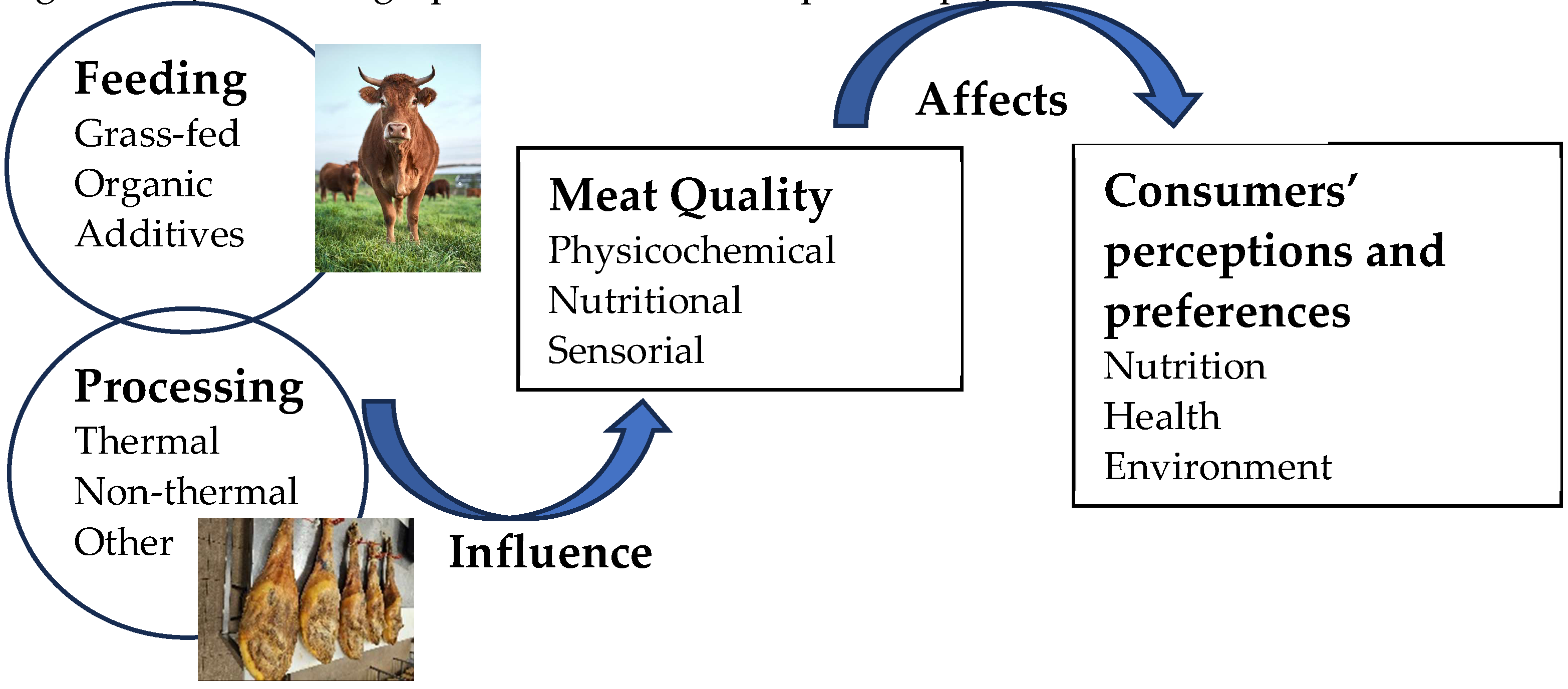

Table 1.
Effects of agro-industrial by-products, insects, macroalgae, and others introduced into the animal diet. Effects on meat quality.
Table 1.
Effects of agro-industrial by-products, insects, macroalgae, and others introduced into the animal diet. Effects on meat quality.
| Breed | Feed | Impact on meat quality | Reference | |
|---|---|---|---|---|
| Lamb | Concentrates | Higher flavor, juiciness, and overall acceptability | With 1.5% concentrate feed, the lamb performed better in terms of the physicochemical, sensory, and instrumental color parameters of the lamb meat | [8] |
| Grape pomace | Higher total lipids levels, higher participation of polyunsaturated fatty acids (18:2n6 and CLA), and greater oxidative stability | No changes in the sensory parameters | [28] | |
| Olive cake | Increased concentration of vitamin E in muscle and extended meat oxidative stability | Did not compromise animal growth, carcass weight, or muscle fat content | [29] | |
| Pork | Shredded acorns | Slightly lower lean meat content and higher measured backfat thickness | Improvements in the fatty acid profiles away from SFAs towards MUFAs | [22] |
| Insect (Tenebria molitor) | Improvement of immunity and prevention of infection by pathogenic bacteria | Lower digestibility | [30] | |
| Tomato pomace | Increased concentration of vitamin A in meat, reduced the deposition of intramuscular fat | Did not affect animal performance | [31] | |
| Olive cake | Increased muscle length | Did not affect the carcass characteristics or the meat and fat quality | [32] | |
| Vitamin D2 enriched mushroom powder | Improved feed efficiency | Highest antioxidant activity and improved the overall color stability of fresh pork. | [35] | |
| Bergamot pulp | Greater oxidative stability | No effect of diet was observed on animal performance and on the fatty acid composition of meat | [36] | |
| Olive pomace acid oil | Color and overall acceptance of pork were not significantly affected by any of the diets | Negative impact on pork’s oxidative parameters | [6] | |
| Chicken | Plant polyphenolic compounds | Increased lightness and increased crude fat; | Reduced lipid peroxidation during storage | [23] |
| Diets supplemented with proteins, fats, and carbohydrates | The casein supplement increased the content of dry matter, protein, and stearic acid | The dextrose supplement increased the content of dry matter, oleic acid, and amino acids | [24] | |
| Garlic leaves | Higher protein digestibility and metabolic energy (thereby increasing body weight) | The treatment lowered the abdominal fat content lower than the control | [27] | |
| Sorghum grain | Results indicated that this cereal could modify plasmalipids and improve some meat quality traits in broilers | Did not affect the carcass, breast, and legs’ yield as well as organ size. | [33] | |
| Goat | Hempseed meal | Various inclusion levels of this supplement have no impact on carcass characteristics | Its use did affect some measures of meat quality over the shelf-life. | [25] |
| Ducks | Asytasia gangetica | Improved nutrient intake and digestibility | No significant differences were observed growth performance of ducks | [26] |
| Ad libitum beet pulp silage | More efficient nutrient utilization | The feeding approach had no adverse effects on most carcass and qualitative physicochemical characteristics of the muscles, except water-holding capacity in leg muscles. | [38] | |
| Rabbits | Marine macroalgae products | Positively modified the fatty acid profile, by increasing the proportion of omega 3 | Did not negatively affect the sensorial properties | [34] |
| Moringa oleifera leaves | Improved growth performance, feed conversion ratio and functional attributes of meat as compared to cowpea hay | To obtain positive results, feed should not exceed 700 g/kg feed | [37] | |
Table 2.
Summary of studies on the effects of processing techniques on meat quality.
| Type of process | Process | Main findings | Reference |
|---|---|---|---|
| Thermal | Dry-aging | Concentration of free amino acids. Improvement of meat palatability. | [46] |
| Changes in meat color, water retention capacity, tenderness, lipid oxidation, and protein degradation | [47] | ||
| Reduces Salmonella and E. coli levels but is ineffective against Listeria monocytogenes and Yersinia enterocolitica. | [48] | ||
| Sous-vide cooking | Applied at low temperatures for a long time, it maintains meat’s nutritional composition and color. At moderate temperatures, sous-vide cooked meat retains its structure. Low flavor can be a drawback. |
[50] | |
| Roasting in the oven before or after sous-vide cooking of lamb meat leads to a browner surface and a more intense cooked meat flavor. | [51] | ||
| The cooking temperature and time of sous-vide significantly influenced chicken breast’s physicochemical and palatability characteristics. | [54] | ||
| Freezing | The freezing and thawing combinations did not cause remarkable changes in the quality parameters; rapid freezing, in the order of Cryogenic Freezing, Individual Quick Freezing, and Natural Convention Freezing, minimizes the quality deterioration. | [59] | |
| Consumer perception is neither direct nor clear regarding the safety and technological benefits associated with cold technologies. More research is needed to explore the potential of these methods. |
[58] | ||
| Non-thermal | High Hydrostatic Pressure | Used to microbiological safety without high temperature. Maintaining organoleptic characteristics. | [63] |
| Preserved nutritional value and shelf life extended without the use of preservatives or reduced additives | [62,65] | ||
| Irradiation | Effective destroying pathogenic and spoilage microbes and improved organoleptic characteristics | [67] | |
| Not recommended for use with foods with a high-fat content as it accelerates lipid oxidation. | [73] | ||
| Plasma Technology | Can be applied to the disinfection of air, water, and food surfaces with low-cost investment. | [80,81] | |
| Other | Chemical and Bio preservatives | Easily adapted to different food products to prevent oxidation, antimicrobials, and extend shelf life | [89,95] |
Table 3.
Main findings of studies on consumer expectations, perceptions and evaluation of diverse processed meat products.
Table 3.
Main findings of studies on consumer expectations, perceptions and evaluation of diverse processed meat products.
| Product | Main findings | Reference |
|---|---|---|
| Dry-aged grass-fed beef loins | Dry-aging has the potential to enhance the eating quality of low-marbled grass-fed beef without negatively impacting its microbial characteristics. Consumer survey data reveal that, although the market is small, there is a niche segment where consumers are willing to pay premium prices for dry-aged grass-fed beef. | [147] |
| Minced and burger meat (beef-pork or chicken-turkey) using different packaging (on trays, bulk). | Most respondents overestimated the fat content in various types of minced meat, as fat differences within a range of ±2% could not be detected. The color and appearance of the products were crucial for consumers, who placed little importance on the presence of additives. Unpackaged beef-pork meat was seen as more natural but also perceived as fattier and less healthy. Chicken-turkey meat was associated with healthiness and low-fat content but also with dislike, suggesting that additional processing should be done to improve appearance. | [148] |
| Long-term frozen storage of lamb meat | Consumers rated meat frozen stored for 21 months the lowest in terms of acceptability, while they preferred meat stored for 1 month. Despite this, all meats were considered ‘acceptable’. Interestingly, a third of consumers gave fresh meat the lowest acceptance after consumption, even though its visual appeal lasted 3 days longer than most thawed meats. Thawed and fresh meats were equally preferred when displayed for a short period, suggesting that concerns about thawed meat might need to be reconsidered. | [149] |
| Frozen meat | When consumers perceive frozen meat as having better nutritional content, appealing sensory qualities, and reasonable pricing, their attitudes towards these products improve, which in turn boosts their intention to purchase. | [150] |
| Gamma irradiated ground beef | A consumer acceptance analysis was conducted on samples treated with 2.5 kGy of gamma irradiation. The results showed no significant differences between the irradiated and control samples. Consequently, 2.5 kGy was determined to be the optimal gamma irradiation dose for reducing STEC in ground beef without affecting consumer acceptance. | [151] |
| Burger containing beef, pea, or algae protein | Participants in all three countries expected pea and algae burgers to be less tasty but healthier and more eco-friendly than beef burgers. These expectations were negatively impacted by higher meat commitment, negative attitudes towards vegetarian and vegan lifestyles, and higher food neophobia. | [152] |
| Processed meat products with reduced levels of nitrite | Consumers were generally unaware of nitrite in meat products but still showed positive attitudes and purchase intentions towards new processed meats. Purchase intention was positively linked to favorable attitudes, preference for natural additives, perceived harm of chemical additives, risk importance, innovativeness, awareness of nitrite, education, health interest, and frequency of processed meat consumption. | [139] |
| Low fat content salami | Consumers showed favorable acceptance of reduced-fat salami, indicated by their willingness to pay more for it. This highlights that health awareness is a key factor in marketing cured meats. | [153] |
| Low-sodium salted meat | Regular sodium salted meats were linked to health concerns and described as too salty, fatty, having a salty and strange taste, and contributing to high blood pressure. In contrast, low-sodium samples were associated with a good appearance, a metallic taste, and healthiness. | [154] |
| Nitrite-free cured pork loins | Producing nitrite-free cured loins is feasible if pathogen control is ensured, though the product may have a weaker color. However, consumers value sensory qualities beyond color, and the positive perception of an “additive-free” label can support the production of nitrite-free cured loins. | [155] |
Disclaimer/Publisher’s Note: The statements, opinions and data contained in all publications are solely those of the individual author(s) and contributor(s) and not of MDPI and/or the editor(s). MDPI and/or the editor(s) disclaim responsibility for any injury to people or property resulting from any ideas, methods, instructions or products referred to in the content. |
© 2024 by the authors. Licensee MDPI, Basel, Switzerland. This article is an open access article distributed under the terms and conditions of the Creative Commons Attribution (CC BY) license (http://creativecommons.org/licenses/by/4.0/).
Copyright: This open access article is published under a Creative Commons CC BY 4.0 license, which permit the free download, distribution, and reuse, provided that the author and preprint are cited in any reuse.


