

Submitted:
04 October 2024
Posted:
07 October 2024
You are already at the latest version
Abstract
This study aimed to assess the contribution of organizational and management factors to the performance of Sidama Bunna Football Club. For this study, a cross-sectional survey design was adopted. The study's target population were Sidama Bunna football club players, coaches and club managers (n=44) selected using a comprehensive sampling technique. Key informant interviews and questionnaires were used as instruments. Pearson Product Moment Correlation Coefficient and multiple regression were used to analyze the data at the 0.05 significant level. The result shows that there was a strong positive significant relationship between club performance and human resource (r=0.774**, p<0.01), materials resources (r= 0.697**, p<0.01), finance (r= 0.765**, p<0.001), strategic factors (r= 0.788**, p<0.001), communication (r= 0.779**, p<0.001), whereas there were no significant relationships between club performance and club structure (r=0.263, p>0.05). The findings also confirmed that The R Square value of 0.794 indicates that 79.4% of the variance in club performance is explained by these factors, highlighting the importance of a comprehensive approach that considers multiple dimensions. The Adjusted R Square of 0.760 further supports the model's robustness. The ANOVA results (F (6, 37) = 23.745, p < 0.001) confirm the significant influence of these variables on club performance. In this combined model, Strategic Factors (B = 0.360, p = 0.002) and Finance (B = 0.196, p = 0.054) remain significant, reinforcing their critical roles. However, communication, structure, human resources, and materials resources are not statistically significant in this combined model, indicating that their influence may be overshadowed by the more dominant factors of strategic planning and finance.
Keywords:
Club performance
; Management
; Organization
; Sidama Bunna
1. Introduction
Football is often considered the most popular sport in the world and one of the collective sports games with more participants and supporters all over the world [1,2]. It has become increasingly popular, socialized and commercialized as part of the global economy and sports social events. The level of national football, particularly the performance of domestic clubs, has become an essential microcosm of social development, as well as an important symbol of national strength and international status. Football has become a multi-billion dollar global industry over the last few decades [3]. Furthermore, Football generates significant revenues for individuals, clubs and national and international organisations, mainly from television broadcasts and other media rights, as well as from merchandise and ticket sales [4]. In this sense, the football performance of clubs will have a spillover effect on a country’s economy and have a significant impact on the financial performance of domestic clubs and leagues and related industries [5]. Arguably, the performance of football clubs significantly impacts how these resources are allocated internationally [6]. According to Zembaba, [1], performance in soccer has been described as the interaction between the optimal combination of physical, technical, tactical quality, and mental motivation. On the other hand, according to different scholars [7], the performance of a football club can be determined by the club structure, management practices, administrative issues and external factors.
Organization is the entity that allows for a group of two or more people to work together more effectively than they might work alone to achieve the desired goal Throughout many countries of the world, sport is a rapidly growing and increasingly diverse industry, with an increased amount of income, a heightened awareness of the relationship between an active lifestyle and good health and a greater number of opportunities to participate in sport have all contributed to this growth. Sport organizations are social entities involved in the sport industry; are goal-directed, with a consciously structured activity system and relatively identifiable boundaries [8].
Football clubs are sport organizations, they need to have goals will achieve with consciously structured activities. A football club, which is well managed by different types of resources like human or manpower (coach, players, coach staff, manager and the board), finance, materials and other management factors, can bring observable change in terms of performance [9]. In addition, any organization of football clubs do not function efficiently without some elements that hold them together and give directions so that they can achieve the goal for which they exist [10].
Management is the glue that bonds the various units and provides the control, communication, motivation, nurturing and leadership needed to achieve design goals. To accomplish this function, a structure is needed that provides an efficient (i.e. the amount of resources used to achieve an organization's goal) and effective (the degree to which the organization states its goal) way of operating and carrying out the various duties and responsibilities existing within the organization. In addition to the above-mentioned factors, there also exist certain internal factors that can shape a football team’s success. For example, institutional support, and team identification. Player-coach ability [11] as well as certain external factors like fan identification. Supportive team atmosphere [12] among others outside the level of competitiveness has managed to be an important element in determining the success or failure of an organization. Thus, there are teams considered successful by the fact of having a solid program and being considered as protagonists by consistently qualifying for the playoffs, and possessing strong institutional and fan support. Coaches are also involved in such consideration since they play an important role in team performance. However, this role can result in a positive or negative influence on players. According to different scholars, successful coaches are characterized by influencing positive behaviour; thus, tend to improve coach-athlete relationships.
Sidama Bunna Football Club is one of the 19 premier league participating clubs in Ethiopia, based in Hawassa City, Sidama region [13]. The club was founded on August 27, 2006, as Dara Kenema. It was one of three clubs representing Formerly Sidama Zone in the South regional championships in 2006. Afterwards, Dara Kenema was able to advance to the championships for all regional teams from Ethiopia held in Hawassa that same year. Dara Kenema was finished in the top four of this tournament and by virtue entered the second division of Ethiopian football, the Higher League. The name Dara Kenama was changed to Sidama Bunna because the team was the only team to represent Sidama in the second division [14].
Sidama Bunna won the second division of Ethiopian football, the Ethiopian Higher League (formerly called the National League), in the 2008/09 season earning a promotion to the Ethiopian Premier League. Sidama Bunna’s first season in the Premier League was the 2009/10 season. Currently, the club plays in the Ethiopian Premier League, the top division of Ethiopian football [13].
The club aims to win the Ethiopian premier league, the top league of the nation and participate in the African continental tournaments. However, it has yet to accomplish the club's desire to win the league and participate in continental championships. According Toesland [15], African football clubs often struggle with funding, with many clubs relying on government subsidies or donations from wealthy individuals. This lack of investment can limit the quality of facilities, equipment and coaching available to players. In addition, corruption is a pressing concern for the sport, with regular allegations of match-fixing, bribery and mismanagement of funds. This has led to a lack of trust and transparency within the football ecosystem, which can deter fans, investors and sponsors from getting involved. Furthermore, the industry’s weak governance system is preventing it from reaching its full potential in Africa. This is a combination of administrative failures on the part of the national football governing bodies and ineffective means, whether internal or external, of ensuring that standards such as transparency, accountability and administrative efficiency are met [15].
Different scholars believe that the success of the clubs is not only because they have talented players, and good coaches but also effective strategic planning, long-term vision and a good management board. However, in Africa, particularly in Ethiopia, most clubs do not have clear goals and strong management. Due to this, most clubs are not licensed as clubs by the national federation which is in charge of providing club licensing [16].
Reflecting these arguments, to further search these features and to advance evidence-based strategies for best practice, a more profound understanding of the quality of organisation and management factors is still required and implies to be investigated. Thus, different studies clarified that better organisational and management abilities lead to better performance of sport clubs, which needs to be investigated in the football clubs context. Yet, the rationale behind this study would appear that there was no comprehensive and adequate study in Ethiopia to show the positive experiences of good organisation and management skills and their effect on the performance of Sidama Bunna football club. This study therefore tried to investigate the influence of organisational and management factors on the performance of Sidama Bunna Football Club.
2. Materials and Methods
2.1. Research Design
A research design enables researchers to compress several components of a research effort into a single essential approach that enables the research questions to be answered [17]. This study employed a cross-sectional descriptive survey design. This design helps to provide a comprehensive picture or portrait of a subject by gathering data, tabulating variables, or combining all of these elements [18]. A descriptive approach can be brought into reality by creating a snapshot of the market environment, regarding the aspects under question, at a critical time.
2.2. Participants
Most sport management studies have involved sport administrative employees, managers, coaches, players, volunteers, and other stakeholders which helps the organization to provide effective sport service delivery for society [19]. In this study, 33 players, 3 coaches, 7 admin officers, and one club manager of Sidama Bunna Football Club were used as a sample using a comprehensive sampling technique.
2.3. Instruments and Procedures
To collect the data necessary for the study questionnaires were used. Hence questionnaires are popular data collection instruments that help to offer a fast, efficient, and inexpensive means of gathering large amounts of information from sizeable sample volumes [20]. Thus, the Strategic Planning Questionnaire (SPQ) was used [21] to obtain relevant data.
The first quantitative instrument is the Organisational Factors Scale (OFS) which has 16 items with three subscales used to measure organisational structure, communication and strategic factors in club performance. The instrument is a 5-point Likert scale ranging from strongly disagree to strongly agree. The second instrument is Management Factor Scale (MFS) which has 17 items with four subscales which used to measure human resource management, materials and resources and finance and budget of the club. The instrument is a 5- point Likert-scale ranging from Strongly Disagree to Strongly Agree. The third quantitative instrument is the Sport Club Performance Scale (SCPS). This scale is a self-developed scale with 10 items of questions. The instrument is a 5 - point Likert-scale ranging from strongly disagree to strongly agree.
The sociodemographic information was also included which helped to know the sociodemographic characteristics of participants. To ensure a good and rapid process of data collection and total respondent understanding, the researcher used a translator who has legal permission to translate data collection tools into Amharic to facilitate respondents who might be having difficulty understanding English statements.
2.4. Validity and Reliability of the Instrument
2.4.1. Validity
According to Creswell [17], the validity of a test may be defined as the accuracy with which it measures that which it is intended to measure or as the degree to which it preaches infallibility in measuring what it purports to measure. To ensure the validity of this instrument, copies of questionnaires were presented to the researcher’s supervisors (2), experts in the fields of sport. All comments and suggestions were carefully followed to improve the quality of the instruments.
2.4.2. Reliability
According to Yogesh [20], reliability refers to the consistency of scores obtained by the same individuals when re-examined with the same test on different occasions, or with different sets of equivalent times. Cronbach’s Alpha is commonly used as a measure of internal consistency which is, how closely related a set of components are as a group [22].
Below displays the results of all variables in the questionnaire together.
Table 3 displays the intercorrelations among the 43 questions. The reliability test of all 43 variables was done using Cronbach’s alpha. There were 6 independent variables and one dependent variable. All the variables showed that they provided valid and reliable responses. A study by Sentie [22] emphasizes that a Cronbach’s alpha of 0.7 or above is considered acceptable for psychological constructs, which supports the reliability results found in your study. The high overall reliability score (0.860) suggests that the survey items were consistently measuring the intended variables.
3. Results
3.1. Demographic Characteristics of the Respondents
The below table shows the socio-demographic characteristics of Sidama Bunna Football Football Club respondents sex and age.
According to Figure 2, 91% (40) of respondents were males while only 9% (4) were their counterparts.
The participants age ranged from 16-18 years were the vast majorities, 67.0 % while the rest 33.0 % were belonged to the age group 12-15 and there were no respondents in the age group of above 19. Based on the above analyzed result indicated that majority of respondents were 31 between 16-18 years. This implies that the age group between 16-18 years old are the highest participants in this study.
The above Figure 4 clearly depicts about the educational background of players that, 11 (25%) were completed grade 10, 6(13.6%) were completed grade 12. 16 (36.4%) of them were Diploma holder, 9 (20.5%) were BA/BSc. Degree holders, 9 (20.5%) of them 29 were in Certificate level and also 17 (26.98%) were not explain their educational status. This shows that, most of the respondent’s educational levels have under first degree, this may be due to the lack of the access of educational promotion within the club.
The above figure shows the role of respondents. From the total participants, 32 (73%) were players, 7 (16%) were board members, 3 (7%) were coaches, and the remaining 2 respondents (4%) team leader and manager of the club.
Figure 6 shows the distribution of respondents by working experience. From the above figure, 34.1% (15) of respondents had below 5 years of work experience. 43.1% (19) of the respondents had between 5-10 years of work experience whereas 11.4% (5) of respondents were between 11-15 years of experience and the remaining 11.4% (5) of respondents were 15 and above years of working experience.
3.2. Results of Assumption Tests
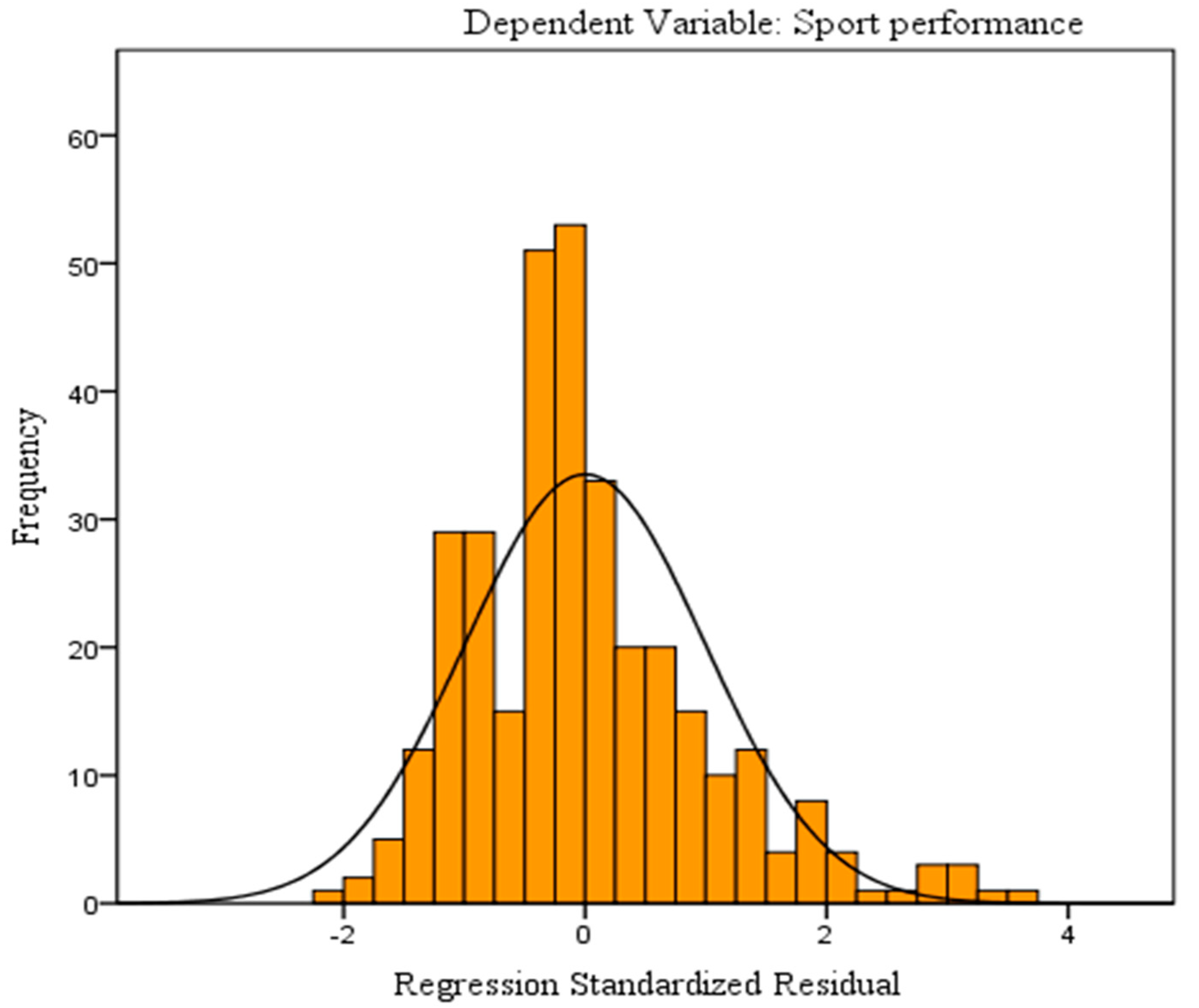
The bell-shaped curve that characterizes all normal distributions was kept by a normal curve when the assumption of normality was verified for all variables using graphical analysis (the histogram Figure 7) [23,24]. No outliers were found in this data when multivariate outliers were also examined using the cookie's distance, where the value was less than 1. Moreover, we checked the multicollinearity assumption by using the tolerance value and VIF (variance inflation factor) for their cut-off points of >.10 and <10, respectively [24,25].
3.3. Correlation Matrix
The following Table 3 shows the relationship between organisational factors (club structure, strategic factors and communication), management factors (human resources, finance and materials and resources) and Sidama Bunna football club performance.
The results from Table 4 show that there was a strong positive significant relationship between club performance and human resource (r=0.774**, p<0.01), materials resources (r= 0.697**, p<0.01), finance (r= 0.765**, p<0.001), strategic factors (r= 0.788**, p<0.001), communication (r= 0.779**, p<0.001), whereas there were no significant relationships between club performance and club structure (r=0.263, p>0.05).
3.4. Analysis of Regression
The following regression tables provided analyze the impact of various organizational and management factors on the performance of a football club.
Table 5 examines the joint contribution of organizational factors to club performance, and reveals a strong correlation (R = 0.868) between these factors—specifically Communication, Club Structure, and Strategic Factors—and the club's performance. The R Square value of 0.754 indicates that approximately 75.4% of the variance in club performance can be explained by these organizational factors. After accounting for the number of predictors, the Adjusted R Square of 0.736 confirms the model's robustness. The ANOVA results (F (3, 40) = 40.918, p < 0.001) demonstrate that the model is statistically significant, indicating that these factors jointly have a meaningful impact on performance. Among these, Strategic Factors (B = 0.478, p < 0.001) have the strongest influence, which aligns with existing literature emphasizing the importance of strategic planning in sports organizations. Communication (B = 0.402, p < 0.001) also plays a significant role, supporting studies that argue for the crucial role of effective communication in organizational success. In contrast, Club Structure (B = 0.064, p = 0.114) is not statistically significant, suggesting that while important, its impact may be less direct compared to other factors.
Table 6 focuses on the joint contribution of management factors, such as Finance, Materials Resources, and Human Resources, to club performance. This analysis shows a strong correlation (R = 0.843) and reveals that 71% of the variance in club performance is explained by these management factors, with an Adjusted R Square of 0.689 indicating a robust model. The ANOVA results (F (3, 40) = 32.723, p < 0.001) confirm the model's statistical significance. Among the management factors, Finance (B = 0.330, p = 0.002) is the most impactful, consistent with findings that emphasize the importance of financial stability for football club success. Human Resource (B = 0.241, p = 0.055) is marginally significant, suggesting that HR practices do influence performance but may require further exploration. Materials Resource (B = 0.201, p = 0.076) is not statistically significant, although it hints at the potential importance of resource management.
Table 7 reveals the joint relative contribution of all variables—including Finance, Club Structure, Materials Resource, Strategic Factors, Communication, and Human Resource—demonstrates a very strong correlation (R = 0.891) when all factors are combined. The R Square value of 0.794 indicates that 79.4% of the variance in club performance is explained by these factors, highlighting the importance of a comprehensive approach that considers multiple dimensions. The Adjusted R Square of 0.760 further supports the model's robustness. The ANOVA results (F (6, 37) = 23.745, p < 0.001) confirm the significant influence of these variables on club performance. In this combined model, Strategic Factors (B = 0.360, p = 0.002) and Finance (B = 0.196, p = 0.054) remain significant, reinforcing their critical roles. However, Communication (B = 0.188, p = 0.147) is no longer significant, suggesting that its impact may be moderated by other factors in the model. Club structure, human resource, and materials resource are also not statistically significant in this combined model, indicating that their influence may be overshadowed by the more dominant factors of strategic planning and finance.
4. Discussion
This scientific work investigated the influence of organisational and management variables on the football performance of Sidama Bunna football club.
During this study, it was seen that the majority of respondents were young, with 45.4% below the age of 25 and 36.4% between 25-35 years. This reflects a youthful demographic heavily engaged in the football club. The finding that younger individuals (below 25 years) form the majority of participants aligns with existing research that suggests youth engagement in sports is critical for development. According to the study by Bailey et al. [26], youth sports participation is linked to various benefits, including physical health, social skills, and psychological well-being, which can indirectly enhance team performance.
Educational attainment was varied, with most respondents holding a diploma (36.4%), and only a small fraction (4.5%) having a master's degree. This suggests a moderately educated group, potentially indicating limited access to higher education opportunities within the club environment. The mixed educational background of respondents, with a majority holding diplomas, could be compared with studies suggesting that higher education levels are linked to better decision-making and strategic planning. However, in sports contexts, practical experience and vocational training can sometimes outweigh formal education in influencing performance. According to Slack and Parent [8], experience in sports management can be more critical than formal education for effective club management.
A significant portion of respondents (43.1%) had 5-10 years of experience, suggesting a relatively experienced cohort. However, only 11.4% had over 15 years of experience, indicating a potential gap in long-term experience within the club. Experience is often seen as a critical factor in sports management, with studies by Doherty and Carron [27] showing that experience contributes to better leadership and decision-making. However, the limited influence of human resources in your regression analysis may suggest that simply having experience is not enough; the quality and relevance of that experience might be more critical.
The Cronbach's alpha values for various variables ranged from 0.593 to 0.939, with an overall reliability coefficient of 0.860. This high internal consistency suggests that the survey items were reliable in measuring the intended variables, with Club Performance being particularly robust.
The analysis correlation revealed strong positive correlation between Strategic Factors and Club Performance (r = 0.788, p < 0.01) is in line with existing literature that highlights the importance of strategic planning in sports organizations. For instance, Hargreaves et al. [28] found that clubs with well-articulated strategic goals tend to outperform those without a clear strategy. Your results support these findings, reinforcing the idea that a club's long-term planning, goal-setting, and adaptability are crucial drivers of success.
Communication has been repeatedly identified as a critical element in effective team and organizational performance. The strong correlation between Communication and Club Performance (r = 0.779, p < 0.01) corroborates earlier findings by Hoye et al. [29], who emphasized that clear communication within a club facilitates better coordination, reduces misunderstandings, and aligns all stakeholders towards common goals. This result reinforces the importance of maintaining robust communication channels in achieving high performance.
Previous studies in sports management have often emphasized the importance of a well-defined organizational structure for the success of football clubs. However, the weak correlation between Club Structure and Club Performance found in your study (r = 0.263) suggests that structure alone may not be a decisive factor in enhancing performance. This aligns with research by Smith and Stewart [30], who argue that while organizational structure is necessary for operational efficiency, its impact on performance outcomes is mediated by other factors such as strategic management and resource allocation. Therefore, your findings are consistent with the notion that structure provides a foundation, but its influence on performance is indirect.
Human Resource management is consistently highlighted as a key determinant of success in sports organizations. The significant correlation between Human Resource and Club Performance (r = 0.774, p < 0.01) aligns with the work of Taylor et al. [31], who found that clubs that invest in recruiting, developing, and retaining skilled personnel tend to perform better. Your findings echo this, suggesting that effective human resource practices are integral to the success of football clubs.
The finding that Materials Resource is significantly correlated with Club Performance (r = 0.697, p < 0.01) aligns with previous research by Dawson et al. [32], which noted that access to and the effective management of materials (e.g., equipment, facilities) are essential for a club’s operational success. This suggests that while materials resources alone may not guarantee success, their proper utilization significantly contributes to overall performance.
Financial management has been widely recognized as a critical factor in the success of football clubs. The strong correlation between Finance and Club Performance (r = 0.765, p < 0.01) supports the findings of Rompotis [33], who demonstrated that financial stability and resource availability are closely linked to on-field success. This suggests that clubs with better financial management are more likely to allocate resources effectively across various operational areas, thereby enhancing their performance.
The regression analysis results provide significant insights into the organizational and management factors that influence the performance of a football club. These findings align with and, in some cases, contrast with existing literature in sports management and organizational behavior. The regression models showed that strategic factors and communication had significant positive impacts on club performance, while club structure was not a significant predictor. The significant impact of strategic factors on club performance is consistent with sports management literature. According to Hoye et al. [29], strategic planning is crucial in sports organizations as it aligns resources with the long-term goals of the club, thereby improving performance outcomes. The positive correlation between communication and performance is also well-supported. Robbins and Judge [34] discuss how effective communication within organizations fosters teamwork, reduces conflicts, and leads to better performance. In sports clubs, clear communication channels can enhance coordination and ensure that all members are aligned with the club's goals.
The finding that club structure did not significantly impact performance contradicts some studies. For instance, Aghazadeh and Seyedian [35] argue that organizational structure plays a pivotal role in shaping the efficiency and effectiveness of operations within sports teams. A well-defined structure is believed to provide clarity in roles, responsibilities, and decision-making processes, which can enhance performance. However, your results suggest that other factors may override the structural influence in this particular context.
Among management factors, finance was a significant predictor of performance, while human and material resources were less influential. The significant role of financial management in club performance aligns with findings by Smith and Stewart [30], who argue that financial stability is a cornerstone of successful sports organizations. Adequate financial resources allow for better talent acquisition, training facilities, and overall operations, directly impacting performance.
The combined model, including all variables, explained 79.4% of the variance in club performance, with strategic factors, finance, and communication being the most significant contributors.
5. Conclusions
The study highlights that the performance of football clubs is heavily influenced by strategic planning, effective communication, and financial management. While organizational structure did not show a strong direct impact on performance, it might still play a supportive role in enhancing the effectiveness of other factors. The demographics suggest that the clubs are largely composed of younger, moderately educated individuals with a reasonable level of experience. This demographic composition could be leveraged to build more robust strategic and management frameworks that capitalize on the energy and adaptability of a younger workforce.
In conclusion, football clubs aiming to improve performance should focus on strengthening strategic factors, enhancing communication channels, and ensuring robust financial management. Additionally, while the educational and experiential backgrounds of respondents are varied, further investment in educational and professional development within the clubs could enhance overall effectiveness and sustainability in the long term.
The regression models showed that strategic factors and communication had significant positive impacts on club performance, while club structure was not a significant predictor. Among management factors, finance was a significant predictor of performance, while human and material resources were less influential. The combined model, including all variables, explained 79.4% of the variance in club performance, with strategic factors, finance, and communication being the most significant contributors.
6. Recommendations
The club should prioritize strategic planning, ensuring that long-term goals are clearly defined and aligned with the club's mission. Regular updates and reviews of the strategic plan should be conducted to adapt to changing conditions and to ensure that all departments are working towards common objectives.
To improve coordination and collaboration, the club should enhance its communication strategies. This includes establishing clear communication protocols between management, players, and staff, as well as utilizing digital tools to facilitate information-sharing and decision-making processes.
Given the significant impact of financial resources on club performance, it is recommended that the club adopts more robust financial management practices. This includes detailed budgeting, regular financial audits, and exploring additional revenue streams to ensure financial stability and growth.
The club should invest in the professional development of its staff and players. This can be achieved through continuous training programs, workshops, and seminars that focus on both technical skills and soft skills such as leadership, teamwork, and communication.
The club should ensure that all material resources, such as training facilities and equipment, are used efficiently and effectively. Regular maintenance and updates to facilities should be conducted to provide players with the best possible environment for development.
Leadership within the club should be strengthened by providing training and support to current and potential leaders. This will ensure that leaders at all levels are equipped to inspire and guide their teams towards achieving the club’s strategic goals.
The club should deepen its engagement with the local community by organizing events, outreach programs, and fan engagement activities. Building a strong relationship with the community will not only enhance the club's support base but also create a positive public image.
To reduce financial dependency on a limited number of income sources, the club should explore new revenue-generating opportunities. This could include expanding merchandising efforts, securing new sponsorship deals, and leveraging digital platforms for content distribution.
Implement a system for regular performance evaluations for both players and staff. These evaluations should be used to identify areas for improvement and to provide feedback that can guide personal and professional development.
While the study indicated that organizational structure alone does not have a strong impact on performance, it is still essential to ensure that the structure supports the club’s strategic and operational needs. Regular assessments should be conducted to determine if the current structure is effective or if modifications are necessary to better support performance objectives.
7. Future Research Directions in Football Club Performance
Financial models and sustainability are crucial for the long-term viability of football clubs. Given the financial challenges many clubs face, future research could explore different financial models and their sustainability. This could include comparative studies of clubs operating under different financial structures (e.g., privately owned, fan-owned, or publicly traded).
Comparative studies across leagues and regions can provide valuable insights into best practices and strategies. Future research could focus on comparative analyses of football clubs across different leagues and regions, examining how factors such as cultural context, economic environment, and league regulations impact club performance.
Longitudinal studies that track the performance of football clubs over an extended period can provide valuable insights into the long-term effects of organizational and management strategies. These studies can identify trends and key factors that contribute to sustained success or decline.
Author Contributions
Conceptualization, Sentie, W.A. and Getinet, T.; methodology, Sentie, W.A. and Getinet, T.; software, Sentie, W.A.; validation, Sentie, W.A. and Getinet, T.; formal analysis, Sentie, W.A.; investigation, Getinet,T.; resources, Sentie, W.A. and Getinet, T.; data curation, Sentie, W.A.; writing—original draft preparation, Sentie, W.A. and Getinet, T.; writing—review and editing, Sentie, W.A. and Getinet, T.; visualization, Sentie, W.A.; grant acquisition, Getinet, T. All authors have read and agreed to the published version of the manuscript.
Funding
This research received no external funding.
Institutional Review Board Statement
The study was conducted in accordance with the Declaration of Helsinki, and approved by the Research Ethics Review Committee of BAHIR DAR UNIVERSITY SPORT ACADEMY (protocol code SAD-1353/23 and date 20/11/2023).
Informed Consent Statement
Informed consent was obtained from all subjects involved in the study.
Data Availability Statement
The associated dataset for all performed analyses are available upon request from the corresponding author.
Acknowledgments
The authors appreciate the study participants of this study who have taken their time and energy to provide the relevant data for the study. In addition, the authors would like to thank Mr Esayas Hailu for his valuable professional and academic supervision, guidance and inestimable contributions.
Conflicts of Interest
The authors declare no conflicts of interest.
References
- Zembaba E., H. Technical performance of Ethiopian male soccer national team. Turkish Journal of Sport and Exercise. 2018, 20 (2) 116 – 121. [CrossRef]
- Fan, M. , Liu, F., Huang, D.; Zhang, H. Determinants of international football performance: Empirical evidence from the 1994–2022 FIFA World Cup. Heliyon, 2023, 9, e20252. [Google Scholar] [CrossRef] [PubMed]
- Bankov, K. The Market of Football Experience for the Digital Economy. The Digital Mind: Semiotic Explorations in Digital Culture. Springer International Publishing.
- Ramchandani, G.; Wilson, D. Global Economics of Sport and Leisure. Torkildsen's Sport and Leisure Management. 2022, pp. 229–245.
- Hoffmann, R. , Ging, L. C.; Ramasamy, B. The Socio-Economic Determinants of International Soccer Performance. Journal of Applied Economics. 2002, 5, 253–272. [Google Scholar] [CrossRef]
- Dobson, S.; Goddard, J. The Economics of Football. 2001, vol. 10, Cambridge University Press.
- Bayisa, A.G. Organizational And Management Factors That Affect The Football Perfomance In Youth Projects Of Jimma Zone, Selected Woreda. MSc thesis, Jimma University, Jimma, Ethiopia, 2019.
- Slack, T.; Parent, M. . Understanding sport organizations: The application of organization theory. Human Kinetics, 2006.
- Alemayehu, H. The administrational problem of football club in Hossana town southern Ethiopia. PhD Thesis, Addis Ababa University, Ethiopia, 2017.
- Carlsson-Wall, M. , Kraus, K.; Messner, M. Performance measurement systems and the enactment of different institutional logics: insights from a football organization. Management Accounting Research 2016, 32, 45–61. [Google Scholar] [CrossRef]
- Arroba, T. , Gea-García, G. M., Sánchez-Sáez, J. A.; Conde-Pascual, E. Fan identification as a precursor of loyalty towards a football team, a systematic review. Journal of Sports Economics & Management. 2021, 11, 22–60. [Google Scholar]
- Jones, G. Performance excellence: A personal perspective on the link between sport and business. Journal of applied sport psychology. 2002, 14, 268–281. [Google Scholar] [CrossRef]
- Ethiopian Premier league teams. Retrieved January 31, 2024, from https://soccer.et/competition/ethiopian-premier-league-2023-24/.
- Elias, A. A. Comparative study on selected psychological variables between Hawassa kenema and sidama buna football club players on derby game. MSc Thesis. Hawassa university, Hawassa, Ethiopia, 2022.
- Readying African football for the global stage. African Renewal. Retrieved January 31, 2024, from https://www.un.org/africarenewal/magazine/august-2023/readying-african-football-global-stage-0.
- Tolesa, D. Ethiopia to launch club-licensing system. Retrieved from the Reporter https://www.thereporterethiopia.com/1671/.
- Creswell, J.W. Research Design Qualitative, Quantitative, and Mixed Methods Approaches. SAGE Publications, 2019.
- Cooper, D. R.; Schindler, P. S. Business Research Methods. (11th ed.). New York: McGraw-Hill, 2011.
- Kim, M. , Oja, B. D., Nite, C.; Anagnostopoulos, C. Expanding sport management toward management through sport: the promise of company sport in organizations. Sport Management Review 2024, 1–22.
- Yogesh, K. S. Fundamentals of Research Methodology and Statistics. Chitrakot (Satna), Madhya Pradesh: New Age International Publisher. 2006.
- Sports Community. (2013). Strategic Planning Questionnaire. https://sportscommunity.com.au/wp-content/uploads/2024/02/1.11.2.2StrategicPlanning.pdf.
- Sentie, W. A. Challenges and Practices in the Implementation of Coaching Manuals in Selected Youth Handball Coaching Program in Addis Ababa, Ethiopia. Sports and Exercise Medicine – Open Journal, 2020. 6, 9–16. [CrossRef]
- Randolph, K. A.; Meyers, L. L. Basic Statistics in Multivariate Analysis: Pocket Guides to Social Work Research Methods (1st ed.). Oxford University Press. 2013.
- Multivariate Data Analysis (7th ed.). Pearson new International edition. 2014.
- Kline, R. B. Principles and practice of structural equation modeling. Guilford publications. 2023.
- Bailey, R. , Hillman, C., Arent, S.; Petitpas, A. Physical activity: An underestimated investment in human capital? Journal of Physical Activity and Health 2013, 10, 645–658. [Google Scholar] [CrossRef] [PubMed]
- Doherty, A.; Carron, A. V. Cohesion in volunteer sport executive committees. Journal of Sport Management, 2003, 17, 116–141. [Google Scholar] [CrossRef]
- Hargreaves, A. , Boyle, A.; Harris, A. Uplifting leadership: how organizations, teams, and communities raise performance. Jon Wiley & sons. 2014. [Google Scholar]
- Hoye, R. , Smith, A. C., Nicholson, M., Stewart, B.; Westerbeek, H. Sport Management: Principles and Applications, 2015. [Google Scholar]
- Smith, A. C.; Stewart, B. Organizational Performance Management in Sport. Routledge. 2010. [Google Scholar]
- Taylor, M. , Doherty, A.; McGraw, P. Managing people in sport organizations: A strategic human resource management perspective. Routledge. 2008. [Google Scholar]
- Dawson, P. , Dobson, S.; Gerrard, B. Estimating coaching efficiency in professional team sports: Evidence from English association football. Scottish Journal of Political Economy, 2000, 47, 399–421. [Google Scholar] [CrossRef]
- Rompotis, G. G. The Financial Performance of the English Football Clubs. International Journal of Finance Research 2024, 5, 181–203. [Google Scholar] [CrossRef]
- Robbins, S. P.; Judge, T. A. Organizational Behavior (18th ed.). Pearson. 2018. [Google Scholar]
- Aghazadeh, S. M.; Seyedian, M. A question of integrity: Politics and organizational structure. Journal of Organizational Culture, Communications and Conflict, 2004, 8, 1–10. [Google Scholar]
Figure 2.
Sex of the respondents.
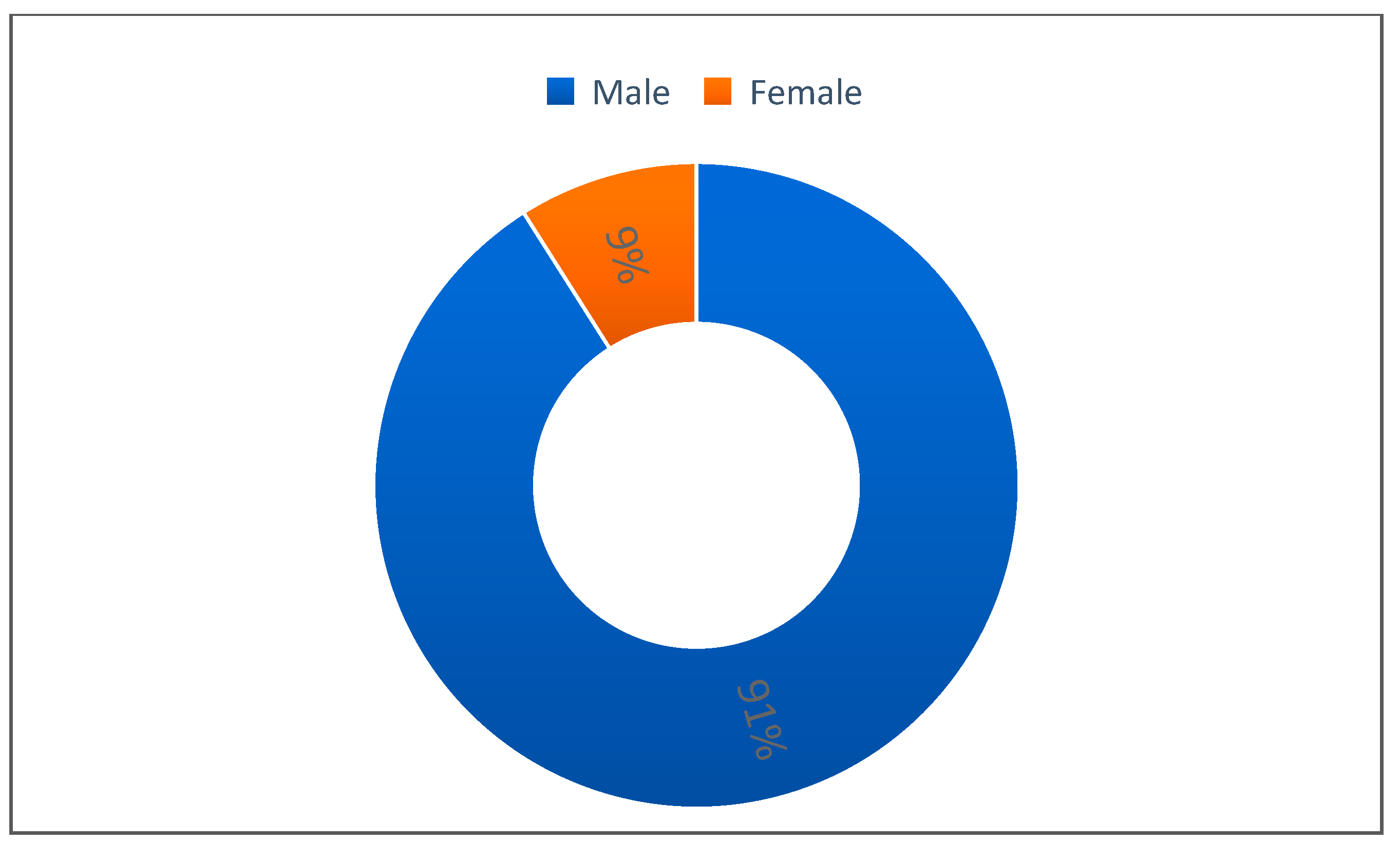
Figure 3.
Age of the respondents.
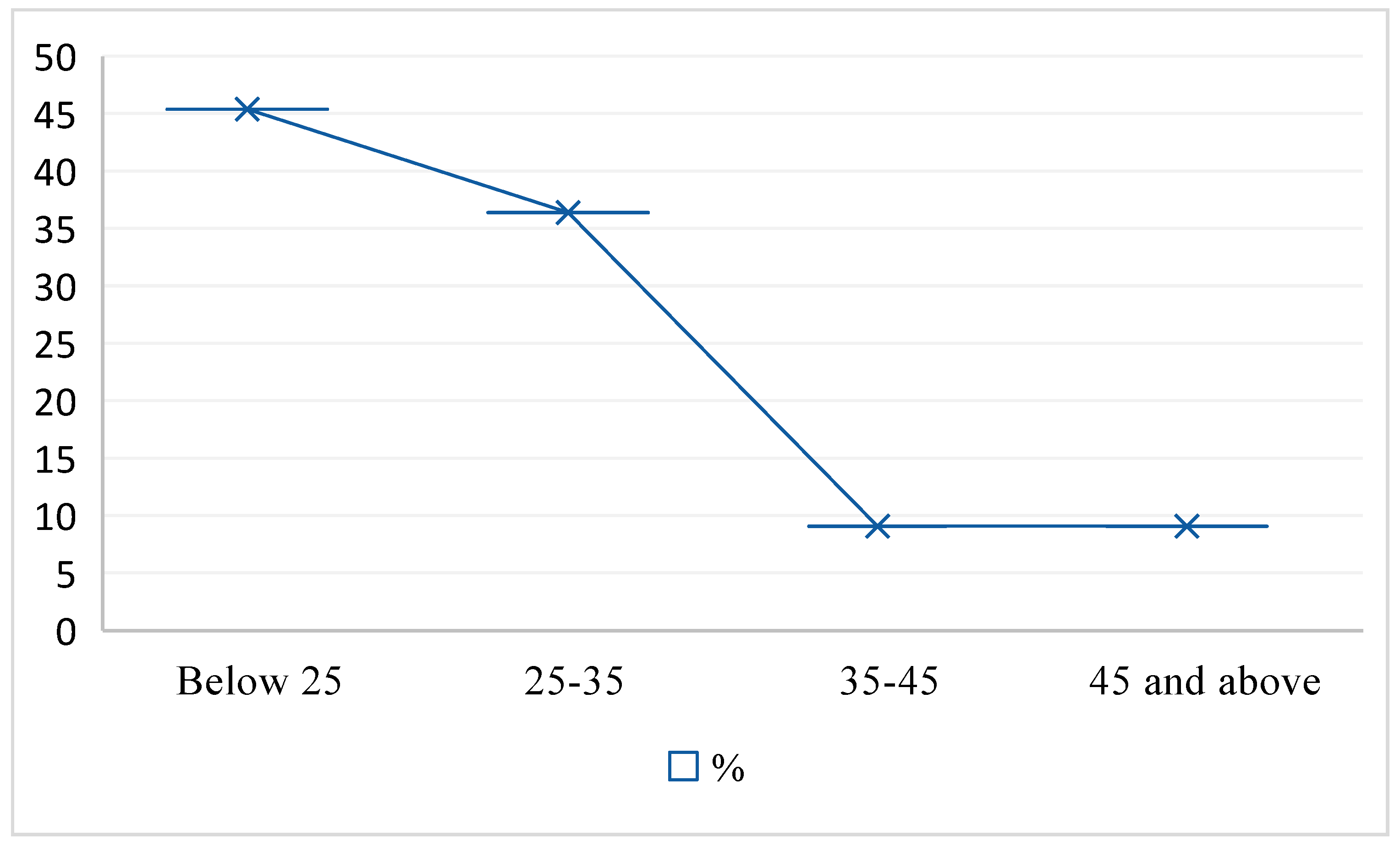
Figure 4.
Education level of the respondents.
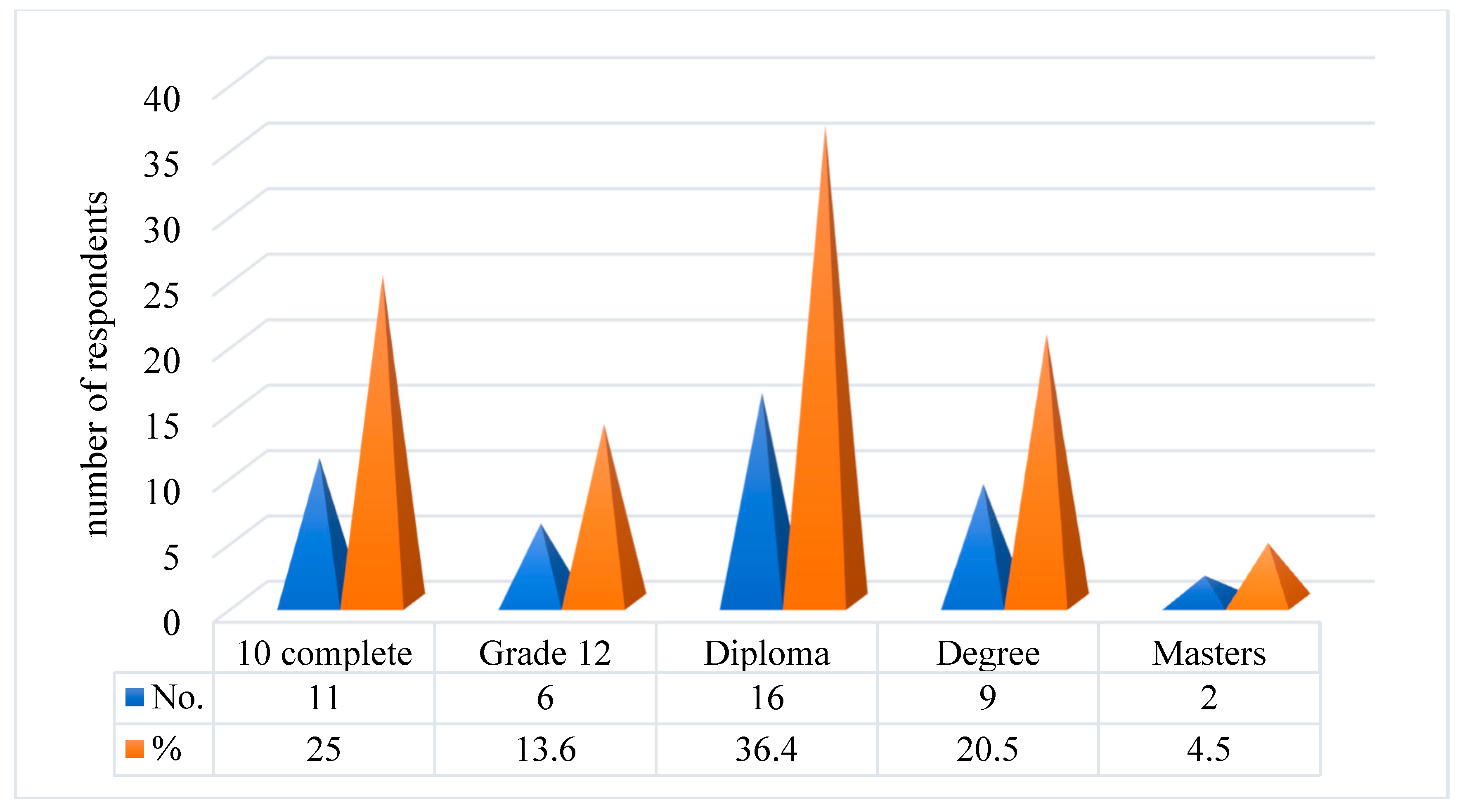
Figure 5.
Respondents role in the club.
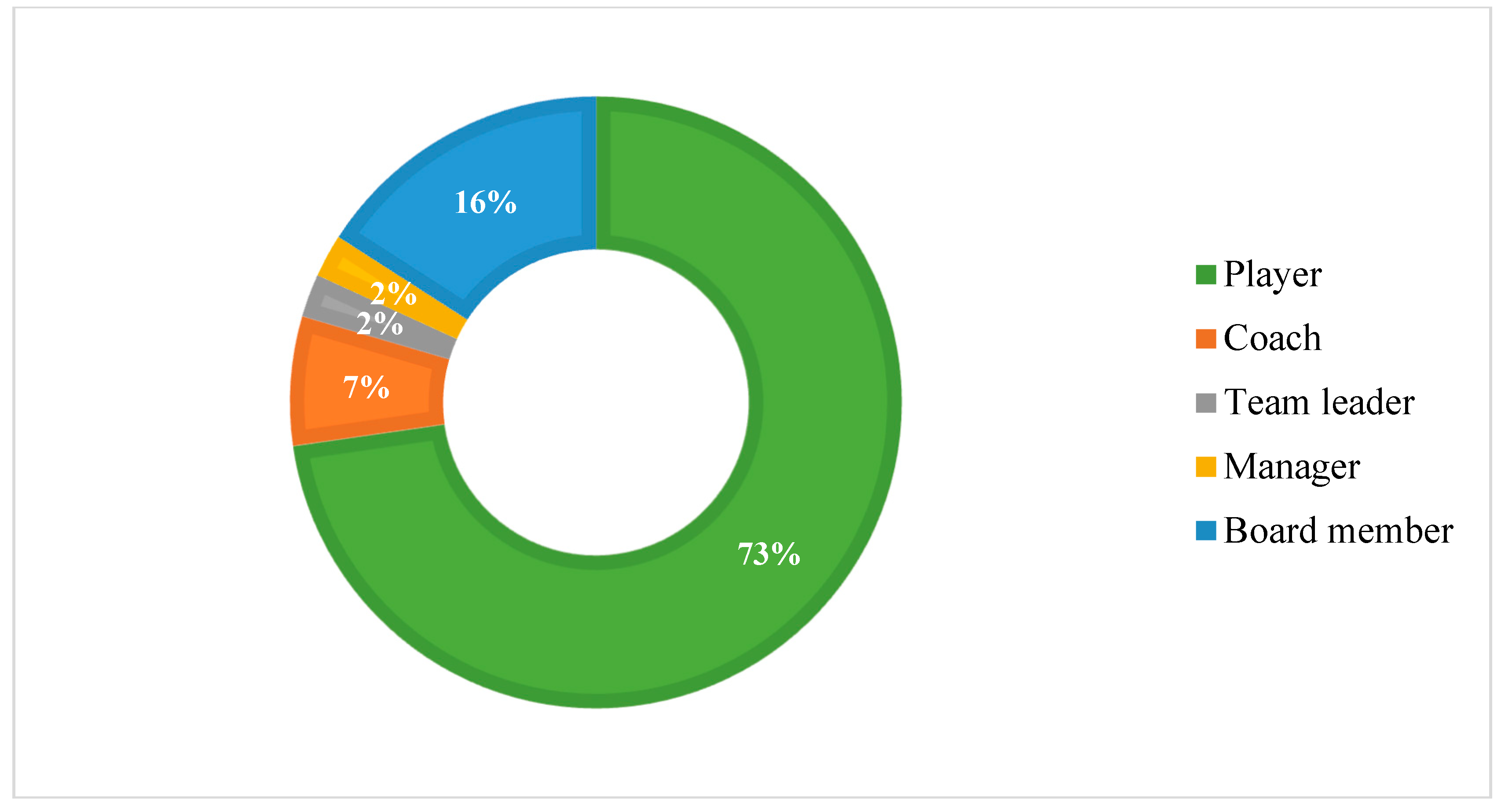
Figure 6.
Descriptive of the service experience.
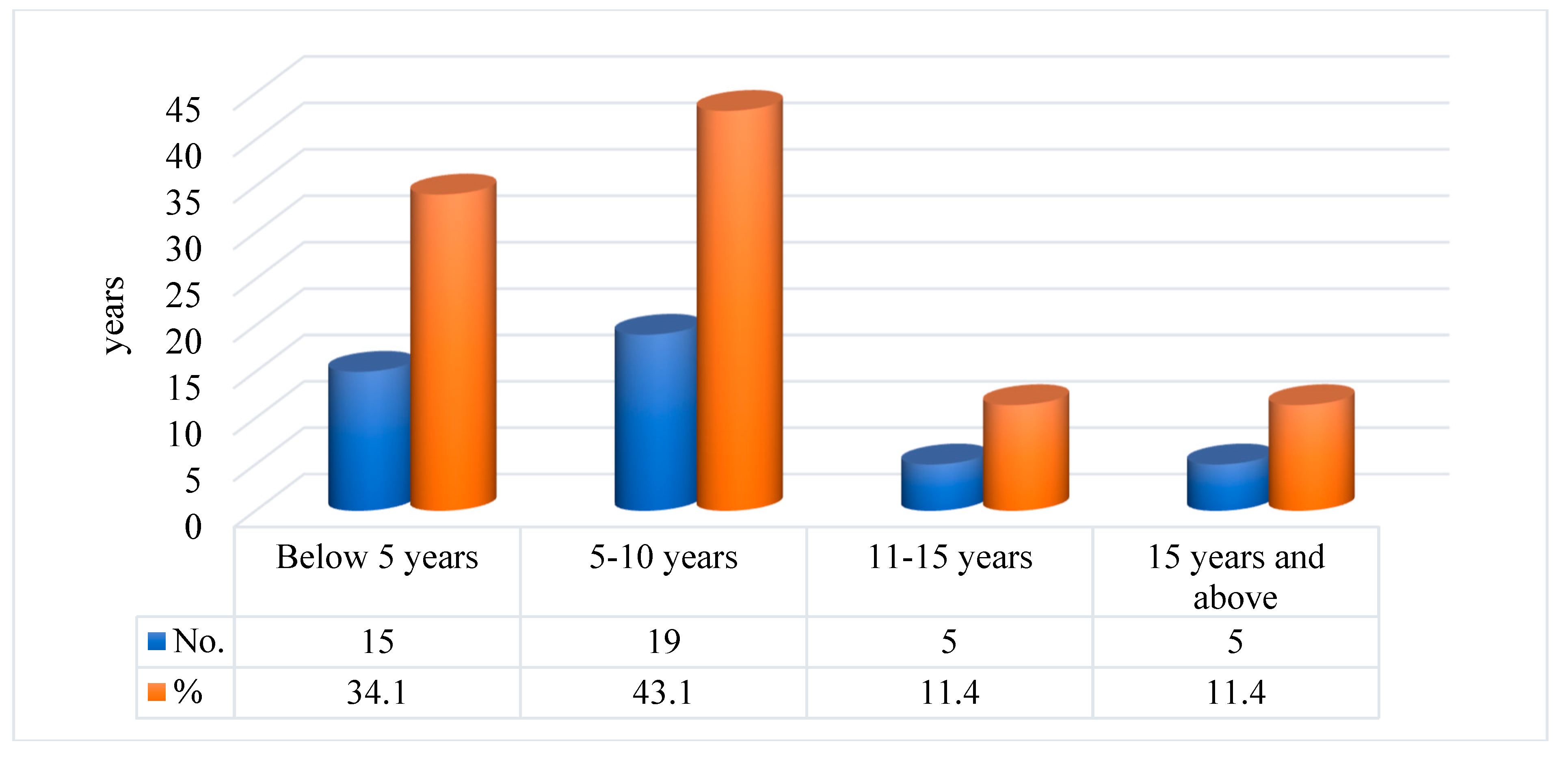
Figure 7.
Normal P-P Plot of Regression Standardized Residual.
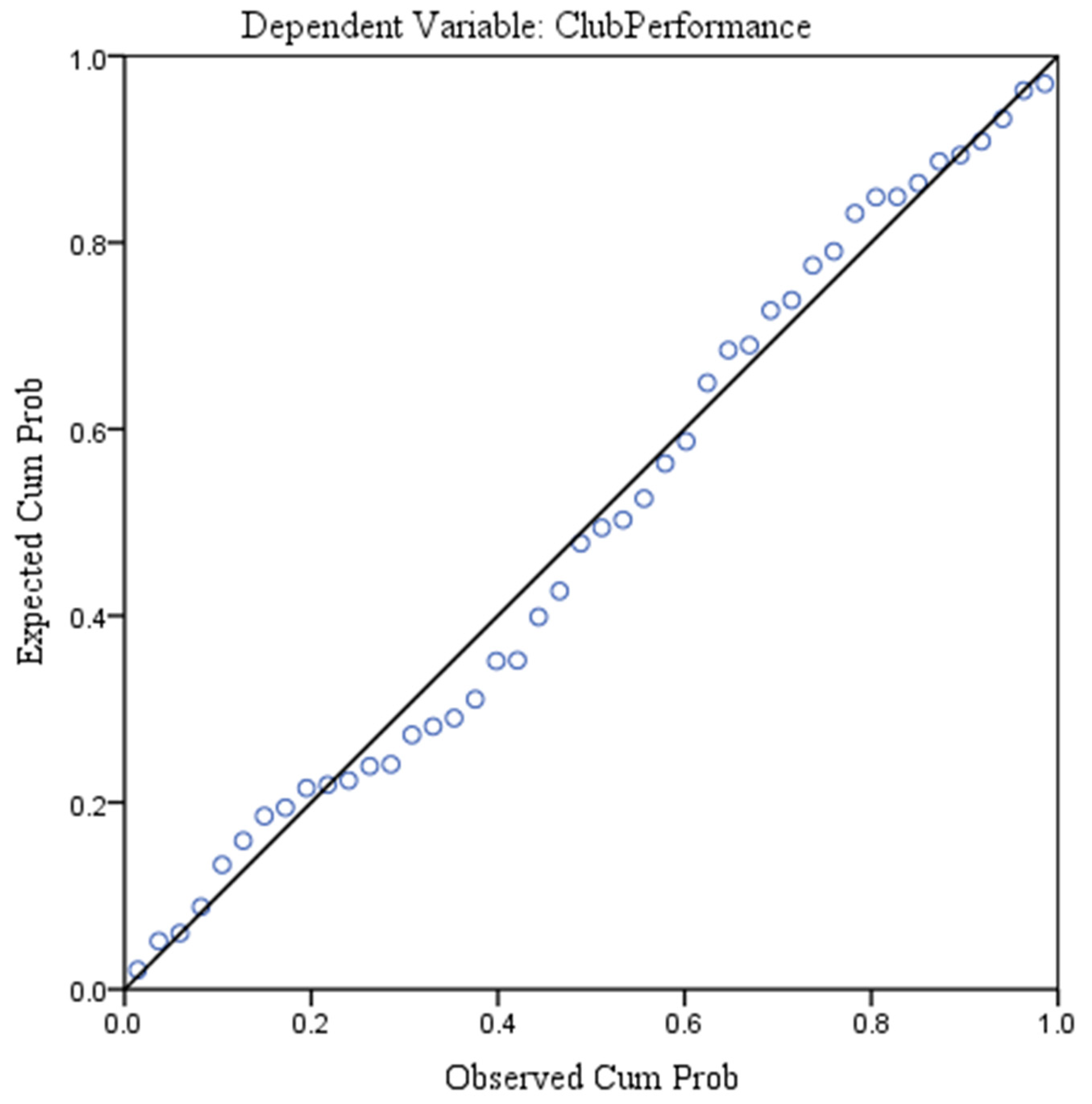

Table 3.
Reliability test score.
| Variables | No. of Items | Cronbach’s α |
|---|---|---|
| Club Structure | 6 | 0.668 |
| Strategic Factors | 5 | 0.846 |
| Communication | 5 | 0.593 |
| Human Resource | 6 | 0.779 |
| Materials Resource | 6 | 0.809 |
| Finance | 5 | 0.782 |
| Club Performance | 10 | 0.939 |
| All variables | 43 | 0.860 |
Table 4.
Correlations of independent variables with club performance.
| No. | Varibles | 1 | 2 | 3 | 4 | 5 | 6 | 7 |
|---|---|---|---|---|---|---|---|---|
| 1. | Club Structure | 1 | ||||||
| 2. | Strategic Factors | .095 | 1 | |||||
| 3. | Communication | .203 | .663** | 1 | ||||
| 4. | Human Resource | .306* | .710** | .735** | 1 | |||
| 5. | Materials Resource | .151 | .624** | .718** | .747** | 1 | ||
| 6. | Finance | .286 | .618** | .737** | .726** | .580** | 1 | |
| 7. | Club Performance | .263 | .788** | .779** | .774** | .697** | .765** | 1 |
* Correlation is significant at the 0.05 level (2-tailed). ** Correlation is significant at the 0.01 level (2-tailed).
Table 5.
The joint contribution of organizational factors to club performance.
| Model Summarya | |||||||||||||
| R | R Square | Adjusted R Square | Std. Error of the Estimate | Durbin-Watson | |||||||||
| 0.868b | 0.754a | 0.736 | 0.362 | 1.674 | |||||||||
| ANOVAa | |||||||||||||
| Model | Sum of Squares | df | Mean Square | F | Sig. | ||||||||
| Regression Residual Total |
16.102 5.247 21.349 |
3 40 43 |
5.367 0.131 |
40.918 | 0.000b | ||||||||
| Coefficientsa | |||||||||||||
| Model | Unstandardized Coefficients | Standardized Coefficients | t | Sig. | |||||||||
| B | Std. Error | Beta | |||||||||||
| (Constant) ClubStructure StrategicFactors Communication |
-0.134 0.064 0.478 0.402 |
0.231 0.040 0.102 0.101 |
0.129 0.493 0.426 |
-0.581 1.614 4.703 3.991 |
0.565 0.114 0.000 0.000 |
||||||||
a Dependent Variable: Club Performance. b Predictors: (Constant), communication, club structure, strategic factors.
Table 6.
The joint contribution of management factors to club performance.
| Model Summarya | |||||||||||||
| R | R Square | Adjusted R Square | Std. Error of the Estimate | Durbin-Watson | |||||||||
| 0.843b | 0.710 | 0.689 | 0.393 | 2.091 | |||||||||
| ANOVAa | |||||||||||||
| Model | Sum of Squares | df | Mean Square | F | Sig. | ||||||||
| Regression Residual Total |
15.169 6.181 21.349 |
3 40 43 |
5.056 0.155 |
32.723 | 0.000b | ||||||||
| Coefficientsa | |||||||||||||
| Model | Unstandardized Coefficients | Standardized Coefficients | t | Sig. | |||||||||
| B | Std. Error | Beta | |||||||||||
| (Constant) Human Resource Materials Resource Finance |
0.232 0.241 0.201 0.330 |
0.216 0.122 0.110 0.100 |
0.301 0.234 0.411 |
1.073 1.979 1.823 3.311 |
0.290 0.055 0.076 0.002 |
||||||||
a Dependent Variable: Club Performance. b Predictors: (Constant), Finance, Materials Resource, Human Resource.
Table 7.
Joint relative contribution of variables.
| Model Summarya | |||||||||
| R | R Square | Adjusted R Square | Std. Error of the Estimate | Durbin-Watson | |||||
| 0.891b | 0.794 | 0.760 | 0.345 | 1.830 | |||||
| ANOVAa | |||||||||
| Mode | Sum of Squares | df | Mean Square | F | Sig. | ||||
| Regression | 16.948 | 6 | 2.825 | 23.745 | 0.000b | ||||
| Residual | 4.401 | 37 | 0.119 | ||||||
| Total | 21.349 | 43 | |||||||
| Coefficientsa | |||||||||
| Unstandardized Coefficients | Standardized Coefficients | t | Sig. | ||||||
| B | Std. Error | Beta | |||||||
| (Constant) | -0.165 | 0.227 | -0.727 | 0.472 | |||||
| Club Structure | 0.037 | 0.040 | 0.075 | 0.932 | 0.357 | ||||
| Strategic Factors | 0.360 | 0.111 | 0.371 | 3.256 | 0.002 | ||||
| Communication | 0.188 | 0.127 | 0.199 | 1.480 | 0.147 | ||||
| Human Resource | 0.068 | 0.118 | 0.084 | 0.575 | 0.569 | ||||
| Materials Resource | 0.092 | 0.106 | 0.107 | 0.866 | 0.392 | ||||
| Finance | 0.196 | 0.099 | 0.244 | 1.987 | 0.054 | ||||
a Dependent Variable: Club Performance. b Predictors: (Constant), Finance, Club Structure, Materials Resource, Strategic Factors, Communication, Human Resource.
Disclaimer/Publisher’s Note: The statements, opinions and data contained in all publications are solely those of the individual author(s) and contributor(s) and not of MDPI and/or the editor(s). MDPI and/or the editor(s) disclaim responsibility for any injury to people or property resulting from any ideas, methods, instructions or products referred to in the content. |
© 2024 by the authors. Licensee MDPI, Basel, Switzerland. This article is an open access article distributed under the terms and conditions of the Creative Commons Attribution (CC BY) license (http://creativecommons.org/licenses/by/4.0/).
Copyright: This open access article is published under a Creative Commons CC BY 4.0 license, which permit the free download, distribution, and reuse, provided that the author and preprint are cited in any reuse.


