

Submitted:
07 October 2024
Posted:
07 October 2024
You are already at the latest version
Abstract
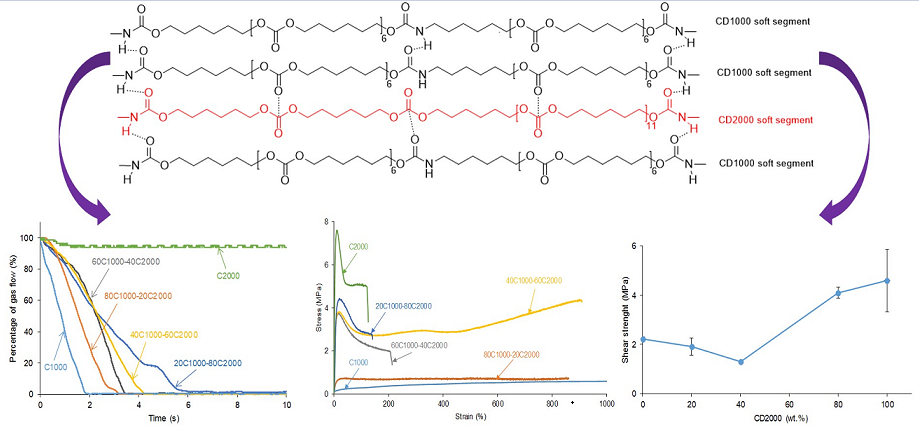
Polyurethanes (PUs) with self-healing at 20 °C, acceptable mechanical properties and high adhesion were synthesized by using blends of polycarbonate polyols of molecular weights 1000 and 2000 Da (CD1000 + CD2000). The structural, thermal, rheological, mechanical and adhesion (single lap-shear tests) properties of the PUs were assessed. The length of the polycarbonate soft segments and the interactions between them determined the self-healing ability, the mechanical properties and the adhesion of the PUs. PUs with higher CD1000 polyol content exhibited shorter self-healing times and dominant viscous properties due to a higher amount of free carbonate groups, significant carbonate-carbonate interactions and low micro-phase separation. As the CD2000 polyol content increased in the PUs, slower kinetics and longer self-healing times were obtained, and higher mechanical and adhesion properties as well, due to a dominant rheological elastic behavior, higher crystallinity of the soft segments and greater micro-phase separation. All PUs synthesized with CD1000 +CD2000 blends exhibited a mixed phase due to interactions between the polycarbonate soft segments of different lengths which favored self-healing and mobility of the polymer chains leading to an increase of the mechanical properties. The adhesion properties of the PUs were similar to the highest ones reported in the literature.
Keywords:
Polycarbonate polyol
; length of the soft segments
; intrinsic self-healing at 20 °C
; soft segments
; blends of polyols
; mechanical properties
1. Introduction
Adhesives play an essential role in both industry and daily life [1,2,3]. Particularly, polyurethane (PU) adhesives are widely used in electronics assembly, automotive, aerospace, outdoor goods, wood processing and footwear industry [4,5]. Due to exposure to thermal, mechanical and chemical agents, and outdoor exposure as well, during use, PU adhesives can undergo damage and cracking, which may cause poor performance [6,7]. Self-healing is an attractive property that can extend the lifetime of PUs contributing to reducing wastes, re-using and avoiding resources and energy consumption. Therefore, there is a current demand for self-healing PUs and PU adhesives [5,7].
The self-healing mechanisms of PUs involve extrinsic and intrinsic healing [8,9,10,11,12,13,14]. The extrinsic self-healing mechanism involves the application of an external trigger (radiation, chemicals, etc) and has several shortcomings, such as limited release of functional additives and structural changes [7,15]. In contrast, the intrinsic self-healing mechanism does not involve any external repair agent and repeatable self-healing is feasible [8], and involves dynamic reversible covalent or non-covalent reversible bonds. This mechanism of self-healing involves various reactions such as [2+2] cycloaddition [16] or Diels-Alder [17], and different chemicals such as acylhydrazones [18] and disulfides [19], and different bonds such as hydrogen bonding [20] or zwitterionic bonds [21].
Polyurethanes (PUs) are obtained by reacting polyol with isocyanate and chain extender, creating a segmented structure composed of soft segments (long polyol chains) and hard segments (urethane/urea groups) [22]. The difference in polarity and chemical nature of these segments in PUs leads to phase separation. The phase-separated microstructure is particularly attractive in self-healing PUs because the soft phase allows the polymer chains mobility and the hard phase imparts physical and structural integrity [15,23].
Several self-healing PUs have been developed but only a few self-healing PU adhesives have been recently developed. Wang et al. introduced dynamic oxime-carbamate bonds into a cross-linked PU network to produce hot melt adhesives with high ultimate bond strength (5.69 ± 1.30 MPa) and chemical resistance, and on-demand de-bonding and self-healing [5]. Zhou et al. obtained catechol-functionalized PU elastomers intended for medical wound closing made with polytetramethylene ether glycol (PTMEG) soft segments of different molecular weights (650, 1000 and 2000 Da) [24]. The increase in the molecular weight of the PTMEG soft segments favoured crystallization that caused their alignment [25]. To find out the self-healing ability of PUs, the PU strips were cut into two pieces which were gently brought into contact again. After one minute of contact at room temperature, the PUs showed no fracture at the wound site after bending and twisting. The adhesion of the catechol-functionalised PU elastomers was measured by shear bond strength and the shear strength values were higher in the joints made with metallic substrates than in the ones made with polytetrafluoro ethene and polyethylene substrates; this was caused by the physical interaction of the catechol with metal ions and metal oxides [26]. On the other hand, Xu et al. developed a semi-interpenetrating ionogel made with poly(vinylidene fluoride-co-hexafluoropropylene) non-crosslinked network and polyurethane crosslinked network that showed self-healing both in air and under water due to the presence of C-F bonds [27]. The self-healing efficiency of the ionogel was 90 % at room temperature after 30 min both in air and under water. Adhesion strength above 100 kPa was obtained in joints made with the ionogel and different substrates. Furthermore, Zhang et al. developed PU intended for adhesives of solid propellant composites made with hydroxyl-terminated polybutadiene, ureidopyrimidone and aliphatic disulphide showing remarkable mechanical and self-healing properties [8]. A self-healing efficiency of 74 % was achieved at room temperature for 6 h and 93 % was obtained at 60 °C for 2 h. The self-healing was ascribed to the exchange of hydrogen bonds that caused the decomposition of the disulfide bonds, making the dynamic bond more prone to the exchange reaction [28,29]. However, the adhesion of the PUs was not tested.
Some self-healing PU adhesives that need the addition of water or ethanol for adequate performance have also been developed. Longfang et al. synthesized boroxine-based self-healing PUs that had a repeatable adhesive property by adding water [7]. Upon damage of the PU, the boroxine at the damaged site was opened by adding water and reformed by low-temperature dehydration. The self-healing efficiency was higher by increasing the curing temperature, achieving 92 % self-healing at 60 °C for 20 minutes. The adhesion was assessed by shear tests of leather/PU adhesive joints and a shear strength value of 1.73 MPa was obtained. On the other hand, Li et al. synthesized different waterborne polyurethanes containing hierarchical diamide bonds [30]. Induced by adding ethanol, 92 % of its initial tensile strength was recovered in 8h at room temperature. In order to determine the adhesive strength, shear tests were carried out and values of around 0.9 MPa were obtained in aluminum/PU adhesive joints. Furthermore, good adhesion to plastic, glass, wood, sheep skin and balloons was obtained. The adhesion was ascribed to the hydrogen bonds between the urea and amide groups of the PU and the substrate which improved the interfacial interaction and enhanced the cohesion of the adhesive layer [31].
Although polyether and polyester polyols are more commonly used for synthesizing PUs, the scarcer PUs made with polycarbonate polyols exhibit superior elastomeric properties, good mechanical properties, high transparency and excellent weathering resistance [32]. Different self-healing PUs synthesized with polycarbonate polyols have been reported. Li et al. obtained a PU with polycarbonate polyol that exhibited self-healing after heating at 80 °C for 40 seconds [33]. Similarly, Matějka et al. have synthesized PUs with poly(hexamethylene) carbonate diol that exhibited self-healing by heating at 120 °C for 1-7 h [34]. Furthermore, Zhang et al. obtained different PUs with blends of aliphatic polycarbonate and propyleneglycol polyols that showed self-healing at 37 °C for 6 hours [35]. In our research team, a PU synthesized with poly(hexamethylene) carbonate diol exhibiting rapid self-healing at 20 °C has been recently reported, the self-healing was ascribed to the existence of a significant number of free carbonate groups, relatively low percentage of free and hydrogen-bonded urethane groups and high mobility of the soft segments [36]. The intrinsic mechanism of self-healing at 20 °C of this PU was ascribed to the dynamic non-covalent exchange interactions between polycarbonate soft segments. However, the mechanical properties of this PU were low. In our more recent study [37], different PUs were synthesised with polycarbonate polyols of different molecular weights between 500 and 2000 Da. The PUs made with polycarbonates of molecular weights 500 and 1000 Da showed fast self-healing at 20 °C, but they exhibited poor mechanical properties. However, the PU made with polycarbonate polyol of molecular weight 2000 Da had good mechanical properties, but it did not show self-healing at 20 °C.
The above analysis of the existing literature on self-healing PU adhesives has shown a broad range of self-healing efficiencies and adhesive strengths (100 kPa to 5.8 MPa). All self-healing PU adhesives were synthesized by using somewhat sophisticated methods or chemicals. On the other hand, to our knowledge, PU self-healing adhesives synthesized with polycarbonate polyols have not been developed yet.
Therefore, this study aims to develop self-healing PUs with fast self-healing at 20 °C, potential good adhesion and acceptable mechanical properties. In order to reach this objective, several PUs made with blends of two polycarbonate polyols of molecular weights 1000 and 2000 Da were synthesized. Because the PU made with polycarbonate polyol of molecular weight 1000 Da shows fast self-healing at 20 °C but has poor mechanical properties, and the PU made with polycarbonate polyol of molecular weight 2000 Da have good mechanical properties but lacks self-healing, the PUs made with blends of both polycarbonate polyols may produce an adequate balance between self-healing and mechanical properties, and good adhesion as well.
2. Materials and Methods
2.1. Materials
Several PUs were synthesized with blends of polycarbonates of 1,6-hexanediol polyols with molecular weights of 1000 (CD1000) and 2000 Da (CD2000) (Covestro, Leverkusen, Germany). 4,4'-methylene bis(cyclohexyl) isocyanate (HMDI) (90% purity, Sigma Aldrich Co., St. Louis, MO, USA) and 1,4-butanediol (BD) chain extender (99% purity, Panreac Applichem®, Darmstadt, Germany) were used.
2.2. Synthesis of the Polyurethanes (PUs)
The PUs were synthesized in a similar way by using the one-shot method; the only difference was the composition of the polycarbonates of 1,6 hexanediol blends. The required amounts of polyols blends (3.9062 g) and 1,4-butanediol (0.035 g) were placed in a polypropylene bottle heated at 80 °C and mixed in a SpeedMixer DAC 150.1 FVZ-K double centrifuge (FlackTek Inc., Landrum, SC, USA) at 2400 rpm for 1 minute. After additional heating at 80 °C for 10 minutes of the polyols/chain extender mixtures, HMDI isocyanate (1.0938 g) was added, and the mixture was again stirred in SpeedMixer at 2400 rpm for 1 minute. The PUs were cured in an oven for 7.5 hours in cycles of 30 min at 50, 60 and 70 °C followed by heating at 80 °C. The PUs were annealed at 85 °C for 1 hour. At least three batches of each PU were synthesized (the amount of each PU batch was 5 g) and they were fully reproducible.
2.3. Experimental Techniques
Attenuated total reflectance infrared spectroscopy (ATR-IR). ATR-IR spectroscopy was used to investigate the chemical composition and structure of the PUs. The spectra were obtained in an Alpha spectrometer (Bruker Optik GmbH, Ettlinger, Germany) equipped with a germanium prism. The infrared beam was set at an incident angle of 45°, and 60 scans were performed with a resolution of 4 cm⁻¹.
Wide-angle X-ray diffraction (XRD). The crystallinity of the PUs was evaluated in a Bruker D8-Advance instrument (Bruker, Ettlingen, Germany) equipped with a Kristalloflex K 760-80F X-ray generator (3000 W; 20-60 kV; 5-80 mA) with a copper anode. PU samples with dimensions of 2 mm diameter and 0.5 mm thick were analyzed using parallel beam geometry for thin films. The X-ray diffractograms were normalized to the highest peak using Evaluation 14.0.0.0 (2017) software.
Differential Scanning Calorimetry (DSC). The structure and degree of micro-phase separation of the PUs were analyzed by DSC. The experiments were conducted under a nitrogen atmosphere (flow rate: 100 mL/min) in a DSC Q100 instrument (TA Instruments, New Castle, DE, USA). Three consecutive thermal cycles were performed: (i) heating from -80 °C to 200 °C at a rate of 10 °C/min; (ii) cooling from 200 °C to -80 °C at the same rate; and (iii) heating from -80 °C to 250 °C at 10 °C/min at the same rate.
Thermal Gravimetric Analysis (TGA). The thermal and structural properties of the PUs were assessed in a TGA Q500 instrument (TA Instruments, New Castle, DE, USA) under a nitrogen atmosphere (flow rate: 50 mL/min). For each test, a sample weigh of 9–10 mg was heated from 35 °C to 600 °C at a heating rate of 10 °C/min.
Dynamic Mechanical Thermal Analysis (DMA). The rheological properties and viscoelasticity of the PUs were evaluated in a DMA Q800 instrument (TA Instruments, New Castle, Delaware, USA). The tests were performed in single cantilever mode at a frequency of 1 Hz by using rectangular samples of dimensions 33 mm x 12 mm x 2.5 mm. The samples were heated from -100 °C to 80 °C at a rate of 5 °C/min.
Mechanical properties. Type 2 dumbbell-shaped PU specimens were prepared, and stress-strain tests were performed according to ASTM D 638 standards. The tests were conducted on a Zwick/Roell Z005 universal testing machine (Barcelona, Spain) by using a pulling rate of 100 mm/min. Three replicates were tested for each PU sample, and the results were averaged.
Quantitative assessment of self-healing at 20 °C. The self-healing ability of the PUs at 20 °C was evaluated using the apparatus described in a previous study [38]. Cylindrical PU samples (diameter = 19 mm; thickness = 3 mm) were placed hermetically inside a thermostatic chamber. Each sample was fully punctured with a 1 mm diameter needle. After removing the needle, a continuous nitrogen gas flow at 750 mbar pressure and a flow rate of 8 mL/min was introduced from the bottom to the top of the sealed chamber (Figure 1). The gas flow was monitored over time until it stopped (Figure 1), allowing the determination of the self-healing time and kinetics of self-healing of the PUs.
Single lap-shear test of stainless steel/PU adhesive/stainless steel joints. Stainless steel 304 specimens with dimensions of 30 mm × 150 mm x 1 mm were used. Before joint formation, the surfaces of the stainless steel specimens were mechanically abraded with a green fiber 3M scouring pad (Scotch Brite®) followed by wiping with isopropanol, leaving it to evaporate at room temperature for 5 min.
A drop of melted PU (0.28-0.36 g) was placed with a Pasteur pipette on 20 mm × 30 mm side surface on one of the stainless steel specimens and, then, the other stainless steel specimen was placed on top, applying a pressure of 2.5 MPa at 60 °C for 1 minute. The cure of the PU was carried out in a vacuum oven at 80 °C for 3h. The PU adhesive thickness was 2.0-2.2 mm. After 72h, the single lap-shear tests were carried out in a Zwick/Roell Z005 universal testing machine (San Cugat del Vallés, Spain), and a crosshead speed of 10 mm/min was used. Five replicates for each adhesive joint were carried out and the results obtained were averaged. The loci of failure of the joints were assessed by visual inspection.
3. Results and Discussion
In our previous studies [37,38], it has been shown that the PUs made with polycarbonate polyols of molecular weights of 500 and 1000 Da exhibited self-healing at 20 °C, but the one made with polycarbonate polyol of molecular weight 2000 Da did not. It was concluded that the length of the soft segments and the interactions between the polycarbonate soft segments of different lengths determined the self-healing ability of the PUs. Furthermore, the PUs made with polycarbonate polyols of molecular weights of 500 and 1000 Da exhibited poor mechanical properties, but the one made with polycarbonate polyol of molecular weight 2000 Da had high tensile strength and low elongation-at-break. Because the mechanical properties are important in self-healing PUs, in this study, different PUs made with mixtures of polycarbonate polyols of molecular weights 1000 and 2000 Da were synthesized in order to increase the mechanical properties without sacrificing the self-healing ability at 20 °C.
One aspect that has been less studied in the existing literature is the adhesion properties of the self-healing PUs [5,7,8,24,27,30]. To our knowledge, the adhesion properties of self-healing PUs made with polycarbonate polyols have not been studied yet. Therefore, the aim of this study is to develop PUs showing fast self-healing at 20 °C, adequate mechanical properties, and satisfactory adhesion properties.
3.1. Structural Characterization and Degree of Phase Separation of PUs
The polycarbonates of 1,6-hexanediol with molecular weights 1000 (CD1000) and 2000 Da (CD2000) have a linear structure differing in the number of carbonate groups (13 in CD1000 and 30 in CD2000) and carbonate of 1,6-hexanediol units (6 in CD1000 and 13 in CD2000). Therefore, the soft segments in the PUs made with CD1000+CD2000 mixtures will have a different number of carbonate groups/carbonate of 1,6-hexanediol units depending on their polyols blends composition, i.e. the higher CD2000 content, the higher number of carbonate groups/carbonate of 1,6-hexanediol units, the higher length of the soft segments. On the other hand, a decrease of the hard segments (HS) content is expected in the PUs made with CD1000+CD2000 by increasing their CD2000 polyol content [39,40]. In fact, C1000 shows the highest HS content and C2000 the lowest, and the HS contents of the PUs made with CD1000+CD2000 are intermediate (Table 1).
The ATR-IR spectra of the PUs are influenced by their HS content and number of carbonate groups in the soft segments. All ATR-IR spectra show the same absorption bands due to N-H stretching at 3356-3384 cm−1, C=O stretching of urethane and urea groups at 1729–1737 cm−1, C-H stretching at 2938-2942 and 2867-2869 cm−1, and O-C(O)-O stretching of carbonate groups at 1256-1259 cm−1 (Figure 2) The wavenumbers of the C=O bands are higher in 80C1000-20C2000 (1741 cm-1) and C1000 (1737 cm-1), and lower in C2000 (1729 cm-1), and gradually decrease by increasing the CD2000 polyol content in the PUs. This trend agrees well with that of the HS contents of the PUs. Furthermore, the ratio of the intensities of the C=O and the O-C(O)-O stretching bands - IC=O/IOC(O)O – in the ATR-IR spectra increases by increasing the CD2000 content in the PUs made with mixtures of polycarbonate polyols because the higher number of carbonate groups (Figure 3). However, the IC=O/IOC(O)O ratio is higher in C1000 than in 80C1000-20C2000 indicating a structural change caused by intercalation of 20 wt.% CD2000 soft segments among the dominant CD1000 soft segments in 80C1000-20C2000.
The carbonyl species in the PUs made with CD1000+CD2000 blends correspond to urethane, urea and carbonate groups, and the interactions between them should change depending on the relative percentages of CD1000 and CD2000 polyols. The percentages of C=O species in the PUs were assessed by curve fitting of the carbonyl region (1600-1800 cm-1) of the ATR-IR spectra. A Gaussian function was used and the assignment of the different species was carried out following previous literature [36,41].
Figure 4 and Figure S1 of the Supplementary material file show the curve fitting of the carbonyl region of the ATR-IR spectra of the PUs made with CD1000+CD2000 mixtures. All PUs exhibit five different C=O species : Free C=O of carbonate (1743-1745 cm-1), free urethane and carbonate-carbonate interactions (1733-1735 cm-1), hydrogen-bonded urethane (1713-1725 cm-1), free urea (1695-1697 cm-1), and hydrogen-bonded urea (1654-1664 cm-1). According to Table 2, the lowest percentages of free C=O species correspond to C1000 and 80C1000-20C2000, i.e. they have a significant number of carbonate-carbonate interactions. It can be expected that the number of free C=O species in the PUs increases by increasing the amount of CD2000 soft segments, but 60C1000-40C2000 exhibits a higher percentage (33 %) than expected (Table 2). This is an indication of the existence of a particular structure in 60C1000-40C2000. Furthermore, the percentage of free urethane and carbonate-carbonate species is dominant in all PUs and varies between 34 and 48 %.
The existence of interactions between carbonate groups via C−H···O intermolecular interactions has been demonstrated elsewhere [42]. The increase of the C2000 soft segments in the PUs should decrease the percentage of free urethane species, but, at the same time, the percentage of carbonate-carbonate species should increase. However, the percentage of free urethane and carbonate-carbonate species is higher than expected in 80C1000-20C2000 because the existence of only 20 % CD2000 soft segments favors the carbonate-carbonate interactions. Similarly, the percentage of free urethane and carbonate-carbonate species in 20C1000-80C2000 is higher than in C2000 because the addition of only 20 % CD1000 soft segments favors the carbonate-carbonate interactions. In fact, the interactions between similar carbonate molecules are less stable than among the carbonate molecules of different natures [42]. On the other hand, the lowest percentage of free urethane and carbonate-carbonate species corresponds to 60C2000-40C1000 which also has a high percentage of free C=O species indicating a particular structure.
The percentage of hydrogen-bonded urethane groups is somewhat similar (14-18 %) in all PUs except in C2000 in which is lower (Table 2). The percentage of free urea is higher in C1000 and lower in 20C1000-80C2000, and the rest of PUs show similar percentages (10-12 %). The percentage of hydrogen-bonded urea is low and similar (3-4 %) in all PUs except in C1000 in which is higher (9 %).
The interactions among the polycarbonate soft segments impart crystallinity to the PUs [36]. The X-ray diffractograms (Figure 5) of the PUs show two diffraction peaks at 2θ = 20.0-20.1° and 2θ = 23.2-23.3° which intensities increase by increasing their CD2000 soft segments content (Figure 6). 80C1000-20C2000 shows a noticeable crystallinity with respect to C1000 (Figure 6) because the intercalation of 20 % CD2000 soft segments favours the interactions between CD1000 soft segments. This agrees well with the high percentage of carbonate-carbonate interactions at 1733-1735 cm-1 in the ATR-IR spectrum of 80C1000-20C2000 (Table 2). On the other hand, the increase of the crystallinity in the other PUs is continuous and gradual as their CD2000 soft segment content increases. However, the intensity of the diffraction peak at 2θ = 20.1° of 60C1000-40C2000 is somewhat lower because of its low percentage of carbonate-carbonate species, in agreement with its ATR-IR spectrum (Table 2).
The structure of the PUs was also assessed by DSC. Figure 7 shows the glass transition temperature (Tg) of the soft segments that decreases by increasing the CD2000 soft segments content in the PUs (Table 3). The heat capacity at constant pressure (∆cp) values in the glass transition of the soft segments of the PUs increase when they have 20-60 % CD2000 soft segments because of stronger interactions among the polycarbonate soft segments, and decreases in 20C1000-80C2000 and C2000. In the DSC curves of these PUs, a cold crystallization appears and the melting of the soft segments is also present (Table 3). Furthermore, 20C1000-80C2000 and C2000 exhibit high crystallinity (X-ray diffractograms). Therefore, the mobility of the polycarbonate soft segments in 20C1000-80C2000 and C2000 is restricted with respect to the other PUs and the self-healing should not be favored.
After cooling down to -80 °C, a second DSC heating run was carried out. The DSC curves (Figure S2 of Supplementary Material File) show the glass transitions of the soft (Tss) and hard (Ths) segments. In general, the Tss values decrease and the Tss values increase by increasing the CD2000 content in the PUs. Thus, C2000 shows the lowest Tss value and the highest Ths value, so this PU exhibits the highest micro-phase separation. In general, the degree of micro-phase separation in the PUs increases by increasing their CD2000 soft segment content.
TGA curves of the PUs should be sensitive to the interactions between CD1000 and CD2000 soft segments in the PUs. Figure 8 shows that the TGA curves of C1000 and C2000 appear at lower temperatures than those of the PUs made with CD1000+CD2000 blends. Because of the longer chains of CD2000 soft segments, the TGA curve of C2000 appears at a higher temperature than the one of C1000. On the other hand, all TGA curves of the PUs made with CD1000+CD2000 blends are very similar. In fact, they have similar temperatures of maximum thermal decomposition (334-337 °C) and temperatures at which 50 % mass is lost (324-330 °C) (Table S1 of Supplementary material file).
The thermal decompositions in the PUs can be better evidenced in the derivatives of TGA curves. Figure 9 and Table S2 of the Supplementary material file show two thermal degradations in C1000 (311 and 409 °C) and C2000 (317 and 421 °C) due to the soft and hard segments; the thermal decomposition temperatures are higher in C2000 because its higher number of carbonate groups. All PUs made with CD1000+CD2000 blends show one additional thermal decomposition at 334-337 °C with weight losses of 41-50 wt.% which is associated with the interactions between the carbonate groups of CD1000 and CD2000 soft segments (mix phase).
The viscoelastic properties of the PUs are affected by the interactions between the polycarbonate soft segments of different length [43]. The most important decline of the storage modulus by increasing the temperature corresponds to C1000 and the storage moduli of the PUs made with CD1000+CD2000 blends are higher, particularly in the region of the rubbery plateau (Figure 10). The highest storage moduli values correspond to the PUs made with 20-40 % CD1000 + 80-20 % CD2000. On the other hand, the tan delta vs temperature plots of the PUs (Figure 11) show one structural relaxation only in which the tan delta value and temperature in the maximum of tan delta vary. The tan delta value of the PUs decreases continuously from 0.38 to 0.16 by increasing their CD2000 soft segment content due to higher interactions between the polycarbonate soft segments and higher crystallinity. In other words, whereas C1000 and 80C1000-20C2000 exhibit a dominant rheological viscous regime, the rest of the PUs exhibit a dominant rheological elastic regime. Furthermore, the temperatures of the maximum tan delta in C1000 and C2000 are lower (10-17 °C) than in the PUs made with CD1000+CD2000 blends (24-30 °C) due to the more net interactions between the polycarbonate soft segments of different nature than the ones of similar nature [42], and to the existence of a mixed phase of polycarbonate soft segments of different molecular weights.

Table 5.
Values of tan delta and temperature of the maximum of tan delta for PUs made with CD1000+CD2000 mixtures. DMA experiments.
Table 5.
Values of tan delta and temperature of the maximum of tan delta for PUs made with CD1000+CD2000 mixtures. DMA experiments.
| PU | tan delta | Ttan delta (°C) |
| C1000 | 0.38 | 10 |
| 80C1000-20C2000 | 0.27 | 30 |
| 60C1000-40C2000 | 0.21 | 26 |
| 40C1000-60C2000 | 0.20 | 26 |
| 20C1000-80C2000 | 0.17 | 24 |
| C2000 | 0.16 | 17 |
3.2. Mechanical Properties of the PUs
The mechanical properties of the PUs were determined by stress-strain tests. According to Figure 12, the mechanical properties of the PUs increase by increasing their CD2000 soft segment content. The stress-strain plots of C1000 and 80C1000-20C2000 correspond to elastomeric materials in agreement with their dominant rheological viscous regime (low moduli and high elongation-at-break). On the other hand, the rest of the PUs show a yield point that becomes more marked by increasing their CD2000 soft segment content. Similarly, Young modulus and tensile strength values of the PUs increase by increasing their CD2000 soft segment content (Table S3 of Supplementary material file). Interestingly, the elongation-at-break of 40C1000-60C2000 is higher (892 %) than expected due to its particular structure evidenced by ATR-IR spectroscopy and X-ray diffraction.
3.3. Assessment of Self-Healing at 20 °C of the PUs
The intrinsic self-healing of PUs is mainly favored by the existence of free carbonate groups and carbonate-carbonate interactions, low micro-phase separation and crystallinity, and high mobility of the soft segments [36].
Figure 13 shows the kinetics of self-healing of PUs made with CD1000 +CD2000 mixtures. The faster kinetics of self-healing and short self-healing time correspond to C1000 (1.4 s) and CD2000 does not exhibit self-healing at 20 °C. The increase of CD2000 soft segments reduces the kinetics of self-healing and increases the self-healing time of the PUs, more noticeably in 20C1000-80C2000 (8.3 s) (Figure 14). Therefore, the presence of CD1000 soft segments, even in a small amount, imparts self-healing to the PUs, and the higher the amount of CD1000 soft segments, the faster kinetics and shorter self-healing time. This trend agrees well with the experimental evidences of ATR-IR, X-ray diffraction and DSC. Thus, C1000 and 80C1000-20C2000 exhibit fast kinetics and short self-healing times (1.4-3.1 s) because of the existence of free carbonate groups and important number of carbonate-carbonate interactions; furthermore, these PUs exhibit low degree of micro-phase separation and dominant rheological viscous regime. On the contrary, 20C1000-80C2000 exhibits an important percentage of free carbonate groups and carbonate-carbonate interactions, but also shows high degree of micro-phase separation and high crystallinity; therefore, the kinetics of self-healing is slower and self-healing time is higher. Interestingly, although 20C1000-80C2000 exhibits cool crystallization and low tan delta value, self-healing at 20 °C is shown.
Based on the previous experimental results, a dynamic non-covalent exchange self-healing mechanism between polycarbonate soft segments of different molecular weights can be proposed. Taking as a typical example the structure of 60C1000-40C2000, Figure 15 shows how the intercalation of C1000 soft segments favors the interactions between urethane/urea and carbonate groups by hydrogen bonds with C2000 soft segments, disrupting the carbonate-carbonate interactions. At the same time, the number of hydrogen bonded urethane groups between C1000 and C2000 soft segments is reduced. Therefore, the higher number of carbonate-carbonate interactions and hydrogen bonded urethane groups in C1000 justify its faster kinetics and short self-healing time. Furthermore, the intercalation of CD2000 soft segments should decrease the number of carbonate-carbonate interactions and hydrogen-bonded urethane groups between CD1000 soft segments, which justifies slower kinetics and higher short self-healing time. Thus, upon application of a stress or a damage, the weak hydrogen bonds and carbonate-carbonate interactions are broken. Upon removing the stress, the mobile C1000 soft segments reform the broken interactions and self-healing is produced.
3.4. Adhesion of Stainless Steel/PU Adhesive/Stainless Steel Joints
In previous studies [5,7,8,24,27,30], PU adhesives with self-healing ability have been synthesized and their adhesion properties have been tested by single lap-shear tests. A broad range of shear values between 52 kPa and 5.7 MPa have been recorded.
The adhesion of the PU adhesives made with CD1000+CD2000 blends was determined by single lap-shear tests of stainless steel/PU adhesive/stainless steel joints. The shapes of the curves of the shear strength vs displacement of the joints made with 20C1000-80C2000 and C2000 are typical of the ones of structural adhesive joints [44], i.e. the shear strength increases by increasing the displacement until a maximum shear strength is reached and, then, the joint is de-bonded and the shear strength suddenly decreases to zero (Figure 16). However, in the curves of the joints made with 80C1000-20C2000 and 60C1000-40C2000, after reaching the maximum shear strength, the shear strength declined gradually (Figure 16). This may be an indication of the existence of self-healing in these joints because once the adhesive is detached from the substrate during the shear test, it seems to re-join again losing gradually shear strength.
Figure 17 shows the variation of the shear strength values as a function of the CD2000 polyol content in the PUs. The shear strength values of the joints made with PU adhesives synthesized with CD1000+CD2000 mixtures range between 1.3 and 4.6 MPa, values which are quite acceptable for polyurethanes. In fact, these shear strength values are comparable with the reported shear strength value (5.69 MPa) reported by Wang et al. [5] and by Longfang et al. (1.73 MPa) [7]. Furthermore, the shear strength values of the joints made with PU adhesives synthesized with CD1000+CD2000 mixtures are significantly higher than the ones obtained by Li et al. (0.9 MPa) [30] and by Xu et al. (51.6 kPa) [27].
The shear strength values of the joints made with C1000 and 80C1000-20C2000 adhesives are similar (1.9-2.2 MPa) and they exhibit a mixed failure being mainly cohesive in the adhesive. The lowest shear strength (1.3 MPa) corresponds to the joint made with 60C1000-40C2000 adhesive in which a mixed failure, mainly adhesion failure, is obtained. The lowest adhesive strength of 60C1000-40C2000 agrees well with its particular structure derived from the competition of the polycarbonate soft segment of different molecular weights to interact. On the other hand, the shear strength values increase noticeably in the joints made with 20C1000-80C2000 and C2000 adhesives (4.1-4.6 MPa), and these PUs show self-healing at 20 °C, high mechanical properties and dominant elastic rheological behavior. These joints exhibit a mixed failure mainly adhesion in the joint made with 20C1000-80C2000 adhesive and mainly cohesive in the adhesive in the joint made with C2000 adhesive.
4. Conclusions
Polyurethanes with self-healing at 20 °C, acceptable mechanical properties and high adhesion were synthesized by using blends of polycarbonate polyols of different molecular weights (CD1000 + CD2000). The length of the polycarbonate soft segments and the interactions between them determined the self-healing ability, the mechanical properties and the adhesion of the PUs. The increase of CD2000 soft segments caused slower kinetics and longer self-healing times in the PUs, and higher mechanical and adhesion properties as well, due to a dominant rheological elastic behavior, higher crystallinity and greater micro-phase separation.
The lowest percentages of free C=O species corresponded to C1000 and 80C1000-20C2000, i.e. they had a significant number of carbonate-carbonate interactions, and the percentage of free urethane and carbonate-carbonate species (34-48 %) were dominant in all PUs. 80C1000-20C2000 showed a noticeable crystallinity with respect to C1000 because the intercalation of 20 % CD2000 soft segments favoured the interactions between soft segments. On the other hand, the micro-phase separation of the PUs increased by increasing their CD2000 soft segment content.
The TGA curves of C1000 and C2000 appeared at lower temperatures than those of the PUs made with CD1000+CD2000 blends due to the existence of one additional thermal decomposition at 334-337 °C corresponding to a new mix phase formed by interactions between the carbonate groups of CD1000 and CD2000 soft segments. Similarly, the storage moduli of PUs made with CD1000+CD2000 blends were higher than the ones of C1000 and C2000, particularly in the region of the rubbery plateau. Whereas C1000 and 80C1000-20C2000 exhibited a dominant rheological viscous regime, the rest of the PUs exhibited a dominant rheological elastic regime. Furthermore, the temperatures of the maximum tan delta in C1000 and C2000 are lower (10-17 °C) than in the PUs made with CD1000+CD2000 blends (24-30 °C) due to the existence of a mixed phase of polycarbonate soft segments of different molecular weights.
The intercalation of C1000 soft segments favoured the interactions between urethane/urea and carbonate groups by hydrogen bonds with C2000 soft segments, disrupting the carbonate-carbonate interactions. At the same time, the number of hydrogen bonded urethane groups were reduced between C1000 and C2000 soft segments. Therefore, the higher number of carbonate-carbonate interactions and hydrogen bonded urethane groups in C1000 justified its faster kinetics and short self-healing time. Furthermore, the intercalation of CD2000 soft segments decreased the number of carbonate-carbonate interactions and hydrogen bonded urethane groups between CD1000 soft segments, which justified a slower kinetics and higher short self-healing time.
Young modulus and tensile strength values of the PUs increased by increasing their CD2000 soft segment content. The shear strength values of the joints made with PU adhesives synthesized with CD1000+CD2000 mixtures ranged between 1.3 and 4.6 MPa, and they increased by increasing the CD2000 soft segments content. These shear strength values were quite acceptable for PU adhesives and they were within the range of the ones in the existing literature.
Supplementary Materials
The following supporting information can be downloaded at the website of this paper posted on Preprints.org. Figure S1. Curve fitting of the carbonyl stretching region of the ATR-IR spectra of some PUs; Figure S2. DSC curves of PUs made with CD1000+CD2000 mixtures. Second heating run; Table S1. Temperatures at which 50 % (T50%) mass is lost and temperatures of maximum decomposition (Tmax) in PUs made with CD1000+CD2000 mixtures. TGA experiments; Table S2. Temperatures and weight losses of the thermal degradations of PUs made with CD1000+CD2000 mixtures. DTGA experiments; Table S3. Parameters obtained from the stress-strain curves of PUs made with CD1000+CD2000 mixtures.
Author Contributions
J.M.M.-M contributed to the conceptualization, methodology, formal analysis, investigation, supervision, resources, project administration and funding acquisition. Y.P.-A. and N.M.-O. contributed to the writing of the original draft, experimentation, review and editing. All authors have read and agreed to the published version of the manuscript.
Funding
This research received no external funding.
Data Availability Statement
Data are contained within the article and supplementary materials.
Acknowledgments
The authors thank Covestro (Leverkusen, Germany) for supplying the polyols used in this study.
Conflicts of Interest
The authors declare no conflict of interest.
References
- Matos-Pérez, C.R.; White, J.D.; Wilker, J.J. Polymer composition and substrate influences on the adhesive bonding of a biomimetic, cross-linking polymer. J. Am. Chem. Soc. 2012, 134, 9498–9505. [Google Scholar] [CrossRef] [PubMed]
- Guo, J.; Wang, W.; Hu, J.; Xie, D.; Gerhard, E.; Nisic, M.; Shan, D.; Qian, G.; Zheng, S.; Yang, J. Synthesis and characterization of anti-bacterial and anti-fungal citrate-based mussel-inspired bioadhesives. Biomaterials. 2016, 85, 204–217. [Google Scholar] [CrossRef]
- Awaja, F.; Gilbert, M.; Kelly, G.; Fox, B.; Pigram, P.J. Adhesion of polymers. Prog. Polym. Sci. 2009, 34, 948–968. [Google Scholar] [CrossRef]
- Engels, H.W.; Pirkl, H.G.; Albers, R.; Albach, R.W.; Krause, J.; Hoffmann, A.; Casselmann, H.; Dormish, J. Polyurethanes: Versatile materials and sustainable problem solvers for today’s challenges. Angew. Chem. Int. Ed. 2013, 52, 9422–9441. [Google Scholar] [CrossRef] [PubMed]
- Wang, S.; Liu, Z.; Zhang, L.; Guo, Y.; Song, J.; Lou, J.; Guan, Q.; He, C.; You, Z. Strong, detachable, and self-healing dynamic crosslinked hot melt polyurethane adhesive. Mater. Chem. Front. 2019, 3, 1833–1839. [Google Scholar] [CrossRef]
- Han, F.; Shah, S.A. A.; Liu, X.; Zhao, F.; Xu, B.; Zhang, J.; Cheng, J. Preparation and properties of self-healing cross-linked polyurethanes based on blocking and deblocking reaction. React. Funct. Polym. 2019, 144, 104347. [Google Scholar] [CrossRef]
- Longfang, R.; Congcong, L.; Taotao, Q. Preparation of boroxine-based self-healing polyurethane with repeatable adhesive property under mild conditions. Mater. Today Chem. 2022, 26, 101126. [Google Scholar] [CrossRef]
- Zhang, Y.; Zheng, J.; Zhang, X.; Du, Y.; Li, K.; Liu, Y.; Yu, G.; Jia, Y.; Song, S. Dual dynamic bonds self-healing polyurethane with superior mechanical properties over a wide temperature range. Eur. Polym. J. 2022, 163, 110934. [Google Scholar] [CrossRef]
- Urdl, K.; Kandelbauer, A.; Kern, W.; Müller, U.; Thebault, M.; Zikulnig-Rusch, E. Self-healing of densely crosslinked thermoset polymers—a critical review. Prog. Org. Coat. 2017, 104, 232–249. [Google Scholar] [CrossRef]
- Thakur, V.K.; Kessler, M.R. Self-healing polymer nanocomposite materials: A review. Polymer. 2015, 69, 369–383. [Google Scholar] [CrossRef]
- Zhang, Q.; Liu, L.; Pan, C.; Li, D. Review of recent achievements in self-healing conductive materials and their applications. J. Mater. Sci. 2018, 53, 27–46. [Google Scholar] [CrossRef]
- Zhu, M.; Liu, J.; Gan, L.; Long, M. Research progress in bio-based self-healing materials. Eur. Polym. J. 2020, 129, 109651. [Google Scholar] [CrossRef]
- Li, Y.; Li, W.; Sun, A.; Jing, M.; Liu, X.; Wei, L.; Wu, K.; Fu, Q. A self-reinforcing and self-healing elastomer with high strength, unprecedented toughness and room-temperature reparability. Mater. Horiz. 2021, 8, 267–275. [Google Scholar] [CrossRef] [PubMed]
- Ambekar, R.S.; Kandasubramanian, B. Advancements in nanofibers for wound dressing: A review. Eur. Polym. J. 2019, 117, 304–336. [Google Scholar] [CrossRef]
- Aguirresarobe, R.H.; Nevejans, S.; Reck, B.; Irusta, L.; Sardon, H.; Asua, J.M.; Ballard, N. Healable and self-healing polyurethanes using dynamic chemistry. Prog. Polym. Sci. 2021, 114, 101362. [Google Scholar] [CrossRef]
- Wong, C.S.; Hassan, N.I.; Su’ait, M.S.; Serra, M.A. P.; Gonzalez, J.A. M.; Granda, L.A.; Badri, K.H. Photo-activated self-healing bio-based polyurethanes. Ind. Crops Prod. 2019, 140, 111613. [Google Scholar] [CrossRef]
- Durand-Silva, A.; Cortés-Guzmán, K.P.; Johnson, R.M.; Perera, S.D.; Diwakara, S.D.; Smaldone, R.A. Balancing self-healing and shape stability in dynamic covalent photoresins for stereolithography 3D printing. ACS Macro Lett. 2021, 10, 486–491. [Google Scholar] [CrossRef]
- Kuhl, N.; Bode, S.; Bose, R.K.; Vitz, J.; Seifert, A.; Hoeppener, S.; Garcia, S.J.; Spange, S.; van der Zwaag, S.; Hager, M.D.; Schubert, U.S. Acylhydrazones as reversible covalent crosslinkers for self-healing polymers. Adv. Funct. Mater. 2015, 25, 3295–3301. [Google Scholar] [CrossRef]
- Chang, K.; Jia, H.; Gu, S.Y. A transparent, highly stretchable, self-healing polyurethane based on disulfide bonds. Eur. Polym. J. 2019, 112, 822–831. [Google Scholar] [CrossRef]
- Ding, Y.; Wang, J.; Song, S. Synthesis and characterization of linear polyisoprene supramolecular elastomers based on quadruple hydrogen bonding. Polymers. 2020, 12, 110. [Google Scholar] [CrossRef]
- Xiao, X.; Chen, H.; Chen, S. New zwitterionic polyurethanes containing pendant carboxyl-pyridinium with shape memory, shape reconfiguration, and self-healing properties. Polymer. 2019, 180, 121727. [Google Scholar] [CrossRef]
- Arévalo-Alquichire, S.; Morales-Gonzalez, M.; Navas-Gómez, K.; Diaz, L.E.; Gómez-Tejedor, J.A.; Serrano, M.A.; Valero, M.F. Influence of polyol/crosslinker blend composition on phase separation and thermo-mechanical properties of polyurethane thin films. Polymers. 2020, 12, 666. [Google Scholar] [CrossRef] [PubMed]
- Chen, S.; Mo, F.; Yang, Y.; Stadler, F.J.; Chen, S.; Yang, H.; Ge, Z. Development of zwitterionic polyurethanes with multi-shape memory effects and self-healing properties. J. Mater. Chem. A. 2015, 3, 2924–2933. [Google Scholar] [CrossRef]
- Zhou, L.; Zhang, L.; Li, P.; Maitz, M.F.; Wang, K.; Shang, T.; Dai, S.; Fu, Y.; Zhao, Y.; Yang, Z.; Wang, J.; Li, X. Adhesive and self-healing polyurethanes with tunable multifunctionality. Research. 2022, 9795682. [Google Scholar] [CrossRef]
- Dehaghani, M.Z.; Kaffashi, B. , Haponiuk, J.T.; Piszczyk, L. Shape memory thin films of polyurethane: Does graphene content affect the recovery behavior of polyurethane nanocomposites? Polym. Compos. 2020, 41, 3376–3388. [Google Scholar] [CrossRef]
- Liu, X.; Zhang, Q.; Gao, G. Bioinspired adhesive hydrogels tackified by nucleobases. Adv. Funct. Mater. 2017, 27, 1703132. [Google Scholar] [CrossRef]
- Xu, J.; Wang, H.; Wen, X.; Wang, S.; Wang, H. Mechanically strong, wet adhesive, and self-healing polyurethane ionogel enhanced with a semi-interpenetrating network for underwater motion detection. ACS Appl. Mater. Interfaces. 2022, 14, 54203–54214. [Google Scholar] [CrossRef]
- Li, T.; Xie, Z.; Xu, J.; Weng, Y.; Guo, B.H. Design of a self-healing cross-linked polyurea with dynamic cross-links based on disulfide bonds and hydrogen bonding. Eur. Polym. J. 2018, 107, 249–257. [Google Scholar] [CrossRef]
- Grande, A.M.; Bijleveld, J.C.; Garcia, S.J.; Van Der Zwaag, S. A combined fracture mechanical–rheological study to separate the contributions of hydrogen bonds and disulphide linkages to the healing of poly (urea-urethane) networks. Polymer. 2016, 96, 26–34. [Google Scholar] [CrossRef]
- Li, Y.; Jin, Y.; Zeng, W.; Jin, H.; Shang, X.; Zhou, R. Bioinspired fast room-temperature self-healing, robust, adhesive, and AIE fluorescent waterborne polyurethane via hierarchical hydrogen bonds and use as a strain sensor. ACS Appl. Mater. Interfaces. 2023, 15, 35469–35482. [Google Scholar] [CrossRef]
- Li, J.; Celiz, A.D.; Yang, J.; Yang, Q.; Wamala, I.; Whyte, W.; Seo, B.R.; Vasilyev, N.V.; Vlassak, J.J.; Mooney, D.J. Tough adhesives for diverse wet surfaces. Science. 2017, 357, 378–381. [Google Scholar] [CrossRef] [PubMed]
- García-Pacios, V.; Costa, V.; Colera, M.; Martín-Martínez, J.M. Affect of polydispersity on the properties of waterborne polyurethane dispersions based on polycarbonate polyol. Int. J. Adhes. Adhes. 2010, 3, 456–465. [Google Scholar] [CrossRef]
- Li, S.; Zhang, J.; Chen, J.; Yao, M.; Liu, X.; Jiang, Z. Self-healing polycarbonate-based polyurethane with shape memory behavior. Macromol. Res. 2019, 27, 649–656. [Google Scholar] [CrossRef]
- Matějka, L.; Špírková, M.; Dybal, J.; Kredatusová, J.; Hodan, J.; Zhigunov, A.; Šlouf, M. Structure evolution during order–disorder transitions in aliphatic polycarbonate based polyurethanes. Self-healing polymer. Chem. Eng. J. 2019, 357, 611–624. [Google Scholar] [CrossRef]
- Zhang, W.; Chen, S.; Chen, S.; Wang, G.; Han, S.; Guo, J.; Yang, L.; Hu, J. Physical cross-linked aliphatic polycarbonate with shape-memory and self-healing properties. J. Mol. Liq. 2023, 381, 121798. [Google Scholar] [CrossRef]
- Paez-Amieva, Y.; Martín-Martínez, J.M. Dynamic non-covalent exchange intrinsic self-healing at 20 °C mechanism of polyurethane induced by interactions among polycarbonate soft segments. Polymers. 2024, 16, 924. [Google Scholar] [CrossRef]
- Paez-Amieva, Y.; Martín-Martínez, J.M. Influence of the molecular weight of the polycarbonate polyol on the intrinsic self-healing at 20 °C of polyurethanes. Polymers. 2024, 16, 2724. [Google Scholar] [CrossRef]
- Paez-Amieva, Y.; Mateo-Oliveras, N.; Martín-Martínez, J.M. Polyurethanes made with blends of polyester and polycarbonate polyols - New evidences supporting the dynamic non-covalent exchange mechanism of intrinsic self-healing at 20 °C. Polymers.
- Liu, N.; Zhao, Y.; Kang, M.; Wang, J.; Wang, X.; Feng, Y.; Yin, N.; Li, Q. The effects of the molecular weight and structure of polycarbonatediols on the properties of waterborne polyurethanes. Prog. Org. Coat. 2015, 82, 46–56. [Google Scholar] [CrossRef]
- García-Pacios, V.; Jofre-Reche, J.A.; Costa, V.; Colera, M.; Martín-Martínez, J.M. Coatings prepared from waterborne poly-urethane dispersions obtained with polycarbonates of 1, 6-hexanediol of different molecular weights. Prog. Org. Coat. 2013, 76, 1484–1493. [Google Scholar] [CrossRef]
- Niemczyk, A.; Piegat, A.; Olalla, Á.S.; El Fray, M. New approach to evaluate microphase separation in segmented polyurethanes containing carbonate macrodiol. Eur. Polym. J. 2017, 93, 182–191. [Google Scholar] [CrossRef]
- Wang, Y.; Balbuena, P.B. Associations of alkyl carbonates: Intermolecular C−H···O interactions. J. Phys. Chem. A. 2001, 43, 9972–9982. [Google Scholar] [CrossRef]
- Paez-Amieva, Y.; Martín-Martínez, J.M. Understanding the interactions between soft segments in polyurethanes: Structural synergies in blends of polyester and polycarbonate diol polyols. Polymers. 2023, 15, 4494. [Google Scholar] [CrossRef] [PubMed]
- Darla, V.R.; Ben, B.S.; Srinadh, K.V.S. Investigation on interfacial bonding strength between aluminum hub and CFRP bonded joints exposed to accelerated aging conditions. J. Adhes. Sci. Technol. 2024, 38, 31–43. [Google Scholar] [CrossRef]
Figure 1.
Diagram of the equipment used to evaluate the self-healing ability and kinetics of self-healing of the PUs at 20 °C.
Figure 1.
Diagram of the equipment used to evaluate the self-healing ability and kinetics of self-healing of the PUs at 20 °C.
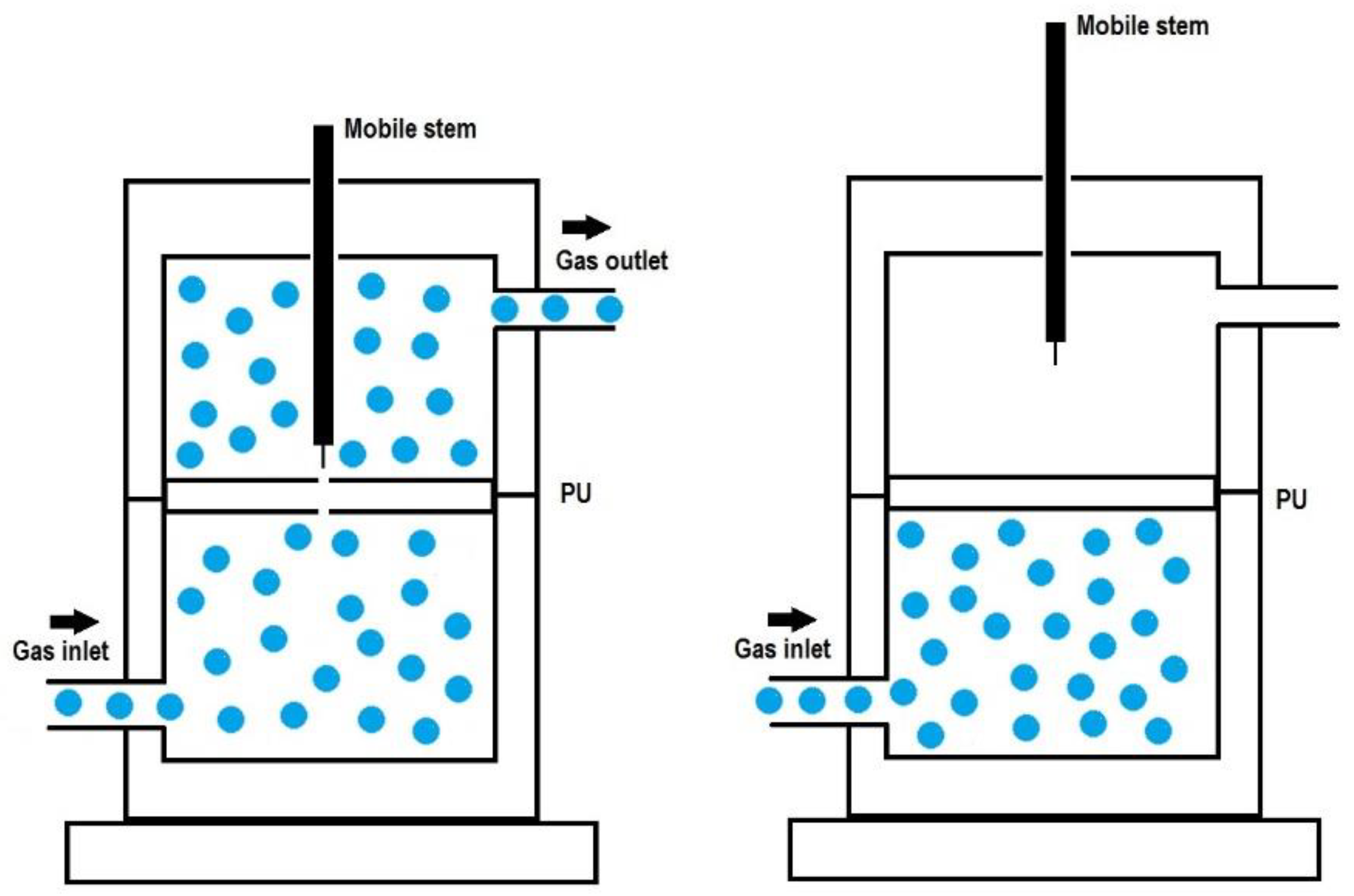
Figure 2.
ATR-IR spectra of PUs made with CD1000+CD2000 mixtures.
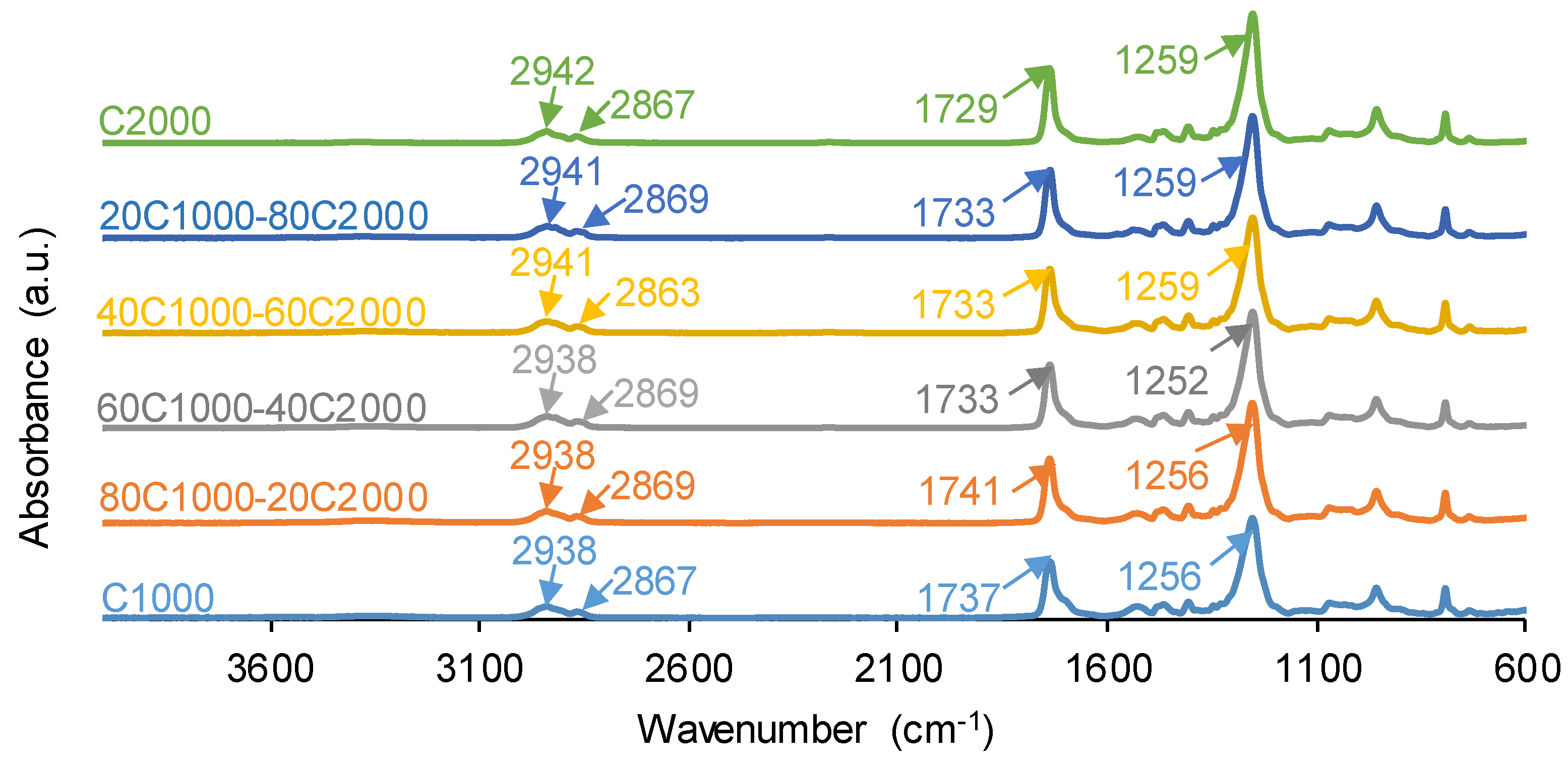
Figure 3.
Variation of IC=O/IOC(O)O ratios of PUs made with CD1000+CD2000 mixtures as a function of their CD2000 polyol content.
Figure 3.
Variation of IC=O/IOC(O)O ratios of PUs made with CD1000+CD2000 mixtures as a function of their CD2000 polyol content.
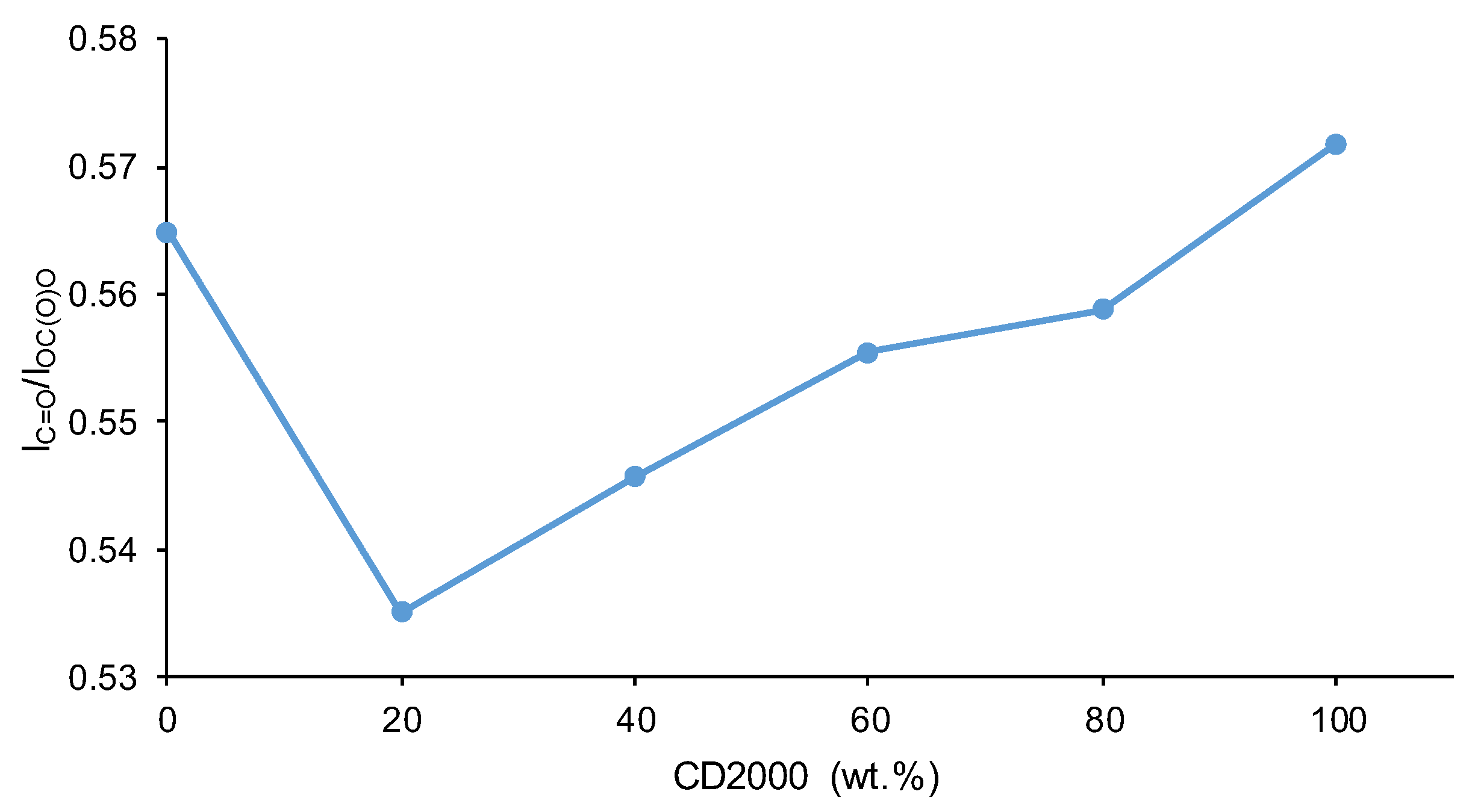
Figure 4.
Curve fitting of the carbonyl stretching region of the ATR-IR spectra of some PUs made with CD1000+CD2000 mixtures.
Figure 4.
Curve fitting of the carbonyl stretching region of the ATR-IR spectra of some PUs made with CD1000+CD2000 mixtures.
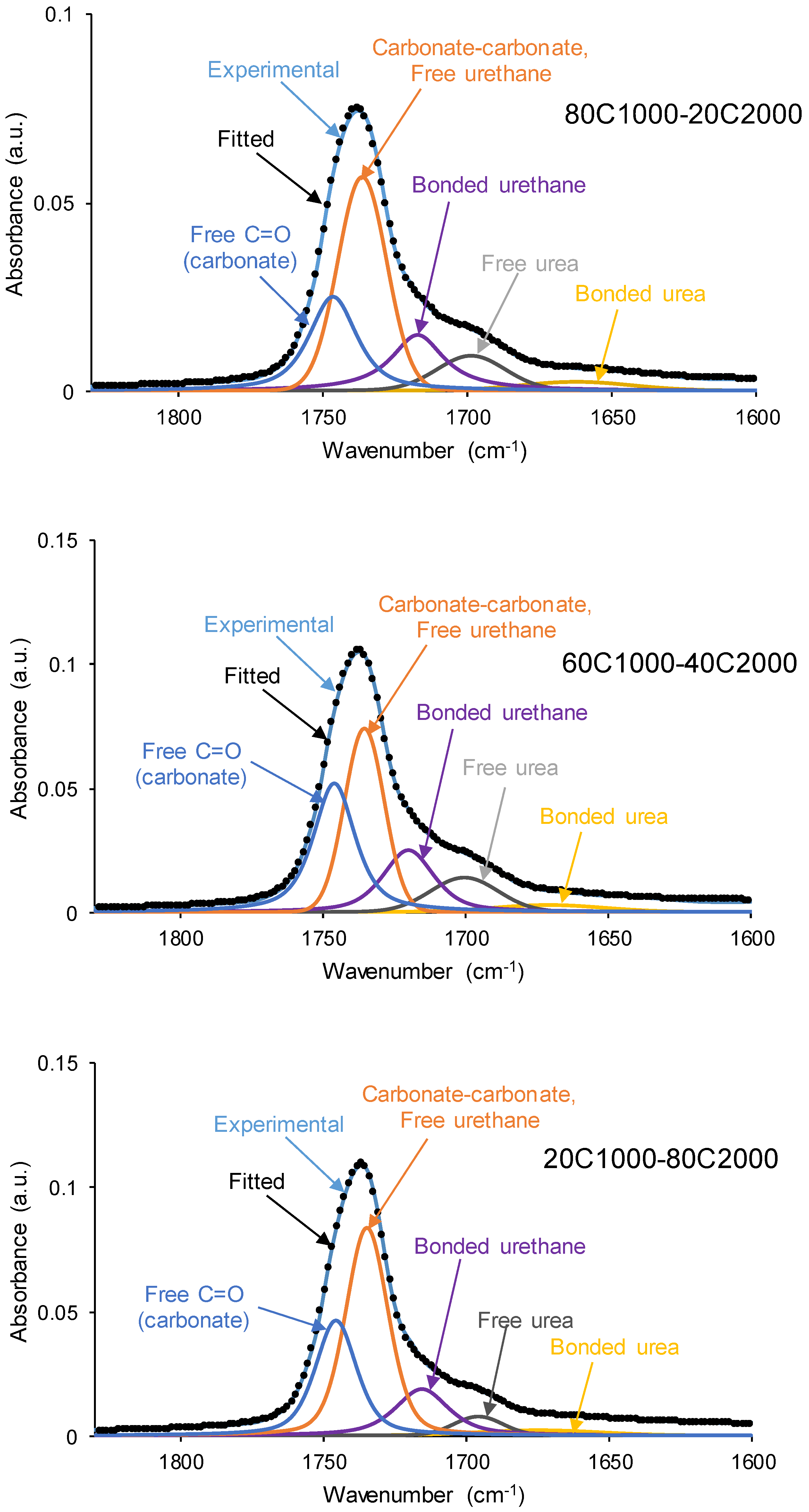
Figure 5.
X-ray diffractograms of PUs made with CD1000+CD2000 mixtures.
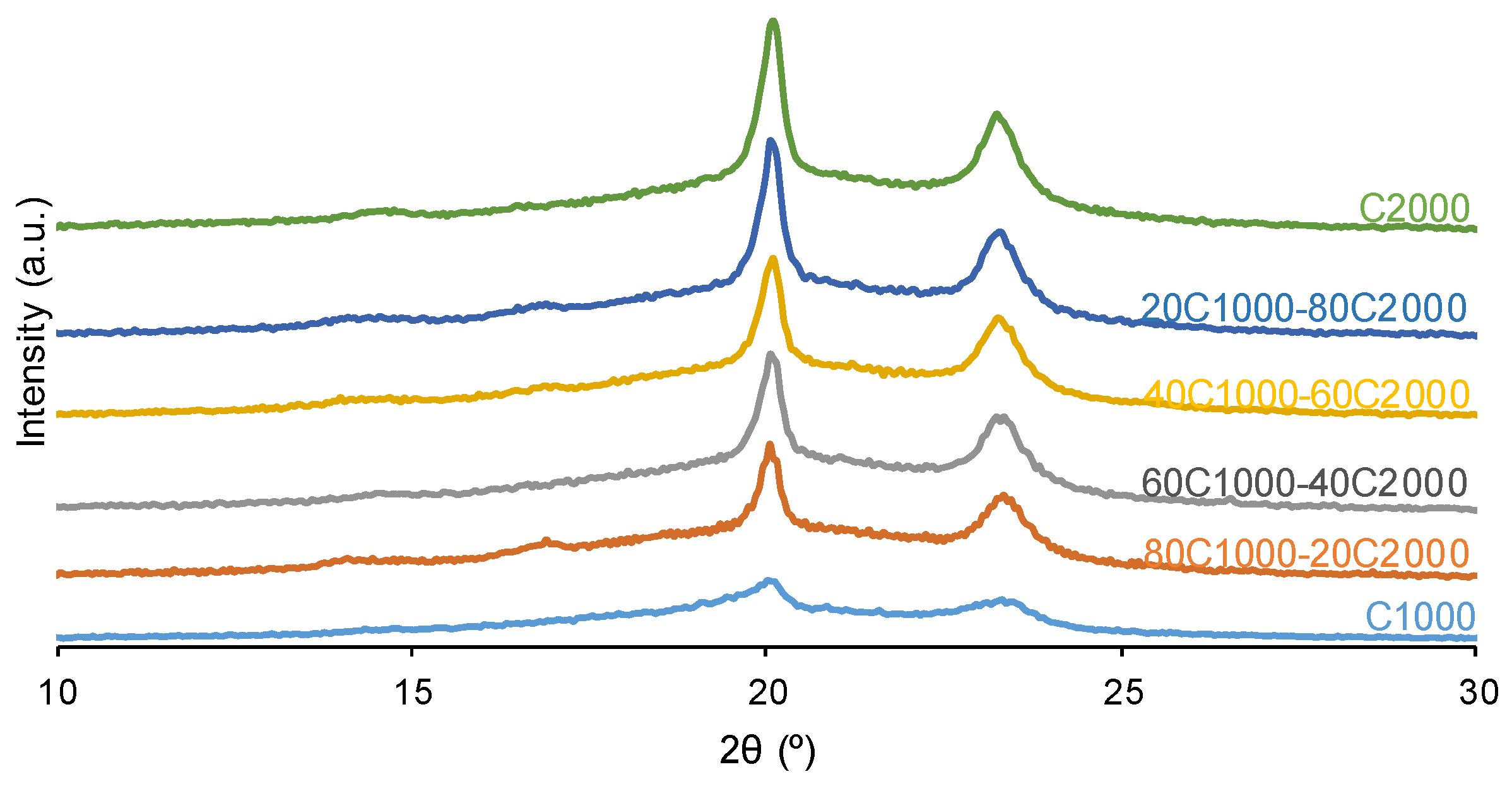
Figure 6.
Variation of the intensities of peaks at different 2θ values of PUs made with CD1000+CD2000 mixtures as a function of their CD2000 polyol content. X-ray diffractograms.
Figure 6.
Variation of the intensities of peaks at different 2θ values of PUs made with CD1000+CD2000 mixtures as a function of their CD2000 polyol content. X-ray diffractograms.
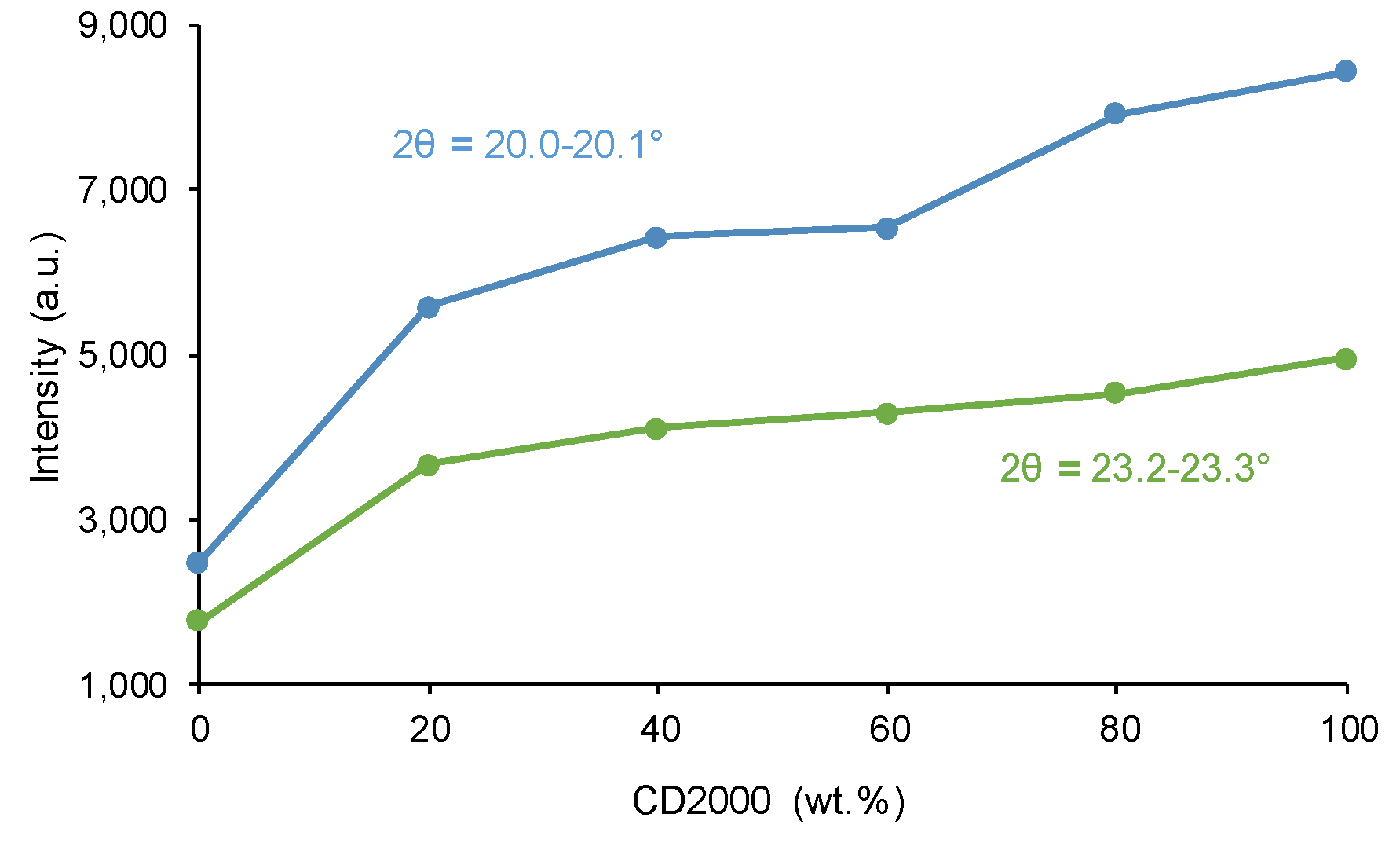
Figure 7.
DSC curves of PUs made with CD1000+CD2000 mixtures. First heating run.
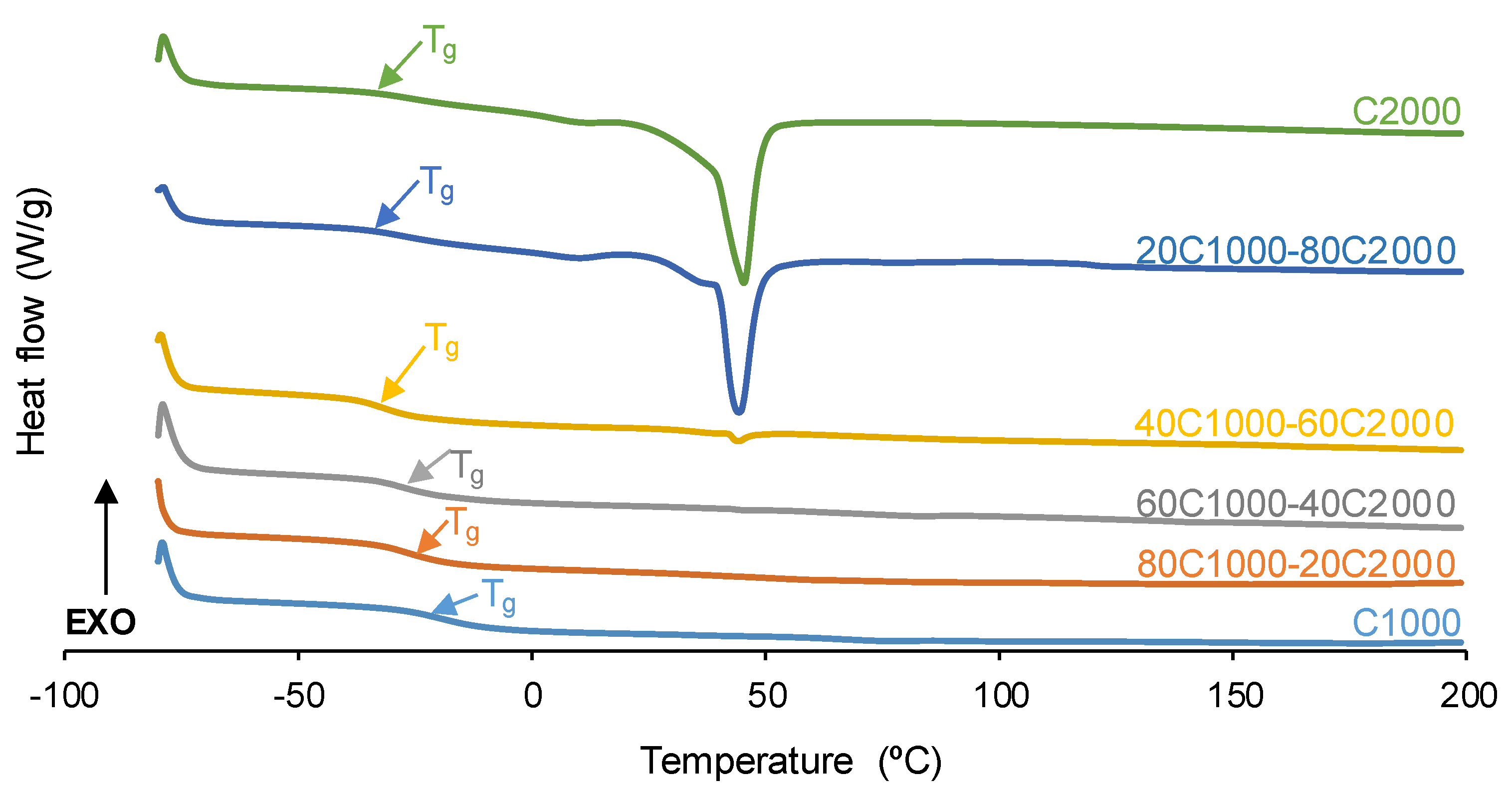
Figure 8.
TGA curves of PUs made with CD1000+CD2000 mixtures.
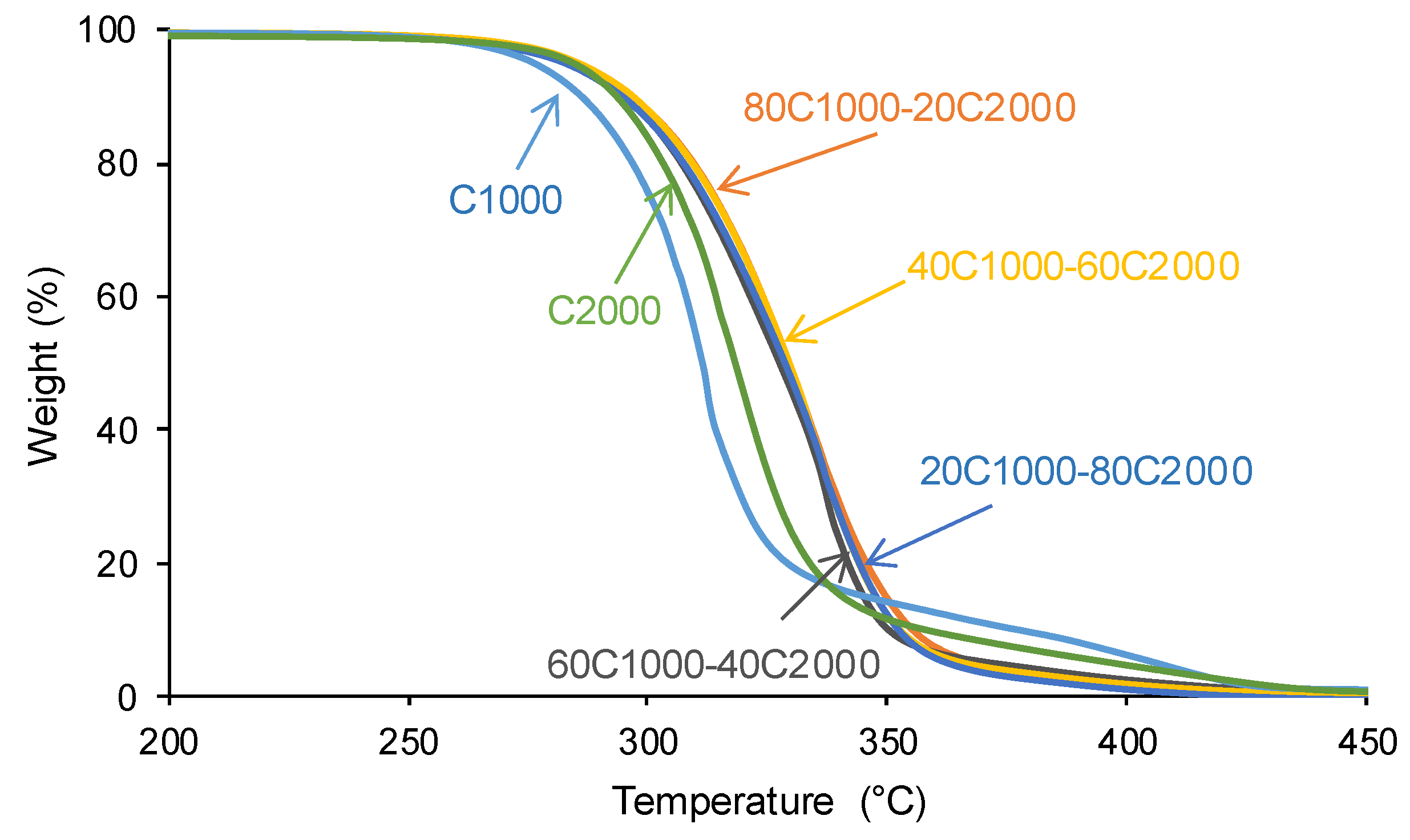
Figure 9.
Derivatives of the TGA curves of PUs made with CD1000+CD2000 mixtures. TGA experiments.
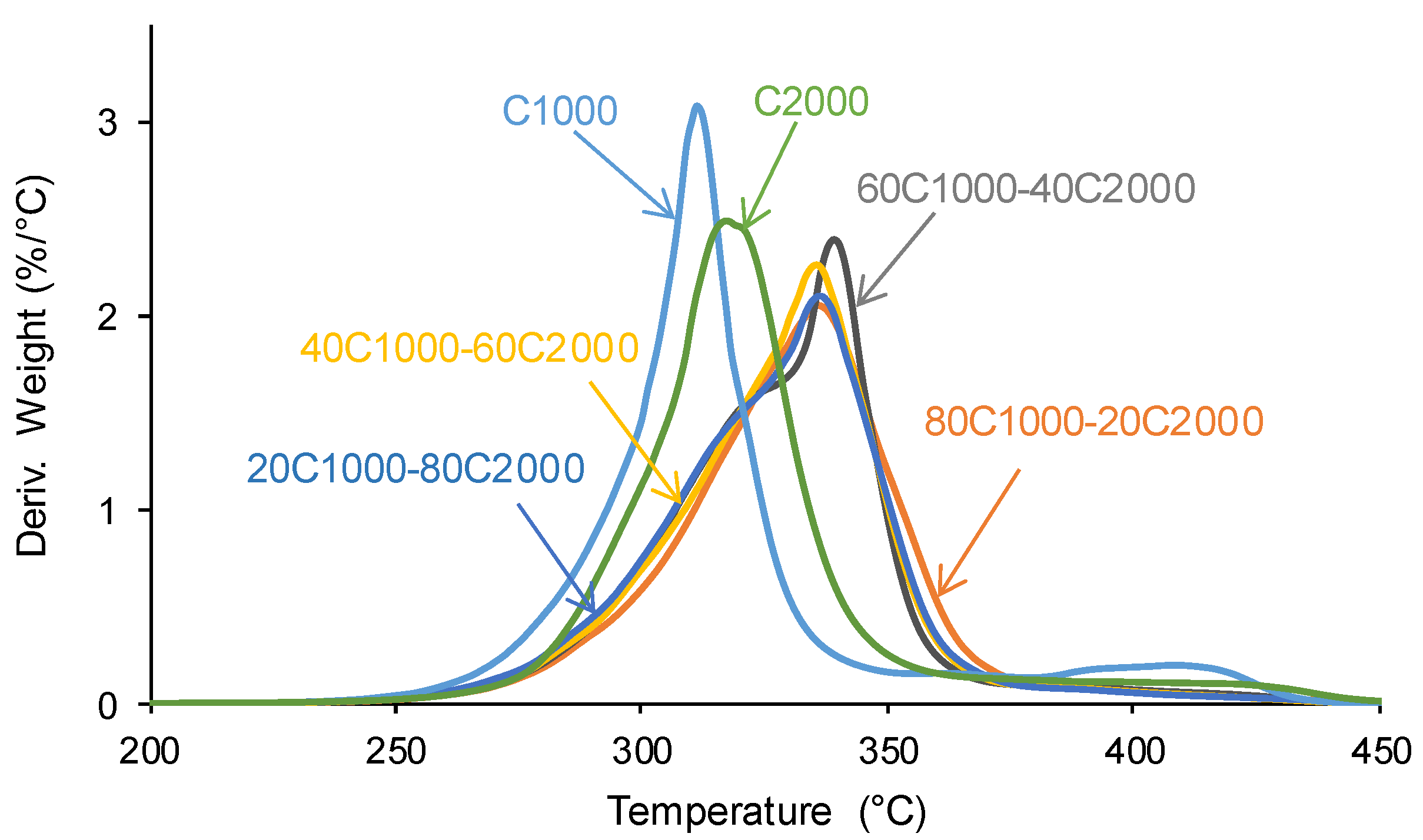
Figure 10.
Variation of the storage (E´) moduli as a function of the temperature for PUs made with CD1000+CD2000 mixtures. DMA experiments.
Figure 10.
Variation of the storage (E´) moduli as a function of the temperature for PUs made with CD1000+CD2000 mixtures. DMA experiments.
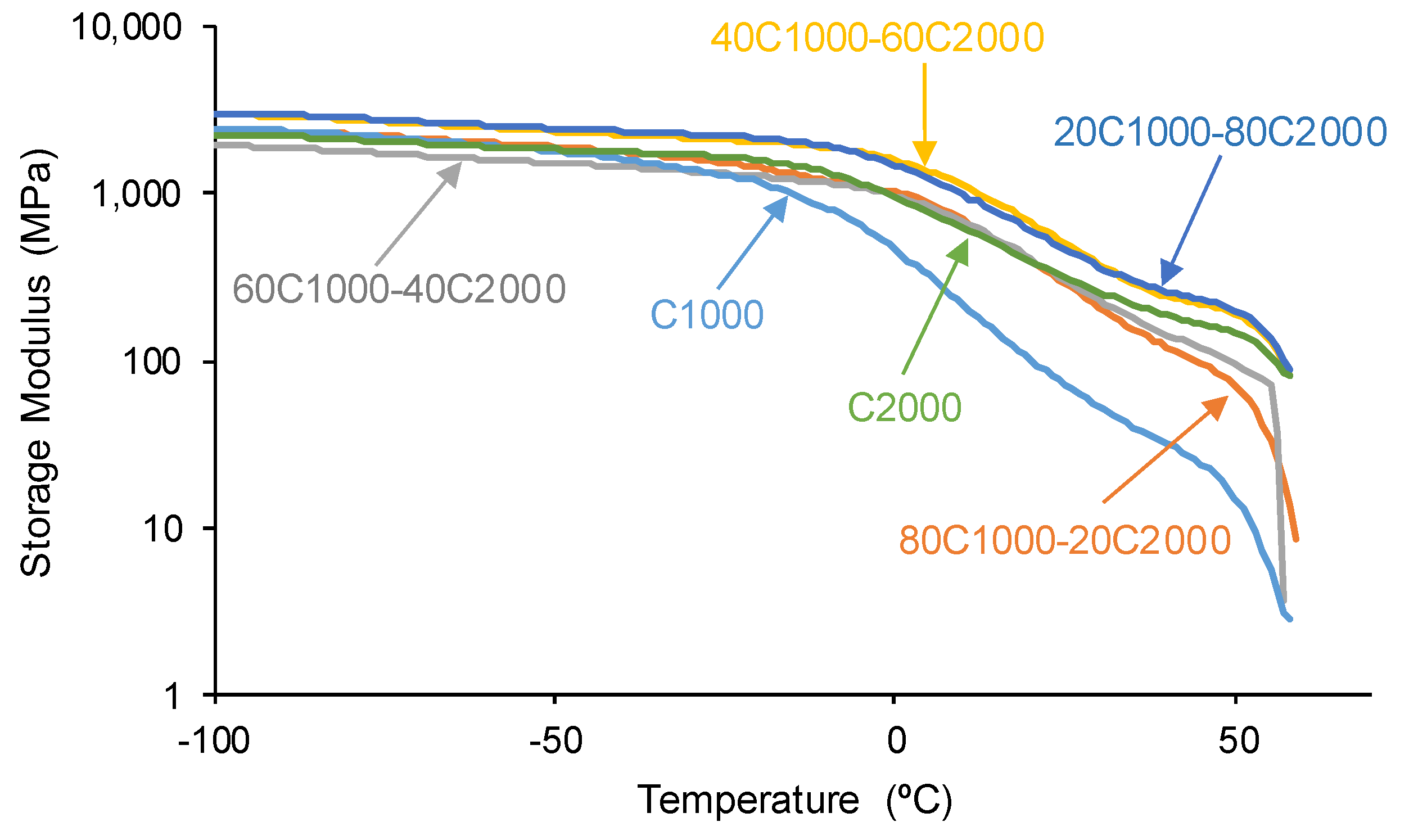
Figure 11.
Variation of tan delta as a function of temperature for PUs made with CD1000+CD2000 mixtures. DMA experiments.
Figure 11.
Variation of tan delta as a function of temperature for PUs made with CD1000+CD2000 mixtures. DMA experiments.
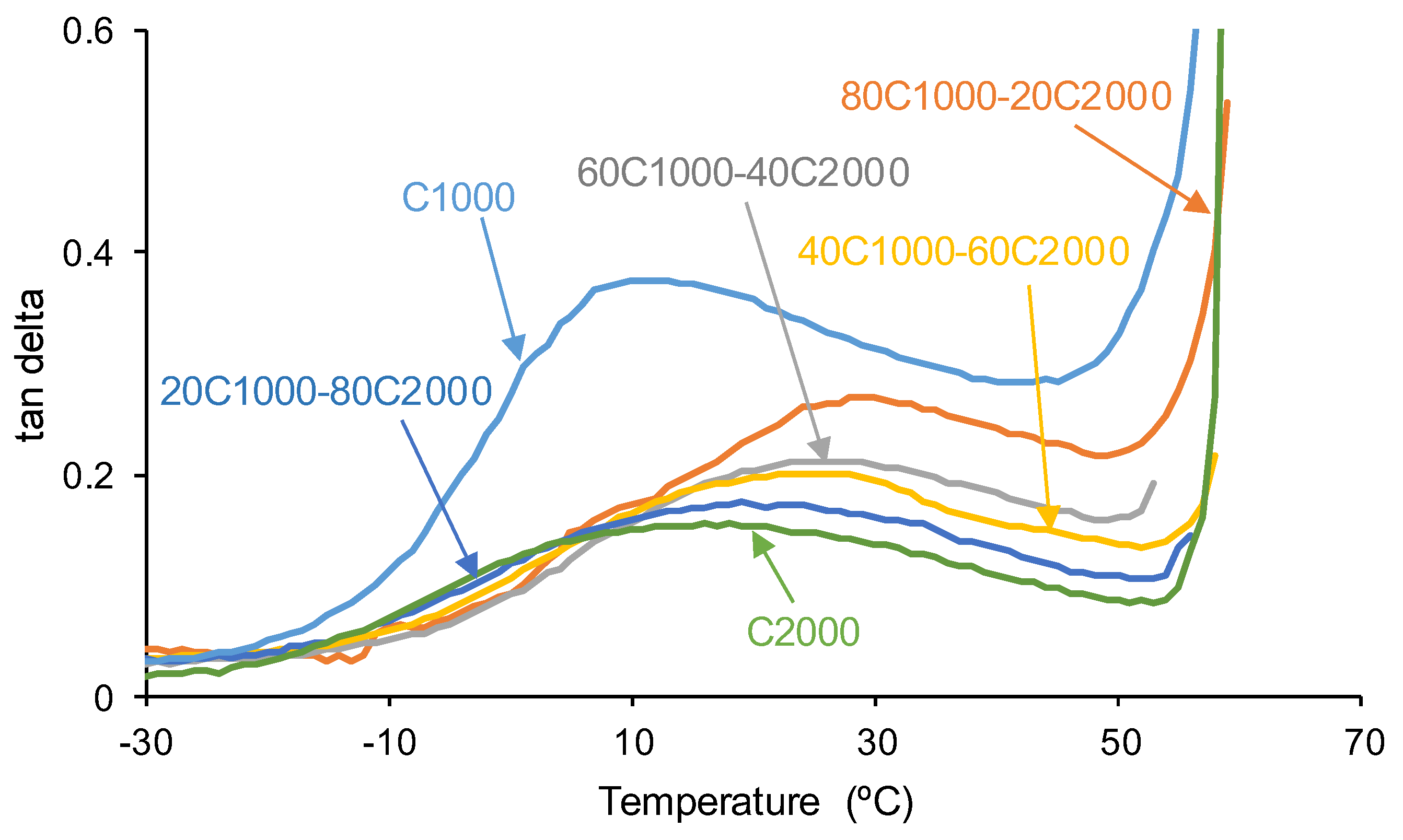
Figure 12.
Stress-strain curves of PUs made with CD1000+CD2000 mixtures.
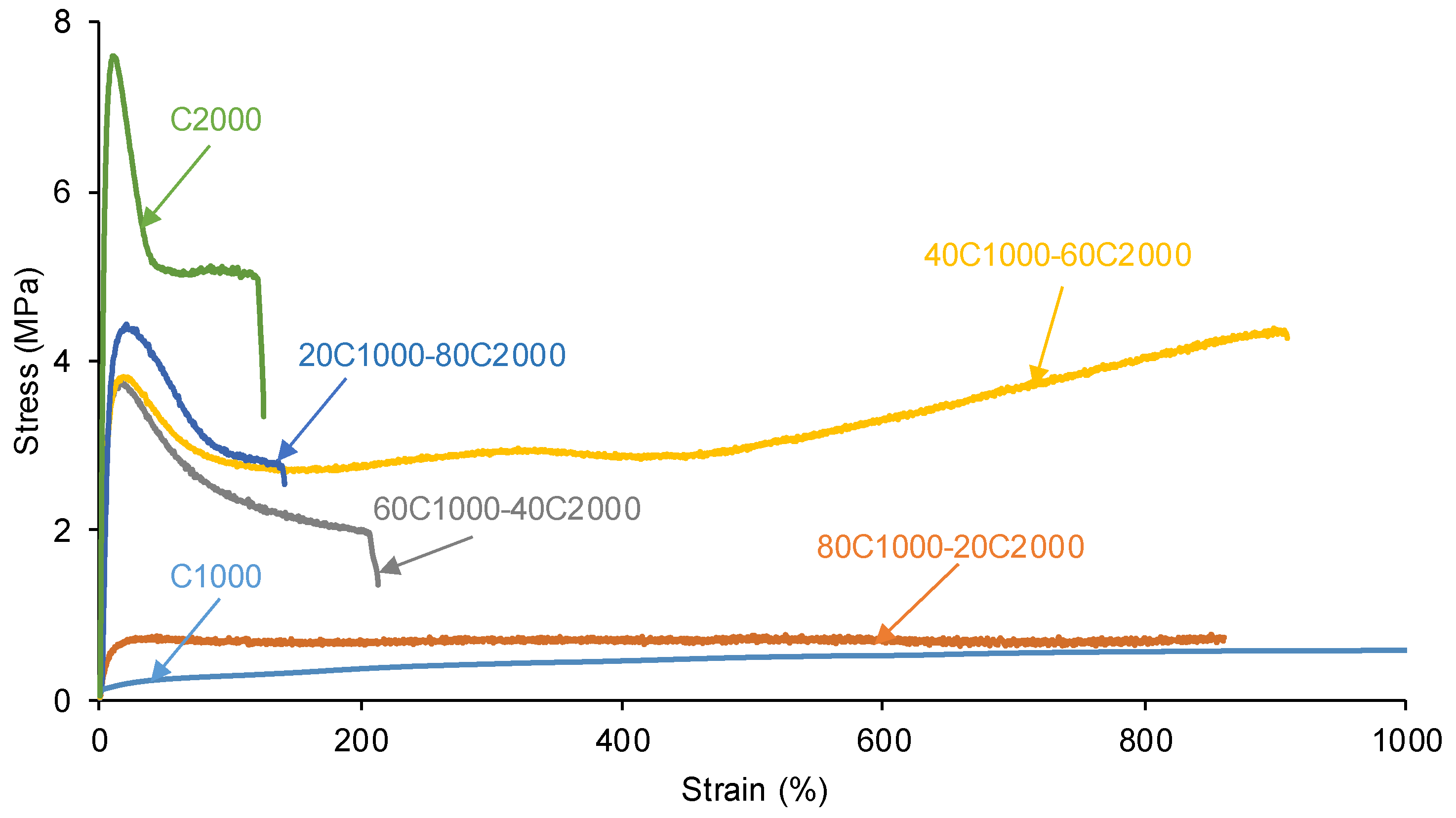
Figure 13.
Kinetics of self-healing at 20 °C of PUs made with CD1000+CD2000 mixtures.
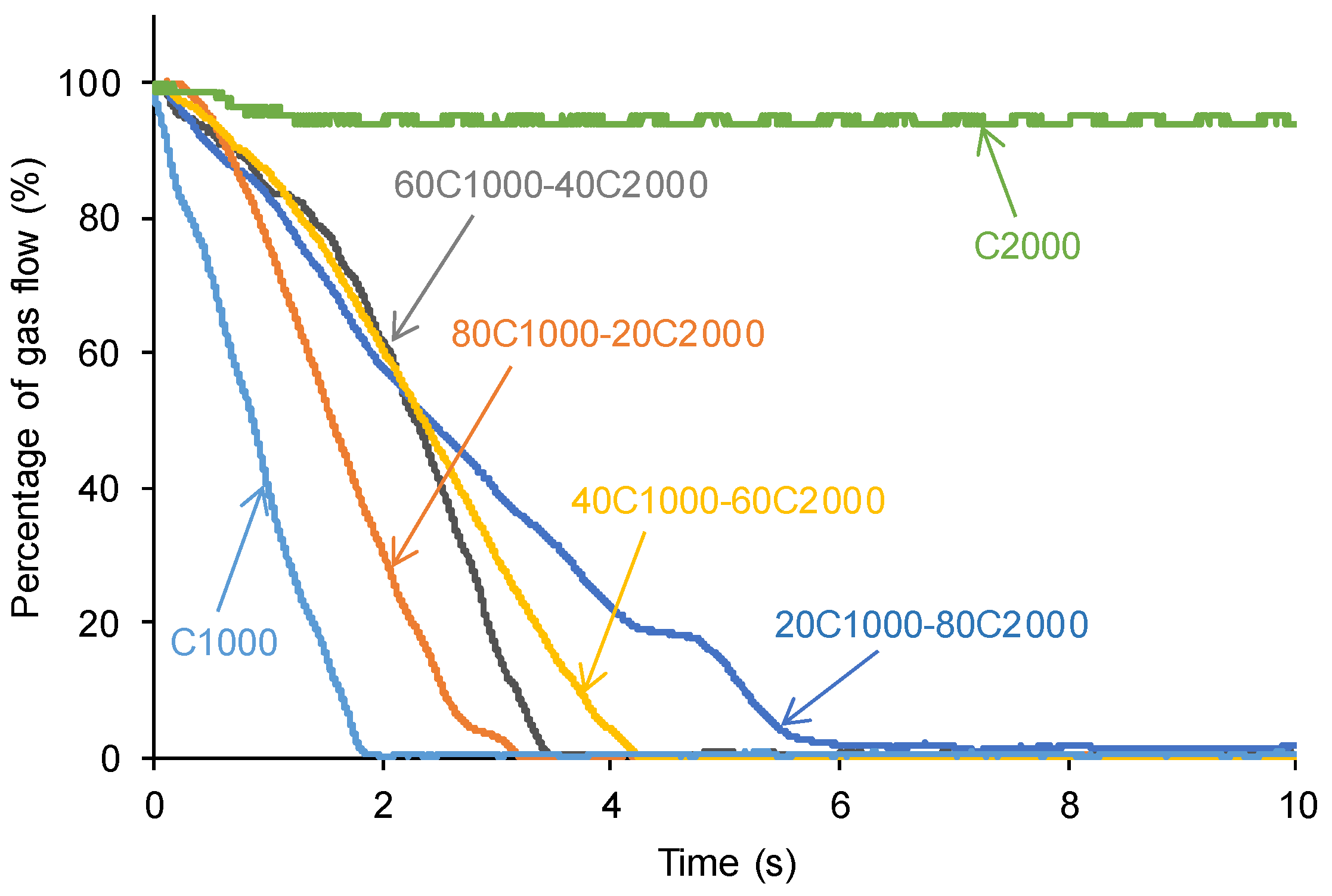
Figure 14.
Variation of the self-healing time at 20 °C of PUs made with CD1000+CD2000 mixtures as a function of their CD2000 polyol content.
Figure 14.
Variation of the self-healing time at 20 °C of PUs made with CD1000+CD2000 mixtures as a function of their CD2000 polyol content.
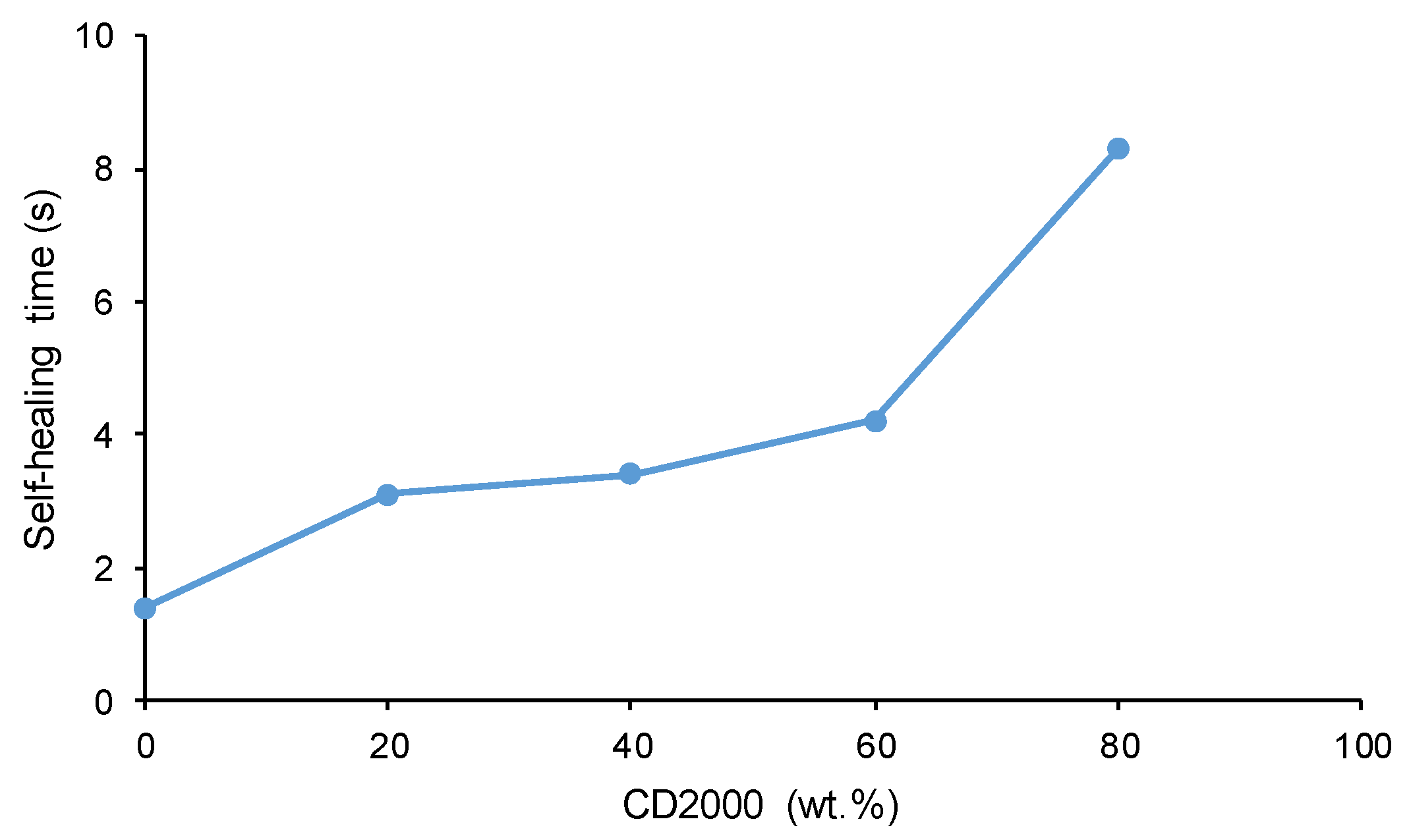
Figure 15.
Scheme of the interactions between polycarbonate soft segments of different molecular weights in 60C1000-40C2000.
Figure 15.
Scheme of the interactions between polycarbonate soft segments of different molecular weights in 60C1000-40C2000.
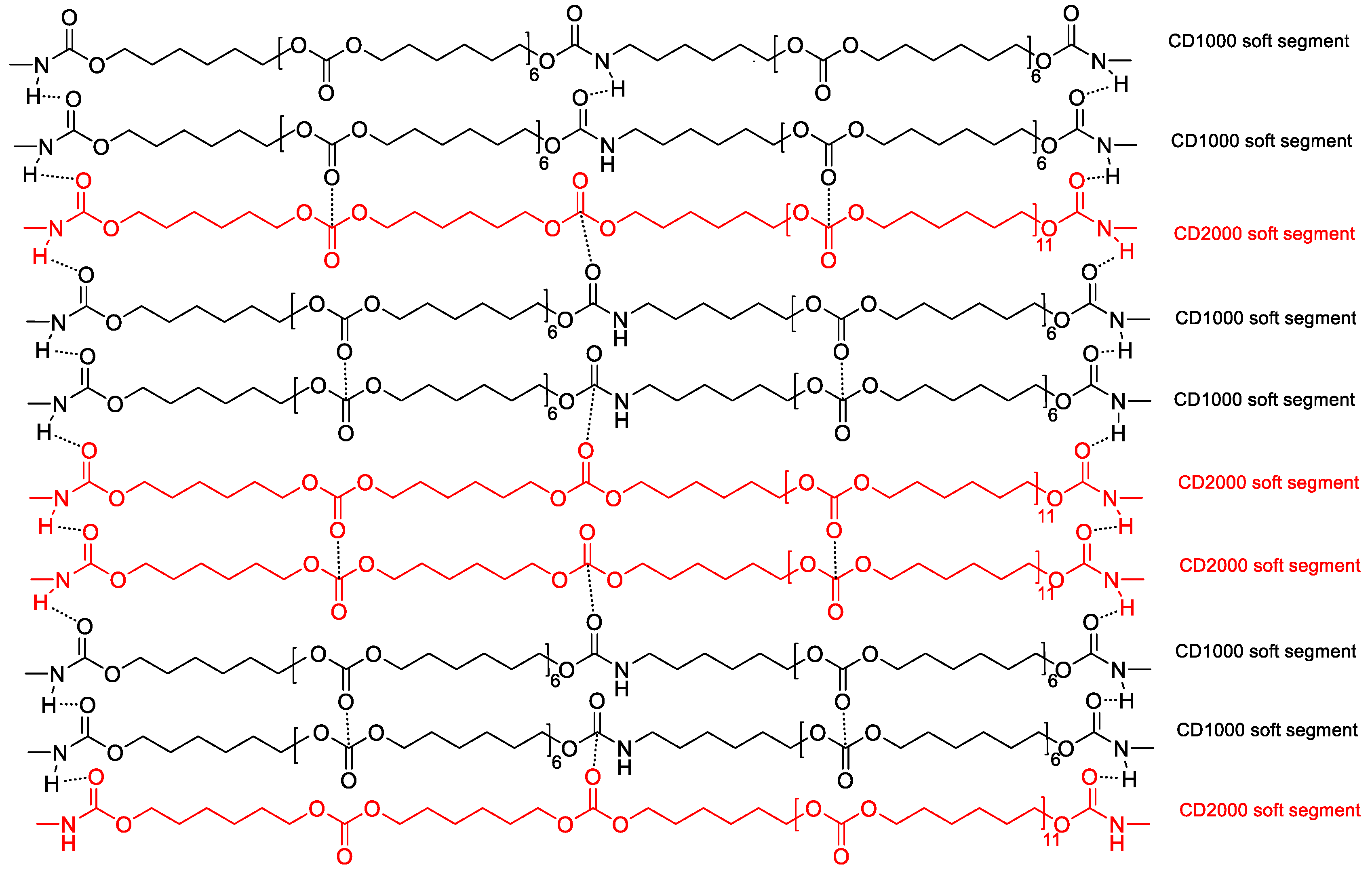
Figure 16.
Shear strength vs displacement curves of stainless steel/PU adhesive/stainless steel joints.
Figure 16.
Shear strength vs displacement curves of stainless steel/PU adhesive/stainless steel joints.
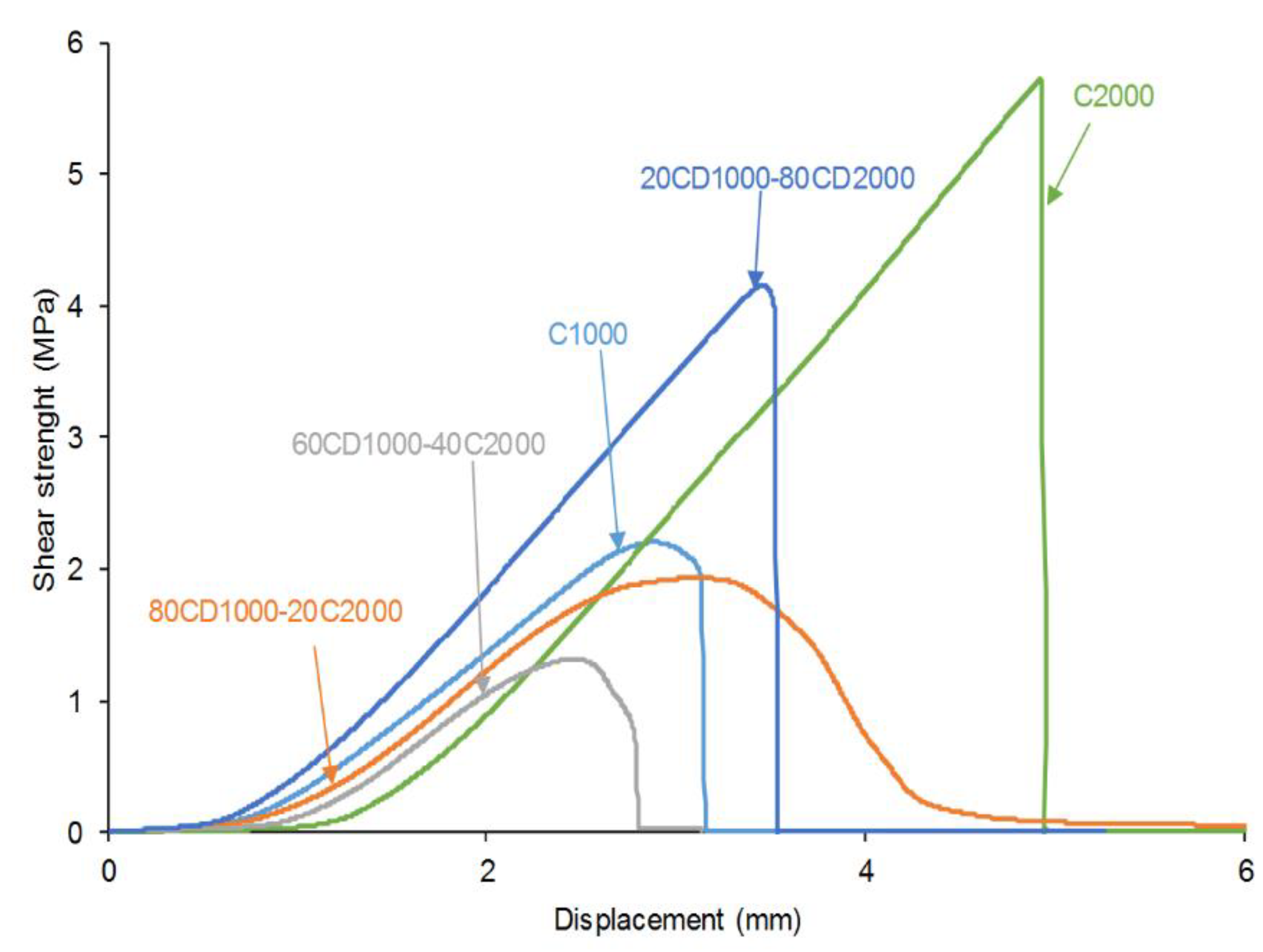
Figure 17.
Variation of the shear strength of stainless steel/PU adhesive/stainless steel joints as a function of CD2000 polyol content in the PU.
Figure 17.
Variation of the shear strength of stainless steel/PU adhesive/stainless steel joints as a function of CD2000 polyol content in the PU.
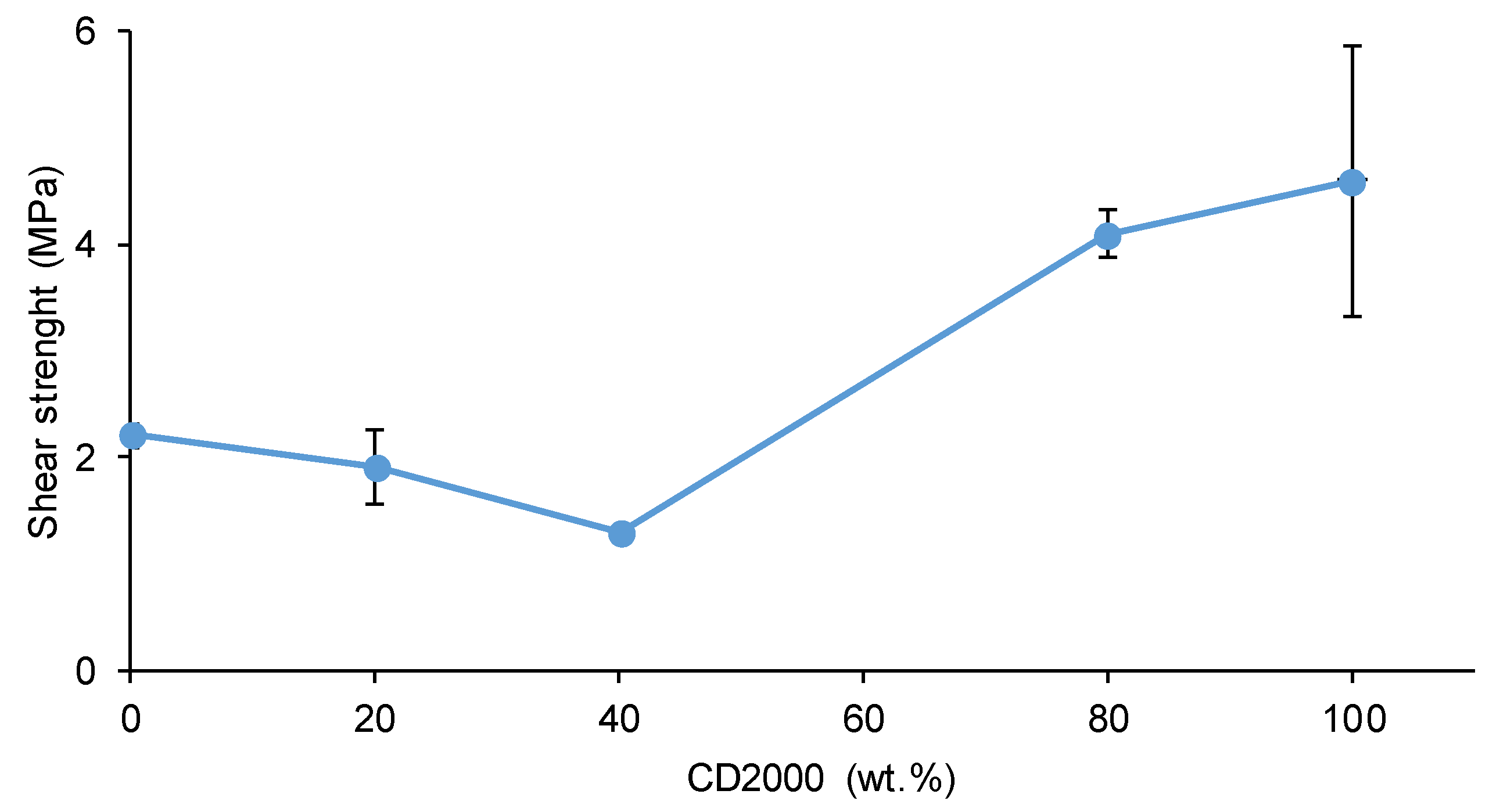
Table 1.
Hard segments (HS) contents of PUs made with CD1000+CD2000 mixtures.
| PU | Polyols composition* | HS (wt%) |
| C1000 | CD1000 | 22 |
| 80C1000-20C2000 | 80 % CD1000+20 % CD2000 | 21 |
| 60C1000-40C2000 | 60 % CD1000+40 % CD2000 | 19 |
| 40C1000-60C2000 | 40 % CD1000+60 % CD2000 | 17 |
| 20C1000-80C2000 | 20 % CD1000+80 % CD2000 | 15 |
| C2000 | CD2000 | 13 |
*CD1000 : Polycarbonate of 1,6-hexanediol – Mw : 1000 Da; CD2000 : Polycarbonate of 1,6-hexanediol – Mw : 2000 Da.
Table 2.
Percentages of different C=O species in the carbonyl stretching region of the ATR-IR spectra of PUs made with CD1000+CD2000 mixtures.
Table 2.
Percentages of different C=O species in the carbonyl stretching region of the ATR-IR spectra of PUs made with CD1000+CD2000 mixtures.
| Wavenumber (cm-1) | Percentage (%) | Assignment | |||||
| C1000 | 80C1000-20C2000 | 60C1000-40C2000 | 40C1000-60C2000 | 20C1000-80C2000 | C2000 | ||
| 1654-1664 | 9 | 4 | 4 | 3 | 3 | 3 | Bonded urea |
| 1695-1697 | 15 | 10 | 11 | 12 | 4 | 12 | Free urea |
| 1713-1725 | 14 | 18 | 18 | 15 | 16 | 11 | Bonded urethane |
| 1733-1735 | 38 | 43 | 34 | 40 | 48 | 40 | Carbonate-carbonate, free urethane |
| 1743-1745 | 24 | 24 | 33 | 29 | 29 | 34 | Free C=O (carbonate) |
Table 3.
Thermal events obtained from the DSC curves of PUs made with CD1000+CD2000 mixtures. First heating run.
Table 3.
Thermal events obtained from the DSC curves of PUs made with CD1000+CD2000 mixtures. First heating run.
| PU | Tg (°C) | ∆cp (J/G°C) | Tc (°C) | ΔHc (J/g) | Tm (°C) | ΔHm (J/g) |
| C1000 | -21 | 0.29 | - | - | - | - |
| 80C1000-20C2000 | -26 | 0.40 | - | - | - | - |
| 60C1000-40C2000 | -27 | 0.35 | - | - | - | - |
| 40C1000-60C2000 | -29 | 0.35 | - | - | 44 | 1 |
| 20C1000-80C2000 | -29 | 0.22 | 21 | 2 | 44 | 14 |
| C2000 | -29 | 0.20 | 20 | 1 | 45 | 23 |
Table 4.
Thermal events were obtained from the DSC curves of PUs made with CD1000+CD2000 mixtures. Second heating run.
Table 4.
Thermal events were obtained from the DSC curves of PUs made with CD1000+CD2000 mixtures. Second heating run.
| PU | Tss (°C) | Ths (°C) |
| C1000 | -18 | 236 |
| 80C1000-20C2000 | -23 | 231 |
| 60C1000-40C2000 | -27 | 232 |
| 40C1000-60C2000 | -31 | 235 |
| 20C1000-80C2000 | -32 | 238 |
| C2000 | -36 | 240 |
Disclaimer/Publisher’s Note: The statements, opinions and data contained in all publications are solely those of the individual author(s) and contributor(s) and not of MDPI and/or the editor(s). MDPI and/or the editor(s) disclaim responsibility for any injury to people or property resulting from any ideas, methods, instructions or products referred to in the content. |
© 2024 by the authors. Licensee MDPI, Basel, Switzerland. This article is an open access article distributed under the terms and conditions of the Creative Commons Attribution (CC BY) license (https://creativecommons.org/licenses/by/4.0/).
Copyright: This open access article is published under a Creative Commons CC BY 4.0 license, which permit the free download, distribution, and reuse, provided that the author and preprint are cited in any reuse.


