Preprint
Review

This version is not peer-reviewed.

The Role of Pharmacometrics in Advancing the Therapies for Autoimmune Diseases

A peer-reviewed article of this preprint also exists.

Submitted:

04 October 2024

Posted:

08 October 2024

You are already at the latest version

Abstract

Autoimmune diseases (AIDs) are a group of disorders, in which the immune system attacks the body own tissues leading to chronic inflammation and organ damage. These diseases are difficult to treat due to variability in drug PK among individuals, patient responses to treatment, and the side effects of long-term immunosuppressive therapies. In recent years, pharmacometrics has emerged as a critical tool in Drug Discovery and Development (DDD) and precision medicine. The aim of this review is to explore the diverse roles that pharmacometrics has played in addressing the challenges associated with DDD and personalized therapies in the treatment of AIDs. Methods: The review synthesizes research from past two decades on pharmacometric methodologies, including Physiologically Based Pharmacokinetic (PBPK) modeling, Pharmaco-kinetic/Pharmacodynamic (PK/PD) modeling, Disease Progression (DisP) modeling, population modeling, and Quantitative Systems Pharmacology (QSP). The incorporation of Artificial Intelli-gence (AI) and Machine Learning (ML) into pharmacometrics is also discussed. Results: Pharmacometrics has demonstrated significant potential in optimizing dosing regimens, improving drug safety, and predicting patient-specific responses in AIDs. PBPK and PK/PD models have been instrumental in personalizing treatments, while DisP and QSP models provide insights into disease evolution and pathophysiological mechanisms in AIDs. AI/ML implementation has further enhanced precision of these models. Conclusions: Pharmacometrics plays a crucial role in bridging preclinical findings and clinical applications, driving more personalized and effective treatments for AIDs. Its integration into DDD and translational science in combination with AI and ML algorithms holds promise for advancing therapeutic strategies and improving autoimmune patient outcomes.

Keywords: 
;  ;  ;  ;  ;  ;  ;  

1. Introduction

Autoimmune diseases (AIDs) encompass a broad spectrum of disorders characterized by the aberrant attack of the immune system on own body tissues. These diseases, for instance rheumatoid arthritis (RA), multiple sclerosis (MS), systemic lupus erythematosus (SLE), Sjögren’s syndrome (SjS), Crohn’s Disease (CD), Systemic Sclerosis (SS), and autoimmune liver diseases, such as autoimmune hepatitis (AIH), Primary Sclerosing Cholangitis (PSC), and Primary Biliary Cholangitis (PBC), present unique challenges in treatment due to their complex and often poorly understood pathophysiology, limited response to existing treatments, and numerous side effects related to the immunosuppressive medications [1]. The variability in disease presentation and progression, combined with significant differences in how individual patients respond to therapies, complicates the development of universally effective treatments [2]. Furthermore, the drugs used to manage these conditions often come with significant side effects and long-term safety concerns, particularly because many of these treatments involve immunosuppression, which can increase the risk of infections and malignancies. The unpredictable nature of AIDs adds another layer of difficulty, making it challenging to assess the long-term efficacy of treatments, while the high costs and significant risks associated with drug research and development in this area further complicate efforts to bring new therapies to market. One of the critical challenges in treating some AIDs is a limited number of specific biomarkers that can accurately assess disease activity, progression, and predict patient response to treatments [3]. This makes it difficult to tailor treatments to individual patients, often leading to suboptimal dosing, increased risk of flares and treatment failures or, on the other hand, creating the potential for adverse drug reactions. Moreover, the complexity of treatment regimens for autoimmune patients raises the risk of drug-drug interactions, particularly as these patients often require long-term and multi-drug therapy to manage their condition [4]. The identification and measurement of appropriate clinical endpoints for AIDs can also be challenging, further complicating efforts to evaluate the effectiveness of new therapies. The access to innovative treatments involving biologic drugs, due to high costs, is substantially limited in low- and middle-income countries that additionally negatively impacts the outcomes of treatments of AIDs in underdeveloped and developing nations [5]. These challenges highlight the need for innovative approaches that can enhance our understanding of AIDs, improve the efficacy of treatment regimens, and ultimately lead to the development of safer, personalized, and more accessible and effective therapeutic options.
Pharmacometrics offers a potential solution to address these challenges by providing a set of quantitative tools that can facilitate new drug discovery and development and optimize dosing strategies for AIDs. Techniques, such as Physiologically Based Pharmacokinetic (PBPK) modeling, Pharmacokinetic/Pharmacodynamic (PK/PD) modeling, Disease Progression (DisP) modeling, Quantitative Systems Pharmacology (QSP), Boolean networks, Population Pharmacokinetics (popPK), and Population Pharmacokinetics/Pharmacodynamics (popPK/PD) modeling have shown significant potential in this regard. By providing insights into the PKs of drugs in different patient subgroups, population models can help to optimize dosing regimens, ensuring that each patient receives the most effective and safest possible dose. PK/PD models provide a detailed understanding of the relationship between drug concentrations at the site of action and their pharmacological effects. PopPK/PD models are used to quantify inter-individual variability in drug response, which is a common challenge in autoimmune therapies. By incorporating patient-specific factors into these models, referred to as covariates, it is possible to predict how different patients will respond to a given drug, allowing for more personalized treatment strategies. This is particularly important in AIDs, where the therapeutic window of immunosuppressive drugs can be narrow, and the consequences of under- or overdosing can be severe. DisP models are based on the assumption that diseases follow quantifiable patterns over time, which can be mathematically characterized. In the context of AIDs, these models are useful in predicting disease evolution and assessing the impact of various therapeutic interventions. DisP and QSP models can help to identify critical disease biomarkers and enhance our understanding of long-term treatment effects. These models are particularly useful in diseases, such as MS, where the course of the disease can be highly variable and difficult to predict. QSP models take a holistic approach by integrating drug action with disease biology, enabling a deeper understanding of the complex pathophysiological mechanisms underlying autoimmune conditions. QSP models can simulate the effects of medications on various biological pathways, helping to identify novel therapeutic targets and predict the outcomes of different treatment strategies. By providing a framework for integrating data from multiple sources, QSP and Boolean network models can help to unravel the signaling pathways that drive disease progression, leading to the development of more effective and targeted therapies. The application of these approaches in clinical settings marks a significant shift towards more personalized, predictive, and precise treatment strategies for AIDs, leading to a more rational use of medications and potentially reducing costs associated with treatment failures or adverse reactions. Finally, the use of pharmacometrics in drug discovery and development can help to substantially reduce the costs and risks associated with bringing new therapies to market, by providing more accurate and efficient means of assessing the safety and efficacy of new drugs. In addition to the traditional pharmacometric approaches, the incorporation of Artificial Intelligence (AI) and Machine Learning (ML) into pharmacometrics shows significant potential for further refining these models and enhancing their predictive performance. AI and ML techniques are capable of handling large datasets to identify patterns and relationships that may not be apparent using traditional statistical methods. By integrating AI and ML with pharmacometrics tools, it is possible to create more robust and accurate models that can better predict patient outcomes and guide the development of new therapies.
The aim of this review article is to explore the diverse roles that pharmacometrics has played in recent 20 years in addressing the challenges associated with discovery and development of new drugs for AIDs and delivering personalized therapies for patients with these diseases. This review seeks to highlight the significant strides made in enhancing our understanding of AIDs and the therapeutic interventions used to manage them. It aims to provide a comprehensive synthesis of the current state of research, showcasing how pharmacometrics techniques contribute to the optimization and personalization of treatment regimens and the development of new treatment strategies. This includes an examination of how these methods address patient-specific variables and disease heterogeneity, improve the safety and efficacy of drug dosing, and ultimately guide the development of more effective and safer therapeutic options. Additionally, the review will touch upon the emerging role of AI and ML in complementing pharmacometric approaches, providing insights into how their integration can further refine the outcomes of modeling in AID treatment. Through this review, we aim to present a detailed perspective on the transformative impact of pharmacometrics on the treatment of AIDs, offering insights into future directions and potential advancements in this area.

2. Overview of Autoimmune Diseases

Humans possess immunological tolerance acquired throughout life, which enables the immune system to distinguish between self and non-self antigens. However, dysregulation of this mechanism can result in autoimmunity, where the immune system erroneously recognizes self-proteins as foreign, leading to an immune response against the body’s own tissues. The process of autoimmunization can be triggered by various factors, though its precise etiology remains unknown. It may stem from incomplete elimination of self-reactive lymphocytes in the thymus, during clonal anergy, clonal deletion, or at the stage of secondary selection. It is important to note that the presence of autoreactive T and B lymphocytes in the body does not necessarily indicate a pathological state or the development of AID. These cells can be present in healthy individuals and play a role in maintaining homeostasis by removing degraded self-cells. The genetic basis of autoimmunity includes certain rare monogenic autoimmune disorders, such as autoimmune polyendocrinopathy syndrome type 1 (APS1), or IL-2Rα deficiency. Although, the majority of AIDs are not hereditary, some genetic factors may predispose individuals to the development of autoimmunity. Environmental factors also have a significant impact on the onset of AID; these include heavy metals, tobacco smoke, medications, food components, and infectious agents. Regarding the latter, molecular mimicry may occur, where the antigens of pathogens closely resemble self-antigens, leading the immune system to target the body’s own tissues instead of the pathogens [6,7].
Statistics indicate that one in ten individuals suffers from AID [8]. These conditions encompass a broad spectrum of disorders that can be either organ-specific or non-specific (Figure 1). Diseases with disseminated foci throughout the body include SLE, RA, SS, SjS and MG. SLE is a connective tissue disorder characterized by a diverse clinical course, affecting multiple organs. A study conducted in 2022 estimated that the global incidence rate was 5.14 per 100,000 person-years. Diagnosis of the disease requires that the patient meets the 2019 EULAR/ACR classification criteria, which include, among others, the antinuclear antibody (ANA) test, the anti-dsDNA test, and the occurrence of symptoms [9]. RA is one of the most commonly observed chronic AIDs, primarily affecting the joints. This condition often causes pain, stiffness, limited mobility, and joint swelling. It can also lead to the development of rheumatoid nodules, lung involvement, or vasculitis, and it may accelerate the progression of atherosclerosis [10]. The diagnosis of RA is conducted in patients who report joint pain and swelling, with laboratory results indicating abnormalities such as elevated CRP levels. The 2010 EULAR/ACR classification criteria are used for diagnosis, taking into account the number of affected joints, duration of symptoms, serological changes, and CRP levels [10]. SjS is a systemic disease characterized by dysfunction of the lacrimal and salivary glands, leading to dryness of the eyes and mouth. It can also manifest with a variety of symptoms affecting nearly every organ, with the range and nature of these symptoms varying between patients [11]. According to a 2015 meta-analysis, the incidence of SjS is 6.92 per 1,000,000 person-years [12]. The disease is diagnosed based on the 2016 EULAR/ACR classification criteria in patients who have experienced dryness for more than three months. These criteria include tests for the presence of SjS-A/Ro antibodies [13]. SS is an autoimmune connective tissue disease characterized by progressive fibrosis of internal organs and skin. Patients often present with Raynaud’s phenomenon (vascular changes) and fatigue prior to the onset of full-blown disease. The diagnosis of SS is based on the 2013 EULAR/ACR classification criteria, which include the presence of anti-Scl-70 antibodies and the assessment of skin thickness [14].
Organ-specific AIDs are conditions in which the inflammatory process is limited to a specific area. These diseases encompass a diverse group of disorders that can affect organs such as the thyroid, pancreas, and the hematopoietic system. Examples of organ-specific autoimmune diseases include Hashimoto’s disease, Graves’ disease, type 1 diabetes, MS, and AIH. Some of the most common AIDs are thyroid disorders. Hashimoto’s disease is a chronic lymphocytic thyroiditis characterized by the production of antibodies against thyroglobulin and thyroid peroxidase. This disease primarily affects women and leads to progressive thyroid fibrosis, with some cases resulting in hypothyroidism. Patients with Hashimoto’s disease typically present with elevated TSH levels, normal or low thyroxine levels, dry, cold skin, bradycardia, facial swelling, and significant fatigue. Diagnostic evaluation may also include measuring anti-TPO antibody levels. The incidence of this disease is 350 per 100,000 women per year and 80 per 100,000 men per year [15]. The second thyroid-related disease is Graves’ disease. In this condition, B lymphocytes synthesize thyroid-stimulating immunoglobulins (TSI), leading to thyroid enlargement and increased synthesis of thyroid hormones. Symptoms of Graves’ disease may include goiter, heart palpitations, irritability, and excessive sweating. Biochemical tests typically show low TSH levels with elevated thyroxine and triiodothyronine levels. For more accurate diagnosis, measuring TRAb antibody levels is also recommended [16]. Type 1 diabetes is an AID characterized by the destruction of pancreatic β-cells. There is a genetic predisposition associated with the HLA system, which increases the risk of developing the disease [17]. According to data from the International Diabetes Federation, in 2021, 31 new cases of type 1 diabetes per 1000 children aged 0 to 19 years were diagnosed in Europe [18]. Children suspected of having this disease typically present with symptoms such as increased thirst, polyuria, drowsiness, and weight loss. The primary diagnostic parameter for type 1 diabetes is blood glucose concentration [17]. MS is a chronic inflammatory disease characterized by widespread demyelination of the brain and spinal cord. This can lead to symptoms, such as vision impairment, balance problems, weakness, and numbness in the limbs [19]. According to the Multiple Sclerosis Atlas, in 2020 the prevalence of the disease was 35.9 per 100,000 people [20]. The diagnosis of MS is based on the 2017 McDonald criteria, which allow for the assessment of the disease type based on the number of relapses and clinical symptoms [21].
AIDs most commonly affect young individuals, who require specialized testing, continuous pharmacological treatment, and regular care from a specialist to maintain an appropriate quality of life. Daily activities often necessitate support from family members. All these aspects are costly, and in some cases, access to them is limited, especially in low- and middle-income countries. There is a constant need for new therapies because many patients do not respond to the available medications. For instance, in Poland, a middle-income EU country with a population exceeding 37.6 million people, treatment for most AIDs involves the use of non-steroidal anti-inflammatory drugs (NSAIDs), corticosteroids, and immunosuppressants. However, the use of biologic drugs requires meeting specific criteria and enrolling in a drug program. According to the report titled “Valuation of Benefits in Drug Programs as a Key Element in Developing Strategies to Increase Access to Innovative Therapies in Autoimmune Diseases,” in 2018 the National Health Fund (NFZ) allocated over 63.3 million EUR and more than 16 million EUR for drug reimbursements in two drug programs for MS. Additionally, more than 6.3 million EUR and over 0.9 million EUR were spent on healthcare services. For RA, in this country over 29 million EUR was spent on drug reimbursements in the drug program in 2018, while 2.8 million EUR was allocated for healthcare services. In the case of psoriasis, drug reimbursements in the drug program amounted to over 5.2 million EUR in the same year, and the costs related to healthcare services were over 0.3 million EUR. Besides the direct costs of reimbursements and healthcare services, the report also considers indirect costs associated with AIDs, including primarily sickness absenteeism and disability pensions due to partial or total incapacity to work. In 2010, the Social Insurance Institution (ZUS) paid out benefits amounting to 49.5 million EUR to individuals with RA. From 2012 to 2015, the annual costs generated by Polish patients with MS ranged from 42.7 million EUR to 116.2 million EUR, with the highest burdens related to patients whose therapy was ineffective, and who experienced exacerbations more frequently than remissions. The data presented above refers to the funds paid out by Polish NFZ and ZUS. In high-income countries these costs for health care systems are probably even higher. Moreover, patients also bear significant costs out of their own pockets, such as expenses for over-the-counter (OTC) and prescription medications, private medical consultations, and diagnostic tests. It should also be stressed that the access to drug programs is often limited in numbers (for example in Poland to about 20% of AID patients) and duration, forcing patients to seek additional services. Additionally, the families of patients often need to take leave from work or even resign from employment to provide care for their loved ones [22].
The treatment of AID usually lasts a lifetime, as these conditions are incurable. Especially with such long-term therapy, it is important to monitor the patient for side effects and assess the risk-benefit ratio of the treatment. The most common side effects include nausea, weakened immunity, and drowsiness, but some medications have more specific and severe adverse effects. The primary and frequently used drugs are glucocorticoids, which are used in conditions, such as RA, SLE, AIH and vasculitis. They can cause hypertension, heart rhythm disorders, abnormal blood glucose levels, and osteoporosis. Additionally, they increase the susceptibility to bacterial and fungal infections. Other drugs used in the treatment of AID include cyclophosphamide, an alkylating agent used in SLE, which can cause suppression of bone marrow function and hemorrhagic cystitis, as well as increase the susceptibility to infections. Methotrexate, used in the treatment of RA, is a folic acid antagonist and may cause hepatotoxicity and toxic effects on bone marrow. Azathioprine, an immunosuppressive drug used in conditions such as SLE, AIH, and RA, is hepatotoxic and increases the risk of malignancies. In the case of AID, biologic drugs are also often used, which are characterized by a lower number of side effects in comparison to the small molecule drugs, although they can still occur. For example, biologics used for AID treatment such as infliximab, anakinra, belimumab, and adalimumab may increase the risk of bacterial infections. Moreover, administration of biologic agents may lead to immunogenicity characterized by the production of anti-drug antibodies (ADAs) that can negatively impact the therapeutic efficacy [23]. In addition to the aforementioned drugs, the patients may receive medications that help manage symptoms, such as insulin for T1D or thyroid hormones for Hashimoto’s disease. These can also affect the patient’s well-being and cause side effects. In AIDs, it is important to regularly monitor the patient’s health and conduct tests to reduce the risk of life-threatening situations [24].

3. Biomarkers and Clinical Outcomes in Autoimmune Diseases

Biomarkers allow for the assessment of whether a pathogenic process is present, the monitoring of its activity, and the evaluation of effectiveness of therapy. Biomarkers should be measurable through qualitative and/or quantitative testing. They are particularly important in AIDs, where diagnosis and monitoring of disease progression can often be challenging due to non-specific symptoms of these disorders. Ideally, a biomarker should be linked to the pathophysiology of the disease, be sensitive and specific, and easily detectable by established tests. Biomarkers are crucial in development of PD, PK/PD, QSP, DisP, and Boolean network models, in which they allow to quantitatively assess pharmacological effects of treatments, contribution of specific signaling pathways in clinical outcomes, potential toxic effects of therapeutics, and disease progression. Table 1 presents example biomarkers utilized in AIDs diagnosis and monitoring [25].
In the monitoring of disease progression and treatment effects, clinical outcomes are of critical importance. They offer quantifiable measures that reflect a physiological or pathological state of an individual and therapeutic response to a treatment. Clinical outcomes are utilized both in clinical practice and in the development of pharmacometric models. These models depend on clinical outcomes to simulate disease dynamics and drug effects within the body. By integrating clinical outcomes into mathematical frameworks, we can enhance the precision and usefulness of predictive modeling in clinical practice. The examples of clinical outcomes used in monitoring of AIDs are presented in Table 2.

4. A Brief Overview of Basic Pharmacometric Methods

Pharmacometrics is a set of tools created to enable quantitative mathematical description of drug behavior in the body, its pharmacological effect as well as disease pathophysiology, progression, and treatment outcomes. This methodology is extensively used at each stage of drug discovery and development, approval of new medications by regulatory agencies, as well as in precision medicine for optimization of existing therapies. It is used in pre-clinical investigations, but even more frequently utilized in the design of clinical trials and analysis of their results.
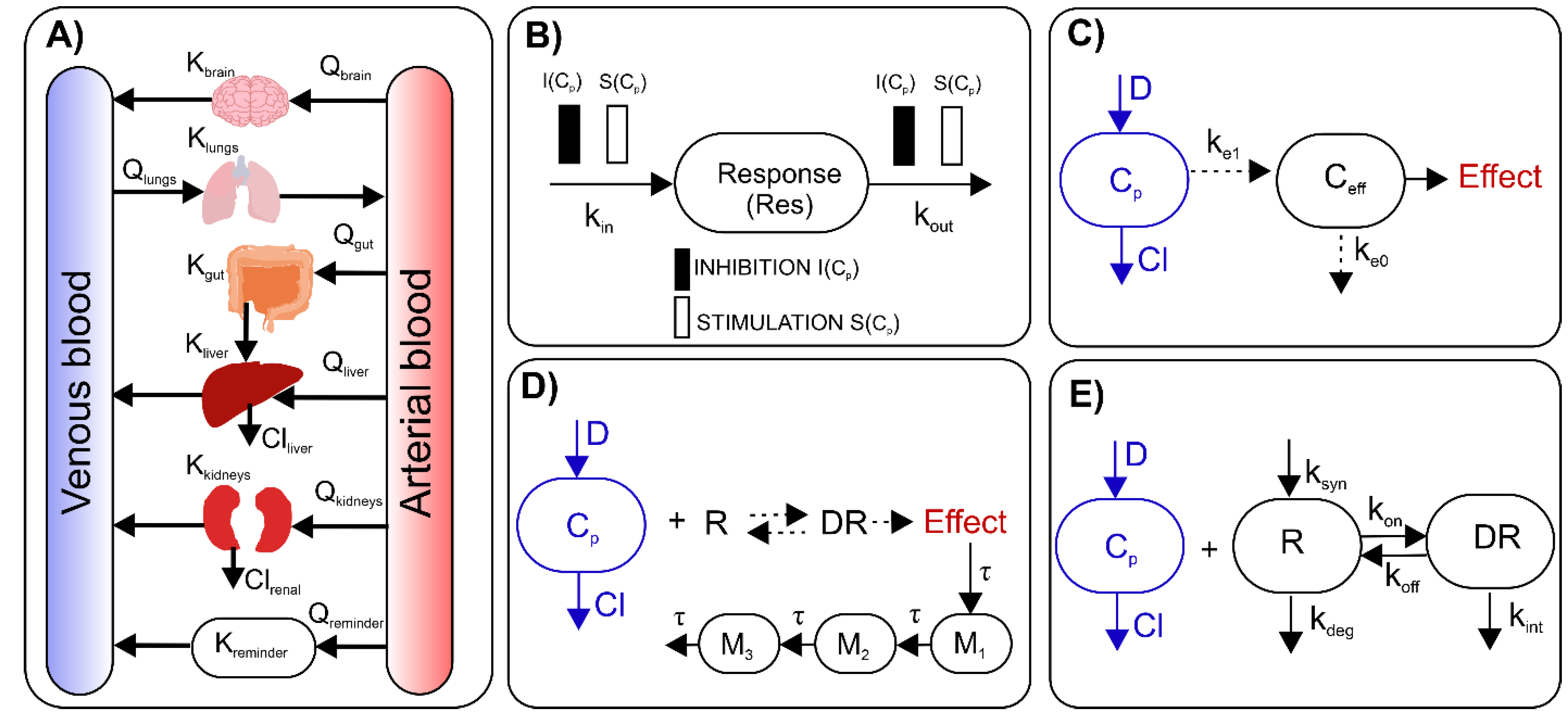
PBPK modeling is a tool that allows for a mathematical description of how drugs are absorbed, distributed, metabolized, and excreted, based on physiological characteristics of the human or animal body and physicochemical properties of a medication. The assumption underlying PBPK modeling is that the body can be represented as a series of interconnected compartments, each corresponding to a different organ or tissue, with specific physiological characteristics and drug concentrations in these compartments may be described by a set of ordinary differential equations (ODEs) [37]. This approach uses the volumes of organs and tissues, blood flows through these compartments, and tissue to plasma partition coefficients of a drug (Figure 2A).
Nowadays, more complex PBPK models are being developed that describe drug kinetics in different compartments of a given organ or even at a subcellular level. In AIDs, PBPK modeling is particularly useful for predicting how variations in disease states, such as inflammation, organ impairment, changes in blood flow through the organs can affect drug kinetics [38]. It is especially useful in understanding and assessment of the impact of drug-drug interactions, which is essential for autoimmune patients often taking multiple medications [39]. Mechanistic PK/PD modeling integrates the PK of a drug (how the body affects a drug) with its PD (how a drug affects the body). This approach typically assumes a direct or indirect cause-and-effect relationship between drug concentration and its pharmacological effect, often quantified using a specific biomarker of pharmacological response or a clinical outcome [40]. The direct effect PD models include maximum effect (Emax) and maximum inhibition (Imax) models that allow to capture non-linear relationship between drug concentration at the site of action and its effect. This effect may constitute an increase or decrease in quantity of an observed biomarker. There are different types of these models involving Hill’s coefficient, which are referred to as sigmoidal Emax and Imax models [40]. These simple PD models are commonly incorporated in many statistical software. In 1969 Nagashima et al. from University at Buffalo characterized an indirect response based on the anticoagulant effect of warfarin [41]. Prof. Jusko and coworkers, in early 90’, further developed this concept and indicated applications of a family of four indirect response models in relation to different groups of drugs [42]. Indirect response models assume a constant production of a biomarker representing a pharmacological response and its first-order loss from the system leading to the achievement of a steady-state quantity of this biomarker (Figure 1B) [42]. According to the assumptions of these models, drugs or various signaling molecules may stimulate or inhibit production or loss of the pharmacological response. The indirect response models have been increasingly used due to their relevance to a broad array of physiological processes. Additionally, they account for a commonly observed delay between drug intervention and the pharmacological effect, which may arise from the indirect mechanism of action of a given drug. Biophase distribution models (Figure 1C), also known as effect-compartment models, belong to the group of direct response models. They assume that the observed effect of a medication correlates with its concentration at the site of action, which is represented by a hypothetical effect compartment (biophase). These models can capture a delay observed between maximum concentration of some drugs in the blood and their maximum observed pharmacological response. This delay, according to this model, is caused by the time required for a drug to distribute from the blood to the site of action [43]. Transit compartment models are used to mathematically represent multistep processes of signal transduction through biological pathways starting from the interaction of a drug with a target (receptor) ending up at the observed pharmacological response (Figure 1D) [44]. Target mediated drug disposition (TMDD) models are commonly used to describe complex non-linear PK of small molecules and biologic drugs that is affected by high capacity of a target and strong affinity of these medications to the target (Figure 1E) [45]. More complex mechanistic PK/PD models have been currently developed that are constructed using various combinations of indirect response models and transit compartments and including irreversible binding of a drug to a target [32,46]. Population, non-linear mixed-effects, PK modeling allows for the assessment of variability in drug kinetics across different patient populations. It assumes that PK of a particular drug varies across different individuals and these variations can be quantified and, at least partially, explained based on specific factors, which are referred to as covariates, such as demographics including age, weight, sex, genetics, or disease stage of an individual. In addition, population modeling may account for between-occasion variability in drug PK, which may occur at different occasions of drug administration to the same individual. The last layer of variability that may be accounted for by a population model is unexplained residual variability in PK of a given medication [47]. In the context of AIDs, popPK modeling is useful in quantifying and understanding the wide variability in drug PK and for tailoring drug therapy to specific individuals and patient subgroups [48,49,50]. PopPK/PD modeling extends popPK analysis by incorporating PD data. This approach assumes that the relationship between drug concentration and effect varies among different individuals. In the treatment of AIDs, popPK/PD modeling can provide insights into how different patient groups and individuals are likely to respond to a drug [51,52,53]. QSP modeling is a holistic approach that integrates pharmacology with systems biology to describe drug effects and pathological states within the context of biological systems [54]. QSP models typically assume that drug effects can be understood as part of a complex network of biological pathways and processes. For AIDs, QSP can be especially valuable in elucidating the underlying disease pathophysiological mechanisms and identifying the most important signaling pathways involved in disease pathogenesis. In addition, this approach aids in identification of novel therapeutic targets and biomarkers [55,56,57]. Boolean networks are mathematical models used to represent and analyze complex systems involving binary states, e.g., ‘true’ or ‘false’. Each node in a Boolean network represents a variable that can take one of two possible values (0 or 1). The state of each node is determined by a Boolean function of the states of a subset of nodes in the network. The network evolves over discrete time steps, with the state of each node updating according to its Boolean function [58]. In QSP modeling, Boolean networks play a role in simplifying biological networks where detailed kinetic parameters may be unknown or difficult to measure or estimate. DisP modeling is a mathematical approach utilized to describe and predict the course of a disease over time. In the context of AIDs, these models integrate various data sources, such as patient medical history, genetic factors, biomarkers, clinical outcomes, and response to previous treatments, to understand how a disease evolves in an individual [59,60,61]. These models may constitute simple empirical algebraic functions, e.g., exponential functions or logistic grow functions, or they may be more mechanistic in their nature involving transit compartments and feedback mechanisms, biological interactions, and detailed physiological processes represented by the means of ODEs [62]. In pre-clinical settings, DisP models utilize the data from studies in animal models to map the trajectory of the disease, identifying key biological markers, and pathways involved in the disease process. This enables researchers to predict how a disease might progress in humans and assess the potential efficacy and safety of new treatments prior to clinical trials [63,64,65,66]. It is worth mentioning that there exist more basic pharmacometric tools and approaches often serving as starting points for more complex analyses or constituting a part of more complex models. Included in this group are allometric scaling that helps in extrapolating PK and PD characteristics of a drug across different species and sensitivity analysis that aids in parametrizing PD models. Non-compartmental analysis (NCA) is used, for instance, as a starting point in selecting initial PK parameter values for PK and popPK analyses as well as in bioequivalence studies. This section does not provide details on specific pharmacometric methods and their mathematical foundations, as this is not the objective of the current review paper. For a deeper understanding of modeling and their application, we recommend other review papers that explain this topic from the basics [40,47,54,58,62].
Pharmacometrics is essential at all stages of drug development, from selecting a drug target to clinical trials, as well as in the optimization of existing treatments. Frequently, pharmacometric tools are used in combination that enhances their impact and allow for a more complex and detailed description of PK of a drug, its PD, and influence on DisP [65,67,68]. As it is presented in this article, by incorporating individual patient characteristics, disease variability, and complex drug-disease interactions, these methods offer a pathway towards development of novel treatment modalities and strategies as well as more effective, safe, and personalized therapies for AIDs.

5. Pharmacometrics in Pre-Clinical Studies on Autoimmune Diseases

Pharmacometric methodologies are increasingly utilized as useful tools to analysis and interpreting pre-clinical in vitro as well as in vivo data at the early stages of drug development for AIDs. PBPK, PK/PD, popPK, DisP, and QSP models represent essential mathematical tools for predicting drug behavior in the animal body and assessing both efficacy and safety, all prior to human trials.
A series of studies by Earp and coworkers, published in 2008 and 2009, provides a comprehensive quantitative assessment of arthritis progression, dexamethasone (DEX) PK and PD, interplay among inflammatory mediators, corticosterone concentrations, bone mineral density, and paw oedema in rat models of RA. DEX is one of the synthetic corticosteroids commonly used in the treatment of RA and corticosterone is endogenous corticosteroid produced by adrenal glands of rats. In the first study, researchers aimed to assess whether inflammation in a rat model of RA alters the PK of DEX compared to healthy controls [69]. The study employed NCA and popPK modeling in NONMEM software (Icon, USA). The study concluded that although there was a statistically significant difference in clearance between healthy and arthritic rats, the difference was minor and unlikely to affect DEX disposition substantially in arthritic rats. In another publication, the same research group aimed to identify a rat model of arthritis with the least inter-animal variability to improve study designs for arthritis research. To this end, non-linear mixed-effects modeling was utilized. The model included components for production, loss, and feedback of edema. The study focused on a collagen-induced arthritis (CIA) and adjuvant induced arthritis (AIA) animal models of RA in Lewis and Dark Agouti rats. The results indicated that Dark Agouti rats may provide a more dynamic range of edema response than Lewis rats, and the onset time of the disease varies significantly among groups, which should be considered in future studies [70]. Two subsequent studies aimed to develop a mechanism-based PK/PD and DisP models to describe the progression of arthritis in rats, focusing on the time course of various biomarkers and disease endpoints, such as expression of glucocorticoid receptor, expression of TNFα, IL-6, and IL-1β, paw swelling, and bone mineral density. The model was developed by first fitting molecular biomarkers (cytokine mRNA, glucocorticoid receptor mRNA, and plasma corticosterone) and fitting disease outcomes (paw edema and bone mineral density). The model included equations for glucocorticoid receptor mRNA turnover and bone mineral density based on different bone types. It effectively characterized the delay in cytokine mRNA responses and the subsequent effects on paw swelling and bone mineral density, demonstrating the complex interrelations among various signaling molecules and disease progression [35]. The next study aimed to develop a mechanistic PK/PD/DisP model to understand the effects of DEX on disease progression in a rat model of RA, focusing on factors responsible for edema and bone loss. The study employed indirect response models, drug-interaction models, transduction processes, and the previously developed 5th-generation model of corticosteroid dynamics [71]. The analyses were performed in S-ADAPT software (BMSR, University of Southern California, USA). The model integrated pro-inflammatory cytokine mRNA, glucocorticoid receptor mRNA, plasma corticosterone, paw edema, and bone mineral density. It assumed that DEX binds to the same receptor as endogenous corticosterone, mediating observed responses. It was demonstrated that lower doses of DEX can effectively suppress key cytokines related to bone erosion, suggesting that optimal dosing can mitigate adverse effects on bone mineral density while controlling inflammation [72]. In 2011, a study of Lon and colleagues aimed to develop a PK/PD/DisP model to assess the impact of etanercept, a biologic drug being a TNFα inhibitor, on RA progression in CIA [65]. CIA rats were administered etanercept either IV or subcutaneously (SC), and its plasma concentration-and effect-time profiles were quantified. Pharmacological effect was observed as changes in paw swelling. The data obtained were then applied to successfully model the PK, PD and DisP using ADAPT 5 software (BMSR, University of Southern California, USA). The study concluded that etanercept modestly reduces paw swelling in CIA rats with maximum inhibition of paw edema of 28.9% and concentration for 50% of maximum inhibition (IC50) of 22.7 µg/mL. The PK/PD/DisP model effectively described drugs effects, suggesting its potential applicability to other anti-cytokine biologic agents for RA. Liu and coworkers presented a popPK/PD/DisP model to evaluate the effects of anakinra, another biopharmaceutical medication being a recombinant human IL-1 receptor antagonist [65]. The study involved administering anakinra to the rats through SC infusion at varying doses and durations. The swelling of the hind paws was monitored as an indicator of disease progression. The PK/PD parameters for the different study groups were estimated using a non-linear mixed-effects modeling software NONMEM (Icon, USA). The PK profiles of anakinra were described using a two-compartment model with two sequential absorption processes and linear elimination. The disease progression and drug effects were modeled using a transduction-based feedback model with logistic growth rate and an indirect response model. The model effectively captured the PK and paw swelling data, showing that anakinra had modest effects on paw edema in CIA rats with maximum inhibition of 28% and IC50 of 49.4 ng/mL. A popPK/PD/DisP approach was used by Song and Jusko to assess sex differences in PK/PD of DEX using a CIA model in rats [64]. The research involved comparing paw size in male and female rats across four groups: healthy controls, non-treated arthritic animals, and arthritic animals treated with DEX at two different dose levels. The study applied a DisP in combination with a minimal PBPK model for drug disposition, and an inhibitory indirect response model, all within a population modeling framework. The results revealed that DEX clearance was 43% higher in male rats, although other PK parameters were similar between sexes. Female rats exhibited earlier disease progression, peak edema, and remission. DEX effectively suppressed paw edema in both sexes with equal capacity; however, it was less potent in females, as indicated by higher IC50 values. The study provided a comprehensive evaluation of sex differences in DEX PK and PD in CIA rats, offering insights for more detailed assessments of sex, drug, and disease interactions in RA. PK/PD/DisP modeling may also be successfully used to assess potentially beneficial PD interactions between anti-inflammatory drugs. In a study of Xiaonan Li and colleagues, immunosuppressive and anti-inflammatory effects of DEX given in combination with a non-steroidal anti-inflammatory drug, naproxen, were assessed [73]. A comprehensive PK/PD/DisP model was used to describe the PK and time-course of single and combined anti-inflammatory effects (changes in paw edema) of dual drug inhibition, while also considering sex differences in CIA rats. The model revealed additive effects when combining DEX and naproxen. Simulations performed using this model highlighted the potential of naproxen to reduce the dose of steroids in CIA rats. However, the combination therapy showed more pronounced beneficial effects in males compared to females. Several similar PK/PD studies were performed to evaluate the efficacy of various therapeutics, small molecules as well as biologics, for the treatment of RA [63,74,75,76]. In 2022, Świerczek and coworkers published an article describing effects of a novel dual phosphodiesterase (PDE)4/7 inhibitor in encephalomyelitis model of MS in mice [66]. They presented a simple DisP model that captured the initial sudden onset of the disease after 7 days following immunization of mice with a myelin oligodendrocyte glycoprotein (MOG)35-55, partial remission of the disease, and its subsequent relapse. They assessed the potency (IC50) of the investigated compound in inhibition of disease progression, which was quantified using a clinical score value. A PK/PD modeling approach was also used by this research group in a publication assessing the effects of PDE inhibitors in the CIA model of RA in rats [77]. By using a mouse model of AIH induced by IV administration of concanavalin A and mechanistic PK/PD modeling approach, selective PDE3, PDE4, PDE7 as well as non-selective PDE inhibitors were evaluated as potential medications for AIH [32,78]. In these studies, various biomarkers of inflammation and liver damage were utilized, such as serum IL-6, TNFα, IL-10, IFN-γ, as well as activities of alanine transaminase (ALT) and asparagine transaminase (AST). This approach enabled the development of mechanistic PK/PD models in order to assess the impact of inhibition of individual PDE types on AIH development and progression in mice. The work of Haselmayer et al. presented research on M2951, a new Burton’s tyrosine kinase (BTK) inhibitor, indicating its potential to treat AIDs, such as RA and SLE by inhibiting immune cell activation. They used various in vitro and in vivo methods to test M2951, including cellular assays and disease models in mice, to demonstrate its efficacy and build a PK/PD model linking BTK inhibition to disease severity reduction [79]. The study used PK/PD modeling to show that specific levels of BTK occupancy (60% and 80%) are associated with significant and near-complete disease inhibition, respectively, in RA and SLE models. The summarized information on the example pre-clinical studies described in this section is provided in Table 3.
In summary, pharmacometrics plays an important role in pre-clinical drug discovery and development by providing advanced methodologies to analyze and interpret in vivo and in vitro data, thereby predicting drug behavior, efficacy, and safety before human trials. The various modeling approaches facilitate the assessment of PK, PD, and DisP, as demonstrated in studies evaluating various therapeutics for autoimmune conditions. By enabling the prediction and assessment of drug effects, sex differences in PK and PD, as well as drug interactions, pharmacometrics offers a quantitative and more informed, precise, and efficient approach in drug evaluation, discovery and development compared to traditional statistical methods.

6. Translational Pharmacometric Approaches in Autoimmune Diseases

Pharmacometrics plays an increasing role in translating results from pre-clinical investigations into clinical applications. In AIDs, where individual patient response can vary greatly, pharmacometrics is expected to aid in predicting how both small molecules and biologics might behave in humans based on the results of pre-clinical studies. This section describes the role of pharmacometrics in translating pre-clinical animal study results to potential clinical applications. This involves examining drug exposure-response (E-R) relationships and integrating data from both in vivo and in vitro models. It also highlights the challenges in ensuring the translatability of these models and the necessity of considering various factors, such as disease stages, animal models, mechanism of action of a medication, and patient-specific responses.
A study of Wong and colleagues focused on the effectiveness of rodent immune-mediated arthritis models in predicting the therapeutic activity of anti-arthritis agents […]. It highlights the high attrition rates in drug discovery, especially in Phase II clinical trials, due to the lack of efficacy of potential treatments. This emphasizes the need to improve the predictability of pre-clinical disease models not only for RA but also for other immune-related disorders and AIDs. The use of rodent models, particularly in studying the mechanisms of inflammatory joint disease, is discussed as a valuable approach. In terms of methods, the study used male Lewis rats for the AIA and CIA animal models of RA. The efficacy of various treatments was assessed using ankle diameter measurements. In addition, PK analyses of the studied medications were performed. The results section described administering a range of doses of several drugs, including indomethacin, methotrexate, etanercept, tofacitinib, and DEX, to rats with established AIA and CIA. The detailed outcomes for each drug were outlined, providing insights into the dose-efficacy relationship in these pre-clinical rat arthritis models. The practical application of this research lies in its potential to enhance the translation of pre-clinical findings to clinical settings, particularly for RA treatments by better understanding the efficacy of various drugs in rodent models [80]. The study of Dowty et al. describes the translation of pre-clinical studies to clinical trials for tofacitinib, a Janus kinase inhibitor (JAK), in RA [81]. It focuses on determining dosing regimens that provide maximum therapeutic benefit with minimum toxicity using NCA analysis, direct Emax models, and PK simulations. The study used pre-clinical evaluations in a mouse CIA model of RA and clinical PK/PD profiles obtained from pooled data from four Phase II clinical trials in patients with RA. It was concluded that efficacy of tofacitinib in RA is driven by its IC50, however continuous daily inhibition is not required to maintain efficacy. A study by Zheng et al. investigated MTRX1011A, a humanized anti-CD4 monoclonal antibody (mAB) with improved binding to the neonatal Fc receptor (FcRn) due to an N434H amino acid substitution [82]. This modification was expected to enhance the lifespan of antibodies by protecting them from lysosomal degradation. The study compared MTRX1011A with its predecessor, TRX1, in terms of PK and PD in both pre-clinical and clinical settings. The modeling aimed to quantitatively characterize the properties of MTRX1011A in comparison with TRX1. Although there was a large variability in the observed data, the model adequately described individual PK and PD profiles. The study found that the N434H mutation did not significantly alter the nonspecific elimination rate or the PK/PD relationship of MTRX1011A compared to TRX1 and the authors concluded that while the PK and PD relationship of MTRX1011A in humans is similar to this of TRX1, the expected benefit from enhanced FcRn binding was not evident in the clinical setting. However, the presence of preexisting antibodies in RA patients recognizing the N434H mutation could have interfered with binding of MTRX1011A to FcRn, potentially impacting the results. The study highlighted the challenges in translating pre-clinical findings to clinical applications, especially due to variability in human populations and disease states. The results provided valuable insights into the development of engineered mABs with improved PK profiles, emphasizing the need for careful evaluation in clinical studies. A study of Biliouris and collogues assessed BIIB059, an antibody against the blood dendritic cell antigen 2, that had been developed to treat SLE [55]. Researchers used PK and PD data from cynomolgus monkeys to build a model predicting how the drug may behave in humans. They tested various doses of BIIB059 in monkeys and proposed a mechanistic PK/PD model that was subsequently scaled-up by using allometric scaling of PK as well as sensitivity-analysis-driven scaling of the PD parameters to predict human outcomes. The predictions of the model matched the actual clinical results, suggesting this method can help to select safe doses for first-in-human trials. Rozanolixizumab is a fully humanized, high-affinity anti-human FcRn mAB designed to inhibit IgG recycling and reduce circulating IgG levels. The purpose of a study of Lledo-Garcia and colleagues was to develop a PK/PD model to predict human responses to rozanolixizumab based on pre-clinical data and to refine this model using first-in-human data [83]. The study used a popPK/PD modeling approach to determine the relationship between IgG response and rozanolixizumab concentration over time. The proposed structural model was a mechanistic PK/PD model that described the PK of rozanolixizumab using a two-compartment model with TMDD and the PD by linking drug concentration to IgG reduction. The proposed model accurately predicted human responses to rozanolixizumab, especially at 4 and 7 mg/kg doses, and was refined using first-in-human data to improve its predictive performance. The model may be used to inform future clinical trial designs, optimize dosing regimens, and examine hypotheses related to disease management and treatment, with ongoing updates as more clinical data become available. mRNA-6231 was designed to express HSA-IL2m protein, which at low concentrations and a prolonged half-life selectively stimulates regulatory T cells (Tregs) expansion [84]. The purpose of the article of Rajlic and coworkers was to develop a mechanistic kinetic-pharmacodynamic (KPD) model to describe the temporal patterns and dose-dependent changes in HSA-IL2m protein levels and Treg expansion following single and repeated administrations of mRNA-6231 in non-human primates and to scale-up this model to predict human responses. The proposed KPD model used ODEs to describe the distribution and effects of mRNA-6231. It incorporated a virtual transit compartment to account for delays in dynamic systems and used an Emax model to relate mRNA concentration to HSA-IL2m synthesis. Significant covariates included body weight, which influenced absorption rate constant, clearance of HSA-IL2m, and clearance from the transit compartment. The primary PD markers used were the plasma concentrations of HSA-IL2m and the percentage of Treg cells. The study concluded that the mechanistic KPD model could reliably predict the PD response in humans to mRNA therapeutics, aiding in the selection of appropriate doses for clinical trials. The presented in this section studies employing pharmacometric approaches in translation of pre-clinical studies into clinical applications are summarized in Table 4.
As it is shown in this section, pharmacometrics is pivotal in translational science, especially in bridging the gap between pre-clinical findings and clinical applications. By employing mathematical models, pharmacometrics allows for the extrapolation of drug behavior observed in animal models to predict human responses, optimizing dosing regimens, and improving the design of clinical trials. This approach is particularly valuable in AIDs, where patient responses can vary significantly and a high attrition rate of drug candidates in Phase II clinical trials is observed due to lack of efficacy. By understanding drug interactions with complex immune system and tailoring therapies to individual patient needs, pharmacometrics enhances the predictability of therapeutic efficacy and safety, thereby facilitating a more efficient and targeted transition from laboratory bench to bedside [85].

7. Population Modeling and Simulation in Clinical Applications for Autoimmune Diseases

Population models are frequently used in evaluation and optimization of therapies for cancer drugs and antimicrobial treatments both by research groups and clinicians [86,87]. These models analyze drug concentration-time, response-time and, in some cases, exposure-response (E-R) data from diverse patient populations to understand variability in drug disposition and response. They enable personalized medicine by identifying specific factors, covariates, which explain variability in drug PK and PD. This section presents examples of the application of population modeling in advancing therapies for AIDs in the clinic.
Chia and coworkers published a study on anifrolumab, a biologic drug being an anti–interferon-α receptor subunit 1(anti-IFNAR1) mAB, focusing on its optimal dosage, safety, and efficacy [88]. The researchers used a population approach to analyze the E-R relationship, PK, and SRI(4) efficacy data. A popPK model was developed to describe drug disposition and to identify covariates affecting its clearance. The study found that patients with higher levels of type I IFNGS and those with a higher body weight had a significantly higher clearance of anifrolumab. The study concluded that understanding the E-R relationship of anifrolumab may aid in selecting the optimal dosage regimen for Phase III studies in SLE patients. In a study of Sherwin et al., a popPK model was developed for mycophenolate mofetil (MPM) being an immunosuppressive drug used to treat AIDs due to its relatively low toxicity compared to other immunosuppressives [89]. Mycophenolic acid (MPA), an active form of MPM, is a potent, selective, non-competitive, and reversible inhibitor of inosine monophosphate dehydrogenase. It blocks the de novo pathway of guanosine nucleotide synthesis without incorporating itself into DNA. Since the de novo purine synthesis pathway is crucial for the proliferation of T and B lymphocytes, while other cell types can utilize alternative synthesis pathways, MPA exerts a cytostatic effect more strongly on lymphocytes than on other cell types. The proposed model incorporated enterohepatic recycling to aid in individualized dosing for pediatric and adolescent SLE patients. Body weight was found to influence the apparent oral clearance and the apparent volume of distribution of MPM, as well as the apparent clearance of its main inactive metabolite 7-O-MPA-β-glucuronide, when allometric scaling was applied. A study of Almquist et al. aimed to evaluate how various covariates impact the PK of anifrolumab and to inform its use in clinical practice [90]. The researchers developed a popPK model to analyze data from five clinical trials, employing a stepwise covariate model-building process with a forward-inclusion approach to identify significant covariates [47]. A two-compartment model with parallel first-order elimination pathways and time-varying clearance was proposed to describe the PK of anifrolumab. The model was validated using data from multiple studies. Significant covariates included body weight and baseline IFNAR1 level. A study of Yang and colleagues aimed to outline various pharmacometric approaches related to PK used to optimize the existing treatment of SLE to improve clinical outcomes with various therapies, including immunosuppressants and immunomodulators, such as methotrexate, azathioprine, cyclophosphamide, mizoribine, fludarabine, MPA, cyclosporin A, and IV immunoglobulin [91]. The study proposed using popPK and PBPK models to describe drug behavior and variability in patients, and to facilitate real-time dose adjustments using Bayesian estimators. For methotrexate, significant covariates included patient demographics and disease status, which influenced drug absorption and clearance. For azathioprine, genetic factors, such as polymorphisms in drug-metabolizing enzymes were significant covariates affecting drug metabolism and distribution parameters. MPM PK was influenced by renal function and co-medications, which impacted drug absorption and clearance parameters. Cyclophosphamide PK parameters were affected by liver function and patient age, which influenced drug metabolism and distribution. The study concluded that individualized and tailored dosing approaches guided by PK algorithms could be safer, more efficient, and cost-effective for treating SLE patients. The study of Dimelow and coworkers aimed to understand how belimumab increases circulating memory B-cell levels in patients with SLE and to explore the effects of dose, demographics, and disease characteristics on this effect [92]. The study used a combination of Bayesian and maximum likelihood methods to develop and refine models predicting memory B-cell dynamics. The final model included baseline B lymphocyte stimulator (BlyS) and anti-dsDNA as significant covariates and was used to simulate memory B-cell responses under different dosing regimens of belimumab. It was postulated that belimumab likely increases circulating memory B-cell levels by stimulating their trafficking from lymphoid and inflamed tissues into the blood, with baseline BLyS and anti-dsDNA levels having a minimal impact on predicting the response size and duration. The study of Acharya and coworkers aimed to understand the dose-exposure-response relationship of dapirolizumab pegol, a drug blocking the interaction between CD40 and CD40 ligand, which is important for immune responses in SLE [93]. A two-compartment model with first-order elimination was selected as the structural starting point for the popPK analysis. The only significant covariate in the popPK model was body weight, which influenced both clearance and volume of distribution. The E-R model assessed how different levels of dapirolizumab pegol in the blood affected the likelihood of patients with SLE transitioning between ‘non-responder’ and ‘responder’ status based on the British Isles Lupus Assessment Group (BILAG)-based Composite Lupus Assessment (BICLA) responder rates. Dapirolizumab pegol increased the probability of transitioning from non-responder to responder status, showing a positive exposure-dependent effect, and reduced the probability of transitioning back to non-responder status. A study of Pitsiu and coworkers developed a popPK model to understand how atacicept behaves in the body, using data from healthy volunteers and patients with SLE [94]. Atacicept is a drug that works by blocking two proteins, B-cell stimulating factor and a proliferation-inducing ligand, which are important for the survival, grow, and activity of B cells in the immune system. The researchers used a mechanistic model to describe atacicept concentrations over time and included interindividual variability (IIV) terms for the absorption rate constant, clearance, and volume of distribution of the central compartment. Body weight and baseline B-cell stimulating factor concentration were identified as significant covariates, but their effects on atacicept exposure were not clinically relevant. The model accurately described atacicept concentrations and variability, supporting the selection of suitable doses for further clinical development. The study confirmed that atacicept is well-tolerated and effective in reducing SLE disease activity. The study of Chen et al. aimed to describe tacrolimus PK in children with SLE using real-world data [95]. The researchers developed a popPK model of tacrolimus and they identified body weight as a significant covariate affecting the clearance and volume of distribution in pediatric patients with SLE. Moreover, younger children tend to have a higher clearance for this drug. The main conclusion was that the popPK model can help in optimizing tacrolimus dosing in children with SLE, ensuring better treatment outcomes and minimizing side effects, such as nephrotoxicity, ototoxicity, and neurological adverse reactions. The study of Frey and coworkers aimed to develop a popPK model for tocilizumab, a humanized mAB that targets the IL-6 receptor used to treat RA, to describe its PK variability among individuals, and assess the influence of different factors on PK parameters [49]. A two-compartment structural model with parallel linear and non-linear (Michaelis-Menten) elimination kinetics was proposed to describe the serum concentration-time profile of tocilizumab in patients with RA. Significant covariates affecting the PK parameters included body surface area, sex, high-density lipoprotein cholesterol, and the logarithm of rheumatoid factor (RF) on clearance; total protein and albumin on the central volume of distribution; and albumin, creatinine clearance, and smoking on the maximum elimination rate. The final PK model accurately described the PK characteristics of tocilizumab and identified key covariates influencing its PK, providing valuable insights for optimizing dosing regimens in patients with RA. A study of Hu et al. aimed to develop a mechanistically interpretable approach to population E-R modeling to characterize the PK/PD of golimumab in patients with RA using changes in the American College of Rheumatology index of improvement of disease activity (ACRN) as a clinical outcome [53]. Golimumab is a human immunoglobulin G1k (IgG1k) mAB that binds with high affinity to both transmembrane and soluble forms of TNFα. A sequential popPK/PD modeling approach was used by first fitting the serum golimumab concentration-time data to the PK model and then fitting the ACRN-time data to the PD model, implemented in the NONMEM software. An indirect response PK/PD structural model was proposed, which viewed TNFα as the precursor of the cascade of secondary mediators involved in RA development. The final population model incorporated covariates, such as body weight, age, sex, race, disease duration, and use of concomitant medications to quantitatively describe their impact on the PK and PD parameters of golimumab. The proposed approach was expected to allow wider applications of indirect response models in clinical trials, especially when a wide range of dose levels are investigated. A study of Ait-Oudhia et al. aimed to develop popPK/PD models to describe the responses to canakinumab in patients with RA and to explore the potential benefits of different dosing regimens of this medication [33]. The study used a two-compartment model for canakinumab PK and a quasi-equilibrium model for its binding to IL-1β, incorporating simulations to predict clinical outcomes and dose-response relationships. The final PK/PD model linked total canakinumab and IL-1β concentrations to C-reactive protein (CRP) plasma concentrations and American College of Rheumatology (ACR) scores, using free IL-1β as the PD driver. Body weight was identified as a significant covariate affecting the clearance and volume of distribution for canakinumab and IL-1β. The study concluded that canakinumab at 150 mg every 4 weeks improves RA symptoms, but higher doses do not provide additional benefits, and the model can be adapted for other inflammatory and AIDs. A study of Levi and coworkers investigated the relationship between tocilizumab exposure and its efficacy in treating RA by analyzing data from four Phase III clinical trials [96]. Graphical analyses were used to assess relationships between tocilizumab and key clinical endpoints, and a popPK/PD model was developed to explore the relationship between tocilizumab exposure and efficacy, quantified by the DAS28. The proposed model was an indirect-response model with sigmoid inhibition of DAS28 production by tocilizumab, estimating parameters including baseline DAS28, first-order rate loss of DAS28 score, and the maximum inhibitory effect of tocilizumab. Significant covariates included IL-6 concentrations, sex, race, HAQ score, global pain score, and physician’s global score of disease activity. The study concluded that tocilizumab effectively reduced DAS28 scores, with a maximum reduction of 5.0 units in males and 4.6 units in females, and that the presence of neutralizing anti-tocilizumab antibodies did not affect the PK/PD model outcomes. A work of Yim and colleagues presented a popPK model of etanercept in pediatric patients with juvenile RA to identify PK parameters and their variability, and to explore the implications of once-weekly dosing compared to twice-weekly dosing [97]. Etanercept is a biologic medication used to treat AIDs by inhibiting the activity of TNFα. The study used a popPK model developed from time-concentration data in pediatric patients, incorporating covariates including body surface area on clearance, sex on clearance, and body weight on the volume of distribution. The study concluded that the popPK model accurately predicted the PK profiles of etanercept in pediatric patients with RA, supporting the feasibility of a once-weekly dosing regimen for patient convenience. A study of Wojciechowski and coworkers aimed to understand how disease activity in RA changes in response to triple DMARD therapy including methotrexate, sulfasalazine, and hydroxychloroquine (HCQ), and to develop a model that can predict individual patient outcomes, potentially leading to personalized treatment strategies [98]. The study used population-based DisP modeling to describe changes in DAS28 over time, employing various structural DisP models like linear, quadratic, and exponential functions to fit the data. Simulations were performed to evaluate the performance of the models and to understand the impact of residual unexplained variability on DAS28 measurements. An exponential model was proposed as the best fit for describing the decline in DAS28 over time, with a typical population half-life of 6.2 weeks for non-smokers and 10.4 weeks for smokers. Significant covariates included age, smoking status, and corticosteroid therapy, which influenced the variability in DAS28 time course and the rate of response to treatment. The study concluded that population modeling could help to identify patients with poor disease trajectories early, potentially leading to more effective personalized treatment strategies. The purpose of an article written by Bastida and coworkers was to investigate the relationship between tocilizumab serum concentrations and response in RA patients, focusing on the dynamics of individual components of composite disease activity measures [34]. The study used non-linear mixed-effects models implemented in NONMEM software to evaluate the relationship between drug exposure and response, employing a previously published PK model and an indirect-response model for DAS28, SDAI, and CDAI. A direct Emax model was proposed to describe the relationship between tocilizumab serum concentrations and disease activity measures, as it provided the best fit for the data. The PD markers used in the study included CRP, ESR, tender joint count, swollen joint count, patient global assessment, and evaluator global assessment. The study results revealed that patients achieving DAS28 remission with tocilizumab might still have significant residual clinical disease activity due to the high weight of inflammatory markers in the DAS28 formula, unlike SDAI and CDAI. The modeling approach confirmed the need for higher serum drug concentrations to normalize clinical variables compared to inflammatory markers. A study of Xu aimed to develop a popPK model for sarilumab, a drug used to treat RA, and to identify patient characteristics that affect how the drug is processed in the body [99]. Sarilumab is a medication that binds to the IL-6 receptor with high affinity, blocking both cis and trans signaling pathways of IL-6. The researchers used a two-compartment model with first-order absorption and both linear and non-linear Michaelis-Menten elimination to describe sarilumab PK. The study results indicated that body weight has limited clinical relevance on sarilumab exposure, and no dose adjustment is required based on body weight or other demographics. The model was robust and accurately described the PK of sarilumab in patients with RA. The article of Ma and coworkers presented popPK/PD models to describe the effects of sarilumab on disease activity (DAS28-CRP) and absolute neutrophil count (ANC) in patients with RA [100]. Researchers used mechanistic models to simulate how sarilumab impacts DAS28 and ANC over time, validating these models with real patient data. The proposed model linked sarilumab concentrations to disease activity and ANC, using parameters describing drug effects and elimination rates to predict outcomes. Significant covariates included baseline CRP levels, global assessment, HAQ-DI, body weight, smoking status, and corticosteroid treatment, but none was required for dose adjustments. They concluded that sarilumab 200 mg every 2 weeks was more effective than 150 mg, and no dose adjustments were needed based on patient characteristics, supporting the higher dose as the starting point. The study of Kang et al. aimed to assess the PK similarity between adalimumab-adbm and Humira in patients with RA and to evaluate the impact of switching from Humira to adalimumab-adbm on adalimumab PK [101]. The study utilized popPK models developed through non-linear mixed-effects modeling to analyze adalimumab concentration-time data from different treatment arms, including adalimumab-adbm and Humira. A two-compartment model with sequential zero- and first-order absorption and linear elimination was proposed to describe the PK of adalimumab in both healthy subjects and RA patients. Significant covariates affecting adalimumab clearance included body weight, ADAs, baseline RF, CRP concentrations, and albumin level. The study concluded that adalimumab-adbm is pharmacokinetically similar to Humira in RA patients, and switching from Humira to adalimumab-adbm does not significantly impact adalimumab PK. A study of Toyoshima and colleagues developed models to predict the efficacy of peficitinib, a drug used for the treatment of RA, by examining its impact on ACR20 response rate and DAS28-CRP measurements in patients with RA [102]. The researchers used non-linear mixed-effect models with NONMEM software to analyze the data, evaluating various covariates through stepwise forward addition and backward elimination methods [47]. Two models were proposed: a continuous time Markov model for ACR20 response rates and an indirect response model for DAS28-CRP measurements. The models effectively described the treatment response over time and highlighted that baseline disease severity correlated with the magnitude of the treatment response, suggesting no need for dose adjustment. The purpose of the article of Chen et al. was to develop a popPK/PD model for tacrolimus in patients with myasthenia gravis (MG) to understand the relationships among tacrolimus dose, exposure, and therapeutic efficacy [103]. The study used a one-compartment model with first-order elimination and fixed absorption parameters for the population PK model. Simulations were performed to assess the impact of different covariates on the PK profiles and therapeutic efficacy. The proposed model described the relationship between the cumulative area under the curve of tacrolimus and the quantitative MG scores using an Emax function. Significant covariates included the CYP3A5 genotype, which influenced the apparent clearance, and total protein that impacted the apparent volume of distribution. Osserman’s classification was also a significant covariate on the initial score of patients with MG. The primary PD marker used was the total quantitative score of MG, which was treated as a continuous variable in the proposed PK/PD model. The study concluded that tacrolimus showed an unsatisfying effect in some patients due to insufficient exposure, and higher doses might be required for patients with certain CYP3A5 genotypes and lower TP levels to achieve rapid therapeutic action. The study of Cheryl Li et al. aimed to describe the PK/PD relationship of PF-04236921, an anti-IL-6 mAB, in healthy volunteers and patients with RA, SLE, and CD [52]. Population modeling analyses were conducted using non-linear mixed-effects modeling, which included data from five clinical studies to develop integrated popPK and popPK/PD models. The models were refined by incorporating covariates and using techniques such as bootstrap runs and prediction-corrected visual predictive checks (pcVPCs) to validate the final parameter estimates. A two-compartment model with first-order absorption and linear elimination was proposed for the PK, while a mechanism-based indirect response model was used to describe PK/PD relationships. It was found that clearance of PF-04236921 was higher in CD patients compared to other populations, and factors, such as baseline albumin and CRP levels significantly impacted the efficacy of the drug. The study concluded that the proposed integrated popPK and popPK/PD models enable to simulate PK and PD profiles of PF-04236921 under various dosing regimens and patient populations, aiding future clinical studies of anti-IL-6 mABs. The study of Zhou and coworkers aimed to predict the dose-exposure relationship of belimumab in Chinese pediatric patients with systemic lupus erythematosus (SLE) using a popPK modeling approach as part of the drug registration process in China [104]. A linear two-compartment popPK model was initially built using data from adults, and then updated with pediatric data from the PLUTO clinical study to predict steady-state belimumab exposure in Chinese pediatric patients. The final model was a linear two-compartment popPK model that included both adult and pediatric data, which improved the prediction of belimumab pharmacokinetics in pediatric patients. Age was found to be a significant covariate affecting the volume of distribution in pediatric patients. Fat-free mass was another important covariate, affecting both clearance and volume of distribution, indicating that body composition plays a role in how the drug is eliminated and distributed. The results obtained indicated that the PK of belimumab was adequately described by the final model, supporting its use in predicting drug exposure in Chinese pediatric patients with SLE. The study of Yan et al. aimed to understand the PK of inebilizumab, a mAB used to treat AIDs including neuromyelitis optica spectrum disorders, SS, and relapsing MS [105]. Inebilizumab is a humanized mAB designed to target and bind to a specific protein called CD19 found on the surface of B cells. By binding to CD19, inebilizumab effectively depletes B cells from the bloodstream, which helps to reduce the concentration of autoantibodies. The researchers used a popPK model to analyze data from different studies involving inebilizumab. They employed non-linear mixed-effects modeling to develop and validate the model. The proposed structural model was a two-compartment model with first-order elimination and a time-dependent non-linear elimination pathway. The PK of inebilizumab was accurately described by the proposed model. The clearance and volume of distribution of inebilizumab were significantly influenced by body weight, indicating that heavier individuals had higher clearance and volume of distribution of inebilizumab. The presence of ADAs did not have a clinically relevant impact on the PK of inebilizumab. The non-linear elimination pathway at the therapeutic dose was not considered clinically relevant. The model can be used to predict how inebilizumab behaves in different patient populations and individuals, helping to optimize dosing regimens and improve treatment outcomes for AIDs. The study of Balevic and coworkers aimed to understand how pregnancy affects the way the HCQ is processed in the body of pregnant women with rheumatic diseases including RA, and whether dose adjustments are needed during pregnancy [106]. The researchers utilized a popPK analysis. They used a non-linear mixed-effects modeling and performed simulations to compare drug concentrations during pregnancy and postpartum. The proposed model was a one-compartment model with fixed allometric scaling of weight on volume of distribution and IIV of clearance. Body weight was identified as a significant covariate affecting the volume of distribution but not clearance in the pregnancy cohort. The study concluded that pregnancy significantly increases the volume of distribution of HCQ but does not affect the clearance or the 24-hour area under the concentration-time curve (AUC). The model can be used to predict HCQ concentrations in pregnant women, helping healthcare providers to make informed decisions about dosing adjustments during pregnancy to ensure effective and safe treatment. The study of Romano-Aguilar et al. aimed to describe how MPA, a drug used to treat lupus nephritis (LN), behaves in the bodies of Mexican patients and to identify factors that cause variability in its PK [107]. The researchers used NONMEM to analyze the data and develop a popPK model. The structural model was a two-compartment model with linear elimination. Creatinine clearance and the co-administration of prednisone were found to significantly influence the clearance of the drug, while body weight was found to influence the central volume of distribution of MPA. The study revealed that prednisone co-administration significantly increases the clearance of MPA, and this factor should be considered when prescribing MPA to optimize treatment for LN patients. The study of Nader et al. aimed to evaluate the PK of upadacitinib in patients with ulcerative colitis and atopic dermatitis, and to support the exposure-response analyses of upadacitinib efficacy and safety in Phase II clinical trials for these diseases [108]. The study used popPK modeling and simulation to analyze data from multiple clinical trials, including Phase I and Phase II studies, to describe how upadacitinib behaves in the body across different patient populations. A two-compartment model with first-order absorption for the immediate-release formulation and combined first- and zero-order absorption for the extended-release formulation was used to describe upadacitinib plasma concentration-time profiles. Significant covariates included creatinine clearance, disease state, and sex on apparent clearance, and sex and body weight on the volume of the central compartment. The study concluded that upadacitinib PK is consistent across different disease states and demographic groups, with no clinically relevant differences observed due to mild or moderate renal impairment or between male and female subjects. The model can be used to predict upadacitinib exposure in different patient populations, aiding in dose selection and optimizing treatment regimens for ulcerative colitis and atopic dermatitis. The study of Berends aimed to evaluate the PK of Adalimumab in patients with CD during induction and maintenance treatment, and to develop a new popPK model for treatment optimization [109]. The study used popPK modeling and external validation with independent data sets to evaluate the predictive performance of existing models and to develop a new model using nonlinear mixed-effects modeling. The developed model was a one-compartment model describing the PK of adalimumab in patients with CD. This model estimated the clearance of adalimumab to be 0.32 L/day and the volume of distribution to be 4.07 L. The results of the study showed that the presence of anti- adalimumab antibodies significantly increased the clearance of adalimumab, and the newly developed model provided a better fit for the data compared to existing models. The model can be used to optimize individual dosing of adalimumab in patients with CD by considering significant covariates, thereby improving treatment outcomes and maintaining remission. The study of Li et al. aimed to develop popPK and exposure-response models for abatacept in patients with RA, using data from Phase II and III clinical trials [110]. The researchers used a two-compartment model with first-order elimination to describe the PK of abatacept and performed simulations to predict drug concentrations and responses. They also used an ordered categorical proportional-odds model to assess the probability of achieving different levels of clinical response (ACR20, ACR50, ACR70) based on drug exposure. The proposed PD model was a non-linear mixed-effects Imax model, which described the relationship between abatacept exposure and the reduction in DAS28. Baseline body weight was the only clinically relevant covariate affecting abatacept clearance and volume of distribution. The study concluded that abatacept efficacy increases with higher steady-state trough concentrations, with a near-maximal response at 10 mg/mL. The E-R relationship was consistent for both IV and SC administration routes. The proposed model can be used to optimize abatacept dosing regimens, ensuring that patients achieve the target therapeutic exposure for maximum efficacy. The study of Akpalu et al. aimed to assess the safety, tolerability, PK, PD, and immunogenicity of JNJ-61178104, a novel bispecific mAB, in healthy subjects following single IV and SC administration [111]. PopPK modeling was used to describe the serum concentration-time data of JNJ-61178104 and to assess the effects of body weight and ADAs on its PK. A two-compartment model with first-order elimination was proposed, which included both administration routes. This model was selected based on its superior fit, stability, and plausible PK parameter estimates. Body weight and ADA status were identified as significant covariates. Body weight affected the clearance and volume of distribution, while ADA status significantly increased the clearance rate of JNJ-61178104. The drug was well tolerated with no apparent safety concerns. It showed linear PK with dose-proportional increases in exposure (Cmax and AUC). However, the clearance was higher compared to its parental mABs. The model can be used to predict the PK behavior of JNJ-61178104 in different populations and to optimize dosing regimens by considering significant covariates. The study of Suleiman and coworkers aimed to analyze the PK of risankizumab, an anti-IL-23 mAB, in healthy subjects and patients with moderate to severe plaque psoriasis using data from Phase I-III clinical trials [112]. A non-linear mixed-effects modeling approach was used to analyze plasma pharmacokinetic data from 1899 subjects, including 13,123 observations. Simulations were carried out to evaluate the clinical relevance of covariates on risankizumab exposure, ensuring robust assessment by including parameter uncertainty. The PK of risankizumab was best described using a two-compartment model with first-order absorption and elimination. Body weight, baseline serum albumin, serum creatinine, high-sensitivity CRP, and ADA titers were statistically correlated with risankizumab clearance. However, these covariates had no clinically relevant impact on risankizumab exposure within the proposed dosing regimen. Risankizumab displayed linear PK across the evaluated doses, with no significant difference in exposure between healthy subjects and patients with psoriasis. The model can be used to predict risankizumab exposure in different patient populations and to optimize dosing regimens for better therapeutic outcomes in treating moderate to severe plaque psoriasis. The subsequent study of Suleiman and colleagues aimed to describe PK risankizumabin patients with psoriasis and CD [113]. The researchers used a two-compartment model with first-order absorption and elimination to describe the drug PK. They validated the model using bootstrap analysis and visual predictive check (VPC) to ensure its accuracy. Body weight and baseline albumin concentrations were the only significant covariates affecting risankizumab clearance. Body weight had a modest effect on drug exposure, while albumin had no meaningful impact. Risankizumab showed typical PK characteristics for an IgG1 mAB, with no significant differences between psoriasis and CD patients after accounting for body weight and albumin levels. The model can be used to predict risankizumab concentrations in different patient populations, helping to optimize dosing regimens in psoriasis and CD. The study of Scheetz et al. aimed to assess the impact of HCQ shortages on patients with SLE and to model different dosing strategies to manage these shortages during the COVID-19 pandemic [114]. The researchers used Pmetrics for R to simulate HCQ concentrations every 2 hrs until concentrations dropped below 30 ng/ml, employing Monte Carlo simulations to assess variability and predict outcomes under different dosing scenarios. The model simulated 3 HCQ dosing strategies: continuing the full dose until depletion, alternating full and half doses, and taking half doses daily to extend the supply. This approach aimed to predict how long blood HCQ levels would stay above a therapeutic threshold. Significant covariates included baseline blood HCQ concentration, which influenced how long patients could maintain therapeutic levels under different dosing strategies. The study results indicated that rationing HCQ by taking half doses could extend the duration of therapeutic levels, but the effectiveness of this strategy depended on the patient’s baseline HCQ concentration. The model can help clinicians make informed decisions on HCQ dosing strategies during drug shortages, potentially reducing the risk of disease flares in SLE patients. The study of Wojciechowski and coworkers aimed to develop and refine a popPK models for ritlecitinib, a JAK inhibitor tested for multiple autoimmune and inflammatory diseases, to support clinical drug development and inform dosing recommendations [115]. An iterative approach was used to develop 3 popPK models, incorporating new data at each stage to refine the model, and address clinical questions. The final model was a two-compartment model with first-order absorption and direct-response non-stationary clearance and bioavailability driven by concentrations in the peripheral compartment. Body weight, inflammatory disease burden, and severe renal impairment were significant covariates affecting the clearance of ritlecitinib, with body weight being scaled allometrically and inflammatory disease burden consistent with other JAK inhibitors. Body weight and severe renal impairment were significant covariates affecting the volume of distribution. Dose, formulation (tablets or capsules), and high-fat meal effects were significant covariates affecting the absorption parameters of ritlecitinib. Moderate hepatic impairment was a significant covariate affecting the bioavailability of ritlecitinib. The purpose of the article of Petitcollin and colleagues was to develop a popPK model to detect and describe an early increase in infliximab clearance due to ADAs in children with CD, aiming to improve treatment outcomes by early detection of immunization to infliximab [116]. The proposed model was a time-varying clearance model that estimated the risk of developing ADAs, which increased linearly with time. This risk was logit-transformed to vary between 0 (no ADA influence) and 1 (full immunization effect). No significant covariates were identified for the parameters describing clearance modifications, such as baseline CRP and baseline Paediatric Crohn’s Disease Activity Index (PCDAI). However, the estimated value of clearance and infliximab trough concentration at week 2 were significant predictors of sustained remission. The model could detect an increase in infliximab clearance, allowing early detection of immunization to infliximab. This could help with dose adjustments in patients with CD and suggest that clearance variations could be used as a predictive marker of clinical response. The model may be used in the future to optimize infliximab dosing regimens in children with CD by identifying patients at risk of immunization early, potentially improving treatment outcomes and reducing treatment failures [116]. The article of Morales et al. aimed to develop a quantitative DisP model for type 1 diabetes (T1D) to improve the identification of patient populations likely to progress to T1D within short-term clinical trial durations [60]. The study used a joint modeling approach that linked longitudinal glycemic measures to the timing of T1D diagnosis, incorporating baseline covariates through a stepwise covariate modeling approach and power functions. The proposed model was a joint DisP model that useed a Weibull model to capture the timing to T1D diagnosis and a sigmoid Emax function to quantify 2-hour oral glucose tolerance test (OGTT) values as a time-varying biomarker. Significant covariates included baseline HbA1c and the presence of different autoantibodies (AAbs), such as like GADA, which were associated with parameters representing disease progression. The developed T1D DisP model accurately reflected data from TEDDY and PTP natural history clinical studies and was validated using internal hold-out and the TN10 dataset, although it has been suggested that more data are needed for further validation. The model can be used in future clinical trial simulations to optimize trial design, including selecting biomarkers, determining inclusion/exclusion criteria, and estimating the optimal number of participants and trial duration. The article of Diao and coworkers aimed to characterize the PK/PD relationships of daclizumab high yield process in subjects with MS using data from 4 clinical trial [117]. Daclizumab is a humanized IgG1 mAB that targets the alpha-subunit of the IL-2 receptor. Non-linear mixed-effects modeling was employed to analyze approximately 1400 subjects and 7000 PD measurements for each of three biomarkers. A sigmoidal Emax model was proposed to characterize CD25 occupancy, and an indirect response model was used for CD56bright NK cell expansion. The Emax model for CD25 occupancy showed rapid saturation within 7 hrs, maintained at a serum concentration of 5 mg/L, and return to baseline in 24 weeks after the last dose. The indirect response model for CD56bright NK cells showed expansion plateauing at week 36 with a maximum expansion ratio of 5.2, returning to baseline within 24 weeks after the last dose. The PK/PD models were stable and performed well, indicating that daclizumab HYP effectively saturated CD25, expanded CD56bright NK cells, and reduced Tregs in MS patients. The model can be used to predict the effects of different dosing regimens of daclizumab HYP in MS patients. Upadacitinib is a selective JAK1 inhibitor developed for treating moderate to severe RA and other AIDs. The purpose of the article of Klünder et al. was to characterize the popPK of upadacitinib across Phase I-III clinical trials using data from both immediate-release (IR) and extended-release (ER) formulations [118]. A two-compartment model was proposed, which included first-order absorption with lag time for the IR formulation, mixed zero- and first-order absorption with lag time for the ER formulation, and linear elimination. Significant covariates included population (RA subjects vs. healthy subjects), creatinine clearance, and baseline body weight on clearance, and body weight on volume of the central compartment. The developed popPK model was robust and could adequately describe upadacitinib plasma concentration-time profiles, with no clinically meaningful effect from identified covariates on upadacitinib exposures. The model may be used for simulations and to evaluate the exposure-response relationship of upadacitinib, aiding in optimizing dosing regimens for different patient populations. Evobrutinib is a BTK inhibitor used for the treatment of relapsing MS. The purpose of the article of Papasouliotis and coworkers was to investigate the safety and efficacy of evobrutinib, explore its E-R relationships, and determine suitable dosing regimens for patients with relapsing MS [119]. The study used popPK/PD modeling to analyze data from patients treated with different doses of evobrutinib or placebo. The proposed PK model was a two-compartment model with sequential zero and first-order absorption and first-order elimination, and an irreversible binding model for BTK occupancy. The main conclusions from that study were that evobrutinib exposure was significantly related to clinical outcomes such as the reduction in T1 Gd and new/enlarging T2 lesions, and improvement in the annualized relapse rate. The model may be utilized to simulate alternative dosing regimens and optimize treatment strategies for patients with relapsing MS. Eculizumab is used to treat generalized MG by inhibiting the terminal complement C5. The study of Monteleone et al. tested one- and two-compartment popPK models to analyze PK data obtained from MG patients treated with eculizumab, and investigated the impact of various covariates on PK parameters using non-linear mixed-effects modeling [120]. A two-compartment model with first-order elimination was proposed, which included the effects of body weight and plasma-exchange events on drug clearance. Body weight and plasma-exchange events were significant covariates affecting the clearance of eculizumab. In addition, they performed PK/PD analysis using biomarkers including free C5 concentration and in vitro hemolytic activity, which helped in assessing the drug efficacy in inhibiting terminal complement activation. The study concluded that the approved dosing regimen of eculizumab rapidly achieves and maintains complete inhibition of terminal complement activation, providing sustained clinical efficacy in patients with generalized MG. The model can be used in the future to optimize dosing regimens for different patient populations and to predict the drug behavior in various clinical scenarios. Anifrolumab is a type I interferon receptor antibody, used in patients with moderate to severe SLE. The purpose of the article of Chia et al. was to describe the PK/PD relationship in patients treated with anifrolumab [121]. The study used popPK/PD modeling to analyze the relationship between drug exposure and its effects. The proposed model was an indirect response model that described how anifrolumab inhibited the production of type I IFN-inducible genes. The model was implemented using the NONMEM software. Significant covariates included body weight, which was inversely associated with anifrolumab concentrations, and high IFNGS expression, which was associated with lower systemic drug exposure. The PD marker used was the 21-IFNGS gene signature, which measures the expression of genes induced by type I interferon. Higher doses of anifrolumab (300 mg) resulted in rapid, substantial, and sustained neutralization of the 21-IFNGS, while lower doses (150 mg) produced delayed and variable effects. The results of the study indicated that a higher drug exposure leads to better PD responses. The model can be used in future research to optimize dosing regimens for anifrolumab in different populations, such as pediatric patients, and to explore new routes of administration. The study of Yao et al. aimed to speed up the early clinical development of a new drug, teriflunomide sodium, for treating SLE by using data from leflunomide [122]. A popPK model was developed using PK data from both healthy volunteers and patients with RA. The model was validated using various diagnostic plots, VPC, and bootstrap methods to ensure its accuracy. A one-compartment model with enterohepatic circulation characteristics was proposed to describe the PK of teriflunomide after administration of leflunomide and teriflunomide sodium. The developed PopPK model effectively described the PK of teriflunomide in both healthy subjects and patients, and it can be used to support the design of Phase II clinical trials for SLE. The study found that body weight significantly affected the apparent volume of the central compartment. Male sex was found to increase the apparent volume of the central compartment by 21% compared to females. The genetic polymorphism significantly affected both the absorption rate and systemic clearance of teriflunomide. Heterozygotes (ABCG2 34GA) and mutant homozygotes (ABCG2 34AA) showed increased absorption rates by 51% and 97%, respectively, and increased clearance by 37% and 111%, respectively, compared to the wild type individuals (ABCG2 34GG). The study of Wendt and coworkers aimed to create a reliable model to describe how glucagon affects glucose production in patients with T1D, which can help in preventing or treating low blood sugar and improving artificial pancreas systems [123]. The researchers used PK and PD models to simulate insulin and glucagon effects on glucose levels, validated through leave-one-out cross-validation to ensure accuracy. The proposed model included equations and parameters to simulate glucose excursions based on plasma insulin and glucagon concentrations, incorporating effects of both hormones on endogenous glucose production. The study concluded that the PD model accurately simulates glucose levels based on insulin and glucagon concentrations, making it useful for in silico simulations to improve diabetes treatment strategies. The study of Chan et al. aimed to use a Model-Informed Drug Development (MIDD) approach to analyze the clinical efficacy data of fenebrutinib, a BTK inhibitor, in patients with RA [124]. The study used popPK modeling, E-R analysis, and model-based meta-analysis (MBMA) to understand the drug effects and optimize its development. A three-compartment model with linear elimination and a flexible absorption transit compartment model was proposed to describe the PK of fenebrutinib. The study used ACR20, ACR50, ACR70 improvement criteria and DAS28 as clinical outcomes to evaluate treatment responses. The MIDD approach enabled a robust interpretation of Phase 2 clinical trial data, showing that fenebrutinib achieved an efficacy plateau within the exposure range tested, and its effects were consistent with historical data for similar treatments. The model can be used to guide dose selection and regimen optimization in future clinical trials. The study of Riva et al. aimed to assess how CD19 B lymphocytes change over time in children with neurological and AIDs treated with rituximab, and to investigate how different factors, such as demographics and switching between original and biosimilar drugs affect this process [125]. The researchers used a popPK/PD model to describe the changes in CD19 levels, employing NONMEM and R for data analysis and simulations to predict the effects of different rituximab dosing regimens. The model used was an indirect response model describing the balance between the synthesis and degradation of CD19, disrupted by rituximab, which increased the degradation rate. The study concluded that rituximab effectively increased the degradation of CD19 B lymphocytes, with a half-life of 11.6 days for rituximab and 173.3 days for CD19. The model can help clinicians predict how CD19 B lymphocyte levels will change over time in children treated with rituximab, allowing for better planning of treatment schedules and dosages. Table 5 presents a summary of population modeling approaches in clinical applications and development of new medications for the treatment of AIDs.
Pharmacometrics is integral not only to pre-clinical drug discovery and development, but primarily in clinical settings by enabling precise prediction of drug behavior, efficacy, and safety across diverse populations and individuals. Through popPK, popPK/PD, and DisP models, pharmacometrics facilitates the identification of key covariates that influence drug disposition and response. These models aid in optimizing dosing regimens, predict therapeutic outcomes, and address variability in drug responses in complex diseases, such as AIDs. However, this approach is much more frequently used in clinical applications in developed countries compared to low- and middle-income nations. In AIDs, it is utilized to optimize treatment in order to quickly achieve and maintain remission, increase the safety of therapies, and to avoid flares of these diseases, thereby substantially reducing the costs of treatments.

8. PBPK Modeling

Treating AIDs presents several challenges, particularly regarding drug interactions and the impact of inflammation on drug PK. Inflammation and organ disfunctions, which are present in many AIDs, can alter drug absorption, distribution, metabolism, and excretion. Interactions of drugs with endogenous molecules is also difficult to predict and may alter treatment outcomes. Additionally, patients with AIDs often require multiple medications, increasing the risk of harmful drug interactions. This complexity makes it essential to carefully monitor treatment plans and adjust dosages to optimize efficacy while minimizing adverse effects. PBPK modeling is capable of predicting drug kinetics by taking into account changes in blood flow through the organs, changes in activity of metabolizing enzymes, drug interactions, disease state of organs, such as liver and kidney impairment, and other characteristics of an individual.
The study of Tse and colleagues aimed to predict how drug interactions and kidney or liver disfunctions affect the behavior of tofacitinib in the body by utilizing a PBPK model [128]. The researchers used the Simcyp software to create the PBPK model based on the physical and chemical properties of tofacitinib, as well as data from pre-clinical and clinical studies. They verified the model by comparing its predictions with actual clinical data, including how the drug behaves when taken alone or with other drugs that affect liver enzymes. The study found that tofacitinib PK can be affected by other drugs that inhibit or induce liver enzymes, including CYP3A4 and CYP2C19. The main conclusion was that the PBPK model is a reliable tool for predicting how tofacitinib behaves under different conditions, such as kidney or liver impairment and drug interactions, reducing the need for additional clinical studies. Sirukumab is an anti-IL-6 mAB used in patients with RA. The purpose of the article of Jiang et al. was to develop a PBPK model to predict the impact of elevated IL-6 levels on CYP enzymes and the treatment effect of sirukumab in RA patients [129]. The study used modeling and simulation strategies to predict the PK of multiple CYP substrates in RA patients before and after sirukumab treatment. The proposed model was a PBPK model that incorporated the impact of systemic IL-6 levels on the expression of multiple CYP enzymes in the liver and intestines. It used in vitro data to simulate the modulation of the CYP enzymes by IL-6 and the effect of sirukumab treatment on these enzymes. The PBPK model successfully captured the modulation effect of IL-6 and sirukumab on the activity of CYP3A, CYP2C9, CYP2C19, and CYP1A2. This model can be used to predict the PK of small-molecule drugs in RA patients and assess the impact of anti-IL-6 treatment. The model may be used in the future to explore the impact of RA and anti-IL-6 treatment on the metabolism and PK of other small molecules metabolized by CYP enzymes. It can also serve as a framework for developing PBPK models for other cytokine-neutralizing antibodies. The purpose of the article of Machavaram et al. was to explore the impact of IL-6 on the suppression of drug-metabolizing enzymes, particularly CYP3A4, and to predict the clinical drug-drug interactions between therapeutic proteins and small-molecule drugs in disease settings associated with elevated cytokine levels, such as AIDs [130]. The study used in vitro-in vivo extrapolation and PBPK models to simulate the PK of simvastatin and cyclosporine in patients with elevated IL-6 levels due to inflammatory conditions, such as RA. Elevated IL-6 levels significantly suppress CYP3A4 activity, leading to altered drug metabolism and potential drug-drug interactions. The model may be used in the future to predict drug-drug interactions in other inflammatory and AIDs to guide dose adjustments of co-administered drugs in patients with elevated cytokine levels, improving personalized medicine approaches. HCQ is used for treating RA, SLE, and other diseases. The purpose of the article by Alqahtani et al. was to predict the PK of HCQ in healthy individuals and extrapolate these predictions to populations with liver cirrhosis and chronic kidney disease using a PBPK model [131]. The proposed model was a whole-body PBPK model designed to simulate HCQ PK in healthy individuals and extrapolate it to liver cirrhosis and chronic kidney disease populations by incorporating disease-specific pathophysiological changes. The PBPK model was able to predict HCQ PK in healthy individuals and diseased populations, showing increased drug exposure in liver cirrhosis and decreased AUC in chronic kidney disease, which can help clinicians adjust doses in these patients. The model may be used to design optimal dosing regimens for HCQ in patients with varying degrees of liver and kidney impairments. Aspirin-triggered resolvin D1 (AT-RvD1) is known for its potential to reduce inflammation and restore tissue integrity in salivary glands of patients affected by SS. The purpose of the article of Yellepeddi and coworkers was to create a PBPK model to determine the appropriate dosage of AT-RvD1 for future studies in mice and humans, aiming to reduce the need for excessive use of animals and humans in trials [132]. The study employed modeling software, such as PK-Sim and MoBi to predict the pharmacokinetics of AT-RvD1 in both plasma and saliva following IV administration in NODShiLtJ mice. The proposed model described the PK of AT-RvD1 in NODShiLtJ mice and humans, predicting how the drug was distributed and eliminated from the body. The results indicated that AT-RvD1 follows a one-compartment PK pattern with a long elimination half-life and rapid distribution into highly perfused tissues. It was concluded that PBPK modeling can improve the targeting of in vivo studies and has the potential to enhance drug development and clinical trial design. The model provides valuable pathways for validation through in vivo studies and may be used in the future to predict the PK of AT-RvD1 at various doses, in different formulations, and through multiple routes of administration, thereby aiding in the development process at both pre-clinical and clinical stages. The discussed examples of PBPK model applications in drug development and therapy optimization are listed in Table 6.
PBPK modeling is essential for understanding and predicting drug interactions and the impact of organ impairments on drug behavior. These models enable the simulation of complex scenarios, such as drug-drug interactions and the impact of disease-specific inflammatory mediators on drug PK. In addition, they help to optimize dosing regimens, tailor treatments to individual patient needs, and predict the occurrence of adverse reactions, thereby improving the safety and efficacy of therapies for AIDs.

9. QSP and Boolean Networks Modeling in Autoimmune Diseases

QSP modeling is relatively new and more complex than approaches previously discussed. One of the examples of its application is presented in the article of Coto-Segura and colleagues who developed and validated models to describe the PK and PD of certolizumab pegol in patients with moderate-to-severe psoriasis, aiming to improve personalized treatment strategies [133]. Certolizumab pegol is a PEGylated antigen-binding fragment of a humanized mAB against TNFα. These researchers used PBPK and Systems Biology (SB) models to simulate the drug PK and its effects on psoriasis-related proteins. The proposed approach integrated PBPK and SB models to create QSP models. These models enabled simulation of drug concentrations in different organs and assessment of their impact on disease-related proteins, using a two-compartment system for skin and blood. Significant covariates included cardiac frequency, age, BMI, and sex, which influenced drug distribution and clearance. PD markers included inflammatory proteins, such as IL1β, TNFα, and CRP, as well as proteins related to skin immunological barriers, angiogenesis, and metabolism, which were used to measure disease severity and treatment efficacy. The study results revealed that the QSP models could accurately predict clinical and molecular efficacy features of certolizumab pegol, supporting their use in generating hypotheses for personalized treatment in psoriasis patients. The models may be used in the future to tailor treatment plans for individual patients, predict drug efficacy in diverse subpopulations, and improve the understanding of the molecular mechanisms underlying psoriasis and its treatment. Recombinant human IL-10 (rhuIL10) was tested for its therapeutic efficacy in CD. The aim of the study of Balbas-Martinez et al. was to develop a QSP model to understand the dynamics of ILs in CD and to evaluate potential therapeutic strategies using this model [134]. The pharmacometric approaches used included QSP modeling, sensitivity analysis, and simulation of therapeutic interventions using the SimBiology toolbox in MATLAB. The QSP model characterized the dynamic behavior of plasma ILs in CD integrating data from literature to simulate the effects of IL-based therapies. The PD markers used in the study included IL-10, IL-6, IL-1β, and others, which were quantified in plasma? to evaluate the therapeutic effects of rhuIL-10. The QSP model effectively simulated the dynamics of ILs in CD, and it can be used to evaluate potential therapeutic strategies. The model may be also employed to identify new therapeutic targets, evaluate the efficacy of different drug combinations, and simulate clinical scenarios to improve treatment strategies for CD. The purpose of the work of Hurez et al. was to develop a QSP model for SjS that links mechanistic signaling pathways to clinical outcomes, aiming to evaluate novel drugs for SjS and optimize clinical trial outcomes [135]. The mechanistic QSP model focused on salivary gland and lymph node manifestations in SjS, incorporating PK of standard of care drugs in blood, salivary glands, and lymph nodes. The proposed model was the SjS PhysioPD Research Platform, which included compartments for salivary glands, lymph nodes, and blood, with relevant cell types, such as gland epithelial cells, T and B lymphocytes, and antigen-presenting cells, regulated by cytokines and chemokines. The developed platform could predict complex clinical scores from mechanistic outputs, demonstrating the predictive value of QSP models in drug development and facilitating their adoption by clinical teams. Ruiz-Cerdá and coworkers proposed a systems pharmacology model based on Boolean networks to study the processes involved antigen presentation in SLE, aiming to support drug development by identifying targets, biomarkers, and patient subpopulations [57]. The Boolean network model, which is less data-demanding and can provide insights into the dynamics of biological networks described the immune response to autoantigens in SLE. It included nodes representing different biological components and their interactions including activation, inhibition, upregulation, or downregulation. The researchers concluded that the presented model can help to identify drug targets, optimal drug combinations, and patient subpopulations, potentially improving the success rate of clinical trials by enabling patient stratification.
As it is shown in this section, QSP models play an important role in advancing the treatment of AIDs by integrating complex biological pathways with drug PK and PD to predict treatment outcomes and optimize therapeutic strategies. QSP models, such as those developed for certolizumab pegol in psoriasis and recombinant human IL-10 in CD, simulate drug interactions within the body and their effects on disease-related proteins, allowing for personalized treatment plans and hypothesis generation for novel therapies. QSP model for primary SjS, links mechanistic pathways to clinical outcomes, facilitating the evaluation of novel drugs and optimizing clinical trial designs. Additionally, systems pharmacology models, including Boolean network approaches for SLE, help to identify drug targets, biomarkers, and patient subpopulations, improving the precision and success of therapeutic interventions. These models are especially important in understanding the molecular mechanisms of AIDs, predicting drug efficacy in diverse patient populations, and tailoring treatments to individual patient needs.

10. Incorporating AI and ML into Pharmacometrics in the Context of Autoimmune Diseases

The integration of AI and ML algorithms has, in many cases, significantly advanced pharmacometrics. However, the utility of these approaches is at an early stage of development. ML methods can complement pharmacometrics by efficiently identifying important variables and their interdependencies, enhancing predictive capabilities and learning from large datasets. ML algorithms may constitute a computational bridge between big data and population modeling, enabling better parameter inference and insights into drug effects across diverse populations. However, some ML and AI techniques, such as neural networks, are perceived as black boxes, making it difficult to extract mechanistic insights from these models. Neural networks have been shown to perform poorly with sparse and noisy data. Therefore, there is a need to identify reliable and robust ML and AI workflows for each pharmacometric application to ensure findings to be generalizable. Nonetheless, ML algorithms are computationally efficient and can process large datasets, enabling learning and hypothesis generation from big data, which is crucial in drug development. In addition, ML facilitates model building and simulation, which can accelerate drug development and improve patient outcomes. Moreover, the integration of ML and AI offers innovative quantitative methods to extract insights from new data, addressing unmet needs in pharmacometrics [136,137,138]. This section presents specific examples of how AI and ML algorithms have been employed to advance pharmacometric methodologies for treating AIDs as well as a few cases of their broader applications in pharmacometrics beyond autoimmune conditions.
The study of Basu aimed to develop a predictive modeling approach to identify patients with MS who will experience disease activity in 3 and 6 months, using ML methods to analyze clinical covariates and improve prediction accuracy [139]. The researchers used supervised ML models, specifically XGBoost, to learn the relationship between high-dimensional input covariates and the output variable, predicting disease activity at 3- and 6-months intervals. The model used was XGBoost, an ensemble tree-boosting method, combined with Shapley Additive Explanations (SHAP) to make the decision process transparent. XGBoost handles multicollinearity well and does not require covariate selection, while SHAP explains the contribution of each covariate to the model predictions. The study concluded that using complex ML models like XGBoost combined with explainability methods like SHAP can effectively analyze high-dimensional data, providing interpretable insights into MS disease progression and aiding in clinical decision-making. The model can be used to plan treatment, decide the frequency of patient visits, and prompt other clinical interventions by predicting future disease activity in MS patients, thus supporting clinical decision-making. The study conducted by Yao and colleagues aimed to identify biomarkers that could help in diagnosing psoriasis and understanding its association with the pathophysiology of the disease [140]. Gene expression data were obtained from the Gene Expression Omnibus (GEO) database. Differentially expressed genes (DEGs) were used to create volcano plots using R ggplot2 V3.3.5, heat maps with Pheatmap V1.0.12, and Venn diagrams with Venn Diagram V1.6.20. Functional enrichment analysis was then performed using the Goplot V1.0.2 package and the clusterProfiler V3.18.1 software. To identify key psoriasis signatures and potential biomarkers, four different algorithms were applied. The associations between selected biomarkers and immune cell populations were examined using Spearman’s correlation. In conclusion, the researchers identified the ADAM23 gene as a key biomarker, as it appeared in all analyzed critical signature algorithms. Additionally, CIBERSORT analyses showed its association with mast cells and macrophages. All these findings suggest that ADAM23 could be a potential biomarker for diagnosing patients with psoriasis. The purpose of the work of Myers et al. was to present a novel workflow that uses ML surrogate models to improve the efficiency of generating virtual patients for QSP models, which may help in exploring variability and uncertainty in clinical responses [141]. The purpose of the article was to present a novel workflow that uses machine learning surrogate models to improve the efficiency of generating virtual patients for QSP models, in order to facilitate exploring variability and uncertainty in clinical responses. The researchers used QSP modeling and ML surrogate models to generate virtual patients more efficiently by pre-screening parameter combinations that resulted in feasible virtual patients. The proposed model involved training ML models using the full QSP model and then these surrogate models were used to rapidly pre-screen parameter combinations for generating valid virtual patients. The main conclusion was that machine learning surrogate models significantly improved the efficiency of generating virtual patients for QSP models, which can enhance the utility of QSP research across the drug development pipeline. The article of Stankevičiūtė and coworkers discussed various pharmacometric approaches, including PK and PD modeling, popPK, and model-informed precision dosing [138]. The authors proposed integrating ML with traditional pharmacometric models, such as using deep neural networks combined with ordinary differential equations (ODEs) to improve non-linear mixed-effect modeling for predicting drug doses and simulating treatments. ML could help determine the best exposure indices and their relationship to microscopic targets or macroscopic outcomes. The main conclusion is that combining the strengths of pharmacometric modeling with the flexibility of ML can lead to better individualized treatment plans, improving the risk-benefit balance for patients. In turn, Zhang et al. aimed to explore how combining QSP and ML can improve drug development by addressing key questions, such as the mechanism of action of drugs and disease progression [142]. The methods involved analyzing multi-layer ‘omics’ data, such as gene expression and proteomics, using ML approaches, and integrating these with QSP modeling to overcome limitations of each method.
The integration of QSP and ML is still in its early stages in treatment advancement for AIDs, with a few successful implementations showing promise in improving decision-making in drug development process. Future research will focus on evaluating available technical tools to better integrate QSP and ML for more effective drug development. For instance, ML can be used to select the most important features from large datasets, which can then be used to develop more focused QSP models that include only the highly relevant features. QSP models establish a framework for identifying the most informative data for scientific discovery, requiring an iterative workflow to generate new data, and refine the models continuously. The incorporation of AI and ML into pharmacometrics represents a transformative approach, especially in the context of AIDs. By leveraging the strengths of ML, such as handling high-dimensional data and complex relationships, this approach can significantly enhance predictive modeling and decision-making processes. For example, ML models like XGBoost, combined with interpretability tools such as SHAP, have been used to predict disease activity in MS, offering clinicians valuable insights into patient-specific disease trajectories and enabling more tailored treatment strategies. In QSP models, ML aids in efficiently generating virtual patients by using surrogate models, which accelerates the exploration of variability and uncertainty in clinical responses. Moreover, integrating ML with traditional pharmacometric approaches, such as non-linear mixed-effects modeling, can refine dose prediction and optimize treatment regimens. Additionally, ability of ML to analyze multi-layer ‘omics’ data and identify key biomarkers may enhance our understanding of disease mechanisms and support the development of more effective therapies. The integration of pharmacometrics and ML may enable development of more focused and mechanistically informed models that will enhance the predictive power and overall efficiency of pharmacometric analyses. As AI and ML continues to evolve, they role in pharmacometrics is expected to grow, driving innovations in how we understand, predict, and treat complex diseases, such as AIDs.

11. Limitations of Pharmacometric Methods

The implementation of pharmacometric methods in scientific research and clinical practice faces several challenges and limitations. Mechanistic PK/PD and QSP models are complex and require detailed and often large datasets. Collecting comprehensive data in clinical settings, such as patient-specific factors and disease variability, can be challenging. In pre-clinical PBPK and PK/PD studies concentration-time profiles of various biomarkers and drug concentrations in different tissues are required to accurately estimate parameters. This complexity also makes model development and validation time-consuming and resource intensive. However, Boolean networks and sensitivity analysis may help to overcome this limitation. In addition, results from multiple studies may be used and analyzed jointly to increase accuracy and precision of the developed population models. AIDs exhibit wide variability in progression and response to treatment among patients as well as in animal models. Individual variability in drug absorption, distribution, metabolism, and excretion can complicate dose optimization and treatment efficacy and safety. PopPK models attempt to address this problem; however, creating models that accurately reflect this variability is challenging and requires experience and a deep knowledge on pharmacology, pharmacokinetics, and statistics. For many AIDs, there are limited biomarkers available to guide therapeutic decision-making. The scarcity of specific, sensitive, and validated biomarkers impedes the ability to accurately predict disease progression and patient responses to treatments, which complicates the pharmacometric modeling process. However, QSP models, Boolean networks, and mechanistic PK/PD and DisP modeling approaches used in combination with ML may contribute to the identification of novel biomarkers. Translating findings from pre-clinical studies, often performed using animal models of diseases, to clinical applications presents significant challenges. Differences in species physiology, disease manifestations, and drug responses between humans and animals can limit the applicability of pre-clinical models, thus leading to a high attrition rate of drug candidates in Phase II clinical trials. Nevertheless, pharmacometric approaches, such as mechanistic PK/PD, QSP, and PBPK modeling together with allometric scaling constitute a critical approach to extrapolate results of pre-clinical studies to clinical applications. In clinical practice, pharmacometric models need to be accepted by regulatory agencies, such as the FDA or EMA. The approval process can be slow, especially when novel methods are involved. Ethical concerns may also arise when using pharmacometrics to guide dosing in vulnerable populations such as children or pregnant women. For guidance on the use of pharmacometric methods in the registration of new drugs, both the FDA and EMA have published comprehensive documents. The Division of Pharmacometrics within the Office of Clinical Pharmacology of FDA provides detailed guidance on the use of pharmacometrics in drug development and regulatory submissions [143]. The FDA promotes the use of MIDD, which leverages pharmacometrics for designing clinical trials, optimizing doses, and assessing E-R relationships. Specific guidelines, such as those for PopPK, PBPK modeling, and E-R analyses are included in New Drug Applications and Biologics License Applications. Moreover, FDA developed pharmacometric models for over a dozen diseases. However, among 14 proposed models, there is only one model for an AID, namely for RA [144]. The EMA has a similar set of guidelines, integrated within their Clinical Pharmacology and Pharmacokinetics sections [145]. They emphasize the importance of pharmacometric models in supporting decisions regarding the efficacy and safety of drugs, especially during the marketing authorization process. Applicants are encouraged to incorporate pharmacometric analyses when submitting new drugs for approval; however, deviations from the guidelines must be justified and discussed through scientific advice prior to submission.

12. Conclusions and Future Directions

There is a growing importance of pharmacometrics in the development and optimization of treatments for AIDs. Pharmacometric tools become critical in predicting drug behavior and effects across different patient populations, thus enabling more personalized treatment strategies. There are many examples available indicating that these models help to optimize dosing regimens, reduce the risk of adverse effects, and improve therapeutic outcomes. The research demonstrates that by integrating clinical and pre-clinical molecular and animal disease model data, pharmacometrics can uncover valuable insights into disease mechanisms, treatment responses, and long-term therapeutic effects. These techniques are particularly useful in chronic and complex diseases, such as AIDs where patient-specific factors greatly affect treatment efficacy. As for future directions, the integration of AI and ML with pharmacometrics is expected to play a transformative role. AI and ML can enhance the predictive power of these models by allowing for analyzing large datasets, identifying novel key biomarkers, and generating virtual patients for simulations. This may not only refine drug development processes but also aid in designing more effective, personalized treatment plans. Furthermore, there is an ongoing effort to create more focused pharmacometric models that include only the most relevant features, reducing complexity while maintaining accuracy. Another promising avenue involves the use of advanced modeling techniques to simulate drug interactions within complex biological systems, particularly for AIDs, where multiple drugs are often required. PBPK modeling may be especially useful in this application; however, it is not as commonly used in studying drug-drug interactions in autoimmune patients as in the treatment of other diseases, such as malignancies [146]. These models may help clinicians tailor treatments more precisely, minimizing harmful drug-drug interactions and optimizing therapeutic efficacy in AIDs. There is a significant need to train new pharmacometricians, as well as research and clinical staff, to introduce them to the potential that pharmacometrics offers and to promote the widespread use of these methods not only in R&D but also in clinical practice. This is especially important in low- and middle-income countries, in which, by improving treatment outcomes, maintaining remission of AIDs, and avoiding adverse reactions of treatments and exacerbations of AIDs, application of pharmacometric methods may substantially reduce the costs of treatment, thereby increasing the availability of innovative treatments in these populations.

Author Contributions

Conceptualization, A.Ś.; writing—original draft preparation, A.Ś., D.B; writing—review and editing, E.W.; visualization, A.Ś., D.B; project administration, A.Ś.; funding acquisition, A.Ś.; All authors have read and agreed to the published version of the manuscript.

Funding

This research was funded by the National Science Centre, Poland, grant number 2023/51/D/NZ7/01539.

Institutional Review Board Statement

Not applicable.

Informed Consent Statement

Not applicable.

Data Availability Statement

No new data were created.

Conflicts of Interest

The authors declare no conflicts of interest.

References

  1. Fugger, L.; Jensen, L.T.; Rossjohn, J. Challenges, Progress, and Prospects of Developing Therapies to Treat Autoimmune Diseases. Cell 2020, 181, 63–80. [Google Scholar] [CrossRef] [PubMed]
  2. Chandrashekara, S. The Treatment Strategies of Autoimmune Disease May Need a Different Approach from Conventional Protocol: A Review. Indian J. Pharmacol. 2012, 44, 665–671. [Google Scholar] [CrossRef] [PubMed]
  3. Wu, H.; Liao, J.; Li, Q.; Yang, M.; Zhao, M.; Lu, Q. Epigenetics as Biomarkers in Autoimmune Diseases. Clin. Immunol. 2018, 196, 34–39. [Google Scholar] [CrossRef] [PubMed]
  4. Safitri, R.A.; Sayogo, W.; Muflihan, Y.; Maela, N.; Setiawan, Y.W.; Rahma, S.F. Drug Interactions in Autoimmune Systemic Lupus Erythematosus (SLE). J. Multidisiplin Madani 2024, 4, 221–242. [Google Scholar] [CrossRef]
  5. Morin, S.; Segafredo, G.; Piccolis, M.; Das, A.; Das, M.; Loffredi, N.; Larbi, A.; Mwamelo, K.; Villanueva, E.; Nobre, S.; et al. Expanding Access to Biotherapeutics in Low-Income and Middle-Income Countries through Public Health Non-Exclusive Voluntary Intellectual Property Licensing: Considerations, Requirements, and Opportunities. Lancet Glob. Health 2023, 11, e145–e154. [Google Scholar] [CrossRef]
  6. B. Zahorska-Markiewicz, E. Małecka-Tendera, M. Olszanecka-Glinianowicz, J. Chudek Patofizjologia kliniczna. Podręcznik. Available online: https://www-1elibrary-1com-1pl-1nc4armv6055a.hanproxy.cm-uj.krakow.pl/pdfreader/patofizjologia-kliniczna-podrcznik (accessed on 9 August 2024).
  7. Juarranz, Y. Molecular and Cellular Basis of Autoimmune Diseases. Cells 2021, 10. [Google Scholar] [CrossRef]
  8. Conrad, N.; Misra, S.; Verbakel, J.Y.; Verbeke, G.; Molenberghs, G.; Taylor, P.N.; Mason, J.; Sattar, N.; McMurray, J.J.V.; McInnes, I.B.; et al. Incidence, Prevalence, and Co-Occurrence of Autoimmune Disorders over Time and by Age, Sex, and Socioeconomic Status: A Population-Based Cohort Study of 22 Million Individuals in the UK. The Lancet 2023, 401, 1878–1890. [Google Scholar] [CrossRef]
  9. Lazar, S.; Kahlenberg, J.M. Systemic Lupus Erythematosus: New Diagnostic and Therapeutic Approaches. Annu. Rev. Med. 2023, 74, 339–352. [Google Scholar] [CrossRef]
  10. Smolen, J.S.; Aletaha, D.; McInnes, I.B. Rheumatoid Arthritis. The Lancet 2016, 388, 2023–2038. [Google Scholar] [CrossRef]
  11. Negrini, S.; Emmi, G.; Greco, M.; Borro, M.; Sardanelli, F.; Murdaca, G.; Indiveri, F.; Puppo, F. Sjögren’s Syndrome: A Systemic Autoimmune Disease. Clin. Exp. Med. 2022, 22, 9–25. [Google Scholar] [CrossRef]
  12. Qin, B.; Wang, J.; Yang, Z.; Yang, M.; Ma, N.; Huang, F.; Zhong, R. Epidemiology of Primary Sjögren’s Syndrome: A Systematic Review and Meta-Analysis. Ann. Rheum. Dis. 2015, 74, 1983–1989. [Google Scholar] [CrossRef] [PubMed]
  13. André, F.; Böckle, B.C. Sjögren’s Syndrome. J. Dtsch. Dermatol. Ges. 2022, 20, 980–1002. [Google Scholar] [CrossRef] [PubMed]
  14. Volkmann, E.R.; Andréasson, K.; Smith, V. Systemic Sclerosis. Lancet Lond. Engl. 2023, 401, 304–318. [Google Scholar] [CrossRef]
  15. Mincer, D.L.; Jialal, I. Hashimoto Thyroiditis. In StatPearls; StatPearls Publishing: Treasure Island (FL), 2024. [Google Scholar]
  16. Lane, L.C.; Wood, C.L.; Cheetham, T. Graves’ Disease: Moving Forwards. Arch. Dis. Child. 2023, 108, 276. [Google Scholar] [CrossRef]
  17. DiMeglio, L.A.; Evans-Molina, C.; Oram, R.A. Type 1 Diabetes. Lancet Lond. Engl. 2018, 391, 2449. [Google Scholar] [CrossRef]
  18. Ogle, G.D.; James, S.; Dabelea, D.; Pihoker, C.; Svennson, J.; Maniam, J.; Klatman, E.L.; Patterson, C.C. Global Estimates of Incidence of Type 1 Diabetes in Children and Adolescents: Results from the International Diabetes Federation Atlas, 10th Edition. Diabetes Res. Clin. Pract. 2022, 183. [Google Scholar] [CrossRef]
  19. Haki, M.; AL-Biati, H.A.; Al-Tameemi, Z.S.; Ali, I.S.; Al-hussaniy, H.A. Review of Multiple Sclerosis: Epidemiology, Etiology, Pathophysiology, and Treatment. Medicine (Baltimore) 2024, 103, e37297. [Google Scholar] [CrossRef]
  20. Multiple Sclerosis Diagnosis Therapy and Prognosis. Available online: https://www1.racgp.org.au/ajgp/2022/april/multiple-sclerosis-diagnosis-therapy-and-prognosis (accessed on 22 August 2024).
  21. Walton, C.; King, R.; Rechtman, L.; Kaye, W.; Leray, E.; Marrie, R.A.; Robertson, N.; La Rocca, N.; Uitdehaag, B.; van der Mei, I.; et al. Rising Prevalence of Multiple Sclerosis Worldwide: Insights from the Atlas of MS, Third Edition. Mult. Scler. Houndmills Basingstoke Engl. 2020, 26, 1816–1821. [Google Scholar] [CrossRef] [PubMed]
  22. Obarska, I.; Stajszczyk, M. Wycena świadczeń w programach lekowych istotnym elementem budowy strategii zwiększania dostępu do innowacyjnych terapii w chorobach autoimmunizacyjnych.
  23. Parikh, C.R.; Ponnampalam, J.K.; Seligmann, G.; Coelewij, L.; Pineda-Torra, I.; Jury, E.C.; Ciurtin, C. Impact of Immunogenicity on Clinical Efficacy and Toxicity Profile of Biologic Agents Used for Treatment of Inflammatory Arthritis in Children Compared to Adults. Ther. Adv. Musculoskelet. Dis. 2021, 13, 1759720X211002685. [Google Scholar] [CrossRef]
  24. Dumas, G.; Arabi, Y.M.; Bartz, R.; Ranzani, O.; Scheibe, F.; Darmon, M.; Helms, J. Diagnosis and Management of Autoimmune Diseases in the ICU. Intensive Care Med. 2024, 50, 17–35. [Google Scholar] [CrossRef]
  25. Yu, H.; Nagafuchi, Y.; Fujio, K. Clinical and Immunological Biomarkers for Systemic Lupus Erythematosus. Biomolecules 2021, 11, 928. [Google Scholar] [CrossRef] [PubMed]
  26. Autoantibodies in Rheumatoid Arthritis – Laboratory and Clinical Perspectives - PMC. Available online: https://www.ncbi.nlm.nih.gov/pmc/articles/PMC8161594/ (accessed on 10 September 2024).
  27. Pignatelli, P.; Ettorre, E.; Menichelli, D.; Pani, A.; Violi, F.; Pastori, D. Seronegative Antiphospholipid Syndrome: Refining the Value of “Non-Criteria” Antibodies for Diagnosis and Clinical Management. Haematologica 2020, 105, 562–572. [Google Scholar] [CrossRef] [PubMed]
  28. Fauchais, A.L.; Lambert, M.; Launay, D.; Michon-Pasturel, U.; Queyrel, V.; Nguyen, N.; Hebbar, M.; Hachulla, E.; Devulder, B.; Hatron, P.Y. Antiphospholipid Antibodies in Primary Sjögren’s Syndrome: Prevalence and Clinical Significance in a Series of 74 Patients. Lupus 2004, 13, 245–248. [Google Scholar] [CrossRef]
  29. Adigun, R.; Goyal, A.; Hariz, A. Systemic Sclerosis (Scleroderma). In StatPearls; StatPearls Publishing: Treasure Island (FL), 2024. [Google Scholar]
  30. Anti-Islet Autoantibodies in Type 1 Diabetes - PMC. Available online: https://www-1ncbi-1nlm-1nih-1gov-1nb5yeidx0f8f.hanproxy.cm-uj.krakow.pl/pmc/articles/PMC10298549/ (accessed on 12 September 2024).
  31. Kahaly, G.J. Management of Graves Thyroidal and Extrathyroidal Disease: An Update. J. Clin. Endocrinol. Metab. 2020, 105, 3704. [Google Scholar] [CrossRef]
  32. Świerczek, A.; Plutecka, H.; Ślusarczyk, M.; Chłoń-Rzepa, G.; Wyska, E. PK/PD Modeling of the PDE7 Inhibitor—GRMS-55 in a Mouse Model of Autoimmune Hepatitis. Pharmaceutics 2021, 13, 597. [Google Scholar] [CrossRef]
  33. Ait-Oudhia, S.; Lowe, P.; Mager, D. Bridging Clinical Outcomes of Canakinumab Treatment in Patients With Rheumatoid Arthritis With a Population Model of IL-1β Kinetics. CPT Pharmacomet. Syst. Pharmacol. 2012, 1, 5. [Google Scholar] [CrossRef]
  34. Bastida, C.; Soy, D.; Ruiz-Esquide, V.; Sanmartí, R.; Huitema, A.D.R. Exposure-Response Modeling of Tocilizumab in Rheumatoid Arthritis Using Continuous Composite Measures and Their Individual Components. Br. J. Clin. Pharmacol. 2019, 85, 1710–1718. [Google Scholar] [CrossRef]
  35. Earp, J.C.; Dubois, D.C.; Molano, D.S.; Pyszczynski, N.A.; Keller, C.E.; Almon, R.R.; Jusko, W.J. Modeling Corticosteroid Effects in a Rat Model of Rheumatoid Arthritis I: Mechanistic Disease Progression Model for the Time Course of Collagen-Induced Arthritis in Lewis Rats. J. Pharmacol. Exp. Ther. 2008, 326, 532–545. [Google Scholar] [CrossRef] [PubMed]
  36. Xu, C.; Nolain, P.; Lu, Q.; Paccaly, A.; Iglesias-Rodriguez, M.; John, G.S.; Nivens, C.; Maldonado, R.; Ishii, T.; Choy, E.; et al. Fri0106 Sarilumab and Tocilizumab Receptor Occupancy (Ro), and Effects on C-Reactive Protein (Crp) Levels, in Patients with Rheumatoid Arthritis (Ra). Ann. Rheum. Dis. 2019, 78, 719–720. [Google Scholar] [CrossRef]
  37. Porras, K.D.L.; Alves, I.A.; Novoa, D.M.A. PBPK Modeling as an Alternative Method of Interspecies Extrapolation That Reduces the Use of Animals: A Systematic Review. Curr. Med. Chem. 31, 102–126. [CrossRef] [PubMed]
  38. Le Merdy, M.; Mullin, J.; Lukacova, V. Development of PBPK Model for Intra-Articular Injection in Human: Methotrexate Solution and Rheumatoid Arthritis Case Study. J. Pharmacokinet. Pharmacodyn. 2021, 48, 909–922. [Google Scholar] [CrossRef] [PubMed]
  39. Umehara, K.; Huth, F.; Jin, Y.; Schiller, H.; Aslanis, V.; Heimbach, T.; He, H. Drug-Drug Interaction (DDI) Assessments of Ruxolitinib, a Dual Substrate of CYP3A4 and CYP2C9, Using a Verified Physiologically Based Pharmacokinetic (PBPK) Model to Support Regulatory Submissions. Drug Metab. Pers. Ther. 2019, 34. [Google Scholar] [CrossRef] [PubMed]
  40. Mager, D.E.; Wyska, E.; Jusko, W.J. Diversity of Mechanism-Based Pharmacodynamic Models. Drug Metab. Dispos. 2003, 31, 510–518. [Google Scholar] [CrossRef] [PubMed]
  41. Nagashima, R.; O’Reilly, R.A.; Levy, G. Kinetics of Pharmacologic Effects in Man: The Anticoagulant Action of Warfarin. Clin. Pharmacol. Ther. 1969, 10, 22–35. [Google Scholar] [CrossRef] [PubMed]
  42. Dayneka, N.L.; Garg, V.; Jusko, W.J. Comparison of Four Basic Models of Indirect Pharmacodynamic Responses. J. Pharmacokinet. Biopharm. 1993, 21, 457–478. [Google Scholar] [CrossRef]
  43. Danhof, M.; de Jongh, J.; De Lange, E.C.M.; Della Pasqua, O.; Ploeger, B.A.; Voskuyl, R.A. Mechanism-Based Pharmacokinetic-Pharmacodynamic Modeling: Biophase Distribution, Receptor Theory, and Dynamical Systems Analysis. Annu. Rev. Pharmacol. Toxicol. 2007, 47, 357–400. [Google Scholar] [CrossRef]
  44. Sun, Y.N.; Jusko, W.J. Transit Compartments versus Gamma Distribution Function to Model Signal Transduction Processes in Pharmacodynamics. J. Pharm. Sci. 1998, 87, 732–737. [Google Scholar] [CrossRef]
  45. Mager, D.E. Target-Mediated Drug Disposition and Dynamics. Biochem. Pharmacol. 2006, 72, 1–10. [Google Scholar] [CrossRef]
  46. Ayyar, V.S.; Jusko, W.J. Transitioning from Basic toward Systems Pharmacodynamic Models: Lessons from Corticosteroids. Pharmacol. Rev. 2020, 72, 414–438. [Google Scholar] [CrossRef]
  47. Mould, D.; Upton, R. Basic Concepts in Population Modeling, Simulation, and Model-Based Drug Development. CPT Pharmacomet. Syst. Pharmacol. 2012, 1, 6. [Google Scholar] [CrossRef]
  48. Evans, L.; Aarons, L.; Coates, P. A Pharmacokinetic Model for Tenidap in Normal Volunteers and Rheumatoid Arthritis Patients. Pharm. Res. 1999, 16, 1608–1615. [Google Scholar] [CrossRef] [PubMed]
  49. Frey, N.; Grange, S.; Woodworth, T. Population Pharmacokinetic Analysis of Tocilizumab in Patients With Rheumatoid Arthritis. J. Clin. Pharmacol. 2010, 50, 754–766. [Google Scholar] [CrossRef] [PubMed]
  50. Papasouliotis, O.; Yalkinoglu, Ö.; Golob, M.; Willen, D.; Girard, P. AB0529 Population Pharmacokinetics of Atacicept in Systemic Lupus Erythematosus (SLE). Ann. Rheum. Dis. 2015, 74, 1077–1077. [Google Scholar] [CrossRef]
  51. Hartmann, S.; Biliouris, K.; Naik, H.; Rabah, D.; Stevenson, L.; Shen, C.; Nestorov, I.A.; Lesko, L.J.; Trame, M.N. A Clinical Population Pharmacokinetic/Pharmacodynamic Model for BIIB059, a Monoclonal Antibody for the Treatment of Systemic and Cutaneous Lupus Erythematosus. J. Pharmacokinet. Pharmacodyn. 2020, 47, 255–266. [Google Scholar] [CrossRef] [PubMed]
  52. Li, C.; Shoji, S.; Beebe, J. Pharmacokinetics and C-Reactive Protein Modelling of Anti-Interleukin-6 Antibody (PF-04236921) in Healthy Volunteers and Patients with Autoimmune Disease. Br. J. Clin. Pharmacol. 2018, 84, 2059–2074. [Google Scholar] [CrossRef]
  53. Hu, C.; Xu, Z.; Zhang, Y.; Rahman, M.U.; Davis, H.M.; Zhou, H. Population Approach for Exposure-Response Modeling of Golimumab in Patients With Rheumatoid Arthritis. J. Clin. Pharmacol. 2011, 51, 639–648. [Google Scholar] [CrossRef]
  54. Ribba, B.; Grimm, H.P.; Agoram, B.; Davies, M.R.; Gadkar, K.; Niederer, S.; van Riel, N.; Timmis, J.; van der Graaf, P.H. Methodologies for Quantitative Systems Pharmacology (QSP) Models: Design and Estimation. CPT Pharmacomet. Syst. Pharmacol. 2017, 6, 496–498. [Google Scholar] [CrossRef]
  55. Biliouris, K.; Nestorov, I.; Naik, H.; Dai, D.; Xiao, G.; Wang, Q.; Pellerin, A.; Rabah, D.; Lesko, L.J.; Trame, M.N. A Pre-Clinical Quantitative Model Predicts the Pharmacokinetics/Pharmacodynamics of an Anti-BDCA2 Monoclonal Antibody in Humans. J. Pharmacokinet. Pharmacodyn. 2018, 45, 817–827. [Google Scholar] [CrossRef]
  56. Macfarlane, F.R.; Chaplain, M.A.J.; Eftimie, R. Quantitative Predictive Modelling Approaches to Understanding Rheumatoid Arthritis: A Brief Review. Cells 2020, 9, 74. [Google Scholar] [CrossRef]
  57. Ruiz-Cerdá, M.L.; Irurzun-Arana, I.; González-Garcia, I.; Hu, C.; Zhou, H.; Vermeulen, A.; Trocóniz, I.F.; Gómez-Mantilla, J.D. Towards Patient Stratification and Treatment in the Autoimmune Disease Lupus Erythematosus Using a Systems Pharmacology Approach. Eur. J. Pharm. Sci. 2016, 94, 46–58. [Google Scholar] [CrossRef]
  58. Bloomingdale, P.; Nguyen, V.A.; Niu, J.; Mager, D.E. Boolean Network Modeling in Systems Pharmacology. J. Pharmacokinet. Pharmacodyn. 2018, 45, 159–180. [Google Scholar] [CrossRef] [PubMed]
  59. Jaberi-Douraki, M.; Liu, S.W. (Shalon); Pietropaolo, M.; Khadra, A. Autoimmune Responses in T1DM: Quantitative Methods to Understand Onset, Progression, and Prevention of Disease. Pediatr. Diabetes 2014, 15, 162–174. [Google Scholar] [CrossRef] [PubMed]
  60. Morales, J.F.; Muse, R.; Podichetty, J.T.; Burton, J.; David, S.; Lang, P.; Schmidt, S.; Romero, K.; O’Doherty, I.; Martin, F.; et al. Disease Progression Joint Model Predicts Time to Type 1 Diabetes Onset: Optimizing Future Type 1 Diabetes Prevention Studies. CPT Pharmacomet. Syst. Pharmacol. 2023, 12, 1016–1028. [Google Scholar] [CrossRef] [PubMed]
  61. Nelson, P.; Smith, N.; Ciupe, S.; Zou, W.; Omenn, G.S.; Pietropaolo, M.; Nelson, P.; Smith, N.; Ciupe, S.; Zou, W.; et al. Modeling Dynamic Changes in Type 1 Diabetes Progression: Quantifying $\beta$-Cell Variation after the Appearance of Islet-Specific Autoimmune Responses. Math. Biosci. Eng. 2009, 6, 753–778. [Google Scholar] [CrossRef]
  62. Mould, D.R. Models for Disease Progression: New Approaches and Uses. Clin. Pharmacol. Ther. 2012, 92, 125–131. [Google Scholar] [CrossRef]
  63. Li, X.; DuBois, D.C.; Almon, R.R.; Jusko, W.J. Modeling Sex Differences in Pharmacokinetics, Pharmacodynamics, and Disease Progression Effects of Naproxen in Rats with Collagen-Induced Arthritis. Drug Metab. Dispos. 2017, 45, 484–491. [Google Scholar] [CrossRef]
  64. Song, D.; Dubois, D.C.; Almon, R.R.; Jusko, W.J. Modeling Sex Differences in Anti-Inflammatory Effects of Dexamethasone in Arthritic Rats. [CrossRef]
  65. Lon, H.-K.; Liu, D.; Zhang, Q.; DuBois, D.C.; Almon, R.R.; Jusko, W.J. Pharmacokinetic-Pharmacodynamic Disease Progression Model for Effect of Etanercept in Lewis Rats with Collagen-Induced Arthritis. Pharm. Res. 2011, 28, 1622–1630. [Google Scholar] [CrossRef]
  66. Świerczek, A.; Pociecha, K.; Plutecka, H.; Ślusarczyk, M.; Chłoń-Rzepa, G.; Wyska, E. Pharmacokinetic/Pharmacodynamic Evaluation of a New Purine-2,6-Dione Derivative in Rodents with Experimental Autoimmune Diseases. Pharmaceutics 2022, 14, 1090. [Google Scholar] [CrossRef]
  67. Baek, I.-H.; Lee, B.-Y.; Chae, J.-W.; Song, G.Y.; Kang, W.; Kwon, K.-I. Development of a Pharmacokinetic/Pharmacodynamic/Disease Progression Model in NC/Nga Mice for Development of Novel Anti-Atopic Dermatitis Drugs. Xenobiotica 2014, 44, 975–987. [Google Scholar] [CrossRef]
  68. Liu, D.; Lon, H.-K.; Dubois, D.C.; Almon, R.R.; Jusko, W.J.; Edu, W. Population Pharmacokinetic-Pharmacodynamic-Disease Progression Model for Effects of Anakinra in Lewis Rats with Collagen-Induced Arthritis. J Pharmacokinet Pharmacodyn 2011, 38, 769–786. [Google Scholar] [CrossRef]
  69. Earp, J.C.; Pyszczynski, N.A.; Molano, D.S.; Jusko, W.J. Pharmacokinetics of Dexamethasone in a Rat Model of Rheumatoid Arthritis. Biopharm. Drug Dispos. 2008, 29, 366–372. [Google Scholar] [CrossRef] [PubMed]
  70. Earp, J.C.; DuBois, D.C.; Almon, R.R.; Jusko, W.J. Quantitative Dynamic Models of Arthritis Progression in the Rat. Pharm. Res. 2009, 26, 196–203. [Google Scholar] [CrossRef] [PubMed]
  71. Ramakrishnan, R.; DuBois, D.C.; Almon, R.R.; Pyszczynski, N.A.; Jusko, W.J. Fifth-Generation Model for Corticosteroid Pharmacodynamics: Application to Steady-State Receptor Down-Regulation and Enzyme Induction Patterns during Seven-Day Continuous Infusion of Methylprednisolone in Rats. J. Pharmacokinet. Pharmacodyn. 2002, 29, 1–24. [Google Scholar] [CrossRef] [PubMed]
  72. Earp, J.C.; Dubois, D.C.; Molano, D.S.; Pyszczynski, N.A.; Almon, R.R.; Jusko, W.J. Modeling Corticosteroid Effects in a Rat Model of Rheumatoid Arthritis II: Mechanistic Pharmacodynamic Model for Dexamethasone Effects in Lewis Rats with Collagen-Induced Arthritis. J. Pharmacol. Exp. Ther. 2008, 326, 546–554. [Google Scholar] [CrossRef]
  73. Li, X.; DuBois, D.C.; Song, D.; Almon, R.R.; Jusko, W.J.; Chen, X. Modeling Combined Immunosuppressive and Anti-Inflammatory Effects of Dexamethasone and Naproxen in Rats Predicts the Steroid-Sparing Potential of Naproxen. Drug Metab. Dispos. 2017, 45, 834–845. [Google Scholar] [CrossRef]
  74. Chen, X.; Jiang, X.; Jusko, W.J.; Zhou, H.; Wang, W. Minimal Physiologically-Based Pharmacokinetic (mPBPK) Model for a Monoclonal Antibody against Interleukin-6 in Mice with Collagen-Induced Arthritis. J. Pharmacokinet. Pharmacodyn. 2016, 43, 291–304. [Google Scholar] [CrossRef]
  75. Liu, D.-Y.; Lon, H.-K.; Wang, Y.-L.; DuBois, D.C.; Almon, R.R.; Jusko, W.J. Pharmacokinetics, Pharmacodynamics and Toxicities of Methotrexate in Healthy and Collagen-Induced Arthritic Rats. Biopharm. Drug Dispos. 2013, 34, 203–214. [Google Scholar] [CrossRef]
  76. Haselmayer, P.; Camps, M.; Liu-Bujalski, L.; Morandi, F.; Head, J.; Zimmerli, S.; Bruns, L.; Bender, A.; Schroeder, P.; Grenningloh, R. THU0275 Pharmacodynamic Modeling of BTK Occupancy versus Efficacy in RA and SLE Models Using The Novel Specific BTK Inhibitor M2951. Ann. Rheum. Dis. 2016, 75, 286–287. [Google Scholar] [CrossRef]
  77. Świerczek, A.; Pociecha, K.; Ślusarczyk, M.; Chłoń-Rzepa, G.; Baś, S.; Mlynarski, J.; Więckowski, K.; Zadrożna, M.; Nowak, B.; Wyska, E. Comparative Assessment of the New PDE7 Inhibitor – GRMS-55 and Lisofylline in Animal Models of Immune-Related Disorders: A PK/PD Modeling Approach. Pharm. Res. 2020, 37, 19. [Google Scholar] [CrossRef]
  78. Świerczek, A.; Pomierny, B.; Wyska, E.; Jusko, W.J. Pharmacokinetic/Pharmacodynamic Assessment of Selective Phosphodiesterase Inhibitors in a Mouse Model of Autoimmune Hepatitis. J. Pharmacol. Exp. Ther. 2022, 381, 151–163. [Google Scholar] [CrossRef]
  79. Haselmayer, P.; Camps, M.; Liu-Bujalski, L.; Nguyen, N.; Morandi, F.; Head, J.; O’Mahony, A.; Zimmerli, S.C.; Bruns, L.; Bender, A.T.; et al. Efficacy and Pharmacodynamic Modeling of the BTK Inhibitor Evobrutinib in Autoimmune Disease Models. J. Immunol. 2019, 202, 2888–2906. [Google Scholar] [CrossRef] [PubMed]
  80. Wong, H.; Liu, L.; Ouyang, W.; Deng, Y.; Wright, M.R.; Hop, C.E.C.A. Exposure-Effect Relationships in Established Rat Adjuvant-Induced and Collagen-Induced Arthritis: A Translational Pharmacokinetic-Pharmacodynamic Analysis. J. Pharmacol. Exp. Ther. 2019, 369, 406–418. [Google Scholar] [CrossRef] [PubMed]
  81. Dowty, M.E.; Jesson, M.I.; Ghosh, S.; Lee, J.; Meyer, D.M.; Krishnaswami, S.; Kishore, N. Preclinical to Clinical Translation of Tofacitinib, a Janus Kinase Inhibitor, in Rheumatoid Arthritis. J. Pharmacol. Exp. Ther. 2014, 348, 165–173. [Google Scholar] [CrossRef]
  82. Zheng, Y.; Scheerens, H.; Davis Jr, J.; Deng, R.; Fischer, S.; Woods, C.; Fielder, P.; Stefanich, E. Translational Pharmacokinetics and Pharmacodynamics of an FcRn-Variant Anti-CD4 Monoclonal Antibody From Preclinical Model to Phase I Study. Clin. Pharmacol. Ther. 2011, 89, 283–290. [Google Scholar] [CrossRef] [PubMed]
  83. Lledo-Garcia, R.; Dixon, K.; Shock, A.; Oliver, R. Pharmacokinetic-Pharmacodynamic Modelling of the Anti-FcRn Monoclonal Antibody Rozanolixizumab: Translation from Preclinical Stages to the Clinic. CPT Pharmacomet. Syst. Pharmacol. 2022, 11, 116–128. [Google Scholar] [CrossRef]
  84. Liric Rajlic, I.; Guglieri-Lopez, B.; Rangoonwala, N.; Ivaturi, V.; Van, L.; Mori, S.; Wipke, B.; Burdette, D.; Attarwala, H. Translational Kinetic-Pharmacodynamics of mRNA-6231, an Investigational mRNA Therapeutic Encoding Mutein Interleukin-2. CPT Pharmacomet. Syst. Pharmacol. 2024, 13, 1067–1078. [Google Scholar] [CrossRef]
  85. Dudal, S.; Bissantz, C.; Caruso, A.; David-Pierson, P.; Driessen, W.; Koller, E.; Krippendorff, B.-F.; Lechmann, M.; Olivares-Morales, A.; Paehler, A.; et al. Translating Pharmacology Models Effectively to Predict Therapeutic Benefit. Drug Discov. Today 2022, 27, 1604–1621. [Google Scholar] [CrossRef] [PubMed]
  86. Ruiz-Garcia, A.; Baverel, P.; Bottino, D.; Dolton, M.; Feng, Y.; González-García, I.; Kim, J.; Robey, S.; Singh, I.; Turner, D.; et al. A Comprehensive Regulatory and Industry Review of Modeling and Simulation Practices in Oncology Clinical Drug Development. J. Pharmacokinet. Pharmacodyn. 2023, 50, 147–172. [Google Scholar] [CrossRef]
  87. de Velde, F.; Mouton, J.W.; de Winter, B.C.M.; van Gelder, T.; Koch, B.C.P. Clinical Applications of Population Pharmacokinetic Models of Antibiotics: Challenges and Perspectives. Pharmacol. Res. 2018, 134, 280–288. [Google Scholar] [CrossRef]
  88. Chia, Y.L.; Santiago, L.; Wang, B.; Kuruvilla, D.; Wang, S.; Tummala, R.; Roskos, L. Exposure–Response Analysis for Selection of Optimal Dosage Regimen of Anifrolumab in Patients with Systemic Lupus Erythematosus. Rheumatology 2021, 60, 5854–5862. [Google Scholar] [CrossRef]
  89. Sherwin, C.M.T.; Sagcal-Gironella, A.C.P.; Fukuda, T.; Brunner, H.I.; Vinks, A.A. Development of Population PK Model with Enterohepatic Circulation for Mycophenolic Acid in Patients with Childhood-Onset Systemic Lupus Erythematosus. Br. J. Clin. Pharmacol. 2012, 73, 727–740. [Google Scholar] [CrossRef] [PubMed]
  90. Almquist, J.; Kuruvilla, D.; Mai, T.; Tummala, R.; White, W.I.; Tang, W.; Roskos, L.; Chia, Y.L. Nonlinear Population Pharmacokinetics of Anifrolumab in Healthy Volunteers and Patients With Systemic Lupus Erythematosus. J. Clin. Pharmacol. 2022, 62, 1106–1120. [Google Scholar] [CrossRef] [PubMed]
  91. Yang, X.; Sherwin, C.M.; Yu, T.; Yellepeddi, V.K.; Brunner, H.I.; Vinks, A.A. Pharmacokinetic Modeling of Therapies for Systemic Lupus Erythematosus. Expert Rev. Clin. Pharmacol. 2015, 8, 587–603. [Google Scholar] [CrossRef] [PubMed]
  92. Dimelow, R.; Gillespie, W.R.; van Maurik, A. Population Model-Based Analysis of the Memory B-Cell Response Following Belimumab Therapy in the Treatment of Systemic Lupus Erythematosus. CPT Pharmacomet. Syst. Pharmacol. 2023, 12, 462–473. [Google Scholar] [CrossRef]
  93. Acharya, C.; Magnusson, M.O.; Vajjah, P.; Oliver, R.; Zamacona, M. Population Pharmacokinetics and Exposure-Response for Dapirolizumab Pegol From a Phase 2b Trial in Patients With Systemic Lupus Erythematosus. J. Clin. Pharmacol. 2023, 63, 435–444. [Google Scholar] [CrossRef]
  94. Pitsiu, M.; Yalkinoglu, Ö.; Farrell, C.; Girard, P.; Vazquez-Mateo, C.; Papasouliotis, O. Population Pharmacokinetics of Atacicept in Systemic Lupus Erythematosus: An Analysis of Three Clinical Trials. CPT Pharmacomet. Syst. Pharmacol. 2023, 12, 1157–1169. [Google Scholar] [CrossRef]
  95. Population Pharmacokinetics Model and Initial Dose Optimization of Tacrolimus in Children and Adolescents with Lupus Nephritis Based on Real-World Data. [CrossRef]
  96. Levi, M.; Grange, S.; Frey, N. Exposure-Exposure Relationship of Tocilizumab, an Anti–IL-6 Receptor Monoclonal Antibody, in a Large Population of Patients With Rheumatoid Arthritis. J. Clin. Pharmacol. 2013, 53, 151–159. [Google Scholar] [CrossRef]
  97. Yim, D.; Zhou, H.; Peck, C.C.; Lee, H. Population Pharmacokinetic-Pharmacodynamic (PK-PD) Modeling of Etanercept in Patients with Juvenile Rheumatoid Arthritis (JRA) Using a Dichotomous Clinical Endpoint. Clin. Pharmacol. Ther. 2005, 77, P92–P92. [Google Scholar] [CrossRef]
  98. Wojciechowski, J.; Wiese, M.D.; Proudman, S.M.; Foster, D.J.R.; Upton, R.N. A Population Model of Early Rheumatoid Arthritis Disease Activity during Treatment with Methotrexate, Sulfasalazine and Hydroxychloroquine. Br. J. Clin. Pharmacol. 2015, 79, 777–788. [Google Scholar] [CrossRef]
  99. Xu, C.; Su, Y.; Paccaly, A.; Kanamaluru, V. Population Pharmacokinetics of Sarilumab in Patients with Rheumatoid Arthritis. Clin. Pharmacokinet. 2019, 58, 1455–1467. [Google Scholar] [CrossRef]
  100. Ma, L.; Xu, C.; Paccaly, A.; Kanamaluru, V. Population Pharmacokinetic–Pharmacodynamic Relationships of Sarilumab Using Disease Activity Score 28-Joint C-Reactive Protein and Absolute Neutrophil Counts in Patients with Rheumatoid Arthritis. Clin. Pharmacokinet. 2020, 59, 1451–1466. [Google Scholar] [CrossRef] [PubMed]
  101. Kang, J.; Eudy-Byrne, R.J.; Mondick, J.; Knebel, W.; Jayadeva, G.; Liesenfeld, K.-H. Population Pharmacokinetics of Adalimumab Biosimilar Adalimumab-Adbm and Reference Product in Healthy Subjects and Patients with Rheumatoid Arthritis to Assess Pharmacokinetic Similarity. Br. J. Clin. Pharmacol. 2020, 86, 2274–2285. [Google Scholar] [CrossRef]
  102. Toyoshima, J.; Kaibara, A.; Shibata, M.; Kaneko, Y.; Izutsu, H.; Nishimura, T. Exposure–Response Modeling of Peficitinib Efficacy in Patients with Rheumatoid Arthritis. Pharmacol. Res. Perspect. 2021, 9, e00744. [Google Scholar] [CrossRef]
  103. Chen, D.; Yao, Q.; Chen, W.; Yin, J.; Hou, S.; Tian, X.; Zhao, M.; Zhang, H.; Yang, L.; Zhou, T.; et al. Population PK/PD Model of Tacrolimus for Exploring the Relationship between Accumulated Exposure and Quantitative Scores in Myasthenia Gravis Patients. CPT Pharmacomet. Syst. Pharmacol. 2023, 12, 963–976. [Google Scholar] [CrossRef] [PubMed]
  104. Zhou, X.; Lee, T.-I.; Zhu, M.; Ma, P. Prediction of Belimumab Pharmacokinetics in Chinese Pediatric Patients with Systemic Lupus Erythematosus. Drugs RD 2021, 21, 407–417. [Google Scholar] [CrossRef]
  105. Yan, L.; Kimko, H.; Wang, B.; Cimbora, D.; Katz, E.; Rees, W.A. Population Pharmacokinetic Modeling of Inebilizumab in Subjects with Neuromyelitis Optica Spectrum Disorders, Systemic Sclerosis, or Relapsing Multiple Sclerosis. Clin. Pharmacokinet. 2022, 61, 387–400. [Google Scholar] [CrossRef]
  106. Balevic, S.J.; Green, T.P.; Clowse, M.E.B.; Eudy, A.M.; Schanberg, L.E.; Cohen-Wolkowiez, M. Pharmacokinetics of Hydroxychloroquine in Pregnancies with Rheumatic Diseases. Clin. Pharmacokinet. 2019, 58, 525–533. [Google Scholar] [CrossRef] [PubMed]
  107. Romano-Aguilar, M.; Reséndiz-Galván, J.E.; Medellín-Garibay, S.E.; Milán-Segovia, R.D.C.; Martínez-Martínez, M.U.; Abud-Mendoza, C.; Romano-Moreno, S. Population Pharmacokinetics of Mycophenolic Acid in Mexican Patients with Lupus Nephritis. Lupus 2020, 29, 1067–1077. [Google Scholar] [CrossRef] [PubMed]
  108. Nader, A.; Stodtmann, S.; Friedel, A.; Mohamed, M.-E.F.; Othman, A.A. Pharmacokinetics of Upadacitinib in Healthy Subjects and Subjects With Rheumatoid Arthritis, Crohn’s Disease, Ulcerative Colitis, or Atopic Dermatitis: Population Analyses of Phase 1 and 2 Clinical Trials. J. Clin. Pharmacol. 2020, 60, 528–539. [Google Scholar] [CrossRef]
  109. Berends, S.E.; Strik, A.S.; Van Selm, J.C.; Löwenberg, M.; Ponsioen, C.Y.; D’Haens, G.R.; Mathôt, R.A. Explaining Interpatient Variability in Adalimumab Pharmacokinetics in Patients With Crohn’s Disease. Ther. Drug Monit. 2018, 40, 202. [Google Scholar] [CrossRef]
  110. Li, X.; Roy, A.; Murthy, B. Population Pharmacokinetics and Exposure-Response Relationship of Intravenous and Subcutaneous Abatacept in Patients With Rheumatoid Arthritis. J. Clin. Pharmacol. 2019, 59, 245–257. [Google Scholar] [CrossRef] [PubMed]
  111. Akpalu, D.E.; Frederick, B.; Nnane, I.P.; Yao, Z.; Shen, F.; Ort, T.; Fink, D.; Dogmanits, S.; Raible, D.; Sharma, A.; et al. Pharmacokinetics, Pharmacodynamics, Immunogenicity, Safety, and Tolerability of JNJ-61178104, a Novel Tumor Necrosis Factor-Alpha and Interleukin-17A Bispecific Antibody, in Healthy Subjects. J. Clin. Pharmacol. 2019, 59, 968–978. [Google Scholar] [CrossRef] [PubMed]
  112. Suleiman, A.A.; Minocha, M.; Khatri, A.; Pang, Y.; Othman, A.A. Population Pharmacokinetics of Risankizumab in Healthy Volunteers and Subjects with Moderate to Severe Plaque Psoriasis: Integrated Analyses of Phase I–III Clinical Trials. Clin. Pharmacokinet. 2019, 58, 1309–1321. [Google Scholar] [CrossRef] [PubMed]
  113. Suleiman, A.A.; Khatri, A.; Minocha, M.; Othman, A.A. Population Pharmacokinetics of the Interleukin-23 Inhibitor Risankizumab in Subjects with Psoriasis and Crohn’s Disease: Analyses of Phase I and II Trials. Clin. Pharmacokinet. 2019, 58, 375–387. [Google Scholar] [CrossRef] [PubMed]
  114. Scheetz, M.H.; Konig, M.F.; Robinson, P.C.; Sparks, J.A.; Kim, A.H.J. A Pharmacokinetics-Informed Approach to Navigating Hydroxychloroquine Shortages in Patients With Rheumatic Disease During the COVID-19 Pandemic. ACR Open Rheumatol. 2020, 2, 491–495. [Google Scholar] [CrossRef]
  115. Wojciechowski, J.; S Purohit, V.; Huh, Y.; Banfield, C.; Nicholas, T. Evolution of Ritlecitinib Population Pharmacokinetic Models During Clinical Drug Development. Clin. Pharmacokinet. 2023, 62, 1765–1779. [Google Scholar] [CrossRef]
  116. Petitcollin, A.; Leuret, O.; Tron, C.; Lemaitre, F.; Verdier, M.-C.; Paintaud, G.; Bouguen, G.; Willot, S.; Bellissant, E.; Ternant, D. Modeling Immunization To Infliximab in Children With Crohn’s Disease Using Population Pharmacokinetics: A Pilot Study. Inflamm. Bowel Dis. 2018, 24, 1745–1754. [Google Scholar] [CrossRef]
  117. Diao, L.; Hang, Y.; Othman, A.A.; Mehta, D.; Amaravadi, L.; Nestorov, I.; Tran, J.Q. Population PK–PD Analyses of CD25 Occupancy, CD56bright NK Cell Expansion, and Regulatory T Cell Reduction by Daclizumab HYP in Subjects with Multiple Sclerosis. Br. J. Clin. Pharmacol. 2016, 82, 1333–1342. [Google Scholar] [CrossRef]
  118. Klünder, B.; Mittapalli, R.K.; Mohamed, M.-E.F.; Friedel, A.; Noertersheuser, P.; Othman, A.A. Population Pharmacokinetics of Upadacitinib Using the Immediate-Release and Extended-Release Formulations in Healthy Subjects and Subjects with Rheumatoid Arthritis: Analyses of Phase I–III Clinical Trials. Clin. Pharmacokinet. 2019, 58, 1045–1058. [Google Scholar] [CrossRef]
  119. Papasouliotis, O.; Mitchell, D.; Girard, P.; Dangond, F.; Dyroff, M. Determination of a Clinically Effective Evobrutinib Dose: Exposure–Response Analyses of a Phase II Relapsing Multiple Sclerosis Study. Clin. Transl. Sci. 2022, 15, 2888–2898. [Google Scholar] [CrossRef]
  120. Monteleone, J.P.R.; Gao, X.; Kleijn, H.J.; Bellanti, F.; Pelto, R. Eculizumab Pharmacokinetics and Pharmacodynamics in Patients With Generalized Myasthenia Gravis. Front. Neurol. 2021, 12, 696385. [Google Scholar] [CrossRef] [PubMed]
  121. Chia, Y.L.; Tummala, R.; Mai, T.H.; Rouse, T.; Streicher, K.; White, W.I.; Morand, E.F.; Furie, R.A. Relationship Between Anifrolumab Pharmacokinetics, Pharmacodynamics, and Efficacy in Patients With Moderate to Severe Systemic Lupus Erythematosus. J. Clin. Pharmacol. 2022, 62, 1094–1105. [Google Scholar] [CrossRef] [PubMed]
  122. Yao, X.; Wu, Y.; Jiang, J.; Chen, X.; Liu, D.; Hu, P. A Population Pharmacokinetic Study to Accelerate Early Phase Clinical Development for a Novel Drug, Teriflunomide Sodium, to Treat Systemic Lupus Erythematosus. Eur. J. Pharm. Sci. 2019, 136, 104942. [Google Scholar] [CrossRef] [PubMed]
  123. Wendt, S.L.; Ranjan, A.; Møller, J.K.; Schmidt, S.; Knudsen, C.B.; Holst, J.J.; Madsbad, S.; Madsen, H.; Nørgaard, K.; Jørgensen, J.B. Cross-Validation of a Glucose-Insulin-Glucagon Pharmacodynamics Model for Simulation Using Data From Patients With Type 1 Diabetes. J. Diabetes Sci. Technol. 2017, 11, 1101–1111. [Google Scholar] [CrossRef] [PubMed]
  124. Chan, P.; Yu, J.; Chinn, L.; Prohn, M.; Huisman, J.; Matzuka, B.; Hanley, W.; Tuckwell, K.; Quartino, A. Population Pharmacokinetics, Efficacy Exposure-Response Analysis, and Model-Based Meta-Analysis of Fenebrutinib in Subjects with Rheumatoid Arthritis. Pharm. Res. 2020, 37, 25. [Google Scholar] [CrossRef]
  125. Riva, N.; Brstilo, L.; Sancho-Araiz, A.; Molina, M.; Savransky, A.; Roffé, G.; Sanz, M.; Tenembaum, S.; Katsicas, M.M.; Trocóniz, I.F.; et al. Population Pharmacodynamic Modelling of the CD19+ Suppression Effects of Rituximab in Paediatric Patients with Neurological and Autoimmune Diseases. Pharmaceutics 2023, 15, 2534. [Google Scholar] [CrossRef]
  126. Chen, X.; Wang, D.-D.; Xu, H.; Li, Z.-P. Population Pharmacokinetics Model and Initial Dose Optimization of Tacrolimus in Children and Adolescents with Lupus Nephritis Based on Real-World Data. Exp. Ther. Med. 2020, 20, 1423–1430. [Google Scholar] [CrossRef]
  127. Toyoshima, J.; Shibata, M.; Kaibara, A.; Kaneko, Y.; Izutsu, H.; Nishimura, T. Population Pharmacokinetic Analysis of Peficitinib in Patients with Rheumatoid Arthritis. Br. J. Clin. Pharmacol. 2021, 87, 2014–2022. [Google Scholar] [CrossRef] [PubMed]
  128. Tse, S.; Dowty, M.E.; Menon, S.; Gupta, P.; Krishnaswami, S. Application of Physiologically Based Pharmacokinetic Modeling to Predict Drug Exposure and Support Dosing Recommendations for Potential Drug-Drug Interactions or in Special Populations: An Example Using Tofacitinib. J. Clin. Pharmacol. 2020, 60, 1617–1628. [Google Scholar] [CrossRef]
  129. Jiang, X.; Zhuang, Y.; Xu, Z.; Wang, W.; Zhou, H. Development of a Physiologically Based Pharmacokinetic Model to Predict Disease-Mediated Therapeutic Protein–Drug Interactions: Modulation of Multiple Cytochrome P450 Enzymes by Interleukin-6. AAPS J. 2016, 18, 767–776. [Google Scholar] [CrossRef]
  130. Machavaram, K.K.; Almond, L.M.; Rostami-Hodjegan, A.; Gardner, I.; Jamei, M.; Tay, S.; Wong, S.; Joshi, A.; Kenny, J.R. A Physiologically Based Pharmacokinetic Modeling Approach to Predict Disease–Drug Interactions: Suppression of CYP3A by IL-6. Clin. Pharmacol. Ther. 2013, 94, 260–268. [Google Scholar] [CrossRef] [PubMed]
  131. Alqahtani, F.; Asiri, A.M.; Zamir, A.; Rasool, M.F.; Alali, A.S.; Alsanea, S.; Walbi, I.A. Predicting Hydroxychloroquine Clearance in Healthy and Diseased Populations Using a Physiologically Based Pharmacokinetic Approach. Pharmaceutics 2023, 15, 1250. [Google Scholar] [CrossRef]
  132. Yellepeddi, V.K.; Baker, O.J. Predictive Modeling of Aspirin-triggered Resolvin D1 Pharmacokinetics for the Study of Sjögren’s Syndrome. Clin. Exp. Dent. Res. 2019, 6, 225–235. [Google Scholar] [CrossRef]
  133. Coto-Segura, P.; Segú-Vergés, C.; Martorell, A.; Moreno-Ramírez, D.; Jorba, G.; Junet, V.; Guerri, F.; Daura, X.; Oliva, B.; Cara, C.; et al. A Quantitative Systems Pharmacology Model for Certolizumab Pegol Treatment in Moderate-to-Severe Psoriasis. Front. Immunol. 2023, 14. [Google Scholar] [CrossRef]
  134. Balbas-Martinez, V.; Asin-Prieto, E.; Parra-Guillen, Z.P.; Troconiz, I.F. A Quantitative Systems Pharmacology Model for the Key Interleukins Involved in Crohn’s Disease. J. Pharmacol. Exp. Ther. 2020, 372, 299–307. [Google Scholar] [CrossRef] [PubMed]
  135. Welcome to the Population Approach Group in Europe. Available online: https://www.page-meeting.org/default.asp?abstract=10301 (accessed on 19 July 2024).
  136. Ghayoor, A.; Kohan, H.G. Revolutionizing Pharmacokinetics: The Dawn of AI-Powered Analysis. J. Pharm. Pharm. Sci. 2024, 27, 12671. [Google Scholar] [CrossRef]
  137. McComb, M.; Bies, R.; Ramanathan, M. Machine Learning in Pharmacometrics: Opportunities and Challenges. Br. J. Clin. Pharmacol. 2022, 88, 1482–1499. [Google Scholar] [CrossRef] [PubMed]
  138. Stankevičiūtė, K.; Woillard, J.-B.; Peck, R.W.; Marquet, P.; van der Schaar, M. Bridging the Worlds of Pharmacometrics and Machine Learning. Clin. Pharmacokinet. 2023, 62, 1551–1565. [Google Scholar] [CrossRef]
  139. Basu, S.; Munafo, A.; Ben-Amor, A.-F.; Roy, S.; Girard, P.; Terranova, N. Predicting Disease Activity in Patients with Multiple Sclerosis: An Explainable Machine-Learning Approach in the Mavenclad Trials. CPT Pharmacomet. Syst. Pharmacol. 2022, 11, 843–853. [Google Scholar] [CrossRef]
  140. Yao, P.; Jia, Y.; Kan, X.; Chen, J.; Xu, J.; Xu, H.; Shao, S.; Ni, B.; Tang, J. Identification of ADAM23 as a Potential Signature for Psoriasis Using Integrative Machine-Learning and Experimental Verification. Int. J. Gen. Med. 2023, 16, 6051. [Google Scholar] [CrossRef]
  141. Myers, R.C.; Augustin, F.; Huard, J.; Friedrich, C.M. Using Machine Learning Surrogate Modeling for Faster QSP VP Cohort Generation. CPT Pharmacomet. Syst. Pharmacol. 2023, 12, 1047–1059. [Google Scholar] [CrossRef] [PubMed]
  142. Zhang, T.; Androulakis, I.P.; Bonate, P.; Cheng, L.; Helikar, T.; Parikh, J.; Rackauckas, C.; Subramanian, K.; Cho, C.R. ; Working Group Two Heads Are Better than One: Current Landscape of Integrating QSP and Machine Learning : An ISoP QSP SIG White Paper by the Working Group on the Integration of Quantitative Systems Pharmacology and Machine Learning. J. Pharmacokinet. Pharmacodyn. 2022, 49, 5–18. [Google Scholar] [CrossRef] [PubMed]
  143. Research, C. for D.E. and Division of Pharmacometrics. Available online: https://www.fda.gov/about-fda/cder-offices-and-divisions/division-pharmacometrics (accessed on 22 September 2024).
  144. Ma, L.; Zhao, L.; Xu, Y.; Yim, S.; Doddapaneni, S.; Sahajwalla, C.G.; Wang, Y.; Ji, P. Clinical Endpoint Sensitivity in Rheumatoid Arthritis: Modeling and Simulation. J. Pharmacokinet. Pharmacodyn. 2014, 41, 537–543. [Google Scholar] [CrossRef] [PubMed]
  145. Clinical Pharmacology and Pharmacokinetics | European Medicines Agency (EMA). Available online: https://www.ema.europa.eu/en/human-regulatory-overview/research-and-development/scientific-guidelines/clinical-pharmacology-pharmacokinetics (accessed on 22 September 2024).
  146. Modeling of Pharmacokinetics and Pharmacodynamics with Application to Cancer and Arthritis.
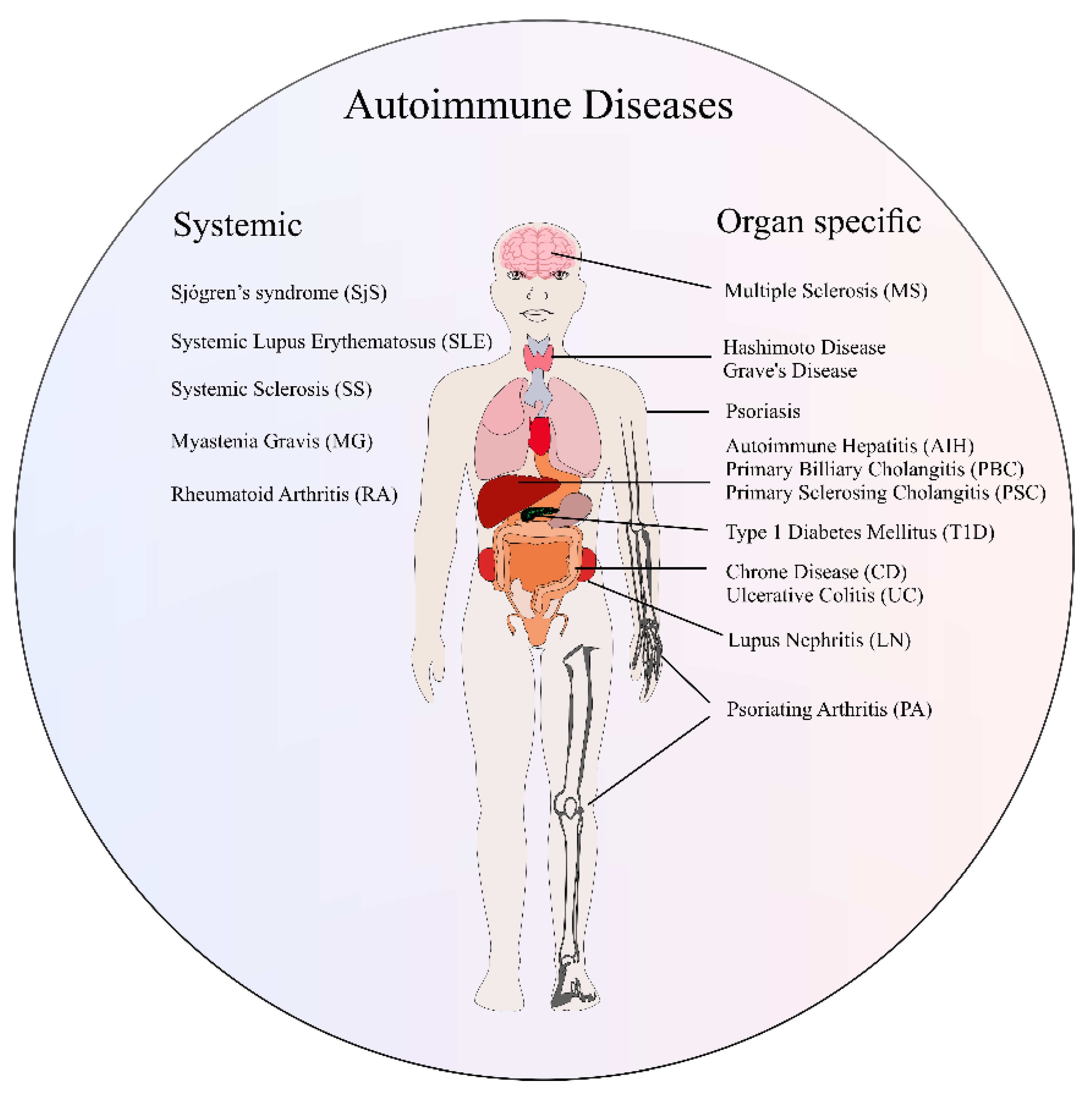
Figure 1. Schematic representation of non-specific (Systemic) and organ-specific AIDs.
Preprints 120235 g001
Figure 2. Graphical representation of basic mechanistic PK and PK/PD models; A) a PBPK model; Q parameters denote blood flow through the organs, K values are tissue to blood partition coefficients for a studied drug; B) an indirect response model; I(Cp) and S(Cp) are stimulatory and inhibitory functions driven by drug concentration in plasma (Cp), Res denote response to a drug, kin is a zero-order production rate constant of Res, and kout is a first-order loss rate constant of Res; C) a biophase distribution model, D denotes intravenous (IV) dose, Cl is a clearance of a drug, ke1 is a first-order distribution rate constant from the central compartment to the biophase, Cp is concentration of a drug in plasma, Ceff is concentration of a drug in biophase that drives an effect of a drug, ke0 is a first-order elimination rate constant of a drug from the biophase; D) a transit compartment model; R is receptor concentration, DR is concentration of drug and receptor complex that drives the effect, τ is a mean transit time of a signal, M1-3 are amounts of a signal in subsequent transit compartments; E) a target-mediated drug disposition model; ksyn is a zero-order receptor synthesis rate constant and kdeg is the first-order degradation rate constant of the receptor, kon and koff are association and dissociation of a drug-receptor complex first-order rate constants and kint is the first-order internalization of the drug-receptor complex rate constant.
Preprints 120235 g002
Table 1. Examples of biomarkers used in diagnosis and monitoring of AIDs.
Biomarker AIDs Application Specificity Ref.
Rheumatoid factor (RF) RA Disease diagnosis Can be present in other diseases or in healthy individuals [26]
Anti-CCP antibody RA Disease classification, prognosis, and staging High specificity [26]
Antinuclear antibody (ANA) SLE Disease classification, prognosis, and staging May also occur in other autoimmune inflammatory diseases [25]
Anti-ssDNA antibody SLE Disease classification, assessment of activity Less specific than anti-dsDNA antibody [25]
Anti-dsDNA antibody SLE Disease classification, disease monitoring, particularly kidney status Specific to SLE [25]
Anti-Sm antibody SLE Disease classification, assessment of lymph node status Specific to SLE [25]
Anti-C1q antibodies SLE Disease monitoring, particularly kidney status May also occur in other autoimmune inflammatory diseases [25]
C3 and C4 SLE Disease classification, monitoring of disease activity May also occur in other autoimmune inflammatory diseases [25]
Anti-β2GP1 antibody APS Disease diagnosis, risk of thrombotic complications Low specificity [27]
aCL antibody APS Disease diagnosis Low specificity [27]
Lupus anticoagulant (LA) APS Disease diagnosis, risk of thrombotic complications High specificity [27]
Anti-SSA and anti-SSB antibodies SjS Diagnosis, pregnancy complication prognosis May also occur in other autoimmune inflammatory diseases [28]
Anti-Scl-70 antibody SS Assessment of risk for complications High specificity [29]
Autoantibodies to insulin (IAA) T1D Disease diagnosis, pathological analysis Specific for patients not treated with exogenous insulin [30]
Tyrosine phosphatase-like protein IA-2 (IA-2A) T1D Disease diagnosis, pathological analysis High specificity [30]
Glutamic acid decarboxylase (GADA) T1D Disease diagnosis, pathological analysis May also occur in other autoimmune diseases [30]
Zinc transporter 8 (ZnT8A) T1D Disease diagnosis, pathological analysis High specificity [30]
Anti-TSHR antibodies GD Disease classification, monitoring of disease activity High specificity [31]
Tumour Necrosis factor (TNF)α RA, AIH Inflammatory marker May also occur in other autoimmune inflammatory diseases [32]
Interleukin (IL)-1β, IL-6, Interferon (IFN)γ, IL-17A RA, AIH Inflammatory marker May also occur in other autoimmune inflammatory diseases [32,33,34,35]
Alanine transaminase (ALT), Aspartate transaminase (AST), γ-glutamyl transpeptidase (GGTP) AIH, PSC, PBC Liver damage biomarkers Non-specific, used in various liver diseases [32,33,34]
CRP RA Marker of inflammation Non-specific, used in many inflammatory conditions [36]
ESR (Erythrocyte Sedimentation Rate) RA Marker of inflammation Non-specific, used in various inflammatory diseases [34]
Table 2. Examples of clinical outcomes used in diagnosis and monitoring of AIDs.
Abbreviation (Expansion) Autoimmune diseases in which it is used Short description
Paw Swelling RA (animal models) Measures inflammation in pre-clinical models of RA, often used to assess anti-inflammatory drug efficacy
BMD (Bone Mineral Density) RA, SLE Measures bone strength, used to assess effects of chronic inflammation and treatments on bone health
IgG (Immunoglobulin G) SLE, RA, other AIDs Measures antibody levels in blood, indicating immune system function and autoantibody presence
SRI(4) (Systemic Lupus Erythematosus Responder Index) SLE Composite index assessing improvements in disease activity in SLE patients
BICLA (British Isles Lupus Assessment Group-based Composite Lupus Assessment) SLE Composite SLE activity measure integrating multiple organ systems
DAS28 (Disease Activity Score - 28 joints) RA Quantifies disease activity by counting swollen/tender joints and inflammatory markers
HAQ (Health Assessment Questionnaire) RA, SLE Measures physical function and disability in patients
Global Pain Score RA, SLE, other AIDs Subjective measure of overall pain intensity
SDAI (Simplified Disease Activity Index) RA Composite score measuring RA disease activity
CDAI (Clinical Disease Activity Index) RA Clinical score measuring RA activity based on affected joint counts and other assessments
HAQ-DI (Health Assessment Questionnaire Disability Index) RA Detailed version of HAQ, measuring disability across multiple functional domains
ACR20/50/70 (American College of Rheumatology 20/50/70 criteria) RA Criteria representing 20%, 50%, or 70% improvement in RAs symptoms
DAS28-CRP (Disease Activity Score (28 joints) with CRP) RA Variation of DAS28 using CRP levels instead of ESR
21-IFNGS (21-gene type I interferon gene signature) SLE Reflects activity of the type I interferon pathway, used in SLA to measure immune dysregulation
Table 3. Examples of pharmacometric approaches used in pre-clinical studies on AIDs.
Authors, year of publication, Ref. Medication (mechanism of action) Disease Modeling approach Main conclusions
Earp, Dubois, Molano, Pyszczynski, Keller, et al., 2008, [35] DEX (corticosteroid) RA PK/PD, DisP The model accurately described disease progression and corticosteroid effects, providing insights into optimal dosing strategies for arthritis treatment
Earp, Dubois, Molano, Pyszczynski, Almon, et al., 2008, [72] DEX RA PK/PD, DisP Lower doses of DEX can effectively suppress key cytokines related to bone erosion, suggesting that optimal dosing can mitigate adverse effects on BMD while controlling inflammation
Earp, Pyszczynski, et al., 2008, [69] DEX RA NCA, PopPK The study concluded that although there was a statistically significant difference in clearance between healthy and arthritic rats, the difference was minor and unlikely to affect DEX disposition meaningfully in arthritic rats
Earp et al., 2009, [70] N/A RA Population DisP model The study concludes that Dark Agouti rats may provide a more dynamic range of edema response than Lewis rats, and the onset time of the disease varies significantly among groups, which should be considered in future studies
Lon et al., 2011, [65] Etanercept (TNFα inhibitor) RA PK/PD/DisP Etanercept modestly reduces paw swelling in CIA rats; potential applicability to other anti-cytokine biologic agents for RA
D. Liu et al., 2011, [68] Anakinra (IL-1 receptor antagonist) RA PK/PD/DisP Anakinra had modest effects on paw edema in CIA rats with effective modeling of PK and paw swelling data
Song and Jusko, 2011, [64] DEX (Corticosteroid) RA Population PK/PD/DisP DEX effectively suppressed paw edema in both sexes; comprehensive evaluation of sex differences in PK and PD
Haselmayer et al., 2016, [76] M2951 (BTK inhibitor) RA, SLE PK/PD BTK occupancy of 60% and 80% is associated with RA and SLE progression inhibition
X. Li, DuBois, Song, et al., 2017, [73] DEX and Naproxen (Corticosteroid and NSAID) RA PK/PD/DisP Additive effects when combining DEX and naproxen were observed; the study showed more pronounced beneficial effects in males
Świerczek et al., 2020, [77] Dual PDE4/7 and Lisofylline (PDE4 inhibitor) RA PK/PD Comparative assessment showed potential of a new PDE7 inhibitor in the treatment of AIDs
Świerczek et al., 2021, [32] Dual PDE4/7 inhibitor AIH PK/PD Mechanistic PK/PD models to assess impact of PDE4/7 inhibition on AIH progression were developed confirming the importance of this mechanism for the alleviation of AIH symptoms
Świerczek, Pomierny, et al., 2022, [78] Cilostazole, rolipram, BRL-50481 (selective PDE3, PDE4, PDE7 inhibitors) AIH PK/PD Selective PDE inhibitors were evaluated as potential medications for AIH with rolipram being the most effective
Świerczek, Pociecha, et al., 2022, [66] Dual PDE4/7 inhibitor MS, RA DisP A novel dual PDE4/7 inhibitor showed efficacy in inhibition of MS progression
Table 4. Examples of pharmacometric approaches used in translation of the results of pre-clinical studies on AIDs into clinical applications.
Authors, year of publication, Ref. Medication (mechanism of action) Disease Modeling approach Main conclusion
Zheng et al., 2011, [82] MTRX1011A (Anti-CD4 mAB, FcRn binding) RA PK/PD N434H mutation did not significantly alter PK/PD relationship; challenges in translating pre-clinical findings to clinical due to variability
Dowty et al., 2014, [81] Tofacitinib (JAK inhibitor) RA PK/PD modeling Efficacy of tofacitinib in RA is driven by its IC50; continuous daily inhibition not required for efficacy
Biliouris et al., 2018, [55] BIIB059 (Anti-BDCA2 mAB) SLE PK/PD modeling with allometric scaling Model predictions matched clinical results; the method aids in selecting safe doses for initial human trials
Wong et al., 2019, [80] Various drugs including indomethacin, methotrexate, etanercept, tofacitinib, and DEX RA PK/PD modeling Improved understanding of dose-efficacy relationships in pre-clinical RA models can enhance translation to clinical settings
Lledo-Garcia et al., 2022, [83] Rozanolixizumab (Anti-FcRn mAB) Various AIDs PopPK/PD modeling Model accurately predicted human responses, aiding in future clinical trial designs
Rajlic et al., 2024, [84] mRNA-6231 (mRNA therapeutic encoding mutein IL-2) Various AIDs KPD modeling Mechanistic KPD model predicted PD response in humans, supporting dose selection for clinical trials
Table 5. Summary of population modeling applications in clinical settings for the treatment of AIDs.
Authors, year of publication, Ref. Drug and mechanism of action Disease studied Modeling approach Conclusion of the study
Yim et al., 2005, [97] Etanercept - TNFα inhibitor Juvenile RA PopPK/PD The popPK model accurately predicted the PK profiles of etanercept in pediatric patients, supporting the feasibility of a once-weekly dosing regimen
Frey, Grange, and Wood-worth, 2010, [49] Tocilizumab - IL-6 receptor antagonist RA PopPK The PK model described the PK characteristics of tocilizumab and identified key covariates, providing insights for optimizing dosing regimens in RA patients
Hu et al., 2011, [53] Golimumab - TNFα inhibitor RA PopPK/PD The model adequately described the PK and PD of golimumab, allowing for broader applications of indirect response models in clinical trials.
Sherwin et al., 2012, [89] Mycophenolate Mofetil (MPM) - Immunosuppressive SLE PopPK The popPK model incorporated complex processes like enterohepatic recycling to aid in individualized dosing for pediatric SLE patients
Ait-Oudhia, Lowe, and Mager, 2012, [33] Canakinumab - IL-1β inhibitor RA PopPK/PD The model linked canakinumab and IL-1β concentrations to clinical outcomes, suggesting that canakinumab improves RA symptoms at 150 mg every 4 weeks
Levi, Grange, and Frey, 2013, [96] Tocilizumab - IL-6 receptor antagonist RA PopPK/PD Tocilizumab effectively reduces DAS28 scores, with a maximum reduction of 5.0 units in males and 4.6 units in females. The presence of neutralizing anti-tocilizumab antibodies did not affect the outcomes
Yang et al., 2015, [91] Multiple drugs - Various immunosuppressants and immunomodulators SLE PopPK and PBPK modeling Individualized and tailored dosing approaches guided by PK algorithms could be safer, more effective, and cost-effective for treating SLE patients
Wojciechowski et al., 2015, [98] Methotrexate, Sulfasalazine, HCQ RA Population DisP modeling Population modeling can help identify patients with poor disease trajectories early, potentially leading to more effective personalized treatment strategies
Diao et al., 2016, [117] Daclizumab - IL-2 receptor antagonist MS PopPK/PD The model showed that daclizumab HYP effectively saturates CD25, expands CD56bright NK cells, and reduces Tregs in MS patients, helping optimize treatment strategies.
Wendt et al., 2017, [123] Insulin and glucagon; Regulation of glucose levels T1D PopPK/PD The PD model accurately simulates glucose levels, aiding in diabetes treatment strategy improvement
C. Li, Shoji, and Beebe, 2018, [52] PF-04236921 - Anti-IL-6 mAB RA, SLE, CD PopPK and popPK/PD The integrated popPK and popPK/PD models can simulate PK and PD profiles under various dosing regimens and patient populations, aiding future clinical studies of anti-IL-6 mABs
Petitcollin et al., 2018, [116] Infliximab - TNFα inhibitor CD PopPK The model could detect an increase in infliximab clearance, allowing early detection of immunization to infliximab, potentially improving treatment outcomes in pediatric Crohn’s disease patients
Berends et al., 2018, [109] Adalimumab - TNFα inhibitor CD PopPK The presence of anti-adalimumab antibodies significantly increased the clearance of adalimumab, and the newly developed model provided a better fit for the data compared to existing models.
Bastida et al., 2019, [34] Tocilizumab - IL-6 receptor antagonist RA PopPK/PD The modeling approach confirmed the need for higher serum drug concentrations to normalize clinical variables compared to inflammatory markers
Xu et al., 2019, [99] Sarilumab - IL-6 receptor antagonist RA PopPK The model accurately described the PK of sarilumab, and no dose adjustment is required based on body weight or other demographics.
Balevic et al., 2019, [106] HCQ - Immunomodulatory Rheumatic Diseases in Pregnancy PopPK Pregnancy significantly increases the volume of distribution of HCQ, but does not affect the clearance or the 24-hour area under the concentration-time curve
Klünder et al., 2019, [118] Upadacitinib - JAK1 inhibitor RA PopPK The model was robust and could adequately describe upadacitinib plasma concentration-time profiles, aiding in optimizing dosing regimens for different patient populations
Akpalu et al., 2019, [111] JNJ-61178104 - Bispecific antibody targeting TNF-α and IL-17A Healthy Subjects PopPK JNJ-61178104 was well-tolerated with no apparent safety concerns, and the model can be used to predict PK behavior and optimize dosing regimens by considering significant covariates like body weight and ADA status
Suleiman, Minocha, et al., 2019, [112] Risankizumab - IL-23 inhibitor Psoriasis PopPK The model can be used to predict risankizumab exposure in different patient populations and to optimize dosing regimens for better therapeutic outcomes in treating moderate to severe plaque psoriasis
Suleiman, Khatri, et al., 2019, [113] Risankizumab - IL-23 inhibitor Psoriasis, CD PopPK The PK of risankizumab was consistent across psoriasis and CD populations after accounting for body weight and baseline albumin differences
X. Yao et al., 2019, [122] Teriflunomide sodium; Modulation of immune response SLE PopPK The PopPK model can support phase II clinical trial design for SLE by accurately describing teriflunomide’s pharmacokinetics
Xiaohui Li, Roy, and Murthy, 2019, [110] Abatacept - T-cell costimulation modulator RA PopPK and popPK/PD The study concluded that abatacept’s effectiveness increases with higher steady-state trough concentrations, with a near-maximal response at 10 mg/mL, supporting the optimization of dosing regimens
Nader et al., 2020, [108] Upadacitinib - JAK1 inhibitor UC, Atopic Dermatitis, RA, CD PopPK The model can be used to predict upadacitinib exposure in different patient populations, aiding in dose selection and optimizing treatment regimens for ulcerative colitis and atopic dermatitis
Scheetz et al., 2020, [114] HCQ - Immunomodulatory SLE PopPK The model helped to predict how long blood HCQ levels would stay above a therapeutic threshold, informing dosing strategies during drug shortages to potentially reduce the risk of disease flares in SLE patients
Xiao Chen et al., 2020, [126] Tacrolimus - Immunosuppressive LN PopPK The popPK model can help optimize tacrolimus dosing in children with SLE, ensuring better treatment outcomes and minimizing side effects
Kang et al., 2020, [101] Adalimumab-adbm - TNFα inhibitor RA PopPK Adalimumab-adbm is pharmacokinetically similar to Humira, and switching from Humira to adalimumab-adbm did not significantly impact adalimumab PK
Romano-Aguilar et al., 2020, [107] Mycophenolic Acid (MPA) - Immunosuppressive LN PopPK Prednisone co-administration significantly increases the clearance of MPA, and this factor should be considered when prescribing MPA to optimize treatment for LN patients
Chan et al., 2020, [124] Fenebrutinib - BTK inhibitor RA PopPK, E-R analysis, Model-Based Meta-analysis (MBMA) MIDD approach with the proposed models can guide dose selection and regimen optimization for fenebrutinib
Zhou et al., 2021, [104] Belimumab - B-lymphocyte stimulator inhibitor SLE PopPK The pharmacokinetics of belimumab were adequately described by the final model, supporting its use in predicting drug exposure in Chinese pediatric patients with SLE
Toyoshima, Shibata, et al., 2021, [127] Peficitinib - JAK inhibitor RA PopPK/PD The models effectively described the treatment response over time, with baseline disease severity correlating with the magnitude of the treatment response, suggesting no need for dose adjustment
Toyoshima, Kaibara, et al., 2021, [102] Peficitinib - JAK inhibitor RA Population E-R The effects of covariates were consistent across both presented models, suggesting their potential application in the development of RA treatments
Monteleone et al., 2021, [120] Eculizumab -Complement component C5 inhibitor MG PopPK The model supports the approved dosing regimen for eculizumab in gMG, ensuring effective and safe treatment
Chia et al., 2022, [121] Anifrolumab - Type I interferon receptor antibody SLE PopPK/PD Higher anifrolumab exposure improves pharmacodynamic responses; the model can optimize dosing regimens
Yan et al., 2022, [105] Inebilizumab - CD19-targeting mAB Neuromyelitis Optica Spectrum Disorder (NMOSD), SS, Relapsing MS PopPK The pharmacokinetics of inebilizumab were well-described by the proposed model, and the model can be used to predict how inebilizumab behaves in different patient populations, helping to optimize dosing regimens and improve treatment outcomes for AIDs
Almquist et al., 2022, [90] Anifrolumab - Anti-IFNAR1 mAB SLE PopPK The model showed that the clearance rate decreased over time, supporting the recommended dosage of 300 mg every 4 weeks for sustained drug levels
Orestis Papa-souliotis et al., 2022, [119] Evobrutinib - BTK inhibitor MS PopPK, popPK/PD The model may be used in the future to simulate alternative dosing regimens and optimize treatment strategies for patients with RMS, ensuring better clinical outcomes
Acharya et al., 2023, [93] Dapirolizumab Pegol - CD40 ligand inhibitor SLE PopPK/PD Dapirolizumab pegol increased the probability of transitioning from “Nonresponder” to “Responder” status, showing a positive exposure-dependent effect
Dimelow, Gil-lespie, and van Maurik, 2023, [92] Belimumab - B-lymphocyte stimulator inhibitor SLE PopPK The study used a combination of Bayesian and maximum likelihood methods to develop and refine models predicting memory B-cell dynamics in patients with SLE
Pitsiu et al., 2023 [94] Atacicept - B-cell stimulating factor and a proliferation-inducing ligand inhibitor SLE PopPK The model accurately described atacicept concentrations and variability, supporting the selection of suitable doses for further clinical development
D. Chen et al., 2023, [103] Tacrolimus - Immunosuppressive MG PopPK/PD The model aids in optimizing tacrolimus dosing regimens and personalizing treatment for different MG patient subpopulations
Morales et al., 2023, [60] Not specified - Disease progression model for T1D T1D DisP model The developed T1D DisP model accurately reflected data from natural history studies and can be used in clinical trial simulations to optimize trial design
Wojciechowski et al., 2023, [115] Ritlecitinib - JAK inhibitor Multiple autoimmune and inflammatory diseases PopPK The model included significant covariates affecting the clearance and absorption parameters of ritlecitinib, and can be used to inform dosing recommendations in clinical drug development
Riva et al., 2023, [125] Rituximab - CD19 B lymphocyte depletion Neurological AIDs PopPK/PD The model can predict CD19 B lymphocyte depletion over time and may be useful for optimizing rituximab treatment in children.
Table 6. Examples of clinical applications of PBPK models in advancing treatment of AIDs.
Authors, year of publication, Ref. Drug and its mechanism of action Disease studied Main conclusion
Machavaram et al., 2013, [130] Simvastatin and cyclosporine; IL-6 mediated suppression of CYP3A4 RA PBPK models can predict drug-drug interactions in RA patients with elevated IL-6 levels
Jiang et al., 2016, [129] Sirukumab; Anti-IL-6 mAB RA The PBPK model captured the modulation effect of IL-6 and sirukumab on CYP enzymes, potentially applicable to other cytokine-neutralizing antibodies
Yellepeddi and Baker, 2019, [132] Aspirin-triggered resolvin D1 (AT-RvD1); Anti-inflammatory SjS PBPK modeling can improve drug development and clinical trial design by predicting AT-RvD1 pharmacokinetics
Tse et al., 2020, [128] Tofacitinib; Janus kinase (JAK) inhibitor General analysis PBPK model using Simcyp is reliable for predicting drug interactions and special populations dosing
Alqahtani et al., 2023, [131] HCQ; Immunomodulatory and anti-inflammatory RA, SLE PBPK model predicted HCQ pharmacokinetics and supported dose adjustments in liver and kidney disease patients
Disclaimer/Publisher’s Note: The statements, opinions and data contained in all publications are solely those of the individual author(s) and contributor(s) and not of MDPI and/or the editor(s). MDPI and/or the editor(s) disclaim responsibility for any injury to people or property resulting from any ideas, methods, instructions or products referred to in the content.
Copyright: This open access article is published under a Creative Commons CC BY 4.0 license, which permit the free download, distribution, and reuse, provided that the author and preprint are cited in any reuse.
Prerpints.org logo

Preprints.org is a free preprint server supported by MDPI in Basel, Switzerland.

Subscribe

Disclaimer

Terms of Use

Privacy Policy

Privacy Settings

© 2025 MDPI (Basel, Switzerland) unless otherwise stated