

Submitted:
30 September 2024
Posted:
30 September 2024
You are already at the latest version
Abstract
Many natural areas are colonised by the invasive species Ailanthus altissima. Its presence in natural ecosystems damages the ecological richness while competing with native flora. A. altissima is one of the most widespread weed species in natural areas of temperate regions such as conservation parks, archaeological sites and communication corridors. Not many active ingredients are available to control this weed, being the most popular, the glyphosate, banned by many municipalities. In order to test the efficacy of alternative active ingredients, naturally occurring populations in Collserola Conservation Park of Barcelona (Catalonia, Spain) were treated with different herbicides using three different techniques. Aclonifen, metribuzin, flazasulfuron, metsulfuron-methyl, fluroxypyr, isoxaflutole + thiencarbazone-methyl and triclopyr mixed with 2.4-D, fluroxypyr, aminopyralid and clopyralid, were applied by stem injection, cut stump injection or basal bark techniques against trees of around 5 cm diameter. Both cut stump and stem injection gave almost total control of the trees while basal bark showed more varied results depending on the herbicide. Best control was achieved when flazasulfuron or triclopyr were present as active ingredients and poorer control was observed when using metsulfuron-methyl or isoxaflutole + thiencarbazone-methyl. Aclonifen showed no damage to the trees. Metribuzin worked better if the cut stump injection technique was used. These results showed that several alternatives are available to the use of glyphosate which is been banned for some uses due to environmental concerns.
Keywords:
ailanthus altissima
; herbicide
; weed control
; invasive plant
; fluroxypyr
; triclopyr
; flazasulfuron
; metsulfuron-methyl
; 2.4-D
; aminopyralid
; clopyralid
; isoxaflutole
; thiencarbazone-methyl
; aclonifen
; metribuzin
1. Introduction
Ailanthus altissima (Mill.) Swingle is an invasive plant that occurs in many countries [1]. It is a dioecious species that belongs to the family Simaroubaceae and has both sexual and vegetative reproduction. Female trees can produce a large quantity of samara fruit-type each year [2] which can be transported by wind. Additionally, it has high capacity for root sprouting [3], with a well-developed root system that, once it is established, is very difficult to remove. Apparently separated individuals can be connected along 27 meters by the same root system [4]. Its competitive behaviour is enhanced by the presence of quassinoid ailanthone, an allelopathic compound with herbicidal activity [5]. Considering these biological traits, a correct strategy should be well defined before carrying out an eradication plan to avoid further spread of the tree.
A. altissima is frequently found near transportation corridors [6] and in disturbed and urban areas [7,8]. Management of this weed using different methods such as biological, mechanical, chemical or combinations of them are used [9,10,11]. Biological control can be done by injecting into the trunk a dilution of Verticillium nonalfalfae [12] or with the Coleoptera Eucryptorrhynchus brandti and E. chinensis, which in China feed from natural populations of A. altissima trees [13] and in the United States they showed high specificity to A. altissima [14,15] and were capable of transmitting V. nonalfalfae in laboratory conditions [16]. Mechanical control can be carried out by cutting or pulling out the tree and its roots [10,17,18], but cutting or disturbing the area promotes vegetative re-growth [19,20,21]. Mechanical control is frequently followed by chemical control with herbicide [10,20].
Chemical control by means of herbicides has demonstrated to be more effective than mechanical control alone [11,17,22,23,24]. Chemical control can be carried out by means of different techniques such as stem injection, basal bark, cut stump or foliar spray. Stem injection is done by either drilling the trunk and filling each hole with the herbicide [22], injecting solid capsules containing the herbicide into the trunk [25] or by hack-and-squirt which consist in applying the herbicide into cuts done with a hack [23]. Basal bark consists on applying herbicides over the lower part of the trunk [20]. Cut stump consists on either spraying, using a paintbrush or drilling the stump [11,20,26]. Foliar spray means spraying the herbicide over the aerial part [27].
The herbicides used in chemical control must have high phloem translocation in order to reach the root system and avoid plant root sprouting. Active ingredients such as glyphosate, 2.4-D, fluroxypyr, triclopyr, clopyralid, metsulfuron-methyl or flazasulfuron are systemic herbicides with phloem translocation [28,29]. Glyphosate has been widely used against A. altissima with mortalities ranging from 90% to total control [22,23,30]. Metsulfuron-methyl [31], aminopyralid + fluroxypyr [20] and triclopyr alone [17,23] or combined with fluroxypyr [20] are also used to control natural populations although apparently, they do not reach total control. Injection of triclopyr capsules showed low mortality rates [32], but basal bark applications with an oil showed total mortality [17,24]. Nowadays, in certain locations triclopyr alone and glyphosate are restricted and some new commercial mixtures containing triclopyr seem not to show complete mortality [20]. New trials are required to evaluate the efficacy of triclopyr mixtures. Fluroxypyr alone has been found to be effective for another root-suckering plant, Harungana madagascariensis [33], but no data for A. altissima is available. Moreover, in the literature no data were found for new active ingredients such as metribuzin, aclonifen, isoxaflutole + thiencarbazone-methyl, fluroxypyr alone or flazasulfuron.
As A. altissima is a typical weed of non-cropped land, potential environmental impacts should be considered when controlling natural populations with herbicides. For example, it has been reported that after basal bark applications of aminopyralid and triclopyr against Prunus padus, soil residues of those herbicides originating from root exudates of treated plants were found potentially threatening the natural surrounding flora [34]. Similarly, triclopyr residues were detected in soil near treated areas after basal bark applications [35]. Glyphosate applications injected to Leucaena leucocephala left soil residues that were considered to come from either root exudates or death falling leaves [36]. Due to the potential existence of root exudates and the persistence of the active ingredients in the soil, the rate of degradation in the soil should be considered in order to avoid damage to the environment or to non-target plants [34].
As mentioned above, the restrictions on the use of some active ingredients such as triclopyr and glyphosate by some municipalities [37] demands to find new active ingredients effective. New candidates must have a high phloem transport rate and be applied with the most effective technique. Moreover, the high sprout capacity of A. altissima requires a long-term follow up of the results of the application as some studies found that one year later plant density did not decrease [10] or even increased [11,20] compared to the starting point. This study has been able to check the mortality of the trees between two and up to five years after treatment (from 2019 to 2024).
The objectives of this study are, therefore, to i) find the best season for the treatment (autumn or summer), ii) find the most efficient herbicide application technique (stem injection, cut stump injection or basal bark) and, iii) Long-term follow-up test of the efficacy of different active ingredients.
2. Materials and Methods
2.1. Study Site
The study was carried out from 2019 to 2022 in the southern slope of the Conservation Park of Serra de Collserola in Catalonia in Northeastern of Spain (Figure 1a), in the Northwest of Barcelona (Figure 1b). The Park covers 8,300 hectares, with A. altissima being present in 40 of them. This metropolitan park has the presence of several invasive species such as Arundo donax, Agave americana, Opuntia ficus-indica, Pennisetum villosumi, Robinia pseudoacacia or A. altissima, being the later highly spread. The proximity of the city of Barcelona favours biological invasions of species escaped from private gardens and transport corridors that cross this forest favour their dispersion. A factor that facilitates the spread of A. altissima is the continuous maintenance of roads and railways by mechanical weed control that promotes resprouting. The area has Mediterranean climate conditions with a mean annual temperature of 15.5 °C and an average of 553 mm of precipitation during the last nine years [38]. Climate conditions during the study are shown in Figure 2.
2.2. Experimental Design and Sampling
The area with the experimental plots was located at around 270 meters above sea level. Each plot comprised an area of approximately 2 x 2 m with 10 trees of 5 cm diameter measured at 1 m above ground level. Herbicide treatments were applied at different moments: November 2019, June and September 2020 and October 2021 and 2022. Each treatment had three replicates, and plots were separated at least 10 meters to avoid cross-mortality. The herbicides, techniques and doses are shown in Table 1. The trial in 2020 aimed to determine if autumn applications were better than summer ones to control the tree, as suggested by the literature [20,39]. Based on the results obtained, all the subsequent experiments were conducted in autumn.
The techniques used to apply the herbicides were stem injection, cut stump injection and basal bark. Stem injection consisted of making four holes in the stem of the plant at 4 cm above ground level with an 8 mm drill bit and injecting 2.5 ml per hole of the herbicide solution with a syringe. Cut stump injection consisted of cutting the plant at 4 cm above ground level and injecting immediately after plant felling 2.5 ml per hole of herbicide solution with a syringe in four holes done in the stump with an 8 mm drill bit. Basal bark consisted of painting with the herbicide solution the first 100 cm of the basal part of the plant with a paintbrush. Control trees (untreated plants) for each technique had the same procedures as described above but water was applied instead of the herbicide solution.
Efficacy of the treatments was determined by monitoring three times per year the state of the tree (dead or alive), in spring (April), summer (June) and autumn (September), starting the observations the next season after the treatment and all ending in June 2024. A tree with a green bud in the stem or in the stump was considered alive.
2.3. Statistical Analyses
2.3.1. Season Efficacy
In order to determine the best season to carry out the treatments, in 2020, three active ingredients (metribuzin, triclopyr + fluroxypyr and triclopyr + aminopyralid) were applied at the same rate with the same technique, stem injection, in summer (June) and autumn (October). These herbicides were selected in order to obtain data about their efficacy on A. altissima, because not much information is available from them about A. altissima control. The mortality rate of the seasons was analysed using a generalized linear model (GLM) with a Tukey test to find significant differences (p ≤ 0.05).
2.3.2. Application Technique Efficacy
For the study of the most efficient technique, several herbicides were applied using the three techniques: stem injection, cut stump injection and basal bark, simultaneously. The efficacy of the technique was analysed by conducting a GLM test. GLM allows working with values including 0 and 100% and considers the differences in data size contained in each group. To define significant differences, a Tukey test was conducted as mean separation procedure (p ≤ 0.05). Only metribuzin was tested with stem injection and cut stump injection technique (see Table 1).
2.3.3. Active Ingredient Efficacy
The efficacy of the herbicides was evaluated in all experiments and analysed by conducting a GLM test on the mortality rate observed considering the technique. To define significant differences, a Tukey test was carried out (p ≤ 0.05). In a preliminary analysis of all data, year and repetitions showed not to be significant.
3. Results
3.1. Best Season for Treatments
Significantly higher mortality (p = 0.028) was achieved in autumn (mean=93.3%, SD=16.6) compared to summer (mean=75.3%, SD=33.2), no matter the herbicide applied (Figure 3a). By herbicides, triclopyr mixtures showed complete mortality in both seasons (mean=100, SD=0) although the mixture with fluroxypyr applied in summer did not reach 100% (mean=91.6%, SD=14.4). Metribuzin, showed significant less efficacy than triclopyr mixtures, although the efficacy was better in autumn (mean=80%, SD=26.4) than summer (mean=34.3%, SD=19.1). All herbicides showed significant best efficacy than the untreated plots (p ≤ 0.05) (Figure 3b). According to these results and the literature [20,30,40], all subsequent experiments and analyses were conducted with herbicides applied in autumn.
3.2. Application Technique
When comparing the efficacies of each technique using the same herbicide, significant differences were observed between techniques (p < 0.05) and among the herbicides used (p < 0.05). Cut stump reached the best efficacy (mean=100%, SD=0) although it did not differ significantly from stem injection (mean=95.4%, SD=11.4). Basal bark showed the poorest efficacy (mean=79%, SD=35.6) (Figure 4).
All herbicides showed similar high efficacy (near 100% mortality) when applied with the cut stump injection or stem injection techniques (Figure 5). Basal bark showed the poorer results. It must be highlighted that the metribuzin stem injection (mean=80%, SD=26.4) and isoxaflutole + thiencarbazone-methyl applied with basal bark showed no efficacy (mean=0, SD=0). Some mortality of untreated trees was observed (mean=31.6%, SD=21.2) with cut stump injection produced by the own cut, with no resprouts afterwards.
3.3. Active Ingredient Efficacy
The results of the efficacy of the different active ingredients, seasons and application techniques are shown in Table 2. Significant differences in efficacy were observed between herbicides (p < 0.05) and herbicides by technique (p < 0.05), as explained above.
2.4-D + triclopyr at a rate 75% and triclopyr + aminopyralid at rate 60% were the best herbicides, showing total mortality independent of the technique used (mean=100%, SD=0). Clopyralid + triclopyr at rate 80% achieved total mortality with cut stump and stem injection and high global mortality pooling all techniques (mean=97.7%, SD=4.4). Fluroxypyr diluted at 75% showed complete mortality of the plants with cut stump injection, and although stem injection and basal did not reached 100% efficacy (98 and 83.3% mortality respectively), their results did not differ significantly from cut stump injection. Flazasulfuron, with no significant differences among techniques, showed total mortality with both cut stump injection and stem injection. Isoxaflutole + thiencarbazone-methyl at rate 75% achieved total mortality for cut stump injection, followed by stem injection; however, no damage was observed in the trees when applied with the basal bark technique. This herbicide also gave the poorest efficacy of all herbicides (mean=62.2% and SD=47.3, pooling the three techniques). Metsulfuron-methyl at rate 10% had total mortality for cut stump injection and stem injection and although the mortality was lower when applied with basal bark, but with a high mean mortality for the three techniques (mean=93.3%, SD=16.5), the differences were not significant. Metribuzin at 80% was only applied with cut stump (mean mortality = 100%) and stem injection (mean=80%, SD=26.4) and in both techniques the mortality was high as well as the pooled mortality of the herbicide (mean=90%, SD=13.2).
In untreated plots, mortality of trees was low as expected. Only cut stump injection showed certain mortality on the plants (mean=31.6%, SD=25.2). Cutting trees seems that can damage them, although an increase in sprouting is expected.
There were certain herbicides that were applied at different rate in the trials than those reported till now which results have not been shown but they give relevant information about the efficacy of different application rates of the same herbicide. Triclopyr (9%) + fluroxypyr (3%) applied using stem injection during November 2019 at rates of 1 and 10% and the lower rate did not damage the trees; only certain mortality was observed at 10% (mean=74%, SD=25.1). Metribuzin (60%) diluted at 40% was applied in November 2019 and the mortality observed five years after the treatment was weaker (mean=73%, SD=30.3) than the results described for the rate of 80%. Fluroxypyr (20%) alone at rate 50% was applied in September 2020 and the mortality observed four years after treatment was complete (mean=100%, SD=0) as it was for the 75% rate. Triclopyr (24%) + aminopyralid (3%) was applied at rate 80% by stem injection in June 2020 and mortality was complete (mean=100%, SD=0) four years after of treatment.
Moreover, aclonifen (60%) at rate 40% was applied with stem injection in autumn 2019, but no damage to the trees was observed (mean=0%, SD=0). This active ingredient has few mobility inside plants [41] and it was discarded for future evaluations.
4. Discussion
4.1. Best Season for Treatment Efficacy
The efficacy of the treatments was higher when the herbicide was applied in autumn, with complete control in many cases, than in summer. This higher efficacy in autumn is confirmed by the fact that woody species are generally better controlled when plants translocate the reserves to the root, for winter storage, and not to the shoots as occurs in spring or summer [39]. Similar findings were obtained for treatments against A. altissima in September [17] and October [23], while no or very poor mortality was found when treatments were carried out in summer [22]. However, the dose may play an important role in the efficacy because other authors almost had total control in summer by the cut stump technique [31].
4.2. Efficacy of the Applied Techniques
Application of the herbicides by cut stump injection in trees of around 5 cm-diameter showed the best efficiency, similar to the findings of other authors [10,20]. Cut stump treatments remove the aerial part of the plant making the herbicide to remain near the root system which is particularly important in this weed due to its high resprouting capacity. Some studies have applied the herbicide by spraying on the stump, also with good results [23]
The lowest efficacy was observed in the basal bark applications which can be attributed to the lack of penetration of the herbicide through the bark. The herbicide solution was applied without oil or surfactants that help the herbicide to penetrate the bark [17,24]. Basal bark applications are expected to have lower effectiveness the thicker the bark of the plant is. Several studies found that basal bark treatments had almost total mortality for trees with diameters up to 10 cm [24,25], while for bigger trees (11-18 cm diameter) the mortality decreased to 50% [20]. Consequently, this technique would be most appropriate for plants with small diameters, less than 5 cm, because its bark will be thinner, and the herbicide will penetrate more easily. Furthermore, in thinner plants will be more difficult to make holes to inject the herbicide. For medium diameters (around 10 cm maximum) the three techniques may work well, and the selection will be determined by the means available.
Treatments over other species with bigger diameters, cut stump treatment had a few resprouts for the root-suckering tree Fraxinus angustifolia (19 cm basal diameter) depending on the active ingredient [42]. Cut stump and basal bark treatments were effective, showing high mortality for the resprouting tree Triadica sebifera [40] with 13.7 cm basal diameter.
Another factor to be considered when controlling weeds in natural environments is the cost of control. As treatments must be selective to avoid off-side movements that can damage non-target plants, foliar spraying is not feasible. This means that the treatments must be done tree by tree and manually, which is very time-consuming and expensive. It has been estimated that injection or basal bark treatments against A. altissima can be 15 times more expensive than foliar applications [43] and strategies that include up to three consecutive applications can be effective but very expensive [44], although the major costs, selective treatments such as stem injection and basal bark are respectful techniques for non-target plants [45].
4.3. Best Active Ingredient
Flazasulfuron and mixtures containing triclopyr showed the best efficacy in controlling the tree, no matter the technique used. Flazasulfuron had total mortality for cut stump injection and stem injection and also good results applied by basal bark, which indicates that it can be a good alternative to glyphosate indepentdently of the technique, for at least against the plants of 5 cm that were evaluated. This is the first report of flazasulfuron as an herbicide against A. altissima and further studies are recommended to evaluate its efficacy on trees of different diameters and rates.
We used triclopyr ester form and we found that triclopyr with 2.4-D, clopyralid or aminopyralid showed total mortality for cut stump injection, and a mortality rate higher than 90% for basal bark in autumn treatments; however, another study found that triclopyr (salt form) + fluroxypyr or aminopyralid + fluroxypyr diluted at 10% V/V herbicide/water and similar diameters for cut stump treatments almost total control was achieved three years after treatment, while mortality decreased for basal bark treatments in bigger diameters (11-18 cm) [20]. Triclopyr ester form penetrates better and is more toxic for plants than salts forms, which cannot easily penetrate the plant cuticle and are recommended to be applied over cut stumps [9]. The effectiveness of herbicides can be conditioned by the temperature. We applied triclopyr + fluroxypyr in summer and autumn, achieving total mortality in autumn (October 2021), with mean monthly temperature of 16.75 °C, and a mortality rate of 91.6% in summer (June 2020) with a mean monthly temperature of 19.37 °C [38], furthermore, ester forms of triclopyr are found to be more effective at cooler temperatures because they are highly volatile [9]. High effectivity of triclopyr found in our work and by the above-mentioned studies could be explained for its demonstrated translocation ability. Studies of foliar applications of triclopyr in species such as Parthenocissus quinquefolia [46], Prosopis juliflora seedlings [47] and 15-month-old plants of Rhododendron maximum [48] found this active ingredient in the roots.
Fluroxypyr showed high efficacy although it decreased when applied by basal bark. Different to our findings, treatments over the resprouting tree Triadica sebifera found that fluroxypyr had better results than triclopyr with basal bark treatments [40], and total control was achieved for either fluroxypyr or triclopyr over Celtis Sinensis trees with basal bark treatments [49]. There are some reports saying that fluroxypyr translocation can be affected by weather conditions. For example, [52] found that the wetter is the soil the higher the mortality for Kochia scoparia and [50] found that fluroxypyr translocation was favoured at 18°C and decreased at 24°C; however, [51] found no difference of the absorption of fluroxypyr for the same temperatures. In our experiments, we did not find a significant different efficacy when applied by stem injection in two separate years, September 2020 (mean mortality=96%, SD =4.2) and October 2021 (mean=98%, SD =4.4), despite weather conditions differed during the next month after each treatment (mean air temperature was 14.4°C in September 2020 and 12.9°C in October 2021; accumulated pluviometry was 19.2 l/m2 in September 2020 and 87.8 l/m2 in October 2021).
Contrarily to other studies, we found that metsulfuron-methyl applied with both cut stump and stem injection showed complete mortality in treated trees, while a lower mortality (96%) was reported for cut stump treatments [31], probably explained because those trees had bigger diameters (up to 36 cm), the application was in summer and not autumn and the rate was 10.6 g ai/L instead of our 20g ai/L. However, these results confirm the importance of the season and the dose applied in the final outcome.
The basal bark application of isoxaflutole + thiencarbazone-methyl showed no mortality of trees. This is one of the herbicides in which the application technique matters. For this herbicide, only cut stump injections should be considered as it seems that its active ingredients do not have capacity to penetrate through the bark of the stems.
Doses applied in our experiments were chosen according to previous studies. The triclopyr rates were based on other triclopyr (48%) works [17,23,24]. For metsulfuron-methyl we rely on the positive results found on the study of [31], and for the other active ingredients, rates were adapted to apply to each tree a similar amount of active ingredient than that of triclopyr. Probably for the herbicides with complete efficacy, lowering the rates is feasible, particularly if an oil carrier is added. Further studies are required to find the lowest efficient rate of these herbicides taking into account the size of the trees.
Conclusions
Autumn was the best season to control A. altissima with herbicides because during this period of the year the descendent movement of the sap in the plant facilitates its translocation to the root system, completely killing the individual.
Cut stump injection was the best technique for the evaluated active ingredients, being the mixtures of triclopyr with 2.4-D and aminopyralid the best mixtures to control the weed, no matter technique used. Several other herbicides showed complete control with cut stump and/or stem injection while basal bark failed with some active ingredients. Although these herbicides demonstrated complete control over A. altissima, the addition of oil or surfactant into the solution may improve its efficacy, allowing lower the doses. Further studies are encouraged, testing lower doses and its efficacy on trees of different diameter in order to find the optimal parameters for the herbicide applications and develop sustainable management programs for natural ecosystems. There are alternatives to glyphosate available in order to control A. altissima.
Authors Contribution
Conceptualization, J.S.C.; writing—original draft preparation, J.S.C.; writing—review and editing, J.S.C. and J.I.F.; visualization, J.S.C. and J.I.F.; supervision, J.I.F.; project administration, J.I.F. All authors have read and agreed to the published version of the manuscript.
Funding
This research received no external funding.
Data Availability Statement
The data presented in this study are available on request from the corresponding author.
Acknowledgments
We are grateful to Joan Vilamú (Head of the Department of Natural Environment and Territory of the Conservation Park of Serra de Collserola) for facilitating the development of the trials. We also thank the herbicide manufacturers (Corteva, Bayer, UPL, Nufarm and Ascenza) for providing the herbicides used in all trials.
Conflicts of Interest
The authors declare no conflicts of interest.
References
- Weber, E.; Gut, D. Assessing the risk of potentially invasive plant species in central Europe. J. Nat. Conserv. 2004, 12, 171–179.
- Evans, C.W.; Moorhead, D.J.; Bargeron, C.T.; Douce, G.K. Invasive Plant Responses to Silvicultural Practices in the South; the University of Georgia Bugwood Network: Tifton, GA, USA, 2006.
- Miller, J.H. Ailanthus altissima (Mill.) Swingle. Ailanthus. Silv. N. Am. 1990, 2, 101–104.
- Howard, J.L. Ailanthus altissima. In Fire Effects Information System; US Department of Agriculture, Forest Service, Rocky Mountain Research Station, Fire Sciences Laboratory (Producer): Fort Collins, CO, USA. 2004.
- Heisey, R.M. Identification of an allelopathic compound from Ailanthus altissima (Simaroubaceae) and characterization of its herbicidal activity. Am. J. Bot. 1996, 83, 192–200.
- Kowarik, I.; Saumel, I. Biological Flora of Central Europe: Ailanthus altissima (Mill.) Swingle. Perspect. Plant Ecol. Evol. Syst. 2007, 8, 207–237.
- Martin, P.; Canham, C. Dispersal and recruitment limitation in native versus exotic tree species: Life-history strategies and janzen-connell effects. Oikos. 2010, 119, 807–824.
- Wagner, S.G.K.; Moser, D.G.K.; Franz Essl, F. Urban rivers as dispersal corridors: Which factors are important for the spread of alien woody species along the Danube?. Sustainability. 2020, 12, 2185.
- Tu, Mandy & Hurd, Callie & Randall, John & Conservancy, The. Weed Control Methods Handbook: Tools & Techniques for Use in Natural Areas. All U.S. Government Documents (Utah Regional Depository). 2001.
- Meloche, C.; Murphy, S.D. Managing Tree-of-Heaven (Ailanthus altissima) in Parks and Protected Areas: A Case Study of Rondeau Provincial Park (Ontario, Canada). Environ. Manag. 2006, 37, 764–772.
- Constán-Nava, S.; Bonet, A.; Pastor, E.; Lledó, J. Long-term control of the invasive tree Ailanthus altissima: Insights from Mediterranean protected forests. For. Ecol. Manag. 2010, 260, 1058–1064.
- Kasson, M.T.; Short, D.P.; O’Neal, E.S.; Subbarao, K.V.; Davis, D.D. Comparative pathogenicity, biocontrol efficacy, and multilocus sequence typing of Verticillium nonalfalfae from the invasive Ailanthus altissima and other hosts. Phytopathology. 2014, 104, 282–292.
- Ding, J., Wu, Y., Zheng, H., Fu,W., Reardon, R and Liu, M. Assessing potential biological control of the invasive plant, tree-of-heaven, Ailanthus altissima. Biocontrol Sci. Technol. 2006, 16, 547–566.
- Herrick, N.J.; McAvoy, T.J.; Zedaker, S.M.; Salom, S.M.; Kok, L.T. Site characteristics of Leitneria floridana (Leitneriaceae) as related to potential biological control of the invasive Tree-of-heaven, Ailanthus altissima. Phytoneuron. 2011, 27, 1–10.
- Herrick, N.J.; Mcavoy, T.J.; Snyder, A.L.; Salom, S.M.; Kok, L.T. Host-range testing of Eucryptorrhynchus brandti (Coleoptera: Curculionidae), a candidate for biological control of Tree-of-heaven, Ailanthus altissima. Environ. Entomol. 2012, 41, 118–124.
- Snyder, A.L.; Salom, S.M.; Kok, L.T.; Griffin, G.J.; Davis, D.D. Assessing Eucryptorrhynchus brandti (Coleoptera: Curculionidae) as a potential carrier for Verticillium nonalfalfae (Phyllachorales). Biocontrol Sci. Technol. 2012, 22, 1005–1019.
- Burch, P.; Zedaker, S. Removing the invasive tree Ailanthus altissima and restoring natural cover. J. Arboric. 2003, 29, 18–24.
- Young, C.; Bell, J.; Morrison, L. Long-term treatment leads to reduction of tree-of-heaven (Ailanthus altissima) populations in the Buffalo National River. Invasive Plant Sci. Manag. 2020, 13, 276–281.
- Hu, S.Y. Ailanthus. Arnoldia. 1979, 39, 29–50.
- Fogliatto, S.; Milan, M.; Vidotto, F. Control of Ailanthus altissima using cut stump and basal bark herbicide applications in an eighteenth-century fortress. Weed Res. 2020, 60, 425–434.
- Sladonja, B.; Sušek, M.; Guillermic, J. Review on invasive Tree of Heaven (Ailanthus altissima (Mill.) Swingle) conflicting values: Assessment of its ecosystem services and potential biological threat. Environ. Manag. 2015, 56, 1009–1034.
- Venegas, T.J.; Pérez, P.C. Análisis y optimización de técnicas de eliminación de especies vegetales invasoras en medios forestales de Andalucía. In Proceedings of the V Congreso Forestal Espanol, Ávila, Spain, 21–25 September. 2009. S.E.C.F-Junta de Castilla y León, Ed..
- DiTomaso, J.; Kyser, G. Control of Ailanthus altissima using stem herbicide application techniques. Arboric. Urban For. 2007, 33, 55–63.
- Bowker, D.; Stringer, J. Efficacy of herbicide treatments for controlling residual sprouting of tree-of-heaven. In Proceedings of the 17th Central Hardwood Forest Conference, Lexington, KY, USA, 5–7 April 2010; Fei, S., Lhotka, J., Stringer, J., Gottschalk, K., Miller, G., Eds.; Gen; Tech. Rep. NRS-P-78. U.S. Department of Agriculture, Forest Service, Northern Research Station: Newtown Square, PA, USA, 2011; pp. 128–133.
- Eck, W.; McGill, D. Testing the Efficacy of Triclopyr and Imazapir Using Two Application Methods for Controlling Tree-of-Heaven along a West Virginia Highway; e-Gen. Tech. Rep. SRS-101; U.S. Department of Agriculture, Forest Service, Southern Research Station: Asheville, NC, USA, 2007, 163–168.
- S, Jordi., S, Laura, I, Jordi and V, Joan. Control y capacidad de rebrote de «Ailanthus altissima». A: Congreso de la Sociedad Española de Malherbología. “Actas del XVII Congreso de la Sociedad Española de Malherbología”. 2019, 408-413.
- Sălceanu, C., Olaru, L.A., Popescu, C.V., Dobre, M., & Gonta Sună, L.M. Foliar and stem chemical control of the invasive species Ailanthus altissima from pastures. “Annals of the University of Craiova - Agriculture, Montanology,Cadastre Series “. 2020, 51, 103-11.
- H.B, Richard., C, Keith and A.E Avis. Physicochemical aspects of phloem translocation of herbicides. Weed Science. 1990, 38, 305-314.
- M, Grădilă and D, Jalobă. Efficacy of post-emergence herbicide flazulfuron for weed management in stone fruit orchards. Journal of International Scientific Publications. 2020, 8, 71-80.
- E, Badalamenti and T, La Mantia. Stem-injection of herbicide for control of Ailanthus altissima (Mill.) Swingle: a practical source of power for drilling holes in stems. iForest - Biogeosciences and Forestry. 2013, 6, 133–136.
- J.M, Johnson, An Evaluation of Application Timing and Herbicides to Control Ailanthus altissima. Master’s Thesis, The Pennsylvania State University, The Graduate School College of Agricultural Sciences, University Park, PA, USA. 2011.
- C.L, Kevin. Control techniques and management implications for the invasive Ailanthus altissima (tree of heaven). Master thesis, College of Arts and Sciences of Ohio University, OH, USA. 2007.
- V, Joseph and P, Van Haaren. Chemical control of harungana (Hurungana madagascariensis) shrubs in Queensland. Plant Protection Quarterly. 2001, 16, 41-43.
- Graziano, G., Tomco, P., Seefeldtm S., Mulder, CPH and Redman, Z. Herbicides in unexpected places: non-target impacts from tree root exudation of aminopyralid and triclopyr following basal bark treatments of invasive chokecherry (Prunus padus) in Alaska. Weed Science. 2022, 70, 706–714.
- H, Katherine., A.M, Berry. Evaluation of off-target effects due to basal bark treatment for control of invasive fig trees (Ficus carica). Invasive plant science and management. 2009, 2, 345-351.
- R.F, Chen., H.H, W and C.Y Wang. Translocation and metabolism of injected glyphosate in lead tree (Leucaena leucocephala). Weed Science. 2009, 57, 229-234.
- Gerència d’Ecologia Urbana i Àrea d’Ecologia, Urbanisme i Mobilitat; Barcelona. Mesura de govern per aplicar l’eradicació de l’ús de Glifosat en els espais verds i la via pública municipals de Barcelona. http://hdl.handle.net/11703/97350. 2016.
- Ruralcat. Available online: https://ruralcat.gencat.cat/agrometeo.estacions (accessed on 28/08/2024).
- EPPO. PM 9/29 Ailanthus altissima. OEPP/EPPO Bull. 2020, 50, 148–155.
- S, Enloe., N, Loewenstein., D, Streett and D, Lauer. Herbicide treatment and application method influence root sprouting in chinese tallowtree (Triadica sebifera). Invasive Plant Science and Management. 2015, 8, 160-168.
- F, Sicbaldi., A.S, Gian., T, Marco and A.M, A. Root uptake and xylem translocation of pesticides from different chemical classes. Pestic. Sci. 1997, 50, 111-119.
- T.M, Dugdal., T.D, Hunt., and D, Clements. Controlling desert ash (Fraxinus angustifolia subsp. angustifolia): have we found the silver bullet? In: 19th Australasian Weeds Conference - Science, Community and Food Security: the Weed Challenge. Tasmanian Weed Society, September 1-4, Hobart, Tasmania, Australia. 2014, 190-193.
- D, Jones., G, Bruce., M, Fowler., R, Law-Cooper., I, Graham., A, Abel., F, Street-Perrott and D, Eastwood. Optimising physiochemical control of invasive Japanese knotweed. Biological Invasions. 2018, 20, 2091-2105.
- M.A. Weaver., C.D, Boyette and R.E, Hoagland. Rapid kudzu eradication and switchgrass establishment through herbicide, bioherbicide and integrated programmes. Biocontrol Science and Technology. 2016, 26, 640–650.
- S.R, Oneto., G.B, Kyser and J.M DiTomaso. Efficacy of mechanical and herbicide control methods for Scotch Broom (Cytisus scoparius) and cost analysis of chemical control options. Invasive Plant Science and Management. 2010, 3, 421–428.
- T, Tworkoski., R, Young and J, Sterrett. Control of Virginia Creeper (Parthenocissus quinquefolia): Effects of carrier volume on toxicity and distribution of triclopyr. Weed Technology. 1988, 2, 31-35.
- R.W, Bovey., H, Hugo and R.E, Meyer. Absorption and translocation of triclopyr in Honey mesquite (Prosopis juliflora var. glandulosa). Weed Science. 1983, 31, 807–812.
- E, Derya., & J, Meral and Z, Shepard. Foliar absorption and translocation of herbicides with different surfactants in Rhododendron maximum L. Floriculture, ornamental and plant biotechnology: advances and topical issues (1st Edition). 2006, 2, 422-320.
- T.R, Amstrong and S.L, Keegan. Celtis sinensis and its control. In: 11th Australian Weeds Conference Proceedings, September 30 – October 3, Melbourne, Victoria, Australia. 1996, 504-505.
- Mark D. Lubbers, Phillip W. Stahlman, and Kassim Al-Khatib. Fluroxypyr efficacy is affected by relative humidity and soil moisture. Weed Science. 2007, 55, 260-263.
- M.C, Katheryn and G.L, Rodney. Influence of temperature on 14C-sulfometuron and 14C-fluroxypyr absorption and translocation in leafy spurge. Leafy Spurge Symposium. Bozeman, MT. July 12- 13. 1989, 34-35.
- G.L, Rodney. Fluroxypyr absorption and translocation in leafy spurge (Euphorbia Esula). Weed Science. 1992, 40, 101–105.
Figure 1.
Location of Catalonia (a) and the Conservation Park of Serra de Collserola (b), where the experimental plots were set up.
Figure 1.
Location of Catalonia (a) and the Conservation Park of Serra de Collserola (b), where the experimental plots were set up.
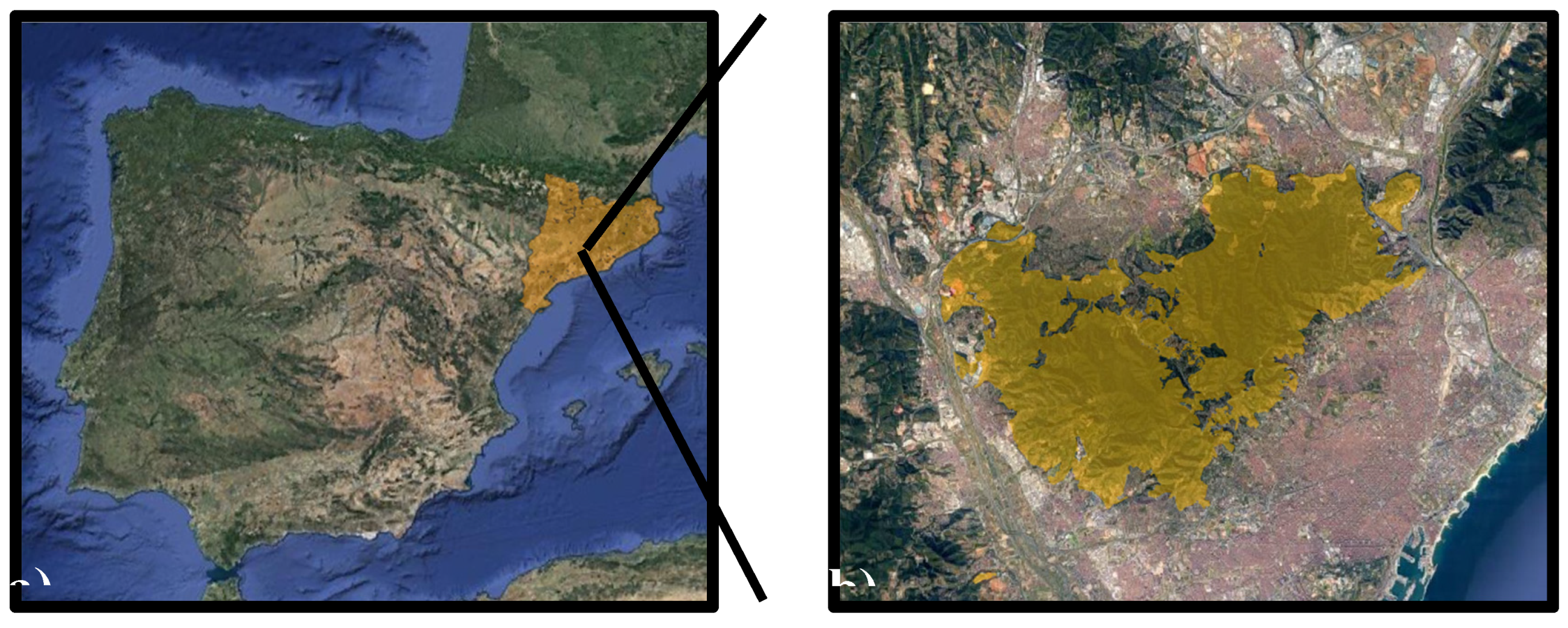
Figure 2.
Monthly mean air temperature and precipitation during the experiments, from November 2019 until June 2024, in Barcelona (Catalonia, Spain).
Figure 2.
Monthly mean air temperature and precipitation during the experiments, from November 2019 until June 2024, in Barcelona (Catalonia, Spain).
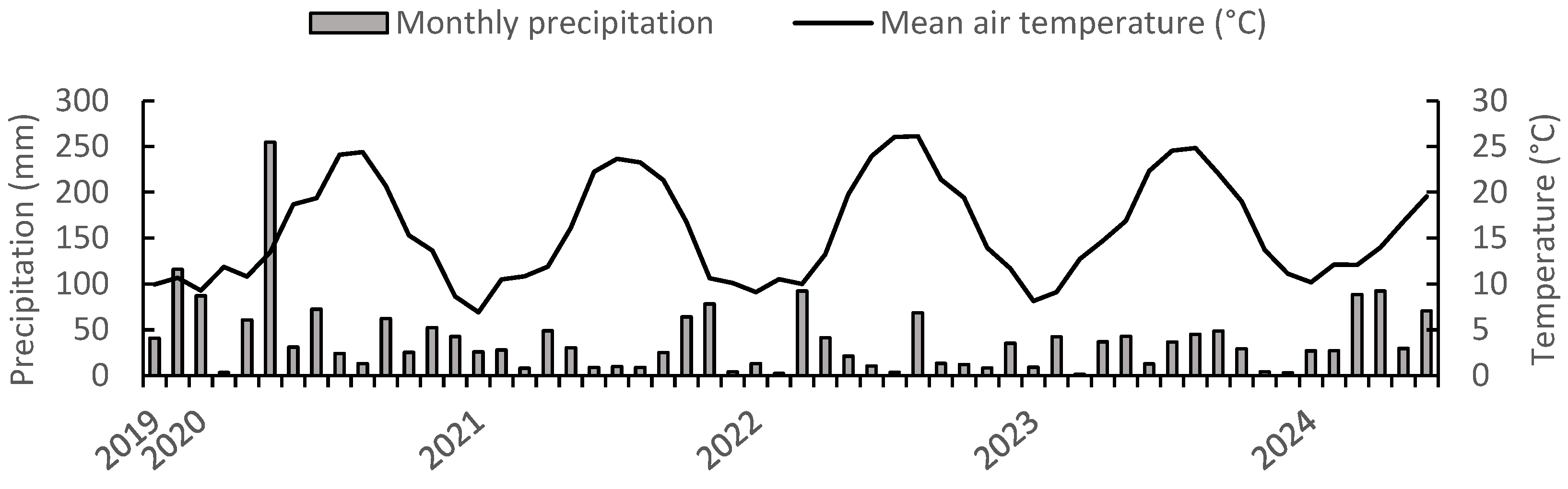
Figure 3.
Mortality (%) at last count (June 2024) of A. altissima trees of 5 cm diameter treated in autumn (October 2021) and summer (June 2020) by stem injection with metribuzin (MZ), triclopyr + aminopyralid (T + A), and triclopyr + fluroxypyr (T + F). Values with the same letters are not significantly different according to the Tukey test (p ≤ 0.05). Bars represent the standard errors of the means.
Figure 3.
Mortality (%) at last count (June 2024) of A. altissima trees of 5 cm diameter treated in autumn (October 2021) and summer (June 2020) by stem injection with metribuzin (MZ), triclopyr + aminopyralid (T + A), and triclopyr + fluroxypyr (T + F). Values with the same letters are not significantly different according to the Tukey test (p ≤ 0.05). Bars represent the standard errors of the means.
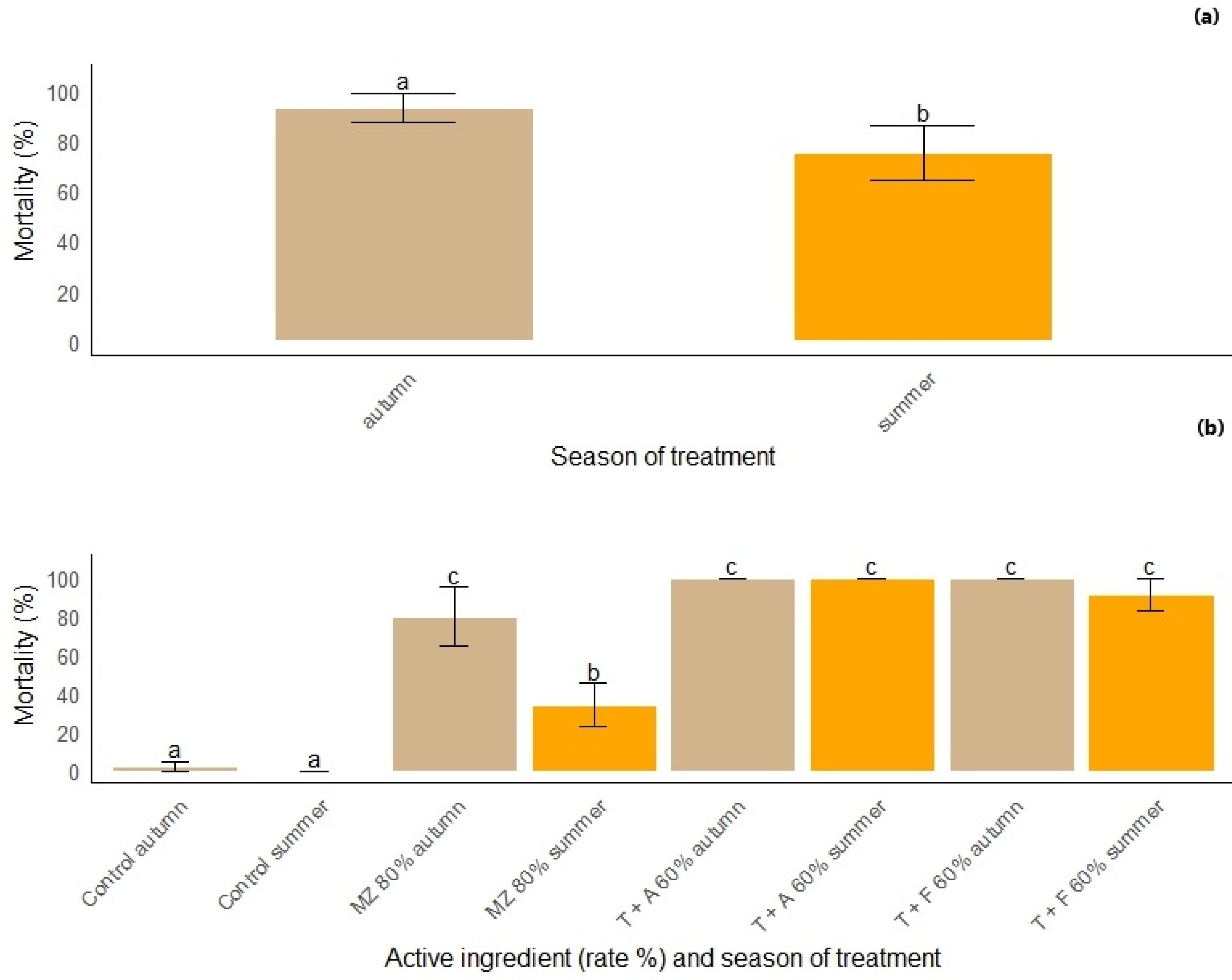
Figure 4.
Mortality (%) at last count (June 2024) of A. altissima trees of 5 cm diameter according to the technique applied (basal bark, cut stump injection and stem injection) and treated during autumn (October) 2021 and 2022. Values with the same letters are not significantly different according to the Tukey test at p ≤ 0.05. Bars represent the standard errors of the means.
Figure 4.
Mortality (%) at last count (June 2024) of A. altissima trees of 5 cm diameter according to the technique applied (basal bark, cut stump injection and stem injection) and treated during autumn (October) 2021 and 2022. Values with the same letters are not significantly different according to the Tukey test at p ≤ 0.05. Bars represent the standard errors of the means.
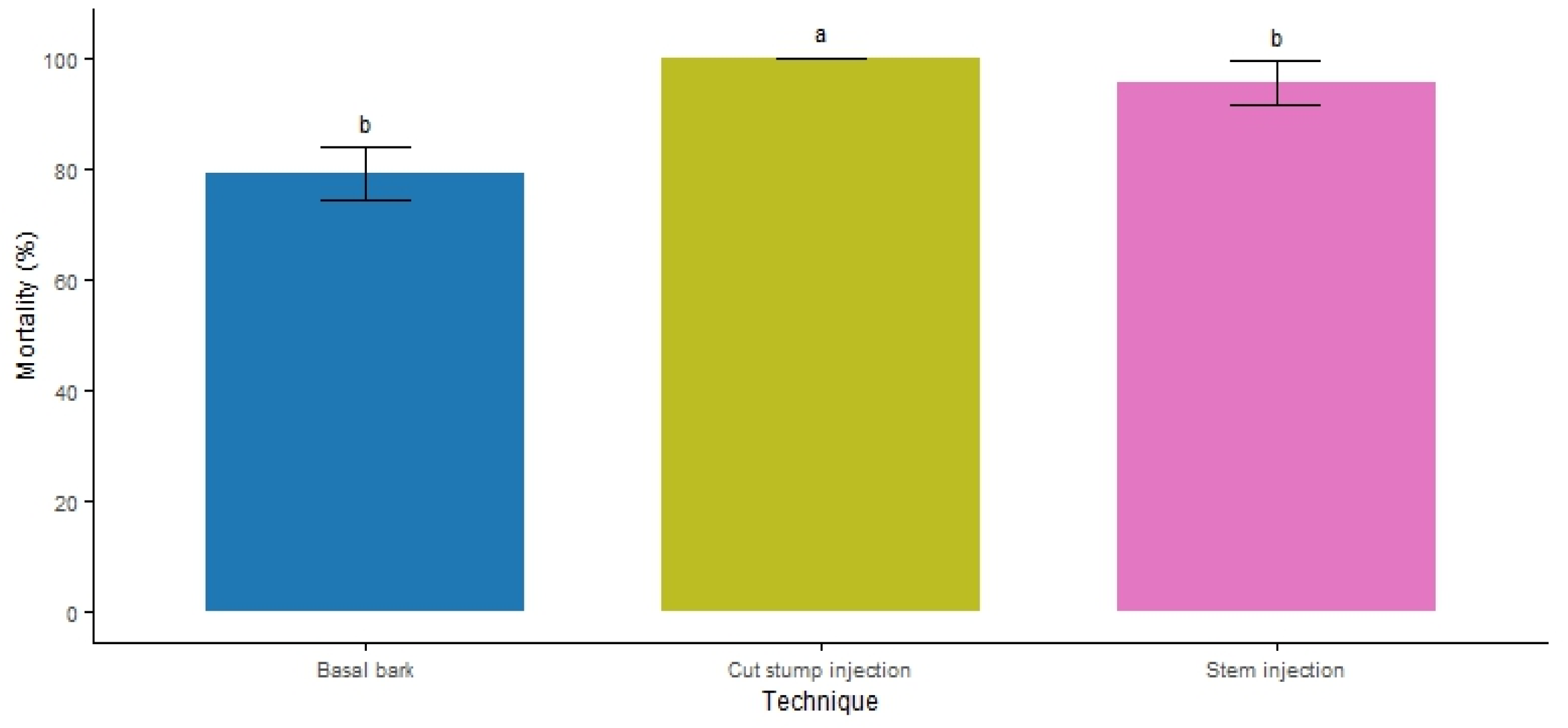
Figure 5.
Mortality (%) at last count (June 2024) of A. altissima trees of 5 cm diameter treated with different techniques (BB-Basal bark; CuT- Cut stump injection; ST-Stem injection) in autumn (October) 2021 and 2022. Values with the same letters are not significantly different according to the Tukey test at p ≤ 0.05. Bars represent the standard errors of the means. T + F (triclopyr 90 g L-1 + fluroxypyr 30 g L-1); T + A (triclopyr 240 g L-1 + aminopyralid 30 g L-1); MS (metsulfuron-methyl 200 g Kg-); MZ (metribuzin 600 g L-1; I + TZ (isoxaflutole 225 g L-1 + thiencarbazone-methyl 90 g L-1; FX (fluroxypyr 200 g L-1); FZ (flazasulfuron 250 g Kg); C + T (clopyralid 60 g L-1 + triclopyr 240 g L-1; 2.4-D + T (2.4-D 93 g L-1 + triclopyr 103.6 g L-1 ).
Figure 5.
Mortality (%) at last count (June 2024) of A. altissima trees of 5 cm diameter treated with different techniques (BB-Basal bark; CuT- Cut stump injection; ST-Stem injection) in autumn (October) 2021 and 2022. Values with the same letters are not significantly different according to the Tukey test at p ≤ 0.05. Bars represent the standard errors of the means. T + F (triclopyr 90 g L-1 + fluroxypyr 30 g L-1); T + A (triclopyr 240 g L-1 + aminopyralid 30 g L-1); MS (metsulfuron-methyl 200 g Kg-); MZ (metribuzin 600 g L-1; I + TZ (isoxaflutole 225 g L-1 + thiencarbazone-methyl 90 g L-1; FX (fluroxypyr 200 g L-1); FZ (flazasulfuron 250 g Kg); C + T (clopyralid 60 g L-1 + triclopyr 240 g L-1; 2.4-D + T (2.4-D 93 g L-1 + triclopyr 103.6 g L-1 ).
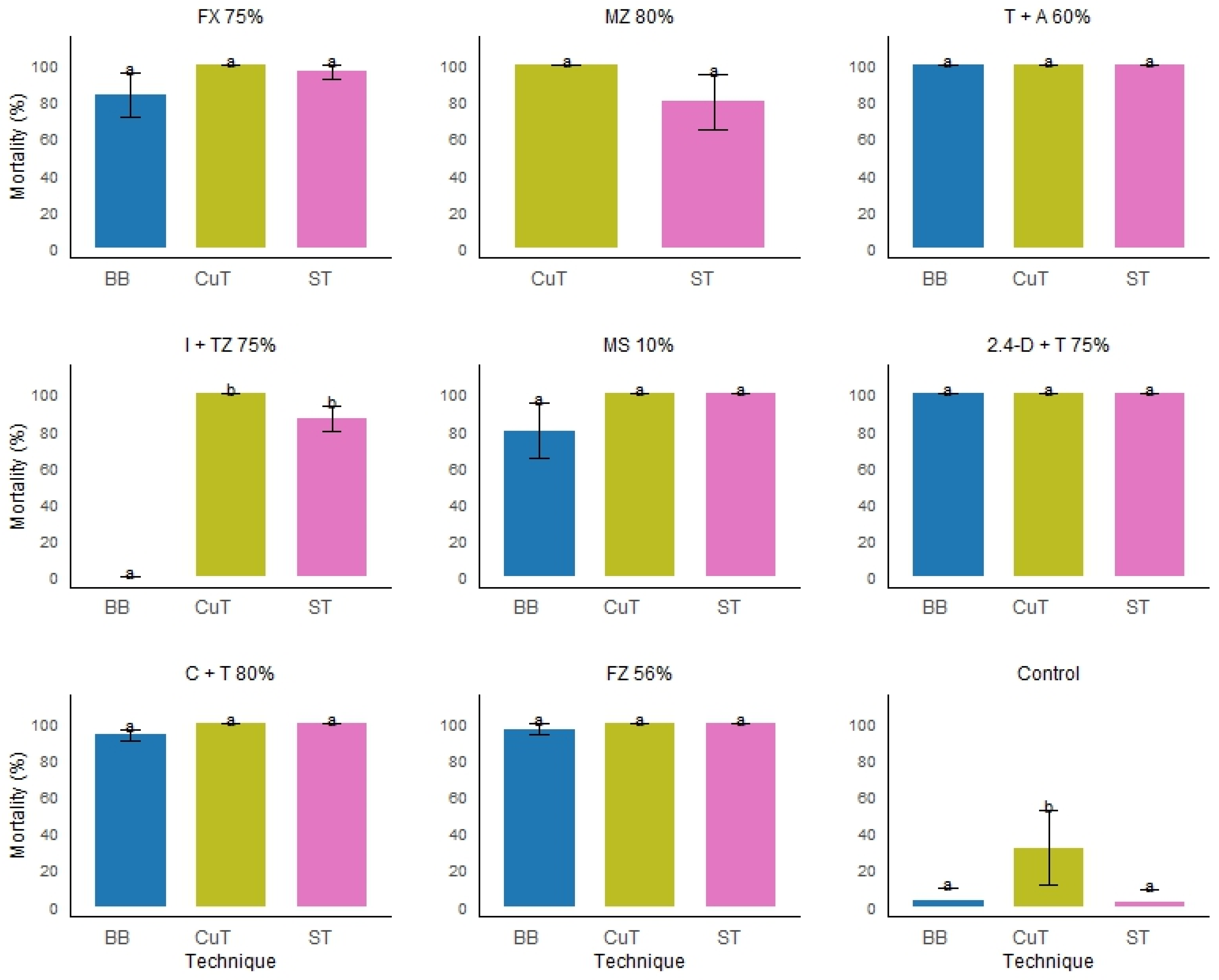

Table 1.
Summary of the treatments: the application technique, the season and year, the active ingredient with the commercial name and brand in brackets, the rate of dilution of the herbicide in water V/V herbicide/water and the amount of active ingredient applied per tree*.
Table 1.
Summary of the treatments: the application technique, the season and year, the active ingredient with the commercial name and brand in brackets, the rate of dilution of the herbicide in water V/V herbicide/water and the amount of active ingredient applied per tree*.
| Technique | Season | Year | Active ingredient | Rate V/V (%) | *Ai (ml or g) tree-1 |
|---|---|---|---|---|---|
| basal bark |
autumn |
2021 | clopyralid 60 g L-1 + triclopyr 240 g L-1 (Silvanet, Corteva) | 80 | 0.5+1.9 |
| fluroxypyr 200 g L-1 (Starane 20, Corteva) | 75 | 1.5 | |||
| triclopyr 240 g L-1 + aminopyralid 30 g L-1 (Tordon Star, Corteva) | 60 | 1.4+0.2 | |||
| 2022 | 2.4-D 93 g L-1 + triclopyr 103.6 g L-1 (Genozone zx, UPL) | 75 | 0.7+0.78 | ||
| flazasulfuron 250 g Kg-1 (Register 25, Ascenza) | 56 | 1.40 | |||
| isoxaflutole 225 g L-1 + thiencarbazone-methyl 90 g L-1 (Adengo, Bayer) | 75 | 1.69+0.68 | |||
| metsulfuron-methyl 200 g Kg-1 (Racing, Nufarm) | 10 | 0.2 | |||
| cut stump injection |
autumn |
2021 | clopyralid 60 g L-1 + triclopyr 240 g L-1 (Silvanet, Corteva) | 80 | 0.5+1.9 |
| fluroxypyr 200 g L-1 (Starane 20, Corteva) | 75 | 1.5 | |||
| metribuzin 600 g L-1 (Sencor Liquid, Bayer) | 80 | 4.8 | |||
| triclopyr 240 g L-1 + aminopyralid 30 g L-1 (Tordon Star, Corteva) | 60 | 1.4+0.2 | |||
| 2022 | 2.4-D 93 g L-1 + triclopyr 103.6 g L-1 (Genozone zx, UPL) | 75 | 0.7+0.78 | ||
| flazasulfuron 250 g Kg-1 (Register 25, Ascenza) | 56 | 1.40 | |||
| isoxaflutole 225 g L-1 + thiencarbazone-methyl 90 g L-1 (Adengo, Bayer) | 75 | 1.69+0.68 | |||
| metsulfuron-methyl 200 g Kg-1 (Racing, Nufarm) | 10 | 0.2 | |||
| stem injection | autumn |
2019 | aclonifen 600 g L-1 (Challenge, Bayer) | 40 | 2.3 |
| metribuzin 600 g L-1 (Sencor Liquid, Bayer) | 40 | 2.3 | |||
| triclopyr 90 g L-1 + fluroxypyr 30 g L-1 (Garlon GS, Corteva) | 1 | 0.009+0.003 | |||
| 10 | 0.09+0.03 | ||||
| 2020 | fluroxypyr 200 g L-1 (Starane 20, Corteva) | 50 | 0.7 | ||
| 75 | 1.3 | ||||
| 2021 | 2.4-D 93 g L-1 + triclopyr 103.6 g L-1 (Genozone zx, UPL) | 75 | 0.7+0.78 | ||
| clopyralid 60 g L-1 + triclopyr 240 g L-1 (Silvanet, Corteva) | 80 | 0.5+1.9 | |||
| fluroxypyr 200 g L-1 (Starane 20, Corteva) | 75 | 1.5 | |||
| metribuzin 600 g L-1 (Sencor Liquid, Bayer) | 80 | 3.2 | |||
| triclopyr 240 g L-1 + aminopyralid 30 g L-1 (Tordon Star, Corteva) | 60 | 1.3+0.2 | |||
| triclopyr 90 g L-1 + fluroxypyr 30 g L-1 (Garlon GS, Corteva) | 60 | 0.54+0.18 | |||
| 2022 |
2.4-D 93 g L-1 + triclopyr 103.6 g L-1 (Genozone zx, UPL) | 75 | 0.7+0.78 | ||
| flazasulfuron 250 g Kg-1 (Register 25, Ascenza) | 56 | 1.40 | |||
| isoxaflutole 225 g L-1 + thiencarbazone-methyl 90 g L-1 (Adengo, Bayer) | 75 | 1.69+0.68 | |||
| metsulfuron-methyl 200 g Kg-1 (Racing, Nufarm) | 10 | 0.2 | |||
| summer | 2020 | metribuzin 600 g L-1 (Sencor Liquid, Bayer) | 80 | 4.8 | |
| triclopyr 90 g L-1 + fluroxypyr 30 g L-1 (Garlon GS, Corteva) | 60 | 0.4+0.1 | |||
| triclopyr 240 g L-1 + aminopyralid 30 g L-1 (Tordon Star, Corteva) | 60 | 1.3+0.2 | |||
| 80 | 1.7+0.2 |
Table 2.
Mortality at last count (June 2024), for treatments during autumn (September 2020 and October 2021 and 2022), standard deviation (SD) and *significance p≤0.05 of the different active ingredients including water (control) applied to the trees with all techniques evaluated.
Table 2.
Mortality at last count (June 2024), for treatments during autumn (September 2020 and October 2021 and 2022), standard deviation (SD) and *significance p≤0.05 of the different active ingredients including water (control) applied to the trees with all techniques evaluated.
| Active ingredient | Rate (%) | Technique | Mortality (%)* | SD |
|---|---|---|---|---|
| 2.4-D + triclopyr | 75 | Basal bark | 100a* | 0 |
| Stem injection | 100a | 0 | ||
| Cut stump injection | 100a | 0 | ||
| clopyralid + triclopyr | 80 | Basal bark | 93.3a | 5.7 |
| Stem injection | 100a | 0 | ||
| Cut stump injection | 100a | 0 | ||
| fluroxypyr | 75 | Basal bark | 83.3a | 20.8 |
| Stem injection | 98a | 4.4 | ||
| Cut stump injection | 100a | 0 | ||
| flazasulfuron | 56 | Basal bark | 96.6a | 5.7 |
| Stem injection | 100a | 0 | ||
| Cut stump injection | 100a | 0 | ||
| isoxaflutole + thiencarbazone-methyl | 75 | Basal bark | 0a | 0 |
| Stem injection | 86.6b | 11.5 | ||
| Cut stump injection | 100b | 0 | ||
| metsulfuron-methyl | 10 | Basal bark | 80a | 26.4 |
| Stem injection | 100a | 0 | ||
| Cut stump injection | 100a | 0 | ||
| metribuzin | 80 | Stem injection | 80a | 26.4 |
| Cut stump injection | 100a | 0 | ||
| triclopyr + aminopyralid | 60 | Basal bark | 100a | 0 |
| Stem injection | 100a | 0 | ||
| Cut stump injection | 100a | 0 | ||
| Control (water) |
100 |
Basal bark | 3.3a | 5.7 |
| Stem injection | 2.5a | 4.3 | ||
| Cut stump injection | 31.6b | 25.2 |
Disclaimer/Publisher’s Note: The statements, opinions and data contained in all publications are solely those of the individual author(s) and contributor(s) and not of MDPI and/or the editor(s). MDPI and/or the editor(s) disclaim responsibility for any injury to people or property resulting from any ideas, methods, instructions or products referred to in the content. |
© 2024 by the authors. Licensee MDPI, Basel, Switzerland. This article is an open access article distributed under the terms and conditions of the Creative Commons Attribution (CC BY) license (http://creativecommons.org/licenses/by/4.0/).
Copyright: This open access article is published under a Creative Commons CC BY 4.0 license, which permit the free download, distribution, and reuse, provided that the author and preprint are cited in any reuse.


