

Submitted:
28 September 2024
Posted:
30 September 2024
You are already at the latest version
Abstract
As Ambeth Ocampo poignantly states, "The past is not dead; it is not even past." In an era where globalization threatens to homogenize distinct cultural identities, the challenge of preserving the rich tapestry of Filipino cultural heritage becomes paramount. This article investigates the dynamic continuum of Filipino cultural identity, shaped by historical influences and contemporary global interactions. It employs theories of cultural hybridity, transnationalism, and identity to examine the interplay between tradition and modernity, revealing how Filipino culture navigates this complex landscape. Through a detailed analysis of traditional practices, modern adaptations, and the impacts of globalization and the COVID-19 pandemic, the study highlights the resilience and adaptability of Filipino cultural expressions. It further explores intergenerational perspectives on cultural preservation, the role of the diaspora in cultural exchange, and the emergence of new cultural forms in urban settings. By evaluating ongoing efforts to celebrate and preserve Filipino heritage, this paper emphasizes the necessity of recognizing both historical roots and contemporary realities. Ultimately, it issues a call to action for a collective commitment to the celebration and preservation of Filipino cultural heritage, underscoring its vital role in fostering identity and community in an increasingly interconnected world.
Keywords:
continuum of Filipino cultural identity
; Globalized and Post-Pandemic World
; Tradition and Change
I. Introduction
Navigating the complexities of cultural identity can feel like trying to dance gracefully on a tightrope—one misstep and you might find yourself tumbling into a sea of confusion. The Filipino cultural identity, however, exists as a dynamic continuum, continuously shaped by historical influences and contemporary global interactions (Sawyer, 1900; Zaide, 1999; Illán, 2020). This article argues that this identity demonstrates remarkable resilience and adaptability while maintaining deep connections to tradition (Hall, 2013; Romulo, 2012).
To achieve a thorough understanding of this continuum, the article sets forth three key objectives: first, to explore how traditional Filipino practices are maintained and transformed within a modern context (Battad, 2008; Wendt, 1998); second, to analyze the impact of globalization and the post-pandemic landscape on cultural identity (Hannerz, 2012; Vertovec, 2009); and third, to highlight ongoing efforts aimed at preserving Filipino heritage in an ever-evolving world (Rodil, 1993; March, 1899).
The analysis is grounded in the concepts of cultural hybridity, identity, and transnationalism. Homi K. Bhabha (1994) introduced the idea of cultural hybridity, emphasizing how identities are formed in the interstices of different cultures, allowing for a blend of influences that shape individual and collective identities (Kroeber, 1918). Stuart Hall (1990) further elaborated on cultural identity, suggesting that it is not a fixed essence but rather a process influenced by history and power dynamics. Steven Vertovec (2009) discussed transnationalism, highlighting how globalization facilitates cross-border interactions that continuously reshape cultural identities. These frameworks provide a lens through which to examine the intersections of tradition and modernity within the Filipino cultural landscape, illustrating how historical and contemporary forces interact to create a rich tapestry of identity (Ness, 1992; Hannerz, 2012).
Studying the evolution of Filipino cultural identity is critical for appreciating its richness and diversity, especially in the context of globalization and cultural exchange (Rodil, 1993; Wendt, 1998). This understanding fosters greater appreciation for how cultural identities are constructed and transformed, revealing the resilience of traditions amid external influences (Hall, 2013; Battad, 2008).
This article will delve into various aspects of Filipino cultural identity, covering the historical context that shaped it, traditional practices that persist, and modern adaptations that reflect contemporary realities. It will analyze the role of globalization and the post-pandemic landscape in redefining cultural norms, explore intergenerational perspectives on identity, and highlight preservation efforts aimed at sustaining Filipino heritage. After all, in a world that constantly evolves, embracing the complexities of cultural identity is not just an academic exercise; it’s a reminder that, much like a good story, our identities are woven from myriad threads—each one essential to the fabric of who we are.
II. Historical Context
The Philippines boasts a rich and complex colonial history that has profoundly shaped its cultural identity. This history can be understood through three primary influences: Spanish, American, and other colonial impacts.
A. Brief Overview of the Philippines’ Colonial History
- 1.
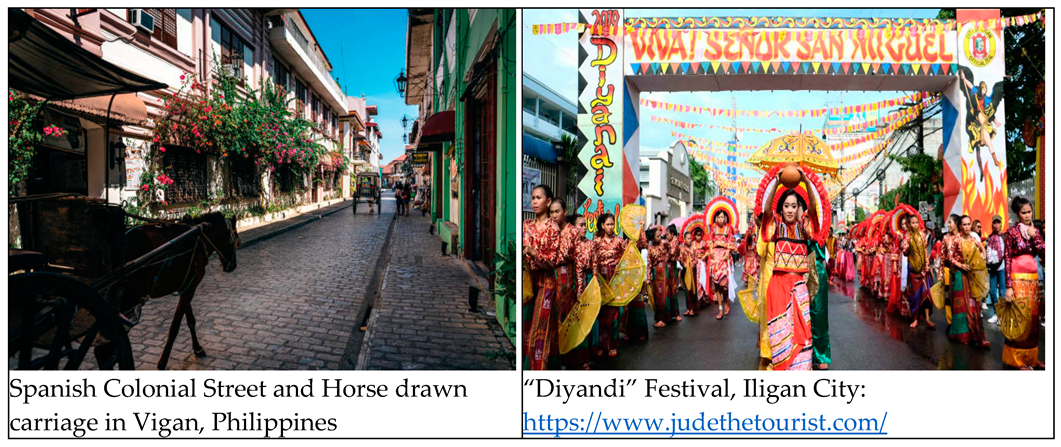
- Spanish Influence: The Spanish colonization of the Philippines began in 1565 and lasted for over three centuries. This period introduced Christianity, particularly Catholicism, which remains a dominant religion in the country today (Francia, 2010). Spanish rule established colonial governance and introduced new agricultural practices, while the Spanish language and culture became interwoven with Filipino society. Festivals, culinary traditions, and architectural styles, such as baroque churches, reflect this enduring influence (Agoncillo, 1990; Ocampo, 2012).
- 2.
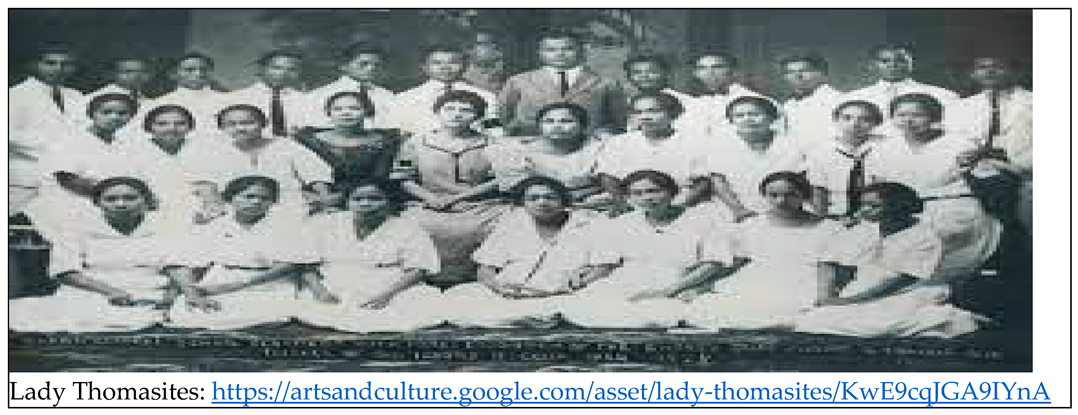
- American Influence: Following the Spanish-American War in 1898, the United States took control of the Philippines, introducing a new set of cultural dynamics. The American period saw the establishment of a public education system, which promoted English as the medium of instruction and significantly shaped Filipino literacy and media (Pacquiao, 2008). American pop culture, including music, fashion, and governance styles, permeated Filipino life, contributing to a unique blend of local and Western practices that continue to evolve today (Roces, 1994; CuUnjieng Aboitiz, 2019).
- 3.
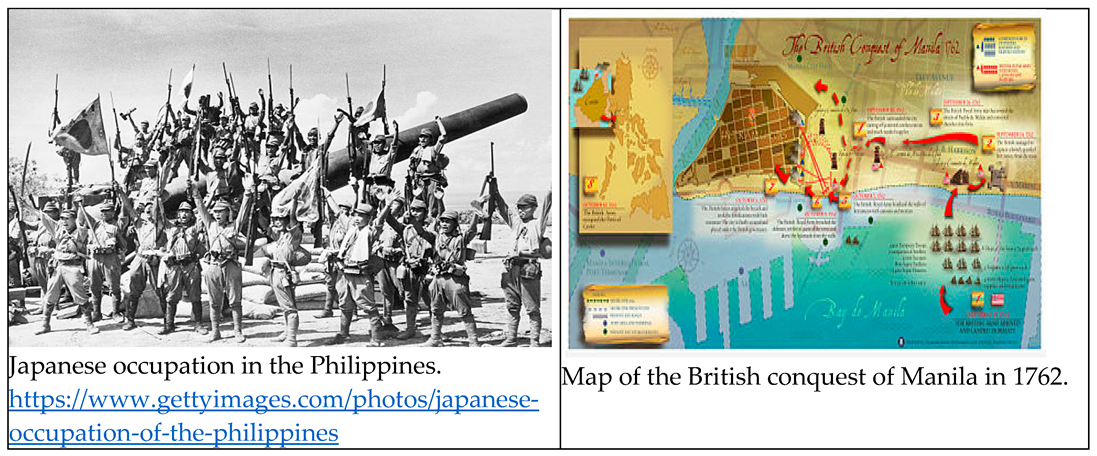
- Other Colonial Impacts: In addition to Spanish and American influences, other colonial powers, such as the British and the Japanese, also left their mark on the Philippines. The brief British occupation in the 18th century introduced new trade dynamics, while the Japanese occupation during World War II brought significant hardship and resistance movements that further galvanized Filipino national identity (Jocano, 1998; Ulindang, 2021; Gallop, 2022).
B. Formation of a Diverse Cultural Landscape
These colonial experiences collectively forged a diverse cultural landscape in the Philippines, characterized by a rich tapestry of traditions, languages, and practices. The blending of indigenous, Spanish, and American elements has resulted in a unique Filipino identity that celebrates its multicultural roots (Bernad, 1971; Francia, 2010). Regional variations further enhance this diversity, with each area contributing distinct customs, dialects, and artistic expressions that reflect both local and historical influences (Ocampo, 2012; Pacquiao, 2008). Additionally, the interplay of various cultures continues to influence Filipino literature and identity, highlighting the complexity and depth of this heritage (Roces, 1994; Jocano, 1998). Thus, the Philippines stands as a testament to resilience, as its people navigate and embrace the complexities of their multifaceted cultural heritage.
III. Cultural Diversity within the Philippines
The Philippines is renowned for its rich cultural diversity, stemming from a multitude of ethnic groups and languages that contribute to its vibrant identity. This diversity is not only a source of pride but also a fundamental element in shaping the collective Filipino experience.
A. Overview of Major Ethnic Groups and Languages: The archipelago is home to over 175 ethnolinguistic groups, each with its own distinct languages, traditions, and cultural practices. Major ethnic groups include the Tagalog, Cebuano, Ilocano, and Visayan, among others. Filipino and English serve as the official languages, but local dialects such as Hiligaynon, Waray, and Tausug are widely spoken, reflecting the country’s linguistic richness (Sizoo, 2019). This linguistic variety fosters a sense of identity among different communities, allowing for diverse expressions of culture and thought (Mendoza, 2002).
B. Unique Traditions and Practices of Indigenous Communities: Indigenous communities, including the Lumad and Moro peoples, maintain unique traditions and practices that are integral to their identities. Their customs often revolve around spiritual beliefs, agricultural practices, and communal gatherings, emphasizing a deep connection to the land and their ancestors (Piocos III, 2021). Traditional arts, such as weaving, pottery, and dance, showcase their heritage and resilience, serving as mediums for storytelling and preserving history (Arong, 2017). These practices not only enrich the cultural landscape but also remind the broader society of the importance of heritage and environmental stewardship (Clisby, Johnson, & Turner, 2020).
C. Contributions to a Collective Filipino Identity: The diverse ethnic backgrounds and traditions of these groups contribute significantly to the collective Filipino identity. This amalgamation of cultures fosters a unique blend of values, norms, and practices that define what it means to be Filipino. Celebrations like Pahiyas and Kadayawan reflect this diversity, showcasing regional variations while emphasizing unity and shared heritage (Asedillo, 2021). Furthermore, literature and art from various ethnic groups enrich the national narrative, highlighting the multifaceted nature of Filipino identity (Mendoza, 2002).
Overall, the cultural diversity within the Philippines is a vital component of its national identity. By recognizing and embracing this diversity, Filipinos can navigate the complexities of modernity while maintaining strong ties to their rich heritage, fostering a sense of pride and belonging that transcends individual differences.
IV. Traditional Practices and Their Significance
Traditional practices in the Philippines play a crucial role in shaping cultural identity and fostering community ties. They are rich in symbolism and history, serving as a bridge between past and present.
A. Key Rituals and Ceremonies: Key rituals and ceremonies are integral to Filipino culture, often rooted in indigenous beliefs and Catholic traditions. These rituals, such as baptisms, weddings, and funerals, are celebrated with deep respect and communal involvement. For instance, the "babaylan," or spiritual healer, performs rituals that connect individuals to their ancestors and nature, emphasizing a collective identity that transcends individualism (De Leon, 2014). Such practices reinforce social cohesion and cultural continuity, illustrating how spirituality and tradition guide everyday life.
B. Festivals: Festivals are vibrant expressions of Filipino culture, showcasing the country’s rich heritage and communal spirit. Events like Sinulog, Ati-Atihan, Pahiyas, and Diyandi not only celebrate religious and agricultural traditions but also foster community participation and pride. The Sinulog festival in Cebu honors the Santo Niño with colorful parades and dances, reflecting the intertwining of indigenous and Christian beliefs (Fernández, 2013). Similarly, the Ati-Atihan, celebrated in Kalibo, showcases traditional music and dance, while Pahiyas in Lucban highlights the bounty of the harvest through artistic displays. The Diyandi Festival, celebrated in the Iligan City, honors the feast of the St. Michael the Arch Angel with a week-long series of cultural performances and showcases of local craftsmanship. These festivals are more than mere celebrations; they are vital expressions of identity that strengthen communal bonds and highlight local customs (Acabado & Martin, 2020).
C. Role of Traditional Arts, Crafts, and Music: Traditional arts, crafts, and music further enrich the cultural landscape of the Philippines. Handicrafts such as weaving, pottery, and wood carving reflect regional identities and are often tied to ancestral practices. For instance, the intricate weavings of the Ifugao and the vibrant textiles of Mindanao showcase the diversity and creativity of indigenous artisans (Coo, 2014). Similarly, traditional music forms like Kulintang and Tugtugan serve as expressions of cultural narratives and community values, often performed during important life events. These art forms not only preserve heritage but also adapt to contemporary influences, ensuring their relevance in modern Filipino society (Appadurai, 1996; Smith & Patel, 2019; Spivak, 2018).
Overall, traditional practices in the Philippines are vital for cultural preservation and identity formation. By participating in rituals, celebrating festivals, and engaging with traditional arts, Filipinos continue to honor their rich heritage while fostering a sense of unity and belonging that transcends generations.
V. Modern Adaptations of Culture
The modern landscape of Filipino culture reflects a dynamic interplay between tradition and contemporary influences, shaped significantly by globalization. These adaptations highlight the resilience and creativity of Filipino identity in the face of changing societal norms.
A. Influence of Globalization on Traditional Practices: Globalization has profoundly influenced traditional practices in the Philippines, leading to both the preservation and transformation of cultural expressions. While many traditional rituals continue to be observed, they now often incorporate global elements, creating hybrid forms. For instance, traditional weddings may feature modern themes and practices influenced by Western culture, yet still retain essential Filipino customs, such as the "pagdadalaga" ceremony, which honors family heritage (Paredes, 2019). This blending illustrates how globalization fosters cultural exchange while prompting a reevaluation of traditional practices.
B. Case Studies of Modern Festivals and Cultural Expressions: Modern festivals have emerged as platforms for cultural expression that blend tradition with contemporary themes. The Kadayawan Festival in Davao City, for example, celebrates both the city’s indigenous heritage and its agricultural bounty. The festival incorporates elements such as modern music and dance performances, showcasing the evolution of traditional practices while inviting participation from diverse communities. Similarly, the Diyandi Festival in Iligan City has adapted to include contemporary artistic expressions, merging traditional religious observances with modern cultural showcases that appeal to both locals and tourists (Paredes, 2022; Mckenzie et al., 2022).
C. Blending of Contemporary and Traditional Art Forms: The blending of contemporary and traditional art forms further enriches the Filipino cultural landscape. Artists are increasingly experimenting with new mediums, infusing traditional techniques with modern themes. For instance, visual artists incorporate indigenous motifs into contemporary installations, while musicians fuse traditional instruments with modern genres, creating a unique sound that resonates across generations (Eslit, 2024; Lahiri Chavan, 2021). This synthesis not only revitalizes traditional art forms but also allows for critical commentary on modern societal issues, making them relevant in today’s context (Zakaria, 2020; Estrellado, 2021).
Overall, the modern adaptations of Filipino culture exemplify its dynamic nature, demonstrating how globalization influences traditional practices, inspires innovative cultural expressions, and fosters a dialogue between past and present. As Filipinos navigate this landscape, they continue to celebrate their rich heritage while embracing change, ensuring that their cultural identity remains vibrant and relevant.
VI. Post-Pandemic Landscape
The COVID-19 pandemic has significantly reshaped cultural practices in the Philippines, prompting adaptation and resilience within communities. As the world navigated this unprecedented crisis, Filipinos found innovative ways to maintain their cultural identity and social connections.
A. Changes in Cultural Practices Due to the COVID-19 Pandemic: The pandemic necessitated modifications to many traditional cultural practices. Large gatherings, which are essential for festivals and community rituals, were curtailed or canceled. For instance, festivals like Sinulog and Ati-Atihan shifted to virtual formats, utilizing online platforms to connect participants and audiences (Mckenzie et al., 2022). This shift underscored the importance of flexibility in cultural expression, as communities sought to honor their traditions while adhering to health protocols.
B. New Forms of Social Interaction and Community-Building in a Virtual Environment: As physical gatherings became limited, Filipinos turned to digital spaces for social interaction and community-building. Virtual events, such as online prayer meetings, cultural showcases, and cooking classes, emerged as new avenues for maintaining social ties. These platforms allowed for a broader participation, reaching not only local residents but also Filipinos in the diaspora. This digital shift exemplified how technology facilitated community resilience and continuity in cultural practices, enabling people to connect and celebrate their heritage even from afar (Eslit, 2024).
C. Resilience and Innovation in Filipino Cultural Expressions: The pandemic also spurred resilience and innovation in Filipino cultural expressions. Artists and cultural practitioners adapted their work to reflect the challenges of the times, creating new forms that resonated with the collective experience of the pandemic. This included the revival of traditional crafts, which saw increased appreciation as people sought meaningful, handcrafted items that echoed their cultural heritage. Additionally, the blending of traditional and contemporary elements in performances became a means of navigating new social norms, fostering a sense of hope and unity amidst adversity (Paredes, 2022; Lahiri Chavan, 2021).
Overall, the post-pandemic landscape has catalyzed significant changes in Filipino cultural practices, highlighting the community’s adaptability and resilience. As Filipinos continue to embrace new forms of interaction and expression, they reaffirm their cultural identity while finding innovative ways to connect and celebrate, ensuring that their rich heritage endures in a changing world.
VII. Intergenerational Perspectives
The interplay between tradition and modernity in Filipino culture is vividly illustrated through the perspectives of different generations. Each cohort engages with cultural practices uniquely, shaped by their historical contexts, experiences, and the influences of globalization.
A. How Different Generations Interpret and Engage with Tradition: Younger generations often encounter tradition through a modern lens, interpreting cultural practices in ways that reflect contemporary values and realities. Many young Filipinos utilize social media platforms to share cultural stories, food, and art, creating viral trends around traditional recipes or local crafts. This digital engagement allows them to connect with their heritage while adapting it to the digital age, fostering a sense of pride and identity that resonates with their peers. Eslit highlights how digital narratives can serve as powerful tools for cultural expression and preservation, especially in a post-pandemic landscape.
Conversely, older generations may hold more traditional views, emphasizing the importance of maintaining cultural rituals and practices as they were passed down. Elders often serve as custodians of history, sharing stories that convey the significance of cultural identity, such as the rich history behind Philippine fiestas and their colonial roots (Wendt, 1998). This generational divide can sometimes lead to tensions, as younger individuals seek to innovate while older family members advocate for preservation. However, this dynamic also opens pathways for dialogue, where traditions can be reimagined and revitalized through collaboration across generations. Educational initiatives that promote storytelling and cultural workshops can bridge these perspectives, enabling a richer understanding of Filipino heritage.
B. Challenges Faced in Preserving Cultural Practices in a Post-Pandemic World: The COVID-19 pandemic has introduced significant challenges to the preservation of cultural practices, particularly as communities grapple with health concerns and restrictions on gatherings. Many traditional rituals that rely on communal participation have been disrupted, raising questions about how to adapt these practices while retaining their essence. Festivals, such as the Sinulog and Ati-Atihan, which once served as vibrant expressions of community and identity, have had to shift online, leading to concerns about the loss of communal spirit and shared experiences intrinsic to these cultural celebrations (Romulo, 2012).
Additionally, the rapid pace of globalization and technological change can lead to the dilution of cultural practices. Younger generations, exposed to global trends through the internet, may gravitate towards these influences, overshadowing local traditions. This cultural shift raises vital questions about identity and belonging. Finding ways to engage youth in the preservation of culture becomes crucial. Schools and community organizations can play a pivotal role by incorporating cultural education into curricula and offering programs that highlight the importance of local traditions. Paredes discusses how the commercialization of culture can complicate the preservation of tradition, emphasizing the need for conscious efforts to maintain cultural integrity in a globalized context.
Moreover, the emergence of hybrid cultural expressions, where traditional practices are infused with modern elements, presents both an opportunity and a challenge. While this blending can revitalize traditions, it may also risk eroding the authenticity of cultural practices. Therefore, fostering open conversations between generations about what elements of tradition are essential and how they can evolve is critical.
Overall, intergenerational perspectives highlight both the richness and complexities of Filipino cultural identity. By fostering dialogue and understanding between generations, communities can navigate the challenges of the post-pandemic landscape while celebrating their heritage and adapting it for the future. This process of engagement and innovation not only preserves cultural practices but also strengthens the bonds that connect Filipinos across time and space, ensuring that their rich and diverse heritage continues to thrive. Understanding the interplay of historical influences, as discussed by Ocampo and Zaide, further underscores the necessity of preserving these cultural narratives for future generations.
VIII. Globalization and Cultural Exchange
Globalization profoundly influences Filipino cultural identity, presenting both challenges and opportunities for cultural expression and exchange. In this context, the Filipino diaspora and technology, particularly social media, are essential in shaping how culture is articulated and experienced.
A. Impact of the Filipino Diaspora on Cultural Identity: The Filipino diaspora significantly contributes to the evolution of cultural identity, shaping both local and global perceptions of Filipino-ness. As millions of Filipinos migrate for economic opportunities, they carry their cultural practices and traditions, thereby fostering a transnational identity that transcends geographic boundaries (Hannerz, 2012). This transnationalism enables the Filipino diaspora to maintain cultural ties through community organizations and cultural festivals, which serve as platforms for celebrating heritage while adapting to new environments.
These gatherings often highlight the complexities of identity, as diaspora communities navigate their dual identities and cultural affiliations. The blending of traditional practices with local customs in host countries creates a unique cultural tapestry, where traditional celebrations like fiestas are reinterpreted to resonate with new audiences (Battad, 2008). However, this adaptation can lead to challenges, including the risk of diluting the original meanings of cultural practices, which raises critical questions about cultural authenticity and preservation (Acabado & Martin, 2020).
B. Technology and Social Media’s Role in Facilitating Cultural Expression: In the age of globalization, technology and social media have become vital tools for cultural expression among Filipinos. Platforms such as Facebook, Instagram, and TikTok allow individuals to share their cultural narratives and heritage with a global audience, facilitating a democratization of cultural production (Estrellado, 2021). This digital space enables Filipinos to showcase their traditions, art forms, and everyday experiences, creating a rich tapestry of cultural representation that reflects both continuity and change.
Social media has also played a pivotal role in reimagining traditional practices. During the COVID-19 pandemic, many cultural celebrations transitioned online, allowing virtual performances of traditional music and dance to reach broader audiences. This adaptation not only preserved cultural practices but also introduced them to new viewers, fostering greater appreciation for Filipino culture worldwide (De Leon, 2014). As cultural narratives evolve in this digital context, they provide opportunities for younger generations to engage with their heritage in innovative ways, such as reviving indigenous scripts like Baybayin (Eslit, 2024).
Moreover, the rise of influencers focusing on Filipino culture can help bridge the gap between tradition and modernity, demonstrating how traditional practices can coexist with contemporary influences. These platforms facilitate meaningful discussions about identity, heritage, and the complexities of being Filipino in a globalized world, enriching the representation of Filipino culture.
Overall, globalization and cultural exchange pose both challenges and opportunities for Filipino cultural identity. The diaspora’s impact and the role of technology in facilitating cultural expression are crucial in navigating this evolving landscape. As Filipinos around the world continue to engage with their heritage while adapting to new influences, they contribute to a dynamic cultural identity that embodies the resilience and adaptability of the Filipino spirit.
IX. Urbanization and Its Impacts
A. Effects of Urban Migration on Cultural Practices and Community Ties: Urbanization significantly influences Filipino cultural practices and community dynamics. As people migrate from rural areas to cities in search of better opportunities, they often bring their traditional customs and practices with them. However, the fast-paced urban environment can lead to the erosion of close-knit community ties that are prevalent in rural settings. This shift often results in the adaptation of traditional practices to fit urban lifestyles, where communal gatherings may be replaced by more individualistic forms of expression (Fernández, 2013). The challenge lies in maintaining cultural heritage while integrating into the diverse and often fragmented urban landscape.
B. Emergence of New Cultural Forms in Urban Settings: Urbanization also catalyzes the emergence of new cultural forms, blending traditional elements with contemporary influences. For instance, street art and urban music genres such as hip-hop reflect the voices and experiences of urban youth, often addressing social issues and identity struggles (Hannerz, 2012). Festivals in urban areas may showcase a fusion of cultural practices, highlighting the rich diversity brought by migration and the melting pot of ideas that urban environments foster. This blending not only revitalizes cultural expressions but also provides a platform for dialogue about identity, belonging, and social change.
X. Social Issues and Cultural Critique
A. Contemporary Challenges: The socio-political landscape in the Philippines is marked by significant challenges, including social inequality and political unrest. These issues often permeate cultural expressions, reflecting the struggles faced by various communities. Artists and cultural workers frequently use their work as a form of critique, highlighting injustices and advocating for social change (Paredes, 2019). The arts become a powerful medium for voicing dissent and raising awareness, fostering a sense of solidarity among marginalized groups.
B. How These Issues Impact Cultural Expressions and Cohesion: Contemporary social issues not only influence the themes of cultural expressions but also impact community cohesion. As people rally around shared experiences of inequality or political disenfranchisement, cultural practices often serve as a unifying force, bringing individuals together to advocate for change. However, the pervasive nature of these challenges can also lead to fragmentation, where differing perspectives on social issues create divides within communities. In this context, cultural expressions may oscillate between celebration and critique, illustrating the complexities of navigating identity and belonging in a tumultuous socio-political landscape.
Overall, urbanization and social issues shape the Filipino cultural landscape, presenting both opportunities for innovation and challenges for community cohesion. As individuals adapt to urban life and confront contemporary struggles, their cultural expressions become vital reflections of resilience, resistance, and hope.
XI. Cultural Preservation Efforts
A. Overview of Initiatives to Preserve Cultural Heritage: Efforts to preserve Filipino cultural heritage are essential in maintaining the richness of the nation’s traditions amidst the pressures of modernization. Various initiatives, both governmental and non-governmental, focus on safeguarding traditional practices, languages, and art forms. These initiatives often highlight the significance of festivals and rituals, such as the Ati-Atihan and Pahiyas, which serve not only as cultural celebrations but also as vital expressions of identity and community (Romulo, 2012).
B. Role of Institutions: Institutions like museums and non-governmental organizations (NGOs) play a crucial role in the preservation of cultural heritage. Museums curate exhibitions that showcase indigenous art, crafts, and narratives, effectively acting as guardians of history and identity. NGOs often work directly with local communities to implement educational programs that emphasize the importance of cultural heritage, facilitating workshops and skills training that empower individuals to participate actively in preserving their traditions (Paredes, 2019). This partnership fosters a collective commitment to cultural preservation, ensuring that local practices remain vibrant and relevant.
C. Community-Driven Efforts and Grassroots Movements: Community-driven initiatives are particularly vital in the preservation of Filipino culture, as they emphasize local knowledge and traditions. Grassroots movements often organize cultural events, workshops, and educational programs that celebrate indigenous practices and facilitate intergenerational knowledge transfer. These efforts reinforce community bonds and empower individuals to take ownership of their cultural heritage, contributing to resilience in the face of globalization. By prioritizing local voices, these movements play a pivotal role in keeping traditions alive and fostering a sense of belonging among community members (Battad, 2008).
XII. Relationships Among Ethnic Communities
A. Interactions and Collaborations Among Different Groups: The Philippines’ diverse ethnic landscape encourages interactions and collaborations among various groups, enriching the nation’s cultural fabric. These collaborations often manifest through cultural exchanges that allow different communities to share their customs, languages, and artistic expressions. Such interactions not only foster mutual respect but also highlight the interconnectedness of Filipino identities, showcasing how diversity can be a source of strength and unity (Hannerz, 2012).
B. Highlights of Cross-Cultural Exchanges and Influences: Cross-cultural exchanges have historically shaped Filipino culture, allowing for the blending of traditions and practices. For instance, the celebration of regional festivals often incorporates elements from various ethnic groups, exemplifying the Philippines’ multicultural identity. The Kadayawan Festival in Davao, which honors indigenous heritage, showcases how these exchanges can create a more inclusive cultural narrative. By embracing the influences of different ethnicities, the Philippines exemplifies a dynamic cultural landscape where diversity is celebrated and integrated into the national identity (Rodil, 1993).
XIII. Future Trends in Filipino Cultural Identity
A. Speculations on the Evolution of Cultural Identity in the Coming Decades: As globalization continues to shape cultural dynamics, the future of Filipino cultural identity may reflect a complex interplay of tradition and modernity. It is likely that future generations will navigate a cultural landscape characterized by hybrid identities, where local traditions coexist with global influences. This evolution presents both challenges and opportunities, prompting critical discussions about authenticity, representation, and the meaning of being Filipino in an increasingly interconnected world (Zaide, 1999).
B. The Role of Education and Youth Engagement in Cultural Continuity: Education and youth engagement are critical in ensuring the continuity of Filipino cultural identity. Incorporating cultural heritage into educational curricula can help foster a sense of pride and awareness among young people. Programs that promote traditional arts, languages, and storytelling not only cultivate appreciation for Filipino culture but also empower youth to be advocates for their heritage. By engaging the younger generation in cultural activities and community initiatives, there is potential for revitalizing traditions and ensuring their relevance in the modern world (Eslit, 2024).
XIV. Conclusion
In exploring the dynamic continuum of Filipino cultural identity, this article illuminates the interplay between tradition and modernity, shaped by historical influences and contemporary global interactions. Utilizing theoretical frameworks that emphasize cultural hybridity, transnationalism, and identity, Filipino identity is understood as a fluid amalgamation of influences rather than a fixed construct. The examination of the Philippines’ colonial history, the diversity of its ethnic groups, and the significance of traditional practices reveals how these elements coalesce to create a unique cultural landscape. Perspectives from different generations highlight the ongoing negotiation of cultural identity, emphasizing the importance of recognizing both tradition and modernity. Additionally, the impacts of urbanization and social issues underscore the necessity of viewing Filipino culture as a living entity, continuously reshaped by various factors. Reflecting on these discussions, it becomes crucial to advocate for the continued celebration and preservation of Filipino cultural heritage, urging active participation in grassroots movements, educational initiatives, and institutional support to ensure that this rich heritage thrives amid globalization and cultural exchange for future generations. In the Philippines, yes, the past is not past; it’s not even dead.
References
- Acabado, S., & Martin, M. (2020). Decolonizing the past, empowering the future: Community-led heritage conservation in Ifugao, Philippines. Journal of Community Archaeology & Heritage, 7(3), 171-186. [CrossRef]
- Agoncillo, T. (1990). History of the Filipino People (8th ed.). Quezon City: Garotech Publishing. ISBN 971-8711-06-6.
- Appadurai, A. (1996). Modernity at Large: Cultural Dimensions of Globalization. University of Minnesota Press. [CrossRef]
- Arong, M. R. (2017). Situating the Philippines in the postcolonial landscape: narrative strategies of Filipino novels in English (1946-1980) (Doctoral dissertation, UNSW Sydney).
- Asedillo, L. (2021). The Theology of Struggle: Critiques of Church and Society in the Philippines (1970s-1990s). Indonesian Journal of Theology, 9(1), 62-92.
- Battad, T. T. (2008). Various religious beliefs and practices in the Philippines (Vol. 1). Rex Bookstore, Inc.
- Bernad, M. A. (1971). Philippine Culture and the Filipino Identity on JSTOR. Philippine Studies, 573.
- Bhabha, H. K. (1994). The location of culture. Routledge.
- Clisby, S., Johnson, M., & Turner, J. (Eds.). (2020). Theorising Cultures of Equality. Routledge.
- Coo, S. M. R. (2014). Clothing and the colonial culture of appearances in nineteenth century Spanish Philippines (1820-1896) (Doctoral dissertation, Université Nice Sophia Antipolis).
- CuUnjieng Aboitiz, N. (2019). Asian Place, Filipino Nation: A Global Intellectual History of the Philippine Revolution, 1887–1912. Columbia University Press.
- De Leon, F. M. (2014). A heritage of well being: The connectivity of the Filipino. Mindanao State University-Iligan Institute of Technology.
- Eslit, E. R. (2024). Pedagogical explorations: Digital “Baybayin” and cultural narratives in the post-pandemic college techscape. Linguistics and Culture Review, 8(1), 17-37. [CrossRef]
- Estrellado, C. J. (2021). Transition to post-pandemic education in the philippines: Unfolding insights. International Journal of Scientific and Research Publications, 11(12). [CrossRef]
- Fernández, M. (2013). 25 The representation of Spanish in the Philippine Islands. A political history of Spanish: The making of a language, 364.
- Francia, L. (2010). A History of the Philippines: from indios bravos to filipinos. New York: The Overlook Press. pp. 40–44.
- Gallop, A. T. (2022). Qur’an manuscripts from Mindanao: collecting histories, art and materiality. South East Asia Research, 30(1), 23-67.
- Hall, S. (1990). Cultural identity and diaspora. In Identity: Community, Culture, Difference (pp. 222-237). Lawrence & Wishart.
- Hannerz, U. (2012). Transnational Connections: Culture, People, Places. Routledge. [CrossRef]
- Illán, I. V. (2020). Transcultural Nationalism in Hispano-Filipino Literature. Springer International Publishing.
- Jocano, F. L. (1998). Filipino Prehistory: Rediscovering Precolonial Heritage (2001 ed.). Quezon City: Punlad Research House, Inc. ISBN 971-622-006-5.
- Kroeber, A.L. (1918). "The History of Philippine Civilization as Reflected in Religious Nomenclature". Anthropological Papers of the American Museum of Natural History. XXI (Part II): 35–37.
- Lahiri Chavan, A. (2021, July). Culture in the Post Pandemic Era. In International Conference on Human-Computer Interaction (pp. 265-273). Cham: Springer International Publishing.
- March, A. (1899). "The history and conquest of the Philippines and our other island possessions; embracing our war with the Filipinos in 1899". Philadelphia, World Bible House – via Internet Archive.
- Mckenzie, M., Bang Shin, H., & Oh, D. Y. (2022). Covid-19 in Southeast Asia: Insights for a post-pandemic world (p. 342). LSE Press.
- Mendoza, S. L. L. (2002). Between the homeland and the diaspora: The politics of theorizing Filipino and Filipino American identities: A second look at the poststructuralism-indigenization debates. Psychology Press.
- Ness, S. A. (1992). Body, movement, and culture: Kinesthetic and visual symbolism in a Philippine community. University of Pennsylvania Press.
- Ocampo, A. R. (2012). "Rizal’s Morga and Views of Philippine History". Philippine Studies: Historical and Ethnographic Viewpoints. 46 (2): 199. ISSN 2244-1638.
- Pacquiao, D. F. (2008). People of Filipino heritage. Transcultural health care: A culturally competent approach, 3, 175-195.
- Paredes, O. (2019). Preserving ‘tradition’: The business of indigeneity in the modern Philippine context. Journal of Southeast Asian Studies, 50(1), 86-106.
- Paredes, O. (2022). Making Mindanao: place-making and people-making in the southern Philippines. South East Asia Research, 30(1), 3-8. [CrossRef]
- Piocos III, C. M. (2021). Affect, narratives and politics of Southeast Asian migration. Routledge.
- Pisares, E. H. (1999). Daly City is my nation: race, imperialism and the claiming of Pinay/Pinoy identities in Filipino American culture. University of California, Berkeley.
- Roces, M. (1994). Filipino identity in fiction, 1945–1972. Modern Asian Studies, 28(2), 279-315. [CrossRef]
- Rodil, B. R. (1993). The Lumad and Moro of Mindanao (Vol. 209). Minority Rights Group.
- Romulo, L. (2012). Filipino Celebrations: A Treasury of Feasts and Festivals. Tuttle Publishing.
- Sawyer, F. H. (1900). The Inhabitants of the Philippines. Library of Alexandria. ISBN 978-1-4655-1185-0.
- Sizoo, E. (2019). Responsibility and Cultures of the World: Dialogue Around a Collective Challenge. Peter Lang. p. 167. ISBN 978-90-5201-670-2.
- Smith, R., & Patel, K. (2019). "Cultural Hybridity and Identity Negotiation among South Asian Diaspora in the United Kingdom." Ethnic and Racial Studies, 42(7), 1135-1154.
- Spivak, G. C. (2018). A Critique of Postcolonial Reason: Toward a History of the Vanishing Present. Harvard University Press. [CrossRef]
- Ulindang, F. (2021). "Lumad in Mindanao". National Commission for Culture and the Arts. Archived from the original on May 7, 2021. Retrieved April 18, 2021.
- Vertovec, S. (2009). Transnationalism. In The Encyclopedia of Globalization (pp. 1335-1341). Wiley-Blackwell.
- Wendt, R. (1998). Philippine fiesta and colonial culture. Philippine Studies, 46(1), 3-23.
- Zaide, S. M. (1999) [1994]. The Philippines: A Unique Nation. All-Nations Publishing. ISBN 978-971-642-071-5.
- Zakaria, F. (2020). Ten lessons for a post-pandemic world. Penguin UK.
Disclaimer/Publisher’s Note: The statements, opinions and data contained in all publications are solely those of the individual author(s) and contributor(s) and not of MDPI and/or the editor(s). MDPI and/or the editor(s) disclaim responsibility for any injury to people or property resulting from any ideas, methods, instructions or products referred to in the content. |
© 2024 by the authors. Licensee MDPI, Basel, Switzerland. This article is an open access article distributed under the terms and conditions of the Creative Commons Attribution (CC BY) license (http://creativecommons.org/licenses/by/4.0/).
Copyright: This open access article is published under a Creative Commons CC BY 4.0 license, which permit the free download, distribution, and reuse, provided that the author and preprint are cited in any reuse.


