

Submitted:
26 September 2024
Posted:
27 September 2024
You are already at the latest version
Abstract
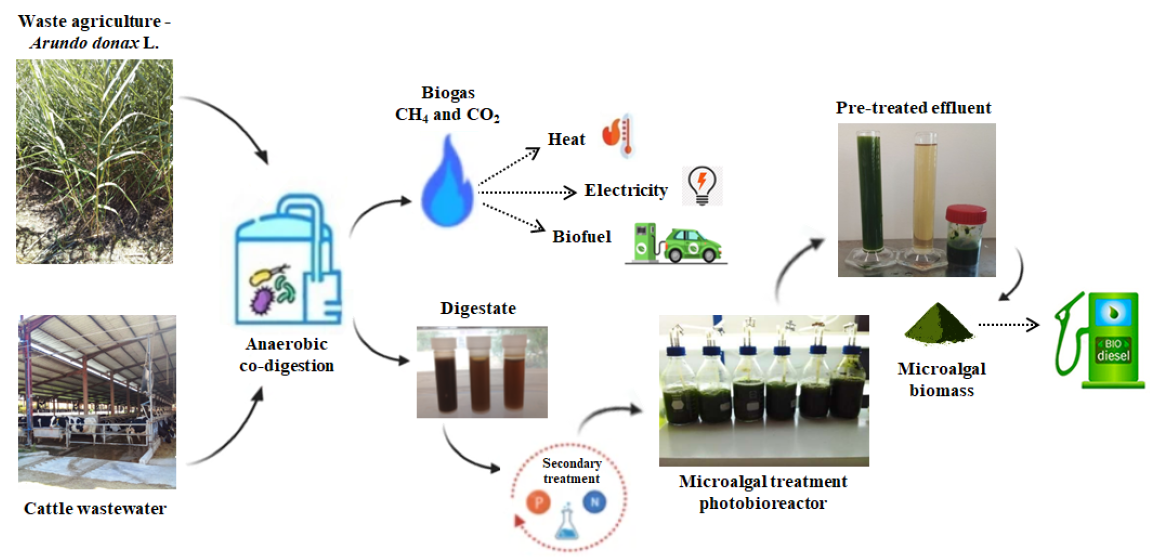
Anaerobic digestion followed by microalgal cultivation is considered a promising renewable alternative for the production of biomethane with reduced effluent generation, thus lowering the environmental impact. In this arrangement, in addition to generating energy, the microalgae act by potentiating the refinement of the effluents generated via anaerobic digestion (digestates). In this study, the microalga Tetradesmus obliquus was cultivated in photobioreactors with the final digestate resulting from the codigestion of Arundo donax L. plant biomass and cattle wastewater. The biotechnological route used was efficient, and biogas production ranged from 50.20 to 94.69 mL gVS-1. The first-order kinetic model with variable dependence (FOMT) provided the best fit for the biogas production data. In the microalgal posttreatment, the removal values ranged from 81.5 to 93.8% for chemical oxygen demand, 92.0 to 95.3% for N-NH4+, and 41.7 to 83.3% for PO43- after 26 days. The macromolecular composition of the algal biomass reached lipid contents ranging from 33.4 to 42.7%. Thus, the proposed process mediated by microalgae can be considered promising for the bioremediation and recovery of effluents produced by agriculture through the use of microalgal biomass for bioproduct production.
Keywords:
Scenedesmus obliquus
; Nutrient removal
; Bioremediation
; Biogas
; Biodiesel
1. Introduction
Technological solutions for renewable energy sources are a global reality in the face of the depletion of fossil fuels and the negative environmental impacts they cause. Anaerobic digestion (AD) is considered an efficient technology because it combines the treatment of waste with the recovery of organic matter in products with significant added value [1]. Biomass energy is expected to account for a significant share of renewable energy in the near future. Technologies and processes involving the use of biomass for bioenergy production are alternatives for energy recovery and are emerging as an efficient and integrative option with high potential for implementation [2,3].
AD is an excellent alternative for the treatment and use of the nutrients present in animal waste, reducing the potential for pollution and health risks, in addition to promoting the generation of bioenergy [4,5]. Livestock production produces a significant amount of cattle residue, and the management of these residues to minimize their negative impact on the environment has become a major challenge for the confinement systems of livestock farms [6]. Among alternative energy generation technologies, AD is an efficient method for transforming waste into resources and is a biological process of converting waste into biogas [5,7].
Likewise, the biomass of perennial energetic grasses represents an alternative raw material for sustainable energy generation through biological processes such as AD [8]. The great advantage of using grasses in bioenergy production is the high yield potential. Strategies to improve the AD of grasses are important for increasing methane production [9].
Thus, evaluation of the plant biomass of Arundo donax L. (family Poaceae, order Cyperales, class Liliopsida), also known as the giant reed, is justified. This species is an erect, herbaceous, perennial, aggressive, and invasive grass with the ability to reproduce quickly, either via seeds or vegetative propagation [10]. This grass has average dry matter yields of 15 to 40 t ha-1 year-1 [11,12] and can be used for energy generation [13]. Therefore, conducting studies of the use of this grass for biogas production is relevant [14].
Increasing the efficiency of AD is extremely important when considering this process as an alternative for energy and bioproduct production. The benefits of improved bioenergy production associated with the efficiency of biogas production from digesters that use co-substrates have attracted researchers to investigate the anaerobic co-digestion of cattle manure with other types of biomass to improve biogas production [15,16,17].
The transformation of waste into energy and other byproducts has been considered a social and scientific priority because of the resulting environmental impacts, with the consequent accumulation of waste. In this sense, microalgae may offer solutions for wastewater treatment through bioremediation, yielding a low-cost source of nutrients [18]. In addition, microalgae can serve as raw materials for biofuels and other sustainable biological products from lipids, proteins, and carbohydrates, the main macromolecular components [19,20,21,22]. Although agricultural and agro-industrial effluents are rich in organic matter, high levels of ammonia and suspended solids inhibit microalgal growth [23,24]. Consequently, a pretreatment step encourages the application of new methods to reduce the toxicity of the effluent and ensure an appropriate culture medium for microalgal growth.
In recent years, studies have been conducted in photobioreactors with microalgae for the posttreatment of effluents to analyze the efficiency of organic pollutant and nutrient removal from animal wastewater and explore the possibility of producing various products from biomass [25,26,27].
In this work, the co-digestion process was studied by performing simultaneous AD of two substrates, Arundo donax L. plant biomass and dairy cattle wastewater. In addition, the use of cultures of the microalga Tetradesmus obliquus in photobioreactors was investigated. The objectives of this study were to evaluate the efficiency of the process and the production of biogas via anaerobic co-digestion and to evaluate microalgae-mediated bioremediation and the potential of algal biomass for bioproduct production, characterized in terms of lipids, carbohydrates, and proteins.
2. Materials and Methods
2.1. Substrates and Inoculum
Samples of dairy cattle wastewater (DCW) were collected from a dairy farm, Fonte Leite - Exploração Agrícola e Pecuária, S.A., in Azambuja, Portugal. The collected material was stored in properly closed drums and transported to the National Laboratory of Energy and Geology (LNEG) in Lisbon, Portugal. The homogenized DCW substrate was filtered through a 2 mm mesh screen, resulting in a total solids content of the sample of ±2%, and then stored at 4 °C for later use in the co-digestion substrate mixture. DCW was used to prepare the inoculum on the basis of the methodology of Steinmetz et al. [28].
Arundo donax L. is commonly found in Portugal and has characteristics conducive for this study, i.e., rapid growth and high production of plant biomass that is available and can be harvested on the LNEG campus. The grass was cut at a height of 0.25–0.28 m from the soil surface with pruning shears. With the same cutting tool, the grass was subsequently cut into pieces ± 1 cm thick
2.2. Analytical Methods
Analytical methods, were used throughout the experiment to assess chemical demand for total and soluble oxygen (CODt and CODs), total solids (TS), volatile solids (VS), fixed solids (FS), total suspended solids (TSS), volatile suspended solids (VSS), fixed suspended solids (FSS), ammoniacal nitrogen (N-NH₄⁺), total Kjeldahl nitrogen (TKN), nitrate nitrogen (N-NO₃⁻), phosphate (PO₄³⁻), alkalinity, and pH according to Standard Methods [29]. The organic nitrogen (NOrg) content was calculated by subtracting the ammoniacal nitrogen from the TKN. All analyses were performed in duplicate.
2.3. Anaerobic Co-Digestion of DCW with Grass of Arundo donax L.
Four experimental conditions with different percentages of Arundo donax L. plant biomass were established for performing the co-digestion batch assays. The reactors were organized as follows: CT, control with DCW and inoculum; R5, R10, and R20, co-digestion with 5, 10, and 20% plant biomass in the mixtures. Using a food processor (Waring Laboratory 7010S 1L 2 Speed w/Timer, USA), the samples were mixed for 120 seconds. These concentrations were chosen because they would not cause a functional imbalance in the reactors, as the recalcitrance of lignocellulosic biomass is still a major challenge in biogas production [13]. The reactors were prepared in duplicate in glass Schott flasks with a total volume of 500 mL, containing 400 mL of reaction volume (mixture) and 100 mL of headspace (gas volume). The reactors were placed in a thermostatic bath with water circulation at a controlled temperature of 37 °C. After the flasks were closed, the reactors were purged of oxygen with nitrogen gas (N₂) for 2 minutes to provide an anaerobic environment. The reactors were connected to a graduated burette system to store the biogas produced. The volume of biogas produced was monitored daily in a Mariotte bottle filled with NaCl solution via the movement of the liquid column. The reaction time was 21 days.
2.4. Microalgae
The selected microalgal species in this study were obtained from the Culture Collection of LNEG, Lisbon, Portugal. The cells were pre-cultured in Chu's medium in 500 mL Erlenmeyer flasks under photoautotrophic conditions at 22 °C (± 3 °C), illuminated at 5 klx by five 18 W Philips white fluorescent lamps and shaken at 100 rpm in an incubator with agitation in a controlled environment (New Brunswick Scientific, Edison, USA). Initially, tests were performed with different dilutions (10, 20, 30, 50, and 100%) of cattle wastewater with the microalgal species Tetradesmus obliquus, Chlorella vulgaris, and Desmodesmus subspicatus to determine the efficiency of algal biomass growth. After the strain selection tests, the microalga Tetradesmus obliquus ACOI 204/07 (ACOI Culture Collection, Coimbra University, Portugal) was inoculated into the final digestate of the anaerobic treatment at a ratio of 1:1 in water. The concentration of microalgal biomass used to inoculate the photobioreactors was 20% of the total sample in the reactors.
2.5. Digestate Treatment with Microalgal Cultivation in Photobioreactors
For the tests in the photobioreactors, the anaerobic digestate was used as the culture medium. After anaerobic co-digestion, the digestate was subjected to additional sedimentation in an Imhoff cone for 2 hours and then stored in a cold chamber at 4 °C (±1 °C) until the assembly of the photobioreactors. The reactors were prepared in glass Schott flasks (500 mL) containing 150 mL of digestate + 150 mL of water (1:1) + 20% (60 mL) of Tetradesmus obliquus inoculum already adapted to the DCW. The cultures were maintained at room temperature (21 °C) with an air flow of 0.6 vvm under continuous lighting provided via a light plate composed of white LED strips (brand: IP4, model: 3528 IP20 3M). The photoperiod was set to 24 hours of light and 0 hours of darkness
The batch experiment lasted 26 days. Samples from all reactors were collected every two to three days for experimental tests and monitoring of microalgal growth. The pH was measured with a potentiometer (InoLab WTW, Germany). During this period, growth was evaluated by measuring the absorbance at 540 nm (optical density, OD) using a U-2000 spectrophotometer (Hitachi, Japan), and the dry mass of the biomass was calculated by filtering 2 ml samples through a Millipore membrane filter (0.45 μm), followed by drying at 105 °C in an oven. Growth curves were prepared by plotting the dry mass of the biomass against time (days). A linear correlation analysis was performed between dry mass (g L-1) and the OD at 540 nm according to the following equation:
Where: CT, control with DCW; R5, R10, and R20, co-digestion with 5%, 10%, and 20% plant biomass concentrations in the mixtures.
2.6. Biomass Processing and Biochemical Analysis
At the end of the experiment, the liquid suspension was centrifuged (ThermoFisher Scientific 3SR+ Multifuge, USA) for 10 minutes at 13.000 rpm. Freeze-dried algal biomass (Thermo Fisher Scientific Heto Power Dry LL3000 freeze-dryer, USA) was used for biochemical analyses of proteins, carbohydrates, and lipids in triplicate.
The supernatants of the final samples from the photobioreactors were analyzed via the analytical methods described above. The protein content was estimated via the Lowry method in samples previously treated with 0.1 mol L-1 NaOH [30]. The lipid content was obtained gravimetrically after Soxhlet extraction with n-hexane for 6 hours. After each extraction, the solvent was evaporated on a rotary evaporator (Buchi Water Bath B-480, Germany) with a thermostatically controlled bath at 50 °C. Carbohydrate concentrations were measured via the phenol‒sulfur method at an optical density of 490 nm (Hitachi U-2000 spectrophotometer, Japan). The moisture and ash contents were determined gravimetrically by drying in an oven at 105 °C until a constant weight was reached and incinerating at 550 °C in a muffle furnace.
2.7. Kinetic Modeling
Once the experimental data for biogas production were obtained, the kinetic parameters were calculated by fitting the models described in Table 1. The Levenberg-Maquart algorithm available in the OriginPro software [31] was used, and the significance of the regressions were evaluated (α = 0.05). The kinetics of biogas production can be used to evaluate the biodegradability patterns of organic matter during AD [32]. Kinetic models can provide a description of the characteristics of the anaerobic digestion process and help determine the key parameters to design biochemical reactors and predict their yield and biogas performance. Nonlinear models were fitted to the biogas production data. The consistency of the results of the kinetic models with the experimental data was measured in terms of the coefficient of determination (R2) and via the fit of the root mean square error (rRMSE). A lower rRMSE indicates that the kinetic model provides a better description of the digestion process [33].
3. Results and Discussion
3.1. Phase I: Co-Digestion
3.1.1. pH, Alkalinity and Solids Removal
In the reactors, the initial pH values ranged between 7.60 and 7.88, whereas the final values, corresponding to the digestates, were between 7.58 and 7.69. The pH value remained within the stable range for anaerobic digestion, which is 6.50 to 8.20 [34], indicating appropriate conditions for the degradation of organic material and microbial growth. pH values lower than 6.60 can inhibit the growth of methanogenic microorganisms [35]. Therefore, pH has a significant influence on the performance of digesters and consequently on biogas production [36].
The alkalinity recorded in the reactors increased during the anaerobic process, ranging from 3750 to 7350 mg L⁻¹ at the input and from 7500 to 9000 mg L⁻¹ at the output. The output values indicated the buffering function of the system, i.e., its ability to avoid sudden changes in pH and maintain the anaerobic process under good operating conditions. According to Mendonça et al. [5], methane production increases alkalinity under appropriate operating conditions in addition to neutralizing the organic acids produced during the digestion process.
The TS values of the initial samples were 1.85, 2.15, 2.42, and 2.85%, for the CT, R5, R10, and R20 treatments, respectively, whereas the output values were 1.42, 1.65, 1.65, and 1.93%, respectively. Wet AD systems are usually fed substrates with a TS content less than 10% [37]. The precise characterization of the TS and VS contents in the substrates is crucial for AD investigations because of its impact on methane production and process stability. The reduction in the potentially degradable fraction of TS after AD treatment is environmentally sustainable because it not only reduces the disposal load but also decreases the carbon footprint when the solids converted into methane are used as an energy resource, such as biogas [38].
AD in the reactors was initially conducted with different organic loading rates, which were determined on the basis of the VS ratios and the reactor volume (400 mL), resulting in 28.1, 35.6, 40.2, and 51.0 mg VS L⁻¹ in the CT, R5, R10, and R20 treatments, respectively. After a reaction time of 21 days, the final digestate organic loading values were 16.9, 23.3, 21.9, and 25.5 mg VS L⁻¹. Analysis of the input and output values of the reactors revealed that the VS removal rate reached 50%.
3.1.2. Removal of Total and Soluble COD
The organic matter removal efficiency reached values of 37 to 40% for CODt and 74 to 77% for CODs in this study. In a study with cattle wastewater in a UASB hybrid reactor, Mendonça et al. [5] reported the highest organic removal rates at retention times of 5 and 6 days, with mean efficiencies of 76% and 81% for CODt, respectively. In previous studies on cattle manure AD systems, chemical oxygen demand (COD) removal rates were lower than or close to 80% [39,40,41].
The postdigestion effluent contains considerable levels of organic matter, and the corresponding COD value varies within a wide range of 9.2 to 78 g L-1 [42]. In the present study, the postdigestion COD values of the digestate ranged from 7.7 to 13.2 g L⁻¹, indicating the potential for pollution. Therefore, after analysis of the organic load, posttreatment of the final digestate becomes an interesting possibility. Such treatment would result in better biodegradability for the liquid fraction of digestates from co-digestion facilities, for both the gross liquid fraction and the soluble fraction after removal of the suspended particles.
3.1.3. Nitrogen and Phosphate Compounds
The concentration of TKN increased after AD in all the cases (Table 2). Ammoniacal nitrogen also increased, confirming the mineralization of the residues. The increase TKN throughout the process is expected because of the nature of the residue, which is a rich source of nitrogen because it is of animal origin. Notably, anaerobic co-digestion is a viable alternative to address problems associated with mono-digestion, such as rapid acidification and low C: N ratio, which can inhibit the processes [10]. The nitrogen compound values in the effluent did not hinder the development and stability of the system. This can be attributed to the addition of carbon-rich co-substrates, such as plant biomass, which helps maintain the proper functioning of the reactors and improves methane yield.
The input N-NH4+ concentration varied between 896 and 966 mg L-1 in the mixtures and between 1050 and 1204 mg L-1 in the digestate (Table 2). However, the concentrations of N-NH4+ at input and output were within the range for stable AD, i.e., less than 5000 mg L-1 [34], and below the values that cause inhibition, which range from 1500 to 7000 mg L-1 [43,44]. The effects of toxic or inhibitory compounds can be minimized with the use of different co-digested substrates, improving process stability and performance. Thus, the reactor with 5% plant biomass did not have a considerable increase in N-NH4+, which suggests that methane production may be beneficial in this context. These results demonstrate the importance of an appropriate proportion of the substrates to ensure the effectiveness of the process.
The PO43- concentrations in the input samples ranged from 22 to 34 mg L-1, values that did not negatively affect the development and stability of the process in the reactors. The concentrations at the output were higher than those at the input in all reactors, indicating an accumulation of this compound in the biological sludge generated. Macronutrients such as carbon, nitrogen, and phosphorus are essential for the efficient production of biogas because of the microbial demand for these elements [45].
3.1.4. Biogas Production
The daily volumetric production of biogas was normalized to standard temperature and pressure conditions and converted into the biochemical biogas potential (BBP), expressed in mL biogas gVS⁻¹. The incubation time of for reactors was 21 days at a mesophilic temperature. The BBP was 73.13, 94.69, 65.23, and 50.20 mL g VS⁻¹ for the respective treatments CT, R5, R10, and R20. Biogas production was greatest in the co-digestion treatment with 5% plant biomass. This finding indicates that an adequate proportion of co-substrate supplements the organic carbon and other nutrients for the microorganisms. However, a high proportion of co-substrate can introduce inhibitors to microbial growth. The presence of lignin at high concentrations can reduce methane production due to its low biodegradability and toxicity during AD [46]. The inhibition caused by lignin affects the initial rate of biogas production, especially in the hydrolysis phase, as it increases the difficulty of cellulose enzymatic hydrolysis, resulting in lignin depolymerization [47].
Mirabi et al. [48] investigated the production of biogas in the anaerobic co-digestion of lignocellulosic residues with cattle manure, in batch mode and mesophilic conditions. The main factors that contributed to the ineffectiveness of the process were the accumulation of volatile acids, a pH below 5, and an ammonia imbalance, which impaired methanogenic reactions and biogas production. The authors also reported synergistic effects on co-digestion, which varied according to the proportions of co-substrates. Mixtures that abruptly change the pH and produce inhibitory compounds, such as ammonia and other inorganic salts, have been identified as having poor performance factors [43,49,50]. The amount of substrate mixture influences the production of biogas and methane. The ideal proportion of co-substrates is often determined by laboratory experiments with discrete combinations or by modeling, where the inhibitory parameters present in the co-substrates are evaluated [34,49,51,52].
Several factors, such as the substrate type, experimental conditions, operating parameters, and reactor structure, can influence the accuracy and reliability of the model [53]. Multiple models are beneficial for ensuring the authenticity of fit data. With respect to the prediction of performance when kinetic models are applied, it is important that the rRMSE is less than 10%, because it describes the real error between the experimental and predicted values, and that R2 is greater than 0.9, because it indicates the accuracy of the algorithm in describing the variation in the data [54]. To study the effects of co-digestion mixtures on biogas production, six kinetic models were initially evaluated and adjusted to the data from CT (Table 3). In the evaluation of the models, R2 > 0.96 and a maximum rRMSE of 11.2% were found for CT. The proximity of the R2 values to 1 provides further evidence of the correlation between the kinetic model and the observed biogas production.
Four of the six models analyzed showed excellent performance, with rRMSEs lower than 5%. The modified Gompertz equation, often used to describe the degradation of simple organic substrates, is the most commonly used model for determining the kinetics of methane production [55]. Although the modified Gompertz model had an rRMSE of 2.2%, it underestimated the maximum methane production, which, for the CT reactor condition, was experimentally determined to be 73.13 mL gVS-1. Other studies also reported underestimated values when the modified Gompertz equation was used [56,57]. Notably, although these classical models have been used to predict biogas and methane production in numerous full-scale and laboratory tests [32,54,58], the suitability and precision of the models vary considerably depending on the experimental conditions, operating parameters, origin of the inoculum, and type of substrate used.
Thus, to compare the kinetics of the different mixtures, the first-order modified model with variable time dependence (FOMT), also known as the sigmoidal model, was used. This model provided relatively low rRMSE values and high R2 values. The model presented R2 values of 0.9994, 0.9991, 0.9993, and 0.9988 and rRMSE values of 1.6, 1.9, 1.7, and 2.1%, respectively, for R5, R10, R20, and CT. These R2 values were all close to 1, and the rRMSE values were lower than 2.5%.
This FOMT model was also used by Howell et al. [58] to predict the anaerobic potential biogas in biologically treated municipal solid waste, and relatively low values of rRMSE (2.74 to 2.92%) and high R² (0.9958). Strömberg et al. [54] also used the FOMT model, among other methods, to predict the BBP and the required degradation time of various types of substrates, in which the final gas production could be predicted at an earlier stage. The study was proposed to solve one of the possible disadvantages of BBP tests, which is their long duration. Soares et al. [59] also used the “time-dependent” model to study the kinetics of organic matter removal in constructed wetlands. The authors reported a graph that reflects the “tailing-off” situation (concave curve).
The FOMT kinetic model was used to simulate biogas production during the anaerobic co-digestion of Arundo donax L. biomass with DCW in varying proportions. Figure 1 shows the cumulative biogas production over the experimental digestion time, comparing the experimental data with the predictions from the FOMT kinetic model. The figure also shows the values of the parameters k (reaction coefficient, in d-1), n (form coefficient, dimensionless), and Ym (maximum biogas production, in mL gVS⁻¹).
The Ym values predicted by the model are close to the experimental values. Figure 2 shows the variation in the predicted Ym values with increasing plant biomass concentration. A model was fitted to describe the behavior, and the following equation was obtained: y = -0.1369x2 + 1.0361x + 82.066.
Figure 3 shows the reaction coefficients k (d⁻¹) for each reactor with the varying proportions. A linear model with R2 = 0.8356 was fitted. The reaction coefficient decreased with increasing plant biomass concentration in the reactor, because the increase in organic load hinders degradation.
3.1.5. Digestate
The use of anaerobic digestate as a nutrient source has been evaluated previously [42,60]. The final anaerobic digestate, if untreated, can cause serious environmental impacts due to its high concentrations of nutrients, organic substances, and other toxic elements. Thus, the secondary treatment of digestates is recommended to significantly reduce environmental problems, such as soil and groundwater pollution affecting aquatic life, leaching, eutrophication, and increased greenhouse gas emissions. New routes have been proposed for digestate recovery, such as the production of biofuels and other value-added bioproducts, constituting positive gains for the concept of a circular economy [17,60,61].
In view of the above, investigations of the liquid fractions of digestates have increased recently, and one promising method is the cultivation of microalgae in this effluent, as they are able to reduce the level of organic and inorganic substances in the digested liquid [60,62,63,64]. Microalgae can live and grow under adverse environmental conditions, including liquid digestate. Microalgae use the nitrates, ammonia, and phosphates still present in the residue, significantly reducing the concentrations of organic pollutants and nutrients in the environment in which they develop. In addition, they possess several advantages, such as the conversion of organic carbon into cellular components and the ability to produce a biomass with high concentrations of lipids and carbohydrates [65]. The algal biomass produced is valuable as a raw material for biobased products, such as bioplastics, bioinks, animal supplements, biofertilizers, and biofuels or bioenergy [19,66].
In this scenario, the digestates produced by anaerobic co-digestion in the first phase of the experiment were used as a growth medium for the microalga Tetradesmus obliquus in photobioreactors. The concentrations of N-NH4+, N-NO₃⁻and PO4-3 in the digestate were conducive for efficient algal growth, as described above.
The values of COD and solids, as well as the concentrations of organic pollutants and nutrients in the liquid digestate, are significantly reduced. The high turbidity of the digestate may be the main obstacle if the liquid fraction is used for microalgal cultivation because of the need for light penetration for algal growth [60,67,68]. This factor may inhibit the growth of microalgae in complete medium. To advance the study of the process mediated by microalgae, we diluted the digestate in water. Thus, faster growth was achieved due to the greater clarity of the culture medium, facilitating light penetration.
3.2. Phase II: Photobioreactors - Secondary Treatment, Microalgal Culture in the Digestate
The digestates produced by anaerobic co-digestion have a very dark brown color that can hinder the penetration of light and therefore the photosynthesis of microalgae in the autotrophic phase. A 1:1 dilution was therefore required to significantly decrease the turbidity and color to levels suitable for microalgal growth.
3.2.1. Dry biomass and Volumetric Productivity
Figure 4 shows samples collected from the photobioreactors on days 1 and 26 for measurement via a spectrophotometric. Differences in the color tone of the samples, which is indicative of algal biomass growth, were observed.
Figure 5 shows a growth curve representing the production of dry biomass throughout the cultivation period. The maximum concentration of dry biomass was 3.48 g L-1 for FR5 after 23 days of cultivation, followed by FR10 and FR20 at 2.90 g L-1 after 19 days. In CT, the maximum concentration was reached after nine days of culture (2.48 g L-1). Therefore, the average volumetric production of biomass was 0.133, 0.111, 0.111, and 0.095 g L-1 day-1 for reactors FR5, FR10, FR20, and CT, respectively.
Dry biomass values close to those recorded in the present study were also reported by Mendonça et al. [18], who cultivated Tetradesmus obliquus microalgae in cattle wastewater anaerobically digested in a hybrid reactor and reached a maximum dry biomass concentration of 3.7 g L-1. The authors indicated that higher biomass concentrations can be obtained in batch modes than in continuous modes. Recent studies, such as those by Mendonça et al. [21], Ferreira et al. [64,69], and Molinuevo-Salces et al. [70], also investigated dry biomass using treated wastewater from livestock farms and other animal wastes as a culture medium for Tetradesmus obliquus in photobioreactors.
3.2.2. Bioremediation: Removal of Organic Matter and Nutrients
Evaluating the possibility of effluent release into water bodies after the separation and harvesting of the microalgae without any harmful consequences to the environment is essential. The supernatant was collected and characterized to evaluate the bioremediation performance of the microalgae. The bioremediation of wastewater from the present proposed system was evaluated by measuring the nutrient content (N and P) and organic load (COD) remaining in the final digestate of the microalgal growth tests. Table 4 shows the nutrient removal efficiency (%).
The COD removal rates for the treatments CT, FR5, FR10, and FR20 were 83.3%, 81.5%, 88.7%, and 93.8%, respectively. These results are compared with the data from other studies presented in Table 5. The use of wastewater contributes to the growth of microalgae, which use the available nutrients for their development, simultaneously resulting in a reduction in the COD load of the wastewater.
The N-NH4+ removal rates were close to 100%, indicating high consumption efficiency in all photobioreactors. Interestingly, the selected Tetradesmus obliquus strain supported N-NH4+ concentrations between 522 and 600 mg L-1 (Table 4) in batch cultivation, with a dilution of 1:1, demonstrating successful growth and effective nutrient removal. Mendonça et al. [18] cultivated Tetradesmus obliquus in batch and continuous operation systems with anaerobically digested cattle wastewater. On the 12th day, the N-NH4+ removal rates were 98 to 99%, and after 14 days, the removal rate reached 100%. In addition, in almost all the studies presented in Table 5, almost complete removal of N-NH4+ was observed. Temperature and pH are the parameters that most influence ammonia removal rates [71]. The average initial pH value of the microalgal cultures in the reactors was 9.60, whereas the average final value was 10.05. The pH can reach values higher than 9.0, providing favorable conditions for the volatilization of ammoniacal nitrogen [72]. These findings corroborate the effective elimination of ammoniacal nitrogen, with removal rates close to 100%.
Ferreira et al. [69] evaluated the biostimulant and biopesticide potential of microalgae grown in different dilutions of swine wastewater. Treatment with the microalga Tetradesmus obliquus in diluted wastewater (1:20) efficiently removed nutrients, resulting in reductions in COD of 73%, N-NH4+ of 87.5%, and PO43- of 98%. The authors also reported difficulties in the growth of algal consortia when undiluted effluent was used. A 1:20 dilution was used to reduce the ammonia concentration and color to levels suitable for microalgal growth. With respect to PO4-3, removal rates of 83.3 and 75.8% were found for co-digestion and the control, respectively. These results are compared with the data from other studies presented in Table 5. These results indicate that Tetradesmus obliquus efficiently uses the nutrients of the digestate of anaerobic co-digestion, maintaining its growth. Studies have shown that combined nitrogen and phosphorus stress can increase biomass and lipid productivity [73,74,75].
3.3. Macromolecular Composition
Initially, freeze-dried digestate samples were characterized to evaluate the availability and suitability of organic nutrients, with the objective of using these digestates as culture medium in photobioreactors (Figure 6). The chemical compositions of the pretreated anaerobic digestates quantified as protein, carbohydrate, lipid, and ash contents in the total dry mass were 55.2, 21.1, 4.0, and 17.5%, respectively, for CT; 47.9, 23.3, 2.9, and 14.1%, respectively, for FR5; 46.6, 24.4, 3.1, and 14.2%, respectively, for FR10; and 45.7, 26.8, 4.7, and 14.7%, respectively, for FR20. The FR20 treatment had the highest carbohydrate content, which can be attributed to the greater contribution of plant biomass. In contrast, the CT presented the highest protein content because of the monodigestion with cattle manure
In the biomass collected via the centrifugation of anaerobic digestates, the protein content was higher, as expected, due to the high availability of N, especially in the form of ammonium. The macromolecular composition of the microalgal biomass treated with photobioreactors (Figure 6B) is available in Table 6. The carbohydrate (29.7 to 34.7%) and lipid (33.4 to 42.7%) contents were greater than the protein (7.0 to 11.6%) contents. Carbohydrate synthesis increased due to the decrease in nitrogen levels at the end of the process, leading cells to synthesize energy that accumulated in the form of intracellular lipids.
The highest lipid contents were found in the microalgal biomass, reaching close to 42.7% for the co-digestion digestates, whereas the percentage of lipids in the CT reactor was 33.4% (Table 6). The microalgae may have been stressed by a lack of nitrogen and the scale of dilution, triggering the accumulation of lipids. The dilution may have influenced the results, since the low biomass concentration facilitates the capture of light by the microalgal cells, triggering lipid storage and the removal of nutrients from the medium [80,81]. The values obtained are suitable for the recovery of biofuels from microalgal biomass cultivated in wastewater [61,82]. These results highlight the importance of the proposed co-digestion process, both to increase biogas production and to produce biodiesel from microalgal biomass [83].
The lipid composition of the biomass can vary between 2% and 40%, depending on the microalgal species [84]. Sohail et al. [85] evaluated the performance of effluents with high nutrient contents using Tetradesmus obliquus and reported a lipid content of 28.4% in the anaerobic digestate. The rapid growth of the species Tetradesmus obliquus is understood in terms of its potential for wastewater treatment [86]. Gupta et al. [87] reported that the lipid content of Tetradesmus obliquus increased from 15.8% to 28.3% after exposure to nutrient deprivation conditions, highlighting its potential for comprehensive wastewater treatment and biomass production for biofuels.
After secondary treatment, livestock wastewater can be used for the production of biodiesel from microalgae [26]. Trivedi et al. [88] reported an increase in lipid production in Tetradesmus obliquus through nitrogen deprivation, with a lipid content of 45%, indicating that the species is ideal for biofuel production. Our study demonstrates the benefits of anaerobic co-digestion, highlighting the energy potential of biogas and wastewater treatment. In addition, the results are consistent with these findings and highlight the ability of the species to grow in the digestate of anaerobic co-digestion and to produce byproducts such as biodiesel.
The low protein contribution of the microalgal biomass (from 7.0 to 7.9%) suggests an adequate feedstock for the production of bio-oil through hydrothermal liquefaction. Biomass with low protein content is expected to produce bio-oil with low nitrogen levels, which, in turn, may result in a drop-in biofuel with lower NOx emissions. This implies fewer unit modernization operations, which is beneficial.
4. Conclusions
Anaerobic co-digestion is a promising strategy for effective waste management and resource recovery, offering synergistic effects to increase the yield of biogas from the substrate and achieve efficient waste reduction. Compared with those of CT, the removal of solids and COD content and the biogas yield were greater when a mixture of DCW and Arundo donax L. plant biomass was used. The final digestate of the anaerobic process has the potential to be used as a culture medium for microalgae, favoring bioremediation, with removal values of up to 94% COD, 83% PO43- and almost 100% for N-NH4+. The algal biomass contained 42.7% lipids and 34.7% carbohydrates, which are relevant levels for the production of bioproducts.
In conclusion, our results position the use of microalgae as a promising resource in the post-treatment of digestates derived from the anaerobic co-digestion process. This study highlights the importance of exploring innovative biobased solutions and advancing the circular bioeconomic practices of microalgal cultivation in anaerobic co-digestion with the recycling of animal and plant waste for bioenergy use to develop a scalable and sustainable model.
Author Contributions
Conceptualisation, G.H.S.; methodology, G.H.S., N.S.R., A.J.D.R. and M.H.O.; investigation, G.H.S.; writing—original draft preparation, G.H.S.; writing—review and editing, N.S.R., A.C.B., M.A.M., A.J.D.R. and M.H.O.; supervision, N.S.R. and M.H.O. All authors have read and agreed to the published version of the manuscript.
Funding
This study was financed in part by the Coordination for the Improvement of Higher Education Personnel—Brazil (CAPES)—Finance Code 001; National Council for Scientific and Technological Development—Brazil (CNPq)—process number 402679/2022-9 and 200150/2022–7, Call 26/2022. Brazilian Agricultural Research Corporation (EMBRAPA Dairy Cattle) [grant number SEGEMBRAPA 03.16.04.023.00.00], Foundation for Research Support of the State of Minas Gerais (FAPEMIG) [grant number APQ-02872-18.
Institutional Review Board Statement
Not applicable.
Informed Consent Statement
Not applicable.
Data Availability Statement
Data are contained within the article.
Acknowledgments
The authors would like to thank the National Laboratory of Energy and Geology (LNEG) for hosting the student and providing laboratory support during under the PhD Abroad Scholarship (SWE).
Conflicts of Interest
The authors declare no conflicts of interest.
References
- Zhang, Y.; Wang, X.; Zhu, W.; Zhao, Y.; Wang, N.; Gao, M.; Wang, Q. Anaerobic fermentation of organic solid waste: Recent updates in substrates, products, and the process with multiple products co-production. Environ. Res. 2023, 233, 116444. [Google Scholar] [CrossRef] [PubMed]
- Moustakas, K.; Loizidou, M.; Rehan, M.; Nizami, A.S. A review of recent developments in renewable and sustainable energy systems: Key challenges and future perspective. Renew. Sustain. Energy Rev. 2020, 119, 109418. [Google Scholar] [CrossRef]
- Sallem, M. Possibility of utilizing agriculture biomass as a renewable and sustainable future energy source. Heliyon 2022, 8, 2. [Google Scholar] [CrossRef] [PubMed]
- Mendonça, H.V.; Ometto, J.P.H.B.; Otenio, M.H. Production of Energy and Biofertilizer from Cattle Wastewater in Farms with Intensive Cattle Breeding. Water Air Soil Pollut. 2017, 228, 72. [Google Scholar] [CrossRef]
- Mendonça, H.V.; Ometto, J.P.H.B.; Otenio, M.H.; Dos Reis, A.J.D.; Marques, I.P.R. Bioenergy recovery from cattle wastewater in an UASB-AF hybrid reactor. Water Sci. Technol. 2017, 76, 2268–2279. [Google Scholar] [CrossRef] [PubMed]
- Chowdhury, T.; Chowdhury, H.; Hossain, N.; Ahmed, A.; Hossen, M.S.; Chowdhury, P.; Thirugnanasambandam, M.; Saidur, R. Latest advancements on livestock waste management and biogas production: Bangladesh’s perspective. J. Clean. Prod. 2020, 272, 122818. [Google Scholar] [CrossRef]
- Ardebili, S.M.S. Green electricity generation potential from biogas produced by anaerobic digestion of farm animal waste and agriculture residues in Iran. Renew. Energy 2020, 154, 29–37. [Google Scholar] [CrossRef]
- Bedoić, R.; Cucek, L.; Cosic, B.; Krajnc, D.; Smoljanic, G.; Kravanja, Z.; Ljubas, D.; Puksec, T.; Duic, N. Green biomass to biogas – A study on anaerobic digestion of residue grass. J. Clean. Prod. 2019, 213, 700–709. [Google Scholar] [CrossRef]
- Song, Y.; Pei, L.; Chen, G.; Mu, L.; Yan, B.; Li, H.; Zhou, T. Recent advancements in strategies to improve anaerobic digestion of perennial energy grasses for enhanced methane production. Sci. Total Environ. 2023, 861, 160552. [Google Scholar] [CrossRef]
- Abreu, M.; Silva, L.; Ribeiro, B.; Ferreira, A.; Alves, L.; Paixão, S.M.; Gouveia, L.; Moura, P.; Carvalheiro, F.; Duarte, L.C.; Fernando, A.L.; Reis, A.; Gírio, F. Low Indirect Land Use Change (ILUC) Energy Crops to Bioenergy and Biofuels—A Review. Energies 2022, 15, 4348. [Google Scholar] [CrossRef]
- Antal, G. Giant reed (Arundo donax L.) from ornamental plant to dedicated bioenergy spe-cies: Review of economic prospects of biomass production and utilization. Int. J. Hortic. Sci. 2018, 24, 39–46. [Google Scholar] [CrossRef]
- Oginni, O.; Singh, K. Pyrolysis characteristics of Arundo donax harvested from a re-claimed mine land. Ind. Crop. Prod. 2019, 13, 44–53. [Google Scholar] [CrossRef]
- Vasmara, C.; Gallett, S.; Cianchetta, S.; Ceotto, E. Advancements in Giant Reed (Arundo donax L.) Biomass Pre-Treatments for Biogas Production: A Review. Energies 2023, 16, 949. [Google Scholar] [CrossRef]
- Vasmara, C.; Cianchetta, S.; Marchetti, R.; Ceotto, E.; Gallett, S. Potassium Hydroxyde Pre-Treatment Enhances Methane Yield from Giant Reed (Arundo donax L.). Energies 2021, 14, 630. [Google Scholar] [CrossRef]
- Silva, G.H.; Barros, N.O.; Santana, L.A.R.; Carneiro, J.C.; Otenio, M.H. Shifts of acidogenic bacterial group and biogas production by adding two industrial residues in anaerobic co-digestion with cattle manure. J. Environ. Sci. Health, Part A, 2021, 1, 1–9. [Google Scholar] [CrossRef]
- González, R.; Peña, D.C.; Gómez, X. Anaerobic Co-Digestion of Wastes: Reviewing Current Status and Approaches for Enhancing Biogas Production. Appl. Sci. 2022, 12, 8884. [Google Scholar] [CrossRef]
- Frankowski, J.; Czekala, W. Agricultural Plant Residues as Potential Co-Substrates for Biogas Production. Energies 2023, 16, 4396. [Google Scholar] [CrossRef]
- Mendonça, H.V.; Ometto, J.P.H.B.; Otenio, M.H.; Marques, I.P.R.; Dos Reis, A.J.D. Microalgae-mediated bioremediation and valorization of cattle wastewater previously digested in a hybrid anaerobic reactor using a photobioreactor: Comparison between batch and continuous operation. Sci. Total Environment 2018, 633, 1–11. [Google Scholar] [CrossRef]
- Barkia, I.; Saari, N.; Manning, S.R. Microalgae for High-Value Products Towards Human Health and Nutrition. Mar. Drugs 2019, 17, 304. [Google Scholar] [CrossRef]
- Roy, U.K.; Radu, T.; Wagner, J.L. Carbon-negative biomethane fuel production: Integrating anaerobic digestion with algae-assisted biogas purification and hydrothermal carbonisation of digestate. Biomass Bioenergy 2021, 148, 106029. [Google Scholar] [CrossRef]
- Mendonça, H.V.; Otenio, M.H.; Marchão, L.; Lomeu, A.; Souza, D.S.; Reis, A. Biofuel recovery from microalgae biomass grown in dairy wastewater treated with activated sludge: The next step in sustainable production. Sci. Total Environ. 2022, 824, 153838. [Google Scholar] [CrossRef] [PubMed]
- Marangon, B.B.; Castro, J.S.; Assemany, P.P.; Couto, E.A.; Calijuri, M.L. Environmental performance of microalgae hydrothermal liquefaction: Life cycle assessment and improvement insights for a sustainable renewable diesel. Renew. Sustain. Energy Rev. 2022, 155, 111910. [Google Scholar] [CrossRef]
- Ayre, J.M.; Moheimani, N.R.; Borowitzka, M.A. Growth of microalgae on undiluted anaerobic digestate of piggery effluent with high ammonium concentrations. Algal Res. 2017, 24, 218–226. [Google Scholar] [CrossRef]
- Nagarajan, D.; Kusmayadi, A.; Yen, H.W.; Dong, C.D.; Lee, D.J.; Chang, J.S. Current advances in biological swine wastewater treatment using microalgae-based processes. Bioresour. Technol. 2019, 289, 121718. [Google Scholar] [CrossRef]
- Fernández, F.G.A.; Reis, A.; Wijffels, R.H.; Barbosa, M.; Verdelho, V.; Llamas, B. The role of microalgae in the bioeconomy. N.Biotechnol. 2021, 61, 99–107. [Google Scholar] [CrossRef]
- Ahn, Y.; Park, S.; Ji, M.K.; Ha, G.S.; Jeon, B.H.; Choi, J. Biodiesel production potential of microalgae, cultivated in acid mine drainage and livestock wastewater. J. Environ. Manage. 2022, 314, 115031. [Google Scholar] [CrossRef] [PubMed]
- Siddiki, S.Y.A.; Mofijur, M.; Kumar, P. S.; Ahmed, S.F.; Inayat, A.; Kusumo, F.; Badruddin, I.A.; Khan, T.M.Y.; Nghiem, L.D.; Ong, H.C.; Mahlia, T.M.I. Microalgae biomass as a sustainable source for biofuel, biochemical and biobased value-added products: An integrated biorefinery concept. Fuel 2022, 307, 121782. [Google Scholar] [CrossRef]
- Steinmetz, R.L.R.; Mezzari, M.P.; Silva, M.L.B.; Kunz, A.; Amaral, A.C.; Tápparo, D.C.; Soares, H.M. Enrichment and acclimation of an anaerobic mesophilic microorganism’s inoculum for standardization of BMP assays. Bioresour. Technol. 2016, 219, 21–28. [Google Scholar] [CrossRef]
- APHA; American Water Works Association; Water Environment Federation. Standard Methods for the Examination of Water and Wastewater. 24th Edition American Pub-lic Health Association, Washington, DC, USA, 2023.
- Lowry, O.; Rosebrough, N.; Farr, A.L.; Randall, R. Protein measurement with the Folin phenol reagent. J. Biol. Chem. 1951, 193, 165–275. [Google Scholar] [CrossRef]
- Moré, J.J. The Levenberg-Marquardt algorithm: Implementation and theory. Anal. Lect. Notes Math. 1978, 630, 105–116. [Google Scholar]
- Pečar, D.; Pohleven, F.; Goršek, A. Kinetics of methane production during anaerobic fermentation of chicken manure with sawdust and fungi pre-treated wheat straw. Waste Manage. 2020, 102, 170–178. [Google Scholar] [CrossRef] [PubMed]
- Bedoić, R.; Špehar, A.; Puljko, J.; Čuček, L.; Ćosić, B.; Pukšec, T.; Duić, N. Opportunities and challenges: Experimental and kinetic analysis of anaerobic co-digestion of food waste and rendering industry streams for biogas production. Renew. Sustain. Energy Rev. 2020, 130, 109951. [Google Scholar] [CrossRef]
- Cook, S.M.; Skerlos, S.J.; Raskin, L.; Love, N.G. A stability assessment tool for anaerobic codigestion. Water Res. 2017, 112, 19–28. [Google Scholar] [CrossRef] [PubMed]
- Zuo, Z.; Wu, S.; Zhang, W.; Dong, R. Effects of organic loading rate and effluent recirculation on the performance of two-stage anaerobic digestion of vegetable waste. Bioresour. Technol. 2013, 146, 556–561. [Google Scholar] [CrossRef]
- Issah, A.A.; Kabera, T.; Kemausuor, F. Biogas optimisation processes and effluent quality: A review. Biomass and Bioenergy 2020, 133, 105449. [Google Scholar] [CrossRef]
- Wang, Z.; Jiang, Y.; Wang, S.; Zhang, Y.; Hu, Y.; Hu, Z.; Wu, G.; Zhan, X. Impact of total solids content on anaerobic co-digestion of pig manure and food waste: Insights into shifting of the methanogenic pathway. Waste Manage. 2020, 114, 96–106. [Google Scholar] [CrossRef]
- Shrestha, B.; Hernandez, R.; Fortela, D.L.B.; Sharp, W.; Chistoserdov, A.; Gang, D.; Revellame, E.; Holmes, W.; Zappi, M. A Review of Pretreatment Methods to Enhance Solids Reduction during Anaerobic Digestion of Municipal Wastewater Sludges and the Resulting Digester Performance: Implications to Future Urban Biorefineries. Appl. Sci. 2020, 10 (24), 9141. [CrossRef]
- Han, F.; Yun, S.; Zhang, C.; Xu, H.; Wang, Z. Steel slag as accelerant in anaerobic digestion for nonhazardous treatment and digestate fertilizer utilization. Bioresour. Technol. 2019, 282, 331–338. [Google Scholar] [CrossRef]
- Wang, K.; Yun, S.; Ke, T.; An, J.; Abbas, Y.; Liu, X.; Zou, M.; Liu, L.; Liu, J. Use of bag-filter gas dust in anaerobic digestion of cattle manure for boosting the methane yield and digestate utilization. Bioresour. Technol. 2022, 348, 126729. [Google Scholar] [CrossRef] [PubMed]
- Zhang, C.; Yun, S.; Li, X.; Wang, Z.; Xu, H.; Du, T. Low-cost composited accelerants for anaerobic digestion of dairy manure: focusing on methane yield, digestate utilization and energy evaluation. Bioresour. Technol. 2018, 263, 517–524. [Google Scholar] [CrossRef]
- Akhiar, A.; Battimelli, A.; Torrijos, M.; Carrere, H. Comprehensive characterization of the liquid fraction of digestates from full-scale anaerobic co-digestion. Waste Manage. 2017, 59, 118–128. [Google Scholar] [CrossRef]
- Rajagopal, R.; Massé, D.I.; Singh, G. A critical review on inhibition of anaerobic digestion process by excess ammonia. Bioresour. Technol. 2013, 143, 632–641. [Google Scholar] [CrossRef] [PubMed]
- Yenigün, O.; Demirel, B. Ammonia inhibition in anaerobic digestion: A review. Process Biochemistry, 2013, 48, 5–6. [Google Scholar] [CrossRef]
- González-Suárez, A.; Pereda-Reyes, I.; Oliva-Merencio, D.; Suárez-Quiñones, T.; Silva, A.J.; Zaiat, M. Bioavailability and dosing strategies of mineral in anaerobic mono-digestion of maize straw. Eng. Life Sci. 2018, 18, 562–569. [Google Scholar] [CrossRef] [PubMed]
- Koyama, M.; Yamamoto, S.; Ishikawa, K.; Ban, S.; Toda, T. Inhibition of anaerobic digestion by dissolved lignin derived from alkaline pre-treatment of an aquatic macrophyte. Chem. Eng. J. 2017, 311, 55–62. [Google Scholar] [CrossRef]
- Kamperidou, V.; Terzopoulou, P. Anaerobic Digestion of Lignocellulosic Waste Materials. Sustainability, 2021, 13, 12810. [Google Scholar] [CrossRef]
- Mirabi, M.; Karrabi, M.; Shahnavaz, B. Anaerobic co-digestion of lignocellulosic/lipidic wastes with cattle manure: Investigating biogas production and methane yield. Fuel 2024, 366, 131286. [Google Scholar] [CrossRef]
- Masih-Das, J.; Tao, W. Anaerobic co-digestion of foodwaste with liquid dairy manure or manure digestate: Co-substrate limitation and inhibition. J. Environ. Manage. 2018, 223, 917–924. [Google Scholar] [CrossRef]
- Bella, K.; Rao, P.V. Anaerobic digestion of dairy wastewater: effect of different parameters and co-digestion options—a review. Biomass Convers. Biorefin. 2023, 13, 2527–2552. [Google Scholar] [CrossRef]
- Cong, W.F.; Moset, V.; Feng, L.; Møller, H.B.; Eriksen, J. Anaerobic co-digestion of grass and forbs – Influence of cattle manure or grass-based inoculum. Biomass and Bioenergy 2018, 119, 90–96. [Google Scholar] [CrossRef]
- Ulukardesler, A.H. Anaerobic co-digestion of grass and cow manure: kinetic and GHG calculations. Sci. Rep. 2023, 13, 6320. [Google Scholar] [CrossRef]
- Zhen, G.; Lu, X.; Kobayashi, T.; Li, Y.Y.; Xu, K.; Zhao, Y. Mesophilic anaerobic co-digestion of waste activated sludge and Egeria densa: Performance assessment and kinetic analysis. Appl. Energy 2015, 148, 78–86. [Google Scholar] [CrossRef]
- Strömberg, S.; Nistor, M.; Liu, J. Early prediction of Biochemical Methane Potential through statistical and kinetic modelling of initial gas production. Bioresour. Technol. 2015, 176, 233–241. [Google Scholar] [CrossRef] [PubMed]
- Tjørve, K.M.C.; Tjørve, E. The use of Gompertz models in growth analyses, and new Gompertz-model approach: An addition to the Unified-Richards Family. PLoS ONE 2017, 12. [Google Scholar] [CrossRef] [PubMed]
- Ware, A.; Power, N. Modelling methane production kinetics of complex poultry slaughterhouse wastes using sigmoidal growth functions. Renew. Energy 2017, 104, 50–59. [Google Scholar] [CrossRef]
- Wojnarowska, A.; Pałka, S.; Otwinowska-Mindur, A.; Ptak, E. Comparison of two nonlinear functions describing the growth of Popielno White and New Zealand White rabbits. Anim. Sci. Genet. 2022, 18, 1–13. [Google Scholar] [CrossRef]
- Howell, G.; Bennett, C.; Materić, D. A comparison of methods for early prediction of anaerobic biogas potential on biologically treated municipal solid waste. J. Environ. Manage. 2019, 232, 887–8. [Google Scholar] [CrossRef]
- Soares, B.S.; Borges, A.C.; Matos, A.T.; Barbosa, R.B.G.; Silva, F.F. Exploring the Removal of Organic Matter in Constructed Wetlands Using First Order Kinetic Models. Water 2022, 14, 472. [Google Scholar] [CrossRef]
- Sobolewska, E.; Borowski, S.; Nowicka-Krawczyk, P. Effect of solar and artificial lighting on microalgae cultivation and treatment of liquid digestate. J. Environ. Manage. 2023, 344, 118445. [Google Scholar] [CrossRef]
- Calijuri, M.L.; Silva, T.A.; Magalhães, I.B.; Pereira, A.S.A.P.; Marangon, B.B.; Assis, L.R.; Lorentz, J.F. Bioproducts from microalgae biomass: Technology, sustainability, challenges and opportunities. Chemosphere 2022, 305, 135508. [Google Scholar] [CrossRef]
- Ayre, J.M.; Mickan, B.S.; Jenkins, S.N.; Moheimani, N.R. Batch cultivation of microalgae in anaerobic digestate exhibits functional changes in bacterial communities impacting nitrogen removal and wastewater treatment. Algal Res. 2021, 57, 102338. [Google Scholar] [CrossRef]
- Vadiveloo, A.; Foster, L.; Kwambai, C.; Bahri, P.A.; Moheimani, N.R. Microalgae cultivation for the treatment of anaerobically digested municipal centrate (ADMC) and anaerobically digested abattoir effluent (ADAE). Sci. Total Environ. 2021, 775, 145853. [Google Scholar] [CrossRef] [PubMed]
- Ferreira, A.; Figueiredo, D.; Ferreira, F.; Marujo, A.; Bastos, C.R.V.; Martin-Atanes, G.; Ribeira, B.; Štěrbová, K.; Marques-dos-Santos, C.; Acién, G.; Gouveia, L. From piggery wastewater to wheat using microalgae towards zero waste. Algal Res. 2023, 72, 103153. [Google Scholar] [CrossRef]
- Khoo, K.S.; Ahmad, I.; Chew, K.W.; Iwamoto, K.; Bhatnagar, A.; Show, P.L. Enhanced microalgal lipid production for biofuel using different strategies including genetic modification of microalgae: A review. Prog. Energ. Combust. Sci. 2023, 96, 101071. [Google Scholar] [CrossRef]
- Mendonça, H.V.; Assemany, P.; Abreu, M.; Couto, E.; Maciel, A.M.; Duarte, R.L.; Santos, M.G.B.; Reis, A. Microalgae in a global world: New solutions for old problems? Renew. Energy 2021, 165(Part 1), 842–862. [Google Scholar] [CrossRef]
- Marcilhac, C.; Sialve, B.; Pourcher, A.M.; Ziebal, C.; Bernet, N.; Béline, F. Digestate color and light intensity affect nutrient removal and competition phenomena in a microalgal-bacterial ecosystem. Water Res. 2014, 64, 278–287. [Google Scholar] [CrossRef]
- Tawfik, A.; Hasanan, K.; Abdullah, M.; Badr, O.A.; Awad, H.M.; Elsamadony, M.; El-Dissouky, A.; Qyyum, M.A.; Nizami, A.S. Graphene enhanced detoxification of wastewater rich 4-nitrophenol in multistage anaerobic reactor followed by baffled high-rate algal pond. J. Hazard. Mater. 2022, 424, 127395. [Google Scholar] [CrossRef]
- Ferreira, A.; Melkonyan, L.; Carapinha, S.; Ribeiro, B.; Figueiredo, D.; Avetisova, G.; Gouveia, L. Biostimulant and biopesticide potential of microalgae growing in piggery wastewater. Environ. Adv. 2021, 4, 100062. [Google Scholar] [CrossRef]
- Molinuevo-Salces, B.; Mahdy, A.; Ballesteros, M.; González-Fernández, C. From piggery wastewater nutrients to biogas: Microalgae biomass revalorization through anaerobic digestion. Renew. Energy 2016, 96, 1103–1110. [Google Scholar] [CrossRef]
- Kim, E.J.; Kim, H.; Lee, E. Influence of Ammonia Stripping Parameters on the Efficiency and Mass Transfer Rate of Ammonia Removal. Appl. Sci. 2021, 11, 441. [Google Scholar] [CrossRef]
- Chai, W.S.; Chew, C.H.; Munawaroh, H.S.H.; Ashokkumar, V.; Cheng, C.K.; Park, Y.K.; Show, P.L. Microalgae and ammonia: A review on inter-relationship. Fuel 2021, 303, 121303. [Google Scholar] [CrossRef]
- Choi, H.J. Dairy wastewater treatment using microalgae for potential biodiesel application. Environ. Eng. Res. 2016, 21, 393–400. [Google Scholar] [CrossRef]
- Chen, B.; Wan, C.; Mehmood, A.M.; Chang, J.S.; Bai, F.; Zhao, X. Manipulating environmental stresses and stress tolerance of microalgae for enhanced production of lipids and value-added products-A review. Bioresour. Technol. 2017, 244, 1198–1206. [Google Scholar] [CrossRef] [PubMed]
- Shi, K.; Gao, Z.; Shi, T.Q.; Song, P.; Ren, L.J.; Huang, H.; Ji, X.J. Reactive Oxygen Species-Mediated Cellular Stress Response and Lipid Accumulation in Oleaginous Microorganisms: The State of the Art and Future Perspectives. Fron. Microbiol. 2017, 8. [Google Scholar] [CrossRef] [PubMed]
- Hena, S. , Fatimah, S., Tabassum, S. Cultivation of algae consortium in a dairy farm wastewater for biodiesel production. Water Resour. Industry 2015, 10, 1–14. [Google Scholar] [CrossRef]
- Mousavi, S.; Najafpour, G.D.; Mohammadi, M.; Seifi, M.H. Cultivation of newly isolated microalgae Coelastrum sp. in wastewater for simultaneous CO2 fixation, lipid production and wastewater treatment. Bioprocess Biosyst. Eng. 2018, 41, 519–530. [Google Scholar] [CrossRef] [PubMed]
- Koutra, E.; Grammatikopoulos, G.; Kornaros, M. Selection of microalgae intended for valorization of digestate from agro-waste mixtures. Waste Manage. 2018, 73, 123–129. [Google Scholar] [CrossRef] [PubMed]
- Chandra, R.; Pradhan, S.; Patel, A.; Ghosh, U.K. An approach for dairy wastewater remediation using mixture of microalgae and biodiesel production for sustainable transportation. J. Environ. Manage. 2021, 297, 113210. [Google Scholar] [CrossRef]
- Mandotra, S.K.; Kuma, P.; Suseela, M.R.; Nayala, S.; Ranteke, P.W. Evaluation of fatty acid profile and biodiesel properties of microalga Scenedesmus abundans under the influence of phosphorus, pH and light intensities. Bioresour. Technol. 2016, 201, 222–229. [Google Scholar] [CrossRef]
- Zhu, L.D.; Li, Z.H.; Guo, D.B.; Huang, F.; Nugroho, Y.; Xia, K. Cultivation of Chlorella sp. with livestock waste compost for lipid production. Bioresour. Technol. 2017, 223, 296–300. [Google Scholar] [CrossRef] [PubMed]
- Dos Santos, M.G.B.; Duarte, R.L.; Maciel, A.M.; Abreu, M.; Reis, A.; Mendonça, H.V. Microalgae Biomass Production for Biofuels in Brazilian Scenario: A Critical Review. BioEnergy Res. 2021, 14, 23–42. [Google Scholar] [CrossRef]
- Chhandama, M.V.L.; Satyan, K.B.; Changmai, B.; Vanlalveni, C.; Rokhum, S.L. Microalgae as a feedstock for the production of biodiesel: A review. Bioresour. Technol. Reports, 2021, 15, 100771. [Google Scholar] [CrossRef]
- Morales, M.; Aflalo, C.; Bernard, O. Microalgal lipids: A review of lipids potential and quantification for 95 phytoplankton species. Biomass Bioenerg. 2021, 150, 106108. [Google Scholar] [CrossRef]
- Sohail, N.F. ; Zeshan; Iftikhar, R. ; Saleem, S. Microalgal treatment of high-nutrient wastewater using twin layer cultivation system. J. Environ. Chem. Eng. 2023, 11, 2–109248. [Google Scholar] [CrossRef]
- Oliveira, C.Y.B.; Oliveira, C.D.L.; Prasad, R.; Ong, H.C.; Araujo, E.S.; Shabnam, N.; Gálvez, A.O. A multidisciplinary review of Tetradesmus obliquus: a microalga suitable for large-scale biomass production and emerging environmental applications. Rev. Aquac. 2021, 13, 3–1594. [Google Scholar] [CrossRef]
- Gupta, S. K.; Ansari, F.A.; Shriwastav, A.; Sahoo, N.K.; Rawat, I.; Bux, F. Dual role of Chlorella sorokiniana and Scenedesmus obliquus for comprehensive wastewater treatment and biomass production for biofuels. J. Clean. Prod. 2016, 115, 1–255. [Google Scholar] [CrossRef]
- Trivedi, J.; Agrawal, D.; Atray, N.; Ray, A. Enhanced lipid production in Scenedesmus obliquus via nitrogen starvation in a two-stage cultivation process and evaluation for biodiesel production. Fuel 2022, 316, 123418. [Google Scholar] [CrossRef]
Figure 1.
Cumulative biogas production for each treatment in each reactor, fitted to the FOMT model.
Figure 1.
Cumulative biogas production for each treatment in each reactor, fitted to the FOMT model.
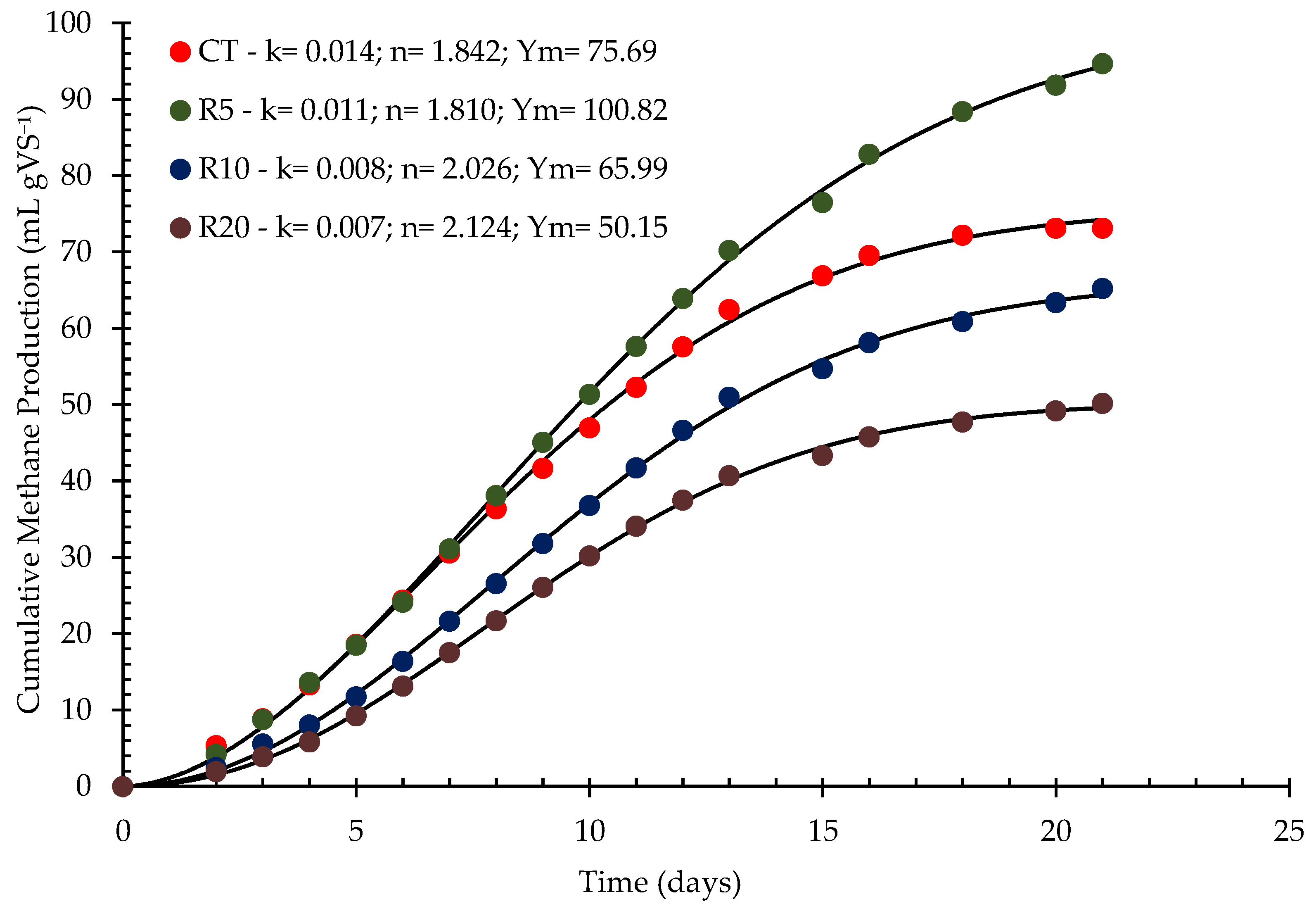
Figure 2.
Model representing the variation of the maximum biogas yield coefficient Ym with reactors.
Figure 2.
Model representing the variation of the maximum biogas yield coefficient Ym with reactors.
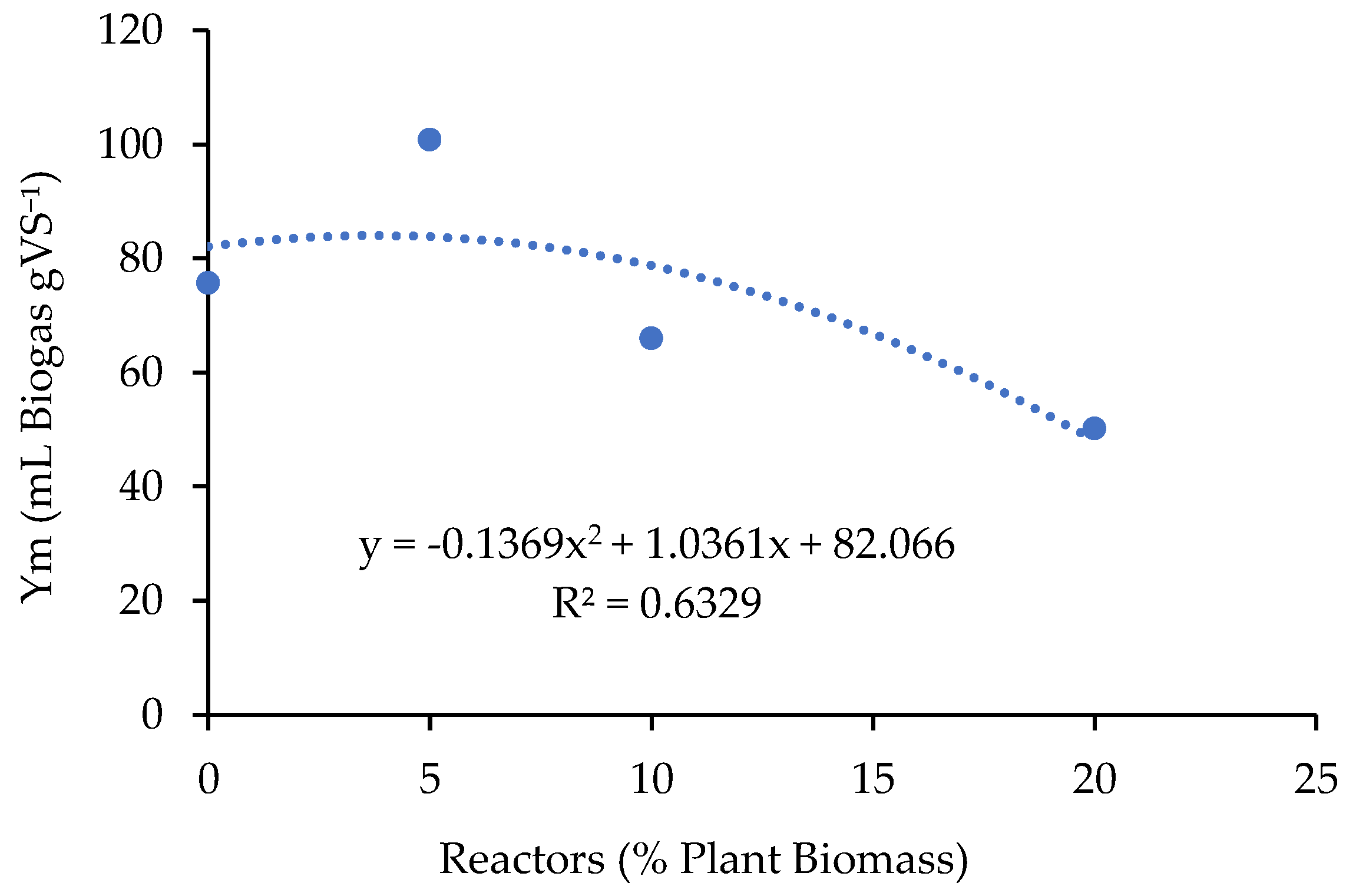
Figure 3.
Variation of reaction coefficients.
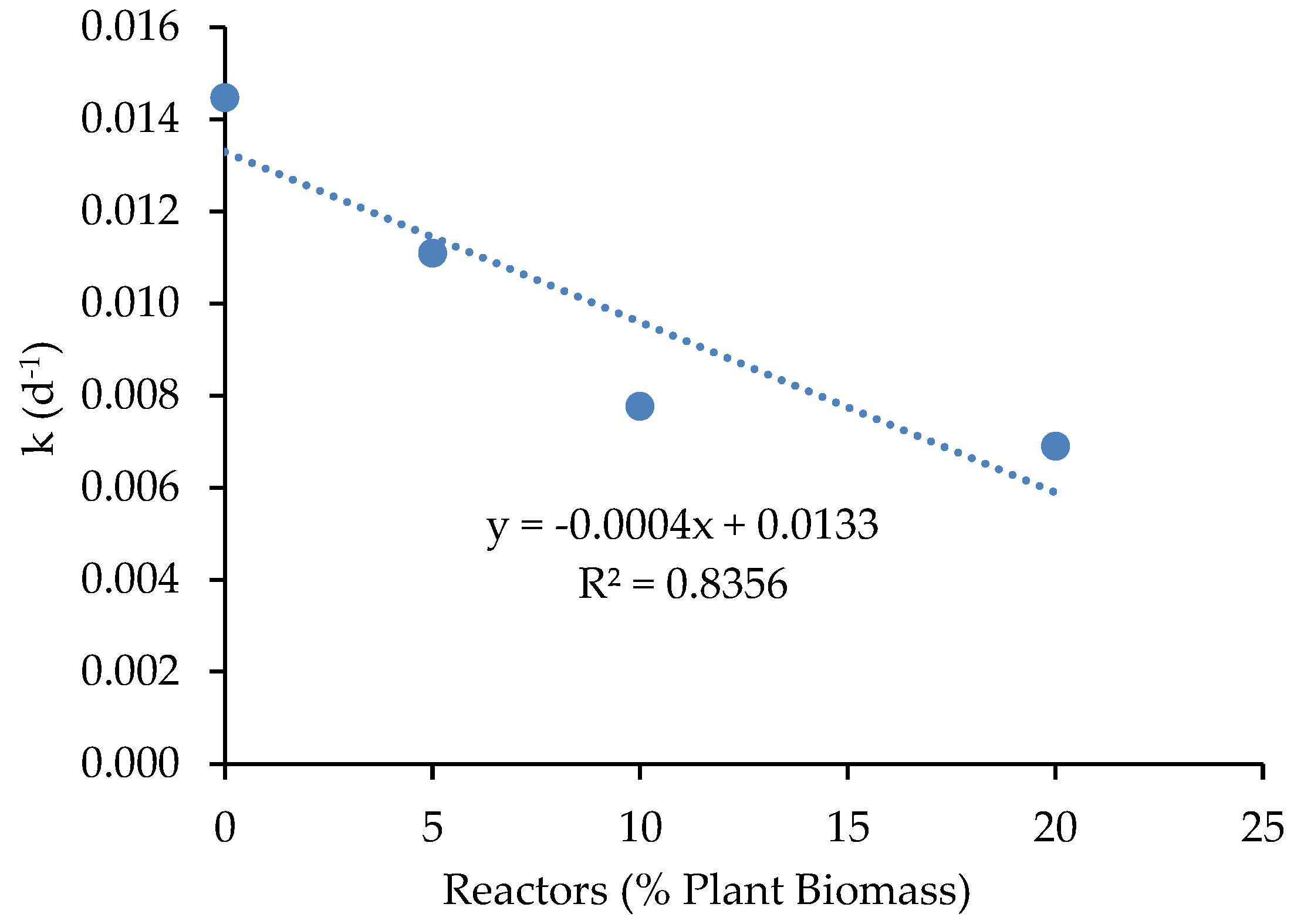
Figure 4.
Samples from days 1 (a) and 26 (b) of microalgae cultures. Treatments R5, R10, R20, and CT in duplicate.
Figure 4.
Samples from days 1 (a) and 26 (b) of microalgae cultures. Treatments R5, R10, R20, and CT in duplicate.
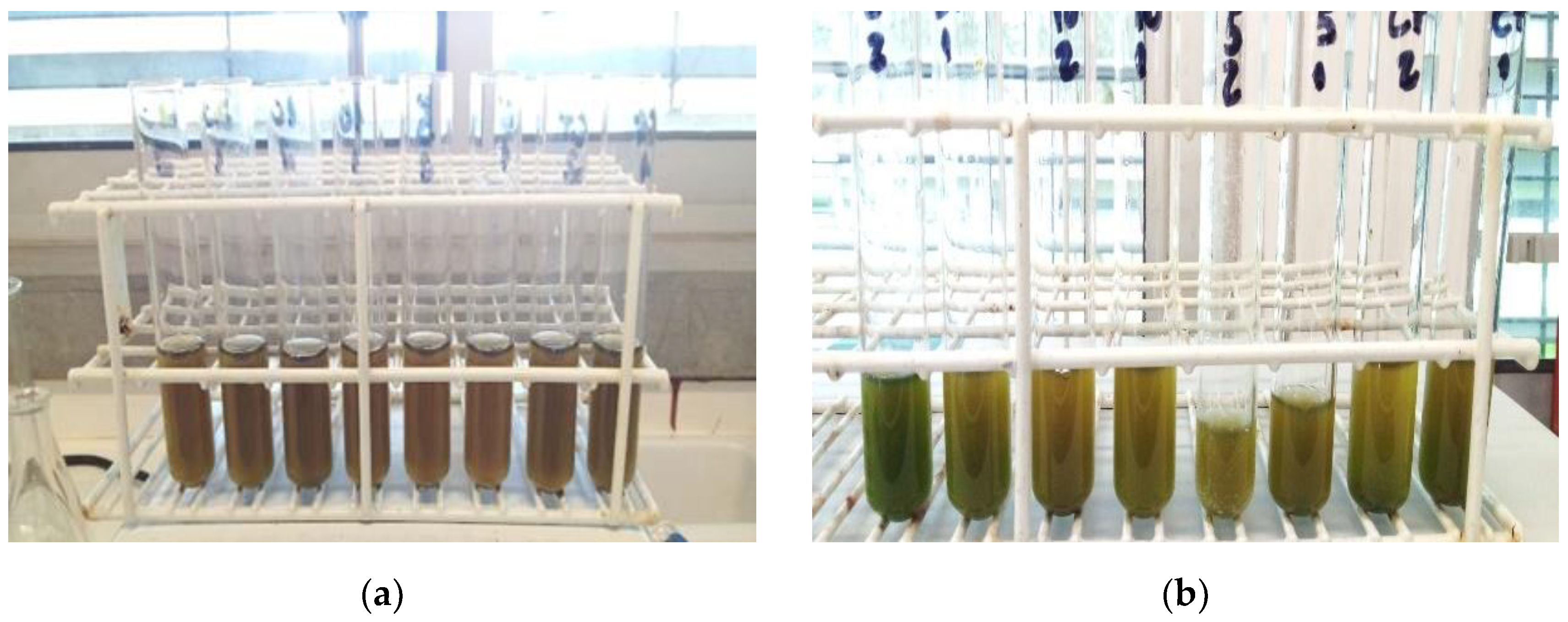
Figure 5.
Dry biomass growth curve (g L⁻¹) of Tetradesmus obliquus cultivated in digestate.
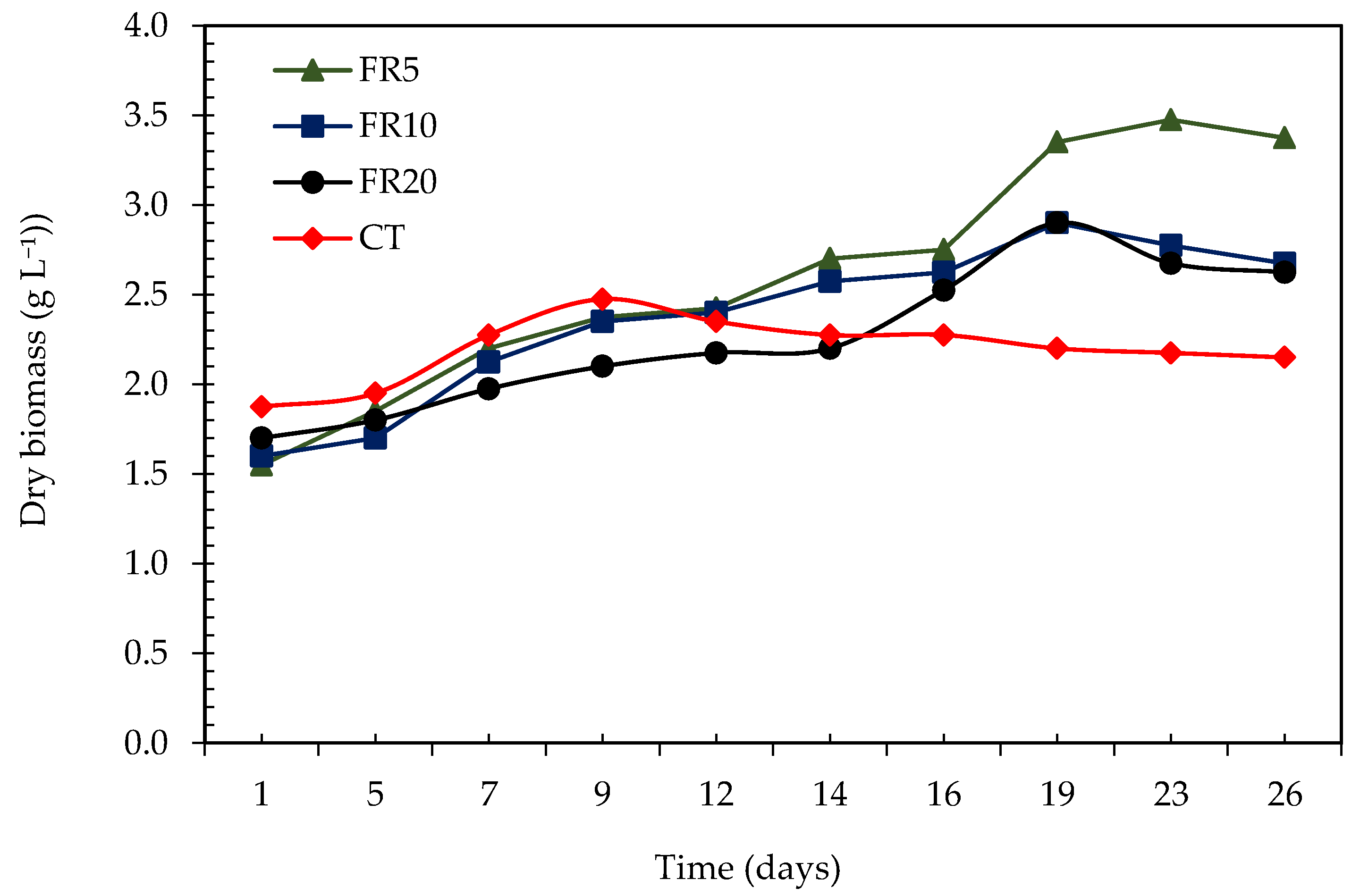
Figure 6.
Samples were centrifuged and then freeze-dried. (A) Anaerobic digestate biomass, sample treated by co-digestion. (B) Microalgae biomass, sample treated by photobioreactors; The supernatant was characterized to evaluate the bioremediation performance of the microalgae.
Figure 6.
Samples were centrifuged and then freeze-dried. (A) Anaerobic digestate biomass, sample treated by co-digestion. (B) Microalgae biomass, sample treated by photobioreactors; The supernatant was characterized to evaluate the bioremediation performance of the microalgae.
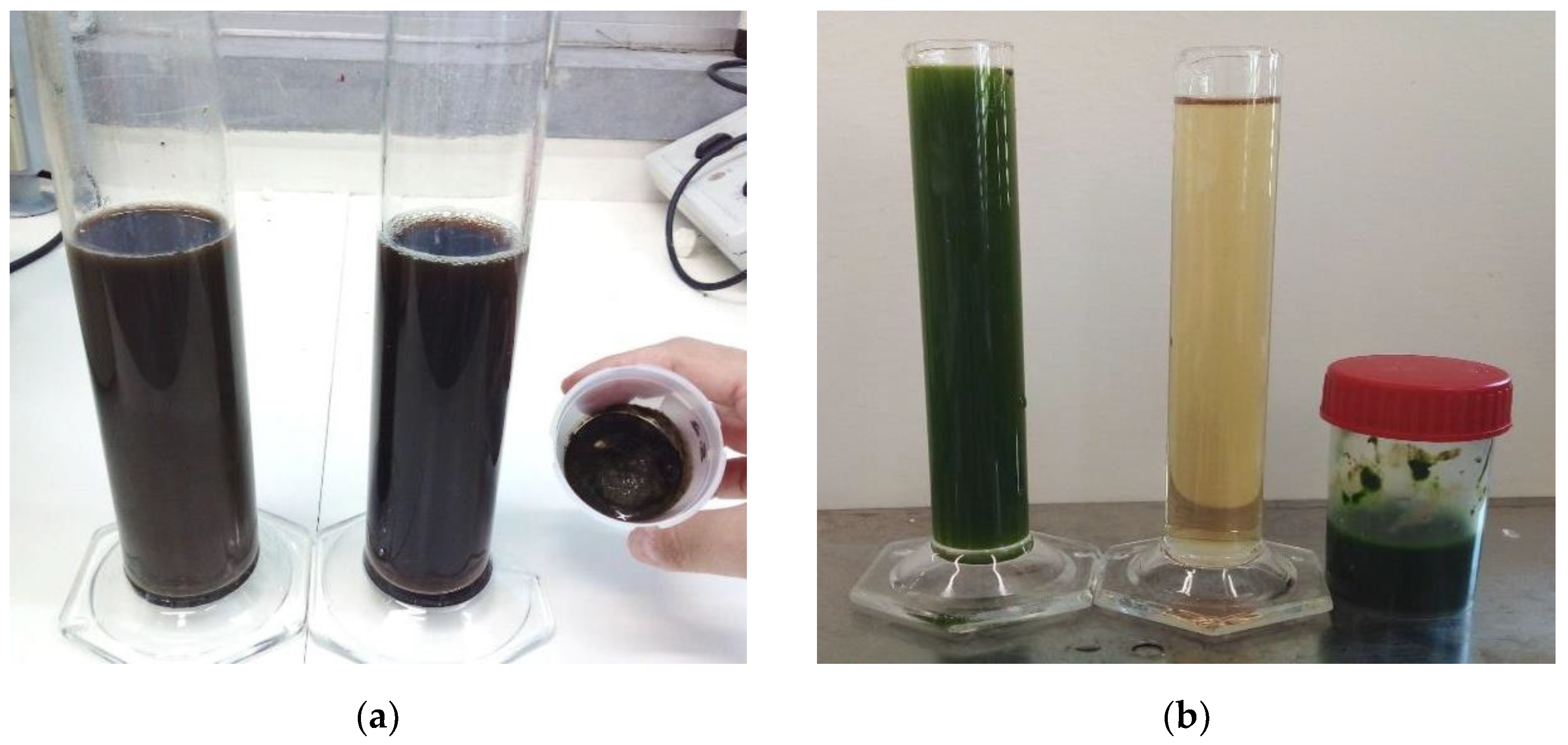

Table 1.
Kinetic models applied in anaerobic co-digestion.
| Model | Equation |
|---|---|
| First-order | ) (5) |
| Logistic Model | (6) |
| Cone | (7) |
| Modified Gompertz | (8) |
| FOMT | ) (9) |
| FOIT | (10) |
Y(i) = cumulative gas production at time t; Ym = final gas production at specific time t; μm = maximum gas production rate; λ = lag phase, delay time in days; t = digestion time (days); n = form factor; k, γ = adjusted constants.
Table 2.
Nitrogen compounds and phosphate.
| Treatments | TKN (mg L-1) | NH4+ (mg L-1) | NOrg (mg L-1) | NO-3 (mg L-1) | PO4-3 (mg L-1) | |||||
|---|---|---|---|---|---|---|---|---|---|---|
| In | Out | In | Out | In | Out | In | Out | In | Out | |
| CT | 1481 (30.8) | 1640 (0.0) | 924 (0.0) | 1134 (14) | 557 | 506 | 405 (5.35) | 362 (19.33) | 34 (4.5) | 39 (0.75) |
| R5 | 1526 (2.8) | 1568 (0.0) | 966 (14) | 1050 (14) | 560 | 518 | 424 (5.45) | 386 (5.20) | 22 (0.0) | 43 (1.0) |
| R10 | 1587 (2.8) | 1657 (0.0) | 938 (14) | 1162 (14) | 649 | 495 | 610 (6.94) | 375 (12.64) | 23 (0.25) | 44 (0.0) |
| R20 | 1630 (2.8) | 1836 (0.0) | 896 (0.0) | 1204 (0.0) | 734 | 632 | 800 (1.19) | 360 (0.5) | 24 (0.0) | 46 (2.0) |
In = Input mixtures in each reactor; Out = Outlet, effluent treated by co-digestion process. Values in parentheses indicate standard deviation.
Table 3.
Results of the six kinetic models fitted to the CT treatment data.
| Model | R2 (%) | rRMSE (%) |
|---|---|---|
| First-order | 96,6 | 11,2 |
| Logistic Model | 99,7 | 3,4 |
| Cone | 99,7 | 3,7 |
| Modified Gompertz | 99,9 | 2,2 |
| FOMT | 99,9 | 2,1 |
| FOIT | 99,2 | 5,6 |
R2 – Coefficient of Determination; rRMSE – Relative Root Mean Square Error.
Table 4.
Values of COD, N-NH4+ and PO₄³⁻: inflow and outflow the photobioreactors.
| Treatments | COD (mg L-1) | N-NH4+ (mg L-1) | PO4-3 (mg L-1) | ||||||
|---|---|---|---|---|---|---|---|---|---|
| In | Out | Rem (%) | In | Out | Rem (%) | In | Out | Rem (%) | |
| CT | 3860 (0.0) | 645 (0.0) | 83.3 | 565 (8.5) | 28 (0.0 | 95.0 | 19 (0.4) | 4.6 (0.37) | 75.8 |
| FR5 | 4770 (0.0) | 887 (80.6) | 81.4 | 522 (7.5) | 42 (14) | 92.0 | 21 (0.5) | 3.5 (0.0) | 83.3 |
| FR10 | 4992 (0.0) | 564 (80.6) | 88.7 | 577 (3.0) | 42 (14) | 92.7 | 22 (0.0) | 4.3 (0.25) | 80.5 |
| FR20 | 6588 (0.0) | 403 (80.6) | 93.8 | 600 (1.5) | 28 (0.0) | 95.3 | 23 (1.3) | 13.4 (2.87) | 41.7 |
In = input, anaerobic digestates diluted (1:1); Out = Outlet, effluent treated by photobioreactors. Rem = removal. Values in parentheses indicate standard deviation.
Table 5.
Bioremediation of agro-industrial wastewaters in photobioreactors.
| Substrate | Strain | Operation mode | COD (%) | NH4+ (%) | PO4-3 (%) | Reference |
|---|---|---|---|---|---|---|
| Treated aerobic dairy farm wastewater | Mixa | Batch | 98.8 | 100 | 98.8 | Hena et al. [76] |
| DCW anaerobically digested by hybrid reactor and sedimented | Tetradesmus obliquus | Batch | 65-70 | 98-99 | 69-77.5 | Mendonça et al. [18] |
| Cont. | 57-61 | 94-96 | 65-70 | |||
| DCW diluted with sterile distilled water | Coelastrum sp. | Semi-batch | 42 | >80 | 100 | Mousavi et al. [77] |
| Digestate of agro-industrial wastes diluted with water at 10% (v/v) | Parachlorella kessleri | Batch | 39.1-59.4 | >98 | 59 -88.4 | Koutra et al. [78] |
| Acutodesmus obliquus | ||||||
| Chlorella vulgaris | ||||||
| Tetraselmis tetrathele | ||||||
| Dairy wastewater diluted (70%) | Mixb | Batch | 61 | NR | 84 | Chandra et al. [79] |
| Piggery wastewater diluted (1:20) | Synechocystis sp. | NR | 61.6 | 92.4 | 90.1 | Ferreira et al. [69] |
| Tetradesmus obliquus | 73.1 | 87.5 | 98.1 | |||
| Chlorella protothecoides | 68.4 | 92.0 | 98.5 | |||
| Chlorella vulgaris | 79.2 | 79.4 | 98.6 | |||
| Piggery wastewater pre-treated with photo-Fenton | Tetradesmus obliquus | Batch | 48.6 | 37.3 | 100 | Ferreira et al. [64] |
| DCW was pre-treated in an activated sludge | Tetradesmus obliquus | Batch | 74 | 100 | 100 | Mendonça et al.[21] |
| Cont. | 78 | 94 | 74 | |||
| Chlorella vulgaris | Batch | 50 | 100 | 100 | ||
| Cont. | 60 | 92 | 61 | |||
| Digestate diluted (1:1) originating from the anaerobic co-digestion of the plant biomass Arundo donax L. and DCW | Tetradesmus obliquus | Batch - FR5 | 81.4 | 92.0 | 83.3 | Present work |
| FR10 | 88.7 | 92.7 | 80.5 | |||
| FR20 | 93.8 | 95.3 | 41.7 | |||
| CT | 83.3 | 95.0 | 75.8 |
NR – not reported. Mixa - Chlorella saccharophila, Chlamydomonas pseudococcum, Scenedesmus sp. and Neochloris oleoabundans. Mixb – Chlorella minutissima, Nostoc muscorum, Spirulina sp.
Table 6.
Macromolecular composition and productivity.
| Treatments | Carbohydrates (%) | Lipids (%) | Proteins (%) | Ash (%) | |||
|---|---|---|---|---|---|---|---|
| AB (%) | Prod. g L-1 | AB (%) | Prod. g L-1 | AB (%) | Prod. g L-1 | ||
| CT | 29.7 (1.31) | 0.73 | 33.4 (1.3) | 0.82 | 11.6 (0.43) | 0.28 | 9.4 (0.27) |
| FR5 | 34.7 (0.54) | 1.20 | 42.7 (2.4) | 1.48 | 7.9 (0.62) | 0.27 | 8.0 (0.19) |
| FR10 | 33.6 (1.44) | 0.97 | 40.3 (1.6) | 1.16 | 7.1 (0.13) | 0.20 | 8.1 (0.14) |
| FR20 | 32.6 (1.88) | 0.94 | 36.5 (0.4) | 1.05 | 7.0 (0.18) | 0.20 | 8.9 (0.38) |
AB – Algal biomass, sample treated in photobioreactors; Prod. – Productivity. Values in parentheses indicate standard deviation.
Disclaimer/Publisher’s Note: The statements, opinions and data contained in all publications are solely those of the individual author(s) and contributor(s) and not of MDPI and/or the editor(s). MDPI and/or the editor(s) disclaim responsibility for any injury to people or property resulting from any ideas, methods, instructions or products referred to in the content. |
© 2024 by the authors. Licensee MDPI, Basel, Switzerland. This article is an open access article distributed under the terms and conditions of the Creative Commons Attribution (CC BY) license (http://creativecommons.org/licenses/by/4.0/).
Copyright: This open access article is published under a Creative Commons CC BY 4.0 license, which permit the free download, distribution, and reuse, provided that the author and preprint are cited in any reuse.


