
Submitted:
16 November 2024
Posted:
19 November 2024
You are already at the latest version
Abstract
Aging is a biological process denoted by a slow and progressive decline in physiological function, and it is often associated with several disorders collectively known as age-related diseases (ARDs). With the aging global population, ARDs like Parkinson's Disease (PD) and frailty are becoming more common, highlighting the need for innovative strategies. Nutraceuticals are naturally bioactive compounds contained in foods offering health benefits over and above essential nutrition, which is critical for preventing and coping with ARDs. By examining literature from the past decade, this review highlights how nutraceuticals can act as complementary therapies, addressing key processes such as oxidative stress, inflammation, and neuroprotection. Notably, the antioxidant action of nutraceuticals appears particularly beneficial in PD and frailty. For instance, antioxidant-rich nutraceuticals may mitigate the oxidative damage linked to levodopa therapy in PD, potentially reducing side effects and enhancing treatment sustainability. Similarly, the antioxidant effects of nutraceuticals may amplify the benefits of physical activity, enhancing muscle function, cognitive health, and resilience, thereby reducing the risk of frailty. This review proposes a holistic approach integrating nutraceuticals with exercise, pharmacotherapy, and lifestyle adjustments. t promises to transform the management of ARD, prolong life, and improve the quality of life and well-being of older people.
Keywords:
Aging
; Precision Medicine
; Parkinson’s Disease
; Frailty
; Nutraceuticals
; Bioactive Compound
; Physiology and Anatomy
; Anti-Oxidant
; Inflammation
1. Introduction
Over the past decade, the global population has experienced a notable increase in average age, leading to a surge in the elderly demographic [1]. In 2020, the number of individuals aged 70 and older reached approximately 457.96 million worldwide (World Population Ageing 2020 Highlights). As people live longer, many face significant health challenges, with a majority suffering from one or more chronic, age-related diseases (ARDs) such as cardiovascular diseases, diabetes, neurodegenerative conditions, and frailty [2,3,4,5,6,7].
The prevalence of neurodegenerative disorders like Parkinson's disease (PD), alongside the geriatric syndrome of frailty, has become a significant public health concern [8,9]. PD is a neurodegenerative disorder that manifests clinically through symptoms such as bradykinesia, resting tremor, rigidity, and disturbances in posture and gait, all of which are commonly observed in the elderly [10,11]. In addition to these motor symptoms, PD is also associated with a range of non-motor symptoms, including depression, anxiety, cognitive impairment, and dementia [12,13,14]. The global prevalence of PD is steadily increasing, with aging identified as a significant risk factor for its onset [15]. The physiological changes associated with aging contribute to the disease's development and progression [8]. Frailty, on the other hand, is a geriatric syndrome characterized by a state of increased vulnerability, where an individual's health teeters between robustness and disability [16]. This syndrome is influenced by various physiological stressors accompanying aging and encompasses physical, psychological, and social dimensions [17,18]. Both conditions share common pathways related to aging, yet they manifest differently, necessitating more effective and sustainable strategies, including preventive approaches and innovative interventions like nutraceuticals [19,20,21,22,23].
Nutraceuticals, coined by Stephen DeFelice, are food-derived products offering health benefits beyond essential nutrition [24]. They encompass a wide range, including naturally nutrient-rich foods like garlic, isolated nutrients, and herbal products [25,26,27]. Growing interest is in managing ARDs using nutraceutical bioactive compounds derived from food sources [25]. Nutraceuticals, with their antioxidant, anti-inflammatory, and neuroprotective properties, offer promising adjuncts to conventional treatments [21]. In PD, compounds such as curcumin, resveratrol, and omega-3 fatty acids have shown the potential to slow disease progression and alleviate symptoms by targeting oxidative stress and mitochondrial dysfunction [20].
Similarly, in frailty, these substances may help enhance muscle function, reduce inflammation, and improve overall resilience against physical and psychological stressors [28]. This review aims to explore the distinct effects of nutraceuticals on PD and frailty, evaluating their ability to influence the core mechanisms behind these conditions. Moreover, it underscores the importance of advancing research and clinical approaches, emphasizing the development of novel bioactive compounds, using cutting-edge delivery technologies, and incorporating personalized strategies based on genetic and epigenetic insights. These advancements will contribute to more precise, effective, and individualized treatments, allowing precision medicine to extend health span and mitigate age-related diseases ARDs [29].
2. Methods
To explore the rationale for linking PD and frailty, we can look into current research (approximately related to the last decade of signs of progress) indicating shared underlying mechanisms, outcomes, and possible connections related to interventions such as nutraceuticals. Here are some factors that could provide a meaningful connection between PD and frailty:
- Shared Pathophysiological Mechanisms: inflammation and oxidative stress, mitochondrial dysfunction:
- Motor and Functional Decline: mobility and balance, sarcopenia, and muscle wasting.
- Risk of Malnutrition
- Cognitive Decline and Depression
Developing a comprehensive and well-documented search formula is essential to ensure replicability and transparency in the literature search.
PubMed serves as a critical source for biomedical research and will be used as the primary database for this search, given its extensive medical, biological, and life sciences literature coverage. Target key terms and concepts for research questions: “Parkinson's disease”: Encompass synonyms and related terms such as “PD” or “parkinsonism” to capture all relevant articles. “Frailty": Expand with terms such as ‘frail elderly,’ ‘frailty syndrome,’ or ‘physical frailty’ to include variants used in the literature. “Nutraceuticals”: Include such interrelated terms as “dietary supplements,” “functional foods,” or specific nutraceuticals (e.g., “omega-3,” “curcumin”) to cover various types of interventions. Our study focuses on recent advancements, limiting it to studies published in English from the last 10 years.
We searched ClinicalTrials.gov to identify potential studies exploring the use of nutraceuticals in managing Parkinson’s disease and frailty.
3. Aged People Dysfunction: Parkinson's vs. Frailty: A Comparison of Aging-Related Conditions
Aging is a natural and inevitable process that affects every living organism, leading to a gradual decline in physical and cognitive functions [30,31]. As people age, they experience cellular, molecular, and systemic changes, often resulting in various ARDs: increased protein synthesis, apoptosis resistance, and cellular function alterations mark this process [32,33]. The accumulation of senescent cells in tissues becomes more pronounced, leading to a heightened susceptibility to ARDs [34]. For instance, the buildup of senescent cells in joints can result in osteoarthritis, characterized by joint degeneration and impaired mobility [35,36]. Aging also affects various organ systems, leading to physiological changes such as reduced cell turnover, diminished function of mucous membranes, muscle wasting, and a higher risk of conditions like atherosclerosis, contributing to geriatric frailty [37,38]. Cellular senescence, characterized by a progressive decline in physiological function and the release of inflammatory factors, plays a crucial role in aging by hindering tissue regeneration and altering the local environment [39,40]. While interventions targeting senescent cells have shown promise, they can also cause unintended complications, such as elevated urea levels and thrombocytopenia in experimental models [41]. Aging is also linked to the gradual loss of muscle mass and strength (sarcopenia), impaired immune function, and increased vulnerability to infections and other illnesses [42,43,44].
Cognitive decline, which can range from mild memory impairments to severe forms of dementia, is a natural part of the aging process [45]. As individuals grow older, they may experience changes in their cognitive abilities, which can vary in severity. In addition, cognitive decline becomes more prevalent with age [45]. Common conditions associated with aging include neurodegenerative diseases such as PD and frailty [9]. These conditions reduce the quality of life and increase the health care burden, as the elderly often require more medical care and assistance [31]. Common conditions associated with aging include neurodegenerative diseases such as PD and frailty [9]. These conditions decrease quality of life and increase health care burdens, as the elderly often require more medical care and assistance [38].
3.1. Parkinson’s Disease
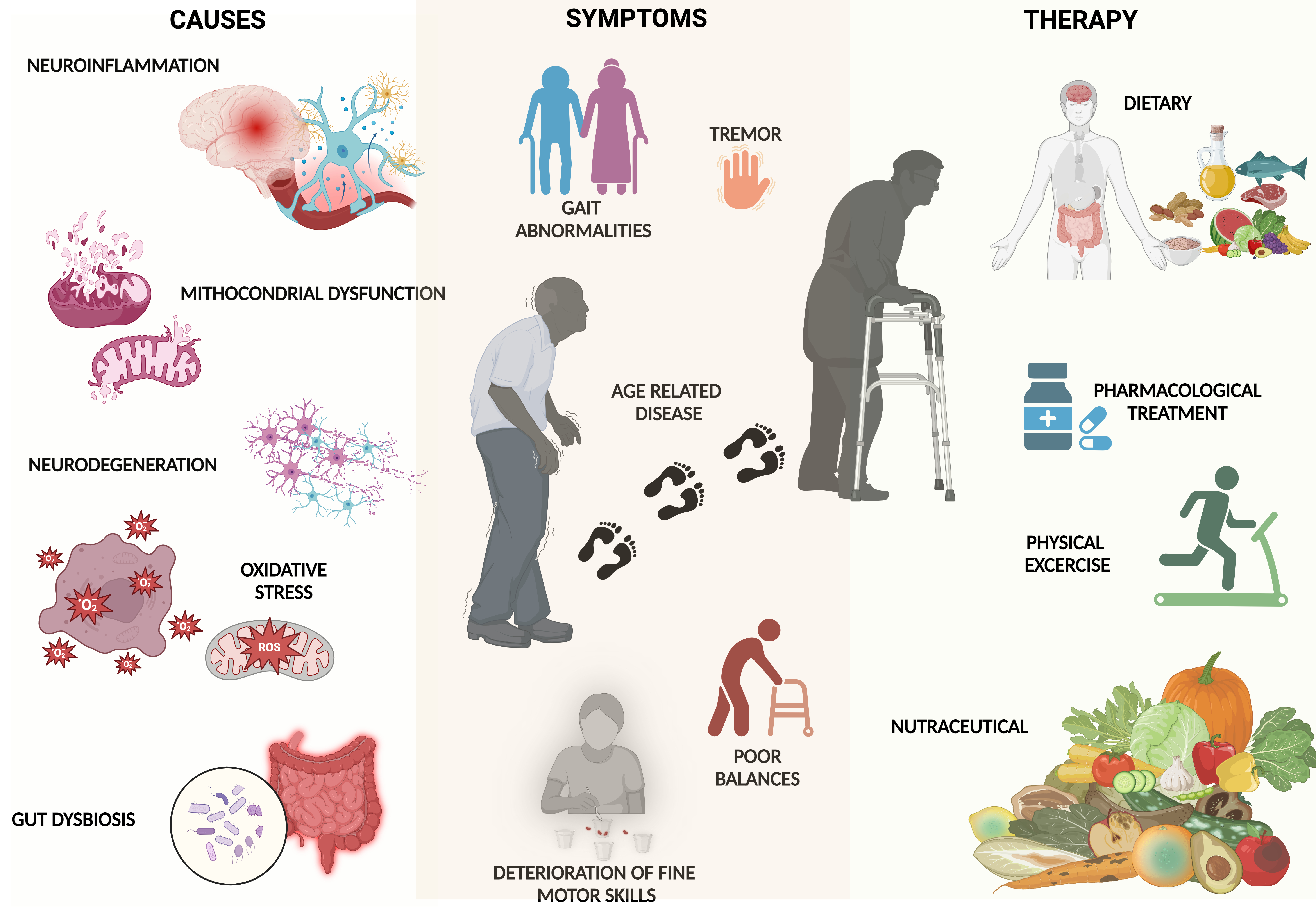
PD is a complex neurodegenerative disorder primarily characterized by the loss of dopaminergic neurons in the Substantia Nigra pars compacta (SNpc), and brain accomulation of Lewy bodies (LB), whic are aggregates of alpha-synuclein (αS) [12,48]. The diagnosis of PD is based on patient history and neurological examination [49,50]. Although primarily designed for research purposes, the diagnostic criteria established by the International Parkinson and Movement Disorder Society can aid clinicians in confirming the diagnosis [51,52]. The TRAP mnemonic can be helpful in diagnosis, as it includes tremors (T), rigidity (R), akinesia (A), and postural instability (P) [53,54]. However, PD also presents a wide range of less visible, non-motor symptoms, such as cognitive decline, depression, and pain, which contribute significantly to the overall disability experienced by patients [13,14]. These non-motor symptoms can be assessed using a specialized rating scale to quantify their burden [13,14]. Early indicators include symptoms like constipation (the most common early sign), acting out dreams during REM sleep (indicative of REM sleep behavior disorder), loss of smell (hyposmia), asymmetrical shoulder pain, and depression [55,56,57,58]. It is essential to recognize that general practitioners cannot be faulted for missing a diagnosis in the early stages, as these symptoms are often nonspecific and overlap with many other conditions [51,52]. The exact cause of PD remains elusive, but it is believed to result from a combination of genetic predispositions and environmental factors. Mutations in genes such as Leucine-rich repeat kinase 2 (LRRK2), Parkin7 (PARK7), and αS have been linked to familial forms of PD, while environmental exposures to toxins, such as pesticides, have been associated with an increased risk of the disease [59,60,61,62]. Additionally, mitochondrial dysfunction, oxidative stress, and neuroinflammation are critical contributors to the pathogenesis of PD. These factors lead to the accumulation of reactive oxygen species (ROS), which damage cellular components, further exacerbating neuronal death [63,64,65,66].
3.1.1. Current Therapeutic Approaches
Despite the wide range of treatment options, including pharmacological, non-pharmacological, and surgical interventions like brain, spinal, and vagus nerve stimulators, patients still suffer from ongoing muscle weakness, and no therapy has proven to be a definitive disease-modifying solution [67,68].
Conventional Pharmacological Treatments
Levodopa and Derivatives: Levodopa remains a central treatment for PD, converting to dopamine in the brain to alleviate motor symptoms like tremors and rigidity [69,70]. Its effectiveness diminishes over time, leading to side effects like dyskinesia [69,70]. Co-administration with carbidopa improves its efficacy and reduces peripheral side effects. However, as the disease progresses, the effectiveness of levodopa diminishes, and patients often experience motor fluctuations and dyskinesias (involuntary movements) [69,70,71].
MAO-B Inhibitors: Monoamine oxidase B inhibitors delay levodopa breakdown, extending its benefits in early-stage PD [72,73]. Though less potent than levodopa, they pose fewer risks of inducing dyskinesias [71]. These drugs are commonly combined with other therapies to enhance motor symptom management, especially as PD progresses[72,73,74].
COMT Inhibitors: Catechol-O-methyltransferase inhibitors increase levodopa's availability in the brain by reducing its breakdown [74,75]. Drugs like entacapone and opicapone extend levodopa's effects. However, they may cause adverse effects such as dyskinesia and confusion. Tolcapone, though effective, is rarely used due to the risks of liver failure [74,75].
Anticholinergic Agents: These drugs, including trihexyphenidyl and benztropine, reduce tremors, particularly in younger patients [76,77]. However, their use is limited due to side effects like blurred vision and urinary retention[76,77].
Non-Conventional Pharmacological Treatments
Antidiabetic Agents: Medications such as glucagon-like peptide 1 (GLP-1) agonists and Dipeptidyl peptidase 4 (DPP-4) inhibitors may offer neuroprotective effects in PD by reducing neuroinflammation and oxidative stress [78,79,80]. Studies have shown potential benefits in improving motor and cognitive symptoms in PD patients [81].
Intranasal Insulin: Insulin, administered intranasally, has shown promise in protecting dopaminergic neurons and improving motor function without affecting blood glucose levels [82,83].
Biguanides (Metformin): Though primarily used for type 2 diabetes, metformin has potential neuroprotective effects in PD [84,85]. Specific genetic polymorphisms in IL-1β and TNF-α genes may elevate PD risk [86], and metformin's ability to reduce these pro-inflammatory cytokines could make it especially beneficial for PD patients with these specific gene variations [86]. Polymorphisms in Complex I, especially when coupled withi pestcide exposure, are known to influence PD risk [86]. Since metformin acts as a Complex I inhibitor, it is plausible that particular Complex I gene variants could alter metformin's impact on PD progression, particularly in individuals exposed to environmental toxins [86]. Moreover, metformin's intracellular transport is mediated by organic cation transporters, which rely on their membrane concentrations to function effectively [86]
Non-Pharmacological Treatments
Stem Cell Therapy: Using pluripotent stem cells to regenerate damaged dopaminergic neurons offers a promising future therapy for PD. Early trials using fetal cell transplants have shown long-term benefits but also carry risks like dyskinesia [87,88,89].
Gene Therapy: Gene therapies targeting defective genes like AADC and neurotrophic factors are being explored to modify disease progression in PD [90,91]. While promising in animal models, clinical application has faced gene distribution and efficacy challenges[90,91].
Surgical Treatments
Lesioning Procedures: Ablative surgeries, like pallidotomy and thalamotomy, target specific brain areas to alleviate motor symptoms [92]. Though effective, these procedures are reserved for patients unresponsive to medication, with risks of neurological side effects[92].
Deep Brain Stimulation (DBS): DBS is widely used to control PD motor symptoms by delivering electrical impulses to the brain [93,94]. It improves motor function and reduces reliance on medications, though it requires careful management to avoid side effects like dyskinesia and cognitive impairment [93,94].
Focused Ultrasound (FUS): FUS is a non-invasive method that uses ultrasound waves to target deep brain tissues, offering a promising alternative to traditional surgery for motor symptom relief in PD [95].
3.1.2. Limitations of Conventional Treatments
Despite the availability of various treatments for PD, limitations and side effects persist across both pharmacological and non-pharmacological approaches [98]. Levodopa, a cornerstone therapy that converts to dopamine to alleviate motor symptoms like tremors and rigidity, loses effectiveness over time and can lead to side effects such as dyskinesia and motor fluctuations [99]. While MAO-B inhibitors help delay levodopa's breakdown and extend its benefits, they are less potent and usually require a combination with other treatments [100]. COMT inhibitors increase levodopa availability but may induce dyskinesia and confusion, with some drugs, like tolcapone, posing risks of liver failure [101]. Anticholinergic agents, used for tremor control, particularly in younger patients, come with side effects like blurred vision and urinary retention, limiting their use [102]. Non-conventional pharmacological treatments also present challenges [98]. Antidiabetic agents like GLP-1 agonists and DPP-4 inhibitors show potential for reducing neuroinflammation, but their off-target effects remain under investigation [103]. Intranasal insulin may protect dopaminergic neurons and improve motor function, though it is still in early-stage research [103]. Metformin, an antidiabetic drug, has been associated with a reduced risk of PD but raises concerns about vitamin B12 deficiency and possible cognitive decline. Non-pharmacological and surgical options carry their risks [104,105]. Stem cell therapy offers promise for regenerating dopaminergic neurons but carries the risk of dyskinesia and ethical challenges [106]. Gene therapy faces obstacles in gene distribution and efficacy in clinical applications [107]. Surgical approaches, like lesioning procedures, are reserved for patients unresponsive to medication and come with neurological side effects [108]. DBS, although effective in controlling motor symptoms, can lead to dyskinesia and cognitive impairment [109]. Newer techniques, like FUS and GKT, offer less invasive alternatives, though they carry risks of tissue damage and radiation-induced neurological changes, respectively [110] (Table1).

Table 1.
Overview of Therapeutic Approaches for PD.
| Category | Treatment | Mechanism | Benefits | Limitations/ Side Effects |
Ref |
|---|---|---|---|---|---|
|
Levodopa and Derivatives |
Converts to dopamine to alleviate motor symptoms | Effective for tremors and rigidity | Diminished effectiveness over time, dyskinesia, motor fluctuations | [69,70,71] | |
| Conventional Pharmacological Treatments |
MAO-B Inhibitors |
Delays breakdown of levodopa, extending benefits | Fewer dyskinesias, used in early-stage PD |
Less potent than levodopa, often used in combination with other therapies | [69,70,71,72,73,74] |
| COMT Inhibitors | Increases levodopa availability by reducing breakdown | Extends levodopa's effects | Dyskinesia, confusion, tolcapone risk of liver failure | [101] | |
|
Antidiabetic Agents |
May reduce neuroinflammation and oxidative stress |
Potential neuroprotective effects, motor and cognitive improvements |
Potential off-target effects; still under study | [78,79,80,81] | |
| Biguanides (Metformin) | Potential neuroprotective effects | Neuroprotective effects in PD | Risk of vitamin B12 deficiency, potential cognitive decline |
[84,85,86,111] | |
|
Non- Pharmacological Treatments |
Stem Cell Therapy |
Regenerates dopaminergic neurons |
Long-term motor benefits |
Risks of dyskinesia, ethical concerns, early-stage research | [87,88,89]. |
| Gene Therapy | Targets defective genes and neurotrophic factors | Promising disease-modifying potential | Gene distribution challenges, efficacy concerns in clinical application | [90,91] | |
|
|
Lesioning Procedures |
Targets specific brain areas to alleviate motor symptoms |
Effective for motor symptom relief |
Neurological side effects, reserved for medication-unresponsive patients |
[92]. |
| Surgical Treatments | DBS | Delivers electrical impulses to control motor symptoms | Improves motor function, reduces medication reliance | Risk of dyskinesia, cognitive impairment, requires careful management | [93,94] |
| FUS |
Non-invasive ultrasound to target brain tissue |
Promising alternative to traditional surgery |
Still under study, potential for tissue damage | [95] | |
| GKT | Uses gamma radiation to treat tremors | Minimally invasive, fewer long-term complications | Radiation-induced neurological changes possible | [96,97] |
3.2. Frailty
Frailty is a clinical syndrome characterized by a reduction in physiological reserve and increased vulnerability to stressors, leading to adverse health outcomes such as falls, hospitalization, disability, and death [112,113]. It is often seen in older adults and is associated with a decline in multiple body systems [112,113]. Clinically, frailty is diagnosed using criteria like the Fried Frailty Phenotype, which includes unintentional weight loss, self-reported exhaustion, weakness (grip strength), slow walking speed, and low physical activity [114,115]. The presence of three or more of these criteria indicates frailty, while one or two suggest a pre-frail state [116,117]. Frailty is not merely a consequence of aging but rather a distinct clinical entity that significantly impacts an individual’s quality of life and functional independence [116,117]. It is associated with a higher risk of adverse outcomes, particularly in the presence of acute illnesses or surgical interventions [118]. The pathophysiology of frailty is multifaceted, involving complex interactions between various biological systems [112,113]. Chronic inflammation plays a central role, with elevated levels of pro-inflammatory cytokines such as inteleukin-6 (IL-6) and tumor necrosis factor-alpha (TNFα) contributing to muscle catabolism, reduced muscle mass, and strength, a condition known as sarcopenia, which is a core component of frailty [119,120,121]. Additionally, hormonal imbalances, including decreased levels of anabolic hormones like testosterone and growth hormone, exacerbate the decline in muscle and bone health [122]. Mitochondrial dysfunction is also critical in frailty, leading to decreased energy production and increased oxidative stress, which further accelerates cellular aging and tissue damage [123]. Additionally, frailty is associated with insulin resistance, dysregulated glucose metabolism, and impaired autophagy, all of which contribute to the decline in cellular and systemic resilience [124].
3.2.1. Current Therapeutic Approaches
Patients affected by the clinical syndromes of frailty have limited options to effectively slow disease progression outside of exercise training [125]. Given the difficulty in reversing disability in older adults, its impact is both severe for individuals and costly for society [126]. Therefore, developing new strategies to maintain functional capacity and independence in later life is crucial, particularly in the context of chronic illness [126]. A combined approach involving exercise, nutrition, and pharmacological interventions may help mitigate the onset and progression of frailty [127].
Drug Therapy
Hormone Therapies: Among the potential pharmacological treatments extensively studied in preclinical settings are hormone therapies and myostatin inhibitors [128]. Hormone therapies include the administration of testosterone, growth hormone (GH), ghrelin, insulin, and thyroid hormones [129,130,131,132]. Testosterone replacement therapy, given its known metabolic and anabolic effects, has been explored as a possible treatment for frailty [133]. Clinical trials have shown that testosterone can modestly improve muscle function and overall physical capacity in frailty patients [134,135]. However, side effects like the risk of prostatic hyperplasia necessitate further large-scale studies to validate its safety and efficacy [136]. While showing promise in preclinical studies for its anabolic, anti-inflammatory, and antioxidant benefits, GH therapy has yet to demonstrate clinical effectiveness [128]. Ghrelin is another potential treatment due to its ability to stimulate appetite and enhance gastric motility [137].
Insulin: By increasing amino acid delivery and intramuscular blood flow, insulin promotes muscle protein synthesis [138]. Thyroid hormone, a critical metabolic regulator targeting skeletal muscle, has been linked to muscle wasting and diminished function in overt and latent thyroid dysfunction cases [139].
Myostatin: Myostatin, a cytokine within the Transforming growth factor-β (TGF-β) family, is highly expressed in skeletal muscles and regulates muscle growth [140,141]. However, several trials of myostatin inhibitors have yielded underwhelming results, showing limited therapeutic benefit [142]. Nevertheless, a study involving bimagrumab, a myostatin inhibitor, demonstrated positive outcomes, improving both functional capacity and independence in elderly sarcopenic individuals [143].
GDF-15: Another promising target has recently gained attention: growth differentiation factor 15 (GDF-15), a key regulator in muscle pathophysiology and a global stress mediator [144,145]. Evidence indicates that GDF-15 is associated with reduced muscle mass, impaired performance, and heightened inflammation [146]. Neutralizing GDF-15 has shown promise in reversing these effects, helping to restore muscle function and physical capacity [147]. In experimental models, anti-GDF-15 treatment significantly increased muscle mass by boosting appetite and food intake, leading to improved physical function [148].
Exercise: Exercise is now recognized as the most effective therapy for slowing the progression of frailty [149,150]. Well-structured and closely supervised exercise training programs are designed to combat muscle atrophy, stimulate muscle growth, and preserve muscle function as individuals age [149,150].
Resistance exercise benefits muscle health through various physiological mechanisms and signaling pathways, including vasodilation, antithrombotic effects, reduced oxidative stress, anti-inflammatory responses, activation of mechanistic target of rapamycin complex-1 (mTORC1), enhanced mitochondrial biogenesis, increased Insulin-like Growth Factor 1 (IGF-1), stimulation of peroxisomes, and improved insulin sensitivity [151,152]. These molecular adaptations show that skeletal muscle is highly responsive and adaptable to activity. Low-intensity training enhances mitochondrial efficiency and oxygen utilization, while high-intensity exercise stimulates muscle cell proliferation and increases contractile protein production [153]. Exercise also upregulates gene transcription related to calcium (Ca2+) signaling via the Adenosine monophosphate-activated protein kinase (AMPK) pathway, influencing the energy status of muscle cells [154].
Nutrition: Malnutrition encompasses various forms of undernutrition, such as wasting, stunting, underweight, vitamin and mineral deficiencies, obesity, and related non-communicable diseases [155]. Nutritional deficiencies in micronutrients (e.g., vitamins and minerals) and macronutrients (such as energy stores and substrates) contribute to a worsening catabolic state in conditions like frailty [156,157,158]. For example, vitamin D deficiency can impair muscle function, alter calcium flow, and promote inflammation. However, it also reduces muscle mass and poor physical performance in older adults [159].
Consequently, vitamin D supplementation is potentially a therapeutic option for managing frailty [160,161].New insights into the link between muscle health and nutrition reveal that proper nutrition supports muscle function, stimulates muscle growth (anabolism), and regulates muscle protein synthesis, glucose, insulin levels, and neuromuscular and vascular functions [162]. Nutrition also plays a crucial role in nutrient sensing, mitochondrial efficiency, and communication between muscles and the immune system. When combined, nutritional interventions and exercise can have additive effects, particularly when resistance training is paired with protein supplementation, improving muscle mass and function [163]. Dietary protein is vital for maintaining muscle structure, function, and a healthy balance between anabolic and catabolic processes in frail elderly individuals [164]. Essential amino acids, like leucine, trigger strong anabolic responses by activating muscle signaling pathways that enhance mRNA translation and muscle protein synthesis [165]. Omega-3 polyunsaturated fatty acids also offer a potential benefit due to their anti-inflammatory properties [166]. Despite their crucial role in managing frailty, nutritional interventions face challenges. These include the complexity of food and nutrient interactions, difficulty in blinding treatments, low patient adherence, and the influence of confounding factors like ethnicity, genetics, and physiological condition, along with dietary habits and food culture variations [155].
3.2.2. Limitations of Conventional Treatments
Pharmacological and nutritional interventions for treating frailty come with notable limitations and potential side effects [167]. Testosterone therapy, despite its ability to improve muscle function, carries risks such as prostatic hyperplasia, necessitating large-scale trials to confirm its safety [168]. Though promising in preclinical studies, GH treatment has yet to demonstrate clinical efficacy [129,130,131,132]. Ghrelin and insulin therapies, while showing potential in improving muscle function and protein synthesis, may pose risks, with insulin linked to poorer outcomes in heart failure (HF) patients with diabetes [137]. Thyroid hormone interventions face challenges in managing muscle wasting, particularly in cases of thyroid dysfunction [168]. Myostatin inhibition trials, including those with bimagrumab, have yielded limited therapeutic benefits, and further research is needed [169]. Nutritional interventions like protein and vitamin D supplementation also require careful consideration, particularly in frail patients with chronic kidney disease or heart failure [170]. Additionally, compliance with dietary interventions remains low, and factors like ethnicity, genetics, and food culture introduce significant variability, making treatment outcomes less predictable [171] (Table2).
Table 2.
Overview of Therapeutic Approaches for Frailty.
| Category | Treatment | Mechanism | Benefits | Limitations/ Side Effects |
Ref |
|---|---|---|---|---|---|
|
|
Testosterone |
Increases anabolic and metabolic activity, promoting muscle growth and improving physical capacity. | Modestly improves muscle function and overall physical capacity in frailty patients. | Requires large-scale studies for safety and efficacy validation. Risk of prostatic hyperplasia. | [72,73,74,134,135,136] |
|
|
GH | Anabolic, anti-inflammatory, and antioxidant effects in preclinical models. |
Shows promise in preclinical studies for muscle growth and function. | Has not demonstrated clinical effectiveness.Uncertain due to lack of clinical efficacy data. | [128] |
|
Ghrelin |
Stimulates appetite and enhances gastric motility. | Potential to improve muscle mass and nutritional status by stimulating appetite. | Clinical benefits are not fully validated. | [137] | |
| Hormone Therapy |
Insulin |
Promotes muscle protein synthesis by increasing amino acid delivery and blood flow to muscles. |
Enhances muscle protein synthesis and may prevent muscle wasting. |
Associated with poorer outcomes in heart failure patients with diabetes. Risk of adverse effects in patients with heart failure. | [78,79,80,138,139] |
| Thyroid Hormone | Critical metabolic regulator affecting skeletal muscle. | Linked to improved muscle metabolism and function. | Limited effectiveness in cases of overt and latent thyroid dysfunction. Potential to worsen muscle wasting in thyroid dysfunction cases. | [139] [69,70,71] |
|
|
|
Myostatin |
Blocks myostatin, a cytokine that regulates muscle growth, to promote muscle mass increase. |
Positive outcomes in improving muscle function and independence in elderly sarcopenic individuals. |
Limited therapeutic benefit in many clinical trials. Unknown due to limited clinical success. | [140,141] |
| GDF-15 | Neutralizes GDF-15, which is associated with reduced muscle mass and heightened inflammation, to restore muscle function. | Significantly increases muscle mass, boosts appetite, and improves physical function in experimental models. | Experimental, requires further validation in clinical settings. | [140,141,148] | |
| Exercise |
Resistance Training |
Involves mTORC1 activation, mitochondrial biogenesis, increased IGF-1, and enhanced insulin sensitivity, reducing oxidative stress and inflammation. |
Preserves and enhances muscle mass, strength, and function in frail individuals. |
Requires structured programs and close supervision, making adherence challenging.Risk of injury in frail patients if not supervised properly. |
[149,150] [149,150,151,152]. |
|
|
|||||
| Vitamin D | Regulates calcium flow and reduces inflammation, impacting muscle function. | May improve muscle mass and physical performance in older adults with deficiency. | Effectiveness limited by patient adherence and variability in dietary habits.Uncertain in patients with chronic kidney disease or heart failure. | [159] | |
|
Nutrition |
Protein |
Stimulates muscle protein synthesis and anabolism, particularly through essential amino acids like leucine. and inflammation. |
Helps maintain muscle structure and function, and improves muscle mass in frail elderly individuals |
Compliance issues due to variability in diet, ethnicity, and genetics. |
[149,150,163] [163,164] |
|
Omega-3 Fatty Acids |
Anti-inflammatory properties that support muscle health. |
May reduce inflammation and support muscle function in frailty. |
Challenges include low adherence and complex interactions with other nutrients | [149,150,155,166] |
4. Unveiling the Differences: Nutraceutical vs. Conventional Food
Interest in nutraceuticals and functional foods is rising, driven by ongoing research into their properties and applications and increasing consumer demand [172,173]. Nutraceuticals or functional foods are often viewed as "foods that resemble conventional items in the diet and are consumed regularly but offer additional benefits beyond basic nutritio [172,173]. These benefits may include reducing the risk of chronic diseases or improving overall health, with generally lower toxicity than synthetic drugs" [174]. Understanding the distinction between "functional foods" and "nutraceuticals" is crucial [175,176]. The concept of functional foods began in Japan in the late 1970s, driven by an aging population and increasing health concerns [177]. This led to a national project for systematic food research and development, culminating in the establishment of the Food for Specified Health Use (FOSHU) policy by the Ministry of Health and Welfare (MHW) in 1991 [178]. FOSHU foods were defined as "foods that contribute to health maintenance based on scientific data related to food components and consumer health" [178]. The first FOSHU product, a hypoallergenic food, was approved in 1993, and by 2001, the market had expanded significantly, with 192 products gaining approval [179]. The concept gained international attention following a 1993 article, "Japan explores the boundary between food and medicine," marking the first use of functional foods and highlighting the sector's rapid growth in the US [180]. In the United States of America (U.S.A), functional foods are regulated under the Federal Food, Drug, and Cosmetic (FD&C) Act and the Dietary Supplement Health and Education Act (DSHEA), overseen by the Food and Drug Administration (FDA) [181,182]. These products are categorized as nutraceuticals, dietary supplements, or conventional foods but not as medicines [183]. In Europe, various agencies regulate functional foods and provide scientific support. Functional foods are "products that demonstrate beneficial effects on one or more body functions beyond basic nutrition, improving health and reducing disease risk" [184,185,186] The regulatory framework includes the Framework Directive (90/496/CEE) and the General Food Law [Regulation (EC) 178/2002], which set standards for labeling and health claims [184,185,187]. Regulatory agencies and researchers generally agree that functional foods are consumed as part of a regular diet and offer health benefits beyond essential nutrition [172,173]. Some definitions of nutraceuticals specify that they are formulated products taken in specific doses (e.g., capsules, pills, or tablets) [188]. Others consider functional foods to supply essential nutrients like vitamins, proteins, and carbohydrates [188]; however, when these foods provide additional health benefits such as disease prevention or treatment, they are classified as nutraceuticals, even if consumed as ordinary food [189]. Functional foods can originate from common foods containing naturally occurring bioactive substances (e.g., dietary fiber) [190], from foods enriched with bioactive compounds (e.g., probiotics and antioxidants) [191], or from ingredients derived from certain foods that are added to other conventional foods (e.g., prebiotics) [192]. Several factors contribute to the expanding functional food market, notably current population and health trends [172,173]. Globally, populations are aging, with life expectancy continuing to rise and older adults comprising a growing segment [193]. Additionally, obesity has become a worldwide concern, with its prevalence increasing in many countries [194]. Individuals take dietary supplements and consume foods formulated or fortified with health-promoting components to enhance health outcomes [195]. This trend is also supported by increased public education, as people today are more knowledgeable about nutrition than ever before, with their growing interest in health-related information being addressed through various educational resources [195]. The growing interest in nutraceuticals stems from their potential for improved quality of life, addressing modern challenges and consumer demand for alternatives [196]. Regardless of their origin, these compounds can provide various health benefits, from antioxidant and anti-inflammatory properties to support specific health conditions [197]. Despite their potential, nutraceuticals face several challenges. Their diverse composition and varied modes of action make it difficult to develop standardized delivery methods [198]. Additionally, low bioavailability and potential interactions with other food components hinder their practical use [198]. To address these challenges, researchers are exploring encapsulation technologies[198]. By encapsulating nutraceuticals within protective structures, it is possible to improve their stability, solubility, and bioavailability [199,200]. Various methods, including micro and nano-encapsulation, are being investigated to optimize the delivery of these valuable compounds [199,200]. Ultimately, nutraceuticals' successful development and utilization depend on a clear understanding of their properties, effective delivery systems, and robust regulatory frameworks [198].
4.1. Categories of Nutraceuticals: A Comprehensive Overview
Nutraceuticals are categorized according to their applications into various classes, including traditional, non-traditional, fortified, recombinant, phytochemicals, herbal products, functional foods, dietary supplements, probiotics, and prebiotics [201]. Each class of nutraceuticals offers distinct applications and benefits, depending on its specific characteristics[201]. The classification of nutraceuticals often overlaps, as their chemical composition and health-promoting functions are similar [189]. According to the Institute of Food Technologists (IFT), functional foods are “foods and food components that provide a health benefit beyond basic nutrition” [202]. This category includes conventional foods, fortified, enriched, enhanced, and dietary supplements[201].
4.1.1. Traditional Nutraceuticals
Functional Foods
Functional foods contain ingredients that enhance antioxidant and anti-inflammatory activities [177,185]. Examples include rice, wheat, beans, soybeans, lentils, chocolate, citrus fruits, nuts, and fermented milk [177,185]. Rice, for instance, is a staple food rich in carbohydrates and low in fat, salt, and sugar. It also contains resistant starch, which supports gut health [203]. Similarly, wheat is valued for its fiber-rich bran, which promotes gastrointestinal health [204]. Other examples, like carrots and broccoli, contain active components such as sulforaphane and lycopene, which are known for their health benefits [205]. However, more scientific studies are needed to validate these product labels' health claims.
Carotenoids: carotenoids are natural pigments found in plants, fruits, vegetables, and algae, known for their antioxidant and anti-inflammatory properties [206]. These compounds, including β-carotene and lutein, offer various health benefits, such as improving vision, cognitive function, and heart health, while helping prevent cancer [207]. Their antioxidant activity is due to their chemical structure, which allows them to neutralize free radicals [177,185,206,207].
Collagen Hydrolysate: collagen hydrolysate, derived from collagen found in animal connective tissues, has several health benefits, including antioxidant, anti-aging, and anti-inflammatory effects [208,209]. Studies have shown that collagen hydrolysate can boost the immune system, improve skin hydration elasticity, and reduce wrinkles, especially in cases of photoaged skin [210,211].
Dietary Fibers: dietary fibers are non-digestible carbohydrates in vegetables, fruits, and whole grains [204]. They are classified into soluble and insoluble fibers, each offering specific health benefits [212]. For example, soluble fibers can help manage digestive health by delaying gastric emptying, while insoluble fibers can alleviate constipation [204]. High-fiber diets are also linked to a reduced risk of inflammatory bowel diseases [204].
Fatty Acids: fatty acids in oils, fats, and fish supplements are crucial for energy storage and offer anti-inflammatory and immune-boosting benefits [213]. Omega-3 polyunsaturated fatty acids (PUFAs), in particular, have been shown to reduce the severity of symptoms in conditions like rheumatoid arthritis when taken in sufficient doses [214].
Phytochemicals: phytochemicals are bioactive compounds derived from plants that support various biochemical and metabolic functions in the body [215]. They offer neuroprotective benefits and can reduce the risk of cancers, heart disease, and neurodegenerative disorders through their antioxidant properties [215].
Herbs: herbs like garlic, ginger, and aloe have been used for centuries for their health benefits, which include reducing cholesterol, promoting wound healing, and offering antioxidant properties [216]. The effectiveness of herbs can vary depending on how they are processed and consumed [216].
Probiotics: According to the World Health Organization, probiotics are defined as "live microorganisms which, when administered in adequate amounts, confer a health benefit on the host" (https://www.who.int/foodsafety/probiotic_guidelines.pdf) : they commonly found in fermented foods, especially dairy products, that promote digestive health and support the immune system [217]. Lactobacillus, Bifidobacterium, and Streptococcus are among the most commonly used probiotic strains known to maintain a healthy balance of gut bacteria [217].
Prebiotics: prebiotics are non-digestible ingredients that stimulate the activity of probiotics in the gut [218]. They act as a fertilizer for beneficial gut bacteria, enhancing the health benefits provided by probiotics [219]. Fructo-oligosaccharides and inulin are prebiotics used in functional foods to improve digestive health [220].
Dietary Supplements: dietary supplements, available in various forms like tablets, capsules, and powders, are intended to supplement the diet and ensure adequate nutrient intake [221]. Joint supplements include omega-3 fatty acids, vitamins, and minerals, which can prevent nutrient deficiencies and support overall health [222,223].
4.1.2. Non-Traditional Nutraceuticals
Non-traditional nutraceuticals are artificially synthesized food products that enhance health through biotechnology and agricultural breeding [201]. These nutraceuticals can be categorized into fortified and recombinant types based on how they are processed [201]. Examples include rice enriched with β-carotene and cereals fortified with vitamins and minerals, which boost antioxidant activity and provide essential nutrients like provitamin A [201].
Fortified Nutraceuticals: Fortified nutraceuticals are foods enhanced with additional vitamins or micronutrients to improve their nutritional value [224]. For instance, orange juice fortified with calcium or milk enriched with vitamin D helps prevent deficiencies and support overall health [225]. Such products can also offer specific benefits, like enhanced glycemic control when calcium is added to orange juice [226].
Recombinant Nutraceuticals:Recombinant nutraceuticals are genetically modified foods created through biotechnology to include beneficial compounds [189,227]. Examples include iron-fortified rice, golden rice, and multivitamin corn [228]. These products contain genes that enhance their nutritional content, such as increasing levels of vitamins, carotenoids, and proteins [229,230]. Gold kiwifruit, for example, has been modified to boost its vitamin C, carotenoid, and lutein content, making it a rich source of essential nutrients [231].
5. Mechanisms of Nutraceutical Action in Frailty and Parkinson’s Disease
Nutraceuticals are believed to enhance human health, extend life expectancy, and delay the onset of aging and chronic diseases [232]. Numerous nutraceutical supplements have demonstrated positive effects on conditions like PD and frailty [22,233]. Their ability to address oxidative stress, inflammation, mitochondrial dysfunction, and protein aggregation underscores their potential as complementary strategies in promoting healthy aging and mitigating disease progression [234].
Anti-Inflammatory Activity
Nutraceuticals are known for their anti-inflammatory properties, crucial in preventing and treating diseases associated with chronic inflammation [235]. One significant advantage of using nutraceuticals as anti-inflammatory agents is that they can complement traditional anti-inflammatory drugs, allowing for lower drug dosages and reducing potential side effects [236].
Chronic inflammation is a leading cause of several major diseases, including frailty and PD [237,238]. Nutraceuticals can help mitigate this inflammation by suppressing inflammatory cytokines like interleukins, Tumor Necrosis Factor-alpha (TNF-α), and cyclooxygenase-2 (COX-2) [239]. For example, curcumin, the active compound in turmeric, has potent anti-inflammatory properties. It works by inhibiting key inflammatory pathways, including the Nuclear factor kappa B (NF-κB) and COX-2 pathways, and reducing the production of pro-inflammatory cytokines like TNF-α, interleukins-6 (IL-6), and IL-1β. These cytokines are implicated in muscle degradation and systemic inflammation in frailty [240,241]. Despite its apparent pharmacokinetic limitations, curcumin, a well-known anti-inflammatory compound, has been shown to exhibit a wide range of pharmacological activities and demonstrate effectiveness against numerous diseases [242]. These include its anticarcinogenic effects [243], hepatoprotective properties [244], thrombosuppressive action [245], cardioprotective benefits [246], antiarthritic effects [247], and its role in combating infections [248]. The study of the chemical biology of aging is expected to reveal candidate compounds and fundamental mechanisms that will drive the development of treatments for age-related diseases [249]. Curcumin exemplifies this concept due to its multiple in vitro benefits. It has been shown to extend lifespan in C. elegans and Drosophila, although similar effects have not been observed in mice [250,251]. Still, considerable evidence suggests that curcumin may aid in treating neurodegenerative and other age-related diseases, potentially enhancing health span [252].
Polyunsaturated fatty acids (PUFAs) are another class of nutraceuticals that effectively manage inflammatory disorders : docosahexaenoic acid (DHA) and eicosapentaenoic acid (EPA), are known to reduce inflammation by inhibiting the production of pro-inflammatory cytokines and eicosanoids such as prostaglandins and leukotrienes [253]. They also promote the production of specialized pro-resolving mediators (SPMs) like resolvins and protectins, which help resolve inflammation [254]. PUFA treatment has been shown to decrease the expression of NF-κB and reduce proinflammatory markers while increasing anti-inflammatory markers like IL-10 in patients with conditions such as Duchenne muscular dystrophy [255]. Additionally, DHA has demonstrated neuroprotective effects in various animal models of neurodegenerative diseases [256,257]. While there is less research on DHA consumption and its impact on PD, recent epidemiological studies suggest that a high intake of unsaturated fatty acids may lower the risk of developing PD and offer protection against pesticide-induced neurotoxicity [256,257]. Research in the MPTP animal model of PD has also highlighted the protective effects of PUFAs against MPTP-induced neurotoxicity [258]. Although the exact mechanisms behind these effects are not fully understood, several studies have shown that PUFAs enhance the release of neurotrophic factors, regulate genes involved in oxidative stress and apoptosis, and reduce inflammation associated with PD [259].
Polyphenols are bioactive compounds found in fruits, vegetables, and teas [260,261]. They exhibit strong anti-inflammatory and antioxidant activities by modulating signaling pathways like NF-κB and Nrf2 and reducing oxidative stress [260,261]. Resveratrol, found in red grapes, and quercetin, found in apples and onions, specifically inhibit inflammatory mediators and support muscle health [260,262]. Indeed, it activates SIRT1 and improves mitochondrial function, protecting against cognitive decline [263].
Lycopene (LYC), a natural carotenoid pigment primarily found in red fruits and vegetables such as tomatoes, papayas, pink grapefruits, pink guavas, and watermelons, has gained significant attention for its diverse biological activities [264,265]. LYC is an unsaturated acyclic carotenoid with 11 linear conjugated and two non-conjugated double bonds [266]. Studies have demonstrated that LYC exhibits potent antioxidant and anti-inflammatory properties both in vitro and in vivo, and it can also cross the blood-brain barrier [267,268]. Furthermore, higher serum levels of carotenoid pigments like lycopene, lutein, and zeaxanthin have been associated with a reduced risk of neurodegenerative diseases [269].
The discovery of a proinflammatory shift in the gut microbiota associated with PD and its potential involvement in the progression of this neurodegenerative disorder has sparked interest in exploring gut microbiota-modulating treatments, such as probiotics, as possible therapeutic options for PD [12,270].
Probiotics provide these health benefits through various mechanisms, such as restoring balance to a disrupted intestinal microbiome [271], enhancing the function of the intestinal barrier [272], and activating enzymes that produce metabolites, which help regulate both peripheral and central energy metabolism and inflammation, in addition to promoting neurogenesis, neurotransmission, and even behavioral changes [273].
Animal studies of PD, for instance, have demonstrated that probiotics can lower levels of inflammatory cytokines like IL-1β and IL-6 , which in turn helps prevent neuroinflammation [274]. Indeed, probiotics exhibit anti-inflammatory effects by modulating the NF-κB signaling pathway, inflammatory cytokines, and the regulatory T-cell response [275]. Combination of probiotics such as Lactobacillus rhamnosus, Bifidobacterium lactis, and Bifidobacterium longum has been shown to induce IL-10 production and reduce proinflammatory cytokines [276,277]. Prebiotics, like β-(1,3)-glucan, also demonstrate anti-inflammatory and immunomodulatory effects [278]. In animal studies, pre-treatment with β-(1,3)-glucan prevented symptoms of inflammatory bowel disease and inhibited inflammatory cytokines and reactive oxygen species (ROS) [279].
Other nutraceuticals, including ginger, cinnamon, peppermint, also possess potent anti-inflammatory activities [280].
Emerging evidence from both in vivo and in vitro studies highlights the neuroprotective properties of ginger and its vital active components zingerone, 6-shogaol, and 6-gingerol in PD [281]. These protective effects are primarily linked to the regulation of neuroinflammation, oxidative stress, intestinal permeability, dopamine synaptic transmission, and potentially mitochondrial dysfunction [281]. Several transcription factors and signaling pathways are involved in mediating these benefits, including NF-κB, p38 mitogen-activated protein kinase (MAPK), phosphatidylinositol-3-kinase (PI3K)/Akt, extracellular signal-regulated kinase (ERK) 1/2, and AMP-activated protein kinase (AMPK)/proliferator-activated receptor gamma coactivator one alpha (PGC1α) [282]. These pathways contribute to ginger's neuroprotective effects in PD [281].
Cinnamon and peppermint extracts have similarly shown strong anti-inflammatory effects by significantly reducing the expression of inflammatory cytokines IL-1 and IL-6, respectively in experimental animal models and individuals with various CNS complications like PD and frailty [283].
Ginkgolides, bioactive compounds derived from the Ginkgo biloba tree, have been used in traditional Chinese medicine for centuries [284]. Extensive research has validated their neuroprotective properties, making them a valuable component of treatments for various neurological disorders, including PD [284]. Ginkgolides exert a multifaceted influence on the CNS. They modulate neurotransmitter activity, such as glutamate and dopamine, and inhibit platelet-activating factors (PAF), a critical inflammatory mediator [284]. These actions contribute to their neuroprotective effects[284].
5.2.2. Anti-Oxidant Activity
Curcumin increases antioxidant defense mechanisms by upregulating transcription and expression levels of antioxidant enzymes and improving mitochondrial function [285]. Studies in vitro showed that curcumin presented senolytic properties with a reduction in some hallmarks of senescence (i.e., p16, IL-6, IL-8, MMP3, and MMP13) [286]. However, curcumin has lower bioavailability, which compromises its senolytic activity [287]. A combination with piperine, alginates, or nanocapsules improves its stability and bioavailability [288]. PD is characterized by a chronic, low-grade inflammatory process in which activated microglia release cytotoxic compounds most notably peroxynitrite that contribute to the death and dysfunction of nearby dopaminergic neurons [289]. As neurons die, they release damage associated molecular pattern proteins like high mobility, which further activates microglia through various receptors, amplifying the inflammatory response [290]. Since peroxynitrite is central to this destructive cycle, nutraceutical approaches that either reduce microglial peroxynitrite production or enhance the scavenging of peroxynitrite-derived oxidants could be valuable for preventing and managing PD [290]. Peroxynitrite formation can be mitigated by inhibiting microglial NADPH oxidase activity, which produces its precursor, superoxide, or by down-regulating signaling pathways that stimulate microglial expression of inducible nitric oxide synthase (iNOS) [290]. Nutrients and compounds such as phycocyanobilin from spirulina, ferulic acid, long-chain omega-3 fatty acids, adequate vitamin D levels, hydrogen sulfide-promoting substances like taurine and N-acetylcysteine, caffeine, epigallocatechin-gallate, butyrogenic fiber, and probiotics may help reduce microglial iNOS induction [291]. Additionally, scavenging peroxynitrite-derived radicals can be enhanced through supplementation with zinc or inosine. Astaxanthin may protect the mitochondrial respiratory chain from peroxynitrite damage and environmental toxins [289]. Plant-based diets low in protein and possibly diets rich in corn and spermidine might offer protection by enhancing mitophagy and supporting mitochondrial health. Furthermore, low-protein diets can help maintain a more stable response to levodopa therapy [289]. Exogenous antioxidants like vitamin C, E, and phenolic compounds are crucial in neutralizing free radicals [292]. In contrast to traditional antioxidants like vitamins C, E, and β-carotene, natural compounds such as flavonoids (quercetin, curcumin, luteolin, and catechins) and magnolol/honokiol have demonstrated superior efficacy in inhibiting oxidative processes in various in vitro and in vivo models of aging and PD [292] : vitamin C is highly effective at scavenging harmful free radicals such as hydroxyl and superoxide anion radicals and helps protect cells and DNA from oxidative damage [293]. Alongside vitamin C, vitamin E also contributes to safeguarding cells by preventing lipid peroxidation [294].
Gingerols, the bioactive compounds found in ginger, have demonstrated various neuroprotective properties, including antioxidant and anti-amyloidogenic [295]. 6-Gingerol, a key component of ginger, has been shown to inhibit astrocyte overactivation and reduce inflammation in microglia [296]. Both environmental and genetic factors, including iron accumulation and oxidative stress, contribute to PD development [60]. Through its active compounds, ginger may offer potential benefits for individuals with PD [281]. Ginger could potentially mitigate cognitive dysfunction associated with this condition by inhibiting inflammation, increasing nerve growth factor, and promoting synapse formation [281]. In conclusion, the antioxidant properties of nuts offer a promising approach to mitigating the health challenges associated with aging, making them a valuable dietary addition for older individuals [297].
Saffron, a prized spice derived from the Crocus sativus plant, has long been valued for its culinary and cosmetic applications [298]. Recent research has unveiled its potential therapeutic benefits, particularly in neurological disorders [298]. Saffron's antioxidant properties have shown promise in mitigating the effects of neurodegenerative conditions [298]. Saffron and its components have been found to enhance antioxidant defenses against reactive oxygen species, lipid peroxidation, and other oxidative damage [298]. While preclinical studies have provided encouraging results, further clinical research is essential to fully elucidate the mechanisms underlying saffron's antioxidant actions and validate its potential as a therapeutic agent for neurological disorders [298].
5.3. Promoting Healthy Aging
Significant research focuses on identifying nutraceuticals that can prevent diseases, especially age-related diseases (ARDs), or mimic the anti-aging effects of drugs like metformin and rapamycin without side effects [299]. New candidates like allantoin, ginsenoside, and epigallocatechin gallate have shown promise and are undergoing experimental validation [299]. The intriguing idea that food-derived bioactive compounds could extend healthspan by modulating the senescence-associated secretory phenotype (SASP) opens up new strategies to delay the onset and progression of ARDs [300,301].
While it is long known that nutrition influences health, the molecular pathways through which food impacts health still need to be fully understood [299]. Some bioactive compounds act as epigenetic modifiers, affecting gene expression, chromatin structure, DNA methylation, and non-coding RNA expression [302]. Studies have indicated that polyphenol-rich foods can modulate the activity of DNA writers and readers like DNA methyltransferases (DNMTs), histone deacetylases (HDACs), histone acetyltransferases (HATs), and HDAC SIRTs, highlighting a new mechanism that might contribute to healthy aging [303]. It is also suggested that certain compounds can influence the development and persistence of cellular senescence, with this epigenetic profile potentially being inherited by future cell generations [304].
Emerging evidence supports the ability of different phytochemical classes to modulate the senescence process, underscoring the importance of nutraceutical research for promoting healthy aging[304]. Data on the anti-aging effects of various natural and synthetic compounds are available in databases like Geroprotectors (http://geroprotectors.org/resources) and DrugAge (https://ngdc.cncb.ac.cn/databasecommons/database/id/4466).
Natural Compounds with Senolytic Properties.The scientific evaluation of the anti-aging effects of natural compounds is still in its early stages, and evidence regarding their senolytic properties is limited [299]. Tocotrienols, a members of the vitamin E family possess antioxidant properties and play roles in cell signaling, immune response, and apoptosis [305]. Recently, they have gained attention for their senolytic properties, stimulating senescence in cancer cells and reducing the accumulation of senescent cells in healthy tissues, thereby slowing the aging process [306]. Combining quercetin and dasatinib has significantly enhanced the health span in various mouse models [307].. Derived from Piper longum, Piperlongumine (PL) is known for its anticancer properties. It suppresses cancer stemness and has been shown to preferentially kill senescent human fibroblasts, making it a promising anticancer agent with potential senolytic effects [299].
6. Emerging Nutraceuticals and Future Directions
The field of nutraceuticals is rapidly evolving, with novel compounds and advanced technologies paving the way for more effective anti-aging interventions [21,198]. Novel compounds with potential anti-aging effects are at the forefront of current research [299]. For instance, pterostilbene, a compound structurally similar to resveratrol but with superior bioavailability, is gaining attention for its potent antioxidant and anti-inflammatory properties, which could play a crucial role in slowing the aging process and combating neurodegenerative diseases [308]. Similarly, urolithin A, a metabolite derived from ellagitannins found in pomegranates, has shown promise in enhancing mitochondrial function and promoting mitophagy, thereby supporting cellular health and longevity [309].
However, the integration of nanotechnology in nutraceutical formulations is overcoming these barriers [310]. Nanoparticles, liposomes, and nanoemulsions are employed to encapsulate bioactive compounds, protecting them from degradation and improving their absorption and bioavailability [310,311]. For example, nano curcumin, a nanoparticle form of curcumin, has enhanced stability and bioavailability, leading to more pronounced anti-inflammatory and neuroprotective effects [250]. These cutting-edge delivery systems could revolutionize the effectiveness of nutraceutical interventions, making them more potent and reliable for preventing and managing age-related diseases [250,287].
Moreover, the future of nutraceuticals is moving towards personalized interventions tailored to an individual's genetic and epigenetic profile [312]. As our understanding of genomics and epigenetics deepens, it is becoming increasingly clear that the efficacy of nutraceuticals can vary significantly based on an individual's unique genetic makeup [312]. For instance, specific gene variants may influence how well a person metabolizes specific nutrients, impacting the effectiveness of nutraceuticals like omega-3 fatty acids or polyphenols [313]. By integrating genetic testing and epigenetic analysis, healthcare providers could tailor nutraceutical regimens to optimize their anti-aging effects [314]. This personalized approach could also involve monitoring epigenetic markers, such as DNA methylation patterns or microRNA expression, to adjust nutraceutical interventions dynamically, ensuring they remain effective as an individual ages [314].
In summary, the future of nutraceuticals lies in developing novel bioactive compounds, applying advanced delivery technologies, and shifting toward personalized interventions based on genetic and epigenetic data [315]. These advancements promise to significantly enhance the role of nutraceuticals in promoting healthy aging and preventing age-related diseases, offering a more precise, effective, and individualized approach to health span extension [21,198]. Indeed, a recent study, currently in the recruitment phase and listed on ClinicalTrials.gov (https://clinicaltrials.gov/study/NCT06352099?cond=frailty&intr=Nutraceutical&rank=2) provided by Dr. Giovannini Silvia, aims to investigate the effects of Altemor®, a supplement with diosmin, hesperidin, and herbal extracts, on cognitive function, balance, fatigue, and quality of life in older adults. Aging involves gradual physical and cognitive changes driven by cellular and molecular shifts that reduce functional ability, contributing to frailty, falls, and disability. Nutrition plays a crucial role in counteracting frailty. Diets rich in plant-based foods provide macronutrients, micronutrients, and phytochemicals, including beneficial compounds like phenols and flavonoids. These phytochemicals support health with antioxidant, anti-inflammatory, and cardiovascular benefits and may protect against age-related cognitive decline. Flavonoids, such as those in rutin, hesperidin, and diosmin, are particularly active, with some already used in supplements for cardiovascular and cognitive health. This focus on Altemor® is significant as it builds on existing research on the individual components of the supplement, and it is the first study to investigate the combined effects of these components. The study will explicitly assess Altemor®'s potential to support blood microcirculation and address age-related challenges.
7. Challenges and Limitations
While nutraceuticals hold great promise for promoting health and combating age-related diseases, several challenges and limitations must be addressed to realize their full potential [300,315]. A primary concern is the bioavailability and pharmacokinetics of nutraceuticals [316]. Many bioactive compounds in nutraceuticals, such as polyphenols, curcumin, and omega-3 fatty acids, have inherently low bioavailability due to poor absorption, rapid metabolism, and quick elimination from the body [316]. For example, despite its potent anti-inflammatory and antioxidant properties, curcumin is notorious for its poor bioavailability, as it is quickly metabolized in the liver and intestines [317]. This limitation severely reduces its effectiveness when consumed orally, leading to the need for higher doses or the development of advanced delivery systems, such as nanoparticles or liposomes, to enhance absorption and prolong circulation in the bloodstream [317]. Additionally, the pharmacokinetics of nutraceuticals, which involve their absorption, distribution, metabolism, and excretion, can vary widely among individuals due to age, genetics, gut microbiota composition, and overall health [318]. This variability complicates the standardization of dosing regimens and makes it challenging to predict therapeutic outcomes consistently [318].
Another significant issue is the safety and long-term efficacy of nutraceuticals [318]. Although generally regarded as safe due to their natural origin, the long-term use of specific nutraceuticals may carry risks, particularly at high doses or in combination with other medications [318]. For instance, prolonged high-dose consumption of certain antioxidants like vitamin E has been associated with an increased risk of hemorrhagic stroke, highlighting the need for caution and proper dosage guidelines [319]. Moreover, the long-term efficacy of nutraceuticals remains an open question. While short-term studies often demonstrate beneficial effects, robustness to clinical trials isstill need to be improved to confirm that these benefits persist over years or decades of use [318]. The potential for cumulative side effects or interactions with other dietary supplements or medications over prolonged periods must be explored [318]. This gap in knowledge underscores the necessity for more extensive longitudinal studies to assess both the safety and sustained effectiveness of nutraceuticals in diverse populations [318].
Lastly, the regulatory and ethical considerations surrounding nutraceuticals present significant challenges [183]. The regulatory landscape for nutraceuticals varies considerably between countries, with some regions having stringent regulations similar to those for pharmaceuticals while others offer minimal oversight [183]. Nutraceuticals are often classified as dietary supplements rather than drugs, meaning they are not subject to the same rigorous testing for efficacy, safety, and quality [183]. This can lead to consistency in product quality, with variations in the concentration of active ingredients or the presence of contaminants. Furthermore, the marketing of nutraceuticals often includes claims that are not fully supported by scientific evidence, potentially misleading consumers about their health benefits [183]. Ethical concerns also arise from the commercialization of nutraceuticals, mainly when vulnerable populations are targeted with exaggerated promises of anti-aging or disease-preventive effects [183]. As the industry grows, there is a pressing need for more stringent regulations to ensure product safety, efficacy, and accurate labeling, as well as for ethical guidelines to govern the marketing and distribution of these products [183].
8. Conclusions
An aging population presents an escalating challenge for health systems worldwide, as neurodegenerative diseases like PD and age-related frailty impose significant burdens. PD, a multifactorial disorder with both motor and non-motor symptoms, is now understood to involve an extended prodromal phase characterized by inflammation and declining neuronal resilience, a process beginning approximately two decades before clinical diagnosis. The subtle, often nonspecific nature of prodromal symptoms complicates early detection, as these early signs are not consistently recognized as precursors to PD. In the elderly, cumulative dysfunctions manifest in ways that frailty, a multisite ARD, mirrors many of the pathological elements present in PD. Despite its prevalence, frailty remains imprecisely defined, with geriatric frailty often described as a syndrome of multisystem decline closely coupled to aging.
In this context, nutraceuticals represent a promising adjunct to promoting health at all stages of life, particularly as these dysfunctions become evident.
The purpose of this review was to point out how nutraceuticals may, to date, be a viable add-on to conventional therapies. Together with pharmacological treatments, exercise, and lifestyle, nutraceuticals influence the mechanisms underlying ARDs by modulating the antioxidant, inflammatory, and neuroprotective aspects. Among these roles, the antioxidant aspect seems to be expected between Parkinson's and frailty. In PD, antioxidant-rich nutraceuticals may ameliorate the oxidative damage associated with levodopa therapy, potentially reducing side effects and prolonging the sustainability of treatment. Similarly, nutraceuticals may enhance the benefits of physical activity on muscle function, cognitive health, and resilience, further reducing the risks of frailty. Together with drug therapies for PD, specific nutraceuticals can address oxidative stress and mitochondrial dysfunction, supporting neuroprotection and improving clinical outcomes. Integrating nutraceuticals within a comprehensive treatment strategy, including exercise and targeted pharmacotherapy, can promote functional health and extend lifespan in aging populations. However, there are limitations regarding the use of nutraceuticals: optimization of bioavailability, long-term safety, regulatory frameworks for use, accuracy, and efficacy. Future research should focus on refining nutraceutical formulations, determining optimal dosages, and exploring their synergistic effects with conventional therapies. In summary, an integrating strategy that combines nutraceuticals with physical exercise, drug therapy, and lifestyle changes can revolutionize the management of ARDs, focusing on extending life and enhancing the quality and well-being of older people.
Author Contributions
Conceptualization, M.M., G.M.; resources, M.M.; writing—original draft preparation, M.M., N.B.M., G.M.; writing—review and editing, N.B.M., M.M., and G.M.; visualization, M.M., N.B.M., and G.M.; supervision, N.B.M., and G.M.; project administration, M.M., and G.M. All authors have read and agreed to the published version of the manuscript.
Funding
This work was partially supported by PRIN 2022 to NB.M.; RF-2021-12374979 to A.P; NEXTGENERATIONEU (NGEU) and funded by the Ministry of University and Research (MUR); National Recovery and Resilience Plan (NRRP); and project MNESYS (PE0000006) – A Multiscale integrated approach to the study of the nervous system in health and disease (DN. 1553 11.10.2022)
Data Availability Statement
All the data shown in this paper are available in PubMed Library. The authors created all representative draws appositely and are available on request.
Acknowledgments
All authors thank Massimo Tolu, Massimiliano Di Virgilio and Dr. Annarita Wirz for their excellent technical assistance
Conflicts of Interest
The authors declare no conflict of interest. No sponsors participate in the choice of the items; the design of the paper; the collection of literature, the interpretation of analyzed papers; the writing of the manuscript; or in the decision to publish in the Biomedicine journal.
References
- Ismail, Z.; Ahmad, W.I.W.; Hamjah, S.H.; Astina, I.K. The impact of population ageing: A review. Iran. J. Public Health 2021, 50, 2451–2460. [CrossRef]
- Franceschi, C.; Garagnani, P.; Morsiani, C.; Conte, M.; Santoro, A.; Grignolio, A.; Monti, D.; Capri, M.; Salvioli, S. The Continuum of Aging and Age-Related Diseases: Common Mechanisms but Different Rates. Front Med (Lausanne) 2018, 5, 1–23. [CrossRef]
- Georgieva, M.; Xenodochidis, C.; Krasteva, N. Old age as a risk factor for liver diseases: Modern therapeutic approaches. Exp. Gerontol. 2023, 184, 112334. [CrossRef]
- Fajemiroye, J.O.; da Cunha, L.C.; Saavedra-Rodríguez, R.; Rodrigues, K.L.; Naves, L.M.; Mourão, A.A.; da Silva, E.F.; Williams, N.E.E.; Martins, J.L.R.; Sousa, R.B.; Rebelo, A.C.S.; Reis, A.A. da S.; Santos, R. da S.; Ferreira-Neto, M.L.; Pedrino, G.R. Aging-Induced Biological Changes and Cardiovascular Diseases. Biomed Res. Int. 2018, 2018, 7156435. [CrossRef]
- Shen, B.; Li, Y.; Sheng, C.-S.; Liu, L.; Hou, T.; Xia, N.; Sun, S.; Miao, Y.; Pang, Y.; Gu, K.; Lu, X.; Wen, C.; Cheng, Y.; Yang, Y.; Wang, D.; Zhu, Y.; Cheng, M.; Harris, K.; Bloomgarden, Z.T.; Tian, J.; Shi, Y. Association between age at diabetes onset or diabetes duration and subsequent risk of pancreatic cancer: Results from a longitudinal cohort and mendelian randomization study. Lancet Reg. Health West. Pac. 2023, 30, 100596. [CrossRef]
- Yang, S.; Park, J.H.; Lu, H.-C. Axonal energy metabolism, and the effects in aging and neurodegenerative diseases. Mol. Neurodegener. 2023, 18, 49. [CrossRef]
- Salvioli, S.; Basile, M.S.; Bencivenga, L.; Carrino, S.; Conte, M.; Damanti, S.; De Lorenzo, R.; Fiorenzato, E.; Gialluisi, A.; Ingannato, A.; Antonini, A.; Baldini, N.; Capri, M.; Cenci, S.; Iacoviello, L.; Nacmias, B.; Olivieri, F.; Rengo, G.; Querini, P.R.; Lattanzio, F. Biomarkers of aging in frailty and age-associated disorders: State of the art and future perspective. Ageing Res. Rev. 2023, 91, 102044. [CrossRef]
- Cristina-Pereira, R.; Trevisan, K.; Vasconcelos-da-Silva, E.; Figueredo-da-Silva, S.; F. Magri, M.P. de; Brunelli, L.F.; Aversi-Ferreira, T.A. Association between Age Gain, Parkinsonism and Pesticides: A Public Health Problem? Int. Neuropsychiatr. Dis. J. 2023, 19, 44–73. [CrossRef]
- Zheng, Z.; Lv, Y.; Rong, S.; Sun, T.; Chen, L. Physical frailty, genetic predisposition, and incident parkinson disease. JAMA Neurol. 2023, 80, 455–461. [CrossRef]
- Vaswani, P.A.; Wilkinson, J.R. Parkinson’s disease and other movement disorders. In Geriatric medicine: A person centered evidence based approach; Wasserman, M. R., Bakerjian, D., Linnebur, S., Brangman, S., Cesari, M., Rosen, S., Eds.; Springer International Publishing: Cham, 2024; pp. 1073–1096 ISBN 978-3-030-74719-0.
- Kumar, S.; Goyal, L.; Singh, S. Tremor and Rigidity in Patients with Parkinson’s Disease: Emphasis on Epidemiology, Pathophysiology and Contributing Factors. CNS Neurol. Disord. Drug Targets 2022, 21, 596–609. [CrossRef]
- Montanari, M.; Imbriani, P.; Bonsi, P.; Martella, G.; Peppe, A. Beyond the Microbiota: Understanding the Role of the Enteric Nervous System in Parkinson’s Disease from Mice to Human. Biomedicines 2023, 11. [CrossRef]
- Patwardhan, A.; Kamble, N.; Bhattacharya, A.; Holla, V.; Yadav, R.; Pal, P.K. Impact of Non-Motor Symptoms on Quality of Life in Patients with Early-Onset Parkinson’s Disease. Can. J. Neurol. Sci. 2024, 1–10. [CrossRef]
- Saini, N.; Singh, N.; Kaur, N.; Garg, S.; Kaur, M.; Kumar, A.; Verma, M.; Singh, K.; Sohal, H.S. Motor and non-motor symptoms, drugs, and their mode of action in Parkinson’s disease (PD): a review. Med. Chem. Res. 2024, 33, 580–599. [CrossRef]
- Grotewold, N.; Albin, R.L. Update: Descriptive epidemiology of Parkinson disease. Parkinsonism Relat. Disord. 2024, 120, 106000. [CrossRef]
- Lee, H.; Lee, E.; Jang, I.Y. Frailty and comprehensive geriatric assessment. J. Korean Med. Sci. 2020, 35, e16. [CrossRef]
- Proietti, M.; Cesari, M. Frailty: what is it? Adv. Exp. Med. Biol. 2020, 1216, 1–7. [CrossRef]
- Norman, K.; Herpich, C.; Müller-Werdan, U. Role of phase angle in older adults with focus on the geriatric syndromes sarcopenia and frailty. Rev. Endocr. Metab. Disord. 2023, 24, 429–437. [CrossRef]
- Smith, N.; Gaunt, D.M.; Whone, A.; Ben-Shlomo, Y.; Henderson, E.J. The association between frailty and parkinson’s disease in the respond trial. Can. Geriatr. J. 2021, 24, 22–25. [CrossRef]
- Bansal, K.; Singh, S.; Singh, V.; Bajpai, M. Nutraceuticals a food for thought in the treatment of parkinson’s disease. CNF 2023, 19, 961–977. [CrossRef]
- Barua, C.C.; Sharma, D.; Devi, Ph.V.; Islam, J.; Bora, B.; Duarah, R. Nutraceuticals and bioactive components of herbal extract in the treatment and prevention of neurological disorders. In Treatments, nutraceuticals, supplements, and herbal medicine in neurological disorders; Elsevier, 2023; pp. 577–600 ISBN 9780323900522.
- Gómez-Gómez, M.E.; Zapico, S.C. Frailty, cognitive decline, neurodegenerative diseases and nutrition interventions. Int. J. Mol. Sci. 2019, 20. [CrossRef]
- Ebina, J.; Ebihara, S.; Kano, O. Similarities, differences and overlaps between frailty and Parkinson’s disease. Geriatr. Gerontol. Int. 2022, 22, 259–270. [CrossRef]
- Kalra, E.K. Nutraceutical--definition and introduction. AAPS PharmSci 2003, 5, E25. [CrossRef]
- Kumar, V.; Gupta, H.; Anamika; Kumar, R. Therapeutic approaches of nutraceuticals in neurological disorders: A review. J. Res. Appl. Sci. Biotechnol. 2024, 3, 261–281. [CrossRef]
- Jan, B.; Choudhary, B.; Malik, Z.; Dar, M.I. A descriptive review on exploiting the therapeutic significance of essential oils as a potential nutraceutical and food preservative. Food Safety and Health 2024, 2, 238–264. [CrossRef]
- do Prado, D.Z.; Capoville, B.L.; Delgado, C.H.O.; Heliodoro, J.C.A.; Pivetta, M.R.; Pereira, M.S.; Zanutto, M.R.; Novelli, P.K.; Francisco, V.C.B.; Fleuri, L.F. Nutraceutical food: composition, biosynthesis, therapeutic properties, and applications. In Alternative and replacement foods; Elsevier, 2018; pp. 95–140 ISBN 9780128114469.
- Gimeno-Mallench, L.; Sanchez-Morate, E.; Parejo-Pedrajas, S.; Mas-Bargues, C.; Inglés, M.; Sanz-Ros, J.; Román-Domínguez, A.; Olaso, G.; Stromsnes, K.; Gambini, J. The Relationship between Diet and Frailty in Aging. Endocr. Metab. Immune Disord. Drug Targets 2020, 20, 1373–1382. [CrossRef]
- Jacquier, E.F.; Kassis, A.; Marcu, D.; Contractor, N.; Hong, J.; Hu, C.; Kuehn, M.; Lenderink, C.; Rajgopal, A. Phytonutrients in the promotion of healthspan: a new perspective. Front. Nutr. 2024, 11, 1409339. [CrossRef]
- Kassis, A.; Fichot, M.-C.; Horcajada, M.-N.; Horstman, A.M.H.; Duncan, P.; Bergonzelli, G.; Preitner, N.; Zimmermann, D.; Bosco, N.; Vidal, K.; Donato-Capel, L. Nutritional and lifestyle management of the aging journey: A narrative review. Front. Nutr. 2022, 9, 1087505. [CrossRef]
- Noto, S. Perspectives on aging and quality of life. Healthcare (Basel) 2023, 11. [CrossRef]
- Keskinidou, C.; Vassiliou, A.G.; Dimopoulou, I.; Kotanidou, A.; Orfanos, S.E. Mechanistic understanding of lung inflammation: recent advances and emerging techniques. J. Inflamm. Res. 2022, 15, 3501–3546. [CrossRef]
- Schuliga, M.; Read, J.; Knight, D.A. Ageing mechanisms that contribute to tissue remodeling in lung disease. Ageing Res. Rev. 2021, 70, 101405. [CrossRef]
- Sabbatinelli, J.; Prattichizzo, F.; Olivieri, F.; Procopio, A.D.; Rippo, M.R.; Giuliani, A. Where metabolism meets senescence: focus on endothelial cells. Front. Physiol. 2019, 10, 1523. [CrossRef]
- Coryell, P.R.; Diekman, B.O.; Loeser, R.F. Mechanisms and therapeutic implications of cellular senescence in osteoarthritis. Nat. Rev. Rheumatol. 2021, 17, 47–57. [CrossRef]
- Rezuș, E.; Cardoneanu, A.; Burlui, A.; Luca, A.; Codreanu, C.; Tamba, B.I.; Stanciu, G.-D.; Dima, N.; Bădescu, C.; Rezuș, C. The link between inflammaging and degenerative joint diseases. Int. J. Mol. Sci. 2019, 20. [CrossRef]
- Singler, K.; Sieber, C.C. Age-related changes in the elderly. In Musculoskeletal trauma in the elderly; Court-Brown, C. M., McQueen, M. M., Swiontkowski, M. F., Ring, D., Friedman, S. M., Duckworth, A. D., Eds.; CRC Press: Boca Raton: CRC Press/Taylor & Francis, 2016., 2016; pp. 21–30 ISBN 9781315381954.
- Dharmarajan, T.S. Physiology of Aging. In Geriatric Gastroenterology; Pitchumoni, C. S., Dharmarajan, T. S., Eds.; Springer International Publishing: Cham, 2021; pp. 101–153 ISBN 978-3-030-30191-0.
- Roger, L.; Tomas, F.; Gire, V. Mechanisms and regulation of cellular senescence. Int. J. Mol. Sci. 2021, 22. [CrossRef]
- Sacco, A.; Belloni, L.; Latella, L. From development to aging: the path to cellular senescence. Antioxid. Redox Signal. 2021, 34, 294–307. [CrossRef]
- Li, Z.; Zhang, Z.; Ren, Y.; Wang, Y.; Fang, J.; Yue, H.; Ma, S.; Guan, F. Aging and age-related diseases: from mechanisms to therapeutic strategies. Biogerontology 2021, 22, 165–187. [CrossRef]
- Dou, L.; Peng, Y.; Zhang, B.; Yang, H.; Zheng, K. Immune Remodeling during Aging and the Clinical Significance of Immunonutrition in Healthy Aging. Aging Dis. 2024, 15, 1588–1601. [CrossRef]
- Coperchini, F.; Greco, A.; Teliti, M.; Croce, L.; Chytiris, S.; Magri, F.; Gaetano, C.; Rotondi, M. Inflamm-ageing: How cytokines and nutrition shape the trajectory of ageing. Cytokine Growth Factor Rev. 2024. [CrossRef]
- Wilson, D.; Jackson, T.; Sapey, E.; Lord, J.M. Frailty and sarcopenia: The potential role of an aged immune system. Ageing Res. Rev. 2017, 36, 1–10. [CrossRef]
- Brito, D.V.C.; Esteves, F.; Rajado, A.T.; Silva, N.; ALFA score Consortium; Araújo, I.; Bragança, J.; Castelo-Branco, P.; Nóbrega, C. Assessing cognitive decline in the aging brain: lessons from rodent and human studies. npj Aging 2023, 9, 23. [CrossRef]
- Thayer, J.F.; Mather, M.; Koenig, J. Stress and aging: A neurovisceral integration perspective. Psychophysiology 2021, 58, e13804. [CrossRef]
- Kemoun, P.; Ader, I.; Planat-Benard, V.; Dray, C.; Fazilleau, N.; Monsarrat, P.; Cousin, B.; Paupert, J.; Ousset, M.; Lorsignol, A.; Raymond-Letron, I.; Vellas, B.; Valet, P.; Kirkwood, T.; Beard, J.; Pénicaud, L.; Casteilla, L. A gerophysiology perspective on healthy ageing. Ageing Res. Rev. 2022, 73, 101537. [CrossRef]
- Kouli, A.; Torsney, K.M.; Kuan, W.-L. Parkinson’s disease: etiology, neuropathology, and pathogenesis. In Parkinson’s disease: pathogenesis and clinical aspects; Stoker, T. B., Greenland, J. C., Eds.; Codon Publications: Brisbane (AU), 2018 ISBN 9780994438164.
- Armstrong, M.J.; Okun, M.S. Diagnosis and treatment of parkinson disease: A review. JAMA 2020, 323, 548–560. [CrossRef]
- Chen, H.; Zhao, E.J.; Zhang, W.; Lu, Y.; Liu, R.; Huang, X.; Ciesielski-Jones, A.J.; Justice, M.A.; Cousins, D.S.; Peddada, S. Meta-analyses on prevalence of selected Parkinson’s nonmotor symptoms before and after diagnosis. Transl. Neurodegener. 2015, 4, 1. [CrossRef]
- Cardoso, F.; Goetz, C.G.; Mestre, T.A.; Sampaio, C.; Adler, C.H.; Berg, D.; Bloem, B.R.; Burn, D.J.; Fitts, M.S.; Gasser, T.; Klein, C.; de Tijssen, M.A.J.; Lang, A.E.; Lim, S.-Y.; Litvan, I.; Meissner, W.G.; Mollenhauer, B.; Okubadejo, N.; Okun, M.S.; Postuma, R.B.; Trenkwalder, C. A statement of the MDS on biological definition, staging, and classification of parkinson’s disease. Mov. Disord. 2024, 39, 259–266. [CrossRef]
- Virameteekul, S.; Revesz, T.; Jaunmuktane, Z.; Warner, T.T.; De Pablo-Fernández, E. Clinical diagnostic accuracy of parkinson’s disease: where do we stand? Mov. Disord. 2023, 38, 558–566. [CrossRef]
- Kadiyala, P.K. Mnemonics for diagnostic criteria of DSM V mental disorders: a scoping review. Gen. Psych. 2020, 33, e100109. [CrossRef]
- Qutubuddin, A.A.; Chandan, P.; Carne, W. Degenerative movement disorders of the central nervous system. In Braddom’s physical medicine and rehabilitation; Elsevier, 2021; pp. 972–982 ISBN 9780323625395.
- Stocchi, F.; Torti, M. Constipation in parkinson’s disease. Int. Rev. Neurobiol. 2017, 134, 811–826. [CrossRef]
- Ramjit, A.L.; Sedig, L.; Leibner, J.; Wu, S.S.; Dai, Y.; Okun, M.S.; Rodriguez, R.L.; Malaty, I.A.; Fernandez, H.H. The relationship between anosmia, constipation, and orthostasis and Parkinson’s disease duration: results of a pilot study. Int. J. Neurosci. 2010, 120, 67–70. [CrossRef]
- Pessoa Rocha, N.; Reis, H.J.; Vanden Berghe, P.; Cirillo, C. Depression and cognitive impairment in Parkinson’s disease: a role for inflammation and immunomodulation? Neuroimmunomodulation 2014, 21, 88–94. [CrossRef]
- Ongari, G.; Ghezzi, C.; Di Martino, D.; Pisani, A.; Terzaghi, M.; Avenali, M.; Valente, E.M.; Cerri, S.; Blandini, F. Impaired Mitochondrial Respiration in REM-Sleep Behavior Disorder: A Biomarker of Parkinson’s Disease? Mov. Disord. 2023. [CrossRef]
- Pang, S.Y.-Y.; Ho, P.W.-L.; Liu, H.-F.; Leung, C.-T.; Li, L.; Chang, E.E.S.; Ramsden, D.B.; Ho, S.-L. The interplay of aging, genetics and environmental factors in the pathogenesis of Parkinson’s disease. Transl. Neurodegener. 2019, 8, 23. [CrossRef]
- Kolicheski, A.; Turcano, P.; Tamvaka, N.; McLean, P.J.; Springer, W.; Savica, R.; Ross, O.A. Early-Onset Parkinson’s Disease: Creating the Right Environment for a Genetic Disorder. J Parkinsons Dis 2022, 12, 2353–2367. [CrossRef]
- Jin, W. Novel Insights into PARK7 (DJ-1), a Potential Anti-Cancer Therapeutic Target, and Implications for Cancer Progression. J. Clin. Med. 2020, 9. [CrossRef]
- Ortega, R.A.; Wang, C.; Raymond, D.; Bryant, N.; Scherzer, C.R.; Thaler, A.; Alcalay, R.N.; West, A.B.; Mirelman, A.; Kuras, Y.; Marder, K.S.; Giladi, N.; Ozelius, L.J.; Bressman, S.B.; Saunders-Pullman, R. Association of dual LRRK2 G2019S and GBA variations with parkinson disease progression. JAMA Netw. Open 2021, 4, e215845. [CrossRef]
- Pyatha, S.; Kim, H.; Lee, D.; Kim, K. Association between Heavy Metal Exposure and Parkinson’s Disease: A Review of the Mechanisms Related to Oxidative Stress. Antioxidants (Basel) 2022, 11. [CrossRef]
- Calabrese, V.; Santoro, A.; Monti, D.; Crupi, R.; Di Paola, R.; Latteri, S.; Cuzzocrea, S.; Zappia, M.; Giordano, J.; Calabrese, E.J.; Franceschi, C. Aging and Parkinson’s Disease: Inflammaging, neuroinflammation and biological remodeling as key factors in pathogenesis. Free Radic. Biol. Med. 2018, 115, 80–91. [CrossRef]
- Liu, T.-W.; Chen, C.-M.; Chang, K.-H. Biomarker of neuroinflammation in parkinson’s disease. Int. J. Mol. Sci. 2022, 23. [CrossRef]
- Tassone, A.; Meringolo, M.; Ponterio, G.; Bonsi, P.; Schirinzi, T.; Martella, G. Mitochondrial bioenergy in neurodegenerative disease: huntington and parkinson. Int. J. Mol. Sci. 2023, 24. [CrossRef]
- Muleiro Alvarez, M.; Cano-Herrera, G.; Osorio Martínez, M.F.; Vega Gonzales-Portillo, J.; Monroy, G.R.; Murguiondo Pérez, R.; Torres-Ríos, J.A.; van Tienhoven, X.A.; Garibaldi Bernot, E.M.; Esparza Salazar, F.; Ibarra, A. A comprehensive approach to parkinson’s disease: addressing its molecular, clinical, and therapeutic aspects. Int. J. Mol. Sci. 2024, 25. [CrossRef]
- Elsworth, J.D. Parkinson’s disease treatment: past, present, and future. J. Neural Transm. 2020, 127, 785–791. [CrossRef]
- Bezard, E. Experimental reappraisal of continuous dopaminergic stimulation against L-dopa-induced dyskinesia. Mov. Disord. 2013, 28, 1021–1022. [CrossRef]
- Kwon, D.K.; Kwatra, M.; Wang, J.; Ko, H.S. Levodopa-Induced Dyskinesia in Parkinson’s Disease: Pathogenesis and Emerging Treatment Strategies. Cells 2022, 11. [CrossRef]
- Picillo, M.; Phokaewvarangkul, O.; Poon, Y.-Y.; McIntyre, C.C.; Beylergil, S.B.; Munhoz, R.P.; Kalia, S.K.; Hodaie, M.; Lozano, A.M.; Fasano, A. Levodopa Versus Dopamine Agonist after Subthalamic Stimulation in Parkinson’s Disease. Mov. Disord. 2021, 36, 672–680. [CrossRef]
- Regensburger, M.; Ip, C.W.; Kohl, Z.; Schrader, C.; Urban, P.P.; Kassubek, J.; Jost, W.H. Clinical benefit of MAO-B and COMT inhibition in Parkinson’s disease: practical considerations. J. Neural Transm. 2023, 130, 847–861. [CrossRef]
- Zhang, Q.; Chen, X.; Chen, F.; Wen, S.; Zhou, C. Dopamine agonists versus levodopa monotherapy in early Parkinson’s disease for the potential risks of motor complications: A network meta-analysis. Eur. J. Pharmacol. 2023, 954, 175884. [CrossRef]
- Tan, Y.-Y.; Jenner, P.; Chen, S.-D. Monoamine Oxidase-B Inhibitors for the Treatment of Parkinson’s Disease: Past, Present, and Future. J Parkinsons Dis 2022, 12, 477–493. [CrossRef]
- Finberg, J.P.M. Inhibitors of MAO-B and COMT: their effects on brain dopamine levels and uses in Parkinson’s disease. J. Neural Transm. 2019, 126, 433–448. [CrossRef]
- Rascol, O.; Fabbri, M.; Poewe, W. Amantadine in the treatment of Parkinson’s disease and other movement disorders. Lancet Neurol. 2021, 20, 1048–1056. [CrossRef]
- Bohnen, N.I.; Yarnall, A.J.; Weil, R.S.; Moro, E.; Moehle, M.S.; Borghammer, P.; Bedard, M.-A.; Albin, R.L. Cholinergic system changes in Parkinson’s disease: emerging therapeutic approaches. Lancet Neurol. 2022, 21, 381–392. [CrossRef]
- Yue, X.; Li, H.; Yan, H.; Zhang, P.; Chang, L.; Li, T. Risk of Parkinson Disease in Diabetes Mellitus: An Updated Meta-Analysis of Population-Based Cohort Studies. Medicine (Baltimore) 2016, 95, e3549. [CrossRef]
- Cheong, J.L.Y.; de Pablo-Fernandez, E.; Foltynie, T.; Noyce, A.J. The association between type 2 diabetes mellitus and parkinson’s disease. J Parkinsons Dis 2020, 10, 775–789. [CrossRef]
- Hong, C.-T.; Chen, K.-Y.; Wang, W.; Chiu, J.-Y.; Wu, D.; Chao, T.-Y.; Hu, C.-J.; Chau, K.-Y.D.; Bamodu, O.A. Insulin Resistance Promotes Parkinson’s Disease through Aberrant Expression of α-Synuclein, Mitochondrial Dysfunction, and Deregulation of the Polo-Like Kinase 2 Signaling. Cells 2020, 9. [CrossRef]
- Nowell, J.; Blunt, E.; Gupta, D.; Edison, P. Antidiabetic agents as a novel treatment for Alzheimer’s and Parkinson’s disease. Ageing Res. Rev. 2023, 89, 101979. [CrossRef]
- Novak, P.; Pimentel Maldonado, D.A.; Novak, V. Safety and preliminary efficacy of intranasal insulin for cognitive impairment in Parkinson disease and multiple system atrophy: A double-blinded placebo-controlled pilot study. PLoS ONE 2019, 14, e0214364. [CrossRef]
- Yang, L.; Zhang, X.; Li, S.; Wang, H.; Zhang, X.; Liu, L.; Xie, A. Intranasal insulin ameliorates cognitive impairment in a rat model of Parkinson’s disease through Akt/GSK3β signaling pathway. Life Sci. 2020, 259, 118159. [CrossRef]
- Ping, F.; Jiang, N.; Li, Y. Association between metformin and neurodegenerative diseases of observational studies: systematic review and meta-analysis. BMJ Open Diabetes Res. Care 2020, 8. [CrossRef]
- He, L. Metformin and systemic metabolism. Trends Pharmacol. Sci. 2020, 41, 868–881. [CrossRef]
- Paudel, Y.N.; Angelopoulou, E.; Piperi, C.; Shaikh, M.F.; Othman, I. Emerging neuroprotective effect of metformin in Parkinson’s disease: A molecular crosstalk. Pharmacol. Res. 2020, 152, 104593. [CrossRef]
- Studer, L. Strategies for bringing stem cell-derived dopamine neurons to the clinic-The NYSTEM trial. Prog. Brain Res. 2017, 230, 191–212. [CrossRef]
- Titova, N.; Chaudhuri, K.R. Personalized medicine in Parkinson’s disease: Time to be precise. Mov. Disord. 2017, 32, 1147–1154. [CrossRef]
- Stoddard-Bennett, T.; Reijo Pera, R. Treatment of Parkinson’s Disease through Personalized Medicine and Induced Pluripotent Stem Cells. Cells 2019, 8. [CrossRef]
- Kia, D.A.; Zhang, D.; Guelfi, S.; Manzoni, C.; Hubbard, L.; Reynolds, R.H.; Botía, J.; Ryten, M.; Ferrari, R.; Lewis, P.A.; Williams, N.; Trabzuni, D.; Hardy, J.; Wood, N.W.; United Kingdom Brain Expression Consortium (UKBEC) and the International Parkinson’s Disease Genomics Consortium (IPDGC) Identification of Candidate Parkinson Disease Genes by Integrating Genome-Wide Association Study, Expression, and Epigenetic Data Sets. JAMA Neurol. 2021, 78, 464–472. [CrossRef]
- Nutt, J.G.; Curtze, C.; Hiller, A.; Anderson, S.; Larson, P.S.; Van Laar, A.D.; Richardson, R.M.; Thompson, M.E.; Sedkov, A.; Leinonen, M.; Ravina, B.; Bankiewicz, K.S.; Christine, C.W. Aromatic L-Amino Acid Decarboxylase Gene Therapy Enhances Levodopa Response in Parkinson’s Disease. Mov. Disord. 2020, 35, 851–858. [CrossRef]
- Lozano, C.S.; Tam, J.; Lozano, A.M. The changing landscape of surgery for Parkinson’s Disease. Mov. Disord. 2018, 33, 36–47. [CrossRef]
- Malek, N. Deep brain stimulation in parkinson’s disease. Neurol. India 2019, 67, 968–978. [CrossRef]
- Krauss, J.K.; Lipsman, N.; Aziz, T.; Boutet, A.; Brown, P.; Chang, J.W.; Davidson, B.; Grill, W.M.; Hariz, M.I.; Horn, A.; Schulder, M.; Mammis, A.; Tass, P.A.; Volkmann, J.; Lozano, A.M. Technology of deep brain stimulation: current status and future directions. Nat. Rev. Neurol. 2021, 17, 75–87. [CrossRef]
- Phenix, C.P.; Togtema, M.; Pichardo, S.; Zehbe, I.; Curiel, L. High intensity focused ultrasound technology, its scope and applications in therapy and drug delivery. J. Pharm. Pharm. Sci. 2014, 17, 136–153. [CrossRef]
- Young, R.F. Gamma Knife Radiosurgery as an Alternative Form of Therapy for Movement Disorders | JAMA Neurology | JAMA Network. Archives of Neurology 2002.
- Pérez-Sánchez, J.R.; Martínez-Álvarez, R.; Martínez Moreno, N.E.; Torres Diaz, C.; Rey, G.; Pareés, I.; Del Barrio A, A.; Álvarez-Linera, J.; Kurtis, M.M. Gamma Knife® stereotactic radiosurgery as a treatment for essential and parkinsonian tremor: long-term experience. Neurologia (Engl Ed) 2023, 38, 188–196. [CrossRef]
- Wamelen, D.J.V.; Rukavina, K.; Podlewska, A.M.; Chaudhuri, K.R. Advances in the Pharmacological and Non-pharmacological Management of Non-motor Symptoms in Parkinson’s Disease: An Update Since 2017. Curr. Neuropharmacol. 2023, 21, 1786–1805. [CrossRef]
- di Biase, L.; Pecoraro, P.M.; Carbone, S.P.; Caminiti, M.L.; Di Lazzaro, V. Levodopa-Induced Dyskinesias in Parkinson’s Disease: An Overview on Pathophysiology, Clinical Manifestations, Therapy Management Strategies and Future Directions. J. Clin. Med. 2023, 12. [CrossRef]
- Lees, A.; Tolosa, E.; Stocchi, F.; Ferreira, J.J.; Rascol, O.; Antonini, A.; Poewe, W. Optimizing levodopa therapy, when and how? Perspectives on the importance of delivery and the potential for an early combination approach. Expert Rev. Neurother. 2023, 23, 15–24. [CrossRef]
- Cabreira, V.; Soares-da-Silva, P.; Massano, J. Contemporary options for the management of motor complications in parkinson’s disease: updated clinical review. Drugs 2019, 79, 593–608. [CrossRef]
- Haider, R. Pharmacologic management of parkinsonism and other movement disorders. JNNS 2024, 14, 01–13. [CrossRef]
- Liu, J.; Ting, J.P.; Al-Azzam, S.; Ding, Y.; Afshar, S. Therapeutic advances in diabetes, autoimmune, and neurological diseases. Int. J. Mol. Sci. 2021, 22. [CrossRef]
- Jenkins, A.J.; Scott, E.; Fulcher, J.; Kilov, G.; Januszewski, A.S. Management of diabetes mellitus. In Comprehensive cardiovascular medicine in the primary care setting; Toth, P. P., Cannon, C. P., Eds.; Contemporary Cardiology; Springer International Publishing: Cham, 2019; pp. 113–177 ISBN 978-3-319-97621-1.
- Gadó, K.; Tabák, G.Á.; Vingender, I.; Domján, G.; Dörnyei, G. Treatment of type 2 diabetes mellitus in the elderly - Special considerations. Physiol. Int. 2024, 111, 143–164. [CrossRef]
- Guo, X.; Tang, L.; Tang, X. Current developments in cell replacement therapy for parkinson’s disease. Neuroscience 2021, 463, 370–382. [CrossRef]
- Kohn, D.B.; Chen, Y.Y.; Spencer, M.J. Successes and challenges in clinical gene therapy. Gene Ther. 2023, 30, 738–746. [CrossRef]
- Sarwal, A. Neurologic complications in the postoperative neurosurgery patient. Continuum (Minneap Minn) 2021, 27, 1382–1404. [CrossRef]
- Machado, F.A.; Reppold, C.T. The effect of deep brain stimulation on motor and cognitive symptoms of Parkinson’s disease: A literature review. Dement. Neuropsychol. 2015, 9, 24–31. [CrossRef]
- Martinez-Nunez, A.E.; Justich, M.B.; Okun, M.S.; Fasano, A. Emerging therapies for neuromodulation in Parkinson’s disease. Neurotherapeutics 2023, e00310. [CrossRef]
- Infante, M.; Leoni, M.; Caprio, M.; Fabbri, A. Long-term metformin therapy and vitamin B12 deficiency: An association to bear in mind. World J. Diabetes 2021, 12, 916–931. [CrossRef]
- Bhattarai, U.; Bashyal, B.; Shrestha, A.; Koirala, B.; Sharma, S.K. Frailty and chronic diseases: A bi-directional relationship. Aging Med (Milton) 2024, 7, 510–515. [CrossRef]
- Lameirinhas, J.; Gorostiaga, A.; Etxeberria, I. Definition and assessment of psychological frailty in older adults: A scoping review. Ageing Res. Rev. 2024, 100, 102442. [CrossRef]
- Dent, E.; Kowal, P.; Hoogendijk, E.O. Frailty measurement in research and clinical practice: A review. Eur. J. Intern. Med. 2016, 31, 3–10. [CrossRef]
- Benjumea, A. Frailty Phenotype. In Frailty and kidney disease: A practical guide to clinical management; Musso, C. G., Jauregui, J. R., Macías-Núñez, J. F., Covic, A., Eds.; Springer International Publishing: Cham, 2021; pp. 1–6 ISBN 978-3-030-53528-5.
- Almeida Barros, A.A.; Lucchetti, G.; Guilhermino Alves, E.B.; de Carvalho Souza, S.Q.; Rocha, R.P.R.; Almeida, S.M.; Silva Ezequiel, O. da; Granero Lucchetti, A.L. Factors associated with frailty, pre-frailty, and each of Fried’s criteria of frailty among older adult outpatients. Geriatr. Nurs. 2024, 60, 85–91. [CrossRef]
- Marengoni, A.; Zucchelli, A.; Vetrano, D.L.; Aloisi, G.; Brandi, V.; Ciutan, M.; Panait, C.L.; Bernabei, R.; Onder, G.; Palmer, K. Heart failure, frailty, and pre-frailty: A systematic review and meta-analysis of observational studies. Int. J. Cardiol. 2020, 316, 161–171. [CrossRef]
- Hewitt, J.; Long, S.; Carter, B.; Bach, S.; McCarthy, K.; Clegg, A. The prevalence of frailty and its association with clinical outcomes in general surgery: a systematic review and meta-analysis. Age Ageing 2018, 47, 793–800. [CrossRef]
- Pan, L.; Xie, W.; Fu, X.; Lu, W.; Jin, H.; Lai, J.; Zhang, A.; Yu, Y.; Li, Y.; Xiao, W. Inflammation and sarcopenia: A focus on circulating inflammatory cytokines. Exp. Gerontol. 2021, 154, 111544. [CrossRef]
- Marcos-Pérez, D.; Sánchez-Flores, M.; Proietti, S.; Bonassi, S.; Costa, S.; Teixeira, J.P.; Fernández-Tajes, J.; Pásaro, E.; Laffon, B.; Valdiglesias, V. Association of inflammatory mediators with frailty status in older adults: results from a systematic review and meta-analysis. Geroscience 2020, 42, 1451–1473. [CrossRef]
- Soysal, P.; Stubbs, B.; Lucato, P.; Luchini, C.; Solmi, M.; Peluso, R.; Sergi, G.; Isik, A.T.; Manzato, E.; Maggi, S.; Maggio, M.; Prina, A.M.; Cosco, T.D.; Wu, Y.-T.; Veronese, N. Inflammation and frailty in the elderly: A systematic review and meta-analysis. Ageing Res. Rev. 2016, 31, 1–8. [CrossRef]
- Greco, E.A.; Pietschmann, P.; Migliaccio, S. Osteoporosis and sarcopenia increase frailty syndrome in the elderly. Front Endocrinol (Lausanne) 2019, 10, 255. [CrossRef]
- El Assar, M.; Angulo, J.; Rodríguez-Mañas, L. Frailty as a phenotypic manifestation of underlying oxidative stress. Free Radic. Biol. Med. 2020, 149, 72–77. [CrossRef]
- Perazza, L.R.; Brown-Borg, H.M.; Thompson, L.V. Physiological systems in promoting frailty. Compr. Physiol. 2022, 12, 3575–3620. [CrossRef]
- Angulo, J.; El Assar, M.; Álvarez-Bustos, A.; Rodríguez-Mañas, L. Physical activity and exercise: Strategies to manage frailty. Redox Biol. 2020, 35, 101513. [CrossRef]
- Kim, D.H.; Rockwood, K. Frailty in older adults. N. Engl. J. Med. 2024, 391, 538–548. [CrossRef]
- Eidam, A.; Durga, J.; Bauer, J.M.; Zimmermann, S.; Vey, J.A.; Rapp, K.; Schwenk, M.; Cesari, M.; Benzinger, P. Interventions to prevent the onset of frailty in adults aged 60 and older (PRAE-Frail): a systematic review and network meta-analysis. Eur. Geriatr. Med. 2024. [CrossRef]
- Najm, A.; Niculescu, A.-G.; Grumezescu, A.M.; Beuran, M. Emerging therapeutic strategies in sarcopenia: an updated review on pathogenesis and treatment advances. Int. J. Mol. Sci. 2024, 25. [CrossRef]
- Oguz, S.H.; Yildiz, B.O. The endocrinology of aging. In Beauty, aging, and antiaging; Elsevier, 2023; pp. 303–318 ISBN 9780323988049.
- Chertman, L.S.; Merriam, G.R.; Kargi, A.Y. Growth Hormone in Aging. In Endotext; De Groot, L. J., Beck-Peccoz, P., Chrousos, G., Dungan, K., Grossman, A., Hershman, J. M., Koch, C., McLachlan, R., New, M., Rebar, R., Singer, F., Vinik, A., Weickert, M. O., Eds.; MDText.com, Inc.: South Dartmouth (MA), 2000.
- Liu, H.; Bravata, D.M.; Olkin, I.; Nayak, S.; Roberts, B.; Garber, A.M.; Hoffman, A.R. Systematic review: the safety and efficacy of growth hormone in the healthy elderly. Ann. Intern. Med. 2007, 146, 104–115. [CrossRef]
- Morley, J.E.; Malmstrom, T.K. Frailty, sarcopenia, and hormones. Endocrinol. Metab. Clin. North Am. 2013, 42, 391–405. [CrossRef]
- Bhasin, S. The Brave New World of Function-Promoting Anabolic Therapies: Testosterone and Frailty. The Journal of Clinical Endocrinology & Metabolism 2010, 95, 509–511. [CrossRef]
- Emmelot-Vonk, M.H.; Verhaar, H.J.J.; Nakhai Pour, H.R.; Aleman, A.; Lock, T.M.T.W.; Bosch, J.L.H.R.; Grobbee, D.E.; van der Schouw, Y.T. Effect of testosterone supplementation on functional mobility, cognition, and other parameters in older men: a randomized controlled trial. JAMA 2008, 299, 39–52. [CrossRef]
- Srinivas-Shankar, U.; Roberts, S.A.; Connolly, M.J.; O’Connell, M.D.L.; Adams, J.E.; Oldham, J.A.; Wu, F.C.W. Effects of testosterone on muscle strength, physical function, body composition, and quality of life in intermediate-frail and frail elderly men: a randomized, double-blind, placebo-controlled study. J. Clin. Endocrinol. Metab. 2010, 95, 639–650. [CrossRef]
- Wolff, D.T.; Adler, K.A.; Weinstein, C.S.; Weiss, J.P. Managing nocturia in frail older adults. Drugs Aging 2021, 38, 95–109. [CrossRef]
- Chen, C.-Y.; Tsai, C.-Y. Ghrelin and motilin in the gastrointestinal system. Curr. Pharm. Des. 2012, 18, 4755–4765. [CrossRef]
- Mitchell, W.K.; Phillips, B.E.; Williams, J.P.; Rankin, D.; Lund, J.N.; Wilkinson, D.J.; Smith, K.; Atherton, P.J. The impact of delivery profile of essential amino acids upon skeletal muscle protein synthesis in older men: clinical efficacy of pulse vs. bolus supply. Am. J. Physiol. Endocrinol. Metab. 2015, 309, E450-7. [CrossRef]
- Guan, B.; Luo, J.; Huang, X.; Tian, F.; Sun, S.; Ma, Y.; Yu, Y.; Liu, R.; Cao, J.; Fan, L. Association between thyroid hormone levels and frailty in the community-dwelling oldest-old: a cross-sectional study. Chin. Med. J. 2022, 135, 1962–1968. [CrossRef]
- Lan, X.-Q.; Deng, C.-J.; Wang, Q.-Q.; Zhao, L.-M.; Jiao, B.-W.; Xiang, Y. The role of TGF-β signaling in muscle atrophy, sarcopenia and cancer cachexia. Gen. Comp. Endocrinol. 2024, 353, 114513. [CrossRef]
- Baczek, J.; Silkiewicz, M.; Wojszel, Z.B. Myostatin as a Biomarker of Muscle Wasting and other Pathologies-State of the Art and Knowledge Gaps. Nutrients 2020, 12. [CrossRef]
- Nielsen, T.L.; Vissing, J.; Krag, T.O. Antimyostatin treatment in health and disease: the story of great expectations and limited success. Cells 2021, 10. [CrossRef]
- Rooks, D.; Swan, T.; Goswami, B.; Filosa, L.A.; Bunte, O.; Panchaud, N.; Coleman, L.A.; Miller, R.R.; Garcia Garayoa, E.; Praestgaard, J.; Perry, R.G.; Recknor, C.; Fogarty, C.M.; Arai, H.; Chen, L.-K.; Hashimoto, J.; Chung, Y.-S.; Vissing, J.; Laurent, D.; Petricoul, O.; Roubenoff, R. Bimagrumab vs Optimized Standard of Care for Treatment of Sarcopenia in Community-Dwelling Older Adults: A Randomized Clinical Trial. JAMA Netw. Open 2020, 3, e2020836. [CrossRef]
- Curcio, F.; Ferro, G.; Basile, C.; Liguori, I.; Parrella, P.; Pirozzi, F.; Della-Morte, D.; Gargiulo, G.; Testa, G.; Tocchetti, C.G.; Bonaduce, D.; Abete, P. Biomarkers in sarcopenia: A multifactorial approach. Exp. Gerontol. 2016, 85, 1–8. [CrossRef]
- Paul, J.A.; Whittington, R.A.; Baldwin, M.R. Critical illness and the frailty syndrome: mechanisms and potential therapeutic targets. Anesth. Analg. 2020, 130, 1545–1555. [CrossRef]
- Conte, M.; Martucci, M.; Mosconi, G.; Chiariello, A.; Cappuccilli, M.; Totti, V.; Santoro, A.; Franceschi, C.; Salvioli, S. GDF15 plasma level is inversely associated with level of physical activity and correlates with markers of inflammation and muscle weakness. Front. Immunol. 2020, 11, 915. [CrossRef]
- Mallardo, M.; Daniele, A.; Musumeci, G.; Nigro, E. A Narrative Review on Adipose Tissue and Overtraining: Shedding Light on the Interplay among Adipokines, Exercise and Overtraining. Int. J. Mol. Sci. 2024, 25. [CrossRef]
- Desmedt, S.; Desmedt, V.; De Vos, L.; Delanghe, J.R.; Speeckaert, R.; Speeckaert, M.M. Growth differentiation factor 15: A novel biomarker with high clinical potential. Crit. Rev. Clin. Lab. Sci. 2019, 56, 333–350. [CrossRef]
- Merchant, R.A.; Morley, J.E.; Izquierdo, M. Editorial: Exercise, aging and frailty: Guidelines for increasing function. J. Nutr. Health Aging 2021, 25, 405–409. [CrossRef]
- Aguirre, L.E.; Villareal, D.T. Physical exercise as therapy for frailty. Nestle Nutr. Inst. Workshop Ser. 2015, 83, 83–92. [CrossRef]
- Kataoka, R.; Hammert, W.B.; Yamada, Y.; Song, J.S.; Seffrin, A.; Kang, A.; Spitz, R.W.; Wong, V.; Loenneke, J.P. The Plateau in Muscle Growth with Resistance Training: An Exploration of Possible Mechanisms. Sports Med. 2024, 54, 31–48. [CrossRef]
- Mcleod, J.C.; Currier, B.S.; Lowisz, C.V.; Phillips, S.M. The influence of resistance exercise training prescription variables on skeletal muscle mass, strength, and physical function in healthy adults: An umbrella review. J. Sport Health Sci. 2024, 13, 47–60. [CrossRef]
- Furrer, R.; Handschin, C. Molecular aspects of the exercise response and training adaptation in skeletal muscle. Free Radic. Biol. Med. 2024, 223, 53–68. [CrossRef]
- Long, Y.C.; Zierath, J.R. Influence of AMP-activated protein kinase and calcineurin on metabolic networks in skeletal muscle. Am. J. Physiol. Endocrinol. Metab. 2008, 295, E545-52. [CrossRef]
- Roberts, S.; Collins, P.; Rattray, M. Identifying and managing malnutrition, frailty and sarcopenia in the community: A narrative review. Nutrients 2021, 13. [CrossRef]
- Tittikpina, N.K.; Issa, A.; Yerima, M.; Dermane, A.; Dossim, S.; Salou, M.; Bakoma, B.; Diallo, A.; Potchoo, Y.; Diop, Y.M. Aging and nutrition: theories, consequences, and impact of nutrients. Curr. Pharmacol. Rep. 2019, 5, 232–243. [CrossRef]
- Bunchorntavakul, C.; Reddy, K.R. Review article: malnutrition/sarcopenia and frailty in patients with cirrhosis. Aliment. Pharmacol. Ther. 2020, 51, 64–77. [CrossRef]
- Bowman, G.L. Nutrition and healthy ageing: Emphasis on brain, bone, and muscle. In Pathy’s principles and practice of geriatric medicine; Sinclair, A. J., Morley, J. E., Vellas, B., Cesari, M., Munshi, M., Eds.; Wiley, 2022; pp. 165–176 ISBN 9781119484202.
- Remelli, F.; Vitali, A.; Zurlo, A.; Volpato, S. Vitamin D deficiency and sarcopenia in older persons. Nutrients 2019, 11. [CrossRef]
- Orkaby, A.R.; Dushkes, R.; Ward, R.; Djousse, L.; Buring, J.E.; Lee, I.-M.; Cook, N.R.; LeBoff, M.S.; Okereke, O.I.; Copeland, T.; Manson, J.E. Effect of Vitamin D3 and Omega-3 Fatty Acid Supplementation on Risk of Frailty: An Ancillary Study of a Randomized Clinical Trial. JAMA Netw. Open 2022, 5, e2231206. [CrossRef]
- Halfon, M.; Phan, O.; Teta, D. Vitamin D: a review on its effects on muscle strength, the risk of fall, and frailty. Biomed Res. Int. 2015, 2015, 953241. [CrossRef]
- Prado, C.M.; Landi, F.; Chew, S.T.H.; Atherton, P.J.; Molinger, J.; Ruck, T.; Gonzalez, M.C. Advances in muscle health and nutrition: A toolkit for healthcare professionals. Clin. Nutr. 2022, 41, 2244–2263. [CrossRef]
- Rodríguez-Cano, A.M.; Calzada-Mendoza, C.C.; Estrada-Gutierrez, G.; Mendoza-Ortega, J.A.; Perichart-Perera, O. Nutrients, mitochondrial function, and perinatal health. Nutrients 2020, 12. [CrossRef]
- Baltzer, C.; Tiefenböck, S.K.; Frei, C. Mitochondria in response to nutrients and nutrient-sensitive pathways. Mitochondrion 2010, 10, 589–597. [CrossRef]
- De Bandt, J.-P. Leucine and Mammalian Target of Rapamycin-Dependent Activation of Muscle Protein Synthesis in Aging. J. Nutr. 2016, 146, 2616S-2624S. [CrossRef]
- Gagesch, M.; Wieczorek, M.; Vellas, B.; Kressig, R.W.; Rizzoli, R.; Kanis, J.; Willett, W.C.; Egli, A.; Lang, W.; Orav, E.J.; Bischoff-Ferrari, H.A. Effects of Vitamin D, Omega-3 Fatty Acids and a Home Exercise Program on Prevention of Pre-Frailty in Older Adults: The DO-HEALTH Randomized Clinical Trial. J. Frailty Aging 2023, 12, 71–77. [CrossRef]
- Lozano-Montoya, I.; Correa-Pérez, A.; Abraha, I.; Soiza, R.L.; Cherubini, A.; O’Mahony, D.; Cruz-Jentoft, A.J. Nonpharmacological interventions to treat physical frailty and sarcopenia in older patients: a systematic overview - the SENATOR Project ONTOP Series. Clin. Interv. Aging 2017, 12, 721–740. [CrossRef]
- Basaria, S.; Coviello, A.D.; Travison, T.G.; Storer, T.W.; Farwell, W.R.; Jette, A.M.; Eder, R.; Tennstedt, S.; Ulloor, J.; Zhang, A.; Choong, K.; Lakshman, K.M.; Mazer, N.A.; Miciek, R.; Krasnoff, J.; Elmi, A.; Knapp, P.E.; Brooks, B.; Appleman, E.; Aggarwal, S.; Bhasin, S. Adverse events associated with testosterone administration. N. Engl. J. Med. 2010, 363, 109–122. [CrossRef]
- Abati, E.; Manini, A.; Comi, G.P.; Corti, S. Inhibition of myostatin and related signaling pathways for the treatment of muscle atrophy in motor neuron diseases. Cell. Mol. Life Sci. 2022, 79, 374. [CrossRef]
- Piccoli, G.B.; Cederholm, T.; Avesani, C.M.; Bakker, S.J.L.; Bellizzi, V.; Cuerda, C.; Cupisti, A.; Sabatino, A.; Schneider, S.; Torreggiani, M.; Fouque, D.; Carrero, J.J.; Barazzoni, R. Nutritional status and the risk of malnutrition in older adults with chronic kidney disease - implications for low protein intake and nutritional care: A critical review endorsed by ERN-ERA and ESPEN. Clin. Nutr. 2023, 42, 443–457. [CrossRef]
- Dominguez, L.J.; Veronese, N.; Baiamonte, E.; Guarrera, M.; Parisi, A.; Ruffolo, C.; Tagliaferri, F.; Barbagallo, M. Healthy aging and dietary patterns. Nutrients 2022, 14. [CrossRef]
- Rane, B.R.; Amkar, A.J.; Patil, V.S.; Vidhate, P.K.; Patil, A.R. Opportunities and challenges in the development of functional foods and nutraceuticals. In Formulations, regulations, and challenges of nutraceuticals; Apple Academic Press: New York, 2024; pp. 227–254 ISBN 9781003412496.
- Pandey, P.; Pal, R.; Koli, M.; Malakar, R.K.; Verma, S.; Kumar, N.; Kumar, P. A traditional review: the utilization of nutraceutical as a traditional cure for the modern world at current prospectus for multiple health conditions. J. Drug Delivery Ther. 2024, 14, 154–163. [CrossRef]
- Ramesh, V.; Subbarayan, K.; Viswanathan, S.; Subramanian, K. Role of nutraceuticals in the management of lifestyle diseases. In Role of herbal medicines: management of lifestyle diseases; Dhara, A. K., Mandal, S. C., Eds.; Springer Nature Singapore: Singapore, 2023; pp. 461–478 ISBN 978-981-99-7702-4.
- Sharma, M.; Vidhya C. S.; Ojha, K.; Yashwanth B. S.; Singh, B.; Gupta, S.; Pandey, S.K. The role of functional foods and nutraceuticals in disease prevention and health promotion. EJNFS 2024, 16, 61–83. [CrossRef]
- Qureshi, I.; Habib, M.; Bashir, K.; Jan, K.; Jan, S. Introduction to functional foods and nutraceuticals. In Functional foods and nutraceuticals: chemistry, health benefits and the way forward; Bashir, K., Jan, K., Ahmad, F. J., Eds.; Springer International Publishing: Cham, 2024; pp. 1–15 ISBN 978-3-031-59364-2.
- Hasler, C.M. Functional foods: benefits, concerns and challenges-a position paper from the american council on science and health. J. Nutr. 2002, 132, 3772–3781. [CrossRef]
- Regulation of functional foods and nutraceuticals: A global perspective; Hasler, C. M., Ed.; Wiley, 2005; ISBN 9780470277676.
- Bioactive components in milk and dairy products; Park, Y. W., Ed.; Wiley-Blackwell: Oxford, UK, 2009; ISBN 9780813819822.
- Swinbanks, D.; O’Brien, J. Japan explores the boundary between food and medicine. Nature 1993, 364, 180–180. [CrossRef]
- Wong, A.Y.-T.; Lai, J.M.C.; Chan, A.W.-K. Regulations and protection for functional food products in the United States. J. Funct. Foods 2015, 17, 540–551. [CrossRef]
- Tonucci, D. A historical overview of food regulations in the United States. In History of food and nutrition toxicology; Elsevier, 2023; pp. 183–214 ISBN 9780128212615.
- Fernandes, F.A.; Carocho, M.; Prieto, M.A.; Barros, L.; Ferreira, I.C.F.R.; Heleno, S.A. Nutraceuticals and dietary supplements: balancing out the pros and cons. Food Funct. 2024, 15, 6289–6303. [CrossRef]
- Lähteenmäki-Uutela, A.; Rahikainen, M.; Lonkila, A.; Yang, B. Alternative proteins and EU food law. Food Control 2021, 130, 108336. [CrossRef]
- Domínguez Díaz, L.; Fernández-Ruiz, V.; Cámara, M. An international regulatory review of food health-related claims in functional food products labeling. J. Funct. Foods 2020, 68, 103896. [CrossRef]
- Moors, E.H.M. Functional foods: regulation and innovations in the EU. Innovation: The European Journal of Social Science Research 2012, 25, 424–440. [CrossRef]
- Gulati, O.P.; Berry Ottaway, P.; Coppens, P. Botanical Nutraceuticals, (Food Supplements, Fortified and Functional Foods) in the European Union with Main Focus on Nutrition And Health Claims Regulation. In Nutraceutical and functional food regulations in the united states and around the world; Elsevier, 2014; pp. 221–256 ISBN 9780124058705.
- Bhoite, A.M.; Patil, U.P.; Bagul, H.U.; Talele, S.G.; Jadhav, A. Overview of formulation, challenges, and regulation for the development of nutraceutical. In Formulations, regulations, and challenges of nutraceuticals; Apple Academic Press: New York, 2024; pp. 3–27 ISBN 9781003412496.
- AlAli, M.; Alqubaisy, M.; Aljaafari, M.N.; AlAli, A.O.; Baqais, L.; Molouki, A.; Abushelaibi, A.; Lai, K.-S.; Lim, S.-H.E. Nutraceuticals: Transformation of Conventional Foods into Health Promoters/Disease Preventers and Safety Considerations. Molecules 2021, 26. [CrossRef]
- Yegin, S.; Kopec, A.; Kitts, D.D.; Zawistowski, J. Dietary fiber: a functional food ingredient with physiological benefits. In Dietary sugar, salt and fat in human health; Elsevier, 2020; pp. 531–555 ISBN 9780128169186.
- Damián, M.R.; Cortes-Perez, N.G.; Quintana, E.T.; Ortiz-Moreno, A.; Garfias Noguez, C.; Cruceño-Casarrubias, C.E.; Sánchez Pardo, M.E.; Bermúdez-Humarán, L.G. Functional foods, nutraceuticals and probiotics: A focus on human health. Microorganisms 2022, 10. [CrossRef]
- Peng, M.; Tabashsum, Z.; Anderson, M.; Truong, A.; Houser, A.K.; Padilla, J.; Akmel, A.; Bhatti, J.; Rahaman, S.O.; Biswas, D. Effectiveness of probiotics, prebiotics, and prebiotic-like components in common functional foods. Comp. Rev. Food Sci. Food Safety 2020, 19, 1908–1933. [CrossRef]
- Hu, F.B. Diet strategies for promoting healthy aging and longevity: An epidemiological perspective. J. Intern. Med. 2024, 295, 508–531. [CrossRef]
- McKenzie, B.L.; Pinho-Gomes, A.-C.; Woodward, M. Addressing the global obesity burden: a gender-responsive approach to changing food environments is needed. Proc. Nutr. Soc. 2024, 1–9. [CrossRef]
- Coates, P.M.; Bailey, R.L.; Blumberg, J.B.; El-Sohemy, A.; Floyd, E.; Goldenberg, J.Z.; Gould Shunney, A.; Holscher, H.D.; Nkrumah-Elie, Y.; Rai, D.; Ritz, B.W.; Weber, W.J. The evolution of science and regulation of dietary supplements: past, present, and future. J. Nutr. 2024, 154, 2335–2345. [CrossRef]
- Amanullah, M.; Nahid, M.; Hosen, S.Z.; Akther, S.; Kauser-Ul-Alam, M. The nutraceutical value of foods and its health benefits: A review. Health Dyn. 2024, 1, 273–283. [CrossRef]
- Valero-Vello, M.; Peris-Martínez, C.; García-Medina, J.J.; Sanz-González, S.M.; Ramírez, A.I.; Fernández-Albarral, J.A.; Galarreta-Mira, D.; Zanón-Moreno, V.; Casaroli-Marano, R.P.; Pinazo-Duran, M.D. Searching for the Antioxidant, Anti-Inflammatory, and Neuroprotective Potential of Natural Food and Nutritional Supplements for Ocular Health in the Mediterranean Population. Foods 2021, 10. [CrossRef]
- Puri, V.; Nagpal, M.; Singh, I.; Singh, M.; Dhingra, G.A.; Huanbutta, K.; Dheer, D.; Sharma, A.; Sangnim, T. A comprehensive review on nutraceuticals: therapy support and formulation challenges. Nutrients 2022, 14. [CrossRef]
- McClements, D.J.; Zou, L.; Zhang, R.; Salvia-Trujillo, L.; Kumosani, T.; Xiao, H. Enhancing nutraceutical performance using excipient foods: designing food structures and compositions to increase bioavailability. Comp. Rev. Food Sci. Food Safety 2015, 14, 824–847. [CrossRef]
- Gonçalves, R.F.S.; Martins, J.T.; Duarte, C.M.M.; Vicente, A.A.; Pinheiro, A.C. Advances in nutraceutical delivery systems: From formulation design for bioavailability enhancement to efficacy and safety evaluation. Trends Food Sci. Technol. 2018, 78, 270–291. [CrossRef]
- Riar, C.S.; Panesar, P.S. Bioactive compounds and nutraceuticals: classification, potential sources, and application status. In Bioactive Compounds and Nutraceuticals from Dairy, Marine, and Nonconventional Sources: Extraction Technology, Analytical Techniques, and Potential Health Prospects; Apple Academic Press: New York, 2024; pp. 3–60 ISBN 9781003452768.
- Sathyanarayana, R. International Journal of Pharmaceutical Research & Development.
- Zhang, Z.; Bao, J. Recent advances in modification approaches, health benefits, and food applications of resistant starch. Starch/Stärke 2023, 75. [CrossRef]
- Ayua, E.O.; Kazem, A.E.; Hamaker, B.R. Whole grain cereal fibers and their support of the gut commensal Clostridia for health. Bioactive Carbohydrates and Dietary Fibre 2020, 100245. [CrossRef]
- Vegetables as sources of nutrients and bioactive compounds: health benefits. In Handbook of vegetable preservation and processing; Hui, Y. H., Evranuz, E. �g�l, Eds.; CRC Press, 2015; pp. 24–45 ISBN 9780429173073.
- Kabir, M.T.; Rahman, M.H.; Shah, M.; Jamiruddin, M.R.; Basak, D.; Al-Harrasi, A.; Bhatia, S.; Ashraf, G.M.; Najda, A.; El-Kott, A.F.; Mohamed, H.R.H.; Al-Malky, H.S.; Germoush, M.O.; Altyar, A.E.; Alwafai, E.B.; Ghaboura, N.; Abdel-Daim, M.M. Therapeutic promise of carotenoids as antioxidants and anti-inflammatory agents in neurodegenerative disorders. Biomed. Pharmacother. 2022, 146, 112610. [CrossRef]
- Mitra, S.; Rauf, A.; Tareq, A.M.; Jahan, S.; Emran, T.B.; Shahriar, T.G.; Dhama, K.; Alhumaydhi, F.A.; Aljohani, A.S.M.; Rebezov, M.; Uddin, M.S.; Jeandet, P.; Shah, Z.A.; Shariati, M.A.; Rengasamy, K.R. Potential health benefits of carotenoid lutein: An updated review. Food Chem. Toxicol. 2021, 154, 112328. [CrossRef]
- Palamutoğlu, R.; Palamutoğlu, M.İ. Beneficial health effects of collagen hydrolysates. In; Studies in natural products chemistry; Elsevier, 2024; Vol. 80, pp. 477–503 ISBN 9780443155895.
- Harris, M.; Potgieter, J.; Ishfaq, K.; Shahzad, M. Developments for collagen hydrolysate in biological, biochemical, and biomedical domains: A comprehensive review. Materials (Basel) 2021, 14. [CrossRef]
- Barati, M.; Jabbari, M.; Navekar, R.; Farahmand, F.; Zeinalian, R.; Salehi-Sahlabadi, A.; Abbaszadeh, N.; Mokari-Yamchi, A.; Davoodi, S.H. Collagen supplementation for skin health: A mechanistic systematic review. J. Cosmet. Dermatol. 2020, 19, 2820–2829. [CrossRef]
- Geng, R.; Kang, S.-G.; Huang, K.; Tong, T. Boosting the photoaged skin: the potential role of dietary components. Nutrients 2021, 13. [CrossRef]
- Weiskirchen, S.; Weiper, K.; Tolba, R.H.; Weiskirchen, R. All You Can Feed: Some Comments on Production of Mouse Diets Used in Biomedical Research with Special Emphasis on Non-Alcoholic Fatty Liver Disease Research. Nutrients 2020, 12. [CrossRef]
- Das, P.; Dutta, A.; Panchali, T.; Khatun, A.; Kar, R.; Das, T.K.; Phoujdar, M.; Chakrabarti, S.; Ghosh, K.; Pradhan, S. Advances in therapeutic applications of fish oil: A review. Measurement: Food 2024, 13, 100142. [CrossRef]
- Tański, W.; Świątoniowska-Lonc, N.; Tabin, M.; Jankowska-Polańska, B. The Relationship between Fatty Acids and the Development, Course and Treatment of Rheumatoid Arthritis. Nutrients 2022, 14. [CrossRef]
- Altemimi, A.; Lakhssassi, N.; Baharlouei, A.; Watson, D.G.; Lightfoot, D.A. Phytochemicals: Extraction, Isolation, and Identification of Bioactive Compounds from Plant Extracts. Plants 2017, 6. [CrossRef]
- Marmitt, D.J.; Bitencourt, S.; da Silva, G.R.; Rempel, C.; Goettert, M.I. Traditional plants with antioxidant properties in clinical trials-A systematic review. Phytother. Res. 2021, 35, 5647–5667. [CrossRef]
- Kaur, H.; Kaur, G.; Ali, S.A. Dairy-Based Probiotic-Fermented Functional Foods: An Update on Their Health-Promoting Properties. Fermentation 2022, 8, 425. [CrossRef]
- Roy, S.; Dhaneshwar, S. Role of prebiotics, probiotics, and synbiotics in management of inflammatory bowel disease: Current perspectives. World J. Gastroenterol. 2023, 29, 2078–2100. [CrossRef]
- Wei, X.; Xie, B.; Wan, C.; Song, R.; Zhong, W.; Xin, S.; Song, K. Enhancing Soil Health and Plant Growth through Microbial Fertilizers: Mechanisms, Benefits, and Sustainable Agricultural Practices. Agronomy 2024, 14, 609. [CrossRef]
- Ballini, A.; Charitos, I.A.; Cantore, S.; Topi, S.; Bottalico, L.; Santacroce, L. About functional foods: the probiotics and prebiotics state of art. Antibiotics (Basel) 2023, 12. [CrossRef]
- Torky, A.; Saad, S.; Eltanahy, E. Microalgae as dietary supplements in tablets, capsules, and powder. In Handbook of Food and Feed from Microalgae; Elsevier, 2023; pp. 357–369 ISBN 9780323991964.
- Lopes, M.; Coimbra, M.A.; Costa, M. do C.; Ramos, F. Food supplement vitamins, minerals, amino-acids, fatty acids, phenolic and alkaloid-based substances: An overview of their interaction with drugs. Crit. Rev. Food Sci. Nutr. 2023, 63, 4106–4140. [CrossRef]
- “Francisc I. Rainer” Institute of Anthropology, Bucharest, Romania; Petre, L.; Popescu-Spineni, D.; “Francisc I. Rainer” Institute of Anthropology, Bucharest, Romania; “Carol Davila” University of Medicine and Pharmacy, Bucharest, Romania Dietary supplements for joint disorders from a lifestyle medicine perspective. LMRR 2023, 1, 69–76. [CrossRef]
- Aguilar-Pérez, K.M.; Ruiz-Pulido, G.; Medina, D.I.; Parra-Saldivar, R.; Iqbal, H.M.N. Insight of nanotechnological processing for nano-fortified functional foods and nutraceutical-opportunities, challenges, and future scope in food for better health. Crit. Rev. Food Sci. Nutr. 2023, 63, 4618–4635. [CrossRef]
- Vieira, E.F.; Souza, S. Formulation Strategies for Improving the Stability and Bioavailability of Vitamin D-Fortified Beverages: A Review. Foods 2022, 11. [CrossRef]
- Papakonstantinou, E.; Zacharodimos, N.; Georgiopoulos, G.; Athanasaki, C.; Bothou, D.-L.; Tsitsou, S.; Lympaki, F.; Vitsou-Anastasiou, S.; Papadopoulou, O.S.; Delialis, D.; Alexopoulos, E.C.; Petsiou, E.; Keramida, K.; Doulgeraki, A.I.; Patsopoulou, I.-M.; Nychas, G.-J.E.; Tassou, C.C. Two-Month Consumption of Orange Juice Enriched with Vitamin D3 and Probiotics Decreases Body Weight, Insulin Resistance, Blood Lipids, and Arterial Blood Pressure in High-Cardiometabolic-Risk Patients on a Westernized Type Diet: Results from a Randomized Clinical Trial. Nutrients 2024, 16. [CrossRef]
- Zhao, J. Nutraceuticals, nutritional therapy, phytonutrients, and phytotherapy for improvement of human health: a perspective on plant biotechnology application. Recent Pat. Biotechnol. 2007, 1, 75–97. [CrossRef]
- Majumder, S.; Datta, K.; Datta, S.K. Rice Biofortification: High Iron, Zinc, and Vitamin-A to Fight against “Hidden Hunger.” Agronomy 2019, 9, 803. [CrossRef]
- Yang, S.; Wang, Y.; Wang, J.; Cheng, K.; Liu, J.; He, Y.; Zhang, Y.; Mou, H.; Sun, H. Microalgal protein for sustainable and nutritious foods: A joint analysis of environmental impacts, health benefits and consumer’s acceptance. Trends Food Sci. Technol. 2024, 143, 104278. [CrossRef]
- Gebregziabher, B.S.; Gebremeskel, H.; Debesa, B.; Ayalneh, D.; Mitiku, T.; Wendwessen, T.; Habtemariam, E.; Nur, S.; Getachew, T. Carotenoids: Dietary sources, health functions, biofortification, marketing trend and affecting factors – A review. Journal of Agriculture and Food Research 2023, 14, 100834. [CrossRef]
- Richardson, D.P.; Ansell, J.; Drummond, L.N. The nutritional and health attributes of kiwifruit: a review. Eur. J. Nutr. 2018, 57, 2659–2676. [CrossRef]
- Gupta, C.; Prakash, D. Nutraceuticals for geriatrics. J. Tradit. Complement. Med. 2015, 5, 5–14. [CrossRef]
- Chen, Y.; Hamidu, S.; Yang, X.; Yan, Y.; Wang, Q.; Li, L.; Oduro, P.K.; Li, Y. Dietary supplements and natural products: an update on their clinical effectiveness and molecular mechanisms of action during accelerated biological aging. Front. Genet. 2022, 13, 880421. [CrossRef]
- Kumar, P.; Verma, A.; Ashique, S.; Bhowmick, M.; Mohanto, S.; Singh, A.; Gupta, M.; Gupta, A.; Haider, T. Unlocking the role of herbal cosmeceutical in anti-ageing and skin ageing associated diseases. Cutan. Ocul. Toxicol. 2024, 43, 211–226. [CrossRef]
- Dama, A.; Shpati, K.; Daliu, P.; Dumur, S.; Gorica, E.; Santini, A. Targeting metabolic diseases: the role of nutraceuticals in modulating oxidative stress and inflammation. Nutrients 2024, 16. [CrossRef]
- Shin, S.A.; Joo, B.J.; Lee, J.S.; Ryu, G.; Han, M.; Kim, W.Y.; Park, H.H.; Lee, J.H.; Lee, C.S. Phytochemicals as Anti-Inflammatory Agents in Animal Models of Prevalent Inflammatory Diseases. Molecules 2020, 25. [CrossRef]
- Tansey, M.G.; Wallings, R.L.; Houser, M.C.; Herrick, M.K.; Keating, C.E.; Joers, V. Inflammation and immune dysfunction in Parkinson disease. Nat. Rev. Immunol. 2022, 22, 657–673. [CrossRef]
- Standaert, D.G.; Harms, A.S.; Childers, G.M.; Webster, J.M. Disease mechanisms as subtypes: Inflammation in Parkinson disease and related disorders. Handb. Clin. Neurol. 2023, 193, 95–106. [CrossRef]
- Shin, D.W.; Lim, B.O. Nutritional interventions using functional foods and nutraceuticals to improve inflammatory bowel disease. J. Med. Food 2020, 23, 1136–1145. [CrossRef]
- Makuch, S.; Więcek, K.; Woźniak, M. The Immunomodulatory and Anti-Inflammatory Effect of Curcumin on Immune Cell Populations, Cytokines, and In Vivo Models of Rheumatoid Arthritis. Pharmaceuticals (Basel) 2021, 14. [CrossRef]
- Kunnumakkara, A.B.; Bordoloi, D.; Padmavathi, G.; Monisha, J.; Roy, N.K.; Prasad, S.; Aggarwal, B.B. Curcumin, the golden nutraceutical: multitargeting for multiple chronic diseases. Br. J. Pharmacol. 2017, 174, 1325–1348. [CrossRef]
- Monroy, A.; Lithgow, G.J.; Alavez, S. Curcumin and neurodegenerative diseases. Biofactors 2013, 39, 122–132. [CrossRef]
- Shehzad, A.; Wahid, F.; Lee, Y.S. Curcumin in cancer chemoprevention: molecular targets, pharmacokinetics, bioavailability, and clinical trials. Arch Pharm (Weinheim) 2010, 343, 489–499. [CrossRef]
- Singh, M.; Sasi, P.; Gupta, V.H.; Rai, G.; Amarapurkar, D.N.; Wangikar, P.P. Protective effect of curcumin, silymarin and N-acetylcysteine on antitubercular drug-induced hepatotoxicity assessed in an in vitro model. Hum. Exp. Toxicol. 2012, 31, 788–797. [CrossRef]
- Prakash, P.; Misra, A.; Surin, W.R.; Jain, M.; Bhatta, R.S.; Pal, R.; Raj, K.; Barthwal, M.K.; Dikshit, M. Anti-platelet effects of Curcuma oil in experimental models of myocardial ischemia-reperfusion and thrombosis. Thromb. Res. 2011, 127, 111–118. [CrossRef]
- Izem-Meziane, M.; Djerdjouri, B.; Rimbaud, S.; Caffin, F.; Fortin, D.; Garnier, A.; Veksler, V.; Joubert, F.; Ventura-Clapier, R. Catecholamine-induced cardiac mitochondrial dysfunction and mPTP opening: protective effect of curcumin. Am. J. Physiol. Heart Circ. Physiol. 2012, 302, H665-74. [CrossRef]
- Chandran, B.; Goel, A. A randomized, pilot study to assess the efficacy and safety of curcumin in patients with active rheumatoid arthritis. Phytother. Res. 2012, 26, 1719–1725. [CrossRef]
- Nagajyothi, F.; Zhao, D.; Weiss, L.M.; Tanowitz, H.B. Curcumin treatment provides protection against Trypanosoma cruzi infection. Parasitol. Res. 2012, 110, 2491–2499. [CrossRef]
- Benameur, T.; Soleti, R.; Panaro, M.A.; La Torre, M.E.; Monda, V.; Messina, G.; Porro, C. Curcumin as Prospective Anti-Aging Natural Compound: Focus on Brain. Molecules 2021, 26. [CrossRef]
- Lee, K.-S.; Lee, B.-S.; Semnani, S.; Avanesian, A.; Um, C.-Y.; Jeon, H.-J.; Seong, K.-M.; Yu, K.; Min, K.-J.; Jafari, M. Curcumin extends life span, improves health span, and modulates the expression of age-associated aging genes in Drosophila melanogaster. Rejuvenation Res. 2010, 13, 561–570. [CrossRef]
- Bahrami, A.; Montecucco, F.; Carbone, F.; Sahebkar, A. Effects of curcumin on aging: molecular mechanisms and experimental evidence. Biomed Res. Int. 2021, 2021, 8972074. [CrossRef]
- Turer, B.Y.; Sanlier, N. Relationship of Curcumin with Aging and Alzheimer and Parkinson Disease, the Most Prevalent Age-Related Neurodegenerative Diseases: A Narrative Review. Nutr. Rev. 2024. [CrossRef]
- Balić, A.; Vlašić, D.; Žužul, K.; Marinović, B.; Bukvić Mokos, Z. Omega-3 Versus Omega-6 Polyunsaturated Fatty Acids in the Prevention and Treatment of Inflammatory Skin Diseases. Int. J. Mol. Sci. 2020, 21. [CrossRef]
- Al-Shaer, A.E.; Buddenbaum, N.; Shaikh, S.R. Polyunsaturated fatty acids, specialized pro-resolving mediators, and targeting inflammation resolution in the age of precision nutrition. Biochim. Biophys. Acta Mol. Cell Biol. Lipids 2021, 1866, 158936. [CrossRef]
- Villaldama-Soriano, M.A.; Rodríguez-Cruz, M.; Hernández-De la Cruz, S.Y.; Almeida-Becerril, T.; Cárdenas-Conejo, A.; Wong-Baeza, C. Pro-inflammatory monocytes are increased in Duchenne muscular dystrophy and suppressed with omega-3 fatty acids: A double-blind, randomized, placebo-controlled pilot study. Eur. J. Neurol. 2022, 29, 855–864. [CrossRef]
- Hernando, S.; Requejo, C.; Herran, E.; Ruiz-Ortega, J.A.; Morera-Herreras, T.; Lafuente, J.V.; Ugedo, L.; Gainza, E.; Pedraz, J.L.; Igartua, M.; Hernandez, R.M. Beneficial effects of n-3 polyunsaturated fatty acids administration in a partial lesion model of Parkinson’s disease: The role of glia and NRf2 regulation. Neurobiol. Dis. 2019, 121, 252–262. [CrossRef]
- Ramírez-Higuera, A.; Peña-Montes, C.; Barroso-Hernández, A.; López-Franco, Ó.; Oliart-Ros, R.M. Omega-3 polyunsaturated fatty acids and its use in Parkinson’s disease. In Treatments, nutraceuticals, supplements, and herbal medicine in neurological disorders; Elsevier, 2023; pp. 675–702 ISBN 9780323900522.
- Li, P.; Song, C. Potential treatment of Parkinson’s disease with omega-3 polyunsaturated fatty acids. Nutr. Neurosci. 2022, 25, 180–191. [CrossRef]
- Ceccarini, M.R.; Ceccarelli, V.; Codini, M.; Fettucciari, K.; Calvitti, M.; Cataldi, S.; Albi, E.; Vecchini, A.; Beccari, T. The Polyunsaturated Fatty Acid EPA, but Not DHA, Enhances Neurotrophic Factor Expression through Epigenetic Mechanisms and Protects against Parkinsonian Neuronal Cell Death. Int. J. Mol. Sci. 2022, 23. [CrossRef]
- Jazvinšćak Jembrek, M.; Oršolić, N.; Mandić, L.; Sadžak, A.; Šegota, S. Anti-Oxidative, Anti-Inflammatory and Anti-Apoptotic Effects of Flavonols: Targeting Nrf2, NF-κB and p53 Pathways in Neurodegeneration. Antioxidants (Basel) 2021, 10. [CrossRef]
- Yahfoufi, N.; Alsadi, N.; Jambi, M.; Matar, C. The Immunomodulatory and Anti-Inflammatory Role of Polyphenols. Nutrients 2018, 10. [CrossRef]
- Upadhyay, S.; Dixit, M. Role of polyphenols and other phytochemicals on molecular signaling. Oxid. Med. Cell. Longev. 2015, 2015, 504253. [CrossRef]
- Moraes, D.S.; Moreira, D.C.; Andrade, J.M.O.; Santos, S.H.S. Sirtuins, brain and cognition: A review of resveratrol effects. IBRO Rep. 2020, 9, 46–51. [CrossRef]
- Gengatharan, A.; Che Zahari, C.-N.-M.; Mohamad, N.-V. Exploring lycopene: A comprehensive review on its food sources, health benefits and functional food applications. CNF 2024, 20, 914–931. [CrossRef]
- Chuang, C.-C.; McIntosh, M.K. Potential mechanisms by which polyphenol-rich grapes prevent obesity-mediated inflammation and metabolic diseases. Annu. Rev. Nutr. 2011, 31, 155–176. [CrossRef]
- Falsafi, S.R.; Rostamabadi, H.; Babazadeh, A.; Tarhan, Ö.; Rashidinejad, A.; Boostani, S.; Khoshnoudi-Nia, S.; Akbari-Alavijeh, S.; Shaddel, R.; Jafari, S.M. Lycopene nanodelivery systems; recent advances. Trends Food Sci. Technol. 2022, 119, 378–399. [CrossRef]
- Tripathi, A.K.; Das, R.; Ray, A.K.; Mishra, S.K.; Anand, S. Recent insights on pharmacological potential of lycopene and its nanoformulations: an emerging paradigm towards improvement of human health. Phytochem. Rev. 2024. [CrossRef]
- Wang, J.; Zou, Q.; Suo, Y.; Tan, X.; Yuan, T.; Liu, Z.; Liu, X. Lycopene ameliorates systemic inflammation-induced synaptic dysfunction via improving insulin resistance and mitochondrial dysfunction in the liver-brain axis. Food Funct. 2019, 10, 2125–2137. [CrossRef]
- Mrowicka, M.; Mrowicki, J.; Kucharska, E.; Majsterek, I. Lutein and Zeaxanthin and Their Roles in Age-Related Macular Degeneration-Neurodegenerative Disease. Nutrients 2022, 14. [CrossRef]
- Hirayama, M.; Ohno, K. Gut microbiota changes and parkinson’s disease: what do we know, which avenues ahead. In Gut microbiota in aging and chronic diseases; Marotta, F., Ed.; Healthy ageing and longevity; Springer International Publishing: Cham, 2023; Vol. 17, pp. 257–278 ISBN 978-3-031-14022-8.
- Yan, F.; Polk, D.B. Probiotics and Probiotic-Derived Functional Factors-Mechanistic Insights Into Applications for Intestinal Homeostasis. Front. Immunol. 2020, 11, 1428. [CrossRef]
- Gou, H.-Z.; Zhang, Y.-L.; Ren, L.-F.; Li, Z.-J.; Zhang, L. How do intestinal probiotics restore the intestinal barrier? Front. Microbiol. 2022, 13, 929346. [CrossRef]
- Thangaleela, S.; Sivamaruthi, B.S.; Kesika, P.; Chaiyasut, C. Role of probiotics and diet in the management of neurological diseases and mood states: A review. Microorganisms 2022, 10. [CrossRef]
- Wang, Q.; Luo, Y.; Ray Chaudhuri, K.; Reynolds, R.; Tan, E.-K.; Pettersson, S. The role of gut dysbiosis in Parkinson’s disease: mechanistic insights and therapeutic options. Brain 2021, 144, 2571–2593. [CrossRef]
- Cristofori, F.; Dargenio, V.N.; Dargenio, C.; Miniello, V.L.; Barone, M.; Francavilla, R. Anti-Inflammatory and Immunomodulatory Effects of Probiotics in Gut Inflammation: A Door to the Body. Front. Immunol. 2021, 12, 578386. [CrossRef]
- Gazerani, P. Probiotics for parkinson’s disease. Int. J. Mol. Sci. 2019, 20. [CrossRef]
- Leta, V.; Ray Chaudhuri, K.; Milner, O.; Chung-Faye, G.; Metta, V.; Pariante, C.M.; Borsini, A. Neurogenic and anti-inflammatory effects of probiotics in Parkinson’s disease: A systematic review of preclinical and clinical evidence. Brain Behav. Immun. 2021, 98, 59–73. [CrossRef]
- Raghavan, K.; Dedeepiya, V.D.; Yamamoto, N.; Ikewaki, N.; Sonoda, T.; Iwasaki, M.; Kandaswamy, R.S.; Senthilkumar, R.; Preethy, S.; Abraham, S.J.K. Benefits of Gut Microbiota Reconstitution by Beta 1,3-1,6 Glucans in Subjects with Autism Spectrum Disorder and Other Neurodegenerative Diseases. J Alzheimers Dis 2023, 94, S241–S252. [CrossRef]
- Zhang, X.; Zhang, Y.; He, Y.; Zhu, X.; Ai, Q.; Shi, Y. β-glucan protects against necrotizing enterocolitis in mice by inhibiting intestinal inflammation, improving the gut barrier, and modulating gut microbiota. J. Transl. Med. 2023, 21, 14. [CrossRef]
- Dasgupta, A. Antiinflammatory Herbal Supplements. In Translational Inflammation; Elsevier, 2019; pp. 69–91 ISBN 9780128138328.
- Angelopoulou, E.; Paudel, Y.N.; Papageorgiou, S.G.; Piperi, C. Elucidating the Beneficial Effects of Ginger (Zingiber officinale Roscoe) in Parkinson’s Disease. ACS Pharmacol. Transl. Sci. 2022, 5, 838–848. [CrossRef]
- Mohseni, A.H.; Casolaro, V.; Bermúdez-Humarán, L.G.; Keyvani, H.; Taghinezhad-S, S. Modulation of the PI3K/Akt/mTOR signaling pathway by probiotics as a fruitful target for orchestrating the immune response. Gut Microbes 2021, 13, 1–17. [CrossRef]
- Al-Harrasi, A.; Bhatia, S.; Behl, T.; Kaushik, D. Effects of essential oils on CNS. In Role of Essential Oils in the Management of COVID-19; CRC Press: Boca Raton, 2022; pp. 269–297 ISBN 9781003175933.
- Gachowska, M.; Szlasa, W.; Saczko, J.; Kulbacka, J. Neuroregulatory role of ginkgolides. Mol. Biol. Rep. 2021, 48, 5689–5697. [CrossRef]
- Sahin, K.; Pala, R.; Tuzcu, M.; Ozdemir, O.; Orhan, C.; Sahin, N.; Juturu, V. Curcumin prevents muscle damage by regulating NF-κB and Nrf2 pathways and improves performance: an in vivo model. J. Inflamm. Res. 2016, 9, 147–154. [CrossRef]
- Li, W.; He, Y.; Zhang, R.; Zheng, G.; Zhou, D. The curcumin analog EF24 is a novel senolytic agent. Aging (Albany NY) 2019, 11, 771–782. [CrossRef]
- Nocito, M.C.; De Luca, A.; Prestia, F.; Avena, P.; La Padula, D.; Zavaglia, L.; Sirianni, R.; Casaburi, I.; Puoci, F.; Chimento, A.; Pezzi, V. Antitumoral activities of curcumin and recent advances to improve its oral bioavailability. Biomedicines 2021, 9. [CrossRef]
- Padilha de Lima, A.; Macedo Rogero, M.; Araujo Viel, T.; Garay-Malpartida, H.M.; Aprahamian, I.; Lima Ribeiro, S.M. Interplay between Inflammaging, Frailty and Nutrition in Covid-19: Preventive and Adjuvant Treatment Perspectives. J. Nutr. Health Aging 2022, 26, 67–76. [CrossRef]
- McCarty, M.F.; Lerner, A. Nutraceuticals targeting generation and oxidant activity of peroxynitrite may aid prevention and control of parkinson’s disease. Int. J. Mol. Sci. 2020, 21. [CrossRef]
- Brown, G.C.; Neher, J.J. Inflammatory neurodegeneration and mechanisms of microglial killing of neurons. Mol. Neurobiol. 2010, 41, 242–247. [CrossRef]
- AlFadhly, N.K.Z.; Alhelfi, N.; Altemimi, A.B.; Verma, D.K.; Cacciola, F.; Narayanankutty, A. Trends and technological advancements in the possible food applications of spirulina and their health benefits: A review. Molecules 2022, 27. [CrossRef]
- Guerra-Araiza, C.; Álvarez-Mejía, A.L.; Sánchez-Torres, S.; Farfan-García, E.; Mondragón-Lozano, R.; Pinto-Almazán, R.; Salgado-Ceballos, H. Effect of natural exogenous antioxidants on aging and on neurodegenerative diseases. Free Radic. Res. 2013, 47, 451–462. [CrossRef]
- Lobo, V.; Patil, A.; Phatak, A.; Chandra, N. Free radicals, antioxidants and functional foods: Impact on human health. Pharmacogn. Rev. 2010, 4, 118–126. [CrossRef]
- Amir Aslani, B.; Ghobadi, S. Studies on oxidants and antioxidants with a brief glance at their relevance to the immune system. Life Sci. 2016, 146, 163–173. [CrossRef]
- Saleh, M.Y.; Chaturvedi, S.; Ibrahim, B.; Khan, M.S.; Jain, H.; Nama, N.; Jain, V. Hearbal detox extract formulation from seven wonderful natural herbs: garlic, ginger, honey, carrots, aloe vera, dates, & corn. AJPRD 1970, 7, 22–30. [CrossRef]
- Zhang, F.; Zhang, J.-G.; Yang, W.; Xu, P.; Xiao, Y.-L.; Zhang, H.-T. 6-Gingerol attenuates LPS-induced neuroinflammation and cognitive impairment partially via suppressing astrocyte overactivation. Biomed. Pharmacother. 2018, 107, 1523–1529. [CrossRef]
- Rusu, M.E.; Mocan, A.; Ferreira, I.C.F.R.; Popa, D.-S. Health Benefits of Nut Consumption in Middle-Aged and Elderly Population. Antioxidants (Basel) 2019, 8. [CrossRef]
- Nassiri-Asl, M.; Hosseinzadeh, H. The role of saffron and its main components on oxidative stress in neurological diseases: A review. In Oxidative stress and dietary antioxidants in neurological diseases; Elsevier, 2020; pp. 359–375 ISBN 9780128177808.
- Gurău, F.; Baldoni, S.; Prattichizzo, F.; Espinosa, E.; Amenta, F.; Procopio, A.D.; Albertini, M.C.; Bonafè, M.; Olivieri, F. Anti-senescence compounds: A potential nutraceutical approach to healthy aging. Ageing Res. Rev. 2018, 46, 14–31. [CrossRef]
- Verburgh, K. Nutrigerontology: why we need a new scientific discipline to develop diets and guidelines to reduce the risk of aging-related diseases. Aging Cell 2015, 14, 17–24. [CrossRef]
- Aiello, A.; Accardi, G.; Candore, G.; Carruba, G.; Davinelli, S.; Passarino, G.; Scapagnini, G.; Vasto, S.; Caruso, C. Nutrigerontology: a key for achieving successful ageing and longevity. Immun. Ageing 2016, 13, 17. [CrossRef]
- Kumari, A.; Bhawal, S.; Kapila, S.; Yadav, H.; Kapila, R. Health-promoting role of dietary bioactive compounds through epigenetic modulations: a novel prophylactic and therapeutic approach. Crit. Rev. Food Sci. Nutr. 2022, 62, 619–639. [CrossRef]
- Pereira, Q.C.; Dos Santos, T.W.; Fortunato, I.M.; Ribeiro, M.L. The molecular mechanism of polyphenols in the regulation of ageing hallmarks. Int. J. Mol. Sci. 2023, 24. [CrossRef]
- Di Micco, R.; Krizhanovsky, V.; Baker, D.; d’Adda di Fagagna, F. Cellular senescence in ageing: from mechanisms to therapeutic opportunities. Nat. Rev. Mol. Cell Biol. 2021, 22, 75–95. [CrossRef]
- Sen, C.K.; Khanna, S.; Roy, S. Tocotrienols in health and disease: the other half of the natural vitamin E family. Mol. Aspects Med. 2007, 28, 692–728. [CrossRef]
- von Kobbe, C. Targeting senescent cells: approaches, opportunities, challenges. Aging (Albany NY) 2019, 11, 12844–12861. [CrossRef]
- Geng, L.; Liu, Z.; Wang, S.; Sun, S.; Ma, S.; Liu, X.; Chan, P.; Sun, L.; Song, M.; Zhang, W.; Liu, G.-H.; Qu, J. Low-dose quercetin positively regulates mouse healthspan. Protein Cell 2019, 10, 770–775. [CrossRef]
- Dutta, B.J.; Rakshe, P.S.; Maurya, N.; Chib, S.; Singh, S. Unlocking the therapeutic potential of natural stilbene: Exploring pterostilbene as a powerful ally against aging and cognitive decline. Ageing Res. Rev. 2023, 92, 102125. [CrossRef]
- Wojciechowska, O.; Kujawska, M. Urolithin A in health and diseases: prospects for parkinson’s disease management. Antioxidants (Basel) 2023, 12. [CrossRef]
- Manocha, S.; Dhiman, S.; Grewal, A.S.; Guarve, K. Nanotechnology: An approach to overcome bioavailability challenges of nutraceuticals. J. Drug Deliv. Sci. Technol. 2022, 72, 103418. [CrossRef]
- Pateiro, M.; Gómez, B.; Munekata, P.E.S.; Barba, F.J.; Putnik, P.; Kovačević, D.B.; Lorenzo, J.M. Nanoencapsulation of promising bioactive compounds to improve their absorption, stability, functionality and the appearance of the final food products. Molecules 2021, 26. [CrossRef]
- de Toro-Martín, J.; Arsenault, B.J.; Després, J.-P.; Vohl, M.-C. Precision nutrition: A review of personalized nutritional approaches for the prevention and management of metabolic syndrome. Nutrients 2017, 9. [CrossRef]
- Simopoulos, A.P. Genetic variants in the metabolism of omega-6 and omega-3 fatty acids: their role in the determination of nutritional requirements and chronic disease risk. Exp Biol Med (Maywood) 2010, 235, 785–795. [CrossRef]
- Martens, C.R.; Wahl, D.; LaRocca, T.J. Personalized medicine: will it work for decreasing age-related morbidities? In Aging; Elsevier, 2023; pp. 683–700 ISBN 9780128237618.
- Tenchov, R.; Sasso, J.M.; Wang, X.; Zhou, Q.A. Antiaging strategies and remedies: A landscape of research progress and promise. ACS Chem. Neurosci. 2024, 15, 408–446. [CrossRef]
- Mittal, S.; Sawarkar, S.; Doshi, G.; Pimple, P.; Shah, J.; Bana, T. Pharmacokinetics and bioavailability of nutraceuticals. In Industrial application of functional foods, ingredients and nutraceuticals; Elsevier, 2023; pp. 725–783 ISBN 9780128243121.
- Abd El-Hack, M.E.; El-Saadony, M.T.; Swelum, A.A.; Arif, M.; Abo Ghanima, M.M.; Shukry, M.; Noreldin, A.; Taha, A.E.; El-Tarabily, K.A. Curcumin, the active substance of turmeric: its effects on health and ways to improve its bioavailability. J. Sci. Food Agric. 2021, 101, 5747–5762. [CrossRef]
- Landberg, R.; Manach, C.; Kerckhof, F.-M.; Minihane, A.-M.; Saleh, R.N.M.; De Roos, B.; Tomas-Barberan, F.; Morand, C.; Van de Wiele, T. Future prospects for dissecting inter-individual variability in the absorption, distribution and elimination of plant bioactives of relevance for cardiometabolic endpoints. Eur. J. Nutr. 2019, 58, 21–36. [CrossRef]
- Vatassery, G.T.; Bauer, T.; Dysken, M. High doses of vitamin E in the treatment of disorders of the central nervous system in the aged. Am. J. Clin. Nutr. 1999, 70, 793–801. [CrossRef]
Disclaimer/Publisher’s Note: The statements, opinions and data contained in all publications are solely those of the individual author(s) and contributor(s) and not of MDPI and/or the editor(s). MDPI and/or the editor(s) disclaim responsibility for any injury to people or property resulting from any ideas, methods, instructions or products referred to in the content. |
© 2024 by the authors. Licensee MDPI, Basel, Switzerland. This article is an open access article distributed under the terms and conditions of the Creative Commons Attribution (CC BY) license (http://creativecommons.org/licenses/by/4.0/).
Copyright: This open access article is published under a Creative Commons CC BY 4.0 license, which permit the free download, distribution, and reuse, provided that the author and preprint are cited in any reuse.