

Submitted:
23 September 2024
Posted:
24 September 2024
You are already at the latest version
Preprints on COVID-19 and SARS-CoV-2
Abstract
The COVID-19 pandemic has drastically affected global mental health, with news media playing a central role in shaping public emotions. This study examines how anxiety and fear were represented in online news articles from Indonesia and Taiwan, focusing on their potential impact on public health perception during the pandemic. By comparing these two countries, the research aims to identify patterns of emotional tone in media coverage. A sentiment analysis was conducted using LIWC and Seance on a dataset of online news articles published in Indonesia and Taiwan. LIWC was utilized to quantify anxiety-related content, while Seance analyzed fear-related expressions. These tools provided a comprehensive assessment of the emotional tone across both regions. Indonesian news exhibited higher levels of anxiety-related language, especially during periods of escalating COVID-19 cases. In contrast, Taiwanese news maintained a more balanced tone, although fear-related language increased during key pandemic events such as new variants and vaccination rollouts. Both anxiety and fear peaked during times of heightened public health concern. The findings suggest significant emotional differences in media coverage between Indonesia and Taiwan, reflecting distinct public health responses and media strategies. Understanding these emotional patterns can inform more effective health communication during crises.
Keywords:
anxiety
; fear
; sentiment analysis
; online news
; LIWC
; seance
1. Introduction
The COVID-19 pandemic has sparked unprecedented global challenges, with media outlets playing a critical role in disseminating information, which has profoundly impacted global health, economies, and societies. Online news has significantly shaped public sentiment, potentially driving fear and anxiety during the crisis [1]. As public emotions influence behaviors such as compliance with health guidelines, understanding the emotional impact of media coverage is crucial. Research shows that fear-based news can heighten public anxiety, affecting mental health and societal response to the pandemic [2,3].
In an age where digital media plays a crucial role in shaping public perception, online news platforms have become central in disseminating information about COVID-19. How news is framed and reported can significantly affect the public's emotional and psychological state [4]. In particular, the use of sensationalistic or fear-inducing language in news coverage can exacerbate anxiety and stress among readers [5,6,7].
This study seeks to examine the potential of anxiety and fear in Indonesia’s Kompas.com and Taiwan’s CommonWealth Magazine online news outlets during the COVID-19 pandemic, utilizing sentiment analysis through two frameworks: LIWC (Linguistic Inquiry and Word Count) [8] and Seance (The Sentiment Analysis and Cognition Engine) [9].
Prior studies indicate that media can exacerbate (e.g., through anxiety or fear-driven narratives) [2,3,10,11] or mitigate emotional responses during health crises, depending on cultural and contextual factors [12]. These regions are chosen due to their contrasting socio-economic-politic contexts and media environments, which provide a valuable comparative framework. Indonesia, as a large and diverse archipelago with varying levels of media accessibility and literacy [13,14,15], contrasts with Taiwan, a more homogeneous society with advanced digital infrastructure [16,17,18,19,20].
Meanwhile, several studies have examined the psychological impacts of pandemic news, but cross-country comparisons between Southeast Asian and East Asian media environments remain limited. For instance, Niehoff et al., [21] and Buchanan & Sandstrom, [22] highlight that news articles can stir public anxiety by focusing on negative consequences rather than solutions, leading to heightened emotional distress. Similar studies, such as those by Ducilon [23] and Hwang et al., [24], have focused on how media-induced fear can result in societal responses like panic buying and xenophobia.
Additionally, the impact of media tone and emotion remains controversial, with some scholars arguing that news outlets, particularly in democracies, strive to maintain neutrality and provide reassurance to the public [25,26]. This diverges in perspectives makes it essential to analyze media content rigorously to uncover any underlying patterns of fear or anxiety.
Through a sentiment analysis of online news content, this research aims to quantify levels of anxiety and fear conveyed by news sources in Indonesia and Taiwan. The present study uncovers the emotional impact of pandemic-related news reporting, focusing on fear and anxiety as critical emotional responses triggered by media content. The study explores whether media coverage exacerbates public fear or serves as a calming influence. Research indicates that fear-based news can contribute to heightened public anxiety, affecting mental health and societal behaviors, such as compliance with health guidelines [3,27,28].
Using LIWC and Seance tools, we examine how media coverage has impacted public sentiment, offering insights into how different cultural approaches to news can shape emotional responses. The results will inform public health communication strategies, emphasizing the need to balance accurate reporting with the emotional well-being of populations. This study will further contribute to understanding how media sentiment varies across different cultural and geopolitical settings and how these differences impact public perception and emotional responses during pandemics.
1.1. Research Questions
The primary research question guiding this study is: How have Indonesia's Kompas.com and Taiwan's CommonWealth Magazine online news outlets potentially contributed to anxiety and fear through their coverage of the COVID-19 pandemic? This question is driven by previous studies highlighting the significant influence of media on public sentiment and behavior, particularly during global crises [2,3,29]. The study breaks down the analysis into the following sub-questions:
- What are the dominant emotions (e.g., fear and anxiety) in Kompas.com and CommonWealth Magazine's COVID-19 coverage, as identified through sentiment analysis using LIWC and Seance tools? This sub-question investigates the specific emotional tones in the news articles, focusing on how fear and anxiety are reflected in the language.
- Considering their distinct socio-political and media landscapes, how do these emotions differ between Indonesia's and Taiwan's online news? The analysis will explore the emotional tone across both countries' news media, comparing the extent to which each outlet emphasizes fear or anxiety and identifying any significant differences in tone.
- To what extent does fear-driven news contribute to public anxiety in both countries and what implications does this have for public mental health? This analysis will consider the potential mental health impacts of fear-driven reporting in each country, informed by previous studies that link media consumption to heightened emotional responses during crises [30,31,32].
1.2. Importance of the Research
This research is crucial for several reasons. By addressing these research questions and sub-questions, this study will provide a more nuanced understanding of how media contributes to emotional responses during a global health crisis, particularly in regions with distinct socio-political contexts.
- Public Health Implications. Understanding how media contributes to public fear and anxiety is essential for shaping future public health communication strategies. Misinformation and fear-driven narratives can exacerbate mental health challenges, potentially undermining efforts to manage public responses during crises [12,33].
- Cross-Cultural Insights. This research offers unique insights into how cultural, political, and media environments shape emotional responses to global crises by comparing Indonesia and Taiwan. Such cross-country analyses are limited, particularly between Southeast and East Asia, making this study significantly contribute to media and health psychology research [13,14,15,16,17,18,19,20].
- Media Accountability. The study highlights the role of news outlets in balancing the need to inform the public while mitigating undue psychological distress. As news consumption during crises influences public behavior and mental health, media outlets must carefully navigate their reporting strategies to avoid amplifying fear unnecessarily [5,11,34,35].
1.3. Research Hypothesis
Notably, the potential differences between Kompas.com and CommonWealth Magazine in reporting tone and sentiment offer an intriguing context for evaluating how media narratives may affect public mental health. Diverging hypotheses exist on whether media outlets deliberately heighten emotional responses to increase engagement or whether they strive to balance public anxiety with informative content. By analyzing the levels of fear, sadness, and anxiety expressed in these two media outlets, the study aims to shed light on whether the news articles contribute to emotional amplification or mediate during a global crisis.
1.4. Purpose and Significance
This study aims to assess the emotional impact of online news coverage during the COVID-19 pandemic in Indonesia and Taiwan, focusing on the potential for heightened anxiety and fear. By analyzing sentiment through linguistic tools such as LIWC and Seance, this research aims to quantify the prevalence of fear and anxiety-driven language in news content.
This study is significant because it contributes to understanding the psychological effects of media during a public health crisis. It offers policymakers and media professionals insights into how news reporting can influence public mental health, thereby improving communication strategies during future global health emergencies. By comparing two culturally distinct nations, Indonesia and Taiwan, the study also highlights the role of context in shaping emotional responses to pandemic news.
1.5. Aims and Objectives
The primary aim of this study is to analyze and compare the emotional impact of online news coverage related to the COVID-19 pandemic in Indonesia and Taiwan, with a focus on anxiety and fear. Using sentiment analysis tools such as LIWC and Seance, the research seeks to quantify the prevalence of anxiety- and fear-related language in news articles and assess their emotional effects on public sentiment. Additionally, the aim is to uncover patterns of anxiety and fear as reflected in media coverage. Understanding these patterns can help evaluate how news media contributes to public perceptions of the pandemic and develop strategies to mitigate undue psychological distress [36,37,38,39].
This research aims to contribute to a more nuanced understanding of how different media environments shape emotional responses during a global health crisis. By comparing the sentiment in news articles from Indonesia and Taiwan, this study seeks to highlight regional differences and similarities, offering insights into how media coverage can influence public anxiety and fear in the context of a pandemic.
1.6. Research Gap
A fundamental gap in the existing literature is the comparative analysis of how different countries’ news media cover a global crisis like COVID-19 [40,41,42,43,44,45,46,47], especially between Indonesia and Taiwan, which have unique political, social, and media landscapes. Both nations were significantly affected by the pandemic, but their media responses may have differed based on national contexts, potentially shaping public sentiment in distinct ways. Indonesia’s Kompas.com, known for its mass-market appeal, may emphasize a more localized narrative. In contrast, Taiwan’s CommonWealth Magazine, known for its analytical and business-oriented reporting, might focus on broader geopolitical implications.
Additionally, the research seeks to understand the role of cultural factors in shaping these sentiments, which has not been extensively covered in previous studies [43,46,48]. The study aims to provide insights into the psychological effects of media coverage during a global health crisis by focusing on the emotional content of news articles, thereby contributing to the broader discourse on media influence and public health communication.
This study uses the LIWC and Seance frameworks to fill the gap by assessing the sentiment of news articles related to the COVID-19 pandemic. LIWC will analyze linguistic aspects, explicitly focusing on tone, affect, emotion, and anxiety within the news articles. Seance will provide complementary insights, examining sadness, fear, disgust, and the balance between positive and negative sentiments based on the Hu-Liu lexicon.
1.7. Current State
The research field examining the psychological impact of news during the COVID-19 pandemic has expanded significantly, focusing on how media coverage affects public emotions, especially anxiety and fear. Studies have consistently shown that frequent exposure to pandemic-related news can amplify stress and anxiety [27,28]. It aligns with earlier work on the role of media in crisis reporting, where sensationalist coverage exacerbates public fear [5,6,7,49,50]. However, cross-cultural comparisons remain limited, with most studies focusing on Western contexts. Critical studies highlight that emotional responses to media differ by region and are influenced by cultural and political factors [23,51,52,53,54].
In this context, Taiwan and Indonesia offer distinct media landscapes. Taiwan's media is more transparent and adheres to democratic principles, while Indonesian media is marked by political and cultural complexities. This study addresses a gap in cross-country analysis by examining how online news media in these two regions shaped public sentiment during the COVID-19 pandemic.
1.8. Conceptual Framework
The framework shows (Figure 1) a clear pathway from media coverage of COVID-19 to public emotional response and finally to the public mental health impact. Sentiment analysis tools (LIWC and Seance) are crucial in assessing how the media's tone affects public emotions. This then leads to either heightened or moderated public anxiety, ultimately impacting public mental health differently in Indonesia and Taiwan.
This framework highlights the critical role of media sentiment in shaping public anxiety and mental health outcomes during the pandemic. Furthermore, this framework explains the link between media reporting and the psychological impact on the public during the COVID-19 pandemic in both countries.
2. Materials and Methods
2.1. Data Gathering
There are 108 Indonesia’s Kompas.com retrieved from https://indeks.kompas.com/?site=all&date=2021-07-01 [55] and 104 Taiwan’s CommonWealth Magazine that were retrieved from https://english.cw.com.tw/search/doSearch.action?key=COVID [56] using RStudio during the COVID-19 pandemic. The selection of Kompas.com and CommonWealth Magazine for sentiment analysis regarding anxiety and fear during the COVID-19 pandemic is rooted in several key factors:
- Reputation and Reach
Kompas.com is one of Indonesia's most prominent and trusted online news platforms [57,58]. It significantly influences public opinion and extensive coverage of national and international issues, including the COVID-19 pandemic. Its broad readership across Indonesia ensures that the content reflects the general public's concerns, making it an ideal source for analyzing sentiment related to fear and anxiety during the pandemic [59].
CommonWealth Magazine is a leading news outlet in Taiwan, known for its in-depth analysis and coverage of economic, political, and societal issues [60,61]. It has a strong reputation for quality journalism, making it a valuable source for understanding how the Taiwanese public's sentiments were shaped during the pandemic.
- 2.
- Cultural and Regional Representation
The comparison between Kompas.com and CommonWealth Magazine offers insights into the cultural and regional differences in portraying COVID-19-related fear and anxiety in two distinct societies. Indonesia, one of the largest countries in Southeast Asia [62], and Taiwan, known for its effective handling of the pandemic [63], provide contrasting perspectives on public health messaging and emotional responses.
- 3.
- Influence and Public Perception
Both platforms significantly influence public perception. Kompas.com, with its mass appeal in Indonesia, could affect how people respond to crises, particularly in regions where access to health information may be limited to online news [64]. In contrast, CommonWealth Magazine offers a more focused, analytical perspective, appealing to a readership that values detailed reporting and evidence-based analysis [56]. This distinction allows a more comprehensive exploration of how news outlets can evoke different emotional responses.
2.2. Data Preprocessing
The online news articles (ONA) dataset from Kompas.com and CommonWealth Magazine was manually reviewed to correct formatting issues, such as fixing terms and cleaning up HTML tags using simple keyword searches (CTRL+F). Following this, automated preprocessing was conducted using Visual Basic for Applications (VBA) to standardize the text. It involved removing special characters, combining and merging data, and excluding unnecessary terms.
LIWC and Seance were used to normalize further text. These tools provided automated functionalities to remove common stop words, punctuation, numbers, and duplicates, ensuring clean and consistent datasets for sentiment analysis.
2.3. Analysis Framework: Sentiment Analysis in LIWC-22 and Seance 1.2.0
2.3.1. LIWC-22
Linguistic Inquiry and Word Account (LIWC-22) comprehensively analyzes ONA through psychological and linguistic dimensions to understand their psychological impact. LIWC provides insights into the effect across three distinct levels [8,65]. Word-level analysis (WLA) evaluates individual words in news articles for their emotional content (positive, negative, anxious). Sentence-level analysis (SLA) aggregates word-level emotional properties to determine the emotional tone of entire sentences. Document-level analysis (DLA) aggregates the properties of all words and sentences to reflect the overall emotional themes of the entire document (news article).
Through this framework, the present study analyzes how Kompas.com and CommonWealth Magazine present information about the pandemic and how their content may psychologically affect their readers regarding anxiety and general emotional states. The word-level, sentence-level, and document-level analyses also compare the two outlets shaping public sentiment during the pandemic.
The present study implements tone summary analysis and a basic dictionary of affect (anxiety and emotion). The tone summary metric in LIWC-22 provides a general indicator of the emotional valence (positivity or negativity) in each text.
- Tone summary analys2is
The tone values are 1 to 30 (negative), 31 to 50 (moderate negative), 51 to 70 (moderate positive), and 71 to 99 (positive), with lower scores indicating a more negative or pessimistic tone and higher scores representing a more positive tone [8,65]. For example, if news coverage of COVID-19 from Kompas.com or CommonWealth Magazine emphasizes case numbers, deaths, and struggles, the tone score will likely be lower (more negative). Conversely, the tone score will increase if the news includes topics related to recovery, vaccination success, or positive health outcomes. The tone summary helps gauge the overall emotional orientation of Kompas' news articles.com and CommonWealth Magazine, giving insight into whether these outlets contribute more to public fear and anxiety than to reassurance and hope during the pandemic.
- 2.
- Basic dictionary of affect: Anxiety and emotion
LIWC-22 includes a basic dictionary of affect that categorizes words related to emotional expression with percentages between 0 to 10% (low), 11 to 30% (moderate), 31 to 50% (moderate to high), 51 to 70% (high), and 71 to 100% (very high) [8,65]Those values typically refer to the percentage scores or frequencies of categories in LIWC output, representing the extent to which certain psychological or emotional tones are present in the ONA dataset. It tracks explicitly categories such as anxiety and general emotion to quantify the emotional content of a text.
Anxiety-related words reflect emotional states induced by the content of the news, such as reports on rising case numbers, new virus variants, or vaccine hesitancy. For instance, words like "fear," "anxious," and "worry" are captured in the anxiety category. The LIWC output provides a percentage of how much of the content relates to anxiety. Higher percentages suggest a more anxiety-provoking narrative in news articles, which indicates the psychological impact of the pandemic on readers. In both Kompas.com and CommonWealth Magazine, tracking anxiety levels can reveal how these outlets are contributing to public uncertainty during the pandemic.
The emotion category covers a broader range of emotional words, capturing general expressions of feelings. LIWC classifies these emotions to help understand the emotional weight of the content. In summary, these affective dimensions (anxiety and emotion) allow for a deeper analysis of how the pandemic has been framed emotionally in the online news spaces of Indonesia and Taiwan.
2.3.2. Seance 1.2.0
Sentiment Analysis and Social Cognition Engine (Seance 1.0.2) [9] for the present study focuses on the Emotion Lexicon (EmoLex) that associates words with sadness, fear, and disgust, developed by Saif Mohammed and Peter Turney [66,67]. The Hu-Liu Lexicon, developed by Minqing Hu and Bing Liu, is also used for sentiment classification, particularly positive and negative words. These measure the proportion of words with positive or negative sentiment. By examining both the positive and negative words, the current investigation analyzes the balance of emotions and psychological tones in Kompas.com and CommonWealth Magazine news articles during the COVID-19 pandemic. For example, if adjectives like "severe" (negative) outweigh adjectives like "manageable" (positive), it suggests a fear-inducing tone in the news. This analysis is crucial in understanding how online news might affect public anxiety and fear during health crises.
2.4. Validation and Reliability
2.4.1. LIWC Result
1. Internal consistency (within dataset)
To ensure that the LIWC outputs for Kompas.com and CommonWealth Magazine are valid and reliable, the current investigation checks for internal consistency in the segmented results and indicates stability across multiple samples. For Kompas.com, the tone ranges between 31.16 and 32.85, showing a narrow spread and suggesting consistent sentiment scoring. Meanwhile, affect and emotion also show slight variations, indicating stability in detecting emotional content. Anxiety scores are low but consistent across segments, ranging from 0.03% to 0.09%, indicating that anxiety is present but not dominant.
The tone of CommonWealth Magazine fluctuates more significantly, from 39.76 to 44.79, suggesting a broader variation in sentiment. However, the results are within a reasonable range, showing reliability in capturing overall sentiment differences. Affect and emotion are more elevated than Kompas.com, especially with affect ranging from 3.22 to 3.70, indicating a more emotionally charged language usage in CommonWealth Magazine. Anxiety results are consistent but slightly higher than Kompas.com, indicating that anxiety is also present but more varied in this media outlet. Consistency across segments within each dataset implies a reliable sentiment analysis that does not randomly fluctuate, thus supporting internal reliability.
3. Cross-dataset reliability
By comparing Kompas.com and CommonWealth Magazine, we also gain insights into LIWC’s cross-dataset reliability. The emotional variance between the two media outlets (with CommonWealth showing higher Affect and Emotion) aligns with their differing editorial focus (local vs. analytical). This consistency in cross-comparison strengthens the tool’s reliability.
The LIWC results for Kompas.com and CommonWealth Magazine demonstrate high internal consistency and align with prior research on pandemic news sentiment. The narrow ranges in tone and emotion further suggest that LIWC provides a stable and accurate assessment of public sentiment across different media outlets.
2.4.2. Seance Results
1. Means and Standard Deviations (SD)
The mean Kompas.com’s sentiment score is 0.2988, indicating moderately high overall emotional content across categories such as sadness, fear, disgust, and positive/negative sentiments. The standard deviation of 0.3059 suggests moderate variability in the emotional intensity of the news articles.
The mean CommonWealth Magazine’s sentiment score is 0.2888, slightly lower than that of Kompas.com, indicating similar emotional content. The standard deviation of 0.2454 shows less variability than Kompas.com, suggesting that CommonWealth Magazine presents a more consistent emotional tone across its news articles. Kompas.com and CommonWealth Magazine exhibit similar overall emotional intensity in their COVID-19 news coverage, with Kompas.com showing slightly more variability in sentiment.
2. T-test results
The t-statistic is 0.0508, and the p-value is 0.9611. A p-value greater than 0.05 indicates no statistically significant difference between the two datasets. It suggests that the emotional tone (sadness, fear, disgust, positive/negative sentiment) in COVID-19 news articles from Kompas.com and CommonWealth Magazine is similar. Both media outlets convey comparable emotional content regarding the pandemic despite their cultural and geopolitical differences.
3. Cronbach’s alpha
A Cronbach’s Alpha of 0.796 indicates good internal consistency and reliability. The sentiment analysis measures (sadness, fear, disgust, positive, and negative sentiment) are consistently captured across both datasets. The high-reliability score suggests that the Seance framework effectively identifies emotional expressions in both sources' news articles, reinforcing the validity of the results.
2.5. Research Procedures
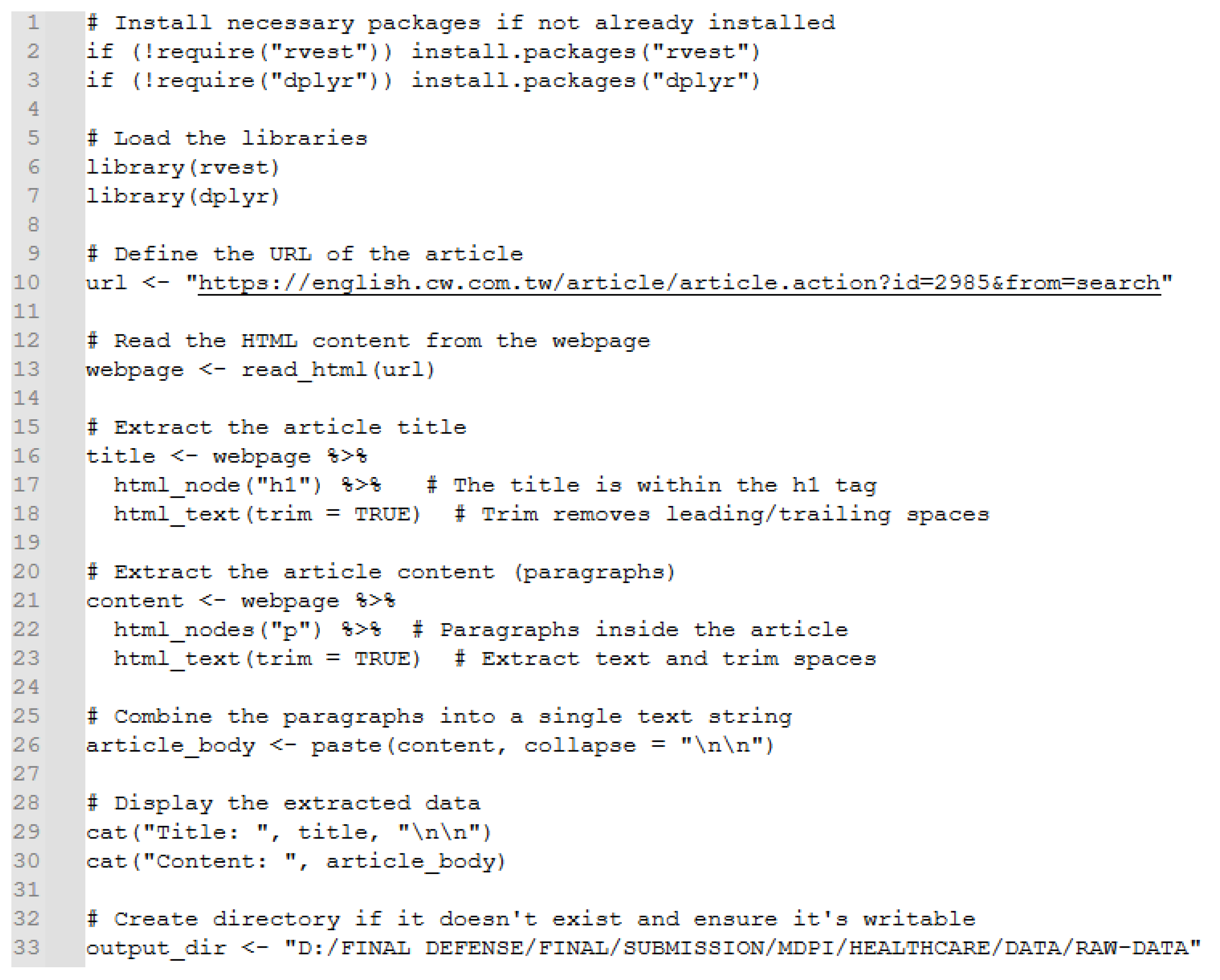
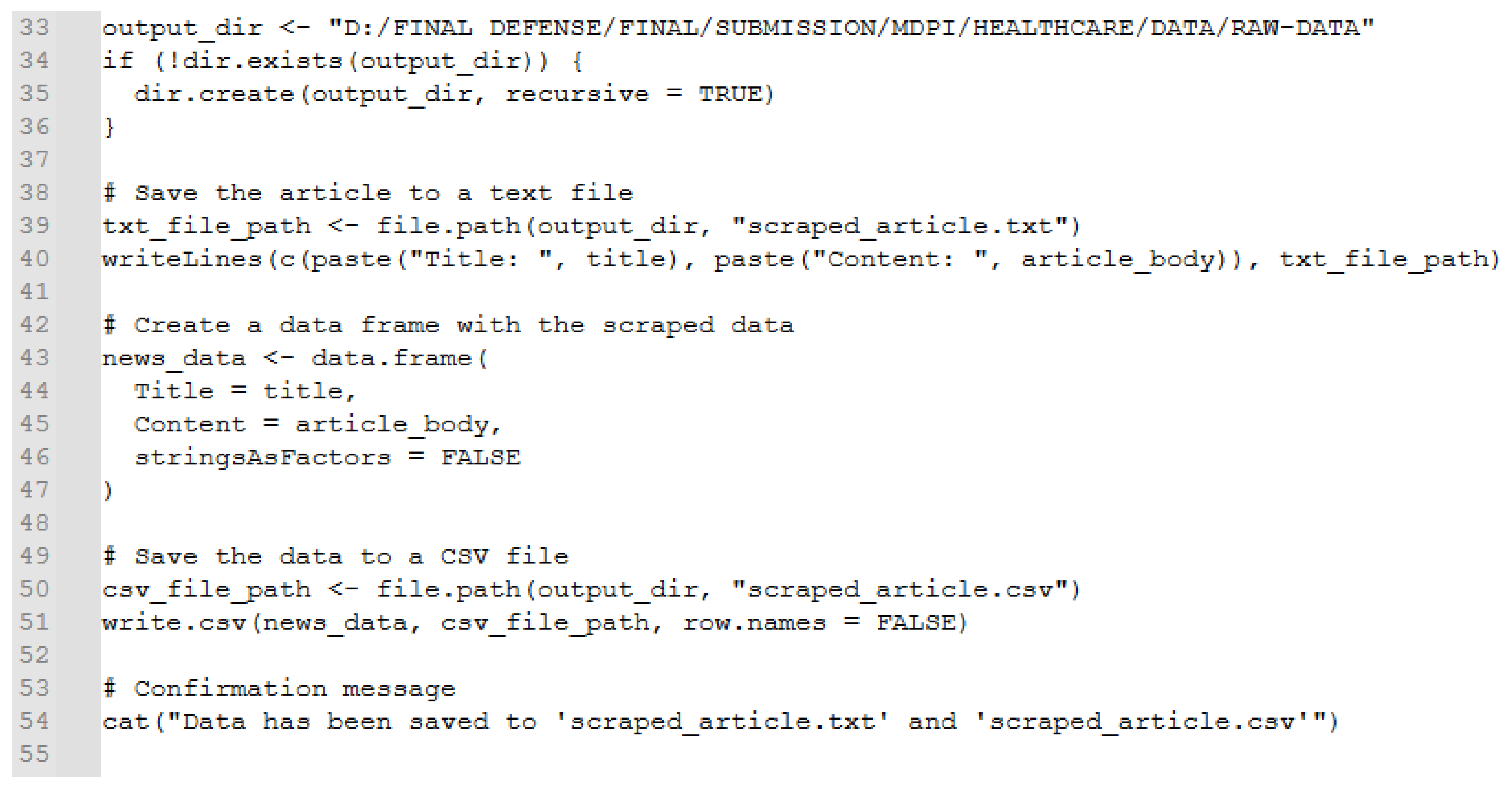
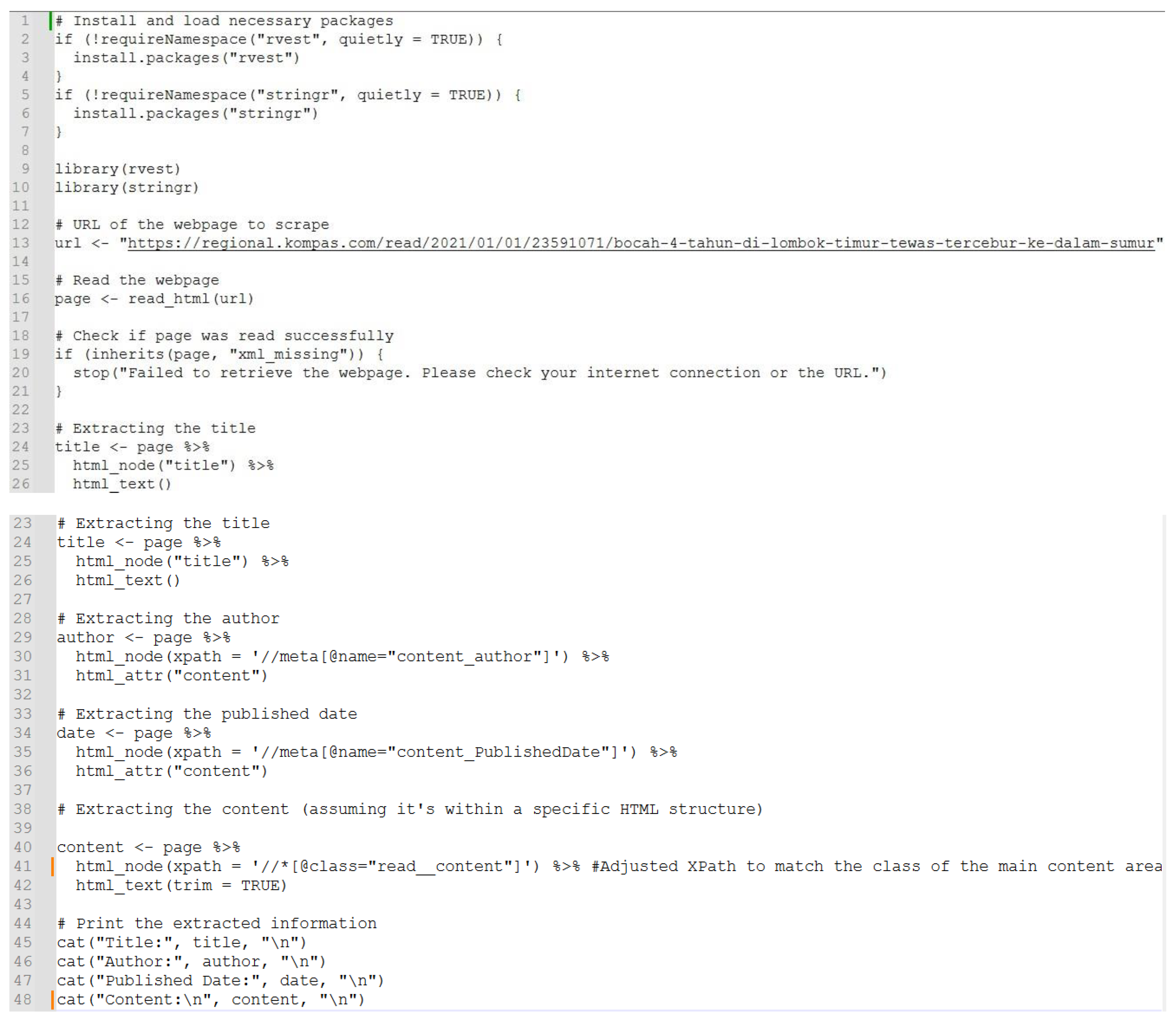
This procedure (Figure 2) allows for a comprehensive sentiment and emotion analysis across different levels of text granularity, combining the power of both linguistic and psychological dimensions from LIWC and emotion-specific insights from Seance. The use of web scraping (Figure A1, A2), sentiment tools, and lexicons makes the research robust and suitable for understanding the potential emotional impact of online news on readers during the pandemic.
3. Results
3.1. LIWC: Tone Analysis of Kompas.com
The analysis of Kompas.com data using the LIWC-22 framework provides insights into the tone of the news articles across three segments. Tone segment 1 is 32.50 (Figure 3). This segment's tone is moderately negative (31-50). It indicates that the news article contains a slightly pessimistic outlook, but not to an extreme level. The language used in this segment conveys some concern or uncertainty regarding COVID-19, contributing to a cautious mood among readers.
The tone segment 2 is 32.86. Like segment 1, the tone remains moderately negative. This consistent trend suggests that the news coverage in this segment continues to reflect a slightly pessimistic sentiment, reinforcing a feeling of unease without being overtly alarming.
In segment 3, the tone is 31.17. This segment's tone is also classified as moderately negative, although slightly less negative than the previous segments. This lower score might indicate that the language in this segment has softened somewhat, potentially presenting a more neutral or balanced perspective.
The moderately negative tone across all three segments suggests that the Kompas.com articles about COVID-19 during the analyzed period contained a certain level of pessimism or concern. This sentiment is not extreme, indicating that the coverage was relatively balanced, possibly aiming to inform readers without causing heightened anxiety or fear. The consistently moderate tone reflects a deliberate effort by the news outlet to present information with caution, ensuring that readers are aware of the risks without creating undue panic.
Regarding psychological impact, the tone analysis shows that the articles likely convey a sense of seriousness about the pandemic, which could influence readers' perceptions and responses, albeit with low emotional intensity. It is crucial when considering the potential for anxiety or fear in the public, as news outlets play a crucial role in shaping the emotional climate during crises like the COVID-19 pandemic.
3.2. LIWC: Tone Analysis of CommonWealth Magazine
The analysis of the tone of CommonWealth Magazine articles using LIWC reveals a pattern of moderately negative sentiment across three segments, as shown by the tone scores. In segment 1, the tone falls to 32.50 (Figure 4)—within the moderate negative range (31-50). This suggests that the content in this segment carries a slightly pessimistic tone, reflecting concerns or cautiousness in the reporting about the COVID-19 pandemic.
Segment 2, tone 32.86, is also within the moderate negative range, indicating consistency in the tone of the articles. The language in this segment continues to express a certain level of negativity, possibly focusing on risks, challenges, or uncertainties surrounding the pandemic.
Segment 3, tone 31.17, is moderately negative but slightly less negative than the previous segments. It could indicate a subtle shift towards a more neutral presentation or a slightly less pessimistic view.
The moderate negative tone across all three segments of CommonWealth Magazine articles reflects a consistent pattern of cautious, slightly negative sentiment in their COVID-19 coverage. It suggests that the reporting focuses on the risks and challenges the pandemic poses without veering into extreme negativity or alarmism. The slight decrease in negativity in Segment 3 indicates a more balanced or neutral shift in the narrative as the articles progress.
The LIWC analysis shows that CommonWealth Magazine’s coverage should be designed to inform readers while maintaining a measured, cautious tone. This could help manage public perceptions, avoid excessive fear or anxiety, and promote a thoughtful, rather than emotional, response to the pandemic news. The results of this tone analysis contribute to a deeper understanding of how news outlets like CommonWealth Magazine shape the emotional and psychological climate during crises such as the COVID-19 pandemic.
3.3. LIWC: Affect, Emotion, and Anxiety Analysis of Kompas.com
Analyzing the affect, emotion, and anxiety values in the Kompas.com dataset using LIWC-22 provides further insight into the emotional tone of the articles regarding the COVID-19 pandemic. Segment 1 Affect is 2.06% (Figure 5). This low score indicates minimal emotional content in the language used, suggesting that the article conveys information in a relatively neutral and fact-based manner with little emotional emphasis. Similarly, the emotion score of 0.30% is deficient, indicating a lack of overt emotional expression within this segment. The anxiety score of 0.09% is also low, meaning that this segment contains minimal anxiety-inducing language, contributing to a calm and measured presentation of the information.
Segment 2's affect score of 2.19% remains low, as does Segment 1, signifying a continued focus on factual, rather than emotional, reporting. The emotion score of 0.26% remains low, indicating that emotional expression continues to be minimal. Anxiety 0.04%-inducing language in this segment is even lower than in Segment 1, reflecting an almost neutral tone in terms of causing worry or fear.
Segment 3's affect score of 2.25% is slightly higher than in previous segments but remains low overall, indicating a slight increase in emotional tone, although still limited. The emotion score of 0.24% remains low, indicating little to no change in the article's emotional content. The anxiety score of 0.03% is the lowest in this segment, suggesting that the language used in this part is almost devoid of anxiety-provoking elements.
The consistently low scores for affect, emotion, and anxiety across all segments highlight a subdued, emotional tone in the coverage of COVID-19 in the Kompas.com dataset. The news articles present the pandemic in a manner that focuses on facts and information rather than employing emotional or anxiety-inducing language. This restrained approach likely helps to maintain a balanced perspective, preventing unnecessary panic or fear among readers. The data suggests that Kompas.com provides information on the pandemic in a way that encourages rational thinking rather than emotional reactions.
3.4. LIWC: Affect, Emotion, and Anxiety Analysis of CommonWealth Magazine
Analyzing affect, emotion, and anxiety levels in CommonWealth Magazine's COVID-19 coverage using LIWC-22 provides insight into the emotional content across different segments (Figure 6).
Segment 1, which affects' (low) score of 3.71%, indicates that the emotional content in this segment is minimal, suggesting a focus on factual reporting rather than emotionally charged language. The emotion score of 0.71% is low, indicating little emotional expression, aligning with a neutral or restrained tone in this part of the article. The anxiety score of 0.06% is meager, meaning there is little to no anxiety-inducing language, contributing to a calm and composed presentation of the pandemic.
Segment 2's affect score of 3.22% remains low, like Segment 1, signifying continued reliance on neutral, fact-based reporting with minimal emotional engagement. The emotion score of 0.55% remains low, reflecting a consistent lack of emotional intensity in the language used. There is a slight increase in the anxiety score of 0.09% compared to Segment 1. However, it remains low, suggesting a subtle increase in the presentation of concerns or risks without provoking undue fear.
In Segment 3, the affect score of 3.34% remains low, slightly higher than in Segment 2, but still indicative of minimal emotional content. The emotion score of 0.54% is consistent with Segment 2, continuing the trend of low emotional expression. The anxiety score of 0.08% remains low, indicating that the articles in this segment maintain a balanced tone with limited anxiety-inducing language.
The overall low scores for affect, emotion, and anxiety in the CommonWealth Magazine articles suggest that the coverage of the COVID-19 pandemic is largely neutral. It focuses on factual reporting without excessive emotional or anxiety-inducing language. This approach likely helps to provide readers with a clear understanding of the situation without exacerbating public fear or stress.
The slight variations in anxiety scores between segments indicate a balanced reporting style, where minor concerns or risks are mentioned without generating significant alarm. This kind of reporting contributes to a more rational public response to the pandemic, reducing the potential for panic or fear-driven behavior.
3.5. Seance: Sadness, Fear, Disgust, and Hu-Liu Analysis of Kompas.com
The analysis of the Kompas.com data through Seance 1.2.0, utilizing the EmoLex and Hu-Liu lexicons, yielded significant insights into the emotional components of the news articles. The sadness value of 0.07% (Figure 7) indicates a relatively low occurrence of sadness-related terms in the dataset. It suggests that while sadness is present in the news coverage, it is not the dominant emotion conveyed. Fear and disgust, with a value of 0.19%, points to a moderate presence of fear and disgust in the analyzed texts. It is a crucial finding, reflecting the emotional intensity often associated with moral panic narratives during the pandemic.
The Hu-Liu positive sentiment component, measured at 0.17%, indicates a low to moderate positive emotional content. It suggests that while the news has positive aspects, they are not predominant in the overall sentiment analysis. The Hu-Liu negative sentiment is strongly represented with a value of 0.75%, highlighting the overwhelmingly negative tone of the articles. It aligns with the anxiety and fear-based coverage expected in pandemic-related news, which often amplifies negative emotions to capture public concern.
These findings collectively demonstrate that fear and negative emotions are more prevalent in Kompas.com’s COVID-19 coverage, contributing to the atmosphere of anxiety and potential moral panic surrounding the pandemic. Using the Seance 1.2.0 tool, through its nuanced lexicon-based analysis, helps quantify these emotional components, adding depth to understanding public sentiment during the crisis.
3.6. Seance: Sadness, Fear, Disgust, and Hu-Liu Analysis of CommonWealth Magazine
In comparison, the sentiment analysis from CommonWealth Magazine using the same Seance 1.2.0 tools yields a sadness score lower at 0.048% (Figure 8), indicating that sadness is less prevalent in this dataset than in Kompas.com. The fear and disgust score is 0.10%, also lower than Kompas.com, implying a somewhat less anxiety-driven tone. A significantly higher Hu-Liu positive sentiment score of 0.481% is observed, suggesting more balanced or hopeful reporting than Kompas.com. The Hu-Liu negative sentiment score is 0.518%, lower than in Kompas.com, yet still significant, reflecting an ongoing focus on the negative aspects of the pandemic.
The analysis of both datasets reveals that Kompas.com has a stronger focus on negative sentiment and emotions like fear and disgust, while CommonWealth Magazine presents a more balanced narrative (Figure 8), with a higher positive sentiment and lower sadness and anxiety indicators. It suggests differences in editorial approaches and potentially reflects varying public reactions and media strategies in Indonesia and Taiwan during the COVID-19 pandemic.
4. Discussion
4.1. Tone and Sentiment Comparison
The findings reveal differences in how Kompas.com and CommonWealth Magazine emotionally framed their COVID-19 news coverage. The LIWC analysis showed that CommonWealth Magazine adopted a more neutral tone with lower anxiety levels than Kompas.com. Additionally, the Hu-Liu positive sentiment was notably higher in CommonWealth Magazine, indicating a more neutral or positive tone in its reporting. In contrast, Kompas.com had a higher tendency toward negative emotions, reflected in higher levels of sadness, fear, and anxiety. The Seance analysis showed exceptionally high levels of fear and disgust and Hu-Liu negative sentiment in Kompas.com’s coverage, suggesting a tendency to focus on the more alarming aspects of the pandemic.
These results align with existing research that suggests media outlets can significantly influence public sentiment by framing crises with different emotional intensities [2,68,69]. This study’s findings also support earlier research emphasizing the potential for media to exacerbate public fear during crises [7,10,12,70,71]. The higher levels of fear and anxiety observed in Kompas.com suggest that Indonesian media contributes more strongly to public concern about the pandemic. It is due to the socio-political context in Indonesia, where public health concerns, economic hardship, and governance challenges were particularly salient during the pandemic [72]. In contrast, Taiwan’s CommonWealth Magazine provided more balanced (more informative) and less emotionally charged coverage, which reflects Taiwan’s relatively successful handling of the crisis and the magazine’s more analytical, business-focused reporting style [73].
4.2. Cross-Cultural Differences in Emotional Impact
The emotional tone and sentiment differences between the two media outlets reflect the distinct socio-political and media landscapes in Indonesia and Taiwan. Indonesia’s Kompas.com, with its broader mass-market appeal, appears to focus more on the local and immediate impacts of the pandemic, which explain the higher levels of anxiety, fear, and negativity in its coverage [59,69,74,75]. Indonesia’s political and healthcare challenges during the pandemic have influenced this focus on more fear-driven narratives, as the country faced widespread concerns about healthcare capacity, misinformation, and economic distress.
Conversely, Taiwan’s CommonWealth Magazine is known for its analytical, business-oriented approach, contributing to its more neutral tone and balanced emotional content. Taiwan’s relatively successful handling of the pandemic, including early containment efforts and high public trust in government measures, combined with CommonWealth Magazine’s focus on broader geopolitical and economic implications, explain the lower levels of fear, anxiety, and negativity in its reporting [73]. It reflects how media coverage is shaped by the national context, leading to different emotional impacts on the public [10,76]. It aligns with studies suggesting that media outlets in countries with effective pandemic responses tend to focus less on emotional amplification and more on providing straightforward, informative content [77,78].
4.3. Contributing of Anxiety and Fear-Driven News to Public Health and Mental Health Implications
The results indicate that Kompas.com’s more fear-driven coverage could have amplified public anxiety in Indonesia. Previous studies have shown that media consumption during crises significantly influences emotional responses, often heightening psychological distress and anxiety when the content is negative or fear-based [79,80]. It suggests that Kompas.com’s focus on fear and anxiety has exacerbated public mental health challenges during the pandemic, as readers were likely exposed to repeated messages emphasizing danger and uncertainty.
In contrast, CommonWealth Magazine’s less emotionally charged coverage likely had a more neutral impact on public anxiety. While fear and sadness were present in the coverage, the balanced tone suggests that the publication sought to inform its audience without amplifying emotional distress. It aligns with research that shows responsible reporting can help the public manage crises more effectively by reducing fear and promoting psychological resilience [12,81,82].
Furthermore, this study’s cross-cultural focus offers insights into how media environments in different countries shape emotional responses to crises. Indonesia and Taiwan, despite their geographic proximity, exhibited contrasting emotional tones in their COVID-19 coverage, reflecting broader socio-political and cultural differences. Such differences underscore the importance of considering national context when evaluating the media’s role in shaping public perceptions during global health emergencies. The cross-cultural perspective of this study adds to the limited literature comparing Southeast and East Asian countries, especially in terms of media impact on public sentiment during crises [13,14,16,17,18,19,20].
4.4. Implication of the Findings, Research Contribution, and Future Directions
4.4.1. Implication of the Findings
- Media Responsibility
The stark contrast between Kompas.com and CommonWealth Magazine suggests that media outlets should be conscious of the emotional impact their reporting can have on the public. During crises like the COVID-19 pandemic, fear-driven narratives contribute to unnecessary psychological distress. Media organizations should aim to balance the need for accurate reporting with the potential mental health consequences of emotionally charged content [83].
- 2.
- Public Health Communication
Public health authorities should recognize the media's influence on public sentiment and collaborate with media outlets to ensure that fear-driven narratives do not dominate crisis communication. Providing clear, factual, and calming messages can help reduce anxiety and support mental well-being during pandemics [84,85,86].
- 3.
- Cross-Cultural Differences in Media
The differences between Indonesian and Taiwanese media underscore the need for context-specific approaches in analyzing media content. Cultural, political, and social factors shape how news outlets report on crises, affecting how the public perceives and reacts to the news [87,88,89]. Understanding these nuances can help researchers, policymakers, and media professionals better anticipate the emotional impact of news coverage in different regions [90,91,92].
4.4.2. Research Contribution
- Practical Application for Media Outlets
The findings of this study have critical practical applications for media outlets and public health authorities. News organizations, particularly during crises, should aim to balance informing the public and avoiding unnecessary amplification of fear and anxiety. Kompas.com, for example, could benefit from adopting a more balanced reporting strategy, like CommonWealth Magazine, to mitigate the potential psychological distress of its audience.
- 2.
- Practical Application for Public Health Authorization
Public health authorities can also use these insights to improve crisis communication strategies. Understanding how media influences public sentiment can guide interventions to reduce panic and foster resilience. For instance, collaborations between media outlets and public health organizations help disseminate accurate, balanced, and non-alarming information during future crises.
- 3.
- Methodological Innovation
The methodological innovations presented in this manuscript involve the multi-layered use of sentiment analysis tools (LIWC and Seance), a cross-cultural comparative framework, and an emphasis on media-induced emotional responses (Figure 9). These innovations significantly contribute to understanding how media coverage impacts public anxiety and fear, offering practical applications for public health communication and media responsibility. This approach is a novel addition to media studies, public health, and psychological research.
4.4.3. Future Directions
Future studies should expand cross-country comparisons to include a broader range of nations, particularly those with varying political systems and media landscapes, to understand better how media shapes emotional responses to global crises. Investigate the long-term mental health impacts of consuming fear-driven news. Research could explore how continued exposure to negative media content affects public anxiety and behavior over time, particularly during prolonged crises.
Examine the role of digital platforms such as social media in amplifying or mitigating the emotional impact of traditional news outlets. Integrating sentiment analysis with data from social media platforms could provide a more comprehensive picture of public sentiment.
Evaluate the role of media literacy and public health communication strategies in helping the public critically engage with media during crises. Understanding how people interpret news and manage fear-driven narratives could help inform future public health interventions aimed at reducing media-induced anxiety.
4.4. Limitations of the Study
- Limited scope of media outlets.
The study focuses solely on two news outlets, Kompas.com and CommonWealth Magazine, which do not represent the full spectrum of media coverage in Indonesia and Taiwan. Other media outlets, significantly smaller or alternative news sources, present different emotional tones or sentiments.
- 2.
- Cross-sectional nature.
This study provides a snapshot of the emotional tone in news articles during the COVID-19 pandemic. However, news coverage and public sentiment may have shifted as the pandemic evolved. A longitudinal study could provide more comprehensive insights into how media coverage and public emotions changed over different phases of the pandemic.
- 3.
- Reliance on automated sentiment analysis.
Although LIWC and Seance are widely used for sentiment analysis, automated tools may not always capture the full complexity of human emotions. These tools rely on predefined word categories and may miss contextual nuances or the subtleties of tone, sarcasm, or irony that human readers would recognize.
- 4.
- Generalization of findings.
While the study compares two distinct media environments, the findings may not be generalizable to other countries or regions. Indonesia and Taiwan's unique socio-political and media landscapes likely influenced the emotional tones observed in the news articles. Further research in different geographic and cultural contexts is needed to determine whether similar patterns exist elsewhere.
- 5.
- Public sentiment data unavailable.
The study focused on media content but did not have access to real-time public sentiment data (e.g., surveys, social media reactions) to validate whether the news articles' fear- and anxiety-driven language directly affected the public's emotional state. Integrating audience response data would provide a more vital link between media content and public mental health outcomes.
5. Conclusions
The sentiment analysis of COVID-19 news coverage in Indonesia’s Kompas.com and Taiwan’s CommonWealth Magazine reveals that while both outlets contribute to public understanding of the pandemic, their emotional tones differ significantly. Kompas.com’s more negative and anxiety-inducing coverage may heighten public fear, whereas CommonWealth Magazine provides a more balanced narrative. These findings have important implications for media accountability and public health strategies during crises, emphasizing the need for balanced reporting to mitigate undue psychological distress.
Author Contributions
Conceptualization: Meiselina Irmayanti; Data curation: Meiselina Irmayanti; Formal analysis: Meiselina Irmayanti; Funding acquisition: -; Investigation: Meiselina Irmayanti; Methodology: Meiselina Irmayanti; Project administration: Meiselina Irmayanti; Resources: Meiselina Irmayanti; Software: Meiselina Irmayanti; Supervision: -; Validation: Meiselina Irmayanti; Visualization: Meiselina Irmayanti; Writing – original draft preparation: Meiselina Irmayanti; Writing – review and editing: Meiselina Irmayanti, Li-Fang Chou, and Nur Najla binti Zainal Anuar.
Funding
This research received no external funding.
Institutional Review Board Statement
Not applicable
Informed Consent Statement
Not applicable
Data Availability
Data is contained within article.
Conflicts of Interest
The authors declare no conflicts of interest.
Abbreviations
The following abbreviations are used in this manuscript:
| LIWC | Linguistic Inquiry and Word Count |
| Seance | The Sentiment Analysis and Cognition Engine |
| ONA | Online News Article |
| WLA | Word Level Analysis |
| SLA | Sentence Level Analysis |
| DLA | Document Level Analysis |
| Seg | Segment |
Appendix A
Appendix A.1
Figure A1.
We scraper code for Kompas.com using RStudio.
Appendix A.2
Figure A2.
We scraper code for CommonWealth Magazine using RStudio.
References
- Zhou, Yanmengqian; Kuijer, Roeline; She, Wan Jou; Yada, Shuntaro; Wakamiya, Shoko; Aramaki, Eiji. “Perceived Risk, Emotions, and Stress in Response to COVID-19: The Interplay of Media Use and Partisanship.” Risk Analysis, vol. 43, no. 8, Oct. 2022, pp. 1572–86. [CrossRef] [PubMed].
- Garfin, Dana Rose; Silver, Roxane Cohen. “The Novel Coronavirus (COVID-2019) Outbreak: Amplification of Public Health Consequences by Media Exposure.” Health Psychology, vol. 39, no. 5, May 2020, pp. 355–57. [CrossRef] [PubMed]. [CrossRef]
- Stevens, Hannah R; Oh, Yoo Jung; Taylor, Laramie D. Metadata Correction: “Desensitization to Fear-Inducing COVID-19 Health News on Twitter: Observational Study” (Preprint). JMIR Publications Inc., 19 July 2021. [CrossRef] [PubMed].
- Akpoghiran, Idamah Patrick. “News Frames Emotion: Analyzing How Audience Are Influenced by News Frames.” American Journal of Arts, Social and Humanity Studies, vol. 3, no. 1, Jan. 2024, pp. 48–64. [CrossRef]. [CrossRef]
- Hase, Valerie; Engelke, Katherine M. “Emotions in Crisis Coverage: How UK News Media Used Fear Appeals to Report on the Coronavirus Crisis.” Journalism and Media, vol. 3, no. 4, Oct. 2022, pp. 633–49. [CrossRef]. [CrossRef]
- Cassill, Mary E. McNaughton. “The News Media and Psychological Distress.” Anxiety, Stress & Coping, vol. 14, no. 2, Apr. 2001, pp. 193–211. [CrossRef]. [CrossRef]
- Salvi, Carola; Lannello, Paola; Cancer, Alice; McClay, Mason; Rago, Sabrina; Dunsmoor, Joseph E; Antonietti, Alessandro. “Going Viral: How Fear, Socio-Cognitive Polarization and Problem-Solving Influence Fake News Detection and Proliferation during COVID-19 Pandemic.” Frontiers in Communication, vol. 5, Jan. 2021. [CrossRef] . [CrossRef]
- Boyd, Ryan L; Ashokkumar, Ashwini; Seraj, Sarah; Pennebaker, James W. The Development and Psychometric Properties of LIWC-22. The University of Texas at Austin, 2022, pp. 1–48. [Google Scholar].
- Crossley, Scott A; Kyle, Kristopher; McNamara, Danielle S. et al. “Sentiment Analysis and Social Cognition Engine (SEANCE): An Automatic Tool for Sentiment, Social Cognition, and Social-Order Analysis.” Behavior Research Methods, vol. 49, no. 3, May 2016, pp. 803–21. [CrossRef].
- Mach, Katharine J; Reyes, Raul Salas; Pentz, Brian; Taylor, Jennifer; Costa, Sandip G; Thomas, Kerronia E; Arnott, James C; Donald, Kripa; Kirchhoff, Christine J; Rosella, Laura C; Klenk, Nicole. “News Media Coverage of COVID-19 Public Health and Policy Information.” Humanities and Social Sciences Communications, vol. 8, no. 1, Sept. 2021, pp. 1–11. [CrossRef] . [CrossRef]
- Seo, Mihye. “Amplifying Panic and Facilitating Prevention: Multifaceted Effects of Traditional and Social Media Use during the 2015 MERS Crisis in South Korea.” Journalism & Mass Communication Quarterly, vol. 98, no. 1, July 2019, pp. 221–40. [CrossRef]. [CrossRef]
- Zarocostas, John. “How to Fight an Infodemic.” Lancet (London, England), vol. 395, no. 10225, Feb. 2020, p. 676. [CrossRef] [PubMed]. [CrossRef]
- Erlita, Novi; Ali, Mohd Nor S; Mahmud, Wan A W; Sitinjak, Charli; Ober, Józef. “Media in the Archipelago: Navigating the Labyrinth of Ownership, Diversity, and Politics in Indonesia’s Informatio.” Kurdish Studies, 2023. [CrossRef].
- Masduki; D’Haenens, Leen. “Concentration of Media Ownership in Indonesia: A Setback for Viewpoint Diversity.” International Journal of Communication, vol. 16, 2022, pp. 2239–2259. [Google Scholar].
- Sukmayadi, Vidi. “The Dynamics of Media Landscape and Media Policy in Indonesia.” Asia Pacific Media Educator, vol. 29, no. 1, May 2019, pp. 58–67. [CrossRef]. [CrossRef]
- Ellis, Michael E; Downey, James P; Chen, Alexander N; Lu, Hsin-Ke. “Why Taiwanese Seniors Use Technology.” Asia Pacific Management Review, vol. 26, no. 3, Sept. 2021, pp. 149–59. [CrossRef]. [CrossRef]
- Garrett, Paul Michael; Wang, Yu Wen; White, Joshua Paul; Hseih, Shulan. Young Adults View Smartphone Tracking Technologies for COVID-19 as Acceptable: The Case of Taiwan. Center for Open Science, 4 Nov. 2020. [CrossRef] [PubMed]. [CrossRef]
- Sawicka, Magdalena; Nord, Jeretta Horn; Paliszkiewicz, Joanna; Lee, Tzong-Ru. “Digital Media: Empowerment and Equality.” Information, vol. 11, no. 4, Apr. 2020, p. 225. [CrossRef]. [CrossRef]
- Wu, Shiann; Chen, Tsung-chun; Wu, Yenchun. “Smart Cities in Taiwan: A Perspective on Big Data Applications.” Sustainability, vol. 10, no. 1, Jan. 2018, p. 106. [CrossRef]. [CrossRef]
- 台北時報. “Taiwan No. 7 in Digital Access.” 台北時報, 19 Sept. 2007, https://www.taipeitimes.com/News/taiwan/archives/2007/09/19/2003379419.
- Niehoff, Esther; Mittenbühler, Maximilian; Oosterwijk, Suzanne. To Read or Not to Read? Motives for Reading Negative COVID-19 News. Center for Open Science, 11 Nov. 2022. [CrossRef] [PubMed]. [CrossRef]
- Buchanan, Kathryn; Sandstrom, Gillian M. “Buffering the Effects of Bad News: Exposure to Others’ Kindness Alleviates the Aversive Effects of Viewing Others’ Acts of Immorality.” PLOS ONE, vol. 18, no. 5, May 2023, p. e0284438. [CrossRef] [PubMed]. [CrossRef]
- Ducilon, Michou. Online News Portrayal during the COVID-19 Health Crisis and Journalism’s Role in Misinformation in the U.S. 2023. University of South Florida, PDF Doctoral Dissertation. [Google Scholar].
- Hwang, Jacqueline; Ding, Yi; Wang, Cixin; Chen, Eric; Wu, Ying; Hu, Xiaoyan. “Asian American University Students’ Experiences during the COVID-19 Pandemic: A Qualitative Study.” Behavioral Sciences, vol. 14, no. 1, Jan. 2024, p. 34. [CrossRef] [PubMed]. [CrossRef]
- Gronemeyer, Maria-Elena; del Piano, Monserrat; Porath, William. “The Use of Generic Frames in Elite Press: Between Conflict, Neutrality, and an Empowered Journalist.” Journalism Practice, vol. 14, no. 8, Sept. 2019, pp. 954–70. [CrossRef].
- Mont’Alverne, Camila; Badrinathan, Sumitra; Arguedas, Amy Ross; Toff, Benjamin; Fletcher, Richard; Nielsen, Rasmus. “Fair and Balanced’: What News Audiences in Four Countries Mean When They Say They Prefer Impartial News.” Journalism Studies, vol. 24, no. 9, Apr. 2023, pp. 1131–48. [CrossRef]. [CrossRef]
- Chu, Tsz Hang; Yeo, Tien Ee Dominic; Su, Youzhen. “Effects of Exposure to COVID-19 News and Information: A Meta-Analysis of Media Use and Uncertainty-Related Responses during the Pandemic.” Journalism & Mass Communication Quarterly, vol. 99, no. 1, Jan. 2022, pp. 89–112. [CrossRef]. [CrossRef]
- Garfin, Dana Rose, Holman, E. Alison; Fischhoff, Baruch; Parodi, Gabrielle Wong; Silver, Roxane Cohen. “Media Exposure, Risk Perceptions, and Fear: Americans’ Behavioral Responses to the Ebola Public Health Crisis.” SSRN Electronic Journal, 2022. [CrossRef] [PubMed].
- Pedrosa, Carlos de las Heras; Núñez, Pablo Sánchez; Peláez, José Ignacio. “Sentiment Analysis and Emotion Understanding during the COVID-19 Pandemic in Spain and Its Impact on Digital Ecosystems.” International Journal of Environmental Research and Public Health, vol. 17, no. 15, July 2020, p. 5542. [CrossRef] [PubMed]. [CrossRef]
- Chao, Miao; Xue, Dini; Liu, Tour; Yang, Haibo; Hall, Brian J. “Media Use and Acute Psychological Outcomes during COVID-19 Outbreak in China.” Journal of Anxiety Disorders, vol. 74, Aug. 2020, p. 102248. [CrossRef] [PubMed]. [CrossRef]
- Patwary, Muhammad Mainuddin; Bardhan, Mondira; Browing, Matthew H. E. M; Disha, Asma Safia; Haque, Md. Zahidul; Billah, Sharif Mutasim; Kabir, Md. Pervez; Hossain, Md. Riad; Alam, Md. Ashraful; Shuvo, Faysal Kabir; Salman, Ahmad. “Association between Perceived Trusted of COVID-19 Information Sources and Mental Health during the Early Stage of the Pandemic in Bangladesh.” Healthcare, vol. 10, no. 1, Dec. 2021, p. 24. [CrossRef] [PubMed]. [CrossRef]
- Van Aelst, Peter; Toth, Fanni; Castro, Laia; Štětka, Václav; Vreese, Claes de; Aalberg, Toril; Cardenal, Ana Sofia; Corbu, Nicoleta; Esser; Frank; Hopmann, David Nicolas; Michalska, Karolina Koc; Matthes, Jörg; Schemer, Christian; Sheafer, Tamir; Splendore, Sergio; Stanyer, James; Stępińska, Agnieszka; Strömbäck, Jesper; Theocharis, Yannis. “Does a Crisis Change News Habits? A Comparative Study of the Effects of COVID-19 on News Media Use in 17 European Countries.” Digital Journalism, vol. 9, no. 9, July 2021, pp. 1208–38. [CrossRef].
- Xu, Tao; Sattar; Usman. “Conceptualizing COVID-19 and Public Panic with the Moderating Role of Media Use and Uncertainty in China: An Empirical Framework.” Healthcare, vol. 8, no. 3, Aug. 2020, p. 249. [CrossRef] [PubMed]. [CrossRef]
- Jungherr, Andreas; Schroeder, Ralph. “Disinformation and the Structural Transformations of the Public Arena: Addressing the Actual Challenges to Democracy.” Social Media + Society, vol. 7, no. 1, Jan. 2021, p. 205630512198892. [CrossRef]. [CrossRef]
- Thorbjørnsrud, Kjersti; Figenschou, Tine Ustad. “The Alarmed Citizen: Fear, Mistrust, and Alternative Media.” Journalism Practice, vol. 16, no. 5, Oct. 2020, pp. 1018–35. [CrossRef].
- Broersma, Marcel; Swart, Joëlle. “Do Novel Routines Stick after the Pandemic? The Formation of News Habits during COVID-19.” Journalism Studies, vol. 23, no. 5–6, June 2021, pp. 551–68. [CrossRef]. [CrossRef]
- Eden, Allison L; Johnson, Benjamin K; Reinecke, Leonard; Grady, Sara M. “Media for Coping during COVID-19 Social Distancing: Stress, Anxiety, and Psychological Well-Being.” Frontiers in Psychology, vol. 11, Dec. 2020. [CrossRef] [PubMed].
- Holman, E. Alison; Garfin, Dana Rose; Lubens, Pauline; Silver, Roxane Cohen. “Media Exposure to Collective Trauma, Mental Health, and Functioning: Does It Matter What You See?” Clinical Psychological Science, vol. 8, no. 1, Oct. 2019, pp. 111–24. [CrossRef] [PubMed].
- Thompson, Rebecca R; Jones, Nickolas M; Holman, E. Alison; Silver, Roxane Cohen. “Media Exposure to Mass Violence Events Can Fuel a Cycle of Distress.” Science Advances, vol. 5, no. 4, Apr. 2019. [CrossRef] [PubMed]. [CrossRef]
- Chae, Seung Woo; Lee, Sung Hyun. “Sharing Emotion While Spectating Video Game Play: Exploring Twitch Users’ Emotional Change after the Outbreak of the COVID-19 Pandemic.” Computers in Human Behavior, vol. 131, June 2022, p. 107211. [CrossRef] [PubMed].
- Cosic, Kresimir; Kopilas, Vanja; Jovanovic, Tanja. “War, Emotions, Mental Health, and Artificial Intelligence.” Frontiers in Psychology, vol. 15, Aug. 2024. [CrossRef] [PubMed]. [CrossRef]
- Feldhege, Johannes; Moessner, Markus; Wolf, Markus; Bauer, Stephanie. “Changes in Language Style and Topics in an Online Eating Disorder Community at the Beginning of the COVID-19 Pandemic: Observational Study.” Journal of Medical Internet Research, vol. 23, no. 7, July 2021, p. e28346. [CrossRef] [PubMed]. [CrossRef]
- Govind, Rahul; Garg, Nitika; Carter, Lemuria. “Selling Hope versus Hate: The Impact of Partisan Social Media Messaging on Social Distancing during the COVID-19 Pandemic.” European Journal of Marketing, vol. 58, no. 2, Dec. 2023, pp. 632–58. [CrossRef]. [CrossRef]
- Jayachandran, Shana; Dumala, Anveshini. “Recurrent Neural Network Based Sentiment Analysis of Social Media Data during Corona Pandemic under National Lockdown.” Journal of Intelligent & Fuzzy Systems, vol. 44, no. 2, Jan. 2023, pp. 2131–46. [CrossRef]. [CrossRef]
- Mertens, Marcel. “How Do You Thrive: Exploring Expressions of Positive Psychological Concepts and Post-Traumatic Growth on Reddit via Text Mining.” University of Twente Student Theses, 1 Jan. 2024[Google Scholar].
- Pan, Wenhao; Han, Yingying; Li, Jinjin; Zhang, Emily; He, Bikai. “The Positive Energy of Netizens: Development and Application of Fine-Grained Sentiment Lexicon and Emotional Intensity Model.” Current Psychology, vol. 42, no. 32, Nov. 2022, pp. 27901–18. [CrossRef]. [CrossRef]
- Zhang, Zhouqing; Liew, Kongmeng; Kuijer, Roeline; She, Wan Jou; Yada, Shuntaro; Wakamiya, Shoko; Aramaki, Eiji. “Differing Content and Language Based on Poster-Patient Relationships on the Chinese Social Media Platform Weibo: Text Classification, Sentiment Analysis, and Topic Modeling of Posts on Breast Cancer.” JMIR Cancer, vol. 10, May 2024, p. e51332. [CrossRef] [PubMed].
- Saraff, Sweta; Singh, Tushar; Biswal, Ramakrishna. “Coronavirus Disease 2019: Exploring Media Portrayals of Public Sentiment on Funerals Using Linguistic Dimensions.” Frontiers in Psychology, vol. 12, Feb. 2021. [CrossRef] [PubMed]. [CrossRef]
- Haw, Ashleigh L. “‘Manufactured Hysteria’: Audience Perceptions of Sensationalism and Moral Panic in Australian News Representations of Asylum Seekers.” Media International Australia, vol. 174, no. 1, Sept. 2019, pp. 125–39. [CrossRef]. [CrossRef]
- Klemm, Celine; Hartmann, Tilo; Das, Enny. “Fear-Mongering or Fact-Driven? Illuminating the Interplay of Objective Risk and Emotion-Evoking Form in the Response to Epidemic News.” Health Communication, vol. 34, no. 1, Oct. 2017, pp. 74–83. [CrossRef] [PubMed]. [CrossRef]
- Clayton, Susan; Pihkala, Panu; Wray, Britt; Marks, Elizabeth. Psychological and Emotional Responses to Climate Change among Young People Worldwide: Differences Associated with Gender, Age, and Country. Research Square Platform LLC, 21 Nov. 2022. [CrossRef]. [CrossRef]
- Imran, Ali Shariq; Daupota, Sher Muhammad; Kastrati, Zenun; Batra, Rakhi. “Cross-Cultural Polarity and Emotion Detection Using Sentiment Analysis and Deep Learning on COVID-19 Related Tweets.” IEEE Access, vol. 8, 2020, pp. 181074–90. [CrossRef]. [CrossRef]
- Jorgensen, Karin Wahl. Emotions, Media and Politics. John Wiley & Sons, 2019.
- Widmann, Tobias. “How Emotional Are Populists Really? Factors Explaining Emotional Appeals in the Communication of Political Parties.” SSRN Electronic Journal, 2019. [CrossRef]. [CrossRef]
- Kompas Cyber Media. “Indeks Berita All Halaman 1 - 1 Juli 2021 - Kompas.Com.” KOMPAS.Com, 2021, https://indeks.kompas.com/?site=all&date=2021-07-01.
- CommonWealth Magazine. “Home-Search-CommonWealth Magazine.” CommonWealth Magazine, 2021, https://english.cw.com.tw/search/doSearch.action?key=COVID.
- Ramadhan, Hafizh; Komalawati, Euis. “Reality Construction of Gamers in Online Media (Case Study : Kompas.Com).” Proceedings of the 1st International Conference on Science and Technology in Administration and Management Information, ICSTIAMI 2019, 17-18 July 2019, Jakarta, Indonesia, EAI, 2021. [CrossRef].
- Pristianita, Silvia; Boer, Rino Febrianno; Widiyanto, Yohanes Nugroho; Mercedes, Amanda; Farady, Marta Rustono. “Comparative Analysis of Online News Content Objectivity on Covid-19 between Detik.Com and Kompas.Com.” Informatologia, vol. 53, no. 3–4, Dec. 2020, pp. 127–39. [CrossRef].
- Anggraeni, Diana; Qonita, Naila; Nabila. et al. “Navigating Indonesian Media Independence: An Analysis of Kompas.Com’s Framing of the Government’s Physical Distancing Policy.” MediAsia Official Conference Proceedings, The International Academic Forum (IAFOR), 2023, pp. 265–86. [CrossRef].
- Hsi, Huang Chao. “The Importance of Integrating Core Concepts of News Literacy: Rethinking the News Literacy Course in Taiwan.” International Journal of Mechanical Engineerring, vol. 7, no. 1, 2022. [CrossRef].
- Hsuan, Lin I. “The Reporter of Taiwan: The Development of Civil Society, the Social Movement of Media Reform, and the Birth of Nonprofit Investigative Journalism.” The Emerging Investigative Journalism Movement in Japan and Asia, Waseda Chronicle, 2020, pp. 1–278. [Google Scholar].
- Rulinawaty, Rulinawaty; Sjuchro, Dian Wardiana; Syahrial, Syahrial; Badollahi, Muh. Zainuddin; Hussain, Zulkifli. “Online News Regarding the Spread of the Omicron Variant in Southeast Asia.” Jurnal Studi Komunikasi (Indonesian Journal of Communications Studies), vol. 6, no. 2, July 2022, pp. 440–52. [CrossRef]. [CrossRef]
- Chen, Chung-Chu; Tseng, Cheng-Yin; Lee, Ya-Chun; Su, Tsung-Hsien; Hsieh, Chin-Yi; Chang, Chih-Ming; Weng, Shun-Long; Liu, Po-Huang; Ta, Yu-Lin; Lin, Chien-Yu. “Taiwan Government-Guided Strategies Contributed to Combating and Controlling COVID-19 Pandemic.” Frontiers in Public Health, vol. 8, Oct. 2020. [CrossRef] [PubMed].
- Afdholy, Nadya; Sudikan, Setya Yuwana; Indarti, Titik; Suhartono; Darni; Pairin, Udjang. “The Tension between the Digital and the Actual in the Phenomenon of Dr. Tirta in Kompas.Com.” Proceedings of the First International Conference on Social Science, Humanity, and Public Health (ICOSHIP 2020), Atlantis Press, 2021. [CrossRef].
- Tausczik, Yla R.; Pennebaker, James W. “The Psychological Meaning of Words: LIWC and Computerized Text Analysis Methods.” Journal of Language and Social Psychology, vol. 29, no. 1, Dec. 2009, pp. 24–54. [CrossRef]. [CrossRef]
- Mohammad, Saif M.; Turney, Peter D.. “Crowdsourcing A Word–Emotion Association Lexicon.” Computational Intelligence, vol. 29, no. 3, Sept. 2012, pp. 436–65. [CrossRef].
- Mohammad, Saif M.; Turney, Peter D. “Emotions Evoked by Common Words and Phrases: Using Mechanical Turk to Create an Emotion Lex.” Proceedings of the NAACL-HLT 2010 Workshop on Computational Approaches to Analysis and Generation of Emotion in Text, 2010, pp. 1–9. [Google Scholar].
- Eisele, Olga; Litvyak, Olga; Brändle, Verena K; Balluff, Paul; Fischeneder, Andreas; Sotirakou, Catherine; Ali, Pamina Ali; Boomgaarden, Hajo G. “An Emotional Rally: Exploring Commenters’ Responses to Online News Coverage of the COVID-19 Crisis in Austria.” Digital Journalism, vol. 10, no. 6, Dec. 2021, pp. 952–75. [CrossRef]. [CrossRef]
- Firdausi, Annisa Nurul; Sahayu, Wening. “Kompas.Com and The Jakarta Post Covid-19 News Articles Representation: A Critical Discourse Analysis.” Diksi, vol. 30, no. 2, Sept. 2022, pp. 177–87. [CrossRef]. [CrossRef]
- Beaunoyer, Elisabeth; Dupéré , Sophie; Guitton, Matthieu J. “COVID-19 and Digital Inequalities: Reciprocal Impacts and Mitigation Strategies.” Computers in Human Behavior, vol. 111, Oct. 2020, p. 106424. [CrossRef] [PubMed]. [CrossRef]
- Melki, Jad; Tamim, Hani; Hadid, Dima; Farhat, Sally; Makki, Maha; Ghandour, Lara; Hitti, Eveline. “Media Exposure and Health Behavior during Pandemics: The Mediating Effect of Perceived Knowledge and Fear on Compliance with COVID-19 Prevention Measures.” Health Communication, vol. 37, no. 5, Dec. 2020, pp. 586–96. [CrossRef] [PubMed].
- Mohamed, Shafizan; Al Giffari, Haekal Adha. “Similar but Not Alike: The Framing of Covid-19 in Indonesian and Malaysian Newspapers.” Metacommunication: Journal of Communication Studies, vol. 6, no. 2, Sept. 2021, p. 109. [CrossRef].
- Kuo, Hsin-Yu; Chen, Su-Yen; Lai, Yu-Ting. “Investigating COVID-19 News before and after the Soft Lockdown: An Example from Taiwan.” Sustainability, vol. 13, no. 20, Oct. 2021, p. 11474. [CrossRef]. [CrossRef]
- Muslikhin, Muslikhin; Maulianza, Medo; Yufriadi, Ebnu. “Dramatization of COVID-19 Vaccination News on Indonesian News Television.” Proceedings of the International Conference on Industrial Engineering and Operations Management, IEOM Society International, 2022, pp. 1560–70. [CrossRef].
- Susanto, Eko Harry; Loisa, Riris; Junaidi, Ahmad. “Cyber Media News Coverage on Diversity Issues in Indonesia.” Journal of Human Behavior in the Social Environment, vol. 30, no. 4, Mar. 2020, pp. 510–24. [CrossRef]. [CrossRef]
- Gollust, Sarah E; Fowler, Erika Franklin; Niederdeppe, Jeff. “Television News Coverage of Public Health Issues and Implications for Public Health Policy and Practice.” Annual Review of Public Health, vol. 40, no. 1, Apr. 2019, pp. 167–85. [CrossRef] [PubMed]. [CrossRef]
- Cho, Hichang; Li, Pengxiang; Ngien, Annabel; Tan, Marion Grace; Chen, Anfan; Nekmat, Elmie. “The Bright and Dark Sides of Social Media Use during COVID-19 Lockdown: Contrasting Social Media Effects through Social Liability vs. Social Support.” Computers in Human Behavior, vol. 146, Sept. 2023, p. 107795. [CrossRef] [PubMed]. [CrossRef]
- Thomas, Trevor; Wilson, Annabelle; Tonkin, Emma; Miller, Emma R; Ward, Paul R. “How the Media Places Responsibility for the COVID-19 Pandemic—an Australian Media Analysis.” Frontiers in Public Health, vol. 8, Aug. 2020. [CrossRef] [PubMed]. [CrossRef]
- Ballesteros, Rocío Fernández; Izquierdo, Macarena Sánchez. “Health, Psycho-Social Factors, and Ageism in Older Adults in Spain during the COVID-19 Pandemic.” Healthcare, vol. 9, no. 3, Mar. 2021, p. 256. [CrossRef] [PubMed]. [CrossRef]
- Pulido, Cristina; Eugenio, Laura Ruiz; Sama, Gisela Redondo; Carballido, Beatriz Villarejo. “A New Application of Social Impact in Social Media for Overcoming Fake News in Health.” International Journal of Environmental Research and Public Health, vol. 17, no. 7, Apr. 2020, p. 2430. [CrossRef] [PubMed]. [CrossRef]
- Georgieva, Irina; Lepping; Peter; Bozev, Vasil; Lickiewicz, Jakub; Pekara, Jaroslav; Wikman, Sofia; Loseviča, Marina; Reveesh, Bevinahalli Nanjegowda; Mihai, Adriana. “Prevalence, New Incidence, Course, and Risk Factors of PTSD, Depression, Anxiety, and Panic Disorder during the Covid-19 Pandemic in 11 Countries.” Healthcare, vol. 9, no. 6, June 2021, p. 664. [CrossRef] [PubMed]. [CrossRef]
- Leite, Ângela; Lopes, Diana; Pereira, Linda. Pro-Environment Behavior, Climate Change Perception, Anxiety, Hope and Despair According to Political Orientation. MDPI AG, 31 Oct. 2023. [CrossRef] [PubMed].
- MacKay, Melissa; Colangeli, Taylor; Gillis, Daniel; McWhirter, Jennifer; Papadopoulos, Andrew. “Examining Social Media Crisis Communication during Early COVID-19 from Public Health and News Media for Quality, Content, and Corresponding Public Sentiment.” International Journal of Environmental Research and Public Health, vol. 18, no. 15, July 2021, p. 7986. [CrossRef] [PubMed].
- Badman, Ryan P; Wang, Ace X; Skrodzki, Martin; Cho, Heng-Chin; Lleyda, David Aguilar; Shiono, Naoko; Yoo, Seng Bum Michael; Chiang, Yen-Sheng; Akaishi, Rei. “Trust in Institutions, Not in Political Leaders, Determines Compliance in COVID-19 Prevention Measures within Societies across the Globe.” Behavioral Sciences, vol. 12, no. 6, May 2022, p. 170. [CrossRef] [PubMed]. [CrossRef]
- Brătucu, Gabriel; Tudor, Andra Ioana Maria; Litră, Adriana Veronica; Nichifor, Eliza; Chițu, Ioana Bianca; Brătucu, Tamara-Oana. “Designing the Well-Being of Romanians by Achieving Mental Health with Digital Methods and Public Health Promotion.” International Journal of Environmental Research and Public Health, vol. 19, no. 13, June 2022, p. 7868. [CrossRef] [PubMed]. [CrossRef]
- World Health Organization. “Mental Health and Psychosocial Considerations during the COVID-19 Outbreak.” Iris.Who.Int, World Health Organization, 18 Mar. 2020. [Google Scholar].
- Lippold, Julia V; Laske, Julia I; Hogeterp, Svea A; Duke, Éilish; Grünhage, Thomas; Reuter, Martin. “The Role of Personality, Political Attitudes and Socio-Demographic Characteristics in Explaining Individual Differences in Fear of Coronavirus: A Comparison over Time and across Countries.” Frontiers in Psychology, vol. 11, Sept. 2020. [CrossRef] [PubMed]. [CrossRef]
- Malecki, Kristen M. C; Keating, Julie A; Safdar, Nasia. “Crisis Communication and Public Perception of COVID-19 Risk in the Era of Social Media.” Clinical Infectious Diseases, vol. 72, no. 4, June 2020, pp. 697–702. [CrossRef] [PubMed]. [CrossRef]
- Tang, Julian W; Caniza, Miguela A.; Dinn, Mike; Dwyer, Dominic E; Heraud, Jean-Michael; Jennings, Lance C; Kok, Jen; Kwok, Kin On; Li, Yuguo; Loh, Tze Ping; Marr, Linsey C; Nara, Eva Megumi; Perera, Nelun; Saito, Reiko; Sala, Carlos Santillan; Sullivan, Sheena; Warner, Aripuanã; Zaidi, Sabeen Khurshid. “An Exploration of the Political, Social, Economic and Cultural Factors Affecting How Different Global Regions Initially Reacted to the COVID-19 Pandemic.” Interface Focus, vol. 12, no. 2, Feb. 2022. [CrossRef] [PubMed]. [CrossRef]
- Butovskaya, Marina L; Burkova, Valentina N.; Randall, Ashley K; Donato, Silvia; Fedenok, Julija N; Hocker, Lauren; Kline, Kai M; Ahmadi, Khodabakhsh; Alghraibeh, Ahmad M; Allami, Fathil Bakir Mutsher; Alpasian, Fadime Suata; Al-Zu’bi, Mohammad Ahmad Abdelaziz; Biçer, Derya Fatma; Cetinkaya, Hakan; David, Oana Alexandra; Dural, Seda; Erickson, Paige; Ermakov, Alexey M; Ertuğrul, Berna; Fayankinnu, Emmanuel Abiodun; Fisher, Maryanne L; Hromatko, Ivana; Kasparova, Elena; Kavina, Alexander; Inkeeree, Hareesol Khun; Koç, First; Kolodkin, Vladimir; MacEacheron, Melanie; Maruf, Irma Rachmawati; Meskó, Norbert; Mkrtchyan, Ruzan; Nurisnaeny, Poppy Setiawati; Ojedokun, Oluyinka; Adebayo, Damilola; Fauzee, Mohd S. B. Omar; Özener, Barış; Ponciano, Edna Lúcia Tinoco; Popov, Igor V; Rizwan, Muhammad; Sabiniewicz, Agnieszka; Spodina, Victoriya I.; Stoyanova, Stanislava; Tripathi, Nachiketa; Upadhyay, Satwik; Weisfeld, Carol; Yaakob, Mohd Faiz Mohd; Zinurova, Raushaniia I.. “Cross-Cultural Perspectives on the Role of Empathy during COVID-19’s First Wave.” Sustainability, vol. 13, no. 13, July 2021. [CrossRef]. [CrossRef]
- Ng, Reuben; Tan, Yi Wen. “Diversity of COVID-19 News Media Coverage across 17 Countries: The Influence of Cultural Values, Government Stringency and Pandemic Severity.” International Journal of Environmental Research and Public Health, vol. 18, no. 22, Nov. 2021, p. 11768. [CrossRef] [PubMed].
- Parvin, Gulsan Ara; Ahsan, Reazul; Rahman, Md. Habibur; Abedin, Md. Anwarul. “Novel Coronavirus (COVID-19) Pandemic: The Role of Printing Media in Asian Countries.” Frontiers in Communication, vol. 5, Nov. 2020. [CrossRef]. [CrossRef]
Figure 1.
Conceptual framework.
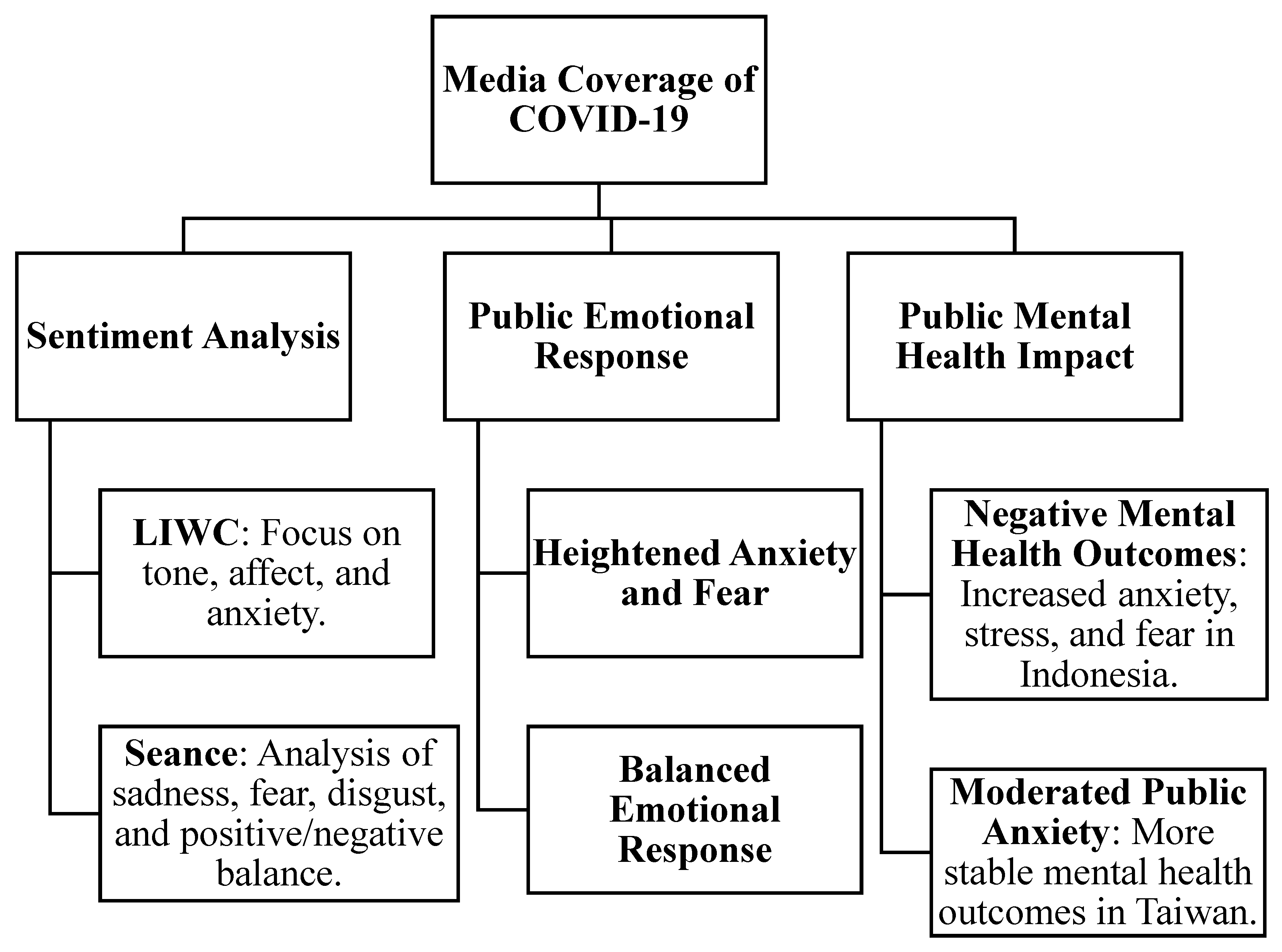
Figure 2.
Research procedure.
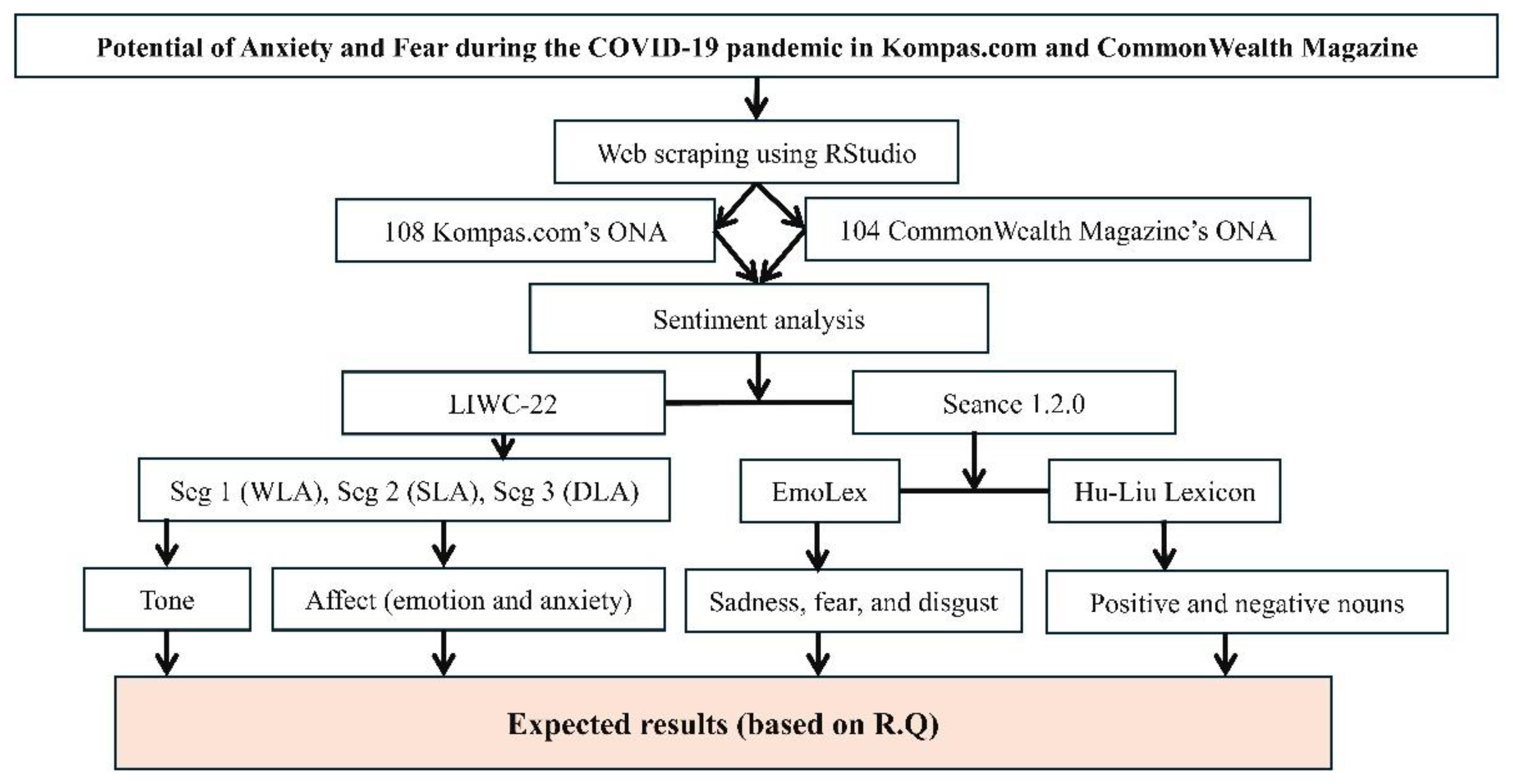
Figure 3.
Tone analysis segments 1, 2, and 3 of Kompas.com. The overall scores moderately show a negative tone.
Figure 3.
Tone analysis segments 1, 2, and 3 of Kompas.com. The overall scores moderately show a negative tone.
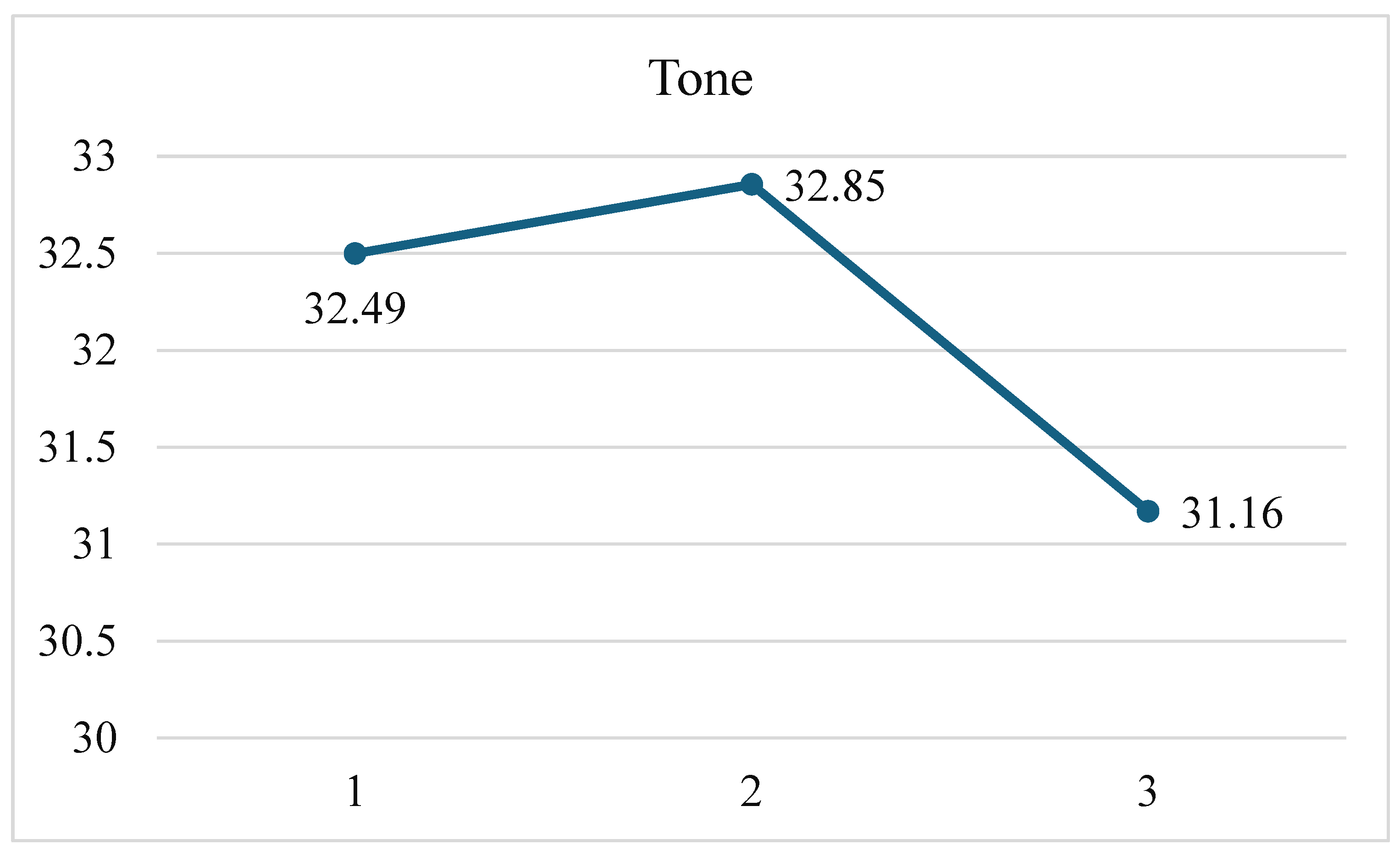
Figure 4.
Tone analysis segments 1, 2, and 3 of CommonWealth Magazine. The overall scores moderately show a negative tone.
Figure 4.
Tone analysis segments 1, 2, and 3 of CommonWealth Magazine. The overall scores moderately show a negative tone.
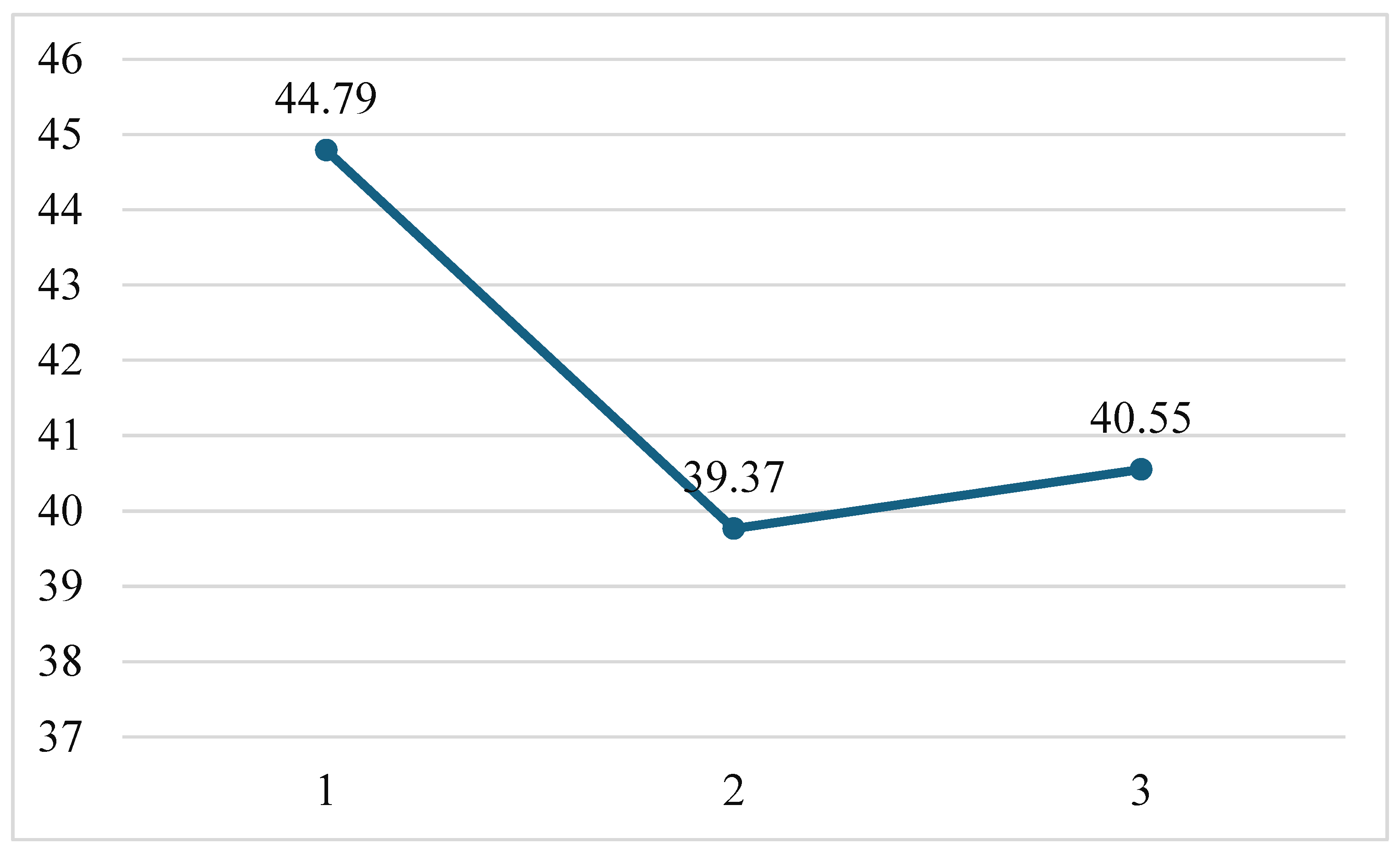
Figure 5.
Affect, emotion, and anxiety analysis segments 1, 2, and 3 of Kompas.com. The figure shows consistently low scores across three segments.
Figure 5.
Affect, emotion, and anxiety analysis segments 1, 2, and 3 of Kompas.com. The figure shows consistently low scores across three segments.
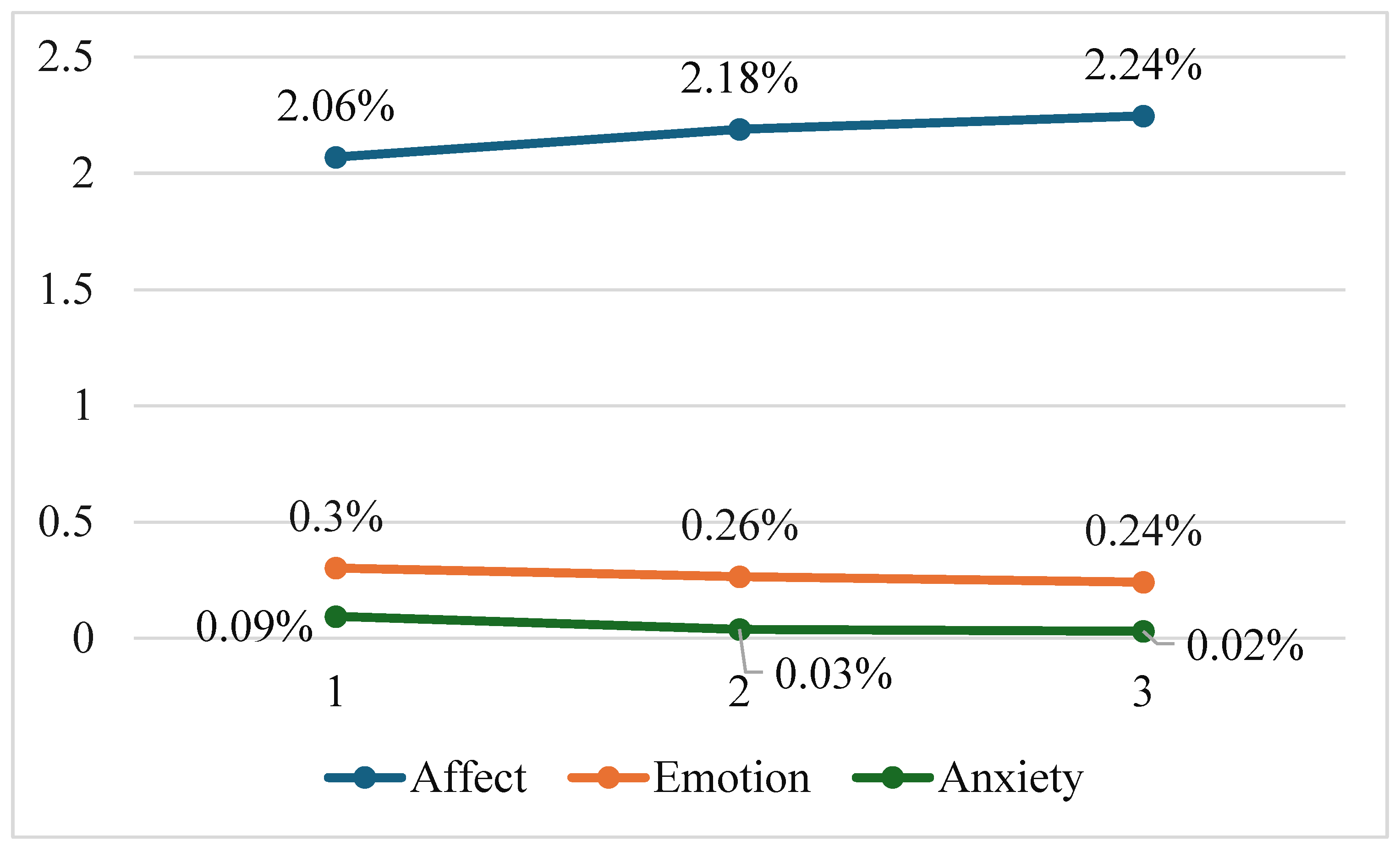
Figure 6.
Affect, emotion, and anxiety analysis segments 1, 2, and 3 of CommonWealth Magazine. The figure shows consistently low scores across three segments.
Figure 6.
Affect, emotion, and anxiety analysis segments 1, 2, and 3 of CommonWealth Magazine. The figure shows consistently low scores across three segments.
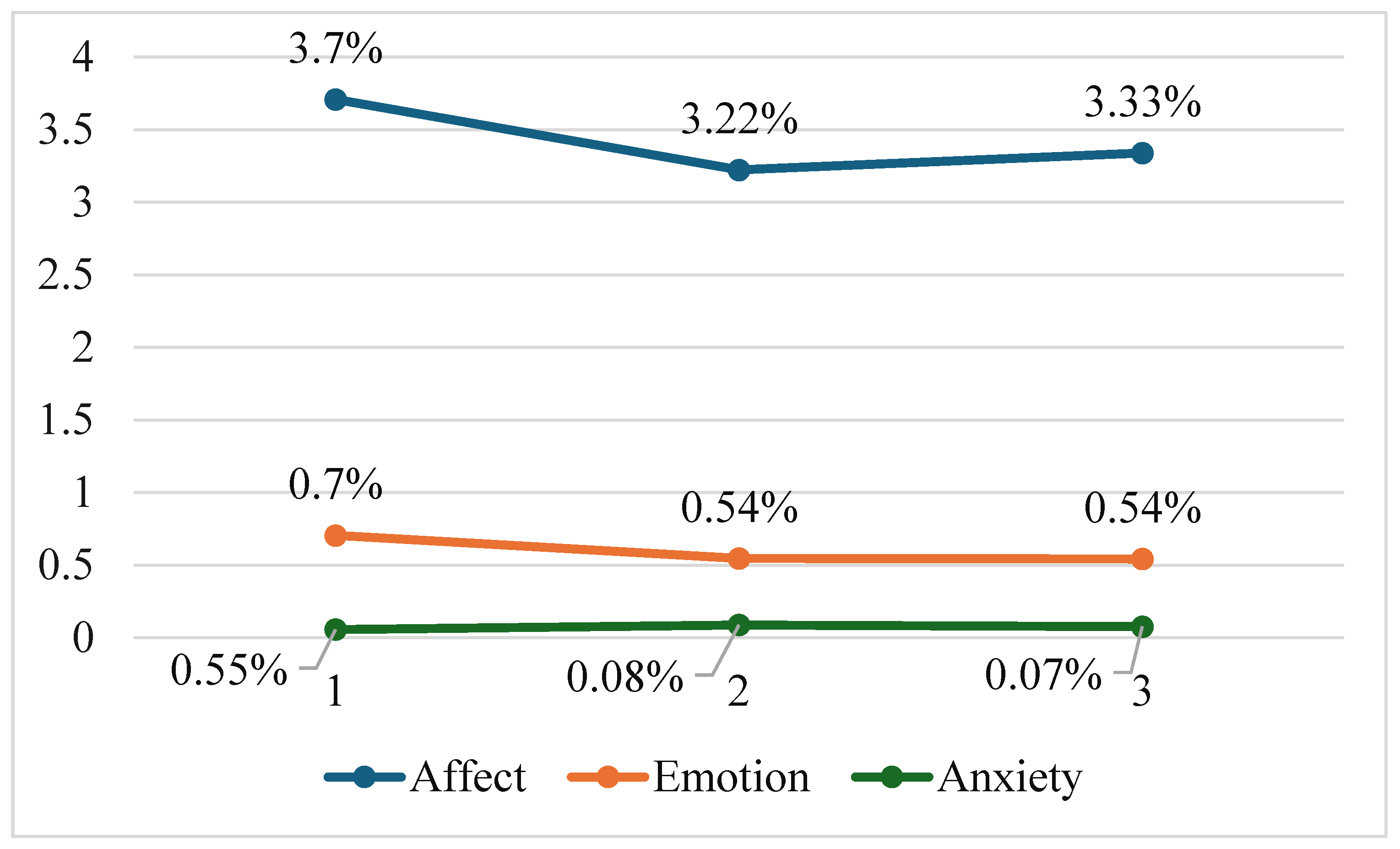
Figure 7.
Sadness, Fear, Disgust, and Hu-Liu Analysis of Kompas.com. It shows fear and negative emotions are more prevalent in Kompas.com.
Figure 7.
Sadness, Fear, Disgust, and Hu-Liu Analysis of Kompas.com. It shows fear and negative emotions are more prevalent in Kompas.com.
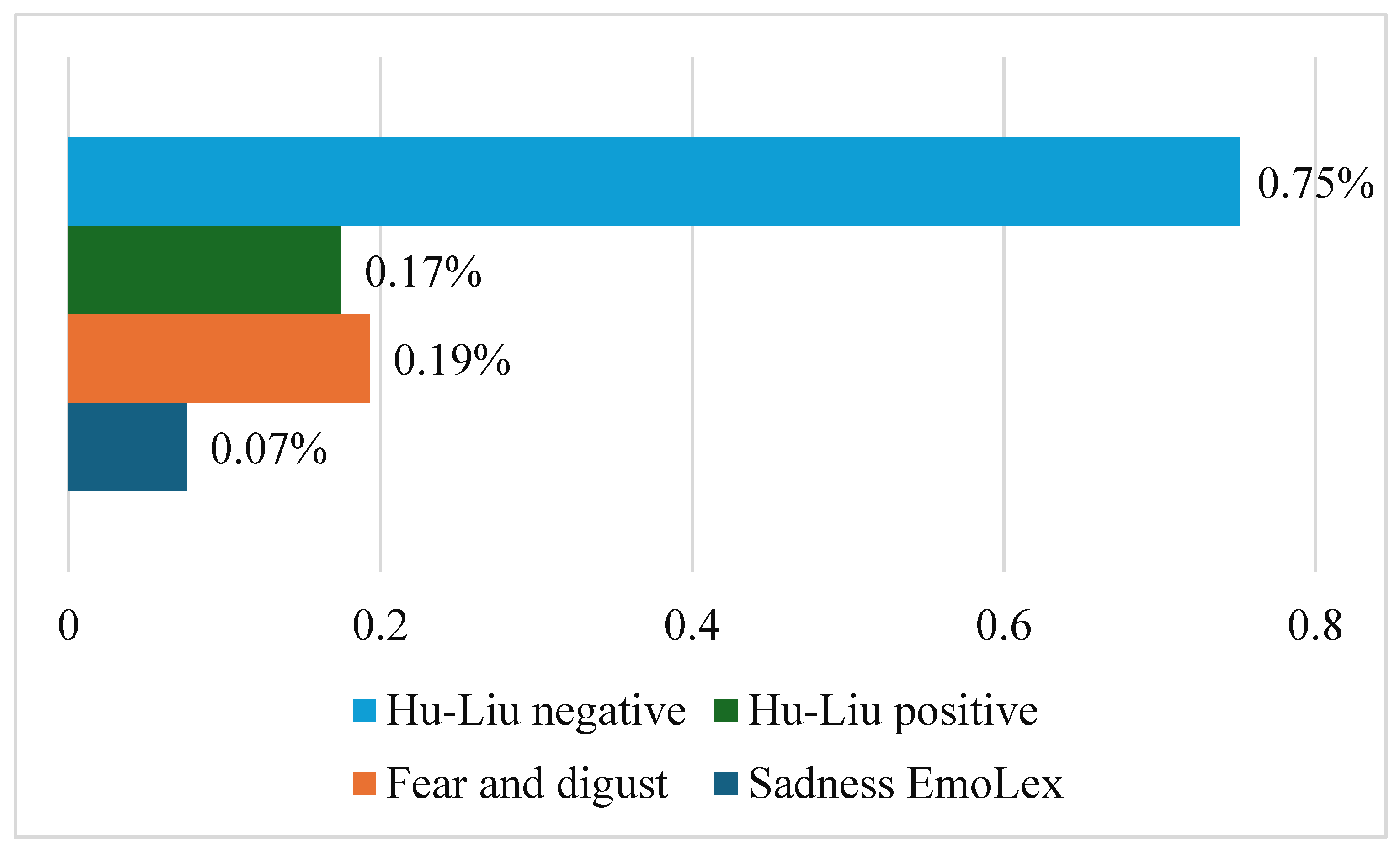
Figure 8.
Sadness, Fear, Disgust, and Hu-Liu Analysis of Kompas.com. It shows that fear and negative emotions are less prevalent in CommonWealth Magazine.
Figure 8.
Sadness, Fear, Disgust, and Hu-Liu Analysis of Kompas.com. It shows that fear and negative emotions are less prevalent in CommonWealth Magazine.
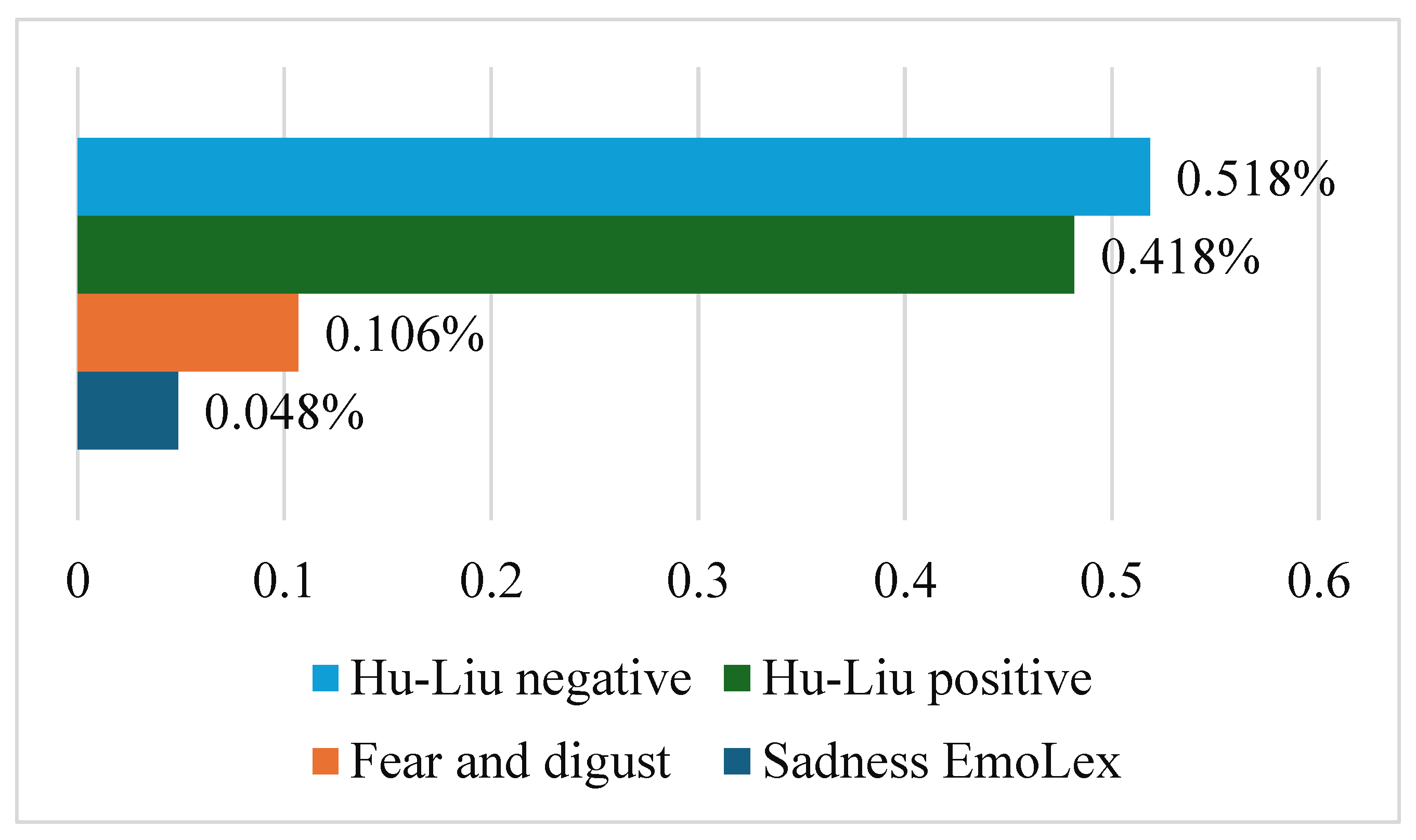
Figure 9.
A sentiment analysis model was developed to investigate fear and anxiety during health crises. The model was based on the needs, research questions, and research findings of this study.
Figure 9.
A sentiment analysis model was developed to investigate fear and anxiety during health crises. The model was based on the needs, research questions, and research findings of this study.
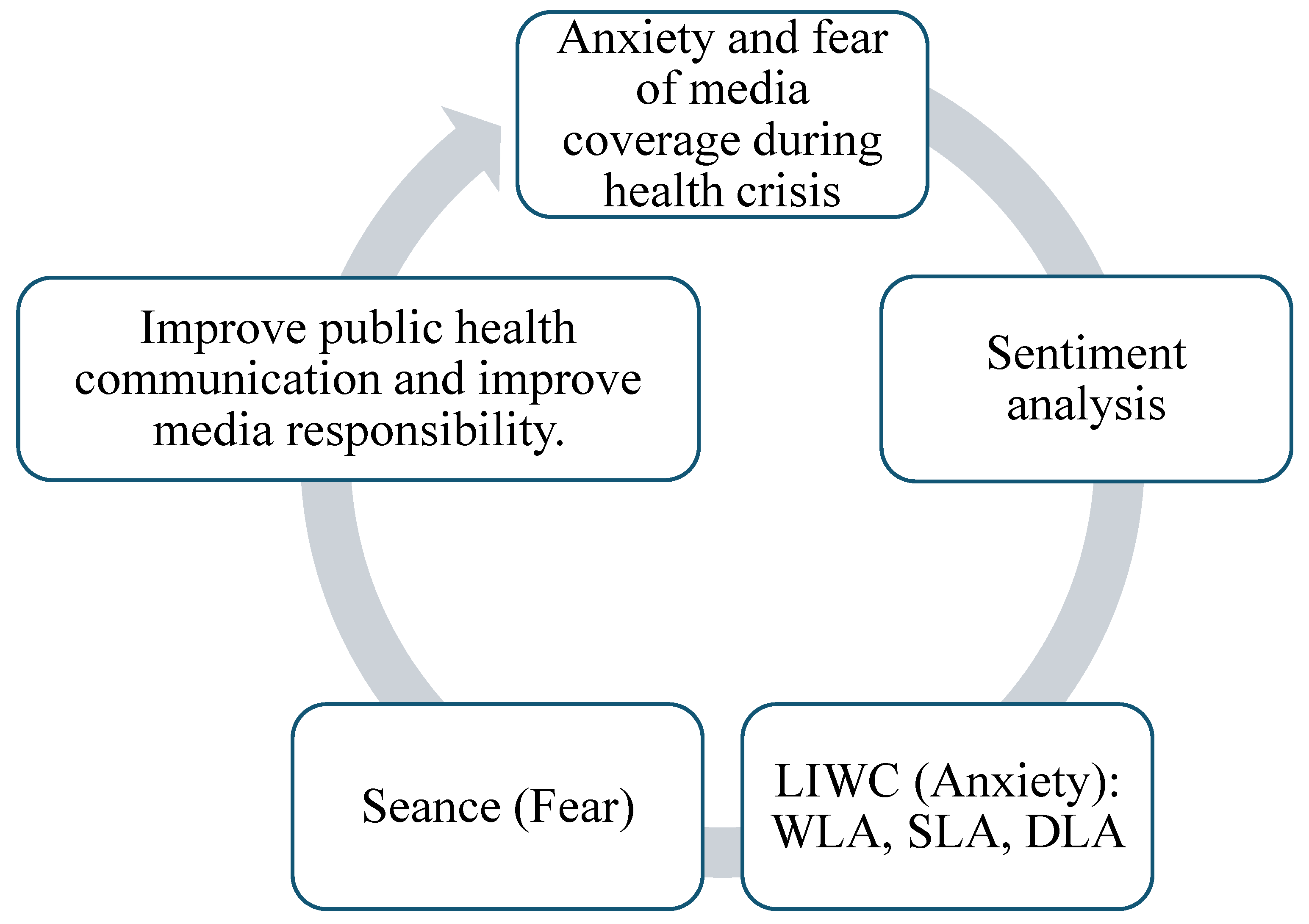
Disclaimer/Publisher’s Note: The statements, opinions and data contained in all publications are solely those of the individual author(s) and contributor(s) and not of MDPI and/or the editor(s). MDPI and/or the editor(s) disclaim responsibility for any injury to people or property resulting from any ideas, methods, instructions or products referred to in the content. |
© 2024 by the authors. Licensee MDPI, Basel, Switzerland. This article is an open access article distributed under the terms and conditions of the Creative Commons Attribution (CC BY) license (http://creativecommons.org/licenses/by/4.0/).
Copyright: This open access article is published under a Creative Commons CC BY 4.0 license, which permit the free download, distribution, and reuse, provided that the author and preprint are cited in any reuse.


