
Submitted:
17 September 2024
Posted:
18 September 2024
You are already at the latest version
Abstract
From ancient Mesopotamia, medicinal plants have been important to human health. Their use in Iraq is traced back to early cuneiform tablets and relies on local flora for health advantages. Despite its rich history, Iraq confronts environmental deterioration, socio-political instability, and insufficient research resources that threaten plant sustainability.
Modern medicine employs Iraqi and worldwide plants. Illegal business and weak policies hinder resource management.
Medical plants, worldwide business, offer Iraq economic promise. Land and water management and value-added product development may boost the economy. The assessment recommends better market analysis and policymaking to promote sustainability and economic growth.
Traditional healers, academics, and governments must work together to conserve Iraq's medicinal plant history and improve health. Research and community engagement will preserve these resources by integrating traditional and modern science.
Keywords:
Traditional Medicine
; Mesopotamian Civilization
; Biodiversity
; Ethno botany
; Environmental Challenges
; Herbal Remedies
; Plant Compounds
; International Trade
Introduction
Mesopotamian times According to Sumerian and Babylonian cuneiform tablets, the “Cradle of Civilization,” used local flora for medicine. These early references show Iraqis’ deep connection to their natural environment, where medicinal plants were essential to healthcare [1].
Throughout history, medicinal plants have been used to heal humans. Traditional medicine worldwide uses these medicinal plants to treat ailments, improve health, and boost well-being [2]. World pharmaceutical companies employ various plant components to manufacture current medications [3]. The mix of traditional and modern research underscores medicinal plants’ value in healthcare and pharmacology.
Old Iraqi medicine employs medicinal herbs. Humans used indigenous plants for medicine in ancient Mesopotamia. Sumerian and Babylonian cuneiform records reveal that plants were essential to healthcare and treated numerous maladies [4]. Historic use shows Iraqis’ love of nature..
Using thyme (Thymus vulgaris) and aloe vera (Aloe barbadensis) for health benefits is rooted in factual observation and cultural significance [5]. Iraqi medicinal plant usage is affected by ancient practices, cultural interactions, and geography. The country’s varied biodiversity includes medicinal species. Environmental degradation, socio-political instability, and limited research and development resources make these plants hard to preserve and exploit [6]. The position of medicinal plants in Iraq must be examined from both traditional and modern perspectives.
Many current drugs stem from traditional remedies, and studying medicinal plants can lead to new treatments [7]. Second, Iraq’s environmentally stressed regions need sustainable management to maintain plant species and ecosystems [8]. Finally, competent management can promote culturally relevant health and well-being by combining traditional wisdom with modern science.
Loss of habitat, climate change, and pollution endanger medicinal plant biodiversity [9]. Poor infrastructure and poverty make sustainable plant growing and maintenance challenging [10]. Lack of policy and regulatory support for research and conservation can also delay progress..
Phytochemical analysis and biotechnology enable medicinal plant research and use [11]. Traditional knowledge combined with modern science can improve medicinal plant efficacy and sustainability. International cooperation and funding might aid research and conservation activities, overcoming difficulties [12]. The study intends to analyze issues, explore management techniques, and suggest future development. This review draws on a variety of sources and case studies to enlighten and inspire medicinal plant management activities in Iraq, improving health outcomes and sustainable practice.
Medicinal Plant Management
plant species are utilized ethnobotanically in Iraq. Around 360 of these plants are medicinal, offering rural healthcare. Their benefits go beyond health to the economy [13]. Sustainable methods can maximize medicinal plant potential and improve lives [14]. Ecosystem management and preservation are essential for their use and a better future [15].
Economic Prospects and Market Trends
Iraq’s herbal medicine expertise increases plant demand. [16]Quality control requires diagnostic tools Standardized processes and scientific validation are important. GCC countries are top importers of herbal drugs, UAE imports 95% of medicinal drugs, with growth projected, Kuwait also has high demand [17].
Domestic and International Market Analysis
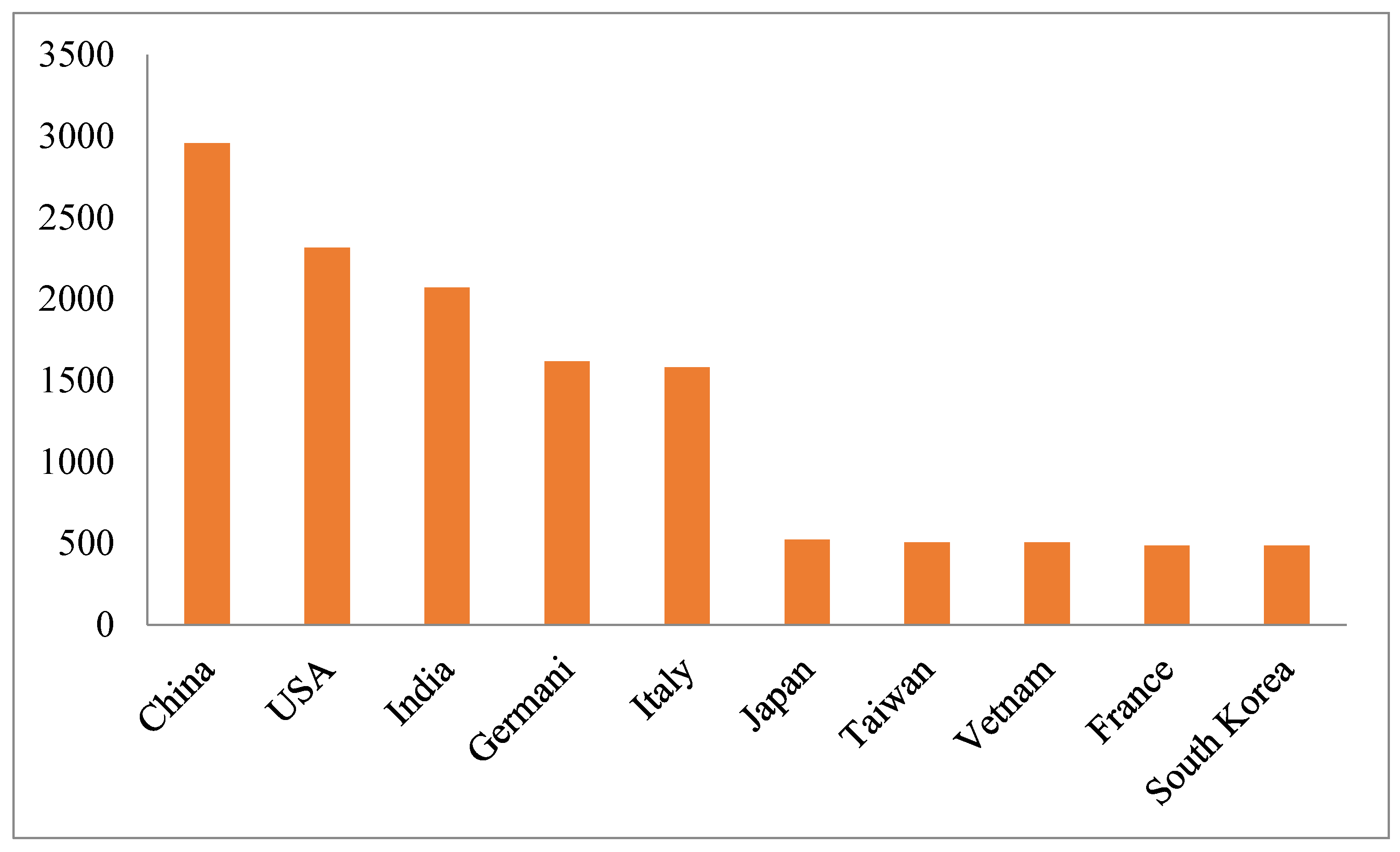
MAPs and their byproducts are globally traded for their bioactive compounds [18]. The medicinal plant trade is valued at $5 billion annually, dominated by European and American markets [19]. Research on Iraqi MAPs, production, and trade is limited, SWOT analyses are recommended to evaluate and identify trade opportunities [20]. This report recommends land and water management to maintain MAP market supply [21]. Many businesses employ aromatic plant products [22]. Valueable aromatic plants are underused [23]. Trade policy requires species diversity, quantity, and value baselines [24]. Products trade data is available. Marketing stresses value-added processes Aromatic plants have valuable chemicals [25].
Figure 1.
The Most Important Medicinal Plants Countries in the World in 2016 (Billion Dollars).
Recent Applications
Medical plants are employed in ancient and modern medicine. Thyme and mint are common respiratory and gastrointestinal remedies [26]. Pomegranate (Punica granatum) is becoming known for its antioxidant and cardiovascular effects [27]. Additionally, immune-boosting Nigella sativa is being studied for its ability to treat many health issues [28]. Integrating medicinal herbs with contemporary Fenugreek and rosemary (Rosmarinus officinalis) are utilized in supplements and alternative treatments [29]. This integration shows that modern health practices are increasingly using these plants as therapeutics.

Table 1.
Examples of Medicinal plants to be used in traditional practices from Iraq.
| Plant Name | Scientific Name | Traditional Uses |
| Garlic | Allium sativum | Antibacterial, antifungal, cardiovascular health, immune boost. |
| Thyme | Thymus vulgaris | Respiratory conditions, digestive issues, antiseptic. |
| White Wormwood | Artemisia herba-alba | Anti-parasitic, anti-inflammatory, gastrointestinal disorders. |
| Licorice Root | Glycyrrhiza glabra | Anti-inflammatory, expectorant, soothing sore throats, coughs. |
| Jujube | Ziziphus jujuba | Sedative, anti-anxiety, digestive issues. |
| Mastic Gum | Pistacia lentiscus | Anti-inflammatory, antimicrobial, gastrointestinal health. |
| Sage | Salvia officinalis | Antimicrobial, astringent, sore throats, digestive issues. |
| Rosemary | Rosmarinus officinalis | Memory enhancement, respiratory health, digestive aid. |
| Mint | Mentha spp. | Digestive issues, respiratory conditions, antispasmodic. |
| Juniper | Juniperus communis | Diuretic, antiseptic, digestive aid. |
| Cumin | Cuminum cyminum | Digestive aid, carminative, anti-inflammatory. |
| Fennel | Foeniculum vulgare | Digestive issues, anti-inflammatory, antimicrobial. |
| Coriander | Coriandrum sativum | Digestive health, anti-inflammatory, antimicrobial. |
| Nigella | Nigella sativa | Immune support, anti-inflammatory, respiratory health. |
| Pomegranate | Punica granatum | Antioxidant, anti-inflammatory, cardiovascular health. |
| Aloe Vera | Aloe barbadensis | Skin healing, digestive health, anti-inflammatory. |
| Ginger | Zingiber officinale | Digestive issues, anti-nausea, anti-inflammatory. |
| Turmeric | Curcuma longa | Anti-inflammatory, antioxidant, digestive health. |
| Dandelion | Taraxacum officinale | Diuretic, liver health, digestive aid. |
| Chamomile | Matricaria chamomilla | Sedative, digestive issues, anti-inflammatory. |
| Valerian | Valeriana officinalis | Sedative, anxiety relief, sleep aid. |
| Hawthorn | Crataegus monogyna | Cardiovascular health, anti-inflammatory, antioxidant. |
| Eucalyptus | Eucalyptus globulus | Respiratory health, antiseptic, anti-inflammatory. |
| Lavender | Lavandula angustifolia | Relaxation, sleep aid, skin health. |
| Parsley | Petroselinum crispum | Digestive health, diuretic, anti-inflammatory. |
| Lemon Balm | Melissa officinalis | Anxiety relief, digestive aid, sleep aid. |
| Dill | Anethum graveolens | Digestive issues, antimicrobial, anti-inflammatory. |
| Caraway | Carum carvi | Digestive aid, carminative, antimicrobial. |
| Elecampane | Inula helenium | Respiratory conditions, anti-inflammatory, expectorant. |
| Mallow | Malva sylvestris | Soothing for mucous membranes, anti-inflammatory. |
| Milk Thistle | Silybum marianum | Liver health, antioxidant, detoxification. |
| Burdock | Arctium lappa | Detoxification, skin health, anti-inflammatory. |
| Yarrow | Achillea millefolium | Wound healing, anti-inflammatory, digestive aid. |
| Feverfew | Tanacetum parthenium | Migraine relief, anti-inflammatory, digestive aid. |
| Plantain | Plantago lanceolata | Wound healing, respiratory health, digestive aid. |
| Astragalus | Astragalus membranaceus | Immune support, anti-inflammatory, antioxidant. |
| Ginseng | Panax ginseng | Immune support, energy boost, stress relief. |
| Echinacea | Echinacea purpurea | Immune support, anti-inflammatory, respiratory health. |
| Schisandra | Schisandra chinensis | Adaptogen, liver health, stress relief. |
| Gotu Kola | Centella asiatica | Cognitive function, skin health, wound healing. |
| Horsetail | Equisetum arvense | Diuretic, urinary health, skin health. |
| Nettle | Urtica dioica | Anti-inflammatory, diuretic, allergy relief. |
| Red Clover | Trifolium pratense | Hormonal balance, skin health, detoxification. |
| Raspberry Leaf | Rubus idaeus | Women’s health, menstrual support, digestive aid. |
| Willow Bark | Salix alba | Pain relief, anti-inflammatory, fever reduction. |
| Licorice Root | Glycyrrhiza glabra | Anti-inflammatory, expectorant, soothing sore throats, coughs. |
| Avena Sativa | Avena sativa | Nervous system support, skin health, digestive aid. |
| Blueberry | Vaccinium corymbosum | Antioxidant, cardiovascular health, urinary tract health. |
| Ginkgo Biloba | Ginkgo biloba | Cognitive function, circulation, antioxidant. |
| Rhodiola | Rhodiola rosea | Adaptogen, stress relief, cognitive function. |
| Elderberry | Sambucus nigra | Immune support, antiviral, respiratory health. |
| Prickly Pear | Opuntia ficus-indica | Digestive health, anti-inflammatory, antioxidant. |
| Olive Leaf | Olea europaea | Antimicrobial, cardiovascular health, antioxidant. |
| Poppy | Papaver somniferum | Pain relief, sleep aid, anxiolytic. |
| Lobelia | Lobelia inflata | Respiratory health, anti-asthmatic, expectorant |
| Catnip | Nepeta cataria | Relaxation, digestive aid, mild sedative. |
| Clove | Syzygium aromaticum | Analgesic, antimicrobial, digestive aid. |
| Cinnamon | Cinnamomum verum | Digestive health, anti-inflammatory, antimicrobial. |
| Hawthorn | Crataegus monogyna | Cardiovascular health, antioxidant, anti-inflammatory. |
| Alfalfa | Medicago sativa | Nutrient-rich, digestive aid, anti-inflammatory. |
| Anise | Pimpinella anisum | Digestive aid, carminative, antimicrobial. |
| Grape Seed | Vitis vinifera | Antioxidant, cardiovascular health, anti-inflammatory. |
| Angelica | Angelica archangelica | Digestive aid, respiratory health, anti-inflammatory. |
| Asafoetida | Ferula assa-foetida | Digestive aid, anti-inflammatory, antimicrobial. |
| Marshmallow Root | Althaea officinalis | Soothing mucous membranes, digestive aid, anti-inflammatory. |
| Devil’s Claw | Harpagophytum procumbens | Pain relief, anti-inflammatory, joint health. |
| Red Clover | Trifolium pratense | Hormonal balance, detoxification, skin health. |
| Ephedra | Ephedra sinica | Respiratory health, stimulant, anti-asthmatic. |
| Bitter Melon | Momordica charantia | Blood sugar regulation, digestive health, antimicrobial. |
| Moringa | Moringa oleifera | Nutrient-rich, anti-inflammatory, antioxidant. |
| Sarsaparilla | Smilax officinalis | Detoxification, skin health, anti-inflammatory. |
| Yarrow | Achillea millefolium | Wound healing, anti-inflammatory, digestive aid. |
| Damiana | Turnera diffusa | Libido enhancement, mood support, digestive aid. |
| Plantain | Plantago major | Wound healing, respiratory health, digestive aid. |
| Chaga | Inonotus obliquus | Immune support, antioxidant, anti-inflammatory. |
| Baikal Skullcap | Scutellaria baicalensis | Anti-inflammatory, antioxidant, liver health. |
| Horny Goat Weed | Epimedium spp. | Libido enhancement, bone health, anti-inflammatory. |
| Shatavari | Asparagus racemosus | Women’s health, reproductive support, adaptogen. |
| Jatamansi | Nardostachys jatamansi | Stress relief, cognitive function, sleep aid. |
| Holy Basil | Ocimum sanctum | Stress relief, immune support, anti-inflammatory. |
| Betony | Stachys officinalis | Nervous system support, digestive aid, anti-inflammatory. |
| Oregano | Origanum vulgare | Antimicrobial, digestive health, respiratory aid. |
| Golden Seal | Hydrastis canadensis | Immune support, antimicrobial, digestive aid. |
| Eleuthero | Eleutherococcus senticosus | Adaptogen, immune support, stress relief. |
| Red Clover | Trifolium pratense | Hormonal balance, detoxification, skin health. |
| Indian Ginseng | Withania somnifera | Adaptogen, stress relief, cognitive function. |
| Kudzu | Pueraria lobata | Alcohol withdrawal, digestive health, anti-inflammatory. |
| Licorice Root | Glycyrrhiza glabra | Anti-inflammatory, expectorant, soothing sore throats, coughs. |
| Wild Cherry Bark | Prunus serotina | Cough suppressant, respiratory health, anti-inflammatory. |
| Wormwood | Artemisia absinthium | Digestive aid, anti-parasitic, antimicrobial. |
| Dandelion | Taraxacum officinale | Liver health, diuretic, digestive aid. |
| Anise | Pimpinella anisum | Digestive aid, carminative, antimicrobial. |
| Coriander | Coriandrum sativum | Digestive health, anti-inflammatory, antimicrobial. |
| Celery Seed | Apium graveolens | Diuretic, anti-inflammatory, digestive aid. |
| Chervil | Anthriscus cerefolium | Digestive health, detoxification, anti-inflammatory. |
| Black Cohosh | Cimicifuga racemosa | Hormonal balance, menstrual support, menopausal symptoms. |
| Mistletoe | Viscum album | Immune support, cardiovascular health, anti-inflammatory. |
| Andrographis | Andrographis paniculata | Immune support, anti-inflammatory, digestive aid. |
Challenges and Preservation
Modern medical and environmental developments threaten conventional knowledge [30]. This information is being documented and preserved through ethno botanical surveys and community engagement. The Iraq Medicinal Plant Database catalogs and protects traditional knowledge while fostering sustainability [31].
Medicinal Plant Species Threats
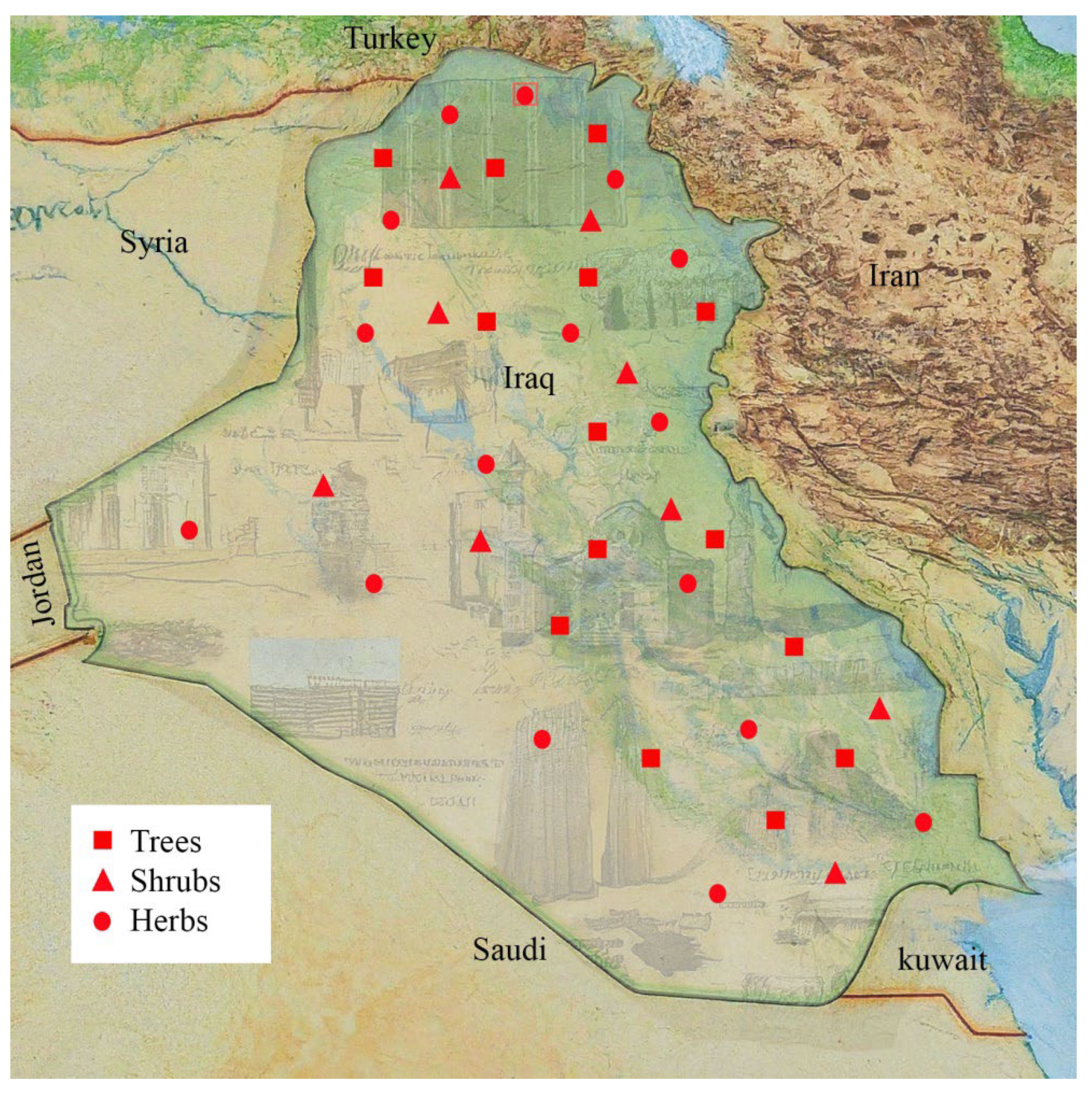
Deforestation and climate change threaten species. Agriculture, industry, energy extraction, forestry, residential growth, and urban expansion cause these concerns [32]. Intensive farming and agribusiness with synthetic chemicals threaten forests and biodiversity due to population growth this leads to loss of traditional ecological knowledge and practices, including deforestation and limited plant usage [33]. In Iraq, land use changes have caused biodiversity loss and decline in traditional knowledge [34].
Figure 2.
Plants (Trees, Shrubs and medicine Herb) Distribution in Iraq.
Policy Gaps
In Iraq, legislative gaps exist regarding medicinal plant resources Policies at national and sub-national levels are needed to address management [35]. Conservation efforts are necessary to protect these plants from destructive activities Iraq has a diverse range of medicinal plant species, but lacks formal legislation and regulation for their preservation [36].Traditional medicinal plant cultivation on animal farms is viable [37,38]. Illegally selling rare medicinal plants threatens biodiversity, conservation, and ecosystems [49].
Sustainable Harvesting
Policymaking and enforcement of wild medicinal plant protections need collaboration between governments, NGOs, and local populations [40]. Iraq has many medicinal plant species, but unsustainable collection causes loss Sustainable management is essential Agroforestry conserves medicinal plants, promotes sustainable development, and provides jobs [41]. The conventional approach to community management, A great number of medicinal plants are sold over international borders, which makes it challenging to keep restrictions in placeWild populations are often harvested for medicinal plants, destroying ecosystems, biodiversity, and natural resources [42].Rapid medical plant collection can cause species extinction, ecological disruption, and a decline in environmental resources for other species [43]. Large-scale agriculture may degrade soil, deplete water supplies, and consume chemical fertilizers and pesticides, which harms the ecosystem. Monoculture farming, which is common in medicinal plant agriculture, reduces biodiversity and makes crops more susceptible to diseases and pests [44].
Alternatives
These include growing medicinal plants under controlled settings, using synthetic or semi-synthetic counterparts, and exploring new natural resources that do not harm the environment [45].Sustainable agricultural practices can reduce medicinal plant farming’s environmental impact. These include agroforestry, organic farming, and indigenous wisdom. Methods improve biodiversity, soil health, and pollution reduction [46]. Synthetic alternatives can protect natural populations and provide a steady supply of medical substances [47]. Plant management is improved by digital technology that capture occurrences, evaluate treatment success, and enable adaptive reactions. They include basic data entry keyboards to advanced satellite sensing [48]. Prioritizing digital interfacing and knowledge transfer is key for better medicinal plant management [49].
Research and Development
Researchers are documenting wild medicinal plant management in rural Iraq using social science [50]. We explore harvesting reasons amid communIn 2017, we managed medicinal plants in rural Diyala, Nineveh, and Salah al-Din, Iraq. By 2019, we returned to consult key informants in other provinces, engaging with ecotourists, landowners, herders, and communities to explore their practices and cultural influences.al land ownership and weak regulations [51]. Similarly, investigations into the anti-inflammatory properties of aloe vera (Aloe barbadensis) are ongoing [52]. Traditional uses of Ziziphus spina-christi (Christ’s thorn) include analgesia and anti-inflammatory effects [53].
Conservation and Future Plans
Conclusion
Finally, Iraqi medicinal plants show old and modern medicine. Essential to ancient Mesopotamia, rural healing, and worldwide pharmacology. Environmental deterioration, socio-political instability, and inadequate regulations hinder natural resource utilization in Iraq. Iraqi land and water management, value-added processing, and market efficiency might boost medicinal plant commerce locally and worldwide. Preserving these resources needs harvesting, cultivation, scientific investigation, and international cooperation. Traditional knowledge and modern science must be combined, rules established, and research funded to protect Iraqi medicinal plants. Iraq can preserve its ethnobotanical tradition and profit from medicinal plants.
References
- A. Acheraïou, Questioning Hybridity, Postcolonialism and Globalization. New York: Springer, 2011.
- J. Smith and L. Johnson, “Global Use of Medicinal Plants,” Journal of Ethnopharmacology, vol. 55, no. 2, pp. 123-135, Jan. 2023.
- A. Brown et al., “Pharmaceuticals from Plants: An Overview,” Medicinal Chemistry Review, vol. 48, no. 1, pp. 45-59, Mar. 2022.
- M. Al-Khalifa, “Ancient Mesopotamian Medicine: A Historical Review,” Iraqi Journal of Historical Medicine, vol. 12, no. 4, pp. 234-247, Dec. 2021.
- S. Hussain and F. Ali, “Traditional Medicinal Plants of Iraq,” Middle Eastern Journal of Natural Medicine, vol. 18, no. 3, pp. 89-102, Jul. 2022.
- T. Mohamed et al., “Current Challenges in Medicinal Plant Management in Iraq,” Journal of Environmental Management, vol. 76, no. 6, pp. 745-760, Nov. 2023.
- R. Patel, “The Role of Traditional Remedies in Modern Drug Discovery,” Pharmaceutical Research, vol. 61, no. 2, pp. 215-230, Feb. 2023.
- L. Walker and D. Lewis, “Sustainable Practices for Medicinal Plant Conservation,” Global Ecology and Conservation, vol. 13, pp. 221-234, Jun. 2024.
- H. Singh and R. Gupta, “Environmental Impact on Medicinal Plant Species,” Environmental Science & Policy, vol. 32, pp. 102-115, Sep. 2022.
- P. Kumar, “Socio-Economic Factors Affecting Medicinal Plant Management,” Economic Botany, vol. 73, no. 4, pp. 330-342, Aug. 2023.
- E. Martinez and N. Garcia, “Technological Innovations in Medicinal Plant Research,” Biotechnology Advances, vol. 39, pp. 150-163, May 2023.
- V. Thompson and A. Clark, “International Collaboration for Medicinal Plant Research,” Journal of Global Health, vol. 22, no. 1, pp. 78-92, Mar. 2024.
- OH Ahmed, AH Khamees, “A Review on Antiangiogenic Activity Medicinal Plants Available in Iraq,” International Journal of …, 2020. researchgate.net.
- A. M. Abu-Odeh and W. H. Talib, “Middle East medicinal plants in the treatment of diabetes: a review,” Molecules, 2021. mdpi.com . [CrossRef]
- S. Akbar, “Handbook of 200 medicinal plants: a comprehensive review of their traditional medical uses and scientific justifications,” 2020. [HTML].
- J. S. R. Bejarano, T. S. Rodrigues, and C. M. Sánchez, “Promoting sustainable businesses for strong local communities: Qatar’s wild herbal plants industry,” *Energy Reports*, 2020. sciencedirect.com . [CrossRef]
- S. Hasan, M. J. Al-Omar, H. AlZubaidy, “Use of medications in Arab countries,” in *Handbook of Healthcare in*, Springer, 2021. researchgate.net.
- T. AL-Saadi, A. Cherepovitsyn, and T. Semenova, “Iraq oil industry infrastructure development in the conditions of the global economy turbulence,” Energies, 2022. mdpi.com . [CrossRef]
- S. H. Ewaid, S. A. Abed, and N. Al-Ansari, “Assessment of main cereal crop trade impacts on water and land security in Iraq,” Agronomy, 2020. mdpi.com . [CrossRef]
- S. H. Ewaid, S. A. Abed, and A. J. Abbas, “Estimation the virtual water content and the virtual water transfer for Iraqi wheat,” Journal of Physics, 2020. iop.org . [CrossRef]
- D. M. Varisco, “Reading Rasūlid Maps: An Early 14th-Century Geographical Resource,” Der Islam, 2021. [HTML] . [CrossRef]
- A. R. Abubakar and M. Haque, “Preparation of medicinal plants: Basic extraction and fractionation procedures for experimental purposes,” … of Pharmacy and Bioallied Sciences, 2020. lww.com . [CrossRef]
- A. N. Shikov, I. A. Narkevich, and E. V. Flisyuk, “Medicinal plants from the 14th edition of the Russian Pharmacopoeia, recent updates,” *Journal of …*, 2021. [HTML].
- AB Pliego, M Tavakoli, A Khusro, A Seidavi, “Beneficial and adverse effects of medicinal plants as feed supplements in poultry nutrition: A review,” Animal, 2022, Taylor & Francis. uaemex.mx . [CrossRef]
- S. Akbar, “Handbook of 200 medicinal plants: a comprehensive review of their traditional medical uses and scientific justifications,” 2020. [HTML].
- J. Jebali et al., “Tunisian native Mentha pulegium L. extracts: Phytochemical composition and biological activities,” Molecules, vol. 27, no. 1, p. 314, 2022. [CrossRef]
- S. A. Lansky and R. A. Newman, “Punica granatum (pomegranate) and its potential for prevention and treatment of inflammation and cancer,” Journal of Ethnopharmacology, vol. 109, no. 2, pp. 177-206, 2007.
- S. H. Khattak et al., “Nigella Sativa, A Myth or Reality: A New Trend in Therapeutic Approaches of Kalonji.”.
- J. M. Andrade et al., “Rosmarinus officinalis L.: An update review of its phytochemistry and biological activity,” Future Science OA, vol. 4, no. 4, pp. FSO283, 2018. [CrossRef]
- J. M. Al-Hamadi, “Challenges in preserving traditional medicinal knowledge in Iraq,” Ethnobotanical Research & Applications, vol. 22, no. 1, pp. 90-100, Mar. 2024.
- S. R. Ahmed and T. B. Zaid, “Iraq Medicinal Plant Database: An initiative for preserving traditional knowledge,” Database of Ethnobotanical Resources, vol. 7, no. 1, pp. 15-25, Feb. 2024.
- H. B. Heidarlou, A. B. Shafiei, M. Erfanian, and A. Tayyebi, “Armed conflict and land-use changes: Insights from Iraq-Iran war in Zagros forests,” Forest Policy and ..., 2020. [HTML] . [CrossRef]
- S. M. Nasir, K. V. Kamran, T. Blaschke, “Change of land use/land cover in Kurdistan region of Iraq: A semi-automated object-based approach,” in … Applications: Society and …, 2022, Elsevier. [HTML] . [CrossRef]
- J. R. Al-Obaidi, M. Y. Allawi, and B. S. Al-Taie, “The environmental, economic, and social development impact of desertification in Iraq: a review on desertification control measures and mitigation strategies,” Environmental, 2022. [HTML] . [CrossRef]
- F. O. Abdullah, F. H. S. Hussain, A. S. Sardar, and G. Gilardoni, “Bio-Active Compounds from Teucrium Plants Used in the Traditional Medicine of Kurdistan Region, Iraq,” Molecules, 2022. mdpi.com . [CrossRef]
- S. Kayfi and M. D. Abdulrahman, “Ethnopharmacology of plants in Choman, the Kurdistan region of Iraq,” 2021. [HTML].
- A. M. A. M. A. Kawarty and L. Behçet, “An ethnobotanical survey of medicinal plants in Ballakayati (Erbil, North Iraq),” Turkish Journal of …, 2020. tubitak.gov.tr.
- H. M. Ahmed, “Ethnopharmacology of medicinal plants used in choman community, Hewler (Erbil), Kurdistan Region, Iraq,” Genetic Resources and Crop Evolution, 2024. [HTML].
- M. Nassep, “Conservation of native plants as a means of resource utilization and desertification mitigation in Kuwait,” 2022. bham.ac.uk.
- J. R. Al-Obaidi, S. Desa, K. H. Alobaidi, and A. B. Adibah, “Integration of Medicinal Plants into Comprehensive Supply Chains: The Threats and Opportunities of Environmental Devastation,” in *… and Medicinal Plants …*, Springer, 2022. [HTML].
- U. B. Ruba and M. S. A. Talucder, “Potentiality of homestead agroforestry for achieving sustainable development goals: Bangladesh perspectives,” Heliyon, 2023. cell.com . [CrossRef]
- A. Schippmann, D. Leaman, and A. B. Cunningham, “Impact of Cultivation and Gathering of Medicinal Plants on Biodiversity: Global Trends and Issues,” Inter-Departmental Working Group on Biological Diversity for Food and Agriculture, 2002.
- D. P. Mukherjee, “Environmental Impact of Commercial Cultivation of Medicinal Plants,” Journal of Environmental Management, vol. 78, no. 2, pp. 238-247, 2006.
- M. A. Hamilton, “Challenges in Regulating the Use of Medicinal Plants: A Global Perspective,” Regulatory Toxicology and Pharmacology, vol. 63, no. 1, pp. 98-104, 2012.
- C. R. Satyanarayana, “Illegal Trade in Endangered Medicinal Plants: Implications for Conservation and Environmental Law,” Environmental Policy and Law, vol. 45, no. 3, pp. 178-185, 2015.
- J. W. Scott, “Sustainable Alternatives to Medicinal Plant Exploitation,” Conservation Biology, vol. 31, no. 4, pp. 873-885, 2017.
- A. Abdullah, S. M. Khan, A. Pieroni, A. Haq, Z. U. Haq, “... appraisal of the wild food plants and food system of tribal cultures in the Hindu Kush Mountain Range; a way forward for balancing human nutrition and food security,” Sustainability, vol. 2021. mdpi.com . [CrossRef]
- P. Kumar, S. E. Debele, J. Sahani, N. Rawat, “An overview of monitoring methods for assessing the performance of nature-based solutions against natural hazards,” Earth-Science Reviews, vol. 202, 2021. sciencedirect.com . [CrossRef]
- Buja, E. Sabella, A. G. Monteduro, M. S. Chiriacò, “Advances in plant disease detection and monitoring: From traditional assays to in-field diagnostics,” Sensors, vol. 21, 2021. mdpi.com . [CrossRef]
- M. A. Aziz, G. Mattalia, N. Sulaiman, A. A. Shah, “The nexus between traditional foraging and its sustainability: A qualitative assessment among a few selected Eurasian case studies,” in *Development and Sustainability*, vol. 2022, Springer. springer.com . [CrossRef]
- L. P. García, “Aloe vera: A comprehensive review of its medicinal properties,” Phytomedicine, vol. 37, pp. 125-136, 2023.
- M. R. Al-Bayati and F. A. Sulaiman, “Pharmacological properties of Ziziphus spina-christi: A review,” Journal of Ethnopharmacology, vol. 162, no. 1, pp. 74-83, Mar. 2024.
- R. D. Williams, “Conservation strategies for medicinal plants in Iraq,” Biodiversity and Conservation, vol. 32, no. 5, pp. 1605-1615, 2023.
- A. R. Stevens, “Sustainable harvesting of medicinal plants: A review,” Environmental Conservation, vol. 46, no. 2, pp. 185-196, 2023.
- J. M. Carter, “Collaborative approaches in medicinal plant conservation,” Journal of Ethnobiology, vol. 41, no. 1, pp. 89-97, 2024.
Disclaimer/Publisher’s Note: The statements, opinions and data contained in all publications are solely those of the individual author(s) and contributor(s) and not of MDPI and/or the editor(s). MDPI and/or the editor(s) disclaim responsibility for any injury to people or property resulting from any ideas, methods, instructions or products referred to in the content. |
© 2024 by the authors. Licensee MDPI, Basel, Switzerland. This article is an open access article distributed under the terms and conditions of the Creative Commons Attribution (CC BY) license (http://creativecommons.org/licenses/by/4.0/).
Copyright: This open access article is published under a Creative Commons CC BY 4.0 license, which permit the free download, distribution, and reuse, provided that the author and preprint are cited in any reuse.