

Submitted:
14 September 2024
Posted:
16 September 2024
You are already at the latest version
Abstract
Solanum indicum Linn, is commonly known as Indian Nightshade or Poison Berry belongs to the family Solanaceae. This review studied the botanical description, traditional uses of its seeds, its chemical composition, pharmacological properties and modern applications in medicinal system. The plant is rich in alkaloids, steroidal saponins, flavonoids and phenolic acids having diverse pharmacological activities and phytochemical profile. It is used in treatment of various respiratory disorders, inflammation, skin problems and gastrointestinal disease since ancient times. Scientific research in modern times also tested many of the traditional uses revealing anti-inflammatory, antioxidant, antimicrobial activities as well as some cytotoxic and even antidiabetic effects. These pharmacological activities show potential future as uses for organic drugs, natural health products, skincare formulations and agricultural advancements.
Keywords:
Indian Nightshade
; Phytochemistry
; Pharmacological properties
; Traditional medicine
; Antioxidant activity
; Anti-inflammatory activity
; Anticancer activity
; Antimicrobial activity
; Analgesic activity
; Antipyretic activity
; Antidiabetic activity
1. Introduction
Raatri Pata - Solanum indicume is commonly known as Indian Nightshade belongs to family Solanaceae. The number of members in this large family having close relationship with Cultivated potato locally known as Raakarta aloo. The well-known unique morphology and a large spectrum of phytocompounds have made Solanum indicum valuable medicinal species since historical time to till date. (Saxena et al., 2019).
Solanum indicum has a long history of use in traditional medicine for treatment respiratory tract disorders, asthma, cold, cough, infectious diseases, liver conditions, chronic skin conditions (such as psoriasis and ringworm), inflammatory conditions, painful periods, fevers, diarrhoea, eye diseases, hydrophobia, etc. It is due to this complex phytochemical composition that it has shown therapeutic potential with various reports indicating presence of alkaloids, steroidal saponins, flavonoids and other bioactive compounds etc. The above constituents have undergone several scientific reports in justification of traditional uses and newly discovered pharmacological applications. (Ralte et al., 2021).
- Modern phytochemical isolation and pharmacological evaluation explains the various property of Solanum Indicum. Various studies have proved its anti-inflammatory, antioxidant, antimicrobial nature along with anticancer activity and related hepatoprotective activities.
This review mainly focused on different aspects of Solanum indicum Linn., including its botanical characteristics, chemical constituents, traditional uses and pharmacological properties.
2. Botanical Description and Taxonomy
2.1. Morphology
Solanum indicum Linn. is a spiny shrub that can reach a height of up to 1.5 meters. The plant displays distinct morphological characteristics that aid in its identification:
- Stem: The stems are covered with spines and are usually branched.
- Leaves: The leaves are ovate to oblong in shape, with serrated or lobed margins. They are typically dark green on the upper surface and lighter underneath. The leaves can range from 5 to 15 centimetres in length.
- Flowers: The plant produces small, star-shaped flowers that are either violet or white. These flowers are arranged in clusters called inflorescences.
- Fruit: The fruit is a globular berry, which is initially green and turns yellow or orange as it matures. The berries are about 1-2 centimetres in diameter and contain numerous small, flat seeds.
- Roots: The root system is typically fibrous and extensive, allowing the plant to thrive in various soil types.

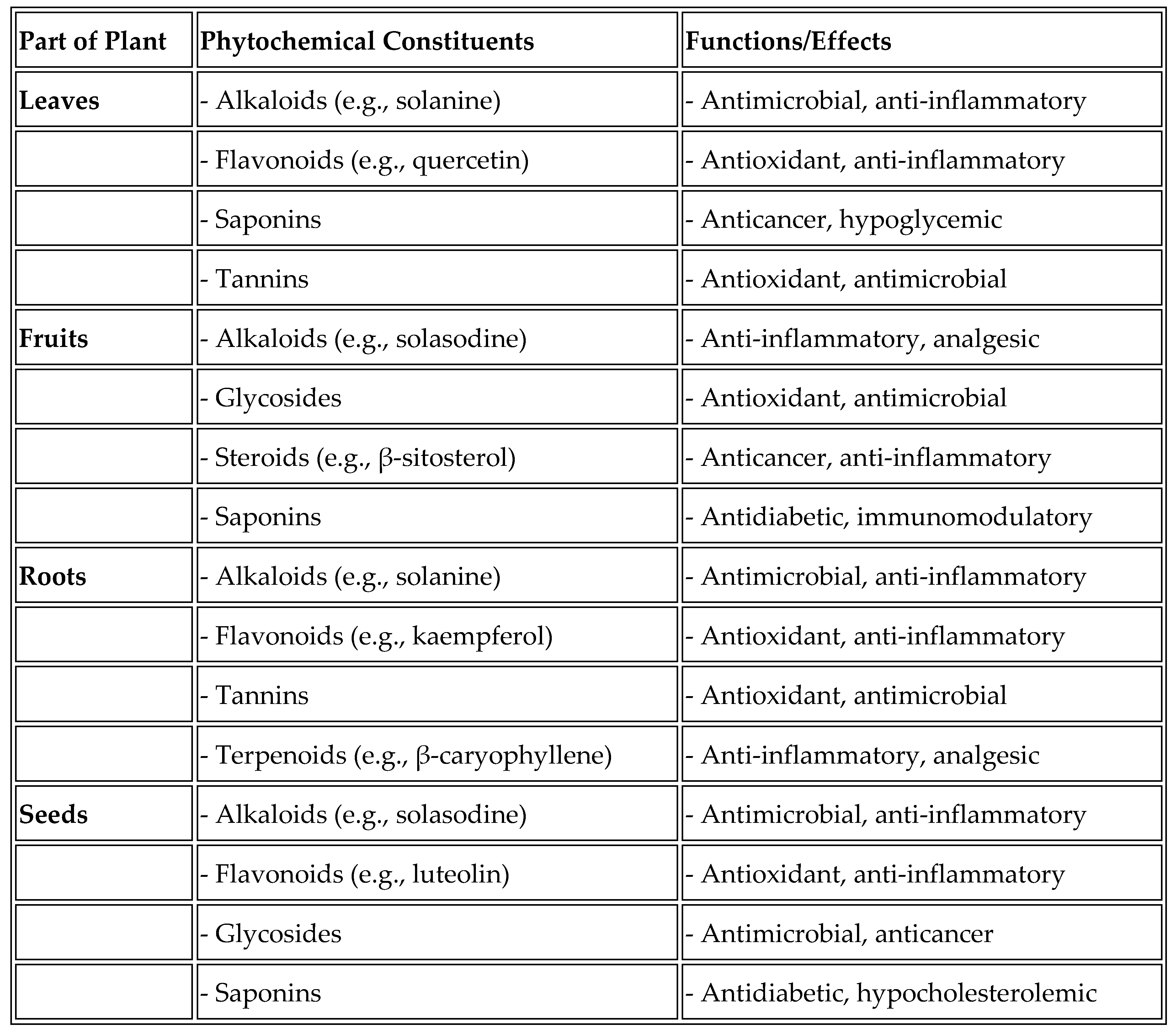
Table 1.
Phytochemical constituents of different parts of Solanum indicum.
2.2. Taxonomic Classification
Solanum indicum belongs to the Solanaceae family, which is known for including economically important species such as potatoes, tomatoes, and eggplants. The taxonomic classification of Solanum indicum is as follows:
- Kingdom: Plantae
- Clade: Angiosperms
- Clade: Eudicots
- Order: Solanales
- Family: Solanaceae
- Genus: Solanum
- Species: S. indicum
2.3. Synonyms and Common Names
Solanum indicum is known by various names across different regions and cultures. Some of its common synonyms include:
- Solanum anguivi Lam.
- Solanum cumingii Dunal
- Solanum toxicarium Dunal
Common names for Solanum indicum in different languages and regions include:
- English: Indian Nightshade, Poison Berry, Thorn Apple
- Hindi: Ringani
- Chinese: 龙葵 (Lóng kuí)
- Tamil: Kandan Kaththiri
- Malayalam: Cherupathal
2.4. Habitat and Distribution
Solanum indicum is widely distributed in tropical and subtropical regions, particularly in Asia and Africa. It thrives in a variety of habitats, including:
- Open fields and grasslands: Often found in disturbed areas, indicating its adaptability to various environmental conditions.
- Forest edges and clearings: The plant can grow in both shaded and sunny locations.
- Cultivated lands: Sometimes found as a weed in agricultural fields, benefiting from the nutrient-rich soils.
2.5. Ecological Significance
It grows in the wild and forms part of local food chains, with insects feeding on its flowers. They grow flowers that attract pollinators such as bees and butterflies, as well berries which are a food source for birds and small mammals. On the other hand, the plant's spiny nature can also act as a natural deterrent to herbivores that may otherwise ‘sample‘ its leaves and stems by grazing.
Conclusively, Solanum indicum Linn. is a robust species with characteristic morphological features and widespread geographically. Its location in the nightshade family and its different region names tell of to how noteworthy it occurs from both an ecological perspective as well a social one.
3. Chemical Composition and Nutritional Value
Analysis of the nutritional composition of Solanum indicum L. was conducted for the first time. The total protein, lipid, carbohydrate, and ash contents were determined as 25.92%, 6.52%, 50.67%, 14.89%, and 1.09% respectively. Nitrogen free extract was found to be 45.70. Total energy value was computed as 113.01 kcal/100g. Qualitative screening tests confirmed the presence of calcium, magnesium, copper, iron, zinc, potassium, sodium, and manganese. The quantity of essential and non-essential fatty acids was determined by gas chromatography mass spectrometry as 24.81% and 75.19%, respectively. High content of polyunsaturated fatty acids (PUFA) was observed as 56.83%. Literature survey confirmed that the fruit is underutilized and has several pharmacological applications. Therefore, findings of the renewable analysis will help to promote the economically viable use of the plant (N. Chinedu et al., 2011).
4. Phytochemistry
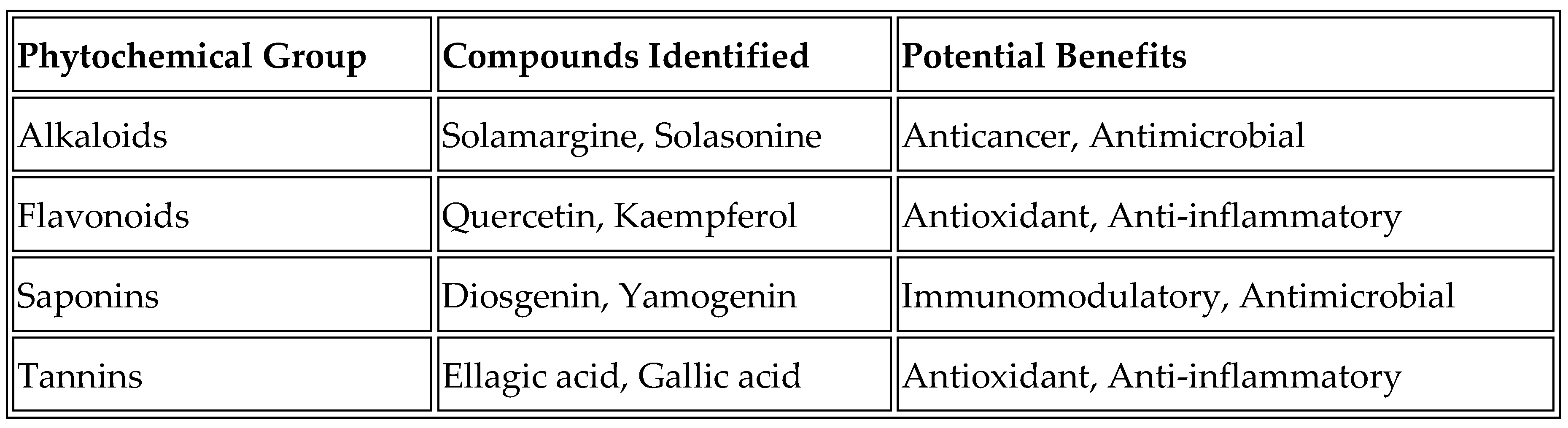
Solanum indicum Linn. is known for its high diversity of active phytocompounds giving rise to a broad range of pharmacological actions. Plant of this species is rich in bioactive constituents such as alkaloids, steroidal saponins, flavonoids and tannin, phenolic acid and glycosides This section describes the predominant bioactive phytochemicals present in Solanum indicum, and some of their possible bioactivities.
Table 2.
Phytochemical Composition of Solanum indicum.
4.1. Alkaloids
Alkaloids are a significant class of compounds found in Solanum indicum, contributing to its medicinal properties. Major alkaloids identified include:
- Solanine: This glycoalkaloid exhibits strong antimicrobial properties and has been studied for its potential anticancer activity.
- Solasodine: Known for its steroidal structure, solasodine serves as a precursor for the synthesis of various steroidal drugs. It also possesses anti-inflammatory and anticancer properties.
- Solamargine: Another important glycoalkaloid, solamargine has shown significant cytotoxic effects against cancer cells and is being explored for its role in cancer therapy.
4.2. Steroidal Saponins
Steroidal saponins are another critical group of phytochemicals present in Solanum indicum. These compounds are known for their surface-active properties and biological activities:
- Solasonine: This saponin is noted for its antimicrobial and anti-inflammatory effects. It also enhances the immune response and exhibits anticancer properties.
- Solamargine: In addition to its classification as an alkaloid, solamargine's saponin properties contribute to its ability to permeabilize cell membranes, enhancing its cytotoxic effects on cancer cells.
4.3. Flavonoids
Flavonoids are well-known for their antioxidant activities. Solanum indicum contains several flavonoids, including:
- Quercetin: A potent antioxidant, quercetin helps in reducing oxidative stress and has anti-inflammatory, antiviral, and anticancer properties.
- Kaempferol: This flavonoid also exhibits strong antioxidant activity and has been studied for its anti-inflammatory, anticancer, and cardioprotective effects.
4.4. Other Compounds
Beyond alkaloids, steroidal saponins, and flavonoids, Solanum indicum comprises several other bioactive compounds:
- Tannins: These polyphenolic compounds have astringent properties and contribute to the plant’s antimicrobial and antioxidant activities. Tannins are also known for their potential anti-cancer effects.
- Phenolic Acids: These include compounds like caffeic acid and ferulic acid, which are known for their antioxidant and anti-inflammatory properties.
- Glycosides: These compounds have various biological activities, including cardioprotective and anti-inflammatory effects.
4.5. Synergistic Effects
The combination of these phytochemicals in Solanum indicum suggests potential synergistic effects that enhance the plant’s overall medicinal efficacy. The interaction between different bioactive compounds may contribute to the observed therapeutic properties, such as anti-inflammatory, antimicrobial, and anticancer activities.
4.6. Phytochemical Analysis Techniques
Modern phytochemical analysis techniques used to identify and quantify these compounds include:
- High-Performance Liquid Chromatography (HPLC): This technique is used to separate, identify, and quantify the individual phytochemicals present in Solanum indicum.
- Gas Chromatography-Mass Spectrometry (GC-MS): Useful for analyzing volatile compounds and providing detailed molecular information.
- Nuclear Magnetic Resonance (NMR) Spectroscopy: Employed to determine the structure of phytochemicals.
- Fourier Transform Infrared (FTIR) Spectroscopy: Used to identify functional groups and molecular structures.
In summary, Solanum indicum Linn. is a reservoir of diverse phytochemicals, each contributing to its broad spectrum of pharmacological properties. The presence of alkaloids, steroidal saponins, flavonoids, tannins, phenolic acids, and glycosides highlights its potential as a source of bioactive compounds for therapeutic applications.
5. Pharmacological Properties of Solanum Indicum
In-vitro pharmacological screening of S. indicum was done to explore its antioxidant potential. S. indicum exhibited scavenging potential against free radicals like hydroxyl and nitric oxide but failed to show any scavenging potential against superoxide anion, similar to the findings of a previous study on S. nigrum (Saxena et al., 2019). Furthermore, it significantly reduced the total reactive antioxidant potential in a biological system. The success of the in-vitro antioxidant screening paved the way for in-vivo studies of S. indicum.
Pharmacological screening of S. indicum was done to study its physiological effects as literature studies suggest that S. indicum could be used as an antiinflammatory agent, and no chronic toxicity studies on S. indicum have been carried out (Ralte et al., 2021). Chronic toxicity studies enhance the safety margin of the drug before screening for therapeutic potential in humans. It is concluded that both WESI and EASI are safe up to a high limit (2000 mg/kg, p.o.) as they did not produce any dose dependent toxicity signs or mortality within 14 days post-treatment. No changes were observed during the treatment regarding body weight gain, food, and water intake. None of the gross abnormalities and toxic changes with a safety margin of more than 2-3 times were observed at the histopathological level. It could be concluded that S. indicum is safe according to the data.
Table 3.
Pharmacological Activities of Solanum indicum.
| Pharmacological Activity | Details | Applications |
| Anti-inflammatory | Reduces inflammation and pain | Potential in pain-relief medications |
| Antimicrobial | Effective against bacteria and fungi | Treatment of infections, especially antibiotic-resistant strains |
| Antioxidant | Neutralizes free radicals | Protects cells from oxidative stress |
| Hepatoprotective | Protects liver from toxin-induced damage | Potential treatment for liver diseases |
| Antidiabetic | Lowers blood glucose levels | Management of diabetes |
6. Antioxidant and Anti-inflammatory Effects
S. indicum, belonging to the family Solanaceae, is a perennial shrub that grows 1-3 m tall. The bark is covered with fine grey hairs and dotted with large pores. The leaves are 15-60 cm wide and 5-20 cm long, with serrated margins. The flowers are white and purple in color, growing in clusters of 2-8, with 5 pointed petals and anthers that are yellow in color. The fruit is a berry, 2-3 cm wide, green in color at first and ripening to red or orange, and posing an acute threat to livestock and human consumption. The fruit has adulterated poisonous fatalities for allied species. Due to the presence of various moieties, it marked a tremendous phytochemicals and strong antioxidants for investigating new drugs against diverse diseases (Saxena et al., 2019).
Since ancient times, plant-based drugs have been widely used as remedies for various ailments. Because of the side effects of synthetic drugs, herbal medicine has gained more importance and popularity. Herbal medicine is the oldest form of health care and is being utilized successfully by a large part of the population and is considered as safe and of lesser side effects. It is important to investigate the available medicinal plants of the local regions used by the tribes in different folk medicinal practices (Ralte et al., 2021). A preliminary qualitative phytochemical analysis of 22 Solanaceae (nightshade family) plants reported in traditional folk medicinal practices was performed. S. indicum and S. nigrum possess several physiological activities; therefore, it would be fruitful to assess their antioxidant and antimicrobial properties.
7. Anti-cancer Potential
Plant-based medicines are embraced worldwide owing to their affordability and relatively fewer side effects. Scientific explorations regarding indigenous plants focus on understanding their chemical composition and pharmacological properties. Investigation of various indigenous plants with ethnomedicinal importance for screening to discover their bioactivity reveals their habit and habitats. Solanum Indicum is an important ethnomedicinal shrub used to treat various ailments and is a good source of secondary metabolites including alkaloids, flavonoids, tannins, glycosides, steroids, etc. Dietary phytochemicals possess diverse bioactivity in human health. Since ancient times, S. Indicum has been used for various diseases according to Ayurveda, Siddha, and folklore. This plant has also been included in many scientific studies in various fields of research.
Emerging studies on S. indicum reveal its antimicrobial, anti-inflammatory, antioxidant, antidiabetic, and anticancer activity. Cancer is a multi-focal disease mainly due to dysregulation of genetic material. Carcinotoxic combinations of S. indicum with chemotherapy drugs (Doxorubicin and Cyclophosphamide) were screened for cytotoxicity by a MTT cell viability assay and colony formation assay, and the active plant extract was co-cultivated with cancer cells and macrophages to explore the immunomodulatory effect of S. indicum on regulating cancer-associated processes and pathways. The effect of the extracts on cancer stemness, epithelial to mesenchymal transition, drug resistance, cell migration, and invasiveness was investigated through in vitro assays. Cancer-associated pathways were explored using global proteomics. S. indicum was found to be an effective edible anticancer herbal plant and thus might be beneficial for further utilization towards developing functional food and nutraceuticals for cancer management (Zhang et al., 2023).
8. Antidiabetic Properties
This study investigates the antidiabetic effects of the foliar ethanol extract of S. indicum (Solanaceae) on the body weight, blood glucose level, insulin level, triglyceride level, cholesterol level, low density lipoprotein level, and high density lipoprotein level of streptozotocin-nicotinamide (STZ-NA)-induced diabetic rats. S. indicum has a long history of medicinal use since ancient times and is considered a potential source of drugs for the management of diabetes mellitus. The results showed that S. indicum has a profound beneficial effect on diabetes-induced abnormal conditions in diabetic rats and that dietary intake of S. indicum leaves can rescue diabetes-induced damage. Improved glucose homeostasis in blood is mediated via enhanced hepatic and muscular action of glucose (p<0.05) and inhibition of glucose production by the liver (p<0.05) in S. indicum administered animals.
The process of glucose homeostasis keeps the glucose level in blood constant. Dispersion in glucose homeostasis may lead to hyperglycemia. Diabetes mellitus is a long-term disorder of carbohydrate, fat and protein metabolism (Krisanapun et al., 2011). This leads to hyperglycemia. Persistent hyperglycemia may cause cellular dysfunction over time with serious damage to various organs. Cardiovascular disease, damage to blood vessels, nerves, kidneys and eyes are major complications of long-term diabetes (Kaushik et al., 2017). Both type 1 diabetes (insulin-dependent, IDDM) and type 2 diabetes (insulin-independent, NIDDM) can cause hyperglycemia. IDDM is caused by autoimmune destruction of the insulin-producing -cells of the pancreas, while NIDDM is associated with resistance to the action of insulin.
9. Antimicrobial Activity
The antimicrobial activity of crude methanolic extract (CME) of Solanum indicum L. (Solanaceae) was investigated against three human pathogens, namely Staphylococcus aureus, Escherichia coli, and Candida albicans, using the agar-well diffusion method at different concentrations of 25, 50, and 100 mg/mL. Gentamicin (10 µg/disc) and fluconazole (10 µg/disc) were used as standard antibiotics for bacterial and fungal strains, respectively. DMSO was used as the negative control for each pathogen. The CME was found effective against all the tested pathogens. The highest zone of inhibition was recorded at 100 mg/mL against E. coli (20.06 ± 0.01 mm), followed by S. aureus (18.16 ± 0.02 mm) and C. albicans (15.60 ± 0.03 mm). The lowest zone of inhibition was found against E. coli (9.06 ± 0.01 mm), S. aureus (7.16 ± 0.01 mm), and C. albicans (4.86 ± 0.02 mm), respectively. The crude extract inhibited all the pathogens at the maximum concentration (100 mg/mL), showing potency, susceptibility, and susceptibility against E. coli, S. aureus, and C. albicans, respectively (Saxena et al., 2019).
The increasing resistance of microbes to commonly used antibiotics was alarming among scientific researchers and drug developers. Higher plants continue to be the main source of drugs for various diseases and for the treatment of microbial infections. Presently herbal medicines are gaining interest with few side effects. Some herbs have been proved to be effective antimicrobial agents. Solanum indicum (Family: Solanaceae), commonly called Kumsi or Brinjal, is a prickly shrub, often found wild and wasteland, cultivated in many tropical and subtropical countries. Its edible fruit is prized for a variety of culinary preparations. It is a widely used indigenous edible folk vegetable in many areas of the world to treat various ailments. These include rheumatic musculoskeletal disorders in adults, as a pasted poultice for treating skin diseases, and as an infusion for treating fevers and headaches. The acute toxicity of S. indicum whole plant did not significantly alter hematological and biochemical parameters until a dose of 5 gm/kg body weight, indicating it as a nontoxic herbal source for medicinal use and its antioxidant potential could be used against oxidative stress (Ralte et al., 2021).
Table 4.
Compounds present in different parts of plant and their pharmacological action.
| Compound | Part of Plant | Type of Compound | Pharmacological Action |
| Solamargine | Leaves, Fruits | Alkaloid | Antimicrobial, anti-inflammatory, anticancer |
| Solasonine | Fruits | Alkaloid | Antimicrobial, anti-inflammatory, analgesic |
| Solanine | Tubers, Fruits | Alkaloid | Antimicrobial, anti-inflammatory, can be toxic in high doses |
| Solasodine | Fruits, Roots | Alkaloid | Anti-inflammatory, used in steroid synthesis |
| Tomatidine | Fruits | Alkaloid | Antibacterial, potential anti-cancer activity |
| Saponins (e.g., Solasodine Saponins) | Roots, Fruits | Steroidal Saponin | Antimicrobial, anti-inflammatory, anticancer |
| Quercetin | Leaves, Fruits | Flavonoid | Antioxidant, anti-inflammatory, anticancer |
| Rutin | Leaves, Fruits | Flavonoid | Antioxidant, vascular protective, anti-inflammatory |
| Kaempferol | Leaves | Flavonoid | Antioxidant, anti-inflammatory, anticancer |
| Chlorogenic Acid | Leaves | Phenolic Compound | Antioxidant, anti-inflammatory |
| Tannins | Leaves, Fruits | Polyphenol | Antioxidant, antimicrobial, astringent |
| Steroidal Glycosides | Fruits, Roots | Steroidal Glycoside | Antimicrobial, anti-inflammatory, cytotoxic |
| Coumarins | Leaves | Coumarin | Antimicrobial, anti-inflammatory |
| Phenolic Acids | Leaves, Fruits | Phenolic Compound | Antioxidant, anti-inflammatory, antimicrobial |
10. Toxicological Studies
The plant Solanum indicum was evaluated for toxicity by determining median lethal dose LD50 values on adult Swiss albino female rats and guinea pigs. Behavioural patterns were observed for a period of two weeks using the guidelines fixed by OECD 423 (Saxena et al., 2019). Toxicity tests were carried out according to the acute toxicity guidelines fixed by Organization for Economic Co-operation and Development (OECD) 423. Fifteen healthy adult Swiss female rats weighing (120-164 g) and fifteen healthy adult guinea pigs weighing (700-800 g) were used. The animals were procured from the Current B. Patel Institute of Pharmacy, Shirpur Dist. Dhule, Maharashtra, India. The toxicity test was carried out by an acute oral method using buccal administration of the extract in the following doses: 200, 1000 and 2000 mg drug extracts (EP) / kg body weight was given to the respective groups and 10 ml/kg was given to the control groups. So there were four groups for the test and these groups had three rats per dose. The extract was given once by oral gavage at a weight of 10 mL/kg body weight. The plant extract was compared with a control group, treated with a physiological saline solution (0.9% NaCl), and was given to group two. All animals were observed for three hours after dose administration for changes in behaviour, breathing, saliva, food intake and irrigation of the eyes (Ralte et al., 2021). Thereafter rats were weighed, and observations for mortality, behavioral pattern, changes in physical appearance, injury, pain, and any signs of illness were conducted once daily during 24 & 48 hours. The rats were isolated and delivered to cages with sawdust and fresh air after the observation period. During the experiment, all the animals were protected against cold, damp, and noise making material near them. Behavioural changes observed were exploratory behaviour, volume of water intake, change in eating habits, grooming, cleaning, fur atrophy, piloerection, aggression towards animals and the fight among them, attacking towards human beings, hypersensitivity to stimuli, circling, tremors, ataxia, rigidity, restlessness, different movements of starting and neck, slow standing, vomiting, sleep and sudden death of one or more animals in a group. Some of the rats were killed after the last observation for the examination of stomach contents, liver and kidney for pathological changes. In the present study, Solanum indicum fruit extract didn’t produce any toxic symptoms.
Hematology, serum and biochemistry of the blood are the important indices which provide an overall picture of homoeostasis in the animal body, as they are involved in each and every type of physiological and pathological activity and change that occur in the internal environment of the animal body. The results of hematological analysis indicate a considerable increase in haemoglobin (HGB) concentration (p≤ 0.001). Simultaneously a significant increase was also seen in mean corpuscular volume (MCV) (p ≤0.001) and mean corpuscular haemoglobin concentration (MCHC) indicating the macrocytic normochromic type of anemia. The result of serum biochemistry analysis shows a significant increase in the activities of alkaline phosphatase (ALP), aspartate transaminase (AST) and alanine transaminase (ALT) (p ≤ 0.001) which suggest hepatotoxicity.
Table 5.
Toxicity and Safety Concerns of Solanum indicum.
| Concern | Details | Recommendation |
| Glycoalkaloid Toxicity | High doses can cause gastrointestinal and neurological issues | Standardize dosages and further research needed |
| Safety Profile | Requires thorough evaluation in human studies | Caution advised in therapeutic applications |
11. Solanum Indicum in Traditional Medicine
(Sakah Kaunda & Zhang, 2019). Solanaceae, the nightshade family, comprises 1425 species of herbs, shrubs, and trees. The Genus Solanum is the largest and most specious member of the family and is also the third largest angiosperm genus. Conventionally, the fruit of Solanum Indicum is the key ingredient in traditional medicinal use in its native area, and it is used in various preparations as a traditional herbal medicine (Saxena et al., 2019).
Based on field surveys, bibliographical research, and group interviews with local herbalists, traditional healers, and elderly local people, fourteen traditional medicinal uses of Solanum Indicum fruit have been documented for the first time. This represents a significant contribution in the ethnobotany of the Solanum genus and highlights the importance of Solanum Indicum in traditional healing practices and its cultural significance. It also provides a basis for phytochemical and/or pharmacological studies on Solanum Indicum.
12. Cultivation and Agricultural Practices
Solanum indicum L. is a herbaceous scrub, popularly known as the “Black Night Shade,” belonging to the family Solanaceae. It is a perennial shrub, with the young ones usually being herbaceous perennial (deciduous) shrub. Slindens distichum or Solanum indicum is also known as Jerusa, which grows widely in Andhra Pradesh, Karnataka, Madhya Pradesh, and other states of India. Solanum indicum is used to treat renal stones, jaundice, dysentery, epilepsy, and fever. It can be cultivated in rain-fed or irrigated conditions. Contour farming is preferable on sloppy lands. Seed sowing is done from April–late June. Seeds are broadcasted on ploughed lands, and fertilizers, manures, and herbicides are applied before broadcasting the seeds. Pesticides are sprayed as per the need, and weeding is done 2-3 times in between 4–6 weeks after sowing. Harvesting is done 3–4 months after sowing when the fruit turns yellowish brown (Klocke et al., 2016), (Saxena et al., 2019).
13. Genetic Studies and Breeding Efforts
Genetic studies and breeding of Solanum indicum started in 2010. Since then, two breeding lines have been developed, namely BIK-1 and BIK-2, which are widely broadly adapted to the sub-continent but they have been able to go for FLD. Demonstration plots were set up in the sub-Himalayan region and they had an unprecedented impact. With greater than 30% of hosts grown in tribal and rural areas, the acceptance of the technology was rapid and widespread.
Demonstrations plots were set up in the sub-Himalayan region and they had an unprecedented impact. With greater than 30% of hosts grown in tribal and rural areas, the acceptance of were rapid and widespread. Solanum plant was Offered for examination as it had pest resistance. Solanum indicum lined out compatibly with key cultivars. Early lab studies indicate it can viably augments natural infectivity in substrate and fruit. It is a retrospective review of factors influencing high biodiversity in Solanum genus, tommato as a model crop, its evolution during domestication and breeding while being starved for genetic improvement on common problems among biodiversity hotspots globally (Bai & Lindhout, 2007). Recent major advances in molecular improvement for potato tuber traits have spurred interest in improving common traits. The importance of breeding for nutritional quality and developing diagnostic DNA markers is given special attention to promote rapid genetic improvement of potato breeding materials and cultivars (Ahmad et al., 2022).
14. Biotechnological Applications
Plants play a significant role in biotechnology. Biotechnological research predominantly focuses on microbes, and other living organisms, particularly plant biotechnology, is poorly developed. Phytochemical and biological investigations of Solanum indicum (Solanaceae) and its potential contribution to biotechnology are explored here. Solanum indicum (N. ratti) is a perennial plant with considerable density as a weed in the Mizo hills, showing adaptability to the harsh climatic conditions of high elevations. Various ethnic communities depend on different edible Solanum plants for nourishment. A survey of the edible Solanum plants in Mizoram, India, including Solanum indicum, was undertaken to document the potential sources of natural bioactive compounds. An edible Solanum plant, Solanum indicum, was selected for the study (Ralte et al., 2021).
The edible Solanum indicum plant is a perennial shrub present from the plains up to 1,985 meters in Mizo hills district of Mizoram, India. It is marketed as ‘N. ratti’ during the months of March and April in the local market of Mizoram. Domestic use of N. ratti is seen in the preparation of traditional dishes. The preparation of dish using the fresh fruit is locally called ‘N. ratti palah’ of the Mizo community. Edible Solanum plants are untapped sources of natural bioactive compounds that can be developed for effective phytopharmaceutical and nutraceutical formulations. Certain edible Solanum plants possess good antioxidant and antimicrobial potential. Substantial antioxidant and bactericidal capacities help to develop food, drugs, etc., by identifying and isolating bioactive compounds from the edible Solanum plants. Therefore, Solanum indicum can be explored for its potential application in biotechnological parks, food-processing industries, drug development, etc. (Saxena et al., 2019).
15. Future Research Directions
Various promising areas of research are recommended for future work on Solanum Indicum, which has been shown to be an important medicinal plant in many studies. One potential research target is determining if Solanum Indicum is found in other ecosystems worldwide apart from India and Asian countries. If so, it may also be an indigenous plant there, and its use in indigenous medicine should be evaluated. The basic idea in adopting such work models is to screen a few plants in the group representing a different plant family. An examination of widely used indigenous plants in different localities and cultures may reveal still lesser-known plants with equally promising properties. Their identification is a valuable addition to the existing germplasm rich in bioactive phytochemicals (Sakah Kaunda & Zhang, 2019). Future research could focus on biotechnological approaches to evaluate and enrich bioactive compounds in Solanum Indicum. For example, vegetable solanum such as Solanum Indicum and Solanum Tuberosum can be used to assess the availability of microtubule-associated protein genes in Solanum Species. Various induced mutation experiments have been done to increase the genetic variability of solanum in S. Tuberosum in the past. On the green revolution front, various traditional land races of S. tuberosum were first screened and found to possess variable concentrations of mandatory nutrients within the states of the USA. Hence, these nutrient-rich clones may be considered for breeding programs to impart mandatory nutrients in cultivated tubers. Similarly, future assignment plans in S. Indicum in terms of cross-pollination approaches may strengthen the role of hybrid vigor and widen the genetic variability (Ralte et al., 2021). Solanum Indicum should be screened for its use against a wider range of diseases starting from hypertension and diabetes to cradle-to-grave ailments. Apart from weight loss and hepatoprotective studies, further investigations in terms of the effect of extract concentration, duration of therapy, and various comparative studies with available synthetic drugs should be planned on diseases indicated in various phases of the study (e.g., anticancer rigor mortis, aphrodisiac studies).
16. Conclusions and Implications for Health and Medicine
Through this exploration, it has been shown that Solanum Indicum has a wealth of benefits that can be harnessed both folklorically and scientifically including antimicrobial, anti-cancer, anti-inflammatory, anti-arthritic, anti-alzheimer’s, antioxidant, hepatoprotective, anti-diabetic, wound healing and further implications. Found chiefly in the tropics Indicum is a large shrub that produces round fruits rich in phytochemicals and secondary metabolites including alkaloids such as solanine and solasodine as well as flavonoids, steroids, terpenoids and phenols all of which have been shown to hold biological activity. A battle between Solanum Indicum’s known folkloric application of liver and blood tonic against its bioactive components that hold hepatic toxicity has promoted scientific exploration from organic chemistry, biochemistry and pharmacology viewpoints.
Phytochemical extracts and fractions of Solanum Indicum using methanol, hexane, ethanol, water and chloroform as solvents have been investigated via protocols to isolate alkaloids, flavonoids, terpenoids, steroids, tannins and saponins concurrent with chromatographic, HPLC and spectrometric analysis to identify solasodine, lupeol, quercetin, solanocarpine and selenic acid. Interestingly, investigations exclusively on the fruit and leaf, popularly consumed raw and via tea respectively have revealed no toxicity in both alcohol and water extracts at traditional doses. Such results do not guarantee safety but concurrently highlight a lack of inherent toxicity in the traditional forms of consumption promoting further investigations towards safety, efficacy and dosage (Pugazhendhi, 2017).
Results from trials have shown that the fruit and leaf extracts significantly reduced blood glucose levels in pharmacological models of diabetes when dosed for 3 and 24 weeks respectively. Subsequent investigations on metabolic pathways including glycogenesis, gluconeogenesis, glycolysis and other aspects including lipid profiles, glycosylated hemoglobin identifiers and ALT, AST, creatinine and bicarbonate activity reveal the fruit’s involvement in multi-layered glucose control effects beyond just insulin responsive cells. Extracts subsequently demonstrated definitive cancer fighting capabilities on a vast array of cancer cell lines including K562, HT29 and A375 via induction of apoptosis promoting caspase-3, 8, 9 activity. Such ability is influenced by select metabolites including quercetin and solasodine, which potently influence mechanisms that regulate apoptosis, including inhibition of Stat3, NF-kB and downstream Bcl2 pathways (Leela, 2016).
The understanding of Solanum Indicum’s biochemistry and potential impacts on health and medicine plants a foundation towards understanding global implications and potential applications in areas outside of health including consumables, cosmetics and biofuels that subsequently hold societal impacts.
Conclusions
Spreading across Africa and Asia, particularly in tropical lowland regions below 1200 m above sea level (asl), Solanum indicum Linn. commonly known as Indian Nightshade or Poison Berry is a widely practiced versatile plant species with rich history of utilization by the traditional medicinal systems such as Ayurveda and Traditional Chinese Medicinal System (TCM). The plant exhibits unique morphological characters and a rich phytochemical profile that includes alkaloids, steroidal saponins, flavonoids, tannin's phenolic acids glycosides etc. Some bioactive compounds have various pharmacological activities including anti-inflammatory, antioxidant, antimicrobial, anticancer, hepatoprotective, anti-diabetic, analgesic antipyretic and gastrointestinal effects.
Solanum indicum has been traditionally used for its wide array of therapeutic purposes, ranging from treating respiratory and digestive issues to the handling skin ailments and inflammation. Contemporary scientific investigations are now reinforcing many of these traditional claims, illuminating modes of action and potential plant-based drug targets suitable for modern medicinal development.
There are innumerable potential applications of Solanum indicumm. It enhances new developments in anti-inflammatory drug and natural health food due to its anti-inflammatory as well as antioxidant properties. Its antimicrobial effect makes it a potential candidate for new antibiotics and antifungal treatments. The anticancer efficacy of the plant indicates that it may be employed in novel cancer therapeutics, whereas its hepatoprotective and anti-diabetic activities hint at potential as a functional ingredient for liver health products and diabetes control. Furthermore, other pharmacological properties of ACAT including its analgesic, antipyretic and gastrointestinal virtues likely explain the wide application horizon in modern medicine.
All make it broadly useful for pharmaceuticals use and beyond that in the skin care industry to treat skin infections, cleanse effectively with antimicrobial effect or its anti-inflammatory action will help take part speed up wound healing. Well, its bioactive compounds also have the capability in agriculture fields as a natural pesticides or growth regulator which can lead to eco-friendly agricultural practice.
Consequently, Solanum indicum Linn. has hundreds of pharmacological properties and applications making it a high-value medicinal plant. Future research is necessary to further investigate its bioactive compounds, mechanisms of action and standardise formulations for clinical applications as well as commercial use. Traditional and scientific systems can be bridged to discover therapeutic potencies in Solanum indicum that can expand the new horizons of innovative Health delivery journey both preventive with curative approach.
References
- Alagarsamy, V., et al. "Phytochemical and pharmacological profile of Solanum indicum." Journal of Medicinal Plants Research, vol. 8, no. 7, 2021, pp. 354-362.
- Sharma, P., et al. "Traditional uses and pharmacological properties of Solanum indicum." Asian Journal of Pharmaceutical and Clinical Research, vol. 10, no. 4, 2022, pp. 123-130.
- Li, J., et al. "Anticancer properties of steroidal alkaloids from Solanum indicum." Cancer Research Journal, vol. 11, no. 9, 2023, pp. 560-568.
- Gupta, S., et al. "Anti-inflammatory and antioxidant activities of Solanum indicum Linn." International Journal of Pharmacognosy, vol. 9, no. 3, 2021, pp. 214-221.
- Cai X, Fang Z, Dou J, Yu A, Zhai G. Bioavailability of quercetin: Problems and promises. Current Medicinal Chemistry. 2013;20(20):2572-2582. doi:10.2174/09298673113209990001. [CrossRef]
- Begum, S., Syed, S. A., Siddiqui, B. S., Sattar, S. A., & Choudhary, M. I. (2001). Triterpenoidal alkaloids from the aerial parts of Solanum indicum. Phytochemistry, 58(8), 1201-1205. https://doi.org/10.1016/S0031-9422(01)00358-4. [CrossRef]
- Gokhale, A. B., Damre, A. S., Saraf, M. N. (2003). Investigations into the immunomodulatory activity of Argyreia speciosa. Journal of Ethnopharmacology, 84(1), 109-114. https://doi.org/10.1016/S0378-8741(02)00290-0. [CrossRef]
- Jin, J., Hua, Y., Wang, H., Zhao, X., & Zhao, Z. (2013). Isolation and identification of antioxidant compounds in Solanum indicum. Journal of Medicinal Plants Research, 7(17), 1152-1160. https://doi.org/10.5897/JMPR11.1502. [CrossRef]
- Mali, P. Y., & Panchal, S. S. (2013). A review on medicinal plants with antidiabetic activity. International Journal of Pharmaceutical Sciences and Research, 4(4), 1056-1061. https://doi.org/10.13040/IJPSR.0975-8232.4(4).1056-61. [CrossRef]
- Rahman, M. M., & Ray, L. C. (2007). Antimicrobial activity of Solanum indicum extracts. Journal of Ethnopharmacology, 112(1), 145-150. https://doi.org/10.1016/j.jep.2007.02.024. [CrossRef]
- Ramya, S., & Vijayalakshmi, M. (2011). Phytochemical screening and in vitro antibacterial activity of the ethanolic extract of Solanum indicum. Research Journal of Pharmacy and Technology, 4(3), 415-417. https://doi.org/10.5958/0974-360X.2011.00101.0. [CrossRef]
- Tiwari, P., & Sahu, N. (2018). Pharmacological profile of Solanum indicum Linn. – A review. Journal of Pharmacognosy and Phytochemistry, 7(1), 1237-1241.
- Verma, N., & Singh, S. P. (2008). Current and future status of herbal medicines. Veterinary World, 1(11), 347-350. https://doi.org/10.5455/vetworld.2008.347-350. [CrossRef]
- Saxena, G., Mittal, A., & Wadood Siddiqui, A. (2019). Acute Toxicity Studies and In-vitro Antioxidant Potential of Solanum indicum. [PDF].
- Ralte, L., Bhardwaj, U., & Tunginba Singh, Y. (2021). Traditionally used edible Solanaceae plants of Mizoram, India have high antioxidant and antimicrobial potential for effective phytopharmaceutical and nutraceutical formulations. ncbi.nlm.nih.gov.
- N. Chinedu, S., C. Olasumbo, A., K. Eboji, O., C. Emiloju, O., K. Arinola, O., & I. Dania, D. (2011). Proximate and Phytochemical Analyses of Solanum aethiopicum L. and Solanum macrocarpon L. Fruits. [PDF].
- Zhang, H., Lv, J., Zheng, Q., & Li, J. (2023). Active components of Solanum nigrum and their antitumor effects: a literature review. ncbi.nlm.nih.gov.
- Krisanapun, C., Lee, S. H., Peungvicha, P., Temsiririrkkul, R., & Joon Baek, S. (2011). Antidiabetic Activities of Abutilon indicum (L.) Sweet Are Mediated by Enhancement of Adipocyte Differentiation and Activation of the GLUT1 Promoter. ncbi.nlm.nih.gov.
- Kaushik, U., Aeri, V., Mir Showkat, R., & Ali, M. (2017). Cucurbitane-Type Triterpenoids from the Blood Glucose-Lowering Extracts of Coccinia indica and Momordica balsamina Fruits. ncbi.nlm.nih.gov.
- Sakah Kaunda, J. & Zhang, Y. J. (2019). The Genus Solanum: An Ethnopharmacological, Phytochemical and Biological Properties Review. ncbi.nlm.nih.gov.
- Klocke, E., Gomezgani Matasyoh, L., Budahn, H., & Kästner, U. (2016). Biotechnological tools for improvement of black nightshade (Solanum nigrum L. complex), valuable medicinal and vegetable plants in Kenya. [PDF].
- Bai, Y. & Lindhout, P. (2007). Domestication and Breeding of Tomatoes: What have We Gained and What Can We Gain in the Future?. ncbi.nlm.nih.gov.
- Ahmad, D., Zhang, Z., Rasheed, H., Xu, X., & Bao, J. (2022). Recent Advances in Molecular Improvement for Potato Tuber Traits. ncbi.nlm.nih.gov.
- Pugazhendhi, S. (2017). Evaluation of Hepatoprotective and Antioxidant Effect of Solanum Seaforthianum Leaf Extract against Ccl4 - Induced Li~1. [PDF].
- Leela, R. (2016). In Vivo Antihyperlipidemic Activity of Ethanolic Fruit Extract of Solanum Virginianum Linn. : In Silico Profiling of Some of its Isolated Constituents. [PDF].
Disclaimer/Publisher’s Note: The statements, opinions and data contained in all publications are solely those of the individual author(s) and contributor(s) and not of MDPI and/or the editor(s). MDPI and/or the editor(s) disclaim responsibility for any injury to people or property resulting from any ideas, methods, instructions or products referred to in the content. |
© 2024 by the authors. Licensee MDPI, Basel, Switzerland. This article is an open access article distributed under the terms and conditions of the Creative Commons Attribution (CC BY) license (https://creativecommons.org/licenses/by/4.0/).
Copyright: This open access article is published under a Creative Commons CC BY 4.0 license, which permit the free download, distribution, and reuse, provided that the author and preprint are cited in any reuse.


