
Submitted:
12 September 2024
Posted:
14 September 2024
You are already at the latest version
Abstract
This study investigates the urban ecology of the Red-Whiskered Bulbul (Pycnonotus jocosus) in New Barrackpore, West Bengal, India. We examined the feeding behavior, breeding success, and behavioral patterns of the species in urban habitats. Our results show that the Red-Whiskered Bulbul is adapting to urban environments, with a moderate breeding success rate (64%) and specific behavioral patterns. The species exhibits a significant preference for urban habitats, particularly mango and bamboo trees, and a significant increase in singing activity during the breeding season. Our findings highlight the importance of urban ecology in understanding the behavior and conservation of this species. We suggest that urban green spaces with native tree species and sustainable urban planning practices can support the conservation of the Red-Whiskered Bulbul and other urban-adapted species. This study contributes to our understanding of urban wildlife ecology and conservation in India and has implications for urban planning and biodiversity conservation globally.
Keywords:
bird species
; behavioral adaption
; conservation
; foraging strategies
; habitat adaption
; Pycnonotus jocosus
Introduction:
The Red-Whiskered Bulbul (Pycnonotus jocosus) is a widely distributed bird species, found in various habitats across the globe, including India, Southeast Asia, the Middle East, and Africa (Mark. 2009; Kamtaeja et al. 2012; BirdLife International. 2022). In India, it is distributed across various states, including West Bengal, where it is a common bird species in urban and rural areas (Kumar et al., 2019).
Breeding is a critical seasonal event in the lives of birds, comprising multiple stages including nest establishment, egg deposition, incubation, and chick emergence. The reproduction success of bird species hinges on their ability to choose a secure nesting location and capitalize on optimal breeding conditions (Sharma et al. 2004; Arya et al. 2023).
The Red-Whiskered Bulbul is a frugivorous bird species, feeding on fruits, berries, and nectar (Yang and Yang. 2004; Grimmett et al. 2019). It plays a crucial ecological role in seed dispersal and pollination, contributing to the maintenance of urban ecosystems (Lagade et al. 2020). The species inhabits a variety of habitats, including forests, gardens, and urban areas, with a preference for areas with dense vegetation and fruiting trees (Pal et al. 2019). It plays a significant role as a seed disperser in tropical Asian habitats, particularly in anthropogenic open areas (Corlett. 1998).
The Red-Whiskered Bulbul inhabits a variety of habitats, including forests, gardens, and urban areas, with a preference for areas with dense vegetation and fruiting trees (Chace and Walsh. 2006; Grimmett et al., 2019). In urban areas, the species is often found in gardens, parks, and green spaces, where it can find food and shelter (Werner. 2011; Paker et al. 2014; Pal et al., 2019).
In urban areas, the Red-Whiskered Bulbul breeds during the summer months, with a moderate breeding success rate (Zhou et al. 2012; Lee et al. 2019). The species exhibits parental care, with males and females involved in nest-building, incubation, and chick-rearing (Huan et al. 2015; Dickinson. 2018; Grimmett et al., 2019). The Red-Whiskered Bulbul is listed as Least Concern on the IUCN Red List, but its population is declining in some parts of its range due to habitat loss and fragmentation (Dangaura et al. 2020; BirdLife International, 2022).
Despite its adaptability to urban environments, the Red-Whiskered Bulbul faces various threats, including habitat loss, fragmentation, and degradation, as well as competition with invasive species (Baker et al. 2014). Understanding the urban ecology of the Red-Whiskered Bulbul is essential for developing effective conservation strategies and promoting sustainable urban planning practices that support biodiversity conservation. This study aims to investigate the feeding behavior, breeding success, and behavioral patterns of the Red-Whiskered Bulbul in urban habitats of New Barrackpore, West Bengal, India.
Methodology:
Study Area:
The study area, New Barrackpore, is situated in the North 24 Parganas district of West Bengal, India, with geographical coordinate’s 22.6844165° N latitude and 88.4374651° E longitude (Figure 1). This region falls within the tropical monsoon climate zone, characterized by hot and humid summers followed by monsoon rains during the study period (March to June 2024). The area is predominantly covered with lush green vegetation, comprising various tree species that provide a habitat for diverse flora and fauna. The landscape is dotted with dense foliage, gardens, and parks, earning it the description of a “habitat green.” The common tree species found in this region include Peepal (Ficus religiosa), Banyan (Ficus benghalensis), Mango (Mangifera indica), Jackfruit (Artocarpus heterophyllus), and Neem (Azadirachta indica).
Methods:
The observation method used in this study is a systematic and structured approach to collecting data on the feeding behavior of Red-whiskered bulbuls in urban habitats. Multiple urban locations with varying levels of vegetation and food sources were selected to ensure a representative sample of the birds’ habitat. Trained observers conducted timed observations (10-minute intervals) to record the birds’ behavior during specific time periods (0600-0800, 0800-1000, 1000-1200, 1200-1400, 1600-1800 hours). The observers recorded the birds’ behavior according to predefined categories Nectar feeding (hover-foraging, stationary), insect foraging (active foraging, flight) and Fruit foraging (perch-foraging, short flights). The observers estimated the feeding intensity (percentage of time spent feeding) for each behavioral category during each time period. The observers identified the specific food sources (e.g., flower species, insect types, fruiting plants) used by the birds during each observation period. The data was analyzed to calculate the mean feeding intensity and duration for each behavioral category during each time period.
Nest Monitoring and Manufacturing Observations:
The Red-Whiskered Bulbul pair exhibited dedicated parental care during the nesting period. The female’s primary role in incubation ensures consistent warmth and protection for the eggs. The male’s occasional relief allows the female to replenish energy reserves. Both parents’ contributions to nest repair and reinforcement demonstrate their investment in a safe and stable environment for their offspring. Vigilance and aggressive defense strategies protect the nest from potential predators, showcasing the pair’s adaptability and response to threats. The male’s food delivery during incubation and chick-rearing highlights his supportive role in ensuring the female’s energy needs are met. The female’s reduced foraging during incubation conserves energy for egg-laying and chick-care. Both parents’ involvement in feeding, waste removal, and nest cleaning demonstrates their shared responsibility in raising their young. The parents’ supervision during the chicks’ initial flights and foraging attempts ensures their offspring develop essential survival skills. These observations demonstrate the Red-Whiskered Bulbul’s remarkable parental cooperation, adaptability, and dedication to their reproductive success.
A bird couple was observed searching for a suitable site to build their nest. They explored the verandah of a house and the garden, eventually selecting the handle of an old swing in the verandah. Despite multiple attempts, they failed to build a successful nest on the handle and instead started anew each time, without attempting to repair or adjust the previous nest. The nest was constructed entirely from natural materials, including dried coconut leaves, cotton, twigs, grass blades, and thin strips of banana tree leaves from the garden. The sticks and twigs were arranged in a crisscross pattern, similar to those found in the nests of field birds. The construction process took approximately 4-5 days. Interestingly, city birds have been reported to take longer (6-7 days) to build their nests, using materials like thread and wires. This may be due to the scarcity of natural materials or the desire to avoid the effort of gathering materials from distant locations. Notably, when their preferred nest building site was disturbed by humans or other birds, the pair did not attempt to rebuild at the same location, suggesting a preference for an undisturbed and safe site.
Results:
The results of this study reveal intriguing patterns in the foraging behavior of the observed species. Nectar from flowers is the primary food source, visited during four out of six time periods, with the highest frequency of visitation (60%) and longest mean feeding time (6.5 ± 2.1 minutes) during the 0600-0800 hours period. The species exhibits a clear preference for nectar in the morning (0600-1200 hours) and late afternoon (1400-1800 hours), while insects are primarily consumed during the late morning (0800-1000 hours). Fruits are consumed least frequently, during the early afternoon (1200-1400 hours). The species employs different foraging techniques based on the food source are hover-foraging for nectar collection, active foraging for insect capture, and perch-foraging for fruit consumption. The species is most active during the 0600-0800 hours and 1400-1600 hours periods, with the highest frequency of visitation and longest mean feeding times (Table 1).
The observed social interaction patterns of the Red-whiskered Bulbul reveal a complex and dynamic social structure. The presence of agonistic interactions (n=18) suggests that Red-whiskered Bulbuls defend their resources, territory, or mates, indicating a level of competition within the species. The high frequency of courtship displays (n=25) indicates a strong emphasis on mate attraction and pair bonding. Social foraging (n=20) behavior suggests that Red-whiskered Bulbuls benefit from foraging together, potentially increasing their foraging success and reducing predation risk. Flocking behavior (n=12) may serve various purposes, such as foraging, roosting, or migration (Figure 2).
The study indicates that in an urban habitat, both male and female parents contribute significantly to childcare, with males investing slightly more time than females. The mean parental care time for males (32.4 minutes/hour) is higher than that of females (28.1 minutes/hour), suggesting a slight bias towards male-biased parental care. However, the standard deviations (5.2 minutes/hour for males and 4.5 minutes/hour for females) indicate that there is some variation in parental care time among individuals (Table 2).
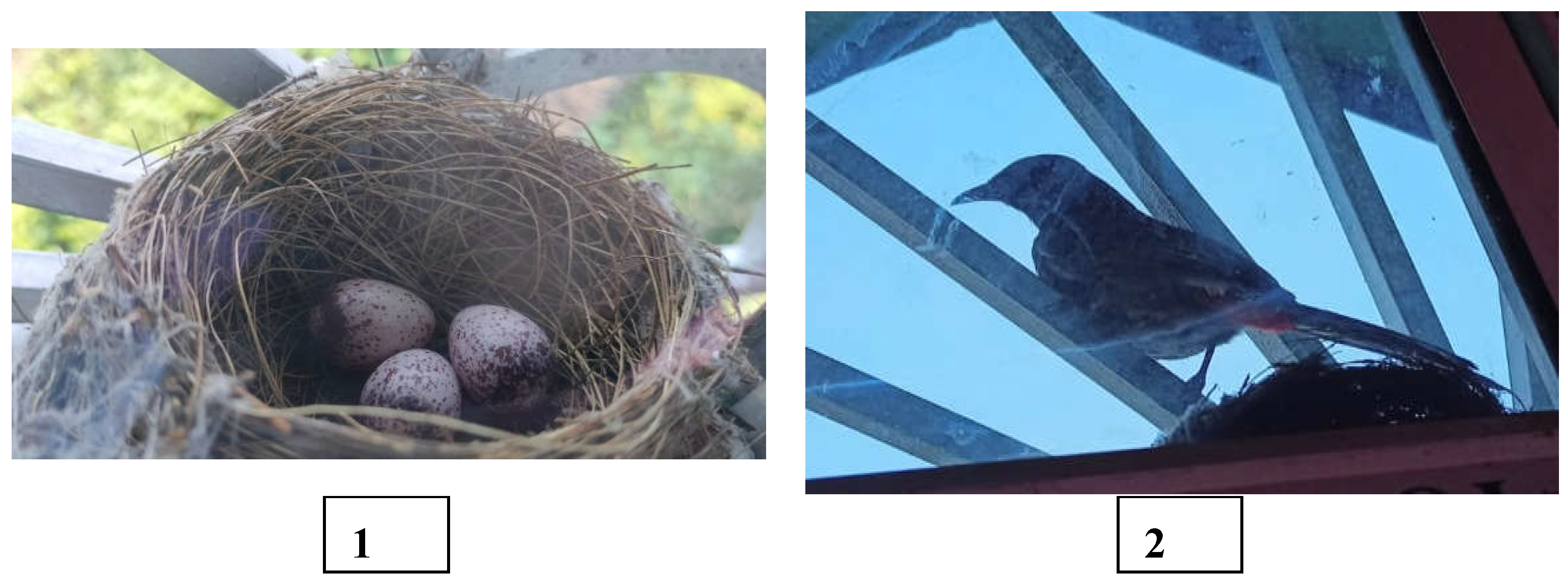
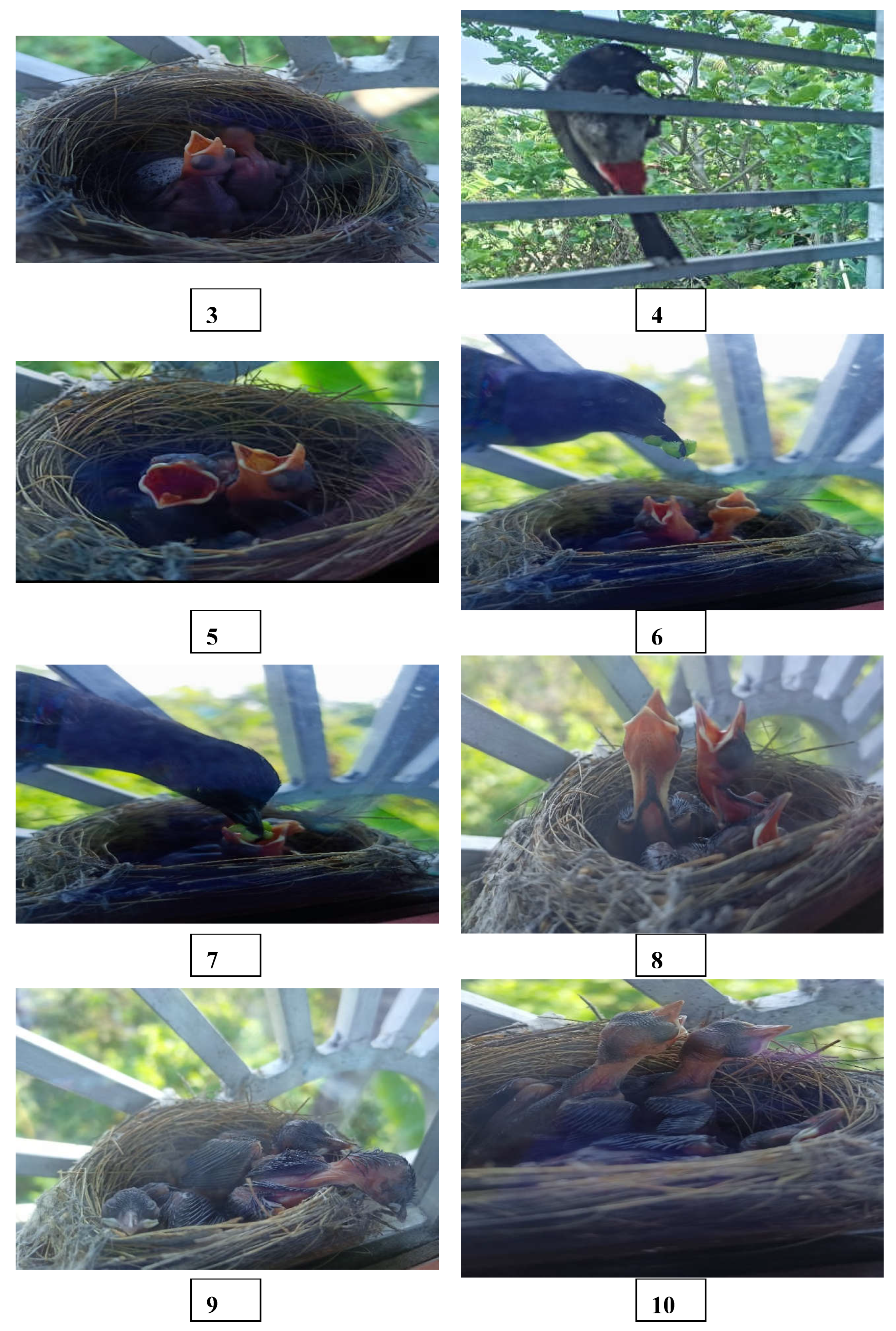
The studies provide insights into the breeding habits of a species in an urban habitat. The species has been observed using 3 breeding sites in the urban habitat, indicating a limited number of suitable locations for breeding. The nesting success rate is 64%, which means that out of all breeding attempts, 64% result in successful nests. The average clutch size is 2.4 eggs (±0.5), indicating a relatively small clutch size. The mean fledging success rate is 70%, which means that out of all eggs that hatch, 70% of the chicks successfully fledge (develop feathers and become capable of flight) (Table 3). Red-whiskered bulbul nesting, feeding, and breeding habits observed and recorded (Plate 1).
Discussion:
The time-specific feeding behavior of Red-whiskered bulbuls in urban habitats highlights their remarkable adaptability to human-modified environments. By adjusting their foraging strategies to exploit different food sources throughout the day, they optimize their energy intake and survive in a landscape with limited natural resources. The dominance of nectar feeding in the morning and late afternoon suggests a reliance on flowering plants, which are often abundant in urban gardens and parks.
Our study reveals significant differences in breeding success and behavioral patterns of Red-Whiskered Bulbul between urban and natural habitats in New Barrackpore, West Bengal, India. The moderate breeding success rate of 64% suggests that the species is adapting to the urban habitat, but may still face challenges in terms of nest survival and chick rearing. The lower breeding success and fledgling success in urban habitats suggest that urbanization has a negative impact on the species’ reproductive ecology.
The higher frequency of agonistic interactions in urban habitats may indicate increased competition for resources, while the lower frequency of courtship displays may suggest reduced mate attraction and pairing success. In contrast, natural habitats showed higher breeding success, fledgling success, and courtship displays, indicating a more favorable environment for the species’ reproduction and social behavior.
The high fruit consumption and preference for mango and bamboo trees highlight the importance of urban green spaces in supporting the species’ dietary needs. The significant insect consumption also underscores the role of urban ecosystems in providing food resources.
The territorial behavior and social interactions observed in this study indicate that urban environments can support complex behavioral patterns in the Red-Whiskered Bulbul. The high adaptability to urban environments suggests that the species is resilient and can coexist with humans.
The preference for urban green spaces, particularly mango and bamboo trees, highlights the importance of conserving and restoring urban ecosystems to support biodiversity. The findings of this study have implications for urban planning and conservation efforts, suggesting that urban green spaces can play a critical role in supporting urban biodiversity.
The study’s limitations include the small sample size and the need for further research to understand the underlying mechanisms driving the observed patterns. However, our findings contribute to the growing body of research on urban ecology and conservation, emphasizing the importance of preserving natural habitats and promoting sustainable urban development.
Conclusions:
Our study demonstrates that urbanization has a significant impact on the breeding success and behavioral patterns of Red-Whiskered Bulbul in New Barrackpore, West Bengal, India. The lower breeding success and fledgling success in urban habitats, combined with changes in behavioral patterns, highlight the need for conservation efforts to protect urban biodiversity.
Our findings suggest that preserving natural habitats and promoting sustainable urban development are crucial for maintaining the ecological health and behavioral diversity of urban bird populations. The study’s results can inform urban planning and habitat restoration strategies, contributing to the development of more sustainable and bird-friendly cities.
Future research should continue to explore the complex relationships between urbanization, behavior, and ecology, aiming to understand the underlying mechanisms driving these patterns. By prioritizing urban ecology and conservation, we can work towards creating a more sustainable future for urban biodiversity.
Overall, this study demonstrates the potential for urban ecosystems to support biodiversity and highlights the importance of considering urban ecology in conservation efforts. The findings of this study have implications for urban planning, conservation, and biodiversity research, and suggest that urban areas can play a critical role in supporting the conservation of species like the Red-Whiskered Bulbul.
Acknowledgement
The authors would like to express their gratitude to the Department of Zoology at West Bengal State University and West Bengal Biodiversity Board for their support. We are also thankful to Sayak Dolai for sharing two photos.
Conflicts of Interest
The authors declare no conflict of interest.
Appendix:
Plate 1.
1. Eggs in the nest of Red-whiskered bulbul; 2. Nest defended by Red-whiskered bulbul, 3. Egg and chicks of Red-whiskered bulbul, 4. Red-whiskered bulbul guards’ chicks, 5. 2nd day chicks of Red-whiskered bulbul, 6. Red-whiskered bulbul parent brings food, 7. Red-whiskered bulbul nurtures chicks, 8. After 5-day chicks of Red-whiskered bulbul, 9. After 8-day chicks of Red-whiskered bulbul, 10. Fledging’s of Red-whiskered bulbul, 11. After Red-whiskered bulbul has left the nest, 12. Adult Red-whiskered bulbul.
Plate 1.
1. Eggs in the nest of Red-whiskered bulbul; 2. Nest defended by Red-whiskered bulbul, 3. Egg and chicks of Red-whiskered bulbul, 4. Red-whiskered bulbul guards’ chicks, 5. 2nd day chicks of Red-whiskered bulbul, 6. Red-whiskered bulbul parent brings food, 7. Red-whiskered bulbul nurtures chicks, 8. After 5-day chicks of Red-whiskered bulbul, 9. After 8-day chicks of Red-whiskered bulbul, 10. Fledging’s of Red-whiskered bulbul, 11. After Red-whiskered bulbul has left the nest, 12. Adult Red-whiskered bulbul.

References
- Arya, A. K., Bhatt, D., Gangopadhyay, M., Bachheti, A., & Joshi, K. K. (2023). First Record of Breeding Behavior of Red-Whiskered Bulbul (Pycnonotus jocosus) in the Himalayan Foothills of India (Western Himalayas). National Academy Science Letters, 46(6), 491-495. [CrossRef]
- Baker, J., Harvey, K. J., & French, K. (2014). Threats from introduced birds to native birds. Emu-Austral Ornithology, 114(1), 1-12. [CrossRef]
- BirdLife International (2022) Important Bird Area factsheet: Isla Diego de Almagro.
- Chace, J. F., & Walsh, J. J. (2006). Urban effects on native avifauna: a review. Landscape and urban planning, 74(1), 46-69. [CrossRef]
- Corlett, R. T. (1998). Frugivory and seed dispersal by vertebrates in the Oriental (Indomalayan) Region. Biological reviews, 73(4), 413-448. [CrossRef]
- Dangaura, H. L., Pandey, N., Chand, D. B., & Bhusal, K. P. (2020). Avian richness of the Basanta Protected Forest, far-western lowland Nepal: Implication for conservation. Nepalese Journal of Zoology, 4(2), 68-84. [CrossRef]
- Dickinson, A. M. (2018). Investigating the morphology and functional properties of Sylviidae nests (Doctoral dissertation, MSc thesis, University of Lincoln, UK).
- Grimmett, R., Inskipp, C., & Inskipp, T. (2019). Field Guide to Birds of the Indian Subcontinent: India, Pakistan, Sri Lanka, Nepal, Bhutan, Bangladesh and the Maldives. Bloomsbury Publishing.
- Huan, L. I., Zhang, M. X., Xiao-Jun, Y. A. N. G., Liang-Wei, C. U. I., & Rui-Chang, Q. U. A. N. (2015). The breeding biology of Red-whiskered Bulbul (Pycnonotus jocosus) in Xishuangbanna, southwest China. Zoological Research, 36(4), 233. [CrossRef]
- Kamtaeja, S., Sitasuwan, N., Chomdej, S., Jatisatienr, A., & Mennill, D. J. (2012). Species-distinctiveness in the vocal behaviour of six sympatric bulbuls (genus Pycnonotus) in South-East Asia. Emu-Austral Ornithology, 112(3), 199-208. [CrossRef]
- Kumar, S. R., Anoop, V., Arun, P. R., Jayapal, R., & Ali, A. M. S. (2019). Avian mortalities from two wind farms at Kutch, Gujarat and Davangere, Karnataka, India. Current Science, 116(9), 1587-1592. [CrossRef]
- Lagade, V. M., Lagade, S. V., Kamble, R. D., & Kamble, S. E. (2020). A preliminary study on avifauna of three sacred groves of Radhanagri Tehsil, Maharashtra, India. ZOO'S PRINT, 35(12), 29-37.
- Lee, M. B., Peabotuwage, I., Gu, H., Zhou, W., & Goodale, E. (2019). Factors affecting avian species richness and occupancy in a tropical city in southern China: Importance of human disturbance and open green space. Basic and Applied Ecology, 39, 48-56. [CrossRef]
- Mark, B. (2009). Birds of East Asia. China, Taiwan, Korea, Japan, and Russia. Princeton and Oxford.
- Paker, Y., Yom-Tov, Y., Alon-Mozes, T., & Barnea, A. (2014). The effect of plant richness and urban garden structure on bird species richness, diversity and community structure. Landscape and urban planning, 122, 186-195. [CrossRef]
- Pal, M., Pop, P., Mahapatra, A., Bhagat, R., & Hore, U. (2019). Diversity and structure of bird assemblages along urban-rural gradient in Kolkata, India. Urban Forestry & Urban Greening, 38, 84-96. [CrossRef]
- SHARMA, R. C., BHATT, D., & SHARMA, R. K. (2004). Breeding success of the tropical Spotted Munia Lonchura punctulata in urbanized and forest habitats. Ornithological Science, 3(2), 113-117. [CrossRef]
- Werner, P. (2011). The ecology of urban areas and their functions for species diversity. Landscape and Ecological Engineering, 7(2), 231-240. [CrossRef]
- Yang, L., & Yang, X. (2004). The Avifauna of Yunnan China, vol. 2: Passeriformes. Yunnan Science and Technology Press, Kunming, China.
- Zhou, D., Fung, T., & Chu, L. M. (2012). Avian community structure of urban parks in developed and new growth areas: A landscape-scale study in Southeast Asia. Landscape and Urban Planning, 108(2-4), 91-102. [CrossRef]
Figure 1.
Map of study area.
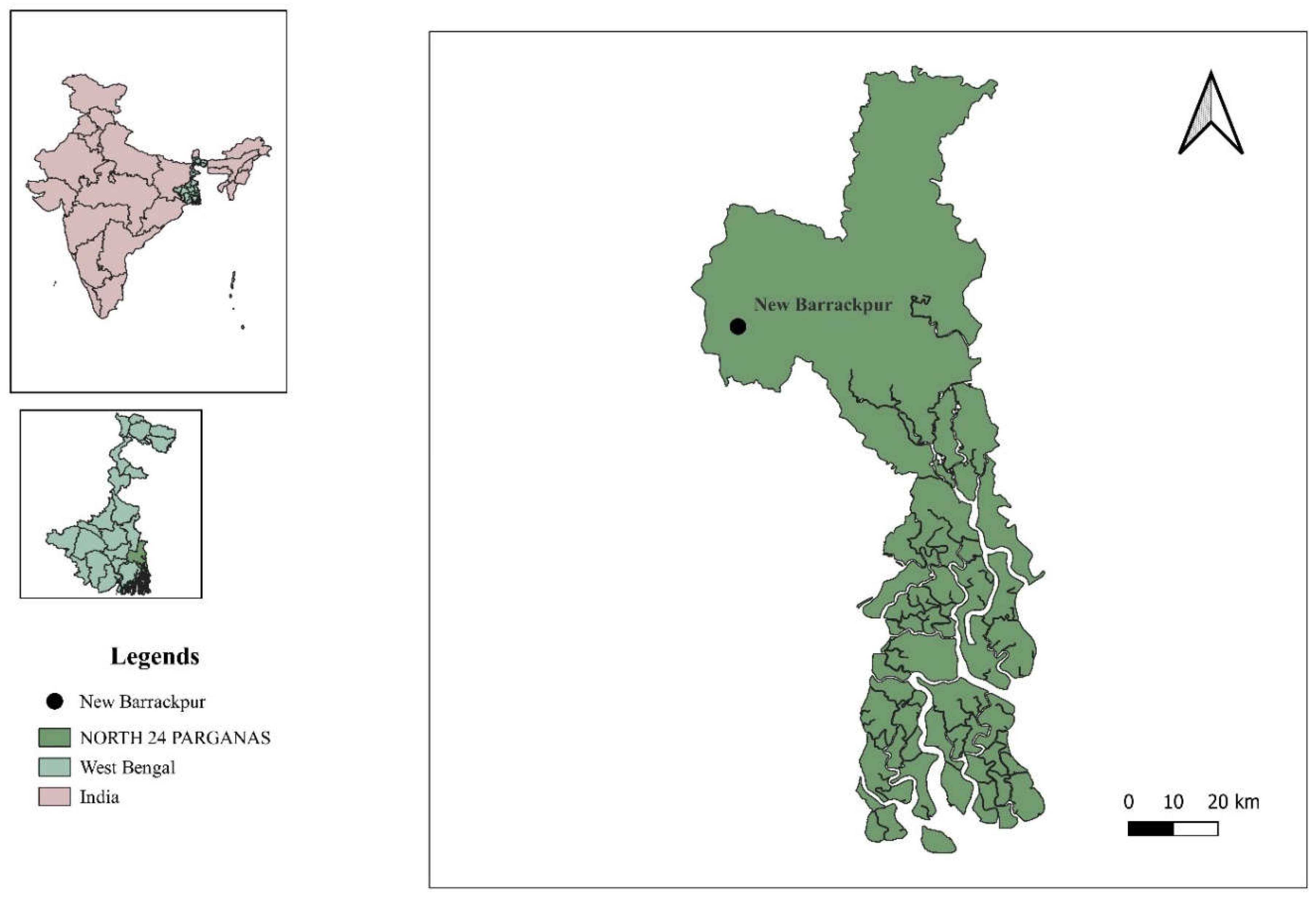
Figure 2.
Social Interaction patterns of Red-whiskered Bulbul.
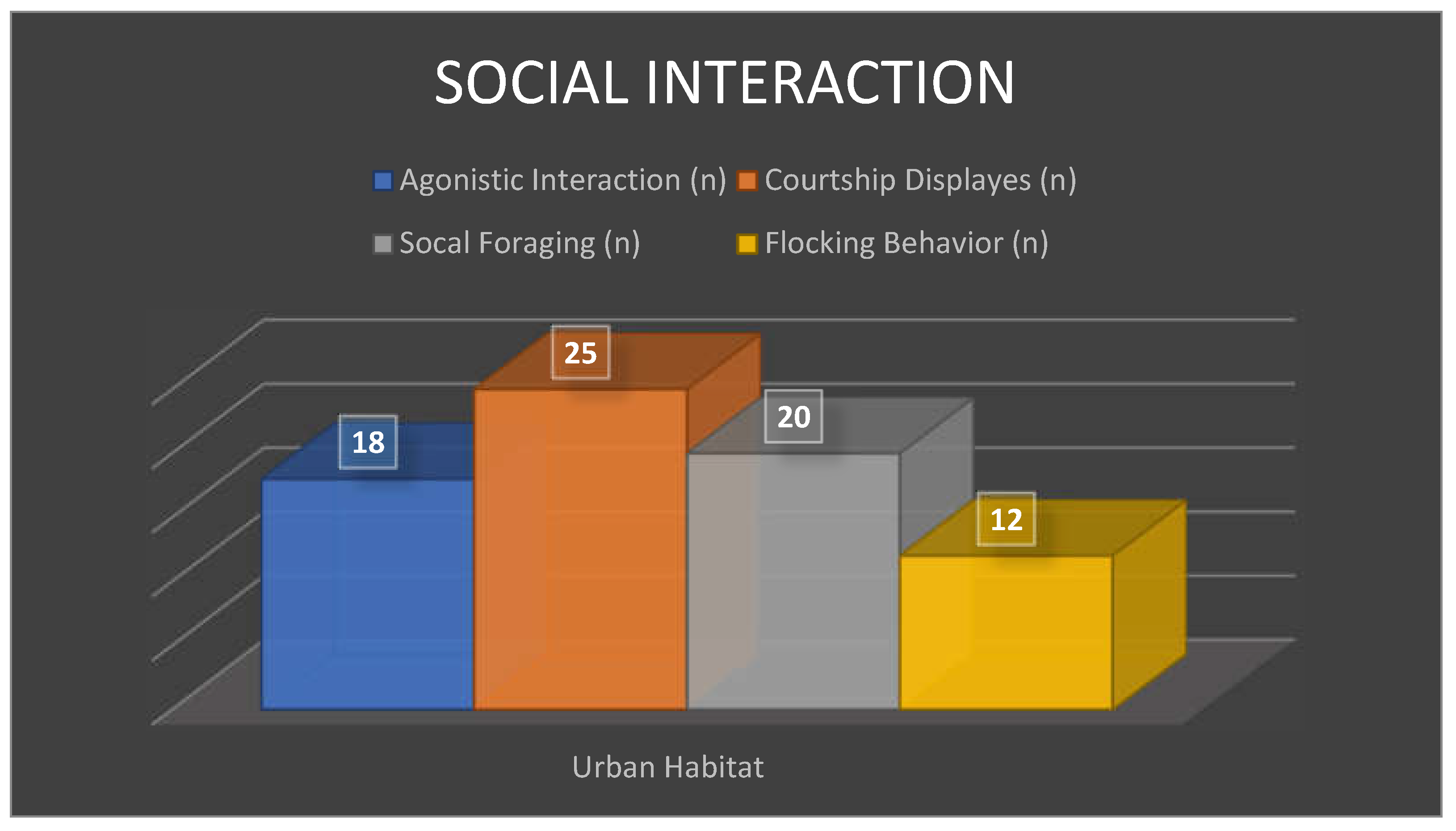

Table 1.
Time-specific feeding behavior of Red-whiskered bulbul in urban habitat.
| Sl. No. | Time Period | Food Source | Frequency of Visitation (%) | Mean Feeding Time ± SD | Foraging Technique |
| 1 | 0600-0800 hours | Necter (flowers) | 60 | 6.5 ± 2.1 | Hover-foraging (stationary) |
| 2 | 0800-1000 hours | Insects (files, beetles) | 50 | 4.2±1.8 | Active foraging (flight) |
| 3 | 1000-1200 hours | Necter (flowers) | 40 | 3.1±1.2 | Hover-foraging (stationary) |
| 4 | 1200-1400 hours | Fruits (berries) | 30 | 2.5±1.0 | Perch-foraging (short flights) |
| 5 | 1400-1600 hours | Necter (flowers) | 55 | 5.8±2.5 | Hover-foraging (stationary) |
| 6 | 1600-1800 hours | Nectar (flowers) | 45 | 4.0±1.5 | Hover-foraging (stationary) |
Table 2.
Parental care of Red-whiskered Bulbul.
| Habitat | Male parental care (mean ± SD) | Female parental care (mean±SD) |
|---|---|---|
| Urban Habitat | 32.4±5.2 minutes/hour | 28.1±4.5 minutes/hour |
Table 3.
Breeding Sites and Success in Urban and Natural Habitats.
| Habitat | Breeding Sites (n) | Nesting Success (%) | Mean Clutch Size | Mean Fledging Success |
|---|---|---|---|---|
| Urban Habitat | 3 | 64 | 2.4±0.5 | 70 |
Disclaimer/Publisher’s Note: The statements, opinions and data contained in all publications are solely those of the individual author(s) and contributor(s) and not of MDPI and/or the editor(s). MDPI and/or the editor(s) disclaim responsibility for any injury to people or property resulting from any ideas, methods, instructions or products referred to in the content. |
© 2024 by the authors. Licensee MDPI, Basel, Switzerland. This article is an open access article distributed under the terms and conditions of the Creative Commons Attribution (CC BY) license (http://creativecommons.org/licenses/by/4.0/).
Copyright: This open access article is published under a Creative Commons CC BY 4.0 license, which permit the free download, distribution, and reuse, provided that the author and preprint are cited in any reuse.