

Submitted:
11 September 2024
Posted:
12 September 2024
You are already at the latest version
Abstract
There is a growing awareness of the detrimental environmental impact of the construction industry, primarily due to the utilization of building materials that necessitate energy-intensive processes for their production. The objective of this paper is to explore whether mixing wood and cement could serve as a viable solution to mitigate this adverse environmental effect. The data was obtained by extensively investigating the Clarivate Web of Science database, adhering to the PRISMA technique guidelines, and subsequently processed using Bibliometrix and VOSviewer software. An in-depth critical analysis of the literature revealed a heightened interest in this subject matter in recent years, with the focal points evolving from initial experimental endeavors aimed at understanding the behavior of the innovative wood cement composites, primarily in terms of their mechanical properties, to assessing their environmental impact and the advantages associated with their use. The researchers suggest that optimal results can be achieved by treating the wood with tetraethyl orthosilicate, incorporating cellulose nanocrystal particles or wollastonite into the mixture, and utilizing wood from the Pinus species. Furthermore, it was discovered that a noticeable improvement in strength is only attainable if a low percentage of wood, up to 30%, when wood ash is employed. Ongoing research concerning wood and cement composites continues to progress, with regular advancements and breakthroughs, thus offering promising prospects for the development of superior and eco-friendly building materials.
Keywords:
wood
; cement
; wood waste
; wood-cement composites
; building materials
; green constructions
1. Introduction
The challenges facing our global society are becoming increasingly complex as the world’s population continues to surge. According to the United Nations’ 2022 report [1], the global population has reached 8 billion and is projected to soar to approximately 8.5 billion by 2030, 9.7 billion by 2050, and a staggering 10.4 billion by 2100. This rapid population growth presents a formidable barrier to the attainment of sustainable development goals.
Amidst these dynamics, one sector feeling immense pressure is the construction industry, driven by the ever-growing demand for improved living spaces across the globe [2]. The constraints on delivering these spaces extend beyond economic and technological factors; a significant limitation stems from the industry’s environmental footprint [3]. Current construction practices heavily rely on building materials, such as concrete and steel, which demand substantial energy inputs during their production [4]. Concrete, in particular, stands as the most ubiquitous building material worldwide, owing to its numerous advantages and ease of use [5]. However, the production of Portland cement, a critical component of concrete, exacts a considerable energy toll [6]. With billions of metric tons of Portland cement produced globally, the associated carbon dioxide emissions from limestone degradation and coal combustion are unmistakably detrimental to the environment [7]. Hence, it becomes imperative to explore avenues for mitigating the environmental impact of cement production.
Wood, renowned for its renewability, insulating properties, strength, workability, and aesthetic appeal, is a favored choice in construction. Nonetheless, a complete substitution of concrete with wood is unfeasible, owing to wood’s susceptibility to rot, insects, and fire [8]. Additionally, the structural limitations imposed by the sizes of wood elements directly harvested from trees can be overcome with the utilization of engineered wood products [9]. Recognizing these constraints and a relatively limited awareness among civil engineers regarding wood as a building material, an intriguing concept has emerged—to develop a product that harnesses the eco-friendly qualities of wood while resembling the functionality of concrete [10].
The physical feasibility of blending wood with concrete is achievable, albeit not without challenges. At the core of concrete production lies the crucial process of cement hydration [11]. However, wood, being naturally porous and hygroscopic, can disrupt this hydration process [12]. Furthermore, the disparate coefficients of thermal expansion between wood and cement can induce stress, leading to cracks and damage as temperatures fluctuate [13]. The alkaline nature of cement can also trigger chemical reactions with cellulose fibers in wood, weakening its structural integrity over time [14], resulting in wood-cement composites with limited mechanical strength.
Despite the promising possibilities in wood-cement composites, numerous questions remain unanswered. If incorporating wood into concrete holds the promise of environmental benefits, why hasn’t it gained widespread adoption? Can concrete truly be crafted from wood? What types of cement are compatible with wood, and how can wood be effectively integrated into cement mixes?
At the heart of these inquiries lies the overarching research question addressed in this study: “Is the mixing of wood and cement a viable strategy for mitigating the negative environmental impact of the construction industry?”
To unravel this complex query, this study employs a rigorous research approach, encompassing critical literature review methods, scientometric analysis, bibliometric analysis, and an in-depth examination of research outcomes. Data for this investigation were meticulously sourced from the Clarivate Web of Science database, following the guidelines of the PRISMA (Preferred Reporting Items for Systematic Reviews and Meta-Analyses) technique. Two key software tools, Bibliometrix and VOSviewer, were harnessed for comprehensive bibliometric analysis.
This manuscript adheres to the style guide for scientific and review papers. After this introductory section and the declaration of research goals, the subsequent sections of the paper delineate the research techniques and methodology, followed by the presentation of bibliometric analysis results and an in-depth exploration of the literature. The paper culminates in a concluding section summarizing major findings and a comprehensive list of the references integral to this study.
2. Materials and Methods
2.1. Data Collection
The data for this study were sourced from the Clarivate Web of Science scientific database. This database was chosen due to its comprehensive coverage of scholarly articles and its relevance to the research topic.
The data collection process commenced with an initial query using the keywords “wood and cement.” Figure 1 provides a graphical representation of the data collection flow, created using LucidChart software [15].
The initial query yielded a total of 1403 papers related to the subject of wood and cement. To refine the dataset for relevance to this study, two key filters were applied. First, I selected papers where the keywords appeared in the title. Additionally, I limited the selection to articles categorized as either “article” or “review.” These filters resulted in a dataset of 277 papers.
In alignment with the Preferred Reporting Items for Systematic Review and Meta-Analysis (PRISMA) 2020 Statement, as proposed by Moher et al. [16] and updated by [17], the next phase of data selection followed the four-step PRISMA approach: identification, screening, eligibility, and inclusion, as illustrated in Figure 2, created using LucidChart software [15].
This screening process commenced with the 277 articles identified from the Web of Science database. Automated filters were applied, duplicates were removed, and the screening process reduced the dataset to 255 papers. During the screening phase, articles were evaluated based on their title and abstract, and any papers deemed unsuitable for this study were excluded. The eligibility phase further refined the dataset, with a full-text analysis to ensure alignment with the research objectives. The final dataset comprises 133 papers.
2.2. Data Extraction and Analysis
Journal articles retrieved from the scientific database were exported as plain text files, encompassing essential data such as article titles, author keywords, author names, and citation information. The exported data underwent manual standardization to ensure compatibility with the requirements of the software tools used for analysis.
Data standardization was a critical step in preparing the dataset for analysis. Uniformity in data format was essential to produce accurate results when employing software tools. The time invested in this manual process was pivotal to the study’s accuracy and reliability.
Software Tools
Bibliometrix software (version 3.1), developed by Massimo Aria and Corrado Cuccurullo from the Department of Economics and Statistics at the University of Naples Federico II in Italy [18], and VOSviewer (version 1.6.17), created by Nees Jan van Eck and Ludo Waltman at the Centre for Science and Technology Studies, Leiden University, the Netherlands [19], were the primary tools employed for data analysis.
3. Results
3.1. The Evolution of the Annual Number of Published Articles
The annual publication trends provide valuable insights into the evolving interest in the field of wood-cement composites. Figure 3 illustrates the number of papers published annually, focusing on the research topic of “wood and cement.” On the horizontal line is presented the year of publication and on the vertical is presented the number of papers published each year. The graph was generated using the Bibliometrix software. While the absolute numbers may appear relatively small, the trends are indicative of a growing interest in this subject matter, particularly in recent years.
The data depicted in Figure 3 reveals a noticeable upward trajectory in research publications related to the combination of wood and cement. Notably, in 2016, there were 15 papers published, signifying the initiation of increased attention. However, it’s important to acknowledge the variability in publication numbers; for instance, in 2017, nearly half the number of papers from the previous year was published. This volatility continued until 2018 when the number of publications rose to 19 and reached a peak of 25 papers in 2021.
This surge in research activity aligns with the heightened awareness of the negative environmental impacts associated with traditional construction materials, particularly concrete. The exploration of wood-cement composites as a potential alternative reflects a broader commitment within the construction industry to mitigate its environmental footprint.
3.2. The Trend Topic Analysis
To gain a deeper understanding of the evolving themes within the wood-cement composite research landscape, we conducted a trend topic analysis, as illustrated in Figure 4. This analysis draws from data extracted from the Web of Science database and offers insights into the keywords and concepts that have gained prominence over time.
Figure 4 provides a visual representation of this analysis, employing lines and bubbles to convey term frequency and temporal usage. The size of each bubble corresponds to the frequency of the associated term, with larger bubbles indicating more frequent usage.
Over the years, the research on wood and cement composites has evolved significantly. Early studies primarily concentrated on examining the mechanical properties, durability, and resistance of these composites, especially in the face of environmental factors such as moisture, decay, and fire. This foundational research laid the groundwork for subsequent investigations.
As the field matured, researchers explored novel production methods and raw materials to enhance the properties and performance of wood-cement composites. For instance, the adoption of alternative cement types, such as magnesium-based options, in combination with wood waste, aimed to improve fire resistance and reduce carbon footprints.
In recent years, a remarkable shift has occurred toward a heightened focus on sustainability and the environmental impact of wood-cement composites. Researchers have delved into innovative production processes that incorporate waste materials and by-products, resulting in composites with reduced carbon footprints. Additionally, studies are actively exploring avenues to enhance recyclability and sustainable end-of-life management for these materials.
This trend topic analysis provides a glimpse into the dynamic nature of wood-cement composite research and underscores the industry’s commitment to environmentally responsible construction practices. As emerging keywords and concepts continue to gain prominence, they shape the trajectory of future investigations and innovations in the field.
3.3. The Keywords Co-Occurrence Analysis
The exploration of keyword co-occurrence offers a deeper understanding of the interconnected themes and topics within the research on wood-cement composites. Figure 5 presents a visual representation of the keywords co-occurrence network map, generated using the VOSviewer software. In this map, keywords are represented by bubbles, with larger bubbles indicating higher keyword frequency. Lines connecting keywords signify their co-occurrence in the same papers, while clusters of keywords sharing similar themes are delineated by distinct colors.
The dataset analyzed in this map comprises 708 keywords, each with a minimum co-occurrence of 5 times, resulting in the inclusion of 39 papers. The map is organized into five clusters, each with its unique characteristics. Notably, the red cluster is the most extensive, featuring 10 keywords, followed by the green cluster with 9, the blue cluster with 8, the yellow cluster with 7, and the smallest cluster, the purple cluster, with 5 keywords.
The spatial arrangement of keywords on the map is determined by their frequency of usage in the analyzed papers, with the most frequently used keywords positioned at the center. For instance, the keyword “composite,” situated in the heart of the map, is pivotal, given the context of combining wood and cement to create composite materials. It boasts a total link strength of 28.00 and an occurrence of 30.
In proximity to “composite,” several other keywords bear significance. “Concrete,” with a total link strength of 25.00 and an occurrence of 25, is fundamental, reflecting the focus on developing wood-cement composites with concrete-like properties. Similarly, “strength” (total link strength: 27.00, occurrence: 28), primarily from the red cluster, underscores the critical aspect of mechanical strength in these composites.
From the green cluster, keywords like “hydration” (total link strength: 23.00, occurrence: 24) and “mechanical properties” (total link strength: 23.00, occurrence: 24) highlight the research emphasis on understanding the hydration process of cement in wood-cement composites and assessing their mechanical behavior. Additionally, “compatibility” (occurrence: 19, total link strength: 19.00) underscores the importance of achieving compatibility between the two materials.
Situated in the purple cluster, “durability” (occurrence: 19, total link strength: 19.00) holds significance, reflecting a critical aspect of research in wood-cement composites. Durability considerations are vital for ensuring the long-term performance of these materials.
The distribution of keywords into clusters reveals distinct research directions. The red cluster primarily centers on comparing wood-cement concrete with conventional Portland cement concrete. The green cluster encompasses research addressing compatibility, mechanical properties, and the influence of wood products on cement hydration. The blue cluster delves into the utilization of wood waste and wood ash in composite materials. Meanwhile, the purple cluster concentrates on durability and compressive strength.
Lastly, a small category of papers, situated on the periphery as the yellow cluster, explores the chemical properties and performance of wood and cement, encompassing aspects such as adsorption, adsolubilization, and organic compound characteristics of the materials.
This keyword co-occurrence analysis unveils the multifaceted nature of wood-cement composite research, reflecting a concerted effort to develop innovative materials, enhance their properties, and minimize their environmental impact. The clustering of keywords illuminates the diversity of research themes within this dynamic field and suggests potential future avenues for exploration.
3.4. The Analysis of Authors
The field of wood and cement composites research continues to evolve, driven by the contributions of various authors and research teams. In this section, the focus is on an analysis of authors and their affiliations, shedding light on the prominent figures and the global distribution of research efforts. With the help of Bibliometrix software a series of graphs were generated. In Figure 6 the top 10 authors by the number of papers are presented.
As can be observed the author having the biggest number of papers on wood and cement subject is Iwakiri Setsuo from the Universidade Federal do Parana, Brazil, he is the author of 10 papers selected in the sample database. On the second and third positions with 8 papers are Poon Chi Sun and Tsang Dan both from Hong Kong Polytechnic University.
As for the countries’ scientific production regarding the subject of wood and cement, Figure 7 is presented a world map highlighting the number of papers published in each country.
As can be seen in the map the top countries exerting the biggest interest in this subject are Brazil with 43 papers published, China with 33 papers, Iran with 16 papers, and Canada with 14 papers.
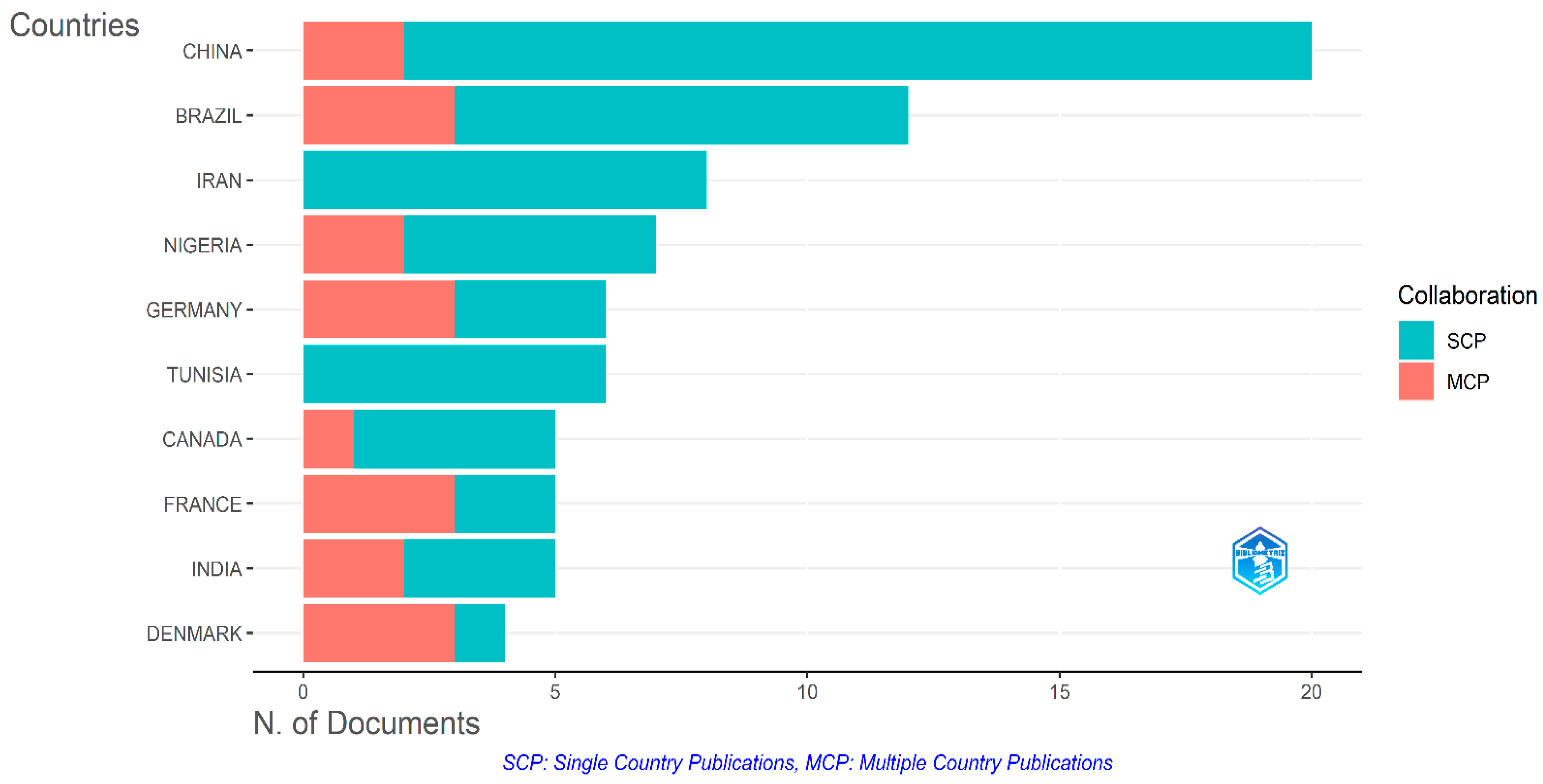
The same situation regarding the distribution of international interest in the subject of wood and cement research can be observed if the correspondence author’s country is analyzed (Figure 8). The graph was generated also with the help of Bibliometrix software, and it presents on the horizontal line the number of documents and on the vertical line the author’s country. As a short note on the graph the notation “MCP” and “SCP” is used, this show that the papers are having authors from multiple countries MCP, or the paper has authors from one country SCP.
MCP – multiple country production; SCP – single country production
The data presented in Figure 8 reveal that the authors from China published 20 papers from a total of 133 papers selected in the ample database extracted from the WoS scientific database. Among these only two papers were elaborated by an international research team the rest of the 18 papers were written only by Chinese authors. In the second place, the authors from Brazil published 12 papers among which three papers were published having international authors. In the case of Iran, 8 papers were published only by local authors.
The data reveals a noteworthy observation: a substantial portion of the research output comprises papers authored by researchers within the same country. While international collaboration is essential for fostering diverse perspectives and advancing research, the current landscape indicates limited collaboration among researchers in this field. However, given the increasing global emphasis on environmental protection and sustainable materials, it is expected that international research teams will play a more significant role in future endeavors.
4. A Comprehensive Examination of the Literature
Wood, one of the earliest building materials used in human civilization, has been a subject of interest in construction for millennia. As human societies grow and confront environmental challenges, there is a renewed focus on sustainable building practices. Wood, as an ecological and renewable material, stands out as an environmentally friendly choice. Combining wood with concrete, one of the most commonly used building materials, presents a promising avenue to mitigate the environmental impact of construction.
The in-depth literature analysis of wood-cement composites reveals several main approaches that researchers have explored over the years. While these approaches are interconnected, organizing them into comprehensible parts facilitates understanding without implying a strict classification of the field.
4.1. Early Investigations and Historical Context
The interest in exploring wood and cement composites dates back several decades. In 1976, a notable note titled “Preliminary Evaluation of a Wood-Cement Composite” by Prestemon Dr. appeared in the Forest Products Journal [20] Although limited information is available about this early work, its title alone underscores the nascent interest in wood-cement composites.
In subsequent years, researchers began examining the feasibility of reinforcing cement composites with wood. Early studies, such as [21] identified the potential for improving the strength of wood fiber-cement composites with coupling agents. Concurrently, it became apparent that these composites are more suitable for low-water cement ratio applications, as discussed in [22]. These pioneering investigations played a crucial role in recognizing the challenges of integrating wood, a porous material, with cement composites, especially in terms of water-cement ratios.
A significant aspect of wood-cement composites research is addressing the inherent incompatibility between wood and cement. Researchers, as seen in [23] highlighted the complexity of this issue, acknowledging that factors such as wood type, location within the tree trunk, and cutting time influence compatibility. Understanding these factors is essential for overcoming incompatibilities.
While wood-cement composites offer environmental benefits, concerns about their long-term durability persist. Research, including [24], has pointed to potential challenges, such as significant losses in physical and mechanical characteristics over time and accelerated aging. These findings underscore the need for ongoing research to enhance the durability of wood-cement composites.
Integration with Recent Trends
The historical development of wood-cement composites research laid the groundwork for contemporary investigations. The early recognition of challenges and opportunities continues to inform current research trends, with an emphasis on improving compatibility, enhancing mechanical properties, and addressing environmental concerns.
This in-depth analysis highlights the evolution of wood-cement composites research, underscoring the importance of historical context in understanding the field’s current trajectory. Researchers build upon earlier insights as they work towards innovative solutions that balance environmental sustainability with structural performance.
4.2. Treatment of Wood Fibers in Wood-Cement Composites
The compatibility between wood and cement in composite materials has been a focal point of research, leading to various treatment methods and additives aimed at improving mechanical and physical properties.
Alkali Cooking Modification and Silane Coupling Agent
In [25], researchers achieved promising results by treating wood with alkali cooking modification and a silane coupling agent. This treatment enhanced the compatibility of wood waste with cementitious materials, resulting in improved mechanical strength [26]. Notably, the immersion of wood fibers in tetraethyl orthosilicate also yielded positive outcomes when incorporated into cementitious matrices [27]. While the study indicated enhanced properties for eucalyptus tree fibers after treatment, the optimal results within the cementitious matrix were obtained using pine wood fibers.
Cellulose Nanocrystal Particles
The addition of cellulose nanocrystal particles has demonstrated potential in enhancing the mechanical and physical properties of wood-cement composites [28]. Researchers found that the inclusion of 0.5% cellulose nanocrystal particles led to improved integrity within the microstructure of wood-cement panels. Additionally, a 9% substitution of cement with wollastonite presented favorable results in improving the properties of wood fiber-cement composites [29].
Sodium Hydroxide (NaOH) Treatment
However, treatment with sodium hydroxide (NaOH) has yielded mixed results. In one study [30] untreated pine strands exhibited superior compatibility with cement compared to treated samples. Conversely, another experiment [31] involving NaOH-treated wood fibers in cement mortars revealed that wood treatment influenced cement hydration, promoting the formation of more portlandite and calcium silicate gel.
Additives for Property Enhancement
Various additives, including phosphorus, boron, or magnesium compounds, have shown potential in improving the hygroscopic and mechanical properties of wood-cement composites [32]. Some of these additives can also serve as fire retardants for the incorporated wood [33].
Expanded Polystyrene and Paper Sludge
Researchers have explored innovative solutions such as incorporating expanded polystyrene, acting as an adhesive for composite boards [34]. Additionally, the combination of expanded polystyrene and paper sludge with wood fibers in cement mortar exhibited promising results in optimizing performance [35]. Wood-crete building materials developed from sawdust and wastepaper also demonstrated compatibility and improved properties [36].
Approaches Based on Similarity Coefficient
In addressing wood and cement incompatibility, researchers in [37] introduced a similarity coefficient that measures the resemblance between wood-cement hydration temperature curves and those of simple cement. This approach provides insights into the degree of compatibility and may guide further developments.
The treatment of wood fibers in wood-cement composites continues to evolve, offering multiple avenues for improving compatibility, durability, and environmental sustainability. Each approach presents unique findings and challenges, contributing to the ongoing development of wood-cement composite technology.
4.3. Diverse Materials and Their Impact on Wood-Cement Composites
The compatibility and properties of wood-cement composites have been explored using various wood types, natural fibers, wood waste, and other materials. Each material introduces unique characteristics and considerations for composite development.
Hardwood Species
While softwoods are commonly used in wood-cement composites, research has explored the potential of hardwood species as building materials. For instance, Leucaena leucocephala, a tropical hardwood species, was used to produce cement-bonded particleboards with encouraging results [38]. [39] Similarly, soybean pods combined with eucalyptus wood were investigated, offering a novel composite possibility [40].
Poplar Wood and Inhibitory Effects
Studies have explored the use of poplar wood in cement mixtures. However, the structure of the wood can act as an inhibitor of the cement hydration process. To mitigate this, researchers have explored additives such as calcium chloride and sodium silicate to improve compatibility [41].
Fast-Growing Wood Species
Ochroma pyramidale, a fast-growing wood type, has been used to create wood-cement composites suitable for nonstructural elements, even in moist environments [42]. Less common commercial species, such as Kelempayan wood, have also been investigated for their compatibility with cement [43].
Indian cedar wood is another type of wood used in the cement mixture [44]. The experimental results indicate that this type of wood can only be used in applications of sealing blocks or other light construction systems. Red ironwood (Lophira alata) sawdust and palm kernel shell were used in [45], while in [46] Sawdust suitability from Tripiochiton scleroxylon, Entandrophragma cylindricum, and Klainedoxa gabonensis for the wood-cement composite was determined. Maple-wood sawdust addition in the cemented paste backfill improves its strength development, as shown in [47].
In [48] four Amazonian species, Eschweilera Coriaceae, Swartzia Recurva, Manilkara Amazonia, and Pouteria Guianensis, were investigated and the results indicate that all species are compatible with Portland cement obtaining enough mechanical strength to be used for lightweight reinforced concrete. Amazonian species were investigated also in [49] where the authors observed that five studied species were classified as low inhibitory: Eschweilera coriacea, Inga paraensis, Inga alba, Pouteria guianensis, and Byrsonima crispa while the wood from Swartzia recurva with arabinose content was directly correlated with the cement inhibition.
Natural Fibers
Incorporating natural fibers into wood-cement composites has yielded promising results. Seagrass fibers, coconut-husk fibers, and long sisal fibers have been explored as potential reinforcements [50]. Replacement of cement with banana fibers has shown potential for thermal insulation properties [51].
Masson Pine and Other Wood Waste
The utilization of wood waste, including Masson pine, in cement composites has demonstrated compatibility with Portland cement [52]. Researchers have examined the influence of wood particle size and found that larger particles can improve internal bond and mechanical properties.
Wood Material Analysis and its Implications
Research in wood-cement composite studies has gone beyond the superficial and delved into the intricate properties of wood, primarily from the perspective of lignocellulose materials. In the work of reference [53], the examination extended to the pit torus and pit border, focusing on changes occurring after the casting of concrete and the subsequent heat release due to cement hydration. This research shed light on the susceptibility of the torus membrane of wood within freshly poured concrete. Notably, it was observed that this membrane could be compromised within a matter of hours under increased temperature and alkaline conditions, potentially explaining the transport of alkaline ions into the wood’s inner structure.
Moreover, the influence of natural fibers on the performance of wood-cement composites was explored in [54]. The findings emphasized the significant impact of wood’s hygroscopic behavior on cement hydration. Additionally, particle size was identified as a critical factor affecting composite properties, as observed in [55]. A comparison between specimens with small and large wood particles revealed that larger particles exhibited superior internal bond strength and mechanical properties. The possibility of grinding wood into a fine flour and incorporating it into cement mixtures was also evaluated in [56]. Surprisingly, this study revealed that the addition of a mere 2% of wood fiber flour resulted in an impressive over 40% increase in the compressive strength of the composite material. The same conclusions are drowned, by the same authors, in [57] where they obtained an increase of the compressive strength by adding in the mixt 1% of wood fibers.
4.4. Exploring Wood Waste in Composite Production
Researchers have further explored the potential of wood waste to enhance the sustainability of construction materials. Several studies have addressed the use of wood waste as a cement replacement material, with compelling results. In [58] the researchers advocated for the utilization of wood waste ash as a cement replacement material for producing structural-grade concrete. This novel approach aligns with the principles of a circular economy.
The use of wood waste was investigated from the brick production point of view [59] obtaining good results in the replacement of cement. Studies like [60] demonstrated promising outcomes by incorporating wood waste from pallets and demolition activities, and even construction boards benefited from the integration of wood waste, as highlighted in [61]. Additionally, pruning waste from trees, if properly treated and added in small proportions to cement mixtures, was found to be a viable resource for wood-cement composite production [62].
One study [63], integrated wood waste in the form of powders and fibers into cement mortars. The results indicated that the most favorable outcomes were achieved when wood waste was used in modest quantities to replace sand in the mixture. While a slight decrease in mechanical strength was observed due to the addition of wood waste, it was not significant enough to rule out its potential use, reinforcing the feasibility of wood waste as a supplementary cementitious material.
Wood-cement composite research has ventured into various innovations and adaptations. The development of wood-cement boards has shown promise, as seen in [64], where wood waste particles from various Pinus species were employed. Notably, even with a high wood content in the mixture, these boards exhibited favorable properties. However, certain additions like silica fume or rice husk ash were found to enhance the performance of wood-cement boards, as revealed in [65]. Yet, prolonged exposure revealed a significant loss in mechanical properties, emphasizing the importance of long-term behavior assessments.
Recycled and Alternative Aggregates in Cement Mixtures
Exploring recycled materials in cement mixtures, as in [66] where they utilized recycled wood fibers as an ecological aggregate in the cementitious matrix. This innovative approach aimed to improve indoor thermal comfort and support low-energy building design. Additionally, the use of wood waste sawdust as a self-compacting cementation system was investigated in [67], resulting in a reduction in strength but a lower shrinkage strain. A similar study, referenced as [68], compared the use of wood waste aggregates and sawdust as cement replants, with an optimum replacement ratio identified at 20%.
Curing processes played a significant role in enhancing the properties of wood-cement particleboards, as demonstrated in [69], where a 24-hour CO2 curing process notably improved cement hydration. Moreover, novel technologies have been developed to recycle wood waste into noise and thermal insulating cement particle boards, as shown in [70].
Exploring Alternative Cement Types
Studies have not only focused on Portland cement but have ventured into alternative cement types to create wood-cement boards. For instance, magnesium oxychloride cement (MOC) was investigated in [71] and [72], resulting in lower thermal conductivity and higher mechanical properties. Magnesia-phosphate cement (MPC) was another alternative explored in [73], although challenges related to brittleness, strain capacity, and water resistance were identified.
In [74], the use of alumina and red mud was proposed to improve the resistance of MPC particleboards, particularly water resistance. Moreover, the role of hydration chemistry and reaction sequence in MPC cement was scrutinized in [75], with findings indicating that the ratio of magnesium to phosphate significantly influenced strength development. Furthermore, CO2 curing processes also proved effective in magnesia cement, providing an avenue to transform contaminated wood waste into eco-friendly cement-bonded particleboards.
A distinct approach involved the development of particle boards using magnesium-based phosphate, as demonstrated in [76]. Besides wood waste, this study integrated other industrial residues like bagasse, hemp hurds, paper mill sludge, and wastepaper. The feasibility of creating eco-friendly construction materials from these materials was highlighted.
Wood waste can be also used to produce biochar. In the study of [77] biochar from food waste and wood, waste was used as a carbon sequestering additive in mortar. In the case of wood waste, the researchers used mixt wood sawdust and they obtained a carbon content of 87% of the weight, an increase of the compressive and tensile strength up to 20%, and the water penetration was reduced by 60 % compared to a control sample. Using biochar with good results is highlighted also in [78]. These results are useful because they sustain the idea of continuing to use the wood waste as a building material, in this case as a reinforcement to the mortar paste.
Incorporating Wood Ash in Cement Mixtures
Exploring the use of wood ash to reduce the environmental footprint of concrete construction has been a significant research focus. Studies like [79] assessed the properties of ash obtained from wood chip combustion by grate combustion and circulating fluidized bed processes. While hydraulic properties were identified, no pozzolanic properties were detected in the former.
Wood bottom ash was proposed as a valuable solution to sustainable development in [80], provided it was used optimally. Washed wood ash was also explored as a promising component for cement mixtures in [81]. Additionally, wood ash from pulp and paper mills was added in varying proportions, revealing a manageable reduction in compressive strength and elastic modulus, as seen in [82]. The authors of [83] identify that ash can be effectively used as a cement replacement material to produce structural grade concrete of acceptable strength and durability performances.
Unique insights were gained from examining the ash of exotic species like eucalyptus [84] and avocado, as reported in [85]. High levels of wood ash were found to reduce the composite’s strength, emphasizing the need for judicious proportions of wood ash.
In the study [86] the researchers indicate that the workability and the strength characteristics of a cement mortar having 10% wood ash can be improved by adding in the mix a small amount, 1 or 2 %, of green-synthesized nano-TiO2. The mixing of wood ash with metakaolin and chemical admixture was investigated in [87] also.
To be used as row material, wood ash must be in proper storage. The study [88] highlights the importance of wood ash being stored in closed containers so to avoid faster ageing and to prevent pre-hydration and carbonatation. These results raise the problem of depositing raw components which must be furthermore investigated and considered in the development of a more ecological construction industry.
In the work [89] the researchers obtained an improvement of the compressive and bending strength in case of adding up to 30% fly ash, similar results were revealed also by replacing the same percent with biomass wood ash [90]. Improvement in the proprieties of the cementitious materials by adding wood biomass fly ash was obtained by the researchers in [91], they used 5, 10, and 15 wt.%. The results presented in [92] indicate that a percentage of 10% wood ash resulting from burning wood waste, used as a replacement for Portland cement led to an improvement of the compressive strength.
Wood is also used intensely as a source of energy production, this led to big amounts of ash. In [93] the authors performed a study on various sources of ashes used as supplementary cement material. They indicate that the best source is the ash of wood chips from the whole tree and that the combustion method and the type of ash have a big influence on the characteristic of the composite material.
Wood biomass ash resulting from the brick industry was investigated as a component of white geopolymer cement with diatomite as the main ingredient [94] and proposed to be used as an alternative for Portland cement in decorative works. The wood ash resulting from the wood milling industry was used with good results as amending cement stabilization of expansive soil [95]. Their study revealed that adding 5% of sawdust ash in the cement stabilization mixt led to an increase of up to 26% in early strength and 20% in delayed strength.
In this work [96], two peat-wood fluidized bed combustion fly ash samples—one with high calcium fly ash (24.9% Ca) and the other with low calcium fly ash (9.7% Ca)—were hardened and their hardening effects were investigated. A study was done on the reactive elements in the raw materials, the mineralogical makeups, and the compressive strengths of the mortars that were produced. The growth of strength was significantly improved. Portland cement must be added for low-Ca ash to harden at all.
4.5. Enhancing Wood-Cement Composite Characteristics
A critical review of research on wood-cement composites reveals valuable insights into their mechanical characteristics. Compressive tests, conducted in [97], illustrated a notable decrease in Young’s modulus with increasing wood particle content. Similar findings were corroborated in [98], where a higher fiber content was associated with decreased bulk specific gravity and elevated water absorption capacity.
Reinforcing boards with microcrystalline cellulose, as proposed in [99], significantly improved the properties of wood-cement boards, particularly in the 5% to 10% range. Moreover, alternative compositions, like those involving steel netting and woven hemp strands, were found to enhance physical and mechanical properties, as observed in reference [105].
Researchers also delved into the effects of particle size and the wood-to-cement ratio on the physical and mechanical characteristics of vibro-compacted wood-cement composites, revealing an optimum ratio of 1:2.75 for denser, dimensionally stable composites, as detailed in [100]. Furthermore, the potential for wider acceptance of wood-cement composites in the construction market as permanent formwork was explored in [101].
Enhancing Acoustic Properties and Predicting Moisture Content Acoustic properties of wood composite boards were thoroughly evaluated in [102], suggesting that variations in board density could improve sound absorption. Furthermore, the use of low-density wood-cement composites made using a novel technique was investigated in [103], showcasing favorable physical and mechanical qualities. The vibro dynamic technique was shown to be particularly effective, resulting in low-density, high-quality products [104].
The study outlined in [105] aimed to develop a model capable of calculating the moisture content of construction materials, including wood and untreated or hydrophobic mortar, at varying temperatures. Similarly, research into dielectric relaxation processes for mortar, as seen in [106], opened up avenues to study the hierarchical water structures within complex materials.
Innovative Approaches and Reinforcements
An intriguing approach in [107] involved reinforcing boards with steel netting and woven hemp strands while adding cement to the dry mass of wood. The results demonstrated that this approach enhanced every physical and mechanical property.
Assessing Long-Term Strength and Industrial Residues
Intriguing insights were gained by assessing the impact of long-term behavior on wood-cement composites, with accelerated and natural wear testing revealing distinct degradation patterns. This finding was reported in [65]. Moreover, it was observed that the combination of different industrial residues, such as bagasse, hemp hurds, paper mill sludge, or wastepaper, in wood-cement composites had notable potential, as demonstrated in [76].
The Potential of Biochar and Energy-Related Ash
Exploring the potential of wood waste to produce biochar led to noteworthy findings. Reference [77] utilized biochar from food waste and wood sawdust as a carbon-sequestering additive in mortar, achieving increased compressive and tensile strength, reduced water penetration, and reinforcing the value of wood waste as a building material.
Finally, studies such as in [93] delved into the usage of ashes from various sources as supplementary cement materials, highlighting the influence of combustion methods and ash types on composite characteristics.
In sum, the extensive body of literature reviewed in this chapter underscores the multifaceted nature of wood-cement composite research, with promising innovations and unique challenges shaping its future in the construction industry.
5. Conclusions
In recent years, there has been a notable surge in awareness regarding the detrimental environmental impact of human activities, particularly in the construction industry. This sector, known for its resource-intensive nature, has become a focal point for researchers seeking innovative solutions to alleviate its ecological burden. Among these solutions, the combination of wood and cement stands out as a promising approach to curbing the industry’s negative environmental footprint. The purpose of this review is to explore the feasibility of this approach and its potential implications for sustainable construction.
6. Key Findings and Insights
The investigation results revealed several key findings and insights:
- Growing Interest: There is a discernible increase in interest surrounding the synergy between wood and cement. Researchers are fervently exploring this realm with the goal of devising new composite materials that can rival traditional concrete in terms of strength and versatility.
- Diverse Research Directions: The literature reflects diverse research directions aimed at mitigating the compatibility challenges between wood and cement. These avenues include testing different wood species, introducing various additives or treatments, and experimenting with sources of wood, such as wood waste, sawdust, or ash.
- Treatment and Enhancement: Noteworthy enhancements in the strength and compatibility of wood-cement composites were achieved through treatments such as alkali cooking modification, silane coupling agent immersion in tetraethyl orthosilicate, and the addition of cellulose nanocrystal particles, among others.
- Optimal Proportions: Research indicates that the proportion of wood plays a critical role in determining the mechanical properties of the composites. While the specifics vary, many studies suggest that lower percentages of wood in the mix tend to yield better mechanical results.
Implications and the Way Forward
The research into wood and cement composites continues to evolve rapidly. These materials offer a viable pathway towards more sustainable construction practices. As the construction industry grapples with mounting challenges related to sustainability, energy efficiency, and fire safety, the ongoing developments in this field hold great promise.
Sustainability Imperative: In an era defined by sustainability imperatives and the need to combat climate change, wood and cement composites provide a compelling solution. They align with the broader goal of reducing the construction industry’s carbon footprint and conserving vital resources.
Interdisciplinary Collaboration: The success of this research hinges on interdisciplinary collaboration. Material scientists, chemists, forestry experts, and construction engineers must continue to work together to drive innovation in this critical area.
Challenges and Future Directions: While significant strides have been made, challenges and unanswered questions remain. Researchers should focus on addressing these issues, exploring emerging technologies, and defining the next frontiers in wood and cement composite development.
Global Relevance: The global relevance of this research cannot be overstated. Wood and cement composites have the potential to revolutionize construction practices worldwide, especially in regions with burgeoning construction activities.
As we look to the future, the evolution of wood and cement composites will undoubtedly shape the trajectory of sustainable construction, offering a greener and more efficient path forward for industry and our planet.
References
- United Nations Department of Economic and Social Affairs—Population Division. World Population Prospects 2022 Summary of Results. 2022. Available online: https://www.un.org/development/desa/pd/sites/www.un.org.development.desa.pd/files/wpp2022_summary_of_results.pdf (accessed on 31 January 2023).
- Franz, B. Using the City: Migrant Spatial Integration as Urban Practice. J. Ethn. Migr. Stud. 2018, 44, 307. [Google Scholar]
- Silva, V.U.; Nascimento, M.F.; Oliveira, P.R.; Panzera, T.H.; Rezende, M.O.; Silva, D.A.L.; Aquino, V.B.d.M.; Lahr, F.A.R.; Christoforo, A.L. Circular vs. linear economy of building materials: A case study for particleboards made of recycled wood and biopolymer vs. conventional particleboards. Constr. Build. Mater. 2021, 285, 122906. [Google Scholar] [CrossRef]
- Caldas, L.R.; Saraiva, A.B.; Lucena, A.F.; Da Gloria, M.Y.; Santos, A.S.; Filho, R.D.T. Building materials in a circular economy: The case of wood waste as CO2-sink in bio concrete. Resour. Conserv. Recycl. 2021, 166, 105346. [Google Scholar] [CrossRef]
- Caldas, L.R.; Da Gloria, M.Y.R.; Pittau, F.; Andreola, V.M.; Habert, G.; Filho, R.D.T. Environmental impact assessment of wood bio-concretes: Evaluation of the influence of different supplementary cementitious materials. Constr. Build. Mater. 2021, 268, 121146. [Google Scholar] [CrossRef]
- Argalis, P.P.; Sinka, M.; Bajare, D. Recycling of Cement–Wood Board Production Waste into a Low-Strength Cementitious Binder. Recycling 2022, 7, 76. [Google Scholar] [CrossRef]
- Jankovský, O.; Lojka, M.; Lauermannová, A.-M.; Antončík, F.; Pavlíková, M.; Pavlík, Z.; Sedmidubský, D. Carbon Dioxide Uptake by MOC-Based Materials. Appl. Sci. 2020, 10, 2254. [Google Scholar] [CrossRef]
- Maier, D. Building Materials Made of Wood Waste a Solution to Achieve the Sustainable Development Goals. Materials 2021, 14, 7638. [Google Scholar] [CrossRef]
- Švajlenka, J.; Kozlovská, M.; Spišáková, M. The benefits of modern method of construction based on wood in the context of sustainability. Int. J. Environ. Sci. Technol. 2017, 14, 1591–1602. [Google Scholar] [CrossRef]
- Wang, F.; Du, Y.; Jiao, D.; Zhang, J.; Zhang, Y.; Liu, Z.; Zhang, Z. Wood-Inspired Cement with High Strength and Multifunctionality. Adv. Sci. 2021, 8. [Google Scholar] [CrossRef]
- Cheumani, Y.A.M.; Ndikontar, M.; De Jéso, B.; Sèbe, G. Probing of wood–cement interactions during hydration of wood–cement composites by proton low-field NMR relaxometry. J. Mater. Sci. 2011, 46, 1167–1175. [Google Scholar] [CrossRef]
- Aaltonen, A.; Hurmekoski, E.; Korhonen, J. What About Wood?—“Nonwood” Construction Experts' Perceptions of Environmental Regulation, Business Environment, and Future Trends in Residential Multistory Building in Finland. For. Prod. J. 2021, 71, 342–351. [Google Scholar] [CrossRef]
- Krüger, E.; Adriazola, M. Thermal analysis of wood-based test cells. Constr. Build. Mater. 2010, 24, 999–1007. [Google Scholar] [CrossRef]
- Dias, S.; Almeida, J.; Santos, B.; Humbert, P.; Tadeu, A.; António, J.; de Brito, J.; Pinhão, P. Lightweight cement composites containing end-of-life treated wood – Leaching, hydration and mechanical tests. Constr. Build. Mater. 2022, 317, 125931. [Google Scholar] [CrossRef]
- Lucid, “LucidChart.” 2022. [Online]. Available: https://lucid.
- D. G. Moher, D.; Liberati, A.; Tetzla, J.; Altman. Preferred reporting items for systematic reviews and meta-analyses: The PRISMA statement. Ann. Intern. Med. 2009, 151, 1–8. [Google Scholar] [CrossRef] [PubMed]
- Page, M.J.; McKenzie, J.E.; Bossuyt, P.M.; Boutron, I.; Hoffmann, T.C.; Mulrow, C.D.; et al. he PRISMA 2020 statement: an updated guideline for reporting systematic reviews. BMJ 2021, 372, 71. [Google Scholar] [CrossRef]
- Aria, M.; Cuccurullo, C. bibliometrix: An R-tool for comprehensive science mapping analysis. J. Informetr. 2017, 11, 959–975. [Google Scholar] [CrossRef]
- L. Van Eck, N.J.; Waltman. Citation-based clustering of publications using CitNetExplorer and VOSviewer. Scientometrics 2017, 111, 1053–1070. [Google Scholar] [CrossRef]
- Dr. Prestemon, “Preliminary Evaluation of a Wood-Cement Composite,” Forest Products Journal, vol. 26, no. 2, pp. 43–45, 1976. Available online: https://www.webofscience.com/wos/woscc/full-record/WOS:A1976CE90000011 (accessed on 24 February 2023).
- Coutts, R. Campbell Coupling agents in wood fibre-reinforced cement composites. Composites 1979, 10, 228–232. [Google Scholar] [CrossRef]
- Campbell, M.D.; Coutts, R.S.P. Wood fibre-reinforced cement composites. J. Mater. Sci. 1980, 15, 1962–1970. [Google Scholar] [CrossRef]
- B. Na, Z. Wang, H. Wang. Wood-cement compatibility review. Wood Res. 2014, 59, 813–825. [Google Scholar]
- de Lima, A.J.M.; Iwakiri, S.; Satyanarayana, K.G.; Lomelí-Ramírez, M.G. Preparation and characterization of wood-cement particleboards produced using metakaolin, calcined ceramics and residues of Pinus spp. J. Build. Eng. 2020, 32, 101722. [Google Scholar] [CrossRef]
- Liu, Z.; Han, C.; Li, Q.; Li, X.; Zhou, H.; Song, X.; Zu, F. Study on wood chips modification and its application in wood-cement composites. Case Stud. Constr. Mater. 2022, 17. [Google Scholar] [CrossRef]
- Quiroga, A.; Marzocchi, V.; Rintoul, I. Influence of wood treatments on mechanical properties of wood–cement composites and of Populus Euroamericana wood fibers. Compos. Part B Eng. 2016, 84, 25–32. [Google Scholar] [CrossRef]
- A.B. Tessaro, R. D. A. Delucis, S. C. Amico. Cement Composites Reinforced with Teos-Treated Wood Fibres. Cellul. Chem. Technol. 2021, 55, 141–147. [Google Scholar] [CrossRef]
- Shayestehkia, M.; Khademieslam, H.; Bazyar, B.; Rangavar, H.; Taghiyari, H.R. Effects of Cellulose Nanocrystals as Extender on Physical and Mechanical Properties of Wood Cement Composite Panels. BioResources 2020, 15, 8291–8302. [Google Scholar] [CrossRef]
- Tichi, A.H.; Bazyar, B.; Khademieslam, H.; Rangavar, H.; Talaeipour, M. Is wollastonite capable of improving the properties of wood fiber-cement composite? BioResources 2019, 14, 6168–6178. [Google Scholar] [CrossRef]
- Cabral, M.R.; Nakanishi, E.Y.; Franco, M.S.R.; Santos, S.F.; Fiorelli, J. Treatments of residual pine strands: characterization and wood-cement-compatibility. J. Wood Chem. Technol. 2020, 40, 396–407. [Google Scholar] [CrossRef]
- Morjène, L.; Aloulou, F.; Seffen, M. Effect of organoclay and wood fiber inclusion on the mechanical properties and thermal conductivity of cement-based mortars. Comptes Rendus Chim. 2020, 23, 733–746. [Google Scholar] [CrossRef]
- Brahmia, F.Z.; Horváth, P.G.; Alpár, T.L. Effect of Pre-Treatments and Additives on the Improvement of Cement Wood Composite: A Review. BioResources 2020, 15, 7288–7308. [Google Scholar] [CrossRef]
- Vu, V.-A.; Cloutier, A.; Bissonnette, B.; Blanchet, P.; Dagenais, C. Steatite Powder Additives in Wood-Cement Drywall Particleboards. Materials 2020, 13, 4813. [Google Scholar] [CrossRef]
- Ohijeagbon, I.O.; Adeleke, A.A.; Mustapha, V.T.; Olorunmaiye, J.A.; Okokpujie, I.P.; Ikubanni, P.P. Development and characterization of wood-polypropylene plastic-cement composite board. Case Stud. Constr. Mater. 2020, 13, e00365. [Google Scholar] [CrossRef]
- Wang, S.; Chen, M.; Lu, L.; Zhao, P.; Gong, C. Investigation of the Adaptability of Paper Sludge with Wood Fiber in Cement-Based Insulation Mortar. BioResources 2016, 11. [Google Scholar] [CrossRef]
- Aigbomian, E.P.; Fan, M. Development of Wood-Crete building materials from sawdust and waste paper. Constr. Build. Mater. 2013, 40, 361–366. [Google Scholar] [CrossRef]
- Hachmi, M.; Guelzim, M.; Hakam, A.; Sesbou, A. Wood-cement inhibition revisited and development of new wood-cement inhibitory and compatibility indices based on twelve wood species. Holzforschung 2017, 71, 991–998. [Google Scholar] [CrossRef]
- A.R. Marzuki, S. Rahim, M. Hamidah. Effects of wood: cement ratio on mechanical and physical properties of three-layered cement-bonded particleboards from leucaena leucocephala. J. Trop. For. Sci. 2011, 23, 67–72. [Google Scholar]
- Fan, M.; Ndikontar, M.K.; Zhou, X.; Ngamveng, J.N. Cement-bonded composites made from tropical woods: Compatibility of wood and cement. Constr. Build. Mater. 2012, 36, 135–140. [Google Scholar] [CrossRef]
- Lisboa, F.J.N.; Scatolino, M.V.; Protásio, T.d.P.; Júnior, J.B.G.; Marconcini, J.M.; Mendes, L.M. Lignocellulosic Materials for Production of Cement Composites: Valorization of the Alkali Treated Soybean Pod and Eucalyptus Wood Particles to Obtain Higher Value-Added Products. Waste Biomass- Valorization 2020, 11, 2235–2245. [Google Scholar] [CrossRef]
- Yang, Y.; Li, X. Study on compatibility of poplar wood and Portland cement. Constr. Build. Mater. 2022, 314, 125586. [Google Scholar] [CrossRef]
- Setter, C.; de Melo, R.R.; Carmo, J.F.D.; Stangerlin, D.M.; Pimenta, A.S. Cement boards reinforced with wood sawdust: an option for sustainable construction. SN Appl. Sci. 2020, 2, 1–9. [Google Scholar] [CrossRef]
- Ahmad, Z.; Chen, L.W.; Lee, S.H.; Mahyiddin, W.F.W.M. Behaviour of Walls Constructed using Kelempayan (Neolamarckia cadamba) Wood Wool Reinforced Cement Board. Sains Malays. 2018, 47, 1897–1906. [Google Scholar] [CrossRef]
- Oliveira, C.A.B.; Silva, J.V.F.; Bianchi, N.A.; Campos, C.I.; Oliveira, K.A.; Galdino, D.S.; Bertolini, M.S.; Morais, C.A.G.; de Souza, A.J.D.; Molina, J.C. Influence of Indian Cedar Particle Pretreatments on Cement-wood Composite Properties. BioResources 2020, 15, 1656–1664. [Google Scholar] [CrossRef]
- Atoyebi, O.D.; Awolusi, T.F.; Davies, I.E. Artificial neural network evaluation of cement-bonded particle board produced from red iron wood (Lophira alata) sawdust and palm kernel shell residues. Case Stud. Constr. Mater. 2018, 9. [Google Scholar] [CrossRef]
- Antwi-Boasiako, C.; Ofosuhene, L.; Boadu, K.B. Suitability of sawdust from three tropical timbers for wood-cement composites. J. Sustain. For. 2018, 37, 414–428. [Google Scholar] [CrossRef]
- Koohestani, B.; Koubaa, A.; Belem, T.; Bussière, B.; Bouzahzah, H. Experimental investigation of mechanical and microstructural properties of cemented paste backfill containing maple-wood filler. Constr. Build. Mater. 2016, 121, 222–228. [Google Scholar] [CrossRef]
- de Castro, V.G.; Azambuja, R.d.R.; Parchen, C.F.A.; Iwakiri, S. Alternative vibro-dynamic compression processing of wood-cement composites using Amazonian wood. Acta Amaz. 2019, 49, 75–80. [Google Scholar] [CrossRef]
- Castro, V.G.; Azambuja, R.d.R.; Bila, N.F.; Parchen, C.F.A.; Sassaki, G.I.; Iwakiri, S. Correlation between chemical composition of tropical hardwoods and wood-cement compatibility. J. Wood Chem. Technol. 2018, 38, 28–34. [Google Scholar] [CrossRef]
- Mayer, A.K.; Kuqo, A.; Koddenberg, T.; Mai, C. Seagrass- and wood-based cement boards: A comparative study in terms of physico-mechanical and structural properties. Compos. Part A: Appl. Sci. Manuf. 2022, 156, 106864. [Google Scholar] [CrossRef]
- Akinyemi, B.A.; Dai, C. Development of banana fibers and wood bottom ash modified cement mortars. Constr. Build. Mater. 2020, 241, 118041. [Google Scholar] [CrossRef]
- Long, W.; Wang, Y. Effect of pine needle fibre reinforcement on the mechanical properties of concrete. Constr. Build. Mater. 2021, 278, 122333. [Google Scholar] [CrossRef]
- Li, J.; Kasal, B. The immediate and short-term degradation of the wood surface in a cement environment measured by AFM. Mater. Struct. 2022, 55, 1–12. [Google Scholar] [CrossRef]
- Caprai, V.; Gauvin, F.; Schollbach, K.; Brouwers, H. Influence of the spruce strands hygroscopic behaviour on the performances of wood-cement composites. Constr. Build. Mater. 2018, 166, 522–530. [Google Scholar] [CrossRef]
- Azambuja, R.d.R.; de Castro, V.G.; Bôas, B.T.V.; Parchen, C.F.A.; Iwakiri, S. Particle size and lime addiction on properties of wood-cement composites produced by the method of densification by vibro compaction. Cienc. Rural. 2017, 47. [Google Scholar] [CrossRef]
- Aloulou, F.; Alila, S. Effect of modified fibre flour wood on the fresh condition properties of cement-based mortars. Int. J. Mason. Res. Innov. 2019, 4, 355–377. [Google Scholar] [CrossRef]
- Aloulou, F.; Alila, S. Characterization and Influence of Nanofiber Flours of Wood Modified on Fresh State Properties of Cement Based Mortars. J. Renew. Mater. 2019, 7, 557–566. [Google Scholar] [CrossRef]
- Maier, D. The use of wood waste from construction and demolition to produce sustainable bioenergy—a bibliometric review of the literature. Int. J. Energy Res. 2022, 46, 11640–11658. [Google Scholar] [CrossRef]
- Adelusi, E.; Ajala, O.; Afolabi, R.; Olaoye, K. Strength and dimensional stability of cement-bonded wood waste-sand bricks. J. For. Sci. 2021, 67, 545–552. [Google Scholar] [CrossRef]
- Berger, F.; Gauvin, F.; Brouwers, H. The recycling potential of wood waste into wood-wool/cement composite. Constr. Build. Mater. 2020, 260, 119786. [Google Scholar] [CrossRef]
- Hossain, U.; Wang, L.; Yu, I.K.; Tsang, D.C.; Poon, C.-S. Environmental and technical feasibility study of upcycling wood waste into cement-bonded particleboard. Constr. Build. Mater. 2018, 173, 474–480. [Google Scholar] [CrossRef]
- Nasser, R.A.; Salem, M.Z.; Al-Mefarrej, H.A.; Aref, I.M. Use of tree pruning wastes for manufacturing of wood reinforced cement composites. Cem. Concr. Compos. 2016, 72, 246–256. [Google Scholar] [CrossRef]
- Ince, C.; Tayançlı, S.; Derogar, S. Recycling waste wood in cement mortars towards the regeneration of sustainable environment. Constr. Build. Mater. 2021, 299. [Google Scholar] [CrossRef]
- de Lima, A.J.M.; Iwakiri, S.; Trianoski, R. Determination of the physical and mechanical properties of wood-cement boards produced with pinus spp and pozzolans waste. maderas-ciencia y tecnologia 2020, 22, 527–536. [Google Scholar] [CrossRef]
- de Lima, A.J.M.; Iwakiri, S.; Satyanarayana, K.G.; Lomelí-Ramírez, M.G. Studies on the durability of wood-cement particleboards produced with residues of Pinus spp., silica fume, and rice husk ash. BioResources 2020, 15, 3064–3086. [Google Scholar] [CrossRef]
- Li, M.; Nicolas, V.; Khelifa, M.; El Ganaoui, M.; Fierro, V.; Celzard, A. Modelling the hygrothermal behaviour of cement-bonded wood composite panels as permanent formwork. Ind. Crop. Prod. 2019, 142, 111784. [Google Scholar] [CrossRef]
- Usman, M.; Khan, A.Y.; Farooq, S.H.; Hanif, A.; Tang, S.; Khushnood, R.A.; Rizwan, S.A. Eco-friendly self-compacting cement pastes incorporating wood waste as cement replacement: A feasibility study. J. Clean. Prod. 2018, 190, 679–688. [Google Scholar] [CrossRef]
- J. M. Abed and B. A., Khaleel. Effect of Wood Waste as A Partial Replacement of Cement, Fine and Coarse Aggregate on Physical and Mechanical Properties of Concrete Blocks Units. Int. J. Integr. Eng. 2019, 11, 229–239. [Google Scholar] [CrossRef]
- Wang, L.; Chen, S.S.; Tsang, D.C.; Poon, C.-S.; Dai, J.-G. CO 2 curing and fibre reinforcement for green recycling of contaminated wood into high-performance cement-bonded particleboards. J. CO2 Util. 2017, 18, 107–116. [Google Scholar] [CrossRef]
- Wang, L.; Chen, S.S.; Tsang, D.C.; Poon, C.S.; Shih, K. Value-added recycling of construction waste wood into noise and thermal insulating cement-bonded particleboards. Constr. Build. Mater. 2016, 125, 316–325. [Google Scholar] [CrossRef]
- Maier, A.; Manea, D.L. Perspective of Using Magnesium Oxychloride Cement (MOC) and Wood as a Composite Building Material: A Bibliometric Literature Review. Materials 2022, 15, 1772. [Google Scholar] [CrossRef]
- He, P.; Hossain, U.; Poon, C.S.; Tsang, D.C. Mechanical, durability and environmental aspects of magnesium oxychloride cement boards incorporating waste wood. J. Clean. Prod. 2019, 207, 391–399. [Google Scholar] [CrossRef]
- Wang, L.; Yu, I.K.; Tsang, D.C.; Yu, K.; Li, S.; Poon, C.S.; Dai, J.-G. Upcycling wood waste into fibre-reinforced magnesium phosphate cement particleboards. Constr. Build. Mater. 2018, 159, 54–63. [Google Scholar] [CrossRef]
- Wang, L.; Yu, I.K.; Tsang, D.C.; Li, S.; Li, J.-S.; Poon, C.S.; Wang, Y.-S.; Dai, J.-G. Transforming wood waste into water-resistant magnesia-phosphate cement particleboard modified by alumina and red mud. J. Clean. Prod. 2017, 168, 452–462. [Google Scholar] [CrossRef]
- Wang, L.; Yu, I.K.M.; Tsang, D.C.W.; Li, S.; Poon, C.S. Mixture Design and Reaction Sequence for Recycling Construction Wood Waste into Rapid-Shaping Magnesia–Phosphate Cement Particleboard. Ind. Eng. Chem. Res. 2017, 56, 6645–6654. [Google Scholar] [CrossRef]
- Amiandamhen, S.; Meincken, M.; Tyhoda, L. Magnesium based phosphate cement binder for composite panels: A response surface methodology for optimisation of processing variables in boards produced from agricultural and wood processing industrial residues. Ind. Crop. Prod. 2016, 94, 746–754. [Google Scholar] [CrossRef]
- Gupta, S.; Kua, H.W.; Koh, H.J. Application of biochar from food and wood waste as green admixture for cement mortar. Sci. Total. Environ. 2018, 619-620, 419–435. [Google Scholar] [CrossRef] [PubMed]
- Gupta, S.; Krishnan, P.; Kashani, A.; Kua, H.W. Application of biochar from coconut and wood waste to reduce shrinkage and improve physical properties of silica fume-cement mortar. Constr. Build. Mater. 2020, 262, 120688. [Google Scholar] [CrossRef]
- Sigvardsen, N.M.; Geiker, M.R.; Ottosen, L.M. Reaction mechanisms of wood ash for use as a partial cement replacement. Constr. Build. Mater. 2021, 286. [Google Scholar] [CrossRef]
- Ayobami, A.B. Performance of wood bottom ash in cement-based applications and comparison with other selected ashes: Overview. Resour. Conserv. Recycl. 2021, 166, 105351. [Google Scholar] [CrossRef]
- Sigvardsen, N.M.; Geiker, M.R.; Ottosen, L.M. Phase development and mechanical response of low-level cement replacements with wood ash and washed wood ash. Constr. Build. Mater. 2021, 269, 121234. [Google Scholar] [CrossRef]
- Stolz, J.; Boluk, Y.; Bindiganavile, V. Wood ash as a supplementary cementing material in foams for thermal and acoustic insulation. Constr. Build. Mater. 2019, 215, 104–113. [Google Scholar] [CrossRef]
- Cheah, C.B.; Ramli, M. The implementation of wood waste ash as a partial cement replacement material in the production of structural grade concrete and mortar: An overview. Resour. Conserv. Recycl. 2011, 55, 669–685. [Google Scholar] [CrossRef]
- Ashori, A.; Tabarsa, T.; Azizi, K.; Mirzabeygi, R. Wood–wool cement board using mixture of eucalypt and poplar. Ind. Crop. Prod. 2011, 34, 1146–1149. [Google Scholar] [CrossRef]
- Bikoko, T.G.L. A Cameroonian Study on Mixing Concrete with Wood Ashes: Effects of 0-30% Wood Ashes as a Substitute of Cement on the Strength of Concretes. Rev. Des Compos. Et Des Mater. Av. Compos. Adv. Mater. 2021, 31, 275–282. [Google Scholar] [CrossRef]
- Ikotun, B.D.; Raheem, A.A. Characteristics of Wood Ash Cement Mortar Incorporating Green-Synthesized Nano-TiO2. Int. J. Concr. Struct. Mater. 2021, 15, 1–9. [Google Scholar] [CrossRef]
- Kannan, V.; Priya, P.R. Evaluation of the permeability of high strength concrete using metakaolin and wood ash as partial replacement for cement. SN Appl. Sci. 2021, 3, 1–8. [Google Scholar] [CrossRef]
- Carević, I.; Štirmer, N.; Serdar, M.; Ukrainczyk, N. Effect of Wood Biomass Ash Storage on the Properties of Cement Composites. Materials 2021, 14, 1632. [Google Scholar] [CrossRef]
- Fořt, J.; Šál, J.; Žák, J.; Černý, R. Assessment of Wood-Based Fly Ash as Alternative Cement Replacement. Sustainability 2020, 12, 9580. [Google Scholar] [CrossRef]
- Vu, V.-A.; Cloutier, A.; Bissonnette, B.; Blanchet, P.; Duchesne, J. The Effect of Wood Ash as a Partial Cement Replacement Material for Making Wood-Cement Panels. Materials 2019, 12, 2766. [Google Scholar] [CrossRef]
- Carević, I.; Baričević, A.; Štirmer, N.; Šantek Bajto, J. Correlation between physical and chemical properties of wood biomass ash and cement composites performances. Constr. Build. Mater. 2020, 256, 119450. [Google Scholar] [CrossRef]
- C.-L. Oproiu, A. Nicoara, G. Voicu. The Effect Of Ash Resulted In Wood-Based Pannels Manufacturing Process On The Properties Of Portland Cement. University Politehnica Of Bucharest Scientific Bulletin Series B-Chemistry And Materials Science. 2020, 82, 15–24. [Google Scholar]
- Sigvardsen, N.M.; Kirkelund, G.M.; Jensen, P.E.; Geiker, M.R.; Ottosen, L.M. Impact of production parameters on physiochemical characteristics of wood ash for possible utilisation in cement-based materials. Resour. Conserv. Recycl. 2019, 145, 230–240. [Google Scholar] [CrossRef]
- Hassan, H.S.; Abdel-Gawwad, H.; Vásquez-García, S.; Israde-Alcántara, I.; Flores-Ramirez, N.; Rico, J.; Mohammed, M.S. Cleaner production of one-part white geopolymer cement using pre-treated wood biomass ash and diatomite. J. Clean. Prod. 2019, 209, 1420–1428. [Google Scholar] [CrossRef]
- James, J. Strength benefit of sawdust/wood ash amendment in cement stabilization of an expansive soil. Rev. Fac. De Ing. Univ. Pedagog. Y Tecnol. De Colomb. 2019, 28, 44–61. [Google Scholar] [CrossRef]
- J. Pesonen, J. Yliniemi, T. Kuokkanen. Improving the hardening of fly ash from fluidized-bed combustion of peat and wood with the addition of alkaline activator and Portland cement. Revista Romana de Materiale-Romanian Journal Of Materials 2016, 46, 82–88. [Google Scholar]
- Engone, J.G.N.; El Moumen, A.; Djelal, C.; Imad, A.; Kanit, T.; Page, J. Evaluation of Effective Elastic Properties for Wood–Cement Composites: Experimental and Computational Investigations. Sustainability 2022, 14, 8638. [Google Scholar] [CrossRef]
- Nassar, R.-U.; Soroushian, P.; Balachandra, A.; Nassar, S.; Weerasiri, R.; Darsanasiri, N.; Abdol, N. Effect of fiber type and content on the performance of extruded wood fiber cement products. Case Stud. Constr. Mater. 2022, 16. [Google Scholar] [CrossRef]
- Çavdar, A.D.; Yel, H.; Torun, S.B. Microcrystalline cellulose addition effects on the properties of wood cement boards. J. Build. Eng. 2022, 48, 103975. [Google Scholar] [CrossRef]
- Castro, V.; Parchen, C.; Iwakiri, S. Particle Sizes and Wood/Cement Ratio Effect on the Production of Vibro-compacted Composites. Floresta e Ambient. 2018, 25. [Google Scholar] [CrossRef]
- Li, M.; Khelifa, M.; Khennane, A.; El Ganaoui, M. Structural response of cement-bonded wood composite panels as permanent formwork. Compos. Struct. 2019, 209, 13–22. [Google Scholar] [CrossRef]
- Botterman, B.; de la Grée, G.D.; Hornikx, M.; Yu, Q.; Brouwers, H. Modelling and optimization of the sound absorption of wood-wool cement boards. Appl. Acoust. 2018, 129, 144–154. [Google Scholar] [CrossRef]
- Parchen, C.F.A.; Iwakiri, S.; Zeller, F.; Prata, J.G. Vibro-dynamic compression processing of low-density wood-cement composites. Eur. J. Wood Wood Prod. 2016, 74, 75–81. [Google Scholar] [CrossRef]
- Zhou, Y.; Chen, S.; Fu, H.; Mohrmann, S.; Wang, Z. Sound absorption performance of light-frame timber construction wall based on Helmholtz resonator. BioResources 2022, 17, 2652–2666. [Google Scholar] [CrossRef]
- Otten, K.A.; Brischke, C.; Meyer, C. Material moisture content of wood and cement mortars – Electrical resistance-based measurements in the high ohmic range. Constr. Build. Mater. 2017, 153, 640–646. [Google Scholar] [CrossRef]
- Abe, F.; Nishi, A.; Saito, H.; Asano, M.; Watanabe, S.; Kita, R.; Shinyashiki, N.; Yagihara, S.; Fukuzaki, M.; Sudo, S.; et al. Dielectric study on hierarchical water structures restricted in cement and wood materials. Meas. Sci. Technol. 2017, 28, 044008. [Google Scholar] [CrossRef]
- Rangavar, H. Wood-Cement Board Reinforced with Steel Nets and Woven Hemp Yarns: Physical and Mechanical Properties. Drv. Ind. 2017, 68, 121–128. [Google Scholar] [CrossRef]
Figure 1.
The data collection flow diagram.
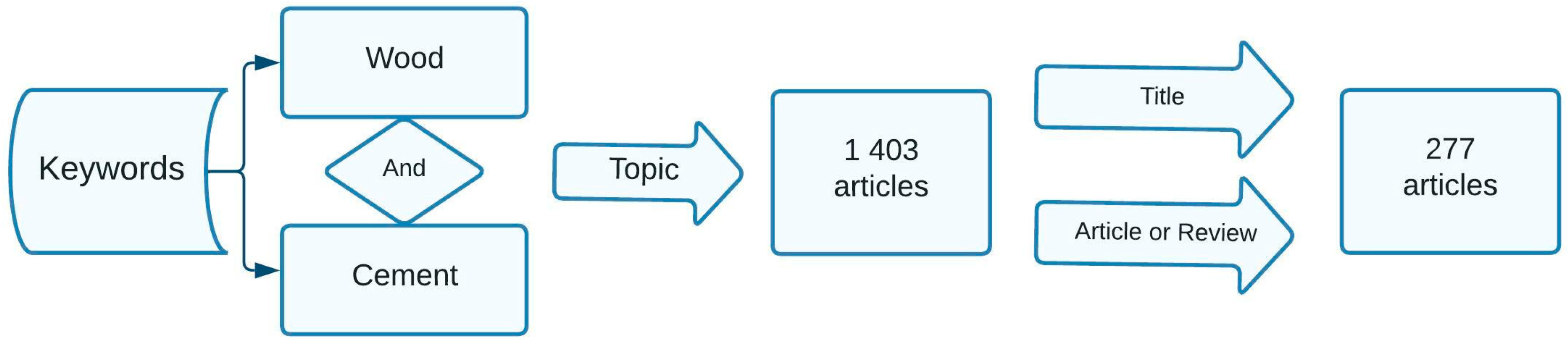
Figure 2.
The PRISMA 2020 statement flow diagram.
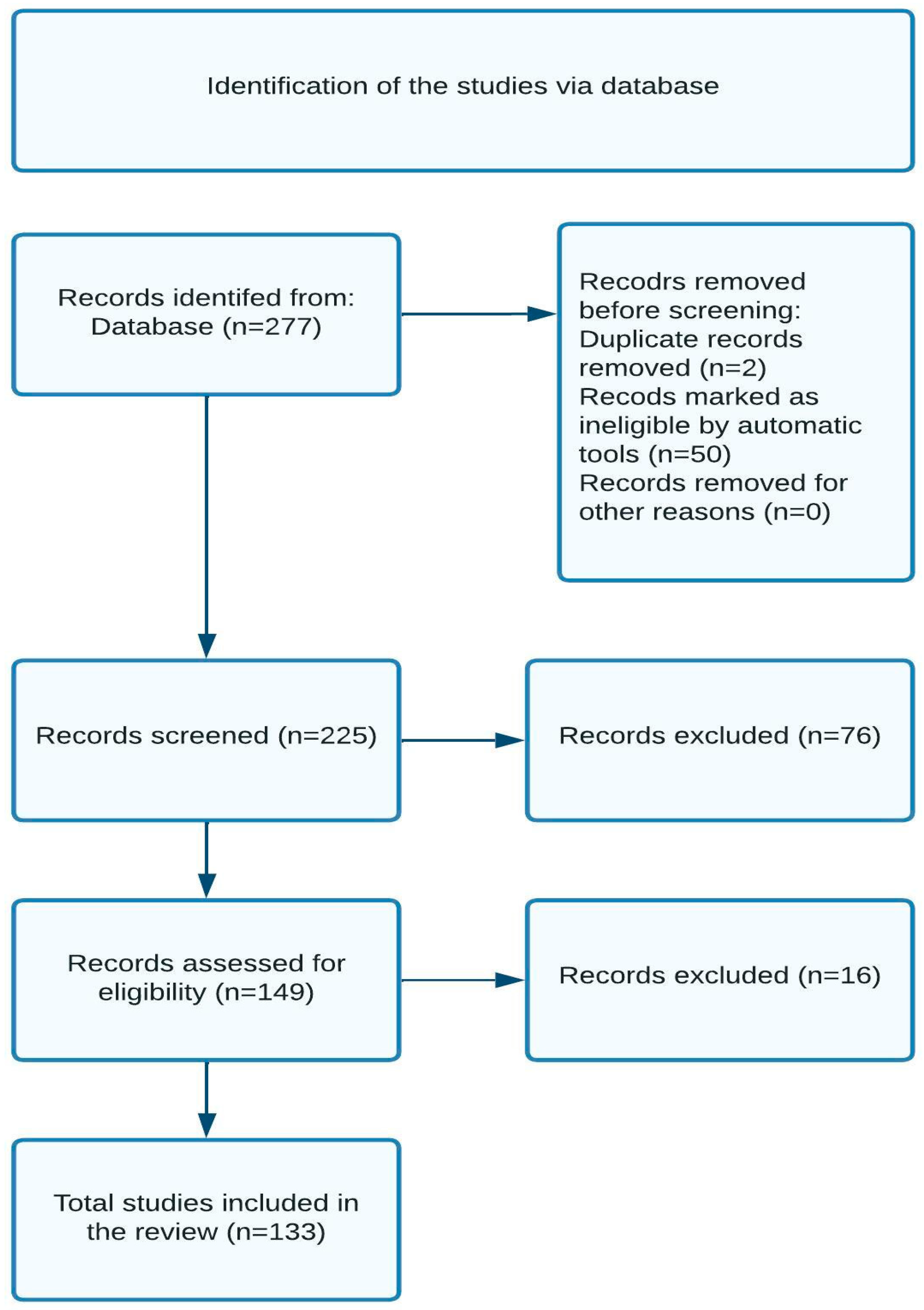
Figure 3.
The evolution of the annual number of published papers having the research focus on wood and cement subject.
Figure 3.
The evolution of the annual number of published papers having the research focus on wood and cement subject.

Figure 4.
The trend topic of wood and cement research papers.
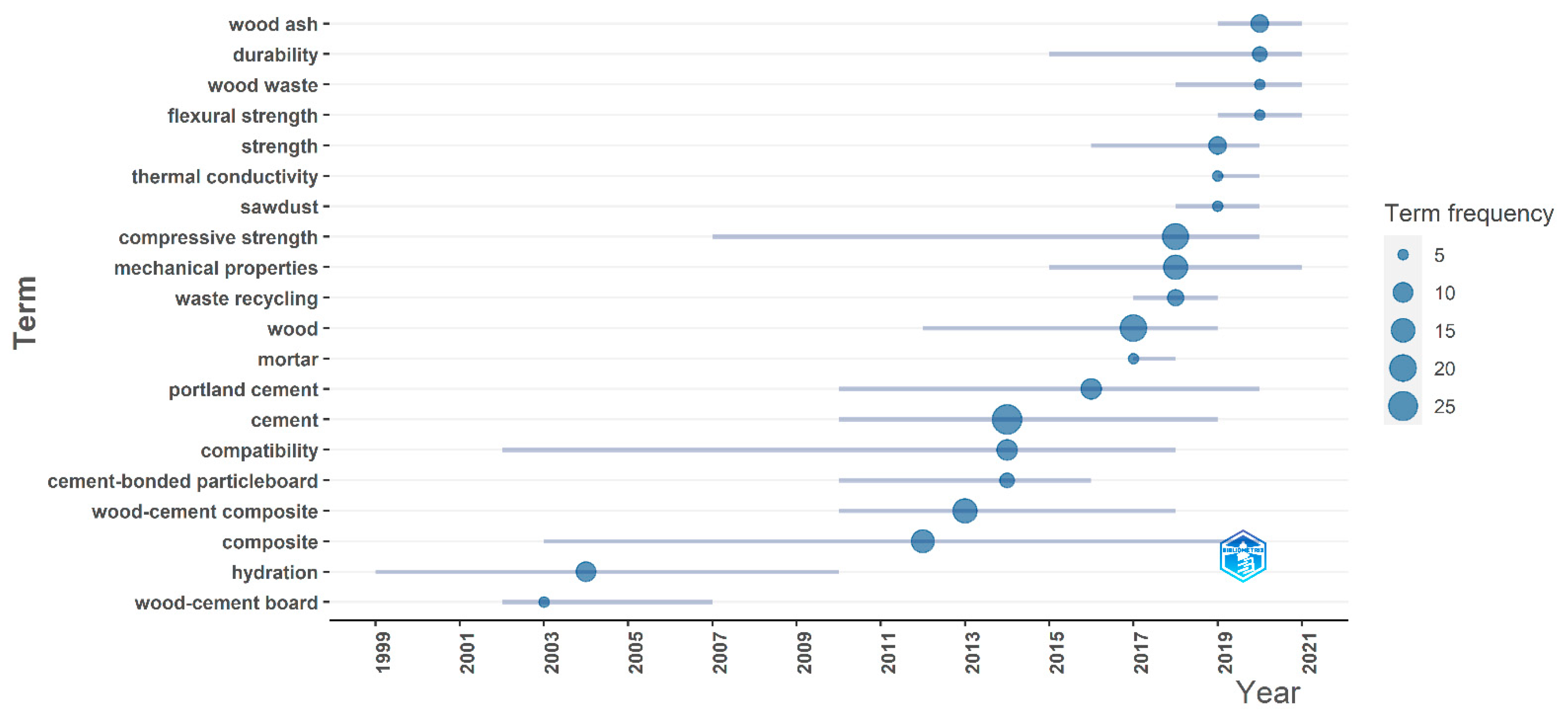
Figure 5.
The keywords co-occurrence network map.
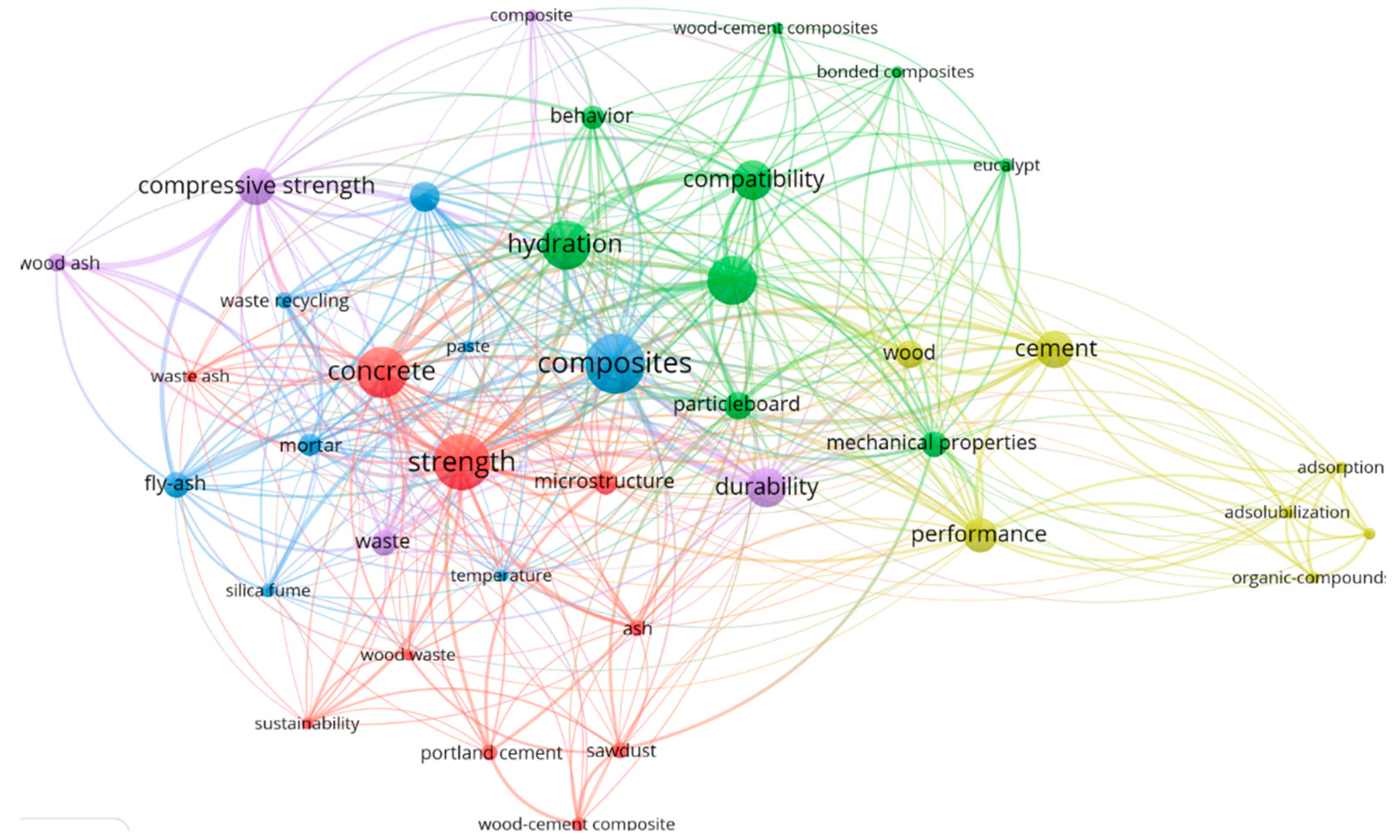
Figure 6.
The top 10 authors by the number of papers.
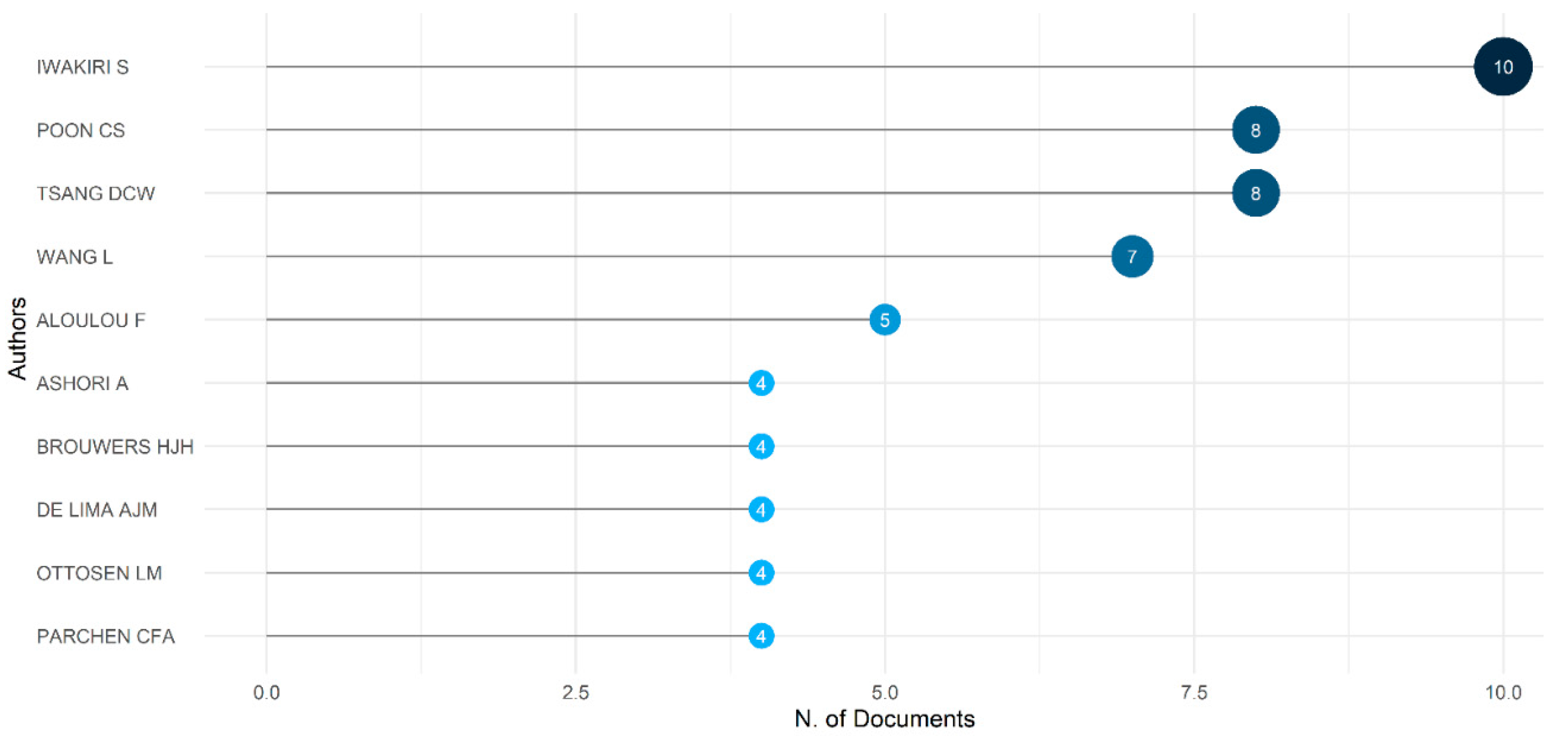
Figure 7.
The top countries’ scientific production.
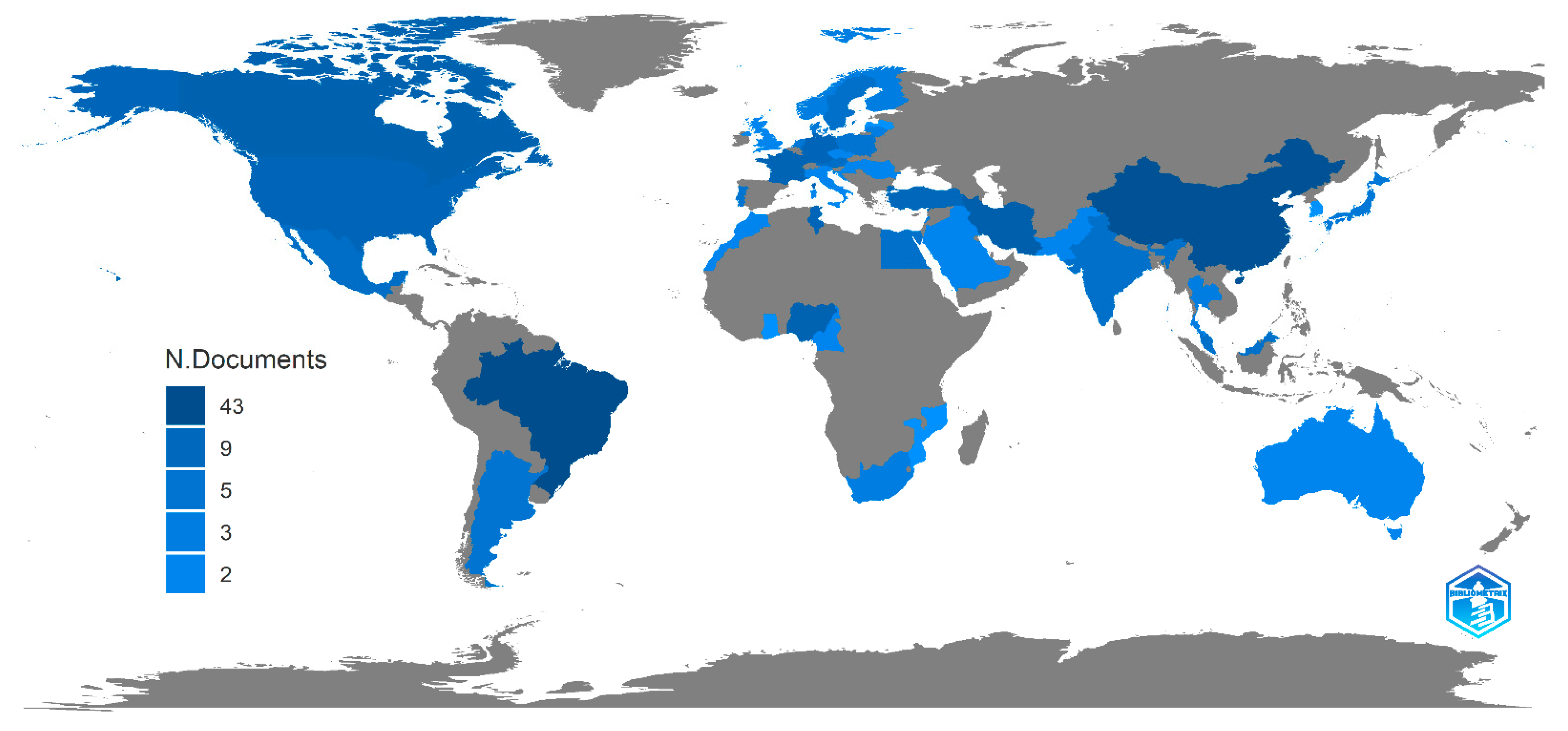
Figure 8.
The distribution of papers according to the corresponding author’s country.
Disclaimer/Publisher’s Note: The statements, opinions and data contained in all publications are solely those of the individual author(s) and contributor(s) and not of MDPI and/or the editor(s). MDPI and/or the editor(s) disclaim responsibility for any injury to people or property resulting from any ideas, methods, instructions or products referred to in the content. |
© 2024 by the authors. Licensee MDPI, Basel, Switzerland. This article is an open access article distributed under the terms and conditions of the Creative Commons Attribution (CC BY) license (http://creativecommons.org/licenses/by/4.0/).
Copyright: This open access article is published under a Creative Commons CC BY 4.0 license, which permit the free download, distribution, and reuse, provided that the author and preprint are cited in any reuse.


