

Submitted:
03 September 2024
Posted:
04 September 2024
You are already at the latest version
Abstract
Though Bangladesh is often labelled as "climate change ground zero," the Chittagong Hill Tracts (CHT) were never considered a significant climate change hotspot until heavy rainfall and consequent landslides in 2017. This shift in problem narrative seemingly overlooks myriad environmentally unsustainable 'development' initiatives along with (il)legal deforestation. This paper examines climate change trends and impacts on the lives and livelihoods of diverse local groups in CHT. By analysing changing patterns in meteorological data and qualitative information on changes and challenges in everyday life and the livelihoods of local people, we show a shortfall of captured climate data on CHT to make a strong case for climate change. Yet, this study finds that this region is exposed to a substantial threat of land degradation, flash floods, water scarcity, landslides, and other slow and quick onsets due to a combined effect of deforestation, neoliberalised development, and slight changes in temperature and precipitation patterns. This paper calls for proactive measures to address climate change impacts by endorsing sustainable development strategies prioritizing environmental stewardship, social justice, and economic prosperity.
Keywords:
climate change
; Bangladesh
; environmental onsets
; livelihoods
; conflict
; everyday life
; marginality
1. Introduction
April 2024 was the hottest month ever recorded in Bangladesh (Roy, 2024). Of the 19 hottest years since the record began about 150 years ago, 18 are after 2000 (WMO, 2022). Recent changes in the global pattern of temperature, rainfall, and other meteorological elements are manifested through magnitudes and intensities of cyclones, erratic rainfall, droughts, rainfall regime shifts, seasonal changes, and many other extreme environmental onsets across the globe (IPCC, 2022). Bangladesh is in a geographical death trap, often exposed to many of these extreme events and captured international headlines as ‘climate change epicenter’ and climate change ground zero’ (Huq, 2001; IPCC, 2014; Iman, 2009). Bangladesh has received significant research attention for climatic adversities (see Morinière, 2009). A growing body of research explores increased soil salinity (Chen and Mueller, 2018 Adnan et al., 2020), sea level rise (Karim and Mimura, 2008; Pethick and Orford, 2013; Davis et al., 2018) or urban climate vulnerability (Alam and Rabbani, 2007; Araos et al., 2017; Ahmed et al., 2018) in Bangladesh. Visibly, the research focus is on Bangladesh’s coastal climate hot spots. We, in contrast, draw attention to climate change trends and extreme events in Chittagong Hill Tracts (CHT) of Bangladesh.
CHT is Bangladesh’s most disadvantaged and vulnerable region in terms of geographical settings and almost all major development indicators (UNDP, 2009). This region, comprising three administrative districts, namely Rangamati, Bandarban, and Khagrachari, is unique from other parts of Bangladesh because of its topography, vegetation, biodiversity, and diverse indigenous groups and cultures (Sarkar and Mukul, 2024). CHT has a long history of its distinctive land management system, disputes over resources’ control, violent conflict, deprivation, and non-implementation of the peace accords (see Rasul, 2007; Chakma and Chakma, 2021; Chakma, 2022; Shewly and Gerharz, 2022). Besides, over the last few decades, it has been a place of controversial land acquisition for tourism, infrastructural development, and internal displacement (Chakma and D’costa, 2013; Ahmed, 2017). Thus, despite Bangladesh being one of the living laboratories for climate change research, CHT has hardly been an area of interest. However, heavy Monsoon downpours in 2017 triggered the worst landslide across CHT, particularly in the Rangamati district (Sifat et al., 2019; Abedin et al., 2020), and climate change impact in CHT came into the discussion. The impact of climate change can be much more significant for indigenous communities living in more remote and ecologically fragile zones and relying directly on their immediate environments for subsistence agriculture (Rahman, 2014).
In this backdrop, this article investigates the following aspects: (i) the prevailing climatic conditions and contemporary weather patterns in the Chittagong Hill Tracts (CHT) districts; (ii) the repercussions of these changing patterns on biodiversity, agricultural practices, livelihoods, ethnic communities, their daily lives, and social dynamics. Concurrently, (iii) it assesses the current state of climate change experiences, perceptions, awareness, and institutional frameworks, aiming to identify prospective avenues for proactive strategies in climate change adaptation and mitigation. The emphasis is on a proactive rather than reactive approach to combat the impacts of climate change.
This paper combines three sets of information to understand climate change impact in the backdrop of political turmoil, neoliberal land use, and ongoing marginalisation in the CHT - (a) climate change science combining meteorological data and peoples’ experiences with climatic changes; (b) climatic and non-climatic factors that culminate hazards; and (c) construction of vulnerabilities. First, various attributions to climate change are used in contemporary research to show variabilities and future changes. Researchers often use local oral history/farmers’ perception as a proxy for climate data (Wickman, 2018; Das, 2018; Guodaar et al., 2021) or time series analysis of meteorological data and compare them with local perception (Elagaib et al., 2017). IPCC climate projections (IPCC 2001, 2007) are increasingly used in research and decision-making processes. In this context, scholars have observed substantial discrepancies in slow climate variability at a regional scale and call for continued research on temporal and spatial structures of climate variability (Raucher, 2011; Laepple and Huybers, 2014; Dad et al., 2021). At regional scales, observational uncertainties do not simulate precipitation (IPCC, 2013). Besides, there is low confidence in projections of changes in monsoons (rainfall, circulation) and regional scale precipitation because there is little consensus in climate models regarding the signs of future change in monsoons (Seneviratne et al., 2012; Dastagir, 2015). Therefore, comparing the alignment of projections with the accumulating observational data is essential. We argue that attribution to climate change requires meteorological data assessment (in places where weather data is available) to comprehend local and regional scale impact precisely, which can be compared or linked with local perception of climate change.
Second, we contend that clarity between the climate change element and the underlying non-climatic condition is essential for understanding the problem better and identifying options to address the issue (Nadiruzzaman et al., 2022). In line with the growing literature challenging the naturalistic and linear understanding of insecurities (O’Keefe, Westgate, and Wisner, 1976; Sen, 1981; Watts, 1983; Wisner et al., 2004), we consider it crucial to maintain a critical exploration in understanding the broad spectrum of different interfaces. For all disasters, there are many more factors at play than climate change alone; therefore, caution is required to avoid conflation of the causes of extreme weather events and associated crises (Lahsen and Ribot, 2020; Shewly, Nadiruzzaman and Warner, 2023). To understand climate change attribution and evidence, we need to look into climate change onsets (i.e., drought, flood, etc.), underlying conditions (i.e., knowledge and skills, economic condition, cooperation, ethnic tension, conflict, etc.), potential impacts and the complexity of the systems. In a region that has experienced low-intensity conflict, it is necessary to check whether climate change drives the deterioration of order and the restoration of (in)security.
Third, the impacts of climate change are uneven across the country or regions. Also, within a similar geographical setting, it affects different groups of people differently. In most cases, poor and marginal groups are the victims of the most brutal hit of environmental onsets (Sen, 1981; Watts, 1983). Long-term sustainability of people’s livelihoods is impossible if long-term socioecological prospects are compromised, institutions and structures are updated and strengthened according to change, disruptions to other’s interests are taken care of, and ethics, politics, and notions are not institutionalised (Mikulewicz et al., 2023).
2. Materials and Methods
2.1. The Study Area
Located in the southeastern corner of Bangladesh, this region is geographically encircled by India to the north and east and Myanmar to the southeast (Figure 1). Administratively, the CHT comprises three districts, namely Rangamati, Khagrachari, and Bandarban, characterised by a hilly terrain ranging in elevation from 450 to 1060 meters, featuring valleys and cliffs. This region encompasses 12% of the nation’s land, hosting nearly 40% of its evergreen to semi-evergreen forests (Ahammad et al., 2023). A forest area of 1,105,353 hectares constitutes over 80% of the CHTs’ land (BFD, 2016). Around 73% of this region is forest-friendly, 15% supports horticulture, and just 3% is fit for intensive terrace farming (Rasul, 2007).
The CHT forests are categorised into three groups: unclassified, reserved, and community forests (Ahammad et al., 2023). The unclassified forests, primarily characterised by exposed hilly terrain, encompass 64% of the total forested area, whereas reserved forests, which encompass medium and dense forest types, account for the remaining 36% and are under the exclusive jurisdiction of the Bangladesh Forest Department (BFD). In addition to state-owned forests, the community-owned forests, commonly called the Village Common Forests (VCF), span approximately 12,530 hectares (Chowdhury et al., 2018).
This region is inhabited by 11–13 diverse indigenous groups, constituting 55.77% of Bangladesh’s total indigenous population (Uddin, 2016; BBS, 2022). Recent data reveals that the CHT’s overall population is 1,842,815, with 920,217 individuals (49.94%) belonging to various indigenous groups, while 50.06% are Bengalis (BBS, 2022). Historically, this region was a distinct geopolitical entity with its own social and political system, operating independently of colonial administration. This autonomy was reinforced by the 1935 Government of India Act, designating the CHT as a ‘totally excluded area,’ which prohibited Bengalis from the adjacent plain districts from purchasing land or establishing permanent residence in the region (Chakma, 2022).
The post-colonial states of Pakistan and, subsequently, Bangladesh sought control over the CHT’s indigenous territories through military, bureaucratic, political, demographic, and economic measures, leading to low-intensity conflicts and extensive displacement (Chakma, 2022; Shewly and Gerharz, 2022). For example, the construction of the Kaptai dam in the 1960s submerged 40% of the region’s arable land, displacing numerous indigenous families, many of whom migrated to neighbouring India and Burma. Despite a peace agreement in 1997, three critical political factors—the government’s transmigration policy, ongoing militarisation, and non-implementation of the CHT Accord—have caused political instability among the indigenous communities (Chakma, 2022). Past and current development projects, alongside increasing land grabbing in the name of expansion of the tourism industry, have displaced local populations and adversely impacted the local ecosystem (CHT Commission, 1991; Chakma, 2023).
2.2. Field Techniques
This paper is primarily based on a mixed method approach, combining structured questionnaire surveys, semi-structured interviews, focus group discussions, key informant interviews, observations, and informal inquiries to gain insight into the local population’s daily challenges. Data enumerators were from local ethnic groups, possessing in-depth knowledge of local cultural sensitivities, extensive social research experience, and fluency in local languages and dialects. In terms of data collection, the study aimed to encompass a diverse representation of ethnic groups (69% Chakma, 12% Mroo, 11% Bengali, 8% Marma) and various livelihoods (including agriculture, labour, livestock, poultry, fruit gardening, non-agricultural work, and more). The research also aimed to achieve extensive geographical coverage and engage diverse stakeholders, including local elites, elected representatives, government officials, and development agencies.
Considering a 5% margin of error, 95% level of confidence and 50% response distribution, the calculated sample size is 384 for a population of 1586141 (Bangladesh Institute of Development Studies (BIDS), 2011). Later, we went for 400 household surveys to capture peoples’ ideas, knowledge, and experiences about climate change in their respective settings. In the survey, 68% of the informants were male and 32% female. Most informants (49%) were 28-42 years old, and 28% were 43–57. 21 semi-structured interviews were conducted with development agencies and government officials, 6 Focus Group Discussions (FGD) with 48 people (around 6/8 members per FGD) and 18 key informant interviews with community members. FGDs were focused on local opinion or perspective about underlying reasons for phenomena or change, general practice and norms, values, and residents’ beliefs. Interviews aimed to understand research participants’ agricultural practices, biodiversity, employment and livelihood changes, vulnerability, and coping mechanisms.
2.3. Data Analysis
Agricultural production and extreme events data were compared with climatic data sourced from satellite records and information provided by the Bangladesh Meteorological Department (BMD). Specifically, the study utilised the past 30 years’ daily data for rainfall, temperature, sunshine hours, humidity, and wind pressure in the Rangamati district, obtained from the local weather station of the BMD. As the only weather station in the CHT is in the Rangamati district, it would not be appropriate to assume that the BMD weather station data can represent the entire region. Therefore, Bandarban and Khagrachari districts’ weather data were obtained from the NASA Satellite TRMM_3B42_daily data (NASA Goddard Earth Sciences (GES), Data and Information Services Center (DISC), 2019). Satellite data proves less effective in recording temperature information in areas with varying landscapes. As a result, the climate forecasts and patterns presented in this study heavily rely on rainfall data. This research greatly benefits from the insights gained from people’s real-life experiences to supplement information regarding temperature and other meteorological variables. It draws upon life-history interviews conducted with elderly individuals.
Two steps were followed to analyse climate change trends in the CHT: (i) Time series plots, Correlograms, and Unit tests (such as the Augmented Dickey-Fuller test) were conducted to assess the stationarity of seasonal rainfall, temperature, sunshine hours, humidity, and wind pressure data for each district. (ii) Trend analysis, including linear, quadratic, and exponential models, was performed based on model selection criteria such as MAD (Mean Absolute Deviation) and MAPE (Mean Absolute Percentage Error), given stationary climatic variables.
In the case of questionnaire surveys, collected data was coded and edited for consistency before computerisation. Subsequently, the research team collated, synthesised, and analysed the data. Relevant data was disaggregated by sex, age, location, educational background, and other social, economic, and cultural categories. Quantitative data were recorded numerically, while some qualitative data were converted using semantic differential or Likert scales. Informants’ qualitative opinions obtained from semi-structured interviews, FGDs, and informal queries were transcribed, coded, and analysed.
3. Results
3.1. Climate Change Projection for CHT
Bangladesh experiences four distinct climatic seasons: winter (December–February), pre-monsoon (March–May), monsoon (June–September) and post-monsoon (October–November). Analysis of heavy rainfall data from 1988 to 2017 reveals a declining frequency of rainfall (≥89 mm) in Bandarban, Khagrachari and Rangamati areas. The highest recorded rainfall was Rangamati (12 June 2017) at 343mm/24 hours, Bandarban (9 June 2018) at 170mm/24 hours, and Khagrachari (12 June 2018) at 148mm/24 hours.
In Bandarban, analysis of monsoon data (dry spells ≥3 and ≥4) demonstrates a notable trend of rising temperatures during the 1998–2017 period, signifying a rapid increase in warmth (Figure 2). Specifically, in the monsoon season, the dry spell of more than three days decreased in June, July, and September. However, an increase was observed in August, with recorded data from 2001 to 2017. The dry spell lasting more than four days during the monsoon season showed a consistent annual trend in June and September (2002–2016). However, the trend line exhibited an annual increase in July and August (2003–2015). The yearly decrease was observed in winter for more than 1 and 2 days of wet spells. In contrast, Khagrachari’s Monsoon data (dry spells ≥3) demonstrates a trend towards decreasing temperature rates for the period 1998–2017 that is, the dry period is less than three days. The study further noted that in monsoon (June–September), the dry spells ≥3 days are decreased or remain constant annually. The dry spells ≥4 days in monsoon showed that the trend line annually reduced in June and July. In August, the dry spells increased yearly; in September, the trends remained the same. In winter (December–February), the annual decrease was observed for wet spells ≥1, and the yearly increase was shown for wet spells ≥ 2 days. In Rangamati, Monsoon data (dry spell ≥3 and ≥4) demonstrates a trend towards decreasing temperature rates for the period 1981–2016 that is, the dry period is less than three days. The study further noted that in the monsoon (June–September), the dry spell of ≥3 days decreases annually except in June. The dry spell ≥4 days in monsoon showed that in June and July, the trendline increased annually. In August, the dry spell remains the same for 1983-2004. In September, the dry spell for four days is decreased annually. In winter (December–February), the annual decrease was observed for wet spells ≥1, and the yearly increase was shown for wet spells ≥2 days. In December and January, the wet spell ≥1 day increases annually, but in February, the wet spell does not increase annually.
3.2. Local Perceptions of Environmental Change in CHT
In the household survey and focus groups, people were asked about the local weather and surrounding environment in connection to their life and livelihoods, if they had sensed any change in the weather pattern and local environment, if ‘yes’, what triggers that change, how that affects their everyday life and what do they do in response. There was a unanimous response about spotting changes. Over half of the informants responded that they knew about climate change (male 67% and female 33%). Nearly all informants (approximately 99%) reported observable changes in the weather system over the past few years. They assumed climate change through temperature, rainfall, and weather patterns changes. Their reasoning for these changes unanimously points to anthropogenic activities, pollution, changes in the total environment, and so on (Table 1). One of the significant changes they identified is an overall rise in temperature in all seasons, immensely affecting their agricultural practices. About half of the informants in all study sites have identified feel-like temperature as the key indicator of environmental change.
Deforestation (90-100 per cent of informants) has echoed across all the study sites as the foremost reason for environmental change. Some areas in Rangamati and Khagrachari, where people observe the impacts of industrialisation, have recorded that as one of the causes of environmental change. As to explain how they have been experiencing these changes, their major highlights were rising heat and then the scarcity of water, which they face particularly in the dry seasons. As revealed from interviews and discussions with the people across all three hill districts, winter has shortened in recent years, meteorological attributes are also changing in different seasons, the feel-like temperature seems to be rising, and they are now experiencing more frequent thunderstorms than ever.
3.3. Impact of Changed Rainfall and Temperature on Agriculture, Poultry and Livestock
The primary agricultural products in CHT include rice, ginger, turmeric, mango, and jackfruit, alongside secondary crops like pumpkin, cucumber, chilli, pineapple, banana, and pomelo. Survey data illustrates those environmental hazards such as storms, soil erosion, landslides, floods, excessive rainfall, and rising temperatures have significantly impacted agricultural practices (Figure 3). However, over three-quarters were unaware of impending disasters. A substantial number of informants (85%) reported a sharp decline in crop prices following environmental stresses, with the highest impact in Khagrachari Sadar (99%) and the least in Rangamati Sadar (49%), which suffered their incomes.
On top of income loss, changing rainfall patterns increase irrigation costs and water scarcity, particularly during crop seasons. Local farmers emphasise how even slight variations in temperature and rainfall challenge local agricultural yields vis-a-vis the local economy. Additionally, Rangamati’s farmers are compelled to purchase climate-tolerant seeds and fertilisers at a higher price from the market due to land degradation, leading to elevated production expenses. Consequently, reliance on hybrid seeds, pesticides, and chemical fertilisers continues to grow. These chemicals are washed into water bodies, negatively impacting aquatic ecosystems and primary drinking water sources. Inappropriate land use not only diminishes soil fertility but also leads to significant soil erosion, depleting soil into water bodies and rivers, reducing their capacity to manage surface runoff, and ultimately contributing to flash floods. The increasing population and mounting pressure to sustain agricultural income drive the demand for additional lands, resulting in deforestation and declining biodiversity and wildlife.
3.4. Increased Environmental Stresses and Water Scarcity
Among all the informants, 57% believe water sources have changed in the last 10 years. According to their opinion, the significant reasons for this change are the collection of water from tube wells (47%) and the decrease in forests (37%). Some other reasons that appeared in interviews and discussions are rock harvesting, temperature increment, and heavy rainfall. Overcollection of water from the same tube well resulted in a decrease in water levels. 40% of the informants rely on shallow tube wells for drinking water, followed by deep tube wells (24%) and springs (18%). Minor sources like ponds, rivers, rainwater harvesting, waterfalls, and supplied water are also utilised. Most water sources (85%) are within a range of 0-1 km, while the remaining (15%) are between 1-2 km. Half of the informants’ attribute deforestation to water scarcity, whereas the other half cite reasons such as increased temperature (29%), declining water tables (14%), and rock harvesting (7%).
Our survey data shows that over half of the informants experienced water scarcity during extreme events, with a significantly higher impact observed in Bandarban Sadar and Lakhhichori. Water scarcity tends to escalate following environmental stresses, particularly flash floods, which primarily cause water scarcity alongside landslides and cyclones. Notably, the severity of flash floods was particularly pronounced in Lama (89%). Additionally, cyclones and landslides were severe in Khagrachari Sadar (44%) and Naniarchar (58%). More than half of the informants (55%) reported needing to travel to other villages to collect water to address the situation. They undertook various measures, such as digging additional springs and boiling water for drinking. Particularly in Khagrachari Sadar (84%), individuals are compelled to fetch water from neighbouring villages. Women primarily participate in fetching water.
3.5. Changes in Biodiversity
The CHT is renowned for its magnificent biodiversity, distinctive landscape, vast forest reserves, rich cultural heritage, and stunning natural beauty. Discussions during interviews and household surveys consistently emphasised the following cyclic impacts.
For example, an anonymous Headman highlights,
‘Over the past several decades, the population in the CHT has significantly increased, resulting in expanded and intensified land use patterns in the hill forests, accompanied by increased deforestation and commercial forestation activities. Consequently, the overall ecosystem and biodiversity in the CHT have been significantly affected.’
Informants were asked about their views on local biodiversity loss, and their overwhelming responses pointed fingers at deforestation (Figure 4).
In Rangamati, tree species such as Garjan, Botta, Bou, Jarul, Chapalish, and animals like wild pigs, wild cats, eagles, foxes, Dhanesh Bird, and wild tigers are no longer present. In Bandarban Sadar, species like Garjan, Bhadi, Horitoki, and Koroi are significantly declining. Garjan, Horitoki, and Koroi are impacted and decreasing in numbers in Lama. In Khagrachari Sadar and Lakkhichori, the most affected plant species include Garjan, Chapalish, Jarul, and Koroi. Rangamati Sadar and Naniarchar observe rapid declines in Garjan and Chapalish. Community observations highlight Garjan as the most endangered plant species in the CHT. Notably, these observations primarily reflect the dominant species witnessed in the community’s lifetime, often overlooking smaller shrubs, creepers, and other seemingly insignificant plants that hold significant environmental value but are quietly disappearing.
The loss of these plants signifies a loss for the species relying on them for sustenance and shelter within their canopy. Informants (78%) also acknowledge the adverse impact on wildlife in the CHT. Species documented during interviews include fox, bear, and deer in Bandarban Sadar and Lama; bear, deer, and wild pig in Khagrachari Sadar; deer and Moorhen in Lakkhichori; fox, deer, and monkey in Rangamati Sadar; and fox, deer, and pig in Naniarchar.
3.6. Impact on Income, Livelihood and Economy
Extreme environmental events damage local infrastructures like roads, culverts, and bridges. The influence is higher in the Khagrachari region. Major impacts include crop loss, communication disruption, work interruptions, economic losses, and decreased soil fertility. These factors significantly affect people’s livelihoods, as only 26% of informants believe their current livelihoods are adaptable enough to cope with these changes. Additionally, 71% of informants acknowledged that extreme events adversely affect local infrastructure, such as roads, culverts, and bridges. The infrastructure damage primarily resulted in business losses, ranging from 22% to 94% across various areas, with the highest business loss reported in Bandarban and Khagrachari districts. Fifteen per cent of informants expressed a willingness to change their profession due to mounting environmental stresses, with the majority (76%) opting for labour-intensive work, both in agriculture and non-agricultural sectors, irrespective of gender (Figure 5).
Damage to local infrastructure causes problems in communication and crop sales, leading to low-income generation. This damage to infrastructure mainly caused a loss in business in Khagrachari and constrained access to other critical services, such as health and education. The most prominent issue appeared to be the loss of agricultural production and livestock deaths across the region.
4. Discussion
4.1. Understanding Climate Change in the Context of CHT
Meteorological data indicates a decrease in the frequency of heavy rainfall (>89mm) across the CHT. Monsoon dry spells (>3 and >4 consecutive full dry days) are increasing in Bandarban but slightly decreasing in Rangamati and Khagrachari. This shift suggests that Bandarban might face drier monsoons, impacting crop production, vegetation, and water sources. However, Rangamati and Khagrachari might experience less change during the monsoon. Regarding wet spells (>1 day) in winter, Bandarban shows a decrease, while Rangamati and Khagrachari exhibit an increase. Combining meteorological data with people’s experiences of changing climatic conditions does not distinctly establish a link between climate change and immediate adverse impacts on the lives and livelihoods of CHT residents. Nevertheless, this does not negate the potential effects of climate-induced events, particularly hydro-climatic occurrences like heavy rainfall and storms, on the CHT in the future. Emerging climate change events like landslides, floods, and hurricanes in the CHT are strongly connected to underlying factors such as extensive infrastructural development, land use and cover changes, and degradation of forests and biodiversity. These combined elements have significantly impacted the overall environmental conditions. These occurrences align with the observed weather variations and other adverse aspects of climate change experienced by the people in the CHT during their lifetimes.
CHT has just recently been in Bangladesh’s national disaster hotspots. In recent years, flash floods and landslides have captured disaster headlines. On 13 June 2017, non-stop rains and heavy landslides devastated the Rangamati, Bandarban and Khagrachari hill districts, killing 152 people (UN RC, 2017). Hundreds were injured, and around 15,000 families were strongly affected, having lost most of their belongings. Landslides wiped out agricultural lands and crops and destroyed most roads and electrical installations. This very recent shock has been repeatedly reflected in informants’ opinions. The same amount of pouring in two decades ago and now would have very different consequences because of massive changes in CHT’s topography and land use over time. For example, if we examine the records of heaviest rain, Rangamati had a similar magnitude of heaviest pouring in 1998, 1999, 2004 and 2017, and all of them were above 300 mm. Nevertheless, we have seen a mass-scale landslide in recent years. Geology, land use, and land cover change were categorical variables for the 2017 landslide, which was triggered by excessive rain (Sifat et al., 2019; Abedin et al., 2020). Abedin et al. (2020) reveal two important causal relations in their study; the largest landslide occurred in a rubber garden where natural forests were cleared, planting rubber trees. Landslide occurrence had an inverse relationship with distance to the road network; most of the landslides (96.29%) occurred within a 2 km distance to the road. These scientific research findings also match the local voices in our study. Sifat et al. (2019) warn that the large number of landslides has made the slope unstable, thereby increasing the possibility of slope failure in the area more than before, in which Rangamati Sadar is the most high-risk zone.
Deforestation was a central cause for all measures in the research participants’ accounts. The process of forest degradation began during the British colonial period and has accelerated in recent times by the privatisation of forest land for the promotion of sedentary agriculture, horticulture, and rubber plantation; the construction of a hydraulic dam on the Karnafuli River; the settlement of lowland people; and the constant conflict between indigenous people and the Forest Department (for a historical account, see Rasul, 2007). Despite governmental restrictions on access to reserved forests, the region continues to experience a concerning rate of forest loss. For instance, between 2000 and 2015, the extent of forest cover in the CHT diminished by 8% (Government of Bangladesh, 2020: p.64). Furthermore, government-led restoration initiatives have shown limited concern for ecological functionality, biodiversity preservation, and environmental sustainability (Ahammad et al., 2023). The annual forest destruction rate in Bandarban Sadar Upazila is 17.92% (Mamnun and Hossen, 2020).
This story of land-use change, deforestation, land degradation, heavy pouring, flash floods, and landslides is intertangled. A holistic view is needed to understand the interconnectedness of development, hazards, and climate change. Thus, climate change must not be viewed through a singular lens but rather from a holistic point of view encompassing interconnections among different agents of environmental change. While flash floods and landslides in the CHTs are mostly related to man-made soil erosion and deforestation, the frequency and severity of such disasters are likely to increase sharply because of climate change induced precipitation increases (Gunter, Rahman, and Rahman, 2008).
4.2. The institution, Coordination, and Governance
CHT has a multifaceted government and governance system. Because of political unrest, armed conflicts and being close to the border, CHT has had a heavy military presence for the last four decades. Military and indigenous groups have a troubled relationship, and its causes have disputed perspectives. However, military forces have temporary and permanent camps equipped with licensed arms, ammunition, and transportation. They also have a certain level of de facto power and resources, which, their opponents believe, they use to command local ‘security’. There is also a ministry that takes care of CHT welfare. CHT District councils also operate local government; the Chairman and councillors are elected through general votes. Again, indigenous groups have their traditional ‘feudal’ system, where the King (Raja) receives yearly taxes, which is celebrated through local festivals. At the very local level, they have a headman and karbari, those who lead at the community level. There are also groups of armed revolutionists fighting for their autonomy, who have massive influence at the local level of governance. During the fieldwork, we met an elected local councillor, who seemed very popular when conducting household interviews. He was in a hideout as he claimed to be aligned with a group with enmity with the power regime. This practice of control and conflict between de facto and de jure power loops are widespread across CHT. However, the control share of different power groups is not uniform across the region. Therefore, it is not very easy to operate in that region without a meticulous understanding of local contexts. This certainly would need close observation, careful thinking, and long-term community-based engagement to formalise and stabilise inter and intra-institutional relationships.
5. Conclusions
Based on the scenario outlined in this paper, the following recommendations are proposed:
Comprehensive awareness-building is crucial, which includes an objective diagnosis of the problem and a drive for an inclusive and just solution. For example, without critical reflection on the nexus of environmental conservation and growth, neoliberalisation of nature has backfired across the globe, and so has in the CHT. Now, blaming climate change for all environmental stress may transfer the responsibilities to the emitters and gain short-term financial benefits. However, without the awareness of the problem and just allocation of resources, future preparedness against such environmental stress would be jeopardised. Climate change awareness must be initiated from the top rather than driven by demand. It is essential to provide awareness and capacity-building training to actors and beneficiaries at different levels on an ongoing, long-term basis. This approach facilitates internal communication and cross-learning among stakeholders. Awareness campaigns and training can stimulate demand for information, fostering collaboration between institutions and exchanging innovative ideas. For example, agricultural extension officers disseminate information to farmers on various aspects of farming. Climate-aware farmers are more likely to understand their roles, leading to increased demand for information and collaboration between agricultural and meteorological departments. This model can be extended to other sectors, including livelihoods, environmental conservation, regional economic growth, and infrastructure development.
There is a general tendency to conflate climate change with Disaster Risk Reduction (DRR). Integrating climate change considerations into all aspects of life, including livelihoods, agriculture, infrastructure development, DRR, regional economic growth, education, health, transportation, and tourism is crucial. One approach could involve aligning development strategies with national milestones such as the Sustainable Development Goals (SDGs) and anticipating challenges posed by climate change in achieving these targets. This approach will help identify gaps, relevant stakeholders, and their needs. However, prioritising climate change does not imply halting ongoing DRR activities. Following significant gaps identified after the 2017 landslide, improving the reception and dissemination of warnings is imperative. The concept of comprehensive disaster management outlined in the Standing Order on Disaster (SOD) should be strictly adhered to. DRR encompasses more than just early warning systems. Despite warnings, vulnerabilities to landslides or flash floods persist due to inadequate land use planning, zoning, infrastructure, threat awareness, evacuation plans, and shelters.
Engaging in Disaster Risk Reduction (DRR) requires comprehensive planning across short, medium, and long-term horizons. This involves awareness campaigns, understanding warning systems, information dissemination, evacuation planning, asset protection, community-based rescue operations, and accessing resources in the short term. These actions should be institutionalised in medium-term strategies to integrate DRR into daily life. Constructing evacuation centres and shelters is crucial in the medium to long term. Additionally, educating communities on ecosystem-based DRR can promote sustainable living and mitigate the impact of climate-induced disasters such as floods and landslides.
A crucial but often overlooked aspect of CHT is environmental protection, encompassing activities such as afforestation, deforestation, agricultural expansion, biodiversity loss, rock extraction, water conservation, drainage, and sanitation. This situation may worsen with increased evaporation due to extreme heat and accelerated erosion from heavy rainfall. Hence, environmental protection must be seamlessly integrated into the region’s awareness campaigns and conservation efforts. Environmental Protection would always be a ‘golden deer’ if people living in that environment are not integrated to protect and manage their surroundings. However, the CHT context is unique due to its history of disputes, armed conflicts, and security concerns. Therefore, investing in household livelihood security and well-being is crucial alongside climate change and environmental awareness campaigns. The large infrastructural development programmes, biodiversity degradation, and tourism must also be addressed urgently.
A significant research gap in the CHT pertains to the limited investigation into the effects of climate change on diverse environmental factors. Moreover, existing research predominantly scrutinises low-intensity conflict, marginalisation, natural conservation, agricultural practices, and other environmental components in isolation. Additional research is imperative for a comprehensive understanding of the region’s dynamics concerning climate change. Incorporating this perspective into development endeavours would bolster efforts towards attaining SDGs, representing a timely and pragmatic approach.
End Note
The term ‘indigenous’ refers to the population covered by the United Nations’ definition of ‘indigenous people’. The term has a political connotation for material reasons. The government of Bangladesh uses an umbrella term, ‘ethnic minorities,’ which allows it to neoliberalise indigenous peoples’ land without worrying much about any international legal remedy.
Supplementary Materials
Not available.
Author Contributions
Conceptualization, M.N., H.J.S. and S.A.M.; methodology, M.N., H.J.S. and S.A.M.; formal analysis, M.N. and H.J.S.; investigation, M.N. and H.J.S; resources, M.N. and H.J.S.; data curation, H.J.S., B.R. and O.D.; writing—original draft preparation, M.N. and H.J.S.; writing—review and editing, B.R., O.D. and S.A.M.; supervision, M.N. and H.J.S.; project administration, M.N. and H.J.S.; funding acquisition, M.N. All authors have read and agreed to the published version of the manuscript.
Funding
This research received no external funding.
Data Availability Statement
The data presented in this study are available on request from the corresponding author
Acknowledgments
The authors are indebted to all the informants for being so open and kind to us. We appreciate comments, reflections, and feedback from many experts and development practitioners at different knowledge-sharing events. We also thank the Manusher Jonno Foundation for commissioning this study and supporting us with logistics.
Conflicts of Interest
The authors declare no conflicts of interest.
References
- Abedin, J.; Rabby, Y.W.; Hasan, I. Characteristics, causes, and consequences of June 13, 2017, landslides in Rangamati District Bangladesh’. Geoenviron Disasters. 2020, 7, 23.
- Adnan, M.S.G.; Abdullah, A.Y.M.; Dewan, A.; Hall, J.W. Changing land use and flood hazard effects on poverty in coastal Bangladesh. Land Use Policy. 2020, 99, 104868.
- Ahmed, S.H. Tourism and state violence in the Chittagong Hill Tracts of Bangladesh. In: M.T. Khan and M. S. Rahman (eds) Neoliberal Development in Bangladesh: People on the Margins. The University Press Limited, Dhaka, 2017, pp. 315–342.
- Ahmed, F.; Moors, E.; Khan, M.S.A.; Warner, J.; Terwisscha van Scheltinga, C. Tipping points in adaptation to urban flooding under climate change and urban growth: The case of the Dhaka megacity. Land Use Policy 2018, 79, 496–506. [CrossRef]
- Ahammad, R.; Hossain, M.K.; Sobhan, I.; Hasan, R.; Biswas, S.R.; Mukul, S.A. Social-ecological and institutional factors affecting forest and landscape restoration in the Chittagong Hill tracts of Bangladesh. Land Use Policy 2023, 125, 106478. [CrossRef]
- Alam, M.; Rabbani, M.G. Vulnerabilities and responses to climate change for Dhaka. Environment and Urbanization 2007, 19, 81–97.
- Araos, M.; Ford, J.; Berrang-Ford, L.; Biesbroek, R.; Moser, S. Climate change adaptation planning for Global South megacities: the case of Dhaka. Journal of Environmental Policy & Planning, 2017, 19, 682–696. [CrossRef]
- Bangladesh Bureau of Statistics (BBS). Population and housing census: Preliminary report. Bangladesh Bureau of Statistics, Dhaka, 2022. Available online at: http://www.bbs.gov.bd/site/page/b588b454-0f88-4679-bf20-90e06dc1d10b/- (accessed on 20 January 2024).
- Bangladesh Forest Department (BFD). Draft National Forest Policy. Bangladesh Forest Department, Dhaka, 2016. Available online at: http://www.bforest.gov.bd/site/page/ffa2ec14-acdf-467b-9111-b677a857a9b9Policy-.7 (accessed on 20 December 2022).
- Chakma, A. Does political security matter? A study on the life satisfaction of indigenous peoples of the Chittagong Hill Tracts. Journal of Asian and African Studies 2022, 59, 532–548. [CrossRef]
- Chakma, K.; D’Costa, B. The Chittagong Hill Tracts (CHT): Diminishing violence or violent peace? In: A. Edward, R. Jeffrey, and A. J. Regan (eds) Diminishing Conflicts in Asia and the Pacific: Why Some Subside and Others Don’t. Routledge, Taylor & Francis Group, Abingdon and New York, 2013, pp. 137–149.
- Chakma, P.; Chakma, B. Bangladesh in the indigenous world 2021. In: D. Mamo (eds) The indigenous world 2021. International Work Group for Indigenous Affairs, Copenhagen, 2021.
- Chakma, P. Flooding in CHT: When development gives little but takes all. The Daily Star, 2023. Available online at: https://www.thedailystar.net/opinion/views/news/when-development-gives-little-and-takes-all-3401221 (accessed on 23 December 2023).
- Chen, J.; Mueller, V. Coastal climate change, soil salinity and human migration in Bangladesh. Nature Climate Change 2018, 8, 981–985. [CrossRef]
- Chowdhury, M.A.; Zahra, F.T.; Rahman, M.F.; Islam, K. Village common forest management in Komolchori, Chittagong Hill Tracts, Bangladesh: An example of community-based natural resources management. Small-scale Forestry 2018, 17, 535–553.
- Dad, J.M.; Muslim, M.; Rashid, I.; Reshi, Z.A. Time series analysis of climate variability and trends in Kashmir Himalaya. Ecological Indicators, 2021, 126, 107690. [CrossRef]
- Das, P.V. People’s history of climate change. History Compass 2018, 16, e12497. [CrossRef]
- Dastagir, M.R. Modelling recent climate change induced extreme events in Bangladesh: A review. Weather and Climate Extremes 2015, 7, 49–60. [CrossRef]
- Davis, K.F.; Bhattachan, A.; D’Odorico, P.; Suweis, S. A universal model for predicting human migration under climate change: examining future sea level rise in Bangladesh. Environmental Research Letters 2018, 13, 064030. [CrossRef]
- Elagib, N.A.; Musa, A.A.; Sulieman, H. M. Socio-hydrological framework of farmer-drought feedback: Darfur as a case study. In O. Abdalla, A. Kacimov, M. Chen, A. Al-Maktoumi, T. Al-Hosni, and I Clark (eds) Water Resources in Arid Areas: The Way Forward. Springer, Cham, 2017.
- Government of Bangladesh (GoB). Tree and forest resources of Bangladesh: Report on the Bangladesh forest inventory. Bangladesh Forest Department, Dhaka, 2020. Available online at: http://bfis.bforest.gov.bd/bfi/wp-content/uploads/2020/08/BFI_report_final_8–12–20_2.pdf (accessed on 23 February 2024).
- Gunter, G.; Rahman, A.; Rahman, A.F. How Vulnerable are Bangladesh’s Indigenous People to Climate Change? Bangladesh Development Research Center (BDRC), Dhaka, 2008. Available online at: http://dx.doi.org/10.2139/ssrn.1126441 (accessed on 10 December 2023). [CrossRef]
- Guodaar, L.; Bardsley, D.K., Suh, J. Integrating local perceptions with scientific evidence to understand climate change variability in northern Ghana: a mixed-methods approach. Applied Geography 2021, 130, 102440. [CrossRef]
- Hasan, S.S.; Sarmin, N.S.; Miah, M.G. Assessment of scenario-based land use changes in the Chittagong Hill Tracts of Bangladesh. Environmental Development 2020, 34, 100463. [CrossRef]
- Huq, S. Climate change and Bangladesh. Science 2001, 294, 1617.
- Inman, M. Where warming hits hard. Nature Climate Change 2009, 3, 18–21.
- Intergovernmental Panel on Climate Change (IPCC). Climate Change 2022: Impacts, Adaptation, and Vulnerability. Contribution of Working Group II to the Sixth Assessment Report of the Intergovernmental Panel on Climate Change. Cambridge University Press. Cambridge University Press, Cambridge, 2022.
- Intergovernmental Panel on Climate Change (IPCC). Climate Change 2014: Impacts, Adaptation, and Vulnerability. Part B: Regional Aspects. Contribution of Working Group II to the Fifth Assessment Report of the Intergovernmental Panel on Climate Change. Cambridge University Press, Cambridge, 2014, pp. 1327–1370.
- Intergovernmental Panel on Climate Change (IPCC). Climate change 2013: The physical science basis. In: T.F. Stocker et al. (eds) Contribution of Working Group I to the Fifth Assessment Report of the Intergovernmental Panel on Climate Change. Cambridge University Press, Cambridge, 2013.
- Intergovernmental Panel on Climate Change (IPCC). Climate change 2007: The physical science basis. In: S Solomon et al. (eds) Contribution of Working Group I to the Fourth Assessment Report of the Intergovernmental Panel on Climate Change. Cambridge University Press, Cambridge, 2007.
- Intergovernmental Panel on Climate Change (IPCC). Climate change 2001: The scientific basis. In: J T Houghton et al. (eds) Contribution of Working Group I to the Third Assessment Report of the Intergovernmental Panel on Climate Change. Third Assessment Report of the Intergovernmental Panel on Climate Change. Cambridge University Press, Cambridge, 2001.
- Karim, M.F.; Mimura, N. Impacts of climate change and sea-level rise on cyclonic storm surge floods in Bangladesh. Global Environmental Change 2008, 18, 490–500. [CrossRef]
- Lahsen, M.; Ribot, J. Politics of attributing extreme events and disasters to climate change. Wiley Interdisciplinary Reviews: Climate Change 2022, 13, e750. [CrossRef]
- Laepple, T.; Huybers, P. Ocean surface temperature variability: Large model–data differences at decadal and longer periods. Proceedings of the National Academy of Sciences of the United States of America 2014, 111, 16682–16687. [CrossRef]
- Mamnun, M.; Hossen, S. Spatio-temporal analysis of land cover changes in the evergreen and semi-evergreen rainforests: A case study in Chittagong Hill Tracts, Bangladesh. International Journal of Forestry, Ecology and Environment 2020, 2, 87–99. [CrossRef]
- Mikulewicz, M.; Crawford, N.; Caretta, M.; Sultana, F. Intersectionality & climate Justice: A call for Synergy in scholarship and practice. Environmental Politics 2023, 32, 1275–1286.
- Morinière, L.C.E. Tracing the footprint of ‘environmental migrants’ through 50 years of literature. In: A. Oliver-Smith & X. Shen (eds) Linking Environmental Change, Migration & Social Vulnerability. United Nations University, 2009, pp. 22–29.
- Nadiruzzaman, M.; Scheffran, J.; Shewly, H.J.; Kley, S. Conflict-sensitive climate change adaptation: A review. Sustainability 2022, 14, 8060. [CrossRef]
- O’Keefe, P.; Westgate, K.; Wisner, B. Taking the natureness out of natural disaster. Nature 1976, 260, 566–567. [CrossRef]
- Pethick, J.; Orford, J.D. The rapid rise in effective sea-level in southwest Bangladesh: Its causes and contemporary rates. Global and Planetary Change 2013, 111, 237–245. [CrossRef]
- Rahman, A. Bangladesh climate vulnerability: floods and cyclones. International Food Policy Research Institute (IFPRI) 2020 conference on building resilience for food and nutrition security. Addis Ababa, Ethiopia, 2014.
- Rasul, G. Political ecology of the degradation of forest commons in the Chittagong Hill Tracts of Bangladesh. Environmental Conservation 2007, 34, 153–163. [CrossRef]
- Raucher, R.S. The future of research on climate change impacts on water: a workshop focused on adaption strategies and information needs. Water Research Foundation 2011. Available online at: http://www.waterrf.org/projectsreports/publicreportlibrary/4340.pdf (accessed on 07 March 2024).
- Roy, P. High Temperature Days: Barring miracle, record of 76yrs breaks today. The Daily Star, 2024. Available online at: https://www.thedailystar.net/news/bangladesh/news/high-temperature-days-barring-miracle-record-76yrs-breaks-today-3595481 (accessed on 15 August 2024).
- Sarkar, O.T.; Mukul, S.A. Challenges and Institutional Barriers to Forest and Landscape Restoration in the Chittagong Hill Tracts of Bangladesh. Land 2024, 13, 558. [CrossRef]
- Sen, A. Poverty and Famines: An Essay on Entitlement and Deprivation. Clarendon Press, Oxford, 1981.
- Seneviratne, S. et al. Changes in climate extremes and their impacts on the natural physical environment. In; C.B., Field et al. (eds) Managing the Risks of Extreme Events and Disasters to Advance Climate Change Adaptation. A Special Report of Working Groups I and II of the Intergovernmental Panel on Climate Change (IPCC). Cambridge University Press, Cambridge, 2012, pp. 109-230.
- Shewly, H. J.; Gerharz, E. Identity, conflict, and social movement activism in nation-building politics in Bangladesh. ASIEN 2022, 163/164, 48–69. Available online at: https://doi.org/10.11588/asien.2022.164/165.22663 (accessed on 07 March 2024). [CrossRef]
- Shewly, H.J.; Nadiruzzaman, M.; Warner, J. Causal connections between climate change and disaster: the politics of ‘victimhood ’framing and blaming. International Development Planning Review 2023, 45, 479–487. [CrossRef]
- Sifat, S.F.; Mahmud, T.; Tarin, M.A.; Haque, D.M.E. 2019. Event-based landslide susceptibility mapping using weights of evidence (WoE) and modified frequency ratio (MFR) model: a case study of Rangamati district in Bangladesh. Geology, Ecology, and Landscapes 2019, 4, 222–235. [CrossRef]
- The CHT Commission. Life is not ours: Land and human rights in the Chittagong Hill Tracts, Bangladesh. The Report of the Chittagong Hill Tracts Commission. May 1991.
- UNDP. Socio-economic baseline survey of Chittagong Hill Tracts. United Nations Development Programme, Dhaka, 2009. Available online at: https://www.hdrc-bd.com/wp-content/uploads/2018/12/6.-Socio-economic-Baseline-Survey-of-Chittagong-Hill-Tracts.pdf (accessed on 17 March 2023).
- Uddin, A. Dynamics of strategies for survival of the indigenous people in Southeastern Bangladesh. Ethnopolitics 2016, 15, 319–338. [CrossRef]
- UN RC. Bangladesh: HCTT response plan (June December 2017) – Bangladesh’. ReliefWeb, 2017. Available online at: https://reliefweb.int/report/bangladesh/bangla (last accessed on 07 March 2023).
- Watts, M. Silent Violence: Food, famine and peasantry in Northern Nigeria. University of California Press, Berkeley, 1983.
- Wickman, T. Narrating indigenous histories of climate change in the Americas and Pacific. In: S. White, C. Pfister, and F. Mauelshagen. (eds) The Palgrave Handbook of Climate History. Palgrave Macmillan, London, 2018.
- Wisner, B.; Blaikie, P.; Cannon, T.; Davis, I. At Risk: Natural Hazards, People’s Vulnerability and Disasters. Routledge, London, 2004.
- WMO. Eight warmest years on record witness upsurge in climate change impacts. World Meteorological Organization, 2022. Available online at: https://public.wmo.int/en/media/press-release/eight-warmest-years-record-witness-upsurge-climate-change-impacts (last accessed on 07 July 2023).
Figure 1.
Map and location of the Chittagong Hill Tracts in Bangladesh with (a) dominant land use, (b) elevation, and (c) slope gradient.
Figure 1.
Map and location of the Chittagong Hill Tracts in Bangladesh with (a) dominant land use, (b) elevation, and (c) slope gradient.
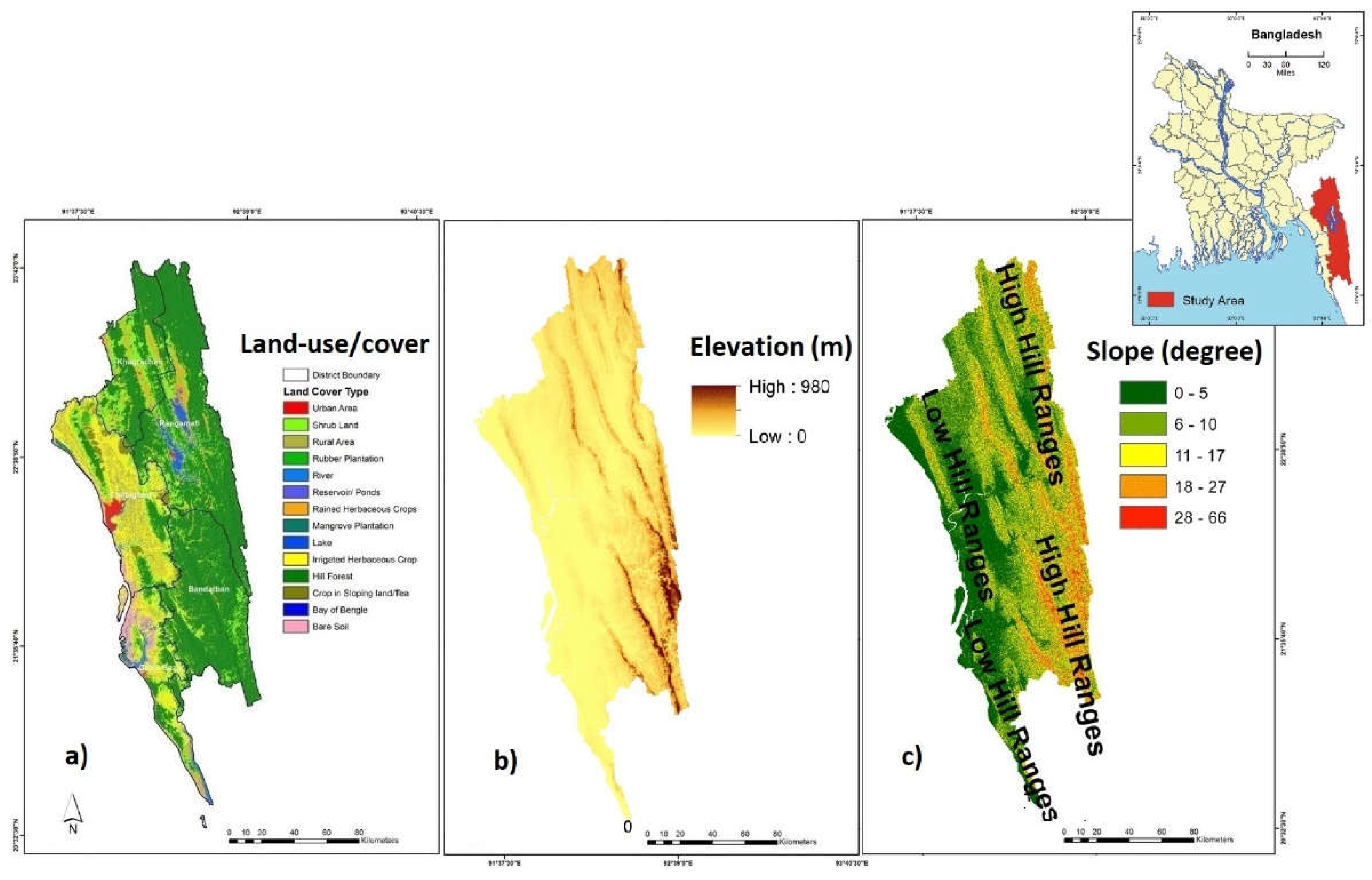
Figure 2.
SEQ \* ARABIC 2 Climate change projection for CHT, Bangladesh.
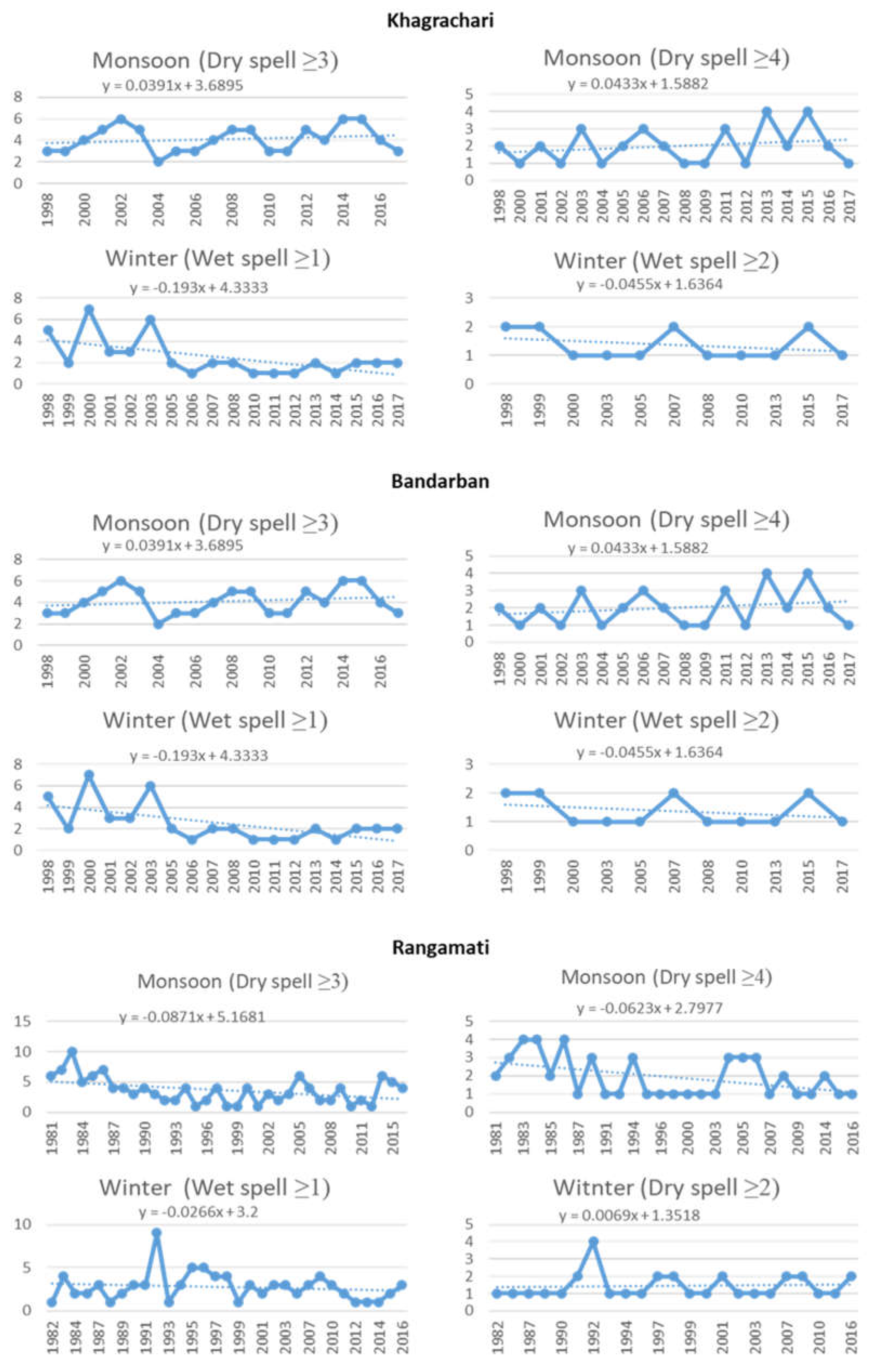
Figure 3.
People’s experience of environmental stresses in the last 10 years.
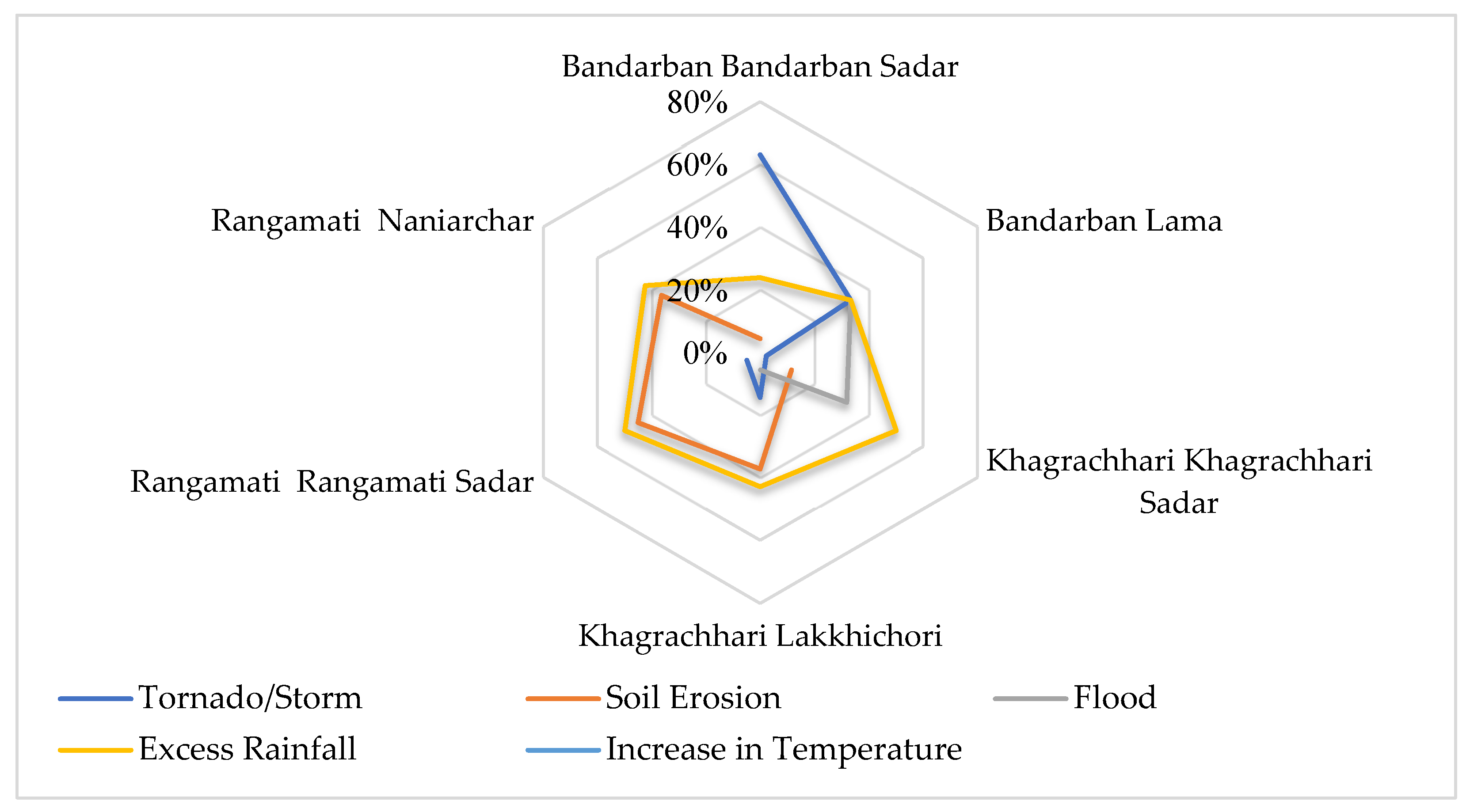
Figure 4.
Ratio of locals identified deforestation as the leading cause of biodiversity loss in CHT.
Figure 4.
Ratio of locals identified deforestation as the leading cause of biodiversity loss in CHT.
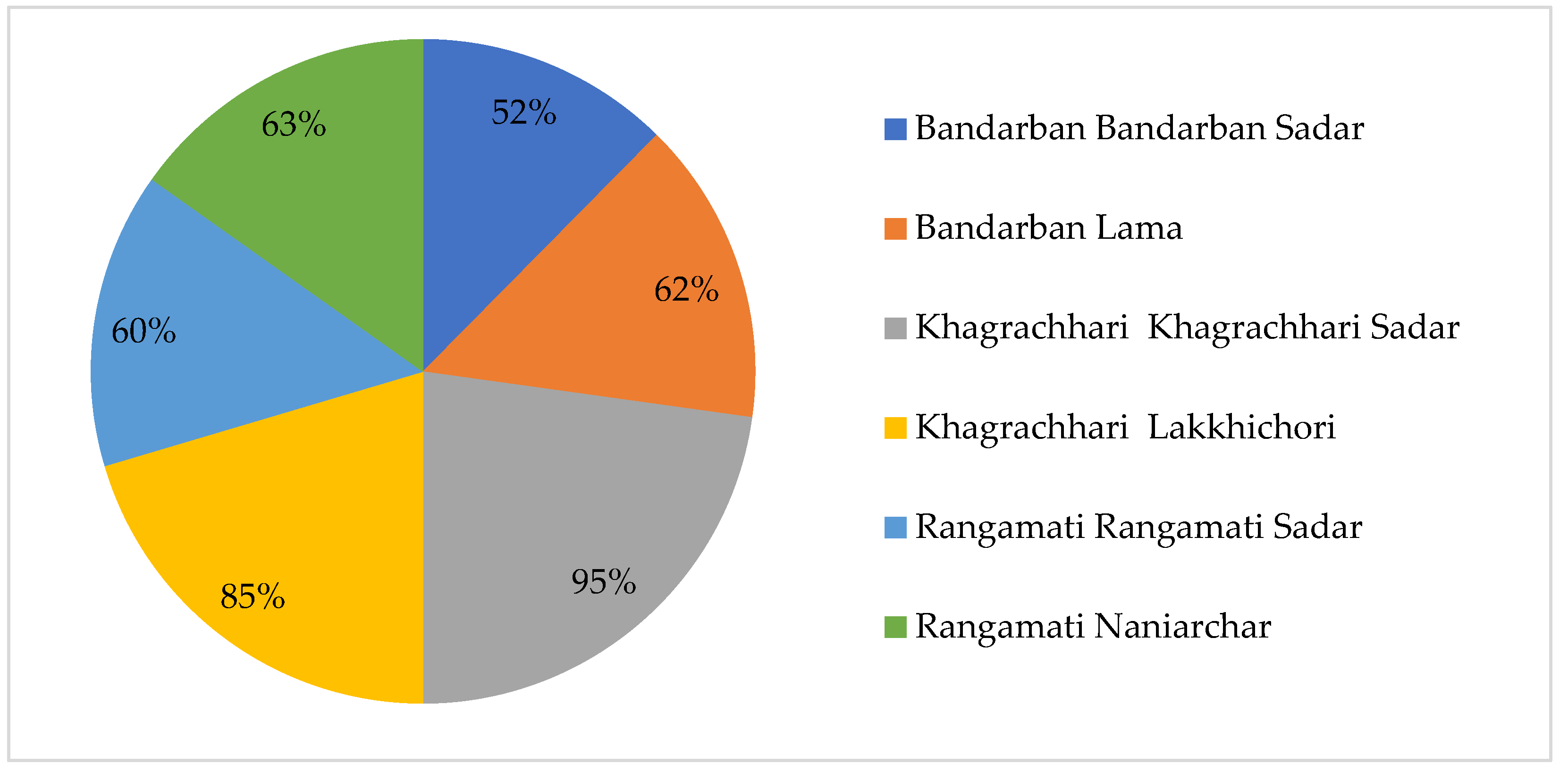
Figure 5.
Ratio of affected informants who suffered environmental stress-induced material losses.
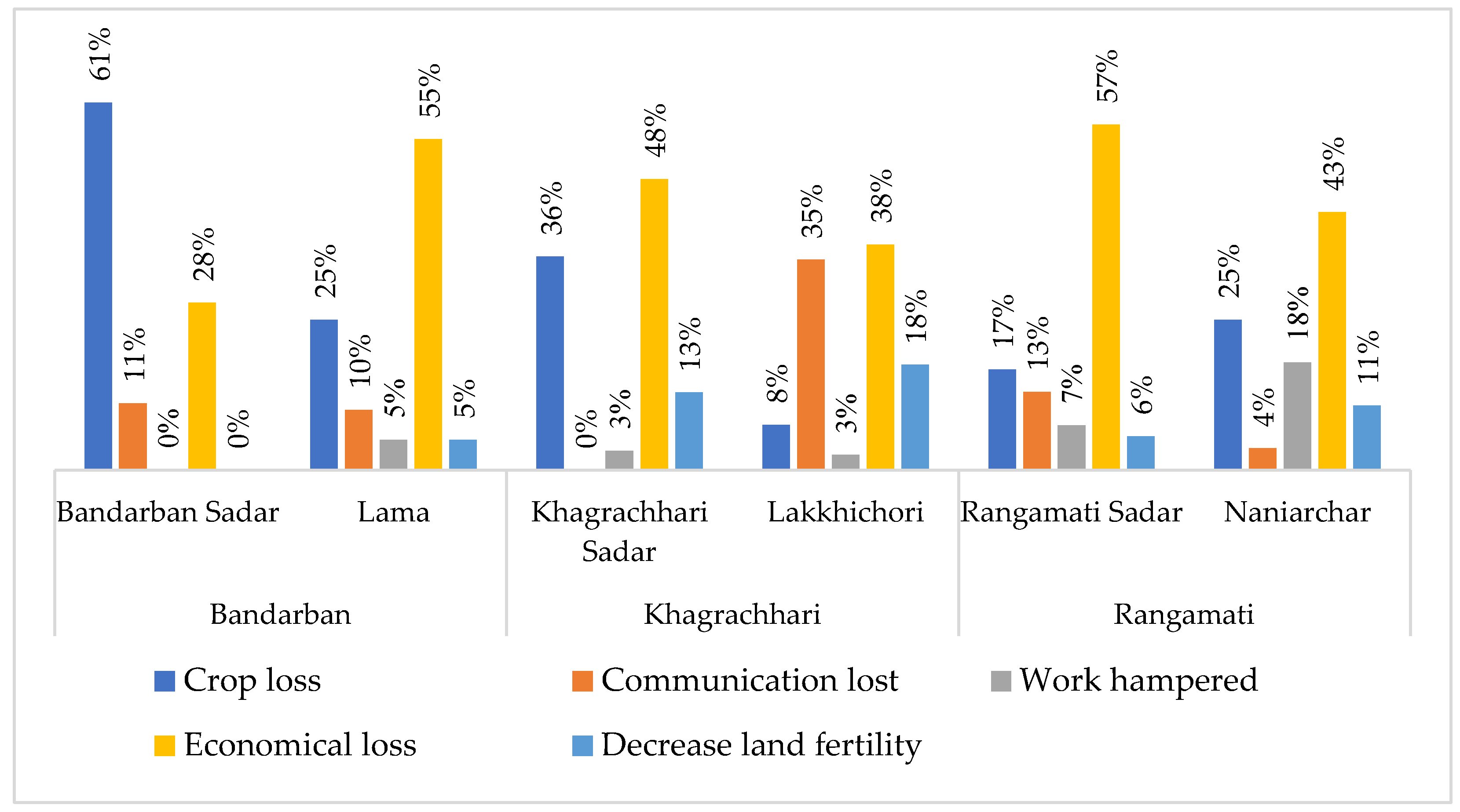

Table 1.
Public perception of causes and consequences of environmental stress (n=400).
| District | Upzilla | Causes (%) | Consequences (%) | ||||
|---|---|---|---|---|---|---|---|
| Destroying forest | Industry | Rising heat | Scarcity of water sources | Decreasing rain | Soil erosion | ||
| Bandarban | Bandarban Sadar | 100 | 0 | 48 | 24 | 19 | 9 |
| Lama | 100 | 0 | 50 | 20 | 20 | 10 | |
| Khagrachari | Khagrachari Sadar | 100 | 0 | 94 | 3 | 3 | 0 |
| Lakkhichori | 93 | 7 | 83 | 17 | 0 | 0 | |
| Rangamati | Rangamati Sadar | 9 | 66 | 34 | 0 | 0 | |
| 91 | |||||||
| Naniarchar | 95 | 5 | 0 | 66 | 34 | 0 | |
Disclaimer/Publisher’s Note: The statements, opinions and data contained in all publications are solely those of the individual author(s) and contributor(s) and not of MDPI and/or the editor(s). MDPI and/or the editor(s) disclaim responsibility for any injury to people or property resulting from any ideas, methods, instructions or products referred to in the content. |
© 2024 by the authors. Licensee MDPI, Basel, Switzerland. This article is an open access article distributed under the terms and conditions of the Creative Commons Attribution (CC BY) license (http://creativecommons.org/licenses/by/4.0/).
Copyright: This open access article is published under a Creative Commons CC BY 4.0 license, which permit the free download, distribution, and reuse, provided that the author and preprint are cited in any reuse.


