

Submitted:
03 September 2024
Posted:
04 September 2024
You are already at the latest version
Abstract
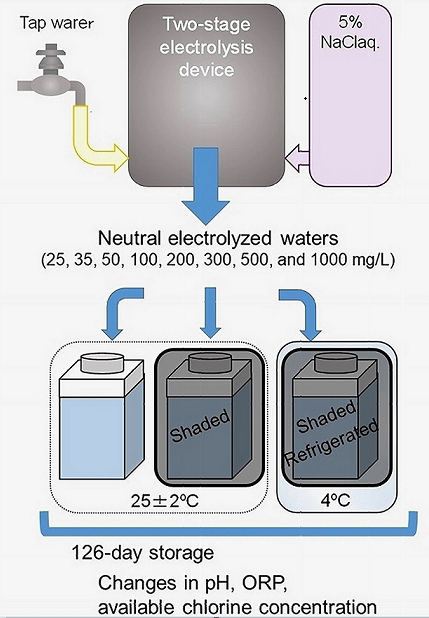
Electrolyzed water, which mainly contains hypochlorous acid, is widely used because of its strong microbicidal effects, biosafety, and eco-friendliness. For frequent use in intraoral treatments, we focused on neutral electrolyzed water (NW) produced using two-stage electrolysis and investigated its storage stability. For standard-concentration NWs with free available chlorine concentration (ACC) of 25, 35, and 50 mg/L and high-concentration NWs (100, 200, 300, 500, and 1000 mg/L), changes in the pH, oxidation-reduction potential, and ACC during 126 days of storage and the bactericidal efficacies were examined. Storage under non-shaded conditions at room temperature (LRT) and a higher ACC substantially altered the properties of the NW. NW (≤ 300 mg/L) had a pH of 5.9–7.3 even after storage under LRT; however, NW with higher ACC (500 and 1000 mg/L) had a pH ˂ 5.5, critical for human enamel), even under shaded and refrigerated conditions (SLW). Only NW (25 mg/L) stored under LRT exhibited the lowest ACC (5 mg/L), indicating a decreased bactericidal effect. When stored for use in intraoral treatments, NWs should be prepared with an ACC of 25–300 mg/L and stored in SLW. If diluted NW is used, the ACC should be checked and appropriately diluted every time.
Keywords:
neutral electrolyzed water
; storage stability
; free available chlorine concentration
; hypochlorous acid
; bactericidal activity
1. Introduction
Since the outbreak of the novel coronavirus in 2019, global awareness of infectious disease control has increased, leading to increased demand for disinfectants in medical, nursing, and daily use. This has raised concerns regarding the potential side effects of disinfectants and the environmental impact of the waste liquid after use [1,2]. The Sustainable Development Goals (SDGs), international goals for the period 2016–2030, as outlined in the "2030 Agenda for Sustainable Development" adopted at the United Nations Summit in September 2015, consist of 17 goals and 169 targets aimed at creating a sustainable world [3]. Despite the development of advanced projects in various fields to meet these goals, the increasing demand for disinfectants for infection control is a negative factor for the realization of the SDGs in terms of potential environmental impact [1,2]. To align with the SDG concept, it is crucial to develop disinfectants that are both cost-effective and environmentally friendly while maintaining high microbicidal efficacy without concern for environmental impact to achieve a sustainable society.
Hypochlorous acid water, also known as electrolyzed water, mainly containing hypochlorous acid (HOCl), has gained considerable attention in recent years because of its broad antimicrobial spectrum, and a high microbicidal effect in a short period [4,5], and eco-friendly nature [6] compared with disinfectants used for the same purpose [7,8]. Electrolyzed water produced by electrolyzing a dilute sodium chloride (NaCl) solution contains several tens of mg/L of free available chlorine concentration (ACC) and exhibits a broad antimicrobial spectrum, including efficacy against the novel coronavirus. Depending on pH, electrolyzed water for disinfection, mainly containing HOCl as a sterilizing ingredient, is classified as strongly acidic, weakly acidic, slightly acidic, and neutral types. These electrolyzed waters have been used in various fields such as medical care, nursing care, food, and agriculture for sanitation and disinfection because of their high microbicidal efficacy, biosafety [4,5,6,7,8,9,10,11], and low running cost. Each type of electrolyzed water for disinfection offers promise as a potential infection control measure that can contribute to achieving the SDGs.
The authors have been working to expand the application of these electrolyzed waters for disinfection, especially a neutral electrolyzed water (NW) by two-stage electrolysis, in dentistry. We have reported that NW has the highest storage stability [12]. It has been reported that NW exhibits a high bactericidal effect comparable to that of the acidic type for cleaning dental instruments [13], impressions (intraoral molds) [14,15,16], resin denture base [17,18,19], and root canals [20]. Furthermore, we have also reported that NW, unlike the acidic type, does not affect human enamel because of its higher pH than the critical pH of human enamel demineralization, i.e. hydroxyapatite dissolution (generally around pH 5.5) [21,22], and that the elution of the component elements of dental metals immersed in NW is the lower than that of acidic electrolyzed waters [23]. Then, we also verified that NW is highly effective in decontaminating dentures based on the results of two clinical trials on denture cleaning [24,25]. The usefulness of water jet cleaning using NW for fixed dental orthodontic appliances has been reported [26].
In actual use, the handling of electrolyzed water including NW varies depending on its intended purpose and field, such as medicine, food hygiene, and agriculture. In facilities with their own electrolyzed water generator, large quantities of fresh electrolyzed water can be used for sterilization immediately after its preparation. However, even facilities with their own generators often store a certain amount of electrolyzed water in each section of the facility, for use during home visits and for usage by patients at home. In addition, when a facility does not have a generator but purchases commercially prepared electrolyzed water for disinfection, electrolyzed water sold in a stored state is used instead of the freshly prepared electrolyzed water.
In this study, assuming both cases of direct use without dilution on the object to be treated and use after dilution to the desired concentration, long-term storage stability of standard- and high-concentration NWs was evaluated. Changes in pH, oxidation-reduction potential (ORP), and ACC during and after storage for 126 days (18 weeks, approximately 4 months) under three different conditions were monitored. Based on the results, optimal storage conditions, specifically the initial ACC, temperature, and light shielding, were determined to expand the application of NW in intraoral treatments.
2. Materials and Methods
2.1. Preparation of NWs
Eight test NWs were automatically prepared using tap water (TW) and a 5% NaCl aqueous solution (electrolysis auxiliary liquid) using an NW generator (Meau MS-1; Medist Sanite, Wakayama, Japan). The generator was partially modified by the manufacturer to prepare NW within the desired pH range of 6.0–7.5 and ACC of approximately 20–10000 mg/L (Figure 1 [a]). The test NWs were obtained through two-stage electrolysis (initial diaphragm-less electrolysis followed by diaphragm electrolysis) in the generator (Figure 1 [b]).
The properties of the test NW immediately after preparation within 1 h and after TW are listed in Table 1.
2.2. Measurement of properties for NWs during the 126-day storage period
For each test NW, changes in pH, ORP and ACC were examined during the 126-d storage, as shown below.
2.2.1. Storage conditions
After preparation, 500 mL of each NW was immediately transferred to a polyethyleneterephthalate (PET) container (Tetragonal Type, AS ONE, Osaka, Japan) and stored for up to 126 days (18 weeks, approximately 4 months) under one of the following storage conditions: non-shaded at room temperature (25 ± 2 °C) condition (LRT), shaded at room temperature condition (SRT), shaded and refrigerated (4 °C) condition (SLW) as shown in Figure 2.
Each of the eight NW was stored in a container under three different conditions, i.e., 24 types of samples were prepared. Five samples of each type were stored, and storage stability was examined. Each container stored at room temperature (LRT/ SRT) was placed 2–2.5 m from a transparent glass window in an experimental room. The room was continuously illuminated with an LED light throughout the storage period. Each container stored at 4 °C (SLW) was placed in a refrigerator in the experimental room.
2.2.2. Measurement of properties for NWs
The pH and ORP of each NW were measured using a pH meter (PHL-20, DKK-TOA, Tokyo, Japan) connected to dedicated electrodes. ACC, which is an indicator of bactericidal activity, was measured using a chlorine comparator (Chlorine Comparator for Free Chlorine in Water; Sibata Scientific Technology, Saitama, Japan) and N, N-diethyl-p-phenylenediamine (Sibata Scientific Technology, Saitama, Japan). The change rates of pH, ORP, and ACC were calculated from these results using the following equations:
where V126d is the value of NW after the 126-day storage period and V0d is the initial value before storage.
Change rate (%) = 100 (V126d-V0d)/V0d
All measurements were repeated five times for each sample type (n = 5).
2.3. Observation of PET container after 126 days
The appearance of each PET container storing NWs under the three different conditions was observed with the naked eye after 126 days.
2.4. Bactericidal effect test for NWs stored for 126 days
After the 126-day storage period, the bactericidal effect of each test NW was examined, as shown below.
The presence of Streptococcus mutans (NBRC13955, S. mutans), a major causative bacterium of dental caries, was analyzed to examine the bactericidal effects of the test NWs. A bacterial suspension was obtained from single colony isolation on an agar plate and inoculated in overnight broth cultures at 37 °C. S. mutans was cultured in brain-heart infusion broth (BHI; Franklin Lakes, NJ, USA) under aerobic conditions. The bacteria were collected, washed twice with sterile phosphate-buffered saline (PBS; AS ONE, Osaka, Japan), centrifuged at 3,000 rpm for 15 min, and then resuspended in fresh sterile PBS to prepare approximately 1.6×10⁷ colony-forming units (CFU)/mL.
Each test NW (9.0 mL) was added to 1.0 mL of the bacterial suspension by repetitive pipetting using a sterile glass pipette and vortexed for 3 min using a vortex mixer (Thermolyne Maxi Mix II Vortexer, Barnstead Thermolyne, Dubuque, IA, USA) to examine its bactericidal effect. After treatment, 0.1 or 1.0 mL of each test NW mixed with the bacterial suspension was appropriately diluted with fresh sterile PBS, with repetitive pipetting using a sterile glass pipette. The diluted solution was then added to each agar culture medium and incubated at 37 °C for 48 h. The BHI agar medium (Franklin Lakes, NJ, USA) was used. After incubation, the total number of surviving bacteria in the test NW was calculated from the CFU in the agar medium. The bacterial removal rates were calculated using the following equation:
where Nsurviving is the number of surviving bacteria and Ninitial is the initial number of bacteria in contact with test NW (1.6×10⁷).
Bacteria removal rate (%) = 100 (1-Nsurviving/Ninitial)
Bactericidal tests were repeated five times for each sample type (n = 5).
2.5. Statistical analysis
To analyze the three properties, pH, ORP, and ACC, of each test NW stored for 126 days under different conditions, the normality of data distribution for each property was assessed using the Shapiro–Wilk test, and the data were analyzed using a one-way analysis of variance, followed by Tukey’s multiple comparison test.
In addition, the rate of change in pH, ORP, and ACC after the 126-day storage period was analyzed using the Kruskal–Wallis test to compare the eight initial ACCs of NWs for each storage condition after testing for normality, as previously described. Subsequently, Spearman's correlation analysis was conducted to examine the correlation between initial ACC and the rate of change in each property under different storage conditions.
All statistical analyses were performed using EZR statistical software (Saitama Medical Center, Jichi Medical University, Saitama, Japan). Statistical significance was set at p < 0.05.
3. Results
3.1. Changes in properties according to storage conditions
The changes in the pH, ORP, and ACC values of NWs under three different conditions during the 126-day storage period are shown as curves in Figure 3 [a], and the values after storage are shown as bars in Figure 3 [b]. The rates of change in the three properties are shown in Figure 4. A comparison of the eight NWs with different initial ACCs for each storage condition is shown in Figure 4 [a], and the correlation between the initial ACC of the NW and the rate of change for each storage condition is shown in Figure 4 [b].
3.1.1. Change in pH
In all the tested NWs, the pH values remained below 7.3 even after storage. For NW35, no significant difference was observed in pH after 126 days of storage depending on the storage conditions (p > 0.05); however, the pH values of the other seven NWs were lowest in LRT and highest in SRT and SLW (NW25, NW50, and NW200) or SLW (NW100, NW300, NW500, and NW1000) (p < 0.05). For NWs with an initial ACC of ≤ 200 mg/L (NW25, NW35, NW50, NW100, and NW200), each NW had a pH value of ≥ 6.2 after storage under any condition, i.e., higher than the critical pH of human enamel (5.5) and equal to or higher than the critical pH of dentin (6.0–6.2). After the 126-day storage period under any condition, NW300 had a pH value of 5.9–6.4 (i.e., higher than the critical value of enamel). In addition, each NW300 stored under SRT and SLW maintained pH values equal to or higher than the critical values for dentin (6.0–6.2). In contrast, NW500 stored under LRT and NW1000s stored under any condition exhibited pH values below 4, indicating a substantial decrease than compare with the other NWs (Figure 3).
Significant differences in the pH change rate (i.e., reduction rate) were observed among the test NWs under all storage conditions (p < 0.05), with NW1000 exhibiting the largest decrease (Figure 4 [a]). Spearman's correlation analysis revealed strong negative correlations between the initial ACC of NW and the pH change rate under all storage conditions, with R values ranging from -0.839 (SLW) to -0.791 (LRT) (Figure 4 [b]).
3.1.2. Changes in ORP
During the 126-day storage period, the ORP values in NW25, NW35 and NW50 decreased, whereas they increased in NW100, NW200, NW300, NW500 and NW1000. For NW50 and NW100, storage conditions had no significant impact on ORP (p > 0.05). However, the other six NWs demonstrated significant changes in ORP under LRT (p < 0.05). In addition, NW25, NW200, NW300, and NW1000 showed no significant differences between SRT and SLW, whereas NW35 and NW500 exhibited the smallest change in SLW (p < 0.05) (Figure 3).
Significant differences in ORP change rates were observed among the eight test NWs under all storage conditions (p < 0.05), with NW1000 demonstrating the highest change rate (Figure 4 [a]). The R values were 0.921 (SLW)–0.949 (LRT), indicating a strong positive correlation between the initial ACC of the NW and the ORP change rate under all storage conditions (Figure 4 [b]).
3.1.3. ACC changes
All test NWs exhibited a decrease in ACC during the 126-day storage period, and it decreased to 5 mg/L (one-fifth of the initial value) in NW25 stored under LRT. The remaining seven NWs exhibited an ACC of 15 mg/L or higher under all storage conditions. NW25 and NW35 showed no significant difference between SRT and SLW conditions after 126 days (p > 0.05), and the remaining six NWs demonstrated the smallest ACC decrease under SLW conditions (p < 0.05) (Figure 3).
Under LRT storage conditions, NW25 (-81.3 ± 3.0%) and NW1000 (-84.2 ± 1.1%) exhibited substantially higher reduction rates than the other NWs, indicating a weak negative correlation between the initial ACC of NW and the ACC change rate (R: -0.347). In other storage conditions, NW1000 showed the largest ACC reduction rate with a strong negative correlation between the initial ACC of NW and the ACC change rate (R: -0.868 in SRT and -0.887 in SLW, respectively) (Figure 4).
3.2. Appearance of the PET container after the 126-day storage period
Figure 5 illustrates the representative appearances of the PET containers with the test NWs after 126 days under LRT and for NW1000 under the three different conditions.
No difference was observed by the naked eye in the appearance of the PET containers before and after storage for 126 days under any condition for the NWs, except for NW1000 (Figure 5 [a]). In the PET container with NW1000 stored under LRT, a loss of transparency and a cloudy white appearance was observed throughout. Slight whitening was observed during storage under SRT; however, during storage under SLW, almost no whitening was observed inside the containers (Figure 5 [b]).
3.3. Bactericidal effect of NWs stored for 126 days
Table 2 shows the results of the bactericidal effect test on NW after 126 days under each storage condition as the number of surviving bacteria remaining on each test NW after 3-min of treatment.
Surviving bacteria were detected at a level of 104 only in NW25 stored under LRT; however, no surviving bacteria were detected in NW25 stored under SRT and SLW. For the other seven test NWs, no surviving bacteria were detected in the samples stored under any conditions.
4. Discussion
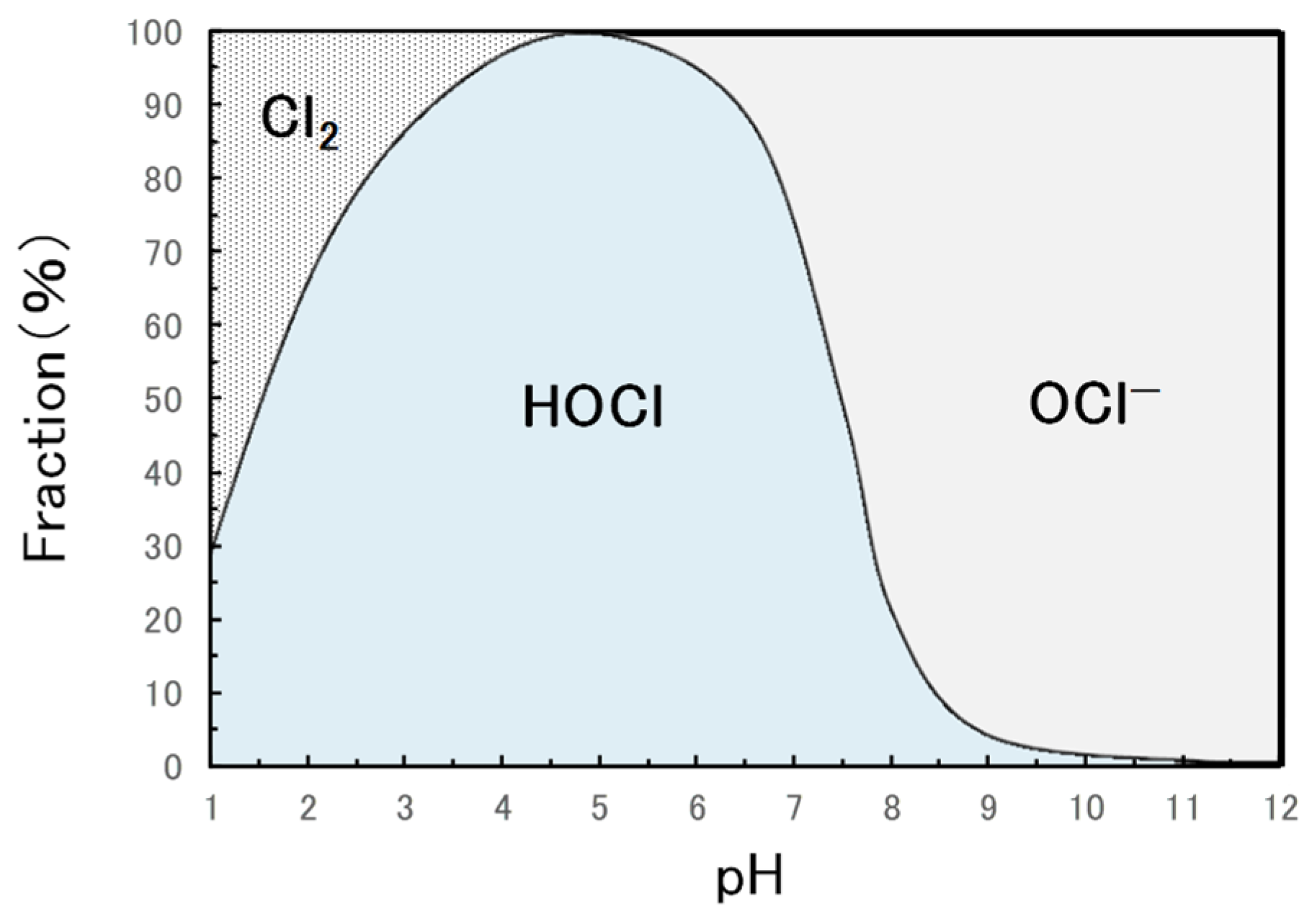
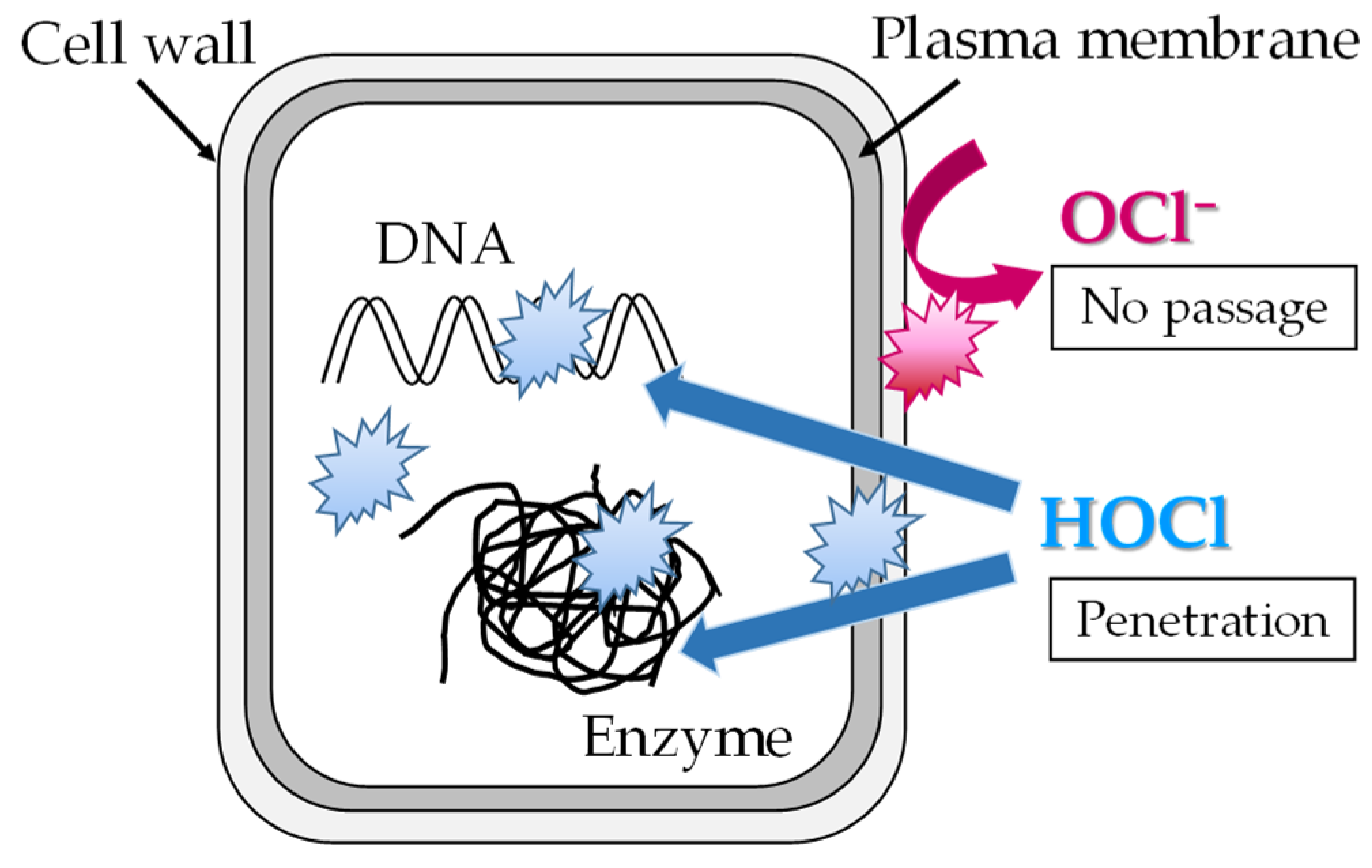
In electrolyzed water for disinfection, the fraction of free available chlorine (Cl2, HOCl, and OCl−) as a sterilization component varies depending on the pH (Figure A) [27,28]. The free available chlorine in NW is mainly HOCl and secondarily hypochlorite ion (OCl−). After penetrating the cell wall and biological membrane and entering the inside of the bacterial cells, HOCl has the potential to permeate membranes into the interior of microorganisms and has an oxidizing impact on vital tissues (Figure B) [28,29]. In contrast, OCl− does not have membrane permeability and only oxidizes the cell membrane (plasma membrane) and cell periphery (Figure B) [28,29]. Therefore, HOCl has a higher bactericidal effect at lower concentrations than OCl−. The dissociation constant (Ka) of HOCl at 25 °C is 2.95 × 10⁻⁸ mol/L (pKa: 7.53), and at pH 7.5, the ratio of HOCl and OCl− is approximately 1:1 [28,29]. Consequently, HOCl concentration decreases in alkaline environments, reducing its bactericidal efficacy. To maximize antimicrobial activity for oral applications, the pH of NW should be less than 7.5. At a pH lower than 7.5, the bactericidal efficacy of HOCl increases. However, excessive acidity can lead to chlorine gas formation, causing odor and property deterioration. Acidic environment increases the risk of tooth tissue demineralization and corrosion of metal restorations [21,23]. To achieve a high microbicidal effect without acid influence on tooth and metal restorations for intraoral treatment, referring to the critical pH of human enamel and dentin (5.5 and 6.0–6.2, respectively), NW should be prepared and used with a pH in the range of 6.2–7.5 for standard-concentration type without dilution and in the range of 5.5–7.5 for high-concentration type with dilution.
Regarding ACC, we considered that NW should be at least 15 mg/L at the time of use to obtain a bacterial removal rate of 99.999% or higher, based on the results of previous studies that used similar test methods using the same bacteria [30].
The standard-concentration NWs (NW25, NW35, and NW50) maintained a neutral pH range (6.9–7.3) during the 126-day storage period. This result indicates that the standard-concentration NWs were mainly composed of HOCl after storage. NW25 should be stored in a shaded container or in a dark place, as the ACC decreased to 5 mg/L in non-shaded at room temperature storage (LRT), leading to a decrease in its bactericidal efficacy. NW35 and NW50 showed high bactericidal effects even after 126 days during storage in non-shaded conditions at room temperature (LRT); however, shaded storage (SRT, SLW) was superior to LRT because of slower ACC reduction. In this study, the UV light reaching indoors through the transparent window glass may have affected the ACC during storage under LRT because it was not completely blocked from outdoor sunlight. LRT is not an appropriate condition if longer storage is desired, as ACC decreases faster than in shaded storage (SRT, SLW). Because these NWs stored in shaded and refrigerated containers resulted in the least reduction in ACC, shaded and refrigerated storage (SLW) is highly recommended for NW35 and NW50. The standard-concentration NWs are typically used without dilution. Because NW50 has an ACC equivalent to that of NW25 at a 2-fold dilution at the time of preparation, it is anticipated that some cases will be used with dilution. However, if the same dilution ratio was used after 126 days of storage, the ACC of NW50 would be 8 mg/L under LRT, 11 mg/L under SRT, and 15 mg/L under SLW, which may decrease its bactericidal efficacy. To maintain high microbicidal effectiveness, it is advisable to dilute stored standard-concentration NWs appropriately, considering the reduction in ACC during storage.
High-concentration NWs with an ACC of 300 mg/L or lower (NW100, NW200, and NW300) have a pH of 6.6–6.8 at the time of preparation and are used in the neutral range by dilution with tap water at the time of use. After 126 days of storage, NW300 stored under LRT had a pH of 5.9 ± 0.0, whereas the other NWs ranged from slightly acidic to neutral, with a pH range of 6.2–7.0, fluctuating by approximately 0.5. The pH values of these NWs exceeded the critical pH of human enamel (5.5) during storage, suggesting that their use in the oral cavity does not affect human enamel, regardless of the storage conditions [21]. Assuming that these NWs were diluted to 25–100 mg/L, no dilution or a maximum of 4-fold dilution (25 mg/L) was made in NW100 before storage. Our results indicate that NW100 stored for 126 days under LRT had an ACC of 35 mg/L, demonstrating high bactericidal efficacy. In the case of the use of 4-fold dilution (25 mg/L at fresh before storage), if the same dilution is made after storage, the ACC will be less than 15 mg/L after more than 28 days of storage under LRT or 98 days under SRT, which may affect the bactericidal effect. If stored in SLW, the negative effect of storage on bactericidal activity can be minimized because an ACC of more than 15 mg/L is maintained even if NW100 is diluted 4-fold (25 mg/L at fresh). Therefore, this is the preferred storage method. However, if refrigeration is not possible and the sample can only be stored at room temperature, it should be less than 2-fold (> 50 mg/L at fresh) under LRT and 2.5-fold (> 40 mg/L at fresh) under SRT for NW100 for use of the same dilution rate during storage at room temperature or should not be diluted. Similarly, in the case of NW200 after the 126-day storage period at the same dilution rate as before storage, if shaded and refrigerated storage is not possible, the dilution rate should be set to no more than 4-fold (> 50 mg/L at fresh) under LRT and no more than 7-fold (> 29 mg/L at fresh) under SRT. After 126 days of storage, NW300 showed an approximately 50% decrease in ACC, even under shaded and refrigerated condition, SLW. If the same dilution rate is used during storage for 126 days, the dilution rate should be set to less than 6.5-fold (> 46 mg/L at fresh) under LRT, less than 8.5-fold (> 35 mg/L at fresh) under SRT, and less than 10-fold (> 30 mg/L at fresh) under SLW.
The high-concentration NWs with an ACC of 500 mg/L or higher (NW500 and NW1000) have a pH of 6.2–6.5 at the time of preparation and are used in the neutral range by dilution with tap water at the time of use. All the measured properties of these NWs changed significantly with storage time, and even after shaded and refrigerated storage (SLW), the NWs lost more than 50% of their free chlorine concentration, making them less stable for storage than the other NWs. In addition, room temperature storage (LRT, SRT) of NW500 resulted in a pH below 5.5 after 14 days of storage and 3.2–5.1 at the end of the 126-day storage period. In SLW, the pH was only 5.5 after 119 days of storage and less than 5.5 after 126 days. NW500 stored in a shaded and refrigerated container could be used in the oral cavity for up to 3 months by dilution at a rate of less than 16-fold (>31 mg/L at fresh). However, for NW1000, even in SLW, the pH falls below 5.5 after 14 days and below 4 at the end of storage, suggesting that acid effects on human enamel may occur for NW1000 stored for more than 14 days. In addition, NW1000 is considered inappropriate for long-term storage because of its noticeable and unpleasant chlorine odor, which is slight and unnoticeable at standard concentrations. Furthermore, the PET containers storing NW1000 at room temperature showed slight whitening if shaded or lost transparency and turned cloudy white inside if not shaded. PET can be degraded by physical, chemical, or biological methods. Under certain acidic conditions, it can be degraded to ethylene glycol and terephthalic acid via hydrolysis [31,32]. Hirota et al. (2020) [31] have reported that immersion tests of biodegradable PET at pH 3.0 to 10.5 for up to 4 weeks at 80 °C revealed significant differences in decomposition behavior in alkaline and acidic solutions, with a significant decrease in molecular weight observed in dilute sulfuric acid (pH 3.0). In the PET containers used to store the test NWs in our study, the interaction of prolonged contact with high concentrations of free available chlorine, increased acidity of NW1000 during storage (pH < 3 in the 126-day storage period under LRT), and lack of light shielding may have exceeded the limits of the chemical and weather resistance of PET. The change in appearance inside the PET container is inferred to be mainly due to acid hydrolysis on the PET surface caused by contact with the remarkably increased acidity of NW1000 during storage.
HOCl molecules, which are the main microbicidal components of electrolyzed water, are not chemically stable. We previously reported the storage stability of three different types (strongly acidic, slightly acidic, and neutral) of electrolyzed water at standard concentrations [12]. Even the neutral type (NW), which had the highest storage stability, was affected by differences in storage environment, causing a significant decrease in its properties when stored at room temperature without light shielding when the bottle was open [12]. As previously reported [12], test NWs from the same two-stage electrolysis were used in this study. We standardized the sealing of all storage containers for eight NWs with different ACCs containing standard concentrations and examined the effects of the initial ACC, light shielding, and temperature during storage on long-term storage stability. Consistent with previous findings [12,33,34], our findings confirmed the effectiveness of shaded and refrigerated storage conditions. As previously mentioned, the pH and ACC of NW during actual use change in a complex manner depending on the initial ACC at the time of preparation and the storage conditions. High-concentration NWs are particularly susceptible to a significant reduction in ACC during storage. Consequently, an inappropriately diluted NW (i.e., diluted with insufficiently effective ACC) may be used for disinfection of the oral cavity, potentially resulting in insufficient microbicidal activity. Therefore, when using stored high-concentration NW, it is necessary to measure ACC and dilute it appropriately before use.
Neutral electrolyzed water containing HOCl as the main ingredient has a pH equivalent to that of the oral cavity at rest, which holds promise for potential applications in dental practice. By accurately assessing bactericidal components based on properties such as pH and ACC at the time of use and maximizing the effectiveness of NW, it is possible to replace traditional disinfectants and contribute to SDG's by preventing the overuse of chemical substances. Future research will focus on evaluating the biological safety of NWs and gels containing NW [35] for intraoral treatment using cytotoxicity tests on oral mucosa cells. Additionally, we plan to specify the optimal usage conditions (concentration, form, treatment and time) of NWs for each intraoral procedure and further evaluate their efficacy and biocompatibility through clinical trials.
5. Conclusion
The long-term storage stability of NW prepared by two-stage electrolysis for 126 days revealed the following:
- The higher initial ACCs and non-shaded room temperature storage resulted in significant changes in the pH, ORP, and ACC of NW.
- NWs with initial ACCs of 25–300 mg/L had a pH value of 5.9–7.3 after storage, even under non-shaded conditions at room temperature. In contrast, NWs with higher initial ACCs (500 and 1000 mg/L) had a pH lower than the critical pH of human enamel (5.5) during storage, even under shaded and refrigerated conditions.
- NW with an initial ACC of 25 mg/L, stored under non-shaded conditions at room temperature, exhibited the lowest ACC (5 mg/L) after storage, indicating a decrease in bactericidal efficacy.
These results suggest that NW used for intraoral treatment should be prepared with an initial ACC of 25–300 mg/L and stored under shaded and refrigerated conditions. Furthermore, when stored NW is diluted for use, its ACC should be checked and appropriately diluted before each use.
Author Contributions
Conceptualization, Yuki Nagamatsu and Hiroshi Nagamatsu; Data curation, Yuki Nagamatsu; Formal analysis, Yuki Nagamatsu; Funding acquisition, Yuki Nagamatsu and Hiroshi Ikeda; Investigation, Yuki Nagamatsu and Hiroshi Ikeda; Methodology, Yuki Nagamatsu and Hiroshi Ikeda; Project administration, Yuki Nagamatsu; Resources, Yuki Nagamatsu and Hiroshi Ikeda; Software, Yuki Nagamatsu and Hiroshi Nagamatsu; Supervision, Yuki Nagamatsu; Validation, Yuki Nagamatsu, Hiroshi Ikeda and Hiroshi Nagamatsu; Visualization, Yuki Nagamatsu and Hiroshi Nagamatsu; Writing – original draft, Yuki Nagamatsu; Writing – review & editing, Yuki Nagamatsu, Hiroshi Ikeda and Hiroshi Nagamatsu. All authors have read and agreed to the published version of the manuscript.
Funding
This study received no external funding.
Data Availability Statement
The data presented in this study are available upon reasonable request from the corresponding author.
Acknowledgments
The authors express their gratitude to Medist Sanite (Wakayama, Japan) for modifying some of the neutral electrolyzed water generators to provide variable, freely available chlorine concentrations for this study.
Conflicts of Interest
The authors have no potential conflicts of interest to declare.
Appendix A
Appendix B
References
- Marteinson, S.C.; Lawrence, M.J.; Taranu, Z.E.; Kosziwka, K.; Taylor, J.J.; Green, A.; Winegardner,A. K.; Rytwinski, T. Increased use of sanitizers and disinfectants during the COVID-19 pandemic: identification of antimicrobial chemicals and considerations for aquatic environmental contamination. Environmental Reviews 2023, 31, 76–94. [Google Scholar] [CrossRef]
- Bha, S.A.; Sher, F.; Kumar, R.; Karahmet, E.; Ul Haq, S.A.; Zafar, A.; Lima, E.C. Environmental and health impacts of spraying COVID-19 disinfectants with associated challenges. Environ Sci Pollut Res 2022, 29, 85648–85657. [Google Scholar] [CrossRef]
- Support Sustainable Development and Climate Action. Available online: https://www.un.org/en/our-work/support-sustainable-development-and-climate-action (accessed on 2 August 2024).
- Ono, T.; Yamashita, K.; Murayama, T.; Sato, T. Microbicidal effect of weak acid hypochlorous solution on various microorganisms. Biocontrol Sci, Biocontrol Sci 2012, 17, 129–133. [CrossRef]
- Block, M.S.; Rowan, B.G. Hypochlorous acid: a review. J Oral Maxillofac Surg, 2020; 78, 1461–1466. [Google Scholar] [CrossRef]
- Gessi, A.; Formaglio, P.; Semeraro, B.; Summa, D.; Tamisari, E.; Tamburini, E. Electrolyzed hypochlorous acid (HOCl) aqueous solution as low-impact and eco-friendly agent for floor cleaning and sanitation. Int. J. Environ. Res. Public Health, 2023; 20, 6712. [Google Scholar] [CrossRef]
- Liu, D.; Lv, R. Safety Evaluation of Electrolyzed Water. Electrolyzed water in food: fundamentals and applications., 1st ed.; Ding, T., Oh, D.H., Eds.; Liu, D. Springer Singapore: Singapore, 2019; pp. 261–267. [Google Scholar]
- Chen, B.K.; Wang, C.K. Electrolyzed water and its pharmacological activities: a mini-review. Molecules 2022, 27, 1222. [Google Scholar] [CrossRef]
- Sipahi, H/; Reis, R.; Dinc, O.; Kavaz, T.; Dimoglo, A.; Aydın, A. In vitro biocompatibility study approaches to evaluate the safety profile of electrolyzed water for skin and eye. Hum Exp Toxicol, 2019; 38, 1314–1326. [CrossRef]
- Dinc, O.; Kavaz, T.; Dimoglo, A.; Aydın, A. In vitro biocompatibility study approaches to evaluate the safety profile of electrolyzed water for skin and eye. Hum Exp Toxicol 2019, 38, 1314–1326. [Google Scholar] [CrossRef]
- Tsai, C.F.; Chung, J.J.; Ding, S.J.; Chen, C.C. In vitro cytotoxicity and antibacterial activity of hypochlorous acid antimicrobial agent. J Dent Reserch 2024, 25, 345–365. [Google Scholar] [CrossRef]
- Nagamatsu, Y.; Chen, K.K.; Tajima, K.; Kakigawa, H.; Kozono, Y. Durability of bactericidal activity in electrolyzed neutral water by storage. Dent Mater J 2002, 21, 93–104. [Google Scholar] [CrossRef]
- Nomasa, H.; Nagamatsu, Y.; Tajima, K. Sterilization of dental instruments by electrolyzed water and their corrosion behaviors. J Kyushu Dent Soc 1997, 51, 784–799. [Google Scholar] [CrossRef]
- Nagamatsu, Y.; Chen, K.K.; Nagamatsu, H.; Kozono, Y.; Shimizu, H. Application of neutral electrolyzed water to disinfection of alginate impression. Dent Mater J 2016, 35, 270–277. [Google Scholar] [CrossRef]
- Nagamatsu, Y. Sterilization of impressions with electrolyzed acid water. J Kyushu Dent Soc 1996, 50, 515–531. [Google Scholar] [CrossRef]
- Yokoyama, Y.; Yasumoto, K.; Tajima, K.; Kakigawa, H.; Uchiyama, C.; Kozono, Y. Bactericidal activity of electrolyzed acid water for alginate impression. J J Dent Mater 1996, 15, 98–103. [Google Scholar] [CrossRef]
- Nagamatsu, Y.; Tajima, K.; Kakigawa, H.; Kozono, Y. Application of electrolyzed acid water to sterilization of denture base. Part 1. Examination of sterilization effects on resin plate. Dent Mater J 2001, 20, 148–155. [Google Scholar] [CrossRef] [PubMed]
- Nagamatsu, Y.; Taniguchi, M.; Chen, K.K.; Tajima, K.; Kakigawa, H.; Kozono, Y. Application of eIectrolyzed neutral water to sterilization of denture base. J Kyushu Dent Soc 2006, 60, 24–31. [Google Scholar] [CrossRef]
- Taniguchi, M.; Nagamatsu, Y.; Yamanaka, M.; K. ; Kakigawa H.; Kozono, Y. Sterilization of denture with electrolized neutral water. J Kyushu Dent Soc 2008, 62, 29–38. [Google Scholar] [CrossRef]
- Kita, N.; Nagamatsu, Y.; Chen, K.K; Tajima, K.; Kakigawa, H.; Kozono, Y. Application of electrolyzed neutral water to root canal irrigator. J Kyushu Dent Soc 2009, 63, 44–56. [Google Scholar] [CrossRef]
- Nagamatsu, Y.; Chen, K.K.; Kita, N.; Tajima, K.; Kakigawa, H.; Kozono, Y. Application of electrolyzed neutral water to dental practice —effects on human enamel surface—. J J Dent Mater 2008, 27, 283–290. [Google Scholar] [CrossRef]
- Sulieman, M.; Addy, M.; Macdonald, E.; Rees, J.S. A safety study in vitro for the effects of an in-office bleaching system on the integrity of enamel and dentine. J Dent 2004, 32, 581–590. [Google Scholar] [CrossRef]
- Dong, H.; Nagamatsu, Y.; Chen, K.K.; Tajima, K.; Kakigawa, H.; Shi, S.; et al. Corrosion behavior of dental alloys in various types of electrolyzed water. Dent Mater J, 2003; 22, 482–493. [Google Scholar] [CrossRef]
- Nagamatsu, Y.; Nagamatsu, H.; Murakami, S.; Ikeda, H.; Yamamoto, K.; Kozono, Y.; Shimizu. H. Application of neutral electrolyzed water to improve oral environment of Aged Denture Wearers Requiring Long-term Care. The Journal of Functional Water 2017, 13, 1–9. http://www.fwf.or.jp/pdf/pw/dai13-1/nagamatu_text.pdf.
- Nagamatsu, Y.; Nakamura, K.; Muraoka, K.; Ikeda, H.; Nagamatsu, H.; Shimizu. H. Effects of neutral electrolyzed water on cleaning or decontamination of removable denture self-cared by healthy denture wearers. The Journal of Functional Water 2019, 14, 1–10. http://www.fwf.or.jp/pdf/pw/dai14-2/nagamatsu_txt.pdf.
- Akama, Y.; Nagamatsu, Y.; Ikeda, H.; Nakao-Kuroishi, K.; Kometani-Gunjigake, K.; Kawamoto, T.; Shimizu, H. Applicability of neutral electrolyzed water for cleaning contaminated fixed orthodontic appliances. Am J Orthod and Dentofacial Orthop 2022, 161, e507–e523. [Google Scholar] [CrossRef]
- Morris, J.C. The acid ionization constant of HOCl from 5 to 35°. J Phys Chem 1966, 70, 3798–3805. [Google Scholar] [CrossRef]
- Fukuzaki, S. Mechanisms of actions of sodium hypochlorite in cleaning and disinfection processes. Biocontrol Sci 2006, 11, 147–157. [Google Scholar] [CrossRef]
- Fukuzaki, S. Uses of gaseous hypochlorous acid for controlling microorganisms in indoor spaces. J Microorganism Control 2023, 28, 165–175. [Google Scholar] [CrossRef]
- Nagamatsu, Y.; Ikeda, H.; Nagamatsu, H. ; Shimizu. H. Microbicidal effect and storage stability of neutral HOCl-containing aqueous gels with different thickening/gelling agents. Dent Mater J, 2021; 40, 1309–1319. [Google Scholar] [CrossRef]
- Hirota, Y.; Hayashi, K.; Kawanishi, T.; Takiguchi, N. Effect of pH on hydrolysis of biodegradable polyethylene terephthalate. J Chem Eng Jpn 2020, 53, 267–272. [Google Scholar] [CrossRef]
- Cao, F.; Wang, L.; Zheng, R.; Guo, L.; Chen, Y.; Qian, X. Research and progress of chemical depolymerization of waste PET and high-value application of its depolymerization products. RSC Adv 2022, 12, 31564–31576. [Google Scholar] [CrossRef]
- Xuan, X. T.; Wang, M.M.; Ahn, J.; Ma, Y.N.; Chen, S.C.; Ye, X.Q.; Liu, D.H.; Ding, T. Storage stability of slightly acidic electrolyzed water and circulating electrolyzed water and their property changes after application. J Food Sci 2016, 81, E610–E617. [Google Scholar] [CrossRef]
- Kameda, T.; Oka, S.; Igawa, J.; Sakamoto, M.; Terada, K. Can hypochlorous acid be a powerful sanitizer to replace alcohol for disinfection? —Its bactericidal, degradation of the solutions under various storage condition, and steel rust effects. Dent Mater J 2022, 41, 167–183. [Google Scholar] [CrossRef]
- Nagamatsu, Y.; Ikeda, H.; Nagamatsu, H. Simple preparation method of neutral electrolyzed water-based gel for oral care and its bacteria removal effect. The Journal of Functional Water 2024, 18, 1–9. http://www.fwf.or.jp/pdf/kenkyu/dai18-2/wu1.pdf.
Figure 1.
Neutral electrolyzed water (NW) generator used (Meau DS-1): (a) generator appearance (tank for 5% NaCl aqueous solution [A], and generator body containing two-stage method electrolytic cells [B]); (b) overview of the two-stage electrolysis method. A partial modification of the generator was made by the manufacturer to adjust the amount of dilution with tap water (TW) immediately before NW discharge.
Figure 1.
Neutral electrolyzed water (NW) generator used (Meau DS-1): (a) generator appearance (tank for 5% NaCl aqueous solution [A], and generator body containing two-stage method electrolytic cells [B]); (b) overview of the two-stage electrolysis method. A partial modification of the generator was made by the manufacturer to adjust the amount of dilution with tap water (TW) immediately before NW discharge.
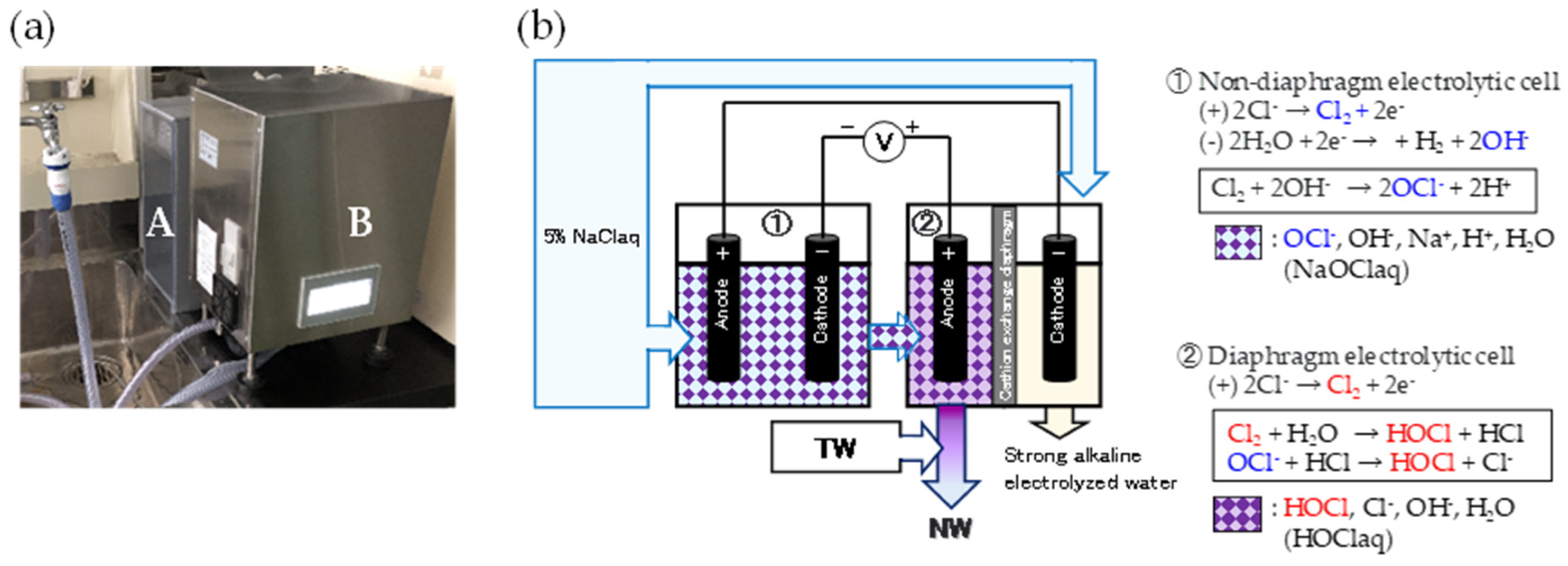
Figure 2.
Storage conditions.
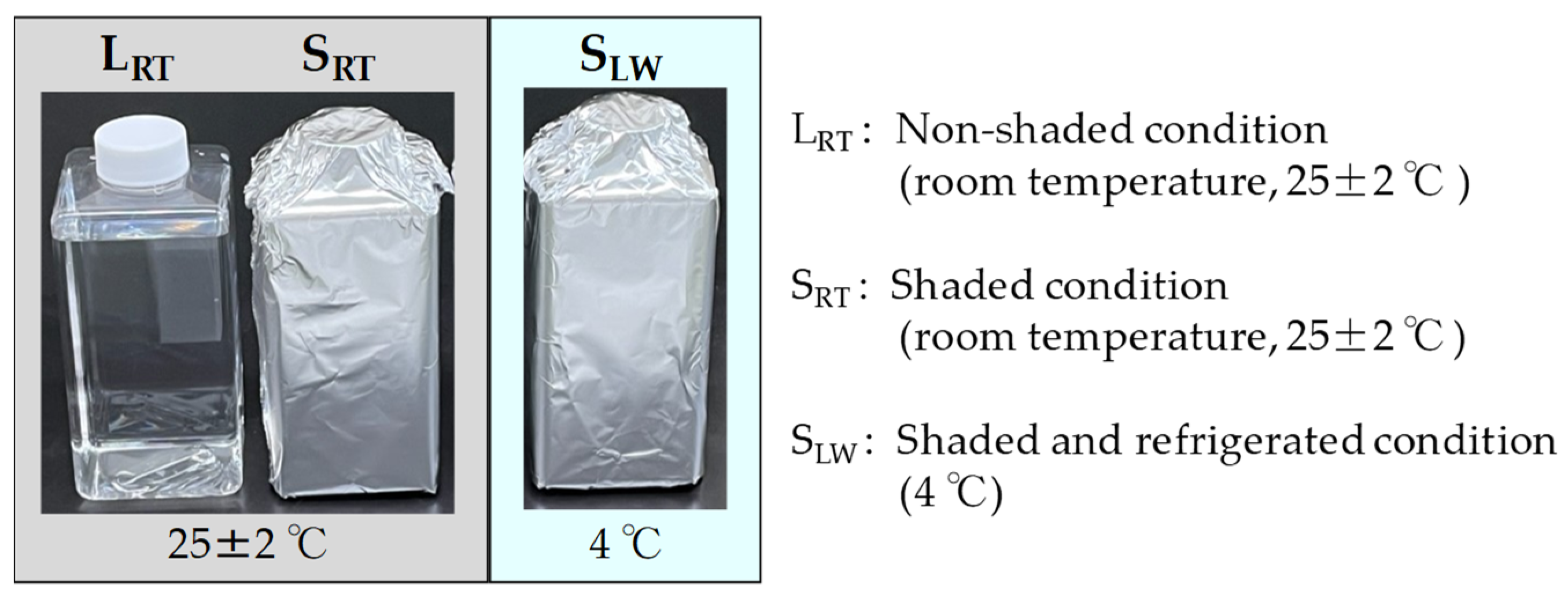
Figure 3.
Changes in properties of NWs according to different storage conditions: (a) changes during the 126-day storage period; (b) changes after the 126-day storage period. Vertical bars indicate the standard deviation. In each of the four graphs, different letters represent statistically different groups (p < 0.05) determined using one-way analysis of variance (n = 5).
Figure 3.
Changes in properties of NWs according to different storage conditions: (a) changes during the 126-day storage period; (b) changes after the 126-day storage period. Vertical bars indicate the standard deviation. In each of the four graphs, different letters represent statistically different groups (p < 0.05) determined using one-way analysis of variance (n = 5).
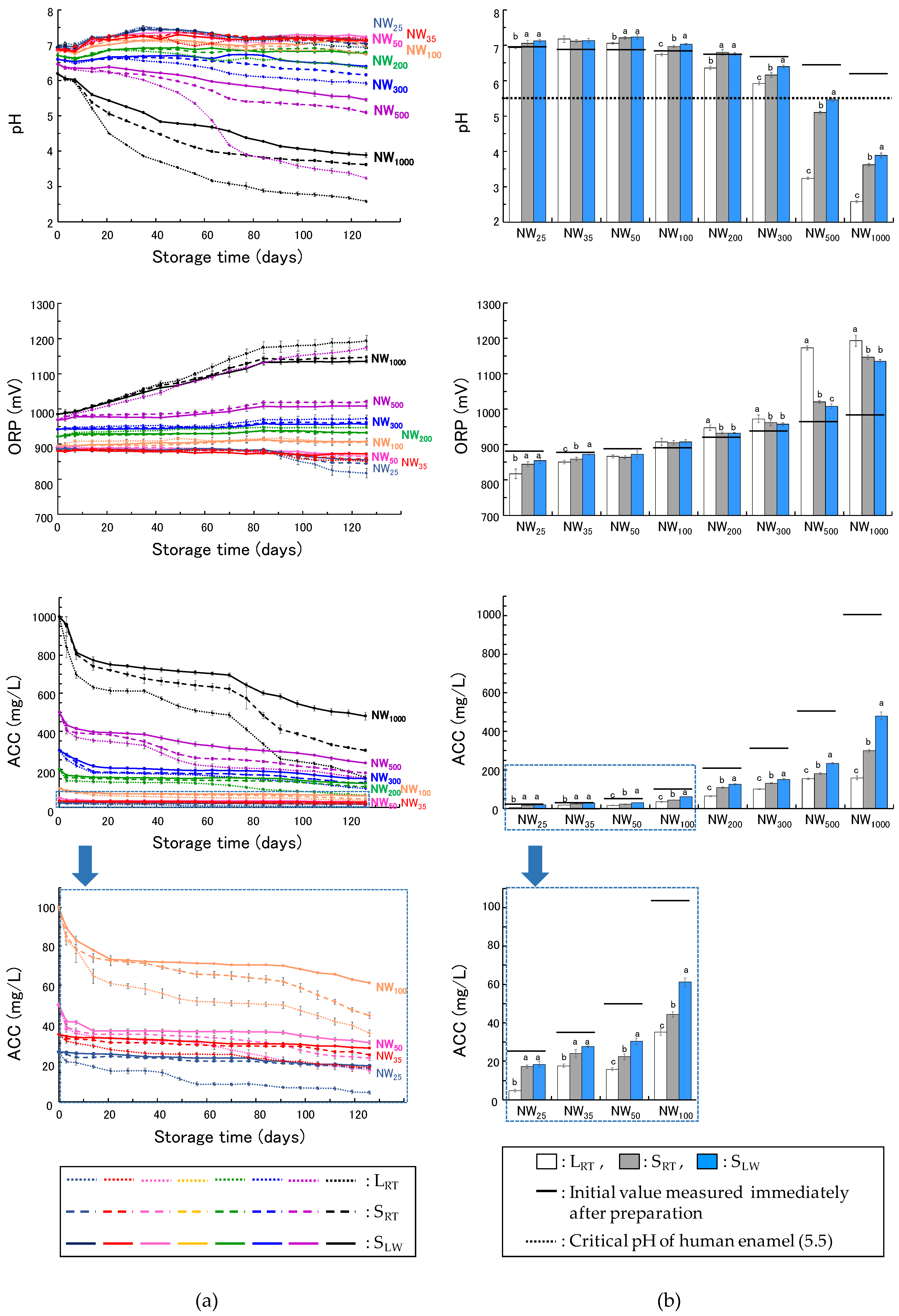
Figure 4.
Change rates in the properties of NWs after the 126-day storage period under three conditions (n = 5): (a) comparison among eight NWs with different initial ACCs for each storage condition according to the Kruskal–Walls test; (b) correlation between the initial ACC of NW and the change rate for each storage condition. R values indicate Spearman's rank correlation coefficients.
Figure 4.
Change rates in the properties of NWs after the 126-day storage period under three conditions (n = 5): (a) comparison among eight NWs with different initial ACCs for each storage condition according to the Kruskal–Walls test; (b) correlation between the initial ACC of NW and the change rate for each storage condition. R values indicate Spearman's rank correlation coefficients.
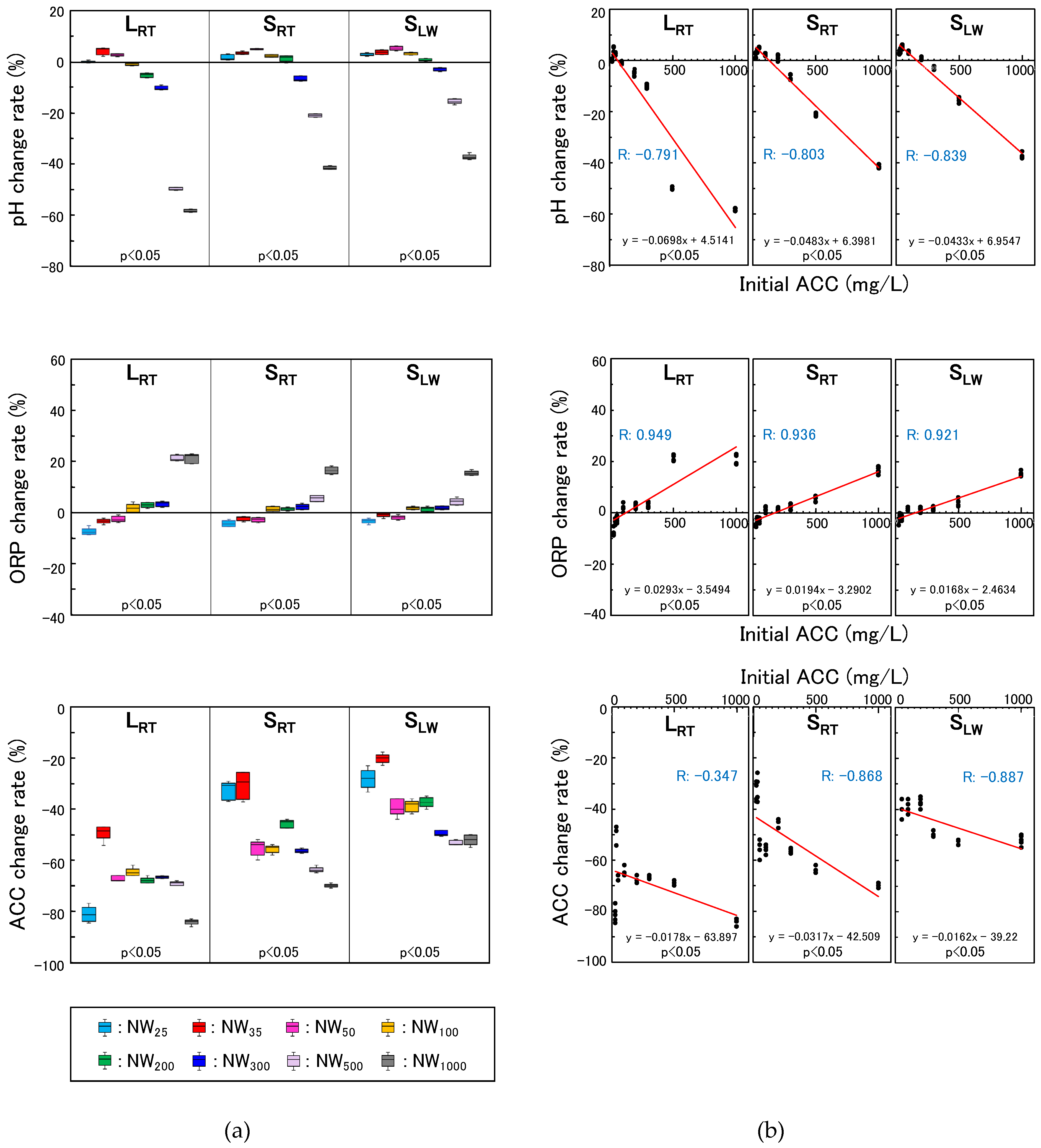
Figure 5.
(a) Representative appearances of PET containers after the 126-day storage of NWs under LRT; (b) representative appearances of PET containers after the 126-day storage of NW1000 under three different conditions. The images of PET containers of NW1000 stored under the shaded conditions (SRT and SLW) were captured after removing the metal foil.
Figure 5.
(a) Representative appearances of PET containers after the 126-day storage of NWs under LRT; (b) representative appearances of PET containers after the 126-day storage of NW1000 under three different conditions. The images of PET containers of NW1000 stored under the shaded conditions (SRT and SLW) were captured after removing the metal foil.
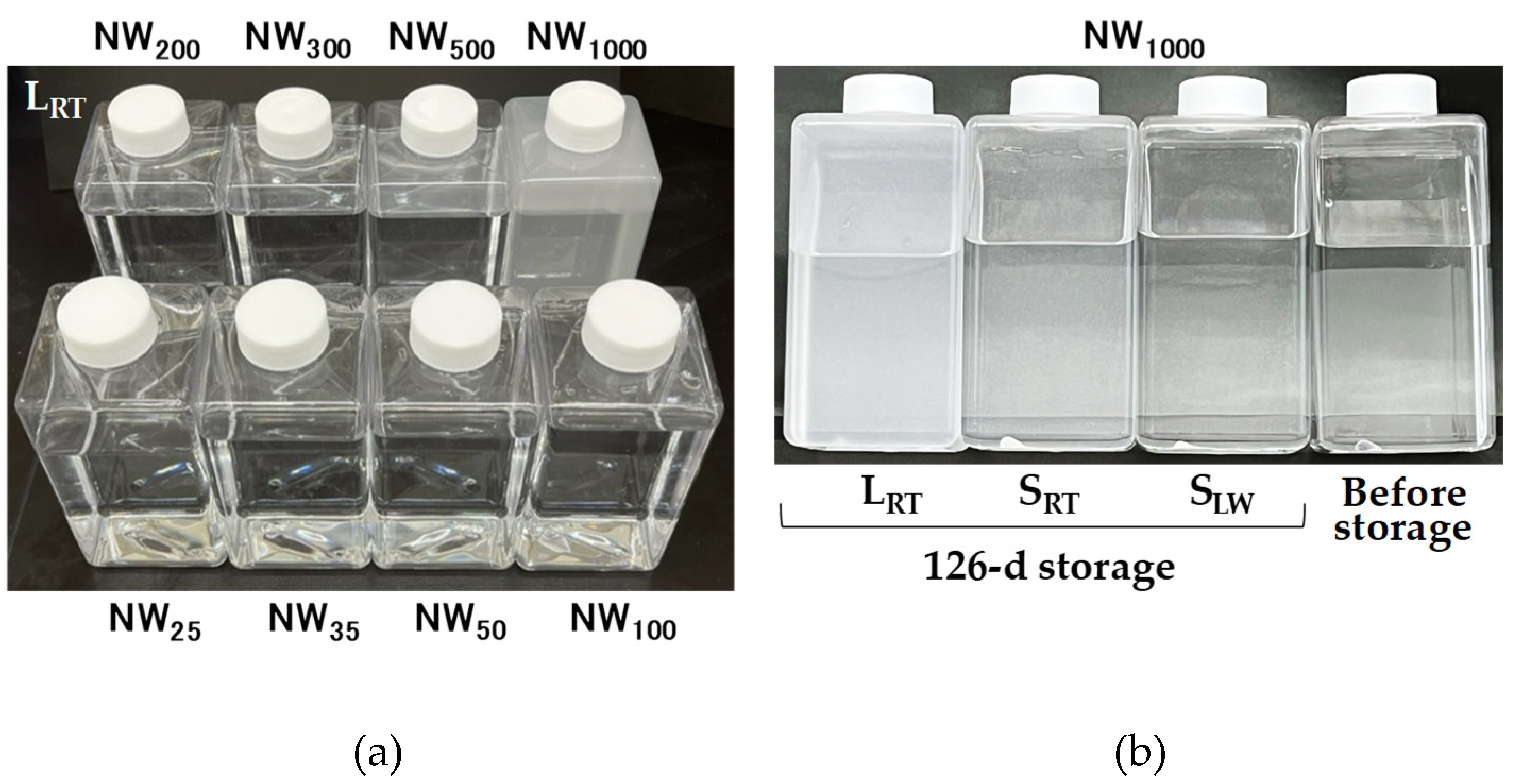

Table 1.
Properties of test NW immediately after preparation (initial values).
| Code | pH*1 | ORP*2 (mV) |
ACC*3 (mg/L) |
Level of ACC | Undiluted/diluted for general use*4 |
|---|---|---|---|---|---|
| NW25 | 6.94 ± 0.01 | 885 ± 5 | 25 | Standard concentration |
Undiluted |
| NW35*5 | 6.88 ± 0.02 | 881 ± 4 | 35 | ||
| NW50 | 6.87 ± 0.01 | 921 ± 7 | 50 | ||
| NW100 | 6.81 ± 0.01 | 893 ± 7 | 100 | High concentration |
|
| NW200 | 6.71 ± 0.01 | 921 ± 7 | 200 | Diluted - |
|
| NW300 | 6.60 ± 0.01 | 942 ± 8 | 300 | ||
| NW500 | 6.46 ± 0.02 | 968 ± 7 | 500 | ||
| NW1000 | 6.20 ± 0.02 | 985 ± 7 | 1000 | ||
| TW | 7.37 ± 0.02 | 614 ± 14 | < 0.5 | - | - |
*1 Mean ± standard deviation. *2 Oxidation-Reduction Potential: Mean ± standard deviation. *3 Free available chlorine concentration. *4 Usually used at an ACC of several tens of mg/L for objects and living organisms. *5 NW with standard ACC prepared using an NW generator without partial modification.
Table 2.
Bactericidal effect of NWs after the 126-day storage period.
| Test NW | Surviving bacteria number # | ||
|---|---|---|---|
| LRT | SRT | SLW | |
| NW25 | 2.9 (± 1.6)×104## | n.d. | n.d. |
| NW35 | n.d. | n.d. | n.d. |
| NW50 | n.d. | n.d. | n.d. |
| NW100 | n.d. | n.d. | n.d. |
| NW200 | n.d. | n.d. | n.d. |
| NW300 | n.d. | n.d. | n.d. |
| NW500 | n.d. | n.d. | n.d. |
| NW1000 | n.d. | n.d. | n.d. |
# Mean. The value in ( ) indicates the coefficient in SD index notation. ## Bacteria removal rate: 99.8 (± 0.1)%. n.d. Not detected. Surviving bacteria number: < 10, removal rate: > 99.9999%.
Disclaimer/Publisher’s Note: The statements, opinions and data contained in all publications are solely those of the individual author(s) and contributor(s) and not of MDPI and/or the editor(s). MDPI and/or the editor(s) disclaim responsibility for any injury to people or property resulting from any ideas, methods, instructions or products referred to in the content. |
© 2024 by the authors. Licensee MDPI, Basel, Switzerland. This article is an open access article distributed under the terms and conditions of the Creative Commons Attribution (CC BY) license (http://creativecommons.org/licenses/by/4.0/).
Copyright: This open access article is published under a Creative Commons CC BY 4.0 license, which permit the free download, distribution, and reuse, provided that the author and preprint are cited in any reuse.


